8 pages to flip through, of 16. Swipe or use the arrows.
$5.00
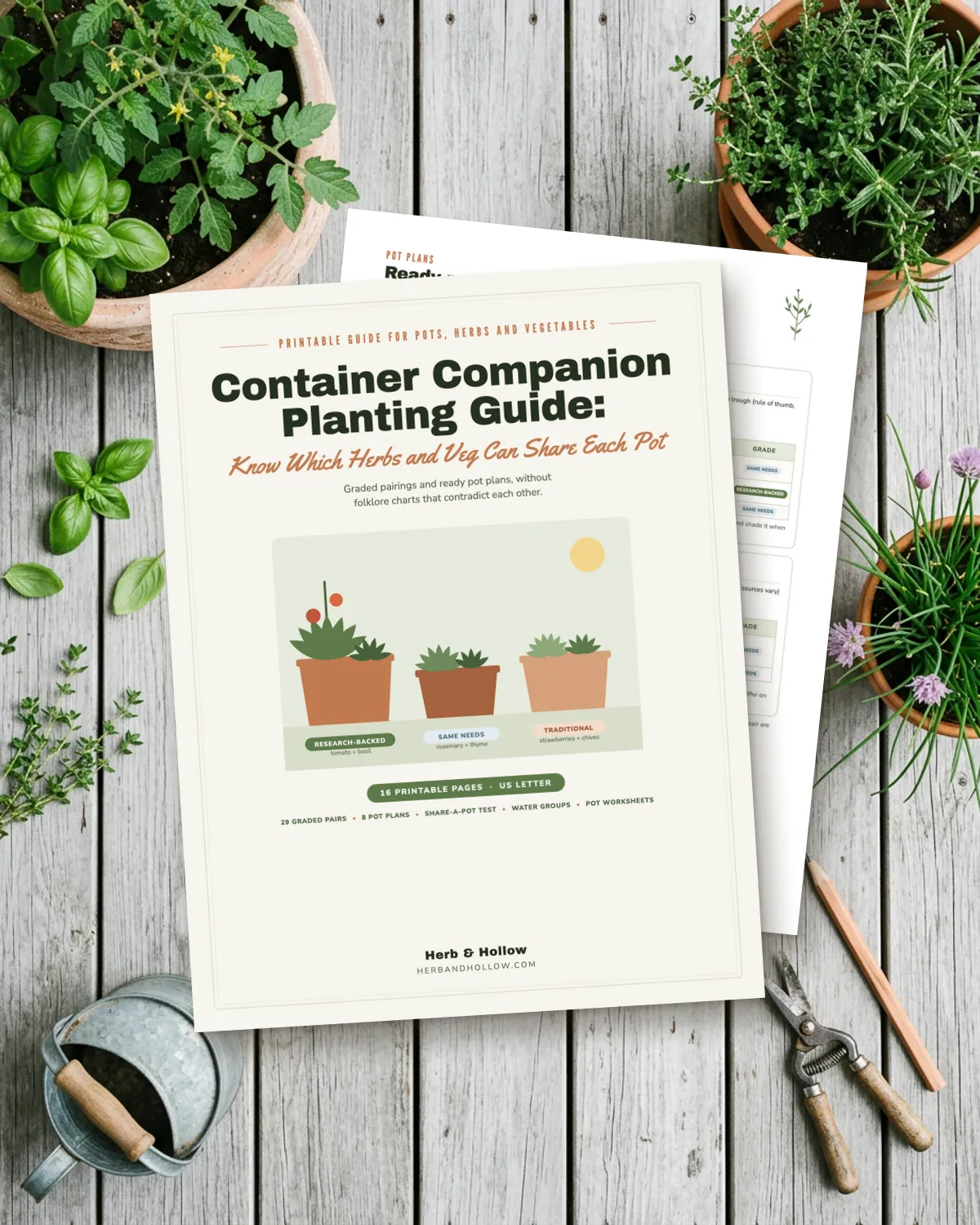
Container Companion Planting Guide: Know Which Herbs and Veg Can Share Each Pot
Graded pairings and ready pot plans, without folklore charts that contradict each other.
- 16 pages
- US Letter + A4
- Low-ink version
- Instant download
- Print as often as you need
Secure checkout by Dodo Payments. Instant PDF download after purchase.
Try 3 pages free
Get pages 6, 8 and 9 by email, exactly as they print from the full file.
Most companion planting charts are written for garden beds, repeat folklore, and contradict each other. This printable guide asks a pot question instead: which herbs and vegetables can live in the same container, and how well is each pairing backed?
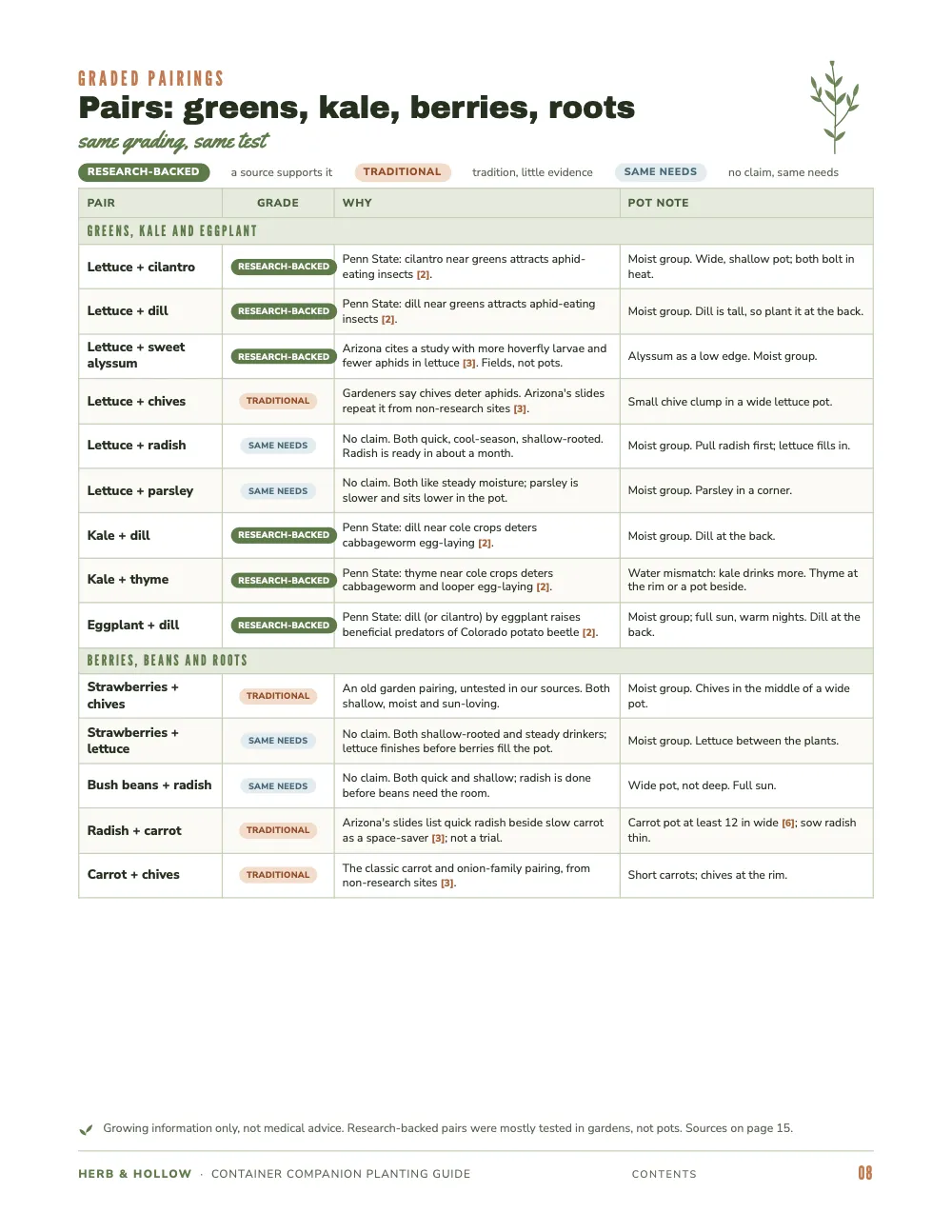
Every pairing is graded. "Research-backed" is used only when University of Illinois Extension, Penn State Extension or the University of Arizona supports it, and the guide says plainly what that does and does not mean (for example, basil beside tomato is graded on what Penn State actually says, with no claim about better flavor or pest-proofing). "Traditional" marks pairings gardeners have used for generations with little or mixed evidence. "Same needs" marks pairs that make no claim, they just share water, sun and root depth.
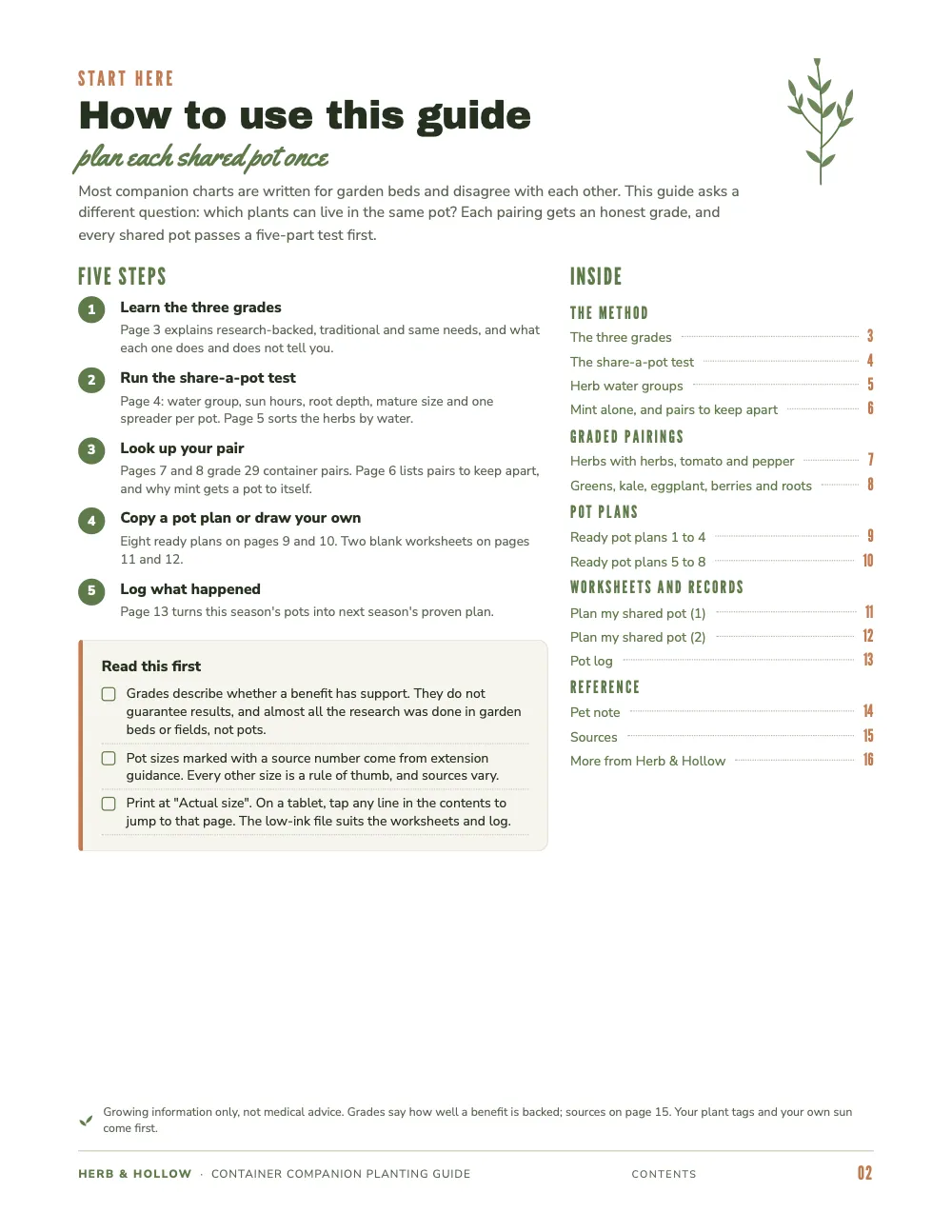
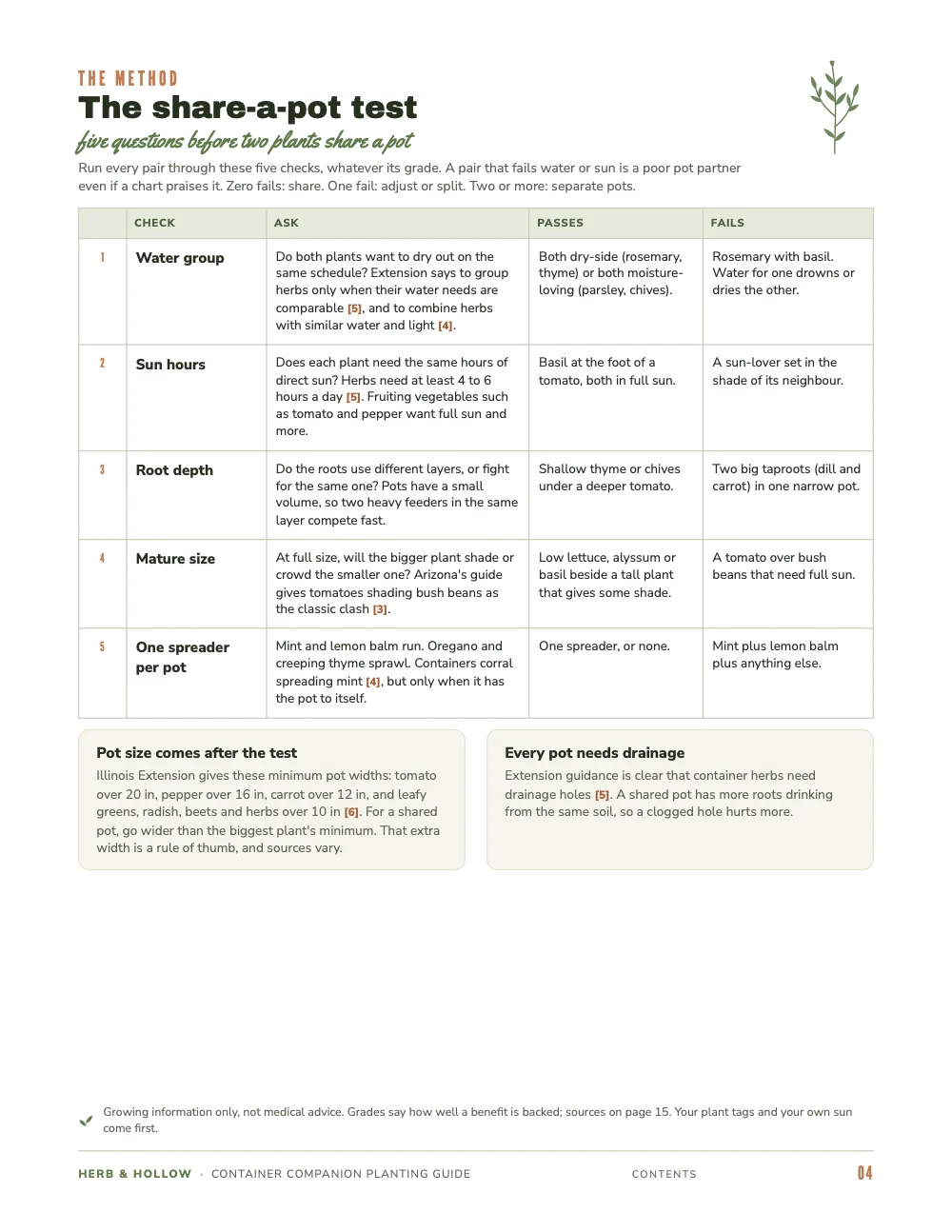
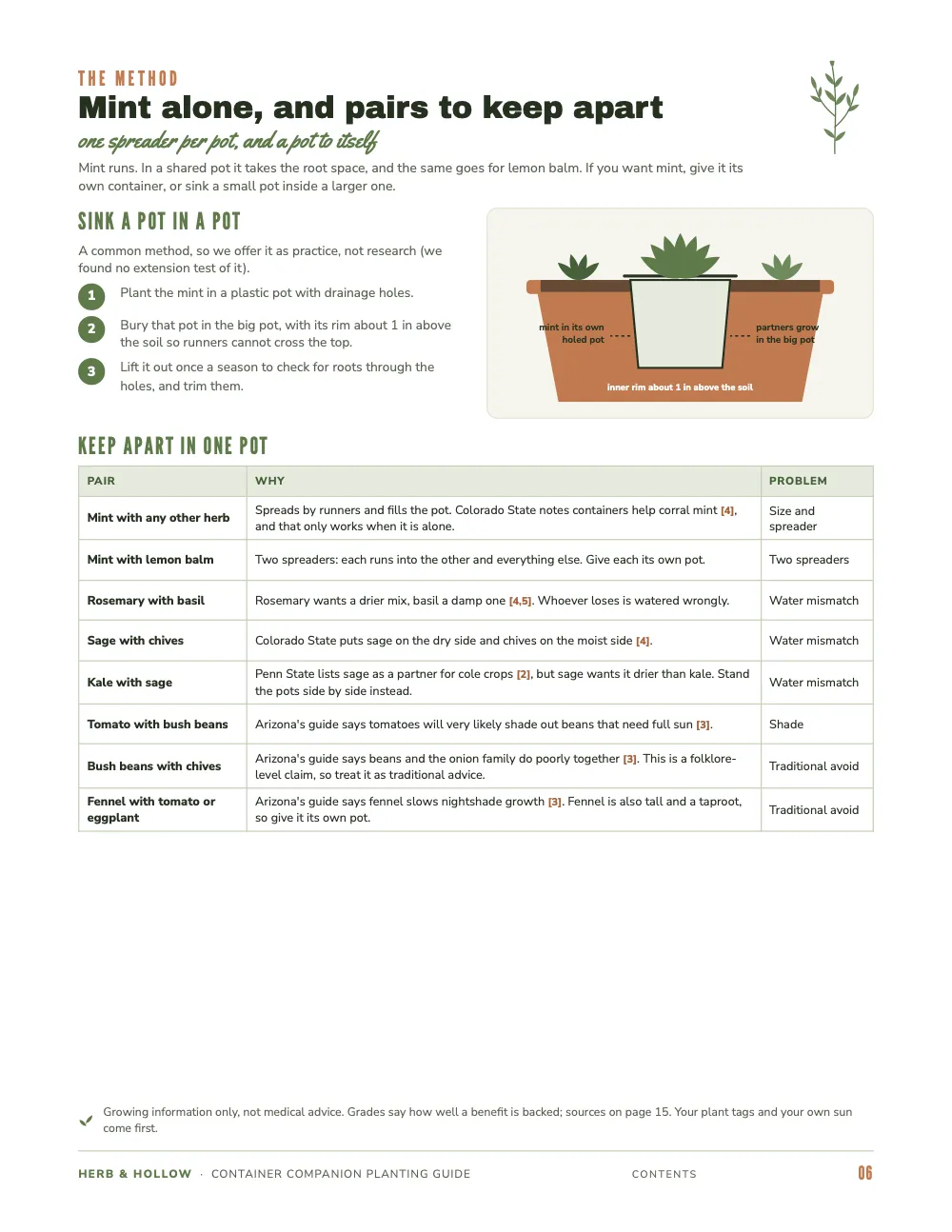
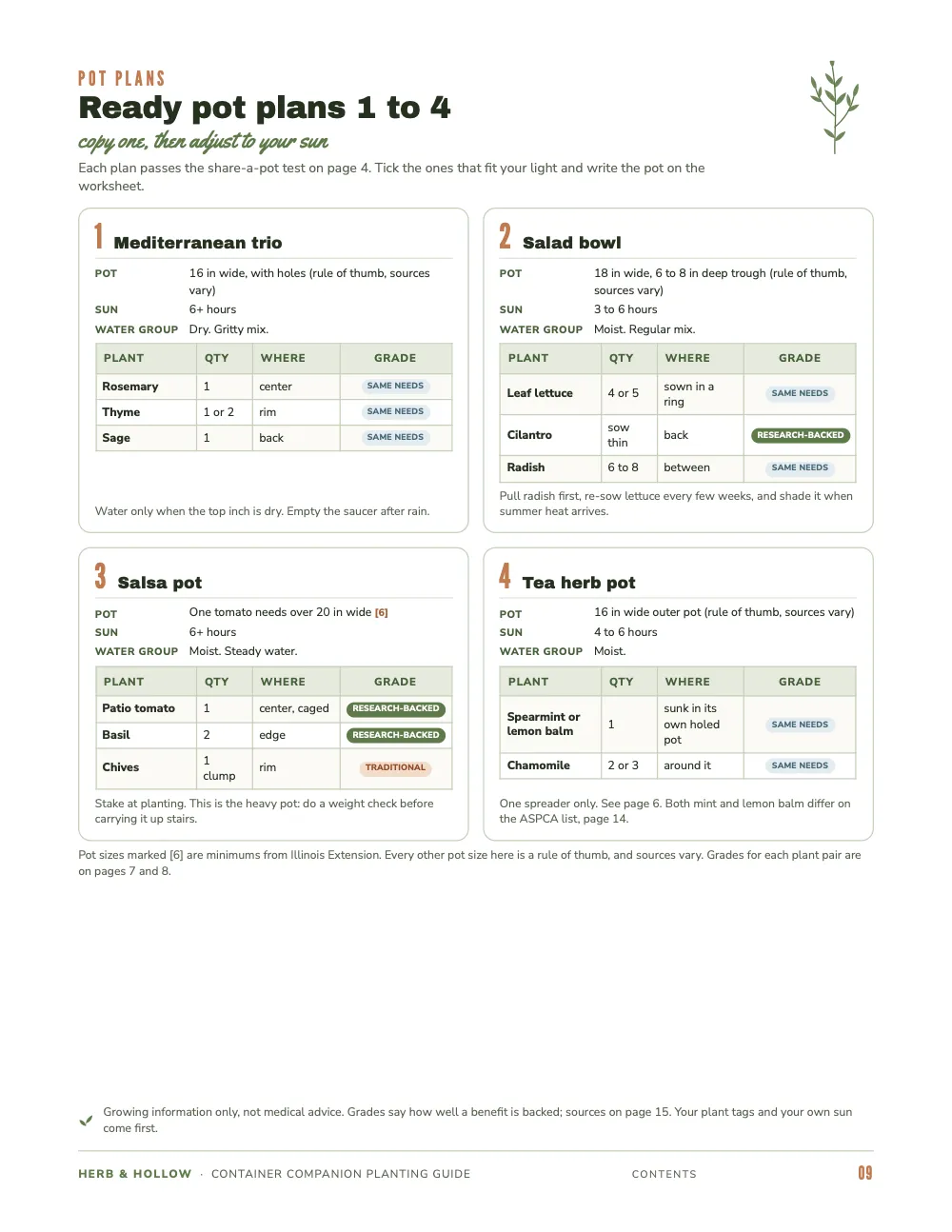
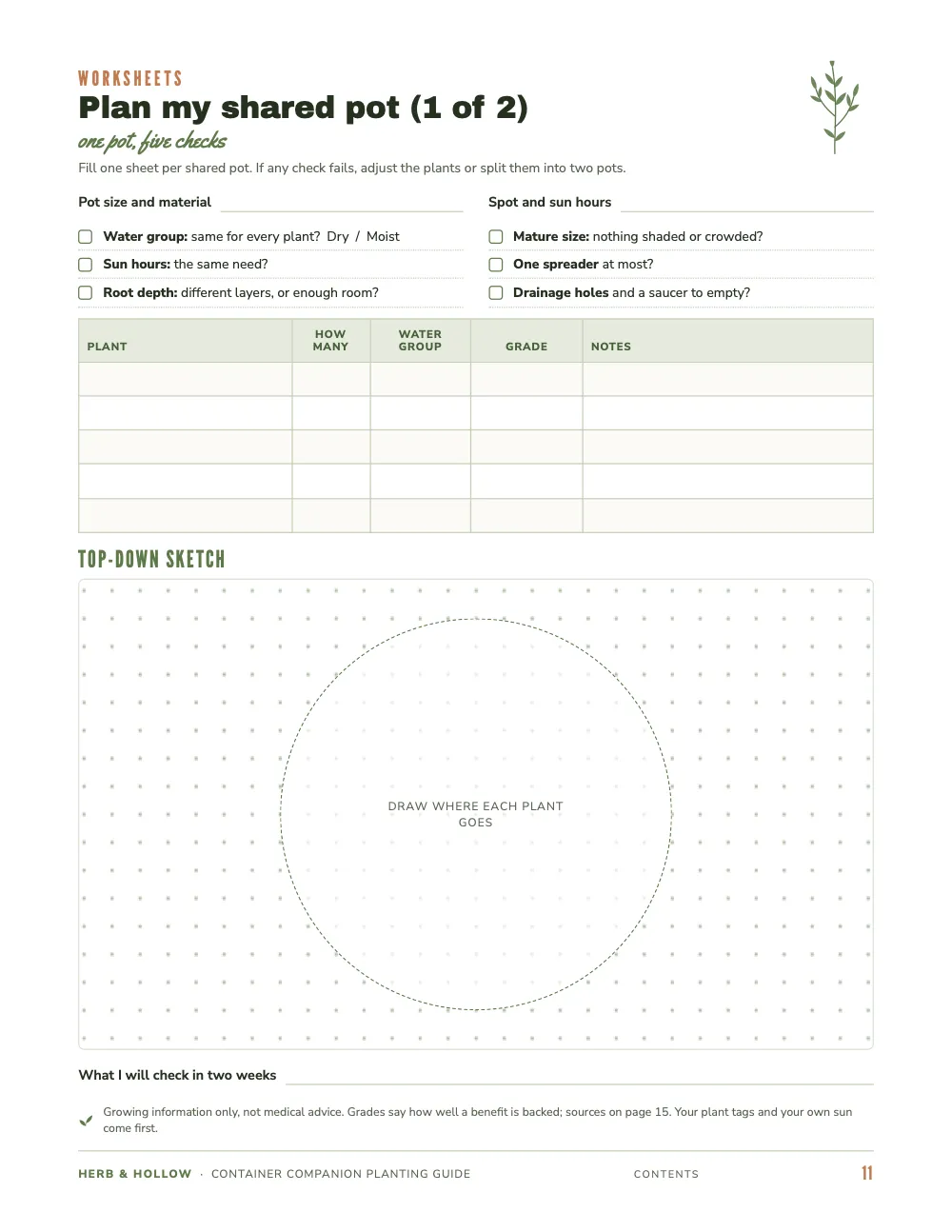
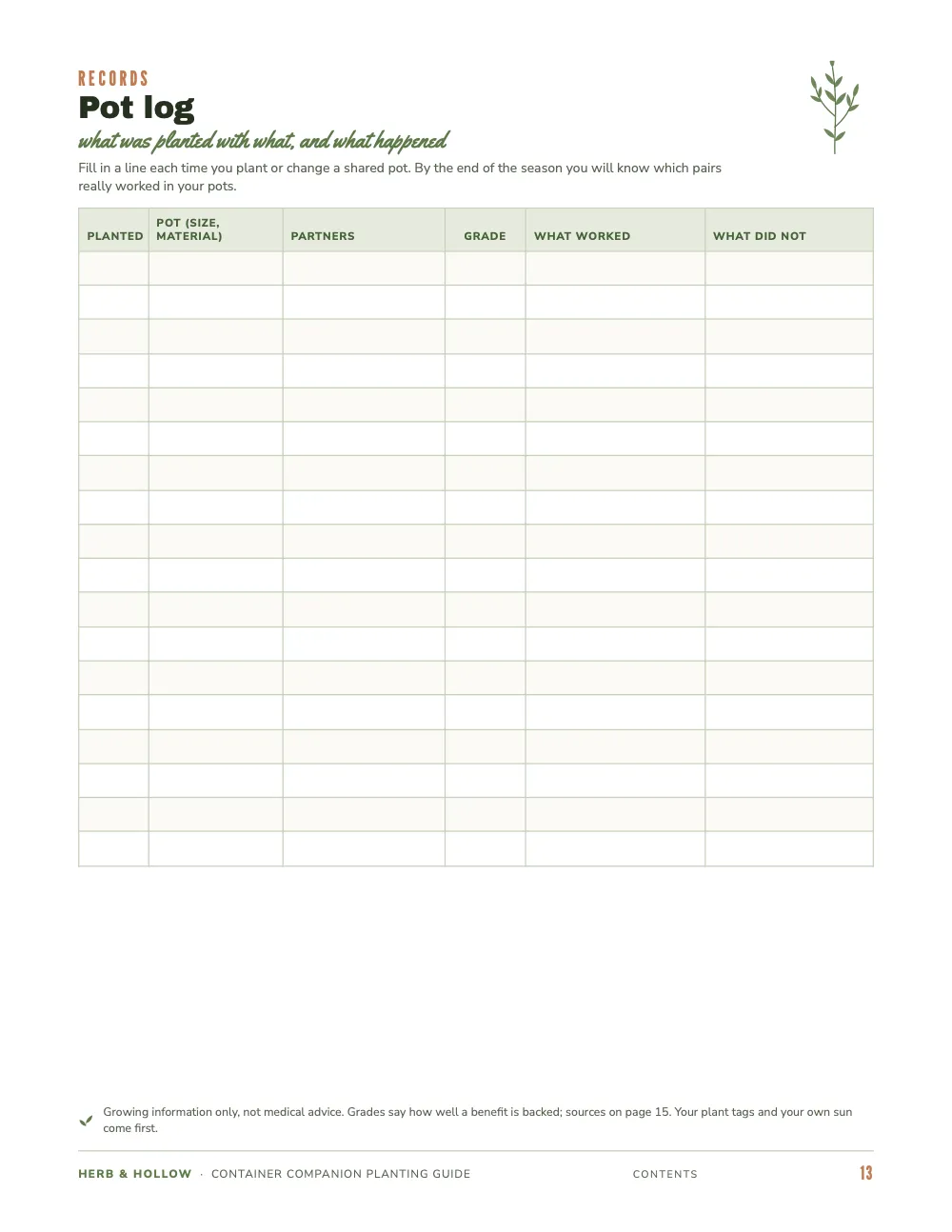
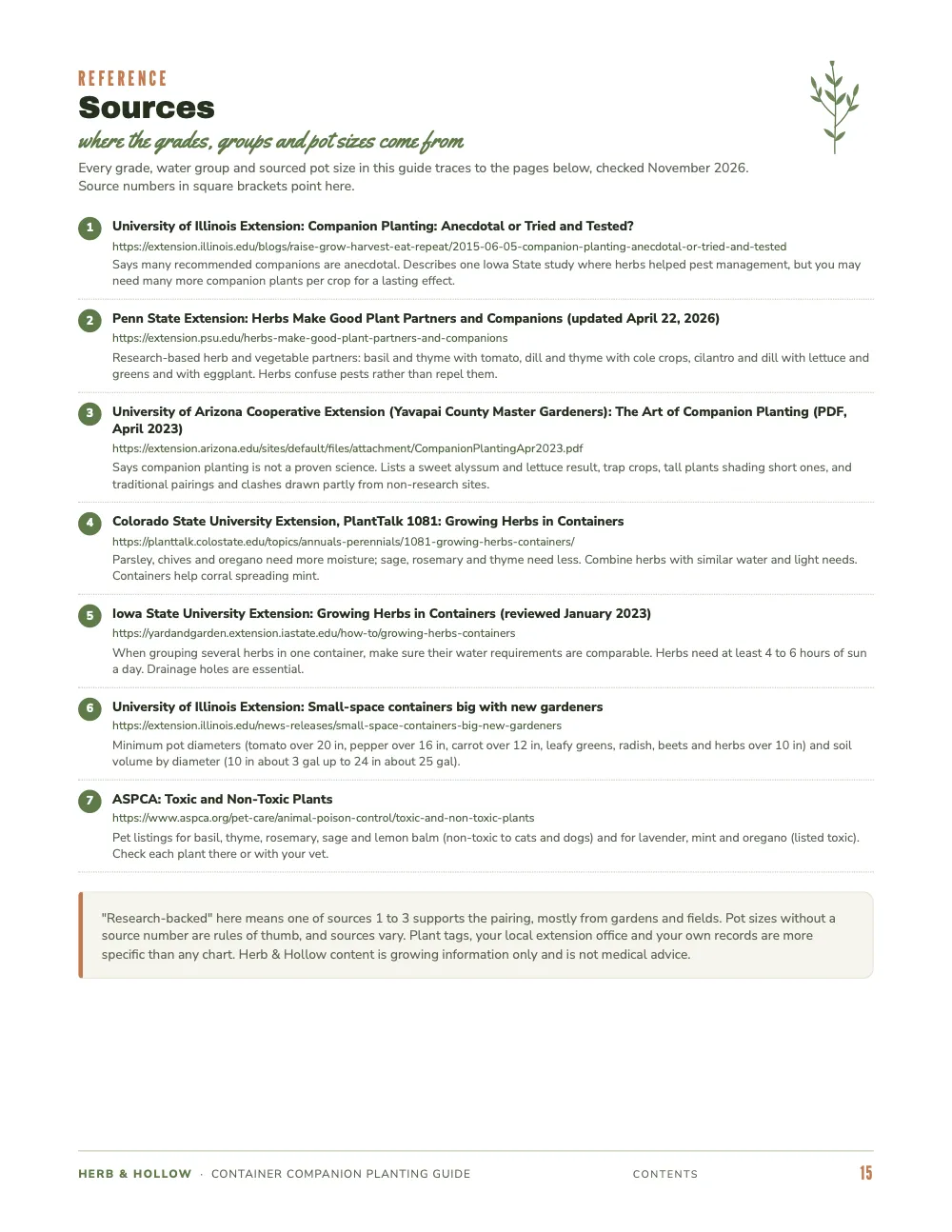
A five-part share-a-pot test (water group, sun hours, root depth, mature size and one spreader per pot) comes first, with herb water groups and a page on why mint gets a pot to itself, including a sink-a-pot-in-a-pot option. Then 29 graded container pairs, 8 keep-apart pairs, and eight ready pot plans (a Mediterranean trio, a salad bowl, a salsa pot, a tea herb pot, a strawberry and chive pot, a railing planter mix, shady balcony herbs and a quick picking pot). Two blank plan-my-shared-pot worksheets, a pot log, a pet note based on the ASPCA toxic and non-toxic plant lists and a full sources page finish the guide. Pot sizes marked with a source come from extension guidance; every other size is labelled a rule of thumb.
Print only the pages you need, for your own home and garden. Instant PDF download in US Letter, A4 and low-ink. Growing information only, not medical advice.
What's inside
- Graded pairings: research-backed, traditional or same needs, so you can see how well each pairing is backed
- 29 container pairs for herbs, tomato, pepper, lettuce, kale, eggplant, strawberries, beans and roots, with a pot note for each
- A five-part share-a-pot test: water group, sun hours, root depth, mature size and one spreader per pot
- Herb water groups, plus mint alone with a sink-a-pot-in-a-pot option
- 8 keep-apart pairs with the reason for each
- Eight ready pot plans for a balcony, railing or windowsill
- Two blank plan-my-shared-pot worksheets and a pot log
- A pet note from the ASPCA lists and a sources page (Illinois, Penn State, Arizona, Colorado State, Iowa State). US Letter, A4 and low-ink versions included
What you'll need
- A printer, or a tablet with an app that lets you write on PDFs
- US Letter or A4 paper
- Black and white printing is fine: the low-ink version saves color ink
- A pen or pencil
Safety first: Herbs can be powerful. If you are pregnant, nursing, take medication or have a health condition, check with your doctor or pharmacist first. Please read our herbal & garden safety notes.
Frequently asked questions
Does companion planting really work in pots?
Mostly the evidence comes from gardens and fields, not containers. Extension sources report some effects (Penn State says herbs confuse pests rather than repel them) and Illinois Extension notes many recommended pairings are anecdotal. That is why every pairing here carries a grade, and why the share-a-pot test on water, sun and size comes first.
Why is mint in its own pot?
Mint spreads by runners and fills a shared pot. Colorado State Extension notes containers help corral mint. The guide shows one common method, sinking a small holed pot inside a larger one, and says plainly that we found no extension test of it.
Are the pot sizes from research?
Minimum pot widths for tomato, pepper, carrot, greens, radish and herbs come from University of Illinois Extension and are marked with a source number. Every other size is labelled rule of thumb, sources vary.
Is it safe for my cat or dog?
The pet note lists what the ASPCA says about basil, thyme, rosemary, sage and lemon balm (non-toxic to cats and dogs) and lavender, mint and oregano (listed toxic). Check each plant with the ASPCA or your vet. This is growing information only, not medical or veterinary advice.
Is anything shipped?
No. It is a PDF you download right after checkout and print at home or at a print shop, in US Letter, A4 or low-ink.
Is this a physical product?
No. It's a digital download of 16 pages in US Letter and A4, plus a low-ink version. Nothing is shipped.
How do I get my files?
Right after payment the download opens on the order page, and our checkout partner Dodo Payments emails you a copy. If you can't find it, check spam or promotions, or write to [email protected].
Can I print it more than once?
Yes. Print as many copies as you need for your own personal use. Please don't share or resell the files.
Can I use it on a tablet?
Yes. Open the PDF in any app that lets you write on PDFs, such as GoodNotes, Notability or Xodo.
Can I get a refund?
Digital files can't be returned, so sales are final. If a file is defective, incomplete or not as described, email [email protected] within 14 days and we'll replace it or refund you.
More from Herb & Hollow
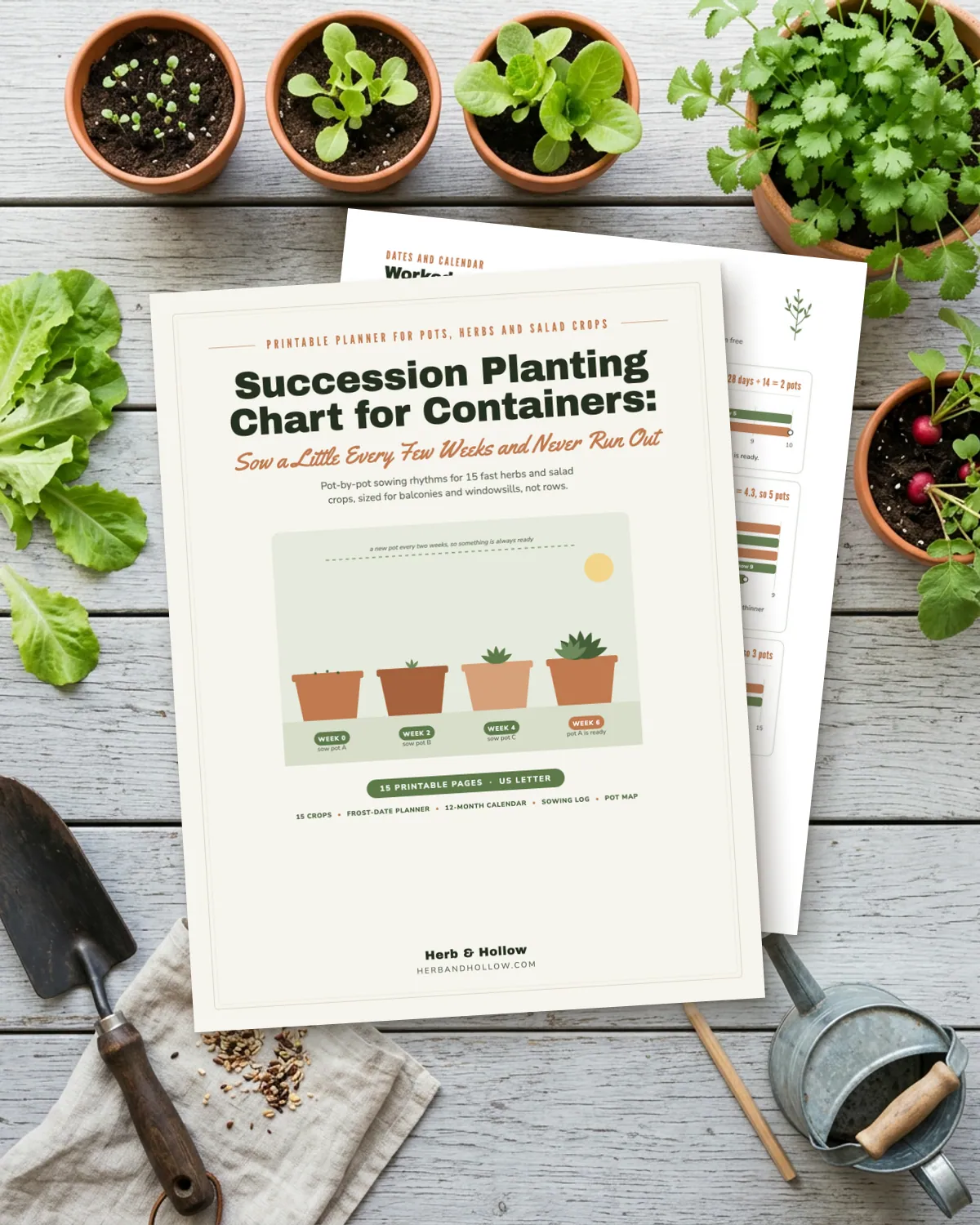
- $5.00 Succession Planting Chart for Containers: Sow a Little Every Few Weeks and Never Run Out Get it · $5.00
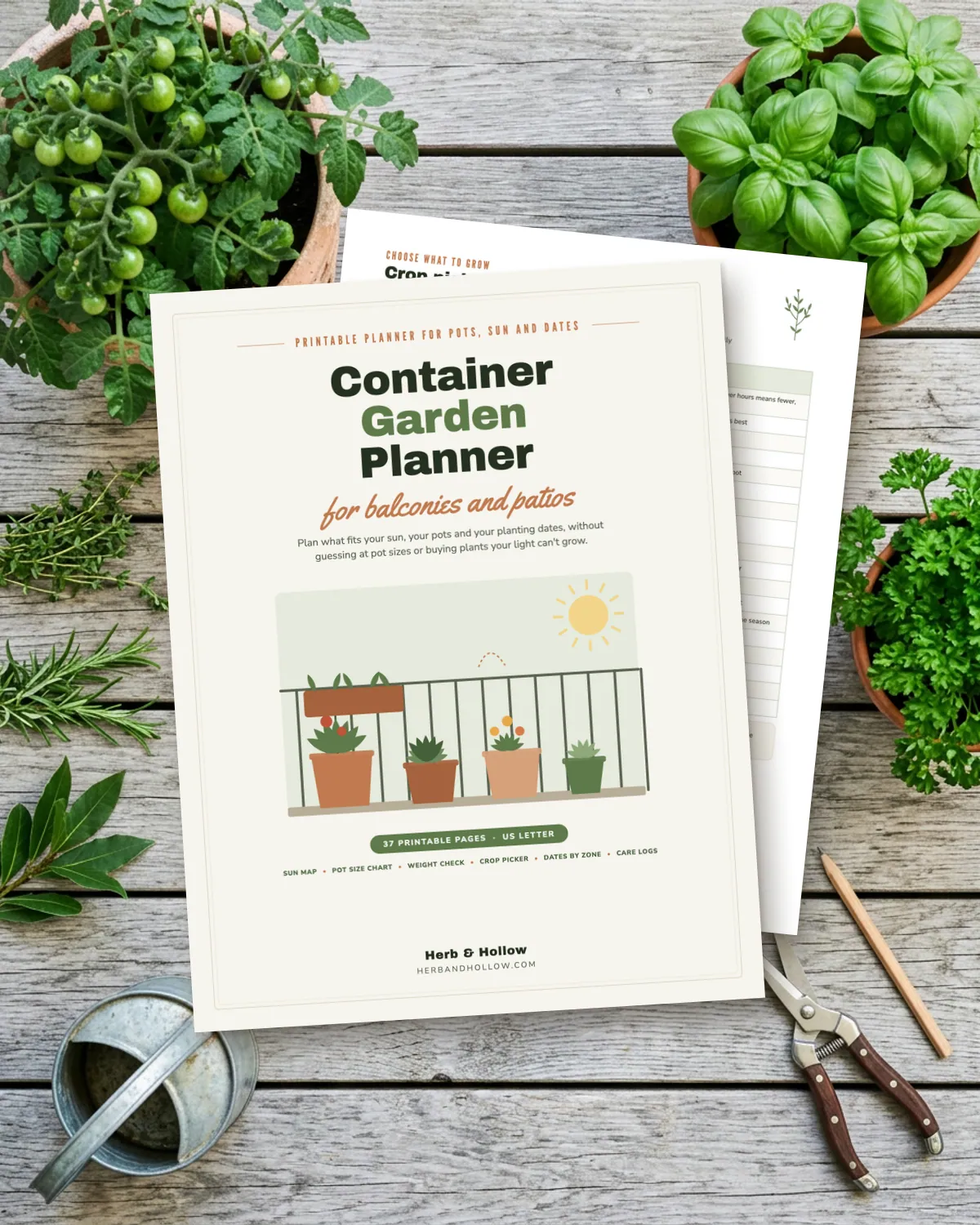
- $9.00 Container & Balcony Garden Planner: Plan Pots That Fit Your Sun Get it · $9.00
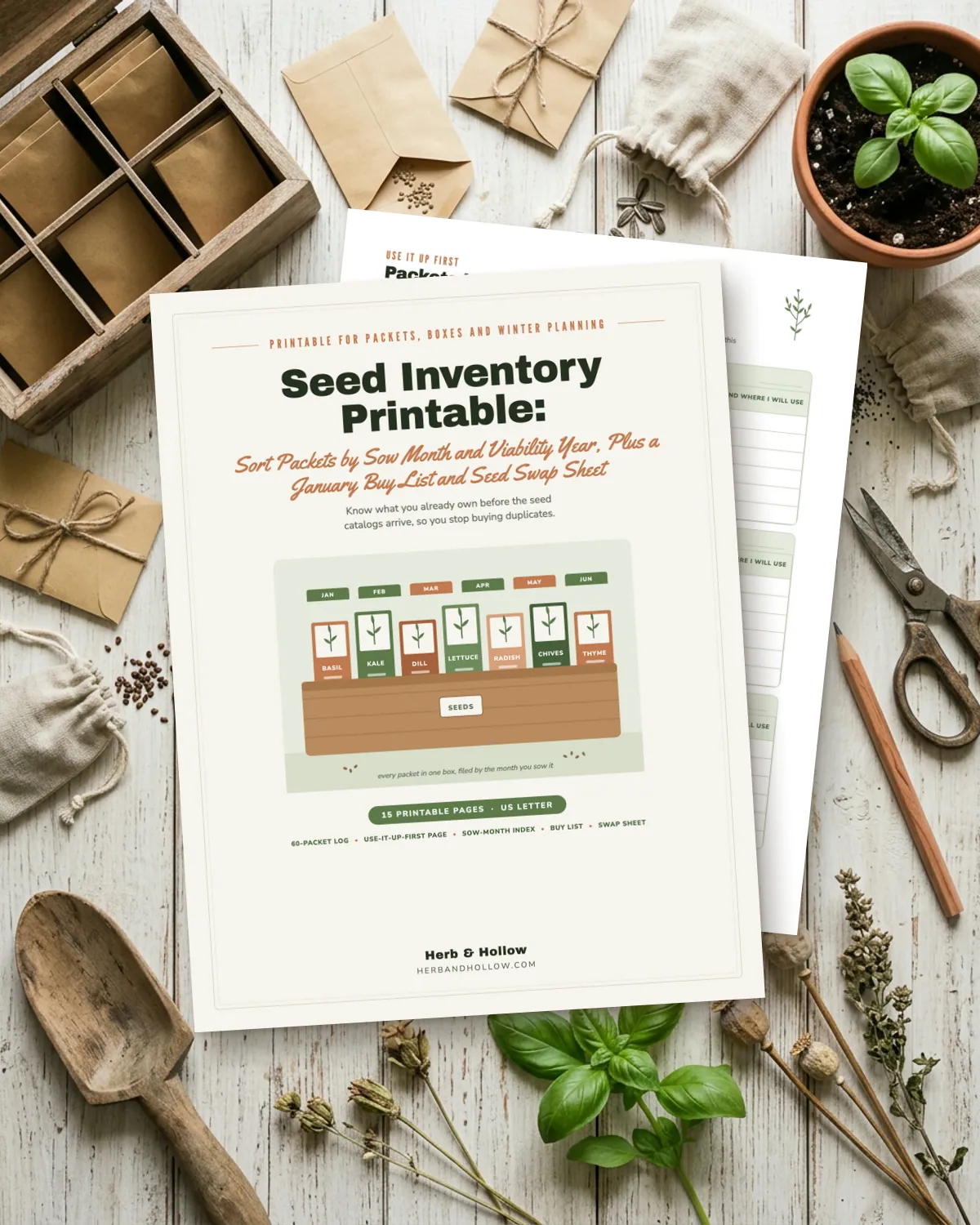
- $4.00 Seed Inventory Printable: Sort Packets by Sow Month and Viability Year, Plus a January Buy List and Seed Swap Sheet Get it · $4.00
- $7.00 Seed Starting Calendar Printable: Know Which Week to Sow 30 Herbs and Vegetables for Your Frost Date Get it · $7.00