This post contains affiliate links. As an Amazon Associate we earn from qualifying purchases, at no extra cost to you. Read our disclosure.
Safety first: Herbs can be powerful. If you are pregnant, nursing, take medication or have a health condition, check with your doctor or pharmacist first. Please read our herbal & garden safety notes before you start.
Key takeaways
- Count your sun first: full sun is 6 or more hours, part shade 3 to 6, shade less than 3
- Build each pot with one thriller, one filler and one spiller (Mississippi State Extension)
- 15 combos are sorted by light, with pot size and bloom window for each
- Pansies and violas carry a pot in cool seasons when summer flowers rest
- Check each plant on the ASPCA list if you have cats or dogs; geranium, begonia, coleus and hydrangea are listed as toxic
In this post22 sections
- How to choose: sun first, then thriller, filler, spiller
- Full sun flower pots (6 or more hours)
- 1. Geranium, calibrachoa and sweet potato vine
- 2. Zinnias in a glazed bowl
- 3. Petunias and lobelia in a basket
- 4. Blue salvia and white alyssum
- 5. Nasturtiums in a clay pot
- 6. Portulaca in a shallow bowl
- Part shade flower pots (3 to 6 hours)
- 7. Begonia, creeping Jenny and salvia
- 8. Fuchsia in a hanging basket
- 9. Torenia and dichondra
- 10. Coleus and begonia
- Shade flower pots (less than 3 hours)
- 11. Impatiens and asparagus fern
- 12. Begonia and ivy in a window box
- 13. Browallia and lobelia
- 14. Hydrangea in a large pot
- 15. Pansies and violas for fall and spring
- A bloom calendar for your pots
- Pet safety, watering and feeding
- FAQ
How to choose: sun first, then thriller, filler, spiller
Count your sun before you pick a flower. Full sun means 6 or more hours of direct light, part shade means about 3 to 6, and shade means less than that or only bright indirect light. Then build each pot with one tall plant (thriller), one mounded plant (filler) and one trailing plant (spiller). Mississippi State Extension uses that formula and gives example sets: zonal geranium, calibrachoa and sweet potato vine for full sun; salvia, begonia and creeping Jenny for partial shade; and dianella, impatiens and asparagus fern for full shade.
Pot sizes and bloom windows below are planning guidelines from us, not lab numbers, so check the plant tag for your variety and zone. This article is flowers only. If you want a mix of flowers, herbs and vegetables, see our container garden ideas for small spaces, which has seven other flower pots we do not repeat here.
Full sun flower pots (6 or more hours)
1Geranium, calibrachoa and sweet potato vine
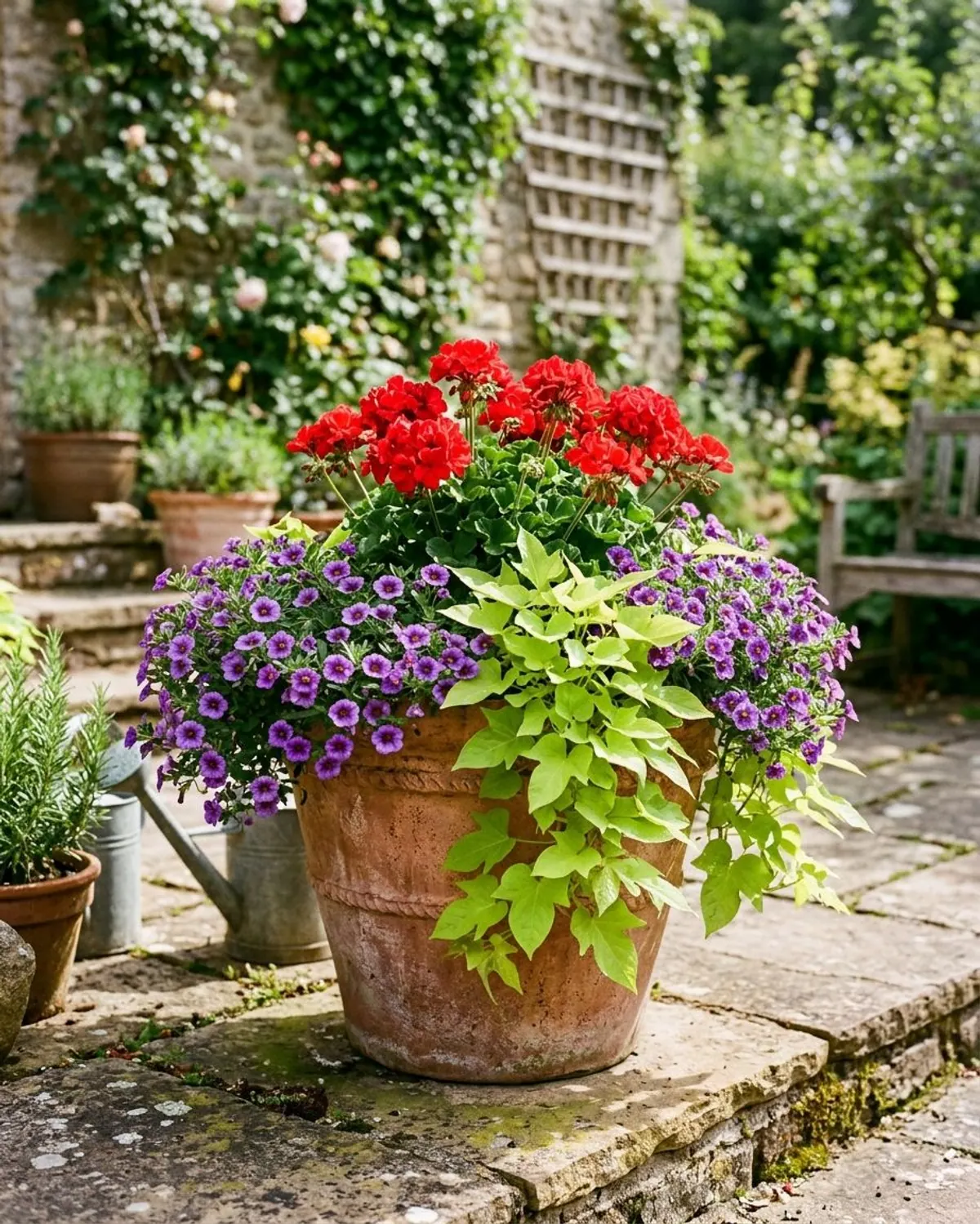
Pot: 14 to 16 inches wide
Sun: 6 or more hours
Blooms: Late spring to frost
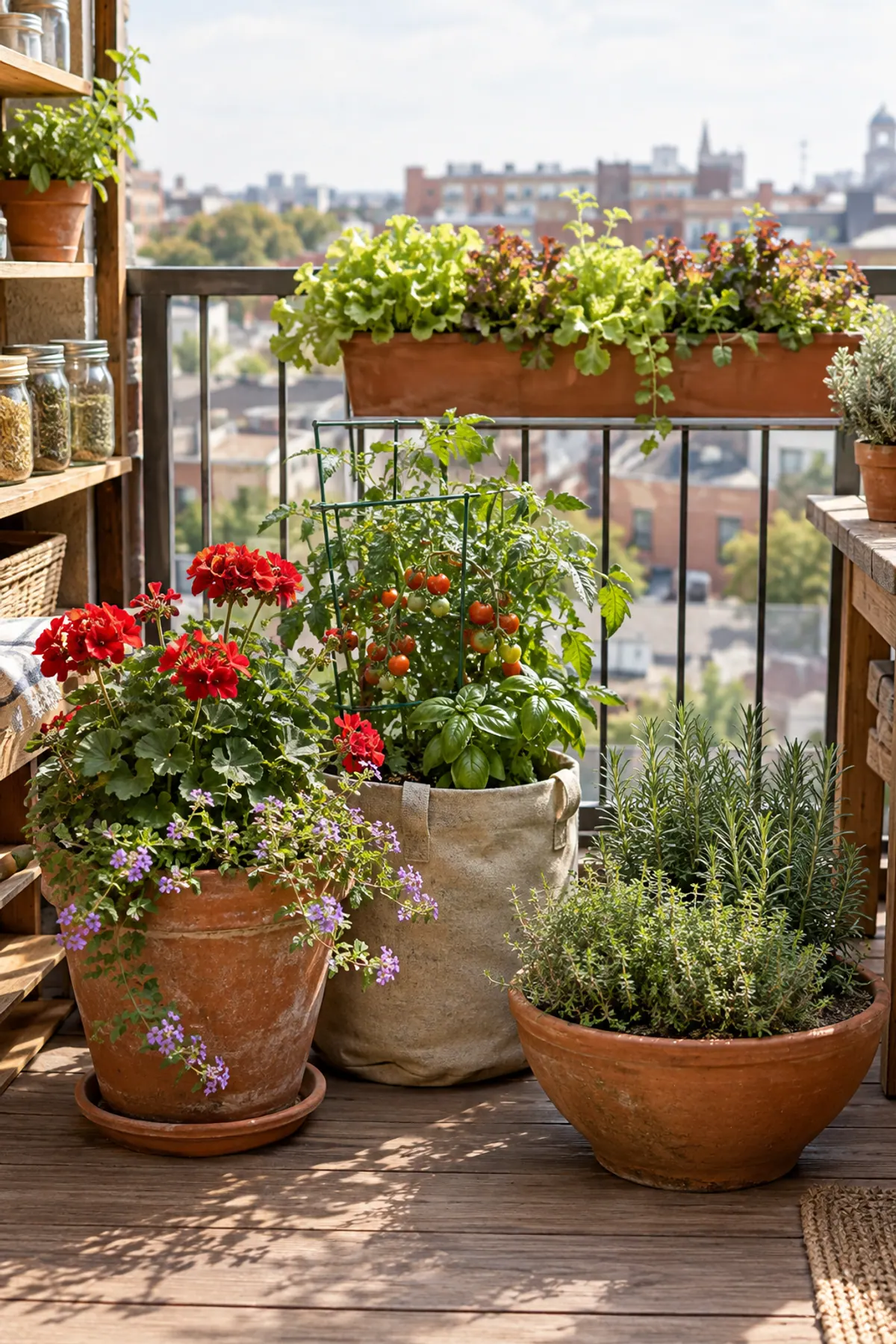
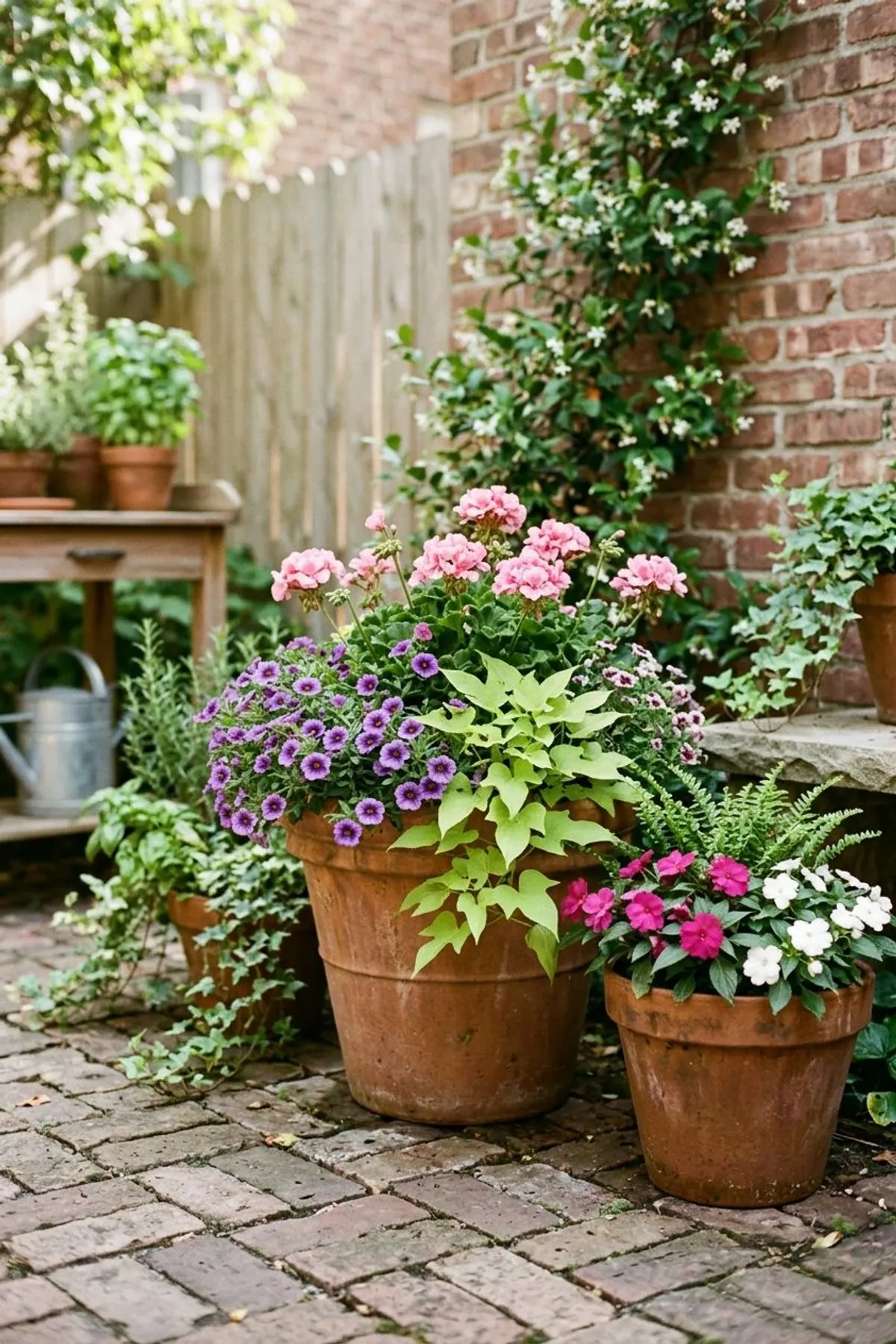
This is the Mississippi State Extension full-sun combo. The geranium is the thriller, the calibrachoa fills out the middle and the lime sweet potato vine trails over the rim. Deadhead the geranium and trim the vine if it takes over.
Wide enough for three plants and heavy enough to stay put in wind.
2Zinnias in a glazed bowl
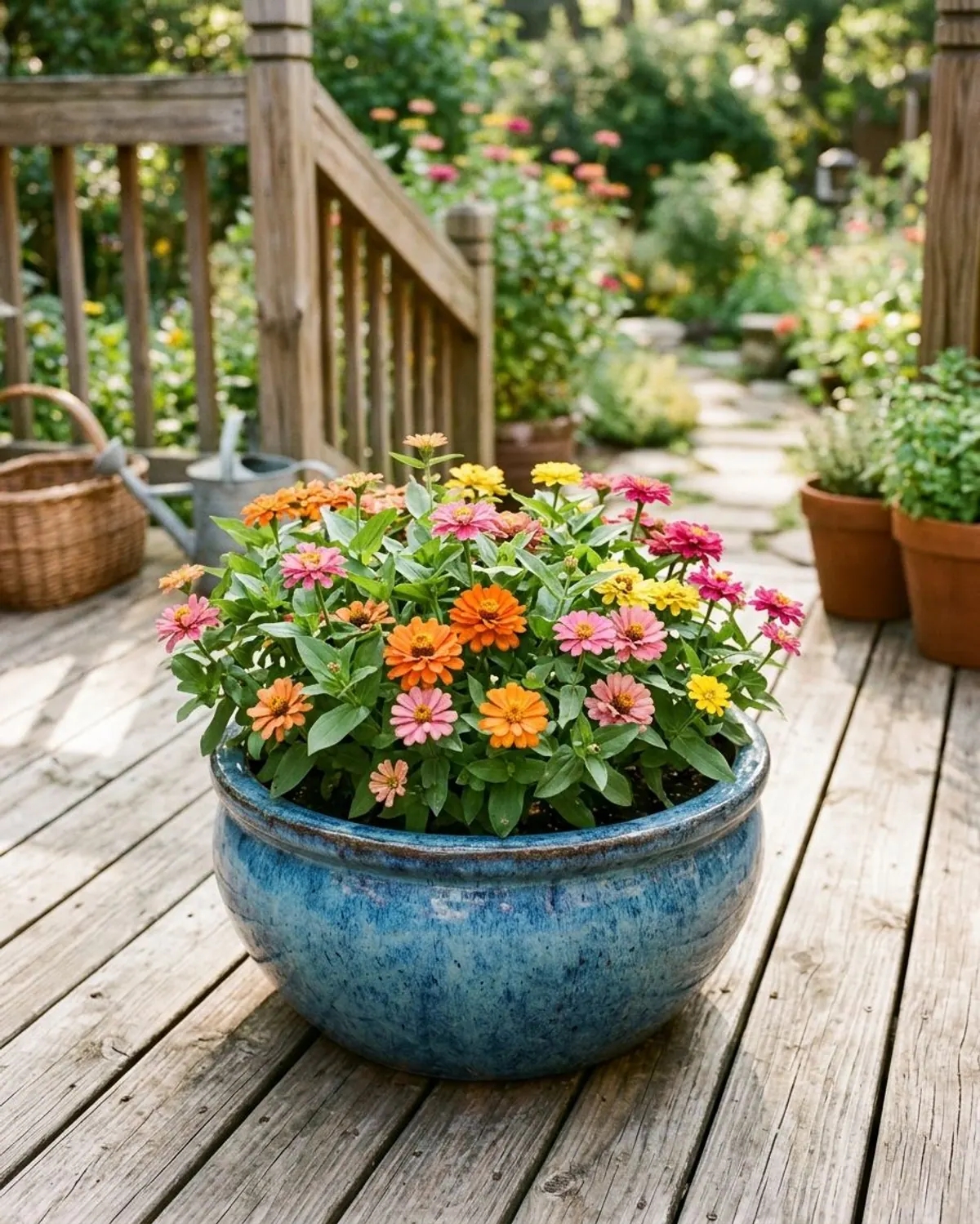
Pot: 14 inches wide
Sun: 6 or more hours
Blooms: Summer to frost
Choose compact zinnias sold for pots and cut a few stems for a vase. Cutting keeps new buds coming. Water at the base to keep powdery mildew off the leaves.
3Petunias and lobelia in a basket
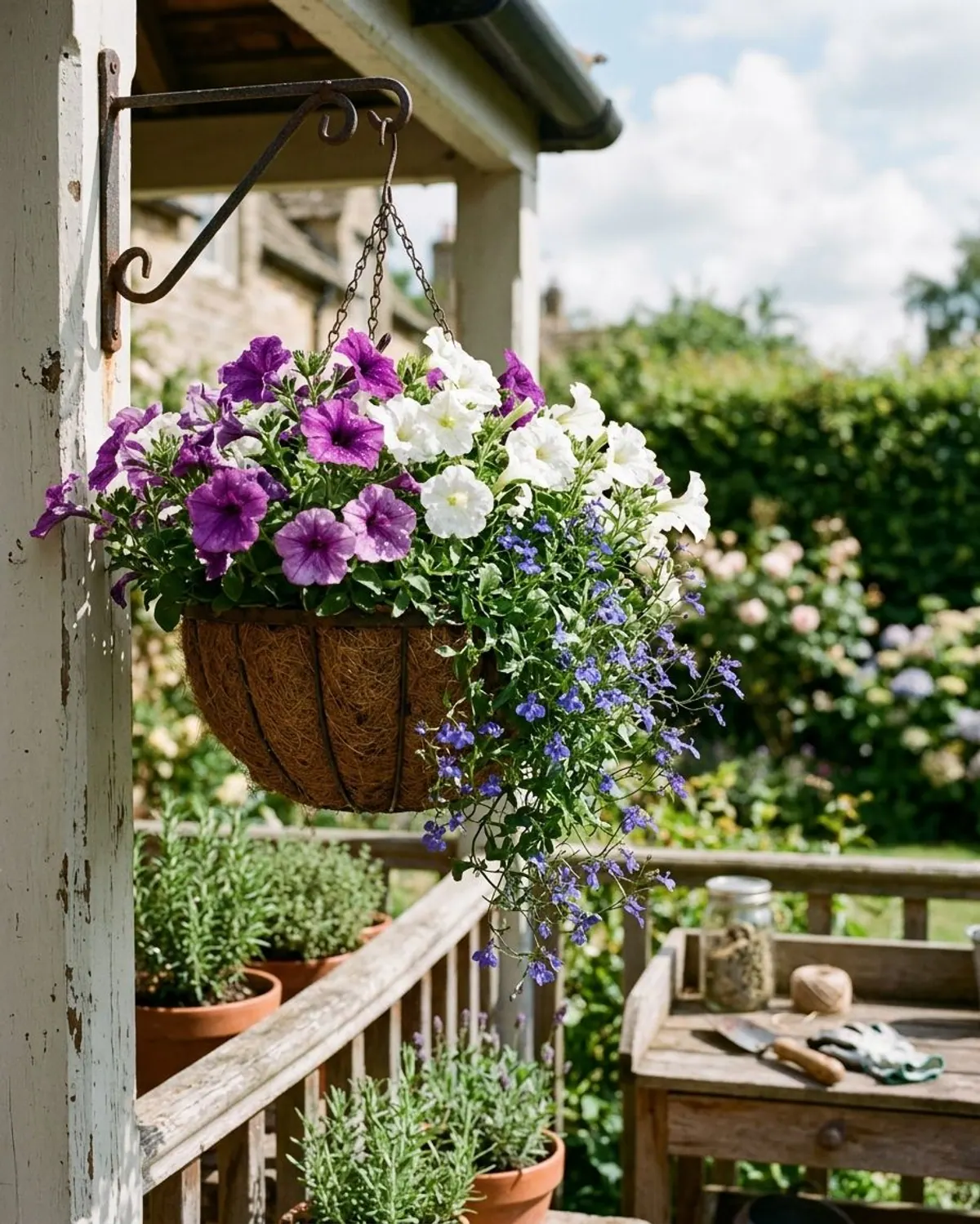
Pot: 12 inch basket
Sun: 6 or more hours
Blooms: Late spring to frost
A coco-lined basket suits a bracket on a porch. Lobelia likes cooler weather and may fade in a heat wave; trim it back and it often returns.
A deep basket holds more water for thirsty petunias.
4Blue salvia and white alyssum
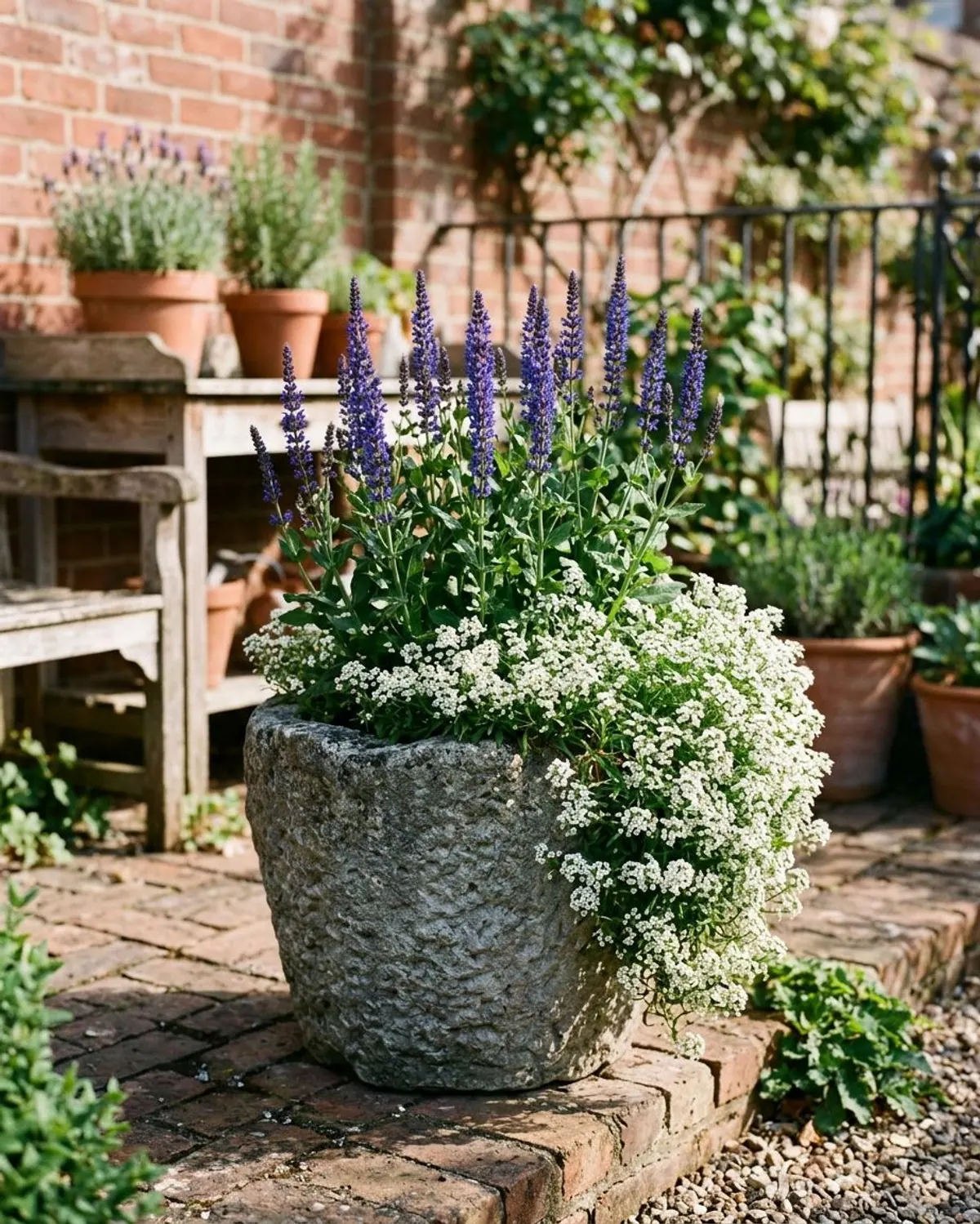
Pot: 12 to 16 inches wide
Sun: 6 or more hours
Blooms: Early summer to fall
Salvia gives height and a vertical line, and alyssum spills over the edge. Bees love both, so keep this pot a few steps from a seating area if that matters to you.
5Nasturtiums in a clay pot
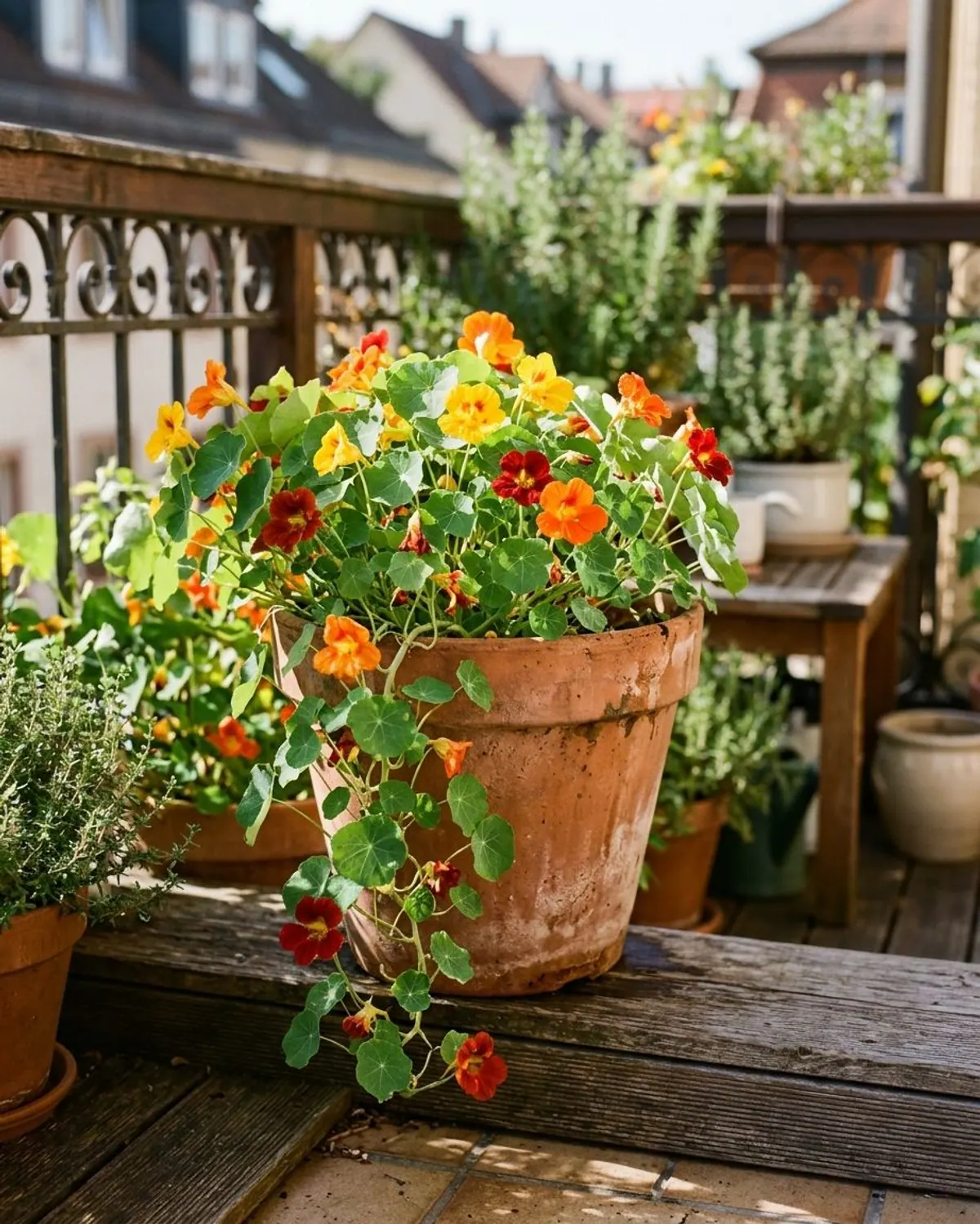
Pot: 12 inches wide
Sun: 6 or more hours
Blooms: Summer, until the first frost
Nasturtiums do best in lean soil. Too much fertilizer gives leaves and fewer flowers. They are one of the easiest flowers to grow from seed in a pot.
6Portulaca in a shallow bowl
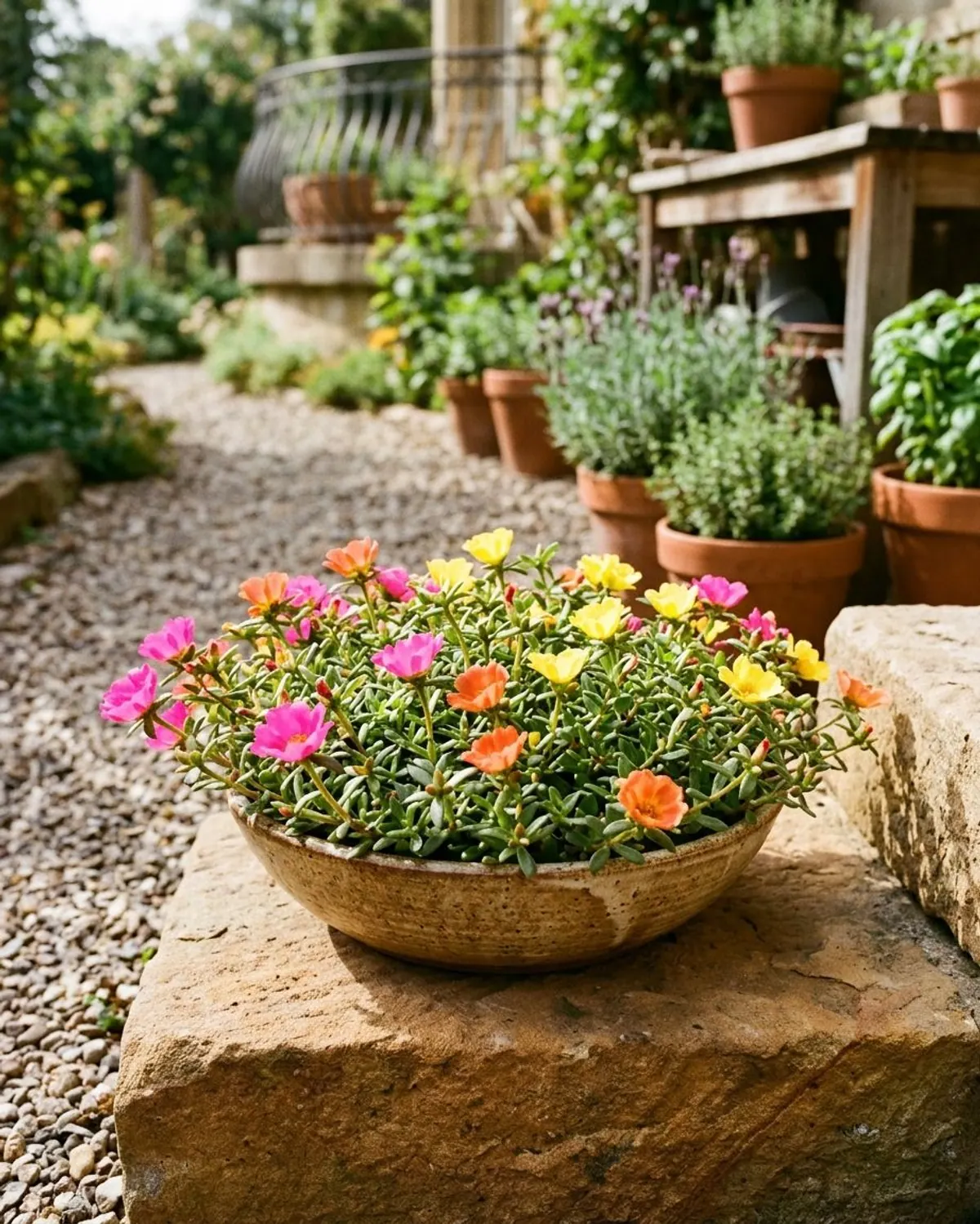
Pot: 14 inch shallow bowl
Sun: 6 or more hours
Blooms: Summer
Portulaca has succulent leaves and handles heat and dry spells better than most. It is the one to choose for a hot, dry, south-facing step. Flowers close on cloudy days.
Part shade flower pots (3 to 6 hours)
7Begonia, creeping Jenny and salvia
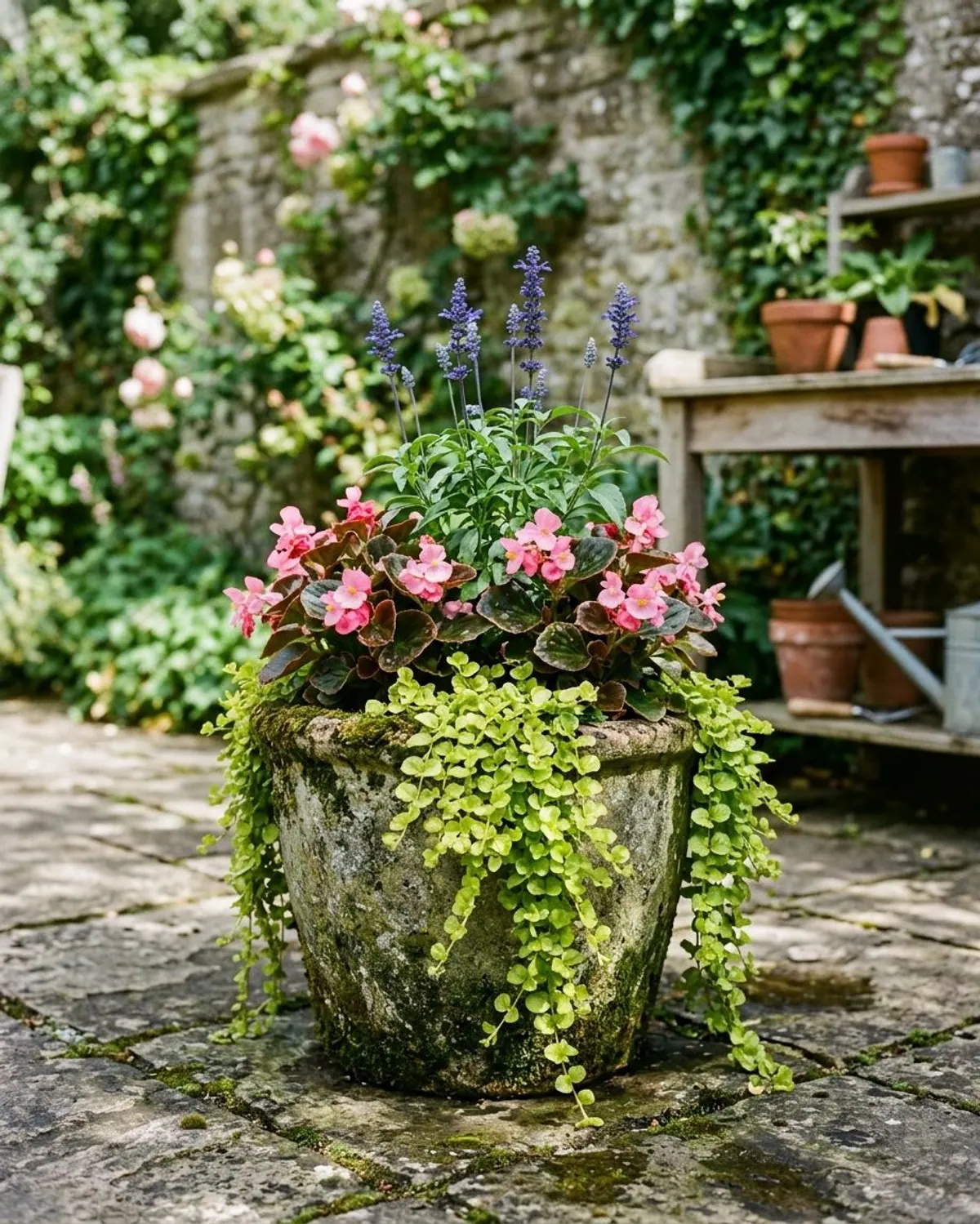
Pot: 14 inches wide
Sun: 3 to 6 hours
Blooms: Late spring to frost
The Mississippi State Extension partial-shade combo. The gold-green creeping Jenny lights up a dim corner and trails nicely.
8Fuchsia in a hanging basket
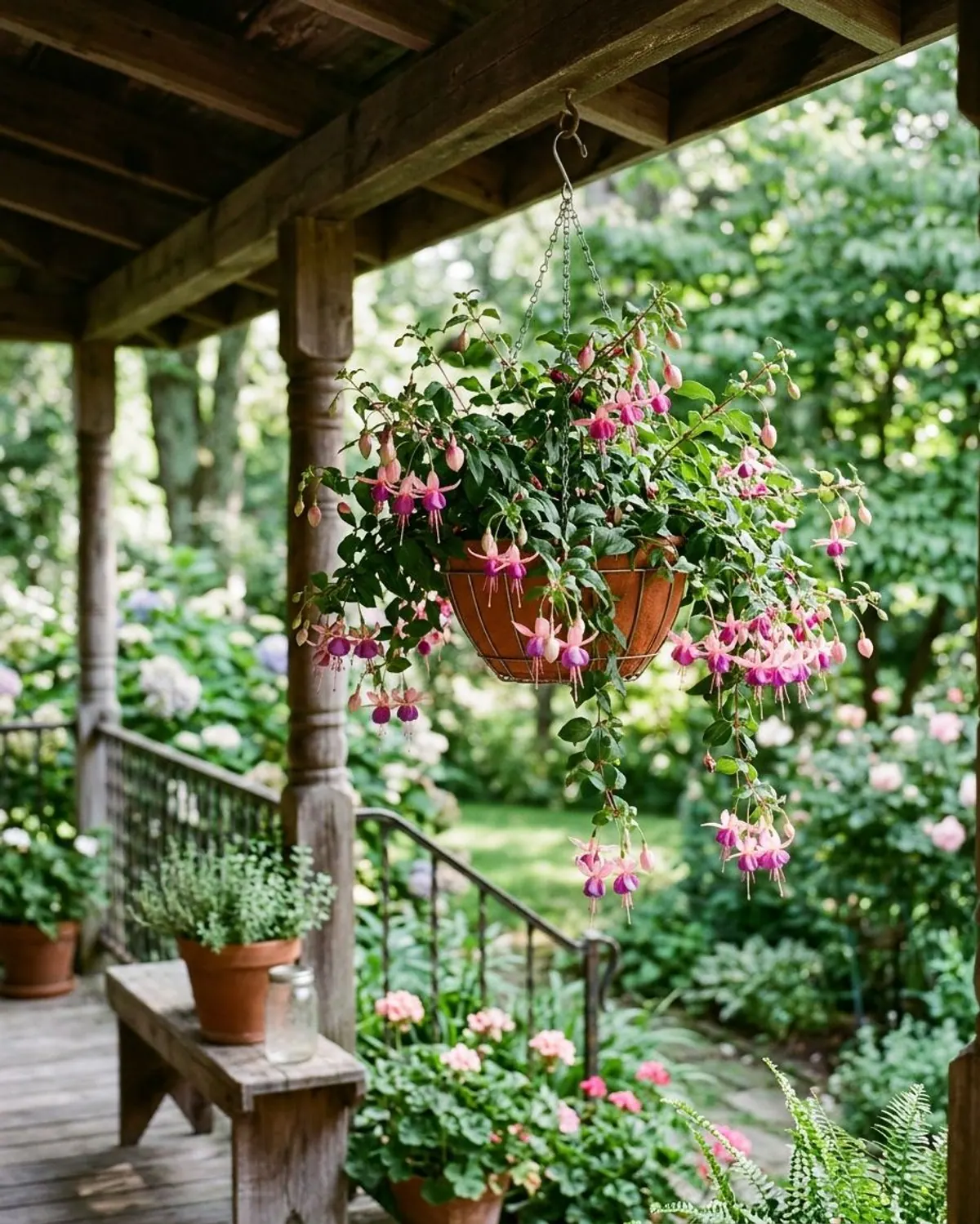
Pot: 12 inch basket
Sun: 3 to 5 hours, protected from hot afternoon sun
Blooms: Summer to early fall
Fuchsia hates heat. Hang it where it gets morning light and afternoon shade, and water often. The ballerina-skirt flowers attract hummingbirds.
9Torenia and dichondra
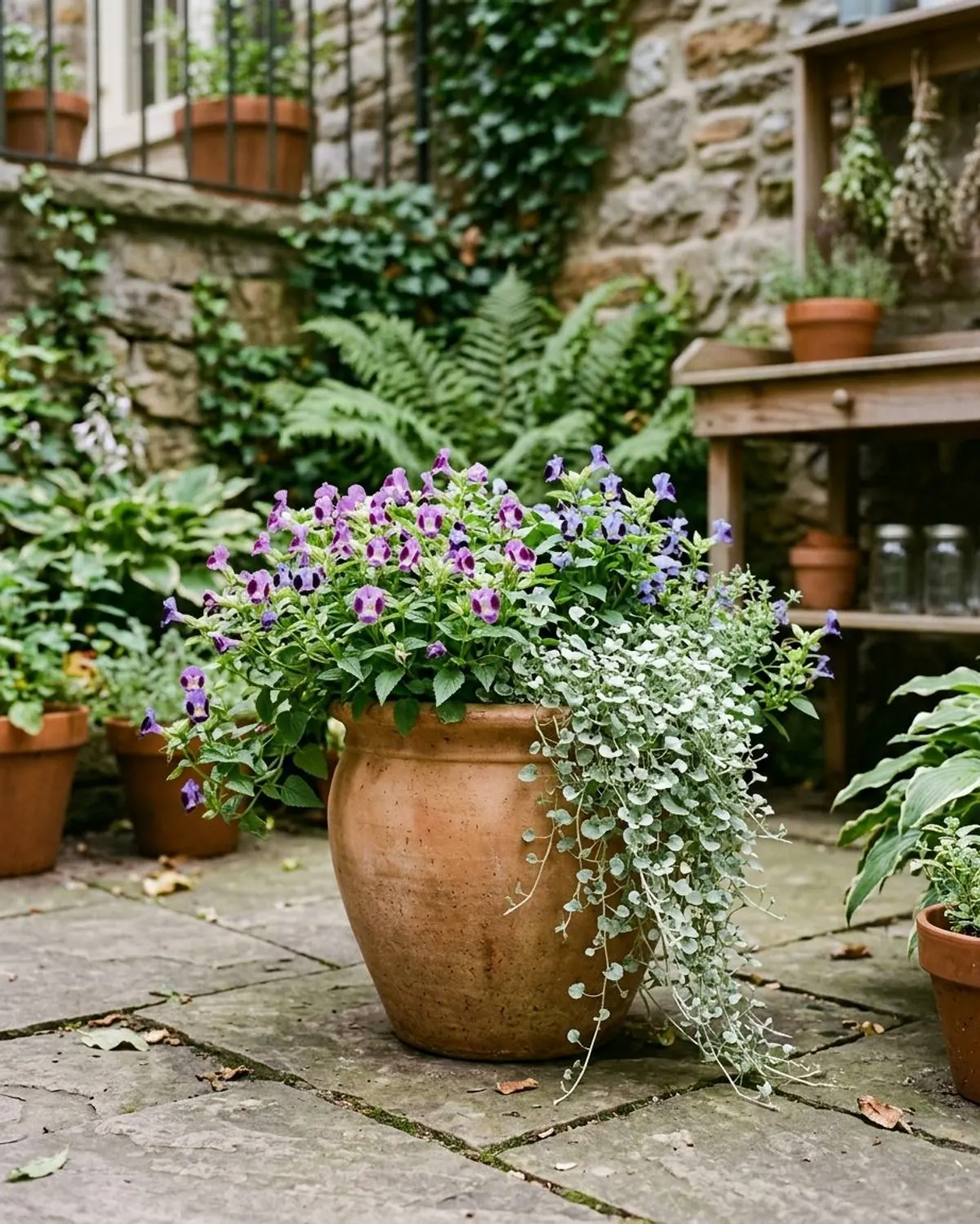
Pot: 12 to 14 inches wide
Sun: 3 to 5 hours
Blooms: Summer to frost
Torenia, also called wishbone flower, blooms in part shade where most flowers sulk. Silver dichondra spills like a waterfall.
10Coleus and begonia
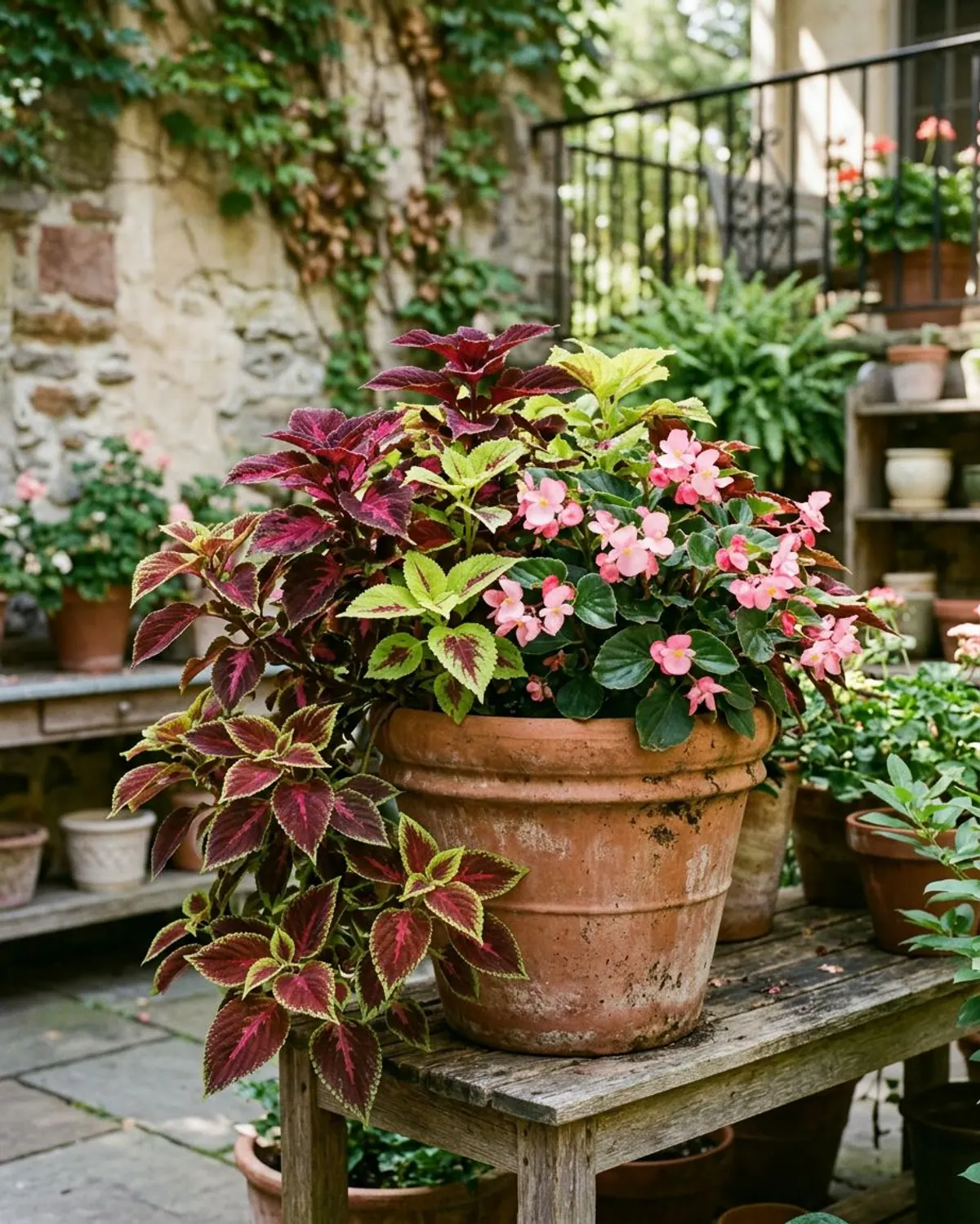
Pot: 16 inches wide
Sun: 3 to 5 hours
Blooms: Foliage all summer, begonias bloom to frost
Coleus is grown for its leaves, which look like painted glass. Pinch the tips to keep it bushy and remove flower spikes if you want fuller leaves.
Shade flower pots (less than 3 hours)
11Impatiens and asparagus fern
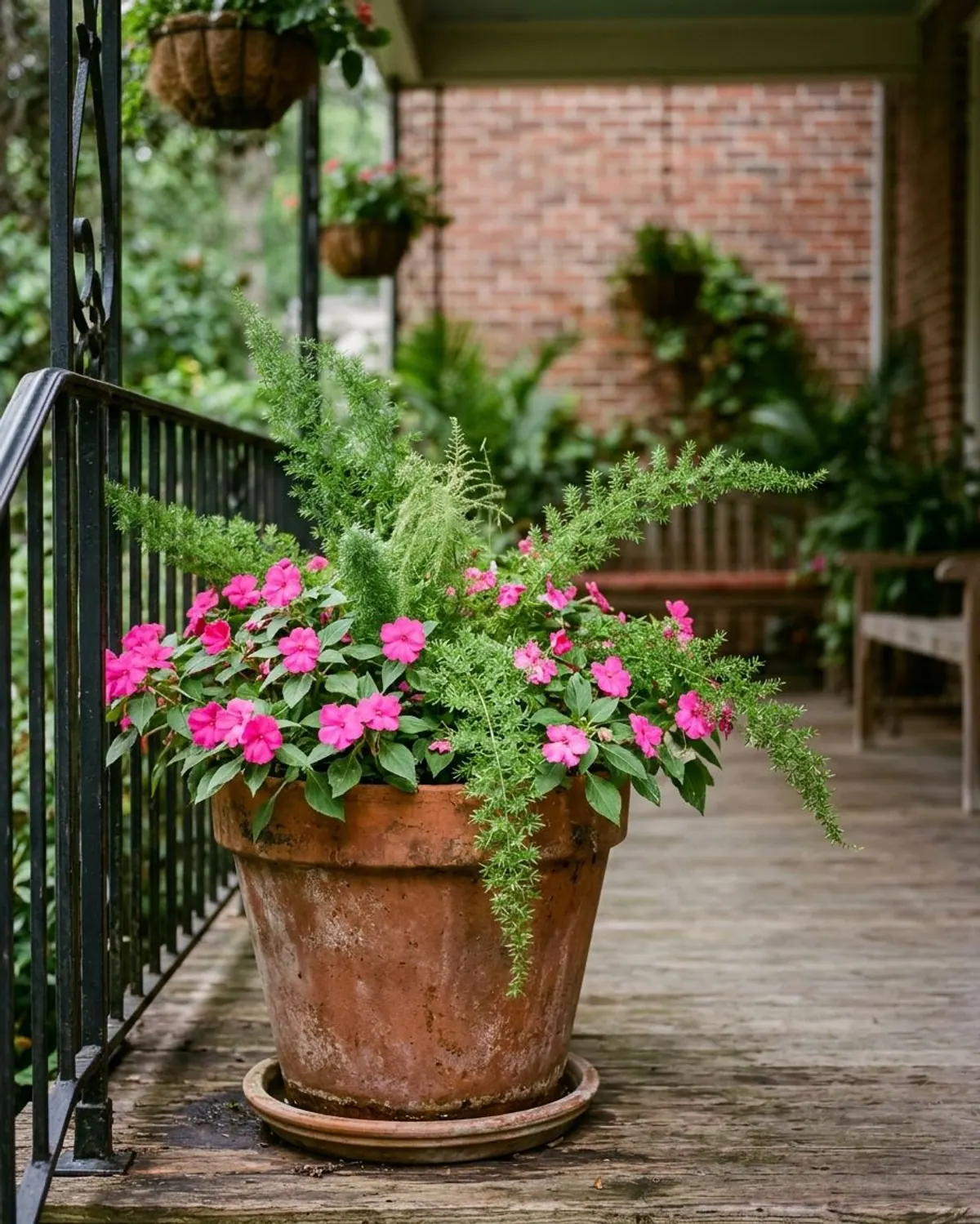
Pot: 14 to 16 inches wide
Sun: Less than 3 hours; bright shade
Blooms: Early summer to frost
The Mississippi State Extension full-shade combo includes impatiens and asparagus fern, with dianella as the thriller. Impatiens wilt dramatically when thirsty and perk up soon after watering. Asparagus fern is listed as toxic to cats and dogs by the ASPCA, so check pets first.
12Begonia and ivy in a window box
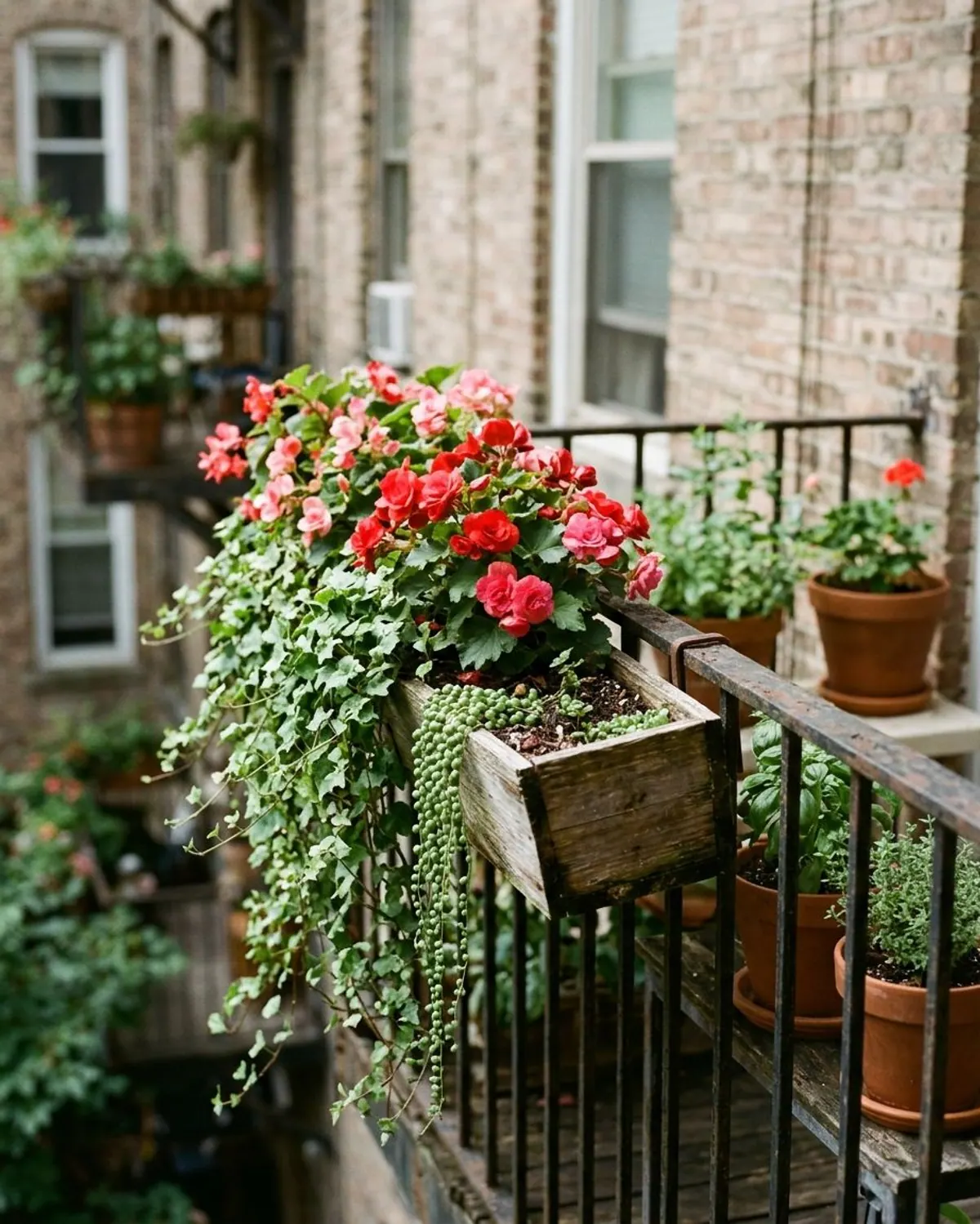
Pot: 24 to 36 inch window box
Sun: Less than 3 hours
Blooms: Late spring to frost
Begonias flower reliably in shade and ivy trails to hide the box. Secure the box on brackets rated for wet soil.
Sturdy brackets matter once the soil is wet.
13Browallia and lobelia
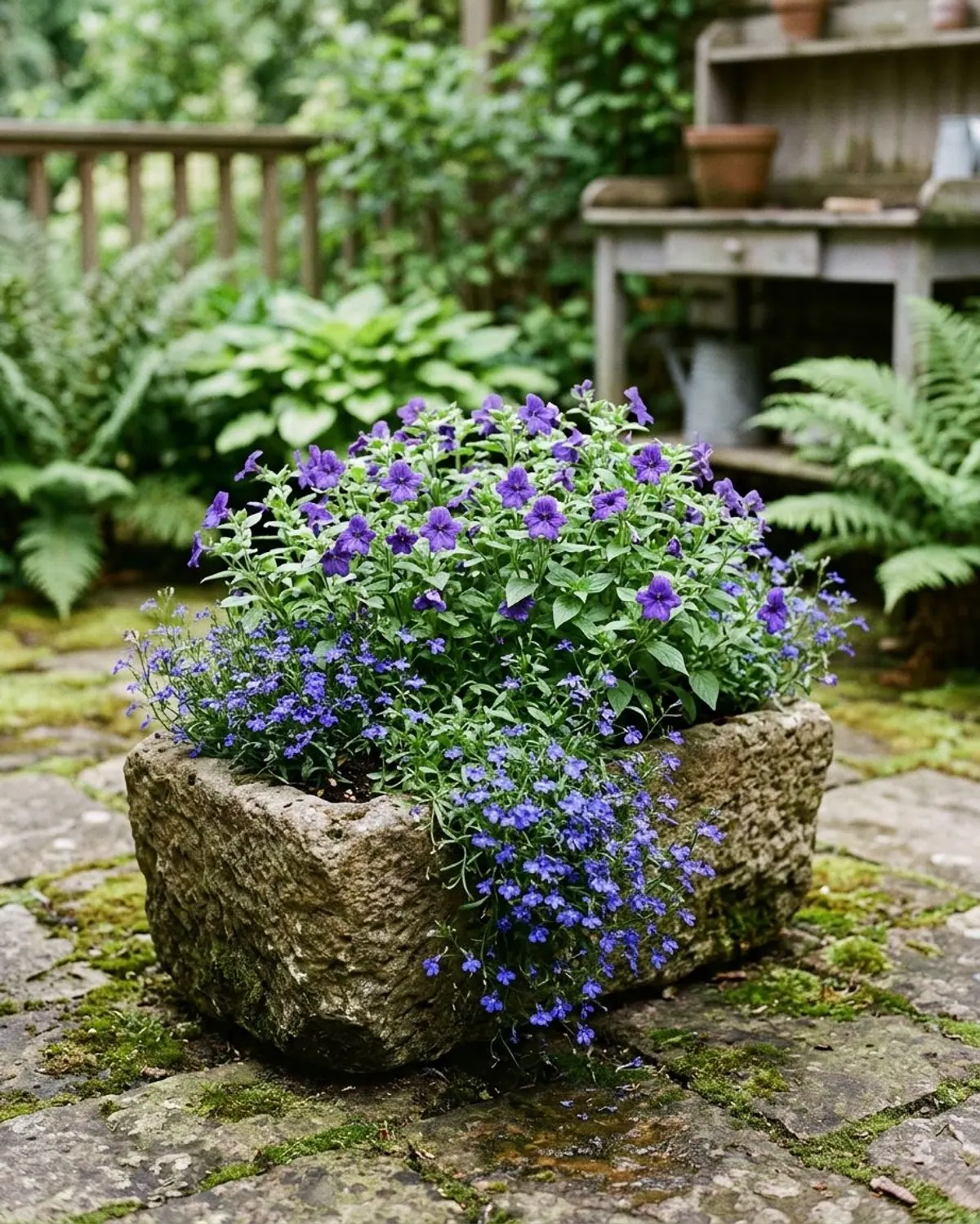
Pot: 12 to 14 inches wide
Sun: Less than 4 hours
Blooms: Summer to fall
This is an all-blue pot for cooler shade. Both plants like even moisture and fade if the pot dries out.
14Hydrangea in a large pot
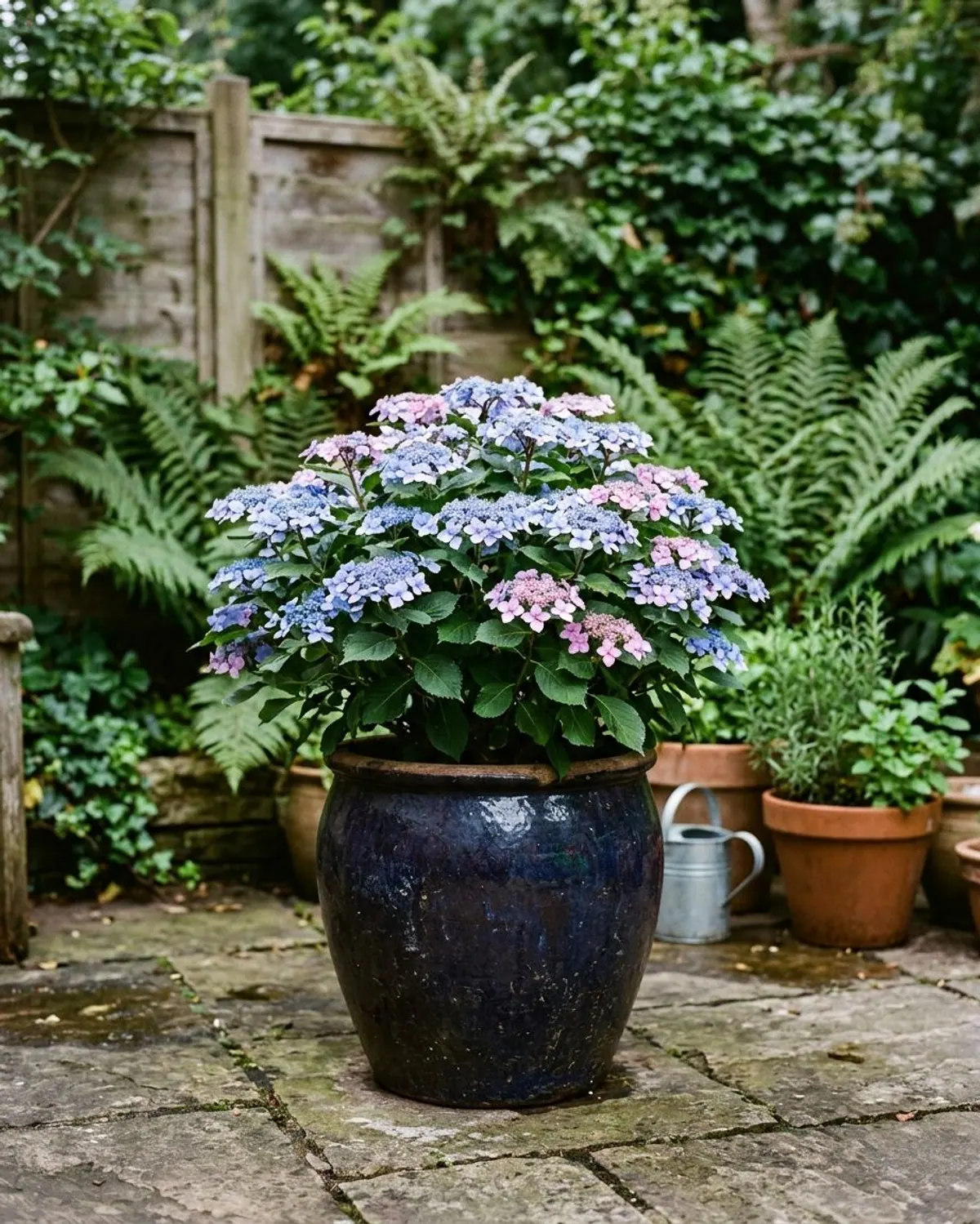
Pot: 18 inches or more
Sun: 3 to 5 hours; morning sun is best
Blooms: Early summer to fall
One big shrub in a deep pot makes an easy focal point. It needs steady water and a pot with weight. The ASPCA lists hydrangea as toxic to cats and dogs.
A deep pot keeps the root ball moist longer.
15Pansies and violas for fall and spring
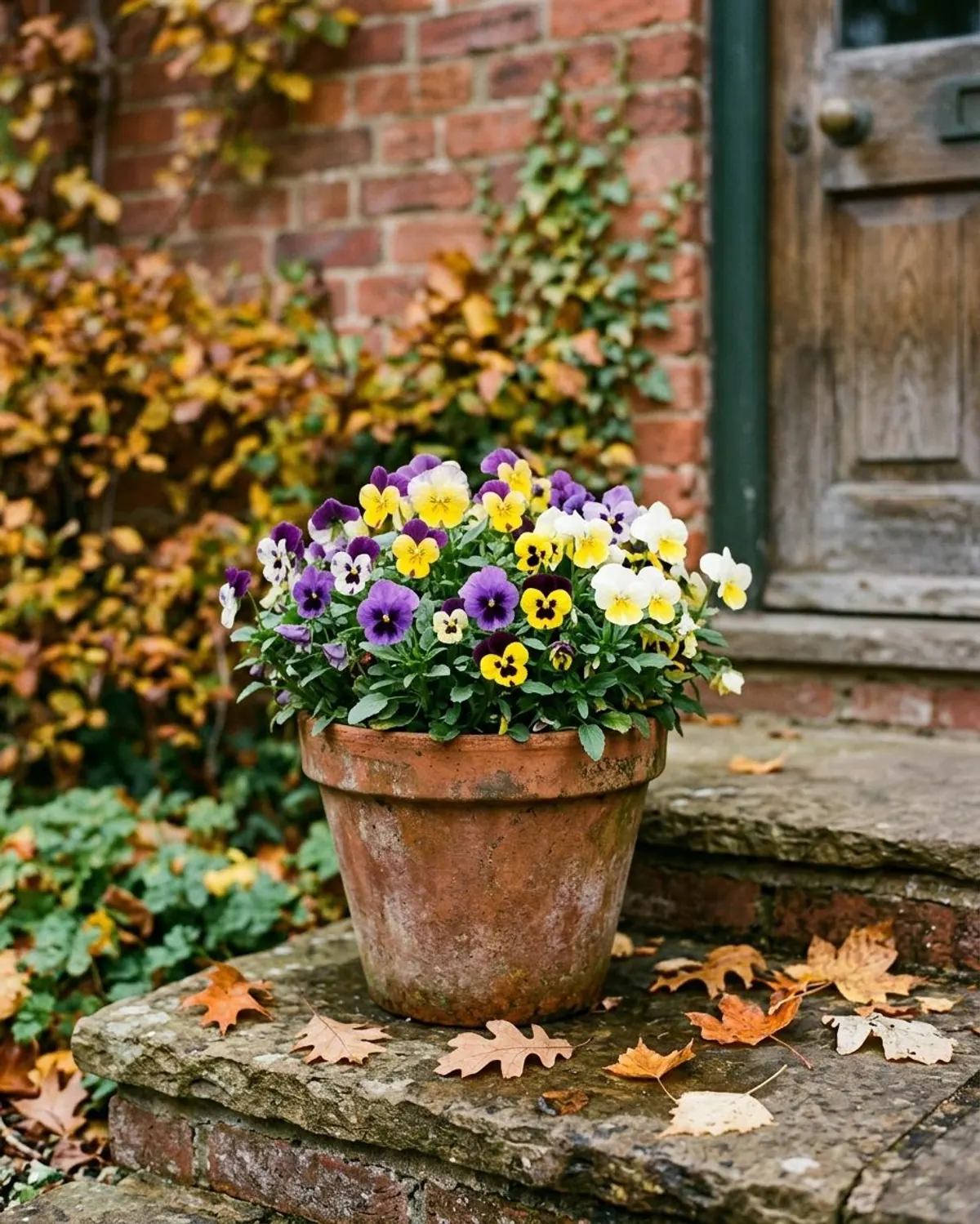
Pot: 12 inches wide
Sun: 3 to 6 hours
Blooms: Fall, early spring and mild winters
Pansies like cool weather, so they carry a pot while summer flowers rest. Plant them now for color through fall in many zones and again in early spring.
A bloom calendar for your pots
| Season | Pots that carry it |
|---|---|
| Early spring and fall | Pansies and violas |
| Late spring to summer | Geranium combo, petunia and lobelia, salvia and alyssum, begonia combos |
| Mid to late summer | Zinnias, nasturtiums, portulaca, fuchsia, torenia |
| Summer to fall | Hydrangea, browallia and lobelia, impatiens and fern |
| Foliage all season | Coleus and begonia, sweet potato vine, creeping Jenny |
Pet safety, watering and feeding
The ASPCA's plant list is the place to check each plant, because many popular ornamentals are listed as toxic to cats and dogs. Geranium, begonia, coleus and hydrangea are listed that way; pansies and zinnias are not. Our pet-safe plants guide shows how to read the list.
For all 15 pots, use potting mix, not garden soil, make sure the pot drains, and check the top inch with a finger. Small pots and baskets dry out fastest. Most flowering plants do better with a slow-release fertilizer at planting and a liquid feed every week or two, so follow the label. Our balcony garden looks article shows how to arrange several pots.
What to buy for container flowers
-
Potting mix for containers
Typically $10 to $25 a bag
Drains and stays light in a pot.
Check price on Amazon for Potting mix for containers -
Slow-release flower fertilizer
Typically $8 to $20
One application at planting feeds for weeks.
Check price on Amazon for Slow-release flower fertilizer -
Water-soluble flower food
Typically $8 to $18
For the weekly or fortnightly feed heavy bloomers want.
Check price on Amazon for Water-soluble flower food
Container flowers checklist
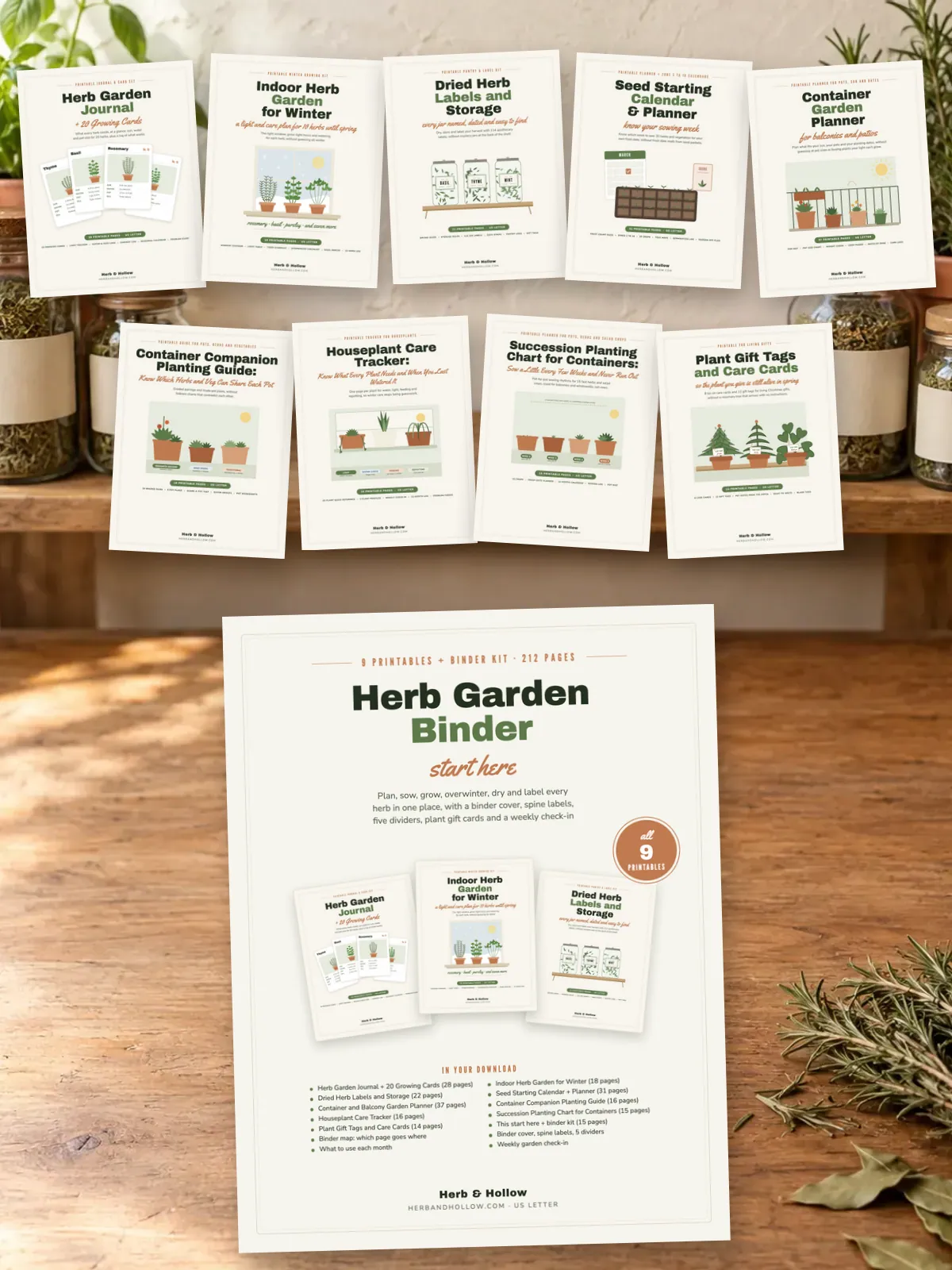
The Container & Balcony Garden Planner has the sun-check grid and pot-size charts to plan these pots, and the Small-Space Garden Binder adds the seed starting calendar and more printable pages.
Frequently asked questions
What flowers grow best in containers in full sun?
Zonal geranium, calibrachoa and sweet potato vine are Mississippi State Extension's full-sun example set. Zinnias, petunias, nasturtiums and portulaca also like 6 or more hours.
What flowers grow in shade in pots?
Mississippi State Extension suggests dianella, impatiens and asparagus fern for full shade. Begonias, torenia and coleus also do well in shade or part shade.
What is thriller, filler, spiller?
A formula for a pot: one tall plant, one mounded plant and one trailing plant. It fills a pot from the center to the edge.
Are container flowers toxic to pets?
Some are. The ASPCA lists geranium, begonia, coleus and hydrangea as toxic to cats and dogs. Check each plant on the ASPCA list.
How often should I water container flowers?
Check the top inch of mix with a finger. Small pots and hanging baskets may need water daily in hot weather.
Save it for later
Pin this to your Container Gardening board so it's there when you need it.
Save to Pinterest