This post contains affiliate links. As an Amazon Associate we earn from qualifying purchases, at no extra cost to you. Read our disclosure.
Safety first: Herbs can be powerful. If you are pregnant, nursing, take medication or have a health condition, check with your doctor or pharmacist first. Please read our herbal & garden safety notes before you start.
Key takeaways
- We only call a plant pet safe when the ASPCA lists it as non-toxic to both cats and dogs. Check the ASPCA list and your vet before you buy.
- Best for low light: spider plant, parlor palm, calathea, cast iron plant, peperomia and prayer plant.
- Toxic swaps to know: hoya instead of pothos, cast iron plant instead of snake plant, parlor palm instead of sago palm.
- Lilies and daylilies can cause kidney failure in cats per the ASPCA. Keep them out of cat homes, cut flowers included.
- If a pet eats a plant, call your vet or ASPCA Animal Poison Control at (888) 426-4435.
In this post35 sections
- How we checked: the ASPCA list, and what non-toxic means
- Pet safe houseplants for low light
- 1. Spider plant (Chlorophytum comosum)
- 2. Parlor palm (Chamaedorea elegans)
- 3. Calathea (Calathea spp.)
- 4. Cast iron plant (Aspidistra elatior)
- 5. Baby rubber plant (Peperomia obtusifolia)
- 6. Prayer plant
- Cat safe plants for the bathroom
- 7. Boston fern (Nephrolepis exaltata 'Bostoniensis')
- 8. Lemon button fern (Nephrolepis cordifolia 'Duffii')
- 9. Rabbit's foot fern (Davallia)
- Pet friendly plants that flower
- 10. African violet (Saintpaulia)
- 11. Moth orchid (Phalaenopsis)
- 12. Christmas cactus (Schlumbergera bridgesii)
- 13. Blushing bromeliad (Neoregelia)
- Pet friendly large indoor plants and trees
- 14. Areca palm (Dypsis lutescens)
- 15. Ponytail palm (Beaucarnea recurvata)
- 16. Money tree (Pachira aquatica)
- Hanging and trailing pet safe plants
- 17. Hoya (Hoya carnosa)
- 18. Swedish ivy (Plectranthus australis)
- Pet safe succulents
- 19. Zebra haworthia (Haworthia fasciata)
- 20. Echeveria (hens and chickens, Echeveria elegans)
- 21. Burro's tail (Sedum morganianum)
- Pet safe herbs for the sill, and two to skip
- Popular houseplants that are not pet safe
- Safe look-alikes: swap this toxic plant for that safe one
- Cat safe plant display: shelves, stands and hangers
- If your pet eats a plant: what to do and who to call
- Pet safe houseplant starter list
- FAQ
How we checked: the ASPCA list, and what non-toxic means
Every plant in this guide was looked up on its own page in the ASPCA toxic and non-toxic plant list, by common name and botanical name. We only call a plant pet safe when the ASPCA lists it as non-toxic to both cats and dogs.
Non-toxic does not mean a plant is a snack. The ASPCA notes that eating any plant material can cause vomiting and an upset stomach in cats and dogs, and that its list covers the plants it sees most often, not every plant.
| Tag | What it means |
|---|---|
| Cats safe, dogs safe | ASPCA lists it as non-toxic to both |
| Light: low, medium or bright | Low = north window or across the room; medium = east window or a few feet back; bright = near a south or west window |
| Size | Small pot (under 12 in), medium, or floor plant |
Pet safe houseplants for low light
These six handle a dim apartment better than most safe plants. Low light is not no light, though: each one still needs a window in the room or a grow light.
1Spider plant (Chlorophytum comosum)
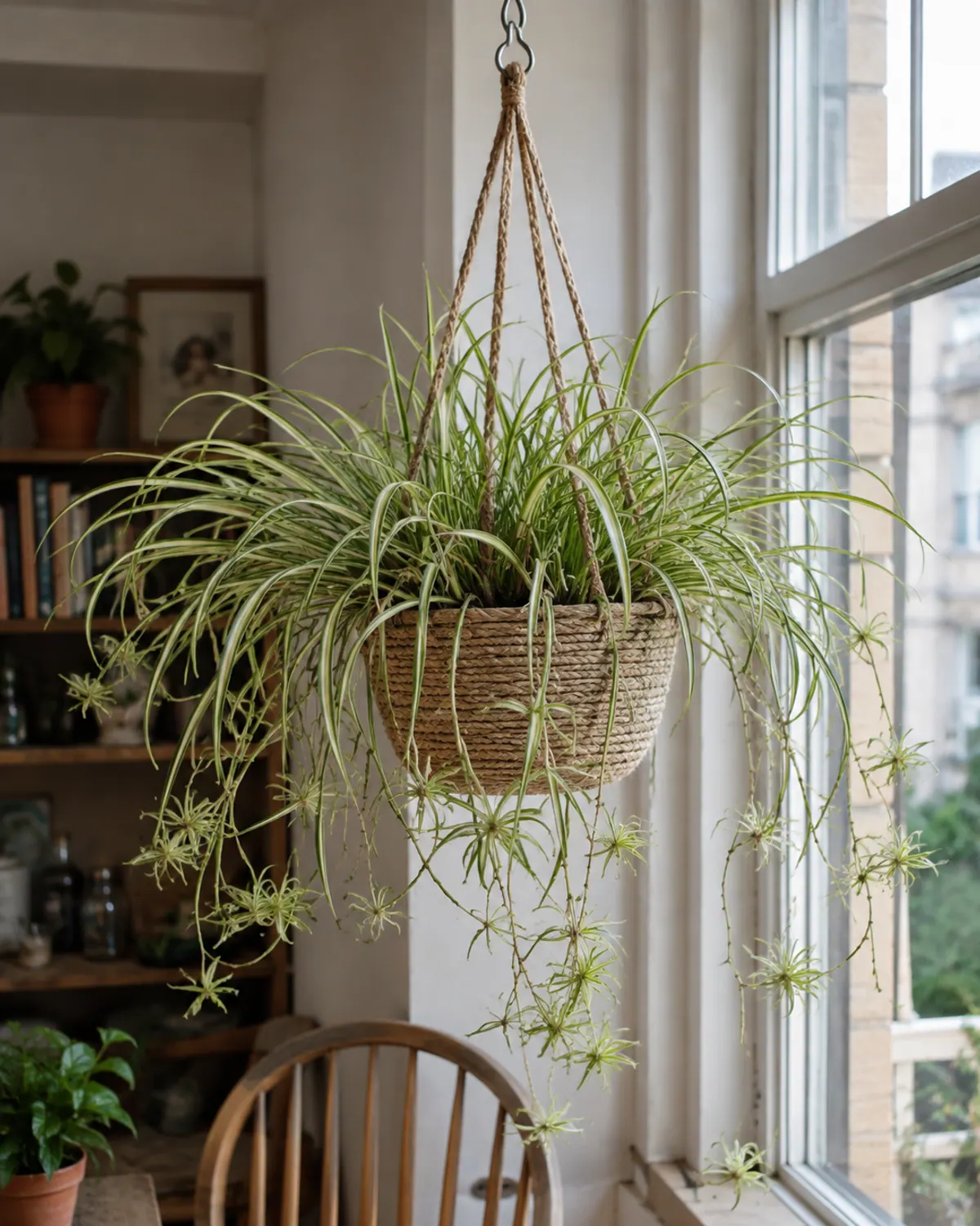
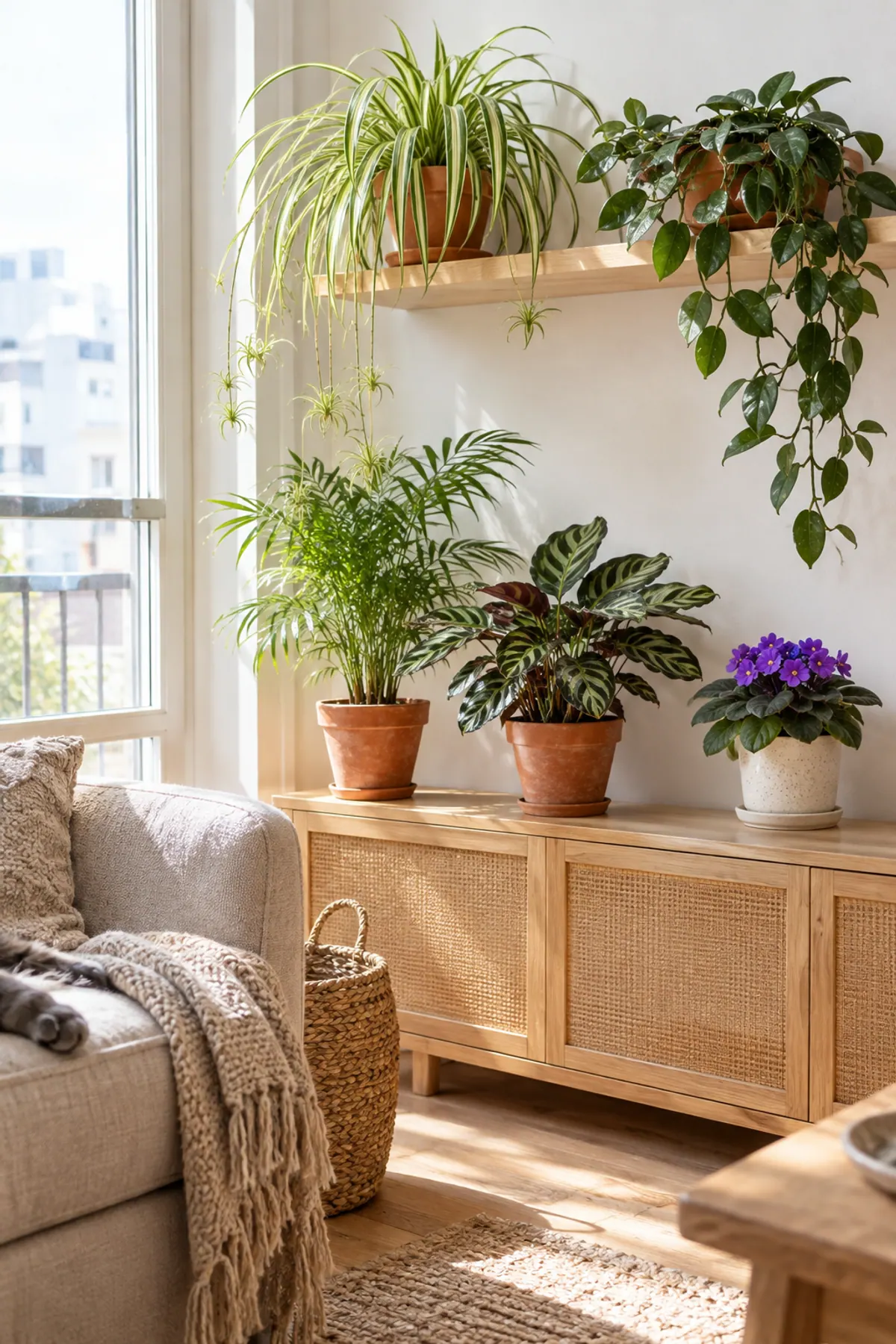
Pet tag: cats safe, dogs safe. The ASPCA lists it as non-toxic to cats and dogs; check the ASPCA list and your vet. Arching green-and-cream leaves and little plantlets on long stems make this the classic starter plant. It copes with low to medium light and dries out a bit between drinks. Size: small to medium, and it trails once the babies form. Cats love to bat the dangling stems, so hang it a little higher than tail height.
- Brown leaf tips are usually dry air or tap water salts, not a problem for your pet.
An easy, non-toxic first plant that trails as it grows.
2Parlor palm (Chamaedorea elegans)
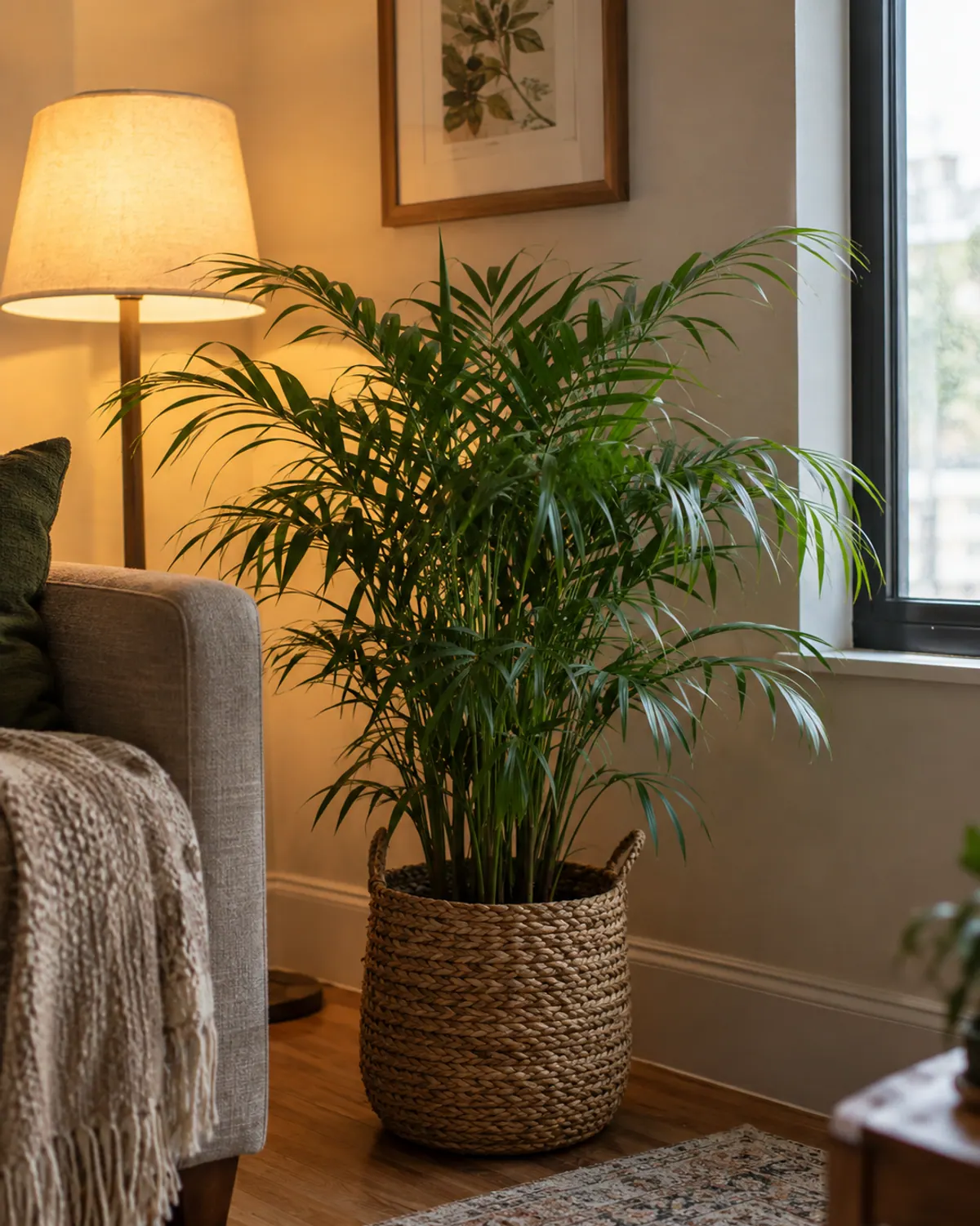
Pet tag: cats safe, dogs safe. The ASPCA lists it as non-toxic to cats and dogs; check the ASPCA list and your vet. A soft, feathery palm that stays tabletop size for years and grows slowly to floor height. It is one of the few palms that tolerates low light. Size: small to medium. Its look-alike problem is the sago palm, which is toxic to cats and dogs, so check the tag says Chamaedorea.
- Water when the top inch of soil is dry; parlor palms sulk in soggy soil.
A non-toxic palm that handles a dim corner.
3Calathea (Calathea spp.)
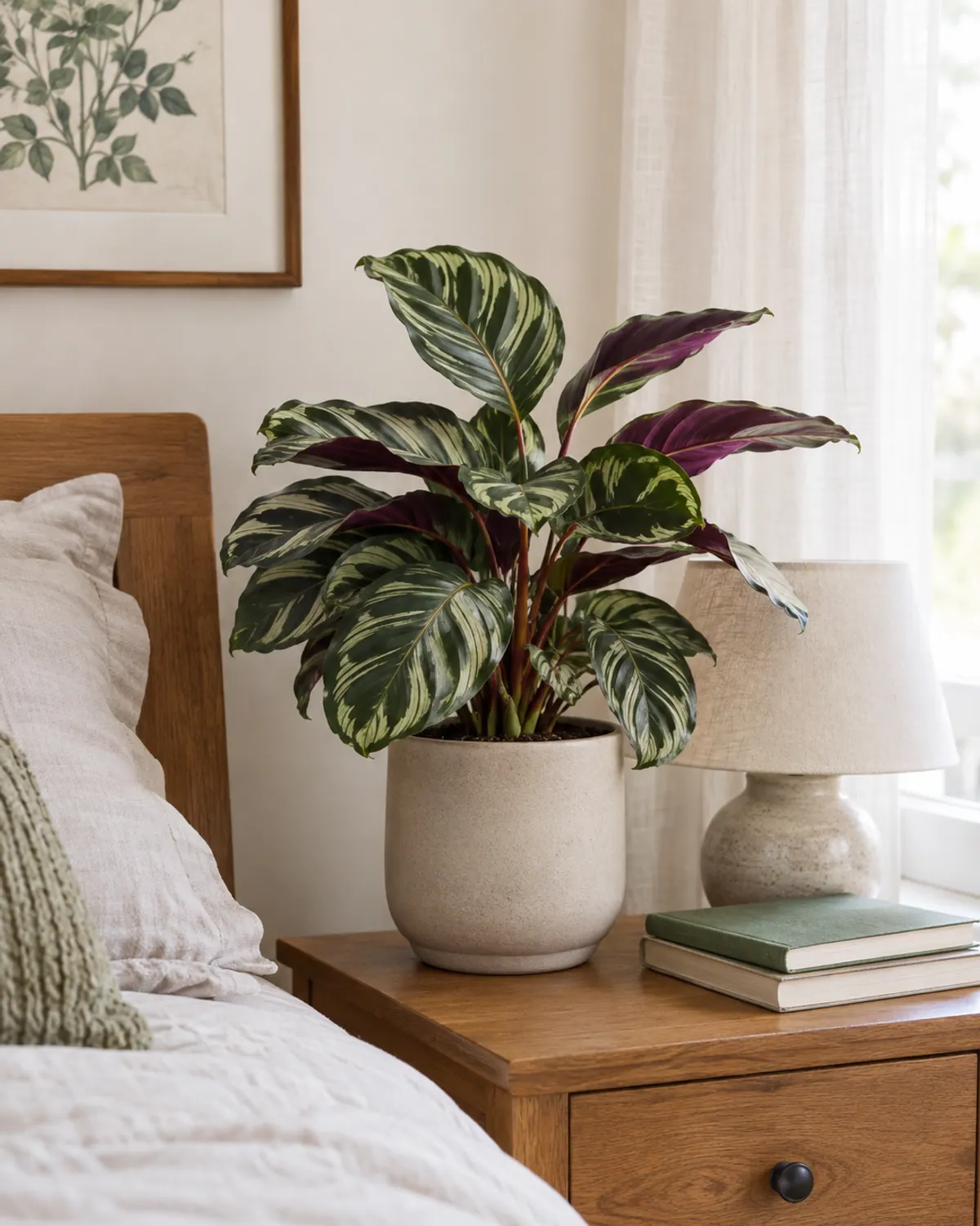
Pet tag: cats safe, dogs safe. The ASPCA lists it as non-toxic to cats and dogs; check the ASPCA list and your vet. Calatheas have painted, striped or round leaves that fold up a little at night. They like medium to low light, steady moisture and humid air, which makes a bedroom or bathroom a good fit. Size: small to medium. Swap it in for dieffenbachia, a patterned-leaf plant that is toxic.
- Use filtered or rain water if the leaf edges crisp.
Bold leaf patterns with no ASPCA toxicity flag.
4Cast iron plant (Aspidistra elatior)
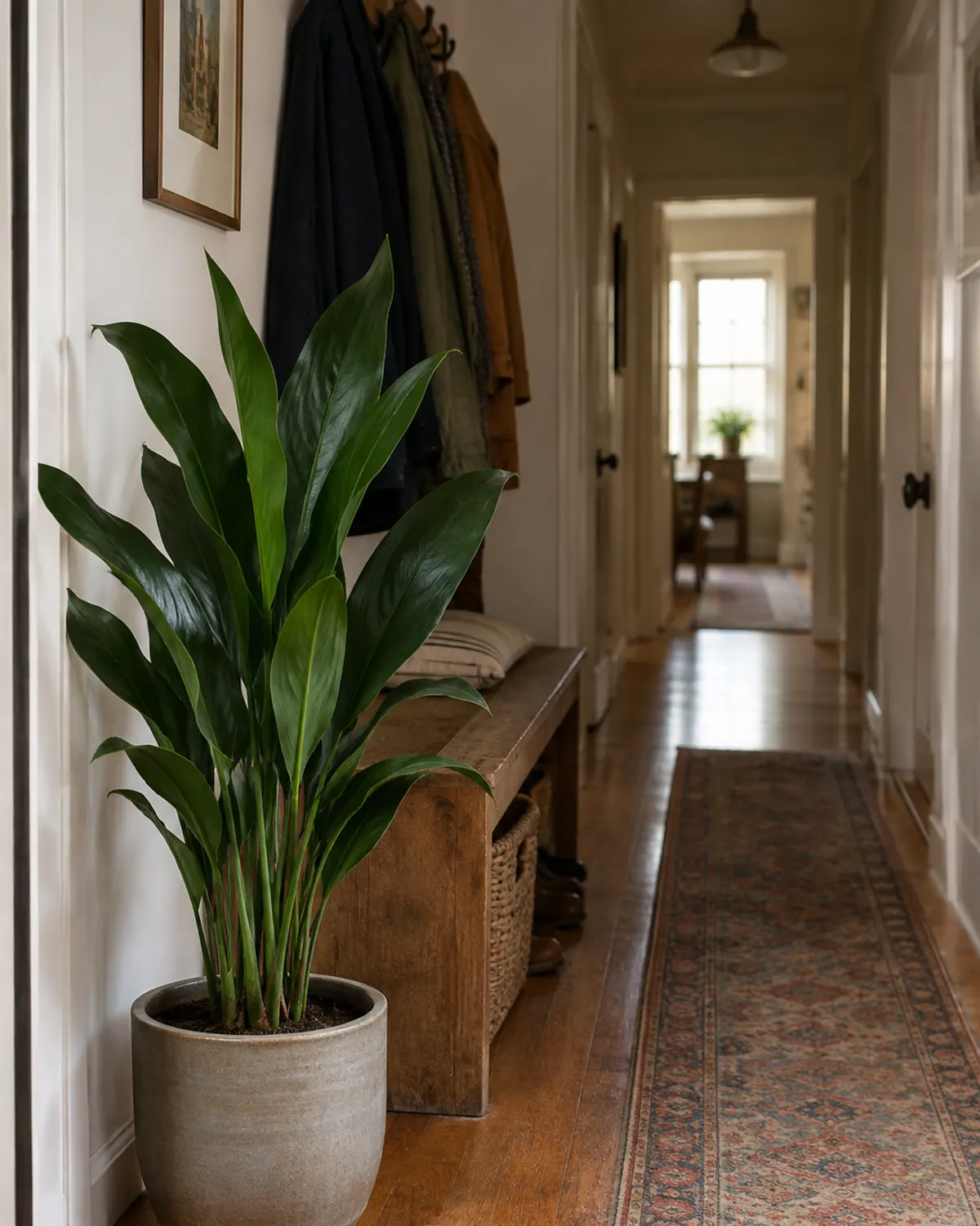
Pet tag: cats safe, dogs safe. The ASPCA lists it as non-toxic to cats and dogs; check the ASPCA list and your vet. Dark, upright leaves that put up with dim hallways, cool rooms and missed waterings. It grows slowly, so buy the size you want. Size: medium floor or tabletop plant. It is the safest swap for a snake plant, which the ASPCA lists as toxic.
- Wipe the wide leaves with a damp cloth every month so they catch more light.
Handles dim rooms and is non-toxic per the ASPCA.
5Baby rubber plant (Peperomia obtusifolia)
Pet tag: cats safe, dogs safe. The ASPCA lists it as non-toxic to cats and dogs; check the ASPCA list and your vet. Thick, glossy, spoon-shaped leaves on a compact plant. Peperomias store water in their leaves, so they forgive a busy schedule. Size: small pot. The name is the trap here: the true rubber plant is a ficus, and the ASPCA lists ficus as toxic. Watermelon peperomia (Peperomia argyreia) is also non-toxic.
- Let the soil dry halfway down before watering.
A small, forgiving non-toxic plant for shelves.
6Prayer plant
Pet tag: cats safe, dogs safe. The ASPCA lists it as non-toxic to cats and dogs; check the ASPCA list and your vet. Low-growing leaves with colored veins that lift and fold at dusk; the ASPCA lists prayer plant on its own page. It is a cousin of calathea and wants the same things: medium to low light, even moisture and no cold drafts. Size: small, spreading. It looks good at the front of a shelf where you can watch it move.
- Keep it out of direct sun, which bleaches the leaf pattern.
Moving, patterned leaves and non-toxic to cats and dogs.
Only have a north window? A small clip-on light helps any of these. Our grow light guide compares options, and the Indoor Winter Herb Garden Kit has a window chooser and a light table with ASPCA pet flags if you grow herbs too. Herb notes here are about growing only, not medical advice.
Cat safe plants for the bathroom
A bathroom with a window is steamy and soft-lit, which ferns love. These three are listed non-toxic to cats and dogs; the popular bird's nest fern is not on the ASPCA list, so we left it out.
7Boston fern (Nephrolepis exaltata 'Bostoniensis')
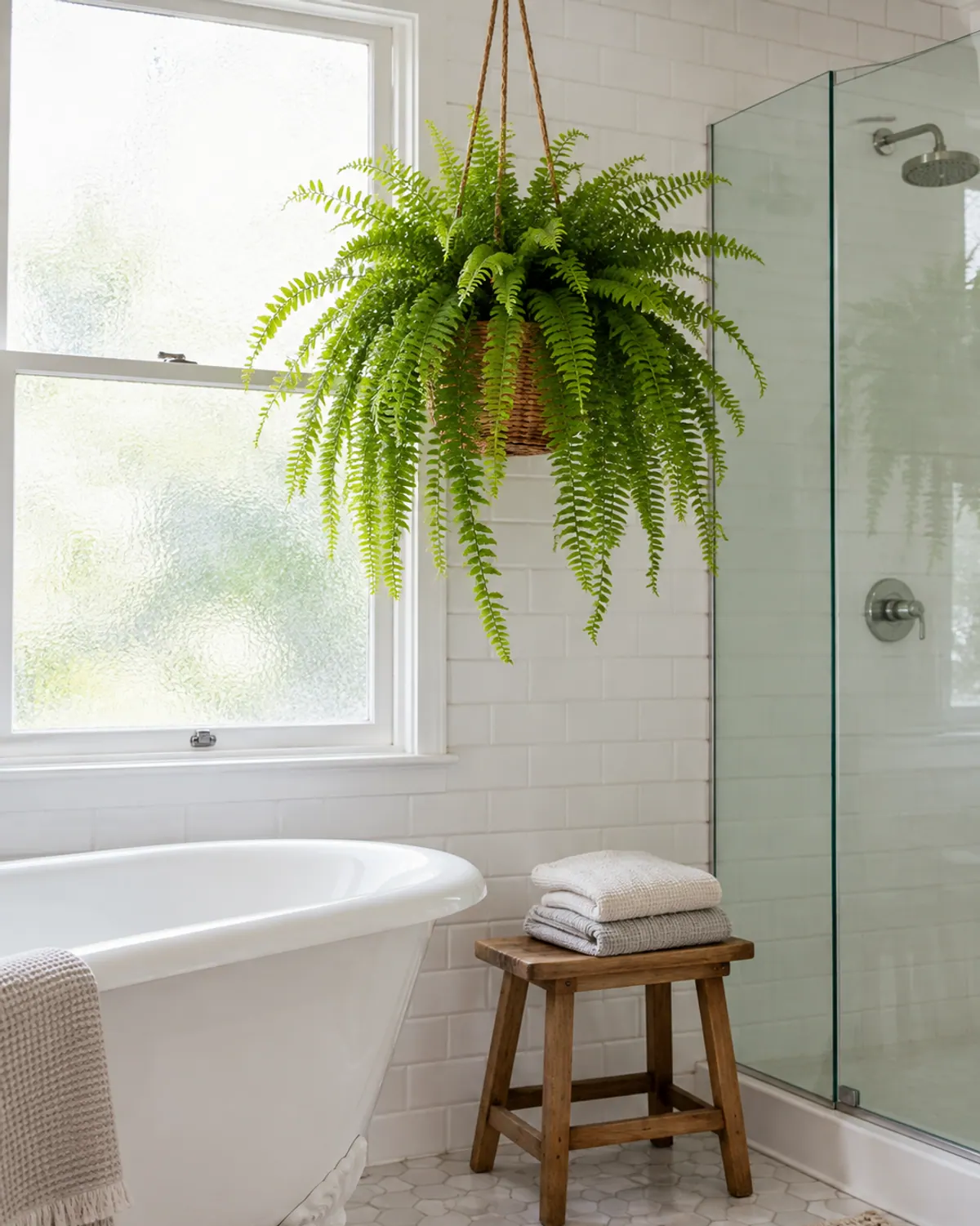
Pet tag: cats safe, dogs safe. The ASPCA lists it as non-toxic to cats and dogs; check the ASPCA list and your vet. Full, arching fronds that look best hanging or on a tall stand. It needs medium light, damp soil and humidity, so a bathroom window is close to its favorite spot. Size: medium to large. Cats like to chew fronds, so a hanging basket saves the fern as much as the cat.
- Never let it dry out completely; crispy fronds rarely recover.
A classic non-toxic fern for a humid room.
8Lemon button fern (Nephrolepis cordifolia 'Duffii')
Pet tag: cats safe, dogs safe. The ASPCA lists it as non-toxic to cats and dogs; check the ASPCA list and your vet. A small fern with tiny round leaflets. It fits a windowsill, a terrarium or the back of the tub. Size: small pot. The ASPCA lists it as Duffii fern. It wants the same steady moisture as a Boston fern but takes up a fraction of the space.
- Group it with other plants to keep the air around it humid.
A tiny non-toxic fern for a bathroom sill.
9Rabbit's foot fern (Davallia)
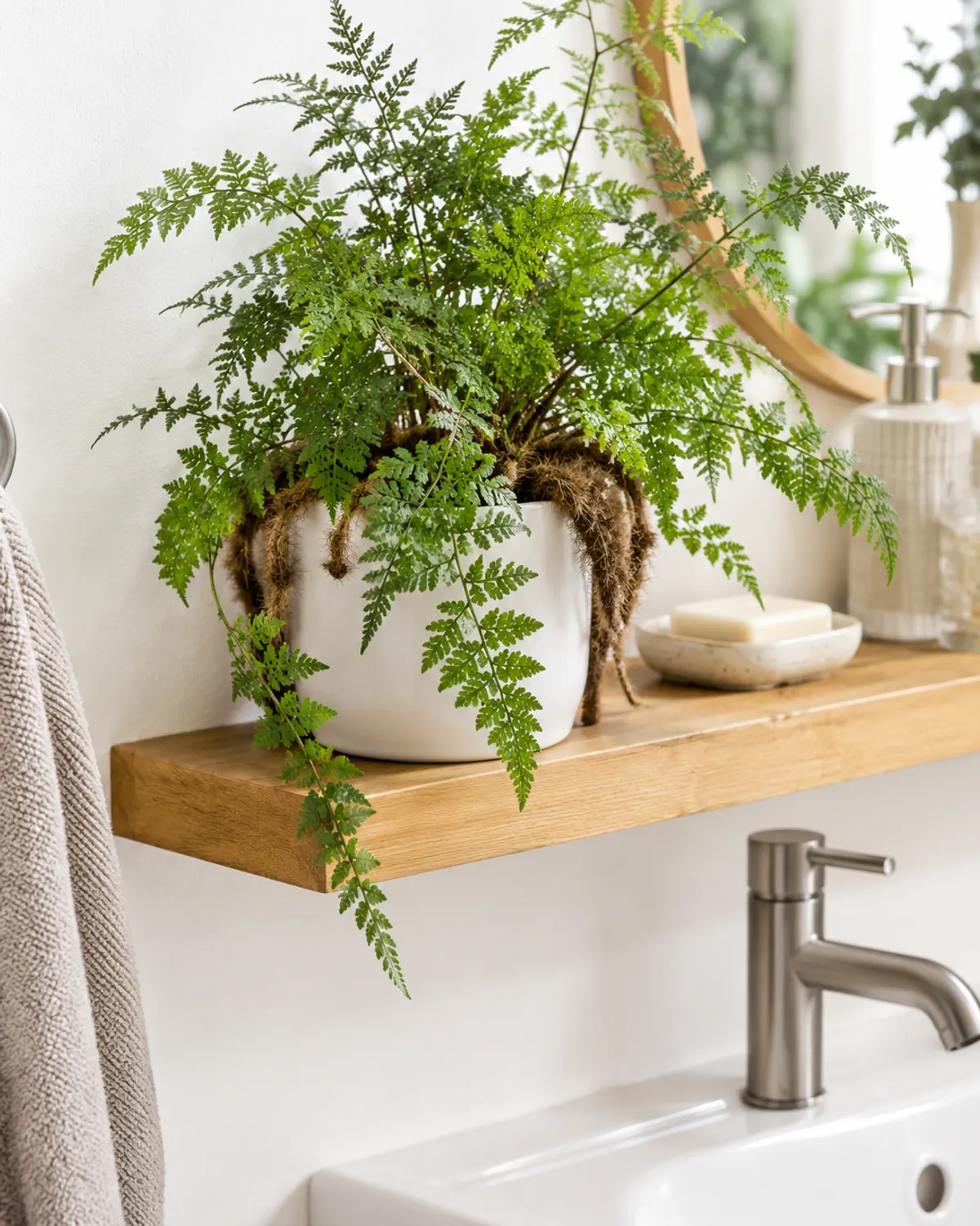
Pet tag: cats safe, dogs safe. The ASPCA lists it as non-toxic to cats and dogs; check the ASPCA list and your vet. Lacy fronds over fuzzy brown rhizomes that creep over the pot rim like little paws. It tolerates drier air than most ferns. Size: small to medium. The ASPCA lists Davallia under hare fern. Those fuzzy feet tempt cats, so give it a high shelf.
- Don't bury the furry rhizomes; they need to sit on top of the soil.
Lacy, non-toxic and fine with average humidity.
Pet friendly plants that flower
10African violet (Saintpaulia)
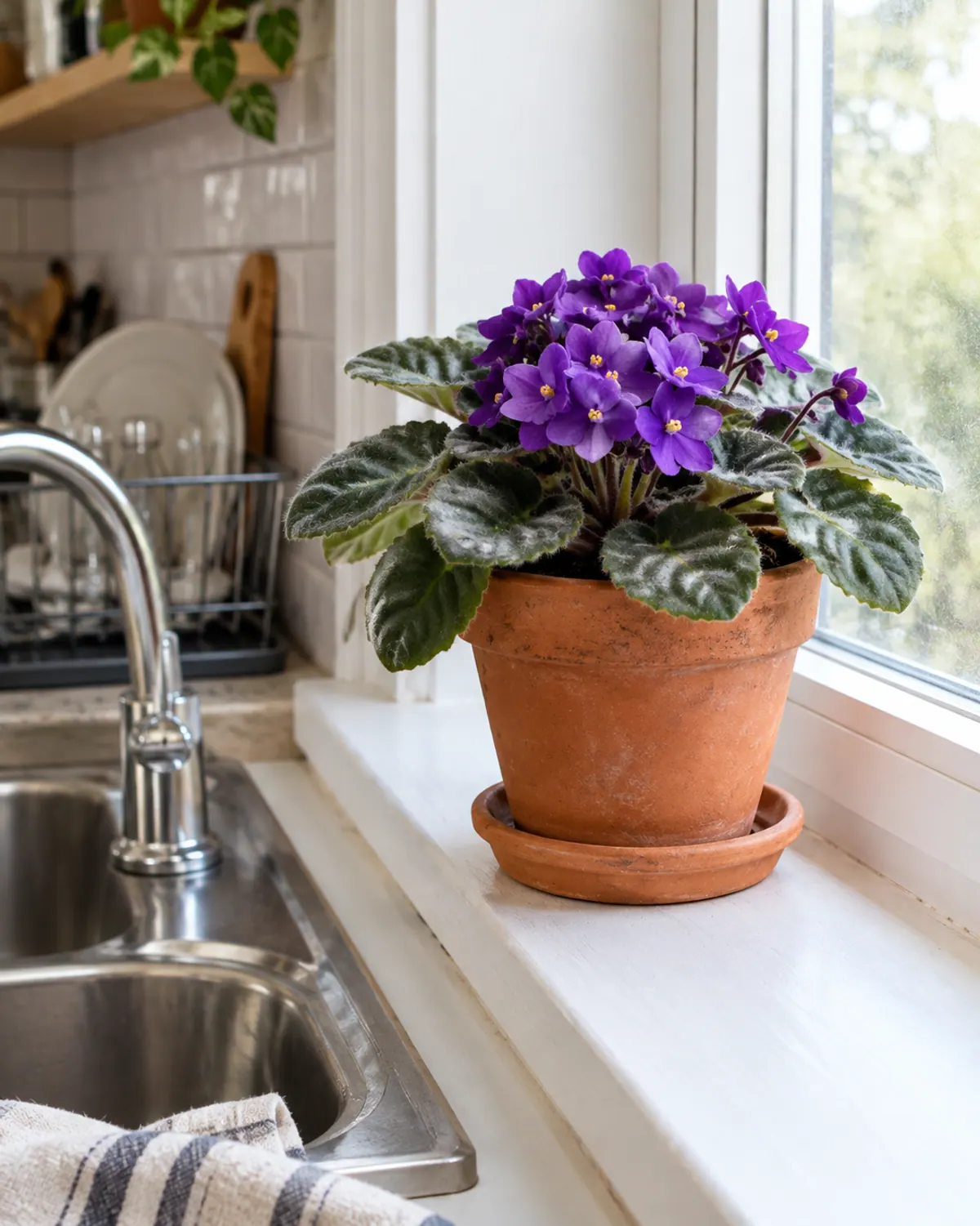
Pet tag: cats safe, dogs safe. The ASPCA lists it as non-toxic to cats and dogs; check the ASPCA list and your vet. Velvety leaves and purple, pink or white flowers off and on all year. It wants bright, indirect light and grows well under a plain LED shelf light. Size: small pot. Water from below so the fuzzy leaves stay dry.
- Turn the pot a quarter turn each week so it blooms evenly.
Flowers indoors and is non-toxic to cats and dogs.
11Moth orchid (Phalaenopsis)
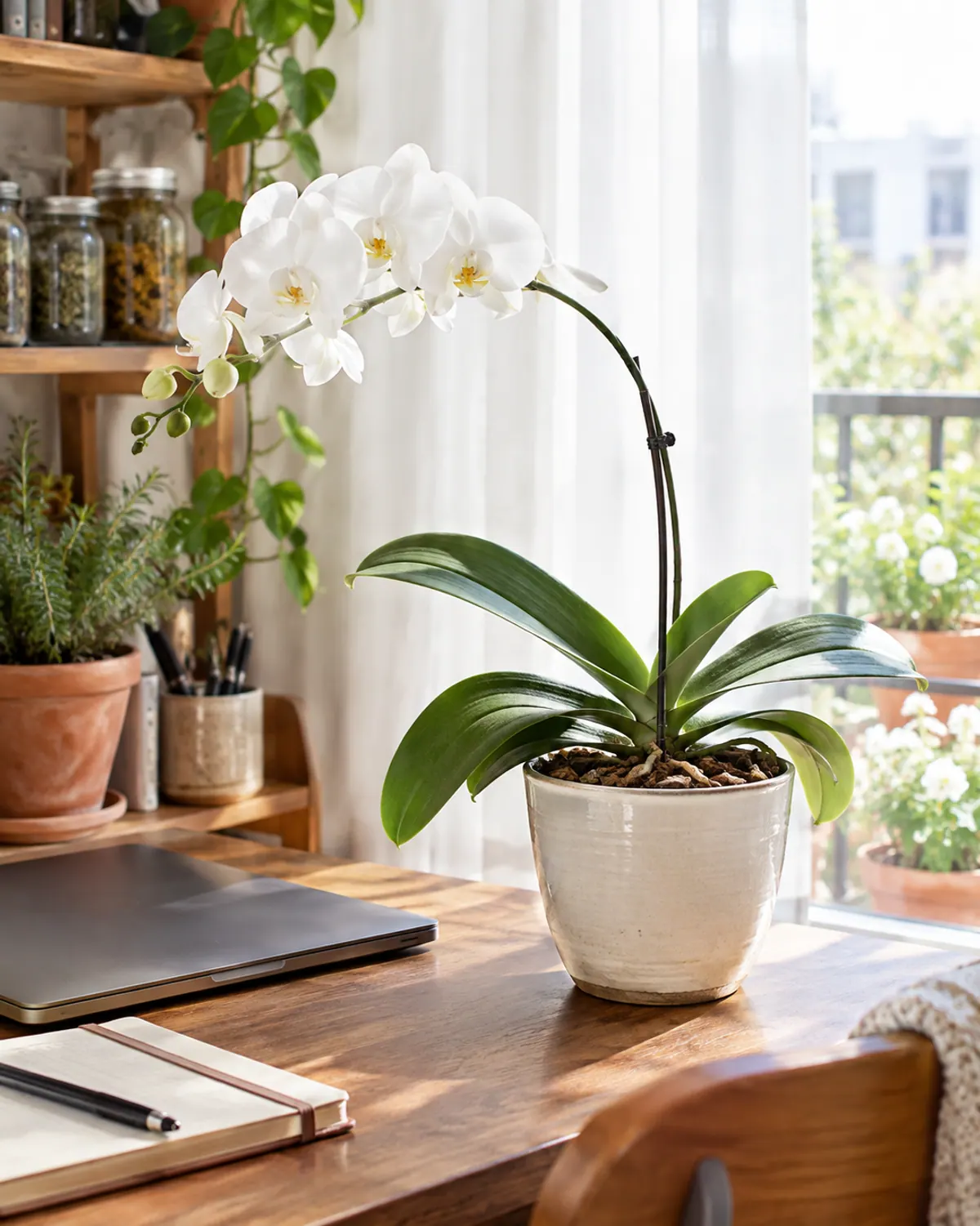
Pet tag: cats safe, dogs safe. The ASPCA lists it as non-toxic to cats and dogs; check the ASPCA list and your vet. The orchid sold in grocery stores, with long-lasting flower sprays. It likes bright, indirect light and a soak when the bark mix is nearly dry. Size: small to medium. The ASPCA lists Phalaenopsis as non-toxic, but flowers that come with dyed blooms or added glitter are best kept out of reach.
- After blooming, cut the spike above a node and it may flower again.
Months of flowers and no ASPCA toxicity flag.
12Christmas cactus (Schlumbergera bridgesii)
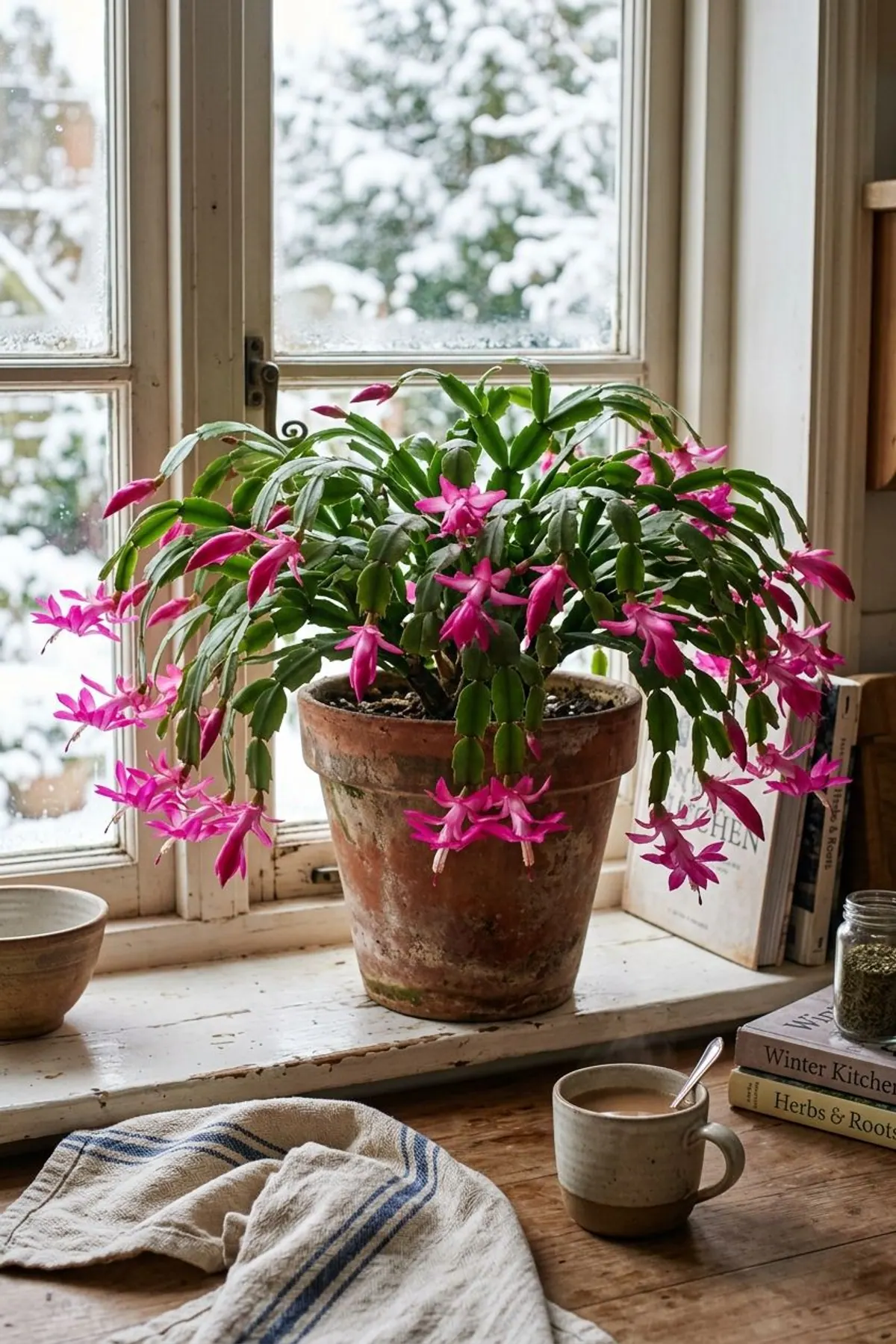
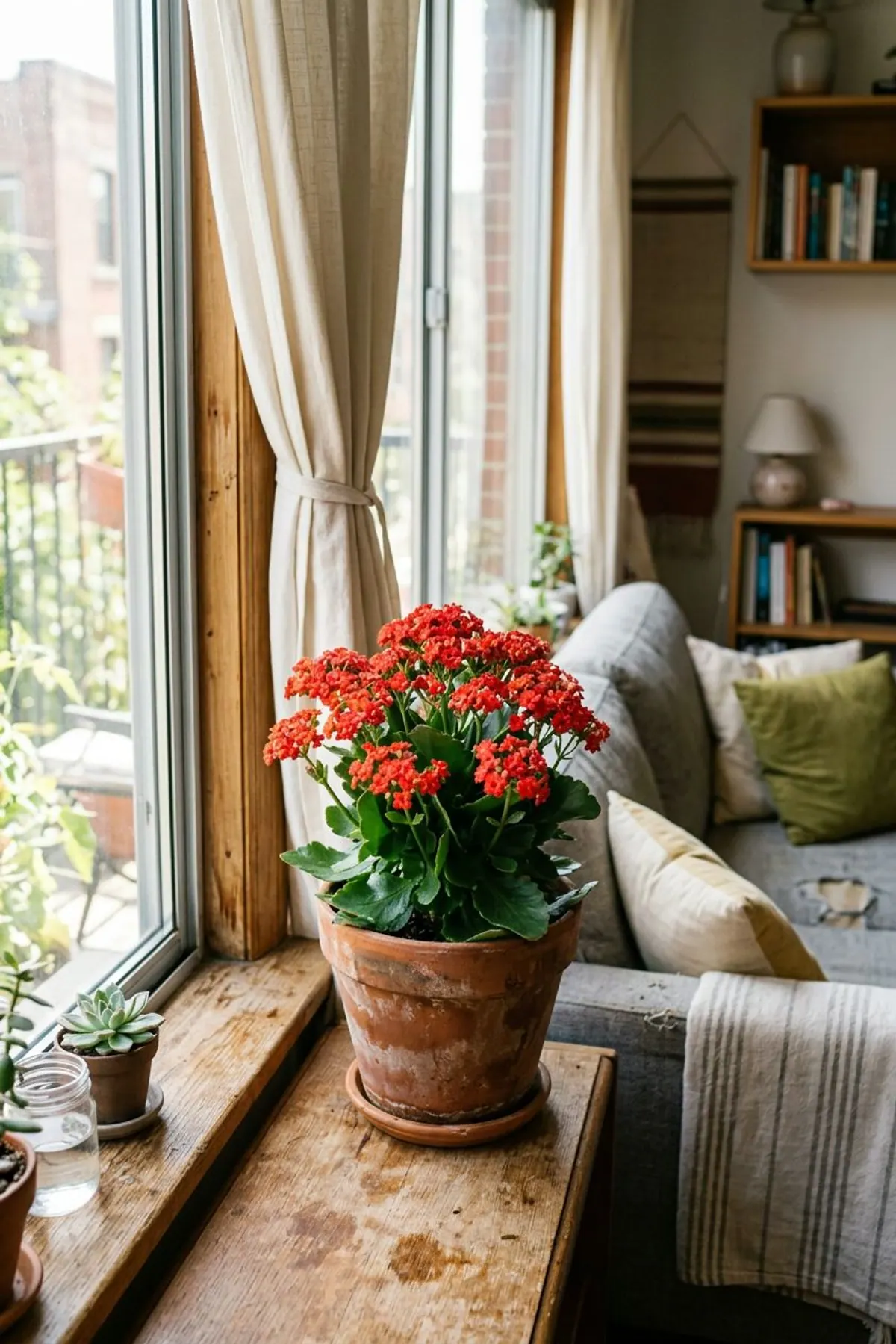
Pet tag: cats safe, dogs safe. The ASPCA lists it as non-toxic to cats and dogs; check the ASPCA list and your vet. A forest cactus with flat, jointed stems and pink or red winter flowers. It needs bright, indirect light and cool nights in fall to set buds. Size: small to medium. Don't mix it up with kalanchoe, another holiday-season succulent the ASPCA lists as toxic. Our Christmas cactus care guide covers blooming.
- Check the tag for Schlumbergera, the name on the ASPCA page, and keep it in a cool room in fall to set buds.
A winter bloomer listed non-toxic by the ASPCA.
13Blushing bromeliad (Neoregelia)
Pet tag: cats safe, dogs safe. The ASPCA lists it as non-toxic to cats and dogs; check the ASPCA list and your vet. A rosette of stiff leaves whose center turns red or pink as it matures. It likes bright, indirect light and water in the central cup, changed every week or two. Size: small to medium. Tip the old water out so the cup stays fresh.
- Use rain or filtered water in the cup to avoid crusty mineral marks.
Long-lasting color with no ASPCA toxicity flag.
Pet friendly large indoor plants and trees
14Areca palm (Dypsis lutescens)
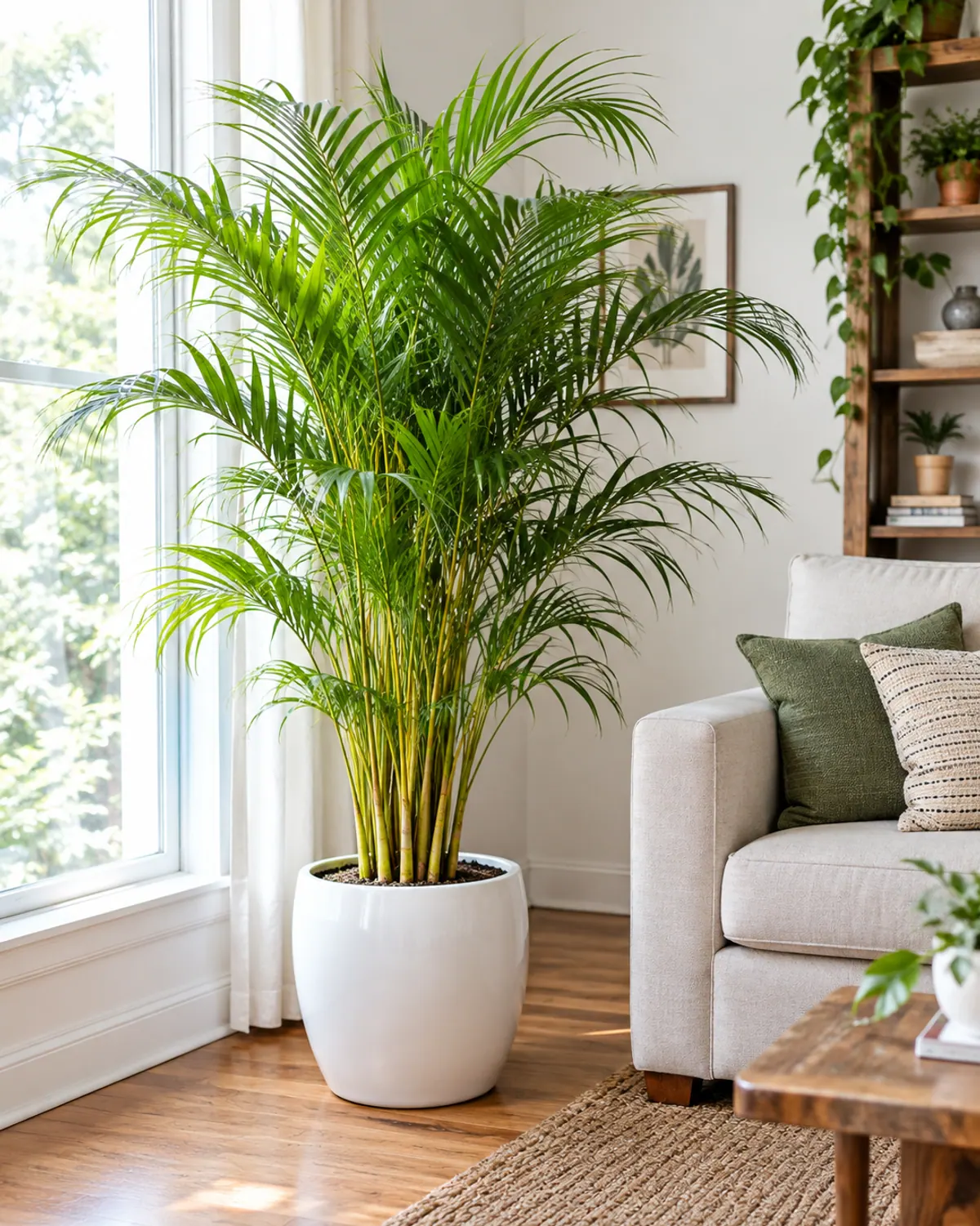
Pet tag: cats safe, dogs safe. The ASPCA lists it as non-toxic to cats and dogs; check the ASPCA list and your vet. A tall, clumping palm with feathery yellow-green fronds, sold as a floor plant. It wants bright, indirect light and evenly moist soil. Size: floor plant, 4 to 6 feet indoors. It gives you the full jungle look without a toxic palm in the room.
- Brown tips often mean the soil swung from soggy to bone dry; aim for even moisture.
A non-toxic floor palm for a bright room.
15Ponytail palm (Beaucarnea recurvata)
Pet tag: cats safe, dogs safe. The ASPCA lists it as non-toxic to cats and dogs; check the ASPCA list and your vet. Not a palm at all: a swollen trunk that stores water topped with a fountain of thin, curly leaves. It wants bright light and very little water. Size: small pot when young, slowly reaches floor height. Those dangling leaves are cat bait, so put it where chewing is hard.
- Water deeply, then wait until the soil is fully dry.
Drought-tolerant and non-toxic per the ASPCA.
16Money tree (Pachira aquatica)
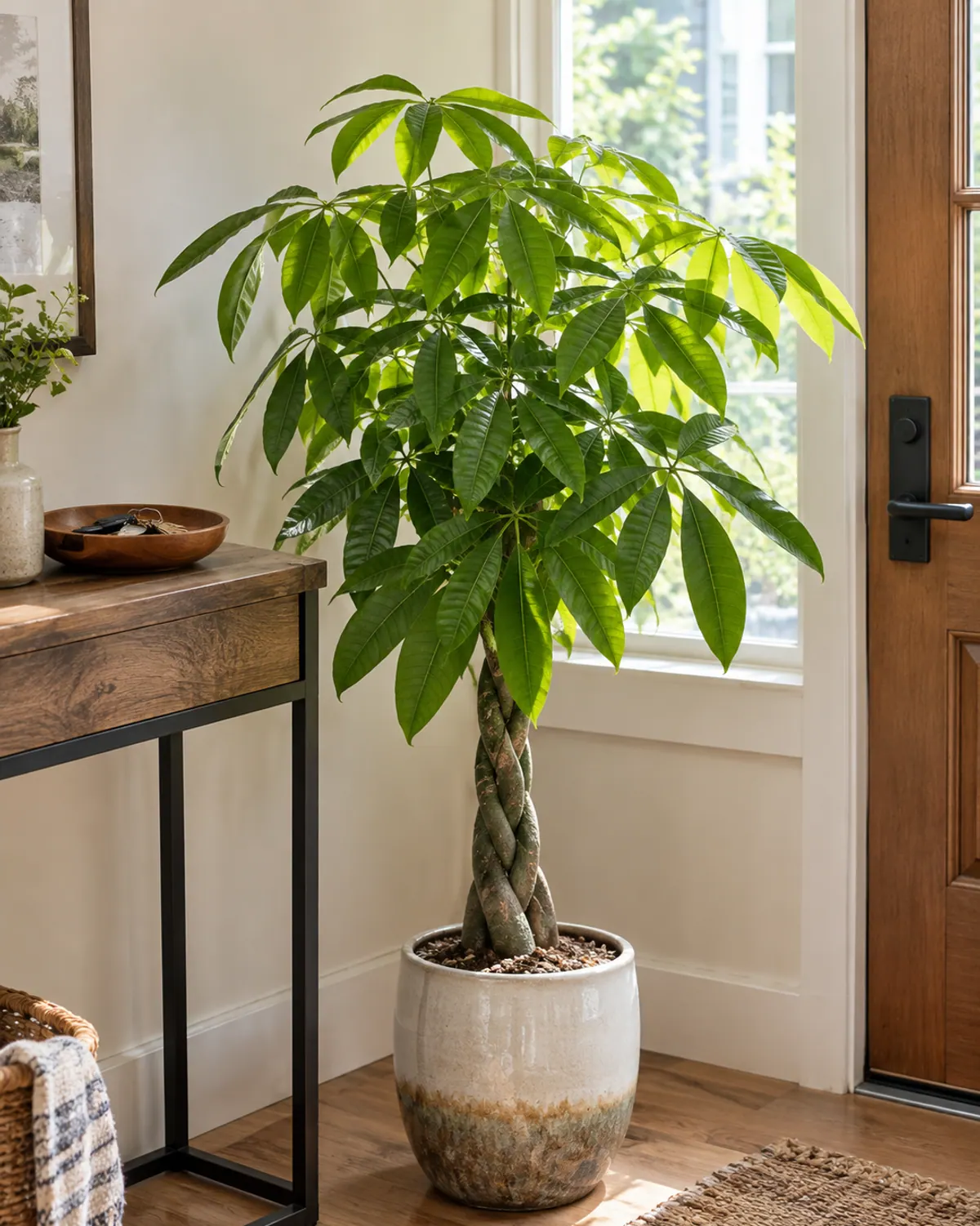
Pet tag: cats safe, dogs safe. The ASPCA lists it as non-toxic to cats and dogs; check the ASPCA list and your vet. Usually sold with braided trunks and a canopy of hand-shaped leaves. It likes bright, indirect light and dislikes wet feet. Size: tabletop to floor. Its ASPCA page lists it as non-toxic but notes that eating it can still cause nausea, vomiting or loose stool, which is a good reminder for every plant here.
- Pick a pot with a drainage hole; braided money trees rot in pots without one.
A tabletop-to-floor tree listed non-toxic.
Hanging and trailing pet safe plants
17Hoya (Hoya carnosa)
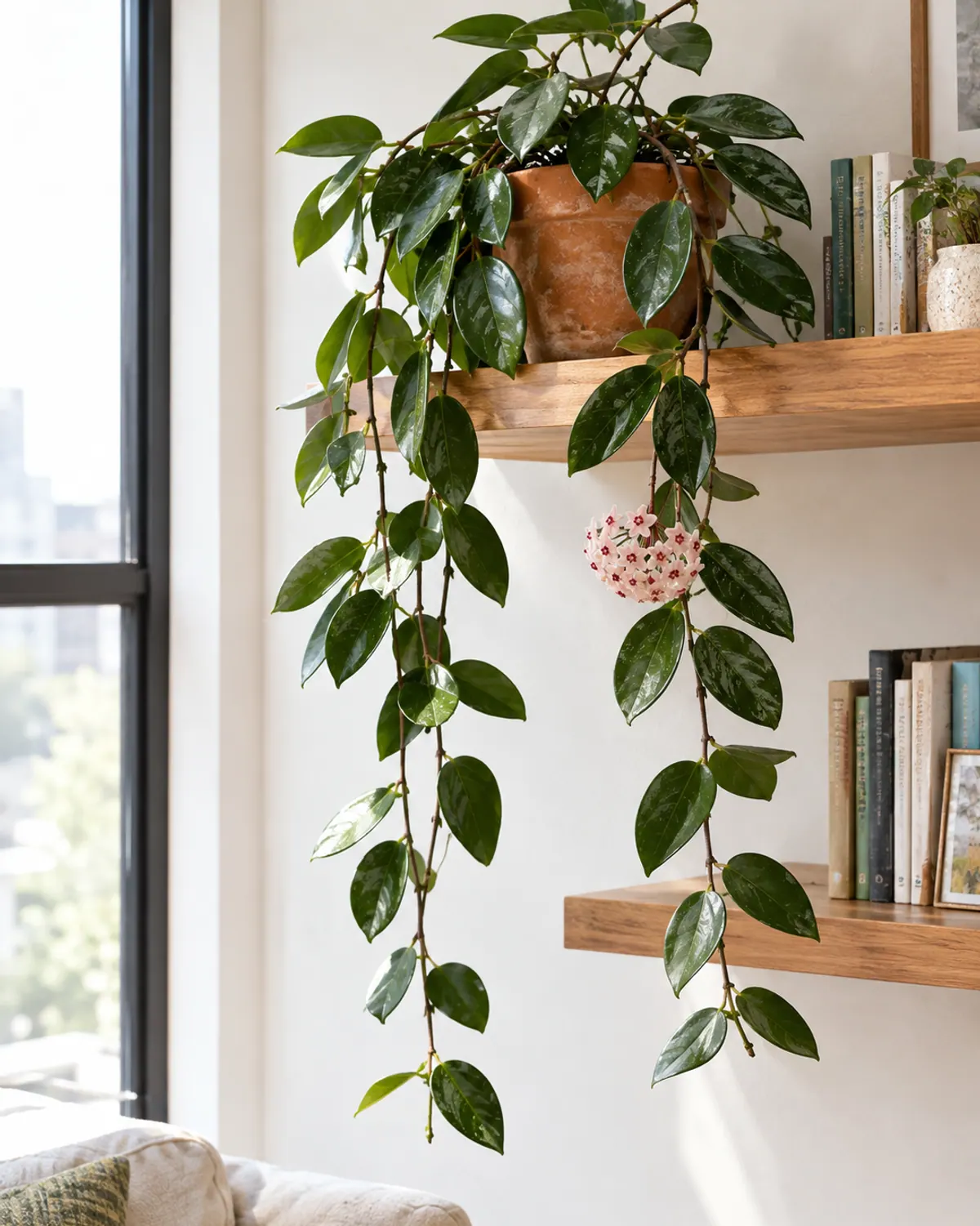
Pet tag: cats safe, dogs safe. The ASPCA lists it as non-toxic to cats and dogs; check the ASPCA list and your vet. Waxy, thick leaves on trailing vines and, in good light, clusters of star-shaped flowers. It wants bright, indirect light and dry-ish soil. Size: small pot that trails 2 to 4 feet. Hoya is the best swap for pothos, which looks similar from across the room and is toxic to cats and dogs.
- Leave old flower spurs on the vine; hoyas rebloom from the same spot.
The non-toxic trailing swap for pothos.
18Swedish ivy (Plectranthus australis)
Pet tag: cats safe, dogs safe. The ASPCA lists it as non-toxic to cats and dogs; check the ASPCA list and your vet. Round, scalloped, glossy leaves on fast trailing stems. It grows well in medium light and roots easily from cuttings. Size: small pot, trails quickly. Despite the name it is not an ivy; English ivy (Hedera helix) is toxic, so check the botanical name.
- Pinch the stem tips every few weeks to keep it bushy.
A fast trailing plant with no ASPCA toxicity flag.
Pet safe succulents
19Zebra haworthia (Haworthia fasciata)
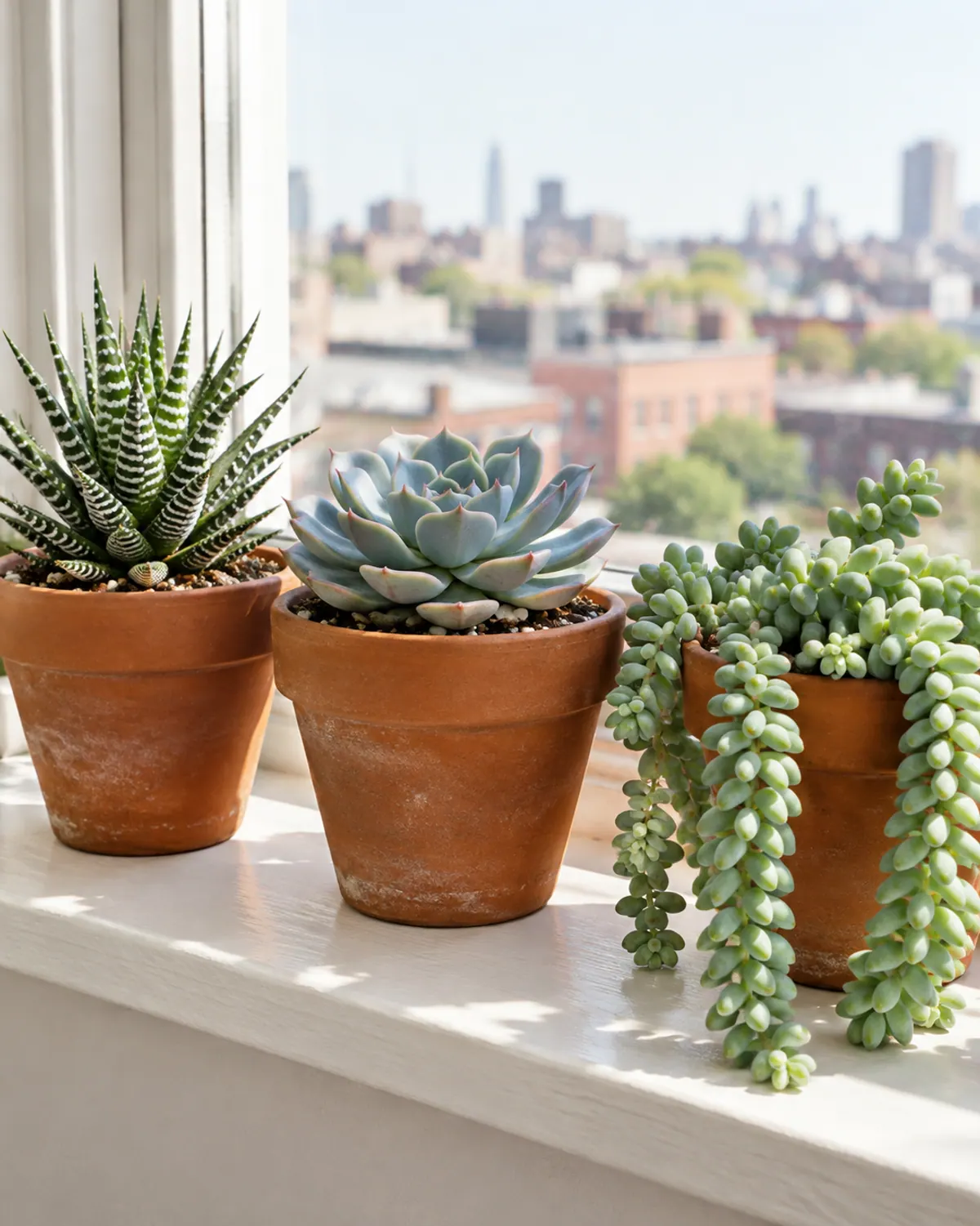
Pet tag: cats safe, dogs safe. The ASPCA lists it as non-toxic to cats and dogs; check the ASPCA list and your vet. A small, spiky rosette with white stripes. It handles a little less light than most succulents, so it suits an east window. Size: small pot. It is the safe swap for aloe, which the ASPCA lists as toxic to cats and dogs.
- Use gritty cactus mix and a pot with a drainage hole.
A small succulent swap for aloe.
20Echeveria (hens and chickens, Echeveria elegans)
Pet tag: cats safe, dogs safe. The ASPCA lists it as non-toxic to cats and dogs; check the ASPCA list and your vet. Blue-grey rosettes that make little offsets around the base. It needs your brightest window. Size: small pot. Swap it in for jade plant, a toxic succulent that often sits next to it on store shelves.
- Water only when the soil is completely dry.
Non-toxic rosettes for a sunny sill.
21Burro's tail (Sedum morganianum)
Pet tag: cats safe, dogs safe. The ASPCA lists it as non-toxic to cats and dogs; check the ASPCA list and your vet. Long tails of plump, grey-green leaves that spill over a pot edge. It wants bright light and very little water. Size: small pot, trails to about 2 feet. Leaves drop at the lightest touch, so hang it away from paws and traffic.
- Fallen leaves root easily; lay them on dry soil to start new plants.
A trailing succulent listed non-toxic.
Pet safe herbs for the sill, and two to skip
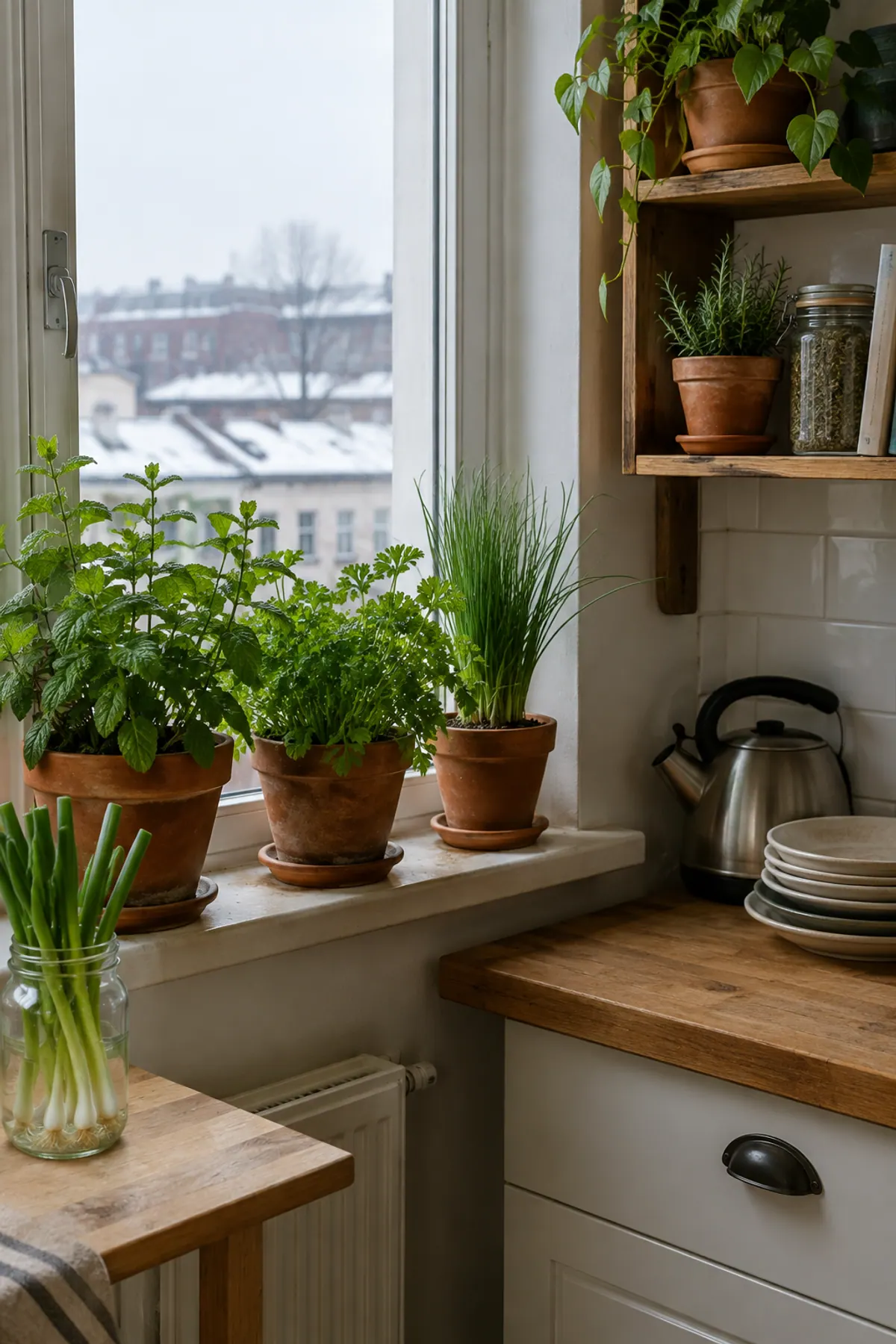
Herbs are a common question in pet homes. Per their ASPCA pages, basil, thyme, rosemary, cilantro and lemon balm are non-toxic to cats and dogs. Mint and parsley are listed as toxic to both, so keep those out of reach or grow them outside. Herb notes here are about growing only, not medical advice.
| Herb | Cats | Dogs |
|---|---|---|
| Basil (Ocimum basilicum) | Non-toxic | Non-toxic |
| Thyme (Thymus vulgaris) | Non-toxic | Non-toxic |
| Rosemary (Rosmarinus officinalis) | Non-toxic | Non-toxic |
| Cilantro (Coriandrum sativum) | Non-toxic | Non-toxic |
| Lemon balm (Melissa officinalis) | Non-toxic | Non-toxic |
| Mint (Mentha) | Toxic | Toxic |
| Parsley (Petroselinum crispum) | Toxic | Toxic |
Which herbs grow in which window is a separate question, and our herbs for low light guide ranks them. The Herb Garden Journal + 20 Herb Growing Cards gives each herb its own card, with an ASPCA pet flag on every one. This is growing information only and not medical or veterinary advice.
Growing herbs on a sill your cat can reach? The Indoor Winter Herb Garden Kit flags each of its 10 herbs with its ASPCA pet status, next to light hours and watering, so you can pick the safe ones before you buy seeds.
Popular houseplants that are not pet safe
Several of the most sold houseplants are on the ASPCA toxic list. You don't have to throw them out, but they belong where pets can't reach them, or in a home without pets.
| Plant | Botanical name | Cats | Dogs |
|---|---|---|---|
| Pothos | Epipremnum aureum | Toxic | Toxic |
| Snake plant | Sansevieria trifasciata | Toxic | Toxic |
| Peace lily | Spathiphyllum | Toxic | Toxic |
| Heartleaf philodendron | Philodendron hederaceum | Toxic | Toxic |
| Monstera | Monstera deliciosa | Toxic | Toxic |
| Dieffenbachia | Dieffenbachia | Toxic | Toxic |
| Chinese evergreen | Aglaonema modestum | Toxic | Toxic |
| Dracaena | Dracaena spp. | Toxic | Toxic |
| Aloe | Aloe vera | Toxic | Toxic |
| Jade plant | Crassula | Toxic | Toxic |
| English ivy | Hedera helix | Toxic | Toxic |
| Sago palm | Cycas revoluta | Toxic | Toxic |
| True lilies | Lilium species | Toxic (kidney failure) | Non-toxic |
| Daylilies | Hemerocallis | Toxic (kidney failure) | Non-toxic |
Safe look-alikes: swap this toxic plant for that safe one
| If you like | It's toxic, so try | Why it works |
|---|---|---|
| Pothos | Hoya carnosa or Swedish ivy | Trailing vines with similar reach |
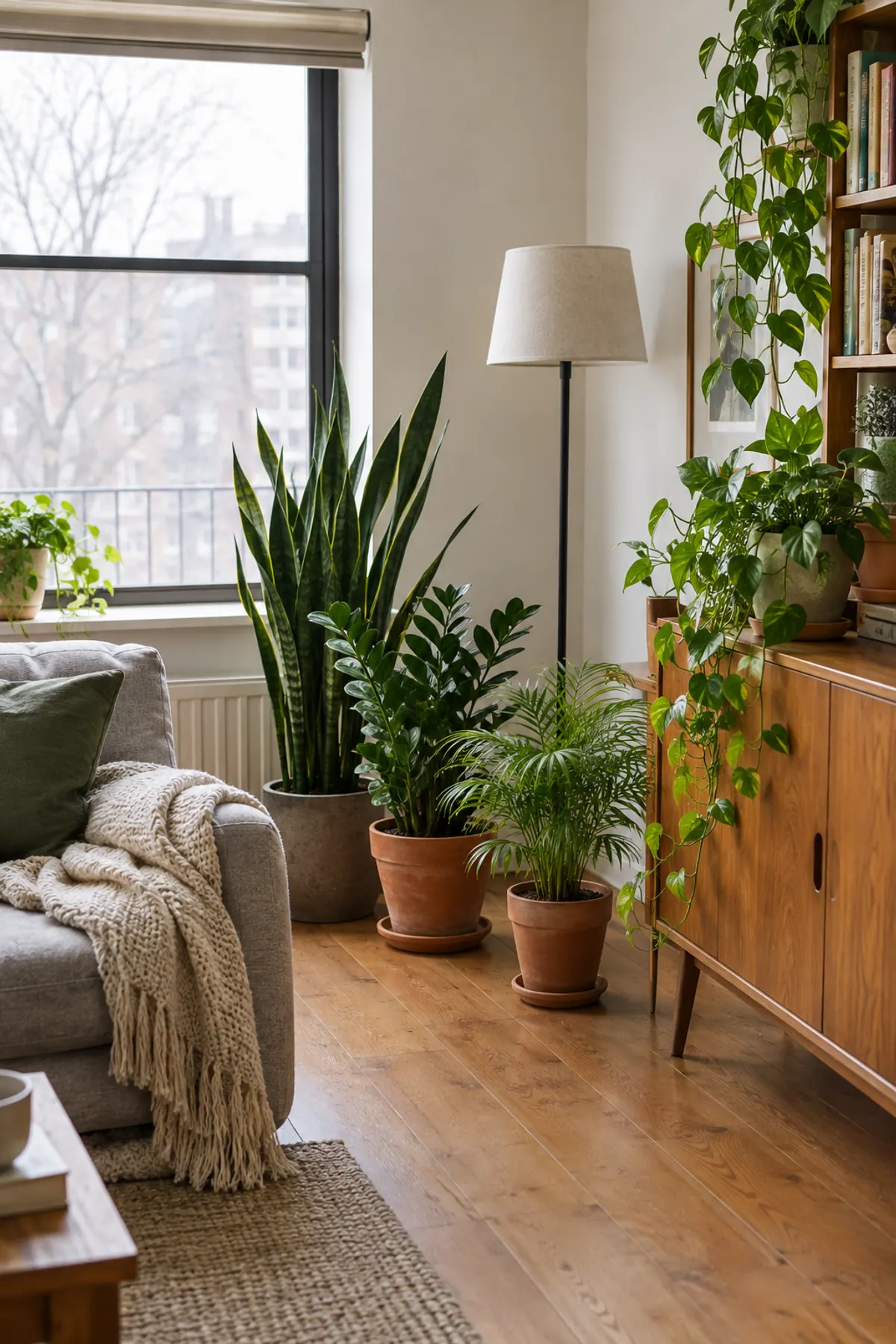
| Snake plant | Cast iron plant | Upright leaves that handle dim rooms |
| Sago palm | Parlor palm or ponytail palm | The palm look without cycads |
| Dieffenbachia or Chinese evergreen | Calathea or prayer plant | Patterned leaves for medium to low light |
| Aloe | Zebra haworthia | Spiky rosette in a small pot |
| Jade plant | Echeveria | Plump succulent leaves |
| Rubber plant (ficus) | Baby rubber plant (peperomia) | Glossy round leaves, smaller size |
| English ivy | Swedish ivy | Trailing green with a similar name |
| Kalanchoe | Christmas cactus | Winter flowers on a succulent |
Cat safe plant display: shelves, stands and hangers
Even safe plants do better when a cat can't dig in the pot or shred the leaves. The fix in a small apartment is height: wall shelves above jumping routes, ceiling or curtain-rod hangers, and a closed glass cabinet for small plants.
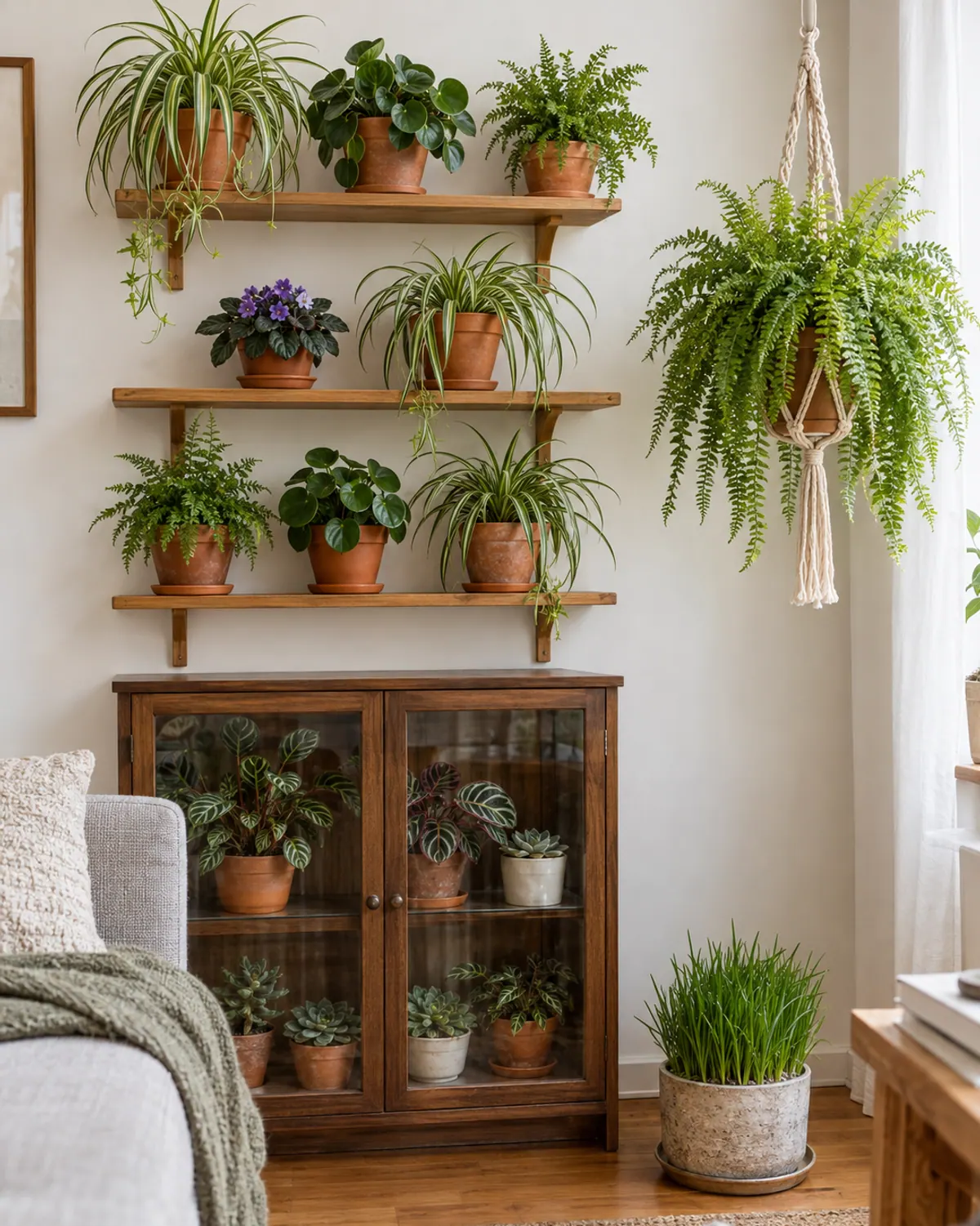
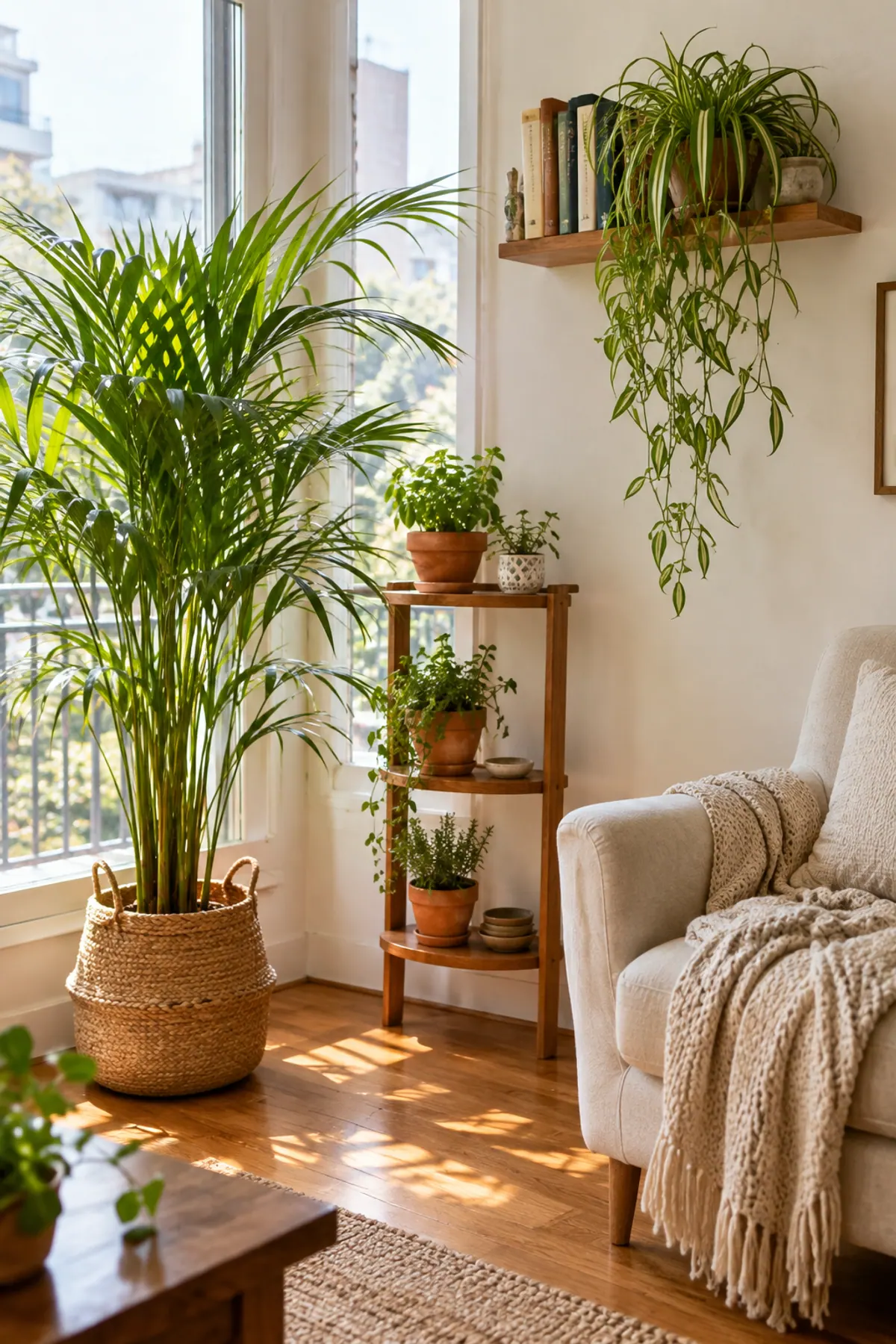
Put a pot of cat grass on the floor as the one plant your cat is allowed to chew. For more ways to style plants in a small room, see our indoor plants decor ideas.
Before you bring a new plant home
If your pet eats a plant: what to do and who to call
Take the plant or its tag with you to the phone, and call your vet or the ASPCA Animal Poison Control Center at (888) 426-4435. The ASPCA notes a consultation fee may apply.
Don't wait for symptoms and don't try home remedies. This guide is general plant information, not veterinary advice, and your vet knows your pet.
Pet safe houseplant starter list
Shop pet safe plants and pet-proof displays
- Beginner pick
Live spider plant, 4 to 6 in pot
Typically $15 to $30
The easiest non-toxic plant to start with.
Check price on Amazon for Live spider plant, 4 to 6 in pot -
Live parlor palm, 14 to 18 in
Typically $20 to $35
A low-light palm the ASPCA lists as non-toxic.
Check price on Amazon for Live parlor palm, 14 to 18 in -
Ceiling hooks and macrame plant hangers
Typically $12 to $25
Lift ferns and trailing plants out of paw range.
Check price on Amazon for Ceiling hooks and macrame plant hangers -
Wall-mounted floating plant shelves
Typically $20 to $40
High shelves keep pots off jumping routes.
Check price on Amazon for Wall-mounted floating plant shelves -
Tiered plant stand, 3 tier
Typically $17 to $30
Group safe plants by light in one spot.
Check price on Amazon for Tiered plant stand, 3 tier -
Cat grass grow kit
Typically $8 to $18
A plant your cat is allowed to chew, kept on the floor.
Check price on Amazon for Cat grass grow kit
We earn from qualifying purchases, which never changes what we recommend. Read our disclosure and editorial guidelines.
Next up: the low light houseplants for apartments list sorts more plants by how dark your room is, and our winter houseplant care tips help them through the dark months.
Frequently asked questions
What houseplants are safe for both cats and dogs?
Per the ASPCA list, spider plant, parlor palm, calathea, cast iron plant, peperomia, Boston fern, African violet, moth orchid, Christmas cactus, areca palm, ponytail palm, money tree, hoya and haworthia are all listed as non-toxic to cats and dogs. Check the ASPCA list and your vet for your own pet.
Is a spider plant safe for cats?
Yes. The ASPCA lists the spider plant (Chlorophytum comosum) as non-toxic to cats and dogs. Like any plant, eating a lot of it can upset a cat's stomach, so hang it out of reach if your cat chews.
Which popular houseplants are toxic to cats?
The ASPCA lists pothos, snake plant, peace lily, philodendron, monstera, dieffenbachia, dracaena, aloe, jade plant, English ivy and sago palm as toxic to cats and dogs. True lilies and daylilies can cause kidney failure in cats.
Are there pet safe houseplants for low light?
Yes. Cast iron plant, parlor palm, calathea, prayer plant, spider plant and peperomia cope with lower light and are listed as non-toxic by the ASPCA. Low light is not no light, so each still needs a window or a grow light.
What does non-toxic mean on the ASPCA list?
It means the plant is not expected to cause serious poisoning. The ASPCA notes that eating any plant can still cause vomiting or an upset stomach, and its list is not all-inclusive.
What should I do if my cat eats a houseplant?
Note the plant's name, then call your vet or the ASPCA Animal Poison Control Center at (888) 426-4435 (a fee may apply). Don't wait for symptoms or try home remedies.
Save it for later
Pin this to your Houseplants board so it's there when you need it.
Save to Pinterest