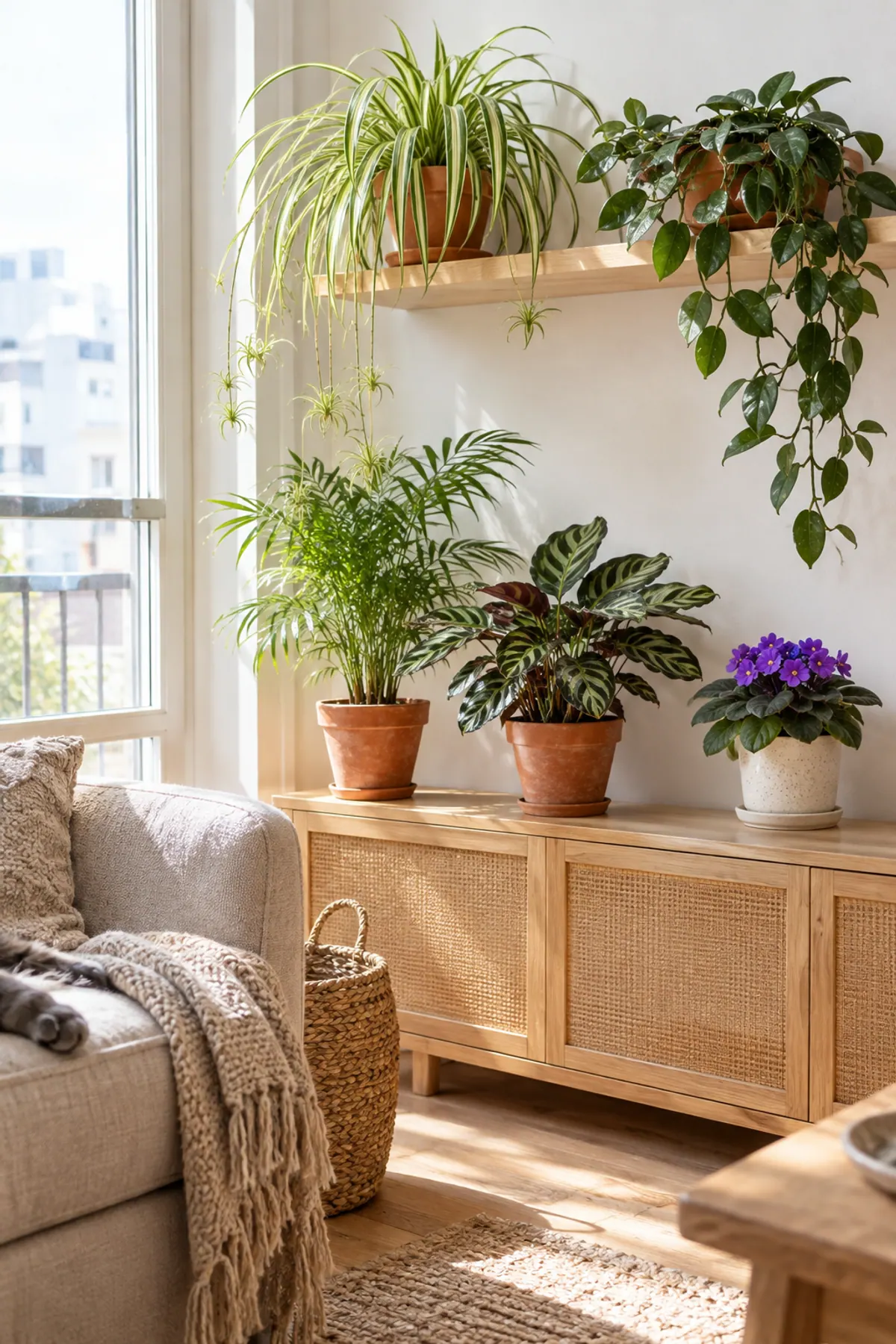
This post contains affiliate links. As an Amazon Associate we earn from qualifying purchases, at no extra cost to you. Read our disclosure.
Safety first: Herbs can be powerful. If you are pregnant, nursing, take medication or have a health condition, check with your doctor or pharmacist first. Please read our herbal & garden safety notes before you start.
Key takeaways
- Low light is not no light. Every plant here needs a window in the room or a grow light.
- Use the book test: if you can read a paperback at the spot at midday with no lamp, it is bright shade.
- Toughest picks: ZZ plant, snake plant, cast iron plant, pothos and Janet Craig dracaena.
- Pet homes: cast iron plant, parlor palm, calathea, ferns and peperomia are listed non-toxic by the ASPCA; pothos, snake plant and peace lily are toxic. Check the ASPCA list and your vet.
- Most low light plants die from overwatering, so check the soil before every drink.
In this post36 sections
- What low light really means (and why it is not no light)
- The 30-second light test for your apartment
- Low light houseplants for bright shade
- 1. Parlor palm (Chamaedorea elegans)
- 2. Calathea (Calathea spp.)
- 3. Prayer plant
- 4. Spider plant (Chlorophytum comosum)
- 5. Baby rubber plant (Peperomia obtusifolia)
- 6. Boston fern
- 7. Lemon button fern (Nephrolepis cordifolia 'Duffii')
- 8. Nerve plant (Fittonia)
- 9. Aluminum plant (Pilea cadierei)
- 10. Blushing bromeliad (Neoregelia)
- 11. Peace lily (Spathiphyllum)
- 12. Anthurium (flamingo flower)
- 13. Kentia palm (Howea forsteriana)
- 14. Lady palm (Rhapis)
- Low light plants for true low light
- 15. ZZ plant (Zamioculcas zamiifolia)
- 16. Snake plant (Sansevieria trifasciata)
- 17. Golden pothos (Epipremnum aureum)
- 18. Heartleaf philodendron (Philodendron hederaceum)
- 19. Cast iron plant (Aspidistra elatior)
- 20. Chinese evergreen (Aglaonema)
- 21. Janet Craig dracaena (Dracaena deremensis)
- 22. Satin pothos (Scindapsus pictus)
- Very low light: no window plants with a grow light
- 23. African violet under a shelf light
- 24. Watermelon peperomia (Peperomia argyreia)
- 25. Herbs under a grow light
- Low light houseplants by room and size
- Watering low light plants
- Winter in a dark apartment
- Low light mistakes to avoid
- Low light houseplant starter list
- FAQ
What low light really means (and why it is not no light)
Low light is not no light. Every plant on this list makes its food from light, so a room with no window and no lamp will starve it, slowly but surely.
In plant terms, low light means a spot that gets daylight but no direct sun: a north window, a room with a window that faces a wall or another building, or a spot several feet back from a brighter window. Plants that tolerate it grow slower there, and that is normal.
| Tier | Where it is | What to expect |
|---|---|---|
| Bright shade | Near an east or north window, or a few feet back from a south or west one | Steady growth, some flowering plants will bloom |
| True low light | Across the room from a window, a north window shaded by buildings, a hallway with borrowed light | Slow growth; tough foliage plants only |
| No window | Interior bathroom, windowless office, deep corner | Needs a grow light on a timer, every plant |
The 30-second light test for your apartment
Go to the spot at midday on a bright day and try to read a paperback there without turning on a lamp. If you can read it comfortably, you have bright shade. If you can read it but find yourself squinting, that is true low light. If you need a lamp, treat it as no window.
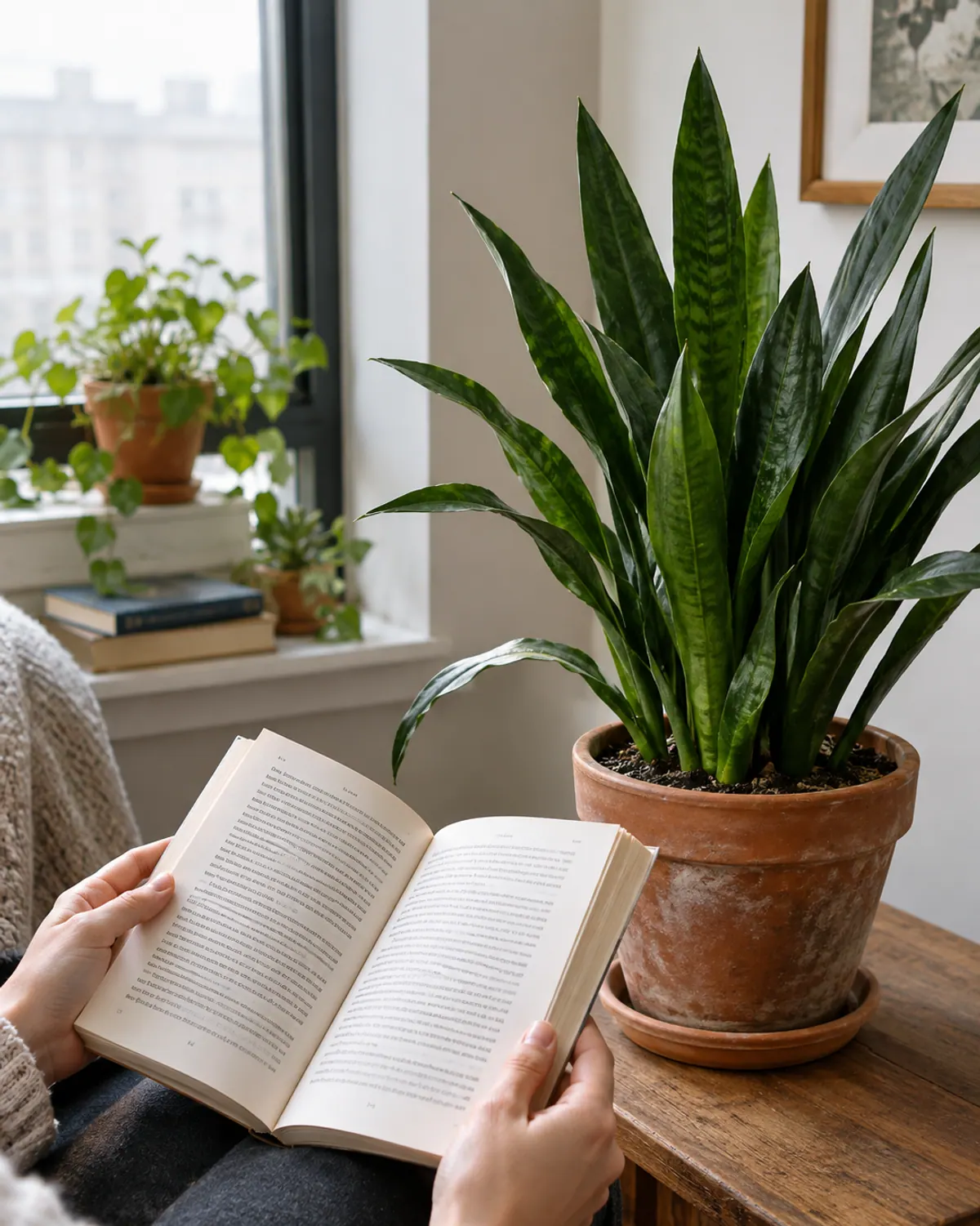
A second check: hold your hand a foot above the spot. A crisp shadow means bright light, a soft blurry shadow means medium to low, and almost no shadow means very low light.
Low light houseplants for bright shade
Start here if your room passes the book test. These plants tolerate lower light than most, but they look their best a few feet from a window. Full cat and dog details for the safe ones are in our pet safe houseplants guide.
1Parlor palm (Chamaedorea elegans)
Pet tag: cats safe, dogs safe (ASPCA).
Size: tabletop, slowly reaching floor height.
Water: when the top inch is dry. A feathery small palm that handles a north window better than most palms. It grows slowly, so buy close to the size you want.
- Keep it away from heating vents; dry hot air browns the frond tips.
A pet safe palm for a dim corner.
2Calathea (Calathea spp.)
Pet tag: cats safe, dogs safe (ASPCA).
Size: small to medium.
Water: keep evenly moist. Painted leaves that fold up at night. Calatheas sulk in direct sun, which makes bright shade their sweet spot, and they like the humidity of a bedroom or bathroom.
- Filtered water helps if the leaf edges crisp.
Bold leaves without needing sun.
3Prayer plant
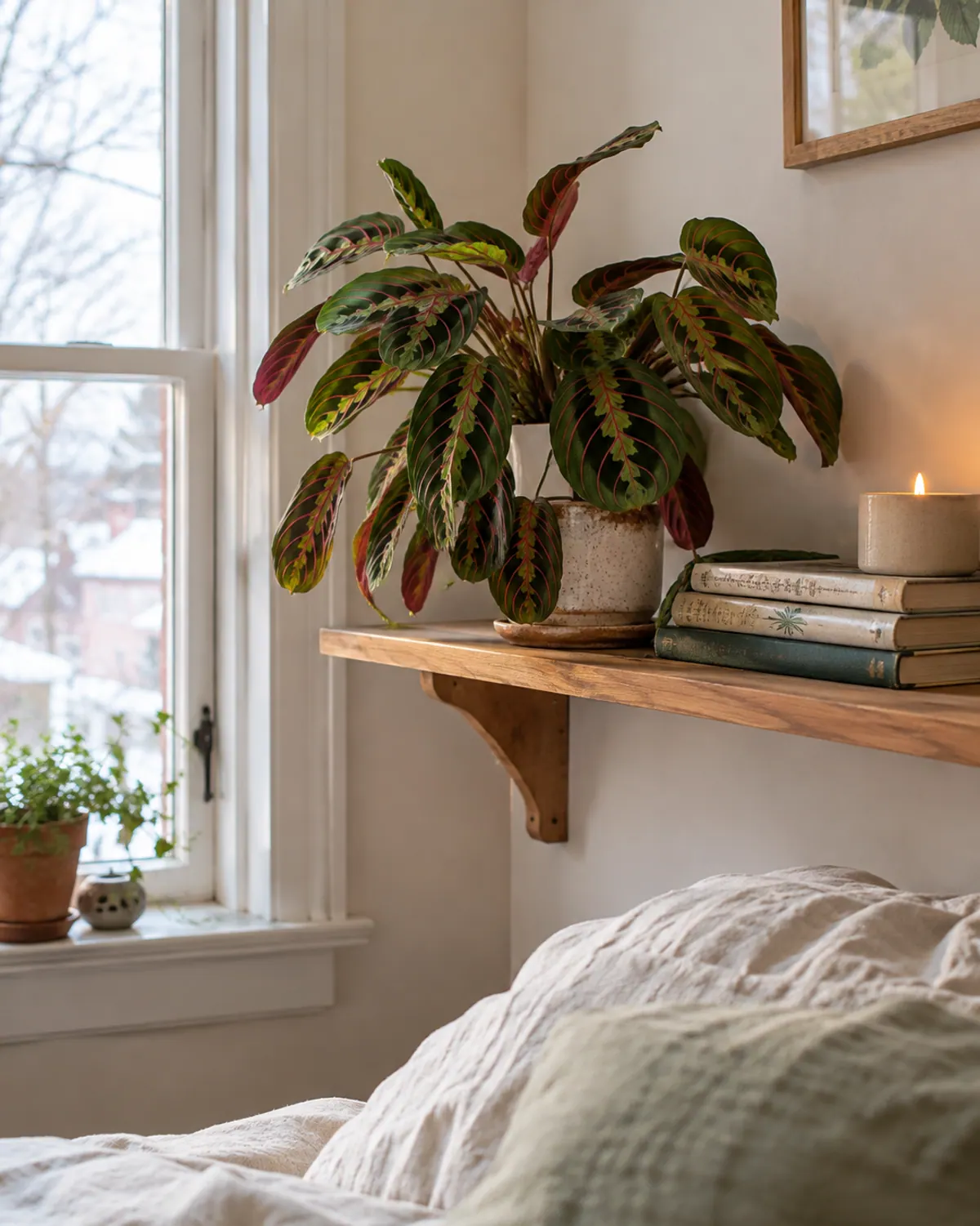
Pet tag: cats safe, dogs safe (ASPCA).
Size: small, spreading.
Water: keep evenly moist. Low, patterned leaves that lift at dusk. It tolerates the same light as calathea and suits the front of a shelf or a bedside table.
- If new leaves come in small and pale, move it a little closer to the window.
A small low light plant that moves.
4Spider plant (Chlorophytum comosum)
Pet tag: cats safe, dogs safe (ASPCA).
Size: small to medium, trails.
Water: when the top inch is dry. Tolerates low light but makes far more babies in bright shade. Solid green types cope with dim rooms a little better than the striped ones.
- Hang it so the plantlets have room to dangle.
The easy, pet safe classic.
5Baby rubber plant (Peperomia obtusifolia)
Pet tag: cats safe, dogs safe (ASPCA).
Size: small pot.
Water: when the soil is half dry. Thick glossy leaves store water, so it forgives missed waterings. In low light, water even less, because the soil dries slowly.
- Plain green types handle lower light than variegated ones.
Small, glossy and forgiving.
6Boston fern
Pet tag: cats safe, dogs safe (ASPCA).
Size: medium to large.
Water: never let it dry out. A bathroom with a small window gives it the humidity and soft light it wants. In a dry living room it drops leaflets.
- Mist-free trick: set the pot on a tray of damp pebbles.
A lush fern for a steamy bathroom.
7Lemon button fern (Nephrolepis cordifolia 'Duffii')
Pet tag: cats safe, dogs safe (ASPCA).
Size: small pot.
Water: keep evenly moist. A compact fern with round leaflets that fits a narrow bathroom sill or a shelf near a north window.
- Group it with other plants to raise the humidity around it.
A tiny fern for small spaces.
8Nerve plant (Fittonia)
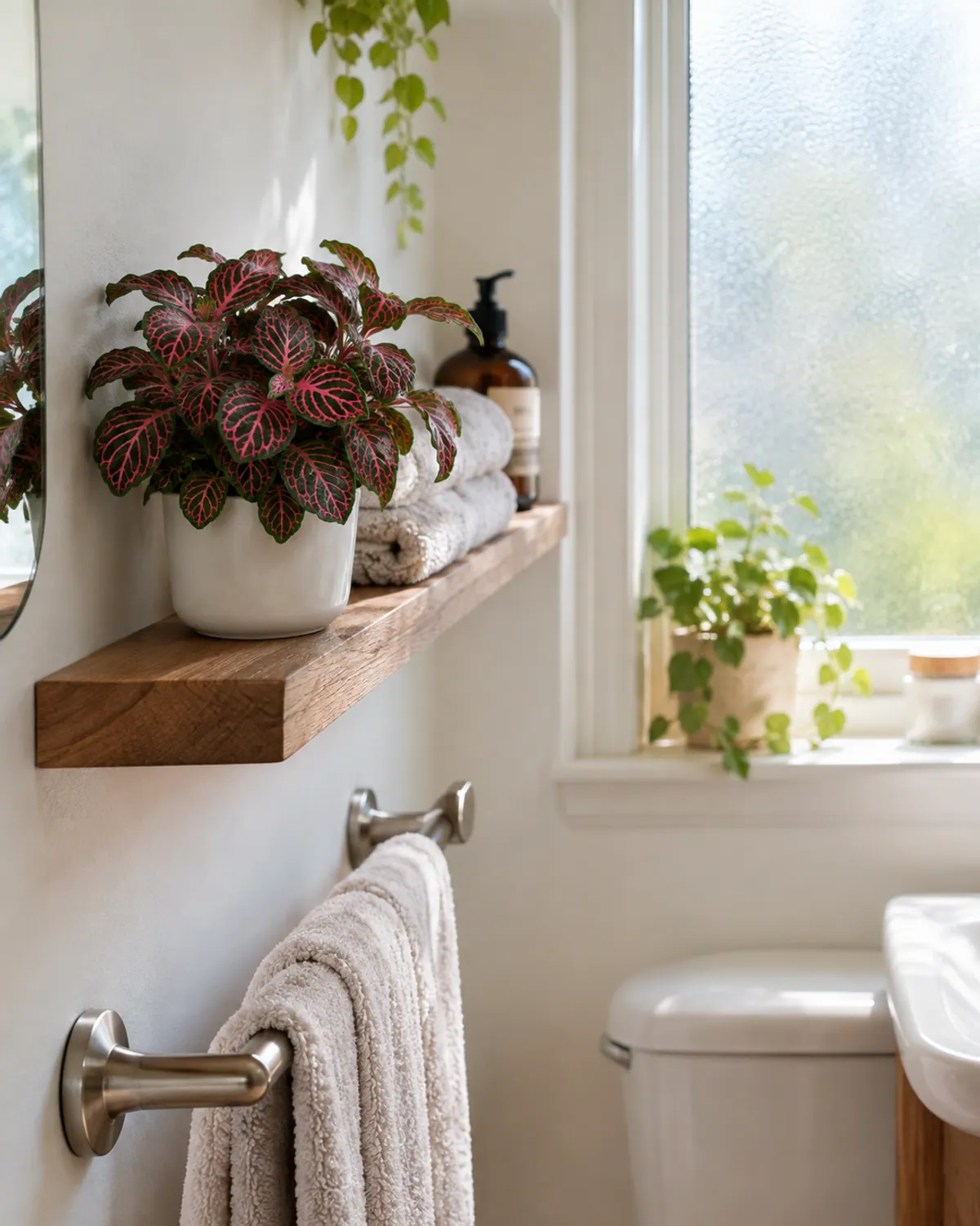
Pet tag: cats safe, dogs safe (ASPCA).
Size: small pot.
Water: keep evenly moist. Small leaves netted with white or pink veins. It handles low light well and loves humidity, which makes it a favorite for terrariums and bathroom shelves.
- It flops dramatically when thirsty and perks up within hours of watering.
Bright veins for a dim, humid shelf.
9Aluminum plant (Pilea cadierei)
Pet tag: cats safe, dogs safe (ASPCA).
Size: small to medium.
Water: when the top inch is dry. Quilted green leaves with silver patches. It tolerates medium to low light and stays bushy if you pinch the tips.
- Pinch stem tips every month or so to stop it getting leggy in low light.
Silver-marked leaves for bright shade.
10Blushing bromeliad (Neoregelia)
Pet tag: cats safe, dogs safe (ASPCA).
Size: small to medium.
Water: keep water in the center cup. A rosette whose center turns red as it matures. It holds its color in bright shade, though it won't rebloom in low light.
- Change the water in the cup every week or two.
Color without needing a sunny window.
11Peace lily (Spathiphyllum)
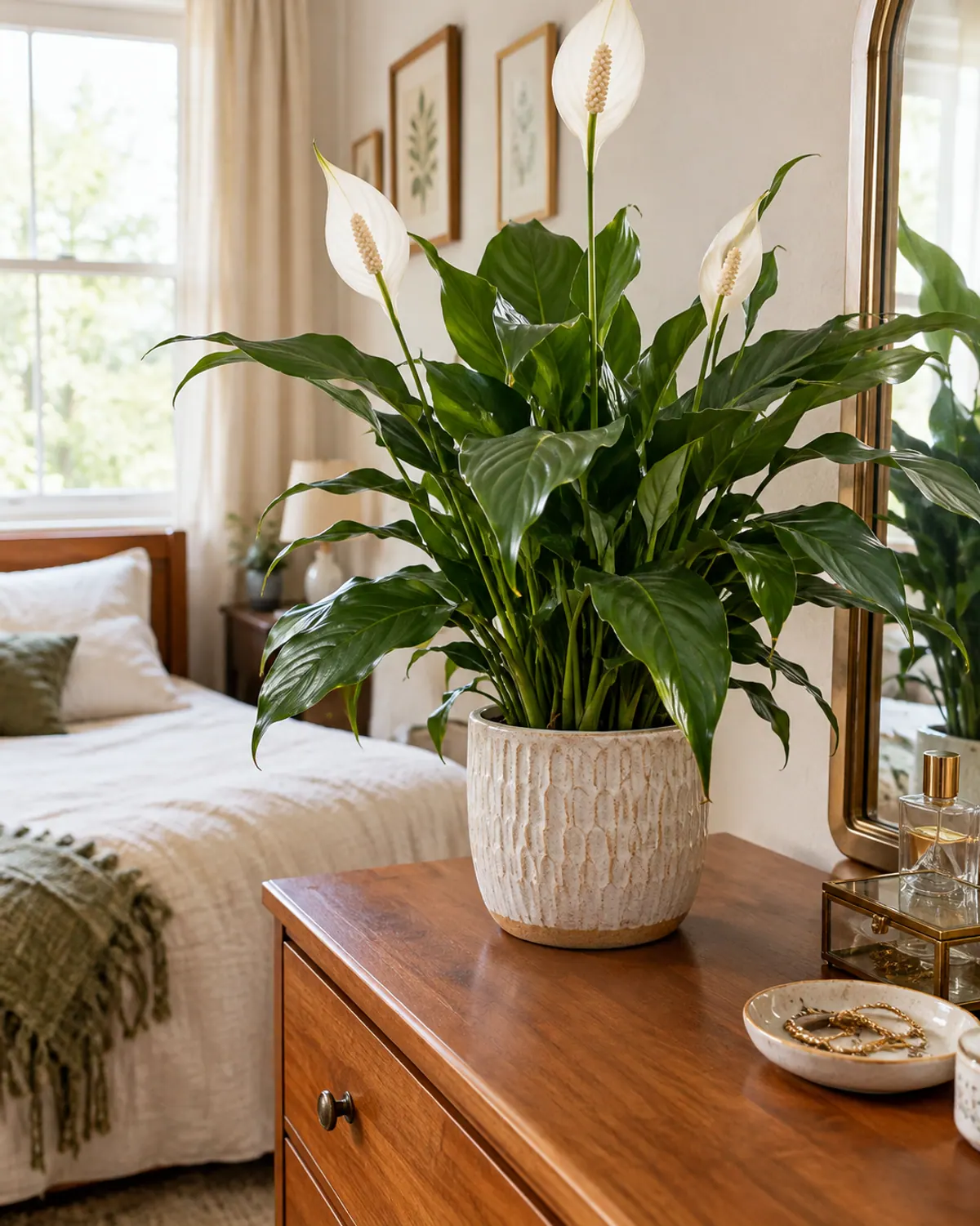
Pet tag: toxic to cats and dogs (ASPCA), so keep it out of reach.
Size: medium.
Water: when the leaves just start to droop. Glossy leaves and white flowers. It tolerates low light but blooms more in bright shade. It is not a true lily, but the ASPCA still lists it as toxic.
- Drooping is its thirst signal; water then, and it lifts within a day.
A flowering pick for a dim bedroom (not for pet homes).
12Anthurium (flamingo flower)
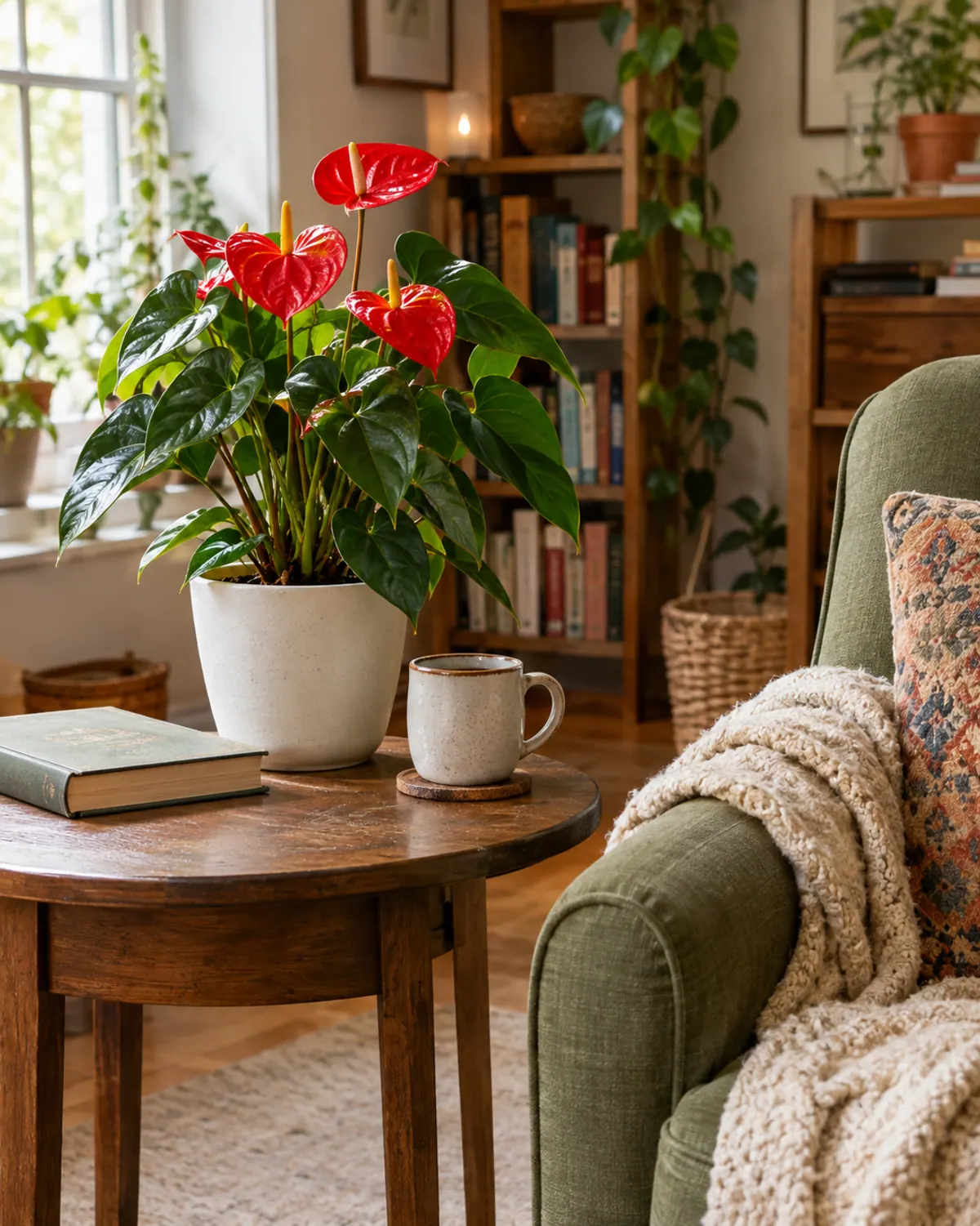
Pet tag: toxic to cats and dogs (ASPCA), so keep it out of reach.
Size: small to medium.
Water: when the top inch is dry. Waxy red, pink or white flowers that last for weeks. It survives lower light but flowers best in bright shade, so give it your best spot in this tier.
- Cut spent flowers at the base to keep new ones coming.
Long-lasting flowers in shade (not for pet homes).
13Kentia palm (Howea forsteriana)
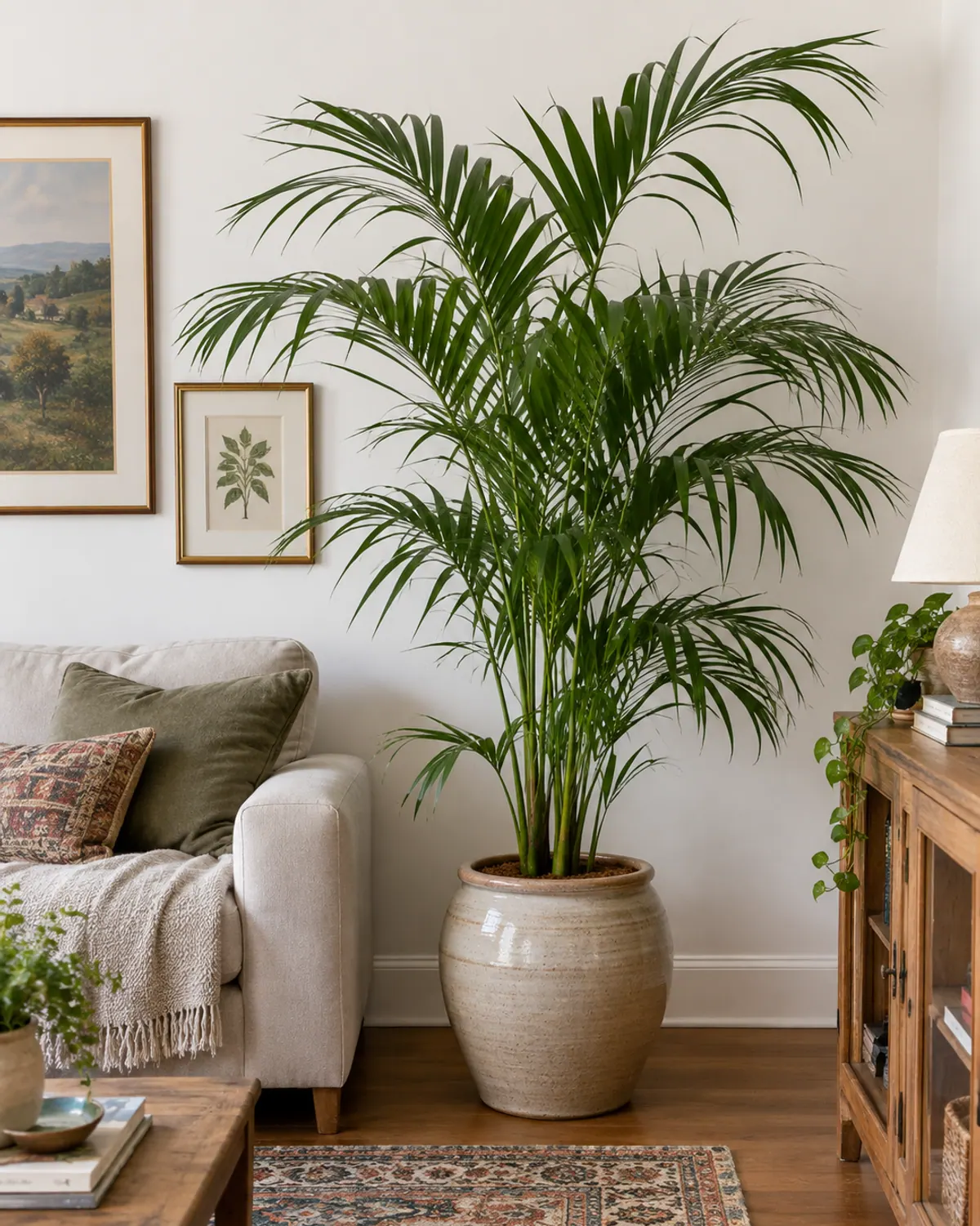
Pet tag: cats safe, dogs safe (ASPCA).
Size: floor plant, 4 to 7 feet indoors.
Water: when the top inch is dry. The palm hotels use in lobbies, because it handles lower light than most tall plants. It grows slowly, so a tall one costs more.
- Rotate it every few weeks so it doesn't lean toward the window.
A tall, pet safe palm for dim rooms.
14Lady palm (Rhapis)
Pet tag: cats safe, dogs safe (ASPCA).
Size: floor plant.
Water: keep lightly moist. Fan-shaped leaves on bamboo-like canes. It is another tall palm that copes with indirect light and grows slowly.
- Brown tips often point to dry air or salty water rather than light.
A slow, tall palm for a shaded corner.
Low light plants for true low light
These are the toughest, and also where most of the toxic plants live. If you share your home with a cat or dog, the cast iron plant is the safe choice here; the others need a high shelf or a pet-free room.
15ZZ plant (Zamioculcas zamiifolia)
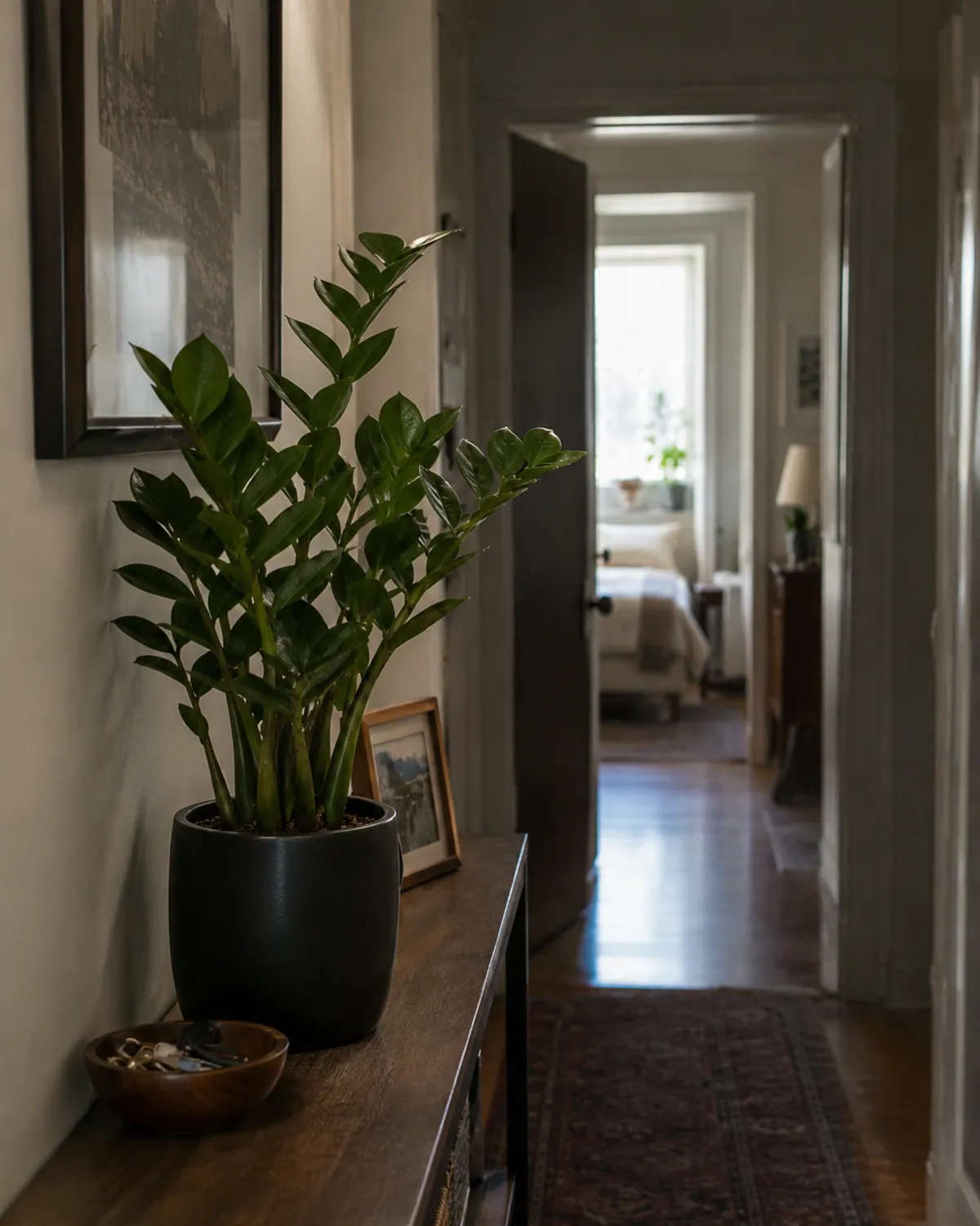
Pet tag: not on the ASPCA list, so we don't call it pet safe; ask your vet.
Size: medium.
Water: every 2 to 4 weeks, when fully dry. Glossy leaves on upright stems, with water stored in potato-like rhizomes under the soil. It is the classic plant for a dark hallway or office. The ZZ plant is not on the ASPCA list, so we can't call it pet safe either way.
- Overwatering is the only reliable way to kill it.
The toughest pick for a dim hallway.
16Snake plant (Sansevieria trifasciata)
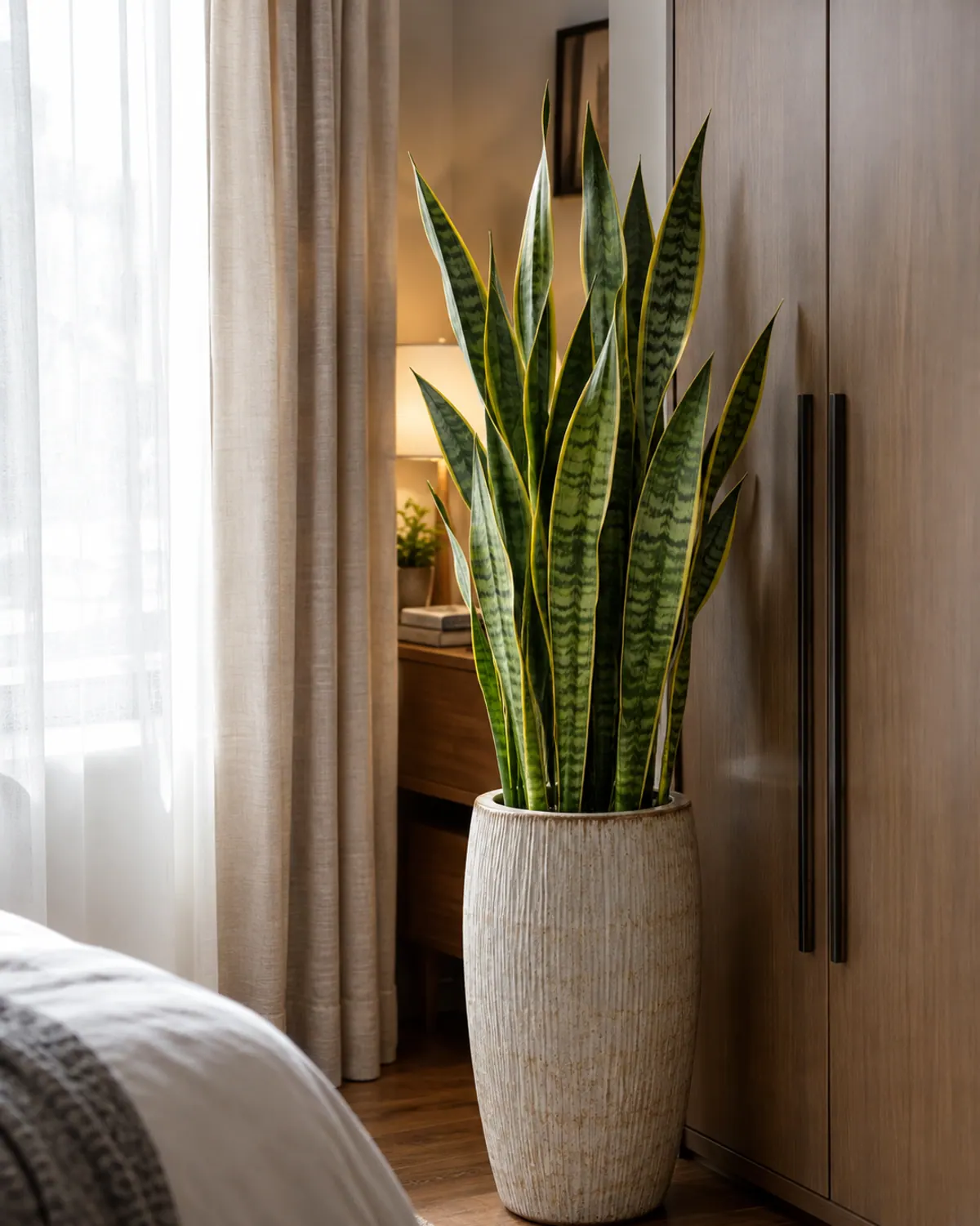
Pet tag: toxic to cats and dogs (ASPCA), so keep it out of reach.
Size: small to floor.
Water: every 2 to 4 weeks, when fully dry. Stiff upright leaves that tolerate dim corners, dry air and neglect. In low light, water it even less.
- Use a heavy pot; tall snake plants tip over in light plastic ones.
Upright, tough and slow to dry (not for pet homes).
17Golden pothos (Epipremnum aureum)
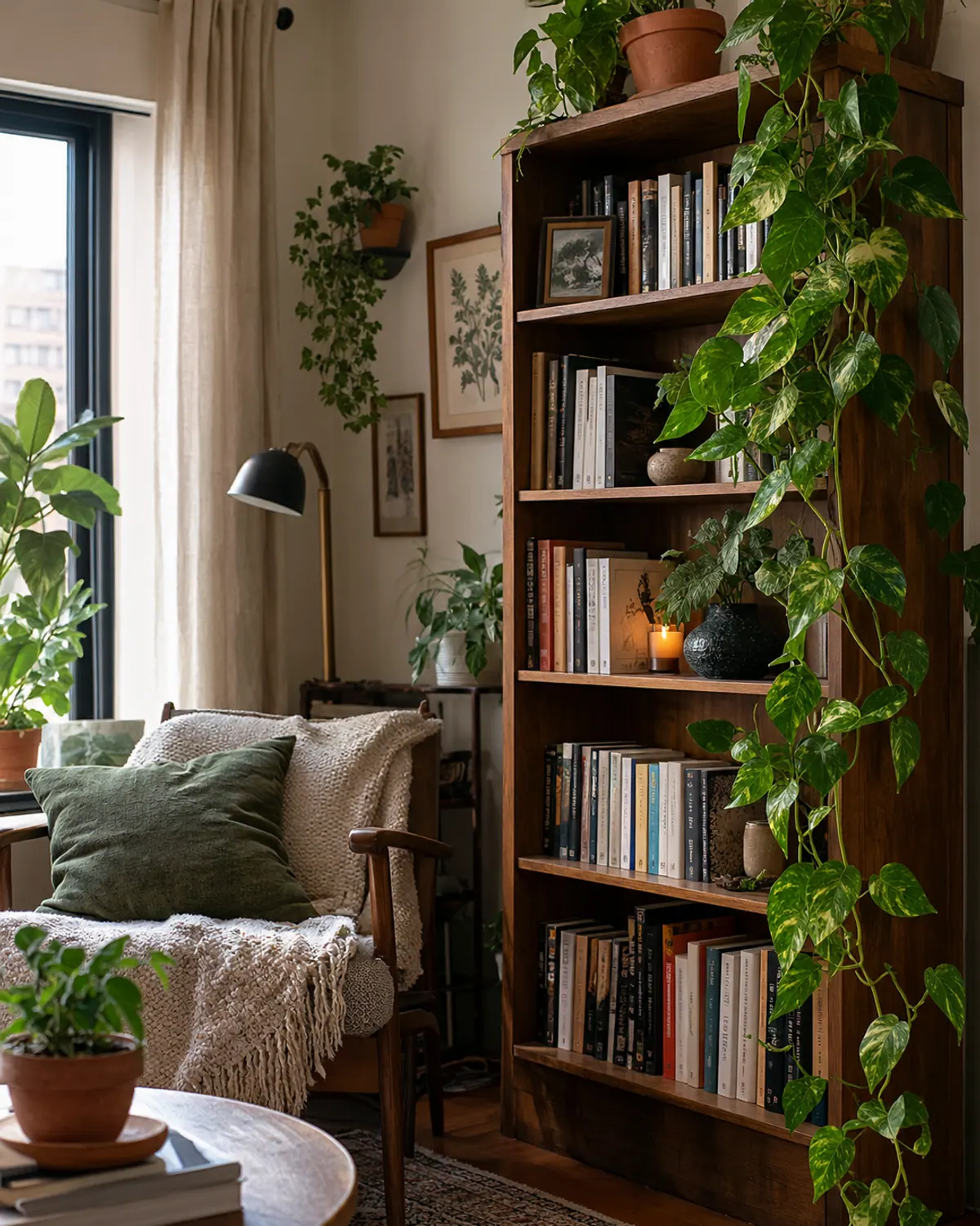
Pet tag: toxic to cats and dogs (ASPCA), so keep it out of reach.
Size: small pot, trails 6 feet or more.
Water: when the top inch is dry. The trailing vine that grows almost anywhere. In low light it grows slower and loses some of its yellow marbling, which is normal.
- Trim long vines and root the cuttings in water to fill the pot.
A fast trailing vine for low light (not for pet homes).
18Heartleaf philodendron (Philodendron hederaceum)
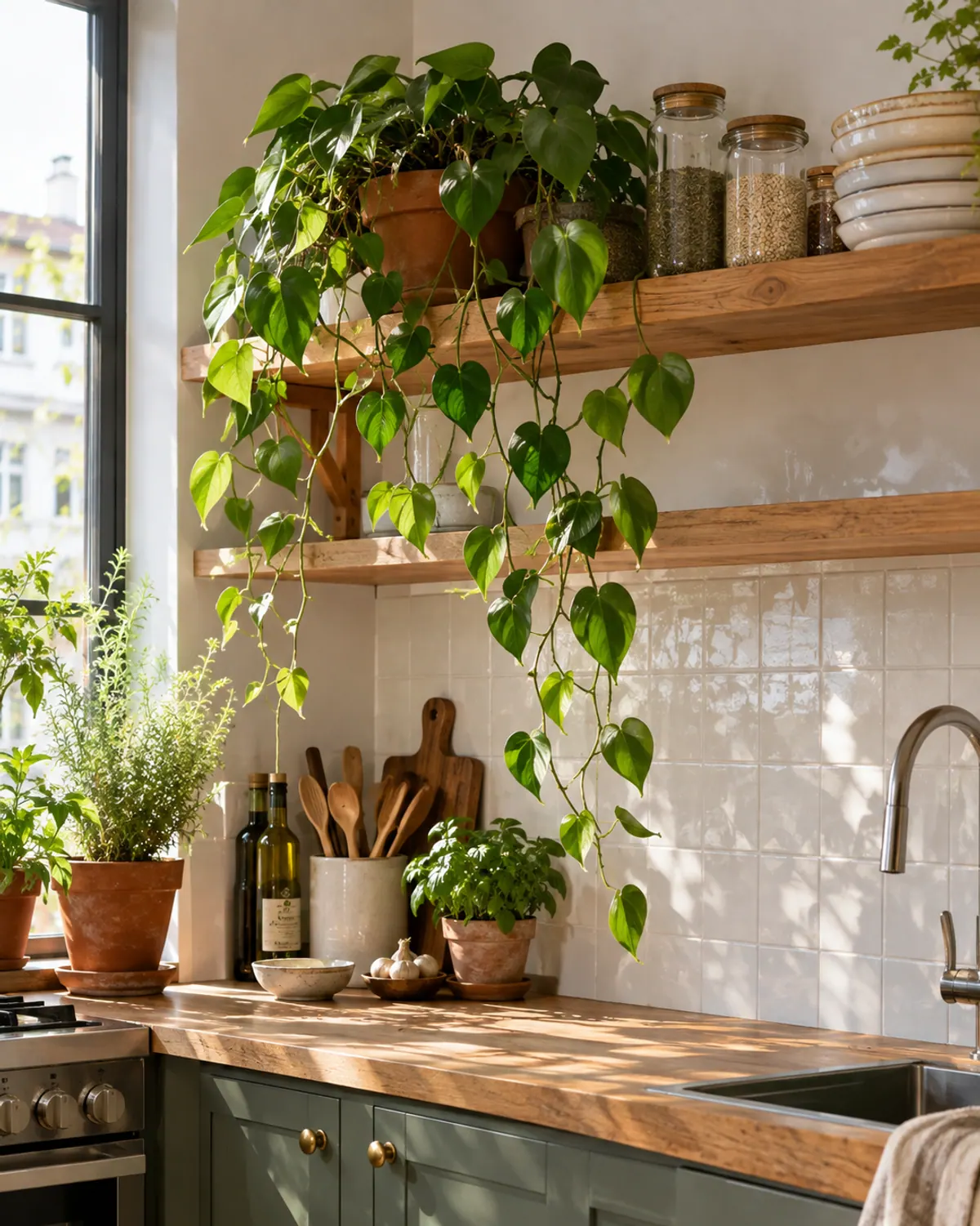
Pet tag: toxic to cats and dogs (ASPCA), so keep it out of reach.
Size: small pot, trails.
Water: when the top inch is dry. Soft, heart-shaped leaves on trailing stems. It tolerates low light at least as well as pothos and looks good on a high kitchen shelf.
- Leaves spaced far apart on the vine mean it wants a bit more light.
Heart-shaped trailing leaves (not for pet homes).
19Cast iron plant (Aspidistra elatior)
Pet tag: cats safe, dogs safe (ASPCA).
Size: medium.
Water: when the top inch is dry. Dark, upright leaves that handle dim hallways and cool rooms. It is the best pet safe pick for true low light, and it barely grows, so buy the size you want.
- Wipe the leaves monthly so dust doesn't block what little light there is.
The pet safe pick for true low light.
20Chinese evergreen (Aglaonema)
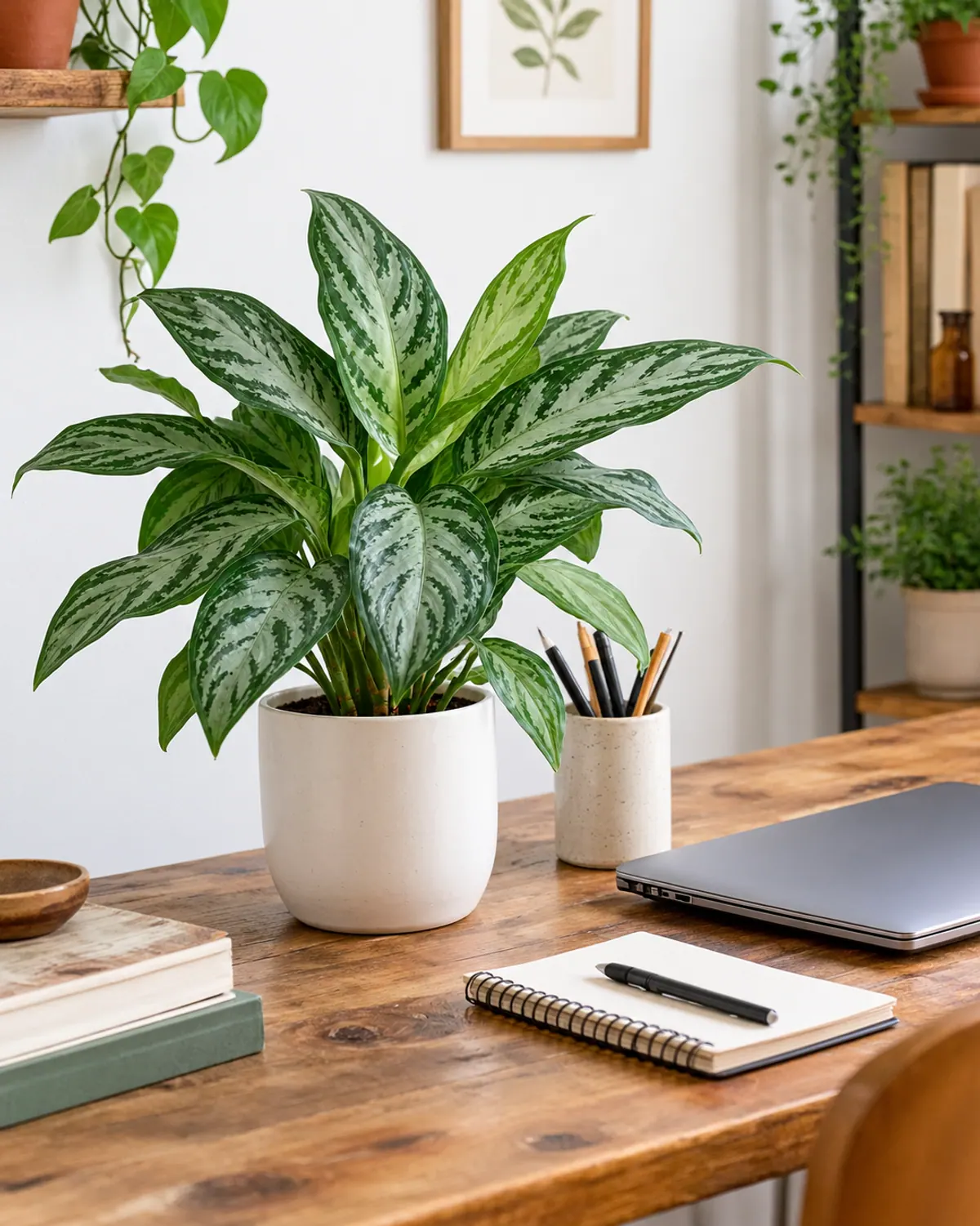
Pet tag: toxic to cats and dogs (ASPCA), so keep it out of reach.
Size: small to medium.
Water: when the top inch is dry. Patterned leaves in green, silver or pink. The darker green types tolerate low light best; the pink and red ones want brighter shade.
- Keep it away from cold windows in winter; it dislikes chills.
Patterned leaves for an office (not for pet homes).
21Janet Craig dracaena (Dracaena deremensis)
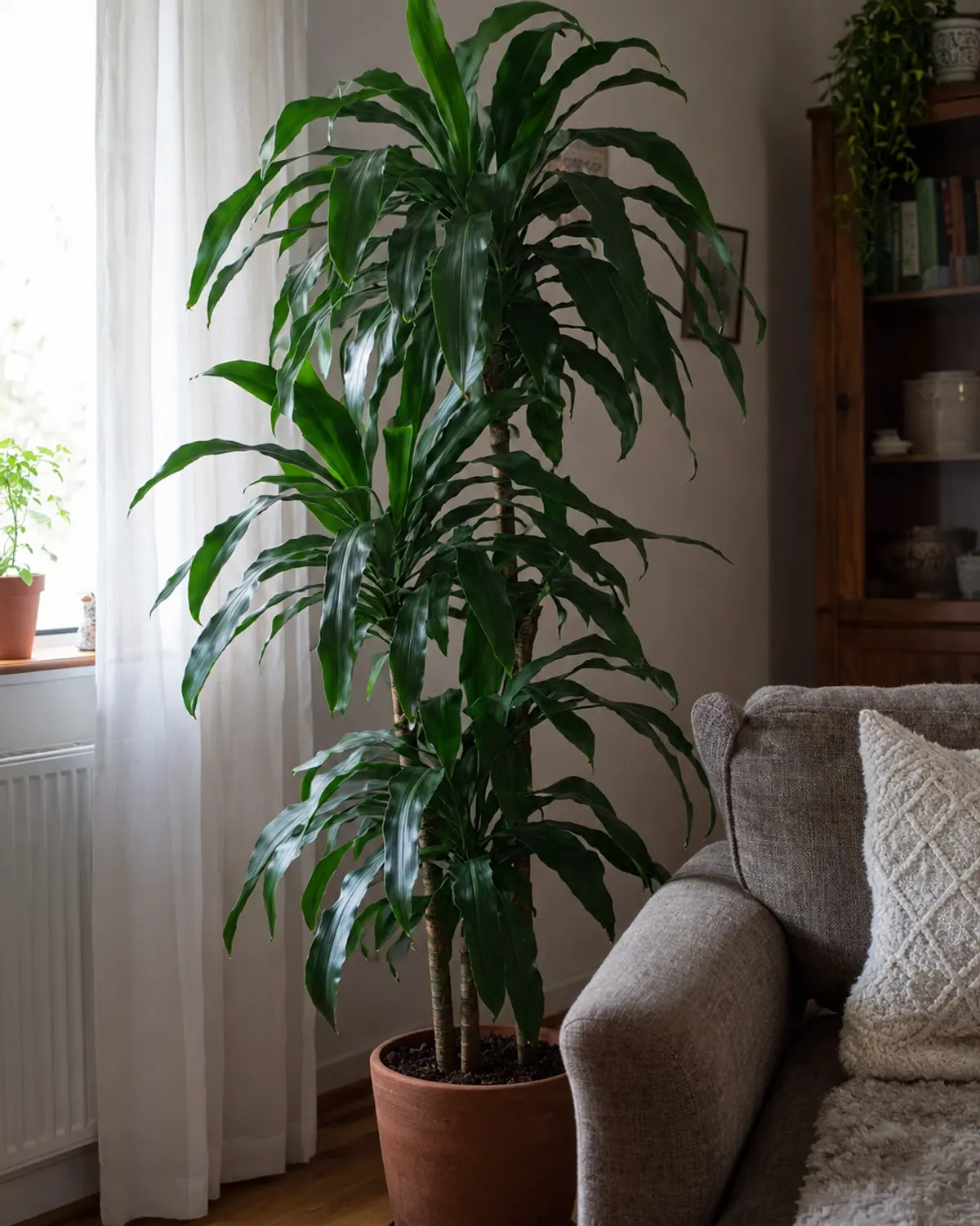
Pet tag: toxic to cats and dogs (ASPCA), so keep it out of reach.
Size: medium to floor.
Water: when the top inch is dry. Glossy, dark green strap leaves on a cane. It is one of the dracaenas best suited to low light and grows slowly there.
- Brown tips can come from fluoride in tap water; filtered water helps.
A tall, dark green low light plant (not for pet homes).
22Satin pothos (Scindapsus pictus)
Pet tag: toxic to cats and dogs (ASPCA), so keep it out of reach.
Size: small pot, trails.
Water: when the leaves curl slightly. Matte, heart-shaped leaves splashed with silver. It tolerates lower light than its sparkle suggests.
- Curling leaves are its thirst signal.
Silver-splashed trailing leaves (not for pet homes).
Very low light: no window plants with a grow light
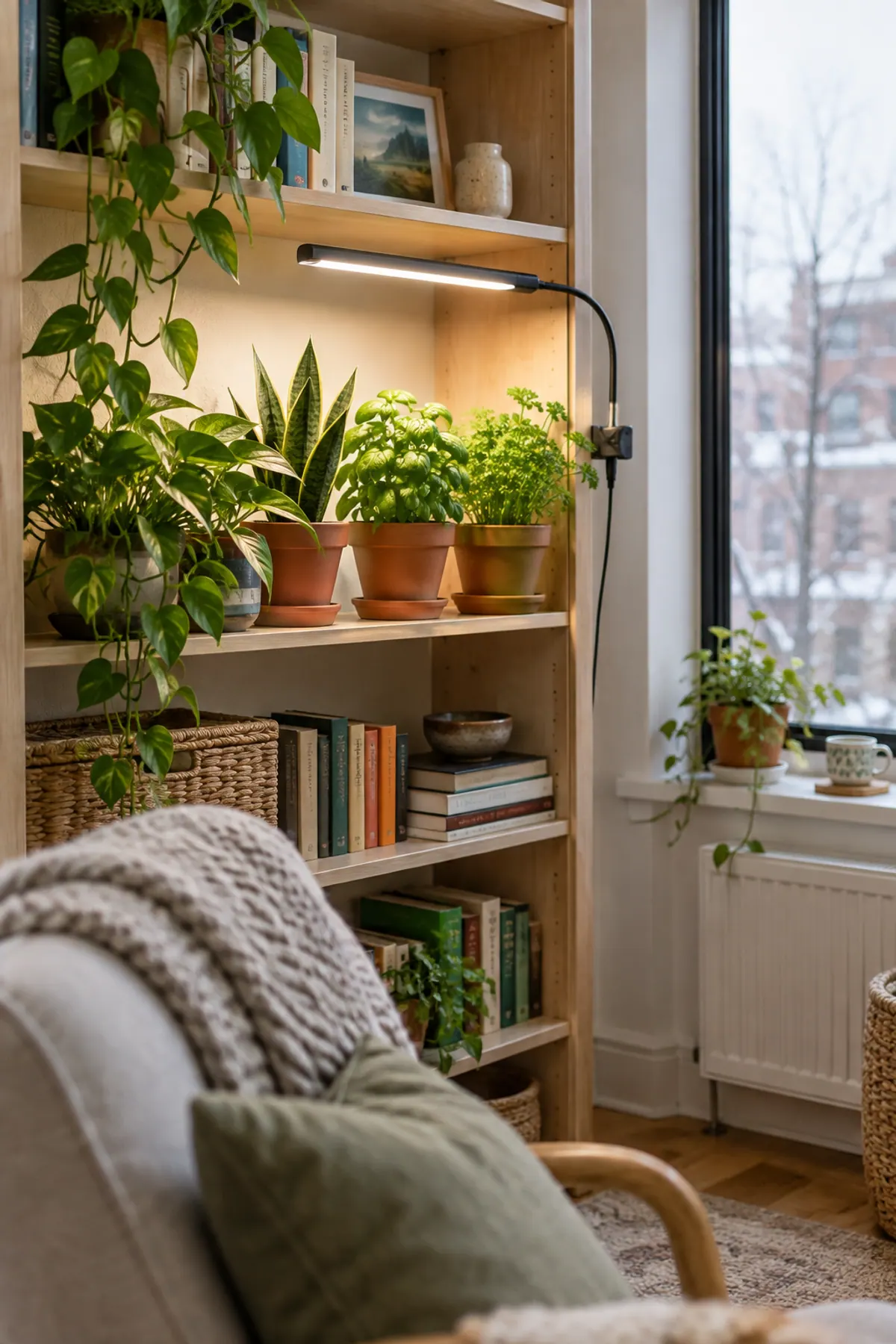
With no window, every plant needs a grow light on a timer; a plain LED fixture works. Our best grow lights for small spaces guide compares clip-on, bar and bulb options.
23African violet under a shelf light
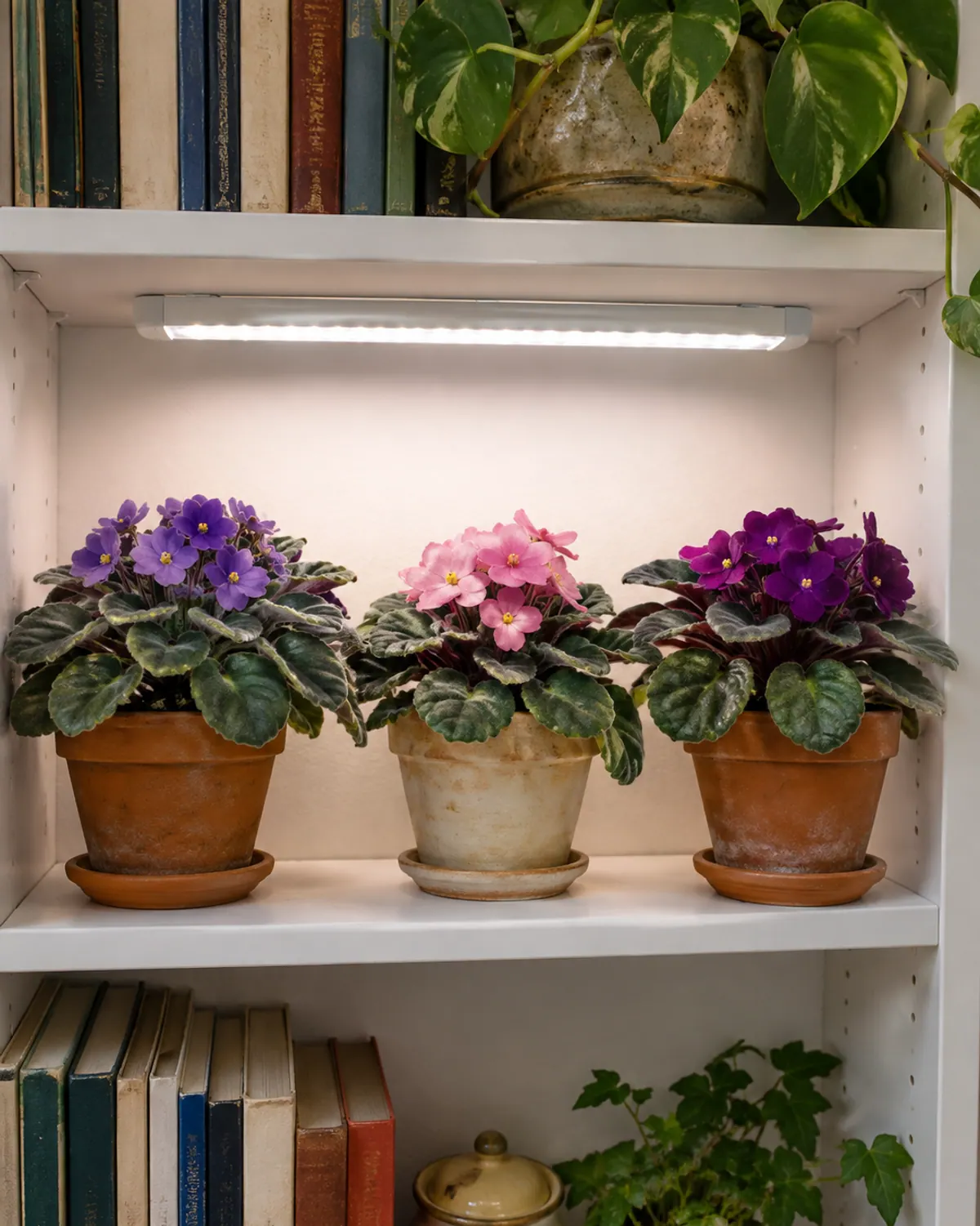
Pet tag: cats safe, dogs safe (ASPCA).
Size: small pot.
Water: from below, when the top feels dry. African violets bloom well under plain LED shelf lights, which makes them a good fit for a windowless bathroom or office shelf.
- Keep the light on a timer so the plant gets the same day length every day.
Flowers under a simple LED light.
24Watermelon peperomia (Peperomia argyreia)
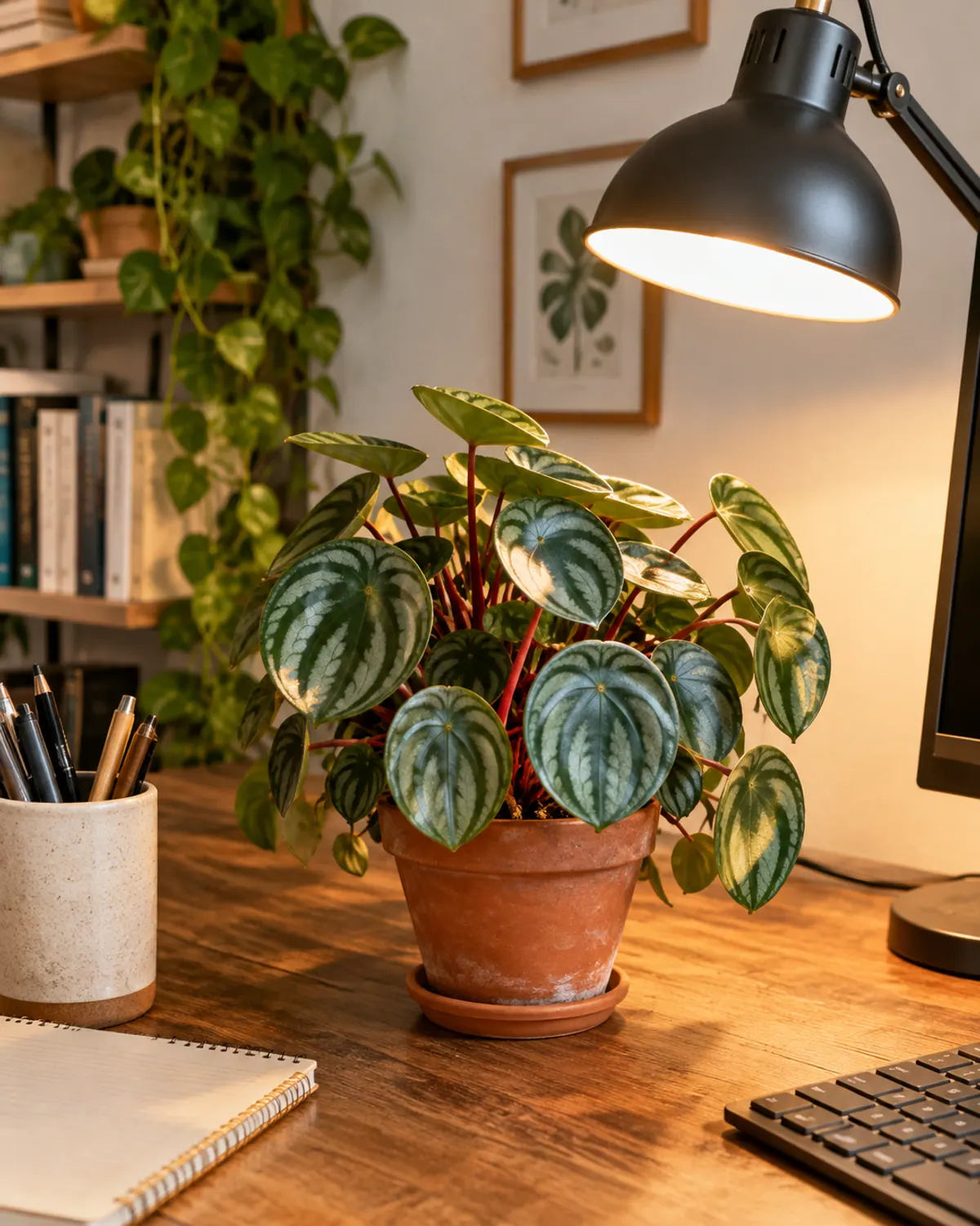
Pet tag: cats safe, dogs safe (ASPCA).
Size: small pot.
Water: when the soil is half dry. Round leaves striped like a watermelon rind. It stays compact and is happy under a desk lamp fitted with a full-spectrum LED bulb.
- Keep the bulb a short distance above the leaves, not across the desk.
Turns any desk lamp into a plant light.
25Herbs under a grow light
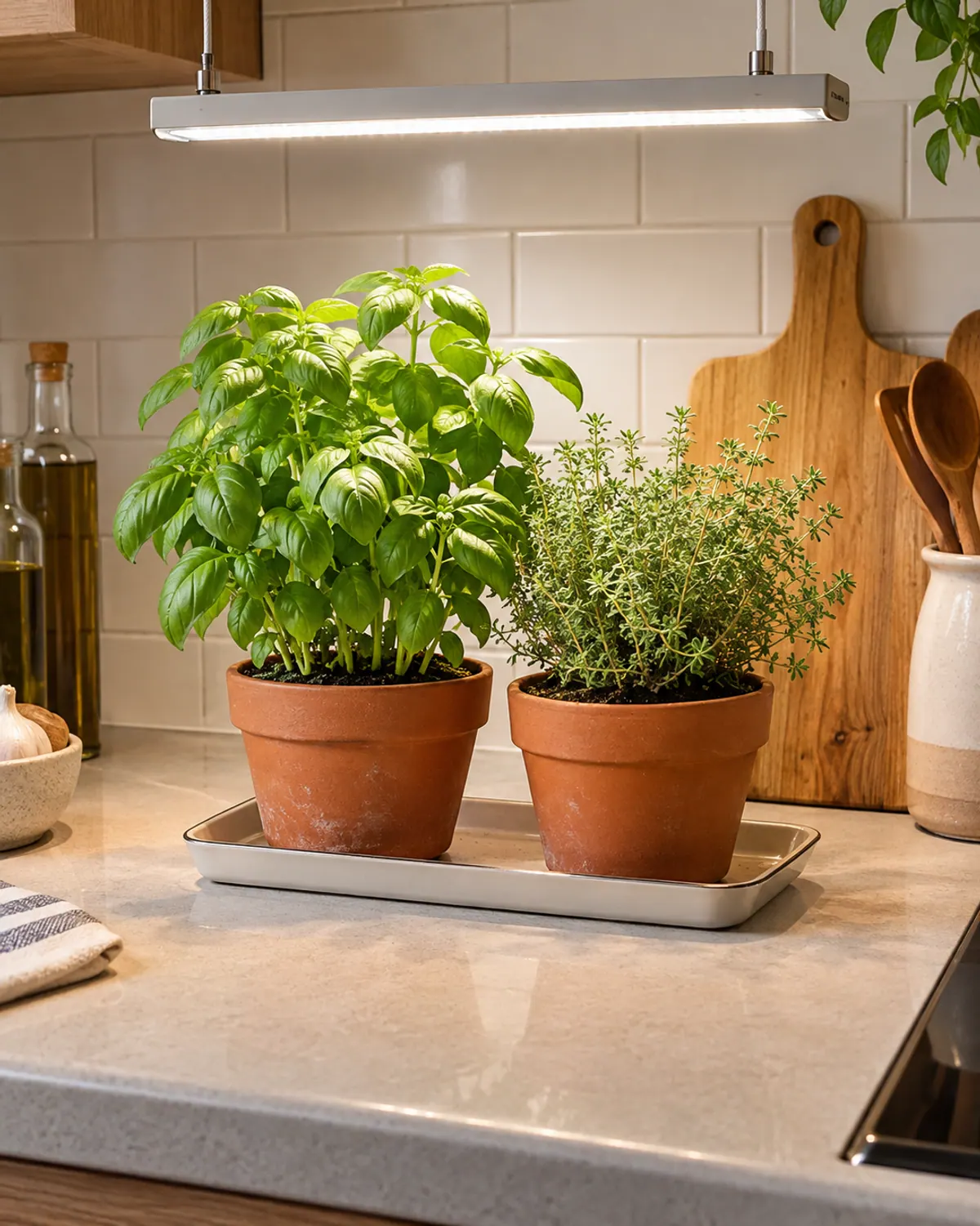
Pet tag: depends on the herb (basil and thyme cats safe, dogs safe; mint and parsley toxic to cats and dogs, per the ASPCA).
Size: small pots.
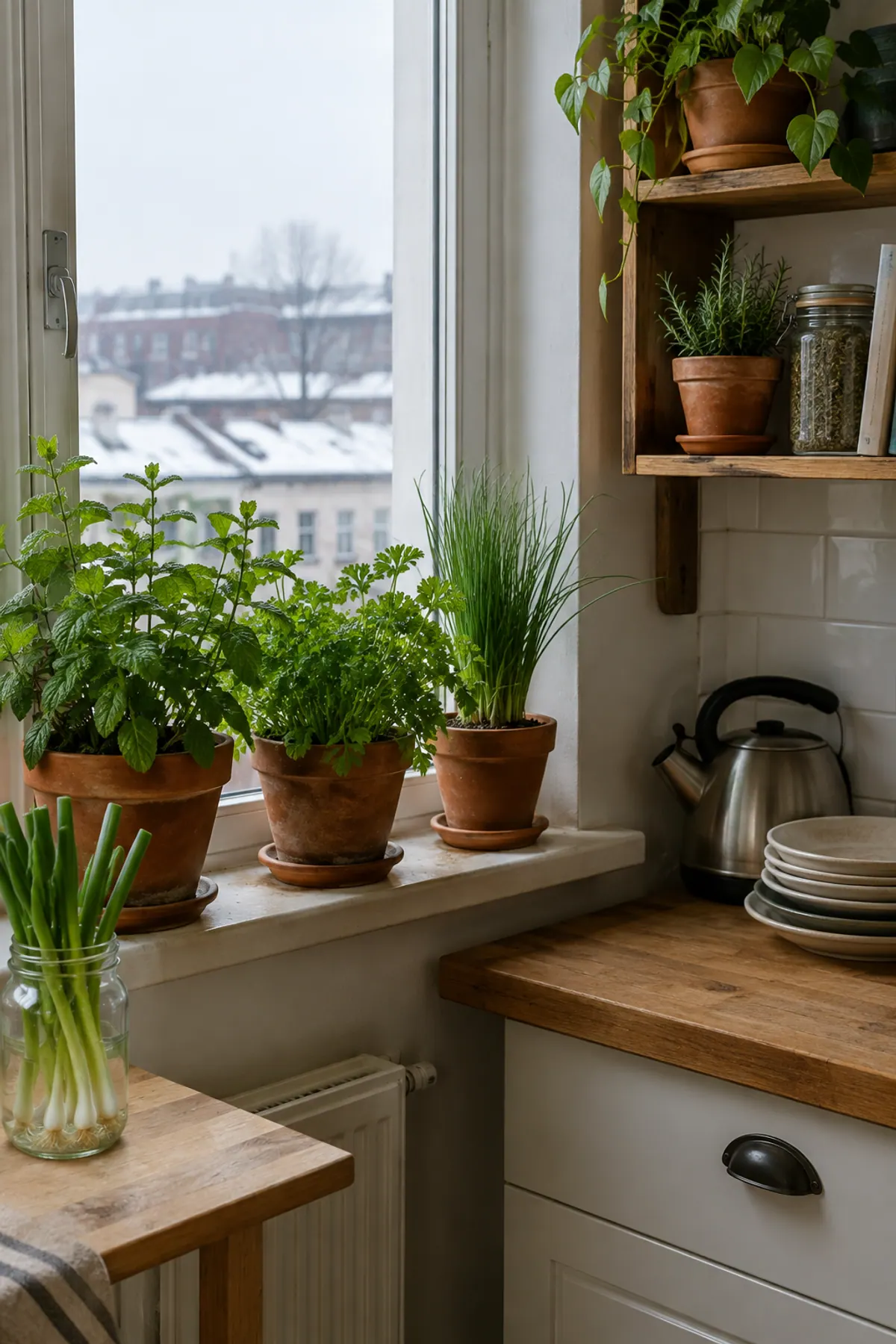
Water: when the top inch is dry. Herbs are not low light plants, but basil and thyme grow on a counter under a grow light. Basil and thyme are listed non-toxic to cats and dogs; mint and parsley are listed toxic. Our herbs that grow indoors in low light guide ranks which herbs cope best. The Herb Garden Journal + 20 Herb Growing Cards puts light needs and an ASPCA pet flag on each herb. This is growing information only, not medical advice.
- Run the light longer than you would for foliage plants; herbs want a lot of it.
Lets herbs grow where there is no sunny window.
Low light houseplants by room and size
| Need | Pet safe picks | Toxic picks (high shelf only) |
|---|---|---|
| Bedroom | Calathea, prayer plant, parlor palm | Peace lily, snake plant |
| Bathroom with a small window | Boston fern, lemon button fern, nerve plant | Golden pothos |
| Living room, tall | Kentia palm, lady palm | Janet Craig dracaena |
| Small pots and shelves | Peperomia, nerve plant, aluminum plant | Chinese evergreen |
| Hanging and trailing | Spider plant | Pothos, heartleaf philodendron, satin pothos |
| Flowering | African violet (under a light), bromeliad color | Peace lily, anthurium |
| Hallway or no window | Cast iron plant; anything under a grow light | Snake plant; ZZ (not on the ASPCA list) |
For styling ideas once you have chosen, see our indoor plants decor ideas for small spaces.
Watering low light plants
Less light means slower growth, and slower growth means the soil stays wet longer. Most low light plants die from too much water, not too little.
Low light watering habits
Winter in a dark apartment
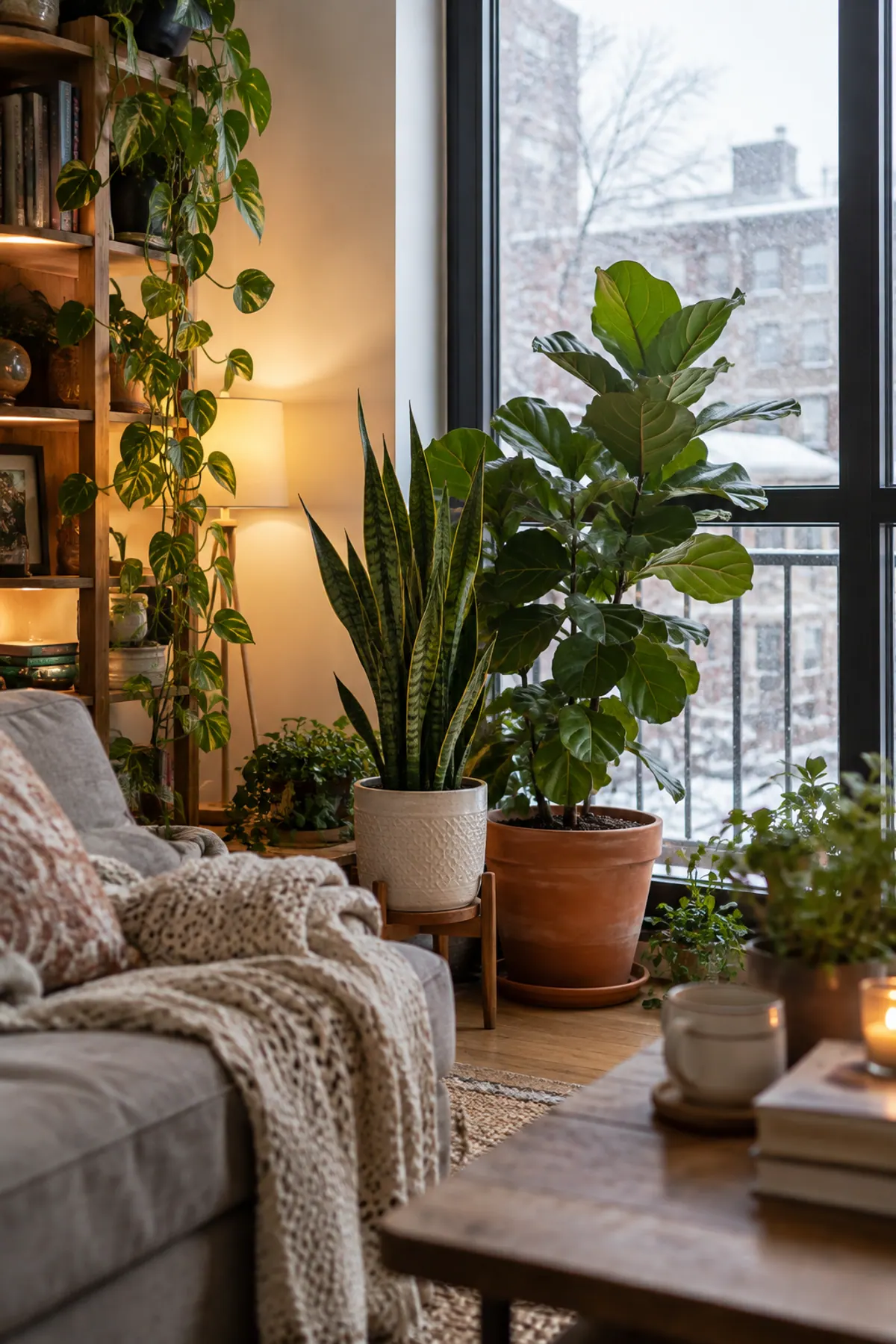
Winter shortens the day, so a spot that was bright shade in June can be true low light by December. Move plants closer to the window, wipe dust off the leaves and cut back on water.
Our winter houseplant care tips cover dry air and cold glass. If you grow herbs, the Indoor Winter Herb Garden Kit has a grow-light timer plan for the dark months. Herb notes here are about growing only, not medical advice.
Low light mistakes to avoid
Do
- Pick plants for the light you have, using the book test
- Rotate pots every few weeks
- Add a grow light when the book test fails
Avoid
- Watering on a schedule instead of checking the soil
- Putting a plant in a windowless room with no light
- Repotting into a much bigger pot, which stays soggy
- Buying toxic plants for a home with a chewing pet
Low light houseplant starter list
Shop low light plants and helpers
- Pet safe
Live cast iron plant
Typically $20 to $45
The pet safe pick for true low light.
Check price on Amazon for Live cast iron plant -
Live ZZ plant
Typically $20 to $45
The toughest dim-hallway plant.
Check price on Amazon for Live ZZ plant -
Live parlor palm, 14 to 18 in
Typically $20 to $35
A pet safe palm for a north window.
Check price on Amazon for Live parlor palm, 14 to 18 in -
LED grow light bar with timer
Typically $20 to $45
Makes a no window spot workable.
Check price on Amazon for LED grow light bar with timer -
Full-spectrum LED grow bulb
Typically $10 to $25
Fits a desk or floor lamp you already own.
Check price on Amazon for Full-spectrum LED grow bulb -
Soil moisture meter
Typically $8 to $15
Stops overwatering in slow-drying soil.
Check price on Amazon for Soil moisture meter
We earn from qualifying purchases, which never changes what we recommend. Read our disclosure and editorial guidelines.
Frequently asked questions
What is the best houseplant for very low light?
ZZ plant, snake plant and cast iron plant tolerate the dimmest spots that still get some daylight. With no window at all, any plant needs a grow light.
Can houseplants live in a room with no windows?
Only with a grow light. Low light is not no light, so a windowless room needs an LED grow light on a timer for every plant.
Which low light houseplants are safe for cats and dogs?
Per the ASPCA, cast iron plant, parlor palm, calathea, prayer plant, spider plant, peperomia, Boston fern, nerve plant, kentia palm and lady palm are listed non-toxic. Check the ASPCA list and your vet. If a pet eats a plant, call ASPCA Animal Poison Control at (888) 426-4435.
Are pothos and snake plants safe for pets?
No. The ASPCA lists both golden pothos and snake plant as toxic to cats and dogs, so keep them out of reach or choose a safe plant such as cast iron plant.
How do I know if my apartment has low light?
Try to read a book at the plant's spot at midday without a lamp. Easy reading means bright shade, squinting means low light, and needing a lamp means you need a grow light.
How often should I water low light plants?
Less often than plants in bright light, because the soil dries slowly. Check the soil with a finger and water only when the top inch or more is dry, depending on the plant.
Save it for later
Pin this to your Houseplants board so it's there when you need it.
Save to Pinterest