This post contains affiliate links. As an Amazon Associate we earn from qualifying purchases, at no extra cost to you. Read our disclosure.
Safety first: Herbs can be powerful. If you are pregnant, nursing, take medication or have a health condition, check with your doctor or pharmacist first. Please read our herbal & garden safety notes before you start.
Key takeaways
- Measure first. As a guide, within about 4 feet of a large south or east window is high light, 4 to 8 feet is medium, and beyond 8 feet is low.
- Easiest in a dim kitchen: mint, parsley, chives, garlic chives, green onions and cilantro.
- Need a bright window: oregano, thyme, basil, Thai basil and marjoram.
- Need a grow light in winter: microgreens, rosemary, sage and bay. Iowa State suggests 6 to 12 inches above the leaves for 12 to 16 hours.
- Water and feed less in winter. Let soil dry between waterings and skip winter feeding.
In this post25 sections
- The window-distance test: how much light your spot gets
- Best herbs to grow indoors in low light
- 1. Mint
- 2. Parsley
- 3. Chives
- 4. Garlic chives
- 5. Green onions
- 6. Cilantro
- 7. Lemon balm (sources disagree)
- 8. Chervil (sources disagree)
- Herbs that need a bright window
- 9. Oregano
- 10. Thyme
- 11. Basil
- 12. Thai basil
- 13. Marjoram
- Herbs that need a grow light in winter
- 14. Herb microgreens
- 15. Rosemary
- 16. Sage
- 17. Bay laurel
- Growing herbs indoors with a grow light
- Low light herb care: water, food, warmth and humidity
- Bonus: 5 ways to get more light to a dim windowsill
- FAQ
The window-distance test: how much light your spot gets
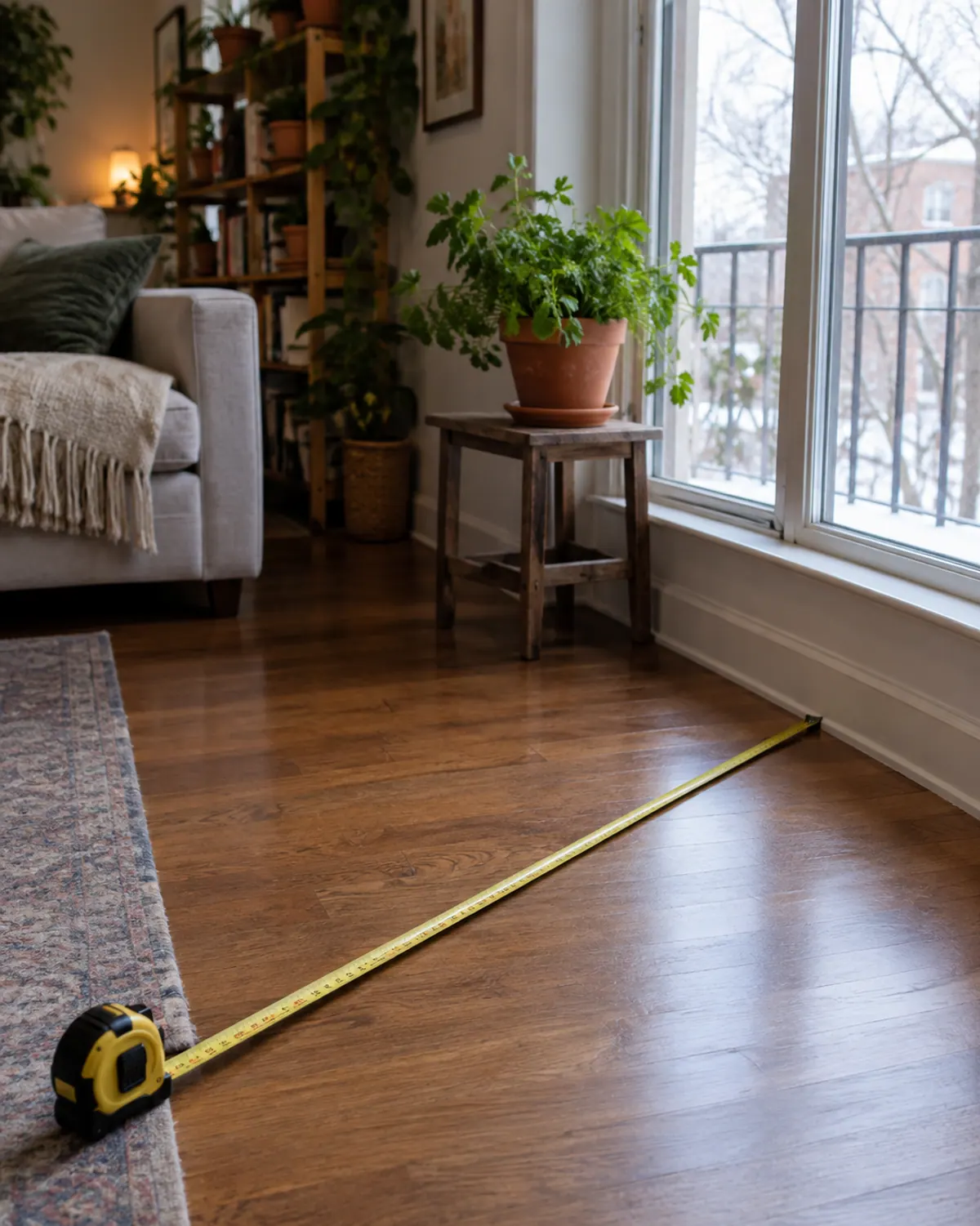
Light fades fast as you move away from a window. The University of Arizona Cooperative Extension gives a handy rule: high light within about 4 feet of a large south or east window, medium light 4 to 8 feet back, and low light beyond 8 feet.
Mississippi State Extension puts numbers on those bands in foot-candles. High light is 1,000 or more, medium is 500 to 1,000, and low is 50 to 500. Below 50 foot-candles, plants can't sustain themselves.
| Distance from a large south or east window | Light level | Foot-candles | What to grow |
|---|---|---|---|
| Within about 4 feet | High | 1,000 or more | Any herb on this list, including rosemary, sage and bay |
| About 4 to 8 feet | Medium | 500 to 1,000 | Mint, parsley, chives, garlic chives, green onions, cilantro |
| Beyond about 8 feet | Low | 50 to 500 | Herbs struggle here; add a grow light |
| Deep in the room or a hallway | Too dark | Under 50 | Nothing long term without a grow light |
Best herbs to grow indoors in low light
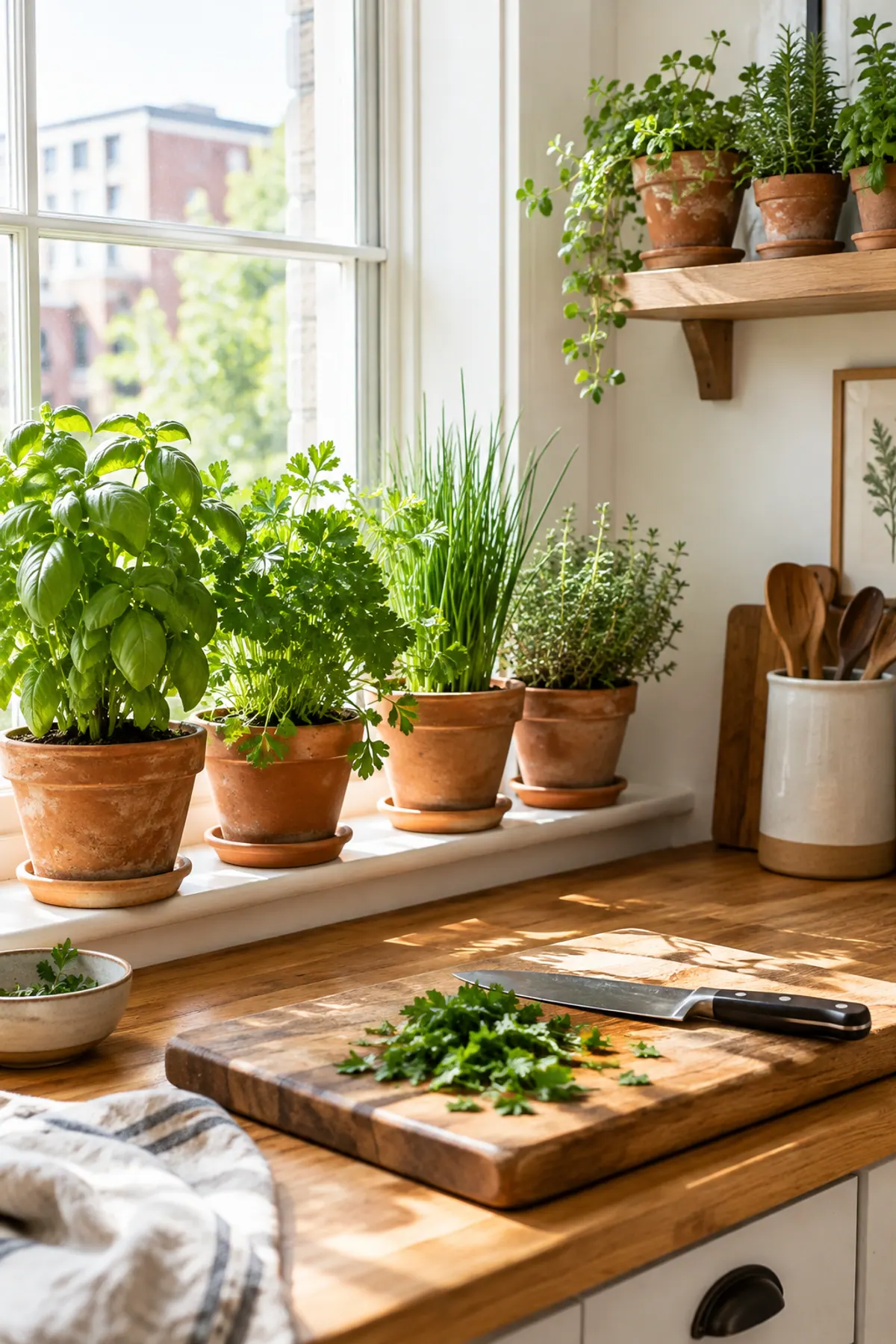
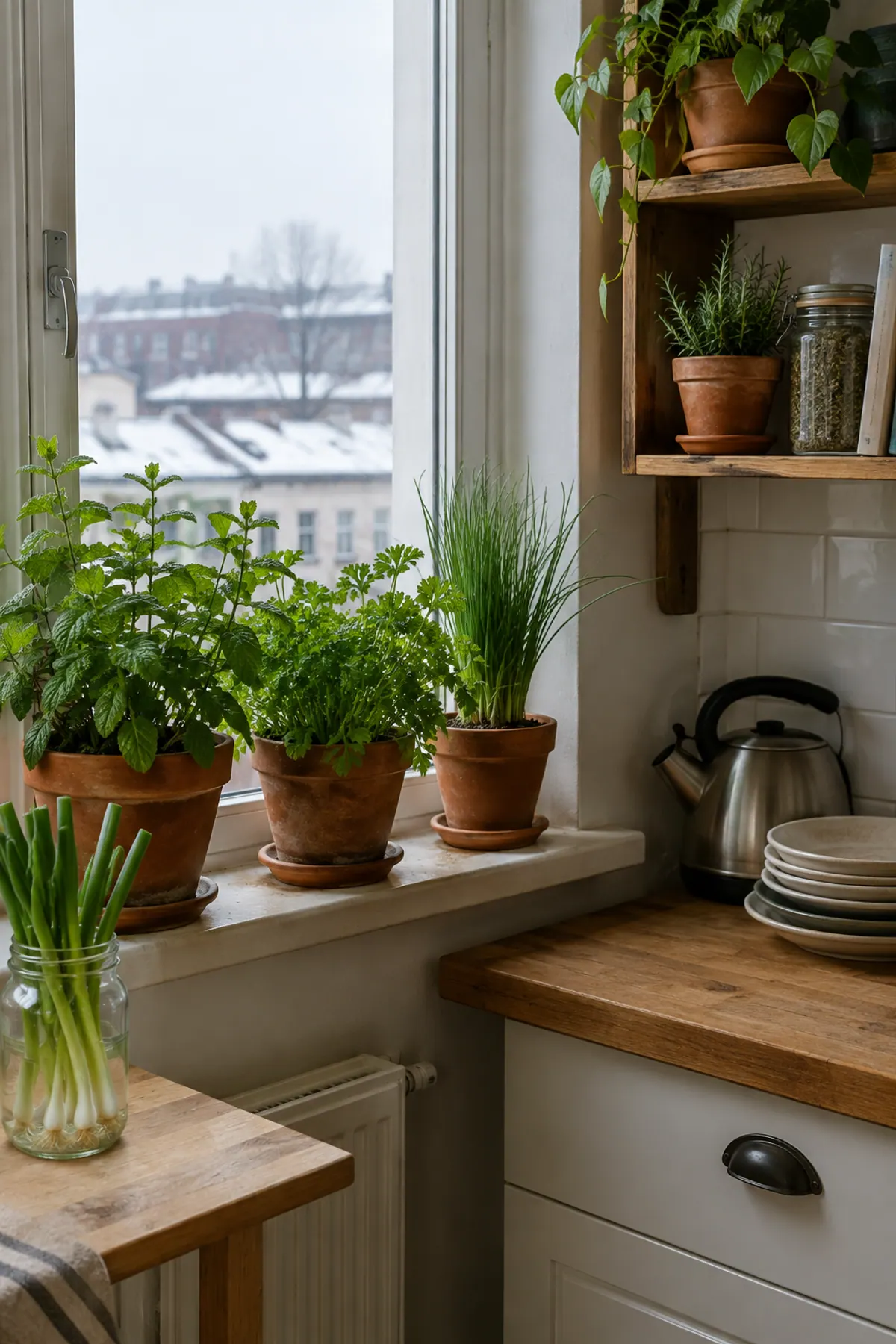
These eight cope best with a medium spot: an east window, a north window with open sky, or a sill a few feet back. Expect slower growth than in summer. That is normal, not a sign you did something wrong.
1Mint
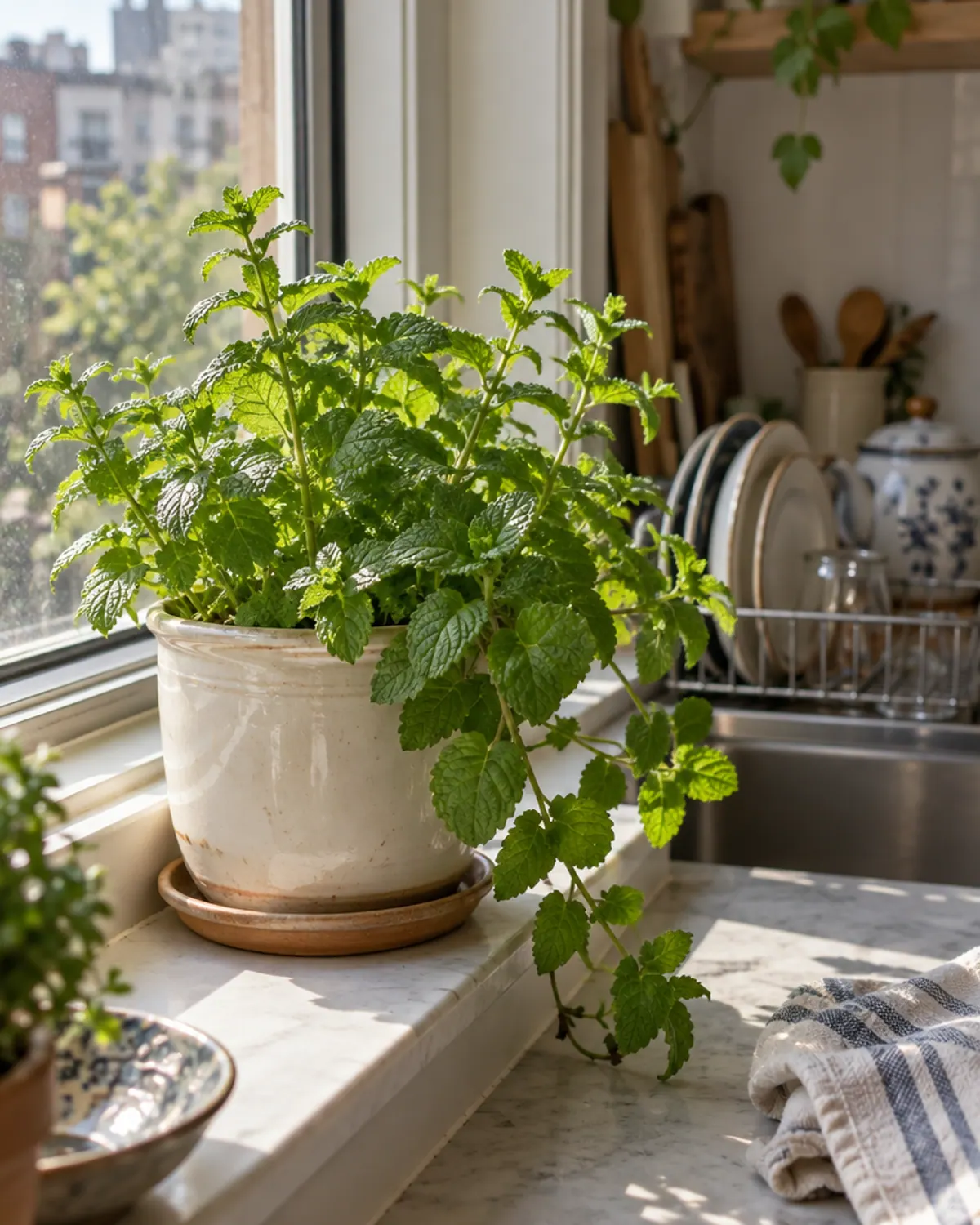
Mint is the most forgiving herb on this list. Iowa State Extension names it among the easier herbs to grow indoors, and it keeps sending up new shoots even when winter slows it down. An east window with morning sun suits it well. Grow it in a pot of its own, since its runners crowd out anything that shares the space. Snip stems just above a pair of leaves, and two new shoots usually form there. If it gets leggy, cut it back by a third and move it closer to the glass. Keep the soil lightly moist and empty the saucer after watering. Pet note: the ASPCA lists mint as toxic to cats and dogs.
- Spearmint and peppermint both grow well indoors. Pick the one you'll reach for most.
2Parsley
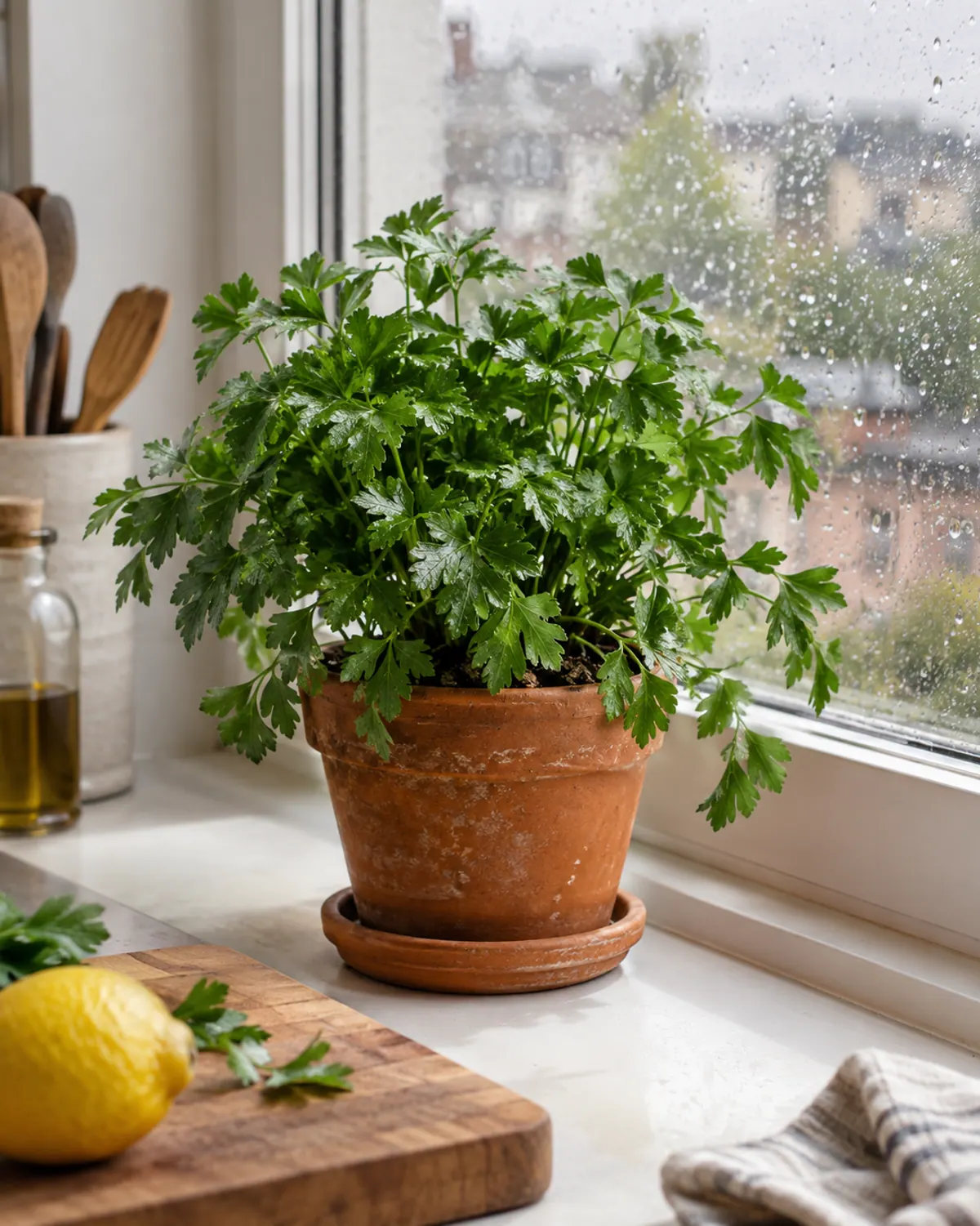
Parsley handles grey days better than most herbs, which makes it a staple for dim kitchens. Iowa State lists it among the easier herbs indoors. Flat-leaf and curly types both work. Flat-leaf tastes stronger, while curly looks tidier on a sill. Parsley grows a long taproot, so pick a deep pot rather than a shallow bowl. Harvest the outer stems at the base and leave the center to keep growing. Growth slows in winter light, so pick lightly and let the plant recover between cuts. Pet note: the ASPCA lists parsley as toxic to cats, dogs and horses.
- A grocery store parsley pot is usually many seedlings packed together. Split it into two or three pots so they don't compete.
3Chives
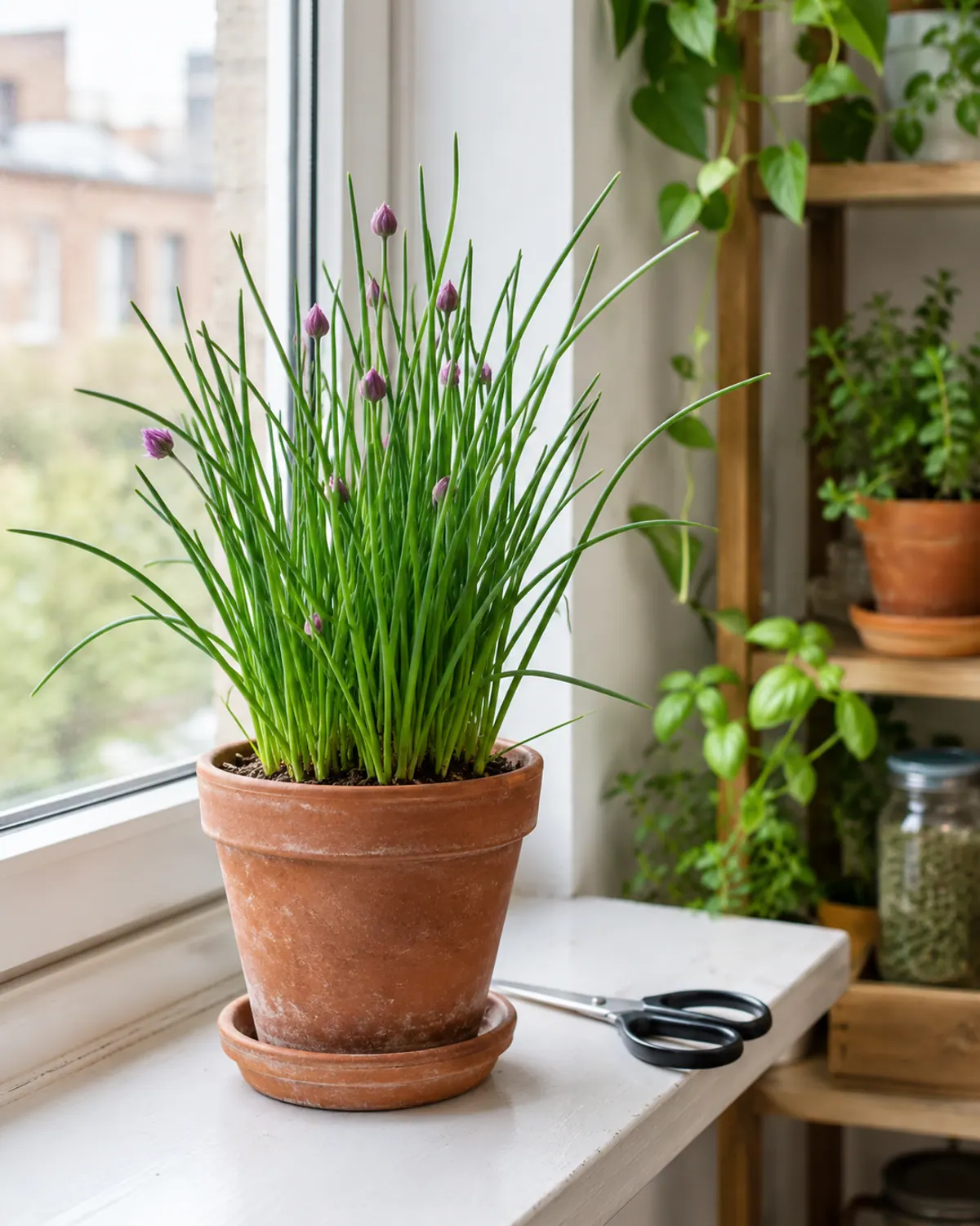
Chives are one of the toughest herbs for a north window with open sky. Iowa State counts them among the easier herbs indoors, and their grassy clumps bounce back fast after cutting. Snip the hollow leaves an inch or two above the soil, a few at a time from the outside of the clump. If flower buds appear, pinch them off or let a few open. The purple blooms are edible. Chives don't mind a cool room, so a chilly sill is fine as long as the leaves don't touch frosty glass. Pet note: chives belong to the onion family, which the ASPCA lists as toxic to cats and dogs.
- Cut whole leaves rather than trimming the tips. Trimmed tips turn brown and look messy.
4Garlic chives
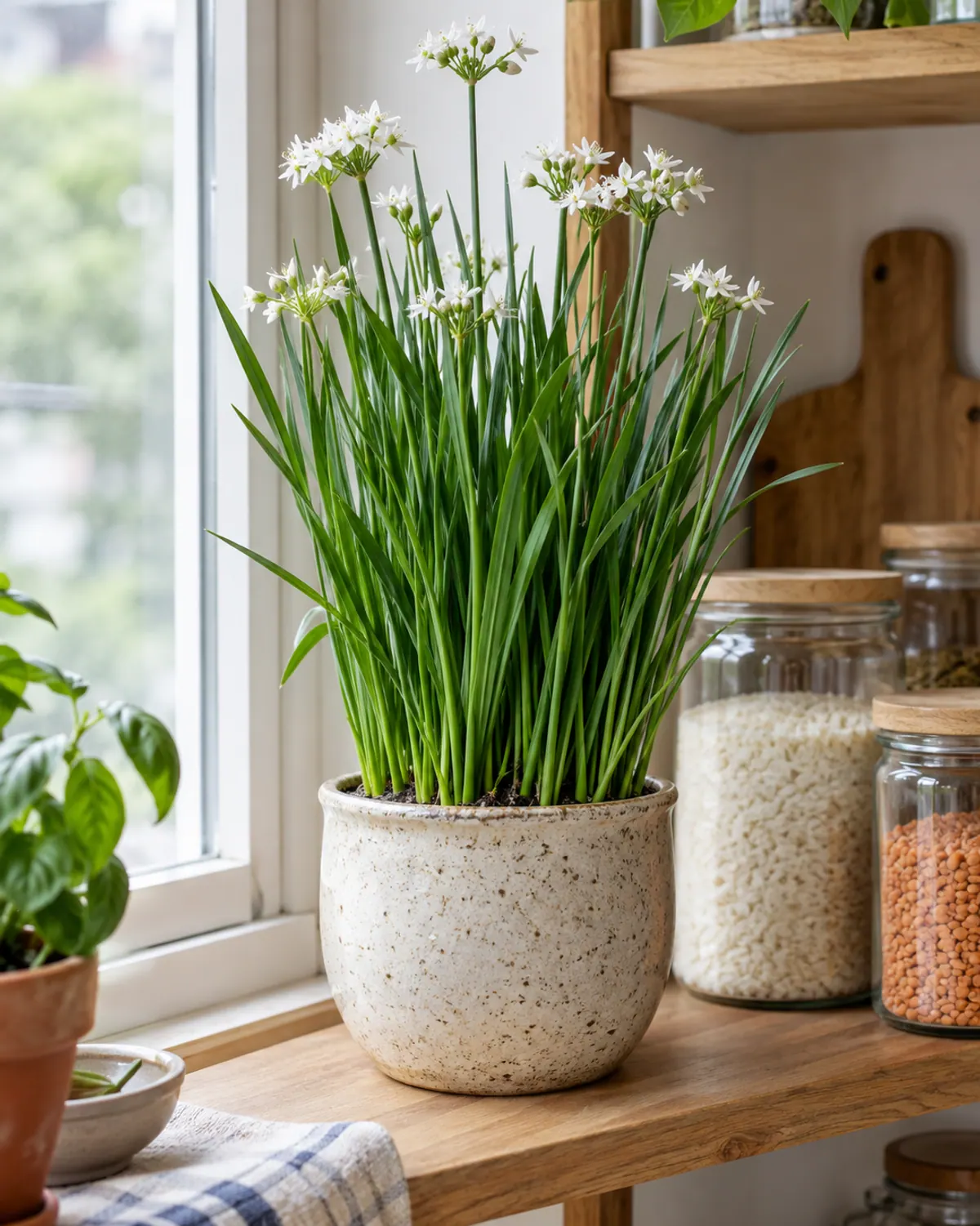
Garlic chives look like chives with flat leaves, and they taste mildly of garlic. They grow in the same tidy clumps and cope with similar conditions, so they make a good second onion-family herb for a medium-light shelf near a window. Cut them the same way: a few leaves at a time, an inch or two above the soil. Mature plants can send up small white star-shaped flowers, which are edible too. Indoors in winter, expect slow, steady growth rather than a big flush. Give the pot a quarter turn each week so the clump grows upright instead of leaning toward the glass. Pet note: like all onion relatives, garlic chives are toxic to cats and dogs.
- Grow garlic chives beside regular chives. The flat and round leaves are easy to tell apart when you harvest.
5Green onions
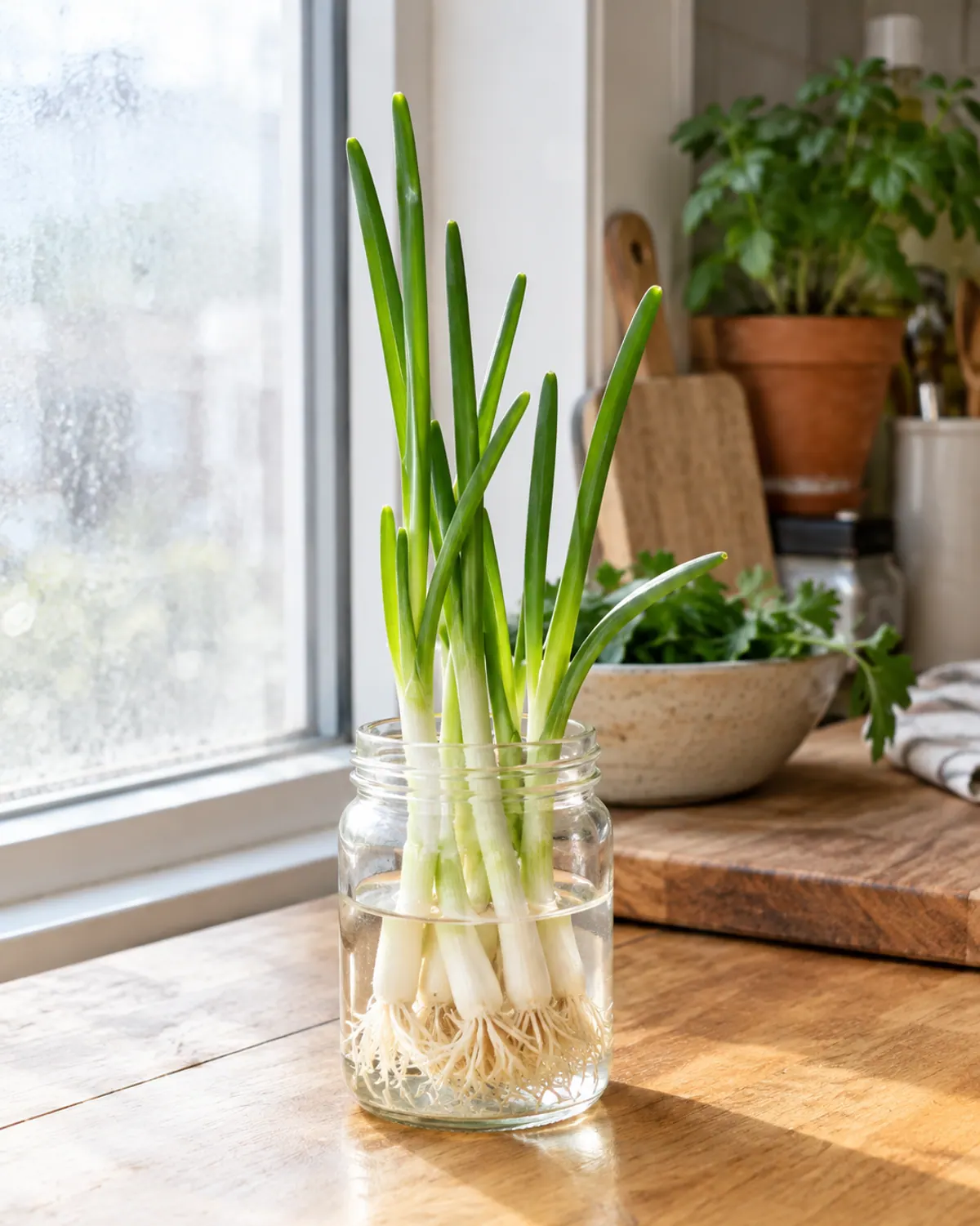
Green onions are the simplest herb-like plant to regrow, and they need little light to push out new leaves. Save the white root ends from store-bought scallions, stand them in a jar with about an inch of water, and set the jar on a windowsill. New green shoots soon appear. Change the water every couple of days so it stays clear. In water alone, each round of regrowth gets thinner because the bulb runs out of stored energy. Plant the roots in a pot of soil if you want them to keep going. Pet note: green onions are onions, which the ASPCA lists as toxic to cats and dogs.
- Keep the roots in water and the green tops above it. Fully submerged ends rot quickly.
6Cilantro
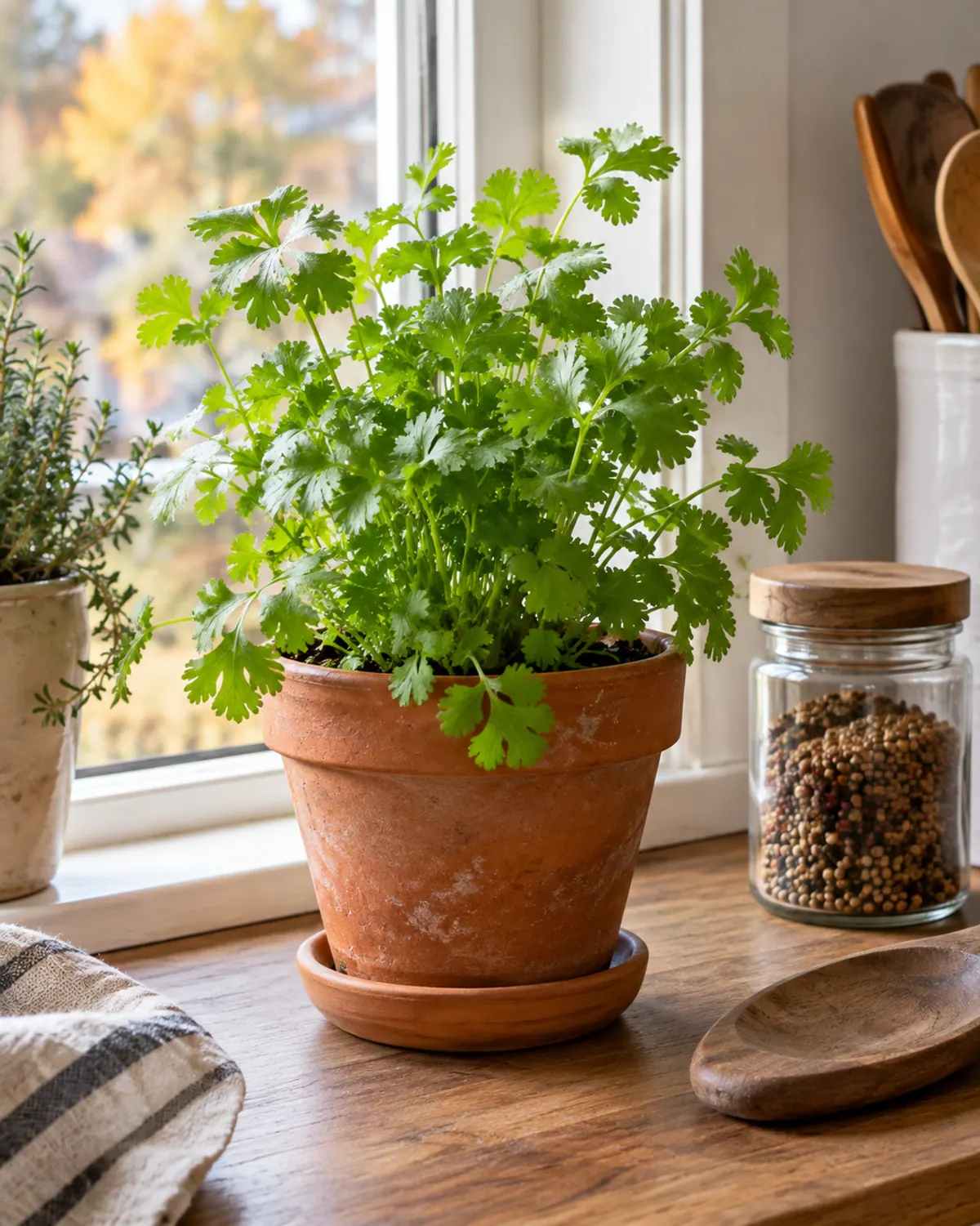
Cilantro likes the cool conditions a winter window offers. Iowa State includes it among the easier herbs to grow indoors. The catch is that cilantro runs to seed quickly, especially in warm rooms. A cool sill with bright, indirect light suits it better than a spot beside a heater. Sow a few seeds every few weeks for a steady supply instead of relying on one pot. Harvest outer leaves once the plant has several sets. When the new leaves turn thin and feathery, the plant is starting to flower and the flavor fades, so that's your cue to sow again. Pet note: check the ASPCA plant list before you grow it where pets roam.
- Sow cilantro straight into its final pot. It dislikes being moved.
7Lemon balm (sources disagree)
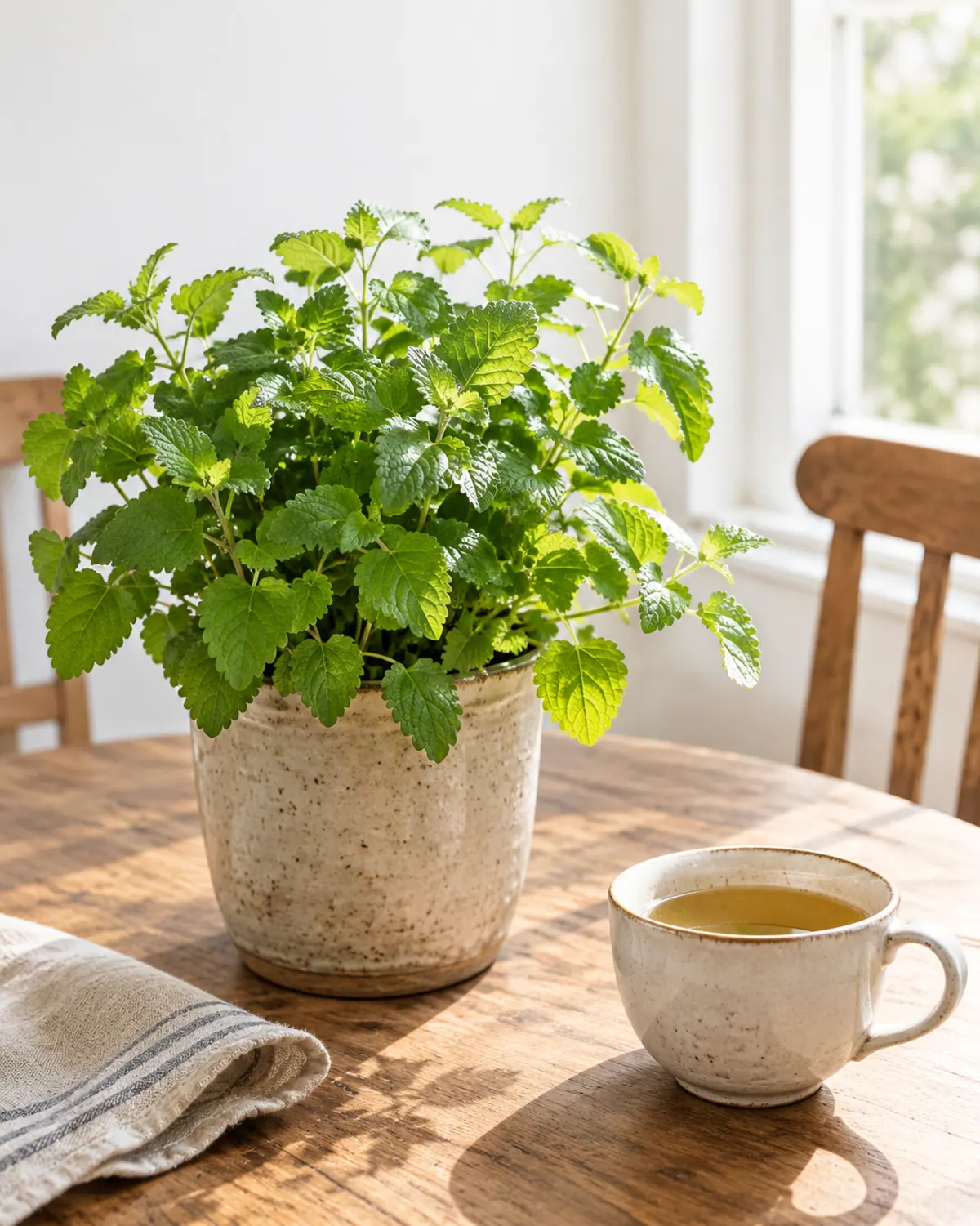
Lemon balm is where sources split. Epic Gardening lists it as a low-light herb. Iowa State Extension groups it with the herbs that need more light and are more prone to spider mites. Both may be partly right: lemon balm survives in a medium spot but tends to grow lanky and pale there. Our take is to try it in your brightest east or west window and add a grow light if the stems stretch. It's a mint relative with a lemony scent and spreads the same way, so give it a pot of its own. Check leaf undersides for fine webbing, a sign of mites. Pet note: check the ASPCA plant list before you grow it where pets roam.
- Pinch the tips often. Lemon balm stays bushier and less floppy when you cut it back regularly.
8Chervil (sources disagree)
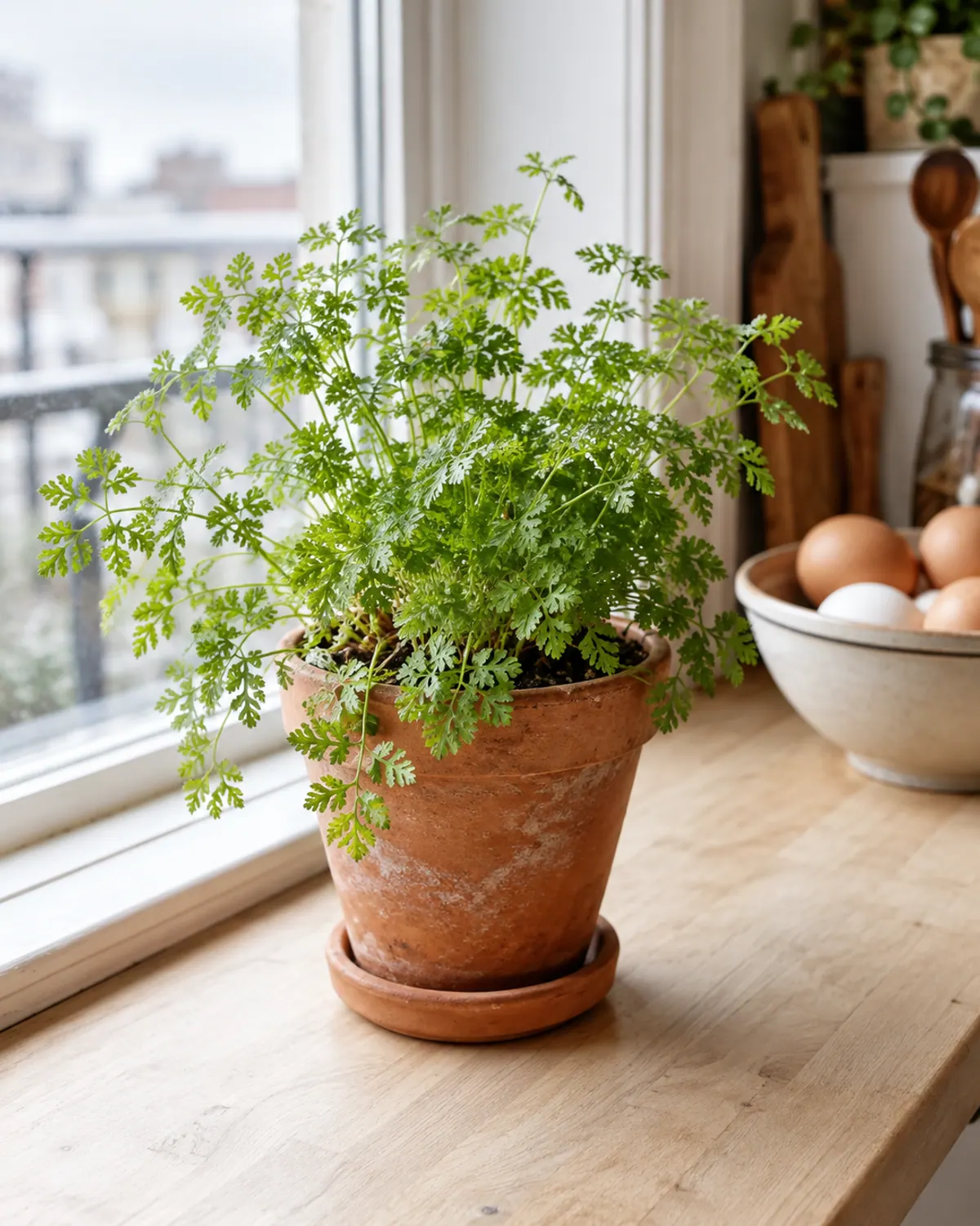
Chervil is the other herb sources disagree on. Epic Gardening calls it a low-light option, while Iowa State lists it among the herbs that need more light indoors. Outdoors, chervil is known for liking cool weather and some shade, which may explain the split. Indoors, a cool east window is a sensible middle ground. The lacy leaves taste mildly of anise and parsley. Chervil grows quickly and runs to seed in warm rooms, so sow small batches a few weeks apart. Cut leaves from the outside and use them fresh, since the flavor fades when dried. Pet note: check the ASPCA plant list before you grow it where pets roam.
- Like cilantro, chervil has a taproot. Sow it where it will grow rather than moving seedlings.
Herbs that need a bright window
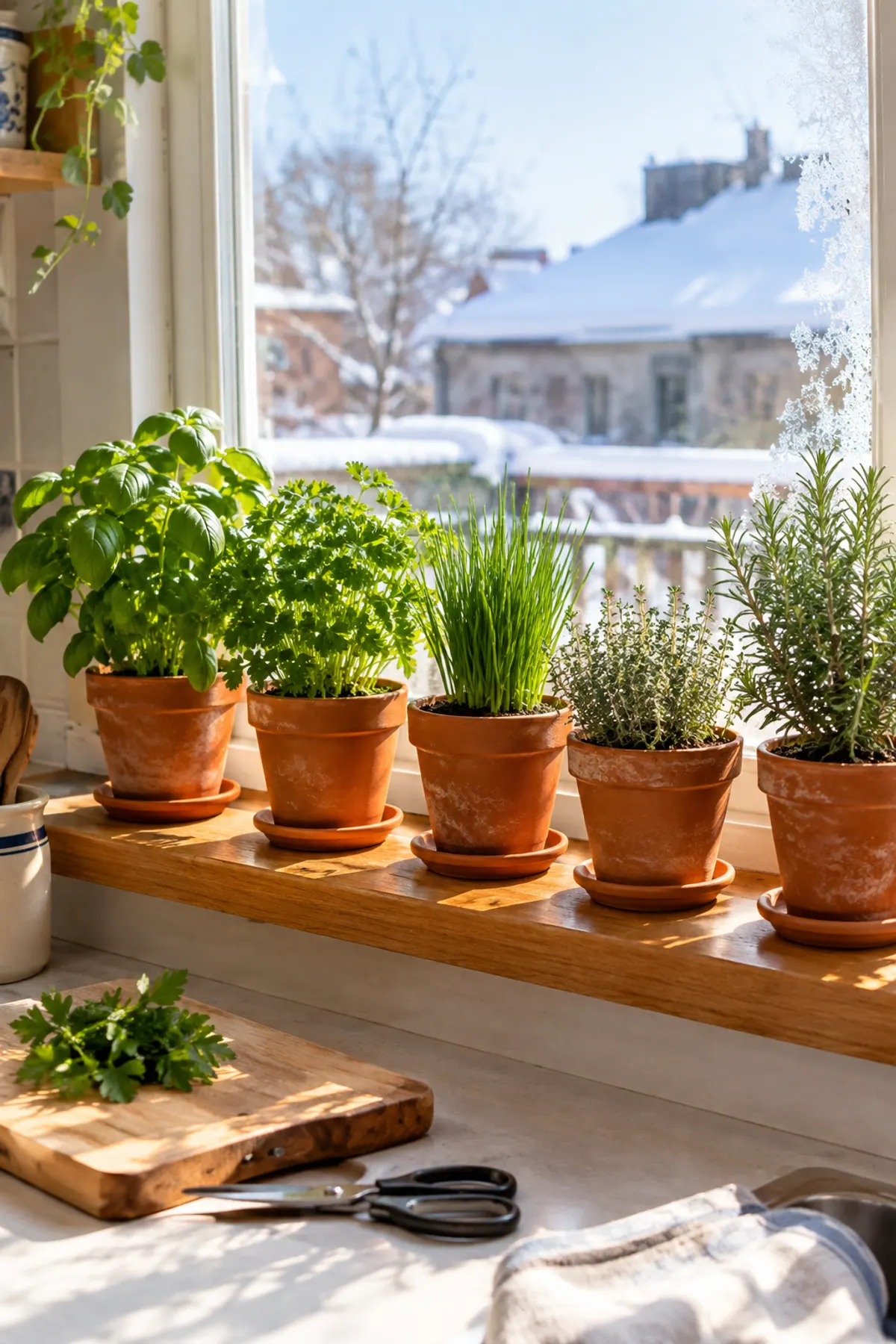
These five are easy in good light, and Iowa State lists basil, oregano and thyme among the easier herbs indoors. The catch is light: Iowa State says most herbs need about 8 hours of direct light and some manage with 6, so give these your sunniest window. A south window is best, and a bright east or west window can work.
9Oregano
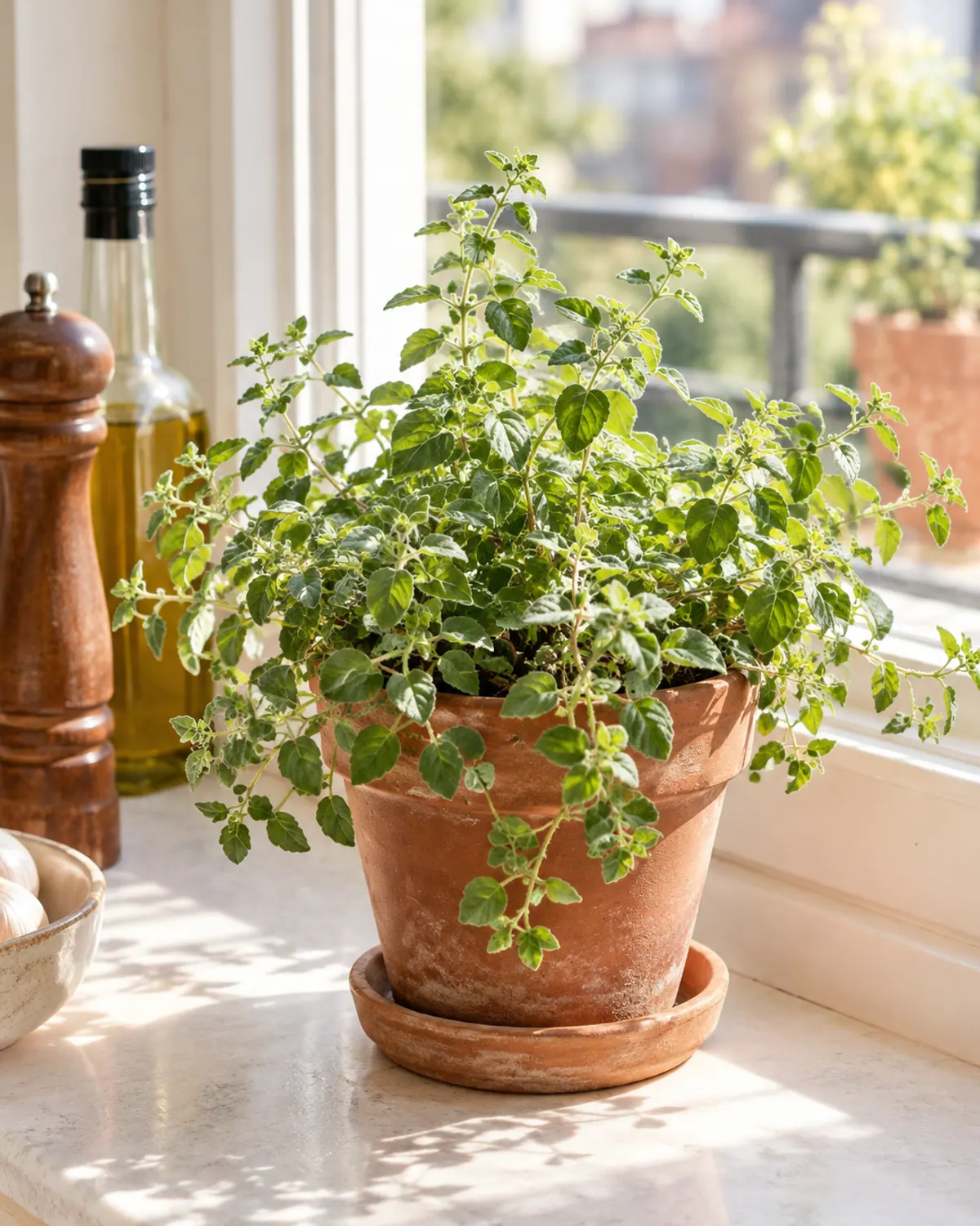
Oregano is a Mediterranean herb that likes sun and dry soil. Iowa State counts it among the easier herbs indoors, as long as it gets a bright window. In a dim spot the stems stretch and the leaves lose their strong flavor. Let the top of the soil dry between waterings, and use a terracotta pot, which dries faster than plastic. Trim the stems often to keep the plant compact, since each cut sends out new side shoots. If your south window is taken, oregano is an easy herb to move under a clip-on grow light. Pet note: the ASPCA lists oregano as toxic to cats and dogs.
- Go easy on fertilizer. Iowa State suggests half or quarter strength for indoor herbs.
10Thyme
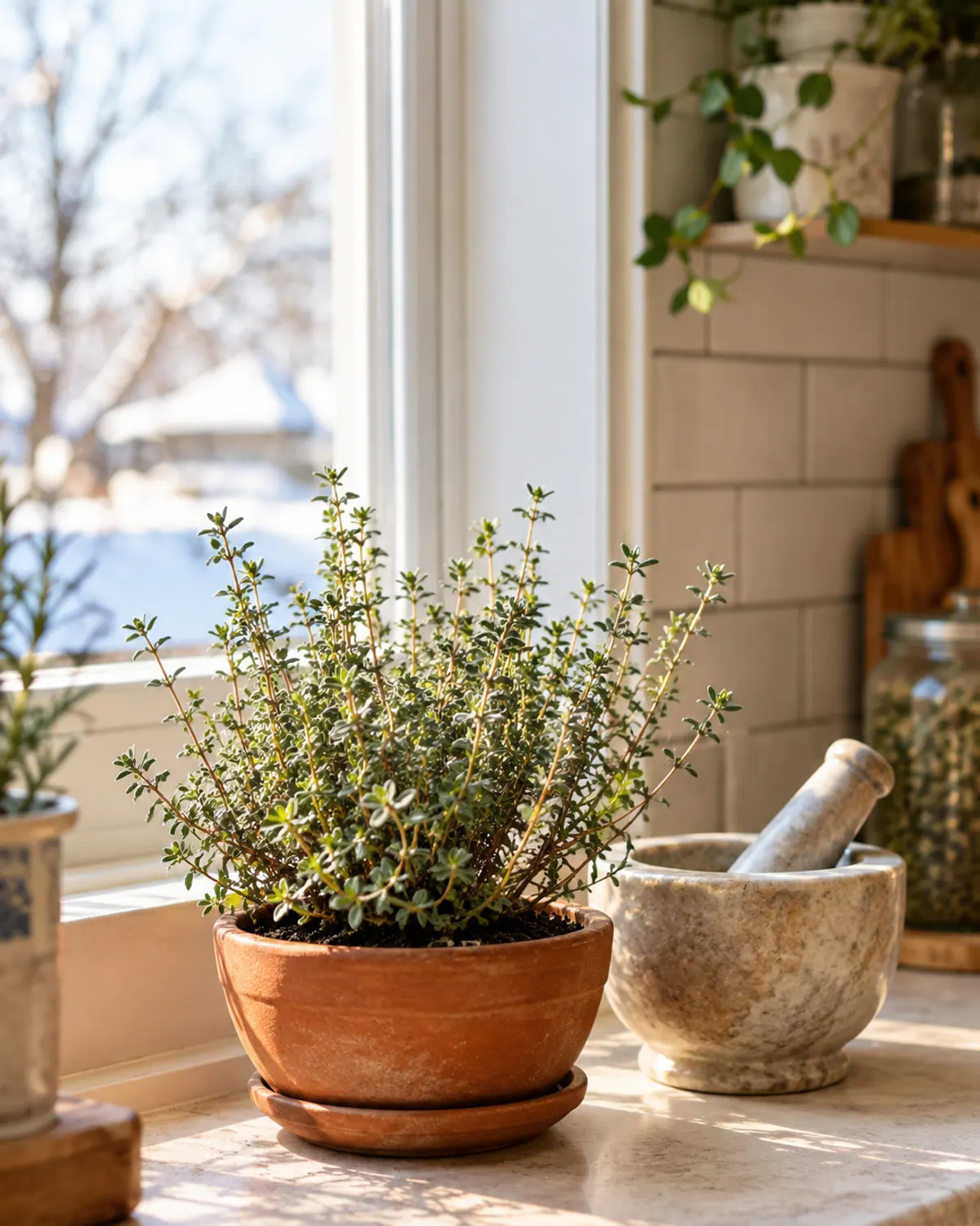
Thyme is small, tidy and happy on a sunny sill. Iowa State includes it among the easier herbs indoors. Its tiny leaves and woody stems are built for sun and dry air, so the bigger risk indoors is overwatering. Let the soil dry between waterings, as Iowa State advises for indoor herbs, and use a gritty potting mix. Snip the soft green tips rather than cutting into old wood, which is slow to regrow. Common thyme and lemon thyme both suit a windowsill. In a dim room, thyme hangs on but barely grows. Pet note: the ASPCA lists thyme as non-toxic to cats and dogs.
- A shallow, wide pot suits thyme's spreading roots and dries out between waterings.
11Basil
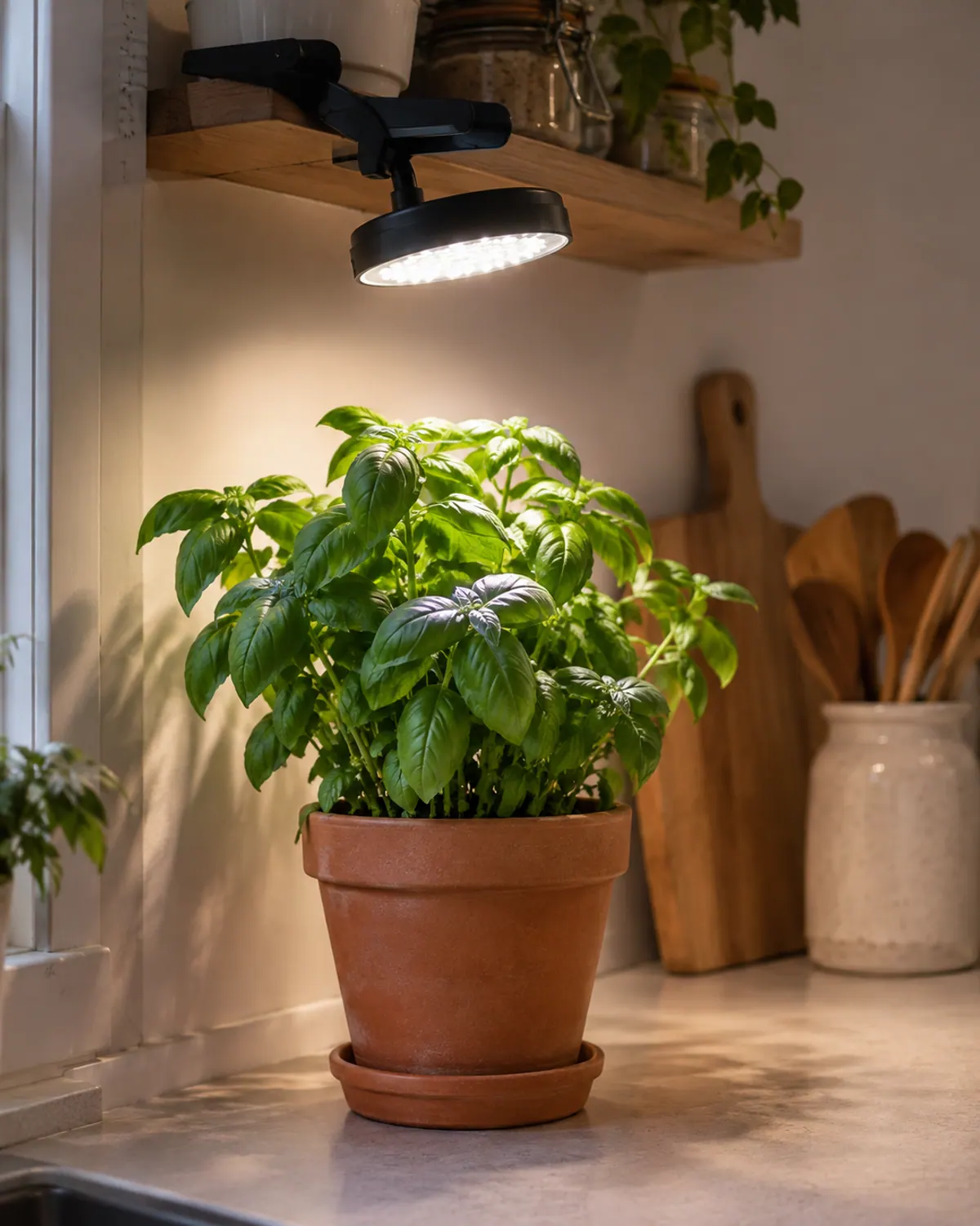
Basil is the herb most people want and the one that sulks most in winter. Iowa State lists it among the easier herbs, but it needs warmth and plenty of light. NC State Extension suggests 65 to 70°F during the day for indoor herbs, with nights about 10 degrees cooler, and basil dislikes anything colder. Keep it off icy sills at night. In short winter days a grow light helps most: Iowa State suggests 6 to 12 inches above the leaves for 12 to 16 hours. Pinch the top pair of leaves to keep it bushy, and remove flower buds. Pet note: the ASPCA lists basil as non-toxic to cats and dogs.
- Grocery store basil pots are crowded. Split one into three or four pots for stronger plants.
12Thai basil
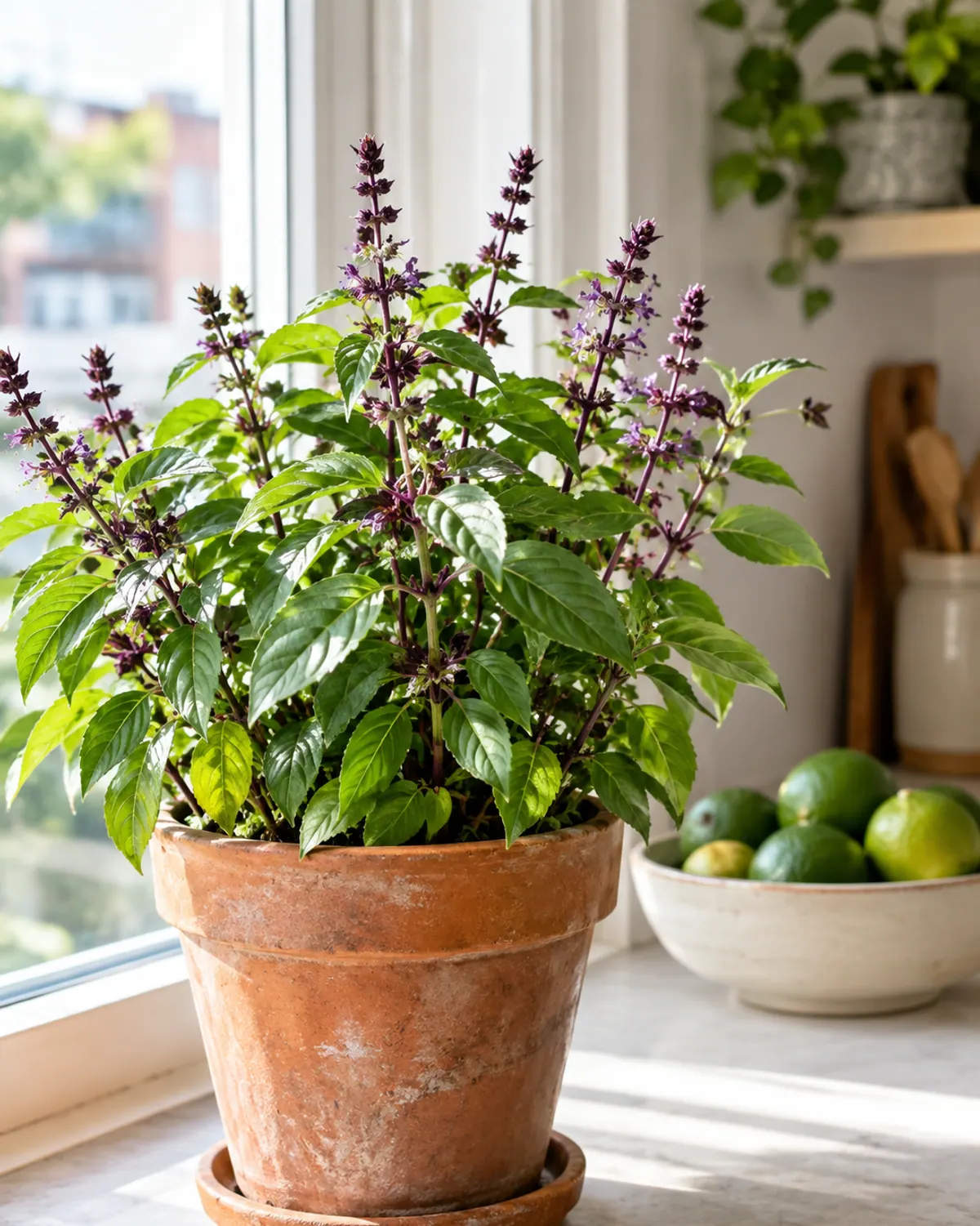
Thai basil has purple stems, narrow leaves and a hint of licorice. It needs the same warmth and bright light as sweet basil, so treat it the same way: a warm, sunny window, or a grow light in winter. It flowers readily, and the purple spikes are pretty, but pinch them off to keep leaves coming. Harvest from the top down, cutting just above a pair of leaves so two new stems branch out. Keep the soil evenly moist but never soggy, and let the top inch dry before you water again. Keep it away from cold drafts from doors and windows. Pet note: check the ASPCA plant list before you grow it where pets roam.
- Grow Thai basil next to sweet basil under one light. They need the same setup.
13Marjoram
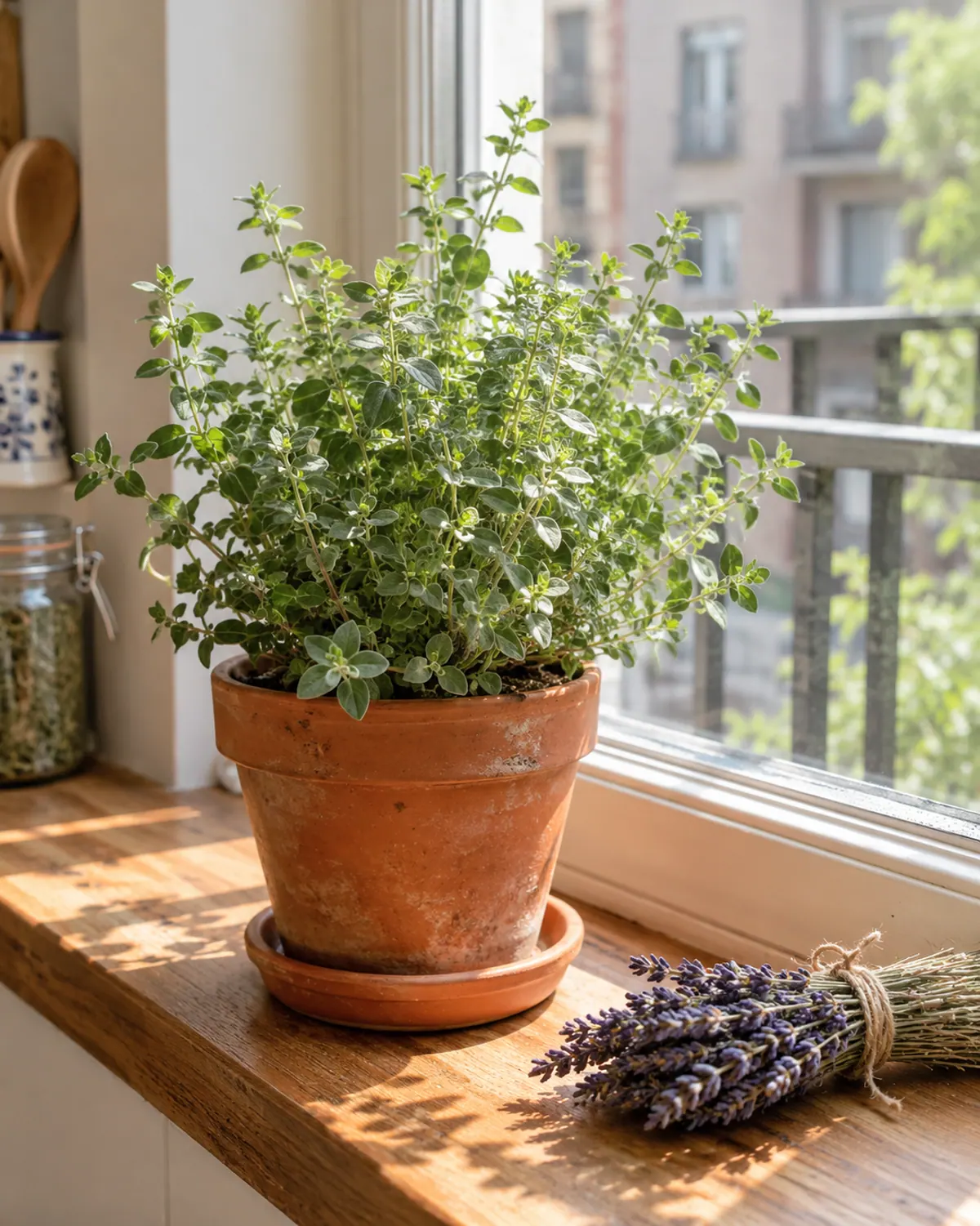
Marjoram looks like a softer, rounder oregano and tastes sweeter. Iowa State lists it among the herbs that need more light indoors and are more prone to spider mites. That puts it in your sunniest south window, or under a light from late fall through winter. Grow it in a terracotta pot with a gritty mix and let the soil dry between waterings. Pinch the tips to keep it bushy, and harvest stems before it flowers for the best flavor. Check leaf undersides for fine webbing or tiny specks, an early sign of mites. Pet note: check the ASPCA plant list before you grow it where pets roam.
- Group marjoram with other herbs on a pebble tray. Iowa State suggests grouping and pebble trays to raise humidity.
Herbs that need a grow light in winter
These four need more light than most homes get in winter. In a dim kitchen, plan on a grow light from the start rather than as a rescue.
14Herb microgreens
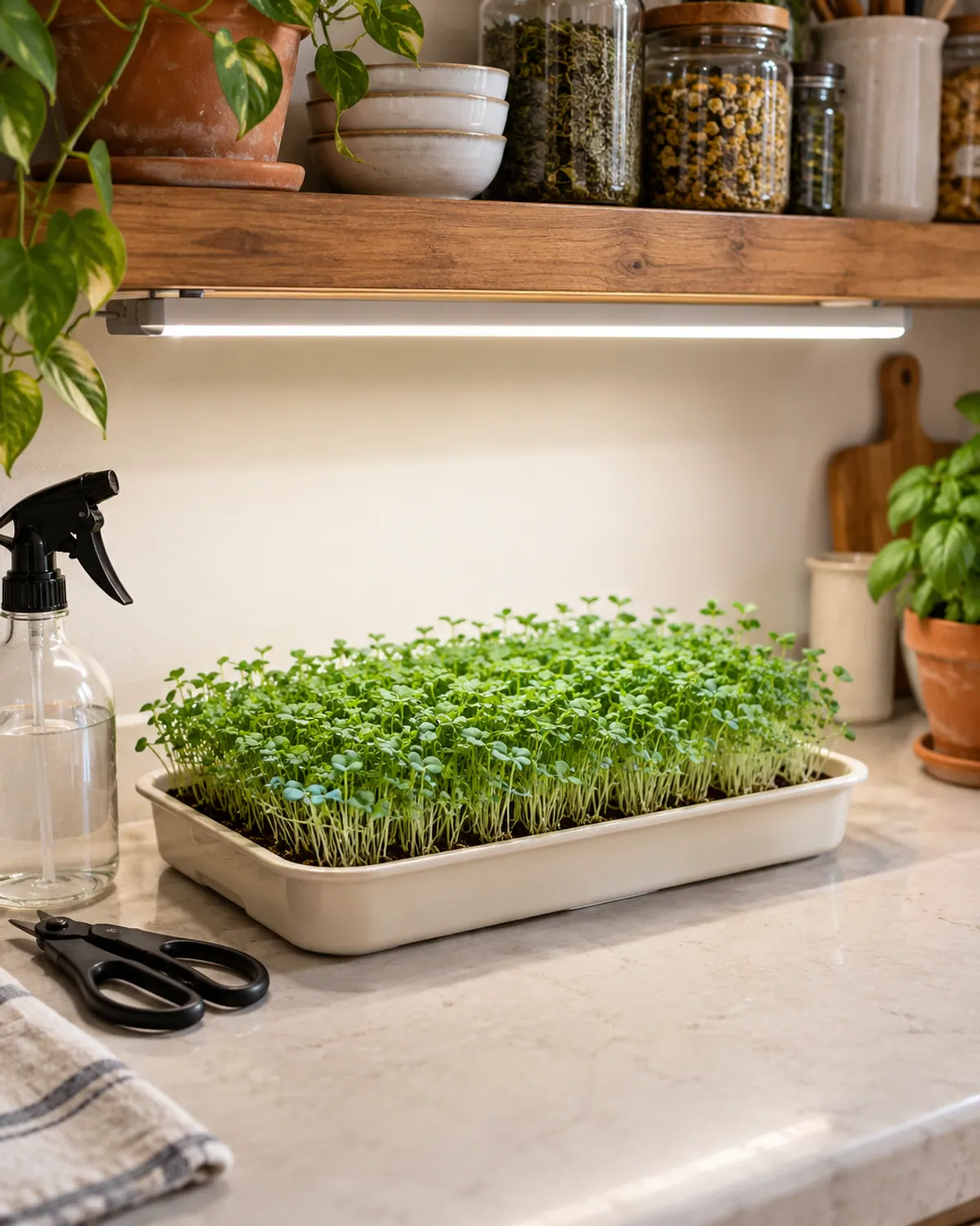
Herb microgreens are the fastest way to get fresh flavor from a windowless kitchen. You sow seeds thickly in a shallow tray and cut the seedlings young, when they have their first leaves. Basil, cilantro and dill are common herb choices. University of Maryland Extension suggests keeping lights 6 to 12 inches above microgreens for about 16 hours a day. A winter window alone tends to give leggy, pale seedlings, which is why they sit in this group. Cut them with scissors just above the soil, then sow a fresh tray for the next batch. Pet note: check the ASPCA plant list before you grow it where pets roam.
- Water gently from below so the thin stems stay upright and dry.
15Rosemary
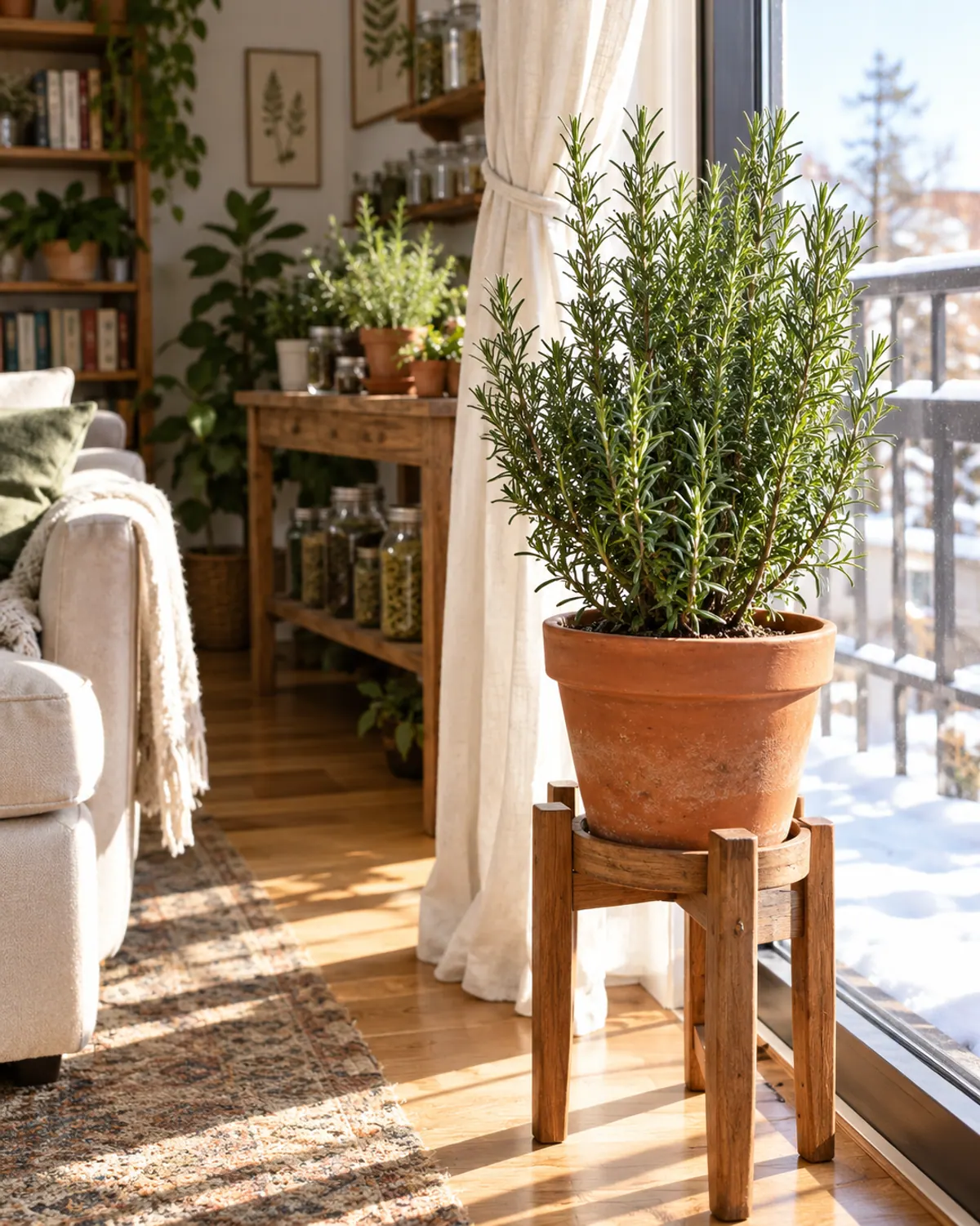
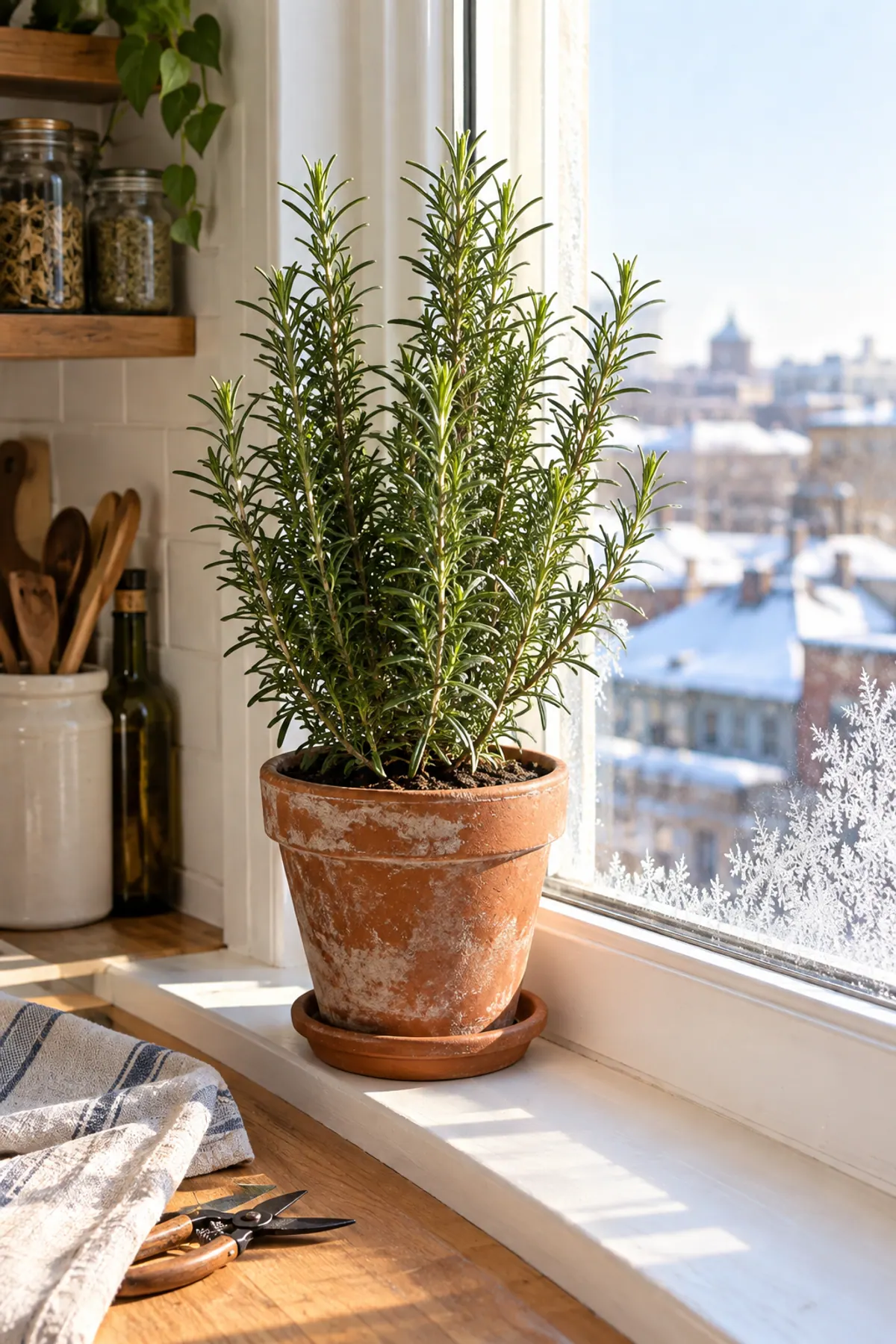
Rosemary is the hardest herb on this list to keep happy indoors. Iowa State lists it among the herbs that need more light and are prone to spider mites. It wants your brightest south window, and in most homes a grow light too through winter. Let the top of the soil dry, but don't let the whole root ball dry out, which rosemary rarely recovers from. Good airflow helps keep powdery mildew away. If you are keeping a rosemary Christmas tree this year, our rosemary guide covers its care in detail. Pet note: the ASPCA lists rosemary as non-toxic to cats and dogs.
- Check the soil a knuckle deep every few days. Rosemary punishes both soggy and bone-dry roots.
16Sage
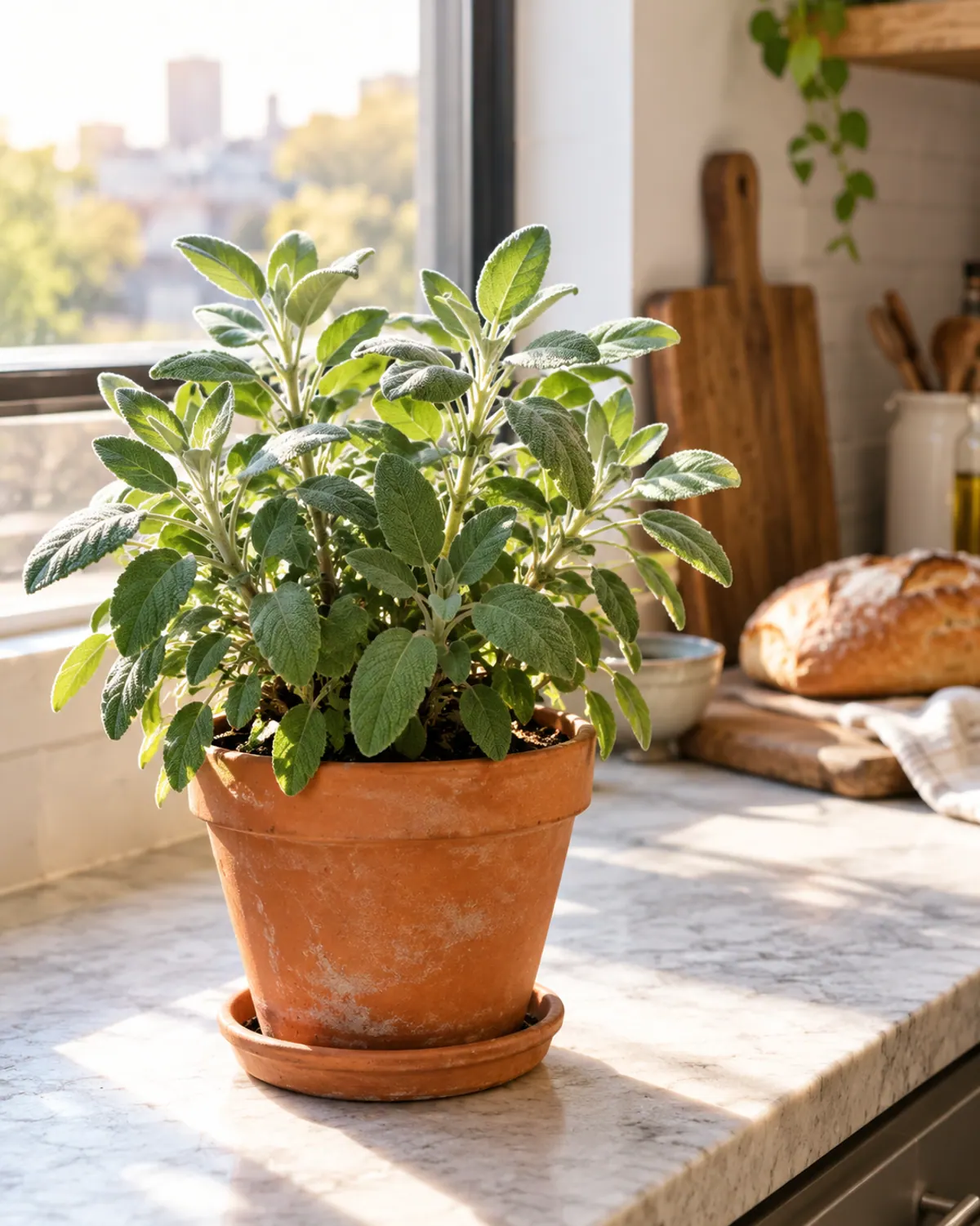
Sage has soft grey-green leaves built for sun. Iowa State lists it with the herbs that need more light indoors. In a dim room it grows thin, pale stems that flop over. Give it a south window or a grow light, plus a terracotta pot with a gritty, fast-draining mix. Sage dislikes wet roots more than most herbs, so let the soil dry well between waterings. Harvest a few leaves at a time from the outside, and avoid cutting more than about a third of the plant at once. Watch for mites on leaf undersides in dry winter air. Pet note: check the ASPCA plant list before you grow it where pets roam.
- Skip the saucer full of water. Empty it 15 minutes after watering so sage's roots stay dry.
17Bay laurel
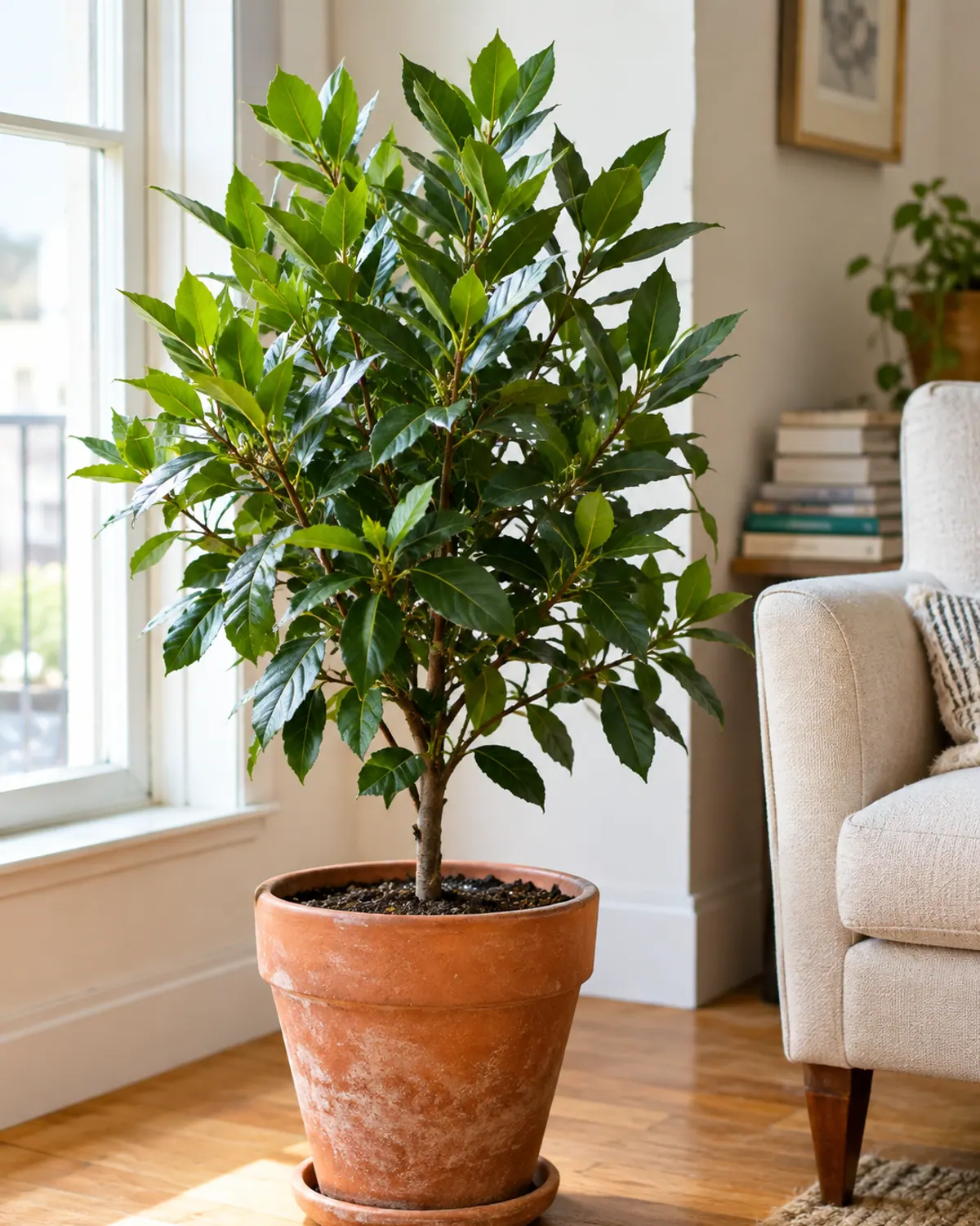
Bay laurel is a small tree, not a soft herb, and it grows slowly indoors. Iowa State lists bay among the herbs that need more light and are prone to pests. Give it a bright window in a cool room, and plan on a grow light if your winter light is weak. Its glossy leaves look tough, but scale insects and mites can hide on stems and leaf undersides, so check them when you water. Pick a few mature leaves at a time. With care it lives for years in a pot. Pet note: the ASPCA lists bay laurel as toxic to cats, dogs and horses, so keep it out of reach.
- Wipe the leaves with a damp cloth now and then. It removes dust and lets you spot pests early.
Growing herbs indoors with a grow light
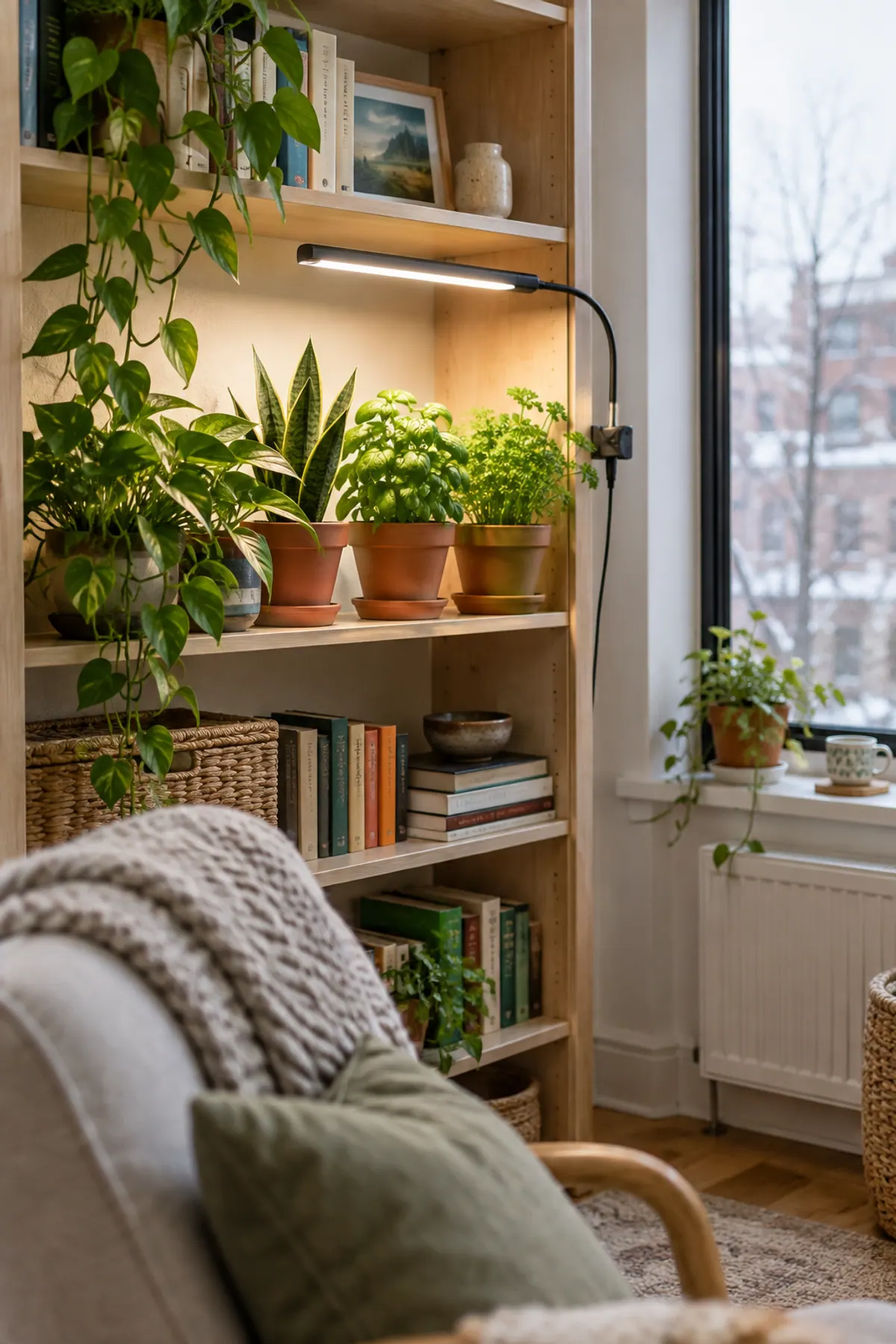
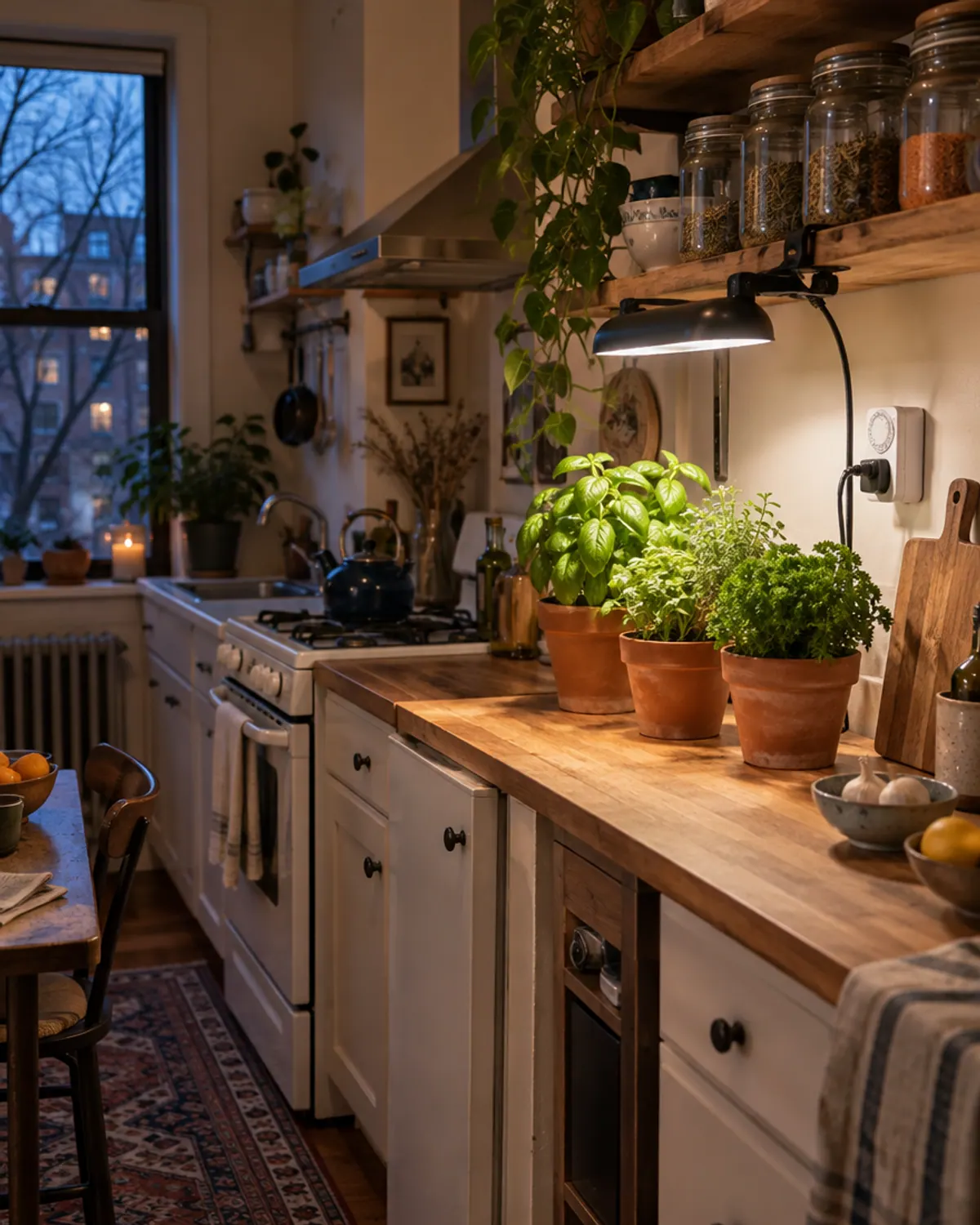
If your best spot is more than about 8 feet from a window, or your only window faces north onto a wall, a grow light turns a dim kitchen into usable herb space. These settings come from extension guides.
| Setting | Guide | Source |
|---|---|---|
| Distance above the leaves | 6 to 12 inches | Iowa State Extension |
| Hours a day for herbs | 12 to 16, on a timer | Iowa State Extension |
| Minimum when lights are the only light | 8 to 10 hours | NC State Extension |
| Microgreens | 6 to 12 inches, about 16 hours | University of Maryland Extension |
| Room temperature | 65 to 70°F by day, about 10°F cooler at night | NC State Extension |
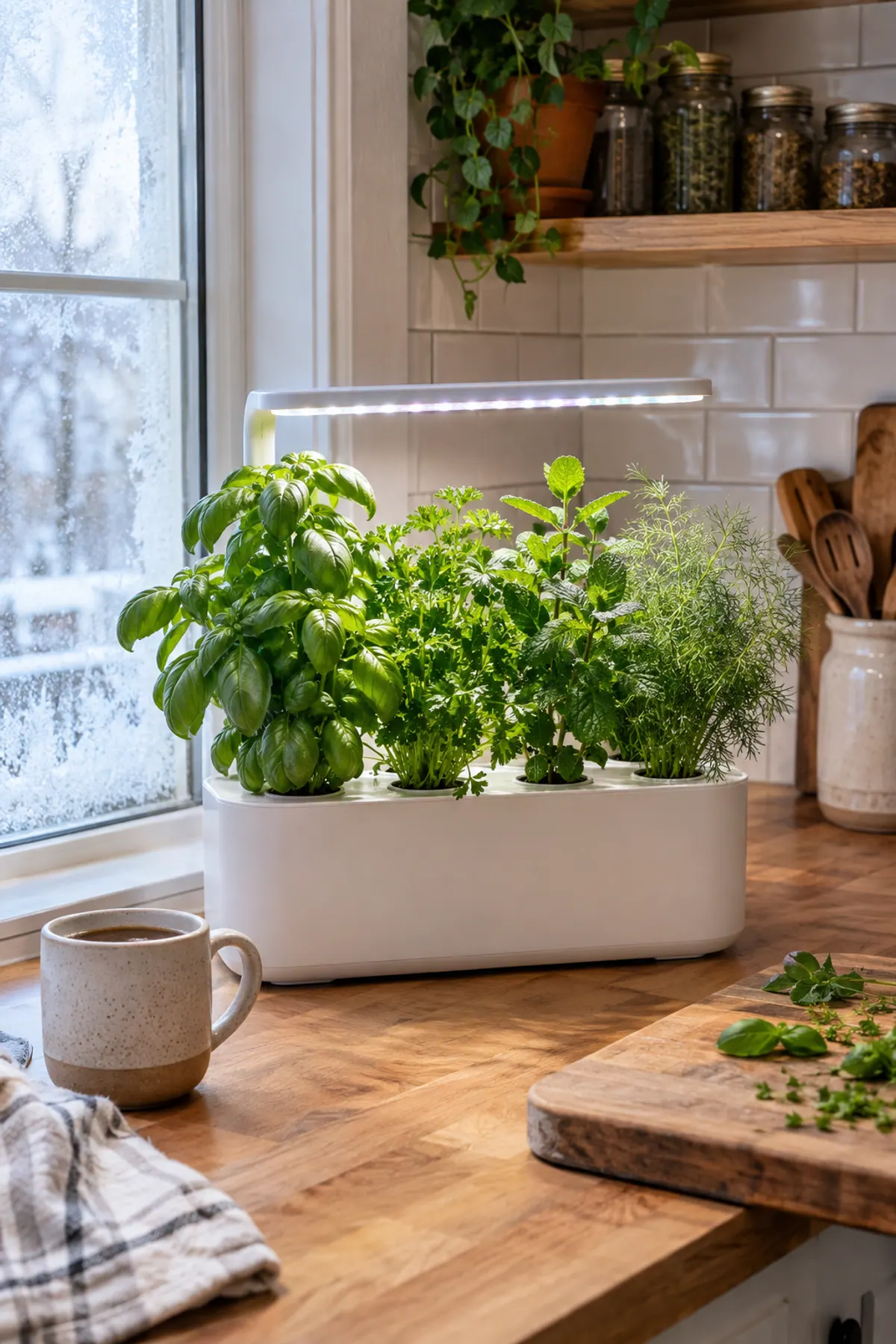
Not ready for a full setup? A grow light bulb in a desk or clip lamp works for one or two pots, as long as the bulb sits close to the leaves. A lamp across the room adds very little.
Simple grow light gear for herbs
- Easy start
Sansi 40W clip-on grow light
about $50 (Walmart, Oct 2026)
One round full-spectrum head on a clamp. Clip it to a shelf edge over two or three herb pots.
Check price on Amazon for Sansi 40W clip-on grow light -
Plug-in outlet timer
check current price
Keeps the light on the same 12 to 16 hour schedule every day. Check it is rated for your light's wattage.
Check price on Amazon for Plug-in outlet timer -
Terracotta pots with saucers
check current price
Clay dries out faster than plastic, which helps herbs that like the soil to dry between waterings.
Check price on Amazon for Terracotta pots with saucers
We compared 15 lights, from clip-ons to plant shelves, in our grow lights for indoor plants roundup.
Low light herb care: water, food, warmth and humidity
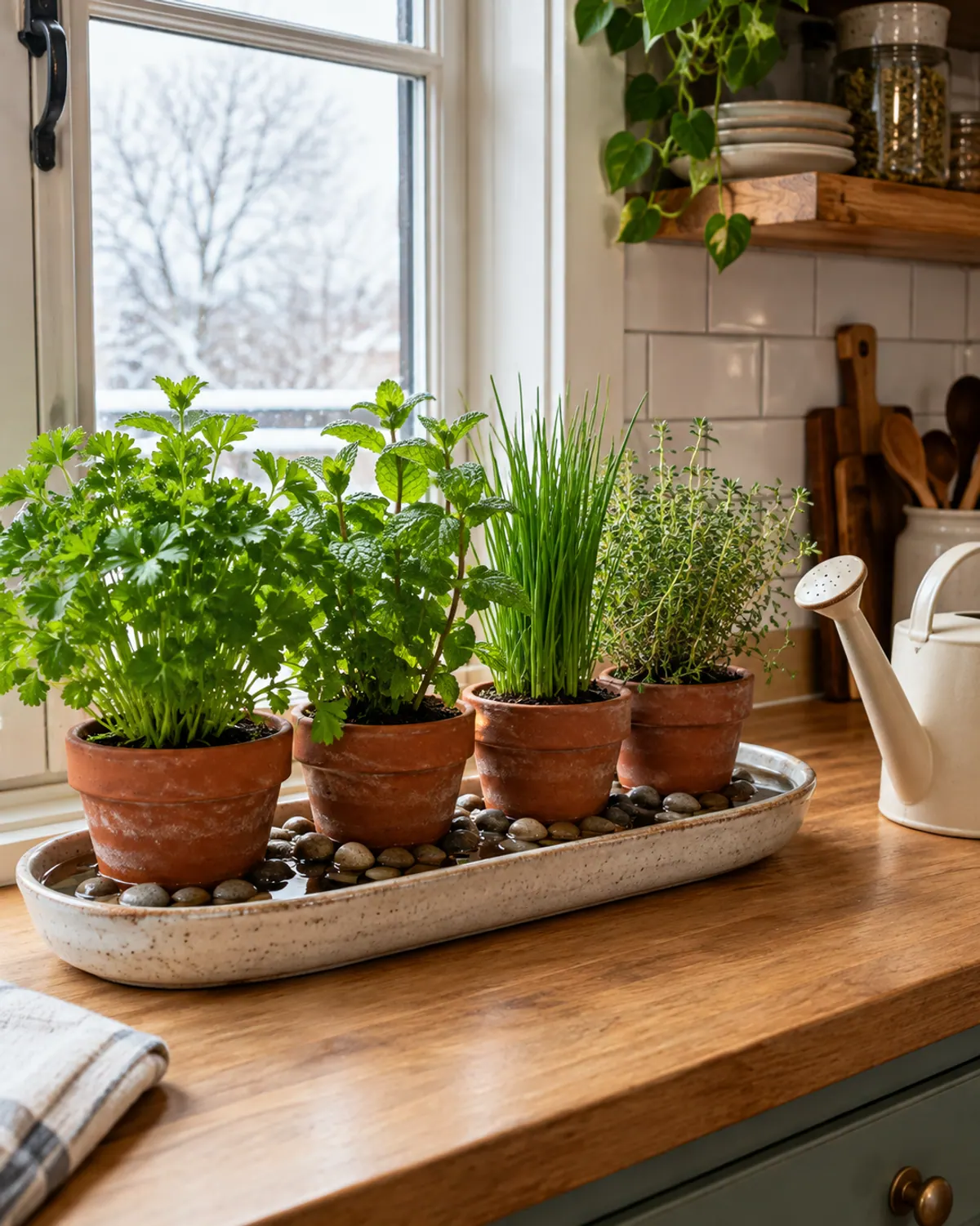
Less light means slower growth, and slower growth means herbs use less water and food. Most indoor herb problems in winter come from too much of both.
Winter care for low light herbs
New to indoor herbs? Our indoor herb garden guide covers pots, soil and the first eight herbs to start with. For layouts that fit a small kitchen, browse these kitchen herb garden ideas for counters, walls and windows.
Bonus: 5 ways to get more light to a dim windowsill
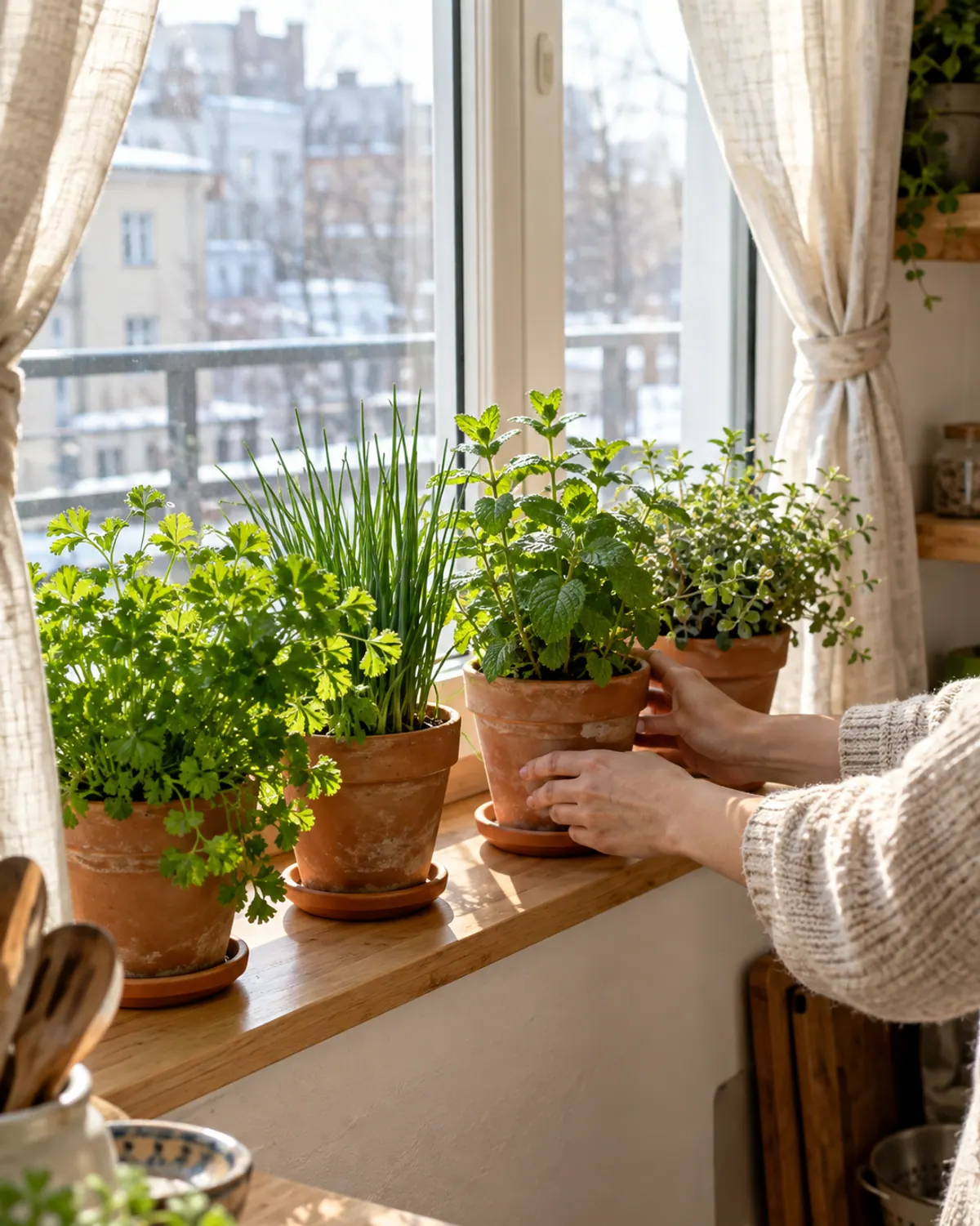
Squeeze more light out of the window you have
Pull pots back from the glass on freezing nights, then return them in the morning. Want the corner to look as good as it grows? See our cozy winter plant corner ideas.
We earn from qualifying purchases, which never changes what we recommend. Read our disclosure and editorial guidelines.
Frequently asked questions
What herbs grow best indoors in low light?
Mint, parsley and chives are the most forgiving, and Iowa State Extension lists all three among the easier herbs indoors. Garlic chives, green onions and cilantro also cope with a medium spot. No herb thrives in true low light, so put them as close to a window as you can.
Can herbs grow in a north-facing window?
Some can. Chives, mint and parsley handle a north window with open sky better than most. Basil, rosemary and sage usually need a grow light there in winter. If stems stretch and lean toward the glass, the spot is too dim.
How many hours of light do indoor herbs need?
Iowa State Extension says most herbs need about 8 hours of direct light, and some manage with 6. Under grow lights, Iowa State suggests 12 to 16 hours a day on a timer. NC State Extension says at least 8 to 10 hours when lights are the only source.
Can you grow herbs indoors without a window?
Yes, with a grow light. Set it 6 to 12 inches above the leaves for 12 to 16 hours a day, per Iowa State Extension. Herb microgreens are the quickest win: University of Maryland Extension suggests about 16 hours of light for them.
Do lemon balm and chervil grow in low light?
Sources disagree. Epic Gardening lists both as low-light herbs, while Iowa State Extension groups them with herbs that need more light. Try them in a bright east or west window and add a grow light if the stems stretch.
Should I mist indoor herbs in winter?
Nebraska Extension says misting isn't effective for raising humidity. Iowa State suggests a pebble tray with the pot above the waterline, a humidifier, or grouping plants together instead.
Save it for later
Pin this to your Herb Garden board so it's there when you need it.
Save to Pinterest