This post contains affiliate links. As an Amazon Associate we earn from qualifying purchases, at no extra cost to you. Read our disclosure.
Safety first: Herbs can be powerful. If you are pregnant, nursing, take medication or have a health condition, check with your doctor or pharmacist first. Please read our herbal & garden safety notes before you start.
Key takeaways
- Light decides almost everything. A south-facing window is usually the brightest spot in winter, and north windows usually need a grow light.
- Chives, parsley and mint are the most forgiving herbs indoors. Basil and rosemary are the fussiest.
- A simple LED grow light on a timer for about 14 hours a day keeps herbs compact and leafy.
- Use pots with drainage holes, and water only when the top inch of soil is dry.
- Harvest often, but never take more than one third of a plant at once.
In this post17 sections
- Which herbs grow best in an indoor herb garden?
- Light: the make-or-break part of growing herbs indoors
- Grow lights: when and how to use one
- 8 herbs for a winter windowsill herb garden
- 1. Chives
- 2. Flat-leaf parsley
- 3. Mint
- 4. Thyme
- 5. Greek oregano
- 6. Cilantro
- 7. Basil
- 8. Rosemary
- Pots, soil and watering for growing herbs indoors
- How to harvest indoor herbs so they keep growing
- 5 mistakes that kill indoor herbs
- Indoor herb garden supplies
- FAQ
Which herbs grow best in an indoor herb garden?
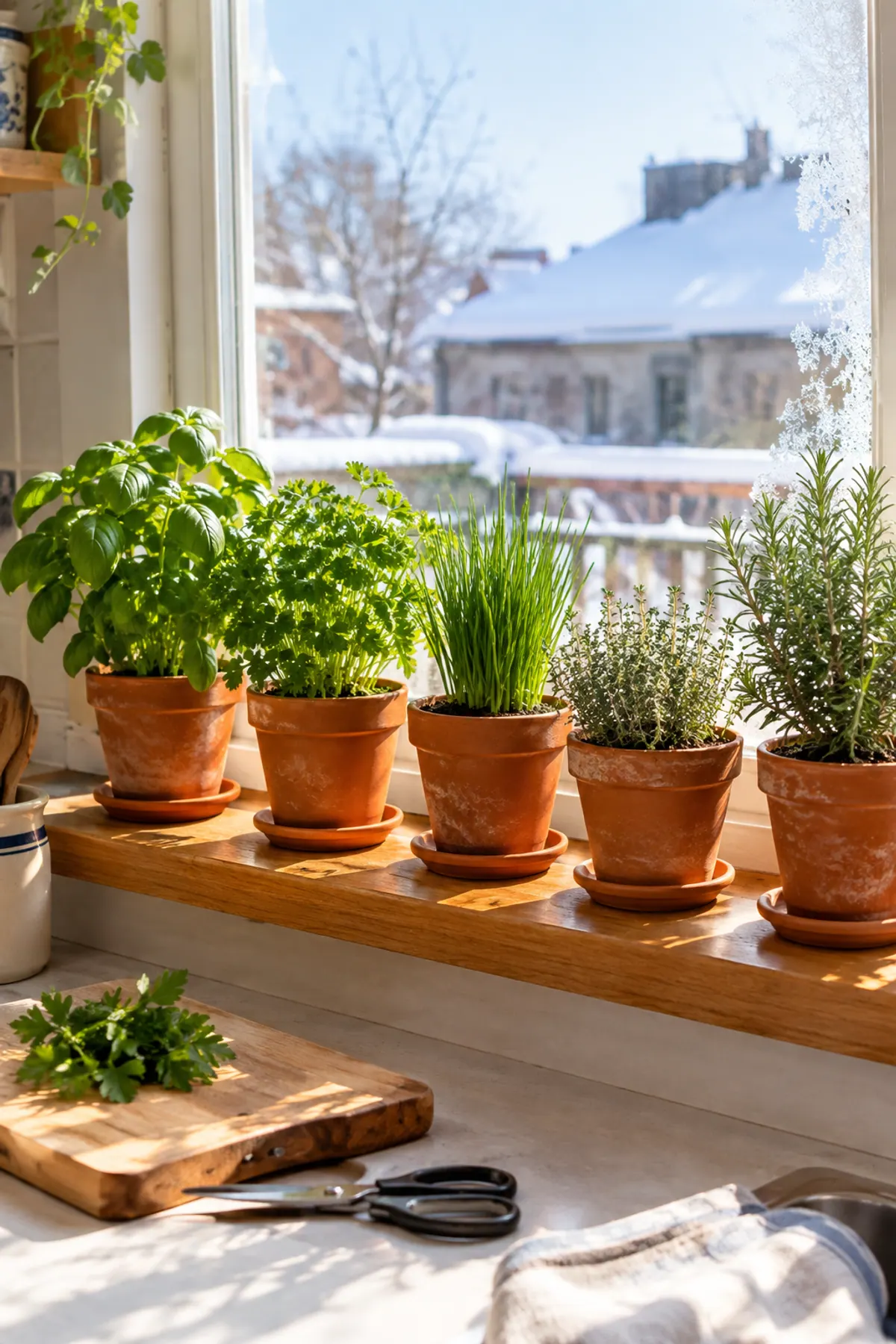
Most kitchen herbs want plenty of light, and winter windows give less of it. Short days and a low sun mean herbs that grow happily on a sill in summer can stretch and stall by December. Start with herbs that cope with lower light, then add the sun lovers once you have a bright window or a grow light.
| Herb | Light | Pot | Water | Difficulty |
|---|---|---|---|---|
| Chives | Bright window, east is fine | 6 in | Lightly moist | Easy |
| Parsley | Bright window, east is fine | 8 in deep | Lightly moist | Easy |
| Mint | Bright window, east is fine | 8 to 10 in, on its own | Lightly moist | Easy |
| Thyme | Sunniest window or grow light | 6 in terracotta | Let top inch dry | Moderate |
| Oregano | Sunniest window or grow light | 6 to 8 in terracotta | Let top inch dry | Moderate |
| Cilantro | Bright, cool window | 8 in deep | Lightly moist | Moderate, short-lived |
| Basil | Grow light plus warmth | 6 to 8 in | Lightly moist | Fussy |
| Rosemary | Sunniest cool window or grow light | 8 to 10 in terracotta | Top inch dry, never bone dry | Fussy |
Light: the make-or-break part of growing herbs indoors
Outdoors, most herbs want 6 or more hours of direct sun. Indoors in winter, even a sunny window gives them much less, because glass, short days and a low sun all cut the light down.
In the Northern Hemisphere, a south-facing window gets the most winter light, west comes next, and east gives gentler morning sun. North windows are usually too dim for herbs without a grow light. Keep pots close to the glass, since light fades quickly a few feet back.
Your plants will tell you when they need more. Long, pale stems leaning hard toward the window are the classic sign of too little light.
Grow lights: when and how to use one
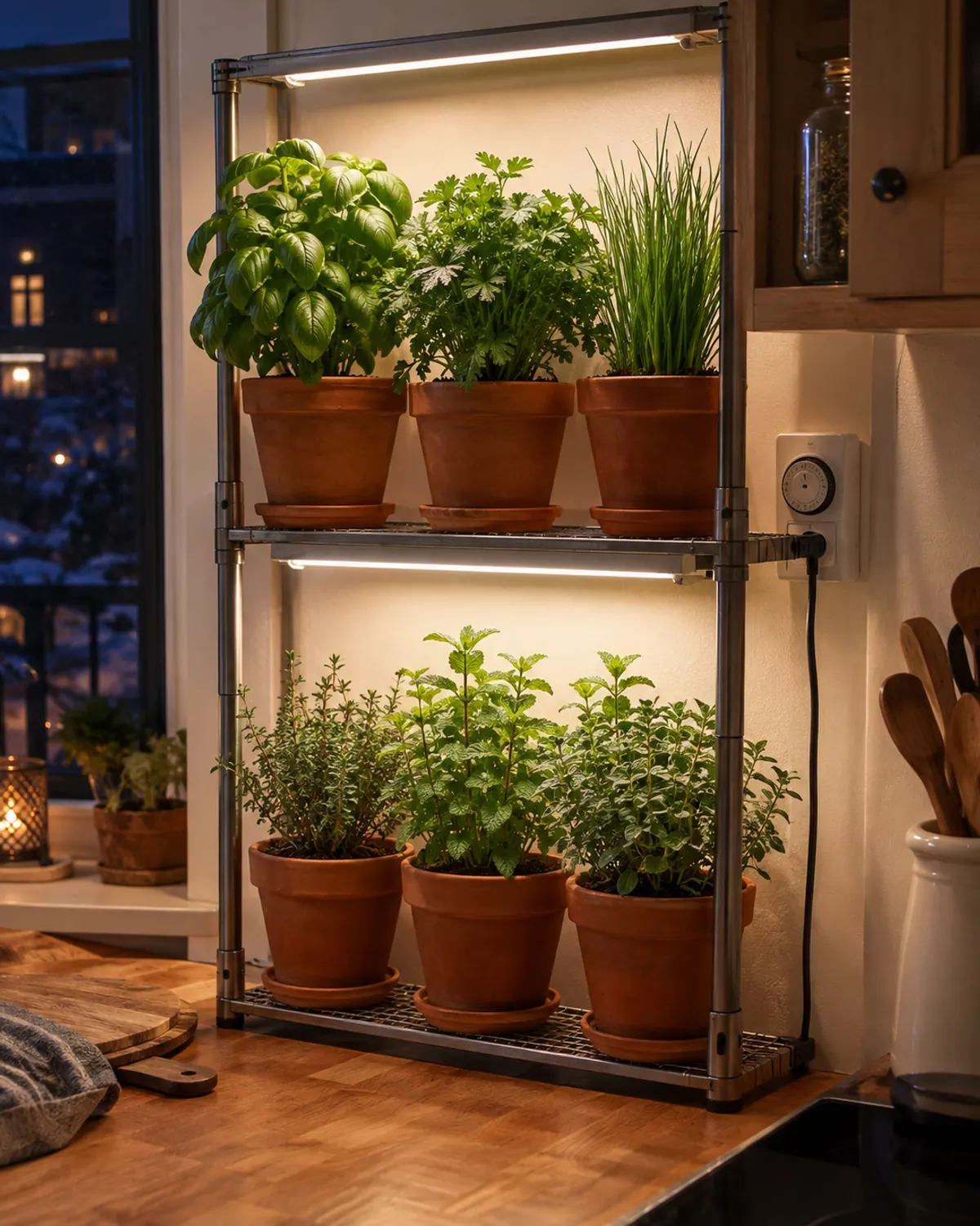
A grow light is worth it if your windows face north or are shaded, or if you want basil and rosemary to do well in winter. A full-spectrum LED bar or panel covers a few pots and uses little power. White LEDs grow herbs well and look far nicer in a kitchen than purple ones.
Set LEDs close to the plants, usually about 6 to 12 inches above the leaves, and check the maker's guide for your model. Run the light for about 14 hours a day on a plug-in timer, then let the plants have darkness at night.
8 herbs for a winter windowsill herb garden
These are ranked from easiest to fussiest. Young nursery plants get you harvesting weeks sooner than seed, and many herbs from an outdoor garden can be potted up and brought inside before frost.
1Chives
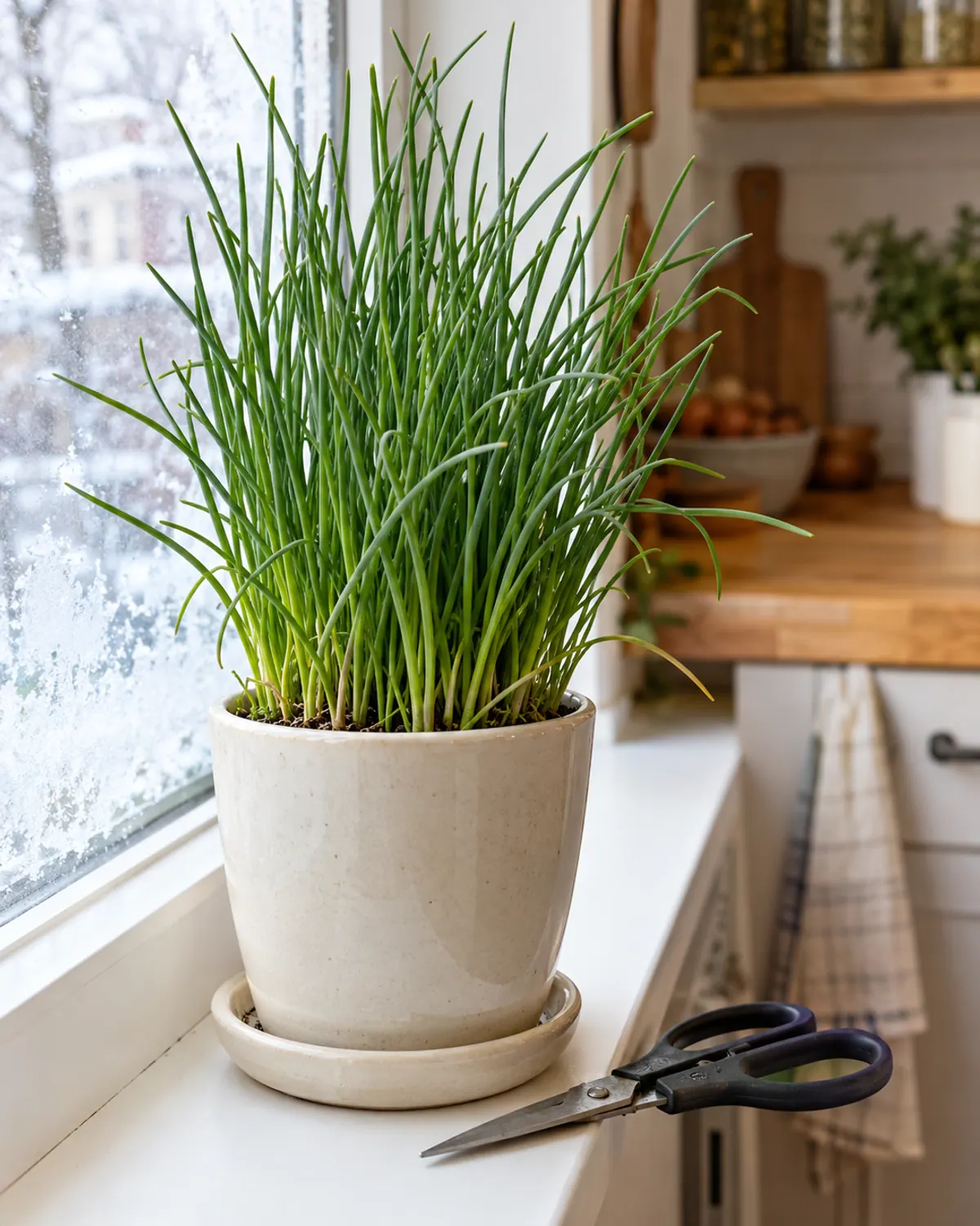
Chives are the most forgiving herb to grow indoors. The grassy, onion-flavored leaves grow in a tight clump and keep going on an east-facing sill where other herbs sulk. Cut leaves 1 to 2 inches above the soil and the clump sends up fresh ones within a few weeks.
- Snip from the outside of the clump first so it stays full.
2Flat-leaf parsley
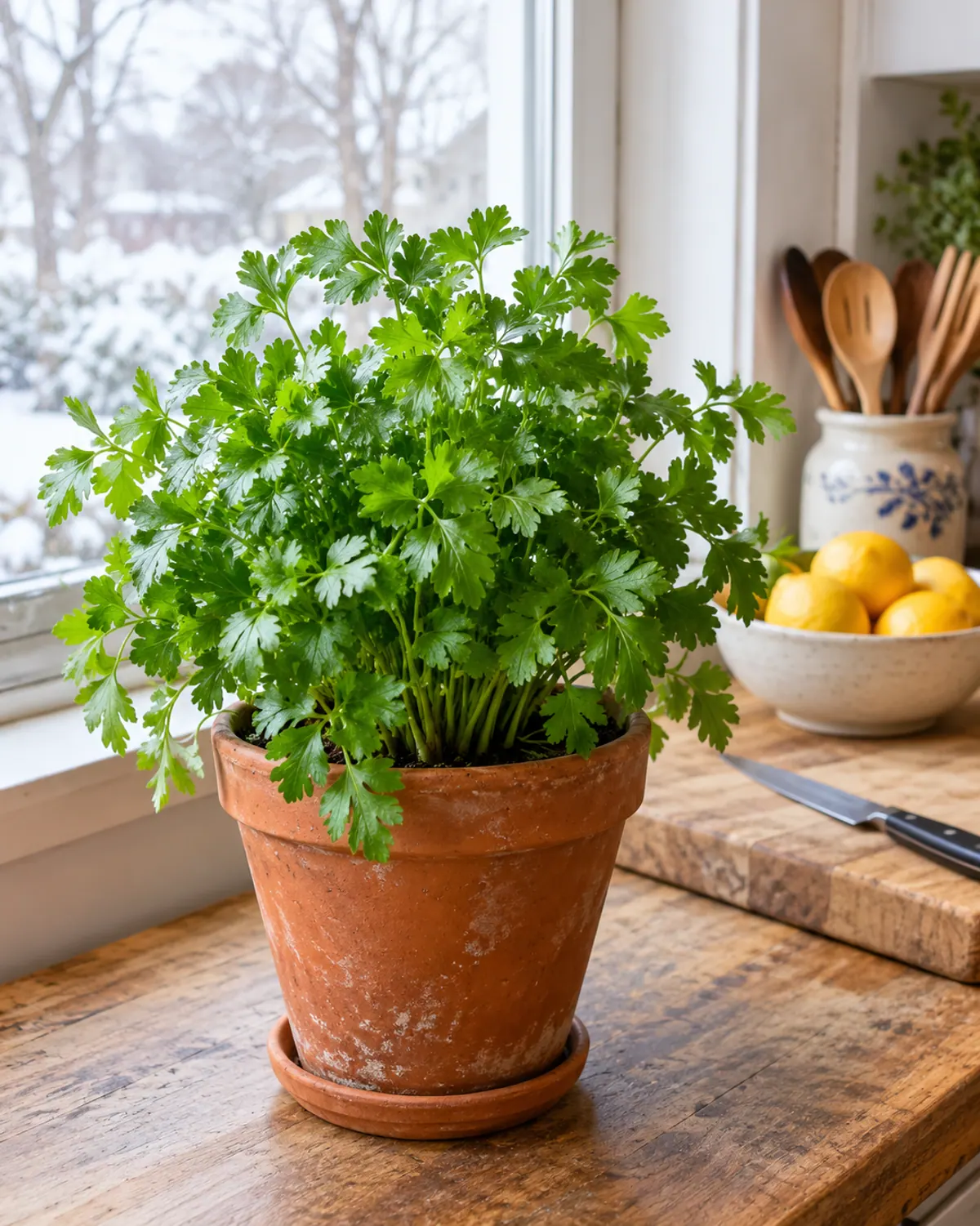
Flat-leaf and curly parsley both handle winter windowsills well and tolerate a little less light than most herbs. Parsley grows a long taproot, so give it a deep pot, at least 8 inches. Harvest the outer stems at the base and new leaves keep coming from the center.
- Parsley seed can take 2 to 4 weeks to sprout, so a young plant saves time.
3Mint
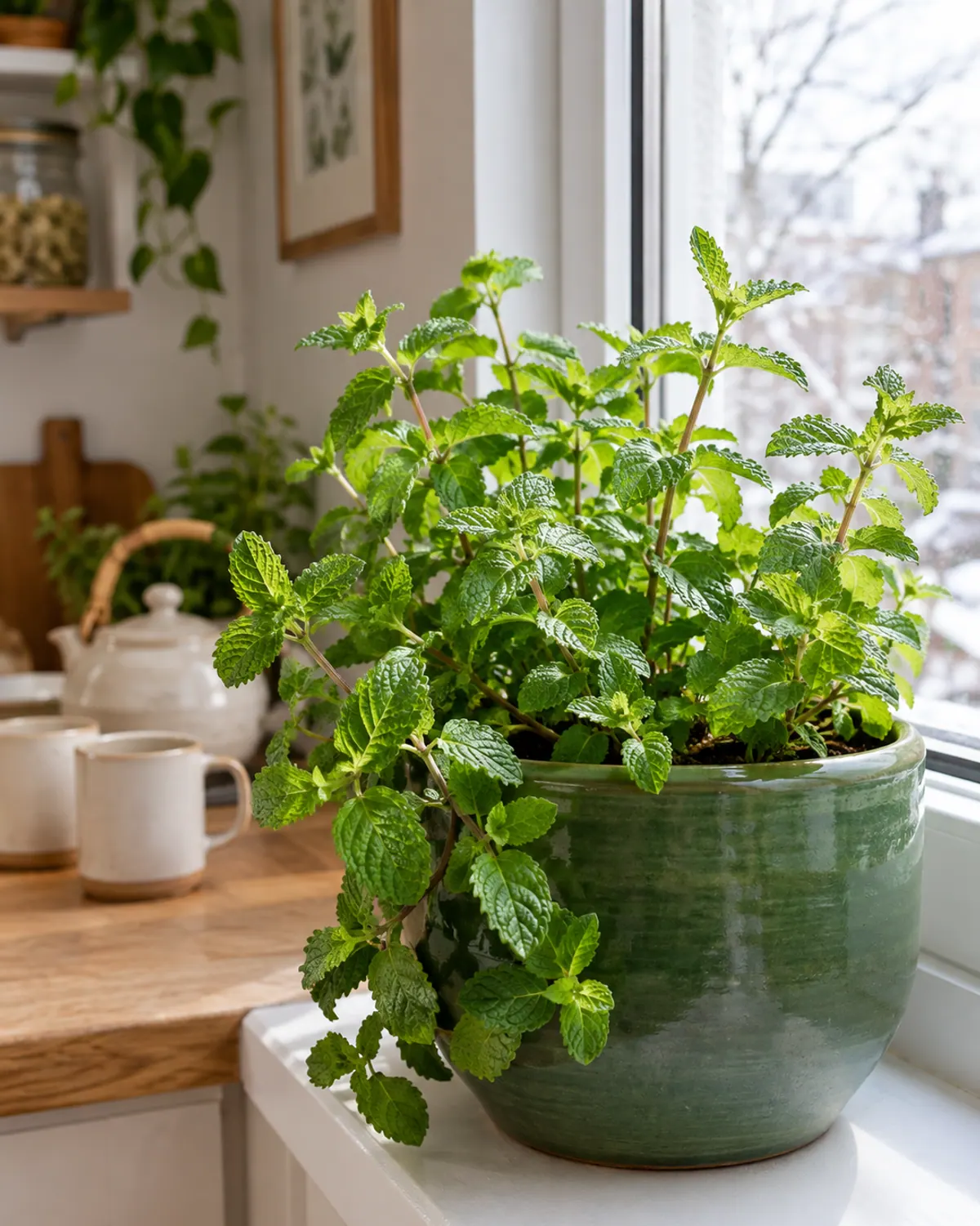
Mint is a vigorous grower that does well on a bright east or west sill. Give it a wide pot of its own, because its runners crowd out anything planted with it. Keep the soil lightly moist and pinch the stem tips often for bushy growth.
- Spearmint is milder and sweeter than peppermint in cooking.
4Thyme
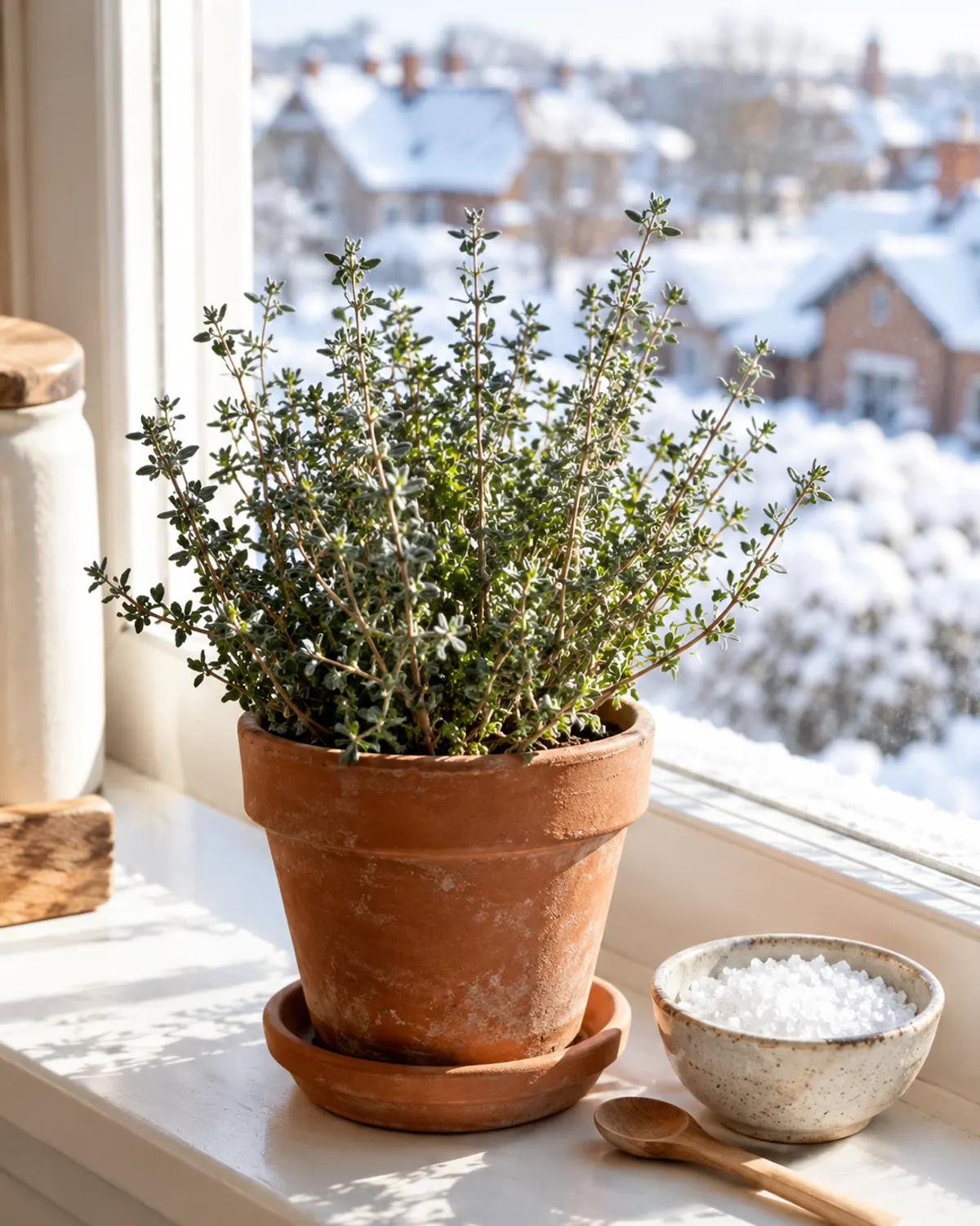
Thyme comes from sunny, dry hillsides, so it wants your brightest window or a grow light and soil that dries between waterings. A small terracotta pot of gritty mix suits it well. Snip the soft green tips and leave the woody base, which is slow to regrow.
- English thyme and lemon thyme both stay compact enough for a sill.
5Greek oregano
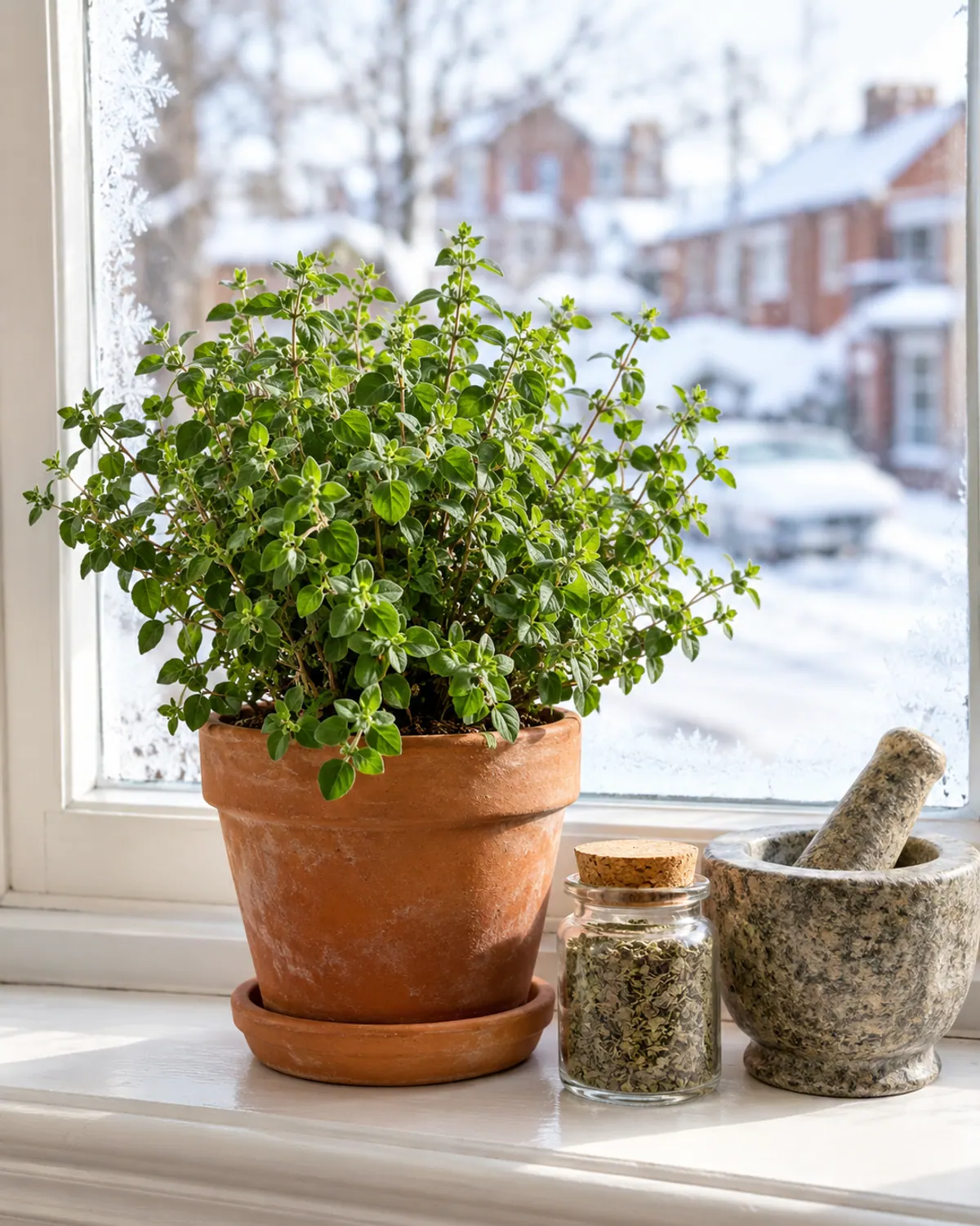
Greek oregano has a bold flavor and stays fairly compact in a pot. Like thyme, it wants strong light and soil that dries a little between drinks. Pinch stem tips often so it grows bushy instead of sprawling.
- Pot up a rooted piece of an outdoor plant in early fall for a head start.
6Cilantro
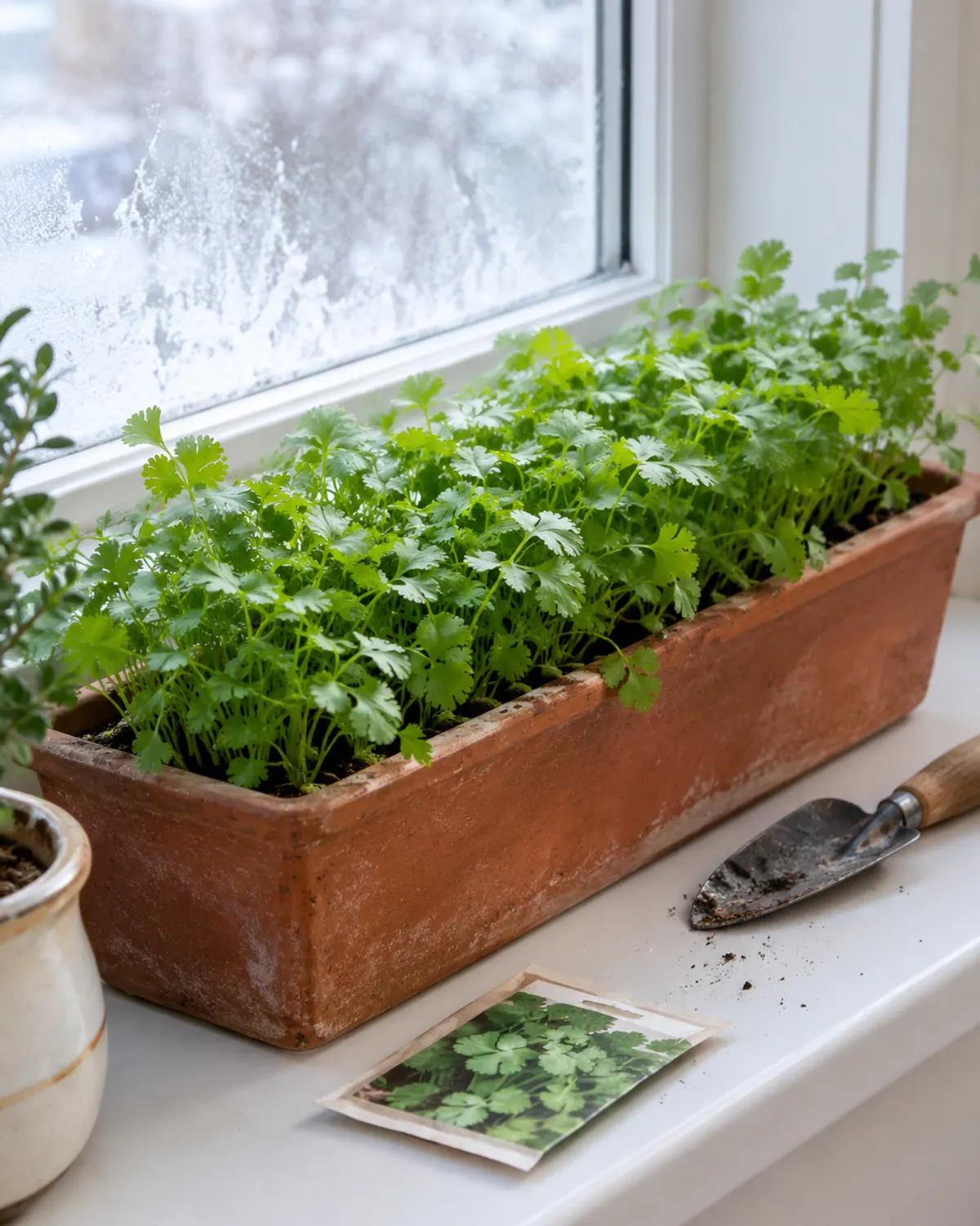
Cilantro prefers cool weather, which makes a bright, cool winter window a good home. It does not last long, though, and plants flower and set seed after a few weeks of cutting. Sow a few seeds every 3 to 4 weeks in a deep pot for a steady supply.
- Sow seeds right where they will grow, since cilantro dislikes being moved.
7Basil
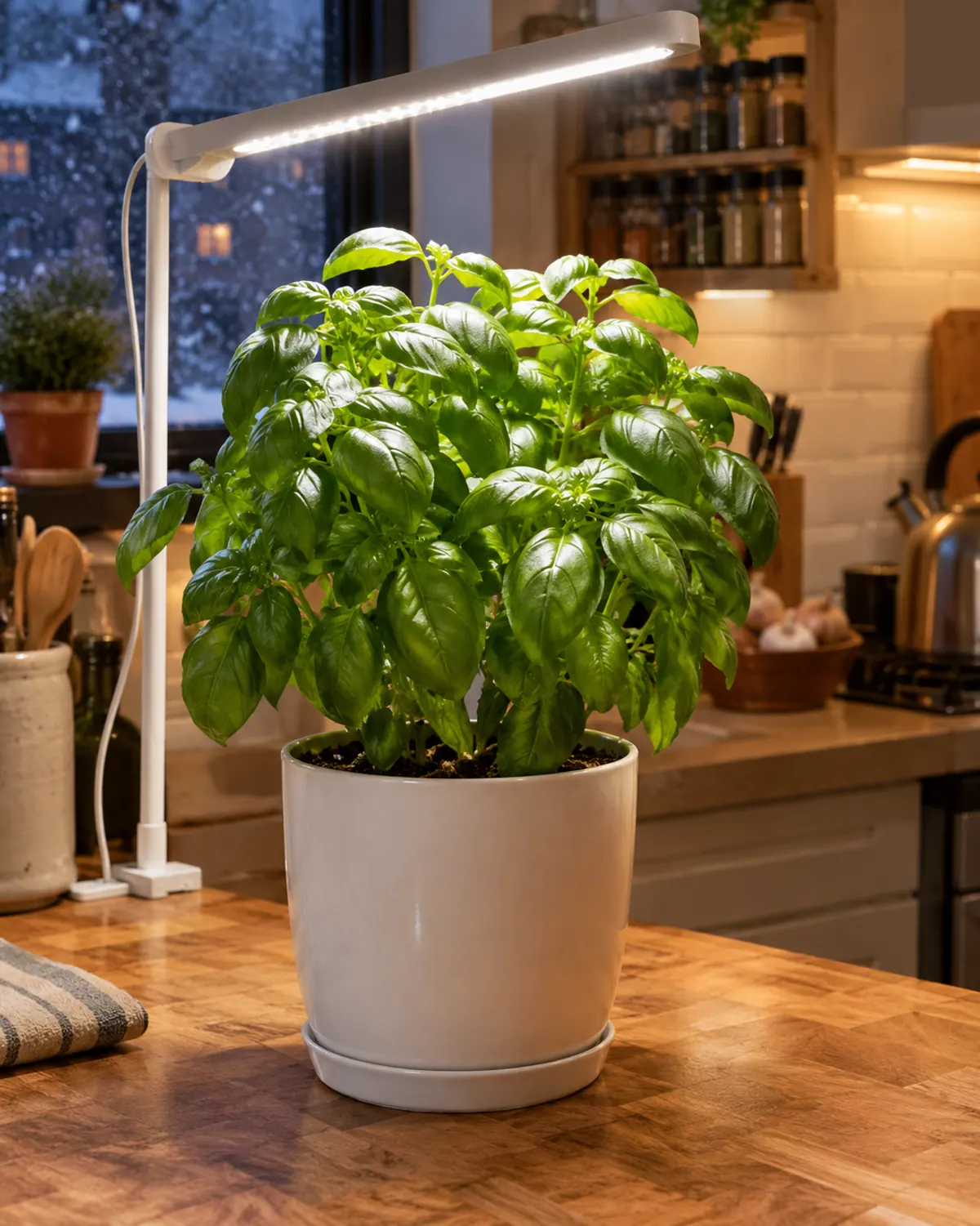
Basil is the herb most people want and the hardest to keep going in winter. It needs warmth, best at 65°F or more, and strong light, which usually means a grow light from November to February. Keep leaves off cold glass at night, because basil is damaged by temperatures below about 50°F.
- Grocery store basil pots hold many seedlings crammed together. Split the clump into 3 or 4 pots for healthier plants.
8Rosemary
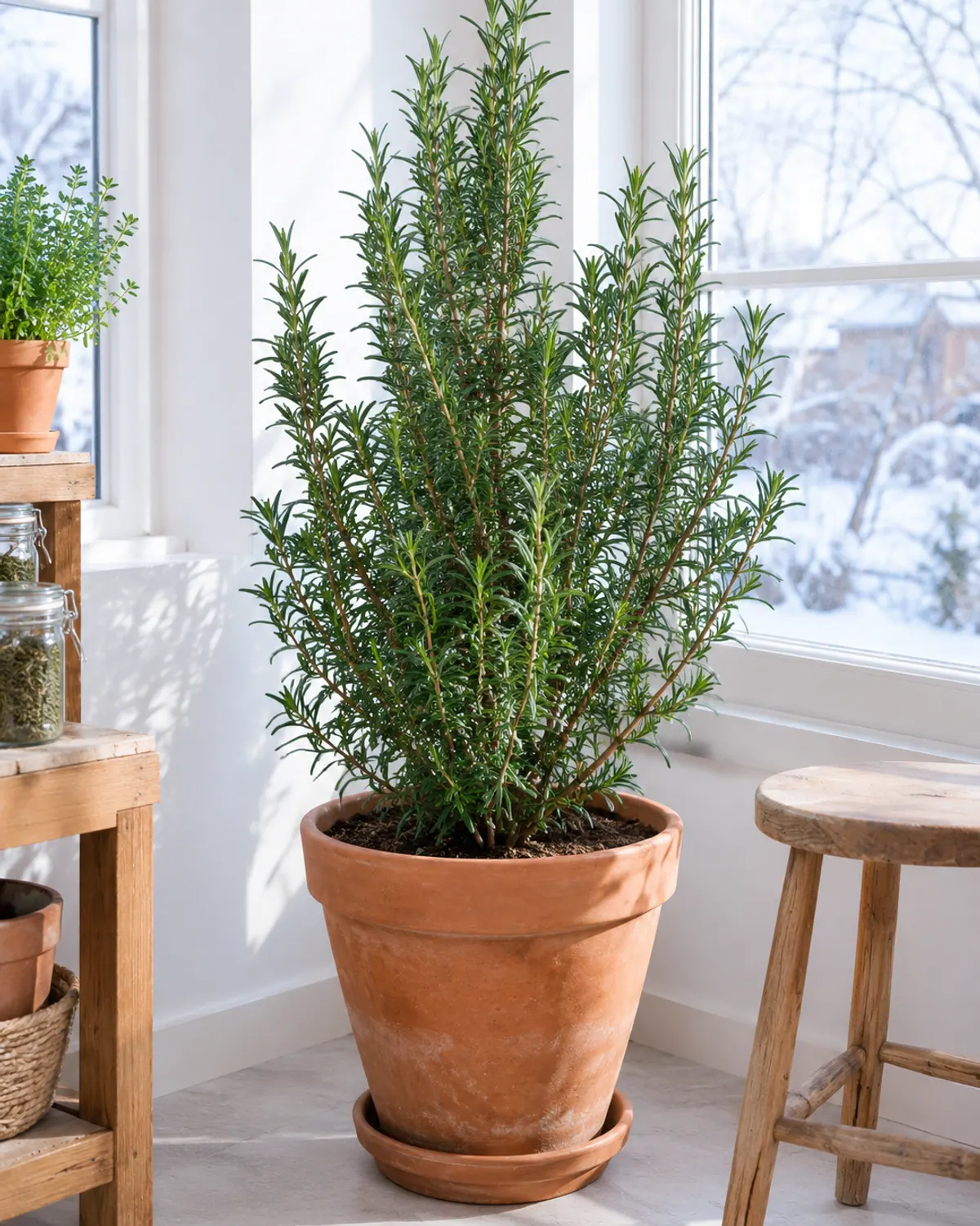
Rosemary can spend winter indoors, but it is the fussiest herb here. It wants the sunniest window or a grow light, a cool room, and good air movement to help prevent powdery mildew. Water when the top inch is dry, but never let the root ball dry out completely.
- In zones colder than about 7, bring potted rosemary inside before the first hard frost.
Pots, soil and watering for growing herbs indoors
Every pot needs a drainage hole. Mason jars and pretty pots without holes trap water at the bottom, and the roots rot. If you love a decorative pot, use it as a cover and set a plain nursery pot with holes inside.
Use bagged potting mix, never garden soil, which packs down hard in a pot. Terracotta dries faster and suits thyme, oregano and rosemary, while glazed or plastic pots hold moisture longer for parsley, mint and basil.
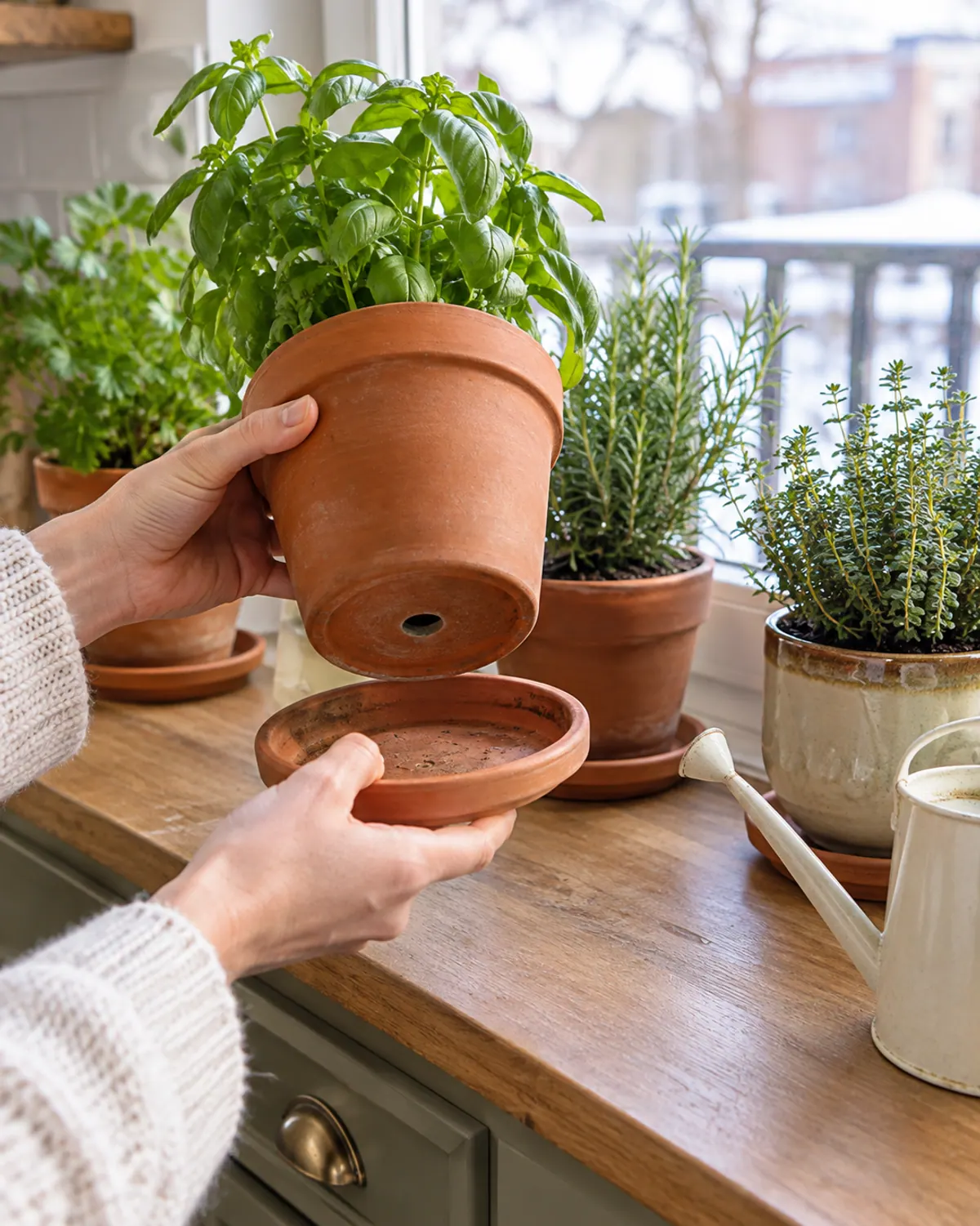
Water when the top inch of soil feels dry, then water until it drains and empty the saucer. Herbs grow slowly in winter and use less water, so check with your finger rather than watering on a schedule. Feed lightly, with half-strength liquid fertilizer every 4 to 6 weeks for herbs under lights and less on a dim sill.
How to harvest indoor herbs so they keep growing
Regular harvesting keeps herbs compact and leafy. The main rule is to never take more than one third of the plant at once, then give it a week or two to recover before the next big cut.
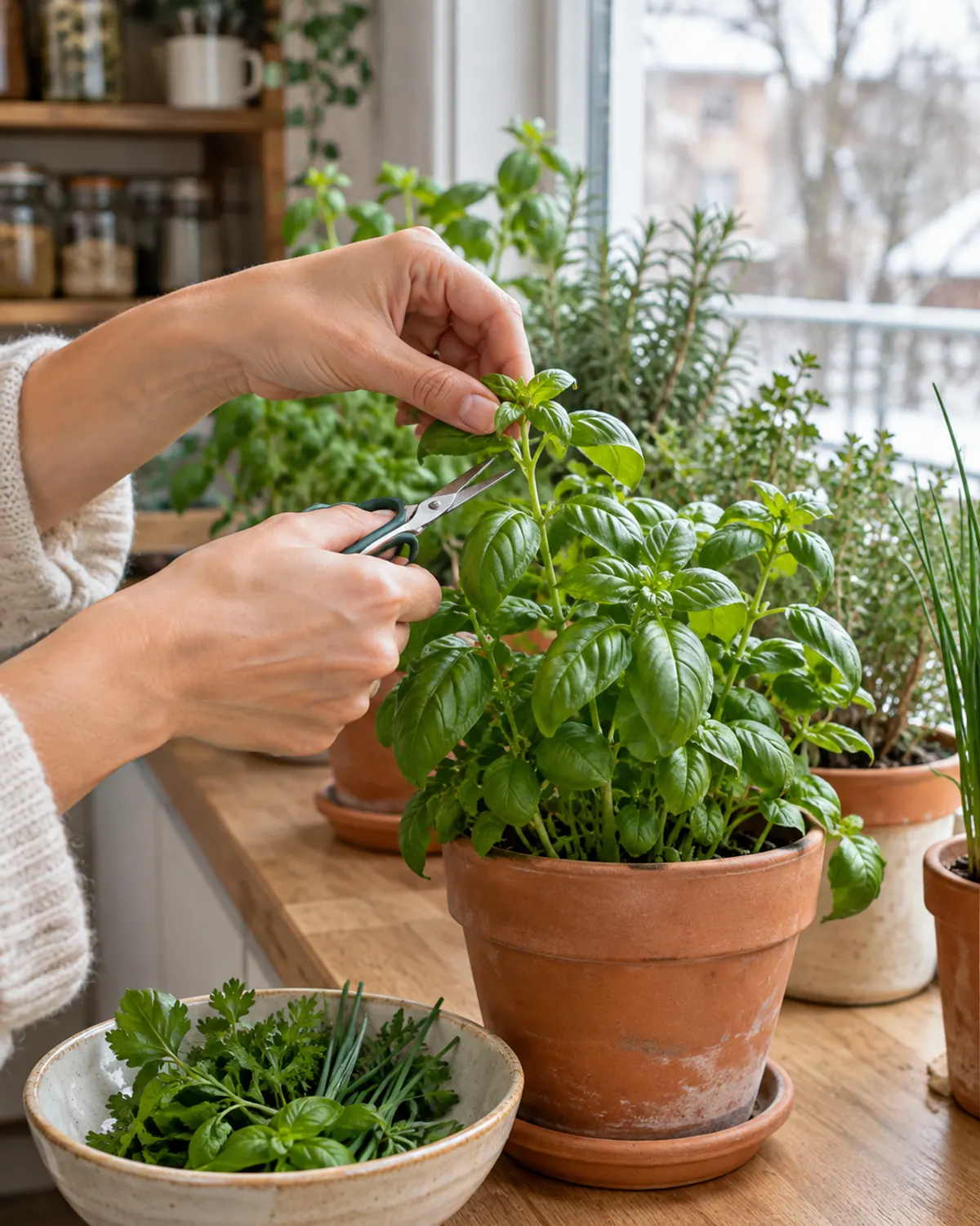
How to cut each herb
5 mistakes that kill indoor herbs
| Mistake | What you see | The fix |
|---|---|---|
| Too little light | Long, pale, floppy stems leaning to the glass | Move to the sunniest window or add a grow light |
| Overwatering | Yellow lower leaves, soggy soil, fungus gnats | Water only when the top inch is dry, and empty saucers |
| Pots without drainage | Soil stays wet and roots rot | Use pots with holes, or a nursery pot inside a cover pot |
| Cold glass or hot vents | Black patches on basil, crispy leaf edges | Keep leaves off frosty glass and away from heat |
| Harvesting too hard | The plant stops regrowing | Take no more than a third at once |
Check new plants for pests before they join the sill. Aphids and spider mites can show up indoors in winter. Rinse plants in the sink, or use an insecticidal soap labeled for edible herbs and follow the label.
Pets: The ASPCA lists chives, parsley, mint and oregano as toxic to cats and dogs, and lists basil and rosemary as non-toxic. Check the ASPCA plant list before placing herbs where pets can reach. Our herbal safety notes cover using herbs beyond everyday cooking.
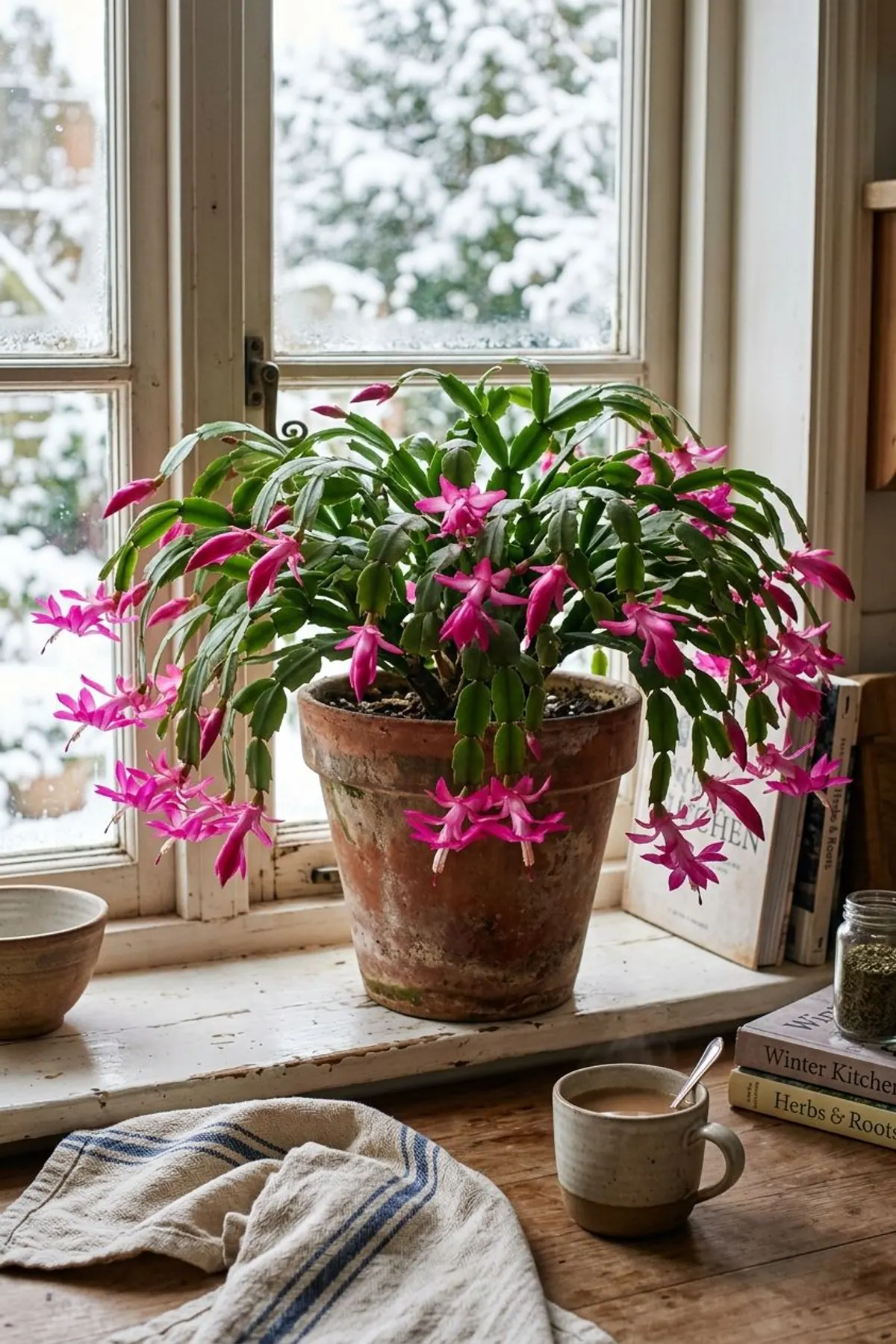
Want a flowering plant for the same window? Our Christmas cactus care guide shows how to get winter blooms with long, cool nights. You will find more in the herb garden and houseplants sections.
Indoor herb garden supplies
Shop the look
- Most useful
Full-spectrum LED grow light
$20-50
White LEDs grow herbs well and look natural in a kitchen.
Check price on Amazon for Full-spectrum LED grow light -
Plug-in outlet timer
$10-20
Switches the light on and off for steady 14-hour days.
Check price on Amazon for Plug-in outlet timer -
6-inch terracotta pots with saucers
$20-35 for a set
Drainage holes plus saucers that protect the sill.
Check price on Amazon for 6-inch terracotta pots with saucers -
Indoor potting mix
$8-15
Light, bagged mix that drains well in pots.
Check price on Amazon for Indoor potting mix -
Herb snips
$10-20
Small, sharp blades for clean cuts above a leaf pair.
Check price on Amazon for Herb snips -
Plant humidity pebble tray
$10-25
Adds a little humidity and catches drips.
Check price on Amazon for Plant humidity pebble tray
We earn from qualifying purchases, which never changes what we recommend. Read our disclosure and how we check every guide in our editorial guidelines.
Frequently asked questions
What herbs grow best indoors in winter?
Chives, parsley and mint are the easiest because they handle lower light. Thyme and oregano do well in your sunniest window. Basil and rosemary can grow indoors in winter too, but usually need a grow light, and basil also needs warmth.
Can you grow herbs indoors without a grow light?
Yes, if you have a bright south or west window and choose forgiving herbs like chives, parsley and mint. Growth will be slower in midwinter. For basil, or for north-facing homes, a grow light makes a big difference.
How many hours of light do indoor herbs need?
On a windowsill, give them the brightest spot you have, preferably one with several hours of direct sun. Under an LED grow light, about 14 hours a day on a timer works well for most herbs.
Why is my indoor basil dying?
The usual causes are cold, too little light or soggy soil. Basil wants temperatures of 65°F or more, strong light and pots that drain. Keep leaves off cold window glass at night and pinch off flower buds.
How often should I water an indoor herb garden?
Water when the top inch of soil feels dry rather than on a fixed schedule. In winter that is often once a week or less. Water until it drains from the bottom, then empty the saucer.

Save it for later
Pin this to your Herb Garden board so it's there when you need it.
Save to Pinterest