This post contains affiliate links. As an Amazon Associate we earn from qualifying purchases, at no extra cost to you. Read our disclosure.
Safety first: Herbs can be powerful. If you are pregnant, nursing, take medication or have a health condition, check with your doctor or pharmacist first. Please read our herbal & garden safety notes before you start.
Key takeaways
- Safe per the ASPCA: basil, rosemary, thyme, sage, dill, cilantro, lemon balm, chervil and fennel are all listed as non-toxic to cats.
- Skip or put out of reach: parsley, mint, oregano, marjoram, chives, garlic, bay laurel, lavender and tarragon are listed as toxic to cats.
- Lists disagree. We follow the ASPCA and say so, for example rosemary non-toxic, parsley and mint toxic.
- Cat-proof the pots: heavy terracotta, a pebble top layer, and toxic herbs on a high shelf or in a closed room.
- Not veterinary advice. If a cat eats an herb and seems unwell, call your vet or ASPCA Poison Control at (888) 426-4435.
In this post16 sections
- Cat safe herbs at a glance: the ASPCA check
- Herbs safe for cats to grow indoors
- 1. Basil (Ocimum basilicum)
- 2. Rosemary (Rosmarinus officinalis)
- 3. Thyme (Thymus vulgaris)
- 4. Sage (Salvia officinalis)
- 5. Dill (Anethum graveolens)
- 6. Cilantro (Coriandrum sativum)
- 7. Lemon balm (Melissa officinalis)
- 8. Chervil (Anthriscus cerefolium)
- Herbs to skip if you have a cat
- Why cat herb lists disagree
- A kitchen pot plan for a home with a cat
- Light for cat safe herbs in winter
- If your cat eats an herb
- FAQ
We earn from qualifying purchases, which never changes what we recommend. Read our disclosure and editorial guidelines.
Cat safe herbs at a glance: the ASPCA check
Every herb below was looked up on its own page in the ASPCA toxic and non-toxic plant list on 2026-11-20. We only call an herb safe when the ASPCA lists it as non-toxic to cats, and we only call it a skip when the ASPCA lists it as toxic to cats.
| Herb | ASPCA listing for cats | ASPCA page |
|---|---|---|
| Basil | Non-toxic | Basil |
| Rosemary | Non-toxic | Rosemary |
| Thyme | Non-toxic | Thyme |
| Sage | Non-toxic | Sage |
| Dill | Non-toxic | Dill |
| Cilantro | Non-toxic | Cilantro |
| Lemon balm | Non-toxic | Lemon balm |
| Chervil | Non-toxic | Chervil |
| Fennel | Non-toxic | Fennel |
| Parsley | Toxic | Parsley |
| Mint | Toxic | Mint |
| Oregano and marjoram | Toxic | Oregano, Marjoram |
| Chives and garlic | Toxic | Chives, Garlic |
| Bay laurel | Toxic | Bay laurel |
| Lavender | Toxic | Lavender |
| Tarragon | Toxic | Tarragon |
Herbs safe for cats to grow indoors
These eight are listed by the ASPCA as non-toxic to cats. Each one also grows in a kitchen pot, and the notes below cover the pot and light it wants. For a closer look at light, see our guide to herbs that grow indoors in low light.
1Basil (Ocimum basilicum)
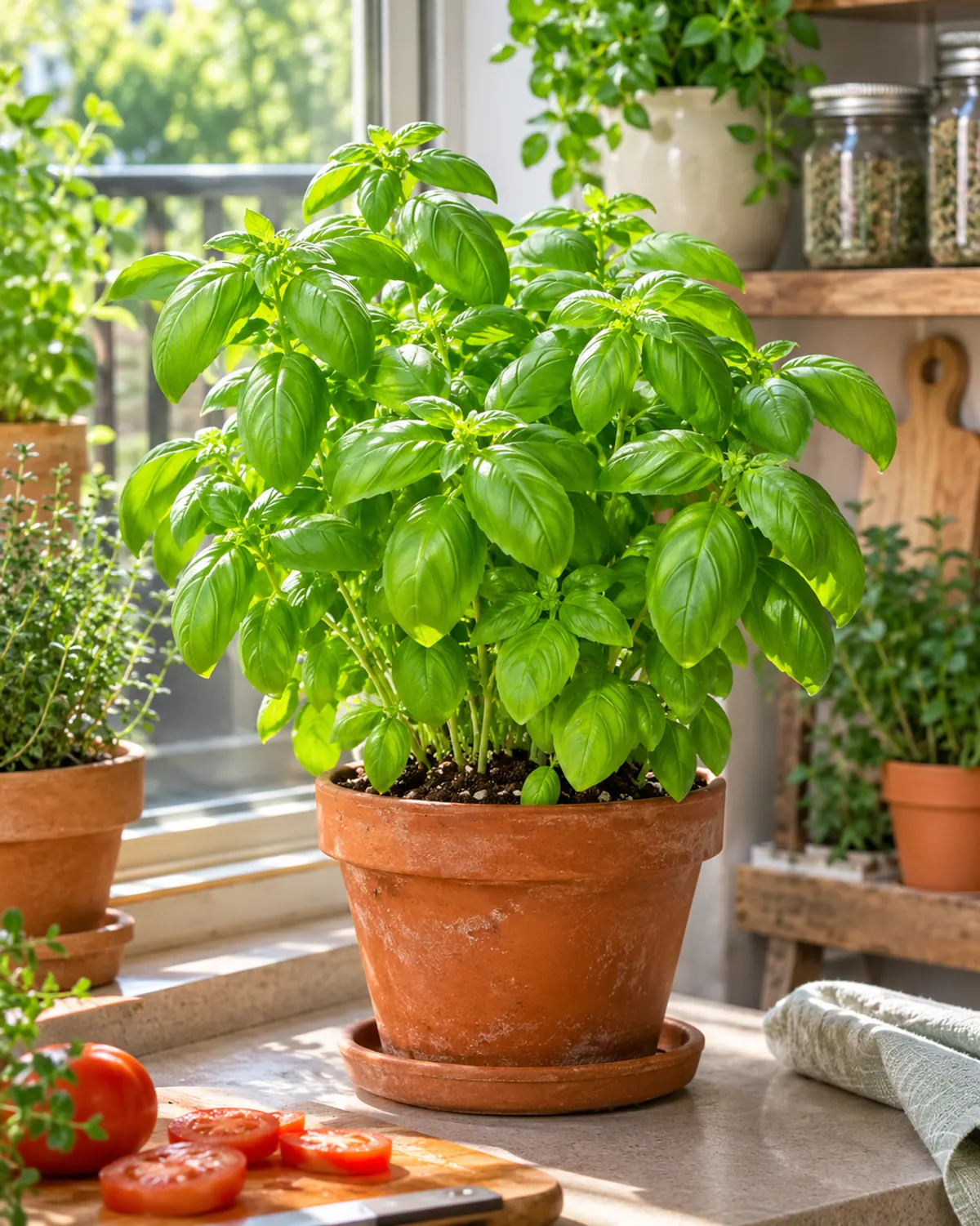
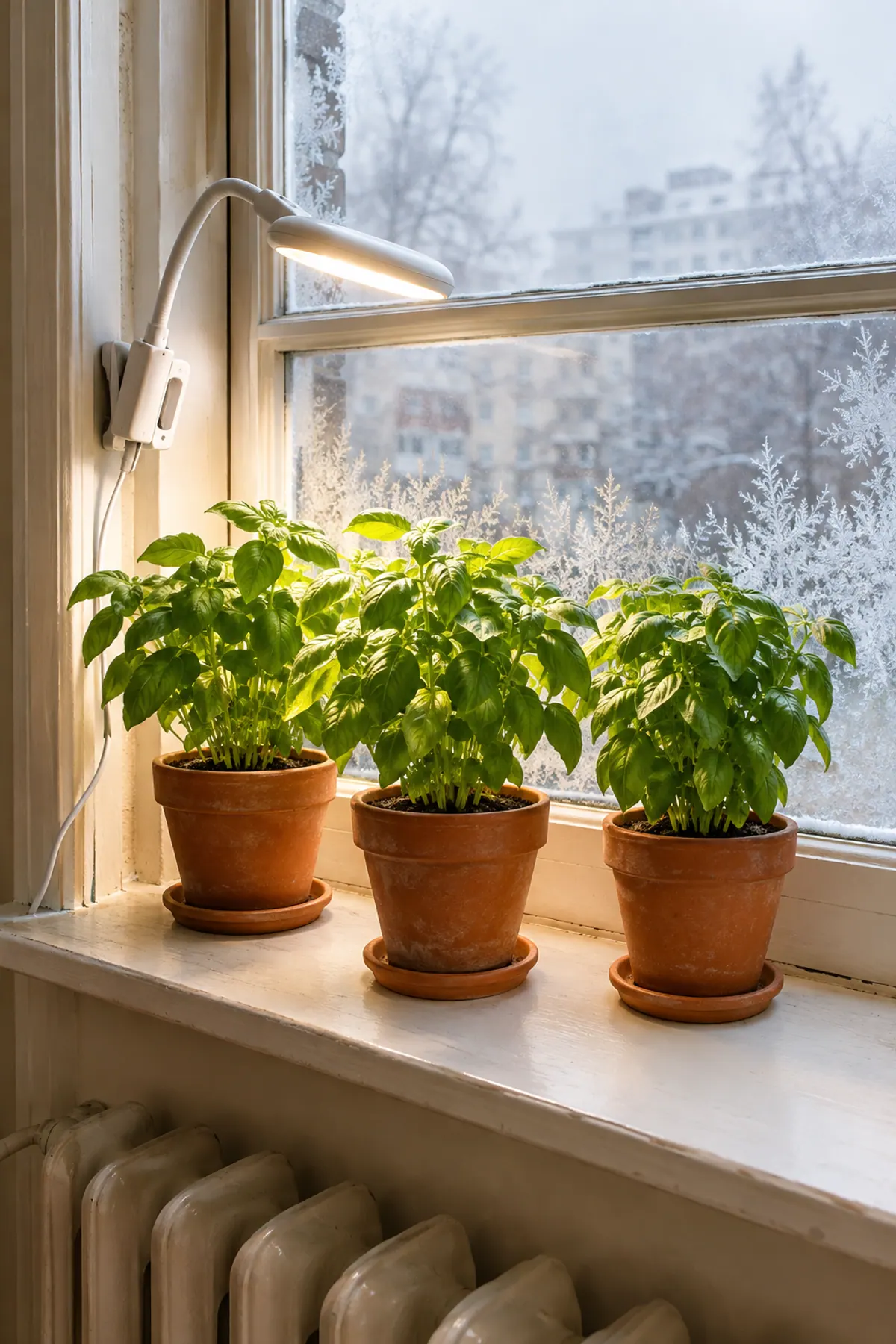
ASPCA: non-toxic to cats. The ASPCA lists basil as non-toxic to cats and dogs. Basil is the herb most people want first, and it wants the warmest, brightest spot you have. Pinch the top shoots often so it grows bushy instead of tall. Size: one 6 to 8 inch pot. Winter is the hard season, so read our basil care guide for indoors.
- Pinch just above a pair of leaves, and pinch any flower buds off so the plant keeps making leaves.
2Rosemary (Rosmarinus officinalis)
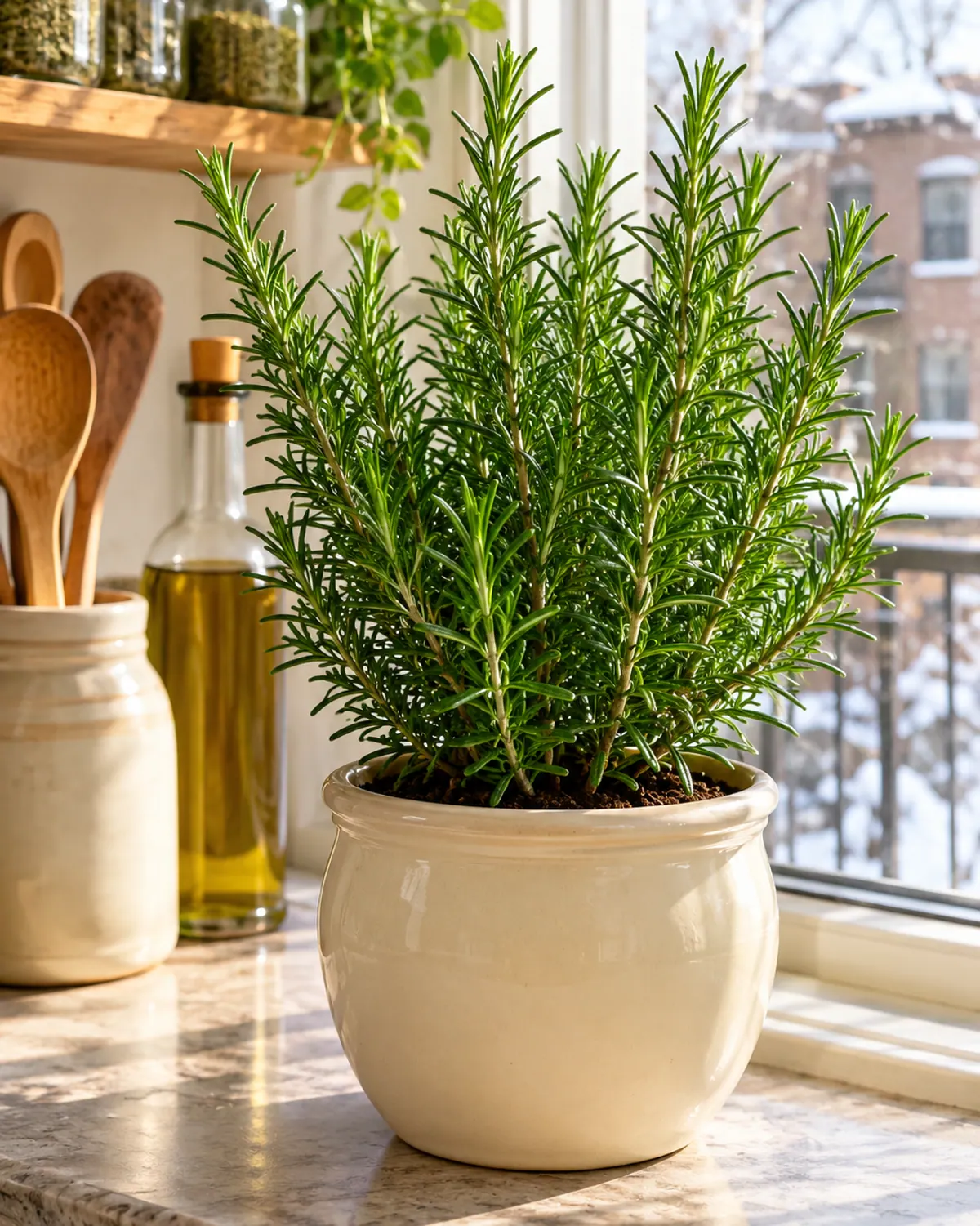
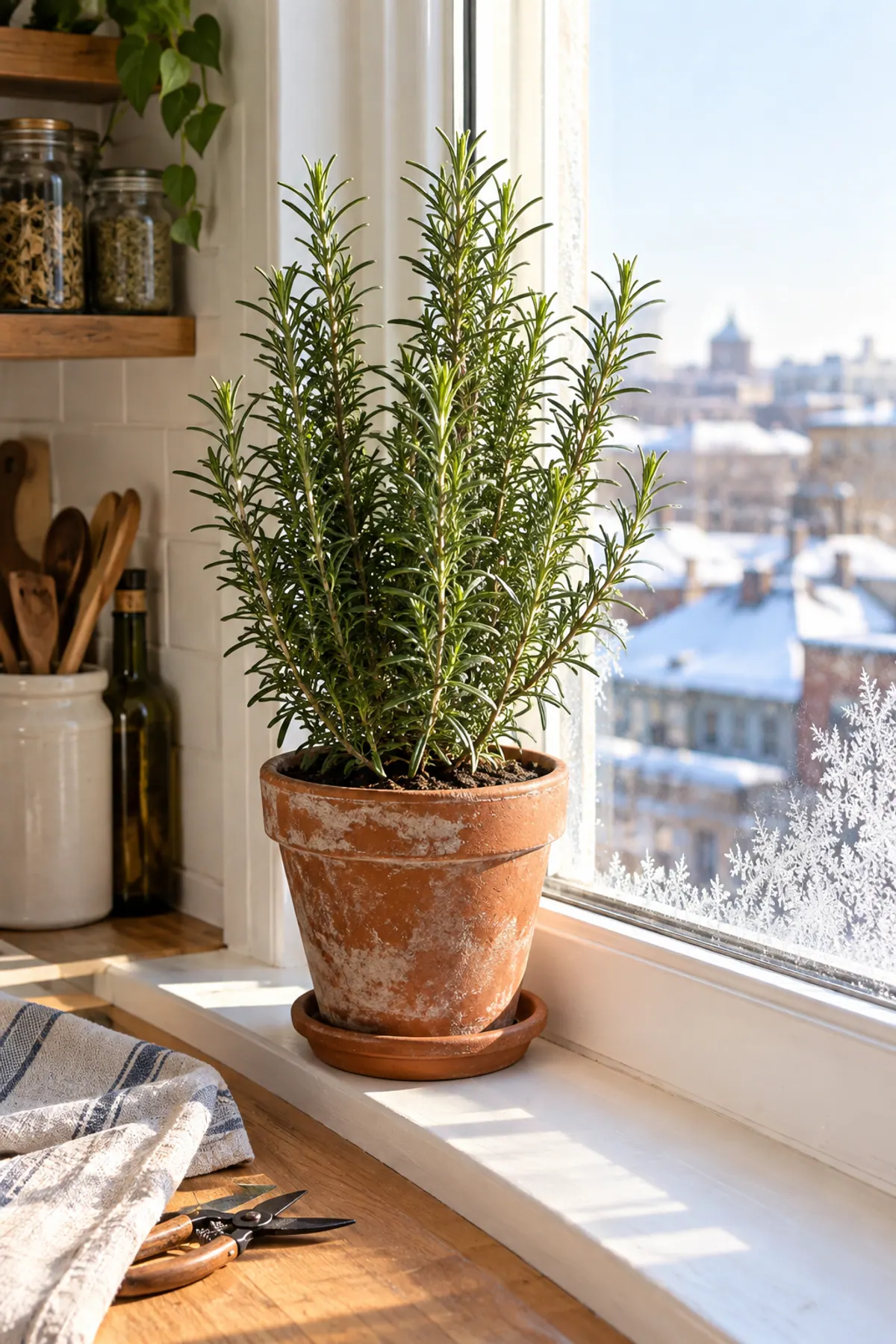
ASPCA: non-toxic to cats. The ASPCA lists rosemary as non-toxic to cats, dogs and horses. Some pet sites list it differently, which is covered in the disputed herbs section below. Rosemary wants a bright window and a pot with a drainage hole, and it hates sitting wet. Size: one 8 to 10 inch pot. See growing rosemary indoors for winter care.
- Water when the top inch of soil is dry, then let the pot drain fully.
3Thyme (Thymus vulgaris)
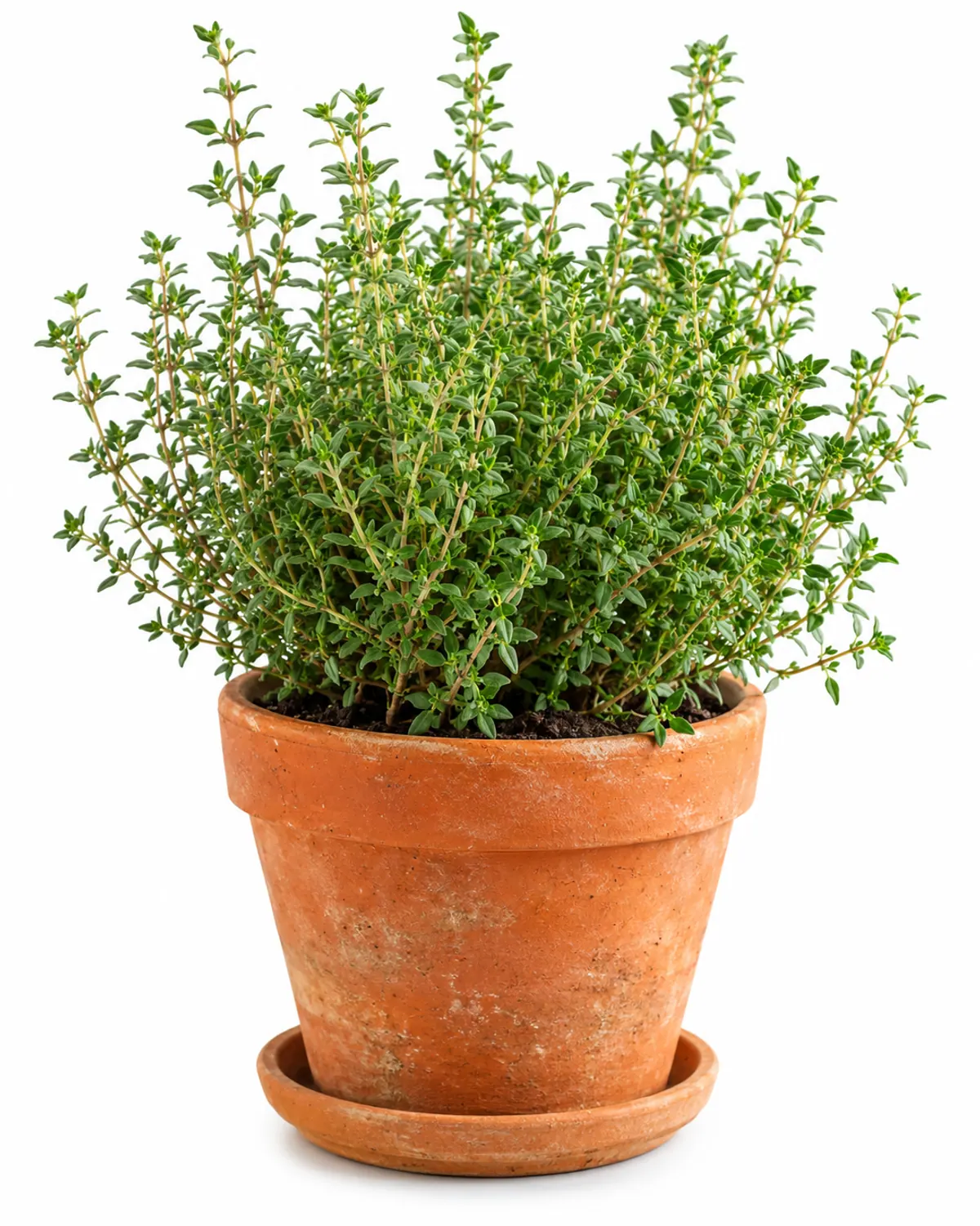
ASPCA: non-toxic to cats. The ASPCA lists thyme as non-toxic to cats, dogs and horses. Thyme is small and woody, so a shallow bowl suits it. Give it bright light and let the soil dry out between drinks. Size: one shallow 6 to 8 inch bowl.
- A wide, shallow bowl dries faster than a deep pot, which thyme prefers.
4Sage (Salvia officinalis)
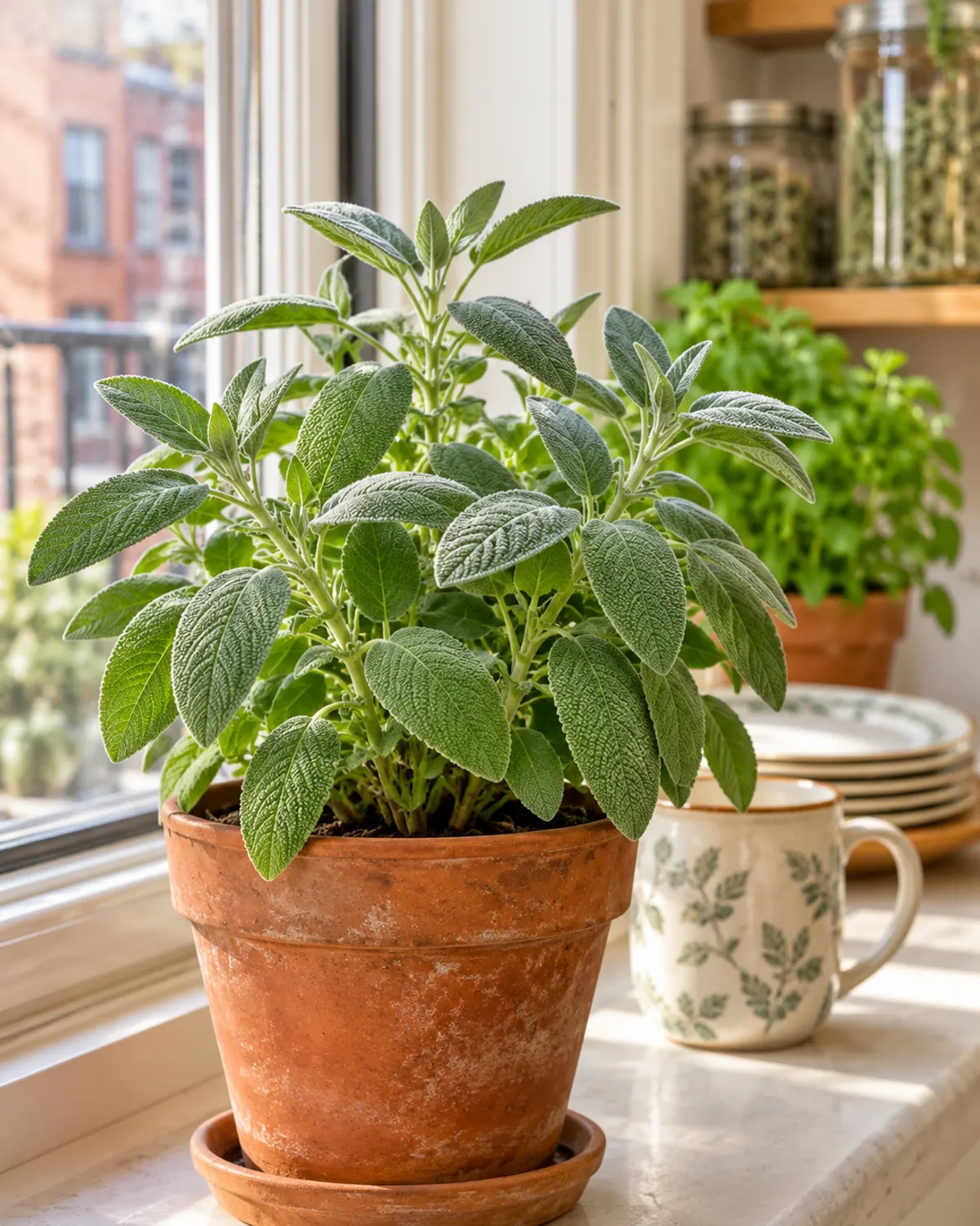
ASPCA: non-toxic to cats. The ASPCA lists sage as non-toxic to cats, dogs and horses. Sage has fuzzy grey-green leaves and likes a bright window with soil that dries between waterings. It grows slowly, so buy a plant that is already the size you want. Size: one 8 inch pot.
- Harvest a few leaves at a time from the top and leave the lower stems alone.
5Dill (Anethum graveolens)
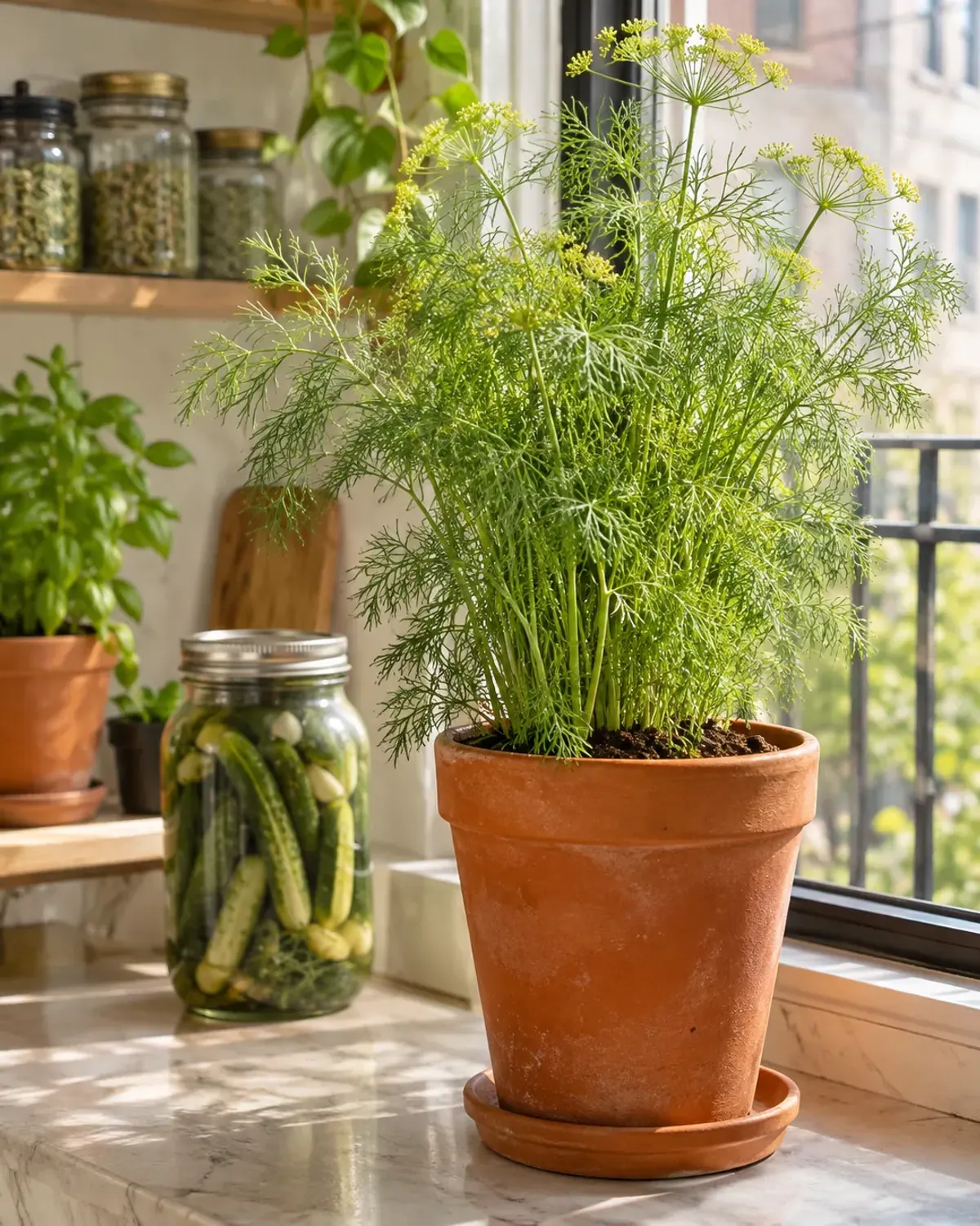
ASPCA: non-toxic to cats. The ASPCA lists dill as non-toxic to cats, dogs and horses, and notes that prolonged skin contact can cause dermatitis. Dill grows tall and feathery with a long taproot, so it needs a deep pot and a bright window. Size: one deep 10 to 12 inch pot. Expect it to flop in dim winter light, and tie it to a thin stake.
- Sow a new pot every few weeks, because dill is quick and finishes early.
6Cilantro (Coriandrum sativum)
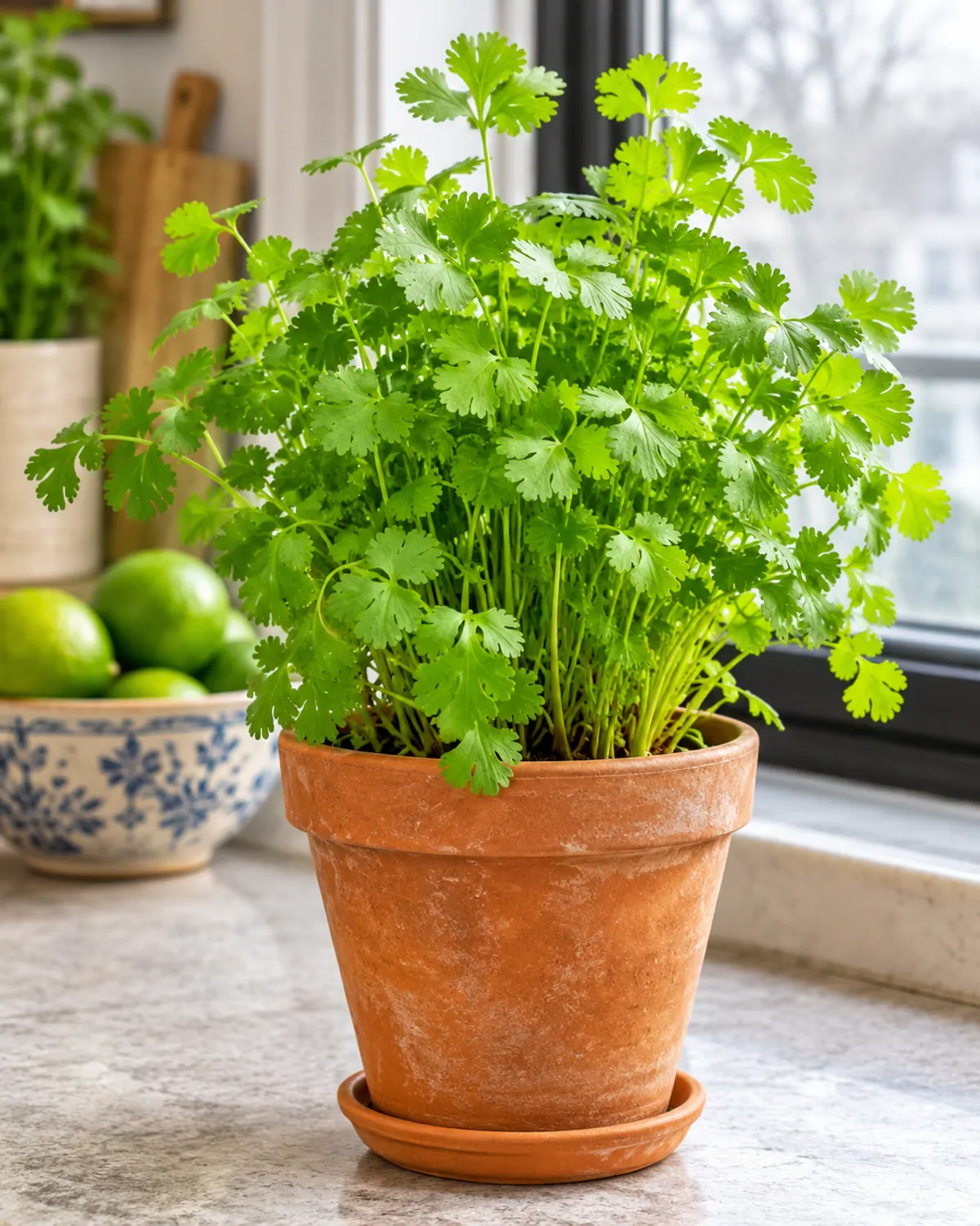
ASPCA: non-toxic to cats. The ASPCA lists cilantro as non-toxic to cats, dogs and horses (it is listed under the name coriander as well). Cilantro likes a cooler window and runs to seed fast in warm rooms. Size: one 8 inch pot. Cut the outer leaves first, and sow again every few weeks for a steady supply.
- Keep it away from radiators, which push it to flower early.
7Lemon balm (Melissa officinalis)
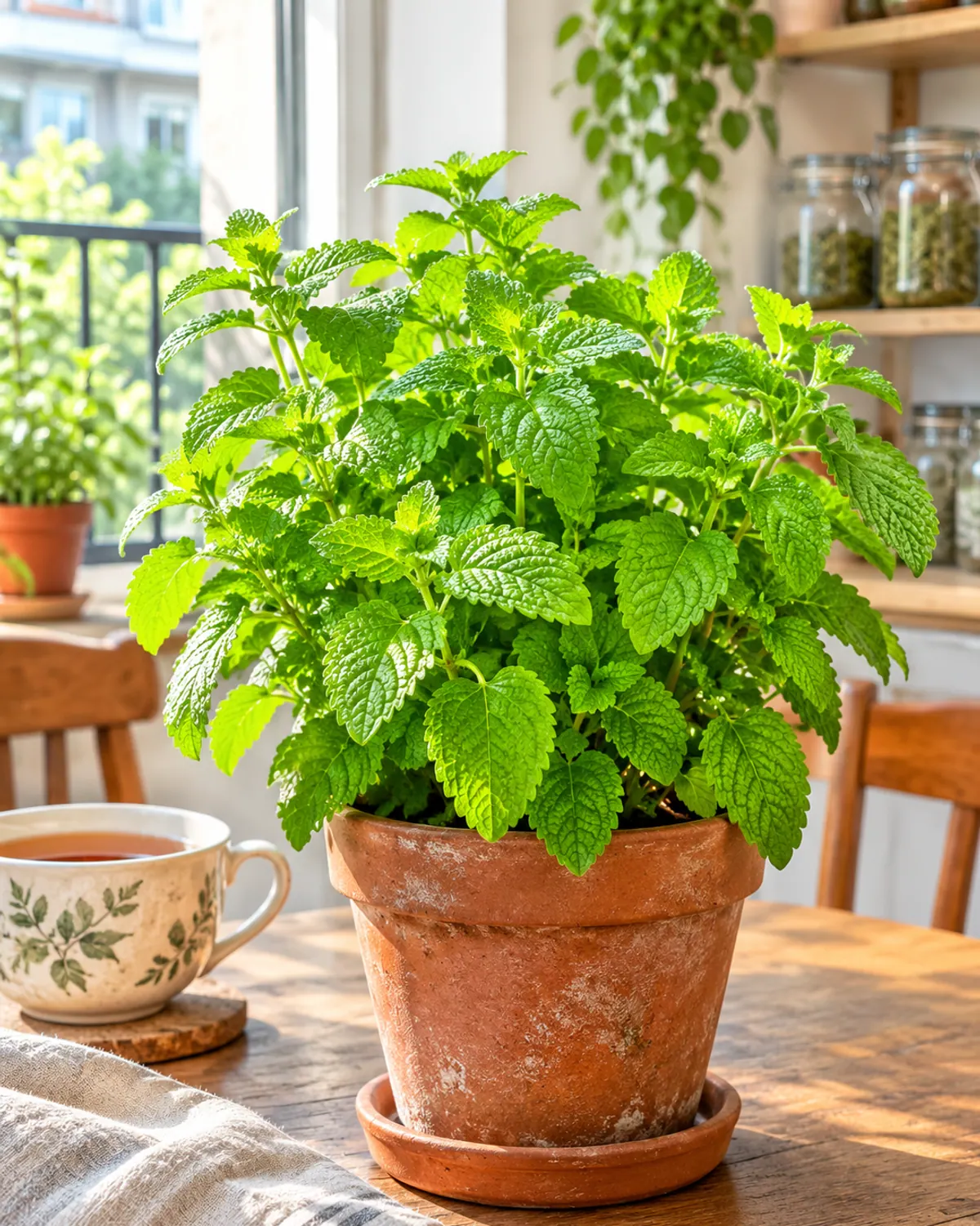
ASPCA: non-toxic to cats. The ASPCA lists lemon balm as non-toxic to cats, dogs and horses. It is a mint relative, so people mix it up with mint, but the ASPCA lists the two differently: mint is toxic to cats and lemon balm is not. It copes with a little less light than most herbs and likes even moisture. Size: one 8 to 10 inch pot, kept to itself because it spreads.
- Label the pot, so a guest or a housemate does not swap it for mint.
8Chervil (Anthriscus cerefolium)
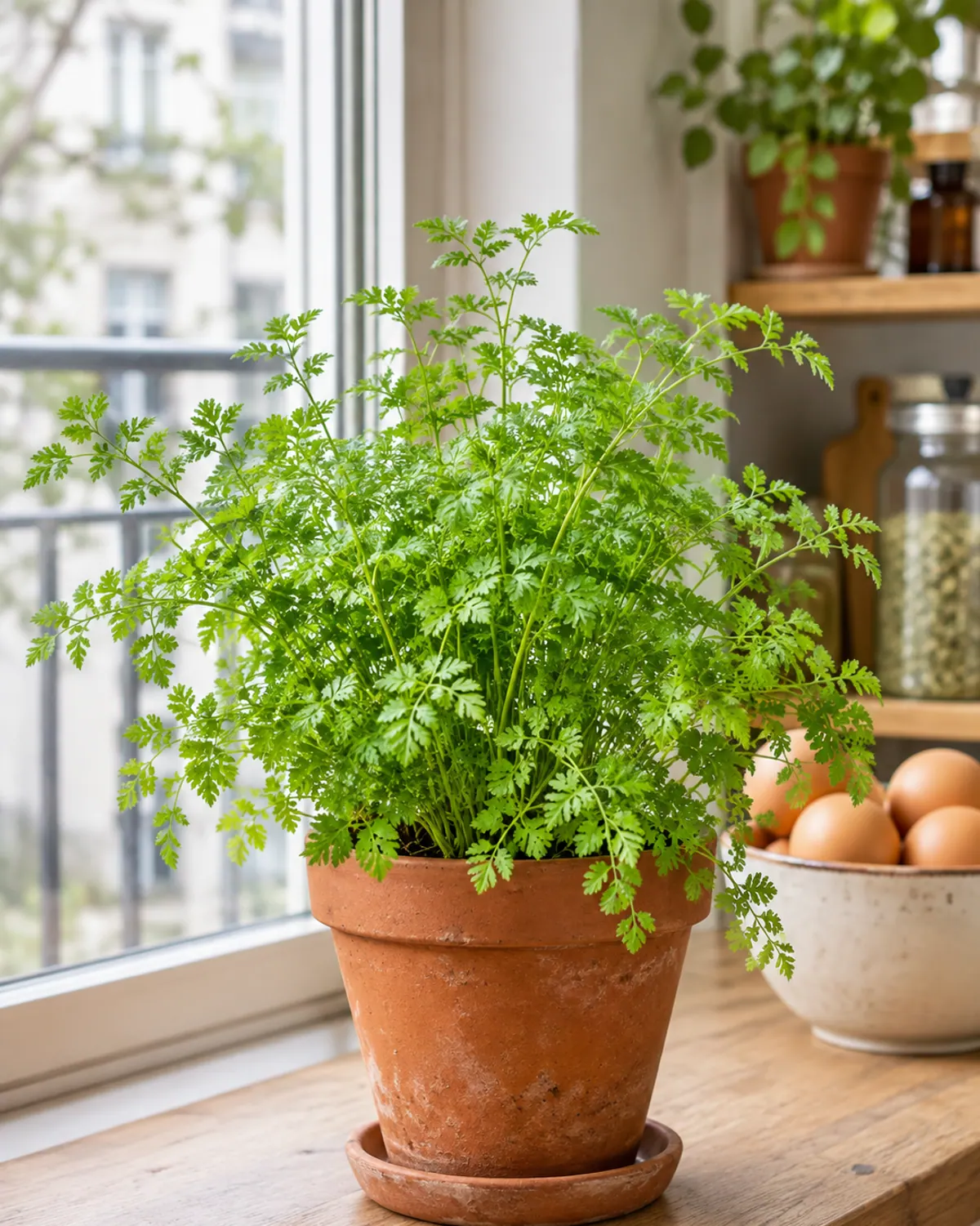
ASPCA: non-toxic to cats. The ASPCA lists chervil as non-toxic to cats, dogs and horses. Chervil is a delicate, lacy herb that likes a cool, bright window and does not enjoy heat. It is the easiest substitute for parsley if you want something similar to garnish with. Size: one 8 inch pot.
- Sow thinly in a deep-ish pot, and keep the soil lightly moist.
Fennel is also on the ASPCA non-toxic list for cats (ASPCA fennel page), but it grows large and does not suit most windowsills, so we left it out of the pot list.
Herbs to skip if you have a cat
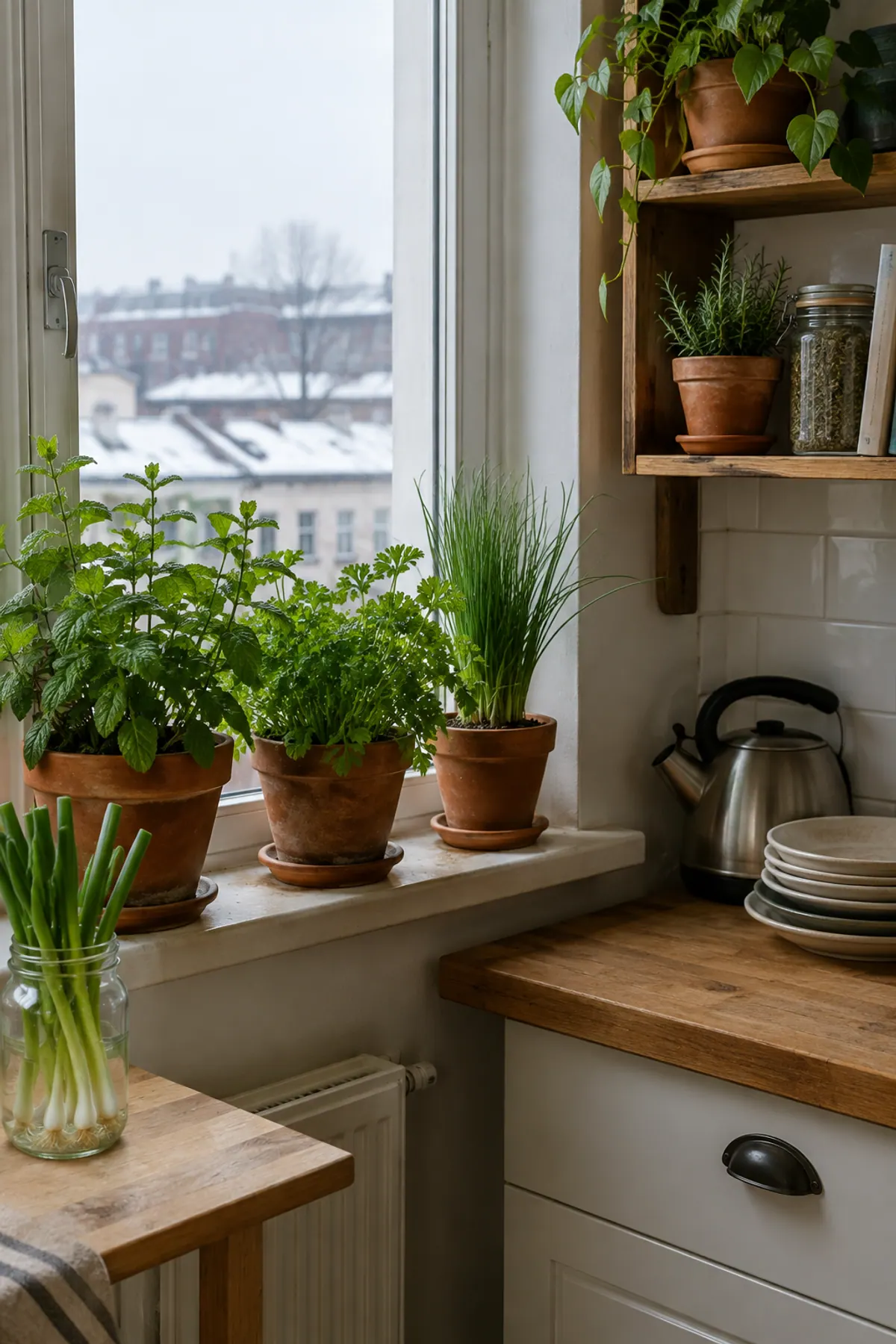
These common kitchen herbs are listed by the ASPCA as toxic to cats. You do not have to give up the flavor, but keep them out of paw reach or grow them somewhere the cat cannot go.
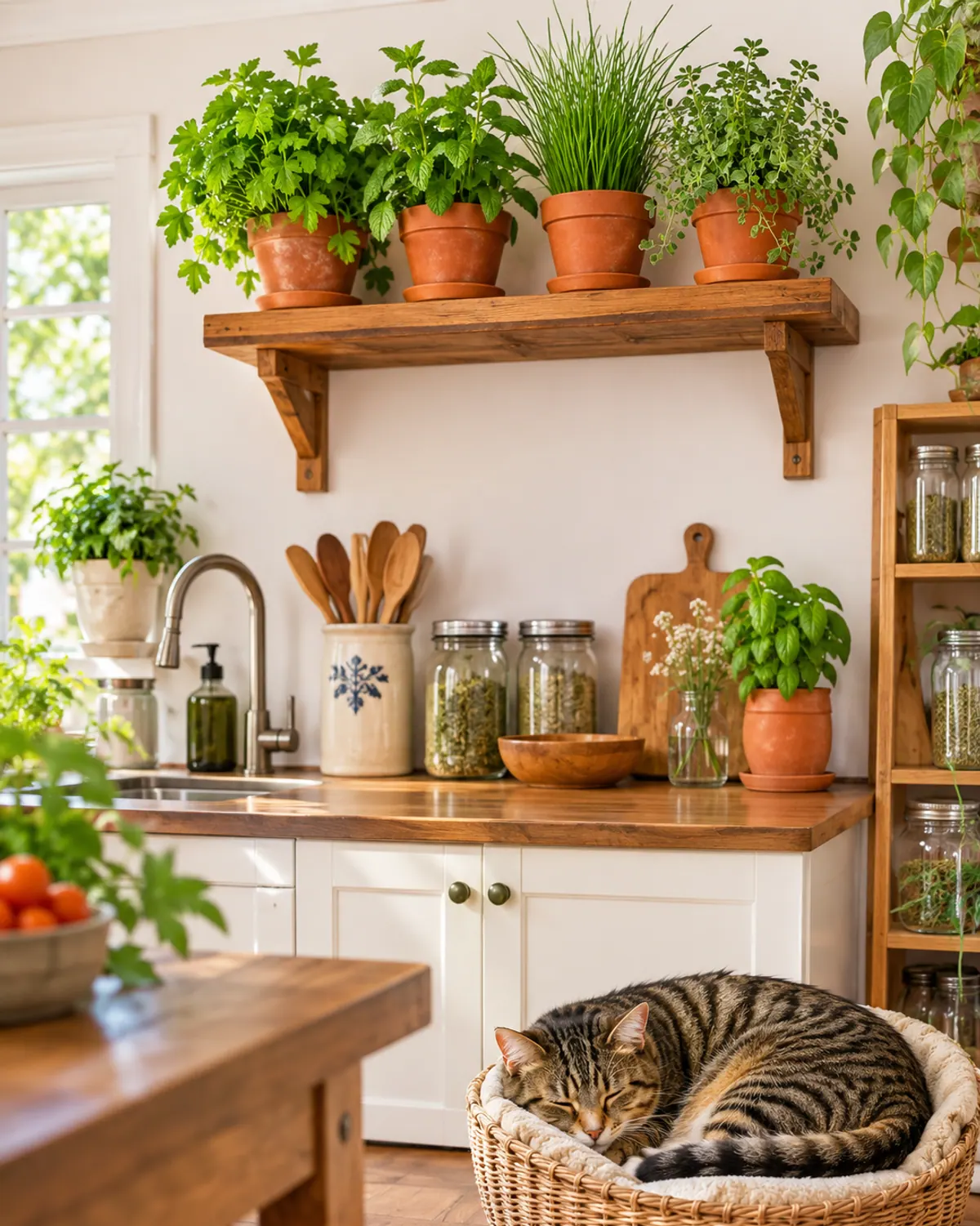
| Herb | ASPCA clinical signs | ASPCA page |
|---|---|---|
| Parsley | Photosensitization (sunburn, dermatitis); large amounts are needed | Parsley |
| Mint | Vomiting and diarrhea with large ingestions | Mint |
| Oregano | Mild vomiting and diarrhea | Oregano |
| Marjoram | Vomiting and diarrhea | Marjoram |
| Chives | Vomiting and breakdown of red blood cells | Chives |
| Garlic | Vomiting and breakdown of red blood cells | Garlic |
| Bay laurel | Vomiting and diarrhea; whole leaves can cause an obstruction | Bay laurel |
| Lavender | Nausea, vomiting and loss of appetite | Lavender |
| Tarragon | Mild vomiting and diarrhea | Tarragon |
| Catnip | Vomiting and diarrhea; sedation or stimulation | Catnip |
The two that surprise people are mint and lavender, because both are sold as pet-friendly home plants. If you love lavender, our guide to growing lavender indoors covers it, and the ASPCA lists lavender as toxic to cats, so put it where the cat cannot reach. Our guide to growing mint indoors covers mint the same way.
Why cat herb lists disagree
Search for cat safe herbs and you will find pages that list rosemary, parsley or mint differently from each other. We follow the ASPCA, because it is the poison control source, and we say so when another page disagrees. On the ASPCA list, rosemary is non-toxic, while parsley and mint are toxic.
Two things explain a lot of the confusion. First, the ASPCA's own page for each plant is what counts, and pet sites often copy from each other. Second, "non-toxic" means the plant is not expected to poison a cat, not that a cat should eat it. The ASPCA says its list covers the plants it sees most often, so a plant that is not listed is not automatically safe.
A kitchen pot plan for a home with a cat
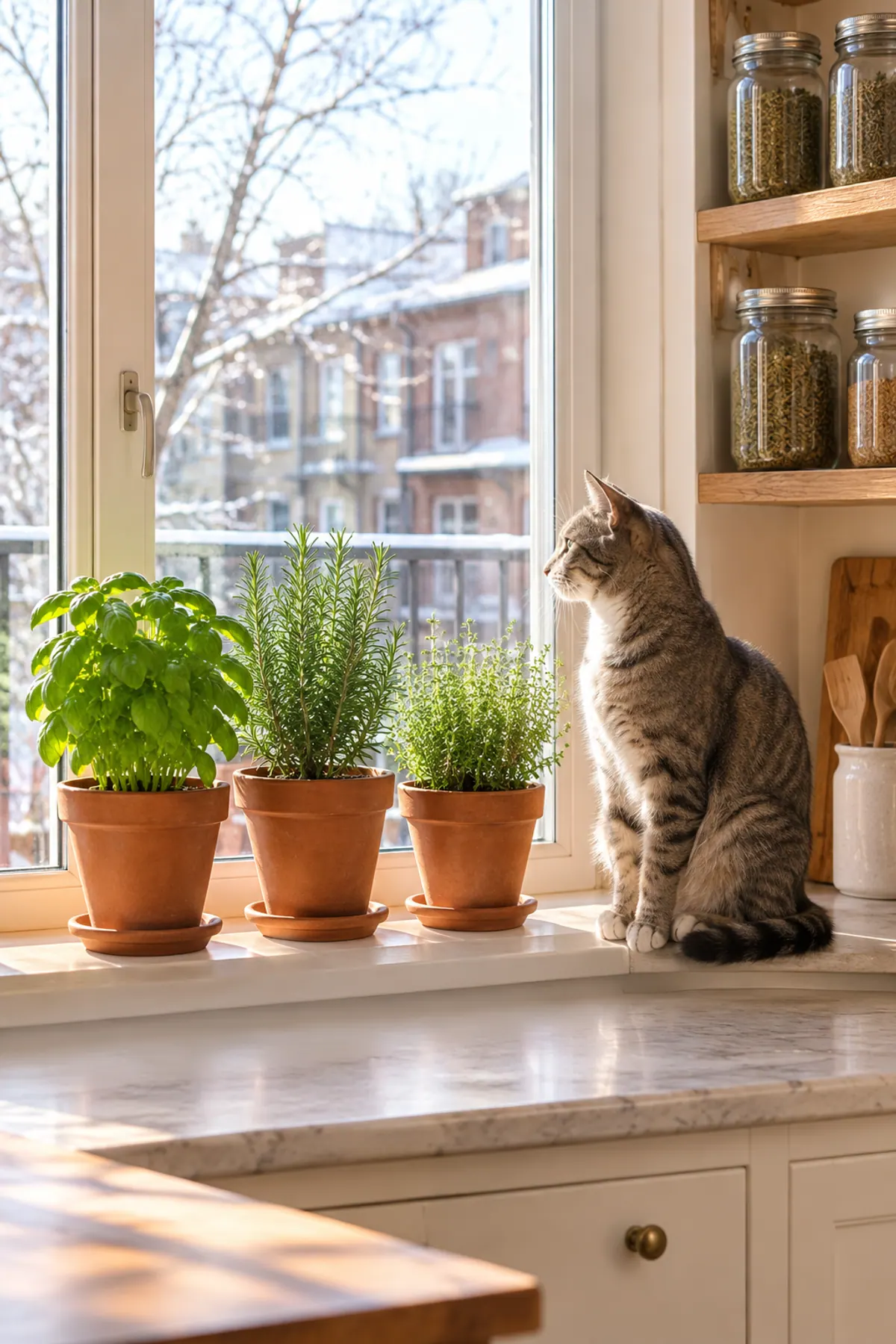
Pick pots a cat cannot tip, put the safe herbs where the cat already walks, and keep the toxic ones out of reach. This plan works on one or two windowsills, and our guide to pot sizes for herbs covers the sizes.
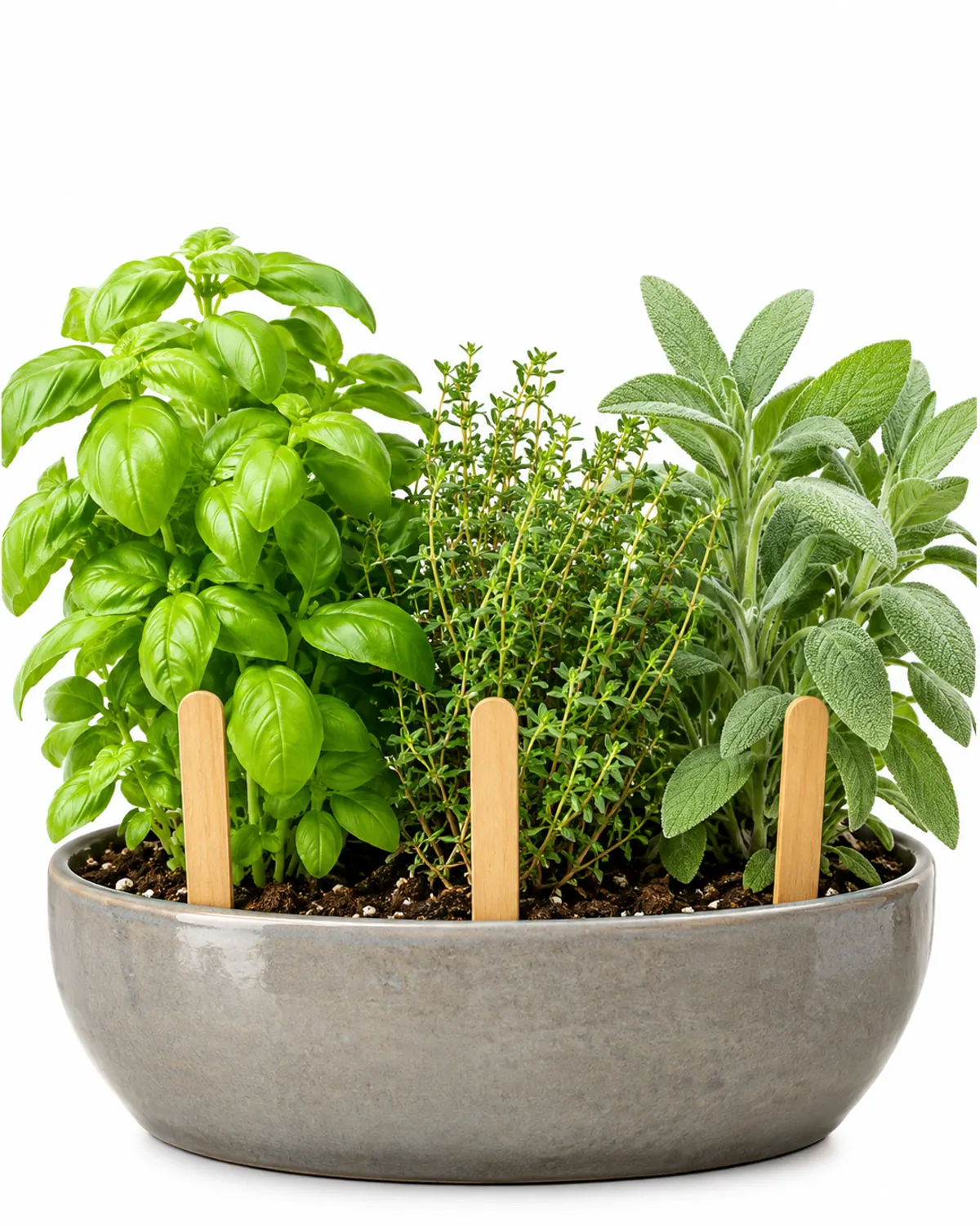
| Spot | Herbs | Pot |
|---|---|---|
| Brightest sill | Basil, rosemary, thyme, sage | Heavy terracotta pots with saucers, or one wide glazed planter for basil, thyme and sage |
| Cooler, brighter window | Cilantro, chervil | Small 8 inch pots, sown again every few weeks |
| Counter by a window | Dill | One deep pot, staked |
| Table or low shelf | Lemon balm | One pot on its own, labelled |
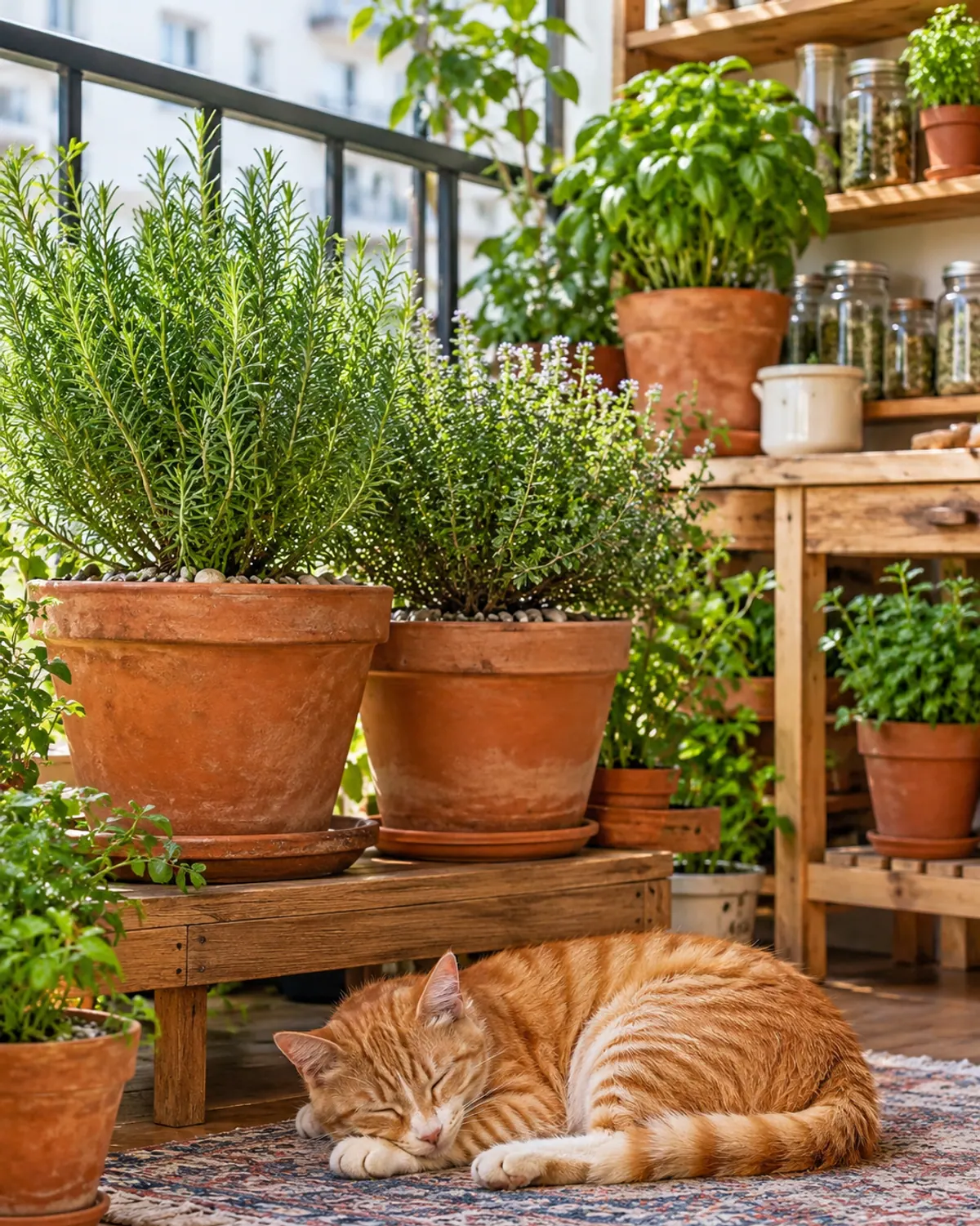
Cat-proofing checklist
Light for cat safe herbs in winter
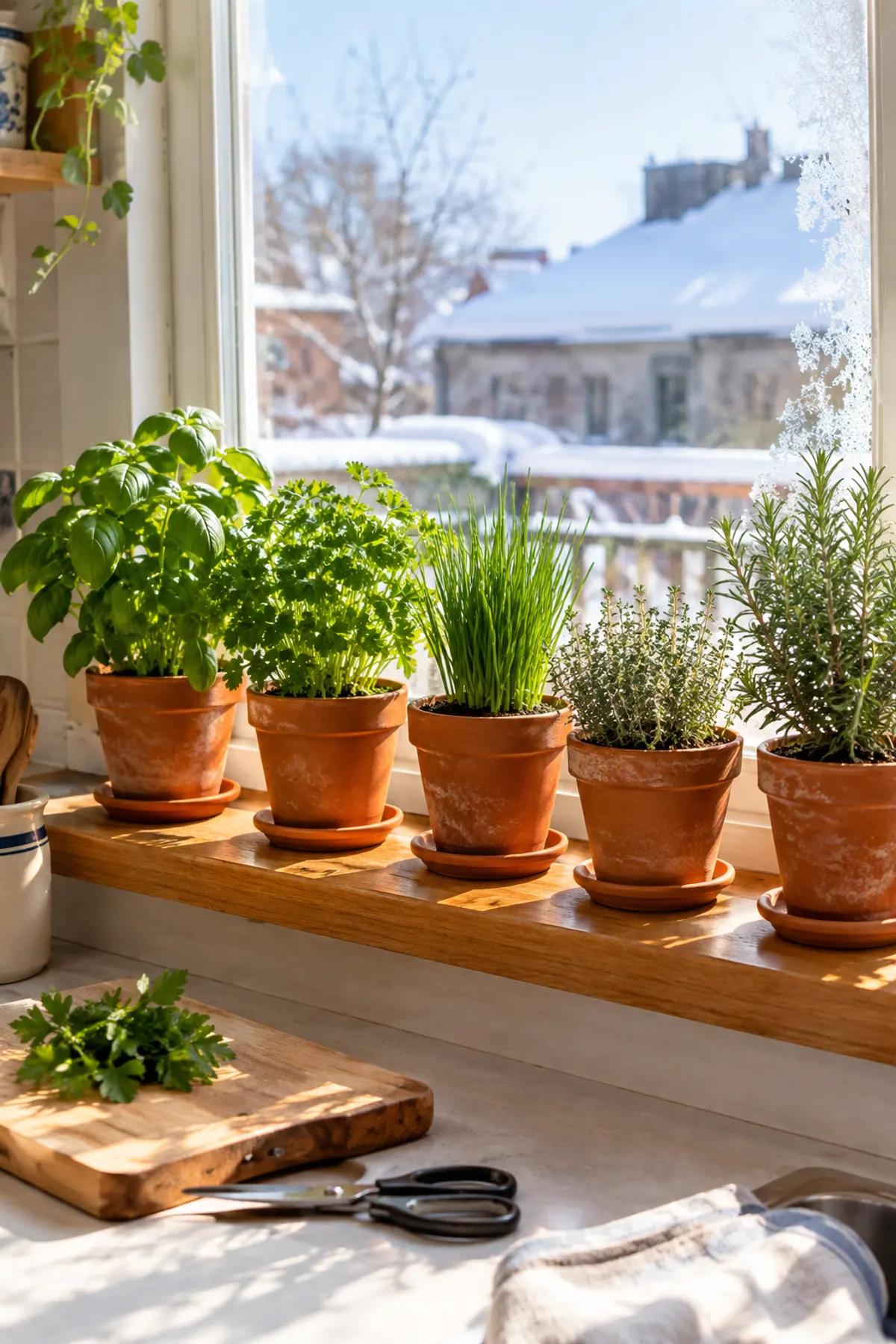
Most of these herbs want a bright window, and winter windows are dim. A small clip-on LED grow light above the pots fixes most of it, and a plug-in timer keeps the hours steady. Our guide to grow lights for small spaces compares the options.
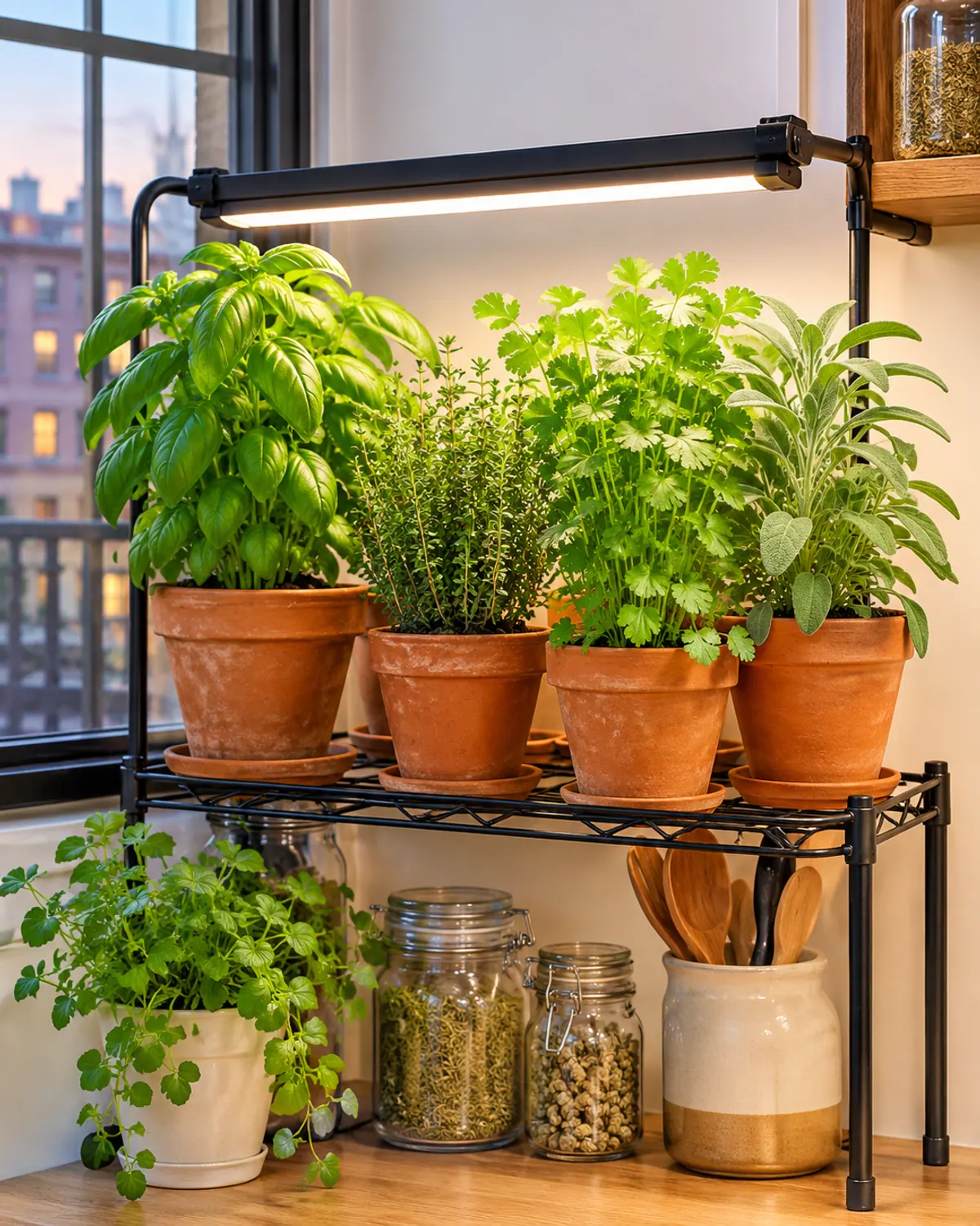
Simple gear for a cat safe herb shelf
-
Heavy terracotta pots with saucers
Typically $15 to $35
Weight makes them harder for a cat to tip, and clay dries faster for rosemary and thyme
Check price on Amazon for Heavy terracotta pots with saucers -
Wide glazed herb planter
Typically $20 to $40
One planter for basil, thyme and sage on a counter
Check price on Amazon for Wide glazed herb planter -
Clip-on LED grow light
Typically $20 to $50
Adds hours to short winter days over two or three pots
Check price on Amazon for Clip-on LED grow light -
Plug-in outlet timer
Typically $8 to $15
Runs the light on the same schedule every day
Check price on Amazon for Plug-in outlet timer -
Decorative pebbles for plant pots
Typically $8 to $15
A top layer that discourages digging
Check price on Amazon for Decorative pebbles for plant pots
If your cat eats an herb
A nibble of a non-toxic herb usually passes without trouble, but cats can still get an upset stomach from any plant. If your cat eats a toxic herb from the skip list, or eats a lot of any plant, or seems unwell, call your vet or the ASPCA Animal Poison Control Center at (888) 426-4435 right away. A consultation fee may apply. Have the herb's name and roughly how much was eaten ready.
Frequently asked questions
What herbs are safe for cats?
The ASPCA lists basil, rosemary, thyme, sage, dill, cilantro, lemon balm, chervil and fennel as non-toxic to cats. Check each herb's own ASPCA page, and call your vet if your cat eats something and seems unwell.
Is rosemary safe for cats?
The ASPCA lists rosemary as non-toxic to cats, dogs and horses. Some pet sites list it differently, so we follow the ASPCA and still keep cats from chewing the pot.
Is mint safe for cats?
No. The ASPCA lists mint as toxic to cats, with vomiting and diarrhea after large ingestions. Lemon balm is a different plant and is listed as non-toxic.
Is parsley safe for cats?
The ASPCA lists parsley as toxic to cats, mainly because large amounts can cause photosensitization. Chervil is a milder swap that the ASPCA lists as non-toxic.
How do I stop my cat digging in herb pots?
Use heavy terracotta or glazed pots, top the soil with pebbles, and keep any toxic herbs on a high shelf or in a room the cat cannot enter.
What should I do if my cat eats an herb?
Call your vet or the ASPCA Animal Poison Control Center at (888) 426-4435, and tell them the herb and roughly how much. A consultation fee may apply. This is general information and not veterinary advice.

Save it for later
Pin this to your Herb Garden board so it's there when you need it.
Save to Pinterest