This post contains affiliate links. As an Amazon Associate we earn from qualifying purchases, at no extra cost to you. Read our disclosure.
Safety first: Herbs can be powerful. If you are pregnant, nursing, take medication or have a health condition, check with your doctor or pharmacist first. Please read our herbal & garden safety notes before you start.
Key takeaways
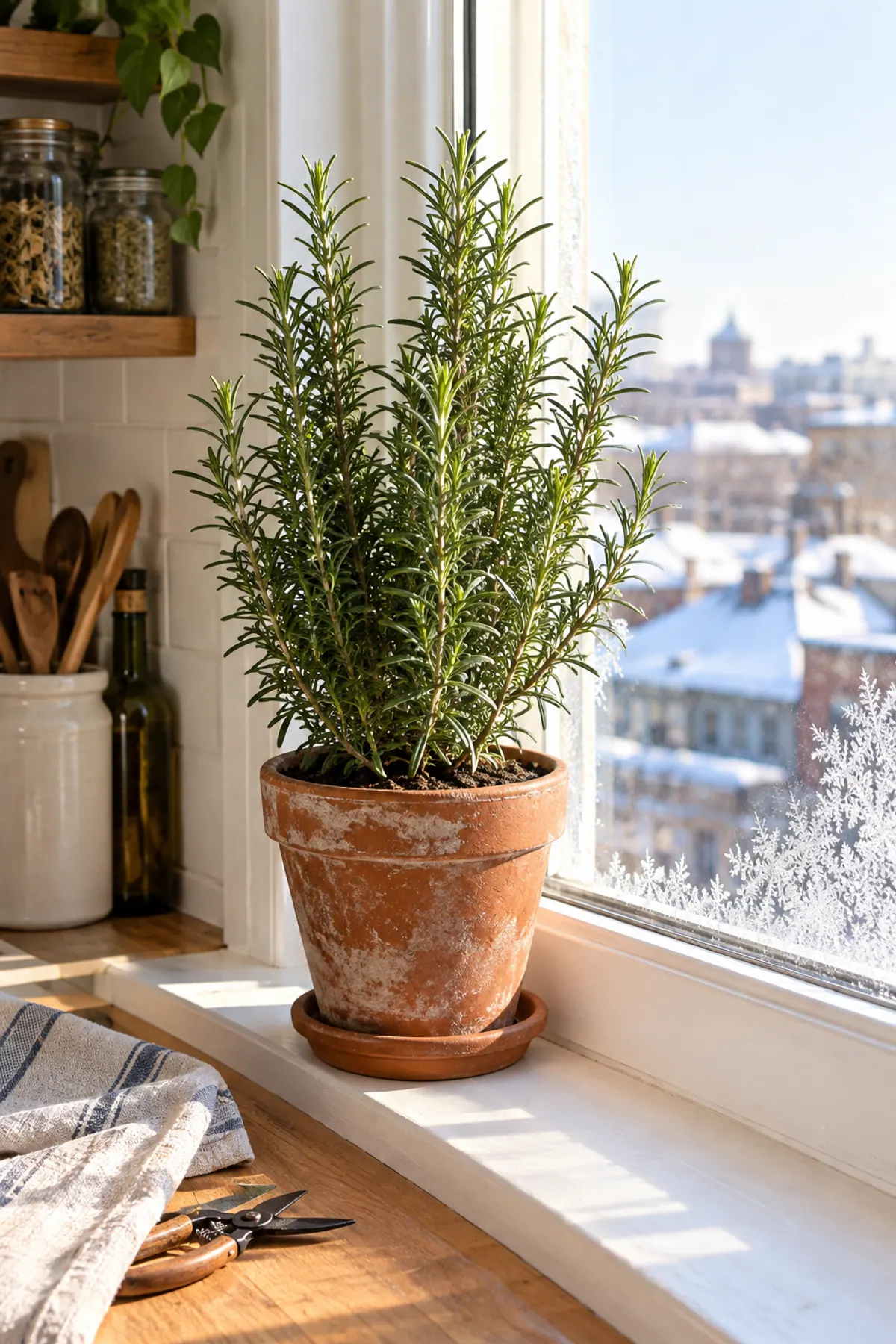
- Give indoor rosemary your sunniest window (south is best) or a grow light for about 14 to 16 hours a day.
- Keep it cool. Extension guides suggest a spot that stays under about 65°F, and colder rooms often work better.
- Water when the top inch of soil is dry, but never let the root ball dry out completely.
- Good air flow helps prevent powdery mildew, the most common indoor rosemary problem.
- A rosemary Christmas tree is a regular rosemary plant. Take off the foil sleeve, give it sun, and move it outdoors after your last frost.
In this post10 sections
- Why growing rosemary indoors is tricky (and how to make it easy)
- Rosemary Christmas trees: what you are really buying
- What you need
- How to care for rosemary indoors, step by step
- Rosemary Christmas tree care through the holidays
- After the holidays: keep your rosemary tree alive past January
- Mistakes that kill rosemary indoors
- Variations: varieties and cuttings
- Supplies for growing rosemary indoors
- FAQ
Why growing rosemary indoors is tricky (and how to make it easy)
Rosemary (Salvia rosmarinus) is only reliably perennial outdoors in about Zone 8 and warmer. The University of Illinois Extension notes that in Zone 6 and colder it is best treated as a tender perennial and brought inside for winter. Hardier varieties such as 'Arp' may squeak through Zone 6 or 7 in a sheltered spot, but potted plants are safer indoors.
Indoors, rosemary faces short days, dry heated air and warm rooms. Those three things together are what cause the brown needles and sudden collapse people blame on themselves. Fix the light and the temperature first, and watering gets much easier.
| Need | What it wants indoors | Source |
|---|---|---|
| Light | 6+ hours of direct sun, or a grow light 14 to 16 hours a day | Penn State and Illinois Extension |
| Temperature | Cool, best under 65°F; low 50s at night is fine | UW-Madison Extension |
| Water | When the top inch is dry; never bone dry | UW-Madison Extension |
| Humidity | Higher than a heated room; a pebble tray helps | Illinois Extension |
| Fertilizer | None in winter | UW-Madison Extension |
| Pot | Terracotta with a drainage hole | UW-Madison Extension |
Rosemary Christmas trees: what you are really buying
Rosemary Christmas trees are ordinary upright rosemary plants that growers shear into a neat cone. They show up in grocery stores and garden centers from November, often wrapped in shiny foil. With the same care as any potted rosemary, they can keep growing for years.

The trouble is that they are grown in bright greenhouses and then parked in dim stores and warm living rooms. Many arrive a little stressed, with roots crowded into a small plastic pot. The first week at home matters most.
What you need
Supplies for growing rosemary indoors
How to care for rosemary indoors, step by step
-
Step 1: Bring outdoor rosemary in before the first frost
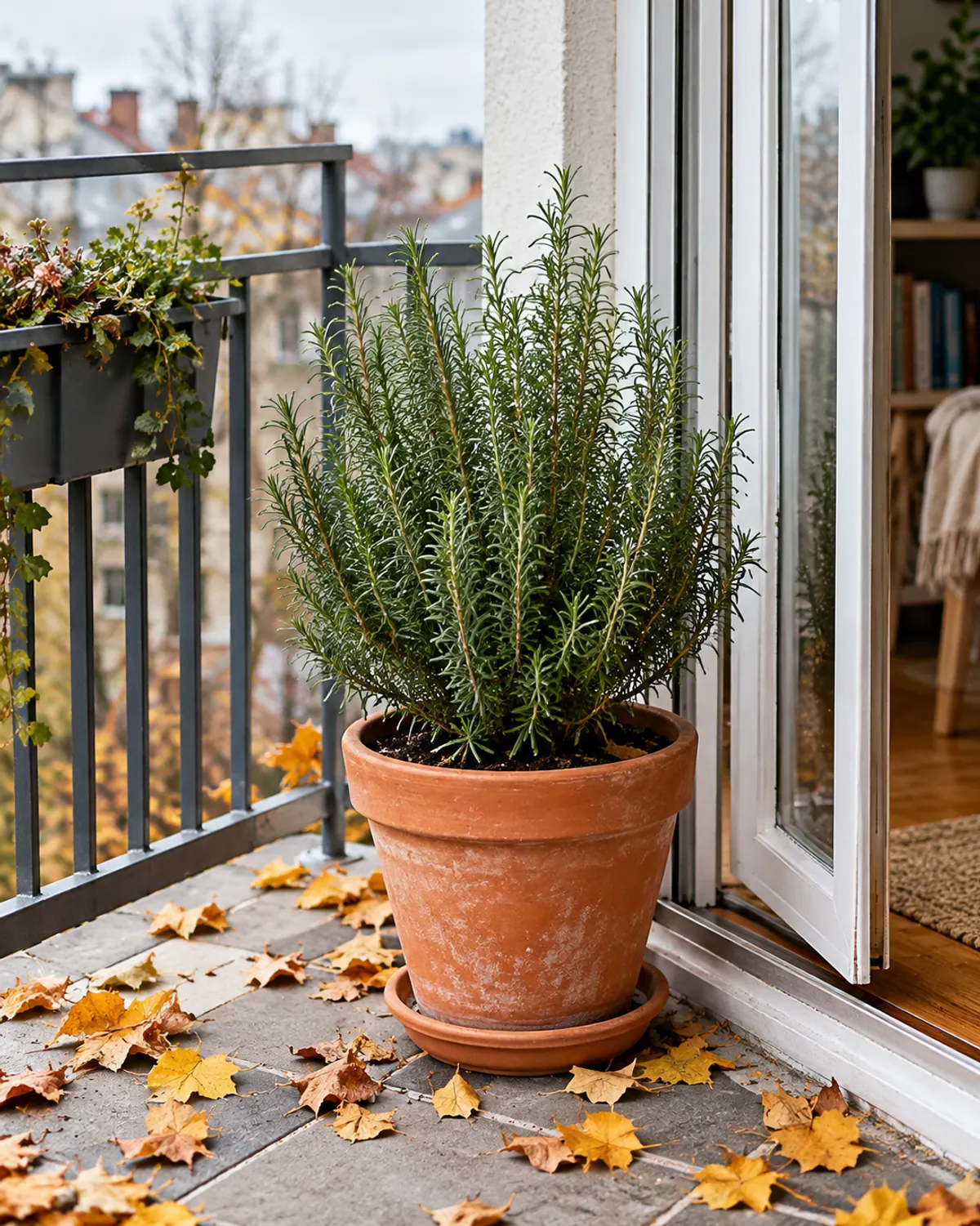
If your rosemary spent summer on a balcony or patio, move it inside before your first fall frost. Check the stems and undersides of the needles for aphids or spider mites first, and rinse the plant with a gentle spray if needed.
-
Step 2: Take off any foil sleeve
Holiday rosemary often comes wrapped in decorative foil. UW-Madison Extension advises removing it right away, because it traps water around the roots. Set the pot on a saucer instead.
-
Step 3: Repot into terracotta if the roots are crowded
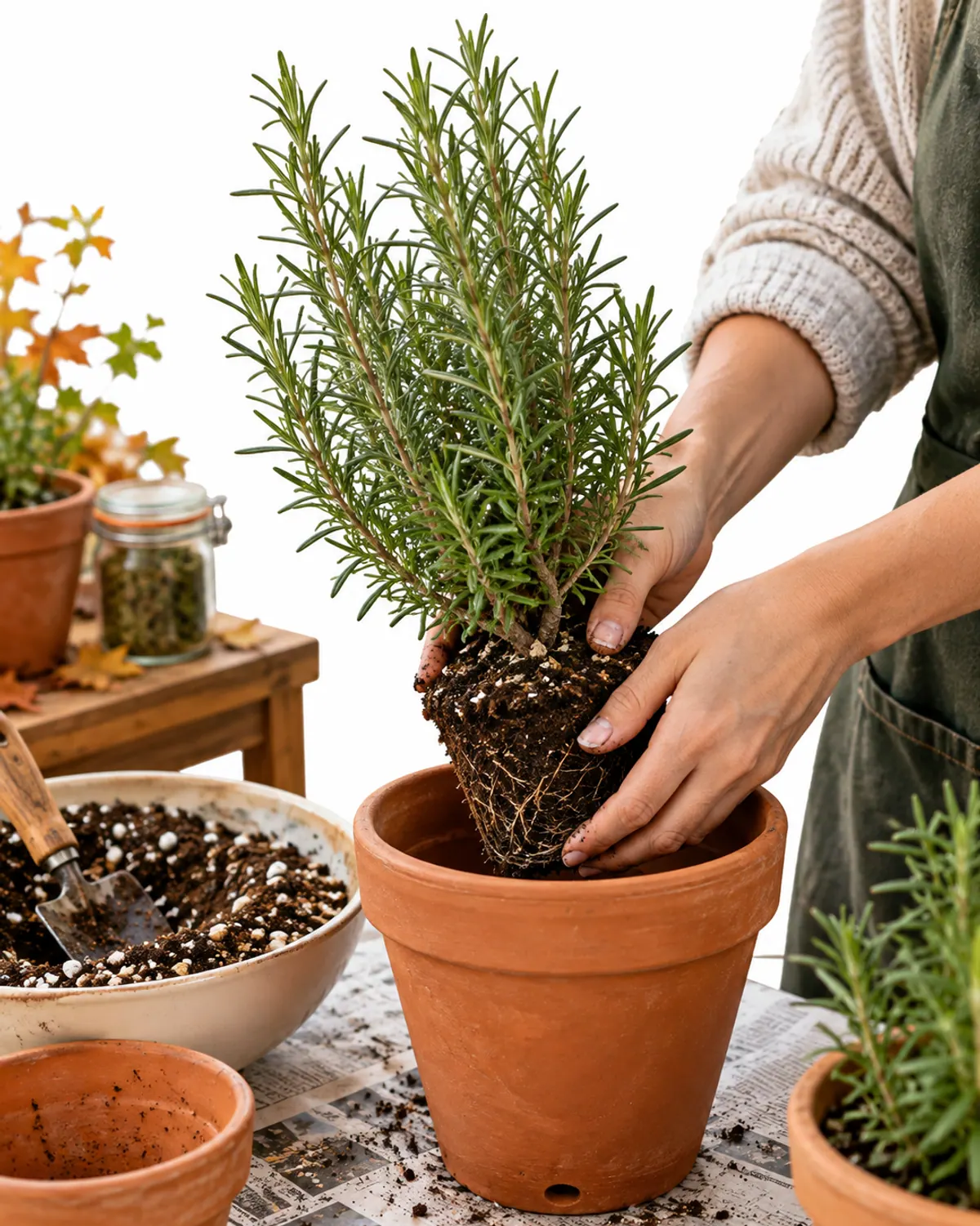
If roots circle the bottom or the plant dries out in a day, move it into a terracotta pot one size up. Use potting mix lightened with perlite or grit. Clay breathes and dries evenly, which suits rosemary's dislike of wet feet.
-
Step 4: Give it the brightest spot you have
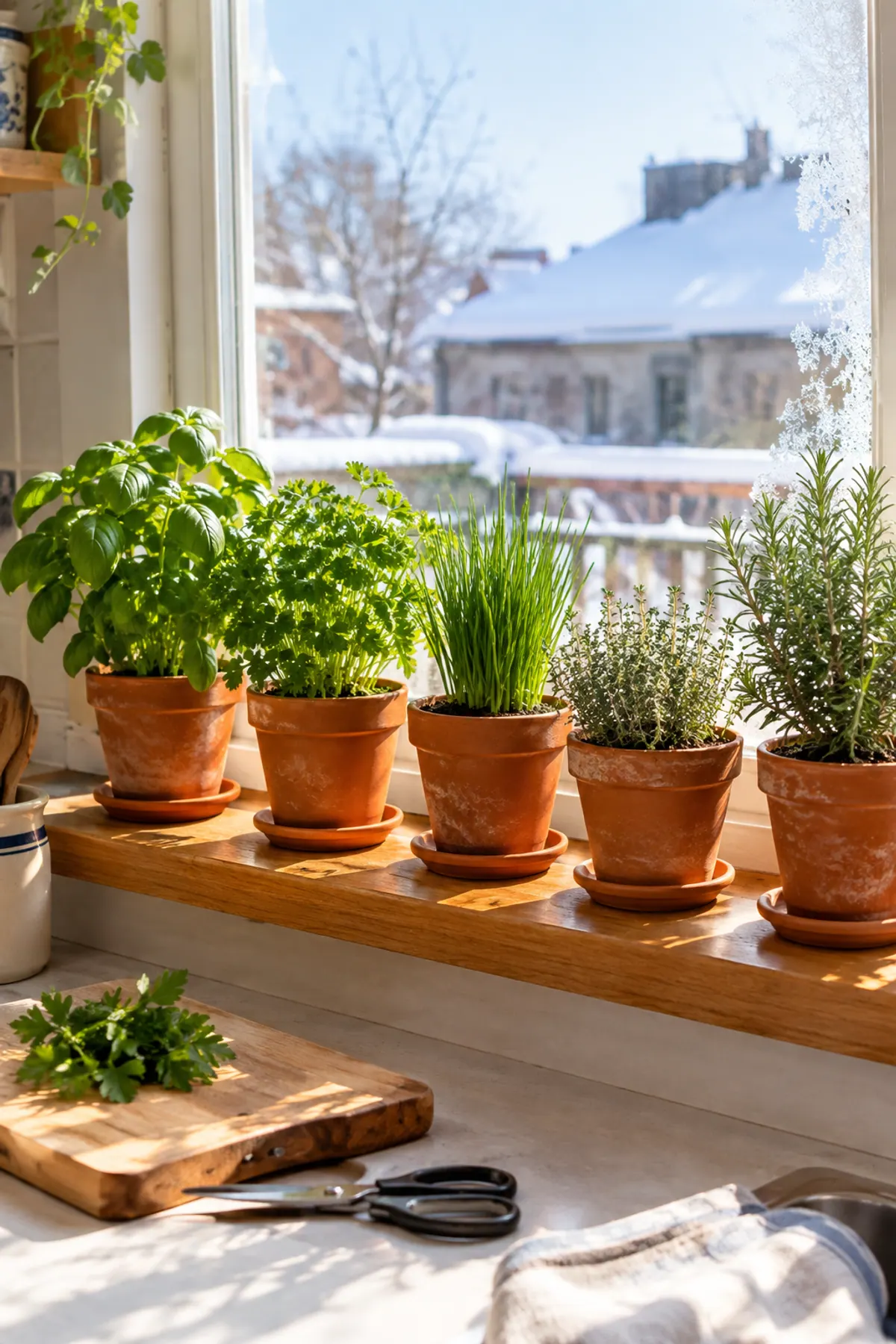
Most herbs need about 6 hours of direct sun, and Penn State Extension recommends a south-facing window. Turn the pot a quarter turn each week so it grows evenly.
-
Step 5: Add a grow light if the window is dim
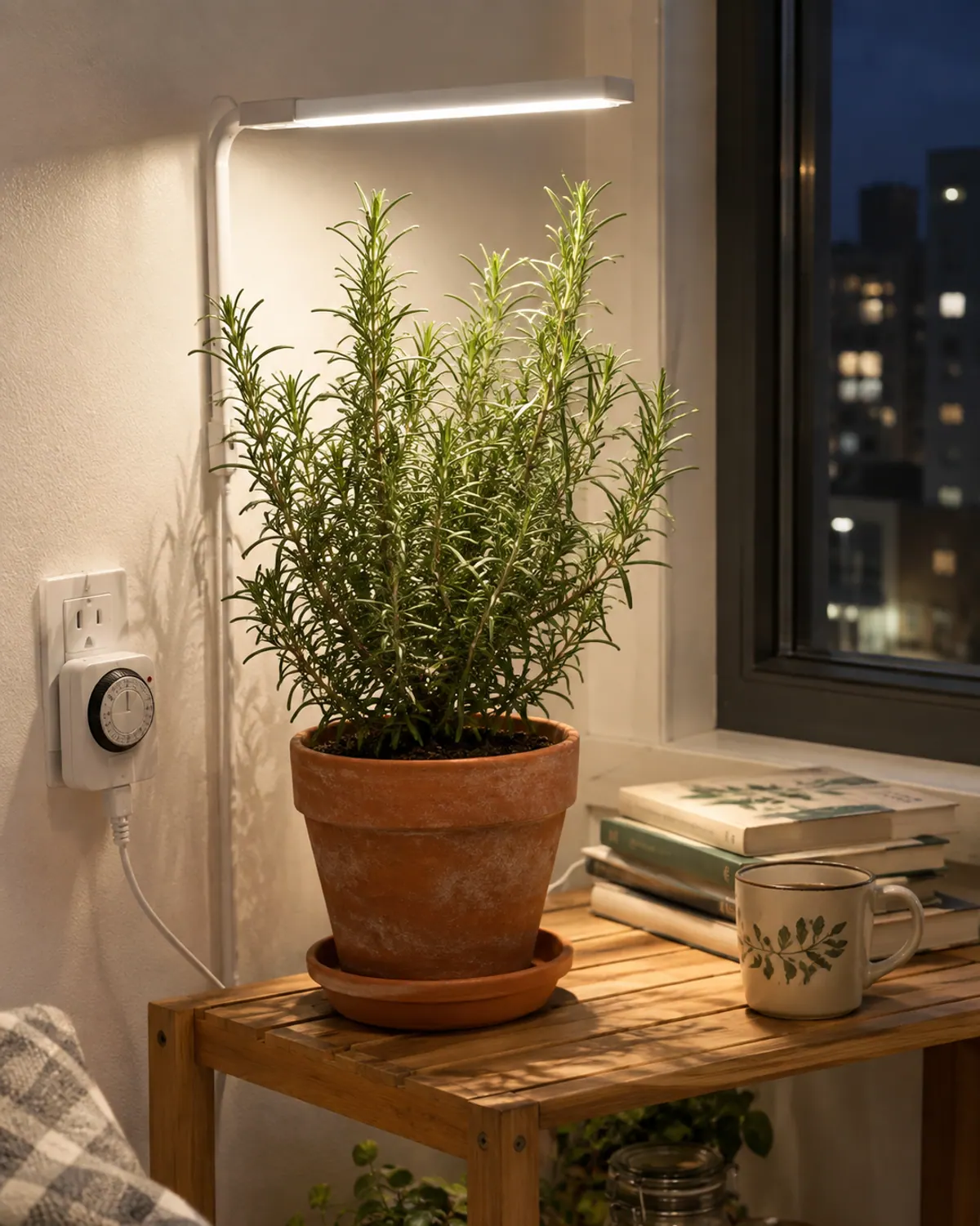
North or shaded windows rarely give rosemary enough light in winter. Hang an LED grow light about 6 to 12 inches above the plant and run it 14 to 16 hours a day on a timer. Check your light's own guide for its best height.
-
Step 6: Keep it cool and a little humid
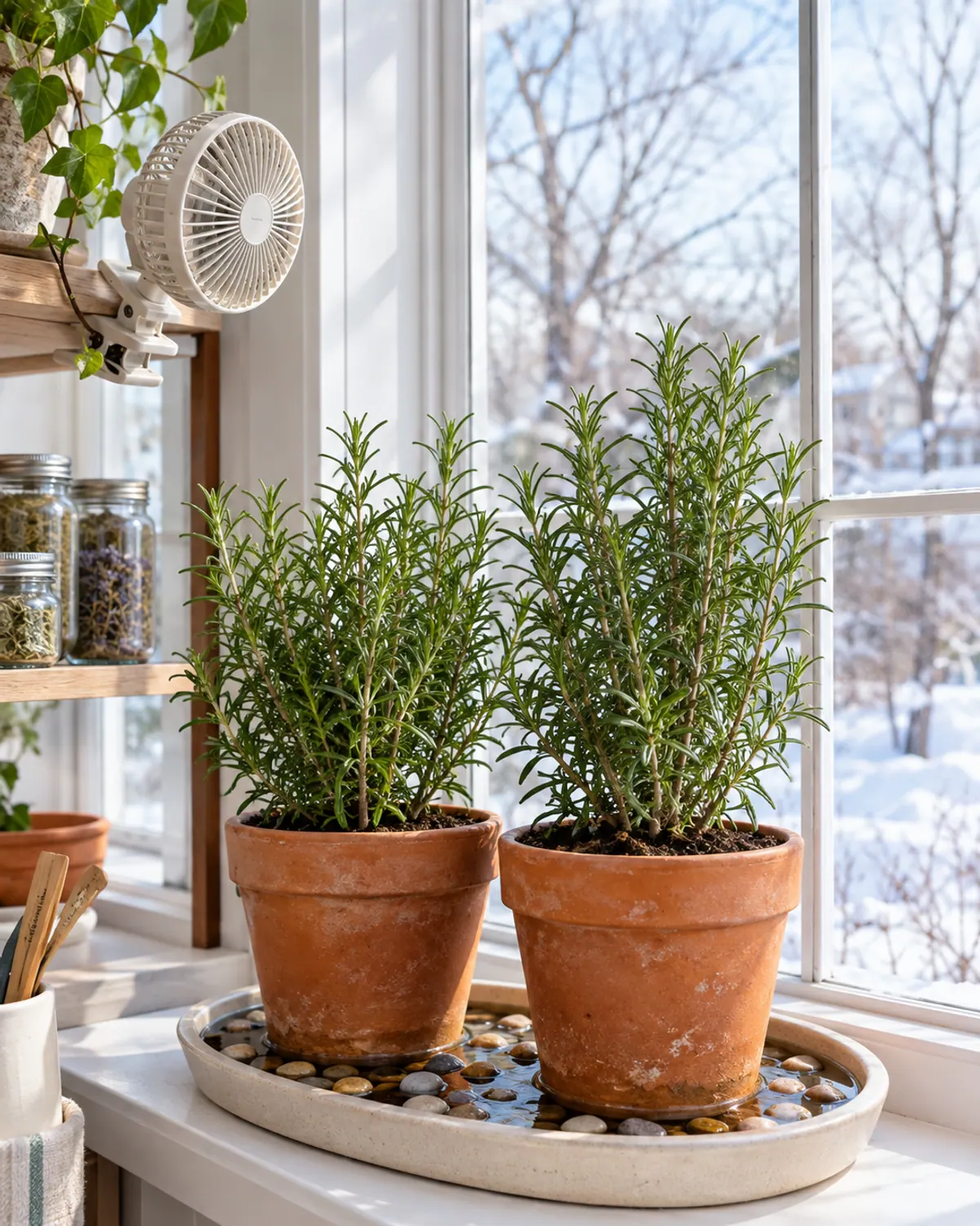
Rosemary does best in a cool room, best under about 65°F, with nights in the 50s. A bright enclosed porch, a cool bedroom window or a spot away from radiators works well. Set the pot on a tray of pebbles and water to raise humidity, as Illinois Extension suggests.
-
Step 7: Water by touch, not by calendar
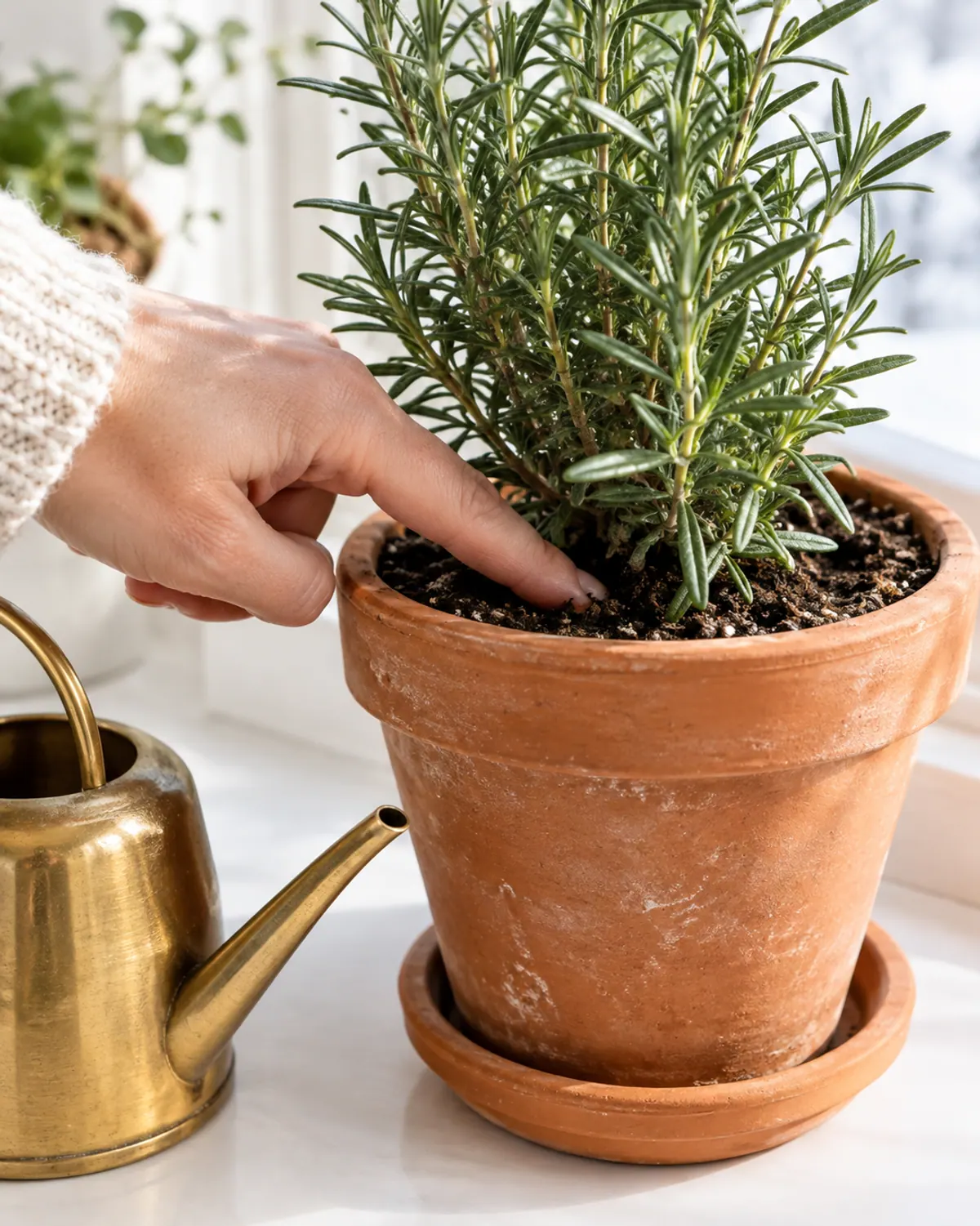
Push a finger an inch into the soil once or twice a week. Water thoroughly when it feels dry, let it drain, then empty the saucer. Rosemary needles do not wilt like basil leaves, so a plant that dried out completely can look fine for days before it browns.
-
Step 8: Skip fertilizer until spring
Growth slows in winter, so hold off on feeding until you see fresh green tips in spring. Then use a half-strength liquid fertilizer every few weeks through the growing season.

Rosemary Christmas tree care through the holidays
A rosemary Christmas tree needs the same care as any indoor rosemary, just with a few holiday habits. Keep it on a bright windowsill and only move it to the table for a party evening. Skip heavy ornaments, which bend the soft stems, and choose a ribbon on the pot or a few light paper decorations instead.
Keep string lights to cool-running LEDs, and keep the tree away from fireplaces, heat vents and candles. Warm, dry air near those spots is what browns rosemary fastest.
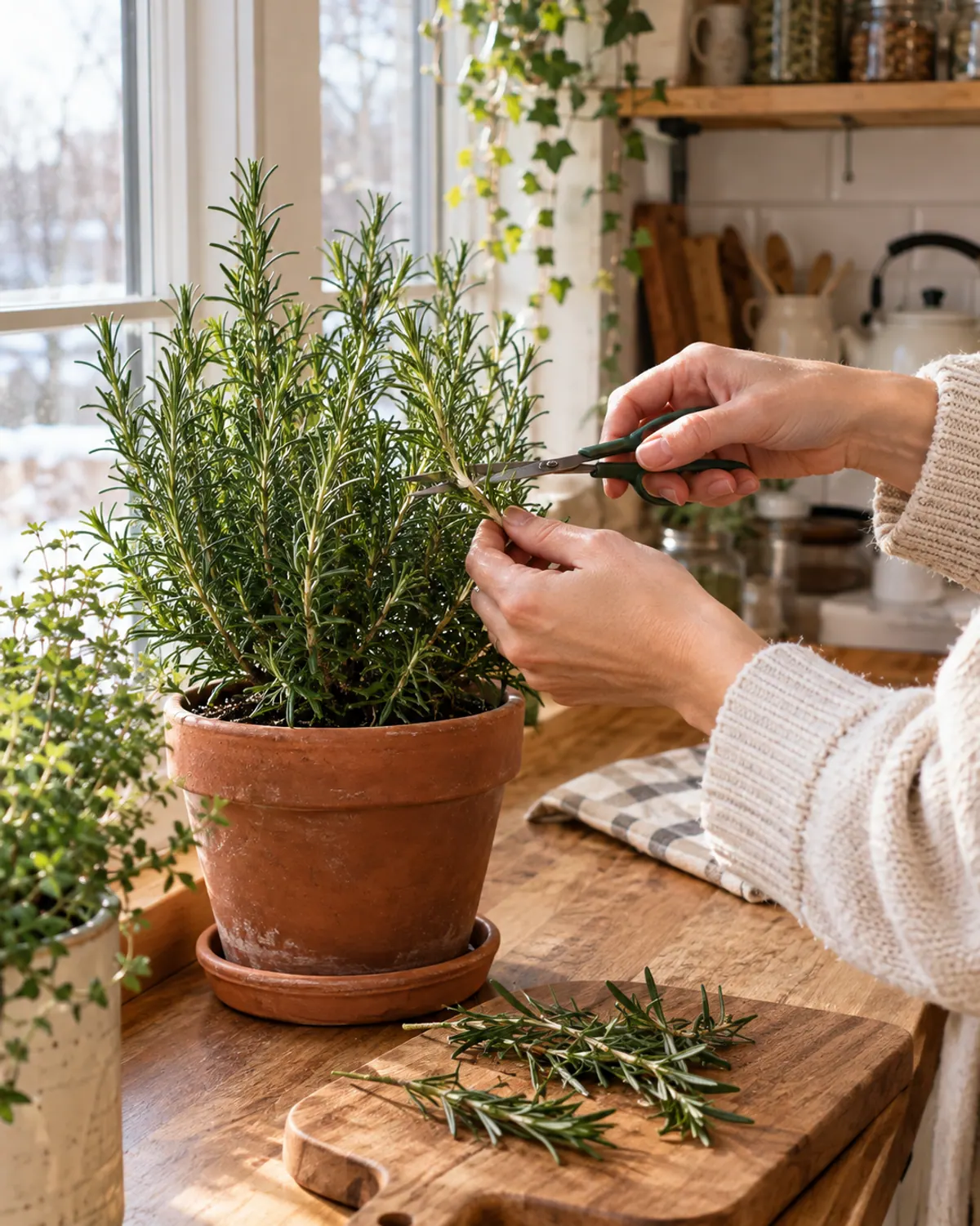
Keeping the cone shape: snip the soft new tips that poke out of the cone every few weeks, and use the trimmings in the kitchen. Avoid cutting back into old, bare wood, because rosemary is slow to sprout from it.
Once the decorations come off, treat the tree as a regular rosemary plant for the rest of winter. In spring, after your last frost date, move it outdoors to a sunny balcony or patio and repot it with fresh mix, as UW-Madison Extension recommends.
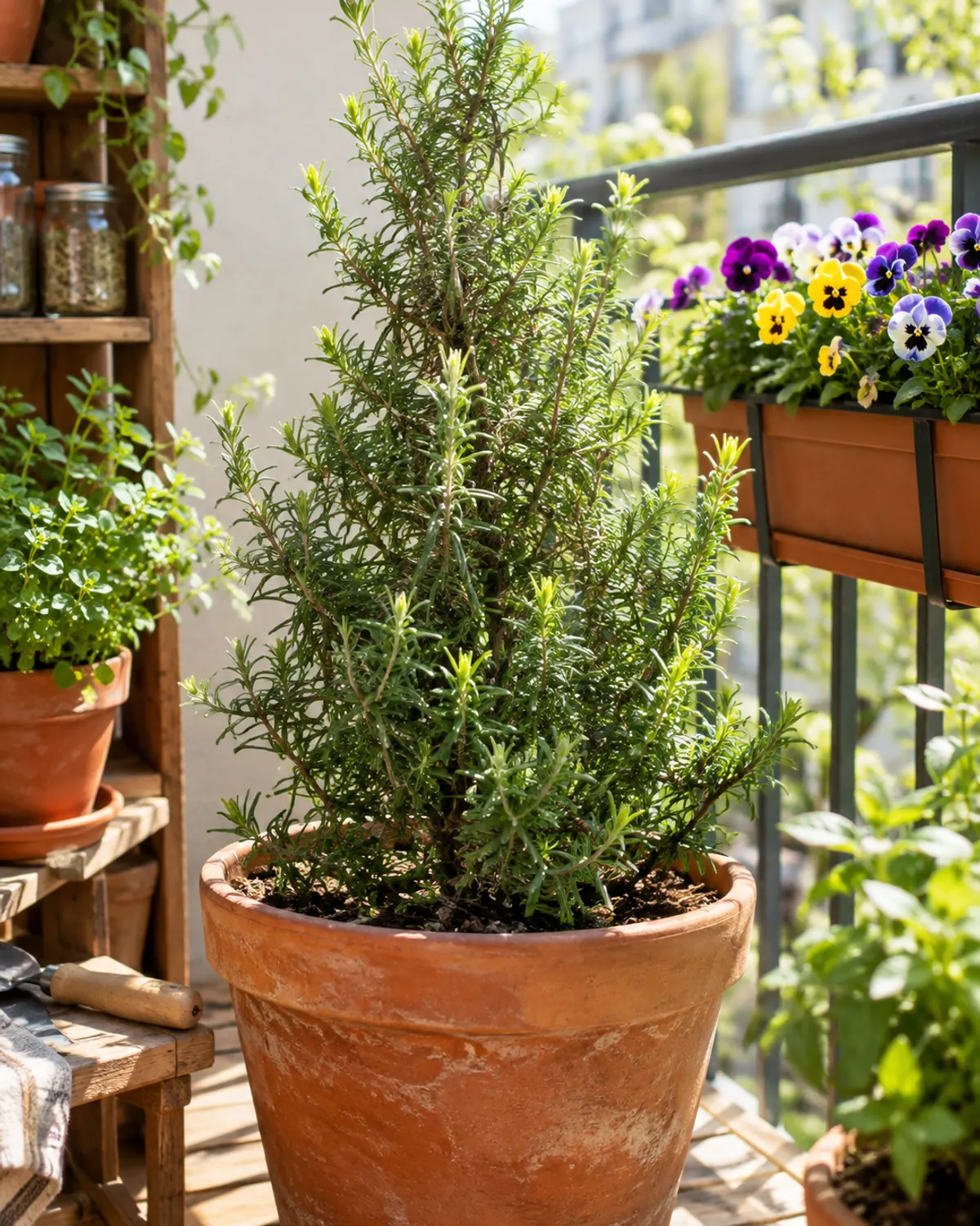
Outdoors it will lose its cone shape and grow into a looser shrub, which is fine. In Zone 8 and warmer you can plant it in the ground. In colder zones, keep it in a pot so it can come inside again next fall.
Mistakes that kill rosemary indoors
| What you see | Likely cause | The fix |
|---|---|---|
| Brown, crispy needles from the tips | Root ball dried out, or hot dry air | Check soil twice a week; move away from heat; add a pebble tray |
| Needles yellow at the base, soil stays wet | Overwatering or no drainage | Water only when the top inch is dry; use a pot with a hole |
| White powder on needles | Powdery mildew from still, warm air | Prune affected stems; add air flow; keep the room cooler |
| Long, pale stems leaning to the glass | Too little light | Move to a south window or add a grow light |
| Fine webbing, speckled needles | Spider mites in dry air | Rinse the plant; raise humidity; isolate it |
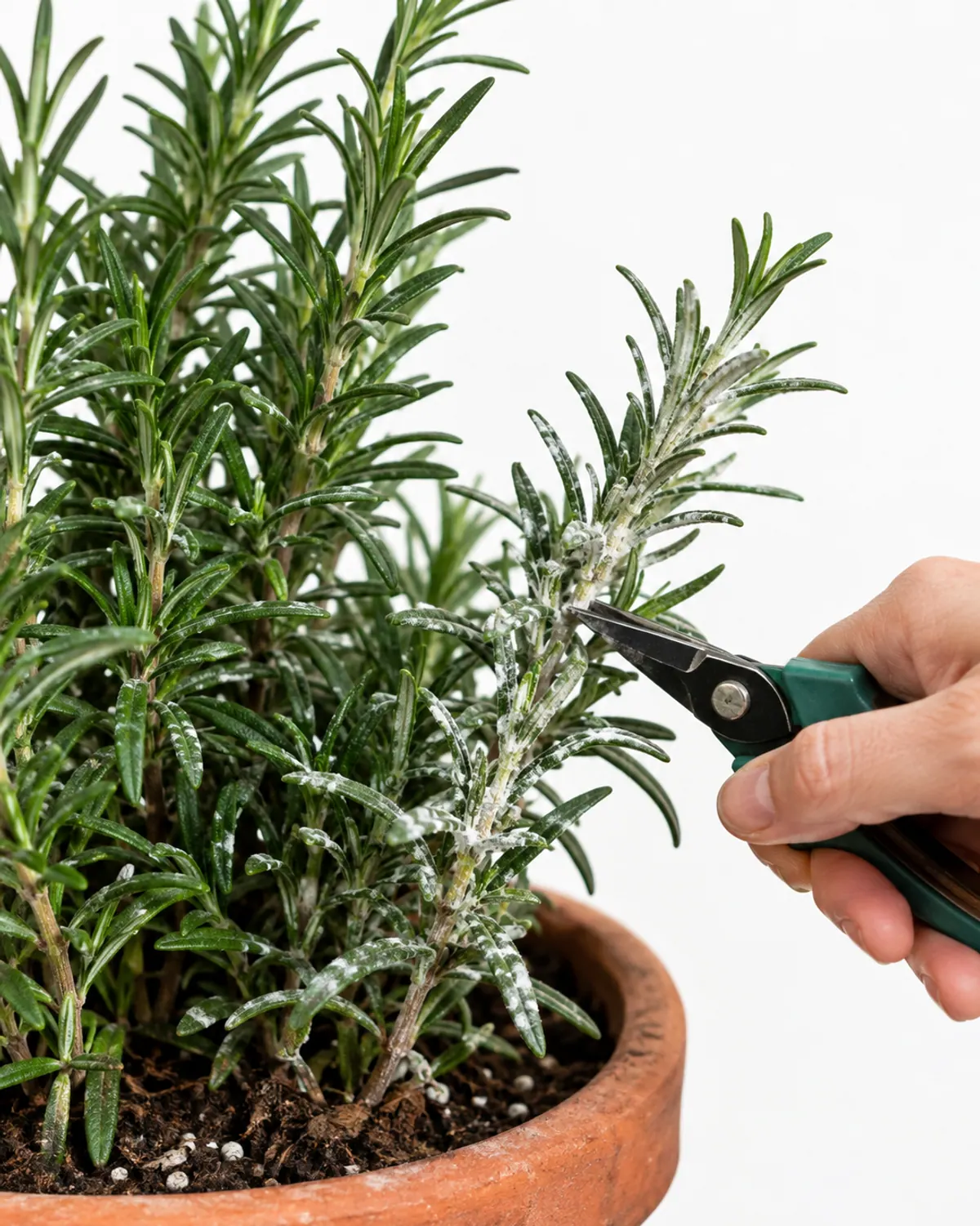
Powdery mildew loves warm, still indoor air. Snip off badly affected stems, space plants apart, and run a small fan nearby for a few hours a day. A cooler room helps here too.
Variations: varieties and cuttings
Upright types such as 'Tuscan Blue' are the ones usually shaped into trees. Cold-tolerant types such as 'Arp' and 'Madeline Hill' are good picks if you hope to leave a pot outside longer in fall. Trailing types look lovely spilling from a hanging pot, and our herb garden ideas for small spaces show a few ways to use them.
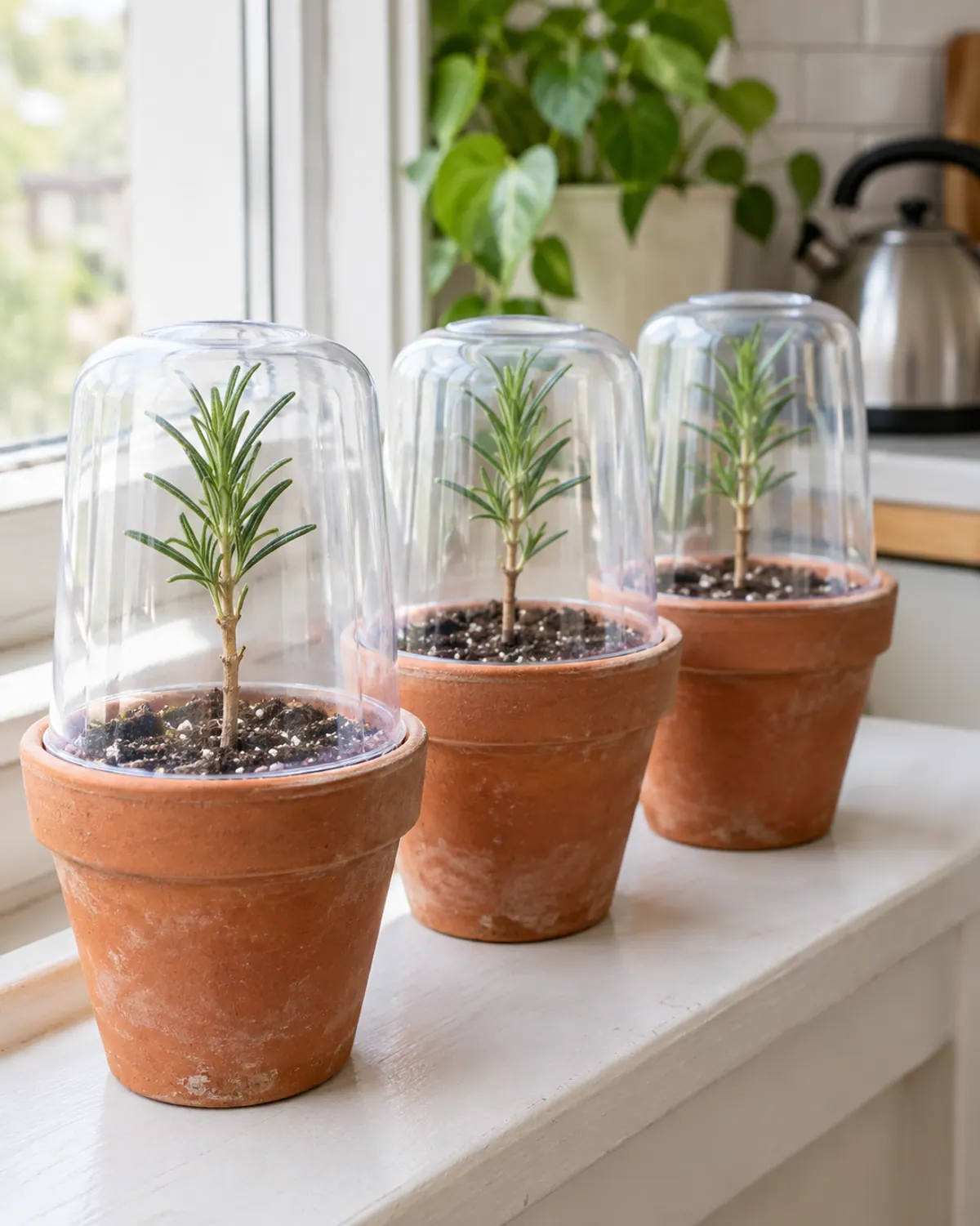
You can also root a backup plant. In late spring or summer, cut a few 4-inch soft tips, strip the lower needles, and set them in moist seed-starting mix under a clear cover in bright, indirect light. Roots usually take several weeks.
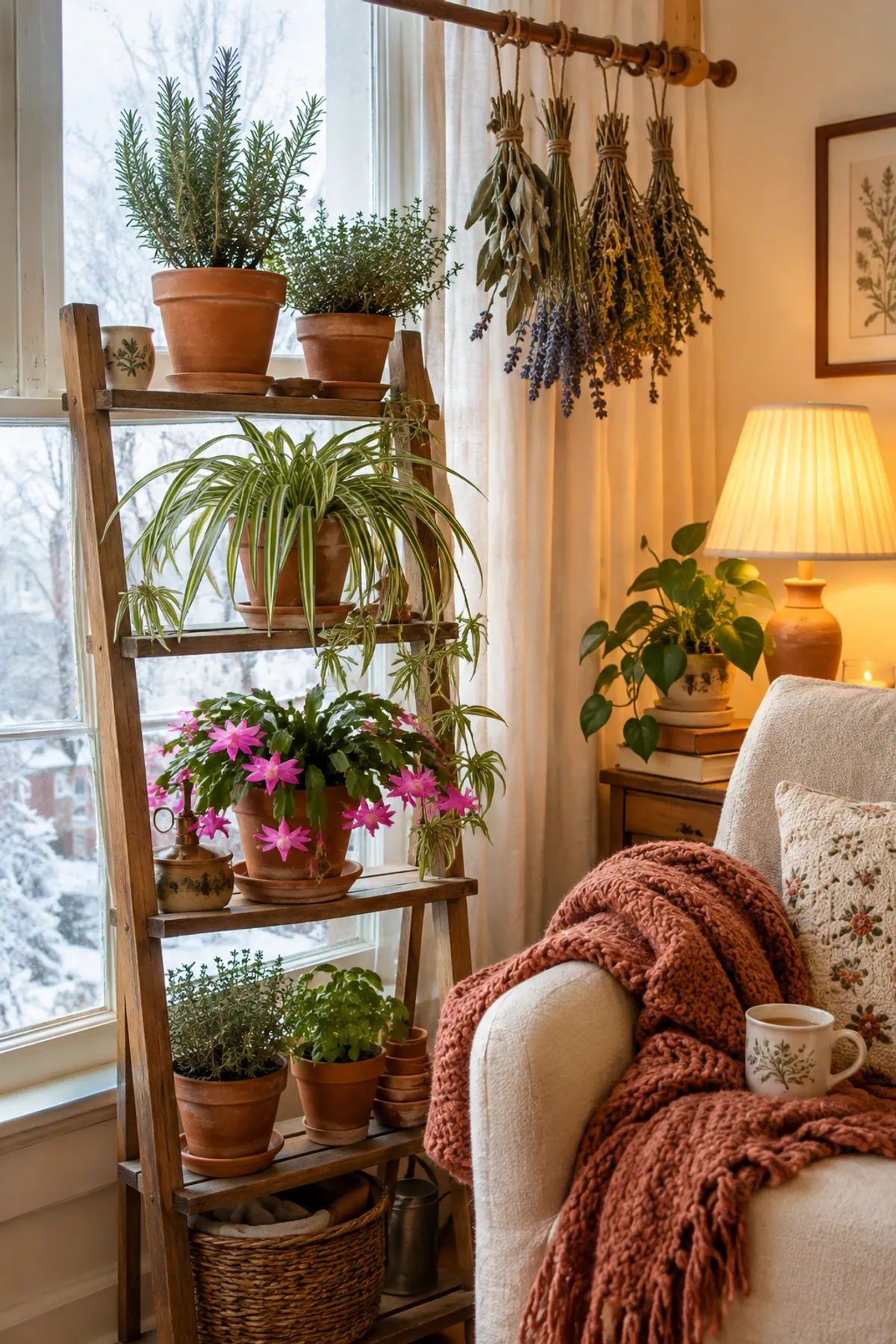
Extra rosemary sprigs dry beautifully. Our guide on how to dry herbs at home covers hanging bundles and storing the needles. For more winter windowsill herbs, see the indoor herb garden guide, and for another holiday plant that loves cool nights, read our Christmas cactus care guide.
Supplies for growing rosemary indoors
Shop the look
- Most useful
Terracotta pots with drainage holes
$20-40 for a set
Clay dries evenly and suits rosemary's need for fast drainage.
Check price on Amazon for Terracotta pots with drainage holes -
Full-spectrum LED grow light
$20-50
Makes up for short winter days and dim windows.
Check price on Amazon for Full-spectrum LED grow light -
Plug-in outlet timer
$10-20
Runs the grow light for steady 14 to 16 hour days.
Check price on Amazon for Plug-in outlet timer -
Perlite
$8-15
Mixed into potting soil, it keeps rosemary roots from staying wet.
Check price on Amazon for Perlite -
Small clip-on fan
$15-25
Moves air around indoor herbs to help prevent powdery mildew.
Check price on Amazon for Small clip-on fan
We earn from qualifying purchases, which never changes what we recommend. Read our disclosure and editorial guidelines.
Frequently asked questions
Can rosemary survive indoors all winter?
Yes, if it gets strong light and a cool room. Give it your sunniest window or a grow light for 14 to 16 hours a day, keep it under about 65°F, and water when the top inch of soil is dry.
Why is my indoor rosemary turning brown?
Brown, crispy needles usually mean the root ball dried out completely or the plant sits in hot, dry air near a heater. Yellowing at the base with wet soil points to overwatering instead.
How do you keep a rosemary Christmas tree alive?
Remove the foil wrapper, set it in your brightest cool window, water when the top inch is dry and keep it away from heat vents. After your last spring frost, move it outdoors and repot it with fresh mix.
How often should I water rosemary indoors?
Check the soil once or twice a week rather than following a schedule. Water thoroughly when the top inch feels dry, let it drain and empty the saucer.
Can I plant my rosemary Christmas tree outside?
Yes. Move it outdoors after your last frost. In Zone 8 and warmer it can go in the ground; in colder zones keep it in a pot so it can come back inside before frost next fall.
Is rosemary safe for cats and dogs?
The ASPCA lists rosemary as non-toxic to cats and dogs. Eating any plant can still cause mild stomach upset, so keep it out of reach of pets that like to chew.

Save it for later
Pin this to your Herb Garden board so it's there when you need it.
Save to Pinterest