This post contains affiliate links. As an Amazon Associate we earn from qualifying purchases, at no extra cost to you. Read our disclosure.
Safety first: Herbs can be powerful. If you are pregnant, nursing, take medication or have a health condition, check with your doctor or pharmacist first. Please read our herbal & garden safety notes before you start.
Key takeaways
- Mint cuttings root in water in about 1 to 2 weeks; change the water every 3 to 4 days.
- For a long-lived plant, move rooted cuttings into a wide pot with drainage.
- Water when the top inch of mix is dry and give 4 to 6 hours of bright light or a grow light.
- Harvest tips often; each cut makes two new shoots.
- Mint is toxic to cats and dogs, so keep it out of reach.
In this post7 sections
Pots or water: which is better?
Mint roots in plain water within a week or two, which makes water the easiest way to start. For a plant that lasts, move it to soil: water has no nutrients, so mint kept in a jar long term grows pale and thin.
Growing mint in water
- Roots in about 1 to 2 weeks
- No soil mess on the windowsill
- You can watch the roots grow
- Good for a few weeks of garnish
Growing mint in pots
- Needs a wide pot and drainage
- More setup at the start
- Lasts for months or years with regular harvests
- Can be fed, so leaves stay green and full
The method below uses both: root cuttings in water, then pot them up. If you already have a nursery plant, skip to step 4.
What you need
Supplies for growing mint indoors
Growing mint indoors, step by step
-
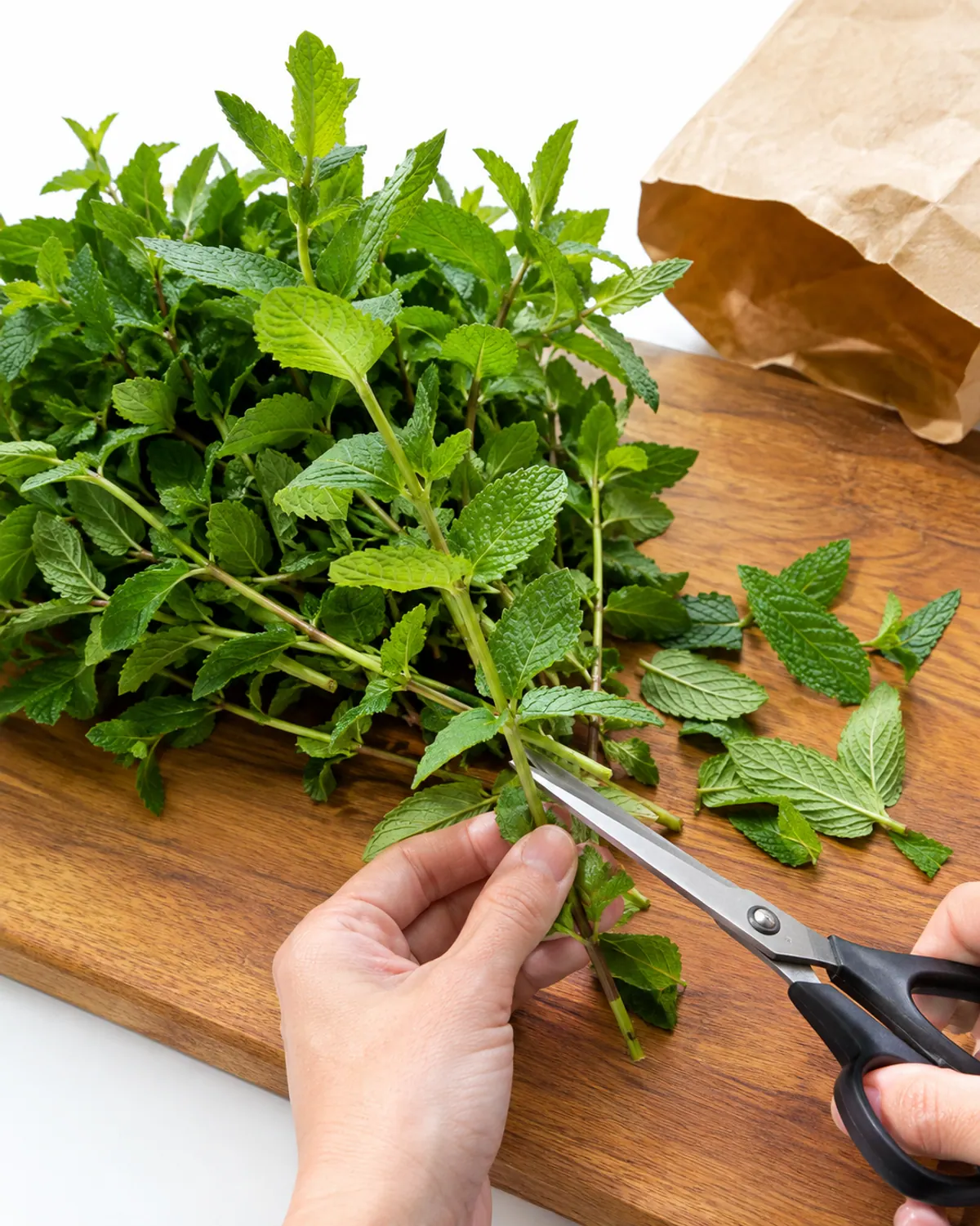
Step 1: Take cuttings
Choose firm, healthy stems and cut pieces 4 to 6 inches long, just below a leaf node (the bump where leaves join the stem). Grocery store mint usually roots if it is fresh and not slimy.
-
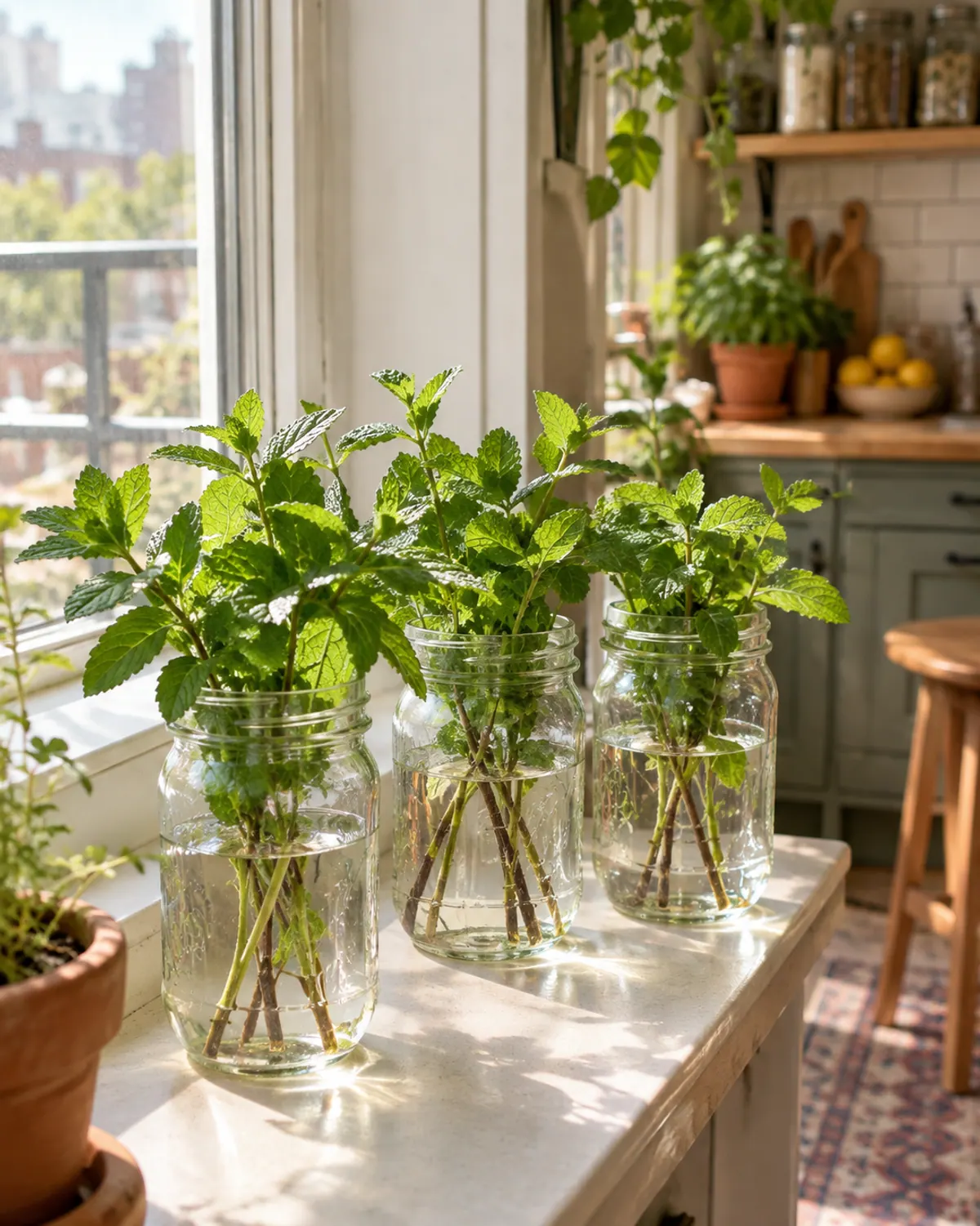
Step 2: Strip the lower leaves and set in water
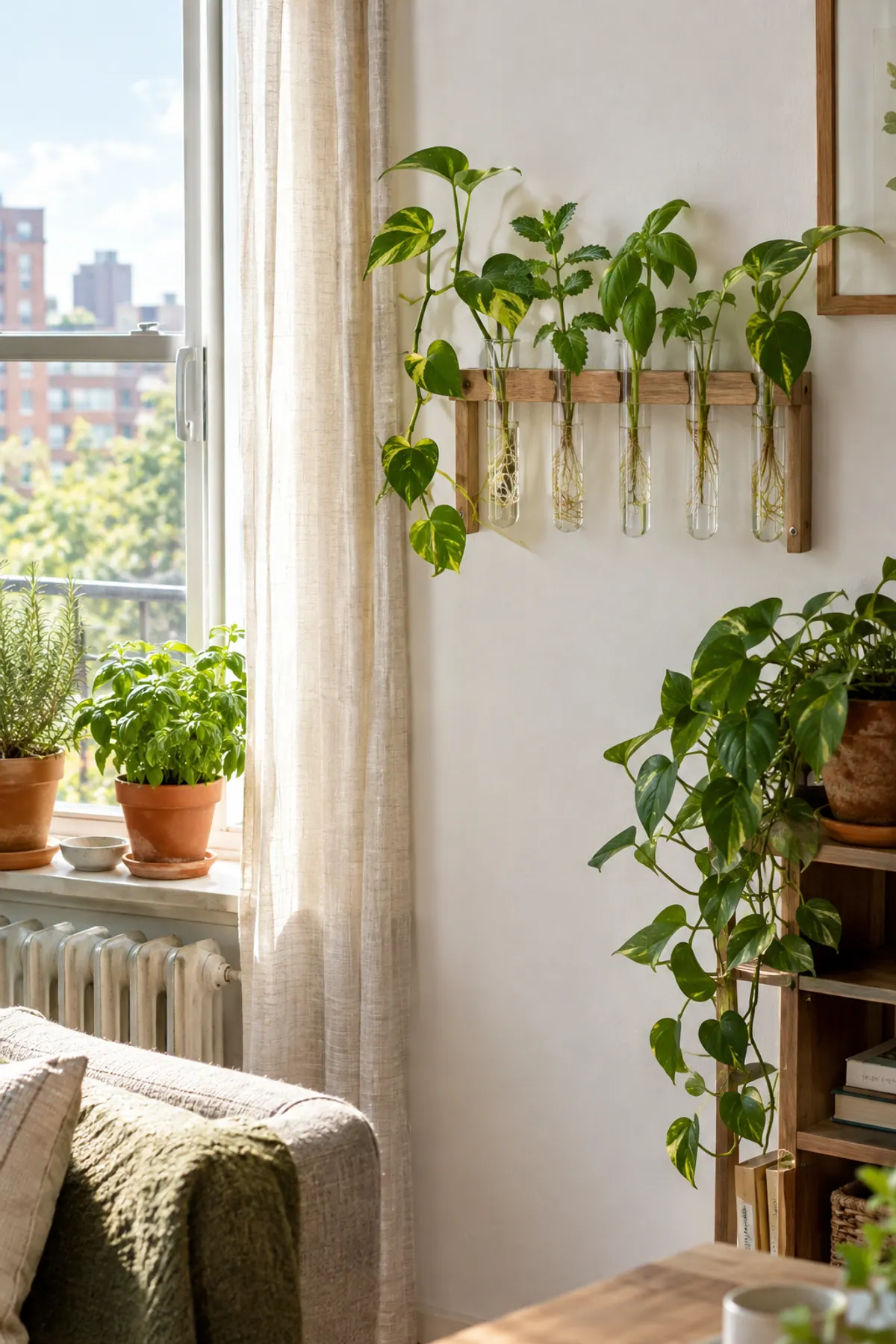
Pull the leaves off the bottom 2 inches so no leaves sit underwater, where they rot. Stand the stems in a jar of room-temperature water on a bright windowsill out of harsh afternoon sun.
-
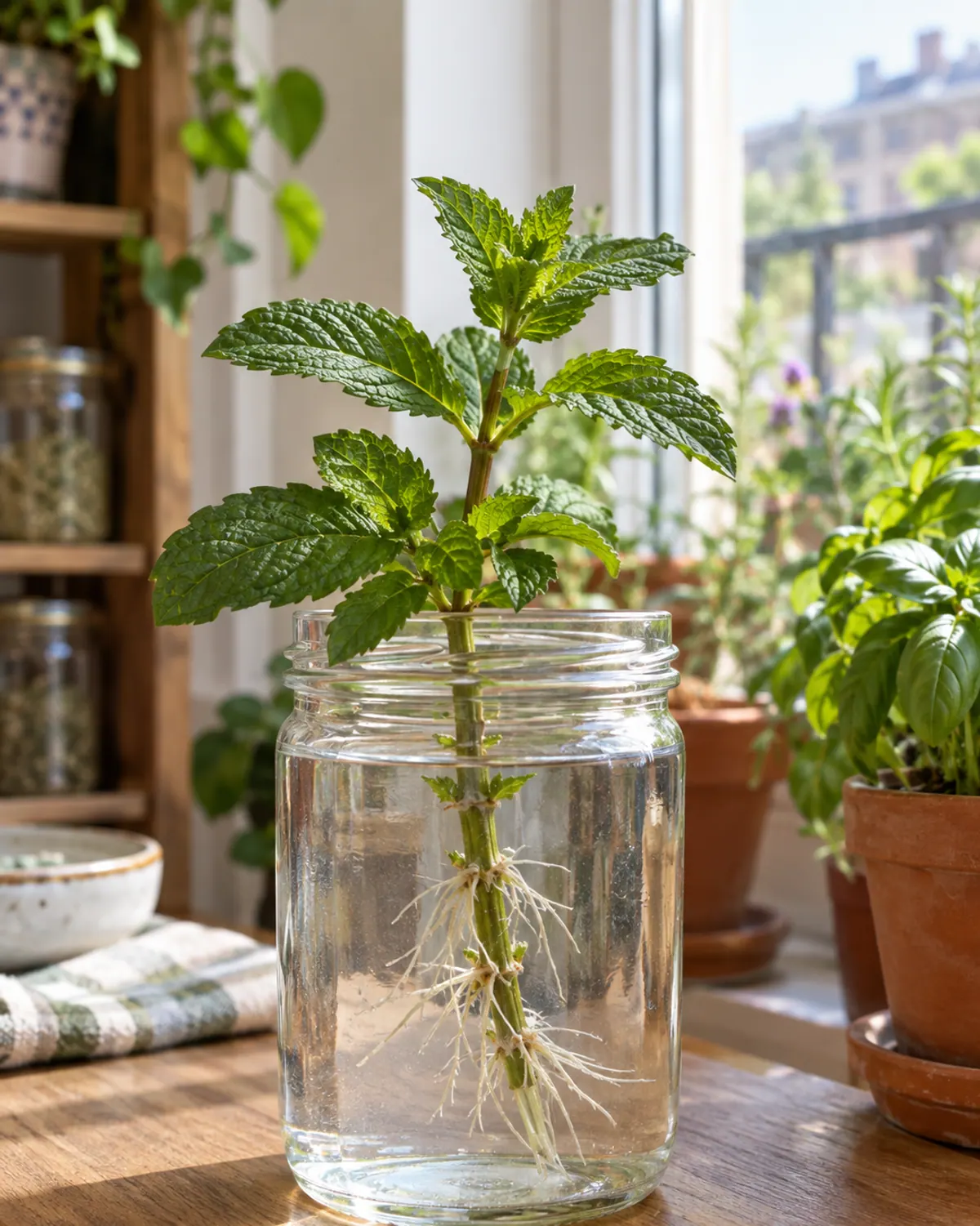
Step 3: Change the water and wait for roots
Refresh the water every 3 to 4 days, or sooner if it looks cloudy. White roots usually show within 1 to 2 weeks. Pot them up once roots are about 1 to 2 inches long.
-
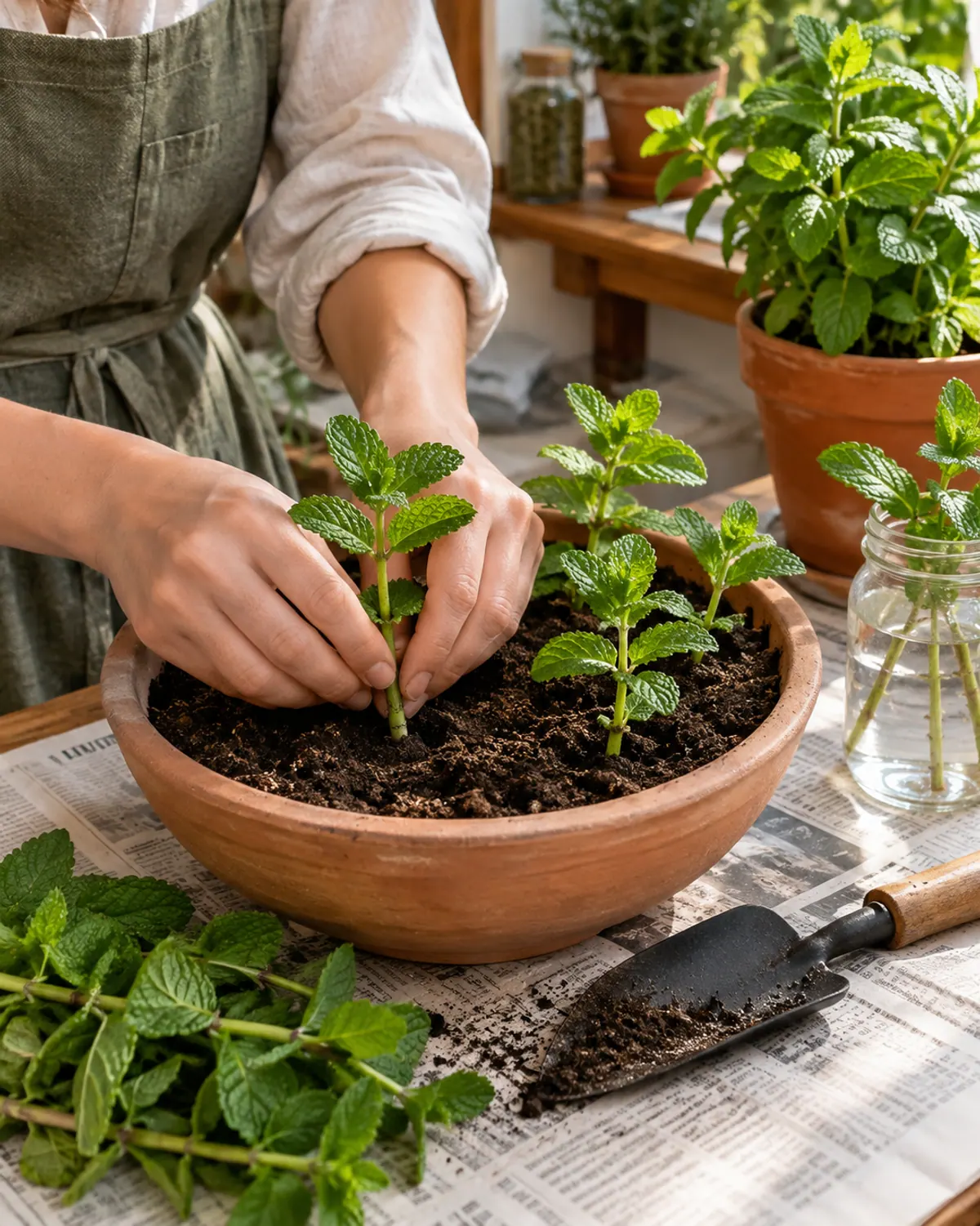
Step 4: Pot up in a wide pot
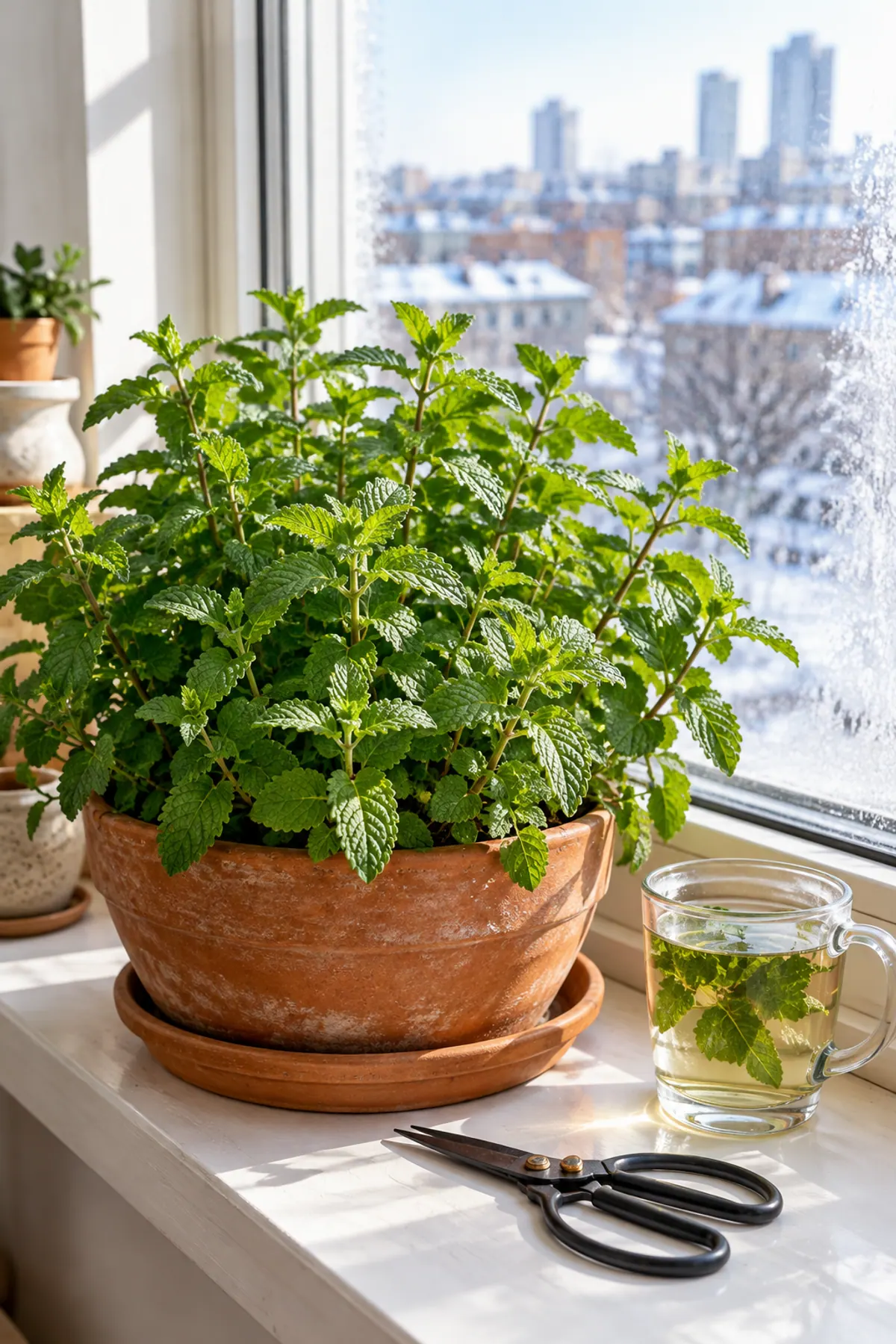
Fill a pot at least 8 inches wide with potting mix. Plant several rooted cuttings together, firm the mix around them and water well. Mint spreads sideways, so a wide pot matters more than a deep one.
-
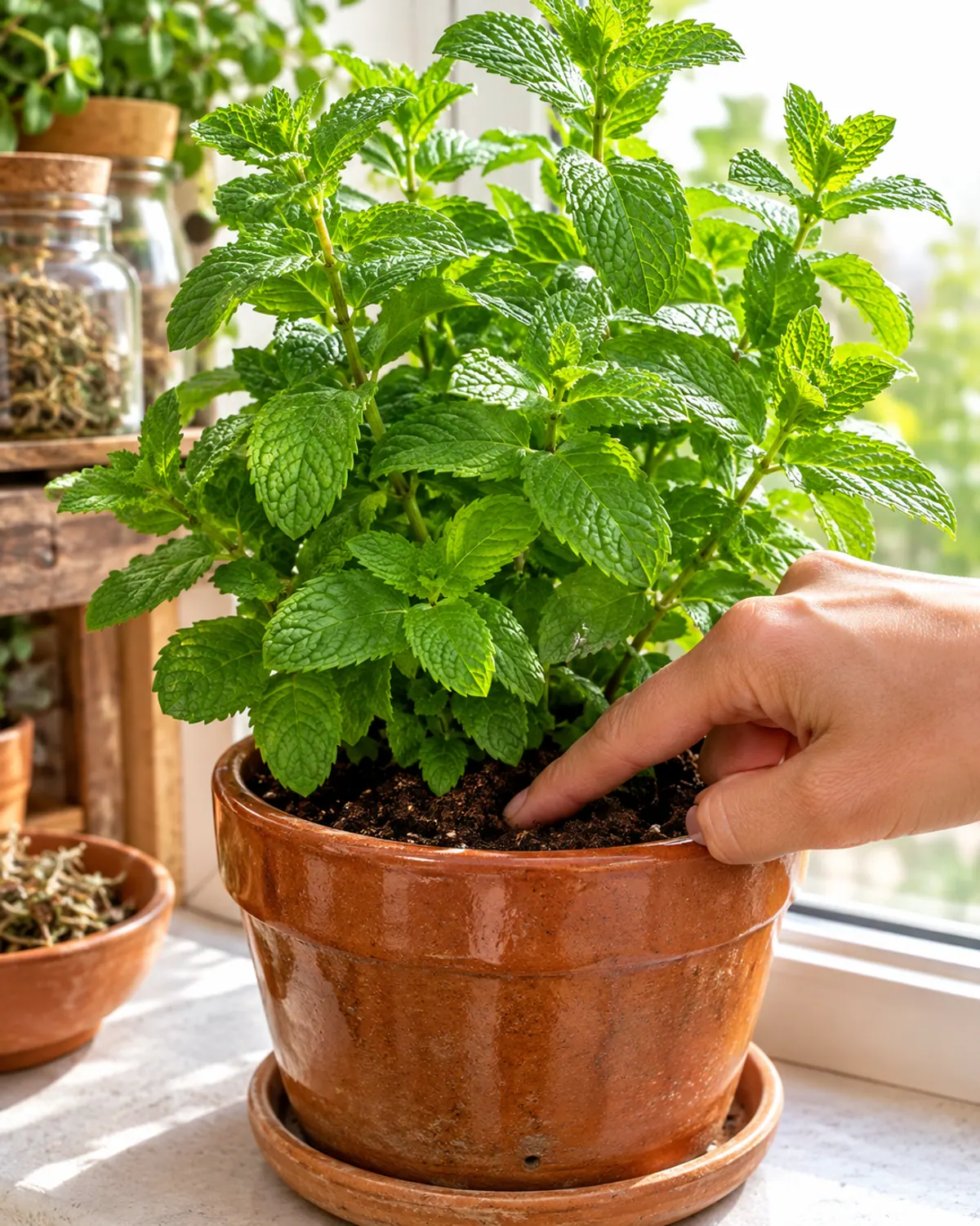
Step 5: Water when the top inch is dry
Mint likes steady moisture but not soggy roots. Check with a finger and water when the top inch of mix feels dry, then empty the saucer after 15 minutes.
-
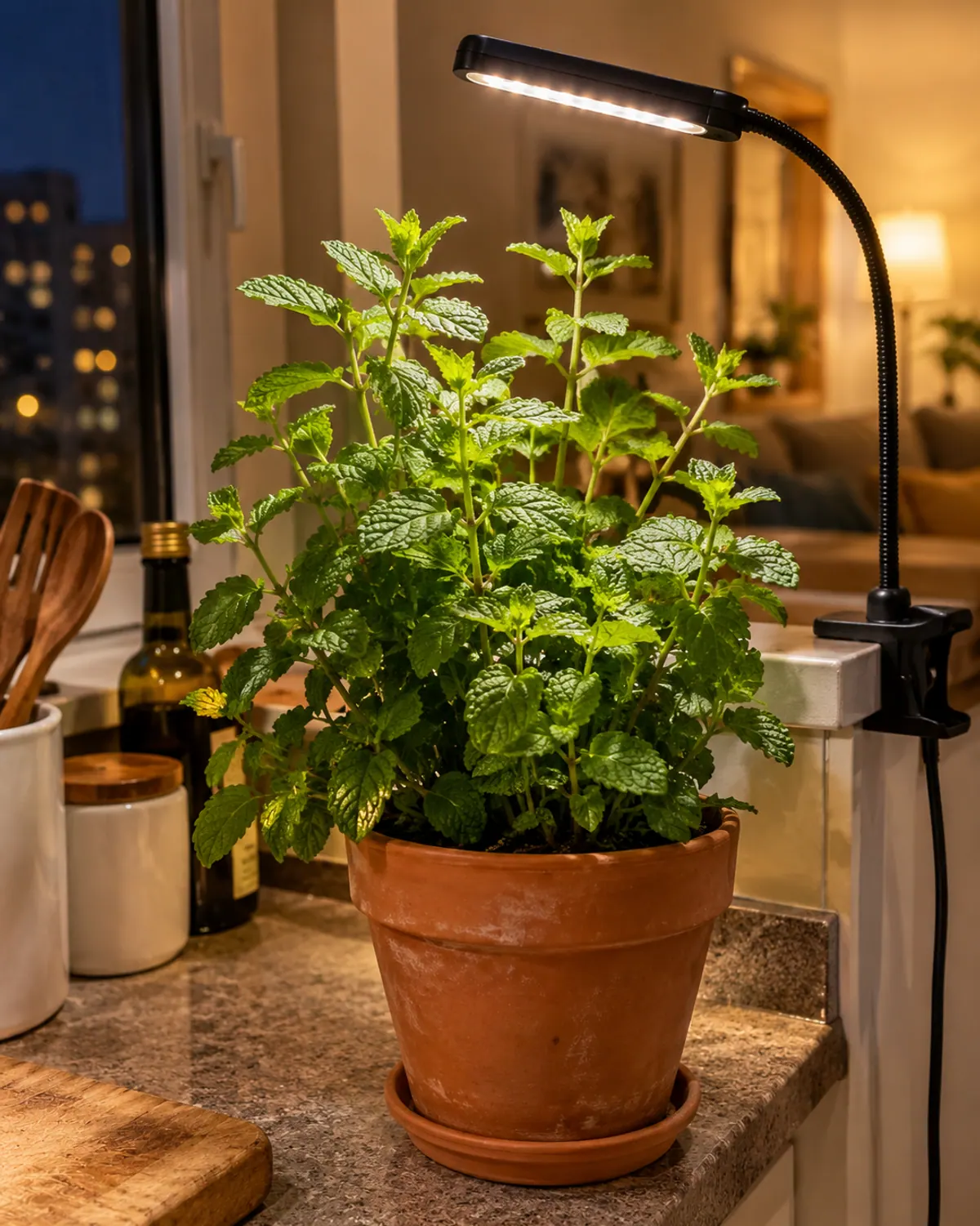
Step 6: Give it bright light
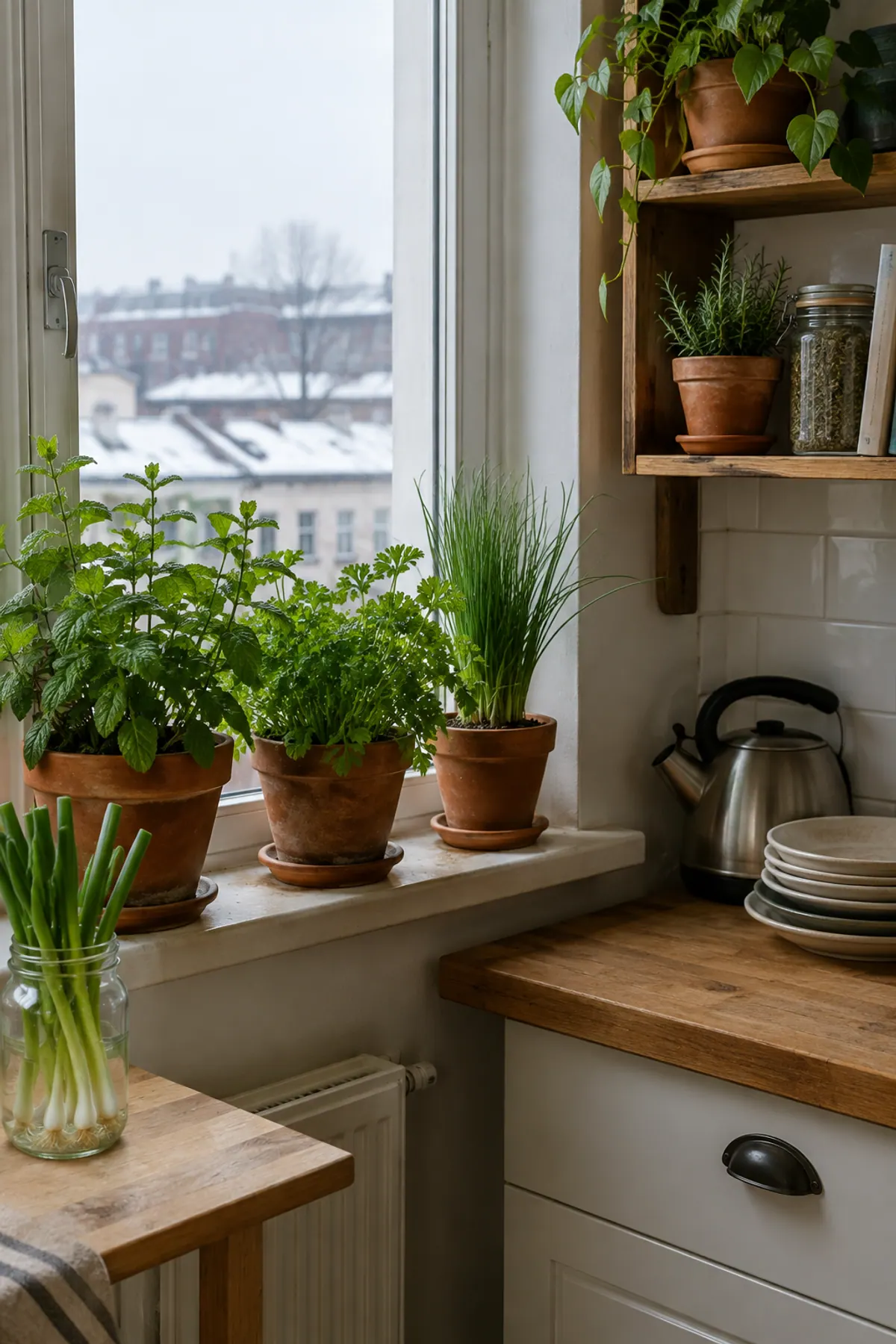
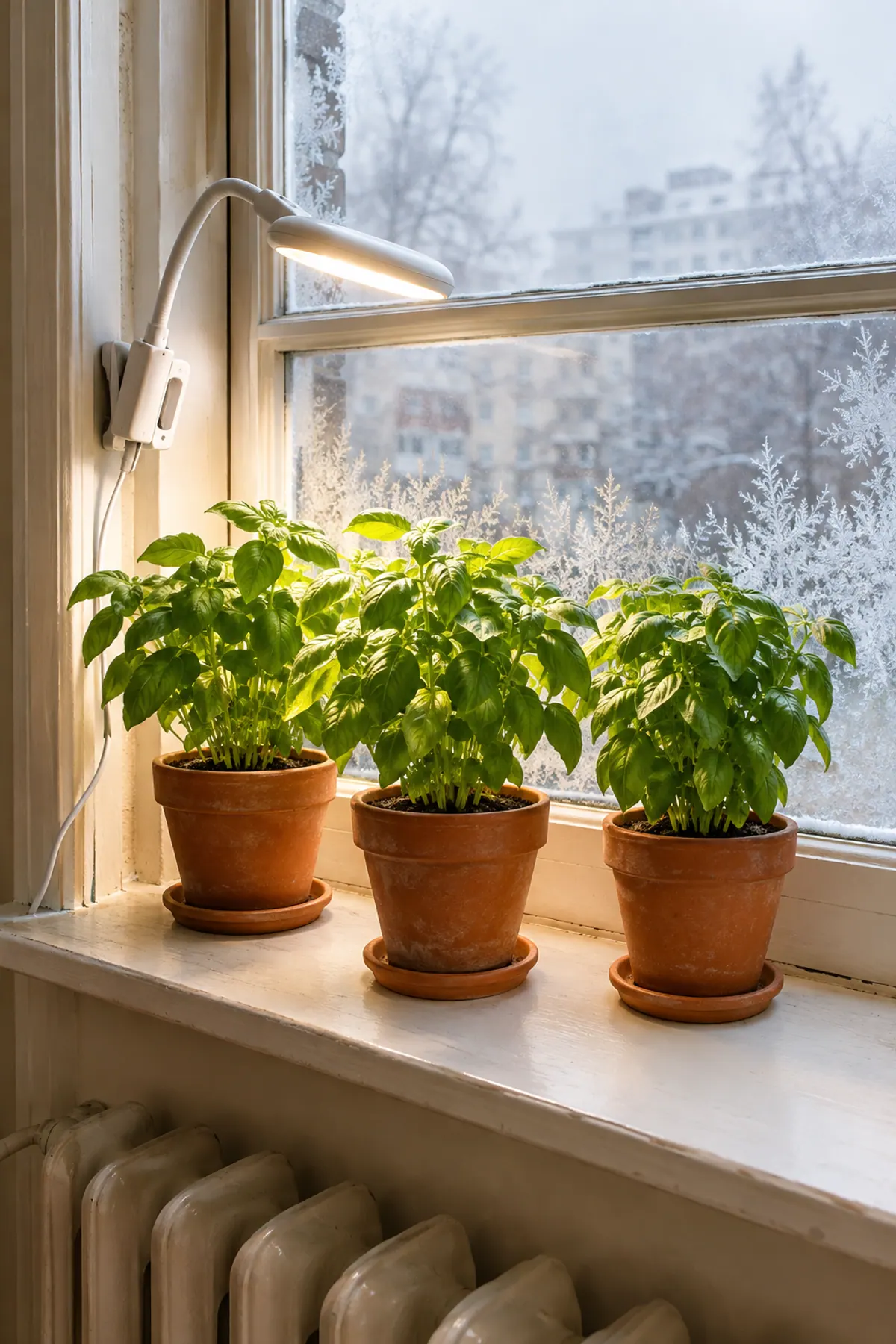
Aim for at least 4 to 6 hours of bright light a day. A south or west window works in most homes; in winter, a clip-on grow light on a timer for 12 to 14 hours keeps growth compact.
-
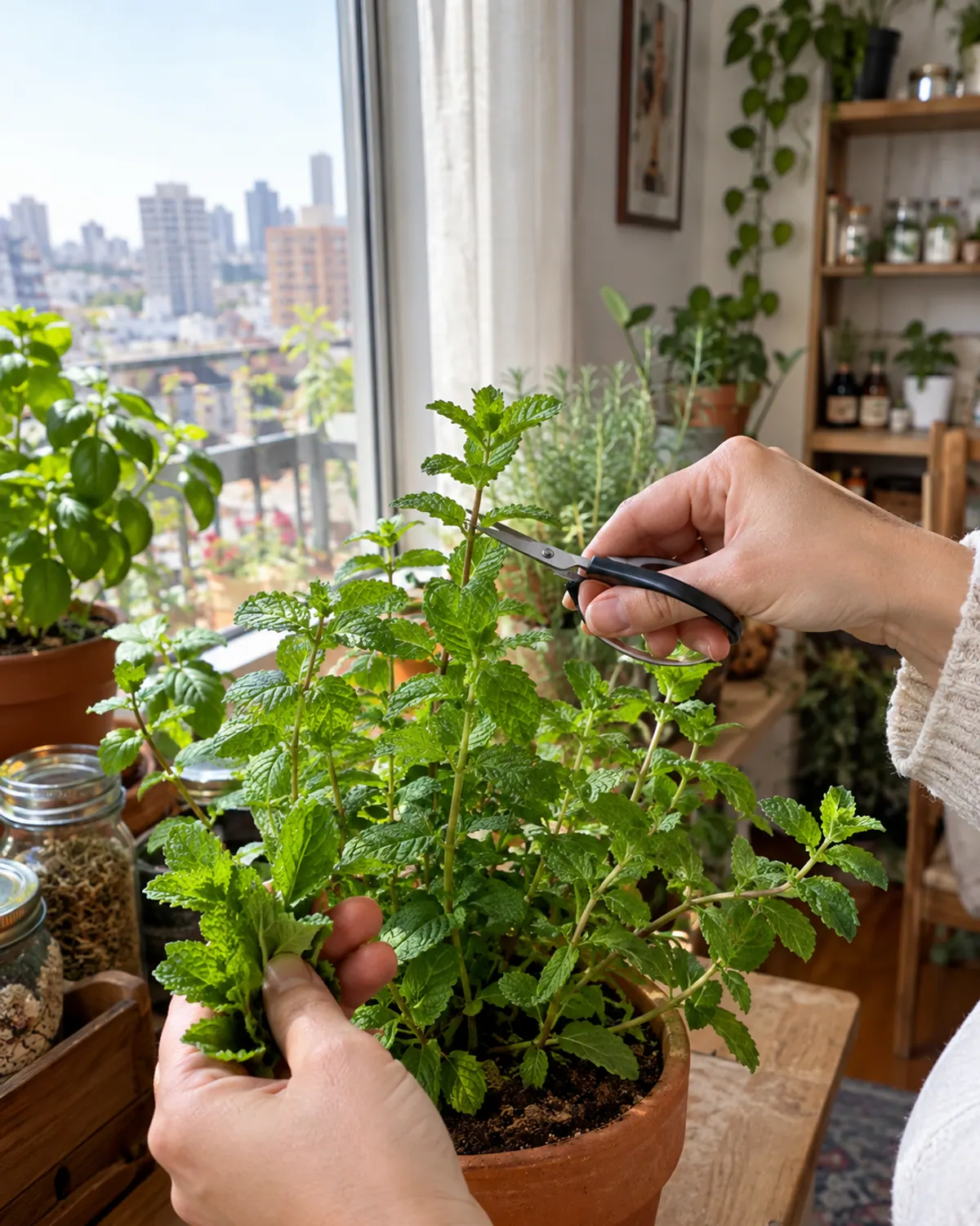
Step 7: Harvest often from the top
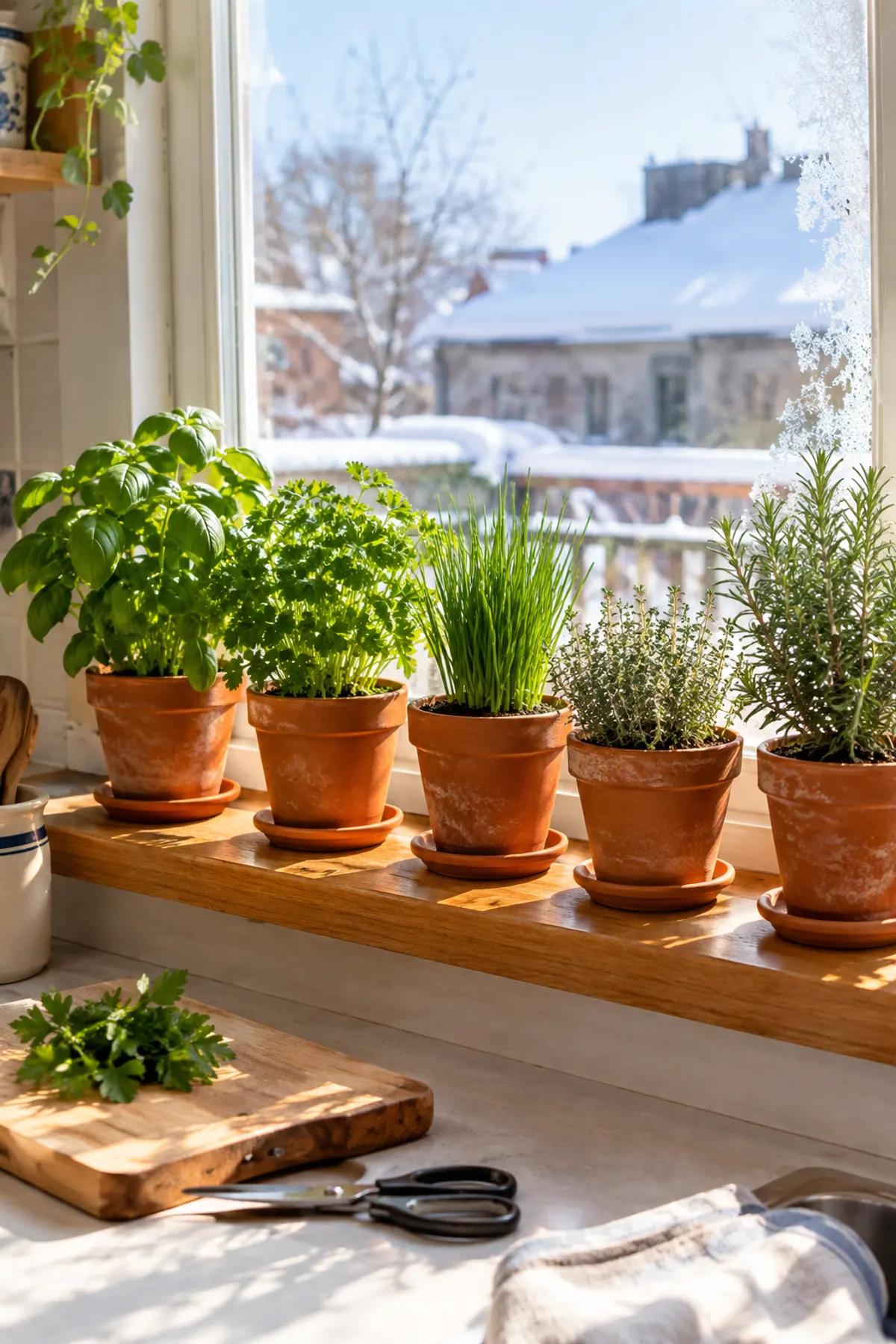
Pinch or snip stem tips just above a pair of leaves. Each cut makes two new shoots, so regular harvesting keeps the plant bushy. Never take more than about a third of the plant at once.
Common mistakes when growing mint indoors
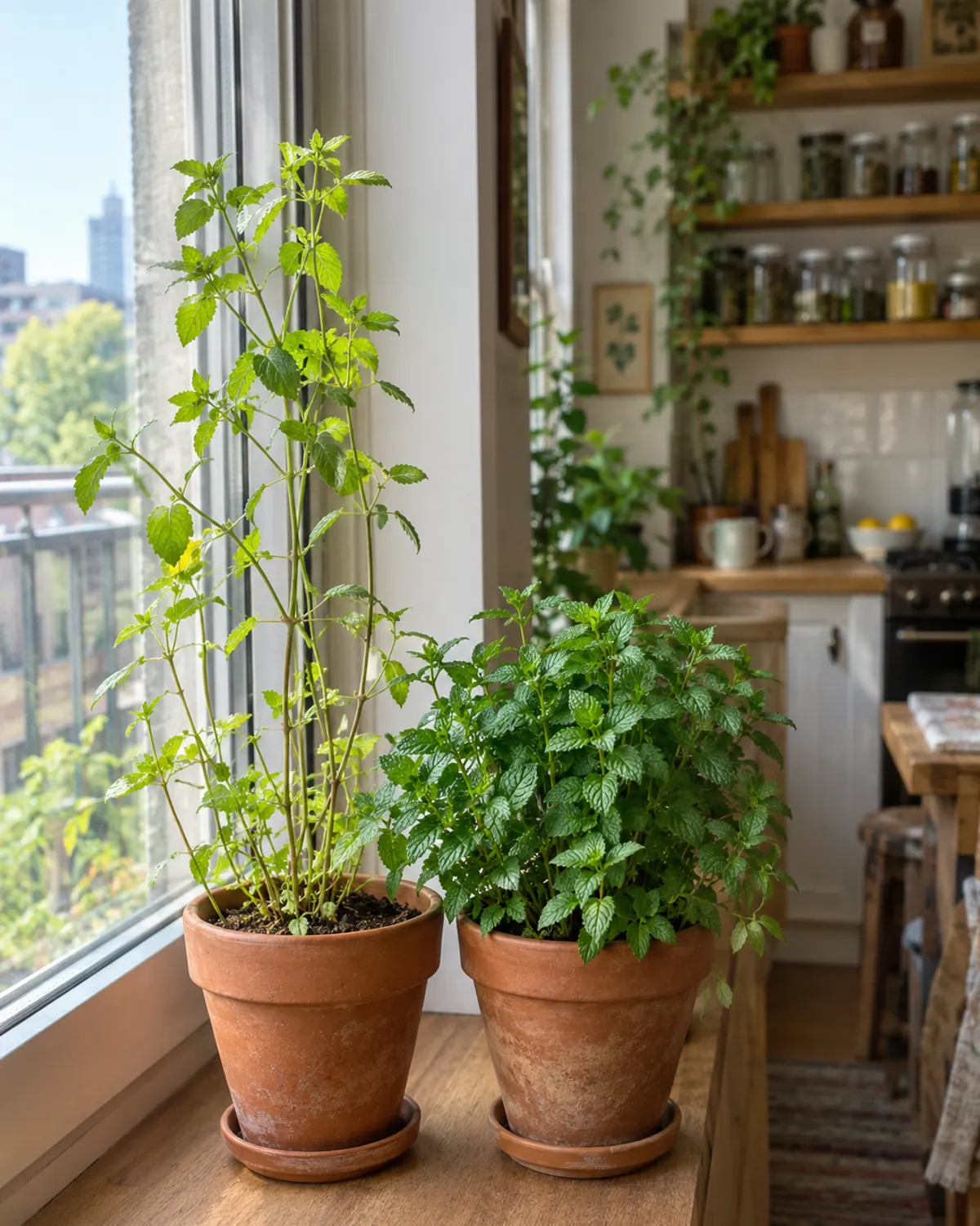
Too little light. Mint in a dim corner stretches toward the window with long gaps between leaves. Move it closer to the glass or add a grow light, then cut it back so new growth comes in bushy.
Sharing a pot. Mint's runners crowd out basil, parsley and other herbs, so give it its own container.
Soggy soil. Pots without drainage, or saucers left full, lead to yellow leaves and root rot.
Leaving it in water forever. A jar is a rooting step, not a home. If you want a water-only setup, use a hydroponic herb garden that adds nutrients.
Mint varieties for indoor pots
| Variety | Flavor | Good for |
|---|---|---|
| Spearmint | Sweet, classic | Tea, salads, sauces; the usual grocery mint |
| Peppermint | Strong, cooling | Tea |
| Chocolate mint | Peppermint with a cocoa note | Desserts and tea |
| Apple mint | Mild, fruity, fuzzy leaves | Drinks and fruit salads |
| Mojito mint | Mild, citrusy | Drinks |
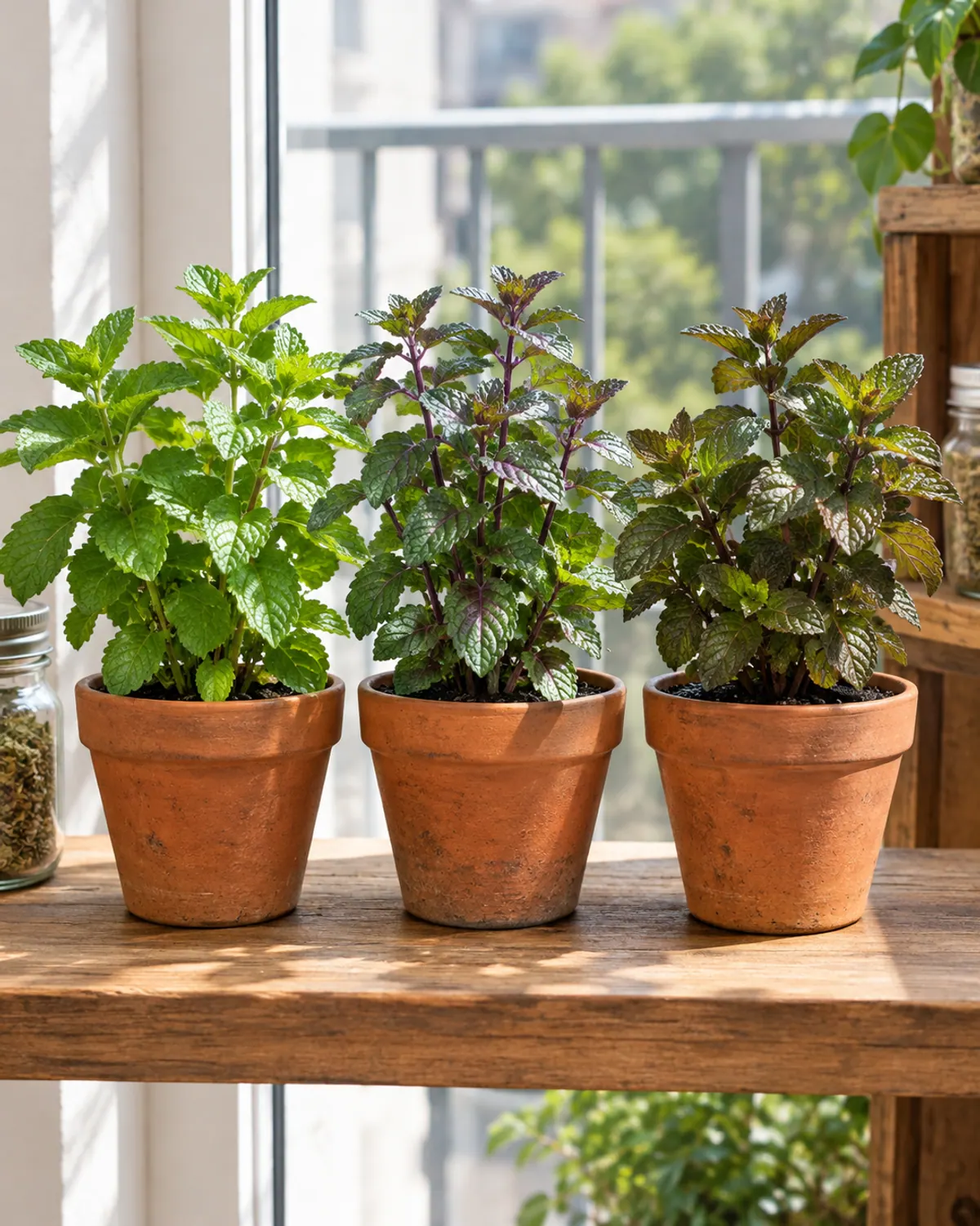
More indoor herb ideas: herbs that grow in low light, keeping basil alive all winter, and propagation station ideas for rooting cuttings in style. Dry extra harvests with our herb drying guide.
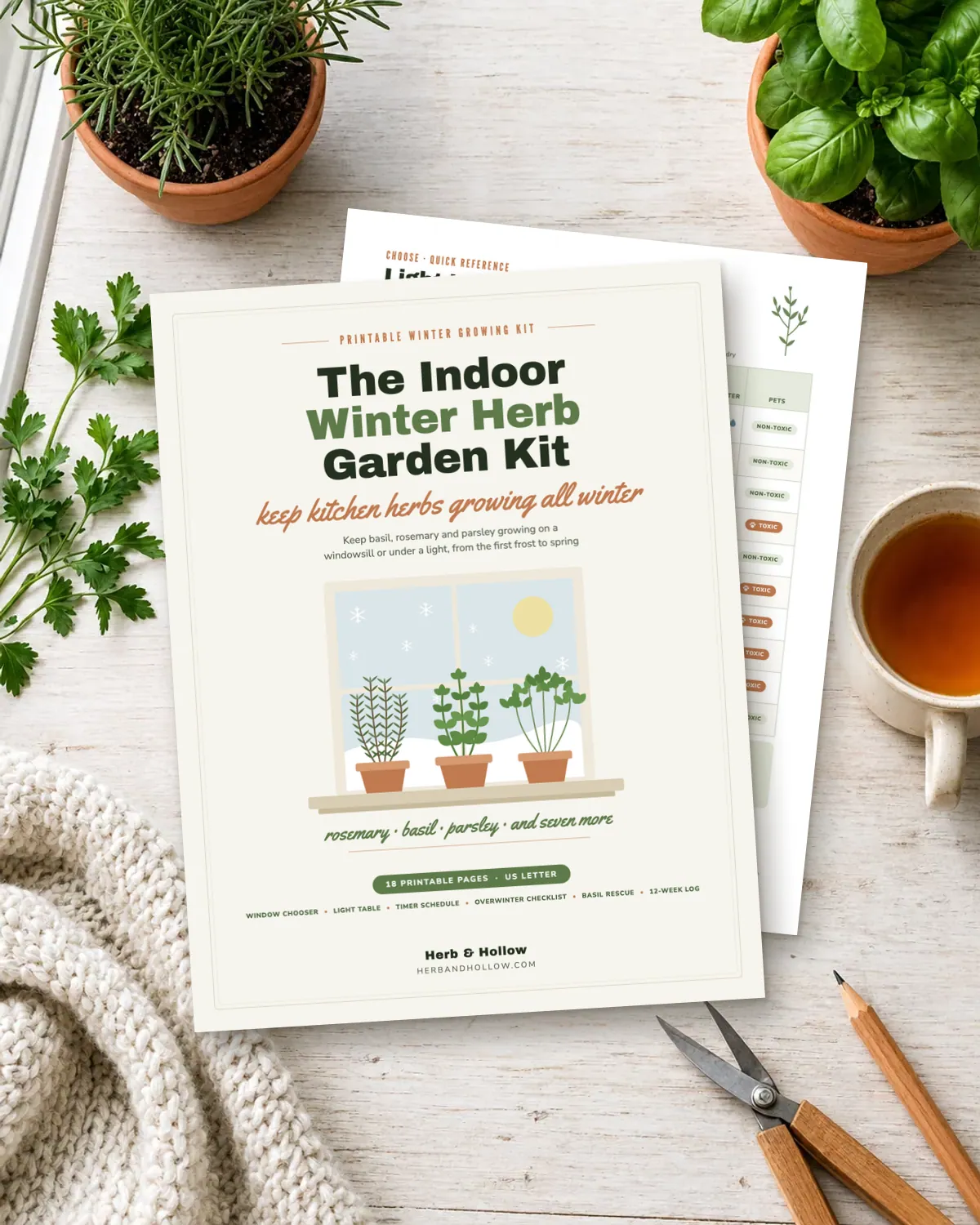
Growing mint as part of a winter windowsill? The Indoor Winter Herb Garden Kit covers 10 herbs including mint, with a light table, a grow light timer schedule and care cards for the dark months.
Supplies for growing mint indoors
What to buy for indoor mint
- Start here
Wide terracotta pot with saucer, 8 to 10 inch
Typically $12 to $25
Room for mint to spread, with drainage.
Check price on Amazon for Wide terracotta pot with saucer, 8 to 10 inch -
Indoor potting mix
Typically $8 to $15
Drains well in containers; garden soil packs down.
Check price on Amazon for Indoor potting mix -
Clear glass rooting jars
Typically $12 to $25
Watch roots form before potting up.
Check price on Amazon for Clear glass rooting jars -
Clip-on LED grow light
Typically $20 to $40
Keeps mint compact through short winter days.
Check price on Amazon for Clip-on LED grow light -
Herb snips
Typically $8 to $15
Clean cuts just above a leaf pair.
Check price on Amazon for Herb snips -
Mint seeds or starter plants
Typically $8 to $20
If you cannot get fresh sprigs to root.
Check price on Amazon for Mint seeds or starter plants
We earn from qualifying purchases, which never changes what we recommend. Read our disclosure and editorial guidelines.
Frequently asked questions
Can mint grow in water forever?
It can survive for a while, but plain water has no nutrients, so the plant usually turns pale and thin over a few months. Use water to root cuttings, then move them to potting mix.
How long does mint take to root in water?
Usually about 1 to 2 weeks for white roots to appear. Pot cuttings up once roots reach about 1 to 2 inches.
How much light does indoor mint need?
At least 4 to 6 hours of bright light a day. In winter, a grow light on for 12 to 14 hours keeps it compact.
Why is my indoor mint leggy?
Low light is the usual cause. Move it closer to a bright window or add a grow light, then cut stems back by about a third so new growth fills in.
Is mint safe around cats and dogs?
No. The ASPCA lists mint as toxic to cats, dogs and horses, so keep pots out of reach.

Save it for later
Pin this to your Herb Garden board so it's there when you need it.
Save to Pinterest