This post contains affiliate links. As an Amazon Associate we earn from qualifying purchases, at no extra cost to you. Read our disclosure.
Safety first: Herbs can be powerful. If you are pregnant, nursing, take medication or have a health condition, check with your doctor or pharmacist first. Please read our herbal & garden safety notes before you start.
Key takeaways
- No-drill options: a suction cup shelf, adhesive strips on the window trim, a tension rod or bulb vases on a curtain rod.
- Light: bright, indirect light a few feet from a window; hot afternoon sun on glass grows algae.
- Fastest to root: tradescantia, pothos, basil and mint, often within 1 to 3 weeks in a warm room.
- Change the water weekly, and pot cuttings up once roots are 1 to 2 inches long.
- Pet homes: pothos, philodendron, mint and coleus are toxic to cats and dogs (ASPCA), so hang stations high.
In this post25 sections
- What a propagation station needs (light, clean water, a tube per cutting)
- Window propagation stations (no drilling)
- 1. A suction cup shelf on the window glass
- 2. Test tubes on a strip of wood with removable adhesive
- 3. Hanging bulbs on a tension rod
- Wall propagation stations: 3 tube, 15 tube and the hex shelf
- 4. A 3-tube wooden wall station
- 5. A 15-tube, 3-tier wall rack
- 6. Test tubes inside hexagon shelves
- Hanging propagation stations: macrame, wire and the light-bulb vase
- 7. A macrame hanger with one big jar
- 8. A wire frame with glass globes
- 9. Light-bulb vases on a curtain rod
- Shelf and counter stations: wood block, test tube rack, thrifted bud vases
- 10. A DIY drilled wood block
- 11. A wooden test tube rack on the counter
- 12. Thrifted bud vases on a tray
- Dollar Tree style and under-$15 DIY propagation stations
- 13. Glass spice jars in a wooden tray
- Aesthetic upgrades: stained glass, ceramic and the propagation sign
- 14. A ceramic propagation vase with a sign
- 15. A propagation corner with the plants that feed it
- What to root in it: pothos, basil, mint, rosemary and other easy water cuttings
- Propagation station shopping list
- FAQ
What a propagation station needs (light, clean water, a tube per cutting)
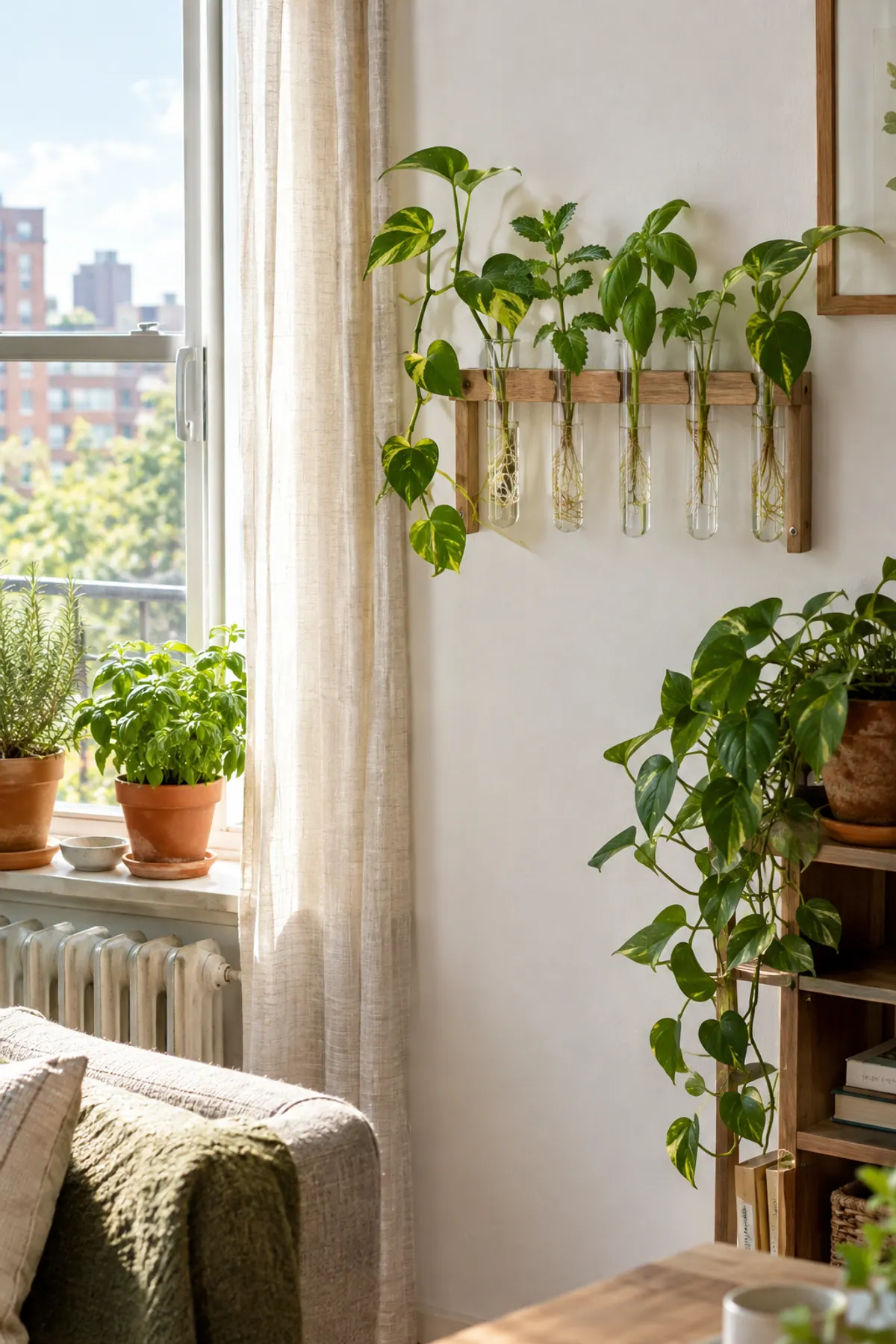
A propagation station is any holder that keeps cuttings upright in water where you can watch the roots grow. It needs three things: bright light without hot direct sun, water you can change easily, and one narrow glass per cutting so stems do not tangle or rot together.
Placement matters more than looks. Within a few feet of an east or north window is the sweet spot; a hot south pane in afternoon sun warms the water and grows algae. Every idea below lists the price, the renter question (does it need a hole in the wall?) and what roots well in it.
| Idea | Where it lives | Drilling? | Typical cost |
|---|---|---|---|
| Suction cup glass shelf | Window glass | No | $10 to $20 |
| Adhesive test tube strip | Window trim | No | $10 to $18 |
| Tension rod with hanging bulbs | Inside window frame | No | $15 to $30 |
| 3-tube wooden wall station | Wall | One small nail or a hook | $12 to $18 |
| 15-tube 3-tier rack | Wall | Two screws, or a leaning shelf | $20 to $27 |
| Hexagon shelf with tubes | Wall | Small nails | $15 to $30 |
| Macrame jar hanger | Ceiling or rod hook | Hook only | $10 to $20 |
| Wire frame with glass globes | Wall | One nail | $15 to $30 |
| Light-bulb vases on twine | Curtain rod | No | $12 to $25 |
| Drilled wood block | Counter or sill | Only the block | $8 to $15 |
| Wooden test tube rack | Counter | No | $15 to $25 |
| Thrifted bud vases on a tray | Sill or shelf | No | $5 to $20 |
| Glass spice jars in a wooden tray | Sill | No | Under $15 |
| Recycled bottles in a crate | Floor or shelf | No | Under $10 |
| Ceramic or stained glass station | Shelf | No | $20 to $60 |
Window propagation stations (no drilling)
1A suction cup shelf on the window glass
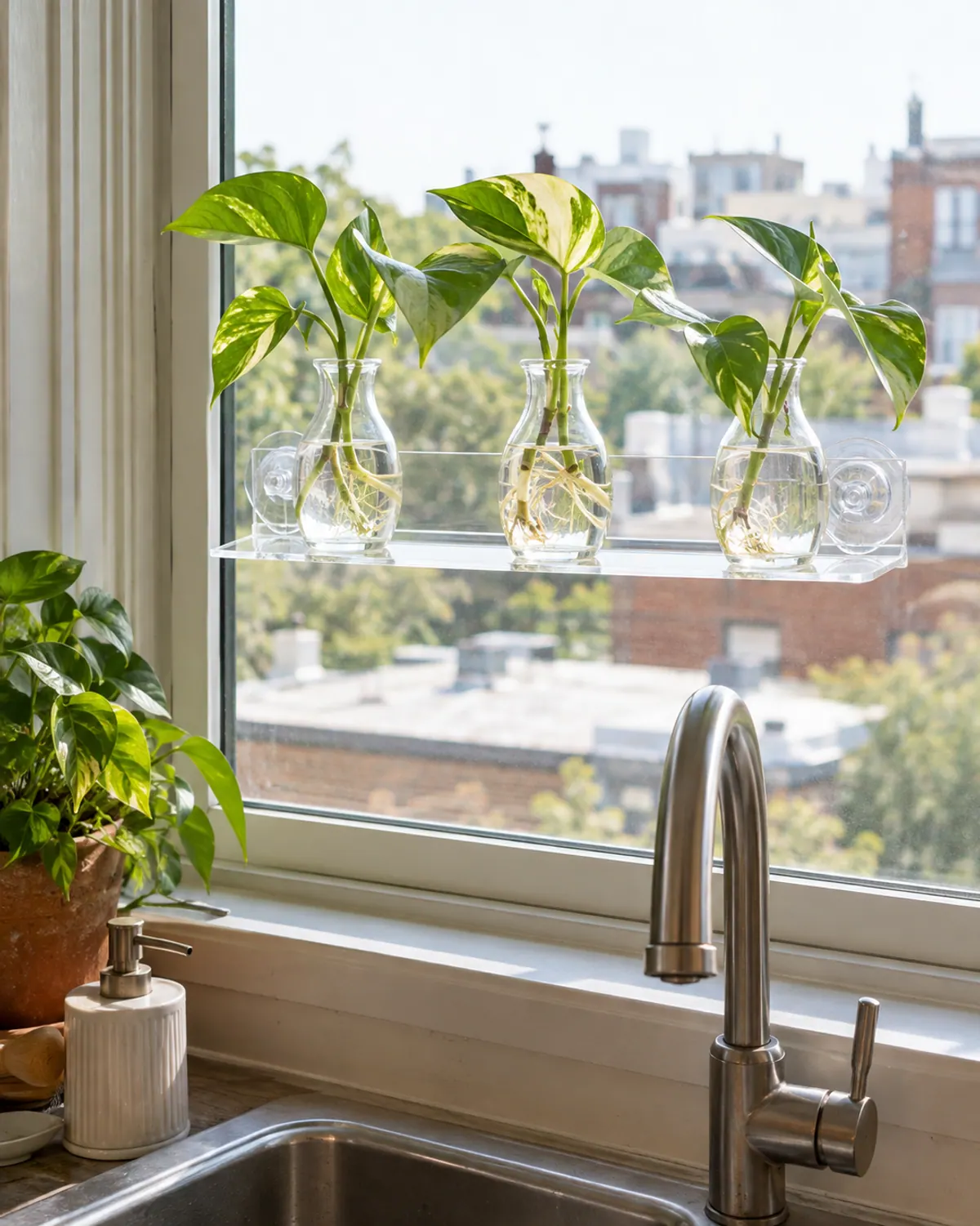
Where: the inside of the window glass.
Drilling: none.
Cost: typically $10 to $20.
A clear acrylic shelf on two or three suction cups puts cuttings right in the light without using any sill space. It suits a kitchen window above the sink, where water changes take seconds. Keep the load light: three small bud vases, not a row of heavy jars.
- Wipe the glass with rubbing alcohol before you press the cups on. They hold far longer on a clean pane.
Adds a propagation ledge without touching the walls.
2Test tubes on a strip of wood with removable adhesive
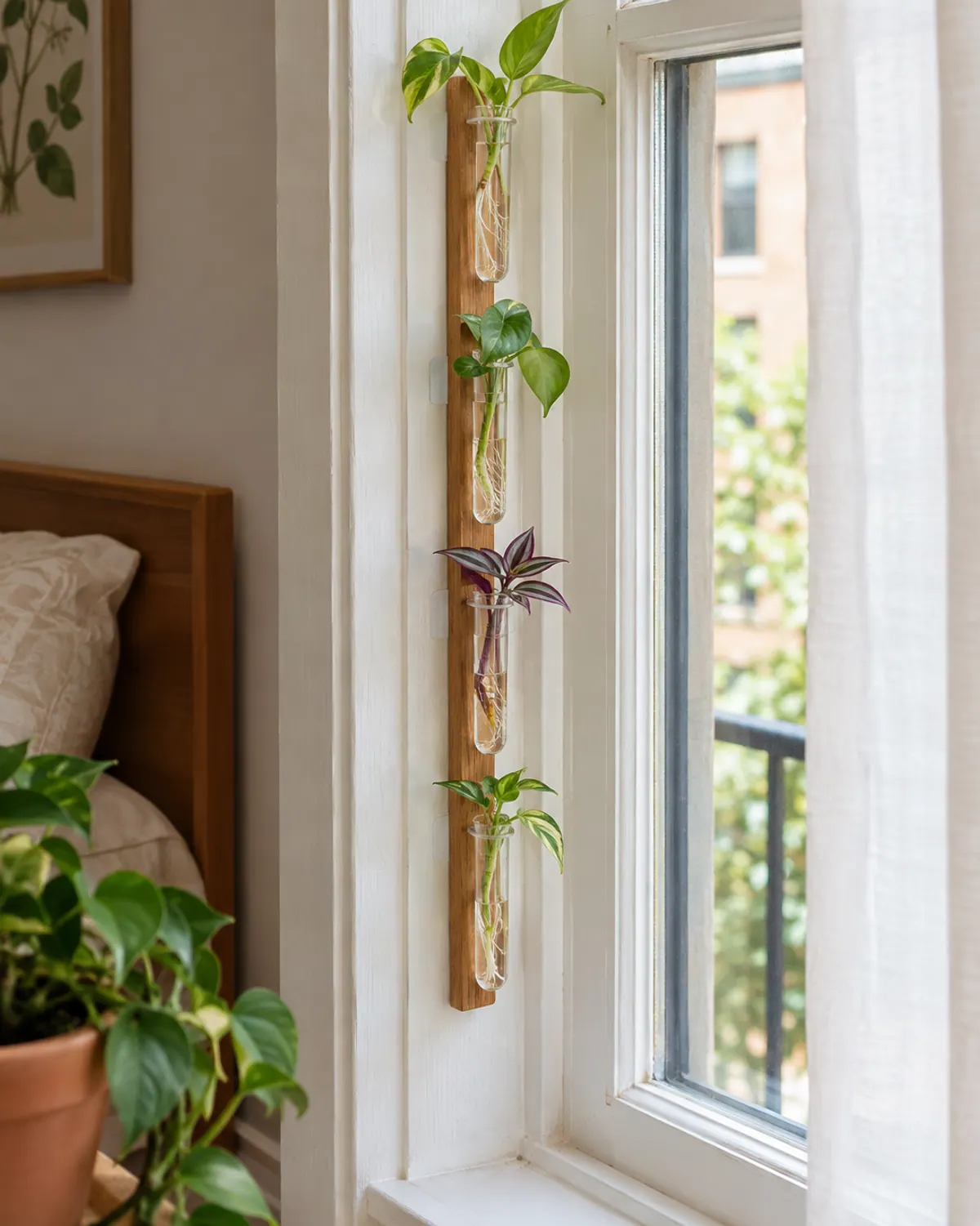
Where: the window trim or frame.
Drilling: none.
Cost: typically $10 to $18.
A slim wooden strip with clips or holes for four tubes, stuck to the window trim with removable adhesive strips, is the classic renter setup. Check the weight rating on the strips and count the water: four full tubes weigh more than you expect. Glass on a painted frame can still pull paint when removed, so peel the strips slowly, straight down.
- Use more strips than the weight rating says you need. Water plus glass plus a slight tilt adds up.
Holds a light station with no holes in a rental.
3Hanging bulbs on a tension rod
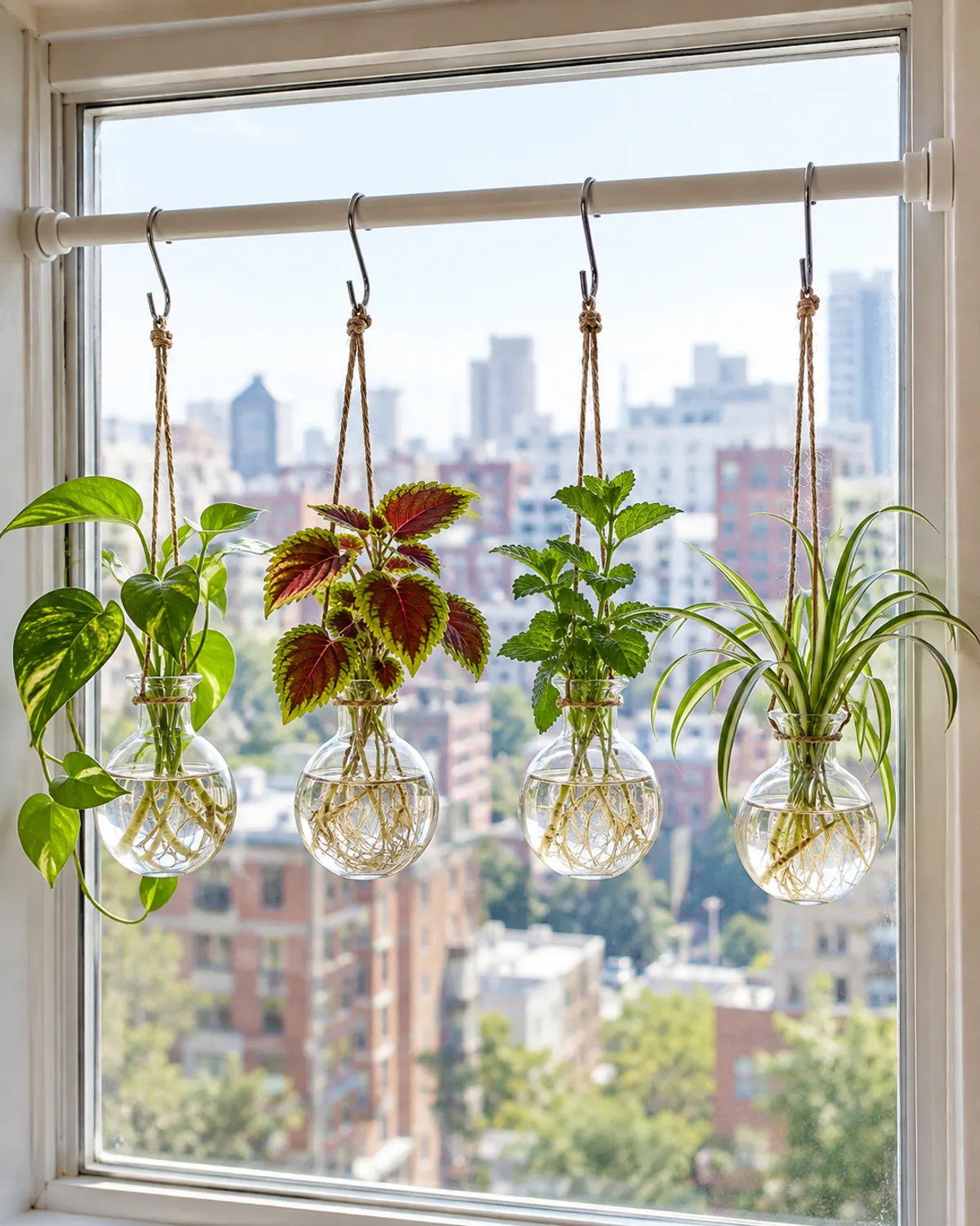
Where: inside the window frame.
Drilling: none.
Cost: typically $15 to $30 for the rod and vases.
A spring tension rod fitted inside the window frame becomes a rail for small hanging glass vases on S-hooks or twine. It turns the whole window into a station, and it comes down without a trace when you move out. Our indoor plants decor ideas use the same rod trick for small hanging pots.
- Pick a rod rated for curtains, not a shower rod. Narrow rods hold the hooks in place better.
A no-drill rail for hanging propagation vases.
Wall propagation stations: 3 tube, 15 tube and the hex shelf
4A 3-tube wooden wall station
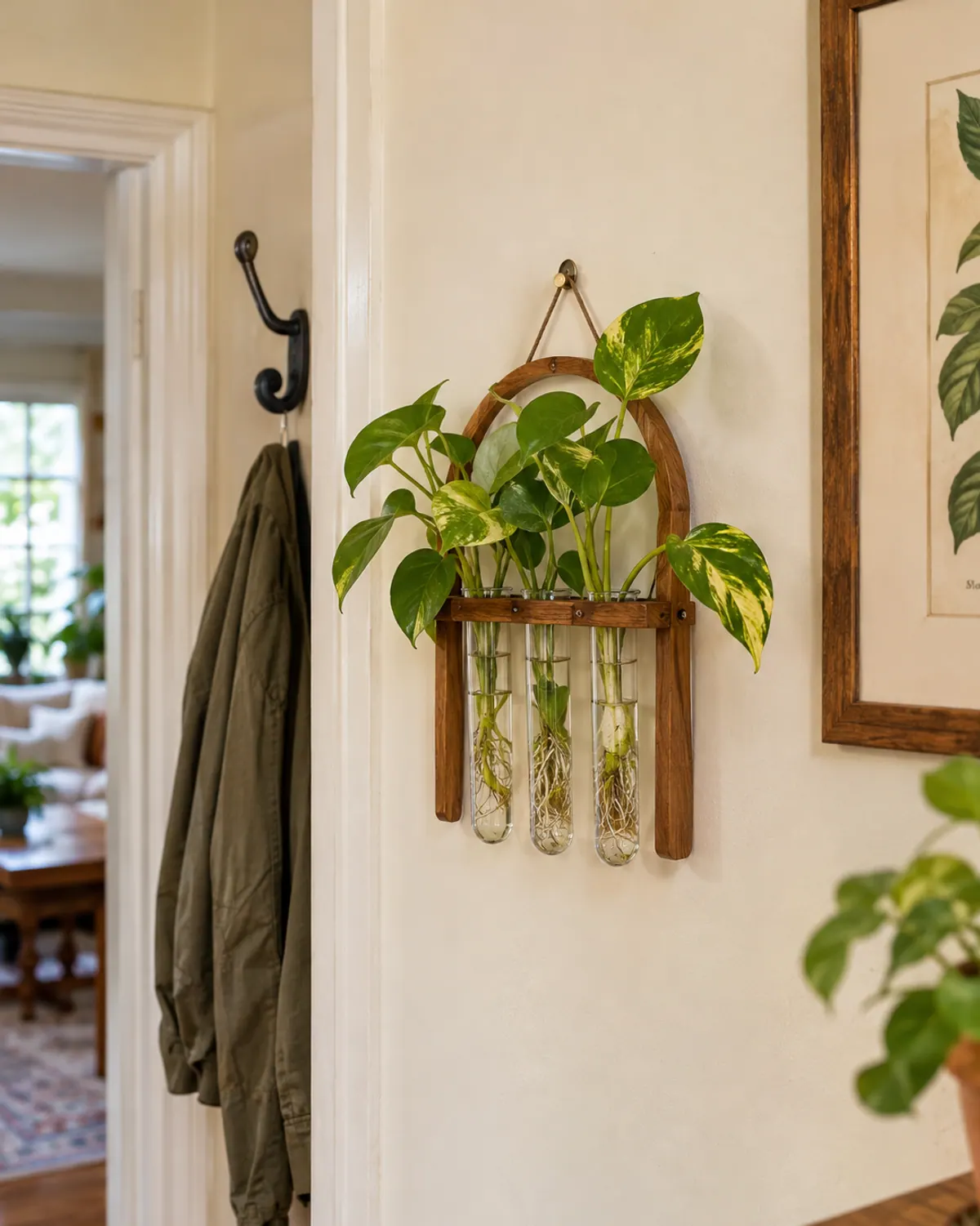
Where: any wall near a window.
Drilling: a single small picture nail or a weight-rated adhesive hook.
Cost: typically $12 to $18.
The small curved wooden frames with three to five tubes are the most popular store-bought station, and they hang from one picture nail, which most leases treat as normal wear. Three tubes are enough to root a pothos vine cut into pieces, which is how most people fill a pot again.
- Hang it at eye level. You will change the water more often if you can see it is cloudy.
The easy first station with one nail.
5A 15-tube, 3-tier wall rack
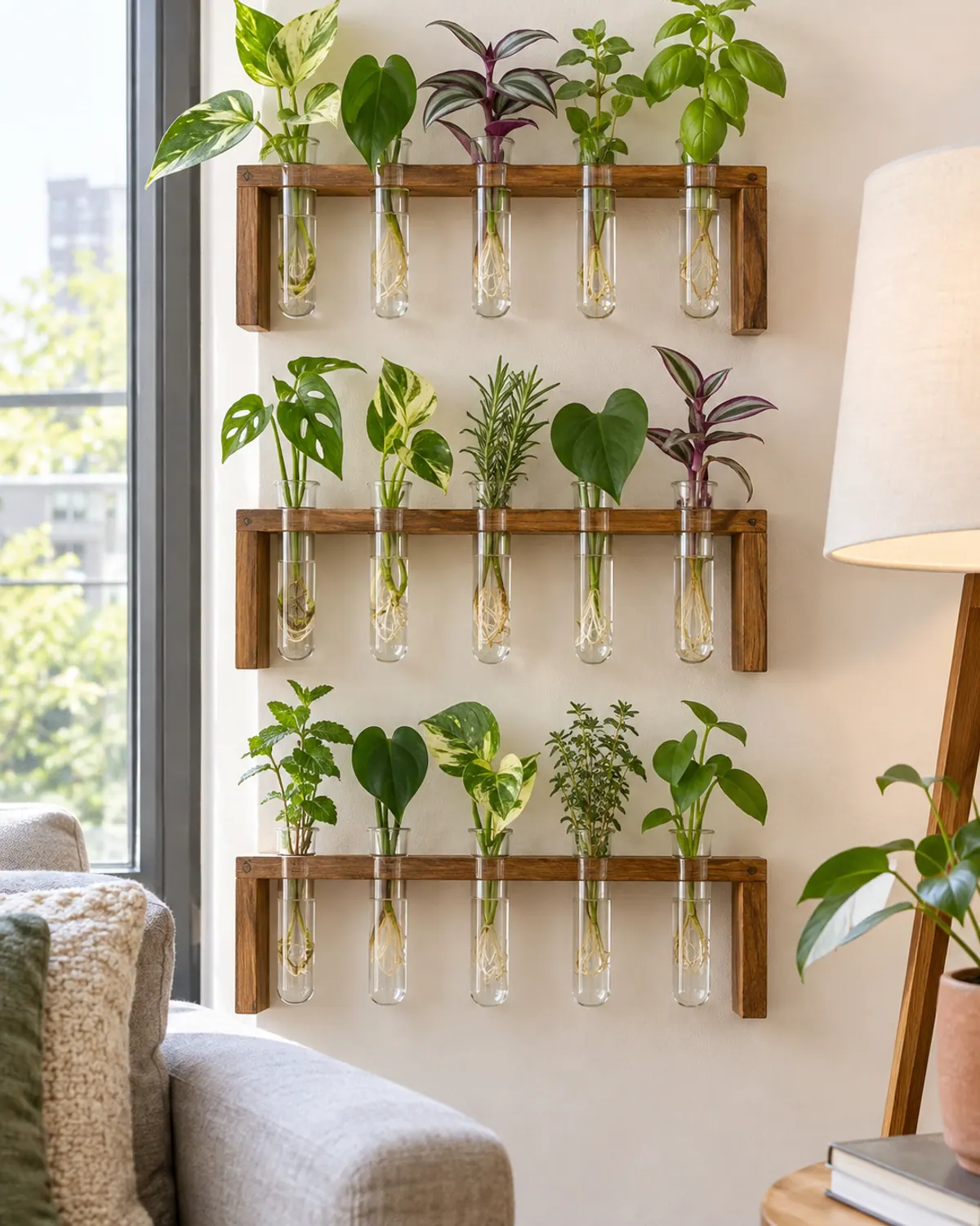
Where: a wall beside a bright window.
Drilling: two small screws, or lean it on a deep shelf.
Cost: typically $20 to $27.
Once you start sharing cuttings with friends, three tubes run out fast. A three-tier rack holds fifteen and works as wall decor even before the roots show. It is heavier when full, so it needs real fixings, or you can stand it on a dresser against the wall.
- Label each tube with the date you cut it. Fifteen cuttings look the same after a week.
Room for a whole pothos haircut.
6Test tubes inside hexagon shelves
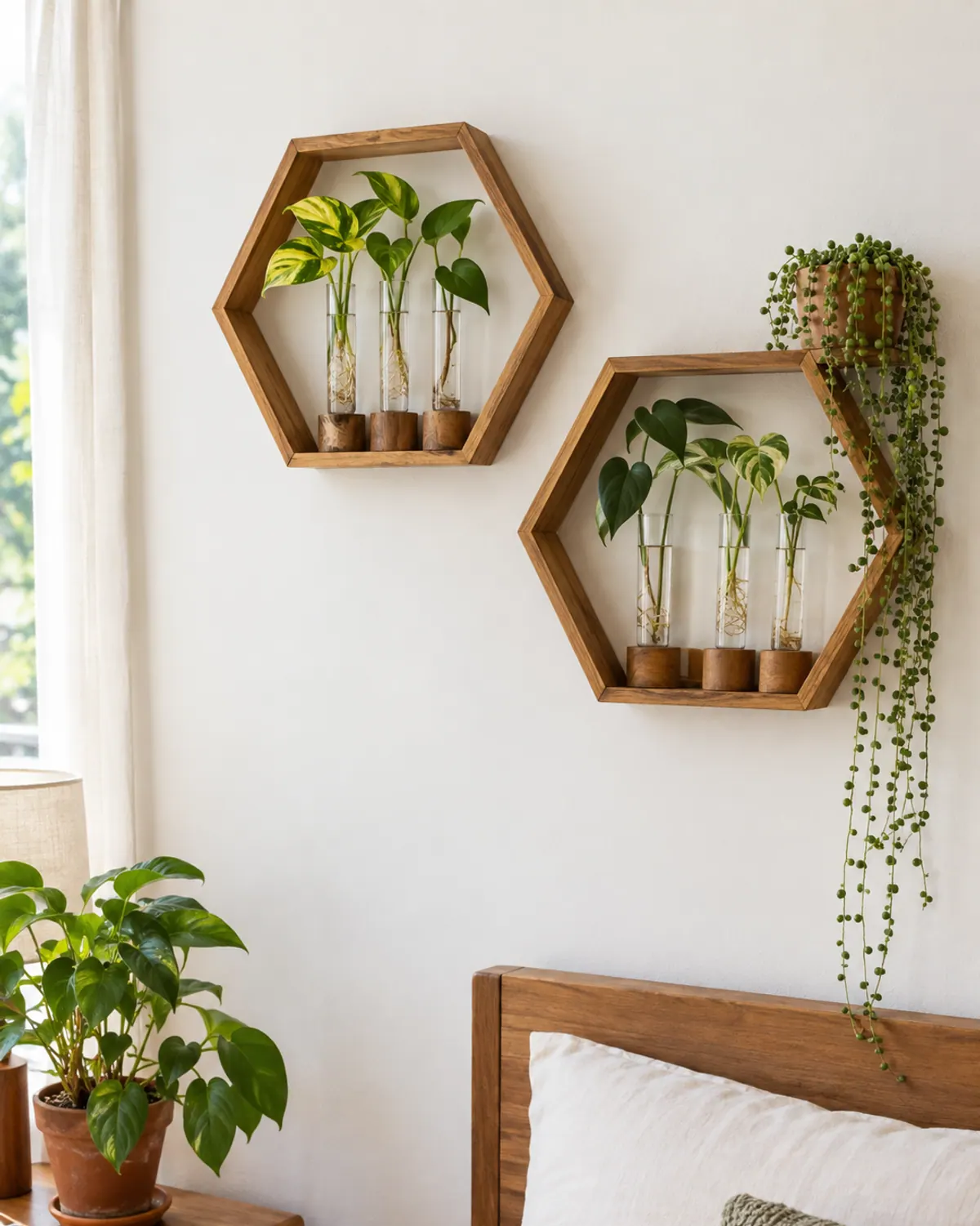
Where: a bedroom or living room wall.
Drilling: small nails, one per shelf.
Cost: typically $15 to $30 for a set.
A pair of honeycomb shelves with small tube stands inside makes a station that looks planned. Mix rooting cuttings with a trailing plant such as string of pearls in the next cell. Light is the catch, so this only works on the window wall or right beside it.
- Put the tubes in the cells nearest the window. The back cells are for plants that are already rooted.
A tidy frame for a tube station.
Hanging propagation stations: macrame, wire and the light-bulb vase
7A macrame hanger with one big jar
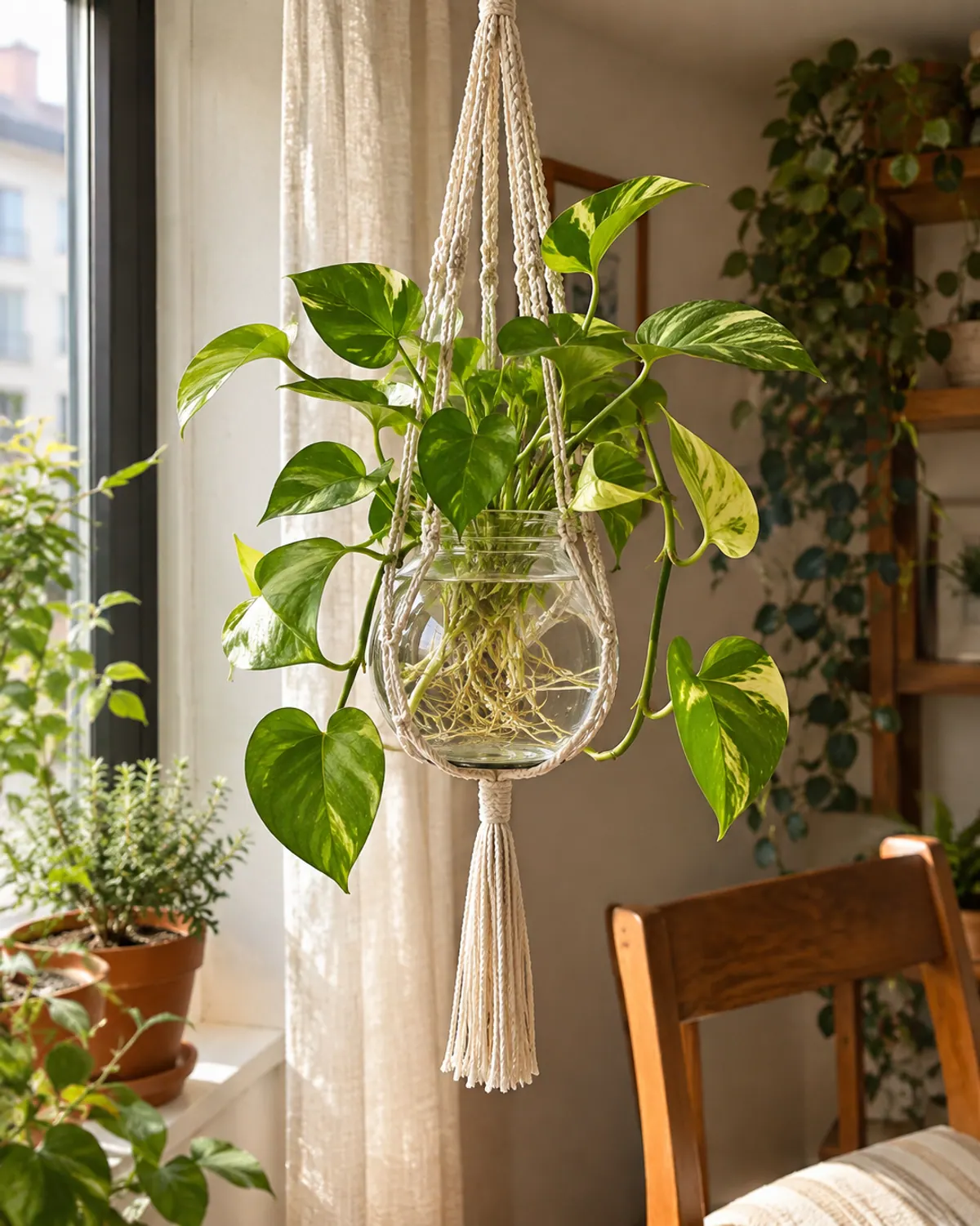
Where: a ceiling hook or curtain rod.
Drilling: a ceiling hook, or none on a rod.
Cost: typically $10 to $20.
A cotton macrame hanger cradling a round jar holds several long vines at once, and the roots become part of the look. It is the right station for pothos and philodendron, which root well in a group. Herbs prefer one stem per glass.
- Use a wide-mouth jar. You need to lift the cuttings out to rinse it every week or two.
Shows off a bundle of rooting vines.
8A wire frame with glass globes
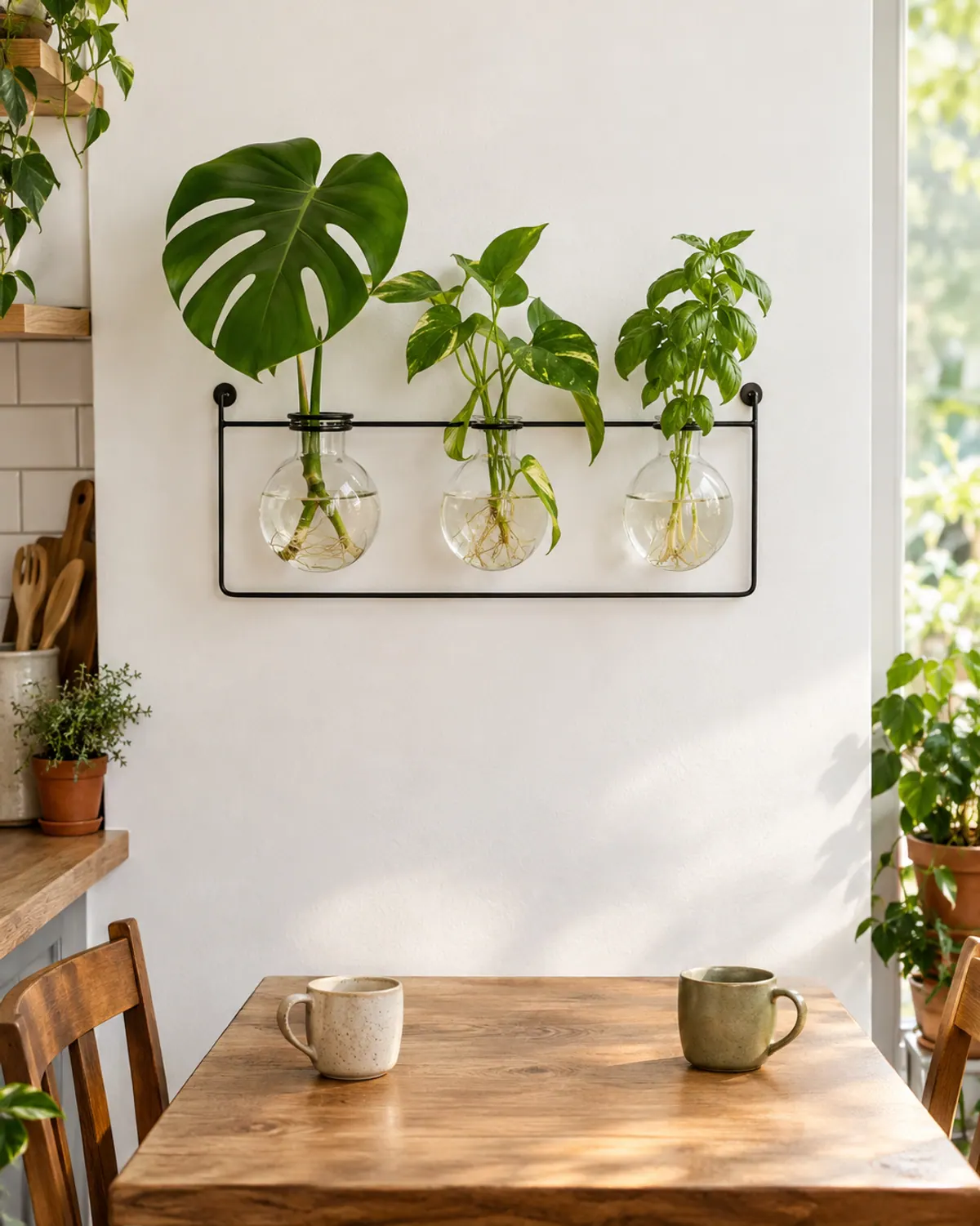
Where: a kitchen or dining nook wall.
Drilling: one small nail.
Cost: typically $15 to $30.
Black or brass wire frames that hold two or three glass globes look modern and weigh very little. The round globes give a monstera node or a large-leaved cutting room for roots. They read as wall art, so they suit a spot you see every day, which keeps the water fresh.
- Choose globes with a mouth wide enough for two fingers. Narrow necks are hard to clean.
A light, modern frame for big cuttings.
9Light-bulb vases on a curtain rod
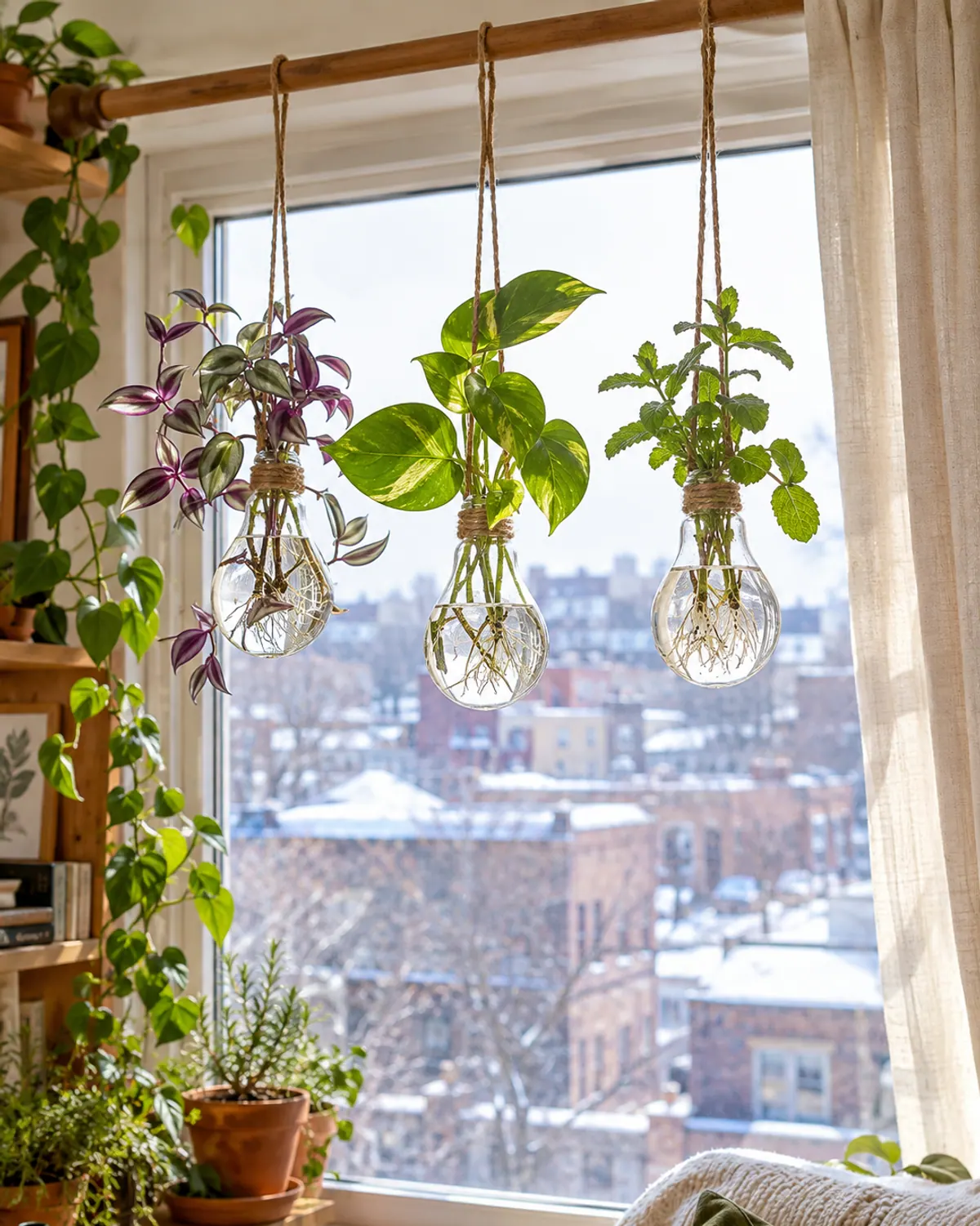
Where: an existing curtain rod.
Drilling: none.
Cost: typically $12 to $25 for a set.
Glass vases shaped like light bulbs, sold in sets with twine, hang straight from the curtain rod you already have. They are small, so stick to single stems such as tradescantia, coleus or a mint sprig. Stagger the lengths so each one catches light.
- Draw the curtain away from the vases during the day. Fabric brushing the glass knocks them around.
No-drill hanging station on a curtain rod.
Shelf and counter stations: wood block, test tube rack, thrifted bud vases
10A DIY drilled wood block
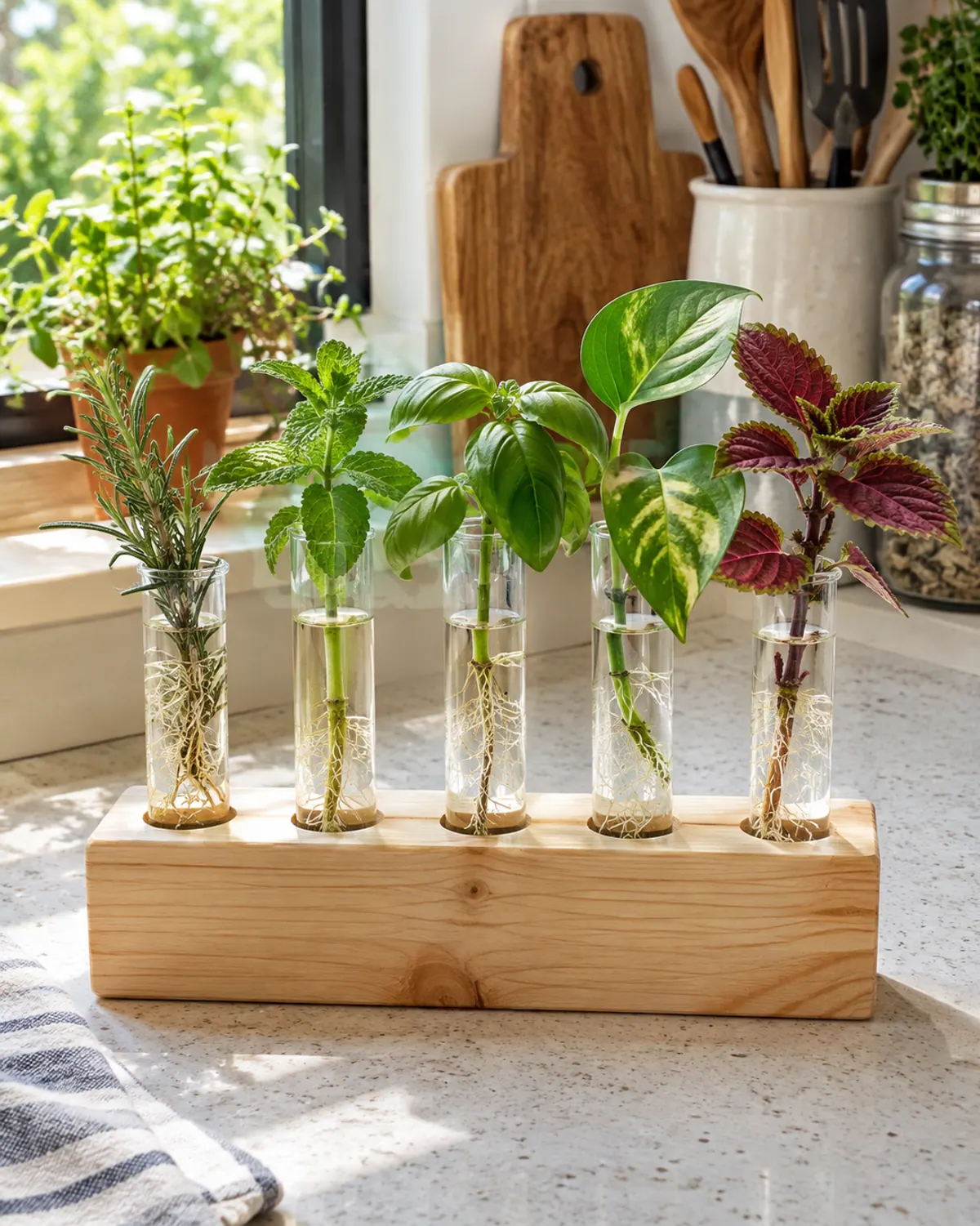
Where: counter, sill or desk.
Drilling: only the block, never the wall.
Cost: typically $8 to $15 for tubes and a pine offcut.
This is the propagation station DIY most people start with. Measure the outside diameter of your test tubes, choose a Forstner or spade bit that size, and drill holes about two thirds of the way through a pine offcut, clamped to a table. Sand, then seal it with a food-safe oil or clear finish so water rings do not stain it.
- Clamp the block and wear safety glasses. A small block spins hard if the bit catches.
Spare tubes for a DIY block.
11A wooden test tube rack on the counter
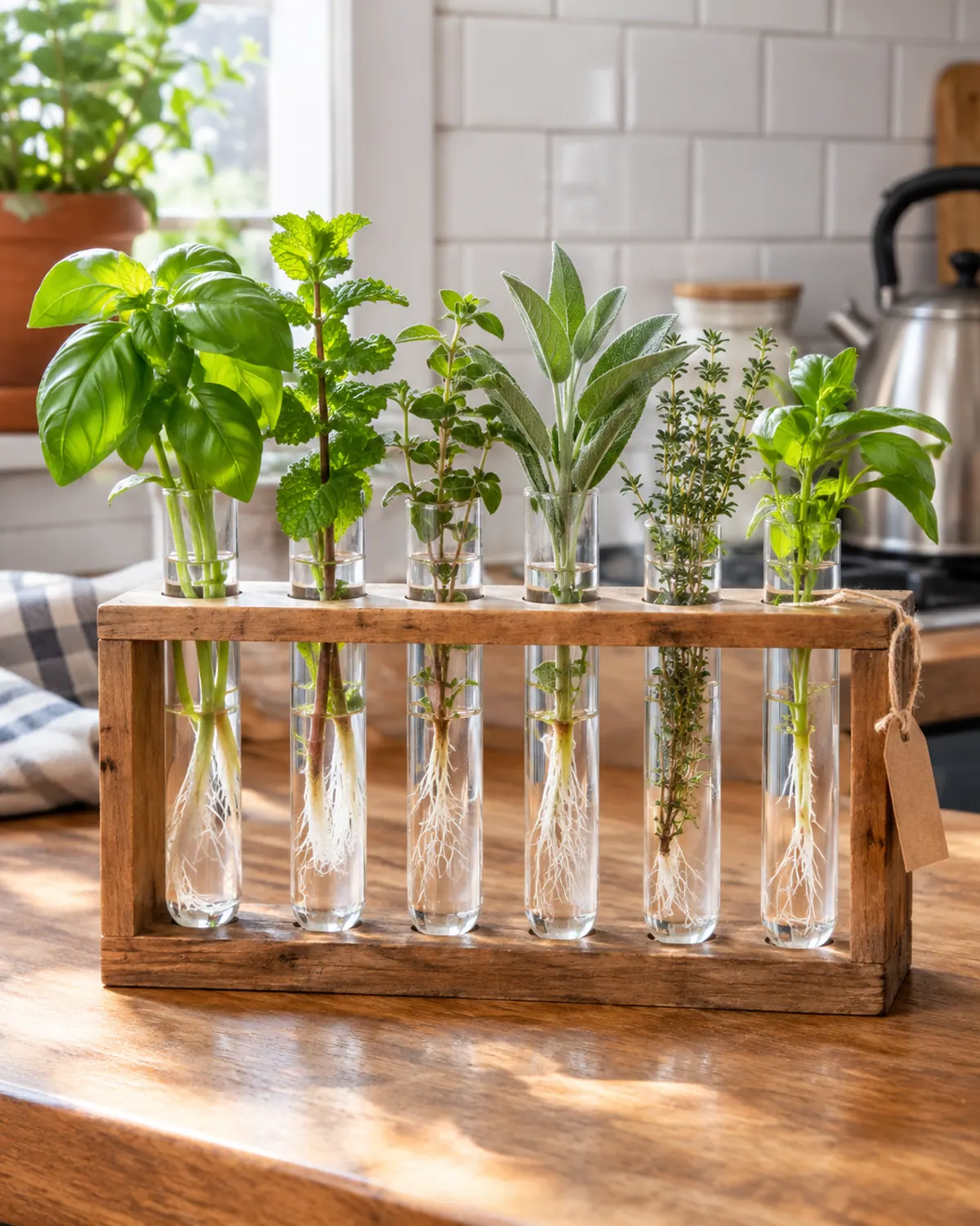
Where: kitchen counter.
Drilling: none.
Cost: typically $15 to $25.
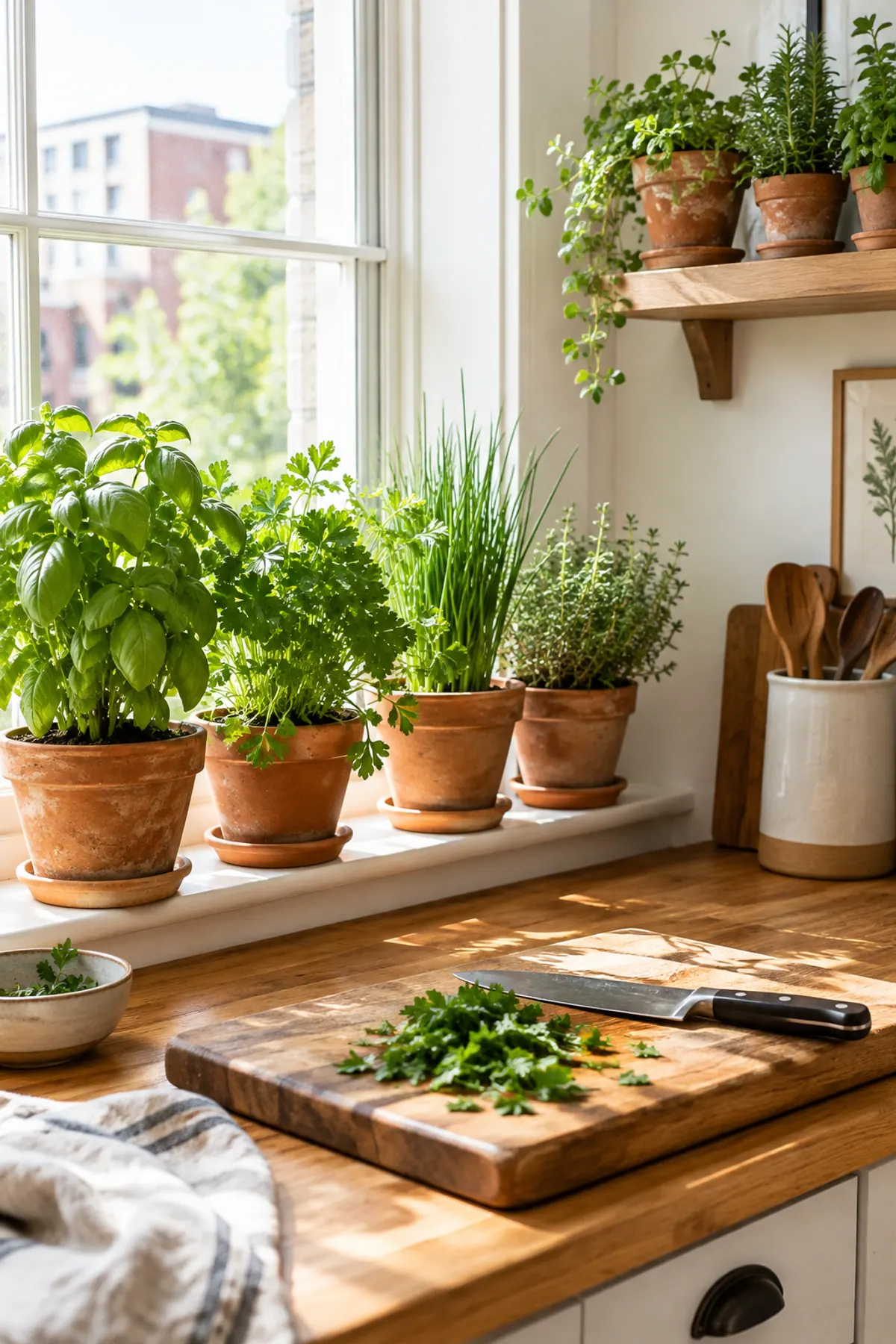
A lab-style wooden rack is a ready-made station that lifts out whole for water changes. On a kitchen counter it is the natural home for herb cuttings: basil and mint root in water within one to two weeks in a warm room, which turns one supermarket bunch into several plants. Our kitchen herb garden ideas show where to grow them on once rooted.
- Strip every leaf that would sit under water. Submerged leaves rot and cloud the tube in days.
Lifts out whole for water changes.
12Thrifted bud vases on a tray
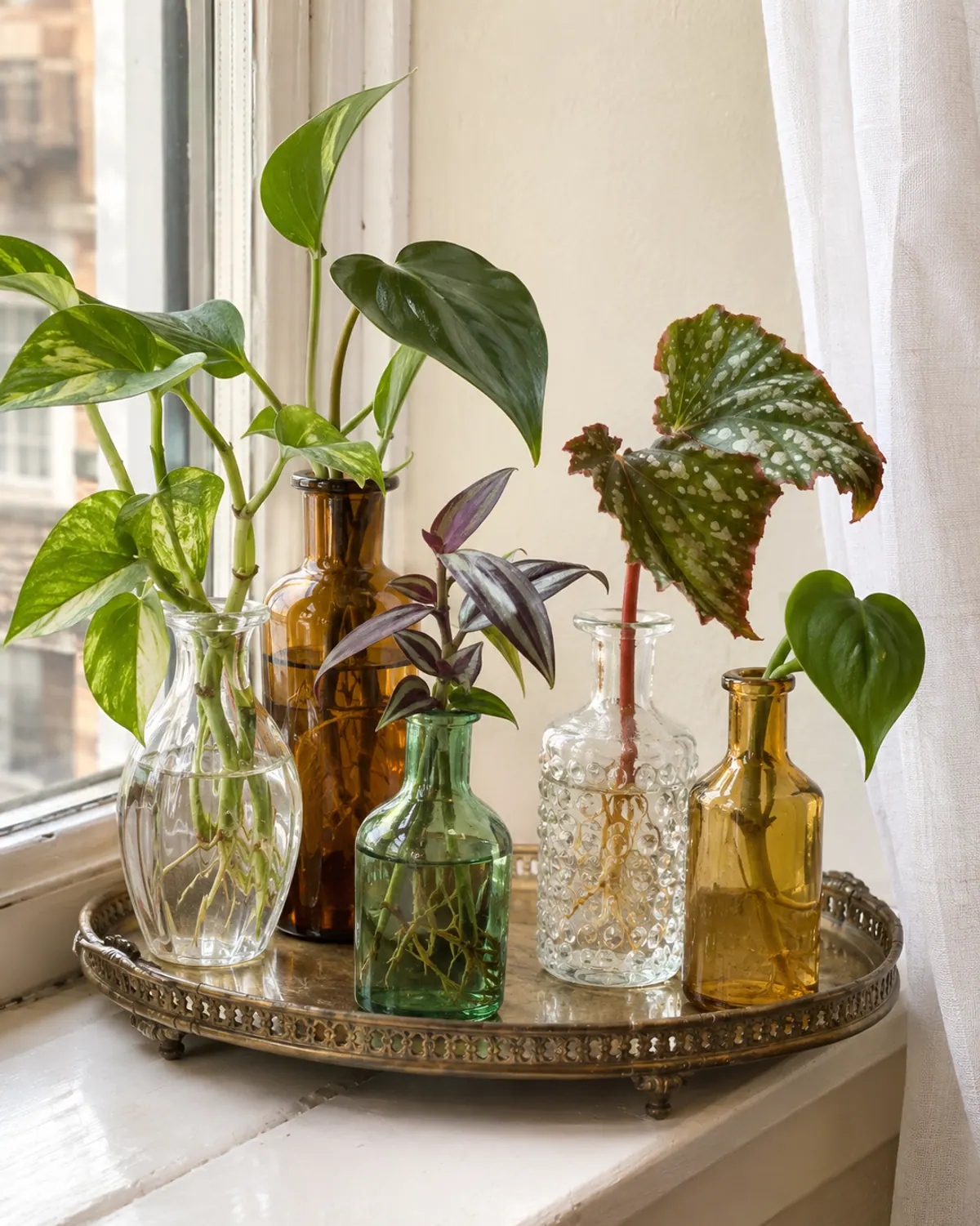
Where: sill or shelf.
Drilling: none.
Cost: typically $5 to $20 secondhand.
A mismatched group of bud vases and small bottles on a tray looks collected, costs little and moves to the sink in one trip. Clear glass shows roots best, while amber and green glass slow algae. Thrift stores almost always have a shelf of them.
- Group by thirst: fast rooters together, slow ones such as rosemary on their own so you can leave them be.
Dollar Tree style and under-$15 DIY propagation stations
13Glass spice jars in a wooden tray
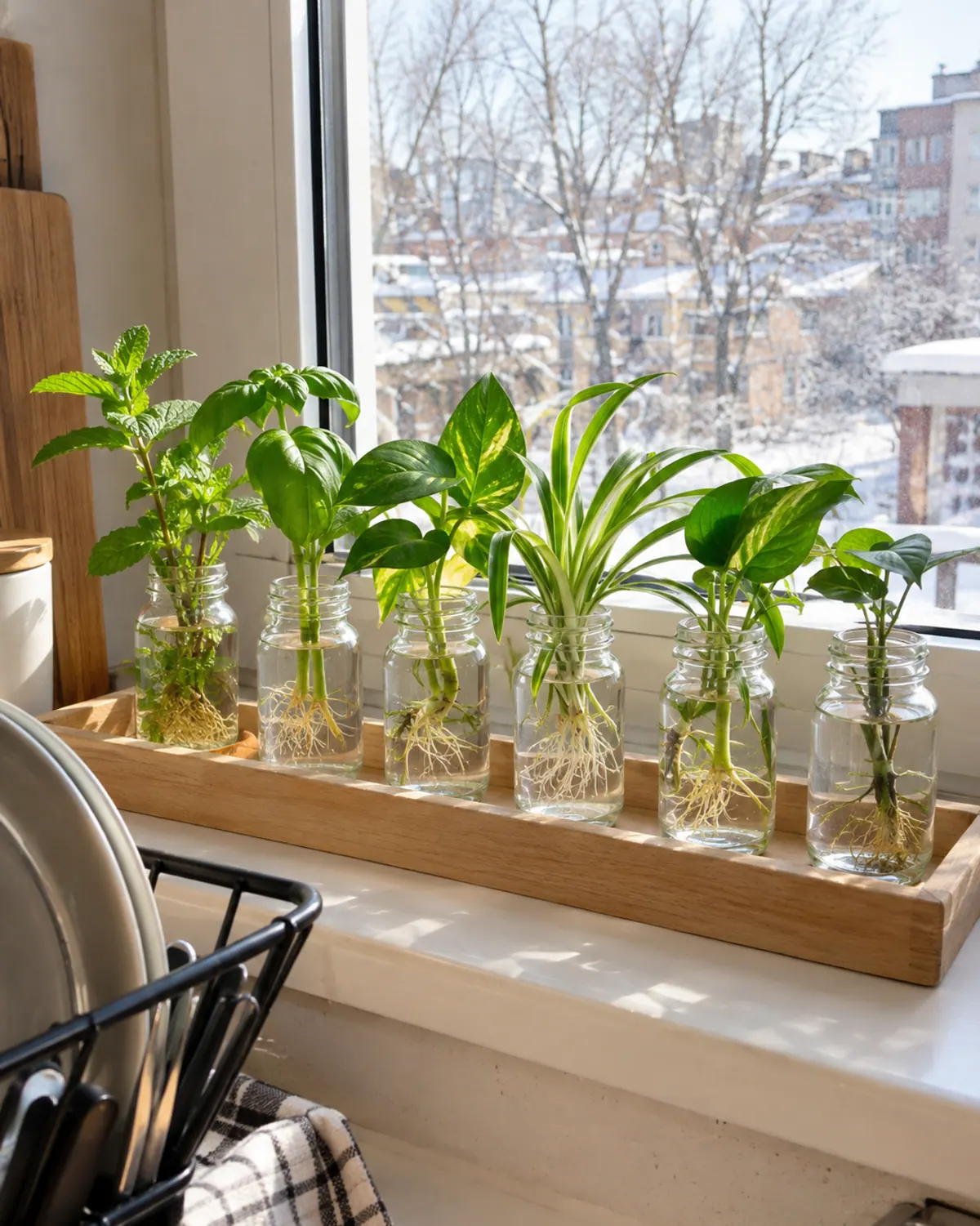
Where: a windowsill.
Drilling: none.
Cost: under $15.
Dollar stores sell small glass jars and unfinished wooden trays or crates, and that is a full station for a few dollars. Drop the lids, fill the jars, and line them up in the tray. The tray catches drips and lets you carry the whole row to the sink.
- Paint or seal a raw wood tray before it meets water, or it will warp within a month.
An even cheaper version: rinse out a few small sauce or spice bottles you already have and stand them in a wooden crate or a shallow box lid. It looks more farmhouse than boutique, but the roots do not care.
Aesthetic upgrades: stained glass, ceramic and the propagation sign
14A ceramic propagation vase with a sign
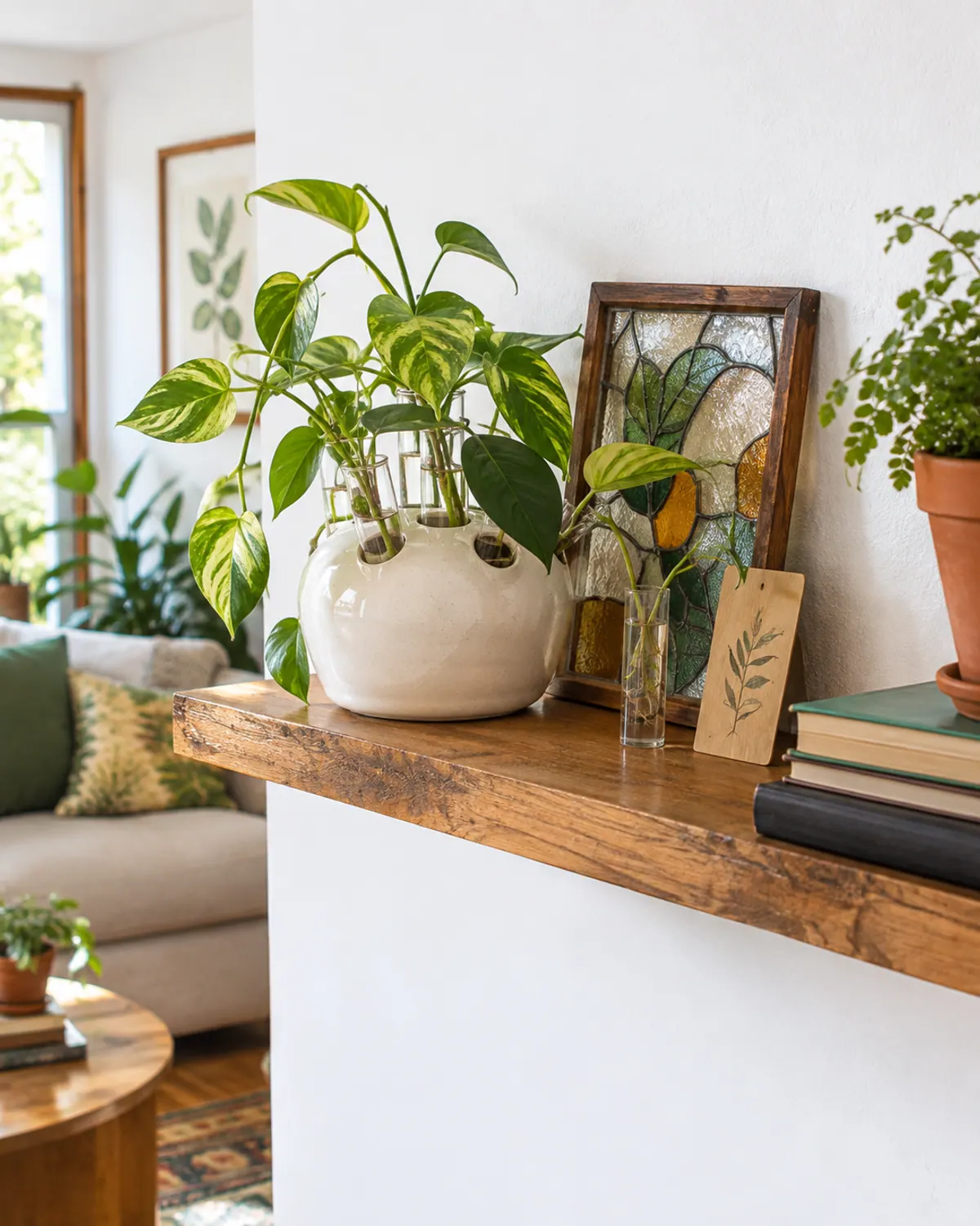
Where: a living room shelf.
Drilling: none.
Cost: typically $20 to $60.
Ceramic stations hide the water and show only the leaves, with small glass inserts inside each hole. Pair one with a small stained glass panel or a handmade sign and the corner looks finished. Many of these are made by small makers, which also makes them a good gift; see our gifts for gardeners in small spaces.
- Ceramic hides roots, so set a weekly reminder. Lift an insert to check the water level.
A shelf-ready station that doubles as a gift.
15A propagation corner with the plants that feed it
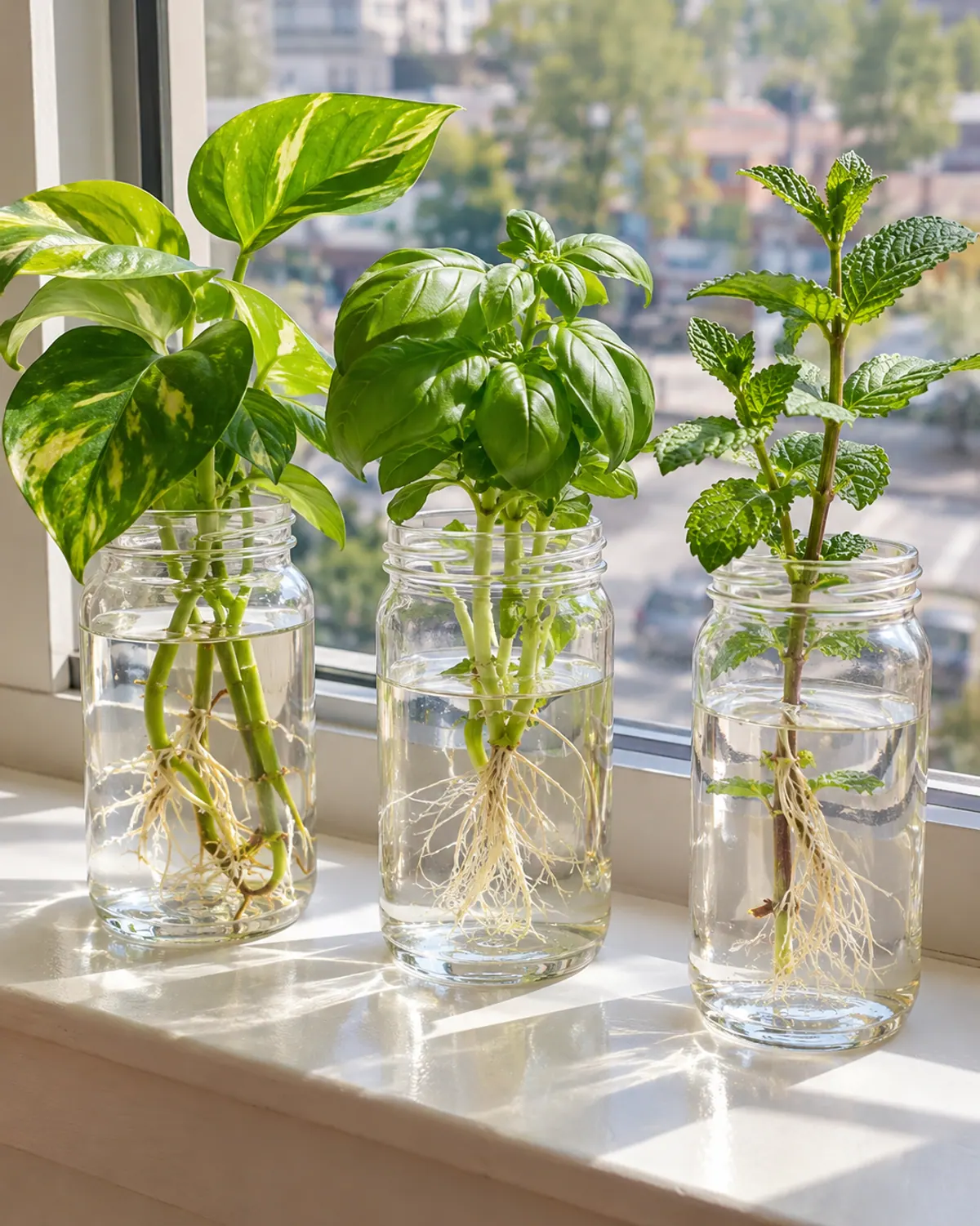
Where: a bright window with mother plants nearby.
Drilling: none.
Cost: the cost of the glass.
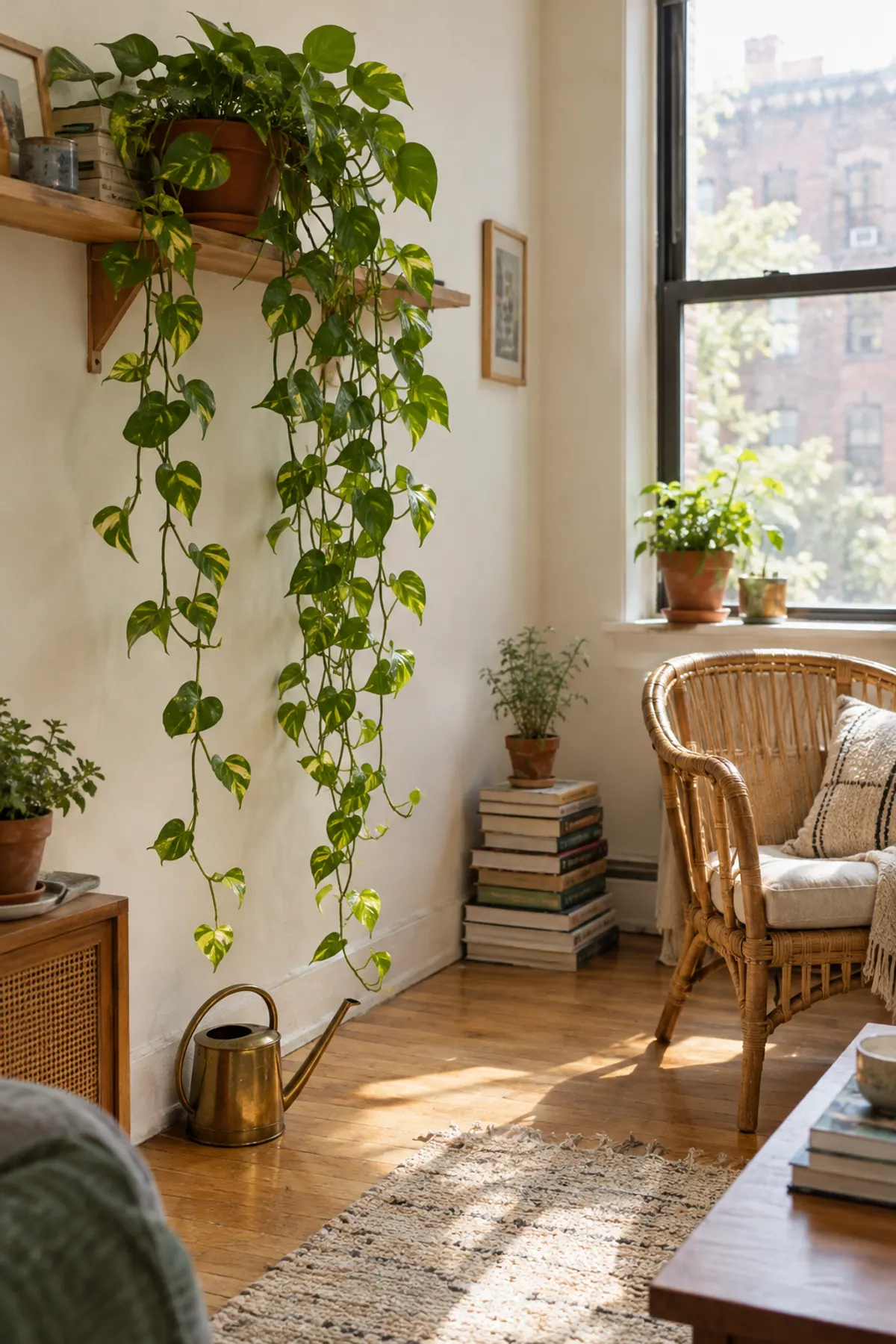
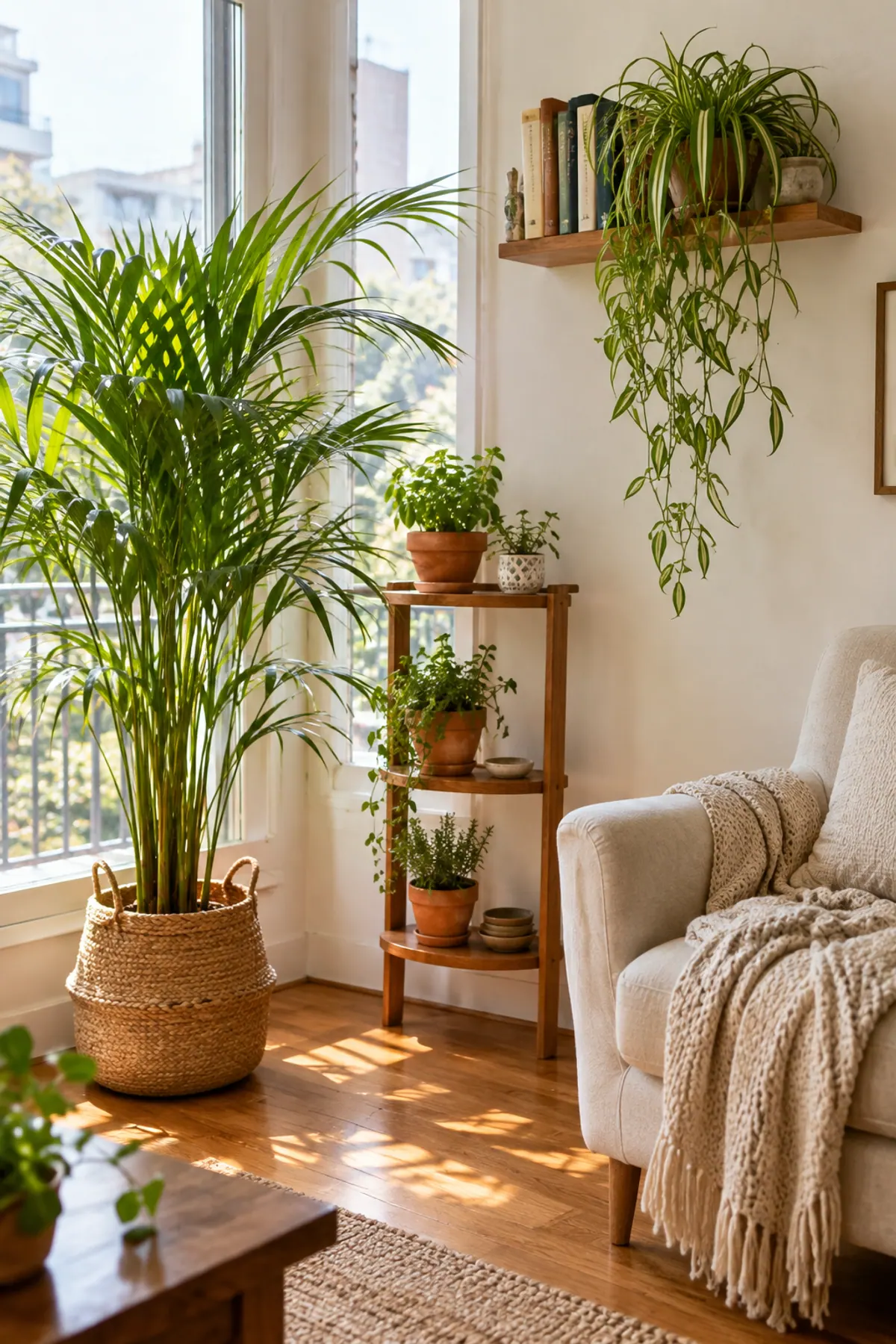
The best station sits next to the plants it is cloning. A pothos on the shelf above, a pot of basil on the sill and a mint plant in a window box give you cuttings every few weeks. The gardening aesthetic ideas guide shows how to build that corner around one window.
- Take cuttings in the morning, when stems are full of water. They wilt less while they root.
What to root in it: pothos, basil, mint, rosemary and other easy water cuttings
Cut 4 to 6 inches just below a node, the small bump where a leaf joins the stem, and remove the leaves that would sit under water. Change the water every week, or sooner if it clouds. Pot the cutting into soil once roots are 1 to 2 inches long; our pothos care guide walks through the method step by step.
| Plant | Roots in water (warm room) | Notes | Pets (ASPCA) |
|---|---|---|---|
| Golden pothos | 1 to 3 weeks | Cut below a node, several per jar | Toxic to cats and dogs |
| Heartleaf philodendron | 1 to 3 weeks | Same as pothos | Toxic to cats and dogs |
| Tradescantia | About 1 week | One of the fastest | Can irritate skin of pets |
| Basil | 1 to 2 weeks | Non-flowering stems root best | Non-toxic |
| Mint | 1 to 2 weeks | Roots almost anywhere | Toxic to cats and dogs |
| Rosemary | 3 to 6 weeks | Use soft new growth; slow and patchy | Non-toxic |
| Sage and oregano | 2 to 4 weeks | Soft stems only | Sage non-toxic; oregano toxic |
| Spider plant babies | 1 to 2 weeks | Root the plantlets | Non-toxic |
| Coleus | 1 to 2 weeks | Pinch flowers off | Toxic to cats and dogs |
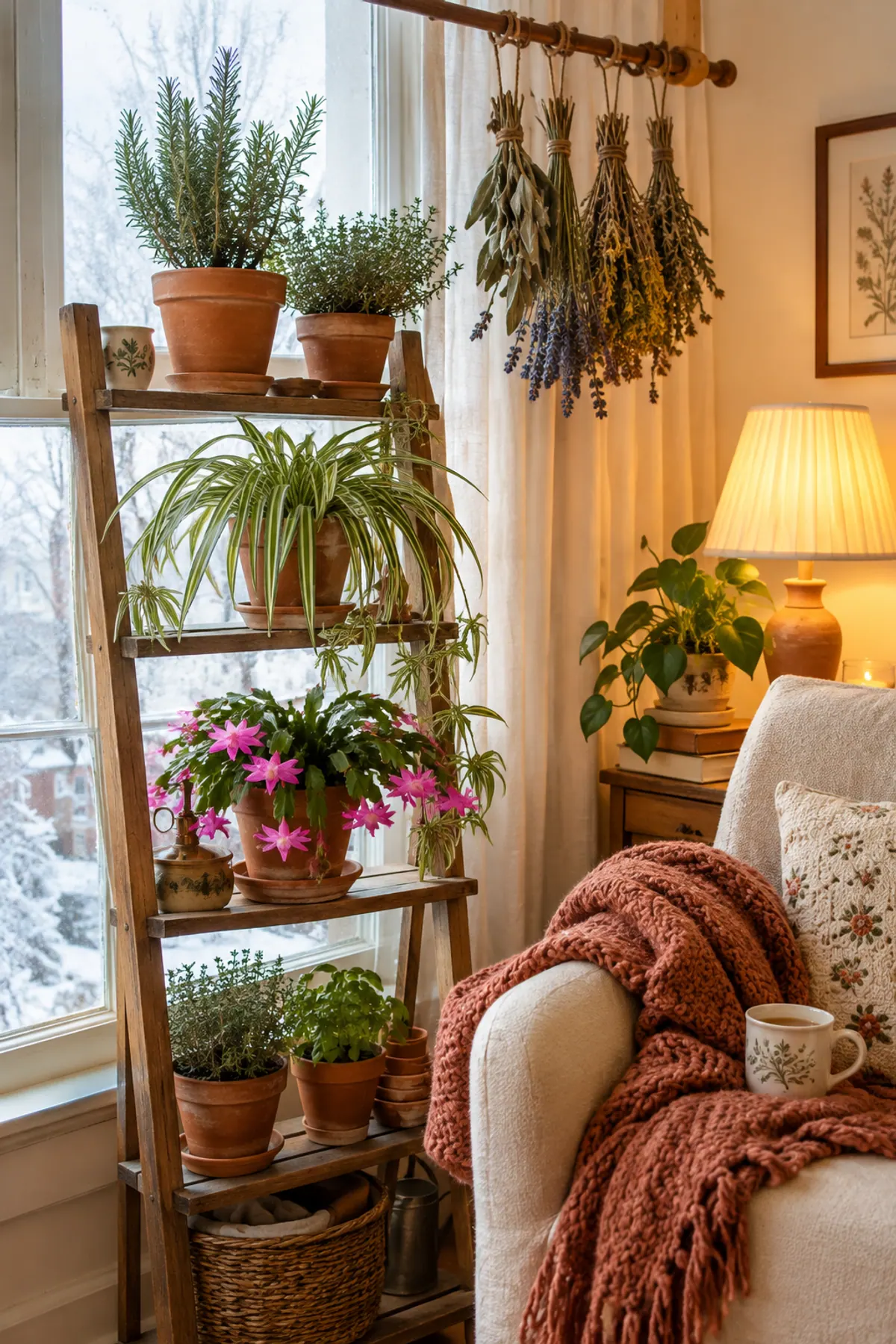
Times are rough guides and run slower in a cool winter room. Rosemary is the one to be patient with; many cuttings rot before they root, so start three or four. Our rosemary indoors guide has more on keeping the rooted plant alive inside.
Do
- Change the water weekly and rinse the glass
- One cutting per tube for herbs
- Bright light a few feet from a window
- Pot up once roots reach 1 to 2 inches
Avoid
- Hot afternoon sun on the glass, which warms the water and feeds algae
- Leaves sitting under water
- Leaving roots in water for months, which makes the move to soil harder
- Heavy jars on adhesive strips
Propagation station shopping list
Stations and supplies
- Start here
Wall hanging propagation station, 3 to 5 tubes
Typically $12 to $18
The easy first station.
Check price on Amazon for Wall hanging propagation station, 3 to 5 tubes -
3 tier wall propagation station, 15 tubes
Typically $20 to $27
For a bigger collection.
Check price on Amazon for 3 tier wall propagation station, 15 tubes -
Desktop propagation station with bulb vases
Typically $15 to $19
Counter version, no wall needed.
Check price on Amazon for Desktop propagation station with bulb vases -
Suction cup window shelf, clear acrylic
Typically $10 to $20
No-drill window ledge.
Check price on Amazon for Suction cup window shelf, clear acrylic -
Removable adhesive picture hanging strips
Typically $8 to $15
Renter-safe fixing.
Check price on Amazon for Removable adhesive picture hanging strips -
Small spring tension rod, 16 to 28 in
Typically $8 to $15
Turns a window into a rail.
Check price on Amazon for Small spring tension rod, 16 to 28 in -
Hanging light bulb glass vases, set
Typically $12 to $25
Hangs from a curtain rod.
Check price on Amazon for Hanging light bulb glass vases, set -
Glass test tubes with cork stoppers, 25 mm
Typically $10 to $20
For a DIY block.
Check price on Amazon for Glass test tubes with cork stoppers, 25 mm -
Ceramic propagation vase
Typically $20 to $60
The gift-worthy one.
Check price on Amazon for Ceramic propagation vase
Pick the spot first, then the station: a window for no-drill setups, a wall beside the window for tube racks, a counter for herbs. One cutting in a glass is enough to start.
Frequently asked questions
What do you need for a propagation station?
A holder, clear glass tubes or small vases, clean water and a bright spot out of hot direct sun. Clean scissors to cut below a node and a way to note the cutting date round it out.
Can you propagate plants in test tubes?
Yes. Test tubes suit single cuttings of pothos, philodendron, tradescantia and herbs such as basil and mint. Use tubes about 20 to 25 mm wide so stems and roots have room, and change the water weekly.
How do you make a propagation station without drilling?
Use a suction cup shelf on the window glass, a wooden strip on removable adhesive strips, a tension rod inside the window frame, or bulb vases hung from your curtain rod. Check weight ratings, since water and glass are heavy.
How often should you change the water in a propagation station?
About once a week, or sooner if the water turns cloudy or green. Rinse the tube when you do, and top up between changes so the node stays under water.
Which plants propagate well in water?
Pothos, heartleaf philodendron, tradescantia, coleus, spider plant babies, basil and mint root easily. Rosemary, sage and oregano also root from soft new stems, but more slowly.
Where should a propagation station be placed?
Within a few feet of an east or north window, or a bright spot out of direct afternoon sun. Hot sun on glass warms the water and feeds algae, while a dark corner slows rooting.
Save it for later
Pin this to your Garden DIY board so it's there when you need it.
Save to Pinterest