This post contains affiliate links. As an Amazon Associate we earn from qualifying purchases, at no extra cost to you. Read our disclosure.
Safety first: Herbs can be powerful. If you are pregnant, nursing, take medication or have a health condition, check with your doctor or pharmacist first. Please read our herbal & garden safety notes before you start.
Key takeaways
- $15, $30 or $50: one plant and a card, two plants and snips, or a holiday cactus with a watering can, with each total added up line by line
- Every basket has four parts: a living plant, a liner or saucer, one small tool and a care card
- Pet homes: the ASPCA lists spider plant, peperomia, holiday cactus and zebra haworthia as non-toxic to dogs and cats, and snake plant, jade and pothos as toxic
- Winter trips: heat the car first, never use a cold trunk, wrap pots and not leaves, and hand the basket over the same day
In this post13 sections
- What goes in a plant lover gift basket
- The $15 plant gift basket: one plant, one card
- 1. The $15 starter basket
- The $30 plant gift basket: two plants and a tool
- 2. The $30 two-plant basket
- The $50 plant gift basket: a holiday cactus for a host or parent
- 3. The $50 holiday cactus basket
- Which plants are safe in a basket for a home with pets
- How to pack a live plant basket in winter: 6 steps
- The care card that goes in the basket
- Save money: pot up a plant you already own
- Basket parts to buy
- FAQ
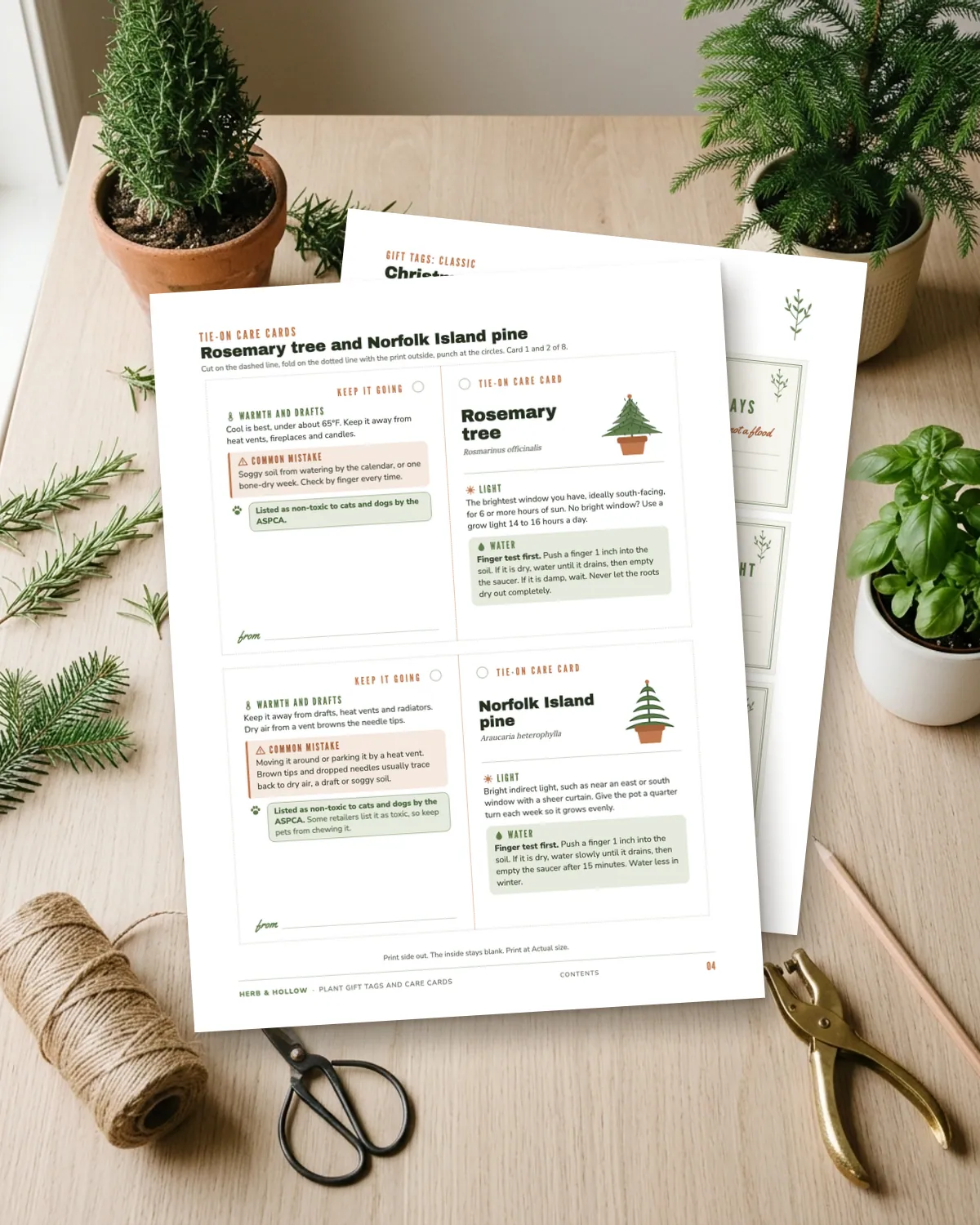
The part of a plant gift most people skip is the instructions. The free plant care cards (PDF) give you a card to print and tuck in the basket, and the Plant Gift Tags and Care Cards ($5) are the ready-made set if you would rather not write each card by hand: 8 care cards and 12 gift tags with the light, water and pet lines already filled in.
What goes in a plant lover gift basket
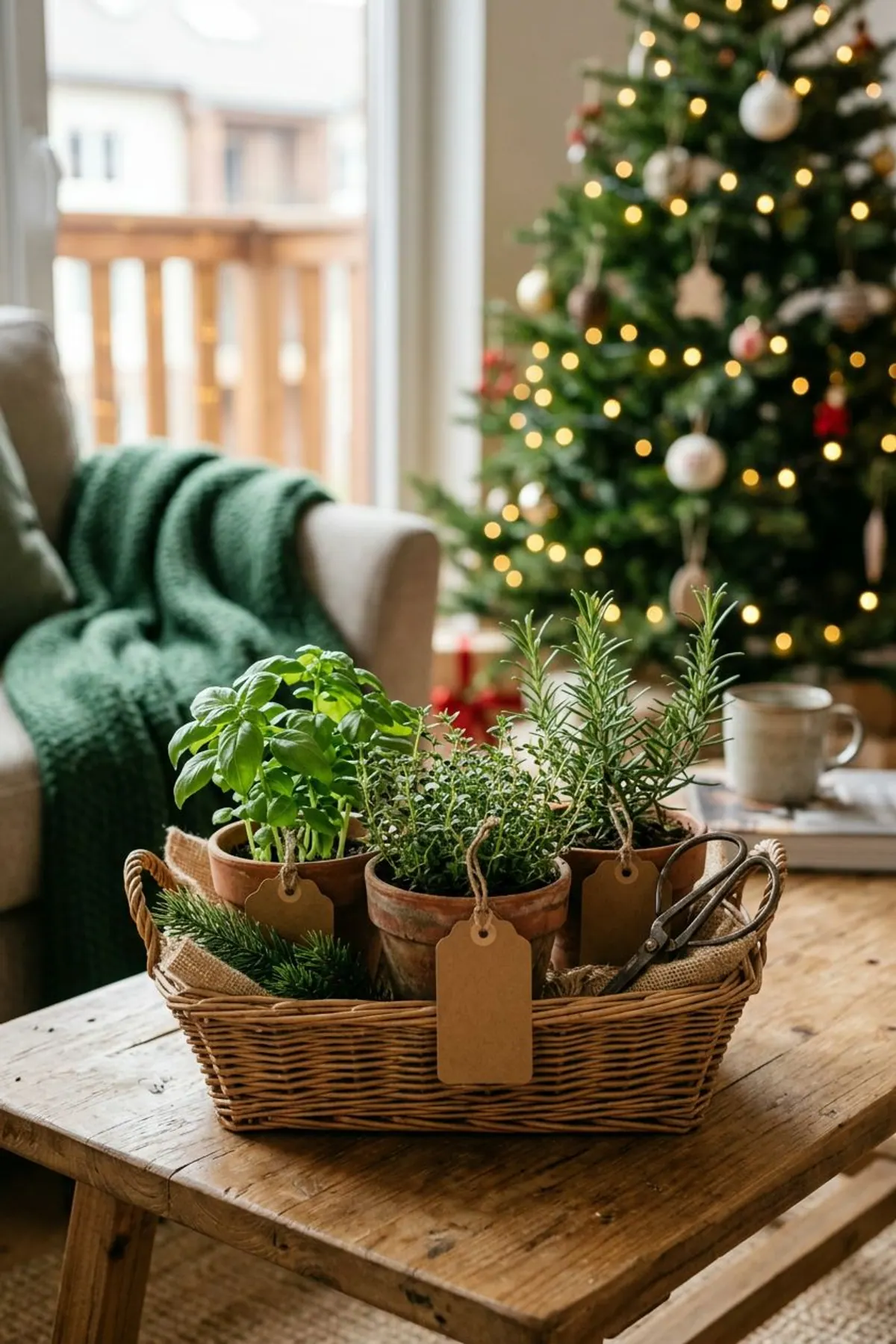
Every build below follows one formula: a living plant that suits the receiver's light, a basket with a liner or saucer so water cannot leak, one small tool and a care card. Extra plants and a cover pot are what move a basket from $15 to $50. Prices are examples for 2026-11-18, not quotes, and plant prices vary by store and by size.
| Budget | What is inside | Best for |
|---|---|---|
| $15 | One 4-inch plant, a small basket, a saucer, paper and a care card | A coworker, a teacher or a neighbor |
| $30 | Two 4-inch plants, a handled basket, snips and a care card | A friend who already has a few plants |
| $50 | A 6-inch Christmas cactus in a cover pot, a haworthia, a watering can, snips and a care card | A parent, a host or a close friend |
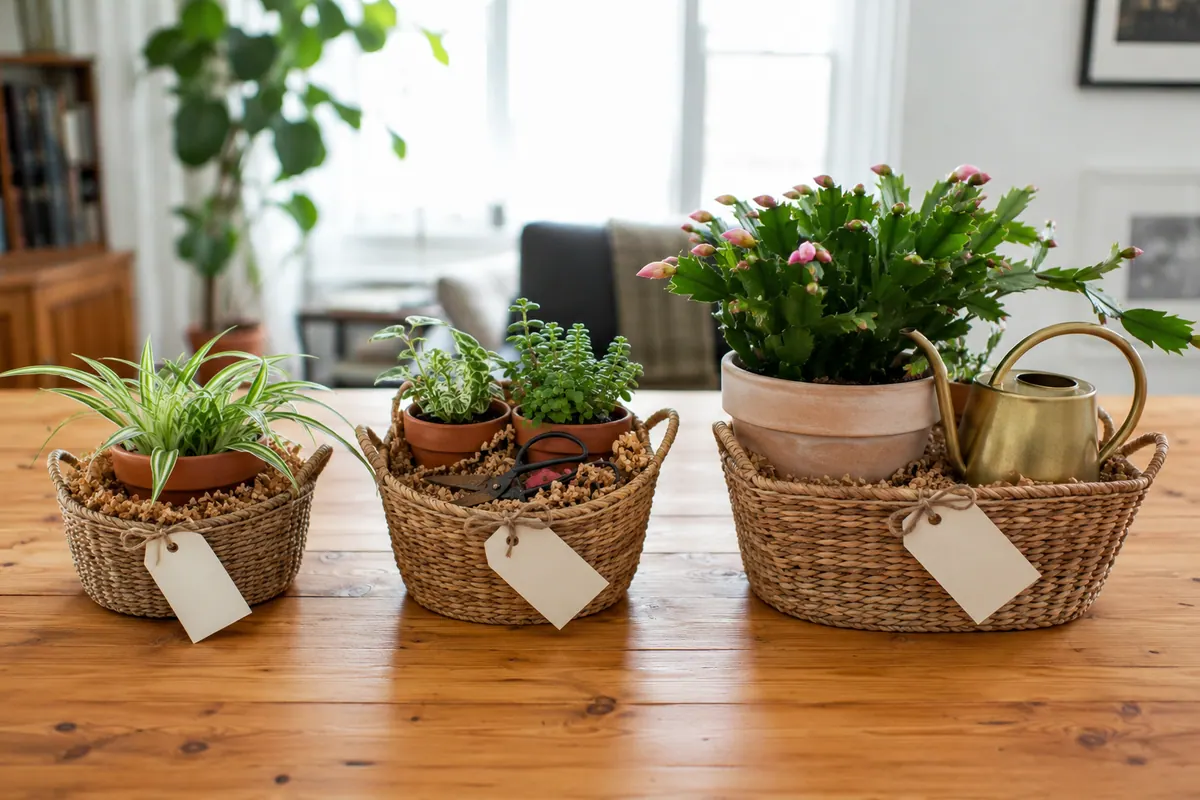
The $15 plant gift basket: one plant, one card
1The $15 starter basket
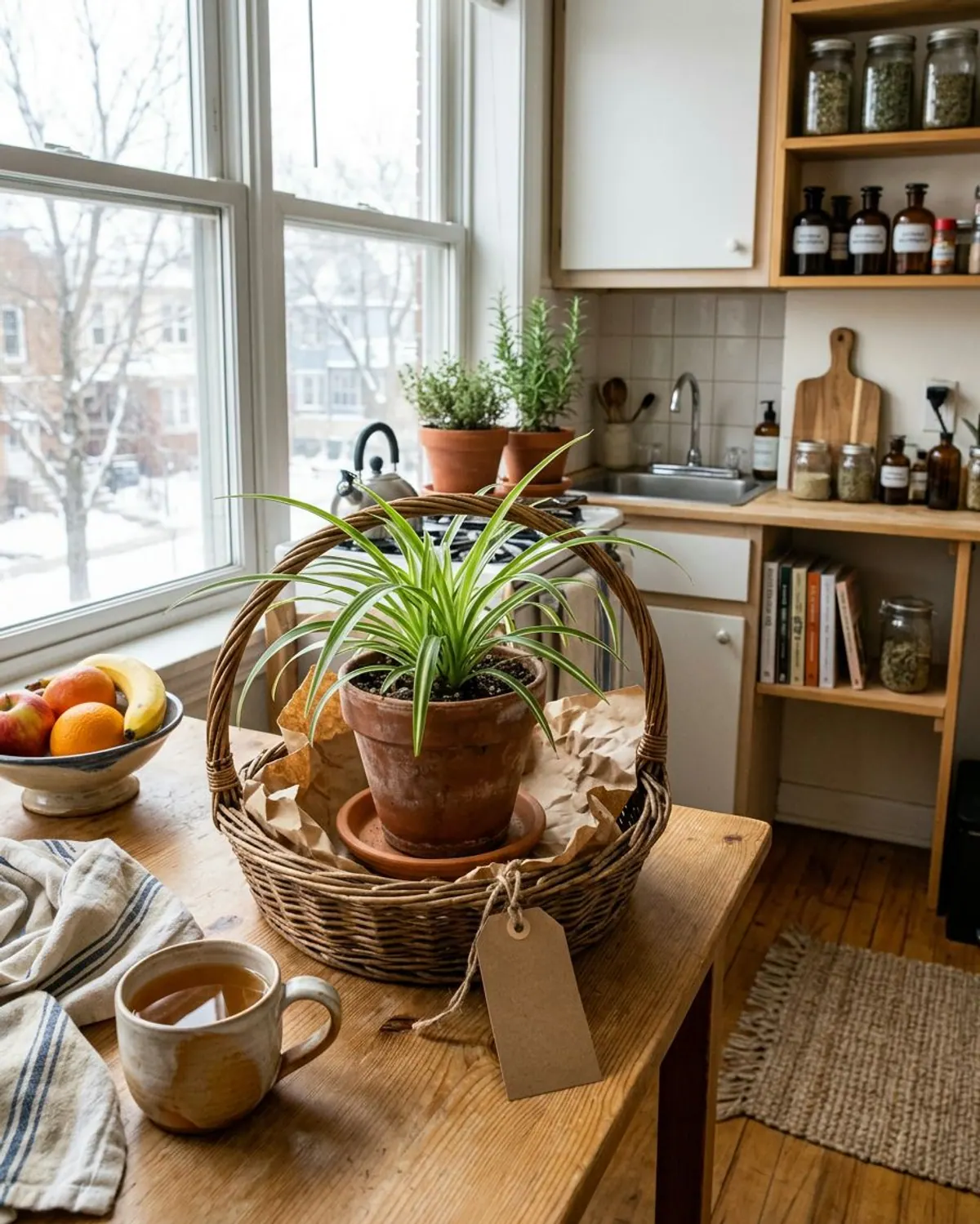
One healthy 4-inch plant in a small basket is the cheapest plant gift that still looks planned. A spider plant or a peperomia is a sensible pick, because the ASPCA lists both as non-toxic to dogs and cats, and both cope with an ordinary indoor window. Set the plant, still in its nursery pot, on a saucer inside the basket, wedge crumpled paper around it and tie the care card to the handle.
- Pick a plant with firm green leaves and no yellowing, and lift the pot to check the base is not sitting in water.
The base for every tier, and the receiver can reuse it for bread, tools or a second plant.
| Part | Example cost |
|---|---|
| Small basket with a handle | $5 |
| 4-inch plant in its nursery pot (spider plant or peperomia) | $5 |
| Saucer or plastic liner for under the pot | $2 |
| Share of a roll of kraft paper and twine | $2 |
| Home-printed care card | $1 |
| Total | $15 |
If you already own twine, paper and a basket, the same gift costs about $8. The part worth paying for is the plant itself.
The $30 plant gift basket: two plants and a tool
2The $30 two-plant basket
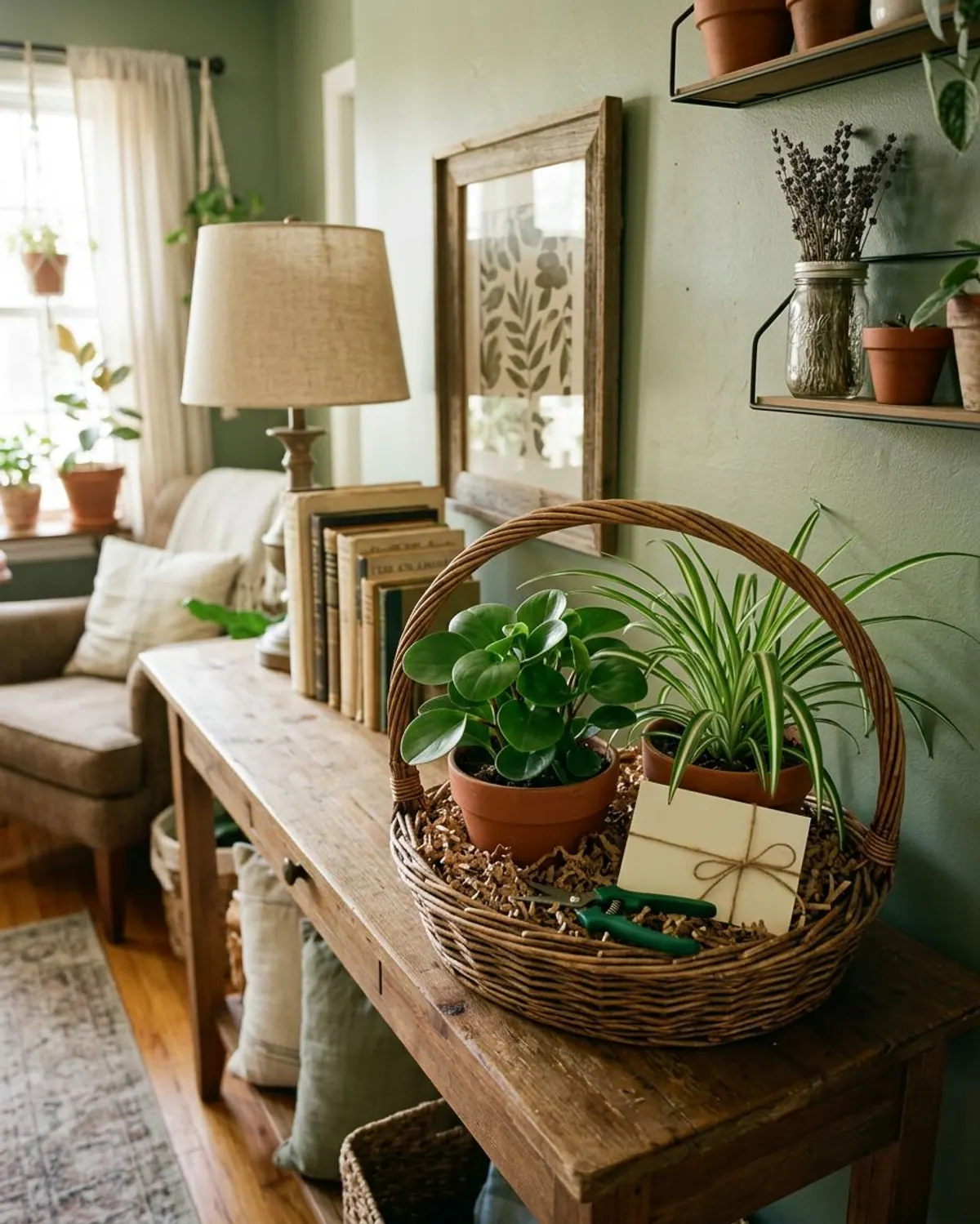
Two plants with different leaf shapes, such as an upright peperomia and a trailing spider plant, make the basket feel full without crowding it. Add a pair of small snips so the receiver can trim brown tips, and tuck the care card into the handle. Both plants are on the ASPCA non-toxic list for dogs and cats, which makes this the easy basket for a home with pets.
- Choose two plants that want the same light, so one care card covers both.
The one tool that lets the receiver trim dead leaves and keep the plant tidy.
| Part | Example cost |
|---|---|
| Basket with a handle | $8 |
| Two 4-inch plants (peperomia and spider plant) | $12 |
| Garden snips | $6 |
| Share of kraft paper, twine and filler | $3 |
| Home-printed care card | $1 |
| Total | $30 |
The $50 plant gift basket: a holiday cactus for a host or parent
3The $50 holiday cactus basket
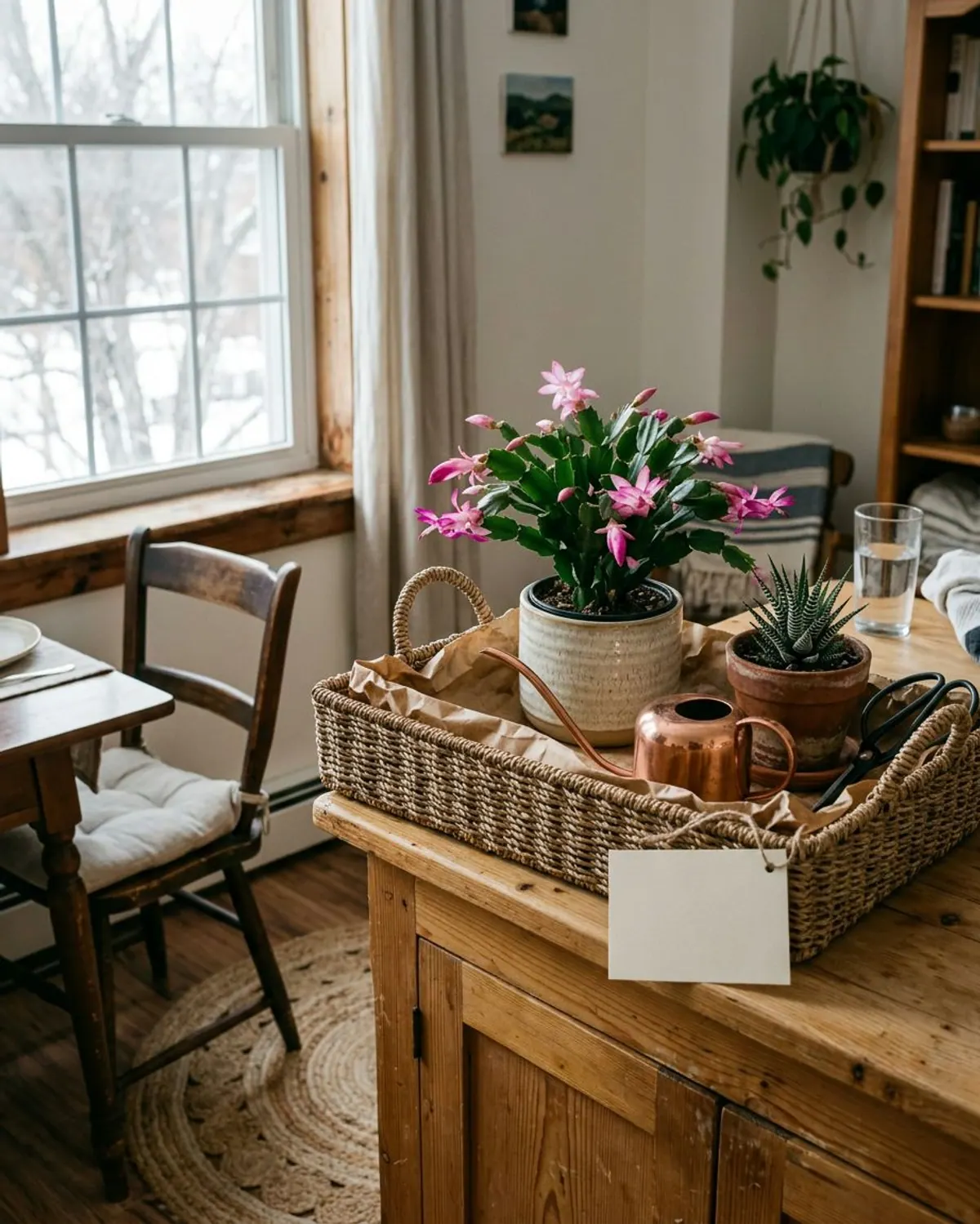
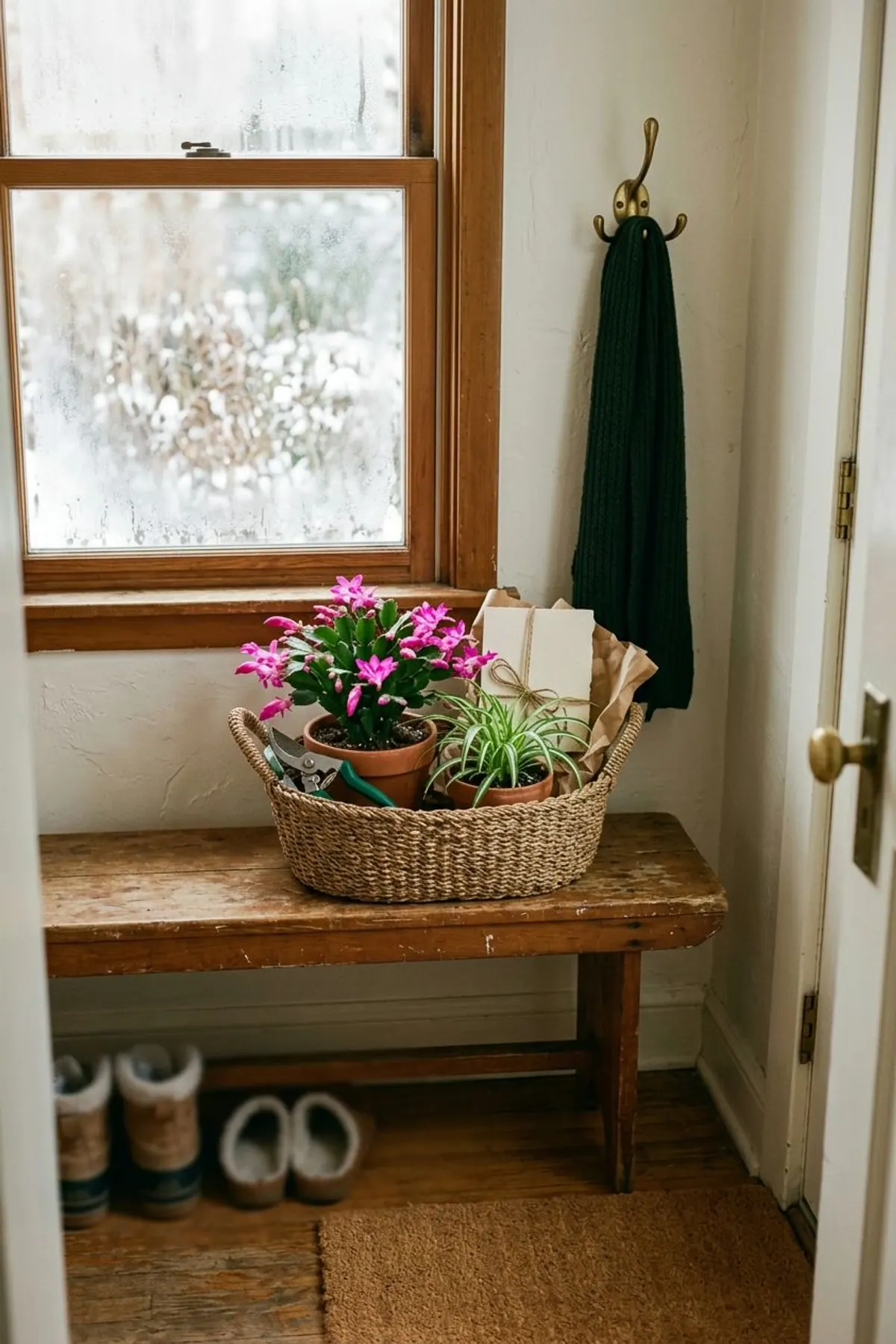
A flowering Christmas cactus is the plant that reads as a Christmas gift on its own, and it sits well beside a small succulent. Put the cactus in a cream cover pot with a saucer, add a 4-inch zebra haworthia, a small watering can and snips, and let the card say where the basket should sit. The ASPCA lists both the holiday cactus (Schlumbergera bridgesii) and zebra haworthia (Haworthia fasciata) as non-toxic to dogs and cats, but cacti sold at Christmas are not always labeled with the Latin name, so check the tag.
- Keep the cactus pot in a plastic liner inside the cover pot, so the roots can drain and the cover pot stays dry.
A narrow spout waters at the soil and keeps the leaves dry.
| Part | Example cost |
|---|---|
| Rectangular basket | $8 |
| 6-inch Christmas cactus | $14 |
| Cream cover pot for the cactus | $6 |
| 4-inch zebra haworthia | $5 |
| Small copper-look watering can | $8 |
| Garden snips | $5 |
| Share of kraft paper, twine and filler | $3 |
| Home-printed care card | $1 |
| Total | $50 |
For single plants and other gifts for people who garden, see our Christmas gifts for gardeners, and for baskets built around herbs instead of houseplants use the herb gift basket ideas. If you would rather make the gift than buy it, the DIY gifts for gardeners list shows what each one costs and how long it takes, and a herb garden kit is the no-plant-carrying alternative.
Which plants are safe in a basket for a home with pets
Name the plant on the card and check it against the ASPCA list before you give it, because several common gift plants are on its toxic list. The table shows what the ASPCA plant pages said when we opened them for this guide. A listing is a reference and not a guarantee for your pet.
| Plant | ASPCA listing for dogs and cats | Basket note |
|---|---|---|
| Spider plant | Non-toxic | A cheap, easy anchor for the $15 and $30 baskets |
| Peperomia (baby rubber plant) | Non-toxic | Upright shape, good beside a trailing plant |
| Holiday cactus (Schlumbergera bridgesii) | Non-toxic | The flowering plant for the $50 basket |
| Zebra haworthia | Non-toxic | A small succulent that suits a bright sill |
| Rosemary | Non-toxic | The Christmas-tree herb, and the base of our herb gift baskets |
| Snake plant | Toxic | Leave it out of baskets for homes with a cat or dog |
| Jade plant | Toxic | A common gift succulent, but skip it for pet homes |
| Pothos | Toxic | Easy to find and cheap, so check the receiver's pets first |
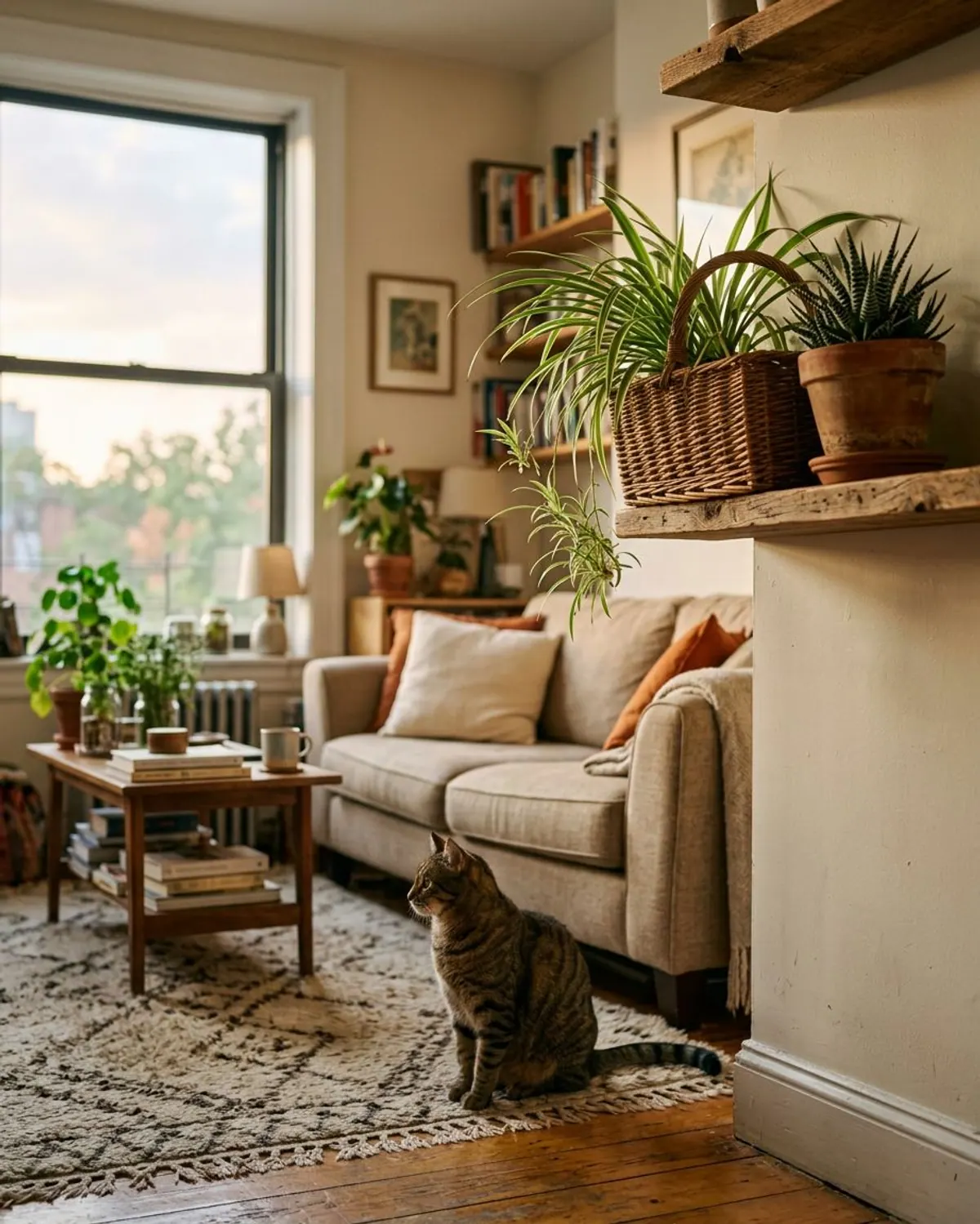
Our full list of pet-safe houseplants goes further, and the Christmas plant gift pet safety notes cover poinsettias, amaryllis and other holiday plants. If a pet eats a plant, call your vet or the ASPCA Animal Poison Control Center at (888) 426-4435.
How to pack a live plant basket in winter: 6 steps
A basket of living plants is a gift that can be damaged between the store and the door. Purdue Extension says cold and wind for as short a time as the walk to the car can damage some plants, so the plan is to keep the trip short and the basket out of the cold.
-
Step 1: Water a day ahead and let each pot drain
Water the day before, then let each nursery pot drain fully in the sink. A pot that still drips will soak the paper and the car seat.
-
Step 2: Line the basket and set each pot on a saucer
Put a plastic liner or a saucer under every pot so water cannot reach the basket weave. Keep the plant in its own pot with drainage holes and use any decorative cover pot only as a sleeve.
-
Step 3: Wedge the pots with crumpled paper and leave the leaves open
Crumpled kraft paper stops the pots tipping and adds a layer of air against the cold. Wrap the pots and not the plants, and skip sealed plastic over the leaves.
-
Step 4: Tie the care card to the handle
Write the plant names, the window, one water rule and a pet line, then tie the card on with twine so the receiver sees it before they unwrap anything.
-
Step 5: Heat the car first and buy the plants last
Run other errands first so plants are not left in an unheated car, and warm the car before you carry the basket out if it is below freezing, as Purdue Extension advises. The Chicago Botanic Garden says never to carry plants in a cold trunk, so the basket rides on the seat or the floor, held upright in a box if needed.
-
Step 6: At the door, unwrap and move it away from drafts
Purdue Extension says to remove the wrap and keep plants away from drafts, exterior doors and heating vents. Tell the receiver where the basket should sit, and the plants have a much better chance of making it to spring.
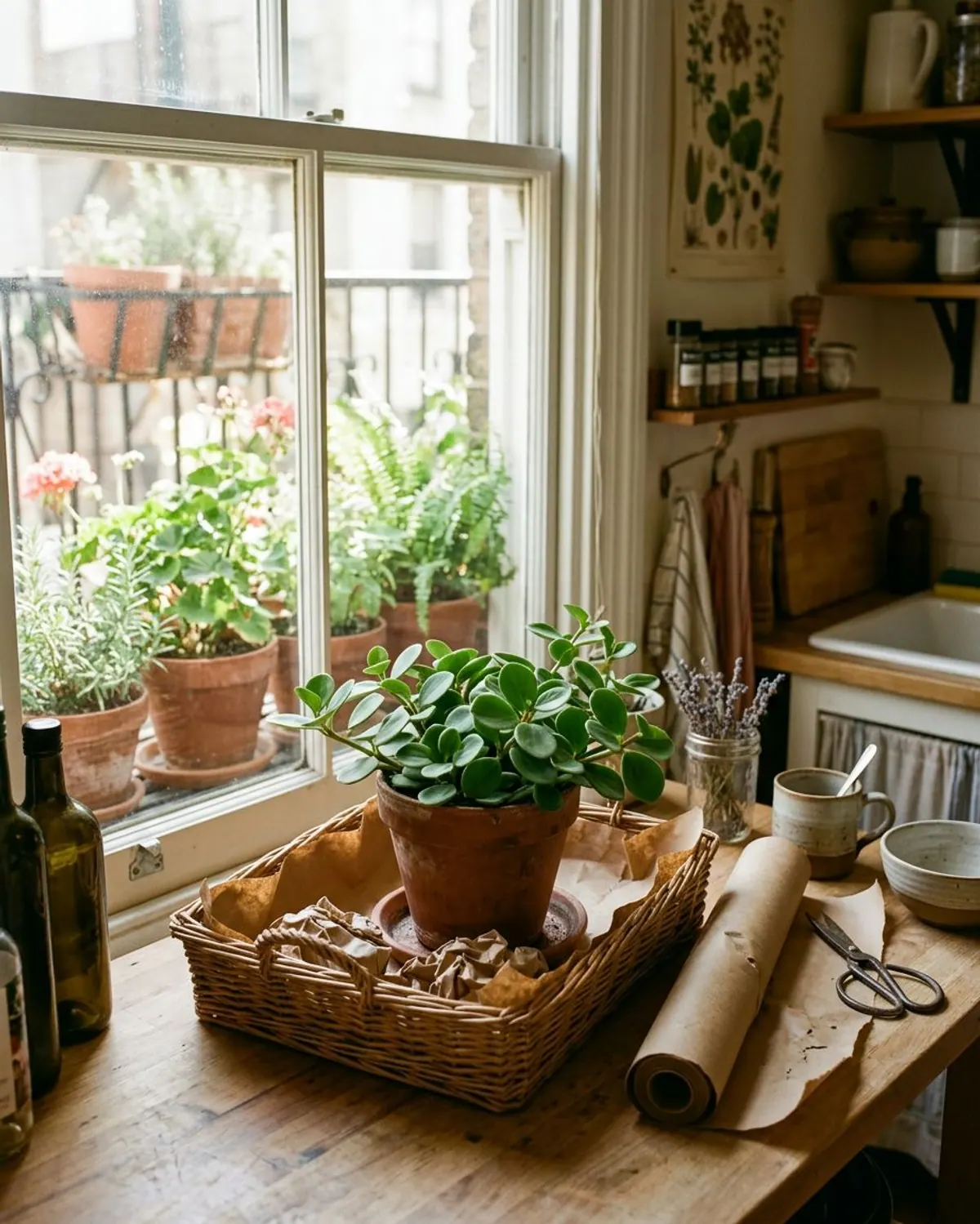
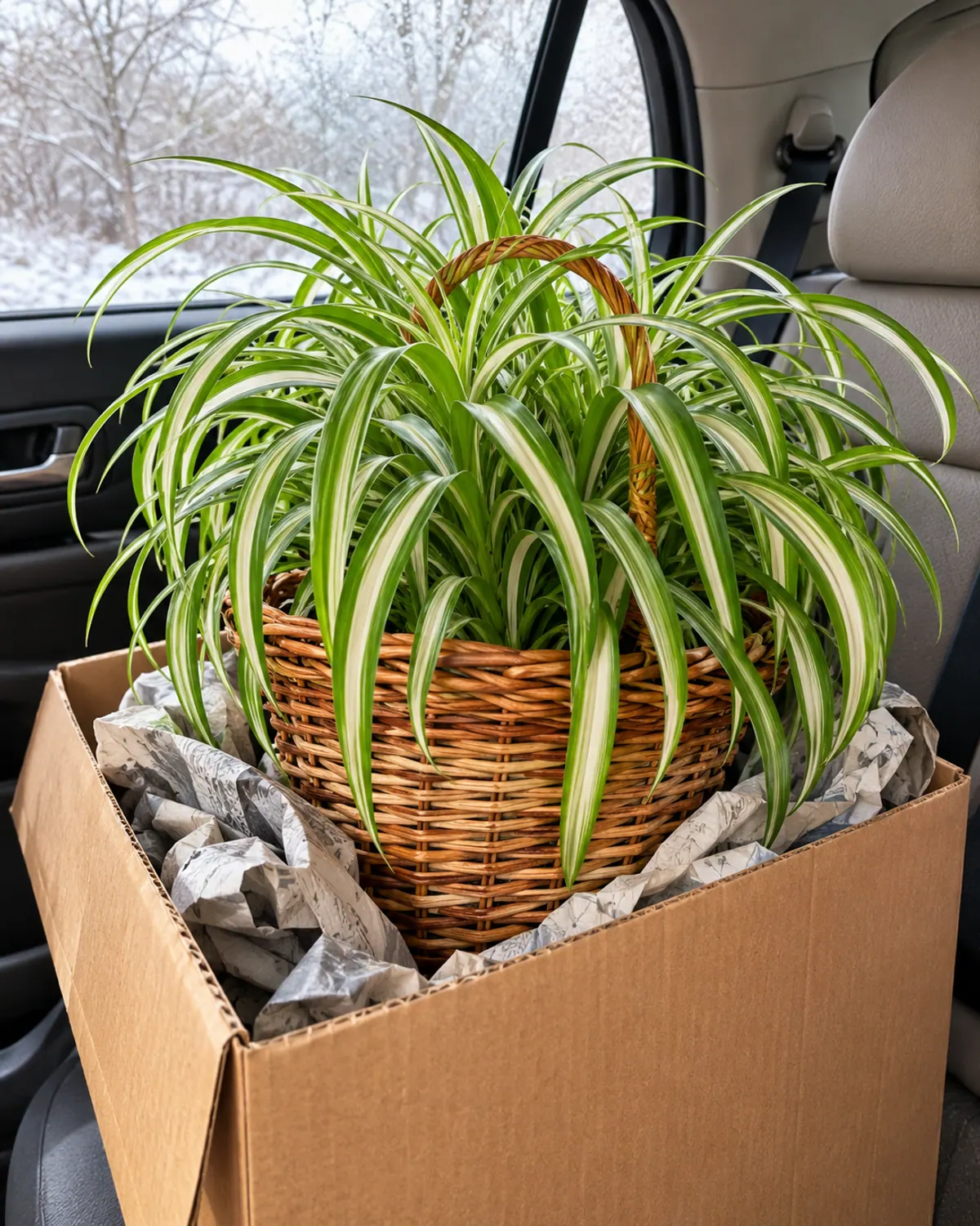
For wrapping the pot itself, our guide to how to wrap a potted plant as a gift shows each fold.
The care card that goes in the basket
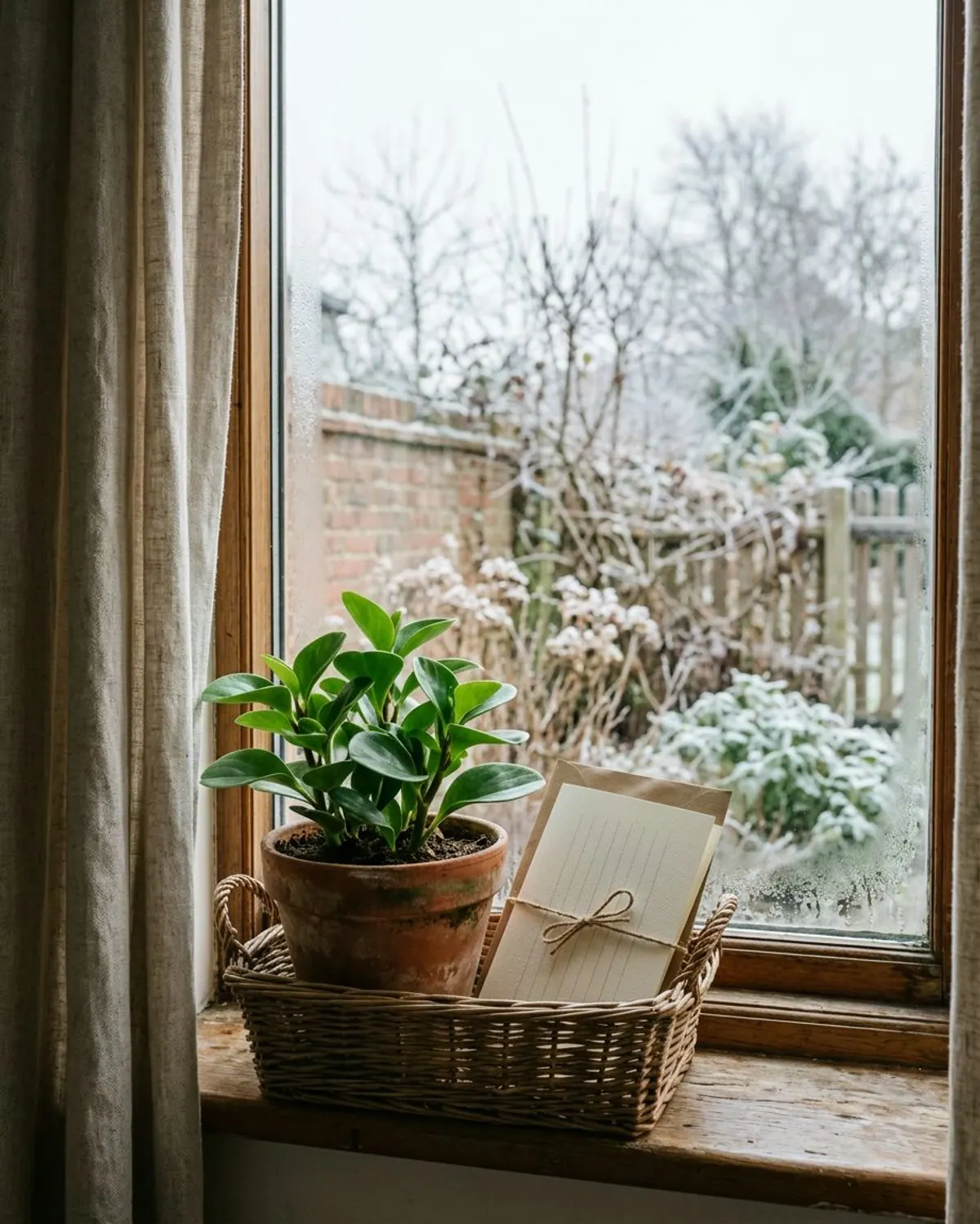
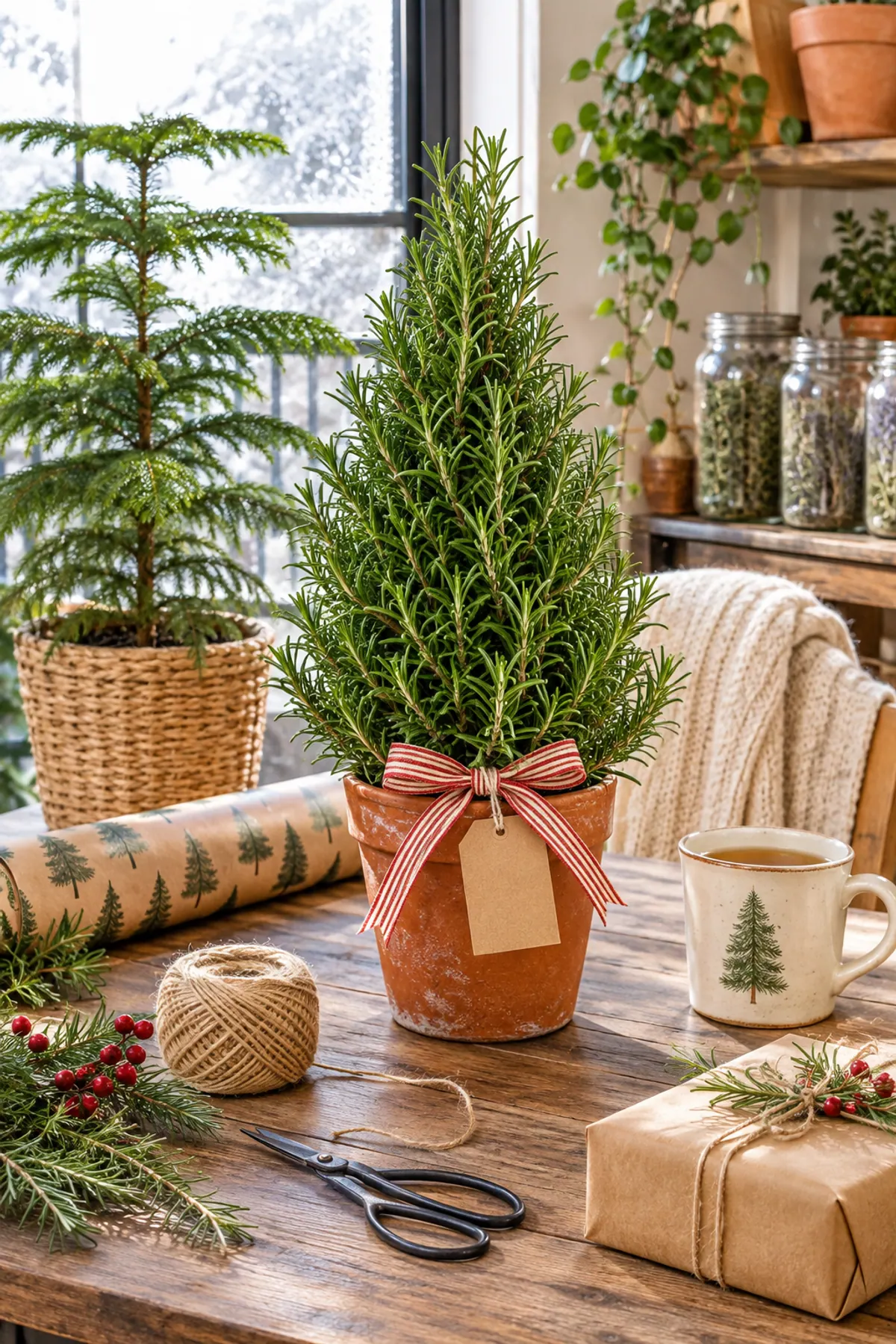
A care card has room for about 40 words. Four lines cover it: which window the plant likes, when to water (check the soil, then water when the top inch is dry), one thing to avoid such as heat vents or cold glass, and a pet line copied from the ASPCA page for that plant. Our plant care card guide shows what to write for a rosemary tree, a Norfolk Island pine and a herb pot, and you can download the free plant care cards to print.
If you are filling several baskets, the Plant Gift Tags and Care Cards save you writing each one: 8 care cards and 12 gift tags, already laid out.
Save money: pot up a plant you already own
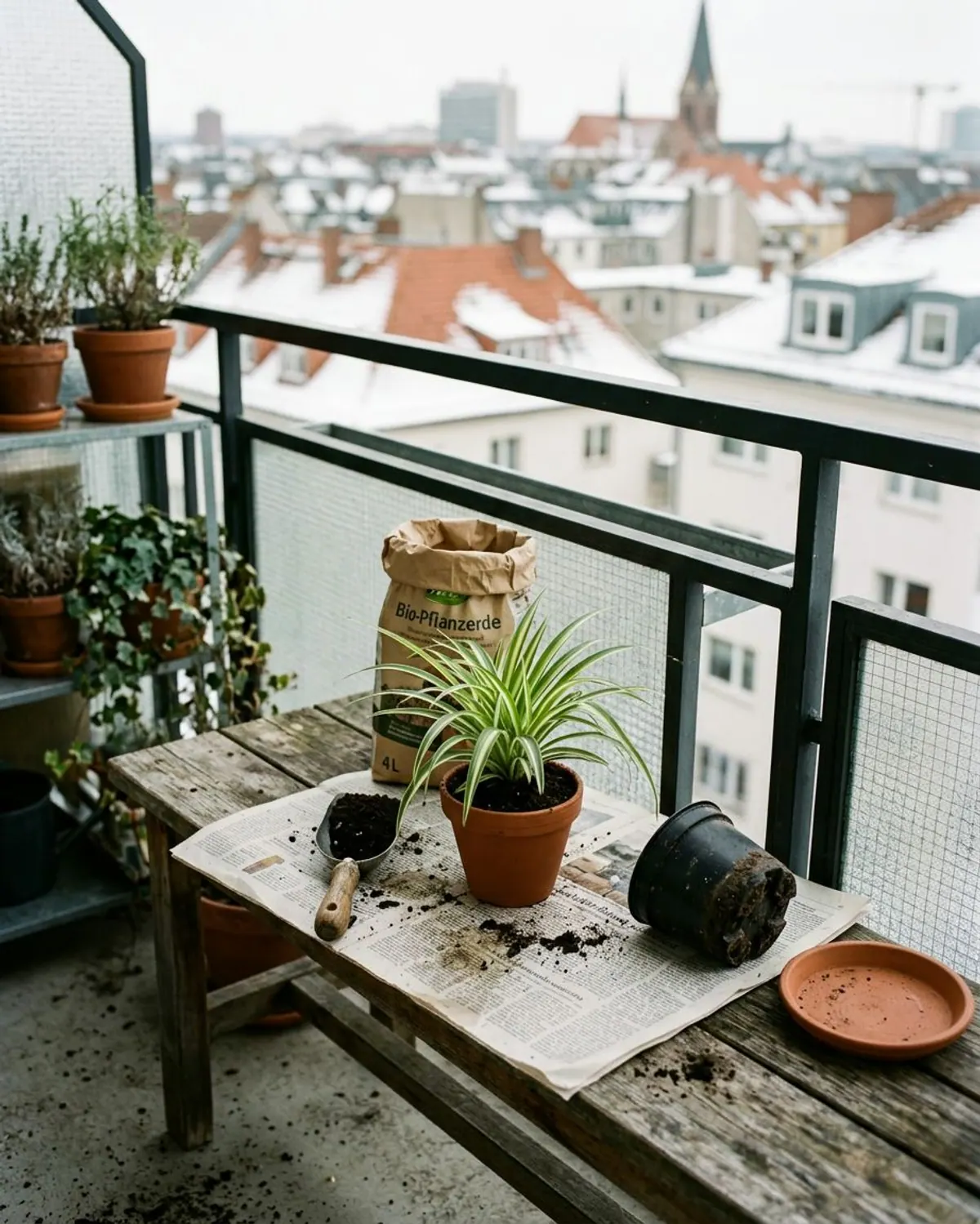
If you have a spider plant that has outgrown its pot, split it into two small pots a few weeks before you need the basket. That leaves the plants time to settle before they travel, and it takes the plant line in the $15 or $30 tier close to zero. Only do this with plants you know are healthy and free of pests.
Before you hand over the basket
Basket parts to buy
Basket parts for the three builds
- Easiest base
Wicker basket with handle
Typically $5 to $15
The base for every tier, and the receiver can reuse it for bread, tools or a second plant.
Check price on Amazon for Wicker basket with handle -
Small garden snips
Typically $5 to $12
The one tool that lets the receiver trim dead leaves and keep the plant tidy.
Check price on Amazon for Small garden snips -
Small watering can with a narrow spout
Typically $8 to $18
A narrow spout waters at the soil and keeps the leaves dry.
Check price on Amazon for Small watering can with a narrow spout -
Kraft paper roll and jute twine
Typically $5 to $12
One roll covers every basket you will make this season, and the tier tables count only the share you use.
Check price on Amazon for Kraft paper roll and jute twine -
Blank kraft gift tags
Typically $4 to $9
For the care card if you write it by hand, with room for four short lines.
Check price on Amazon for Blank kraft gift tags
Every Amazon link here is a search, so pick the size and price that suits you.
If the person you are giving the basket to will end up with a shelf of plants, the Small Space Garden Binder ($25) keeps their plant care, watering and seasonal planning in one place and holds every Herb & Hollow printable, including the tags and the plant tracker. The code HERB20 takes 20% off the binder at checkout.
Care lines and plant lists here are broad starting points, and the label on your plant and your own light come first. This guide is gardening information, not veterinary advice, and the pet-safety notes are not a substitute for asking your vet.
Frequently asked questions
How much should a plant lover gift basket cost?
$15 buys one healthy 4-inch plant in a small basket with a care card. $30 adds a second plant and a pair of snips, and $50 adds a flowering Christmas cactus in a cover pot, a small succulent and a watering can. Prices here are examples for 2026-11-18, not quotes.
What goes in a plant lover gift basket?
A living plant that suits the receiver's light, a basket with a liner or saucer, one small tool such as garden snips, and a care card with the window, the water rule, one thing to avoid and a pet note.
Can you give a plant gift basket in winter?
Yes, if the trip is short and warm. Wrap the pots and not the leaves, heat the car before you carry the basket, never leave it in a cold trunk and hand it over the same day, as Purdue Extension and the Chicago Botanic Garden advise.
Which plants are safe in a gift basket for pet owners?
The ASPCA lists spider plant, peperomia, the holiday cactus Schlumbergera bridgesii, zebra haworthia and rosemary as non-toxic to dogs and cats, and snake plant, jade and pothos as toxic. A listing is a reference and not a guarantee for your pet.
What do you write on a plant care card?
Four short lines: which window it sits in, water when the top inch of soil is dry, one thing to avoid such as heat vents or cold glass, and a pet line copied from the ASPCA page for that plant.
Save it for later
Pin this to your Garden DIY board so it's there when you need it.
Save to Pinterest