This post contains affiliate links. As an Amazon Associate we earn from qualifying purchases, at no extra cost to you. Read our disclosure.
Safety first: Herbs can be powerful. If you are pregnant, nursing, take medication or have a health condition, check with your doctor or pharmacist first. Please read our herbal & garden safety notes before you start.
Key takeaways
- A gift care card needs four lines: light, water, what to avoid and a pet note
- Write "water when the top inch of soil is dry", not a weekly schedule
- For pets, write "listed as non-toxic by the ASPCA" only after checking the plant's ASPCA page
- The ASPCA lists rosemary, Norfolk Island pine, basil and thyme as non-toxic, and mint and parsley as toxic
- Print the free page: four cards per US Letter sheet
In this post12 sections
- The four lines every plant care card needs
- A plant care card for a rosemary tree (copy-ready)
- A plant care card for a Norfolk Island pine
- A plant care card for a herb pot
- The pet note: what the ASPCA lists
- Care cards are for the soil check, and a tracker is for the other 20 plants
- How to print, cut and tie on the card
- What to write on a plant gift tag
- Mistakes that make a care card useless
- After the gift: help them keep the plant alive
- Supplies for plant care cards
- FAQ
The four lines every plant care card needs
A plant care card for a gift is short. It has four lines: where the plant sits, when to water it, what to avoid, and a pet note. Anything more and the person you gave it to will not read it.
| Line | What to write | Why it matters |
|---|---|---|
| Light | Name the window: "brightest window you have" or "bright, no direct midday sun" | Most gifted plants fail from a dark spot, not from bad watering |
| Water | "Water when the top inch of soil is dry" and "empty the saucer" | A soil check works in any home; a calendar rule does not. Extension services say to check the soil, not the date |
| Avoid | Heat vents, fireplaces, candles and cold glass | Winter living rooms are hot and dry in the wrong places |
| Pets | "Listed as non-toxic by the ASPCA" or "listed as toxic by the ASPCA, keep away from pets" | The recipient may have a cat or dog you do not know about |
Skip the long lists of Latin names and fertilizer ratios. A gift card has room for about 40 words, and every word should change what the person does on day one.

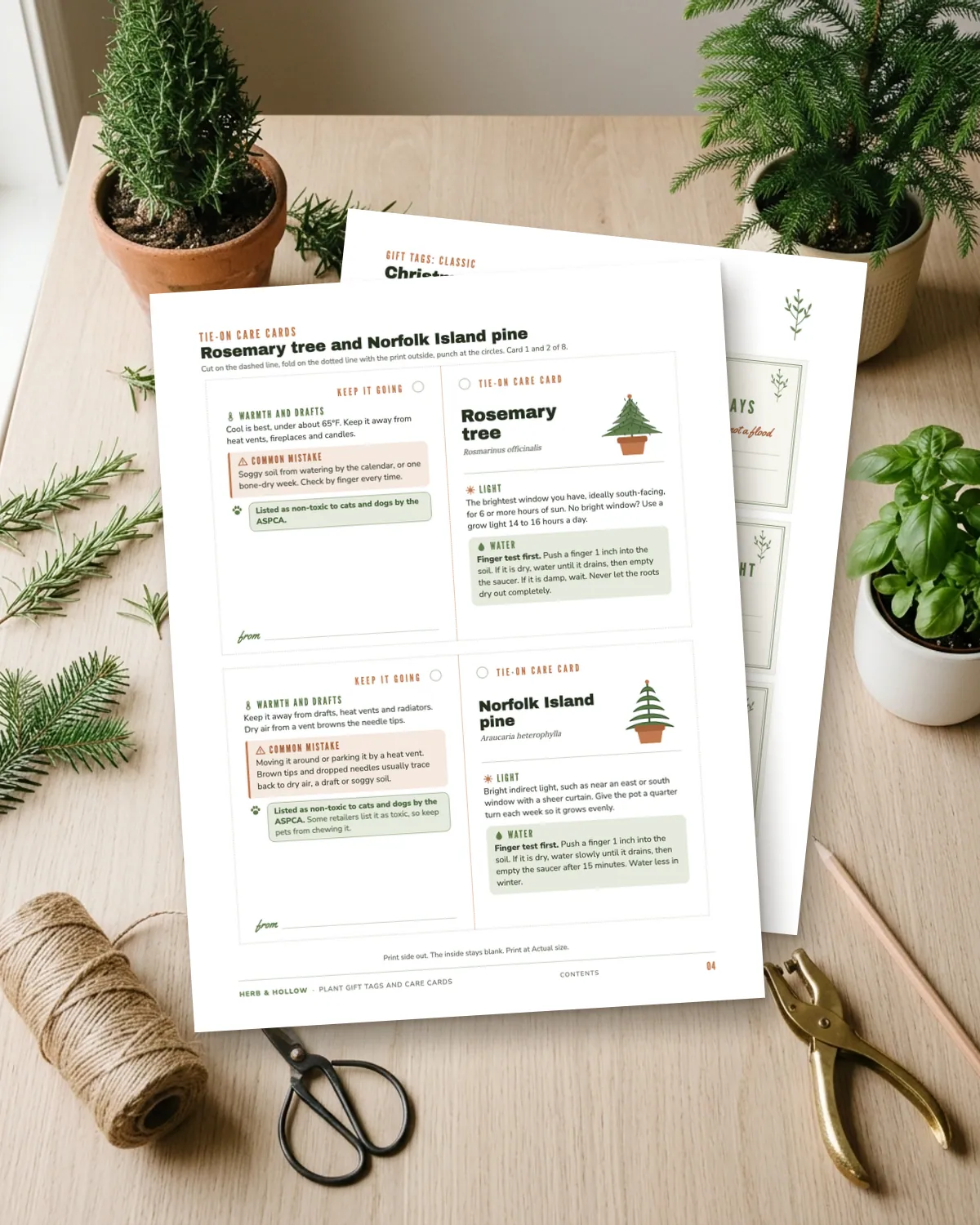
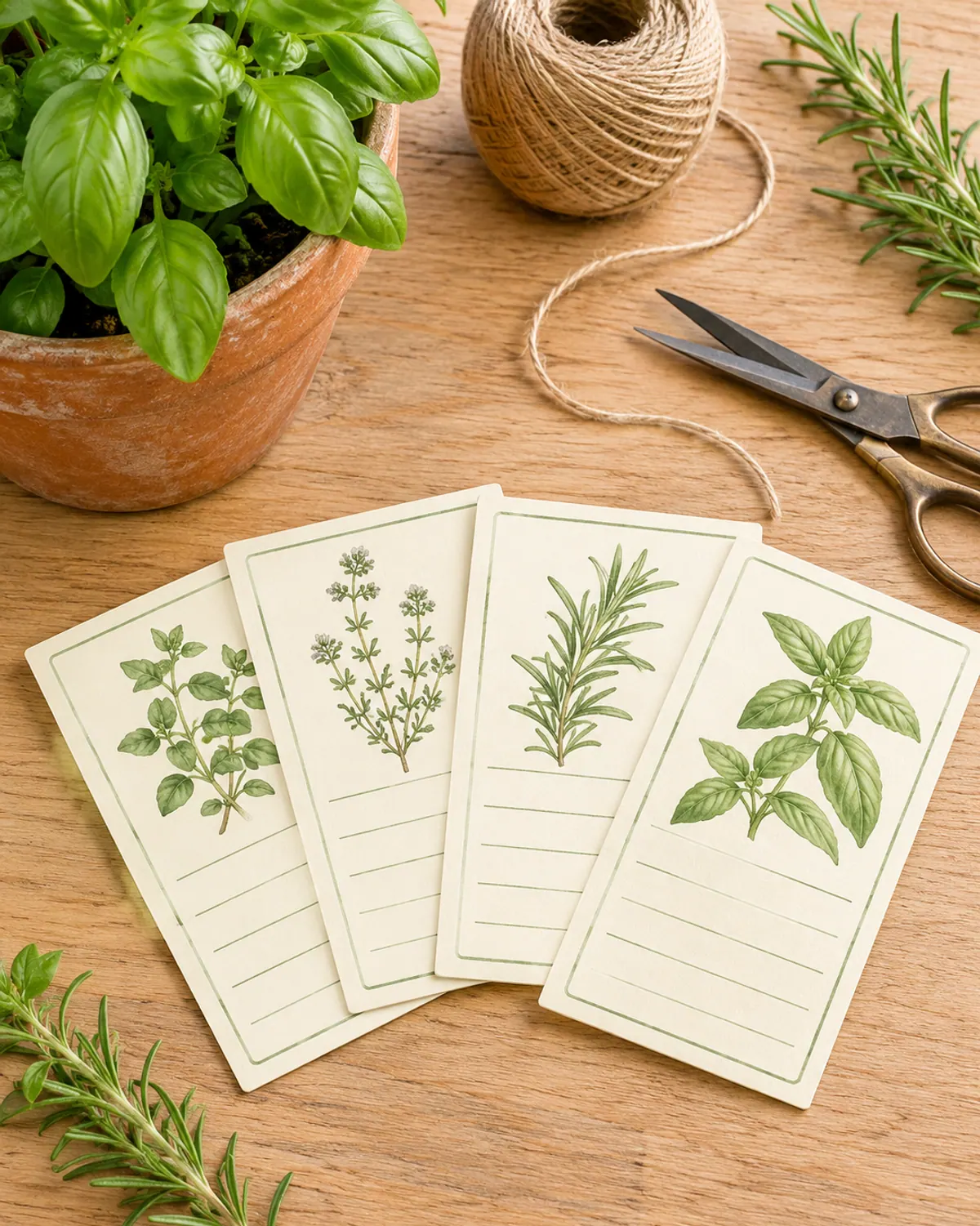
Free printable: we made four care cards you can print and cut out, for a rosemary tree, a Norfolk Island pine, a herb pot and one blank card. Download the free plant care cards (PDF). Print on plain paper or light cardstock, cut on the dashed lines and tie one on with twine.
A plant care card for a rosemary tree (copy-ready)
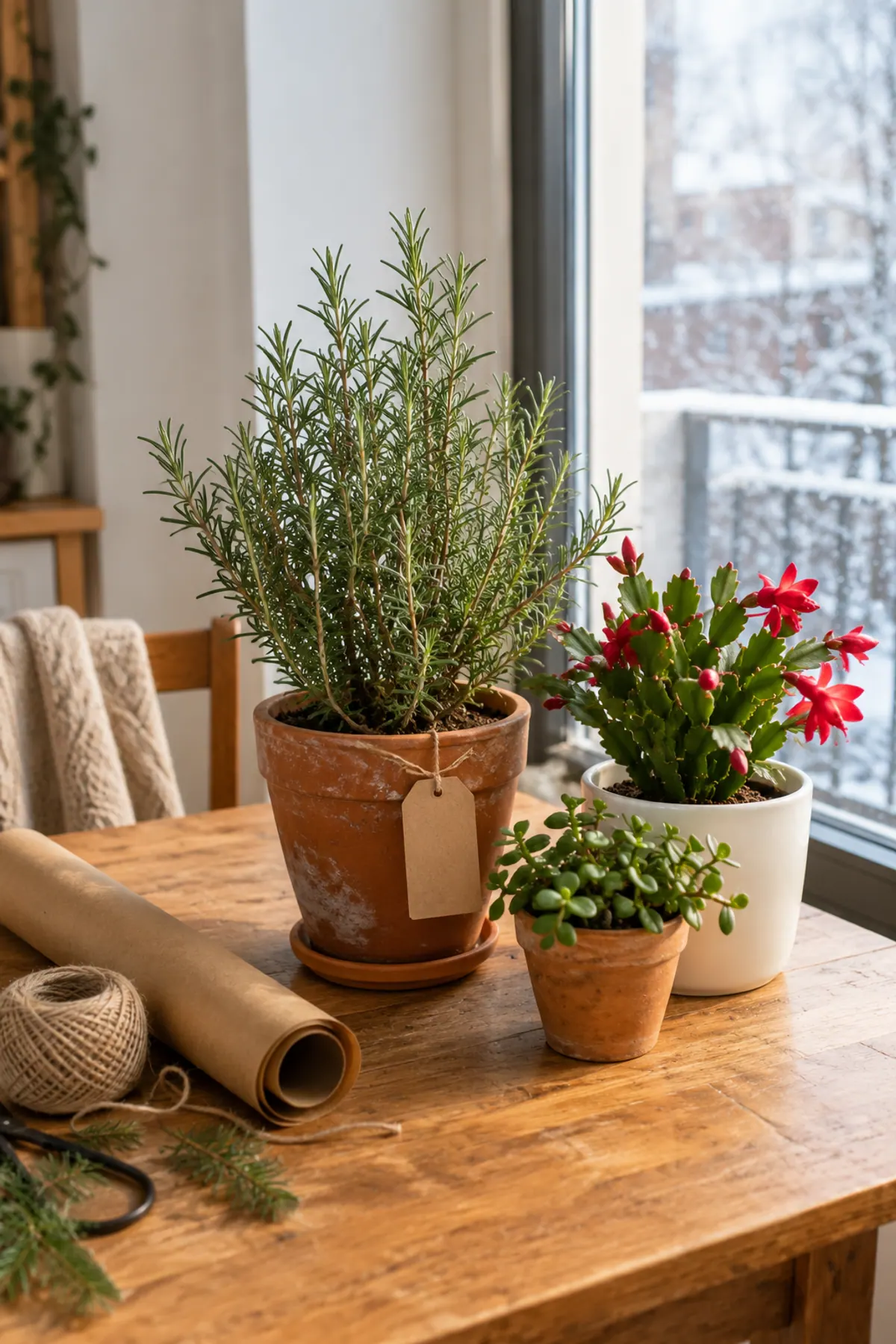
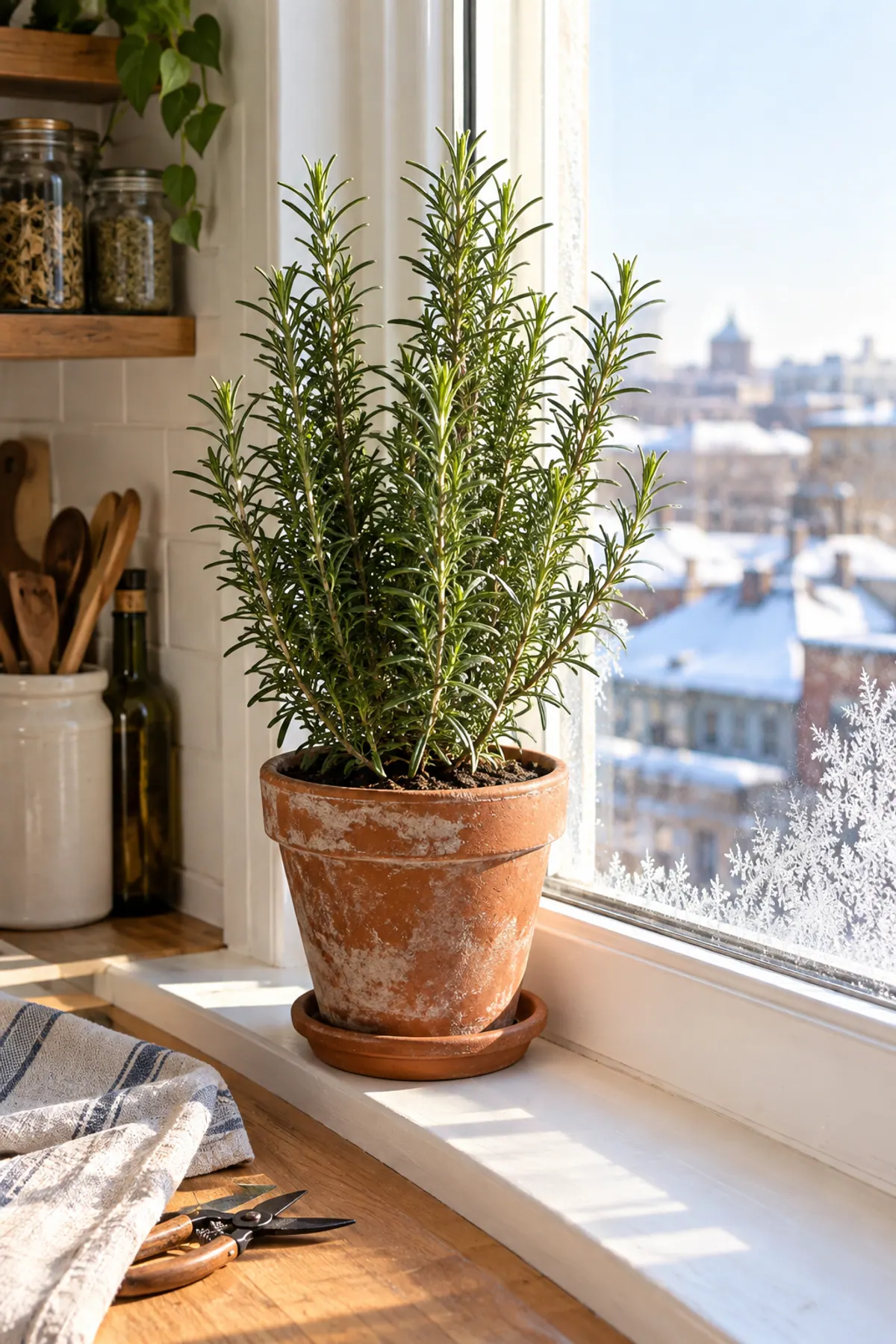
A rosemary Christmas tree is the gift most likely to arrive in a hot, dim room, so its card matters most. Here is wording you can copy. It follows the same light and watering rules as our rosemary indoors guide.
Light: Your sunniest window, or a grow light. Rosemary wants 6 or more hours of direct sun.
Water: Push a finger in. If the top inch is dry, water until it drains, then empty the saucer. Never let the whole root ball dry out.
Room: Cool and bright. Keep it away from heat vents, fireplaces and candles.
Pets: Listed as non-toxic to dogs, cats and horses by the ASPCA.
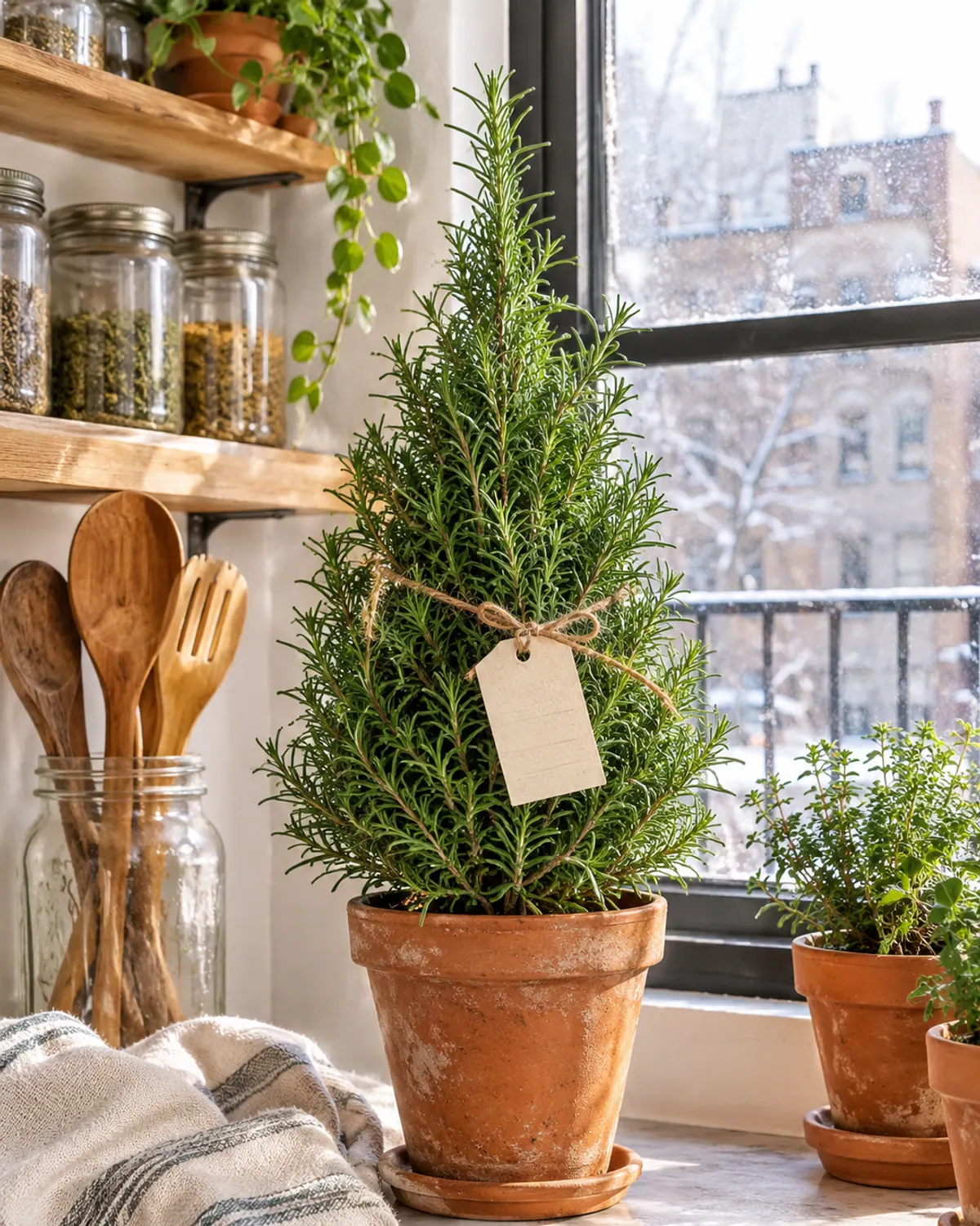
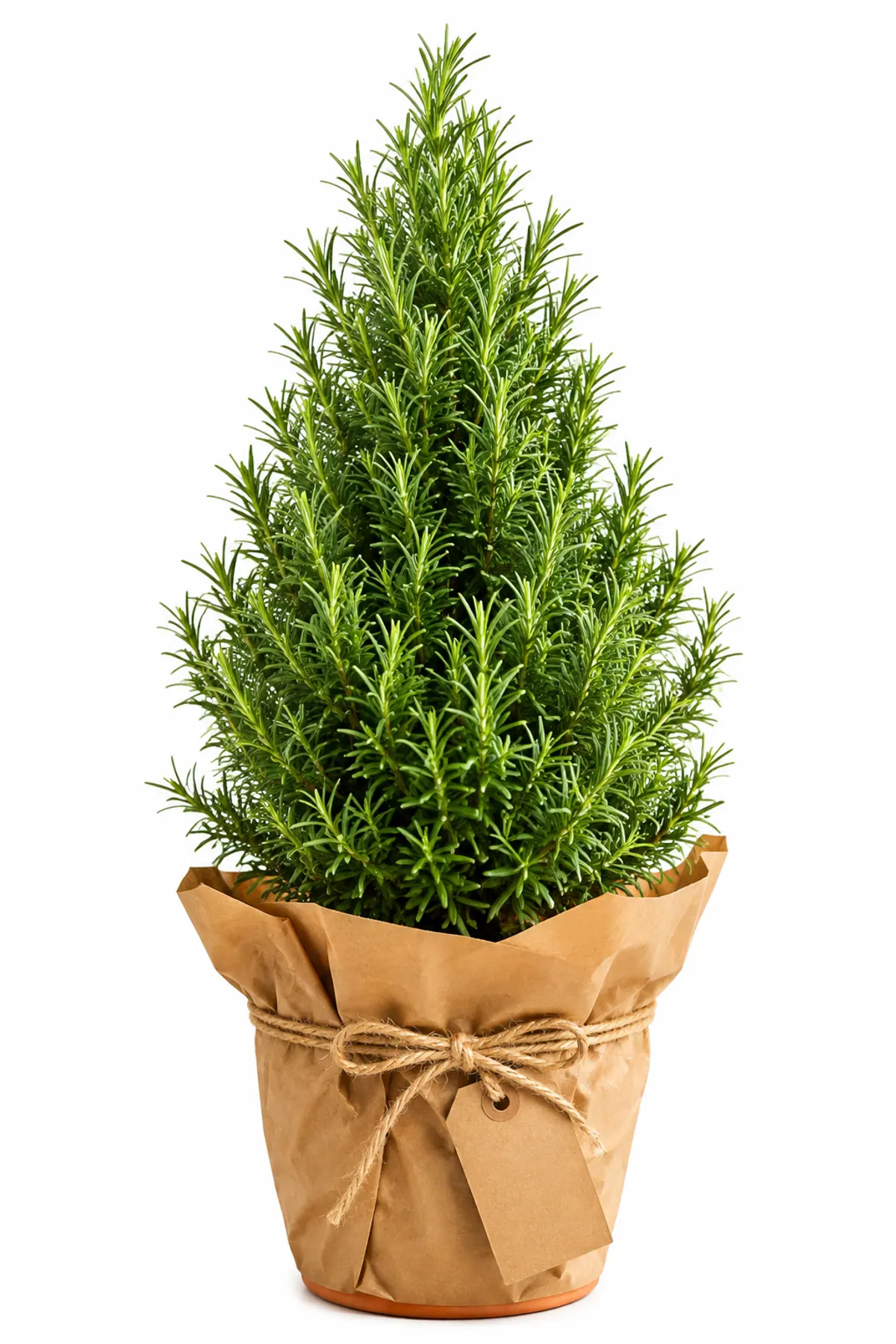
The tree itself is a plain upright rosemary sheared into a cone. The card should tell the new owner it is a houseplant to keep, not a decoration to toss in January.
A plant care card for a Norfolk Island pine
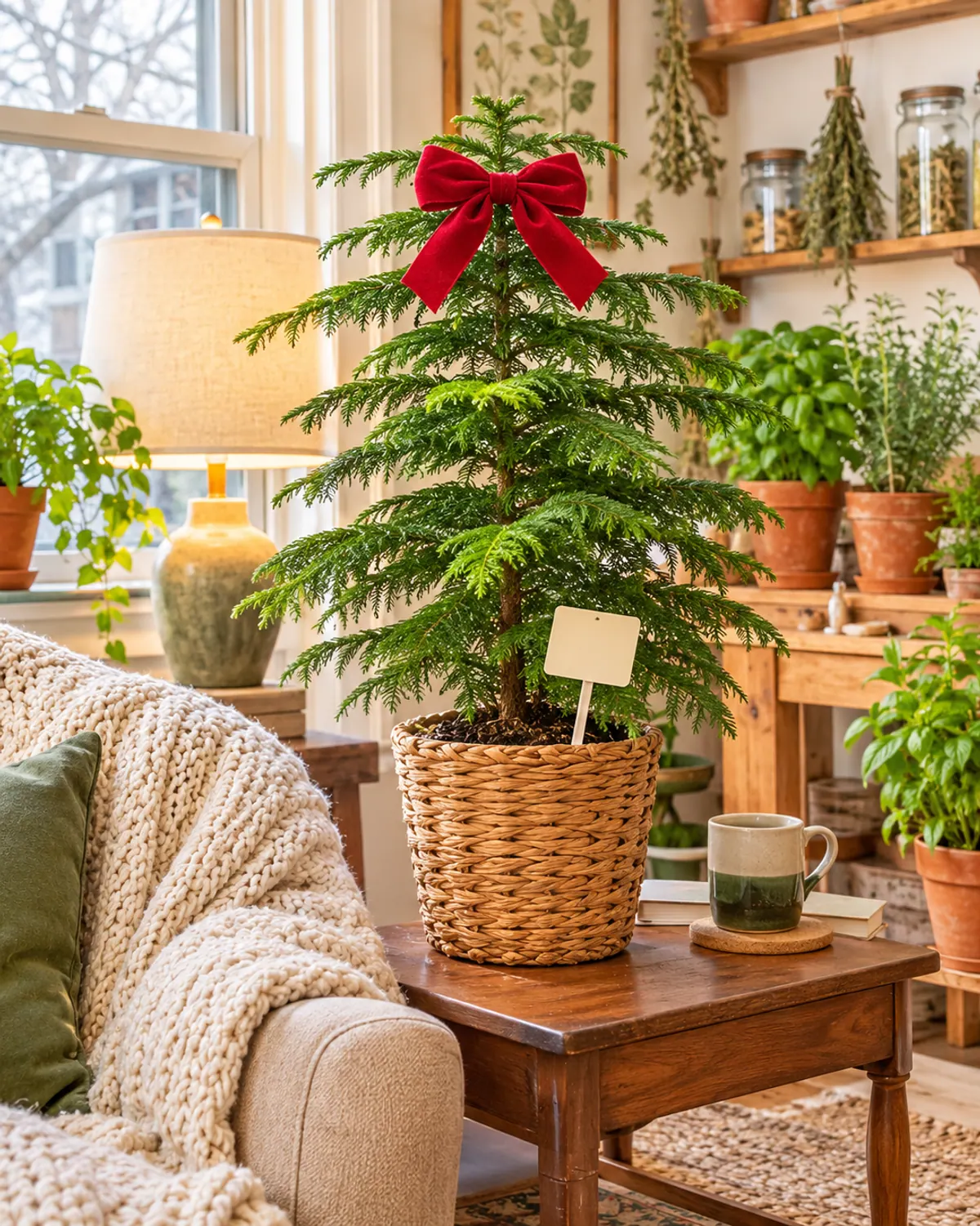
Norfolk Island pines are sold as living miniature Christmas trees. They like bright, indirect light and dislike dry air and drafts, so the card says so. Our Norfolk Island pine care guide has the full after-Christmas plan.
Light: Bright, indirect light. Away from drafts and heat vents.
Water: When the top inch is dry, and a little less in winter. Empty the saucer.
Air: Dry air browns the tips. A pebble tray helps. Skip the misting.
Pets: Listed as non-toxic to dogs, cats and horses by the ASPCA.
A plant care card for a herb pot
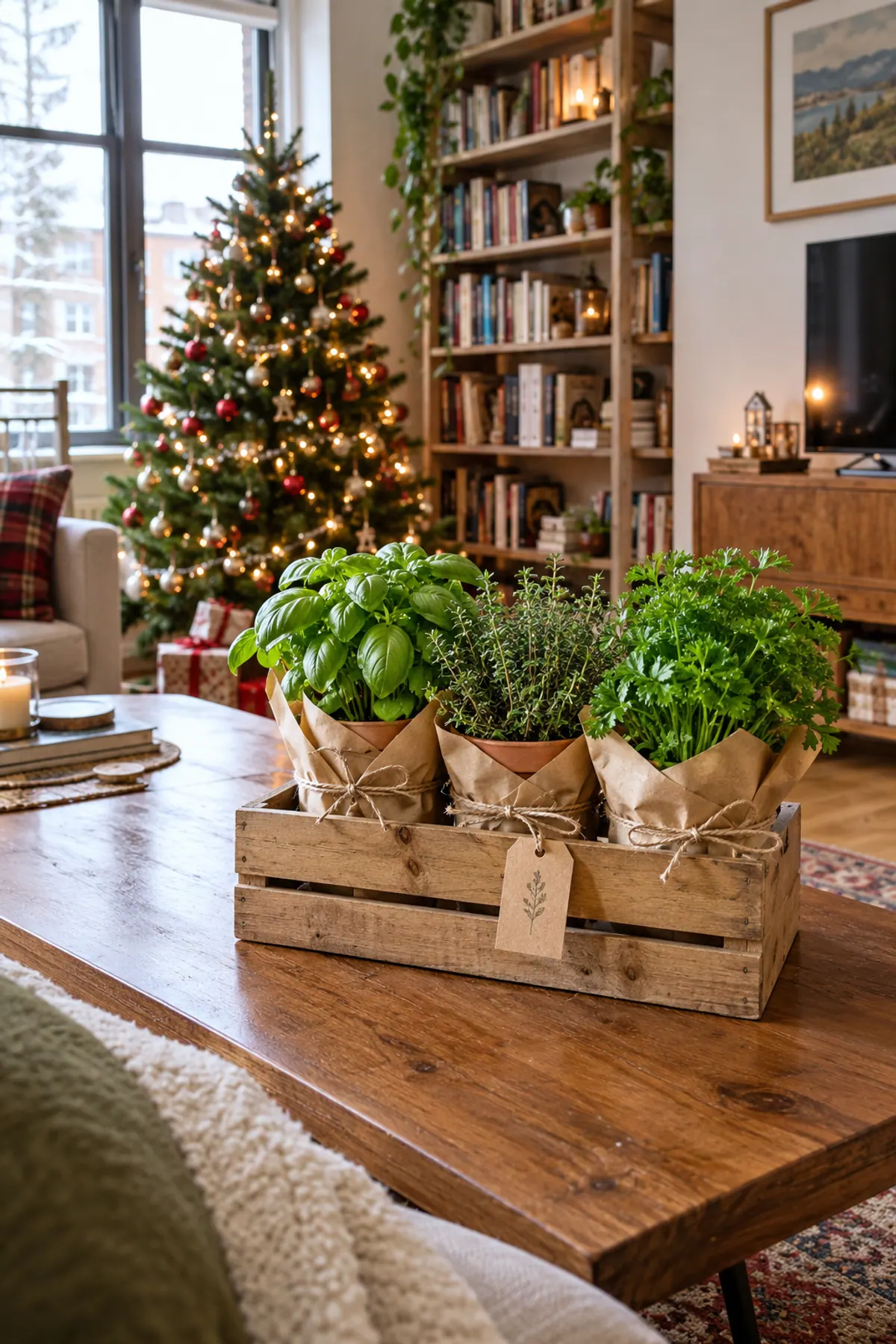
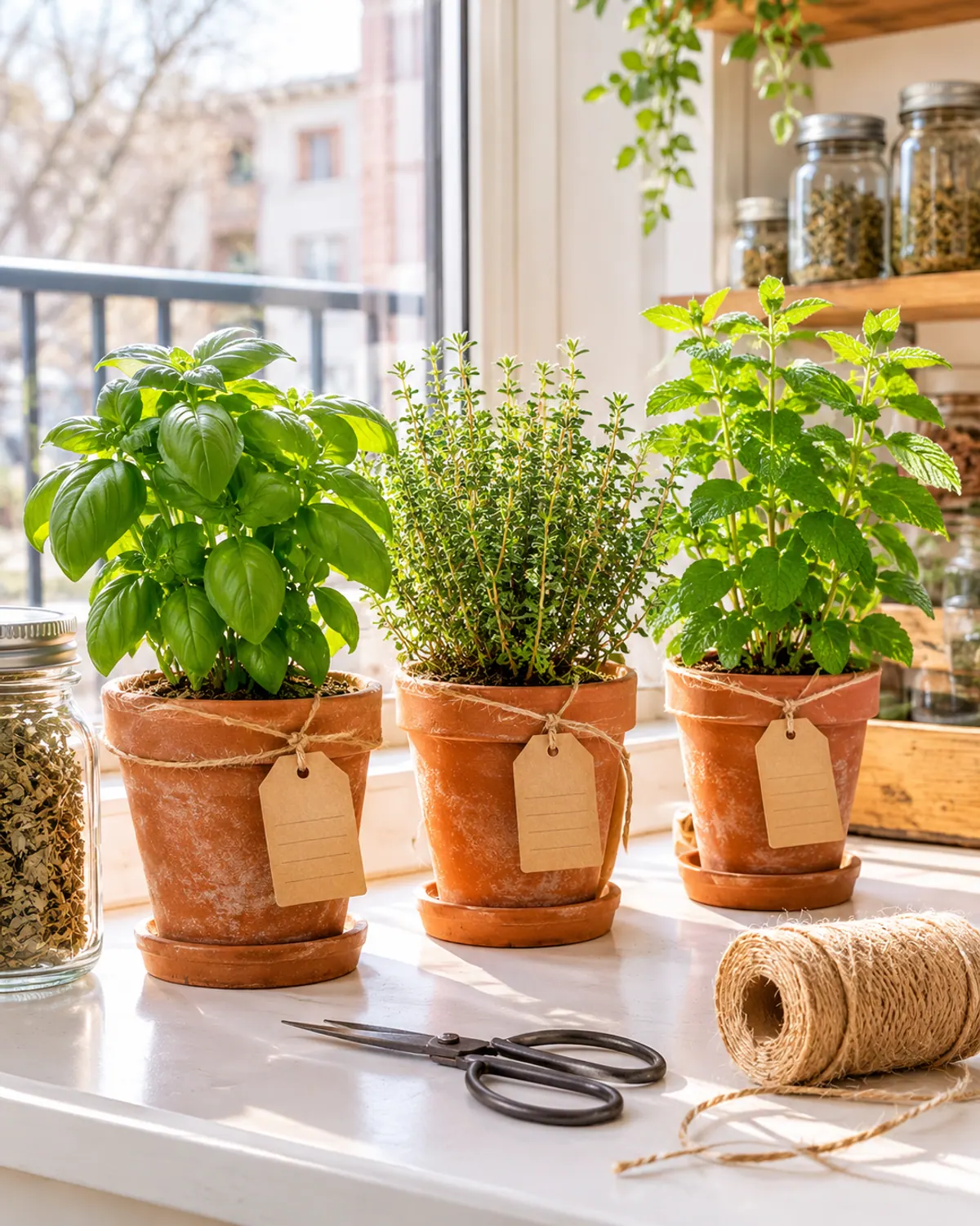
Herb pots are cheap, popular gifts and the easiest to forget. Basil hates cold glass; thyme wants a sunny sill. If you are giving a trio, write one card for the set and name each herb. Our guide to giving potted herbs with labels covers the wrapping.
Light: A sunny window. Keep leaves off cold glass.
Water: When the top inch is dry. Pour out what drains into the saucer.
Snip: Cut stem tips often to keep it bushy, and use them in the kitchen.
Pets: Basil and thyme are listed as non-toxic by the ASPCA. Mint and parsley are listed as toxic.
The pet note: what the ASPCA lists
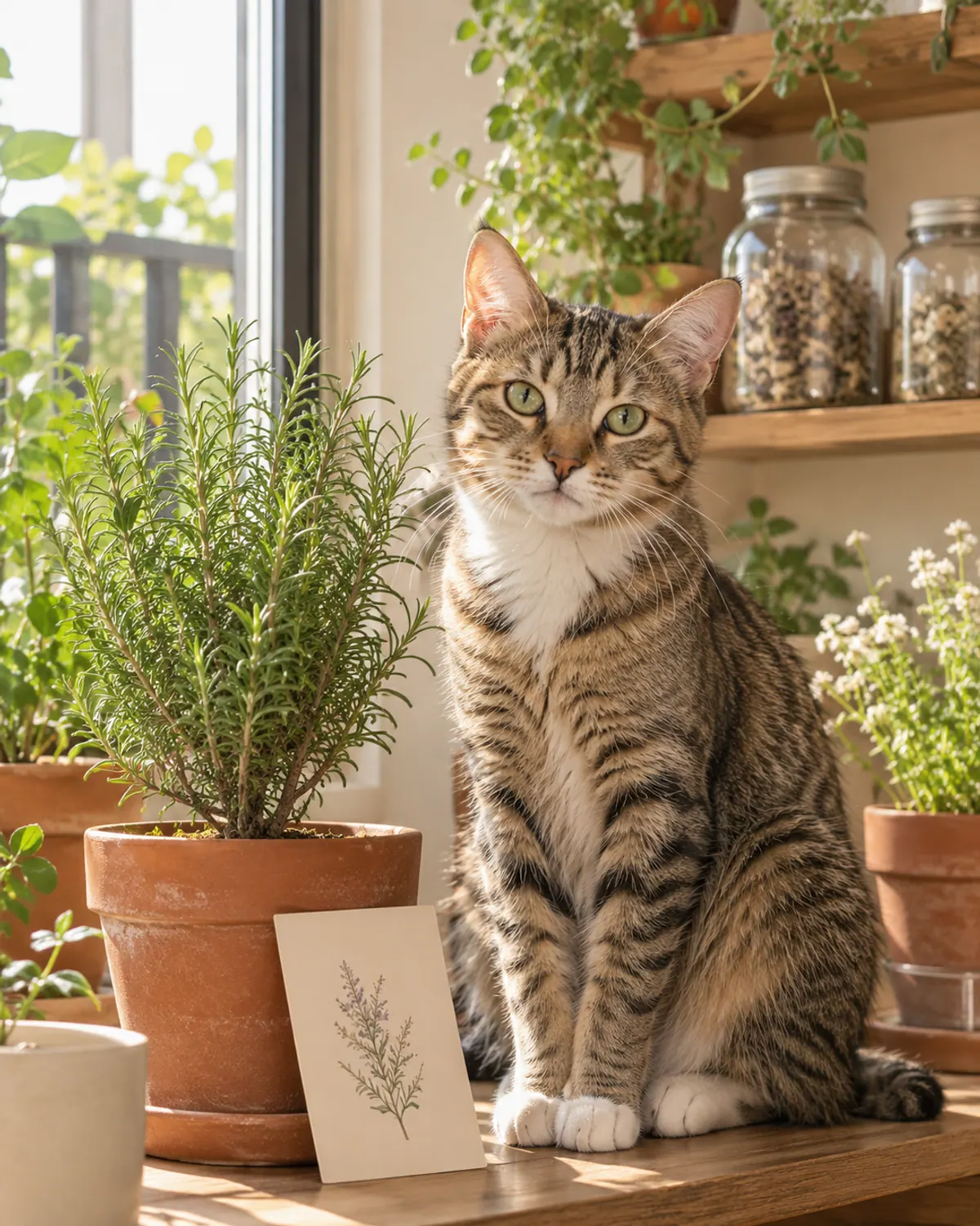
A pet line is the one thing a care card can do that a store tag usually does not. Write only what the ASPCA list says, and say "listed as", because the list is a reference and not a guarantee for your pet. If the plant is not on the list, leave the pet line out and tell the person to check.
| Plant | ASPCA listing | What to write on the card |
|---|---|---|
| Rosemary | Non-toxic to dogs, cats and horses | Listed as non-toxic by the ASPCA |
| Norfolk Island pine | Non-toxic to dogs, cats and horses (listed under Australian pine) | Listed as non-toxic by the ASPCA |
| Basil | Non-toxic to dogs and cats | Listed as non-toxic by the ASPCA |
| Thyme | Non-toxic to dogs, cats and horses | Listed as non-toxic by the ASPCA |
| Mint | Toxic to dogs, cats and horses; essential oils; vomiting and diarrhea with large ingestions | Listed as toxic by the ASPCA. Keep away from pets |
| Parsley | Toxic to dogs, cats and horses; furanocoumarins; can cause sunburn-like skin irritation with large amounts | Listed as toxic by the ASPCA. Keep away from pets |
This is general information, not veterinary advice. If a pet chews a plant and seems unwell, call your vet or ASPCA Poison Control at (888) 426-4435. For more gifts, see Christmas plant gifts with pet safety notes and our houseplants list with ASPCA non-toxic listings.
Care cards are for the soil check, and a tracker is for the other 20 plants
A care card covers one gifted plant. If the person you are giving to has a shelf of houseplants and waters them all on the same day, they need more than a card. The Houseplant Care Tracker ($4) gives every plant a page for light, a water check and when it was last watered, and it lists ASPCA pet status for 20 common houseplants. It is the next step if your card says "check the soil" and they want a way to keep track.
How to print, cut and tie on the card
-
Step 1: Print the page
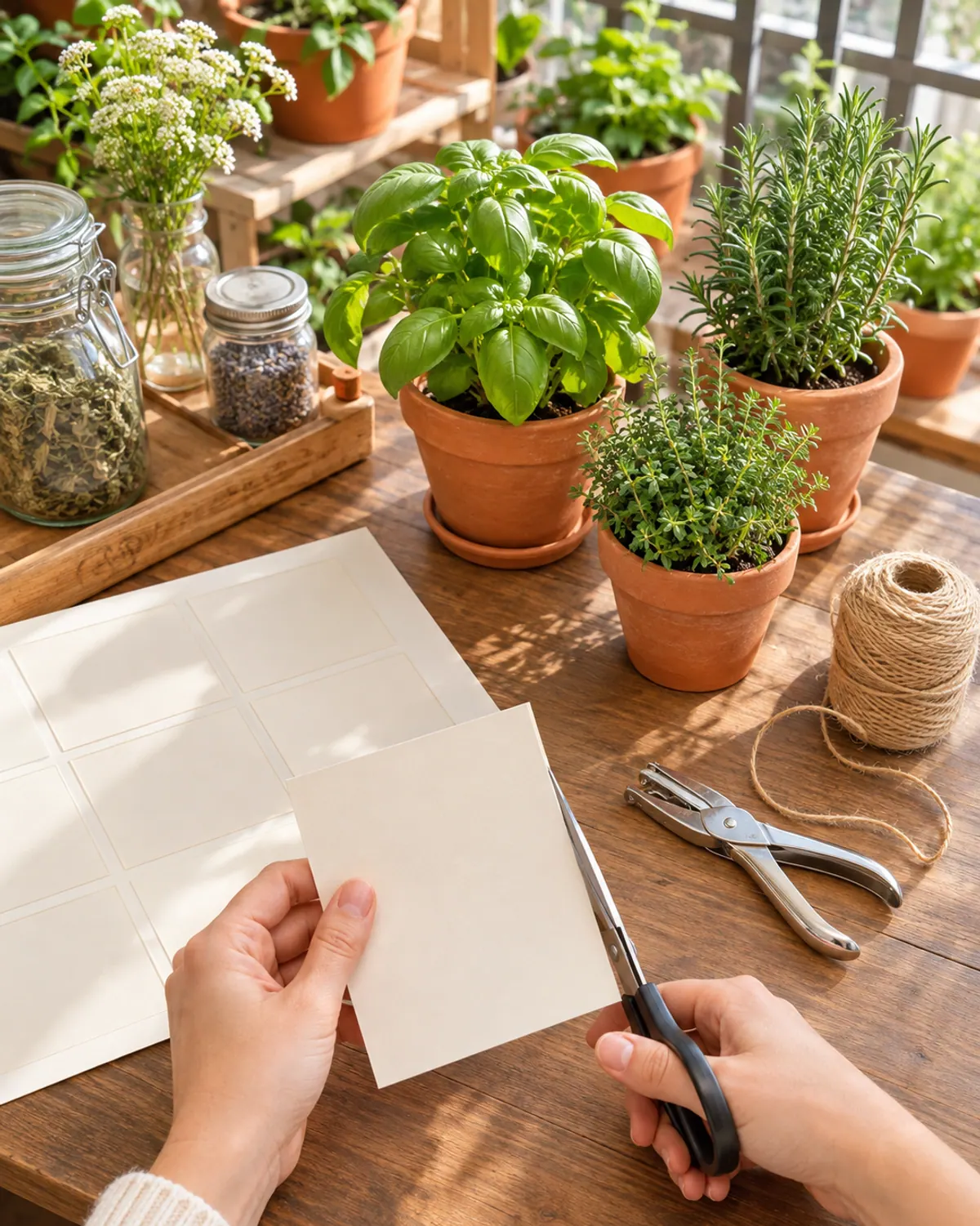
Print the free PDF at actual size on plain paper or light cardstock. Cardstock stands up to a damp pot better.
-
Step 2: Cut on the dashed lines
Four cards fit on one US Letter page. Scissors or a paper trimmer both work.
-
Step 3: Fill in the names
Write the gift-to and from lines. On the blank card, copy the care lines for your plant from the tables above.
-
Step 4: Punch a hole and tie it on
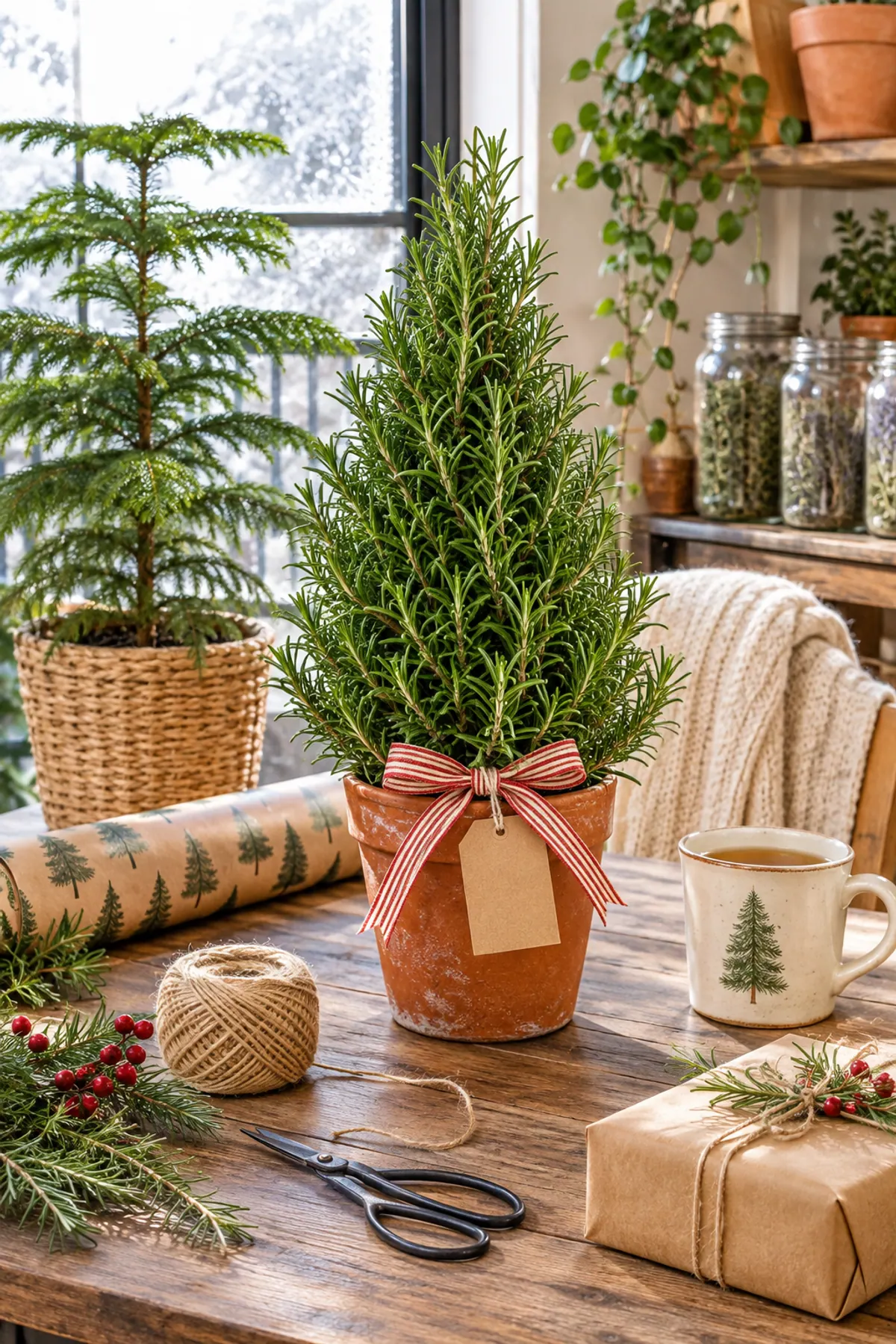
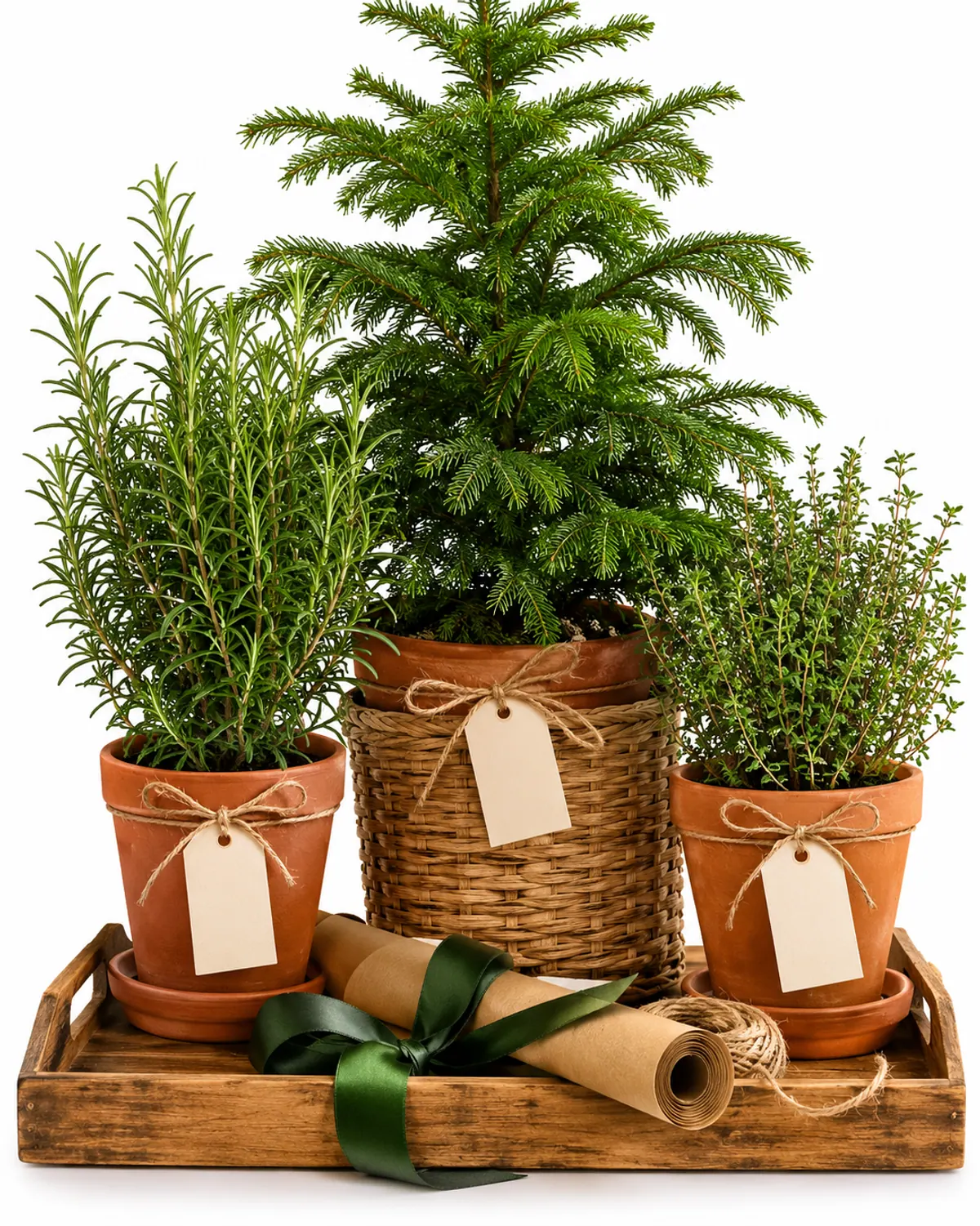
A single hole punch and a length of jute twine let you tie the card to a stem or the pot rim. For a basket, tuck it behind the bow.
What to write on a plant gift tag
A gift tag is smaller than a care card and says who it is from and one sentence of care. Keep it to two lines, and put the care line on the back.
| Occasion | Front | Back |
|---|---|---|
| Christmas | Merry Christmas from [name] | Bright window. Water when the top inch is dry. |
| Teacher | Thank you for helping me grow | Sunny sill. Water when the top inch is dry. |
| Housewarming | Welcome home | Bright spot. Check the soil before you water. |
| Thank you | Thank you for everything | Bright window. Let the top inch dry out first. |
Add the pet line only if you have checked the plant on the ASPCA list. On a small tag, "ASPCA lists non-toxic" fits.
Mistakes that make a care card useless
A weekly schedule: "Water every Sunday" kills plants in a cool or dark home. Write the soil check instead.
Too much text: a card with ten lines is not read. Four lines.
Missing the light line: the most common reason a gifted plant dies is the spot it ends up in.
A pet line without a source: do not write "pet safe". Write what the ASPCA lists, or leave it out.
Care lines here are broad starting points. Your plant tag and your own light come first, and these cards are gardening information, not medical or veterinary advice.
After the gift: help them keep the plant alive
A plant that lasts past New Year is a gift that keeps being used. If you are giving a few plants, add a one-line note about the winter watering schedule so the recipient knows how often to check the soil in dim months. If the plant is herbs, the Indoor Herb Garden for Winter kit ($6) sets out the window, grow-light hours and watering for 10 herbs until spring.
Supplies for plant care cards
Shop the setup
-
Kraft gift tags with twine
Typically $6 to $12 for a pack
For the small tag version, with the string already cut
Check price on Amazon for Kraft gift tags with twine -
Jute twine
Typically $5 to $10
Ties a card to a stem, a pot rim or a basket handle
Check price on Amazon for Jute twine -
Single hole punch
Typically $5 to $10
Makes the hole for the twine
Check price on Amazon for Single hole punch -
Light cardstock
Typically $10 to $16 for a pack
Stands up to a damp pot better than plain paper
Check price on Amazon for Light cardstock
We earn from qualifying purchases, which never changes what we recommend. Read our disclosure and editorial guidelines.
If you want to give the person a tracker for all their plants, not just one, the Houseplant Care Tracker is $4. If you grow herbs yourself, the Herb Garden Binder ($25) bundles all our printables; use code HERB20 for 20% off at checkout. Once the card is written, our guide on how to wrap a plant as a gift in winter covers the pot wrap and the cold trip.
Frequently asked questions
What do you write on a plant care card?
Four lines: the light (which window), the water rule (when the top inch of soil is dry), what to avoid (heat vents, cold glass) and a pet note. Keep it under about 40 words so it gets read.
What do you write on a plant gift tag?
The front says who it is from, and the back has one care line such as "Bright window. Water when the top inch is dry." Add a pet note only if you checked the plant on the ASPCA list.
How do you attach a care card to a plant?
Punch a hole, thread jute twine and tie the card to a stem or the pot rim. In a basket, tuck it behind the bow or put it on a small stake in the soil.
Is rosemary safe for cats and dogs?
The ASPCA lists rosemary as non-toxic to dogs, cats and horses. That is a listing, not a guarantee for your pet, so keep pets from chewing any plant and call your vet if one seems unwell.
Is a Norfolk Island pine safe for pets?
The ASPCA lists Norfolk Island pine (shown under Australian pine) as non-toxic to dogs, cats and horses. Some retailers say otherwise, so use the ASPCA wording on the card and keep pets away from the tree.
Are mint and parsley safe in a herb gift?
The ASPCA lists both as toxic to dogs, cats and horses. If the recipient has pets, choose rosemary, basil or thyme, which the ASPCA lists as non-toxic, or write the toxic listing on the card.
Save it for later
Pin this to your Houseplants board so it's there when you need it.
Save to Pinterest