This post contains affiliate links. As an Amazon Associate we earn from qualifying purchases, at no extra cost to you. Read our disclosure.
Safety first: Herbs can be powerful. If you are pregnant, nursing, take medication or have a health condition, check with your doctor or pharmacist first. Please read our herbal & garden safety notes before you start.
Key takeaways
- Bright indirect light, a 65 to 75F room, and water when the top inch of soil feels dry are the core of Norfolk pine care
- Decorate with lightweight ornaments and cool-touch LED lights only, and keep the tree away from drafts and heat vents
- The ASPCA lists Norfolk Island pine as non-toxic to dogs, cats and horses, but retail care pages say it is toxic or mildly toxic, so keep pets from chewing it anyway and call your vet or ASPCA Poison Control if one seems unwell
- It needs humid air: use a pebble tray or a humidifier, and do not mist
- After the holidays, take the decorations off gradually and keep it in the same bright spot; indoors it can reach about 7 feet over time
In this post12 sections
- Norfolk pine Christmas tree care at a glance
- Is a Norfolk Island pine a good Christmas tree?
- Light for a Norfolk pine Christmas tree
- How to water a Norfolk pine
- Temperature and humidity
- Pet safety: ASPCA says non-toxic, some retailers disagree
- How to decorate a Norfolk pine without hurting it
- Brown needles and other Norfolk pine problems
- Is it normal for lower branches to drop or turn brown?
- After Christmas: your Norfolk pine plan
- Pots, baskets and other living tree ideas
- FAQ
Quick care card
Norfolk pine Christmas tree care at a glance
Care pages for this plant agree on most points and differ on a few, so the table below shows the range from the sources we read and the starting point we suggest.
| Need | What to do | Source |
|---|---|---|
| Light | Bright, indirect light | EasyPlant |
| Water | When the top inch of soil is dry, or when about 25% of the soil has dried; less in winter | EasyPlant, Bloomscape |
| Temperature | 65 to 75F; keep above 50F and away from drafts and heat vents | EasyPlant, Bloomscape, Soltech |
| Humidity | Pebble tray or humidifier; no misting | Bloomscape, EasyPlant |
| Ornaments | Lightweight only, with cool-touch LED lights | Soltech |
| Size | Can reach about 7 feet indoors | Bloomscape |
| Pets | Non-toxic per the ASPCA, toxic per some retailers; keep pets from chewing it | ASPCA |
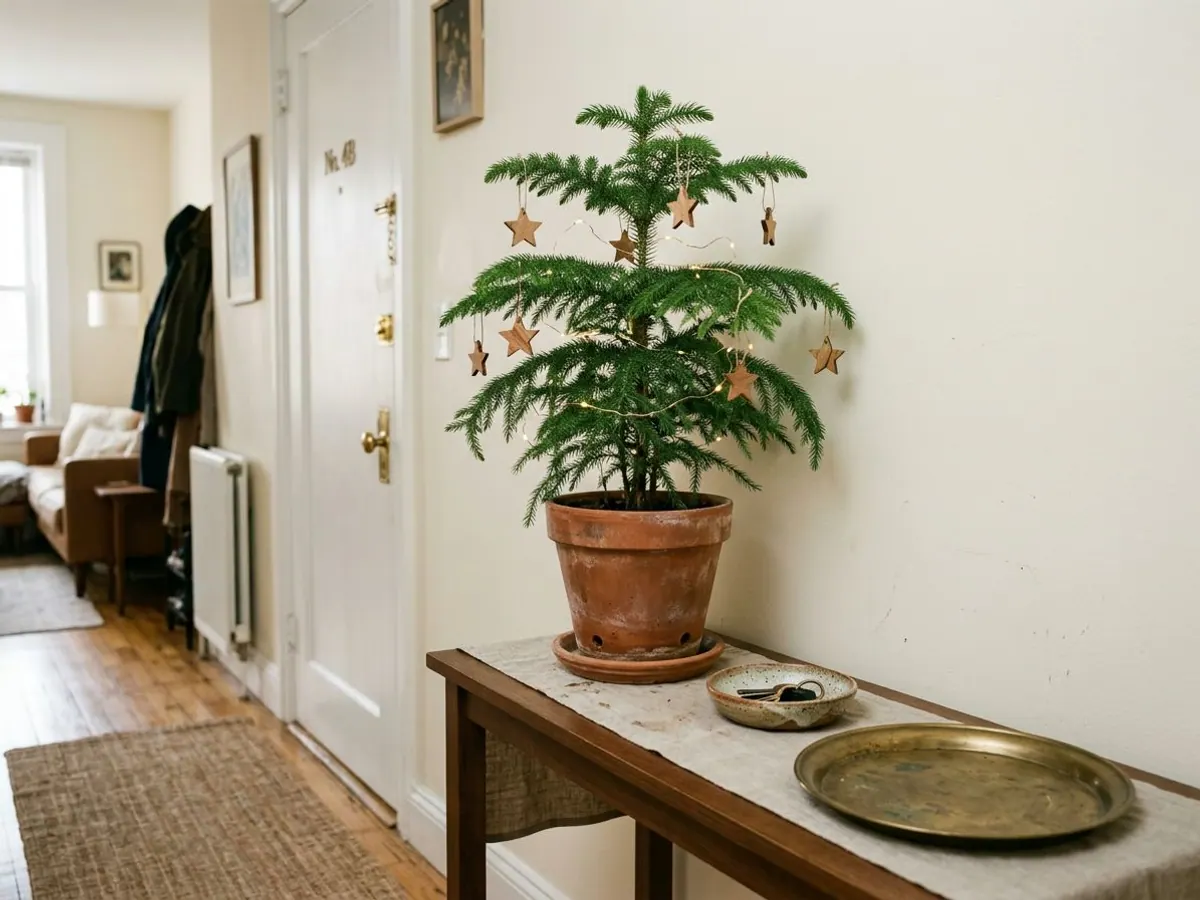
Is a Norfolk Island pine a good Christmas tree?
For a small space, often yes. The tiered branches give it a tree shape, it fits on a table or in a corner, and it does not drop needles the way a cut tree does. It is slow and soft, though, so it works best as a tabletop or accent tree rather than a replacement for a full-size one.
What we like
- Stays green and alive after the holidays
- Small enough for a table, shelf or corner
- No cut-tree needle mess or disposal
- Tiered branches look like a real tree
- Easy to keep as a houseplant year-round
Keep in mind
- Soft branches only hold light ornaments
- Dry heated air browns the needle tips
- Needs a bright spot, which can compete with other plants
- Too small to fill a big room
- Grows slowly, so you are decorating the tree you buy
Light for a Norfolk pine Christmas tree
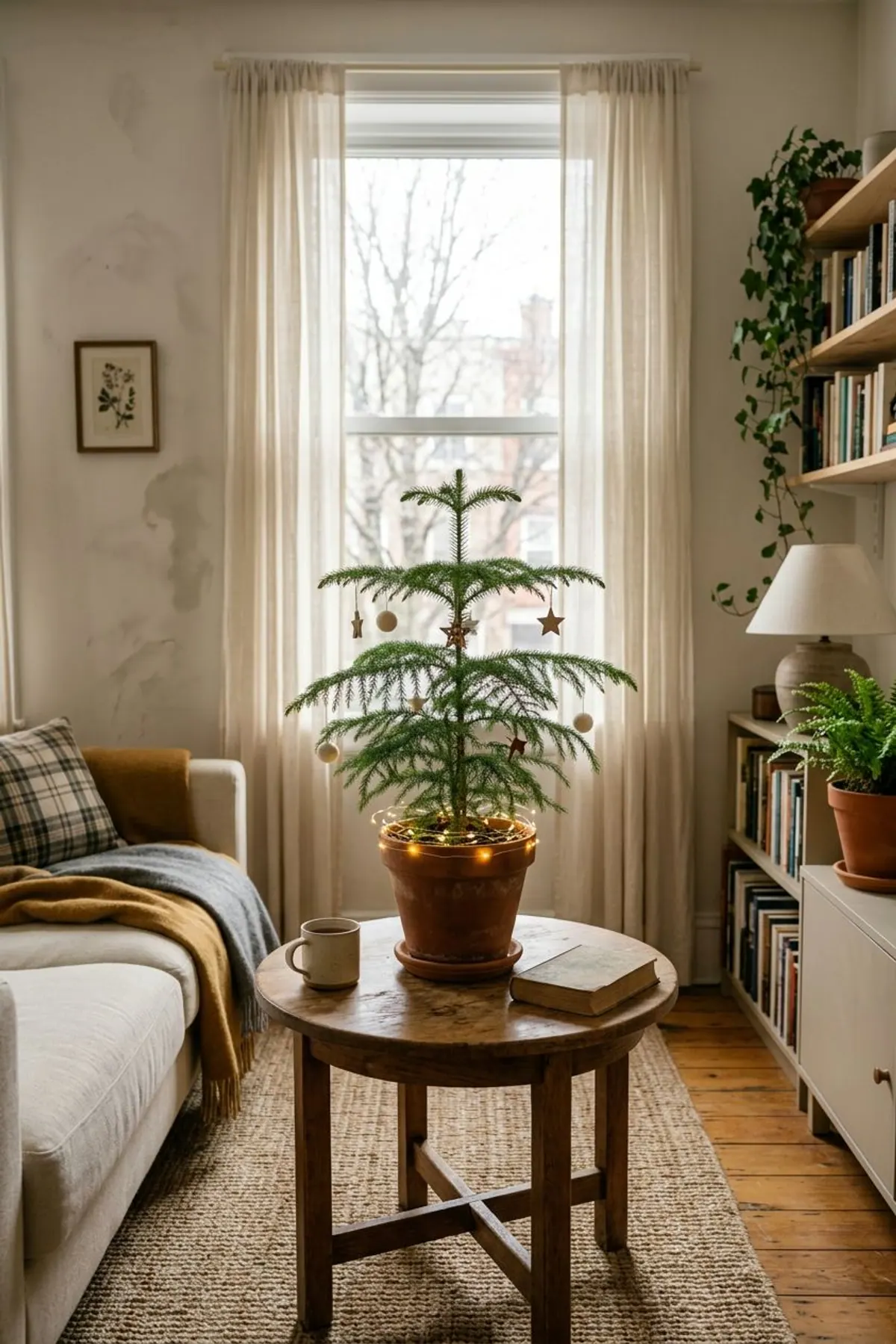
Bright, indirect light is the starting point (EasyPlant). Put the tree near an east or south window with a sheer curtain, or a few feet back from a bright pane. Care pages differ a little on how much direct sun it tolerates, so begin with bright indirect light and watch the plant.
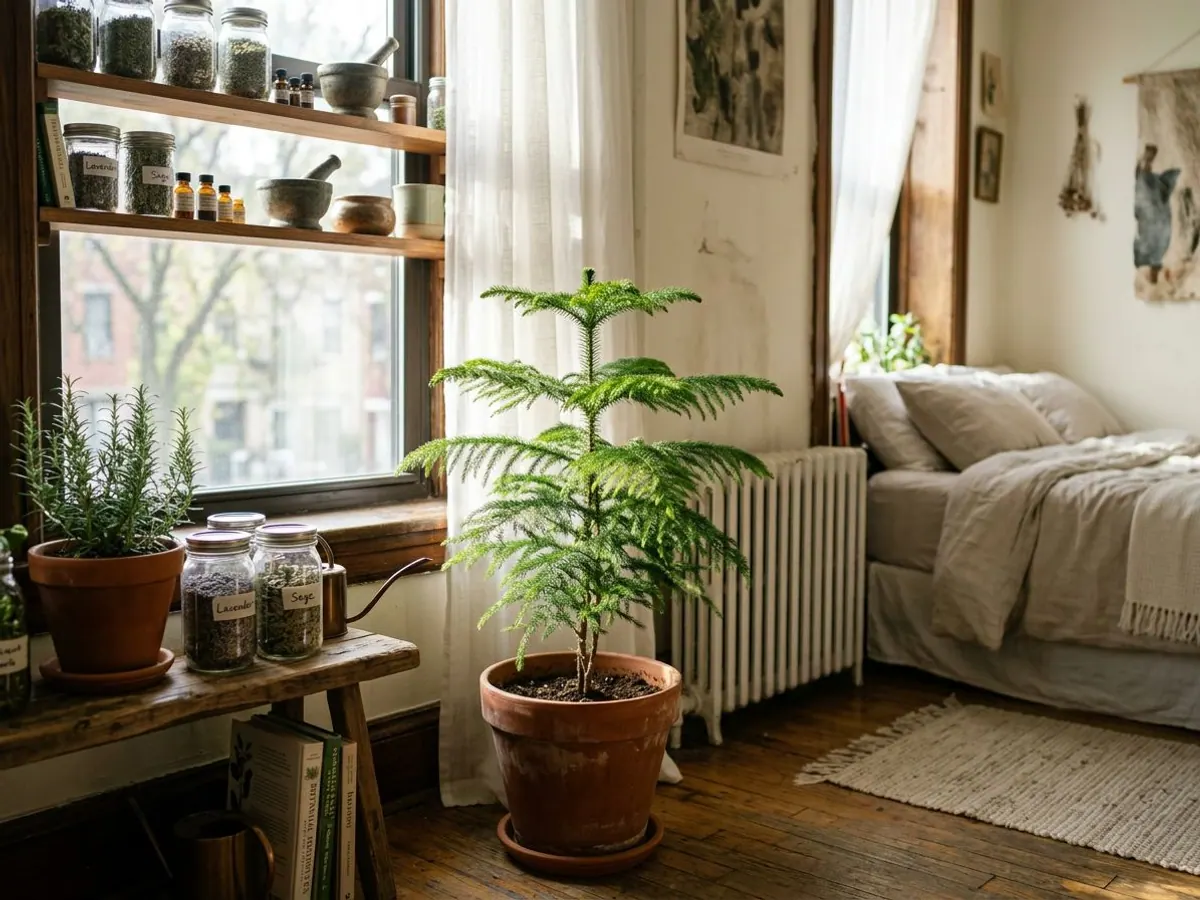
Turn the pot a quarter turn each week so the tree grows evenly instead of leaning toward the glass. A leggy tree with wide gaps between the branch tiers is usually asking for more light. If a window is short on daylight, our grow light guide covers lamps that fit a small room.
How to water a Norfolk pine
The advice differs, so here are both versions. EasyPlant says to water weekly or when the top inch is dry, and less in winter. Bloomscape says to water when about 25% of the soil is dry.
Both come down to checking the soil, not the calendar. Push a finger into the pot, and water slowly until it drains from the bottom when the top inch feels dry. Empty the saucer after 15 minutes so the roots do not sit in water. For the rest of your plants, our winter watering schedule by light level gives a starting point for each kind of window.
Temperature and humidity
Keep the room at 65 to 75F, and above 50F at the very least (EasyPlant, Bloomscape, Soltech). Move the tree away from drafts, heat vents and radiators. Dry heated air is the main reason the needle tips go brown in winter.
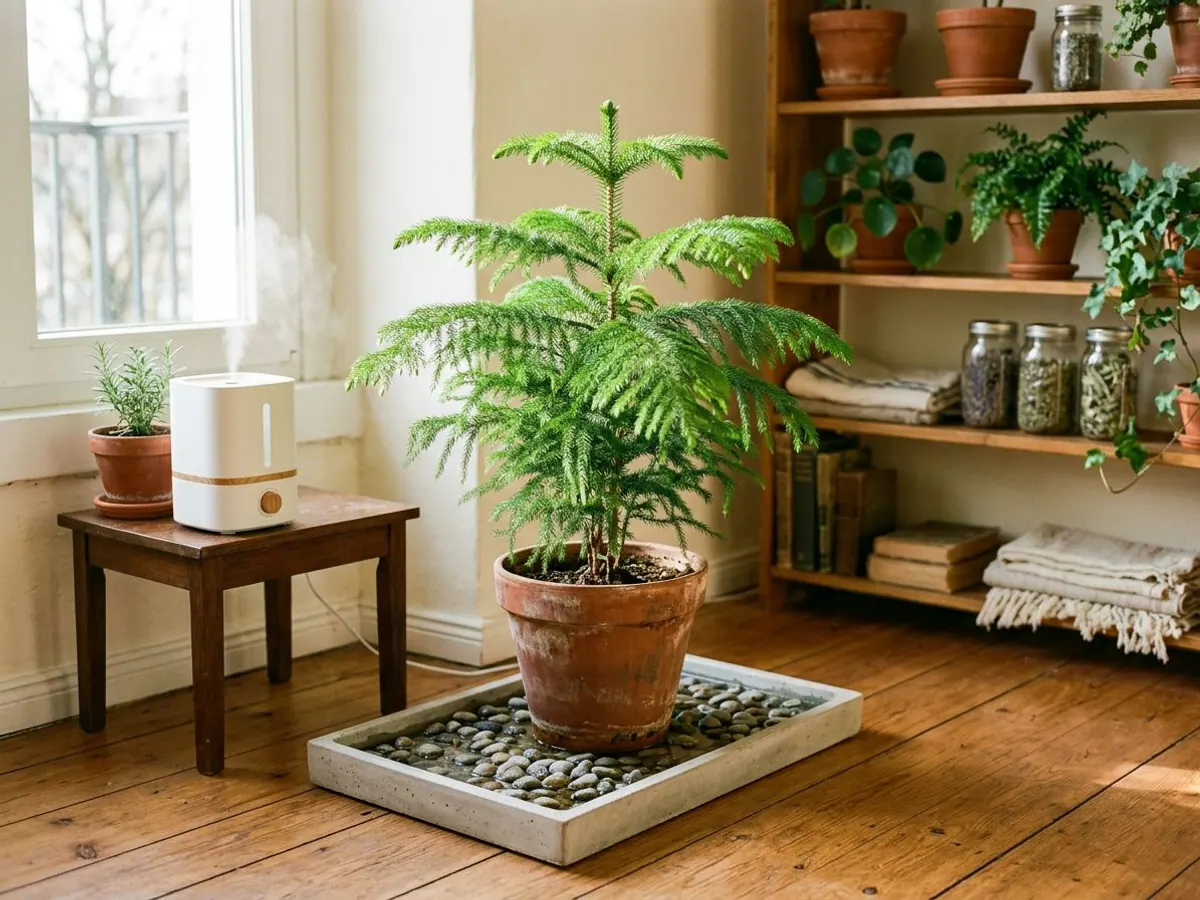
Bloomscape suggests a pebble tray or a humidifier, and EasyPlant says not to mist. A pebble tray is the simplest fix: set the pot on stones above the water line so the roots stay out of it.
Pet safety: ASPCA says non-toxic, some retailers disagree
The ASPCA lists Norfolk Island pine as non-toxic to dogs, cats and horses (the ASPCA page is filed under its other name, Australian pine). Bloomscape states it is toxic to pets and humans, and EasyPlant says it may be mildly toxic if ingested. The sources disagree, and we cannot settle it.
Our approach is to follow the ASPCA list, since it is the animal poison control source, and still keep pets from chewing the tree. Any plant can upset a stomach, and tinsel, ornaments and light cords are a hazard for cats and dogs on their own. This is general information and not veterinary advice. If a pet chews the tree, tinsel or a light cord and seems unwell, call your vet or the ASPCA Animal Poison Control Center at (888) 426-4435 (a consultation fee may apply).
If you want a wider list of safe holiday plants, see our pet-safe Christmas plants and pet-safe houseplants guides.
How to decorate a Norfolk pine without hurting it
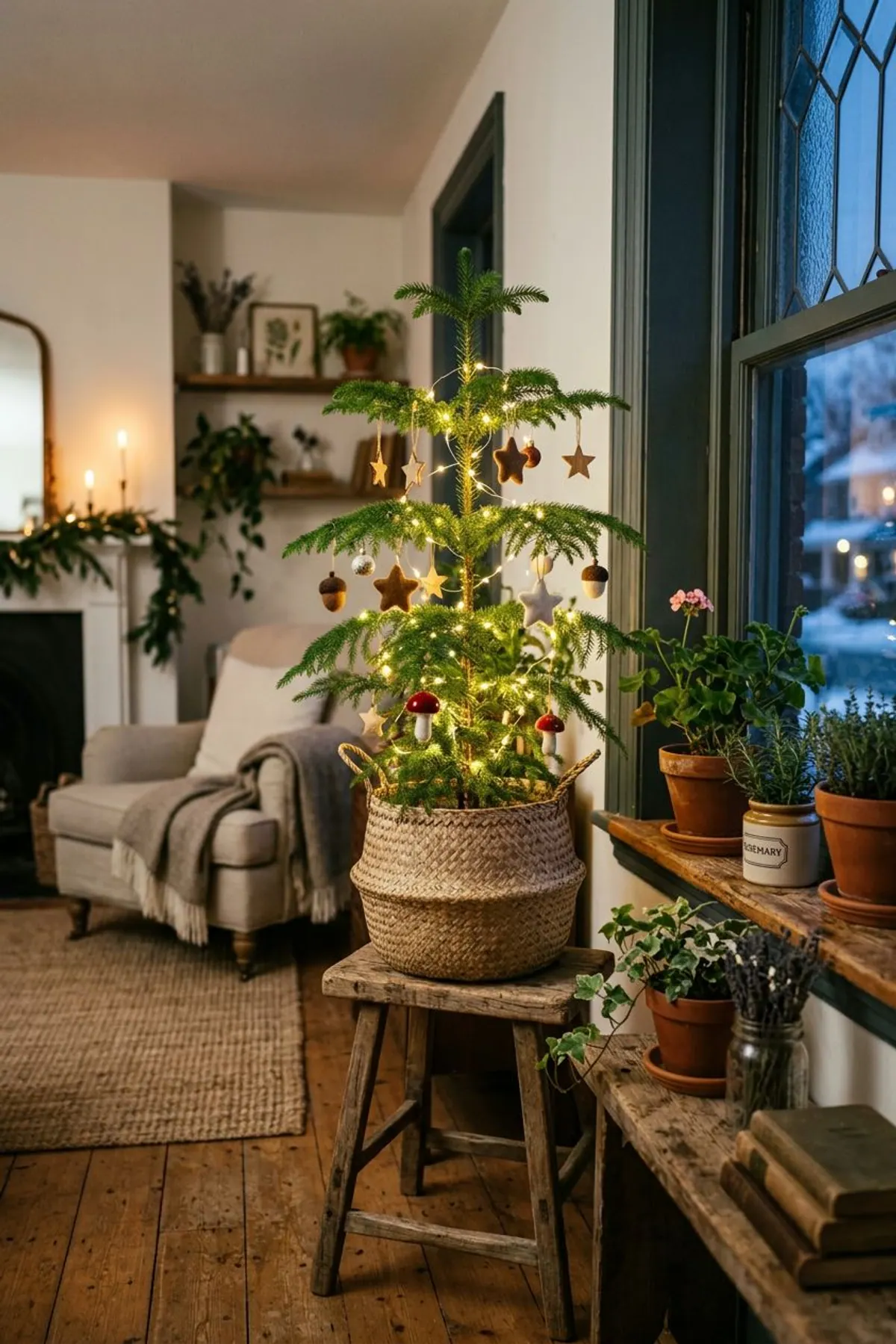
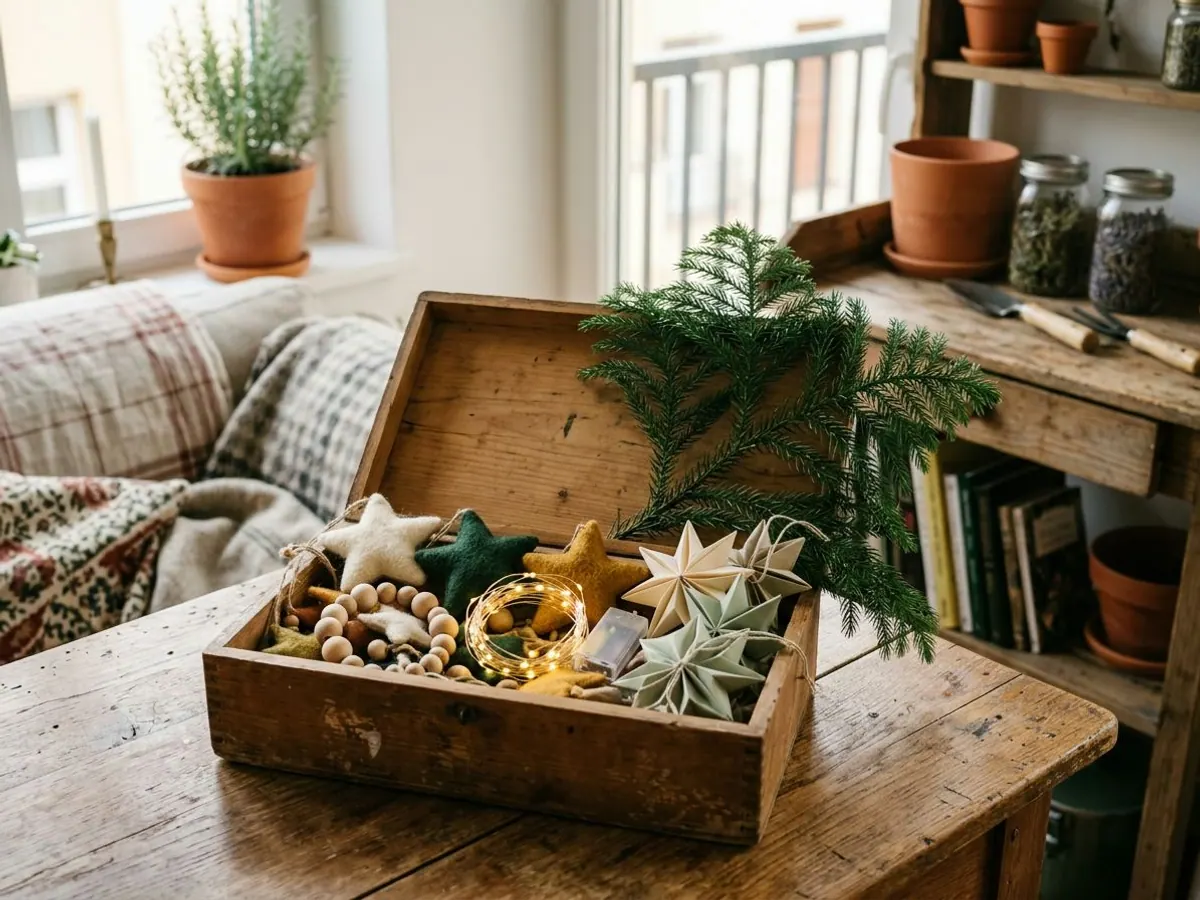
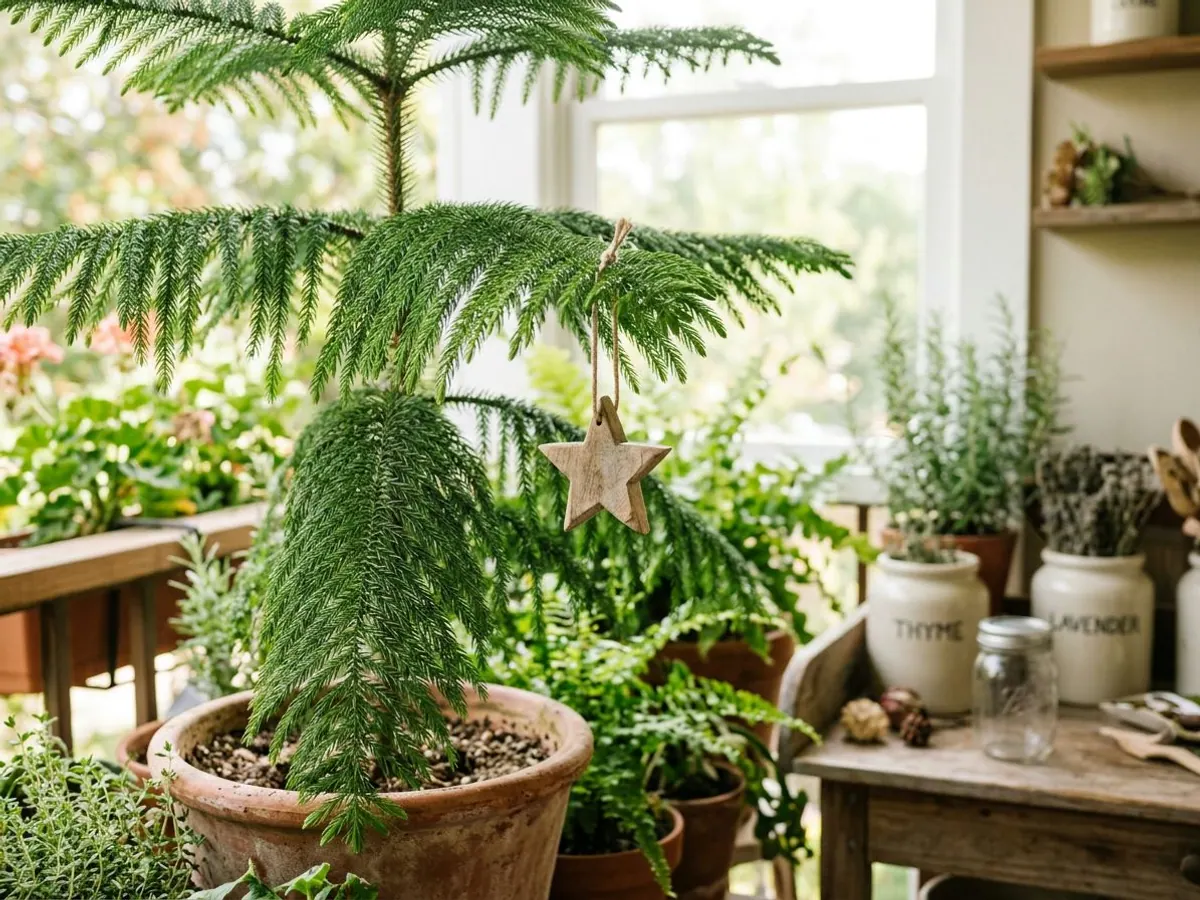
Soltech's care guide recommends lightweight ornaments and cool-touch LED lights. The branches are soft and bend under glass baubles, so think felt, paper, wood and tiny beads. A battery LED strand keeps heat and cords off the plant.
Decorating checklist
Brown needles and other Norfolk pine problems
Brown tips are the most common complaint, and the usual causes are dry air, a spot near a heat vent, or a sudden move. Check the tree against the humidity advice above before you change the watering. Leggy, sparse growth usually means the light is too low.
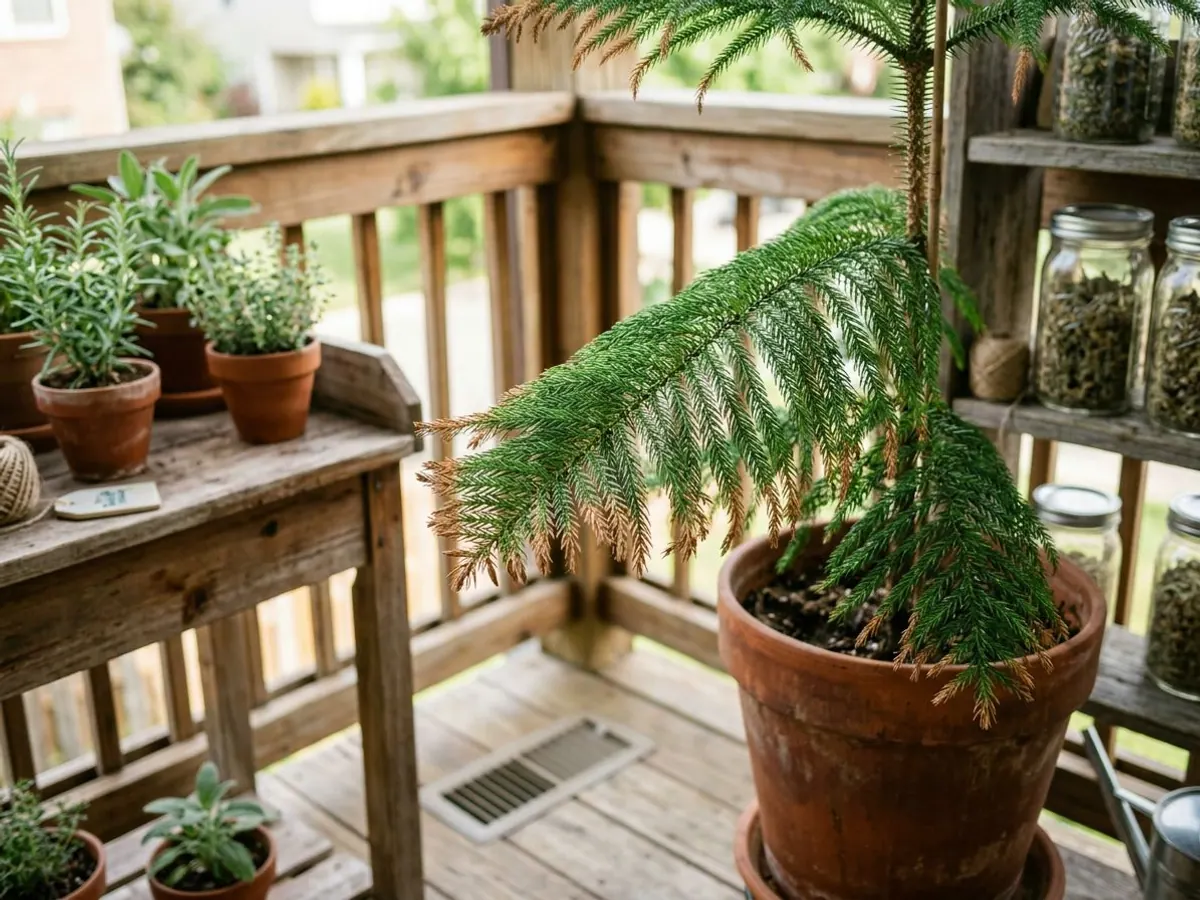
Do not trim the center top of the tree, which is the growing tip. Snip only the dead tips and brown lower needles. If the whole plant drops many needles at once, check for a cold draft or soggy soil.
Is it normal for lower branches to drop or turn brown?
A few lower needles or branches browning and dropping over time is normal aging, and it is also what a tree in low light does. Purdue's yard and garden pages put it this way: a little browning of the lower foliage is usual, while widespread browning points to watering, drafts or dry air. Gardening Know How agrees that shedding a few needles or lower branches is natural, and that losing a lot at once usually traces back to humidity, fertilizing or watering.
Use this order to work out which one you have.
Lower branch check
Purdue notes that heated homes can sit at around 15 percent humidity, far below the roughly 50 percent the tree prefers, which is why winter is when most people see this. Trim only what is dead, and leave the growing tip at the top intact.
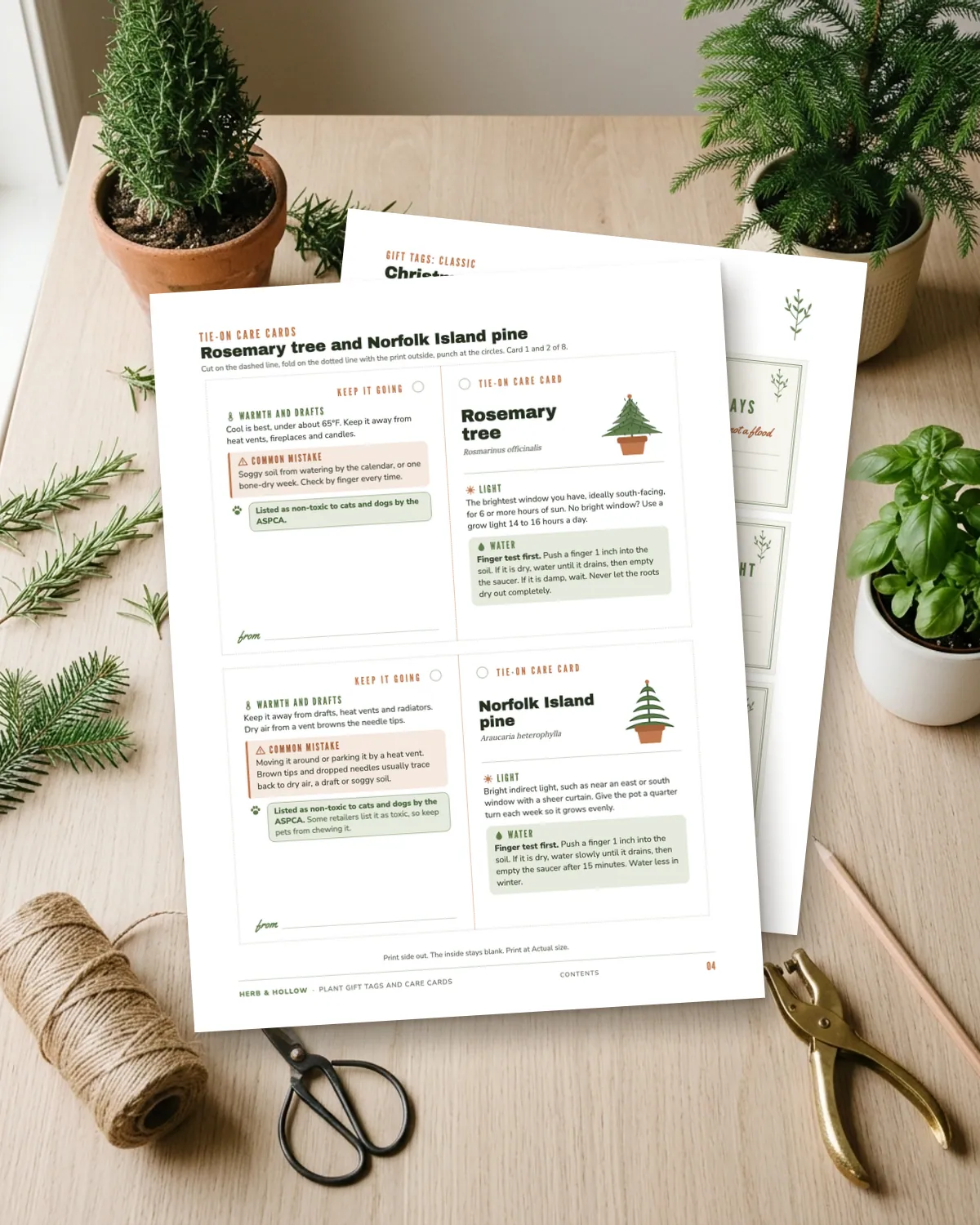
If you are gifting a Norfolk Island pine, the receiver needs the light and watering rules before it browns in a dark corner.
After Christmas: your Norfolk pine plan
Most pages stop at December, but the tree does not. Treat the weeks after the holidays as a slow handover from decoration to houseplant.
| When | What to do |
|---|---|
| Buying day | Check for green, soft needles and no brown patches; bring it home wrapped, since cold shocks it |
| First week | Place it in bright indirect light, away from vents; water only when the top inch is dry |
| Decorating | Water a day ahead, then add lights and light ornaments |
| After the holidays | Take decorations off gently, keep it in the same spot, and keep turning the pot |
| Late winter | Keep up humidity; skip fertilizer until spring growth starts |
| Spring | Repot into a pot one size up if roots fill the pot or push out of the drainage holes |
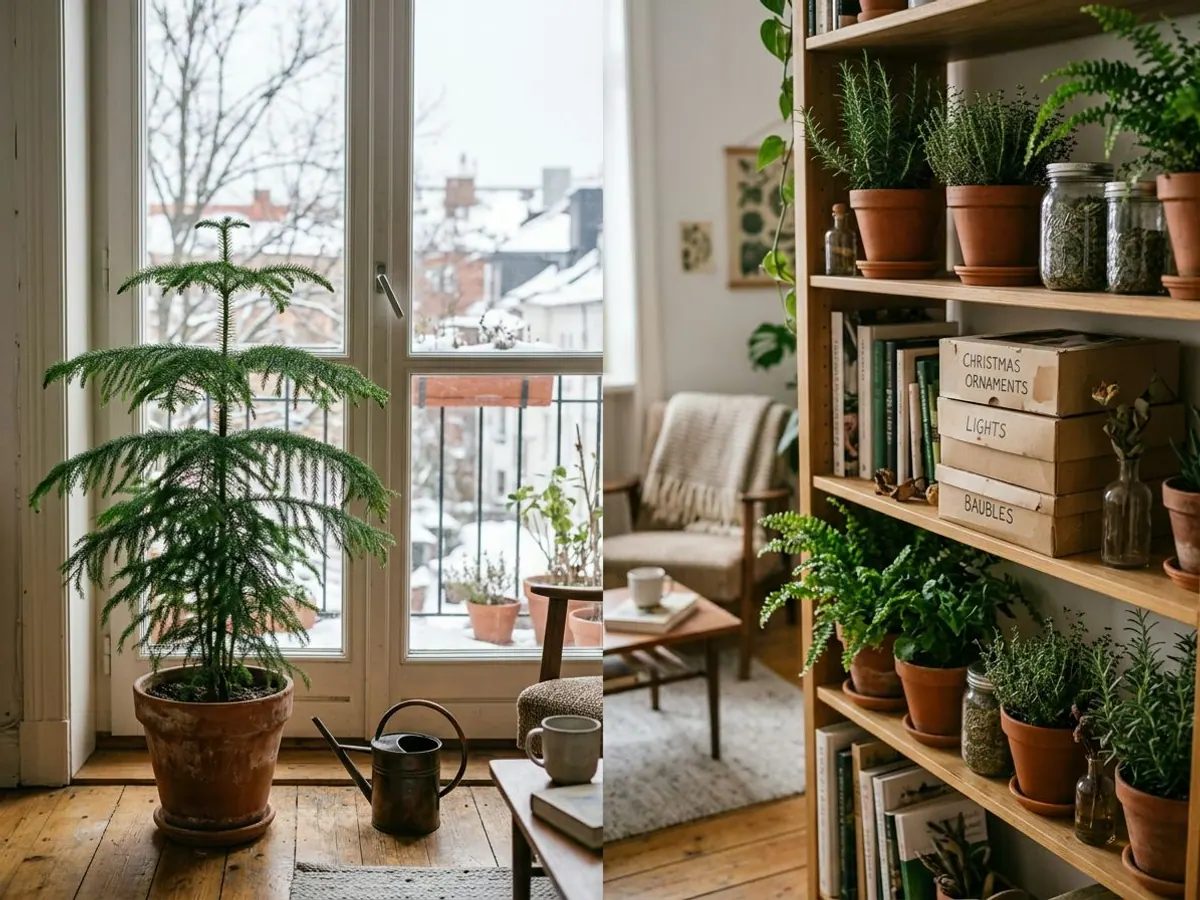
Indoors it can reach about 7 feet over time, according to Bloomscape. That is slow, so most people get years of use from a small tree before it outgrows a corner. Our winter houseplant care tips cover the dry months in more detail.
Pots, baskets and other living tree ideas
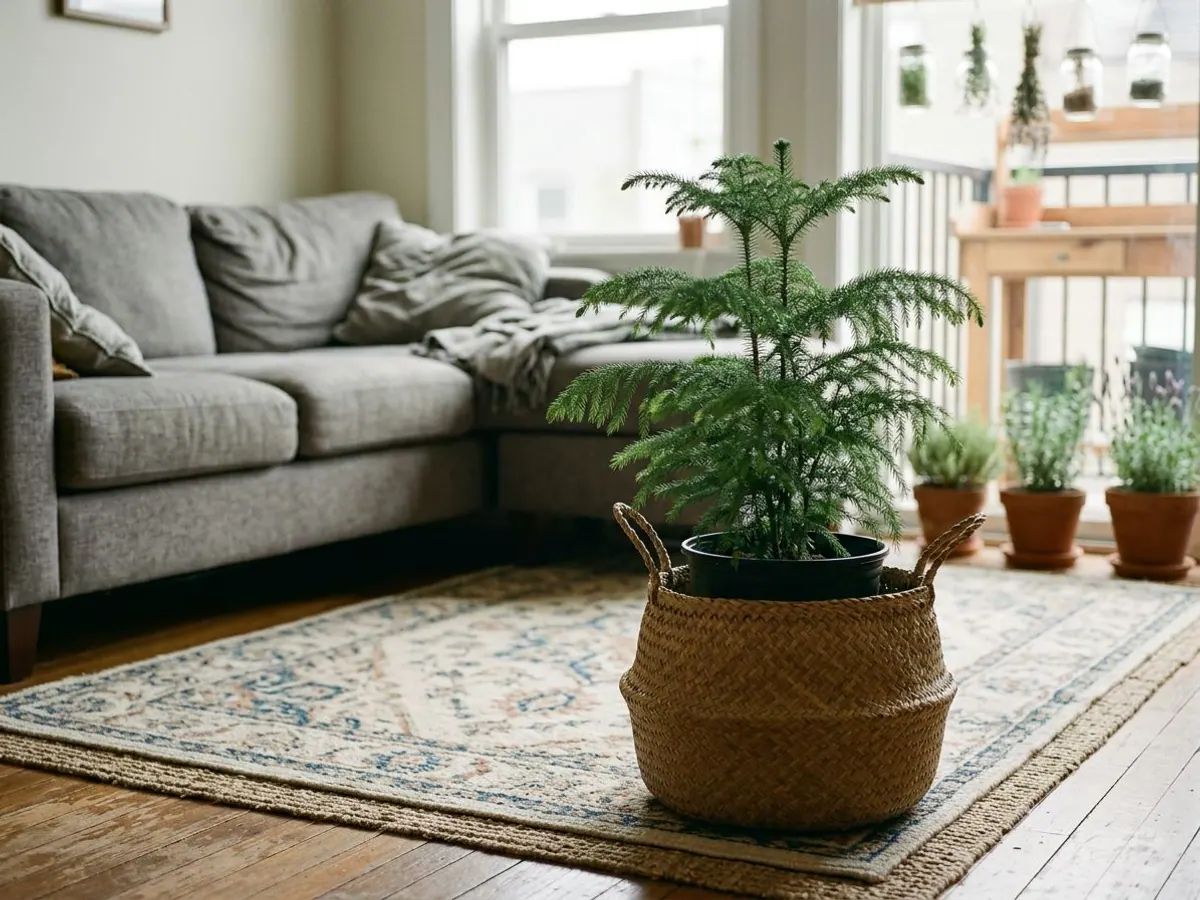
Slip the nursery pot into a woven basket or a ceramic cachepot with a saucer inside, so water has somewhere to drain. Lift the pot out to water it, then drop it back in.
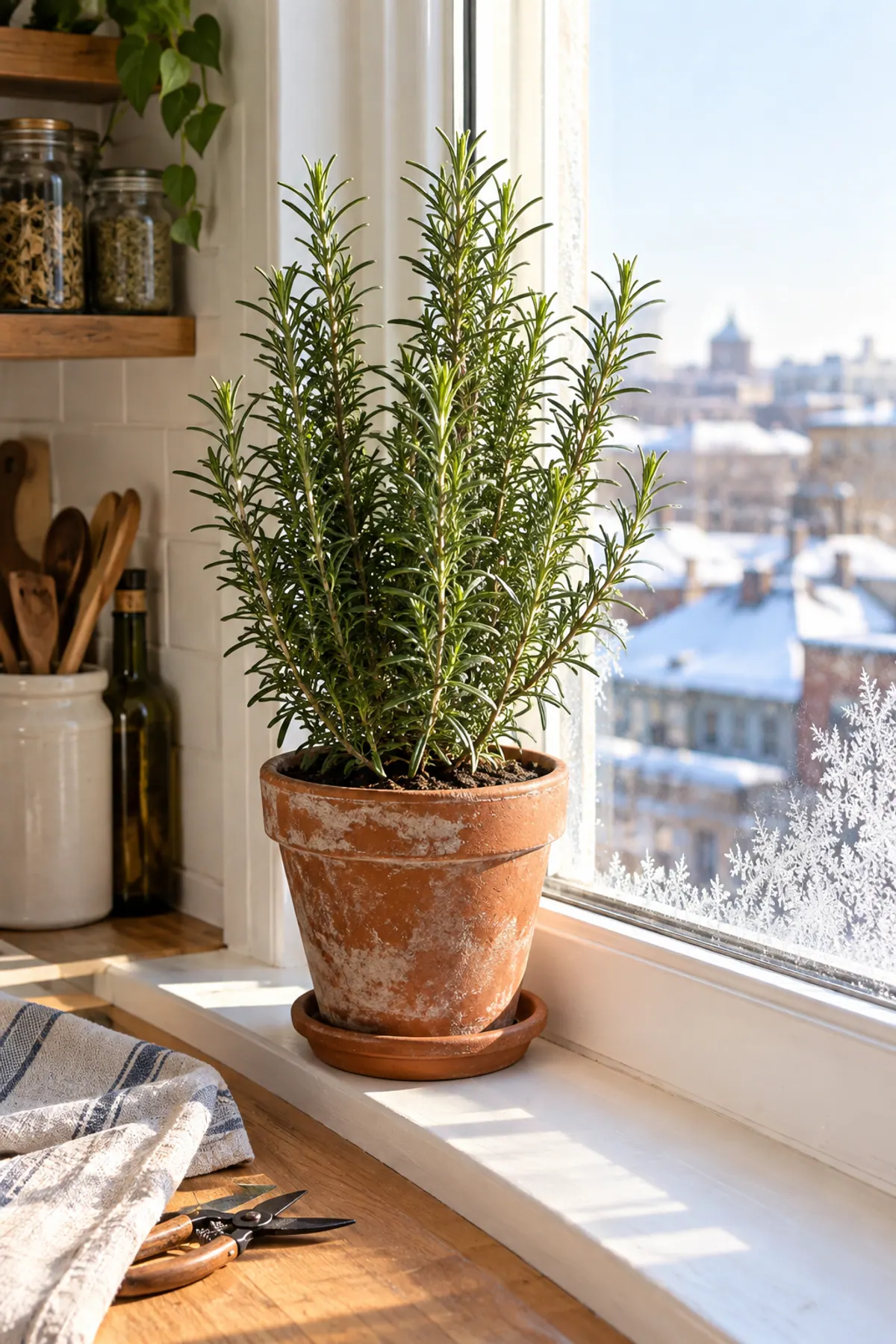
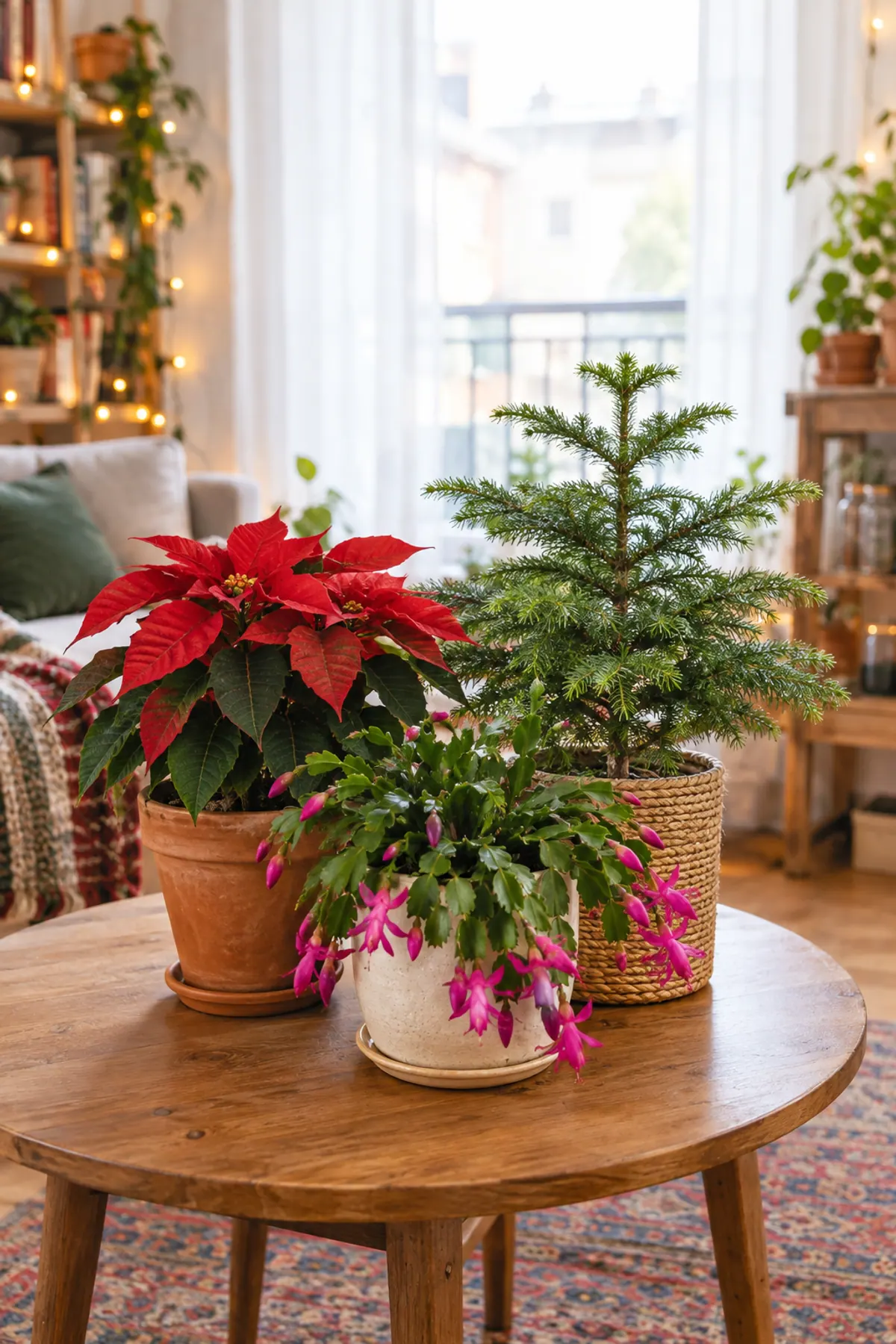
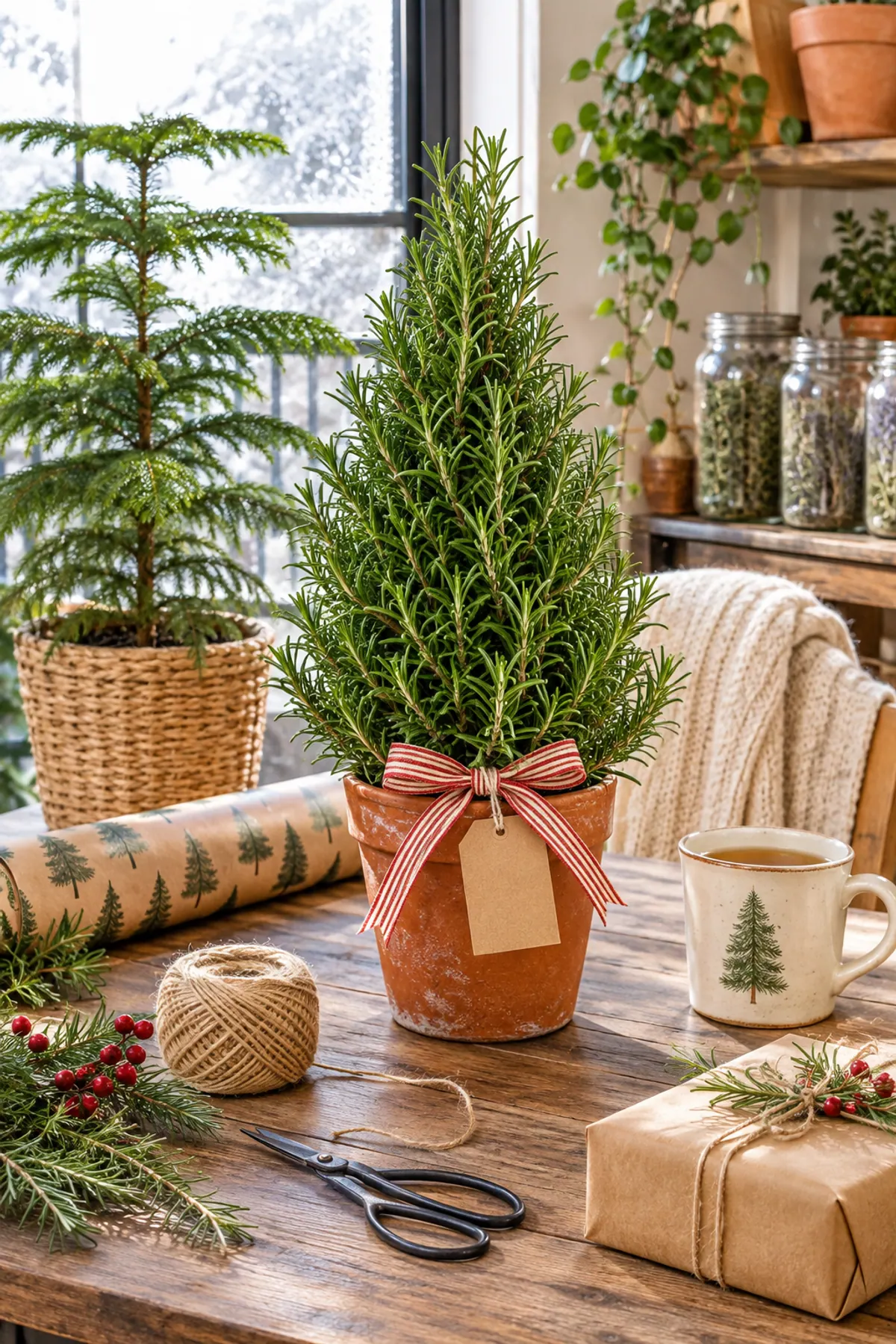
If you want a scented living tree instead, try a rosemary Christmas tree. For flowers rather than a tree shape, a Christmas cactus blooms in the same weeks.
Supplies for a Norfolk pine Christmas tree
-
Lightweight felt and wood mini ornaments
Typically $8 to $18
Light enough for soft branches
Check price on Amazon for Lightweight felt and wood mini ornaments -
Battery LED micro lights, warm white
Typically $8 to $15
Cool to the touch, with no outlet near the tree
Check price on Amazon for Battery LED micro lights, warm white -
Pebble tray for plants
Typically $8 to $20
Adds humidity without wetting the roots
Check price on Amazon for Pebble tray for plants -
Small room humidifier
Typically $20 to $45
Helps in heated winter rooms
Check price on Amazon for Small room humidifier -
Woven basket planter with liner
Typically $15 to $35
Hides the nursery pot for the holidays
Check price on Amazon for Woven basket planter with liner -
Soil moisture meter
Typically $8 to $15
A second opinion on when to water
Check price on Amazon for Soil moisture meter
Frequently asked questions
Can you use a Norfolk Island pine as a Christmas tree?
Yes. It is a small, soft-branched living tree that suits a table or corner. Decorate it with lightweight ornaments and cool LED lights, and keep it as a houseplant after the holidays.
How do you decorate a Norfolk pine without damaging it?
Use lightweight felt, paper or wooden ornaments and battery LED lights. Wind lights loosely, hang ornaments from the branch tips, and avoid heavy glass baubles.
Is a Norfolk Island pine poisonous to cats and dogs?
The ASPCA lists it as non-toxic to dogs, cats and horses. Some retailers, including Bloomscape, say it is toxic, so keep pets from chewing the tree and call your vet if one seems unwell.
How often should you water a Norfolk pine?
Water when the top inch of soil is dry, which is about weekly in many homes and less often in winter. Another retailer says to water when about 25% of the soil is dry.
Why is my Norfolk pine turning brown?
Dry air, heat vents, drafts and sudden moves are common causes. Add a pebble tray or humidifier, move it away from vents, and trim only the dead tips.
What do I do with a Norfolk pine after Christmas?
Take the decorations off, keep it in bright indirect light, and keep up the humidity. Repot in spring if the roots have filled the pot.
Is it normal for a Norfolk pine to lose lower branches?
A few lower branches browning and dropping over time is normal aging or a sign of low light. Many branches at once points to dry air, a draft, or watering that is too heavy or too light. Check the soil, move the tree away from vents, and add humidity.
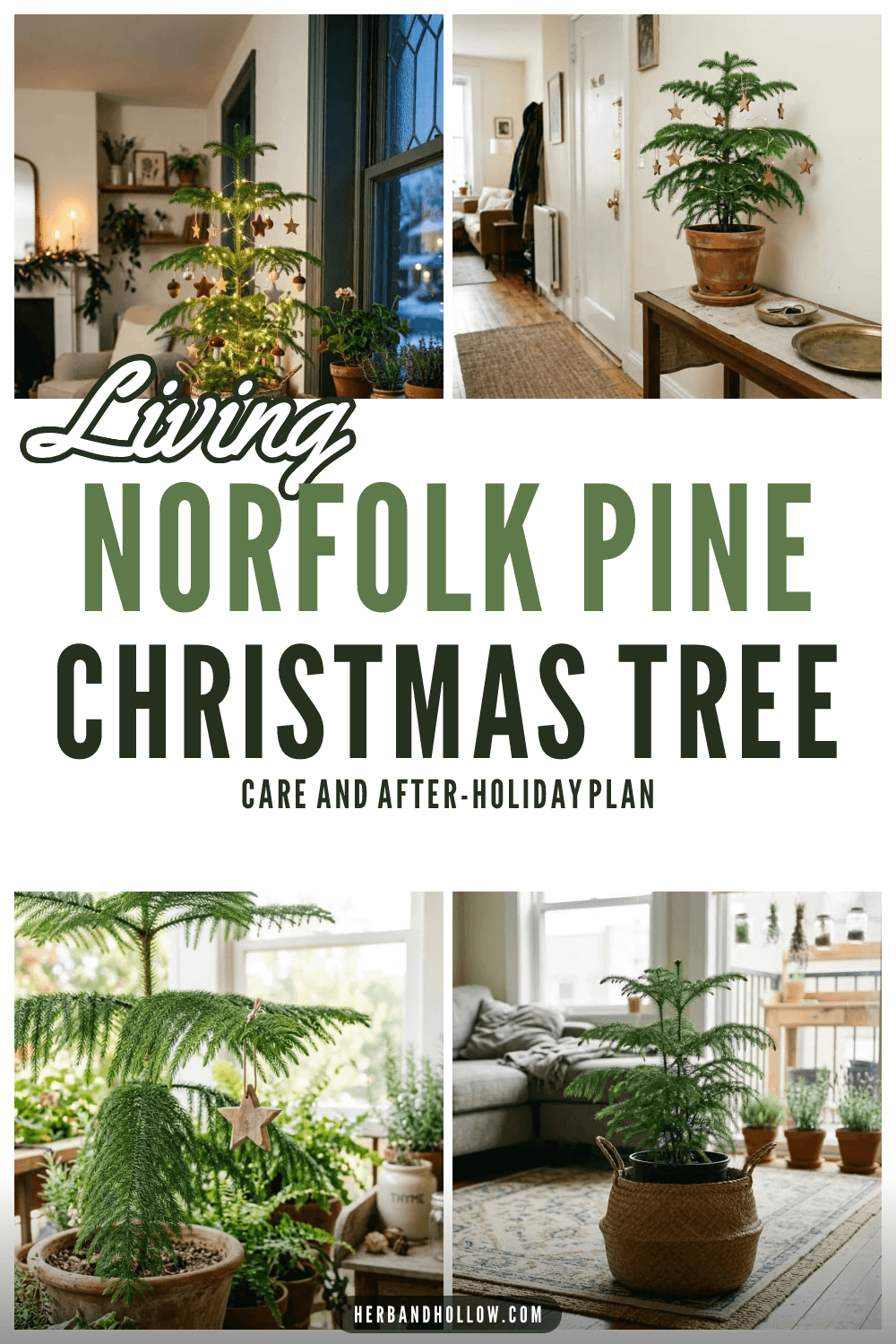
Save it for later
Pin this to your Houseplants board so it's there when you need it.
Save to Pinterest