This post contains affiliate links. As an Amazon Associate we earn from qualifying purchases, at no extra cost to you. Read our disclosure.
Safety first: Herbs can be powerful. If you are pregnant, nursing, take medication or have a health condition, check with your doctor or pharmacist first. Please read our herbal & garden safety notes before you start.
Key takeaways
- Humidity: many houseplants prefer 40 to 50 percent; winter homes often sit at 10 to 20 percent (Iowa State). Measure with a hygrometer.
- Water: only when the soil is dry about an inch down, with water at 62 to 72°F (Iowa State, Clemson).
- Light: move plants closer to bright windows, keep leaves off cold glass, and add a grow light for about 12 hours a day if needed (NC State).
- Temperature: 65 to 75°F for most plants, nothing below 55°F, away from heaters, vents and drafty doors (Iowa State).
- Rest: no fertilizer from November to February (NC State) and skip misting, which Iowa State says doesn't raise humidity.
In this post20 sections
- Winter houseplant care by the numbers
- Light: help plants through short, dark days
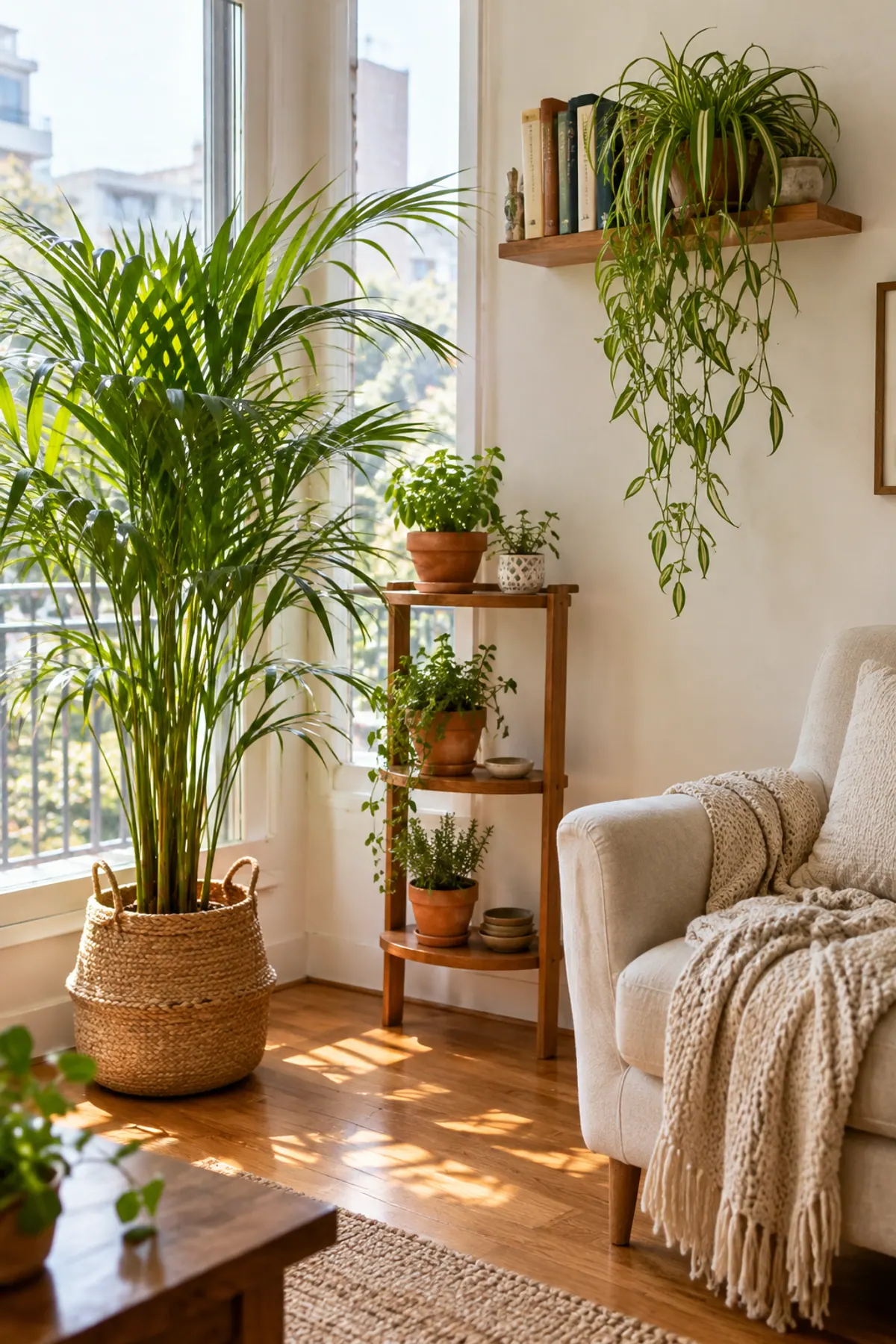
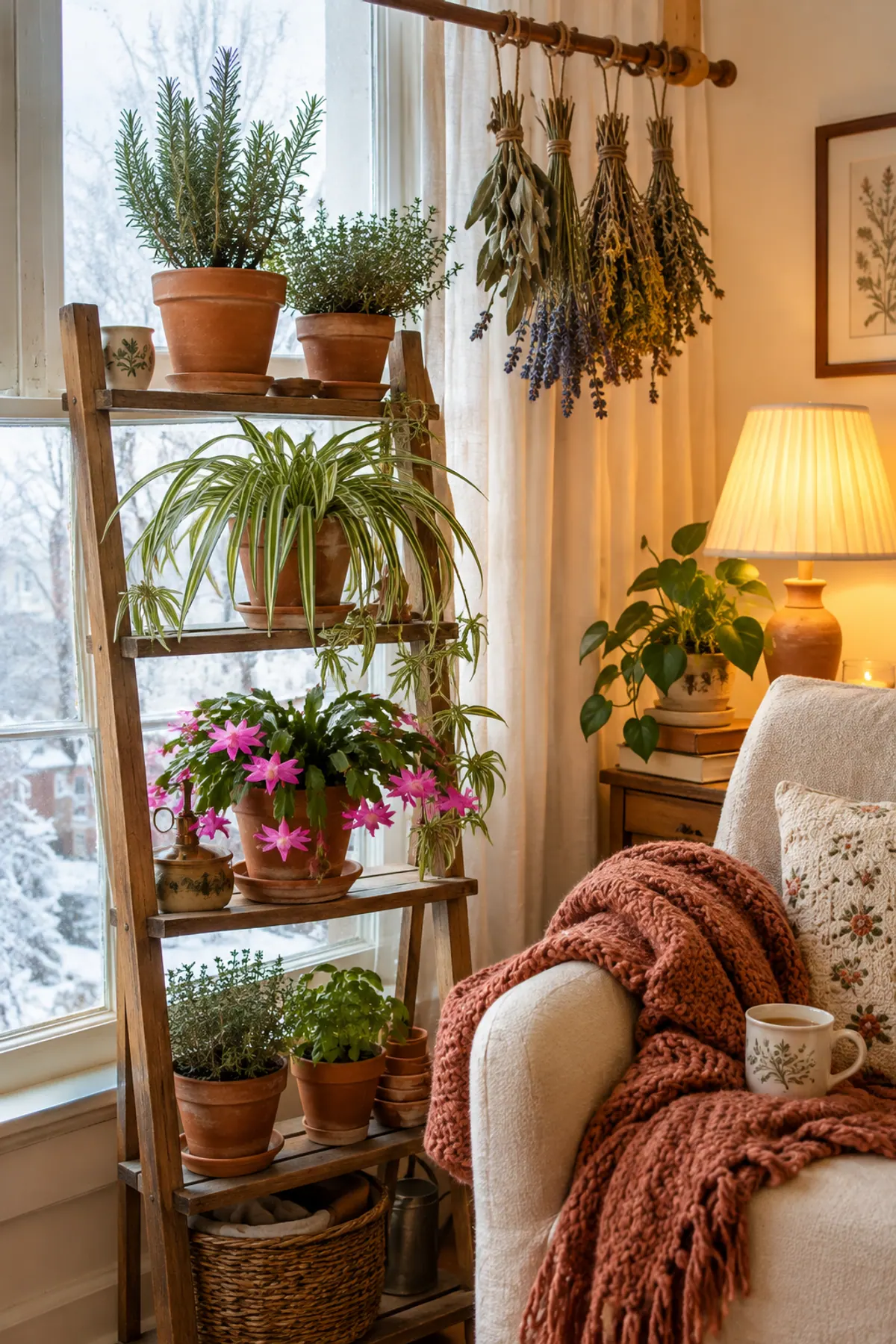
- 1. Move plants closer to your brightest window
- 2. Keep leaves off cold window glass
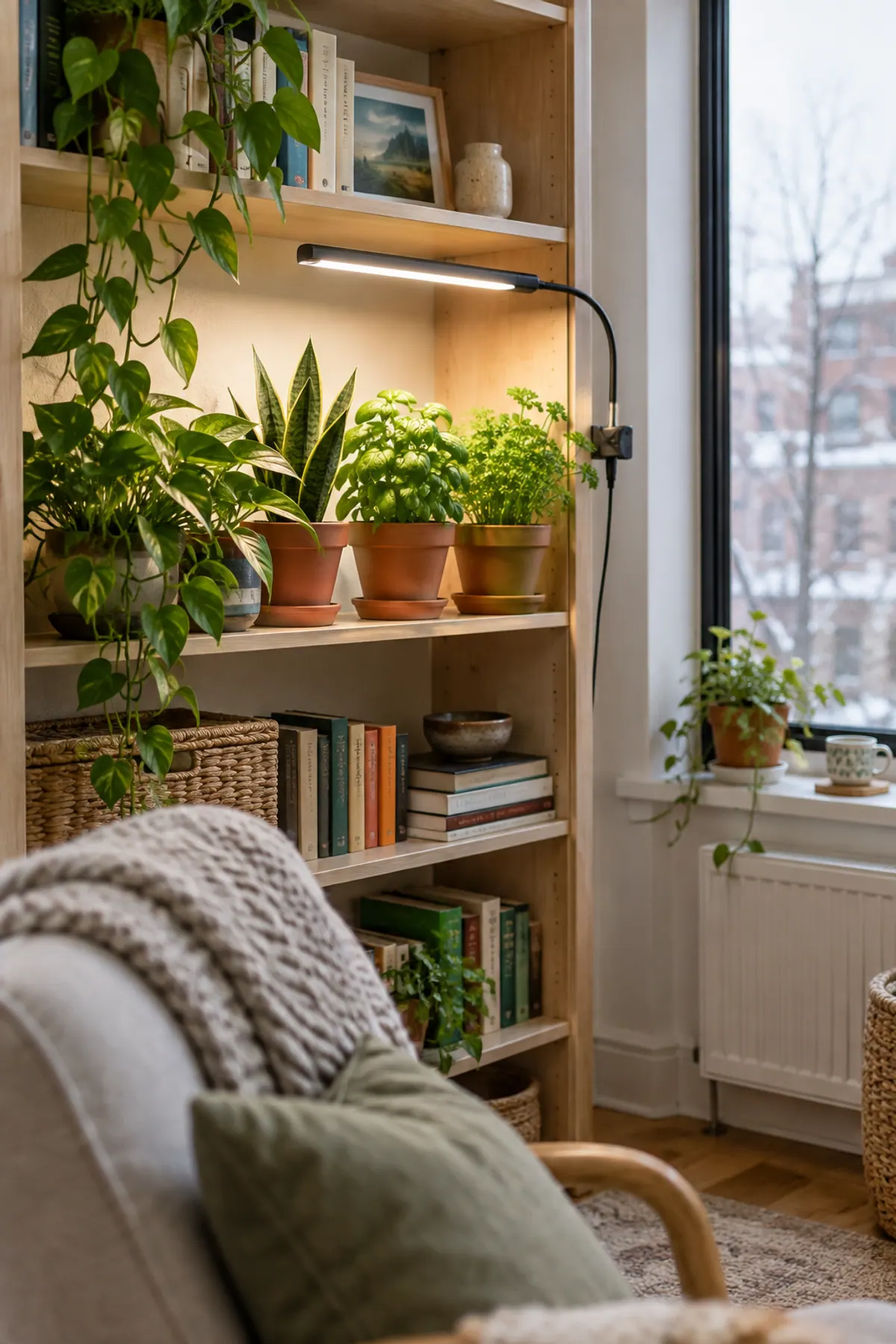
- 3. Add a grow light for short days
- Water: check the soil, not the calendar
- 4. Water only when the top inch is dry
- 5. Use room-temperature water
- Humidity: measure it, then raise it
- 6. Measure humidity with a hygrometer
- 7. Use pebble trays and group plants
- 8. Run a small humidifier near the plants
- Temperature and drafts
- 9. Keep plants away from heaters, vents and drafty doors
- Rest and upkeep until spring
- 10. Skip the fertilizer until spring
- 11. Dust the leaves and check for pests
- Winter houseplant care mistakes to avoid
- Bonus: grow fresh herbs on your winter windowsill
- FAQ
Winter houseplant care by the numbers
Most winter plant advice says "water less" and "add humidity" without saying how much. Here are the numbers university extension services actually give, with the source for each. Where no extension page we checked gives a number, the table says so.
| What | Target | Source |
|---|---|---|
| Humidity | Many houseplants prefer 40 to 50 percent | Iowa State Extension |
| Typical winter home humidity | Often only 10 to 20 percent | Iowa State Extension |
| Room temperature | 65 to 75°F suits most indoor plants; avoid below 55°F | Iowa State Extension |
| Night drop | About 10 to 15°F cooler at night helps | Iowa State Extension |
| When to water | When the soil is dry about an inch down | Iowa State Extension; Clemson HGIC (first knuckle) |
| Water temperature | 62 to 72°F | Clemson HGIC |
| Grow light | Fluorescent fixture about 12 inches above, about 12 hours a day, never 24 | NC State Extension |
| Fertilizer | None from November to February | NC State Extension; Iowa State says stop in fall and winter |
| Washing leaves | Every two or three months | NC State Extension |
| Distance from heaters and cold glass | No number given; keep plants "far from vents" and not too close to windows | Clemson HGIC |
Sources: Iowa State, Should I mist houseplants? (updated Feb 26, 2022), Iowa State, How to Care for Houseplants (reviewed Oct 2023), Iowa State, bringing houseplants indoors (updated Oct 1, 2026), Clemson HGIC, Indoor Plants: Watering (reviewed Jun 21, 2024), Clemson HGIC, January 2025, and the NC State Extension Gardener Handbook.
Light: help plants through short, dark days
Winter brings shorter days and a lower sun, so every window gives less light than it did in summer. Light is usually the first thing to fix.
1Move plants closer to your brightest window
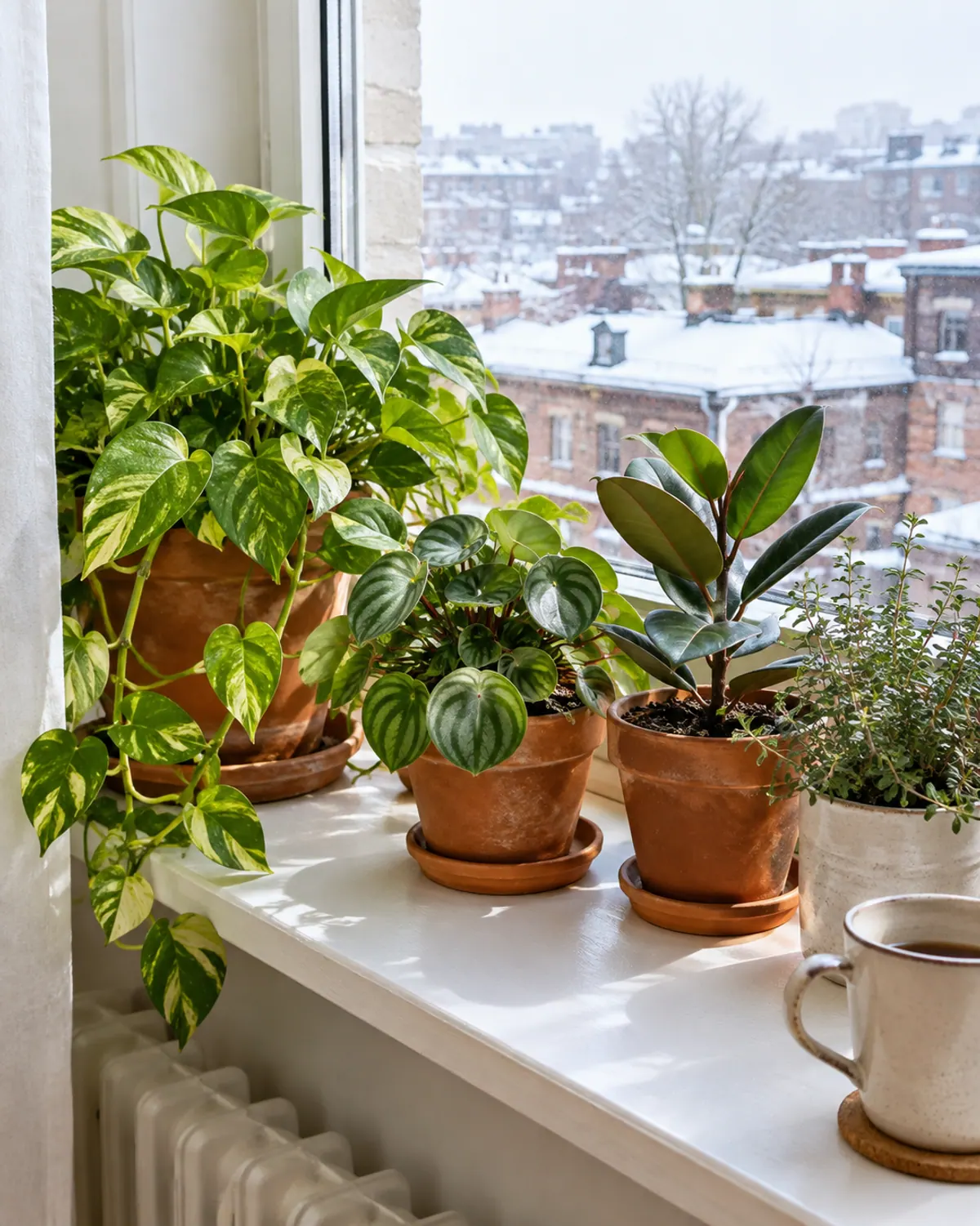
Iowa State Extension notes that spots more than a few feet from even a bright window get too little light for most houseplants. In winter that matters more, because the light coming through the glass is weaker. Move plants from the back of the room to the sill or a table right beside the window. A south or west window gives the most winter light in most homes. Pull blinds fully open during the day and clean the glass, since winter grime cuts light too. Watch the new leaves: small, pale leaves and long gaps on the stem mean the plant still wants more light.
- Turn pots a quarter turn when you water. NC State suggests rotating plants monthly between brighter and dimmer spots so they grow evenly.
2Keep leaves off cold window glass
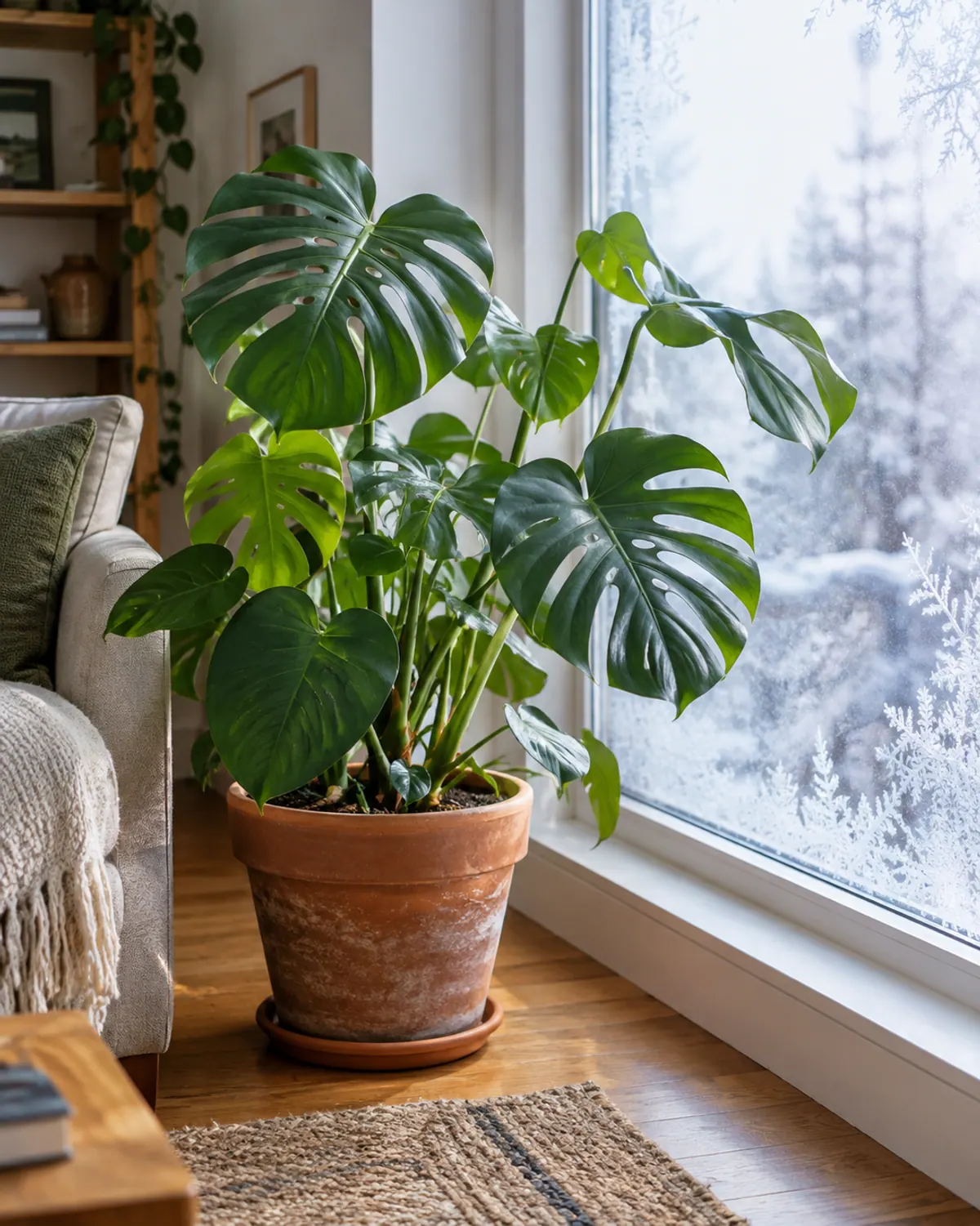
Closer to the window is good, but leaves touching icy glass can get cold damage. Clemson HGIC warns against placing plants "too close to windows, where they might suffer cold damage." No extension page we read gives an exact gap, so use a simple check: put your hand flat on the glass on a cold morning. If it feels icy, keep leaves from touching it. On freezing nights, slide pots back from the window or close a curtain between the plants and the glass, then return them in the morning.
- Single-pane and drafty older windows get colder than modern double-pane glass. Check them first.
3Add a grow light for short days
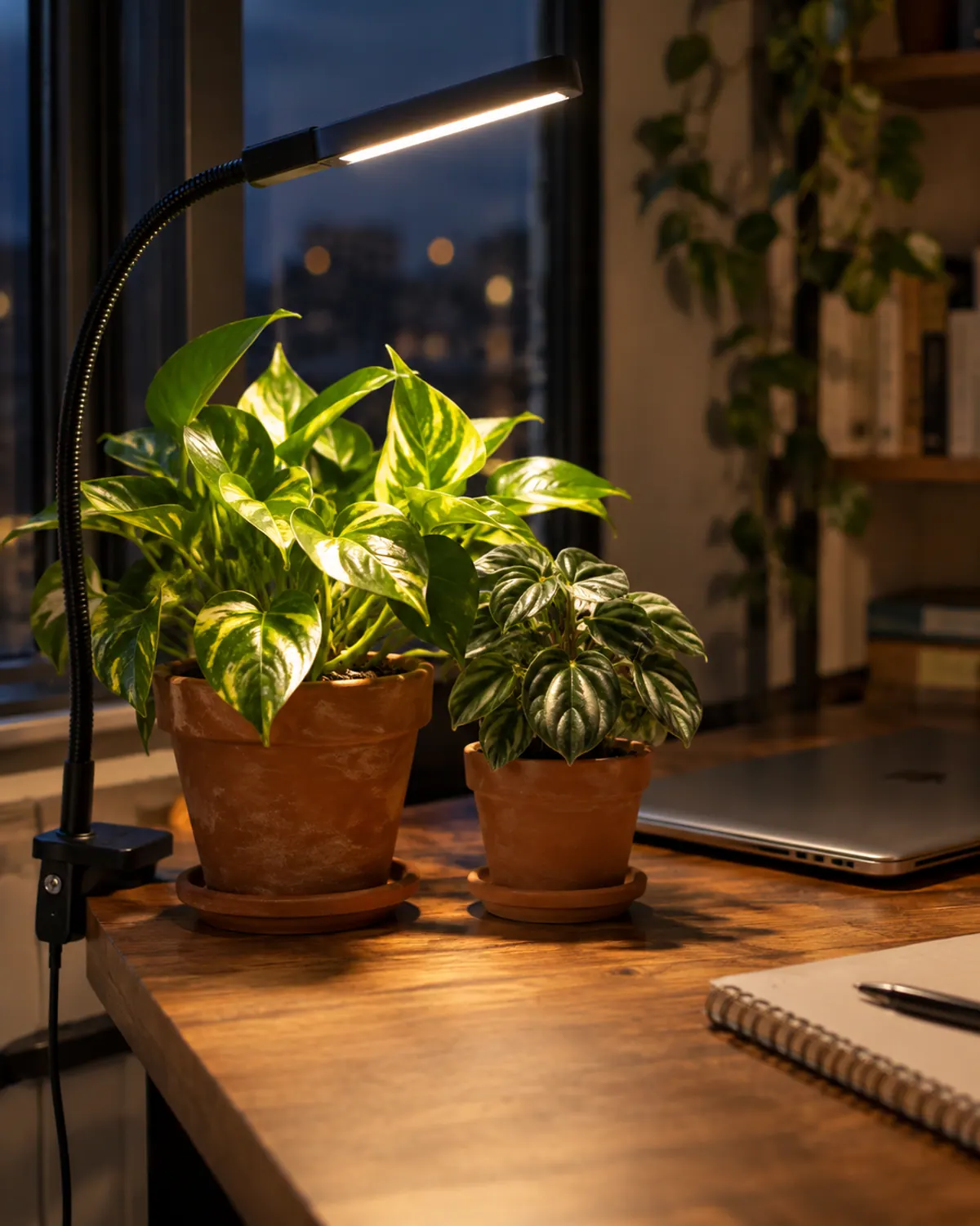
If your windows face north or the room is dark, a grow light makes up the difference. The NC State Extension Gardener Handbook says a fluorescent fixture is typically placed about 12 inches above plants, and an average houseplant needs light for about 12 hours a day. It also says plants should not be lit 24 hours a day. LED clip-on lights vary in strength, so follow the maker's distance guide and use a plug-in timer so the light runs the same hours every day. A small clip-on light is enough for one to three plants on a desk or shelf.
- Plants under a light still need a dark night. Set the timer to switch off in the evening.
Light gear for winter houseplants
- Easy start
Clip-on LED grow light
check current price
Clamps to a shelf or desk and covers one to three plants. Pick one with a built-in timer or add an outlet timer.
Check price on Amazon for Clip-on LED grow light -
Plug-in outlet timer
check current price
Runs the grow light on a fixed schedule, about 12 hours a day. Check it is rated for your light's wattage.
Check price on Amazon for Plug-in outlet timer
Comparing lights? Our grow lights for small spaces roundup covers bulbs, clip-ons, strips and shelves.
Water: check the soil, not the calendar
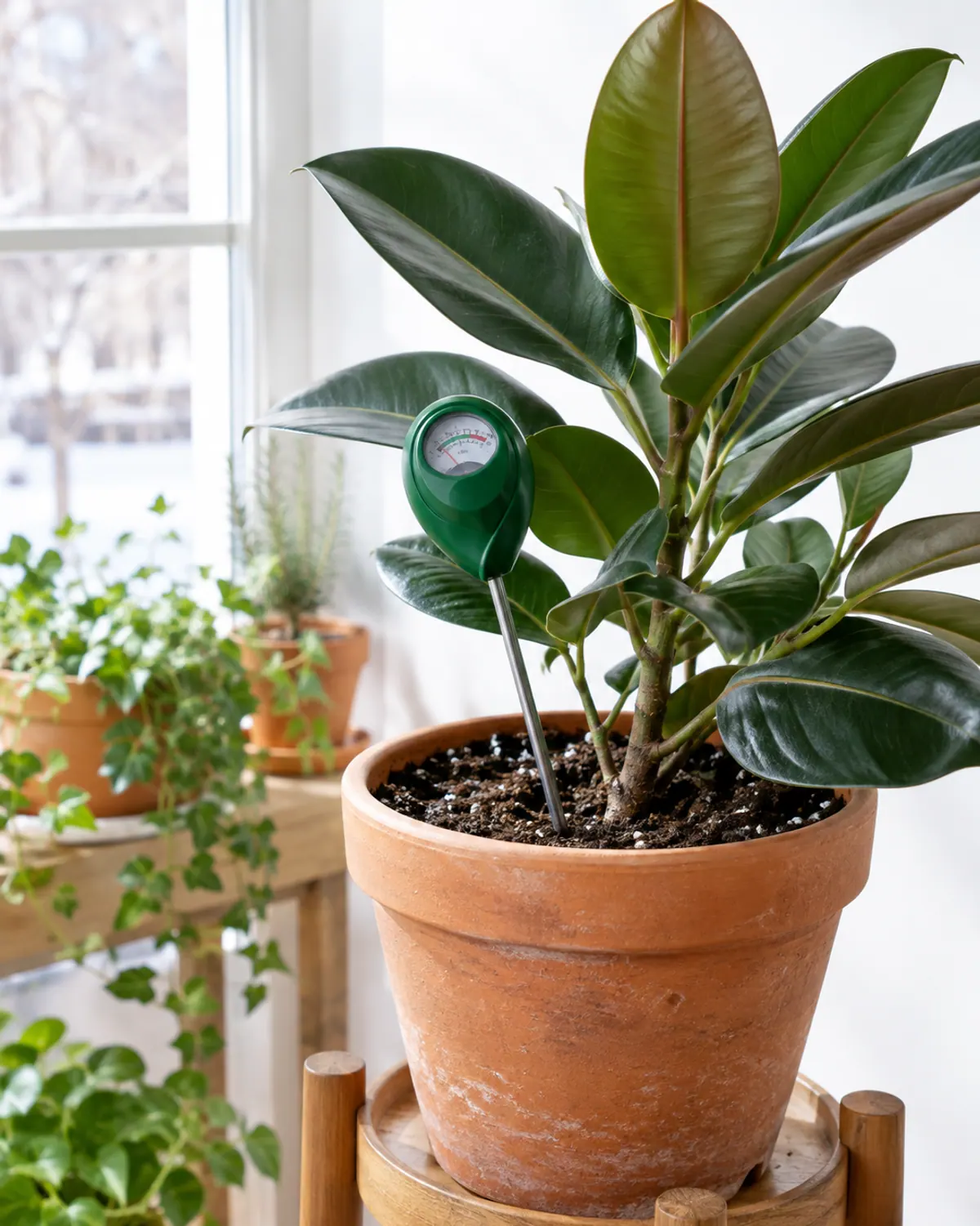
Winter watering is where most houseplants get into trouble, and the sources don't all agree on which way it goes. That's the reason to check the soil rather than follow a schedule.
4Water only when the top inch is dry
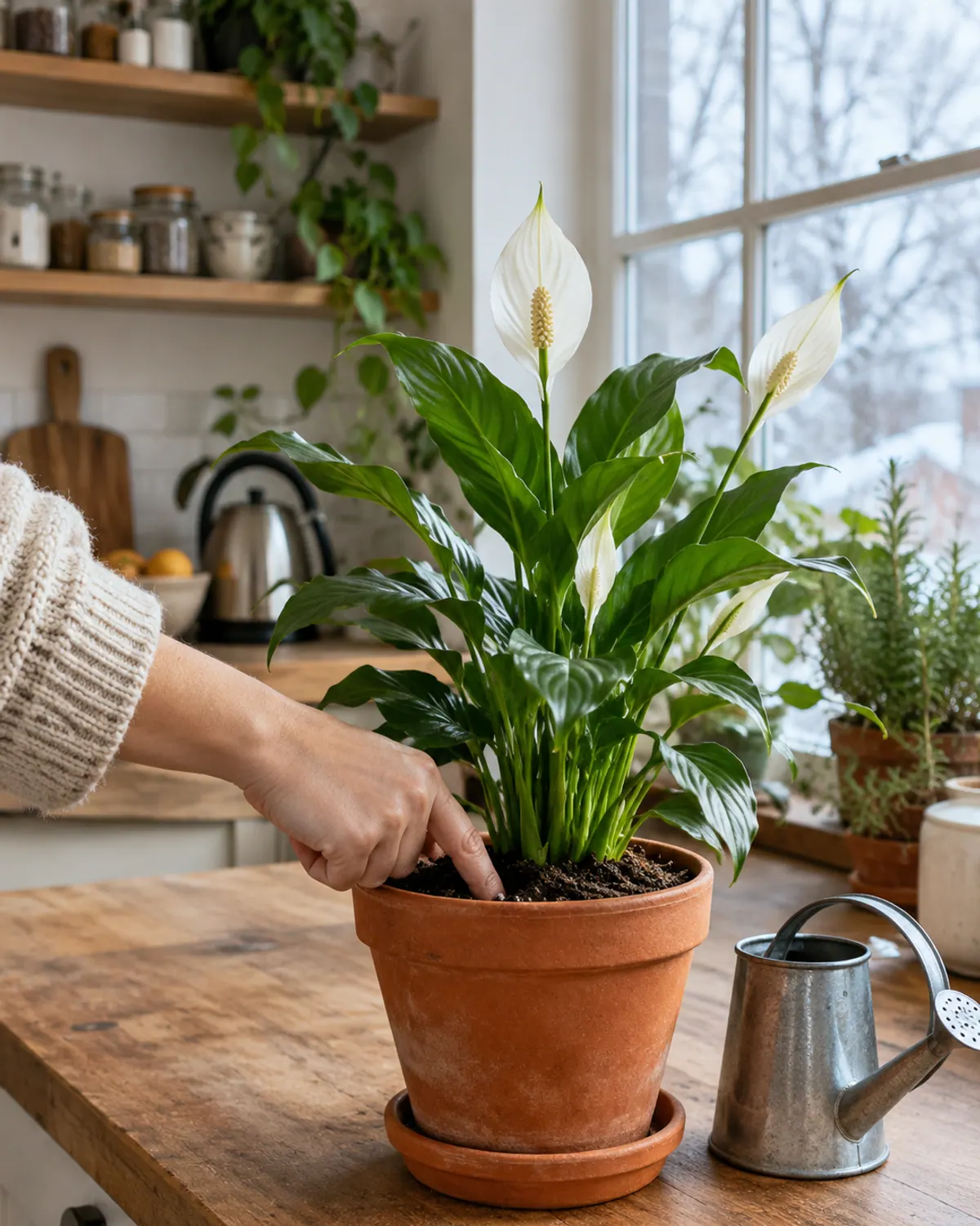
Iowa State Extension says it is time to water when the soil is dry to the touch about an inch down. Clemson HGIC gives the same test in a different form: push a finger into the mix up to the first joint, and water if it feels dry at the fingertip. Clemson also says there's no pat answer to how often, because it depends on the plant, pot, mix and room. Here's the winter twist. NC State says plants need less water in winter because growth slows. Clemson's January notes say plants can dry out faster once the heat is on. Both can be true in the same house, which is why the finger test beats a calendar.
- When you do water, water until it drains from the bottom, then empty the saucer. Soggy saucers are a common cause of root rot.
5Use room-temperature water
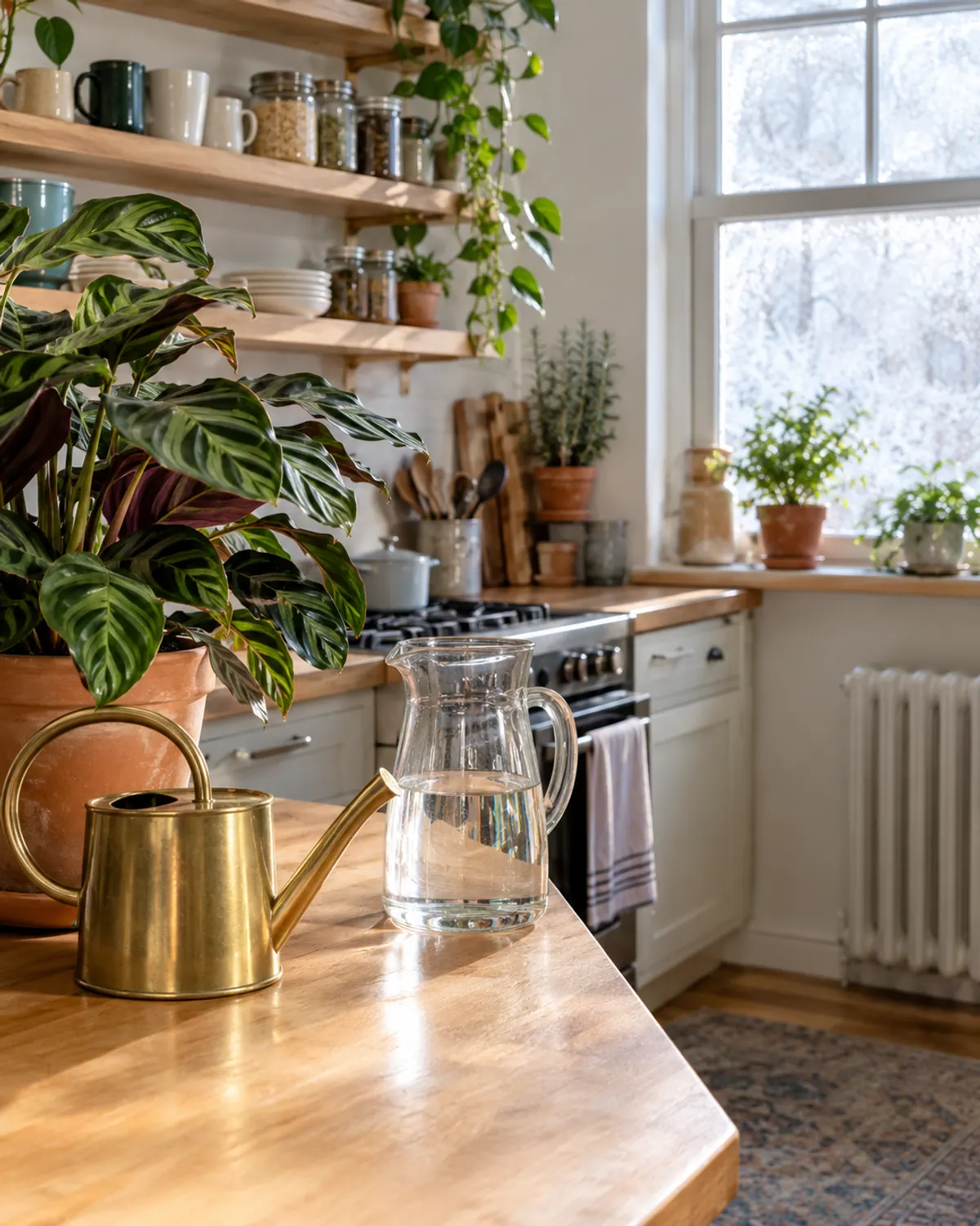
Clemson HGIC recommends water between 62 and 72°F for indoor plants. In winter, cold tap water can be well below that. An easy fix is to fill your watering can the night before and leave it on the counter, so it warms to room temperature by morning. Clemson also advises against using softened water on houseplants. If you have a water softener, use water from a tap before the softener or use rainwater or bottled water.
- A filled watering can left out also reminds you to check the plants, which helps build a weekly habit.
Watering tools
- Most useful
Soil moisture meter
check current price
A probe that reads moisture deeper in the pot than your finger can reach. Handy for big pots and plants you tend to overwater.
Check price on Amazon for Soil moisture meter -
Small indoor watering can
check current price
A long thin spout puts water on the soil, not the leaves, and is easy to fill the night before.
Check price on Amazon for Small indoor watering can
Humidity: measure it, then raise it
Heated winter air is dry. Iowa State Extension says many houseplants prefer 40 to 50 percent relative humidity, while many homes sit at only 10 to 20 percent in winter. That gap shows up as brown leaf tips and crispy edges, especially on ferns, calatheas and other tropical plants.
6Measure humidity with a hygrometer
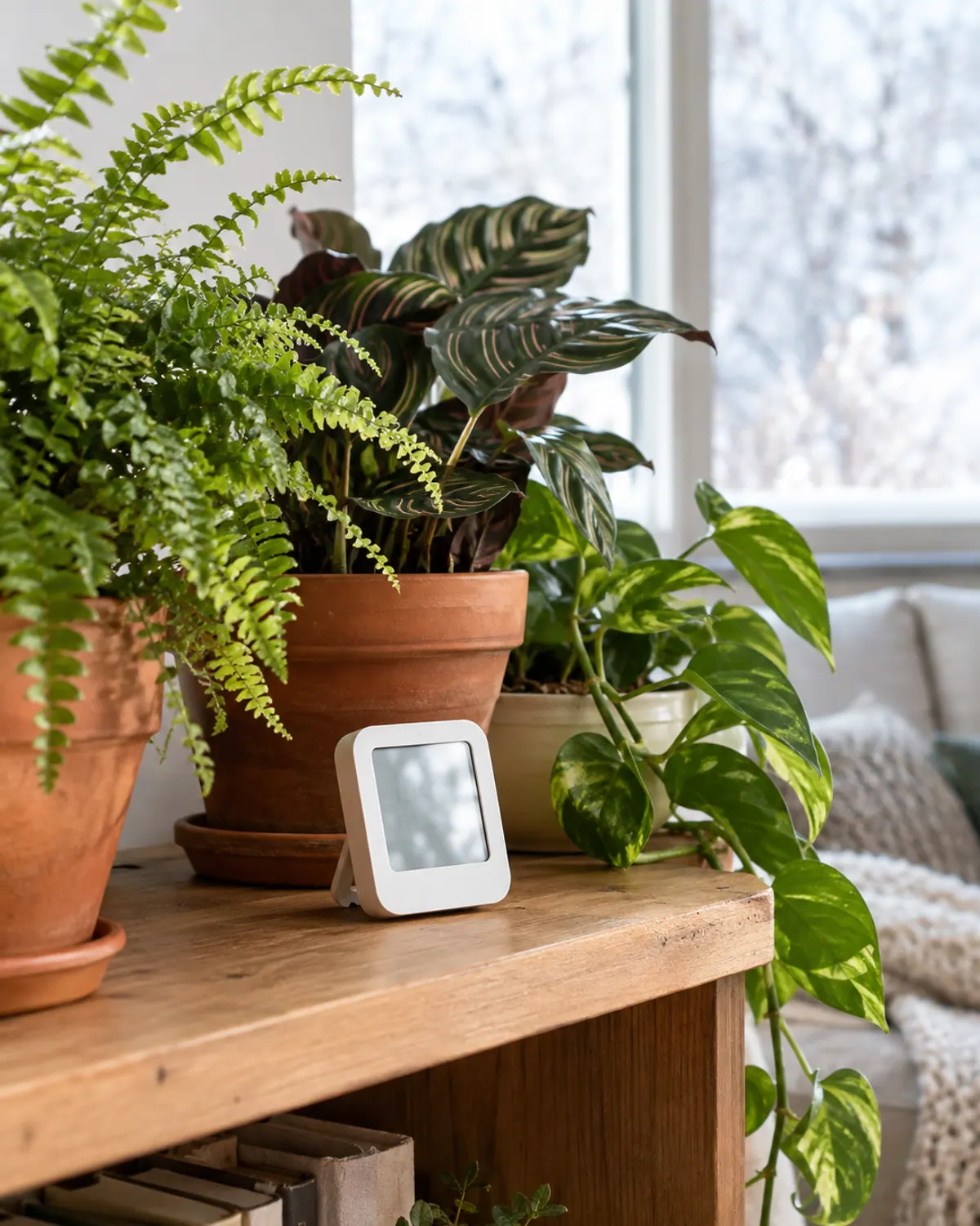
You can't fix humidity you haven't measured. A small digital hygrometer costs little and shows the humidity in the room where your plants live. Set it among the plants, not next to a heater or a humidifier, and check it at different times of day for a week. If it reads below 40 percent, the plants are below Iowa State's target range. Most also show temperature, which lets you check that the room stays in the 65 to 75°F range Iowa State suggests for most indoor plants.
- Check the reading on the coldest week of winter. That's usually when the heat runs most and the air is driest.
7Use pebble trays and group plants
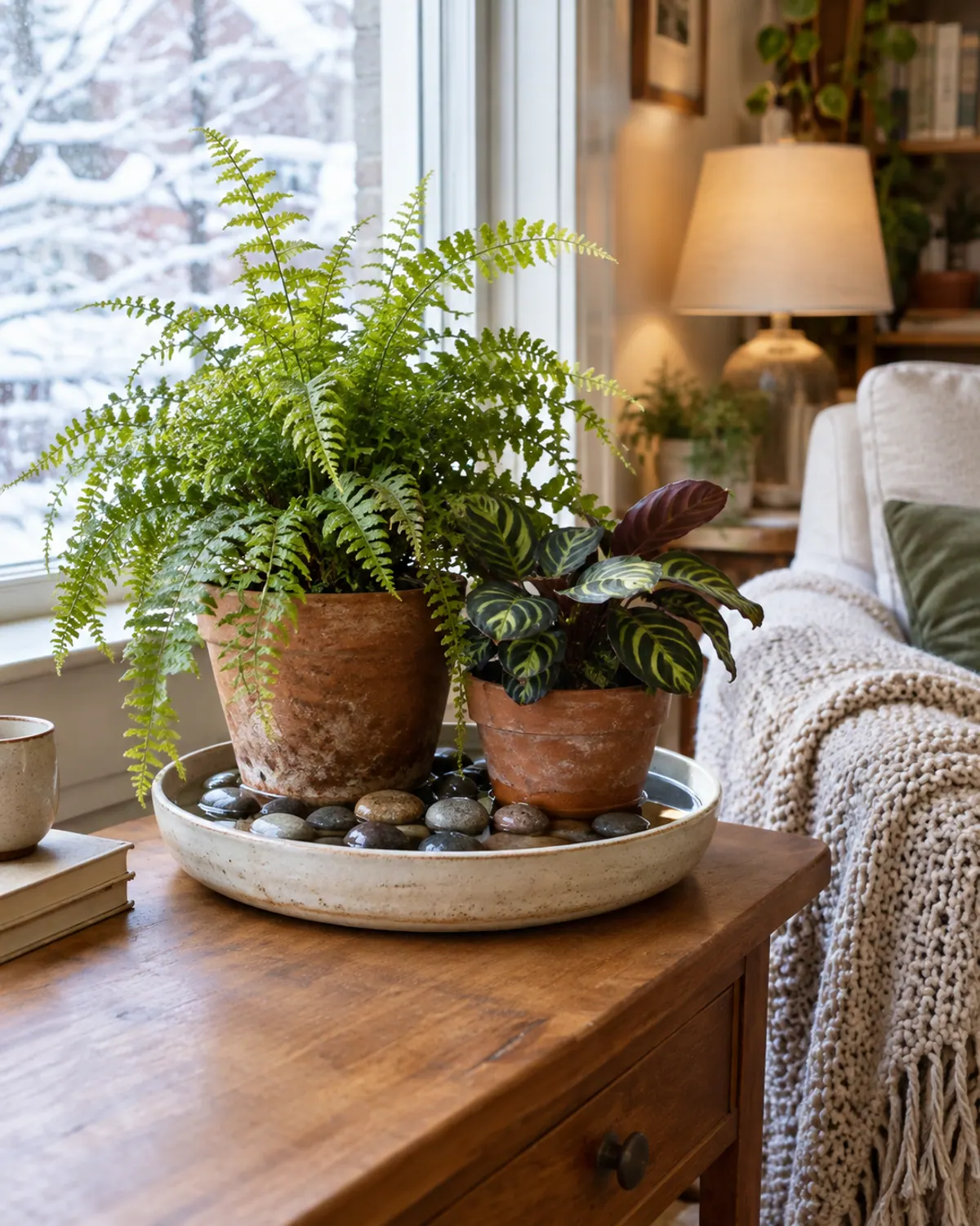
Iowa State suggests two low-cost ways to add humidity. First, group plants together, since water evaporating from the soil and leaves raises the humidity around them. Second, set pots on trays or saucers filled with pebbles and water. Iowa State says to keep the water level below the bottoms of the pots, so the roots don't sit in water. And skip the mister. Iowa State says misting is not an effective way to raise humidity, since it would have to be done several times a day to help.
- Top up pebble trays when you water. In a heated room, the water can be gone within a few days.
8Run a small humidifier near the plants
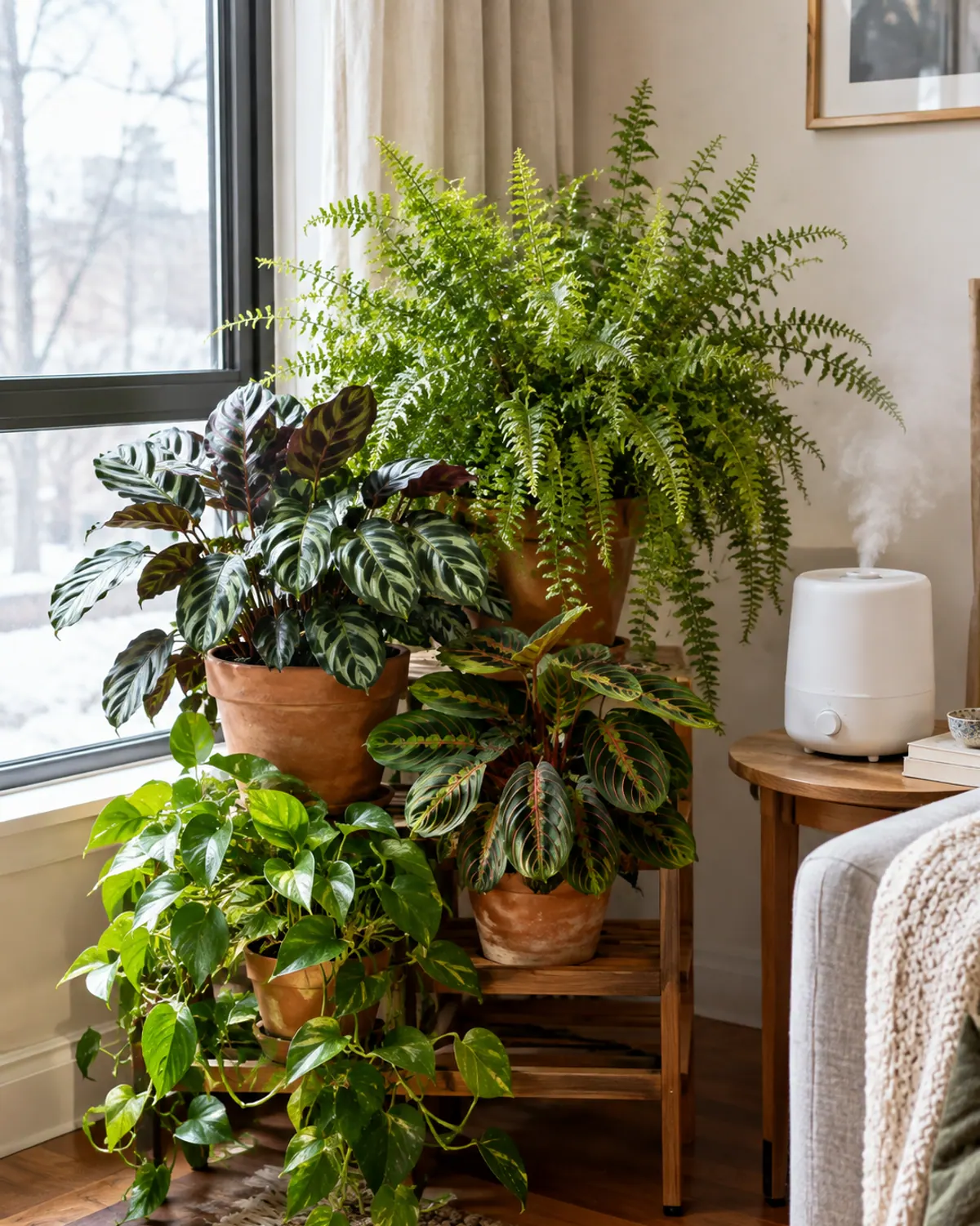
For a real jump in humidity, Iowa State calls humidifiers an excellent way to raise it. Clemson HGIC suggests grouping humidity-loving plants together and adding a humidifier to that space. A small humidifier near a plant cluster is more efficient than trying to humidify a whole home. Check your hygrometer after a few days and aim for the 40 to 50 percent range. Clean the humidifier as the maker directs, since standing water in the tank can grow mold and bacteria.
- Place the humidifier a little away from the leaves so they don't stay wet, and keep it on a waterproof surface.
Humidity helpers
- Start here
Digital hygrometer
check current price
Shows room humidity and temperature at a glance, so you know if your plants need help.
Check price on Amazon for Digital hygrometer -
Small cool-mist humidifier
check current price
Raises humidity around a plant group. Pick one with an auto shut-off and a tank that is easy to clean.
Check price on Amazon for Small cool-mist humidifier -
Plant humidity pebble tray
check current price
A shallow tray with pebbles. Keep the water below the pot bottom, as Iowa State advises.
Check price on Amazon for Plant humidity pebble tray
Temperature and drafts
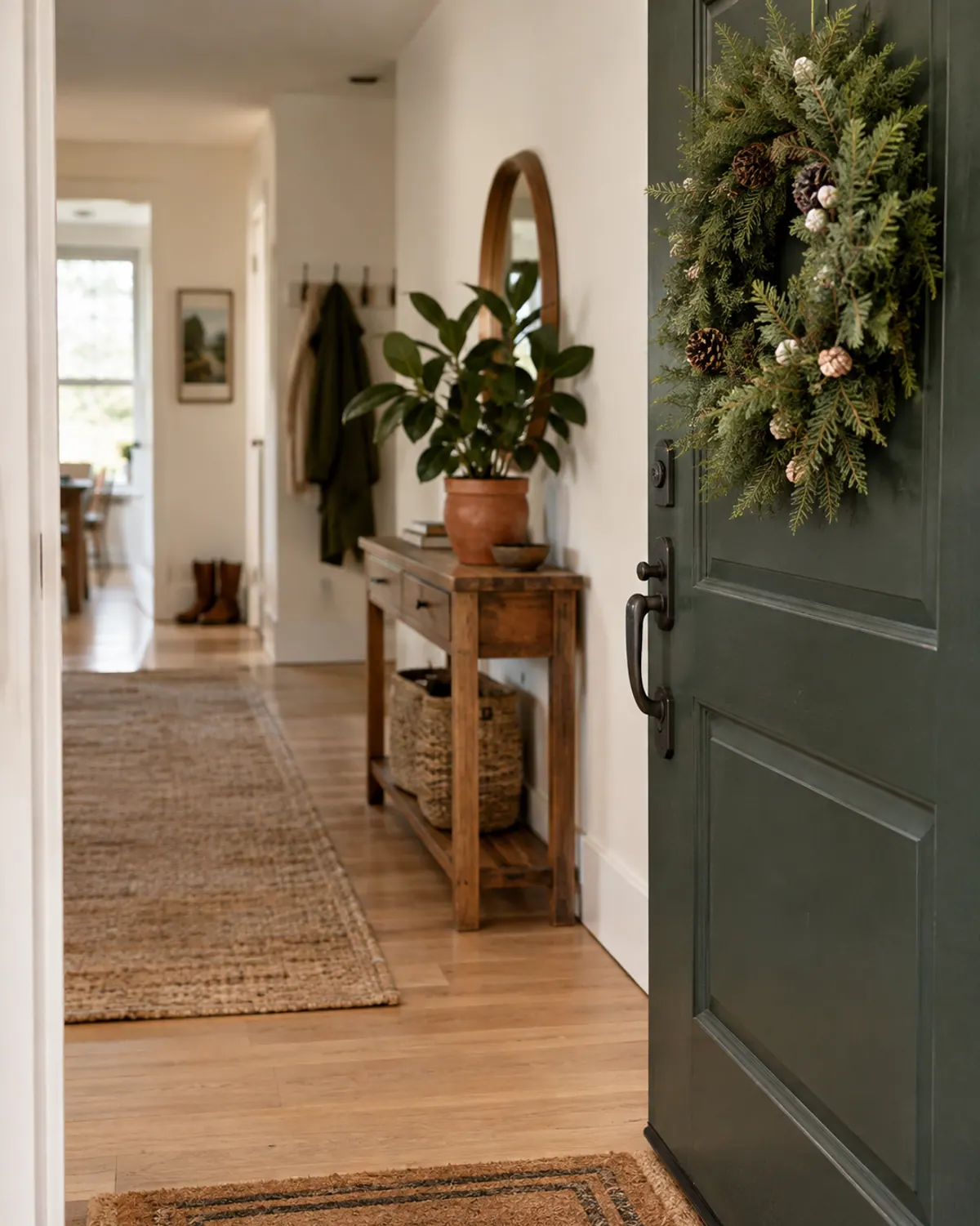
Iowa State Extension says 65 to 75°F suits most indoor plants and that temperatures below 55°F should be avoided. A night drop of about 10 to 15°F is good for them. Problems start at the extremes, right next to a heater or right by a door that lets in icy air.
9Keep plants away from heaters, vents and drafty doors
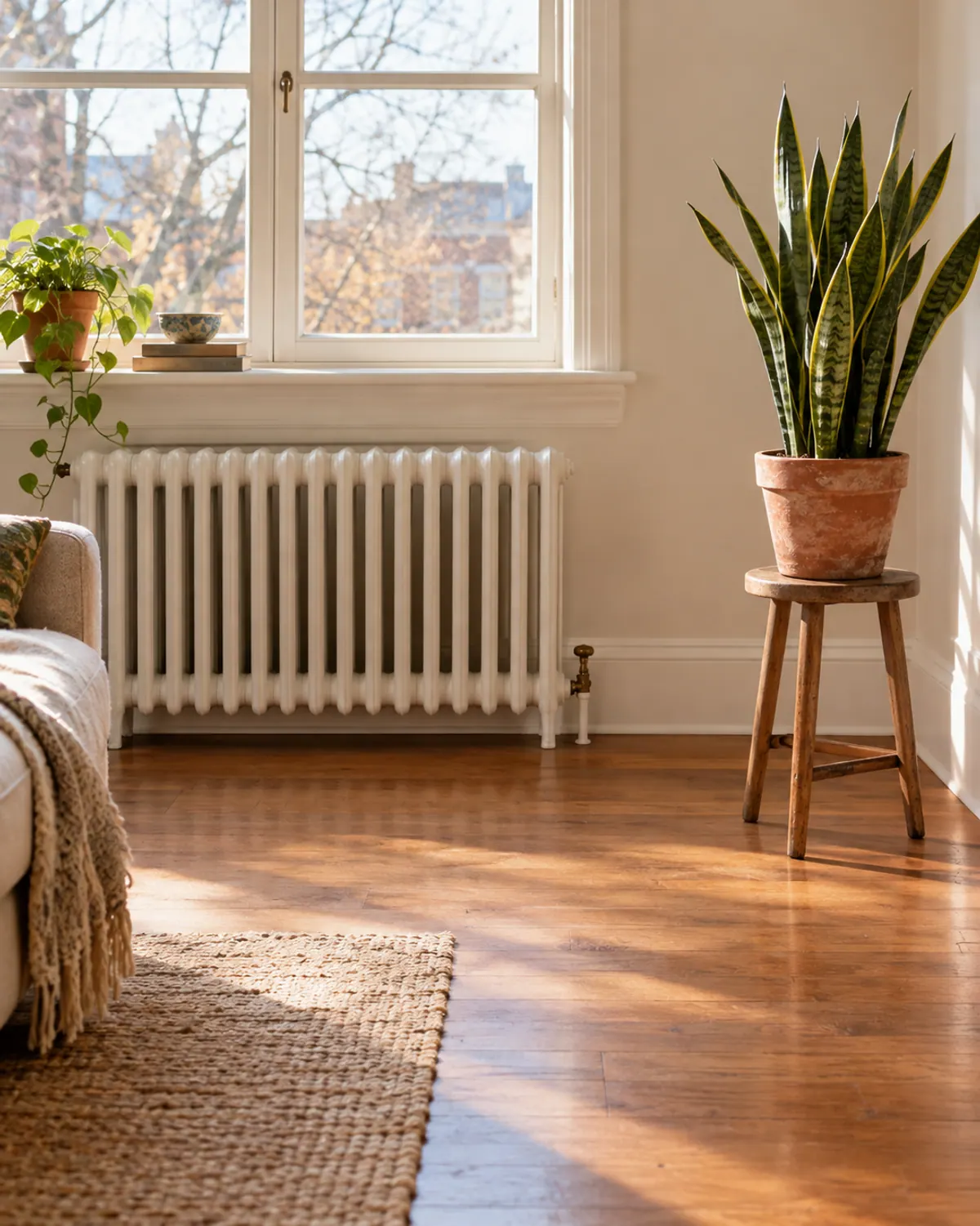
Heat registers and open doors are the two drafts Iowa State warns about. The NC State handbook says to keep containers away from cold drafts from outside doors and from the drying air of heating ducts. Clemson HGIC says plants can dry out when heaters are on and should be "far from vents or fireplaces." None of these sources gives an exact distance, so use the hand test again. If you can feel warm air blowing or a cold draft where the plant sits, move it. Watch the windowsill above a radiator too. It can be hot by day and cold at night.
- Plants that drop leaves suddenly in winter are often reacting to a draft. Look for a vent, door or leaky window nearby first.
Rest and upkeep until spring
Most houseplants grow slowly from late fall to late winter. Care in these months is mostly about not pushing them and keeping them clean.
10Skip the fertilizer until spring
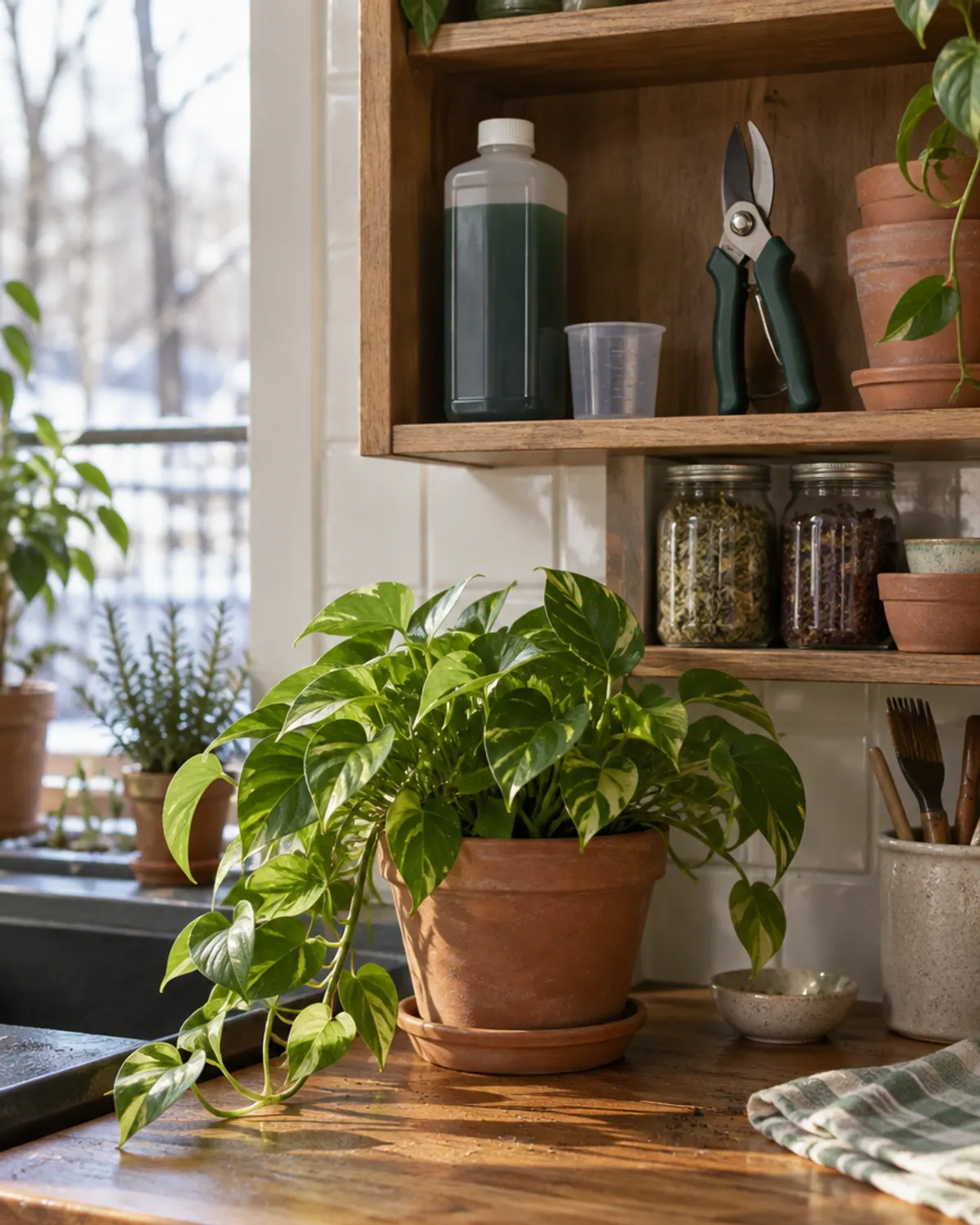
Iowa State Extension says to stop fertilizing in fall and winter, because plants aren't actively growing. The NC State handbook is more exact: fertilize indoor houseplants once a month from March to October, and not from November to February unless deficiency symptoms appear. Extra fertilizer in winter can build up as salts in the soil when the plant isn't using it. One older Iowa State care page extends feeding into November or December, but its newer fall guidance says to stop. Put the plant food away now and bring it back out when you see new growth in spring.
- Set a calendar reminder for March to restart feeding, so you don't forget once spring growth starts.
11Dust the leaves and check for pests
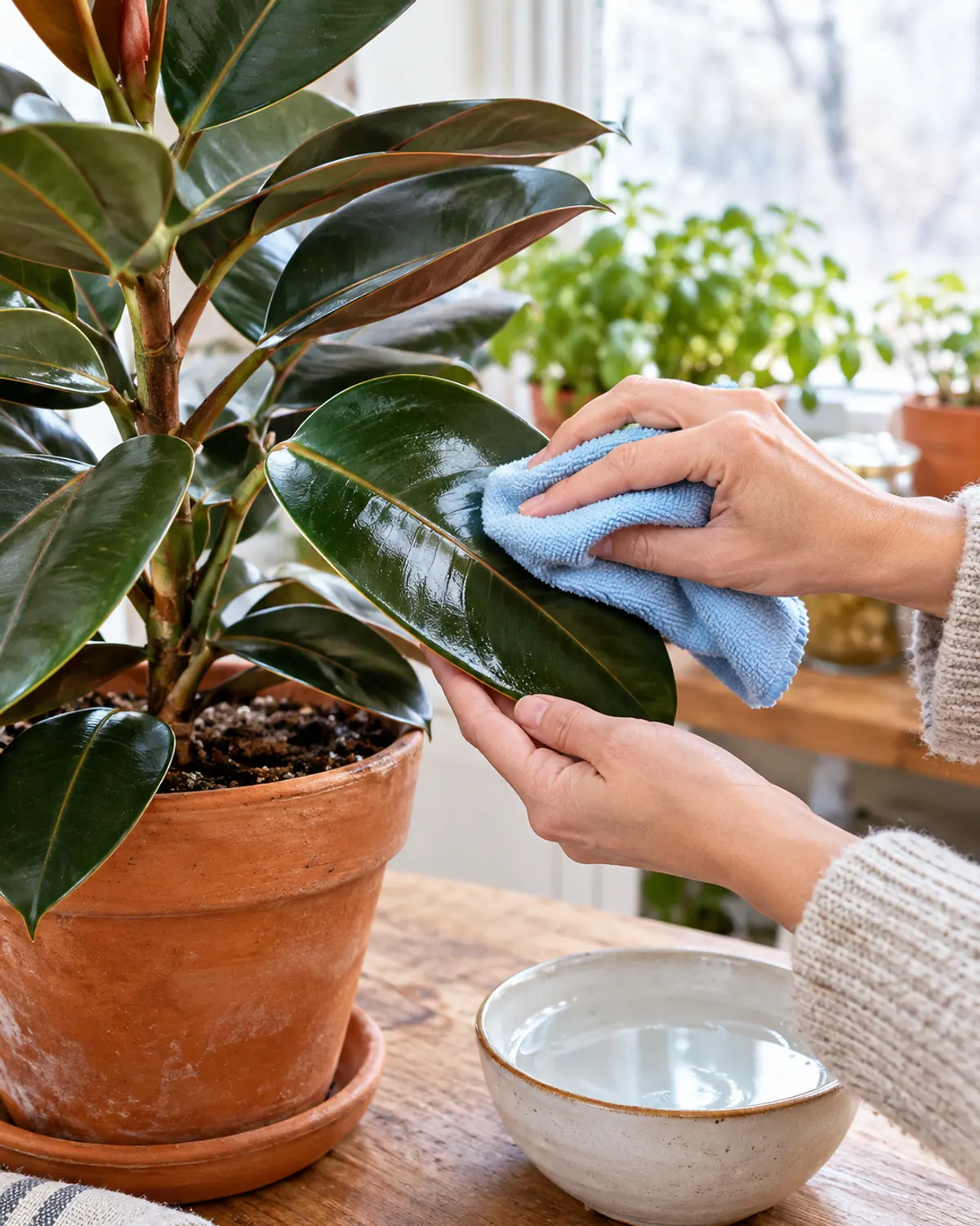
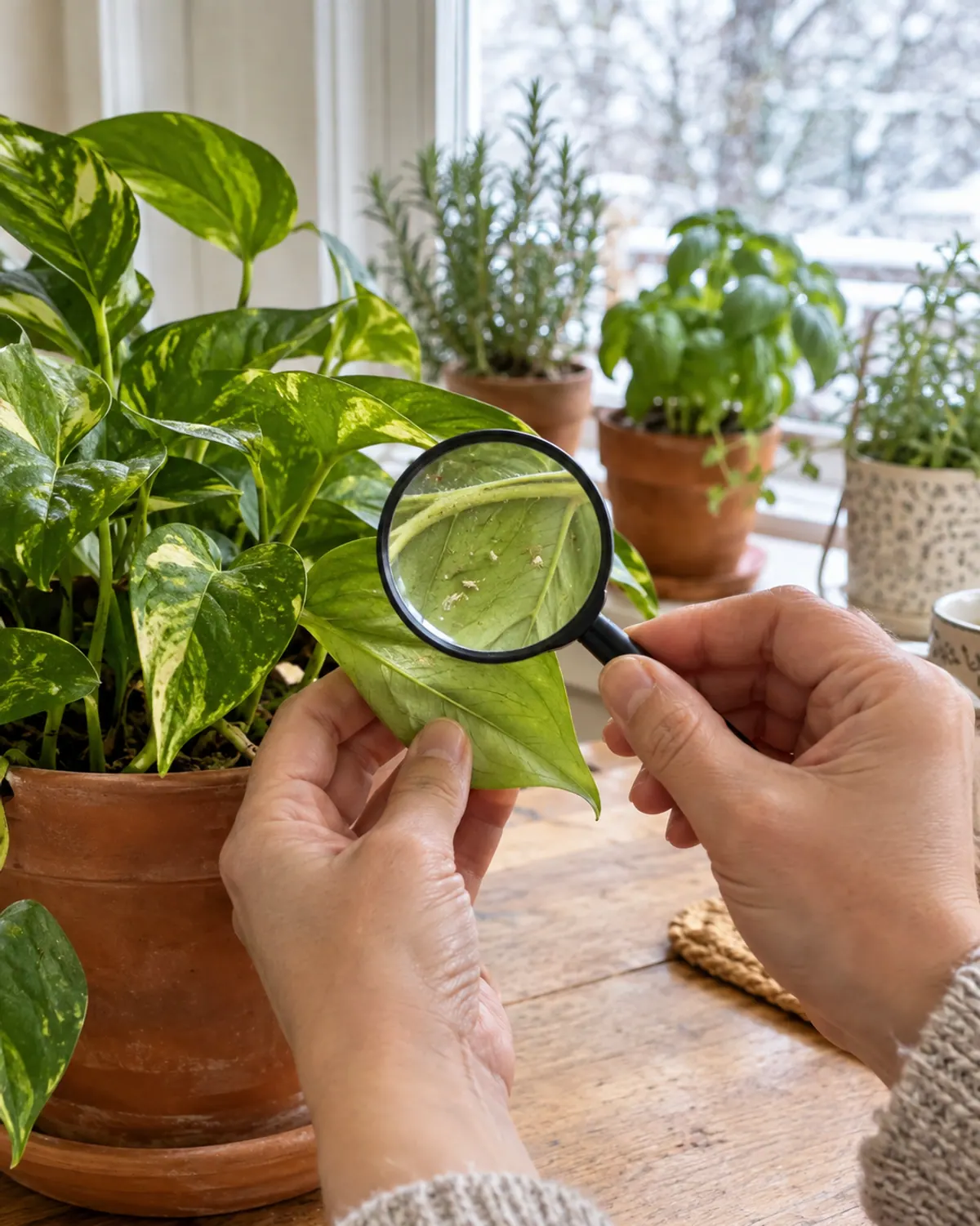
Dust on leaves blocks some of the light that is already in short supply. The NC State handbook suggests washing leaves every two or three months. Wipe large leaves with a soft damp cloth, supporting each leaf from below, or rinse smaller plants in the shower with lukewarm water. While you clean, check the undersides. NC State notes that spider mites prefer dry conditions, so heated winter air suits them. Fine webbing, tiny specks and stippled, dull leaves are the signs. If you bring in new plants, Iowa State suggests keeping them apart from other houseplants for 3 to 4 weeks.
- Skip leaf shine products. Clemson HGIC advises against them on palms, and a damp cloth does the job.
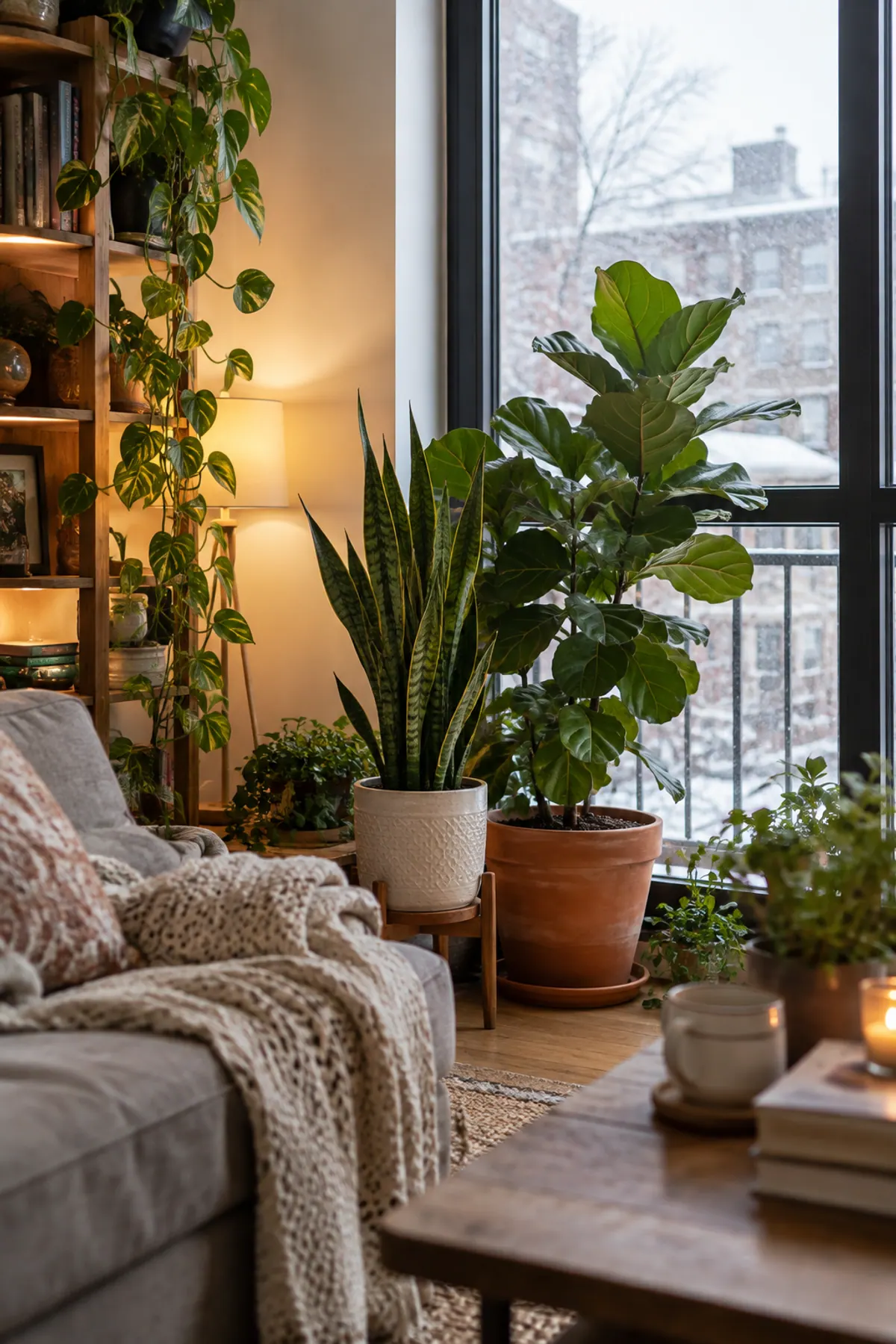
Want your plant corner to look good while it rests? See our cozy winter plant corner ideas and these indoor plant decor ideas for small spaces.
Winter houseplant care mistakes to avoid
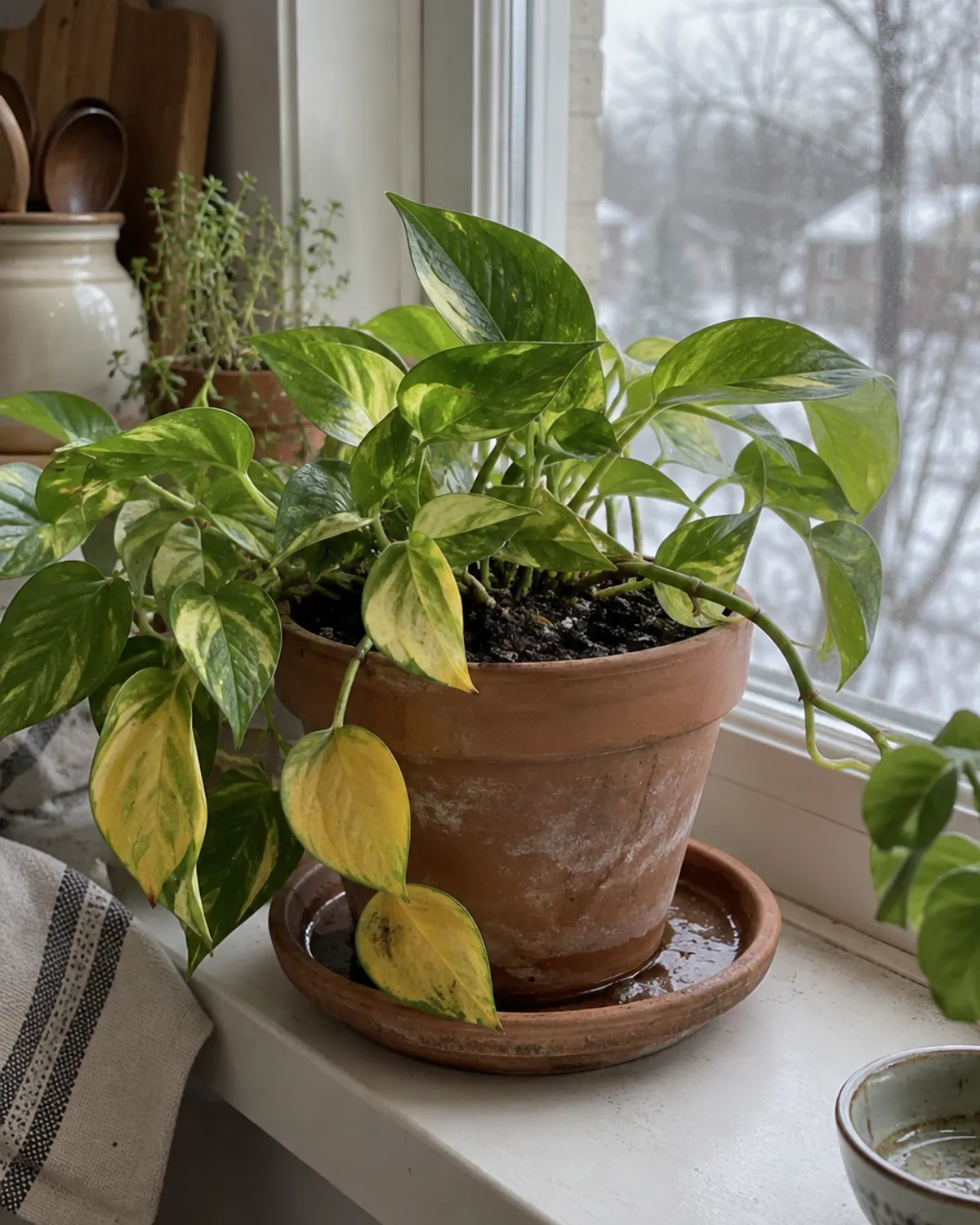
Most winter plant losses come from a few habits. Each one below is tied to the guidance above.
Mistakes that hurt houseplants in winter
Yellow lower leaves and wet soil usually point to overwatering. Crispy brown tips with dry soil point to dry air or underwatering. Check the soil and your hygrometer before you change anything else.
Bonus: grow fresh herbs on your winter windowsill
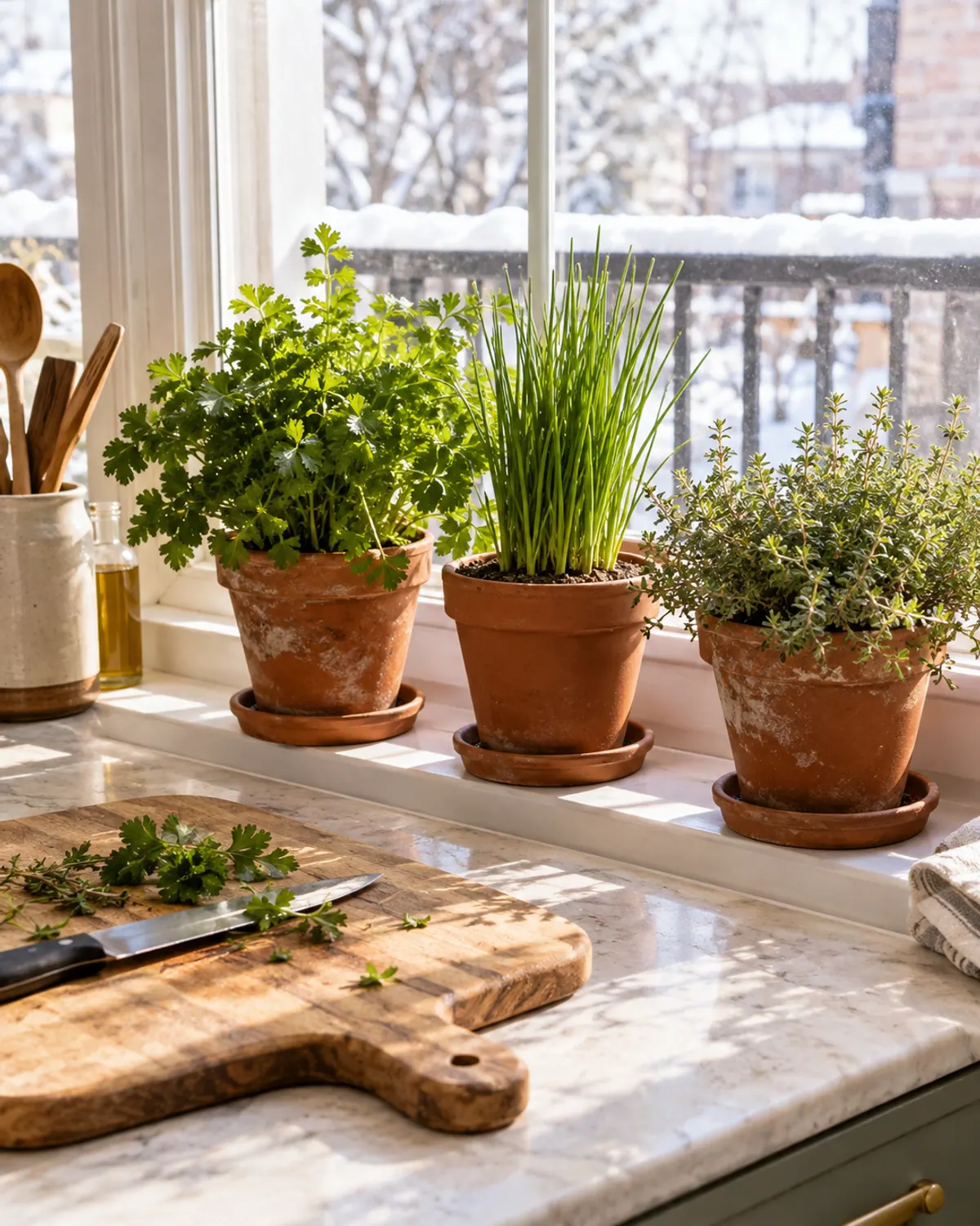
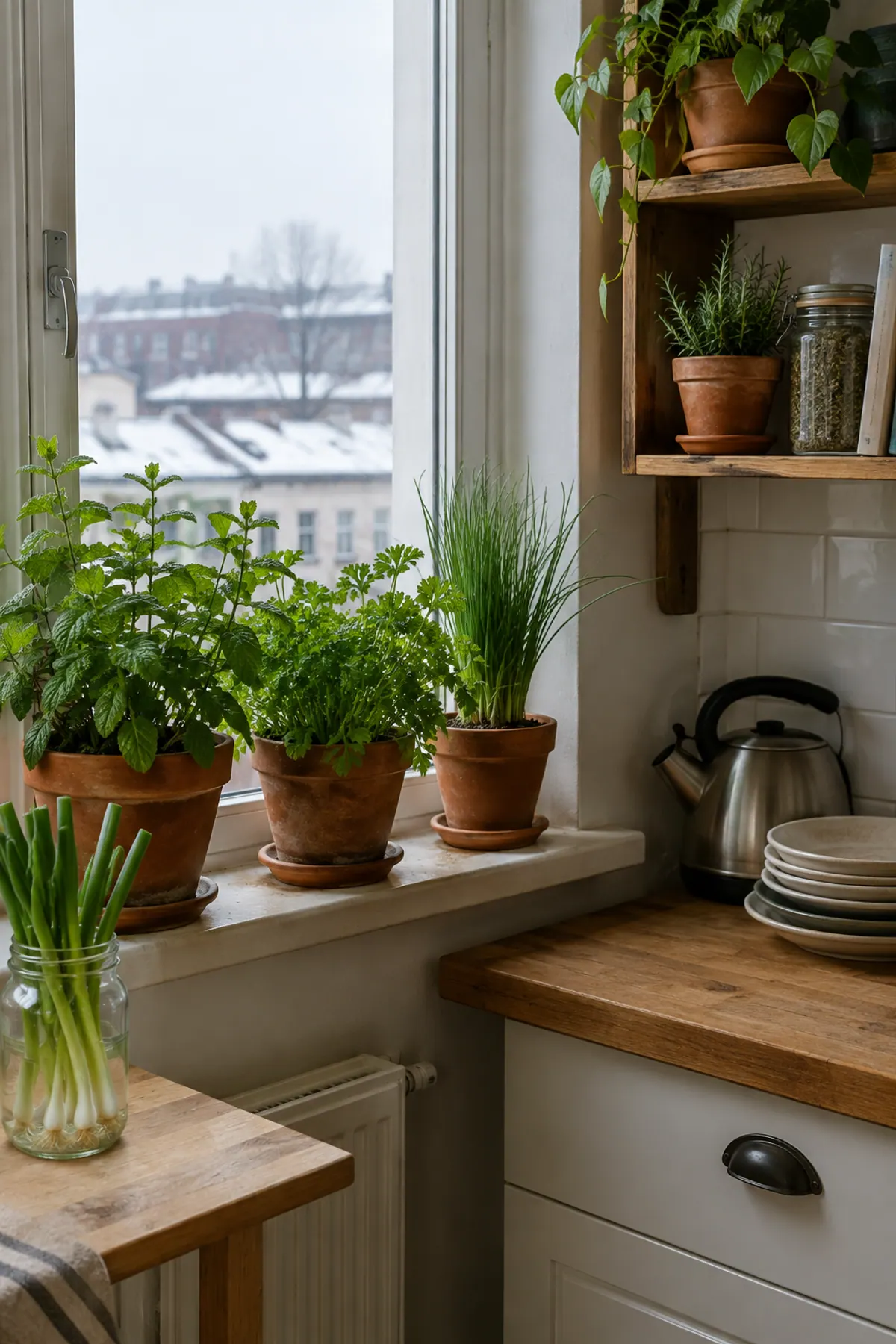
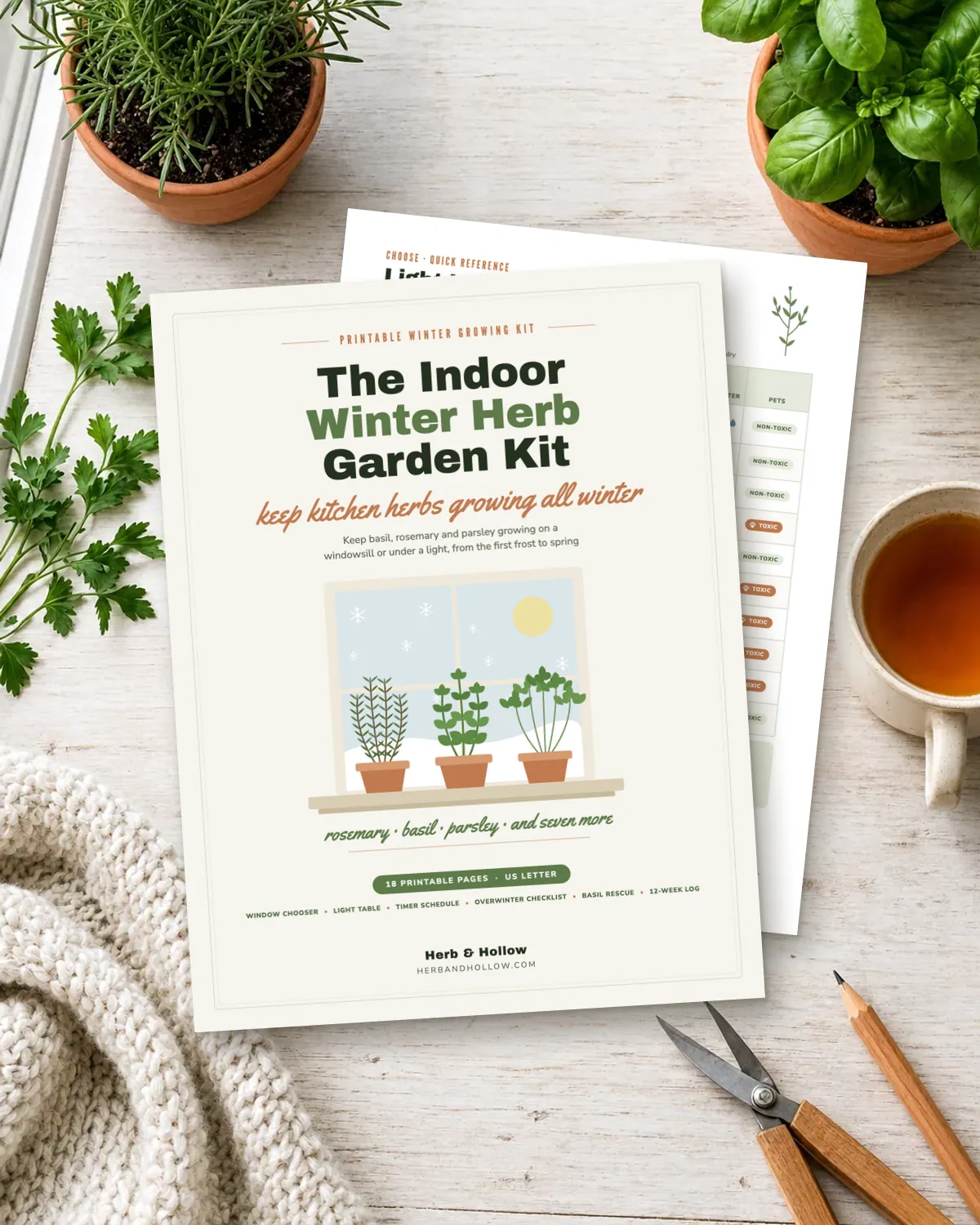
The same rules work for kitchen herbs: bright light, careful watering and a little extra humidity. Our list of herbs to grow indoors in low light ranks 17 herbs by how much light they need, and the indoor herb garden guide covers pots and soil.
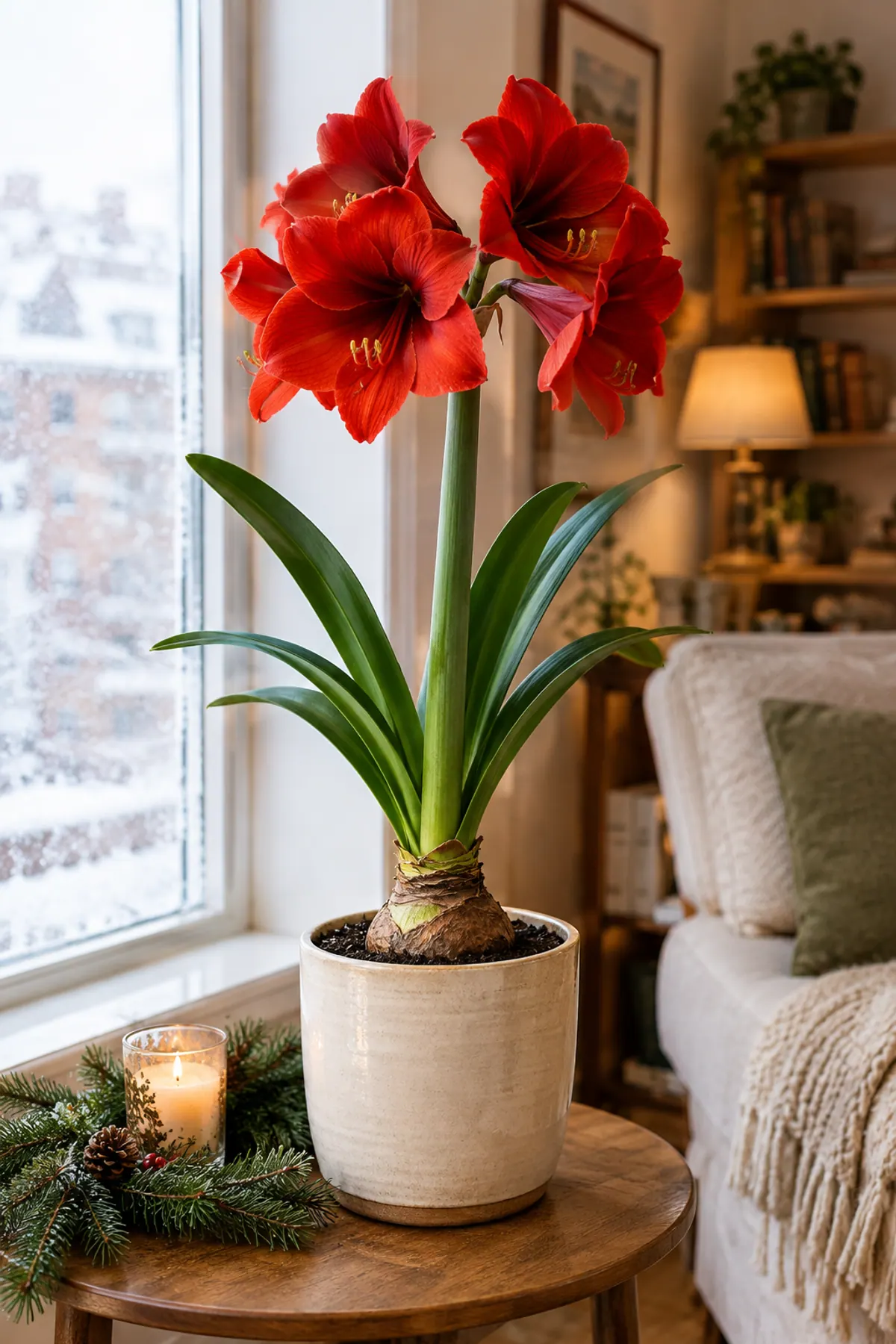
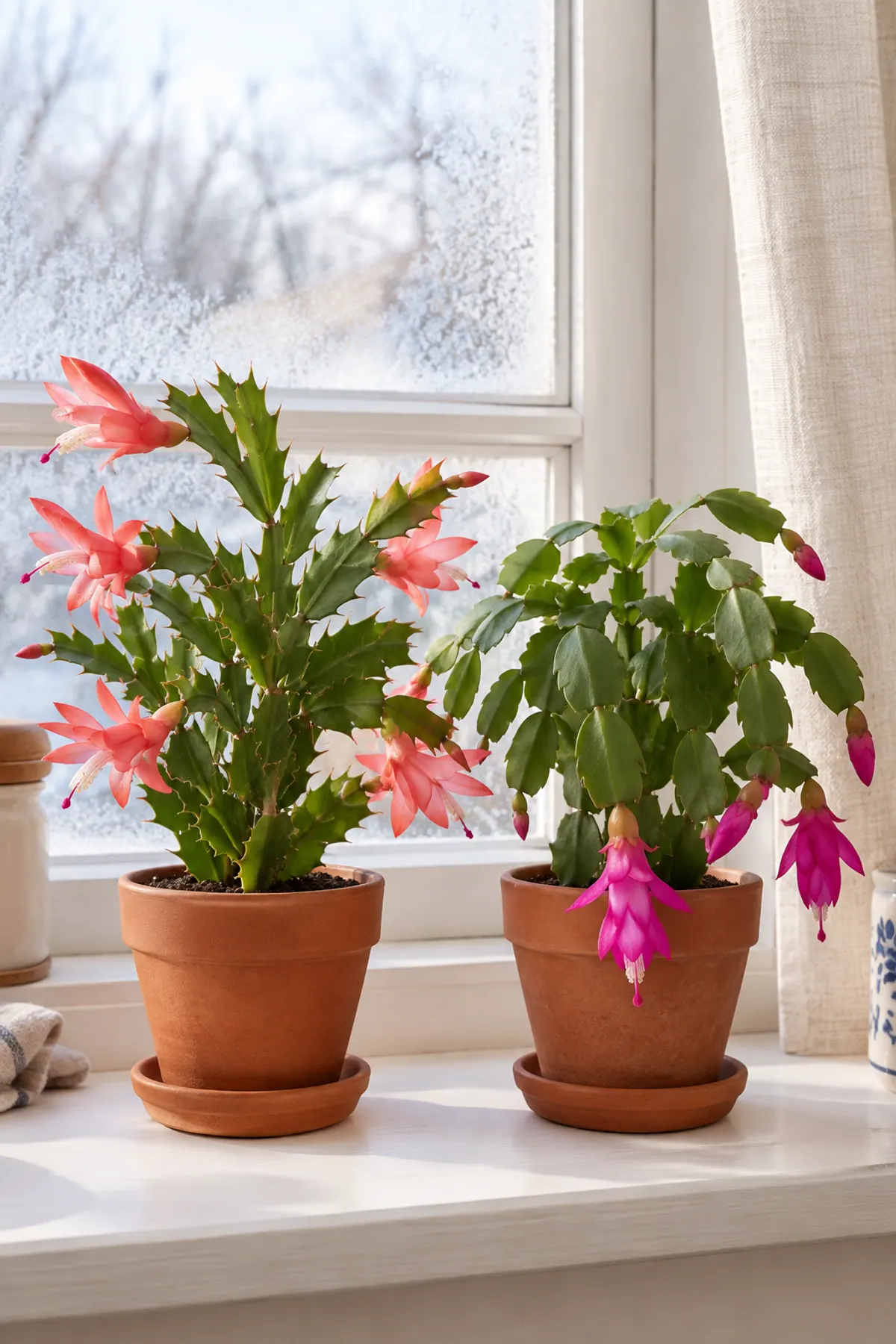
Growing holiday plants too? See our Christmas cactus care guide and amaryllis care.
We earn from qualifying purchases, which never changes what we recommend. Read our disclosure and editorial guidelines.
Frequently asked questions
What humidity do houseplants need in winter?
Iowa State Extension says many houseplants prefer 40 to 50 percent relative humidity. Many homes drop to 10 to 20 percent in winter. A hygrometer shows where your room sits, and a humidifier, pebble trays or grouping plants can raise it.
How often should I water houseplants in winter?
There's no fixed schedule. Water when the soil is dry about an inch down (Iowa State) or at the first knuckle (Clemson HGIC). NC State says plants usually need less water in winter, but Clemson notes they can dry out faster once the heat is on, so check the soil each week.
Should I mist my houseplants in winter?
Iowa State Extension says misting is not an effective way to raise humidity, because it would have to be done several times a day. A humidifier, pebble trays with the pot above the water, or grouping plants works better.
Should I fertilize houseplants in winter?
No. NC State Extension says to fertilize from March to October and not from November to February unless deficiency symptoms appear. Iowa State also says to stop in fall and winter because plants aren't actively growing.
How far should houseplants be from a heater or window?
None of the extension pages we checked gives an exact distance. Clemson HGIC says to keep plants far from vents and fireplaces and not too close to cold windows. If you can feel hot air or a cold draft at the plant, move it.
Do houseplants need a grow light in winter?
Plants in north-facing or dim rooms often do. The NC State handbook says a fluorescent fixture is typically about 12 inches above plants, run for about 12 hours a day and never 24. For LED lights, follow the maker's distance guide.
Save it for later
Pin this to your Houseplants board so it's there when you need it.
Save to Pinterest