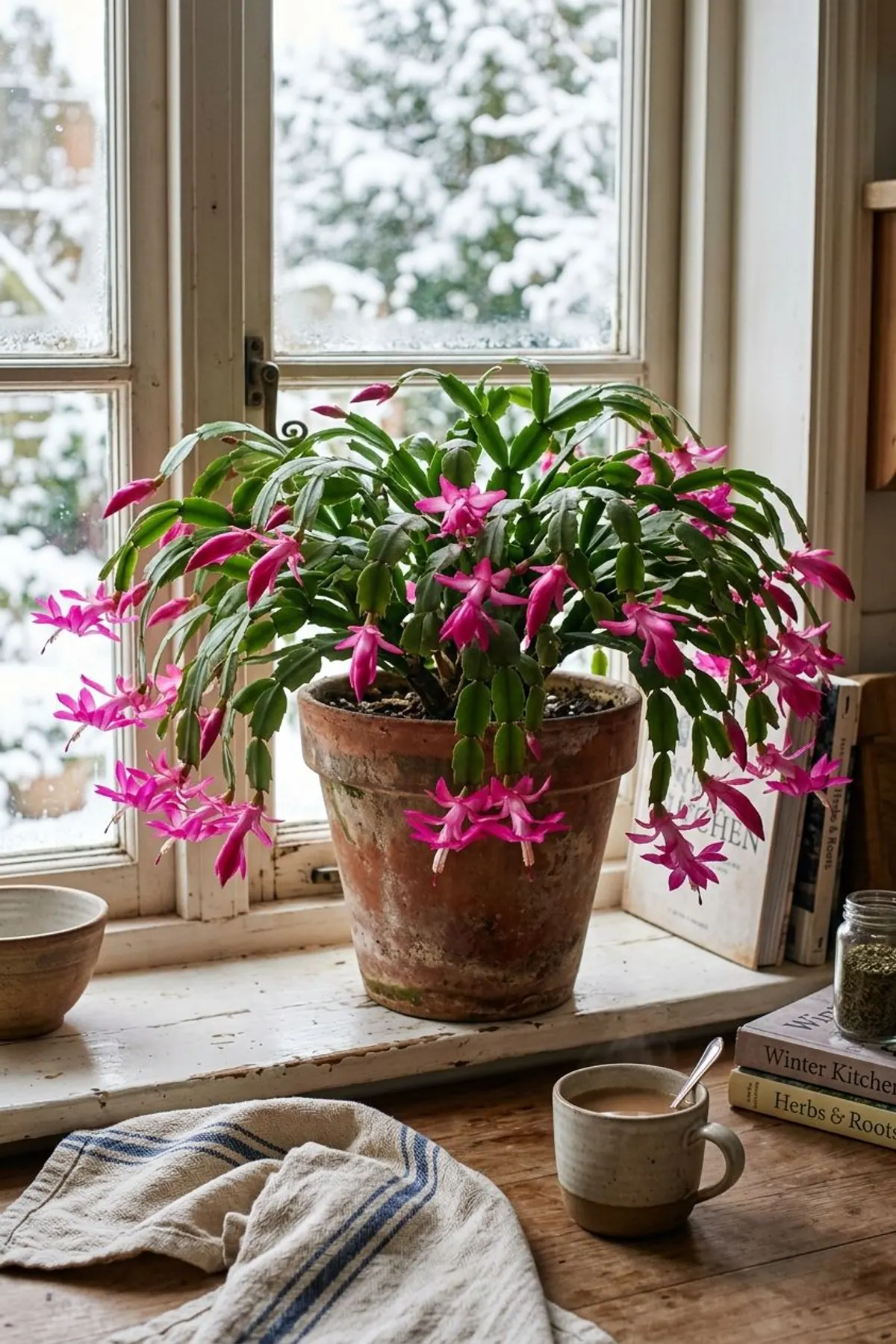
This post contains affiliate links. As an Amazon Associate we earn from qualifying purchases, at no extra cost to you. Read our disclosure.
Safety first: Herbs can be powerful. If you are pregnant, nursing, take medication or have a health condition, check with your doctor or pharmacist first. Please read our herbal & garden safety notes before you start.
Key takeaways
- Give it bright, indirect light, such as an east window, and keep it out of hot afternoon sun.
- Water when the top inch of soil is dry, then let the pot drain fully. Soggy soil is the most common killer.
- To make a Christmas cactus bloom, give it about 6 weeks of long nights (12 to 14 hours of darkness) or cool nights near 50 to 55°F, starting in early fall.
- Once buds form, leave the plant where it is. Sudden changes in light, heat or water are the main causes of bud drop.
- Many plants sold as Christmas cactus are really Thanksgiving cactus. Pointed teeth on the segment edges give it away.
In this post11 sections
- Christmas cactus care at a glance
- Christmas, Thanksgiving or Easter cactus? 3 ways to tell
- Light: bright, but not harsh
- How to water a Christmas cactus
- Soil, pots and feeding
- How to make a Christmas cactus bloom
- Why Christmas cactus buds fall off
- How to propagate a Christmas cactus
- Common Christmas cactus problems
- Christmas cactus care supplies
- FAQ
Christmas cactus care at a glance
The Christmas cactus is not a desert cactus. In the wild, its relatives grow on tree branches and mossy rocks in the humid mountain forests of southeastern Brazil. That is why it wants more water and less sun than the spiny cacti you might know.
| Need | What it likes | Watch out for |
|---|---|---|
| Light | Bright, indirect light, such as an east window | Hot afternoon sun |
| Water | Water when the top inch of soil is dry, then let it drain | A pot left standing in a saucer of water |
| Soil | Potting mix with perlite or orchid bark | Garden soil or dense, soggy mix |
| Pot | A snug pot with a drainage hole | An oversized pot |
| Temperature | About 60 to 70°F, cooler nights in fall | Heater vents, cold drafts and frost |
| Feeding | Half-strength fertilizer monthly, spring to late summer | Feeding into fall |
| Bloom trigger | About 6 weeks of long or cool nights in fall | Lamps or streetlights at night |
Christmas, Thanksgiving or Easter cactus? 3 ways to tell
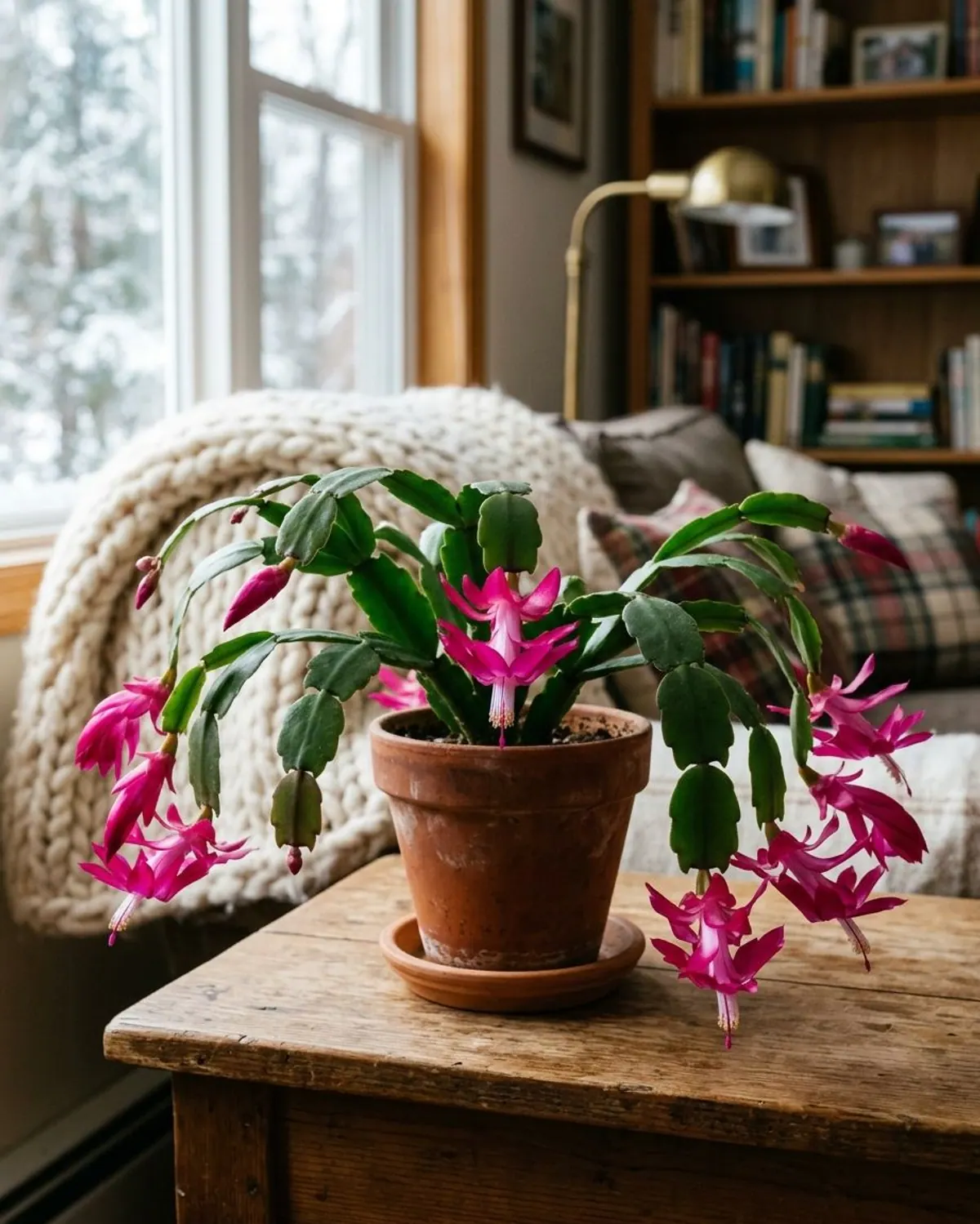
Three holiday cacti look alike, and stores often sell them under one name. Many plants labeled Christmas cactus are actually Thanksgiving cactus, which growers can time more easily for holiday sales. Knowing which one you own tells you when to expect flowers.
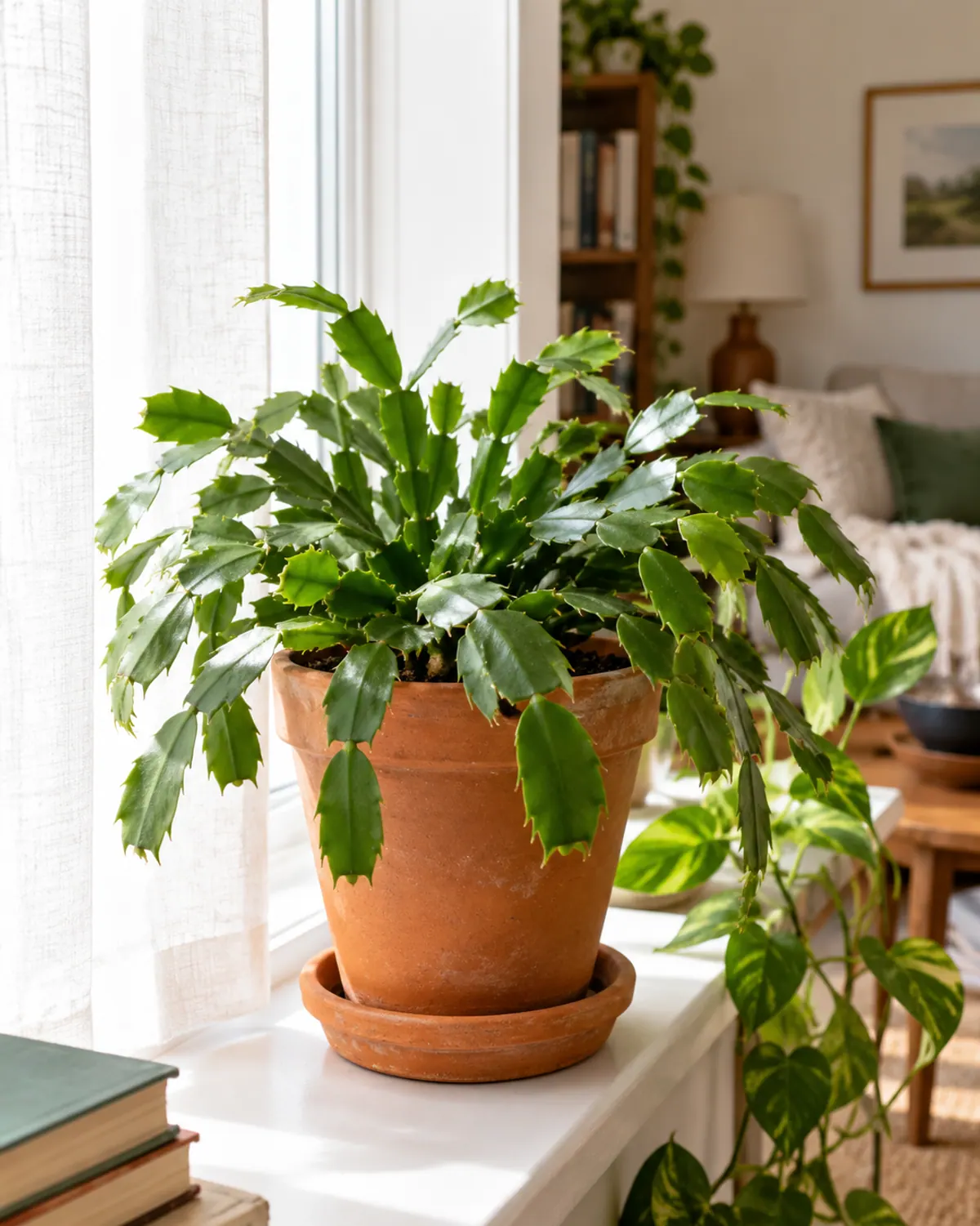
Clue 1: the segment edges. Christmas cactus segments have smooth, rounded, scalloped edges. Thanksgiving cactus segments have 2 to 4 sharp, pointed teeth along each side, a little like crab claws, while Easter cactus segments are rounded and often carry tiny bristles at the tips.
Clue 2: the flowers. Christmas cactus flowers hang down from the stem tips, and their pollen is usually purplish-brown. Thanksgiving cactus flowers are held out sideways with yellow pollen. Easter cactus flowers open flat and wide, like small stars.
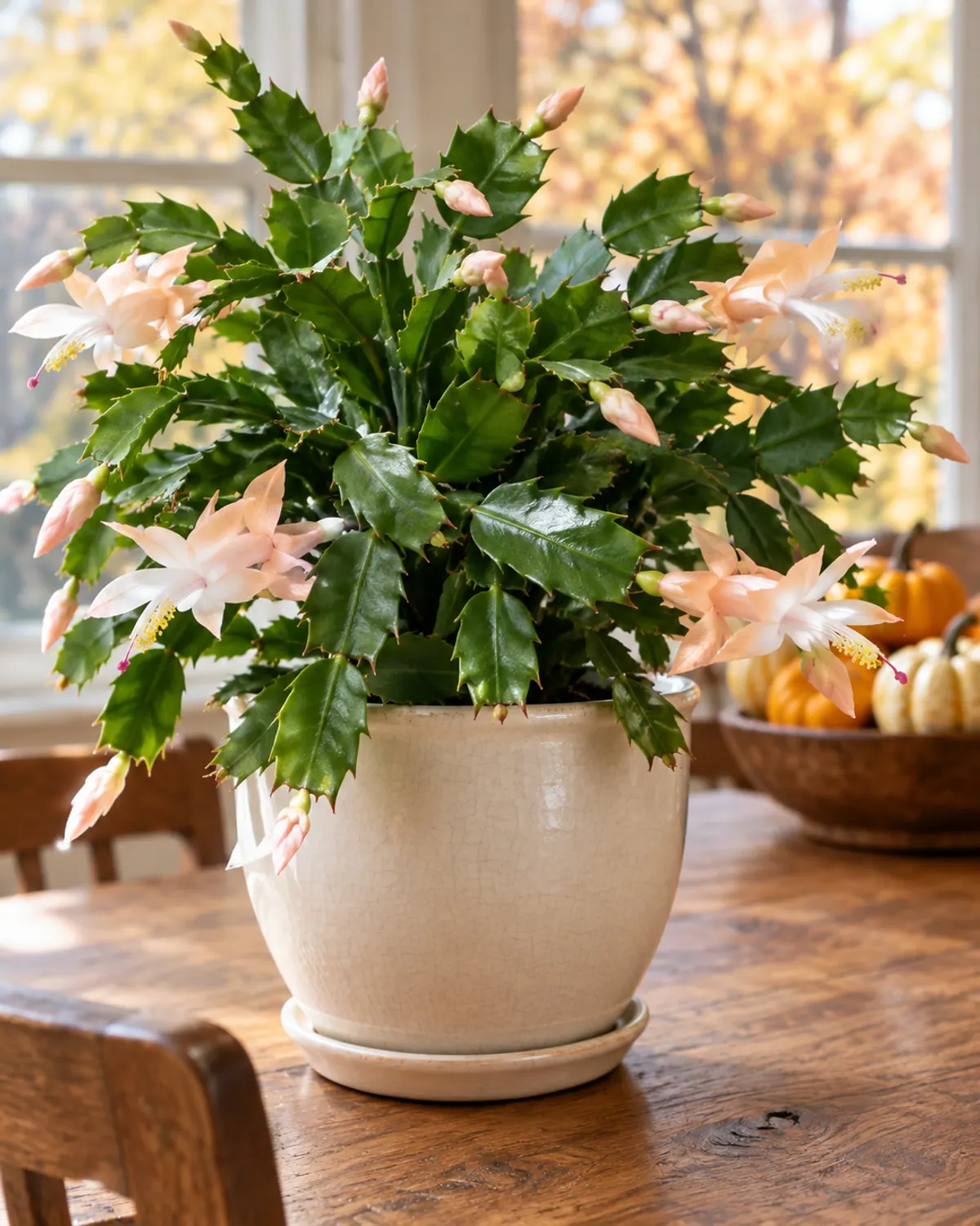
Clue 3: bloom time. Thanksgiving cactus usually flowers in November, about a month ahead of Christmas cactus. Easter cactus blooms in spring, often from March to May. Your care shifts these dates a little, so treat bloom time as a hint rather than proof.
| Feature | Christmas cactus | Thanksgiving cactus | Easter cactus |
|---|---|---|---|
| Botanical name | Schlumbergera x buckleyi | Schlumbergera truncata | Hatiora gaertneri (also listed as Schlumbergera gaertneri) |
| Segment edges | Rounded, scalloped | Sharp, pointed teeth | Rounded, small bristles at tips |
| Flowers | Tubular, hang down | Tubular, held sideways | Star-shaped, open flat |
| Usual bloom time | December | November | March to May |
Light: bright, but not harsh
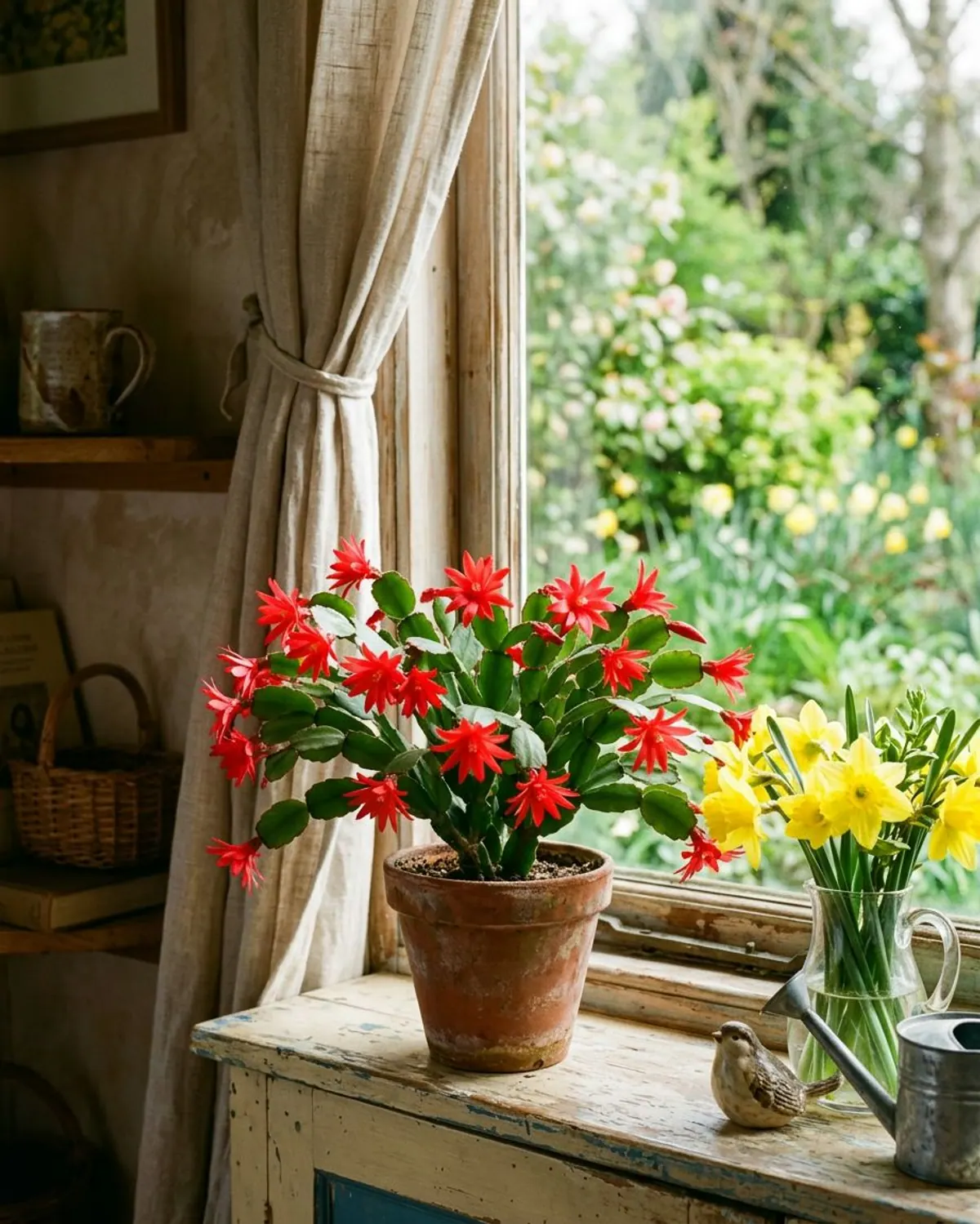
An east-facing window suits a Christmas cactus in most homes, with gentle morning sun and bright light the rest of the day. A south or west window works too if you set the plant a few feet back or behind a sheer curtain. North windows are often too dim for good flowering.
Too much hot sun can turn the segments yellowish or reddish-purple. Too little light gives thin, stretched growth and few buds. In summer it can go outside in dappled shade, as long as you bring it back in well before the first frost.
How to water a Christmas cactus
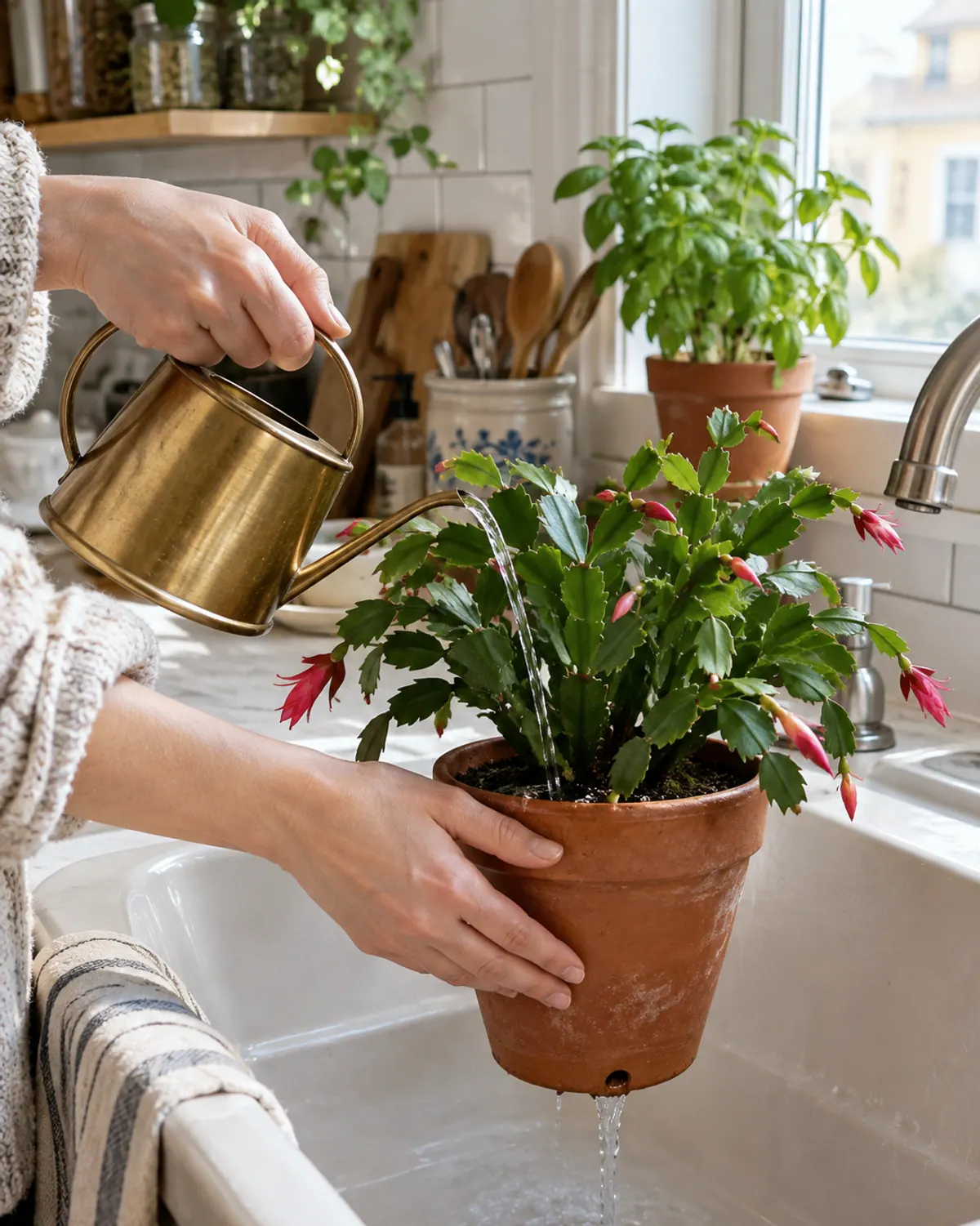
Water when the top inch of soil feels dry to your finger. Pour slowly until water runs out of the drainage hole, then empty the saucer after 10 to 15 minutes. In many homes that works out to every 1 to 2 weeks, but your pot, light and season set the real pace.
Overwatering is the most common way to lose this plant. Roots sitting in wet soil rot, and the stems turn limp and soft near the base. Underwatering shows up as thin, wrinkled segments that usually plump back up within a day or two of a good drink.
Give a little less water after flowering ends and during the fall bloom routine. Even then, don't let the soil stay bone dry for weeks. This plant likes steady, moderate moisture, not drought.
Soil, pots and feeding
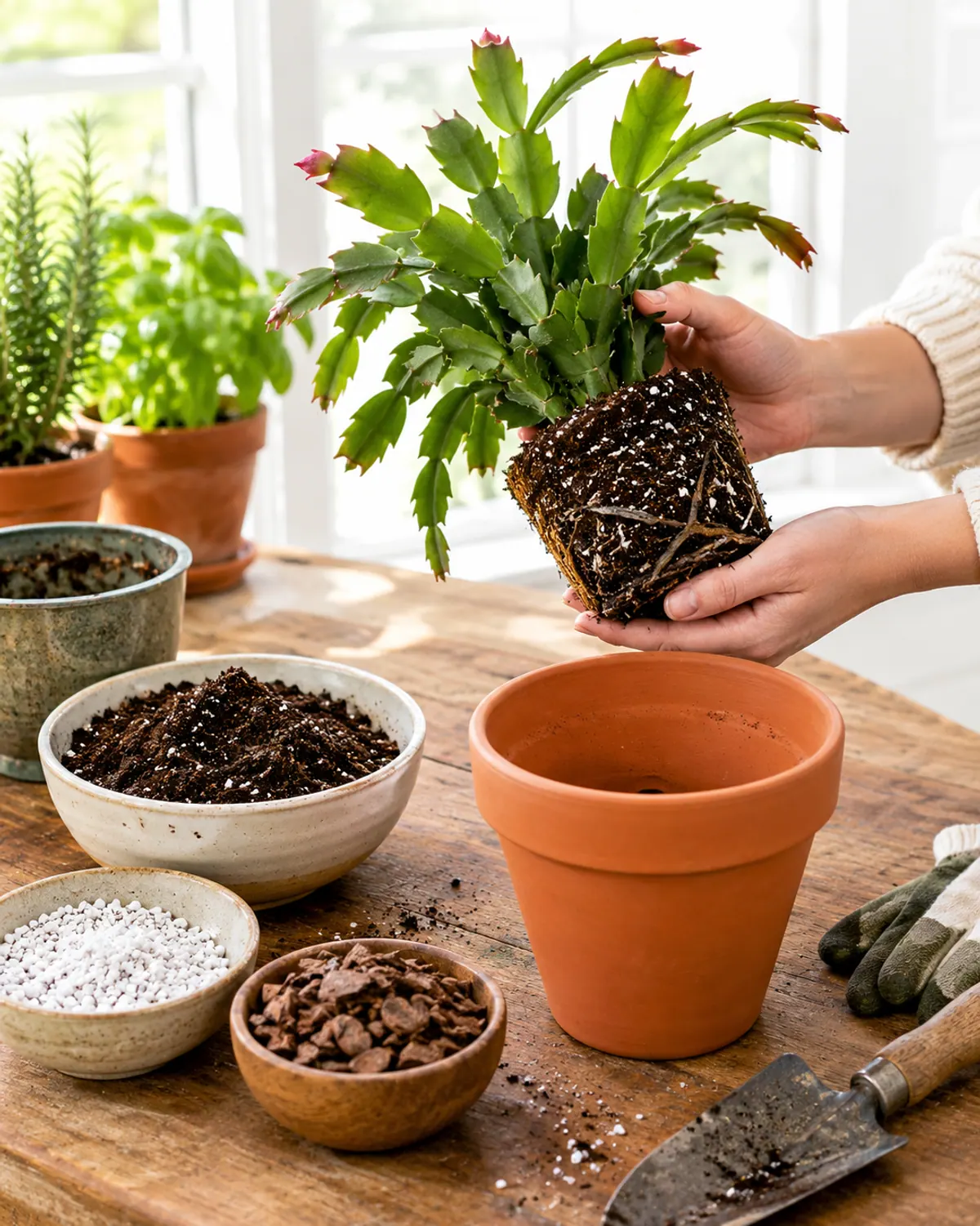
Use a light, fast-draining mix. A simple blend is 2 parts regular potting mix to 1 part perlite or small orchid bark. Bagged cactus mix also works, and a handful of bark adds the airy texture these tree-dwelling plants like.
Choose a pot with a drainage hole. Terracotta dries faster, which helps if you tend to overwater, while plastic holds moisture longer. Christmas cactus flowers well when a little root-bound, so repot only every 2 to 3 years, in spring after blooming, and go up just one pot size.
Feed with a balanced houseplant fertilizer at half strength about once a month from spring through late summer. Stop feeding around September. That pause helps the plant switch from making leaves to making buds.
How to make a Christmas cactus bloom
A Christmas cactus sets flower buds in response to long nights, cool nights, or both. University extension guides commonly suggest 12 to 14 hours of unbroken darkness each night with temperatures in the low 60s°F, for about 6 weeks. Cool nights of about 50 to 55°F can trigger buds even when the nights are shorter.
Count back from the date you want flowers. Buds usually appear after 3 to 4 weeks of long, cool nights, and flowers open several weeks after that. Starting in late September or early October lines up blooms for December in most homes.
What you need to trigger blooms
-
Step 1: Stop fertilizing in early fall
Skip feeding from about September on. A plant pushed to grow new segments is slower to set buds.
-
Step 2: Give it long, dark nights
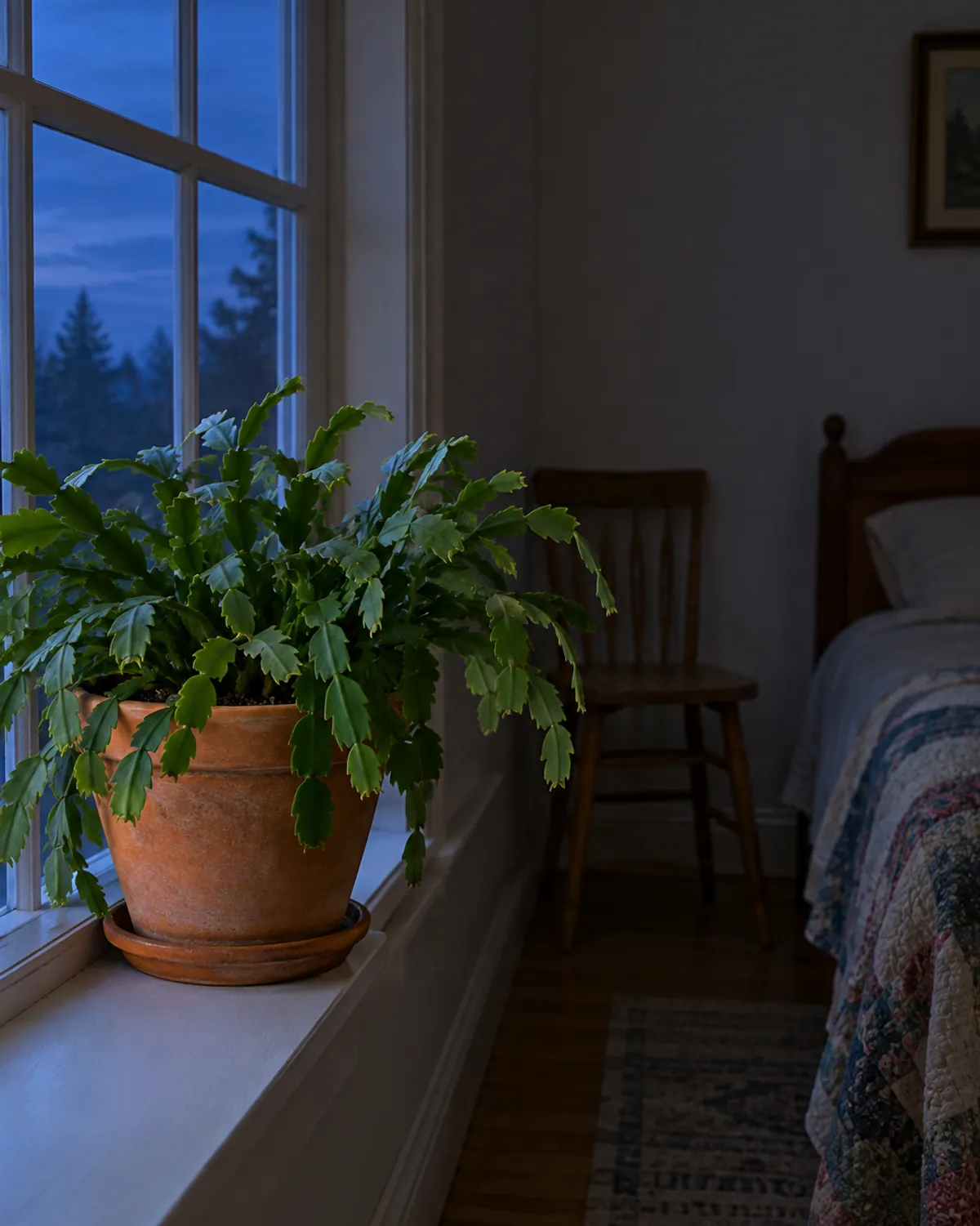
From late September or early October, keep the plant in darkness from about 6 p.m. to 8 a.m. A spare room with the lights off works, or move it into a closet or under a box each evening, then back to bright light each morning.
-
Step 3: Keep the nights cool
Aim for nights between about 50 and 65°F. A cool windowsill, an unheated sunroom or a spare bedroom often does the job. Keep it away from frost and heater vents.
-
Step 4: Water a little less
Let the top inch or two of soil dry before you water during these weeks. Don't let the pot dry out completely, though, since that can make buds drop later.
-
Step 5: Watch the stem tips for buds
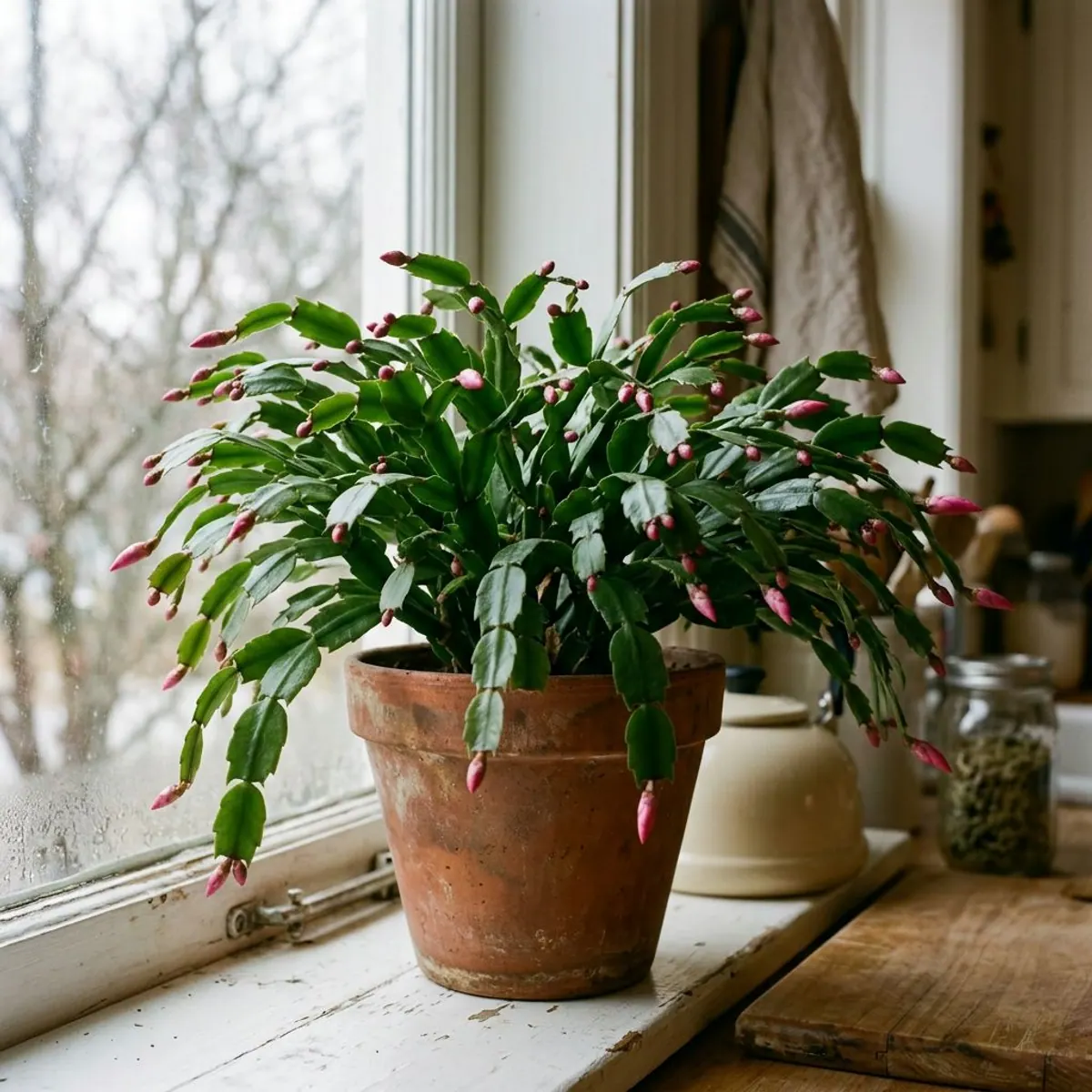
After about 3 to 4 weeks, look for tiny pink or red bumps at the ends of the segments. Once most tips show buds, you can end the dark routine.
-
Step 6: Move it once, then leave it alone
Choose a bright display spot away from heaters, fireplaces and drafty doors, and keep it there until the flowers finish. Go back to normal watering, and try not to turn or move the pot.
Why Christmas cactus buds fall off
Bud drop is frustrating, but it is usually the plant reacting to a change. These are the 5 most common causes, and each one has a simple fix.
| Cause | What to do |
|---|---|
| Moving or turning the plant after buds form | Pick its display spot before buds appear, then leave it there. |
| Warm, dry air from heaters or fireplaces | Keep it a few feet from heat sources and use a pebble tray. |
| Cold drafts or a sudden temperature drop | Keep it away from outside doors and icy glass at night. |
| Soil that dries out completely | Check the top inch every few days while it is in bud. |
| Soggy soil and stressed roots | Empty saucers and use a pot with a drainage hole. |
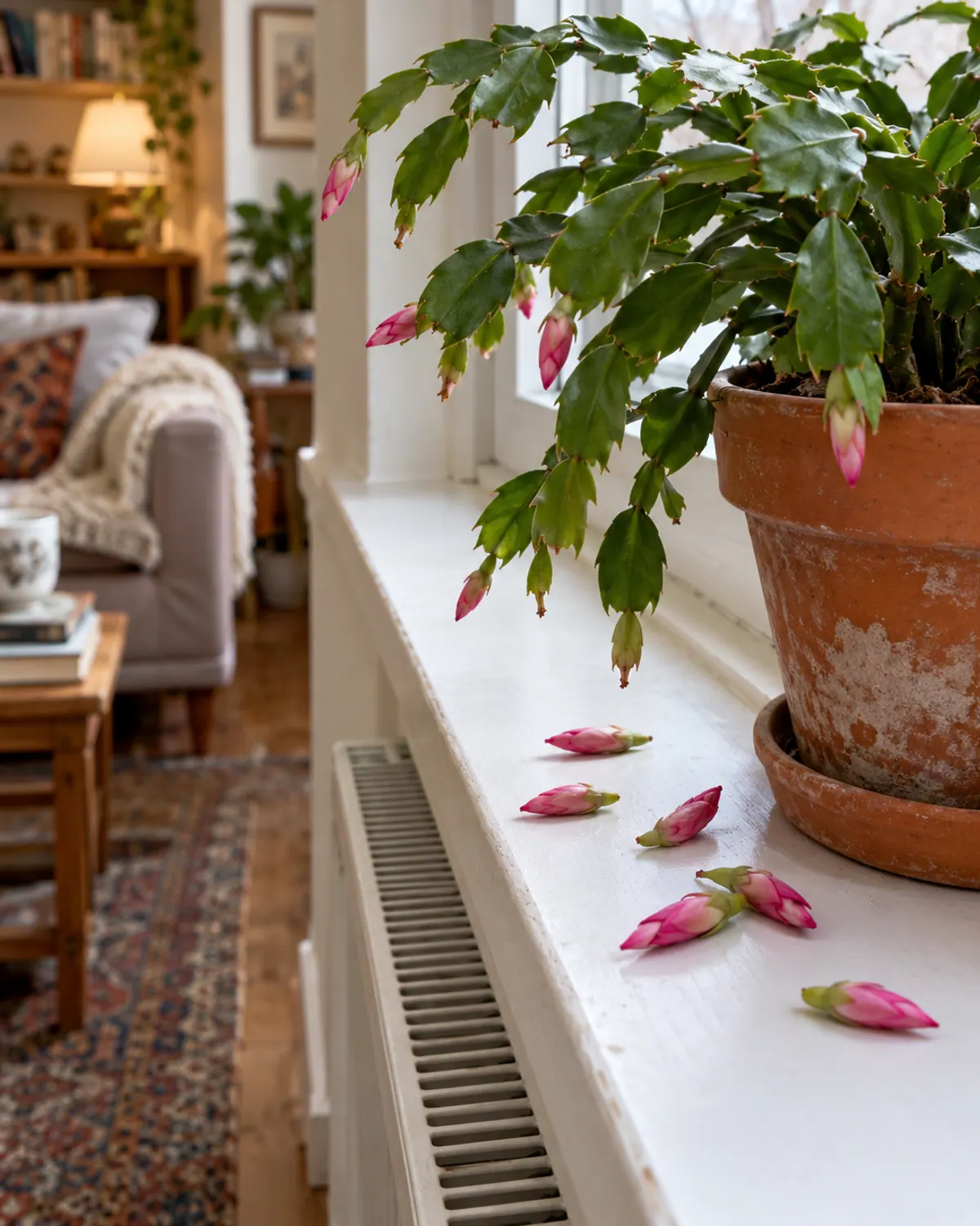
Losing a few buds is normal, especially on a plant carrying lots of them. If most of them fall, work through the list above. The plant will usually try again next year.
How to propagate a Christmas cactus
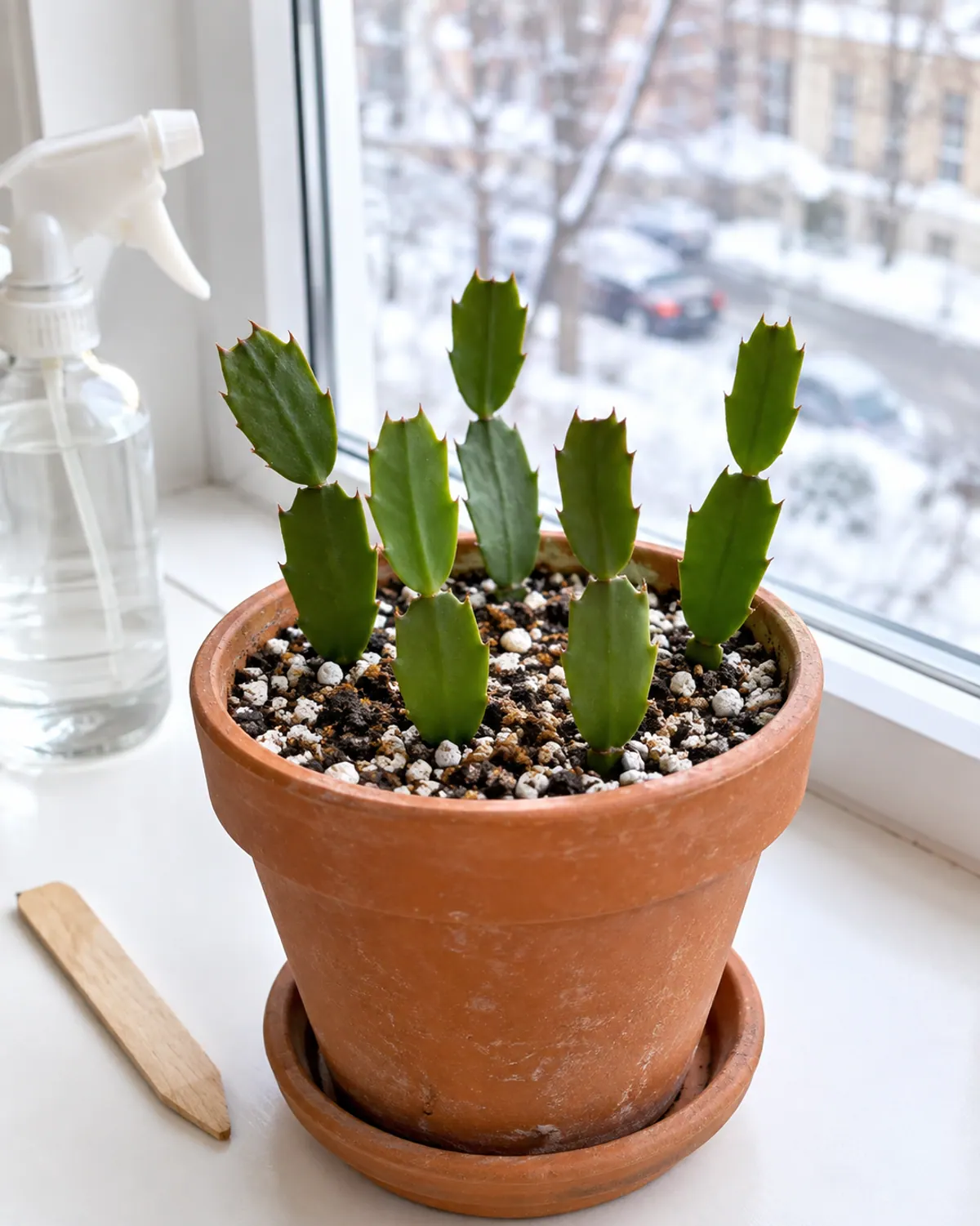
Christmas cactus is one of the easiest houseplants to grow from cuttings, and late spring, after blooming, is the best time. Twist off a piece with 2 or 3 segments at a joint, or cut it cleanly with clean scissors.
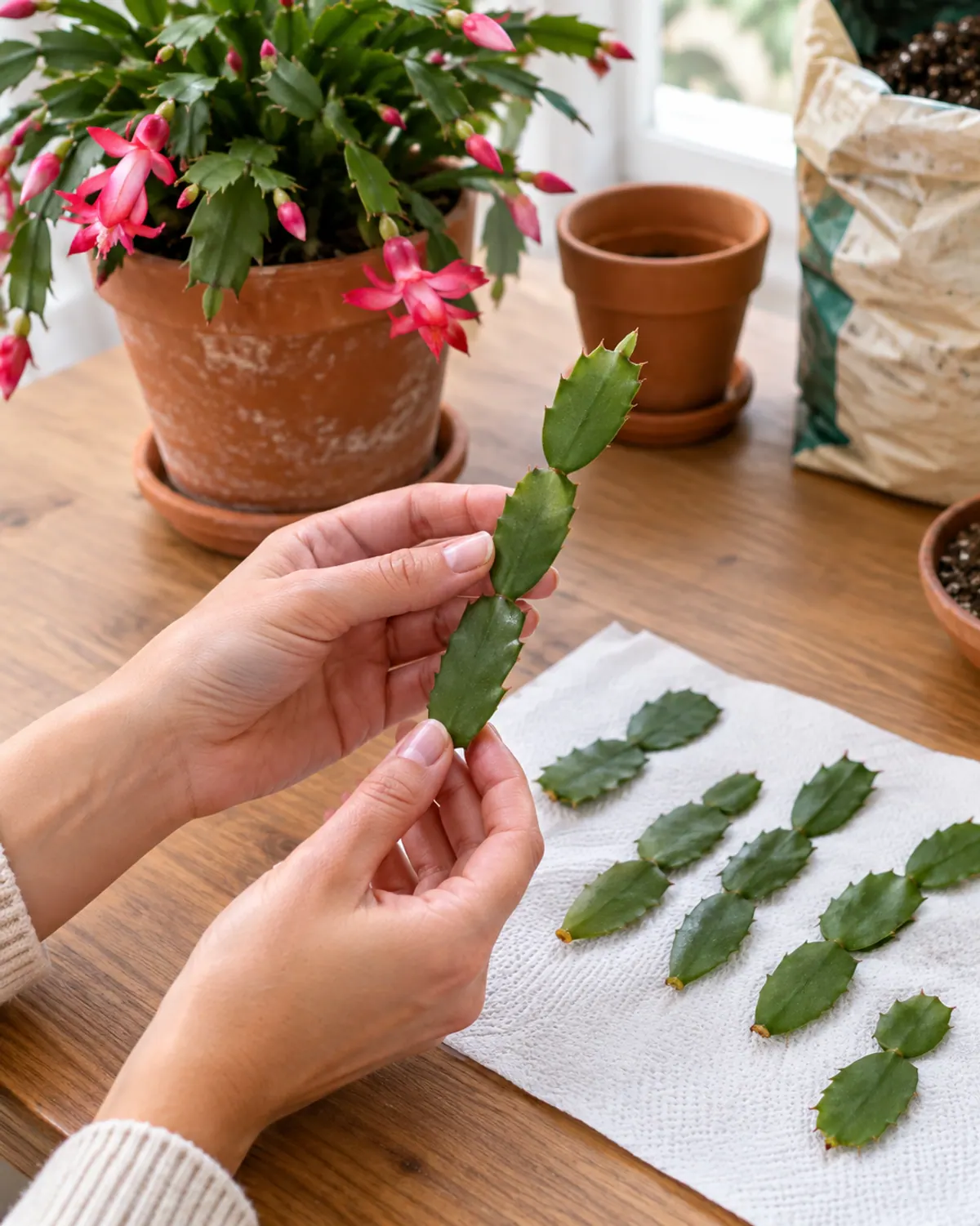
Let the cuttings sit on a paper towel for a day or two so the cut ends dry. Then push the bottom segment into barely moist, fast-draining mix, just deep enough to stand up. Several cuttings in one small pot give you a fuller plant sooner.
Keep the pot in bright, indirect light and water lightly when the top of the mix dries. Roots usually form within a few weeks, and new segments at the tips tell you the cuttings have taken. Young plants may need a year or two before they bloom well.
Common Christmas cactus problems
| What you see | Likely cause | What to do |
|---|---|---|
| Limp, soft stems and a dark, mushy base | Root or stem rot from wet soil | Unpot, trim mushy roots, repot in fresh mix and root a few healthy cuttings as backup. |
| Thin, wrinkled segments and dry soil | Underwatering | Water deeply and check the soil more often. |
| Reddish or purple segments | Too much direct sun, cold, or root stress | Move it out of hot afternoon sun; check roots and watering. |
| Segments dropping off | Watering extremes or a sudden temperature change | Check soil moisture and keep it away from drafts. |
| No flowers | Light at night, warm nights or late feeding | Follow the long-night steps from late September. |
| White, cottony spots in the joints | Mealybugs | Dab with a cotton swab dipped in rubbing alcohol; repeat weekly. |
| Tiny flies around the soil | Fungus gnats from soil that stays wet | Let the top inch dry out between waterings. |
Pets: The ASPCA lists Christmas cactus as non-toxic to cats and dogs, though chewing any plant can upset a pet's stomach. Holiday cacti are often sold under the wrong name, so check the ASPCA plant list for the exact plant you have. Our garden safety notes cover other common plants and products.
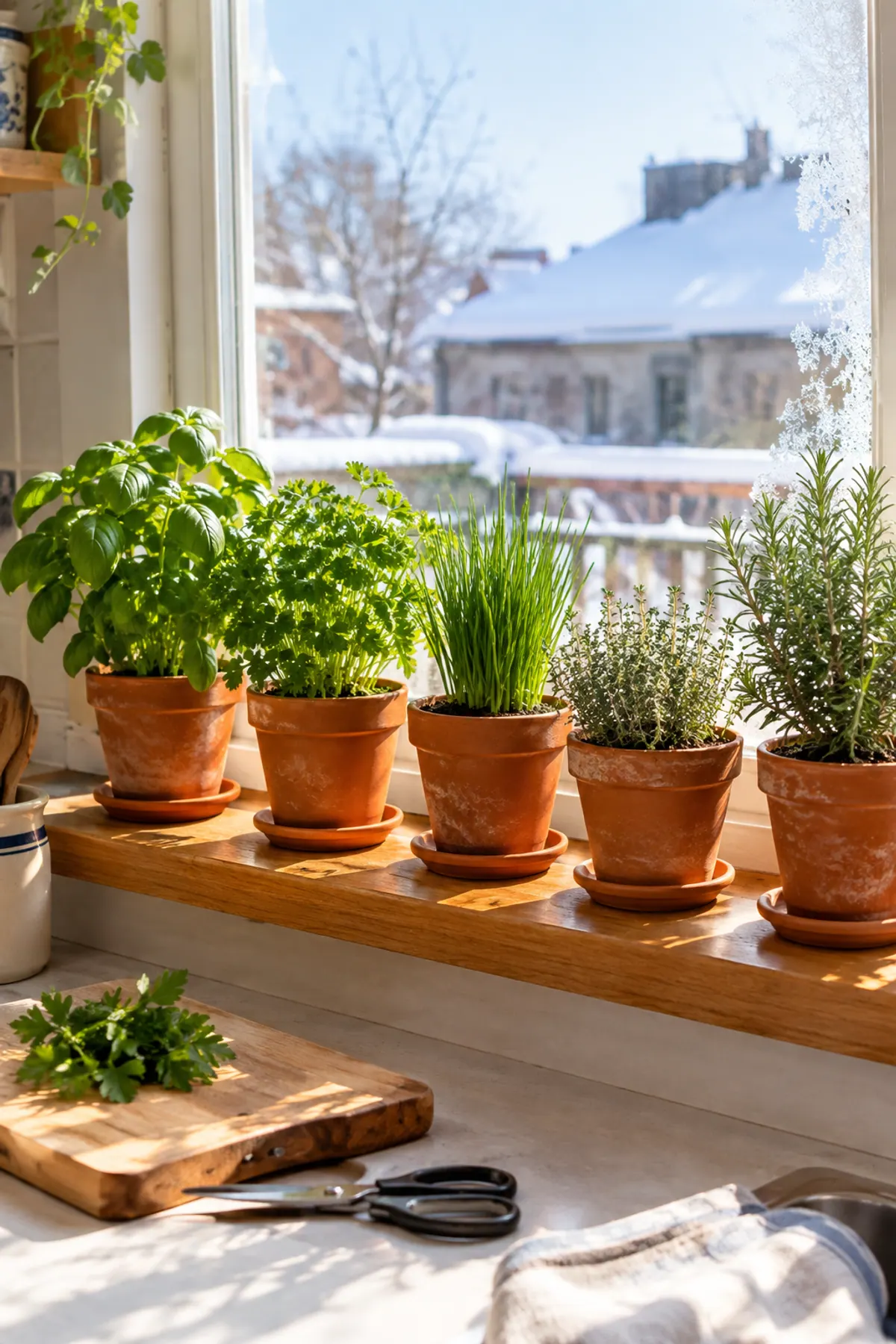
Growing herbs on a sunny sill this winter too? Our indoor herb garden guide covers which herbs cope with short days. For more plant care, browse the houseplants section or the seasonal garden tasks calendar.
Christmas cactus care supplies
Shop the look
- Basics
6-inch terracotta pots with drainage holes
$15-30 for a set
Clay dries evenly, which helps protect roots from staying soggy.
Check price on Amazon for 6-inch terracotta pots with drainage holes -
Cactus and succulent potting mix
$8-15
A fast-draining base. Blend in some perlite or bark for Christmas cactus.
Check price on Amazon for Cactus and succulent potting mix -
Small-grade orchid bark
$8-15
Adds the air pockets this tree-dwelling cactus grows best in.
Check price on Amazon for Small-grade orchid bark -
Perlite
$8-15
Lightens regular potting mix so water drains through quickly.
Check price on Amazon for Perlite -
Balanced liquid houseplant fertilizer
$8-15
Use at half strength once a month from spring to late summer.
Check price on Amazon for Balanced liquid houseplant fertilizer -
Indoor min/max thermometer
$10-20
Shows how cool your bloom spot really gets at night.
Check price on Amazon for Indoor min/max thermometer
We earn from qualifying purchases, which never changes what we recommend. Read our disclosure and how we check every guide in our editorial guidelines.
Frequently asked questions
How often should I water a Christmas cactus?
Water when the top inch of soil is dry, which is often every 1 to 2 weeks indoors. Water until it drains from the bottom, then empty the saucer. Water a little less after blooming and during the fall bloom routine, but never let it stay bone dry for weeks.
Why is my Christmas cactus not blooming?
The usual reasons are light at night, warm nights, or feeding too late in the year. Starting in late September or early October, give it 12 to 14 hours of darkness each night, or cool nights near 50 to 55°F, for about 6 weeks, and stop fertilizing by September.
Should I put my Christmas cactus in the dark?
Only at night, and only in fall. Long, dark nights help it form buds, but it still needs bright, indirect light during the day. Once buds appear, you can stop the dark routine and keep it in its display spot.
How can I tell a Christmas cactus from a Thanksgiving cactus?
Look at the segment edges. Christmas cactus has rounded, scalloped edges and flowers that hang down. Thanksgiving cactus has sharp, pointed teeth on each segment, flowers held sideways and yellow pollen. Both need the same care.
Is a Christmas cactus safe for cats and dogs?
The ASPCA lists Christmas cactus as non-toxic to cats and dogs, but eating any plant can cause mild stomach upset. Holiday cacti are often mislabeled, so check the ASPCA plant list for the plant you have.

Save it for later
Pin this to your Houseplants board so it's there when you need it.
Save to Pinterest