This post contains affiliate links. As an Amazon Associate we earn from qualifying purchases, at no extra cost to you. Read our disclosure.
Safety first: Herbs can be powerful. If you are pregnant, nursing, take medication or have a health condition, check with your doctor or pharmacist first. Please read our herbal & garden safety notes before you start.
Key takeaways
- Bright indirect light, 65 to 70°F days and no drafts keep the bracts on
- Remove the foil and water by pot weight; overwatering is the top killer
- Poinsettias are mildly toxic to pets, not deadly; keep them out of reach
- Cut back to 4 to 6 inches in spring and grow it outside once nights stay above 50°F
- For red again: 14 hours of darkness nightly from about October 1 for 8 to 10 weeks
In this post14 sections
- Poinsettia care at a glance
- Pick a poinsettia that will last
- Where to put it in a small space
- How to water a poinsettia (the pot weight test)
- A poinsettia week-by-week check
- Why poinsettia leaves fall off, and the fix
- Are poinsettias poisonous to cats and dogs?
- Gifting a poinsettia
- A 12-month poinsettia care calendar
- Spring and summer: cut back, repot and grow
- How to make a poinsettia turn red again
- How long do poinsettias last?
- Supplies for poinsettia care
- FAQ
Poinsettia care at a glance
A poinsettia is a tropical shrub sold as a holiday decoration, and most of the trouble comes from treating it like a cut flower. Give it a bright window, steady warmth and a drink only when the pot feels light, and it holds its color well into the new year.
| Need | What works in an apartment |
|---|---|
| Light | Bright, indirect light for at least 6 hours, near an east, south or west window |
| Temperature | Days around 65 to 70°F, nights no lower than 60°F, no drafts or heat vents |
| Water | When the pot feels light and the top of the soil is dry; drain fully, never leave it standing in water |
| Foil wrapper | Remove it or punch holes in the bottom so water can escape |
| Feeding | None while it is in color; monthly houseplant food once new growth starts in spring |
| Pets | Mildly irritating, not deadly; keep it out of reach of chewers |
Pick a poinsettia that will last
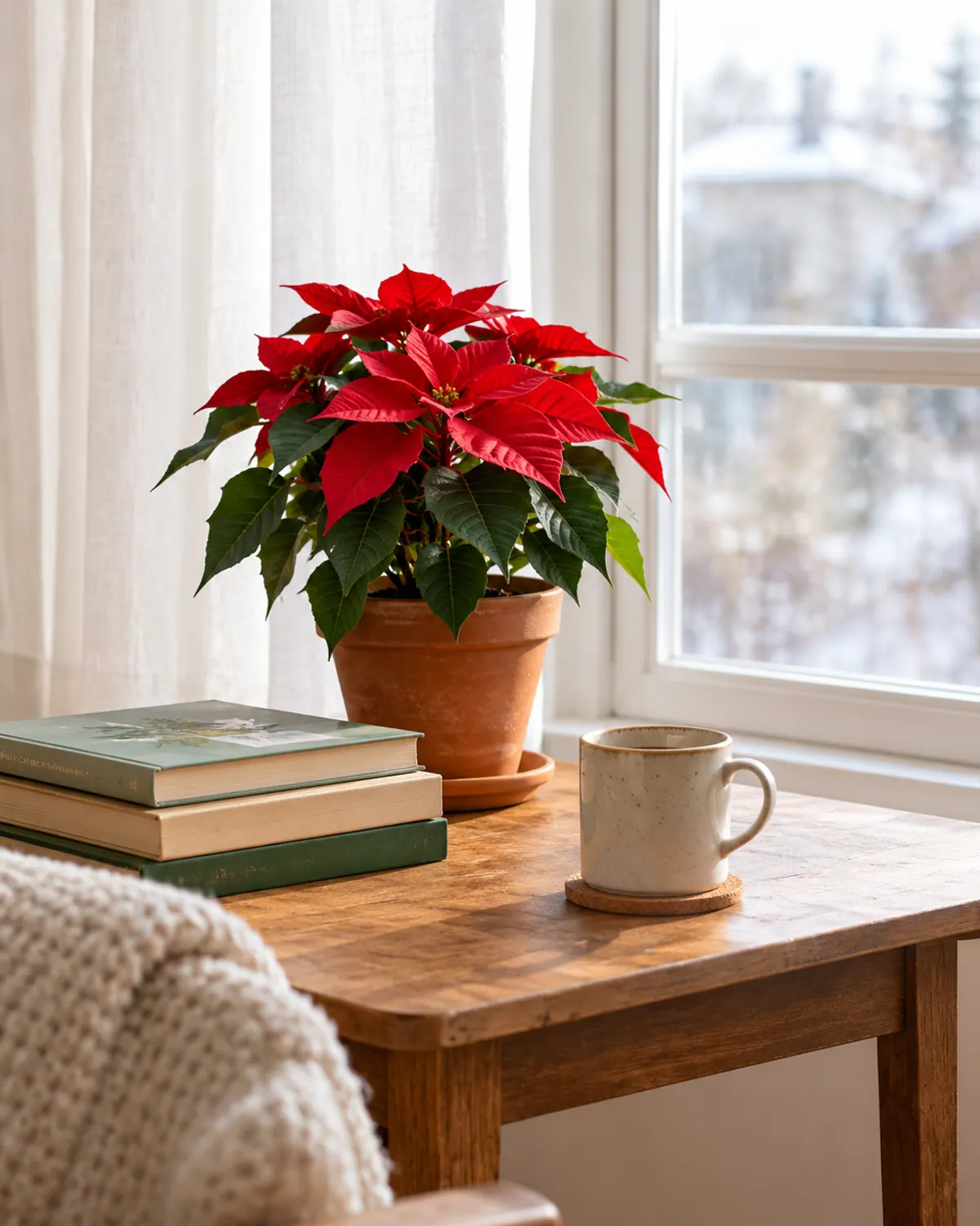
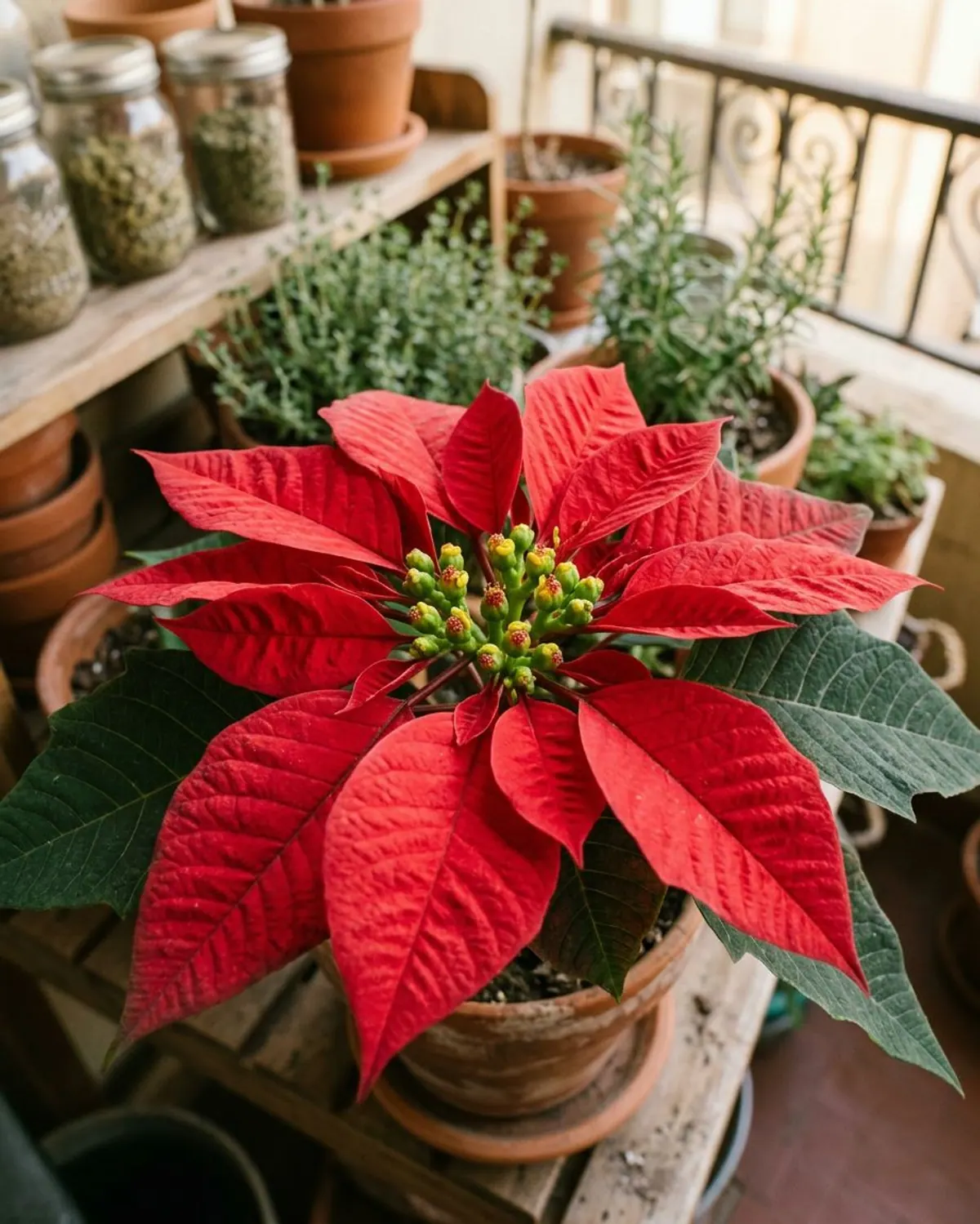
The red parts are bracts, which are colored leaves. The true flowers are the tiny yellow-green buds in the center, called cyathia. Choose a plant whose center buds are still tight and green or just tinged yellow; if they are open and dusted with pollen, the show is already halfway done.
Look for dark green leaves all the way down to the soil line. Skip plants with yellow lower leaves, wilting stems or soggy soil, and skip any that sat near the store's automatic doors.
Getting it home: if it is under 50°F outside, keep the plastic sleeve on for the trip and get the plant inside quickly. Take the sleeve off as soon as you are home, because the stems droop if it stays on for days.
Where to put it in a small space
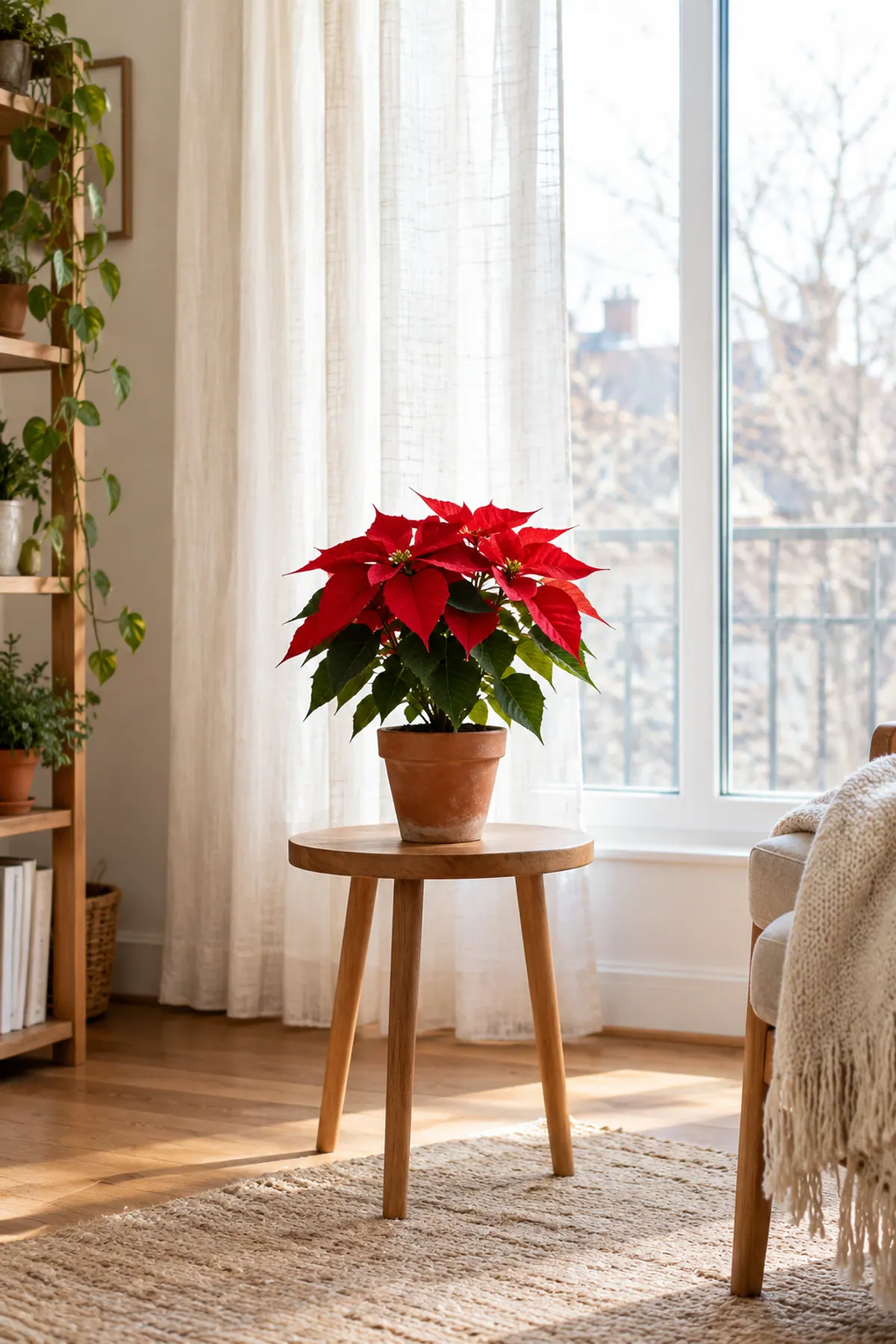
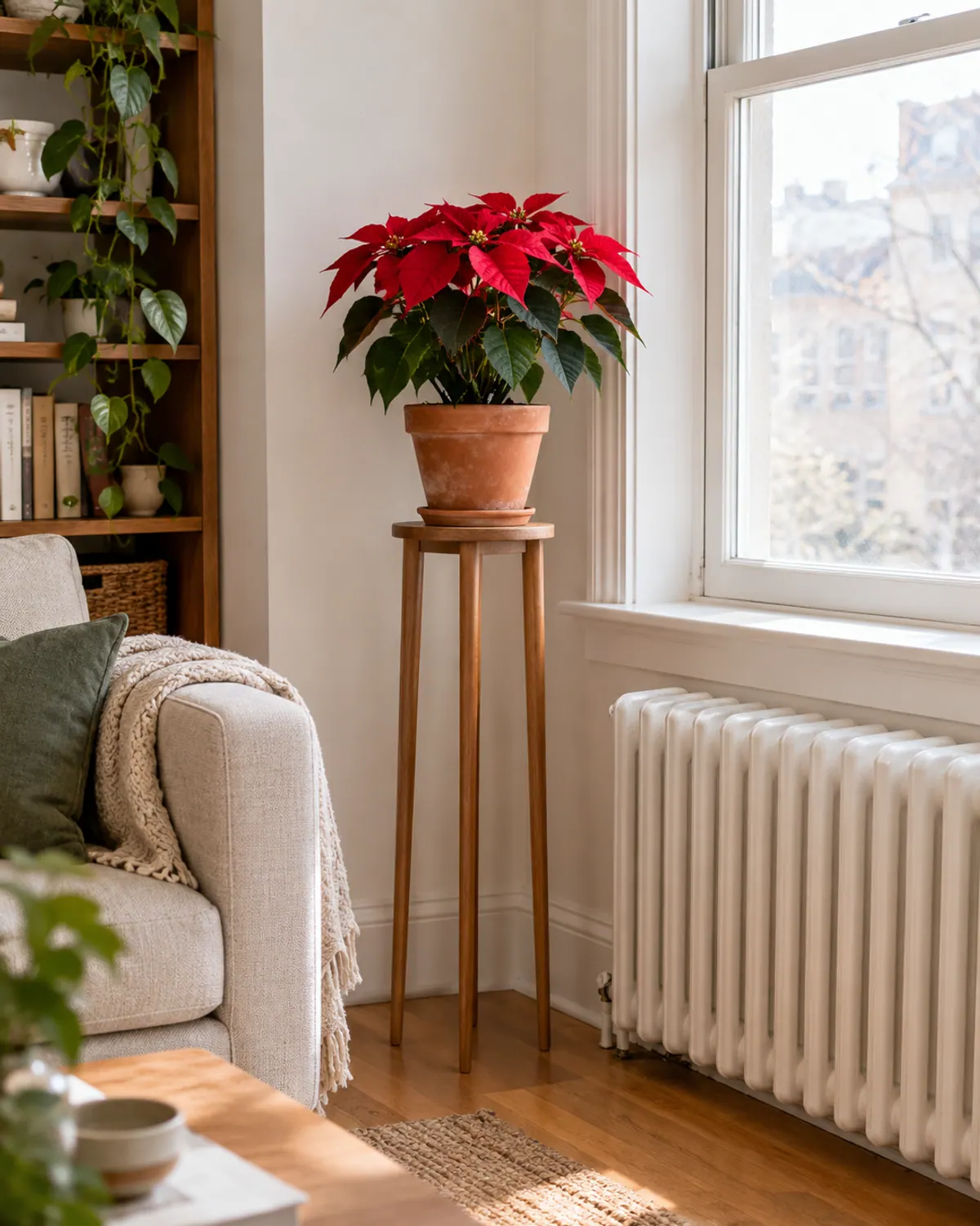
A poinsettia wants the brightest spot you have that is not touching the glass. A table or plant stand a foot or two back from a sunny window works, as does a deep sill if the leaves stay clear of the cold pane.
Keep it away from the front door, a drafty balcony slider, the radiator, a heat vent and the top of the fridge. A short blast of cold air, or a hot dry draft, is the usual reason a plant drops half its leaves in a week.
For a deeper look at light by window direction, our winter houseplant care guide walks through dark, dry months room by room.
How to water a poinsettia (the pot weight test)
Overwatering kills more poinsettias than anything else. The decorative foil traps water around the roots, so first take the foil off or poke a few holes in its base and set the plant on a saucer.
-
Step 1: Lift the pot right after watering
Pick it up once when it is fully watered and drained. Remember that weight; it is your heavy reference.
-
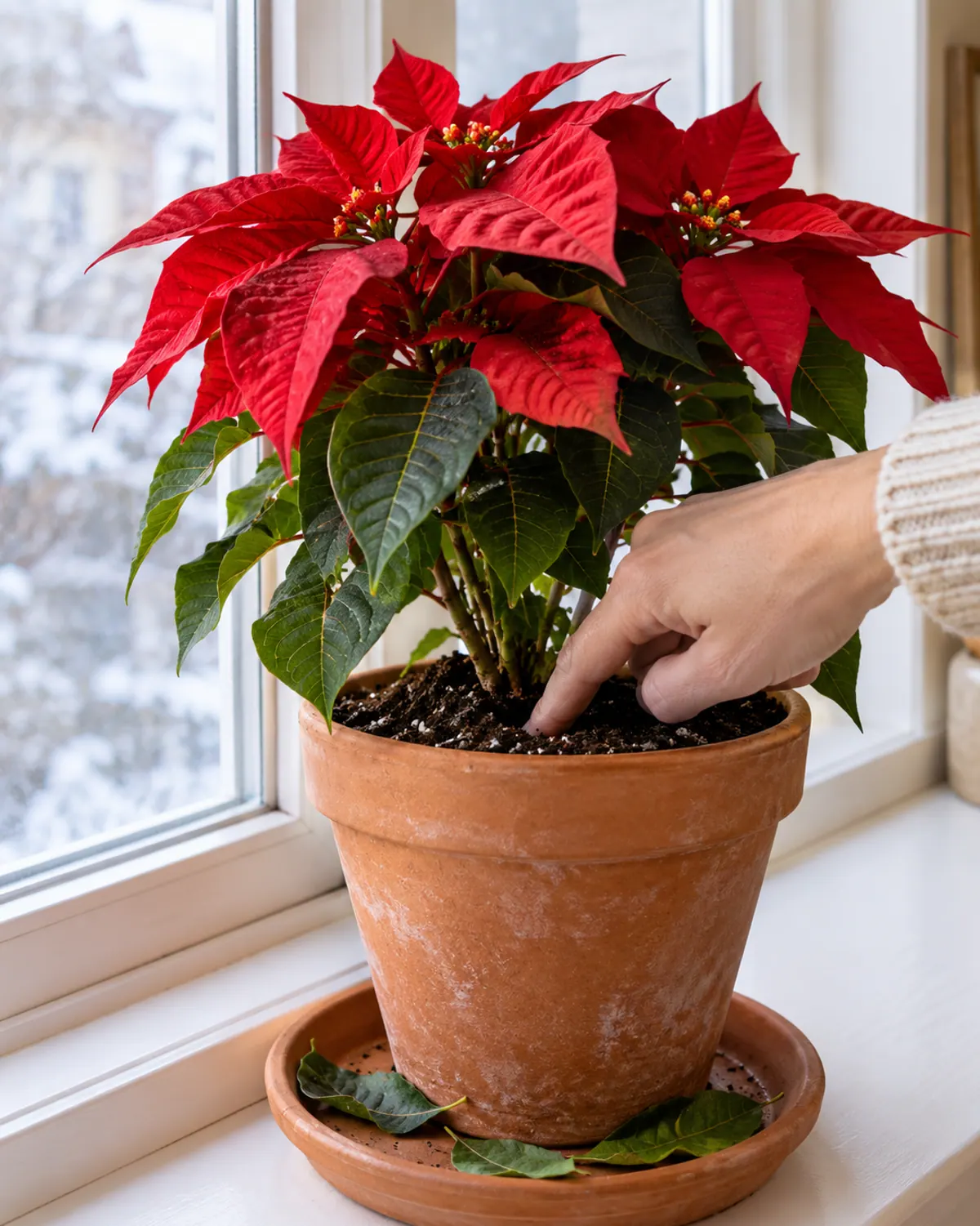
Step 2: Check every two or three days
Lift the pot again and touch the soil surface. Water when the pot feels noticeably lighter and the top of the soil is dry, which is usually every 4 to 7 days in a heated apartment.
-
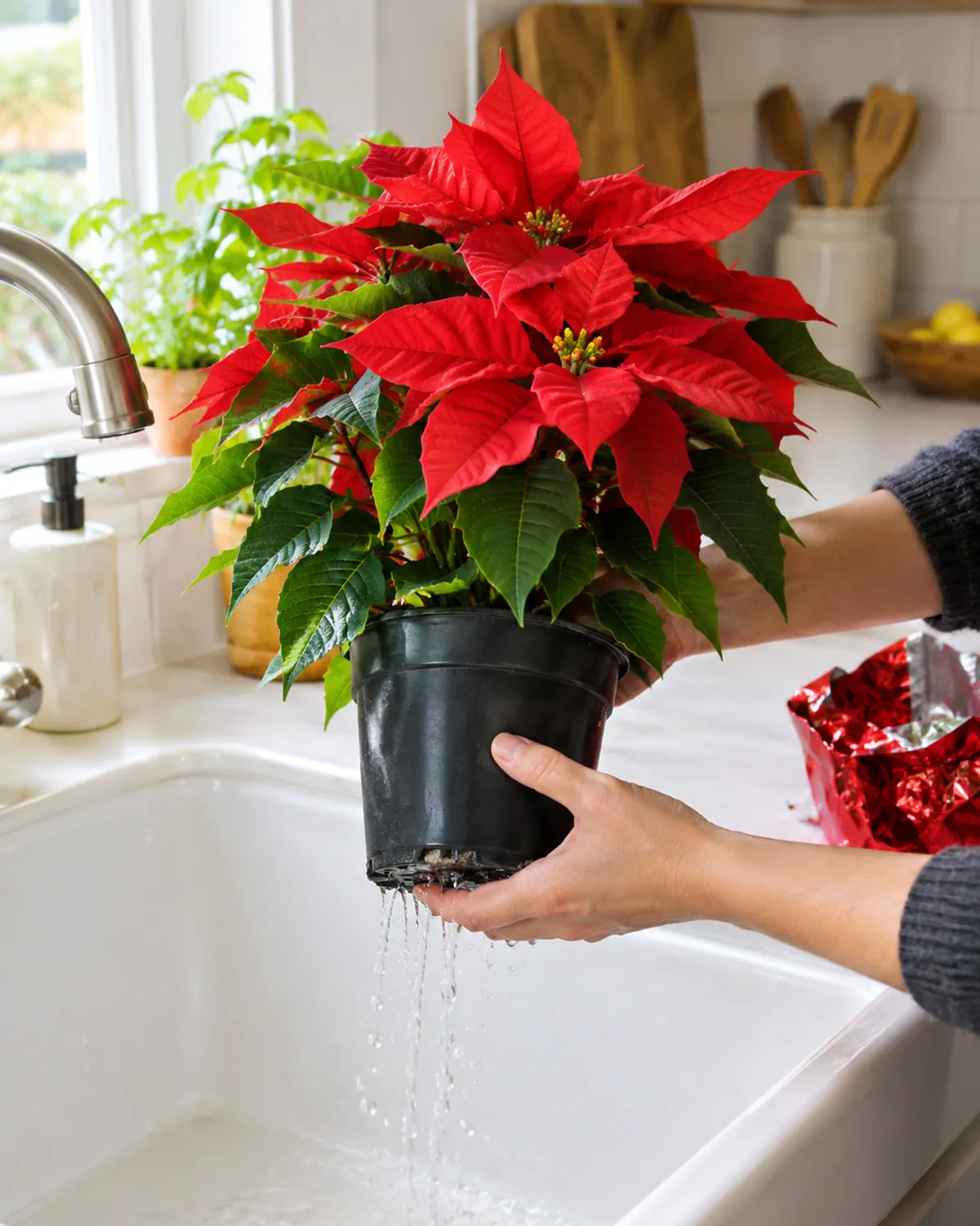
Step 3: Water at the sink until it drains
Run room temperature water through the soil until it runs out the bottom. Let it drip for 10 minutes before it goes back on the saucer.
-
Step 4: Empty the saucer
Any water still in the saucer after half an hour goes down the drain. Roots sitting in water rot within a week or two.
Wilting can mean too dry or too wet, so always check the weight before you add more water. A light pot with wilting leaves needs a drink; a heavy pot with wilting leaves needs to dry out.
A poinsettia week-by-week check
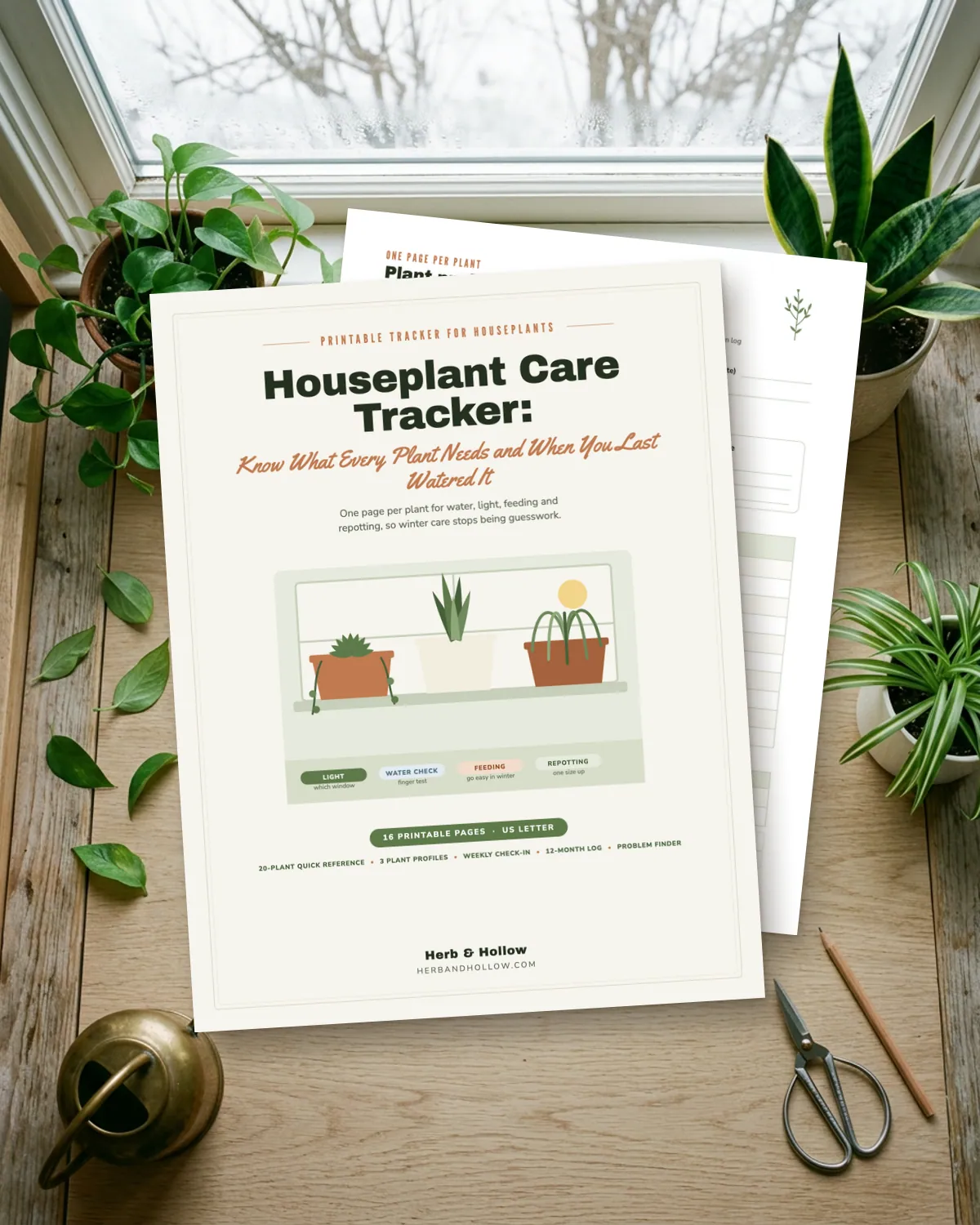
A short weekly check catches problems early. Write the answers in your Houseplant Care Tracker ($4) or on paper, so you can compare one week with the next.
| Check | What to write down |
|---|---|
| Pot weight | Light or heavy, and whether you watered |
| Soil surface | Dry, damp or soggy |
| Light | Window, hours of bright light and any shade |
| Leaves and bracts | Any yellowing, drop or curl, and where |
| Spot | Drafts, heat vents, cold glass or a pet within reach |
Why poinsettia leaves fall off, and the fix
| What you see | Likely cause | Fix |
|---|---|---|
| Green leaves drop suddenly in a few days | Cold draft or a chilly trip home | Move it away from doors and cold glass; it usually stops within a week |
| Lower leaves turn yellow, soil stays wet | Overwatering or foil holding water | Remove foil, let the pot get light before watering again |
| Whole plant wilts, pot is light | Too dry | Water at the sink until it drains; it should perk up in hours |
| Leaves curl and brown at the edges | Hot dry air from a vent or radiator | Move it away from the heat source |
| Bracts fade and drop slowly in late winter | Normal end of the color season | Keep it bright and move on to the spring routine below |
Are poinsettias poisonous to cats and dogs?
Poinsettias have a worse reputation than they deserve. The ASPCA lists them as mildly toxic: the milky sap can irritate the mouth and stomach and cause drooling or vomiting, and it usually clears up on its own.
It is still worth keeping the plant out of reach of a cat or puppy that chews leaves. A tall plant stand, a high shelf or a room the pet does not use works well.
If your pet ate some: call your vet or the ASPCA Animal Poison Control Center at (888) 426-4435 (a fee may apply). This is general information, not veterinary advice.
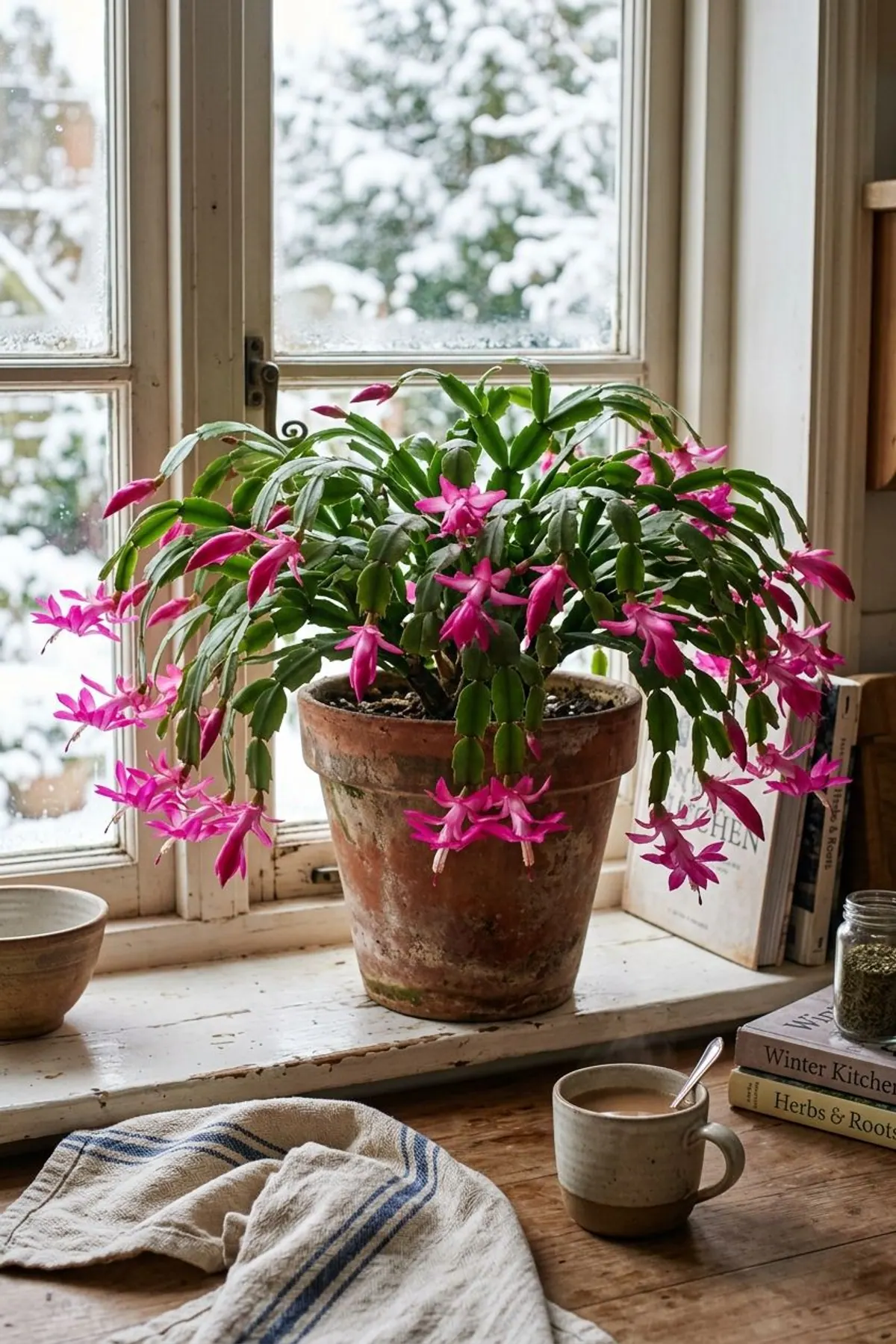
People: the sap can irritate skin, and people with a latex allergy may react to it, so wear gloves when you prune. If you want a holiday plant that is safe around pets, a Christmas cactus is non-toxic, and our pet-safe houseplants list has more.

Gifting a poinsettia
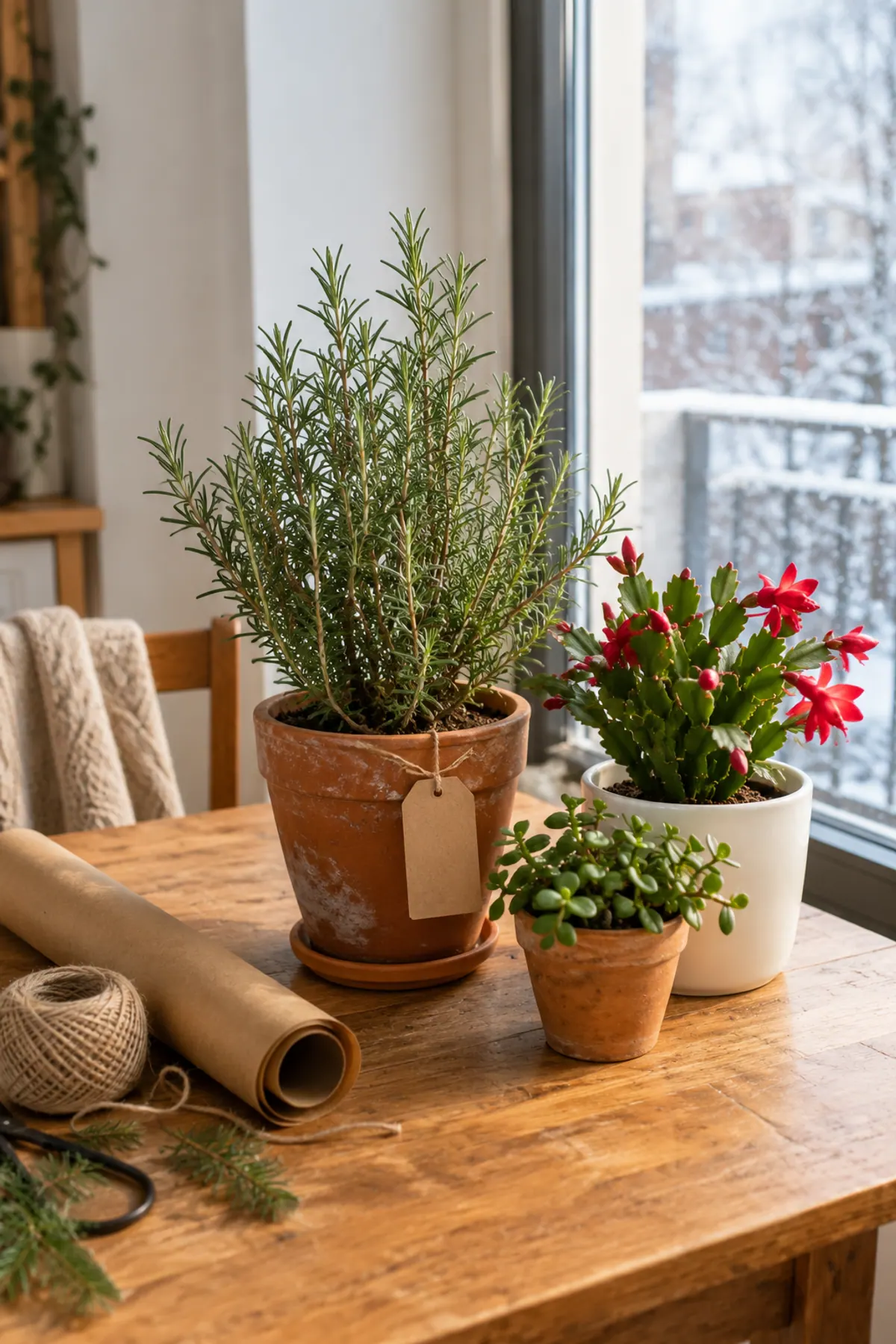
A poinsettia is an easy Christmas gift, and it lasts longer if the giver adds a care note. Tell them to remove the foil, find a bright spot away from drafts and water by pot weight. If they have a cat or dog, mention that the plant should sit out of reach (see the pet note above).
For more living gift ideas, see our Christmas plant gifts with pet safety notes, our pet-friendly Christmas plants and the winter houseplant care guide to tuck in with the plant.
A 12-month poinsettia care calendar
Keeping a poinsettia after Christmas is easy. Getting it to turn red again takes a few months of routine, mostly in autumn. Here is the whole year in one table, written for a plant kept indoors with a few summer months on a balcony.
| When | What to do |
|---|---|
| December to February | Holiday care: bright light, 65 to 70°F, water by pot weight, no fertilizer |
| Late February to April | Bracts fade. Water a little less, keep it bright, and let it rest |
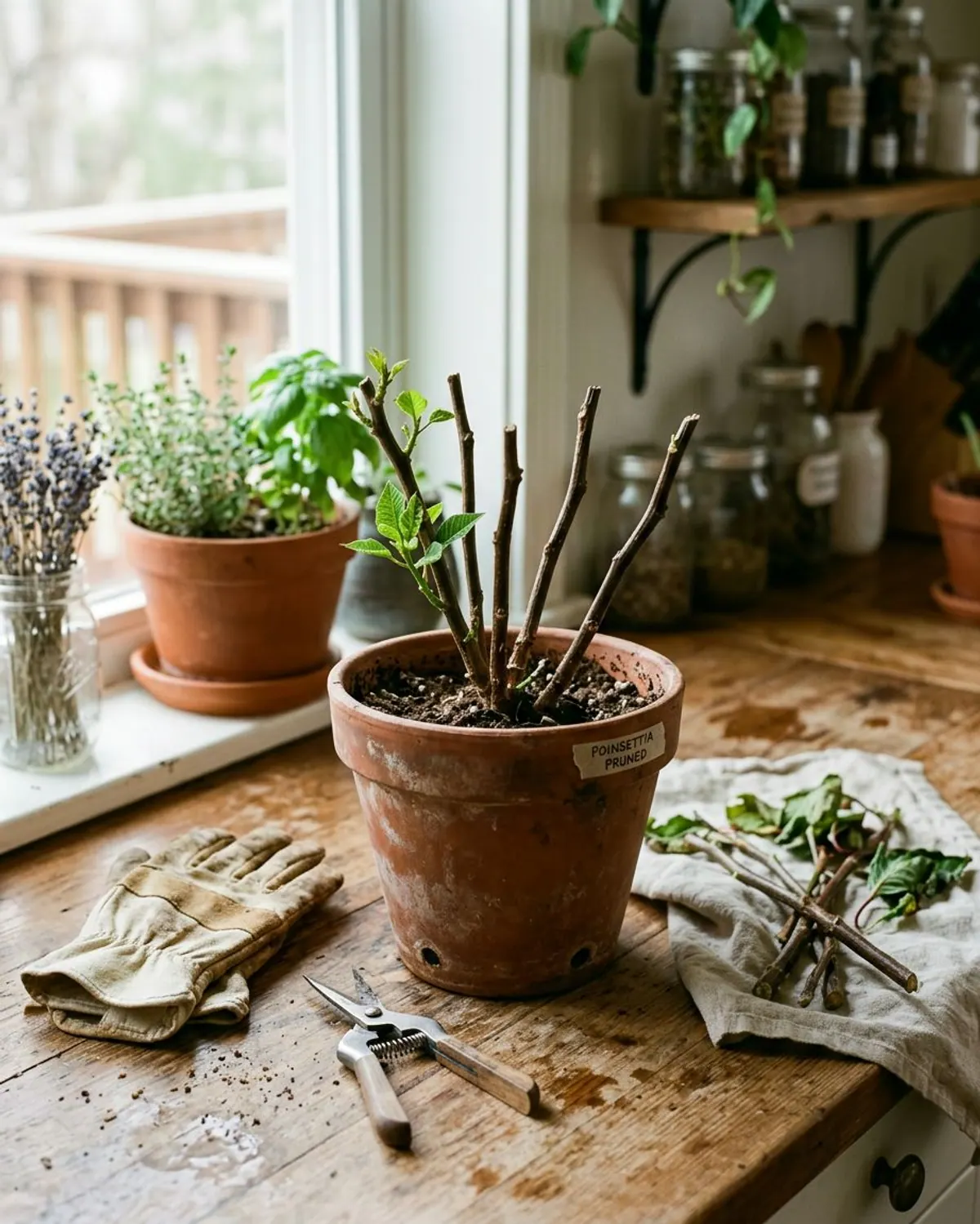
| Late February to May | Cut each stem back to 4 to 6 inches (extension guides range from late February to May; pick one) |
| May | Repot one size up in fresh potting mix; start feeding every 2 weeks at the label rate |
| When nights stay above 50°F | Move it to a bright balcony spot with morning sun and afternoon shade |
| Early July | Pinch the tip of each new shoot by about 1 inch to make it bushy |
| Mid to late August | Last pinch; leave it alone after this |
| September, before nights drop under 50°F | Bring it back indoors to your brightest window |
| About October 1 | Start the dark treatment: 14 hours of total darkness every night |
| Early to mid December | Bracts color; stop the dark treatment and enjoy it again |
The calendar only works if you remember what you did last. The Houseplant Care Tracker ($4) gives each plant a page for water, light, feeding and repot history, plus a 12-month log, so you can see when you last watered and when you cut it back. If poinsettia is only one plant on your sill, the Small-Space Garden Binder ($25) keeps all nine Herb & Hollow printables together for the rest of the year.
Spring and summer: cut back, repot and grow
Once the bracts look tired, usually in March, give the plant a short rest in a cool, bright room and let the soil dry a little more between waterings. Then cut every stem back to 4 to 6 inches, just above a leaf node, with clean snips and gloves.
New shoots appear within a few weeks. In May, repot into a container one size larger with fresh, well-drained potting mix and begin feeding every two weeks with a balanced houseplant fertilizer at the label rate.
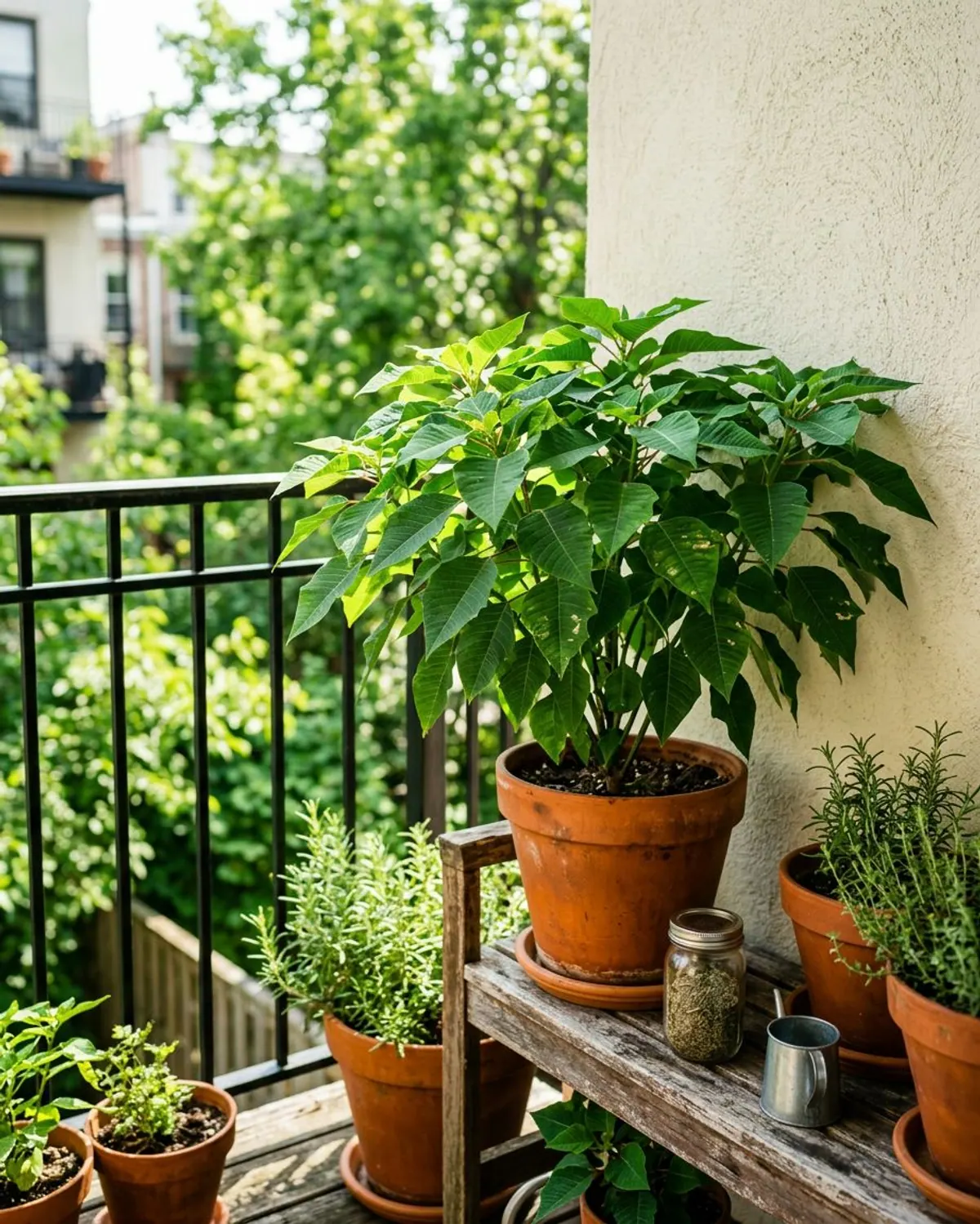
A balcony summer makes a much stronger plant. Move it out when nights stay above 50°F, give it morning sun and some afternoon shade, and water more often in the heat. Pinch the shoot tips in early July and once more by late August.
How to make a poinsettia turn red again
Poinsettias color up when the nights are long. Indoors, lamps and streetlights break the night, so you create the long night yourself for about 8 to 10 weeks starting around October 1.
-
Step 1: Give it 14 hours of total darkness
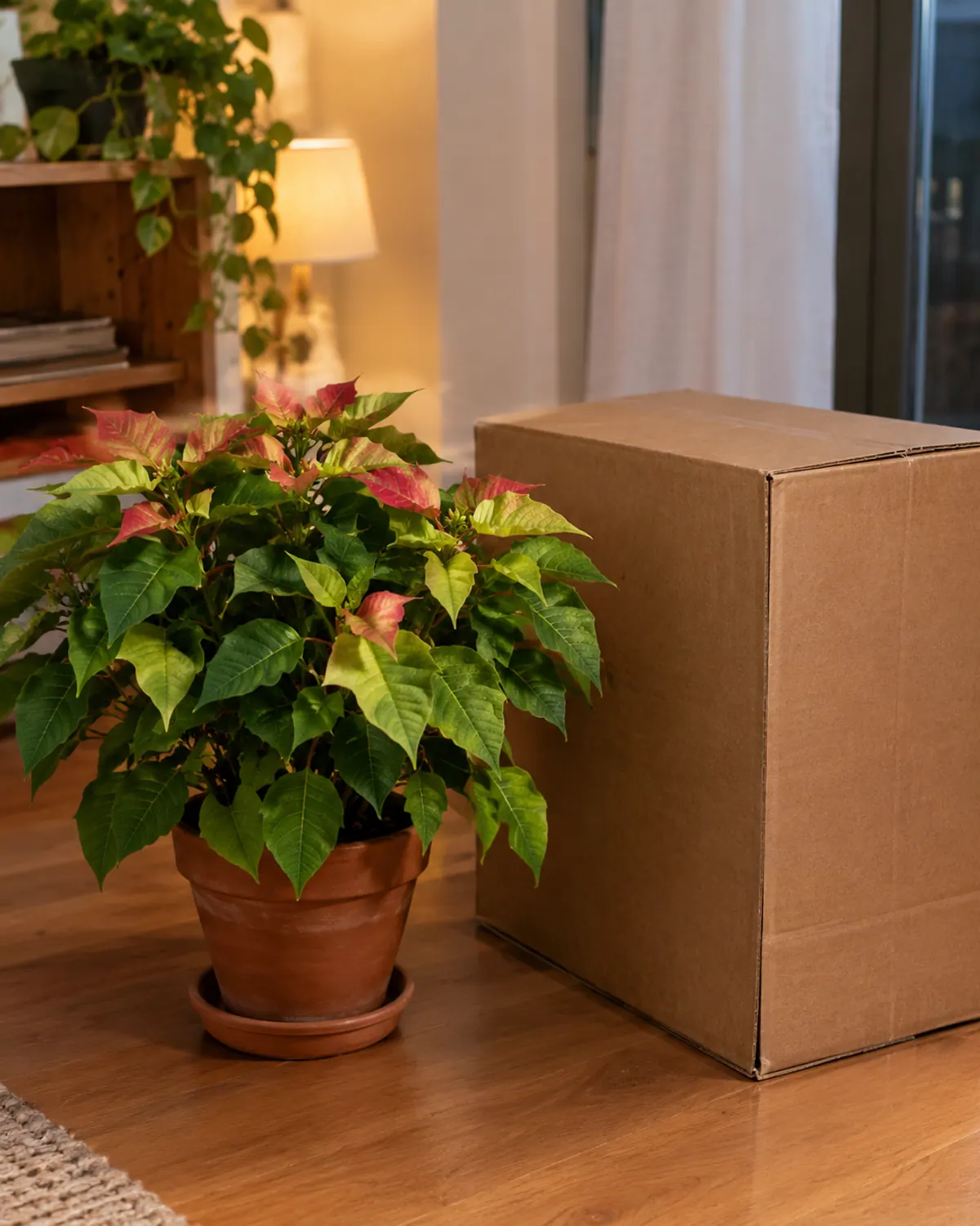
Every evening at about 5 pm, put the plant in a closet you do not open or cover it with a large cardboard box. Bring it back out at about 8 am.
-
Step 2: Give it bright light by day
During the day it needs 6 to 8 hours or more of bright window light. Without it, the bracts color weakly.
-
Step 3: Keep nights around 60 to 70°F
Cooler rooms in that range help color. Cut fertilizer back to half strength or stop once the bracts start to change.
-
Step 4: Stay consistent
Even a few minutes of lamp light during the dark period can reset the clock. Most plants show color in 8 to 10 weeks; stop the routine once the bracts are fully colored.
How long do poinsettias last?
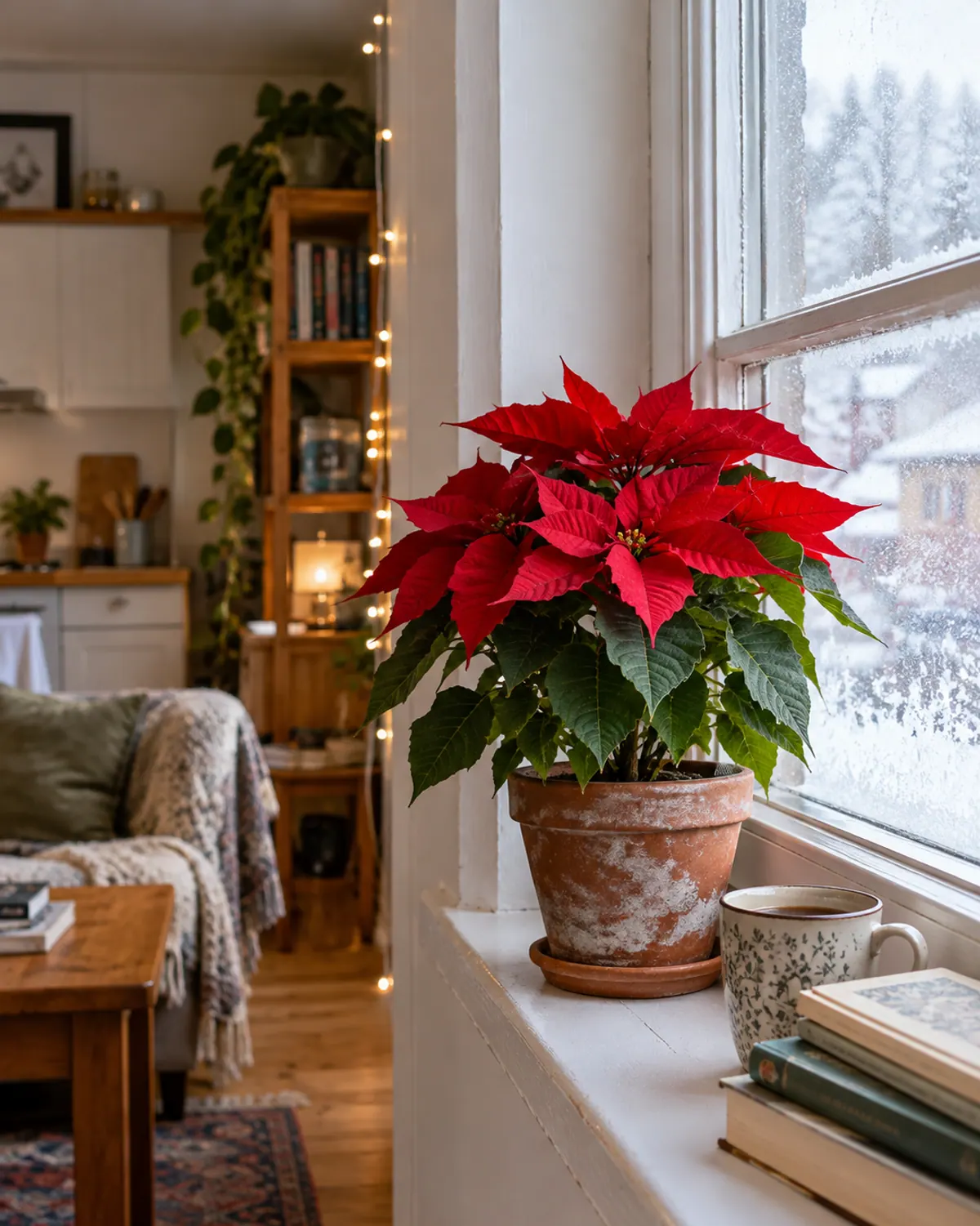
With the care above, the bracts usually stay colorful for six weeks to a few months, often into February or March. The plant itself is a perennial shrub and can live for years indoors if it gets its summer growing season.
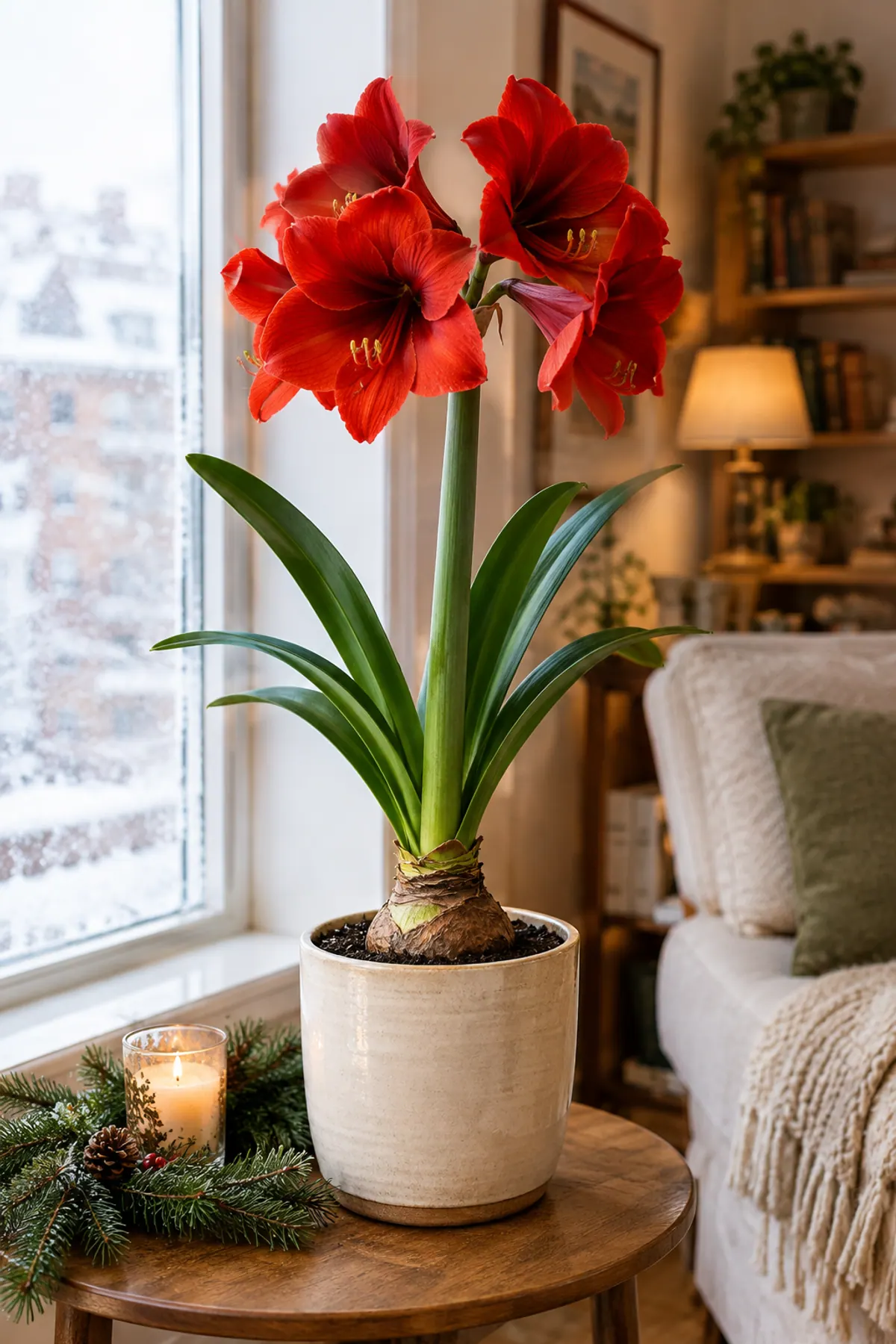
If you do not want a year-round project, enjoy it through the holidays and compost it in spring with no guilt. If you do, the calendar above is the whole job, and it pairs nicely with a Christmas cactus or an amaryllis that also rebloom from a dark, cool autumn.
Supplies for poinsettia care
What helps (none are required)
-
Cachepot with a drainage saucer
Typically $12 to $25
Replaces the foil wrapper and lets water drain away from the roots.
Check price on Amazon for Cachepot with a drainage saucer -
Soil moisture meter
Typically $8 to $15
A backup to the pot weight test if you tend to overwater.
Check price on Amazon for Soil moisture meter -
Tall plant stand
Typically $20 to $40
Lifts the plant away from pets and puts it level with the window light.
Check price on Amazon for Tall plant stand -
Balanced houseplant fertilizer
Typically $8 to $15
For spring through early autumn only, at the label rate.
Check price on Amazon for Balanced houseplant fertilizer -
Bypass pruning snips
Typically $10 to $20
Clean cuts for the spring cut back; wear gloves for the sap.
Check price on Amazon for Bypass pruning snips
If your winter windowsill is doing double duty, our Indoor Winter Herb Garden Kit has a window chooser and a light table with pet flags that work for holiday plants too.
Frequently asked questions
How do you keep a poinsettia alive after Christmas?
Keep it in bright light at 65 to 70°F, water only when the pot feels light, and empty the saucer. When the bracts fade in late winter, cut it back to 4 to 6 inches, repot in May and grow it on through summer.
How often should I water a poinsettia?
Usually every 4 to 7 days in a heated apartment, but go by pot weight rather than the calendar. Water when the pot feels light and the soil surface is dry, then let it drain fully.
How do I get my poinsettia to turn red again?
From about October 1, give it 14 hours of uninterrupted darkness each night (a closet or a box from 5 pm to 8 am) and bright light by day for 8 to 10 weeks. The bracts color by early to mid December.
Are poinsettias poisonous to cats and dogs?
The ASPCA rates them mildly toxic. Chewing can cause drooling, mouth irritation or vomiting that usually passes on its own. Keep the plant out of reach and call your vet or ASPCA Poison Control at (888) 426-4435 if you are worried.
Why is my poinsettia dropping leaves?
The usual causes are a cold draft, overwatering (often from foil trapping water), very dry soil or hot air from a heater. Fix the spot or the watering and the drop usually stops within a week.

Save it for later
Pin this to your Houseplants board so it's there when you need it.
Save to Pinterest