This post contains affiliate links. As an Amazon Associate we earn from qualifying purchases, at no extra cost to you. Read our disclosure.
Safety first: Herbs can be powerful. If you are pregnant, nursing, take medication or have a health condition, check with your doctor or pharmacist first. Please read our herbal & garden safety notes before you start.
Key takeaways
- Paperwhites and amaryllis need no cold. Paperwhites bloom in about 3 to 5 weeks, amaryllis in about 6 to 8.
- Tulips, daffodils and crocus need 15 to 17 weeks of cold, hyacinths 12 to 15 (Wisconsin Extension).
- Chilled bulbs started in early October won't bloom by Christmas. Plan them for January to March instead.
- Chill in a fridge at 35 to 45°F and keep apples and other ripening fruit out of it.
- Paperwhites, daffodils, tulips, hyacinths and amaryllis are toxic to cats and dogs (ASPCA).
In this post12 sections
- What forcing bulbs indoors really means
- Forcing bulbs for Christmas: which ones make it
- Count back from Christmas: a forcing calendar
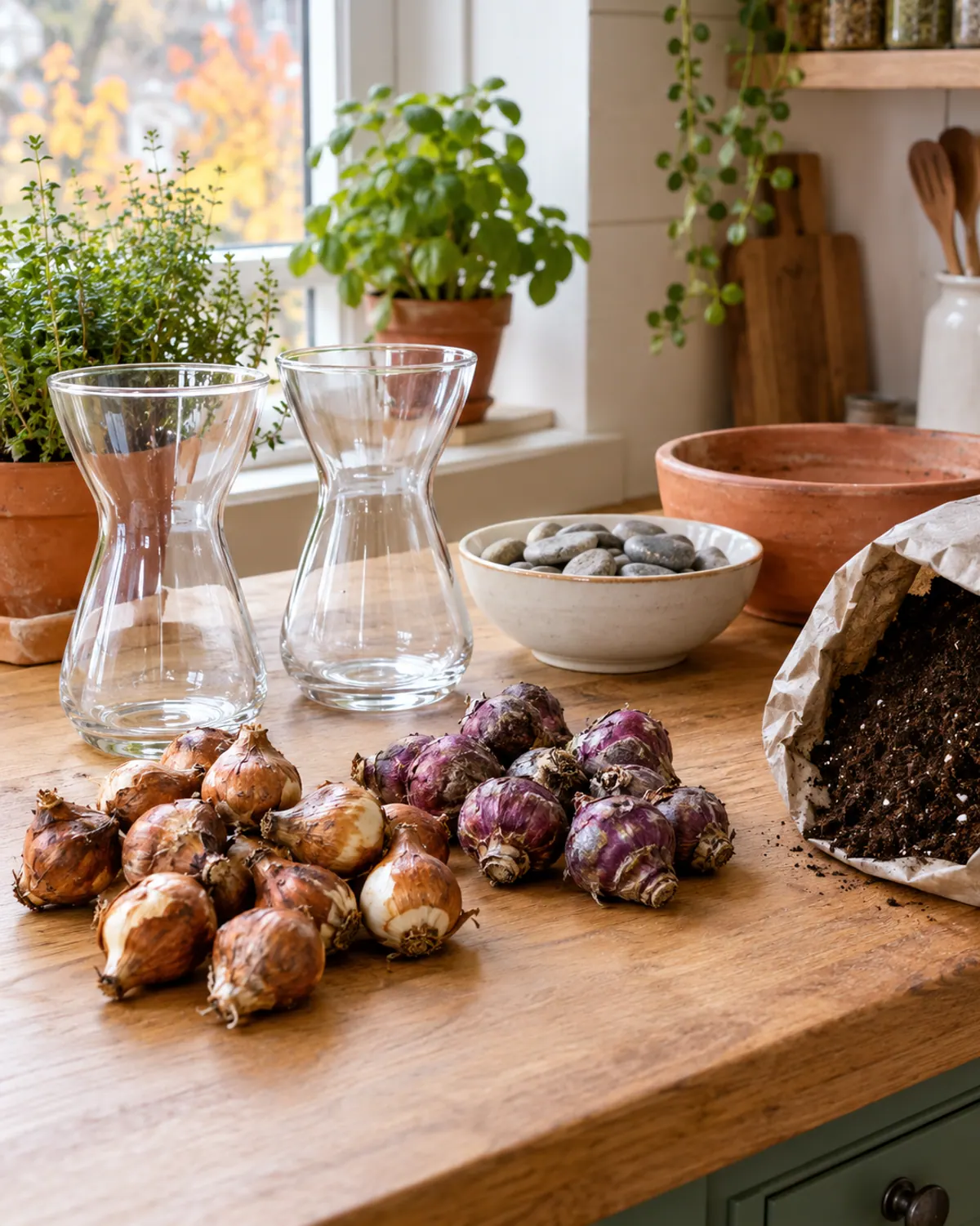
- What you need
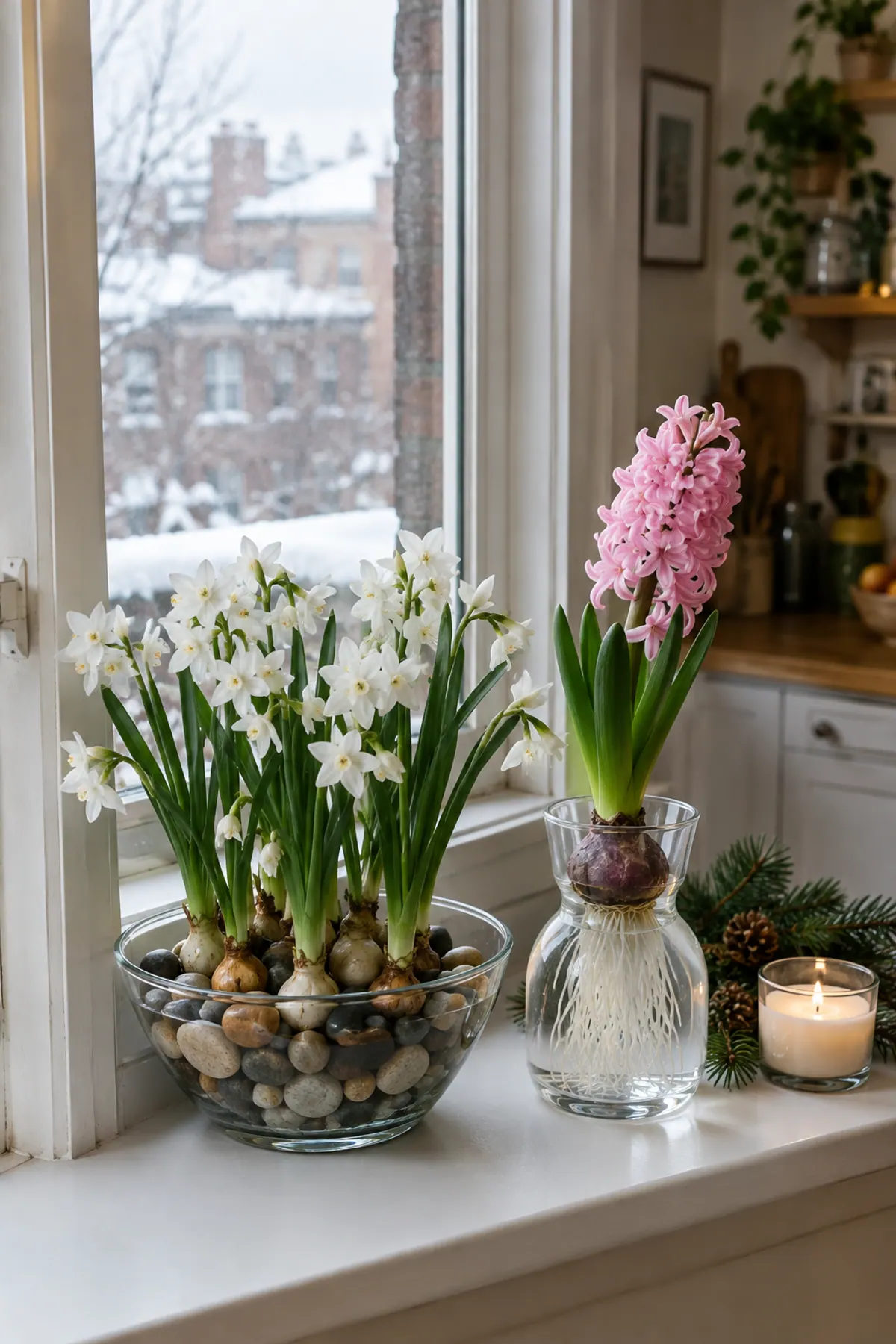
- How to force hyacinth bulbs in water
- How to force tulips and daffodils in pots
- Paperwhites and amaryllis: no fridge needed
- Bulb forcing ideas for pots and small spaces
- Mistakes that stop forced bulbs from blooming
- Bonus: fridge and pet safety
- Bulb forcing supplies
- FAQ
What forcing bulbs indoors really means
Spring bulbs like tulips and hyacinths only flower after a long cold spell, the way they would under winter soil. Forcing copies that winter in a fridge or a cold garage, then brings the bulbs into warmth and light. The bulbs think spring has come and bloom months early.
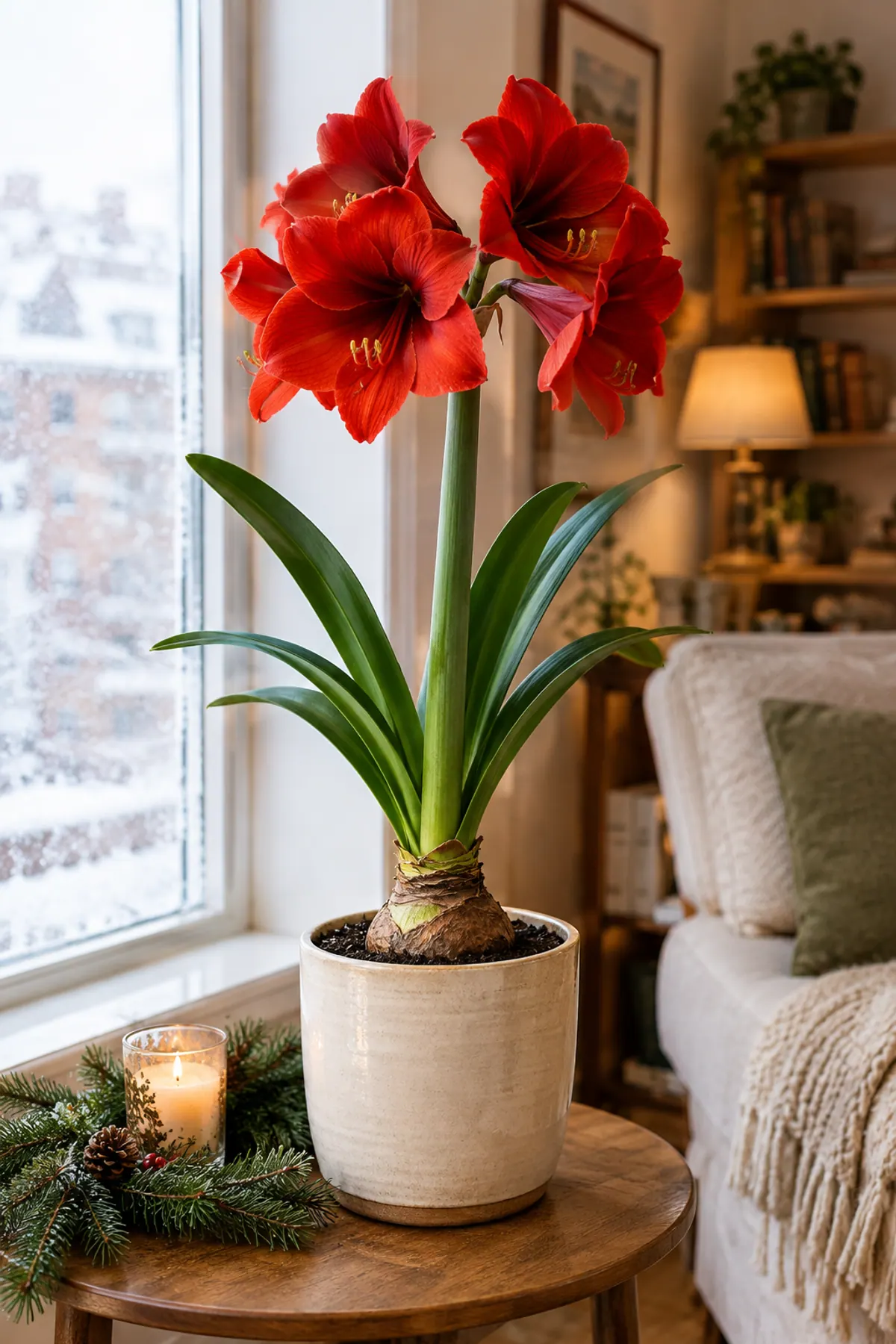
Two holiday bulbs skip the cold entirely. Paperwhites and amaryllis come from warm climates, so they bloom with just water, warmth and light. That difference decides what can flower by Christmas.
Forcing bulbs for Christmas: which ones make it
This chart uses the chill weeks from University of Wisconsin Extension. After the cold ends, most chilled bulbs take about 2 to 4 more weeks to bloom, per Iowa State Extension.
| Bulb | Weeks of cold | Blooms by Christmas if started now? |
|---|---|---|
| Paperwhite | None | Yes. Plant about 3 to 5 weeks before |
| Amaryllis | None | Yes. Plant about 6 to 8 weeks before |
| Hyacinth | 12 to 15 | No. Expect mid-January to February |
| Tulip | 15 to 17 | No. Expect February to March |
| Daffodil | 15 to 17 | No. Expect February to March |
| Crocus | 15 to 17 | No. Expect February to March |
| Grape hyacinth (Muscari) | 15 to 17 | No. Expect February to March |
| Dwarf iris (Iris reticulata) | 15 to 16 | No. Expect February to March |
Some stores sell pre-chilled hyacinths and tulips. These have had part of their cold already, so follow the weeks on the package, not this chart. Iowa State gives a broader rule of 40 to 45°F for 12 to 16 weeks for most spring bulbs.
Count back from Christmas: a forcing calendar
Pick your bloom date, then subtract the growing time. For chilled bulbs, add the cold weeks and the 2 to 4 weeks of growing after. Here is how that works out for a December 25 target and for a bulb you chill today.
| Bulb | For Christmas, start by | If you start chilling October 9 |
|---|---|---|
| Paperwhite | About November 20 to December 4 | No chill needed |
| Amaryllis | About October 30 to November 13 | No chill needed |
| Hyacinth | About mid-August to mid-September | Out of the fridge January 1 to 22, blooms mid-January to mid-February |
| Tulip or daffodil | About August | Out of the fridge January 22 to February 5, blooms February to early March |
What you need
Bulb forcing supplies
How to force hyacinth bulbs in water
-
Step 1: Chill the bulbs first
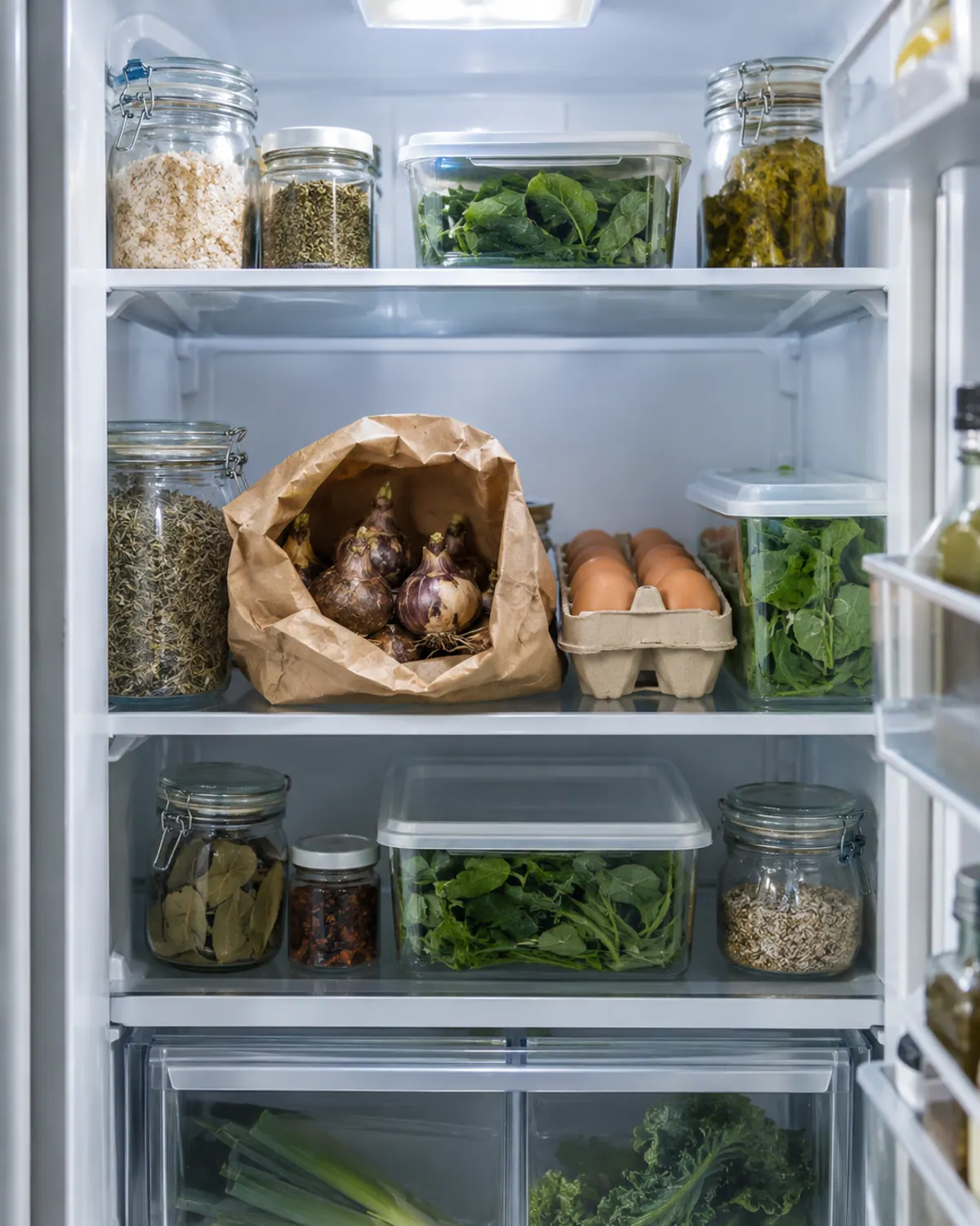
Put dry hyacinth bulbs in a labeled paper bag and set them in the fridge at 35 to 45°F for 12 to 15 weeks. Wisconsin Extension warns to keep apples out of that fridge, because the ethylene gas they give off can harm the flower buds. Wear gloves when you handle hyacinth bulbs, since they can make skin itch.
-
Step 2: Set the bulb in a forcing vase
After chilling, sit each bulb in the cup of a forcing vase. Fill with water until it sits just below the base of the bulb, not touching it. The roots will reach down; a bulb sitting in water rots.
-
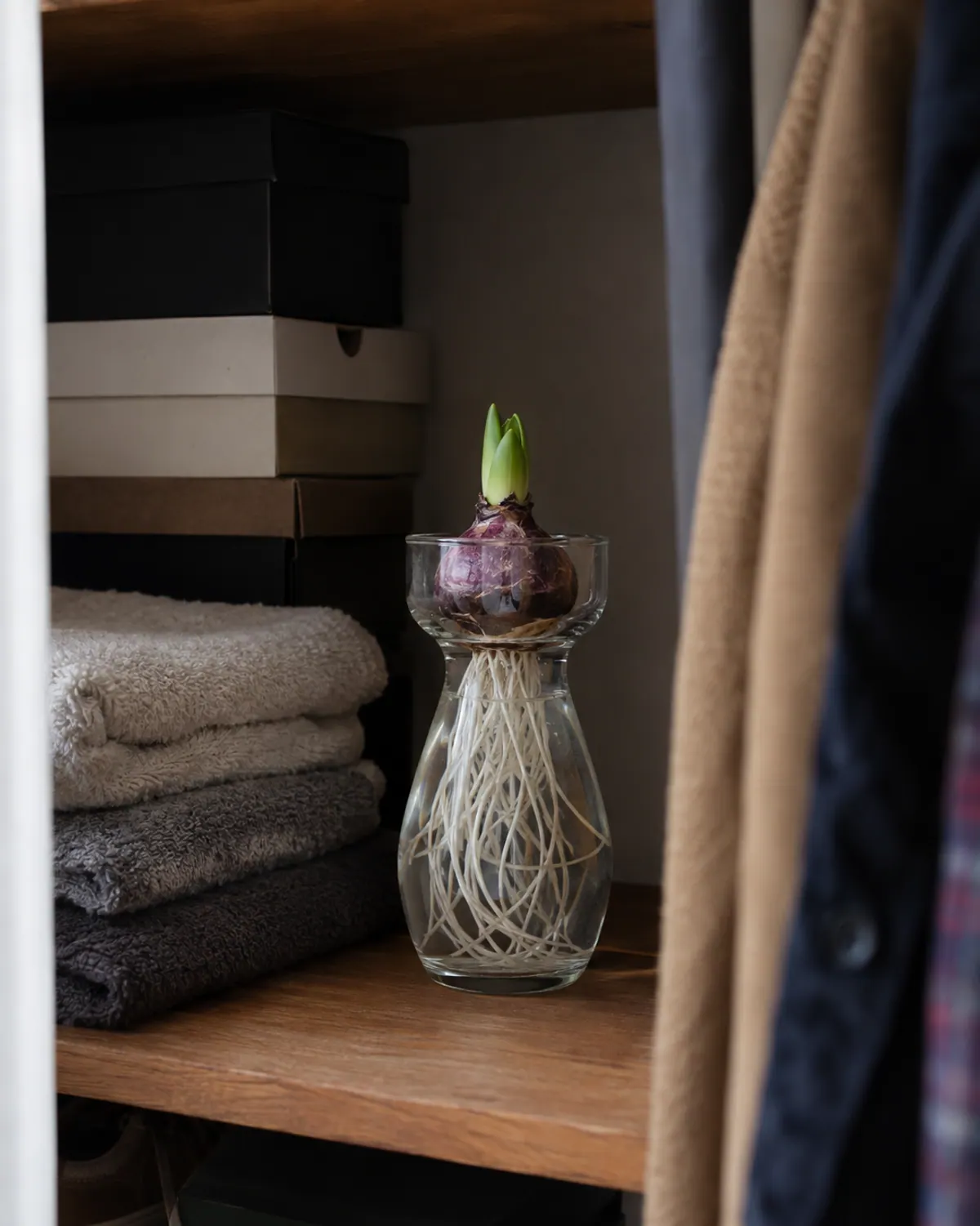
Step 3: Keep it cool and dim until roots fill the vase
Put the vase somewhere cool and dim, like a closet floor, until roots fill the glass and the shoot is a couple of inches tall. Top up the water as it drops.
-
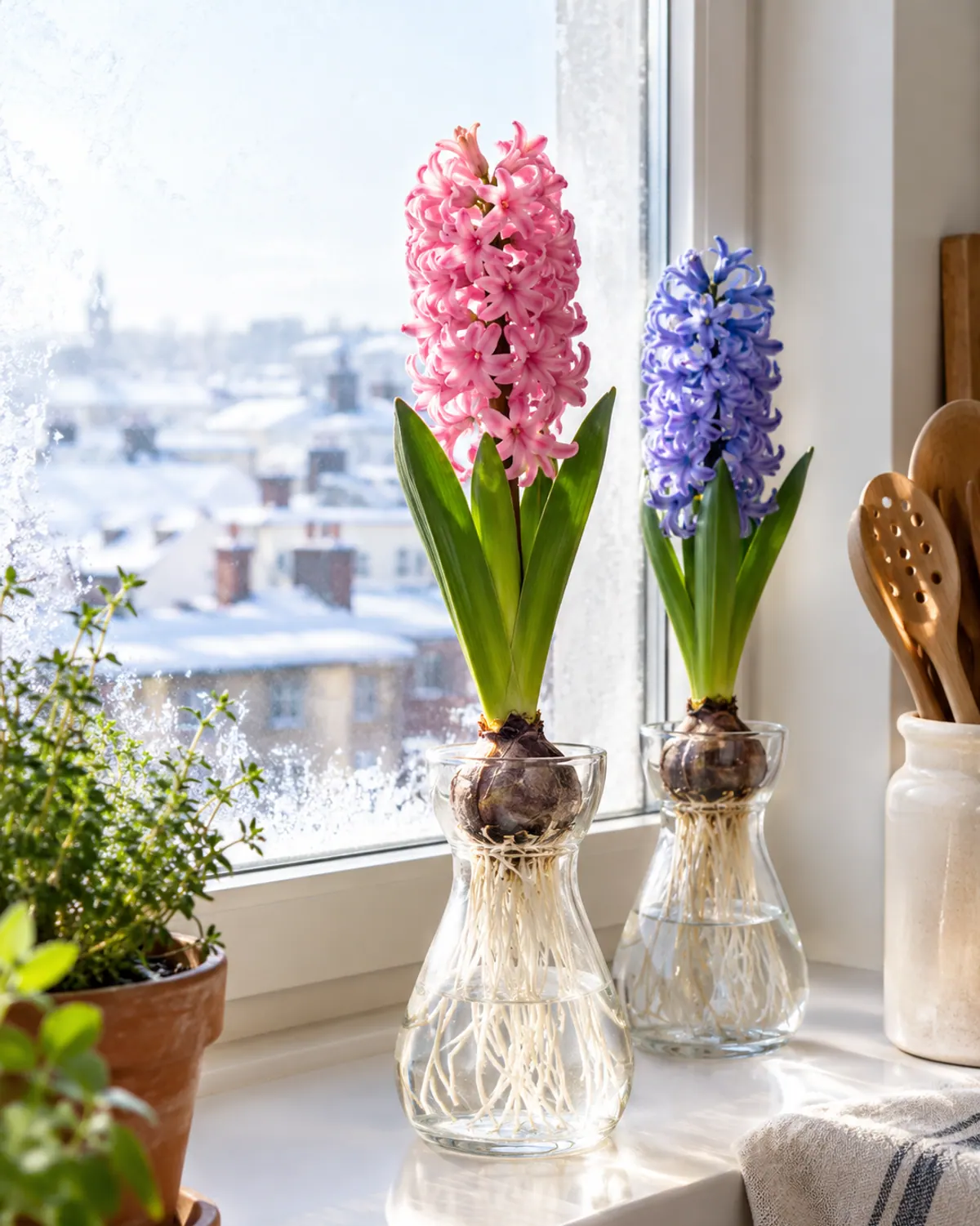
Step 4: Move it to light in two stages
Iowa State suggests a few days at 50 to 60°F in low light, then a bright spot at 60 to 70°F. Bloom usually follows in 2 to 4 weeks. Turn the vase every few days so the stem grows straight.
How to force tulips and daffodils in pots
-
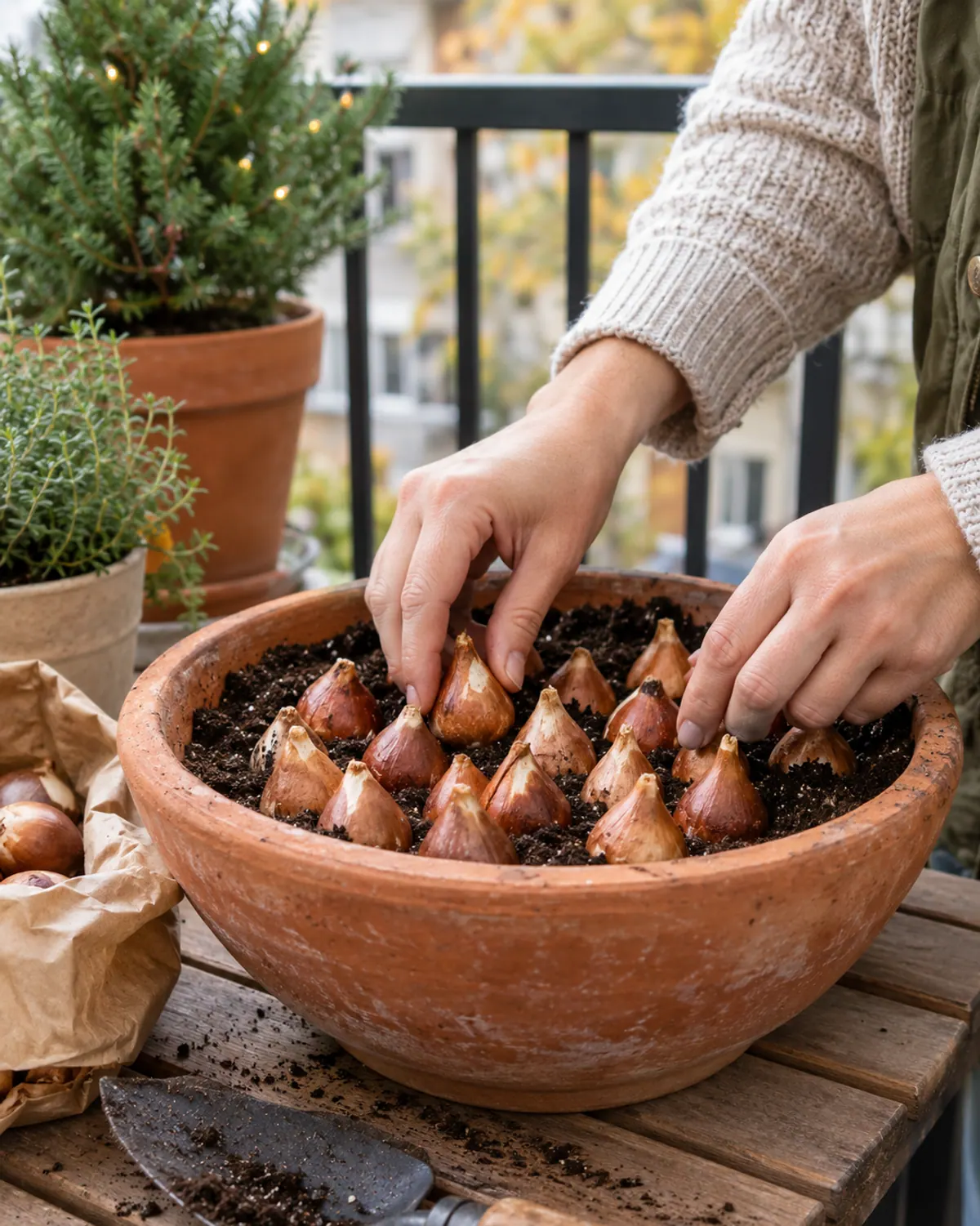
Step 1: Plant them shoulder to shoulder
Fill a shallow pot with drainage holes partway with potting mix. Set the bulbs pointed tips up, almost touching, then add mix until just the tips show. With tulips, face the flat side of each bulb outward so the first big leaf drapes over the rim.
-
Step 2: Water, label and chill
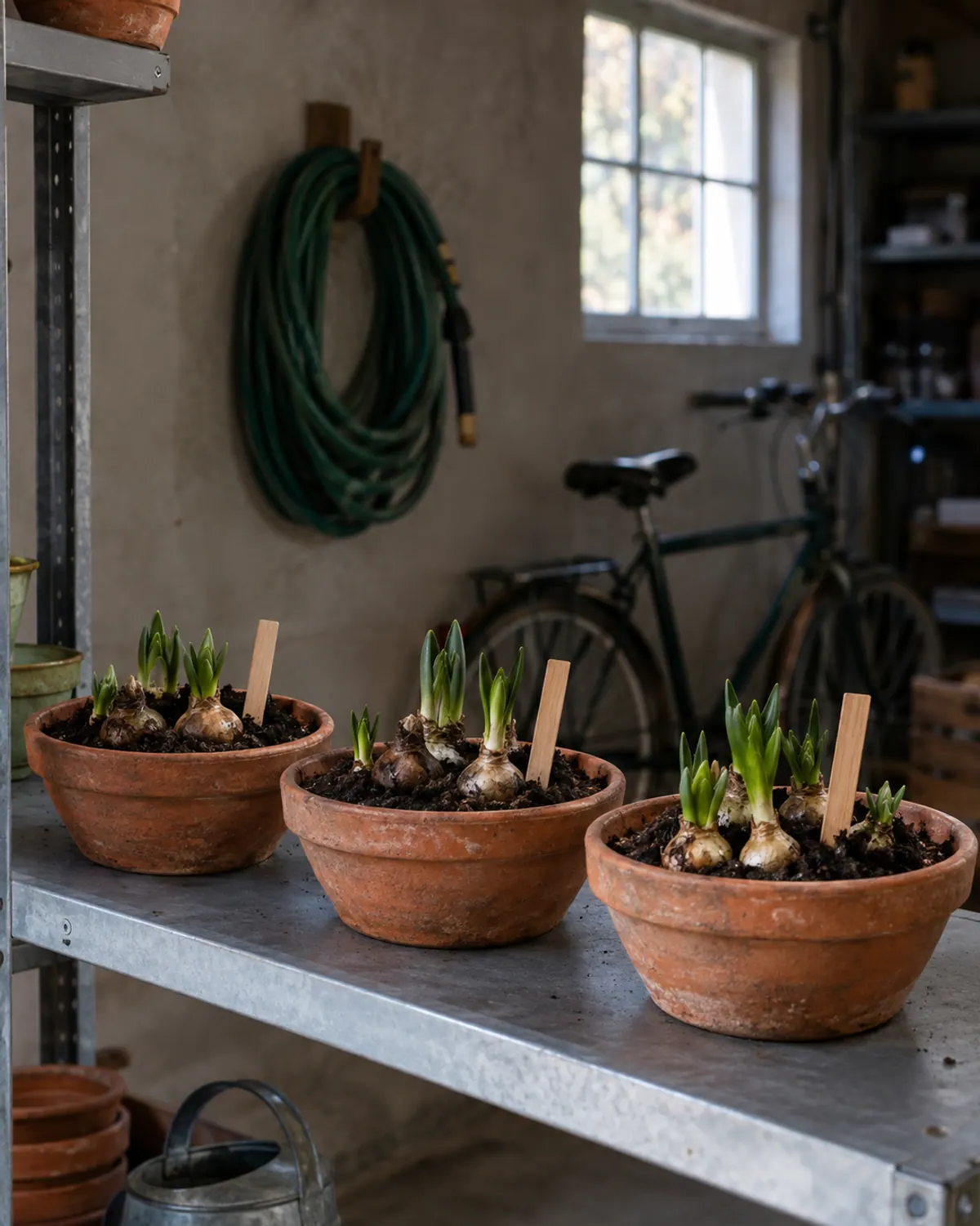
Water well, let it drain and write the bulb name and start date on a label. Chill the pot in a fridge, or in an unheated garage or basement that stays above freezing, for 15 to 17 weeks. Keep the mix lightly moist, never soggy.
-
Step 3: Bring them out when shoots show
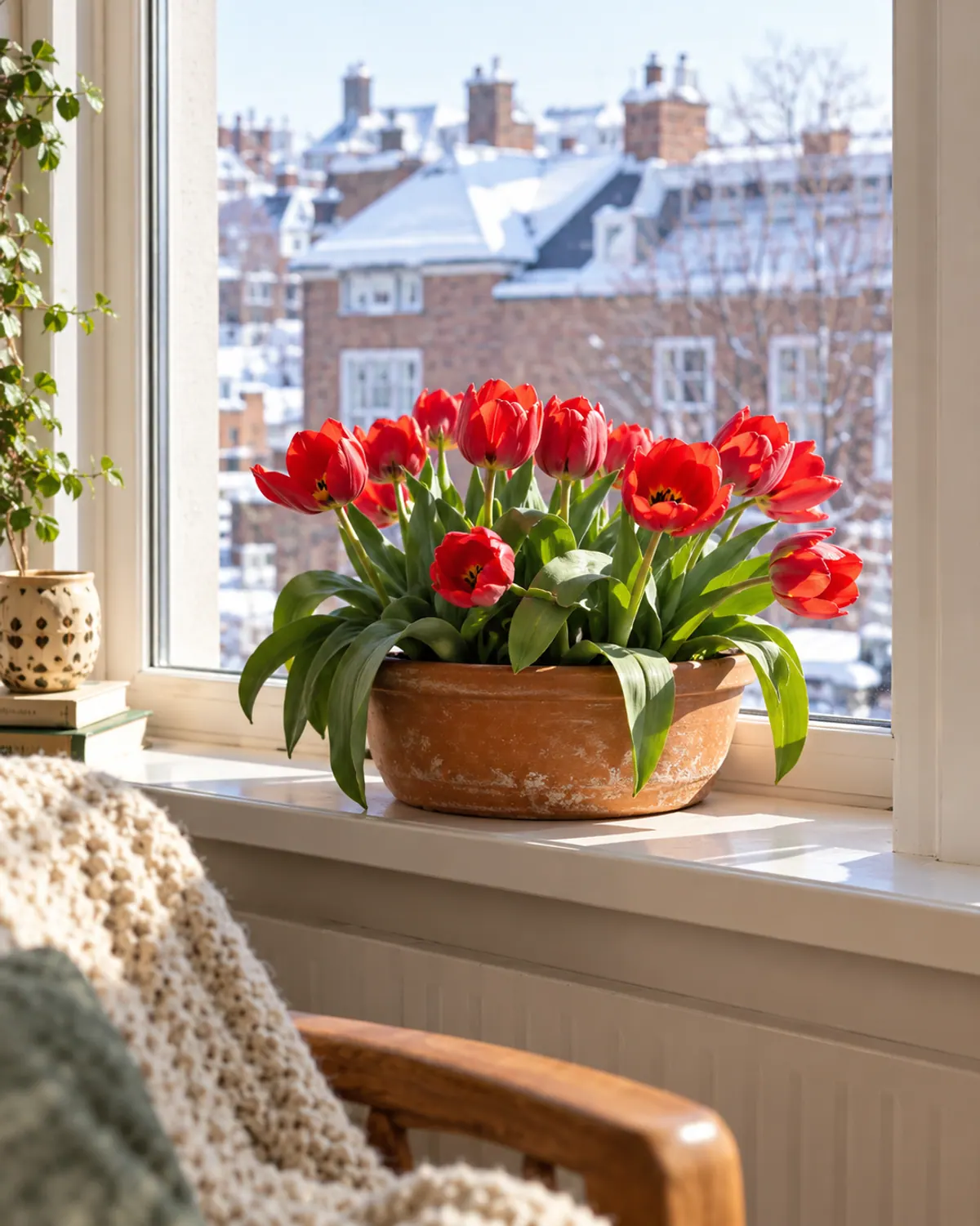
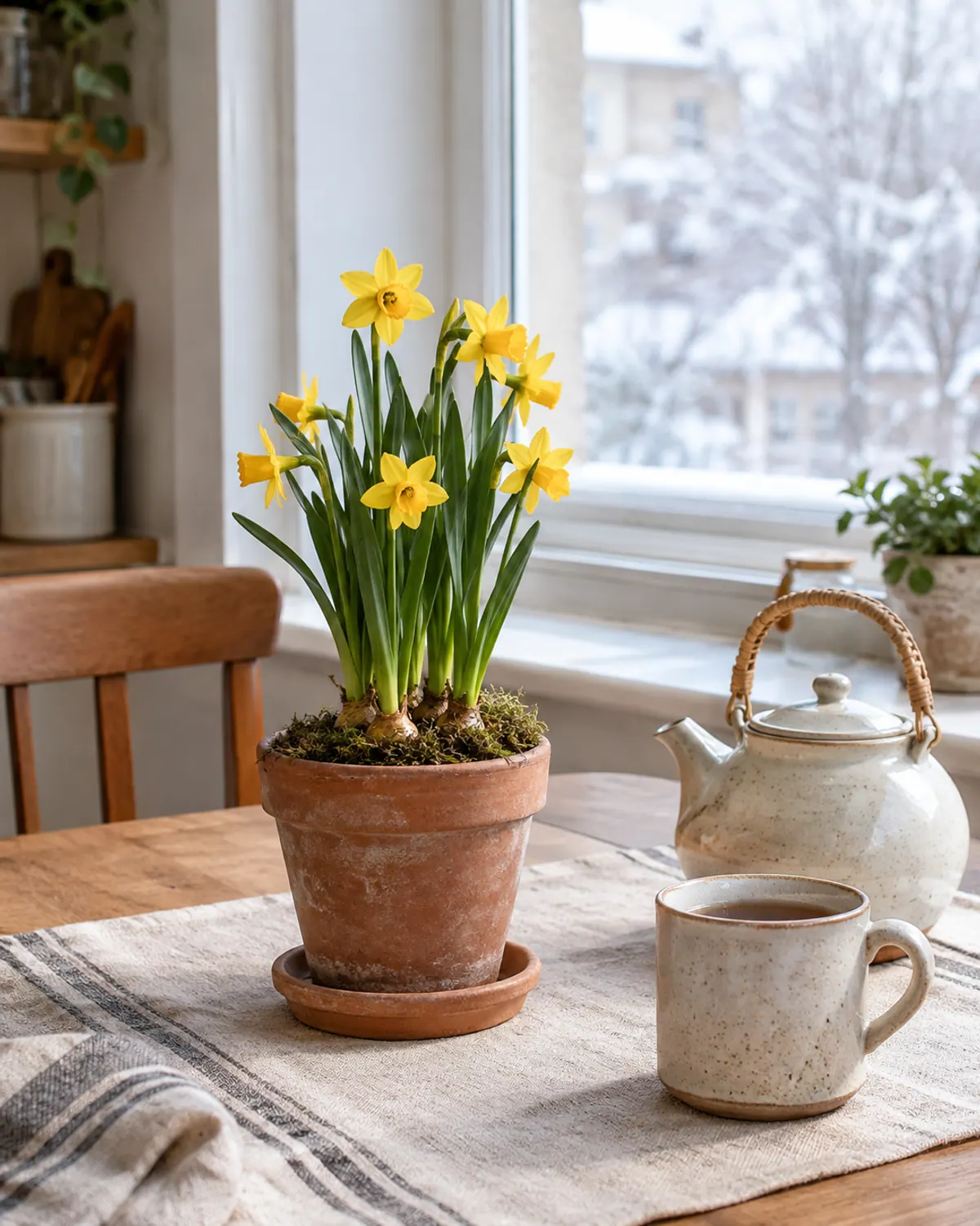
When shoots are 1 to 2 inches tall and roots poke out the drainage holes, the cold is done. Give them a few cool days in low light, then a bright window. Cooler rooms make flowers last longer.
Paperwhites and amaryllis: no fridge needed
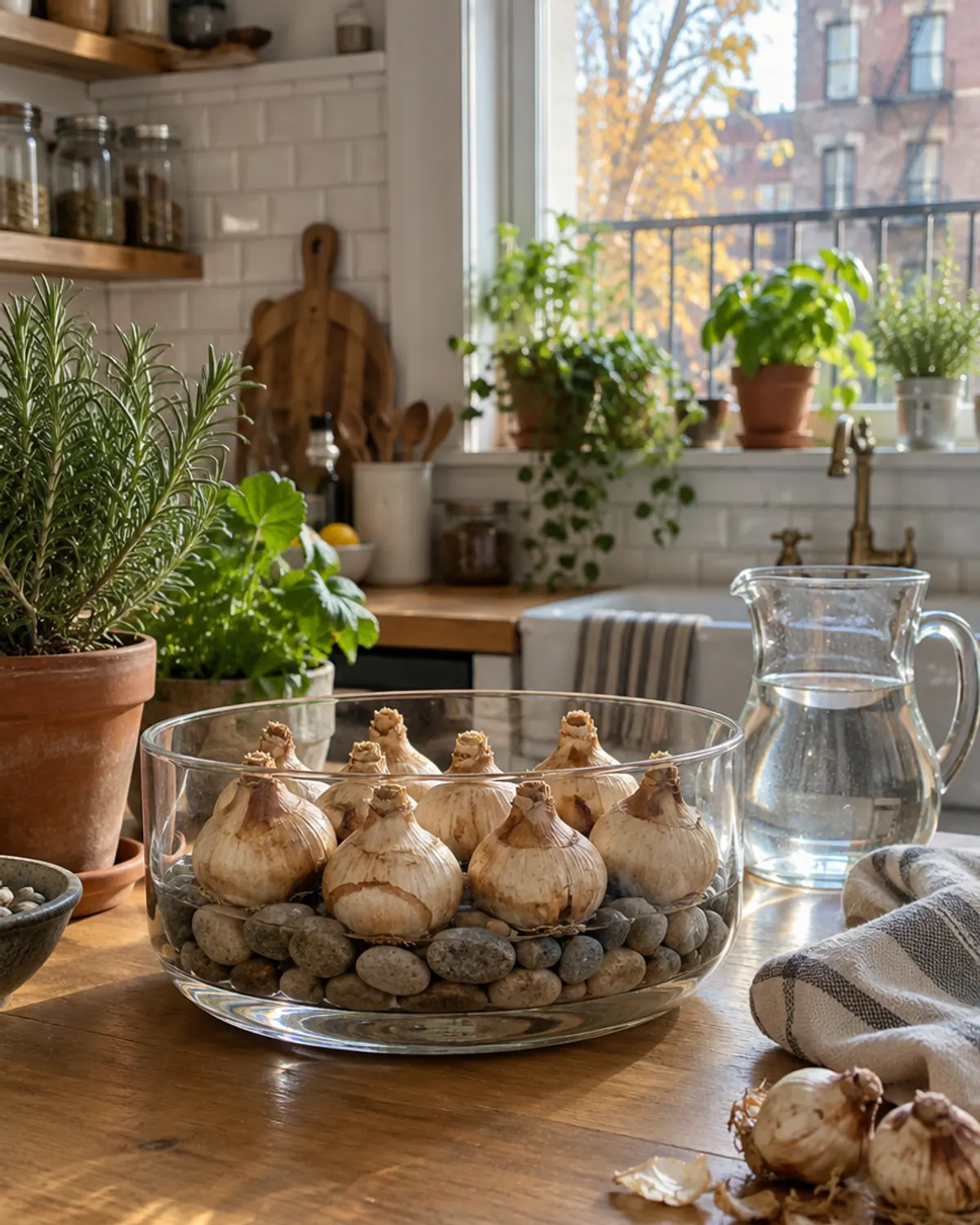
Paperwhites are the fastest. Set the bulbs pointed side up on 2 to 3 inches of pebbles in a bowl, add water just to the base of the bulbs and put the bowl in bright light. They usually bloom in about 3 to 5 weeks.
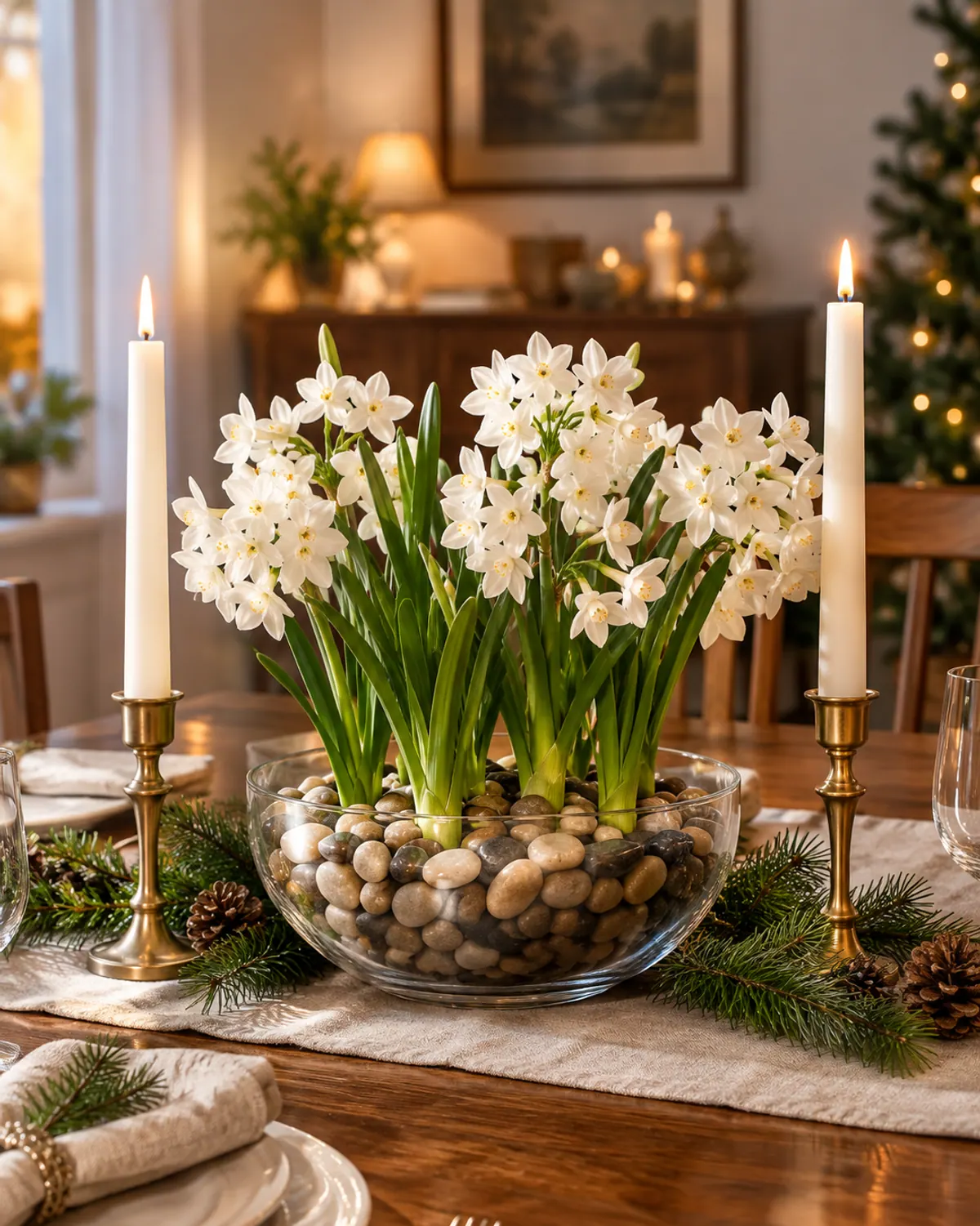
Amaryllis takes a little longer, about 6 to 8 weeks from planting, and sometimes up to 10. Plant by early November for Christmas. Our amaryllis care guide covers potting, staking and keeping the bulb for next year.
Bulb forcing ideas for pots and small spaces
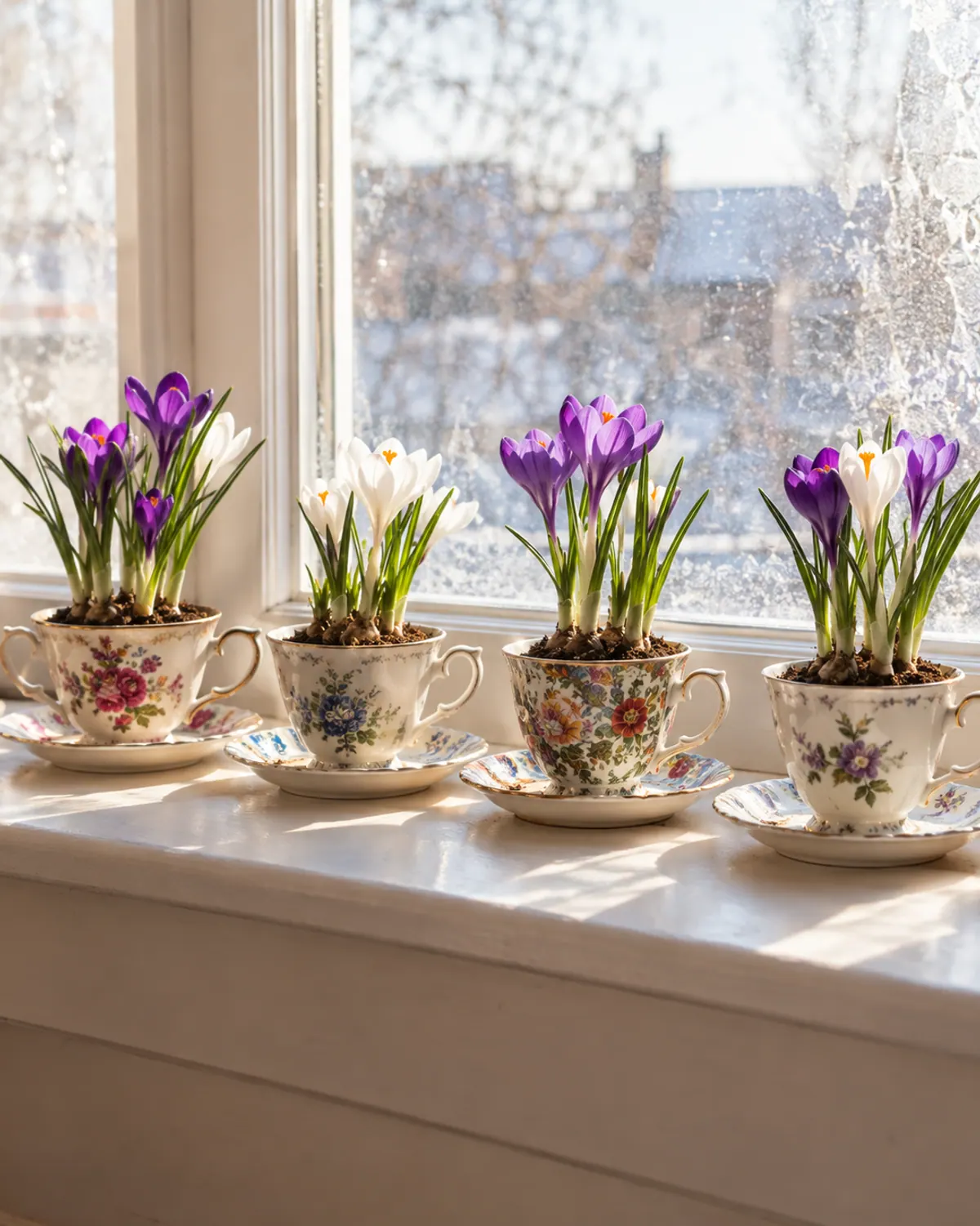
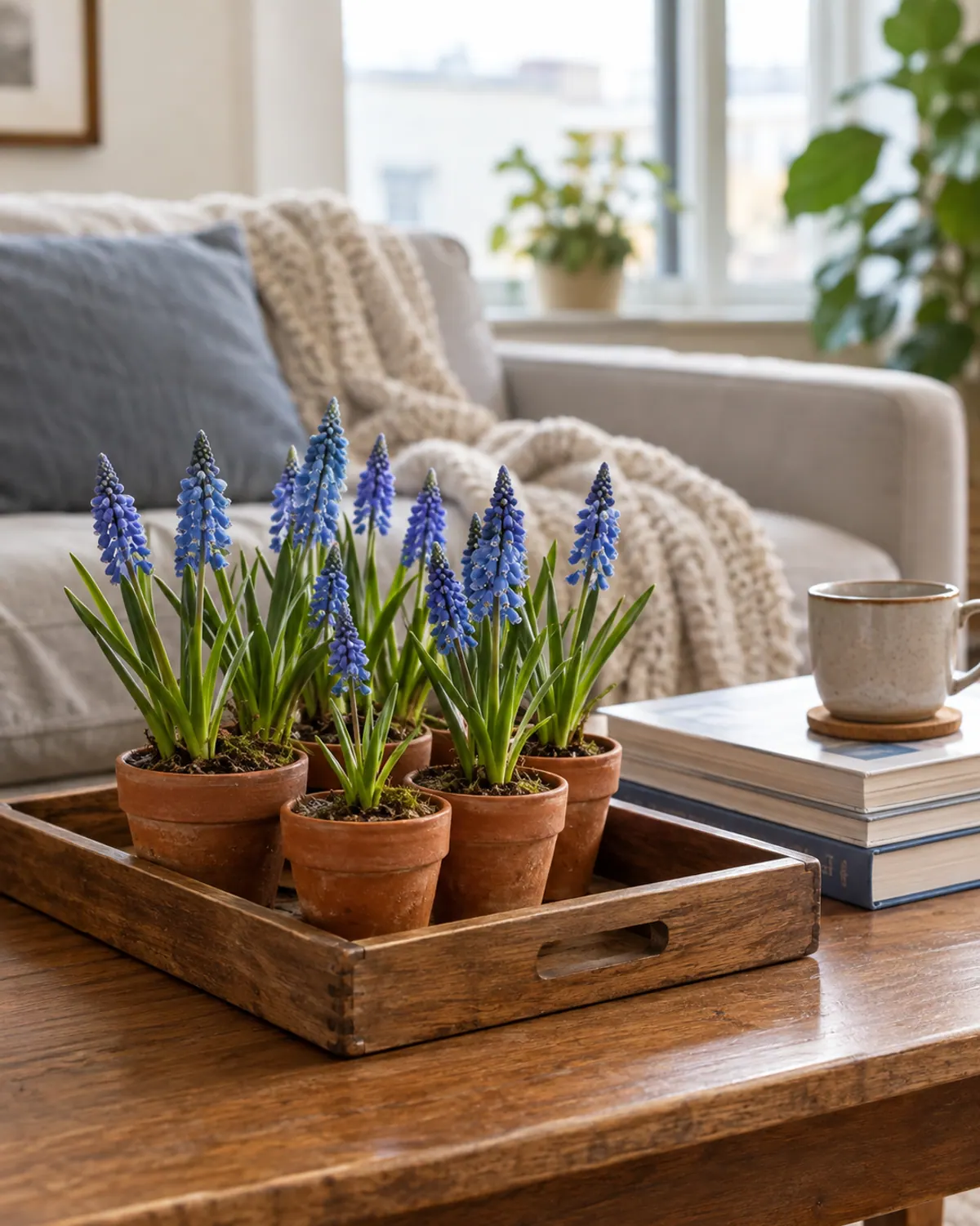
Small bulbs look best grouped. Try a row of crocus in vintage teacups on a sill, three hyacinth vases in a line, or grape hyacinths in tiny clay pots on a tray. Containers with no drainage hole are fine for short displays if you water lightly.
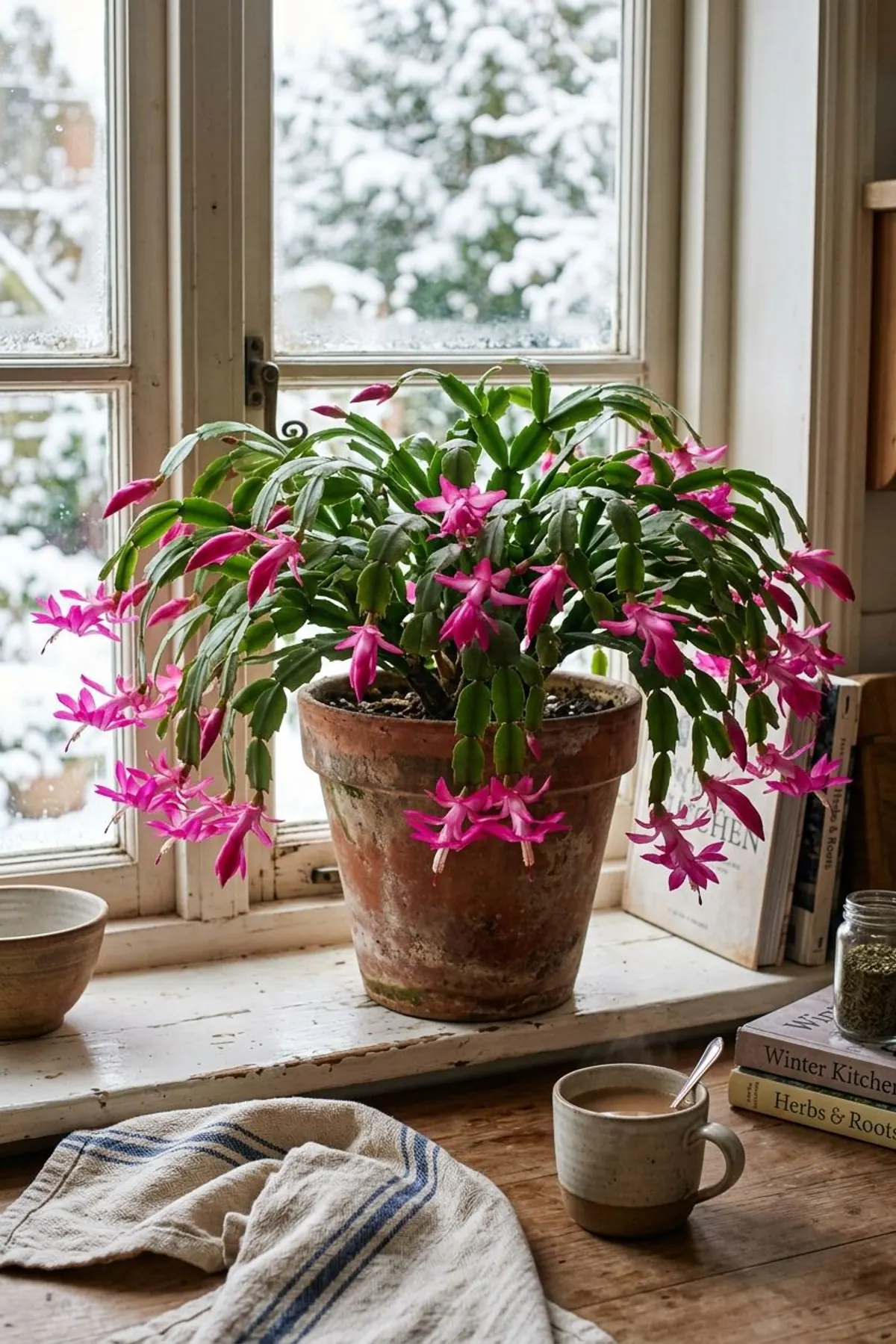
For more winter color that doesn't need a fridge, a Christmas cactus fills the same sill, and a small herb wreath dries right on the wall. Forced bulbs also make thoughtful gifts for gardeners, and a pot of them fits into any of these indoor plants decor ideas.
Mistakes that stop forced bulbs from blooming
| What you see | Likely cause | What to do |
|---|---|---|
| Leaves but no flower, or a bud that dries up | Too few cold weeks, or apples in the fridge | Give the full chill and keep ripening fruit out |
| Mushy, moldy bulb | Bulb base sitting in water, or soggy mix | Keep water just below the bulb; let pots drain |
| Tall, floppy stems | Too warm or too little light | Use a bright, cool window; try the alcohol trick on paperwhites |
| Flowers fade in a few days | A warm room or a spot near a heater | Move the pot somewhere cooler once buds show color |
Bonus: fridge and pet safety
Bulbs in a kitchen fridge can be mistaken for onions or shallots. Label every bag clearly, keep them on their own shelf and keep them away from children. Bulbs are not food.
The ASPCA lists paperwhites and daffodils (lycorine), amaryllis, tulips and hyacinths as toxic to dogs, cats and horses. The bulbs are the most poisonous part. Keep pots and vases where pets can't reach, and don't let them drink vase water.
Bulb forcing supplies
Shop forcing supplies
- Start here
Glass hyacinth forcing vases
$10-25
Holds the bulb above the water so only the roots get wet.
Check price on Amazon for Glass hyacinth forcing vases -
Paperwhite bulbs
$10-20 for a bag
No chilling needed. Bloom in about 3 to 5 weeks on pebbles.
Check price on Amazon for Paperwhite bulbs -
Pre-chilled hyacinth bulbs
$10-25
Part of the cold is done. Follow the weeks on the package.
Check price on Amazon for Pre-chilled hyacinth bulbs -
Decorative pebbles or river rock
$8-15
Anchors paperwhites in a bowl and keeps bulbs above the water.
Check price on Amazon for Decorative pebbles or river rock -
Shallow bulb pans with drainage
$10-25
Short pots suit tulips, crocus and grape hyacinths.
Check price on Amazon for Shallow bulb pans with drainage
We earn from qualifying purchases, which never changes what we recommend. Read our disclosure and editorial guidelines.
Want something green on the sill while you wait for blooms? Herbs grow through winter indoors too; see our indoor herb garden guide.
Frequently asked questions
Can I force bulbs in time for Christmas?
Only paperwhites and amaryllis, if you start now. Paperwhites bloom about 3 to 5 weeks after planting and amaryllis about 6 to 8. Tulips, daffodils and hyacinths need 12 to 17 weeks of cold first, so bulbs chilled in October bloom from mid-January on.
How long do you chill bulbs for forcing?
Wisconsin Extension lists 12 to 15 weeks for hyacinths, 15 to 17 for tulips, daffodils, crocus and grape hyacinths and 15 to 16 for dwarf iris. Iowa State gives a general range of 12 to 16 weeks at 40 to 45°F.
Can I chill bulbs in my refrigerator?
Yes. Keep the fridge at 35 to 45°F, store the bulbs in a labeled paper bag and keep apples and other ripening fruit out, because the ethylene gas they give off can damage the flower buds.
How do you force hyacinth bulbs in water?
Chill the bulbs for 12 to 15 weeks, then set each one in a forcing vase with water just below its base. Keep it cool and dim until roots fill the vase, then move it to a bright, cool window. Flowers follow in about 2 to 4 weeks.
How do I keep paperwhites from flopping over?
When the shoots are 1 to 2 inches tall, switch to a 4 to 6% alcohol solution, never over 10%. That's about 1 part 70% rubbing alcohol to 11 parts water, or 1 part 40% liquor to 7 parts water. Cornell research found plants come out 1/3 to 1/2 shorter. Skip beer and wine.
Are forced bulbs poisonous to pets?
Yes. The ASPCA lists paperwhites, daffodils, tulips, hyacinths and amaryllis as toxic to dogs, cats and horses, and the bulbs are the most poisonous part. If a pet chews one, call your vet or the ASPCA poison line at (888) 426-4435.

Save it for later
Pin this to your Seasonal Garden Tasks board so it's there when you need it.
Save to Pinterest