This post contains affiliate links. As an Amazon Associate we earn from qualifying purchases, at no extra cost to you. Read our disclosure.
Safety first: Herbs can be powerful. If you are pregnant, nursing, take medication or have a health condition, check with your doctor or pharmacist first. Please read our herbal & garden safety notes before you start.
Key takeaways
- Start with light: put the corner at your brightest window and add a warm grow light if it faces north.
- Use three heights (shelf, stand, floor) so every plant reaches the light and the corner has shape.
- The cottagecore garden aesthetic comes from texture: clay, glass, wicker and dried herb bundles.
- Add one winter bloomer, like a Christmas cactus or amaryllis.
- With pets, check plants against the ASPCA list: amaryllis, paperwhites and pothos are toxic.
In this post24 sections
- Light and layout: build the gardening aesthetic around a window
- 1. A window shelf full of green
- 2. A warm grow light under a shelf
- 3. An indoor potting bench corner
- 4. A plant stand with three heights
- Cottagecore garden aesthetic textures
- 5. A collection of old terracotta
- 6. An apothecary jar shelf
- 7. Herb bundles on a curtain rod
- 8. Wicker baskets as cover pots
- 9. A watering can and mister on display
- Winter blooms and greenery for the plant corner
- 10. A Christmas cactus in bloom
- 11. A rosemary tree on a side table
- 12. Amaryllis bulbs on the windowsill
- 13. Paperwhites in a bowl of gravel
- 14. A windowsill herb row
- 15. A trailing spider plant up high
- Care and planning touches
- 16. A pebble tray under a plant group
- 17. A seed catalog planning nook
- Bonus: pet-safe swaps for a cozy plant corner
- Shop the cozy plant corner
- FAQ
Light and layout: build the gardening aesthetic around a window
Every cozy plant corner starts with light. Winter sun is lower and weaker, so put your corner at the brightest window you have, then style around it. Plants that get enough light look lush, and that is most of the look.
1A window shelf full of green
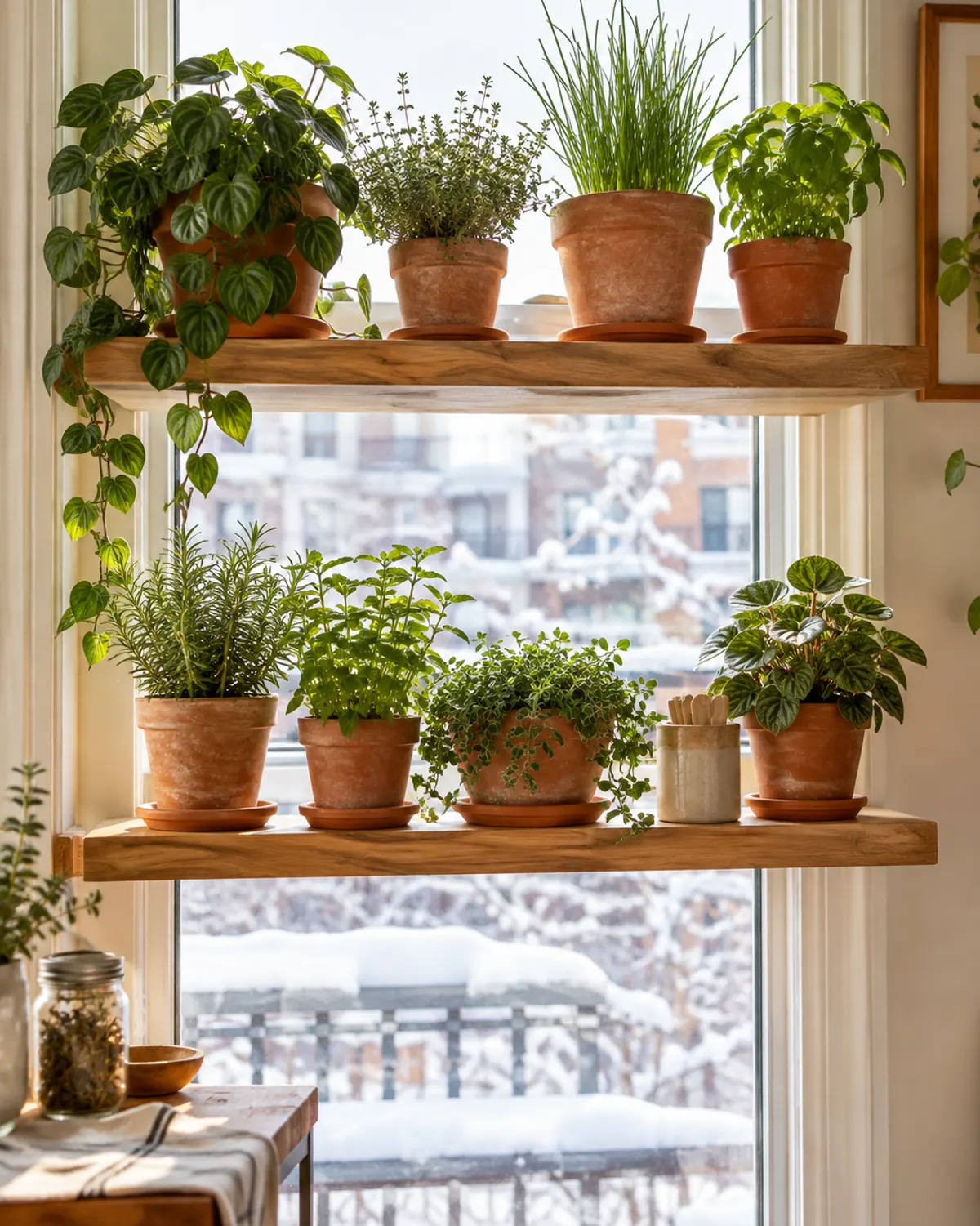
A simple wooden shelf mounted across a window doubles your growing space without taking floor space. Fill it with a mix of herbs and small houseplants in matching terracotta. In winter, keep leaves from touching cold glass, which can damage them on frosty nights.
- South and west windows get the most winter light; east windows suit parsley and ferns.
3An indoor potting bench corner
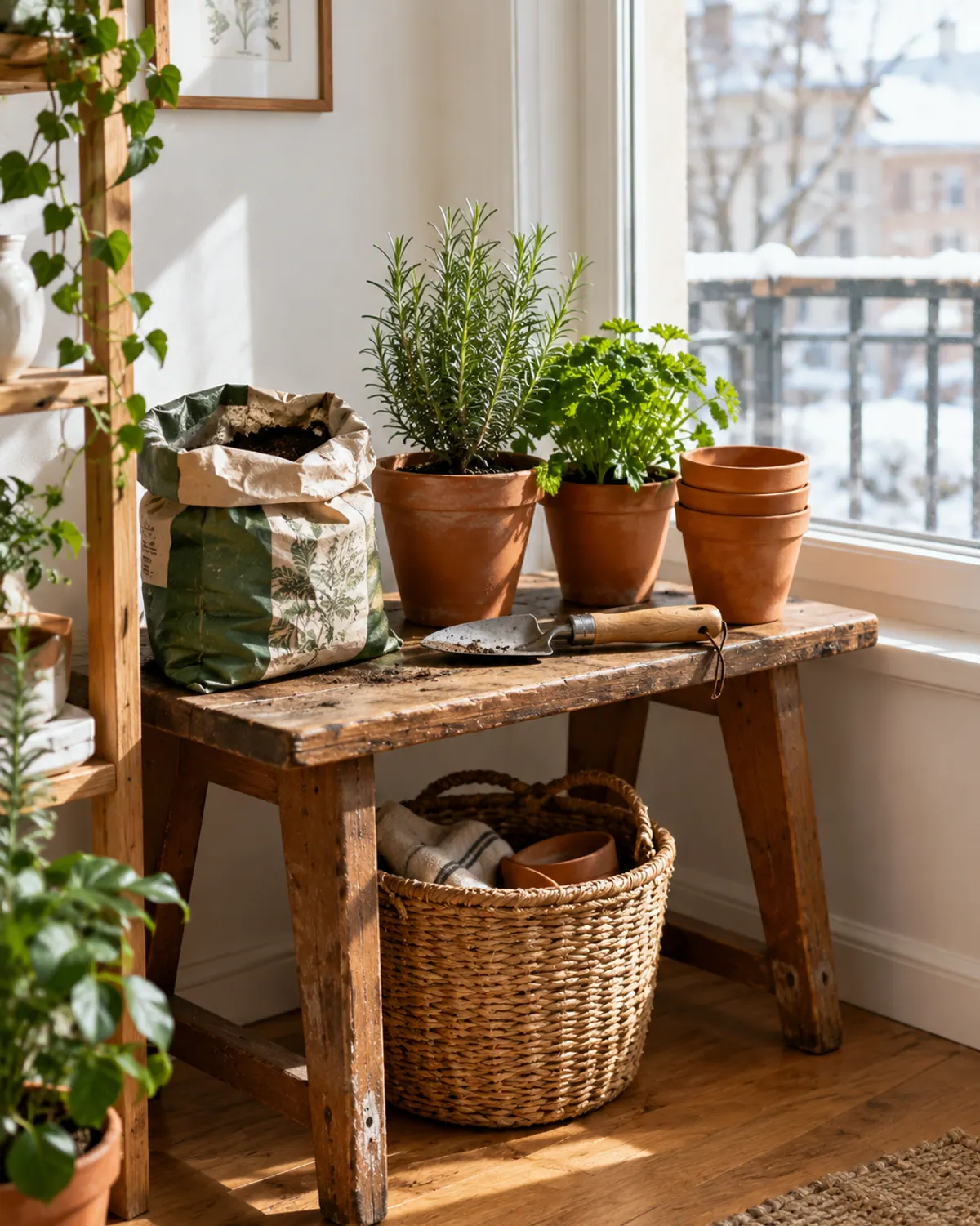
A small bench or side table by the window becomes a potting station: a bag of mix, a trowel, a stack of clay pots and a basket underneath. It looks like a garden shed in miniature and keeps repotting in one tidy place. Lay down a tray or old towel when you work.
- Store potting mix in a lidded bin to keep fungus gnats away.
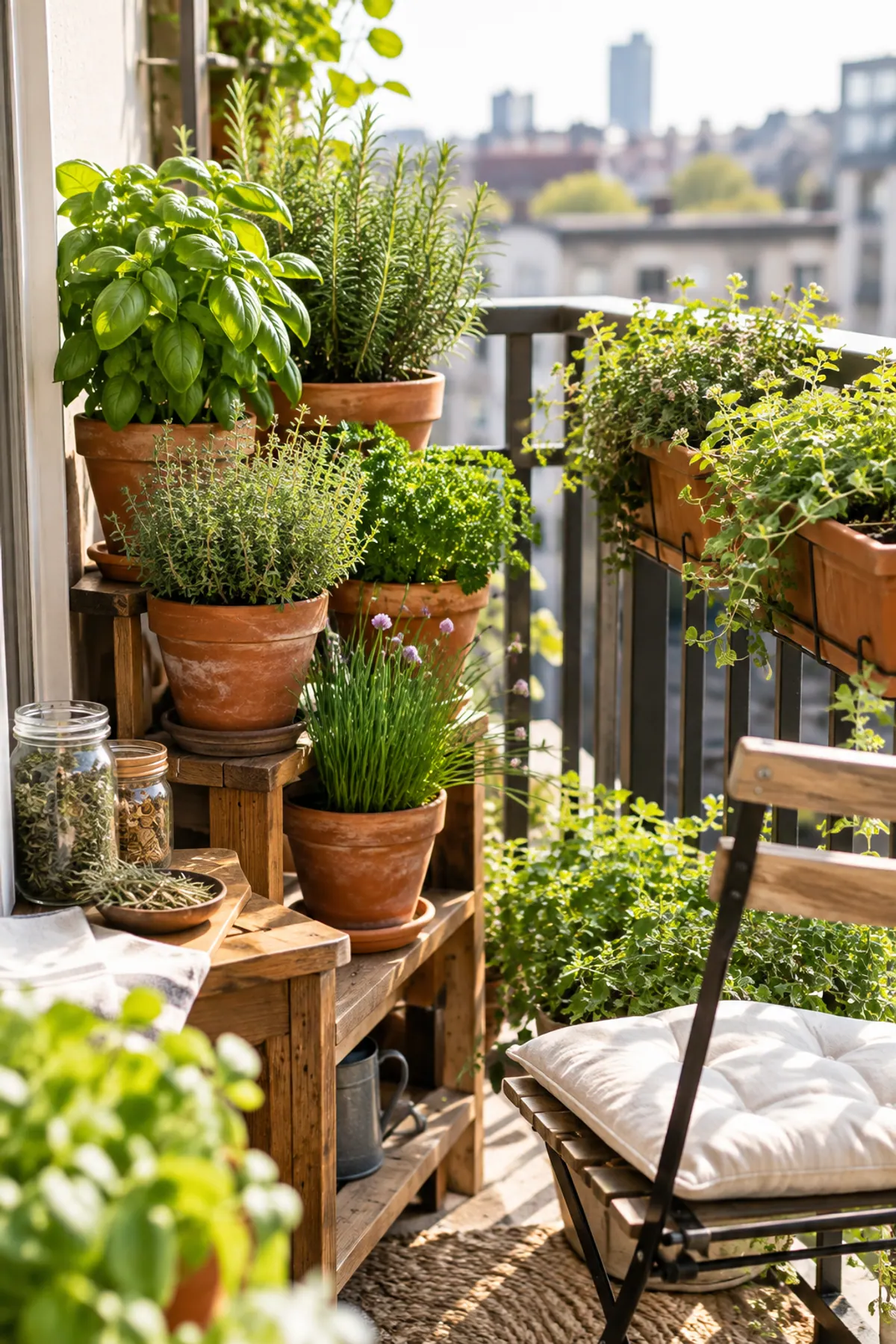
4A plant stand with three heights
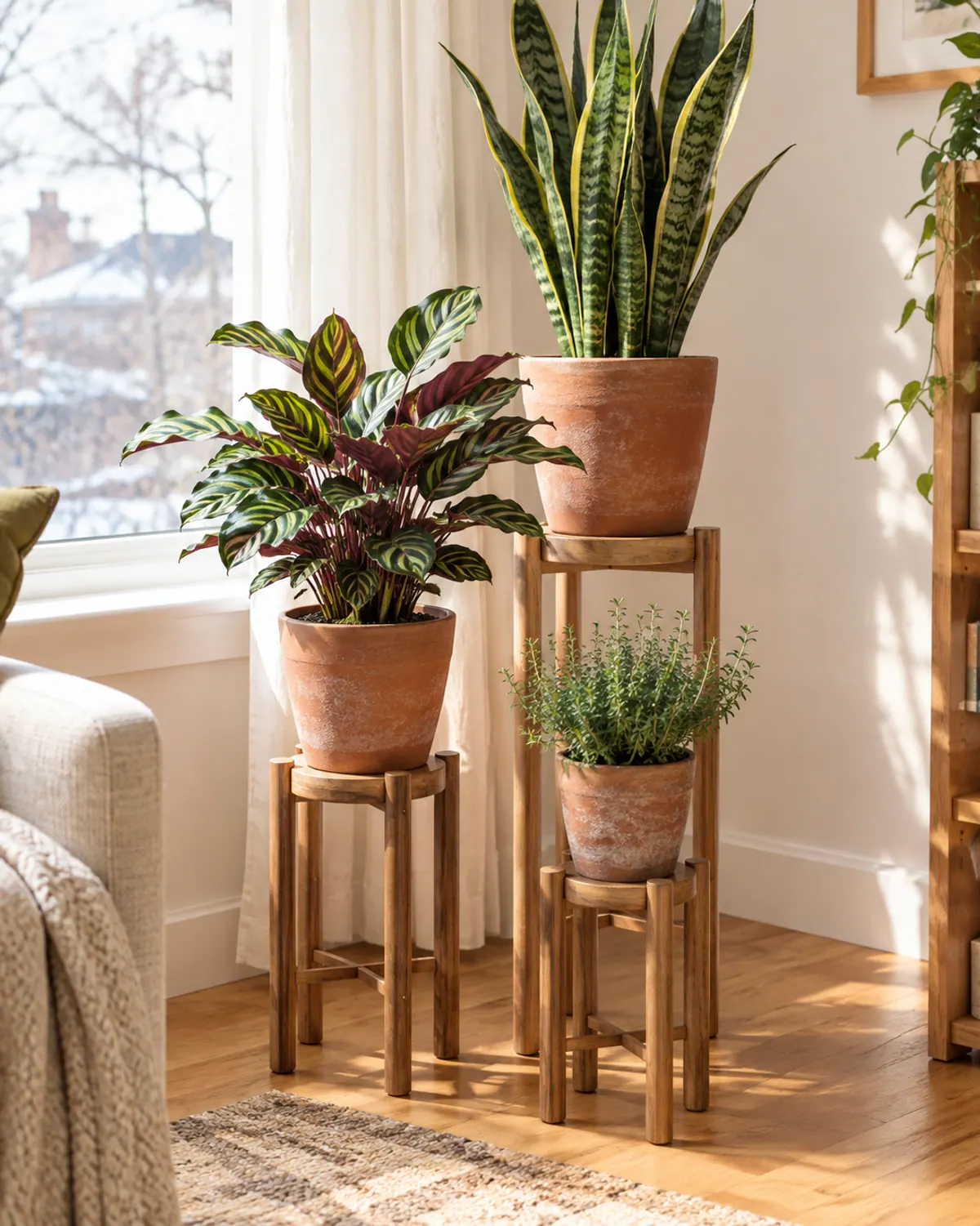
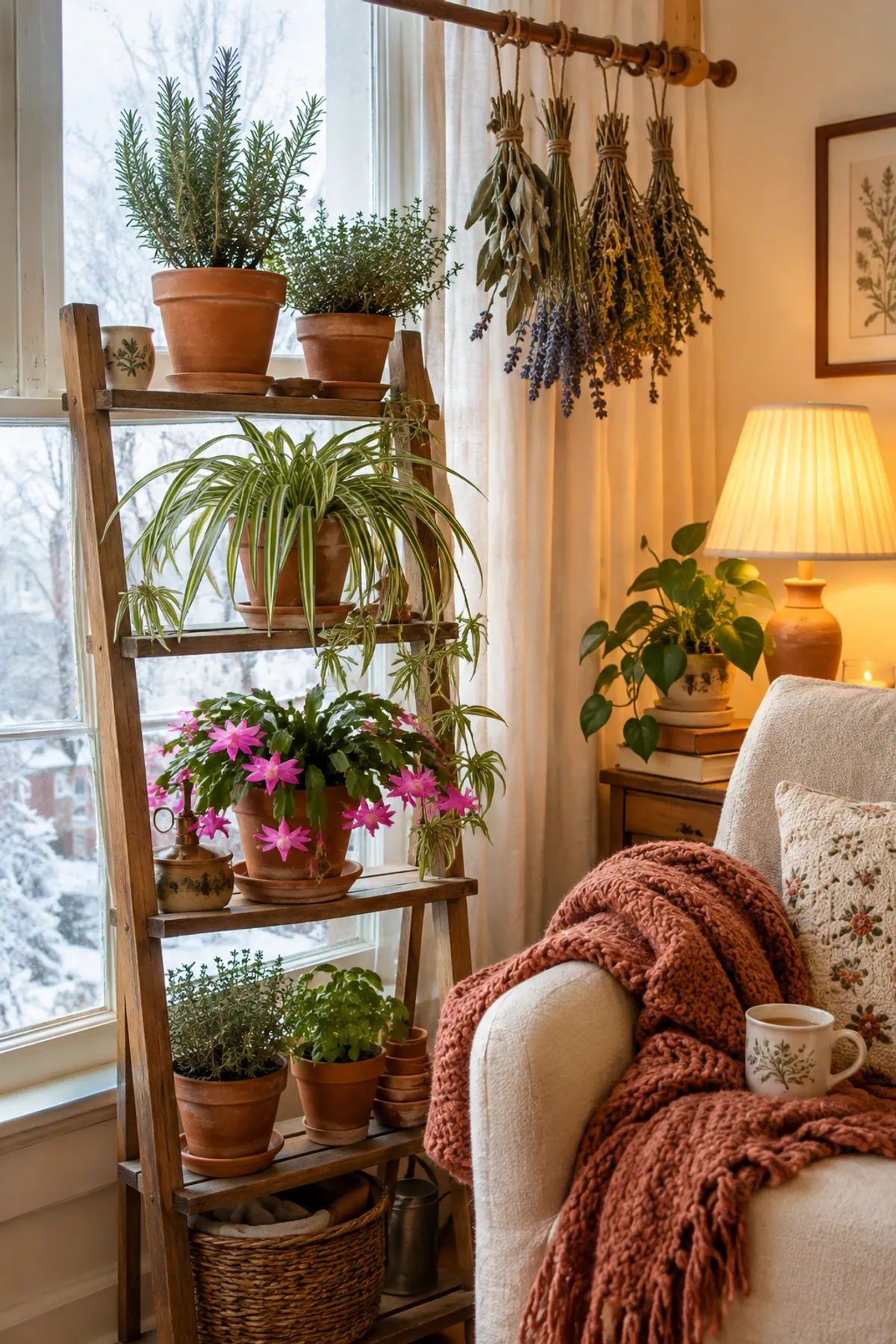
Plants at one level look flat. A stand with tall, middle and low tiers gives the corner shape and lets every plant reach the light. Put trailing plants up high and wide, leafy ones low.
- Turn pots a quarter turn each week so they grow evenly toward the window.
The cottagecore garden aesthetic comes from texture more than from any one plant: worn clay, glass, wicker, linen and bundles of drying herbs. Mix a few of these and even a studio feels like an old garden cottage.
5A collection of old terracotta
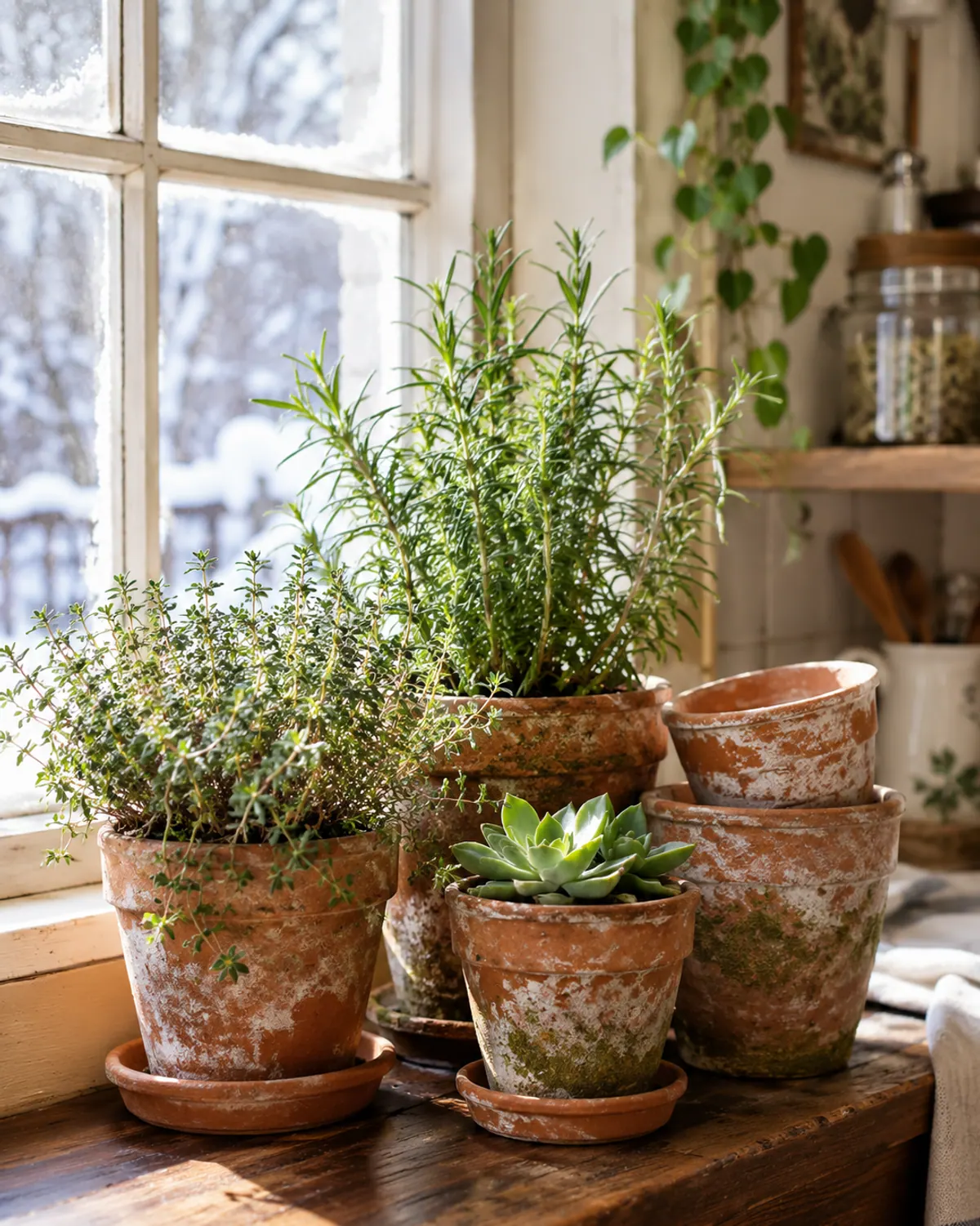
Weathered clay pots with white mineral bloom and a little moss give a corner instant age. Group mismatched sizes in odd numbers. The white crust is just salts from water and fertilizer, harmless to the plant, and many people like the look.
- Scrub old pots with a stiff brush and soak them before reusing to clear old soil.
6An apothecary jar shelf
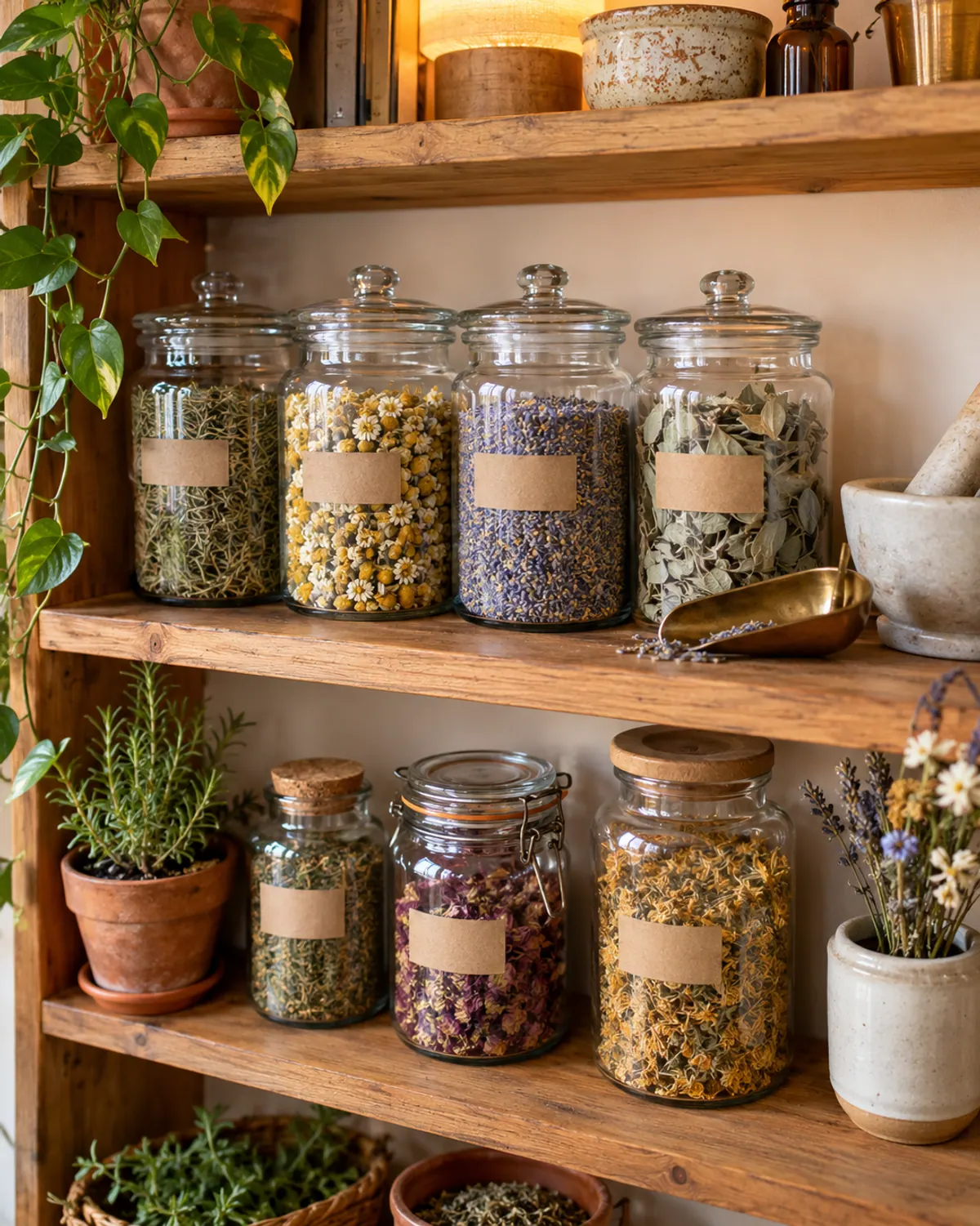
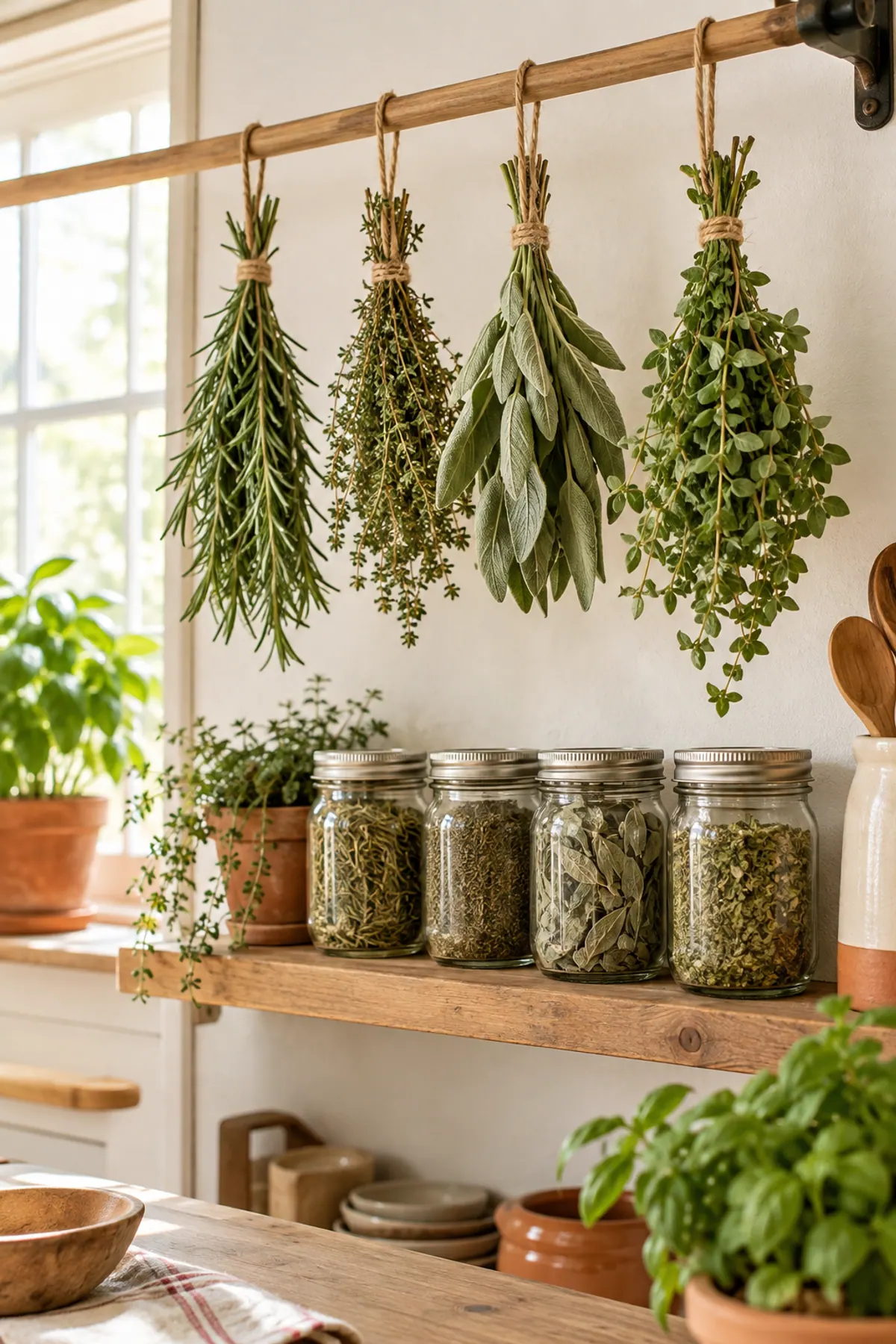
Glass jars of dried herbs on an open shelf are pretty and useful. Keep the jars out of direct sun and away from the stove, since light and heat fade color and flavor. If you grow herbs, our guide on how to dry herbs at home shows how to fill them.
- Label jars with the herb and the date you dried it.
7Herb bundles on a curtain rod
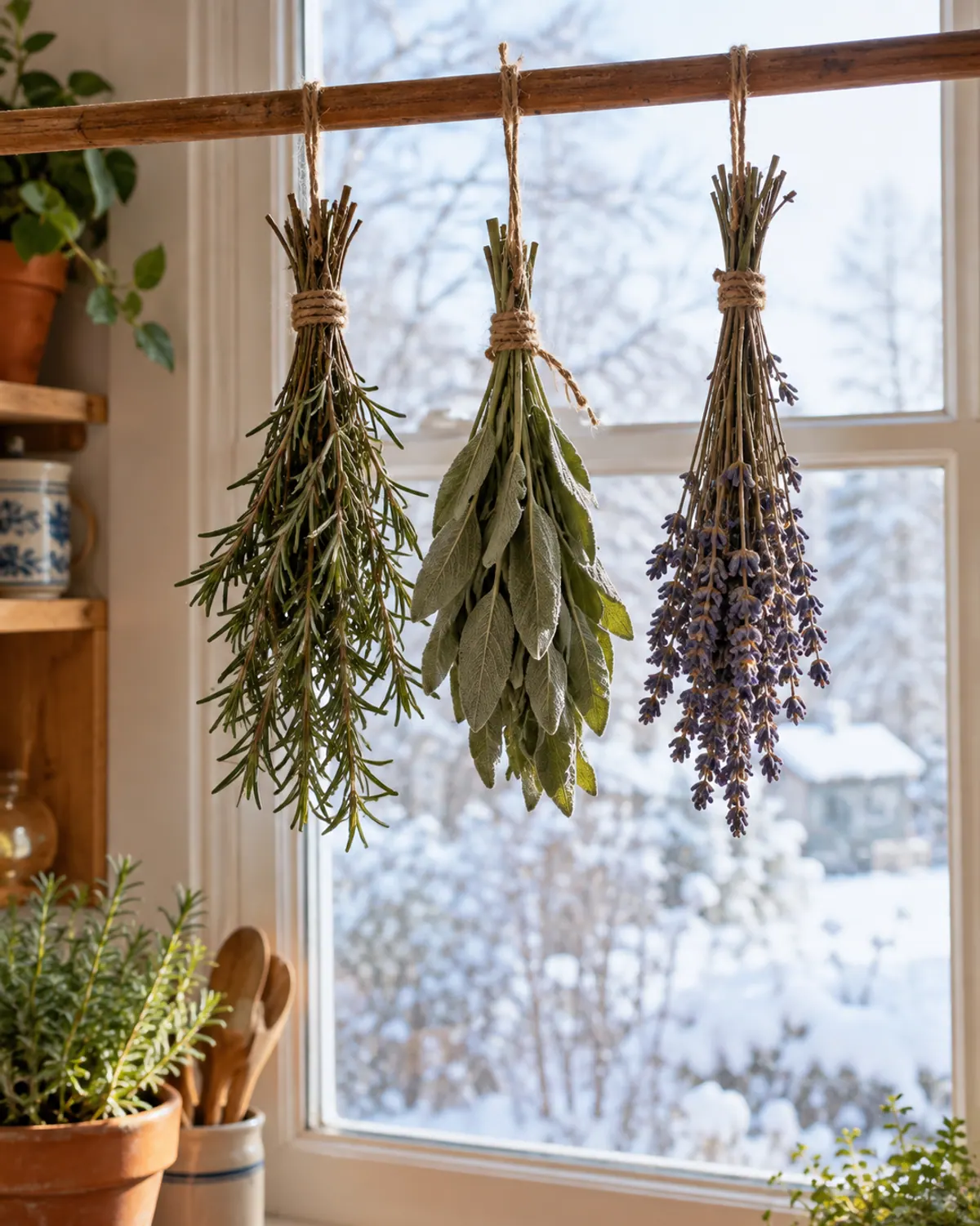
Small bundles of rosemary, thyme, oregano or lavender tied with twine and hung from a rod look like a farmhouse kitchen. Hang them out of strong direct sun with air moving around them so they dry well. Take them down once crisp, or they gather dust.
- Keep bundles small, about 5 to 10 stems, so they dry without mold.
8Wicker baskets as cover pots
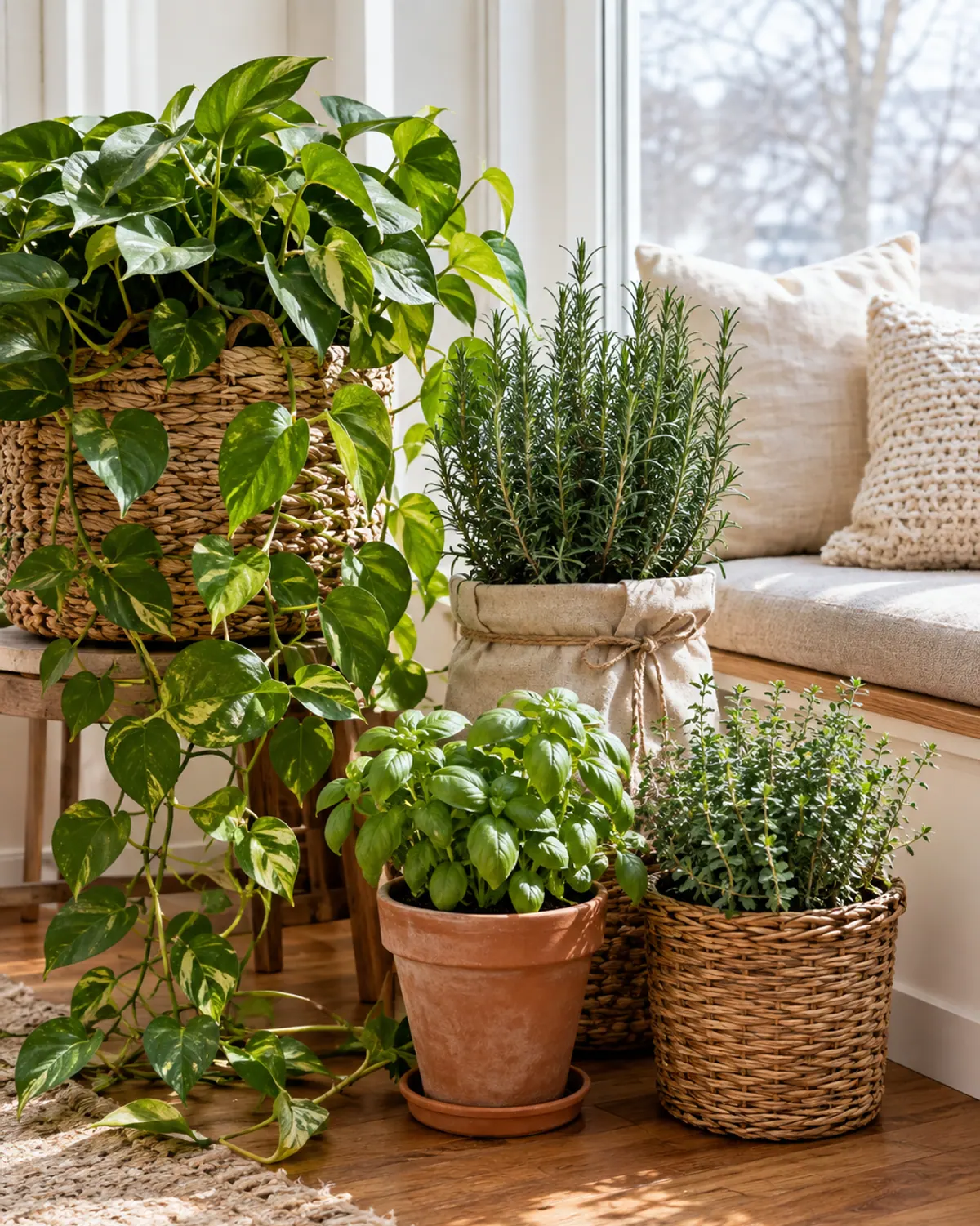
Baskets soften a group of plastic nursery pots. Slip the plant, still in its draining pot, into a basket lined with a saucer or plastic liner. You get warm texture with none of the root rot that comes from planting straight into a basket.
- Lift the inner pot out to water at the sink.
9A watering can and mister on display
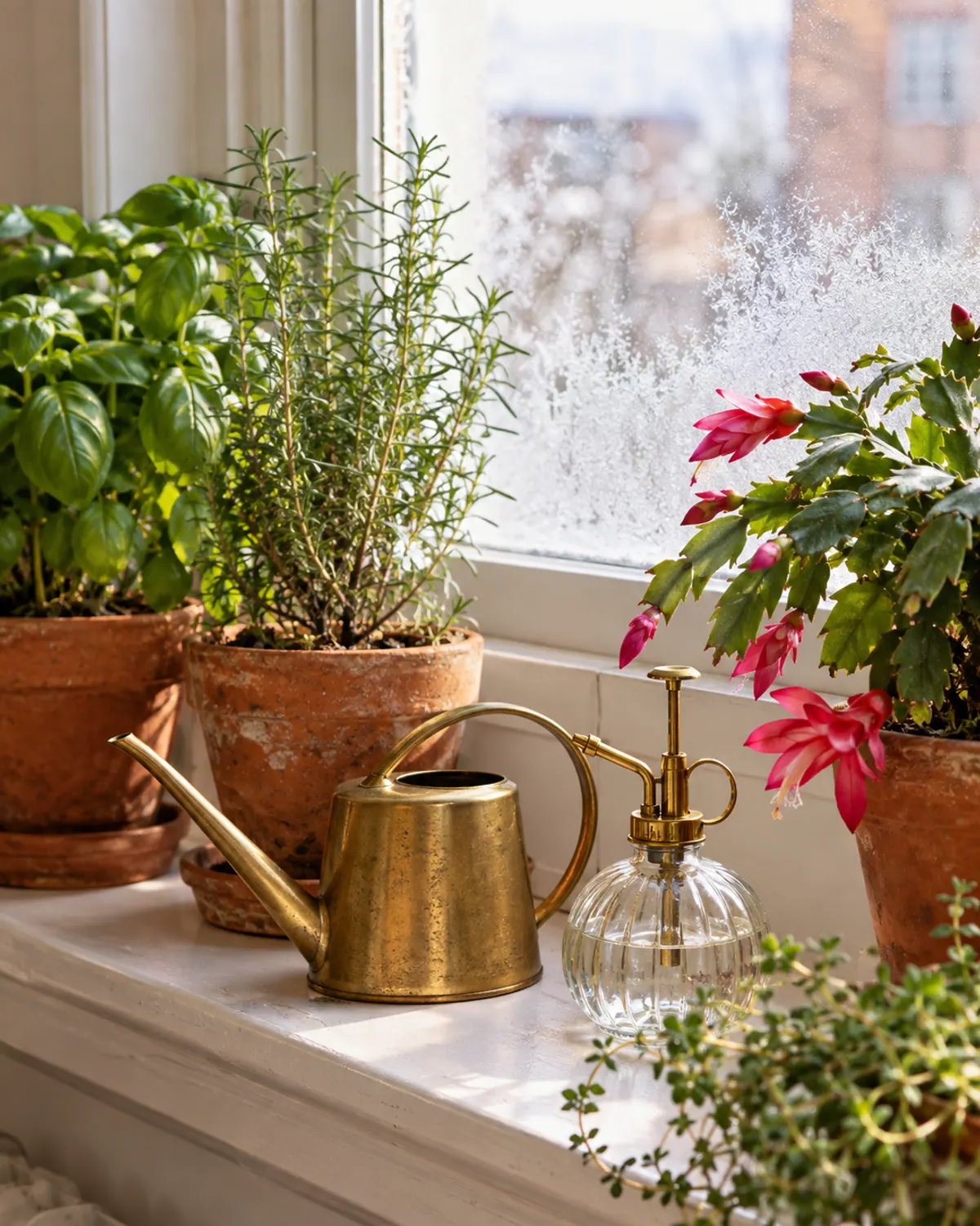
Good-looking tools can stay out as decor. A small long-spout watering can reaches under leaves to the soil, and a mister is handy for cleaning dust off leaves. Misting does little for humidity, so use a pebble tray or humidifier for that.
- Leave tap water out overnight so it reaches room temperature before watering.
Winter blooms and greenery for the plant corner
Winter is when a plant corner earns its place. These plants either bloom indoors in the dark months or stay green and fresh while everything outside is bare.
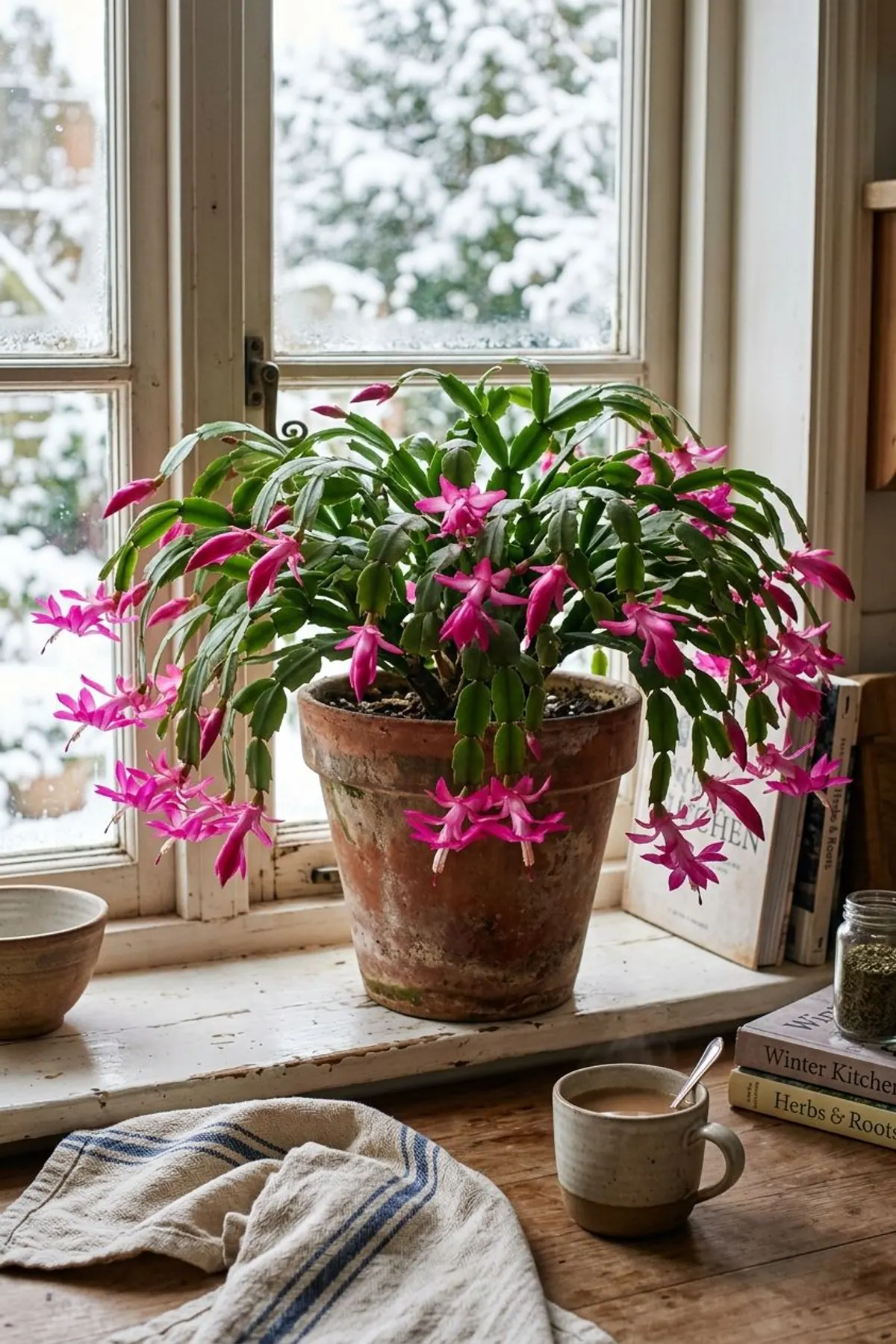
10A Christmas cactus in bloom
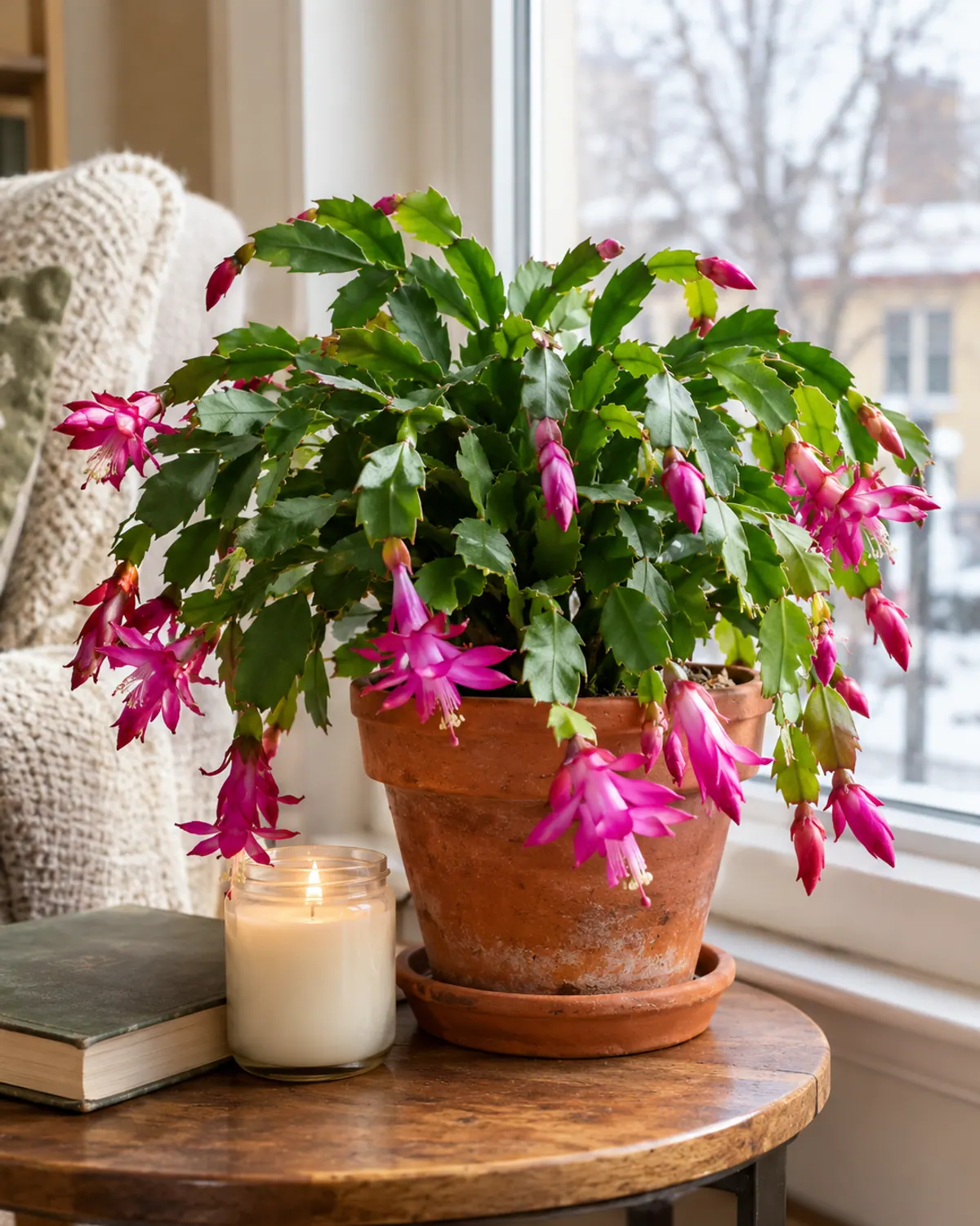
A Christmas cactus flowers in winter after a stretch of long nights and cool temperatures in fall. Its arching stems and pink, red or white blooms fit the cozy look, and it is listed as non-toxic to cats and dogs by the ASPCA. See our Christmas cactus care guide to get yours to rebloom.
- Keep it away from heat vents and drafts while buds form, or they may drop.
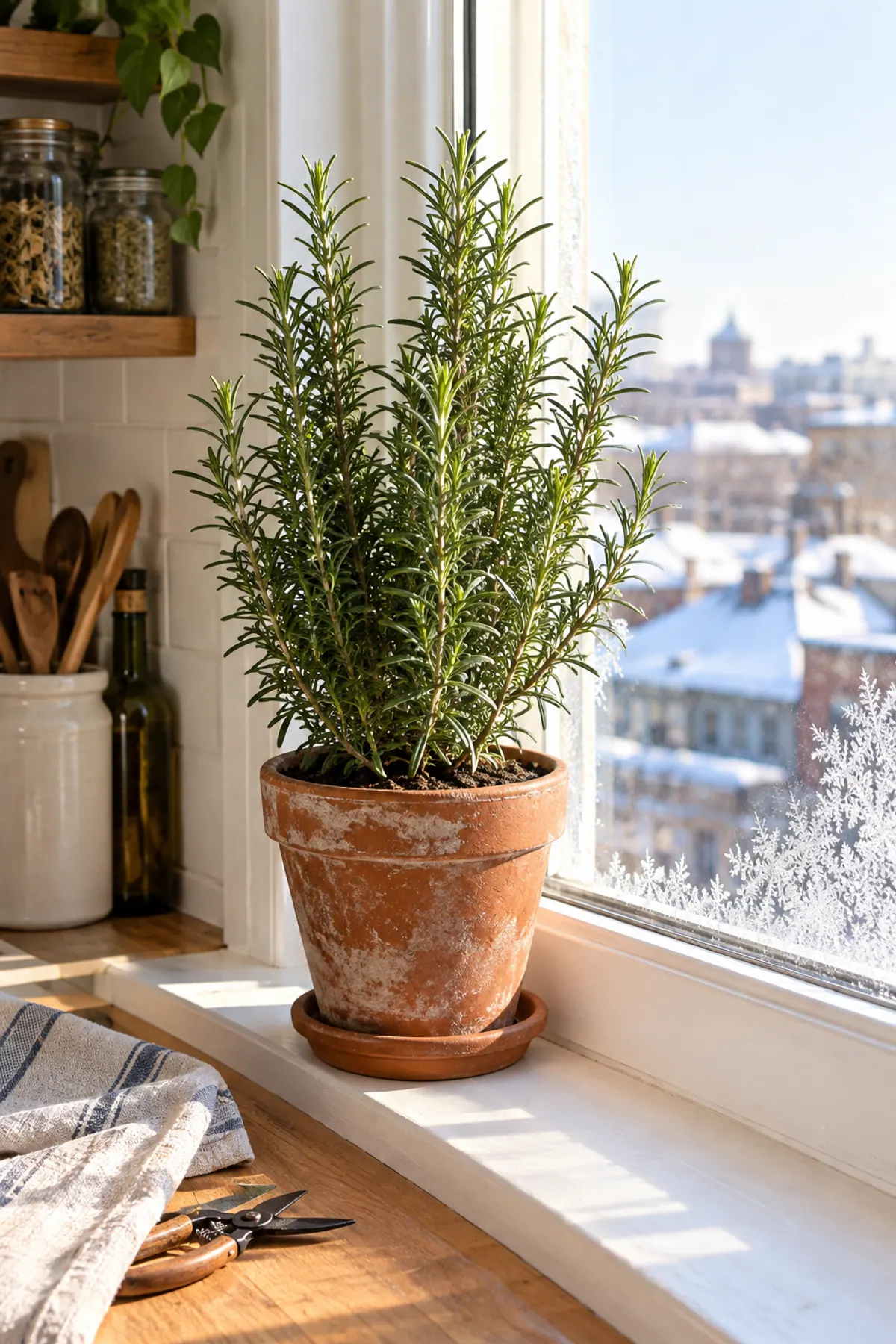
11A rosemary tree on a side table
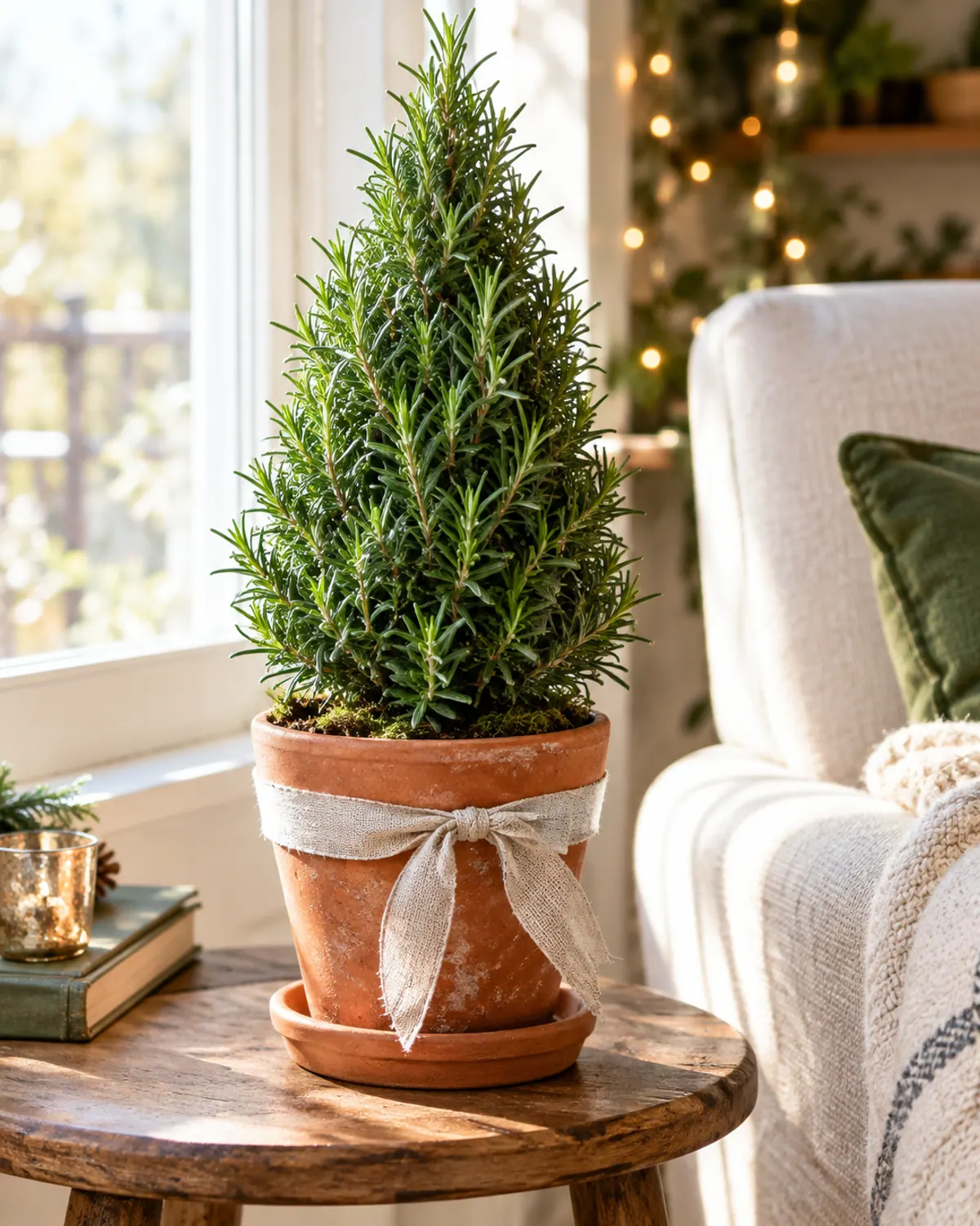
The cone-shaped rosemary trees sold in December make a living holiday tree you can snip for cooking. They need your sunniest window and soil that dries a little between waterings. Our guide to growing rosemary indoors covers keeping one alive past January.
- Remove any foil sleeve so water can drain away from the roots.
12Amaryllis bulbs on the windowsill
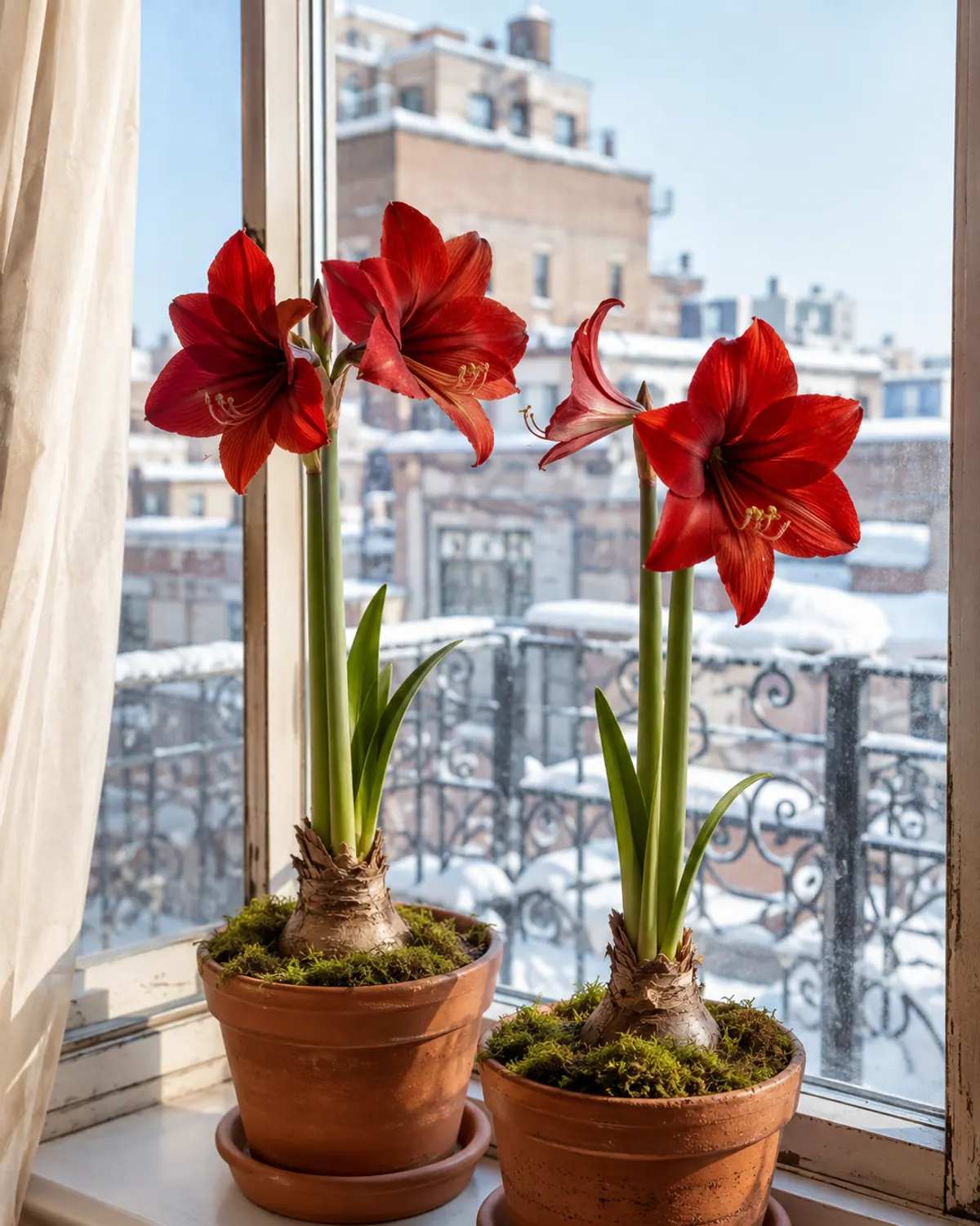
Amaryllis bulbs grow tall stems and huge flowers in a few weeks, which makes them a classic winter project. Plant with the top third of the bulb above the soil and water sparingly until growth starts. Note that the ASPCA lists amaryllis as toxic to cats and dogs, so keep it out of reach.
- Turn the pot daily so the stem grows straight instead of leaning to the light.
13Paperwhites in a bowl of gravel
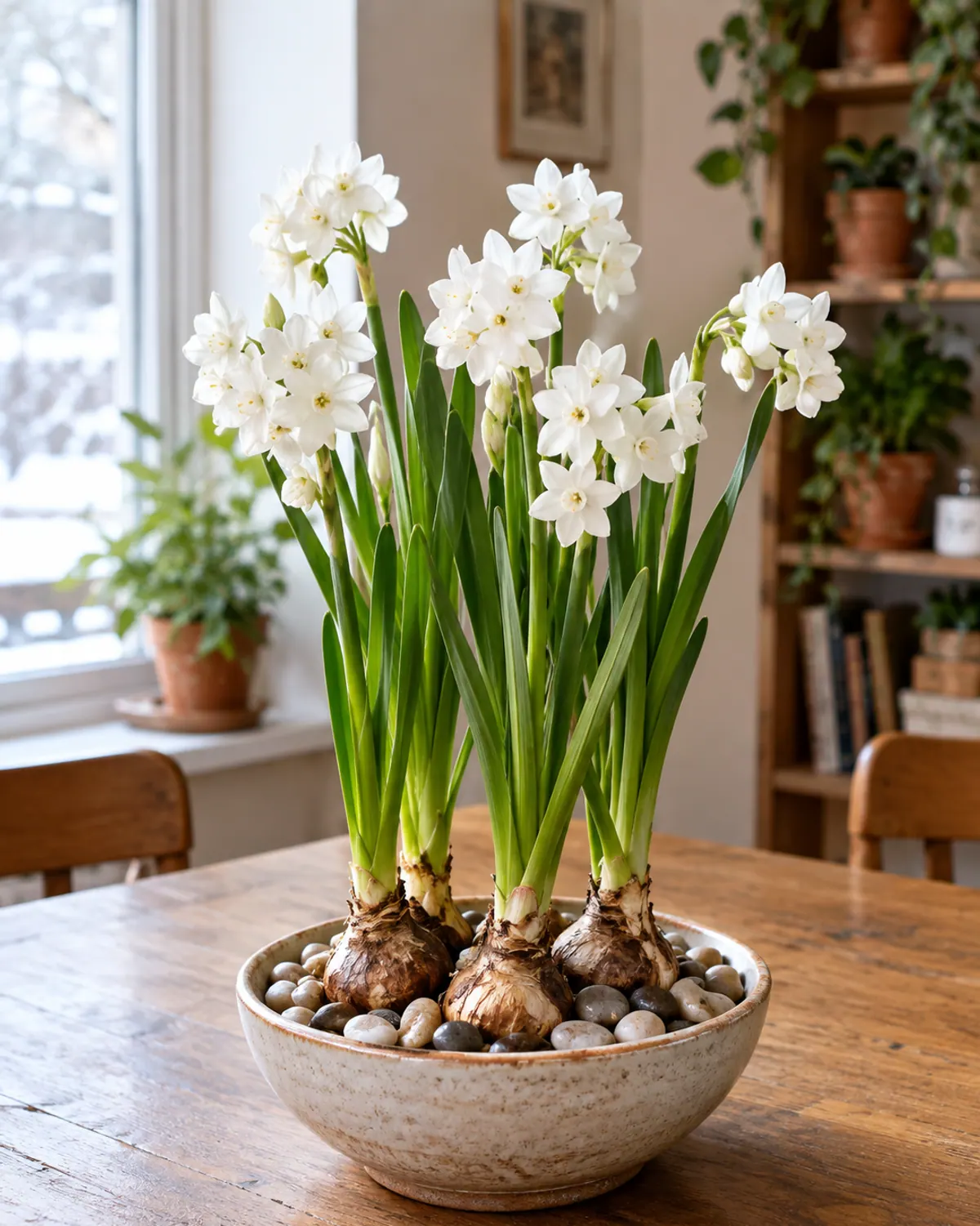
Paperwhites need no soil at all: set the bulbs in a shallow bowl of gravel, add water just to the base of the bulbs, and they bloom in a few weeks. Their scent is strong, so some people prefer them in a hallway. Narcissus is toxic to pets, especially the bulbs.
- Keep the water line just below the bulbs so they don't rot.
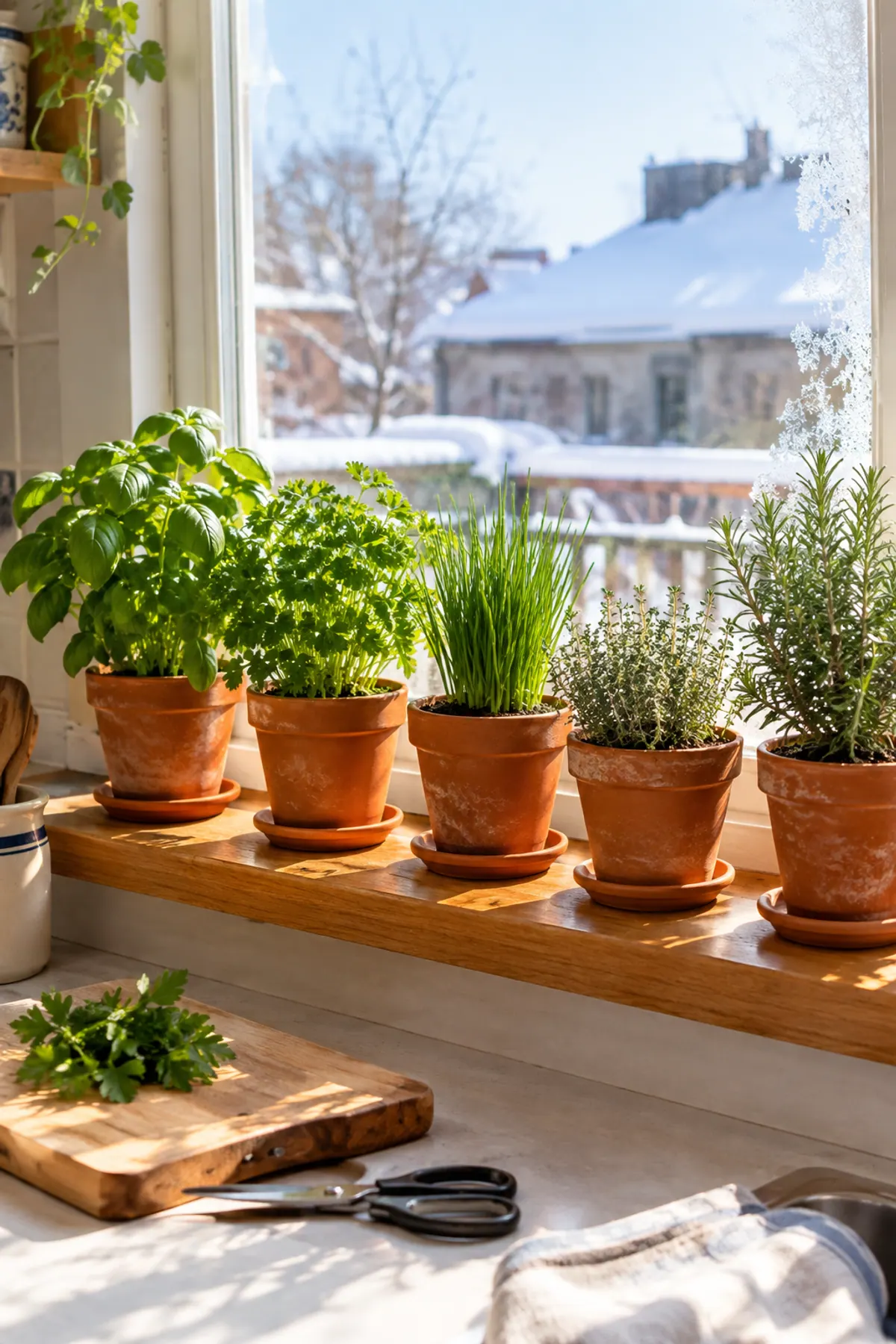
14A windowsill herb row
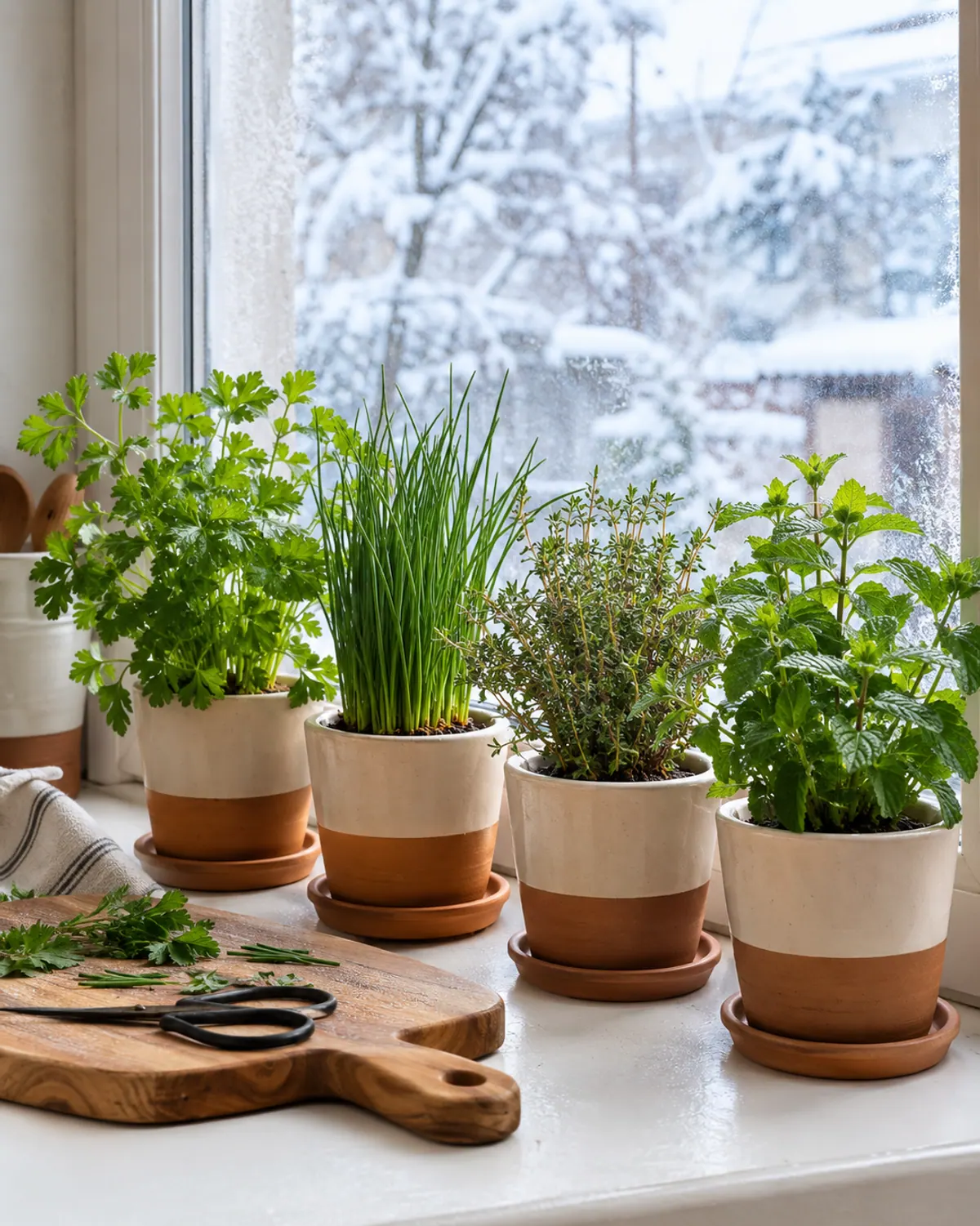
Herbs on a winter sill are both decor and something to cook with. Parsley, chives and thyme handle indoor winter light better than basil does. Our indoor herb garden guide lists which herbs to start with.
- Snip from the top and outer stems to keep herbs bushy.
15A trailing spider plant up high
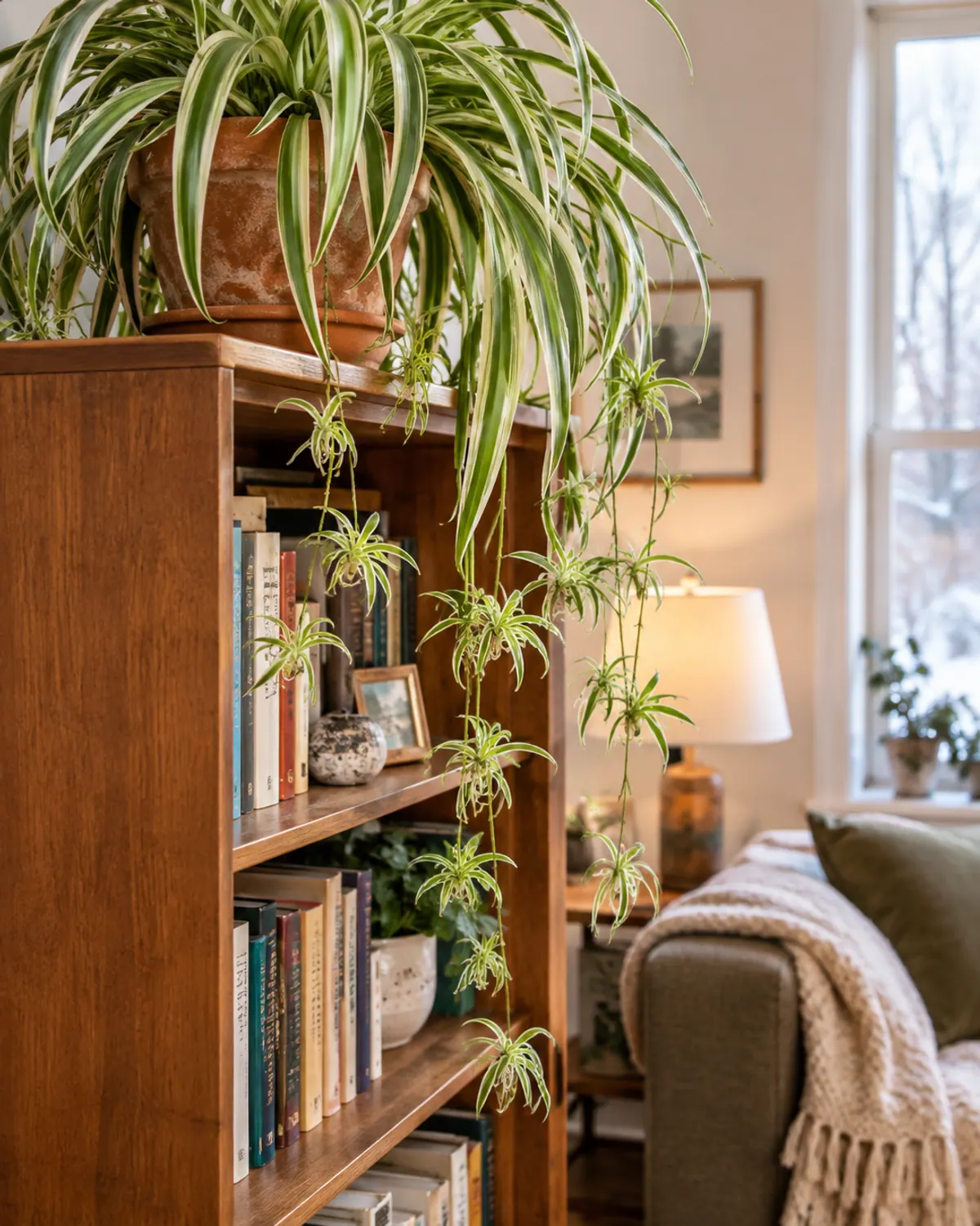
A spider plant on a high shelf sends arching leaves and baby plantlets over the edge, softening the corner from above. It handles medium light and the ASPCA lists it as non-toxic to cats and dogs, though many cats love to chew it.
- Pot up the plantlets to share with friends.
Care and planning touches
16A pebble tray under a plant group
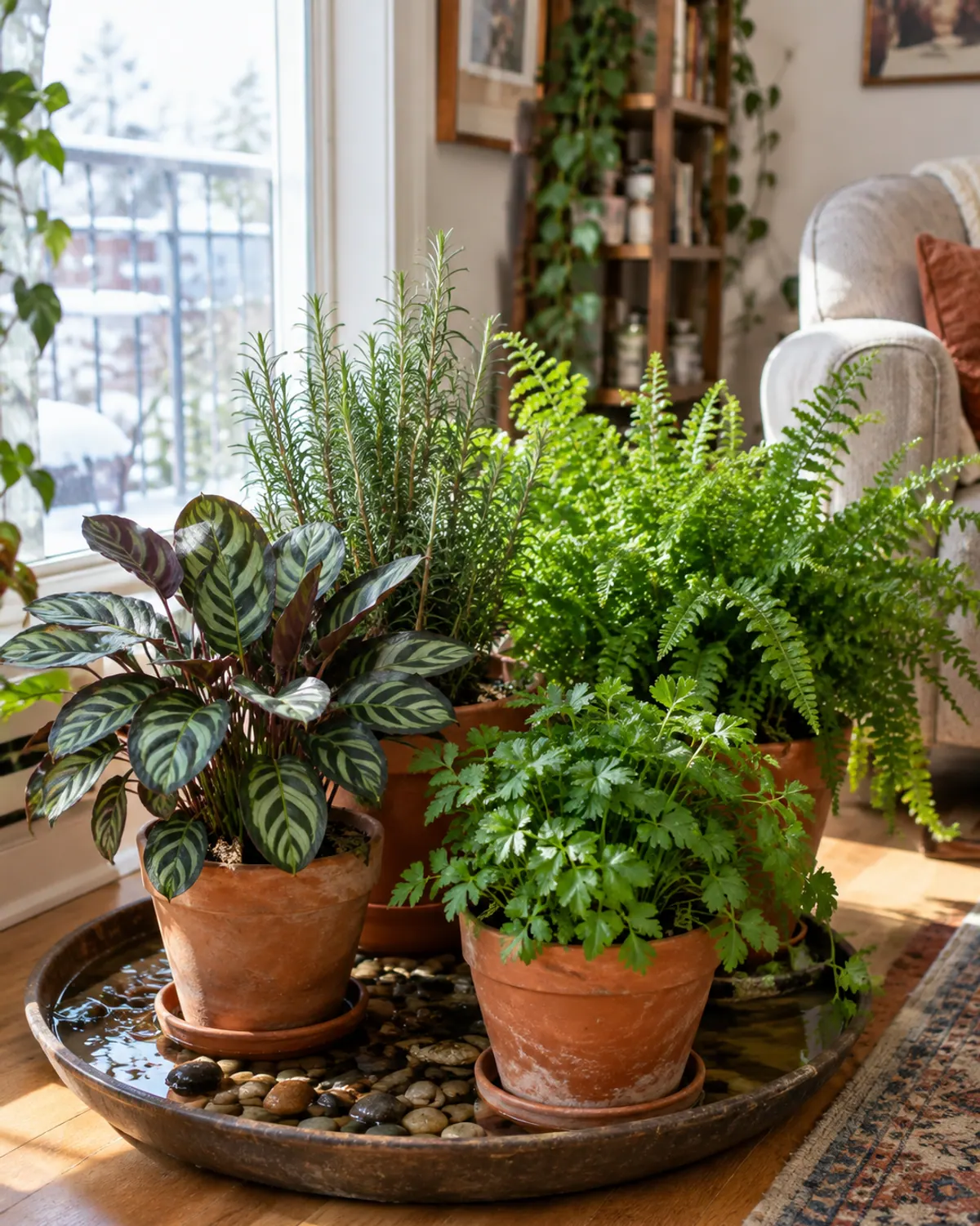
Indoor heat dries the air in winter. Grouping plants on a shallow tray of pebbles and water adds a little humidity around the leaves, and grouped plants shelter one another. Keep the water line below the tops of the pebbles so pots never sit in water.
- Group humidity lovers (ferns, calatheas) together and keep rosemary at the drier edge.
Gathers a plant group and adds a little moisture around leaves.
17A seed catalog planning nook
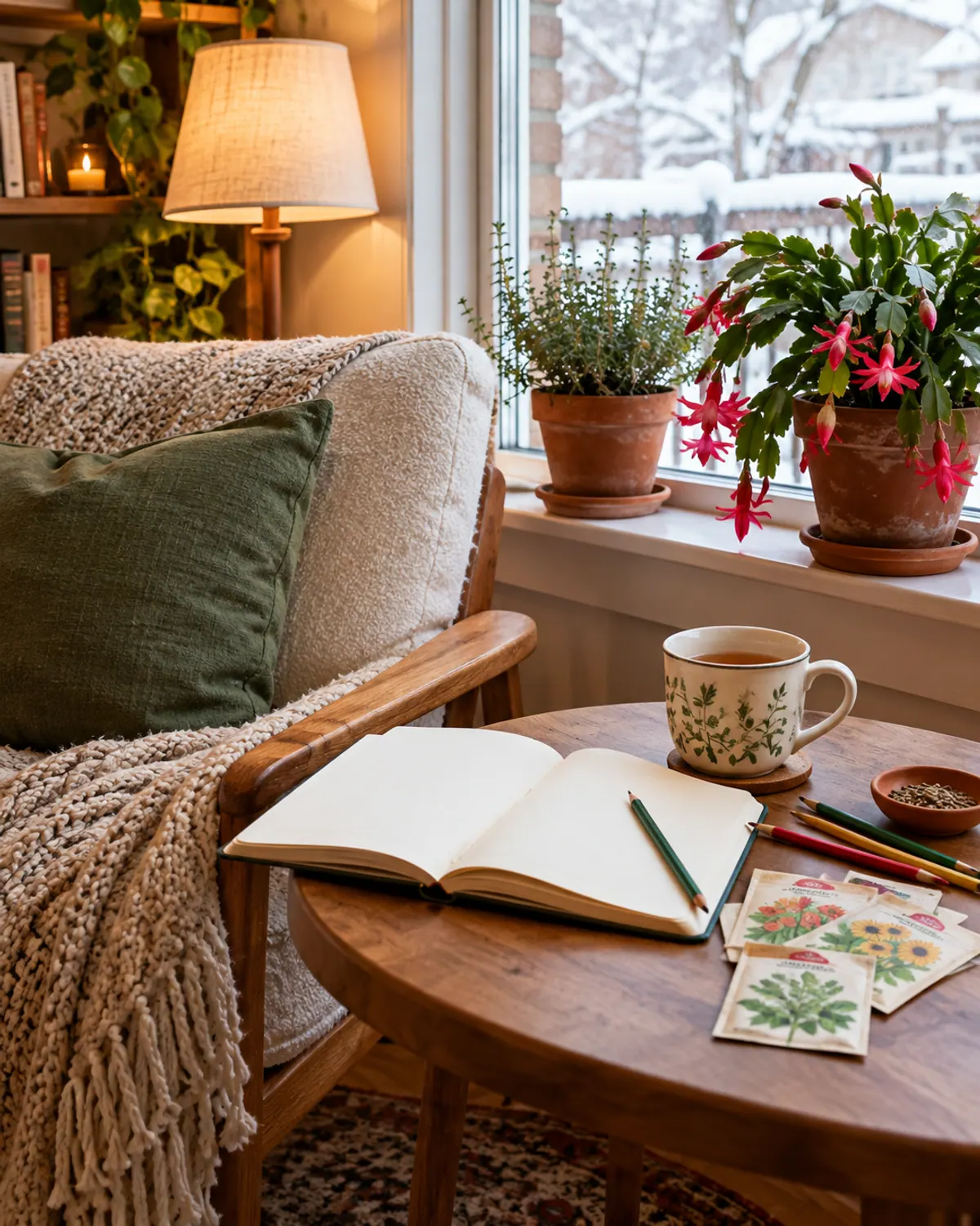
Winter is planning season. A chair near your plants with seed catalogs, a notebook and a cup of tea turns the corner into a place to plan spring pots. Note which herbs you used most this year and which spots got the most sun.
- Write down your last frost date so you know when to start seeds indoors.
Bonus: pet-safe swaps for a cozy plant corner
If you share your home with cats or dogs, a few popular winter plants are worth swapping. These notes come from the ASPCA toxic and non-toxic plant list; check it for any plant not listed here.
| Instead of | ASPCA listing | Try | ASPCA listing |
|---|---|---|---|
| Amaryllis | Toxic to cats and dogs | Christmas cactus | Non-toxic |
| Paperwhites (narcissus) | Toxic to cats and dogs | Calathea | Non-toxic |
| Pothos | Toxic to cats and dogs | Spider plant | Non-toxic |
| Mint or oregano | Toxic to cats and dogs | Basil or thyme | Non-toxic |
| Lavender bundles | Toxic to cats and dogs | Rosemary bundles | Non-toxic |
Cozy plant corner checklist
Want the corner to flow into the rest of the room? Our sister site Linen and Lamp has small bedroom ideas for tiny rooms with the same cozy, renter-friendly feel. For more growing ideas, browse our herb garden ideas for small spaces.
Shop the cozy plant corner
Shop the look
- Start here
Terracotta pots with saucers
$20-40 for a set
The base of the gardening aesthetic, and good for herbs.
Check price on Amazon for Terracotta pots with saucers -
Mid-century plant stand
$30-70
Gives a plant group three heights.
Check price on Amazon for Mid-century plant stand -
Warm white LED grow light
$20-40
Keeps winter herbs from stretching.
Check price on Amazon for Warm white LED grow light -
Woven plant baskets
$20-35
Cottagecore texture with a liner for drainage.
Check price on Amazon for Woven plant baskets -
Glass mason jars
$15-25
For dried herbs on an open shelf.
Check price on Amazon for Glass mason jars
We earn from qualifying purchases, which never changes what we recommend. Read our disclosure and editorial guidelines.
Frequently asked questions
What is the gardening aesthetic?
It is a look built around growing things: terracotta pots, herbs, trailing plants, garden tools and natural textures like wood, wicker and linen. Indoors, it usually centers on a bright window with plants at several heights.
How do I make a cottagecore garden aesthetic in an apartment?
Use weathered terracotta, glass jars of dried herbs, wicker baskets and herb bundles hung to dry, plus herbs and trailing plants on a sunny sill or shelf. Texture matters more than square footage.
What plants do well in a winter plant corner?
Christmas cactus, spider plant, parsley, chives, thyme and rosemary all handle indoor winter conditions with a bright window. Amaryllis and paperwhites add blooms, but both are toxic to pets.
Do I need a grow light for indoor plants in winter?
Not always. A bright south or west window is enough for many plants. Herbs in north-facing rooms usually need a grow light for about 12 to 14 hours a day to stay compact.
Which winter plants are safe for cats and dogs?
The ASPCA lists Christmas cactus, spider plant, calathea, rosemary, basil and thyme as non-toxic to cats and dogs. Check the ASPCA list for anything else before you bring it home.

Save it for later
Pin this to your Houseplants board so it's there when you need it.
Save to Pinterest