This post contains affiliate links. As an Amazon Associate we earn from qualifying purchases, at no extra cost to you. Read our disclosure.
Safety first: Herbs can be powerful. If you are pregnant, nursing, take medication or have a health condition, check with your doctor or pharmacist first. Please read our herbal & garden safety notes before you start.
Key takeaways
- Start with light: most culinary herbs need 6 or more hours of direct sun, while parsley, mint and chives cope with about 4.
- Group herbs by water needs. Rosemary, thyme, sage and oregano like to dry out; basil, parsley, mint and cilantro like steady moisture.
- Give mint its own pot, because its runners take over shared containers.
- Bigger pots hold more water. Railing boxes, grow bags and strawberry pots dry out fastest.
- Check your lease or building rules before adding heavy planters to a balcony.
In this post28 sections
- Windowsill and kitchen herb garden ideas
- 1. A terracotta row on a sunny windowsill
- 2. A wall rail with hanging pots
- 3. A tiered plant stand by a patio door
- 4. Cover pots that hide a nursery pot
- 5. A grow light cart for dim kitchens
- Balcony herb garden ideas
- 6. Railing planters that stay put
- 7. A vertical pocket wall
- 8. A leaning ladder shelf
- 9. Hanging baskets of trailing herbs
- 10. One bowl of Mediterranean herbs
- Patio and back-step herb garden design ideas
- 11. A half barrel kitchen garden
- 12. Pots up the back steps
- 13. A strawberry pot of small herbs
- 14. Fabric grow bags
- 15. Mint in its own container
- 16. A raised planter on legs
- 17. A self-watering trough
- Themed herb garden ideas for small spaces
- 18. A tea herb container
- 19. A pollinator herb pot
- 20. A shade herb corner
- 21. Group pots by sun and water
- Bonus: how to plan your herb garden layout before you buy
- Shop small-space herb garden planters
- FAQ
Windowsill and kitchen herb garden ideas
A kitchen herb garden puts herbs where you cook, which means you actually use them. Indoors, light is the limit, so these ideas start at the brightest window you have. Our indoor herb garden guide covers which herbs handle winter light best.
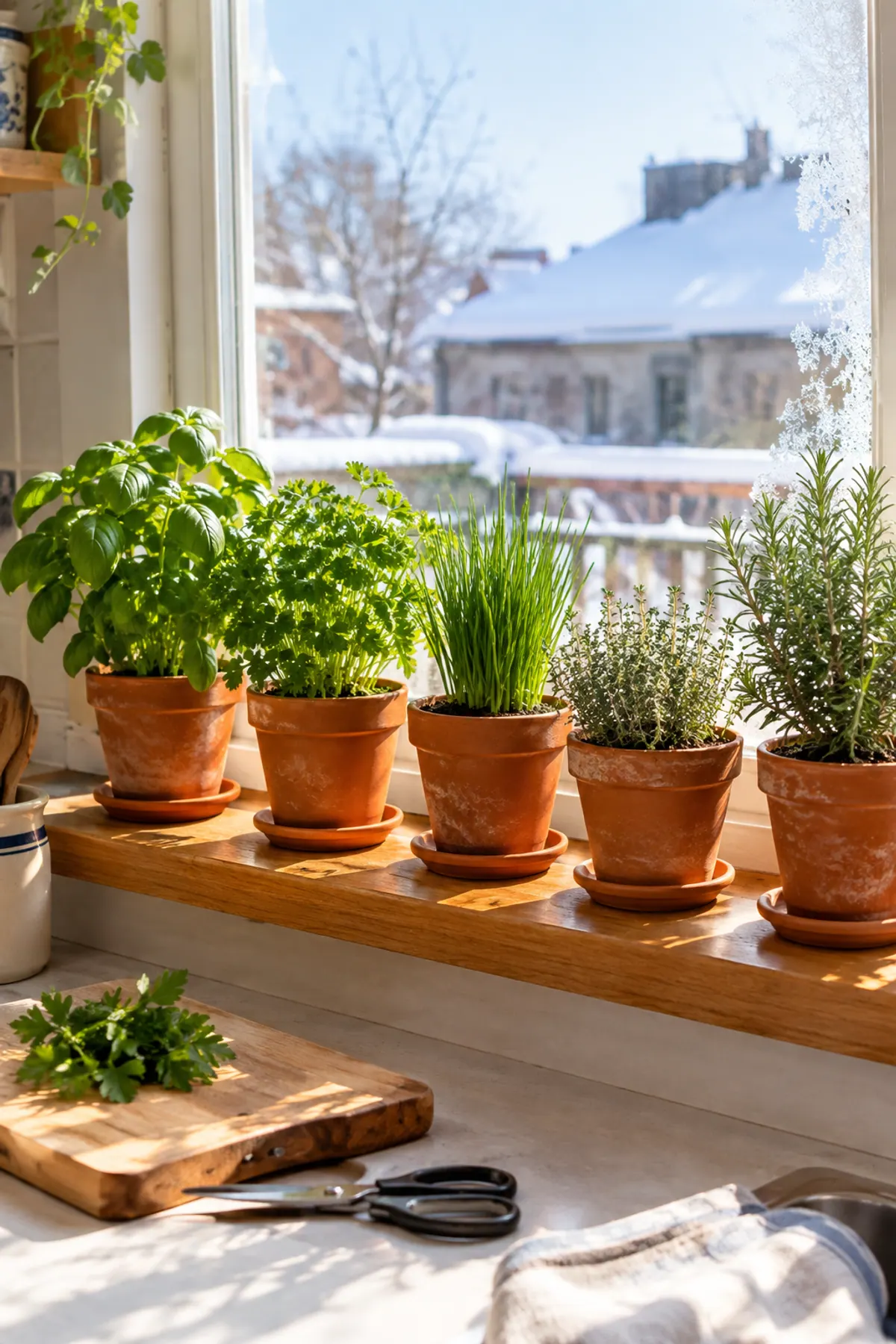
1A terracotta row on a sunny windowsill
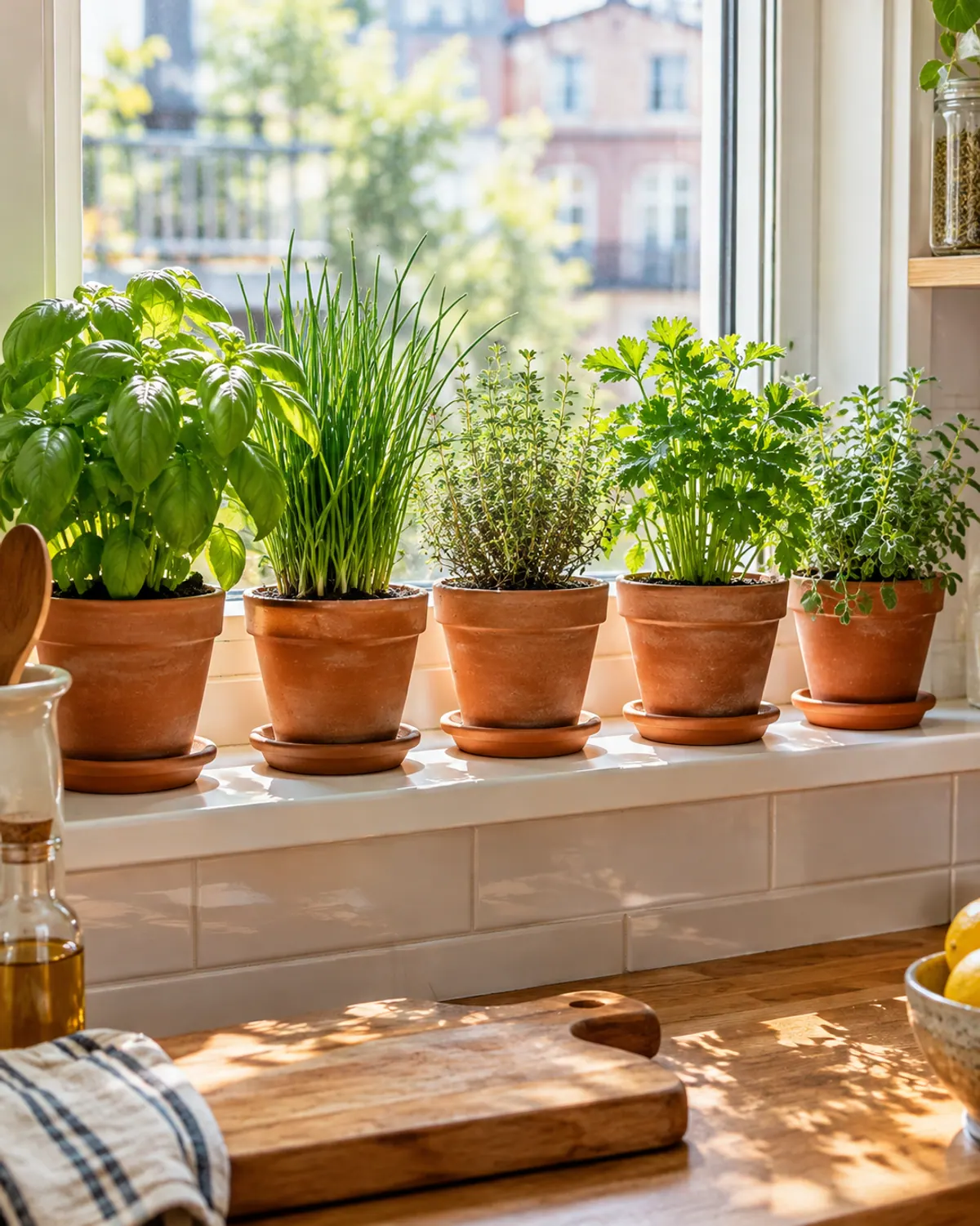
The simplest herb garden is a row of matching 4 to 6 inch terracotta pots along a south or west sill. Each herb gets its own pot and saucer, so you can water the thirsty ones (basil, parsley) more often than the dry-loving ones (thyme, oregano). Clay also wicks extra water away from roots, which helps beginners who tend to overwater.
- Turn each pot a quarter turn every few days so stems grow straight.
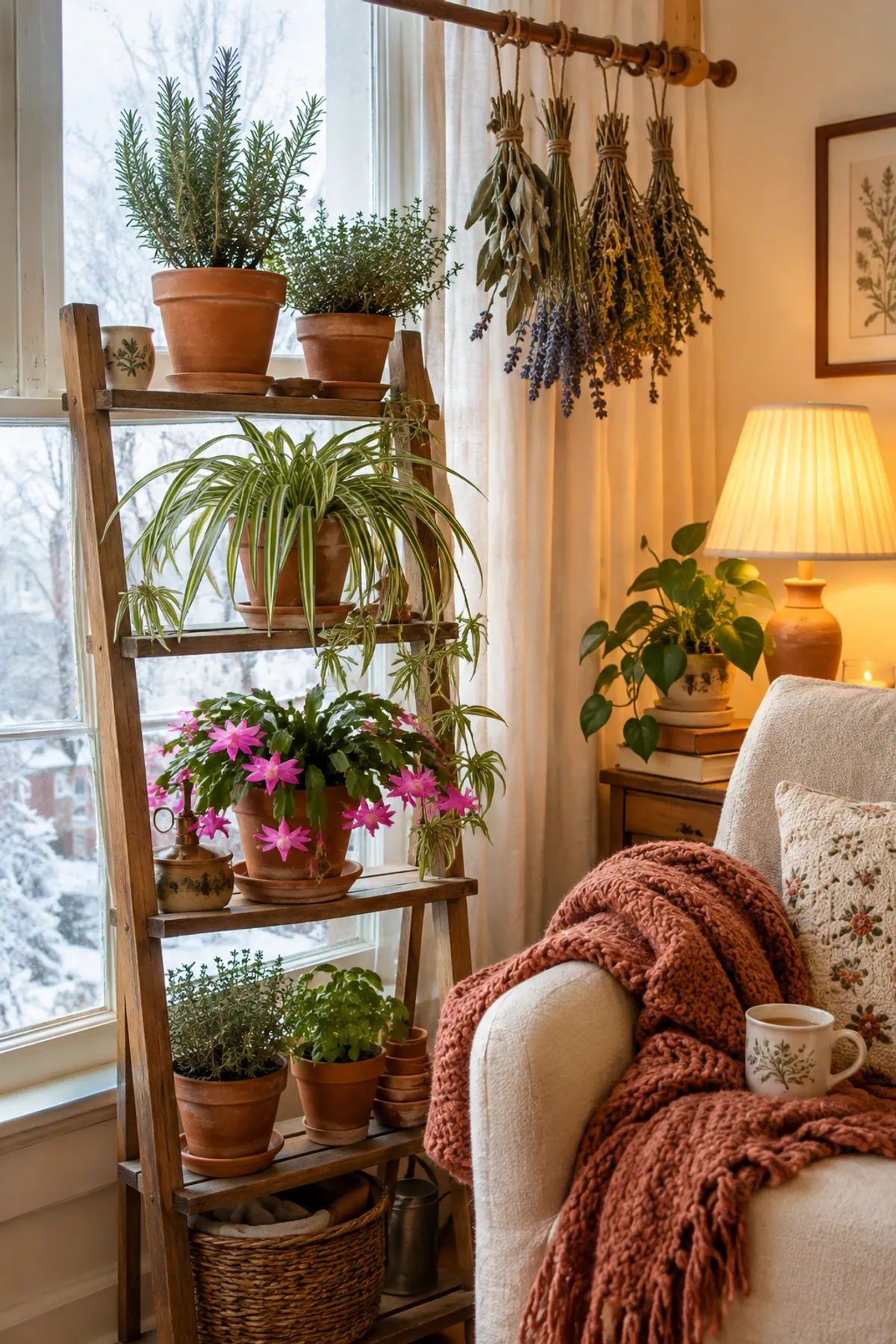
3A tiered plant stand by a patio door
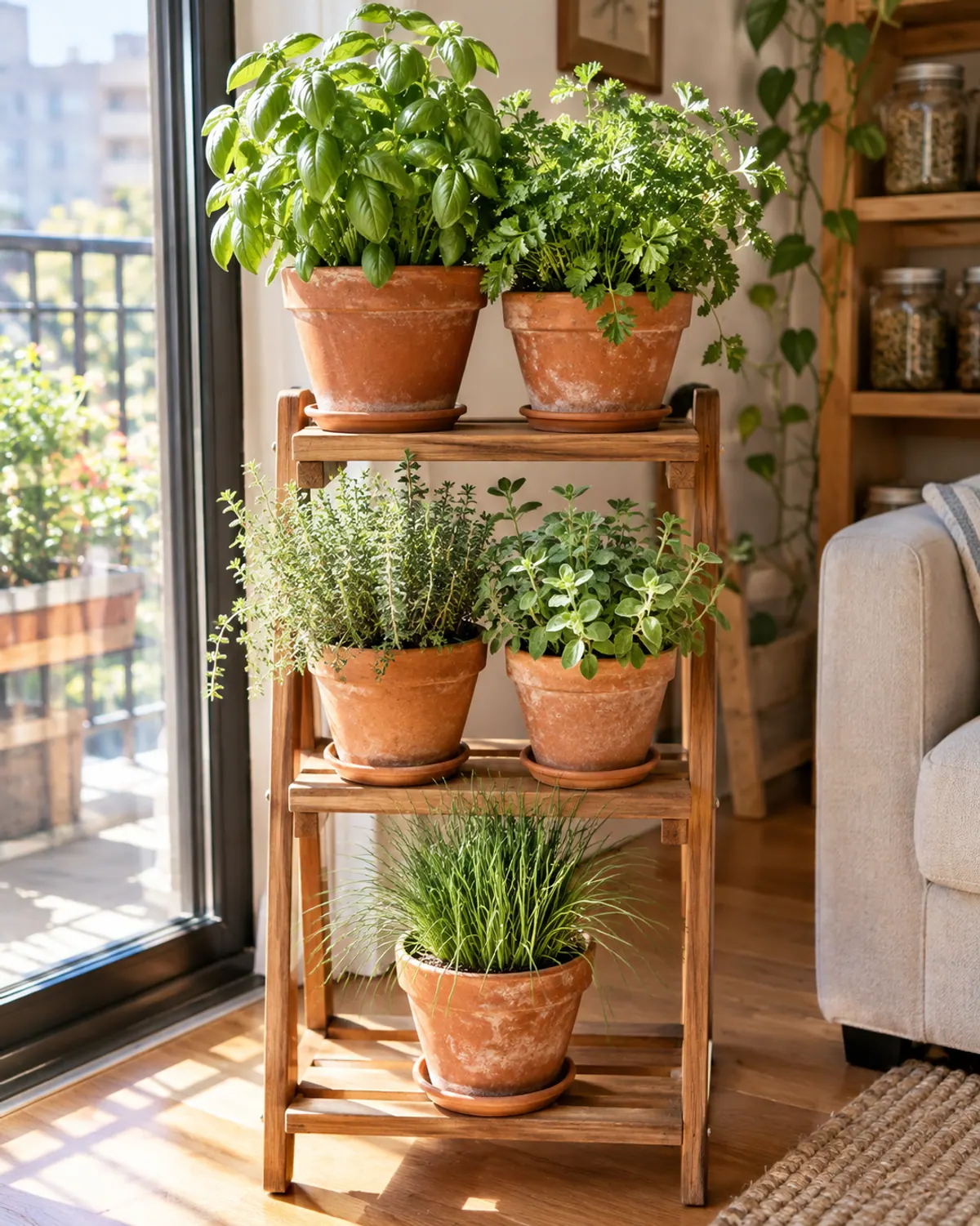
A three-tier stand fits more herbs into one square foot of floor next to a glass door. Put the sun lovers, like basil, on the top shelf and the more shade-tolerant herbs, like chives and parsley, lower down. Rolling stands are handy because you can follow the sun as the seasons change.
- Check that the lower shelves still get direct light; if not, swap pots weekly.
Stacks several herb pots on one small footprint.
4Cover pots that hide a nursery pot
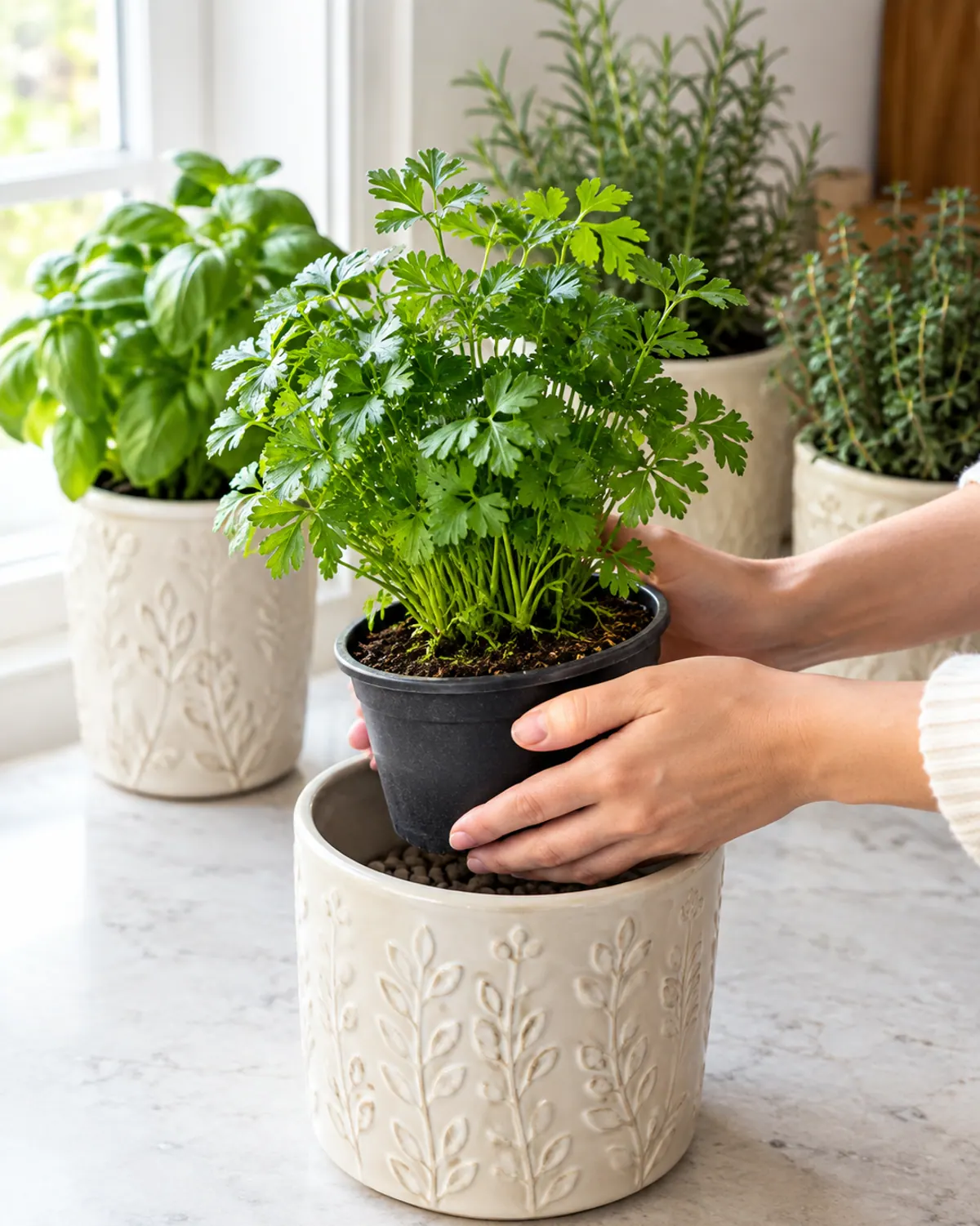
Love a pretty ceramic pot without a hole? Use it as a cover. Keep the herb in its plastic nursery pot with drainage holes, set it inside on a layer of gravel, and lift it out to water in the sink. You get the look without roots sitting in water, the most common way indoor herbs die.
- Tip out any water that collects in the cover pot after watering.
Balcony herb garden ideas
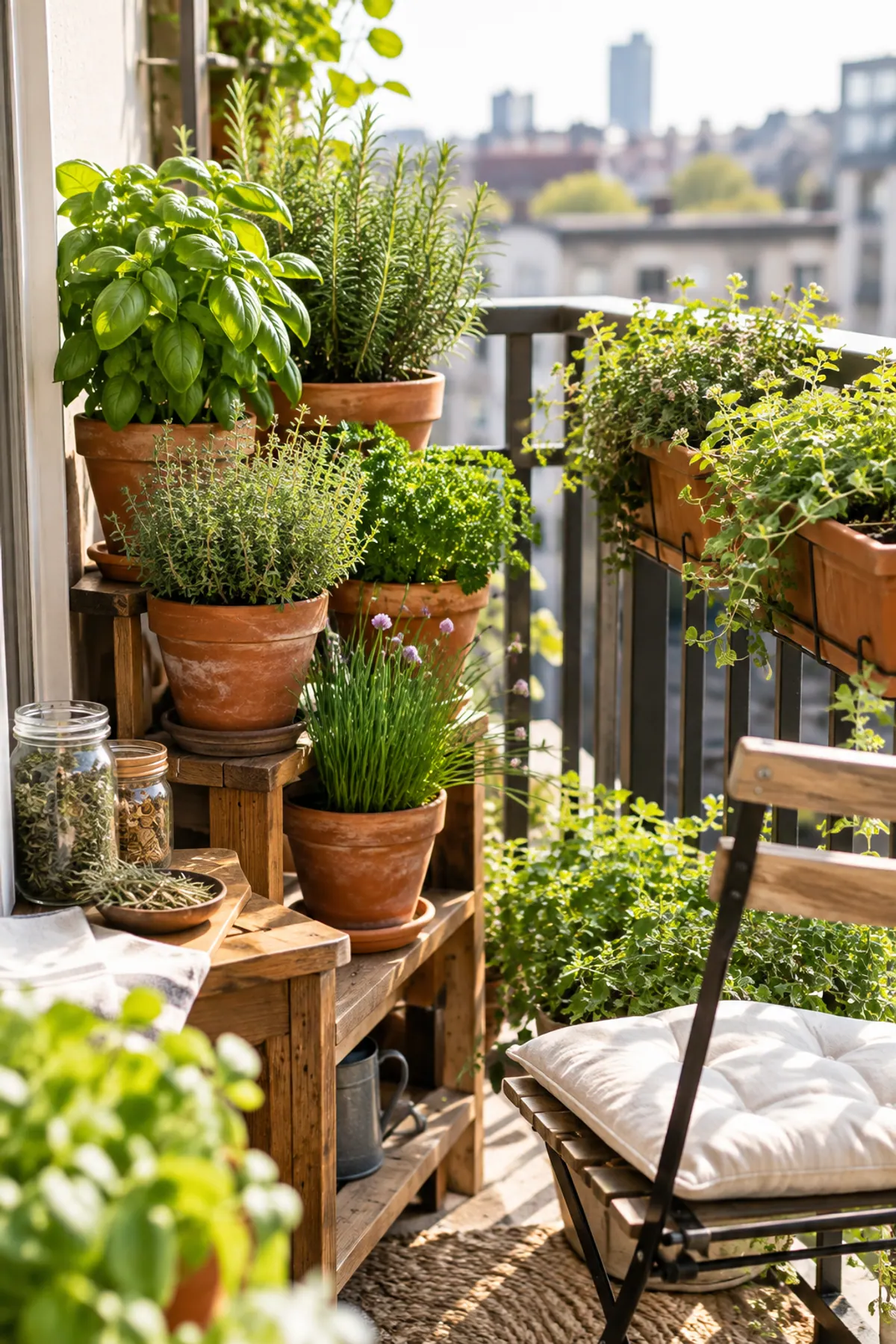
A balcony is often the sunniest spot an apartment has. Before adding heavy planters, check your lease or building rules on weight and railing planters, and remember that wet soil is heavy.
6Railing planters that stay put
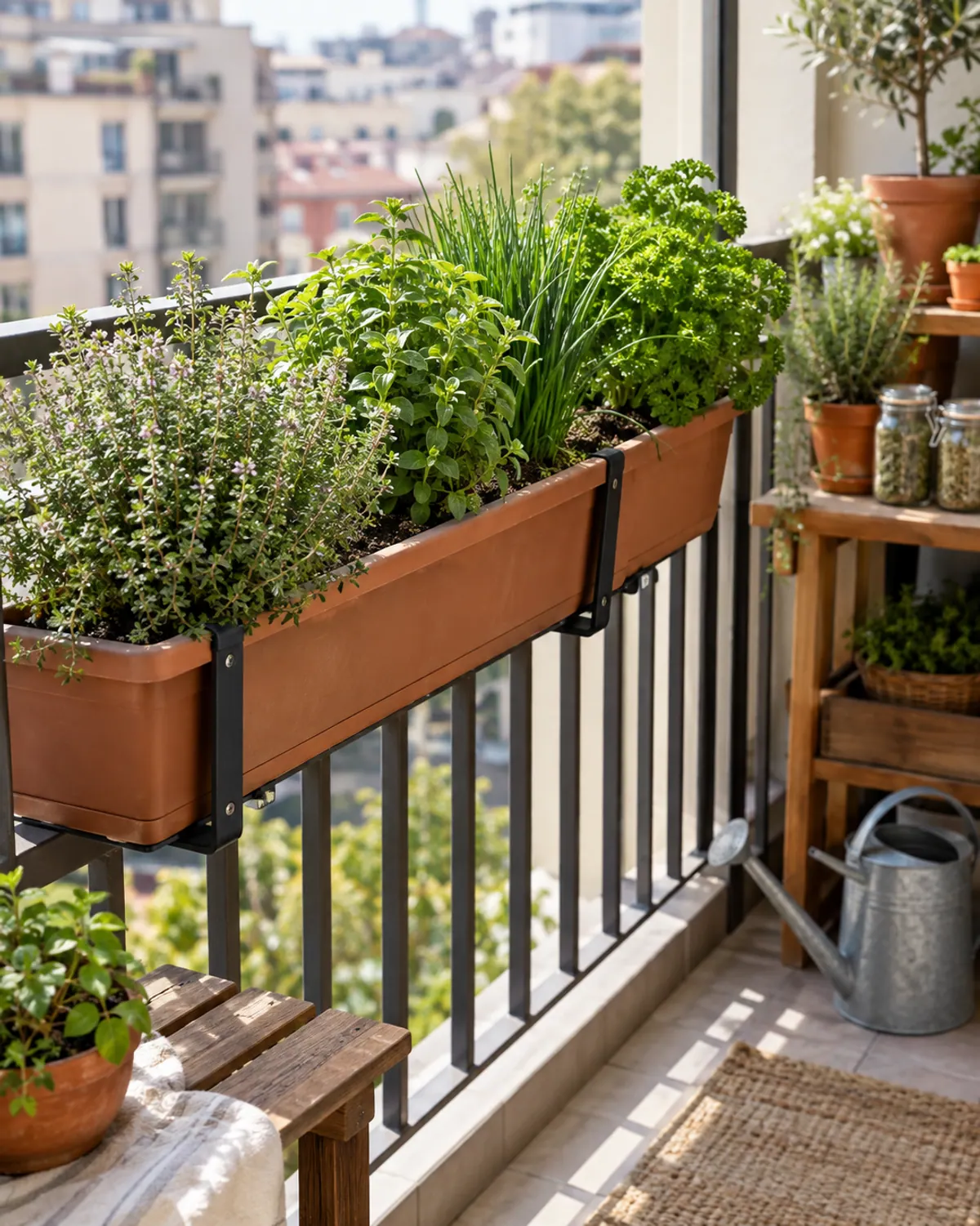
Railing planters use space that would otherwise sit empty. Choose boxes with brackets made for your railing width, and set them on the inside of the rail so nothing can fall to the street below. A 6 to 8 inch deep box suits thyme, oregano, chives and parsley.
- Railing boxes dry out fast in wind; check them daily in summer.
Brackets fit most railings without drilling.
7A vertical pocket wall
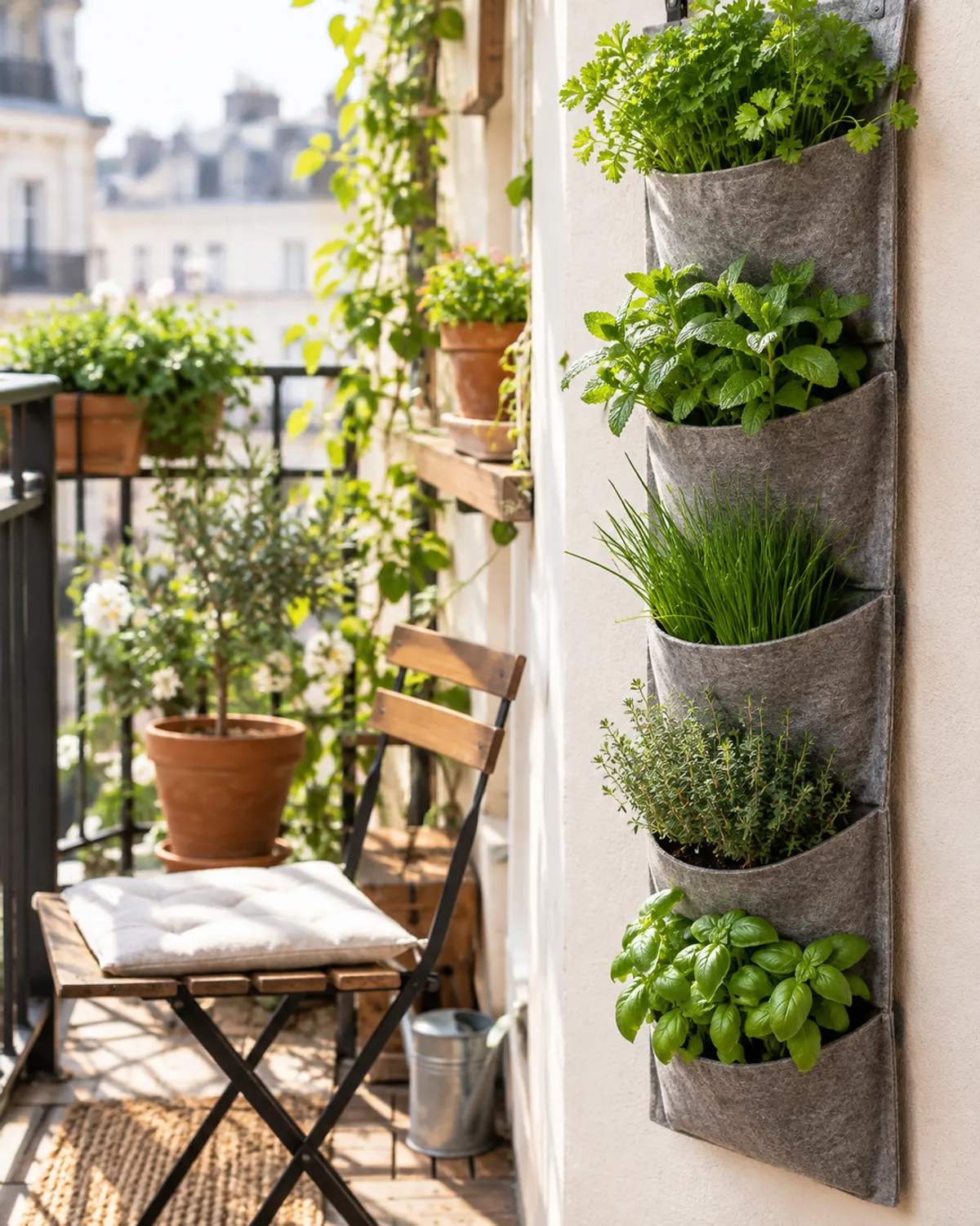
Felt pocket planters hang on a wall or fence and hold a dozen small herbs in a few square feet. They suit shallow-rooted herbs like parsley, chives, thyme and mint. Felt dries quickly, so plan to water more often, and put a tray or a plant below to catch drips.
- Plant thirsty herbs in the bottom pockets, where water collects.
8A leaning ladder shelf
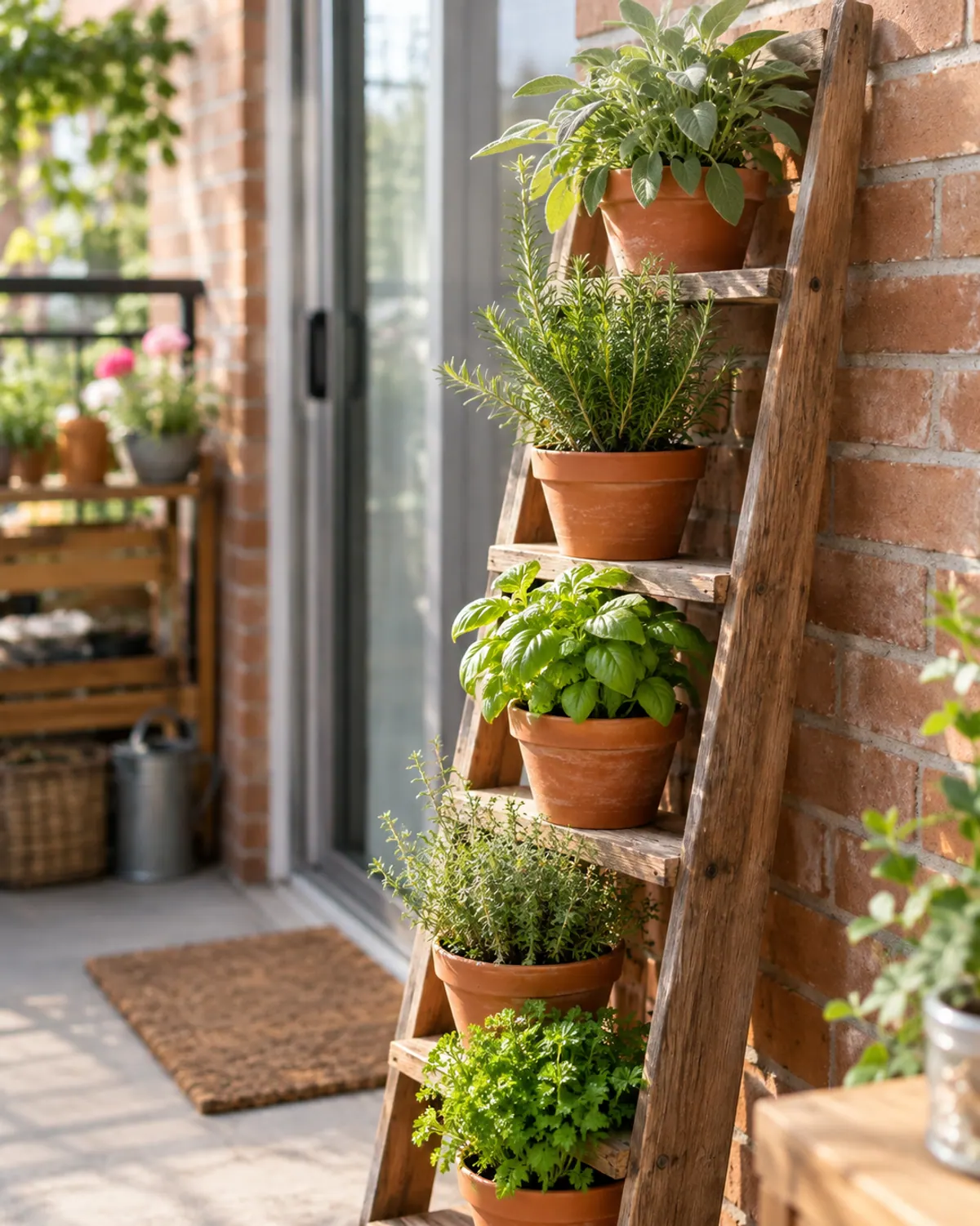
A ladder shelf holds pots at staggered heights, so the back row isn't shaded by the front. It also leans against a wall without screws, which suits renters. Put rosemary and sage on the lower, wider steps, since they grow into larger shrubs over time.
- Use a strap to anchor tall shelves on windy balconies.
9Hanging baskets of trailing herbs
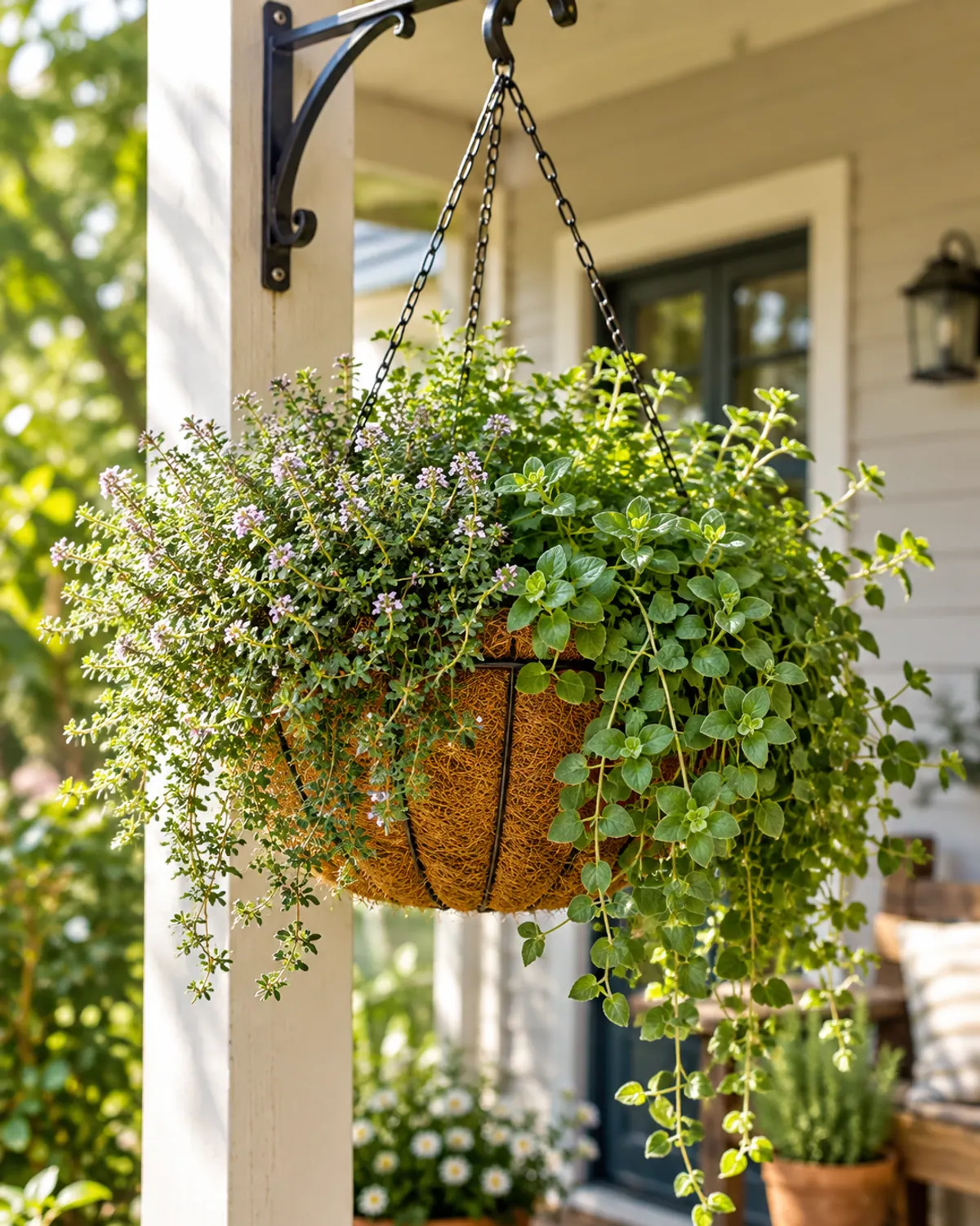
Creeping thyme, trailing oregano and prostrate rosemary spill softly over the edge of a hanging basket. Baskets free up floor space and catch more sun when hung high. Coir liners dry fast, so mix a little compost into the potting soil and water deeply.
- Hang baskets where you can reach them easily to water and snip.
10One bowl of Mediterranean herbs
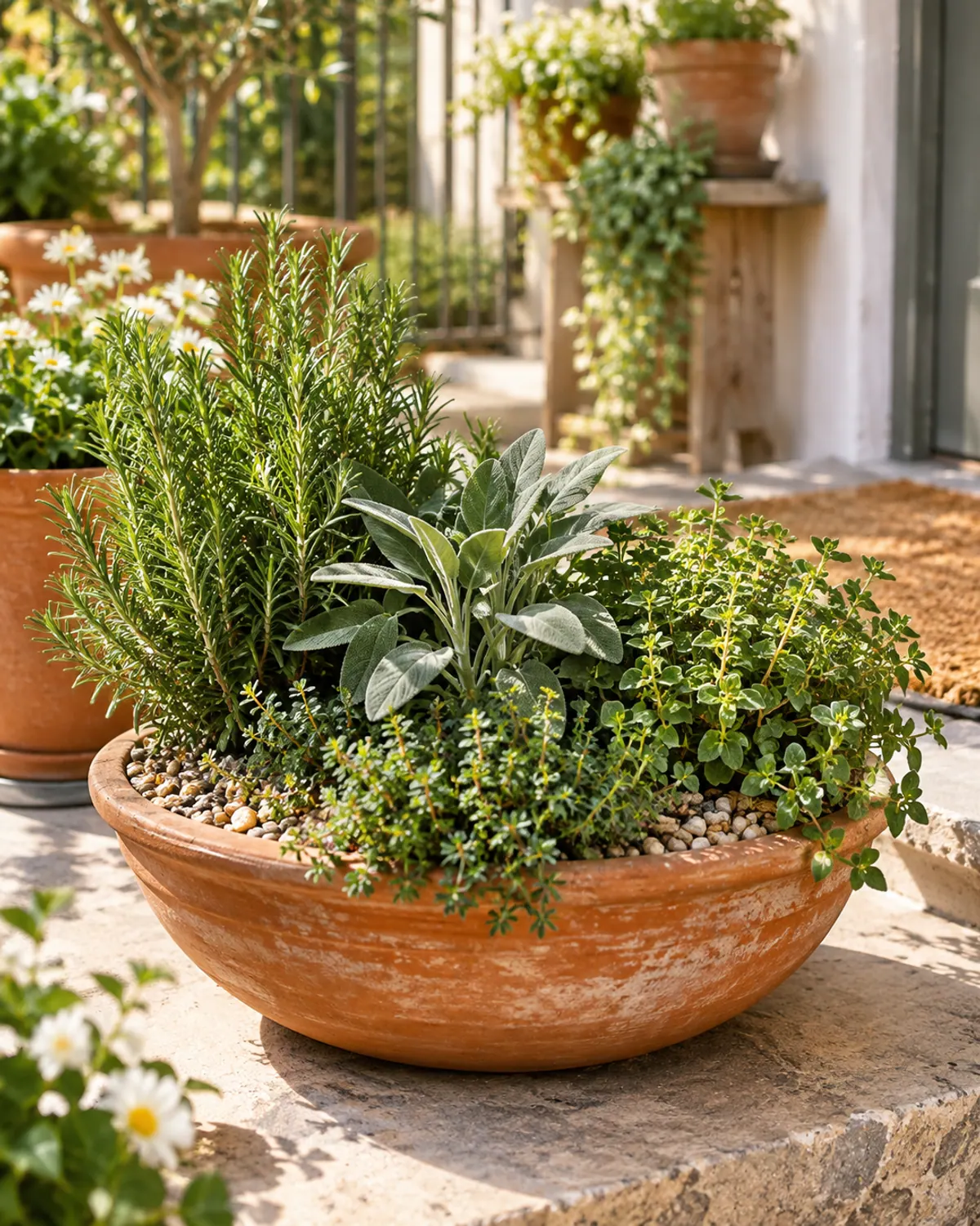
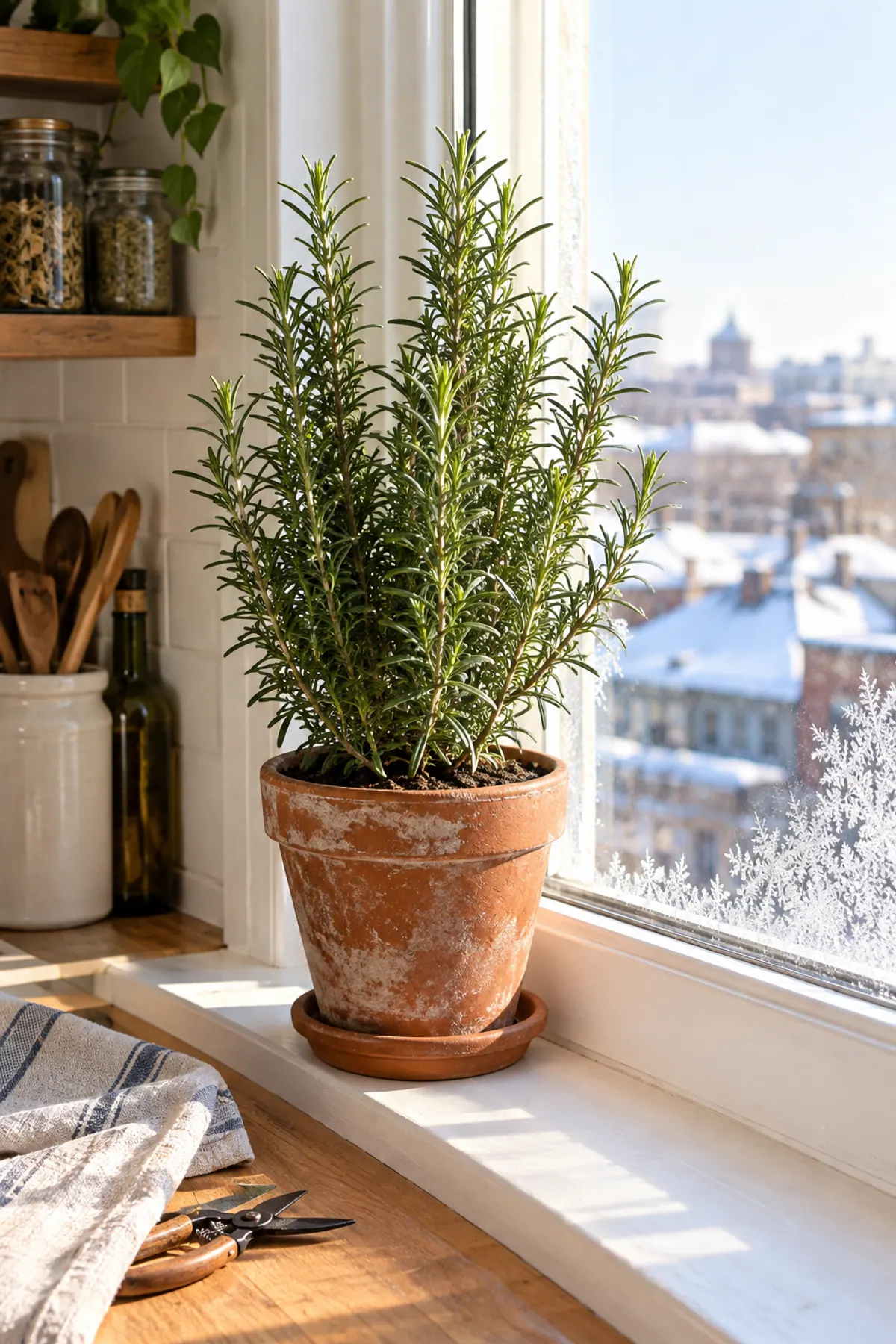
Rosemary, sage, thyme and Greek oregano all come from dry, sunny hillsides and want the same care, so they share a wide, shallow bowl happily. Use a gritty potting mix, give them full sun and let the soil dry between waterings. It is a whole herb garden in one pot.
- Keep basil and parsley out of this bowl; they need more water.
Patio and back-step herb garden design ideas
A small patio, porch or set of back steps has room for bigger containers, which hold more soil and need less watering. These layouts work in spaces of just a few square feet.
11A half barrel kitchen garden
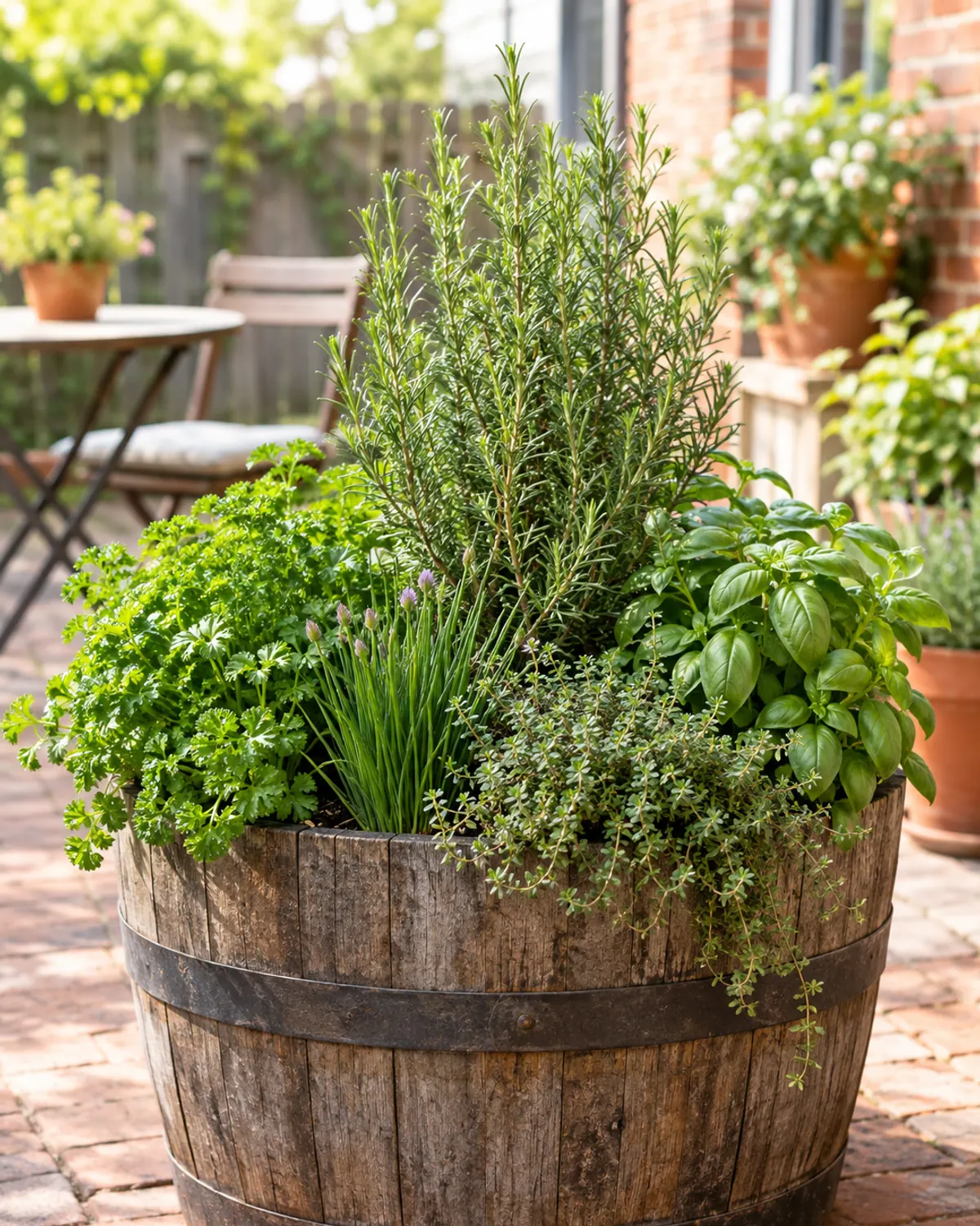
A half barrel holds enough soil for a rosemary in the center with parsley, chives, thyme and basil around the edge. Big containers stay moist longer and protect roots from heat. Drill drainage holes if yours doesn't have them, and set it where you want it before filling, because it will be heavy.
- Place the tallest herb in the middle or at the back so it doesn't shade the others.
12Pots up the back steps
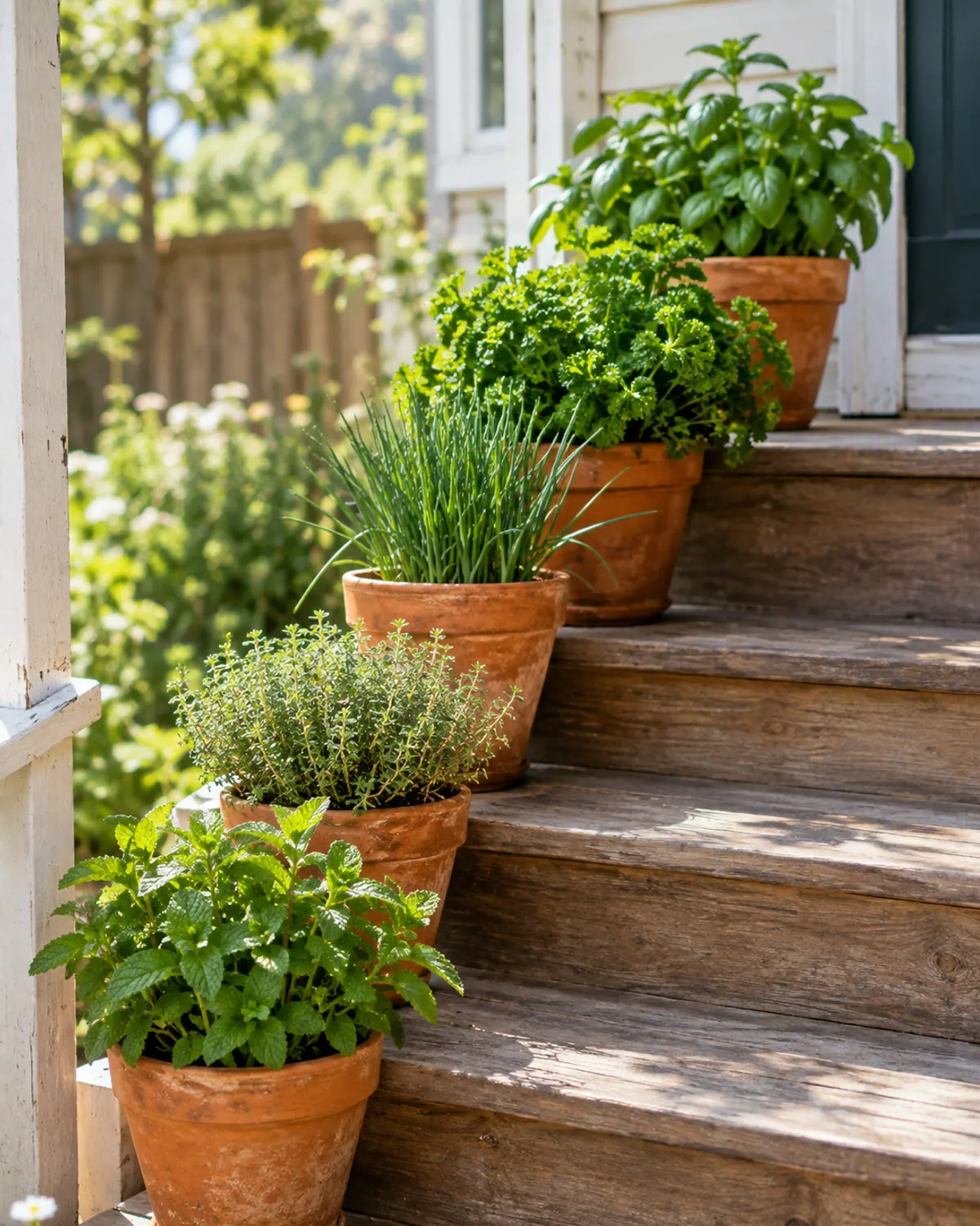
One pot per step turns a plain staircase into a herb garden you pass every day. Keep a clear walkway, and put the herbs you cut most often, like chives and parsley, closest to the door. Steps usually get good light because nothing shades them.
- Set pots on small feet so water can drain without staining the wood.
13A strawberry pot of small herbs
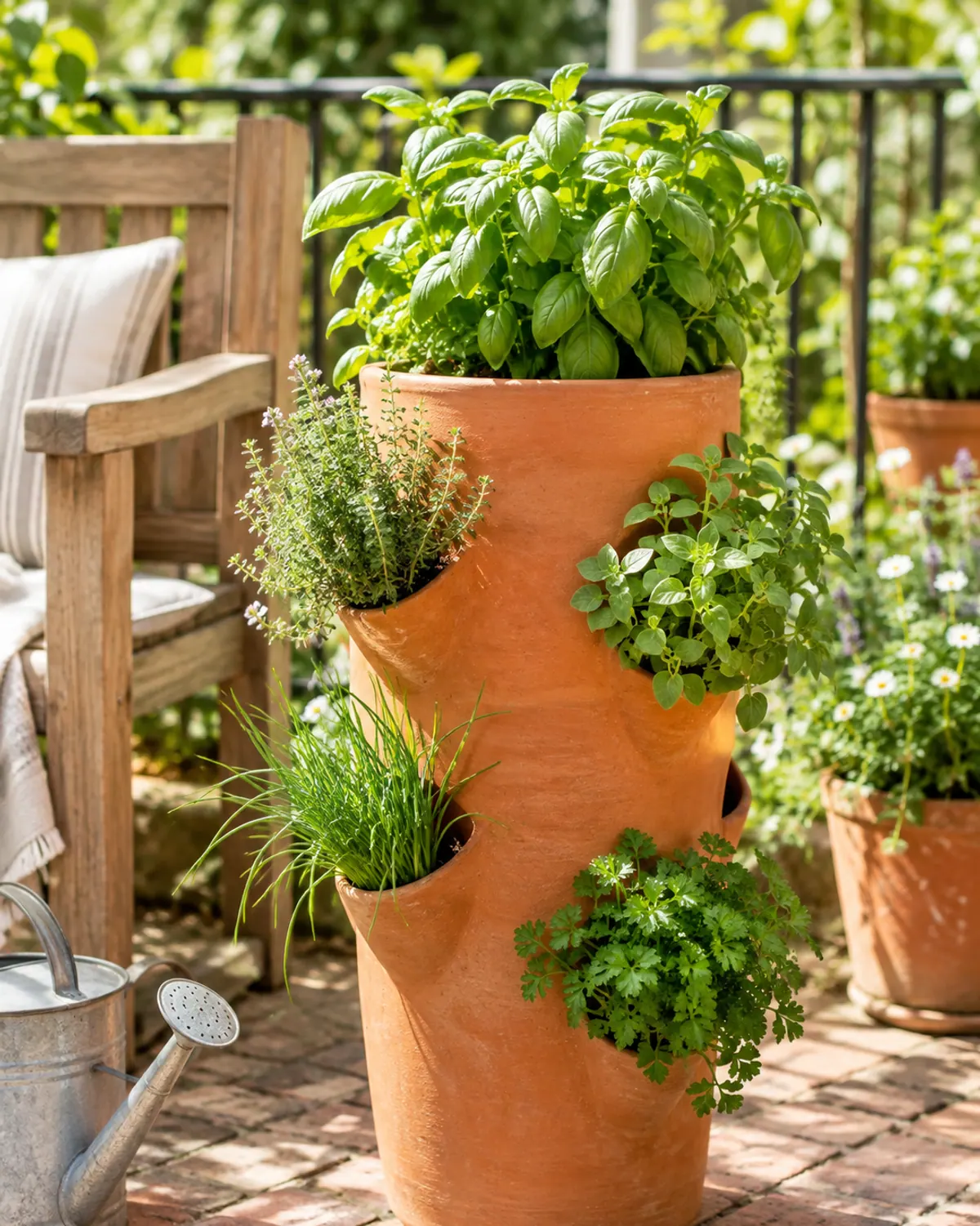
Strawberry pots have side pockets that fit small herbs like thyme, oregano, chives and parsley, with a larger plant on top. They are a pretty way to grow six or more herbs in one footprint. Water slowly from the top and into each pocket, because these pots dry out fast.
- Set a paper towel tube full of gravel down the center before filling to help water reach the bottom.
14Fabric grow bags
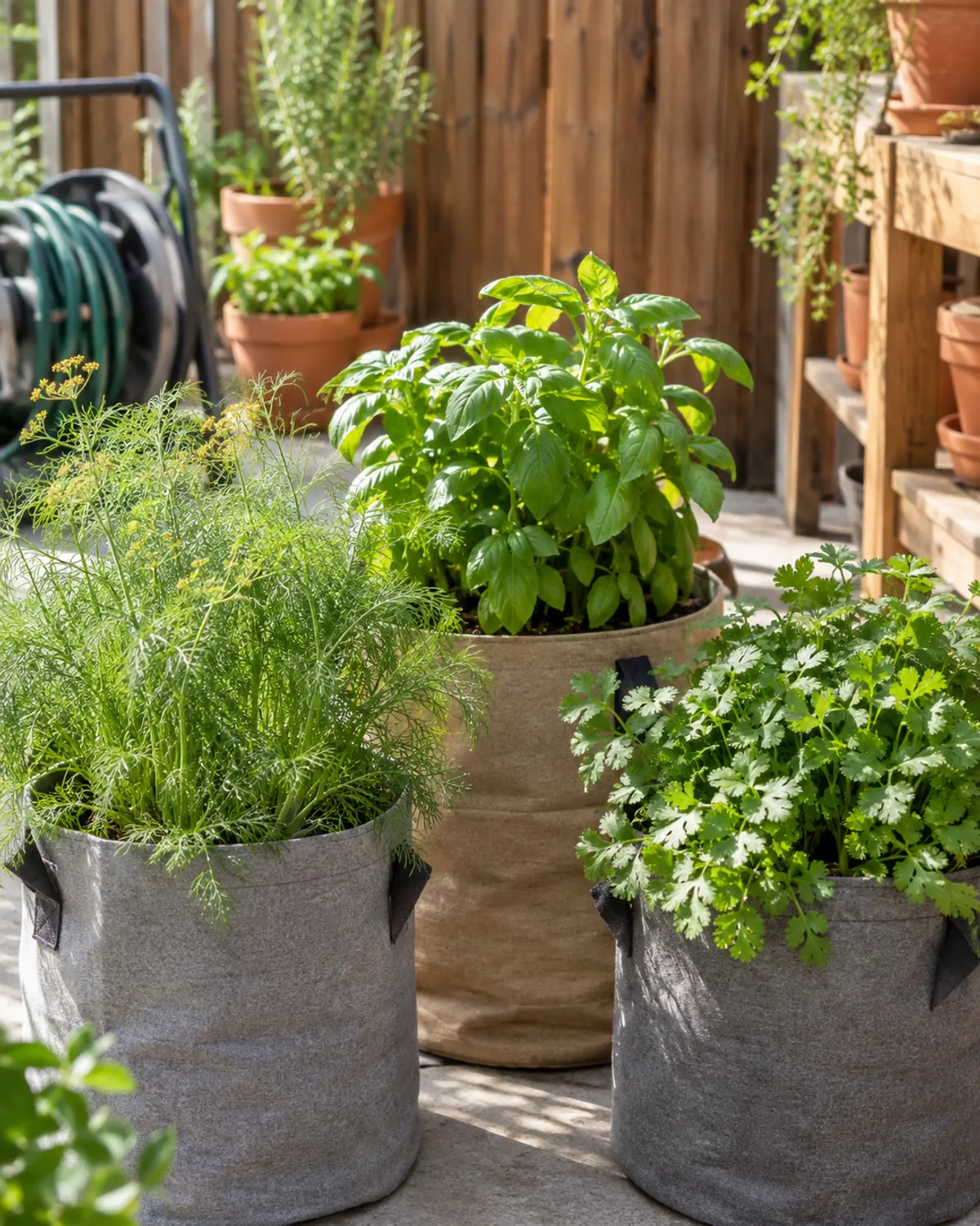
Grow bags are light, cheap and fold away in winter. A 3 to 5 gallon bag suits basil, dill or cilantro, which grow quickly and get bigger than you expect. The fabric lets roots breathe, but it also dries out faster than plastic, so water often in summer.
- Group bags together to shade each other's sides on hot days.
15Mint in its own container
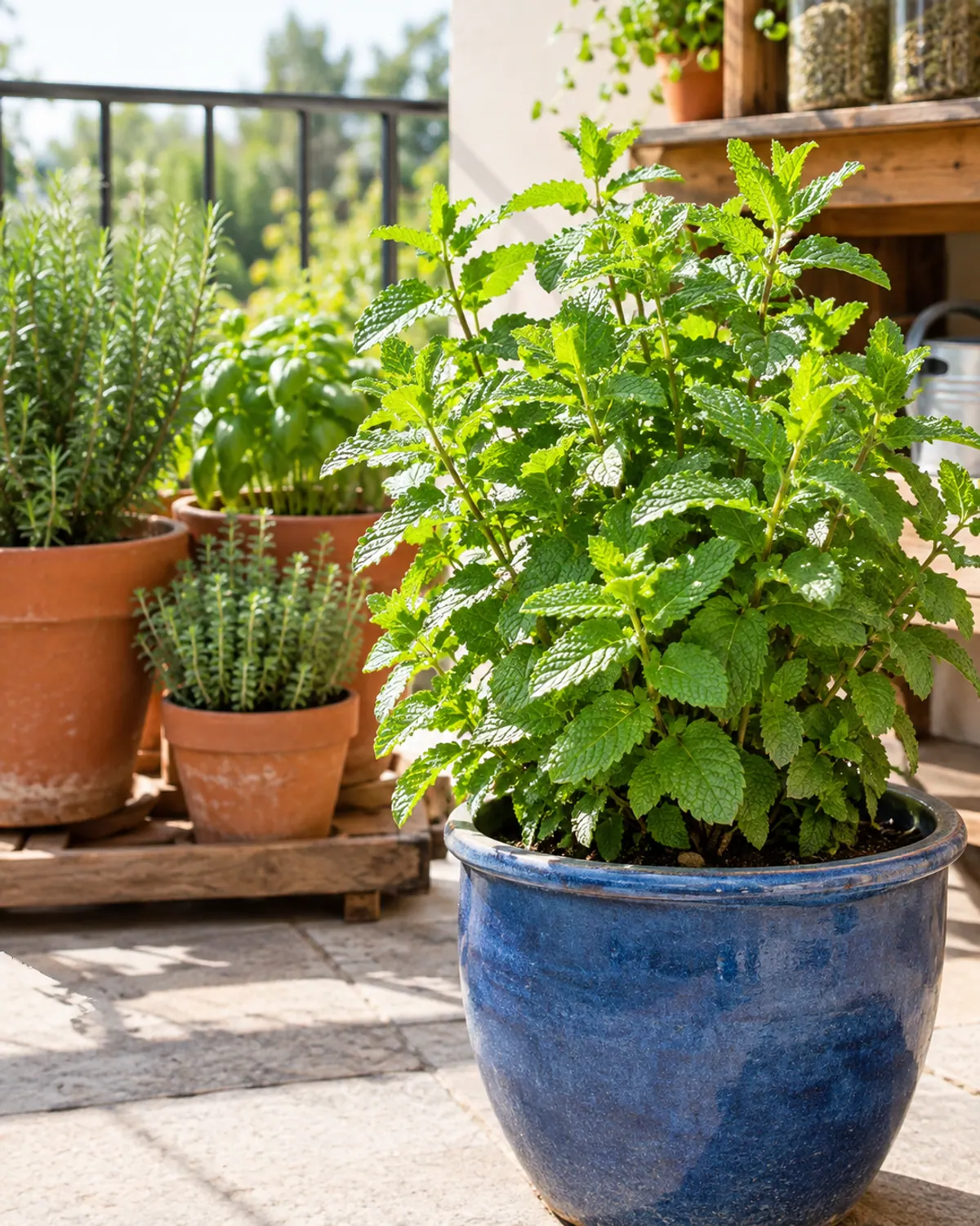
Mint spreads by runners and will take over any pot it shares. Give it a wide container of its own, and keep it off bare soil, where runners can escape through the drainage hole. Spearmint and peppermint both grow well in part sun and like steady moisture.
- Trim mint often to keep it bushy and stop it from flowering.
16A raised planter on legs
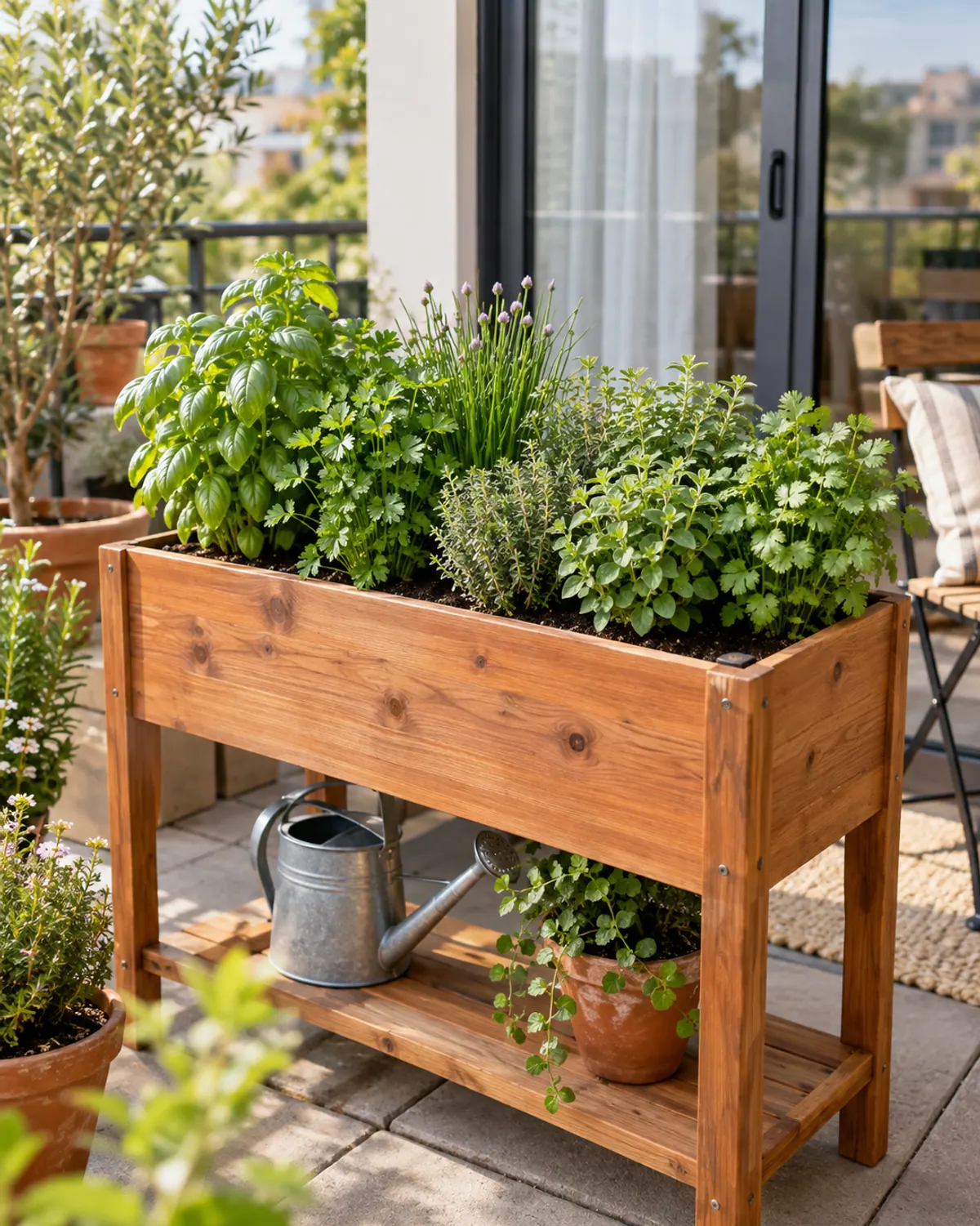
A raised planter on legs is a small raised bed at waist height, so there is no bending and no ground needed. Plant herbs in rows, taller ones at the back. Look for untreated cedar or a lined box, and note the depth: 8 inches or more suits most herbs.
- Check that your patio or balcony can hold the weight once the soil is wet.
A waist-high herb bed for patios with no garden soil.
17A self-watering trough
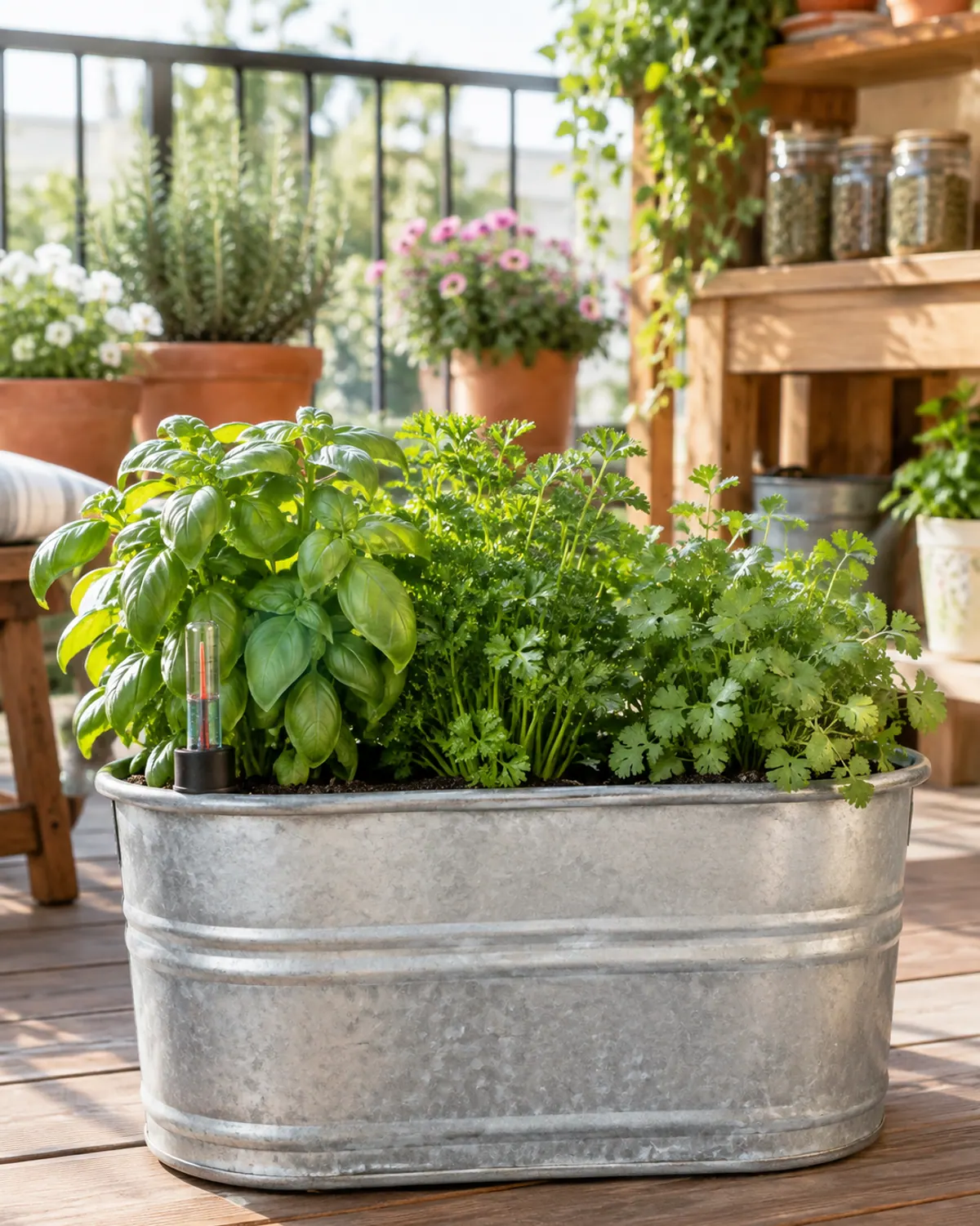
Self-watering planters hold a reservoir under the soil, so thirsty herbs like basil, parsley and cilantro stay evenly moist through hot weeks. They are a big help if you travel or forget to water. Skip them for rosemary and thyme, which prefer to dry out.
- Empty the reservoir during long rainy spells so roots don't stay soggy.
Themed herb garden ideas for small spaces
A theme helps you choose. Pick one use, then plant only the herbs that fit it.
18A tea herb container
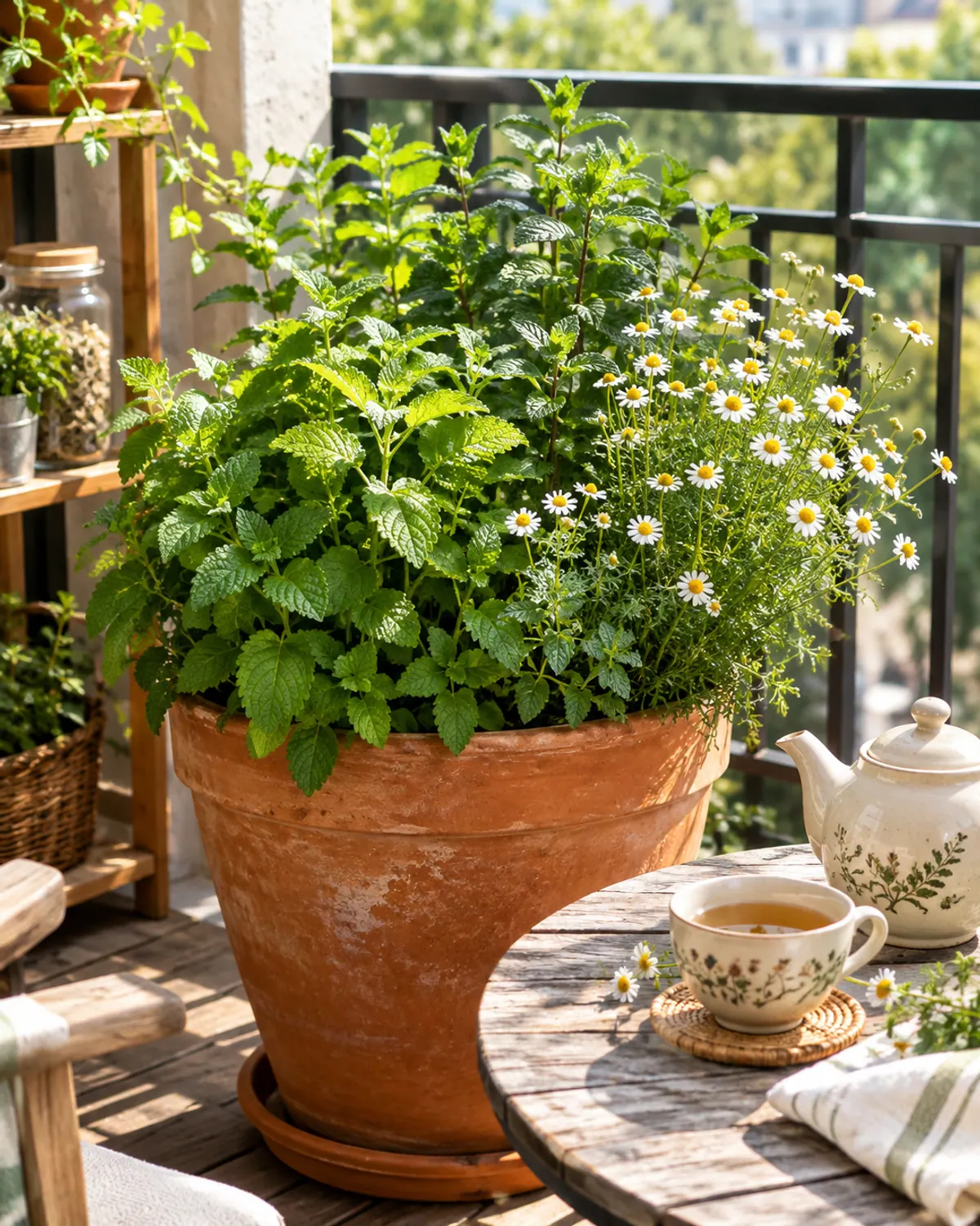
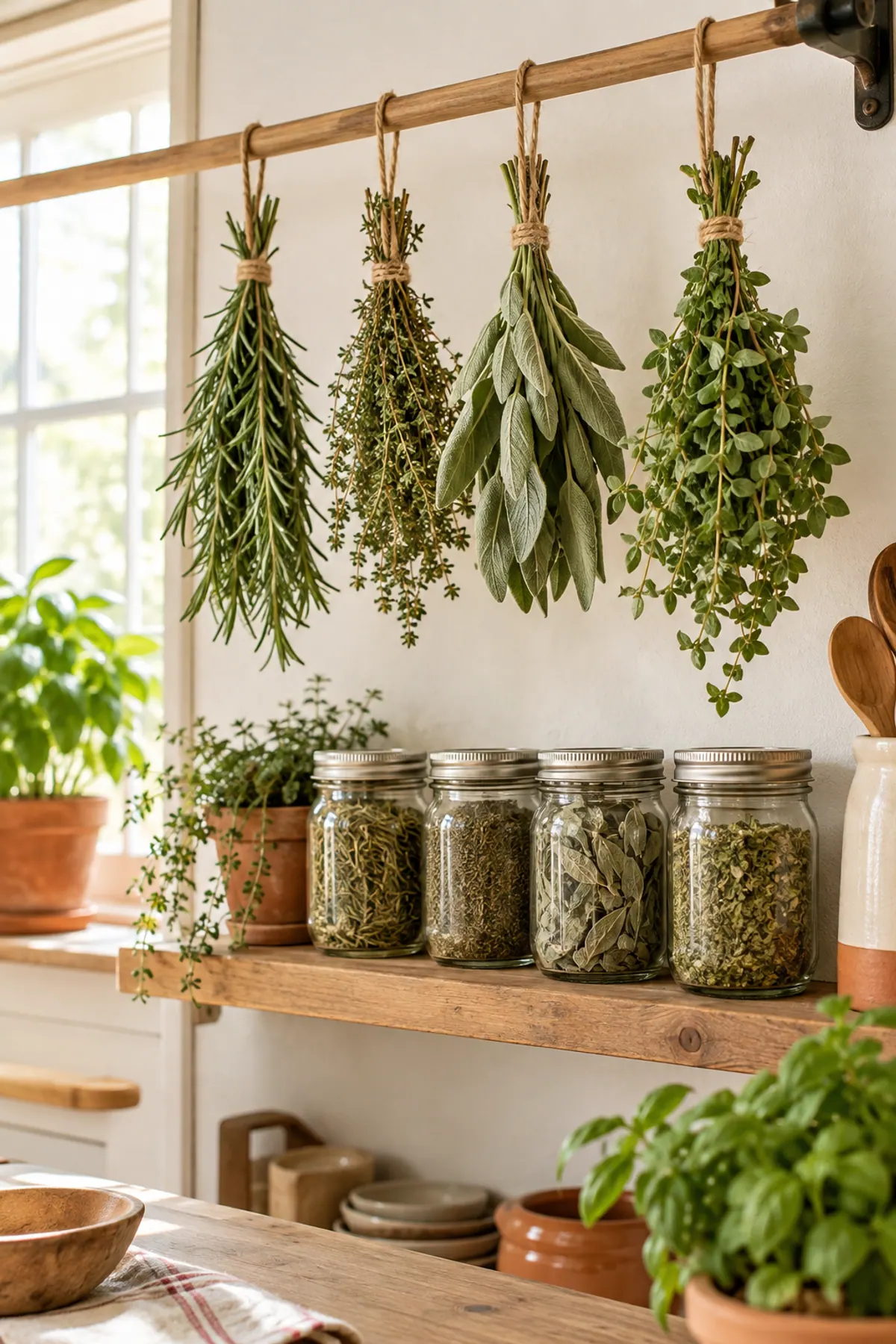
Lemon balm, peppermint and German chamomile grow together in a large pot and are classic picks for home tea. Chamomile wants full sun; mint and lemon balm handle a bit of shade. Dry the leaves and flowers with our guide on how to dry herbs at home.
- Mint and lemon balm both spread; trim them back so chamomile gets light.
19A pollinator herb pot
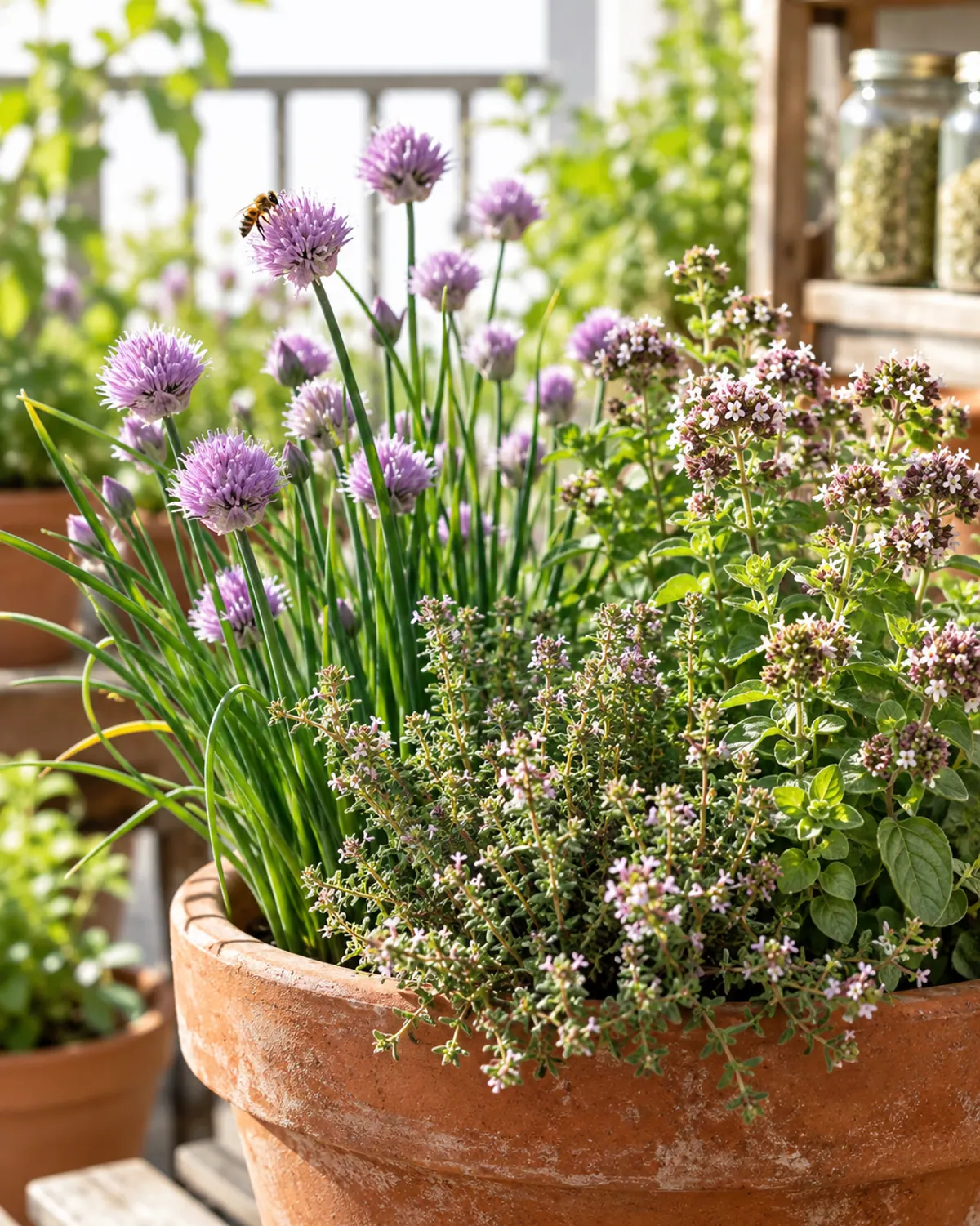
Let a few herbs bloom and bees will find them. Chives, thyme and oregano flowers attract pollinators even on a high balcony. Keep a second pot of the same herbs for cutting, since leaves get tougher once plants flower.
- Skip pesticides on any herb you let flower for pollinators.
20A shade herb corner
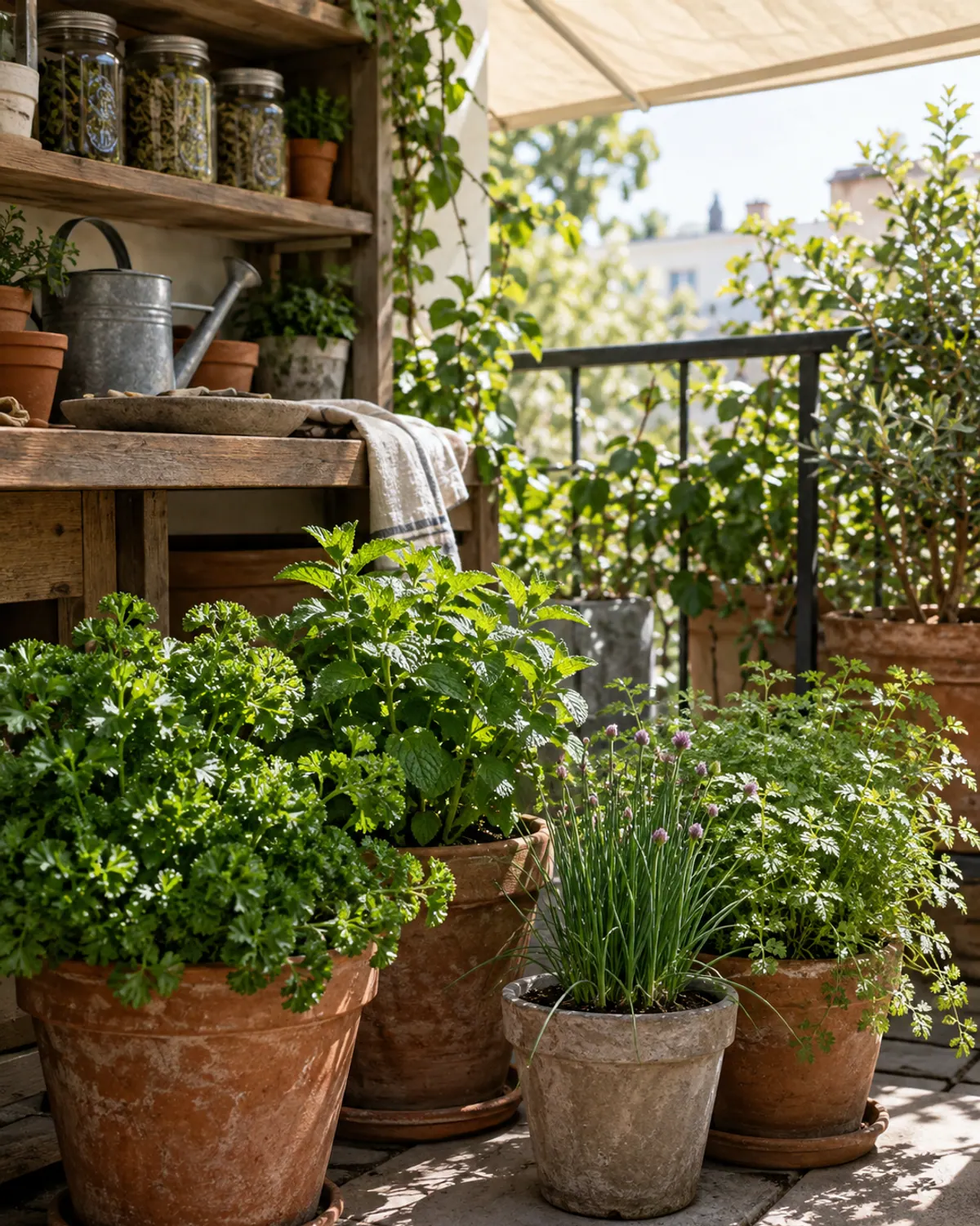
Only 3 to 4 hours of sun? Parsley, mint, chives and chervil still grow, just a little more slowly. Leave the sun lovers (basil, rosemary, thyme) for a brighter spot. Shady pots dry out more slowly, so water less often.
- Morning sun with afternoon shade is the best shade setup for herbs.
21Group pots by sun and water
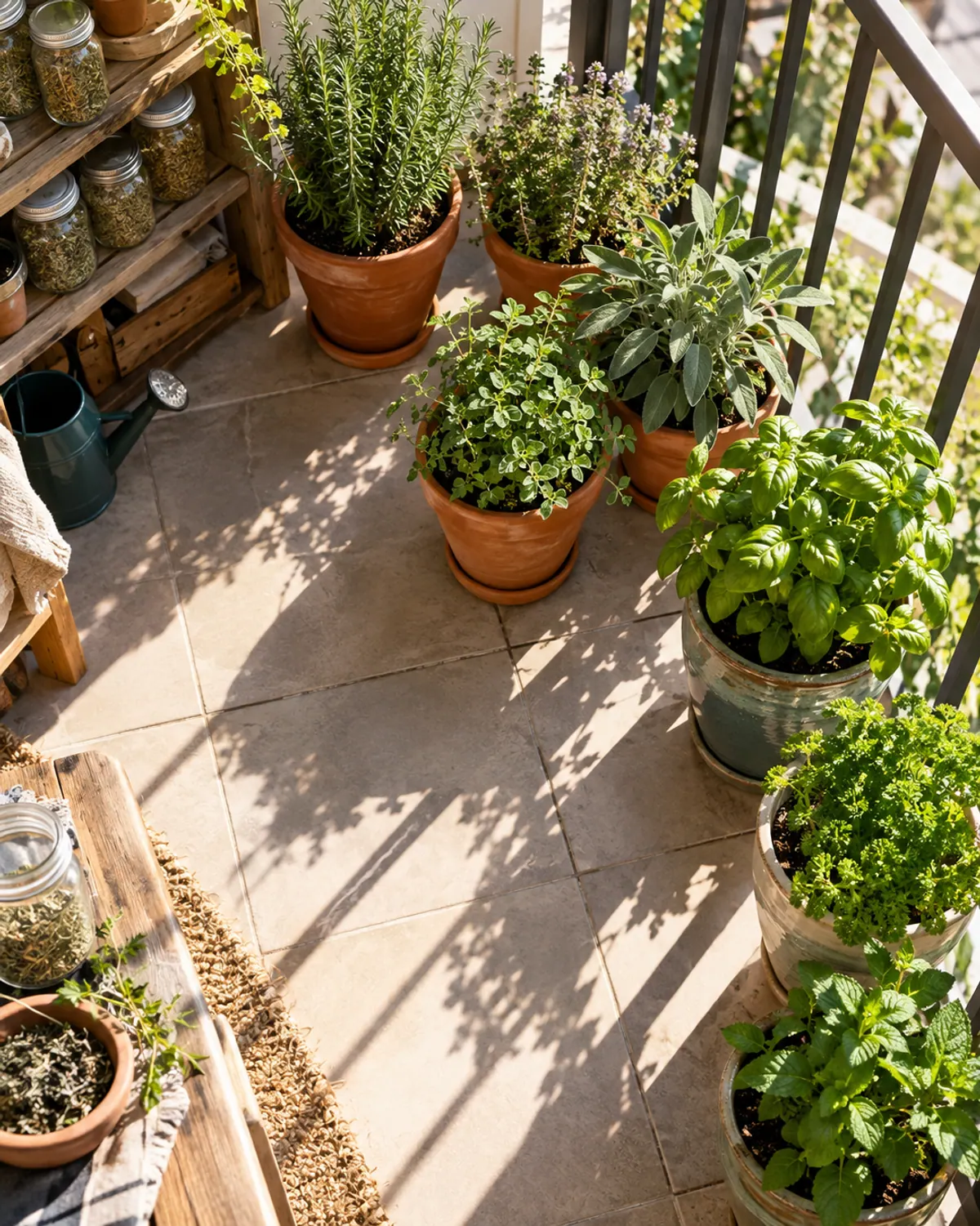
The best herb garden design for a small space is often just smart grouping. Put the dry-loving Mediterranean herbs together in the sunniest spot, and the thirsty herbs together where you can water them easily. You water each group the way it likes, and nothing gets drowned or parched.
- Use terracotta for the dry group and glazed or plastic pots for the thirsty group.
Bonus: how to plan your herb garden layout before you buy
Most herb garden ideas online start with the planter. A better start is the light. Spend one sunny day noting when direct sun hits your windowsill, balcony or patio, and for how long. Most culinary herbs want at least 6 hours of direct sun; a few tolerate less.
| Herb | Sun | Water | Minimum pot | Group |
|---|---|---|---|---|
| Rosemary | 6+ hours | Let top inch dry | 10 to 12 in | Dry |
| Thyme | 6+ hours | Let top inch dry | 6 in | Dry |
| Sage | 6+ hours | Let top inch dry | 8 to 10 in | Dry |
| Greek oregano | 6+ hours | Let top inch dry | 6 to 8 in | Dry |
| Basil | 6 to 8 hours | Evenly moist | 8 in | Thirsty |
| Parsley | 4 to 6 hours | Evenly moist | 8 in deep | Thirsty |
| Chives | 4 to 6 hours | Evenly moist | 6 in | Thirsty |
| Mint | 4 to 6 hours | Evenly moist | 10 in, alone | Thirsty |
| Cilantro | 4 to 6 hours, cool | Evenly moist | 8 in deep | Thirsty |
Pot sizes are starting points; bigger pots hold more water and need less fuss. In Zone 7 and colder, plan to bring rosemary indoors for winter, and see our guide to growing rosemary indoors for how.
Before you buy planters
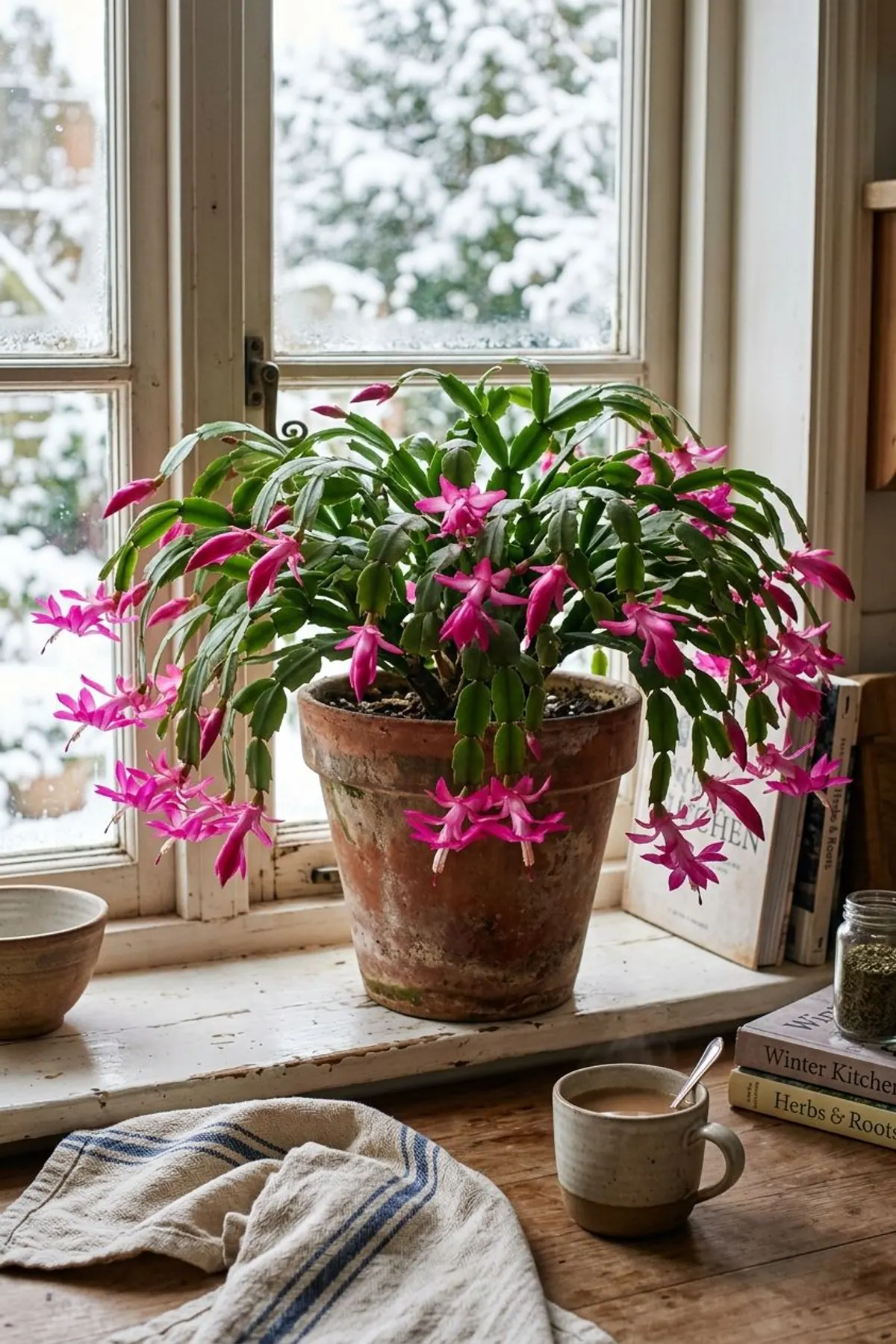
Planning a winter windowsill too? See the indoor herb garden guide, and for a cozy indoor look, try our gardening aesthetic ideas for a winter plant corner. A flowering Christmas cactus is a lovely companion for the same bright window.
Shop small-space herb garden planters
Shop the look
- Start here
Terracotta pots with saucers
$20-40 for a set
Classic, breathable pots for the dry-loving herb group.
Check price on Amazon for Terracotta pots with saucers -
Self-watering herb planter
$20-50
Keeps basil and parsley evenly moist through hot weeks.
Check price on Amazon for Self-watering herb planter -
Fabric grow bags, 3 to 5 gallon
$15-25 for a pack
Light, cheap and easy to store over winter.
Check price on Amazon for Fabric grow bags, 3 to 5 gallon -
Felt vertical pocket planter
$15-30
Fits a dozen small herbs on one balcony wall.
Check price on Amazon for Felt vertical pocket planter -
Plant markers
$8-15
Helps you tell look-alike seedlings apart.
Check price on Amazon for Plant markers
We earn from qualifying purchases, which never changes what we recommend. Read our disclosure and editorial guidelines.
Frequently asked questions
What herbs grow well together in one pot?
Herbs with the same water needs. Rosemary, thyme, sage and oregano like dry, gritty soil and share a pot well. Basil and parsley both like steady moisture. Keep mint in a pot of its own.
How much sun does a herb garden need?
Most culinary herbs need at least 6 hours of direct sun a day. Parsley, mint, chives and chervil can manage with about 3 to 4 hours, though they grow more slowly.
What is the best planter for a small herb garden?
Terracotta pots with drainage holes suit dry-loving herbs, while self-watering planters suit thirsty ones like basil. On balconies, railing planters and vertical pocket planters save floor space.
How do I start a herb garden for beginners?
Start with 4 or 5 herbs you cook with, such as basil, parsley, chives, thyme and mint. Use pots with drainage holes and bagged potting mix, place them in your sunniest spot, and water when the top inch of soil is dry.
Can you grow a herb garden on a balcony?
Yes. Balconies are often the sunniest spot in an apartment. Use railing planters set on the inside of the rail, vertical planters or a few large pots, and check your building's rules on weight first.
Save it for later
Pin this to your Herb Garden board so it's there when you need it.
Save to Pinterest