This post contains affiliate links. As an Amazon Associate we earn from qualifying purchases, at no extra cost to you. Read our disclosure.
Safety first: Herbs can be powerful. If you are pregnant, nursing, take medication or have a health condition, check with your doctor or pharmacist first. Please read our herbal & garden safety notes before you start.
Key takeaways
- A south window suits rosemary, thyme, oregano and sage; an east window suits parsley, chives and mint; a west window suits basil in winter; a north window needs a grow light for almost every herb
- Iowa State Extension says most herbs need around eight hours of direct light a day indoors, so a sill that gets less needs a lamp
- Sill depth sets the pot size: a 4 inch pot with its saucer needs a sill about 5 inches deep
- A 36 inch sill holds about seven 4 inch pots or five 6 inch pots with a 1 inch gap between them
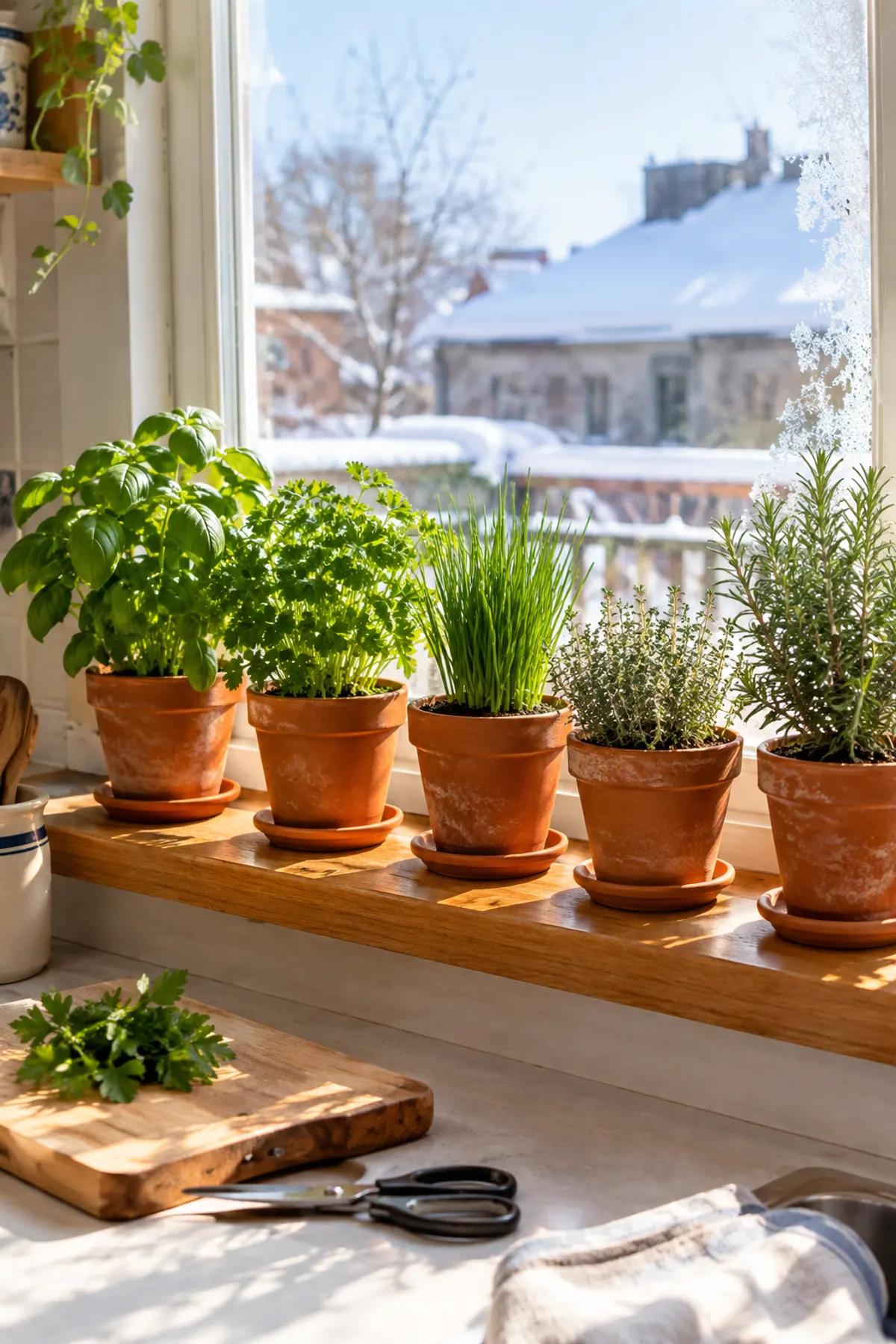
- Keep leaves off cold glass on freezing nights and keep pots away from the heat of a radiator below the sill
In this post11 sections
- Windowsill herb garden ideas start with your window direction
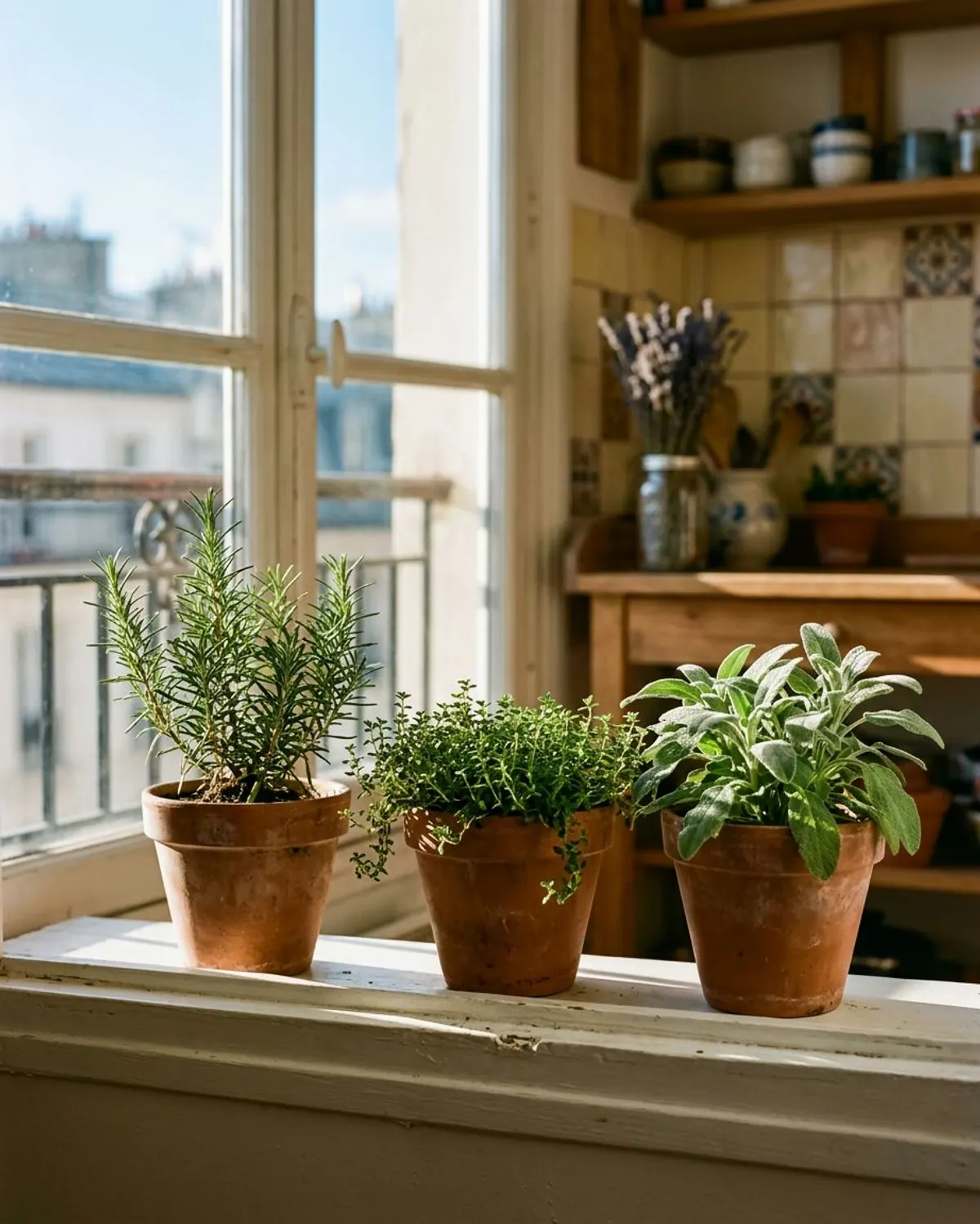
- South window: the Mediterranean herb sill
- East and west windows: split the herbs by heat
- North window: use it as a grow light spot
- Windowsill herb garden ideas by sill depth
- Sill math: how many herb pots fit
- Narrow ledge ideas when the sill is too shallow
- Winter windowsill care: cold glass, radiators and dry air
- Which herbs are safe around pets and pregnancy
- Shop the windowsill herb garden
- FAQ
Windowsill herb garden ideas start with your window direction
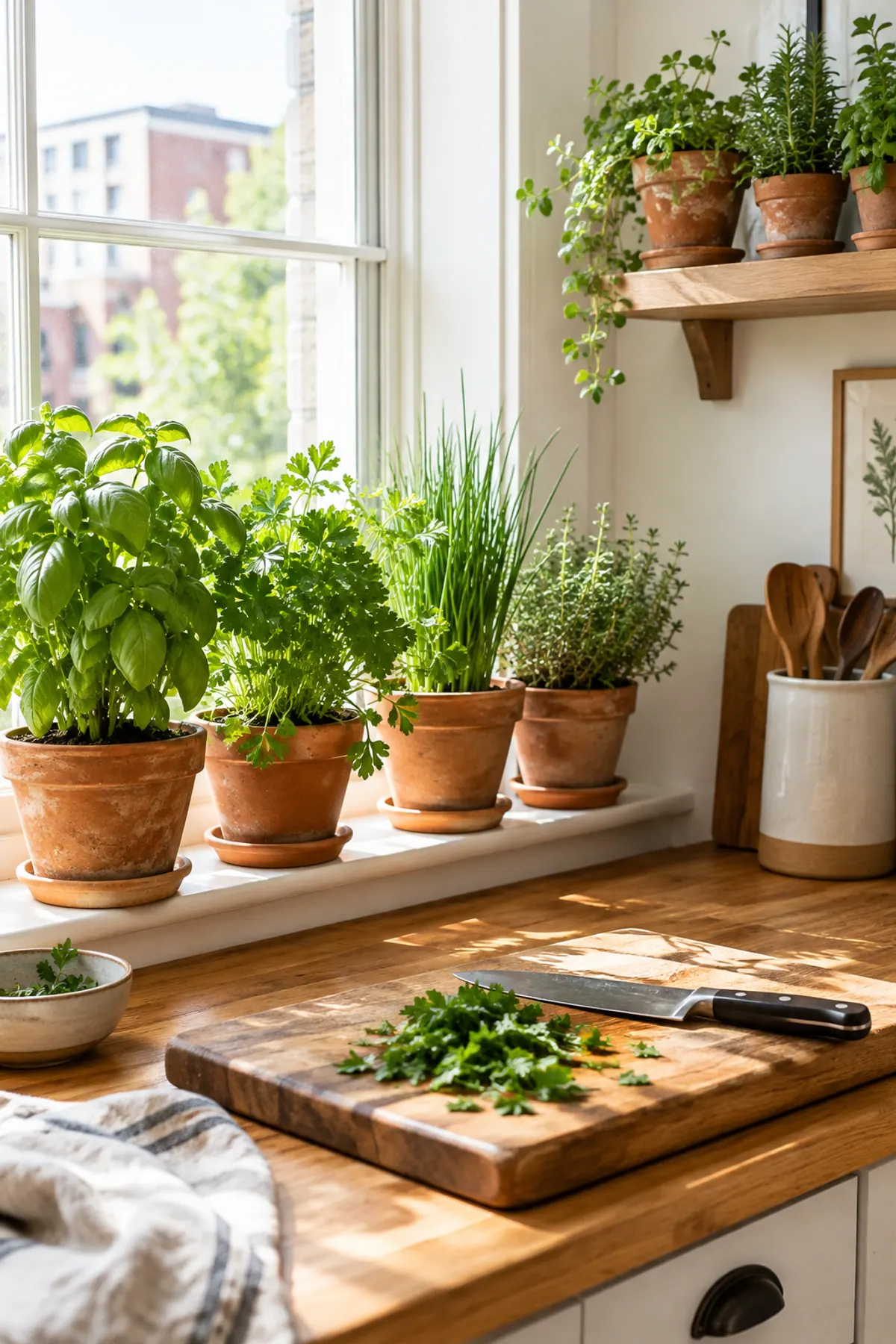
Light is the make-or-break fact for herbs, and it changes by direction. Iowa State Extension (updated 2024-03-19, read 2026-10-24) calls a sunny south window a strong choice and says bright east or west windows can be good too. It also says most herbs need around eight hours of direct light each day indoors.
Winter makes the gap bigger. The sun sits low, days are short and the glass is colder, so a window that works in June may give half the light in December. Use the table as a starting point, then check your own sill with the shadow test below.
| Window | Light you get | Best herbs on this sill | If you want more |
|---|---|---|---|
| South | Longest direct sun, strongest in winter | Rosemary, thyme, oregano, sage, bay, basil | Add a lamp on short, cloudy days |
| West | Hot afternoon sun, can scorch leaves by glass | Basil, oregano, thyme, savory | Pull pots back 4 to 6 inches in strong sun |
| East | Gentle morning sun, then bright shade | Parsley, chives, cilantro, mint, chervil | A lamp in the afternoon extends the day |
| North | No direct sun, weak light all year | Mint and chives at best, slowly | Treat it as a grow light spot, not a sun spot |
A quick way to rate your own sill: stand at the window around noon and hold a hand over the pot spot. A sharp shadow means direct sun, a soft one means bright shade and no shadow means the spot is too dim for most herbs without a lamp. Our low-light herb guide has the full window-distance test and the herbs that cope with dim rooms.
South window: the Mediterranean herb sill
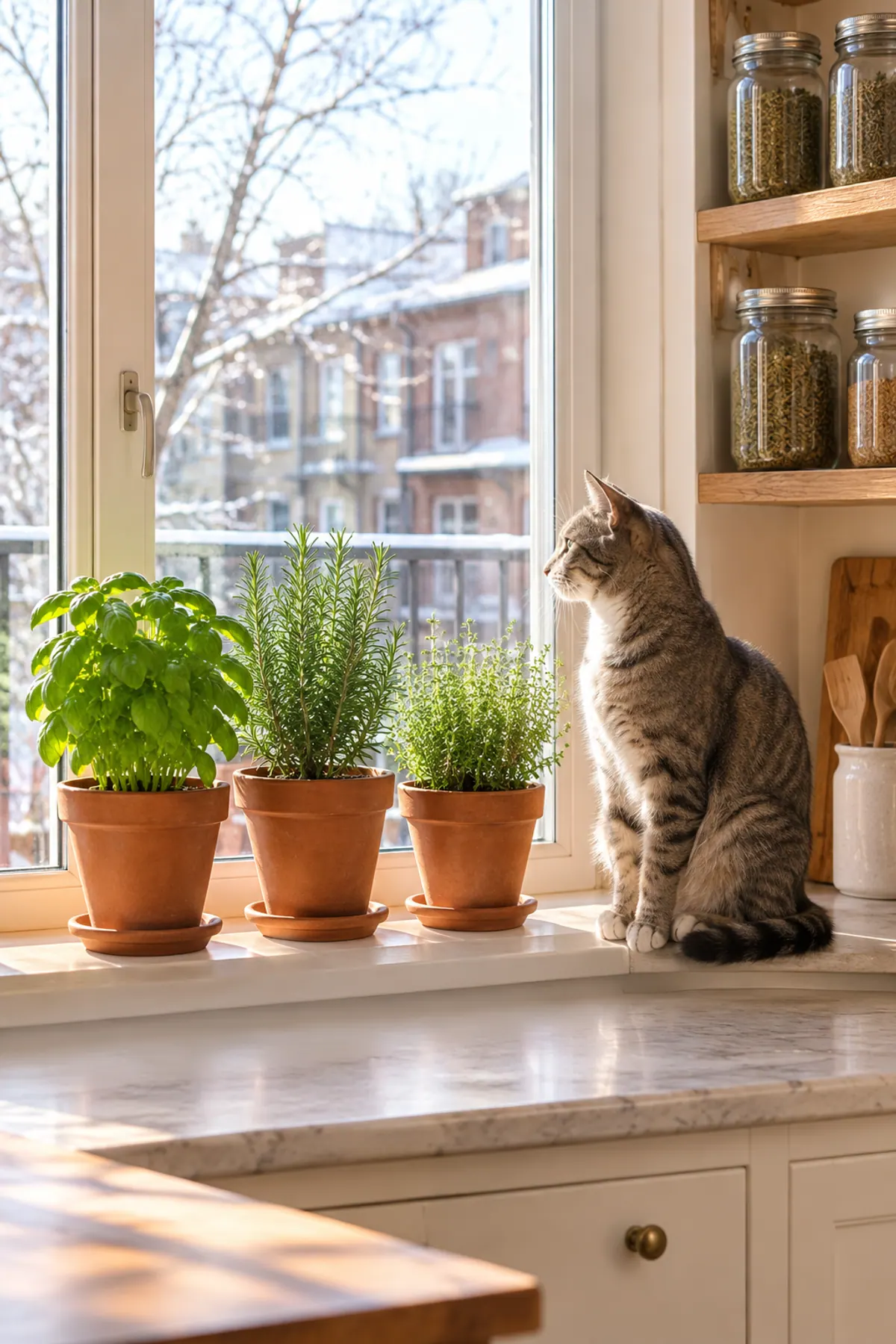
A south sill is where rosemary, thyme, oregano and sage belong. They come from dry, sunny hillsides and want the most light you can give. Water them only when the top inch of mix is dry, because wet roots kill them faster than a cool room does.
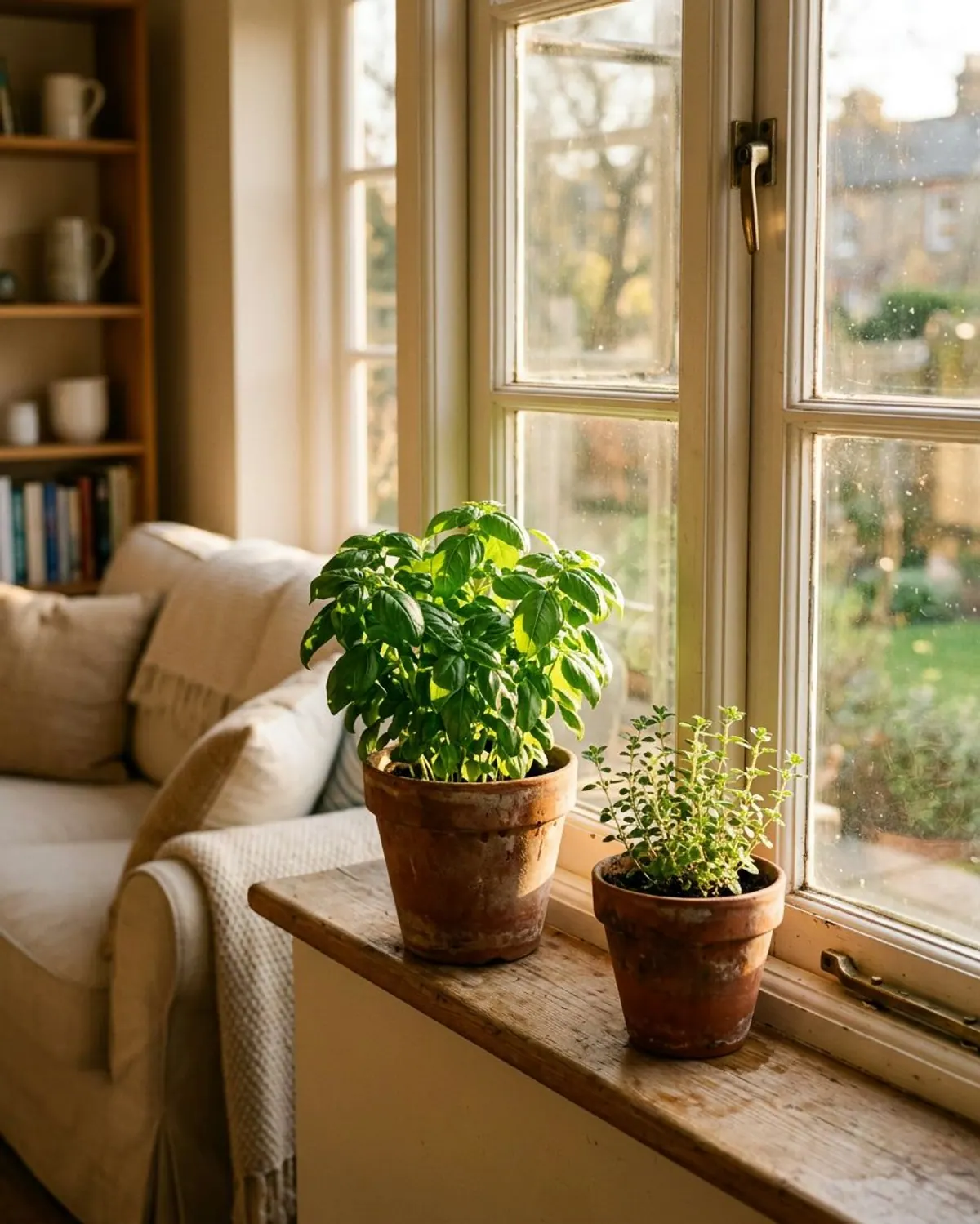
Basil also grows here in winter, but it wants warmth. Keep it away from the glass on cold nights and give it the warmest end of the sill. For tips on keeping a basil plant alive until spring, see our indoor basil care guide.
East and west windows: split the herbs by heat
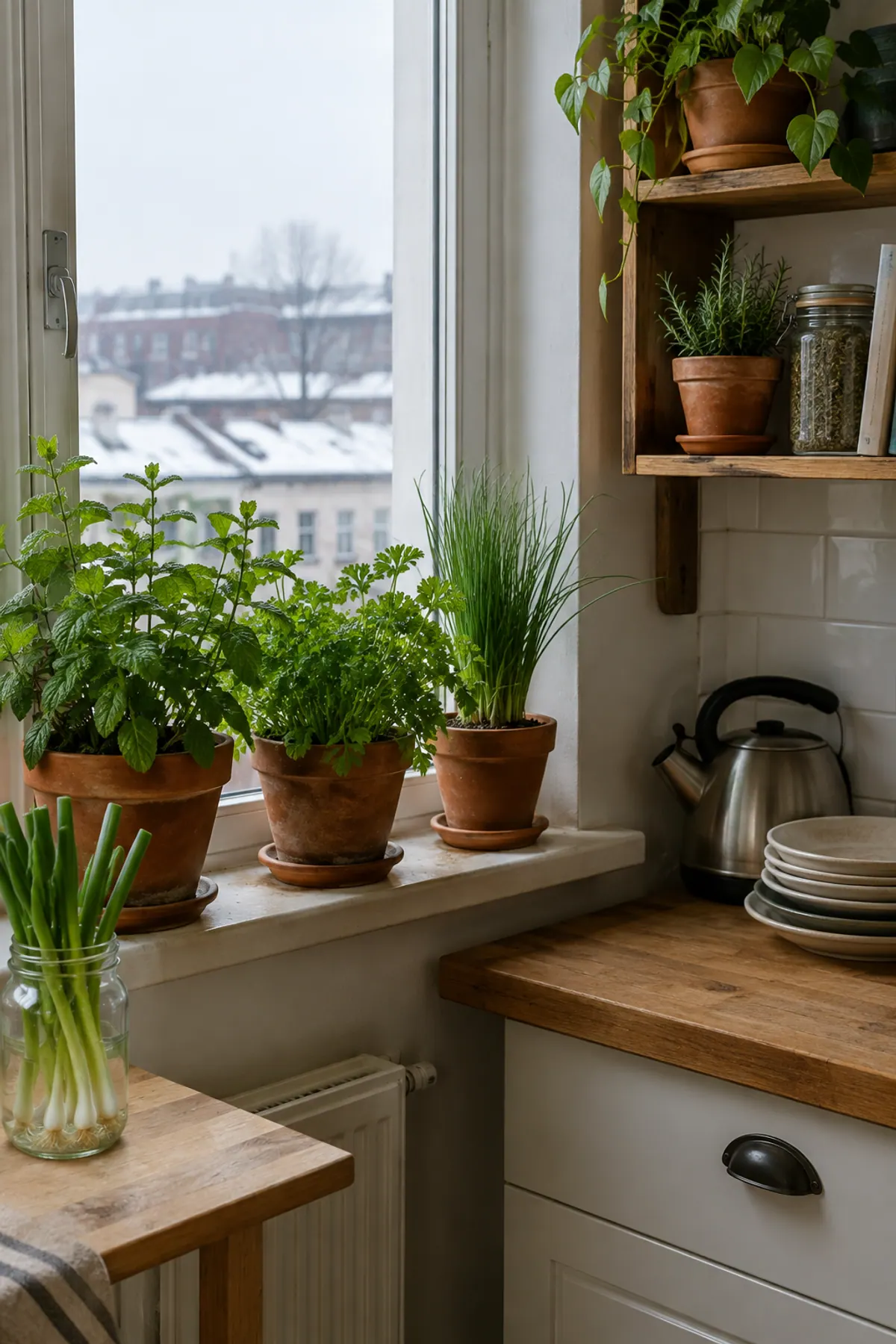
An east window gives cooler morning sun that parsley, chives, cilantro and mint tolerate well. Cilantro bolts quickly in warm rooms, so the cooler east sill suits it better than a south one. If your east sill is bright but the sun leaves by noon, add a lamp for a few afternoon hours.
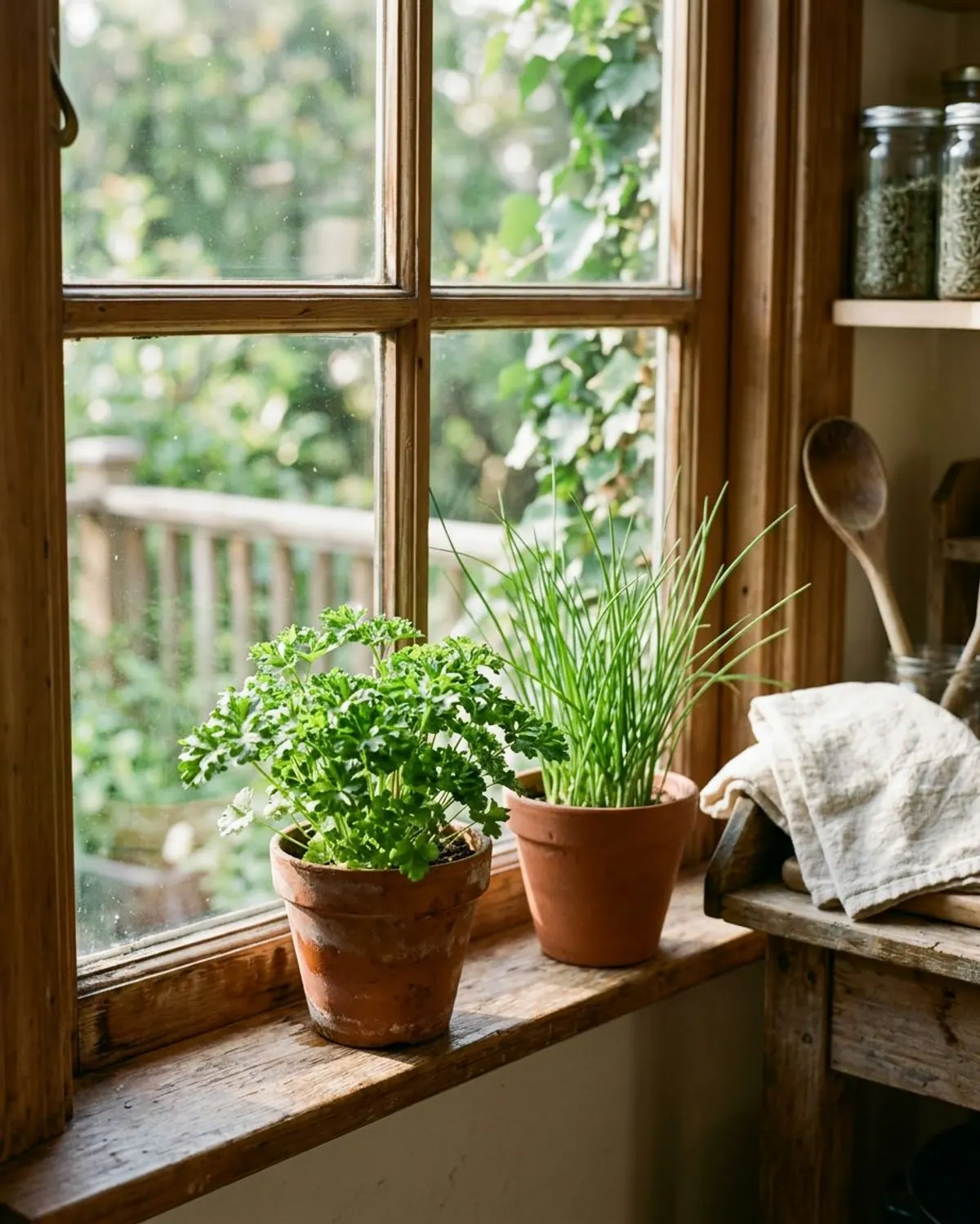
A west window gives strong afternoon sun, and glass can scorch leaves on bright days. That heat suits basil and oregano, so give them the west sill and pull pots back a few inches from the glass in direct sun. West sills are also warmer at night than north ones, which basil likes.
North window: use it as a grow light spot
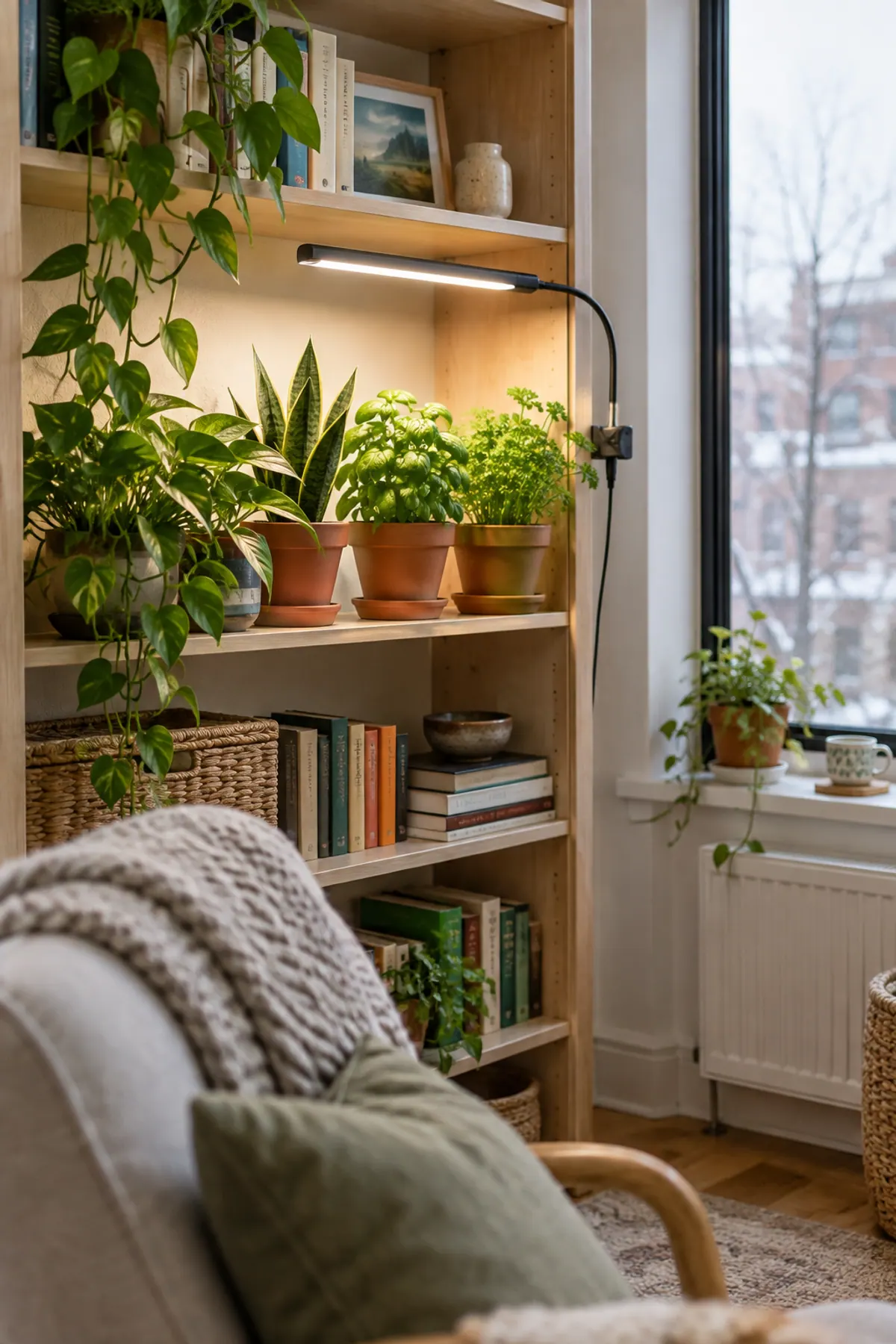
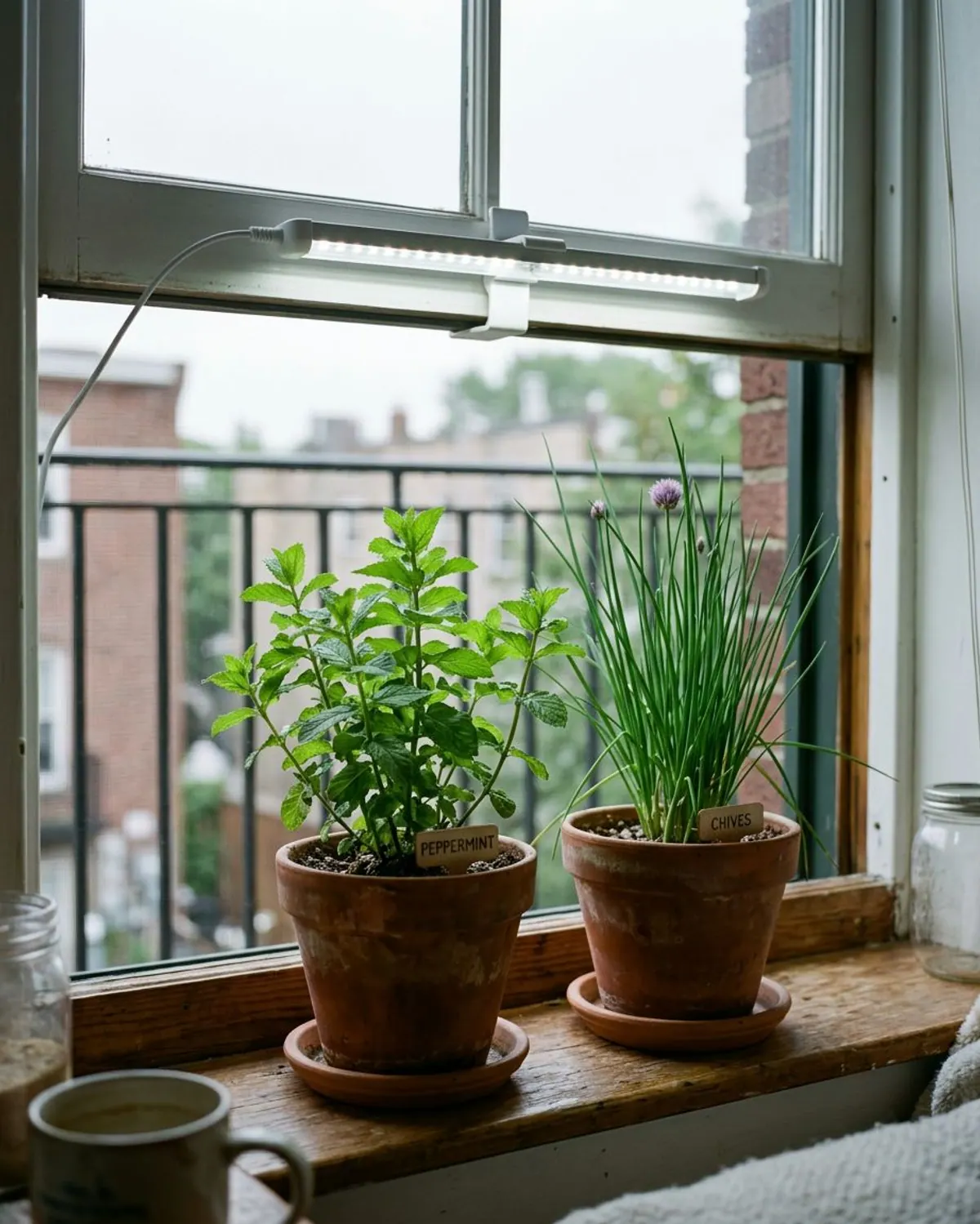
A north window has no direct sun, so most herbs stretch, turn pale and stop growing there. That does not make it useless. A clip-on or strip LED grow light on a timer turns a dim sill into a working one, and the sill is a handy place for it because the pots are already at hand.
Mint and chives are the most forgiving here; the rest should have a lamp for 12 to 14 hours a day. Our grow lights guide compares clip-ons, bars and shelf lights, and the indoor herb garden guide has the eight herbs that handle winter best.
Windowsill herb garden ideas by sill depth
Depth decides what you can put on the sill. A pot is wider than it looks once you add its saucer, so a 4 inch pot typically needs about 5 inches of sill and a 6 inch pot about 7. Measure from the glass to the front edge before you buy anything.
| Sill depth | What fits | Best setup |
|---|---|---|
| Under 4 inches | Not pots; only small jars or a single 3 inch pot | Clamp-on or wall-mounted shelf, or hanging jars |
| 4 to 5 inches | 4 inch pots with saucers, one row | Narrow tray with 4 inch pots, or a slim window box |
| 6 to 8 inches | 4 to 6 inch pots, one row or a staggered pair | A long planter box or a tray of three 6 inch pots |
| 9 inches or more | Two rows or one large planter | A tiered stand or a deep window box for a full herb set |
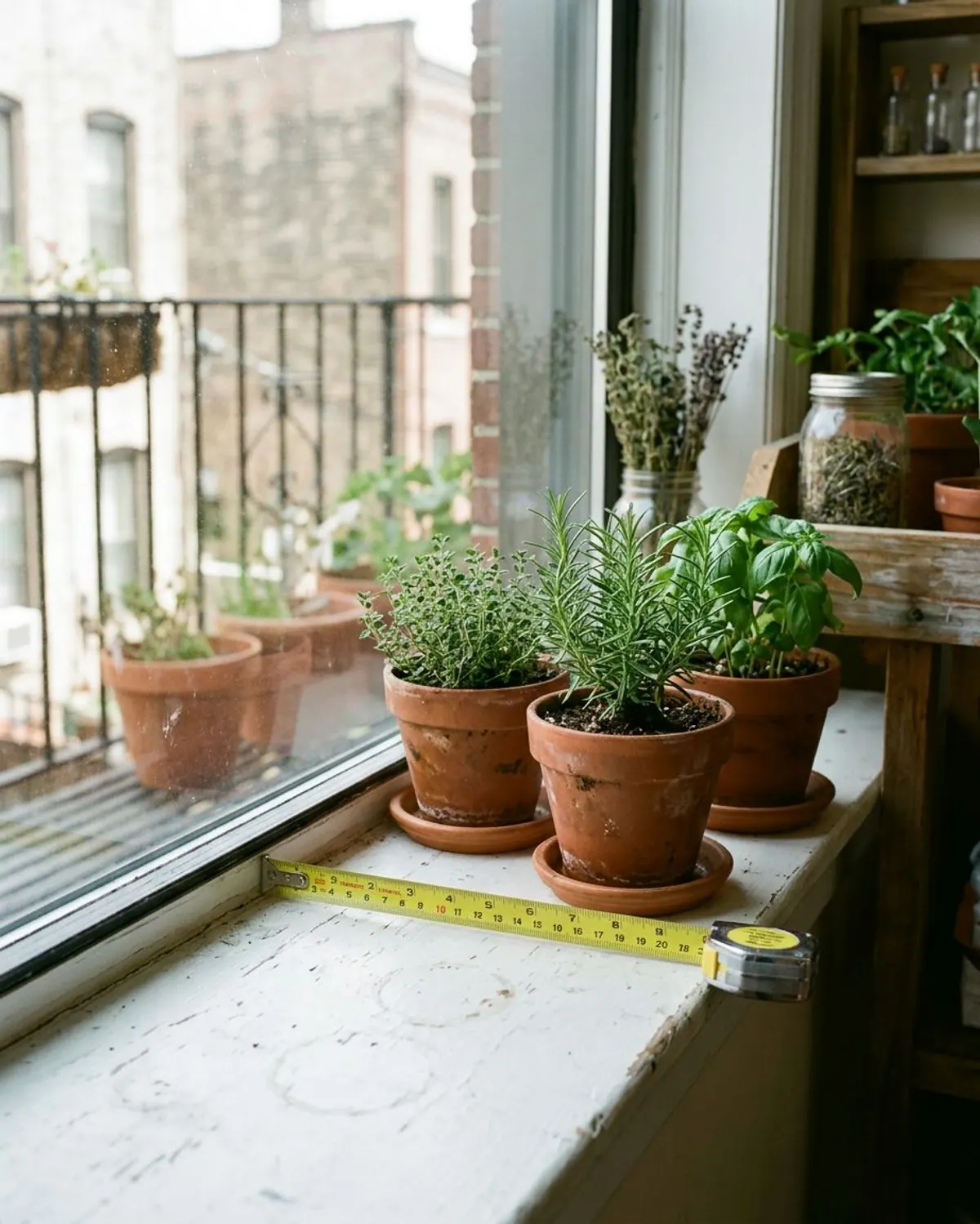
Sill math: how many herb pots fit
Here is the arithmetic we use to plan a row. Count the pot width plus a 1 inch gap for air between plants, then divide the sill length by that. The 1 inch gap matters because crowded herbs trap damp air, which invites mildew.
| Sill length | 4 inch pots | 6 inch pots |
|---|---|---|
| 24 inches | 5 pots | 3 pots |
| 36 inches | 7 pots | 5 pots |
| 48 inches | 9 pots | 6 pots |
So a 36 inch south sill holds seven 4 inch pots: rosemary, thyme, oregano, sage, a bay seedling, basil and one spare for whatever you want to try. Small pots dry out faster, so check them every few days in heated rooms.
Narrow ledge ideas when the sill is too shallow
If the sill is under 4 inches deep, build up or hang. A clamp-on shelf that grips the window frame adds a second row above the sill. A wall rail beside the window with hanging pots or jars gives you light without using any sill. Both keep the glass clear for a lamp.
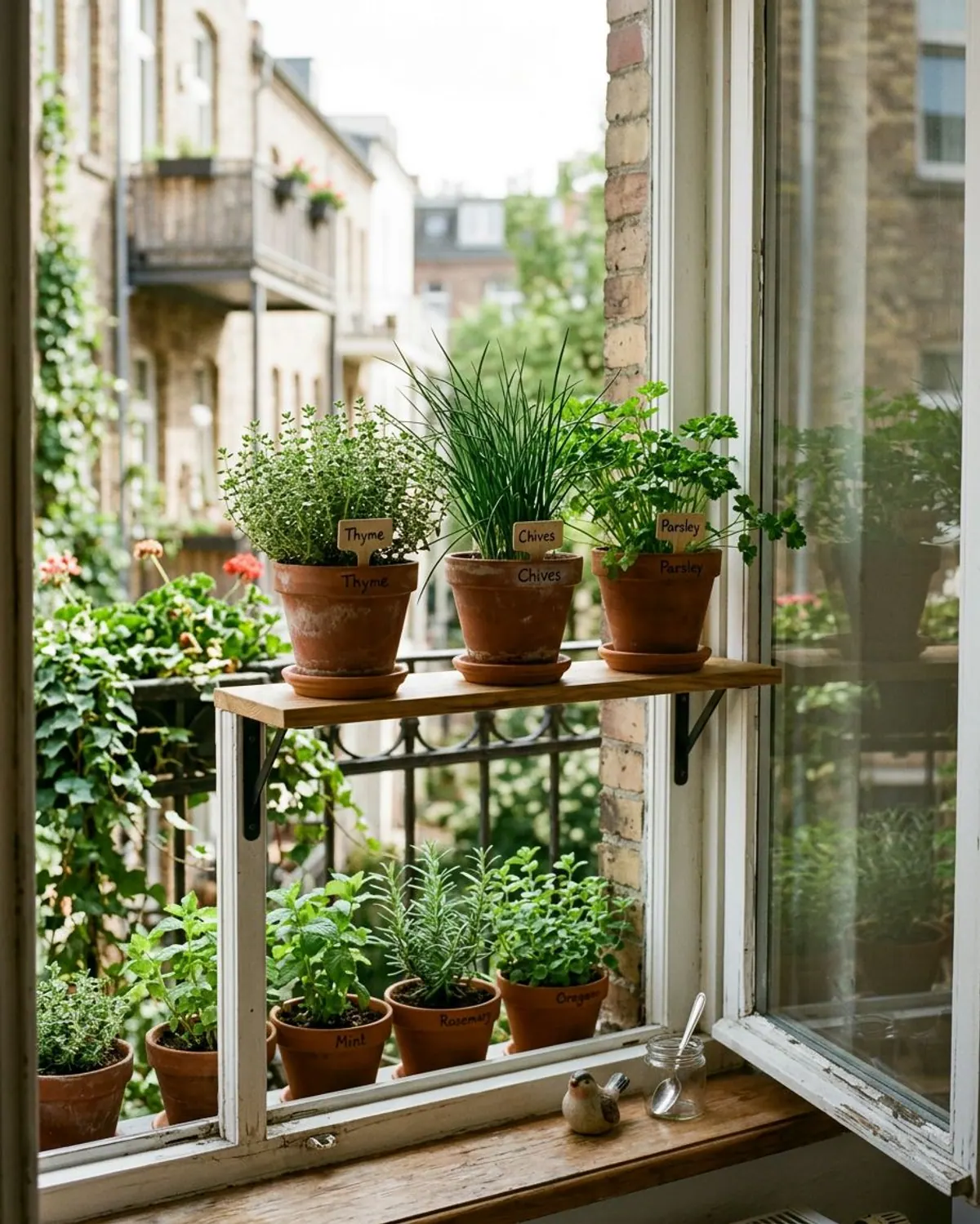
Hanging jars work best for herbs that tolerate a little drying, such as thyme and chives. Use a jar with drainage or add a layer of gravel and water sparingly. For more space-saving layouts on counters and walls, see our kitchen herb garden ideas.
Winter windowsill care: cold glass, radiators and dry air
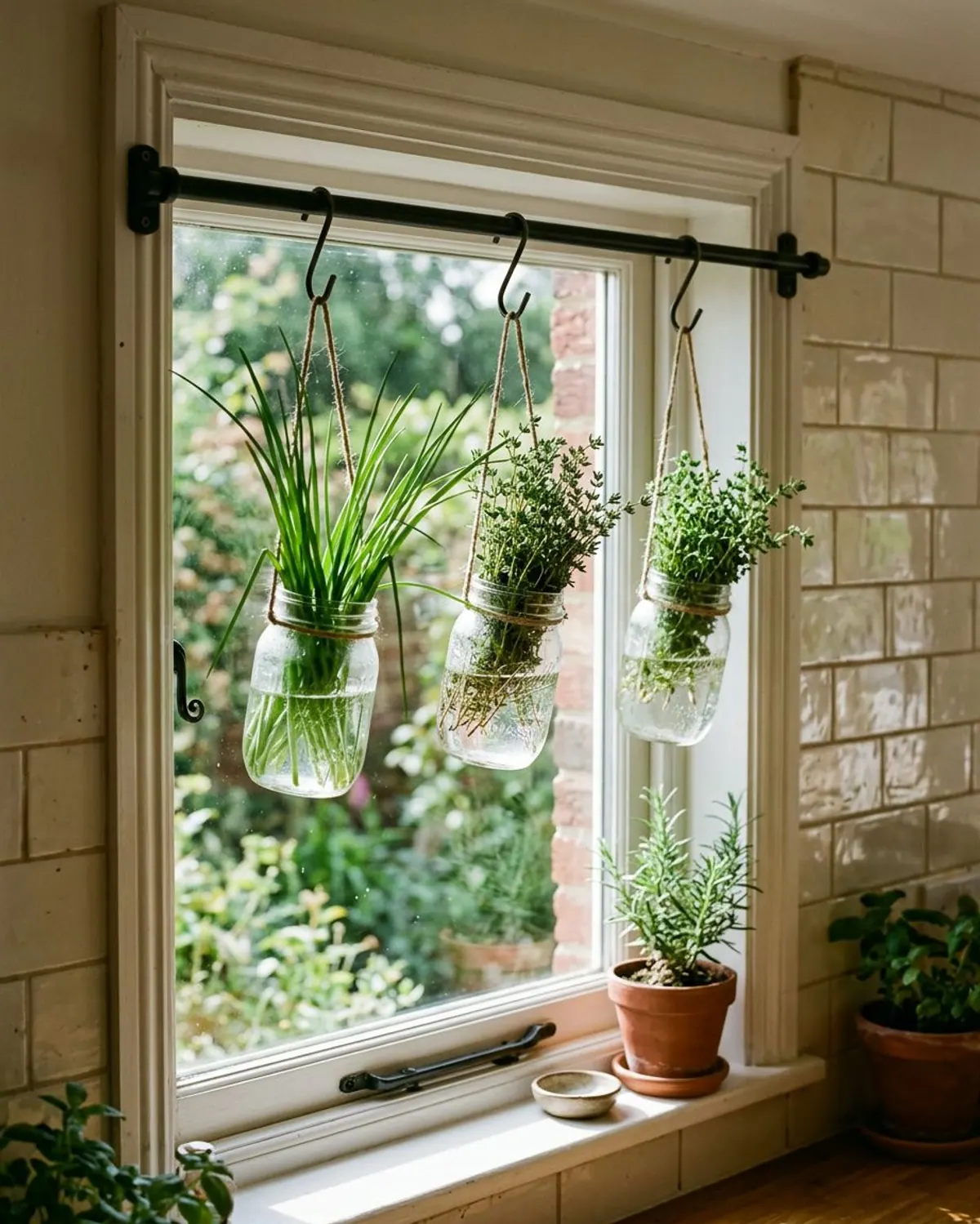
Three things hurt herbs on a winter sill more than the direction does.
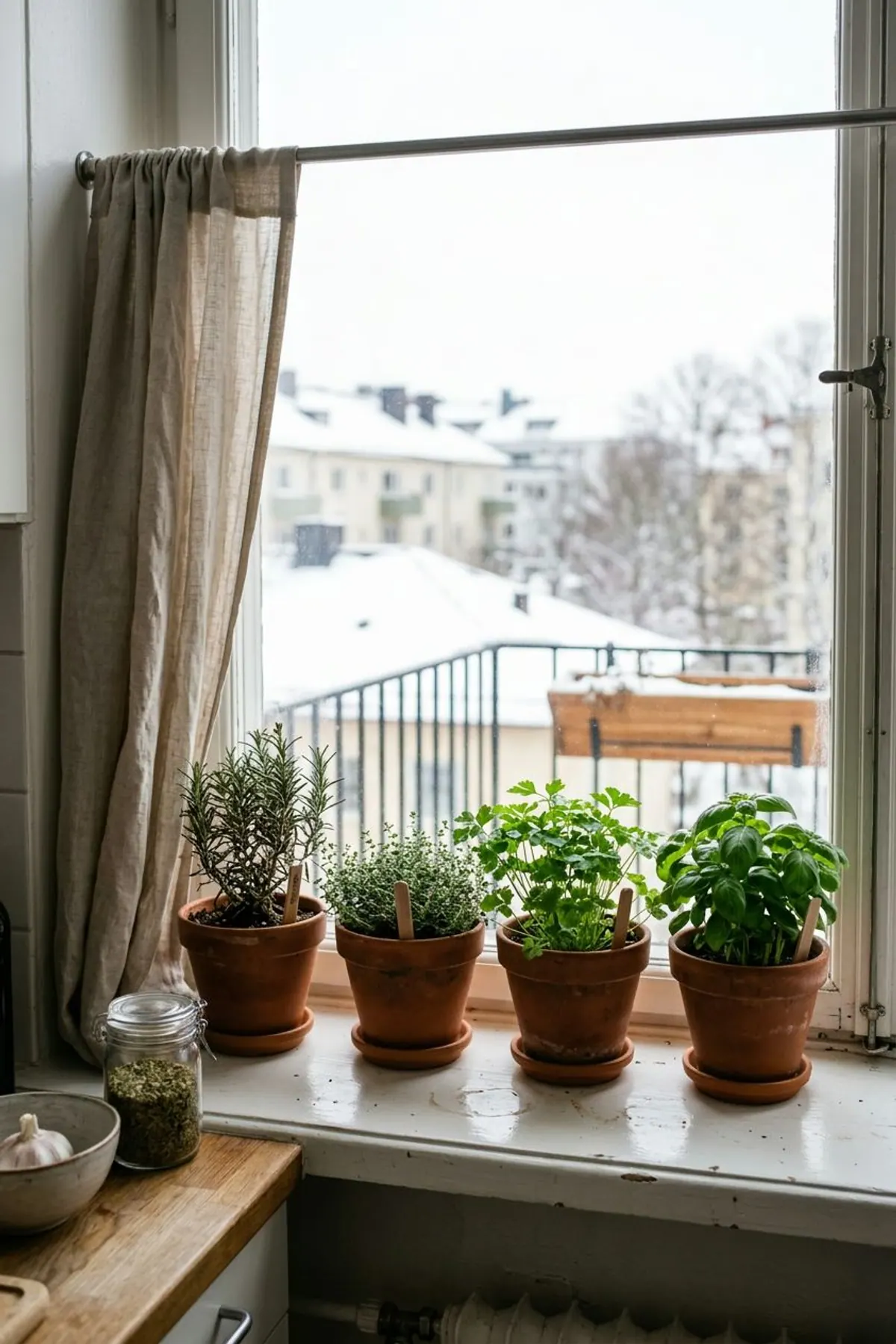
Cold glass: leaves touching a freezing pane can blacken, so move pots back or pull them into the room on very cold nights.
Heat below: a radiator or vent under the sill dries soil in days, so put a board or tray between them.
Dry air: heated rooms are very dry. Group pots on a tray of pebbles with a little water in the bottom (the pot should sit above the water), and water from the top only when the mix feels dry. For the full care list, our winter houseplant guide covers humidity and watering.
Which herbs are safe around pets and pregnancy
This article is general gardening information, not medical advice. Culinary amounts of herbs are normal food, but if you are pregnant, breastfeeding or taking medication, ask your doctor or pharmacist before using herbs in teas, oils or remedies.
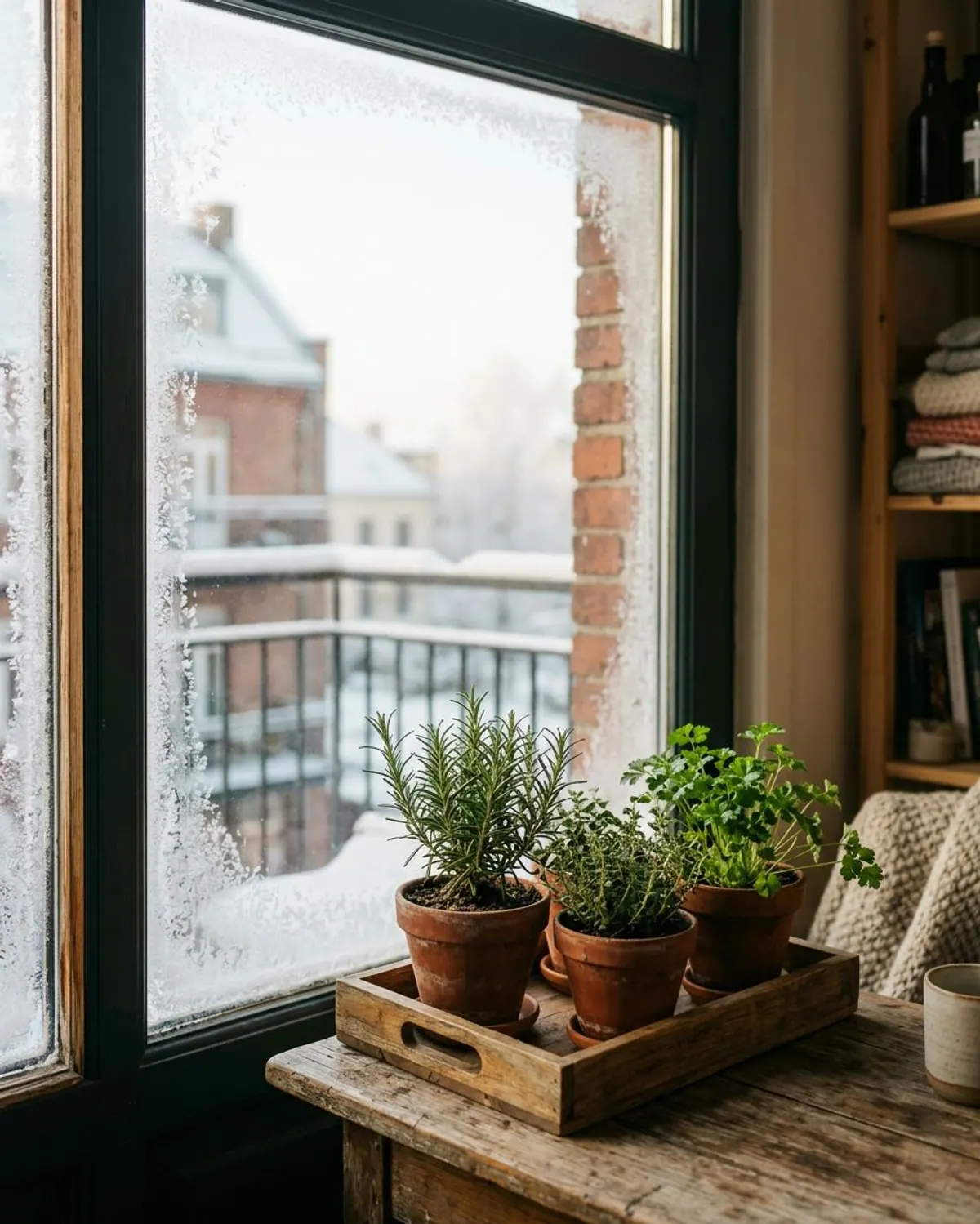
Pets chew windowsill plants. The ASPCA toxic and non-toxic plant list (check each herb before you buy) lists mint, chives and parsley as toxic to cats and dogs, so put those where pets cannot reach, or choose rosemary, basil and thyme for a cat's window.
Shop the windowsill herb garden
What to buy for a windowsill herb garden
- Best for narrow sills
Narrow windowsill tray for pots
Typically $10 to $25
Catches drips and keeps a row of 4 inch pots tidy.
Check price on Amazon for Narrow windowsill tray for pots -
4 inch terracotta pots with saucers
Typically $12 to $25
Clay lets the mix dry out, which Mediterranean herbs want.
Check price on Amazon for 4 inch terracotta pots with saucers -
Clamp-on or bracket window shelf
Typically $15 to $40
Adds a second row when the sill is too shallow.
Check price on Amazon for Clamp-on or bracket window shelf - Most important
Clip-on LED grow light with timer
Typically $15 to $40
Turns a dim or north sill into a working one.
Check price on Amazon for Clip-on LED grow light with timer -
Hanging glass jars with hooks
Typically $12 to $30
Uses the window frame when the sill is full.
Check price on Amazon for Hanging glass jars with hooks -
Herb seed or starter plant set
Typically $12 to $30
A quick way to fill a row of pots.
Check price on Amazon for Herb seed or starter plant set
Want to see the light in each of your windows? The free Small-Space Garden Planner has a sun map where you log direct light hour by hour, so you can match each herb to the right sill.
Frequently asked questions
What herbs grow best on a windowsill?
On a south sill, rosemary, thyme, oregano and sage. On an east sill, parsley, chives and cilantro. On a west sill, basil and oregano. A north sill needs a grow light for almost anything.
How much sun do windowsill herbs need?
Iowa State Extension says most herbs need around eight hours of direct light a day indoors. In winter a window often gives less, so add an LED grow light for the gap.
How deep should a windowsill be for herbs?
About 5 inches for 4 inch pots with saucers and about 7 inches for 6 inch pots. For a shallower ledge, use a clamp-on shelf, a wall rail or hanging jars.
Can I grow herbs on a north-facing windowsill?
Only with a grow light. Mint and chives are the most forgiving. Run an LED for 12 to 14 hours a day and keep it a few inches above the leaves.
How many herb pots fit on a 36 inch windowsill?
About seven 4 inch pots or five 6 inch pots with a 1 inch gap between each.

Save it for later
Pin this to your Herb Garden board so it's there when you need it.
Save to Pinterest