This post contains affiliate links. As an Amazon Associate we earn from qualifying purchases, at no extra cost to you. Read our disclosure.
Safety first: Herbs can be powerful. If you are pregnant, nursing, take medication or have a health condition, check with your doctor or pharmacist first. Please read our herbal & garden safety notes before you start.
Key takeaways
- Rooting times from Savvy Gardening: mint a few days to a week, basil 2 to 3 weeks, rosemary 4 to 6 weeks, thyme about a month, sage 1 to 2 months, and cilantro rarely roots
- Pot a cutting up once its roots are a couple of inches long, and change the water once or twice a week while it roots
- Water has no nutrients, so herbs kept in a jar for a long time grow pale and thin; the jar is a rooting step, not a home
- Sources disagree on some times: another snippet says rosemary roots in about two weeks and lemon balm in 3 to 4 weeks
- Fine Gardening says indoor herbs want a south-facing window with at least 4 hours of direct sun a day
In this post22 sections
- Herbs that grow in water: rooting times at a glance
- Why herbs do not live in water forever
- Fast rooters: a few days to about a month
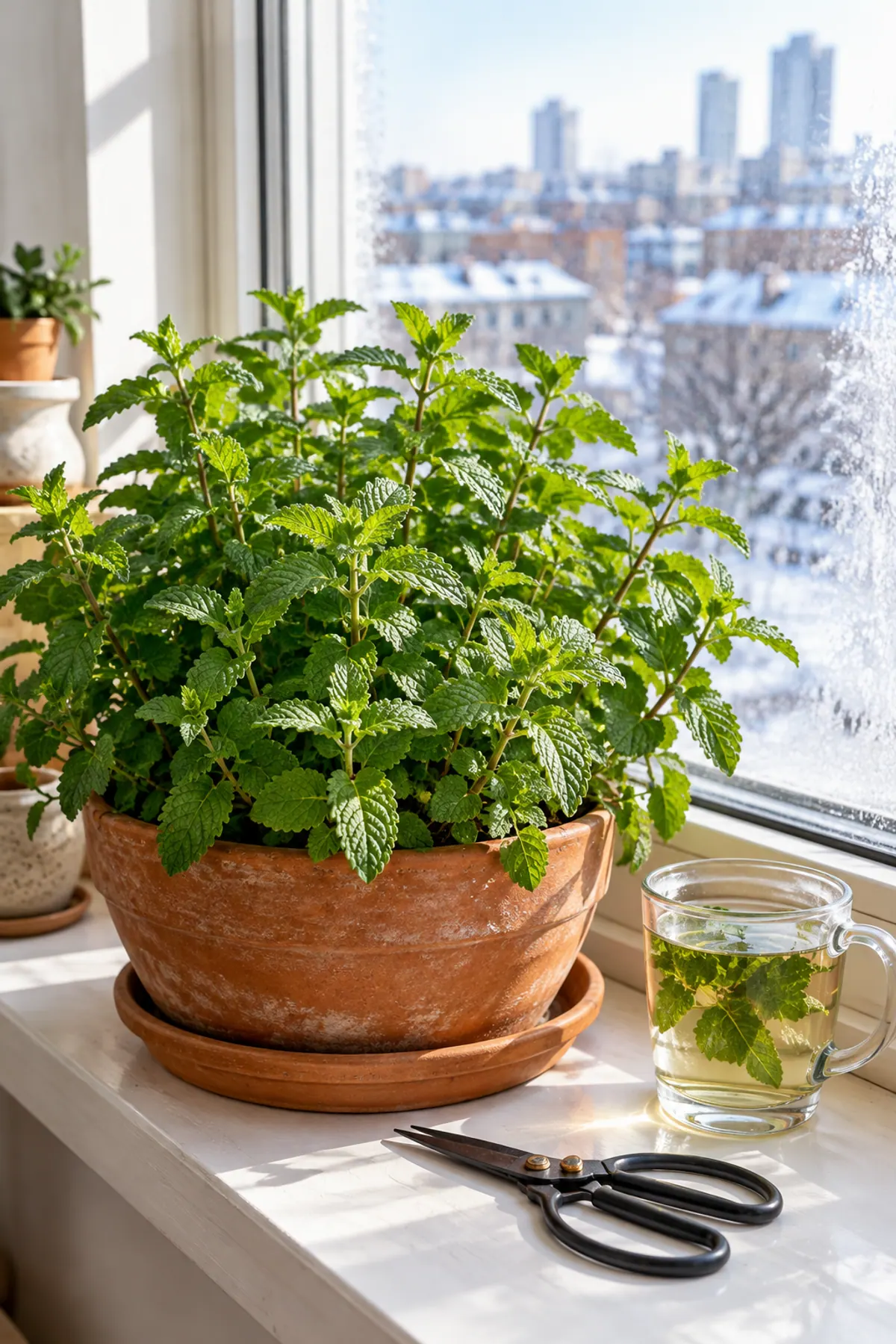
- 1. Mint
- 2. Basil
- 3. Lemon balm
- Slow rooters: a month or more
- 4. Rosemary
- 5. Thyme
- 6. Sage
- No reliable time, or herbs that rarely root
- 7. Oregano
- 8. Stevia
- 9. Lemongrass
- 10. Parsley
- 11. Cilantro
- When will your cuttings root? A start-date planner
- How to root herbs in water, step by step
- Light and water changes for herbs in jars
- Why rooting times disagree
- Where to go next
- FAQ
Herbs that grow in water: rooting times at a glance
This table is the quick version. Times come from Savvy Gardening unless noted, and they are ranges, since rooting depends on the cutting, the light and the room. The last column is our plan for each herb, not a measured lifespan: we found no source that tests how long each herb lives in water.
| Herb | Rooting time | Pot up when | Plan |
|---|---|---|---|
| Mint | A few days to a week | Roots a couple of inches long | Easy first try |
| Basil | 2 to 3 weeks | Roots a couple of inches long | Easy, needs warmth |
| Lemon balm | 3 to 4 weeks (search snippet, page not traced) | Roots a couple of inches long | Easy, slower than mint |
| Rosemary | 4 to 6 weeks; another snippet says about 2 | Roots a couple of inches long | Patience needed |
| Thyme | About a month | Roots a couple of inches long | Patience needed |
| Sage | 1 to 2 months | Roots a couple of inches long | Slowest of the woody herbs |
| Oregano | No reliable time found | Roots a couple of inches long | Check weekly |
| Stevia | No reliable time found | Roots a couple of inches long | Check weekly |
| Lemongrass | No reliable time found | Roots a couple of inches long | Grocery stalks only |
| Parsley | No reliable time found | If roots appear at all | Seed is more reliable |
| Cilantro | Rarely roots | Not applicable | Grow from seed instead |
Why herbs do not live in water forever
A cutting can make roots in water, but plain water holds no food for the plant. After the first roots form, growth slows and the leaves go pale and thin. Our mint guide says the same about mint kept in a jar long term, and Savvy Gardening says to pot a cutting up once the roots are a couple of inches long.
That is why this list ends each entry with a pot-up note. If you want a water-only setup that lasts, you need a system that adds nutrients, like the ones in our hydroponic herb garden guide.
Fast rooters: a few days to about a month
1Mint
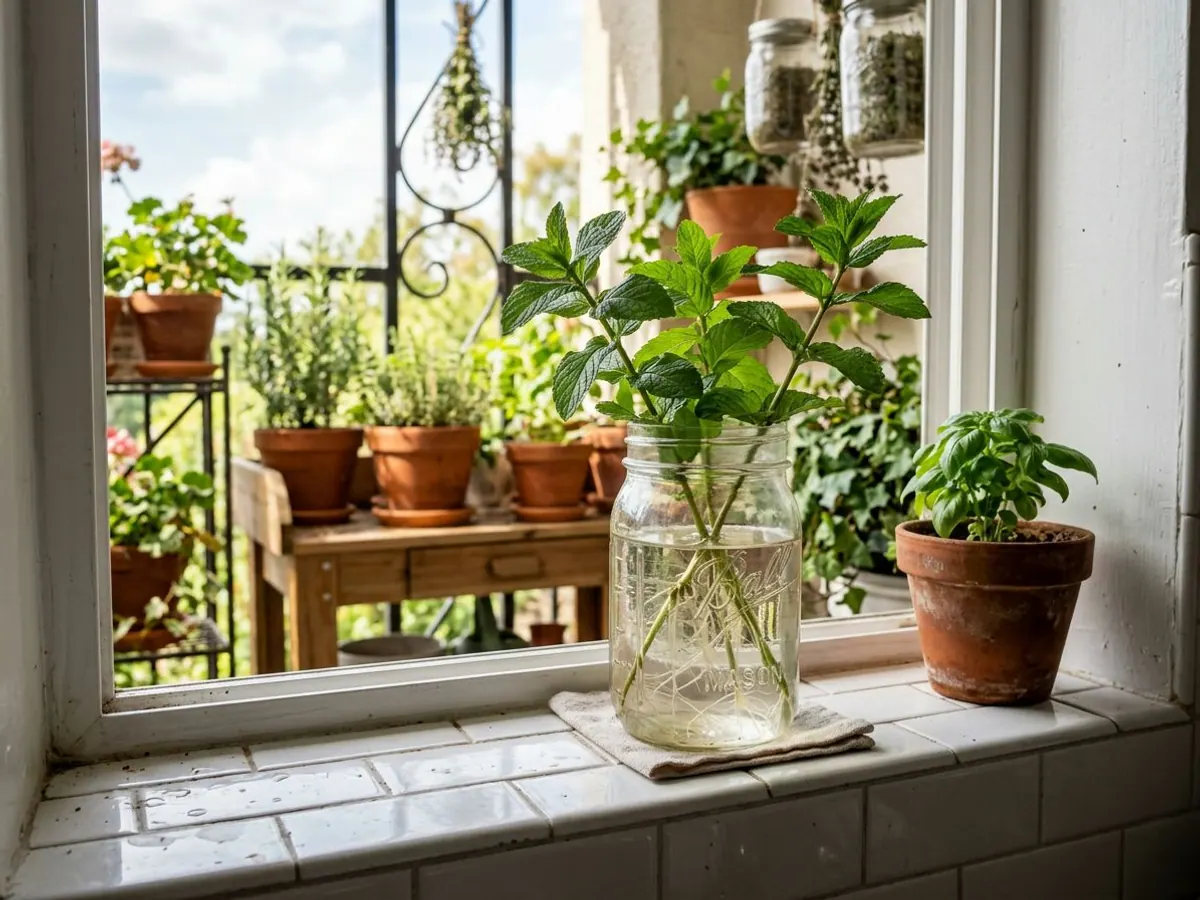
Rooting time: a few days to a week (Savvy Gardening). Our own mint guide says one to two weeks, so plan for a range.
Pot up: when the roots are a couple of inches long.
Mint is the best herb to start with. Cut a 4 to 6 inch stem just below a leaf node, strip the lower leaves and stand the stem in a jar of water on a bright sill. White roots show quickly, and it grows fast once potted.
- Use a wide pot, since mint spreads sideways.
Clear glass lets you watch the roots form
2Basil
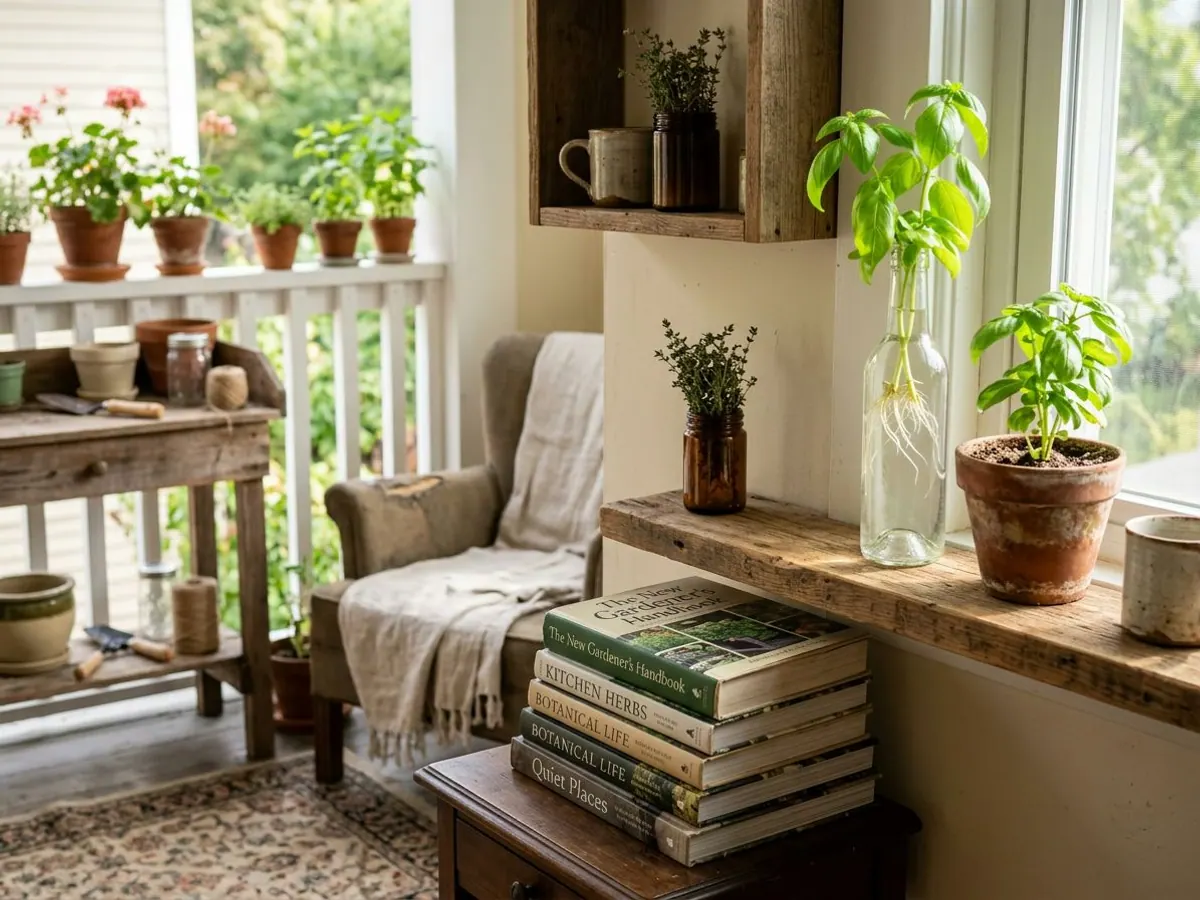
Rooting time: 2 to 3 weeks (Savvy Gardening).
Pot up: when the roots are a couple of inches long.
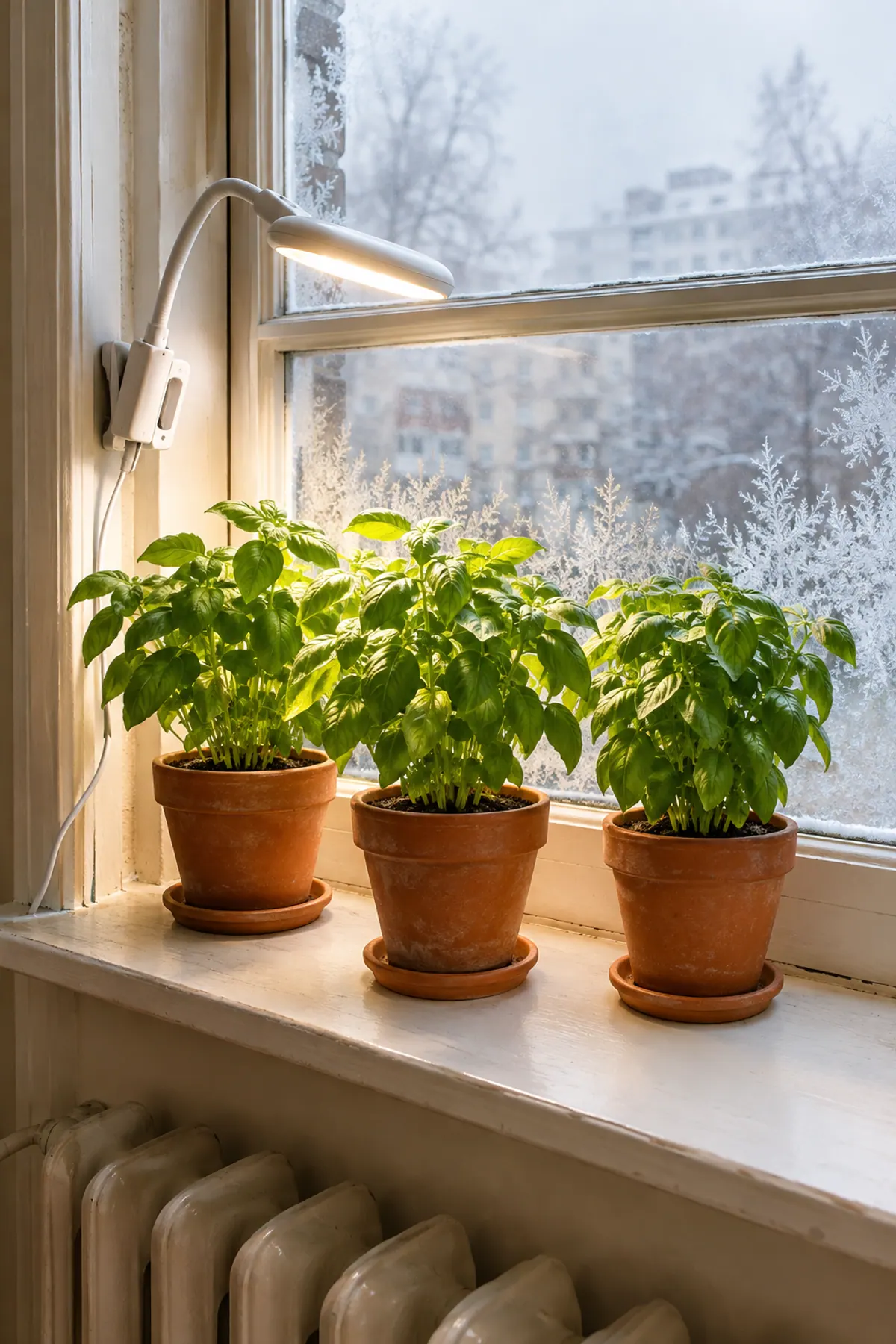
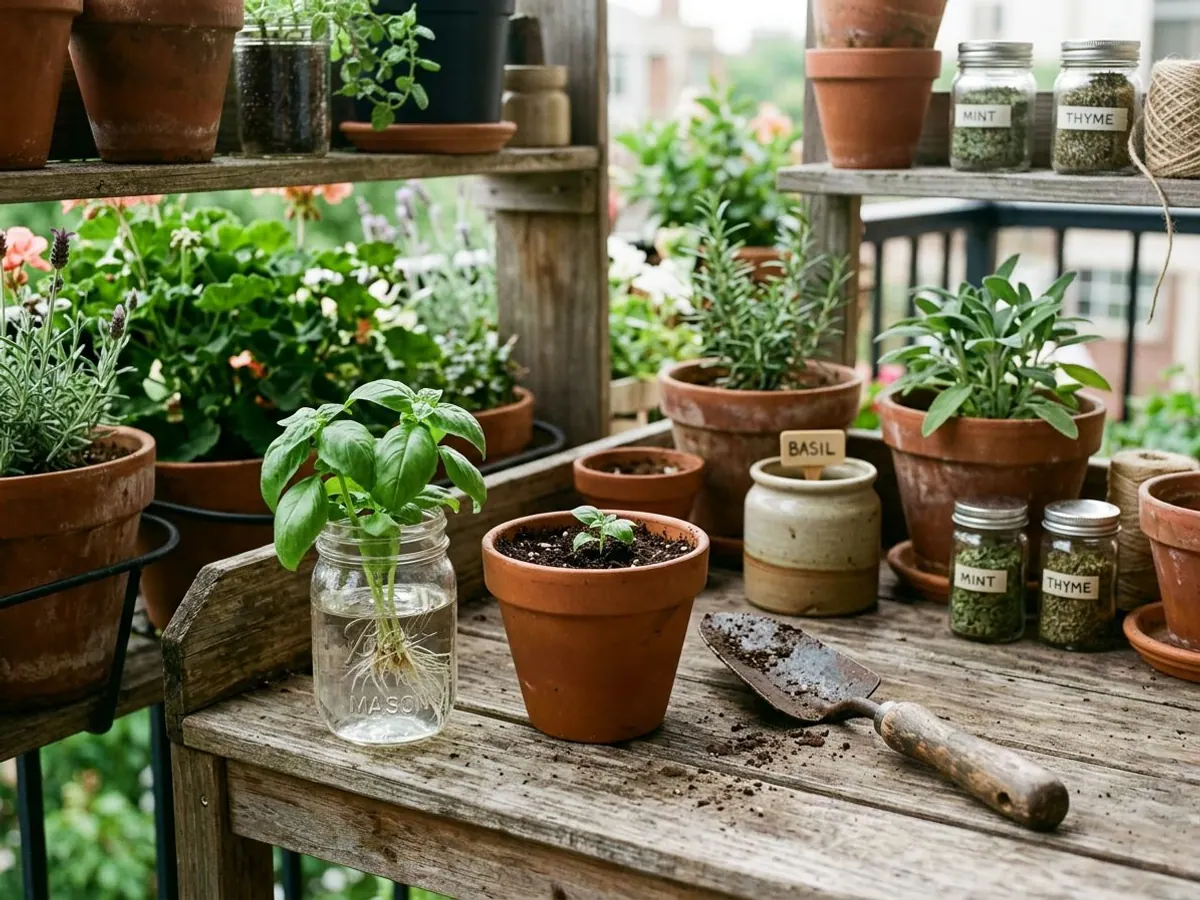
Basil roots well from a grocery store stem or a stem from your own plant. Take a 4 to 6 inch piece, strip the lower leaves and keep it somewhere warm, since basil sulks in the cold. Pinch off any flower buds so the cutting puts its energy into roots. Our indoor basil guide covers care after potting.
- A tall, narrow bottle keeps a long stem upright.
Hold single stems upright on a crowded sill
3Lemon balm
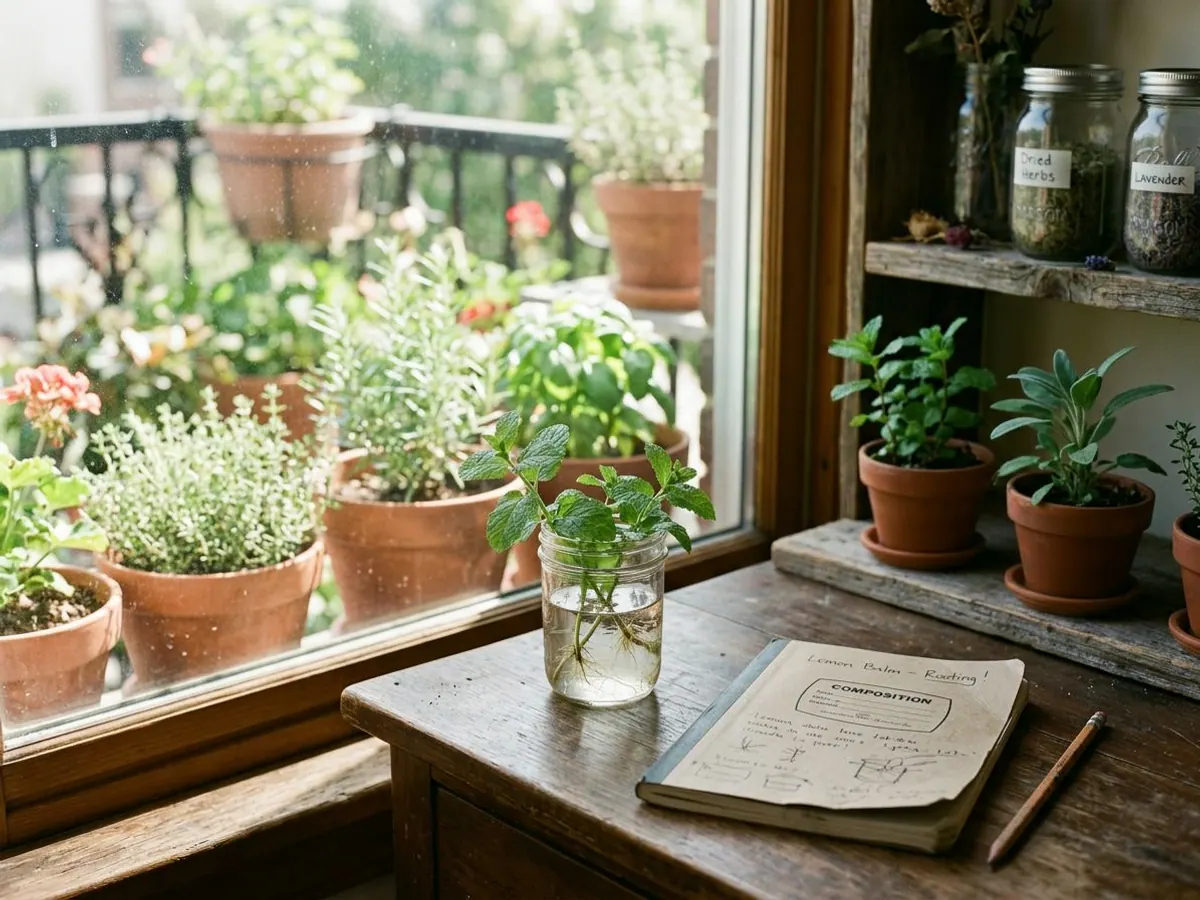
Rooting time: 3 to 4 weeks, according to a search snippet we could not trace to a page, so treat it as a rough guide.
Pot up: when the roots are a couple of inches long.
Lemon balm is a mint relative with soft stems, and it roots in much the same way. Use a stem with a few leaf pairs and no flowers. Keep the jar in bright light and change the water on schedule.
- If a cutting wilts in the first days, strip a few more leaves.
Slow rooters: a month or more
4Rosemary
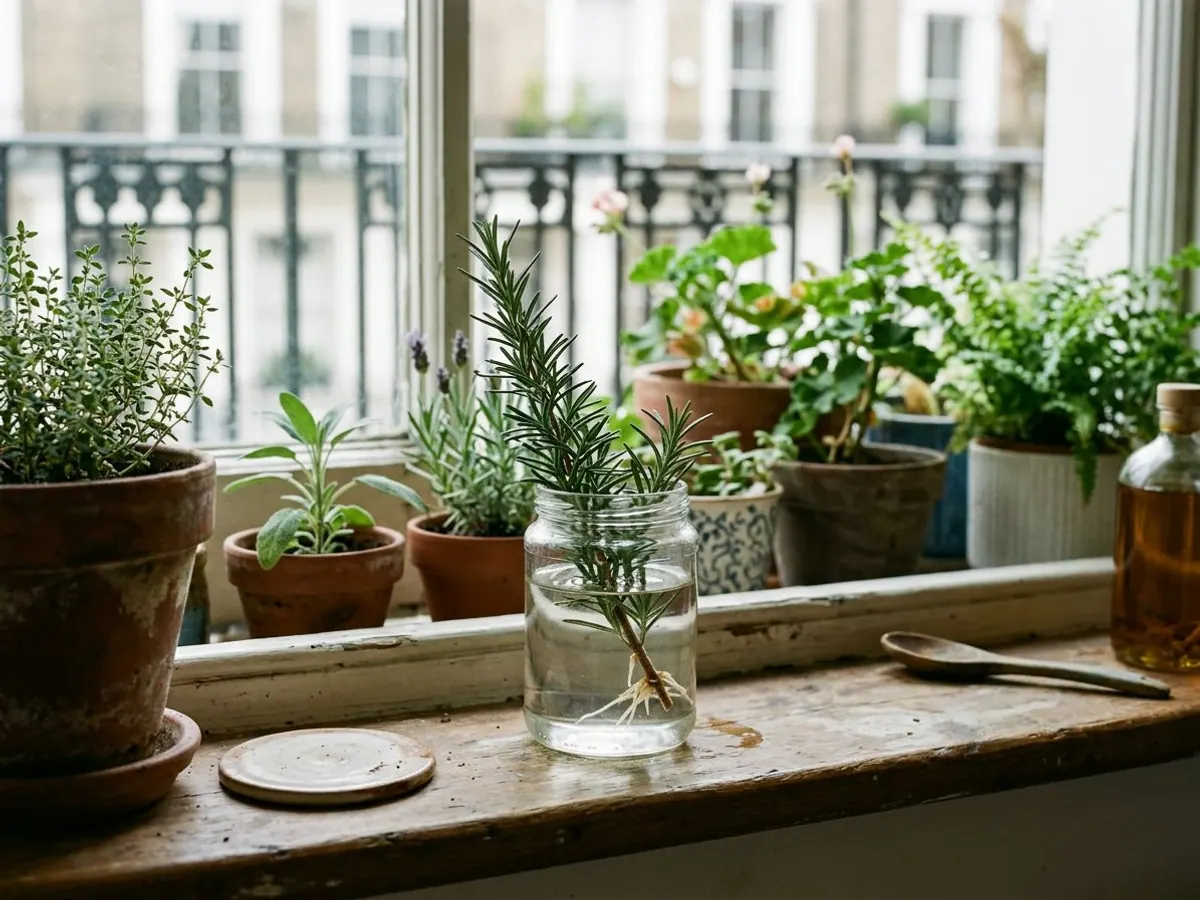
Rooting time: 4 to 6 weeks (Savvy Gardening). Another snippet says about two weeks, so the true time probably depends on the cutting.
Pot up: when the roots are a couple of inches long.
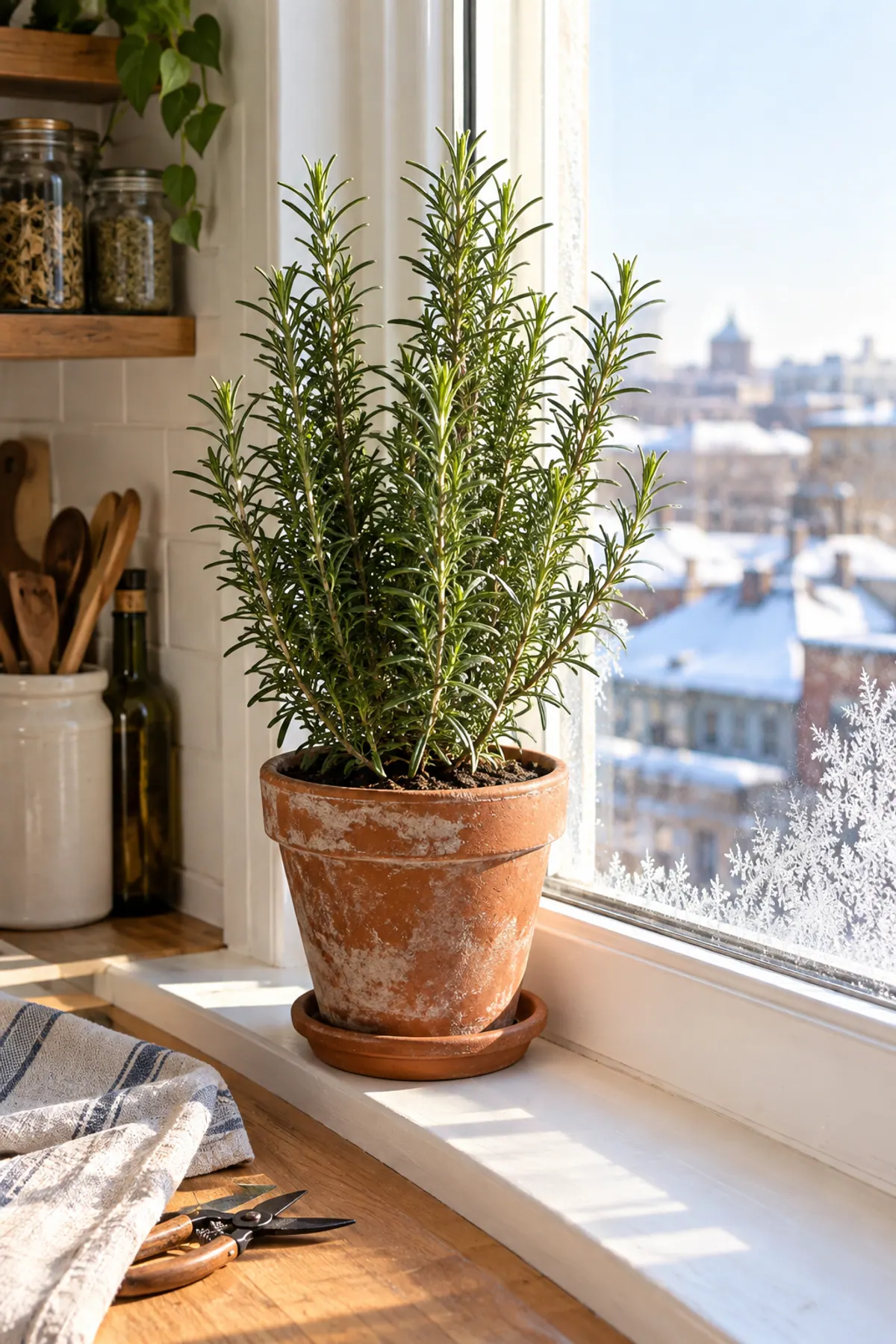
Rosemary is the one most people want and the one that tests patience. Use fresh, soft new growth rather than old woody stem, and strip the bottom 2 inches. Do not give up in week three. Our rosemary guide covers care once it is potted.
- Start two or three cuttings, since not every one roots.
Adds light on short winter days
5Thyme
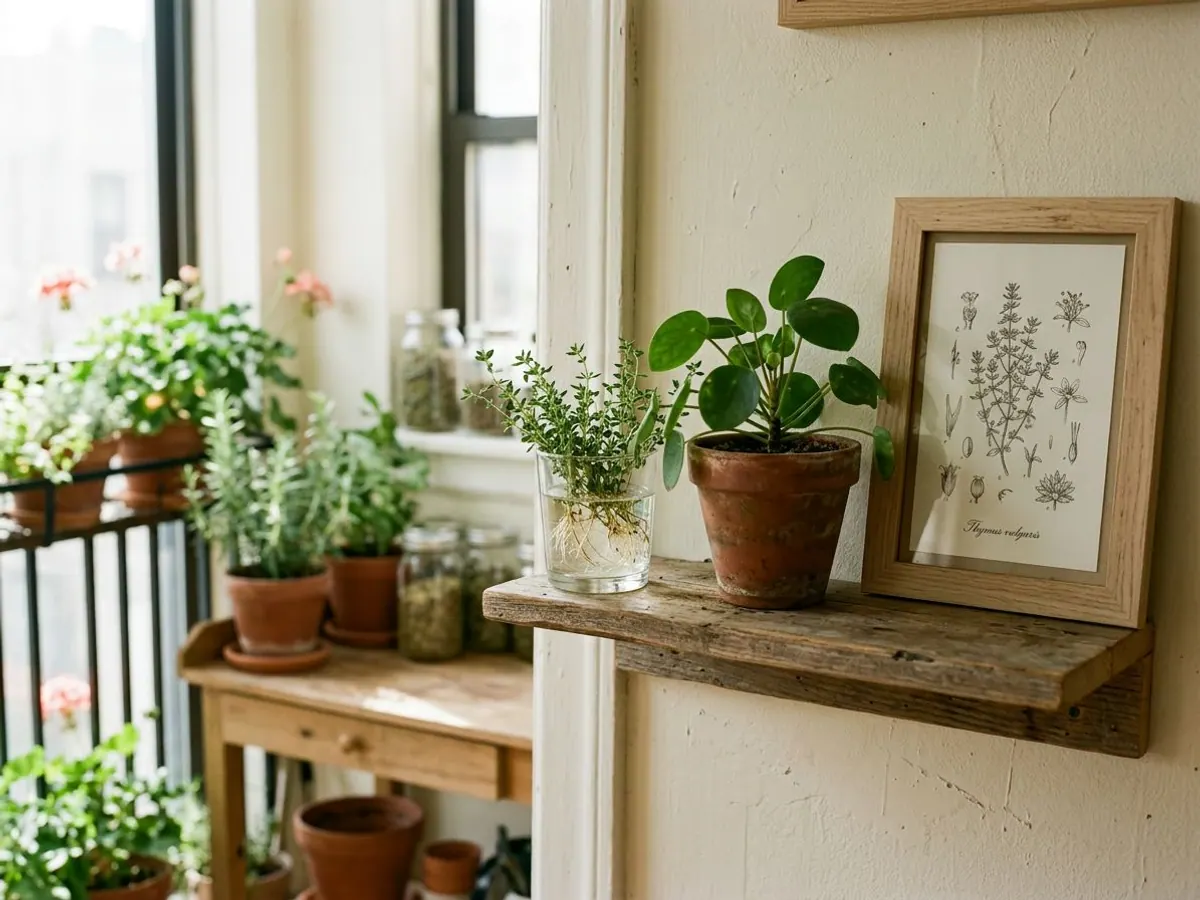
Rooting time: about a month (Savvy Gardening).
Pot up: when the roots are a couple of inches long.
Thyme has thin, wiry stems and tiny leaves, so use a small glass that supports the sprigs. Strip the lowest leaves and keep every leaf above the waterline. Roots come as fine threads, and you will see them best against a white wall or window.
- Use a slim glass so the sprigs do not tip over.
6Sage
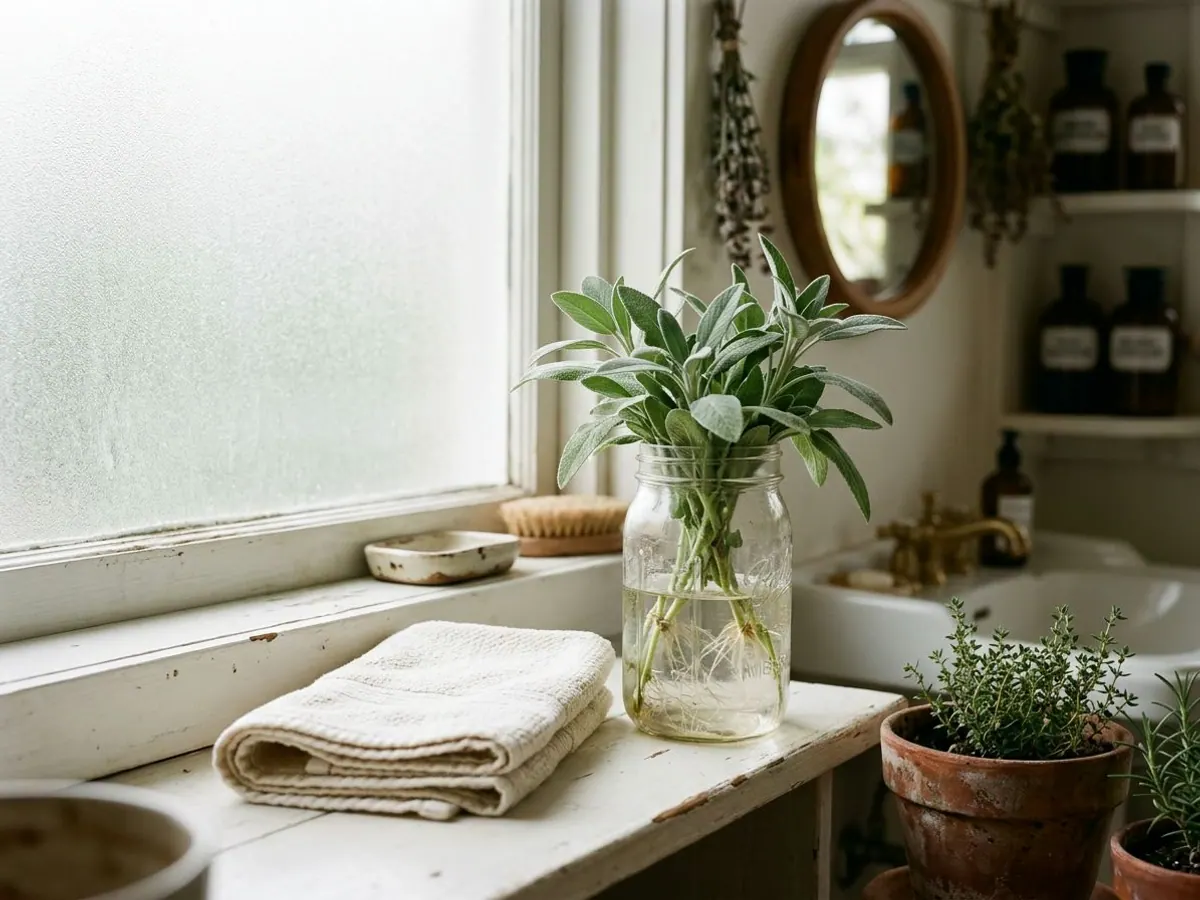
Rooting time: 1 to 2 months (Savvy Gardening).
Pot up: when the roots are a couple of inches long.
Sage is the slowest herb here, so keep the cuttings in clean water and check weekly. The fuzzy leaves rot easily when wet, which is why the lower ones must come off. Once potted, sage prefers soil that dries between waterings.
- Change the water on schedule; slow herbs are the first to turn cloudy.
Terracotta dries out between waterings, which sage likes
No reliable time, or herbs that rarely root
The next five are the ones that most lists skip or fudge. We could not find a reliable rooting time for four of them, and the fifth rarely roots at all. Treat these as experiments.
7Oregano
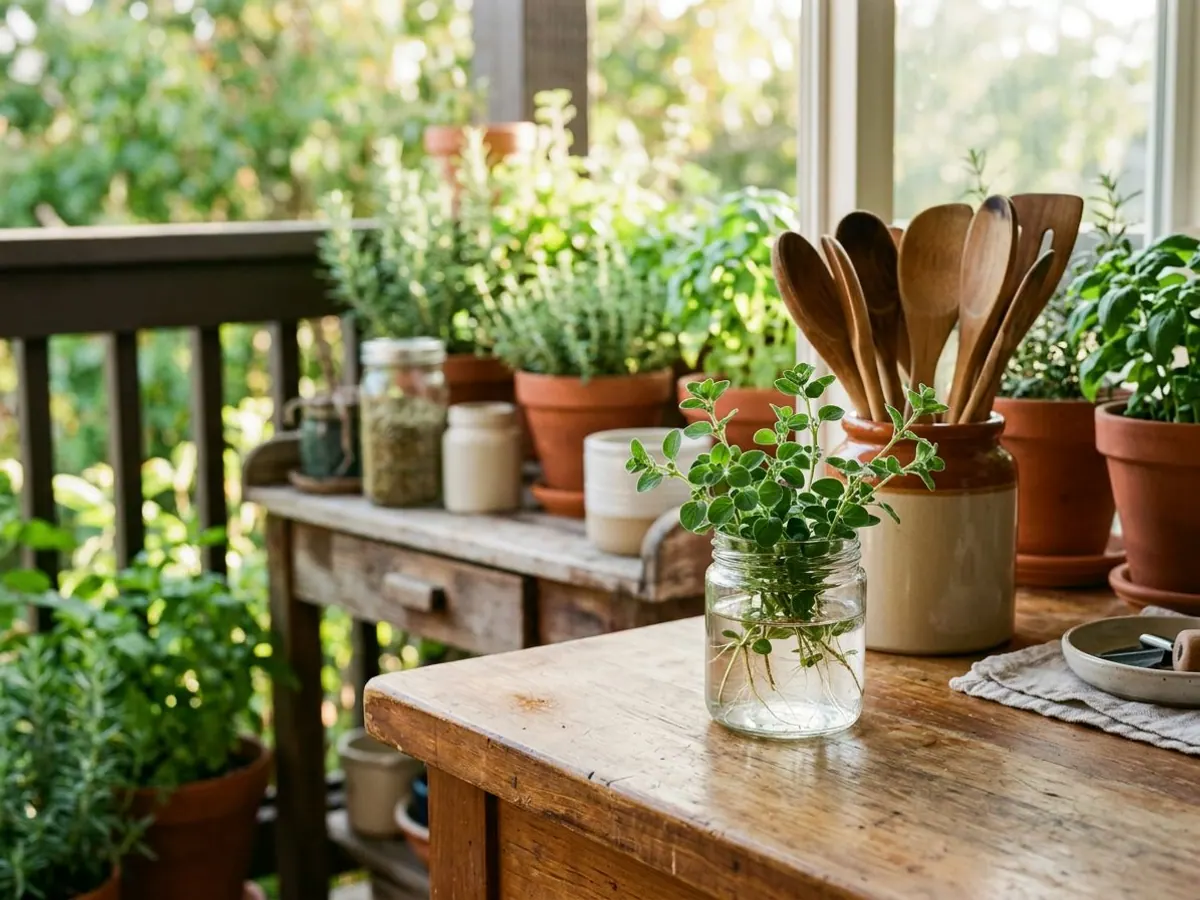
Rooting time: no reliable time found in the sources we read.
Pot up: when the roots are a couple of inches long, if they appear.
Oregano has woody stems with small leaves, so take a 4 to 6 inch piece and strip the bottom leaves. Keep the jar away from the stove, since heat and steam make water go bad quickly. Check weekly and be ready for it to take its time.
- Take a handful of stems, not one, so one success is likely.
A light mix for when the roots appear
8Stevia
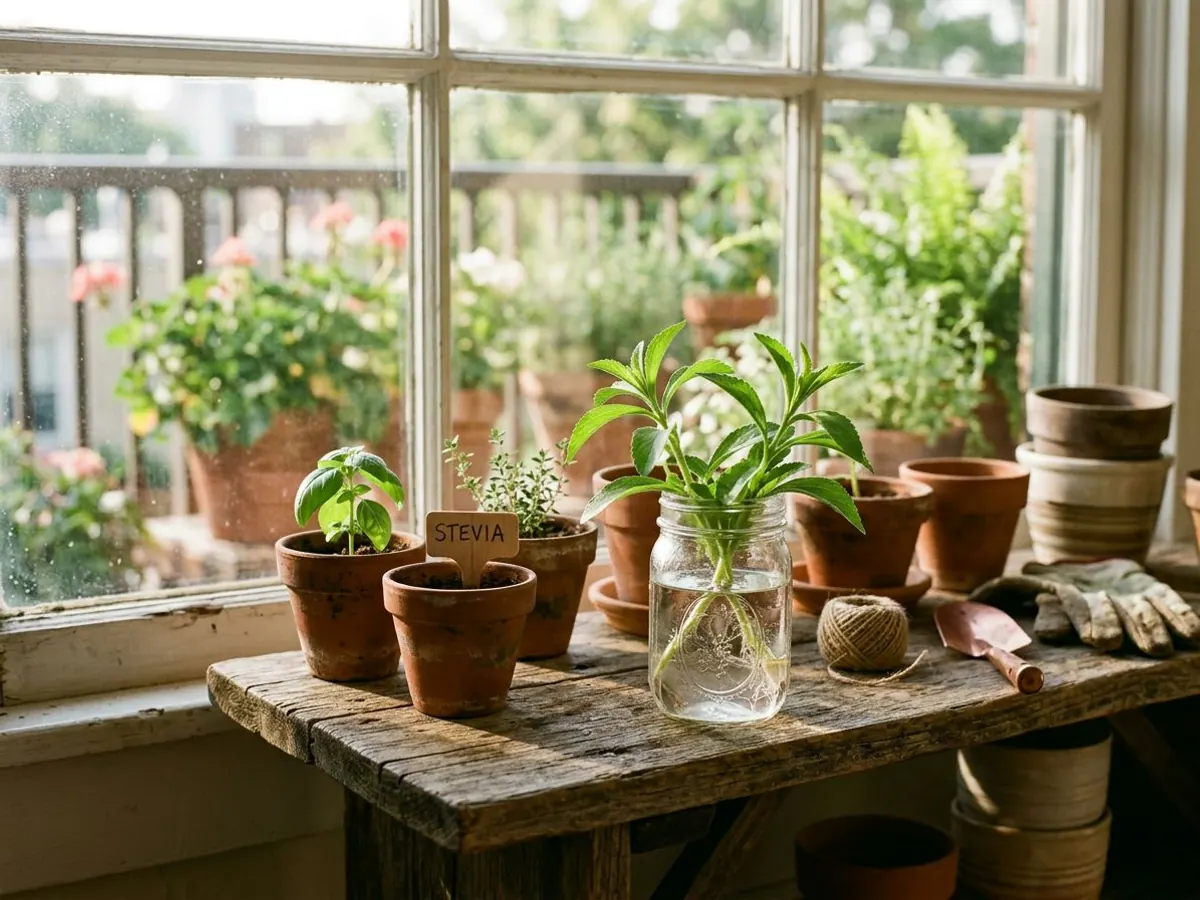
Rooting time: no reliable time found in the sources we read.
Pot up: when the roots are a couple of inches long, if they appear.
Stevia is a tender plant and likes warmth and bright light. Use a soft stem with several leaf pairs and keep the leaves out of the water. It is a good one to test in a warm window, but expect some cuttings to fail.
- Keep it warm; a cold sill can stall a stevia cutting.
9Lemongrass
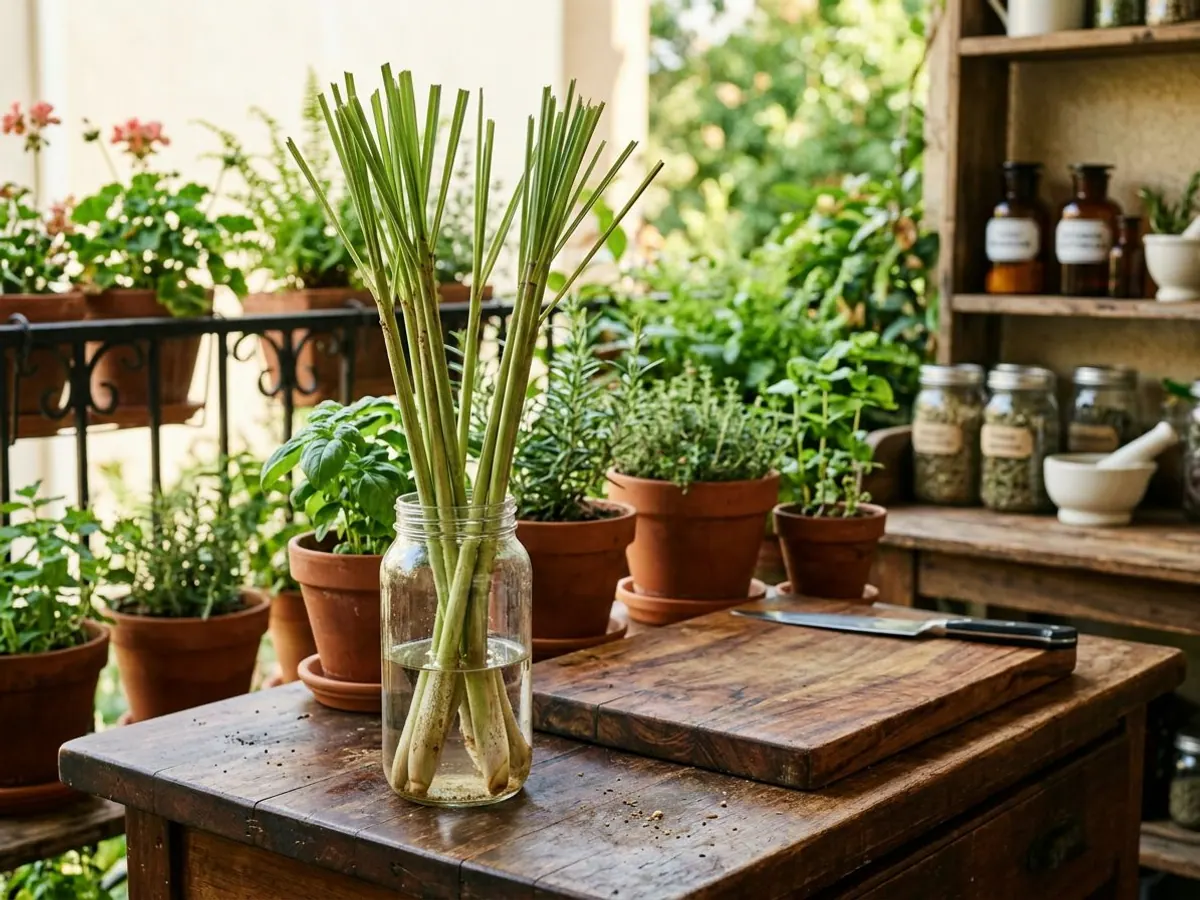
Rooting time: no reliable time found in the sources we read.
Pot up: when new roots show at the base.
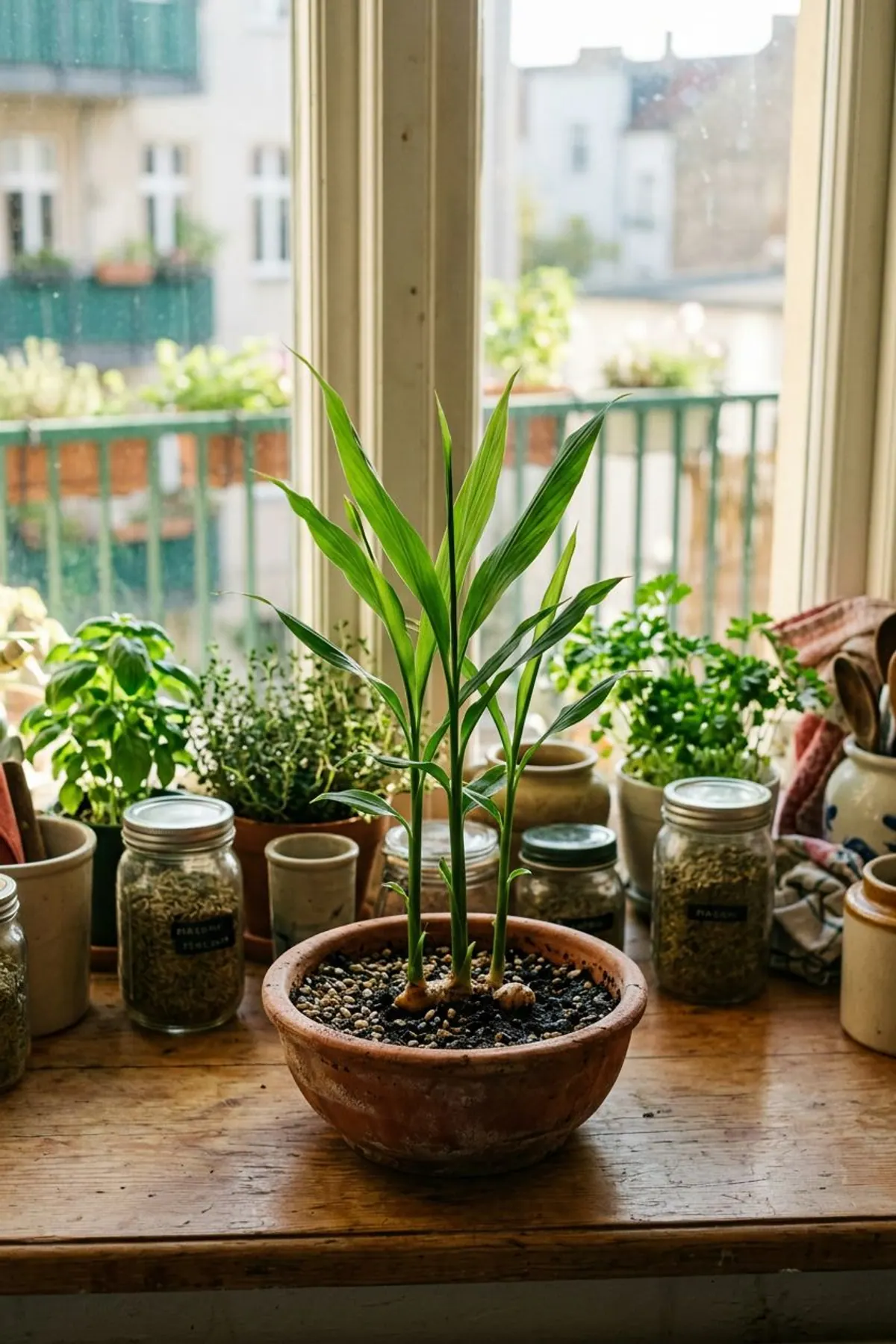
Lemongrass is different from the others. Buy fresh stalks with the root end still attached, stand them upright in an inch or two of water, and green shoots may appear at the top. It grows large, so plan for a deep, wide pot once it roots.
- Choose firm, fresh stalks; dry or shriveled ones will not grow.
10Parsley
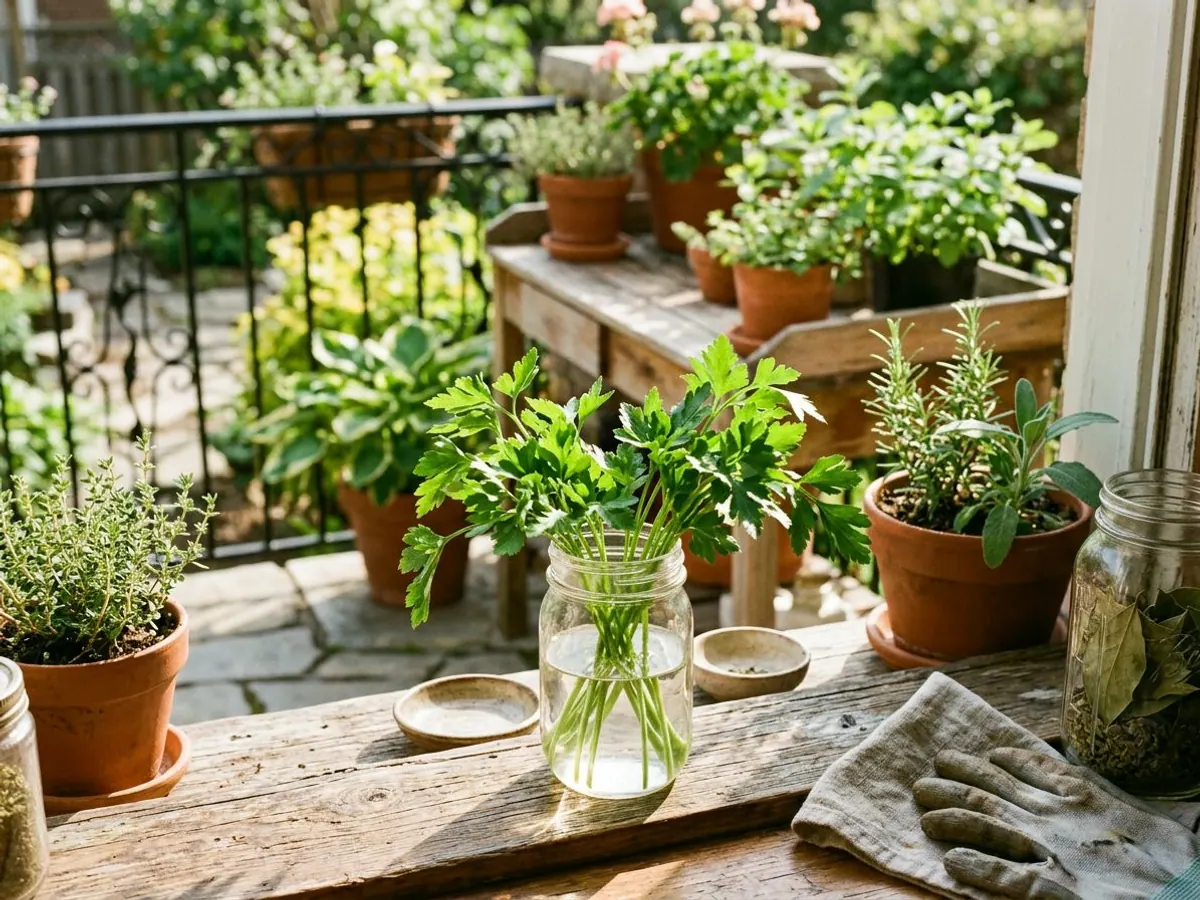
Rooting time: no reliable time found. Savvy Gardening had no rooting information for parsley.
Pot up: only if roots appear.
Parsley has a long taproot and prefers to be grown in soil from seed. A stem in a glass will stay fresh as a cut herb for a while, but it may never root. If you want parsley all winter, start from seed using our guide to herbs you can grow from seed indoors.
- Keep a glass of parsley as a cut herb, and start seed for the real plant.
A more reliable way to get a parsley plant
11Cilantro
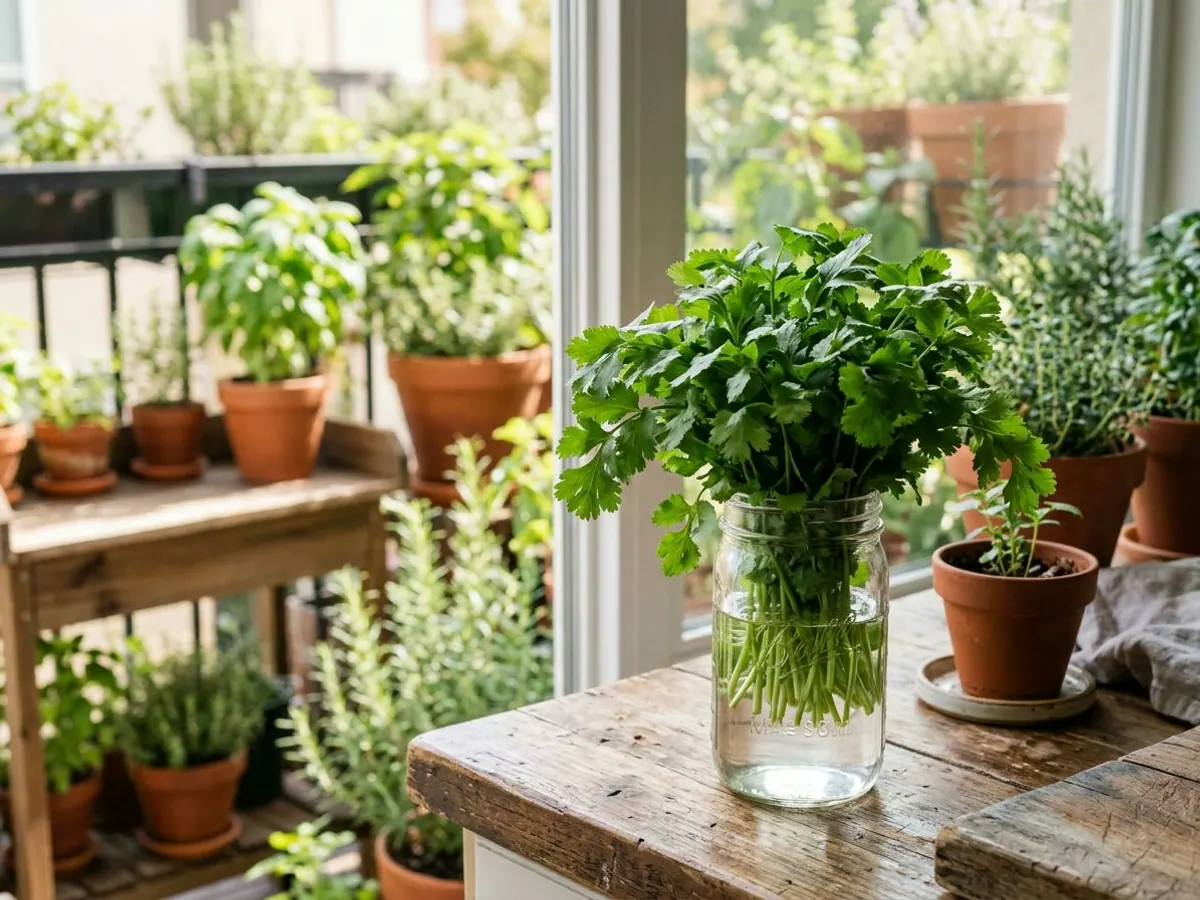
Rooting time: cilantro rarely roots in water (Savvy Gardening).
Pot up: not applicable.
A grocery store bunch in a jar of water will stay fresh for cooking, but it is very unlikely to make roots. Cilantro also bolts quickly in warm rooms. For a reliable plant, sow seed in a pot and sow again every few weeks.
- Use the jar to keep a bunch fresh, not to start a plant.
Seed is the dependable route for cilantro
When will your cuttings root? A start-date planner
Here is a worked example. If you take every cutting on November 1, the ranges above give these likely rooting windows. This is calendar math from the Savvy Gardening ranges, not a promise, and the roots then need to grow to a couple of inches before potting.
| Herb | Time range | Roots likely by |
|---|---|---|
| Mint | A few days to a week | About November 4 to 8 |
| Basil | 2 to 3 weeks | About November 15 to 22 |
| Lemon balm | 3 to 4 weeks (snippet) | About November 22 to 29 |
| Rosemary | 4 to 6 weeks | About November 29 to December 13 |
| Thyme | About a month | About December 1 |
| Sage | 1 to 2 months | About December 1 to January 1 |
How to root herbs in water, step by step
-
Step 1: Take the cutting
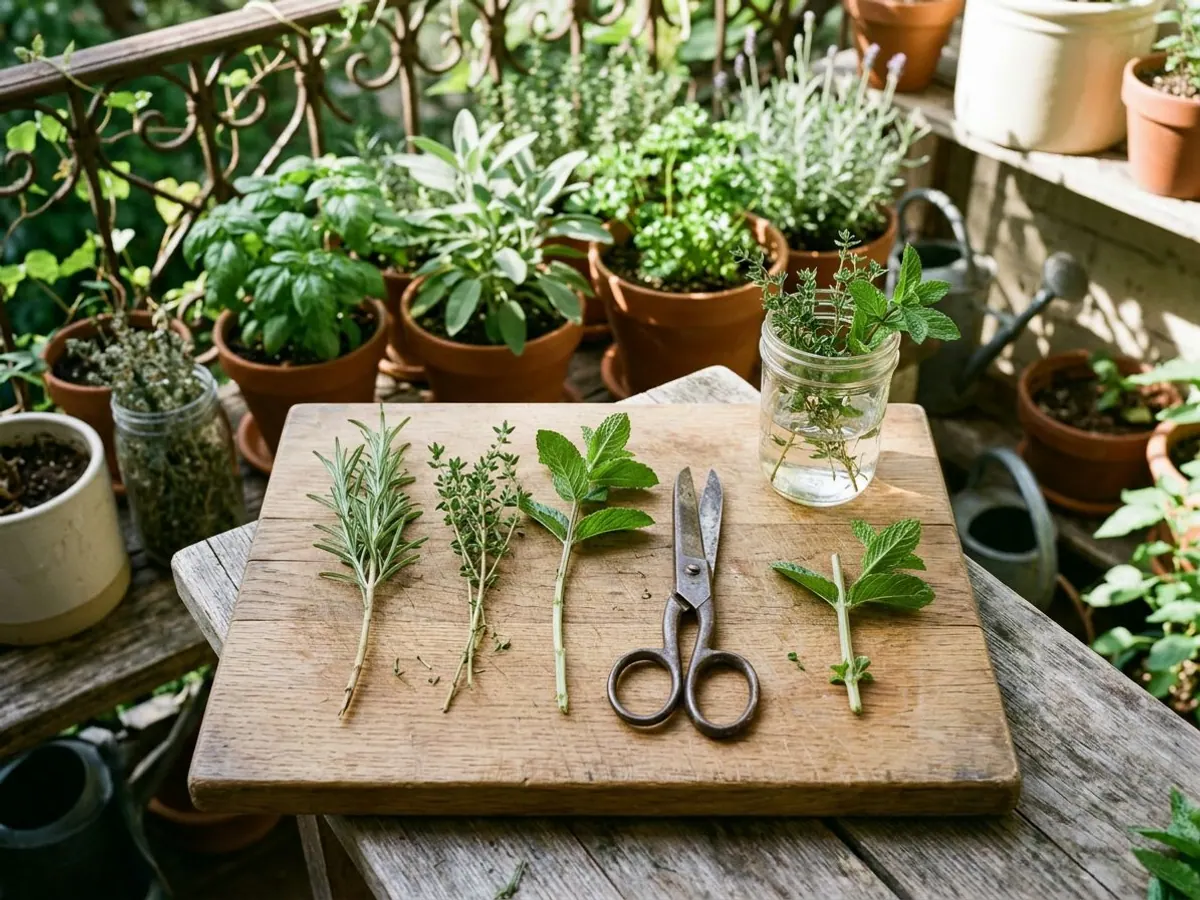
Choose a healthy stem 4 to 6 inches long and cut just below a leaf node, the small bump where leaves join the stem. Use clean scissors. Pick stems without flowers where you can.
-
Step 2: Strip the lower leaves
Remove the leaves from the bottom 2 inches so none sit underwater, where they rot. Leave a few leaves on top so the cutting can still feed itself.
-
Step 3: Set it in water
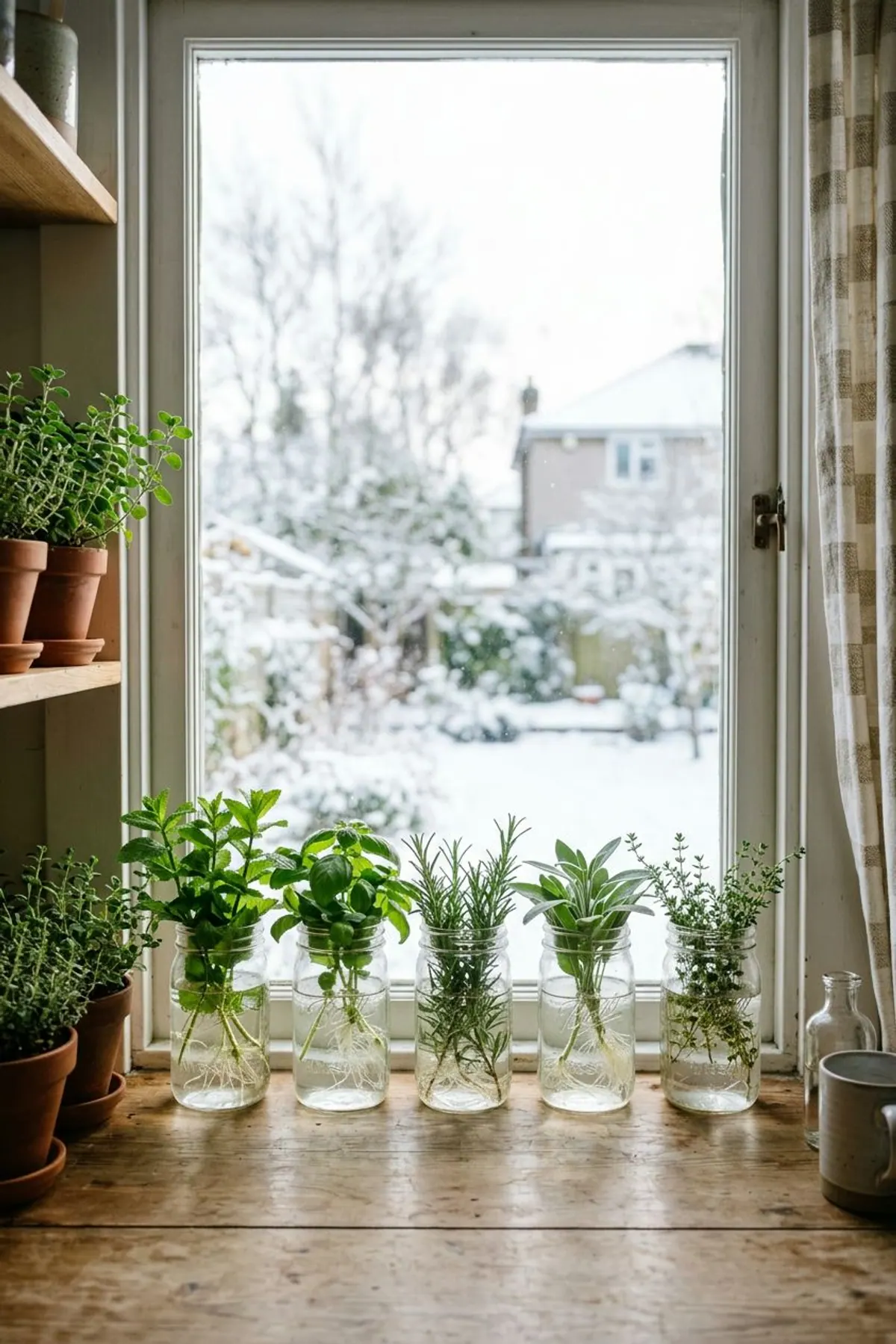
Stand the stems in a clean jar of room-temperature water. Keep the bare nodes underwater and the leaves above.
-
Step 4: Change the water
Change the water once or twice a week (Savvy Gardening). Rinse the jar if the water looks cloudy or the glass feels slimy.
-
Step 5: Wait, then pot up
When roots reach a couple of inches, move the cutting into a small pot of light potting mix and keep the soil lightly damp for the first week or two.
Light and water changes for herbs in jars
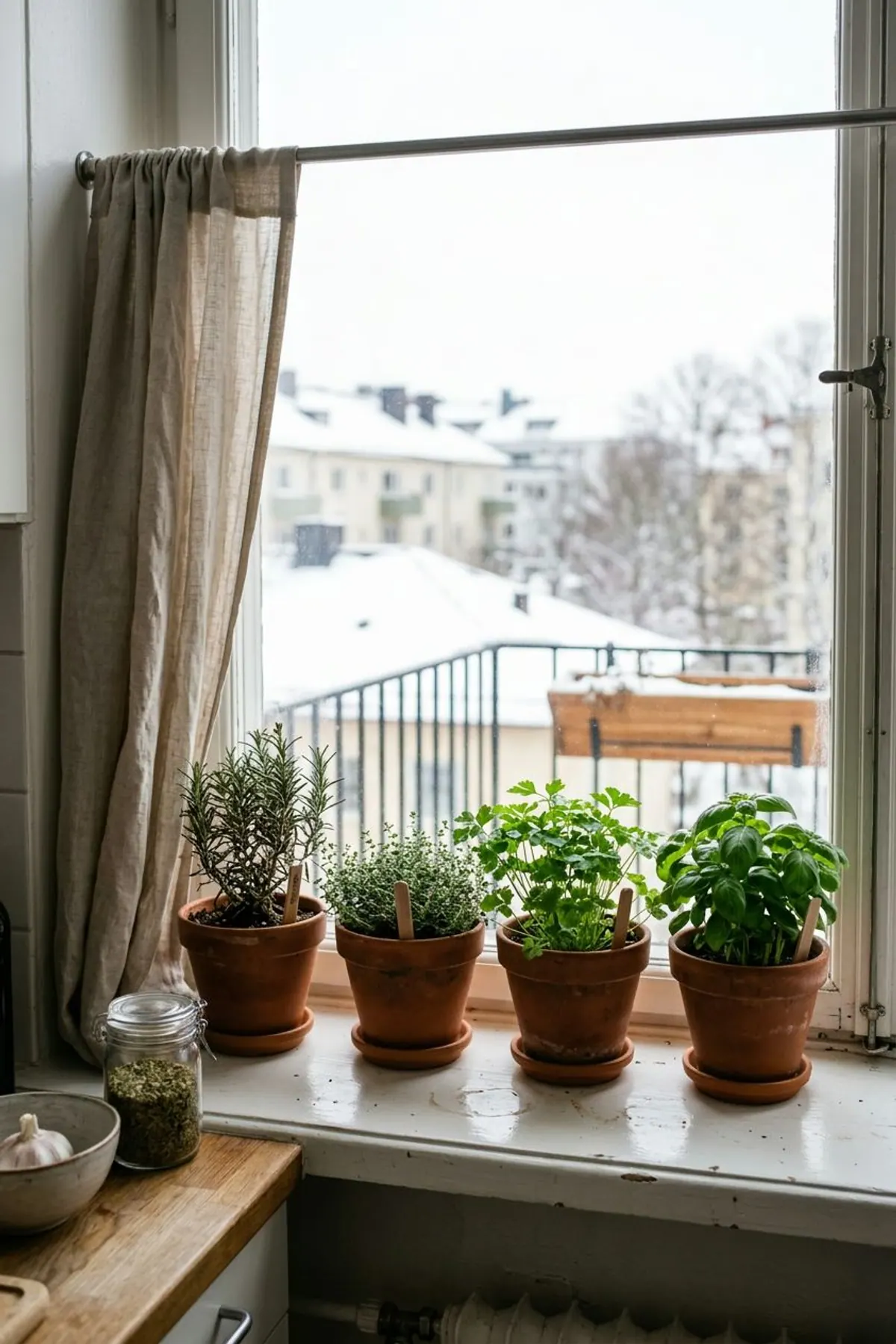
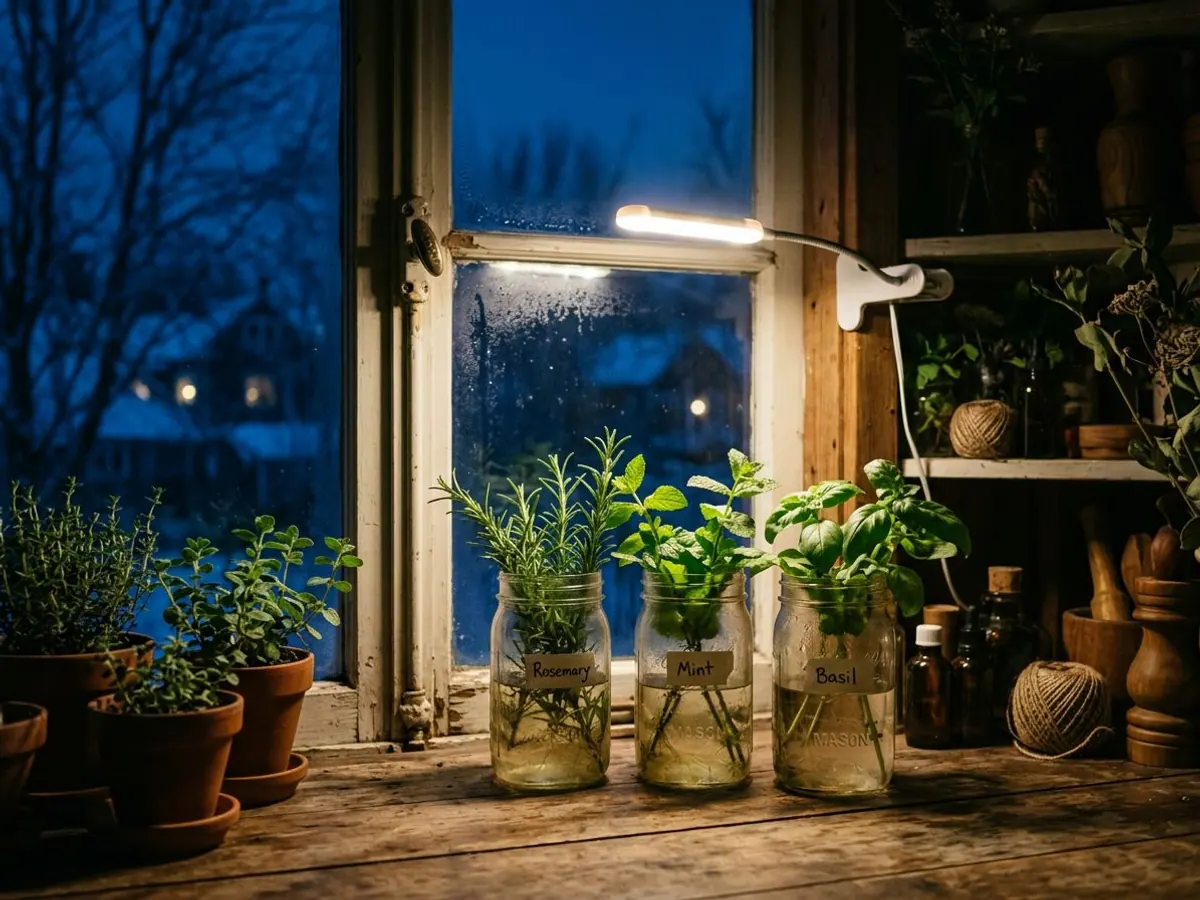
Fine Gardening says indoor herbs do best in a south-facing window with at least 4 hours of direct sun a day (source). Cuttings need bright light too, but avoid cooking them against hot glass on a sunny afternoon. In winter or in a north-facing room, a small clip-on lamp can fill the gap. Our grow light guide shows lamps that fit a windowsill.
Why rooting times disagree
Two pages can give different times for the same herb for good reasons. Soft new stems root faster than old woody ones, warm rooms speed things up, and one cook's 'rooted' is a white nub while another waits for two inches. That is why rosemary is 4 to 6 weeks on one page and about two weeks in another snippet. Use the ranges as a guide and judge by the roots you can see.
Where to go next
Once your cuttings are potted, a windowsill herb garden plan shows how many pots fit on your sill. Track what you root in a simple journal, such as the herb journal pages below.
Supplies for rooting herbs in water
-
Wide-mouth pint mason jars
Typically $10 to $20 for a set
Clear glass lets you watch the roots form
Check price on Amazon for Wide-mouth pint mason jars -
Slim glass propagation vases
Typically $10 to $25 for a set
Hold single stems upright on a crowded sill
Check price on Amazon for Slim glass propagation vases -
Clip-on LED grow light with timer
Typically $15 to $35
Adds light on short winter days
Check price on Amazon for Clip-on LED grow light with timer -
Small terracotta pots with saucers
Typically $12 to $25 for a set
Terracotta dries out between waterings, which sage likes
Check price on Amazon for Small terracotta pots with saucers -
Potting mix for herbs and vegetables
Typically $8 to $16
A light mix for when the roots appear
Check price on Amazon for Potting mix for herbs and vegetables -
Flat-leaf parsley seeds
Typically $3 to $6
A more reliable way to get a parsley plant
Check price on Amazon for Flat-leaf parsley seeds -
Slow-bolt cilantro seeds
Typically $3 to $6
Seed is the dependable route for cilantro
Check price on Amazon for Slow-bolt cilantro seeds
Frequently asked questions
What herbs can you grow in water?
Mint, basil, lemon balm, rosemary, thyme and sage root in water. Oregano, stevia and lemongrass can work, while parsley is unreliable and cilantro rarely roots.
How long do herbs take to root in water?
Savvy Gardening lists mint at a few days to a week, basil at 2 to 3 weeks, rosemary at 4 to 6 weeks, thyme at about a month and sage at 1 to 2 months.
Can herbs live in water permanently?
Not well. Water has no nutrients, so herbs kept in a jar for a long time grow pale and thin. Pot a cutting up once its roots are a couple of inches long.
How often should you change the water for herb cuttings?
Change it once or twice a week, and rinse the jar if the water looks cloudy.
Why won't my herb cuttings root in water?
Cilantro rarely roots, and parsley is unreliable. For other herbs, check for old woody stems, leaves sitting underwater, cold rooms and low light.
Can I grow herbs in water on a windowsill in winter?
Yes, but give cuttings bright light. Fine Gardening recommends a south-facing window with at least 4 hours of direct sun for indoor herbs, and a small lamp helps if you do not have one.

Save it for later
Pin this to your Herb Garden board so it's there when you need it.
Save to Pinterest