This post contains affiliate links. As an Amazon Associate we earn from qualifying purchases, at no extra cost to you. Read our disclosure.
Safety first: Herbs can be powerful. If you are pregnant, nursing, take medication or have a health condition, check with your doctor or pharmacist first. Please read our herbal & garden safety notes before you start.
Key takeaways
- Start with the fast sprouters. Basil, cilantro, chives and garlic chives usually come up in one to two weeks.
- Cover or not matters. Bury basil, chives, parsley and sage lightly. Press thyme, chamomile, oregano and marjoram onto the surface.
- Warmth varies. Basil and marjoram like about 70°F, while cilantro, chamomile and rosemary prefer it cooler.
- Buy these as plants: mint, French tarragon, bay laurel, lemon verbena and winter savory.
- Light makes or breaks it. Utah State Extension suggests 12 to 14 or more hours a day, with shop lights 2 to 3 inches above seedlings.
In this post23 sections
- How we ranked these herbs
- Fast and easy herbs: sprout in about 1 to 2 weeks
- 1. Basil
- 2. Cilantro
- 3. Chives
- 4. Garlic chives
- 5. Dill
- 6. Leaf fennel
- Tiny seeds that need light to sprout
- 7. Marjoram
- 8. Oregano
- 9. Lemon balm
- 10. German chamomile
- Slower herbs to grow from seeds indoors: 2 to 4 weeks
- 11. Sage
- 12. Parsley
- 13. Thyme
- Hard from seed: try these last
- 14. Lavender
- 15. Rosemary
- Bonus: 5 herbs to buy as plants instead
- How to grow herbs from seeds indoors: the short setup
- FAQ
How we ranked these herbs
Each herb is ranked by how fast and how reliably its seed sprouts indoors. The days and temperatures come from Johnny's Selected Seeds and its Herb Growing Guide chart, with extra detail from the Southern Exposure Seed Exchange blog (February 2026).
These are published seed-company figures, not our own trial results. Seed age, variety and room warmth all shift the numbers, so treat them as a guide and check your packet too.
| Herb | Days to sprout | Cover the seed? | Warmth to sprout |
|---|---|---|---|
| Basil | 5 to 10 | Yes, lightly | About 70°F |
| Cilantro | 7 to 10 | Yes | Cool, about 60°F soil (UC Master Gardeners) |
| Chives | 7 to 14 (up to 20) | Yes, needs darkness | 60 to 70°F |
| Garlic chives | 7 to 14 | Yes, like chives | 60 to 70°F |
| Dill | 7 to 21 | No | About 60°F |
| Leaf fennel | 7 to 14 | Yes, lightly | Room warmth |
| Marjoram | 7 to 14 | No | About 70°F |
| Oregano | 7 to 14 | No | About 60°F |
| Lemon balm | 7 to 14 | No, press in | Room warmth |
| German chamomile | 10 to 14 | No, needs light | 55 to 60°F |
| Sage | 7 to 21 | Yes | About 70°F |
| Parsley | 14 to 30 | Yes, soak first | 65 to 70°F |
| Thyme | 14 to 30 | No, needs light | 55 to 70°F (sources vary) |
| Lavender | 14 to 30 | Check your packet | About 70°F |
| Rosemary | 14 to 28 | No, needs light | 55 to 60°F |
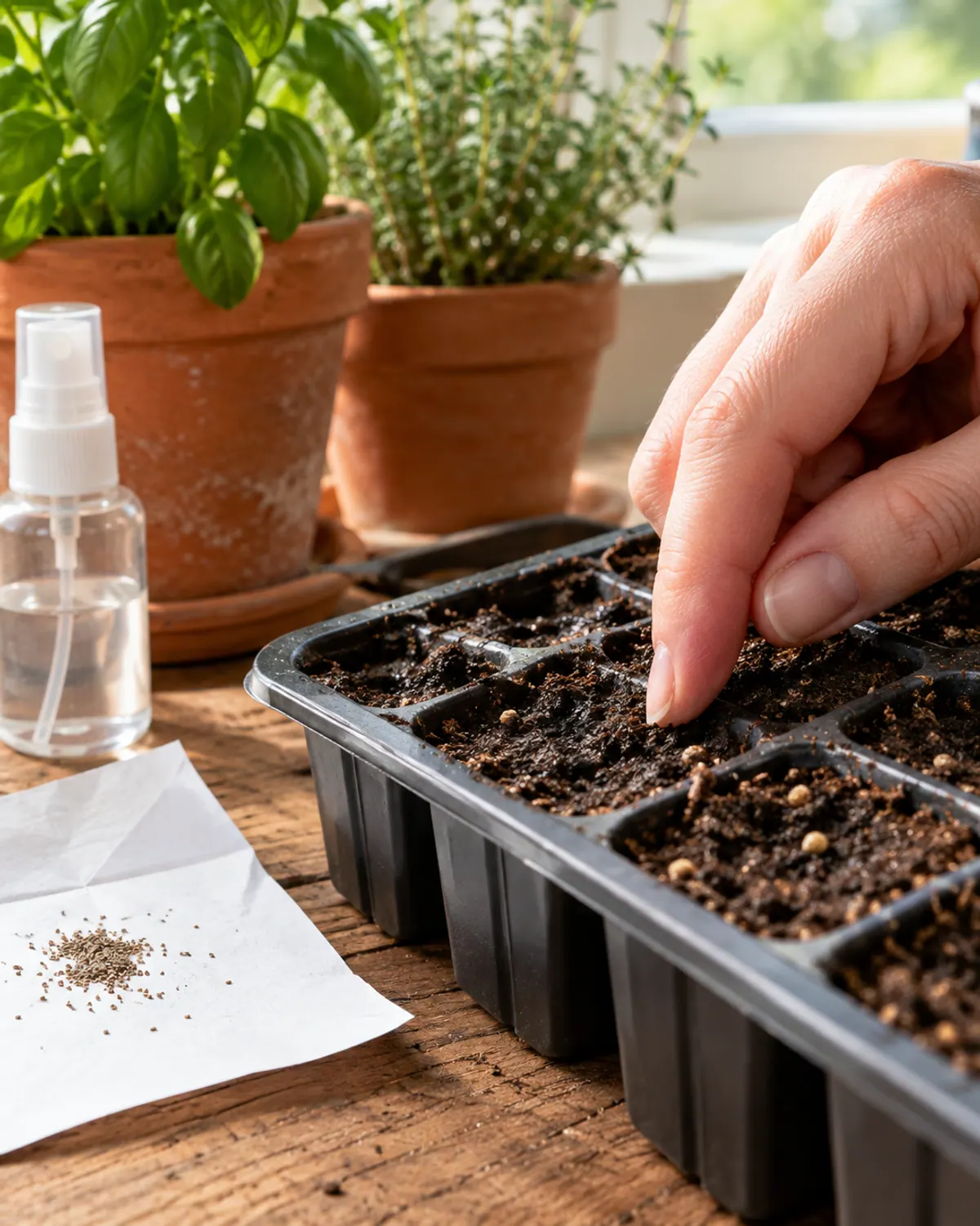
Fast and easy herbs: sprout in about 1 to 2 weeks
Start here if this is your first time. These six come up quickly, and most have seeds big enough to handle without tweezers.
1Basil
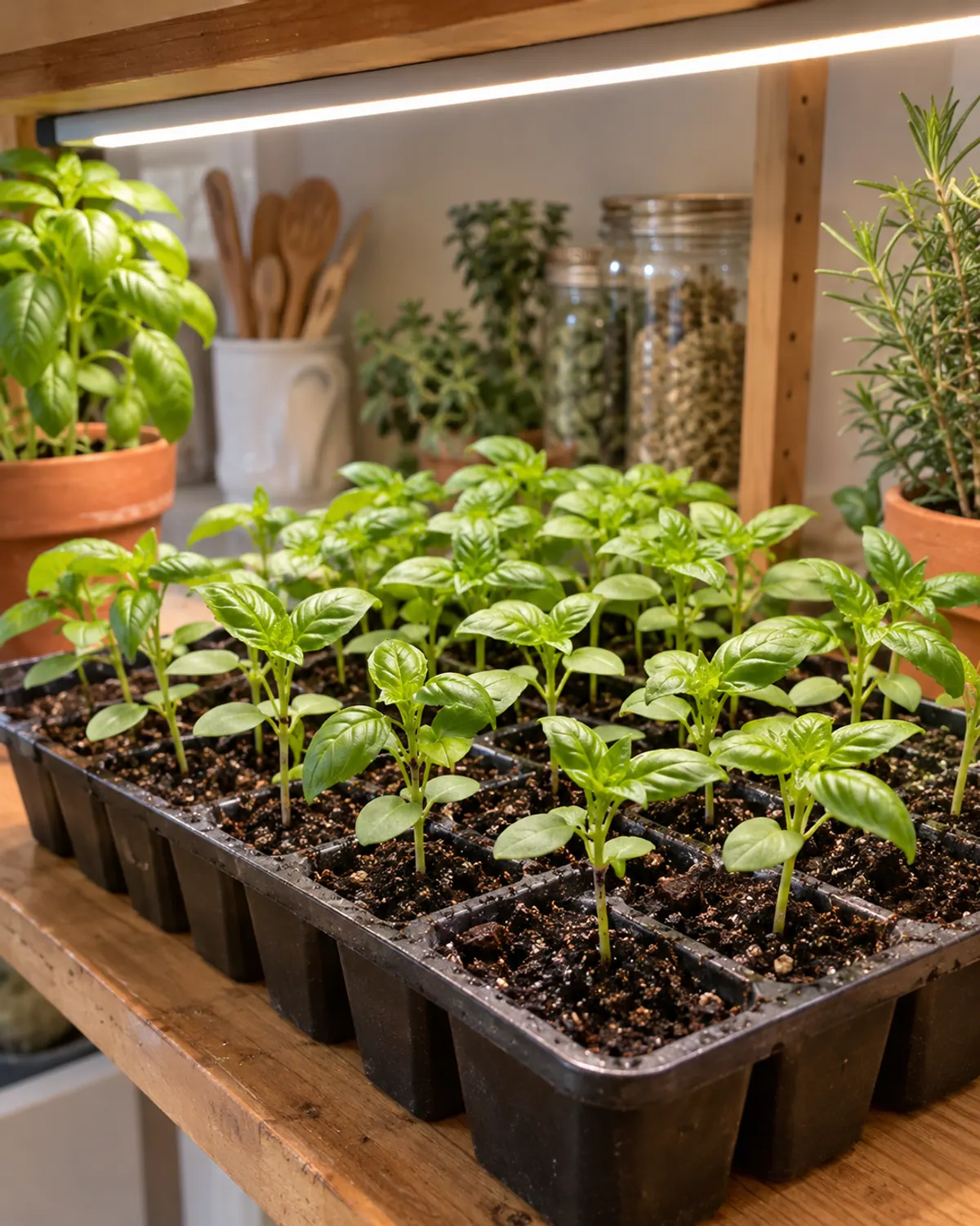
Basil is the easiest herb on this list and the fastest. Johnny's lists 5 to 10 days to sprout at about 70°F, with the seed lightly covered. Sow two or three seeds per cell under a thin layer of mix and keep it damp, not soggy. Two smooth oval seed leaves come first, then the pointed true leaves. Once a seedling has two or three pairs of true leaves, pinch off the top pair so it branches. Basil hates cold, so keep it off icy windowsills at night. When it grows up, our indoor basil guide covers winter care. Pet note: the ASPCA lists basil as non-toxic to cats and dogs.
- Sow a few basil seeds every few weeks for a steady supply instead of one big batch.
A classic sweet basil that sprouts fast and suits a first try.
2Cilantro
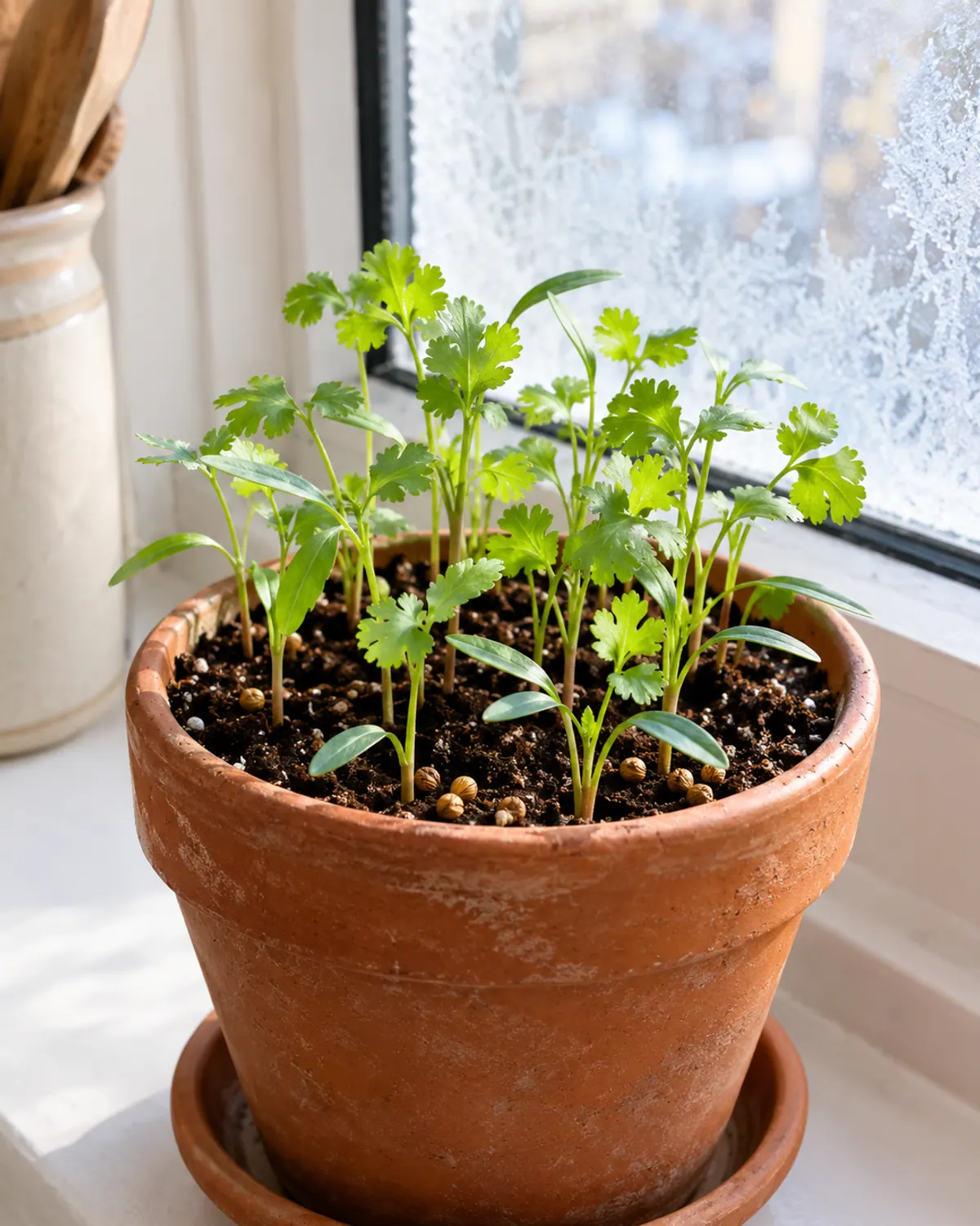
Cilantro sprouts in about 7 to 10 days, according to Johnny's, and it likes things cool. UC Master Gardeners say it prefers soil around 60°F and struggles above 70°F, so skip the heat mat. Each round seed is really a husk holding two seeds, so one can give you two sprouts. Cilantro dislikes being moved, and UC suggests starting it in larger individual pots. Sow straight into a 4 to 6 inch pot and keep the strongest few seedlings. It flowers quickly, so sow a fresh pot every few weeks. Pet note: check the ASPCA plant list before you grow it where pets roam.
- Look for slow-bolting varieties on the packet. They give you more leaves before the plant flowers.
Slow-bolting types hold their leaves longer in a warm house.
3Chives
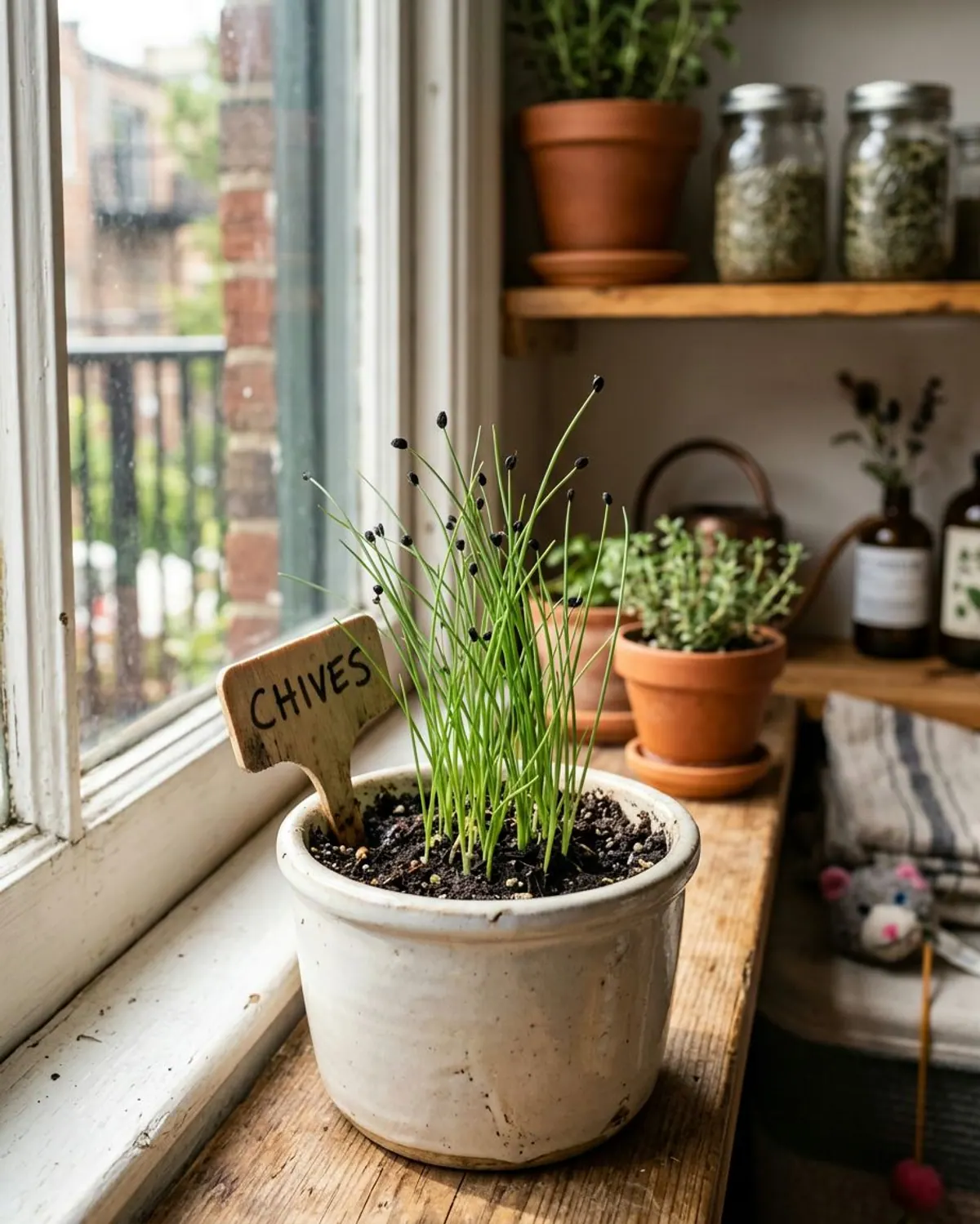
Chives sprout in 7 to 14 days. Southern Exposure says the seed needs darkness, so cover it with a thin layer of mix, and some seeds take up to 20 days at 60 to 70°F. Sow a pinch per pot rather than one seed, because chives grow as a clump. The seedlings look like fine blades of grass, often with the black seed coat stuck to the tip. Give them bright light so they don't flop over. Start snipping once the clump is about 6 inches tall, cutting a few blades near the base. Pet note: chives are in the onion family, which the ASPCA lists as toxic to cats and dogs.
- Chive seed loses its punch fast. Buy fresh seed each year for the best sprouting.
Cheap, quick to sprout and easy to grow as one clump per pot.
4Garlic chives
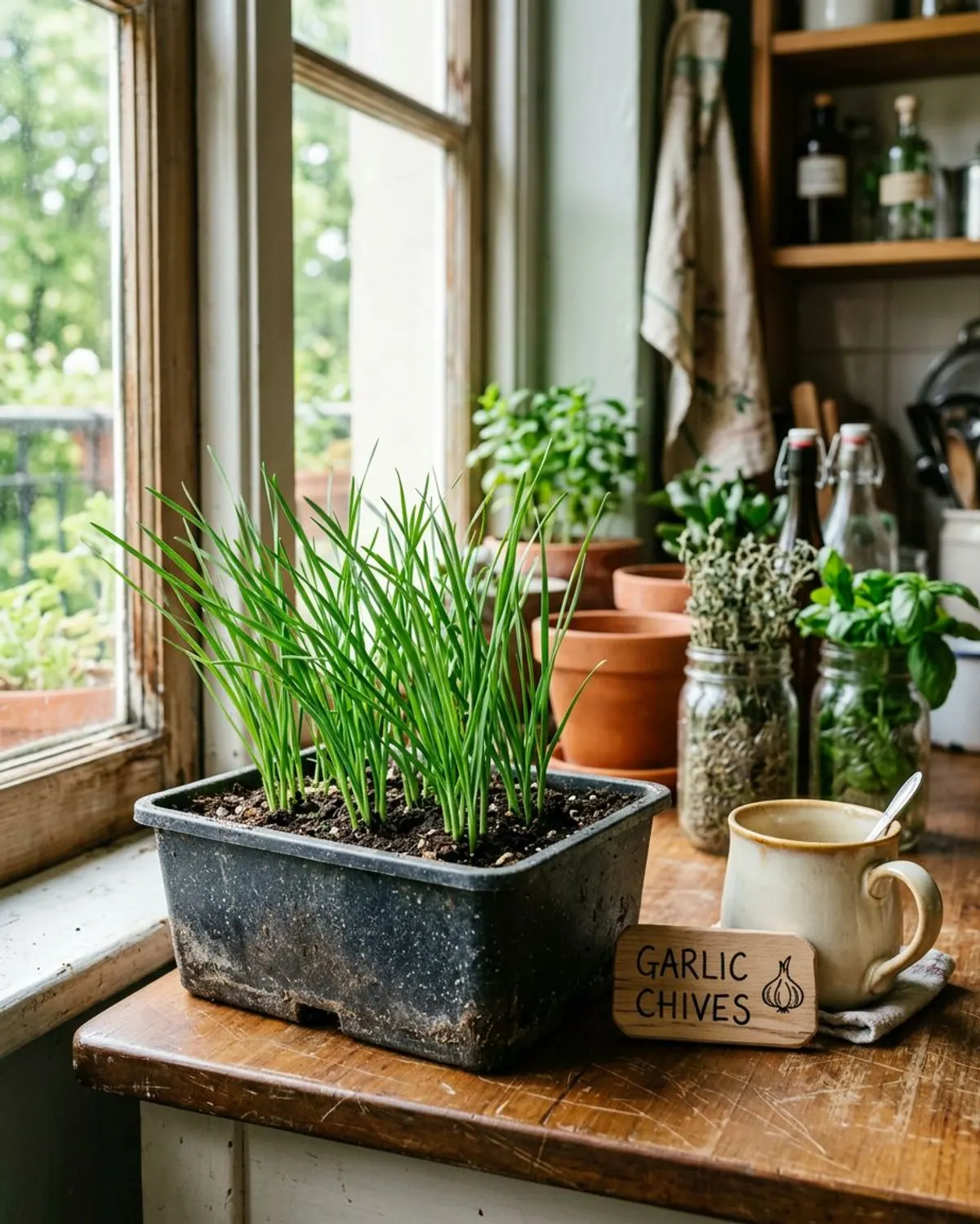
Garlic chives sprout in about 7 to 14 days, per Johnny's, and you sow them the same way as regular chives. The difference shows in the leaves, which are flat instead of hollow. They taste mildly of garlic, which makes them a good second onion-family herb for a windowsill. Sow a pinch per pot, cover lightly and keep the mix evenly damp. Growth is slow for the first month or so, then the clump fills out. Cut a few leaves at a time from the outside once they reach about 6 inches. Pet note: like all onion relatives, garlic chives are toxic to cats and dogs, per the ASPCA.
- Label the pot. Young garlic chives and regular chives look alike until the leaves widen.
Flat-leaf chives with a mild garlic taste; same easy method as chives.
5Dill
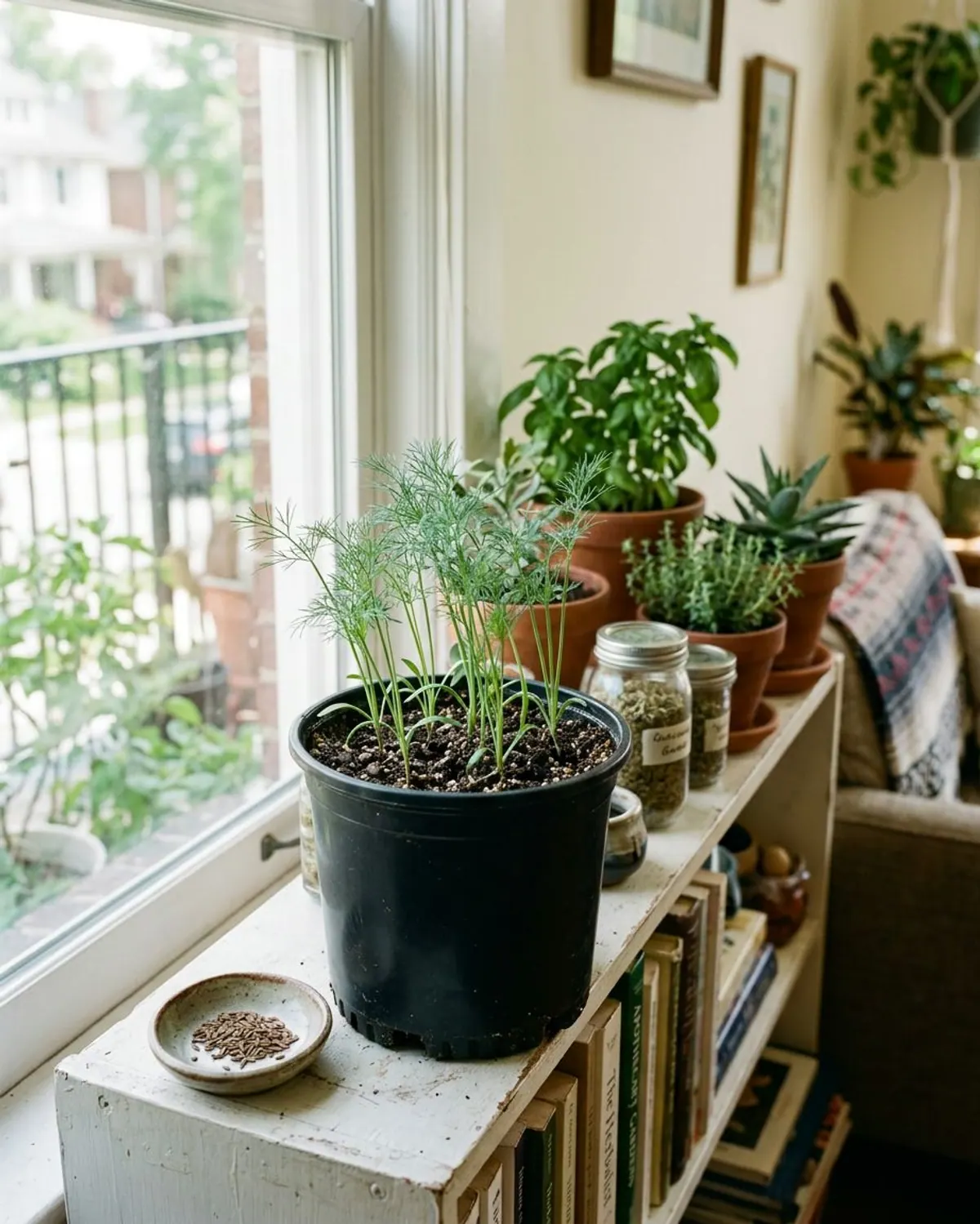
Dill sprouts in about 7 to 21 days at around 60°F, and Johnny's says not to cover the seed. Press it onto the surface of damp mix. Johnny's lists dill as a direct-sow herb, because its long taproot dislikes transplanting. So sow it in the pot it will live in, and pick one at least 6 inches deep. The fine, thread-like leaves are easy to spot once they appear. Full-size dill gets tall and floppy indoors, so a compact variety such as 'Fernleaf' suits a windowsill better. Give it your brightest spot. Pet note: check the ASPCA plant list before you grow it where pets roam.
- Snip leaves from the outside once the plant is about 8 inches tall, and leave the center growing.
A compact dill bred to stay short, which suits pots and windowsills.
6Leaf fennel
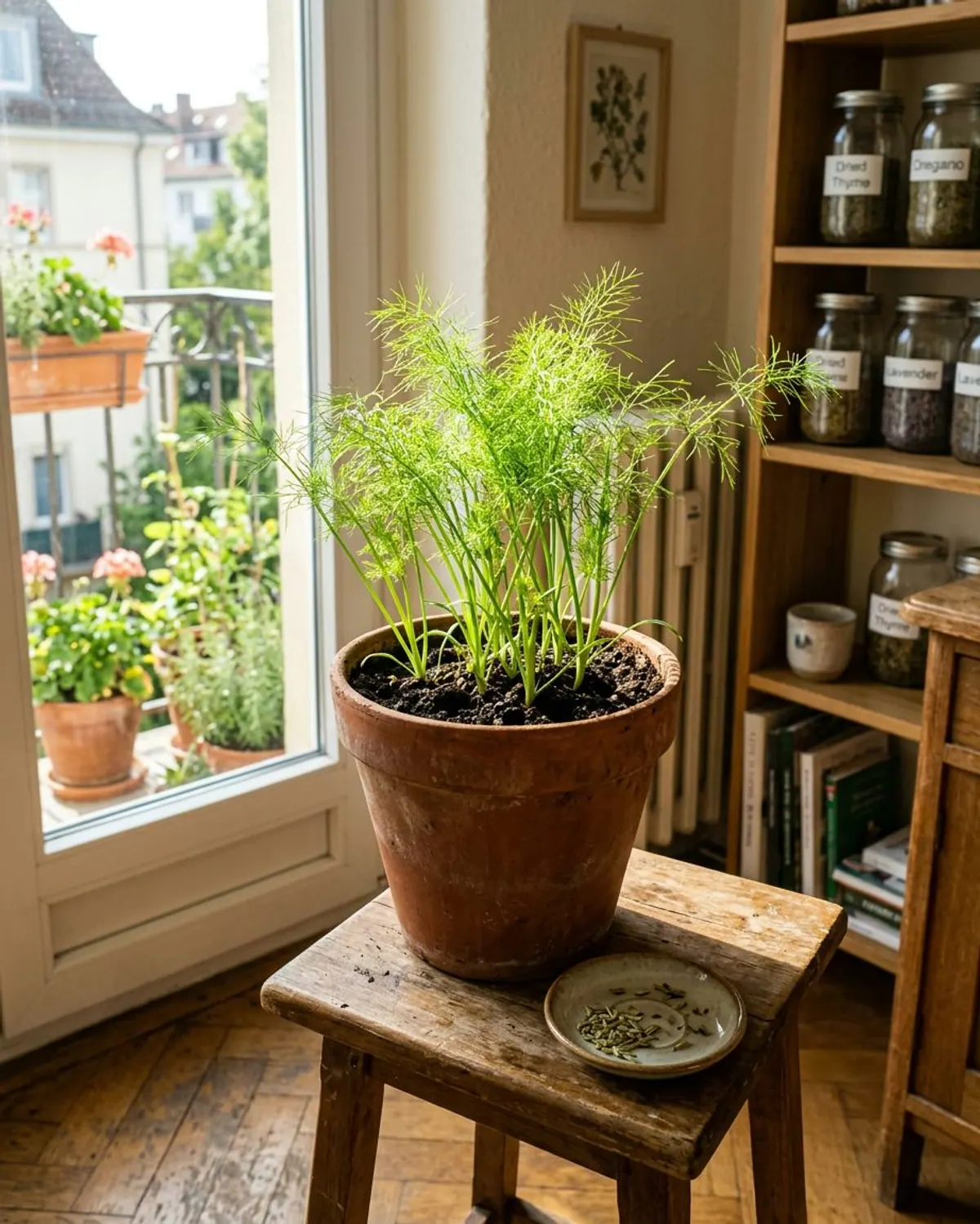
Leaf fennel, also called herb fennel, sprouts in about 7 to 14 days, according to the Johnny's chart. It's grown for its feathery leaves, not the swollen bulb of Florence fennel, which needs far more space. Cover the seed lightly and keep the mix damp. Like dill, it grows a taproot, so sow it in a deep pot and avoid moving it. The fronds taste of anise and look a lot like dill, only a little coarser. Bronze fennel is a pretty leaf type with smoky purple fronds. Give it a sunny window or a grow light. Pet note: check the ASPCA plant list before you grow it where pets roam.
- Grow fennel and dill in separate pots. They look so alike that labels save mix-ups.
A leaf fennel grown for fronds, not bulbs, so it fits a pot.
Tiny seeds that need light to sprout
These four have small seeds that sprout best on the surface of the mix. Press them in, mist gently and keep the dome on until they show.
7Marjoram
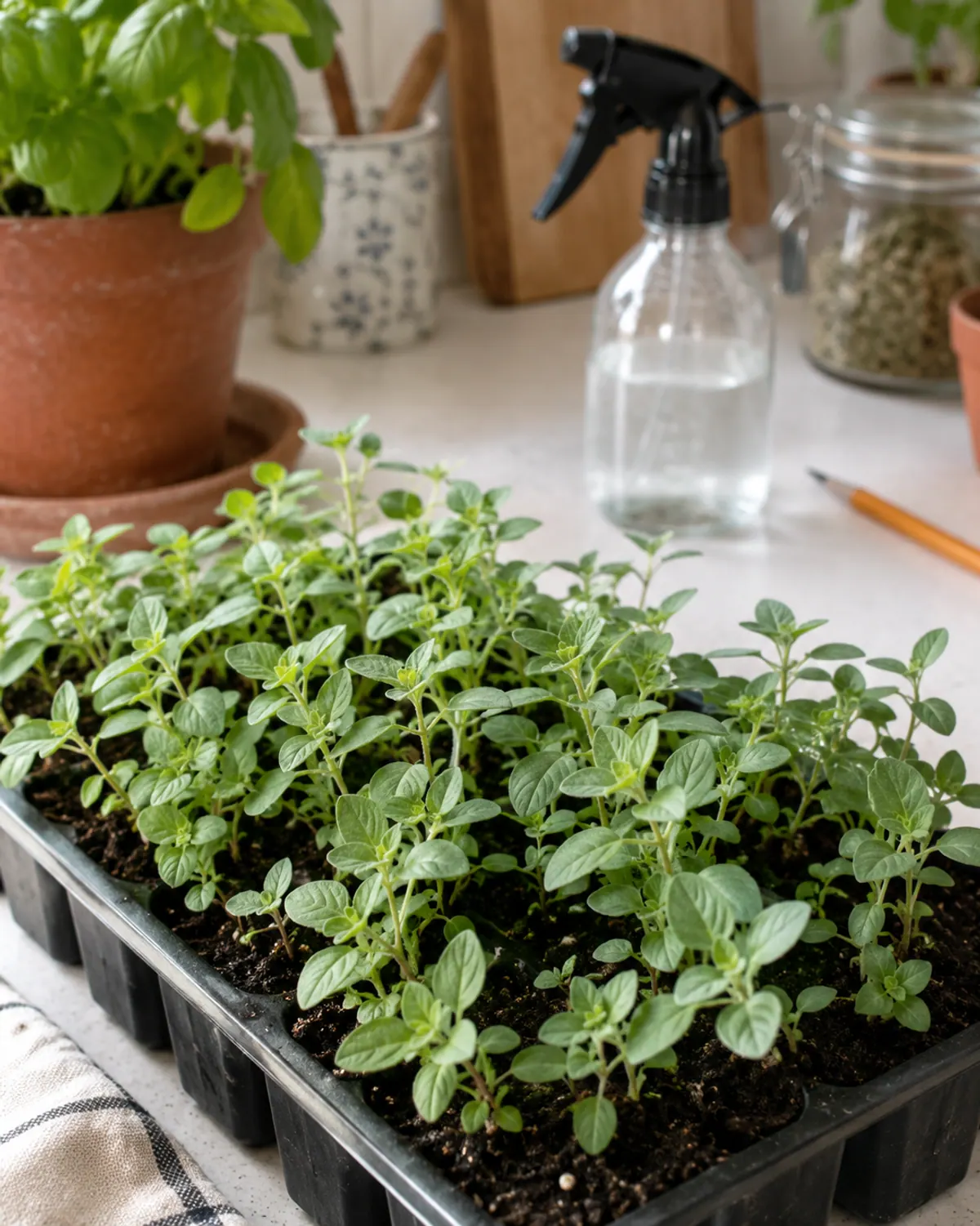
Marjoram sprouts in about 7 to 14 days at around 70°F, and Johnny's says to leave the seed uncovered. The seeds are tiny, so sprinkle a small pinch per cell and press it onto damp mix. Mist rather than pour, or the seeds wash into one corner. Seedlings have small, soft, rounded leaves in pairs. Thin each cell to two or three plants once they have true leaves. Marjoram tastes like a sweeter, milder oregano, and it needs bright light to stay compact. A warm spot speeds things up. Pet note: the ASPCA lists marjoram as toxic to cats and dogs.
- Mix the tiny seed with a spoonful of dry sand before sowing. It helps you spread it evenly.
Tiny seed that sprouts in a week or two in a warm room.
8Oregano
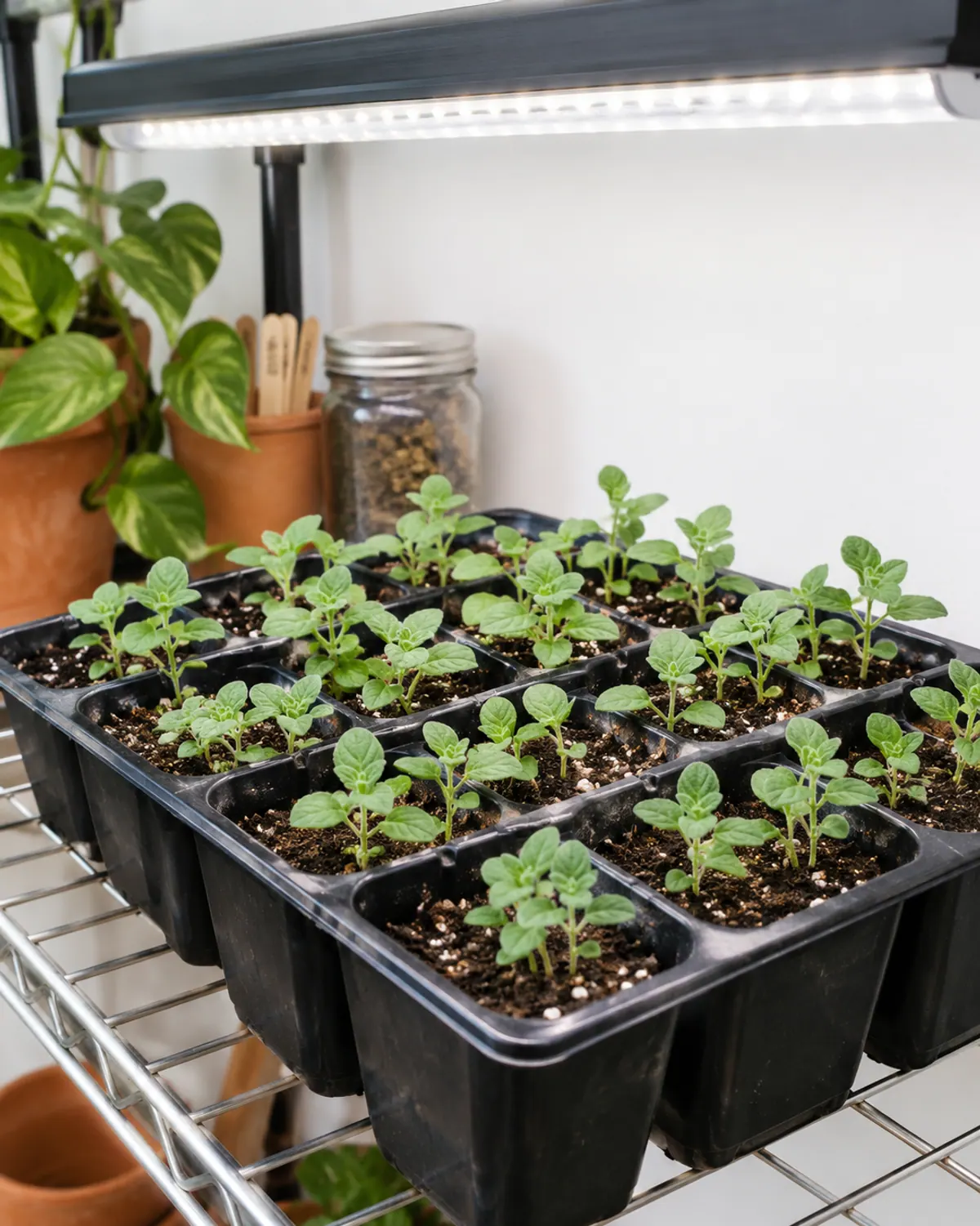
Oregano sprouts in about 7 to 14 days at around 60°F, and Johnny's says not to cover the seed. Sow it like marjoram: a pinch on the surface, pressed in and misted. The National Gardening Association lists oregano among herbs often started from cuttings or division, because seed-grown plants can vary in flavor. Seed is still the cheapest way to fill a few pots. If you want a strong Greek oregano flavor, look for a named variety on the packet. Keep seedlings bright and let the mix dry slightly between waterings. Pet note: the ASPCA lists oregano as toxic to cats and dogs.
- Taste a leaf from each plant once they grow. Keep the strongest flavored one and take cuttings from it.
Named Greek types give a stronger flavor than generic oregano seed.
9Lemon balm
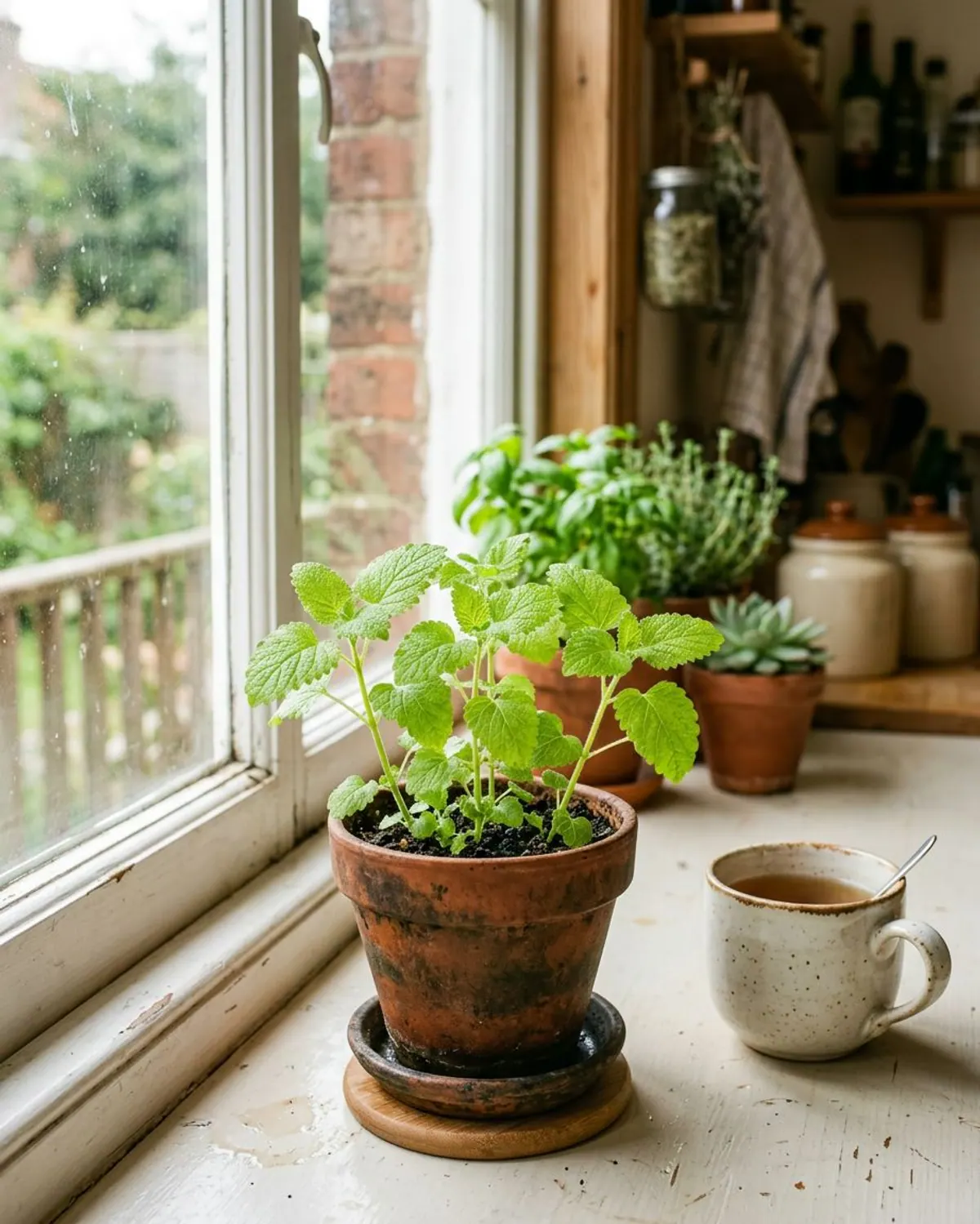
Lemon balm sprouts in about 7 to 14 days, per Johnny's. The seed is small, so press it onto the surface and keep it moist. Johnny's lists it as an herb to start indoors and transplant. Seedlings have crinkled, scalloped leaves and smell of lemon when you brush them. Lemon balm is a mint relative that spreads, so give each plant its own pot. If you plan to drink it as tea and you are pregnant or nursing, ask your doctor first; this is not medical advice. Pet note: check the ASPCA plant list before you grow it where pets roam.
- Pinch the tips once plants are 4 inches tall. Lemon balm gets leggy indoors without regular cutting.
Sprouts in a week or two and grows into a lemon-scented pot herb.
10German chamomile
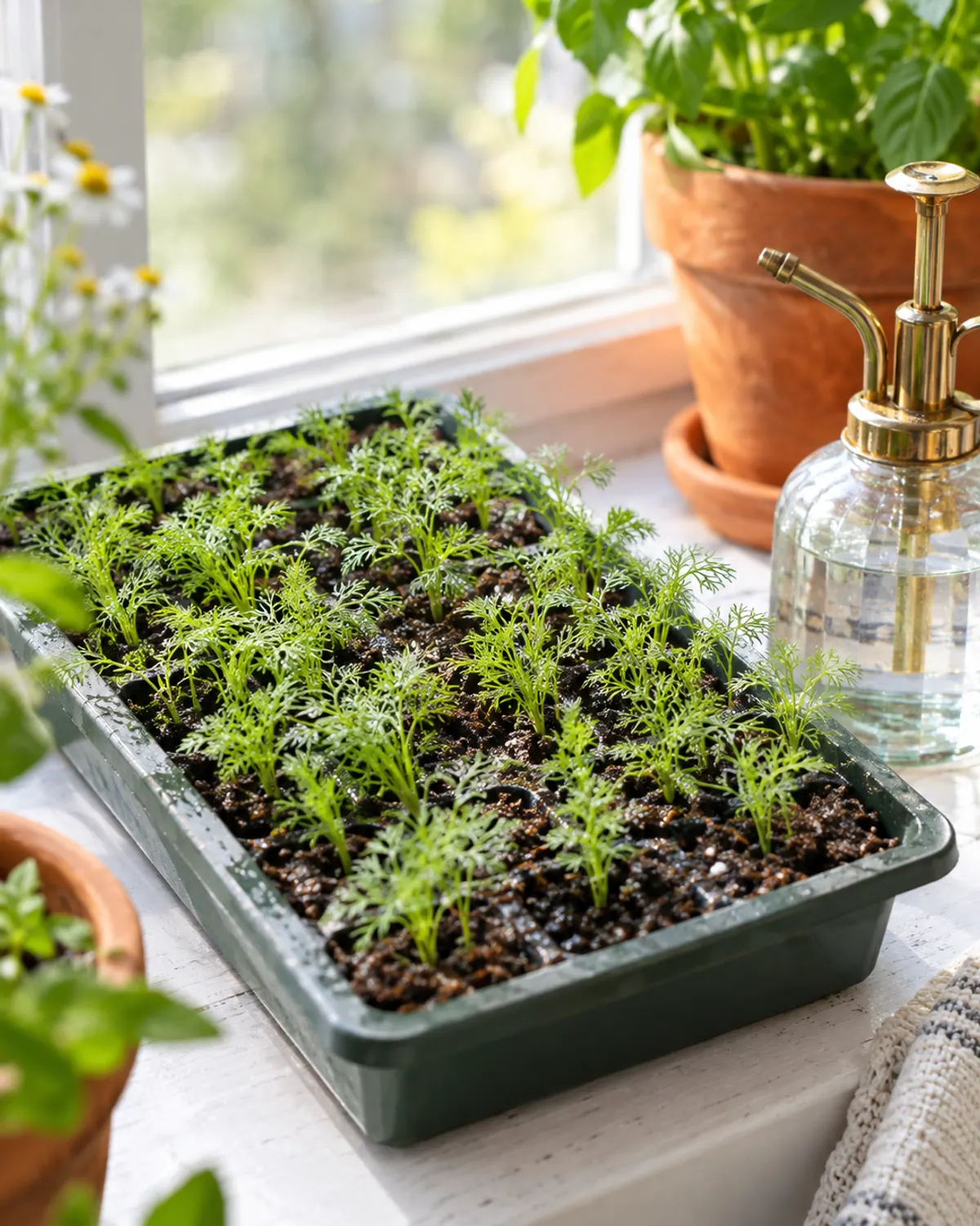
German chamomile sprouts in about 10 to 14 days. Southern Exposure says the seed needs light, so press it onto the surface, and keep it misted at a cool 55 to 60°F. The seed is almost as fine as dust. Seedlings form small rosettes of ferny, thread-like leaves. Chamomile needs plenty of light to flower indoors, so plan on a grow light in winter. Chamomile is in the daisy family, so people with ragweed allergies may react to it. If you are pregnant or nursing, ask your doctor before using it in tea; this is not medical advice. Pet note: the ASPCA lists chamomile as toxic to cats and dogs.
- Sow chamomile in a wide, shallow pot. The plants are small and look best as a group.
The annual tea chamomile; fine seed that sprouts in about two weeks.
Slower herbs to grow from seeds indoors: 2 to 4 weeks
These three take longer, and that's where most people give up too soon. Label the pot with the sowing date so you know when to start worrying.
11Sage
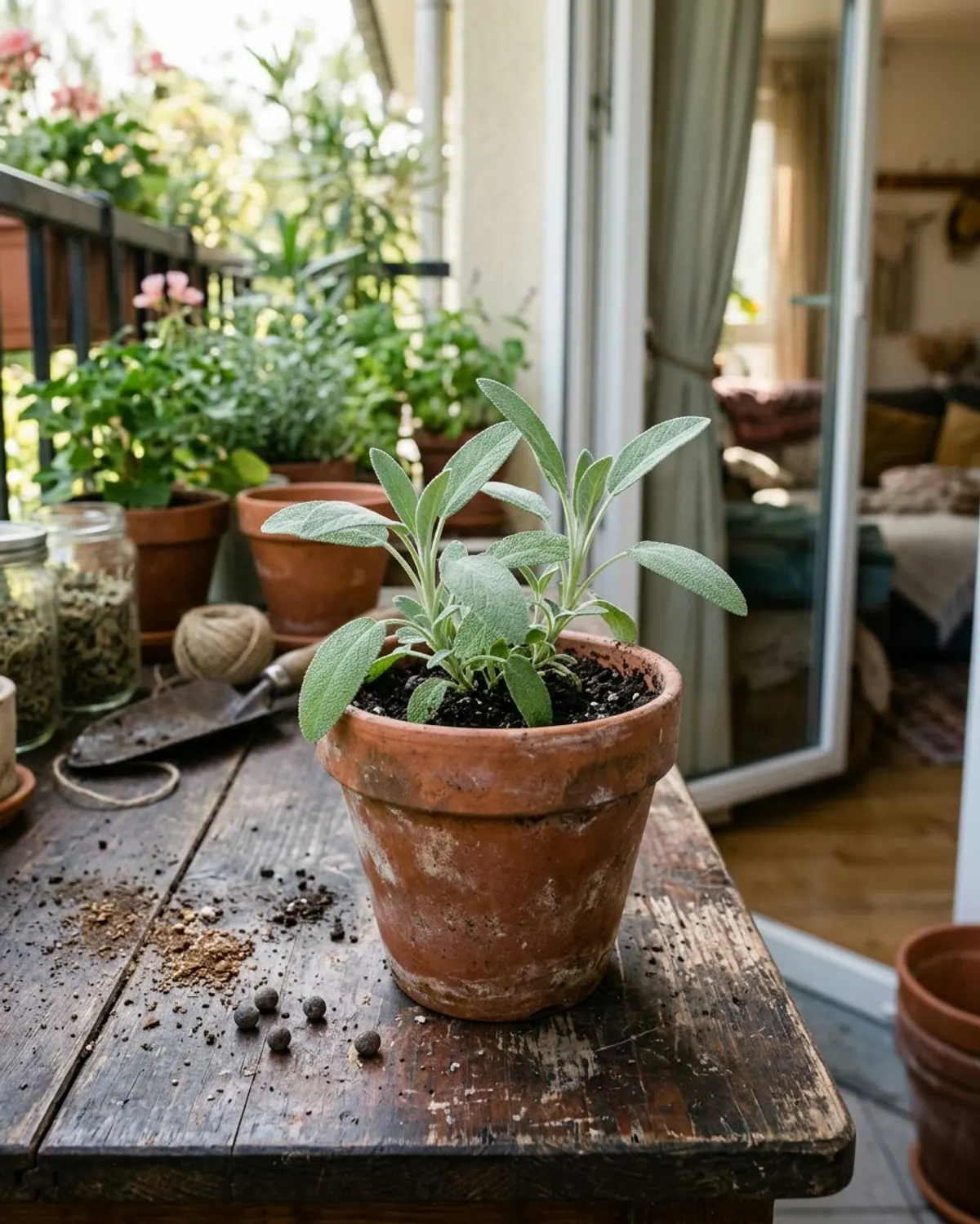
Sage sprouts in about 7 to 21 days at around 70°F, and Johnny's says to cover the seed. The seeds are bigger than most herbs on this list, so they're easy to place two per cell. Seedlings grow slowly at first, then pick up once they have a few pairs of soft grey-green leaves. Sage dislikes wet roots, so let the top of the mix dry a little between waterings. Move it to a terracotta pot with a gritty mix when roots fill the cell. If you are pregnant or nursing, ask your doctor before using sage in tea or large amounts; this is not medical advice. Pet note: check the ASPCA plant list before you grow it where pets roam.
- A warm spot or a heat mat set to about 70°F helps sage sprout evenly.
Easy-to-handle seed that turns into a long-lived pot herb.
12Parsley
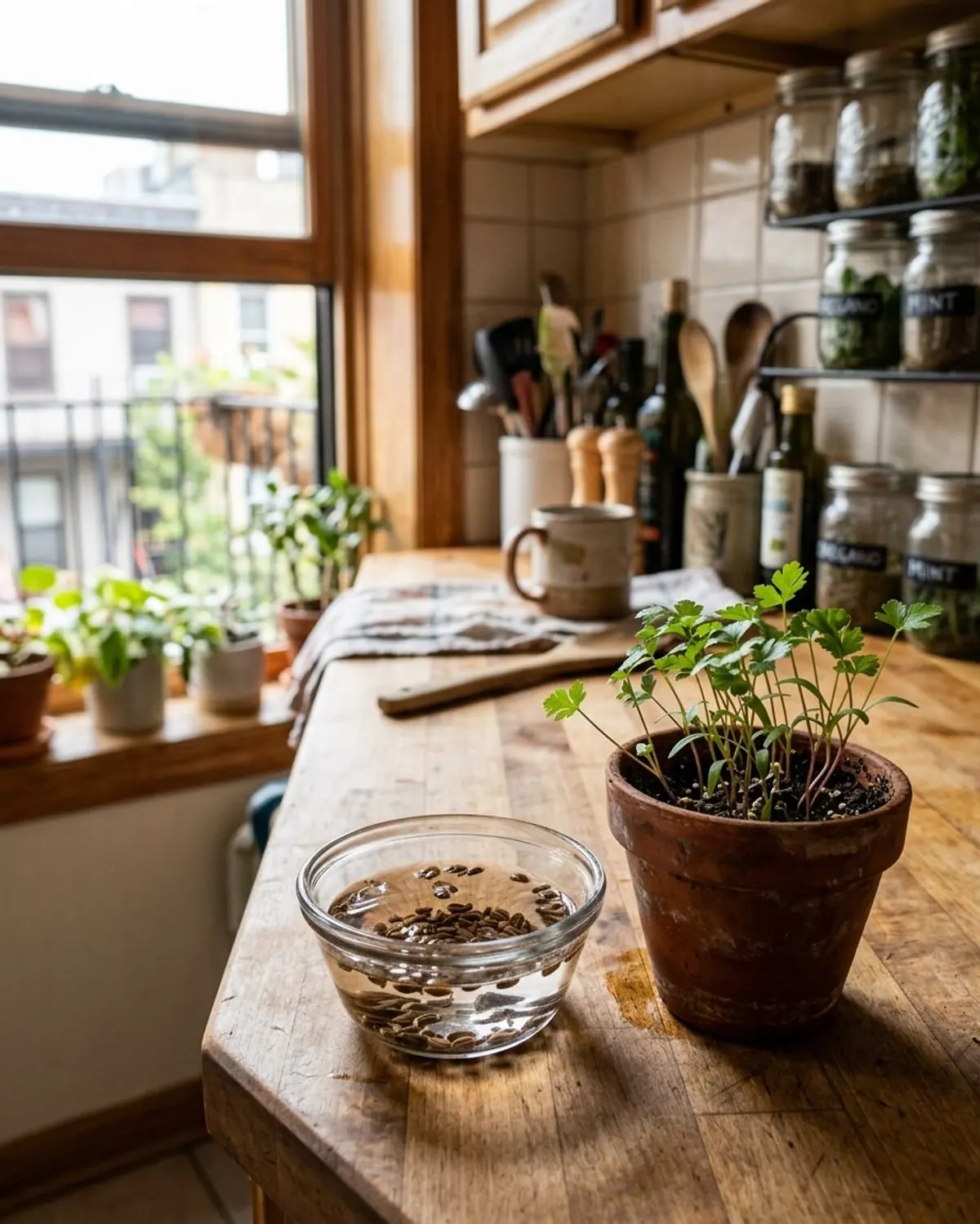
Parsley is slow: Johnny's gives 14 to 30 days, and Southern Exposure says 3 to 4 weeks at 65 to 70°F. Southern Exposure suggests soaking the seed overnight before sowing. Cover it lightly and keep the mix evenly moist the whole time, since a dry spell can stall it. Two long, narrow seed leaves come first, then the familiar lobed leaves. Parsley grows a taproot, so pick a deep pot. Flat-leaf and curly types sprout the same way. Pet note: the ASPCA lists parsley as toxic to cats and dogs.
- Change the soaking water once if it turns brown, then sow the seed while it's still damp.
The strong-flavored flat type; slow to sprout but steady once up.
13Thyme
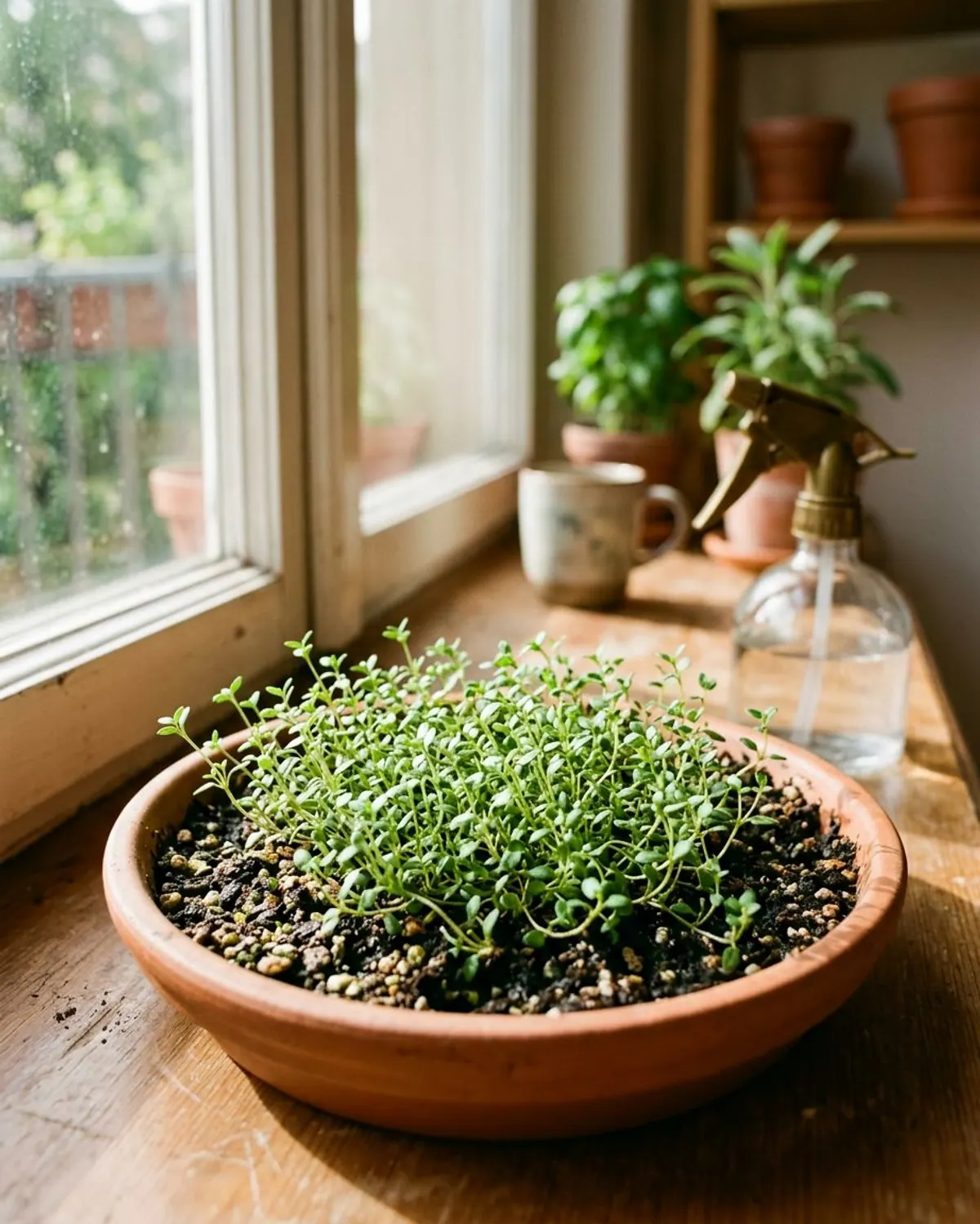
Thyme takes 14 to 21 days, per Johnny's, and up to 30 days, per Southern Exposure. Southern Exposure calls the seed as fine as dust and says it needs light, so press it onto the surface. Sources differ on warmth: Southern Exposure suggests 55 to 60°F, while Johnny's lists about 70°F. A normal room in between works. Water from below so the seeds don't wash away. The seedlings look like a carpet of moss for weeks, so be patient. Pet note: the ASPCA lists thyme as non-toxic to cats and dogs.
- Sow thyme in a shallow, wide pot. Its roots spread out more than down.
Very fine seed; slow, but one packet fills several pots.
Hard from seed: try these last
Lavender and rosemary do grow from seed, but slowly and unevenly. Sow extra and expect gaps.
14Lavender
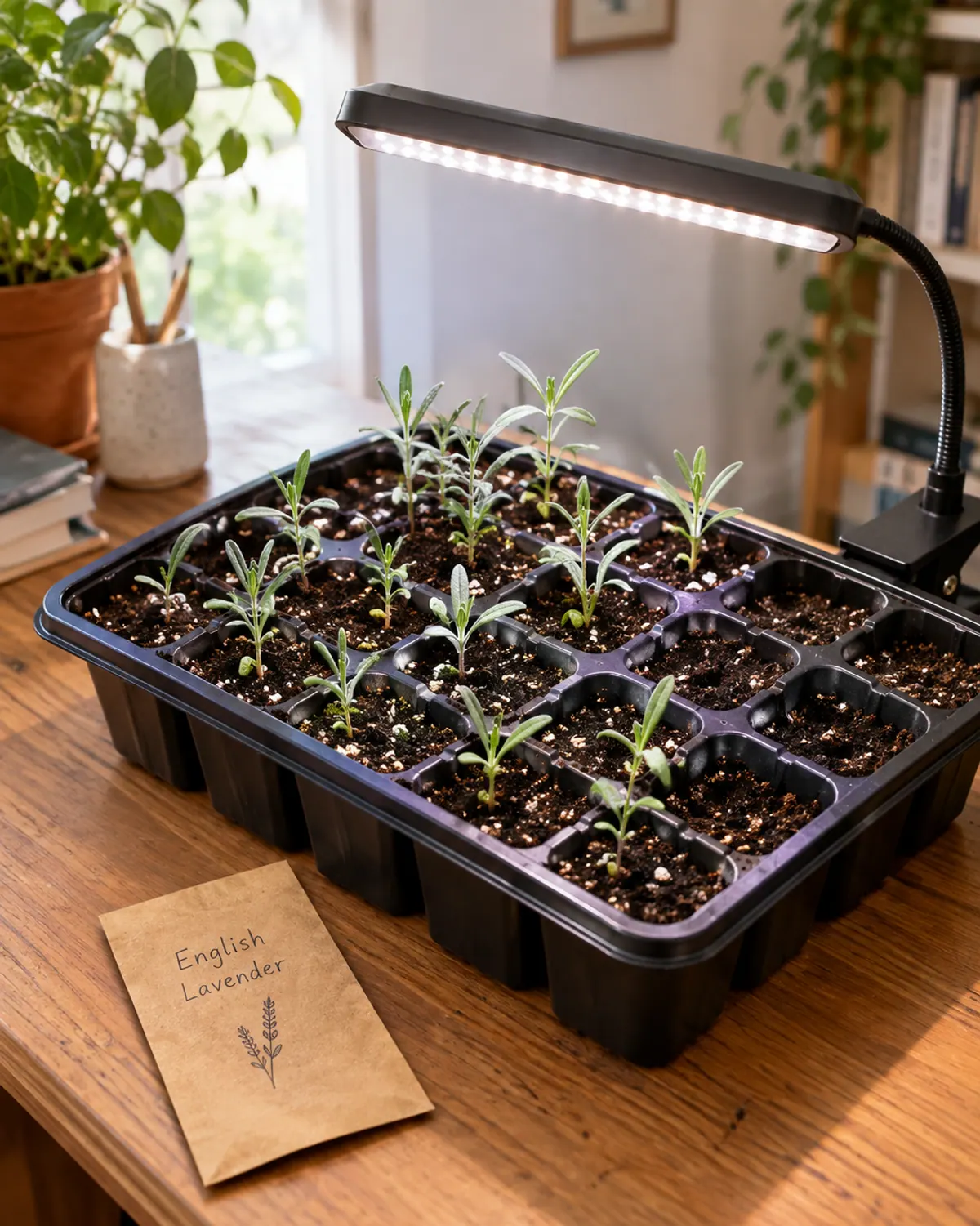
Lavender takes 14 to 21 days, per Johnny's, and about 30 days in warm soil near 70°F, per Southern Exposure. Southern Exposure also suggests a slightly alkaline mix. Germination is often patchy, so sow two or three times as many seeds as you need. Some seed sellers suggest chilling the seed before sowing, so follow your packet. English lavender is the usual choice from seed. Seedlings grow slowly, with narrow grey-green leaves. Indoors, lavender needs a lot of light, as our lavender indoors guide explains. Pet note: the ASPCA lists lavender as toxic to cats and dogs.
- Let the mix dry slightly between waterings once seedlings appear. Lavender rots in wet mix.
The hardy lavender most often grown from seed.
15Rosemary
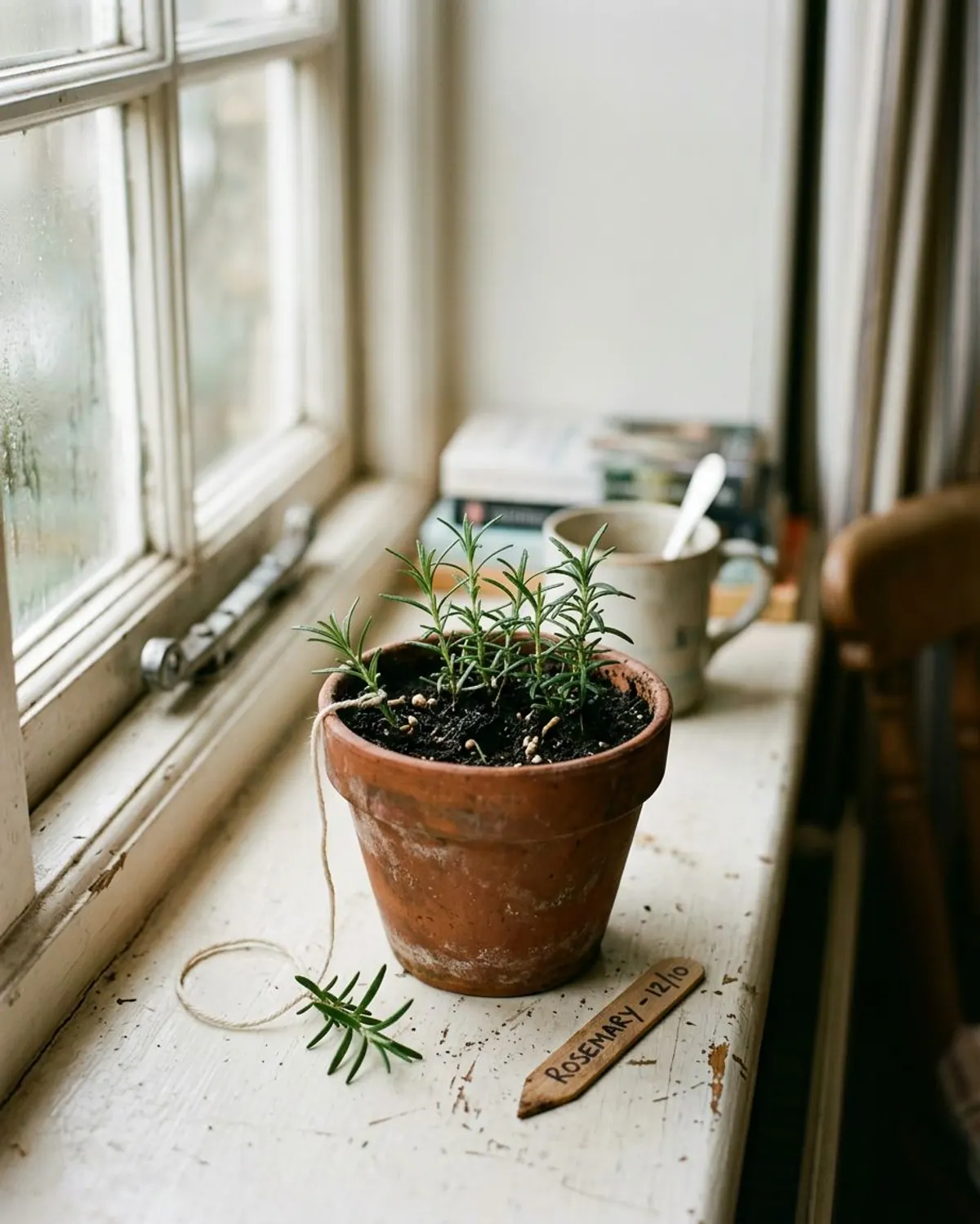
Rosemary is the hardest herb here. Johnny's lists 14 to 21 days, while Southern Exposure says 14 to 28 days at 55 to 60°F, with low germination. The seed needs light, so press it onto the surface. Sow plenty, since many seeds won't come up. Seedlings take months to reach a usable size. The National Gardening Association lists rosemary among herbs better started from cuttings, so buying a small plant is the shortcut. For care once it's growing, see our rosemary guide. Pet note: the ASPCA lists rosemary as non-toxic to cats and dogs.
- Keep rosemary seedlings cool and bright. Warm, dim rooms make them stretch.
Cheap but slow; sow extra and treat it as a patience project.
Bonus: 5 herbs to buy as plants instead
Some herbs are a poor bet from seed, either because the seed won't give you the plant you want or because it takes too long. For these, a nursery pot or a cutting saves months.
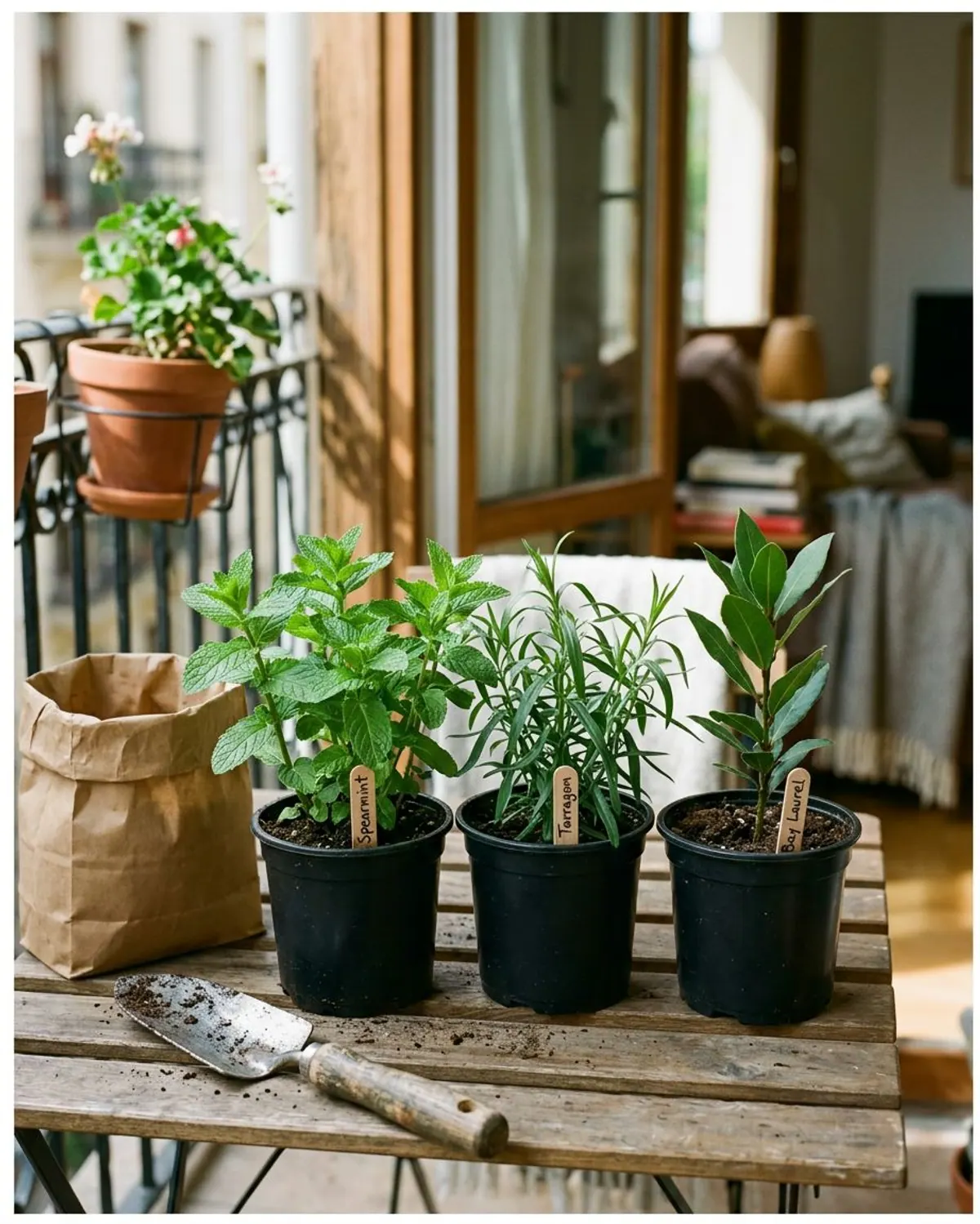
| Herb | Why skip the seed | Start with |
|---|---|---|
| Mint | Peppermint doesn't come true from seed, so flavor is a gamble | A nursery plant or a rooted cutting |
| French tarragon | It rarely sets viable seed; packets labeled tarragon are usually Russian tarragon, which has less flavor | A nursery plant |
| Bay laurel | Slow and uneven from seed (NGA lists it with cutting herbs) | A small potted tree |
| Lemon verbena | Listed by the NGA among herbs better from cuttings | A nursery plant |
| Winter savory | Listed by the NGA among herbs better from cuttings or division | A nursery plant or a division |
Mint roots easily from a cutting in a glass of water. The National Gardening Association list above also includes rosemary and oregano.
How to grow herbs from seeds indoors: the short setup
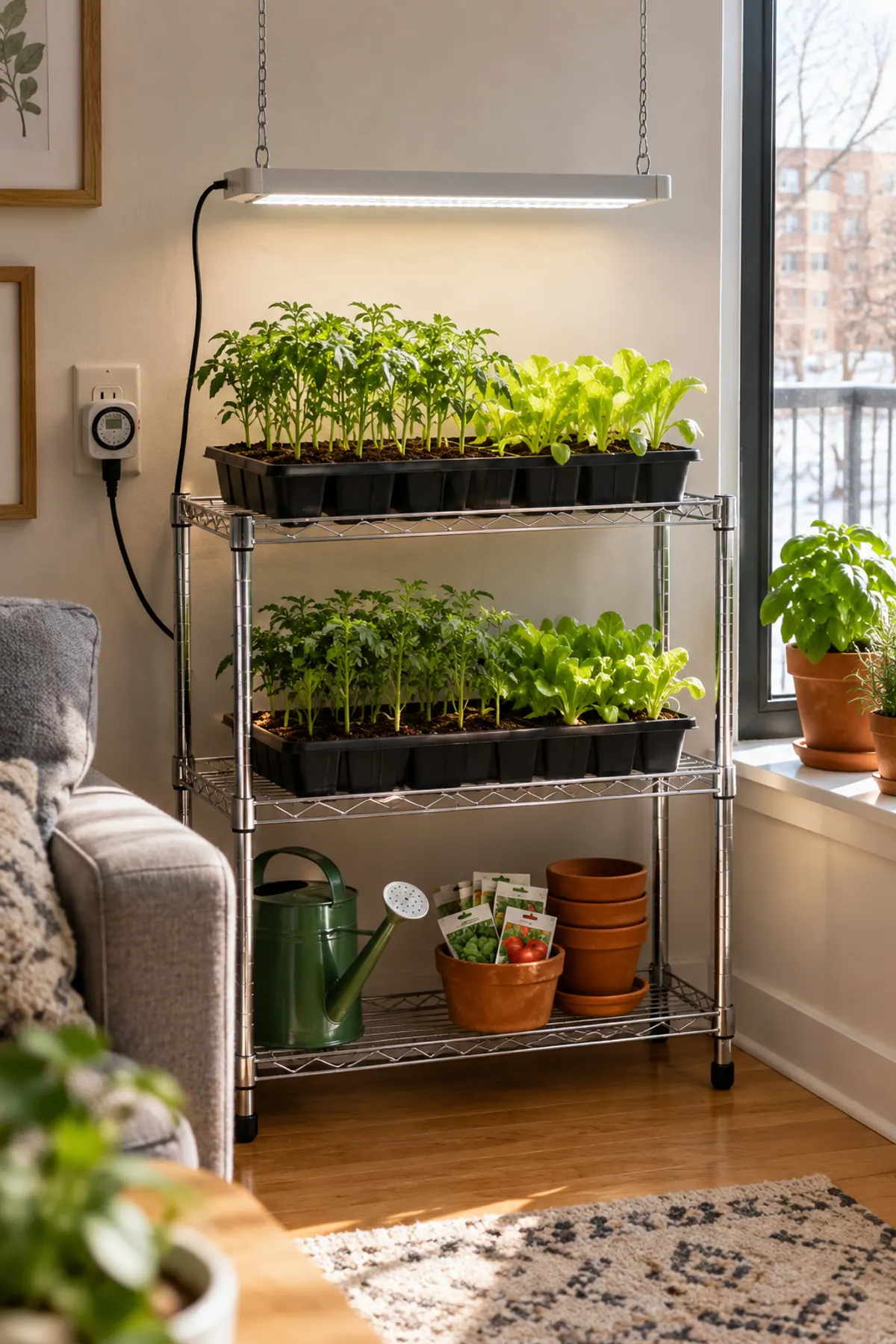
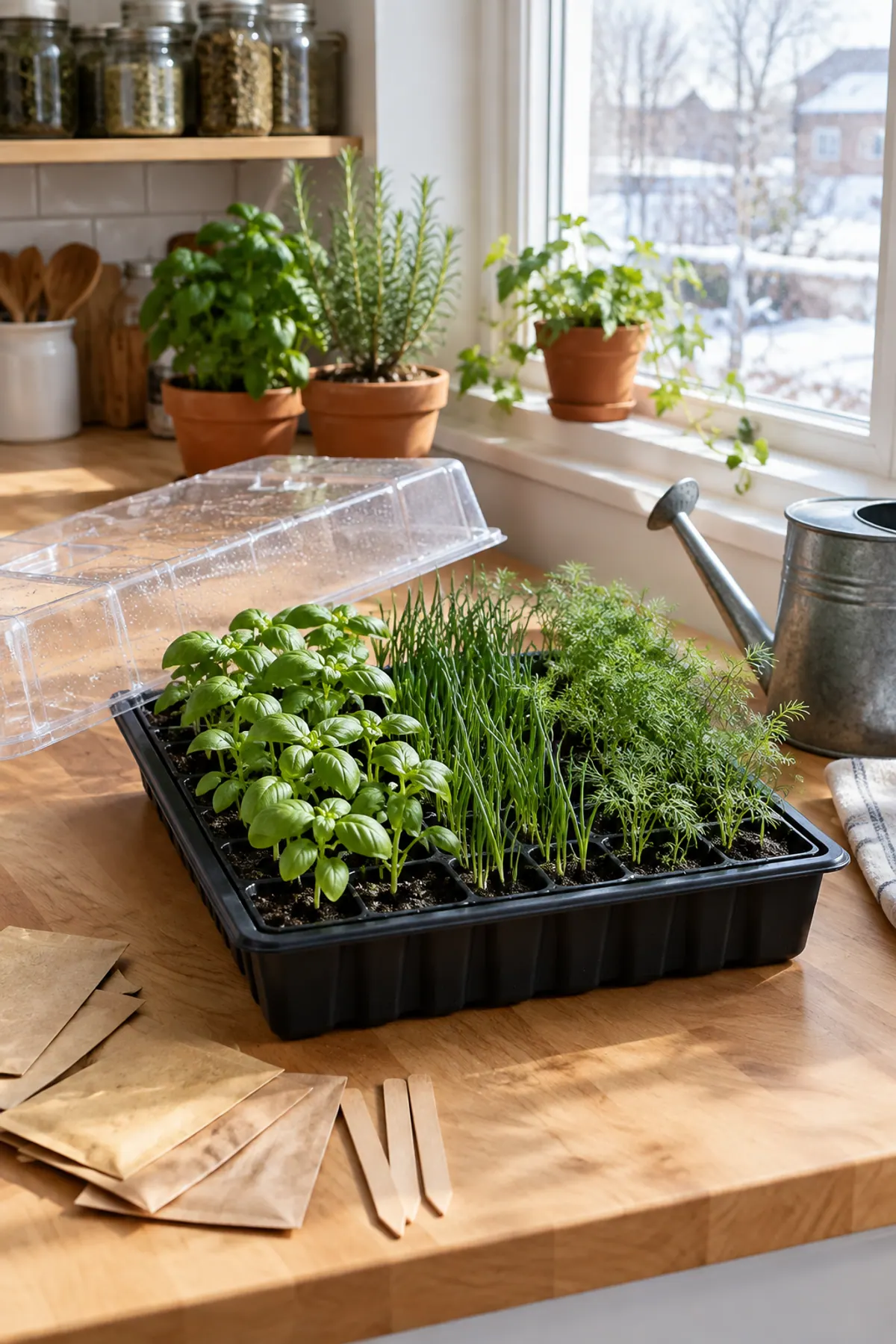
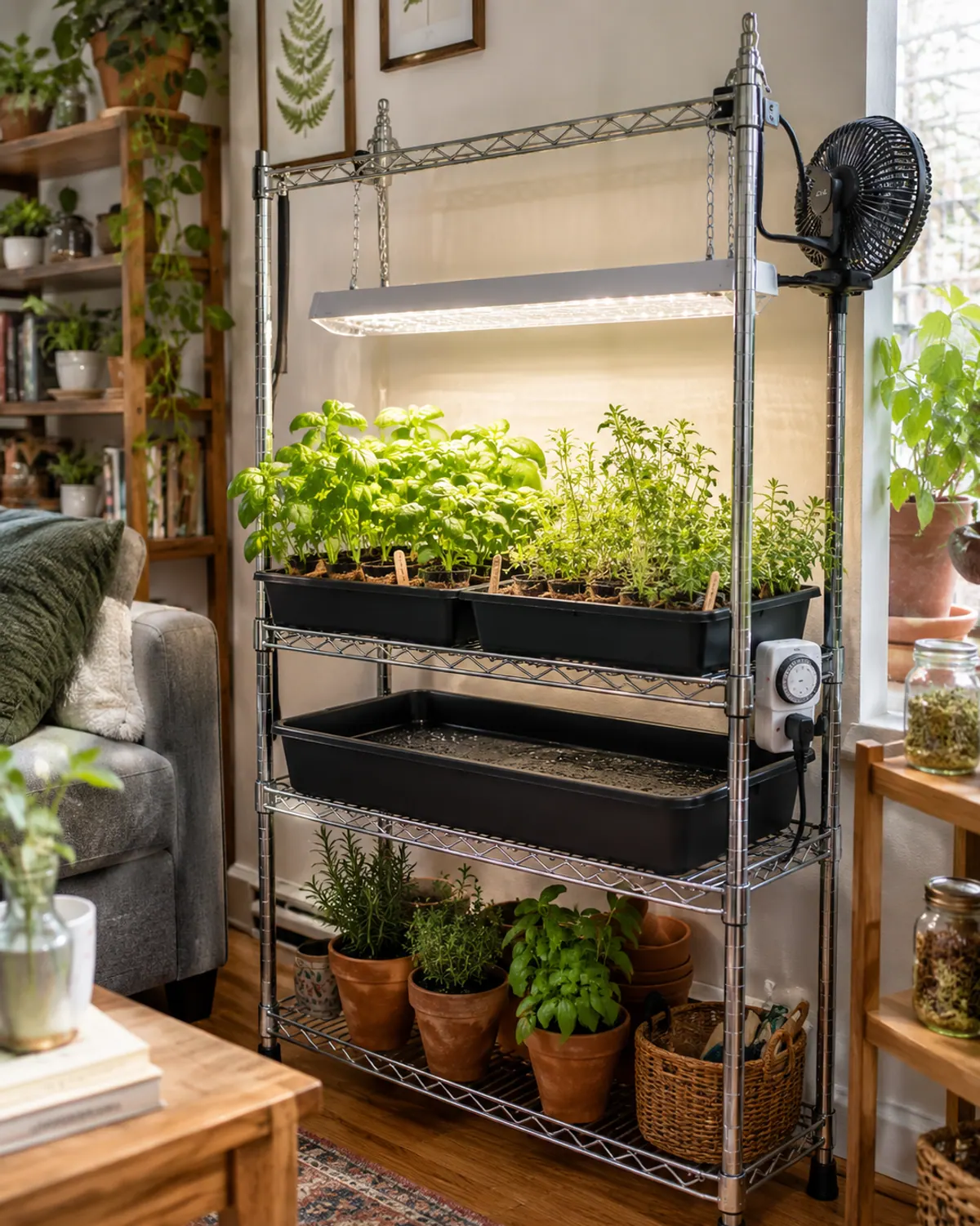
You don't need a greenhouse. One shelf, a light, a tray and a timer cover all 15 herbs. The care numbers below come from Utah State University Extension (2025); our small-space seed starting setup has a full parts list.
-
Step 1: Sow at the right depth
Cover the seeds that need darkness, such as basil, chives, parsley and sage. Press light-needing seeds, such as thyme, chamomile, oregano and marjoram, onto the surface.
-
Step 2: Dome on, then off
Keep a clear dome on until about half the seeds have sprouted, then take it off, as Utah State advises. A wet, closed dome after that invites mold.
-
Step 3: Give 12 to 14 hours of light
Utah State suggests 12 to 14 or more hours a day on a timer. Hang shop lights 2 to 3 inches above the seedlings, watch for scorched leaves and raise the light as they grow. Our grow light guide compares options.
-
Step 4: Water from below and move the air
Set trays in 1 to 2 inches of water, let the mix soak it up, then pour off the rest. A small fan for at least 5 to 10 minutes a day helps stems grow sturdy.
-
Step 5: Keep it a little cool at night
Utah State suggests nights of 60 to 65°F with days about 10 degrees warmer. Cool-season plants such as cilantro and chamomile like nights nearer 55°F.
-
Step 6: Feed lightly and pot up
Once true leaves form, feed at half strength weekly unless your fertilizer label says otherwise. Move seedlings to bigger pots when leaves overlap or roots fill the cell.
Seed starting gear for an herb shelf
- Start here
Seed starting tray with humidity dome
Typically $12 to $25
Cells keep each herb separate, and the dome holds moisture until seeds sprout.
Check price on Amazon for Seed starting tray with humidity dome -
Seed starting mix
Typically $8 to $15
Fine, light mix that tiny herb seeds can push through. Garden soil packs down too hard.
Check price on Amazon for Seed starting mix -
LED shop light
Typically $20 to $40
Hangs a few inches above trays, which is what Utah State recommends for seedlings.
Check price on Amazon for LED shop light -
Plug-in outlet timer
Typically $8 to $15
Keeps the light on 12 to 14 hours a day without you remembering.
Check price on Amazon for Plug-in outlet timer -
Seedling heat mat with thermostat
Typically $20 to $40
Helps basil, marjoram and sage, which like about 70°F. Skip it for cilantro and chamomile.
Check price on Amazon for Seedling heat mat with thermostat -
Plant markers
Typically $6 to $10
Many herb seedlings look alike. Write the herb and the sowing date on each.
Check price on Amazon for Plant markers
Herb seed packets from this list
-
Genovese basil seeds
Typically $3 to $6 a packet
The fastest, easiest herb from seed.
Check price on Amazon for Genovese basil seeds -
Slow-bolt cilantro seeds
Typically $3 to $6 a packet
Holds its leaves longer before flowering.
Check price on Amazon for Slow-bolt cilantro seeds -
Common chive seeds
Typically $3 to $6 a packet
Sow a pinch per pot for a full clump.
Check price on Amazon for Common chive seeds -
Flat-leaf Italian parsley seeds
Typically $3 to $6 a packet
Slow to sprout; soak overnight first.
Check price on Amazon for Flat-leaf Italian parsley seeds -
Common thyme seeds
Typically $3 to $6 a packet
Fine seed that needs light to sprout.
Check price on Amazon for Common thyme seeds
Before you sow herb seeds
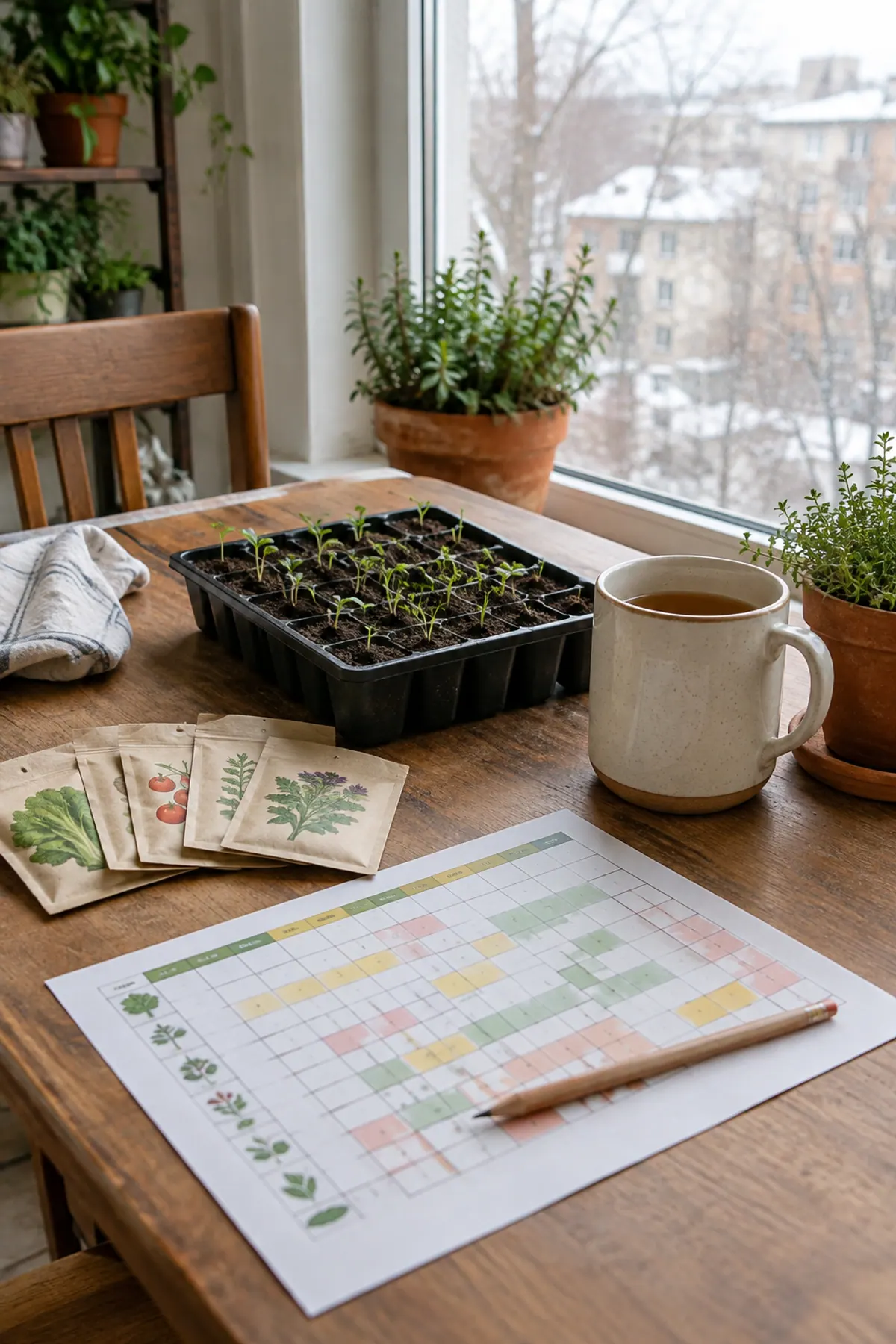
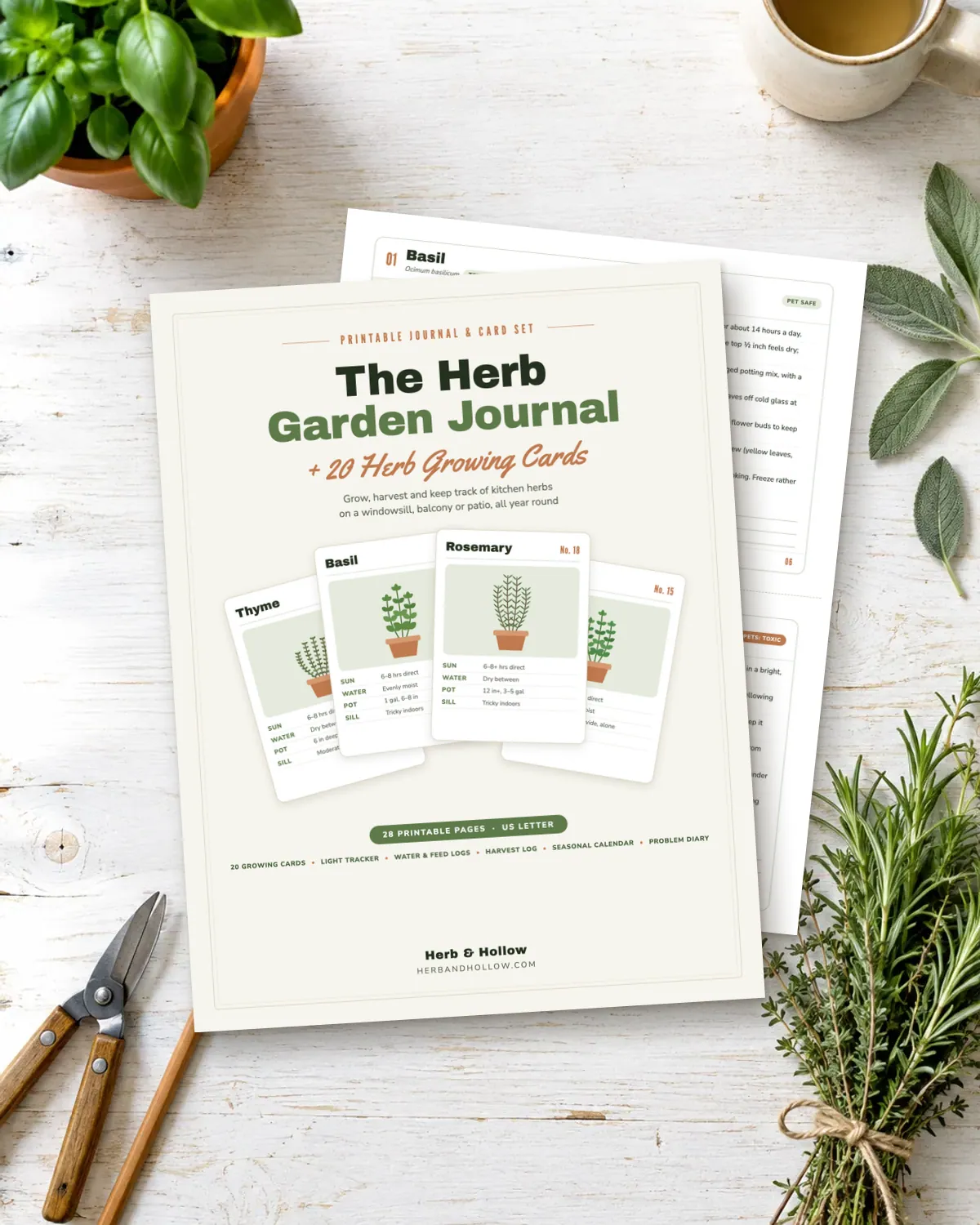
Want to plan which herbs go where once they're up? The free planner below has a sun map, a container guide and a 16-herb cheat sheet.
Frequently asked questions
What herbs are easiest to grow from seed indoors?
Basil, cilantro, chives and garlic chives are the easiest. Johnny's Selected Seeds lists basil at 5 to 10 days and cilantro at 7 to 10 days to sprout. Their seeds are also big enough to handle easily.
How long do herb seeds take to sprout?
Most take 1 to 3 weeks. Basil can sprout in 5 days, while parsley, thyme, lavender and rosemary can take 3 to 4 weeks. Check your packet, since variety and seed age change the timing.
Should I cover herb seeds with soil?
It depends on the herb. Basil, chives, parsley and sage go under a thin layer of mix. Tiny seeds such as thyme, oregano, marjoram and chamomile need light, so press them onto the surface instead.
Can I grow herbs from seed on a windowsill without a grow light?
In a bright south window in spring, often yes. In winter, seedlings on a sill usually stretch and flop. Utah State Extension suggests 12 to 14 or more hours of light, which a simple shop light on a timer provides.
Which herbs should I not grow from seed?
Mint, French tarragon, bay laurel, lemon verbena and winter savory are easier from plants or cuttings. Peppermint doesn't come true from seed, and French tarragon rarely sets viable seed.
When should I start herb seeds indoors?
Indoors you can sow herbs for a windowsill any time of year. For herbs going outside in spring, count back from your last frost date using the weeks on the seed packet. Our seed starting calendar by zone helps with the dates.

Save it for later
Pin this to your Herb Garden board so it's there when you need it.
Save to Pinterest