This post contains affiliate links. As an Amazon Associate we earn from qualifying purchases, at no extra cost to you. Read our disclosure.
Safety first: Herbs can be powerful. If you are pregnant, nursing, take medication or have a health condition, check with your doctor or pharmacist first. Please read our herbal & garden safety notes before you start.
Key takeaways
- Start most vegetables about 6 to 8 weeks before your last spring frost, and look up your own date by ZIP code rather than guessing from your zone.
- A windowsill setup costs under $20: seed-starting mix, two seed packets, a tray, and egg cartons or clean takeout containers.
- Keep LED or fluorescent lights about 4 to 6 inches above the seedlings and raise them as plants grow.
- Run lights 14 to 16 hours a day on a plug-in timer, and always give seedlings a dark period at night.
- Harden seedlings off over 7 to 10 days before planting them on the balcony or in the yard.
In this post11 sections
- What you need: the under $20 parts list
- When to start: last-frost countdown for zone 5 and zone 8
- Pick your spot: one windowsill or one shelf
- Light: the height rule and the 14 to 16 hour timer rule
- How to start seeds indoors, step by step
- Pot up, then harden off
- Which seeds to start indoors vs sow outside
- Seed starting mistakes that cause leggy seedlings
- Easy variations for tiny homes
- Seed starting supplies
- FAQ
What you need: the under $20 parts list
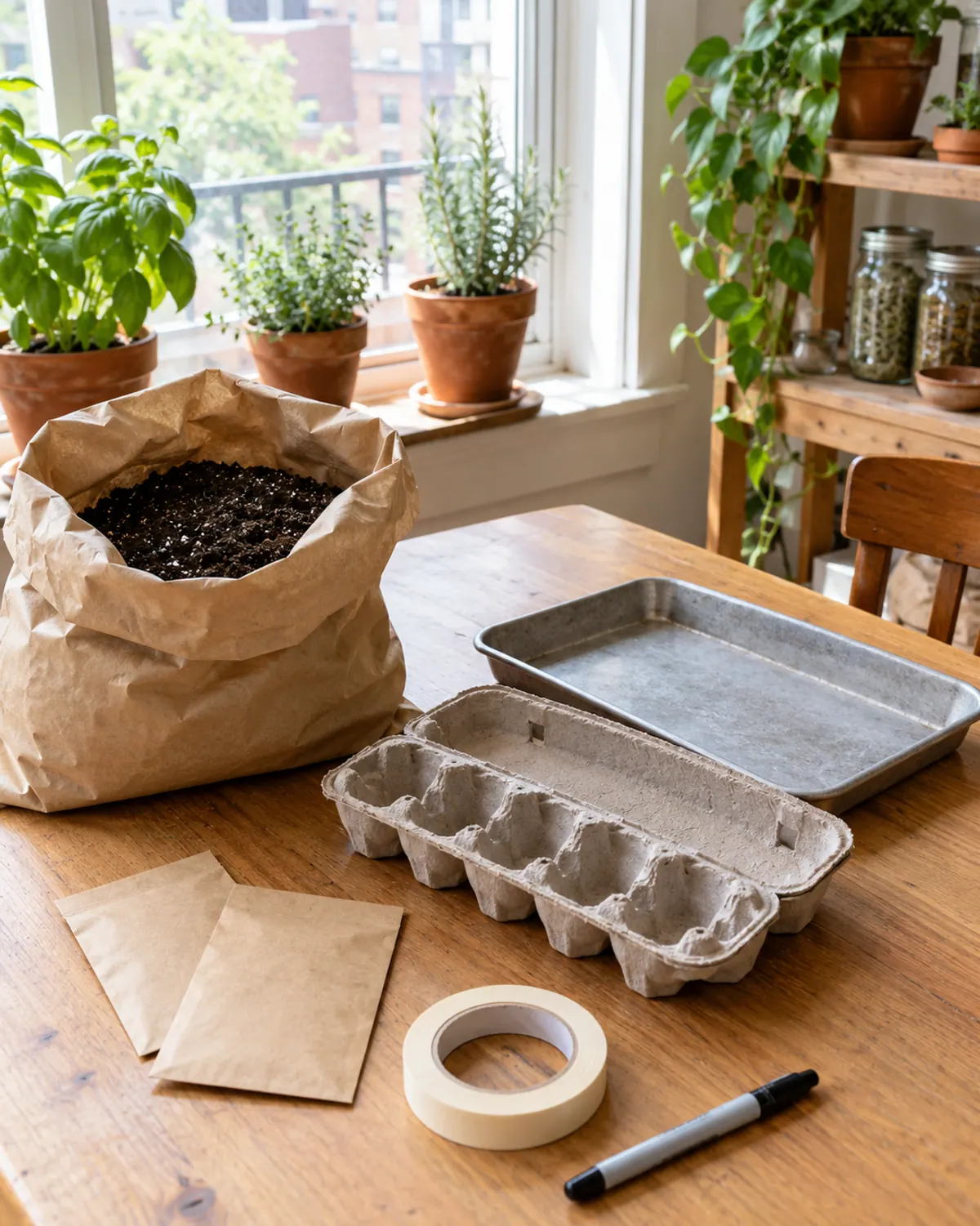
You can start seeds on a single bright windowsill with things that fit in one shopping bag. The list below is the bare starter kit; the shelf and light upgrade comes later in this guide, and you only need it if your window is not bright enough.
| Item | Typical cost | Notes |
|---|---|---|
| Seed-starting mix, small bag | $6 to $10 | Fine, light and sterile. Never use garden soil. |
| 2 seed packets | $3 to $4 each | Pick one easy crop, such as lettuce, and one you love, such as cherry tomatoes. |
| Egg cartons or clean takeout containers | Free | Poke a drainage hole in each cell or container. |
| Shallow tray to catch water | $1 to $3 | A baking sheet or old takeout lid works. |
| Clear lid or plastic bag | Free | Holds in moisture until seeds sprout. |
| Masking tape and a marker | Under $2 | Label every row on the day you sow. |
| Total | About $15 to $20 | Plus a sunny window. |
When to start: last-frost countdown for zone 5 and zone 8
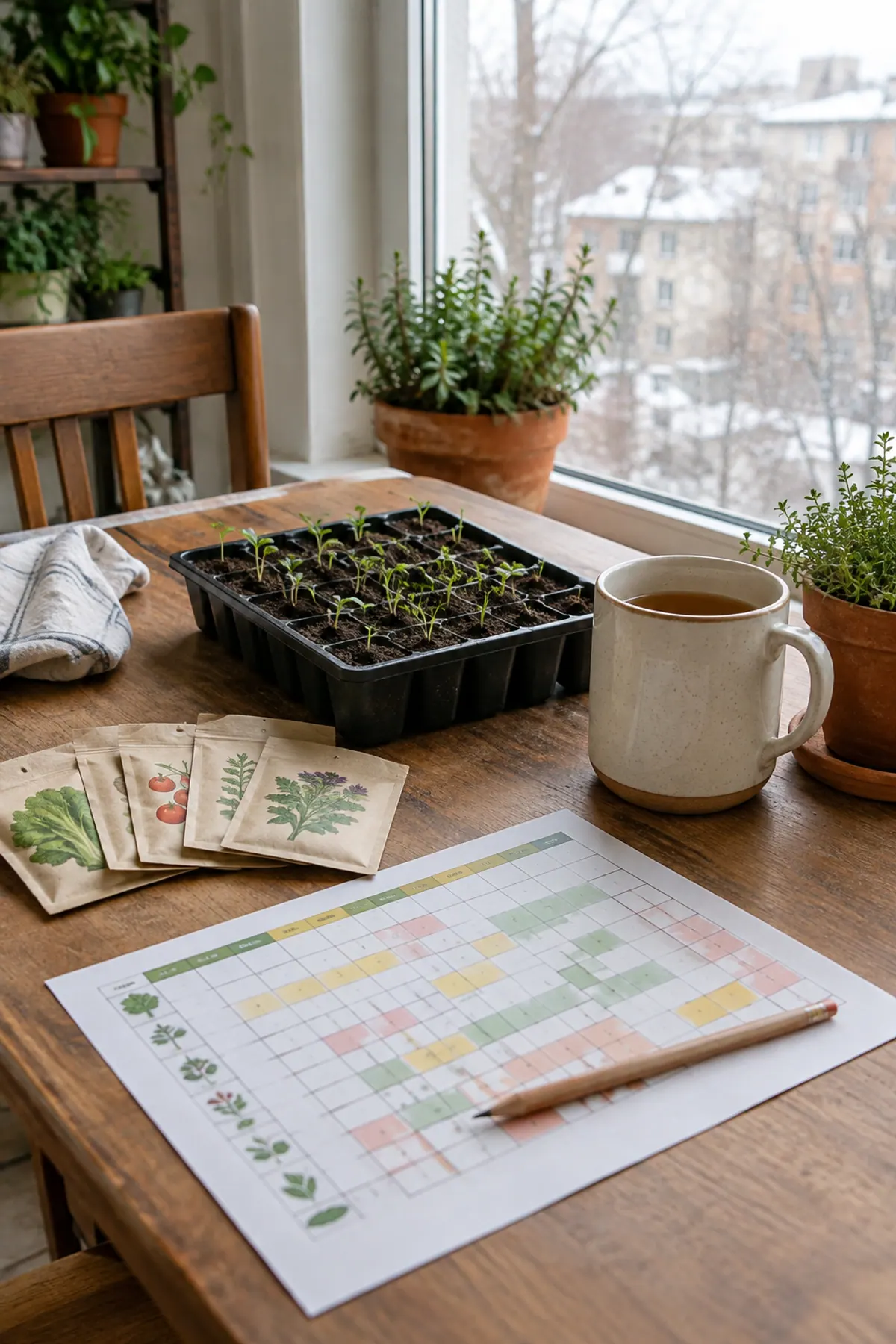
Seed timing runs backward from your last spring frost date, not from the calendar. The Old Farmer's Almanac suggests starting most seeds about 6 weeks before that date and says to follow the seed packet when it differs. Its crop chart puts peppers at 8 weeks, tomatoes at 6 to 8, and lettuce at 4 to 5.
The table uses two example cities. The Almanac frost date tool (read 2026-10-16) lists May 7 as the last spring frost for Madison, Wisconsin, a zone 5 city, and March 23 for Atlanta, Georgia, a zone 8 city. Look up your own ZIP code, because two towns in the same zone can be weeks apart.
| Crop | Weeks before last frost | Zone 5 example (frost May 7) | Zone 8 example (frost Mar 23) |
|---|---|---|---|
| Celery | 10 to 12 | Feb 12 to Feb 26 | Dec 29 to Jan 12 |
| Eggplant, leeks | 8 to 10 | Feb 26 to Mar 12 | Jan 12 to Jan 26 |
| Peppers | 8 | Mar 12 | Jan 26 |
| Tomatoes | 6 to 8 | Mar 12 to Mar 26 | Jan 26 to Feb 9 |
| Broccoli, cabbage, kale-type brassicas | 4 to 6 | Mar 26 to Apr 9 | Feb 9 to Feb 23 |
| Lettuce (or direct sow) | 4 to 5 | Apr 2 to Apr 9 | Feb 16 to Feb 23 |
| Cucumbers (or direct sow) | 3 to 4 | Apr 9 to Apr 16 | Feb 23 to Mar 2 |
| Start hardening off | 7 to 10 days | Apr 27 to Apr 30 | Mar 13 to Mar 16 |
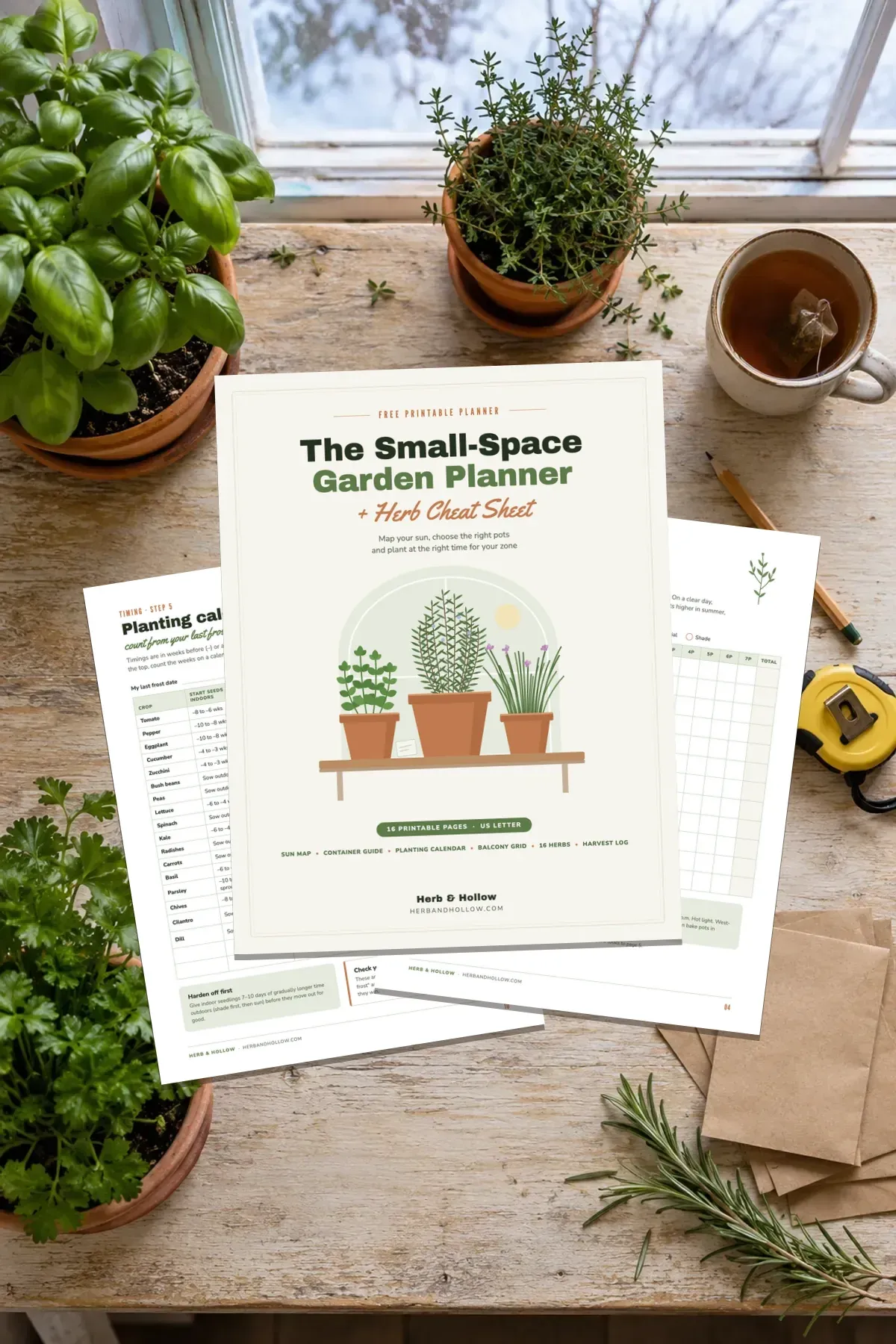
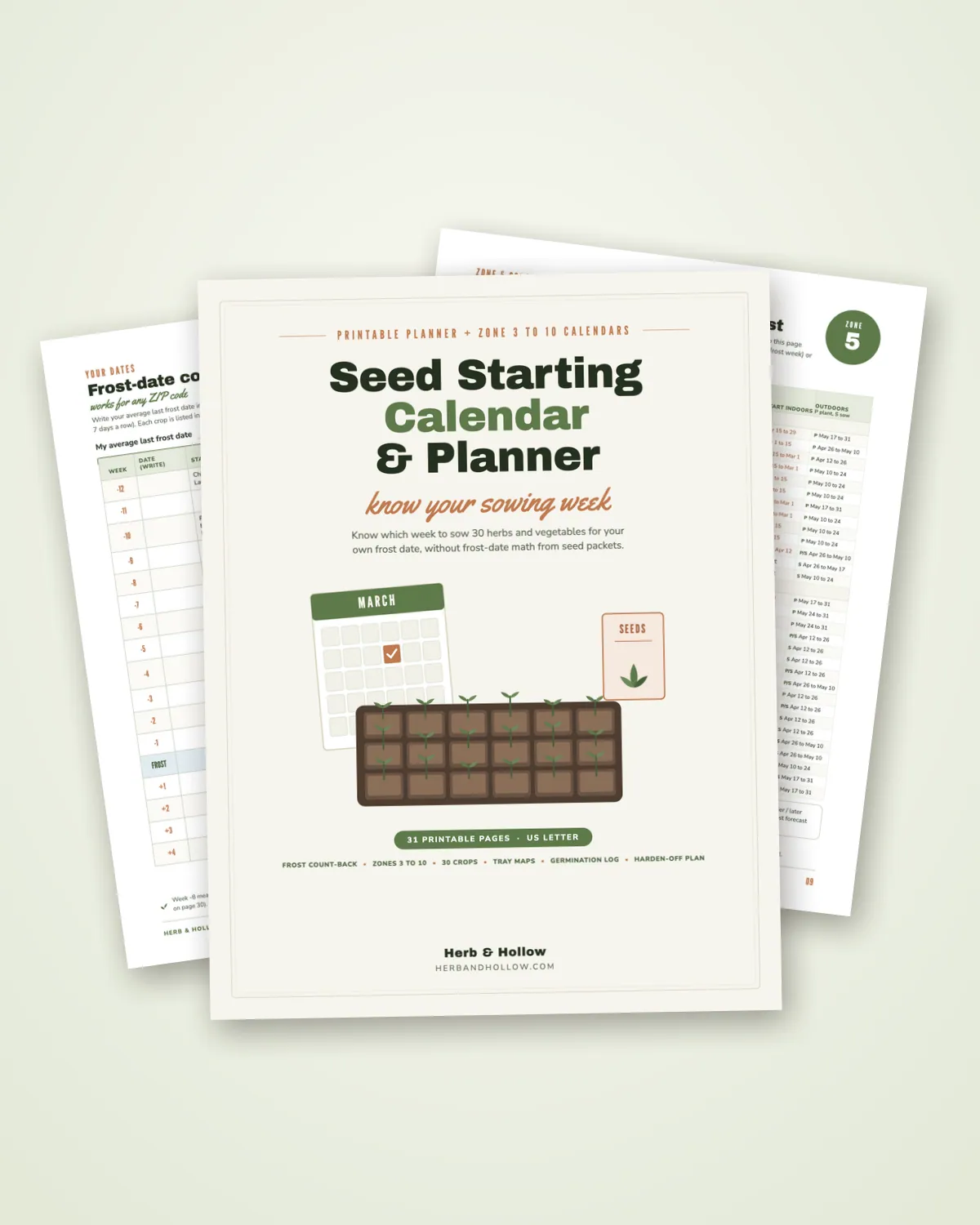
Want the countdown filled in for your own date? The free planner has a planting calendar you set from your last frost, plus a sun map for your balcony.
Pick your spot: one windowsill or one shelf
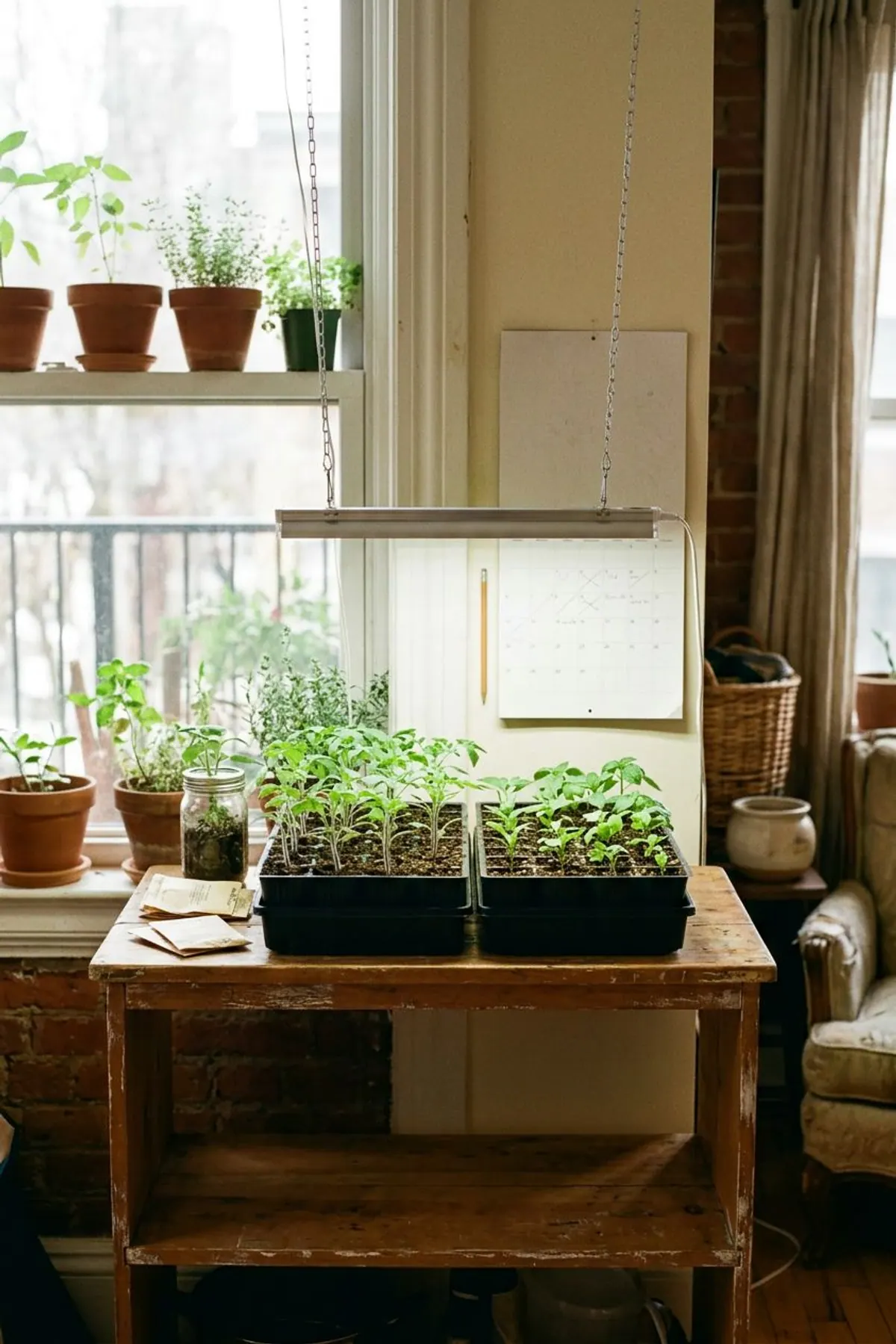
A south-facing window is the only windowsill that usually works well, and even then seedlings lean and stretch toward the glass. If you have that window, turn the tray a half turn every day and keep it off cold glass at night.
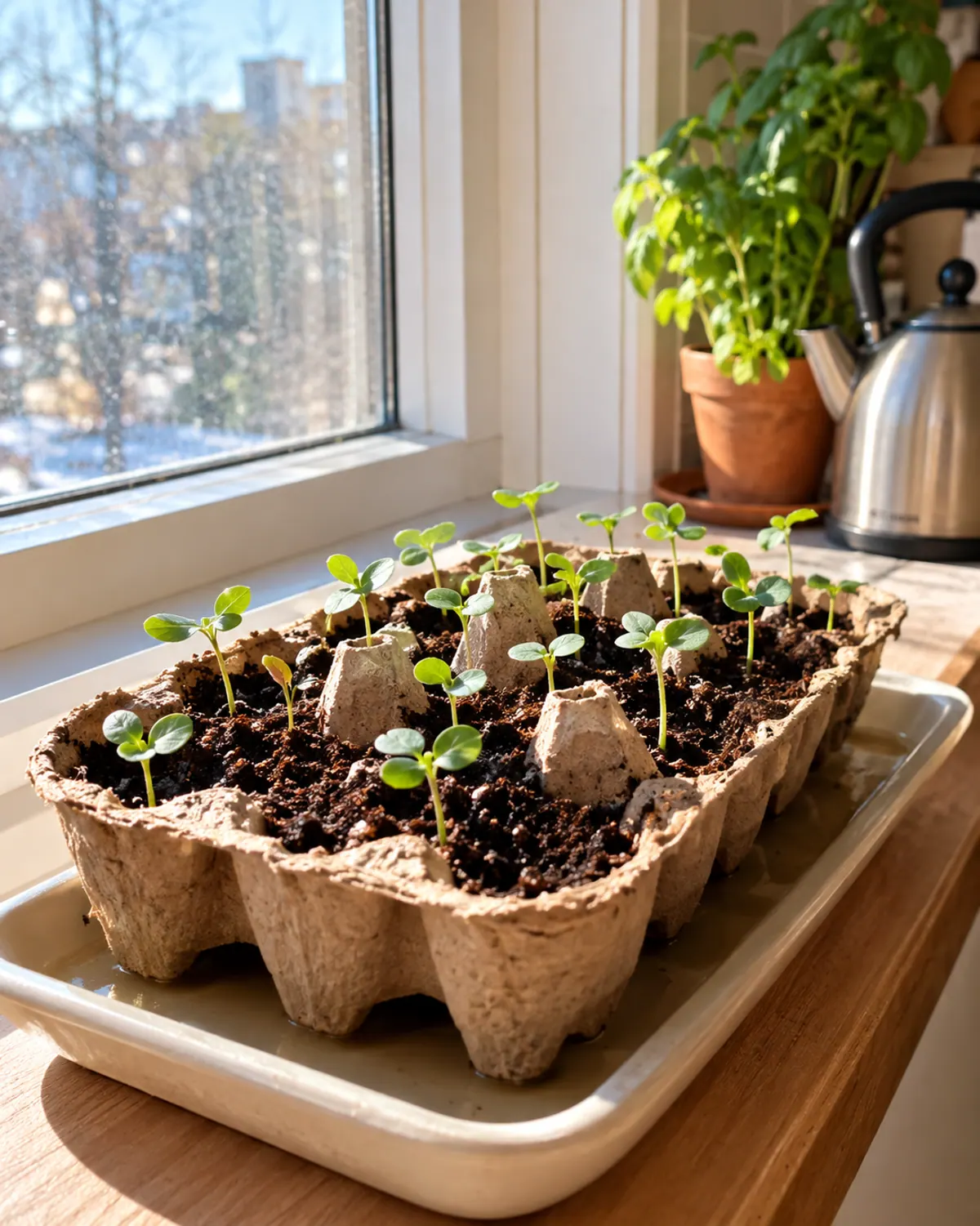
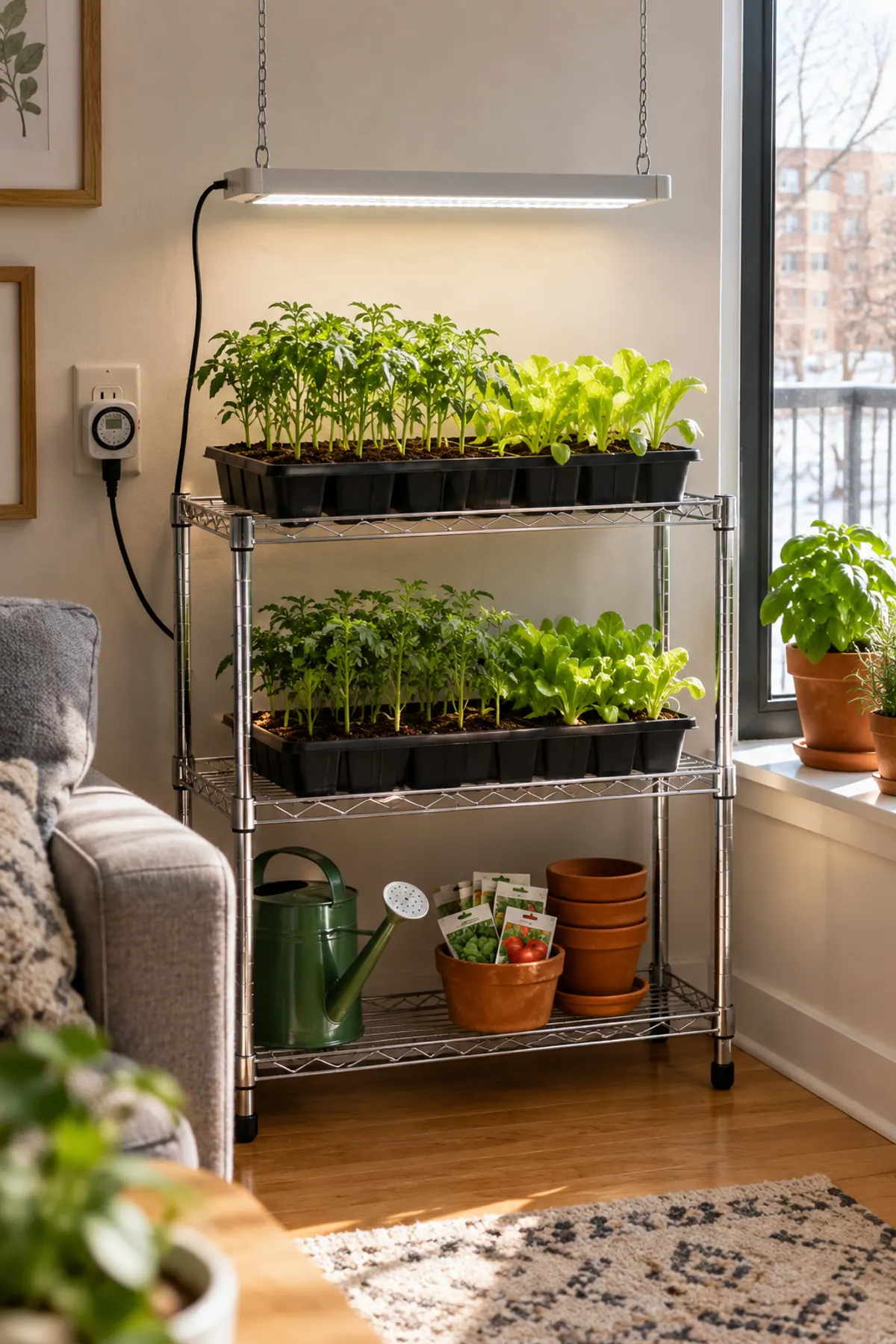
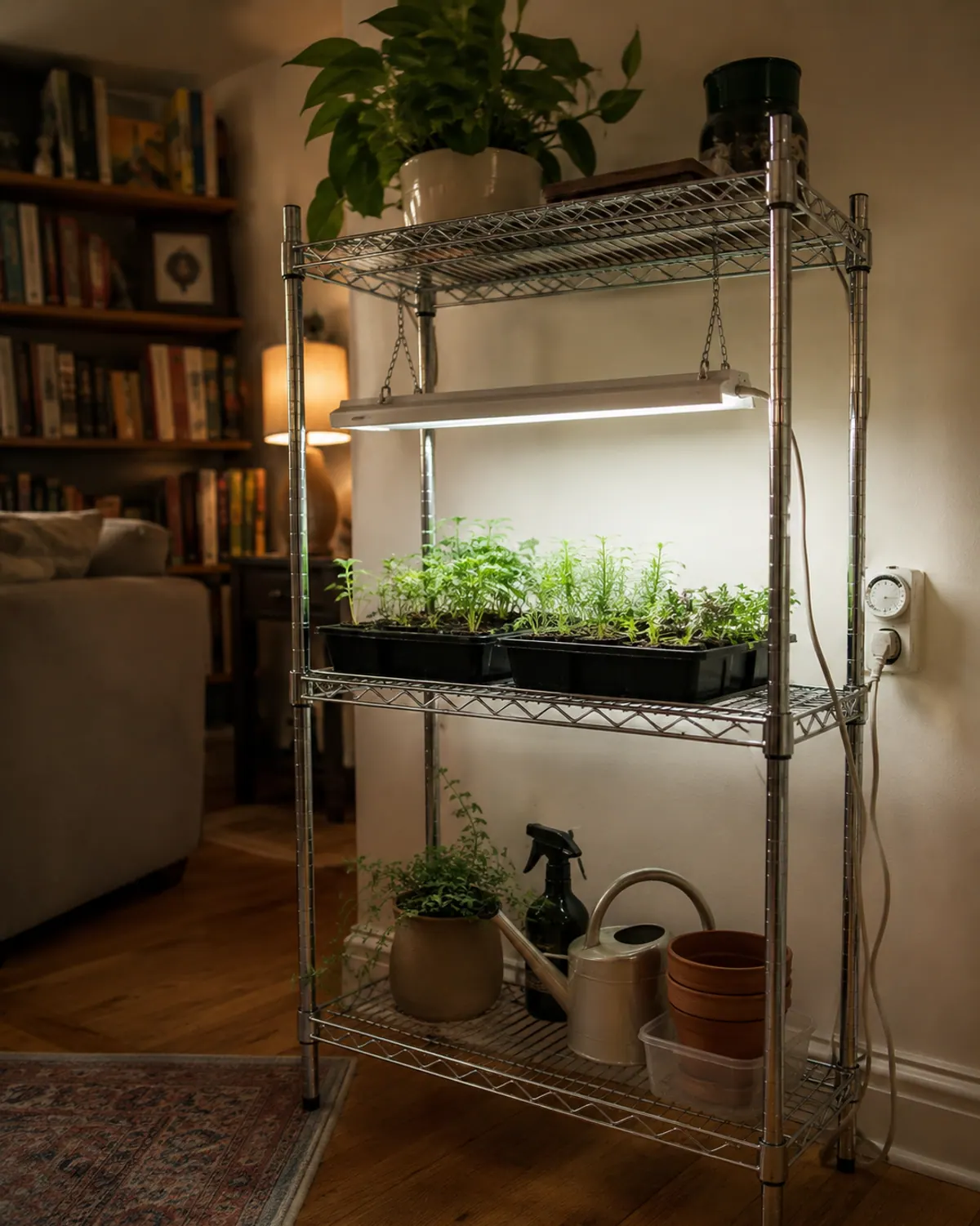
If your windows face east, west or north, or you want to start more than a dozen plants, skip straight to one shelf with a light. A single 3 or 4 foot wire shelf unit next to an outlet, with one LED shop light hung from the shelf above, holds two standard trays, which is 70 to 140 cells, more than most balconies can take.
Light: the height rule and the 14 to 16 hour timer rule
Leggy seedlings, the tall pale ones that flop over, almost always mean the light is too weak or too far away. The Almanac recommends full-spectrum LED or fluorescent lights kept about 4 to 6 inches above the seedlings, raised as the plants grow. Hang the light on chains or S-hooks so you can lift it a link at a time.
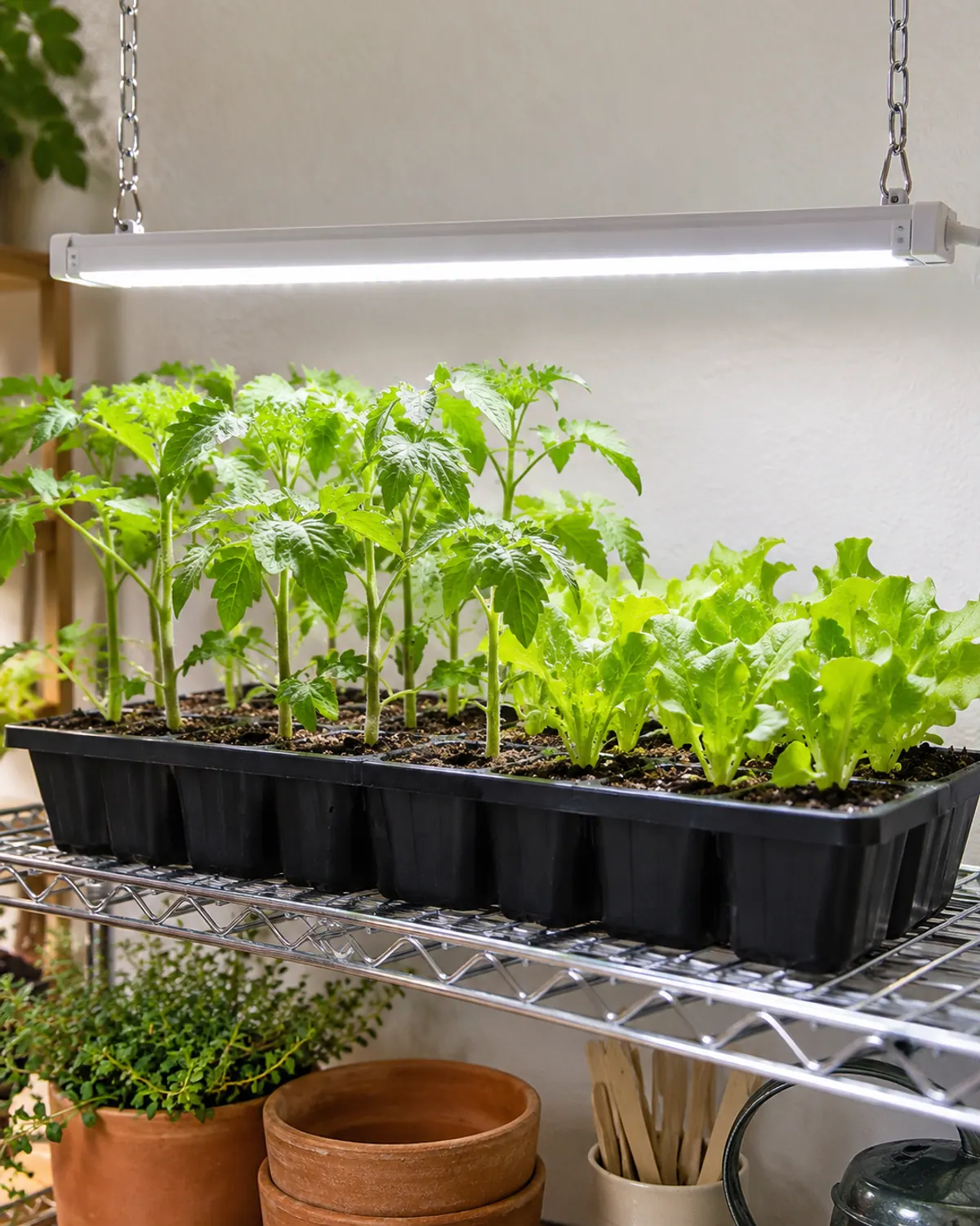
Run the light 14 to 16 hours a day and let the plants sleep in the dark the rest of the time. A cheap plug-in timer set to roughly 6 am to 9 pm does this for you, so you never forget. Lights left on around the clock do not help.
We are not re-reviewing fixtures here. If you need to pick one, our best grow lights for small spaces guide compares shop lights, clip-ons and shelf strips.
How to start seeds indoors, step by step
-
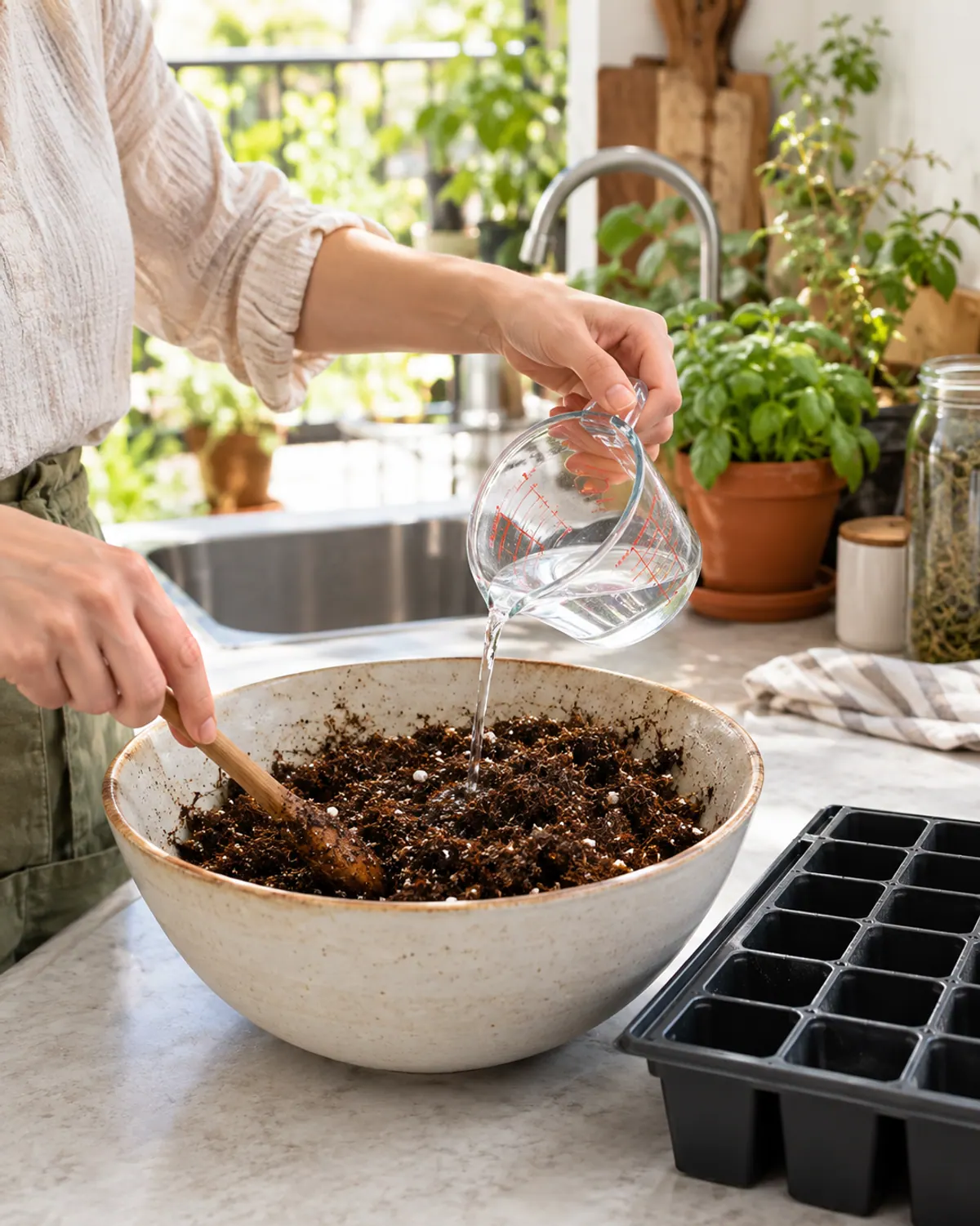
Step 1: Moisten the mix before you fill
Pour the seed-starting mix into a bowl and stir in warm water until it feels like a wrung-out sponge. Dry mix repels water and floats seeds away.
-
Step 2: Fill cells and firm gently
Fill each cell to just below the rim and tap the tray on the table to settle the mix. Do not pack it hard.
-
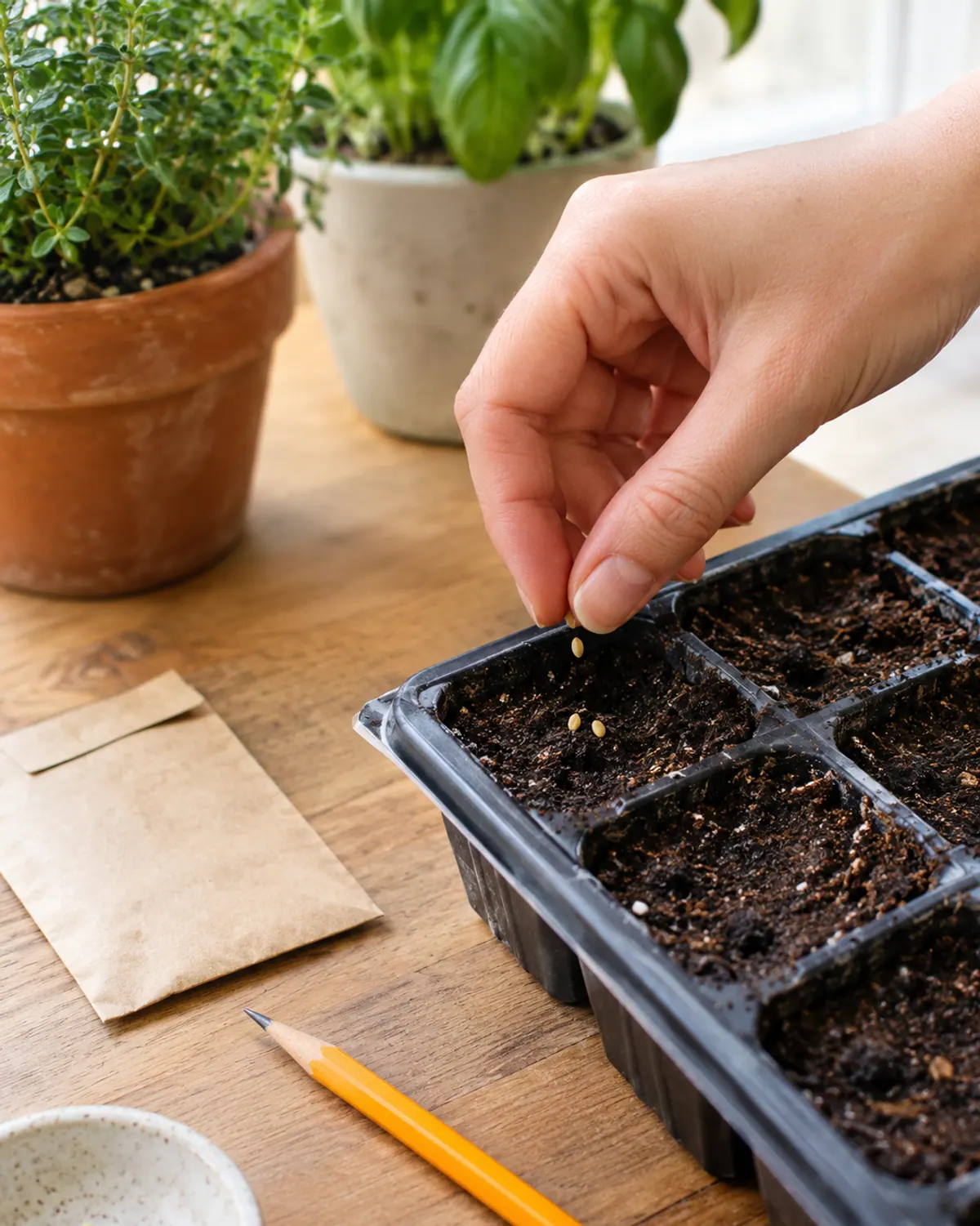
Step 3: Sow at the packet depth
Follow the packet. A common rule is to plant about twice as deep as the seed is wide, and very small seeds like lettuce just get pressed onto the surface. Sow two seeds per cell so a dud does not leave a gap.
-
Step 4: Label the row the same day
Write the crop and the date on masking tape. Two tomato varieties look identical for a month.
-
Step 5: Cover and keep warm
Set a clear lid or loose plastic over the tray to hold moisture. Warmth speeds germination, especially for peppers and tomatoes, so a top-of-fridge spot or a seedling heat mat helps, though the Almanac notes a mat is optional.
-
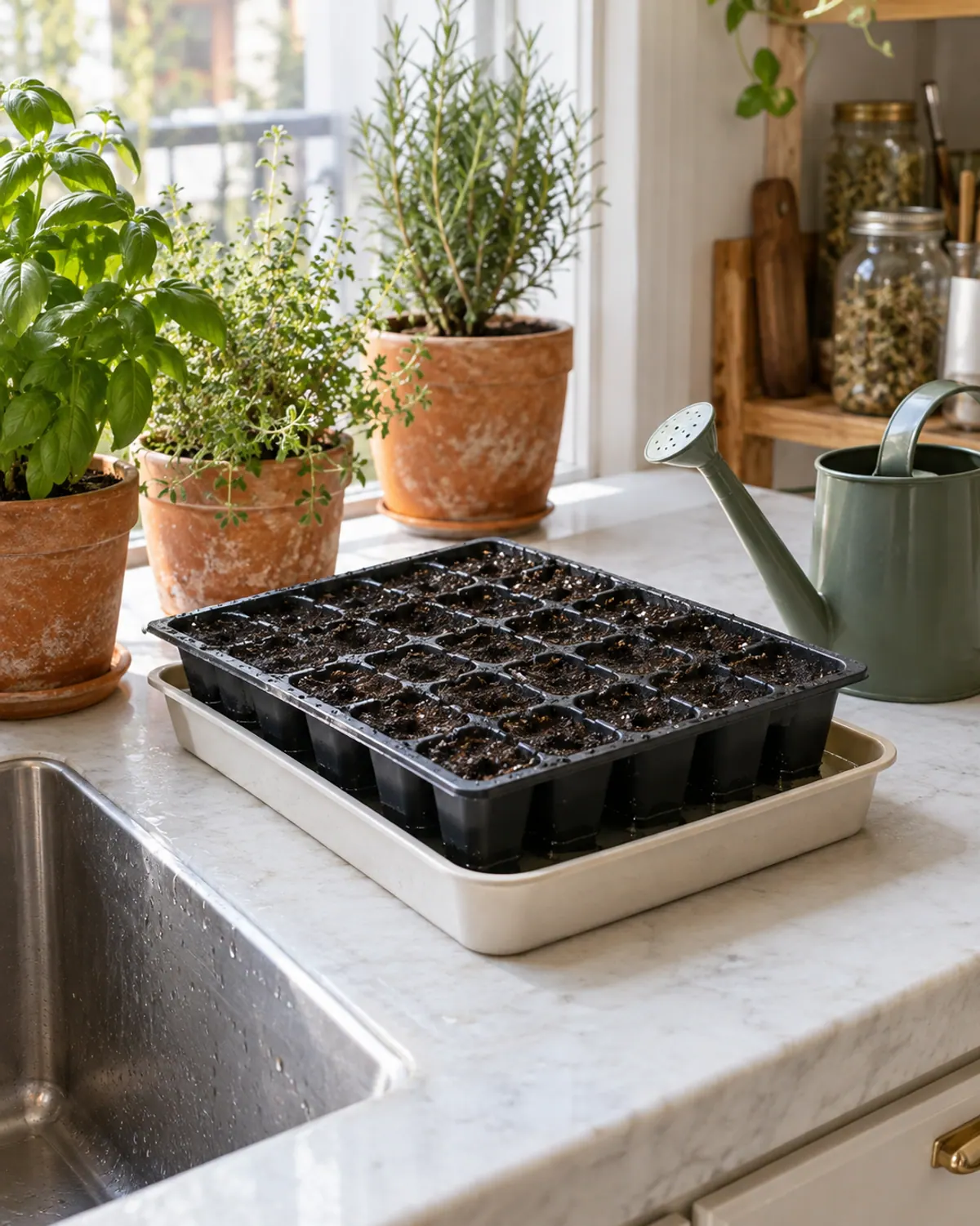
Step 6: Water from below
Pour water into the tray under the cells and let the mix drink for 15 to 20 minutes, then tip out the rest. The surface stays undisturbed and tiny seeds stay put.
-
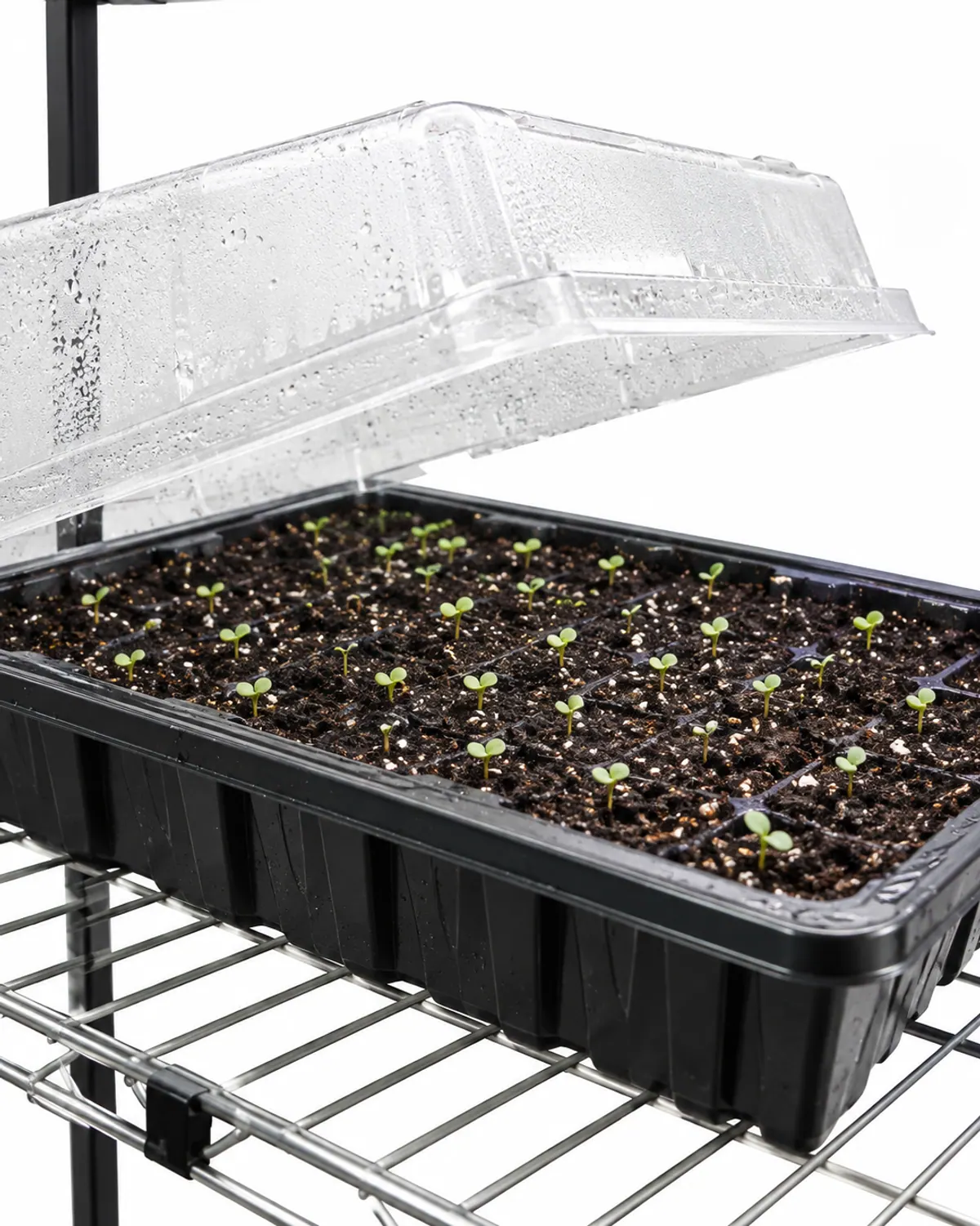
Step 7: Uncover at half sprouted
Once about half the seeds are up, take the cover off and move the tray under the light right away. Waiting even a day or two in low light is how seedlings get leggy.
-
Step 8: Thin to one per cell
When both seeds come up, snip the weaker one at the soil line with small scissors. Pulling it can tear the roots of the keeper.
Pot up, then harden off
Tomatoes, peppers and eggplant usually outgrow their cells before it is warm enough outside. When seedlings have a set or two of true leaves (the second kind of leaf, which looks like the adult plant), move them into 3 or 4 inch pots of regular potting mix. Tomatoes can go in deeper than they sat before.
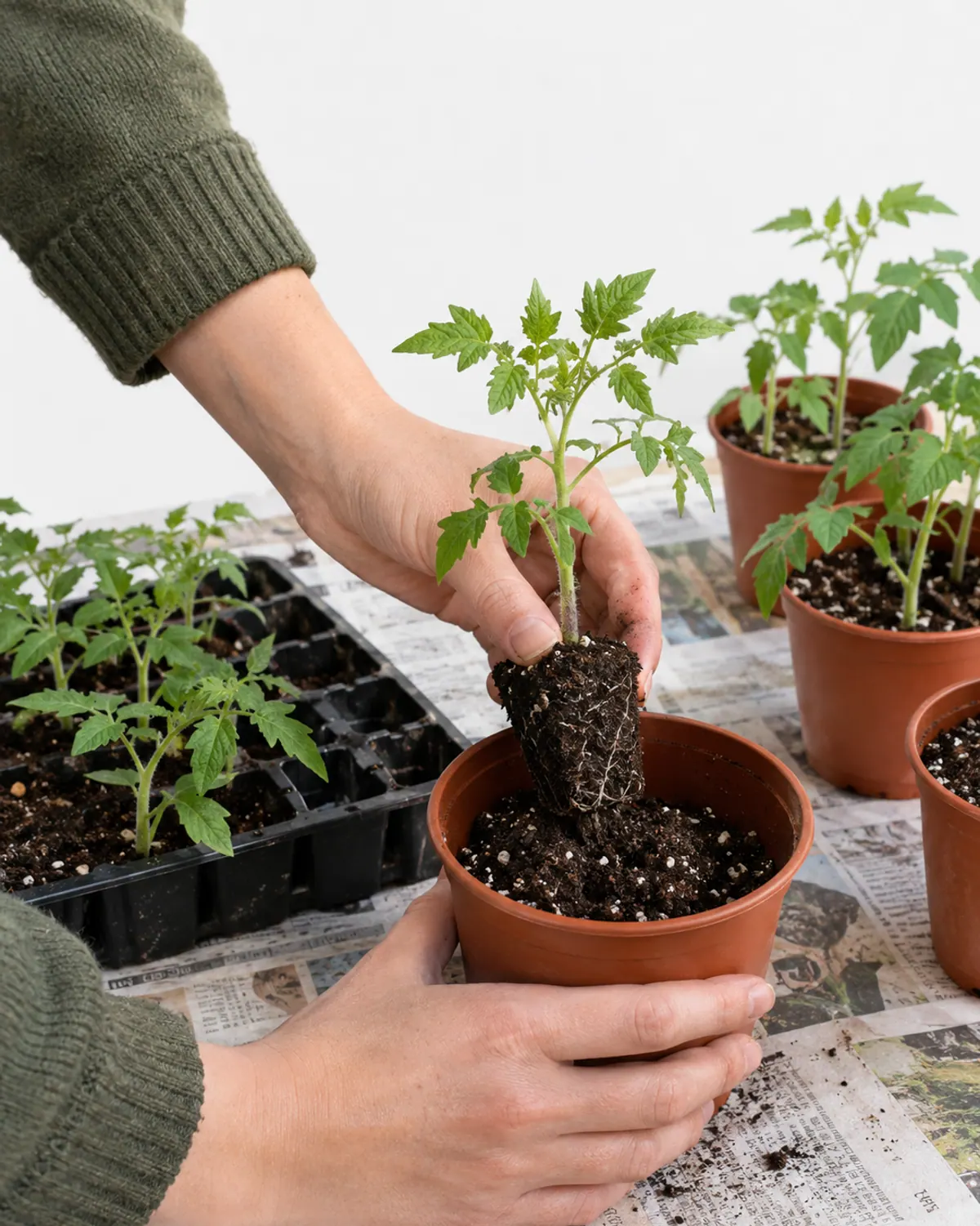
Hardening off is how indoor seedlings get used to sun and wind. The Almanac suggests starting 7 to 10 days before your final frost with about an hour outdoors in sheltered, dappled shade, then adding a little more time and sun each day. Bring them in if a cold night is forecast.
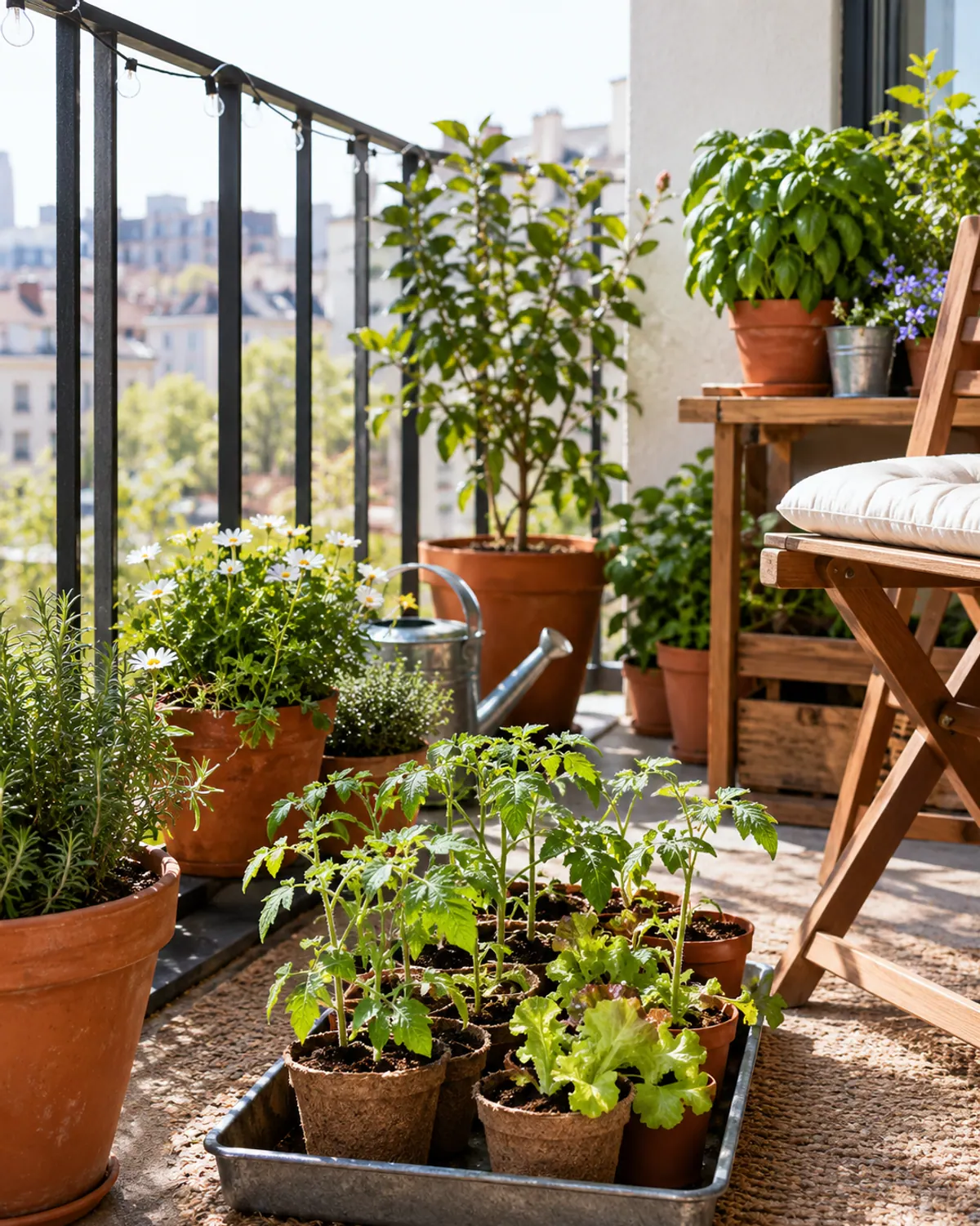
Hardening off, day by day
Which seeds to start indoors vs sow outside
Start indoors the slow, warmth-loving crops that need a head start: tomatoes, peppers, eggplant, celery, leeks, and brassicas like broccoli and cabbage. Lettuce and cucumbers can go either way.
Skip indoor starts for crops that grow fast or hate being moved. The Almanac lists beans, beets, carrots, radishes, peas, spinach, squash, kale and chard among the crops to sow straight into the pot or bed. Root crops in particular do poorly after transplanting.
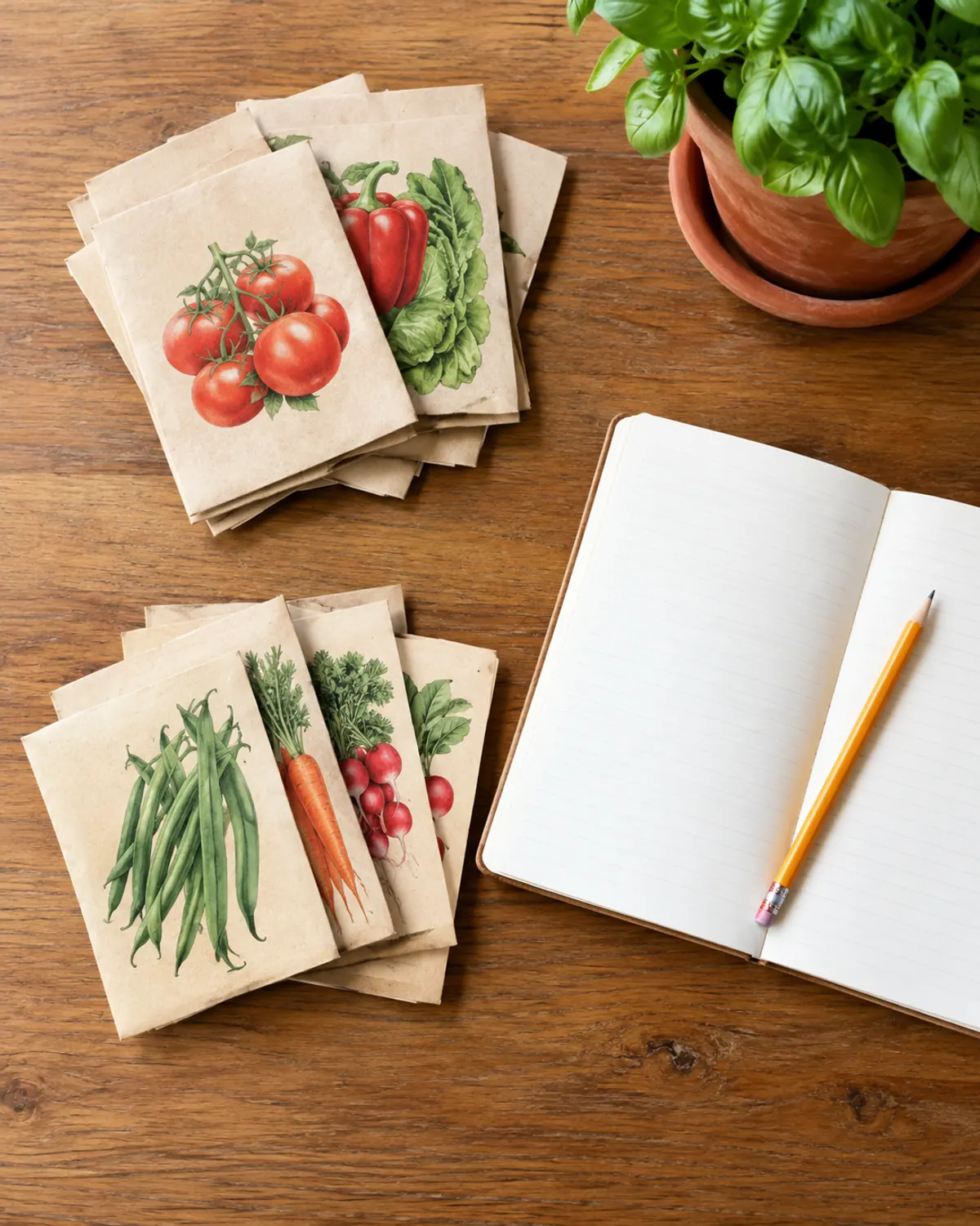
Keeping a dated record of what you sowed, when it sprouted and what you would change next year is the fastest way to get better at this. The Herb Garden Journal has a sowing and propagation log and a seed record page that work for any crop, plus 20 herb growing cards for the herbs you start alongside.
Seed starting mistakes that cause leggy seedlings
Do
- Keep the light 4 to 6 inches above the leaves and raise it as they grow
- Run lights 14 to 16 hours on a timer with a dark night
- Uncover the tray as soon as half the seeds are up
- Water from below and let the surface dry slightly between waterings
- Start on the date your frost countdown gives you
Avoid
- Relying on an east, west or north window alone
- Leaving a dome on after sprouting, which invites mold
- Using garden soil, which packs down and can carry disease
- Starting tomatoes in January in zone 5, which leaves you with giant, root-bound plants by May
- Moving seedlings straight outside without hardening off
If seedlings are already stretched, lower the light, then pot them up deeper; tomatoes will root along the buried stem. Most other crops will not, so for peppers or lettuce it is often faster to resow.
Easy variations for tiny homes
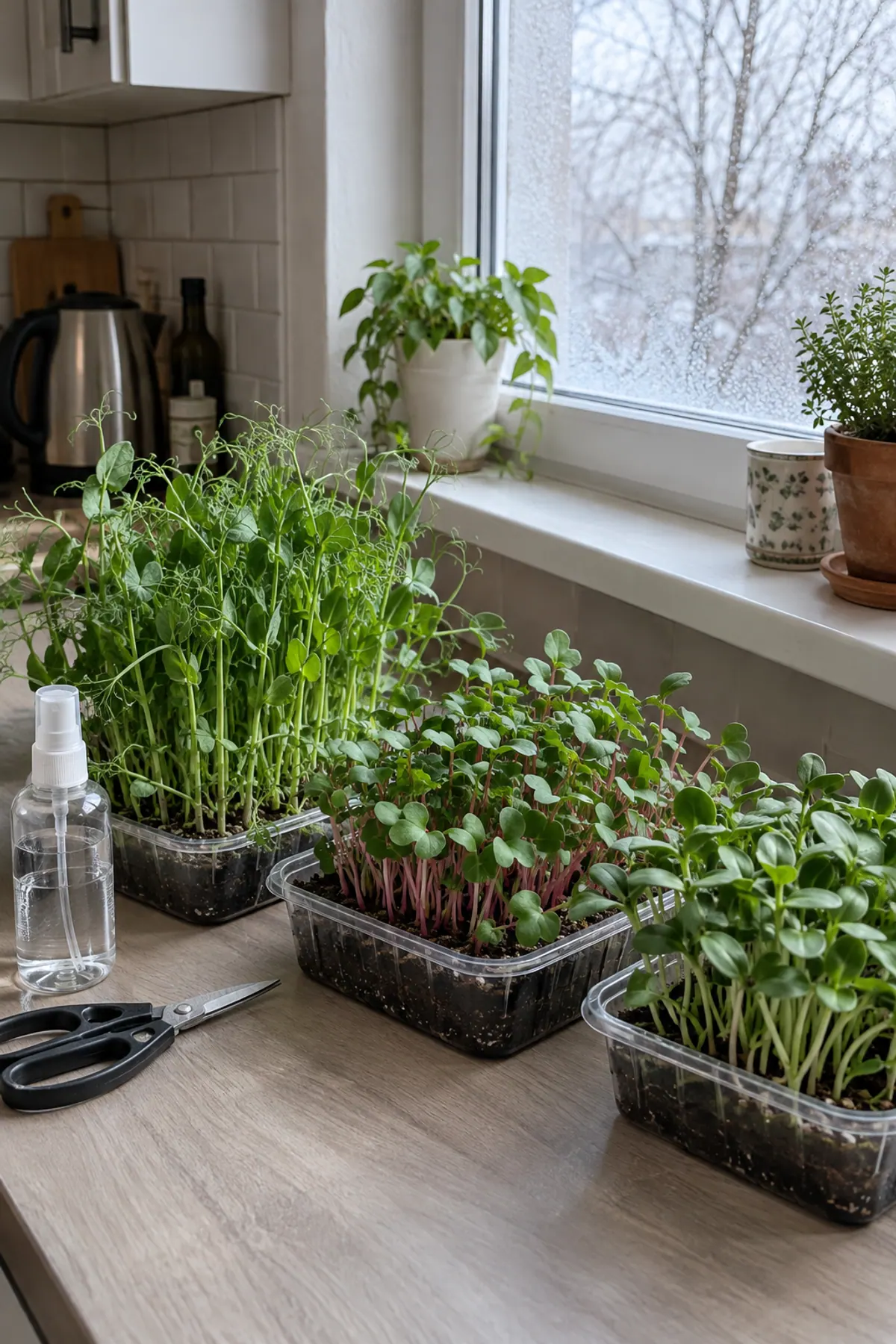
No room for a shelf at all? Microgreens give you a harvest from the same tray and light in about two weeks, and our easy microgreens guide walks through it. Herbs like basil and parsley also start well under the same light.
Once seedlings are ready, they need somewhere to go. Our container gardening for beginners guide covers pot sizes for tomatoes, peppers and greens on a balcony, and the free garden planner printable page explains what is inside the planner.
Seed starting supplies
Upgrade from windowsill to one shelf
-
Seed starting trays with humidity domes
Typically $12 to $25
Reusable cells and a clear dome that fit a standard shelf.
Check price on Amazon for Seed starting trays with humidity domes -
Seed starting potting mix
Typically $8 to $15
Fine, light mix made for tiny roots.
Check price on Amazon for Seed starting potting mix - Biggest difference
LED shop light, 2 to 4 ft, linkable
Typically $20 to $45
Hangs on chains so you can keep it a few inches above seedlings.
Check price on Amazon for LED shop light, 2 to 4 ft, linkable -
Plug-in outlet timer
Typically $8 to $15
Runs the light 14 to 16 hours without you thinking about it.
Check price on Amazon for Plug-in outlet timer -
Seedling heat mat
Typically $15 to $30
Optional, speeds up peppers and tomatoes in a cool apartment.
Check price on Amazon for Seedling heat mat -
Small wire shelving unit
Typically $30 to $60
One shelf unit holds two trays and the light above them.
Check price on Amazon for Small wire shelving unit
We earn from qualifying purchases, which never changes what we recommend. Read our disclosure and editorial guidelines.
Frequently asked questions
When should I start seeds indoors?
Count back from your last spring frost date. Most vegetables start about 6 to 8 weeks before it, peppers about 8 weeks and lettuce about 4 to 5. Look up your own frost date by ZIP code on the Almanac frost tool and follow the seed packet when it gives a different number.
Can I start seeds on a windowsill without a grow light?
Yes, if the window faces south and gets several hours of direct sun. Turn the tray daily and watch for stretching. If seedlings lean hard or turn pale and tall, add a light or move them to a brighter spot.
How far should a grow light be from seedlings?
Keep LED or fluorescent lights about 4 to 6 inches above the seedlings and raise them as the plants grow. Check the fixture's own instructions too, since stronger lights may need more distance.
How many hours of light do seedlings need?
Run lights about 14 to 16 hours a day and turn them off at night so the plants get a dark period. A plug-in timer makes this automatic.
Why are my seedlings tall and floppy?
Leggy seedlings are stretching for light. Lower the light, add hours on the timer, and remove any cover once seeds sprout. Tomatoes can be repotted deeper to bury the stretched stem.
Do I need a heat mat to start seeds?
No. A heat mat speeds germination for warm-season crops like peppers and tomatoes, but a warm spot in the home usually works. Unplug the mat once seeds sprout.
Save it for later
Pin this to your Seasonal Garden Tasks board so it's there when you need it.
Save to Pinterest