Safety first: Herbs can be powerful. If you are pregnant, nursing, take medication or have a health condition, check with your doctor or pharmacist first. Please read our herbal & garden safety notes before you start.
Key takeaways
- 16 free US Letter pages: sun tracker, container size guide, balcony grid, planting calendar, herb cheat sheet and logs.
- Sun first: full sun is 6+ hours, part sun 3 to 6, shade under 3.
- Pot depth matters: a dwarf tomato needs about 10 to 12 inches and 3 to 5 gallons.
- Plan in winter: peppers and parsley start indoors 8 to 10 weeks before your last frost.
- The herb cheat sheet flags herbs the ASPCA lists as toxic to pets.
In this post8 sections
- What is inside the free garden planner printable
- Step 1: Map your sun and space (balcony, patio, windowsill)
- Step 2: Pick herbs and vegetables for a small garden
- Step 3: Sketch your layout (square foot and container grids)
- Step 4: Fill in your planting calendar by frost date
- How to print and use your garden planner
- Want more than a planner? The herb journal
- FAQ
What is inside the free garden planner printable
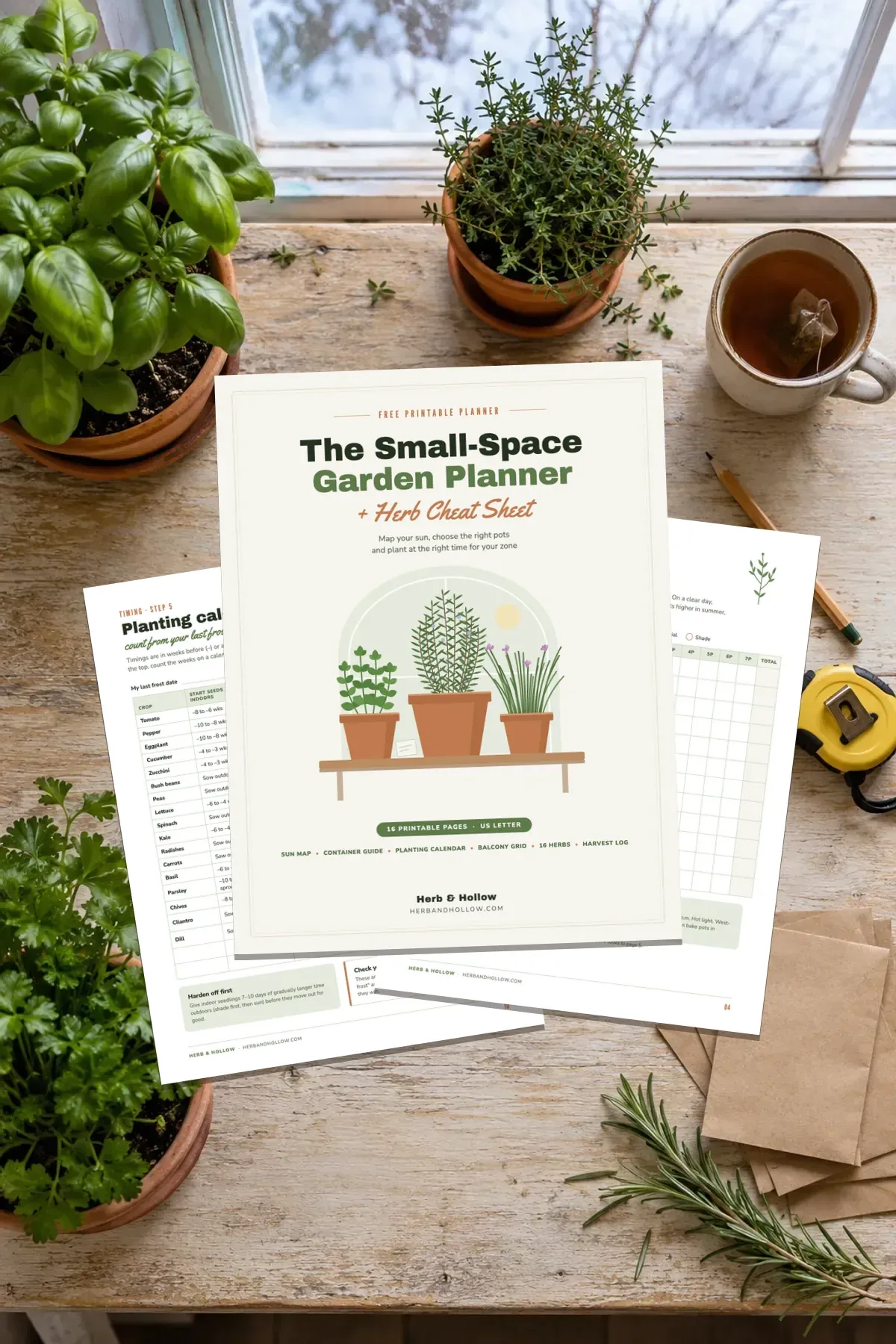
The Small-Space Garden Planner is 16 printable US Letter pages, made for a balcony, patio, small yard or sunny windowsill. It is free; you get the PDF by email. Every page below is a real page from the file, not a mockup.
| Pages | What it is | What you do with it |
|---|---|---|
| 1 to 2 | Cover and how to use it | Six steps, in order, from sun to harvest |
| 3 | My garden at a glance | Write down your zone, frost dates, space size and any building rules |
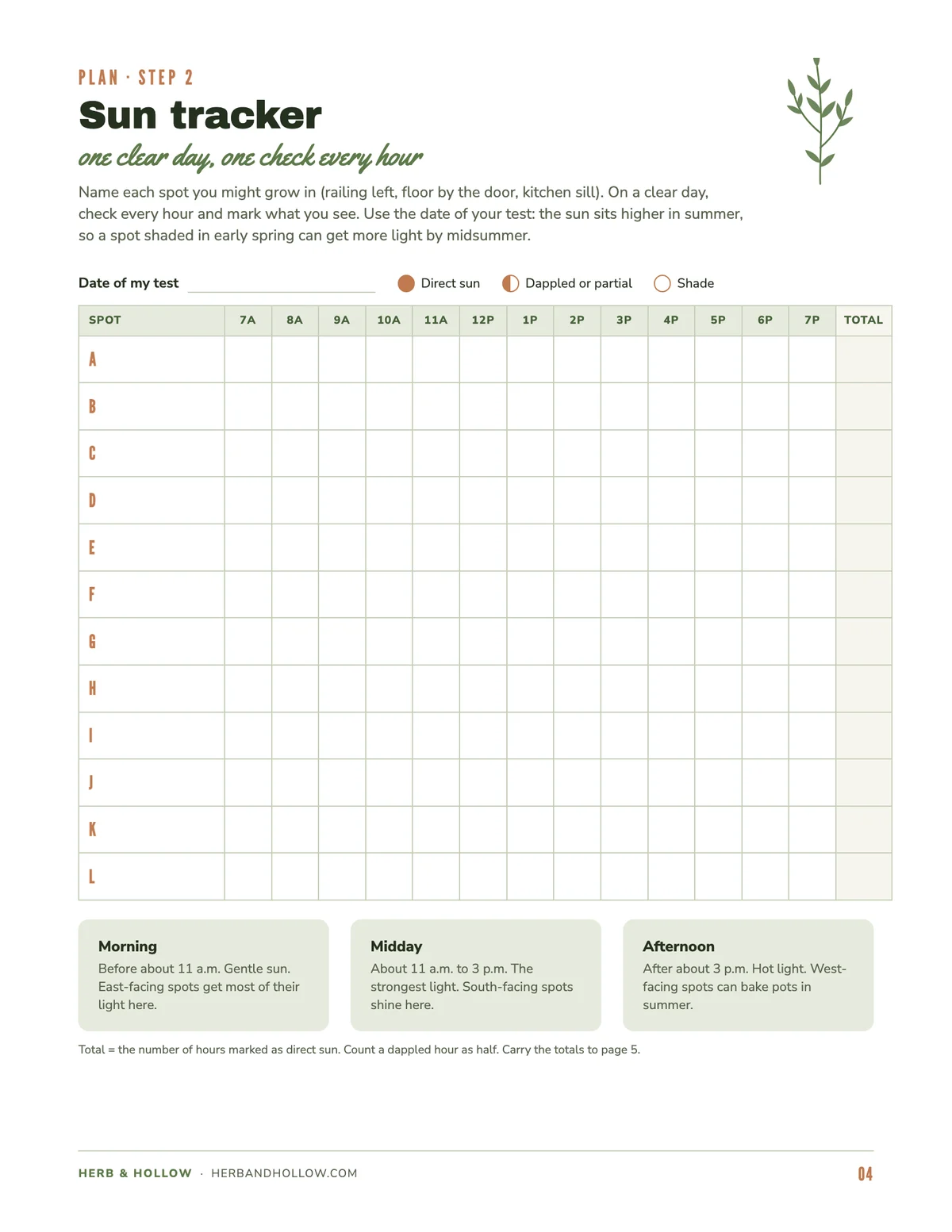
| 4 to 5 | Sun tracker and sun summary | Check each spot hourly from 7 a.m. to 7 p.m. on a clear day, then label it full sun, part sun or shade |
| 6 to 7 | Container size guide and inventory | Match each crop to a pot depth and volume, list the pots you own and work out how much potting mix to buy |
| 8 to 9 | Balcony floor plan and railing plan | Sketch pots, railing boxes and wall space on a grid |
| 10 to 11 | Planting calendar and my season | Count weeks before and after your last frost, then fill in your own dates week by week |
| 12 to 13 | Herb cheat sheet | 16 kitchen herbs at a glance, with ASPCA pet flags |
| 14 to 15 | Harvest log and drying log | Track what you picked and how you stored it |
| 16 | More from Herb & Hollow | Links to our guides and other printables |
It is not a seed catalog or a vegetable-only planner. The focus is herbs plus a few compact vegetables, sized for containers.
Step 1: Map your sun and space (balcony, patio, windowsill)
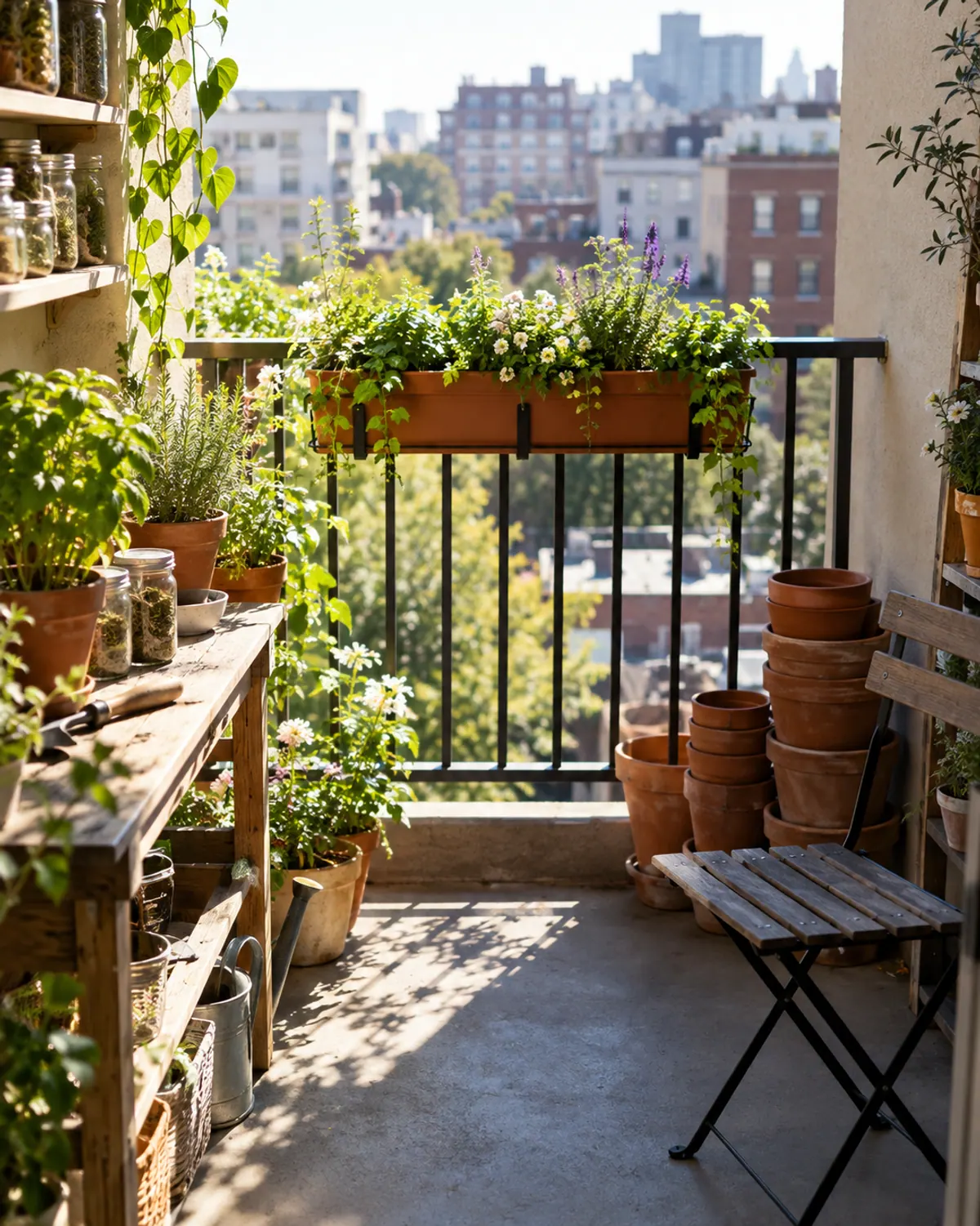
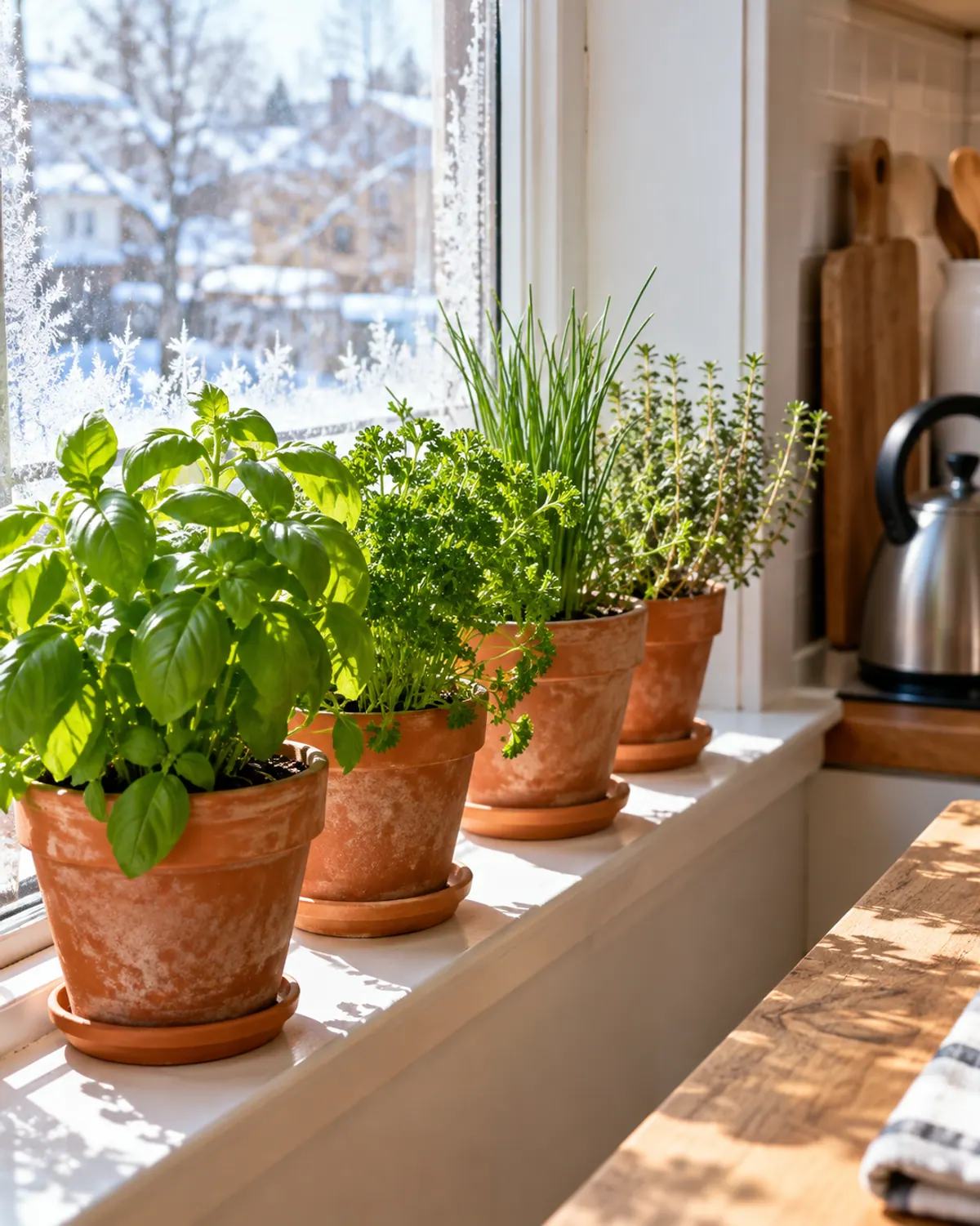
Sun decides everything else, so it comes first. Pick a clear day, name each spot you might grow in (railing left, floor by the door, kitchen sill), and check every hour. Mark direct sun, dappled light or shade.
Then total the hours on the summary page. The planner's light guide uses three bands: full sun is 6 or more hours, part sun is 3 to 6, and shade is under 3. A spot that seems bright often turns out to be part sun once you count.
On page 3, add your space size, your USDA hardiness zone and your average last and first frost dates. Your local extension office or a frost date lookup by zip code will have them.
Step 2: Pick herbs and vegetables for a small garden
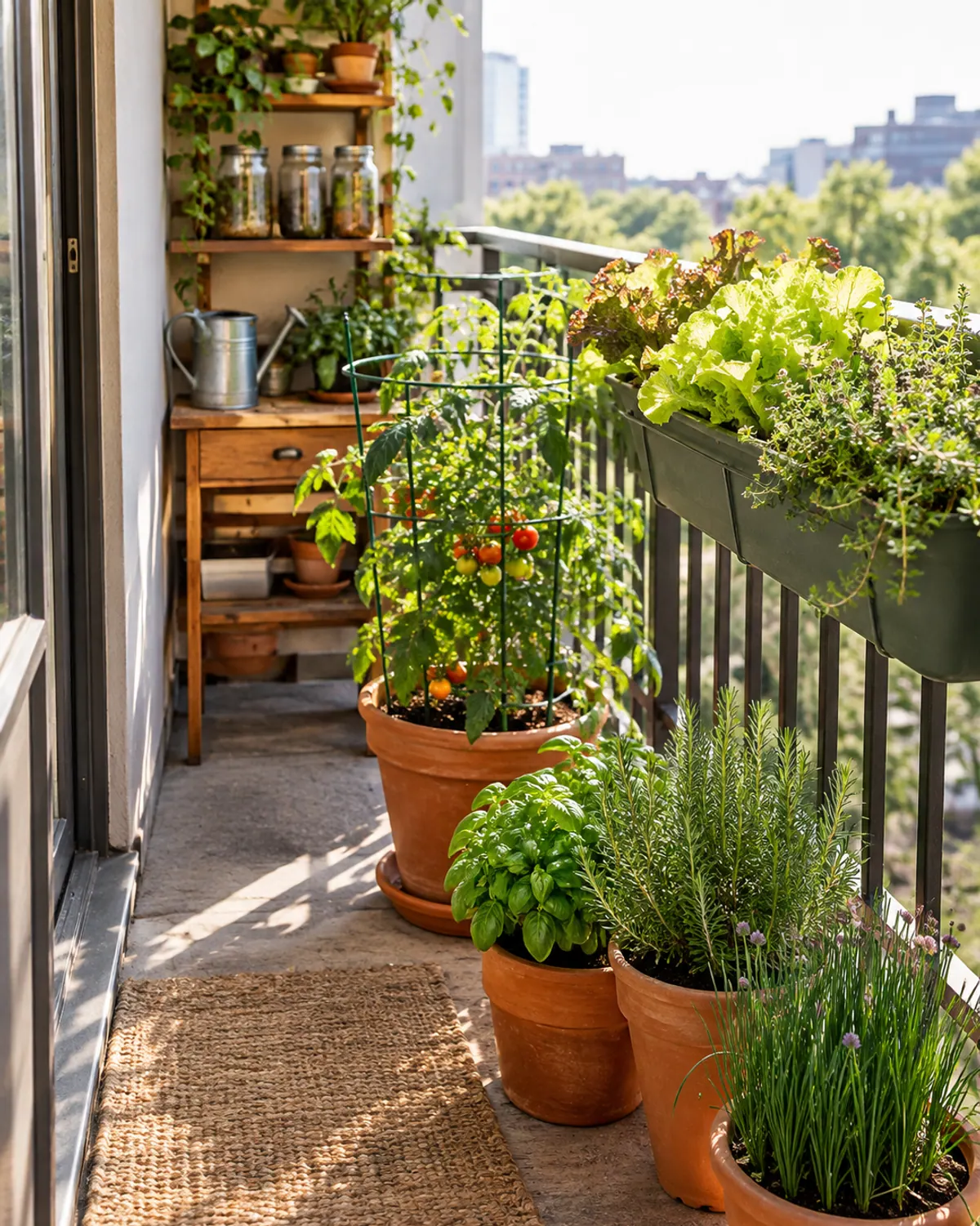
Now match plants to the light you have. Full-sun spots suit basil, rosemary, thyme, oregano, dill, dwarf tomatoes and compact peppers. Part-sun spots suit parsley, chives, mint, cilantro, lettuce and spinach.
The herb cheat sheet gives each of its 16 herbs a line for sun, water, pot size, life cycle and harvest. It also flags the herbs the ASPCA lists as toxic to cats and dogs, such as mint, oregano, parsley and chives, so pet owners can place them out of reach.
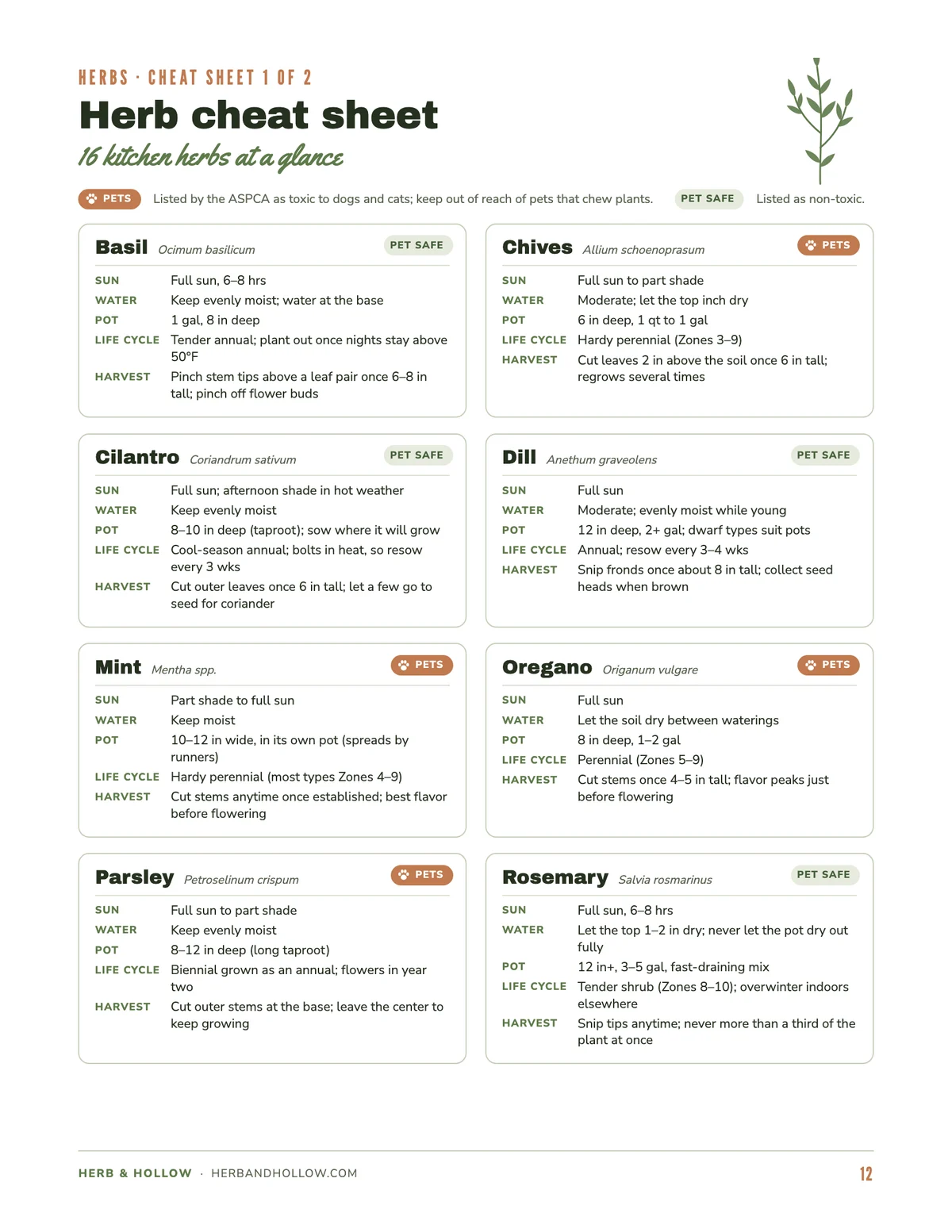
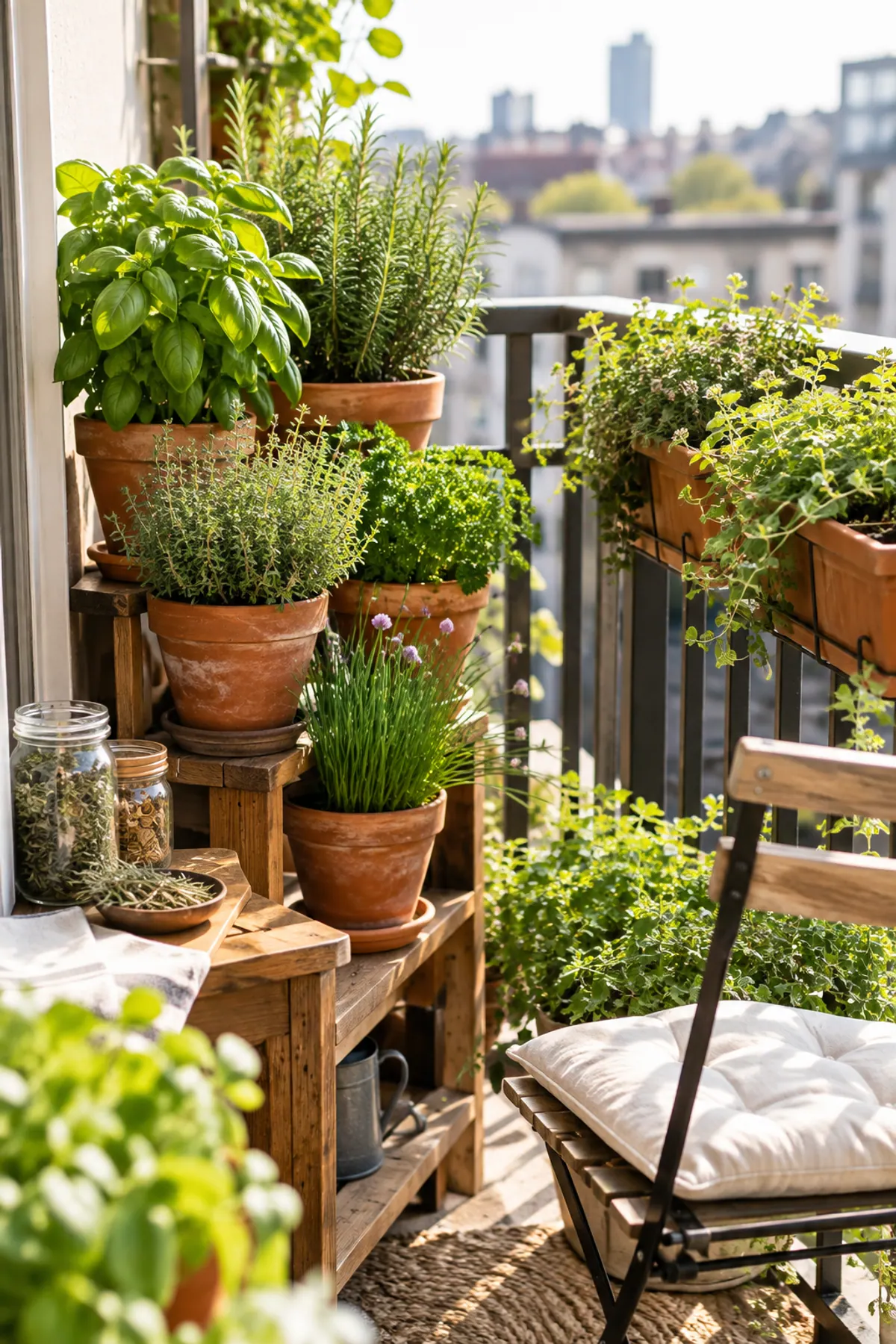
Group herbs by thirst, not just by looks. Rosemary, thyme and oregano like to dry out between waterings; basil, parsley and chives like steady moisture, and spreading mint gets its own pot. Our herb garden ideas for small spaces show these pairings in real layouts.
Step 3: Sketch your layout (square foot and container grids)
Check pot sizes before you sketch. The container size guide lists minimum soil depth and volume for common crops: for example, a dwarf tomato needs about 10 to 12 inches deep and 3 to 5 gallons, while lettuce and radishes manage in 6 to 8 inches.
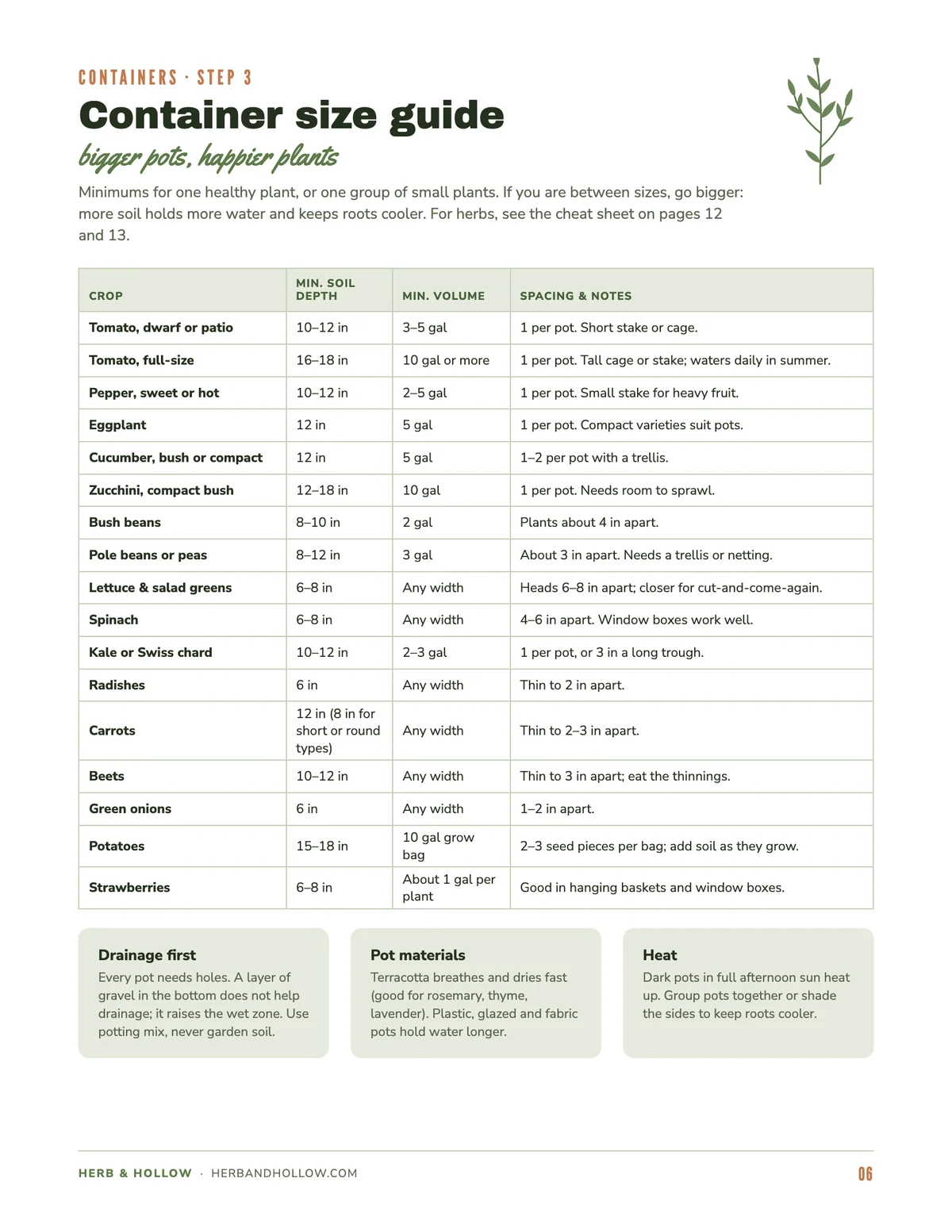
The inventory page has a quick potting mix sum, since bags are sold by cubic feet and pots by gallons. One cubic foot is about 7.5 gallons, so a 2 cubic foot bag fills roughly three 5-gallon pots.
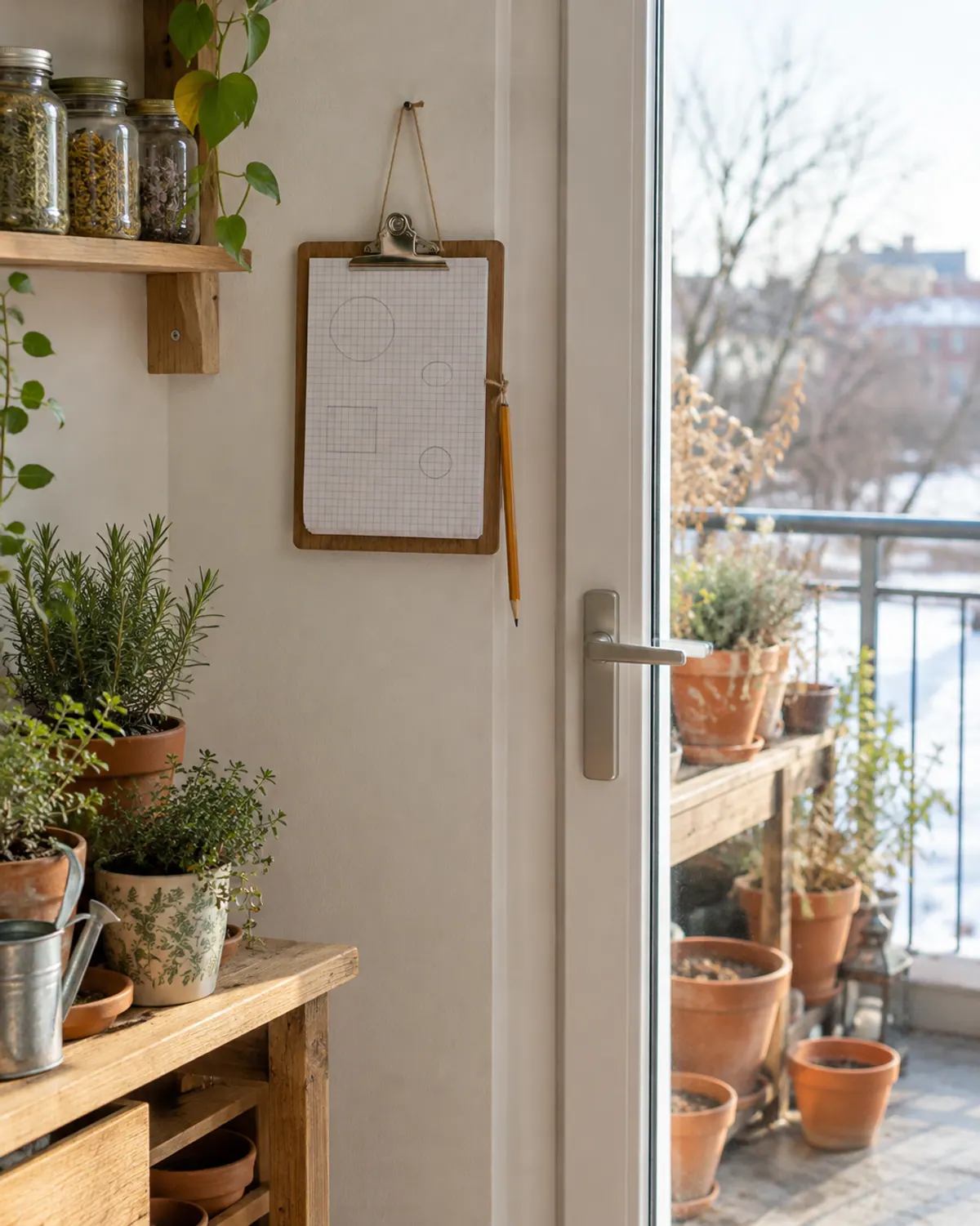
Then draw. The balcony floor plan is a grid where you mark walls, railings and the door first, then add floor pots and railing boxes. Put the tallest plants where they won't shade the rest, and the heaviest pots near walls, not mid-floor.
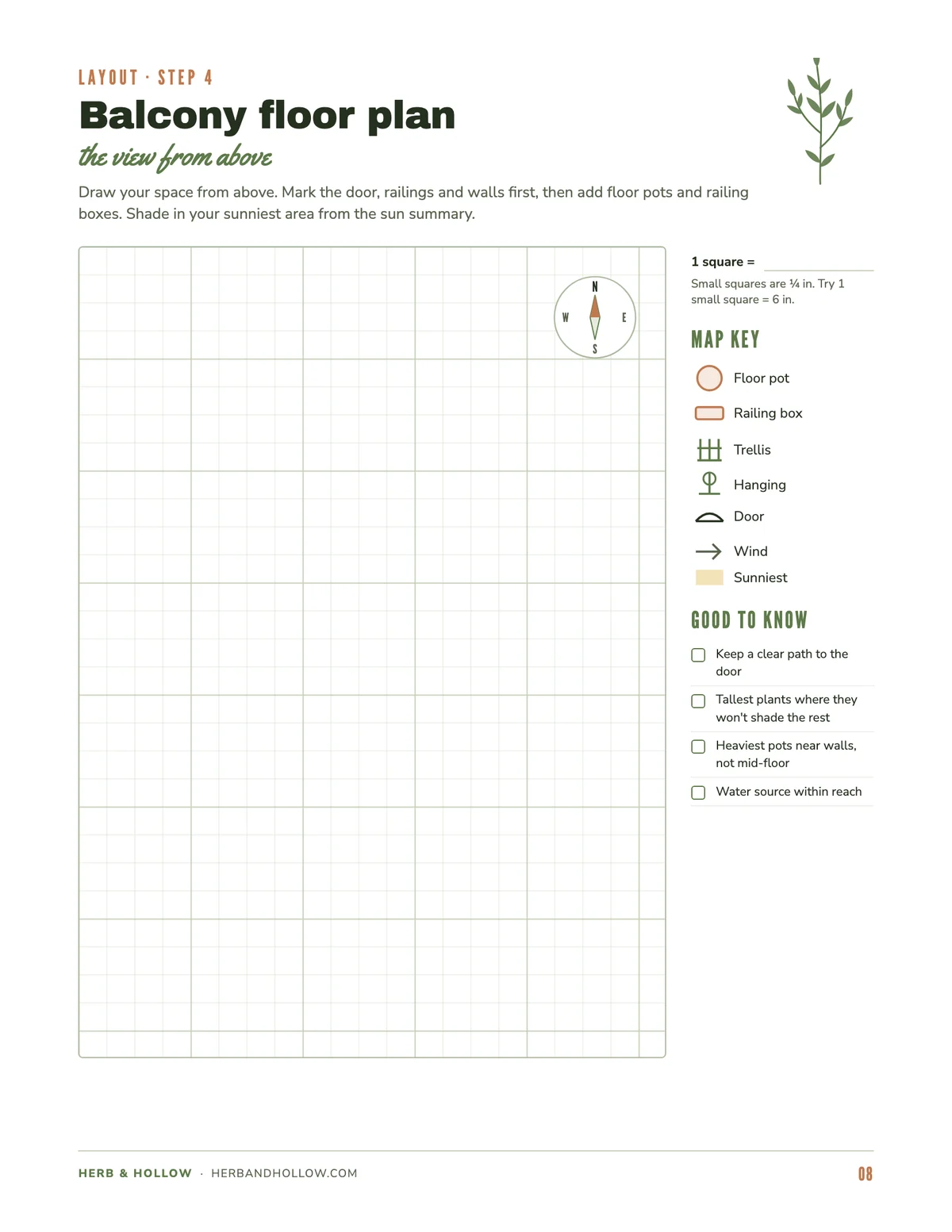
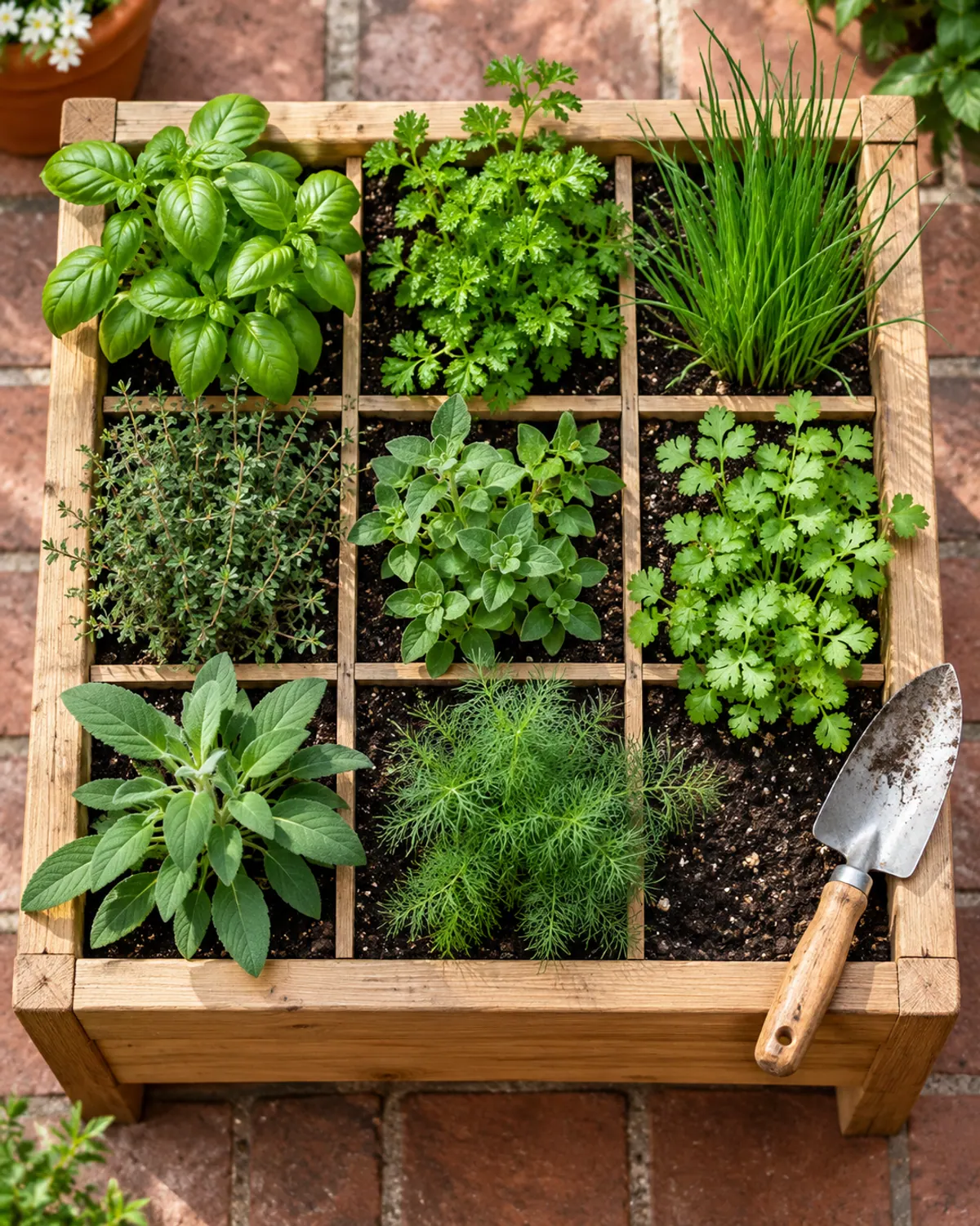
Working with a raised bed or a square planter instead? Use the same grid as a square-foot plan: one square per herb, with mint kept in its own corner pot.
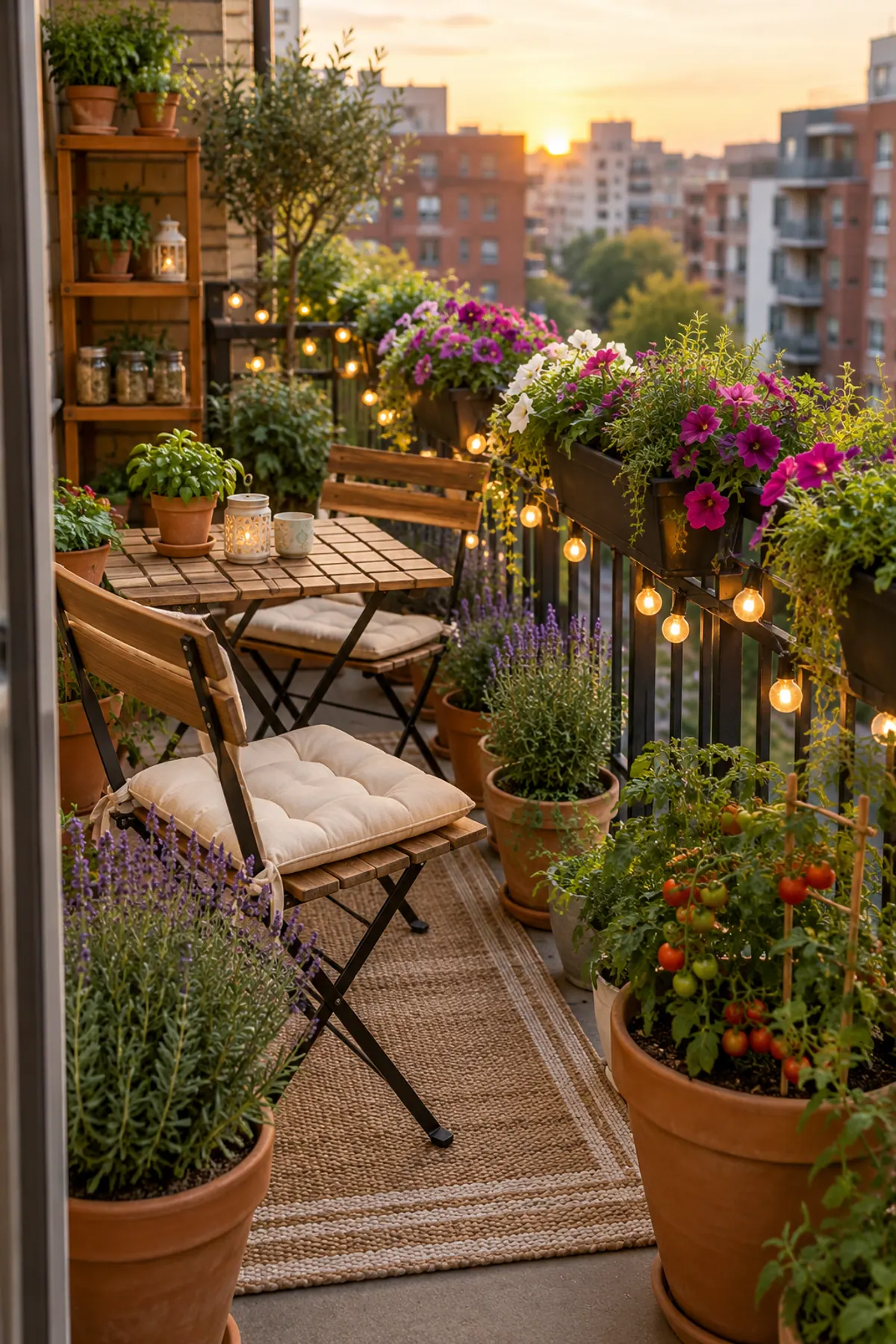
For more container shapes and railing setups, see our balcony garden ideas.
Step 4: Fill in your planting calendar by frost date
The planting calendar counts in weeks before (minus) or after (plus) your average last spring frost. Write your frost date at the top, then turn each line into real dates.
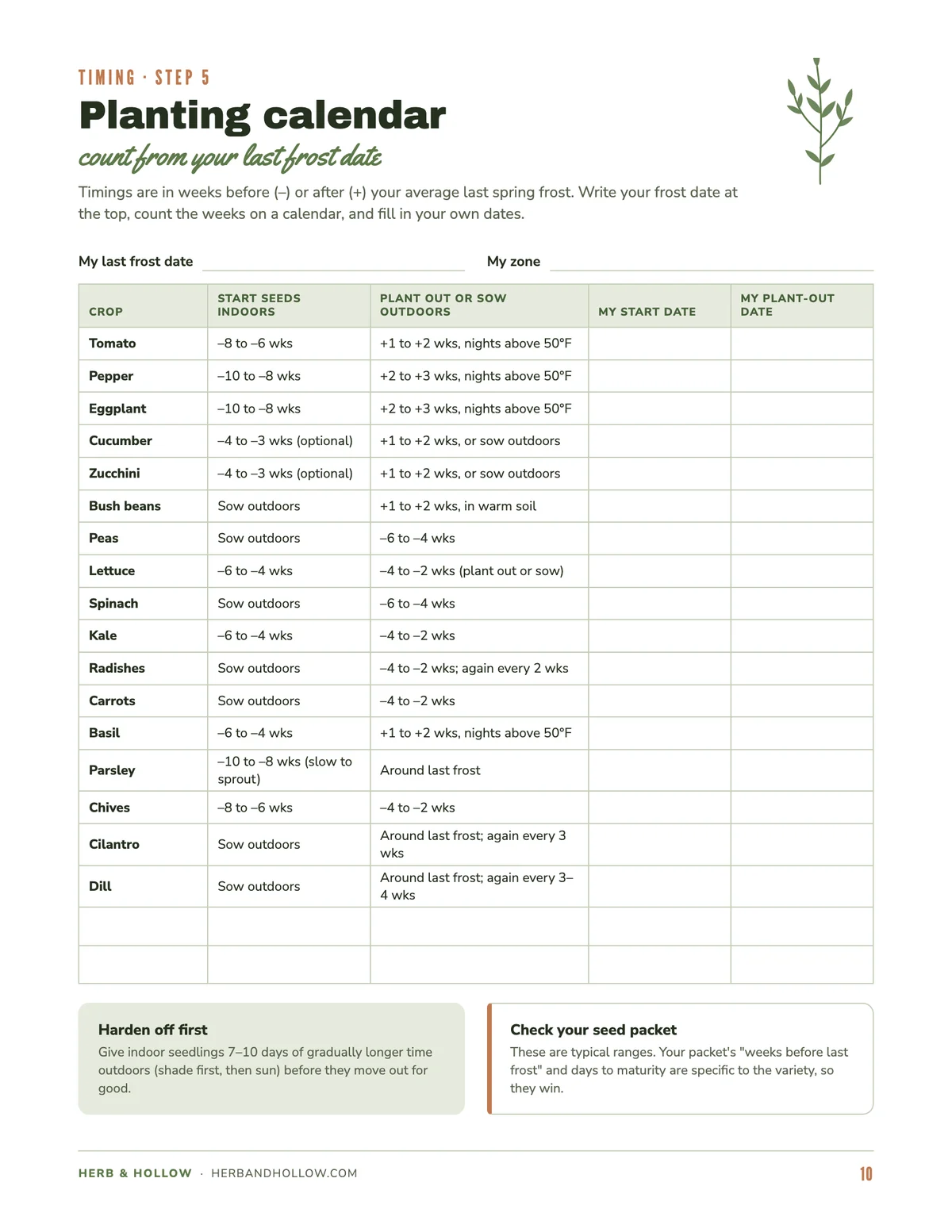
| Crop | Start seeds indoors | Plant out |
|---|---|---|
| Basil | 6 to 4 weeks before last frost | 1 to 2 weeks after, nights above 50°F |
| Parsley | 10 to 8 weeks before (slow to sprout) | Around last frost |
| Chives | 8 to 6 weeks before | 4 to 2 weeks before |
| Pepper | 10 to 8 weeks before | 2 to 3 weeks after, nights above 50°F |
| Tomato | 8 to 6 weeks before | 1 to 2 weeks after, nights above 50°F |
| Lettuce | 6 to 4 weeks before | 4 to 2 weeks before |
Here is how that works in practice. If your last frost falls in mid-April, pepper and parsley seeds go in under lights in early to mid February, which is why winter is the right time to plan. These are typical ranges; your seed packet's timing wins.
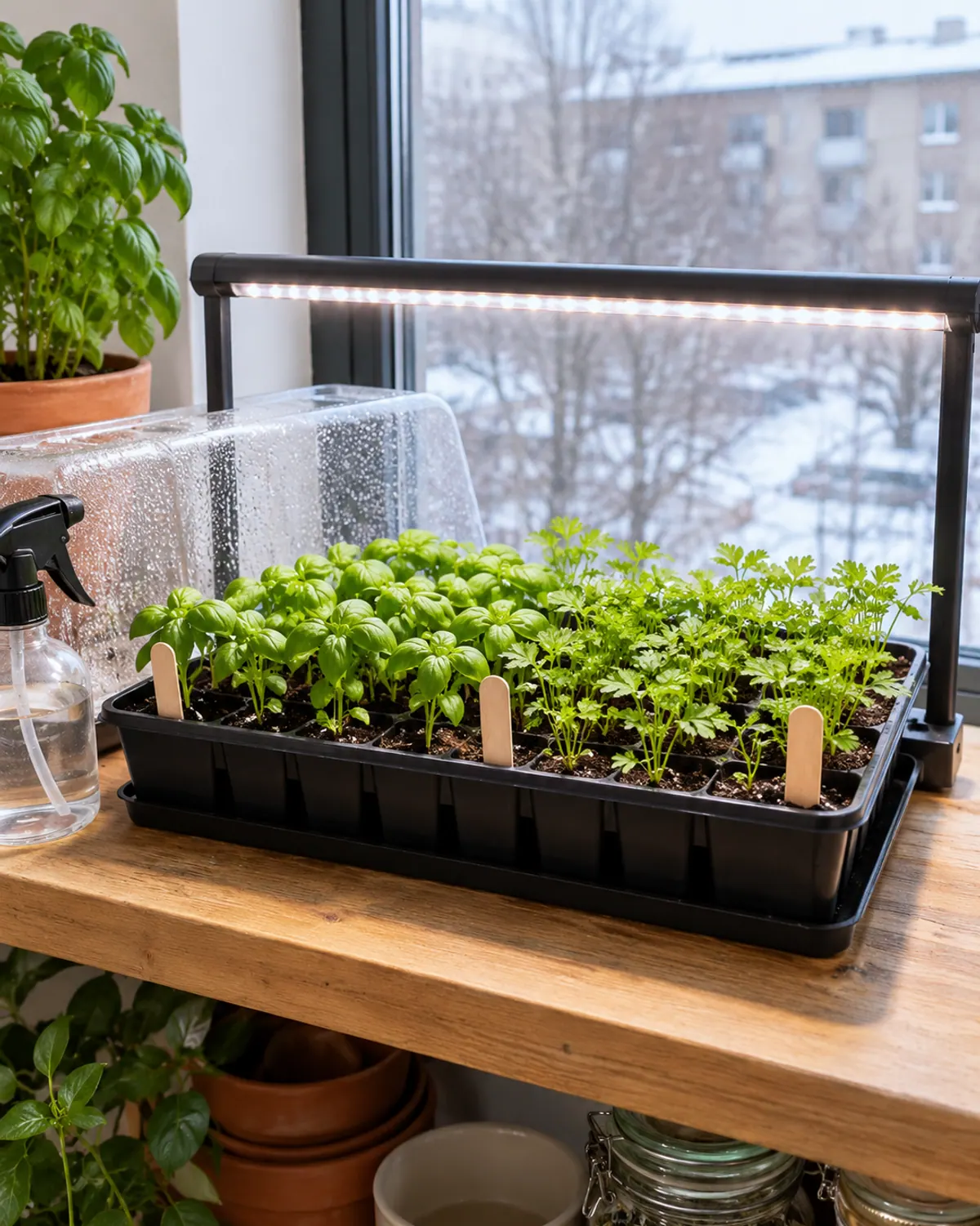
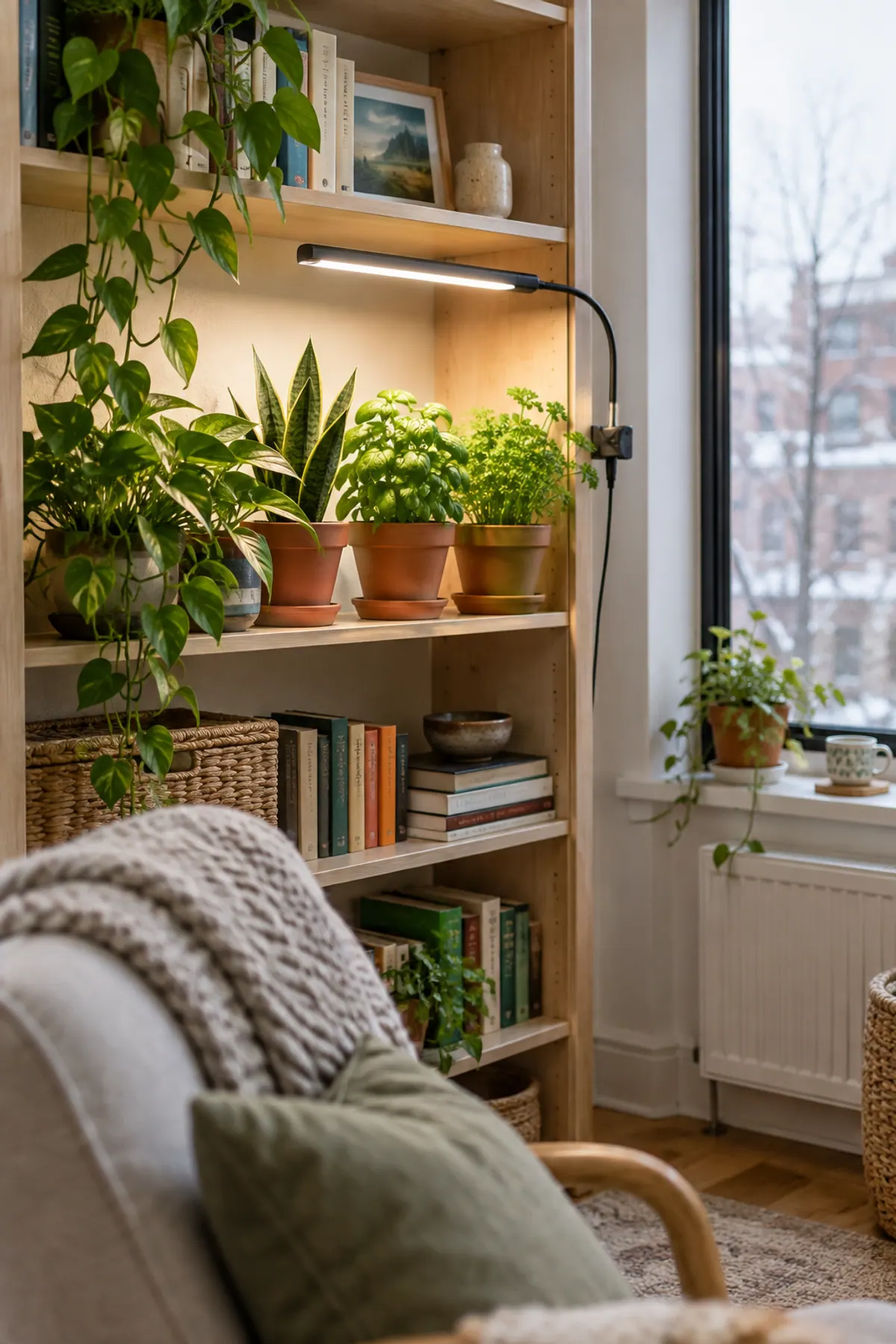
No sunny window for seedlings? A small grow light keeps them sturdy. Page 11 then turns the calendar into a week-by-week list, and also counts fall crops back from your first frost.
How to print and use your garden planner
Print at actual size on US Letter. Plain printer paper is fine for planning pages. For pages you'll carry outside, like the harvest log, heavier cardstock or sheet protectors in a binder hold up better to wet hands.
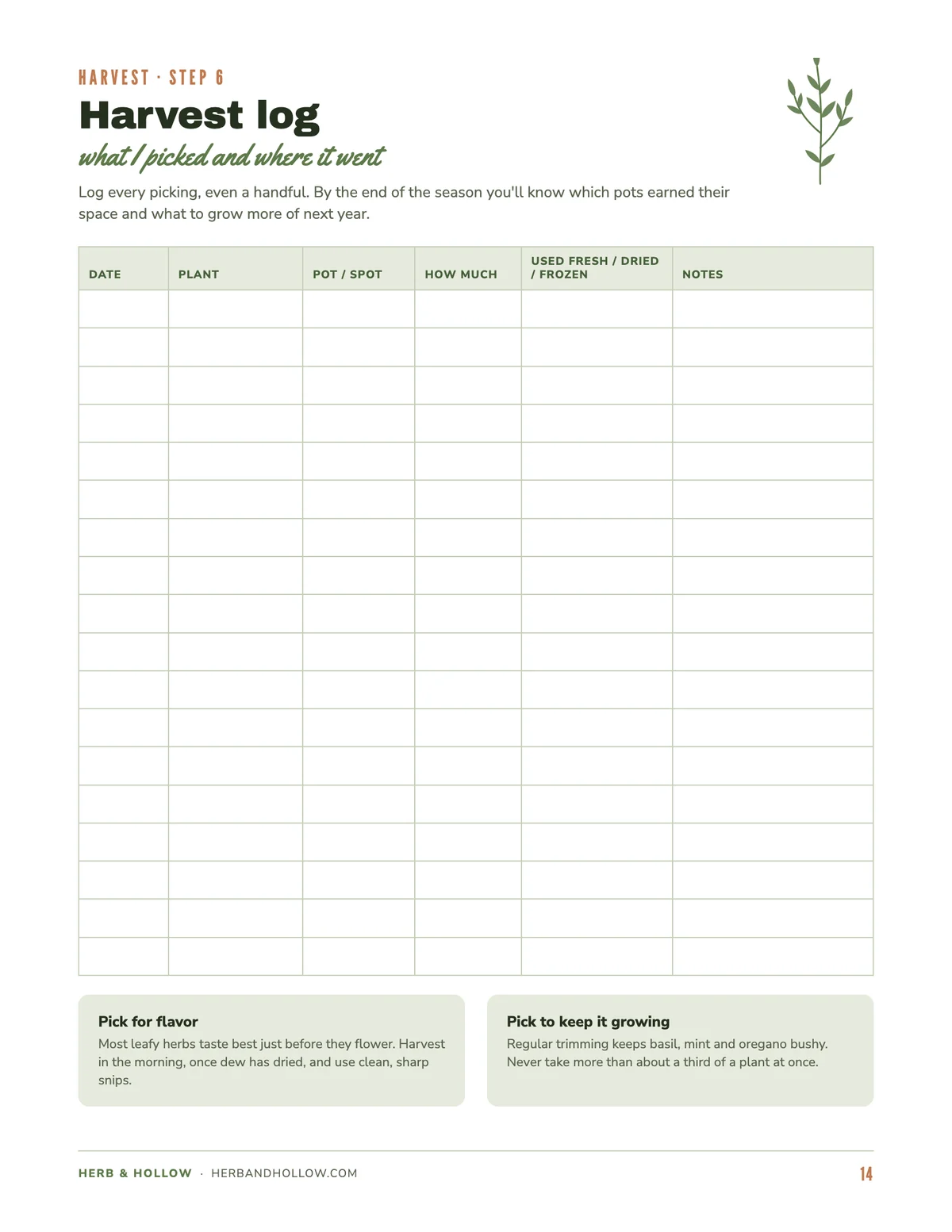
You don't need every page every year. Print the sun tracker, calendar and layout pages each spring, and keep one copy of the cheat sheet on the fridge. When harvest comes, our guide on how to dry herbs at home pairs with the drying log.
Your winter garden planning checklist
Want more than a planner? The herb journal
The free planner covers one season's plan. If you'd like to keep records all year, the Herb Garden Journal + 20 Herb Growing Cards adds half-letter growing cards for 20 herbs, a light tracker with grow light settings, watering and care logs, a problem finder for 13 common symptoms and a herb pantry jar inventory. It is 28 pages and costs $7.
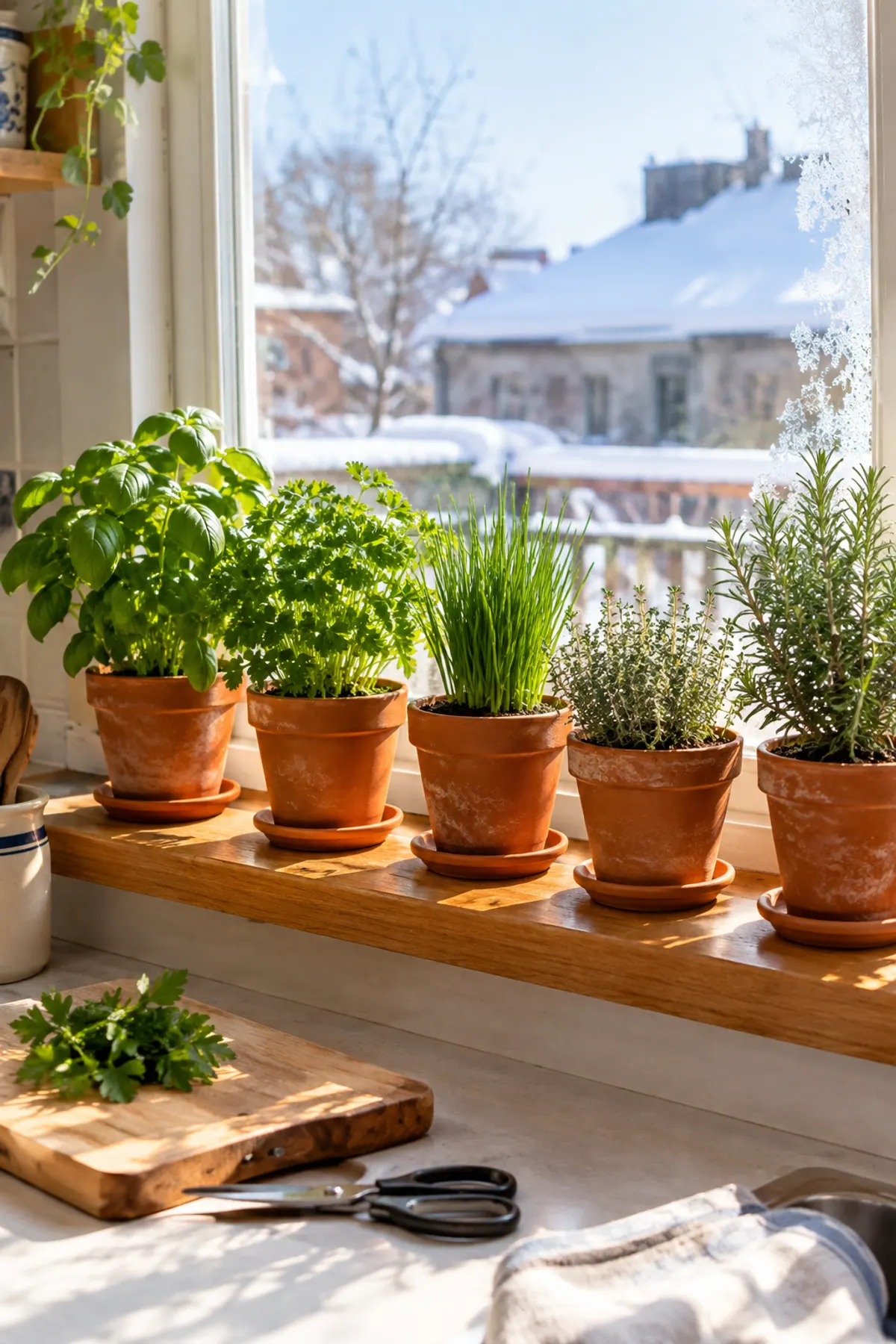
Growing indoors this winter instead? See our indoor herb garden guide, then grab the planner below.
Frequently asked questions
Is there a free printable garden planner?
Yes. The Small-Space Garden Planner is a free 16-page US Letter PDF with a sun tracker, container size guide, balcony floor plan, planting calendar, herb cheat sheet and harvest and drying logs. Enter your email on this page and it is sent to you.
How do I plan a herb garden layout?
Start with sun: count the hours of direct light in each spot. Put sun lovers like basil, rosemary and thyme in the brightest spots, group herbs that like dry soil apart from those that like steady moisture, and give mint its own pot.
Which herbs should be planted together?
Pair by water needs. Rosemary, thyme, oregano and sage like to dry out between waterings, while basil, parsley, chives and cilantro prefer evenly moist soil. Mint spreads, so plant it alone.
What paper should I print a garden planner on?
Plain US Letter printer paper works for planning pages. For pages you'll handle outside, use heavier cardstock or slip them into sheet protectors in a binder.
When should I start planning a spring garden?
Winter. Some herbs and vegetables, like parsley and peppers, are started indoors 8 to 10 weeks before the last frost, so with a mid-April frost date you'd sow them in early to mid February.
Save it for later
Pin this to your Seasonal Garden Tasks board so it's there when you need it.
Save to Pinterest