This post contains affiliate links. As an Amazon Associate we earn from qualifying purchases, at no extra cost to you. Read our disclosure.
Safety first: Herbs can be powerful. If you are pregnant, nursing, take medication or have a health condition, check with your doctor or pharmacist first. Please read our herbal & garden safety notes before you start.
Key takeaways
- Move tropicals in at about 50 to 55°F nights and tender plants before nights drop below 50°F.
- Three methods: keep it growing, store it dormant, or take cuttings. The chart shows which fits each plant.
- Debug for a week first: inspect, rinse, soak the pot, spray if needed, then isolate for two weeks.
- Dormant storage needs cool, dark and dry, about 40 to 55°F and never freezing.
- Geraniums and begonias are toxic to pets per the ASPCA; Boston fern is not.
In this post9 sections
- When to bring overwintering plants inside
- Three ways to overwinter: keep it growing, store it dormant, or take cuttings
- How to debug plants before bringing houseplants in for winter
- Overwintering geraniums in pots, plus peppers, ferns and begonias
- Overwintering plants in a garage or basement (dormant storage)
- Where to put them once they are in: small-space light and spacing
- Pet safety
- Overwintering supplies
- FAQ
When to bring overwintering plants inside
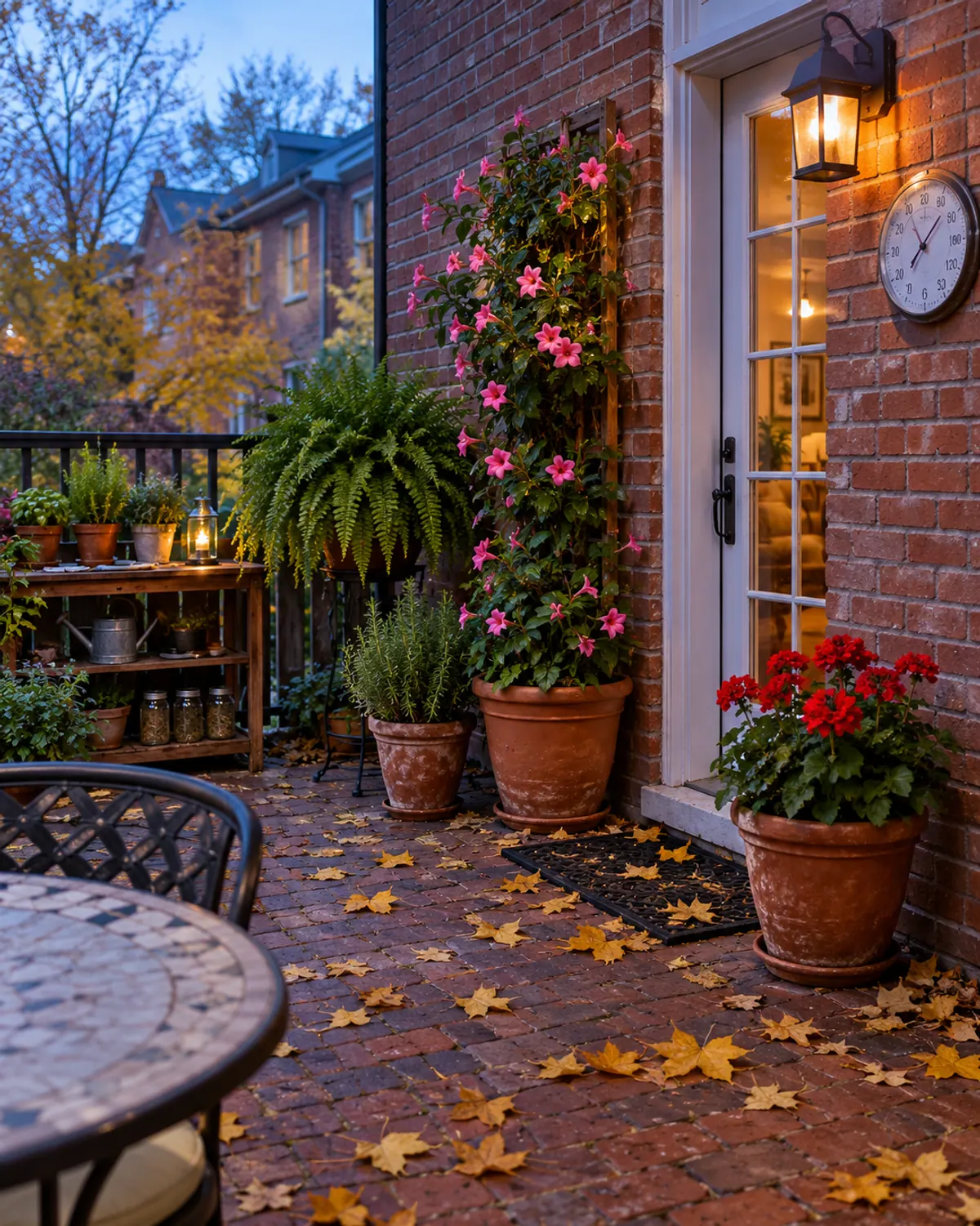
Watch the night temperatures, not the calendar. Garden Design suggests moving tropical plants in once nights drop to about 50 to 55°F, and tender plants before nights fall below 50°F. Waiting for the first frost is too late for most of them.
Hardy plants are different. A perennial or shrub can usually stay out in its pot if it is rated two zones colder than where you live, because roots in a pot get colder than roots in the ground.
| Plant type | Examples | Move or start overwintering when nights reach |
|---|---|---|
| Tropicals | Mandevilla, hibiscus, Boston fern | About 50 to 55°F |
| Tender perennials | Geranium, coleus, lantana, begonia | Below about 50°F, and before any frost |
| Tender herbs | Rosemary, bay | Before a hard freeze (rosemary tolerates a light frost) |
| Peppers | Compact chilies in pots | Before nights drop below about 50°F |
| Hardy perennials in pots | Plants rated 2 zones colder than yours | Can usually stay out; group pots against a wall |
Three ways to overwinter: keep it growing, store it dormant, or take cuttings
Every tender plant on your patio fits one of three methods. The right one depends on how much sunny window you have and whether you have a cool garage, basement or closet.
Keep it growing means it becomes a houseplant until spring. Store it dormant means you let it rest, cool and mostly dry, out of sight. Take cuttings means you keep a few small rooted pieces and let the big plant go.
| Plant | Keep growing indoors | Store dormant | Take cuttings |
|---|---|---|---|
| Geranium | Yes, sunny window, 60 to 65°F | Yes, bare-root in a paper bag at 45 to 55°F | Yes, the space saver |
| Pepper (compact chilies) | Yes, cut back, bright window | Semi-dormant at about 50 to 65°F | Not usual |
| Boston fern | Yes, bright and cool | Semi-dormant in a cool garage above freezing | No |
| Tuberous begonia | Not usual | Yes, tubers in dry peat at 40 to 50°F | No |
| Wax begonia | Yes, bright window | No | Yes |
| Mandevilla | Yes, very bright light | Yes, cut back, about 50°F | Possible, but slower |
| Coleus | Yes | No | Yes, roots easily |
| Rosemary | Yes, cool and very bright | No | Yes |
Short on window space? Lean on dormant storage and cuttings. A tray of geranium cuttings fits on one sill, and a paper bag of bare-root geraniums takes up a corner of a closet shelf.
How to debug plants before bringing houseplants in for winter
Bugs that live quietly outdoors can explode indoors, where there are no predators and no rain. Illinois Extension lists scale, spider mites, aphids and whiteflies as the usual hitchhikers. A week of checks before moving day saves a winter of fighting them.
-
Step 1: Day 1: Inspect every leaf
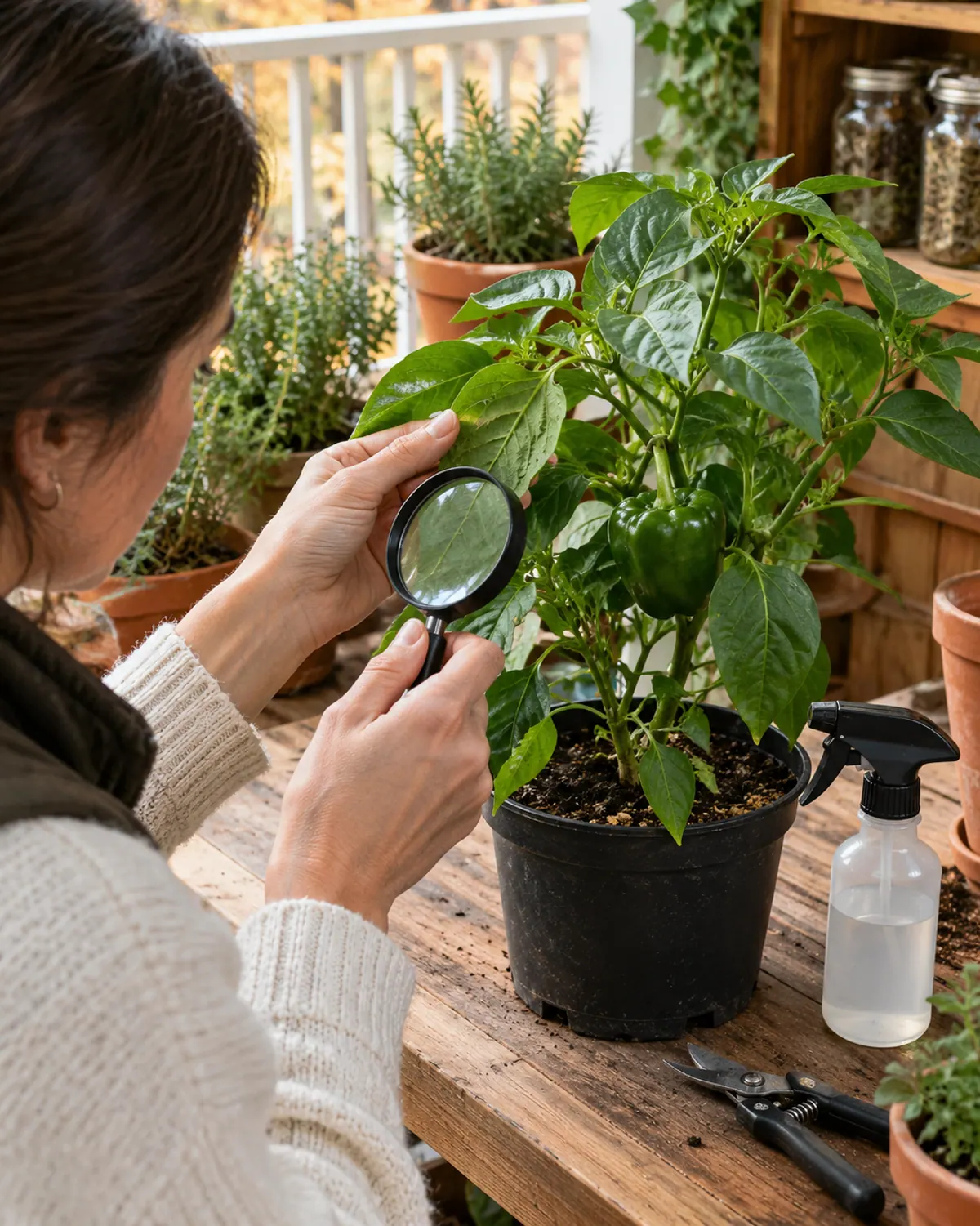
Turn leaves over and look along the stems with a hand lens. Sticky spots, fine webbing, white fluff or tiny moving dots mean pests. Pull off yellow or damaged leaves and any dead flowers.
-
Step 2: Day 1: Rinse the leaves
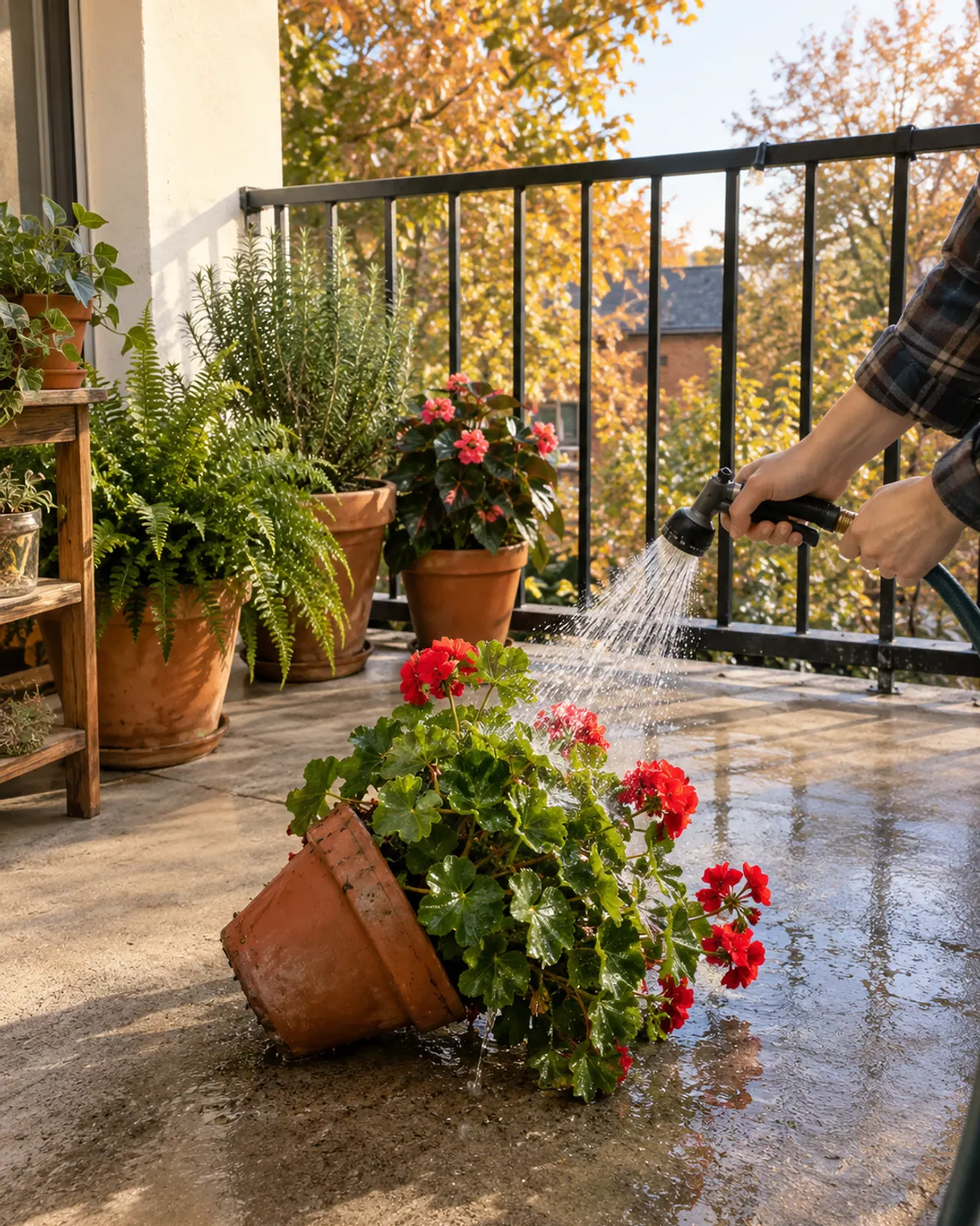
Use a gentle hose shower on the tops and undersides of the leaves. Tip the pot sideways so you can reach under the foliage.
-
Step 3: Day 2: Soak the pot
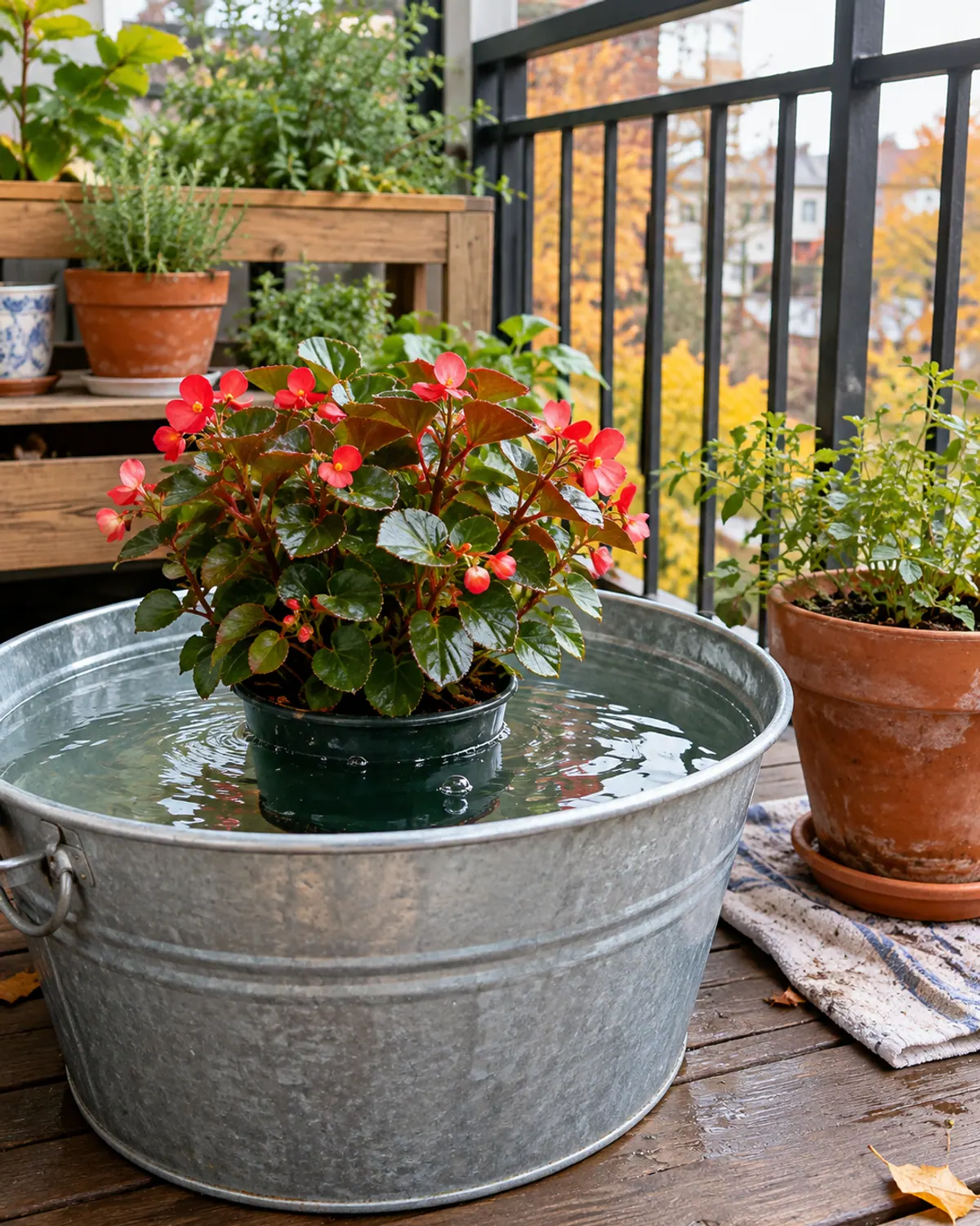
To flush out pests in the soil, set the whole pot in a tub of lukewarm water for about 15 minutes, then let it drain well. Skip this step for cacti and succulents, which hate wet roots.
-
Step 4: Days 2 to 7: Spray if you found pests
Illinois Extension suggests insecticidal soap at least twice, about a week apart, since one spray misses the eggs. Always follow the label and test one leaf first.
-
Step 5: Days 3 to 7: Ease them into lower light
Move pots into shade for a few days, or bring them in at night and out by day. Some leaf drop after the move is normal; plants are adjusting to much less light.
-
Step 6: Move day: Isolate for two weeks
Keep new arrivals apart from your other houseplants for at least two weeks. Hang a yellow sticky trap nearby to catch whiteflies and fungus gnats early.
Overwintering geraniums in pots, plus peppers, ferns and begonias
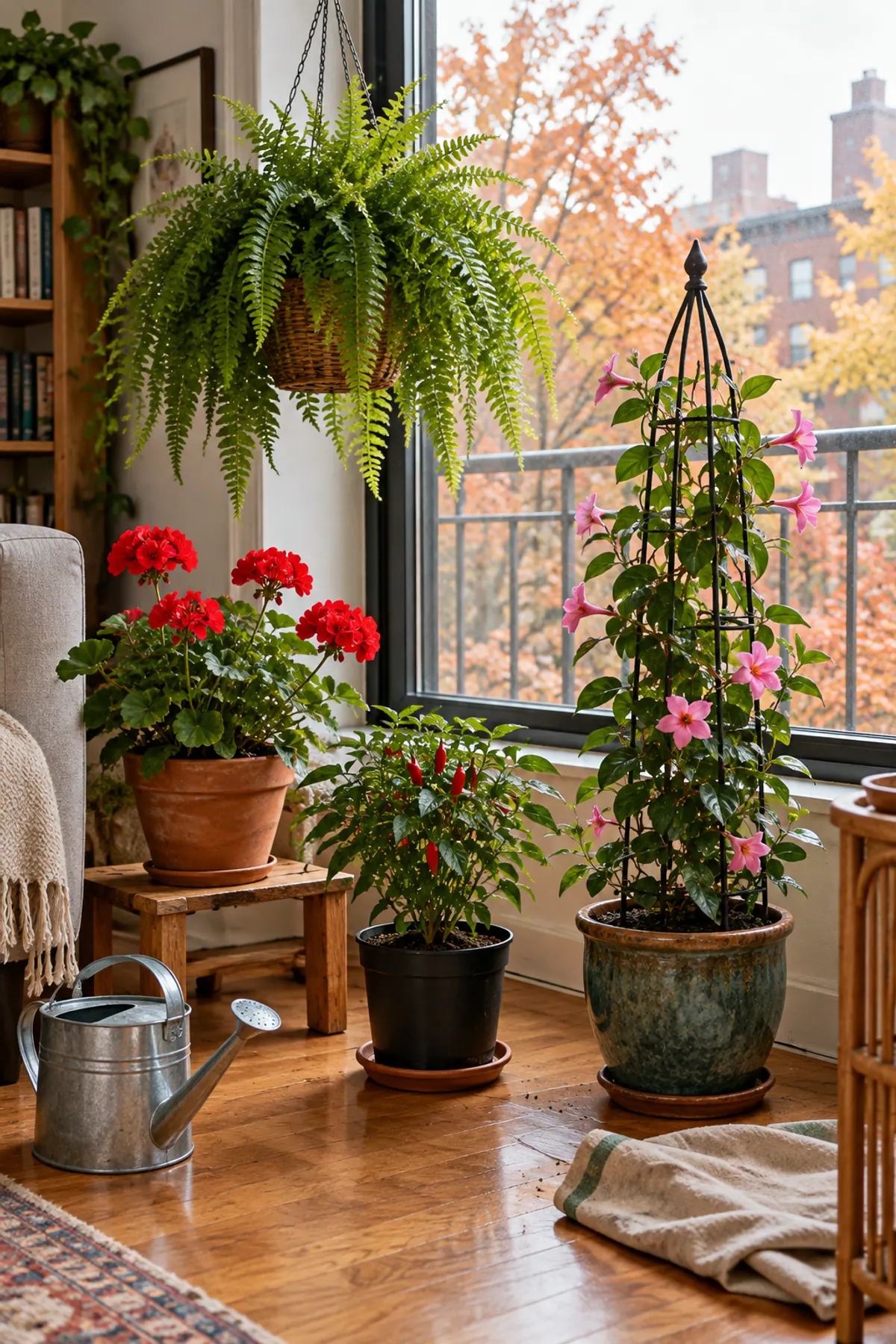
Here is how each of the plants Pinterest searches most handles winter. Use the chart above to pick a method, then follow the notes below.
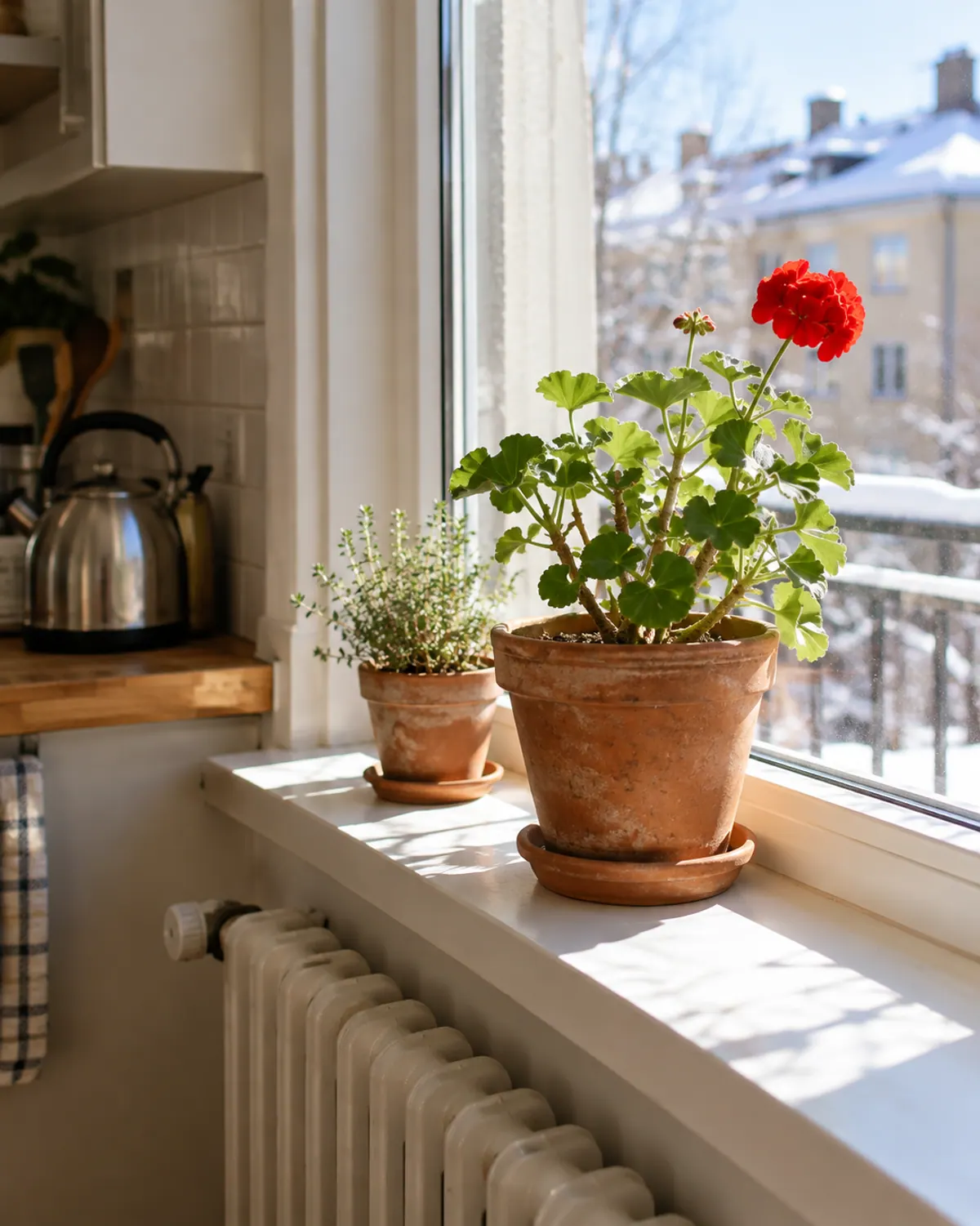
Geraniums, kept growing. Wisconsin Extension says to trim plants back by a third to a half, then keep them in a sunny window at 60 to 65°F. Expect some leggy growth by spring; pinch it back.
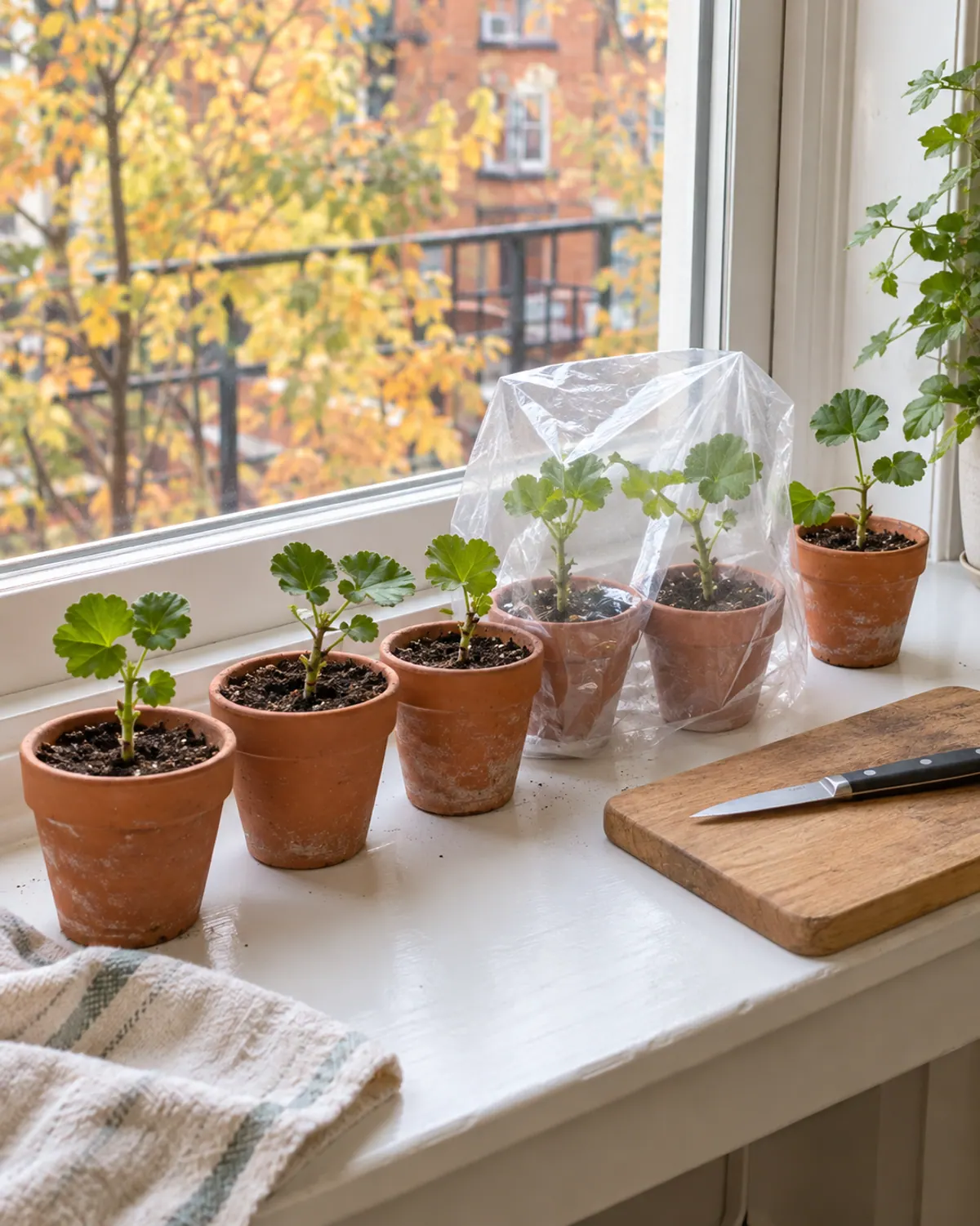
Geraniums, from cuttings. Take 3 to 5 inch tips with several leaf nodes, strip the lower leaves and dip the ends in rooting hormone. Illinois Extension notes roots in about 3 to 4 weeks; Wisconsin says about 6. A clear plastic bag tent keeps humidity up.
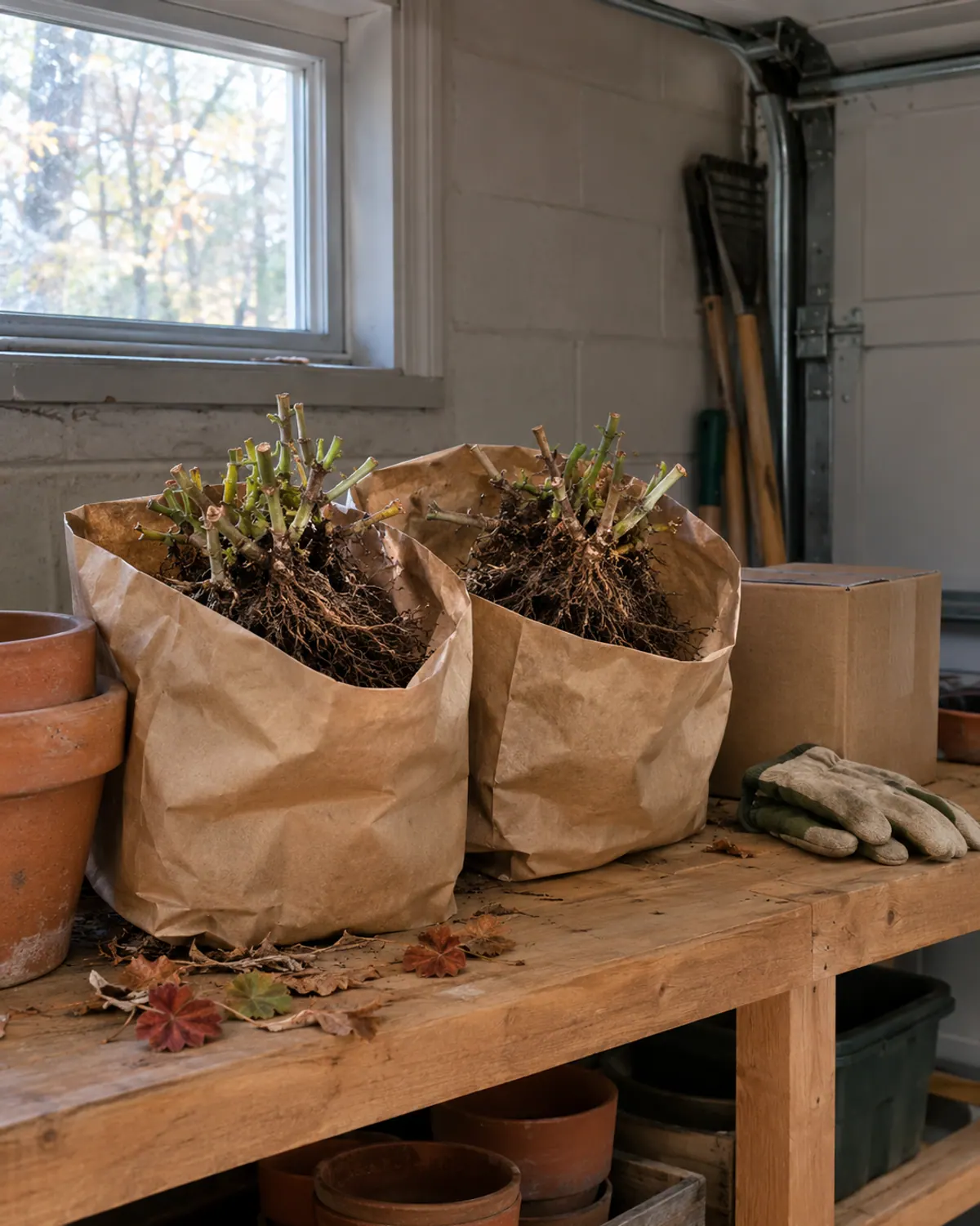
Geraniums, stored dormant. Wisconsin Extension describes the old method: dig or tip the plant out, shake off the soil and store it bare-root in an open paper bag or hung upside down at 45 to 55°F. In March, cut the stems back to about a third and pot them up.
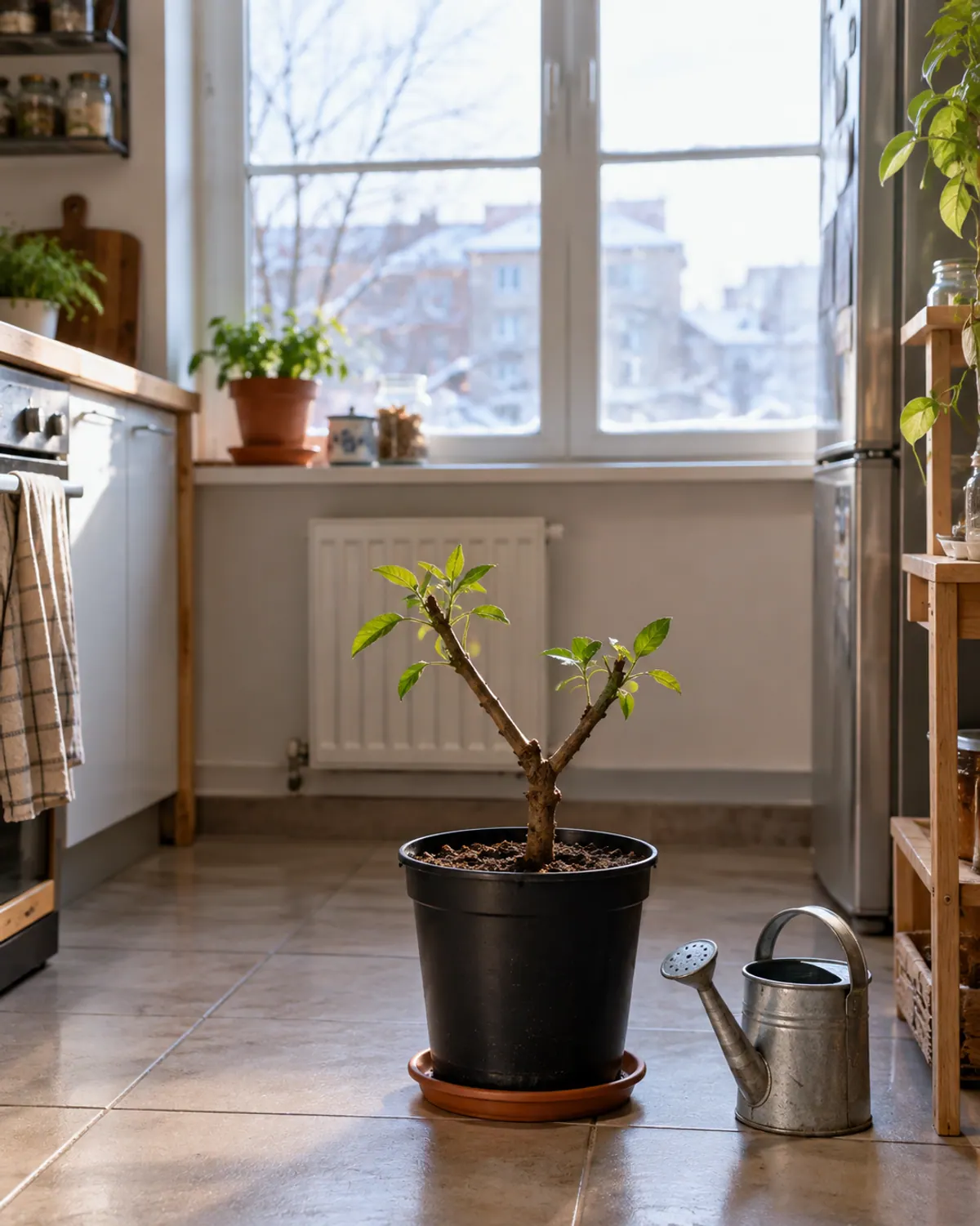
Peppers. Compact chili types overwinter better than big bell peppers. Pick off the fruit, cut the plant back to a short Y of main stems about 6 to 8 inches tall, and keep it in a bright spot around 50 to 65°F. Water sparingly; it is resting, so don't expect peppers until it goes back out.
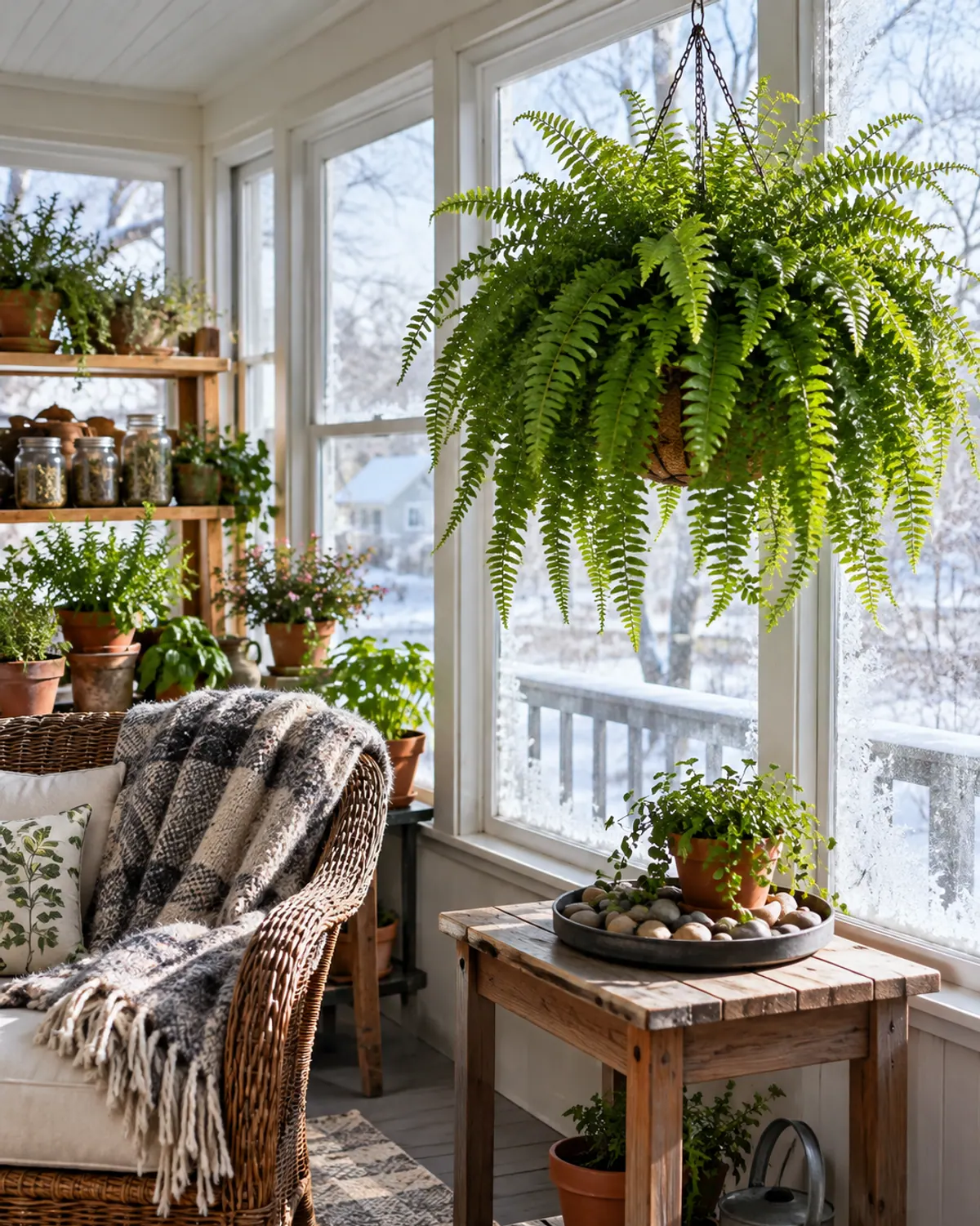
Boston ferns. They want a cool, bright room and steady moisture. If you have no space, many gardeners let them go semi-dormant in a cool garage that stays above freezing and water about once a month, then cut back old fronds in spring.
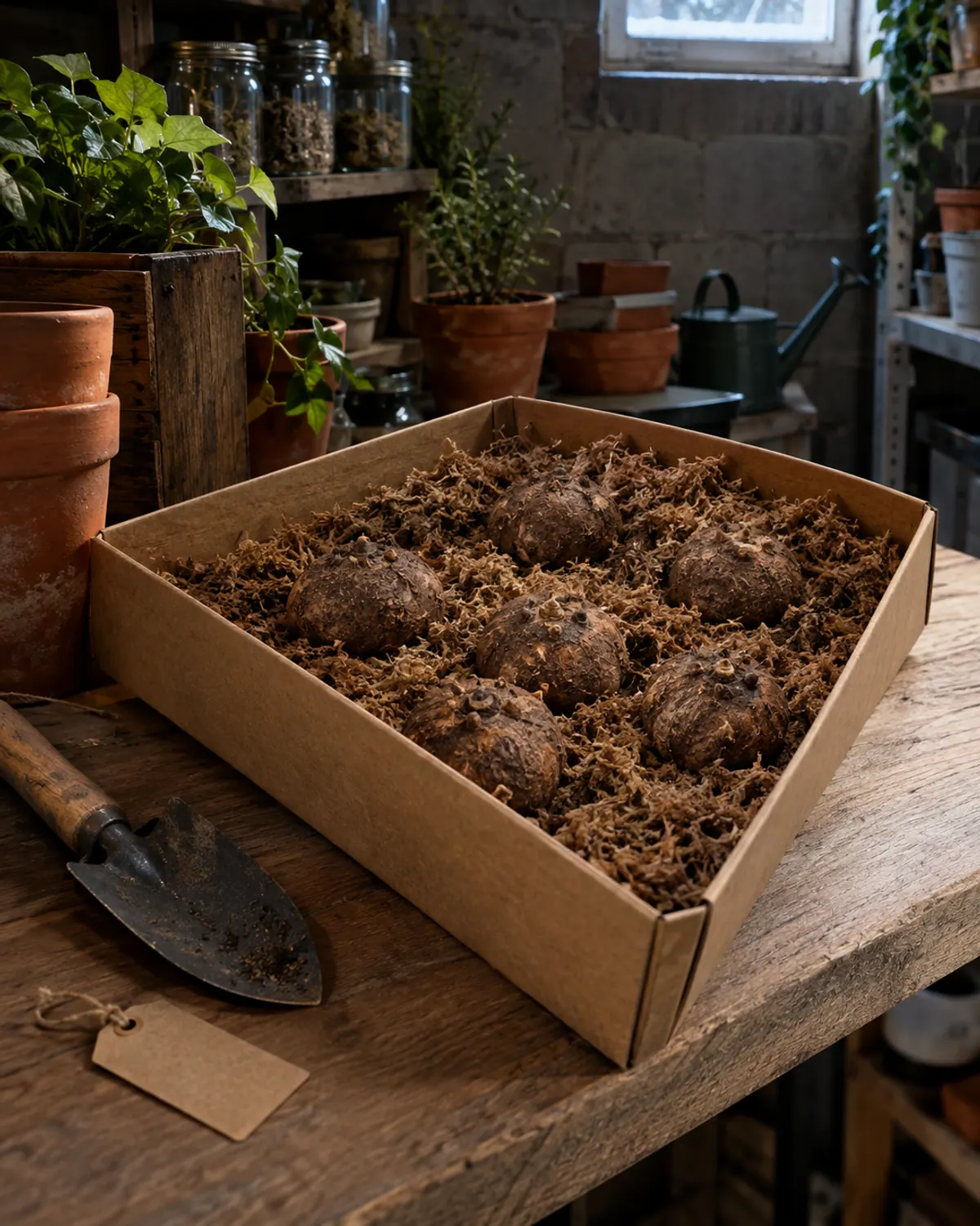
Tuberous begonias. After the first light frost, cut the stems, let the tubers dry and cure for about two weeks, then store them in dry peat or vermiculite at 40 to 50°F. Check monthly and toss any mushy ones. Wax begonias, by contrast, can simply come in as houseplants.
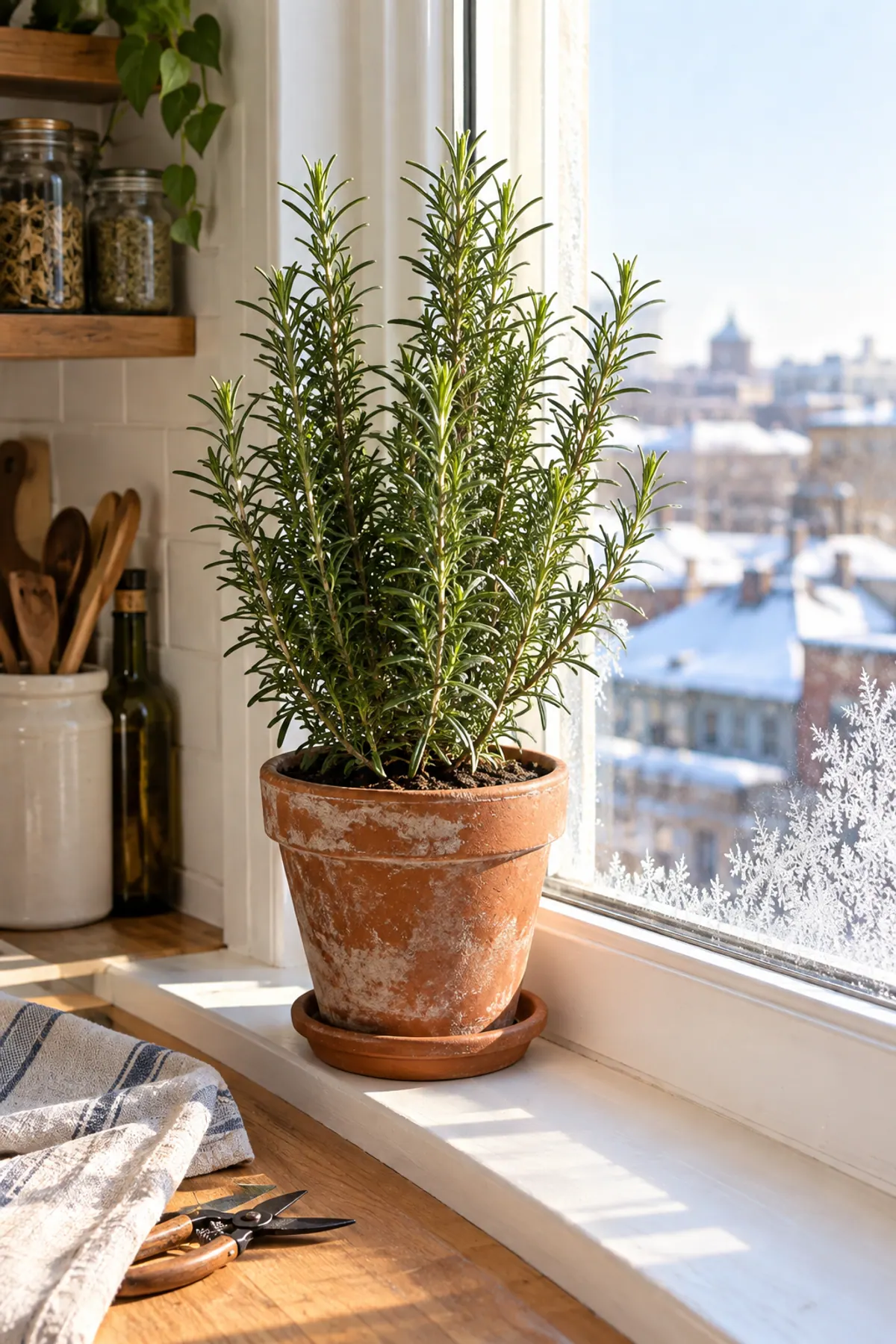
Rosemary comes in green and wants the brightest, coolest window you have. Our rosemary indoors guide covers the details.
Overwintering plants in a garage or basement (dormant storage)
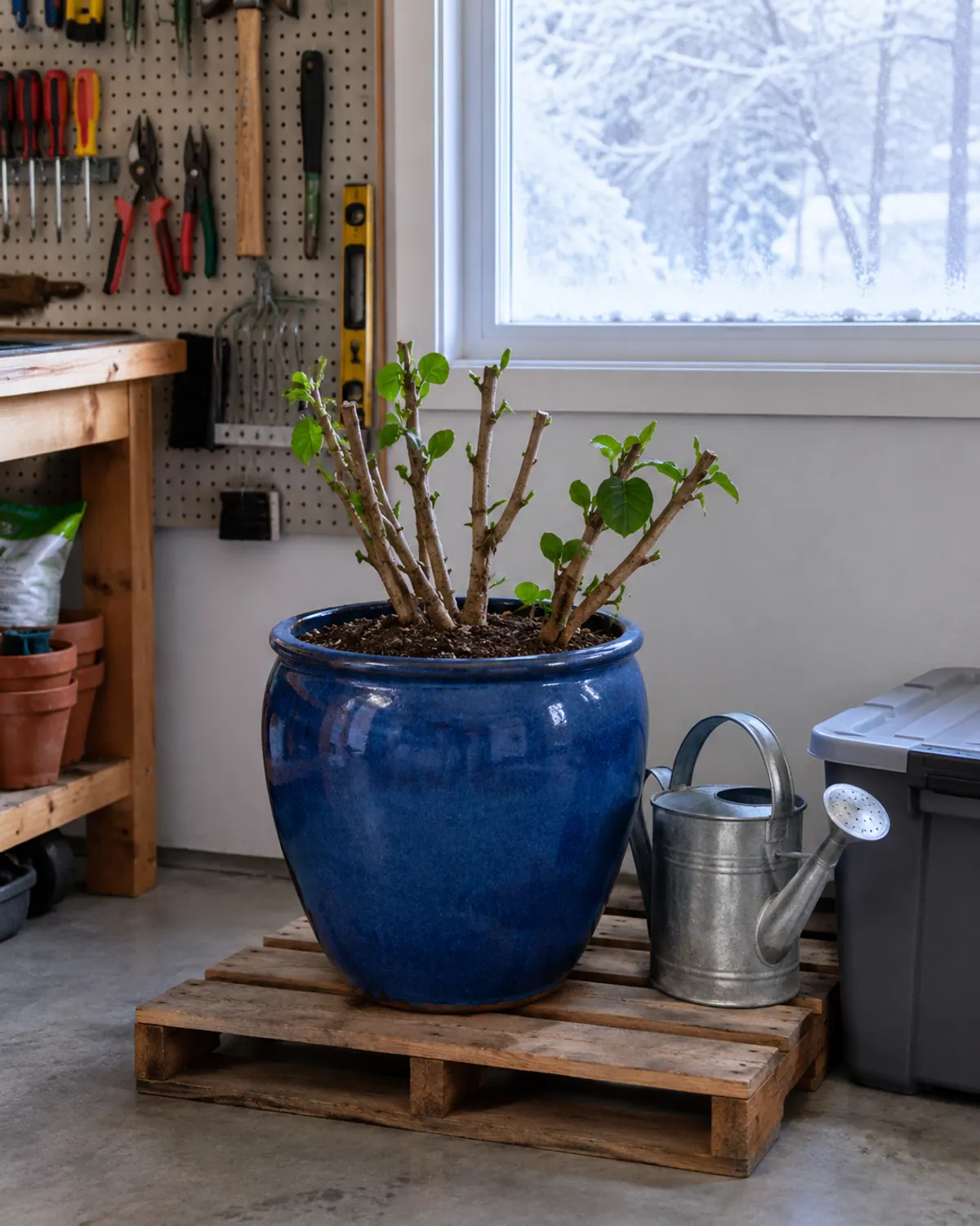
A garage or unheated basement is the small-space gardener's secret extra room. Dormant plants need cool, dark and dry, not sunlight. The target for most is roughly 40 to 55°F, and never below freezing.
Mandevilla can go either way. Toronto Master Gardeners and NYBG both describe cutting it back to about 12 inches and storing it at about 50°F with only occasional water. In a warm apartment with a very bright window, you can also keep it growing; watch closely for mealybugs and spider mites.
Dormant storage checklist
Where to put them once they are in: small-space light and spacing
Indoor light is far weaker than a patio, so give overwintered plants your sunniest window first: south, then west. Group them on a tiered plant stand so several pots share one window instead of crowding the floor.
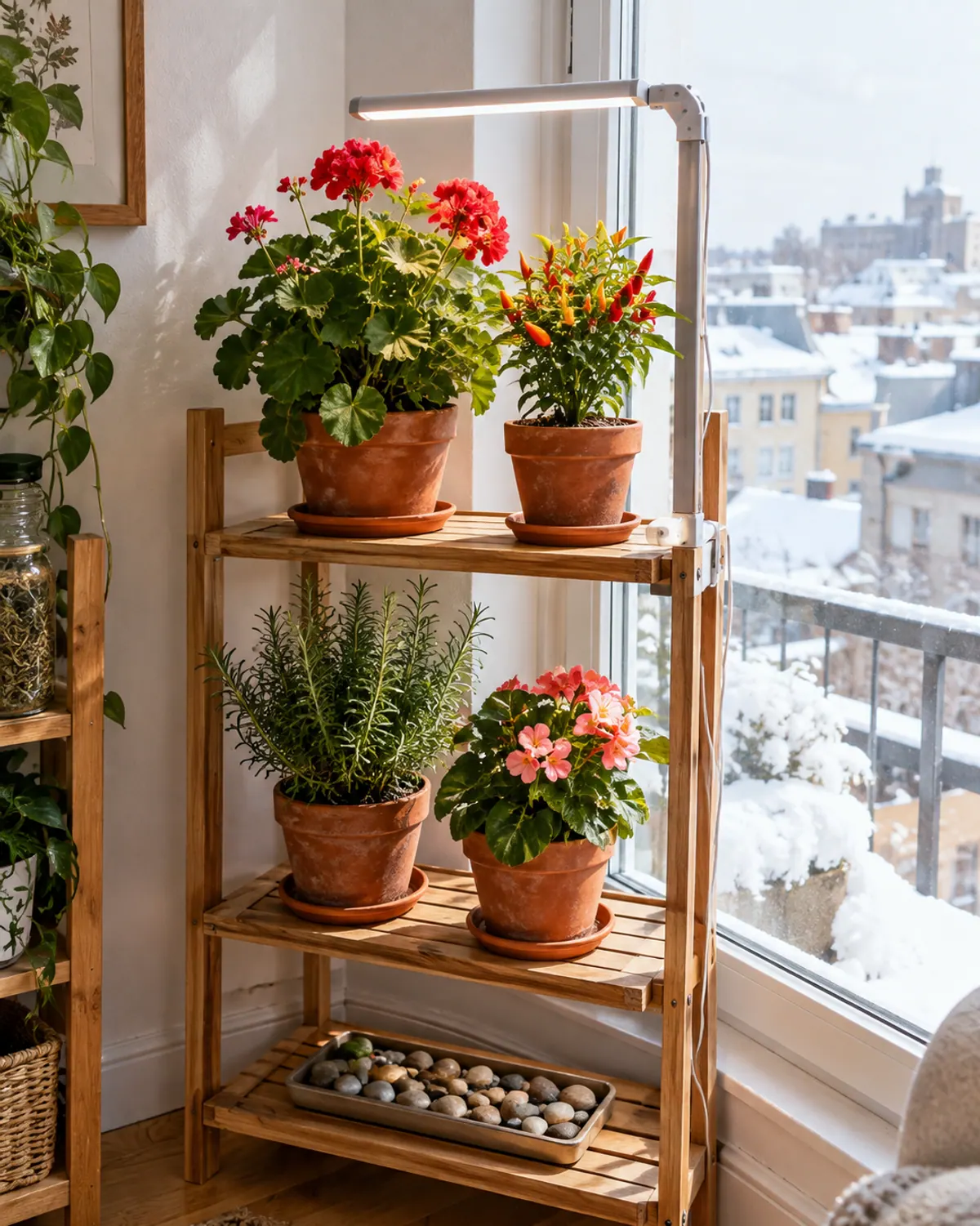
Big, heavy pots are easier on a rolling plant caddy, so you can roll them toward the light or away from a cold draft. Leave a little space between plants for air flow, which helps slow mildew and pests.
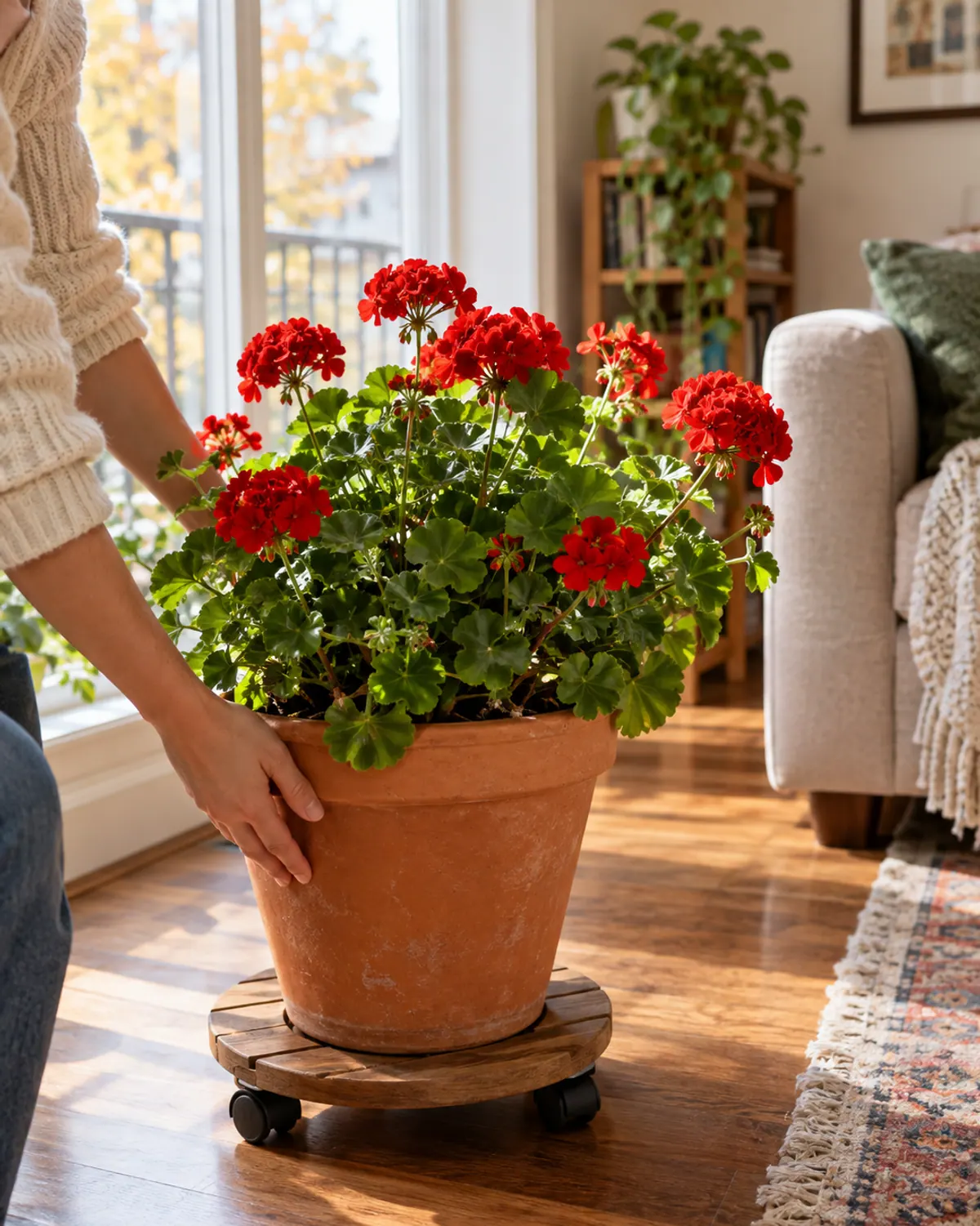
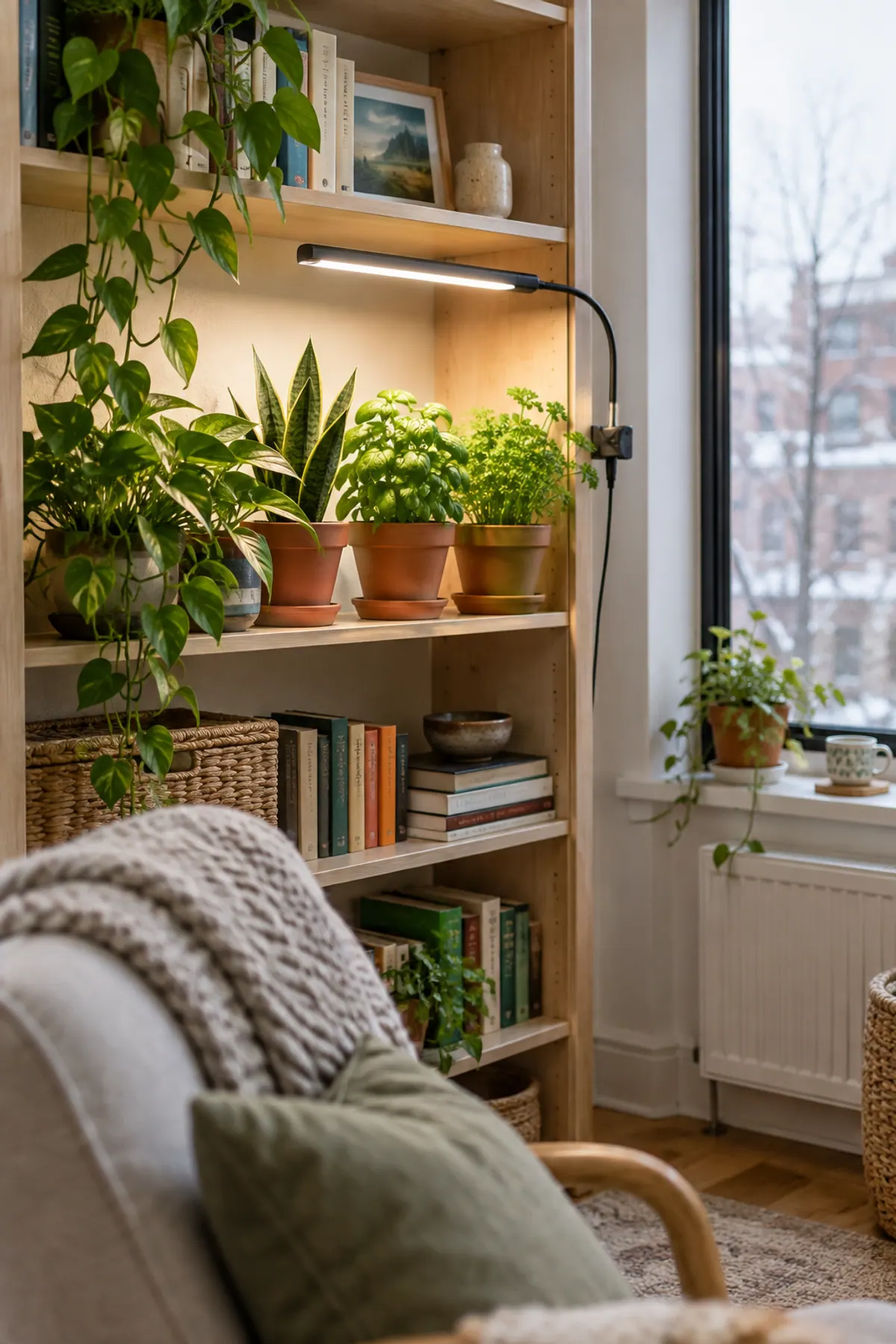
If your windows are dim, a grow light for small spaces fills the gap. Once everything is settled, switch to winter routines: our winter houseplant care tips cover watering, humidity and dark months, so we won't repeat them here.
Pet safety
The ASPCA lists geraniums and begonias as toxic to cats and dogs, while the Boston fern is listed as non-toxic. We could not find mandevilla on the ASPCA list, so treat it as unknown and keep it out of reach.
Overwintering supplies
Shop overwintering supplies
- Small-space pick
Rolling plant caddy
Typically $8 to $26
Lets you move a heavy pot toward light without lifting it.
Check price on Amazon for Rolling plant caddy -
Insecticidal soap concentrate
Typically $12 to $20
The extension-recommended spray for aphids, mites and scale before move day.
Check price on Amazon for Insecticidal soap concentrate -
Neem oil spray
Typically $13 to $28
An alternative for mealybugs and mites; ready-to-use bottles are simplest.
Check price on Amazon for Neem oil spray -
Yellow sticky traps
Typically $6 to $12
Early warning for whiteflies and fungus gnats during isolation.
Check price on Amazon for Yellow sticky traps -
Rooting hormone powder
Typically $8 to $15
Helps geranium and coleus cuttings root faster.
Check price on Amazon for Rooting hormone powder -
Tiered plant stand
Typically $25 to $60
Fits several overwintered pots into one sunny window.
Check price on Amazon for Tiered plant stand -
Pebble humidity tray
Typically $10 to $20
Adds a little humidity around ferns in dry heated rooms.
Check price on Amazon for Pebble humidity tray
We earn from qualifying purchases, which never changes what we recommend. Read our disclosure and editorial guidelines.
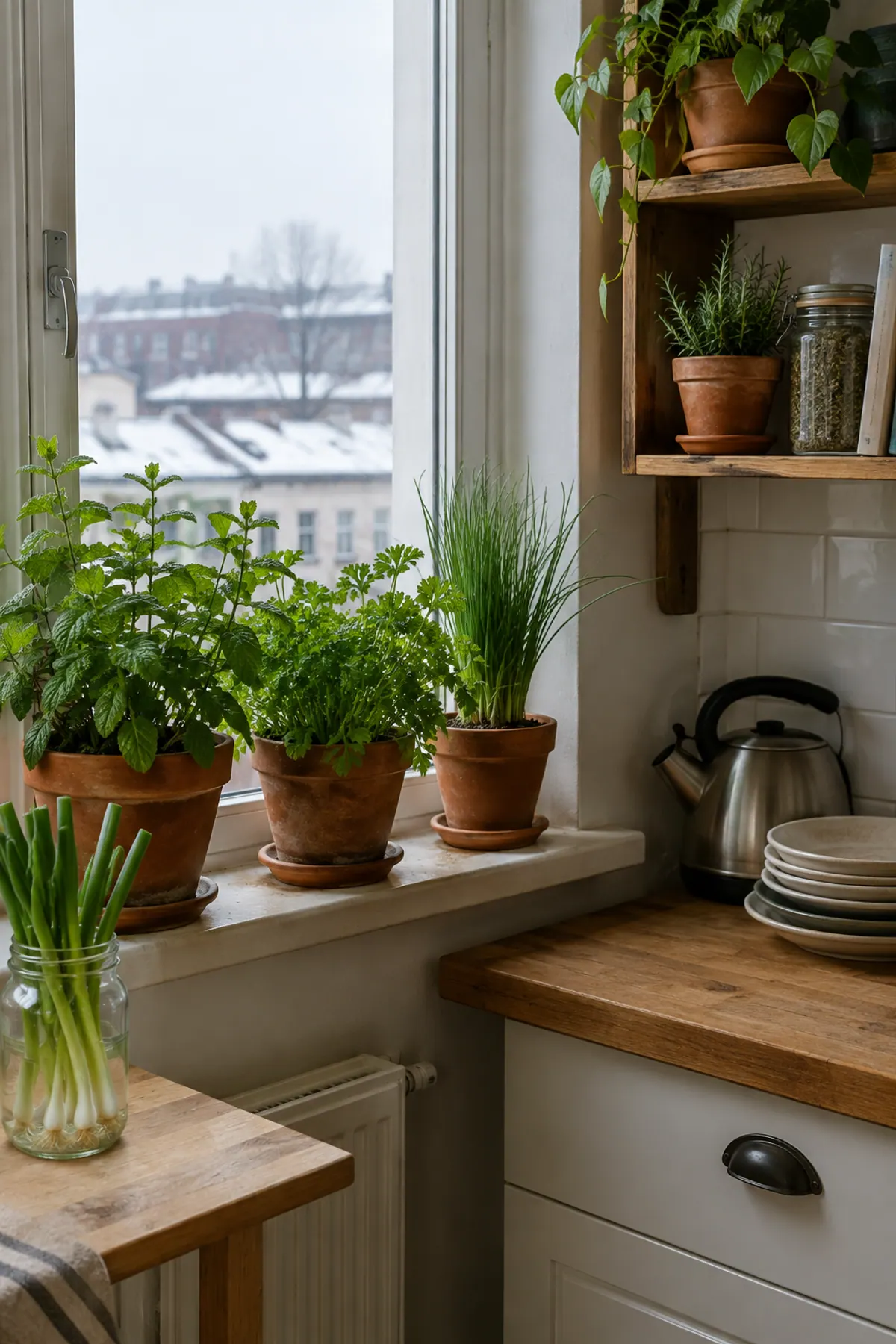
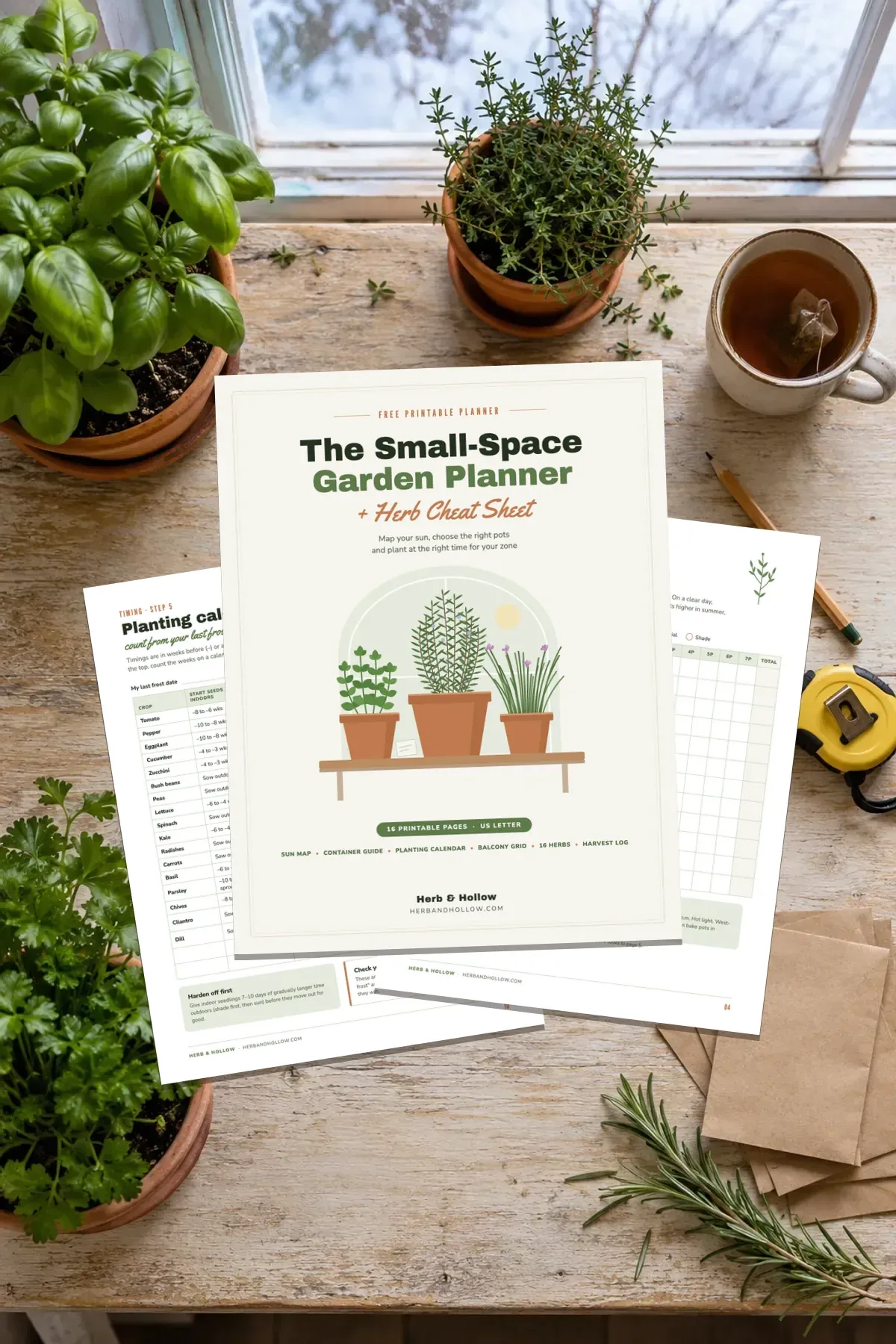
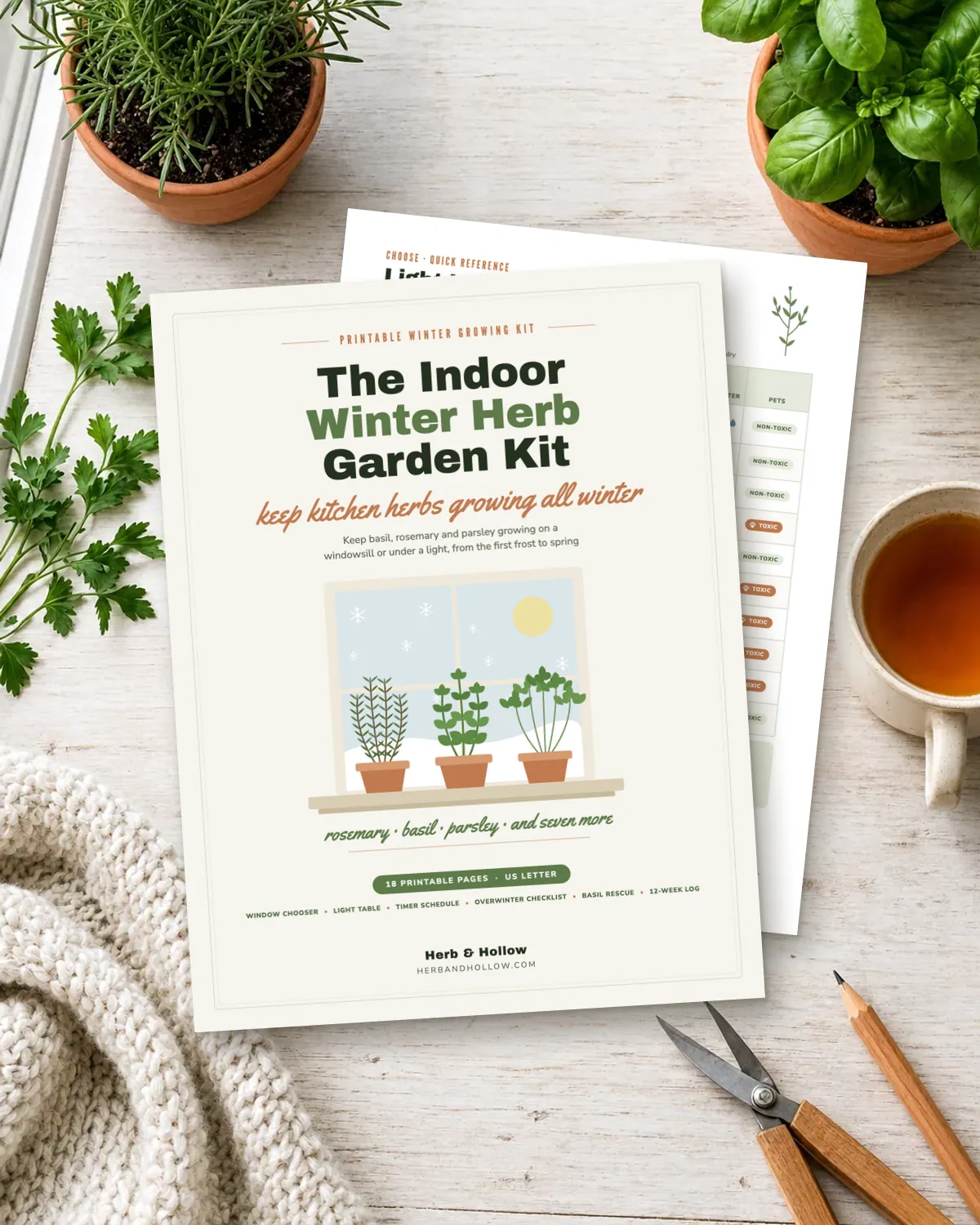
Freed-up window space by the end of fall? Herbs grow well there through winter; our herbs for low light list helps you pick, and the kit below has the bring-indoors checklist and a winter care plan in one printable.
Frequently asked questions
When should I bring potted plants inside for winter?
For tropical plants like mandevilla and Boston fern, move them in when nights drop to about 50 to 55°F. Tender plants like geraniums and begonias should come in before nights fall below 50°F, and always before frost.
How do I get rid of bugs before bringing plants inside?
Inspect leaf undersides, rinse plants with a gentle hose spray, soak the pot in lukewarm water for about 15 minutes (not for succulents), and spray insecticidal soap twice a week apart if you find pests. Then keep new arrivals apart from other houseplants for two weeks.
Can I overwinter plants in a garage?
Yes, if it stays above freezing. Dormant geraniums, cut-back mandevilla, Boston ferns and begonia tubers can all rest in a cool garage or basement at roughly 40 to 55°F with very little water.
Why are my plants dropping leaves after I brought them inside?
Some leaf drop is normal. Indoor light is much weaker than outdoors, so plants shed leaves they can't support. Easing them in over a week and giving them your brightest window helps.
Should I prune plants before bringing them indoors?
Usually, yes. Trimming geraniums by a third to a half, cutting peppers back to a short Y and cutting mandevilla to about 12 inches makes them easier to fit and easier to keep healthy indoors.

Save it for later
Pin this to your Seasonal Garden Tasks board so it's there when you need it.
Save to Pinterest