This post contains affiliate links. As an Amazon Associate we earn from qualifying purchases, at no extra cost to you. Read our disclosure.
Safety first: Herbs can be powerful. If you are pregnant, nursing, take medication or have a health condition, check with your doctor or pharmacist first. Please read our herbal & garden safety notes before you start.
Key takeaways
- Your USDA zone is based on average winter low temperatures, not on spring frost, so the start date comes from your local last frost date.
- Count back from that date: peppers and onions 8 to 10 weeks, tomatoes and basil 6 to 8, lettuce and the cabbage family 4 to 6, cucumbers and squash 3 to 4.
- Two published zone charts give last frost ranges two weeks or more apart for the same zone, which is why a ZIP code lookup beats a zone chart.
- The last frost date is a median, so there is still about a 50% chance of frost after it (UW-Madison Extension). Warm crops wait for warm nights.
- A window is seldom enough light for seedlings. A shop light 2 to 6 inches above them for 14 to 16 hours a day keeps them stocky (University of Maryland Extension).
In this post8 sections
- Is my zone enough, or do I need my frost date?
- When to start seeds indoors by zone: zones 3 to 10
- How many weeks before the last frost for tomatoes, peppers and herbs?
- Count back in 3 steps
- Myth vs reality about seed starting dates
- What you need to start seeds in an apartment
- When can seedlings go outside?
- FAQ
Short answer: find your average last spring frost date, then count back the weeks each crop needs indoors. Use your zone only as a first guess, because one zone can cover frost dates several weeks apart.
| Question | Short answer |
|---|---|
| What sets the start date? | Your average last spring frost date, counted back by the weeks on the seed packet |
| Peppers, eggplant, onions | 8 to 10 weeks before the last frost |
| Tomatoes and basil | 6 to 8 weeks before |
| Lettuce, broccoli, cabbage | 4 to 6 weeks before |
| Cucumbers and squash | 3 to 4 weeks before |
| Zone 6 example | Peppers late Jan to mid Feb, tomatoes mid to late Feb |
| Is the frost date safe? | No. It is a median, so about a 50% chance of frost remains after it |
| Light | A shop light 2 to 6 inches above seedlings, 14 to 16 hours a day |
We earn from qualifying purchases on Amazon links in this article, at no extra cost to you. Read our disclosure and editorial guidelines. Dates below are averages from published charts and university extension guidance; your local date can differ.
Is my zone enough, or do I need my frost date?
Your zone tells you how cold winter gets, not when spring frost ends. Purdue Extension explains that the USDA map plots the average annual extreme minimum winter temperature, now from 1991 to 2020 data, in 10°F bands split into a and b halves. That decides which perennials survive outside. It says nothing direct about the last frost in April or May.
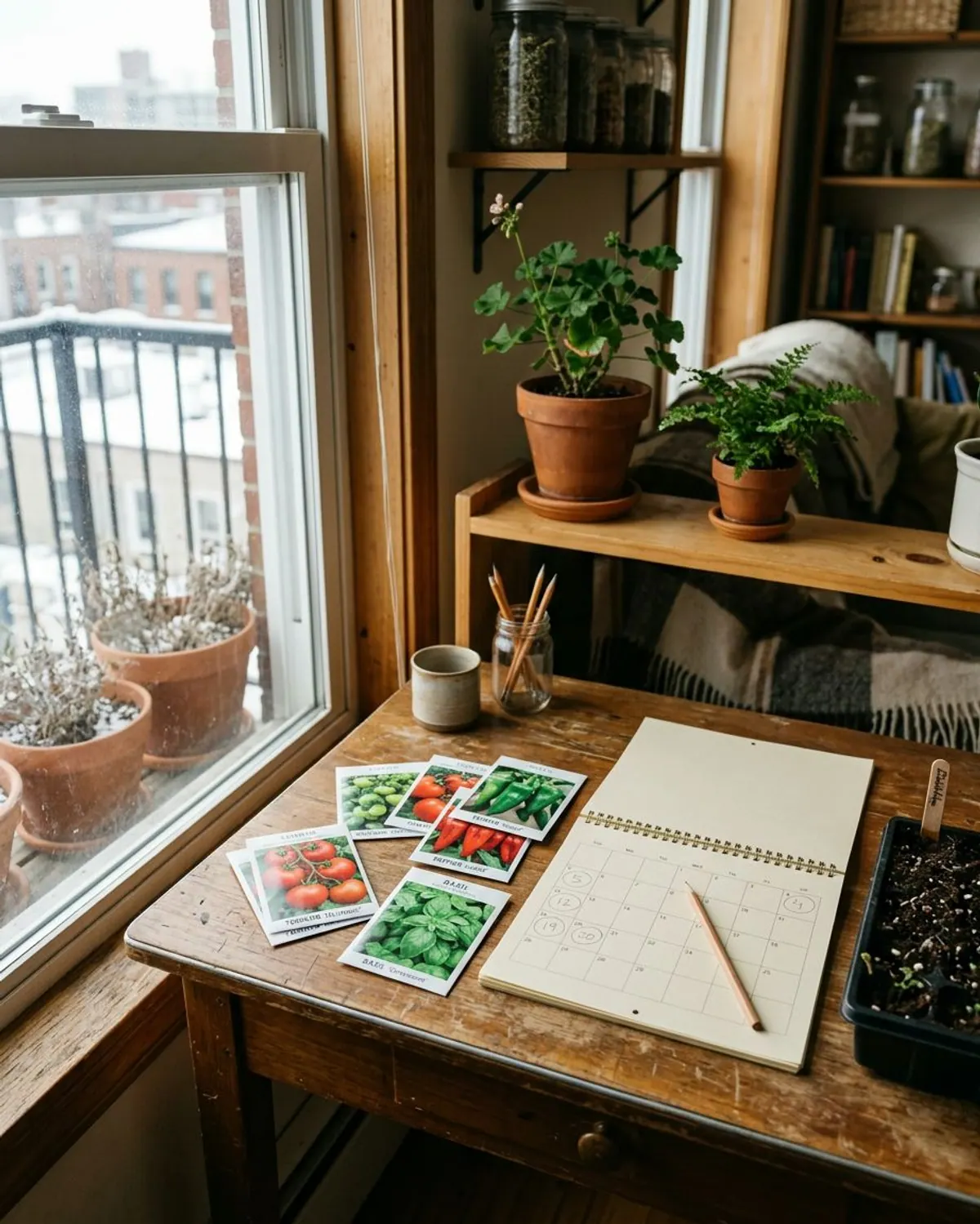
Here is the part most charts skip: two well-known zone charts, read on the same day, disagree. Burpee and Scotts both publish typical last frost ranges by zone, and for several zones they barely overlap.
| Zone | Burpee chart | Scotts chart |
|---|---|---|
| 3 | May 15 to 31 | May 1 to 16 |
| 4 | May 1 to 15 | Apr 24 to May 12 |
| 5 | Apr 15 to May 1 | Apr 7 to 30 |
| 6 | Apr 1 to 15 | Apr 1 to 21 |
| 7 | Mar 15 to Apr 1 | Mar 22 to Apr 3 |
| 8 | Mar 1 to 15 | Mar 13 to 28 |
| 9 | Feb 15 to Mar 1 | Feb 6 to 28 |
| 10 | Jan 31 to Feb 15 | Jan 1 to 15 |
In zone 3 the two charts are about two weeks apart; in zone 10 they are a month apart. Both say their dates are averages and that elevation and microclimate shift them. So use the zone chart to get in the right month, then look up the frost date for your own ZIP code through your county extension office or a frost-date lookup built on NOAA climate data.
When to start seeds indoors by zone: zones 3 to 10
These dates use the middle of the Burpee range for each zone and the weeks in the next section. If your own frost date is later, move every date later by the same number of days.
| Zone and last frost | Peppers (8 to 10 wk) | Tomatoes, basil (6 to 8 wk) | Lettuce, broccoli (4 to 6 wk) | Cucumbers (3 to 4 wk) |
|---|---|---|---|---|
| Zone 3, May 23 | Mar 14 to 28 | Mar 28 to Apr 11 | Apr 11 to 25 | Apr 25 to May 2 |
| Zone 4, May 8 | Feb 27 to Mar 13 | Mar 13 to 27 | Mar 27 to Apr 10 | Apr 10 to 17 |
| Zone 5, Apr 23 | Feb 12 to 26 | Feb 26 to Mar 12 | Mar 12 to 26 | Mar 26 to Apr 2 |
| Zone 6, Apr 8 | Jan 28 to Feb 11 | Feb 11 to 25 | Feb 25 to Mar 11 | Mar 11 to 18 |
| Zone 7, Mar 24 | Jan 13 to 27 | Jan 27 to Feb 10 | Feb 10 to 24 | Feb 24 to Mar 3 |
| Zone 8, Mar 8 | Dec 28 to Jan 11 | Jan 11 to 25 | Jan 25 to Feb 8 | Feb 8 to 15 |
| Zone 9, Feb 22 | Dec 14 to 28 | Dec 28 to Jan 11 | Jan 11 to 25 | Jan 25 to Feb 1 |
| Zone 10, Feb 7 | Nov 29 to Dec 13 | Dec 13 to 27 | Dec 27 to Jan 10 | Jan 10 to 17 |
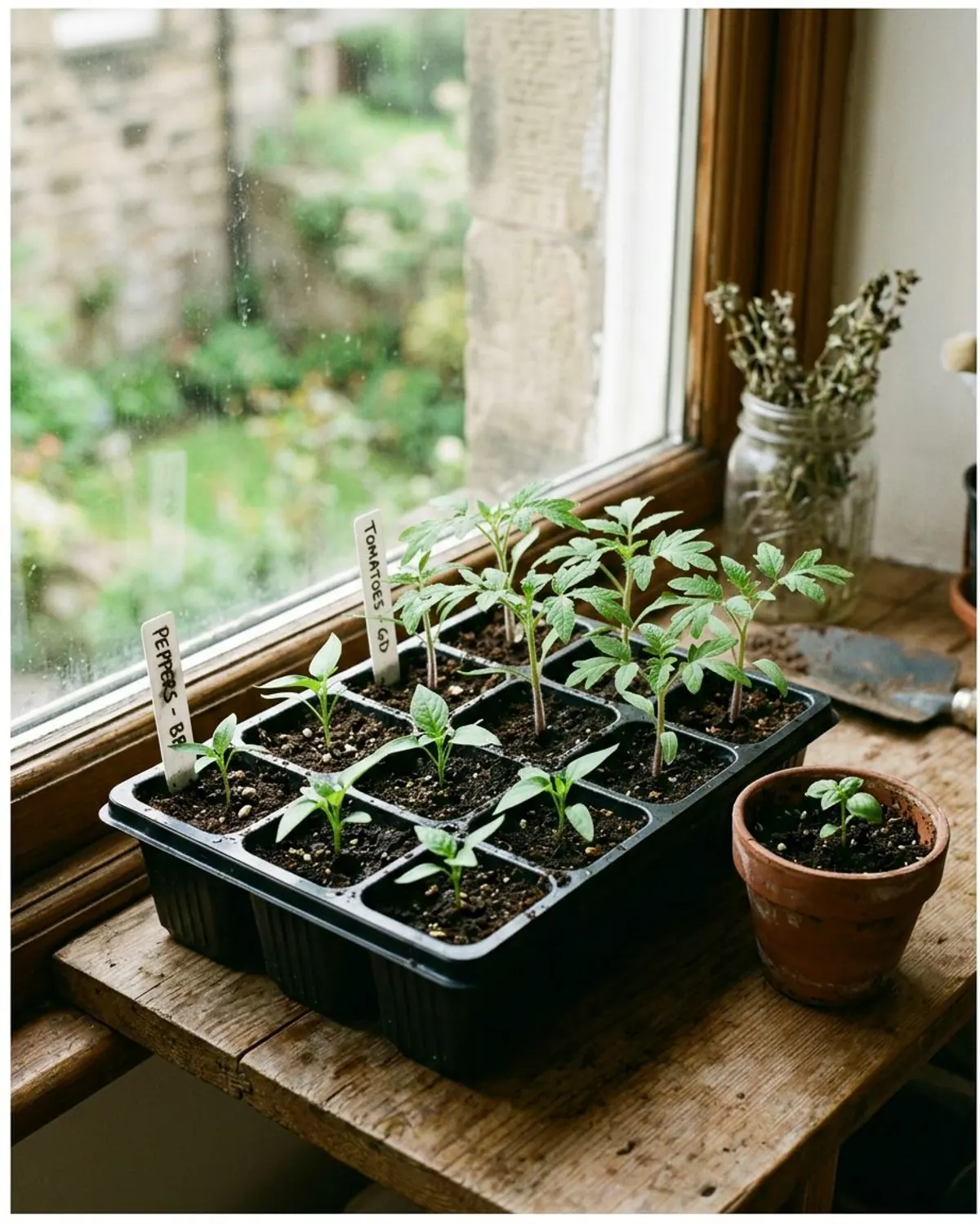
Zones 9 and 10 are the exception to a simple count. Frost ends early there, but summer heat ends the tomato season early too, so many gardeners in warm zones also sow a second round in late summer for fall. Your county extension office will have a local planting calendar for both seasons.
How many weeks before the last frost for tomatoes, peppers and herbs?
University of Maryland Extension (updated August 14, 2026) lists the time each group needs indoors before going outside: leafy greens 2 to 4 weeks, cabbage family 4 to 6, cucumbers and squash 3 to 5, tomatoes 5 to 6, peppers, eggplant and onions 8 to 10. UW-Madison Extension puts tomatoes and peppers at about 6 to 8 weeks before the last frost. The table below uses the same weeks as our seed calendar.
| Crop | Start indoors | Goes outside |
|---|---|---|
| Chives and thyme | 10 to 12 weeks before | Around the last frost |
| Peppers, eggplant, onions | 8 to 10 weeks before | After the last frost, once nights stay warm |
| Parsley | 6 to 10 weeks before | Around the last frost |
| Tomatoes | 6 to 8 weeks before | After the last frost, nights above about 50°F |
| Basil | 6 to 8 weeks before | After the last frost, nights above about 50°F |
| Broccoli, cabbage, kale | 4 to 6 weeks before | Before the last frost, after hardening off |
| Lettuce | 4 to 5 weeks before | Before the last frost, after hardening off |
| Cucumbers and squash | 3 to 4 weeks before | After the last frost, nights warm |
Earlier is not better. UMD Extension calls sowing too early a common mistake: the plants get tall and root-bound in their cells and do not perform well once planted. For herbs on a windowsill rather than a garden, timing matters less; the herbs to grow from seed indoors guide ranks them by how fast they sprout.
Count back in 3 steps
-
Step 1: Find your own last frost date
Say your ZIP code lookup gives April 20. That is your anchor, even if your zone chart says something else.
-
Step 2: Subtract the weeks for each crop
Peppers at 8 to 10 weeks: February 9 to 23. Tomatoes and basil at 6 to 8 weeks: February 23 to March 9. Lettuce and broccoli at 4 to 6 weeks: March 9 to 23. Cucumbers at 3 to 4 weeks: March 23 to 30.
-
Step 3: Write the dates down and add a buffer
Put each date on a paper calendar. For tomatoes, peppers and basil, plan to plant out a week or two after April 20 rather than on it, since the date is a median and frost can still come.
Myth vs reality about seed starting dates
Reality
- The start date comes from your local last frost date; the zone only puts you in the right month
- Frost can still come after the average date, so warm crops wait for warm nights
- Seedlings sown on time are stockier than seedlings sown weeks early
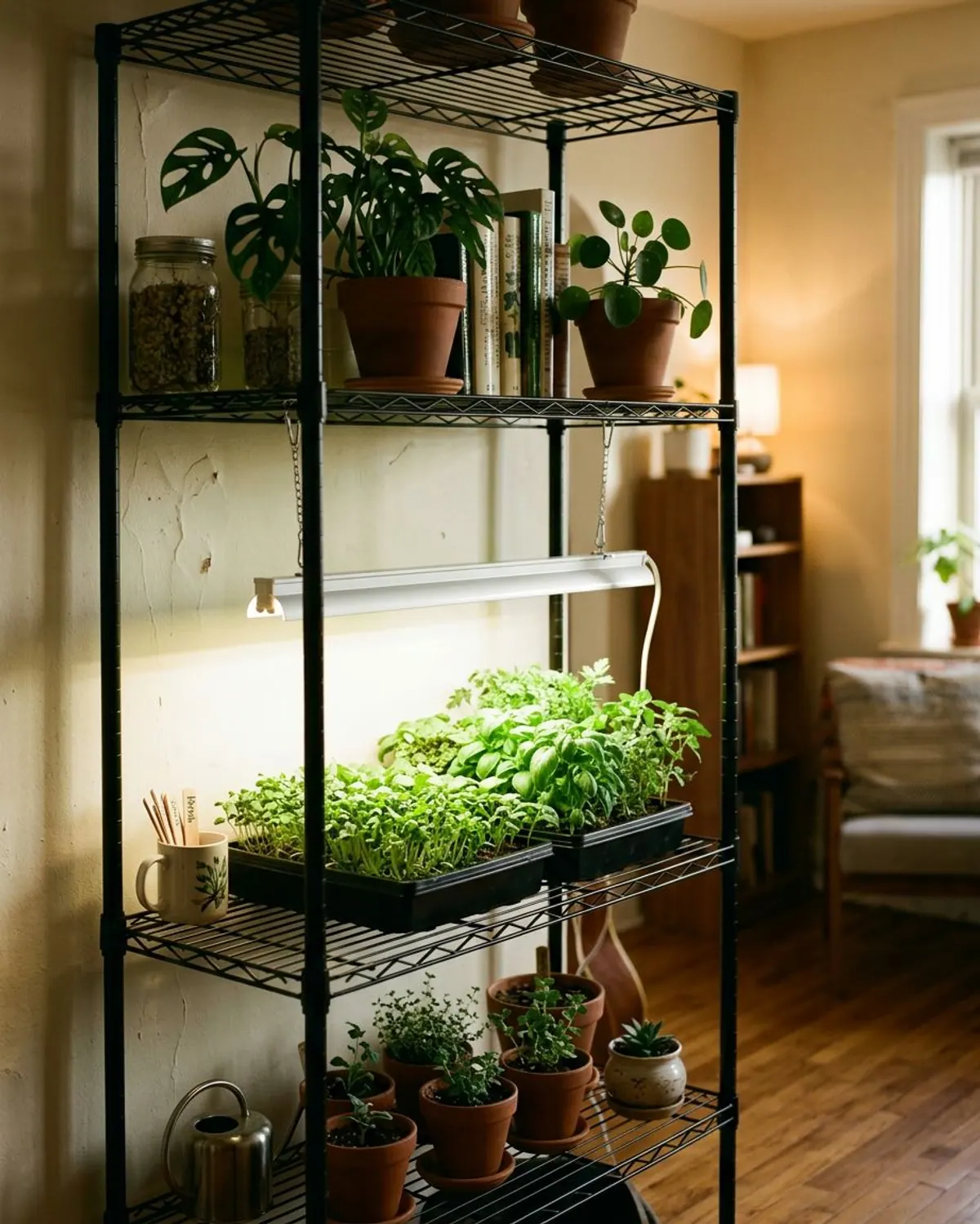
- Most seedlings need a light a few inches above them for 14 to 16 hours a day
Myth
- Every zone 6 garden has the same frost date
- Once the last frost date passes, it is safe to plant tomatoes
- Starting earlier gives you bigger, better plants
- A sunny window is enough light for seedlings in February
What you need to start seeds in an apartment
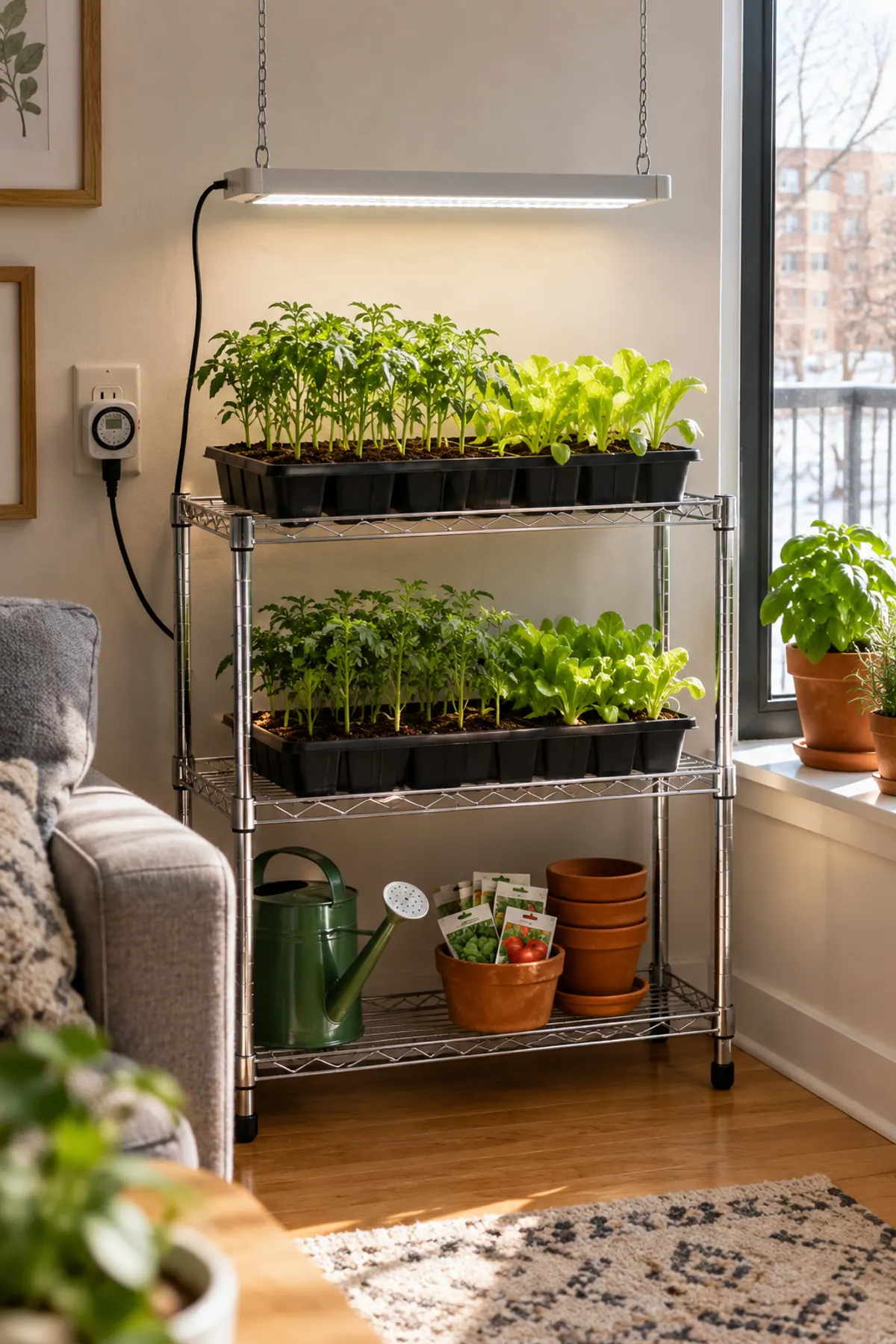
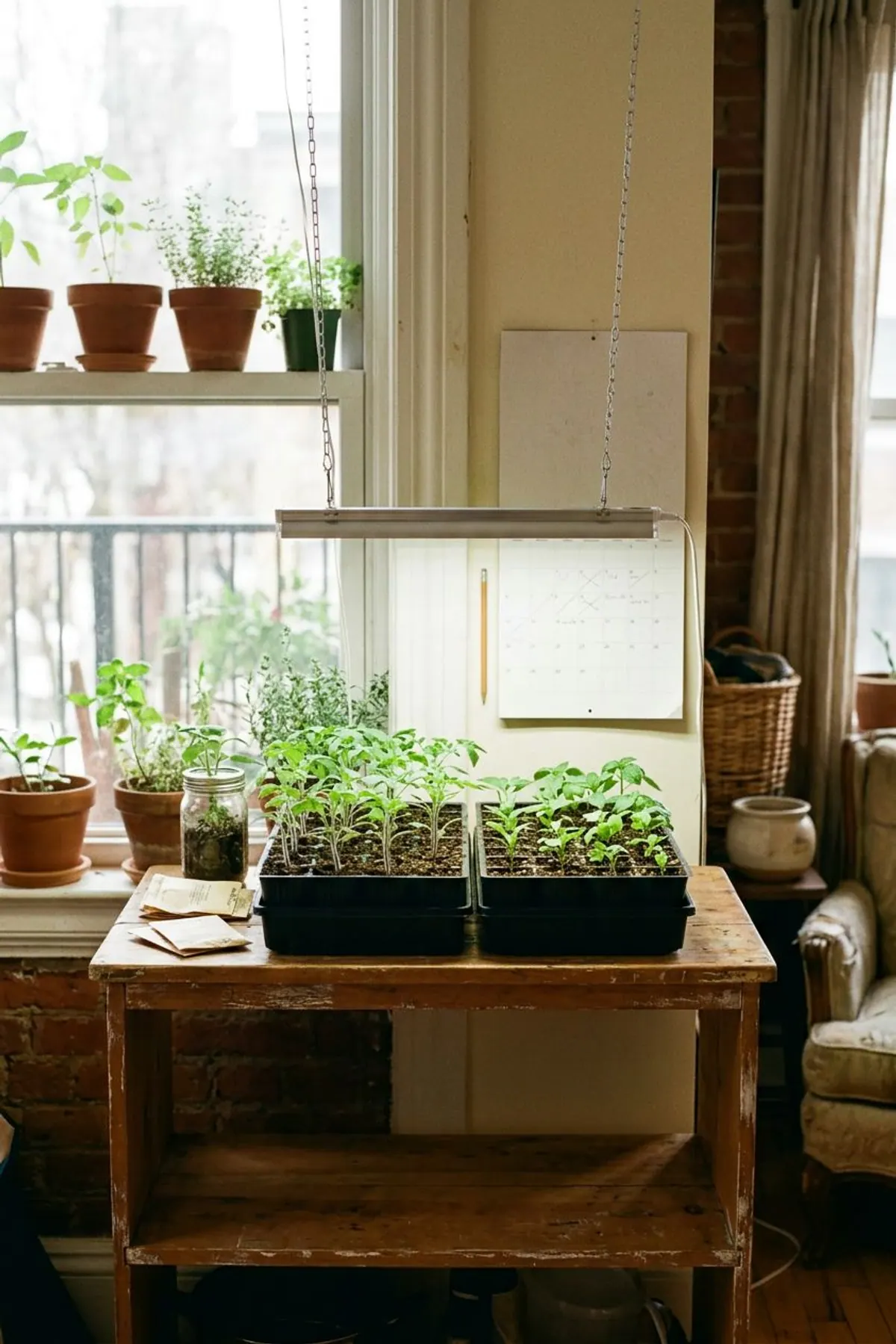
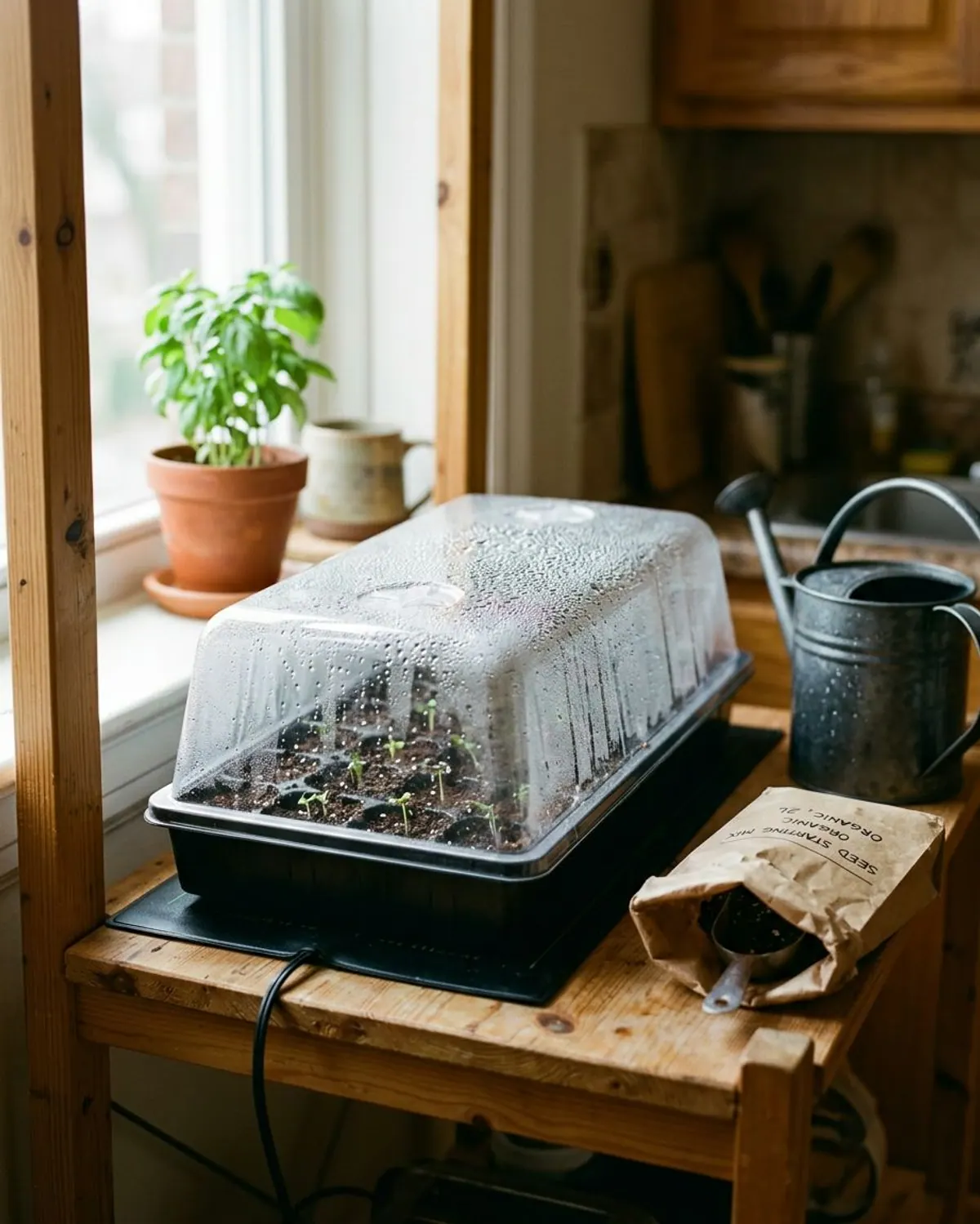
You do not need a basement. One shelf near an outlet holds a full spring of seedlings for a balcony or a few containers. UMD Extension says window light is seldom enough for strong seedlings, except in a south-facing bay window or sunroom, and recommends fluorescent or LED fixtures kept 2 to 6 inches above the plants for 14 to 16 hours a day on a timer. A heat mat speeds up germination for peppers and tomatoes. Our small-space seed starting setup walks through the shelf, and the grow light guide compares lights.
Seed starting shelf checklist
Seed starting supplies for a small space
- Start here
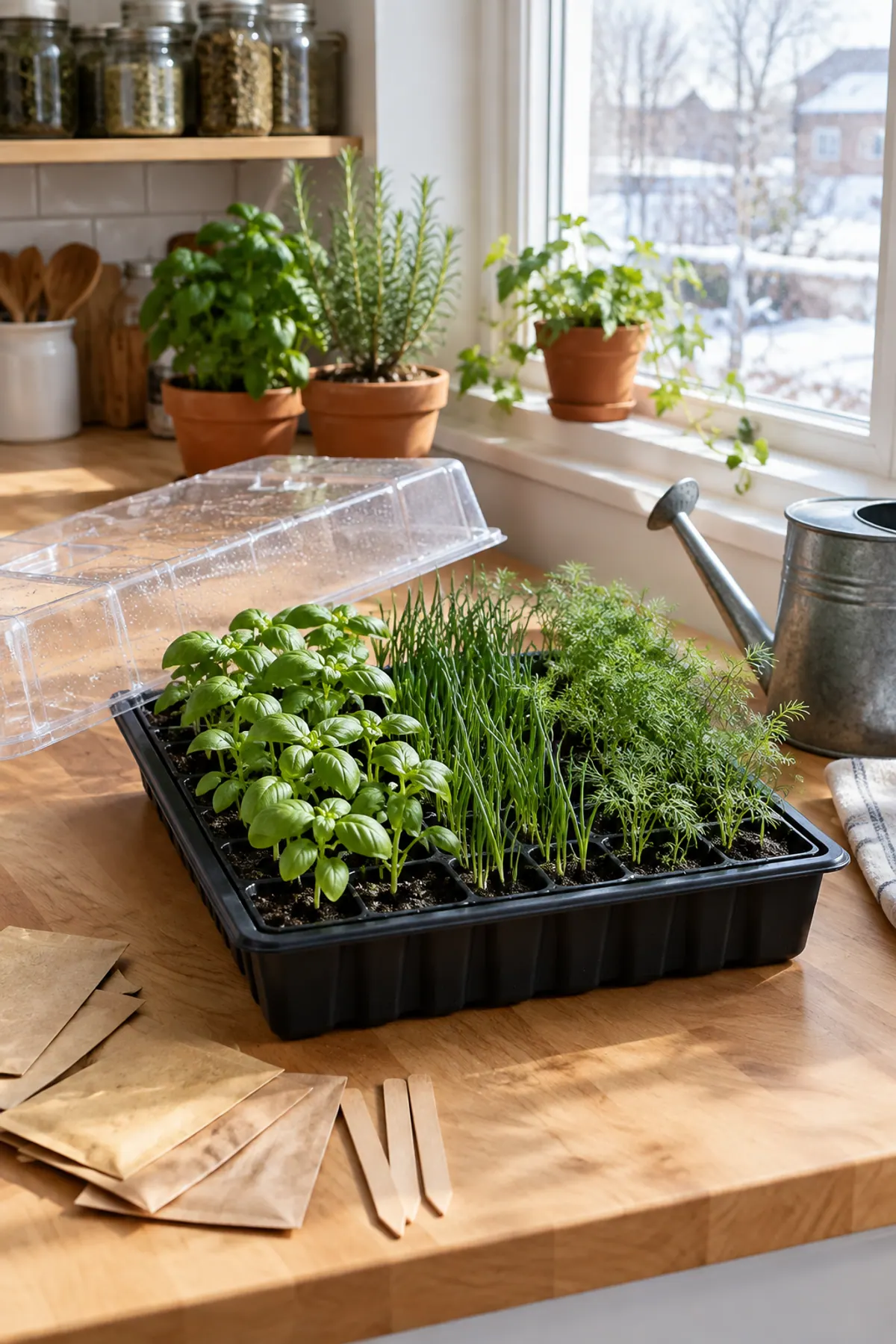
Seed starting trays with humidity domes
Typically $15 to $30
Cell trays keep roots separate, and the dome holds moisture until seeds sprout.
Check price on Amazon for Seed starting trays with humidity domes - Most important
2-foot LED shop light or grow light
Typically $20 to $45
Fits a standard shelf and hangs a few inches above the trays.
Check price on Amazon for 2-foot LED shop light or grow light -
Seedling heat mat
Typically $15 to $30
Peppers and tomatoes sprout faster on warm soil.
Check price on Amazon for Seedling heat mat -
Seed starting mix
Typically $8 to $15
Fine and light, so small roots push through easily.
Check price on Amazon for Seed starting mix -
Outlet timer
Typically $8 to $15
Keeps the light on 14 to 16 hours without you remembering.
Check price on Amazon for Outlet timer -
Plant labels
Typically $6 to $12
Pepper and tomato seedlings look alike for weeks.
Check price on Amazon for Plant labels
When can seedlings go outside?
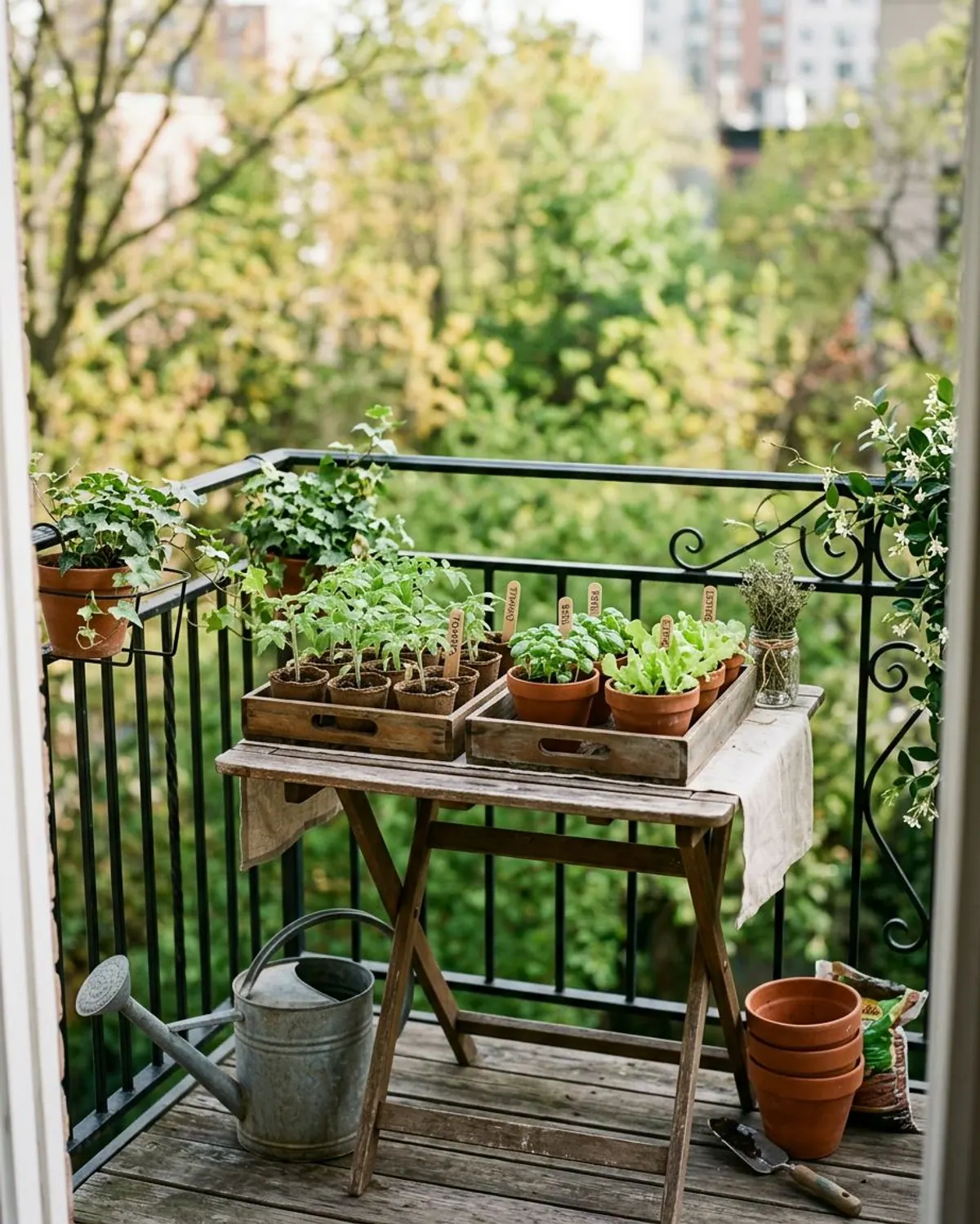
Seedlings raised indoors need about a week of hardening off before they move outside: a few sheltered hours on the balcony on the first day, then a little longer and a little more sun each day. Lettuce and the cabbage family can go out before your last frost date once they are hardened off. Tomatoes, peppers and basil wait until after it, and until nights stay above about 50°F. UW-Madison Extension reminds gardeners that the last frost date is a median, with about a 50% chance of a 32°F night still to come.
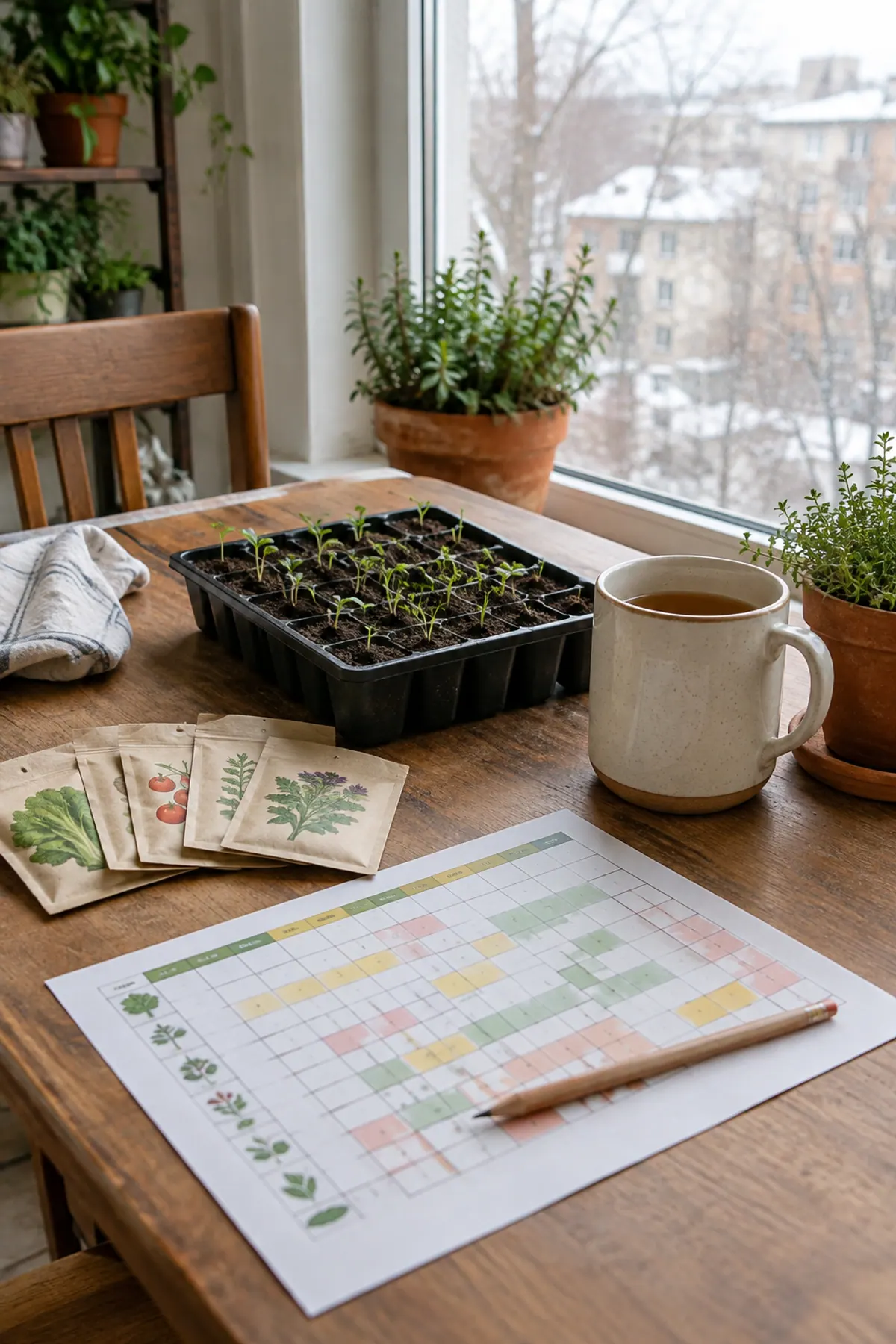
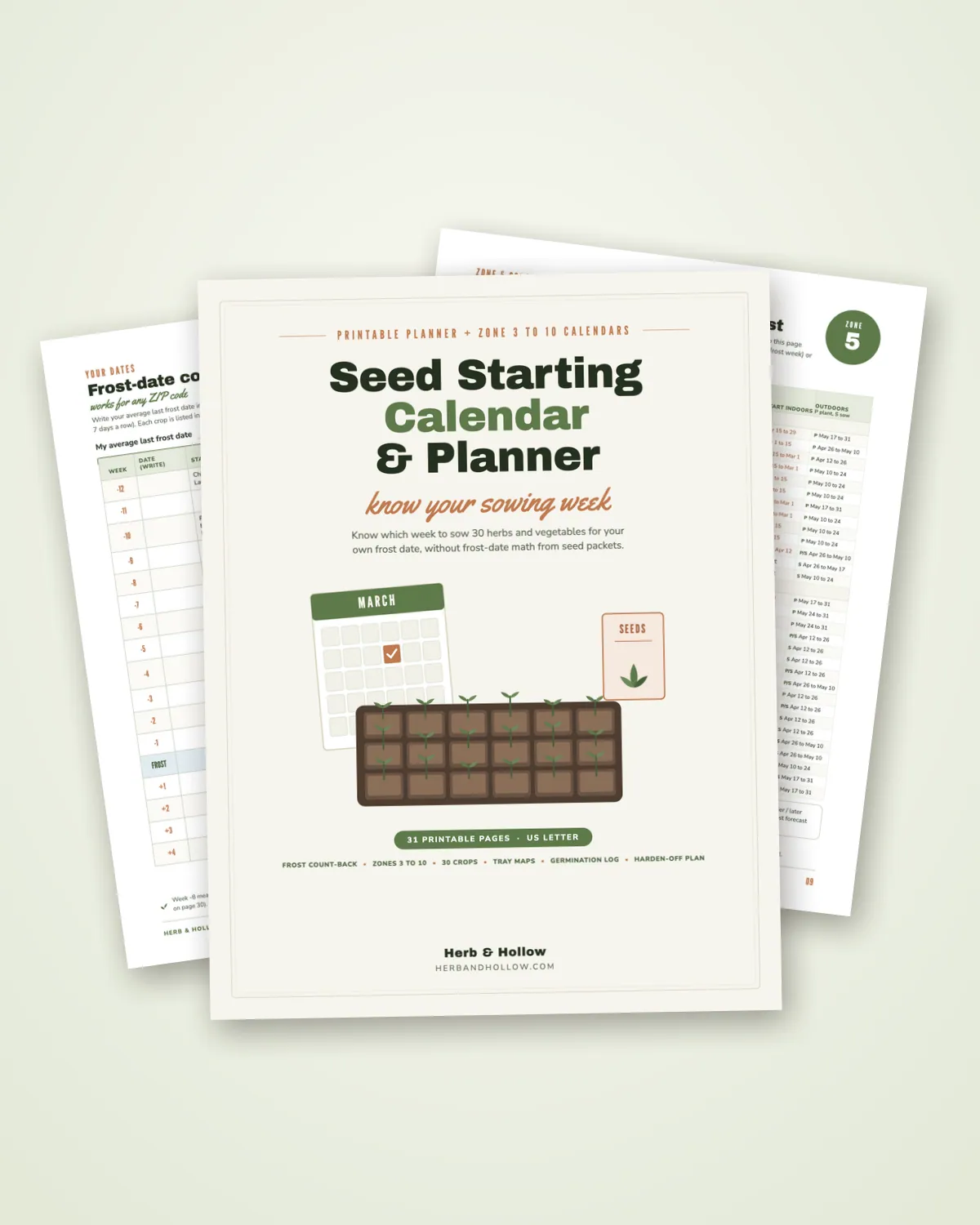
If you want every date worked out for you, the Seed Starting Calendar Printable has zone 3 to 10 calendars and a count-back sheet for 30 herbs and vegetables. For a single page of example dates, see our seed starting calendar by zone.
Frequently asked questions
When should I start seeds indoors in zone 6?
With a typical last frost in early to mid April, start peppers in late January to mid February, tomatoes and basil in mid to late February, and lettuce and broccoli in late February to mid March. Move every date later if your own frost date is later.
When should I start seeds indoors in zone 5?
Zone 5 frost usually ends from mid April to early May, so peppers go in around mid to late February, tomatoes and basil from late February to mid March, and cucumbers in late March to early April.
When should I start seeds indoors in zone 7?
With a last frost in late March to early April, start peppers in mid to late January, tomatoes and basil from late January to early February, and lettuce and broccoli in mid February.
Is January too early to start seeds?
It depends on your frost date. In zones 7 and 8, January is right for peppers and onions. In zones 3 to 5 it is too early for tomatoes, which would get tall and root-bound before it is warm enough to plant them out.
Do I need a grow light to start seeds indoors?
Usually, yes. University of Maryland Extension says window light is seldom enough except in a south-facing bay window or sunroom. A simple LED or fluorescent shop light 2 to 6 inches above the seedlings for 14 to 16 hours a day works.
Is the last frost date guaranteed?
No. It is a median date, so UW-Madison Extension notes there is still about a 50% chance of frost after it. Keep tomatoes, peppers and basil indoors until nights stay above about 50°F.
Save it for later
Pin this to your Seasonal Garden Tasks board so it's there when you need it.
Save to Pinterest