This post contains affiliate links. As an Amazon Associate we earn from qualifying purchases, at no extra cost to you. Read our disclosure.
Safety first: Herbs can be powerful. If you are pregnant, nursing, take medication or have a health condition, check with your doctor or pharmacist first. Please read our herbal & garden safety notes before you start.
Key takeaways
- Colorado State: 7 days indoors maximum, 5 better. Iowa State: 7 to 10 days maximum
- Use a cool porch or garage before and after the indoor stay
- Dig the planting hole before the ground freezes and store the backfill dry
- Keep it away from radiators and use LED lights
- No source we read gives pot size or zone-by-zone planting windows, so ask a local nursery
In this post8 sections
How long can a living Christmas tree stay indoors?
Plan for 5 to 10 days, and shorter is safer. Two university sources give different ceilings. Colorado State's PlantTalk says seven days indoors is the maximum, with five days better (Colorado State). Iowa State says the maximum stay should be 7 to 10 days (Iowa State).
| Source | Guidance | Why |
|---|---|---|
| Colorado State PlantTalk | 7 days maximum, 5 days better | A longer stay in warm rooms breaks dormancy |
| Iowa State Extension | 7 to 10 days maximum | Longer stays break bud dormancy, then cold can kill new growth |
| Our starting point | 5 to 7 days, up to 10 in a cool room | Use the shorter end if your home is warmer than about 68F |
Both sources give the same reason: a conifer that wakes up in a warm room can lose its cold hardiness, and the new growth is then hurt when it goes back outside. The difference is how much margin each allows. We have not found a source that tests the days against room temperature, so the cooler your room, the closer to the longer figure you can go. That last part is our judgment, not a sourced number.
What you need
Supplies
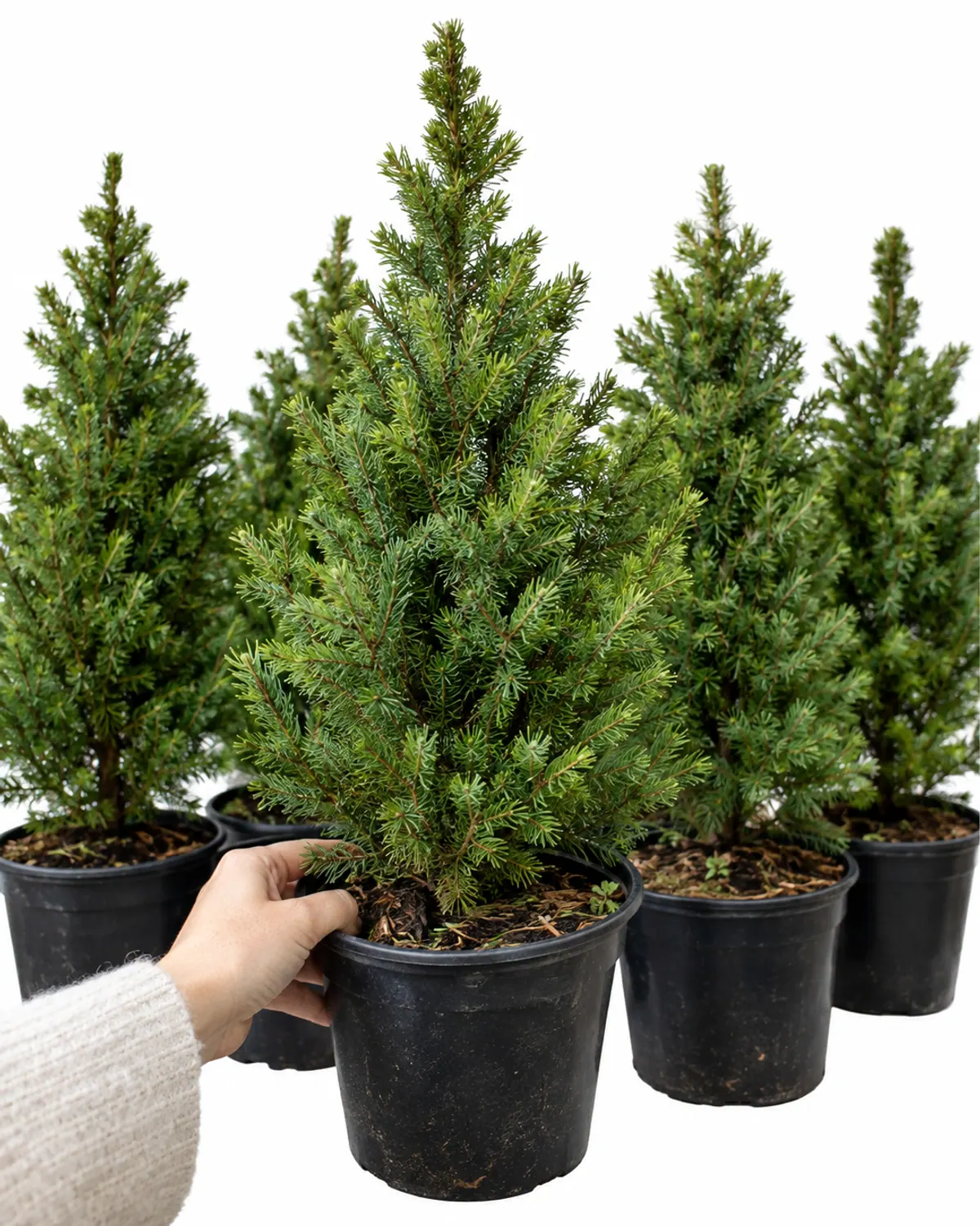
Do you have a balcony or a cold climate? The same method applies. If you cannot plant the tree afterward, skip to the balcony option and keep it in a large pot.
Which trees work in a pot
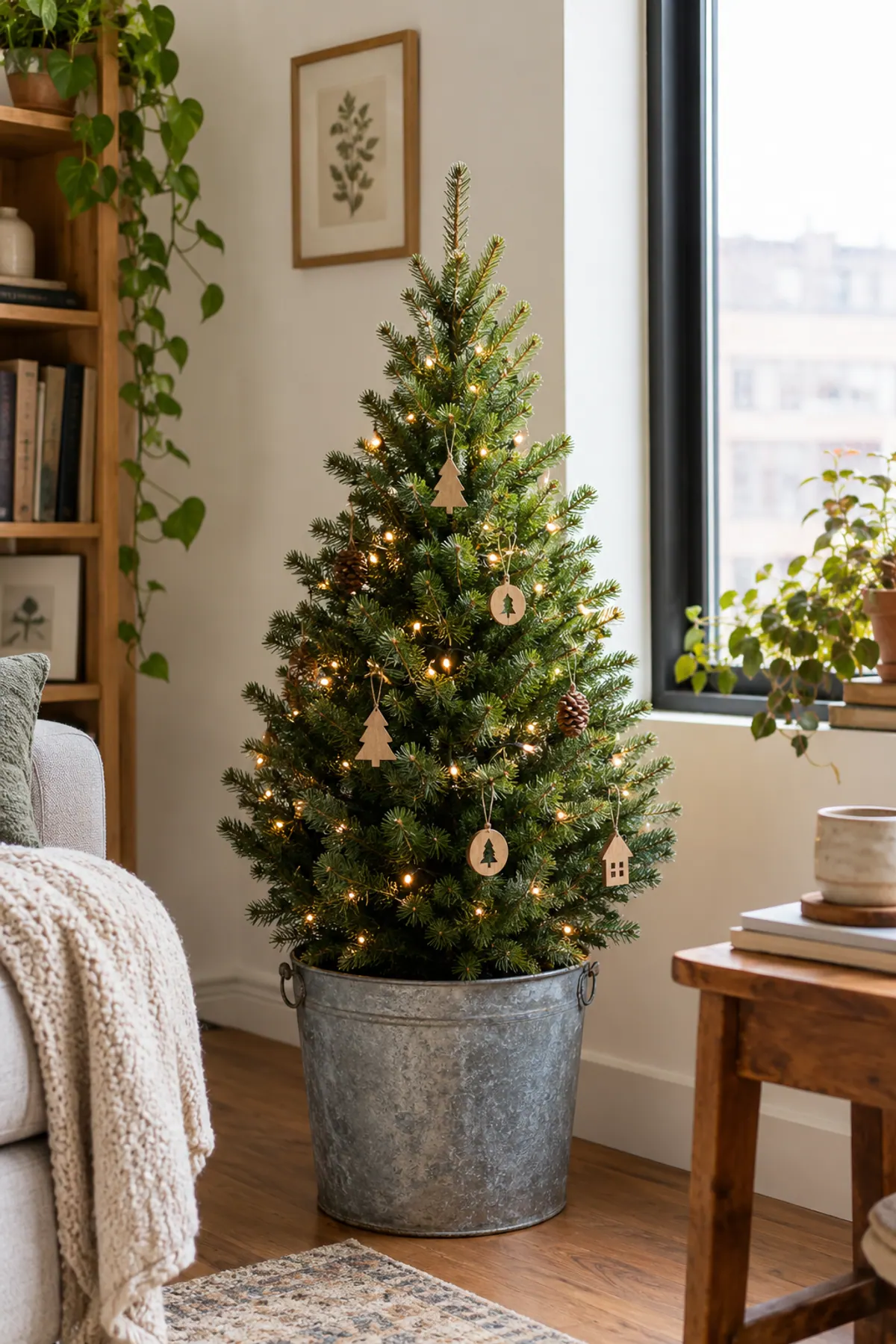
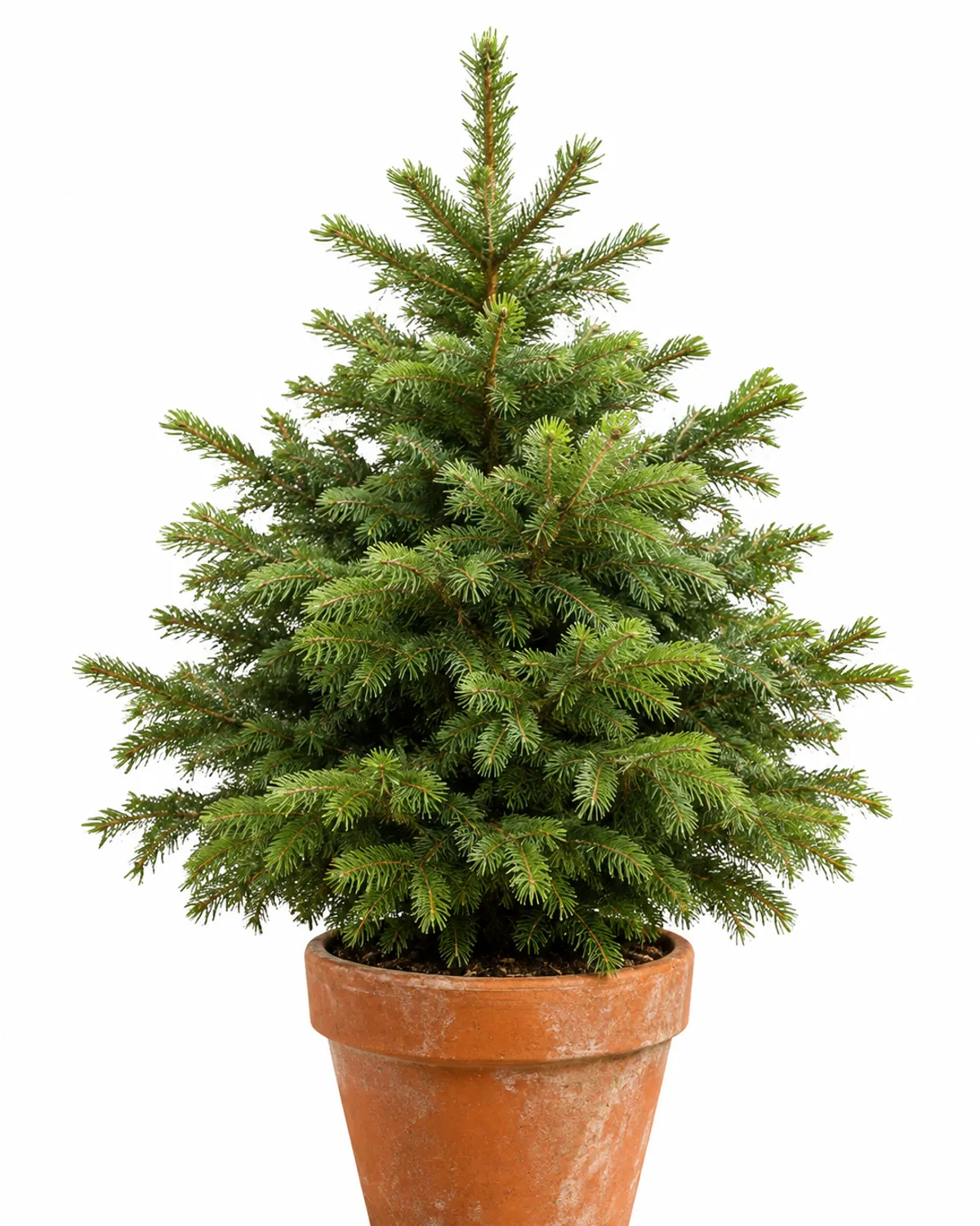
The two extension pages name different trees, so use the overlap and check your zone. Colorado State lists pinyon, ponderosa, limber, Austrian, bristlecone and Scotch pine, plus blue spruce, dwarf Alberta spruce, white fir and Douglas fir. Potted trees there are usually 2 to 6 feet tall (Colorado State). Iowa State lists dwarf Alberta spruce, Chinese juniper, Lawson cypress, white pine and balsam fir (Iowa State).
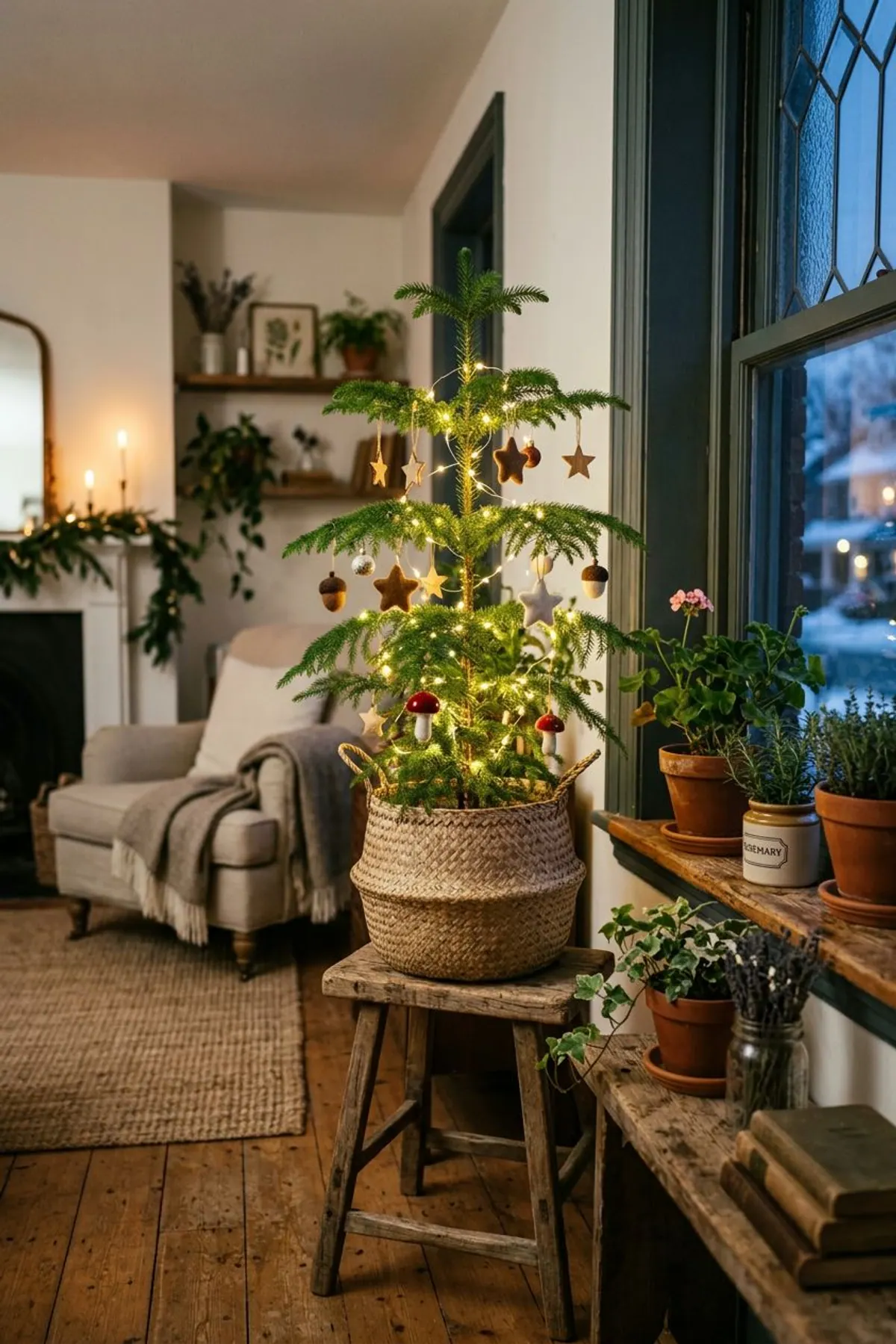
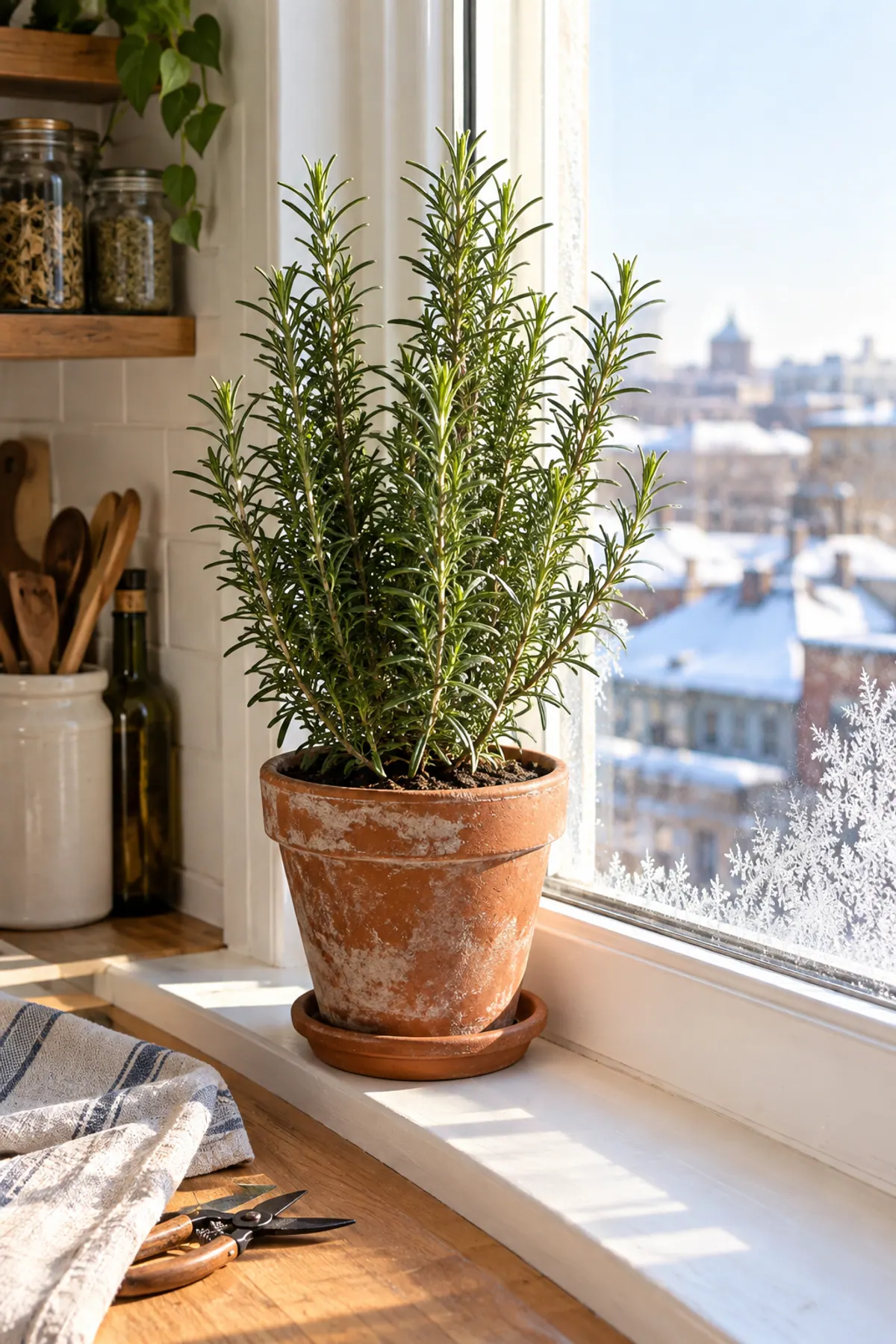
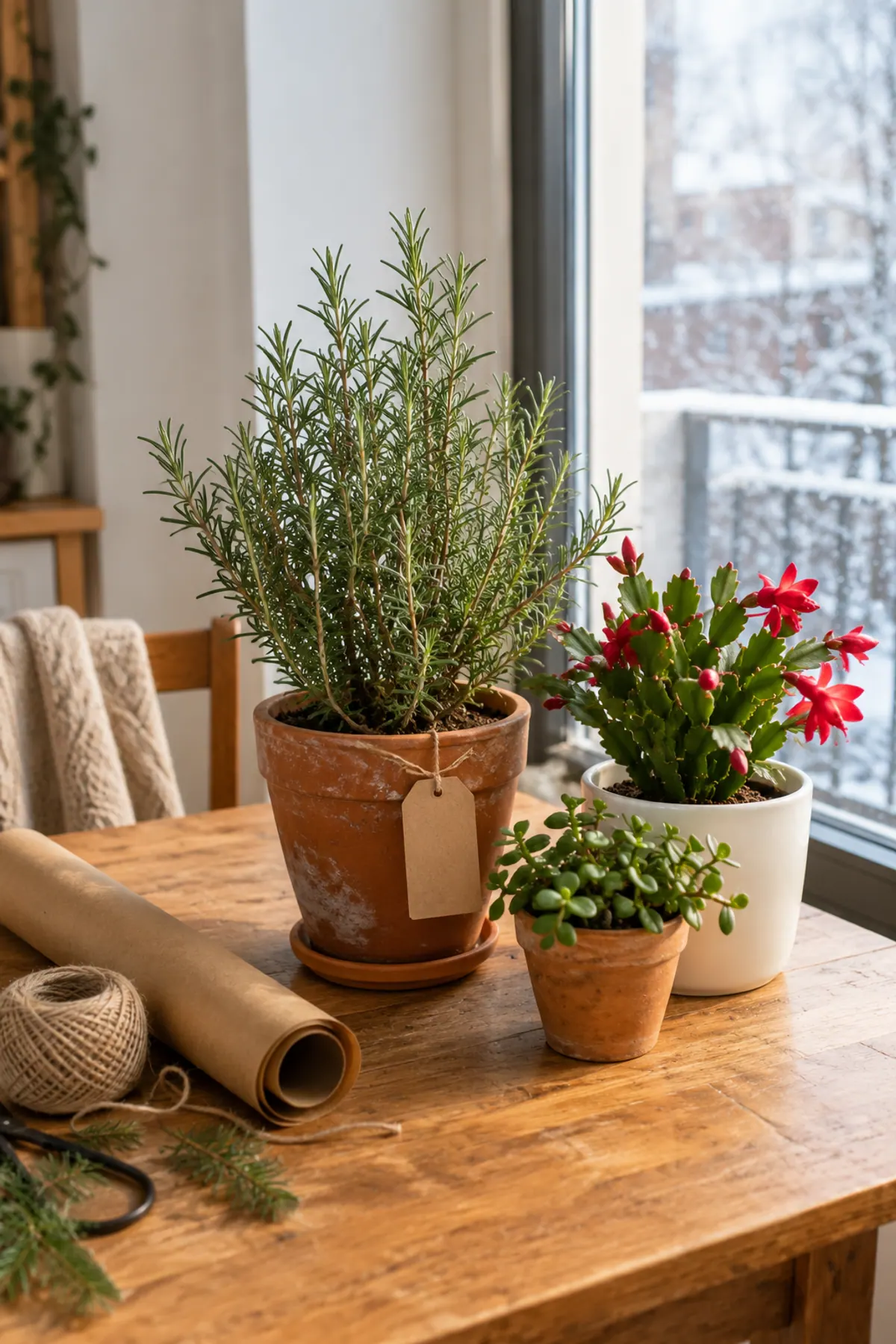
Dwarf Alberta spruce is on both lists, which is why most small-space guides start there. Ask the nursery for the species name and its hardiness zone before you buy, and plant only a hardy variety. A tree sold as a houseplant, such as a Norfolk Island pine, is not hardy outside and is a separate project. A potted herb tree like rosemary is another option if you want something edible and have no ground to plant in.
Step by step
-
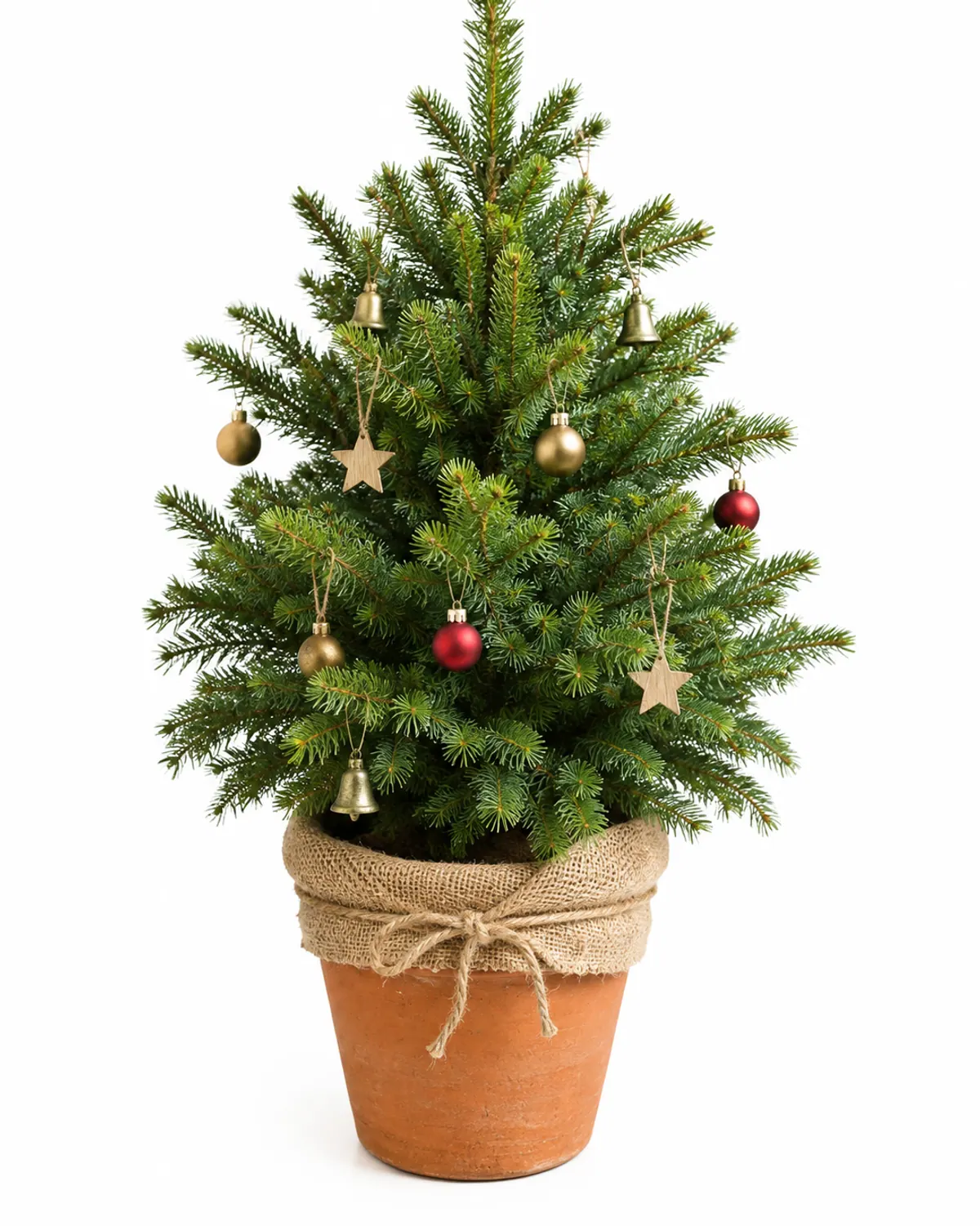
Step 1: Acclimate the tree outside
Keep the tree in a cool, sheltered spot such as a garage, porch or entry for a few days before it comes in. Colorado State suggests a garage a few days before and after the indoor stay (Colorado State). Iowa State describes the same for after Christmas.
-
Step 2: Dig the planting hole first
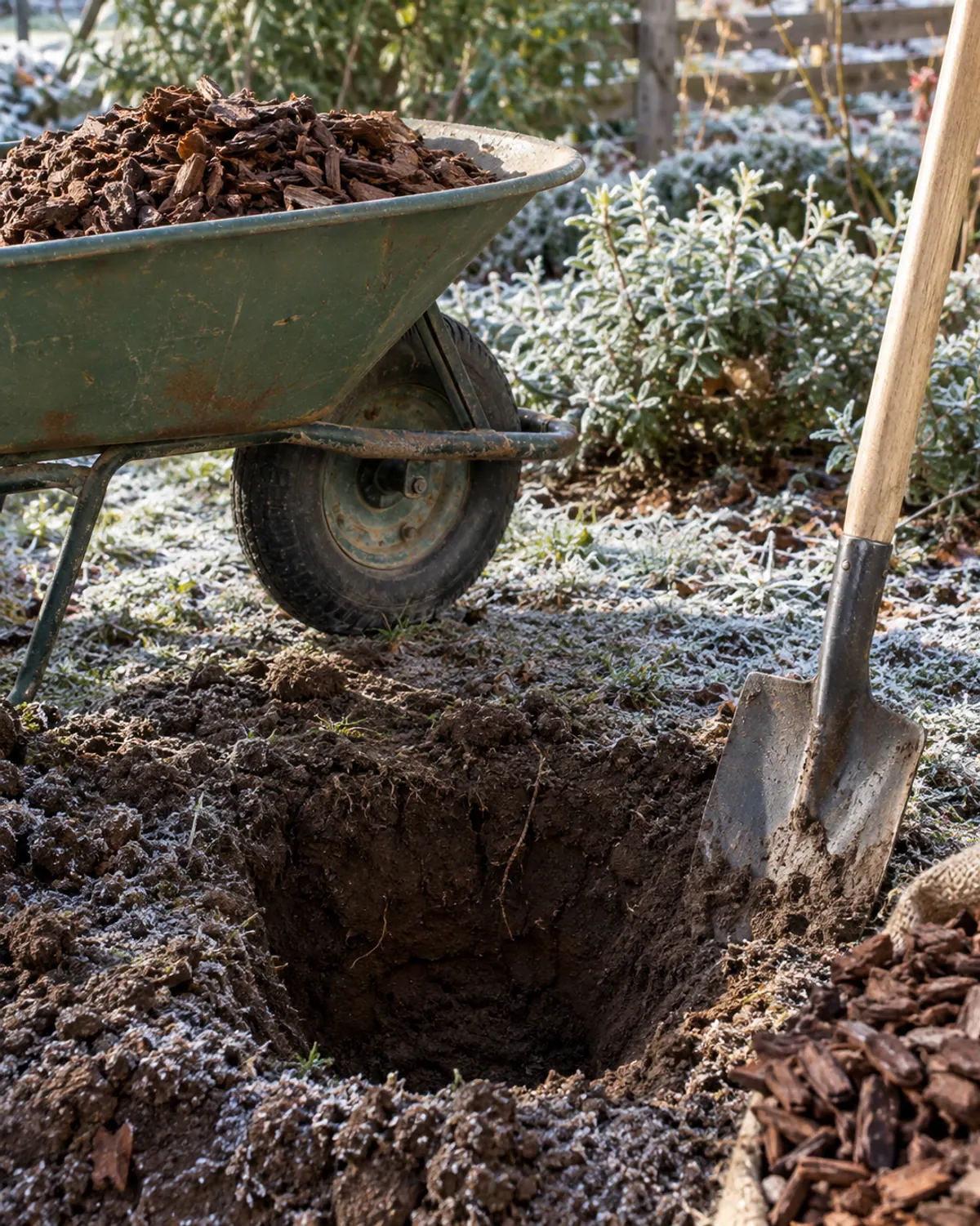
Before the ground freezes, dig the hole where the tree will go. Colorado State says to store the backfill soil in the garage or under black plastic so it does not freeze solid (Colorado State).
-
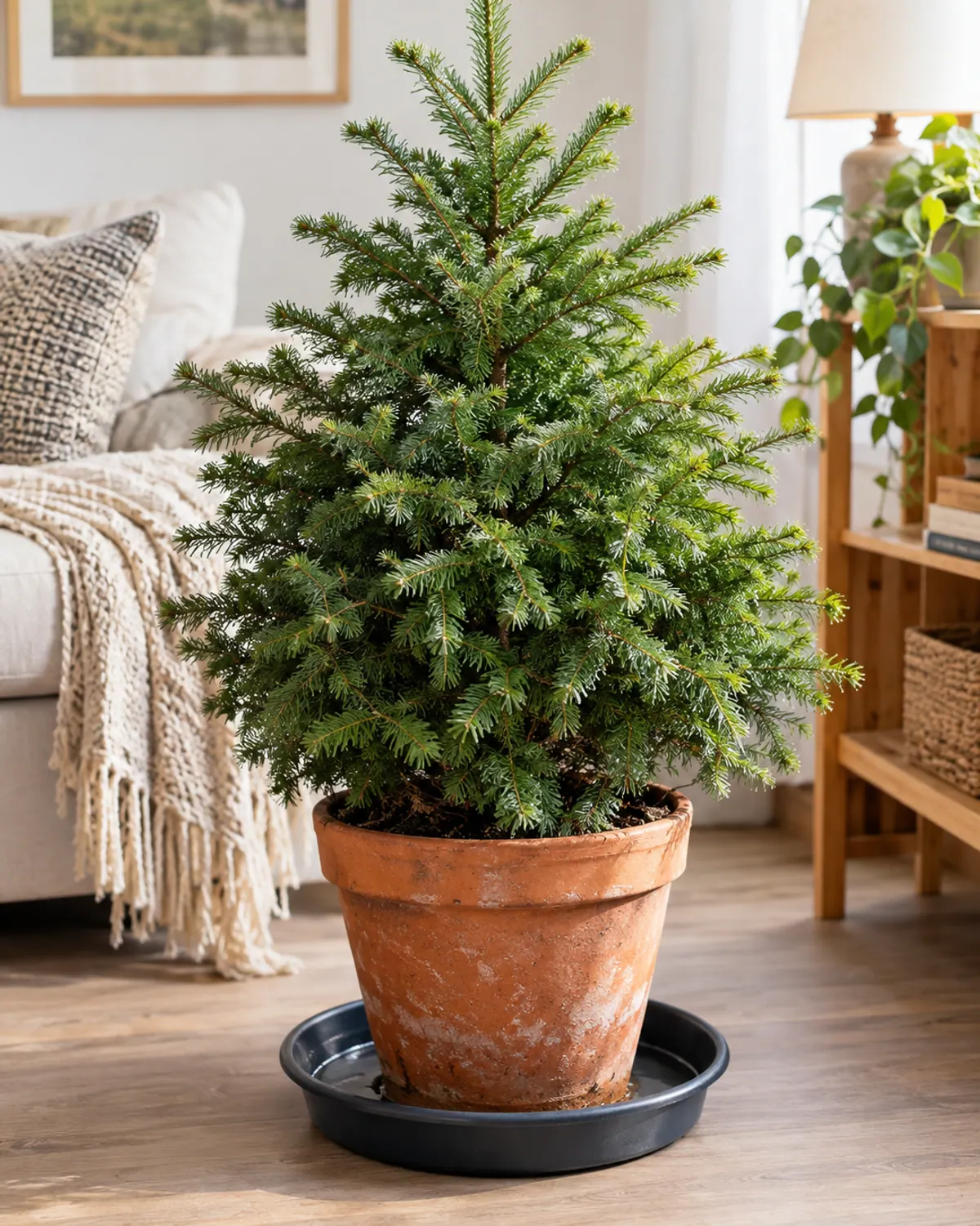
Step 3: Set the pot on a large saucer
Put the tree in a large saucer or waterproof tray. Water that runs through the rootball damages floors, and a tray makes it easy to pour off extra.
-
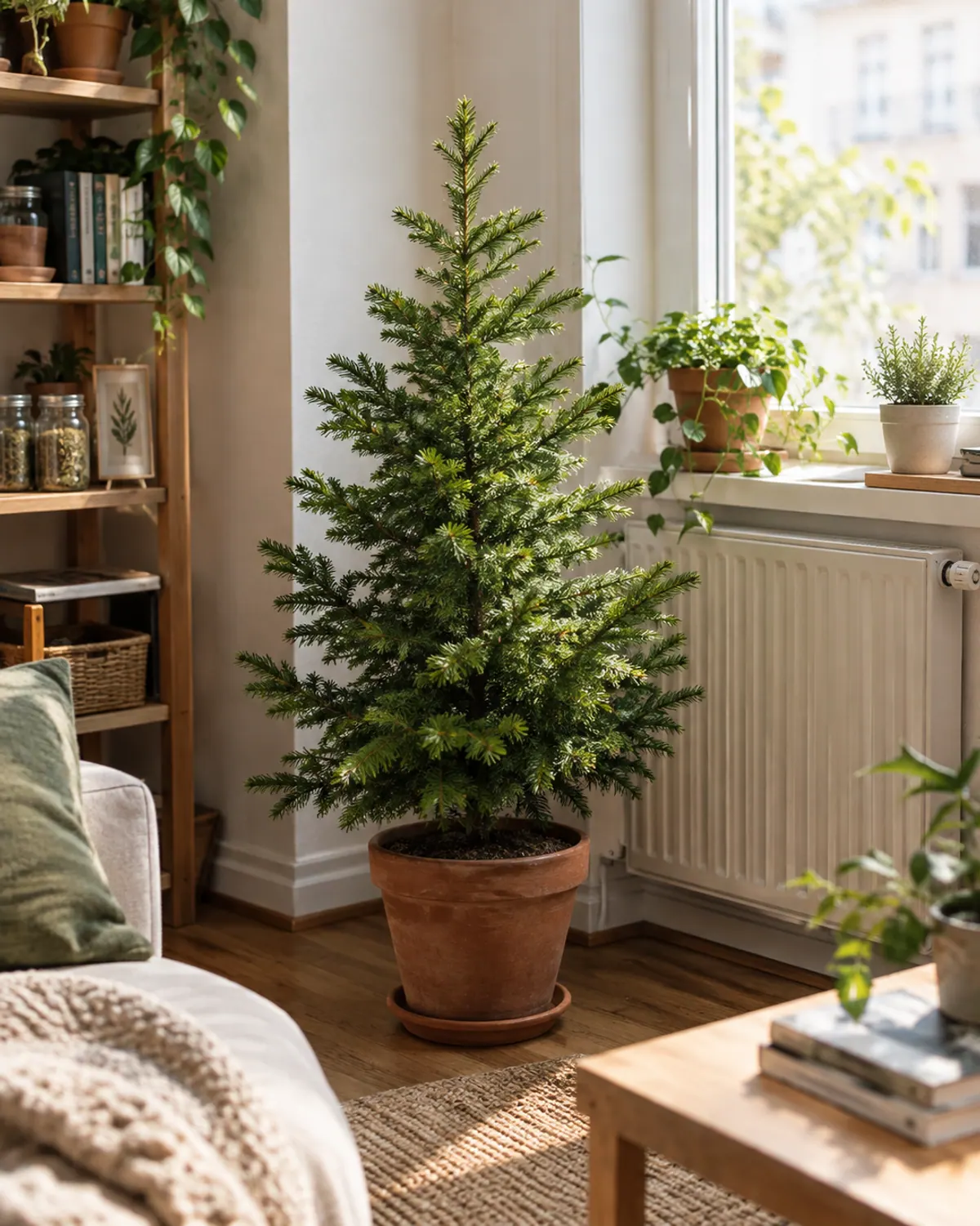
Step 4: Choose a cool spot away from heat
Keep the tree several feet from radiators, vents and fireplaces. Colorado State says to keep it away from heat sources.
-
Step 5: Check the rootball every day or two
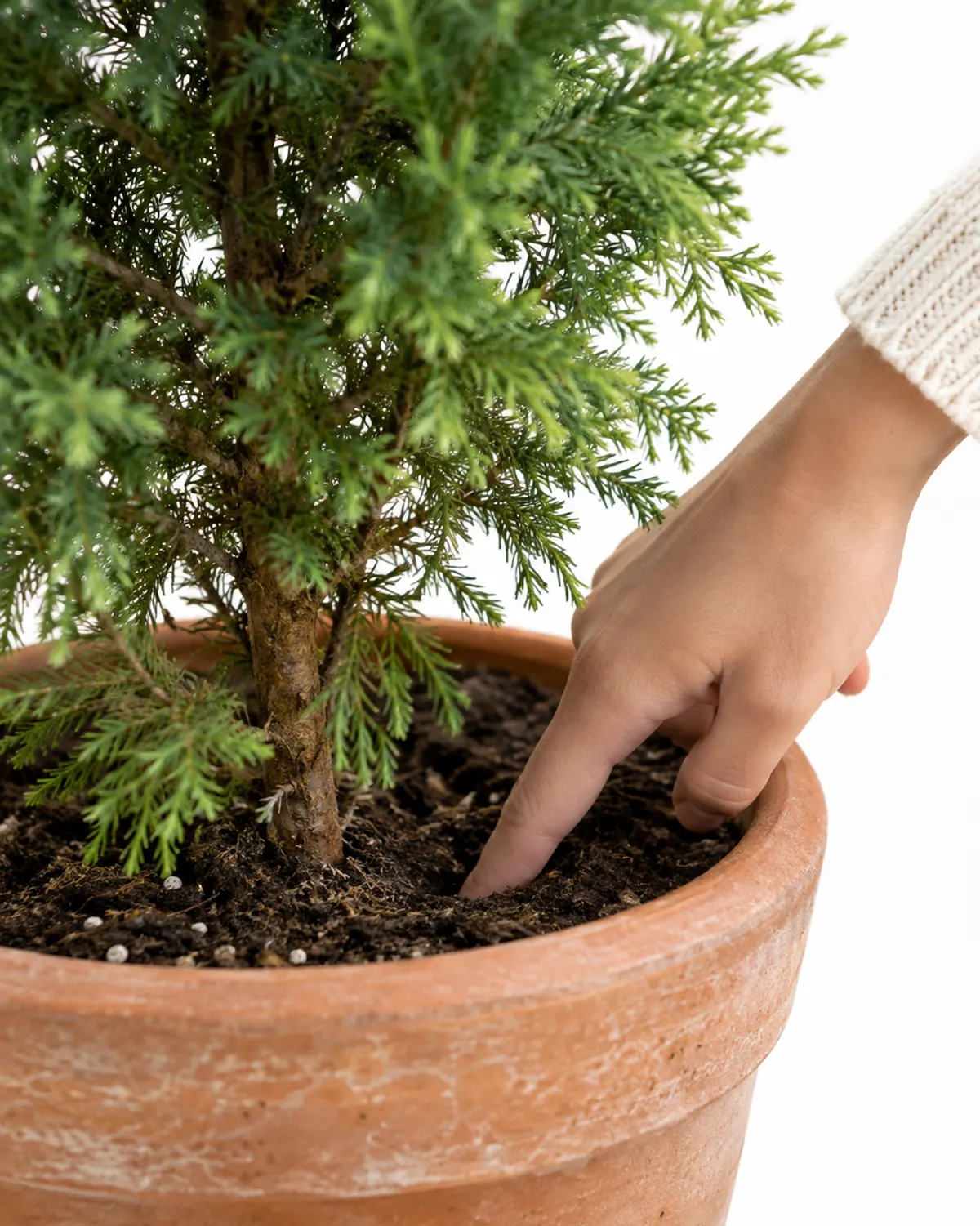
Keep the rootball moist but not soggy (Colorado State). Press a finger an inch into the soil. If it feels dry, water slowly until a little drains into the saucer, then empty it after 15 minutes.
-
Step 6: Use small LED lights
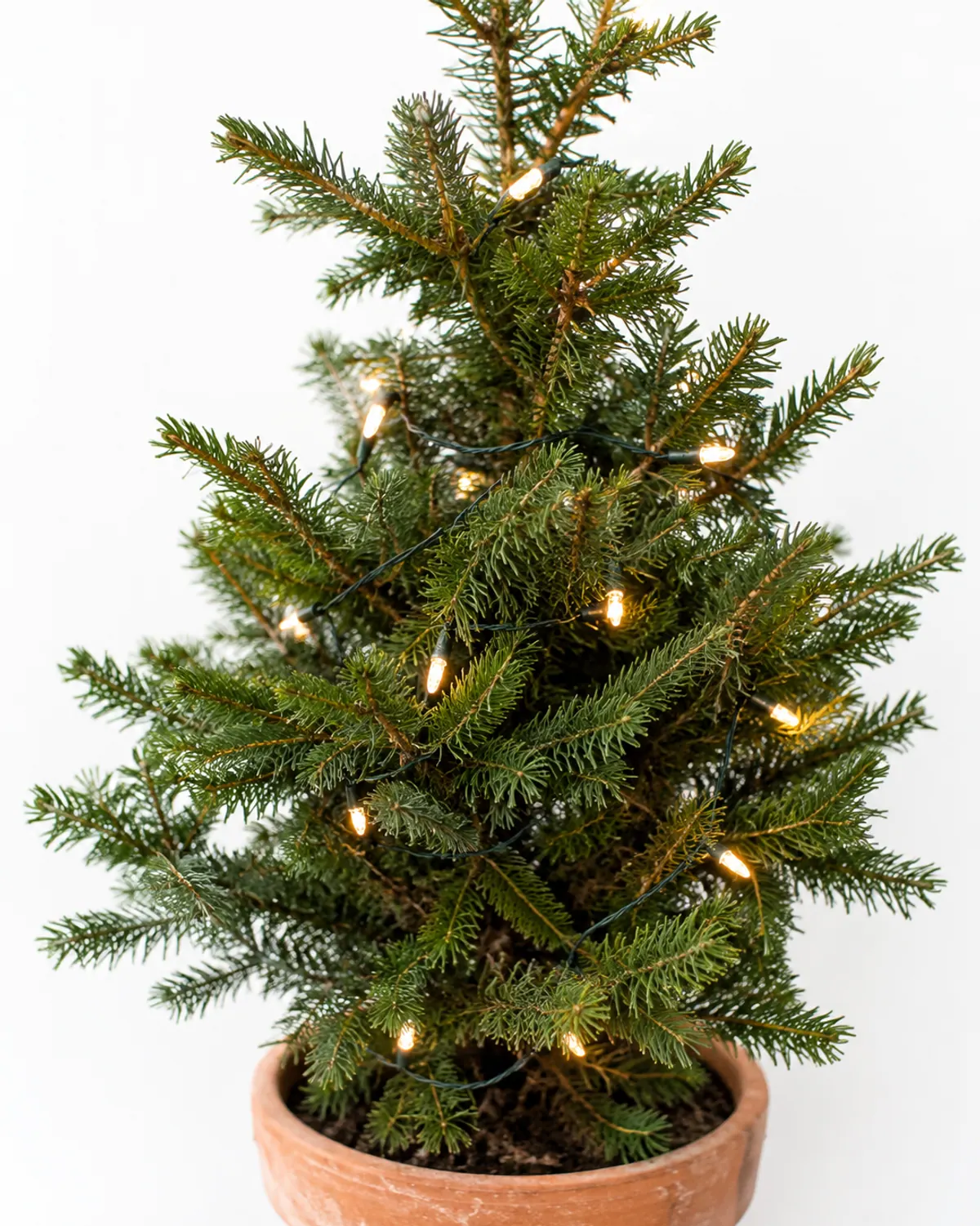
Iowa State advises LED lights and no flocking (Iowa State). LEDs stay cool, so they do not dry the needles or warm the rootball. Wind them loosely.
-
Step 7: Move it back to the cool spot
When the days are up, return it to the porch or garage for several days before planting, so it adjusts to the cold gradually.
-
Step 8: Plant on a mild day and mulch
Plant on a mild winter day in the pre-dug hole, water well and mulch heavily (Iowa State). Colorado State notes that New Year's Day is the traditional planting date.
Where the guidance runs out
We read the Colorado State and Iowa State pages and neither gives a pot size, a rootball weight or a planting date by hardiness zone. Colorado State only says potted trees are usually 2 to 6 feet tall, and that January 1 is traditional. Iowa State says to plant on a mild winter day. For a northern zone with hard frozen ground, that leaves you to judge it. Call a local nursery or your county extension office and ask when the ground is workable in your area.
One more source, University of New Hampshire Extension, appeared in search results with a 7 to 10 day figure and an unheated space for the winter. We could not open the page to confirm, so we do not count it here.
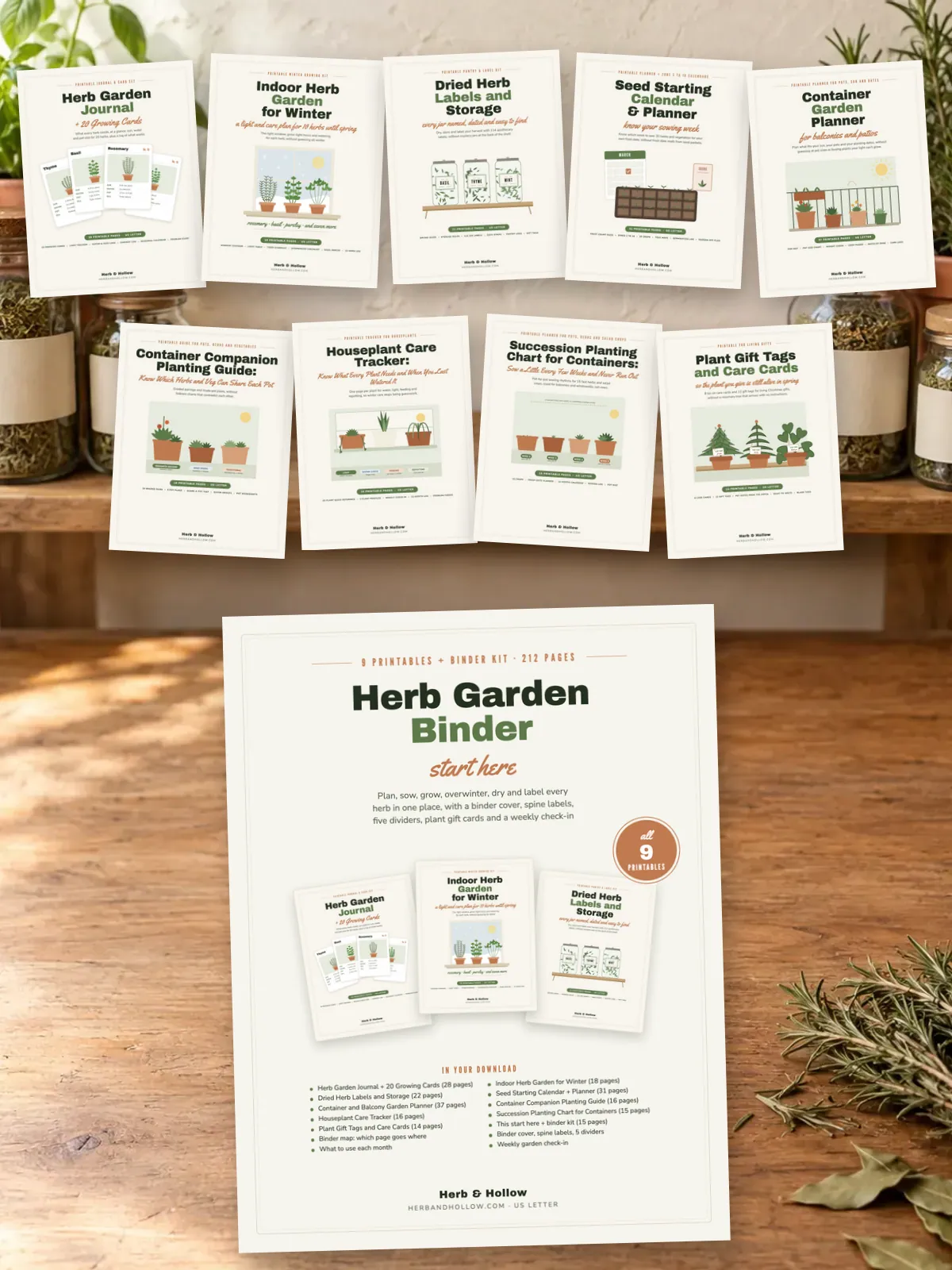
A written plan helps on this one, because the dig date, the move-in date and the move-out date all fall in different weeks. The Small-Space Garden Binder has planning pages and a plant log you can use for the dates. See the Binder page for what is inside and the price.
Common mistakes
| Mistake | What happens | Fix |
|---|---|---|
| Keeping it in 3 weeks or more | Buds break dormancy and cold kills the new growth | Stay within 5 to 10 days |
| Skipping the cool porch | A sudden change from warm to freezing | Hold it in a cool spot before and after |
| Placing it by a radiator | Dry needles and a dry rootball | Move it several feet away |
| Letting water pool in the saucer | Roots sit in water and rot | Empty the saucer 15 minutes after watering |
| No pre-dug hole | Frozen ground on planting day | Dig the hole first and store the backfill dry |
| Flocking or spray snow | Coats the needles | Iowa State advises against flocking |
If you have no garden: the balcony option
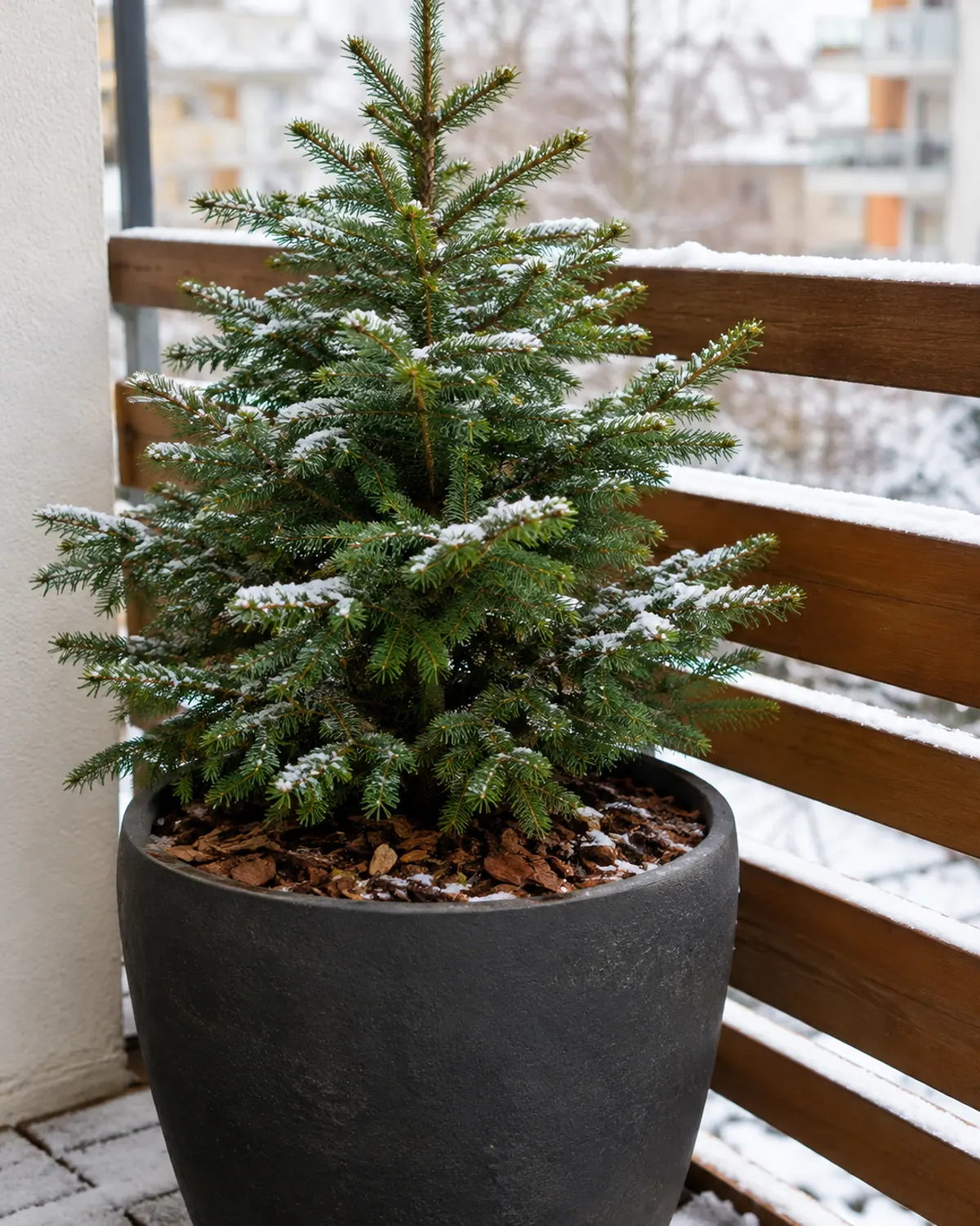
Without a yard, plant the tree into a large container and keep it on the balcony after the indoor stay. We found no source for the right size, so use a pot a few inches wider than the nursery pot, with drainage, and expect to move up a size over time. Check the pot is rated for freezing weather, since a glazed ceramic pot can crack. Water through winter whenever the soil is dry and not frozen. Iowa State notes that non-hardy conifers should stay below 45 to 50F and above 20F, which does not apply to a hardy variety but is a useful limit to know if you are unsure of the species (Iowa State).
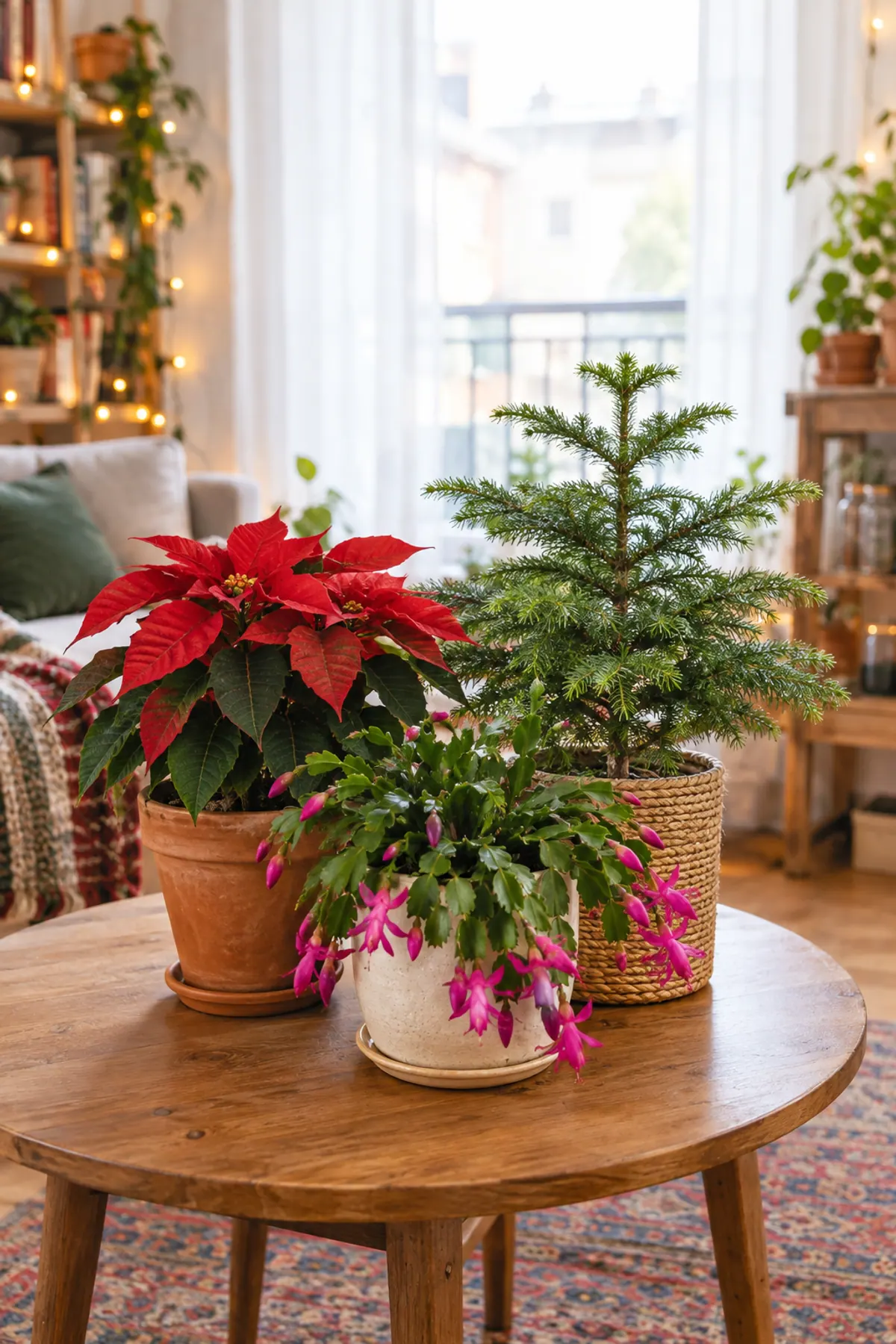
If you want a living gift or a second plant, see our Christmas plant gift roundup with pet safety notes. Spruce and pine needles can irritate pets that chew them, so keep the tree out of reach of cats and dogs, and call your vet if a pet eats needles and seems unwell.
Supplies for a living tree
-
Large plant saucer, 16 inch
Typically $8 to $20
Protects floors and catches runoff
Check price on Amazon for Large plant saucer, 16 inch -
Warm white LED mini string lights
Typically $8 to $20
Stay cool to the touch
Check price on Amazon for Warm white LED mini string lights -
Hardwood mulch bag
Typically $4 to $10
For planting day
Check price on Amazon for Hardwood mulch bag -
Large frost-proof planter with drainage
Typically $30 to $90
For the balcony option
Check price on Amazon for Large frost-proof planter with drainage -
Soil moisture meter
Typically $8 to $18
Quick rootball check
Check price on Amazon for Soil moisture meter
Frequently asked questions
How long can a living Christmas tree stay inside?
Colorado State says seven days is the maximum and five is better. Iowa State says 7 to 10 days maximum. Shorter is safer, especially in a warm home.
What is the best living Christmas tree for a small apartment?
Dwarf Alberta spruce appears on both the Colorado State and Iowa State lists and stays small. Check your hardiness zone before buying.
When do you plant a living Christmas tree?
Colorado State calls New Year's Day the traditional date, and Iowa State says to plant on a mild winter day in a pre-dug hole. Ask a local nursery for your zone.
Can I keep a living Christmas tree in a pot all winter?
Yes, if it is a hardy species in a large frost-proof container on a balcony. We found no source for pot size, so choose a pot a few inches wider than the nursery pot.
Is a Norfolk Island pine a living Christmas tree?
It is sold as one, but it is not hardy outdoors. See our Norfolk Island pine care guide for that plant.
Save it for later
Pin this to your Seasonal Garden Tasks board so it's there when you need it.
Save to Pinterest