This post contains affiliate links. As an Amazon Associate we earn from qualifying purchases, at no extra cost to you. Read our disclosure.
Safety first: Herbs can be powerful. If you are pregnant, nursing, take medication or have a health condition, check with your doctor or pharmacist first. Please read our herbal & garden safety notes before you start.
Key takeaways
- Make a flat cut across the base before the tree goes in the stand; sources say 1/4 inch is enough, and up to about 1 inch is fine
- Plan on about 1 quart of water per inch of trunk diameter, so a 4 inch trunk needs about a gallon a day at first
- Plain, clean water is all it needs; extension research found sugar, soda, bleach and commercial additives gave no benefit
- Keep the tree away from vents, radiators and fireplaces, at least 3 feet from any heat source
- A dry tree sheds green needles when you tap the trunk; take it down when it is brittle
In this post9 sections
- Fresh cut first: how to keep a Christmas tree fresh from day one
- How much water does a Christmas tree need?
- Keep the stand full, every day
- Do Christmas tree additives work?
- Where to put the tree to slow drying
- Signs your Christmas tree is drying out
- Christmas tree fire safety basics
- Picking a fresher tree to begin with
- FAQ
Fresh cut first: how to keep a Christmas tree fresh from day one
A cut tree seals its trunk with resin within hours, and a sealed base cannot drink. NC State Extension says the original cut dries and clogs with resin within a few days, so make a new cut across the trunk when you get the tree home. Oregon State University says to recut if more than 24 hours have passed since the last cut.
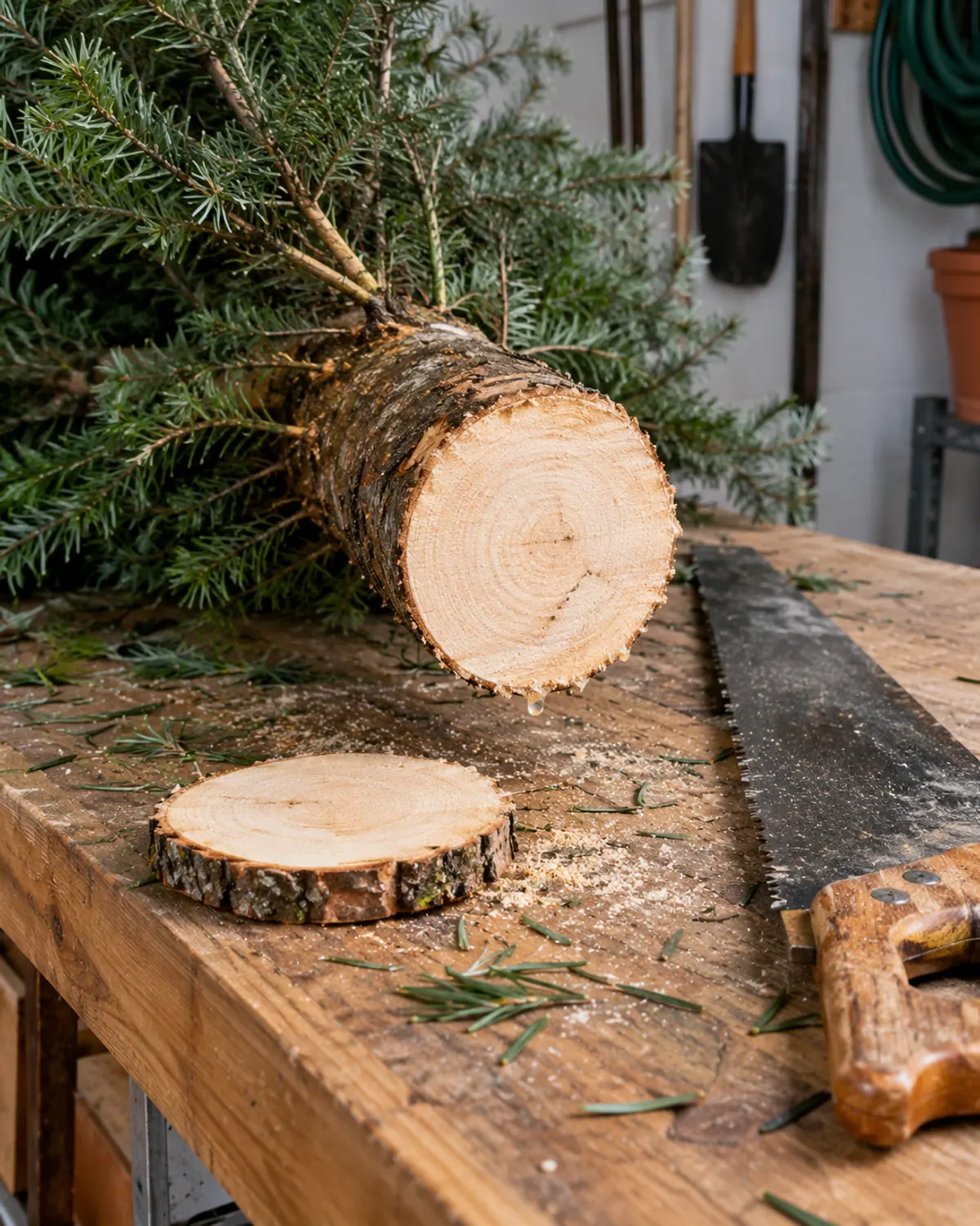
How much to take off? Oregon State University says about 1/4 inch is enough and that cutting 2 inches is unnecessary, and Washington State University Extension also suggests about a quarter inch. We would take 1/4 to 1 inch so you are sure you have reached clean wood. Make the cut straight across, not angled or whittled, because water moves up through the outer wood just under the bark, and drilled holes and angled cuts do not help.
How much water does a Christmas tree need?
The rule from extension sources is about 1 quart of water per inch of trunk diameter. Oregon State University uses it to size the stand, and Washington State University Extension says a tree uses about that much each day, so a 4 inch tree needs at least a gallon daily. The chart below turns the rule into numbers. It is simple arithmetic on that rule, so treat it as an example, not a measured result for your tree.
| Trunk diameter | Stand should hold at least | Likely first-week daily use |
|---|---|---|
| 2 inches | 2 quarts (a half gallon) | About 2 quarts |
| 3 inches | 3 quarts | About 3 quarts |
| 4 inches | 4 quarts (1 gallon) | About 1 gallon |
| 5 inches | 5 quarts | About 5 quarts |
| 6 inches | 6 quarts (1.5 gallons) | About 1.5 gallons |
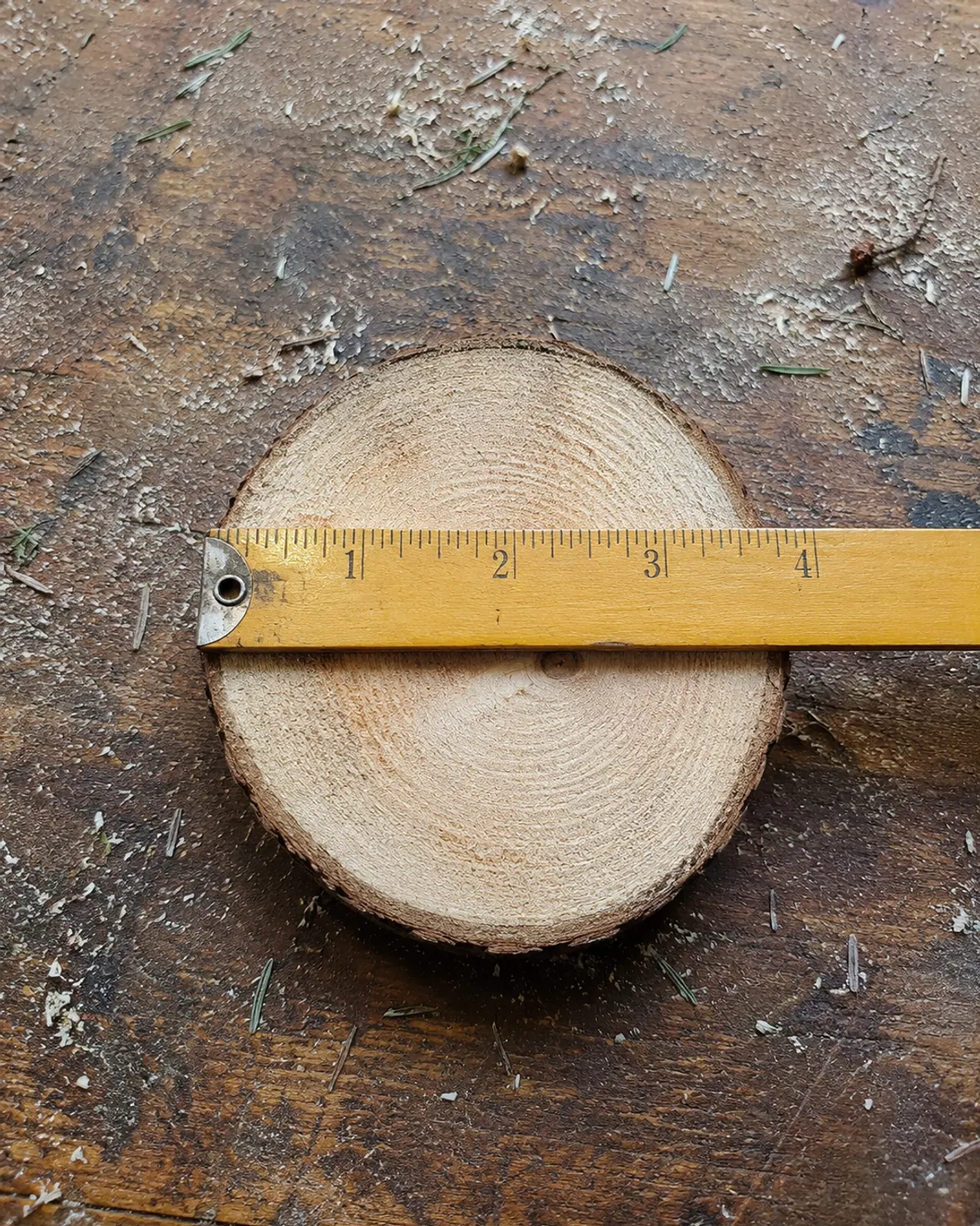
Measure across the cut face with a ruler. NC State Extension warns that a stand with too little capacity makes refilling a daily chore, and a tree that drinks heavily can empty a small stand in hours. Pick a stand that holds the number in the middle column.
Keep the stand full, every day
Check the water at least once a day. Washington State University Extension says to keep the level from ever dropping below the base and to check a couple of times a day in the first week. Trees drink most in the first few days indoors, then slow down.
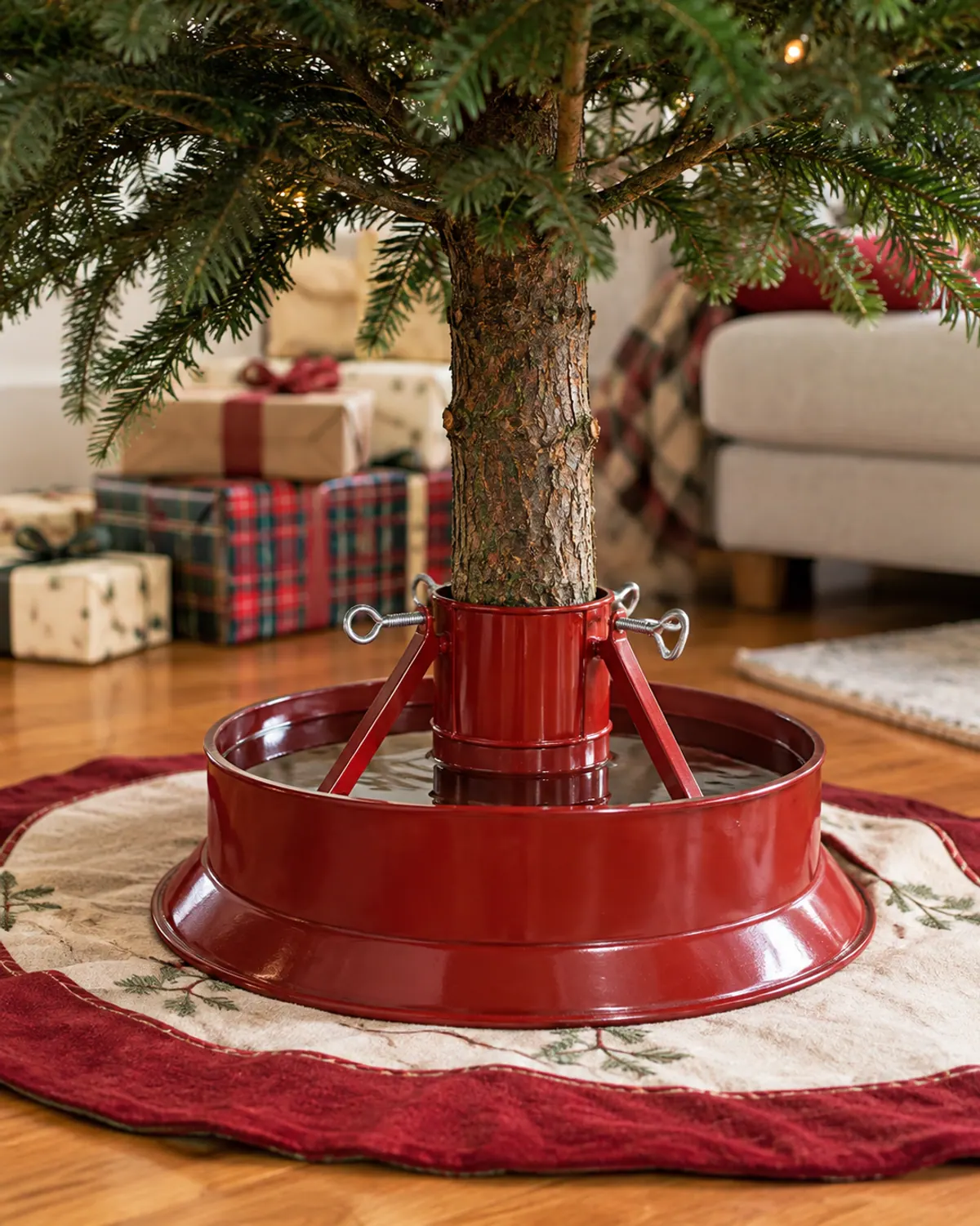
If the stand runs dry, do not panic. Oregon State University says refilling within 24 hours is usually fine for Douglas-fir, noble, Nordmann and Fraser firs, and that Grand fir may only tolerate about 12 hours. You do not need to remove the tree or recut if you refill in time.
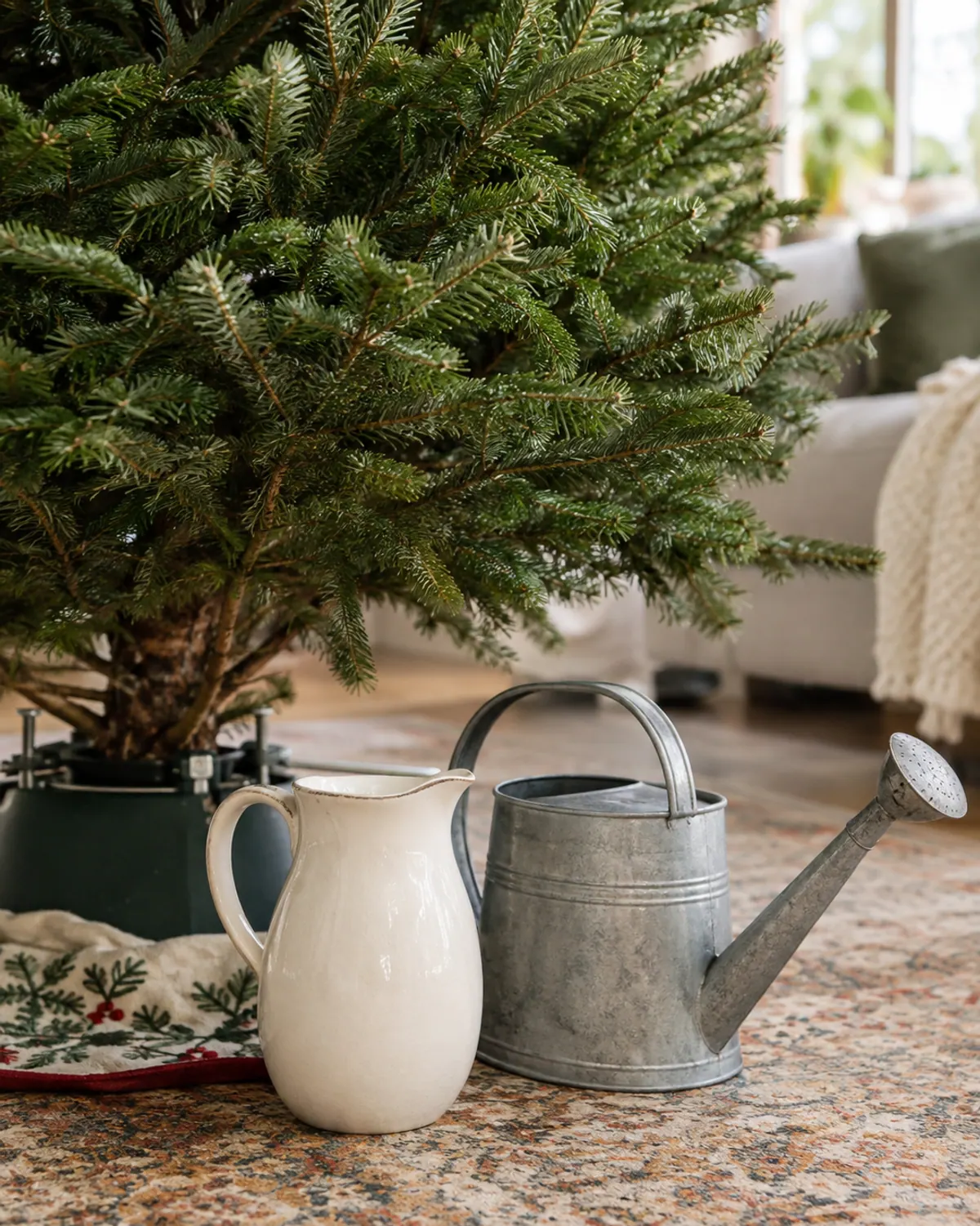
Pets and small children sometimes drink from the stand, which is one more reason to keep it to plain water. A long-spout watering can or a funnel with a hose makes it easy to top up behind the tree skirt.
Do Christmas tree additives work?
No. Washington State University Extension reports that research found commercial additives, sugar, 7-Up, bleach and other home remedies gave no benefit. Oregon State University lists vodka, aspirin and sugar as unnecessary and says clean, cold water is all a tree needs; some additives can even make needles drop faster. NC State Extension says to skip them.
What we like
- Plain tap water is free and extension-backed
- One less thing to measure and buy
- Safe if a pet drinks from the stand
Keep in mind
- Does not feel like you are doing enough
- Commercial products and recipes are everywhere online
- You must keep refilling daily, which no additive can replace
Where to put the tree to slow drying
Heat pulls moisture out of needles. NC State Extension says to keep the tree away from fireplaces and furnace outlets, and a cooler room reduces moisture loss. Washington State University Extension adds direct sunlight to the list. The NFPA tips say to keep a tree at least 3 feet from heat sources such as fireplaces, radiators, candles and heat vents.

In a small apartment the vent is often where the tree wants to go. Close or redirect that vent with a deflector, or choose a different corner. If you are short on floor space, a smaller tree on a table can sit farther from the heat, or see our living Christmas tree in a pot and Norfolk Island pine guides for trees that stay alive after the holidays.
Signs your Christmas tree is drying out
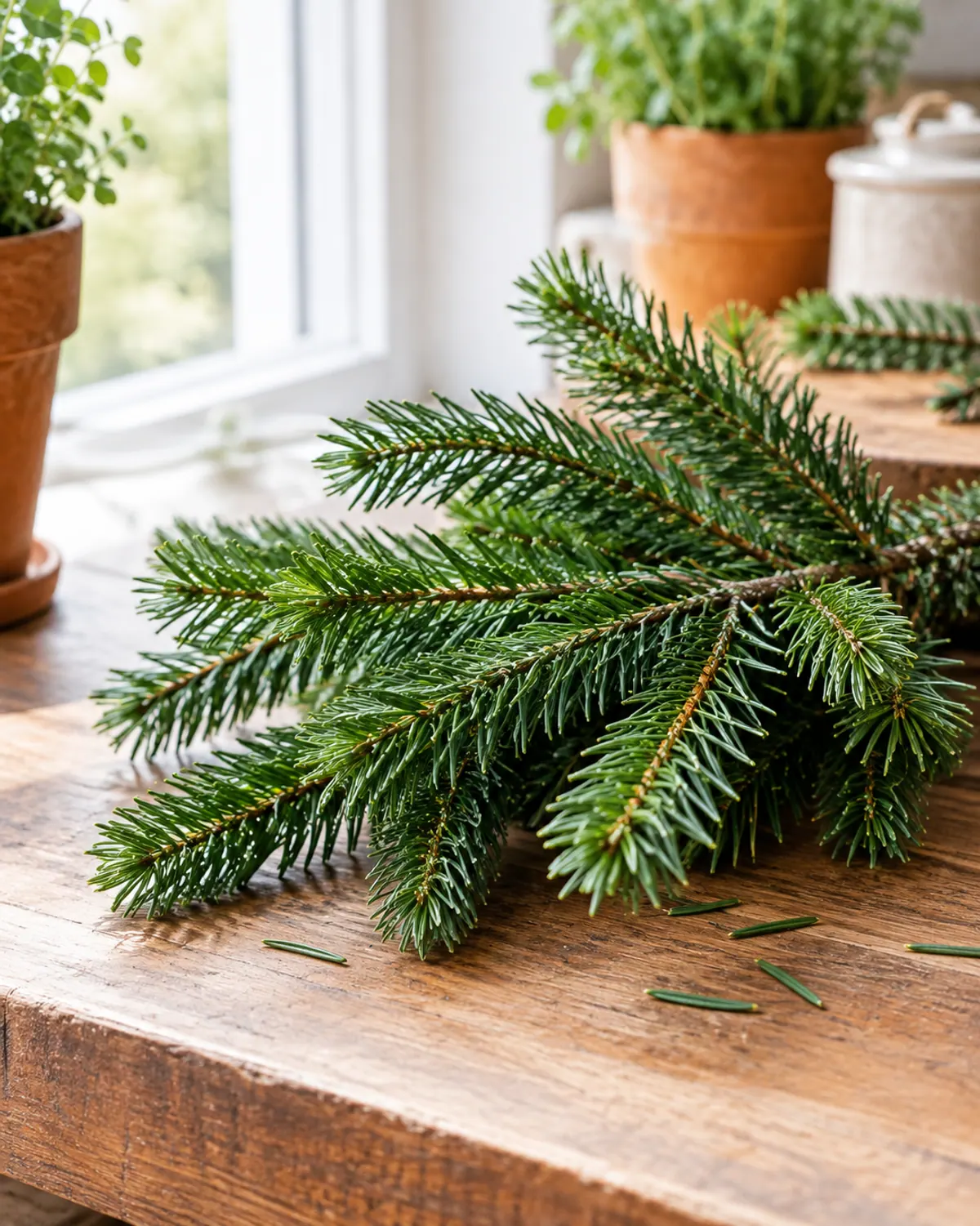
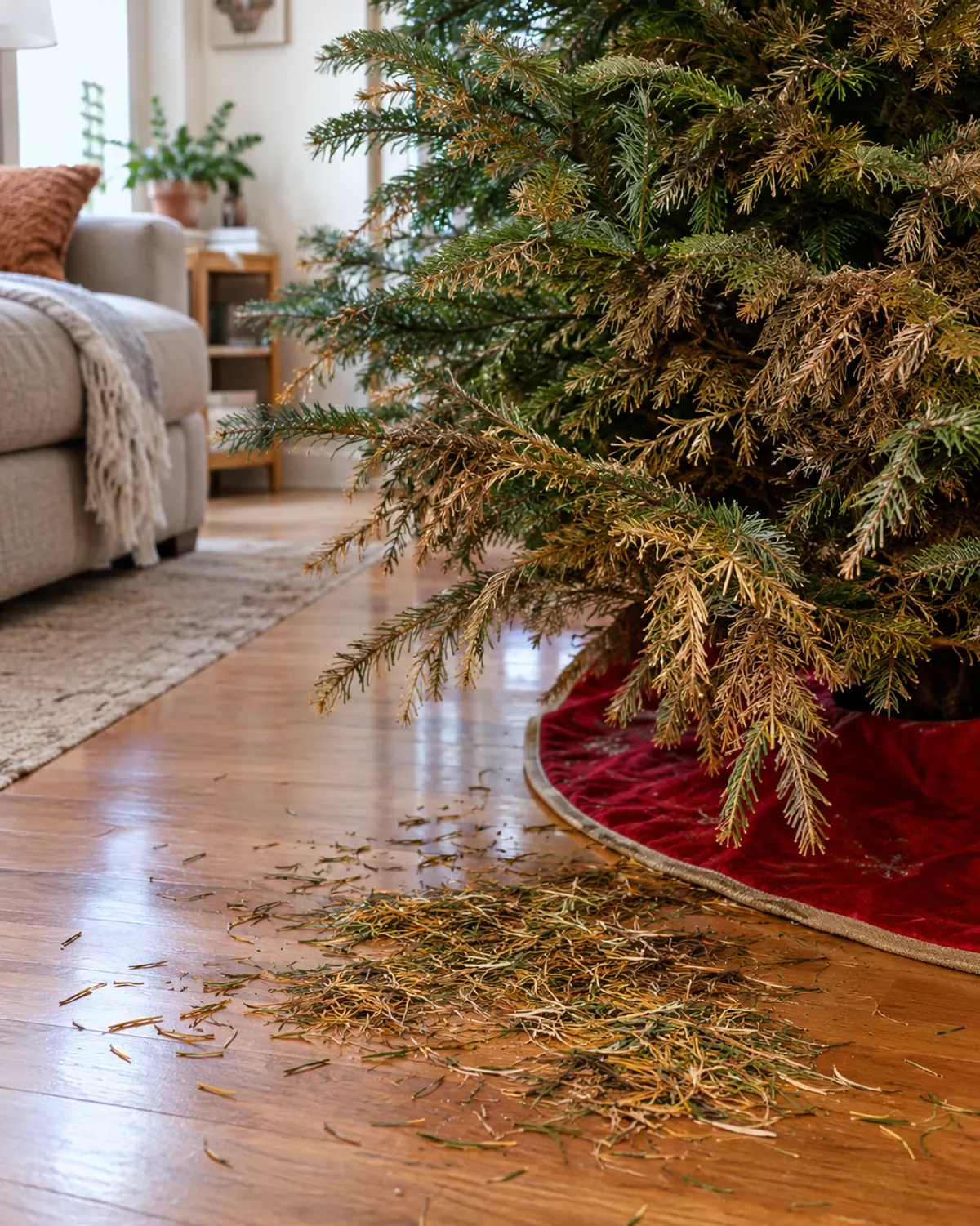
Use two quick checks. Oregon State University says fresh needles should snap sharply, like a fresh carrot. Washington State University Extension says to tap the trunk on the ground: a few brown inner needles falling is normal, but losing more than a few green needles means the tree is drying.
| Check | Fresh | Drying out |
|---|---|---|
| Needle bend | Snaps cleanly | Bends or feels brittle |
| Trunk tap | A few brown inner needles | Green needles fall |
| Needle color | Deep green, glossy | Dull, yellow or grey-green |
| Water use | Drinks daily | Stops drinking after a heavy start |
| Branches | Springy | Droop or feel stiff |
If the tree stops drinking, the cut may have sealed after running dry. NC State Extension notes that a clogged cut stops absorbing water. When the tree becomes dry and brittle, Oregon State University says it is time to take it down.
Christmas tree fire safety basics
A watered tree is less likely to dry into a fire hazard, as Washington State University Extension notes. The NFPA tips also say to add water to the stand every day. Use LED mini lights, which stay cool to the touch, and check each strand for cracked wires before you hang it.
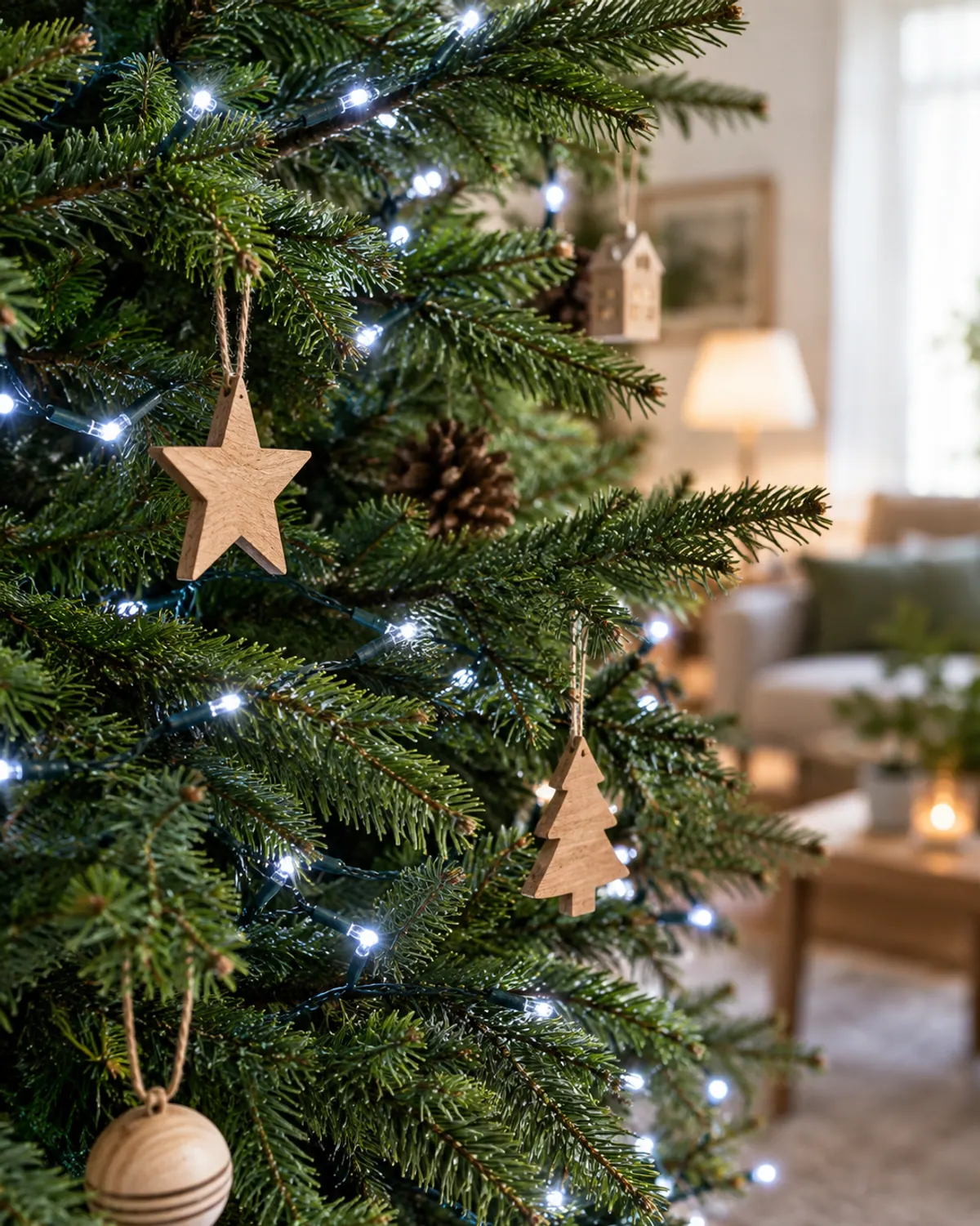
Turn the lights off when you leave the house or go to bed, and keep the tree clear of doorways and exits. This is general safety information, so follow your local fire department's guidance too.
Daily fresh tree checklist
Picking a fresher tree to begin with
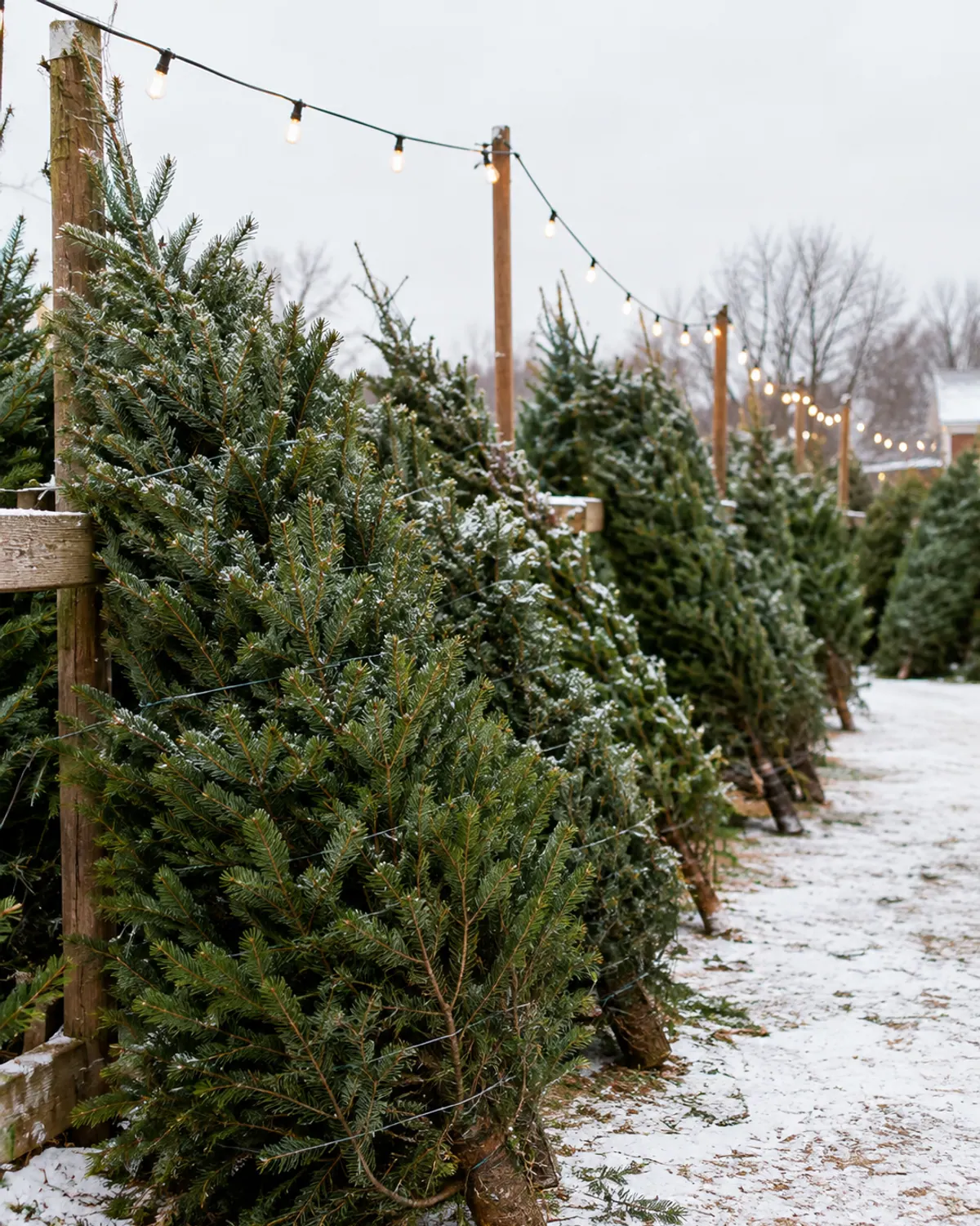
Start with a fresh tree. Oregon State University suggests green, healthy foliage and shaking the tree to remove loose, dead needles. NC State Extension says cutting your own at a farm gives the freshest tree, and that wind across the needles speeds water loss on the drive home, so keep travel short.
Want something that grows on after the holidays? A rosemary Christmas tree smells great, and our pet-safe Christmas plants guide covers the rest of the holiday plant list. Keeping a written plan of tree, plant and garden jobs is easier with the Small-Space Garden Binder, which gathers all eight of our printables in one set.
Supplies for a fresh tree
-
Tree stand with a 1.5 gallon or larger water reservoir
Typically $25 to $60
Holds enough for a big trunk, so top-ups are less frequent
Check price on Amazon for Tree stand with a 1.5 gallon or larger water reservoir -
Watering funnel with long flexible hose for tree stands
Typically $8 to $20
Fills the stand without crawling under the branches
Check price on Amazon for Watering funnel with long flexible hose for tree stands -
Warm white LED mini string lights
Typically $8 to $25
Stay cool, so they warm the needles less
Check price on Amazon for Warm white LED mini string lights -
Tree skirt or waterproof tree mat
Typically $12 to $35
Protects the floor from drips and spills
Check price on Amazon for Tree skirt or waterproof tree mat
Frequently asked questions
How often should I water a real Christmas tree?
Check the stand at least once a day and top it up so the water never drops below the cut base. In the first week a tree can drink about a quart per inch of trunk diameter each day, so you may need to refill more than once.
Should I put sugar, aspirin or soda in Christmas tree water?
No. Washington State University Extension reports that sugar, 7-Up, bleach and commercial additives gave no benefit in research. Oregon State says clean, cold water is all a tree needs.
How much should I cut off the bottom of a Christmas tree?
Take off a flat slice across the trunk. Oregon State and WSU say about 1/4 inch is enough, and we suggest 1/4 to 1 inch. Recut if more than 24 hours have passed since the last cut.
What if my Christmas tree stand ran out of water?
Refill it. Oregon State says refilling within 24 hours is usually fine for Douglas-fir, noble, Nordmann and Fraser firs, and that Grand fir may only tolerate about 12 hours.
How close can a Christmas tree be to a heater or fireplace?
Keep it at least 3 feet from any heat source such as a radiator, fireplace, candle or heat vent, according to NFPA tips. Cooler rooms also slow water loss.

Save it for later
Pin this to your Seasonal Garden Tasks board so it's there when you need it.
Save to Pinterest