This post contains affiliate links. As an Amazon Associate we earn from qualifying purchases, at no extra cost to you. Read our disclosure.
Safety first: Herbs can be powerful. If you are pregnant, nursing, take medication or have a health condition, check with your doctor or pharmacist first. Please read our herbal & garden safety notes before you start.
Key takeaways
- UGA Extension lists equal parts peat or coir, vermiculite and perlite
- Seed starting mix is fine, light, low in nutrients and sterile
- Avoid garden soil and old potting soil
- A 72-cell tray of 2 cubic inch cells needs about 2.5 quarts (our worked example)
- Feed at half strength after the first true leaves
In this post9 sections
- Verdict: buy a bag for a small garden, mix your own for 100+ cells
- Seed starting mix vs potting soil
- Make your own: the equal-parts recipe
- How much mix do you need?
- Cost: when mixing your own starts to pay
- First two weeks: what goes wrong and the fix
- What not to put in the mix
- Store the leftovers and label the trays
- FAQ
Verdict: buy a bag for a small garden, mix your own for 100+ cells
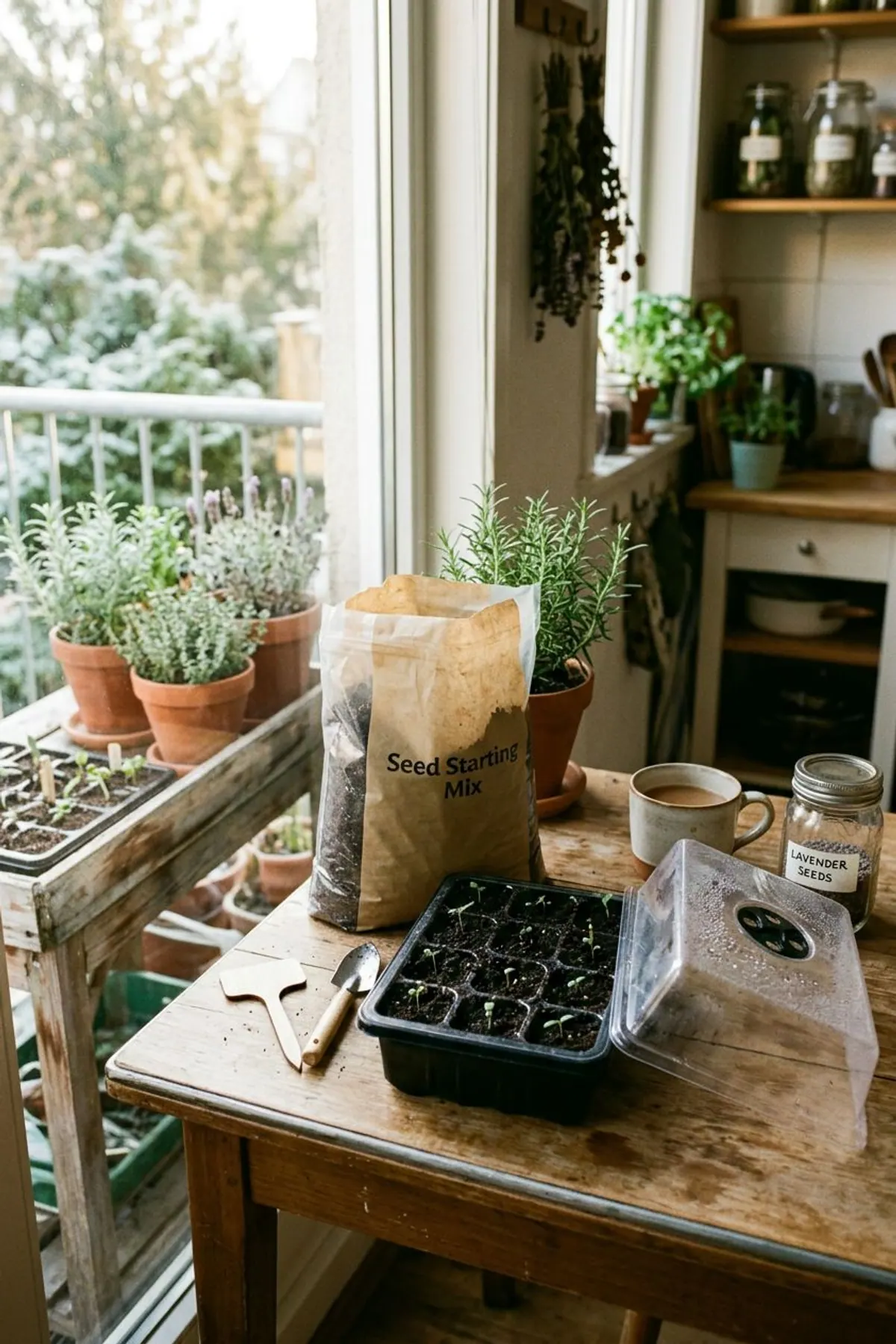
For a few trays on a windowsill, buy a bag of seed starting mix. For a lot of cells, or if you like to control what goes in, mix your own from equal parts peat or coir, vermiculite and perlite. Both work. What does not work well is ordinary potting soil or garden soil, which are too heavy and rich for tiny seedlings.
The equal-parts recipe comes from University of Georgia Extension. Other extension sources list slightly different ratios, such as 2:1:1, so there is no single official recipe; the goal is a mix that is fine, light, low in nutrients and clean.
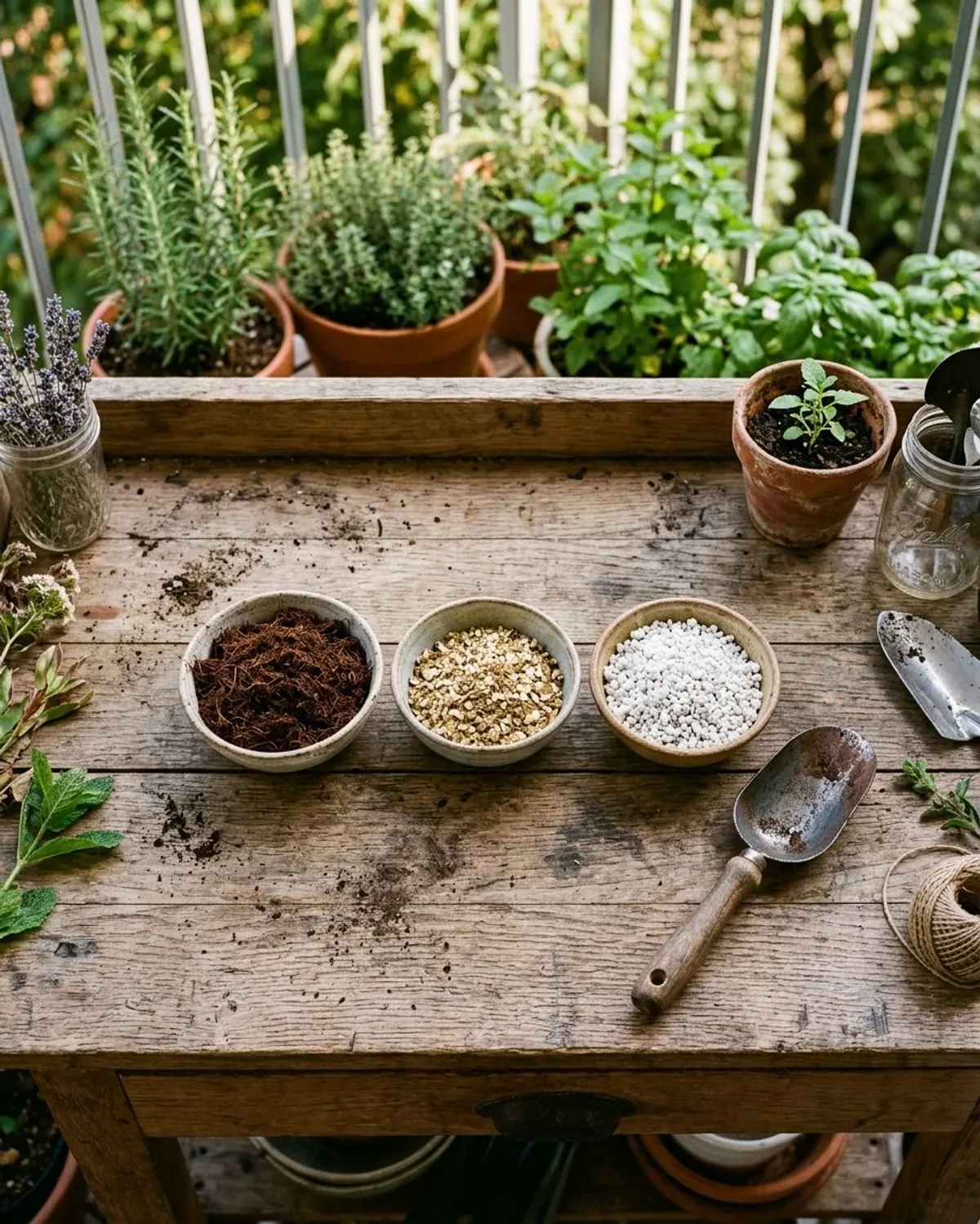
Seed starting mix vs potting soil
| Seed starting mix | Potting soil | Garden soil | |
|---|---|---|---|
| Texture | Fine and light | Coarser, heavier | Dense, clumps |
| Nutrients | Low, by design | Often high | Variable |
| Disease and weeds | Sterile | May carry some | Often present |
| Drainage in cells | Even and airy | Can stay wet | Poor |
| Best use | Germinating seeds | Potting up seedlings | In the ground only |
Extension sources say seed starting mix is soilless, fine, light and sterile, while potting soil is too dense and rich for seeds and may carry weeds and disease. Large seeds such as beans or squash tolerate regular potting mix according to University of Maryland Extension, but small seeds do not.
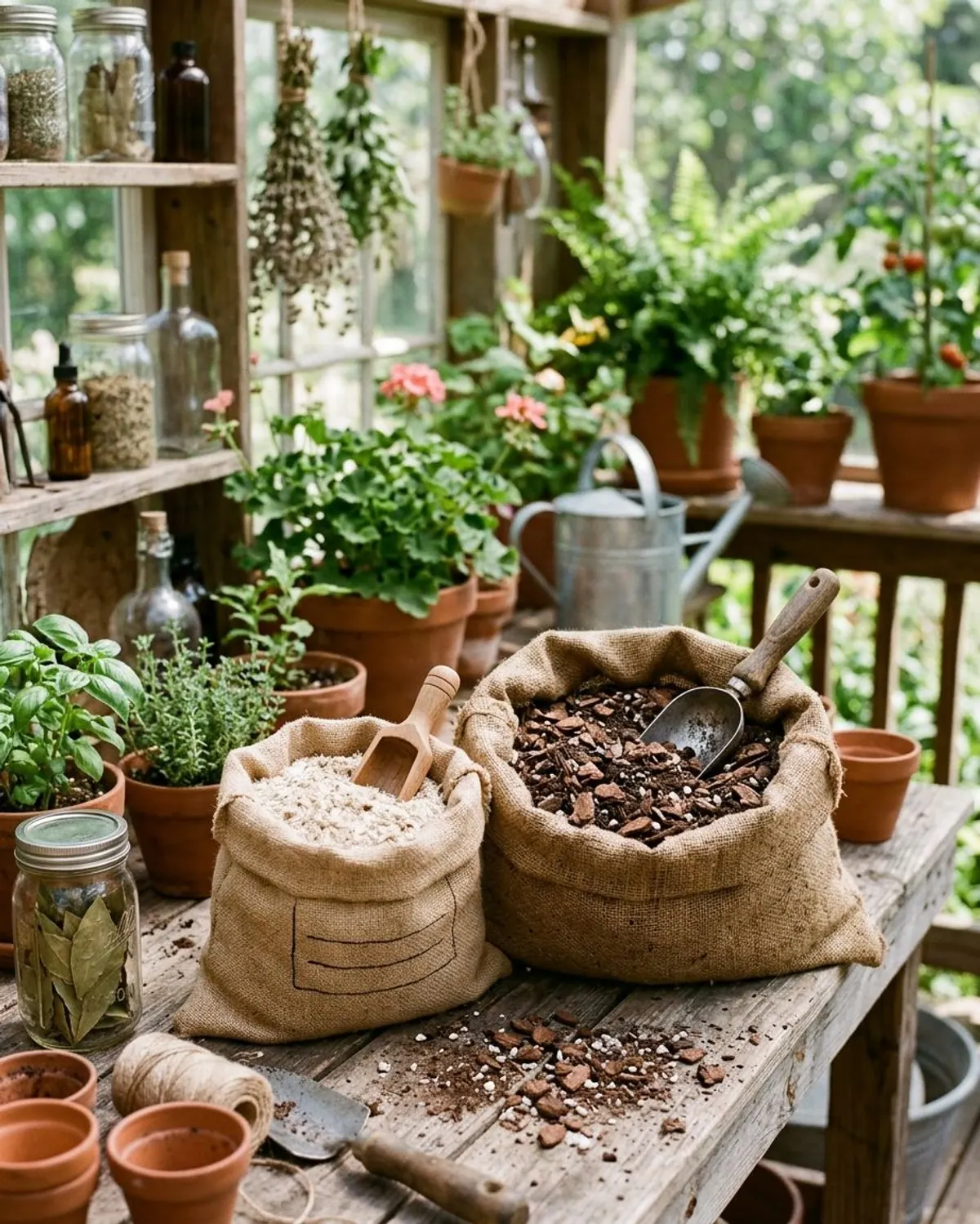
Make your own: the equal-parts recipe
-
Step 1: Soak the coir
If you use a coir brick, soak it in a bucket of warm water until it expands and fluffs apart. UGA Extension calls coir the more sustainable choice compared with peat.
-
Step 2: Measure equal parts
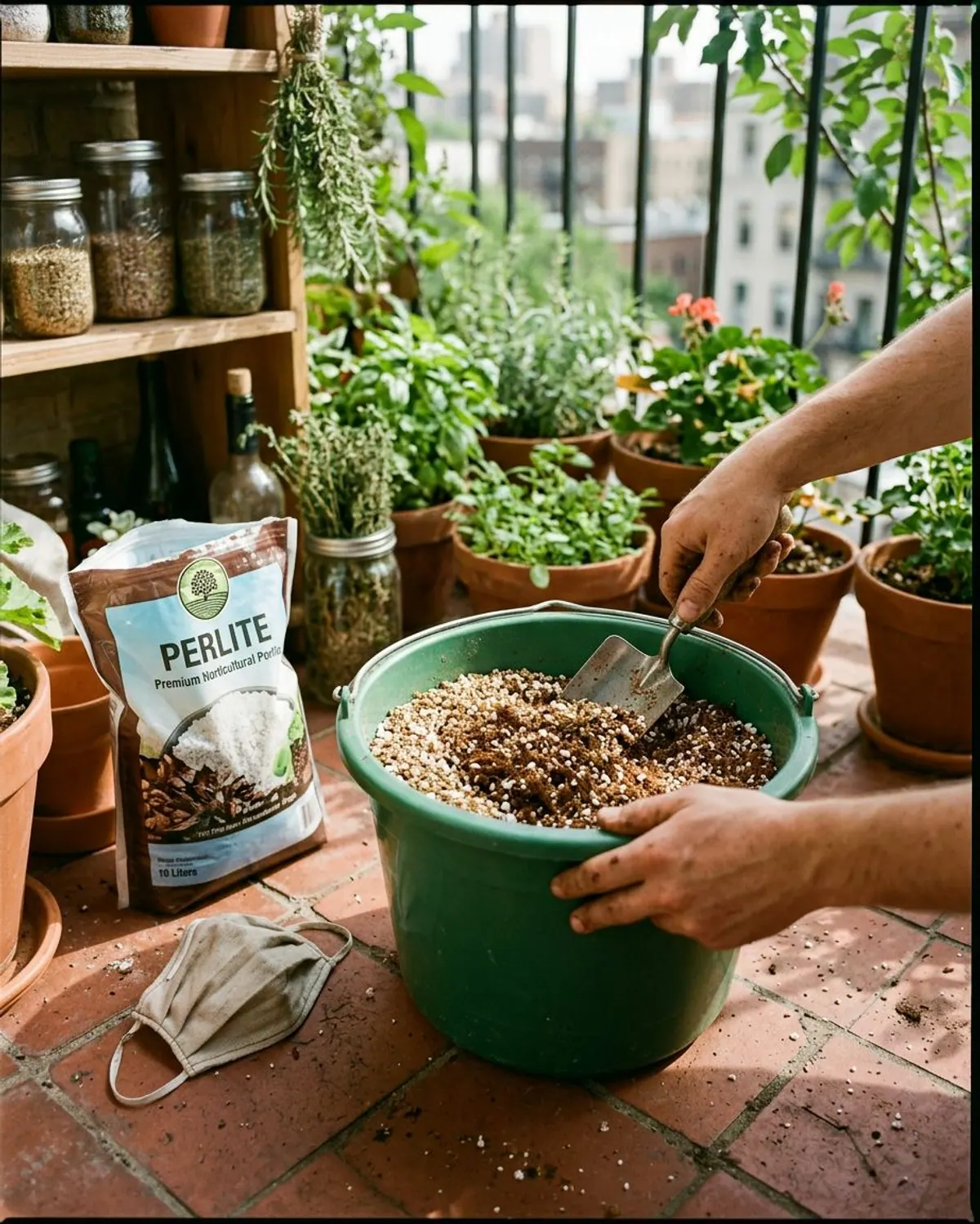
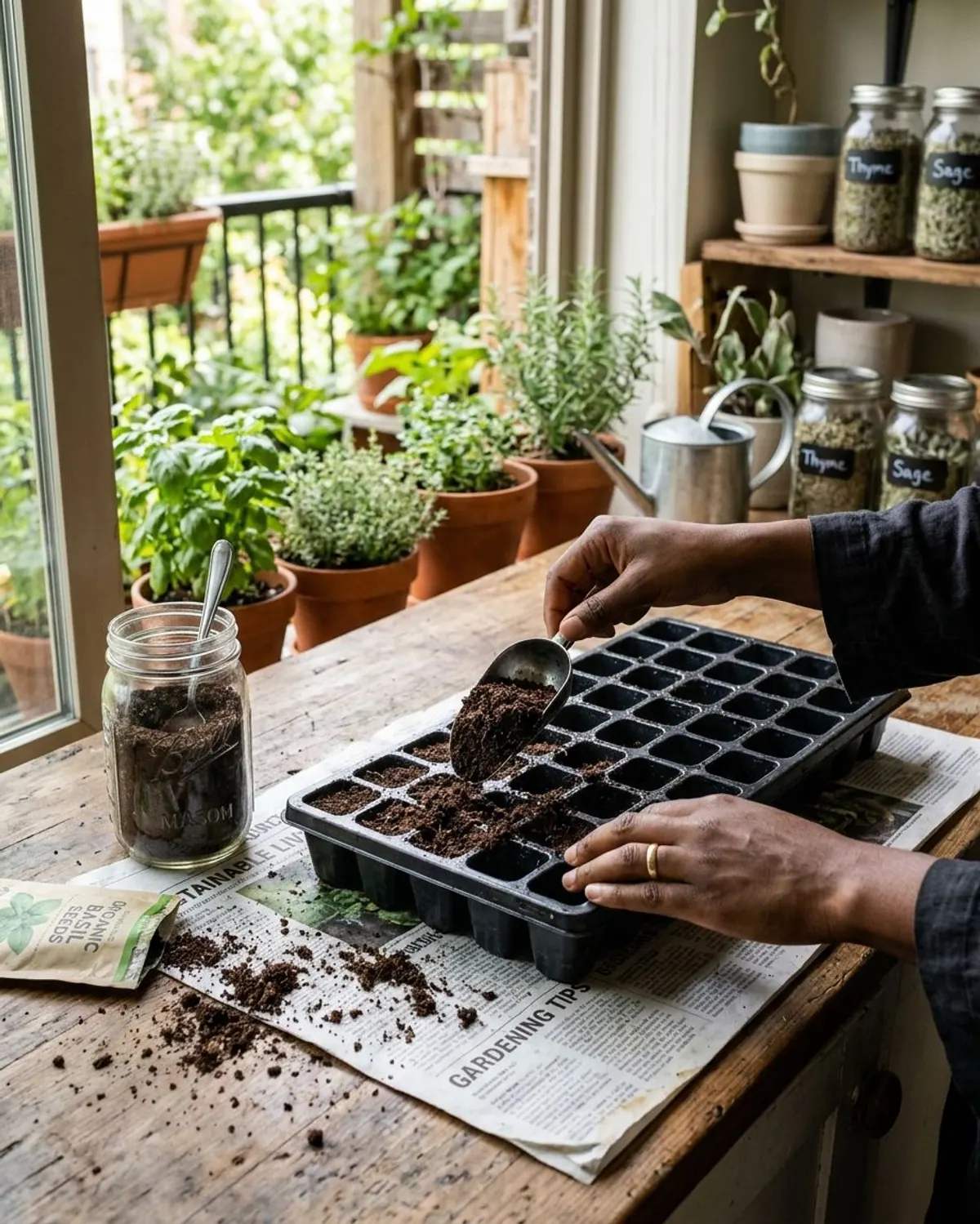
Measure one part coir or peat, one part vermiculite and one part fine perlite, using the same scoop. Use fine perlite, not the big chunks.
-
Step 3: Blend and pre-moisten
Mix in a bucket, then add a little water until the mix feels like a wrung-out sponge. Dry mix repels water and seeds dry out.
-
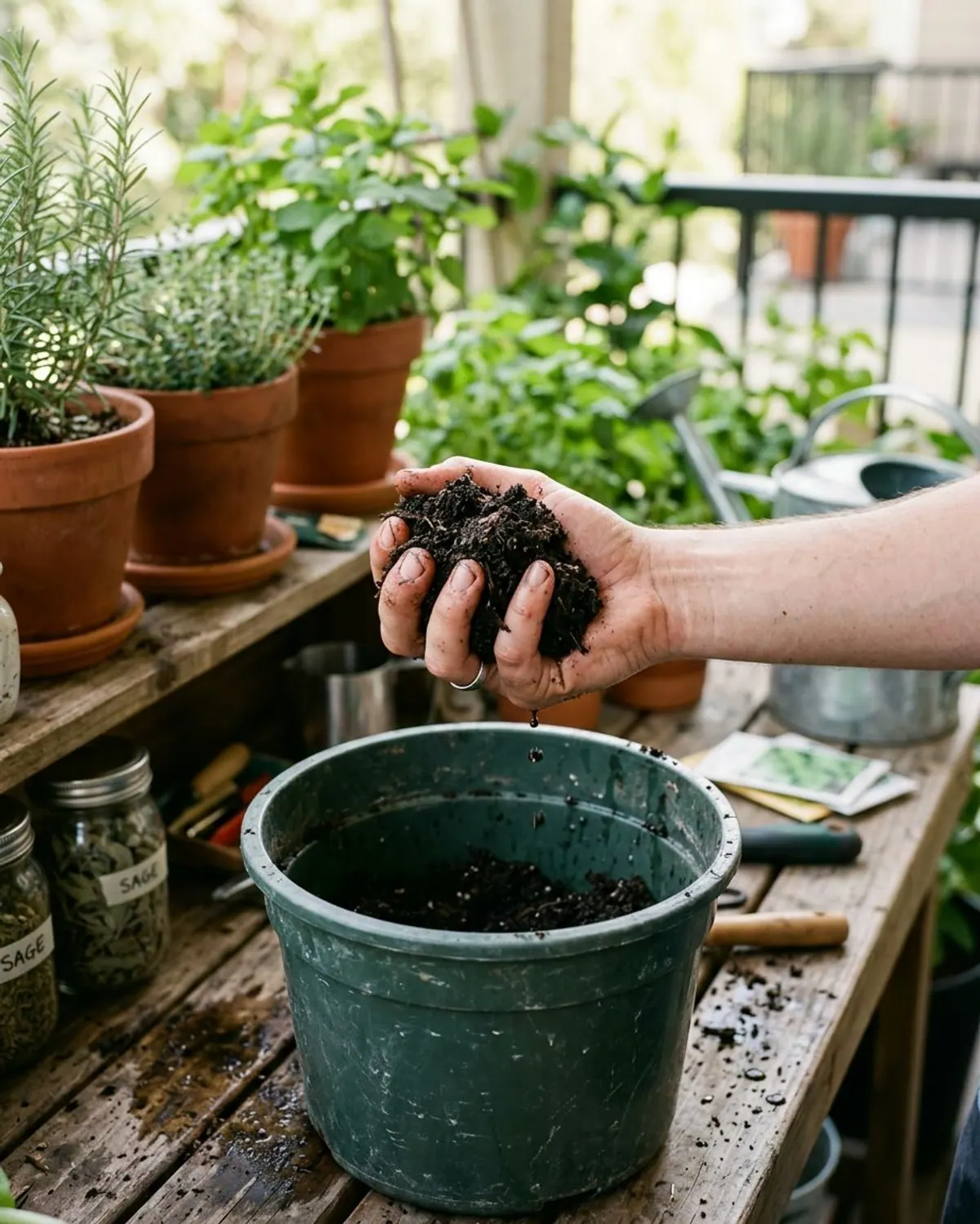
Step 4: Do the squeeze test
Squeeze a handful. It should hold together but not drip. If water runs out, add dry mix. If it crumbles apart, add water.
-
Step 5: Fill the cells
Fill cells loosely, tap the tray once, and top off. Do not press down hard.
-
Step 6: Label and sow
Label every tray. Our seed starting supplies guide covers lights, trays and heat mats.
How much mix do you need?
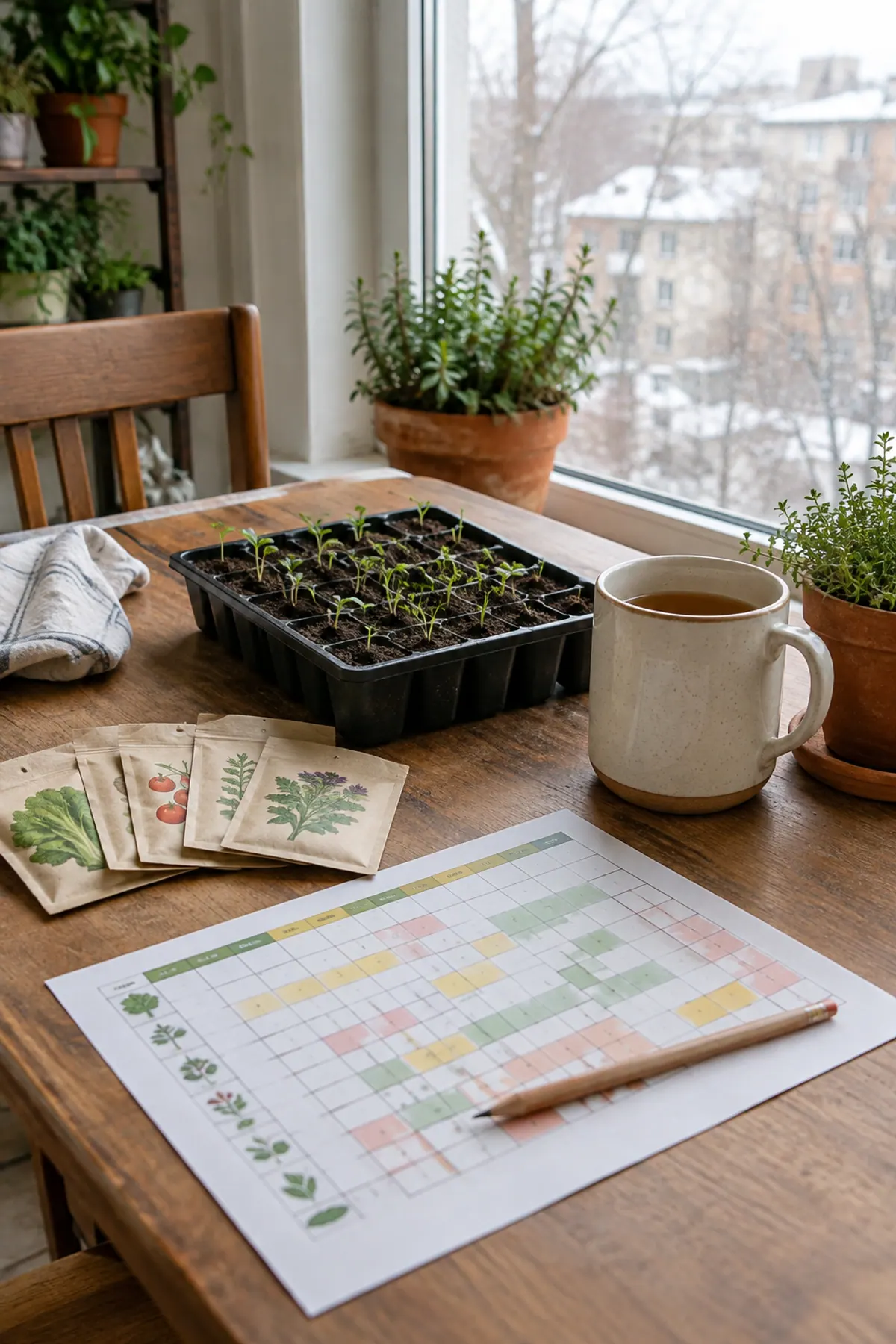
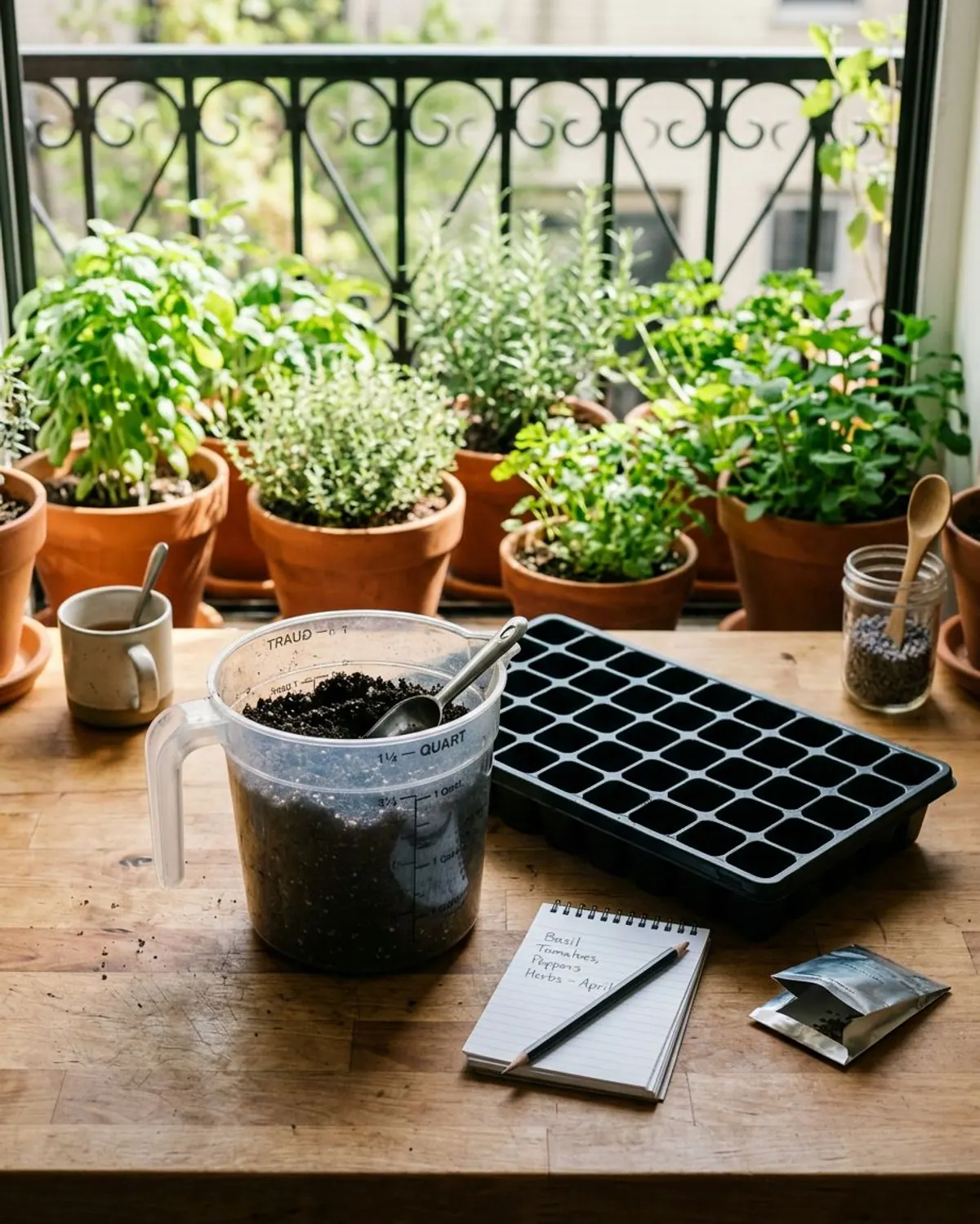
Here is a worked example, not a rule. A 72-cell tray with 2 cubic inch cells holds about 144 cubic inches of mix. One quart is 57.75 cubic inches, so that is about 2.5 quarts per tray. Buy or mix a little extra for topping off. Our printable seed starting calendar shows when to start each crop so you can plan how many trays you will fill.
Cost: when mixing your own starts to pay
The fair way to compare is price per quart, because bags and bricks come in different sizes. Divide the price on the shelf by the quarts printed on the label. Do it once for a bag of seed starting mix and once for each of your three ingredients, then add up one third of each ingredient's per-quart price to get your DIY per-quart cost.
| Bagged mix | DIY 1:1:1 | |
|---|---|---|
| What you buy | One bag | Coir brick, vermiculite, perlite |
| Up-front spend | Lower: one bag | Higher: three products at once |
| Price per quart | Bag price divided by quarts | About a third of each ingredient's per-quart price, added up |
| Leftovers | Little or none | Plenty, stored dry for next season |
| Best for | 1 to 2 trays a season | 3 or more trays, or every spring |
Here is the pattern most small gardens hit. With one or two 72-cell trays you need about 5 quarts, using the 2.5 quarts per tray worked out above. A single bag covers that, and buying three ingredients to make 5 quarts leaves most of them on a shelf. Once you fill three or more trays, or you start seeds every spring, the leftover ingredients get used and the per-quart price usually drops below the bag. These are our own sums, not a price survey, so check the labels where you shop.
First two weeks: what goes wrong and the fix
Common problems
Most of these trace back to water and air, not to whether the mix came from a bag or a bucket. A light, clean mix gives you more room for error, which is why both options above beat garden soil.
What not to put in the mix
Leave these out
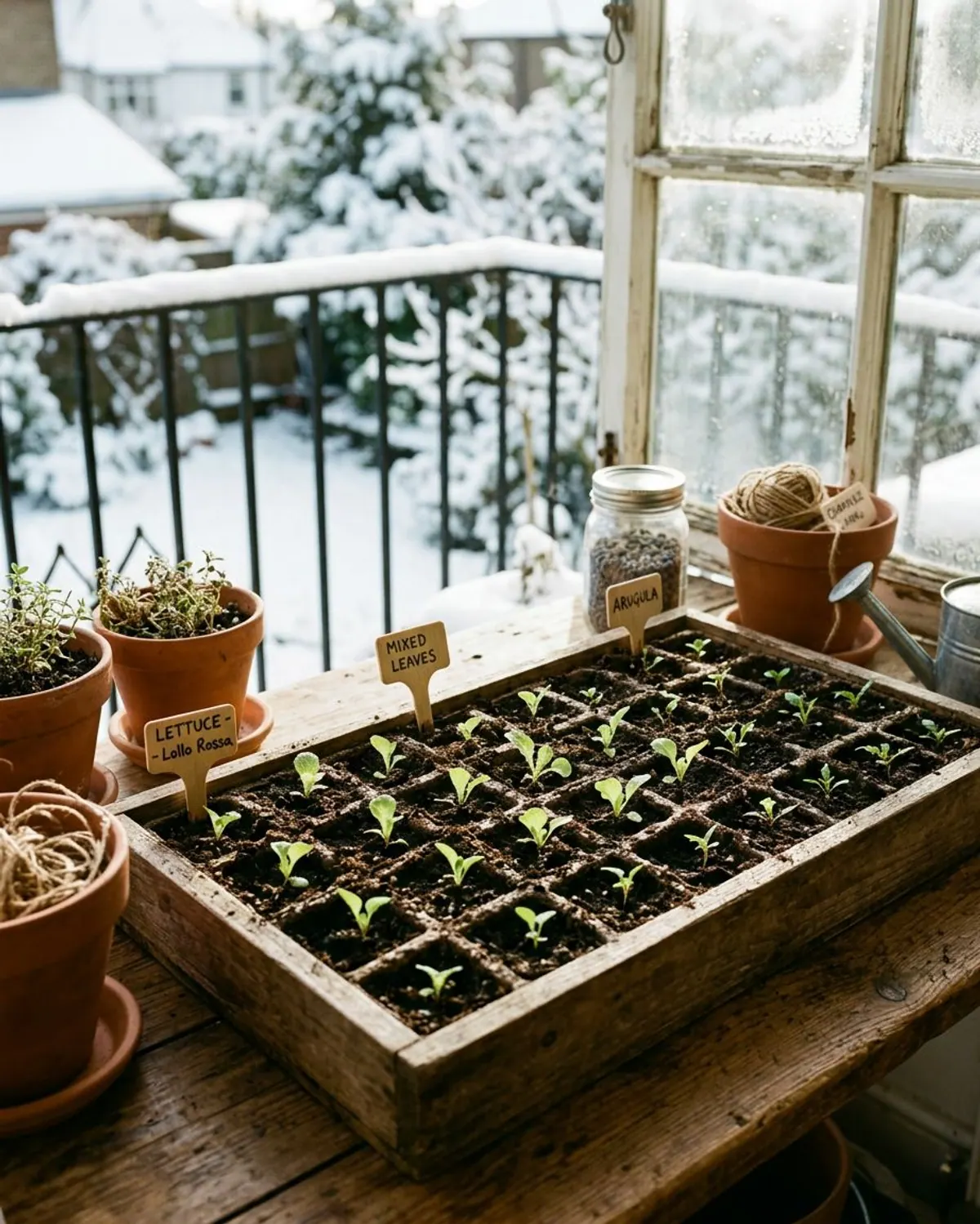
UGA Extension says the mix should be low in fertility, with feeding starting after the first true leaves at half strength. Compost may add microbes but also disease risk, so many gardeners add it later when they pot up.
Store the leftovers and label the trays
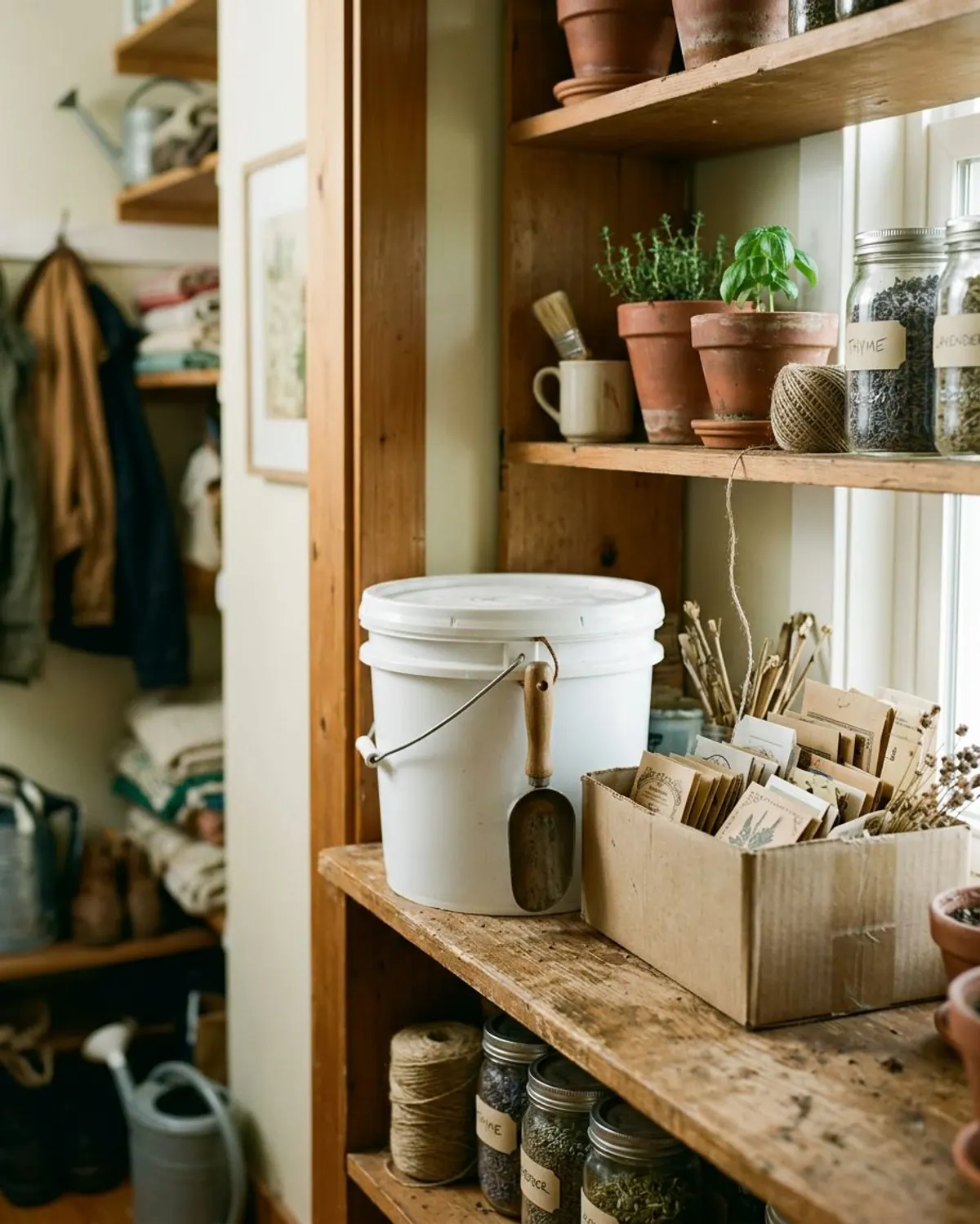
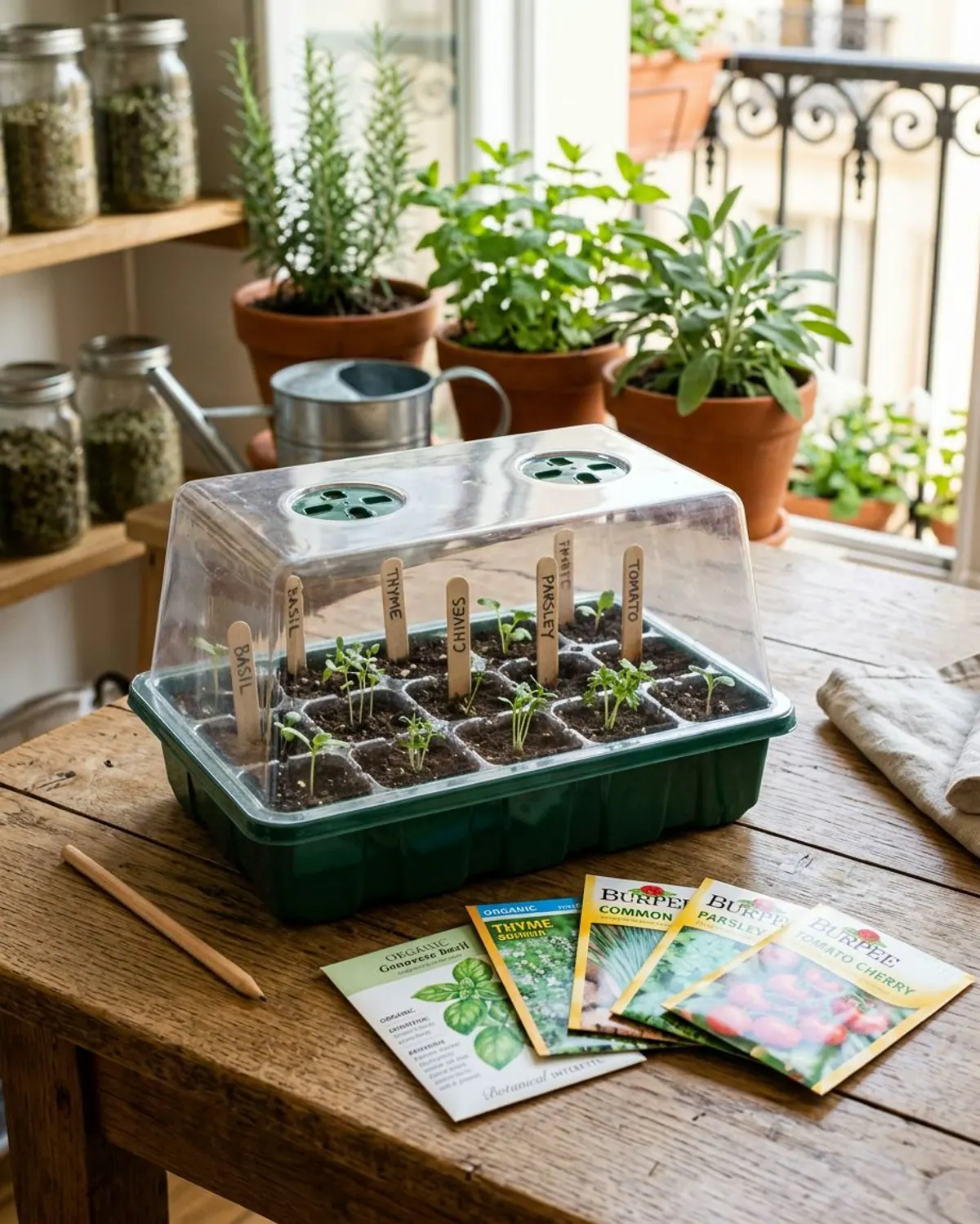
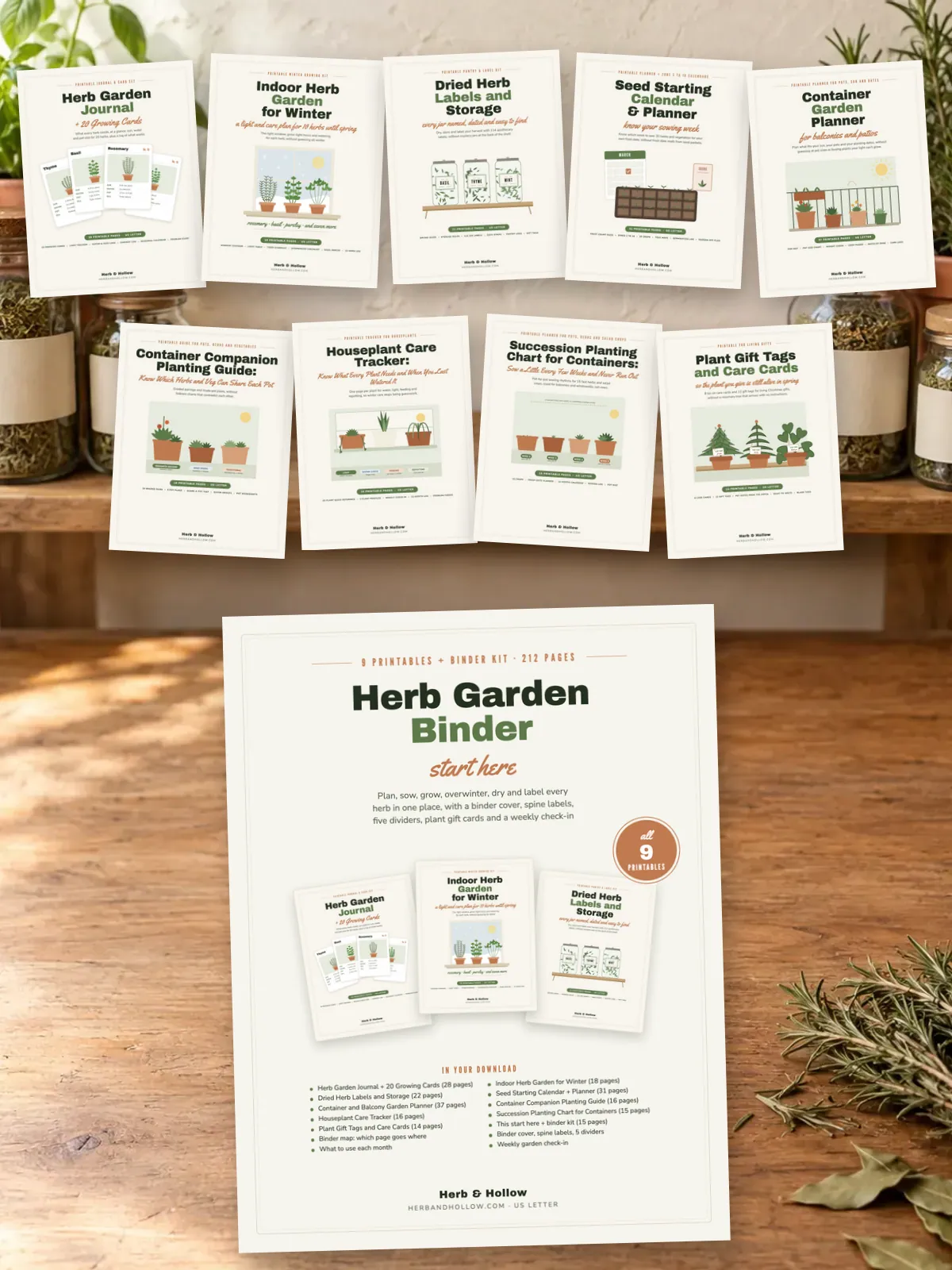
Keep dry leftover mix in a lidded bucket with the ratio on the lid. Moisten only what you will use that day. The Seed Starting Planner and Zone Calendars ($7) logs what you sowed and when, and the Small-Space Garden Binder ($25) keeps it all in one place.
Ingredients and tools for seed starting mix
-
Coco coir brick
Typically $8 to $18
Expands to several quarts
Check price on Amazon for Coco coir brick -
Vermiculite, fine
Typically $10 to $20
Holds water
Check price on Amazon for Vermiculite, fine -
Perlite, fine
Typically $8 to $18
Keeps the mix airy
Check price on Amazon for Perlite, fine -
Bagged seed starting mix
Typically $8 to $20
The no-mess option
Check price on Amazon for Bagged seed starting mix
Frequently asked questions
Can I use potting soil to start seeds?
You can for large seeds, but it is usually too heavy and rich for small seeds. University of Maryland Extension notes large seeds tolerate regular potting mix.
What is the best ratio for DIY seed starting mix?
University of Georgia Extension lists equal parts peat or coir, vermiculite and perlite. Other sources use 2:1:1. There is no single official ratio.
Is coir or peat better for seed starting mix?
UGA Extension calls coir the more sustainable choice. Both hold water and work in the mix.
Do I need to add fertilizer?
Not at first. Feed at half strength after the first true leaves appear.
Can I reuse seed starting mix?
We do not recommend reusing old potting soil for seed starting. Use fresh mix for each tray to limit disease.
Save it for later
Pin this to your Seasonal Garden Tasks board so it's there when you need it.
Save to Pinterest