This post contains affiliate links. As an Amazon Associate we earn from qualifying purchases, at no extra cost to you. Read our disclosure.
Safety first: Herbs can be powerful. If you are pregnant, nursing, take medication or have a health condition, check with your doctor or pharmacist first. Please read our herbal & garden safety notes before you start.
Key takeaways
- Five steps: pick a format, check each packet's year, label every envelope, run one swap sheet, keep the leftovers
- Check the year first: test packets that have reached the age in our table and bring only seed that sprouts 5 or more out of 10
- Label four things: crop, variety, year saved and who it came from, and mark treated seed
- Small is easier: 3 to 10 people can swap at a table, from a shared box or by mail
In this post11 sections
Three seed swap ideas for a small group
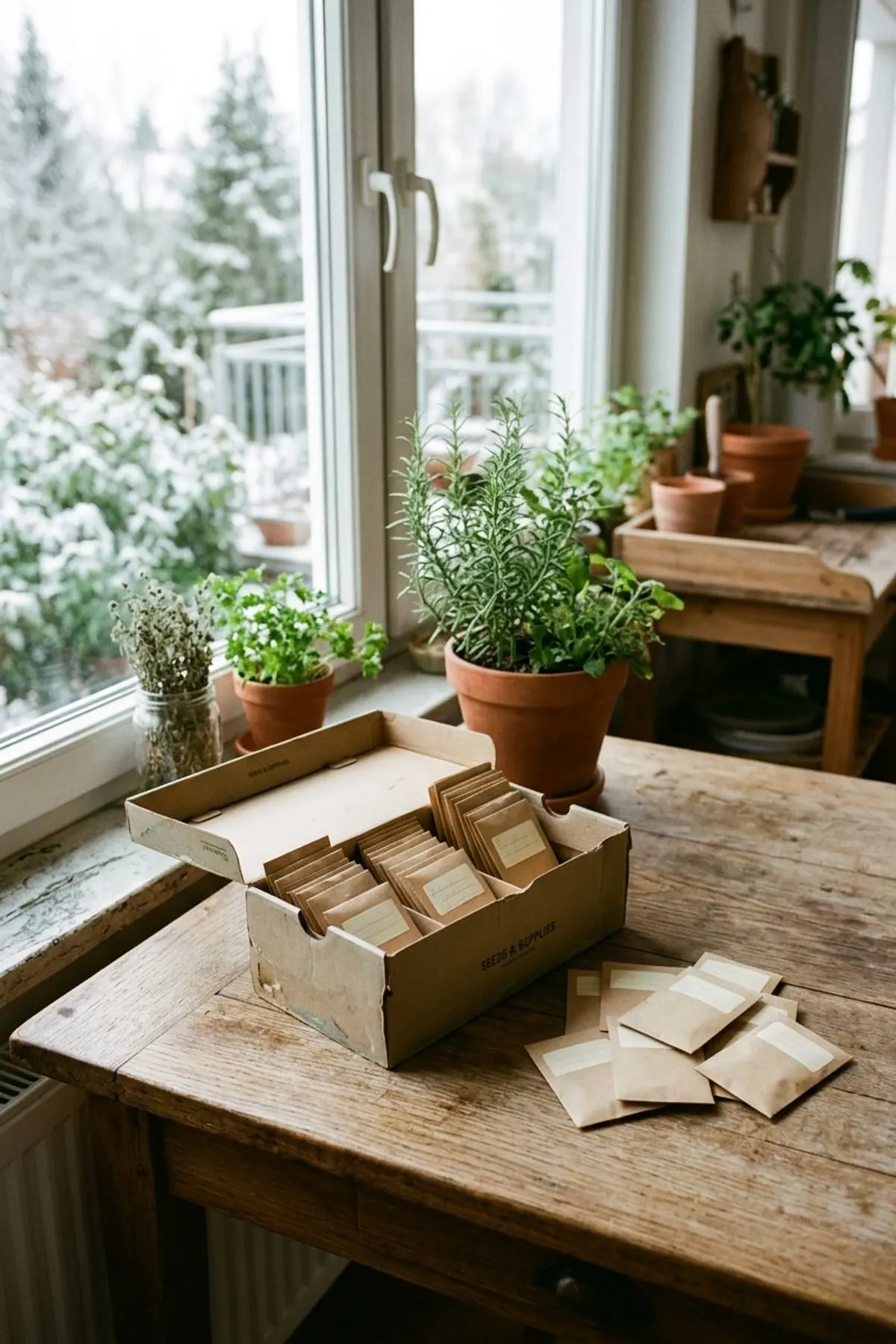
Most seed swap guides are written for a library or a community hall with dozens of strangers. A swap for 3 to 10 people is simpler, and it can be better: you know who is bringing what, so you can talk about how each packet was stored. Pick one of these three formats.
| Format | Works best for | What you need |
|---|---|---|
| Table swap | Friends or a garden group in one apartment | A folding table, envelopes, pencils, a small scoop |
| Lobby or porch box | Neighbors on different schedules (ask the building manager first) | A lidded box, labeled envelopes, a swap sheet taped inside the lid |
| Swap by mail | Online friends or a group spread across towns | Padded mailers, envelopes, stamps, a shared list |

The hosting guides we read agree on the basics. Guests bring seed labeled with the plant name, variety and year harvested, and the host supplies small envelopes, pens and a scoop. What most of them skip for small groups is checking whether old seed still sprouts. That is step 2 below.
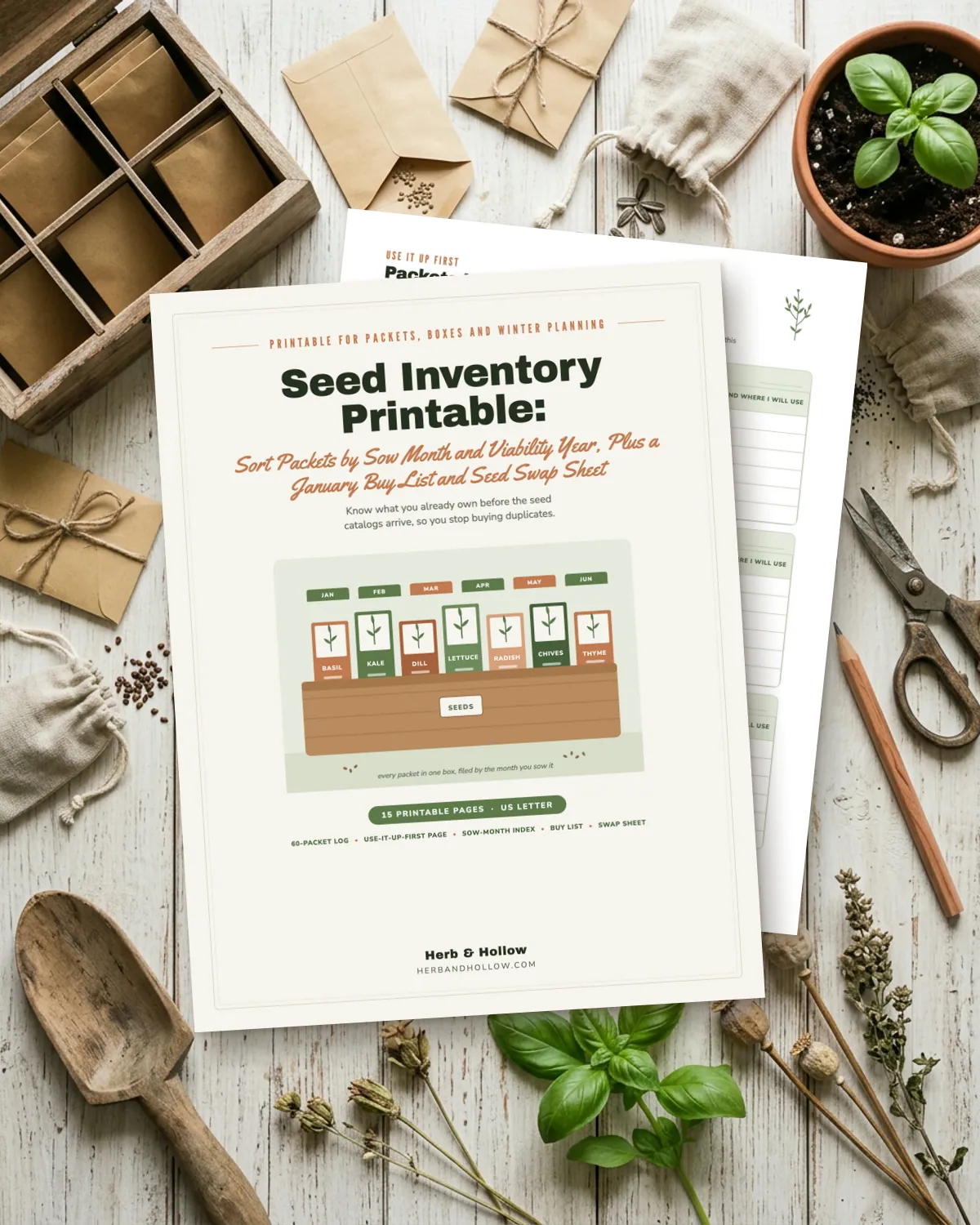
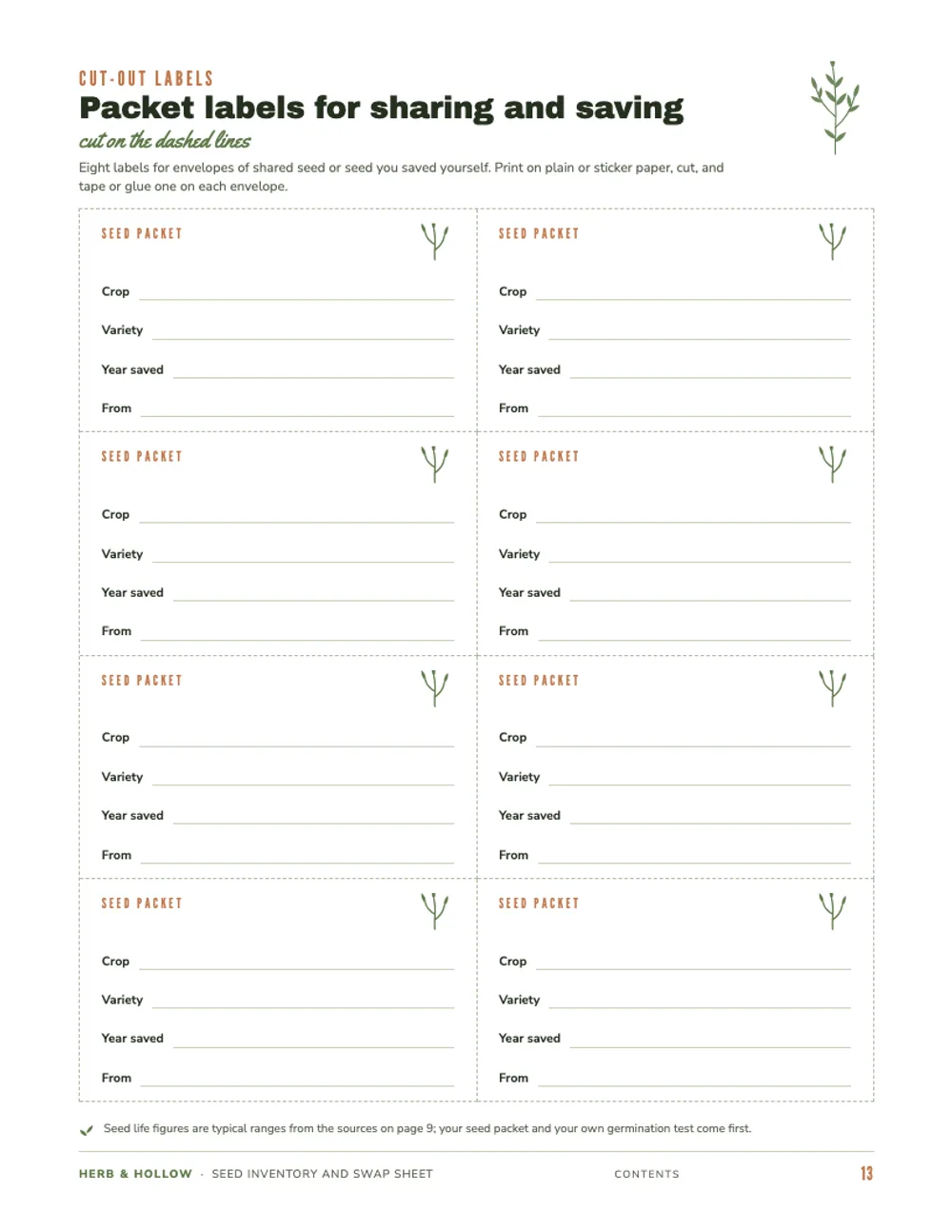
If you would rather not design the paperwork yourself, the Seed Inventory and Swap Sheet ($4) has the one-page swap and share sheet used in step 4, with columns for the year each packet was saved and its test result, plus 8 cut-out labels for the envelopes.
How to host a small seed swap in 5 steps
-
Step 1: Pick the format, the date and the headcount
Choose one of the three formats above. Our suggestion is mid January to early February, after the holidays and before most people start seeds. Ask each guest to bring a few packets they will not use, and put one rule in the invite: check the year first.
-
Step 2: Check each packet's year
Find the year on the packet or in your own notes. If a packet is at or past the test age in the table below, run a 10-seed paper towel test a week before the swap and write the result on the envelope.
-
Step 3: Label every envelope
Write the crop, the variety, the year saved and who it came from. Mark any treated seed so nobody sows it or handles it carelessly.
-
Step 4: Run the swap from one sheet
Everyone lists what they have and what they would like, then trades at the table, at the box or by mail. Log each trade so you know who has which seed.
-
Step 5: Keep what is left
Put leftover packets in a sealed jar with a desiccant, labeled and kept cool and dry, and file them by the month you first sow them.
What to bring: check the year first
A swap is only fair if everyone knows what they are getting. Seed does not expire on a date. It slowly loses the share that will sprout, and the rate depends on the crop and on how the packet was stored. Our seed shelf life chart has the ranges for 30 herbs and vegetables. For a swap, use this shorter rule and test any packet that has reached the age below.
| Crop | Test it at (our rule) |
|---|---|
| Tomato | 3 years |
| Pepper | 2 years |
| Basil | 3 years |
| Lettuce | 1 year |
| Onion | 1 year |
| Cilantro | 1 year |
| Dill | 1 year |
| Parsley | 1 year |
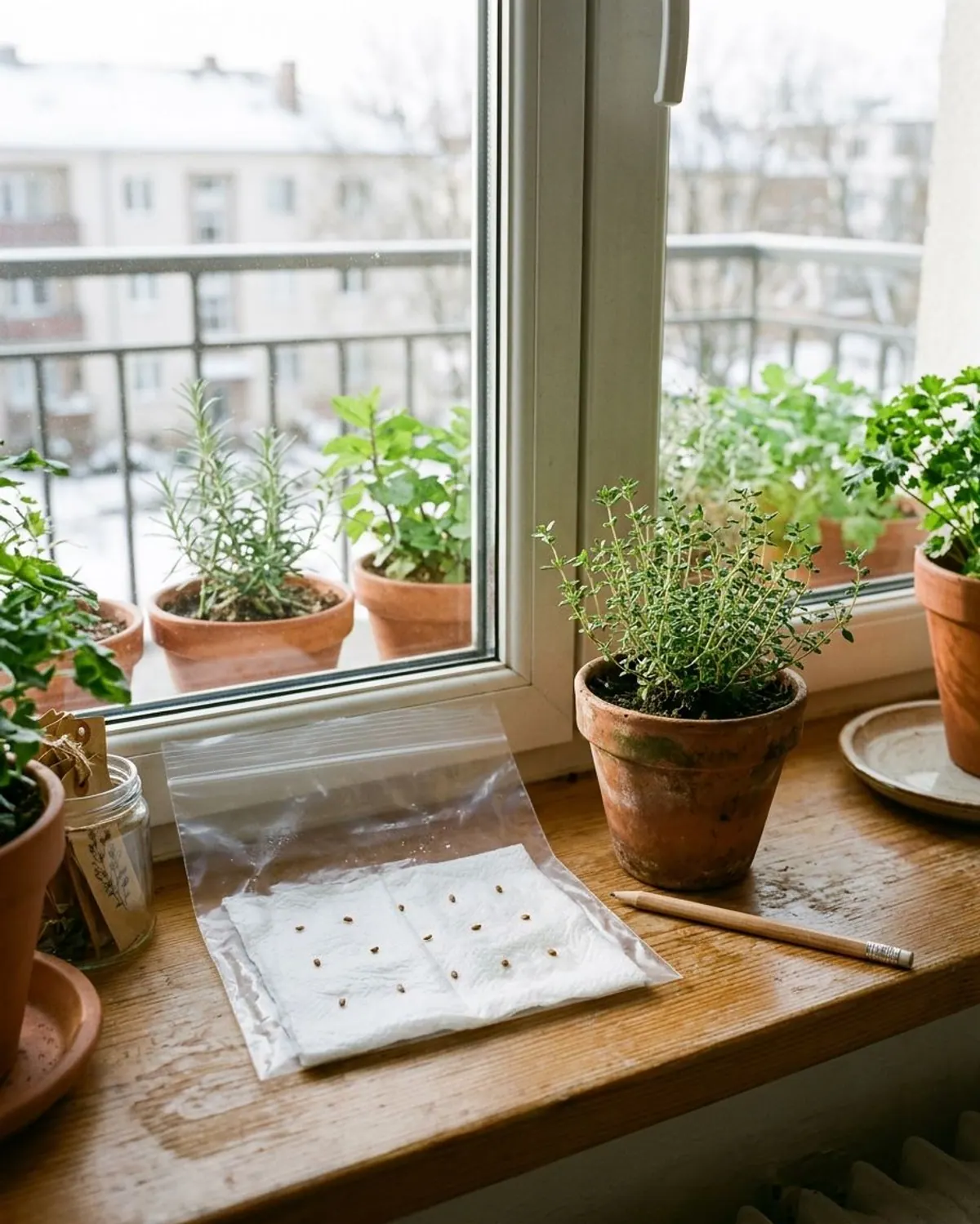
The test takes ten seeds. Lay them on a damp paper towel, slide it into a zip bag, keep it warm and count how many grow a tiny white root. Eight out of ten is an 80 percent packet. The full method is in our 10-seed paper towel test. Bring seed that sprouts 5 or more out of 10, write the number on the envelope, and keep the rest at home.
Label every envelope
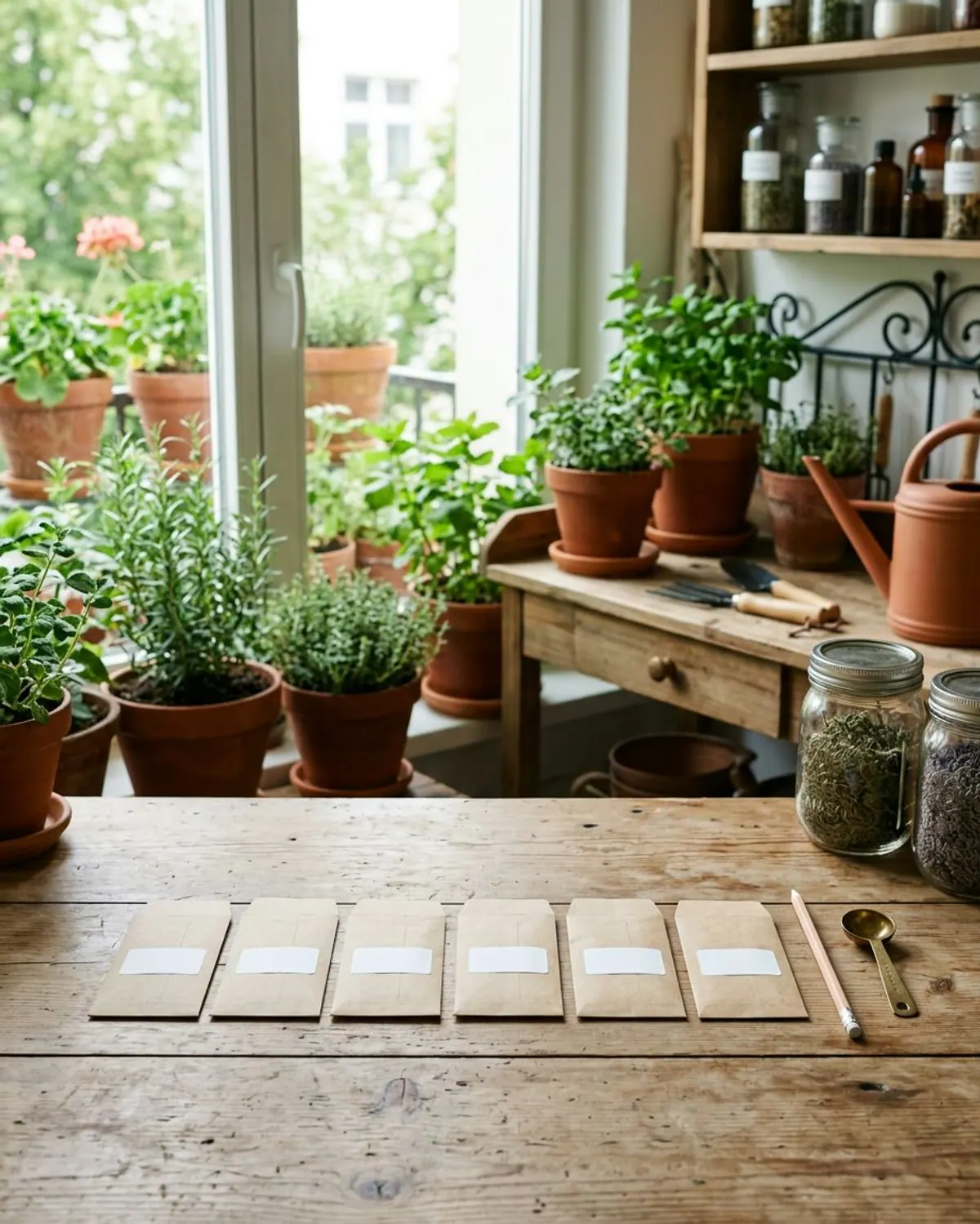
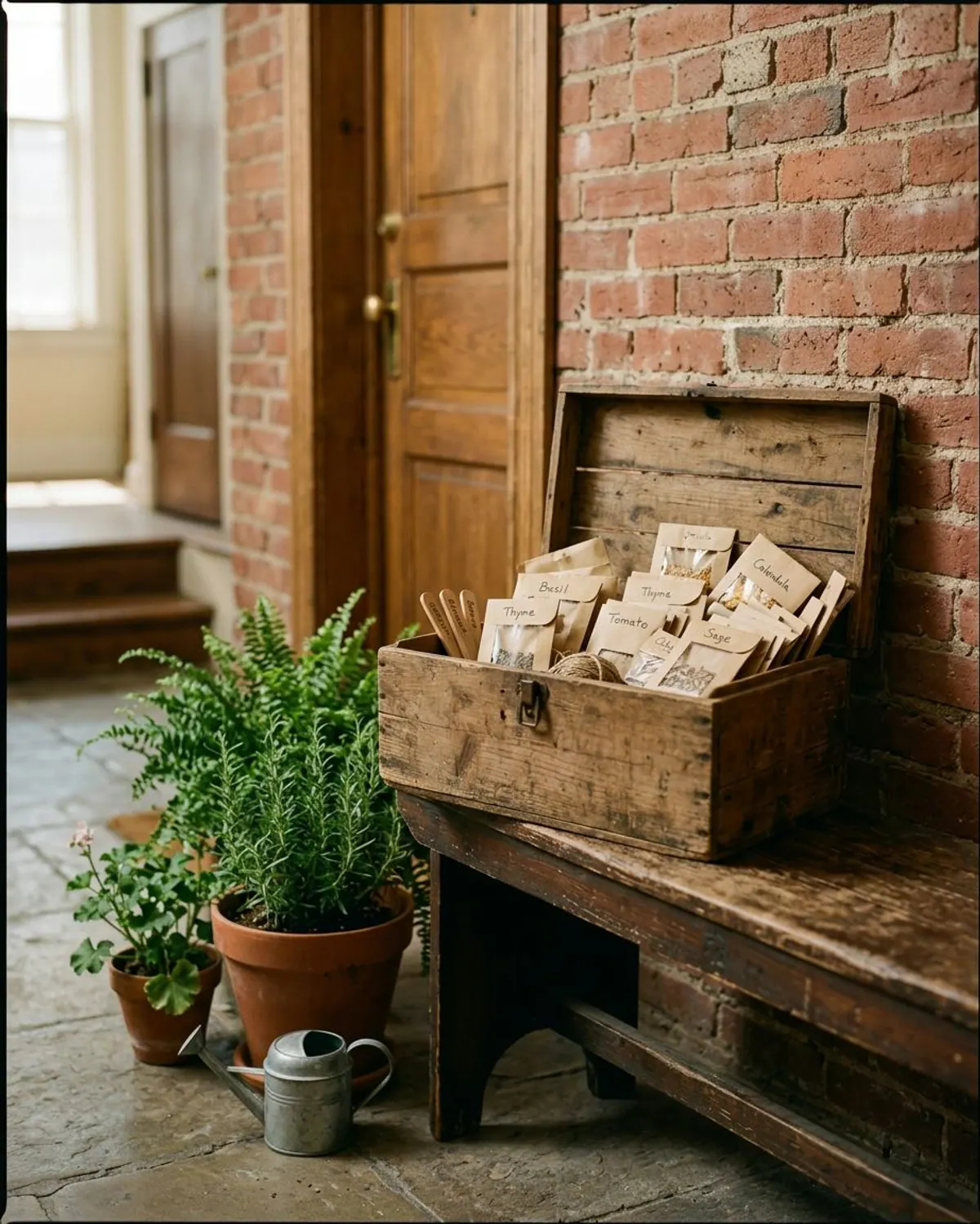
Every envelope gets four lines: crop, variety, year saved and who it came from. The year is the one people forget, and it is the one the next gardener needs most. Write in pencil, since it does not run if a label gets damp.
Run the swap from one sheet
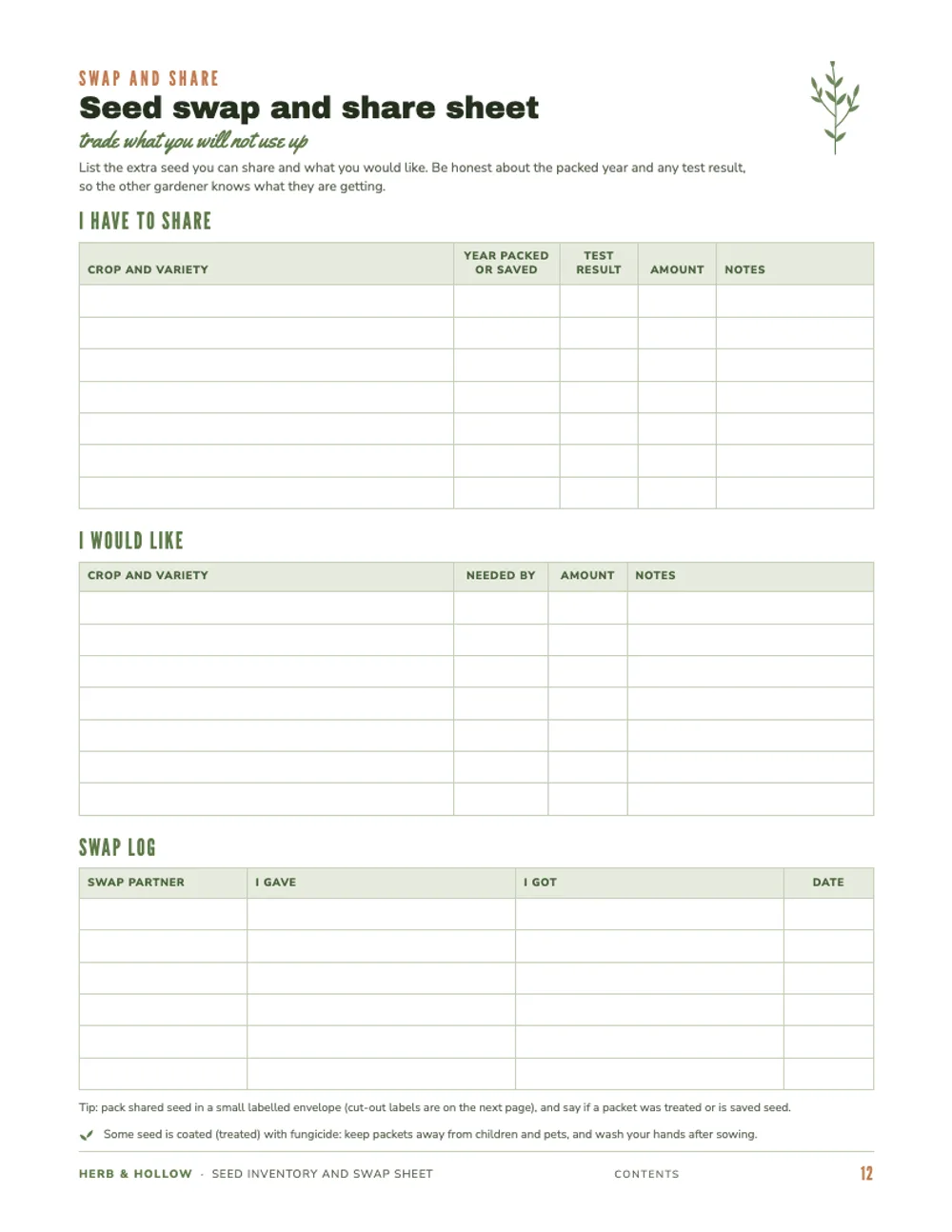
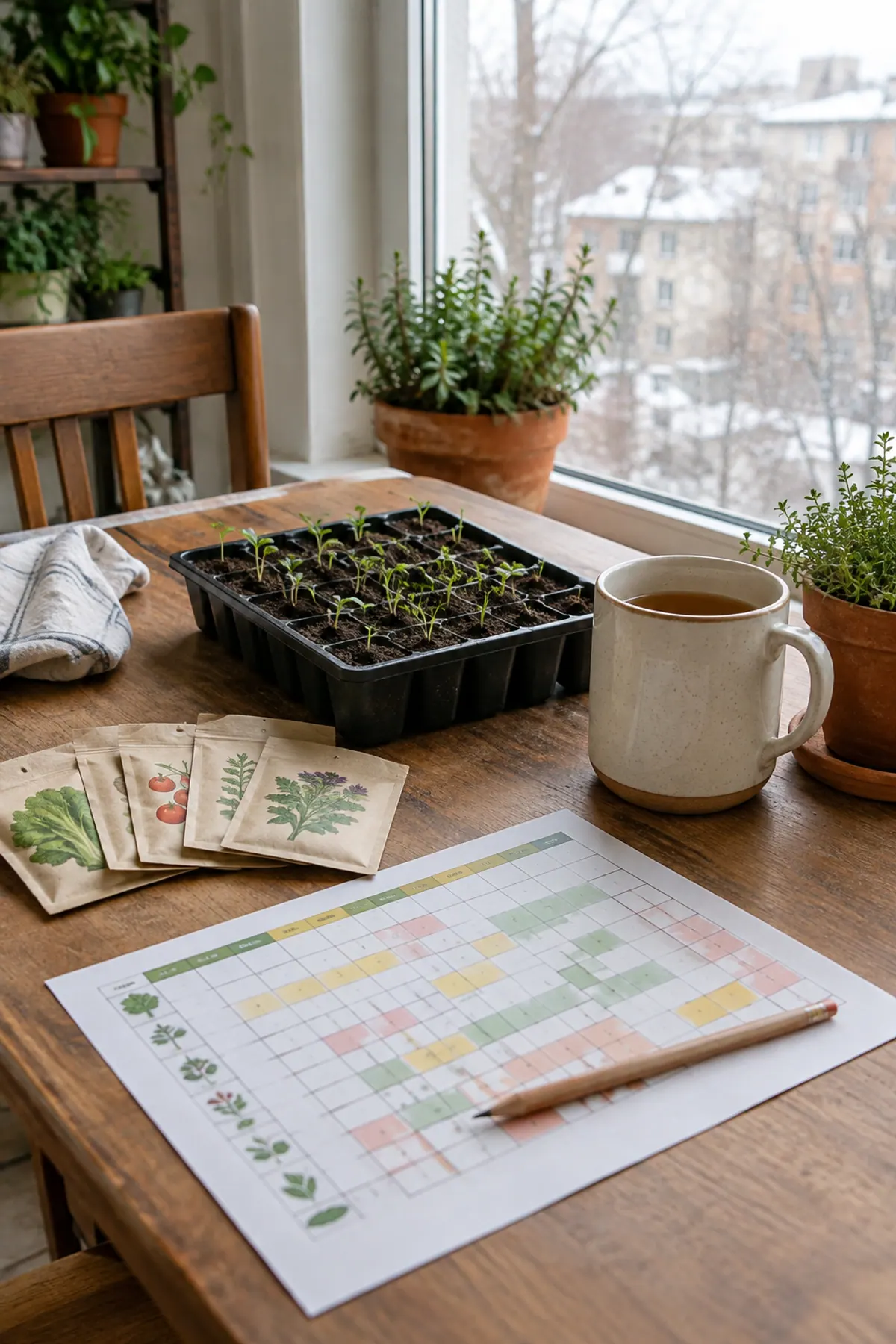
One sheet keeps a small swap calm. Each guest fills in "I have to share" with the crop and variety, the year packed or saved, the test result and the amount, and "I would like" with the crop, when they need it and the amount. As trades happen, each one goes into the swap log: who you traded with, what you gave, what you got and the date.
At a table, read each person's "I have" list aloud, then let people pair up. Split big packets into small envelopes before guests arrive, which the guides we read say speeds things up.

By mail, share the lists in a group message first and match the trades. Each person then posts their envelopes flat in a padded mailer. Check the rules for mailing seed in your country or state before you post across a border. In a building, tape the sheet inside the lid of the box and ask neighbors to log what they take and what they leave.
Swap-day checklist
Keep what is left
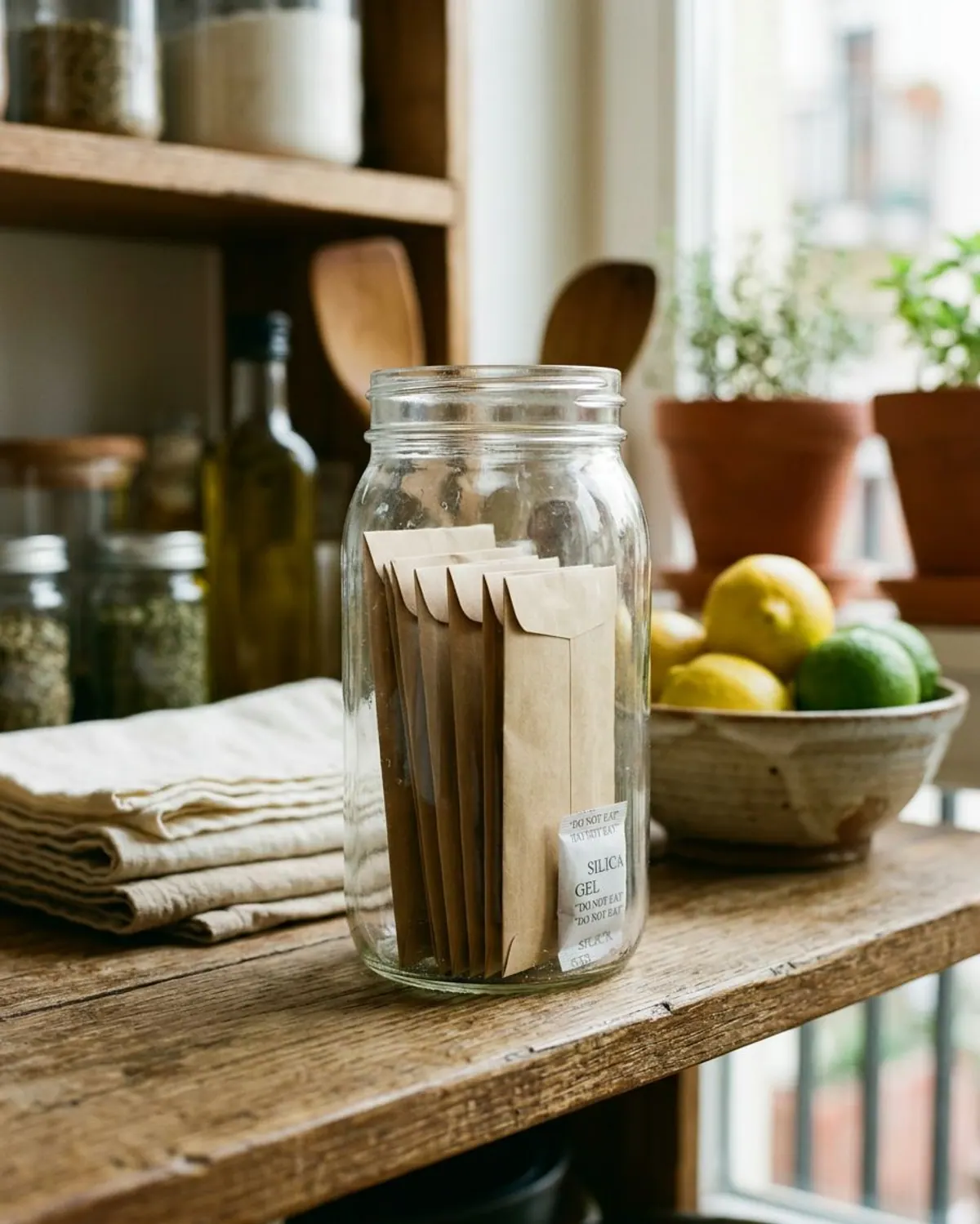
Whatever is left goes into a sealed glass jar with a desiccant packet, labeled with the crop and the date, in a cool, dry spot. Colorado State Extension recommends sealed cans or jars rather than plastic bags, and Johnny's Selected Seeds suggests the refrigerator. Keep the desiccant away from children and pets, because it is not for eating.
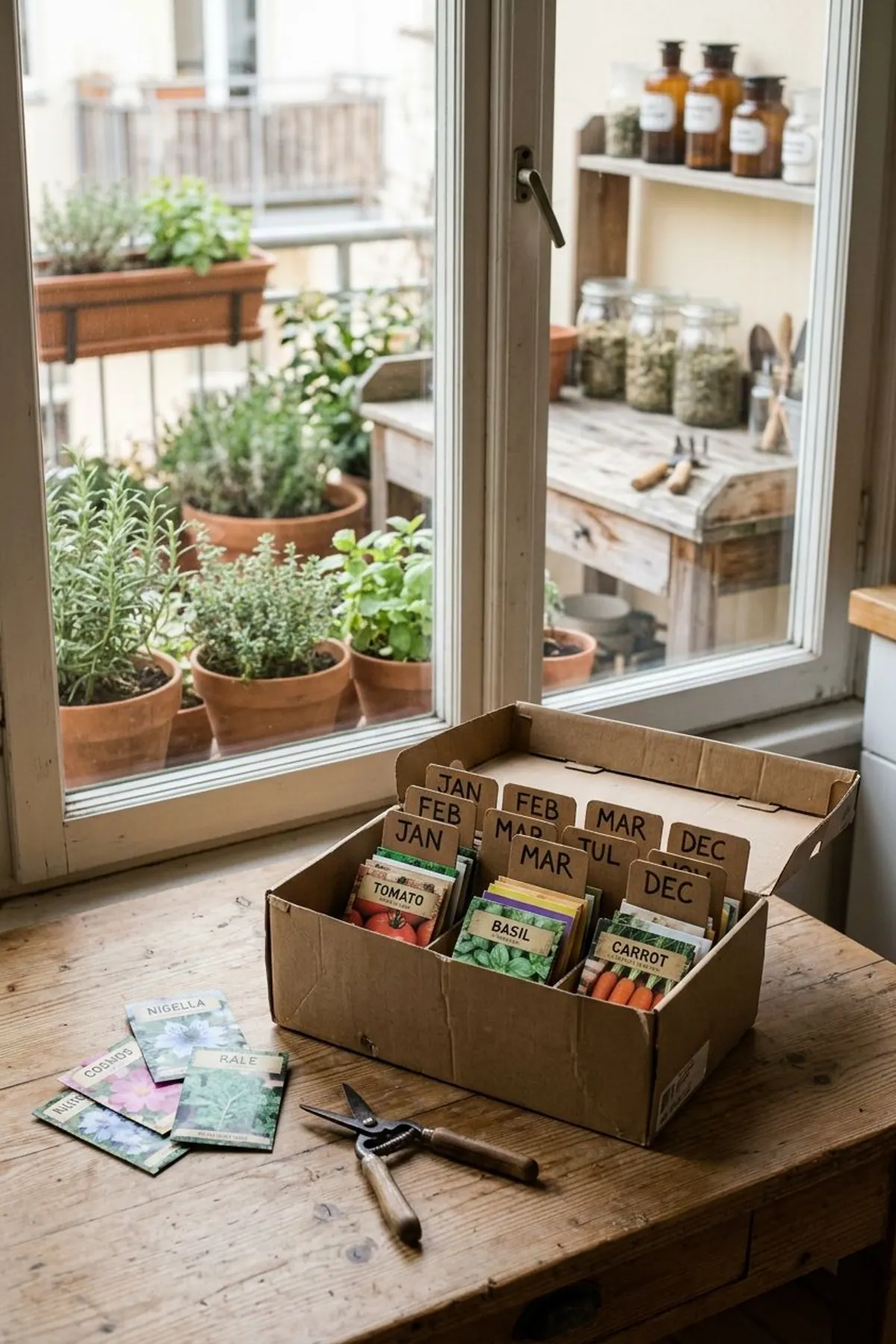
Then file the packets by the month you first sow them with our seed organizer ideas, so a January swap turns into a February sowing list. Our seed starting calendar by zone and when to start seeds indoors give the dates, and the January garden checklist covers the rest of the month.
Seed swap mistakes to avoid
| Mistake | Fix |
|---|---|
| No year on the envelope | Add the year saved to every label before the swap |
| Bringing old seed untested | Run the 10-seed test and write the result on the envelope |
| Mixing treated and untreated seed | Mark treated seed and keep it in its own pile |
| Trading with no record | Log each trade on the swap sheet |
| Storing leftovers in a loose bag | Use a sealed jar with a desiccant |

Your next step: a swap sheet and labels
The hard part of a small swap is not the seed, it is knowing what is in each envelope and how old it is. The Seed Inventory and Swap Sheet ($4) gives you the one-page swap and share sheet with year and test result columns, a swap log and 8 cut-out labels, plus a 60-packet inventory that tells you which seed to use first.
If you want the seed pages next to the rest of your garden planning, the Small-Space Garden Binder ($25) keeps our paid printables in one place. Use code HERB20 for 20% off.
Supplies for a small seed swap
Supplies for a small seed swap
- Start here
Kraft coin envelopes, small
One envelope per portion of seed.
Check price on Amazon for Kraft coin envelopes, small -
Small adhesive labels
A patch for crop, variety and year.
Check price on Amazon for Small adhesive labels -
Mini scoop or measuring spoons
For splitting big packets fairly.
Check price on Amazon for Mini scoop or measuring spoons -
Small padded mailers
For a swap by mail.
Check price on Amazon for Small padded mailers -
Glass jars with lids
Sealed storage for leftovers.
Check price on Amazon for Glass jars with lids -
Silica gel desiccant packets
Keeps the jar dry. Keep away from children and pets; do not eat.
Check price on Amazon for Silica gel desiccant packets
Sources
Holmes Seed, What is a seed treatment?. Colorado State University Extension, Saving and Storing Vegetable and Flower Seeds. Johnny's Selected Seeds, Seed Viability and Seed Storage Guidelines. The test ages, the swap format and the suggested dates are our own rules of thumb. Hosting details come from public seed swap guides we read, which do not give dates.
We earn from qualifying purchases. Read our disclosure and editorial guidelines.
Frequently asked questions
How do you host a small seed swap?
Pick a format (table, shared box or mail), ask guests to bring labeled seed, check each packet's year, run the trades from one sheet and keep what is left in a sealed jar. For 3 to 10 people, one table and one sheet are enough.
What should you bring to a seed swap?
A few packets you will not use, in small envelopes labeled with the crop, variety and year saved. Test any packet that has reached the age in our table and write the result on the envelope.
How do you label seeds for a swap?
Write the crop, the variety, the year saved and who it came from. Add a note if the seed was treated or saved from your own plants. Use pencil so the label survives damp hands.
Can you swap seeds by mail?
Yes. Match trades from shared lists first, then post flat envelopes in a padded mailer. Check the rules for mailing seed in your country or state before posting across a border.
Is old seed safe to swap?
Old seed is fine to share if it still sprouts and the envelope says how old it is. Run the 10-seed paper towel test and bring packets that sprout 5 or more out of 10. Treated seed is a separate matter: mark it and keep it away from children and pets.
How many people do you need for a seed swap?
Three is enough to start and ten fills a table. A small group lets you talk about how each packet was stored, which large swaps rarely allow.
Save it for later
Pin this to your Seasonal Garden Tasks board so it's there when you need it.
Save to Pinterest