This post contains affiliate links. As an Amazon Associate we earn from qualifying purchases, at no extra cost to you. Read our disclosure.
Safety first: Herbs can be powerful. If you are pregnant, nursing, take medication or have a health condition, check with your doctor or pharmacist first. Please read our herbal & garden safety notes before you start.
Key takeaways
- Every seed start date is counted back from your local last frost date, not from the zone alone.
- Slow crops like celery, onions and peppers start 8 to 12 weeks early; lettuce and cucumbers only 3 to 5.
- Beans, peas, carrots, radishes and beets are usually sown straight outdoors.
- In zone 5, most indoor sowing falls from mid-March to mid-April.
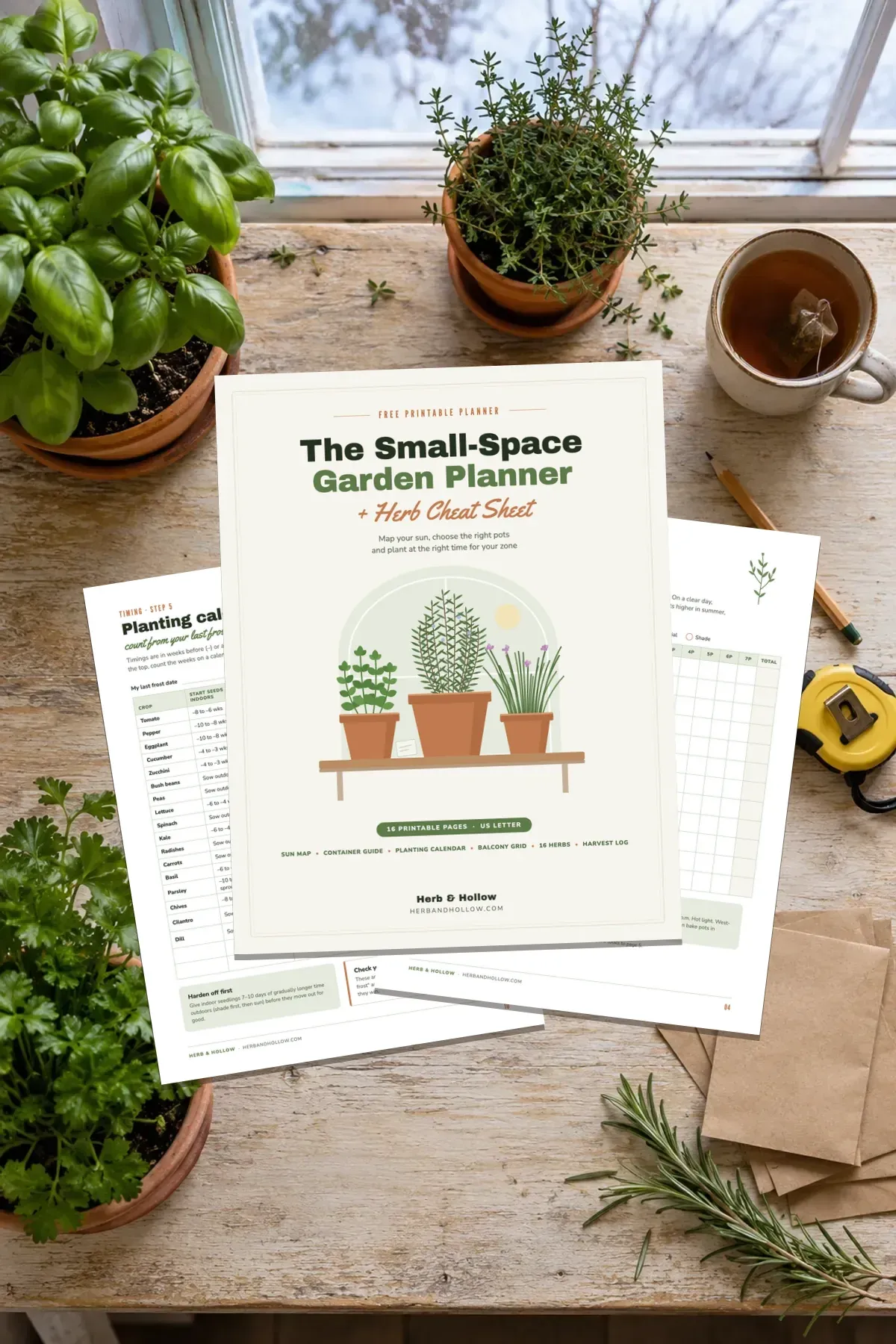
- The free planner has a fill-in planting calendar page.
In this post8 sections
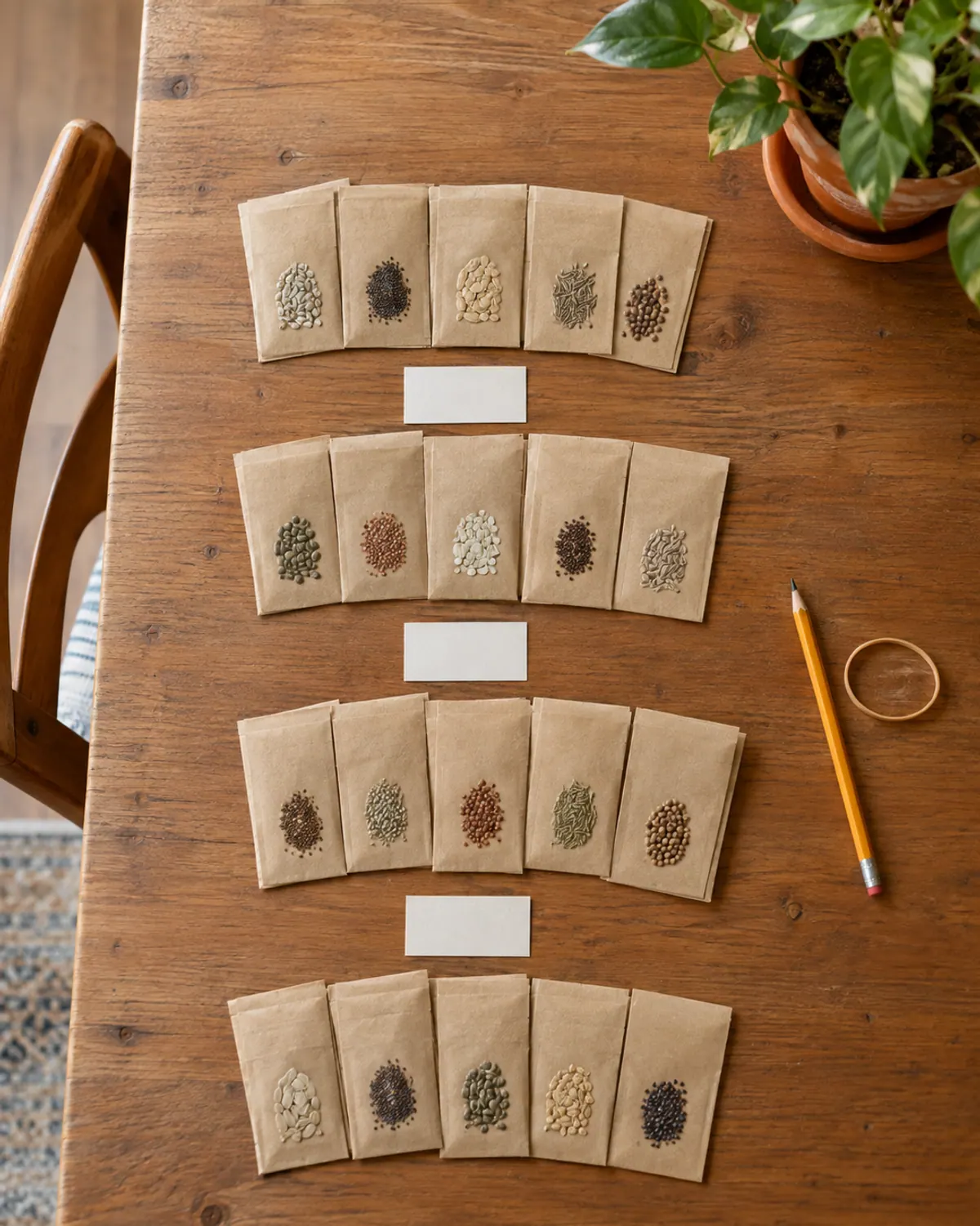
How a seed starting calendar works
Every seed starting date is counted backward from your last spring frost date. Seed packets and the Old Farmer's Almanac give a number of weeks before that date, and you count back on a calendar. Your zone only helps you guess the frost date; the date itself is what you plan around.
That is why one chart for a whole zone is never quite right. Two towns in zone 6 can have last frosts weeks apart, so look up the date for your own zip code and treat it as an average, not a promise.
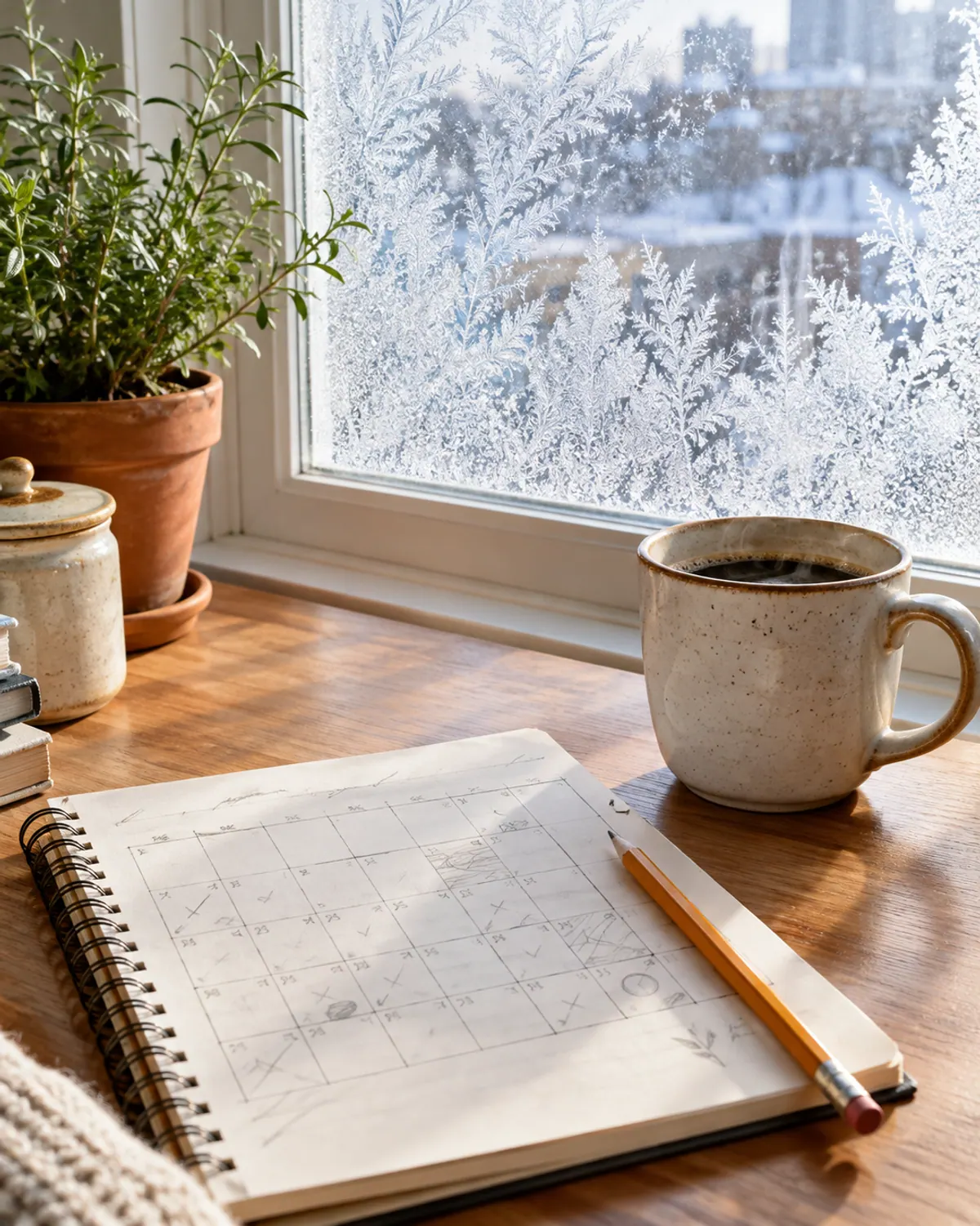
Weeks to start seeds indoors before the last frost
These ranges come from the Old Farmer's Almanac and common seed packet guidance. Check your packets too, since varieties differ.
| Crop | Start indoors | Notes |
|---|---|---|
| Celery | 10 to 12 weeks | Slow and fussy; start first |
| Onions and leeks | 8 to 10 weeks | Trim tops to keep them sturdy |
| Eggplant | 8 to 10 weeks | Needs warmth to sprout |
| Peppers | 8 weeks | Slow to germinate; a heat mat helps |
| Tomatoes | 6 to 8 weeks | The most common starter |
| Basil | 6 to 8 weeks | Do not plant out until nights stay warm |
| Chives and thyme | 10 to 12 weeks | Small, slow seedlings |
| Parsley | 6 to 10 weeks | Slow to sprout, up to 3 weeks |
| Broccoli, cabbage, cauliflower, kale | 4 to 6 weeks | Cool-season; can go out before the last frost |
| Lettuce | 4 to 5 weeks | Or sow straight into pots outside |
| Cucumbers and squash | 3 to 4 weeks | Fast; roots dislike disturbance |
| Beans, peas, carrots, radishes, beets | Sow outdoors | Direct sow; they transplant poorly |
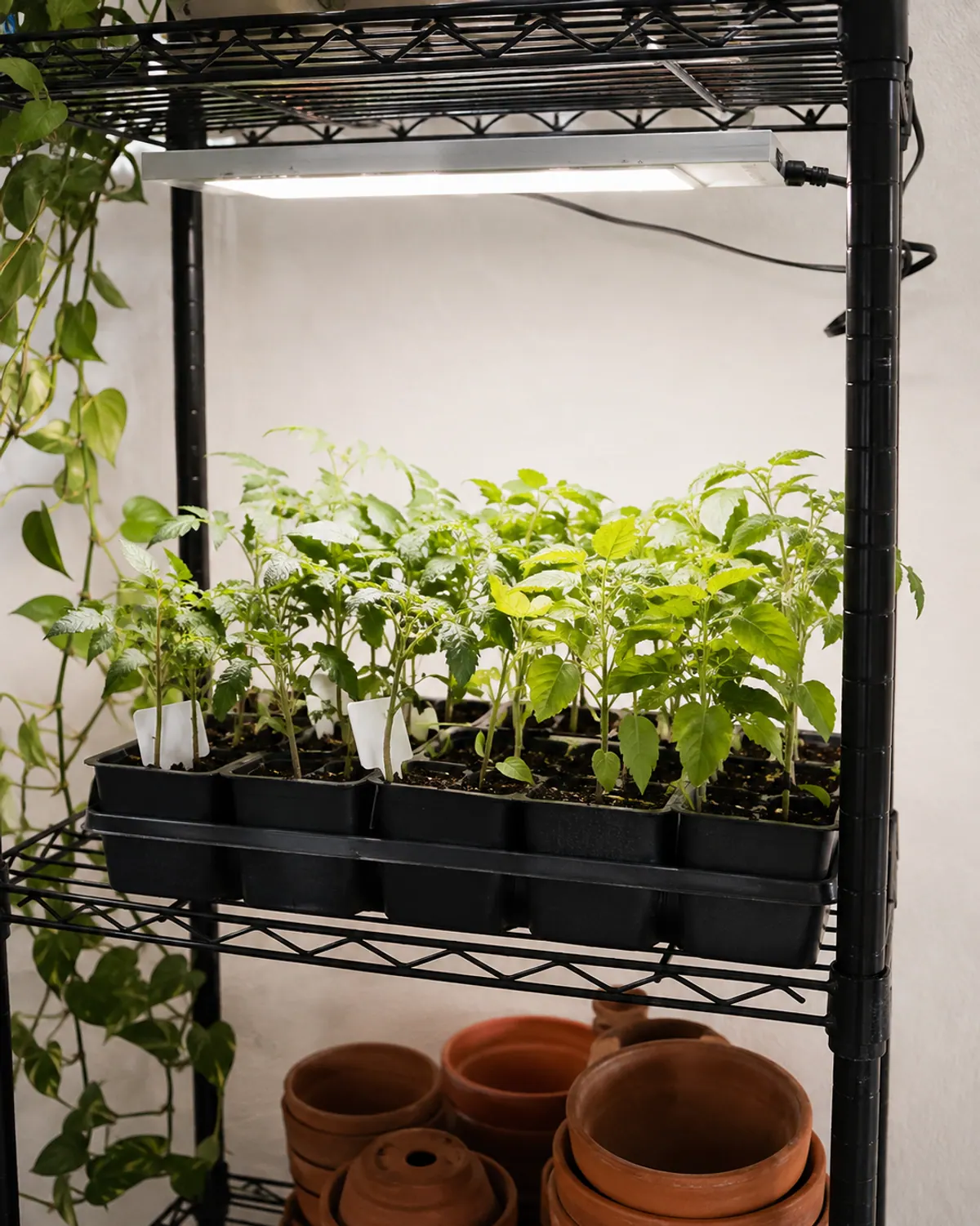
Seed starting calendar examples for zones 5, 6 and 7
Here is the table counted out for three sample last frost dates. Swap in your own date; the gaps stay the same.
| Crop | Zone 5 example, last frost May 10 | Zone 6 example, last frost Apr 20 | Zone 7 example, last frost Apr 5 |
|---|---|---|---|
| Celery, chives, thyme | Feb 15 to Mar 1 | Jan 26 to Feb 9 | Jan 11 to Jan 25 |
| Peppers | Mar 15 | Feb 23 | Feb 8 |
| Tomatoes and basil | Mar 15 to Mar 29 | Feb 23 to Mar 9 | Feb 8 to Feb 22 |
| Broccoli and cabbage | Mar 29 to Apr 12 | Mar 9 to Mar 23 | Feb 22 to Mar 8 |
| Lettuce | Apr 5 to Apr 12 | Mar 16 to Mar 23 | Mar 1 to Mar 8 |
| Cucumbers | Apr 12 to Apr 19 | Mar 23 to Mar 30 | Mar 8 to Mar 15 |
Want dates for every zone from 3 to 10, plus why two well-known charts disagree for the same zone? See when to start seeds indoors by zone.
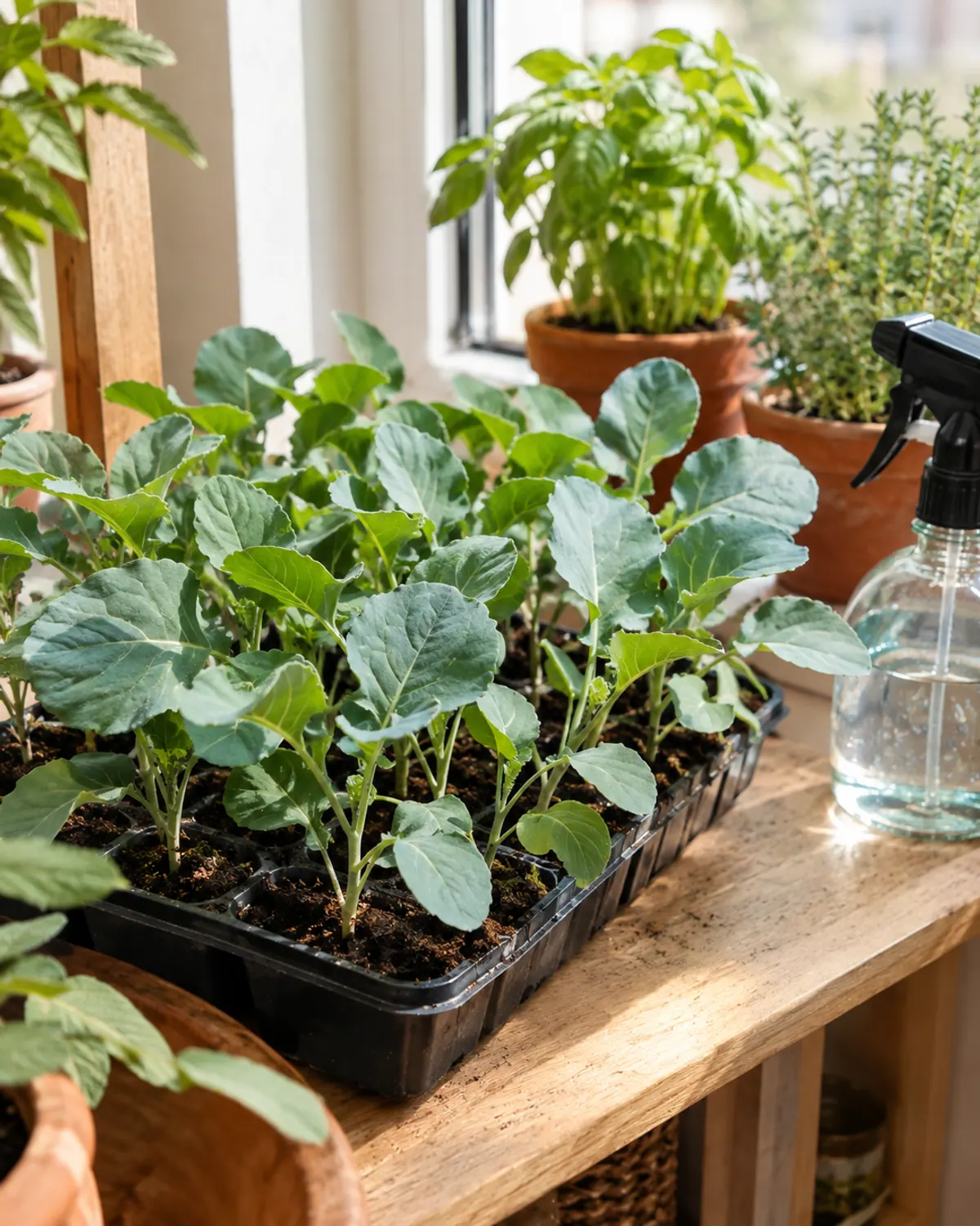
The free printable seed starting calendar
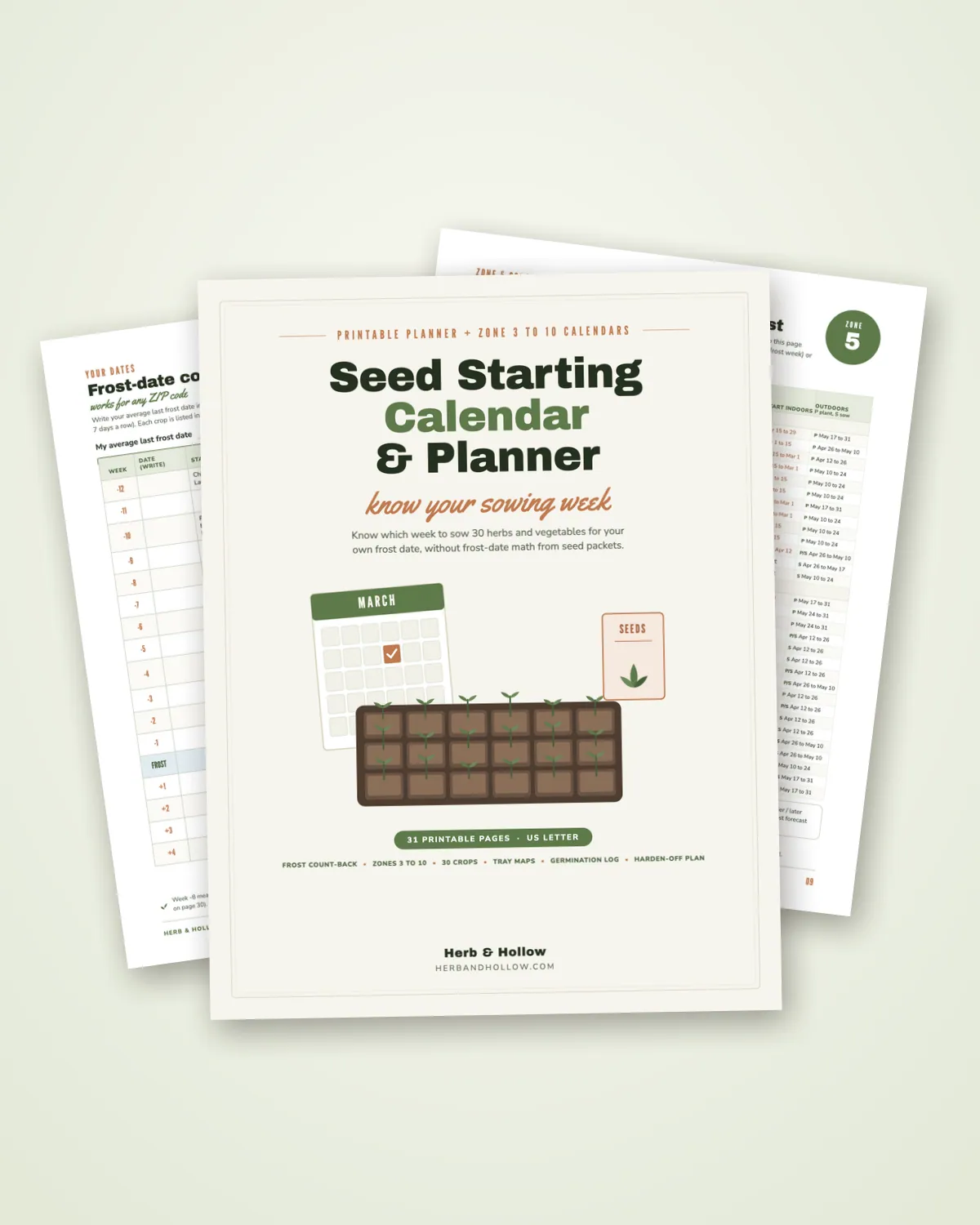
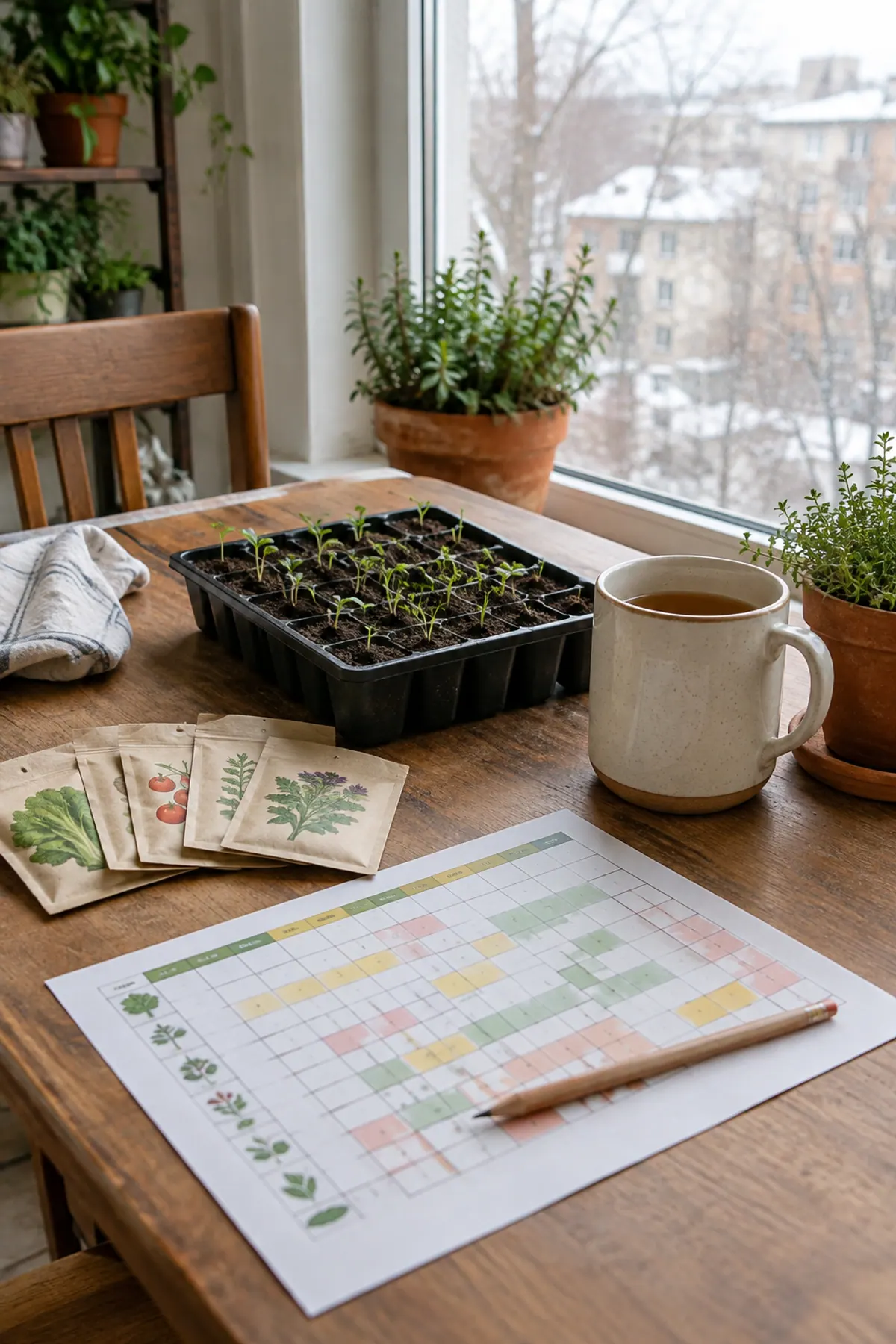
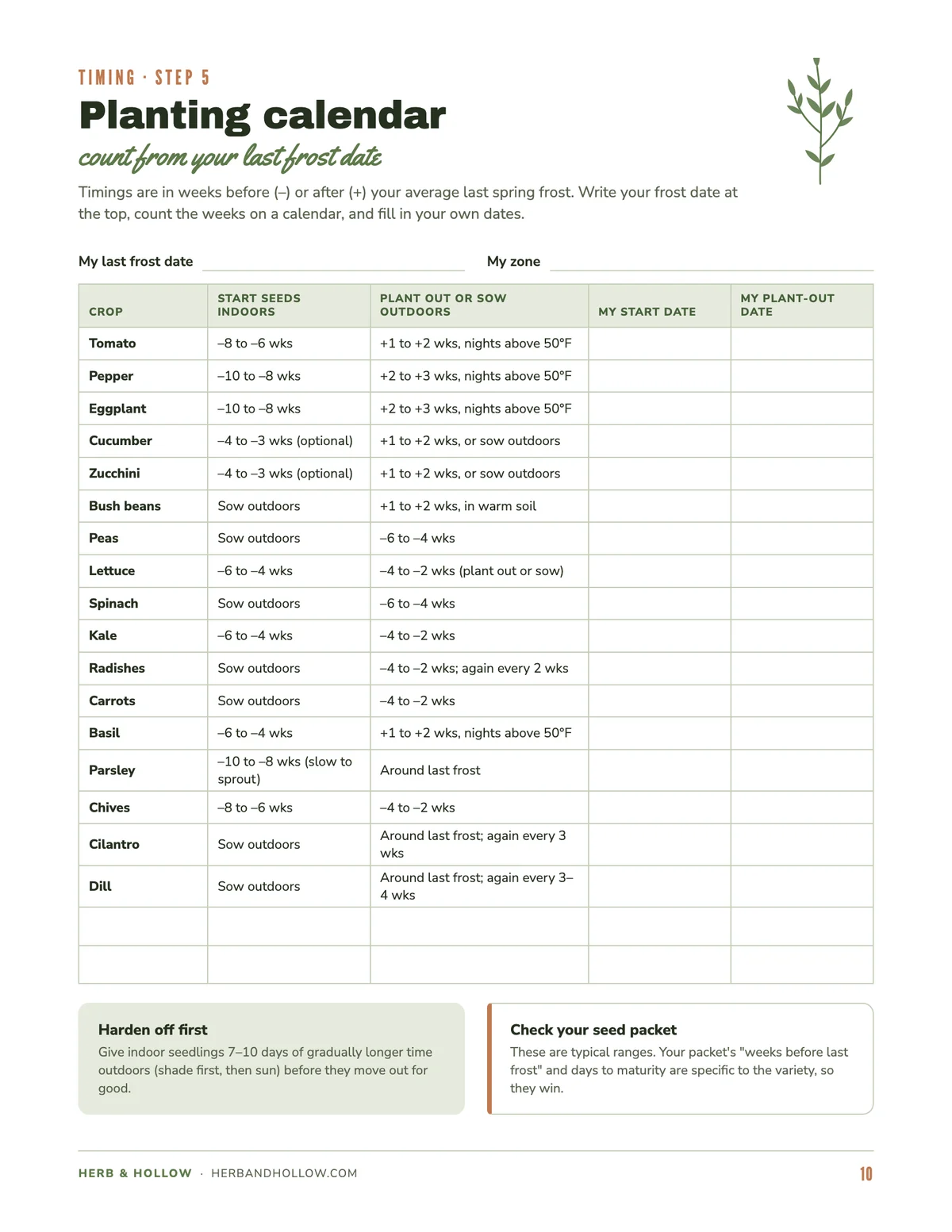
Our free garden planner includes a planting calendar page with the crops above already listed. You write your last frost date at the top, then fill in the start indoors and plant out dates for each crop. It sits next to a sun tracker and a container size guide, so the whole small-space plan lives in one place.
Herbs on the calendar
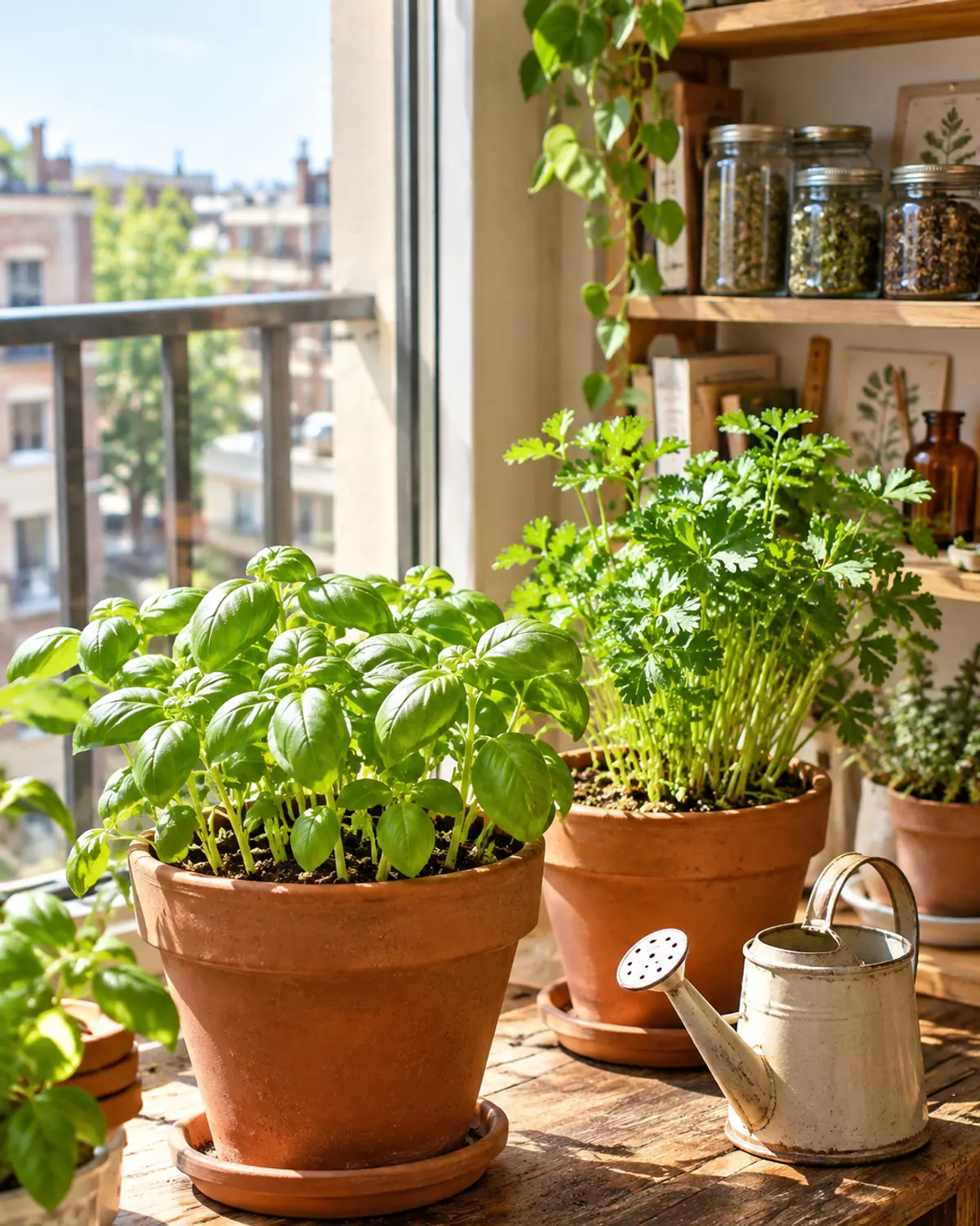
Annual herbs like basil, dill and cilantro grow fast, usually 4 to 8 weeks indoors, and dill and cilantro often do better sown straight into pots. Perennial herbs like thyme, chives and oregano are slow from seed, around 10 to 12 weeks, and many gardeners grow oregano and rosemary from cuttings or nursery plants instead.
If you track herbs year to year, the paid herb journal has 20 herb cards with sowing, light and harvest notes, plus growing logs to record what you started and when.
Small-space tips for following the calendar
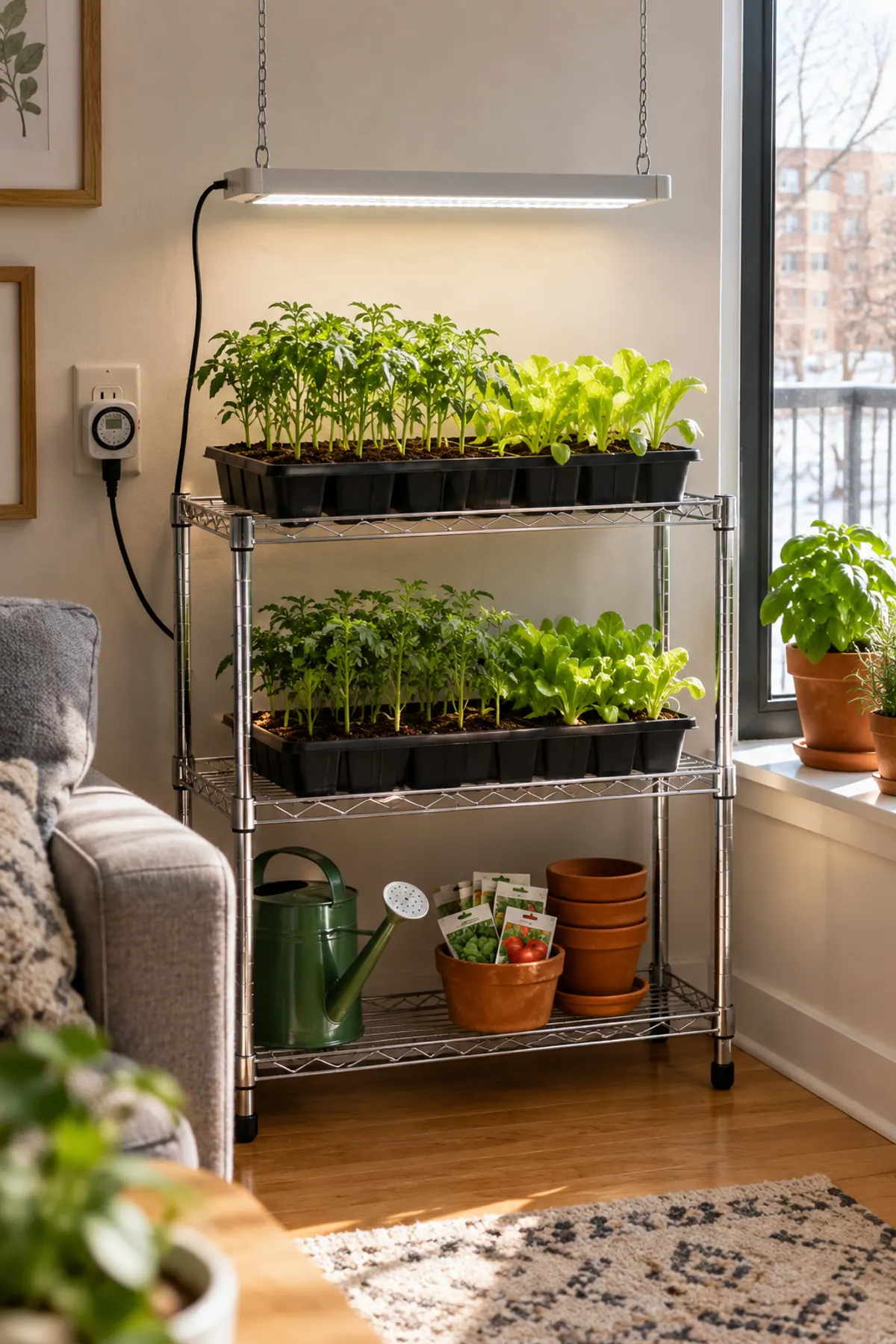
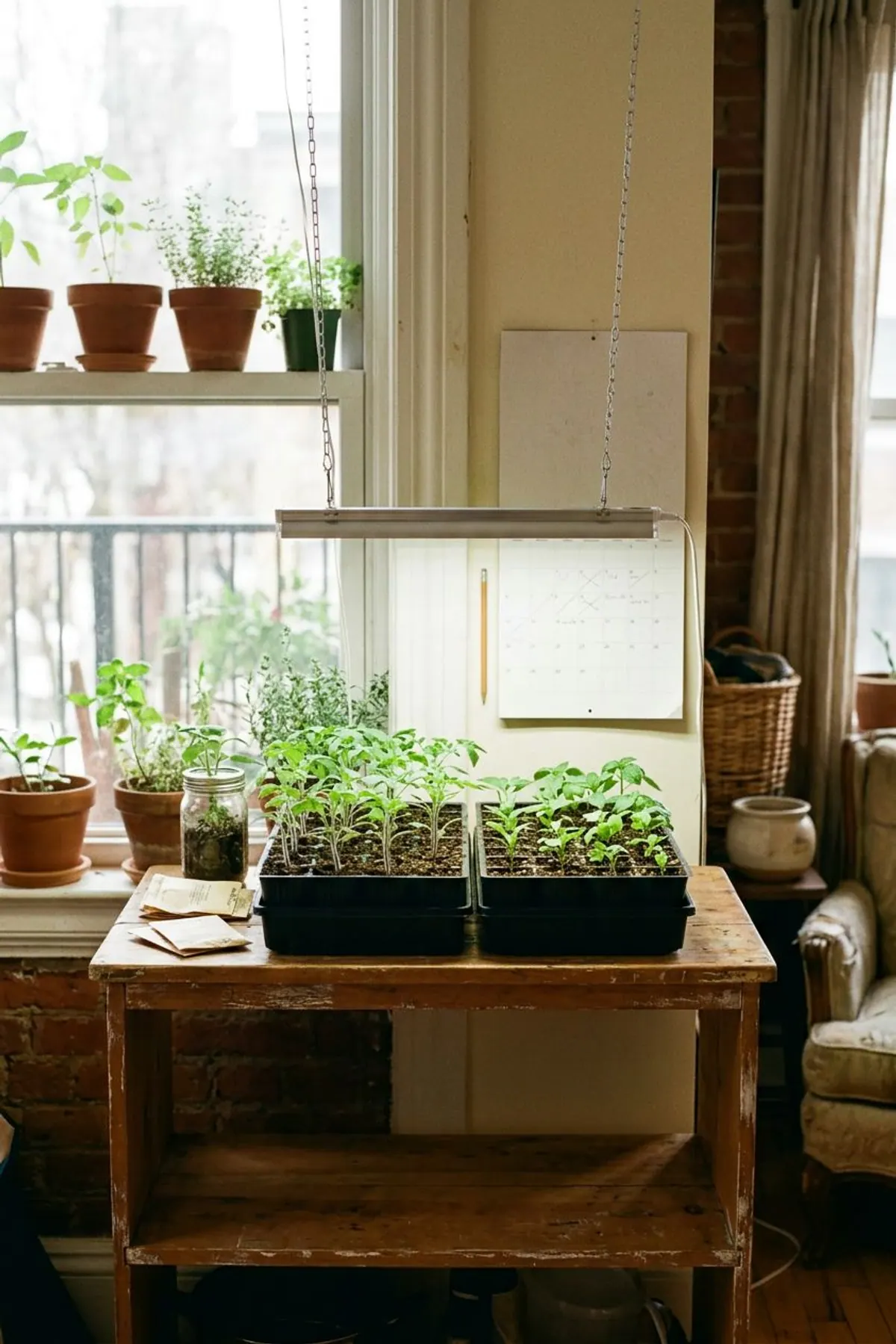
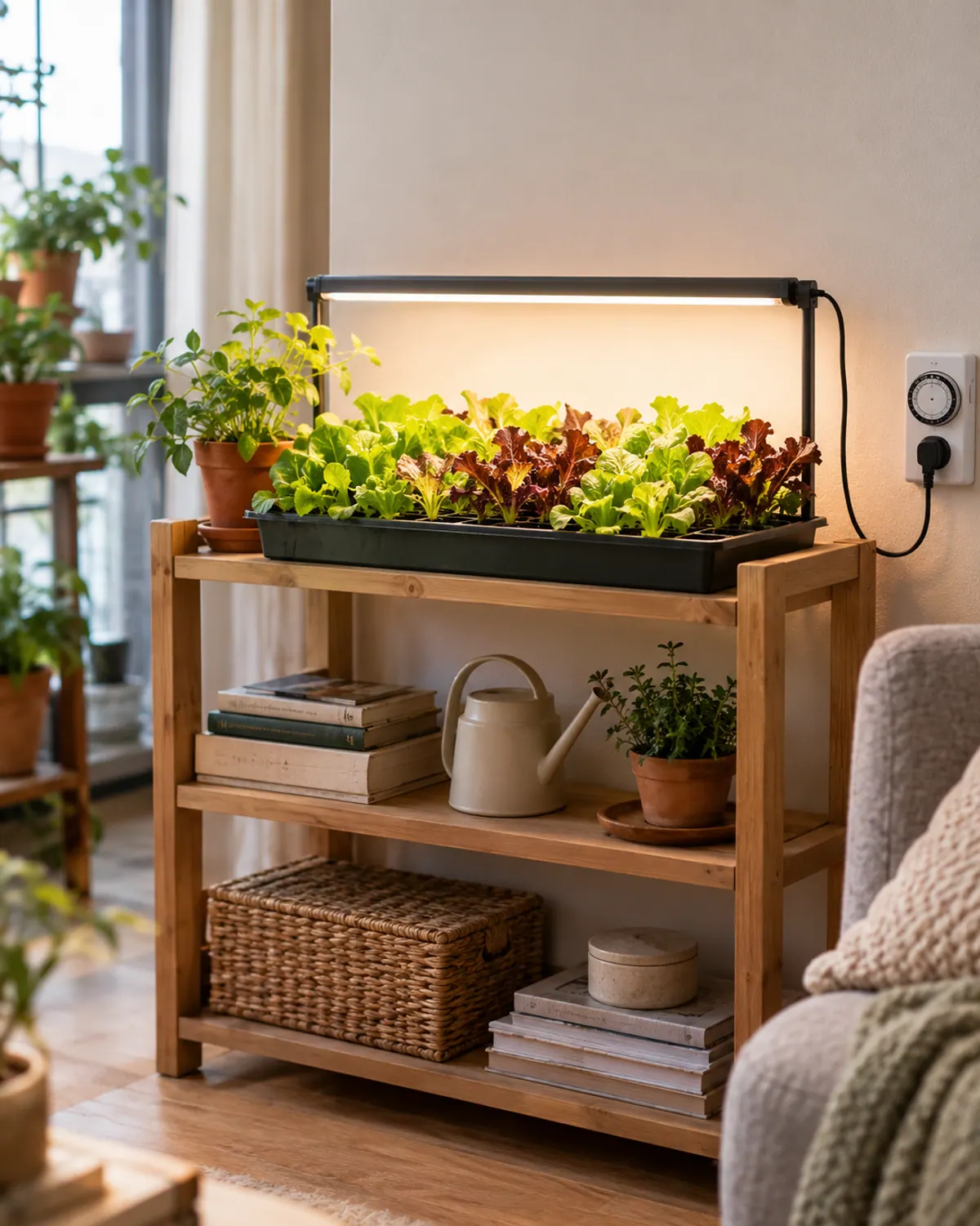
Most apartment growers have one shelf and one light, so stagger sowings instead of starting everything at once. Slow crops go first and take the brightest spot; lettuce and cucumbers come last and spend only a few weeks inside.
Seed starting calendar checklist
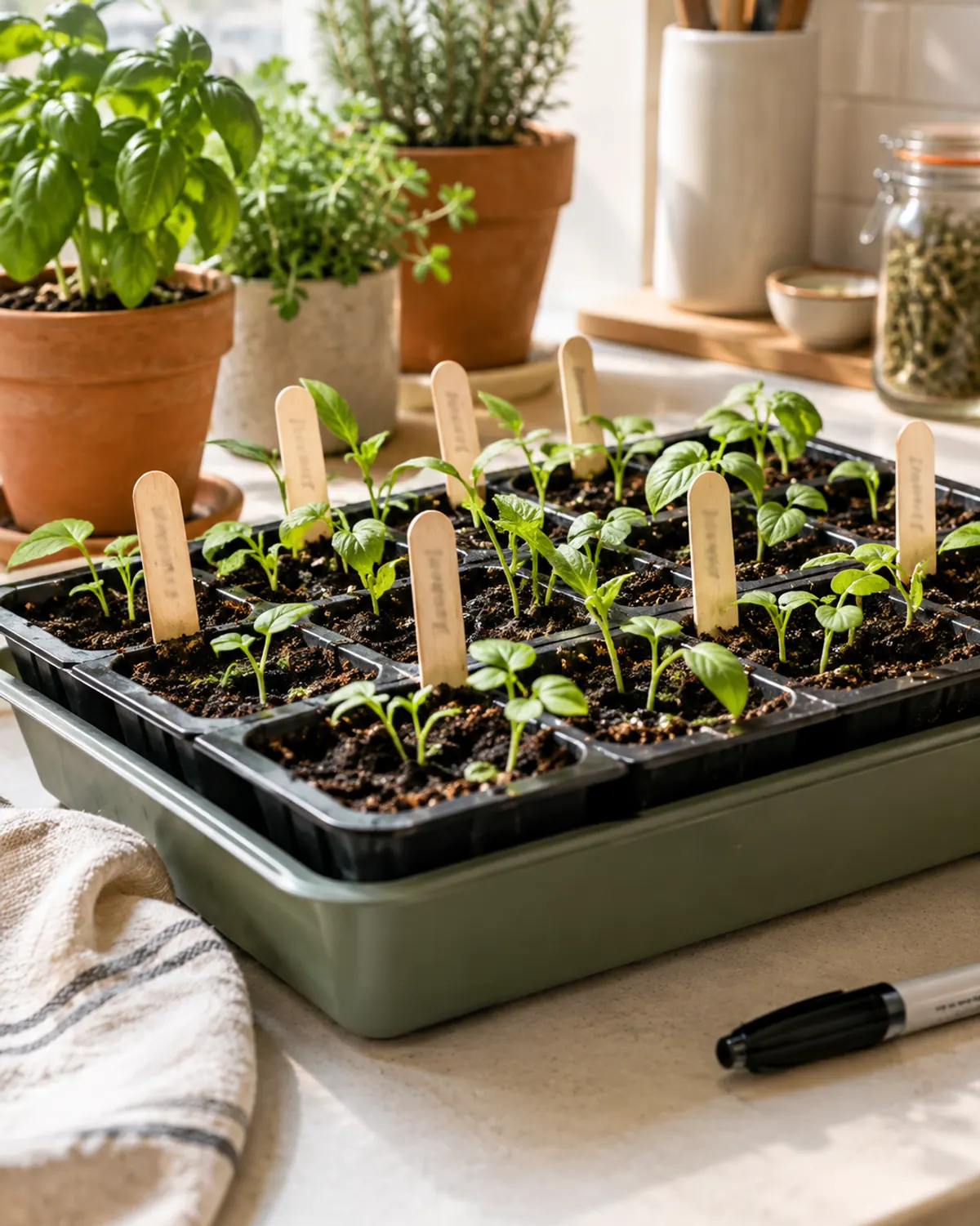
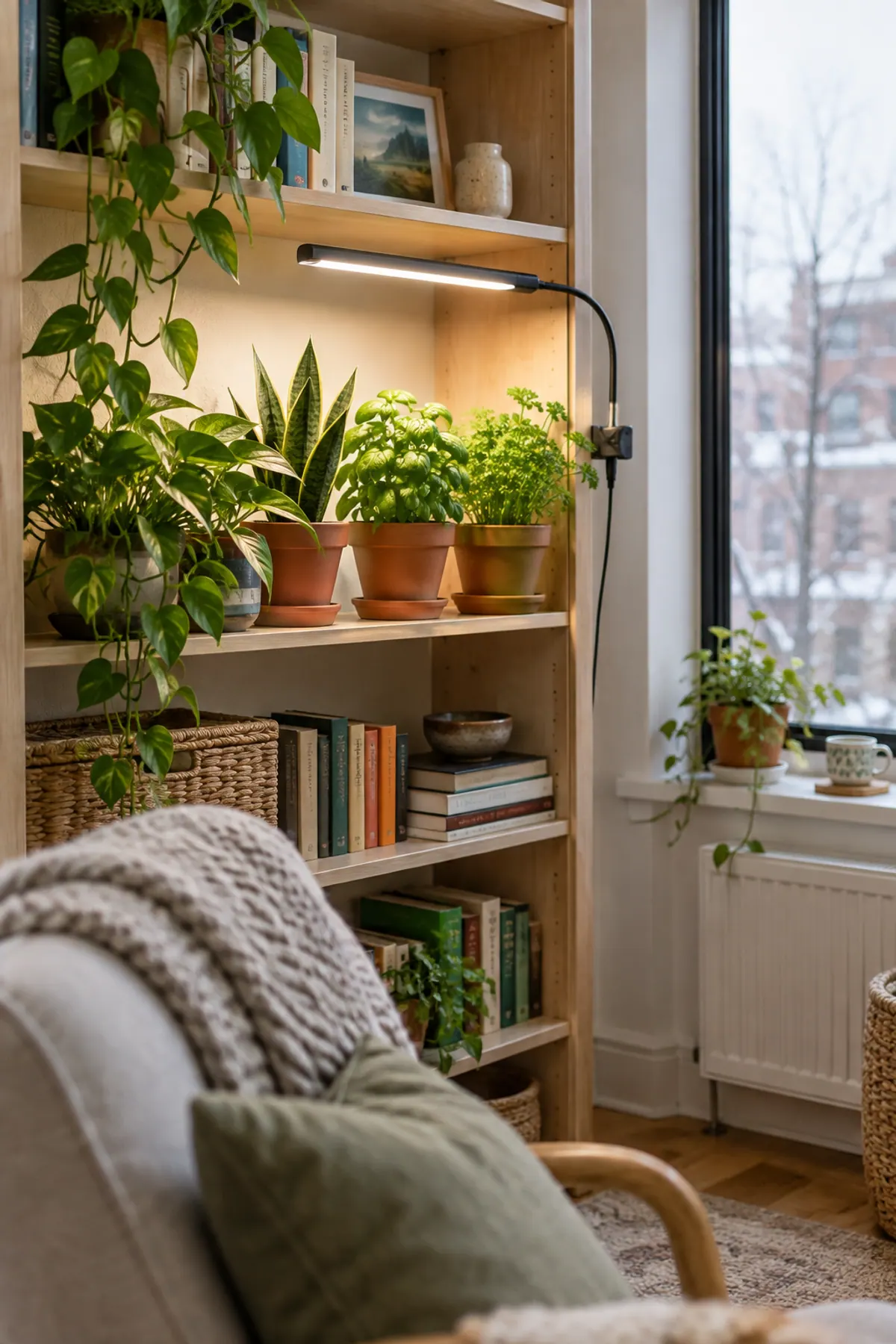
Setting up a shelf for the first time? Our small-space seed starting setup walks through lights, trays and a frost countdown, and best grow lights for small spaces compares light options. For a winter windowsill crop while you wait, try microgreens.
Seed starting supplies
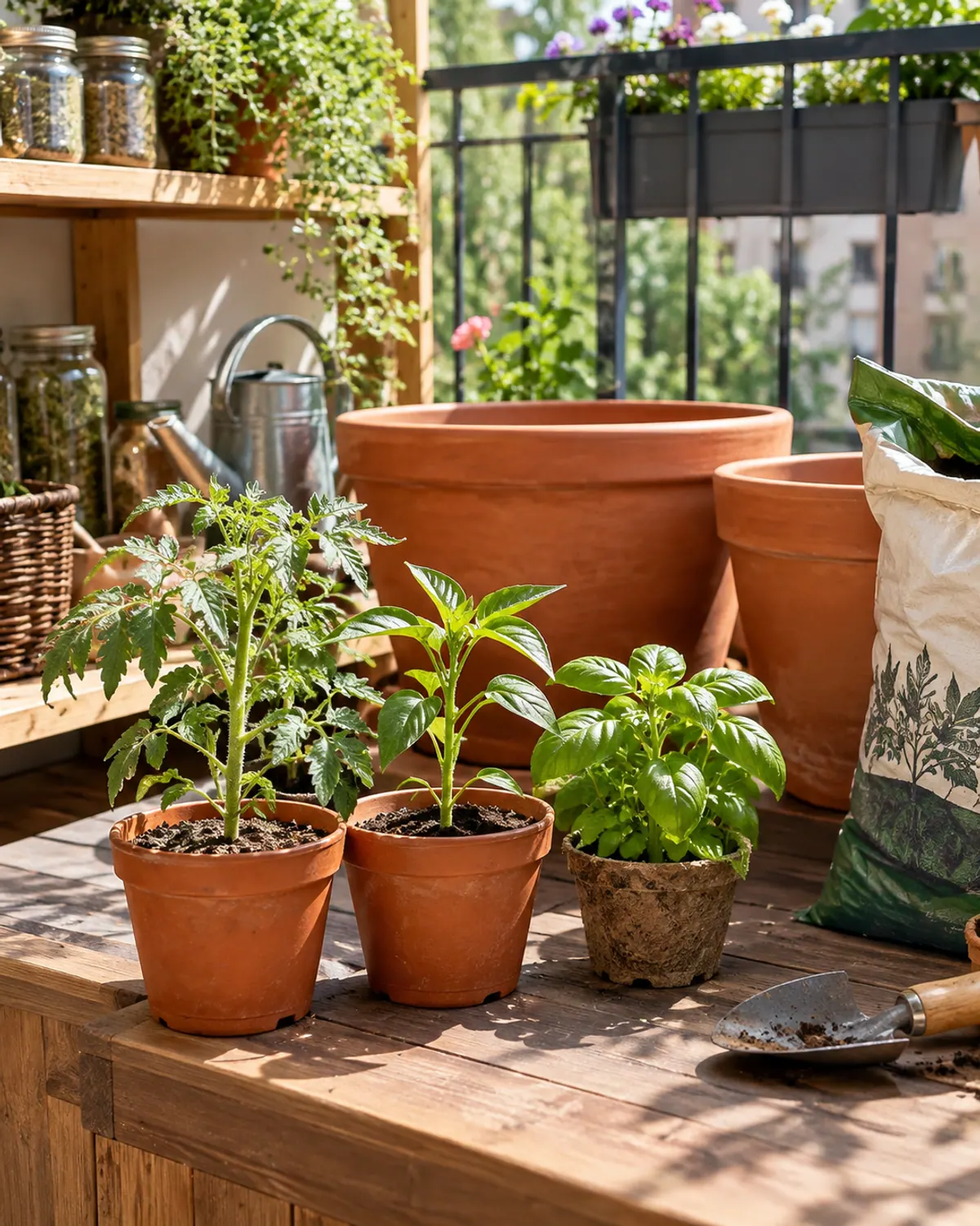
Seed starting supplies for a small shelf
- Start here
Seed starting trays with humidity domes
Typically $15 to $30
Cells keep crops separate and domes hold moisture for sprouting.
Check price on Amazon for Seed starting trays with humidity domes -
Seed starting mix
Typically $8 to $15
Fine and light, so tiny roots can push through.
Check price on Amazon for Seed starting mix -
LED grow light, shelf or clip-on
Typically $25 to $60
Windows alone are too dim in late winter for stocky seedlings.
Check price on Amazon for LED grow light, shelf or clip-on -
Outlet timer
Typically $10 to $20
Keeps lights on a steady 14 to 16 hour day.
Check price on Amazon for Outlet timer -
Seedling heat mat
Typically $15 to $30
Speeds peppers, eggplant and tomatoes in a cool room.
Check price on Amazon for Seedling heat mat -
Wooden plant labels
Typically $6 to $12
Write the crop and sow date on every cell.
Check price on Amazon for Wooden plant labels
We earn from qualifying purchases, which never changes what we recommend. Read our disclosure and editorial guidelines.
Frequently asked questions
How do I make a seed starting calendar for my zone?
Look up the average last spring frost date for your zip code, then count back the number of weeks each crop needs indoors, as listed on the seed packet or in the table above. Write each date on a calendar or the free printable page.
When should I start seeds indoors in zone 5?
With a last frost around early to mid-May, zone 5 gardeners usually start peppers and tomatoes in mid to late March, cabbage-family crops in late March to mid-April, and cucumbers in mid-April. Check your own local frost date, since it varies within a zone.
Which seeds should not be started indoors?
Root crops like carrots, radishes and beets, plus beans and peas, are normally sown directly outdoors because they grow fast and dislike being transplanted.
Is the last frost date guaranteed?
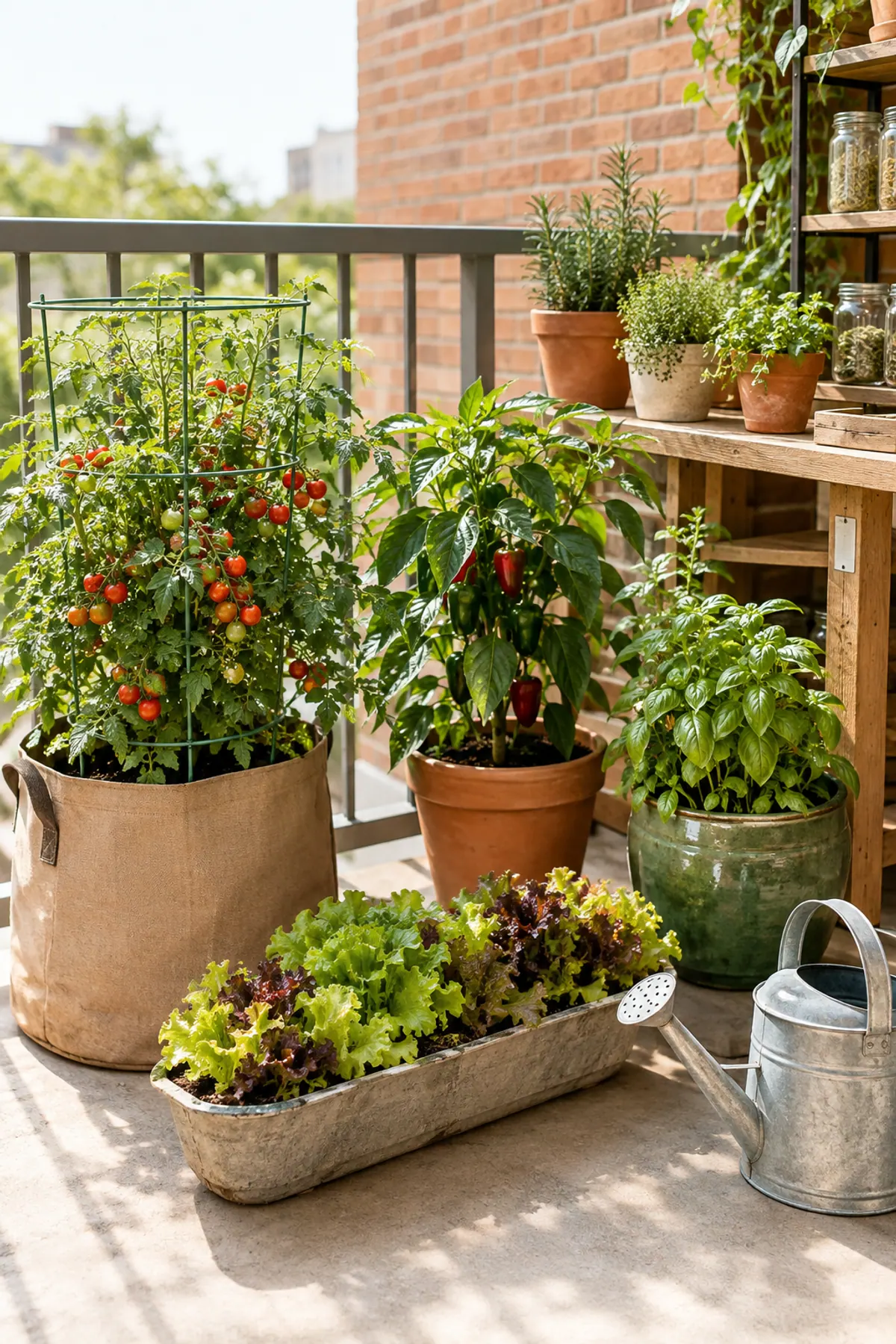
No. It is an average, so frost can still come after it. Keep warm-season crops like tomatoes, peppers and basil inside until nights stay above about 50°F.
Can I start herbs on the same calendar?
Yes. Annual herbs like basil take about 6 to 8 weeks indoors, while slow perennials like chives and thyme take 10 to 12 weeks. Many people buy rosemary and oregano as plants instead.
Save it for later
Pin this to your Seasonal Garden Tasks board so it's there when you need it.
Save to Pinterest