This post contains affiliate links. As an Amazon Associate we earn from qualifying purchases, at no extra cost to you. Read our disclosure.
Safety first: Herbs can be powerful. If you are pregnant, nursing, take medication or have a health condition, check with your doctor or pharmacist first. Please read our herbal & garden safety notes before you start.
Key takeaways
- Winter sowing works for hardy herbs (chives, parsley, dill, cilantro, thyme, oregano, sage, lavender, chamomile), perennials and hardy annual flowers
- Skip basil, tomatoes and peppers; they want warmth and belong indoors in spring
- Start after the winter solstice: late December to February in zones 5 to 7
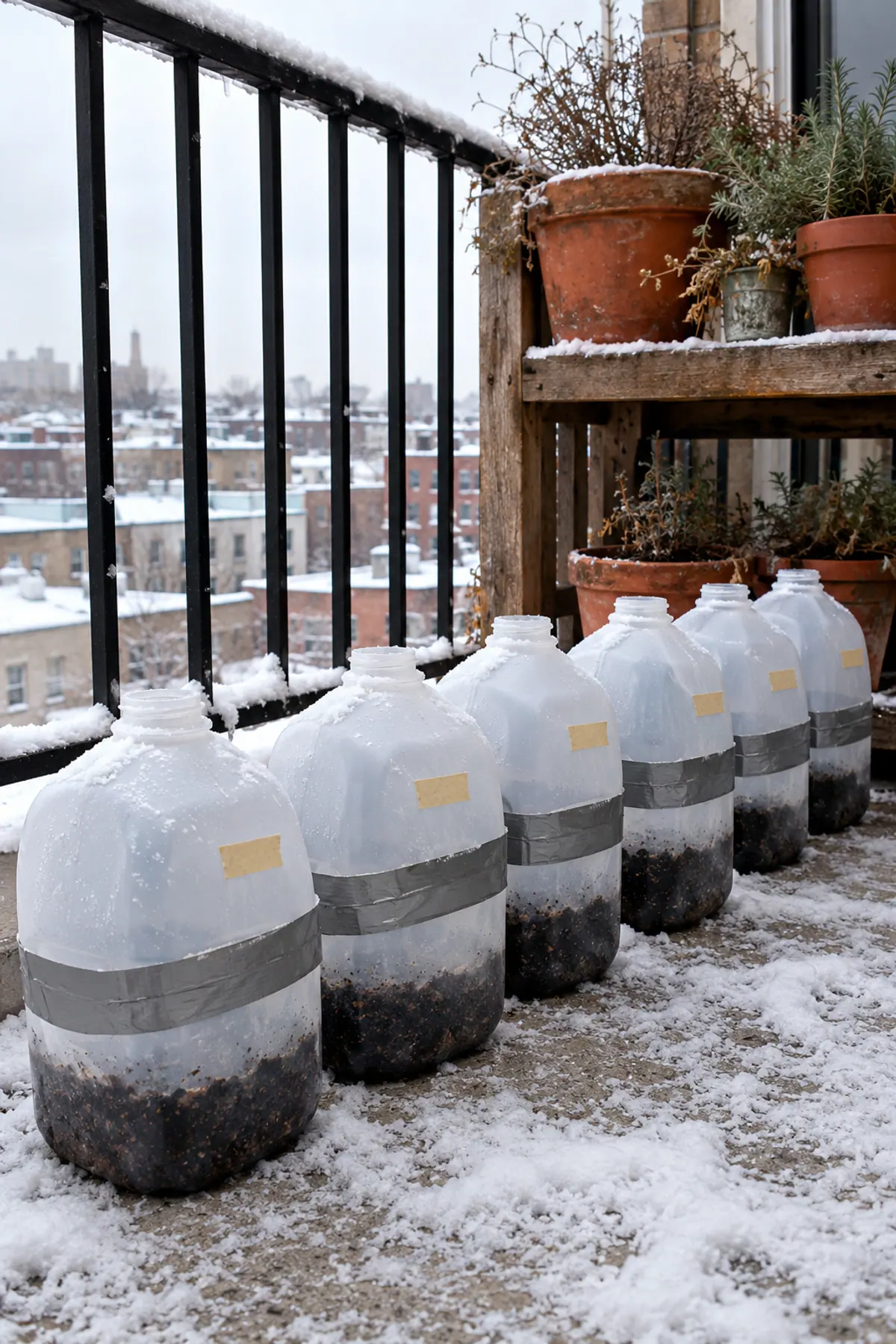
- A clean gallon milk jug with drainage holes, 3 to 4 inches of mix and the cap left off is the whole setup
- Put jugs where rain and snow reach them, out of the wind, and never balanced on a railing
In this post13 sections
- What winter sowing is, and why it suits a balcony
- Which seeds to winter sow (and which to skip)
- When to start winter sowing by zone
- Winter sowing container ideas: milk jugs and 5 alternatives
- Winter sowing seeds in a milk jug, step by step
- Where to put winter sowing jugs on a balcony
- Care through winter: snow, thaw and venting
- Thinning, hardening off and moving seedlings to pots
- Winter sowing vs indoor seed starting on a balcony
- Common winter sowing mistakes
- Keep a jug log so next winter is easier
- Winter sowing supplies
- FAQ
What winter sowing is, and why it suits a balcony
Winter sowing means sowing seed in a small covered container outdoors in the cold months. The jug works like a tiny greenhouse: snow and rain come in through the open top, the clear plastic traps a little warmth on sunny days, and the seeds sprout on their own when the soil tells them spring has arrived.
The seedlings come up already hardened to wind and cold, so they are stocky and tough instead of pale and stretched. You skip the grow light, the heat mat and the daily fuss of indoor seed starting.
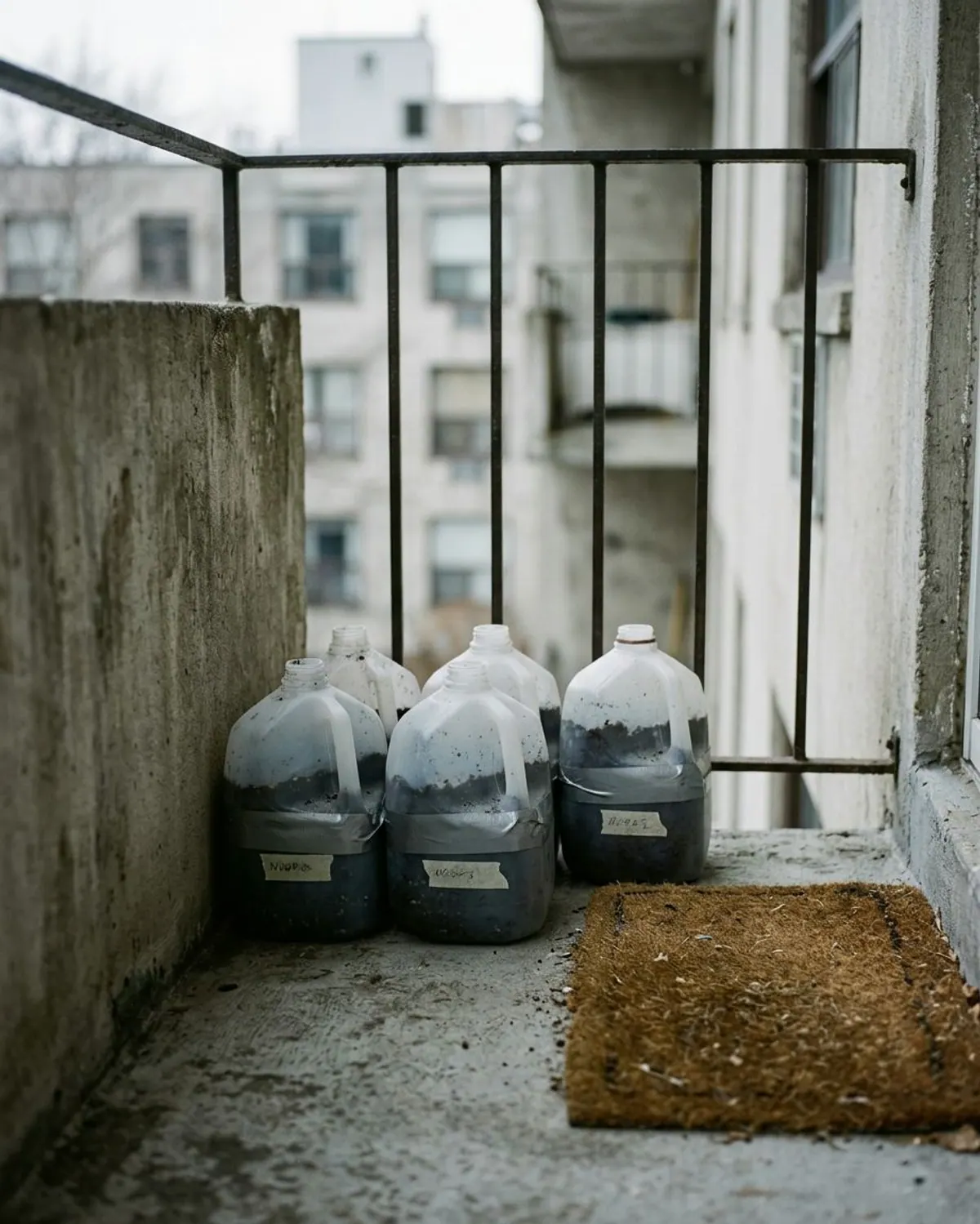
On a balcony this matters twice over. There is no shelf space to give up indoors, and a row of jugs takes a corner the size of a doormat. Many seeds that are fussy indoors, such as lavender, parsley and most perennial flowers, actually want the cold spell a jug gives them.
| Question | Answer |
|---|---|
| When | After the winter solstice: late December to February for most of the US, see the zone table below |
| Container | A gallon milk jug, cut around the middle, with 4 to 6 drainage holes |
| Soil | 3 to 4 inches of potting mix or seed-starting mix, moistened first |
| Cap | Off. The open spout lets in rain, snow and air |
| Where | Outside in the open, where precipitation reaches the jug, out of strong wind |
| Germination | When the soil warms in spring; perennials and herbs often sprout in March or April |
| Transplant | After the seedlings have two sets of true leaves and nights stay above about 40 F |
Which seeds to winter sow (and which to skip)
The rule is simple: if a plant would survive a frost in your garden, its seed can be winter sown. Seed packets help. Phrases like 'sow in fall', 'needs cold stratification', 'self-sows', 'hardy annual' or 'perennial' are all green lights.
| Group | Good choices | Notes |
|---|---|---|
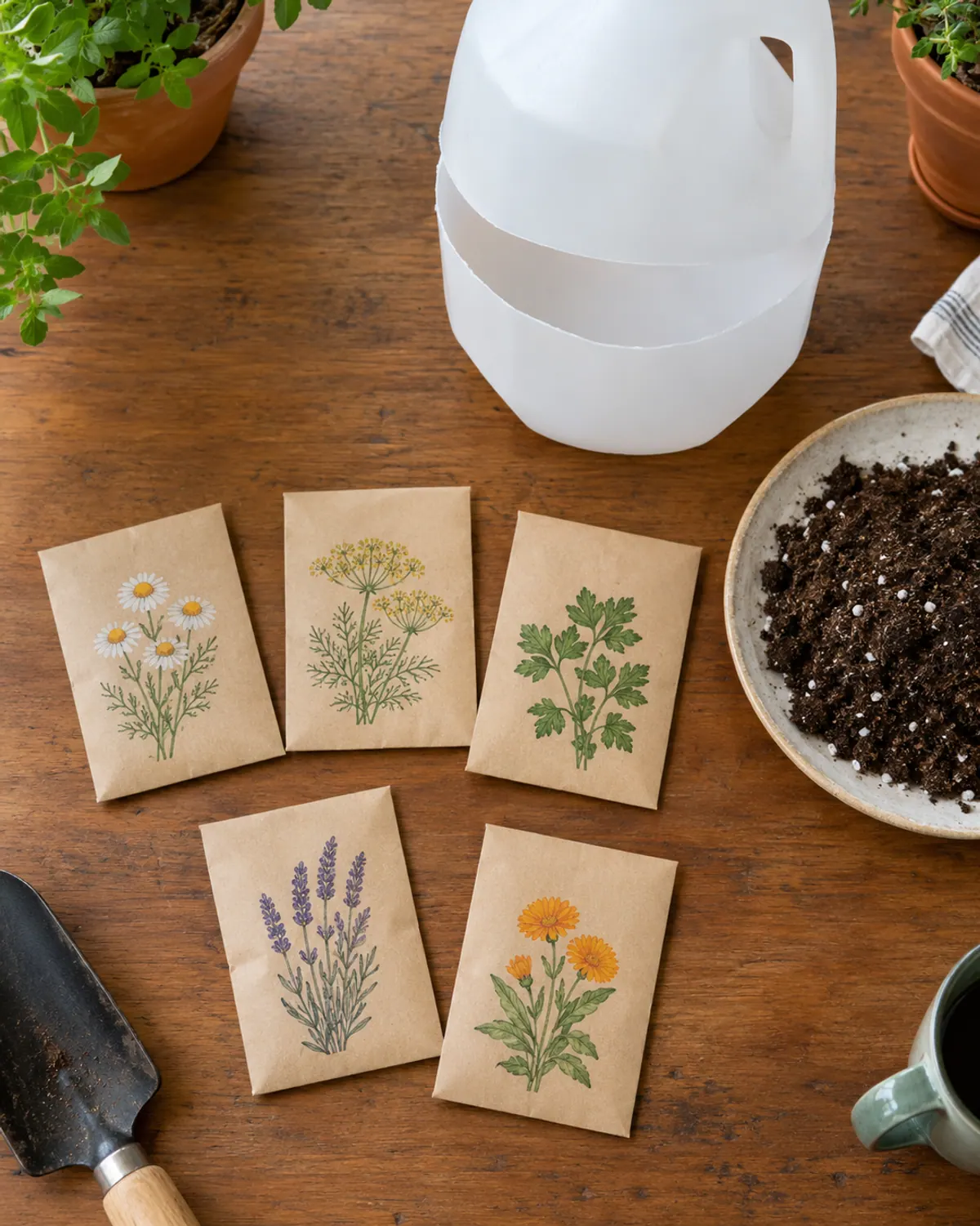
| Hardy herbs | Chives, parsley, dill, cilantro, oregano, thyme, sage, lavender, chamomile, lemon balm, calendula | Lavender and parsley are slow; the cold spell speeds them up |
| Perennial flowers | Echinacea, black-eyed Susan, columbine, milkweed, lupine, yarrow, bee balm | Most need cold stratification, which the jug provides |
| Hardy annual flowers | Bachelor's buttons, larkspur, poppies, sweet alyssum, snapdragons, pansies, nigella | Sow these a little later, February into early March |
| Cool-season vegetables | Lettuce, spinach, kale, arugula, Swiss chard, peas | Sow in February; they sprout early and go straight into pots |
| Skip for now | Basil, tomatoes, peppers, eggplant, zinnias, marigolds, cucumbers | Tender; start indoors in spring or wait until the weather is warm |
The herbs on this page are for the kitchen and the garden; nothing here is medical advice. If you want the easiest herbs for a first try, our list of herbs to grow from seed ranks them.
When to start winter sowing by zone
Timing is loose, which is part of the charm. The seed will not sprout until the soil warms, so sowing early just means the jug waits. Sowing too late, after your last frost, skips the cold spell that perennials need. Use your USDA zone and work from the solstice.
| Zone | Perennials and hardy herbs | Hardy annuals and cool vegetables |
|---|---|---|
| Zone 4 to 5 | January to mid-February | Mid-February to March |
| Zone 6 | Late December to early February | February to early March |
| Zone 7 | Late December to January | January to mid-February |
| Zone 8 and warmer | December to January, choose seeds that need little cold | January; many can simply be sown in pots |
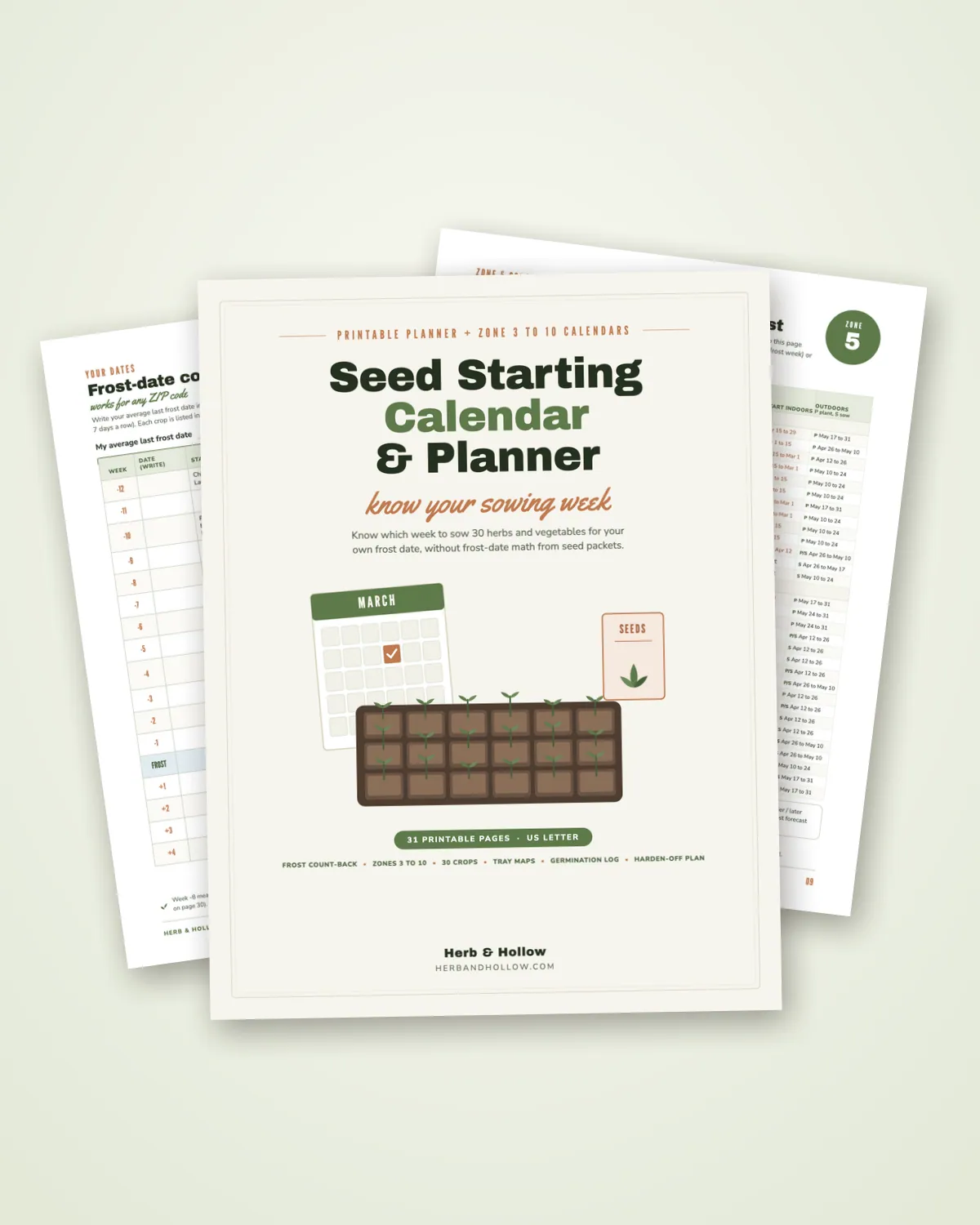
Our seed starting calendar by zone puts these dates next to the indoor ones, and the January planting guide has a winter sowing section for zones 4 to 7.
Winter sowing container ideas: milk jugs and 5 alternatives
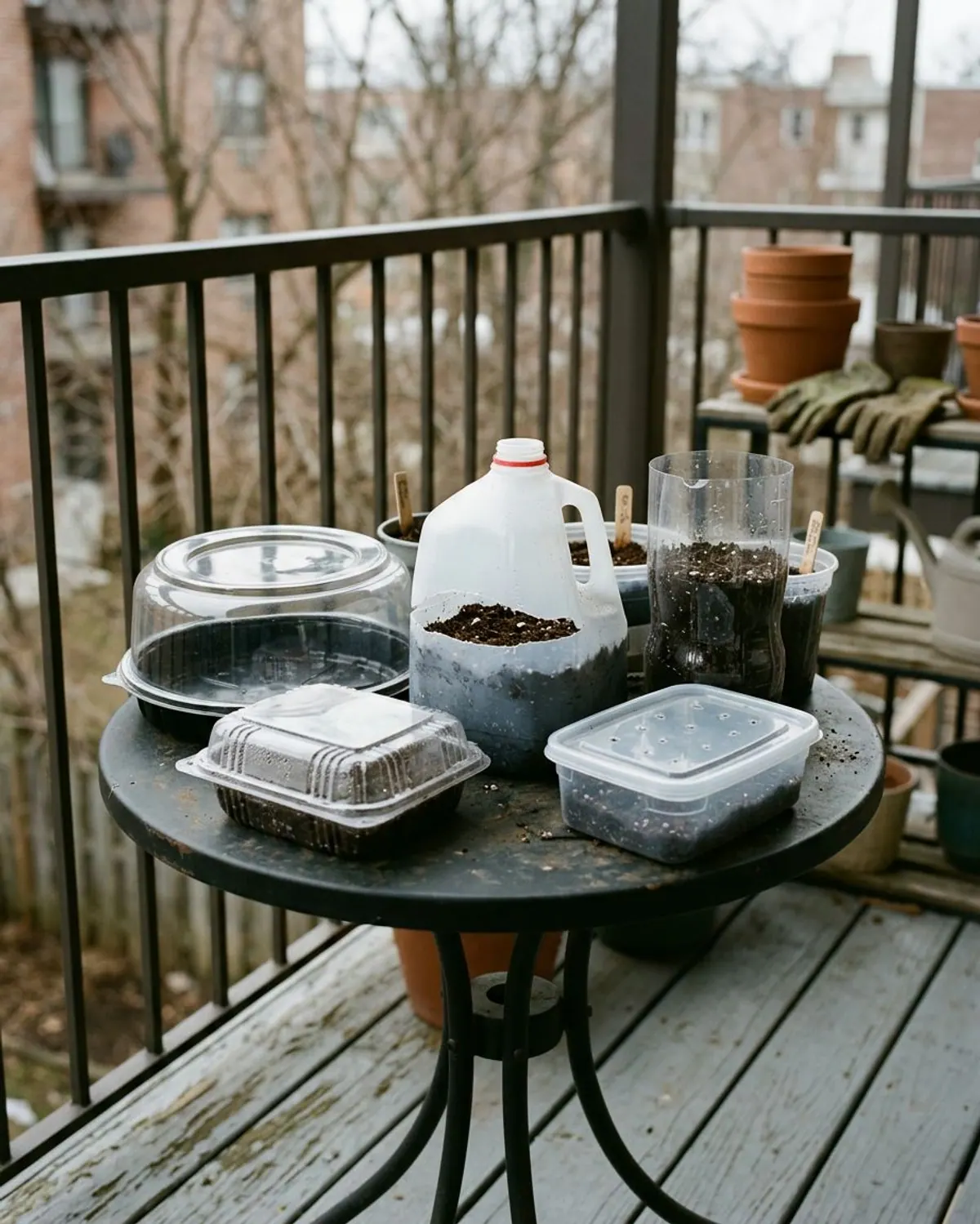
A gallon milk or water jug is the classic because it is clear enough, tall enough and free. Rinse it, keep the cap for later (you will not use it), and you are ready. If your household does not go through jugs, any clear or translucent container about 6 to 10 inches tall works.
Containers that work for winter sowing
Winter sowing seeds in a milk jug, step by step
-
Step 1: Cut the jug most of the way around
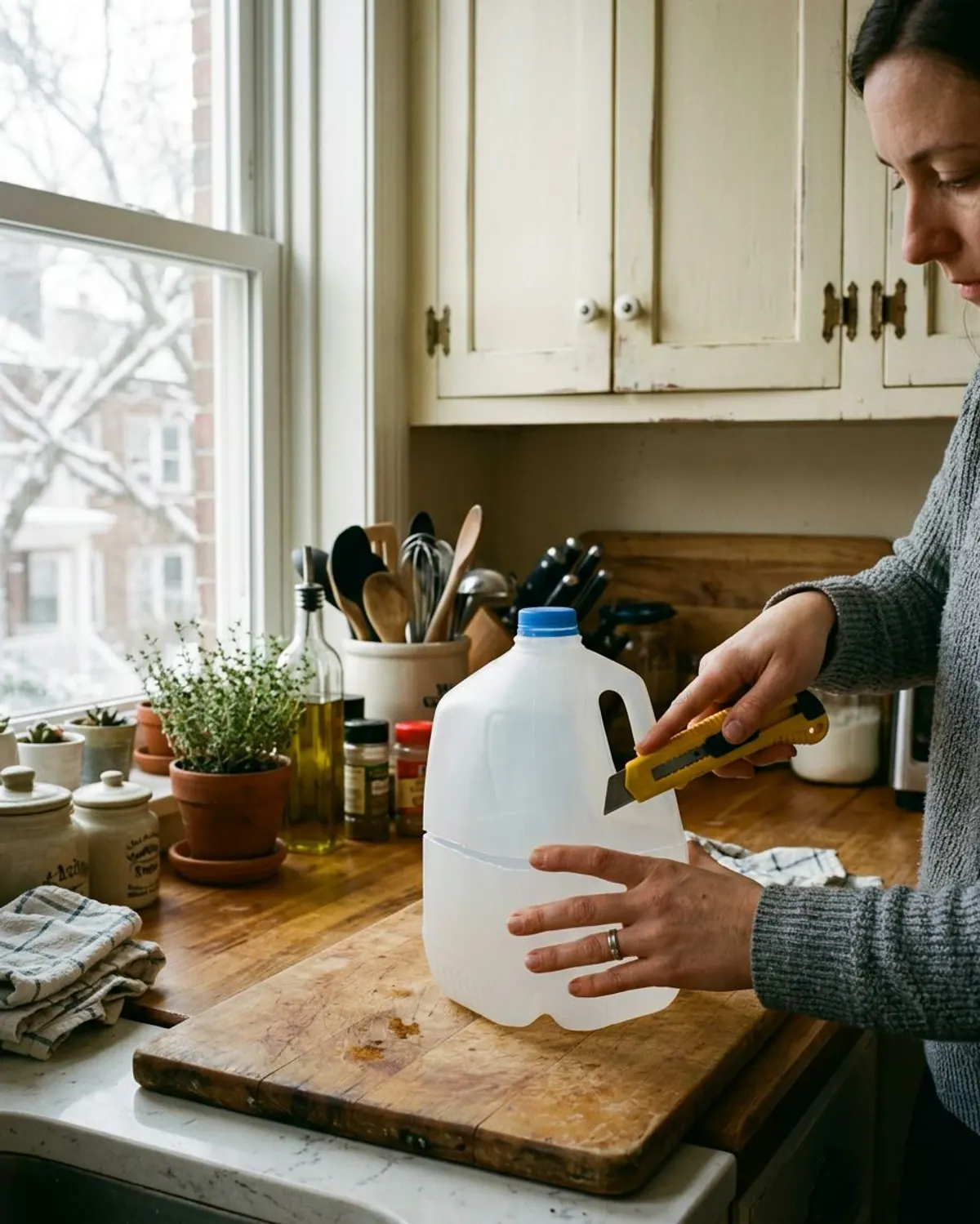
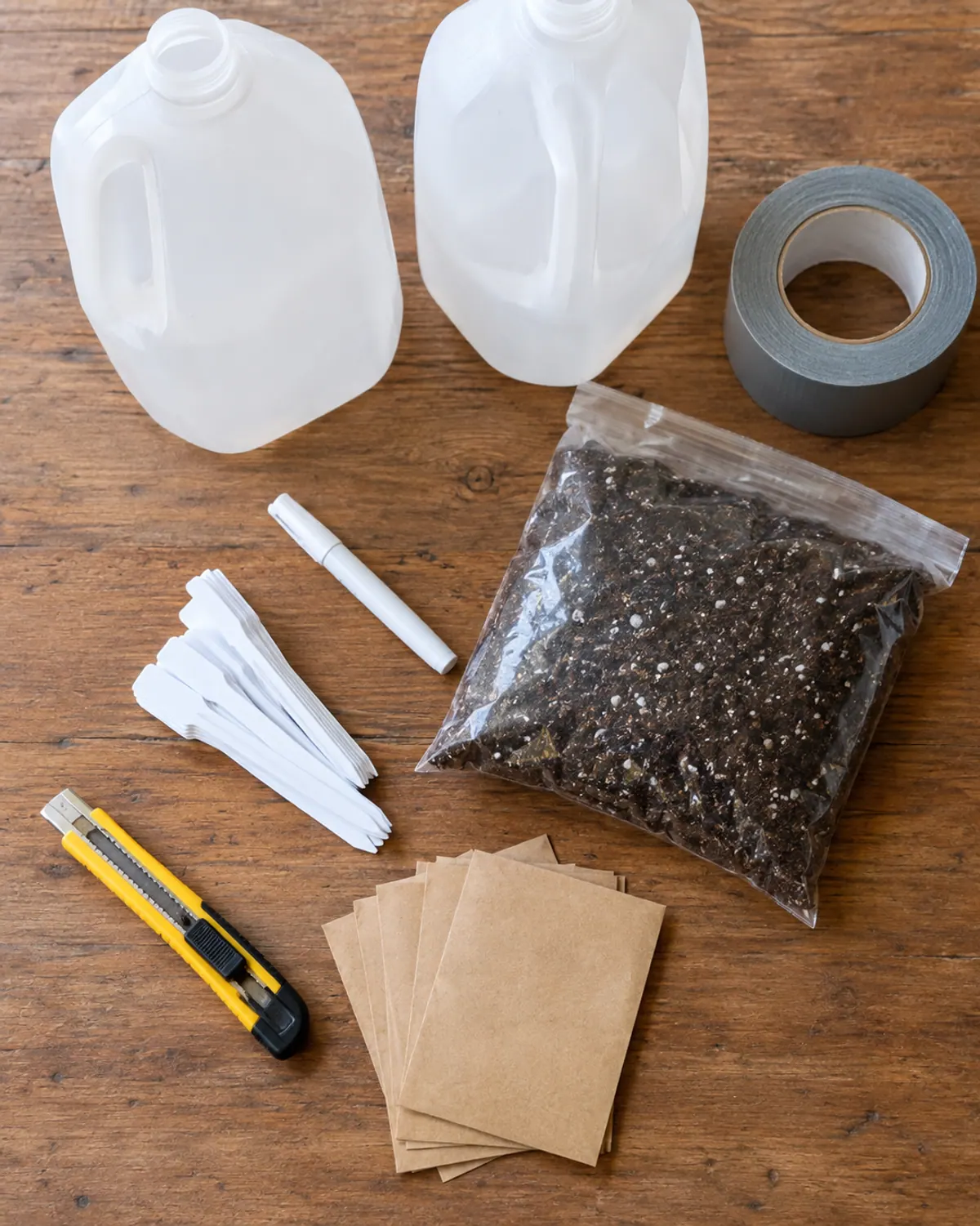
Mark a line about 4 inches up from the base. Cut around the jug with a serrated knife or box cutter, leaving a 1 to 2 inch hinge below the handle so the top flips open and stays attached. Work on a cutting board; the plastic is slippery.
-
Step 2: Add drainage holes
Poke or drill 4 to 6 holes in the bottom and two low on the sides. A heated nail, an awl or a drill bit all work. Without drainage the mix turns to a frozen soup and the seed rots when it thaws.
-
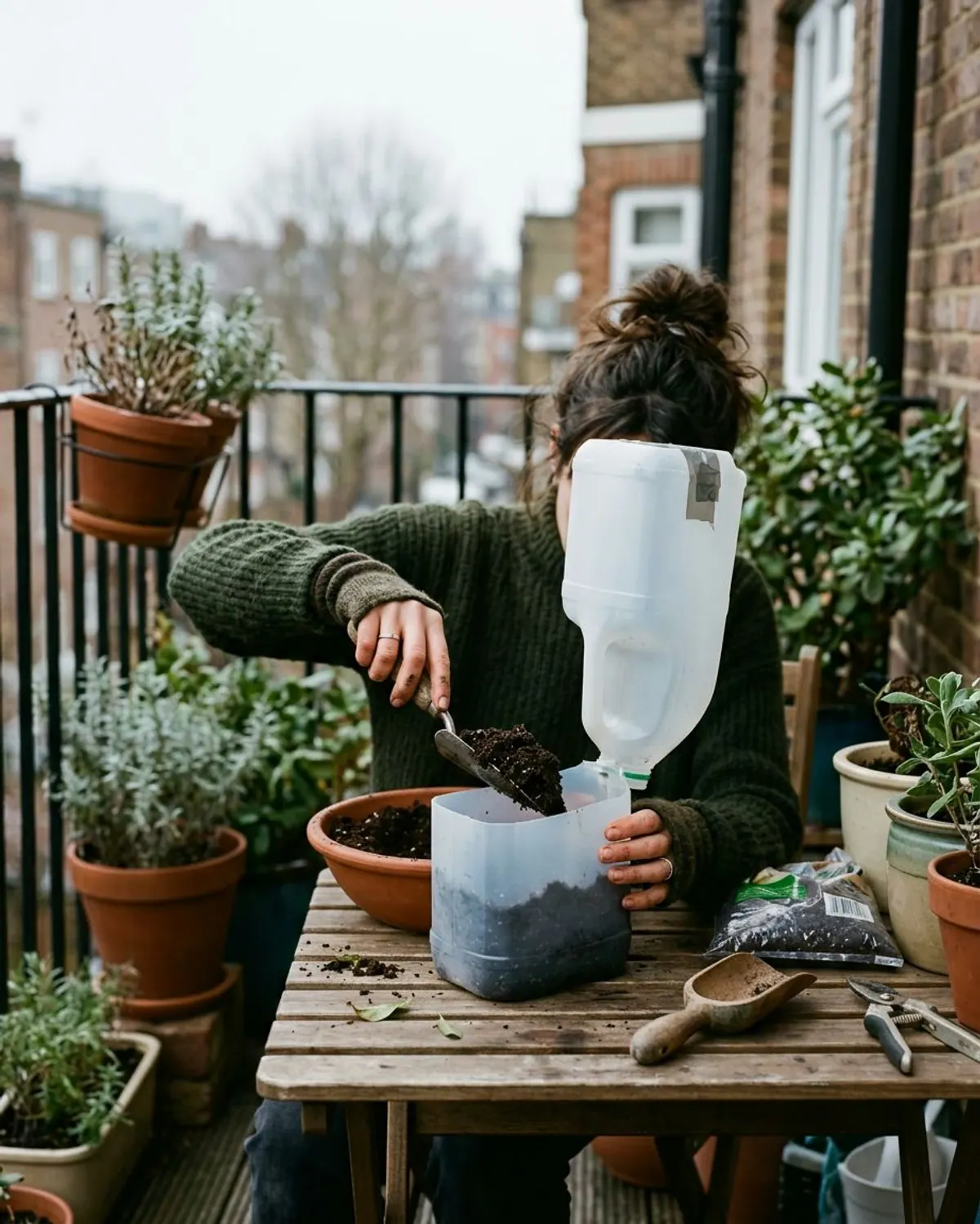
Step 3: Fill with 3 to 4 inches of moist mix
Use potting mix or seed-starting mix, never garden soil. Moisten it in a bowl first until it holds together when squeezed, then fill the base of the jug and level it. Less than 3 inches dries out too fast on a windy balcony.
-
Step 4: Sow a little thicker than the packet says
Scatter seed over the surface and cover to the depth the packet gives; tiny seed such as chamomile and lettuce sits on top. Sow about half again as many seeds as you want plants, since not every seed makes it through winter. Mist the surface.
-
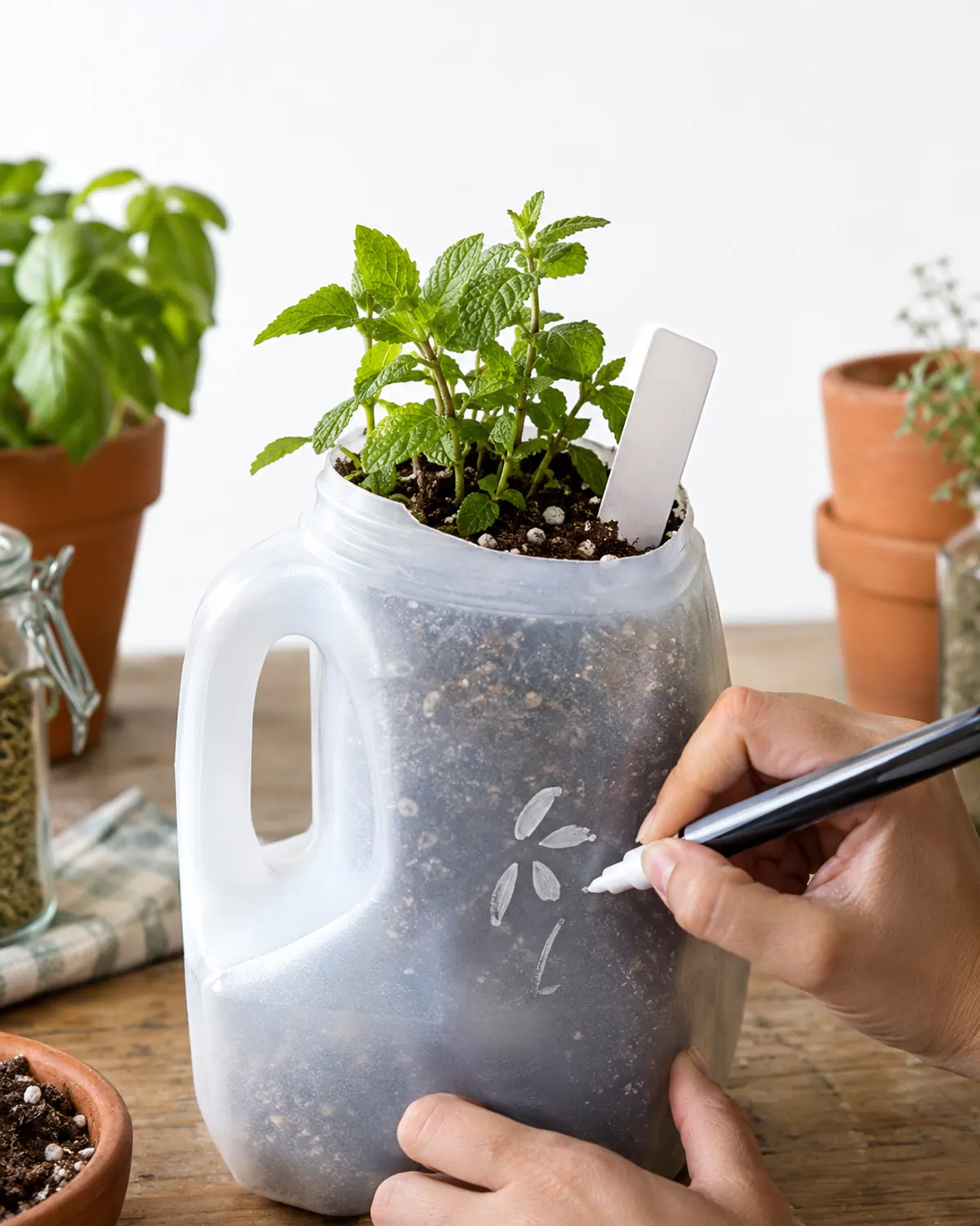
Step 5: Label it twice
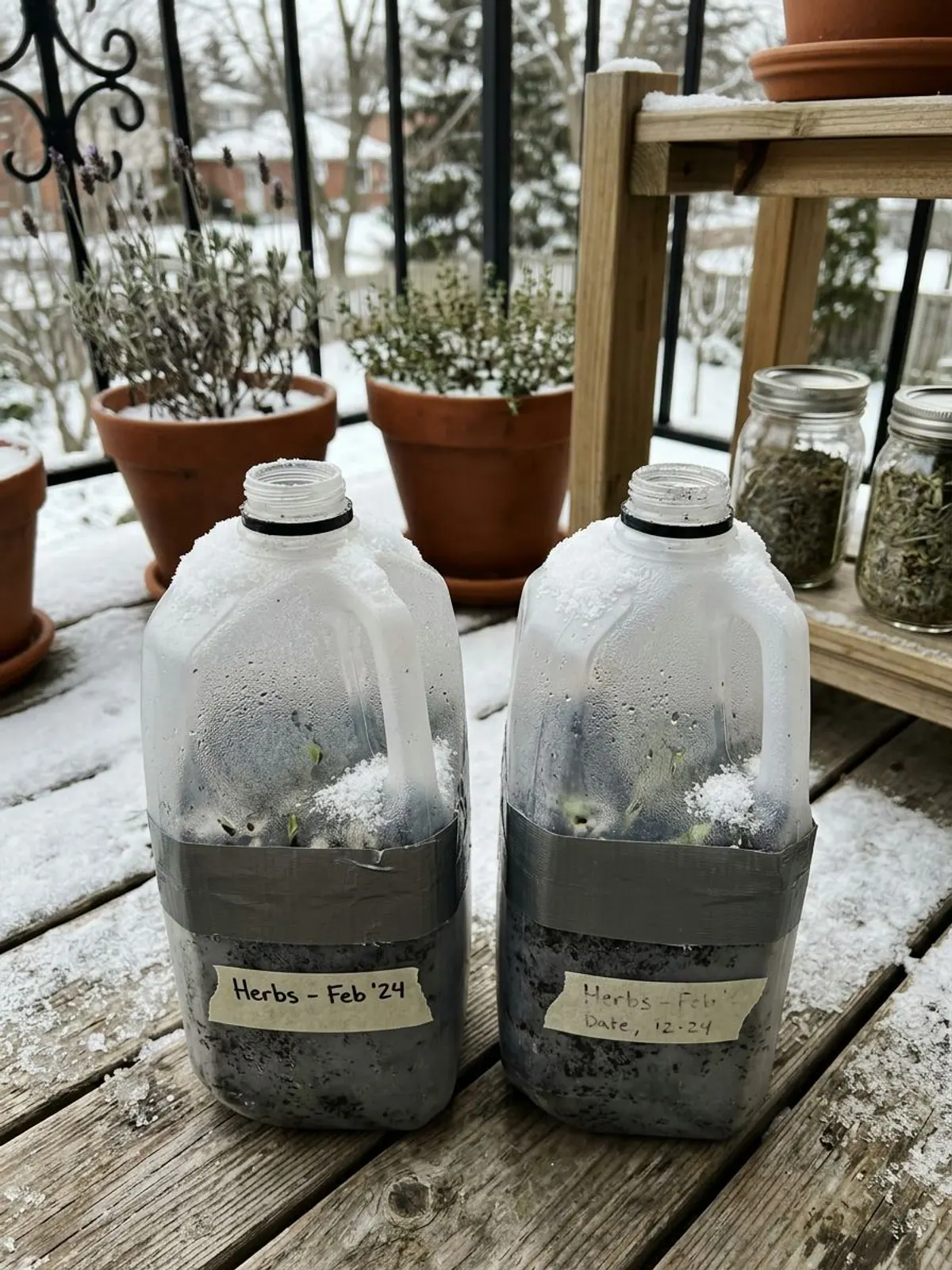
Write the plant name and date on the jug with an oil-based paint marker, and tuck a plastic label inside as a backup. Ordinary markers fade to nothing by March, and a jug full of mystery seedlings is the most common winter sowing complaint.
-
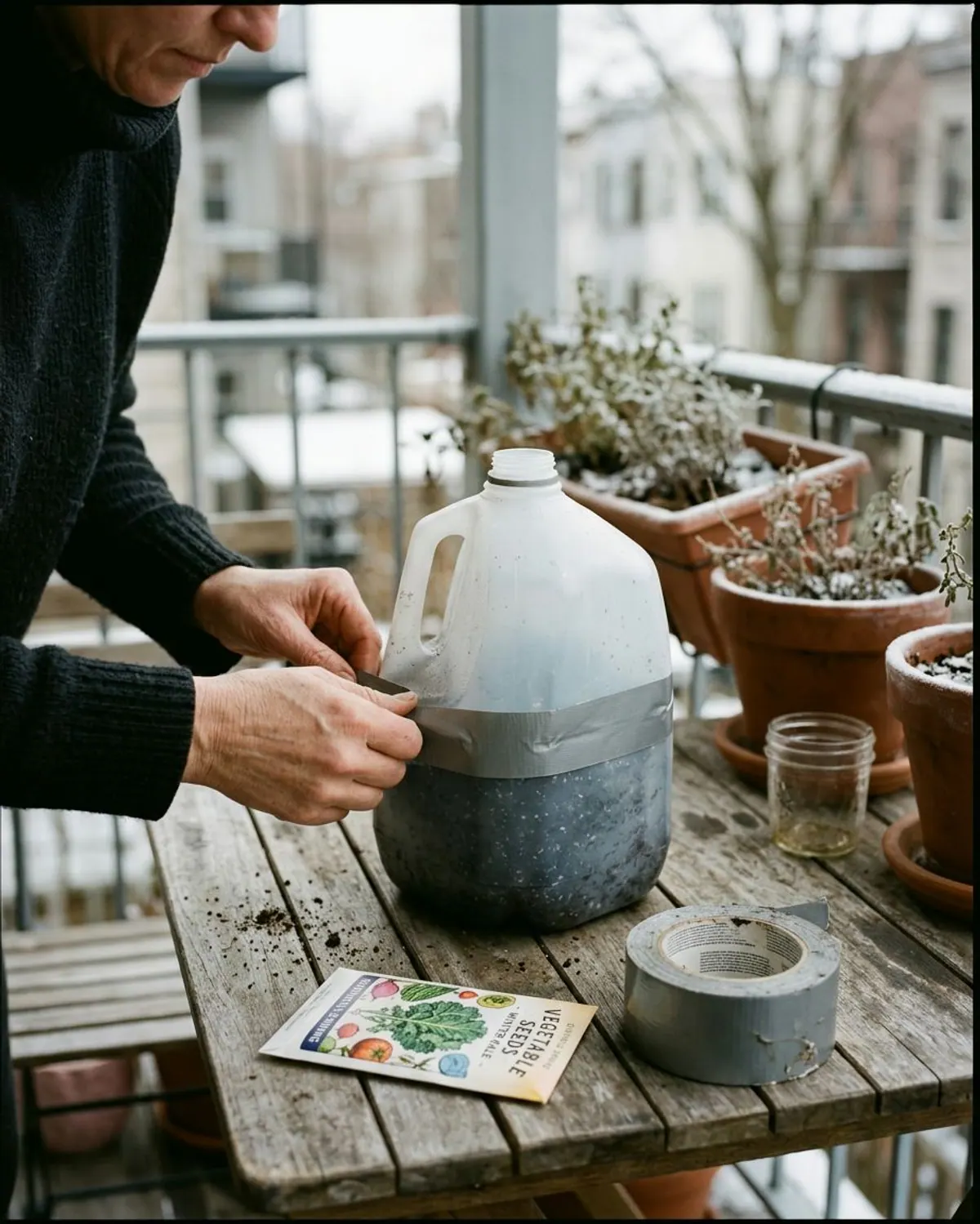
Step 6: Tape the cut and leave the cap off
Close the top and run a strip of duct tape or outdoor tape around the cut. Leave the spout open with no cap; it is the vent and the rain gauge. If a storm is forecast, that opening is also how snow gets in, which is what you want.
-
Step 7: Set it outside and walk away
Put the jug where it gets some sun and where rain and snow can reach it. Then leave it alone. Check it every week or two for moisture, and otherwise let winter do the work until seedlings appear.
Where to put winter sowing jugs on a balcony
Jugs need three things: open sky for rain and snow, a few hours of sun, and shelter from the worst wind. On a balcony that usually means the floor along the outer edge or against a side wall, not tucked under the overhang where they stay dry.
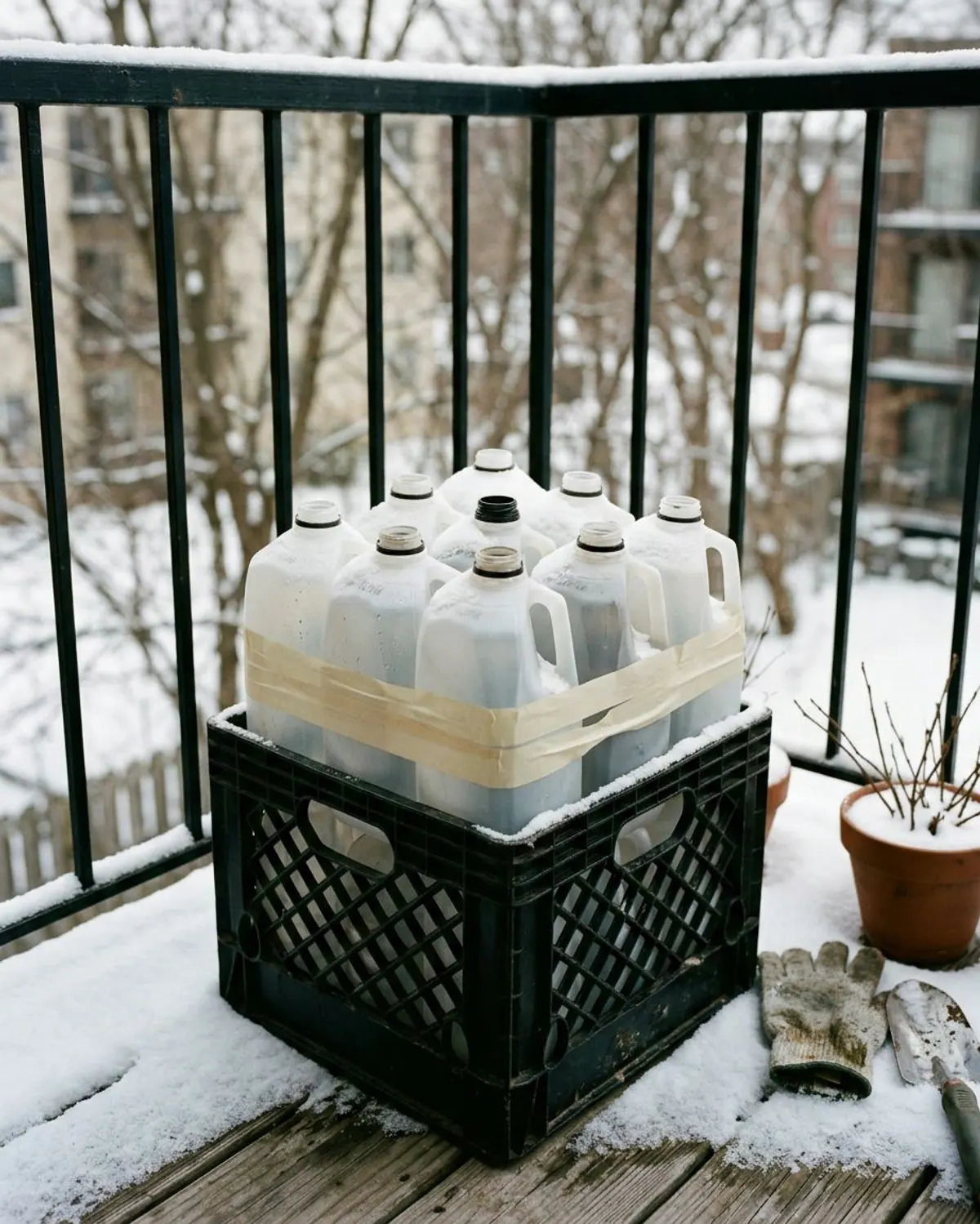
Wind is the balcony problem. A gust can send an empty-feeling jug over the edge. Group jugs in a shallow storage bin, a crate or a plant tray, or run a bungee cord around the row. Never balance a jug on the railing, and keep them away from the edge above a sidewalk or a neighbor's space.
A south or east exposure is best. A north-facing balcony still works for the hardiest herbs and perennials; germination just runs a couple of weeks later.
Care through winter: snow, thaw and venting
Snow on the jugs is good; it insulates and waters as it melts. Ice is fine. The only chore before spring is a moisture check every week or two: lift the jug, and if it feels light or the mix looks pale, pour water in through the spout.
The tricky stretch is late winter. On a sunny day above about 50 F a closed jug can cook its seedlings, so once the first sprouts show, peel the tape and prop the top open on warm afternoons, then close it again at night. By the time days sit steadily in the 50s and 60s, leave the tops open for good.
A late hard freeze with seedlings up is the one time to act: throw a towel or a sheet of bubble wrap over the row for the night, or carry the bin inside the door until morning.
Thinning, hardening off and moving seedlings to pots
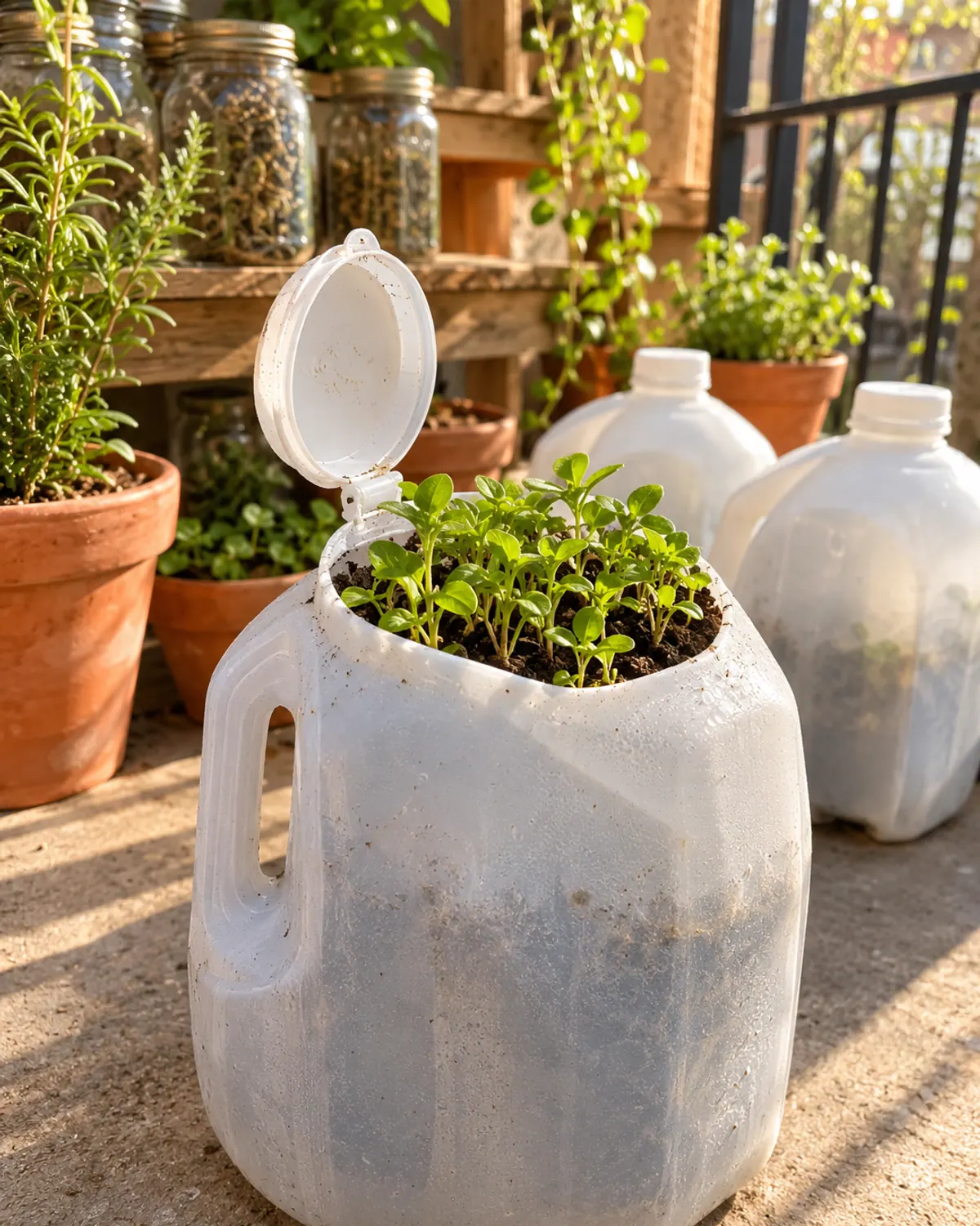
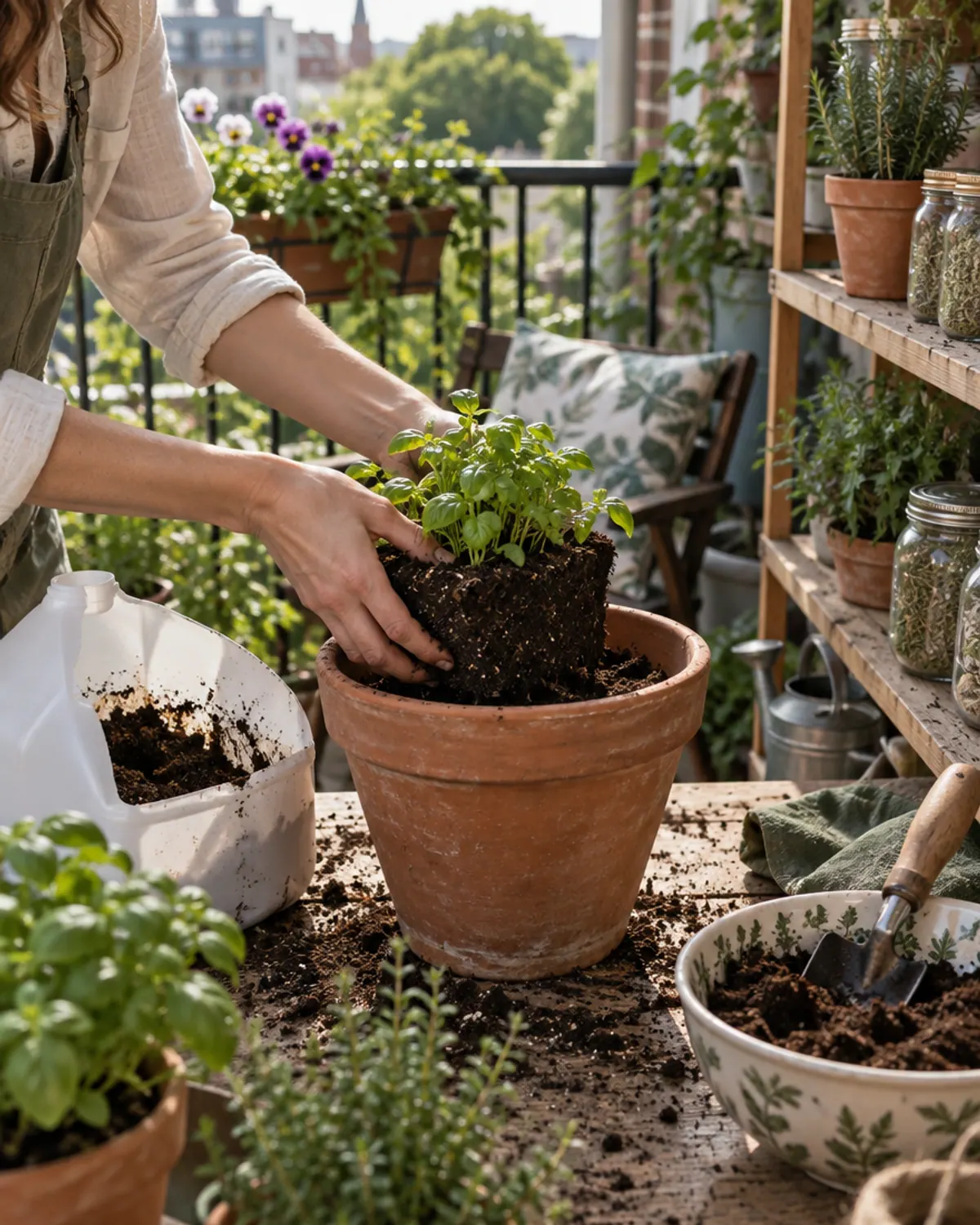
Winter sown seedlings are already outdoors, so hardening off takes days instead of weeks: open the tops fully for three or four days, then move them to their pots. Wait until they have two sets of true leaves and nights stay above about 40 F for herbs and flowers.
Cut the mix into chunks like a pan of brownies and plant each chunk, seedlings and all, into a pot; the plants sort themselves out as they grow. For herbs that hate crowding, such as dill and cilantro, thin with scissors to the strongest few first.
Winter sowing vs indoor seed starting on a balcony
What we like
- No grow light, heat mat or indoor shelf
- Seedlings come up stocky and already hardened off
- Cold-loving herbs and perennials germinate better
- Almost no daily care from January to March
- Costs nothing beyond mix and seed
Keep in mind
- Not for tender crops such as basil, tomatoes and peppers
- Germination is later and less predictable than indoors
- Jugs can blow around on a windy balcony
- Labels fade and seedlings can cook on a warm March afternoon if you forget to vent
Common winter sowing mistakes
Garden soil in the jug. It compacts, freezes solid and brings in weed seed. Use potting or seed-starting mix.
Cap left on. The jug stays bone dry and overheats on the first sunny day.
Jugs under the overhang. No rain reaches them, so they dry out by February.
Sowing tender seed. Basil and tomatoes rot in cold mix. Save them for an indoor tray in spring.
Forgetting to vent. A closed jug in March sun can hit 90 F inside. Open it on warm afternoons once seedlings show.
No label. Use a paint marker and a backup label inside.
Keep a jug log so next winter is easier
Winter sowing is a yearly experiment: which herb sprouted in which week, which jug dried out, which variety never showed. A few lines per jug now saves repeating the same mistake next January. Two pages in The Herb Garden Journal + Growing Cards are built for it: the sowing and propagation log for dates and results, and the seed and purchase record for what you bought and where.
The growing cards also cover thyme, sage, oregano, chives, lavender, chamomile, dill, cilantro and parsley, so once the seedlings move to pots you have the sun, water and harvest numbers for each one on a single card.
Winter sowing supplies
Shop the setup
-
Outdoor duct tape
Typically $6 to $12
Ordinary tape lets go in freezing rain; outdoor tape holds until spring
Check price on Amazon for Outdoor duct tape -
Seed-starting mix
Typically $8 to $15
Light, drains well, no weed seed; one bag fills about eight jugs
Check price on Amazon for Seed-starting mix -
Oil-based paint marker
Typically $5 to $10
The only pen that is still readable on a jug in March
Check price on Amazon for Oil-based paint marker -
Plastic plant labels
Typically $5 to $10
Backup label inside every jug
Check price on Amazon for Plastic plant labels -
Boot tray
Typically $10 to $20
Holds eight jugs, catches meltwater, keeps everything off the railing
Check price on Amazon for Boot tray -
Hardy herb seed collection
Typically $8 to $18
Several hardy herbs in one pack for a first winter sowing season
Check price on Amazon for Hardy herb seed collection
We earn from qualifying purchases, which never changes what we recommend. Read our disclosure and editorial guidelines.
Frequently asked questions
What seeds are best for winter sowing?
Hardy herbs (chives, parsley, dill, cilantro, thyme, oregano, sage, lavender, chamomile), perennial flowers that need cold such as echinacea and milkweed, hardy annuals like bachelor's buttons and poppies, and cool-season greens. Skip basil, tomatoes and peppers.
When should I start winter sowing?
After the winter solstice. In zones 5 to 7 that means late December through February for perennials and hardy herbs, and February into early March for hardy annuals and cool-season vegetables.
Do you leave the cap on a winter sowing milk jug?
No. Leave the cap off. The open spout lets in rain and snow, vents heat on sunny days and lets the jug breathe. Tape only the cut seam.
Can you winter sow herbs?
Yes, the hardy ones: chives, parsley, dill, cilantro, oregano, thyme, sage, lavender, chamomile and lemon balm all winter sow well. Basil is the exception and should be started indoors in spring.
What temperature do you open winter sowing jugs?
Start propping the tops open on sunny afternoons above about 50 F once seedlings have sprouted, and close them at night. When days stay in the 50s and 60s and nights are above 40 F, leave them open.
How much soil goes in a winter sowing jug?
3 to 4 inches of moistened potting mix or seed-starting mix. Less dries out too fast; more is wasted, since the seedlings move to pots before their roots get deep.
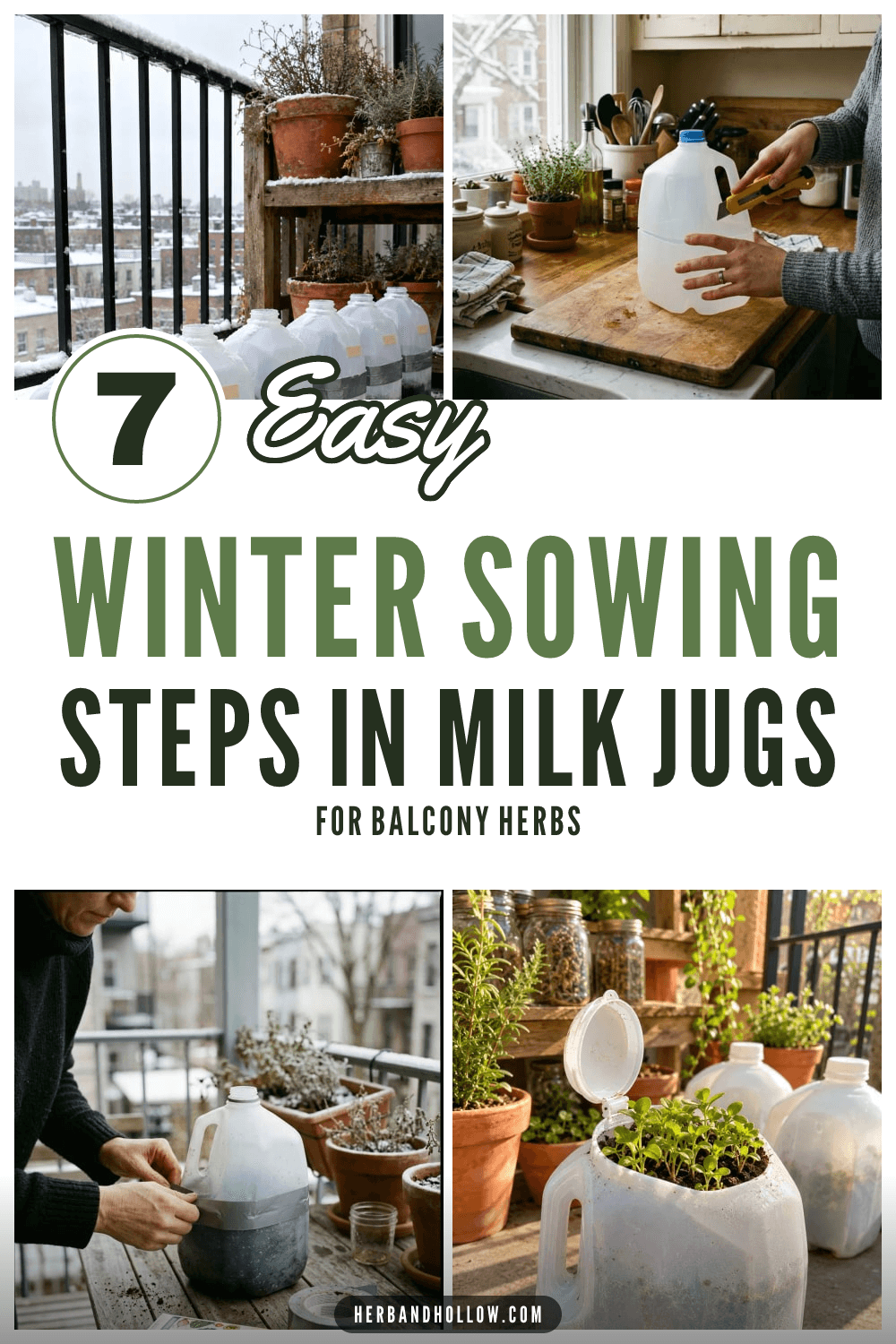
Save it for later
Pin this to your Seasonal Garden Tasks board so it's there when you need it.
Save to Pinterest