This post contains affiliate links. As an Amazon Associate we earn from qualifying purchases, at no extra cost to you. Read our disclosure.
Safety first: Herbs can be powerful. If you are pregnant, nursing, take medication or have a health condition, check with your doctor or pharmacist first. Please read our herbal & garden safety notes before you start.
Key takeaways
- Zones 4 to 6: start onions, leeks and celery 10 to 12 weeks before a May frost.
- Zones 7 and 8: February is main seed starting month for tomatoes, peppers, basil and brassicas.
- Zones 8 to 10: plant peas, seed potatoes, chard, beets and carrots in pots.
- Harden off seedlings for 7 to 10 days before planting them out.
- Count back from your own last frost date, not the calendar.
In this post27 sections
- What to plant in February: a quick zone guide
- Start indoors: zones 4 to 6
- 1. Onions from seed
- 2. Leeks
- 3. Celery
- 4. Eggplant
- 5. Perennial herbs from seed
- Start indoors: zones 7 and 8
- 6. Tomatoes
- 7. Peppers
- 8. Basil and parsley
- 9. Broccoli, cabbage and kale
- 10. Lettuce
- Plant outside in pots (zones 8 to 10)
- 11. Snap and snow peas
- 12. Seed potatoes in grow bags
- 13. Kale and Swiss chard
- 14. Beets and turnips
- 15. Carrots
- 16. Broccoli and cabbage transplants
- 17. Onion sets and transplants
- Flowers, fruit and herbs for small spaces
- 18. Pansies and violas
- 19. Bare-root strawberries
- 20. Gladiolus bulbs
- 21. Divide perennial herbs
- FAQ
What to plant in February: a quick zone guide
February is seed starting month for most of the country and early planting month in the South. What goes in depends on your USDA zone and, more precisely, on your average last spring frost date.
| Crop | Weeks before last frost | Zone 5 example (frost May 7) | Zone 8 example (frost Mar 23) |
|---|---|---|---|
| Onions, leeks, celery | 10 to 12 | Feb 12 to Feb 26 | Already started in January |
| Eggplant | 8 to 10 | Feb 26 to Mar 12 | Started in January |
| Peppers | 8 | Mar 12 | Started late January |
| Tomatoes, basil | 6 to 8 | Mar 12 to Mar 26 | Jan 26 to Feb 9 |
| Broccoli, cabbage, kale | 4 to 6 | Mar 26 to Apr 9 | Feb 9 to Feb 23 |
| Lettuce | 4 to 5 | Apr 2 to Apr 9 | Feb 16 to Feb 23 |
| Seed potatoes outside | 2 to 4 | Apr 9 to Apr 23 | Feb 23 to Mar 9 |
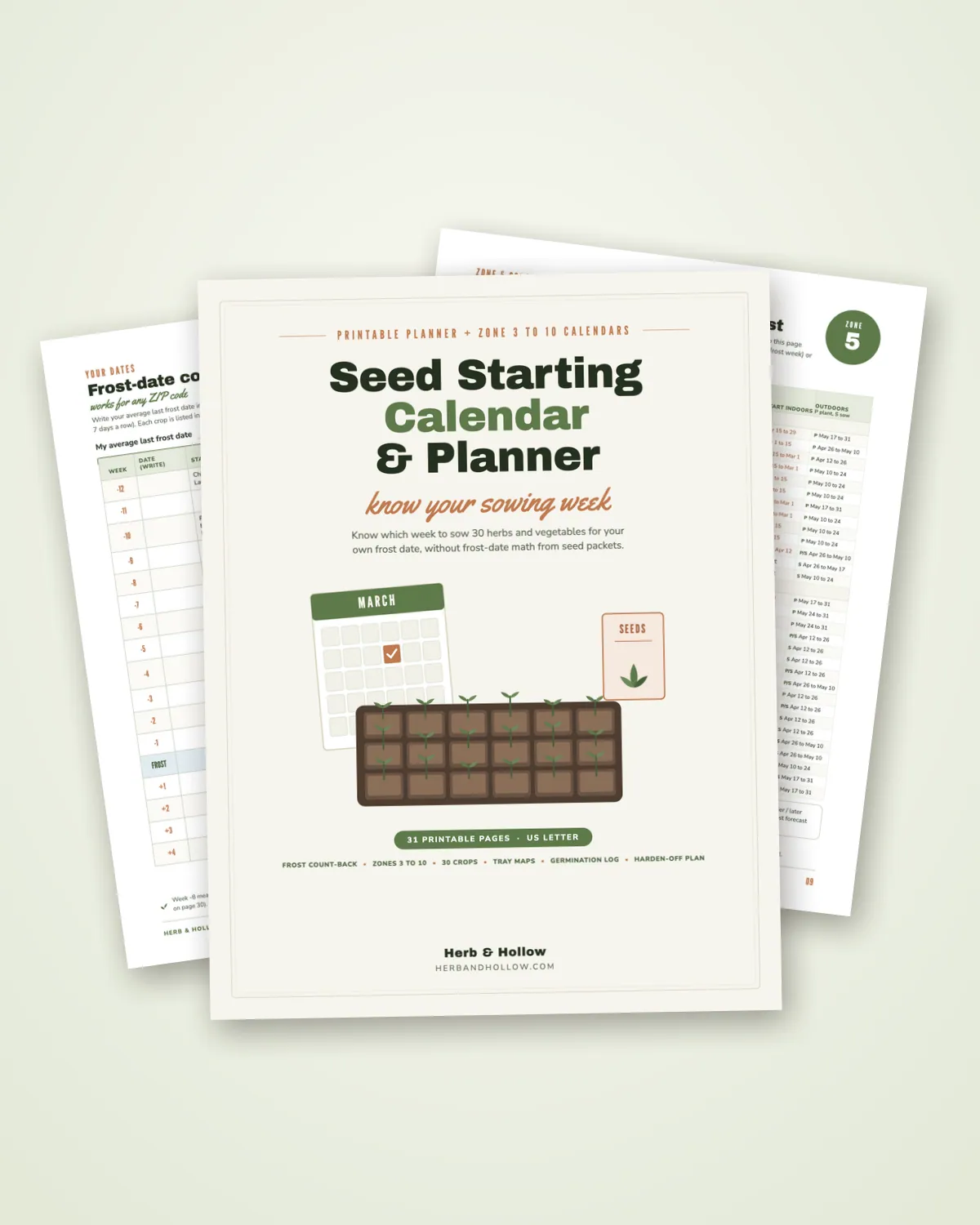
The weeks come from the Old Farmer's Almanac seed starting guidance; the dates are simple arithmetic from two example frost dates, Madison, Wisconsin and Atlanta, Georgia. Swap in your own date from your state extension service. Our seed starting calendar by zone has the full table.
Start indoors: zones 4 to 6
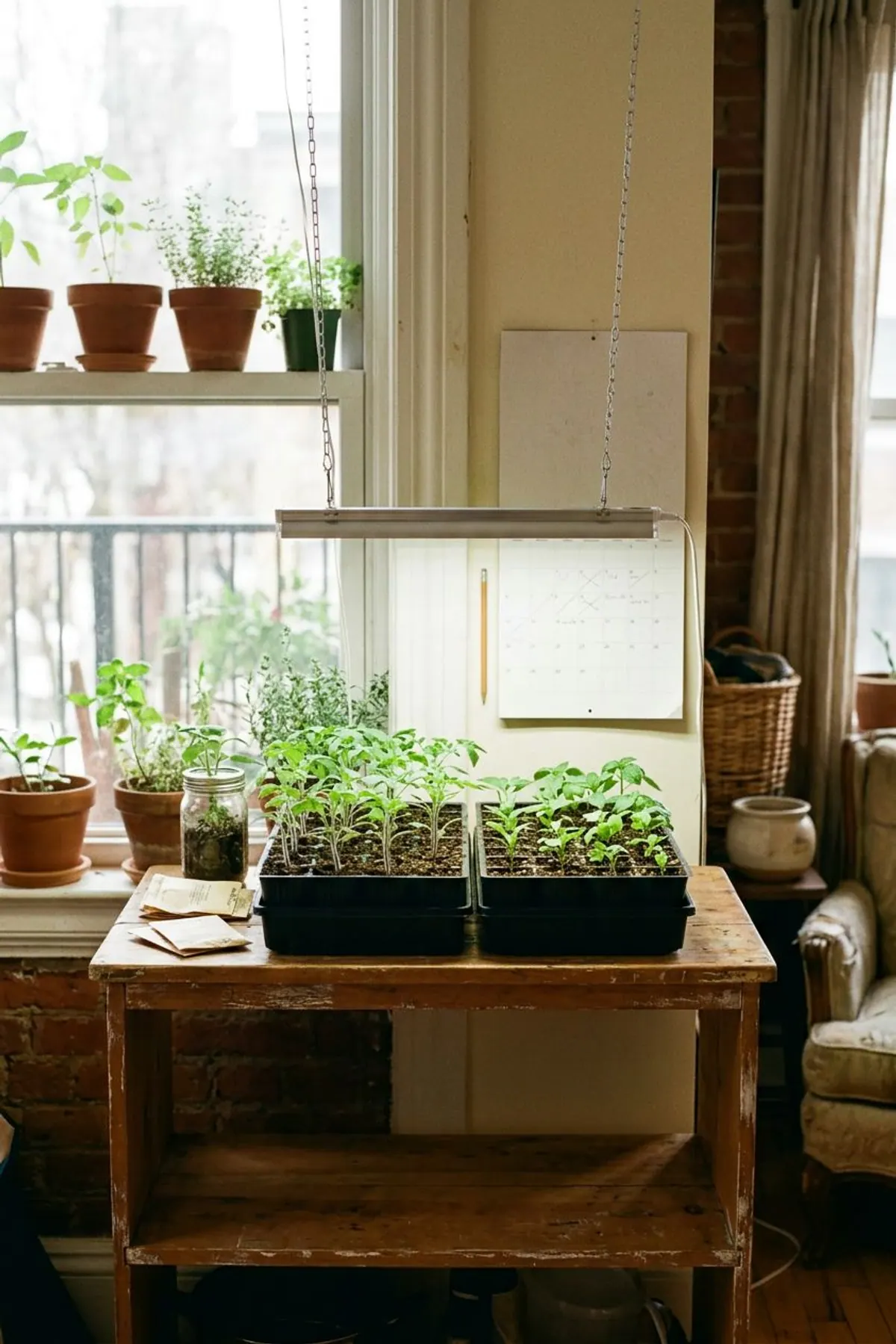
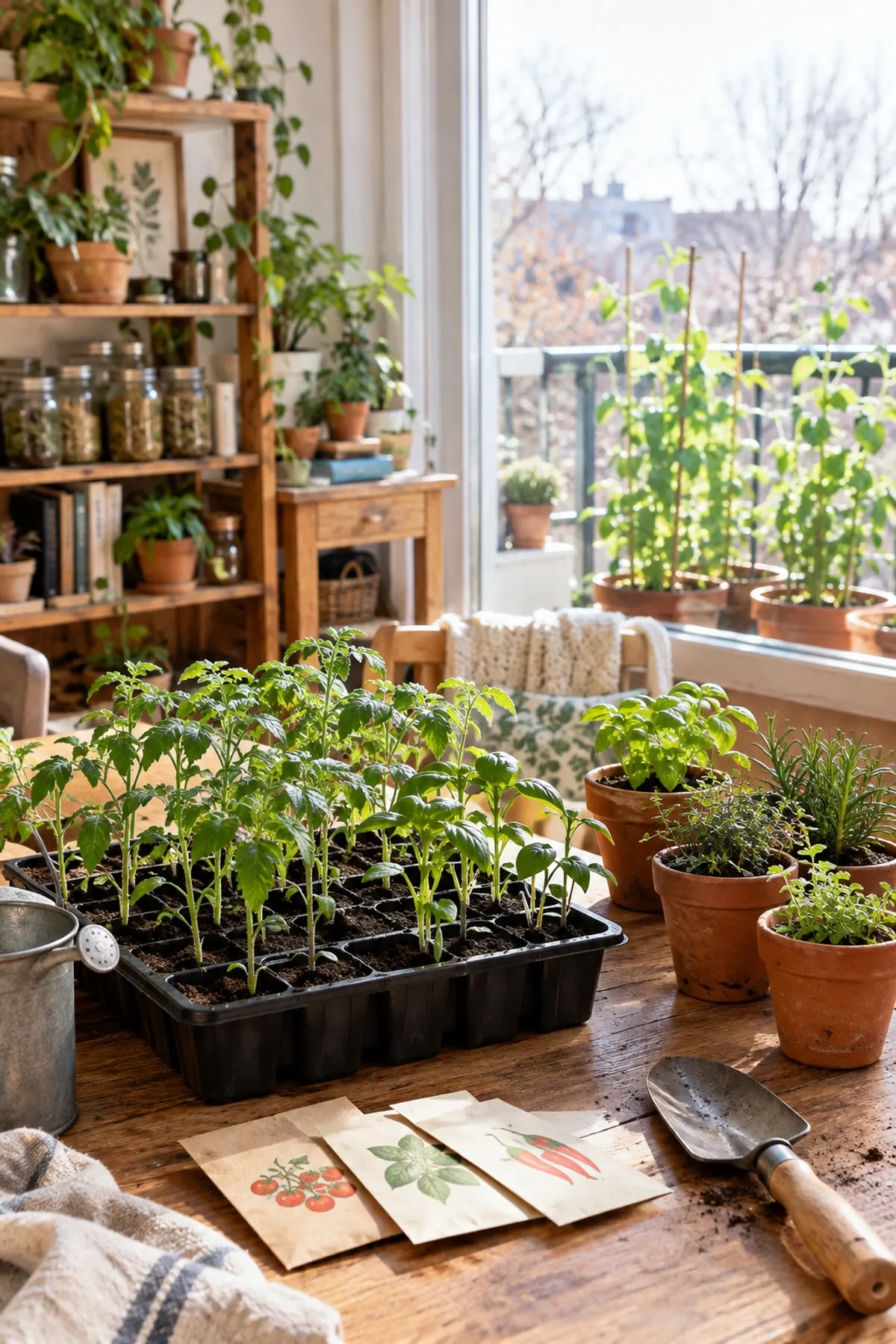
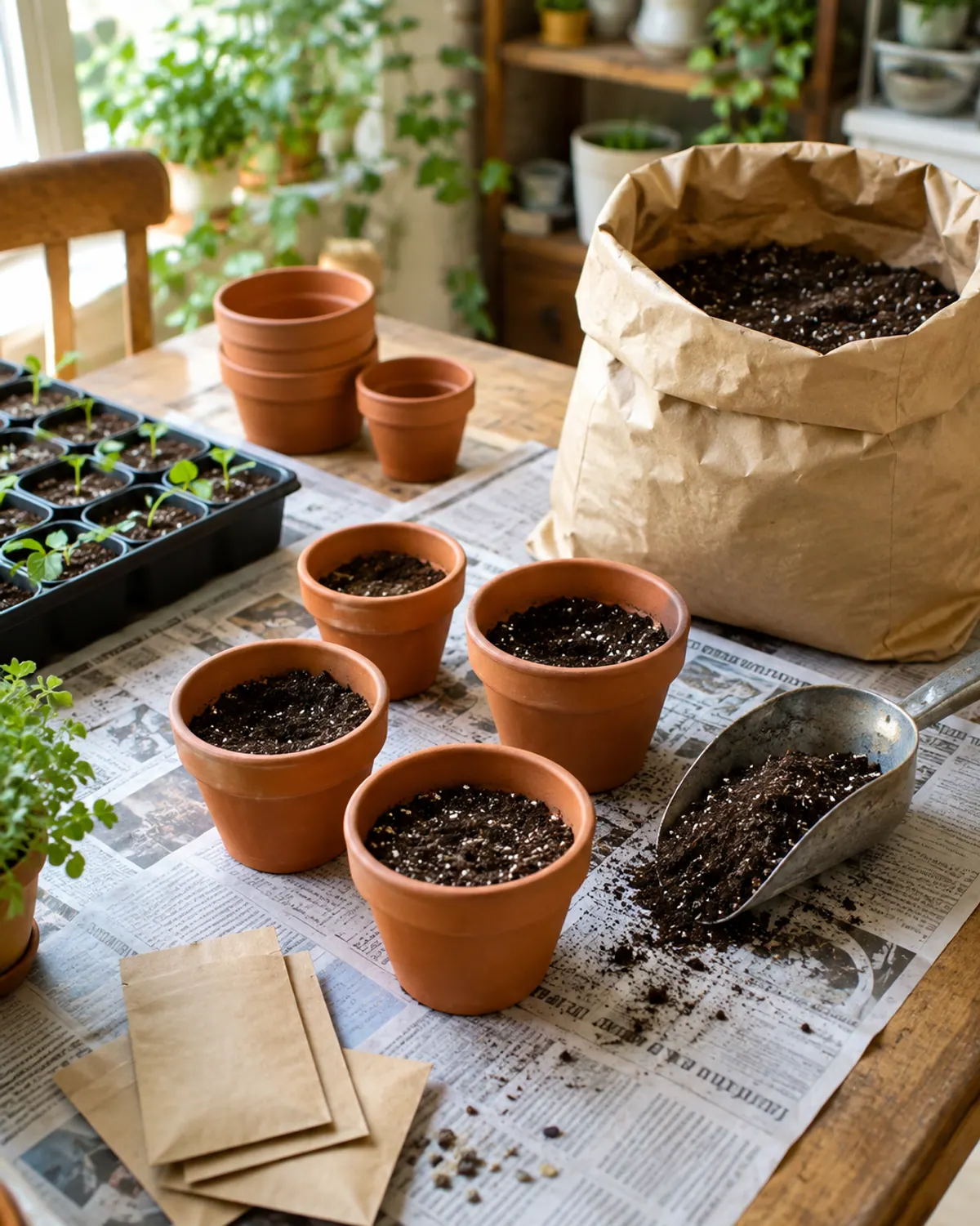
With a last frost in May, February is when the slow crops start under a light. One shelf and one LED shop light are enough for a balcony's worth of plants; see our small-space seed starting setup.
1Onions from seed
When: 10 to 12 weeks before last frost, so mid to late February with a May 7 frost.
How: sow thickly in a tray and trim the grass-like tops to about 4 inches so they thicken. In the North, choose long-day onions.
- Pets: onions are on the ASPCA toxic list for cats and dogs.
2Leeks
When: the same window as onions.
How: sow in a deep tray or tall pot and trim like onions. Leeks are slow and forgiving, a good first seed project.
3Celery
When: 10 to 12 weeks before last frost.
How: press the tiny seed onto the surface without covering it and keep the mix evenly moist. It is slow to sprout, so be patient.
4Eggplant
When: 8 to 10 weeks before last frost, so the last days of February in zone 5.
How: eggplant sprouts best in warm mix; a heat mat under the tray helps. Pick a compact variety for a patio pot.
5Perennial herbs from seed
When: February under a light.
How: thyme, oregano and chives are slow from seed, so a February start gives you sturdy plants by spring. Sow thinly on the surface of moist mix and keep them under the light.
- Pets: chives and oregano are on the ASPCA toxic list; thyme is non-toxic.
Fine, light mix made for tiny roots.
Start indoors: zones 7 and 8
With a last frost in late March or April, February is the main seed starting month. Count back from your own date.
6Tomatoes
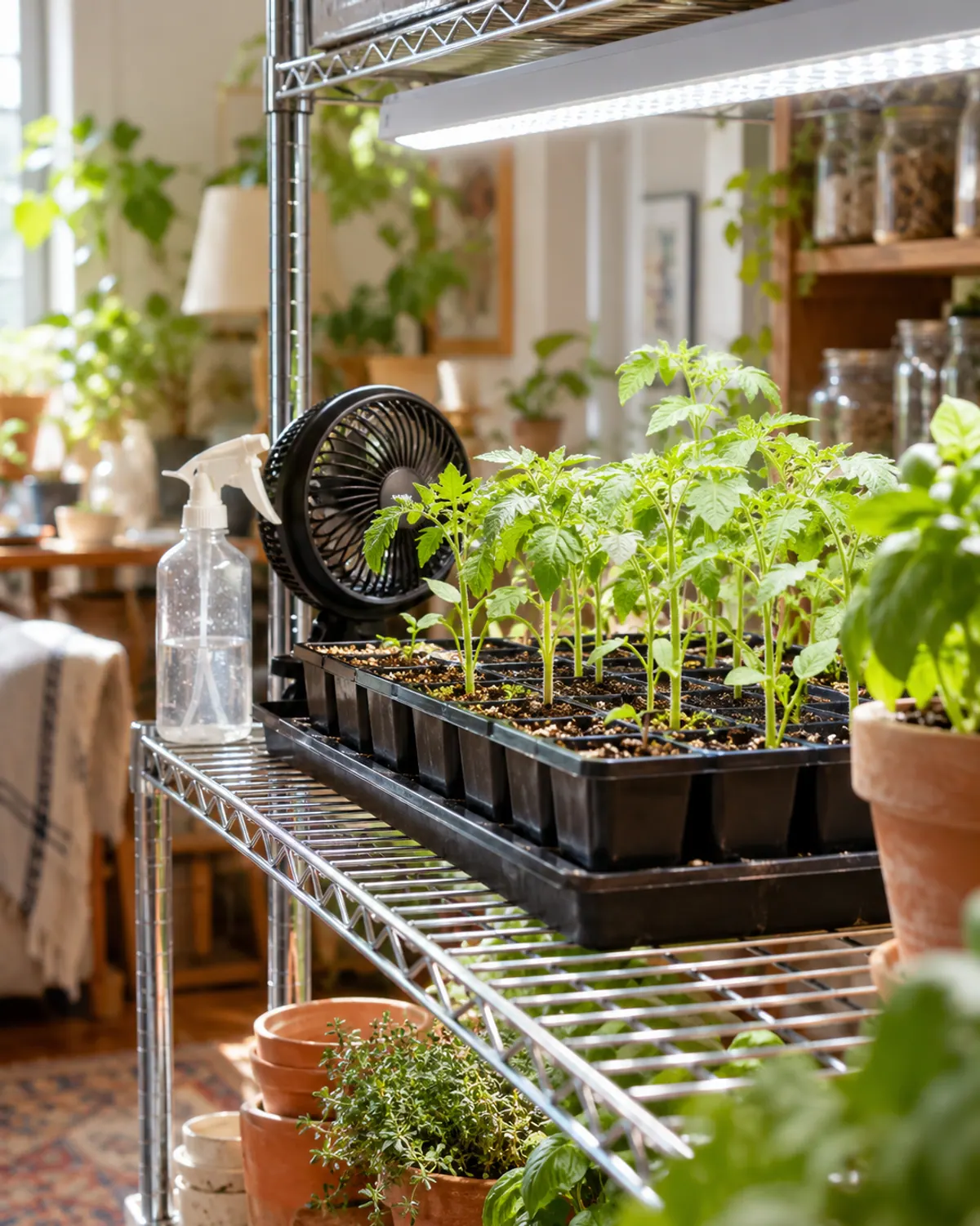
When: 6 to 8 weeks before last frost: late January to early February in zone 8, later in February in zone 7.
How: sow two seeds per cell, keep only the stronger one and run the light 14 to 16 hours. A small fan on low makes stems sturdier.
- Pets: tomato leaves and stems are on the ASPCA toxic list.
Hangs a few inches above seedlings so they stay short and strong.
7Peppers
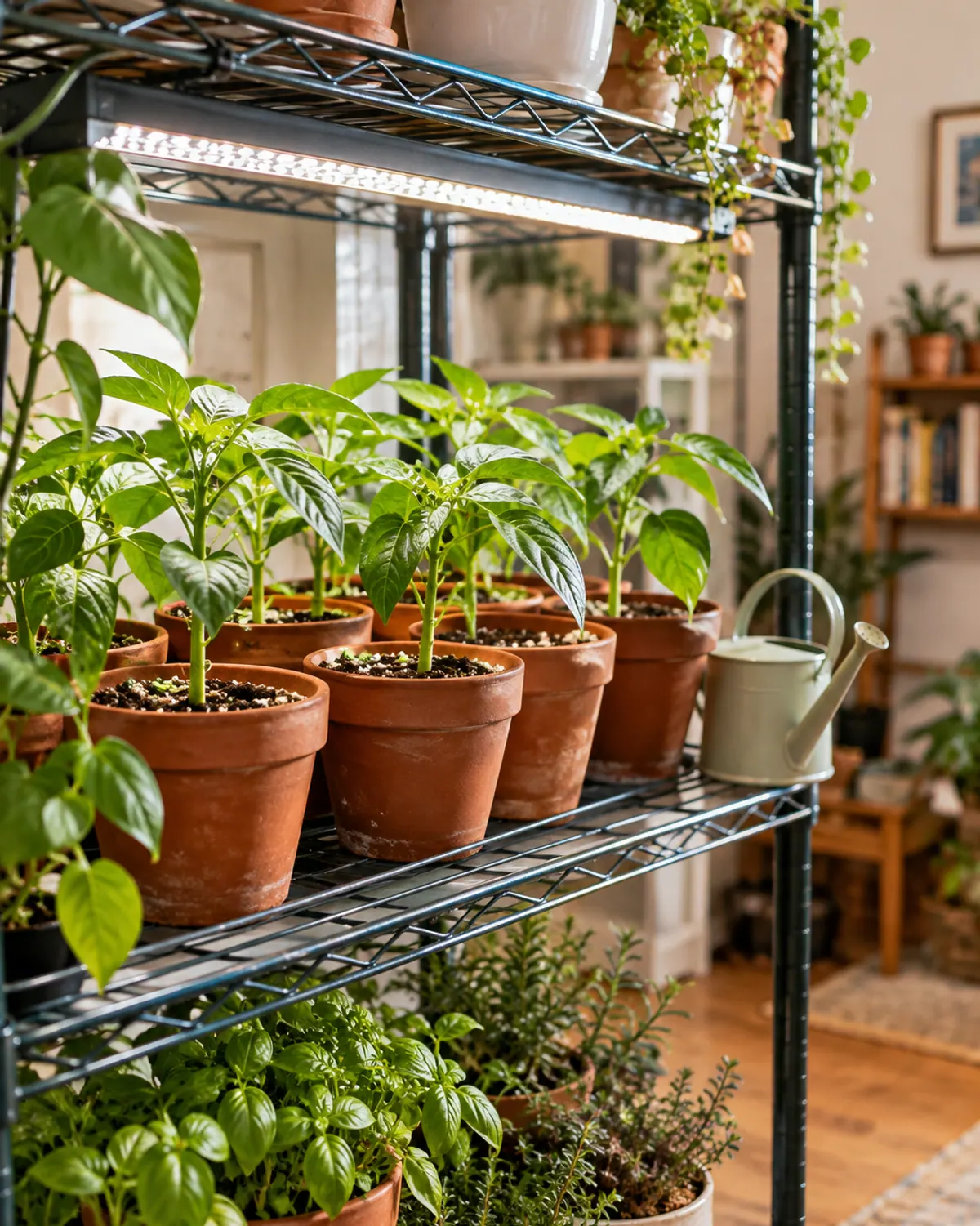
When: about 8 weeks before last frost: late January in zone 8, February in zone 7.
How: peppers want warmth to sprout. Move them to small pots once they have two sets of true leaves.
Speeds up slow peppers in a cool room.
8Basil and parsley
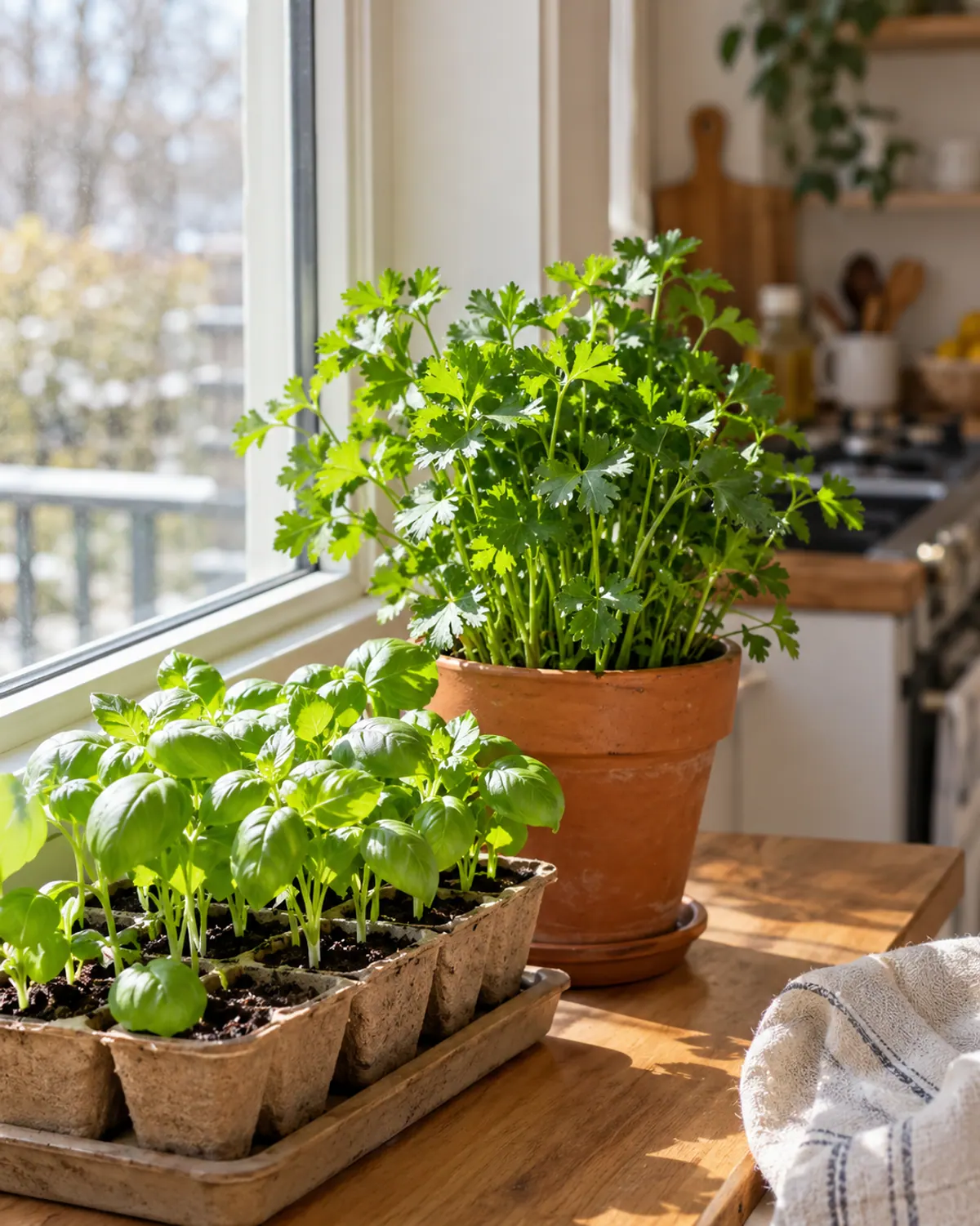
When: basil with your tomatoes, 6 to 8 weeks before last frost; parsley any time this month.
How: basil sprouts fast in warmth. Parsley is slow, so many gardeners soak it overnight first. Our herb garden for beginners guide covers potting them up.
- Pets: basil is non-toxic per the ASPCA; parsley is on its toxic list.
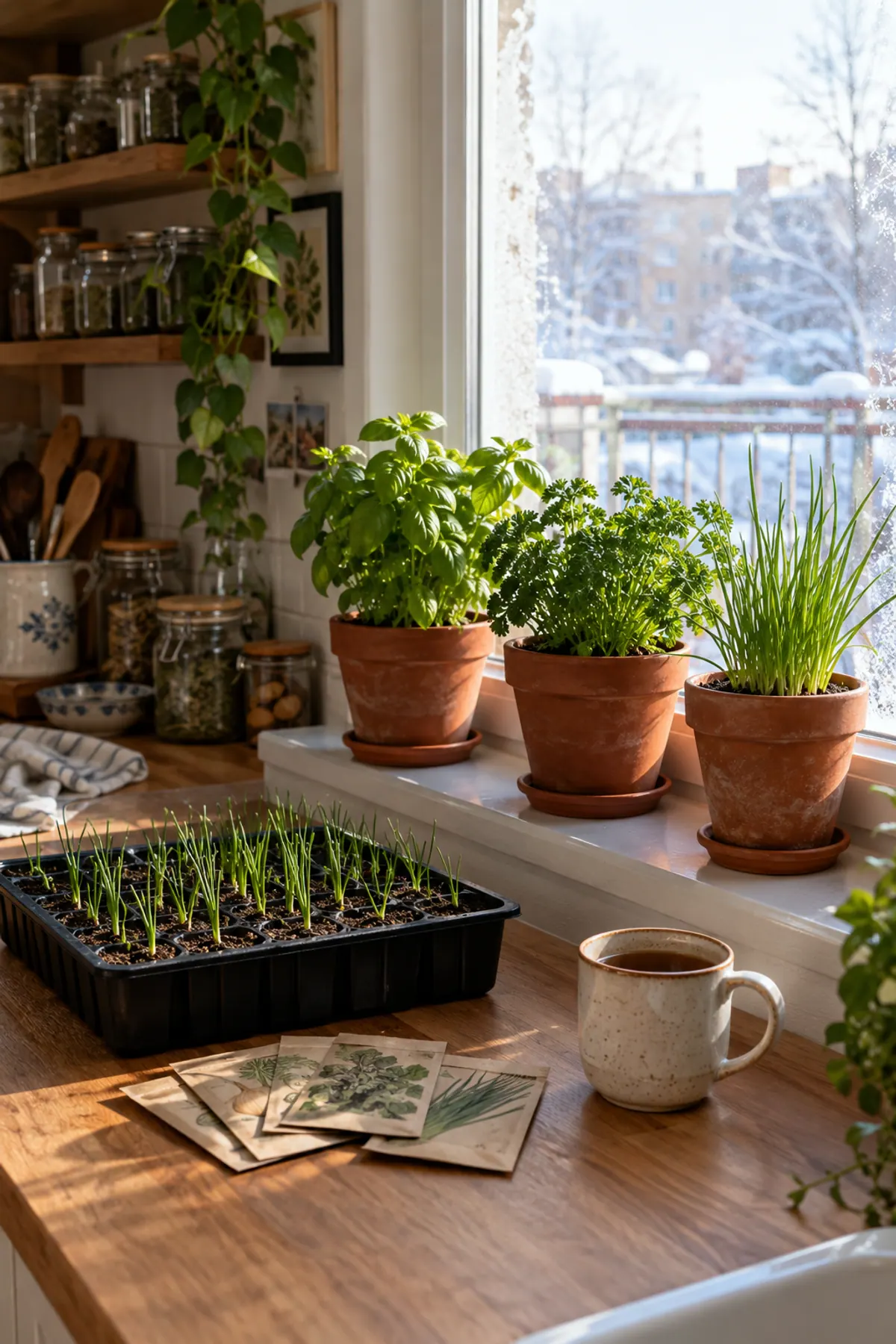
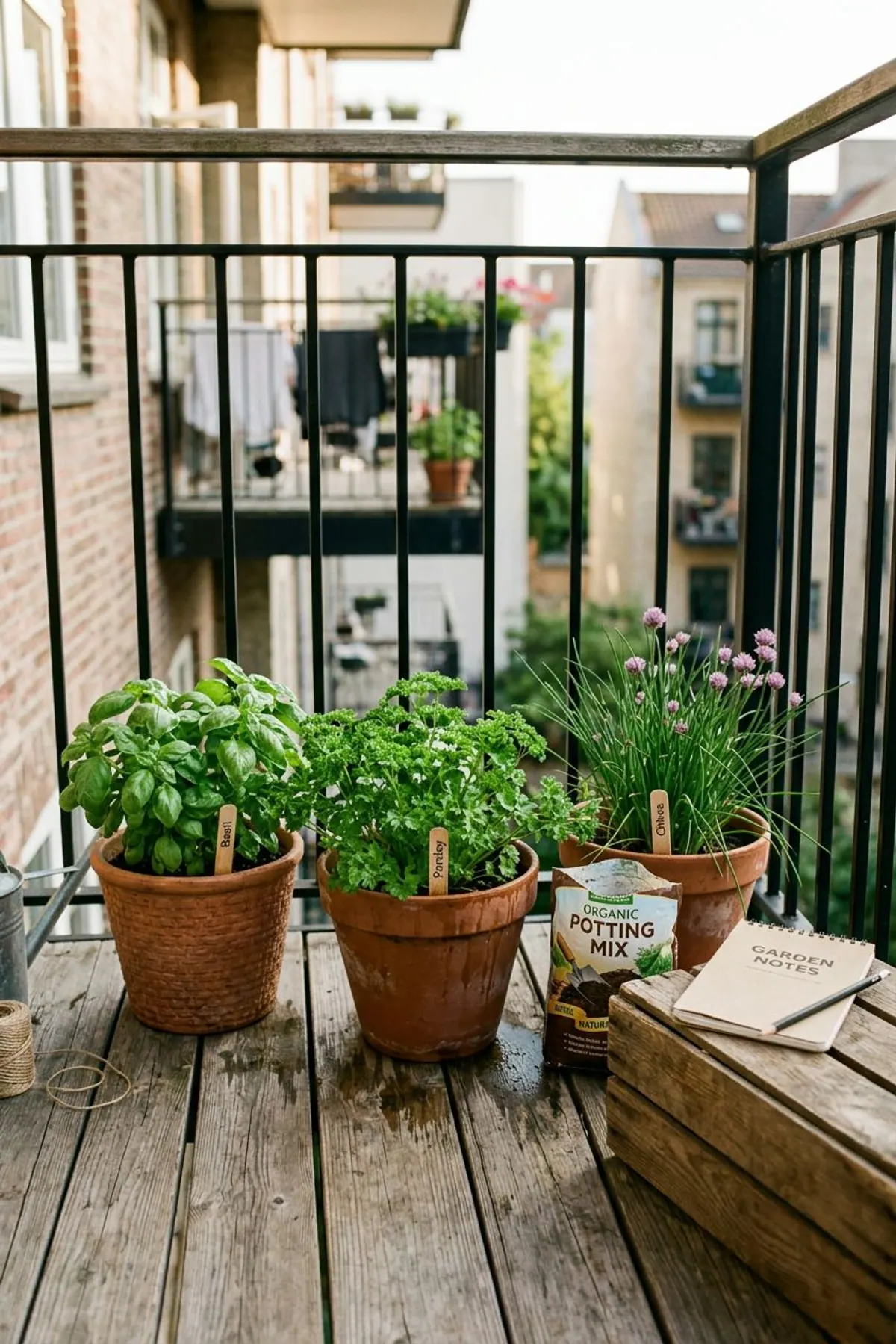
Basil, parsley and chives seed for a windowsill.
9Broccoli, cabbage and kale
When: 4 to 6 weeks before last frost: about Feb 9 to 23 with a late-March frost.
How: these are cool-season crops, so they go outside before tomatoes. One plant per 5 gallon pot later.
10Lettuce
When: 4 to 5 weeks before last frost, or sow it straight into a pot outside.
How: start a short row every two weeks so you are not drowning in lettuce in April.
Plant outside in pots (zones 8 to 10)
In the South, February is busy. Texas A&M AgriLife's Travis County calendar for Austin lists peas early in the month, the last chance for broccoli, cabbage and cauliflower transplants, beets, turnips and carrots later in the month and onions still going in.
11Snap and snow peas
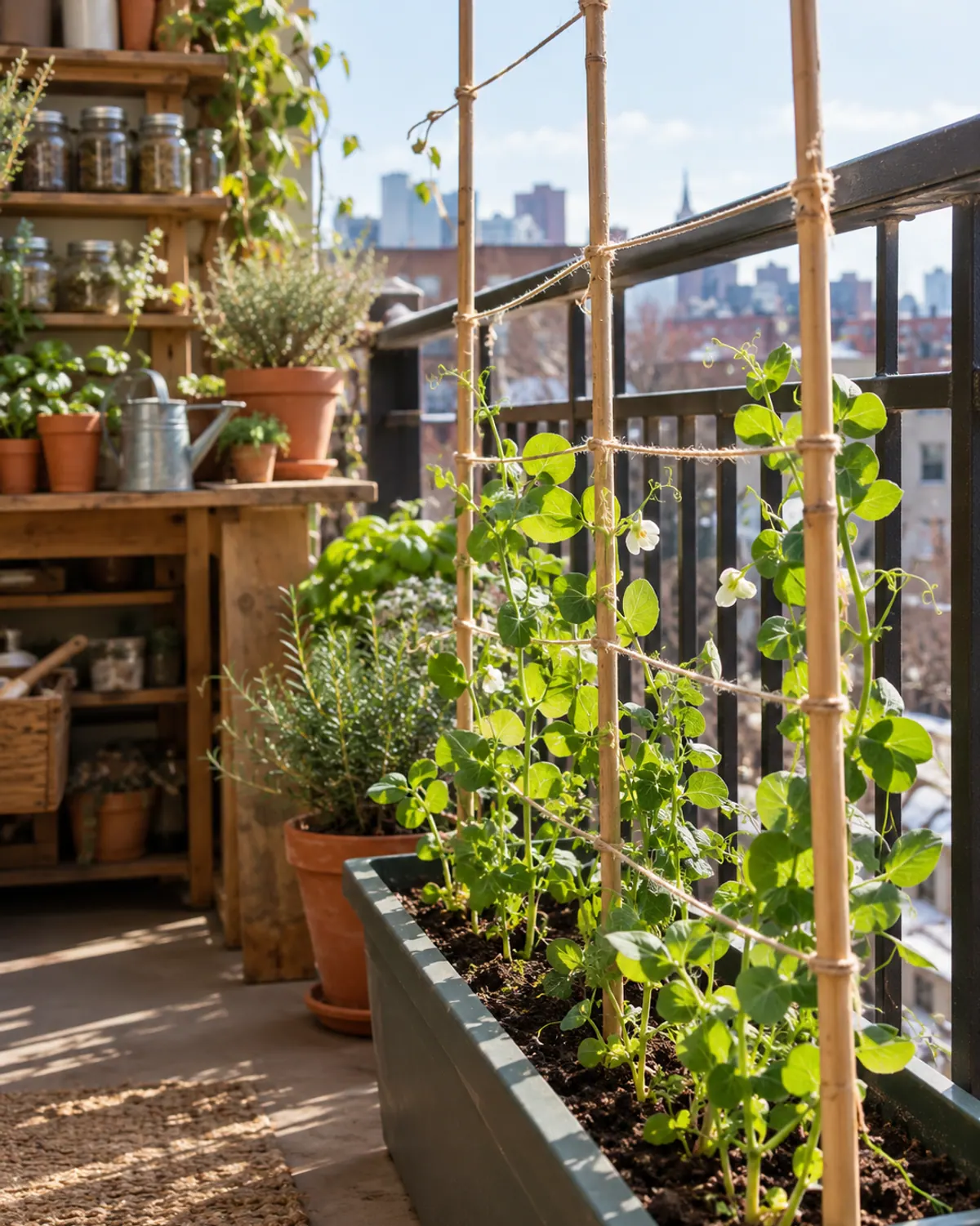
When: early February in zones 8 to 10, and as soon as soil can be worked further north.
How: sow 1 inch deep along a trellis in a deep planter. Dwarf varieties suit a balcony railing.
Light netting for peas on a railing or planter.
12Seed potatoes in grow bags
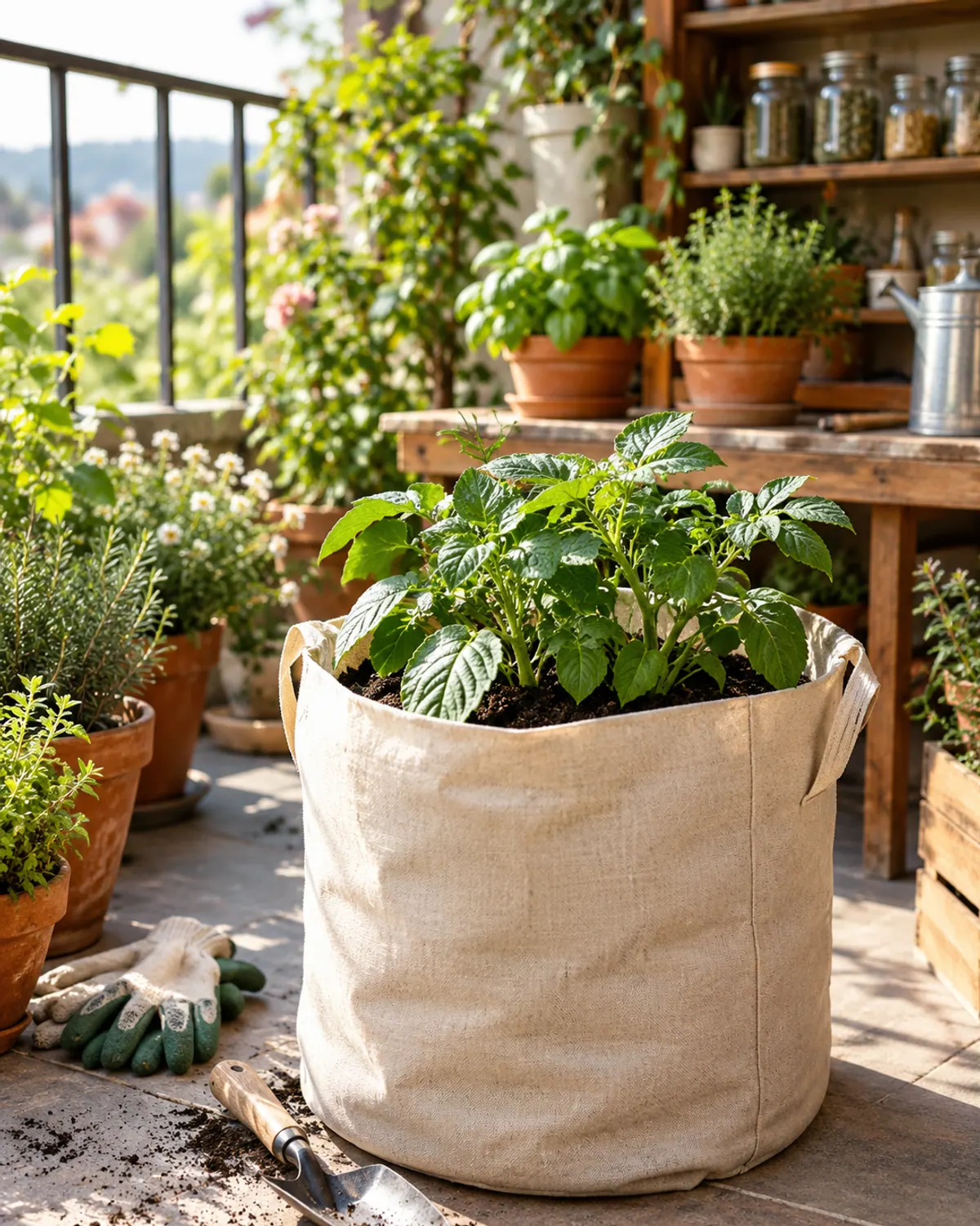
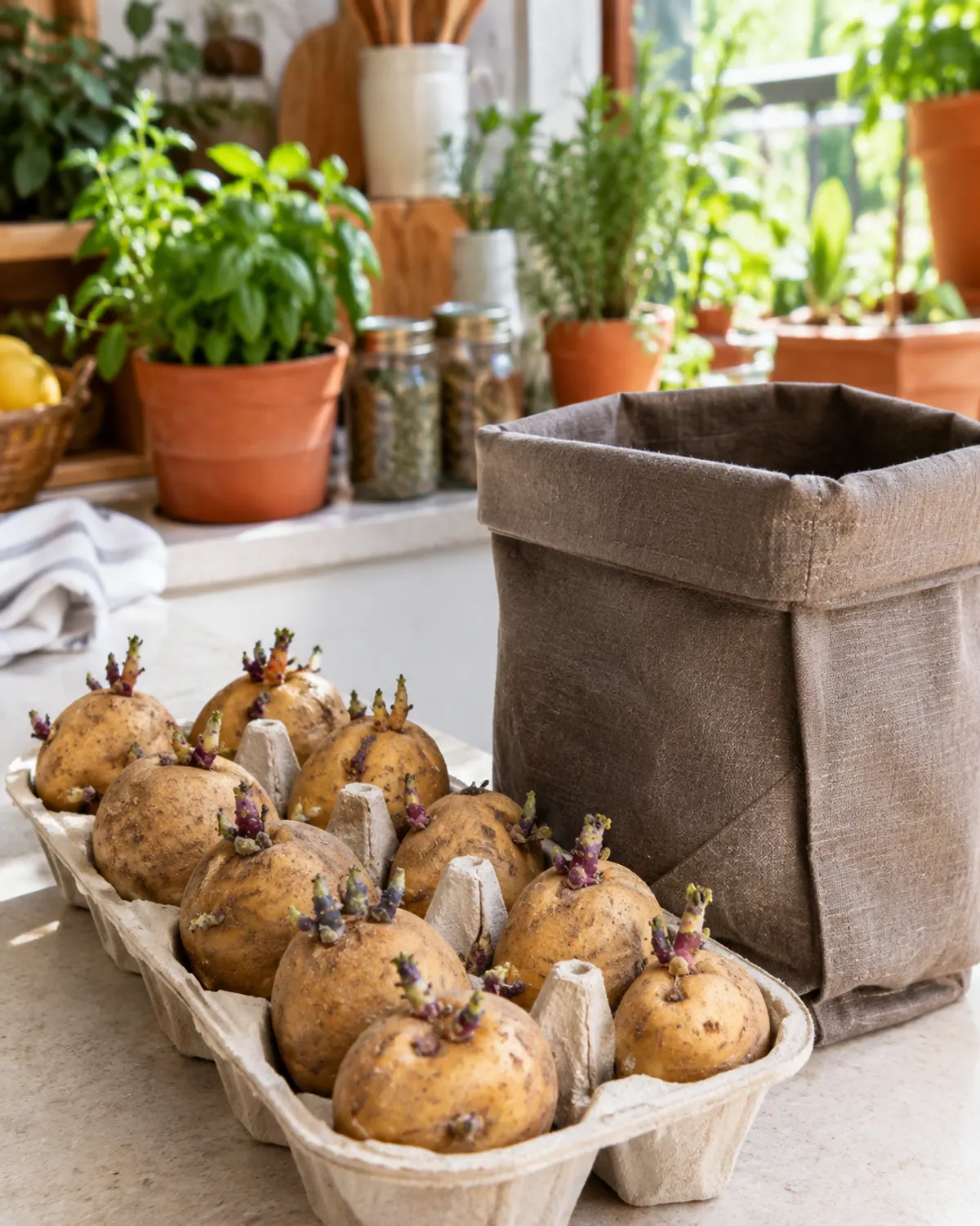
When: about 2 to 4 weeks before last frost, once soil reaches about 45°F. In zone 8 that is late February to early March.
How: set sprouted seed potatoes on 4 inches of mix in a 10 gallon grow bag, cover them, and add more mix as the stems grow.
- Pre-sprouting (chitting) seed potatoes in a bright, cool spot for a few weeks gives them a head start.
A side flap lets you check for potatoes without tipping the bag.
13Kale and Swiss chard
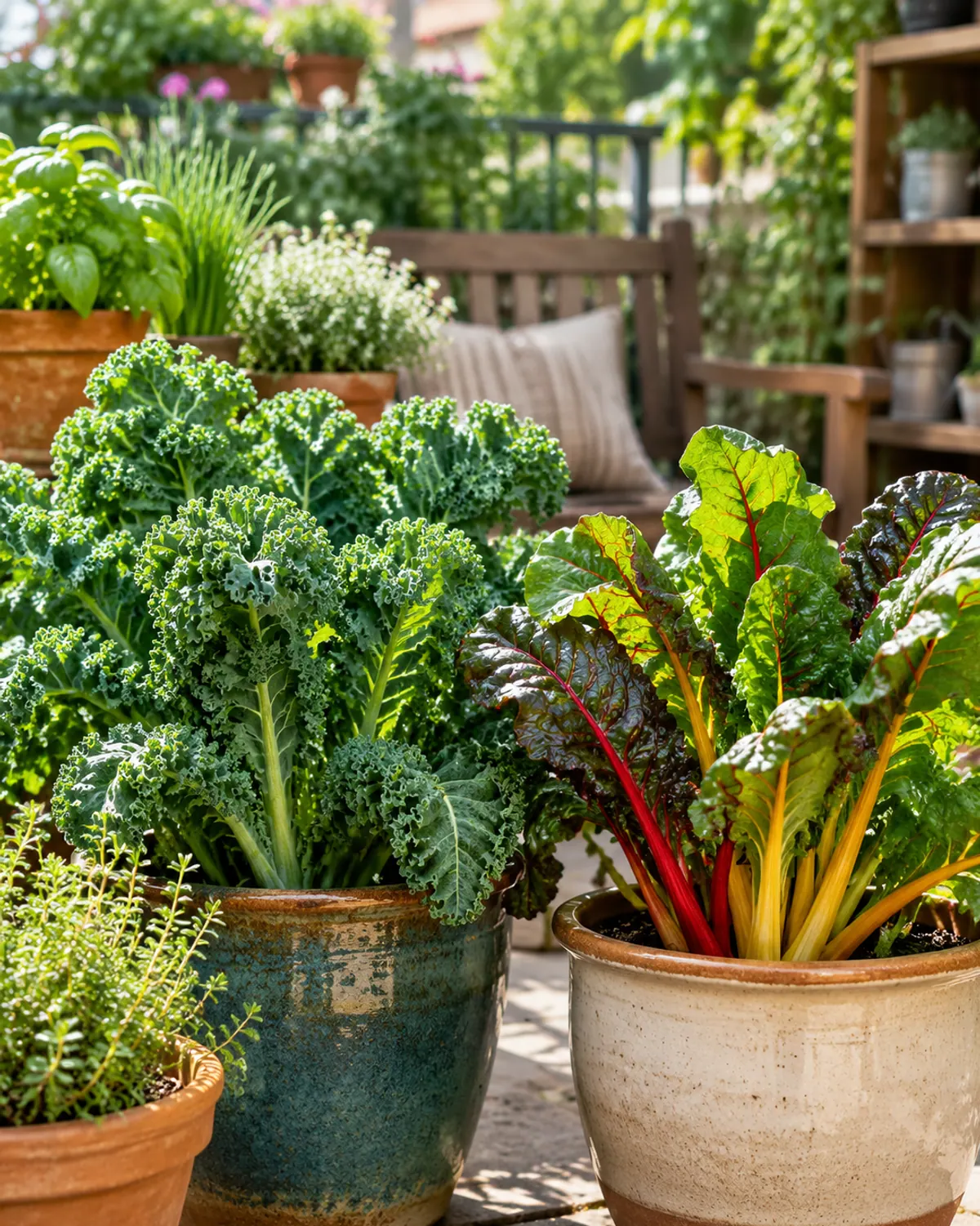
When: February in zones 8 to 10.
How: both handle cool weather and keep producing if you pick the outer leaves. A pot of rainbow chard is pretty enough for a front step.
14Beets and turnips
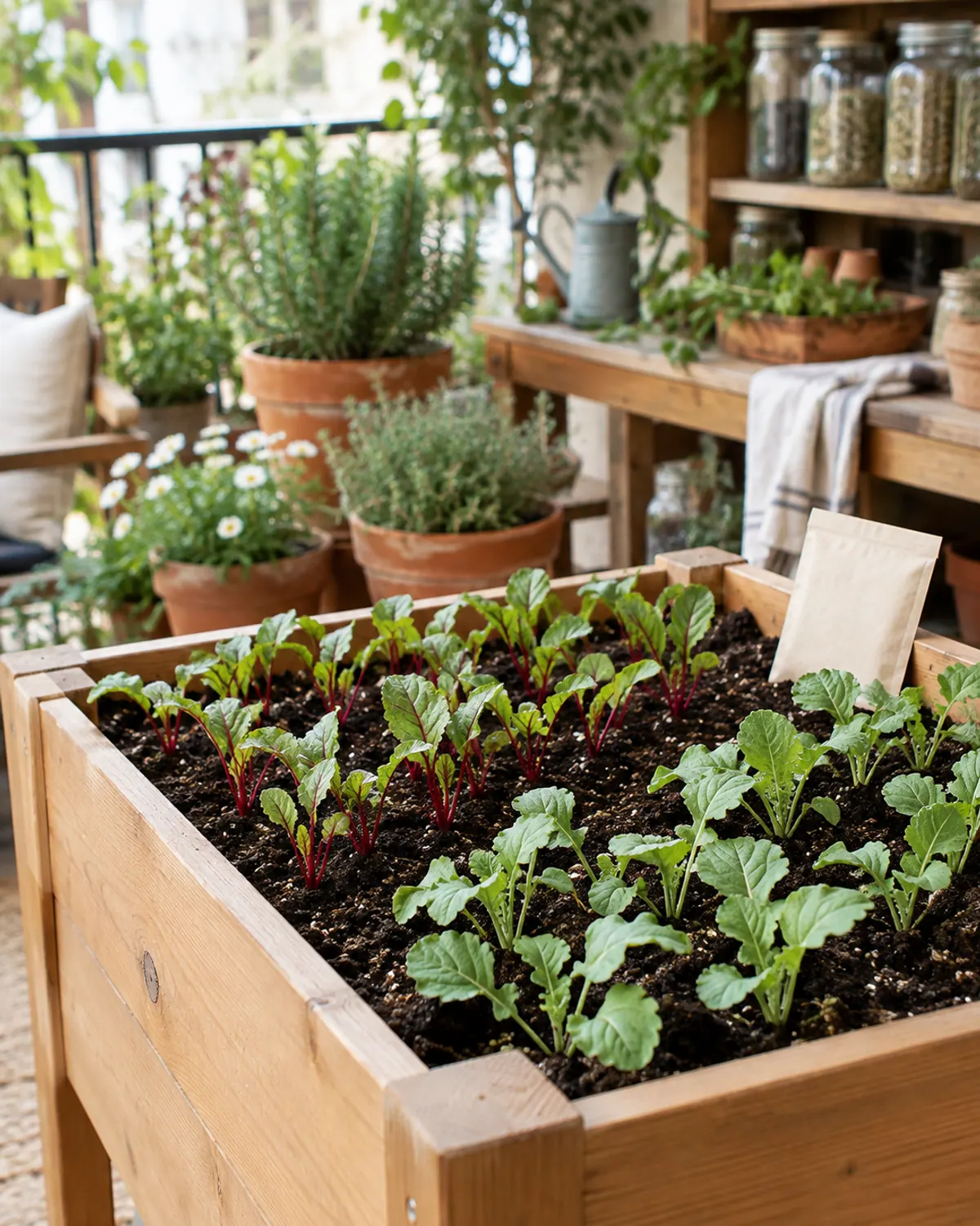
When: later in February in zones 8 to 10.
How: sow straight into a planter at least 8 inches deep and thin to a few inches apart. Beet greens and turnip greens are both good to eat.
15Carrots
When: later in February in zones 8 to 10.
How: choose short or round varieties for containers and keep the seedbed moist until they sprout, which can take a couple of weeks.
16Broccoli and cabbage transplants
When: February is the last month for these in Austin, so plant early in the month.
How: one plant per 5 gallon pot in full sun. Cover with frost cloth if a hard freeze is forecast.
17Onion sets and transplants
When: still possible in February in zones 8 and 9.
How: set them about 4 inches apart in a wide container. Fertilize a few weeks after planting.
Flowers, fruit and herbs for small spaces
18Pansies and violas
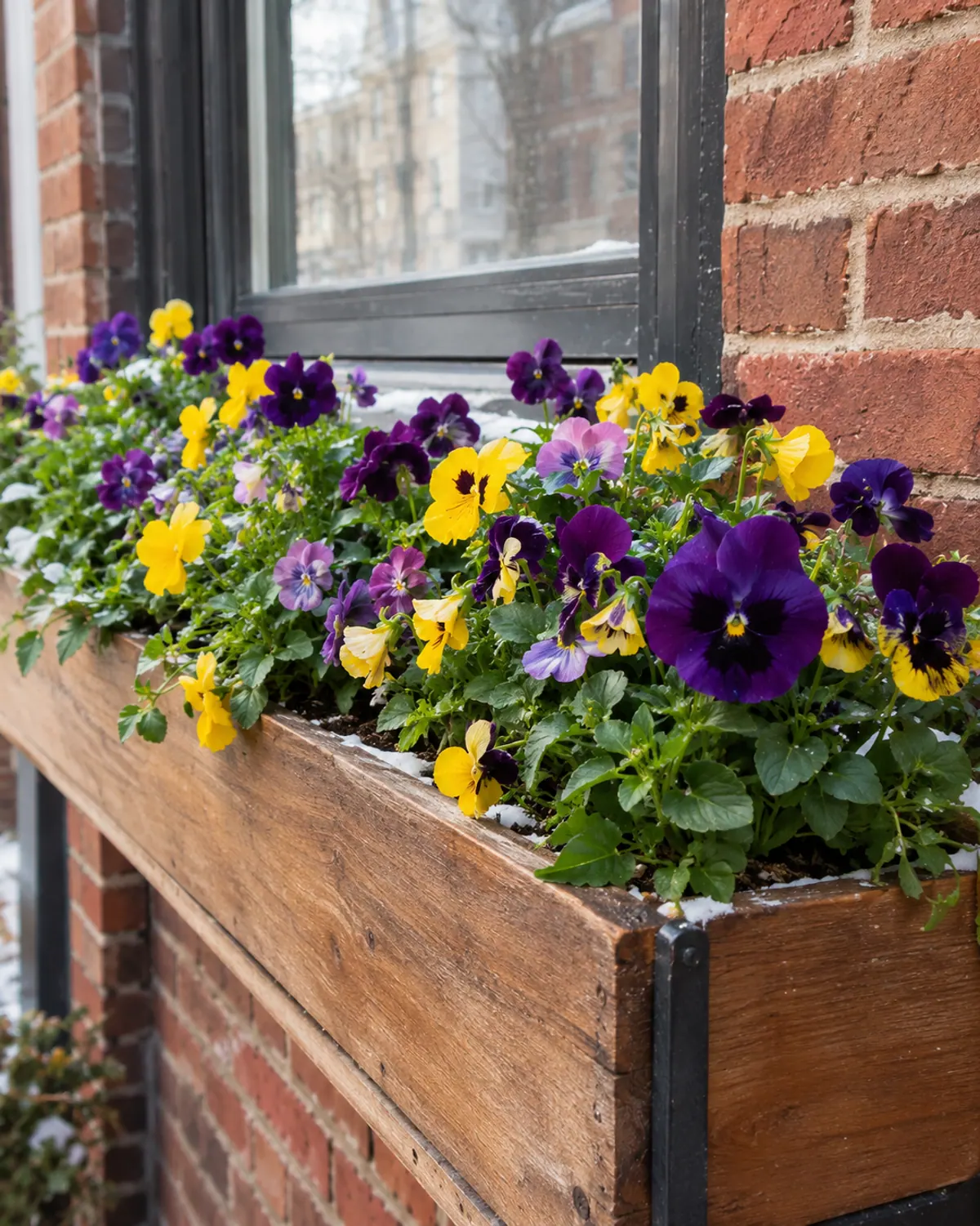
When: February in mild zones; wait for March or April where it still freezes hard.
How: they love cool weather and fill a window box with color until the heat comes. Deadhead to keep them blooming.
- Pansies and violas are not on the ASPCA toxic list, but it is still best to keep pets from grazing.
19Bare-root strawberries
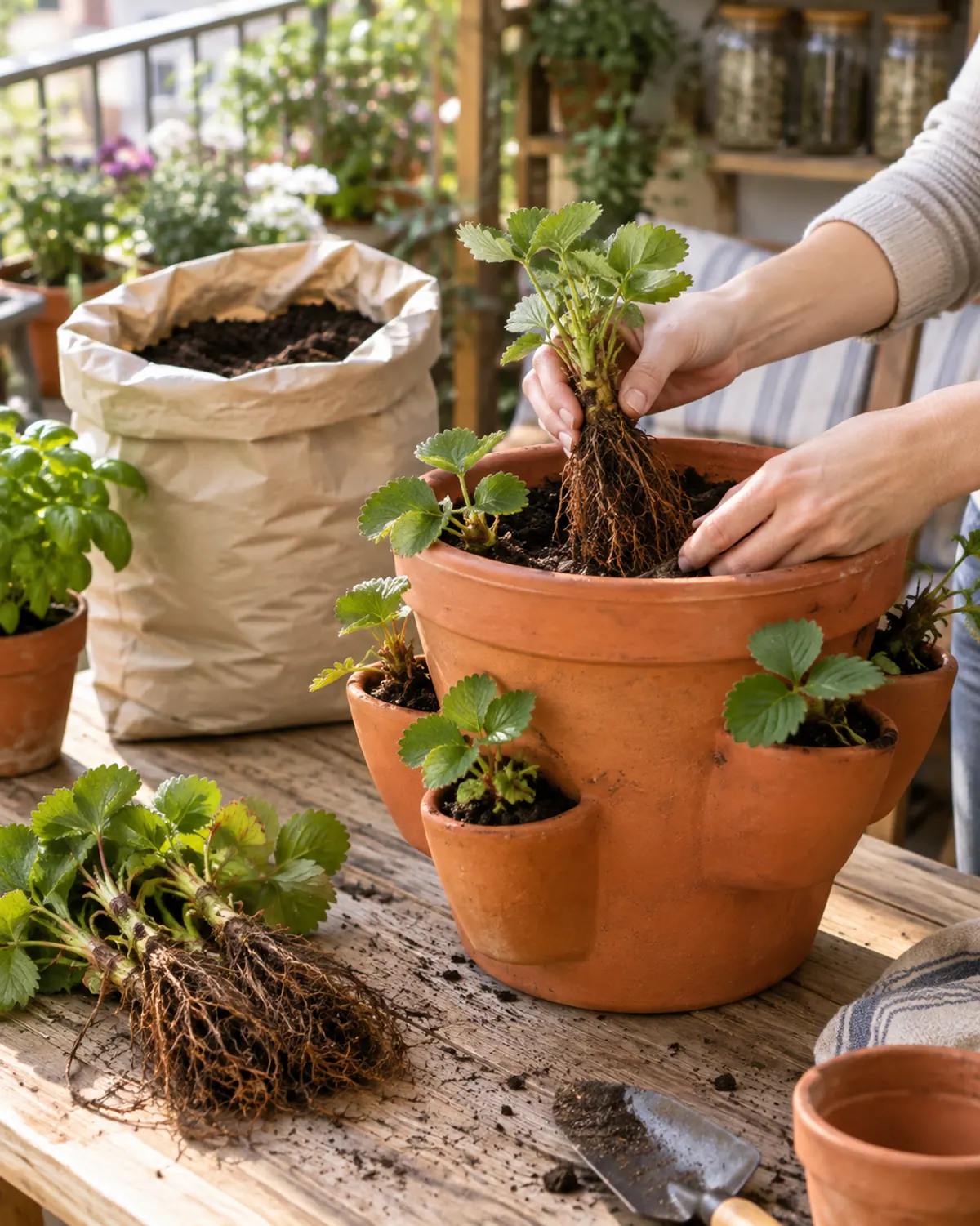
When: early spring as soon as the soil can be worked; in mild zones that can be February.
How: set crowns so the crown sits right at the soil surface, not buried. A strawberry pot with side pockets fits a sunny balcony.
20Gladiolus bulbs
When: late February in zones 8 to 10; the Austin calendar lists them for late in the month.
How: plant corms about 4 to 6 inches deep in a deep pot and stagger plantings two weeks apart for a longer show.
- Pets: gladiolus is on the ASPCA toxic list.
21Divide perennial herbs
When: February in mild zones, before strong new growth.
How: knock a crowded pot of chives or oregano out, cut the root ball into 2 or 3 pieces and pot each one up. Instant extra plants for free.
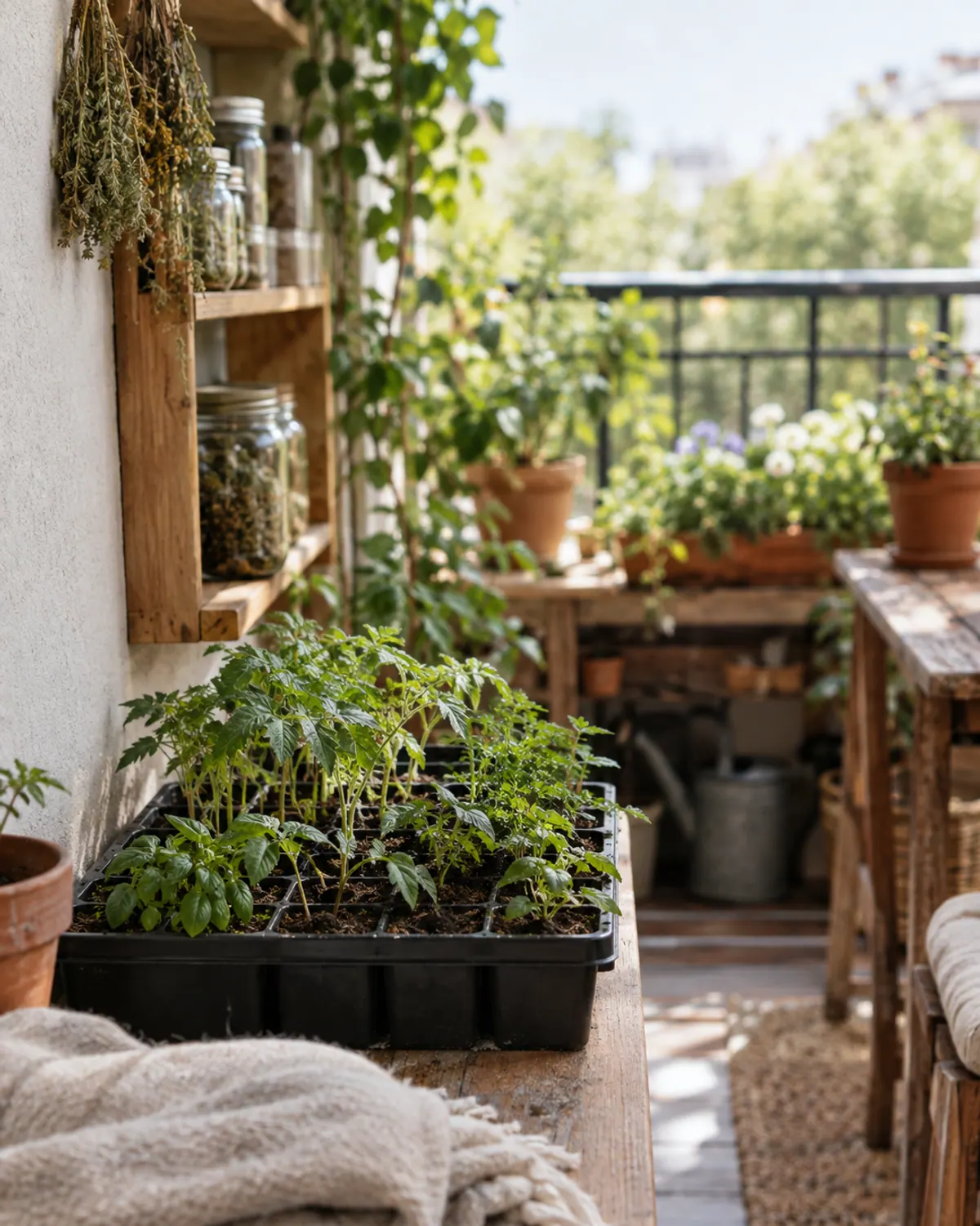
Your February planting checklist
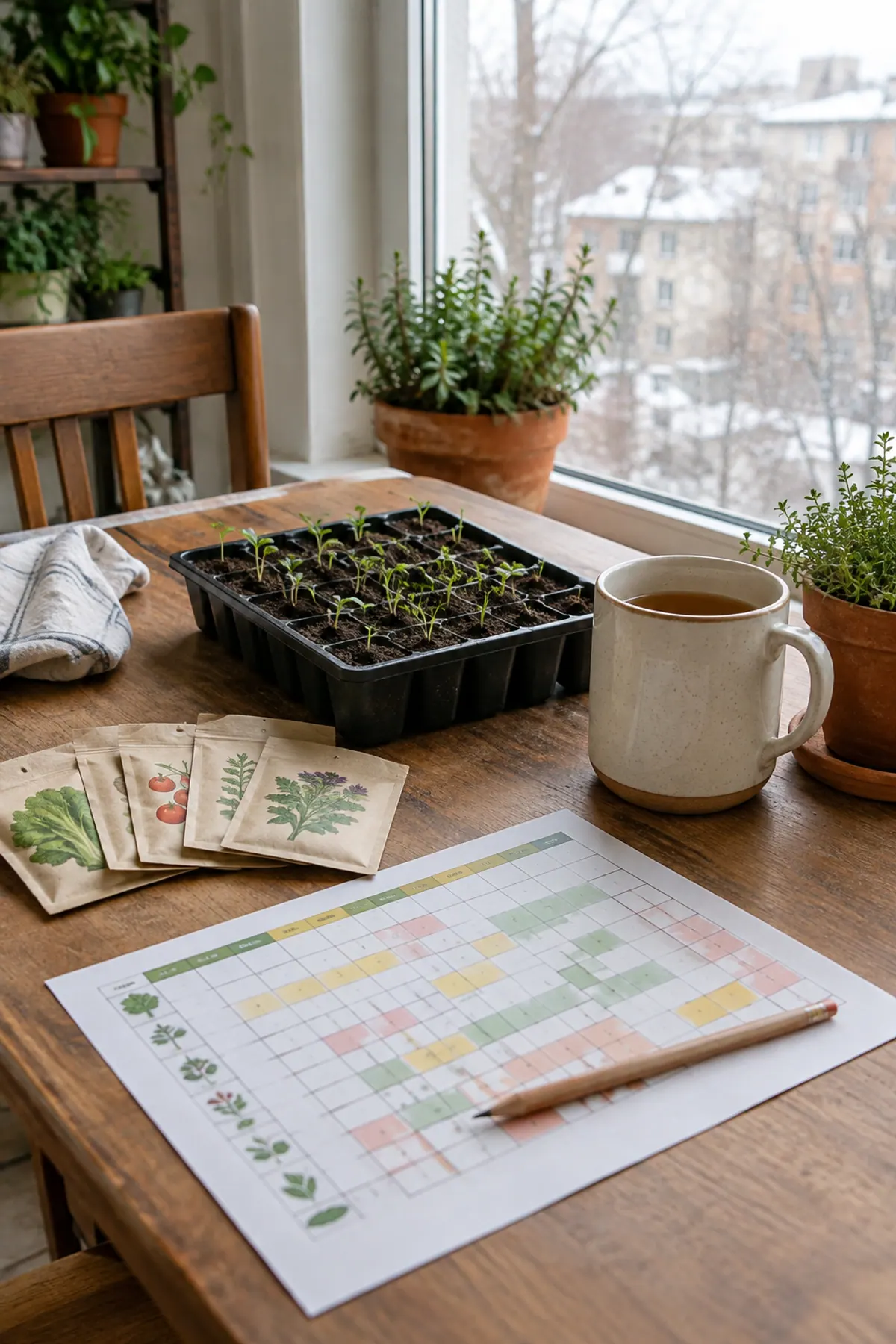
Keeping track is what makes next February easier. The Herb Garden Journal + 20 Herb Growing Cards has a sowing and propagation log, a seed and purchase record and a growing card for each of 20 herbs. For the January half of the year, see what to plant in January, and for more container ideas, our container gardening for beginners guide and small space garden ideas.
Shop February planting supplies
- Start here
Seed starting trays with humidity domes
Typically $12 to $25
Reusable cells for tomatoes, peppers and herbs.
Check price on Amazon for Seed starting trays with humidity domes -
Seed starting potting mix
Typically $8 to $15
Fine, light mix made for tiny roots.
Check price on Amazon for Seed starting potting mix -
Plug-in outlet timer
Typically $8 to $15
Runs the grow light on a steady schedule.
Check price on Amazon for Plug-in outlet timer -
Potato grow bags with flap
Typically $12 to $25
Potatoes on a patio without a garden bed.
Check price on Amazon for Potato grow bags with flap -
Frost cloth roll
Typically $6 to $14
Covers early plantings on a cold night.
Check price on Amazon for Frost cloth roll
Herb notes on this site are for growing and cooking, not medical advice. If you are pregnant, nursing or take medication, ask your doctor before using any herb beyond normal cooking amounts. If a pet chews a plant, call your vet or the ASPCA Animal Poison Control Center at (888) 426-4435.
Frequently asked questions
What vegetables can I plant in February?
In zones 8 to 10, peas, seed potatoes, kale, chard, beets, turnips, carrots, onions and the last broccoli and cabbage transplants go outside. Further north, start onions, leeks, celery, tomatoes and peppers indoors, depending on your frost date.
What can I plant in February in zone 7?
Start tomatoes, peppers, basil, broccoli, cabbage and lettuce indoors, timed back from your last frost. Peas can go outside as soon as the soil can be worked.
What can I plant in February in zone 9?
Plant peas, seed potatoes, kale, chard, beets, turnips, carrots and onions in pots, plus pansies and bare-root strawberries. Gladiolus bulbs can go in late in the month.
What seeds should I start indoors in February?
In cold zones, onions, leeks, celery, eggplant and perennial herbs. In zones 7 and 8, tomatoes, peppers, basil, broccoli, cabbage and lettuce. Use your last frost date to time each one.
When should I plant potatoes?
About 2 to 4 weeks before your average last frost, once the soil is around 45°F. In zone 8 that is roughly late February to early March; in colder zones it is April or May.
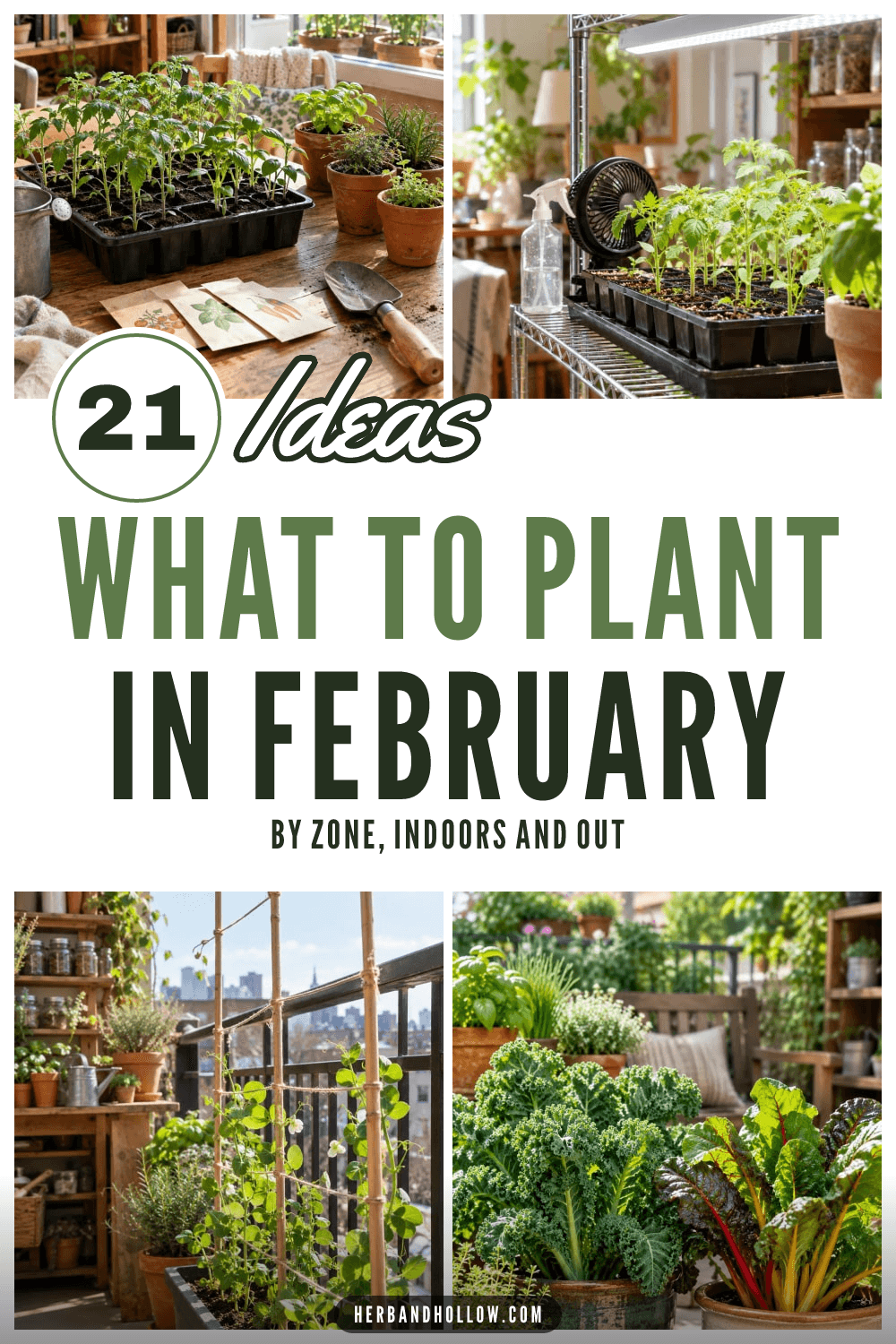
Save it for later
Pin this to your Seasonal Garden Tasks board so it's there when you need it.
Save to Pinterest