This post contains affiliate links. As an Amazon Associate we earn from qualifying purchases, at no extra cost to you. Read our disclosure.
Safety first: Herbs can be powerful. If you are pregnant, nursing, take medication or have a health condition, check with your doctor or pharmacist first. Please read our herbal & garden safety notes before you start.
Key takeaways
- Outdoors, most herbs want 6 or more hours of direct sun; indoors, use a south or west window or a grow light.
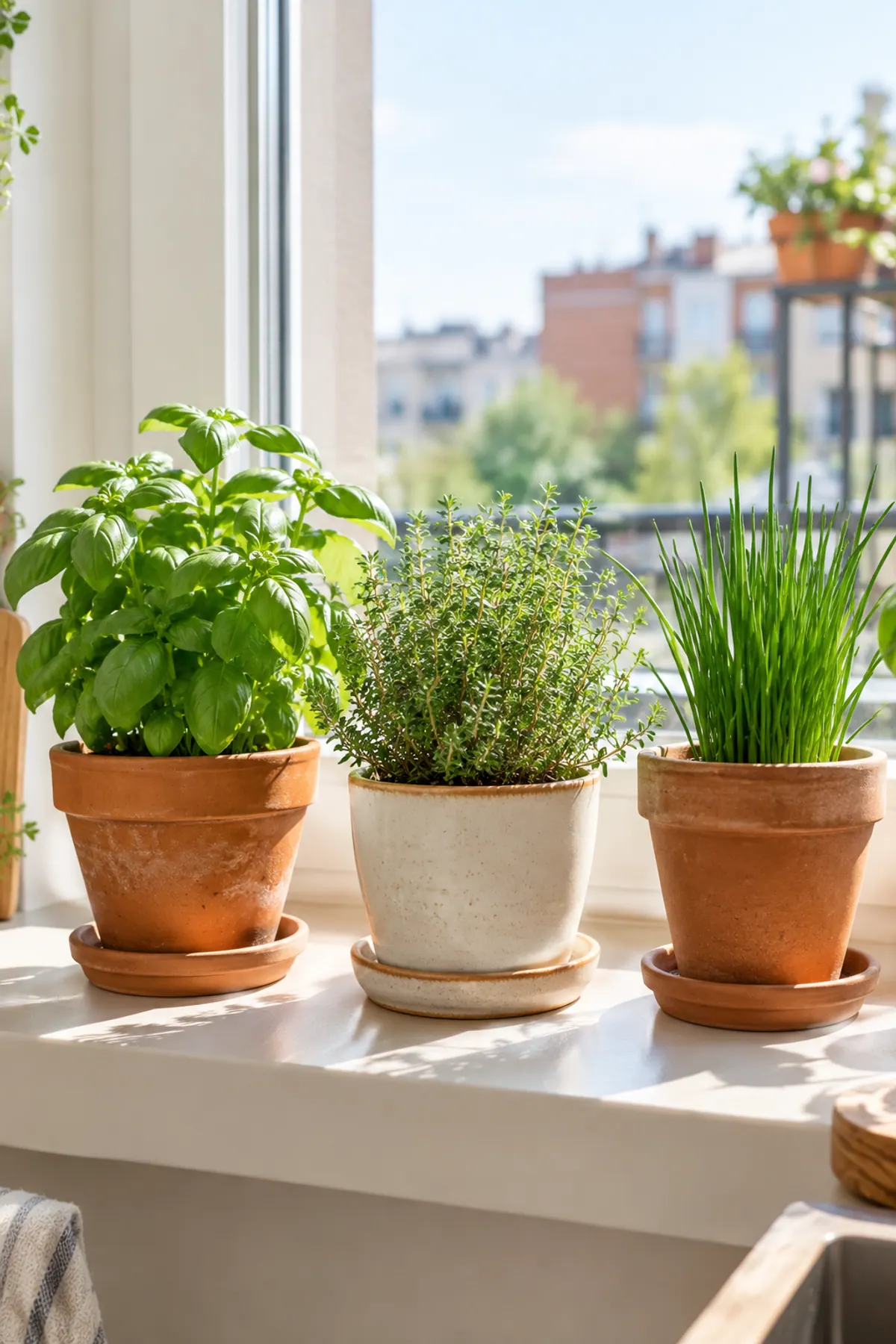
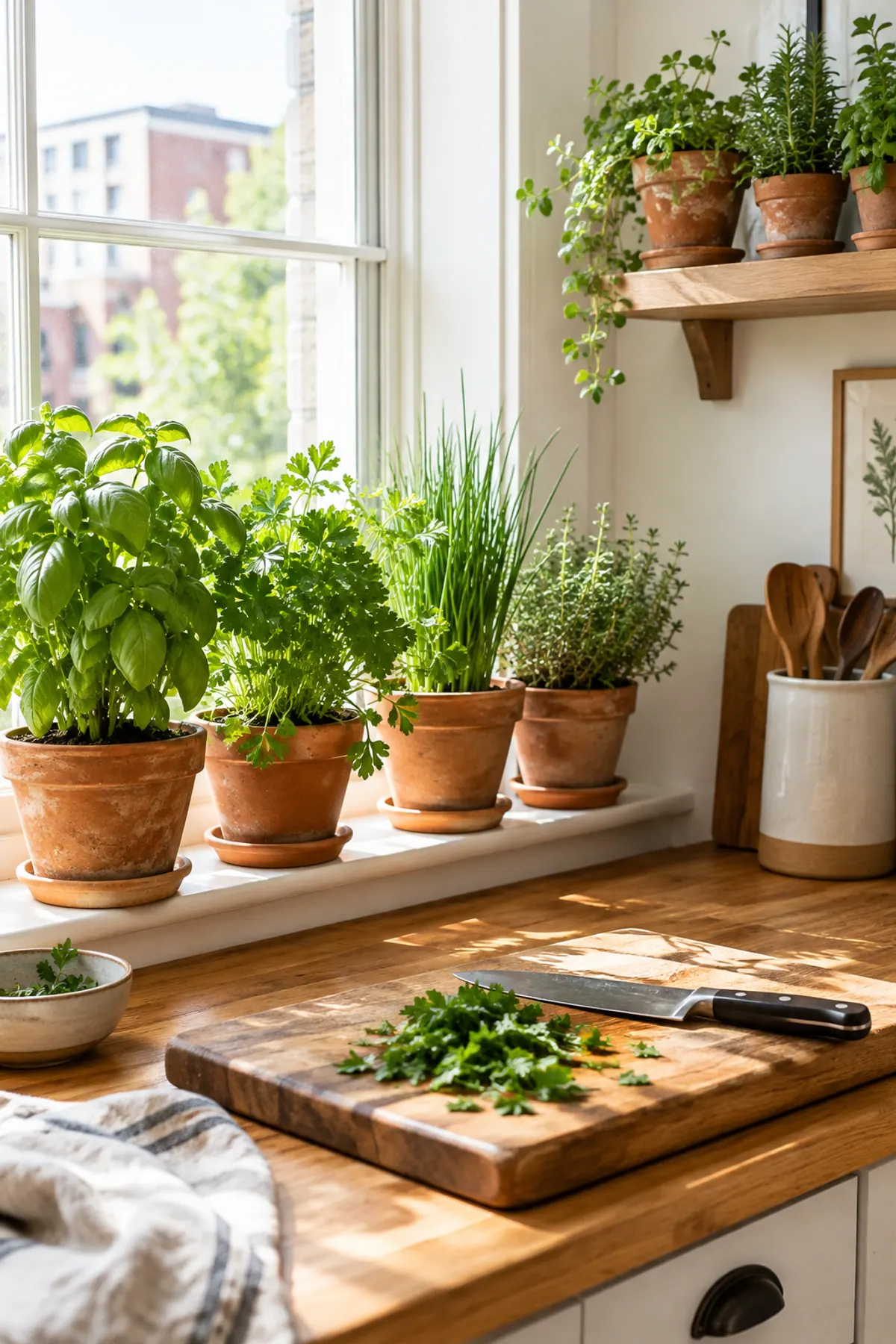
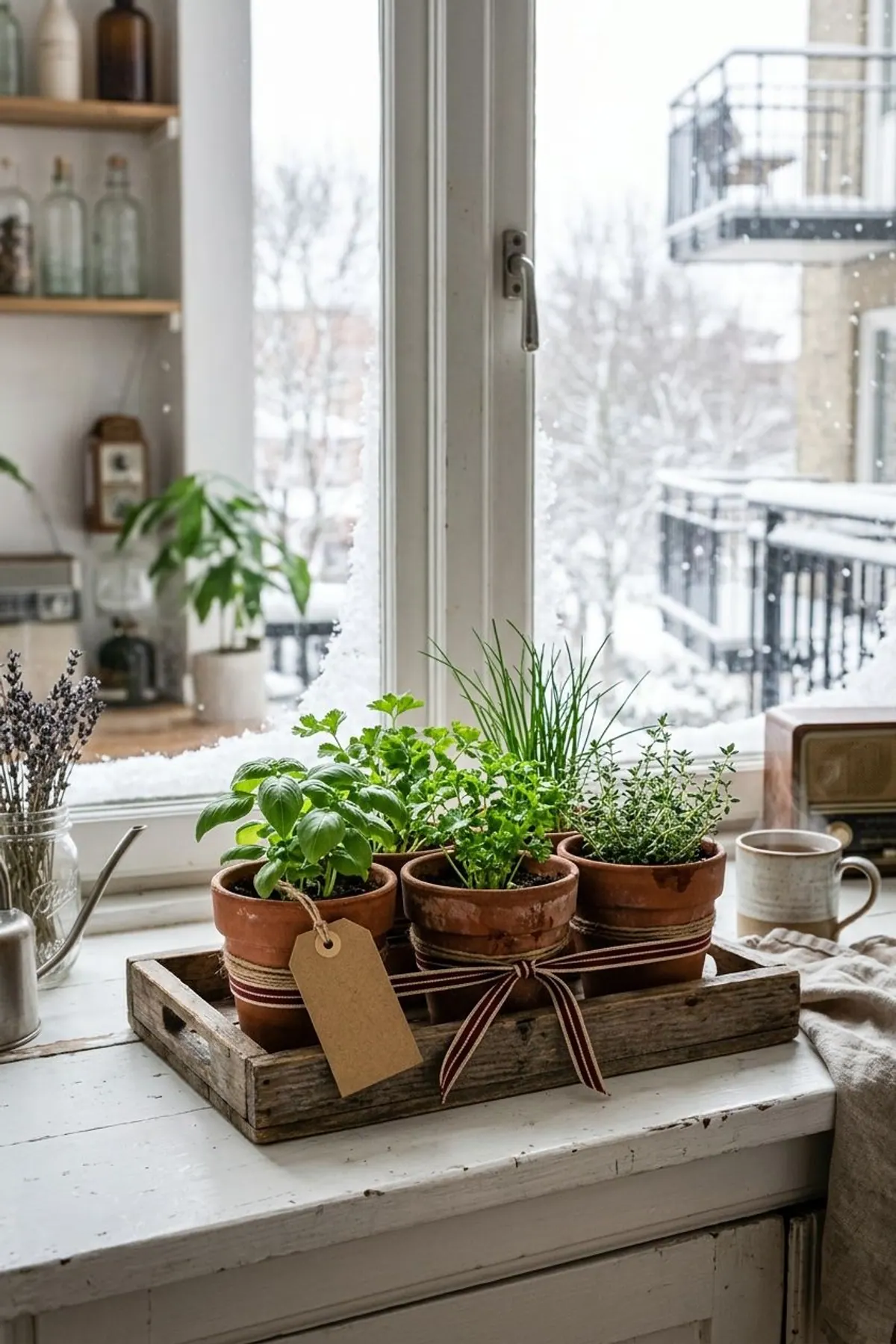
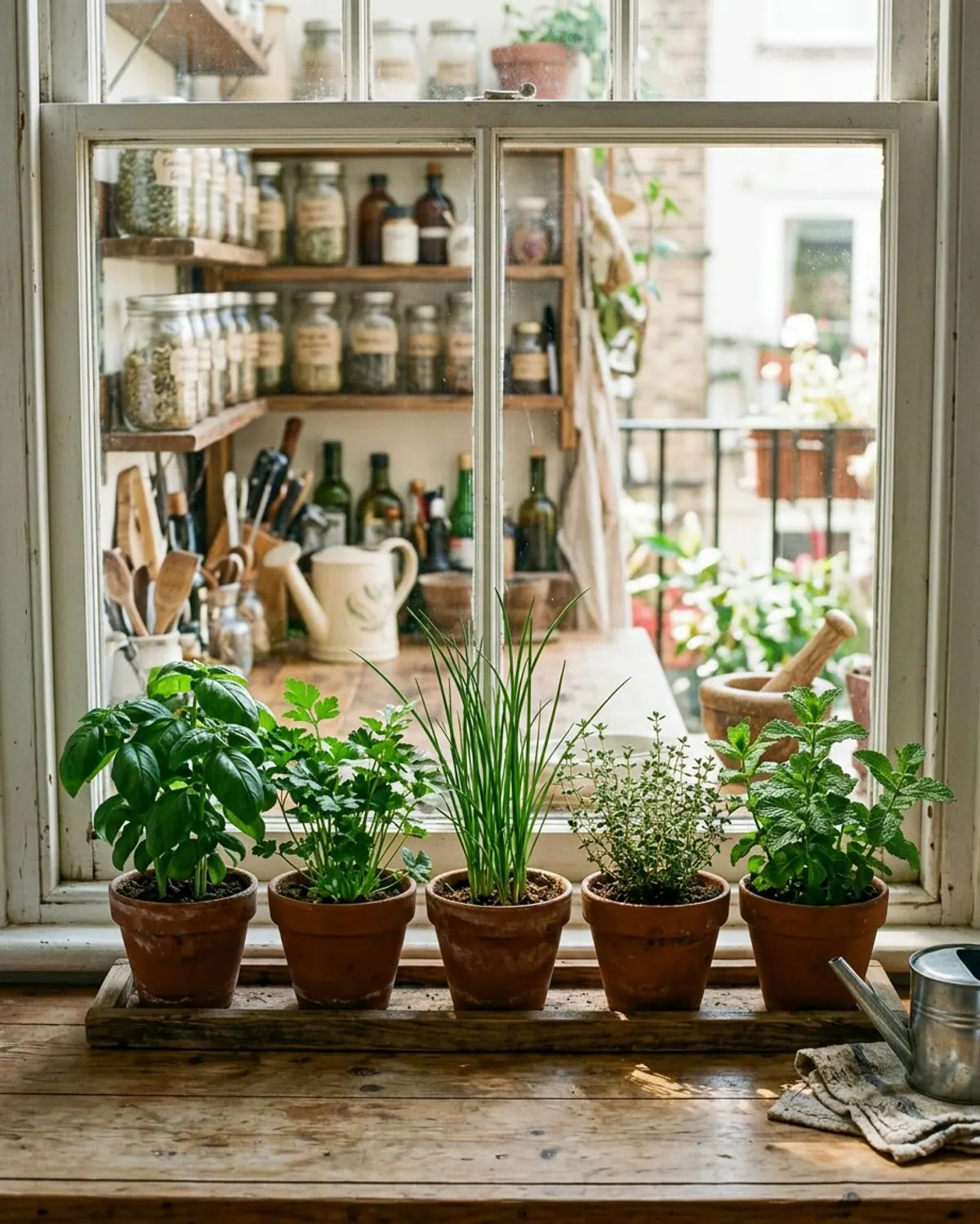
- Start with basil, parsley, chives, thyme and mint, each in its own pot.
- Use pots with drainage holes and bagged potting mix, never garden soil.
- Water by touch when the top inch is dry, and harvest a third at a time.
- Chives, parsley, mint and oregano are toxic to cats and dogs per the ASPCA.
In this post6 sections
What you need to start
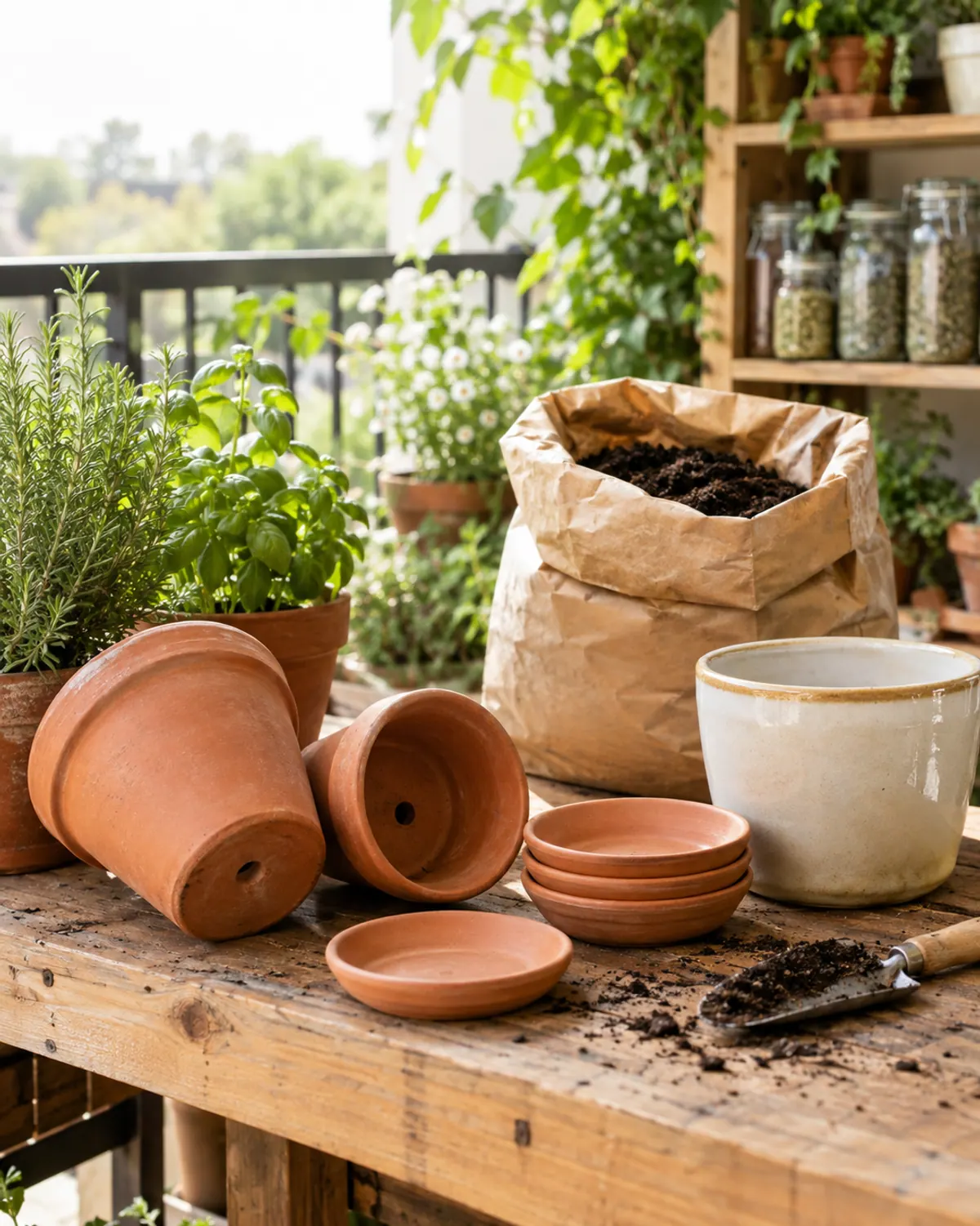
A beginner herb garden needs less than most kits suggest. Five plants, five pots with drainage holes, a bag of potting mix and a spot with enough light is the whole setup.
| Item | Typical cost | Notes |
|---|---|---|
| 5 starter herb plants | $4 to $6 each | Nursery or grocery store pots of basil, parsley, chives, thyme and mint |
| 5 pots, 6 to 8 inch, with drainage holes | $15 to $30 for a set | Terracotta dries out faster, which suits thyme and rosemary |
| Saucers or a drip tray | $5 to $12 | Protects a sill or balcony floor |
| Potting mix, small bag | $8 to $15 | Never garden soil in pots |
| Small herb snips | $8 to $15 | Clean cuts heal faster than pinching with nails |
| Total | About $50 to $90 | Less if you reuse pots |
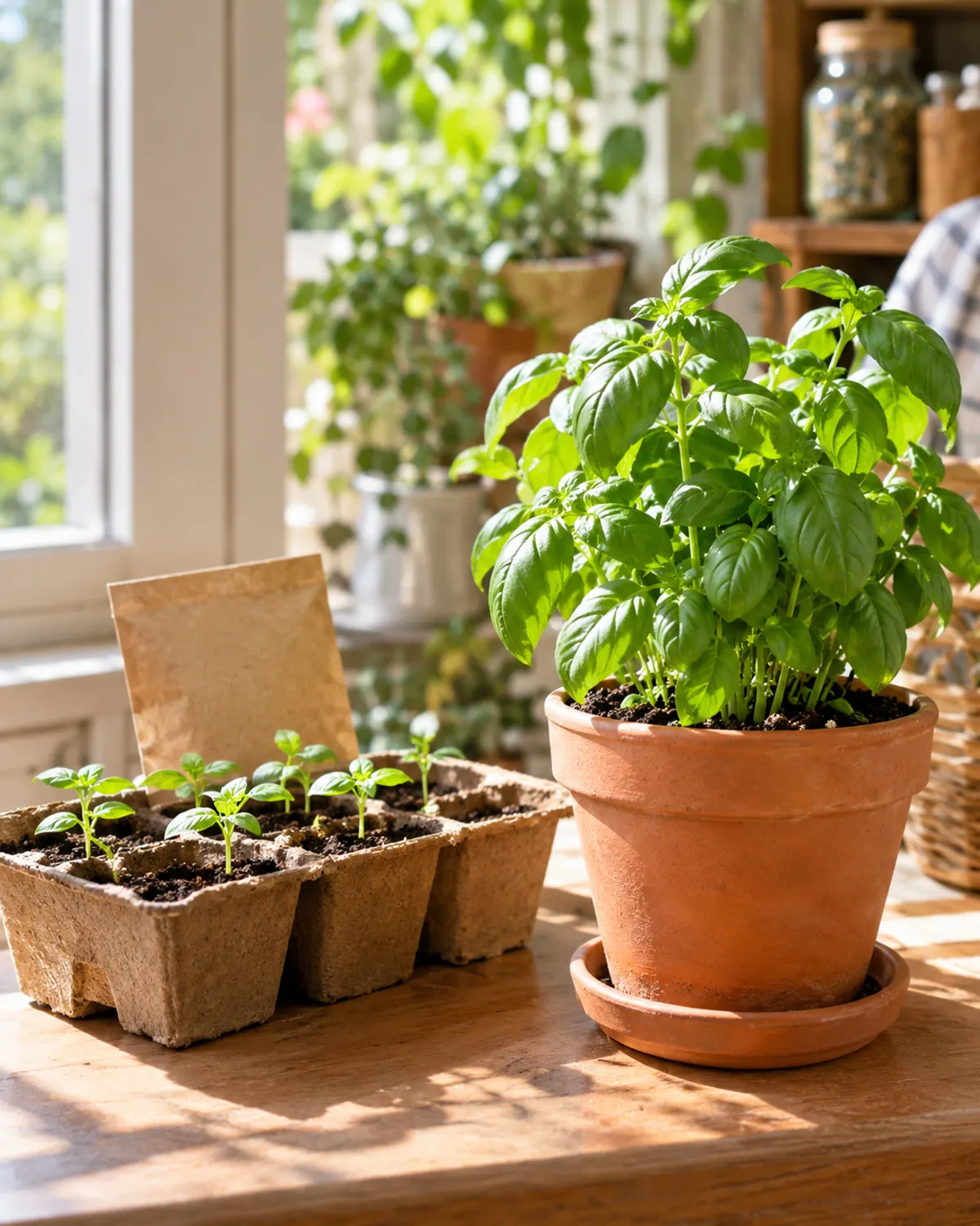
Seeds are cheaper but slower. For a first garden, buy young plants of the slow herbs and try seeds only for basil, chives or parsley.
How to start a herb garden for beginners in 7 steps
-
Step 1: Count your sun hours first
Watch your window or balcony on a clear day and note when direct sun hits it and when it leaves. Outdoors, most herbs want 6 or more hours of direct sun. Indoors, a south or west window is the strongest; north windows rarely grow herbs well without a grow light.
-
Step 2: Pick a 5-herb starter set
Start with herbs you cook with and that forgive mistakes: basil, flat-leaf parsley, chives, thyme and mint. Outdoors in a sunny spot, add rosemary and oregano. Skip cilantro at first; it bolts quickly in warm weather.
-
Step 3: Choose pots with drainage holes
Every pot needs a hole in the bottom. A 6 to 8 inch pot suits one basil, parsley or chives plant; rosemary wants 8 to 12 inches as it grows. Terracotta breathes and dries faster, glazed and plastic pots hold water longer.
-
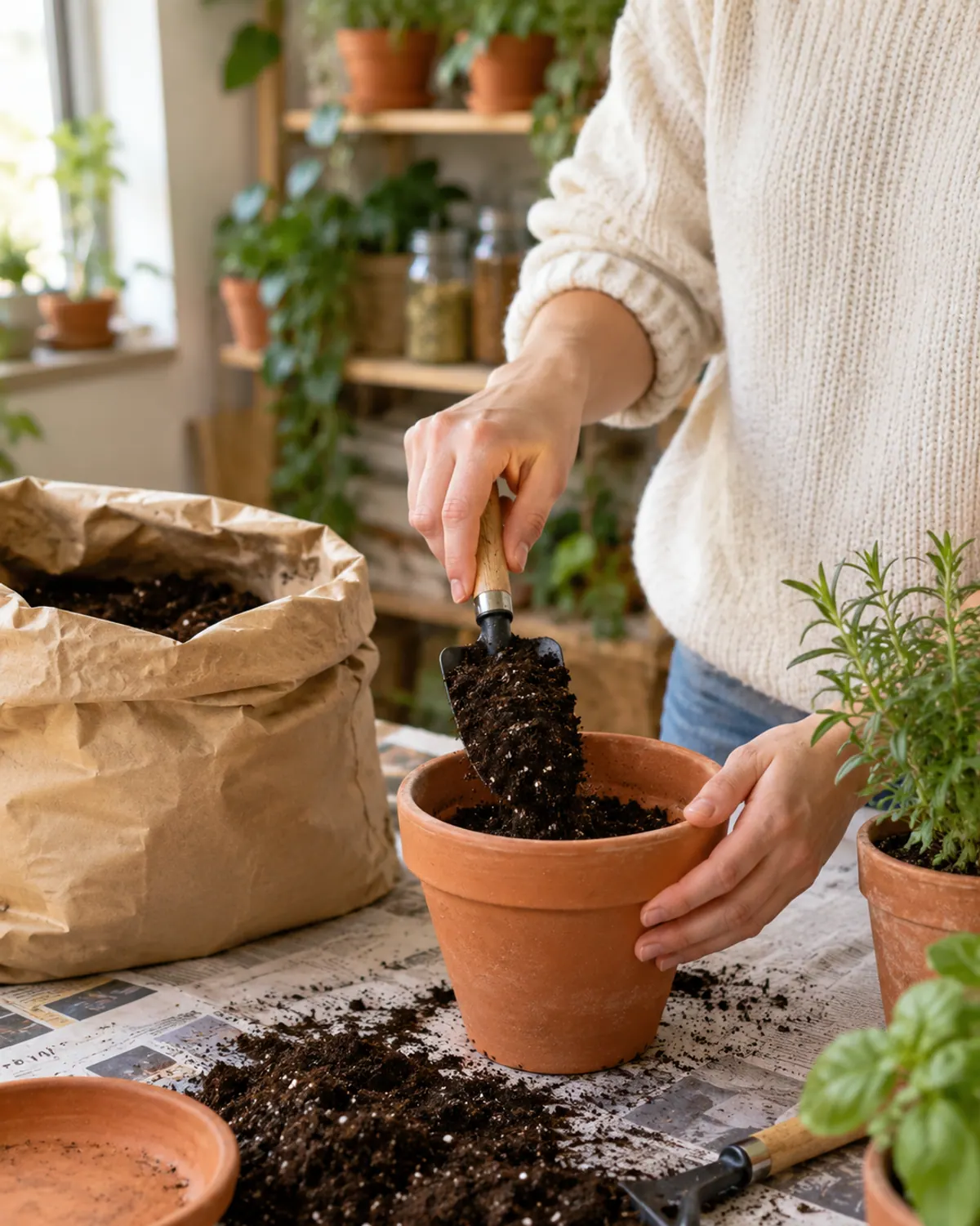
Step 4: Fill with potting mix, not garden soil
Use a bagged potting mix. Garden soil packs down in a pot and stays soggy. Fill to about an inch below the rim so water has room to soak in. For rosemary and thyme, mixing in a few handfuls of perlite helps it drain faster.
-
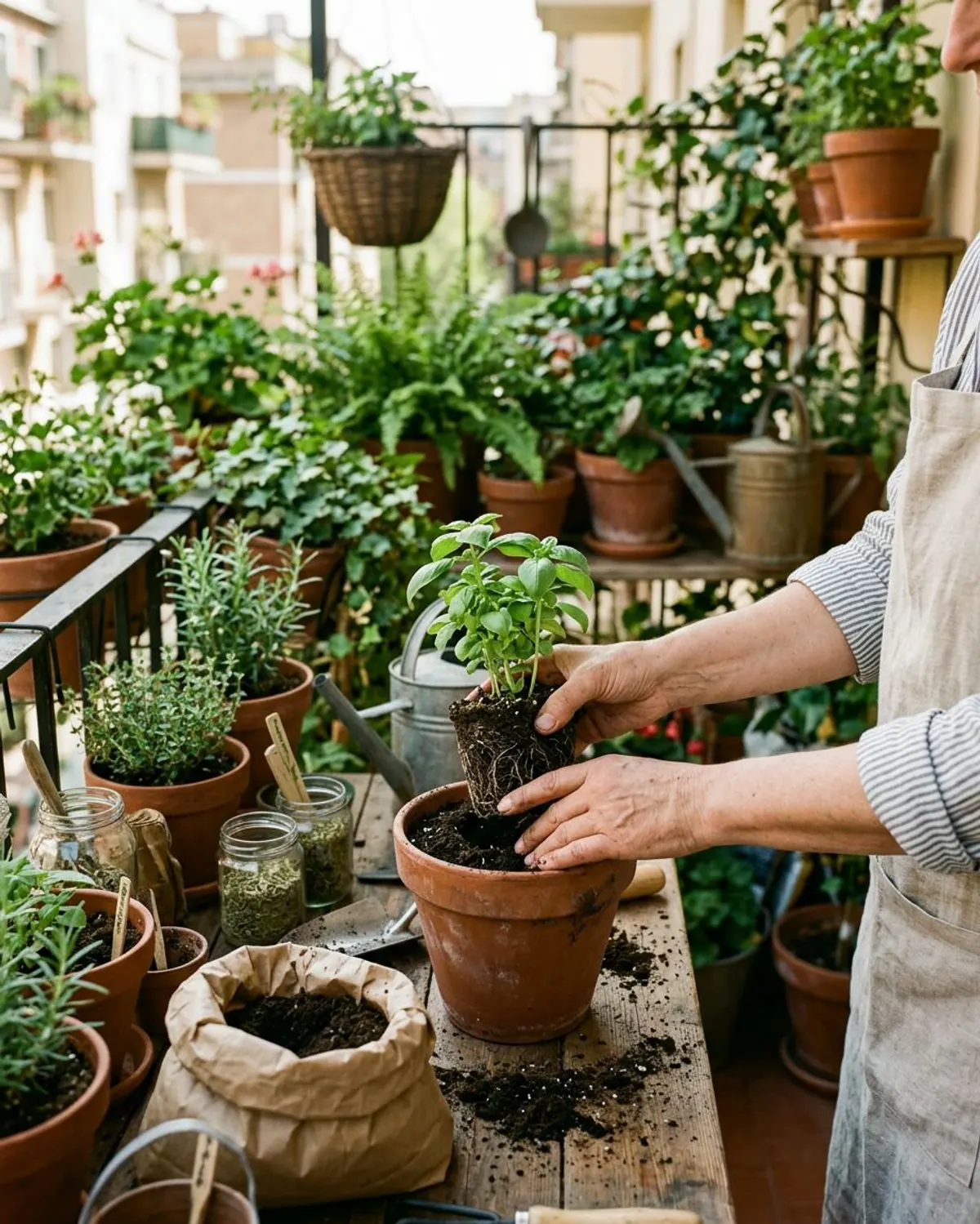
Step 5: Plant at the same depth, then water in
Ease each plant from its nursery pot, loosen any circling roots and set it at the same depth it was growing. Firm the mix gently and water until it drains from the bottom. Grocery basil is often several seedlings in one pot; split it into 2 or 3 pots so each has room.
-
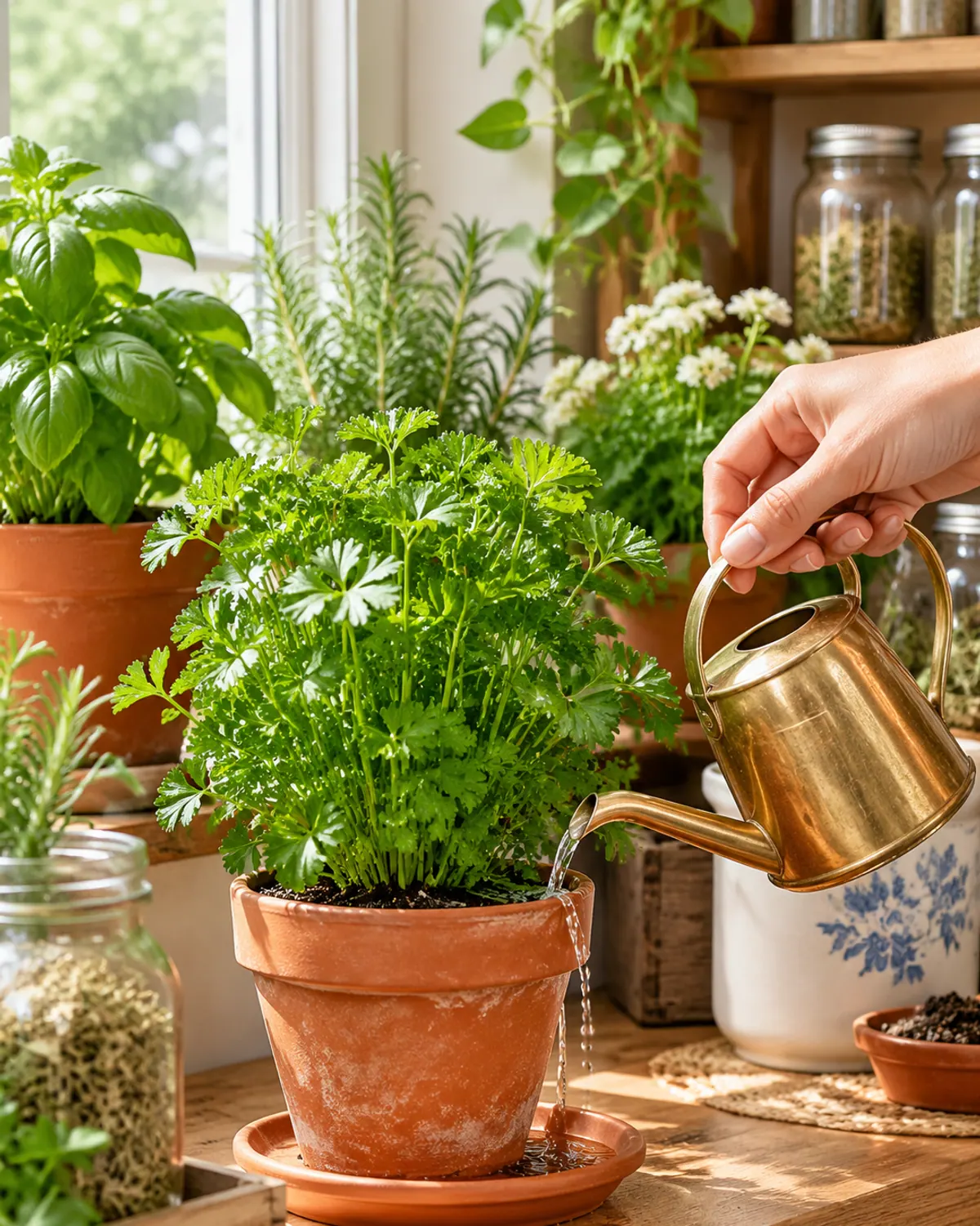
Step 6: Water by touch, not by schedule
Push a finger into the mix. Water when the top inch feels dry, and water until it runs out the bottom, then empty the saucer. Basil, parsley and mint like steadier moisture; rosemary and thyme like to dry out more between drinks.
-
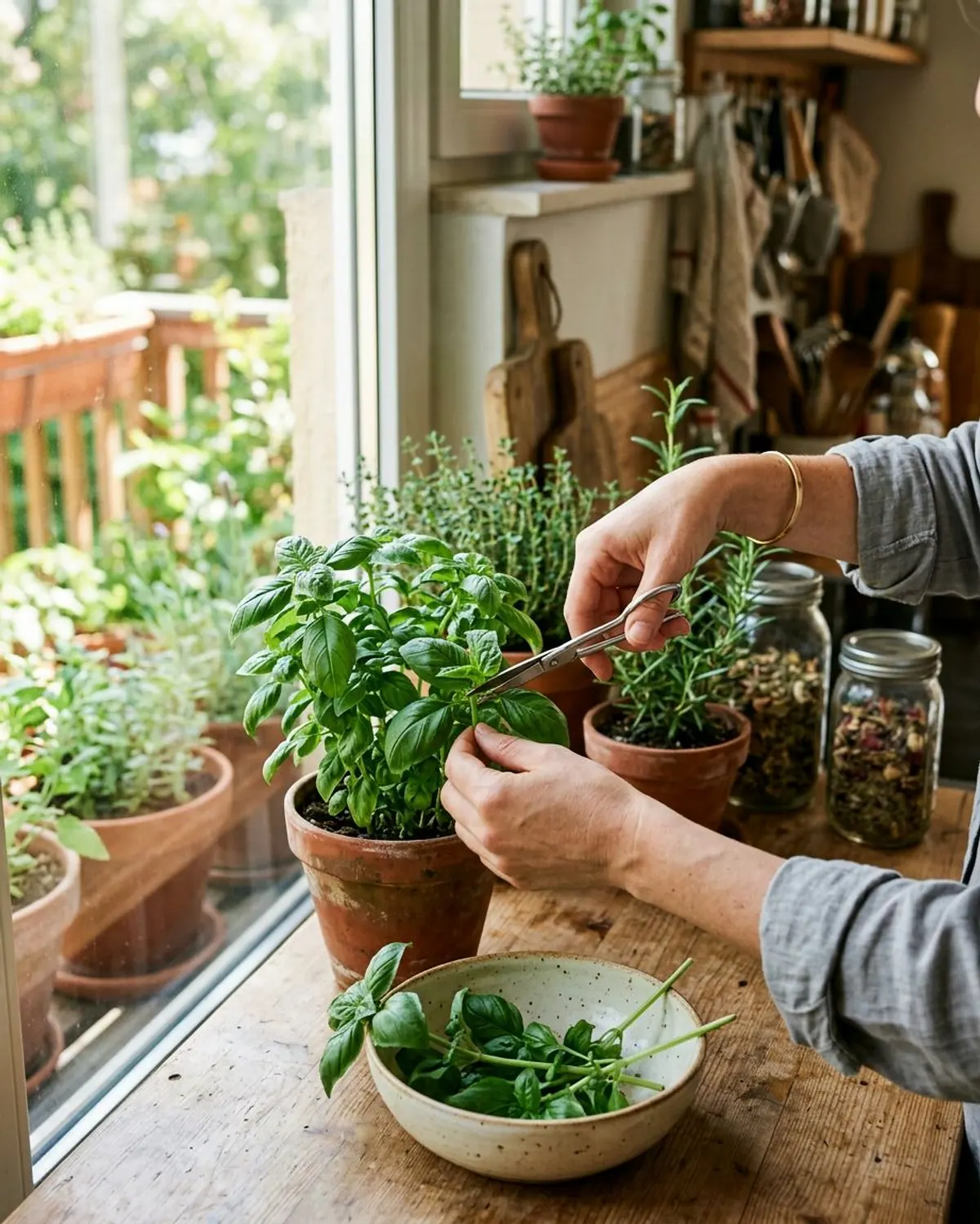
Step 7: Harvest early and often
Start picking once a plant has several sets of leaves. Cut basil and mint just above a pair of leaves so two new stems grow. Snip chives and parsley from the outside. Take no more than about a third of a plant at once, and it keeps coming back.
Indoor or outdoor: which herb garden suits you
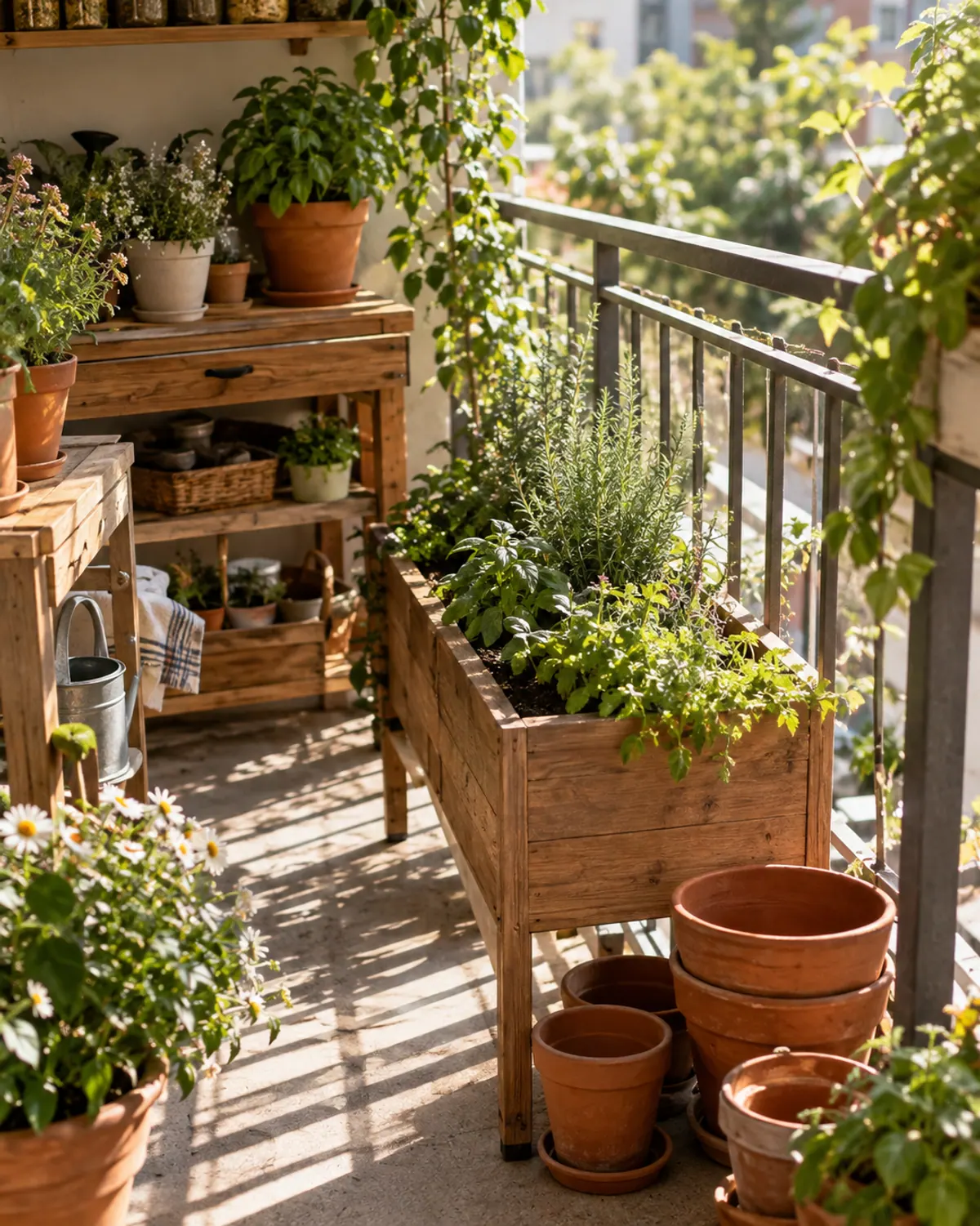
Both work for beginners. Pick by where your light is, not by what looks best on Pinterest.
| Indoor windowsill | Outdoor balcony or patio | |
|---|---|---|
| Light | South or west window, or a grow light 12 to 16 hours a day | 6 or more hours of direct sun |
| Easiest herbs | Chives, parsley, mint, thyme | Basil, rosemary, oregano, thyme, mint, sage |
| Watering | Less often; check the top inch | More often in summer heat, sometimes daily for small pots |
| Main risk | Too little light and too much water | Heat, wind and frost |
| Best start time | Any time of year | After your last spring frost for basil; earlier for hardy herbs |
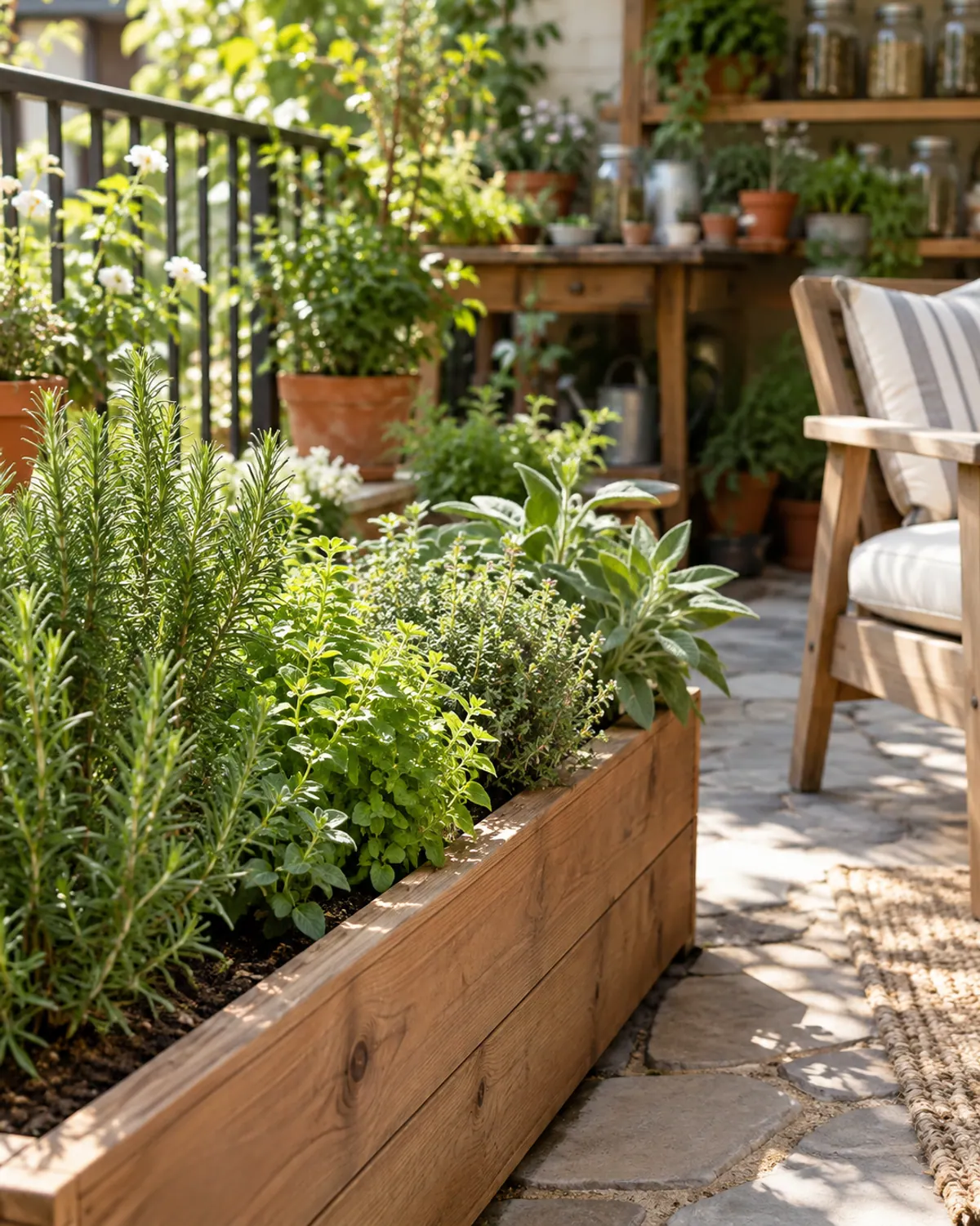
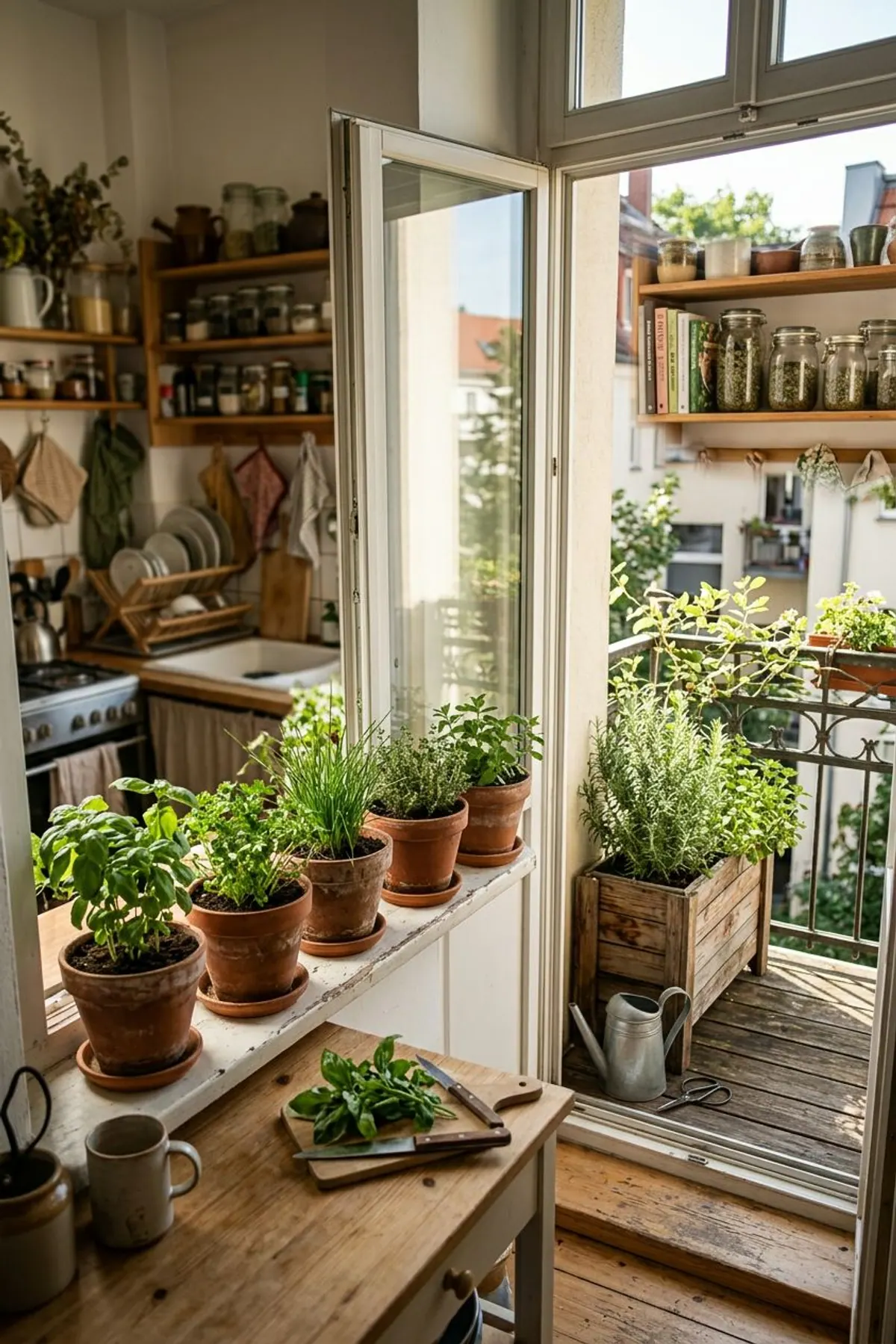
Indoors, the limit is nearly always light. If your herbs stretch toward the glass with long gaps between leaves, they need more of it. Our best grow lights for small spaces and herbs that grow in low light help with a dim apartment, and the indoor herb garden guide covers winter care.
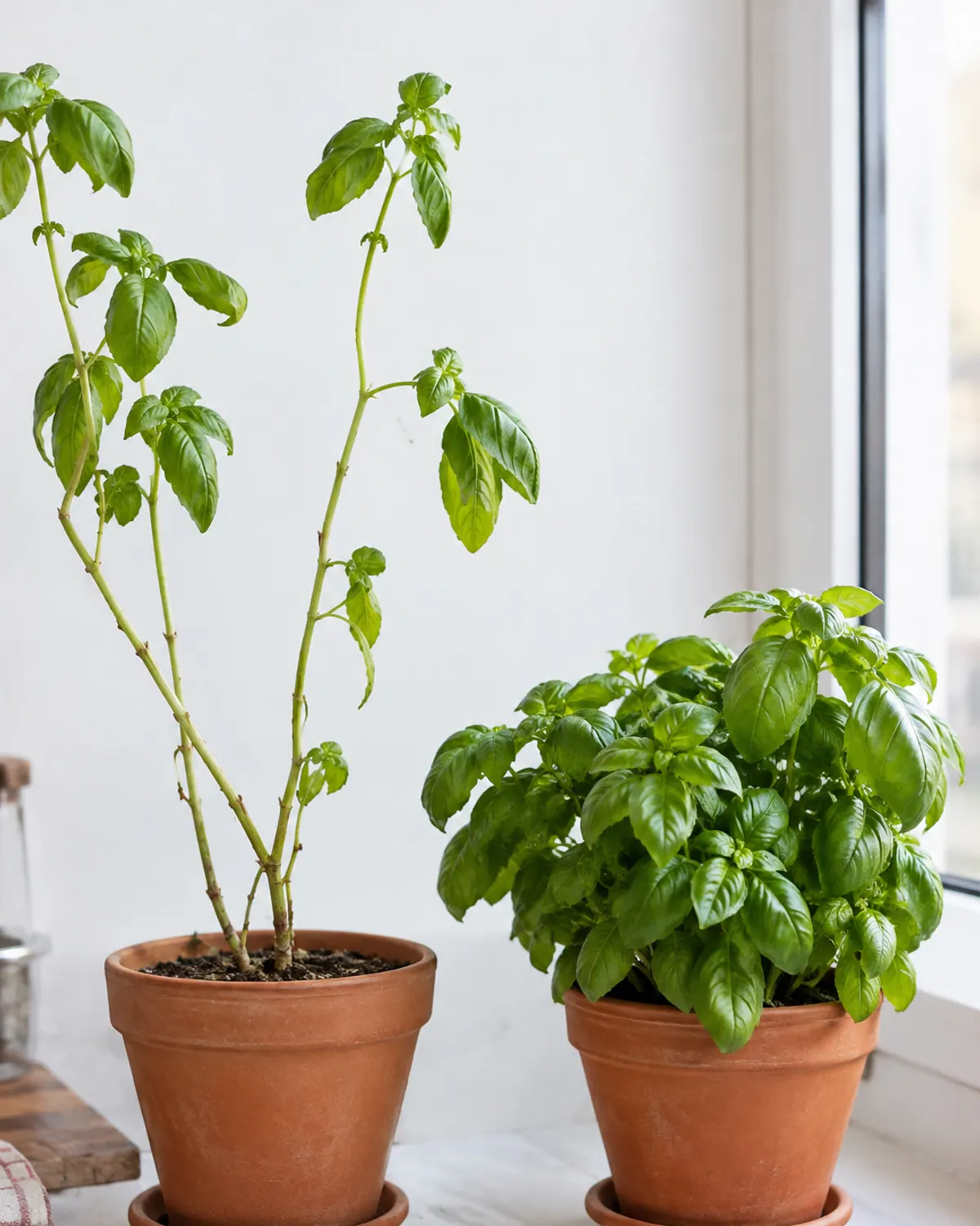
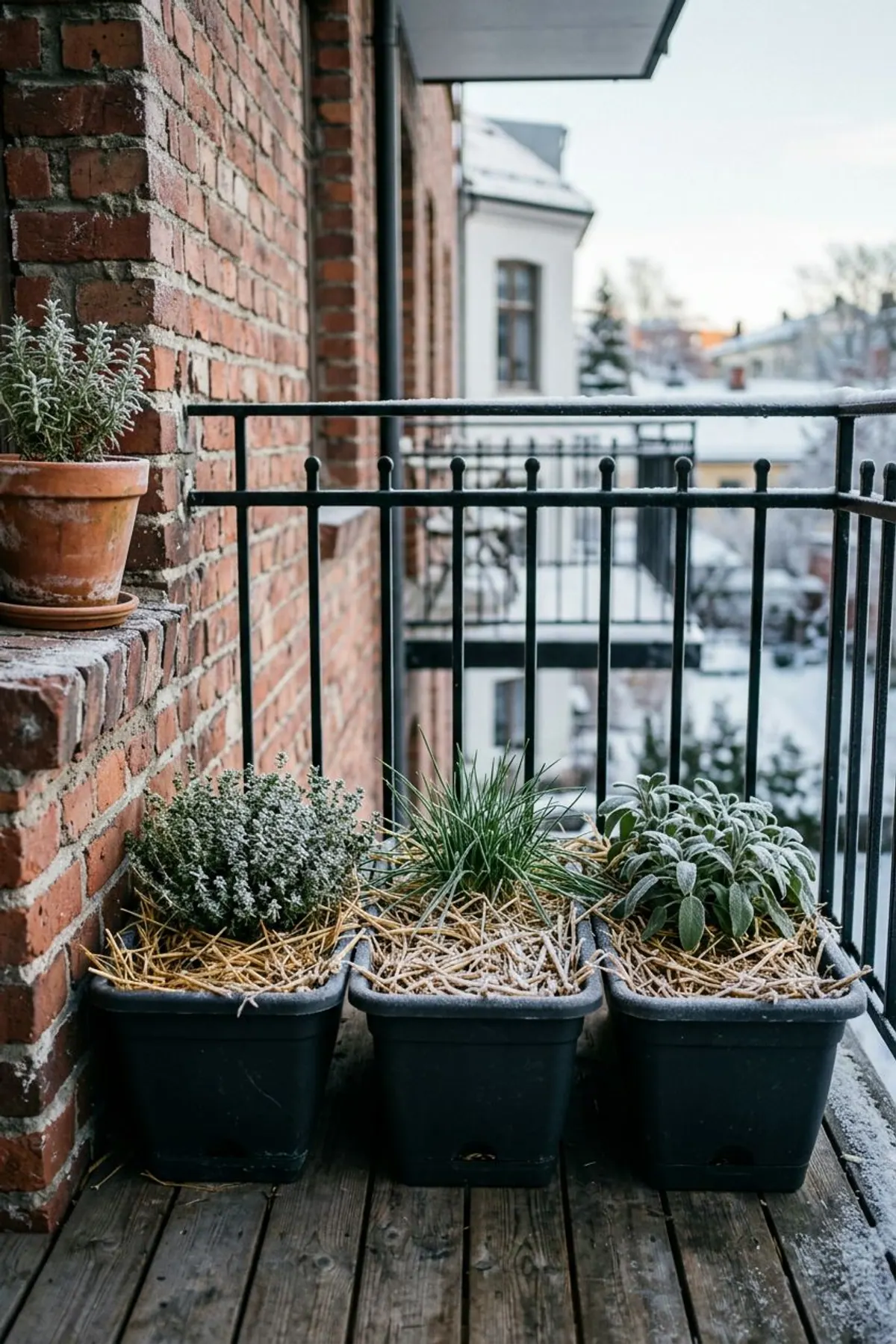
Outdoors, the limit is weather. Basil dies at the first frost, so plant it after your last spring frost. Thyme, chives, mint and oregano come back each year in most of the US. Most rosemary is only reliably hardy in about zone 7 and warmer, so in colder zones grow it in a pot and bring rosemary indoors for winter.
Beginner herb garden mistakes to avoid
Do
- Start with 5 herbs you cook with
- Use pots with drainage holes
- Water when the top inch is dry
- Harvest from the top, a third at most
- Give mint its own pot
Avoid
- Planting mint in a shared planter, where it takes over
- Pots without holes or with water left in the saucer
- Garden soil in containers
- Letting basil flower, which slows new leaves
- A north window with no grow light
Pets and safety notes
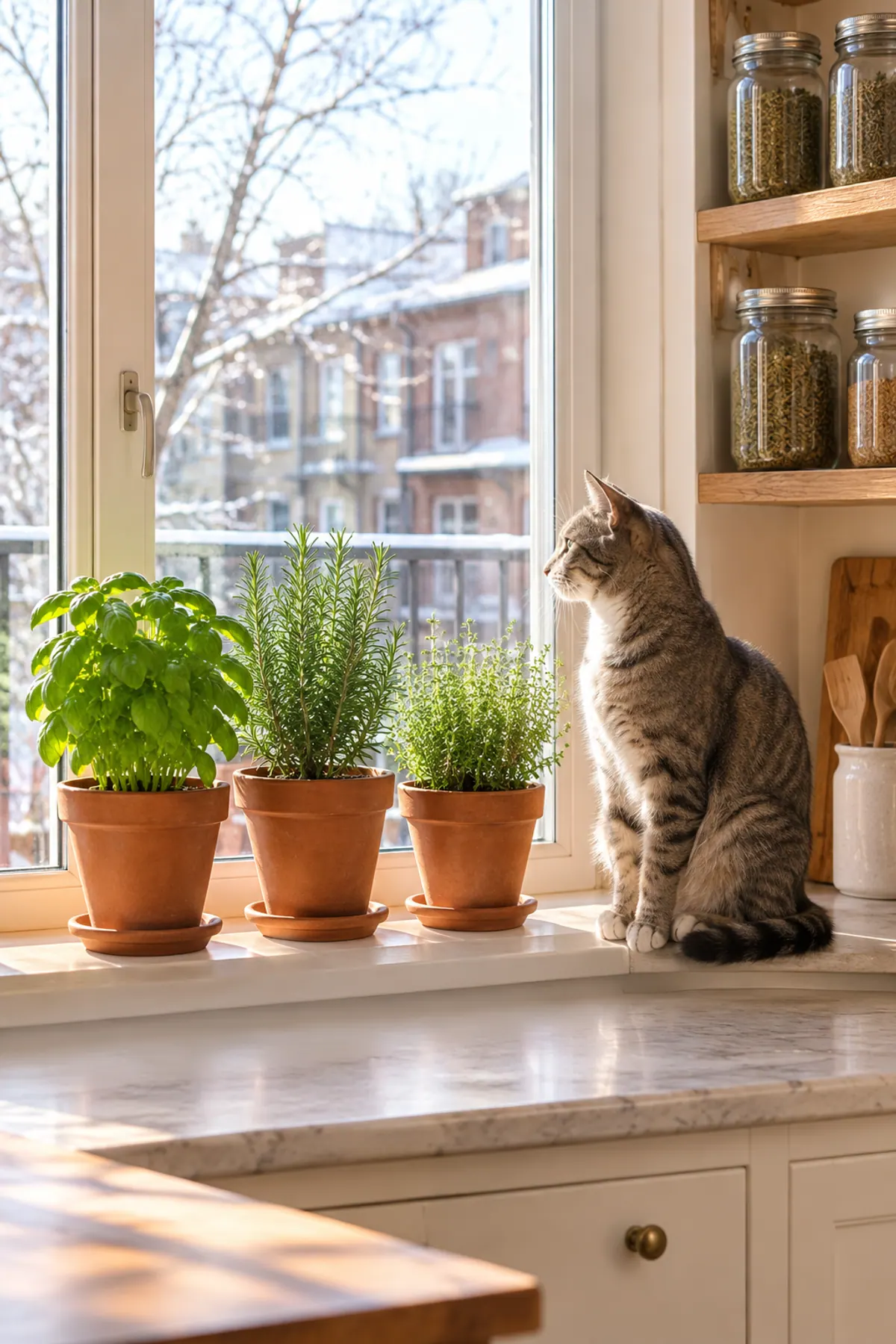
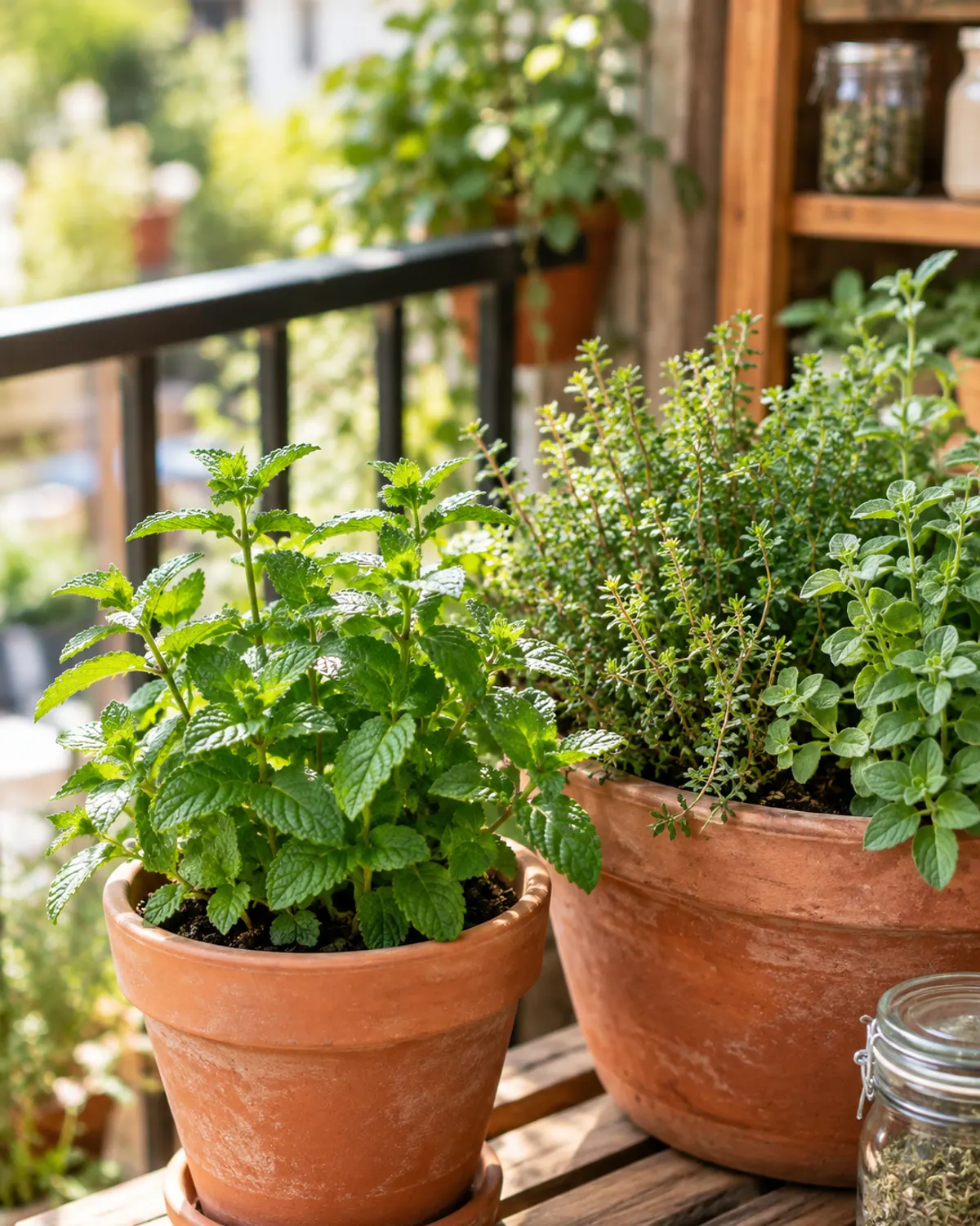
Per the ASPCA, basil, rosemary and thyme are non-toxic to cats and dogs. Chives, parsley, mint, oregano and lavender are on its toxic list, so put those pots up high if a pet shares the space.
Pets: if a pet chews a plant, call your vet or the ASPCA Animal Poison Control Center at (888) 426-4435.
Health: herb notes here are for growing and cooking, not medical advice. If you are pregnant, nursing or take medication, ask your doctor before using any herb in more than normal cooking amounts, including teas.
Your first herb garden checklist
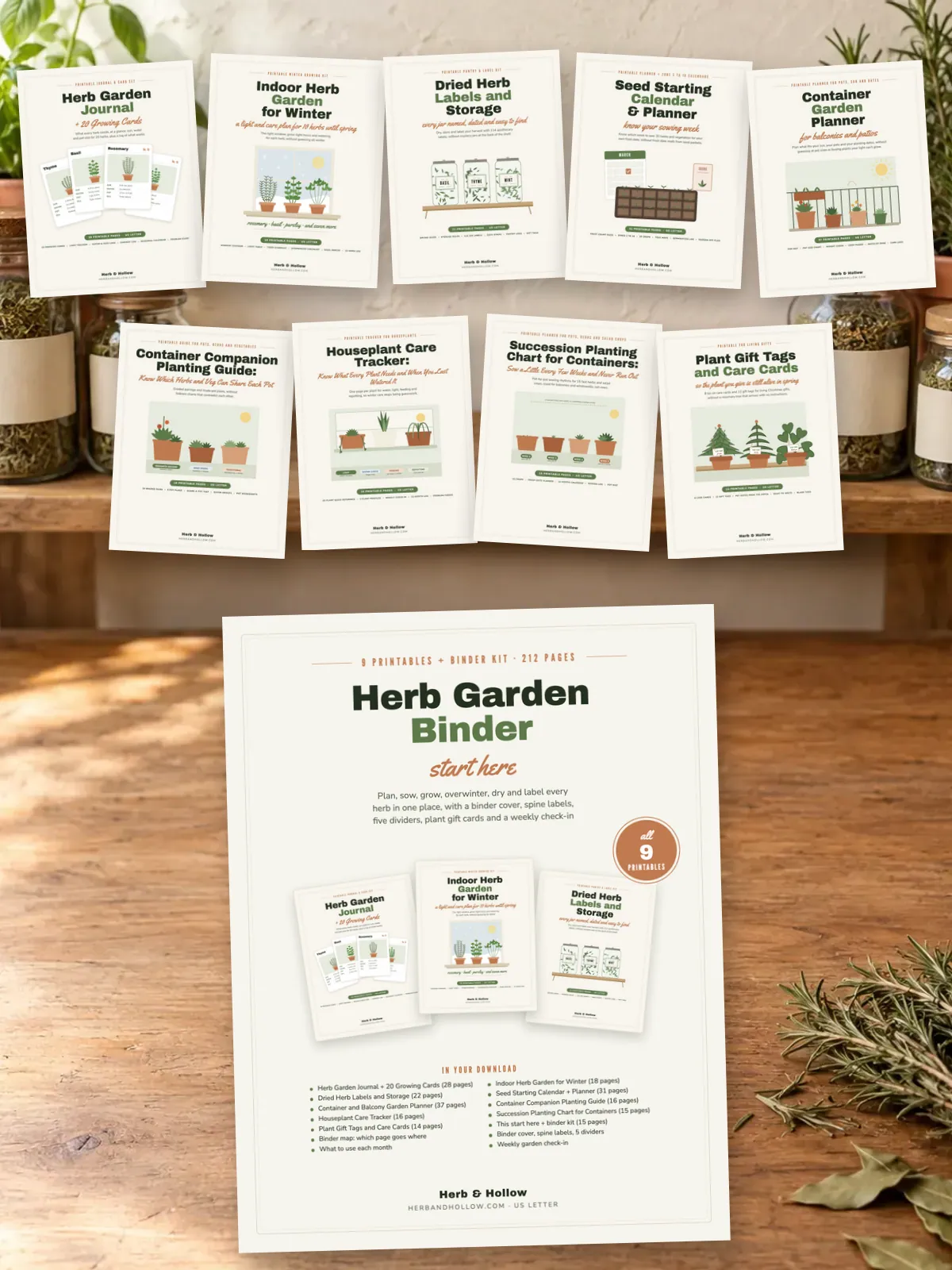
A simple record is what turns one season into a reliable garden. The Herb Garden Journal + 20 Herb Growing Cards gives each herb a card with sun hours, water rhythm, pot size, harvest timing and ASPCA pet flags, plus journal pages for a light tracker, watering and harvests. For layout ideas once you have the basics, see our herb garden ideas for small spaces.
Shop beginner herb garden supplies
- Start here
Terracotta pots with saucers, 6 inch set
Typically $15 to $30
Drainage holes and breathable sides for most herbs.
Check price on Amazon for Terracotta pots with saucers, 6 inch set -
Organic potting mix
Typically $8 to $15
Light mix that drains in pots.
Check price on Amazon for Organic potting mix -
Herb seed starter variety pack
Typically $8 to $18
Cheap way to try basil, chives and parsley from seed.
Check price on Amazon for Herb seed starter variety pack -
Small herb snips
Typically $8 to $15
Clean cuts just above a leaf pair.
Check price on Amazon for Small herb snips -
LED grow light for herbs
Typically $20 to $45
Makes a dim window workable for basil.
Check price on Amazon for LED grow light for herbs
Frequently asked questions
What are the easiest herbs for beginners?
Chives, mint, parsley, thyme and basil. Chives and mint are the hardest to kill, thyme likes to dry out, and basil grows fast in warmth and sun. Give mint its own pot because it spreads.
Should beginners start herbs from seeds or plants?
Plants are easier for a first garden, especially slow herbs like rosemary, thyme and oregano. Basil, chives and parsley are reasonable from seed if you are patient; parsley can take a few weeks to sprout.
How much sun does a herb garden need?
Outdoors, most herbs want 6 or more hours of direct sun. Indoors, a south or west window gives the most light; otherwise run a grow light 12 to 16 hours a day.
How often should I water herbs in pots?
Check daily, water when the top inch of mix feels dry, and water until it drains out the bottom. Small pots in summer sun may need water every day; indoor pots in winter far less often.
Can I grow a herb garden indoors all year?
Yes, with enough light. Chives, parsley, mint and thyme do well on a bright sill. Basil and rosemary usually need a grow light in winter to stay bushy.
Save it for later
Pin this to your Herb Garden board so it's there when you need it.
Save to Pinterest