This post contains affiliate links. As an Amazon Associate we earn from qualifying purchases, at no extra cost to you. Read our disclosure.
Safety first: Herbs can be powerful. If you are pregnant, nursing, take medication or have a health condition, check with your doctor or pharmacist first. Please read our herbal & garden safety notes before you start.
Key takeaways
- Every planter needs drainage holes, per UNH Extension
- Pots too small dry out fast; pots too large stay wet and rot roots
- Rosemary does better in its own pot
- Clay looks nicer; plastic is lighter and holds water better, per UVM Extension
- Basil needs about 8 inches of soil depth
In this post7 sections
How to choose an herb garden planter that will not drown your herbs
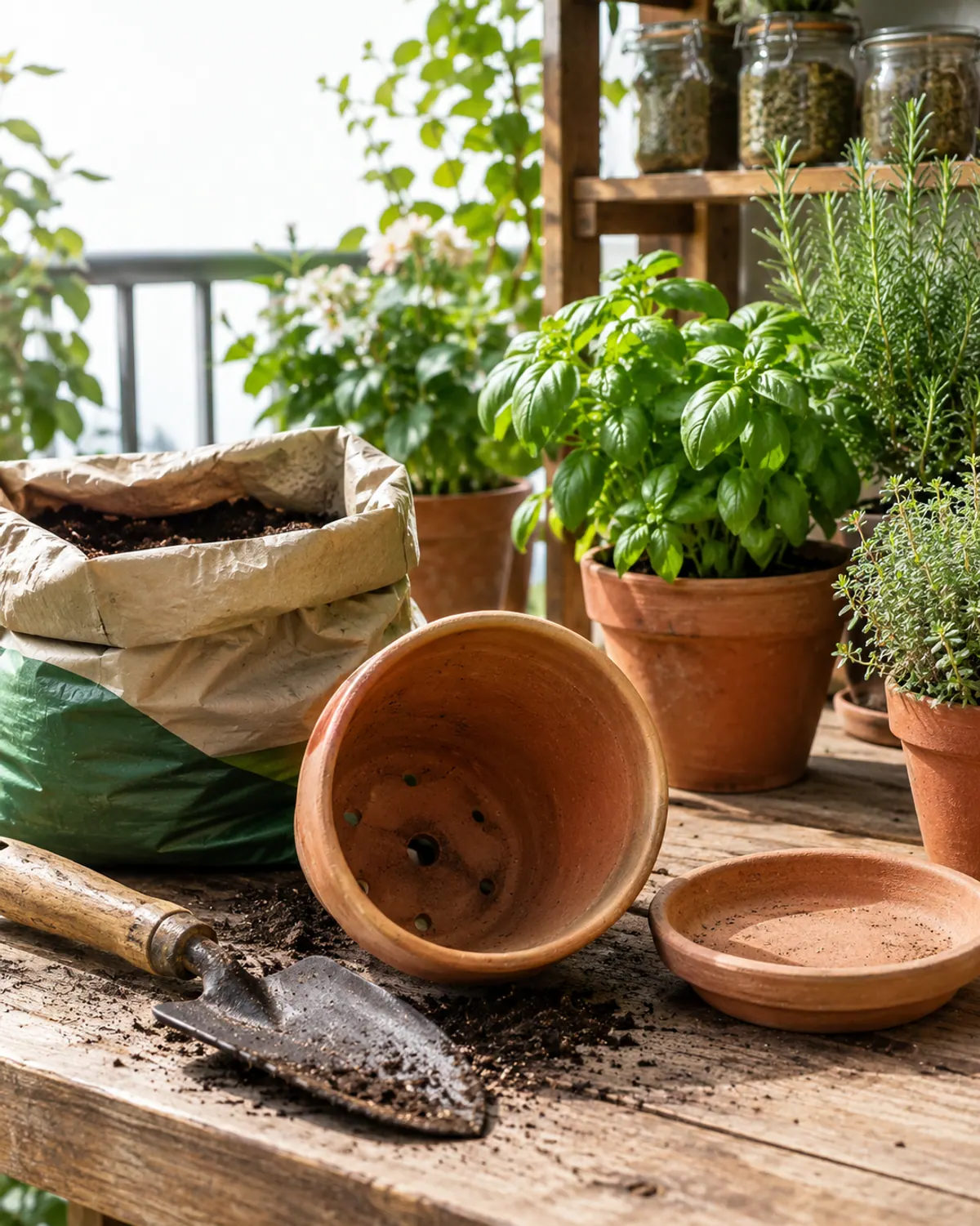
A good herb garden planter does four things: it drains, it fits the herbs, it fits the space and it matches the light. University of New Hampshire Extension says every container needs drainage holes in the bottom so excess water can escape, and that a quality soilless potting mix beats garden soil. It also warns that pots that are too small dry out quickly, while pots that are too large can stay wet long enough to cause root rot.
On material, UVM Extension lists clay or terracotta, metal, plastic, wood and grow bags, and says clay is more attractive while plastic is lighter and holds water better. Pick the one that fits how you water.
| Material | Good for | Watch out for |
|---|---|---|
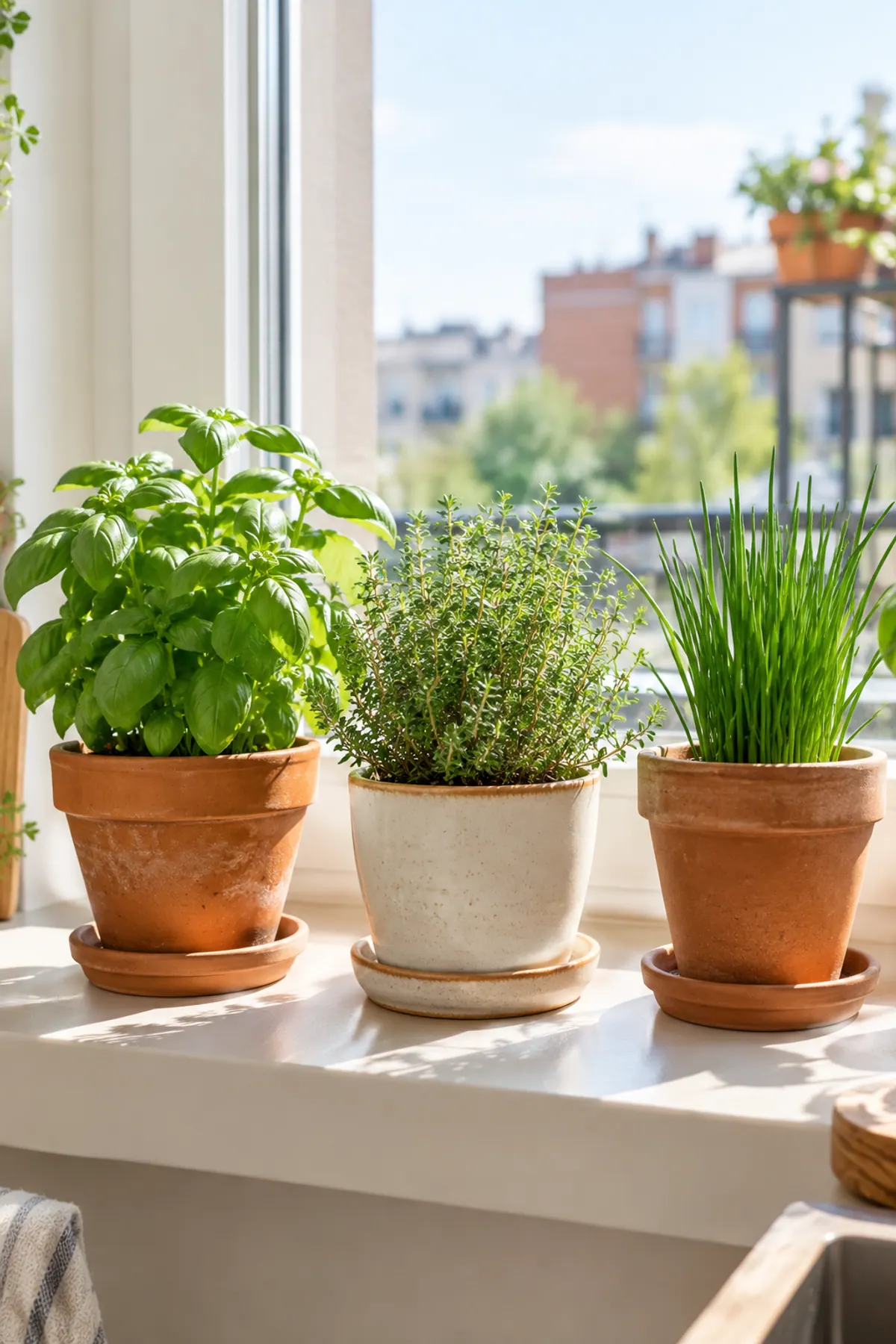
| Terracotta | Mediterranean herbs like thyme and oregano; looks good on a sill | Dries out fast, so check often in heated rooms |
| Glazed ceramic | Cover pots and kitchen counters | Many have no drainage hole; use a liner pot |
| Plastic and self-watering | Busy people, travelers, basil and parsley | Less breathable, so do not overfill the reservoir |
| Fabric grow bags | Balconies and patios | Dry quickly in summer wind; need a tray indoors |
| Metal | Railing boxes and wall rails | Often sold without drainage holes; add holes or a liner |
Windowsill and counter herb garden planters
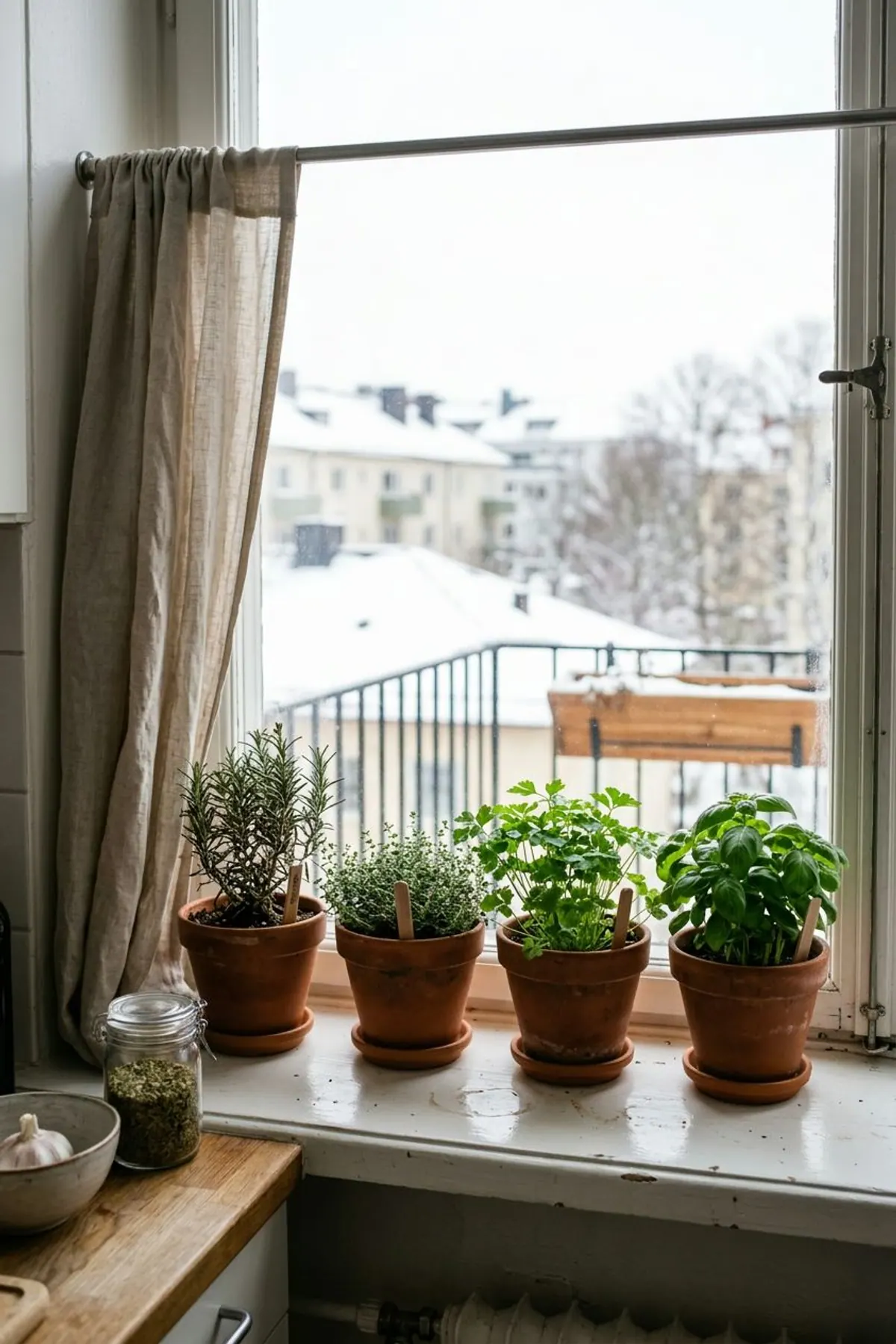
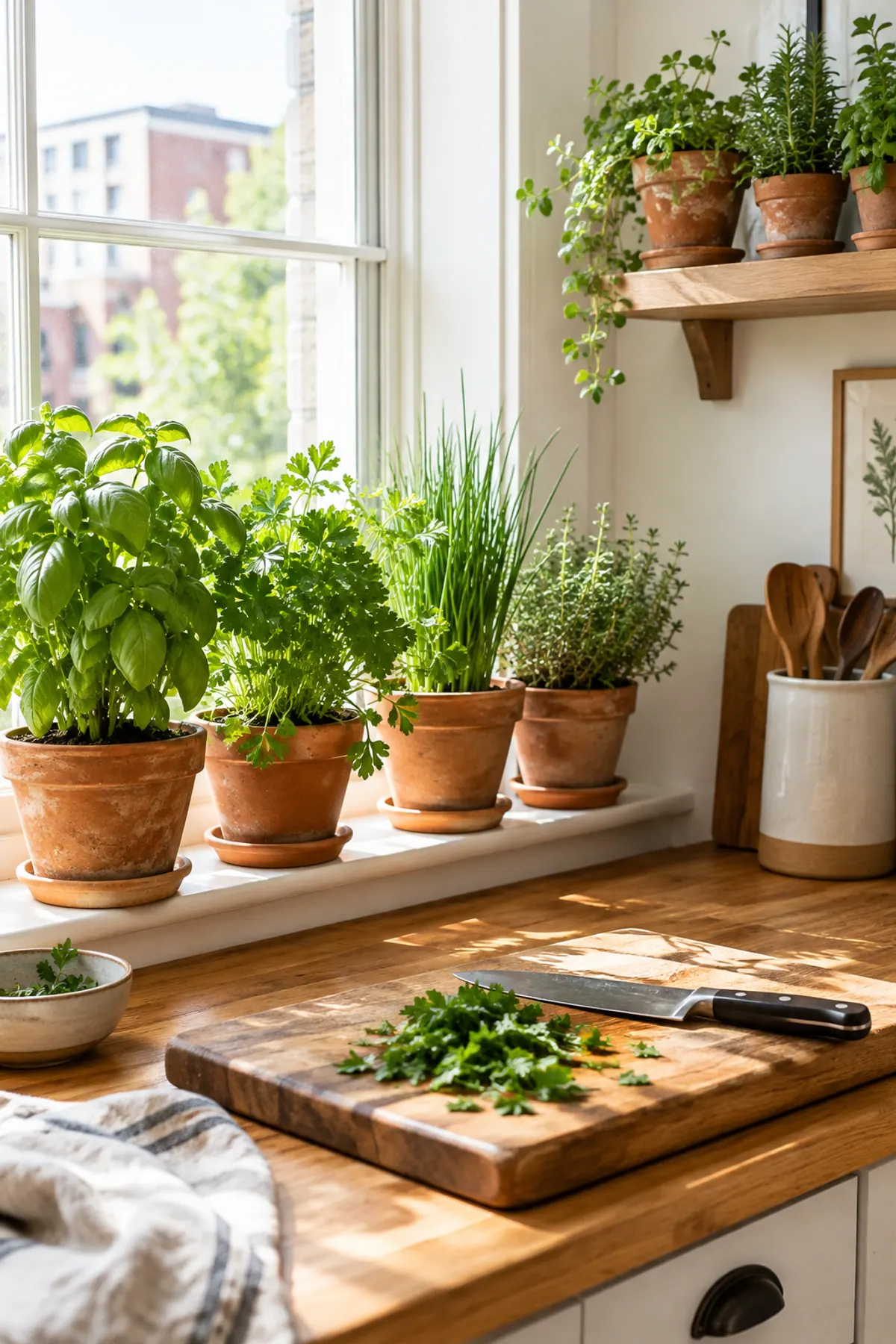
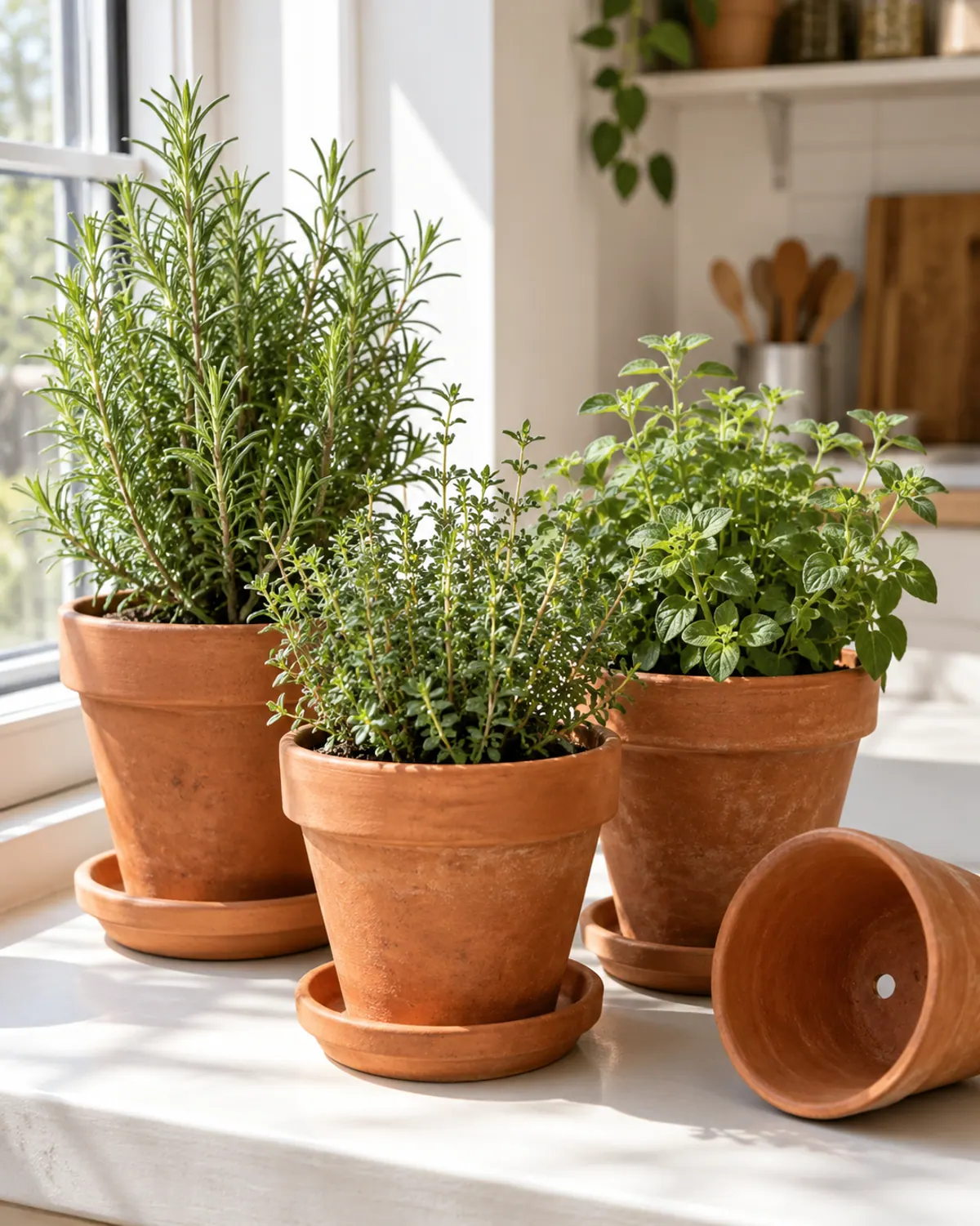
These planters work from November to March, when the herbs live indoors. Give them the brightest window you have, or add a light. Our window direction guide explains which windows grow what.
Indoor herb garden planters
-
Terracotta pots with saucers, set of 3
Typically $15 to $30
One herb per pot keeps watering simple
Check price on Amazon for Terracotta pots with saucers, set of 3 -
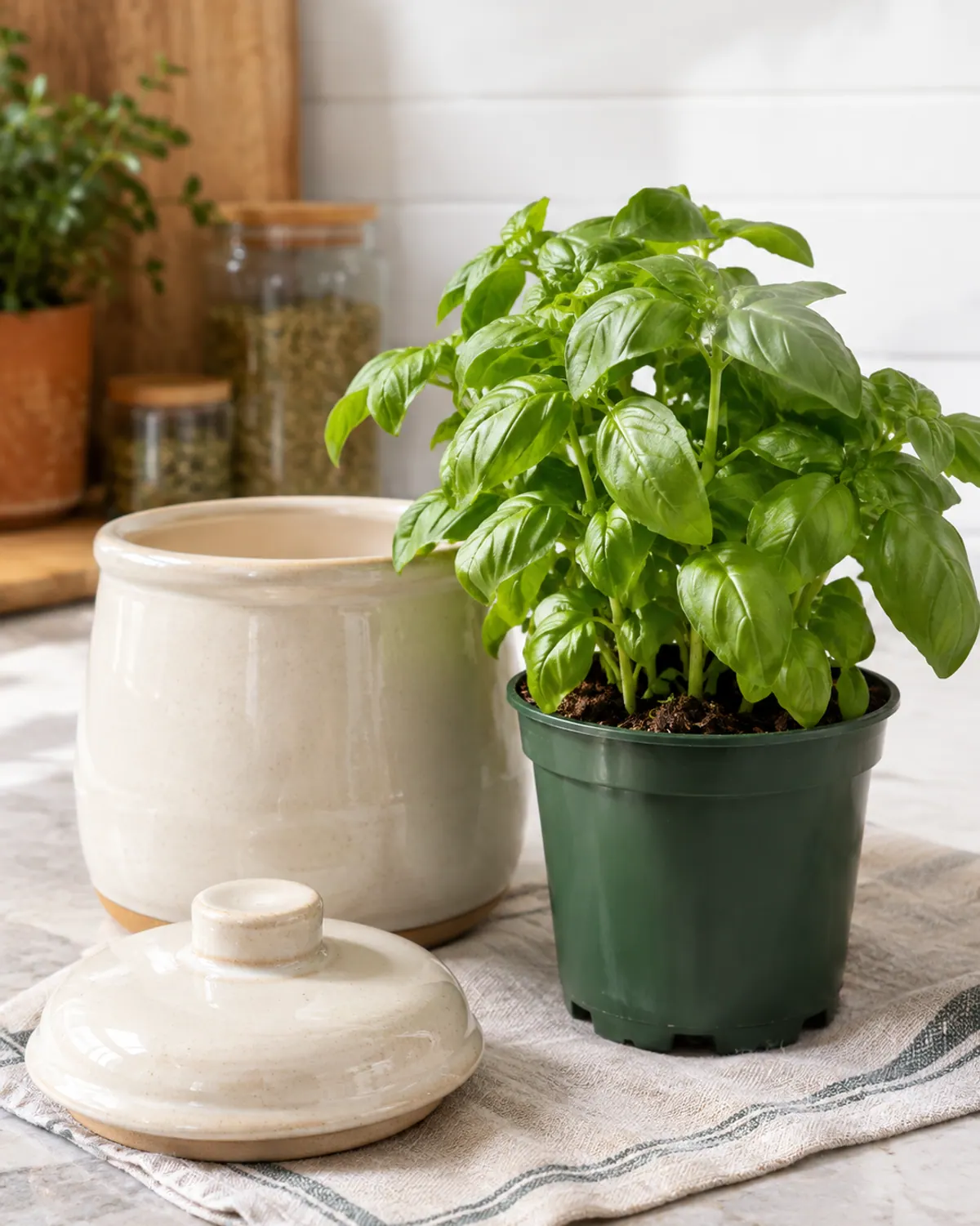
Glazed ceramic cover pot with liner
Typically $15 to $35
Hides a nursery pot and catches drips
Check price on Amazon for Glazed ceramic cover pot with liner -
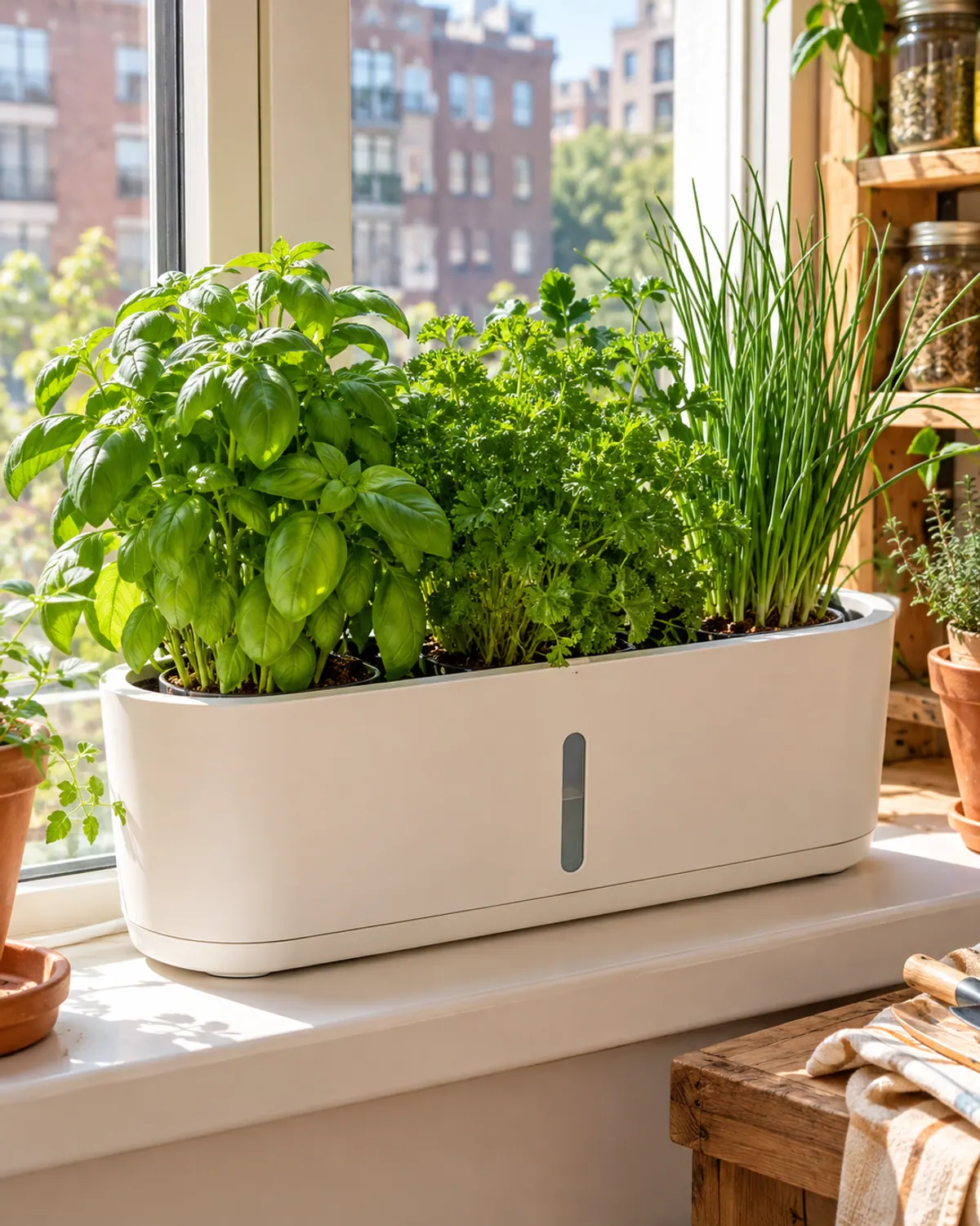
Self-watering herb trough planter
Typically $18 to $40
Steady moisture for basil and parsley
Check price on Amazon for Self-watering herb trough planter -
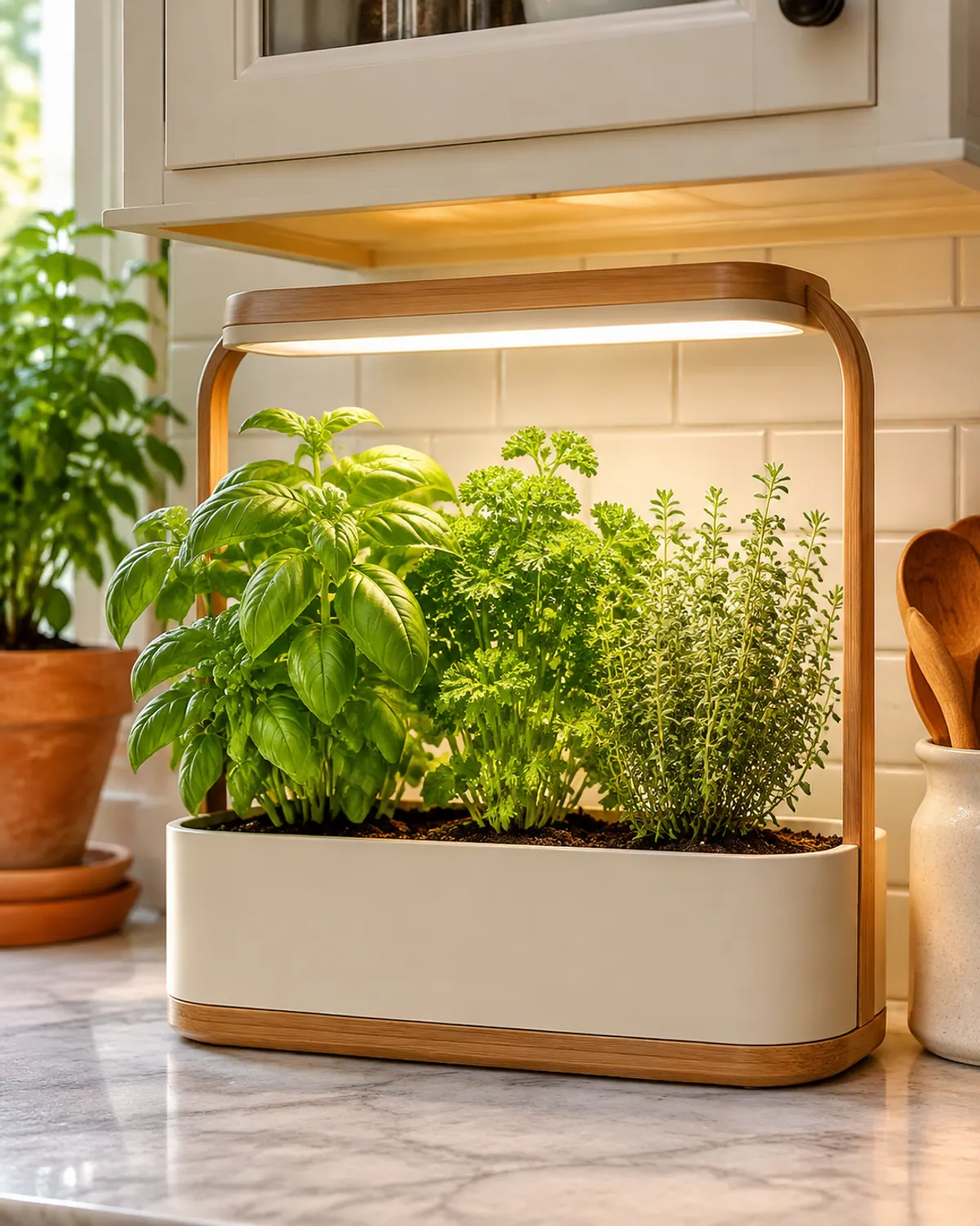
Countertop herb planter with LED grow light
Typically $30 to $90
Adds light in short winter days
Check price on Amazon for Countertop herb planter with LED grow light -
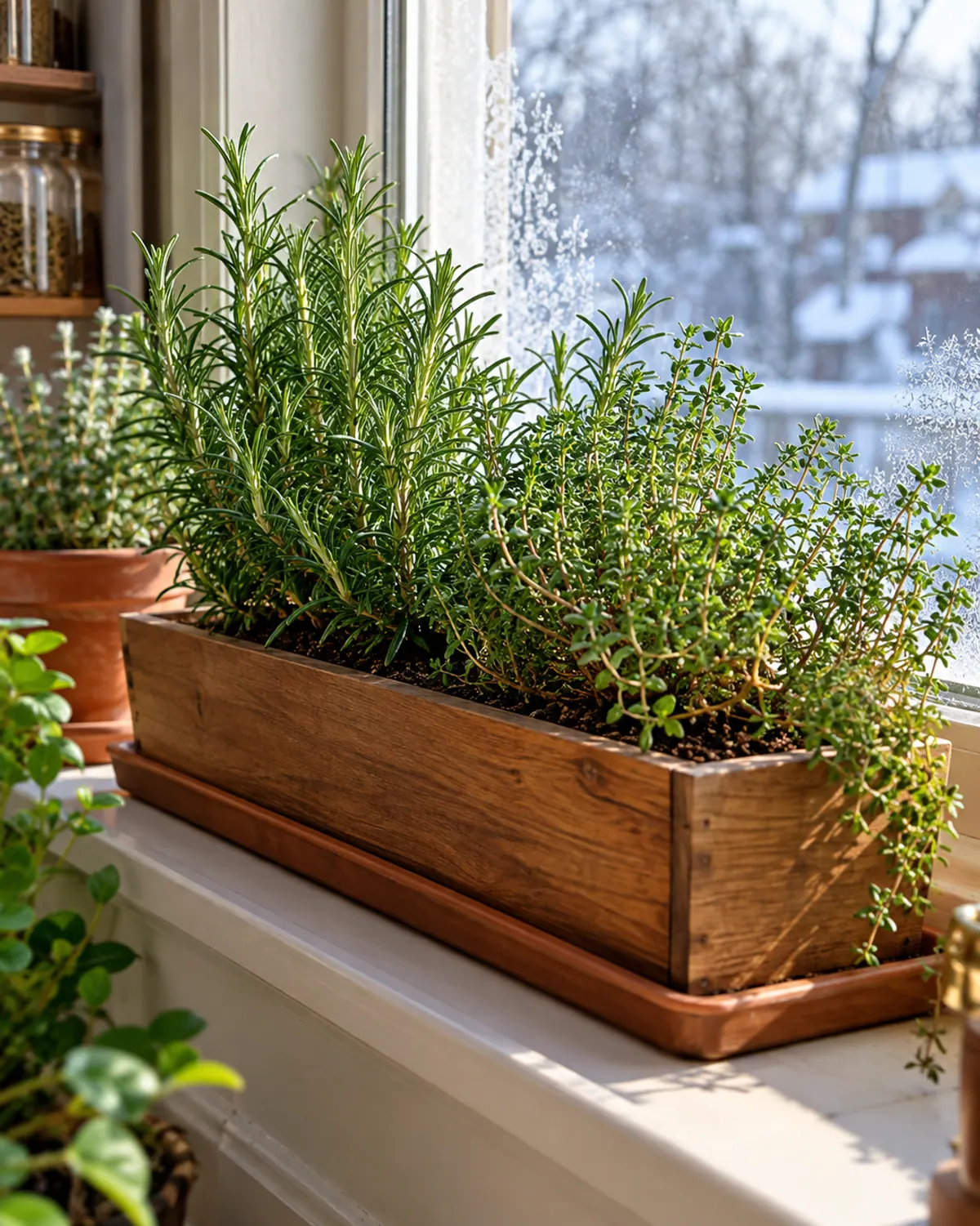
Indoor window box with drip tray
Typically $20 to $45
Fits a deep sill and protects the finish
Check price on Amazon for Indoor window box with drip tray
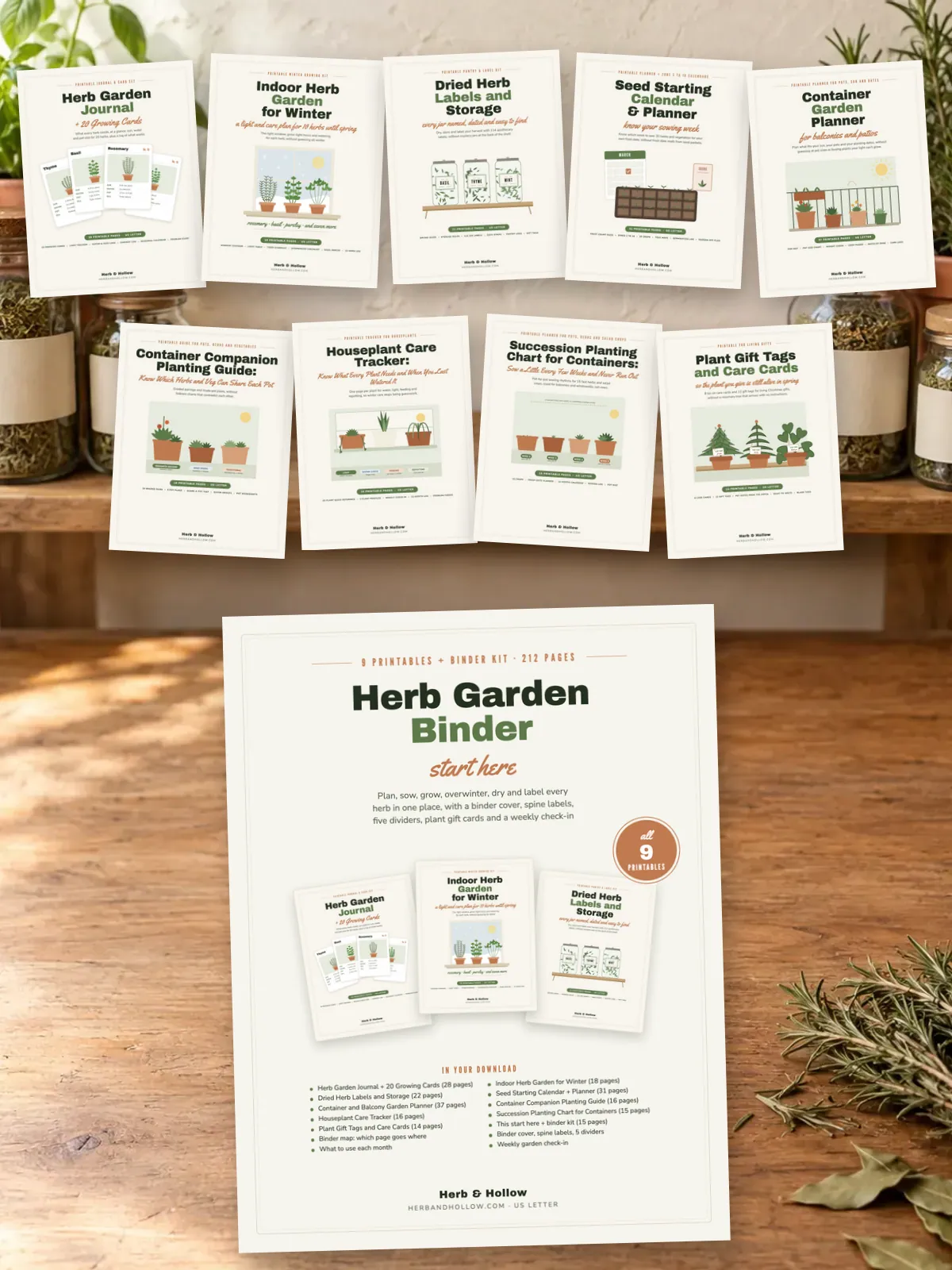
The Indoor Winter Herb Garden Kit ($6) has a window chooser and a light table for 10 herbs, so you know which planter goes where.
Wall and hanging herb garden planters
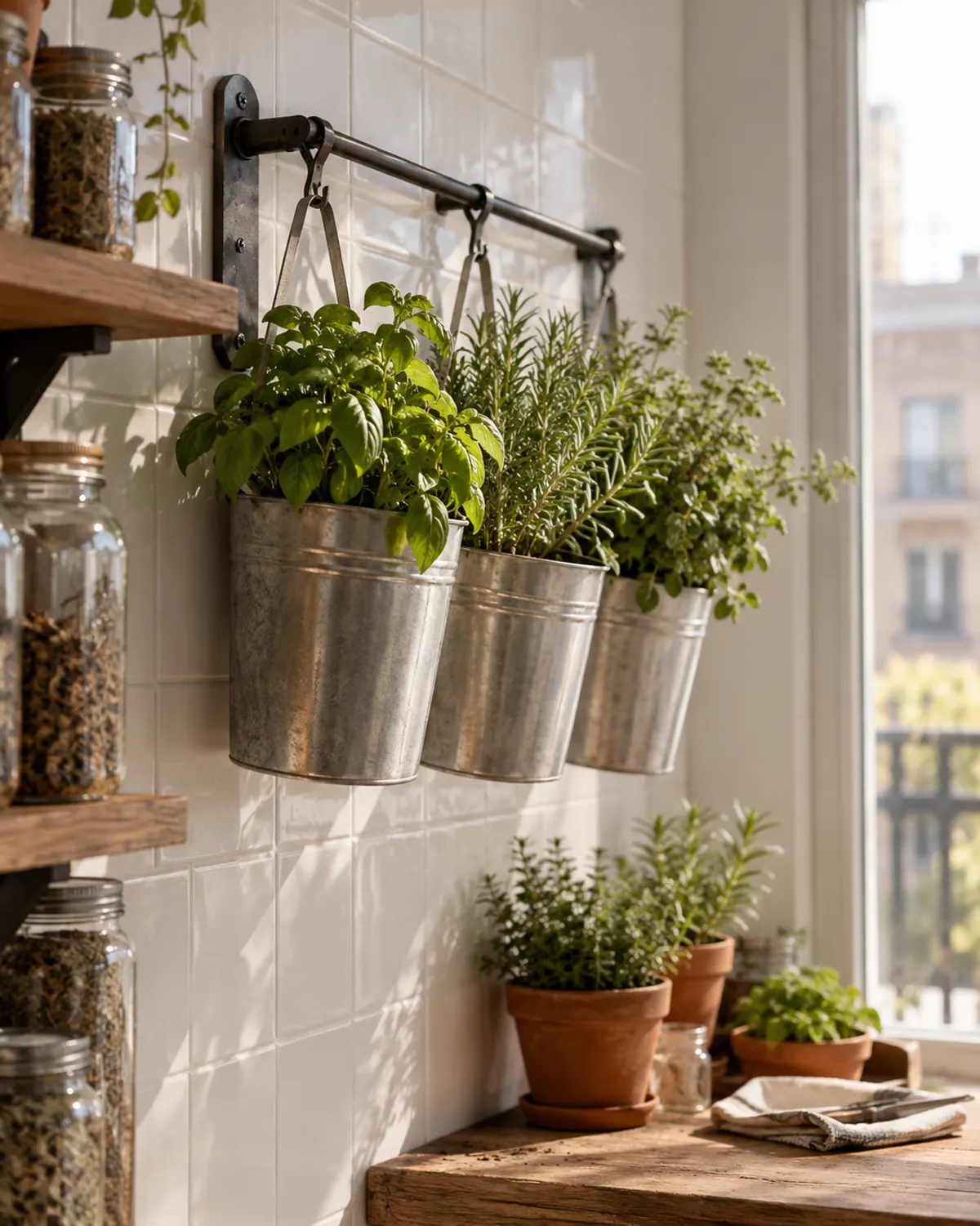
Wall planters free the counter in a small kitchen. Use light pots, since wet soil is heavy, and check what your wall or rail can hold. A rental may allow only tension rods or hooks, so ask first.
Wall and hanging herb planters
-
Wall-mounted rail with hanging herb pots
Typically $20 to $50
Frees up counter space
Check price on Amazon for Wall-mounted rail with hanging herb pots -
Hanging herb planters with hooks, set of 3
Typically $15 to $35
Works with window rods in rentals
Check price on Amazon for Hanging herb planters with hooks, set of 3
Balcony and patio herb garden planters
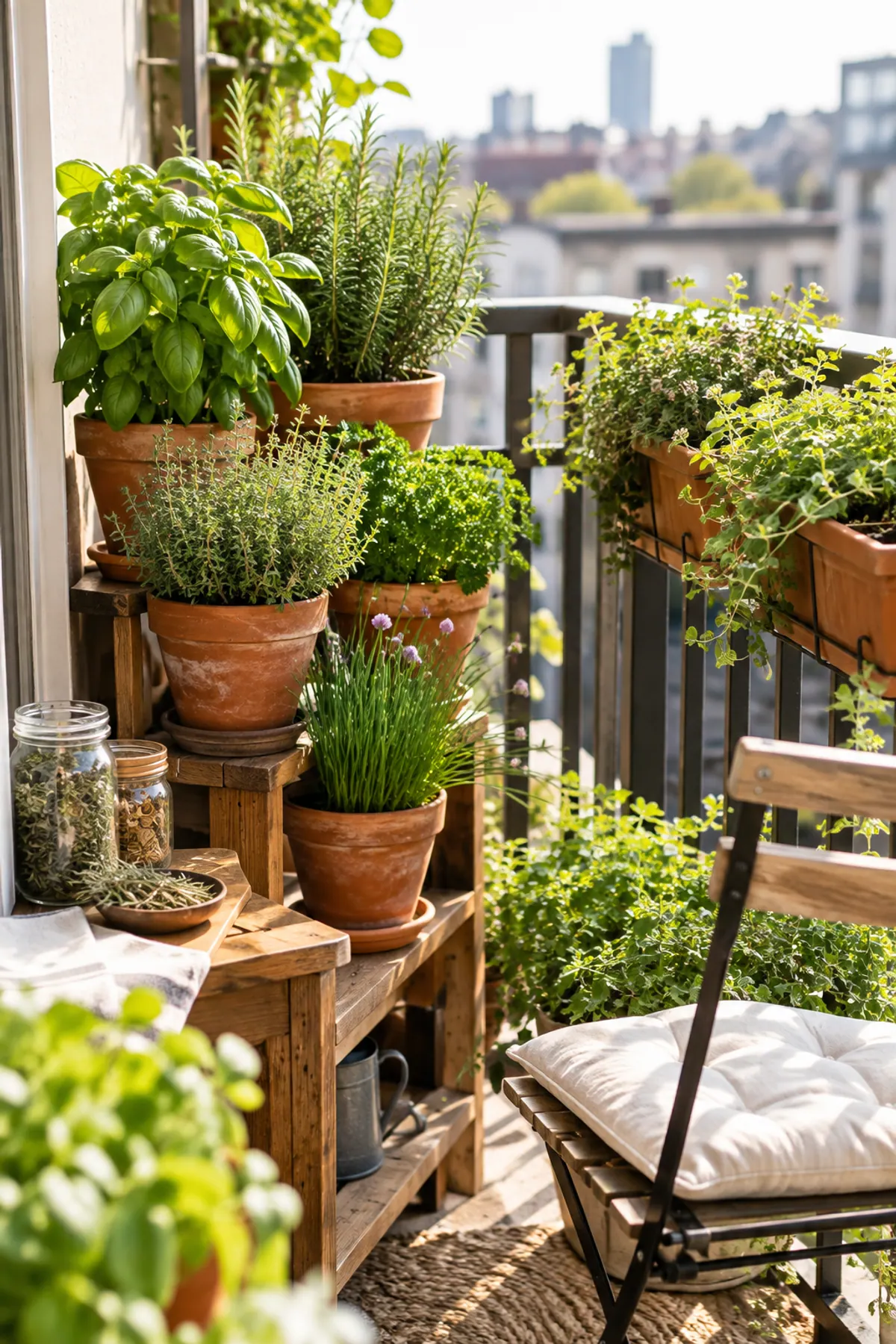
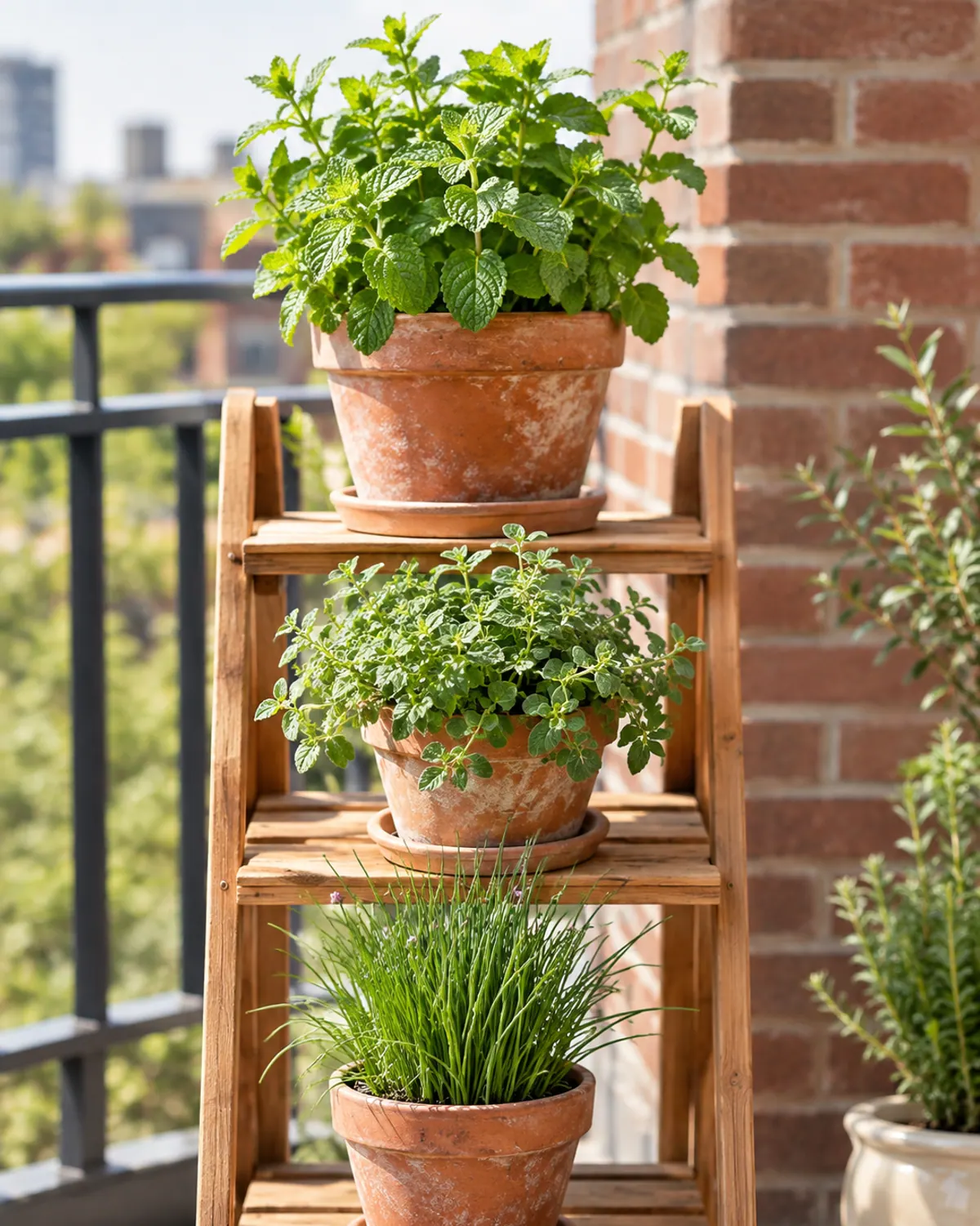
Outdoors, the planter has to cope with wind, rain and weight. Choose a stable base and pots with saucers you can empty, and keep rosemary alone as the extension page suggests. Rail-hung boxes use little floor space, and fabric bags are light to move.
Balcony and patio herb planters
-
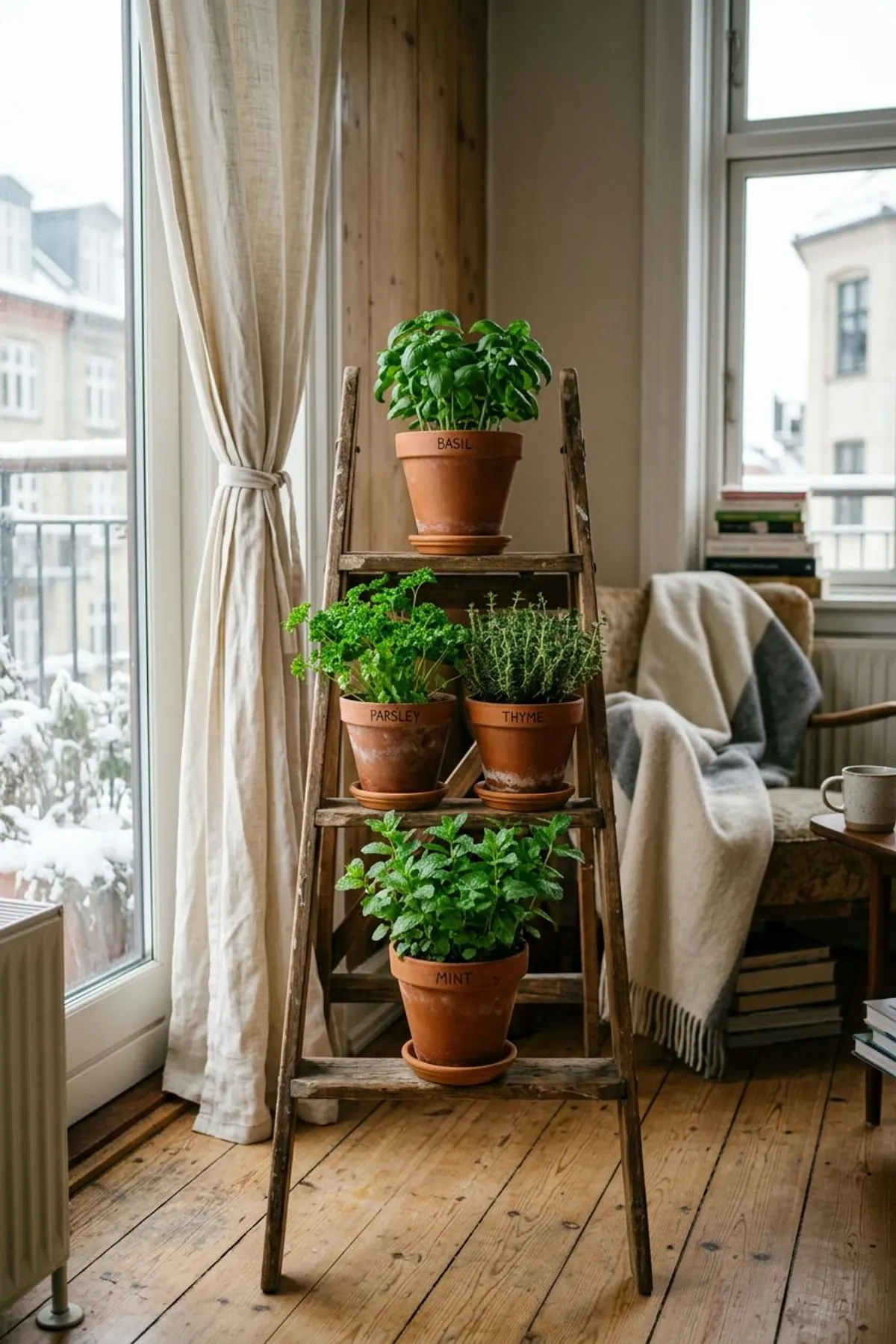
Three-tier plant stand for pots
Typically $30 to $70
Stacks pots up in a small footprint
Check price on Amazon for Three-tier plant stand for pots -
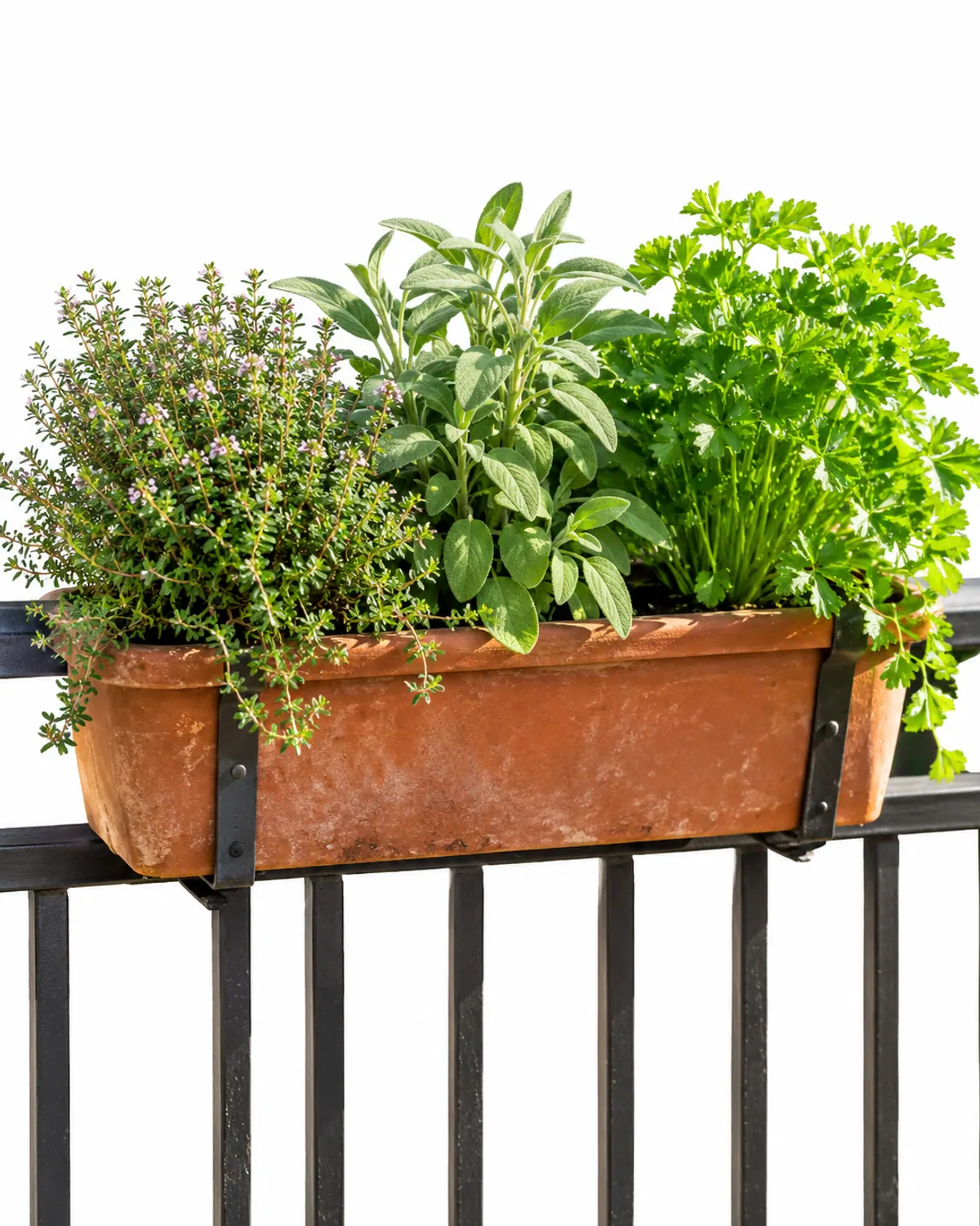
Railing planter box with brackets
Typically $25 to $55
Uses rail space, not floor space
Check price on Amazon for Railing planter box with brackets -
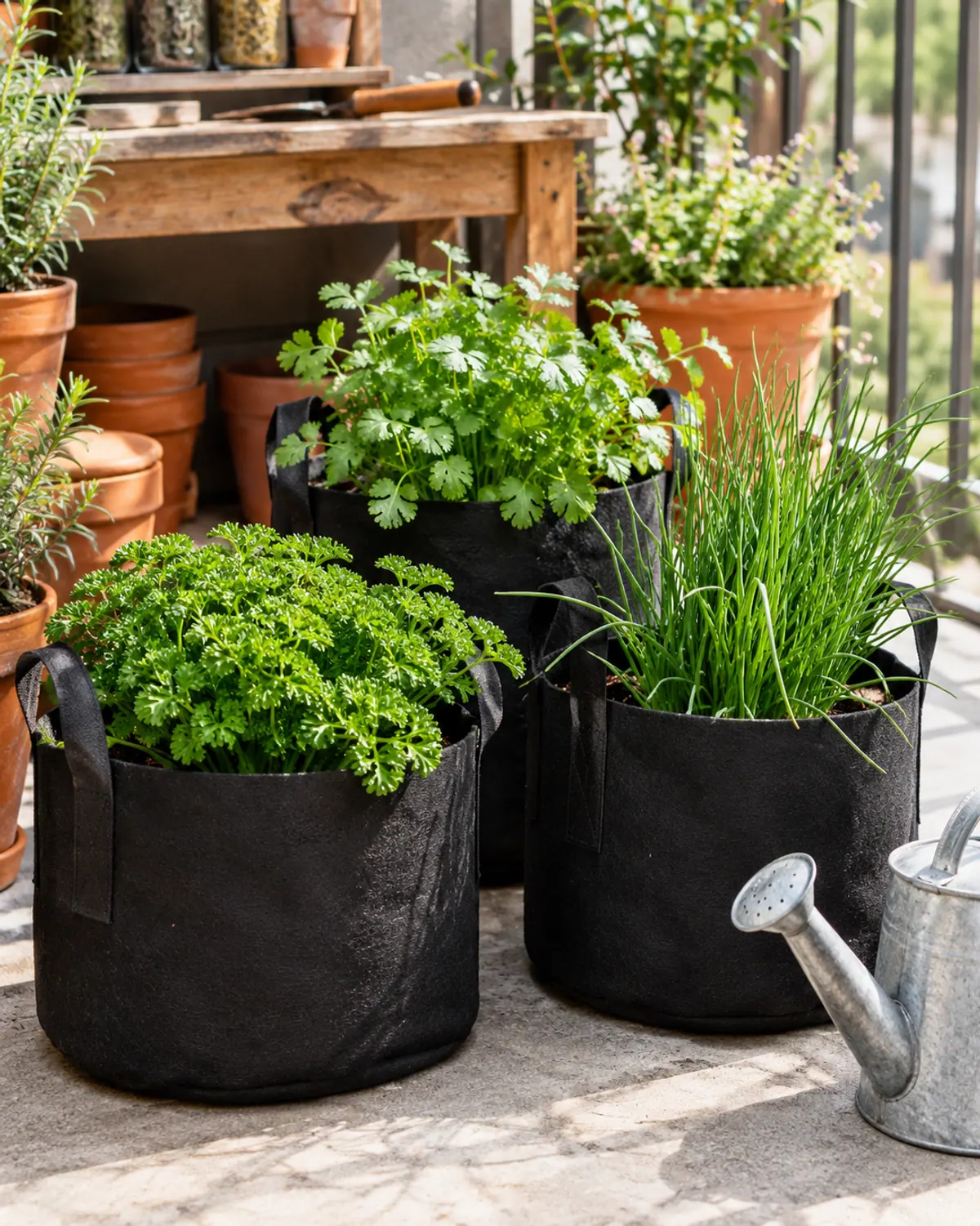
Fabric grow bags with handles, set of 3
Typically $15 to $30
Light and easy to move indoors for winter
Check price on Amazon for Fabric grow bags with handles, set of 3 -
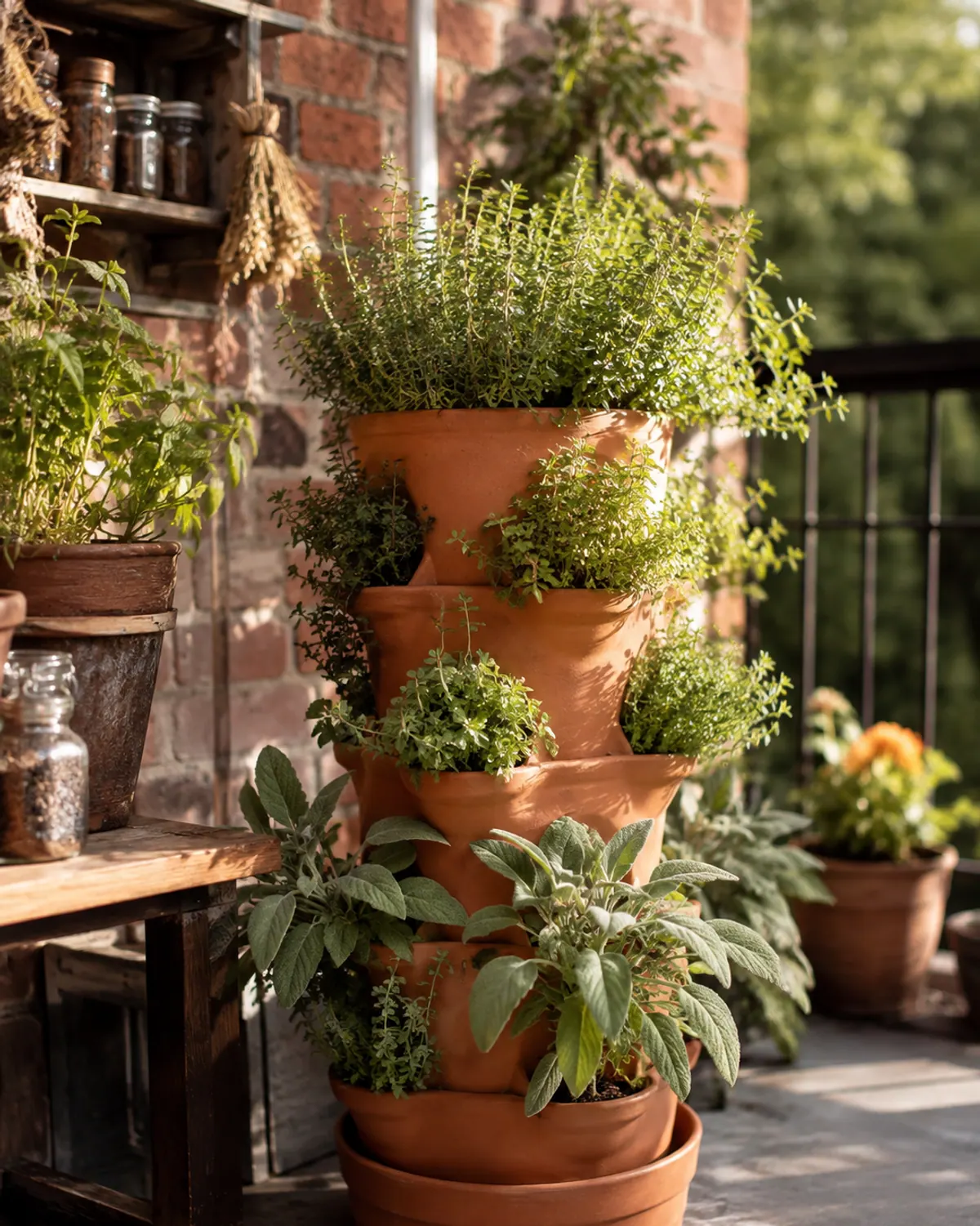
Stackable tower planter with pockets
Typically $25 to $60
Fits several herbs on a small footprint
Check price on Amazon for Stackable tower planter with pockets -
Large 14 inch pot with saucer
Typically $20 to $50
Room for a mixed herb pot
Check price on Amazon for Large 14 inch pot with saucer
The Container & Balcony Garden Planner ($9) has three sun-check grids and pot size charts, so you can count your hours of sun before you pick a planter.
Which herbs go in which planter
| Herb | Suggested planter | Note |
|---|---|---|
| Basil | Self-watering trough or 8 inch deep pot | UVM Extension says basil needs about 8 inches of soil depth |
| Parsley, chives | Self-watering trough or cover pot | Likes steady moisture |
| Thyme, oregano | Terracotta with saucer | Our suggestion: drier soil suits them |
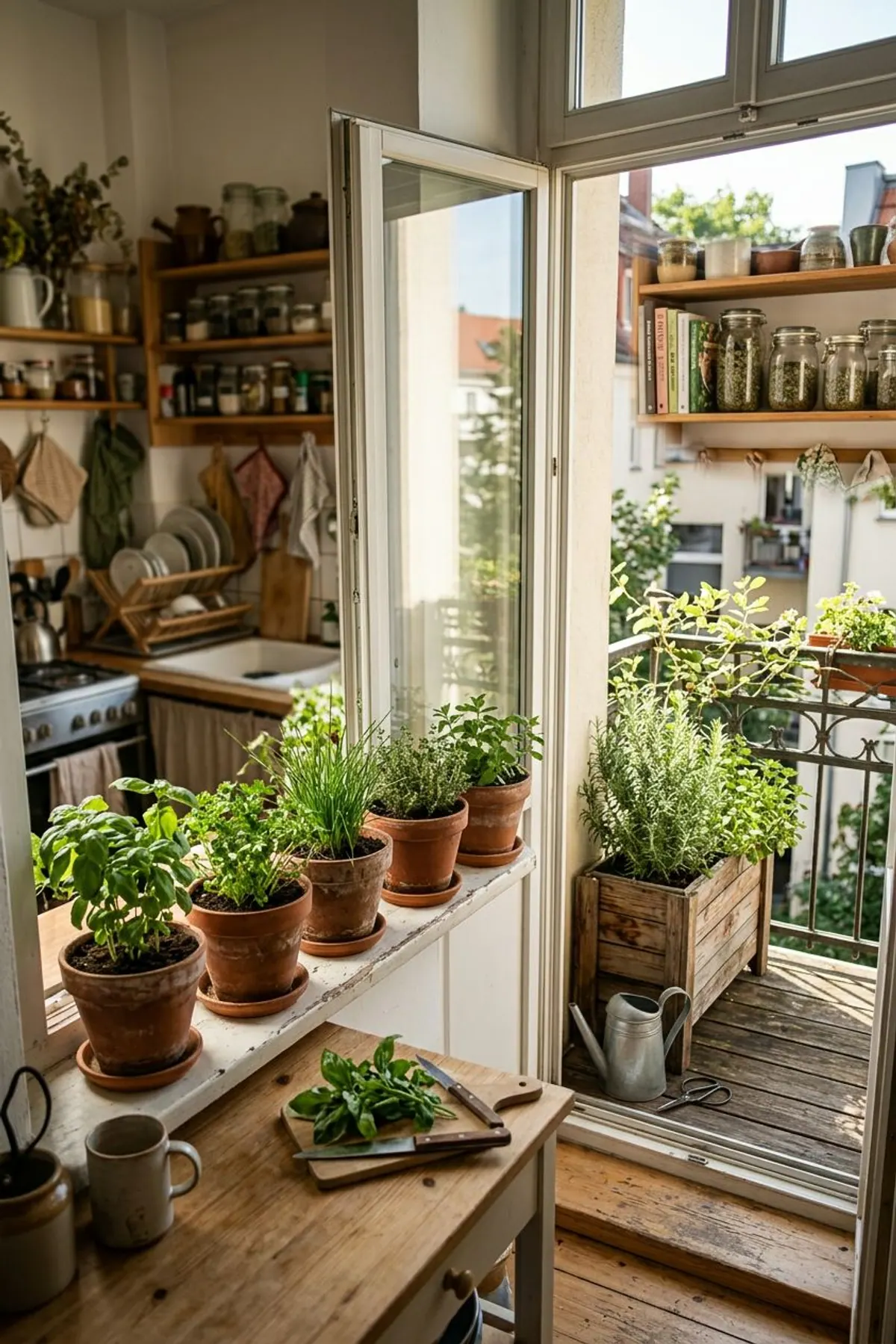
| Rosemary | Its own terracotta pot | UNH Extension says rosemary prefers drier soil and does better alone |
| Mint | Its own pot or hanging basket | Spreads, so keep it separate |
Planter check before you buy
Skip if
Skip decorative metal or glass pots with no drainage hole unless you use a liner pot. Skip very large pots on a sill, since wet soil is heavy. Skip tiny single-use pots for herbs you want to keep through winter.
Want everything in one place? The Small-Space Garden Binder ($25) bundles our herb printables, and our herb garden ideas guide, kitchen herb garden ideas and balcony guide show how the planters look in real spaces.
Frequently asked questions
What is the best planter for an indoor herb garden?
A pot with drainage holes and a saucer. Terracotta suits thyme and oregano, and a self-watering trough suits basil and parsley.
Do herb planters need drainage holes?
Yes. UNH Extension says every container needs drainage holes in the bottom so excess water can escape.
Can I plant several herbs in one planter?
Many herbs that like moist, well-drained soil can share a container. Rosemary prefers drier soil and does better alone, per UNH Extension.
How deep should an herb planter be?
UVM Extension says basil needs about 8 inches of soil depth. Match the planter to the herb at full size.
What herb planter works for a small balcony?
A rail-hung box, a tiered stand or fabric grow bags. They use little floor space and are easy to move indoors in winter.
Save it for later
Pin this to your Herb Garden board so it's there when you need it.
Save to Pinterest