This post contains affiliate links. As an Amazon Associate we earn from qualifying purchases, at no extra cost to you. Read our disclosure.
Safety first: Herbs can be powerful. If you are pregnant, nursing, take medication or have a health condition, check with your doctor or pharmacist first. Please read our herbal & garden safety notes before you start.
Key takeaways
- Most herbs need about 8 hours of direct light indoors, so start at your brightest window or add a grow light
- Wall and shelf ideas work best within a foot or two of the glass
- A grow light on a timer turns a dark corner into a herb shelf
- Every container needs drainage, and a tray under it protects the sill
- If you have pets, put mint, chives, oregano and parsley out of reach
In this post19 sections
- Indoor herb garden ideas that do not need a big window
- 15 DIY indoor herb garden ideas
- 1. A wine crate herb box
- 2. A tin can herb row
- 3. A ladder shelf with herb tiers
- 4. A wire rack with a grow light
- 5. One bookshelf shelf for herbs
- 6. A wood slat wall of hanging pots
- 7. A felt pocket wall planter
- 8. A wick bottle planter
- 9. A terracotta pot tower
- 10. A rain gutter wall shelf
- 11. Thrifted teacup herbs
- 12. A glass shelf across the window
- 13. A herb tray on top of the cabinet
- 14. Fabric pots in a basket
- 15. A vintage colander herb planter
- How to choose a setup
- FAQ
Indoor herb garden ideas that do not need a big window
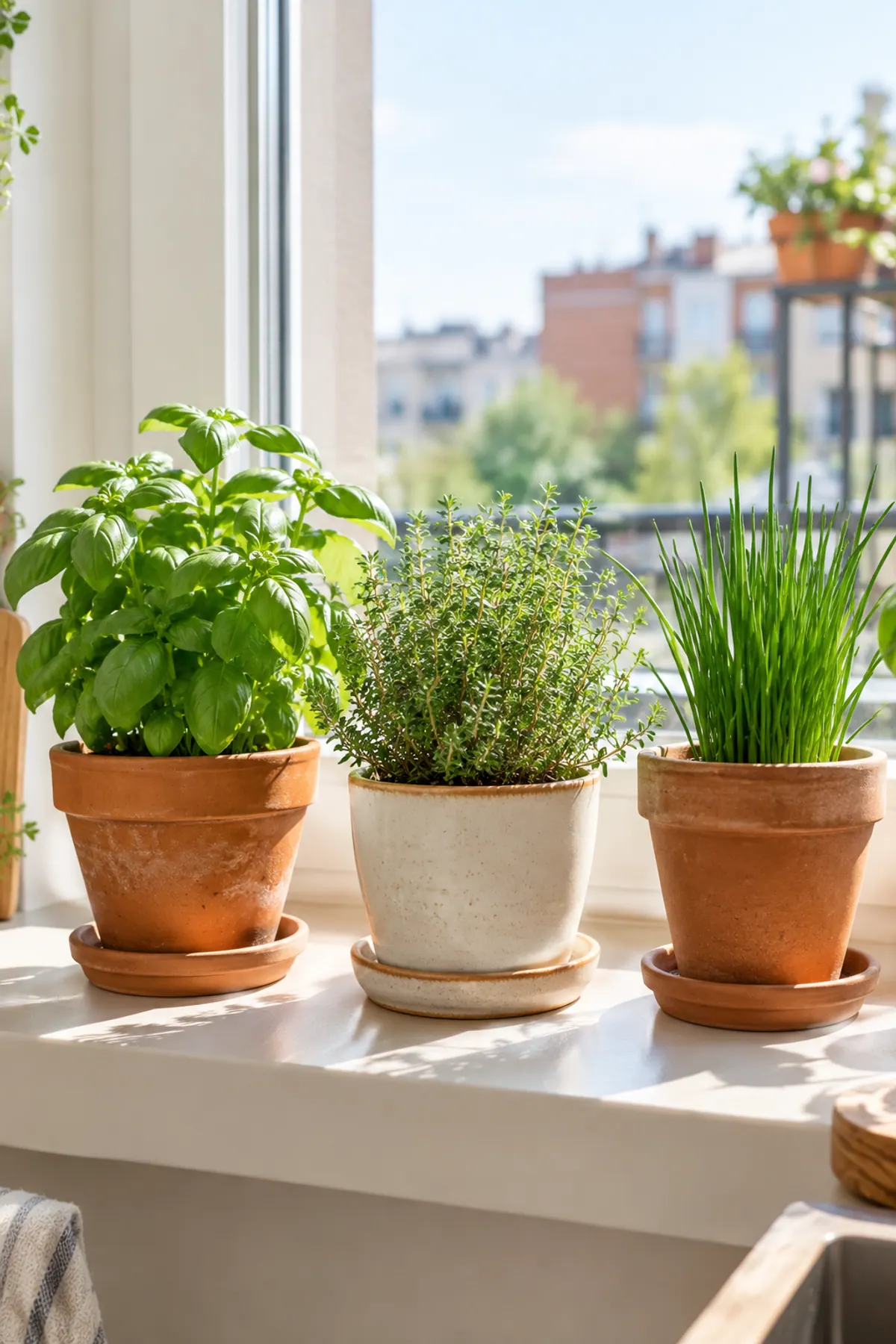
Most herbs want a lot of light indoors. Iowa State Extension says most herbs need about 8 hours of direct light, that a south window is best, and that a bright east or west window can also work. If your window falls short, a grow light fills the gap. These 15 DIY setups differ in how they get light, so each one says what it needs.
We have not grown every one of these ourselves; they are build ideas with the usual light, water and cost sense behind them, not tested results. Costs are typical ranges, not quotes.
| Light source | Ideas that suit it |
|---|---|
| Window or sill, close to the glass | Wine crate, tin cans, ladder shelf, wick bottle, terracotta tower, teacups, glass shelf, colander |
| Wall beside a bright window | Wood slat wall, felt pockets, rain gutter |
| Grow light on a timer | Wire rack, bookshelf shelf, cabinet-top tray, fabric pots in a basket (if no sun) |
15 DIY indoor herb garden ideas
1A wine crate herb box
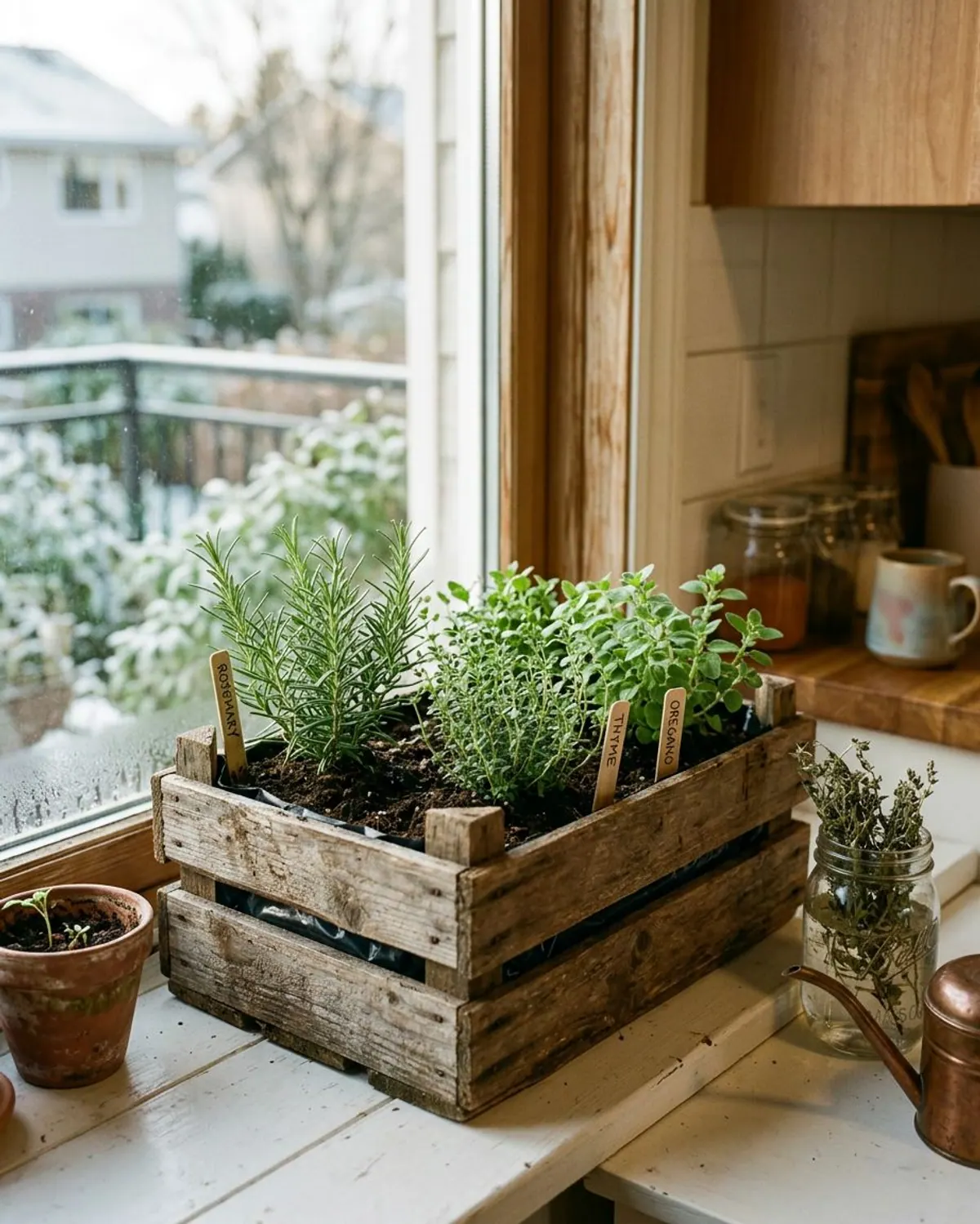
A small wooden crate becomes one long planter for woody herbs that like the same dry conditions. Line it with a heavy plastic bag, poke a few holes in the bottom, and set it on a tray. Fill it with potting mix and plant three herbs in a row.
Light: A south or bright west window, close to the glass.
Example cost: Typically $10 to $25 for a crate, liner and tray.
Herbs: Rosemary, thyme, oregano.
- Put a layer of pebbles under the soil so the roots never sit in water.
Holds three herbs in one row and fits a deep sill.
2A tin can herb row
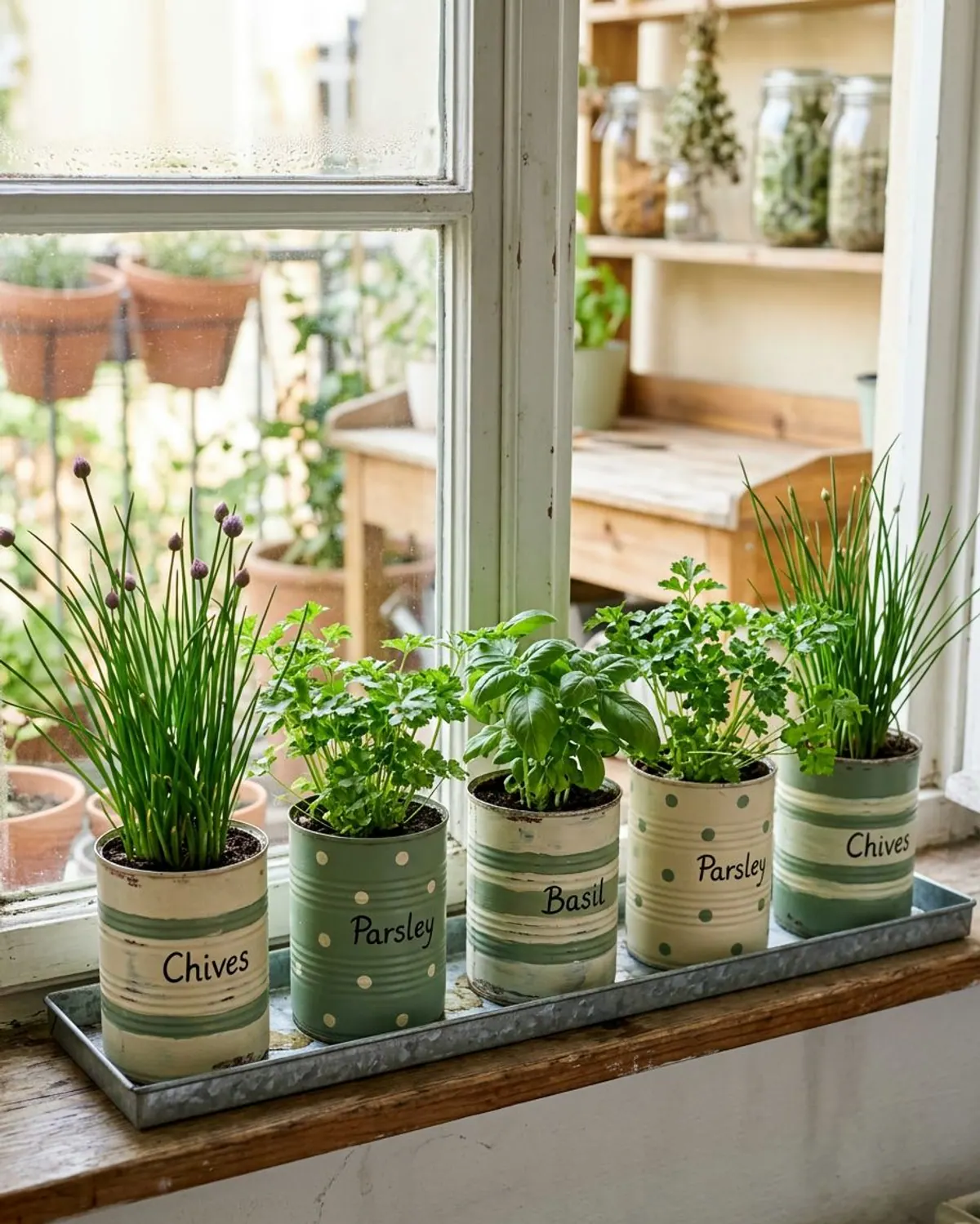
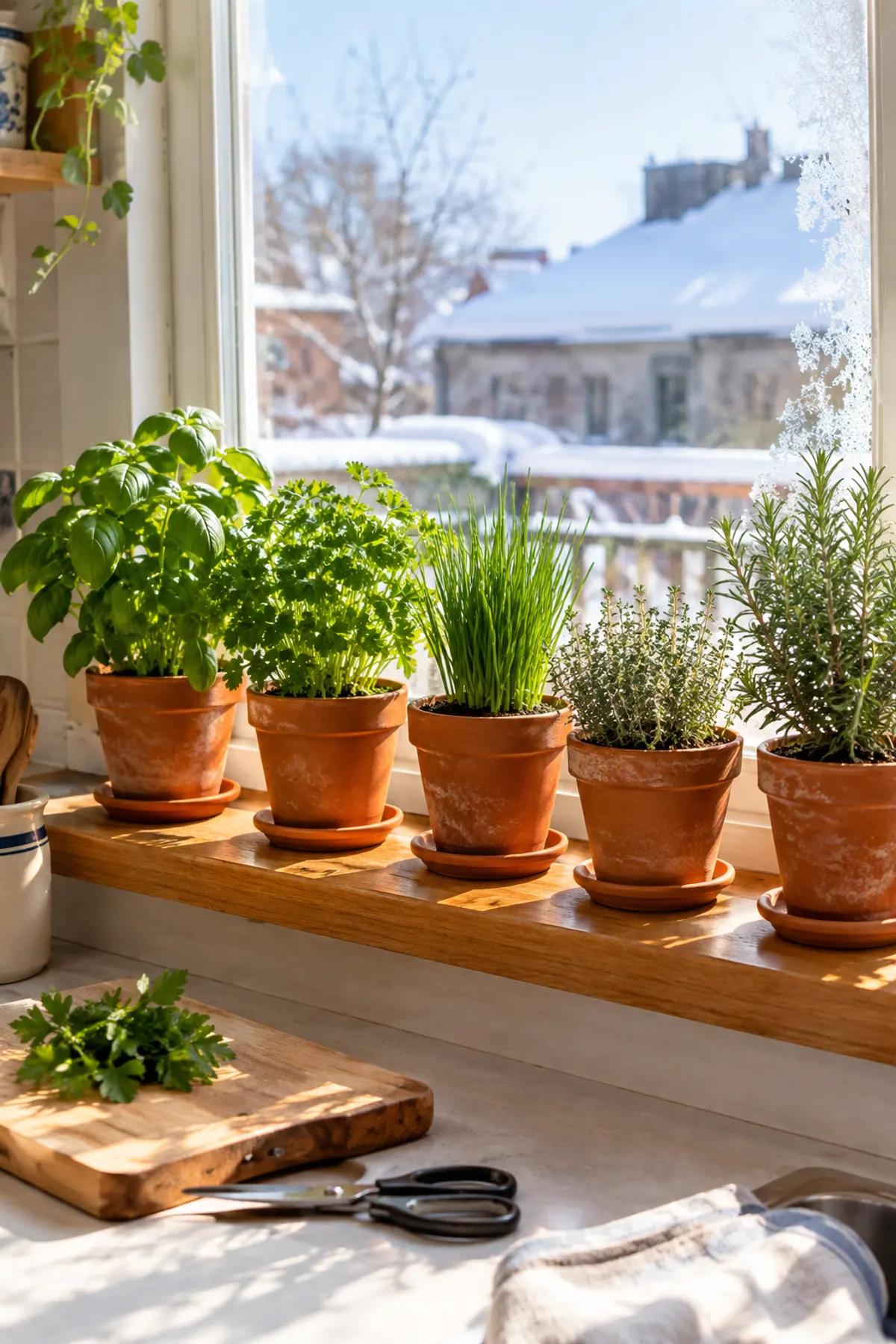
Clean food cans are free planters. Punch drainage holes with a hammer and nail from the inside, sand any sharp rim, paint the outside, and line them up on a ledge with a tray below. Each can holds one herb, so a thirsty plant never shares with a dry one.
Light: A bright window ledge, about as deep as the cans.
Example cost: Typically $0 to $12; mostly paint and a tray.
Herbs: Chives, parsley, basil.
- Add a strip of masking tape inside the rim before painting so the paint stays off the soil side.
Gives cans a uniform finish.
3A ladder shelf with herb tiers
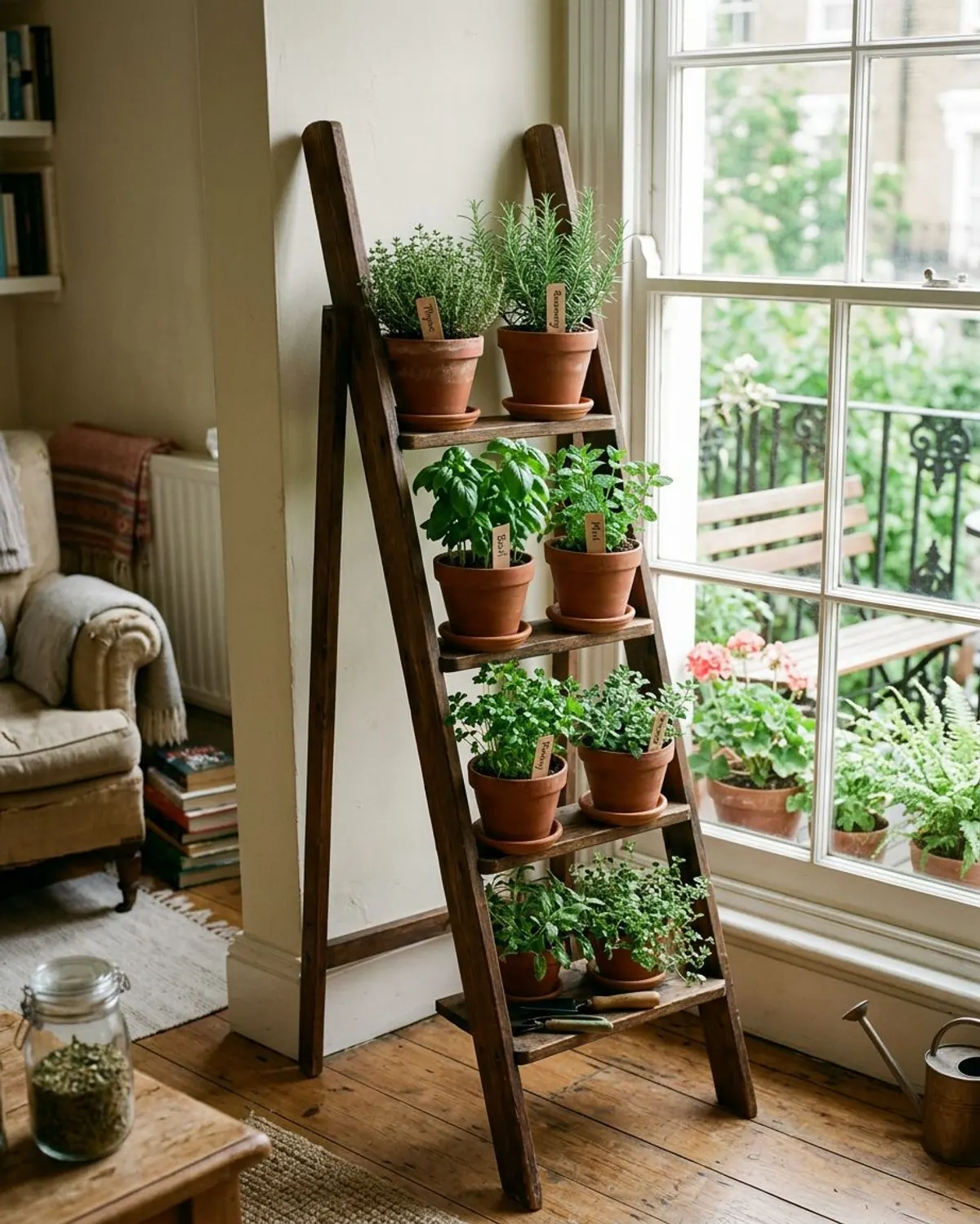
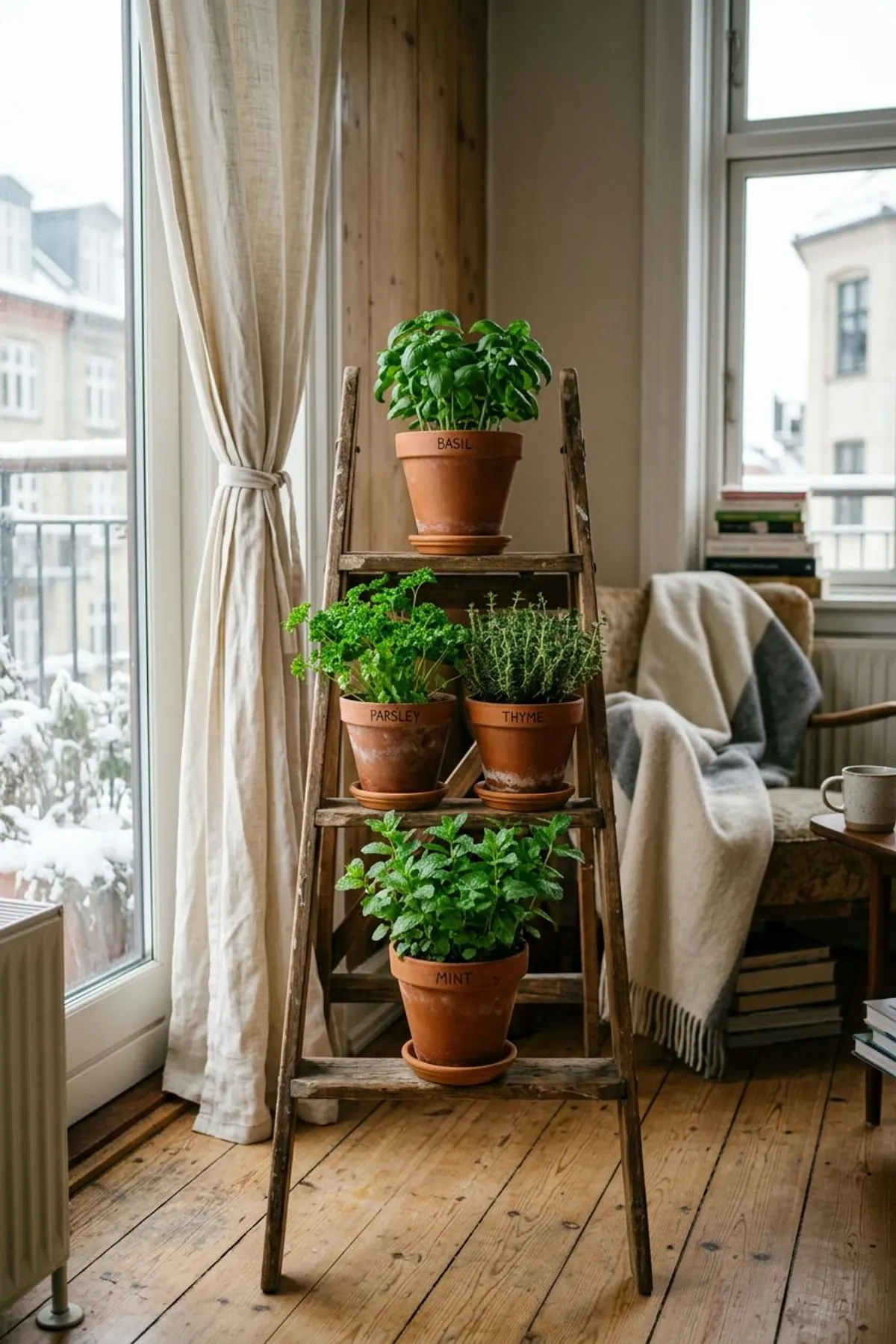
A leaning ladder shelf stacks herbs without taking floor space. Only the pots nearest the glass get strong light, so keep sun-hungry herbs on the lower steps by the window and shade-tolerant ones above. Pick one with deep enough steps for your pots.
Light: Next to a bright window; the bottom steps get the most light.
Example cost: Typically $30 to $90 for a leaning shelf.
Herbs: Basil, parsley, thyme, mint.
- Rotate pots each week so every plant gets a turn on the sunniest step.
Stacks several pots in a narrow footprint.
4A wire rack with a grow light
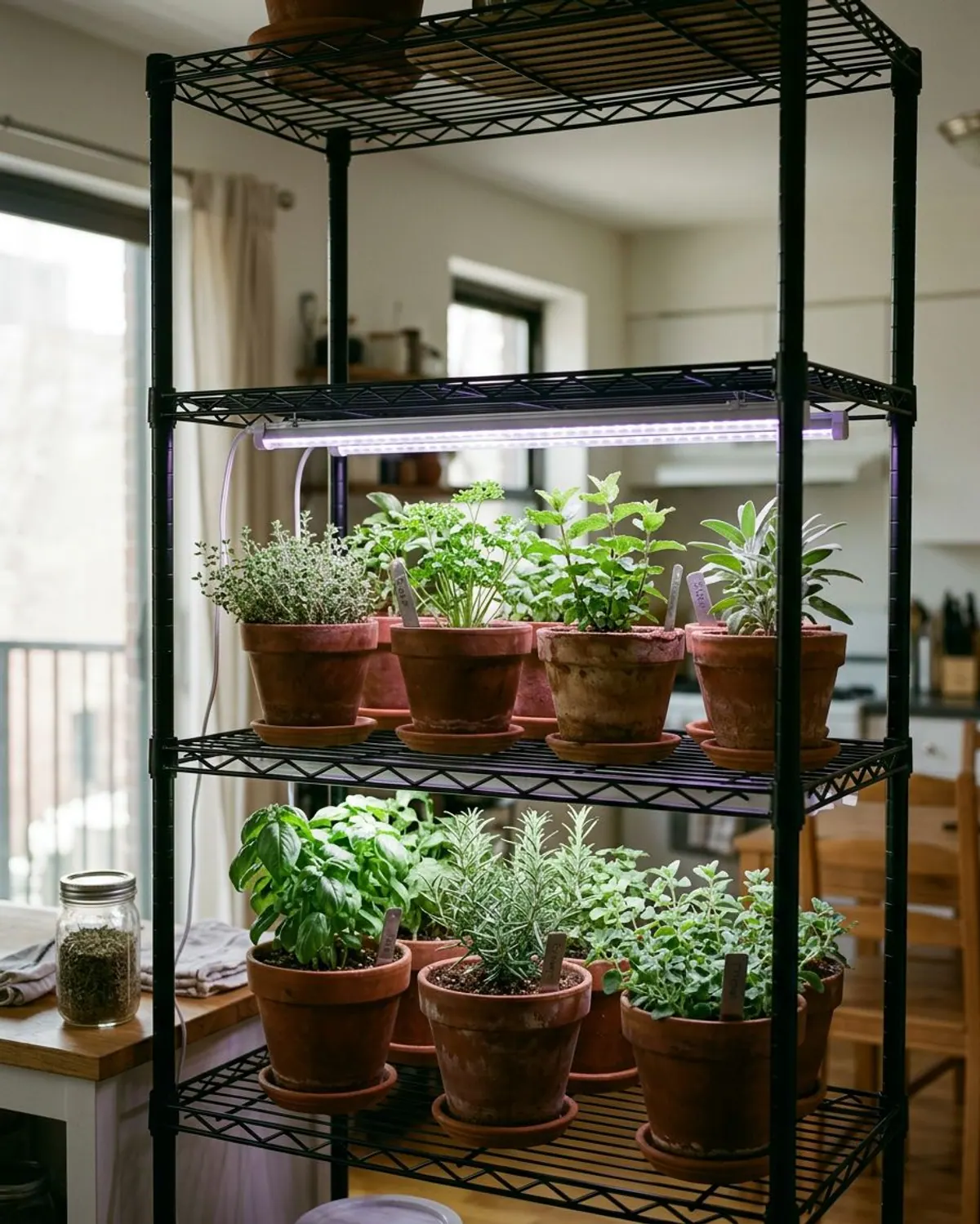
If your apartment has no sunny window, a wire utility rack with a light bar under each shelf can be the herb garden. Fix the light a few inches above the leaves and run it on a plug-in timer for 12 to 14 hours a day. This idea does not depend on the window at all.
Light: Anywhere, with a full-spectrum LED light on a timer.
Example cost: Typically $40 to $100 for a rack, one light and a timer.
Herbs: Basil, parsley, mint, chives.
- Raise the light as the plants grow so the leaves stay a few inches below it.
Lets herbs grow in a room with no usable window.
5One bookshelf shelf for herbs
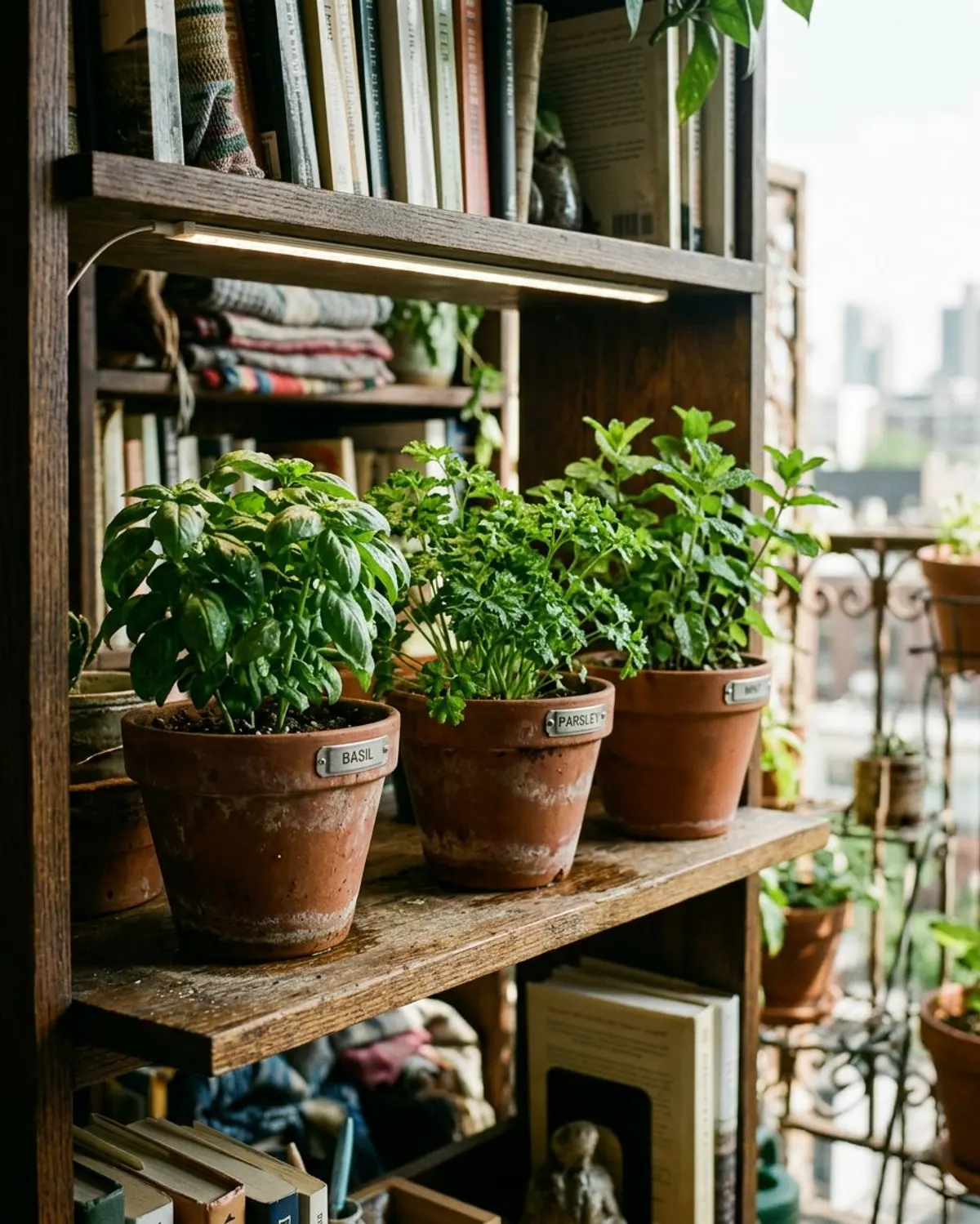
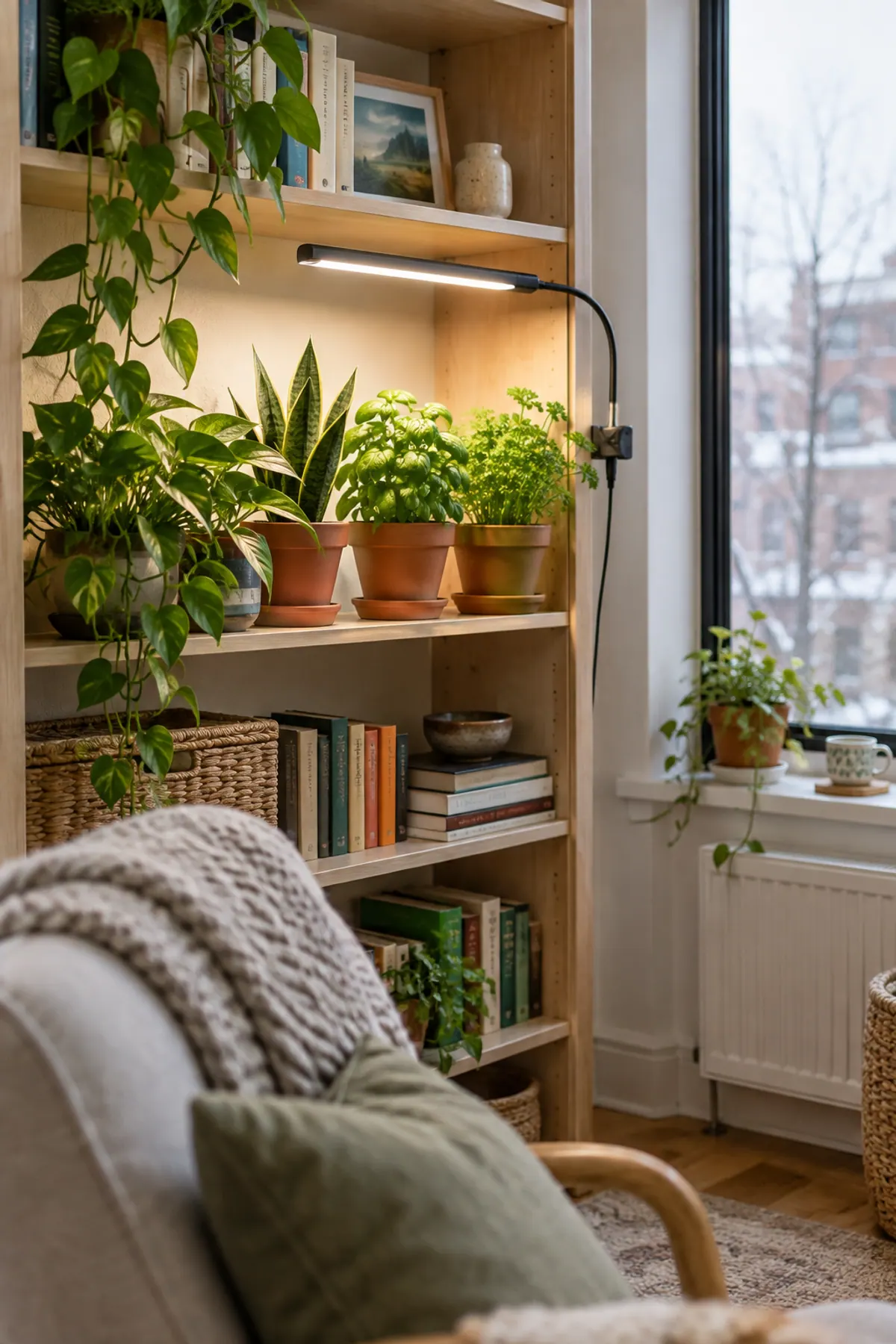
You do not need new furniture. Clear the shelf at about eye level, line it with a waterproof tray, and stick a slim LED strip under the shelf above. Use shallow pots so the plants stay below the light, and keep the books on the other shelves dry.
Light: Close to a window, or under a strip light for 12 to 14 hours.
Example cost: Typically $20 to $50 for a strip light and tray.
Herbs: Basil, parsley, mint.
- Use a tray with a lip; a spilled pot on a bookshelf is a bigger mess than on a sill.
Protects the shelf from drips.
6A wood slat wall of hanging pots
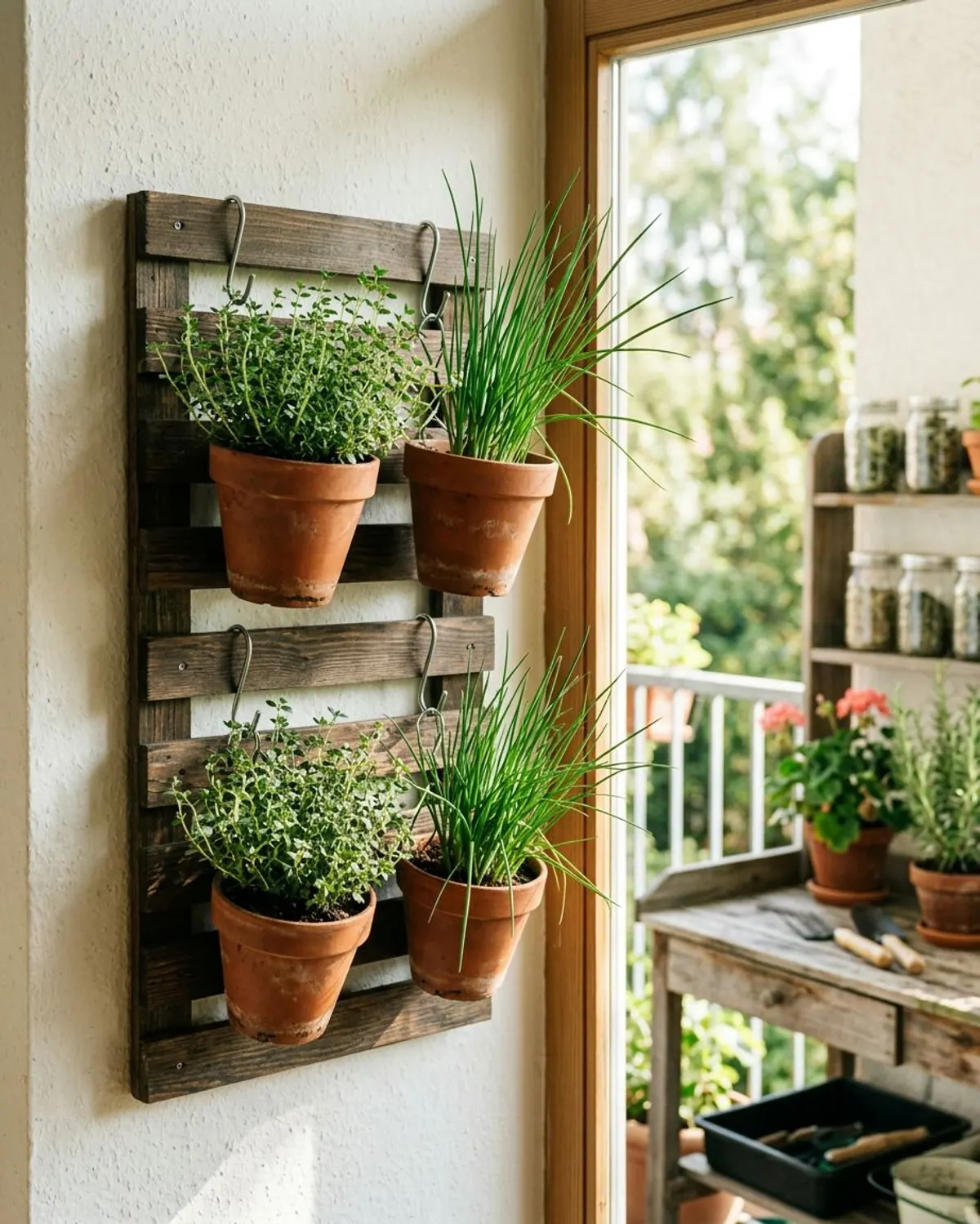
Mount a slatted board beside a window and hang small pots from hooks. This works in rentals if you use adhesive-free hooks or screw into studs only where your lease allows. Keep the pots light and the board within reach of the glass.
Light: Within a foot or two of a bright window.
Example cost: Typically $20 to $50 for a board, hooks and small pots.
Herbs: Thyme, chives, oregano.
- Weigh a watered pot before you hang it; a small pot of wet soil can be heavier than it looks.
Holds small pots off the counter.
7A felt pocket wall planter
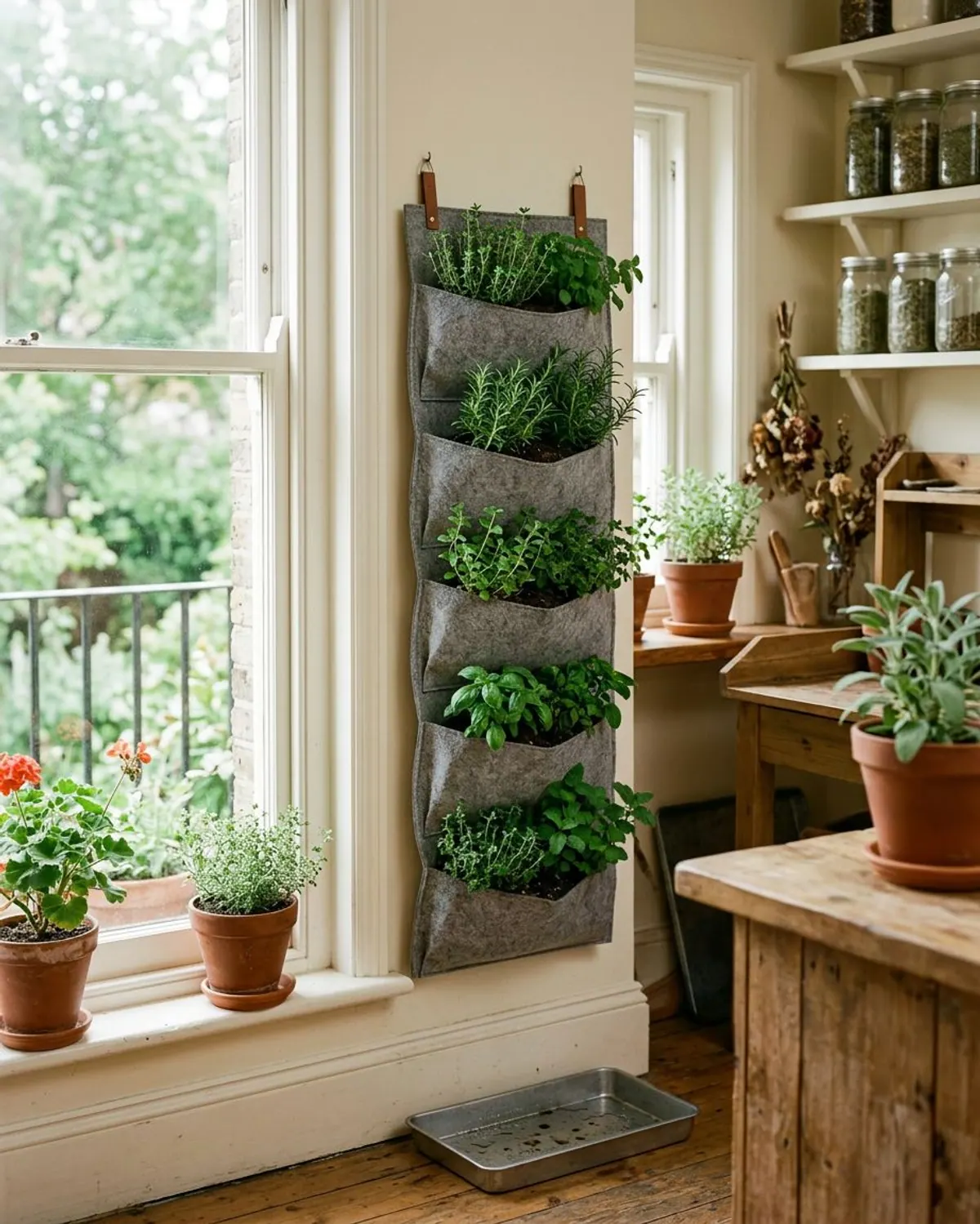
Felt pockets give a flat, living wall for tiny herb plants. Water slowly because the felt dries quickly and drips, so place a tray or a towel below. This is best for a few small herbs, not woody ones that outgrow the pocket.
Light: Beside a bright window, not across the room.
Example cost: Typically $15 to $35 for the planter and a tray.
Herbs: Chives, parsley, cilantro.
- Water a few pockets at a time and let the drips settle before moving on.
Gives a flat wall garden with no shelf.
8A wick bottle planter
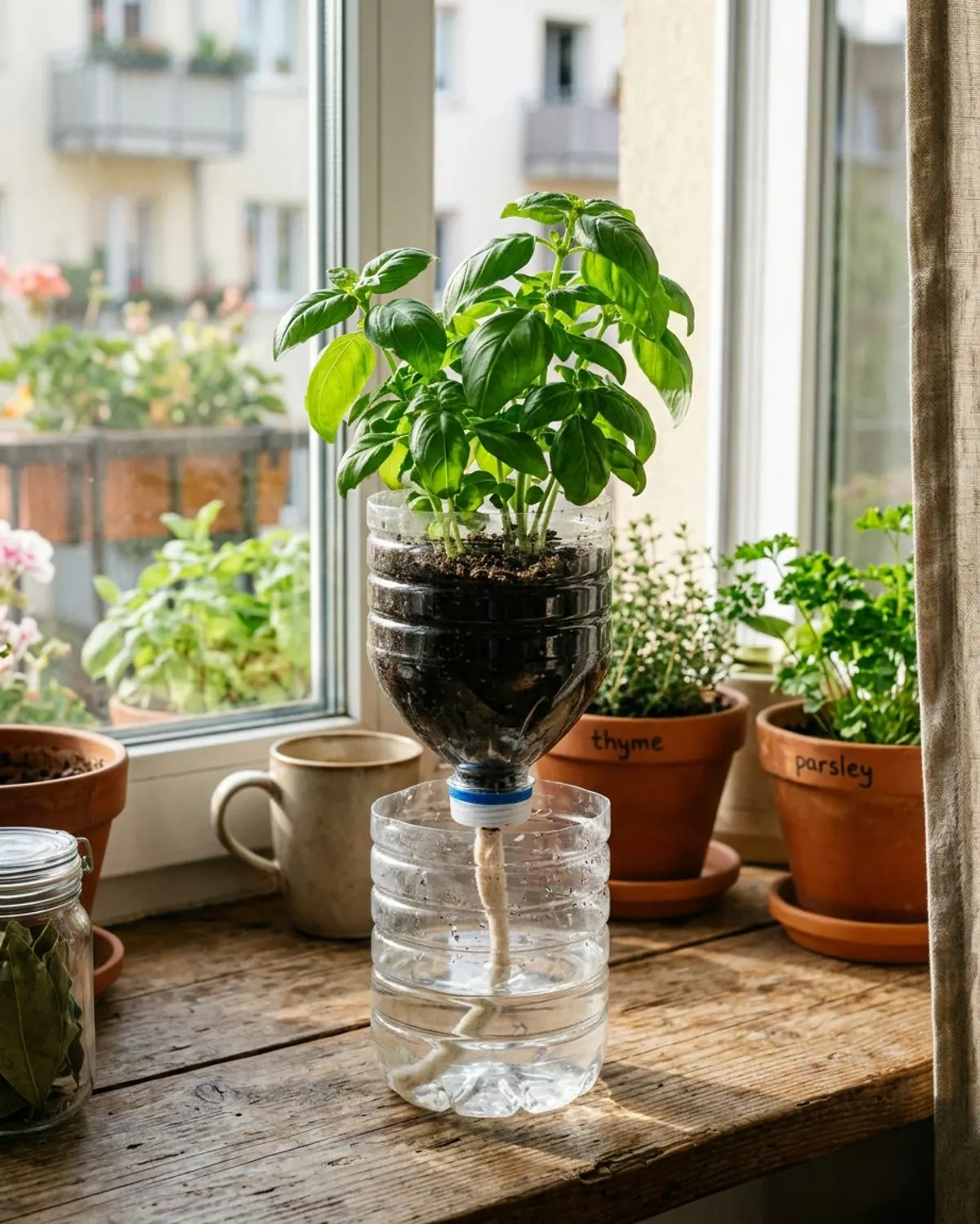
Cut a clean plastic bottle in half, flip the top into the bottom like a funnel, and thread a cotton wick through the cap. Fill the lower half with water and the top with soil. The wick draws water up as the soil dries, which helps if you forget to water.
Light: A bright sill; basil does best in direct sun.
Example cost: Typically $0 to $5 with a bottle and cotton cord.
Herbs: Basil, mint, parsley.
- Wrap the lower half in paper or paint it to keep light from growing algae in the water.
Pulls water up into the soil.
9A terracotta pot tower
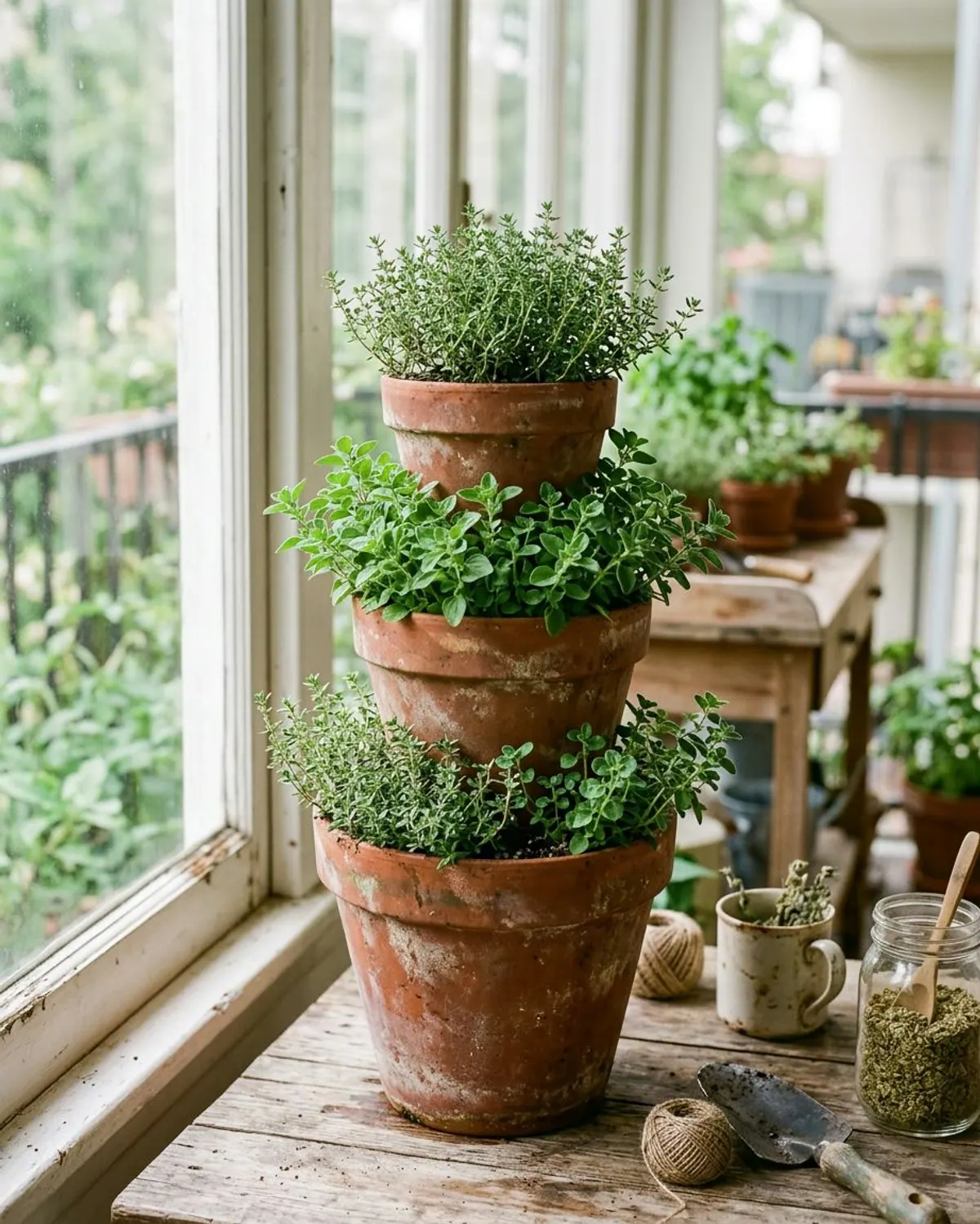
Stack three pots in graduated sizes and plant small herbs in each ring of soil. The tower uses one footprint for several plants. Terracotta dries faster than plastic, so check it more often, and set it on a saucer to catch runoff.
Light: A bright table or sill close to the glass.
Example cost: Typically $20 to $45 for three pots and a saucer.
Herbs: Thyme, oregano, chives.
- Water from the top and let the extra drain into the saucer; empty it after a few minutes.
Forms the tower with matching sizes.
10A rain gutter wall shelf
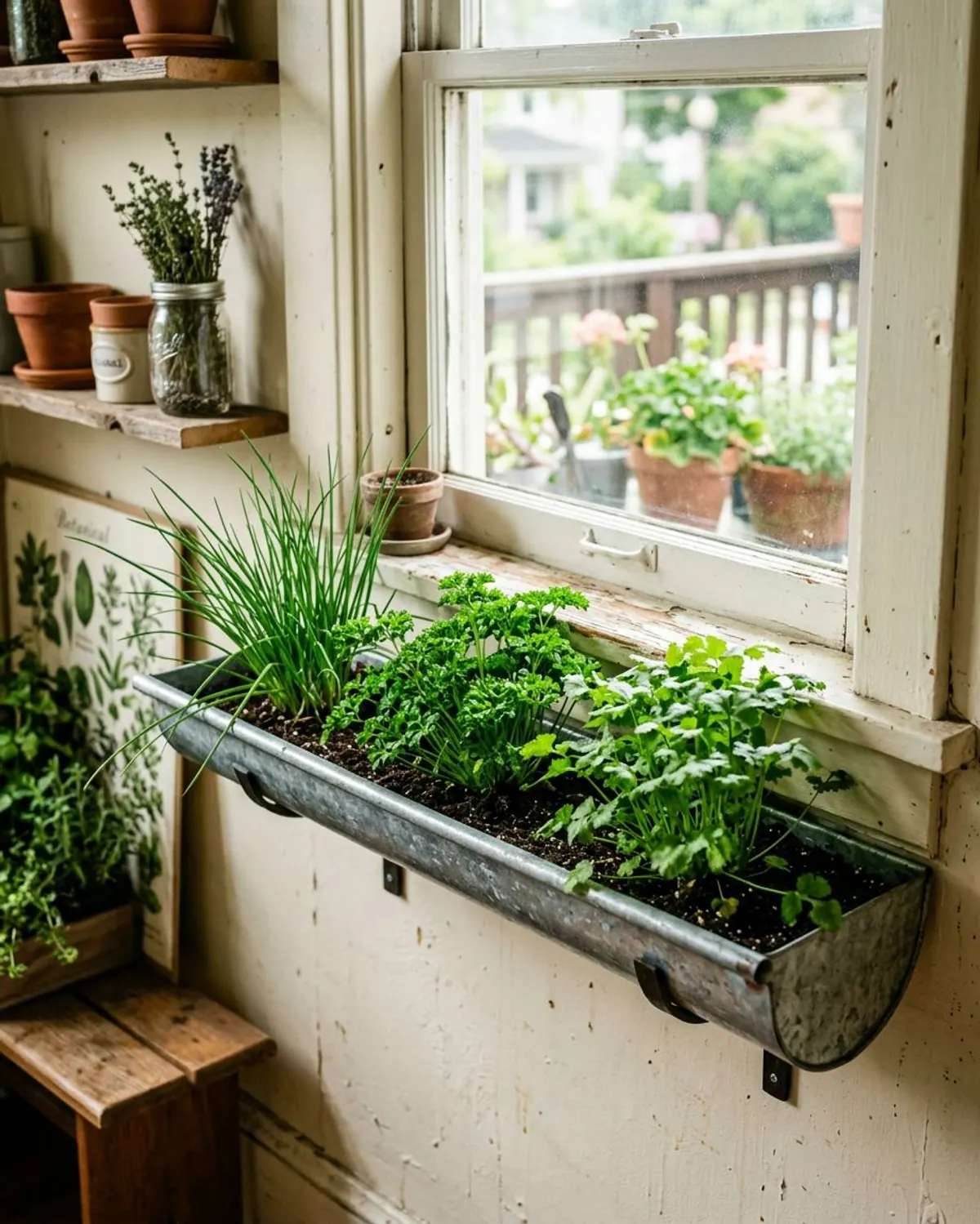
A short length of rain gutter makes a slim planter that hugs a wall. Cap the ends, drill drainage holes, mount it on brackets, and put a drip tray or towel strip below. It is narrow, so choose herbs with shallow roots and trim them often.
Light: A bright wall or window, within a foot or two of the glass.
Example cost: Typically $25 to $60 for gutter, caps and brackets.
Herbs: Chives, parsley, cilantro.
- File the cut edges smooth before planting; raw metal can cut a hand.
Closes the ends so soil stays in.
11Thrifted teacup herbs
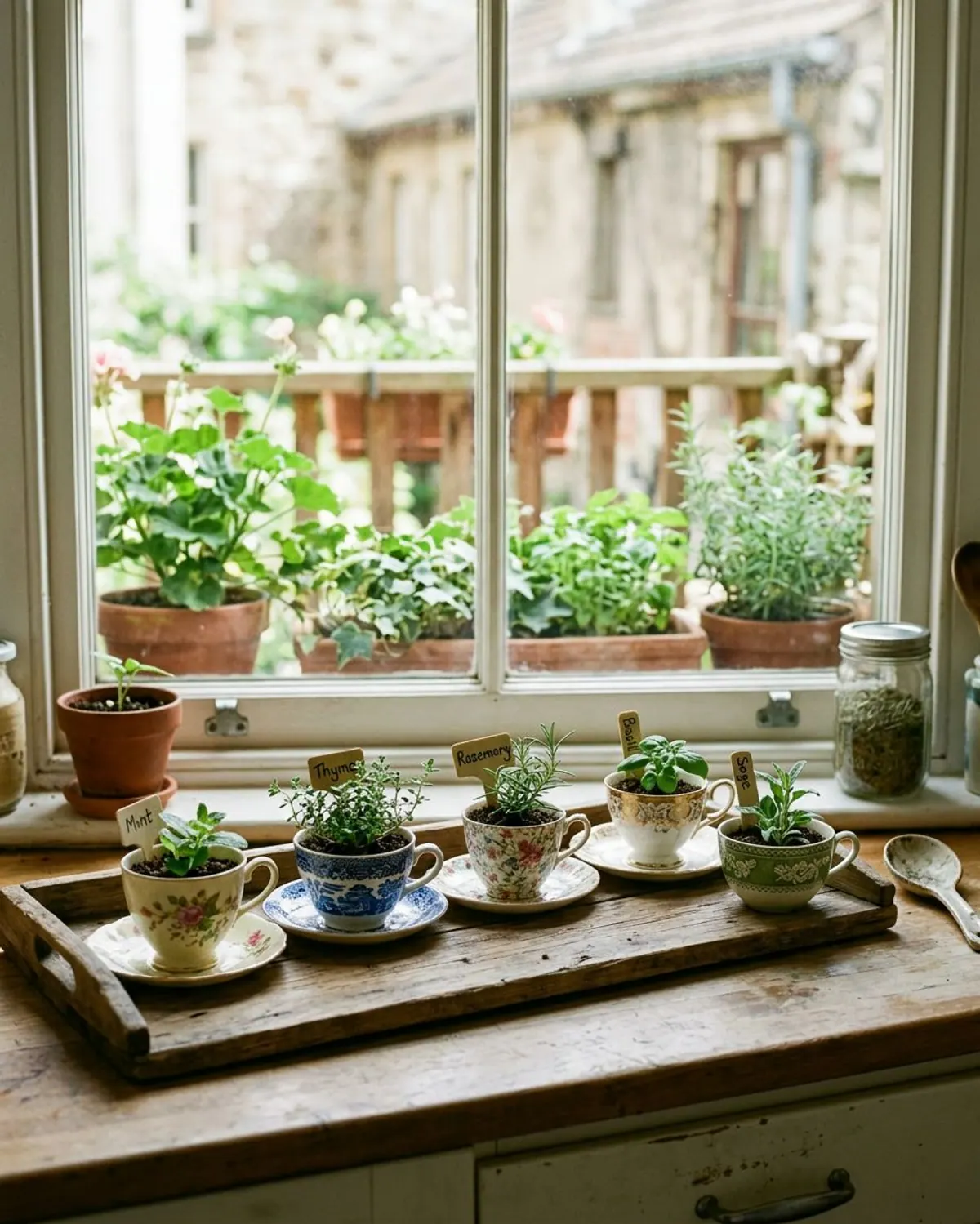
Mismatched teacups look pretty on a tray and cost almost nothing at a thrift store. Teacups have no drainage, so plant in a small nursery pot that sits inside, or water with just a spoonful at a time. Choose tiny herbs; a big plant will tip the cup.
Light: A bright sill, with the tray close to the glass.
Example cost: Typically $5 to $20 for secondhand cups.
Herbs: Thyme, chives, small basil.
- Keep the plant in its nursery pot inside the cup so you can lift it out to drain.
Lets each cup drain.
12A glass shelf across the window
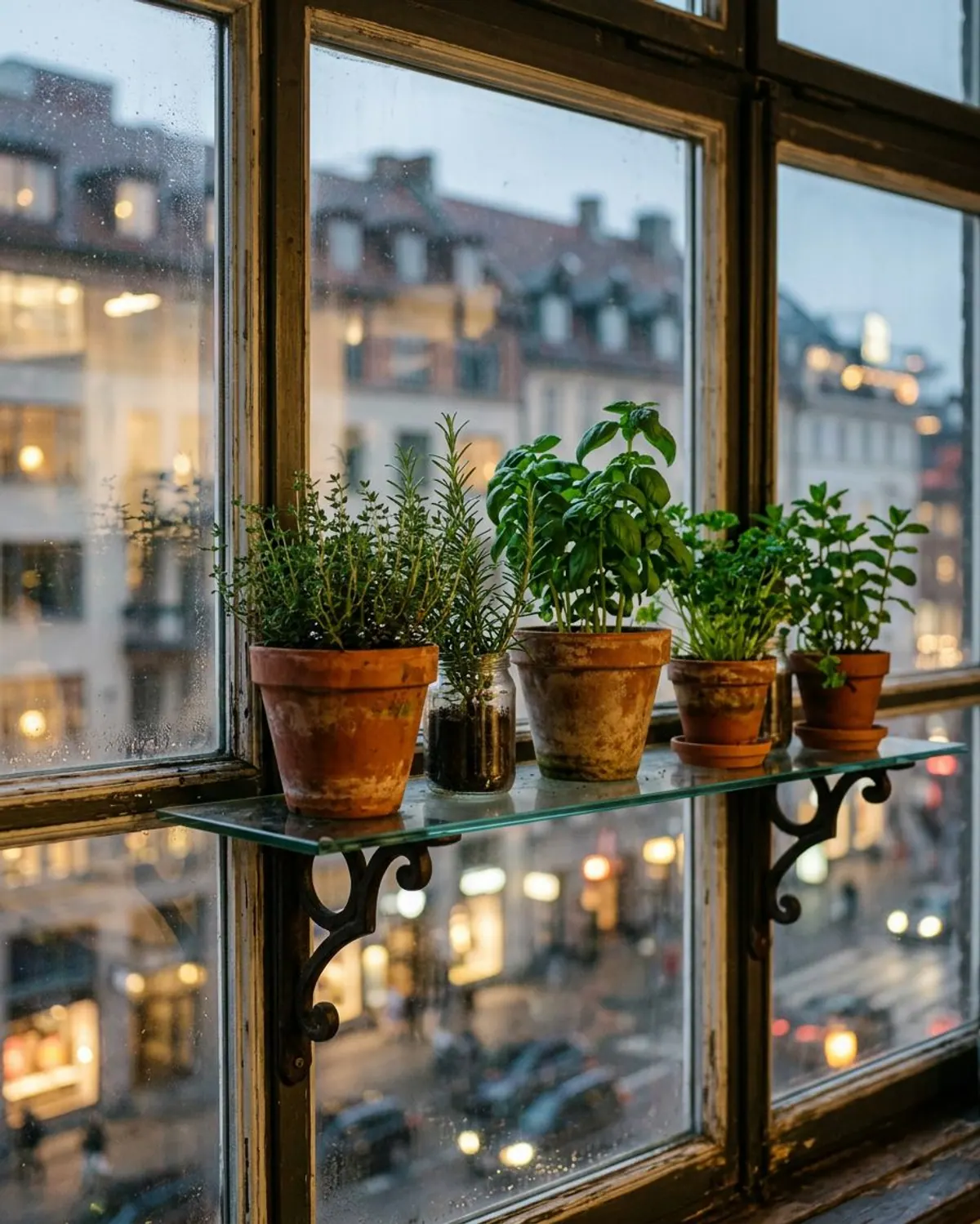
A glass shelf across the window frame puts pots in the brightest spot and still lets light through to the plants below. Choose proper brackets rated for the weight, and keep the pots small. Check with your landlord before drilling into the frame.
Light: In the window itself; the best natural light of any idea here.
Example cost: Typically $25 to $60 for shelf and brackets.
Herbs: Basil, parsley, thyme, sage.
- Keep plants a finger-width from the cold glass in freezing weather so leaves are not chilled.
Adds a tier in the brightest spot.
13A herb tray on top of the cabinet
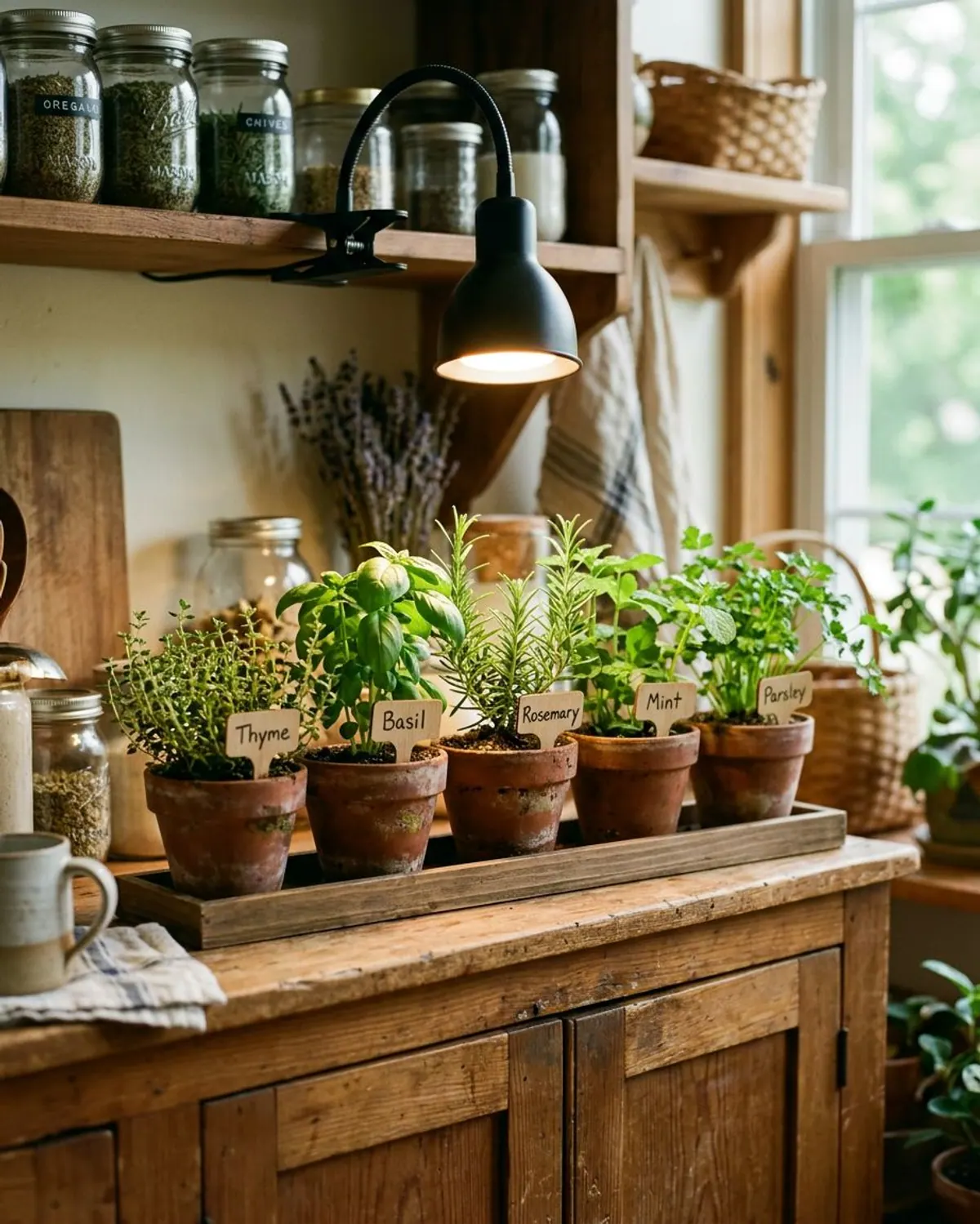
The top of a kitchen cabinet is unused space. A slim tray of small pots with a clip-on LED lamp pointing down turns it into a herb shelf, though cabinet tops can be warm from the stove, so keep it a few feet from heat. Running the lamp on a timer keeps it simple.
Light: Needs a grow light for 12 to 14 hours a day.
Example cost: Typically $25 to $55 for a clip-on light and a tray.
Herbs: Basil, mint, parsley, chives.
- Keep the tray reachable; a stepstool you must climb makes you forget to water.
Lights a tray where there is no window.
14Fabric pots in a basket
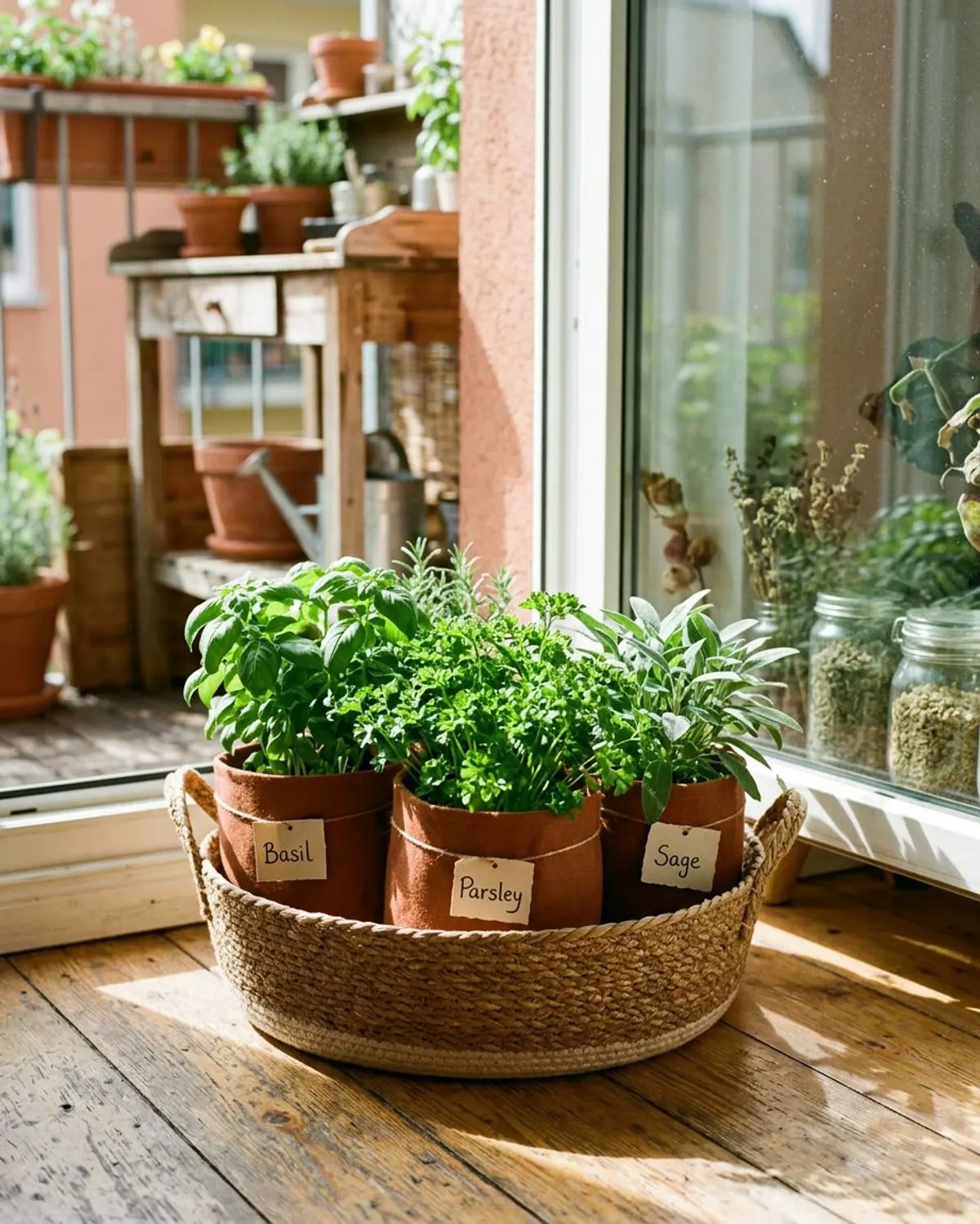
Soft fabric pots drain well and fit into a basket that hides the saucers. Set the basket on a sunny floor spot by a window and lift the pots out to water in a sink. Fabric dries faster than plastic, so check the soil with a finger every few days.
Light: A sunny floor or low table by a south window.
Example cost: Typically $15 to $35 for fabric pots and a basket.
Herbs: Basil, parsley, sage.
- Line the bottom of the basket with a tray so water never reaches the floor.
Drains fast and hides in a basket.
15A vintage colander herb planter
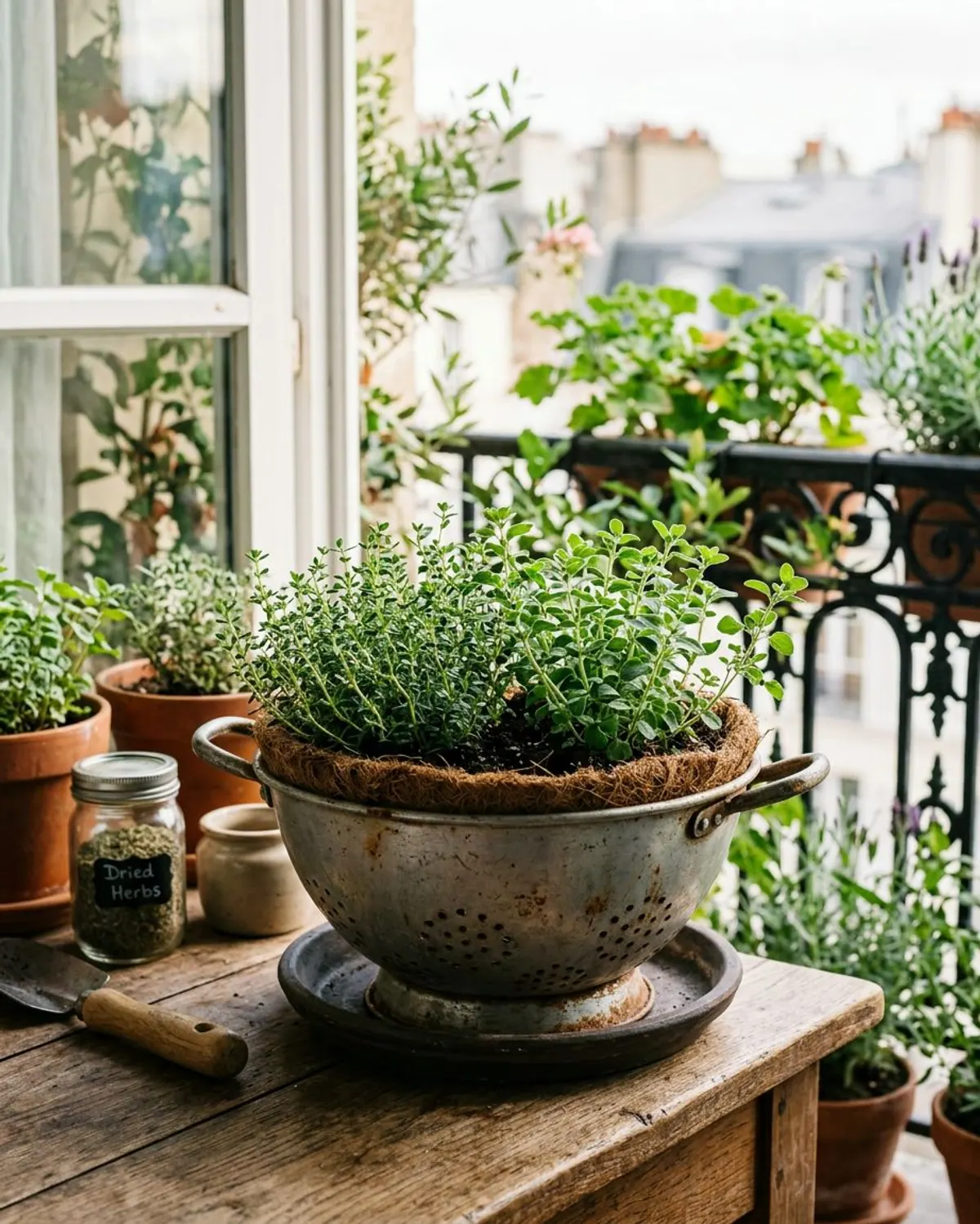
A metal colander already has drainage holes. Line it with coco liner, fill with potting mix and plant two or three herbs. Hang it from a hook or set it on a saucer. The open holes dry the soil fast, so choose herbs that tolerate drying.
Light: A bright sill or a hook by a window.
Example cost: Typically $5 to $20 for a colander and liner.
Herbs: Thyme, oregano, rosemary.
- Check the soil every other day; a colander dries faster than a solid pot.
Holds soil inside the colander.
How to choose a setup
Start from the light you have. If a window gives you most of the day's sun, any window idea works; add a plain saucer or tray and you are done. If your best spot gets little direct sun, build the wire rack or the cabinet-top tray around a grow light and a timer. Our guides to best grow lights and herbs that grow indoors in low light go deeper on the light question.
Water gently and let the top of the soil dry between waterings. Iowa State notes that terracotta dries soil faster than plastic. For simpler, tidier layouts see our kitchen herb garden ideas and windowsill herb garden ideas. If you want a basil plant to last all winter, read basil care indoors.
Herbs here are for cooking and decoration, not medical advice. If you or a pet may react to a plant, check with a doctor or a vet before eating or using it.
Before you build
Shop the setups
- Best for dark rooms
LED grow light bar with timer
Typically $20 to $50
Lets herbs grow in a room with no usable window.
Check price on Amazon for LED grow light bar with timer -
Terracotta pots, set of 3
Typically $15 to $35
Forms the tower with matching sizes.
Check price on Amazon for Terracotta pots, set of 3 -
Fabric grow pots, 1 gallon
Typically $10 to $20
Drains fast and hides in a basket.
Check price on Amazon for Fabric grow pots, 1 gallon -
Plant tray with lip
Typically $8 to $20
Protects the shelf from drips.
Check price on Amazon for Plant tray with lip -
Cotton wicking cord
Typically $6 to $10
Pulls water up into the soil.
Check price on Amazon for Cotton wicking cord
Frequently asked questions
What is the easiest indoor herb garden to start?
A row of small pots on a tray on a bright sill is the simplest. Add a grow light on a timer if the window is not bright.
How much light do indoor herbs need?
Iowa State Extension says most herbs need about 8 hours of direct light. A south window is best, and a bright east or west window can work.
Can I grow herbs indoors without a window?
Yes, with a full-spectrum LED grow light on a timer for about 12 to 14 hours a day, placed a few inches above the leaves.
Which herbs grow best indoors?
Chives, parsley, mint, thyme, oregano and basil are common choices. Basil wants the most light.
Are indoor herbs safe for pets?
Some are not; the ASPCA lists mint, chives, oregano and parsley as toxic to cats and dogs, so keep them out of reach.
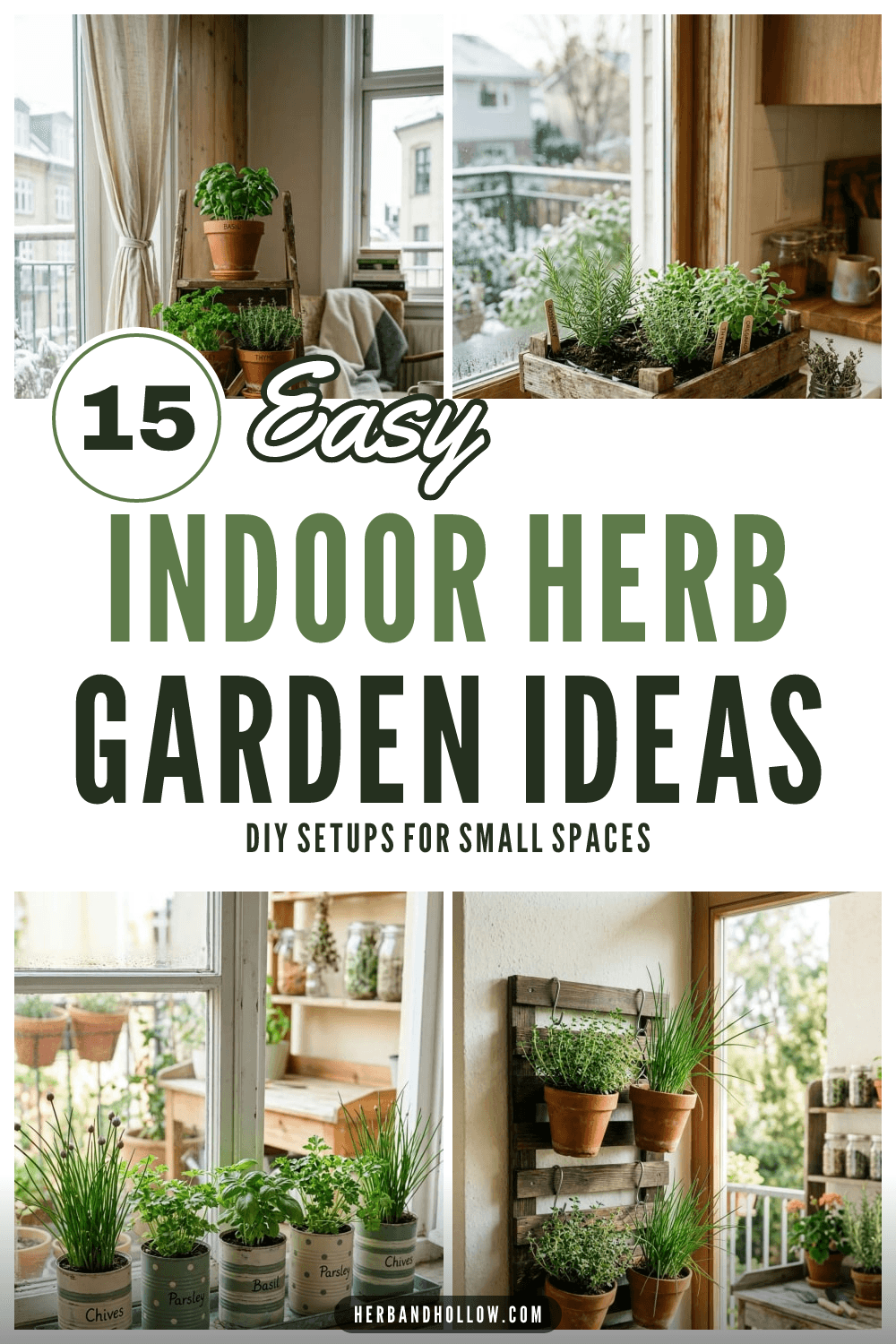
Save it for later
Pin this to your Herb Garden board so it's there when you need it.
Save to Pinterest