This post contains affiliate links. As an Amazon Associate we earn from qualifying purchases, at no extra cost to you. Read our disclosure.
Safety first: Herbs can be powerful. If you are pregnant, nursing, take medication or have a health condition, check with your doctor or pharmacist first. Please read our herbal & garden safety notes before you start.
Key takeaways
- Supermarket basil dies because it is overcrowded. Split it into 3 or 4 pots in the first week.
- Light is the real limit. Basil wants 6+ hours of direct sun or 12 to 14 hours under a clip-on LED, and a south window in December rarely gives enough on its own.
- Keep it warm: above 50F at night, and never touching cold glass.
- Water when the top inch is dry, from the bottom if you can, and pinch above a leaf pair every week.
- Root cuttings in a glass of water every few weeks as insurance, so a lost plant is a two week setback, not a trip to the store.
In this post11 sections
- Why basil dies indoors (and why winter makes it worse)
- Step 1: Split the supermarket basil pot
- Step 2: Light. The south window myth and the $20 clip-on fix
- Step 3: Water, drainage and the cold glass problem
- Step 4: Dry winter air and bugs
- Step 5: Pinching and harvesting so it stays bushy
- Step 6: Insurance. Root basil cuttings in water
- A 12 week winter basil schedule
- Mistakes that kill indoor basil
- Indoor basil supplies
- FAQ
| Need | Target |
|---|---|
| Light | 6+ hours direct sun, or 12 to 14 hours under an LED grow light 6 to 12 inches above the leaves |
| Temperature | 65 to 80F by day, above 50F at night; no cold drafts or cold glass |
| Water | When the top inch of soil is dry, usually every 3 to 5 days indoors |
| Pot | 6 inch pot with a drainage hole per 3 to 5 stems |
| Harvest | Pinch stems just above a pair of leaves, never more than a third at once |
| Pets | The ASPCA lists basil as non-toxic to cats and dogs |
Why basil dies indoors (and why winter makes it worse)
Basil (Ocimum basilicum) is a warm-weather annual that wants sun, warmth and air. Indoors in winter it gets short days, dry heated air and a cold windowsill, and the plant from the store arrives already stressed. Four things kill it, in this order: overcrowding, too little light, cold glass, and soggy soil.
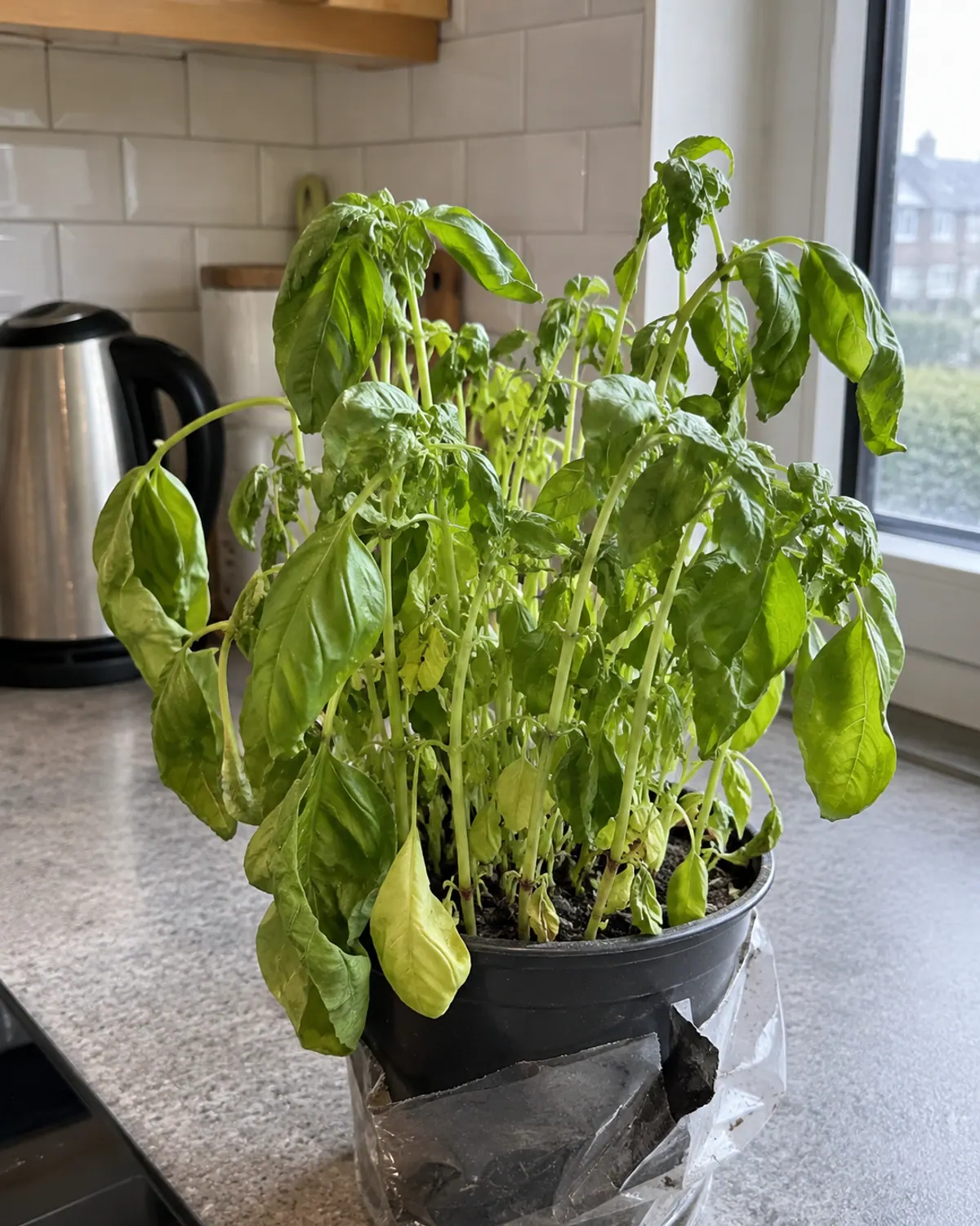
The good news is that each fix is cheap. Our indoor herb garden guide covers the general setup; this article is only about basil, the herb that fails most often.
Step 1: Split the supermarket basil pot
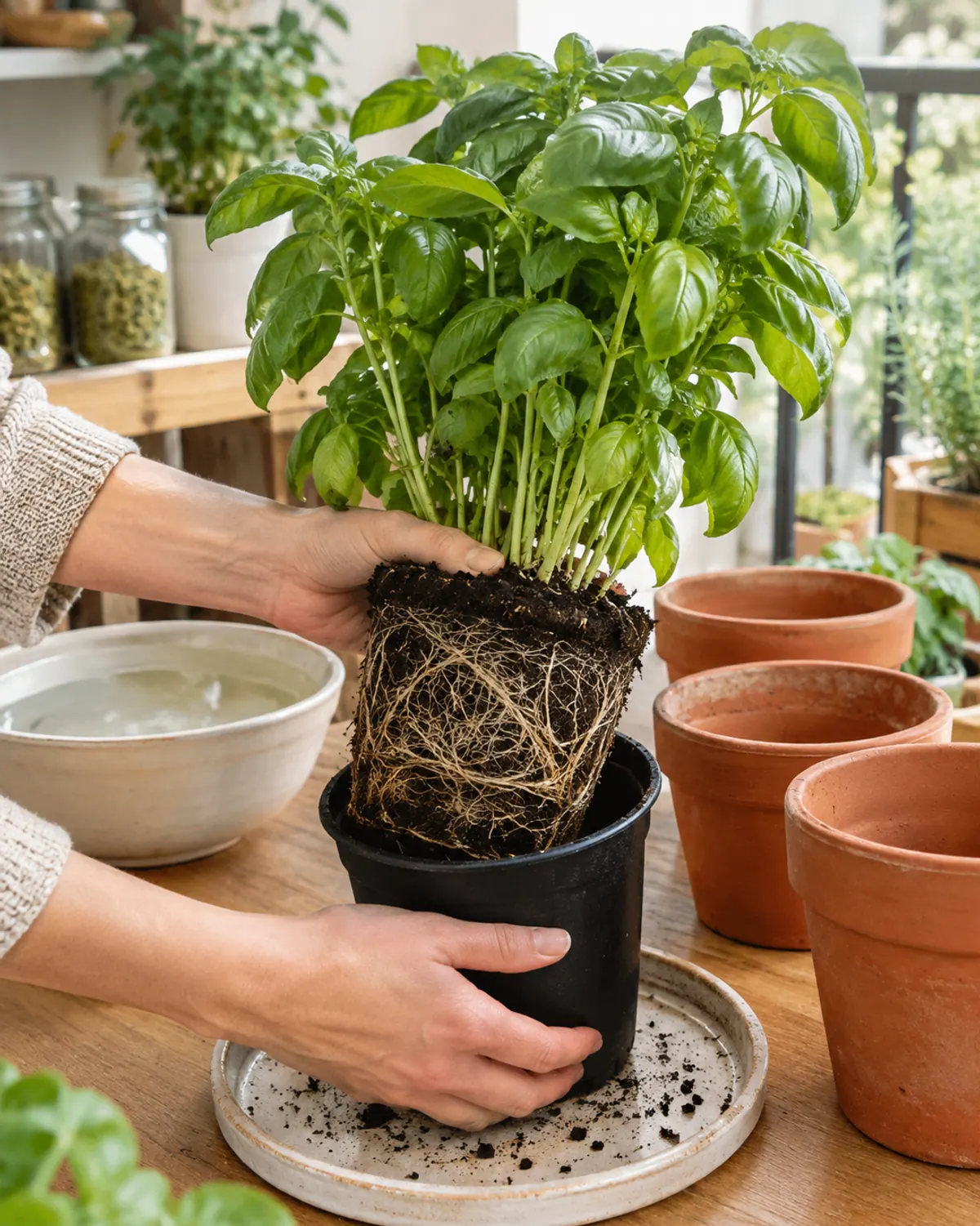
Do this in the first week, before the stems start yellowing. You need three 4 to 6 inch pots with drainage holes, a bag of potting mix, and a bowl of room-temperature water.
-
Step 1: Soak and slide the root ball out
Water the pot well, wait 20 minutes, then squeeze the plastic pot and slide the whole clump out. Wet roots tear less.
-
Step 2: Tease the clump into 3 or 4 sections
Set the root ball in the bowl of water and gently work your fingers through it. The roots loosen in the water and the clump pulls apart into sections of 5 to 8 stems. Some root breakage is fine.
-
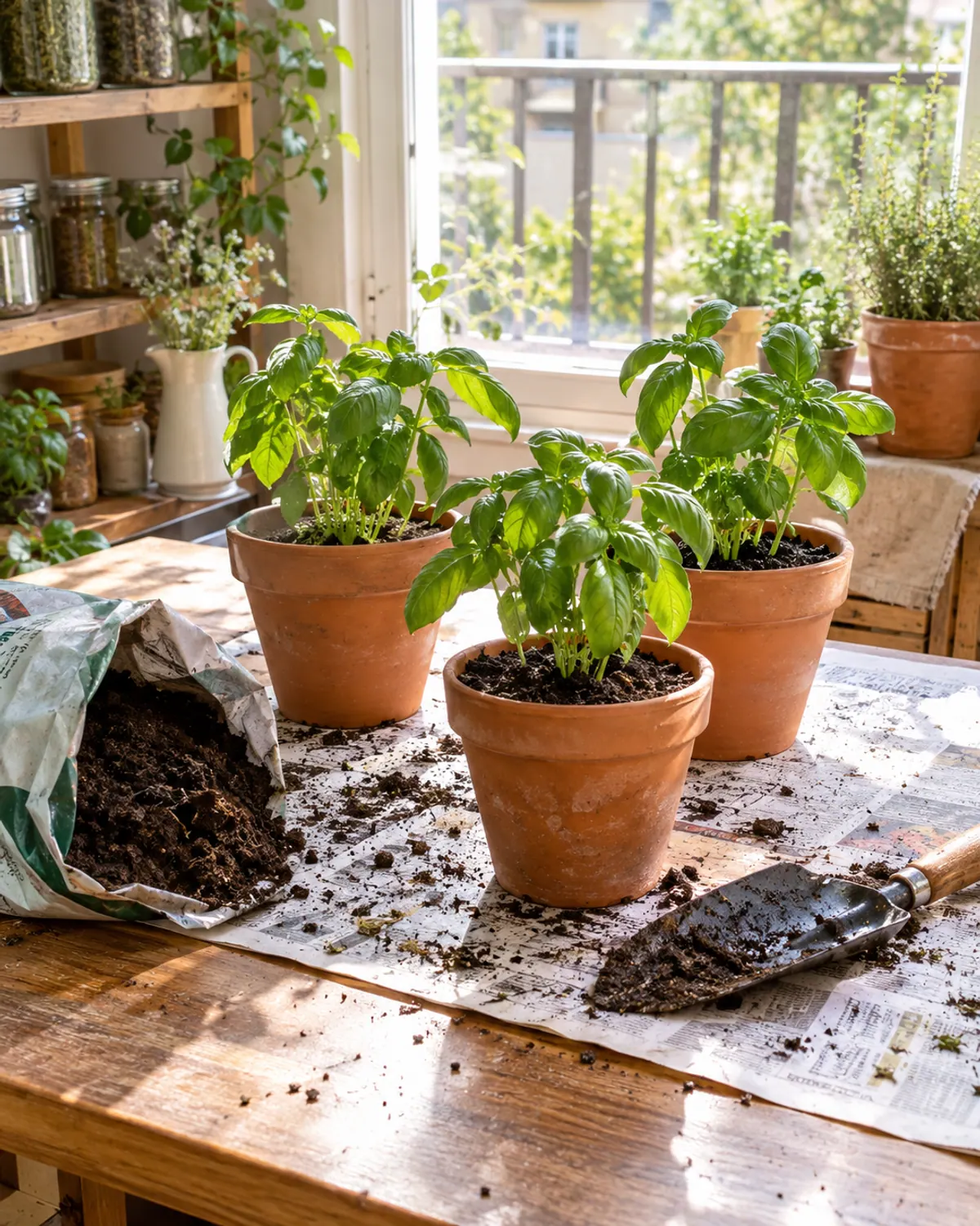
Step 3: Pot each section
Fill each pot a third full with potting mix, set a section in, and fill around it so the soil sits at the same level it was. Firm gently and water until it drains.
-
Step 4: Rest them out of direct sun for 3 days
The plants wilt for a day or two while the roots recover. Keep them warm, out of direct sun, and do not water again until the top inch dries. Then move them to the light.
Step 2: Light. The south window myth and the $20 clip-on fix
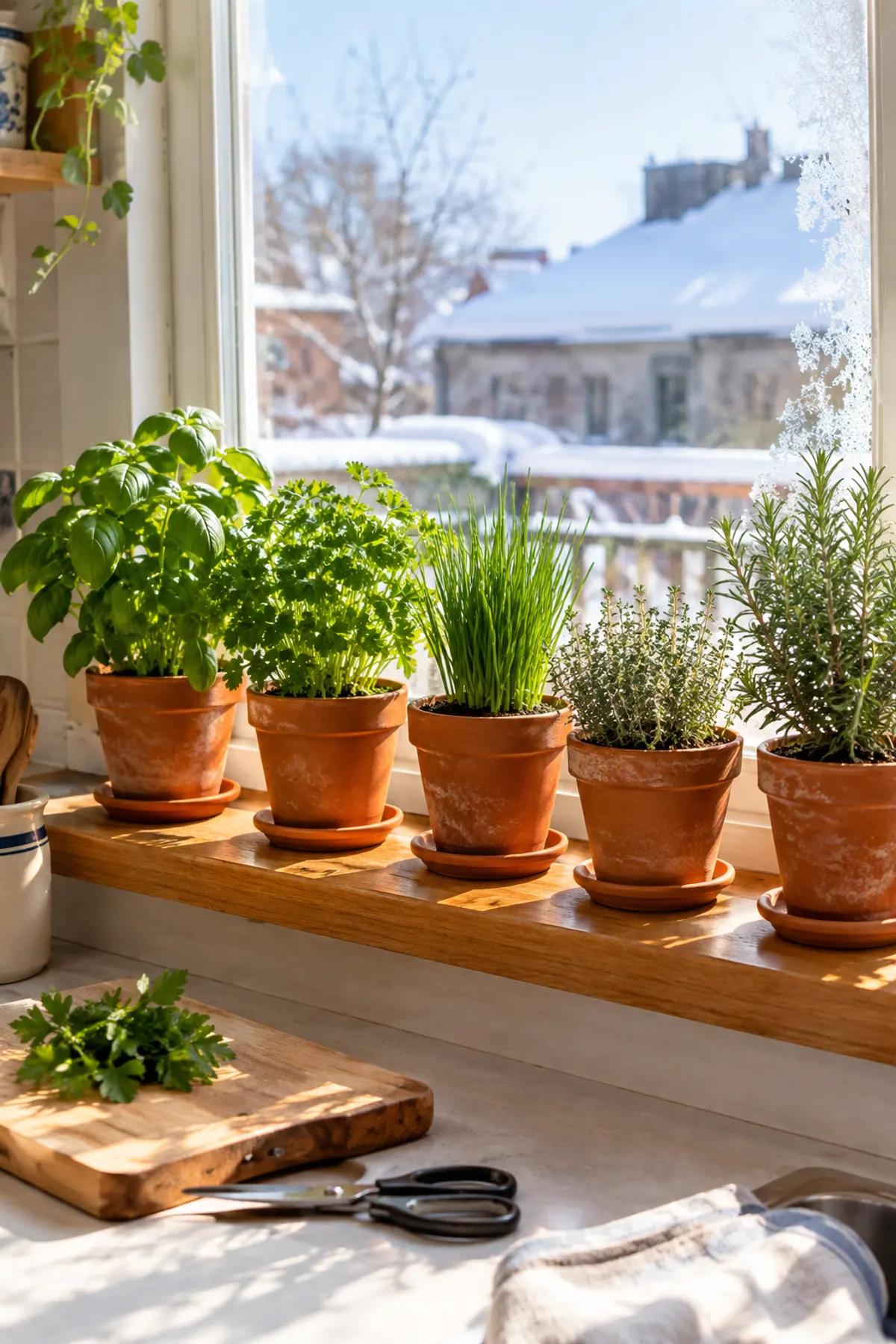
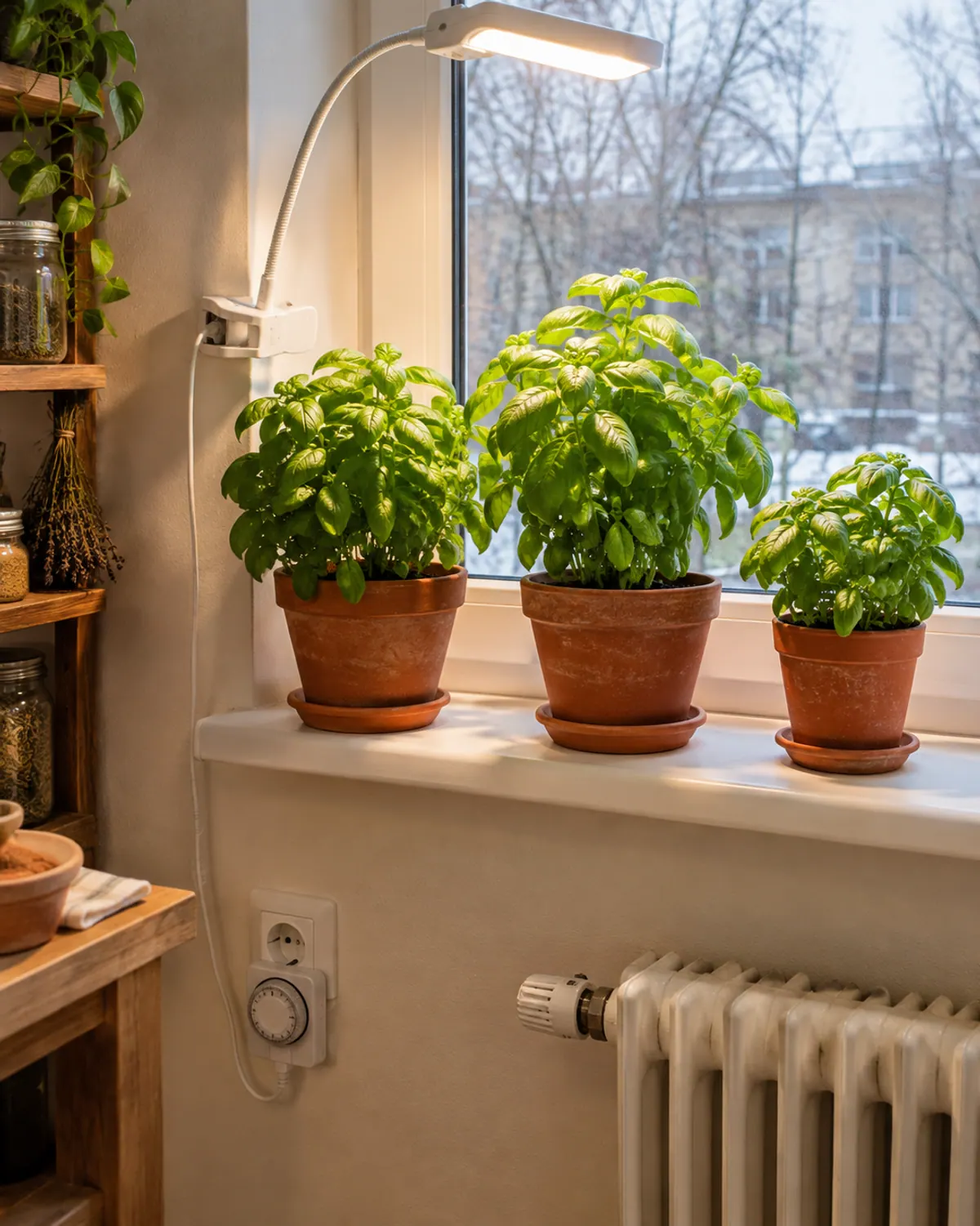
A south-facing window is the best spot in the house, and in December it is still not enough. Winter sun is low and short, and an apartment window often gets only 3 to 4 hours of direct light. Basil grown on light alone goes pale and leggy by week three.
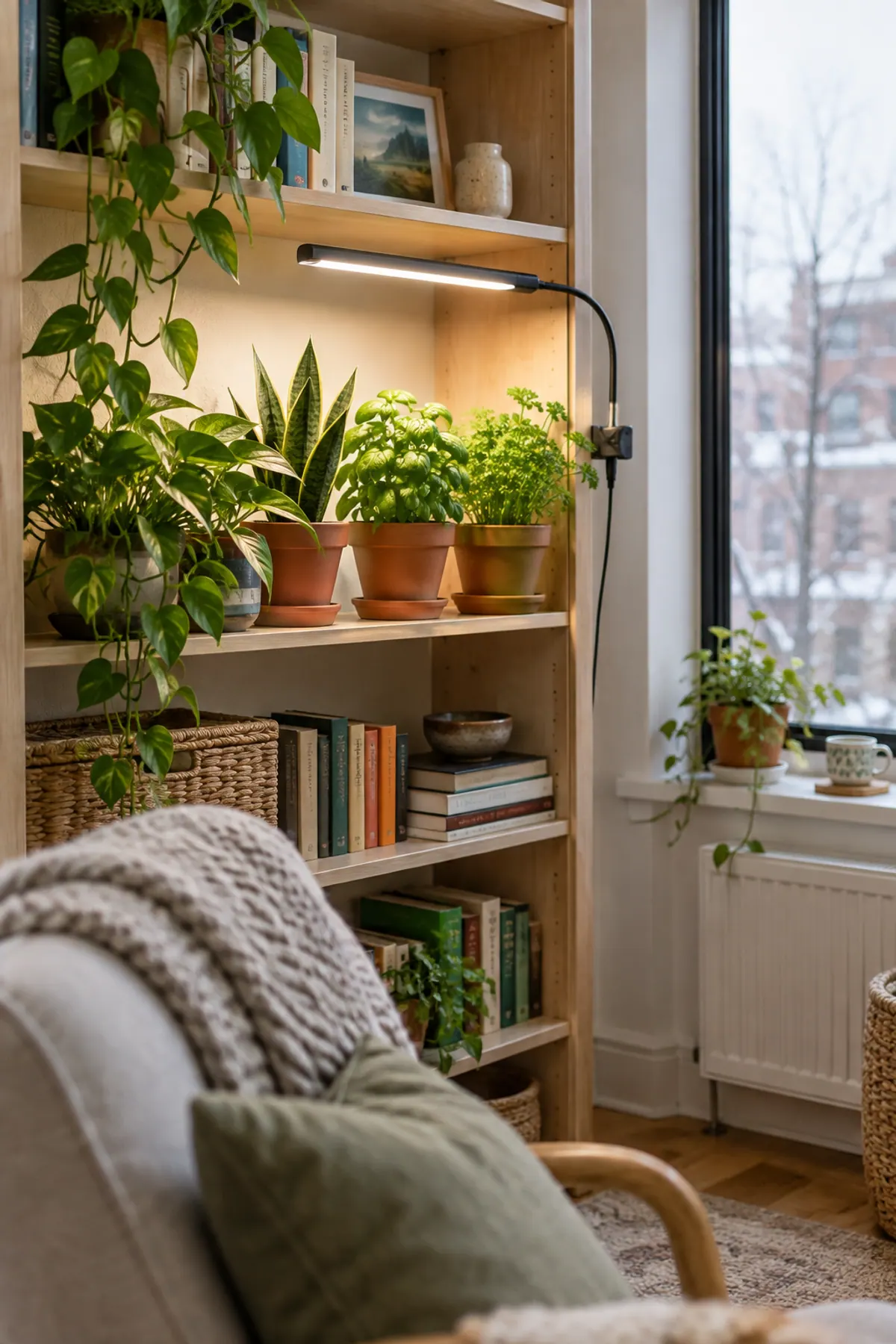
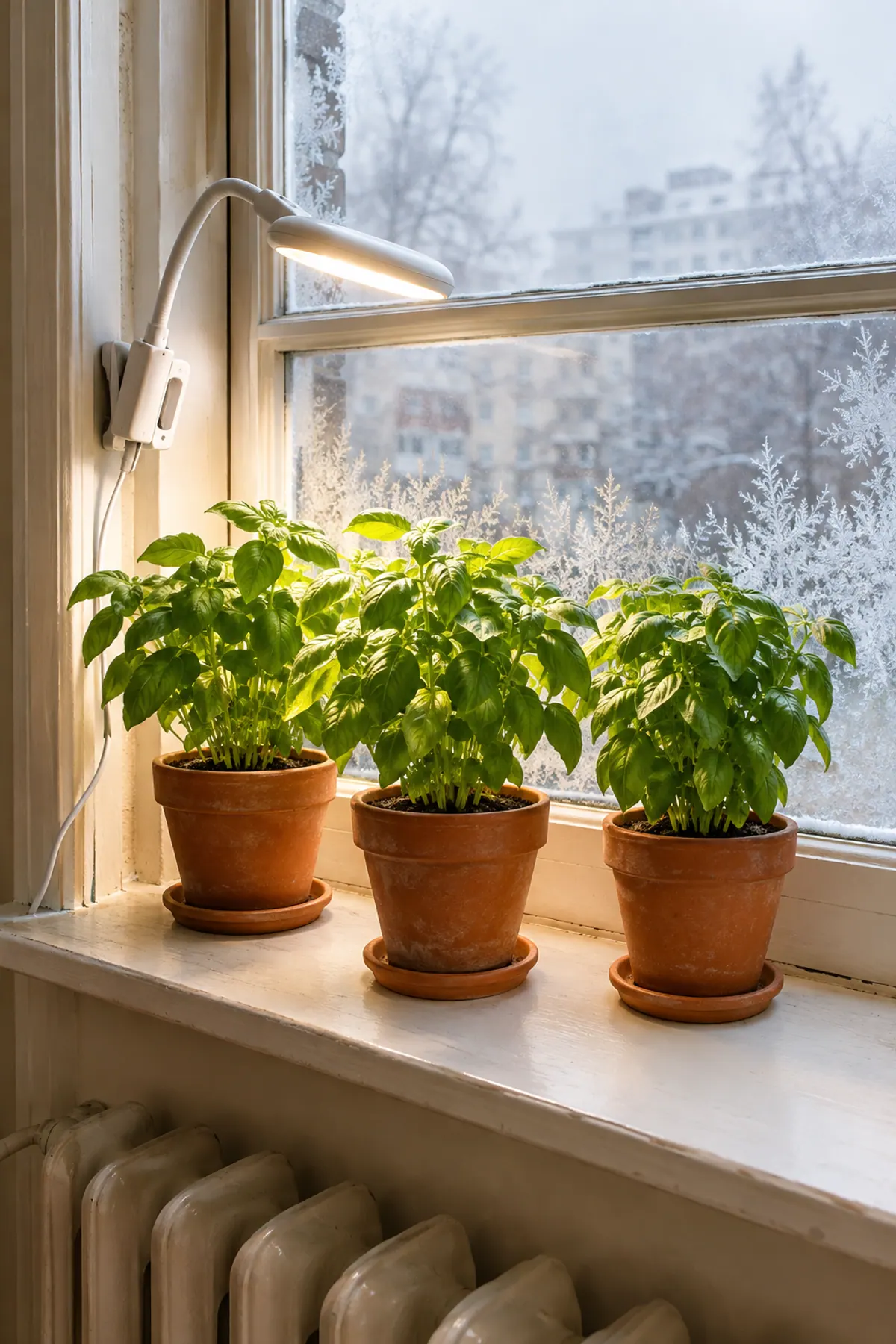
The fix is a clip-on LED grow light on a plug-in timer. Clip it to the window frame or a shelf 6 to 12 inches above the leaves and run it 12 to 14 hours a day, roughly 7 am to 8 pm. Full-spectrum white LEDs look like a normal lamp, use about as much power as a phone charger, and cost $15 to $30. Our grow lights for small spaces roundup compares clip-on, bar and bulb styles.
Step 3: Water, drainage and the cold glass problem
Basil likes evenly moist soil, not wet soil. Push a finger in; when the top inch is dry, water until it runs from the drainage hole, then empty the saucer after 15 minutes. Indoors in winter that is usually every 3 to 5 days, less under a cold window and more under a grow light.
Bottom watering works well for basil. Set the pots in a tray with an inch of water for 20 minutes, let the soil drink from below, then drain. The leaves stay dry and the roots grow down.
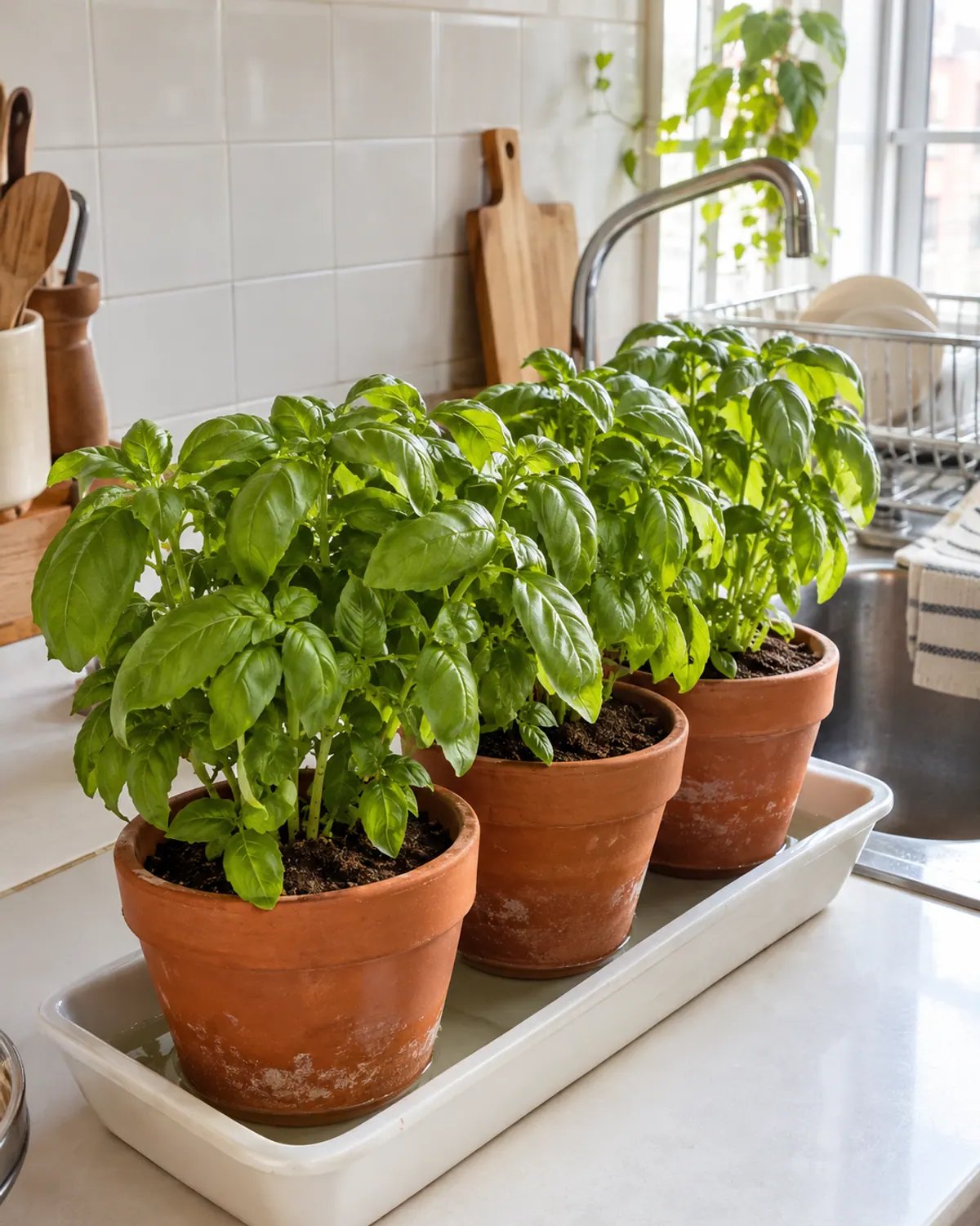
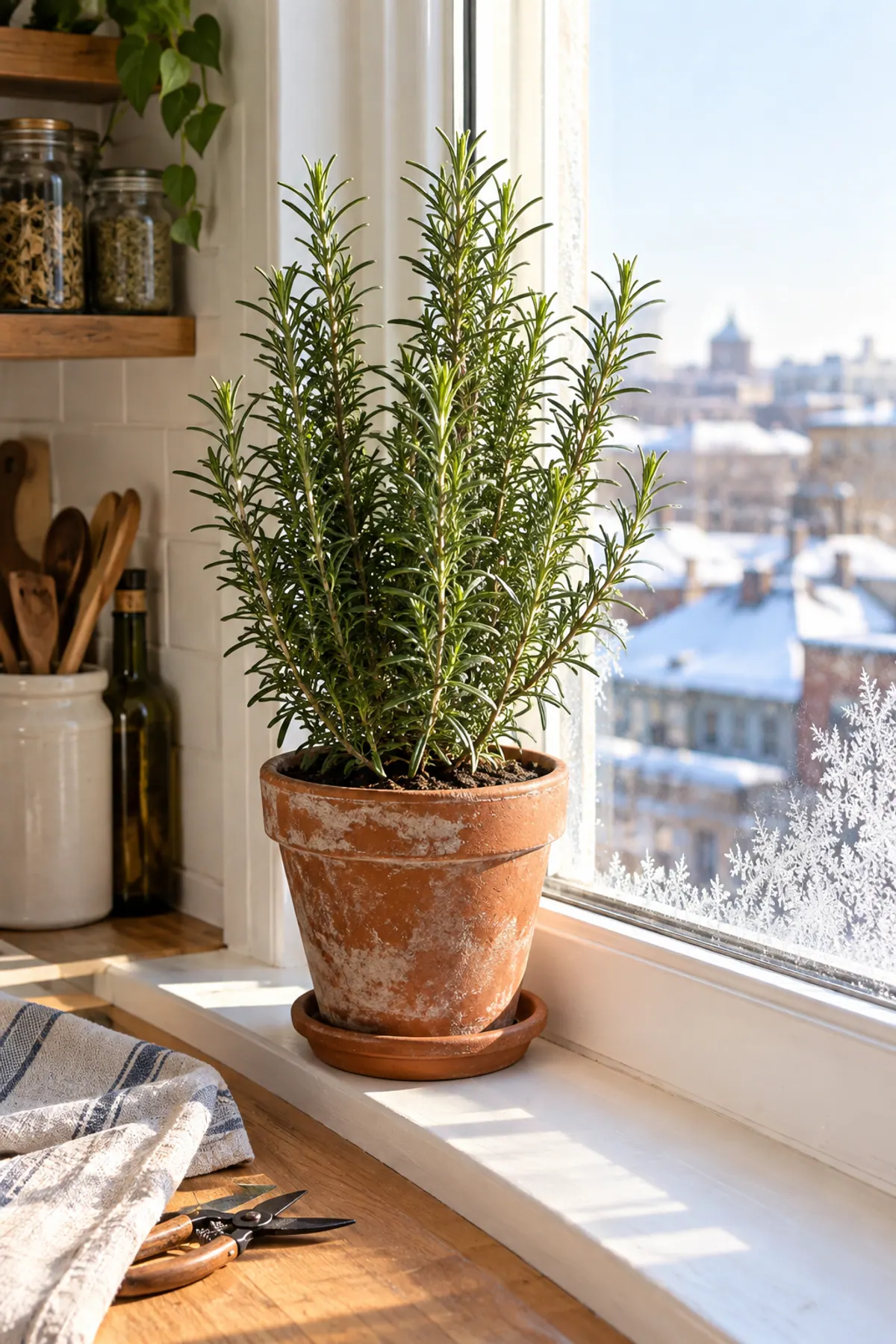
Cold glass is the hidden killer. A leaf touching a winter window pane can blacken overnight, and a sill that drops below 50F at night slows the plant to a stop. Pull pots 2 to 3 inches back from the glass, set a folded towel or cork mat under them, and close the curtain between the plant and the window on freezing nights.
Step 4: Dry winter air and bugs
Heated apartments drop to 20 to 30 percent humidity in January, which basil tolerates better than most herbs, but it invites spider mites. Group the pots together, set them on a tray of pebbles with water below the pot bases, and check the undersides of leaves weekly for fine webbing or tiny dots.
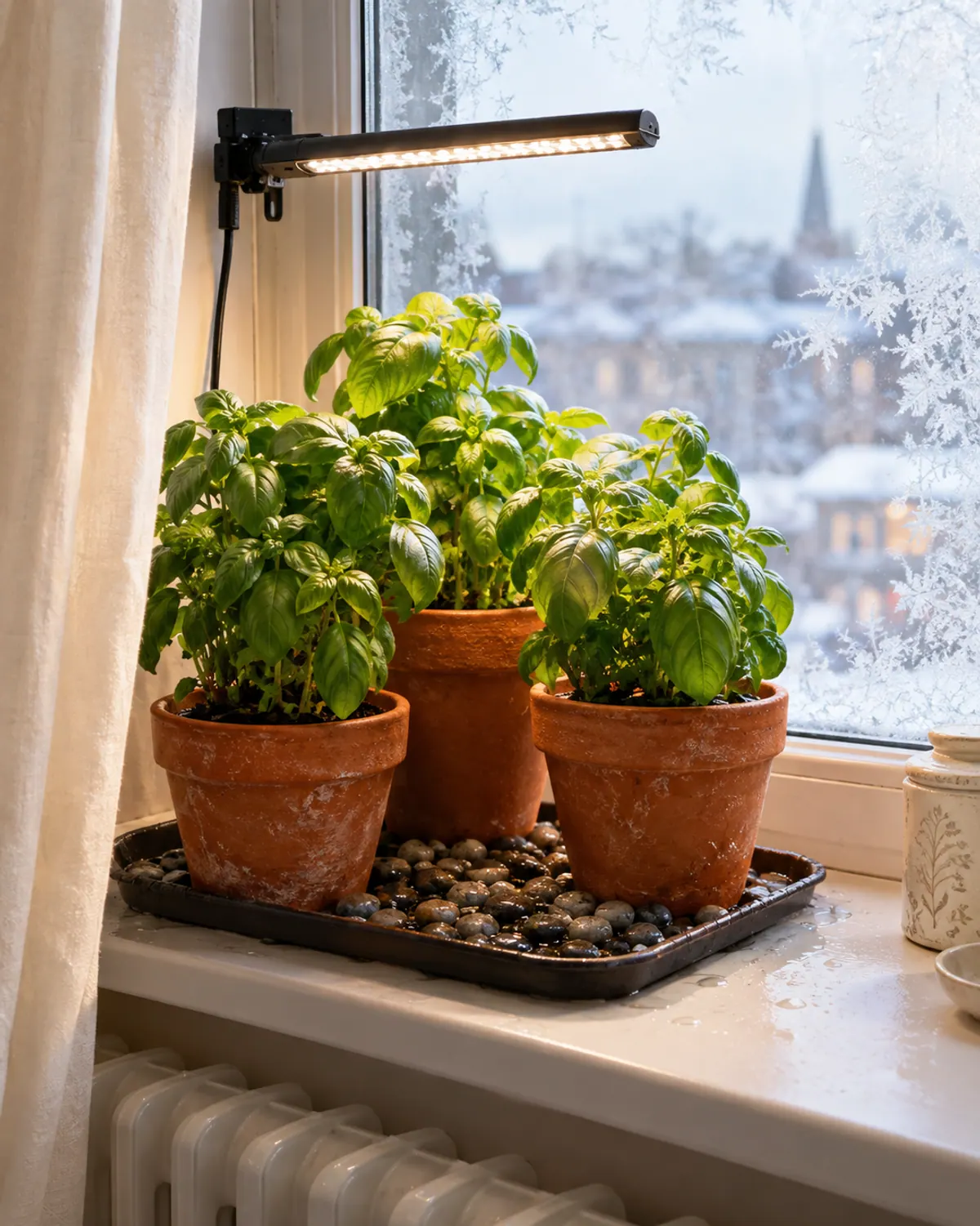
If you see mites or aphids, rinse the plant under the kitchen tap, then wipe leaves with a soft cloth. Repeat every few days for two weeks. Keep basil away from radiators and heat vents, which dry the leaves and cook the roots.
Step 5: Pinching and harvesting so it stays bushy
Basil grows as one tall stem unless you pinch it. Every week, once a stem has three pairs of leaves, pinch or snip the tip just above the second pair. Two new stems grow from that spot, and the plant gets wider instead of taller.
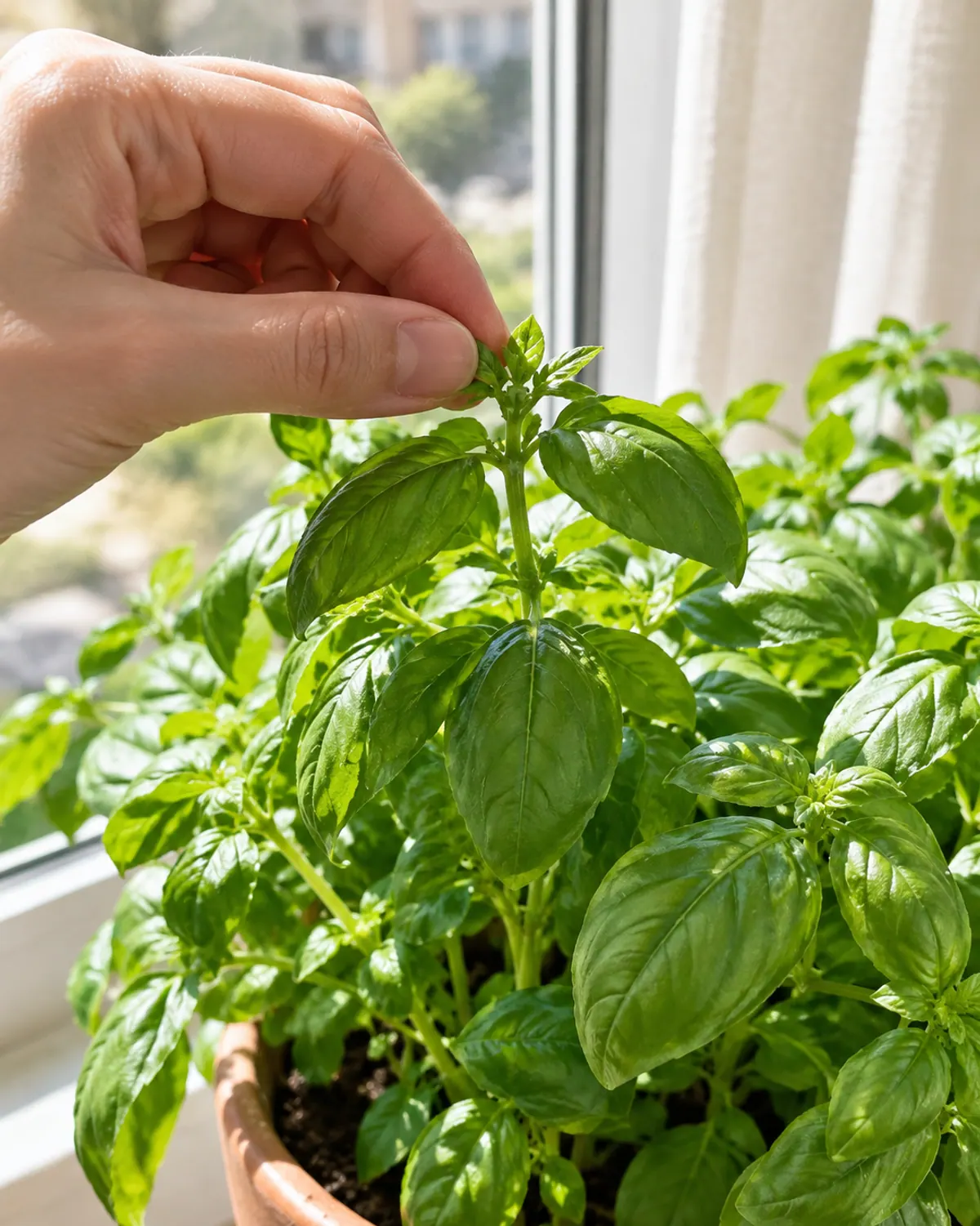
Harvest the same way, taking the top sets of leaves rather than stripping the big lower ones that feed the plant. Never take more than a third of the plant at once. Pinch off any flower buds as soon as you see them, because basil that flowers stops making leaves and the flavor turns bitter.
Step 6: Insurance. Root basil cuttings in water
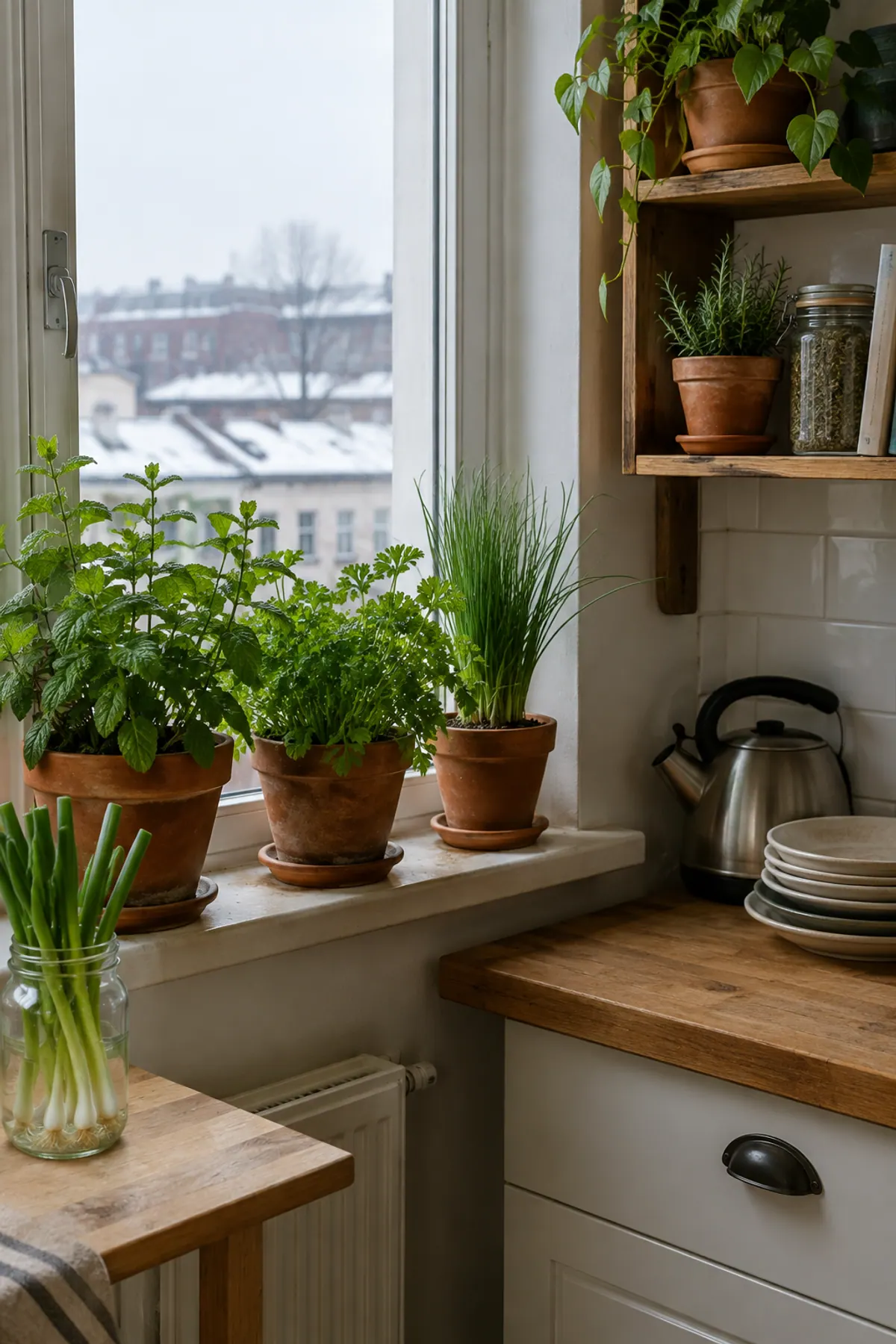
This is the step that keeps basil alive all winter even when a pot fails. Cut a 4 inch stem tip below a leaf pair, strip the lower leaves, and stand it in a small glass of water on the windowsill. Change the water every two days. White roots show in 7 to 14 days, and at an inch long the cutting is ready for a pot.
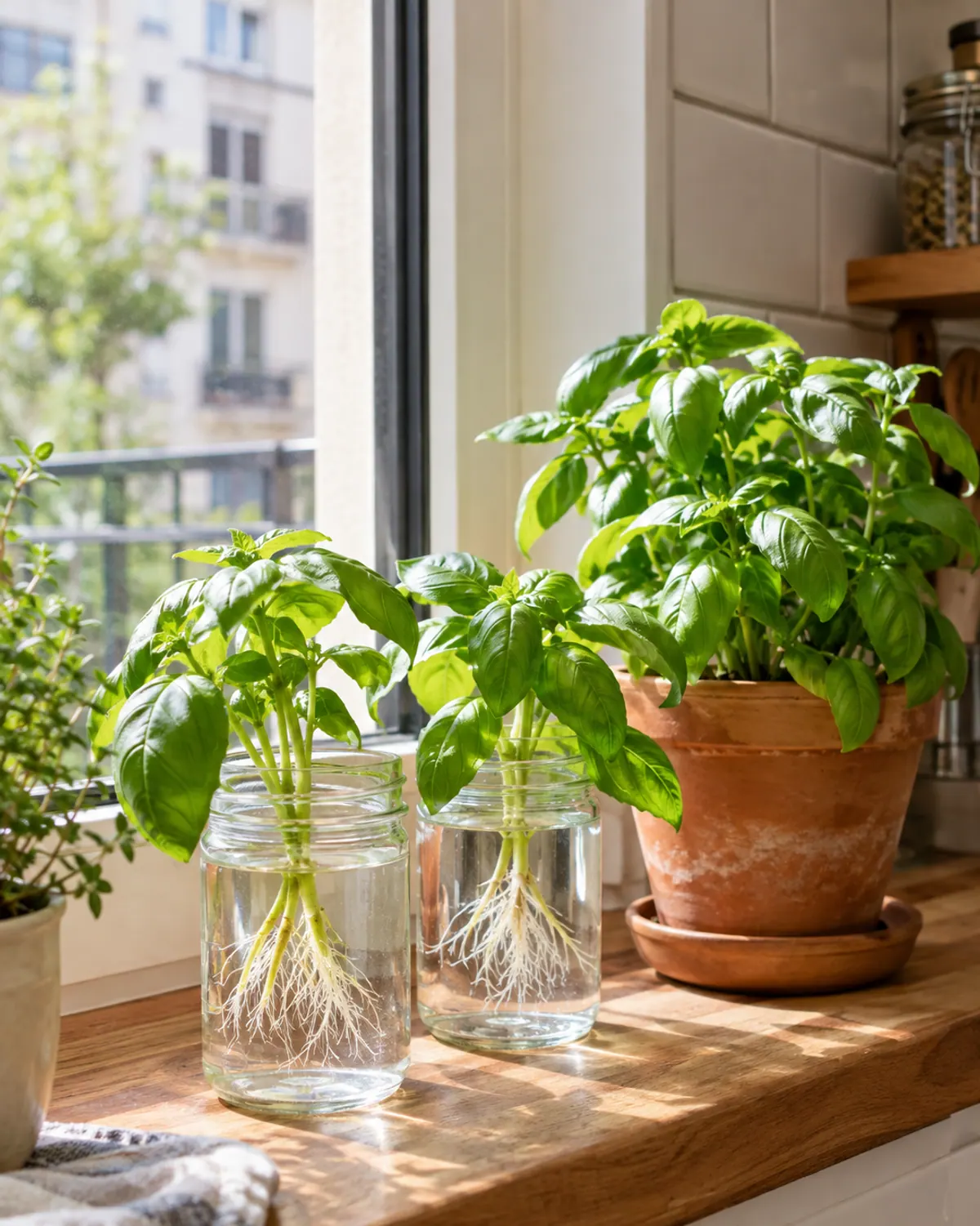
Start two or three cuttings every three weeks. Pot them up as they root, and you will always have a young plant coming along behind the one you are harvesting. The same trick works for mint and the rosemary in our rosemary indoors guide, though rosemary roots more slowly.
A 12 week winter basil schedule
Here is the whole winter in one table, starting the week you bring the plant home. Tape it inside a cabinet door.
| Weeks | Do this |
|---|---|
| Week 1 | Split the supermarket pot into 3 or 4 pots. Rest out of direct sun for 3 days. Set up the clip-on light and timer. |
| Weeks 2 to 3 | Light 12 to 14 hours. Water when the top inch is dry. First pinch once stems have 3 leaf pairs. |
| Weeks 4 to 5 | Weekly pinch. Start the first batch of cuttings in water. Check leaf undersides for mites. |
| Weeks 6 to 7 | Pot up rooted cuttings. Feed once with half-strength liquid fertilizer. Rotate pots a quarter turn. |
| Weeks 8 to 9 | Second batch of cuttings. Harvest the top leaves for cooking. Pinch any flower buds. |
| Weeks 10 to 12 | Retire the oldest, woodiest plant to the compost. The cuttings take over. Feed again. Repeat from week 4. |
Weekly basil check
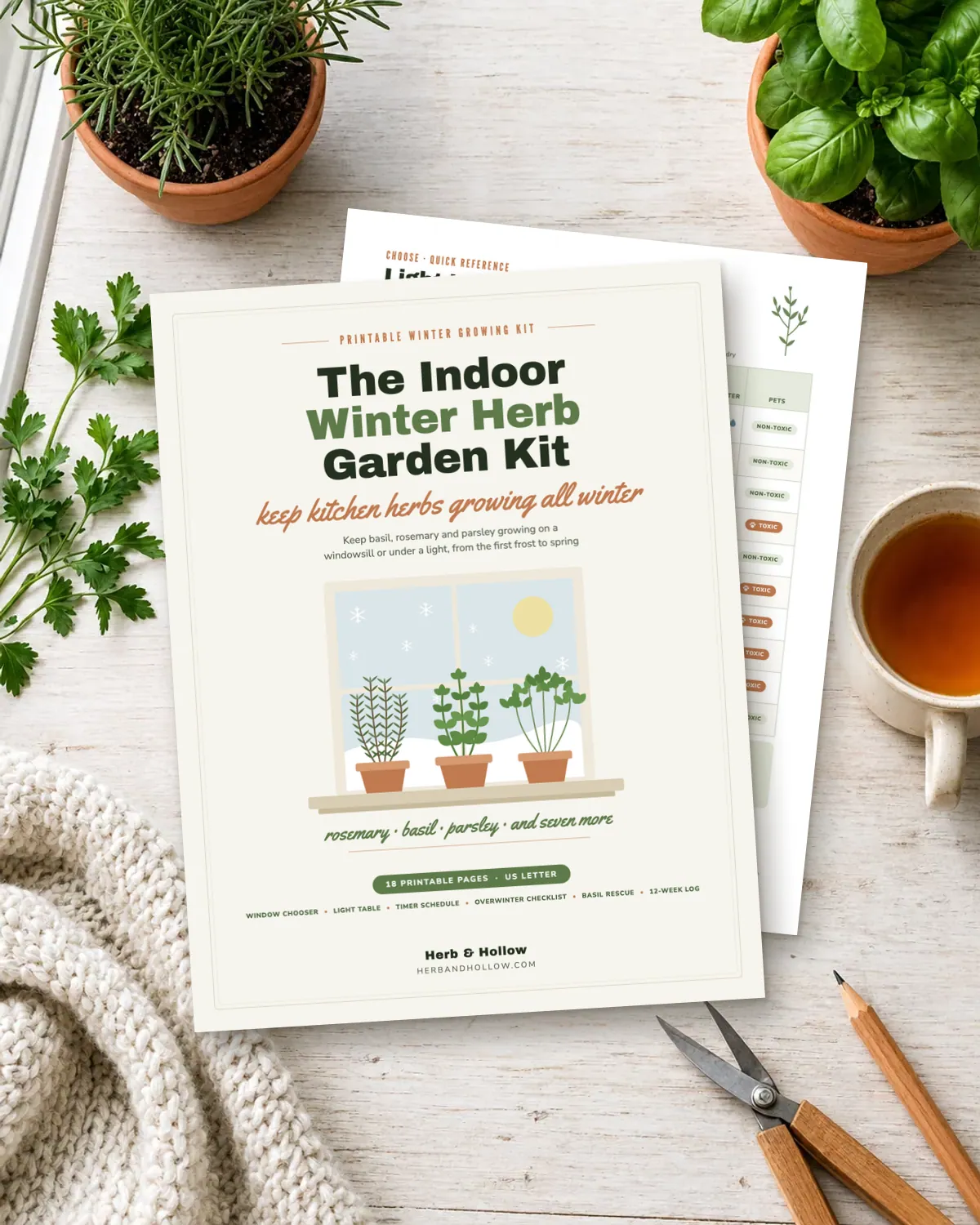
Keeping a winter care log for basil and the rest of the sill? The Small-Space Garden Binder bundles the winter kit, the herb journal and the pantry label kit, with a weekly garden check-in page to keep it all current.
Mistakes that kill indoor basil
Do
- Split the supermarket pot in week one
- Run a clip-on LED on a timer, 12 to 14 hours
- Water when the top inch is dry, then drain the saucer
- Pinch weekly and start cuttings every few weeks
Avoid
- Leaving 30 seedlings in one small pot
- Trusting a south window alone in December
- Letting leaves touch cold glass or sit over a radiator
- Watering on a schedule, or letting the pot sit in water
If your only window faces north, basil will still struggle even with a light. Our herbs that grow indoors in low light list has easier choices for that sill, and the kitchen herb garden ideas roundup shows where a light bar can go in a small kitchen.
Indoor basil supplies
Everything in this guide, under $60 total
- Start here
Clip-on full spectrum LED grow light
Typically $15 to $30
The one purchase that decides whether basil lives.
Check price on Amazon for Clip-on full spectrum LED grow light -
Plug-in outlet timer
Typically $8 to $15
Sets 12 to 14 hours of light without thinking.
Check price on Amazon for Plug-in outlet timer -
6 inch terracotta pots with saucers, 3-pack
Typically $12 to $20
One pot per divided section, with drainage.
Check price on Amazon for 6 inch terracotta pots with saucers, 3-pack -
Indoor potting mix, 8 quart bag
Typically $8 to $15
Drains faster than the supermarket pot soil.
Check price on Amazon for Indoor potting mix, 8 quart bag -
Liquid fertilizer for herbs
Typically $8 to $14
Half strength once a month in winter.
Check price on Amazon for Liquid fertilizer for herbs -
Small herb snips
Typically $6 to $12
Clean cuts above the leaf pair.
Check price on Amazon for Small herb snips
We earn from qualifying purchases, which never changes what we recommend. Read our disclosure and editorial guidelines.
Frequently asked questions
Can basil survive indoors in winter?
Yes, with a grow light. Basil needs 6 or more hours of direct sun or 12 to 14 hours under a clip-on LED, a room above 50F at night, and water only when the top inch of soil is dry. On light from a winter window alone it usually fades by week three.
Why does supermarket basil die so fast?
The pot holds 20 to 30 seedlings competing for water, light and roots, and the plant was stressed by the cold shelf and plastic sleeve. Split the clump into 3 or 4 pots in the first week and most of it recovers.
How many hours of light does basil need indoors?
About 6 hours of direct sun or 12 to 14 hours under a full-spectrum LED set 6 to 12 inches above the leaves. A south window in December rarely gives 6 hours, so a clip-on light on a timer is the reliable fix.
How often should I water basil indoors?
When the top inch of soil is dry, usually every 3 to 5 days. Water until it drains, empty the saucer after 15 minutes, and never let the pot sit in water. Bottom watering in a tray for 20 minutes works well.
Should I split a supermarket basil plant?
Yes. Soak the pot, slide the root ball out, loosen it in a bowl of water and pull it into 3 or 4 sections of 5 to 8 stems. Pot each one, rest them out of direct sun for 3 days, then move them to the light.
Can you root basil cuttings in water?
Yes. Cut a 4 inch tip below a leaf pair, strip the lower leaves and stand it in a glass of water on the windowsill. Change the water every two days. Roots appear in 7 to 14 days and the cutting can be potted at about an inch of root.

Save it for later
Pin this to your Herb Garden board so it's there when you need it.
Save to Pinterest