This post contains affiliate links. As an Amazon Associate we earn from qualifying purchases, at no extra cost to you. Read our disclosure.
Safety first: Herbs can be powerful. If you are pregnant, nursing, take medication or have a health condition, check with your doctor or pharmacist first. Please read our herbal & garden safety notes before you start.
Key takeaways
- Lavender wants full sun, which the Old Farmer's Almanac defines as at least 6 to 8 hours a day. Most windows need help from a grow light in winter.
- Use a terracotta pot only a little larger than the root ball and a cactus or gritty mix; wet roots are the most common way indoor lavender dies.
- Water sparingly in winter, when the plant is resting, and let the top inch of mix dry between waterings.
- Blooms indoors are unlikely. Expect green growth, then move the pot outside in spring for flowers.
- The ASPCA lists lavender as toxic to cats and dogs, so keep it out of reach.
In this post14 sections
- Can you grow lavender indoors? The light test first
- English, French or Spanish lavender for pots?
- Which lavender variety grows best indoors?
- Pot, soil and drainage
- How often to water lavender indoors
- Temperature, airflow and grow lights
- Will lavender bloom indoors?
- Bringing a patio pot inside for winter
- Seed or plant?
- Yellow, leggy or gray? Quick fixes
- Myths vs reality
- Harvesting for the kitchen
- Indoor lavender supplies
- FAQ
Short answer: lavender indoors is possible but fussy. It needs the brightest spot you have plus, in most homes, a grow light, and it will rest rather than flower through winter.
| Need | What works indoors |
|---|---|
| Light | South window with several hours of direct sun, or an LED grow light 6 to 12 inches above for 12 to 16 hours |
| Pot | Terracotta with a drainage hole, 1 to 2 inches wider than the root ball |
| Mix | Cactus or succulent mix, or potting mix with added grit or perlite |
| Water | When the top inch is dry; much less in winter |
| Room | Cool, bright, with moving air; away from heat vents |
| Blooms | Unlikely indoors; expect them after the pot goes back outside |
| Pets | Toxic to cats and dogs (ASPCA) |
Can you grow lavender indoors? The light test first
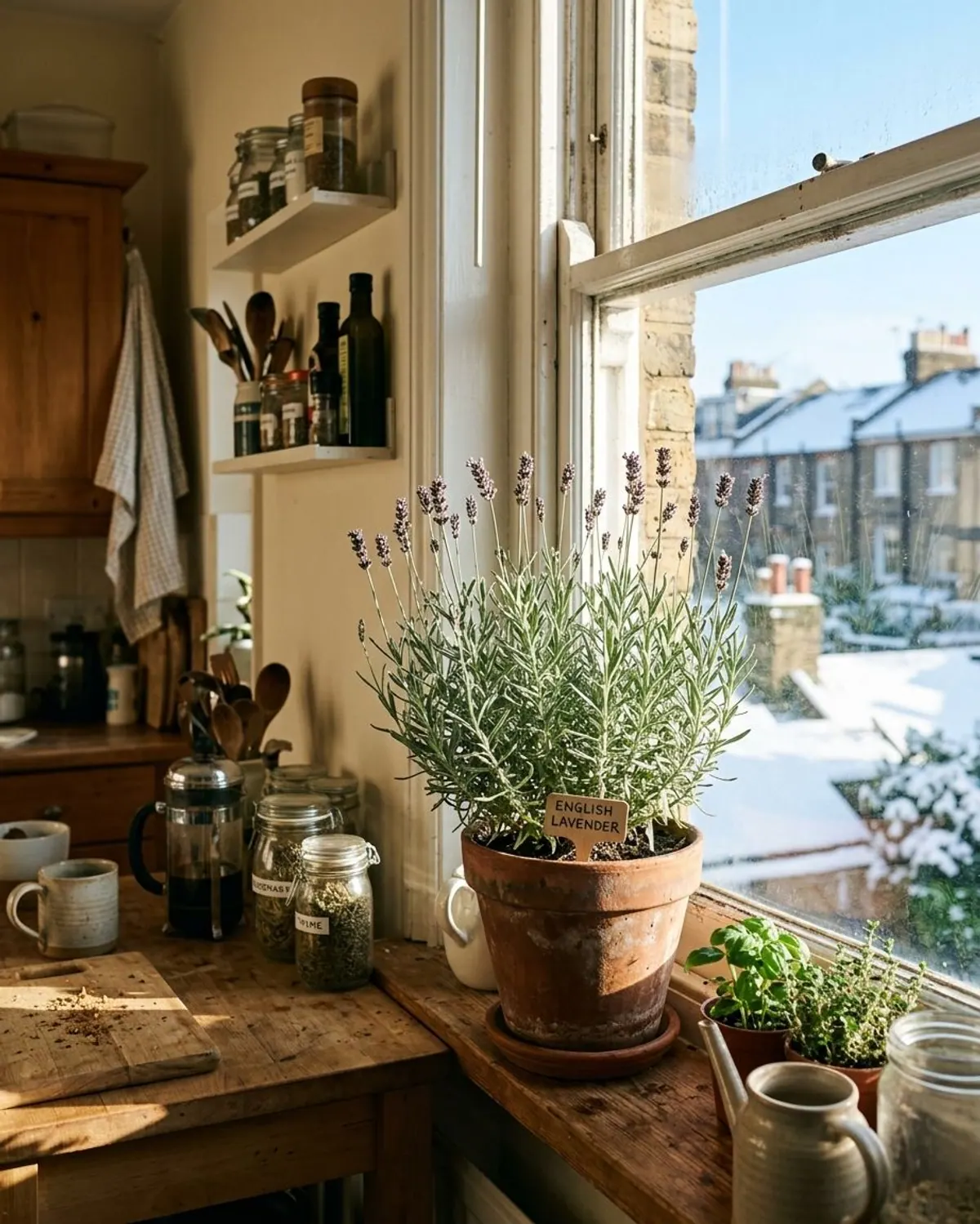
The Old Farmer's Almanac lavender guide (read 2026-10-16) says lavender needs at least 6 to 8 hours of sunlight a day. Very few windows give that in winter, when the sun is low and the days are short.
Do a simple test on a clear day: note when direct sun first lands on the sill and when it leaves. If it is under about 6 hours, plan on a grow light from the start rather than waiting for the plant to stretch.
English, French or Spanish lavender for pots?
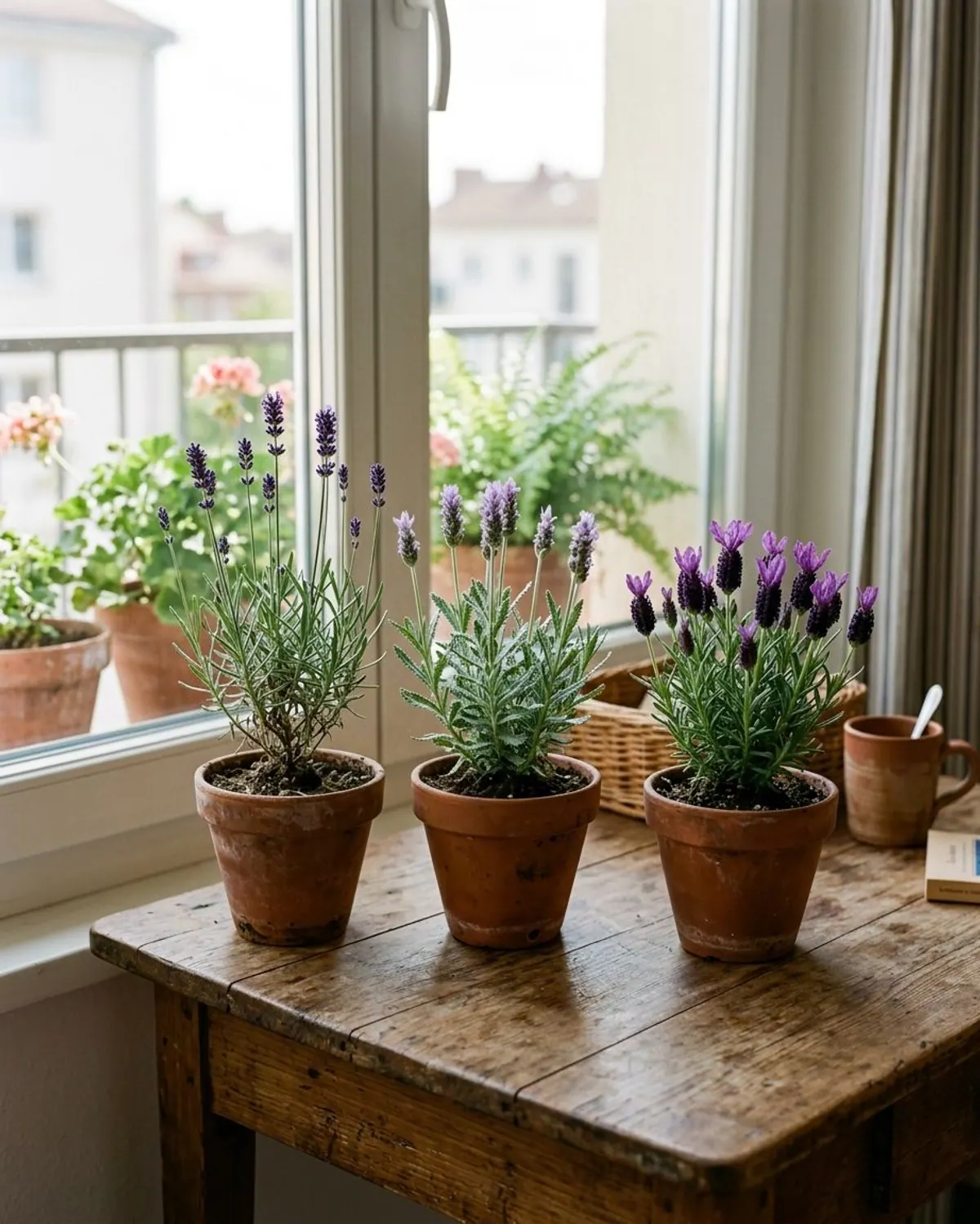
English lavender (Lavandula angustifolia) is the hardiest outdoors, to about zone 5 per the Almanac, and it is the one sold for cooking. Choose it if you want to snip sprigs for the kitchen.
French (fringed) and Spanish lavender are tender, typically winter-hardy only in zones 7 to 9. In colder zones these are the plants that most need to come inside for winter, and they are often what garden centers sell in pots.
Which lavender variety grows best indoors?
For a windowsill, pick a dwarf English lavender. The compact cultivars stay around 12 to 18 inches tall, so they fit a pot and a sill without flopping, and they are the same culinary species as the big garden plants.
Munstead is the classic choice: compact, early to bloom and sold almost everywhere, including as a Munstead plant online. Hidcote grows a little taller, about 18 inches, with darker purple spikes and silvery leaves. Thumbelina Leigh is a true dwarf at about 12 inches, and Lavender Lady is a seed-grown compact strain that can flower in its first year, which is useful if you start from seed anyway.
Spanish lavender (Lavandula stoechas, the one with the petal tufts on top) is the easiest of the three types to keep in a warm room, since it is used to mild winters and does not need a cold rest. It stays compact in a pot, but it is not the culinary kind. French fringed lavender (Lavandula dentata) blooms for months but grows larger and leggier indoors, so it needs the brightest spot and a bigger pot.
For heights, hardiness and kitchen use of seven varieties side by side, including Goodwin Creek Grey and Phenomenal, see our types of lavender for pots comparison.
Pot size: start a dwarf cultivar in an 8-inch terracotta pot with a drainage hole and move up one size only when roots fill it. Spanish lavender is happy in 8 to 10 inches; French fringed wants 10 to 12.
Light: every one of these needs at least 6 hours of direct sun on a south window, or a grow light run 12 to 14 hours a day. The dwarf English types also like a cool room (50 to 60°F) in winter; Spanish lavender tolerates normal room warmth better.
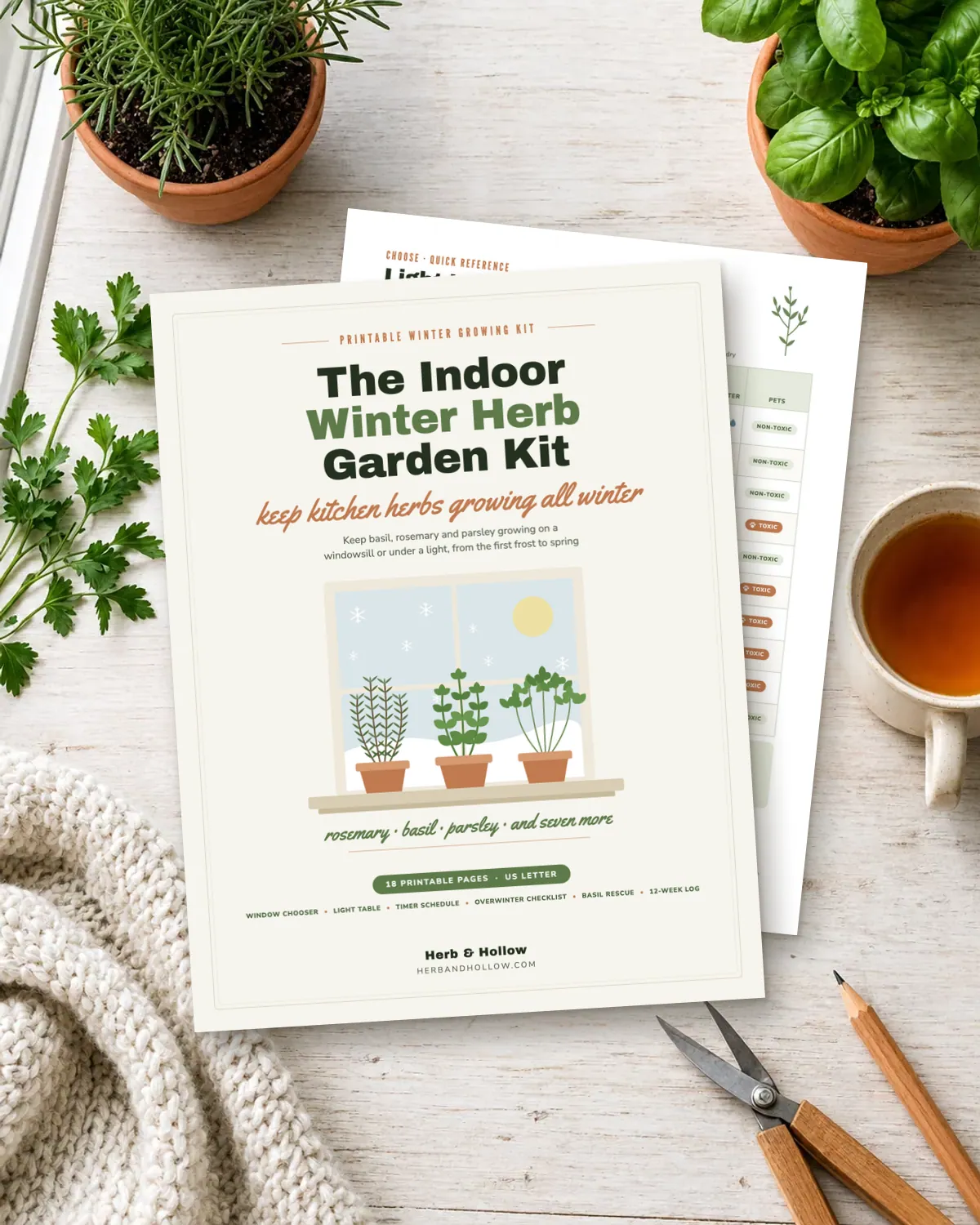
Not sure your window is bright enough? The free planner has a sun map you fill in hour by hour, plus a 16-herb cheat sheet.
Pot, soil and drainage
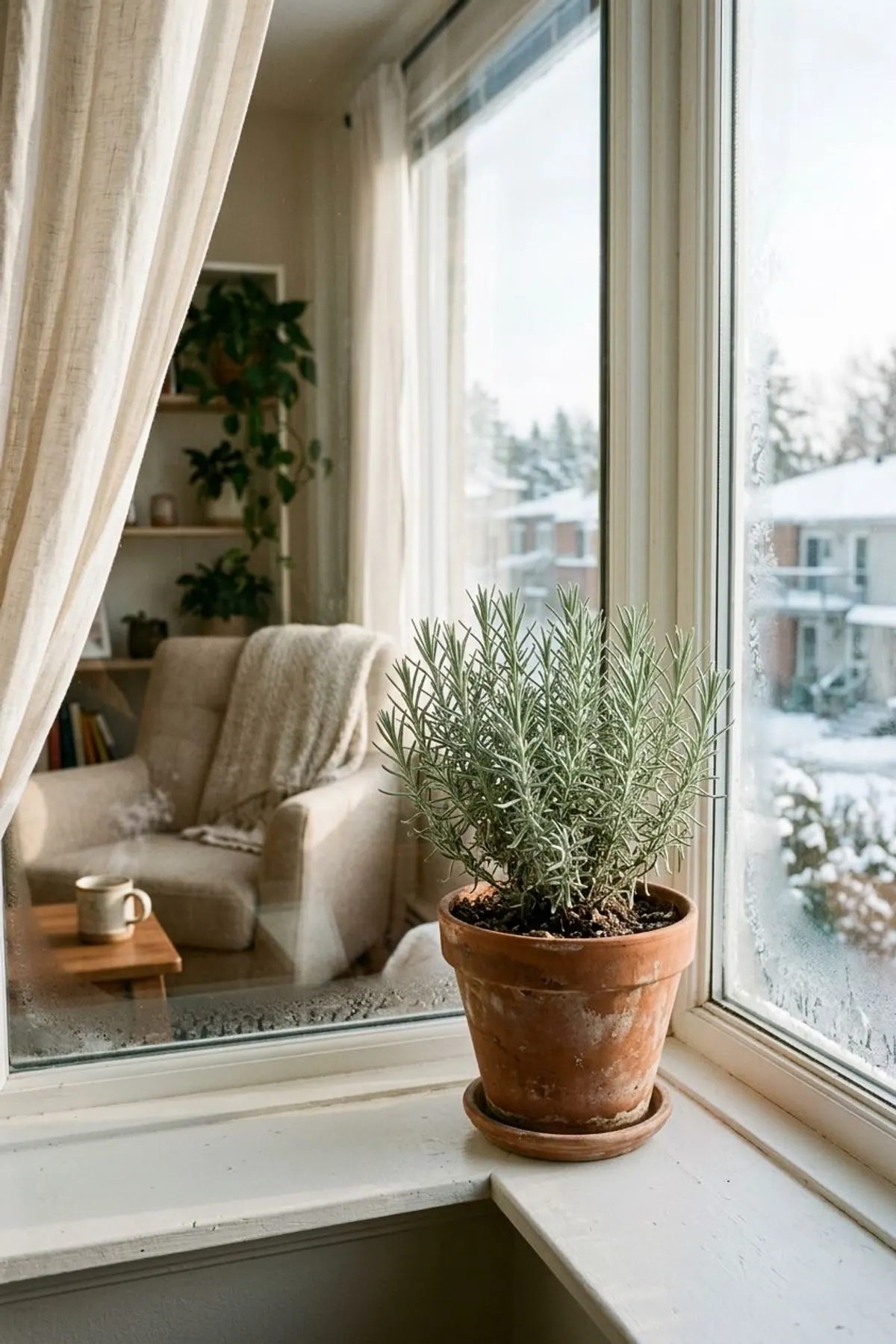
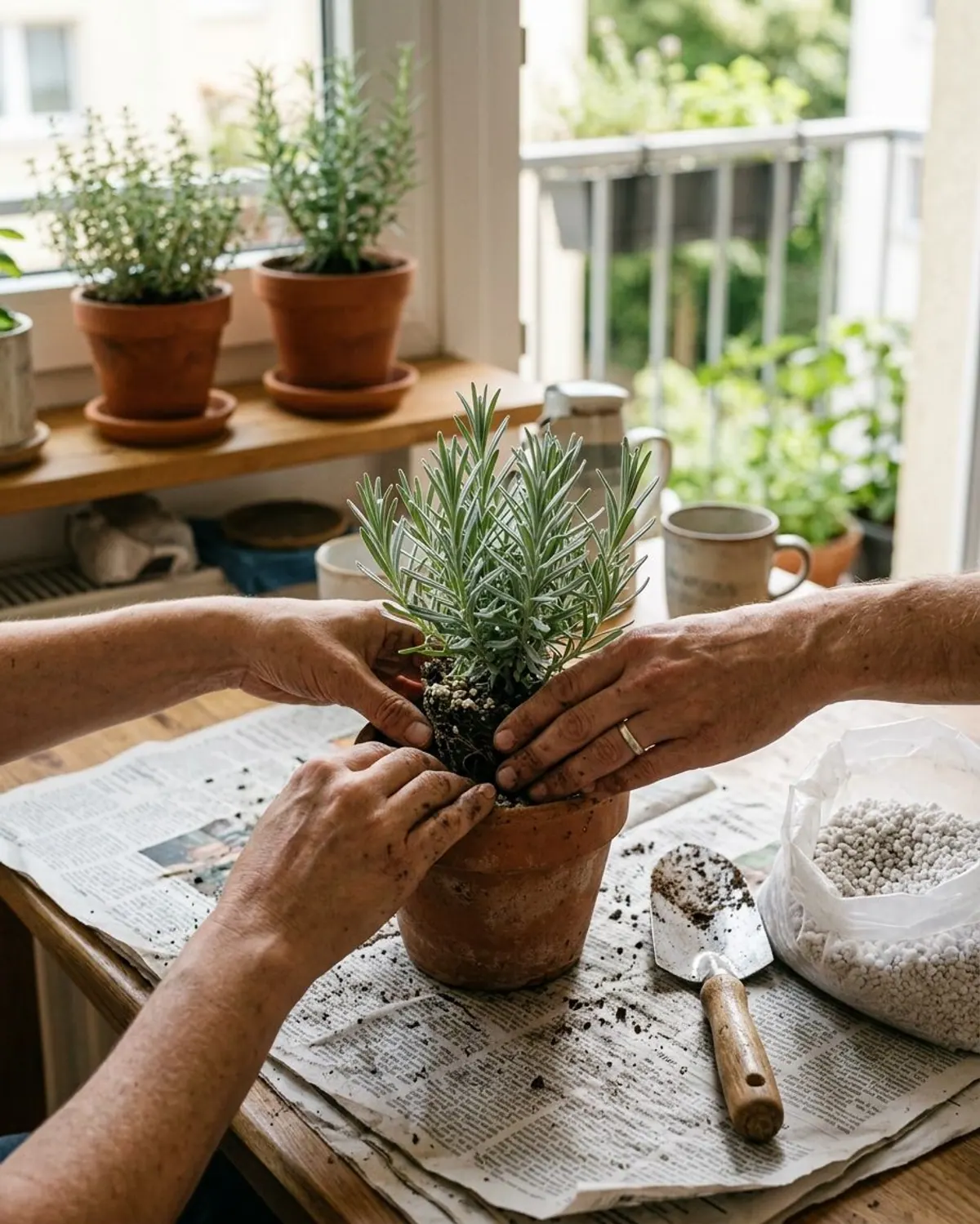
Lavender comes from dry, rocky Mediterranean hillsides, and soggy roots kill it faster than anything. Use an unglazed terracotta pot with a drainage hole, only 1 to 2 inches wider than the root ball, since extra soil stays wet.
Fill it with a cactus or succulent mix, or regular potting mix with a few handfuls of perlite or grit. Never leave the pot standing in a full saucer.
How often to water lavender indoors
Push a finger into the mix and water only when the top inch is dry, then let water run from the drainage hole. The Almanac notes that yellowing leaves often signal overwatering.
In winter the plant is mostly dormant indoors, so the Almanac's advice is to water sparingly. In a cool room that can mean every couple of weeks; check rather than watering on a schedule.
Temperature, airflow and grow lights
A cool, bright room suits resting lavender better than a warm, dim one. Keep it away from radiators and heat vents, and give it some moving air, such as a cracked door or a small fan on low, so the foliage dries and mildew has less chance.
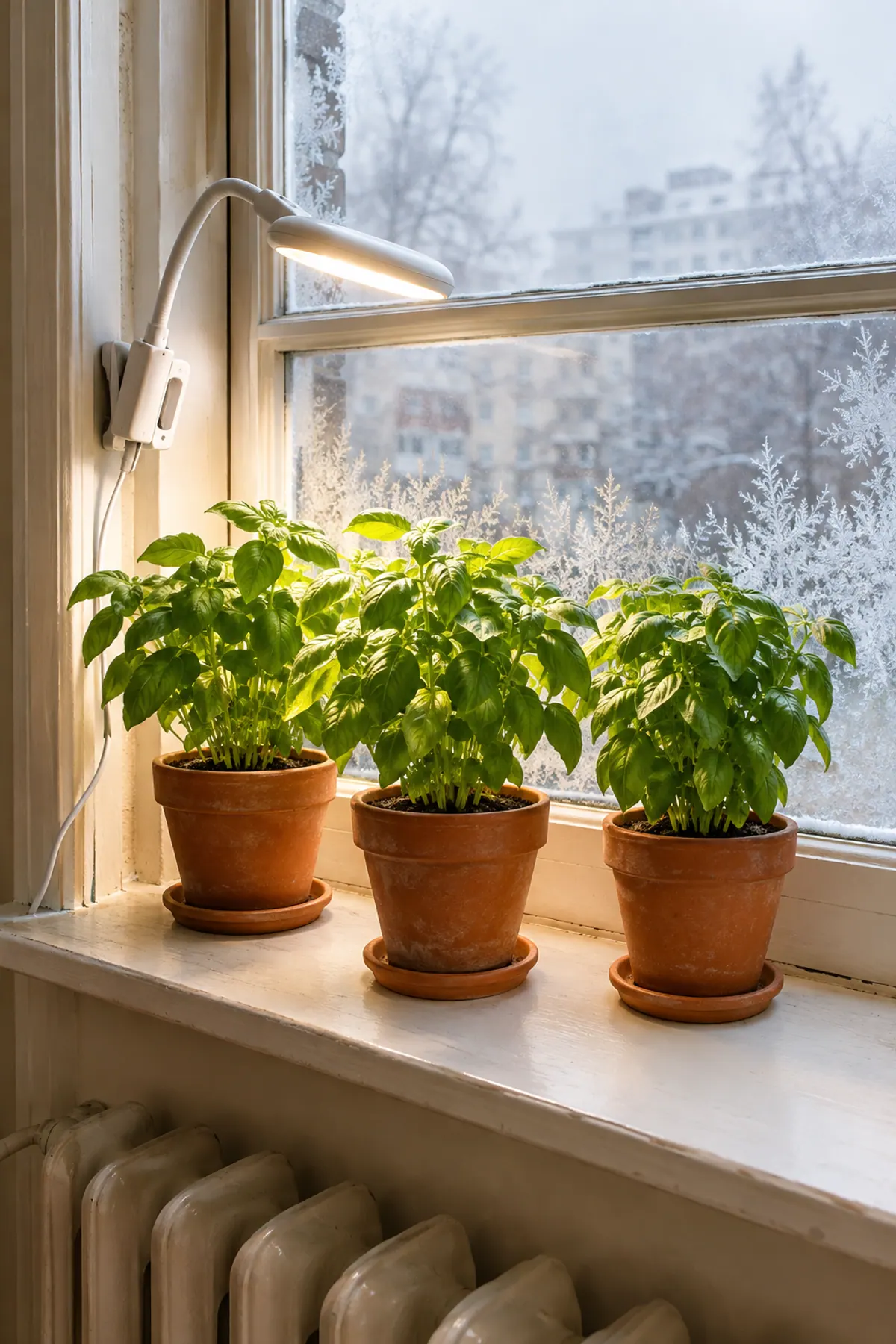
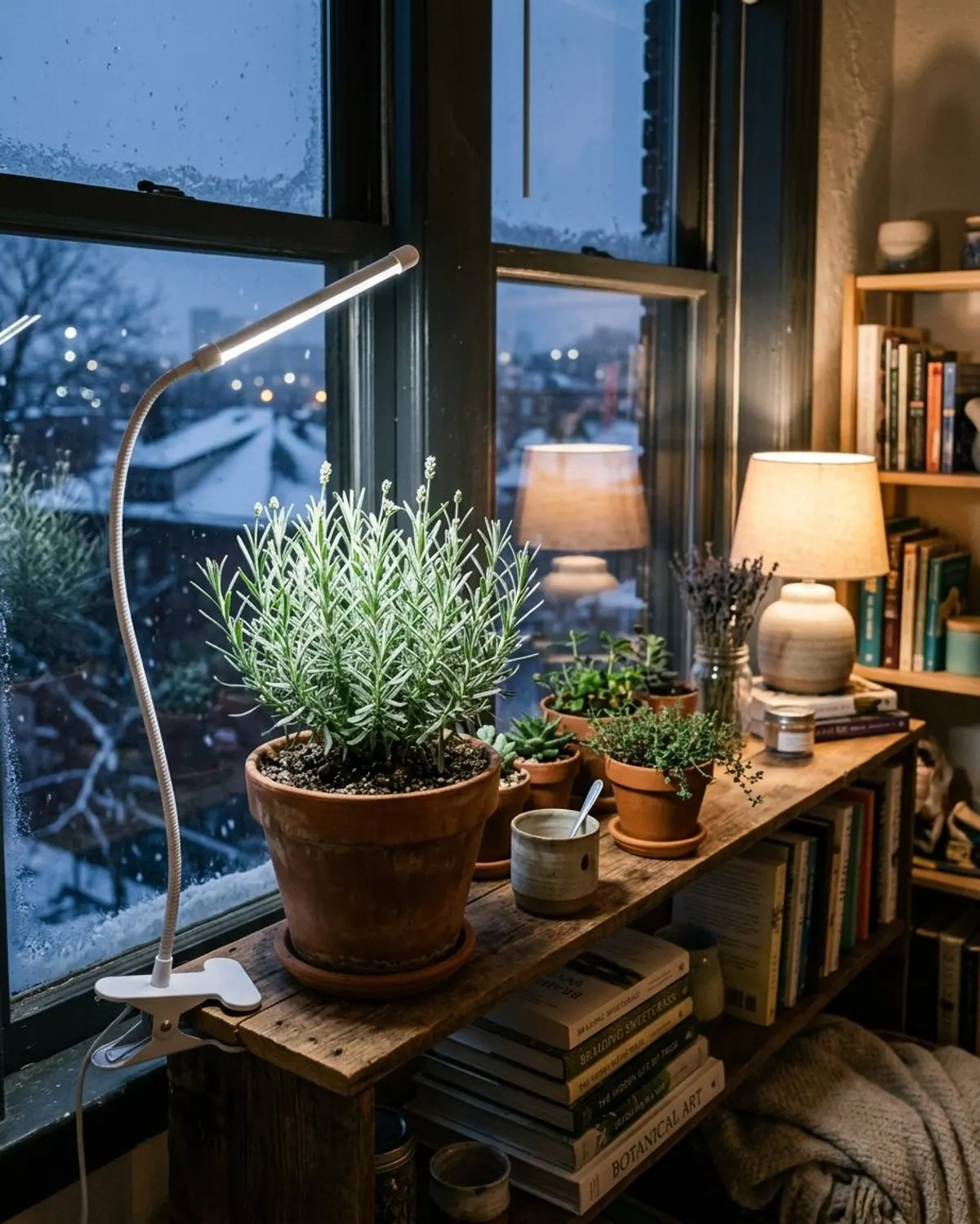
For light, Iowa State University Extension suggests a grow light 6 to 12 inches above herbs for 12 to 16 hours a day. Put it on a timer. Our best grow lights for small spaces guide compares clip-on and shelf options.
Will lavender bloom indoors?
Probably not in winter. Indoor light is far weaker than summer sun, and a resting plant puts its energy into staying alive. Expect slow, green growth; flowers usually come after the pot goes back outside in late spring.
Bringing a patio pot inside for winter
In cold areas, the Almanac suggests growing lavender in a pot that moves outdoors in summer and indoors in winter, set in a south-facing window with as much light as possible. Check for pests before it comes in, and bring it in before a hard freeze.
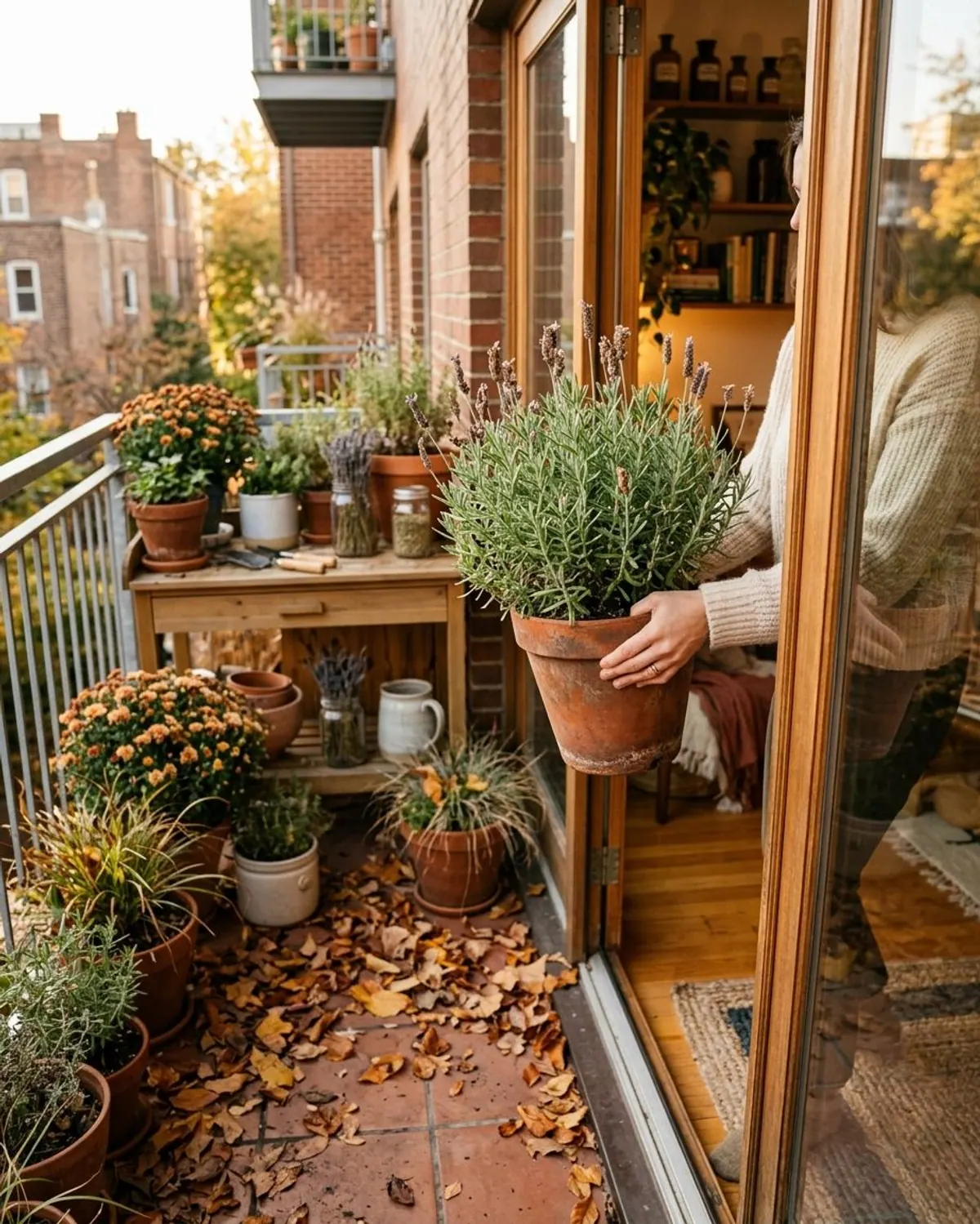
For the full routine, including pest checks and which plants to store dormant, see our guide to overwintering container plants indoors.
Seed or plant?
Start with a plant. Lavender from seed is slow and uneven to sprout, and a young nursery plant gets you to a harvestable size a year or more sooner. Buy a compact variety in a small pot, then repot it into the terracotta setup above.
Yellow, leggy or gray? Quick fixes
| What you see | Likely cause | Fix |
|---|---|---|
| Yellow lower leaves, damp mix | Too much water | Let the mix dry, empty the saucer, check the drainage hole |
| Long, pale, floppy stems | Not enough light | Move to the brightest window or add a grow light on a timer |
| Gray-brown, dying from the base, wet roots | Root rot | Unpot, trim soft roots, repot in fresh gritty mix |
| White powdery film on leaves | Mildew from still, damp air | Add airflow, remove affected leaves, water less |
| Fine webbing, speckled leaves | Spider mites in dry heated air | Rinse the plant in the shower, repeat weekly |
| Silvery grey-green leaves | Normal | Healthy lavender foliage is naturally grey-green |
Myths vs reality
Reality
- Lavender can live indoors with strong light and dry roots
- Indoors it mostly rests in winter
- English lavender is the usual culinary type
- Lavender is toxic to cats and dogs, per the ASPCA
Myth
- Lavender is an easy, low-light houseplant
- It will flower all winter on a windowsill
- Any lavender is fine to cook with
- A plant this common must be pet safe
Harvesting for the kitchen
Snip a few sprig tips at a time, never more than a third of the plant, and only from English lavender you have not sprayed. A few buds go a long way in baking or a cup of tea; our herbal tea blends guide uses it only by the pinch.
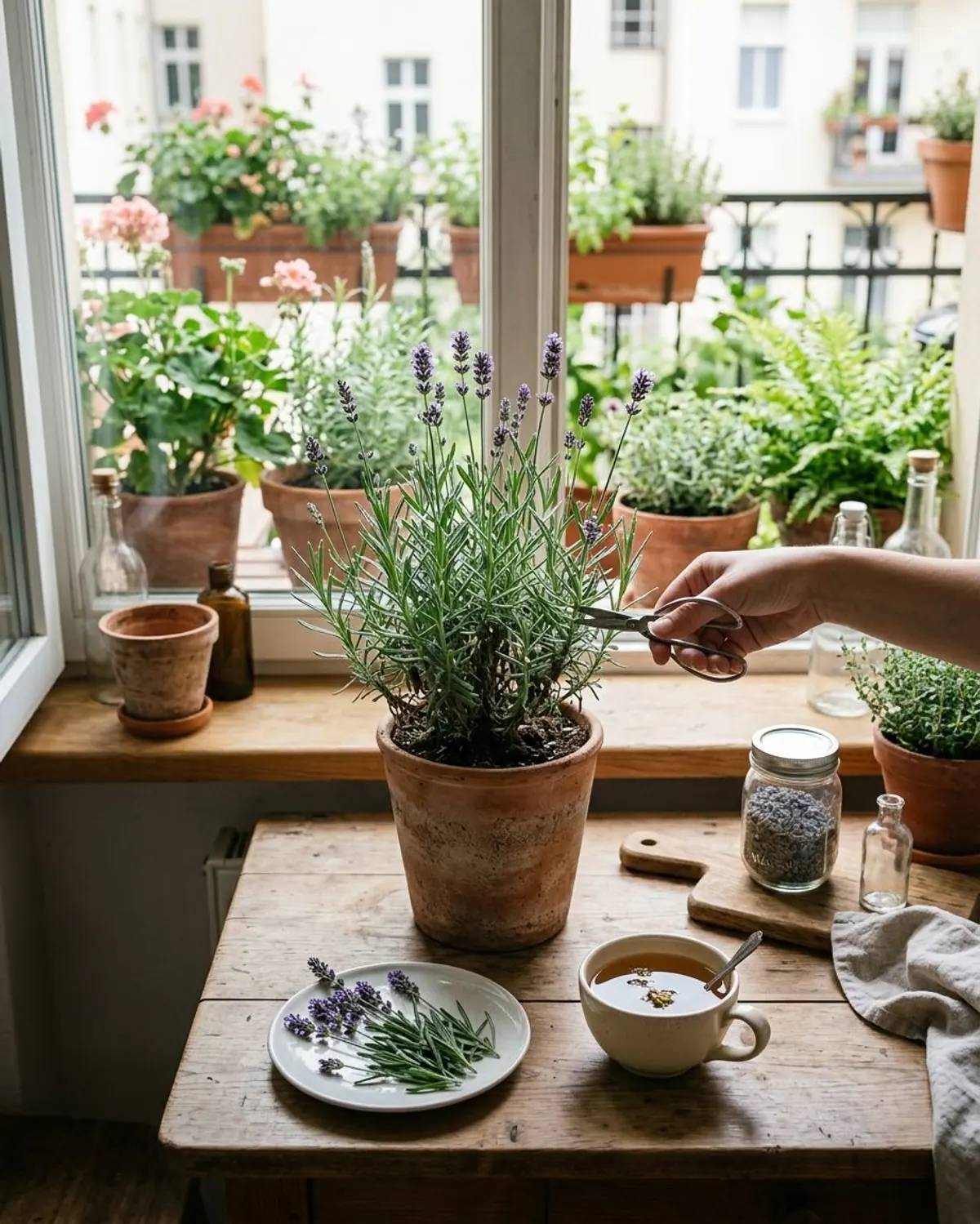
For drying and storing it with your other herbs, see our culinary herbs apothecary cabinet guide. Keep the plant and dried buds out of reach of pets, since the ASPCA lists lavender as toxic to cats and dogs.
Indoor lavender supplies
A small setup for one lavender pot
-
Unglazed terracotta pot with drainage hole
Typically $5 to $15
Breathes and dries out between waterings.
Check price on Amazon for Unglazed terracotta pot with drainage hole -
Cactus and succulent potting mix
Typically $8 to $17
Fast-draining mix that keeps lavender roots out of standing water.
Check price on Amazon for Cactus and succulent potting mix - Most important
Clip-on full spectrum LED grow light
Typically $10 to $35
Makes up the light a winter window cannot give.
Check price on Amazon for Clip-on full spectrum LED grow light -
Digital light meter
Typically $12 to $25
Takes the guesswork out of which spot is brightest.
Check price on Amazon for Digital light meter
We earn from qualifying purchases, which never changes what we recommend. Read our disclosure and editorial guidelines.
Frequently asked questions
Can lavender survive indoors all winter?
Yes, if it gets a bright south window or a grow light, a fast-draining pot and very little water while it rests. Most indoor lavender that dies over winter dies from wet roots or too little light.
Which lavender is best to grow in a pot indoors?
Any type can live indoors with enough light. Choose English lavender if you want to cook with it; French and Spanish types are tender and are the ones that must come indoors in cold zones.
Why is my indoor lavender turning yellow?
Usually too much water. Let the mix dry, empty the saucer and make sure the pot drains. The Almanac notes yellowing leaves often signal overwatering.
Is lavender safe to keep around cats and dogs?
The ASPCA lists lavender as toxic to cats and dogs. Keep the plant and any dried buds out of reach, or choose a pet-safe herb instead.
Can I grow lavender indoors from seed?
You can, but it is slow and uneven to sprout. A small nursery plant is a much easier start for a windowsill.

Save it for later
Pin this to your Herb Garden board so it's there when you need it.
Save to Pinterest