This post contains affiliate links. As an Amazon Associate we earn from qualifying purchases, at no extra cost to you. Read our disclosure.
Safety first: Herbs can be powerful. If you are pregnant, nursing, take medication or have a health condition, check with your doctor or pharmacist first. Please read our herbal & garden safety notes before you start.
Key takeaways
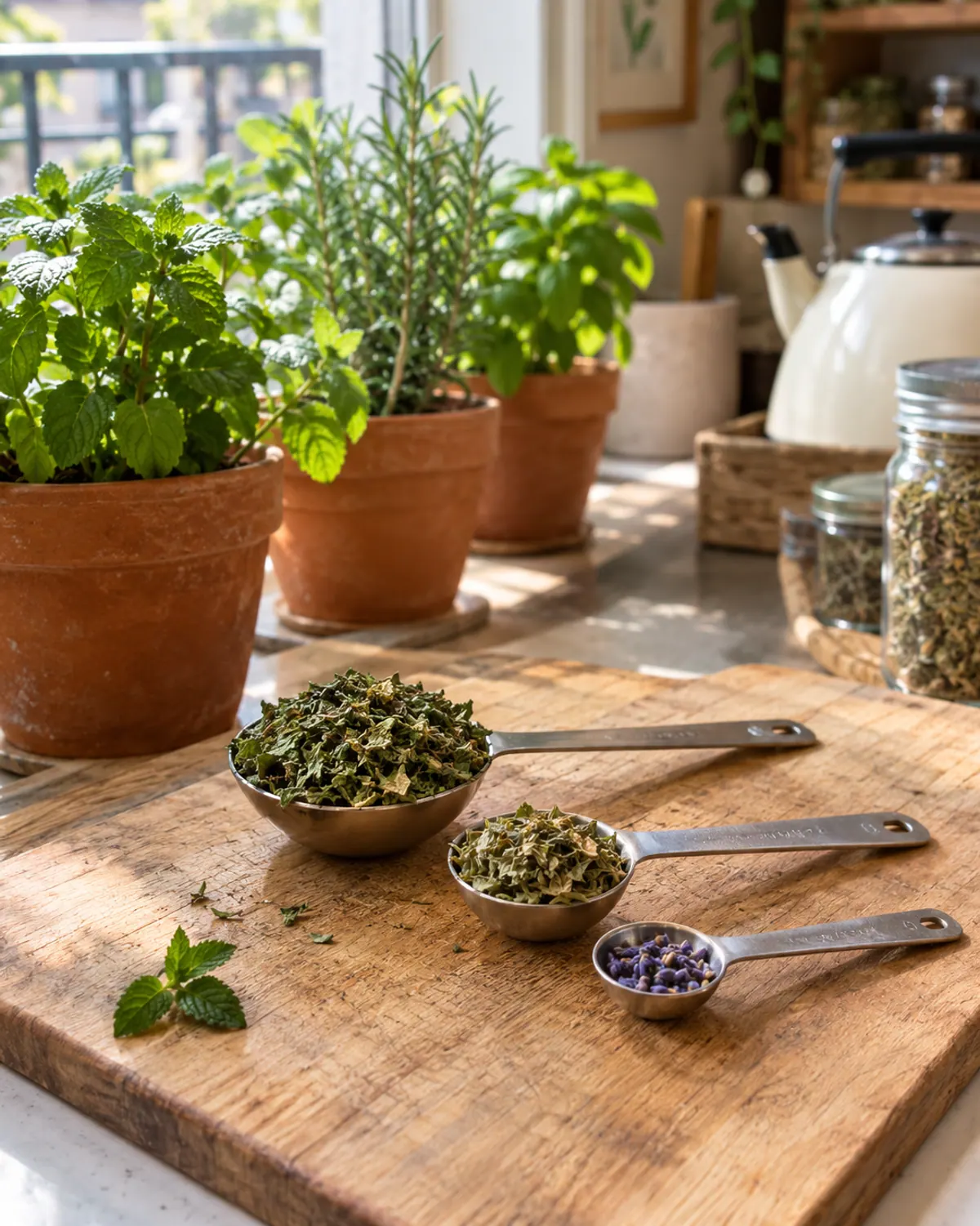
- Use 3 parts base herb, 1 part support herb and a pinch of accent. For one dried cup that is 1 tablespoon, 1 teaspoon and a pinch.
- Oregon State University's Food Hero program suggests 1 to 2 tablespoons dried or 2 to 4 tablespoons fresh herbs per cup, steeped about 10 minutes.
- Steep covered and taste from 5 minutes; strong accents like lavender and rosemary turn bitter or soapy if overdone.
- Only blend fully dried herbs into a storage jar, label it with the date, and use it within about a year for best flavor.
- This is a flavor guide, not medical advice. Check with your doctor if you are pregnant, nursing or on medication, and keep tea herbs away from pets.
In this post27 sections
- The 3:1:pinch rule for herbal tea blends
- Windowsill herbs that make good tea
- How to blend herbal tea, step by step
- Mint-base combos
- 1. Spearmint, lemon balm and lemon peel
- 2. Peppermint, chamomile and ginger
- 3. Spearmint, basil and a pinch of lavender
- Lemon balm and citrus combos
- 4. Lemon balm, basil and lemon peel
- 5. Lemon balm, rosemary and orange peel
- 6. Lemon balm, thyme and fennel seed
- Chamomile and lavender combos (a pinch of lavender only)
- 7. Chamomile, lemon balm and lavender
- 8. Chamomile, spearmint and orange peel
- Savory and warming combos
- 9. Thyme, spearmint and cinnamon
- 10. Lemon balm, sage and ginger
- Hibiscus and rooibos bases (pantry bought)
- 11. Hibiscus, spearmint and cinnamon
- 12. Rooibos, chamomile and orange peel
- Fresh vs dried: amounts and steep times
- Mixing a jar, labeling and shelf life
- Mistakes to avoid
- Safety notes before you sip
- Gifting your blends
- Herbal tea supplies
- FAQ
The 3:1:pinch rule for herbal tea blends
Every blend in this guide follows the same pattern. The base is a mild, pleasant herb you could drink alone, like spearmint or lemon balm. The support adds a second note, and the accent is a strong flavor used only by the pinch.
For one dried cup, 3 parts to 1 part works out neatly as 1 tablespoon base and 1 teaspoon support, since a tablespoon is 3 teaspoons. That lands inside the 1 to 2 tablespoons dried per cup that Oregon State University Extension's Food Hero garden herbal tea suggests.
| Size | Base (3 parts) | Support (1 part) | Accent (a pinch) |
|---|---|---|---|
| 1 cup, dried | 1 tablespoon | 1 teaspoon | A small pinch, about 1/8 teaspoon |
| 1 cup, fresh | 3 tablespoons torn leaves | 1 tablespoon | A few leaves, a thin peel strip or 1 thin ginger slice |
| Jar, dried | 3/4 cup | 1/4 cup | 1 to 2 teaspoons |
Windowsill herbs that make good tea
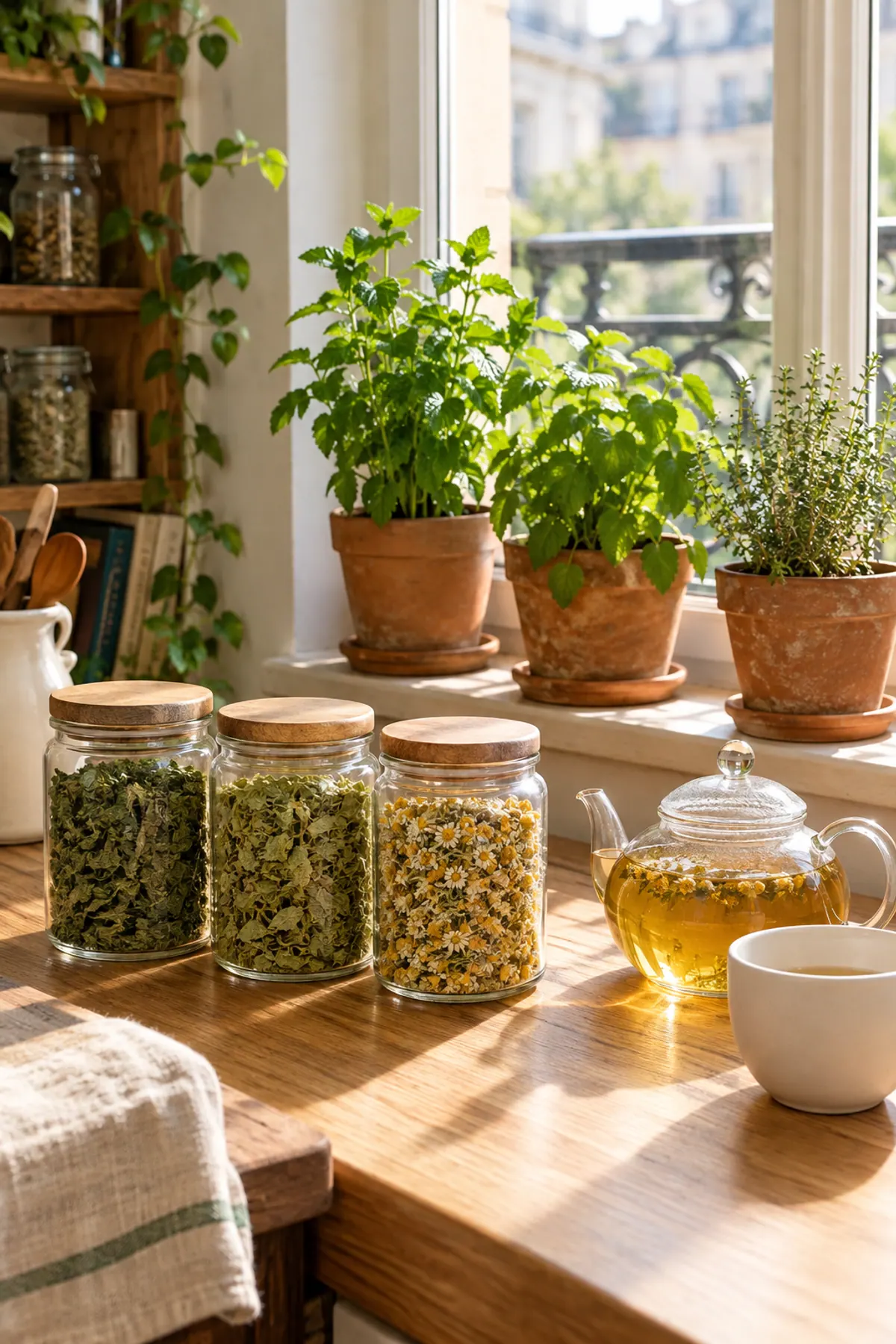
Mint, lemon balm, basil, thyme, rosemary and sage all grow in pots on a sunny sill, and all of them taste good in a cup. Mint and lemon balm are the easiest bases; thyme, rosemary and sage are better as supports or accents because they are strong.
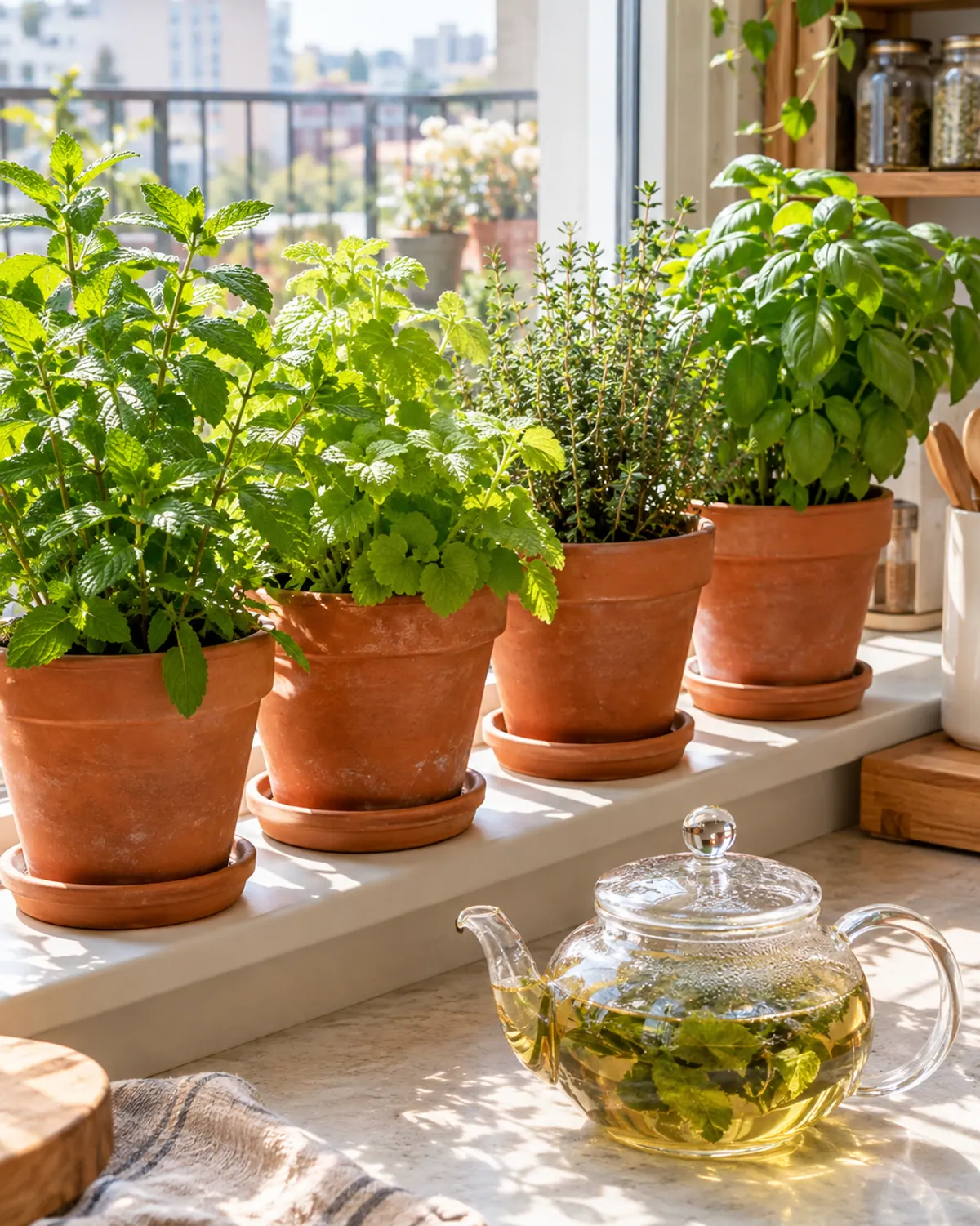
Chamomile and culinary lavender are harder indoors, and many people buy them dried. For growing notes on both, see our culinary herbs apothecary cabinet guide, and for lavender on a sill, our guide to growing lavender indoors.
Want the herbs and the timing planned for you? The free planner includes a 16-herb cheat sheet with light and pot sizes.
How to blend herbal tea, step by step
-
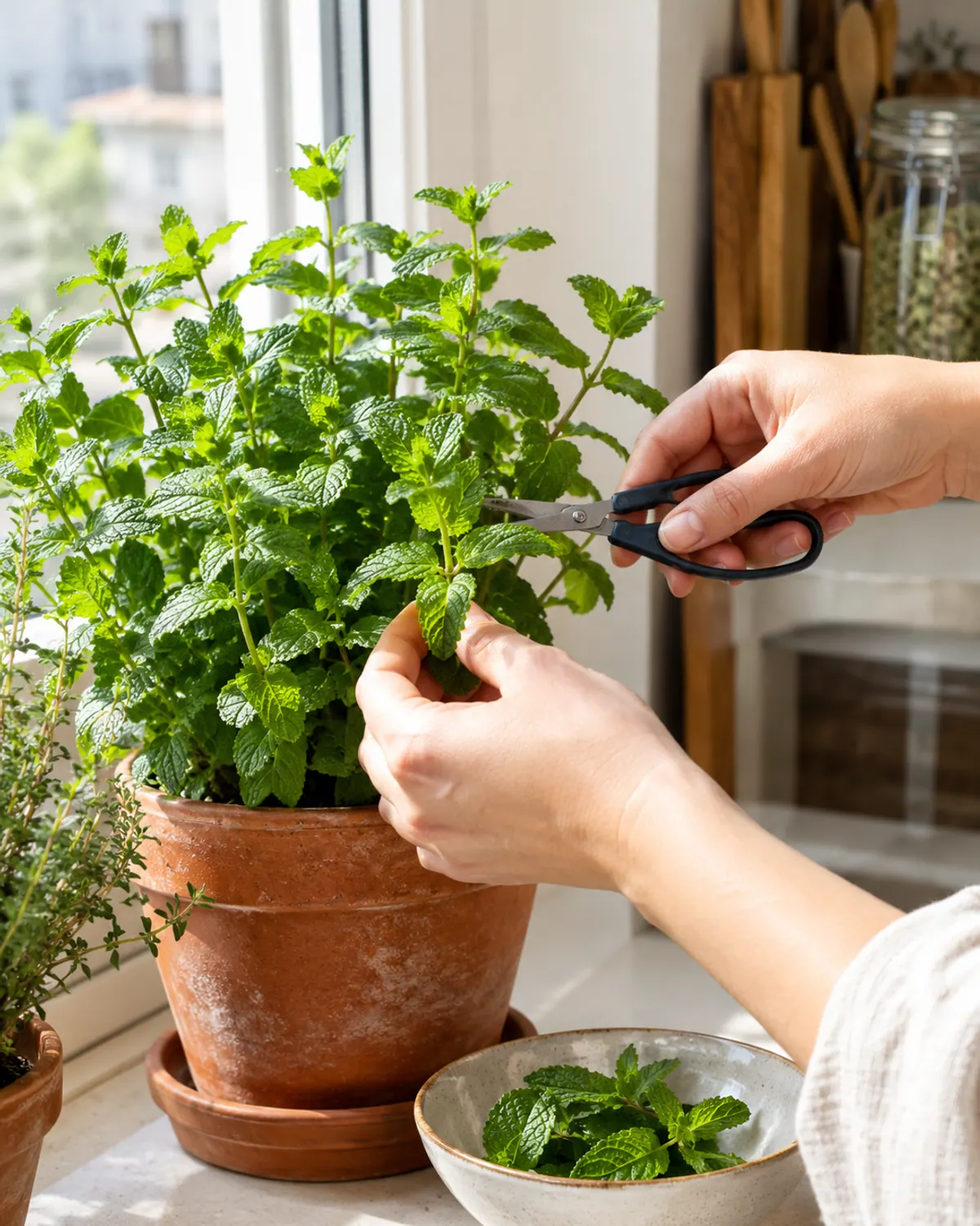
Step 1: Pick a base you like on its own
Brew a plain cup of spearmint, lemon balm or chamomile first. If you enjoy it alone, it will carry a blend.
-
Step 2: Add one support
Choose a herb that adds a second note: lemony, floral, peppery or green. One support is plenty for a beginner blend.
-
Step 3: Add the pinch last
Accents such as culinary lavender, ginger, cinnamon or citrus peel take over fast. Start with less than you think.
-
Step 4: Steep covered
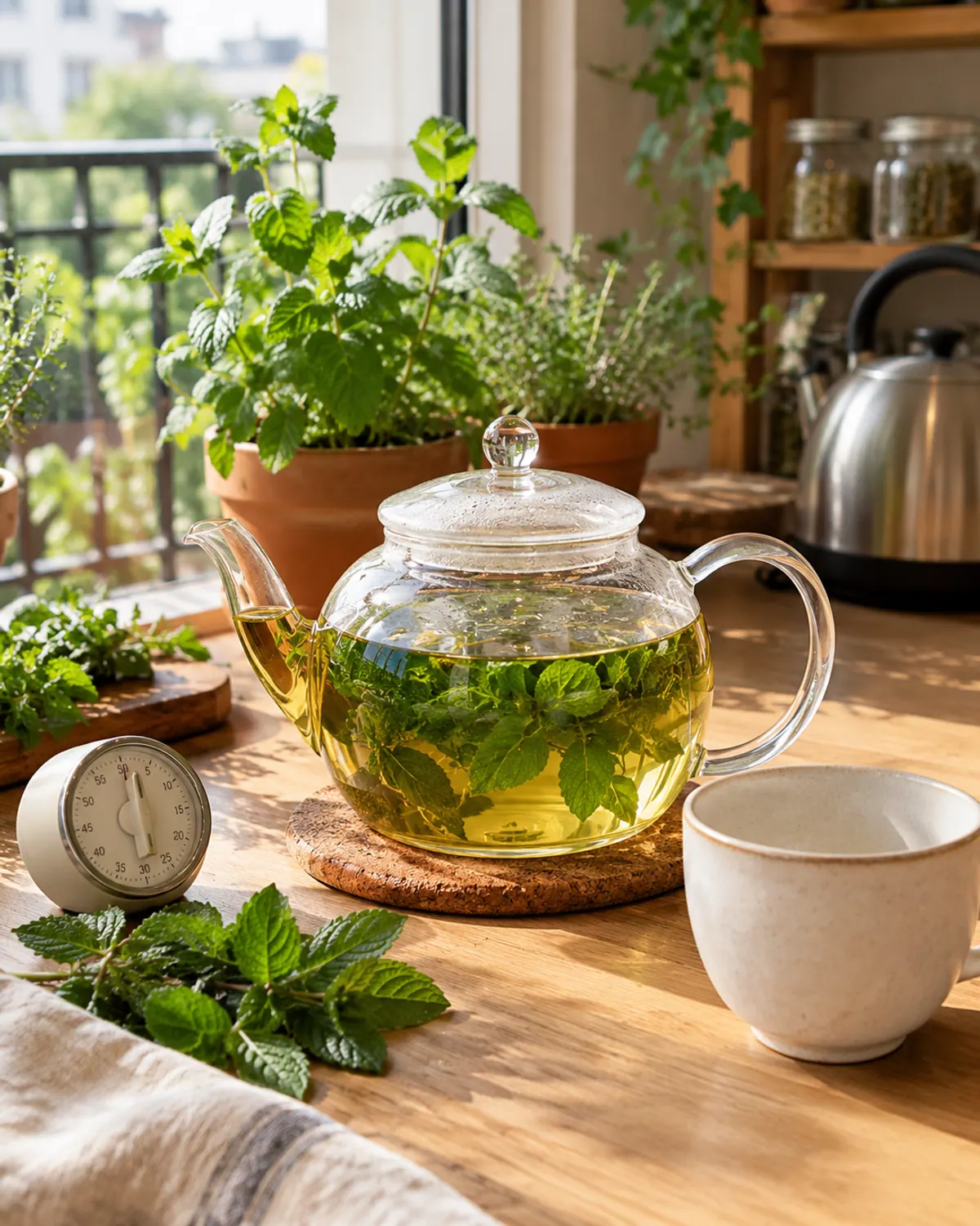
Pour just-boiled water over the herbs in a teapot or infuser, then cover so the aroma stays in the cup. Food Hero suggests letting it sit about 10 minutes.
-
Step 5: Taste and write it down
Taste at 5 minutes, then again at 10. Note the amounts and time that you liked, so you can repeat it or scale it to a jar.
Mint-base combos
1Spearmint, lemon balm and lemon peel
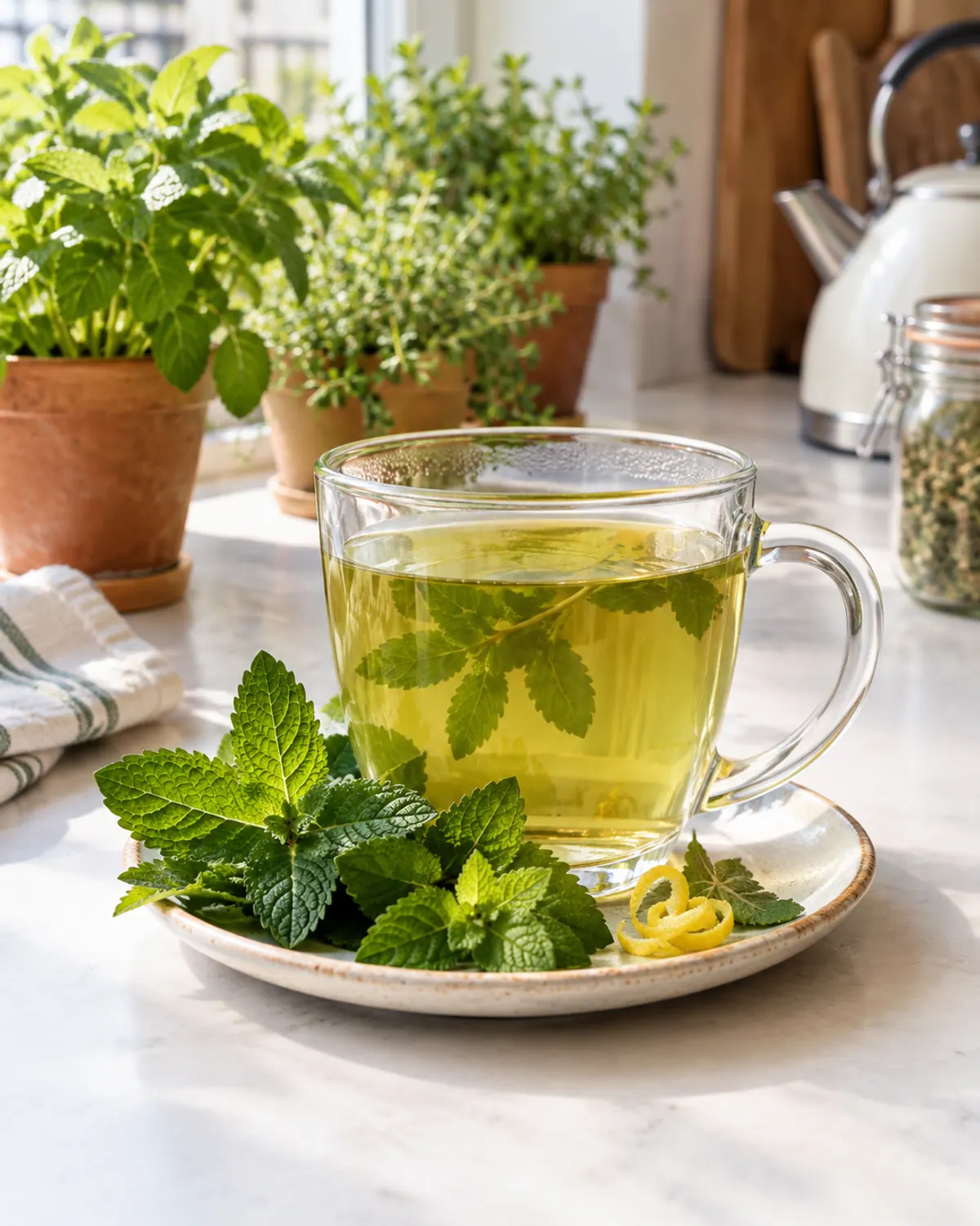
Bright, cool and lemony, the easiest first blend from a windowsill.
Dried, per cup: 1 tablespoon spearmint, 1 teaspoon lemon balm, a pinch of dried lemon peel.
Fresh, per cup: 3 tablespoons spearmint, 1 tablespoon lemon balm, one thin strip of lemon peel.
Steep: 5 to 10 minutes, covered. Also good iced.
- Use the zest only; the white pith turns bitter.
2Peppermint, chamomile and ginger
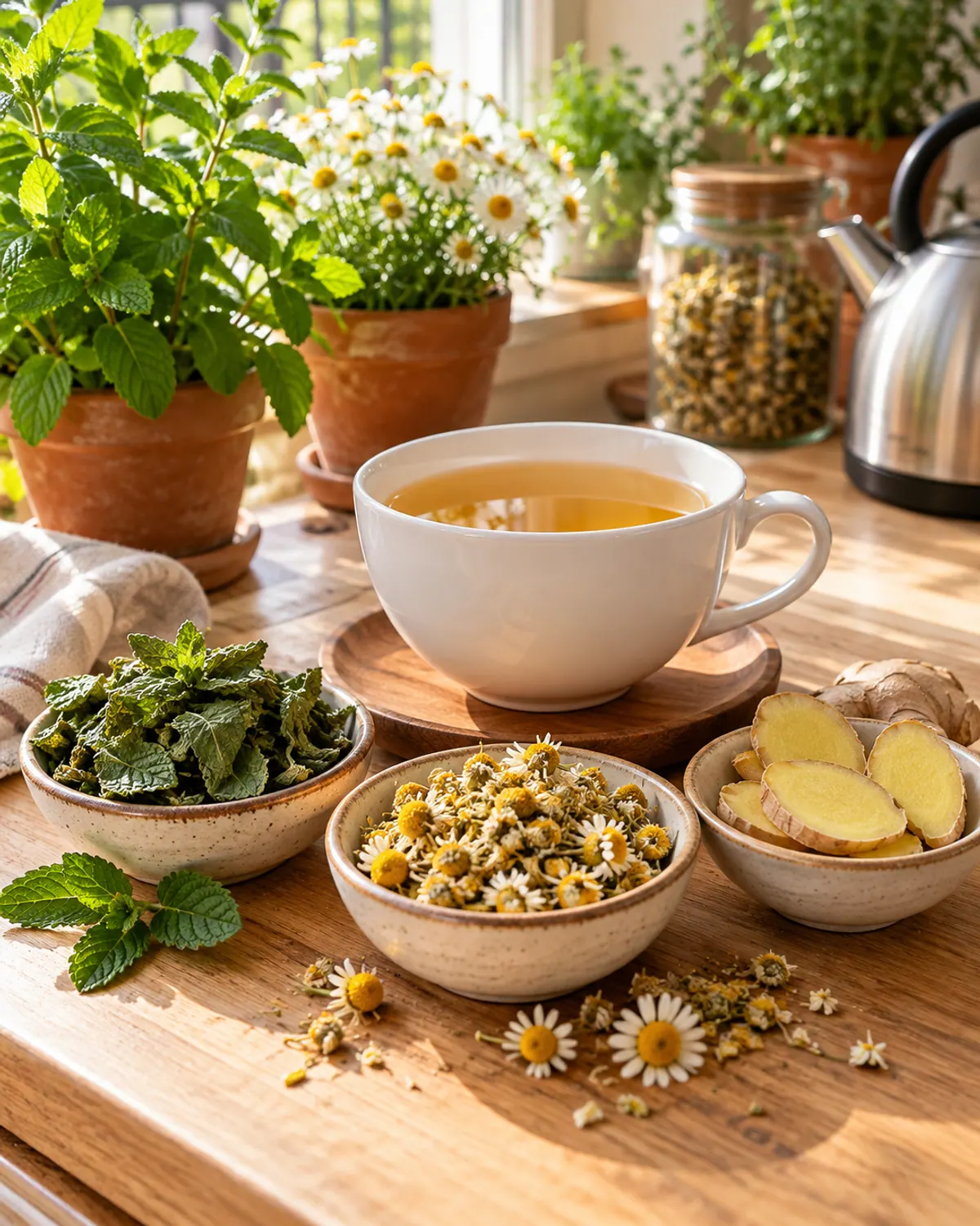
Cool mint over a soft, apple-like chamomile, with a warm ginger finish.
Dried, per cup: 1 tablespoon peppermint, 1 teaspoon chamomile flowers, a pinch of dried ginger.
Fresh, per cup: 3 tablespoons peppermint, 1 tablespoon fresh chamomile flowers, 1 thin slice of fresh ginger.
Steep: 5 to 10 minutes, covered.
- Peppermint is stronger than spearmint; drop to 2 teaspoons dried if it is too sharp.
The easiest way to get chamomile if you do not grow it.
3Spearmint, basil and a pinch of lavender
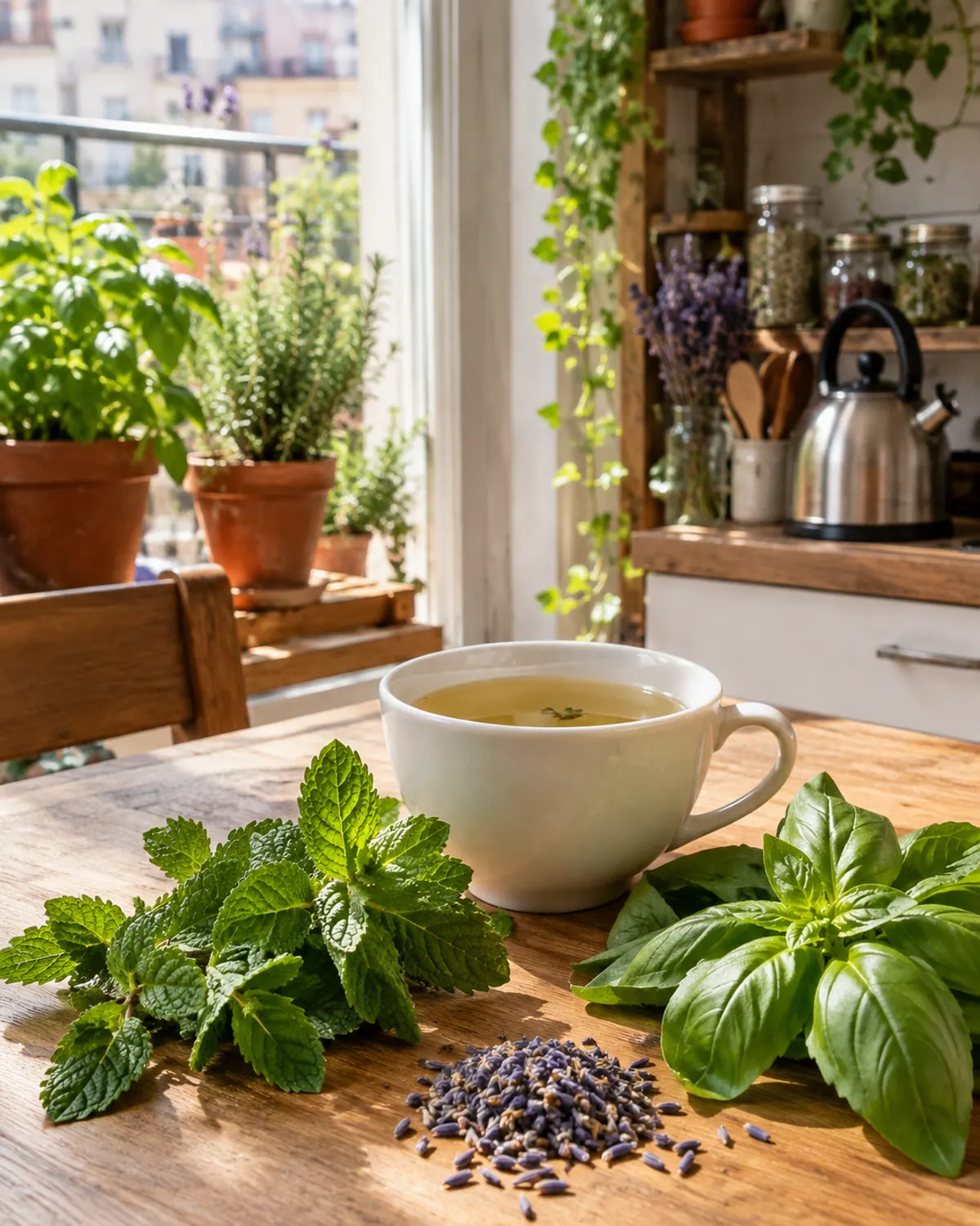
Green and sweet with a floral edge. Food Hero lists lavender with mint as a blend to try.
Dried, per cup: 1 tablespoon spearmint, 1 teaspoon basil, 3 to 5 culinary lavender buds.
Fresh, per cup: 3 tablespoons spearmint, 1 tablespoon basil, 2 or 3 fresh lavender flower buds.
Steep: Taste at 5 minutes; lavender turns soapy if it sits too long.
- Use culinary lavender (English lavender sold for cooking), never florist or craft lavender.
Food-grade lavender for the pinch accents.
Lemon balm and citrus combos
4Lemon balm, basil and lemon peel
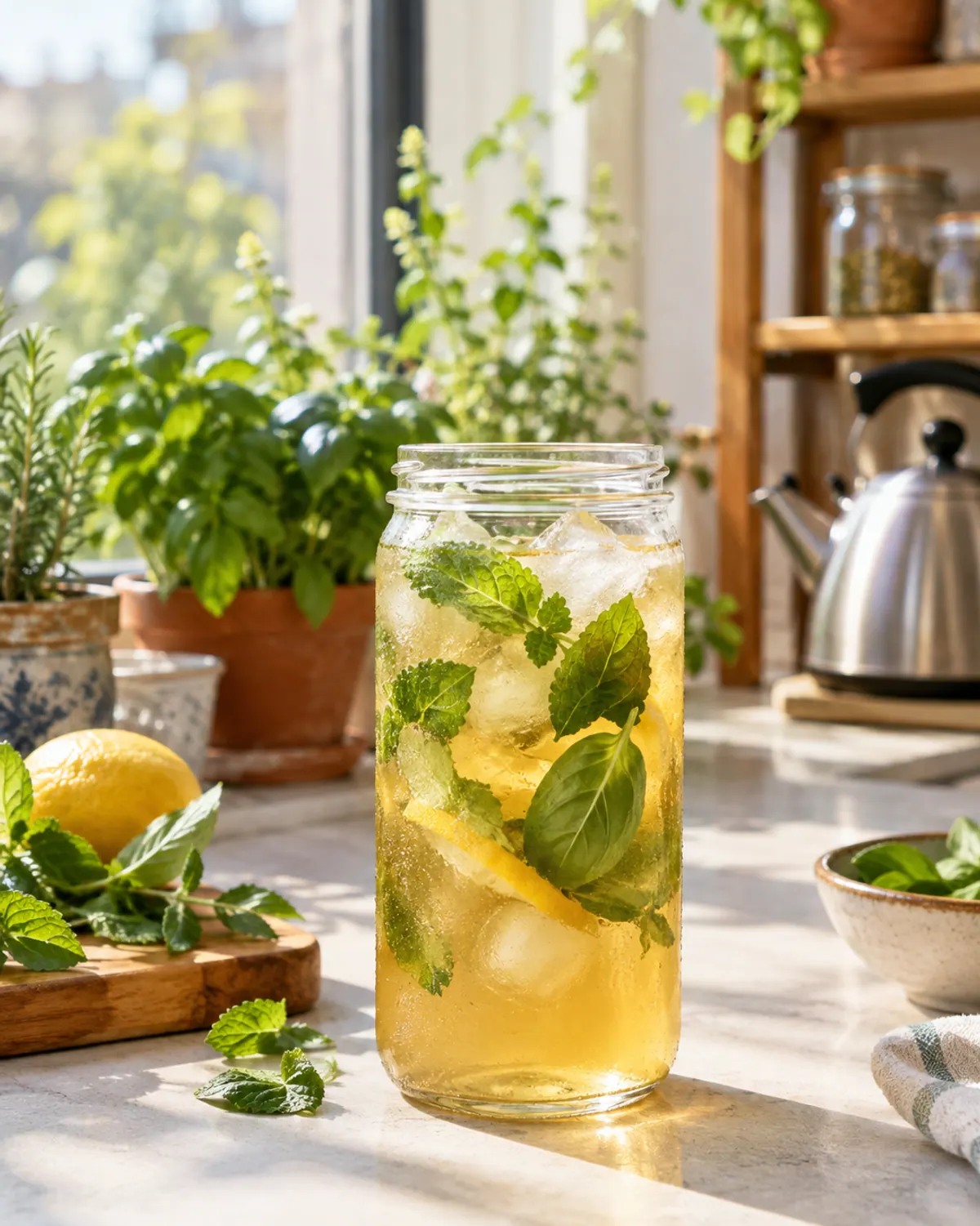
Lemony and sweet, very good cold.
Dried, per cup: 1 tablespoon lemon balm, 1 teaspoon basil, a pinch of lemon peel.
Fresh, per cup: 3 tablespoons lemon balm, 1 tablespoon basil, one strip of lemon peel.
Steep: 10 minutes hot, then chill. Refrigerate leftovers within 2 hours, as Food Hero advises.
- Fresh lemon balm has more flavor than dried; use the fresh amounts when you can.
5Lemon balm, rosemary and orange peel
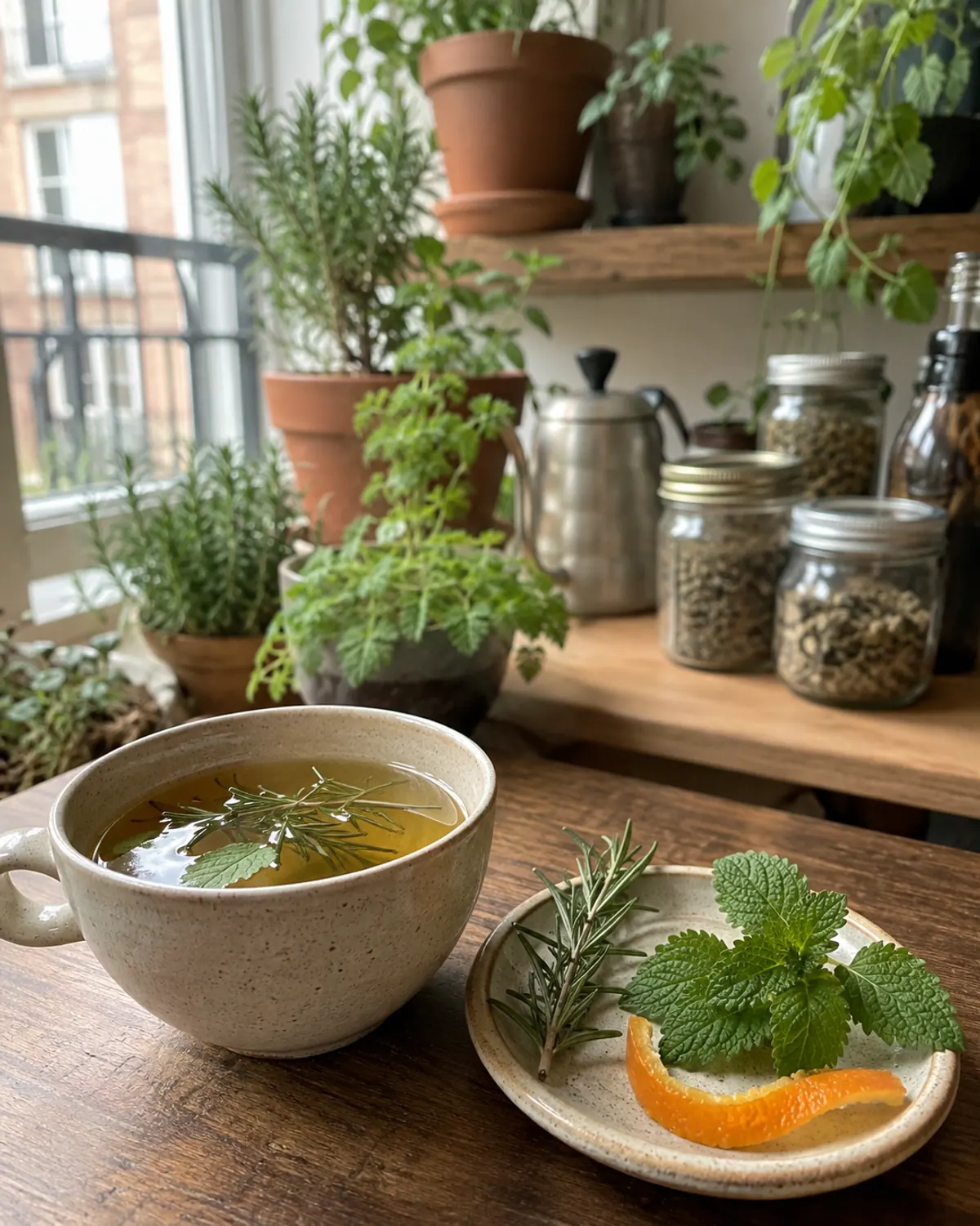
Lemon and pine with a sweet orange note. Food Hero also pairs lemon balm with rosemary.
Dried, per cup: 1 tablespoon lemon balm, 1 teaspoon rosemary, a pinch of dried orange peel.
Fresh, per cup: 3 tablespoons lemon balm, a 2 inch rosemary sprig, one strip of orange peel.
Steep: 5 to 8 minutes; rosemary gets bitter with long steeps.
- Lightly crush dried rosemary needles so they release flavor.
6Lemon balm, thyme and fennel seed
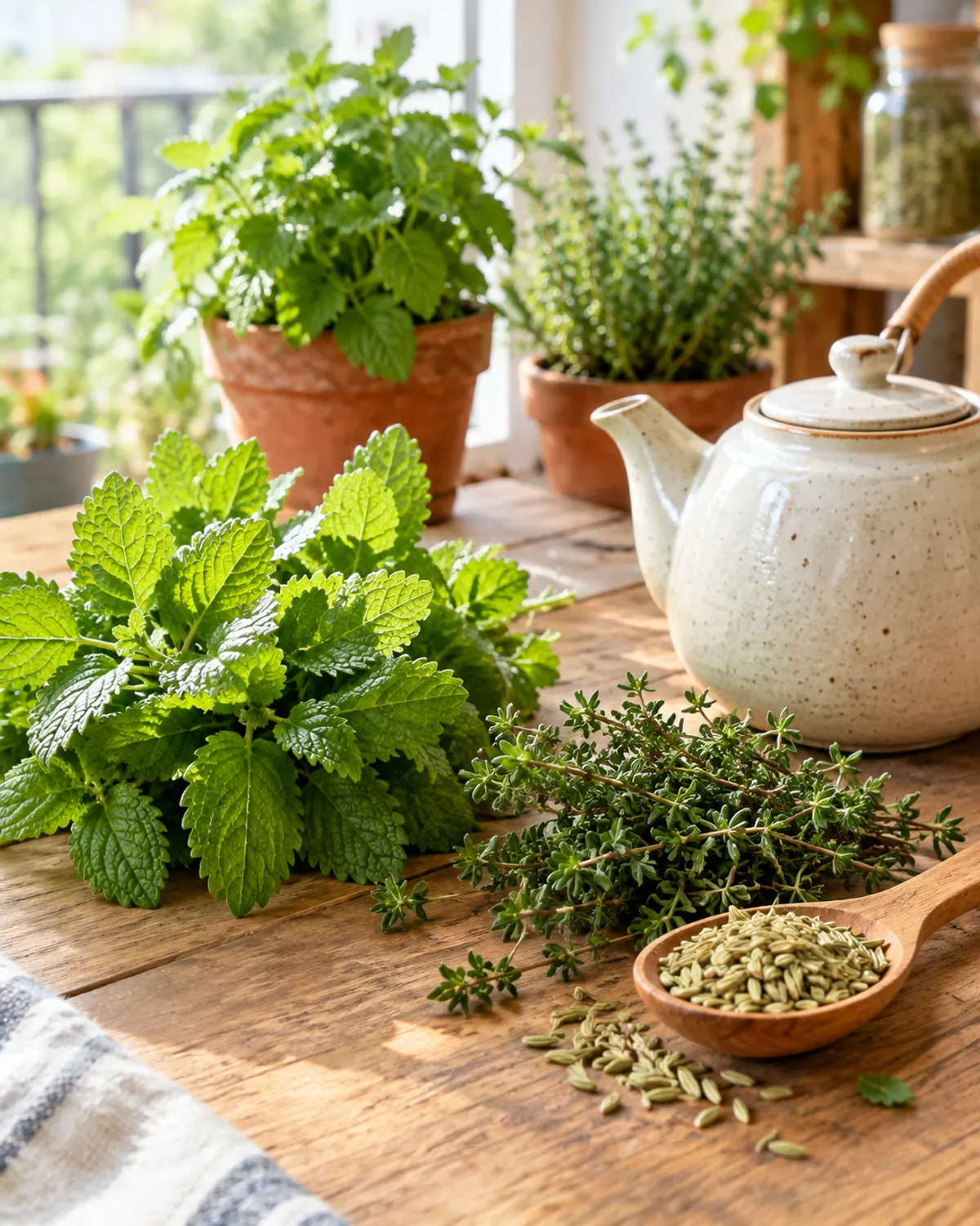
Herbal and lemony with a light licorice finish.
Dried, per cup: 1 tablespoon lemon balm, 1 teaspoon thyme, a pinch of crushed fennel seed.
Fresh, per cup: 3 tablespoons lemon balm, 3 or 4 small thyme sprigs, a pinch of crushed fennel seed.
Steep: 5 to 10 minutes, covered.
- Crush fennel seed in a mortar or under a spoon first, as Food Hero suggests.
Chamomile and lavender combos (a pinch of lavender only)
7Chamomile, lemon balm and lavender
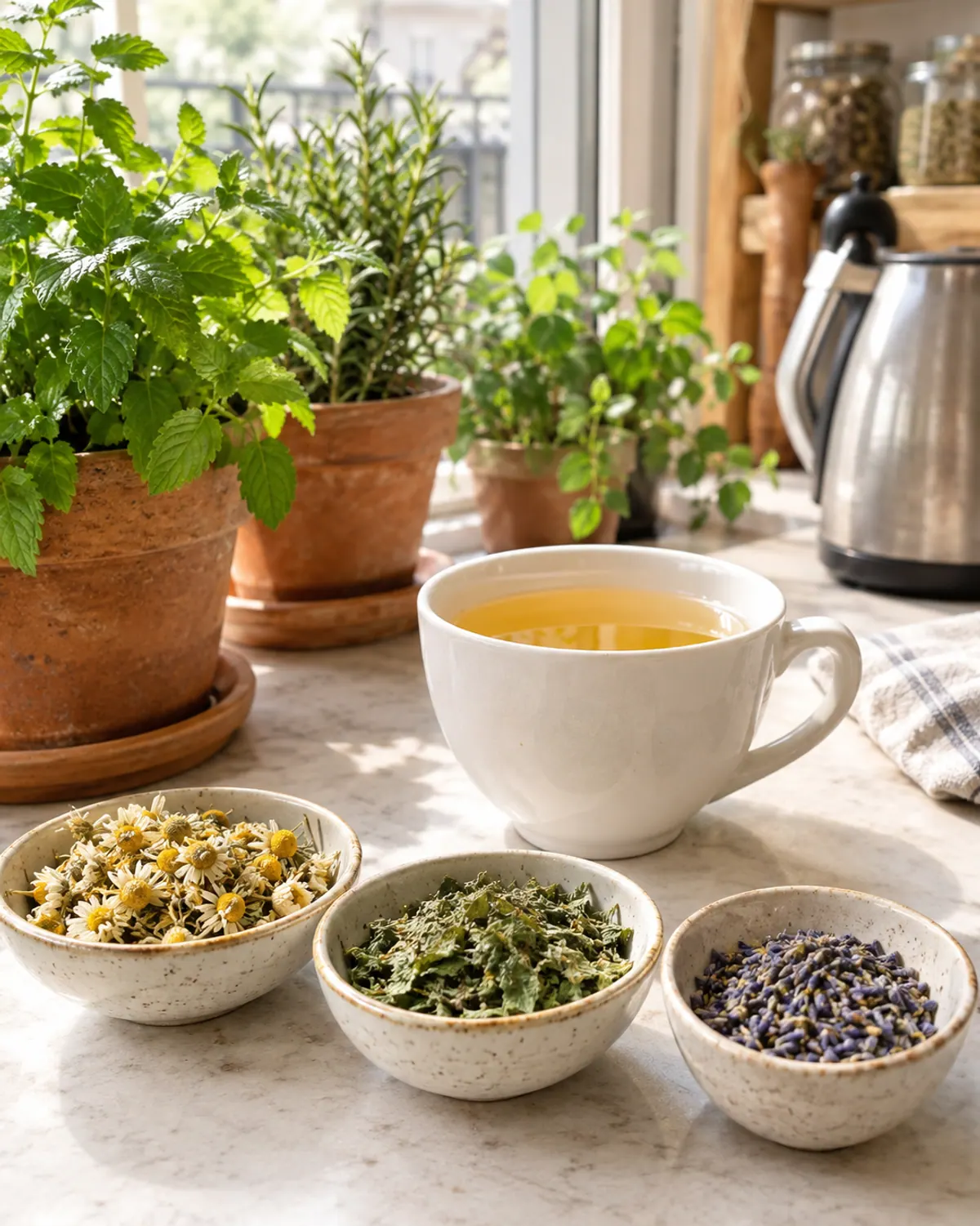
Soft, honeyed and floral, with lemon in the middle.
Dried, per cup: 1 tablespoon chamomile, 1 teaspoon lemon balm, 3 to 5 culinary lavender buds.
Fresh, per cup: 3 tablespoons fresh chamomile flowers, 1 tablespoon lemon balm, 2 fresh lavender buds.
Steep: Taste at 5 minutes.
- If you are allergic to ragweed or daisies, skip chamomile; it is in the same plant family.
8Chamomile, spearmint and orange peel
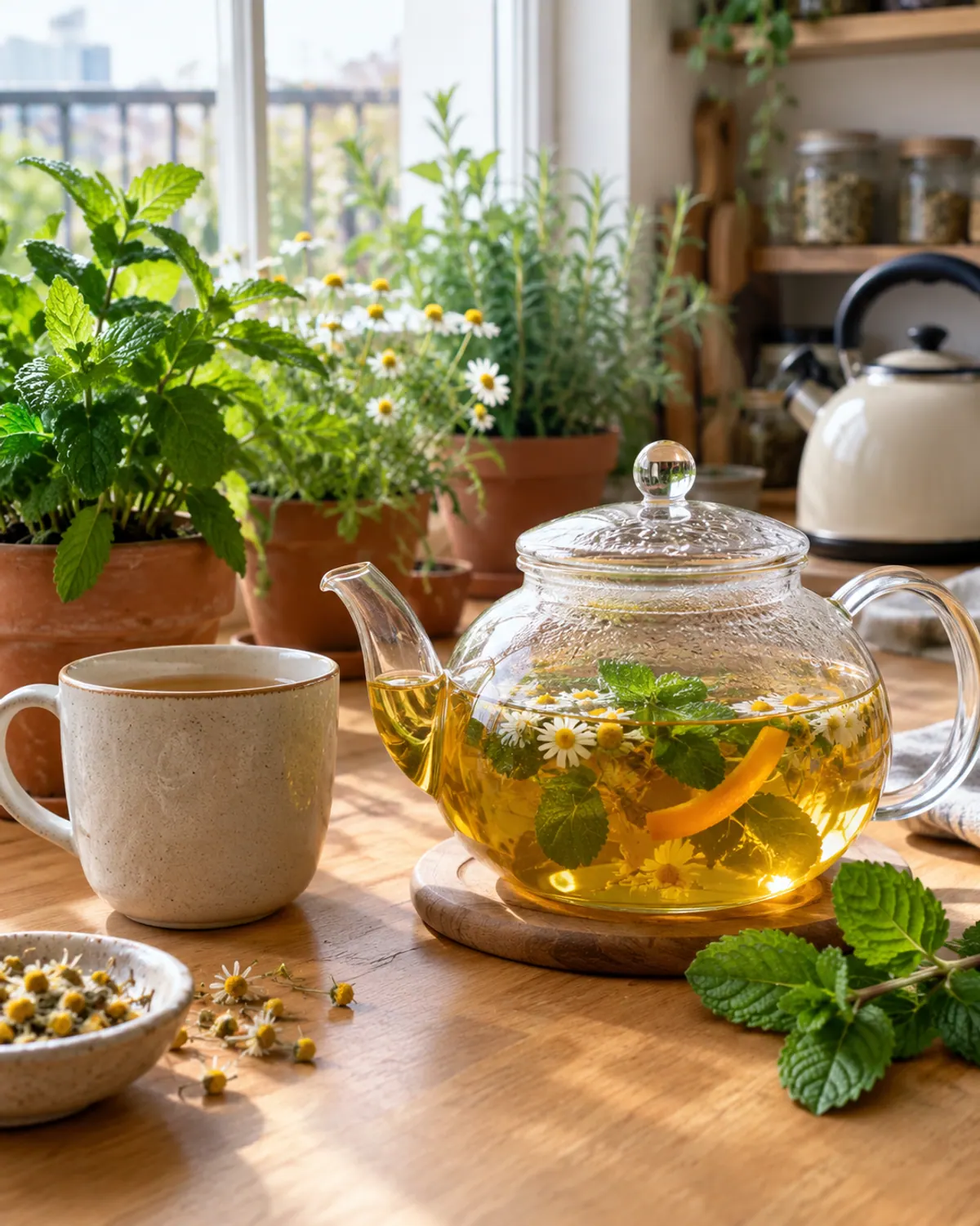
Apple-like chamomile, fresh mint and a little orange sweetness.
Dried, per cup: 1 tablespoon chamomile, 1 teaspoon spearmint, a pinch of dried orange peel.
Fresh, per cup: 3 tablespoons fresh chamomile flowers, 1 tablespoon spearmint, one strip of orange peel.
Steep: 5 to 10 minutes, covered.
- Dried chamomile is easy to find in bulk and keeps its flavor well in a dark jar.
Savory and warming combos
9Thyme, spearmint and cinnamon
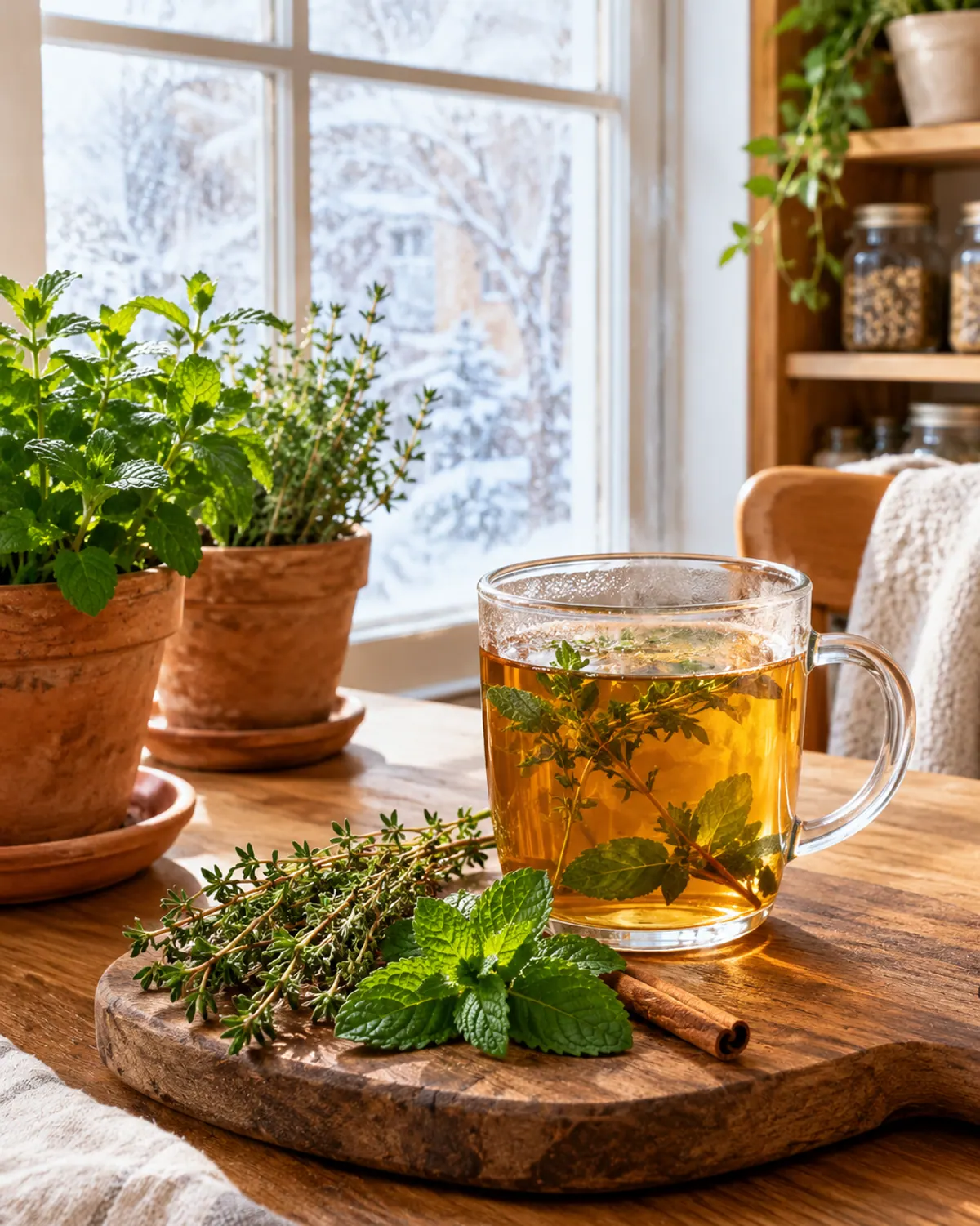
Earthy thyme, cool mint, warm spice. A good winter cup.
Dried, per cup: 1 tablespoon thyme, 1 teaspoon spearmint, a pinch of cinnamon or a 1 inch piece of stick.
Fresh, per cup: 3 tablespoons thyme sprigs, 1 tablespoon spearmint, a 1 inch piece of cinnamon stick.
Steep: 5 to 10 minutes. A spoon of honey suits it.
- Ground cinnamon clouds the cup; a piece of stick keeps it clear.
10Lemon balm, sage and ginger
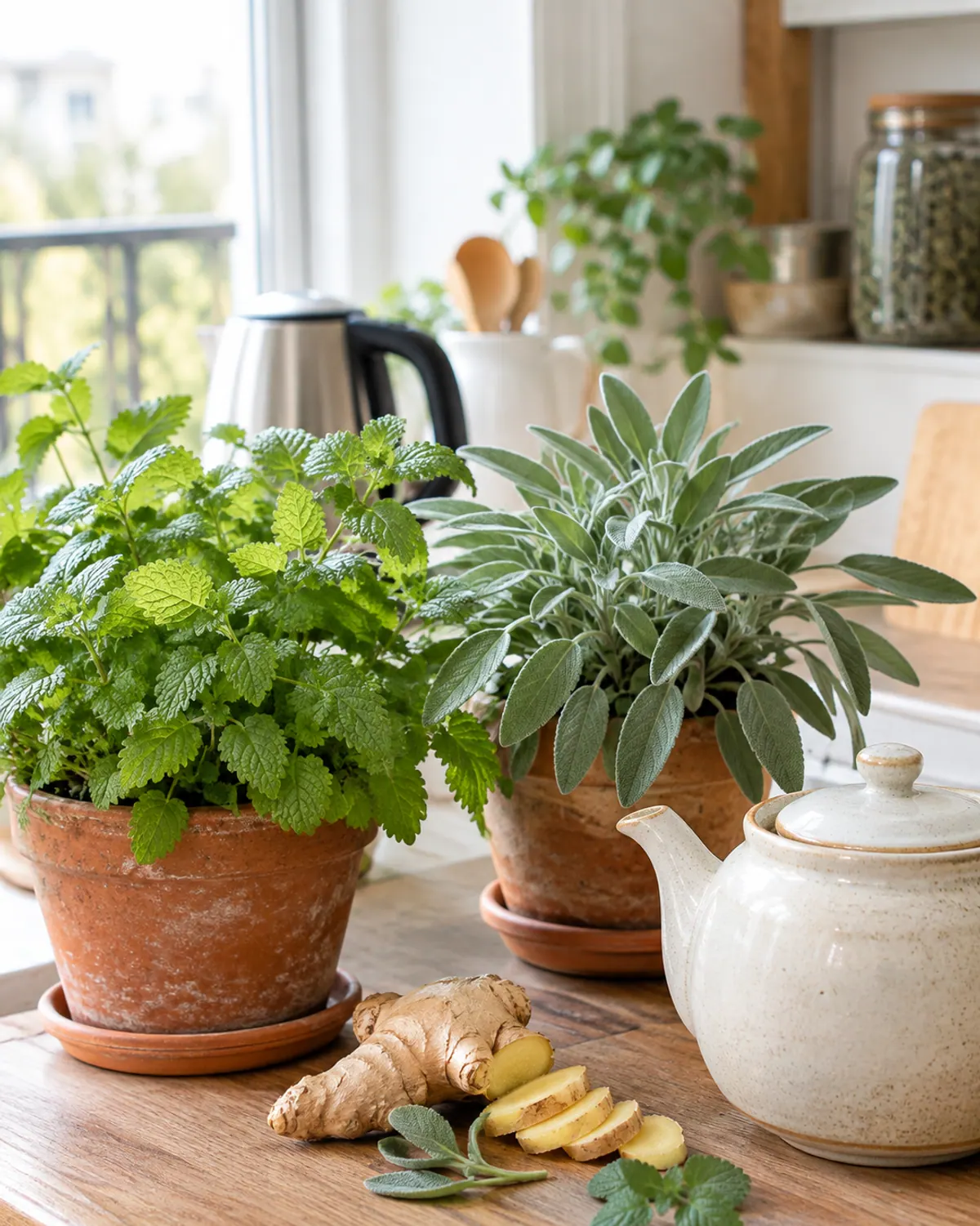
Sage is strong, so it plays support here under mellow lemon balm, with a ginger kick.
Dried, per cup: 1 tablespoon lemon balm, 1 teaspoon sage, a pinch of dried ginger.
Fresh, per cup: 3 tablespoons lemon balm, 2 or 3 sage leaves, 1 thin slice of fresh ginger.
Steep: 5 to 8 minutes; long sage steeps taste medicinal.
- Common garden sage (Salvia officinalis) is the culinary one; ornamental salvias are not for tea.
Hibiscus and rooibos bases (pantry bought)
These two bases do not grow on a windowsill, but a small bag of each opens up a different color and flavor. Pair them with your fresh herbs as the support.
11Hibiscus, spearmint and cinnamon
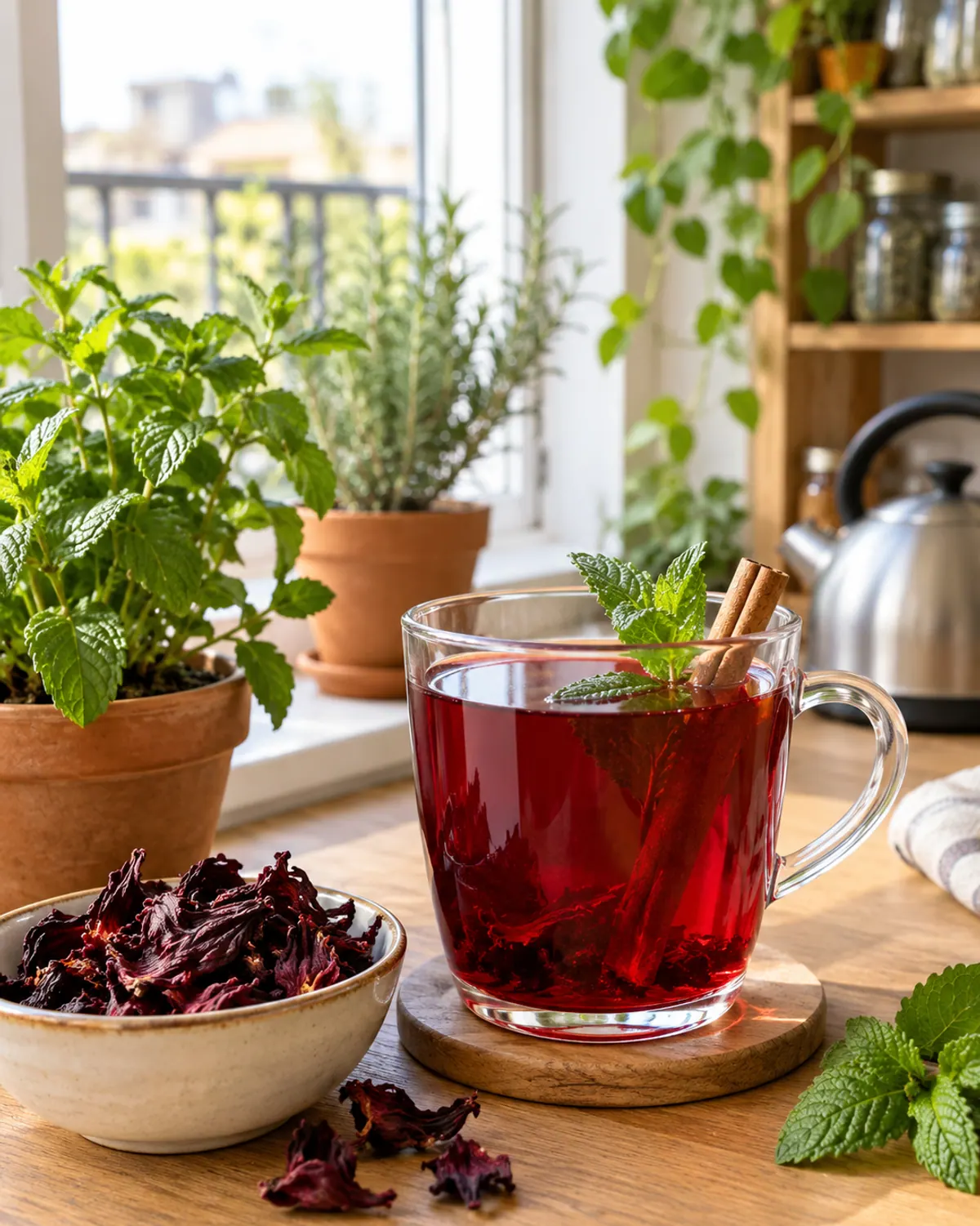
Tart and cranberry-like, bright ruby red, cooled by mint.
Dried, per cup: 1 tablespoon dried hibiscus, 1 teaspoon spearmint, a pinch of cinnamon.
Fresh mint version: 1 tablespoon dried hibiscus, 1 tablespoon fresh spearmint, a small piece of cinnamon stick.
Steep: 5 to 10 minutes. Very good iced with a little honey.
- Hibiscus is sour on its own; the mint and cinnamon round it out.
12Rooibos, chamomile and orange peel
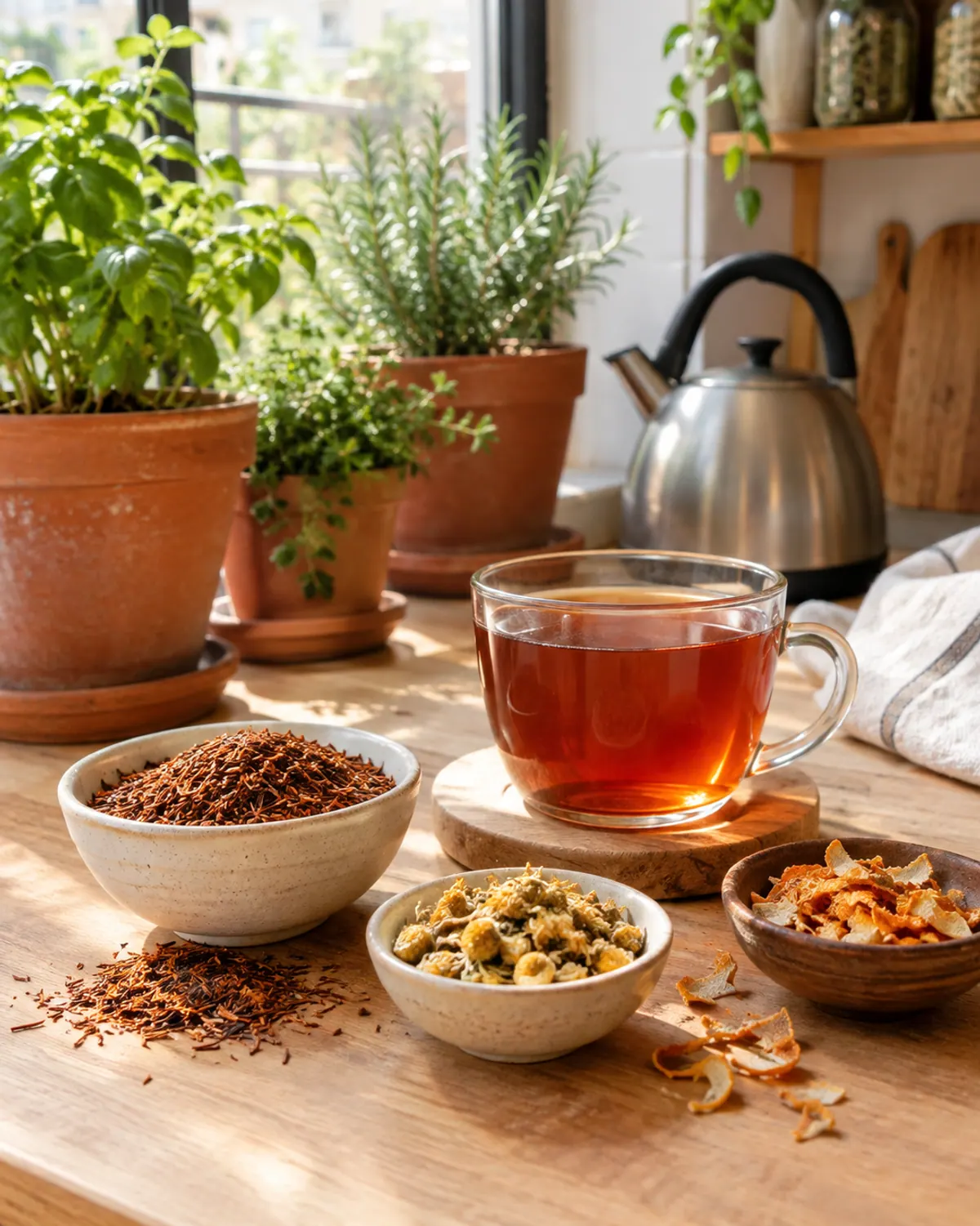
Naturally sweet, nutty and mellow, with a soft citrus note.
Dried, per cup: 1 tablespoon rooibos, 1 teaspoon chamomile, a pinch of dried orange peel.
Fresh chamomile version: 1 tablespoon rooibos, 1 tablespoon fresh chamomile flowers, a strip of orange peel.
Steep: 5 to 10 minutes. Rooibos rarely turns bitter.
- Rooibos is caffeine free and forgiving, a good base for beginners who over-steep.
Fresh vs dried: amounts and steep times
Fresh leaves are mostly water, so you need roughly two to three times more by volume than dried. Bruise fresh leaves gently between your fingers, and crush dried herbs lightly, to release flavor.
| Dried | Fresh | Steep | |
|---|---|---|---|
| Food Hero guideline | 1 to 2 tablespoons | 2 to 4 tablespoons | About 10 minutes, covered |
| 3:1:pinch blend | 1 tbsp + 1 tsp + pinch | 3 tbsp + 1 tbsp + a few leaves | Taste at 5, then 10 minutes |
| Strong accents (lavender, rosemary, sage) | A pinch only | 1 or 2 leaves or buds | Shorter, 5 minutes or less |
| Iced | Double the herbs | Double the herbs | Steep hot, then chill |
Mixing a jar, labeling and shelf life
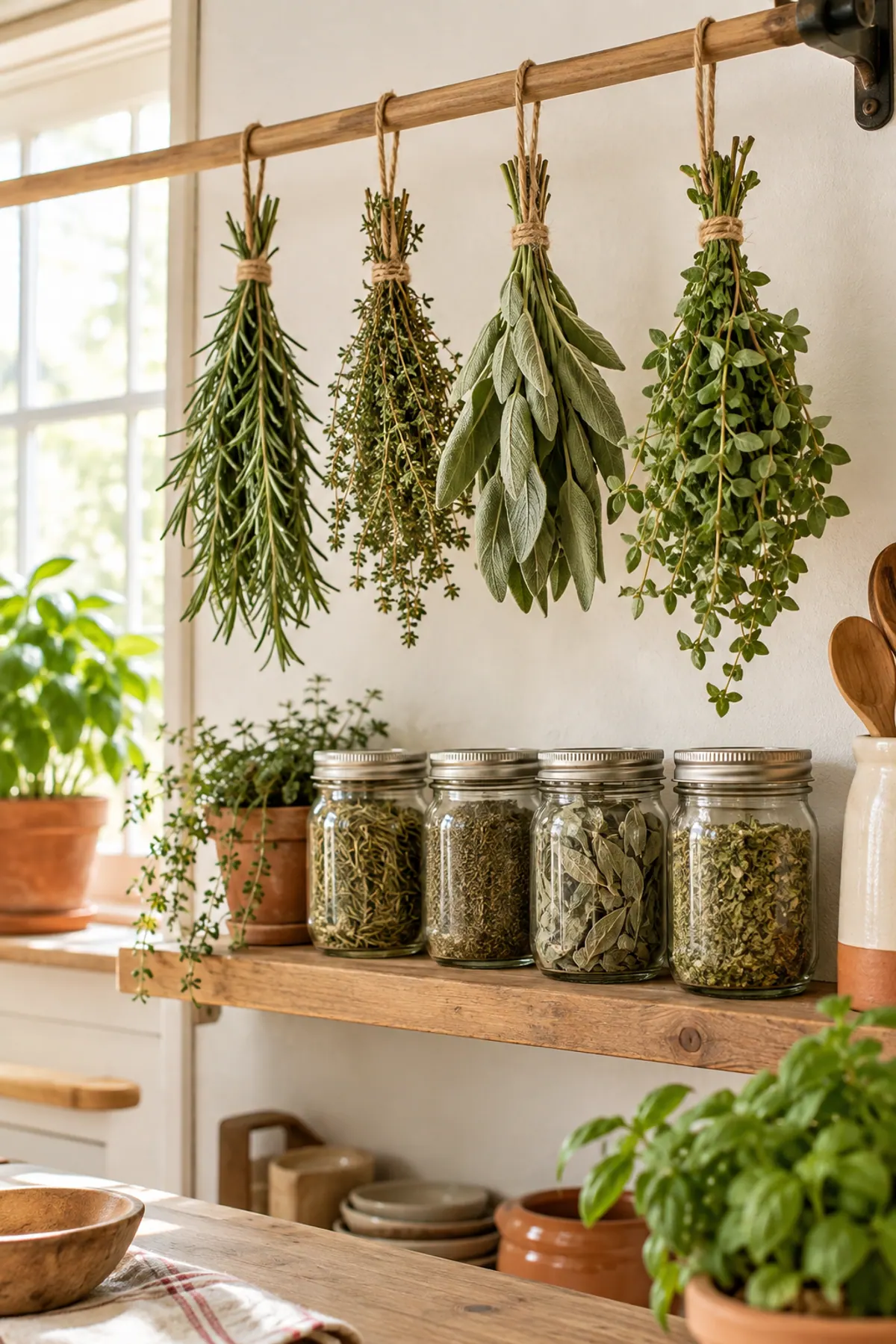
Once you find a cup you like, scale it: 3/4 cup base, 1/4 cup support and 1 to 2 teaspoons of accent, all fully dried. Fresh herbs in a sealed jar will mold, so dry them first with our air, oven or dehydrator guide.
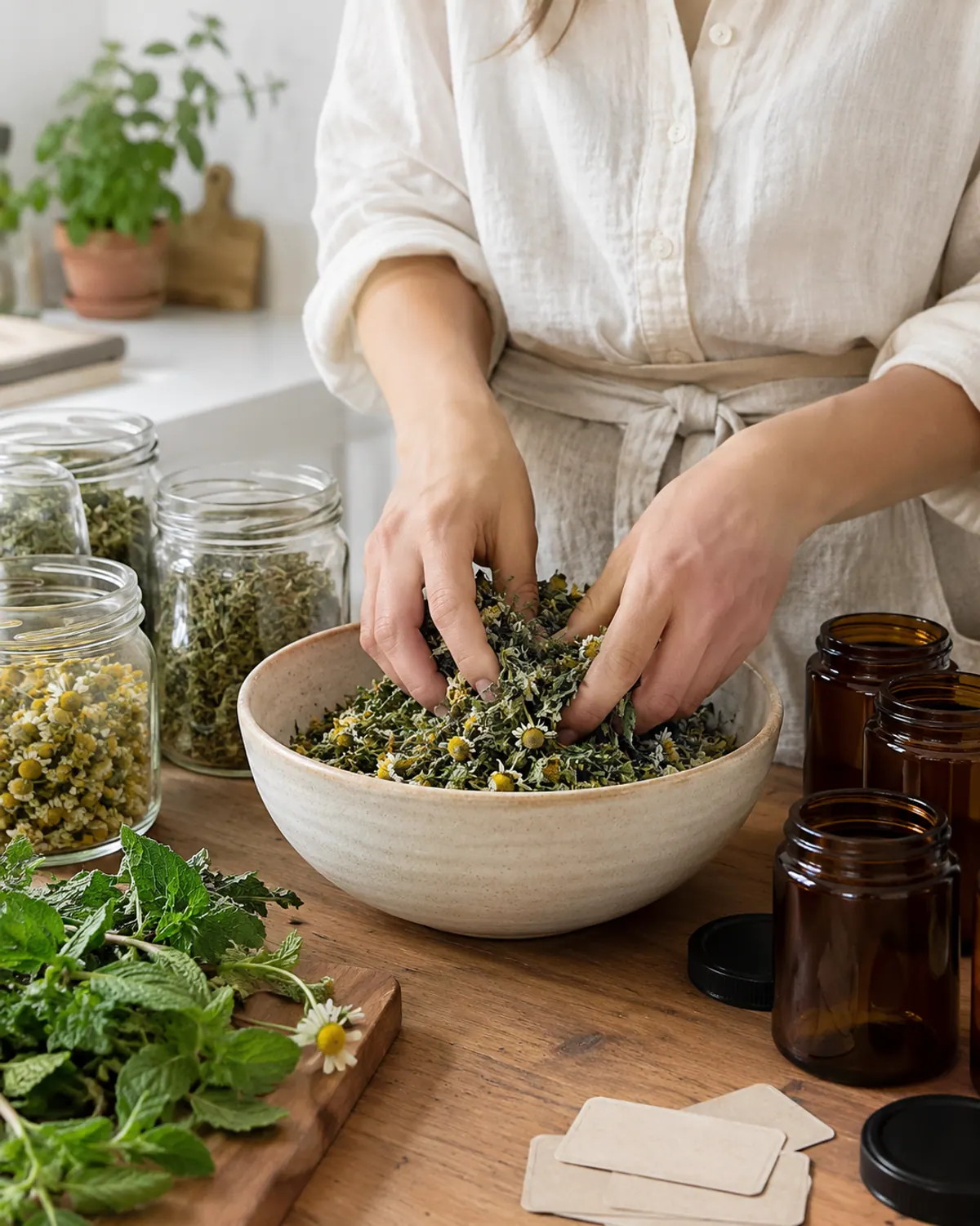
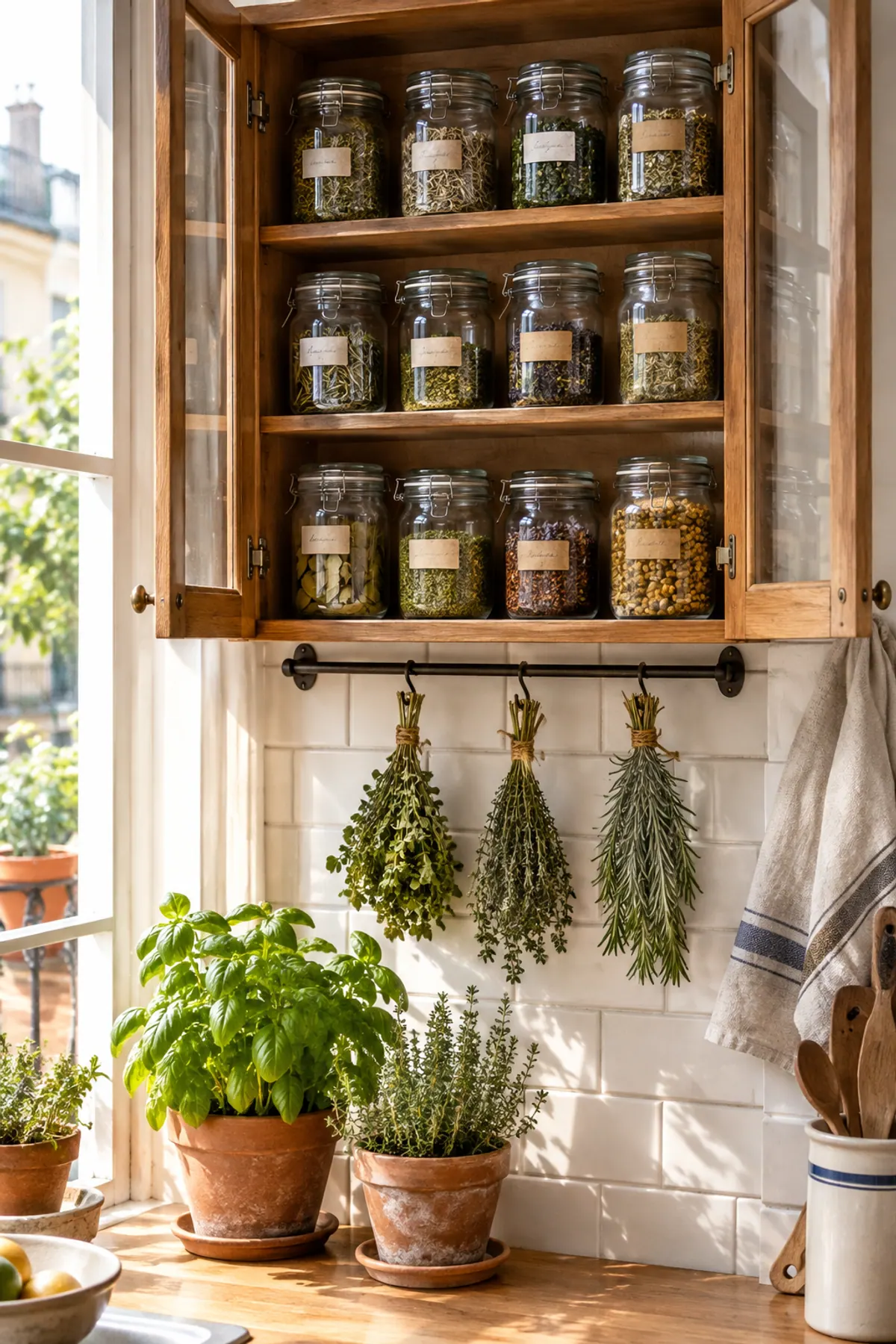
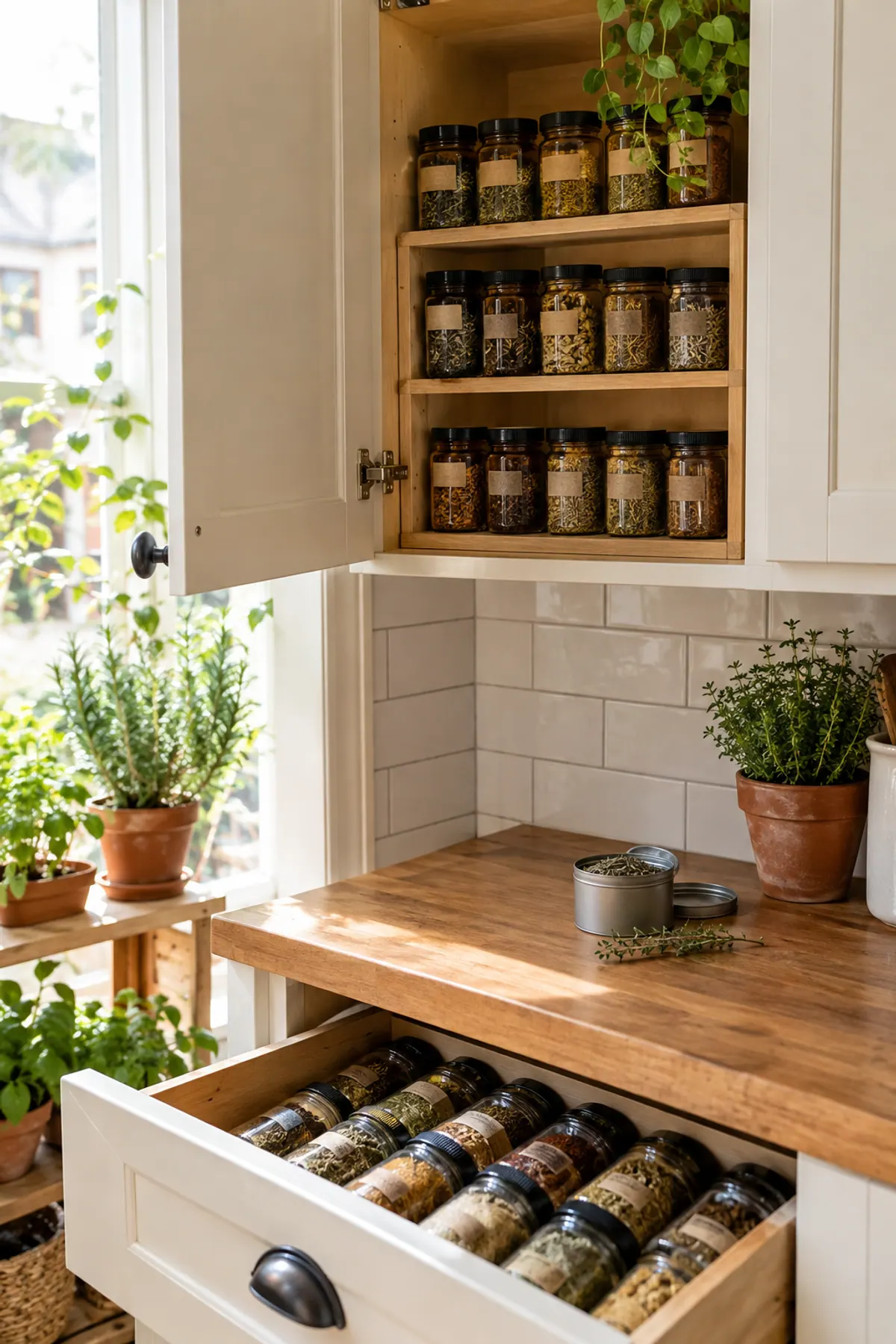
Store the jar airtight, away from the stove and sunlight. Write the blend name, the herbs and the date on the label, and use it within about a year while the flavor is strong. Our dried herb storage ideas cover jars and racks.
Mistakes to avoid
Do
- Start with one base, one support and one pinch
- Steep covered and taste at 5 minutes
- Use culinary lavender, and only a few buds
- Dry herbs fully before they go in a jar
- Write down the amounts you liked
Avoid
- Using florist, craft or sprayed plants
- Equal parts of every herb, which tastes muddy
- Big spoonfuls of lavender, rosemary or sage
- Leaving brewed tea out for hours instead of refrigerating it
- Calling a blend a cure; these are for flavor
Safety notes before you sip
Not medical advice: this is a flavor guide. We make no claims about sleep, mood, digestion or any other health effect, and herbal tea is not a treatment for anything.
Pregnancy and medication: if you are pregnant, breastfeeding, taking medication, or making tea for a child, ask your doctor, midwife or pharmacist before drinking herbal teas regularly.
Pets: the ASPCA lists chamomile, mint and lavender as toxic to cats and dogs. Keep the plants, jars and cooled cups out of reach.
Know your plant: Food Hero's rule is to use only ingredients you know are safe to consume. Rinse fresh herbs under running water, and never use plants sprayed with products not labeled for edibles.
Gifting your blends
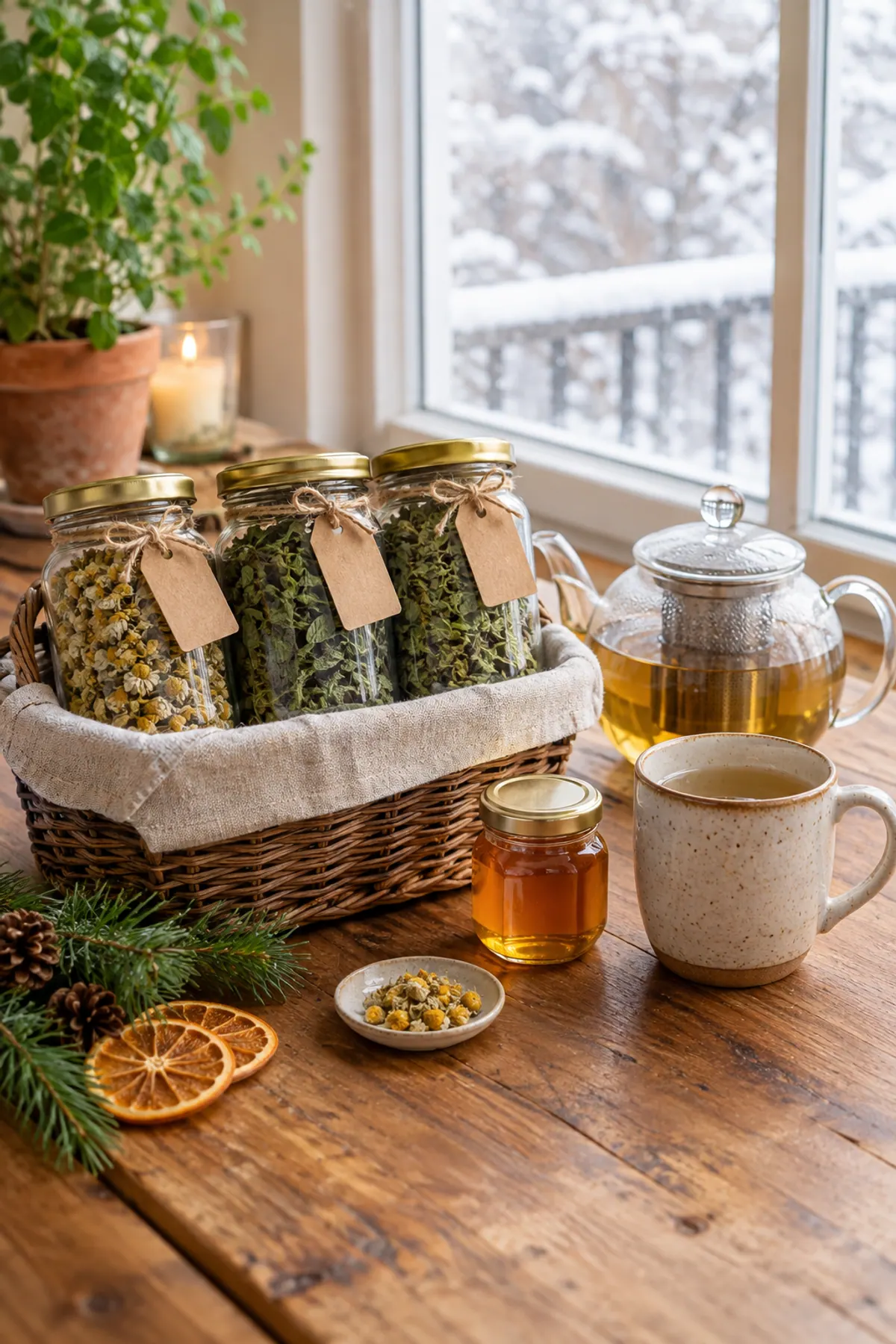
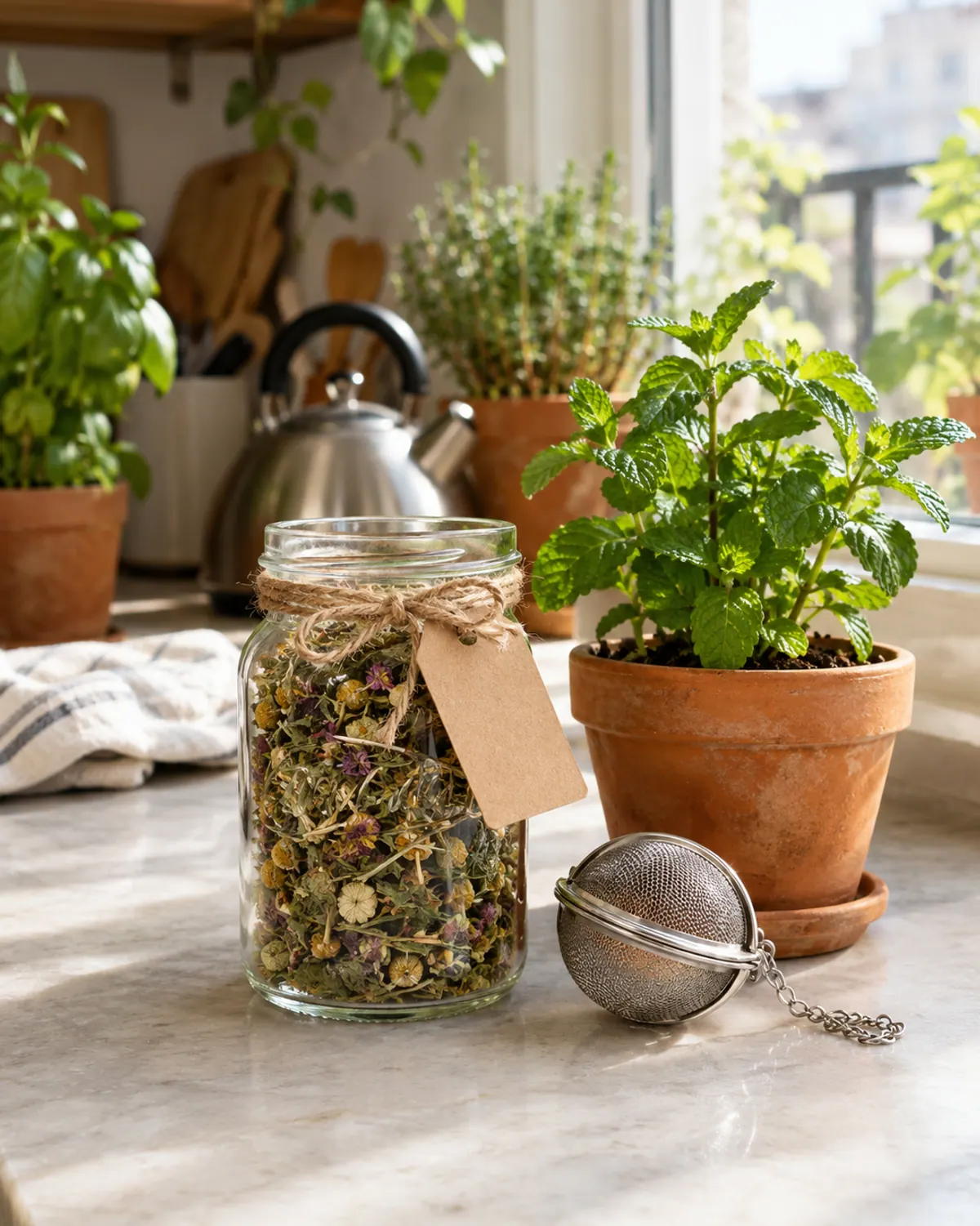
A labeled jar of your own blend, a tea infuser and a small pot of mint make a thoughtful gift. Our herbal tea gift ideas guide has jar, set and grow-your-own gift ideas to pair with these combos.
Herbal tea supplies
Everything you need to start blending
-
Stainless steel tea infuser
Typically $6 to $15
Holds loose herbs in a mug, easy to rinse.
Check price on Amazon for Stainless steel tea infuser - Nice to have
Glass teapot with infuser
Typically $15 to $30
Lets you see the color and lift the herbs out on time.
Check price on Amazon for Glass teapot with infuser -
Amber glass jars with lids
Typically $12 to $25
Dark glass keeps blends away from light.
Check price on Amazon for Amber glass jars with lids -
Dried chamomile flowers, 4 oz
Typically $8 to $15
The easiest way to get chamomile if you do not grow it.
Check price on Amazon for Dried chamomile flowers, 4 oz -
Culinary lavender buds
Typically $8 to $15
Food-grade lavender for the pinch accents.
Check price on Amazon for Culinary lavender buds -
Small digital kitchen scale
Typically $10 to $20
Weigh a jar blend so the next batch tastes the same.
Check price on Amazon for Small digital kitchen scale
We earn from qualifying purchases, which never changes what we recommend. Read our disclosure and editorial guidelines.
Frequently asked questions
How much loose herbal tea do I use per cup?
Oregon State University's Food Hero program suggests 1 to 2 tablespoons dried or 2 to 4 tablespoons fresh herbs per cup of boiling water. With the 3:1:pinch method, a dried cup is 1 tablespoon base, 1 teaspoon support and a small pinch of accent.
How long should herbal tea steep?
Food Hero suggests about 10 minutes, covered. Taste at 5 minutes; blends with lavender, rosemary or sage are often best a little shorter so they do not turn bitter.
Can I mix fresh and dried herbs in one cup?
Yes. Use the fresh amount for the fresh herb and the dried amount for the dried one. Only fully dried herbs should go into a storage jar.
What herbs are easiest to grow for tea?
Spearmint and lemon balm are the easiest bases for a sunny windowsill, with basil and thyme as good supports. Chamomile and lavender are harder indoors, so many people buy them dried.
How long do homemade tea blends last?
Stored airtight away from light and heat, dried blends keep their best flavor for about a year. Label each jar with the date you mixed it.
Is herbal tea safe during pregnancy?
We cannot advise on that. Ask your doctor or midwife before drinking herbal teas while pregnant or breastfeeding.
Save it for later
Pin this to your Kitchen Apothecary board so it's there when you need it.
Save to Pinterest