This post contains affiliate links. As an Amazon Associate we earn from qualifying purchases, at no extra cost to you. Read our disclosure.
Safety first: Herbs can be powerful. If you are pregnant, nursing, take medication or have a health condition, check with your doctor or pharmacist first. Please read our herbal & garden safety notes before you start.
Key takeaways
- Start with six: basil, oregano, thyme, rosemary, sage and mint cover most cooking and all grow in pots.
- Easiest to air dry: oregano, thyme, rosemary, marjoram and lavender in small hanging bundles.
- Dry flat instead: basil, sage, chamomile and lemon balm, which can mold or fade in bundles.
- Store whole in airtight glass, away from the stove and sun, and use within about six months to a year.
- Pets: nine of the 15 are toxic to cats and dogs per the ASPCA, so keep jars closed and bundles high.
In this post27 sections
- What a culinary herbal apothecary cabinet is (and is not)
- The everyday six: basil, oregano, thyme, rosemary, sage and mint
- 1. Basil
- 2. Oregano
- 3. Thyme
- 4. Rosemary
- 5. Sage
- 6. Mint
- The fresh-flavor four: dill, parsley, chives and coriander
- 7. Dill
- 8. Parsley
- 9. Chives
- 10. Coriander seed (from cilantro)
- The aromatic five: bay, culinary lavender, chamomile, lemon balm and marjoram
- 11. Bay laurel
- 12. Culinary lavender
- 13. Chamomile
- 14. Lemon balm
- 15. Marjoram
- Which of the 15 a windowsill can really supply
- Jars, lids and light: keeping dried herbs fresh for a year
- Labels and a simple inventory card
- Styling the herbal apothecary cabinet: vintage, modern or cottage
- Fitting it into a 12 inch kitchen shelf or cart
- Restocking by season from a small garden
- Herbal apothecary shopping list
- FAQ
What a culinary herbal apothecary cabinet is (and is not)
A herbal apothecary, in the kitchen sense, is a cabinet or shelf of labeled jars holding herbs you grew and dried yourself, kept in one place so you can see what you have. This one is for cooking and for the look of a well-kept shelf. It is not a medicine cabinet: nothing here is a remedy, and nothing on this page is medical advice.
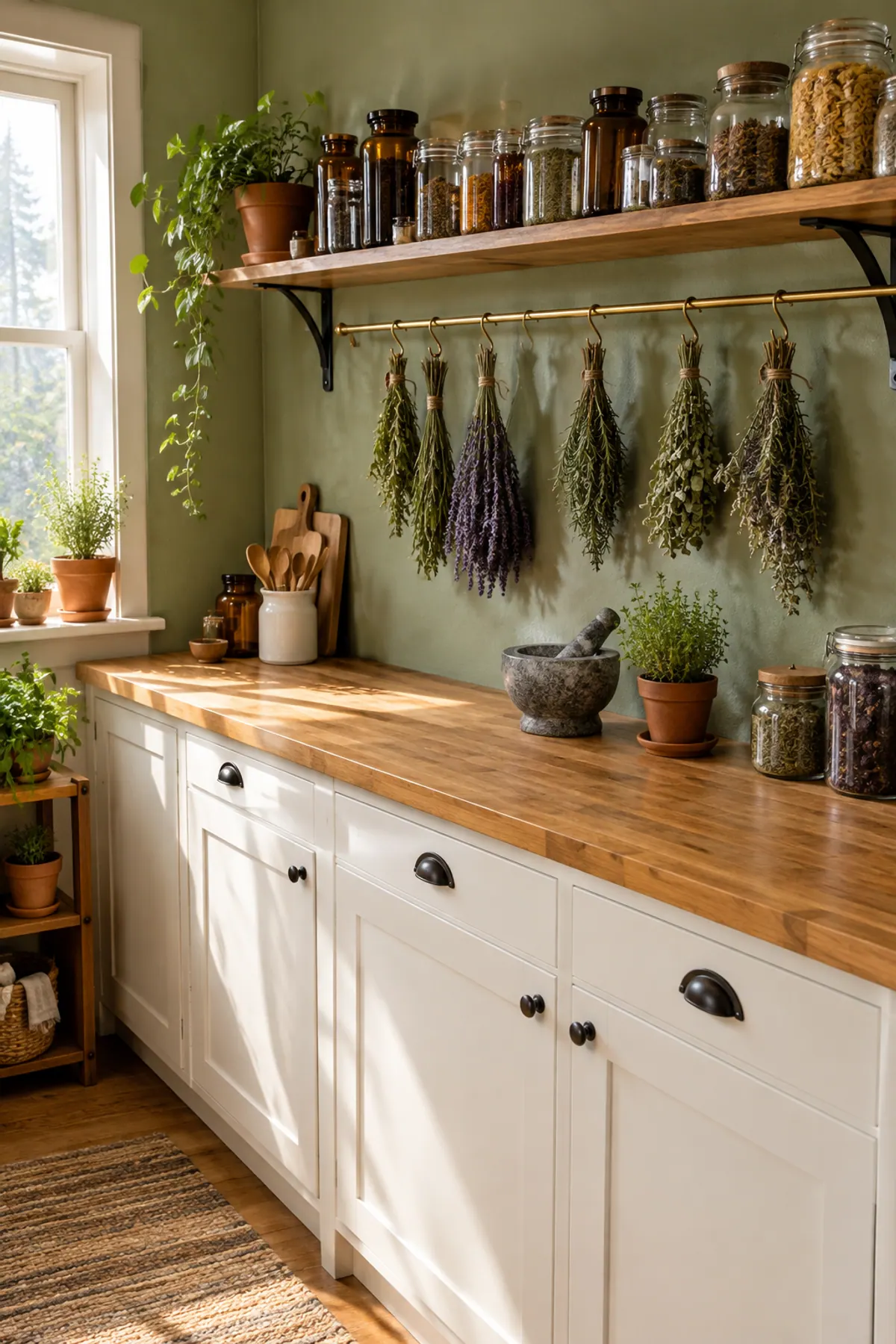
That keeps the list simple. All 15 herbs below are everyday kitchen herbs, each with how to grow it in a small space, how it dries, how to store it and whether it is safe around pets. If you have the shelf and want to style it, our apothecary aesthetic kitchen ideas cover the look in depth; this guide is about what goes in the jars.
| Herb | Grows indoors? | Part to dry | Best drying method | Pets (ASPCA) |
|---|---|---|---|---|
| Basil | Yes, warm sunny window or lamp | Leaves | Screen, dehydrator or low oven | Non-toxic |
| Oregano | Yes, sunny window | Leafy stems | Hang in bundles | Toxic |
| Thyme | Yes, sunny window | Sprigs | Hang in bundles | Non-toxic |
| Rosemary | Yes, with a cool bright winter spot | Sprigs | Hang in bundles | Non-toxic |
| Sage | Yes, sunny window | Leaves | Screen or bundles | Non-toxic |
| Mint | Yes, even an east window | Leafy stems | Bundles or screen | Toxic |
| Dill | Better in an outdoor pot | Fronds and seed | Screen; seed heads in a paper bag | Non-toxic |
| Parsley | Yes, slow but steady | Leaves | Screen or dehydrator | Toxic |
| Chives | Yes, east or south window | Leaves | Dehydrator | Toxic |
| Bay laurel | Yes, as a small potted tree | Leaves | Flat on a tray | Toxic |
| Culinary lavender | Hard indoors; balcony pot | Flower buds | Hang in bundles | Toxic |
| Chamomile | Balcony pot in summer | Flower heads | Screen | Toxic |
| Lemon balm | Yes, east window | Leaves | Screen, quickly | Toxic |
| Marjoram | Yes, sunny window | Leafy stems | Hang in bundles | Toxic |
| Coriander (from cilantro) | Outdoor pot in spring | Seed | Seed heads in a paper bag | Non-toxic |
The everyday six: basil, oregano, thyme, rosemary, sage and mint
Start here. These six cover most cooking, they all grow in pots, and four of them dry so easily that a bundle on a hook is the whole method.
1Basil
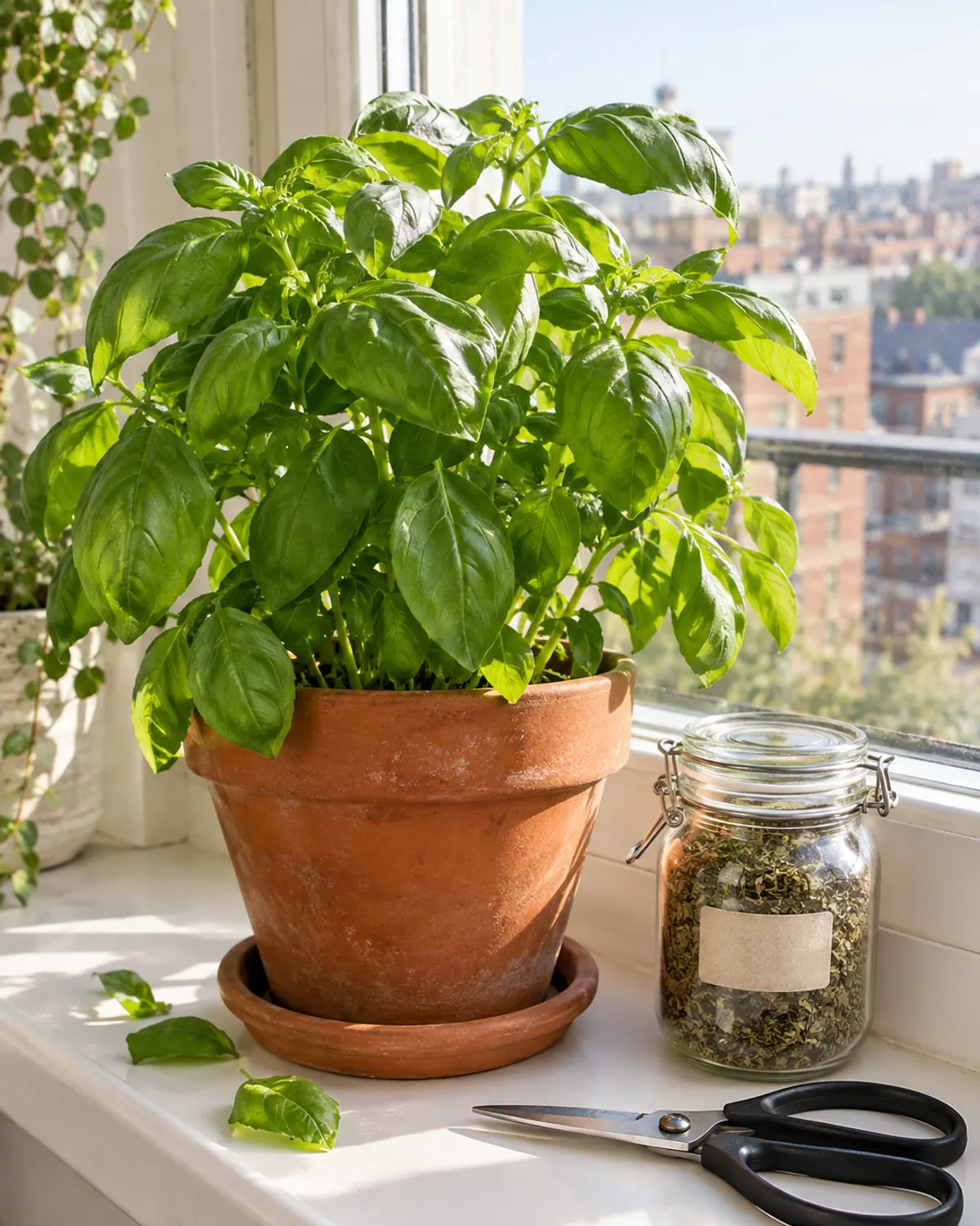
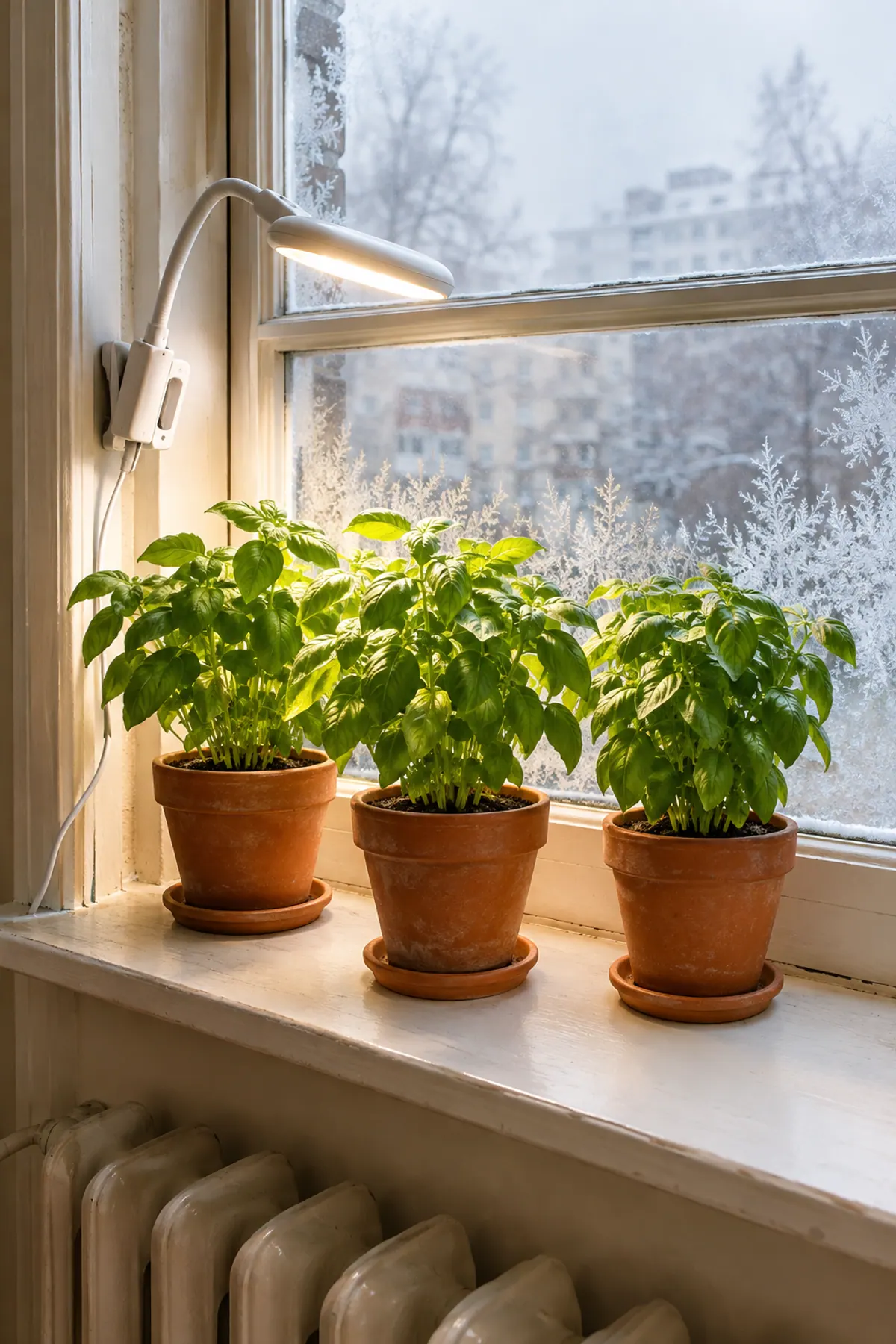
Grow it: the warmest, sunniest window you have, or a grow light in winter; basil sulks below about 50°F.
Dry it: basil holds a lot of water, so bundles can mold. Strip the leaves and dry them flat on a screen, in a dehydrator on low or in an oven at its lowest setting with the door ajar.
Jar it: store the leaves whole and crumble them as you cook.
Pets (ASPCA): non-toxic to cats and dogs.
Dried basil tastes different from fresh, milder and more like hay and anise, so it is the one jar to keep small and refill often. Our indoor basil care guide covers keeping the plant alive through the dark months.
- Pinch the tops before the plant flowers. Leaves picked before bloom dry with more flavor.
2Oregano
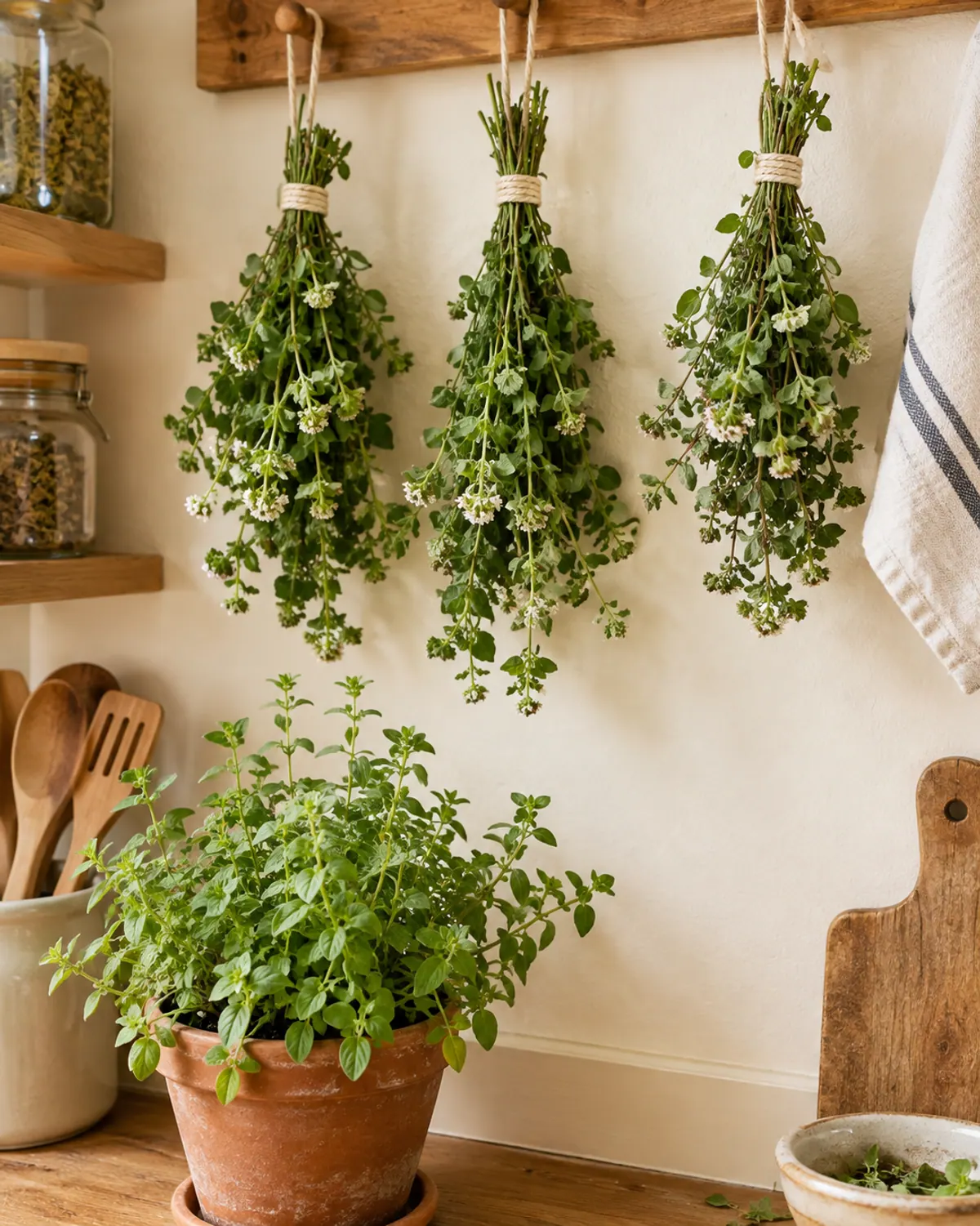
Grow it: a sunny window or a balcony pot; it likes lean soil and drying out between waterings.
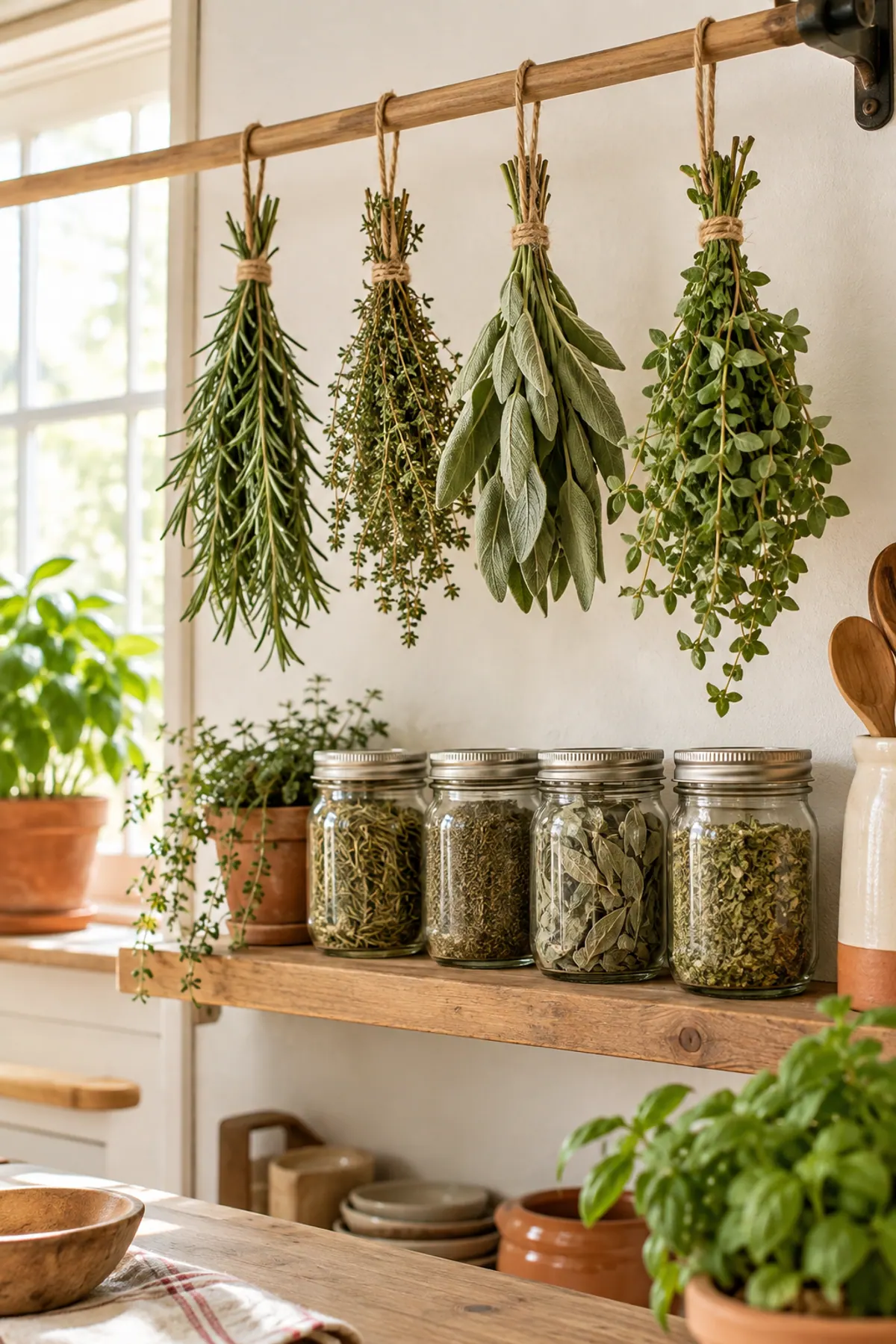
Dry it: one of the easiest herbs to air dry. Tie small bundles and hang them somewhere warm, dark and airy for about one to two weeks.
Jar it: strip the leaves from the stems once they crumble.
Pets (ASPCA): toxic to cats and dogs.
Oregano is the herb that tastes stronger dried than fresh, which makes it the anchor jar of most kitchen cabinets. Greek oregano has the classic sharp flavor; common oregano is milder.
- Cut stems just as the flower buds form. That is when the leaves carry the most aroma.
3Thyme
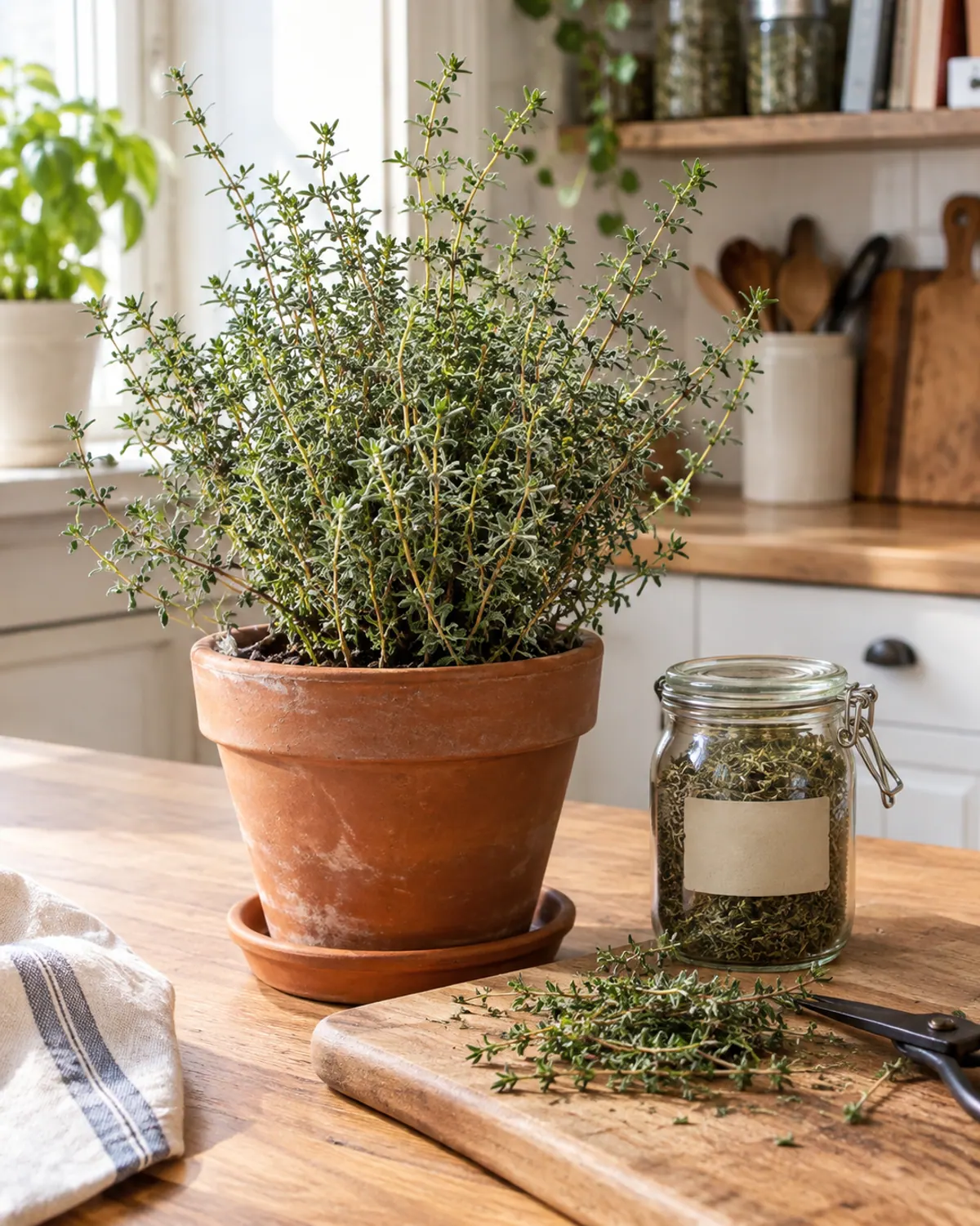
Grow it: a bright window in a terracotta pot with fast-draining mix; let it dry out between waterings.
Dry it: tiny leaves dry fast in bundles or laid flat, usually within a week.
Jar it: rub the dried sprigs between your palms over a bowl and the leaves fall off the stems.
Pets (ASPCA): non-toxic to cats and dogs.
Thyme keeps its flavor well dried and works in almost everything savory. Lemon thyme makes a second jar with a citrus note if you have the room.
- Never cut into the bare woody base. Take the soft green tips and the plant keeps producing.
4Rosemary
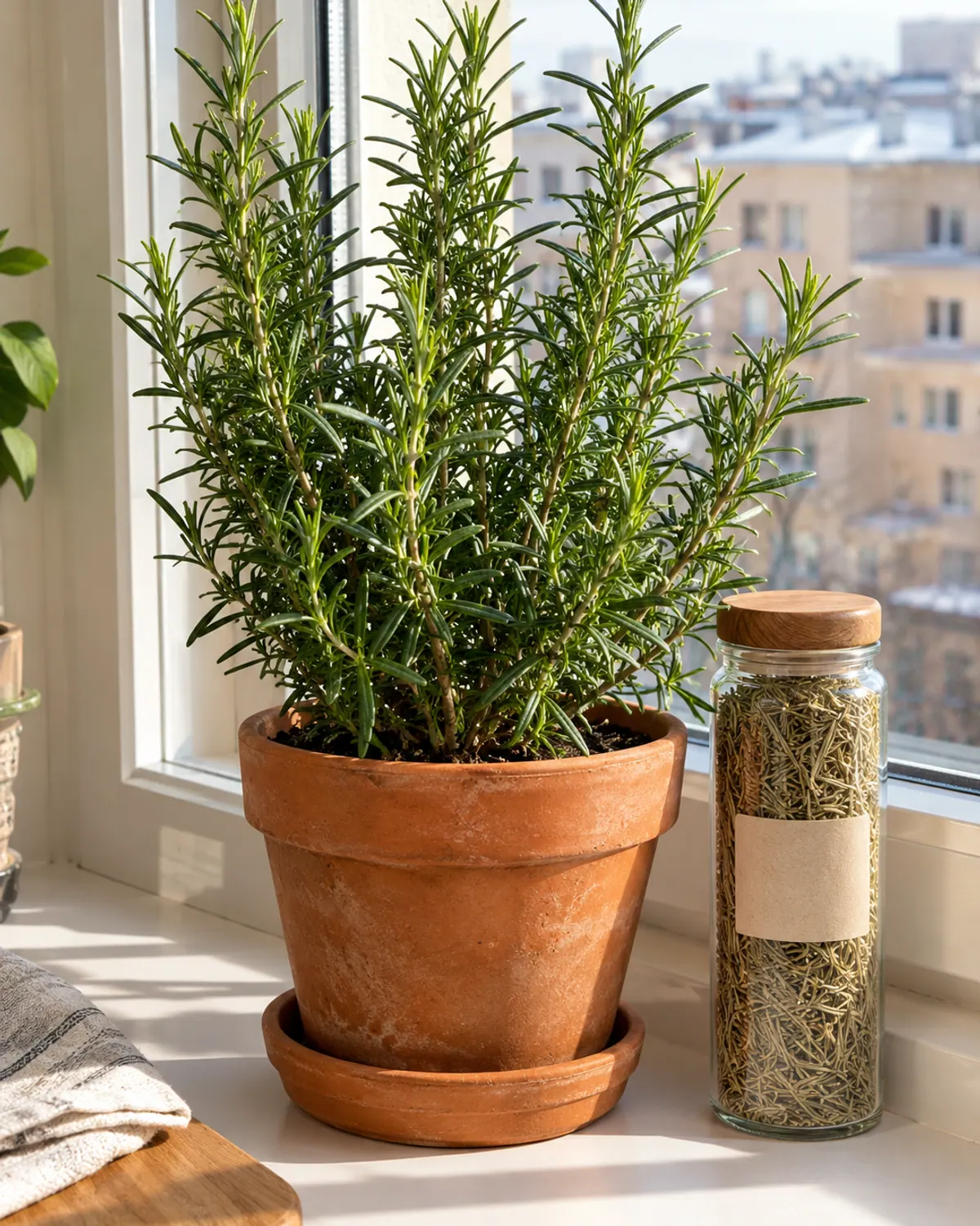
Grow it: bright light and a cooler room in winter; it is one of the fussier herbs indoors and dislikes both soggy roots and bone-dry soil.
Dry it: hang sprigs in bundles; the needles dry in about one to two weeks.
Jar it: store the needles whole. They are tough, so crush them just before cooking.
Pets (ASPCA): non-toxic to cats and dogs.
Rosemary's dried flavor stays strong, so a small jar lasts a long time. For keeping the plant going indoors, see our rosemary indoors guide.
- Grow it in terracotta. The clay dries out faster than plastic, which suits rosemary's roots.
5Sage
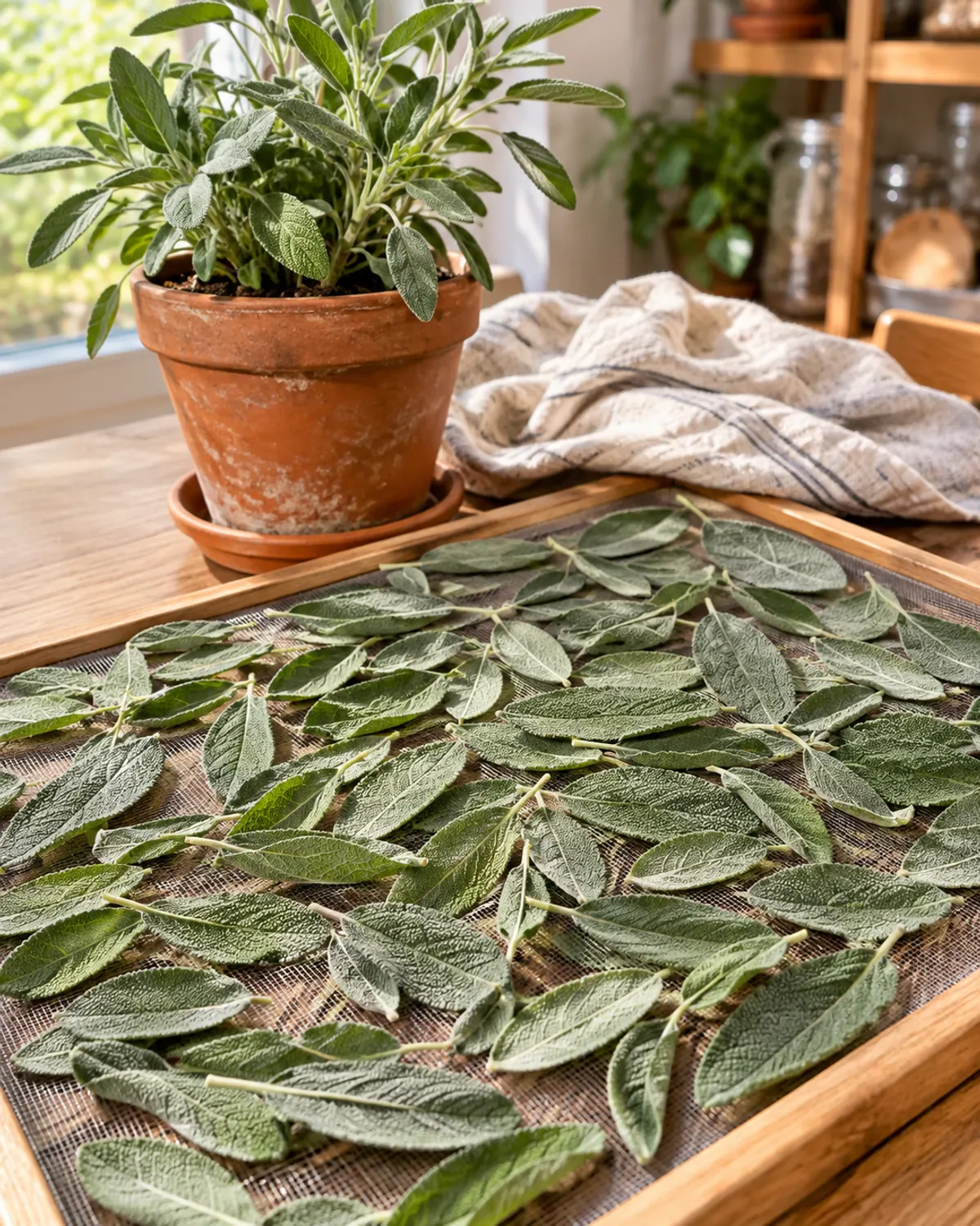
Grow it: a sunny window or balcony, in a pot with good drainage.
Dry it: the thick, soft leaves dry best spread flat on a screen or in small loose bundles, for one to two weeks.
Jar it: keep the leaves whole and crumble them as you need them.
Pets (ASPCA): non-toxic to cats and dogs.
Garden sage (Salvia officinalis) is the culinary one. The leaves stay soft for a while, so give them the full drying time before they go in a jar.
- Use the crumble test: if a leaf bends rather than snaps, it needs more time.
6Mint
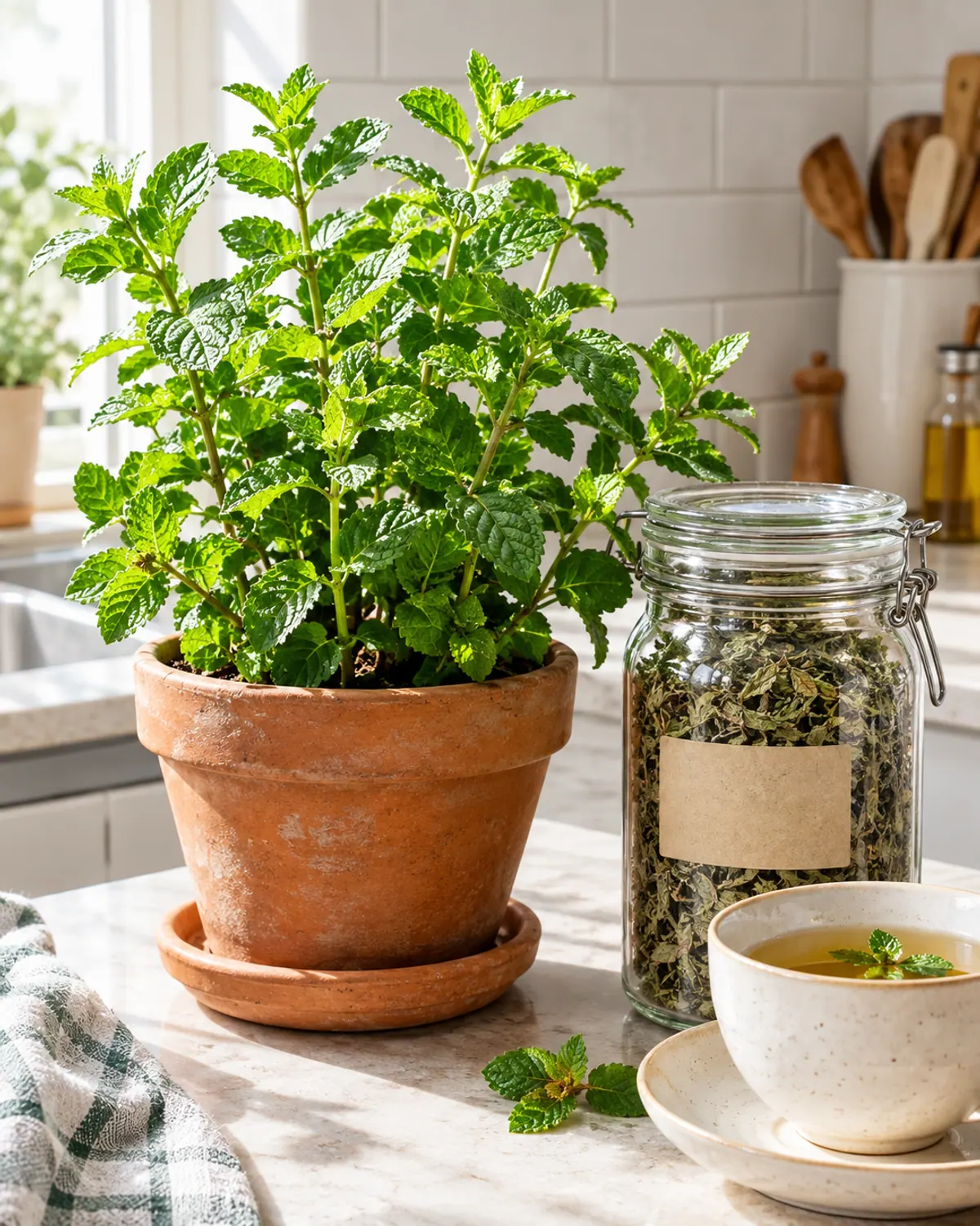
Grow it: its own pot, always, since the roots spread. It tolerates an east window better than most herbs.
Dry it: hang bundles or dry the leaves flat; strip them from the stems once crisp.
Jar it: keep the leaves whole for tea and crumble them for cooking.
Pets (ASPCA): toxic to cats and dogs.
Spearmint is the usual kitchen mint, and peppermint gives a stronger, cooler jar. Mint grows fast, so it is the easiest herb to restock every few weeks.
- Cut mint back by about a third when it gets leggy. It regrows quickly and gives you another harvest.
The fresh-flavor four: dill, parsley, chives and coriander
These four are kitchen staples, but three of them lose much of their flavor when dried. They earn a jar because a mild herb is still useful, and the fourth, coriander seed, keeps better than almost anything else on the shelf.
7Dill
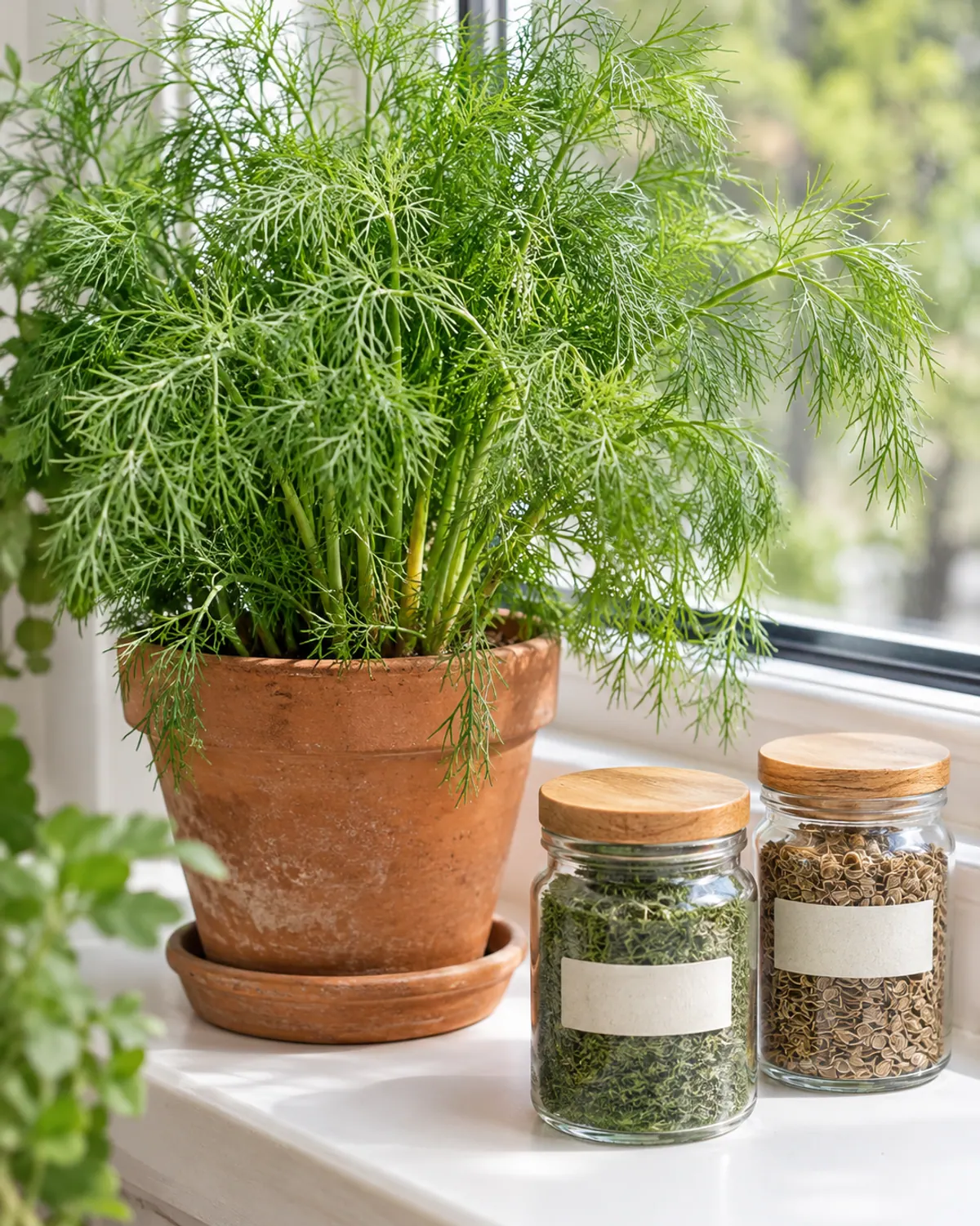
Grow it: a deep outdoor pot in spring or summer is easiest; it grows tall and bolts in heat. Dwarf varieties fit a sunny sill.
Dry it: dry the fronds flat on a screen. For seed, let the heads turn tan, cut them into a paper bag and hang it until the seeds drop.
Jar it: two small jars: one of dried dill weed, one of seed.
Pets (ASPCA): non-toxic to cats and dogs.
Dried dill weed is milder than fresh, while the seed keeps its flavor well, which makes this one herb a double entry on the shelf.
- Label the seed jar clearly. Dill seed and coriander seed look different, but both are small and pale.
8Parsley
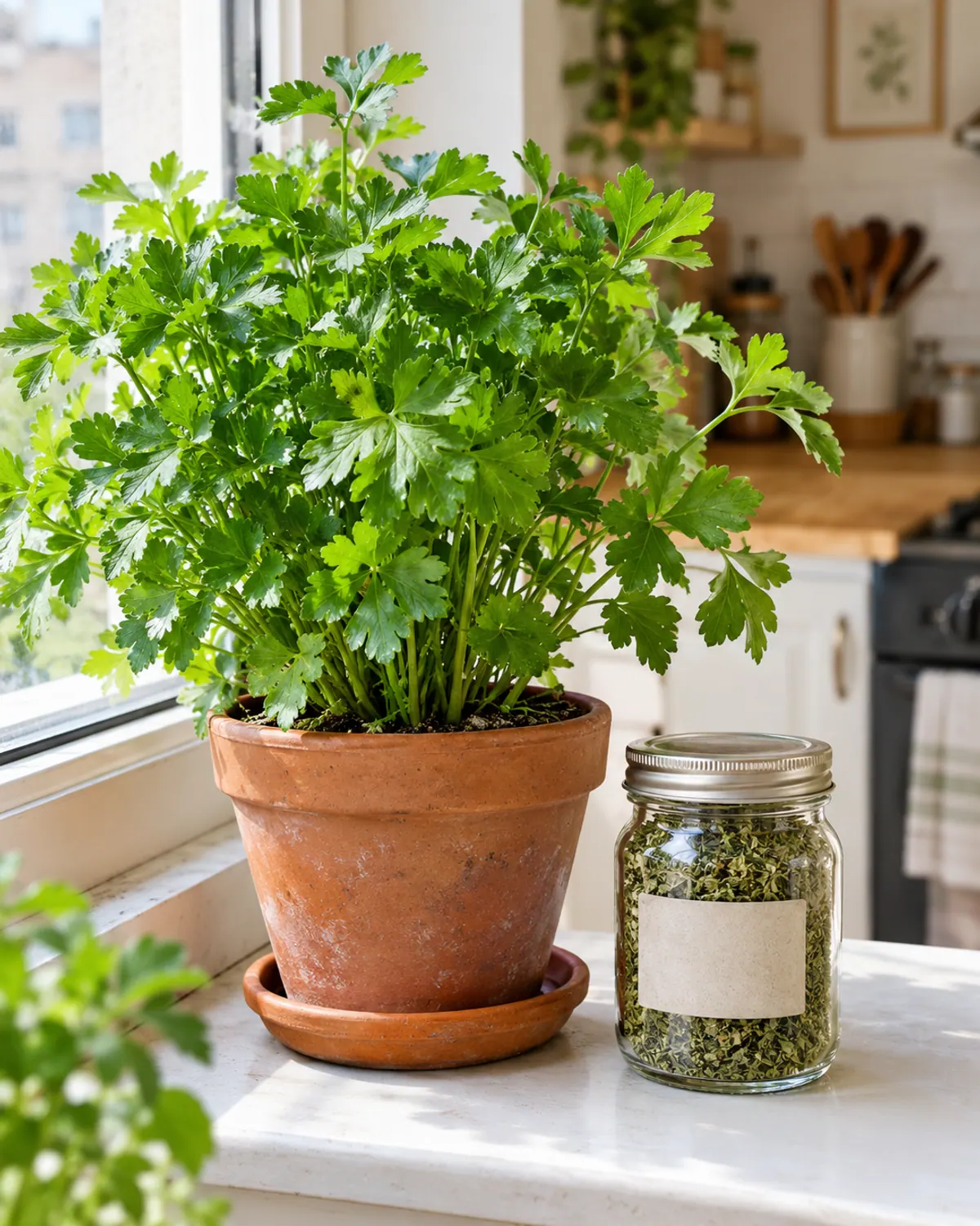
Grow it: a bright window; it grows slowly indoors but keeps going for months.
Dry it: dry the leaves flat on a screen or in a dehydrator; they turn crisp within a few days.
Jar it: store as flakes in a small jar.
Pets (ASPCA): toxic to cats and dogs.
Dried parsley is mild, mostly color and a little green flavor. Flat-leaf parsley dries with more taste than curly, so grow that one if the jar is the goal.
- Harvest the outer stems first. The center keeps growing new leaves.
9Chives
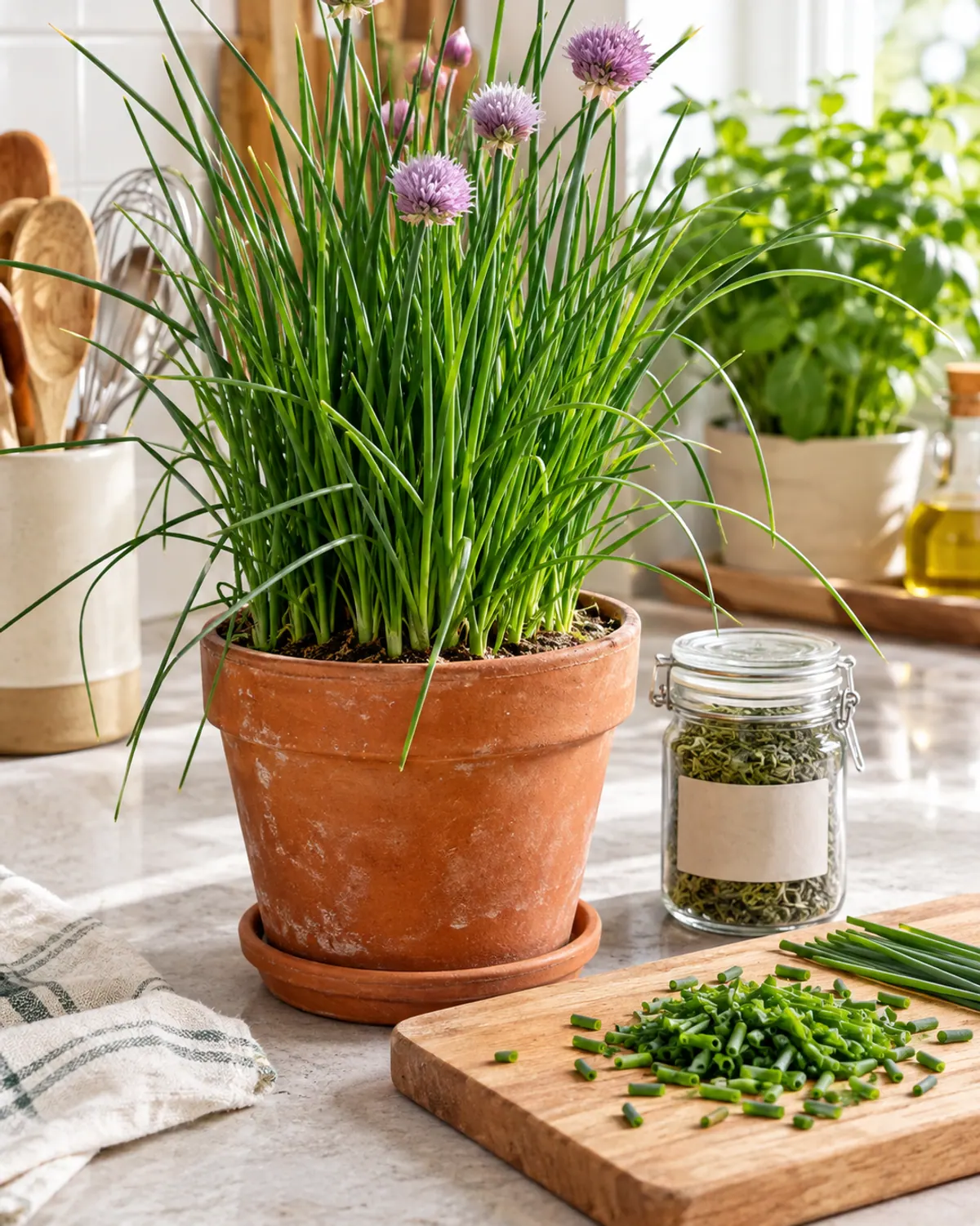
Grow it: an east or south window, in a pot at least 6 inches wide.
Dry it: snip into short pieces and dry in a dehydrator on low; air drying is slow and patchy.
Jar it: a small jar, refilled often.
Pets (ASPCA): toxic to cats and dogs, like all onion-family plants.
Chives lose much of their bite dried. Many cooks freeze snipped chives instead and keep only a small jar on the shelf for its looks and a mild onion note.
- Cut chives about 2 inches above the soil. They regrow from the base within a few weeks.
10Coriander seed (from cilantro)
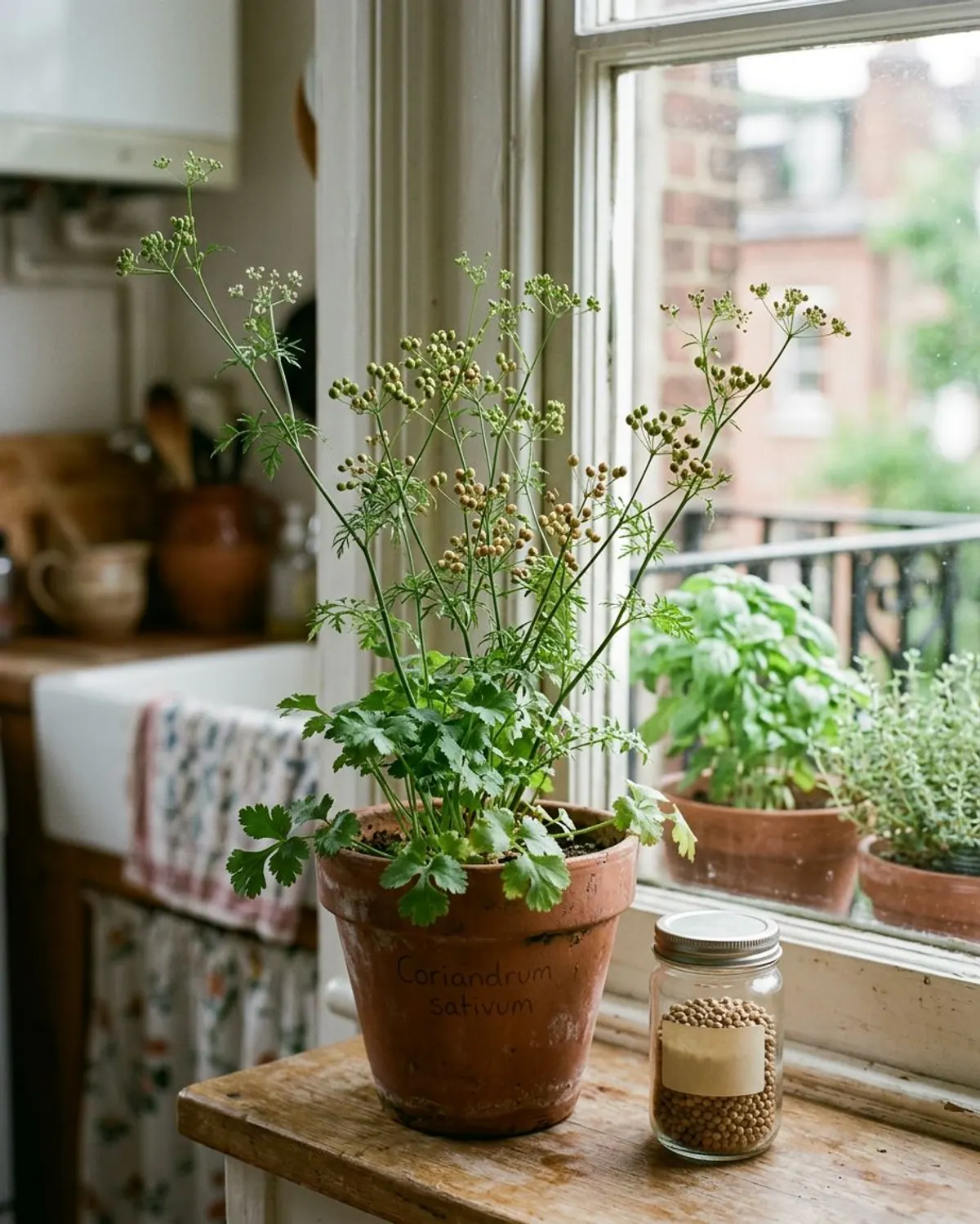
Grow it: an outdoor pot in cool spring weather. Cilantro bolts fast in heat, and that is the point here: the flowers become coriander seed.
Dry it: let the seed heads turn brown on the plant, cut them into a paper bag and hang it in a dry spot until the seeds fall.
Jar it: store the seeds whole and grind just before use.
Pets (ASPCA): non-toxic to cats and dogs.
Dried cilantro leaves have almost no flavor, so skip them. The seed is the keeper: warm and citrusy, and whole seed holds its aroma longer than any leaf on this list.
- Sow cilantro every few weeks in spring. One pot for leaves and one left to seed covers both.
The aromatic five: bay, culinary lavender, chamomile, lemon balm and marjoram
These are the jars that make a cabinet look and smell like an apothecary. Two of them, chamomile and lemon balm, are mostly brewed as tea; we describe them by flavor only.
11Bay laurel
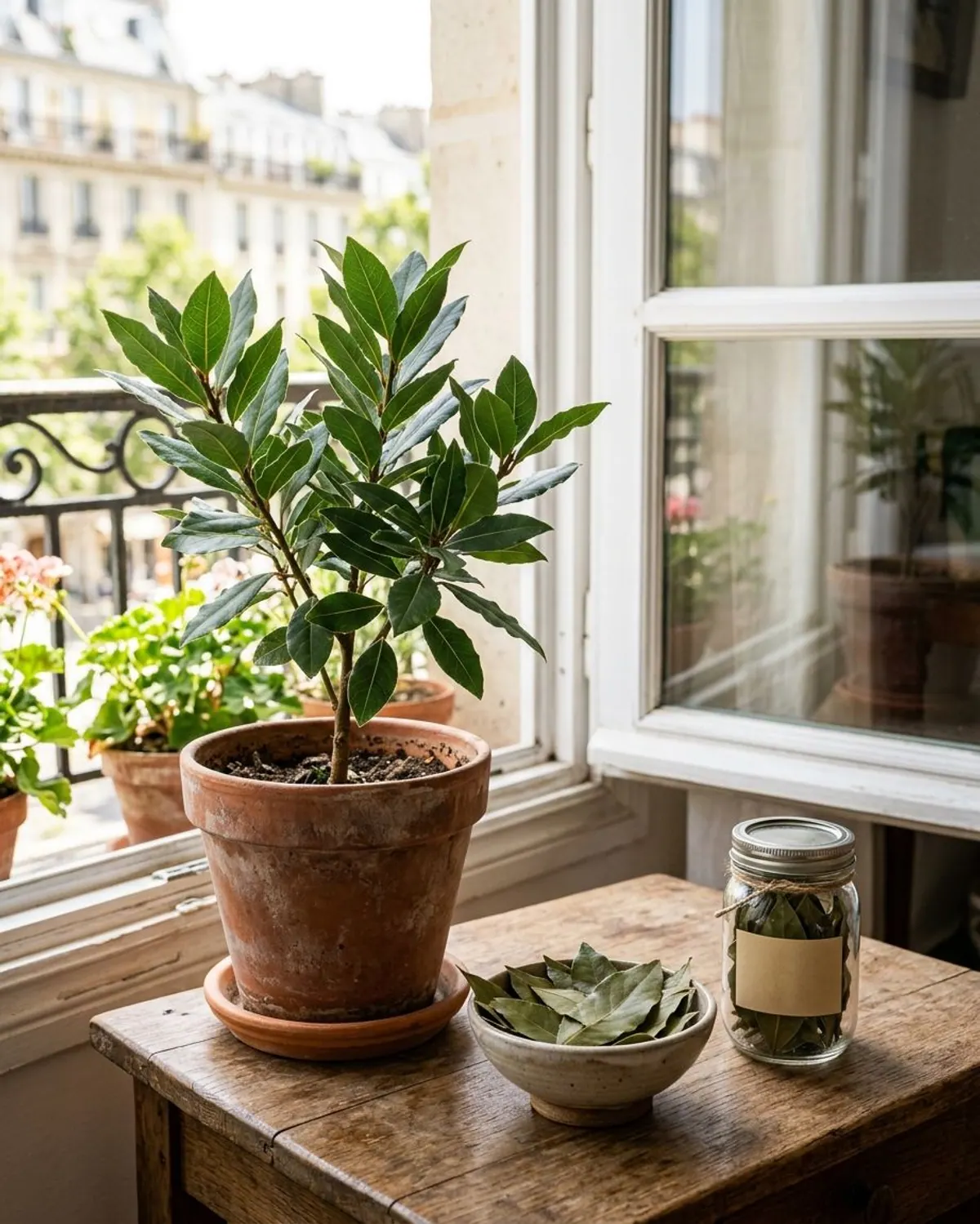
Grow it: a small potted tree by a bright window; it grows slowly, so most people buy a young plant rather than seed.
Dry it: pick mature leaves and dry them flat on a tray for one to two weeks, turning them so they stay flat.
Jar it: whole leaves in a tall jar.
Pets (ASPCA): toxic to cats and dogs.
Make sure it is true bay laurel (Laurus nobilis), the culinary one. Several plants are sold as "bay" or "laurel", and some, such as cherry laurel and mountain laurel, are toxic to people. Always remove bay leaves from food before serving.
- One young bay tree gives you more leaves than a household uses, so it is a quiet favorite for gifting jars.
12Culinary lavender
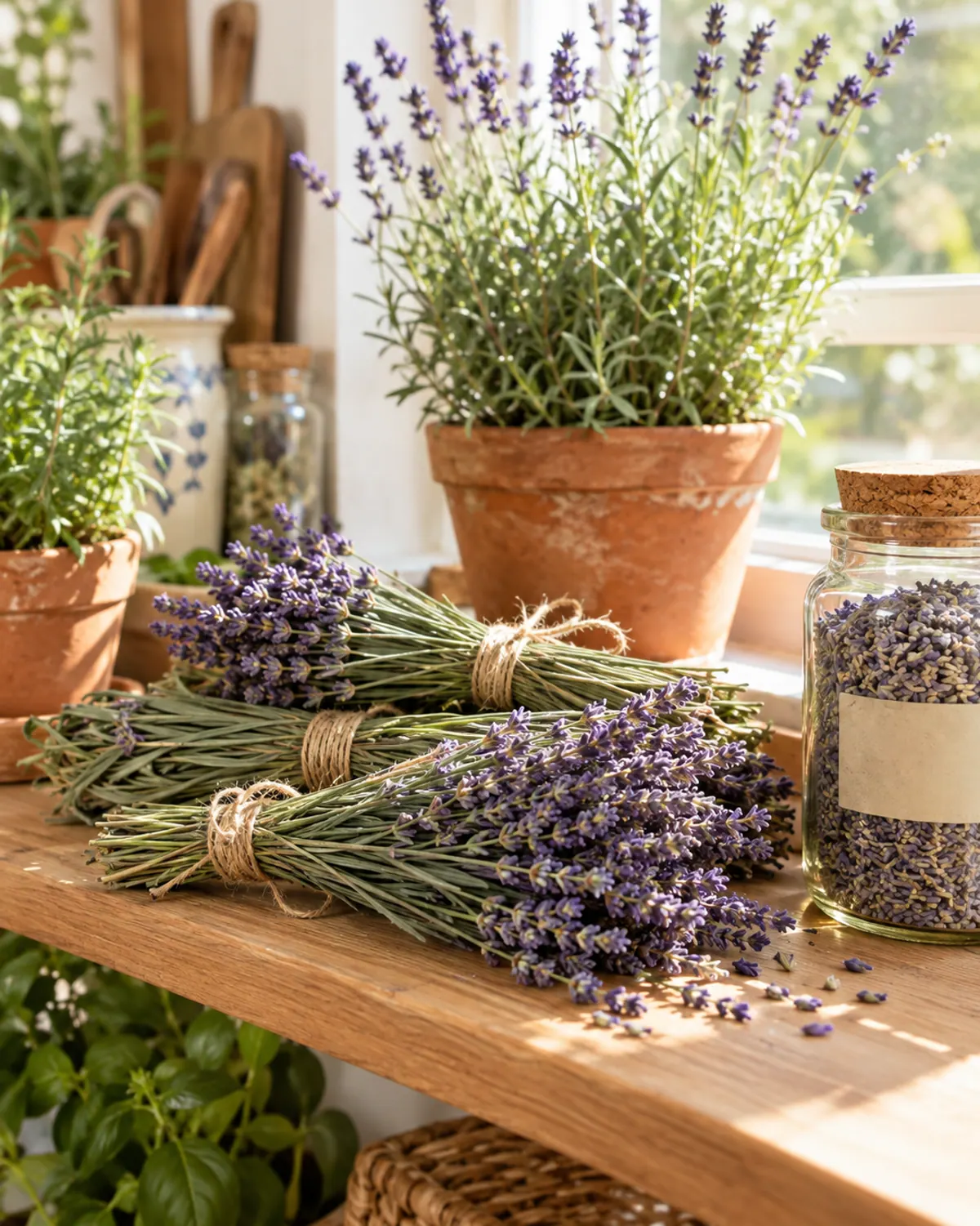
Grow it: a sunny balcony or patio pot; it rarely thrives as a houseplant.
Dry it: cut stems when the first buds open and hang them in small bundles for about one to two weeks.
Jar it: rub the buds off the stems into a jar.
Pets (ASPCA): toxic to cats and dogs.
English lavender (Lavandula angustifolia) is the type sold as culinary lavender, and it has the sweetest flavor. A little goes a long way in cooking; too much tastes soapy. Lavender grown with garden sprays is not food-safe, so grow your own or buy buds labeled culinary.
- Keep a few whole bundles for the shelf and the buds in a jar for the kitchen.
13Chamomile
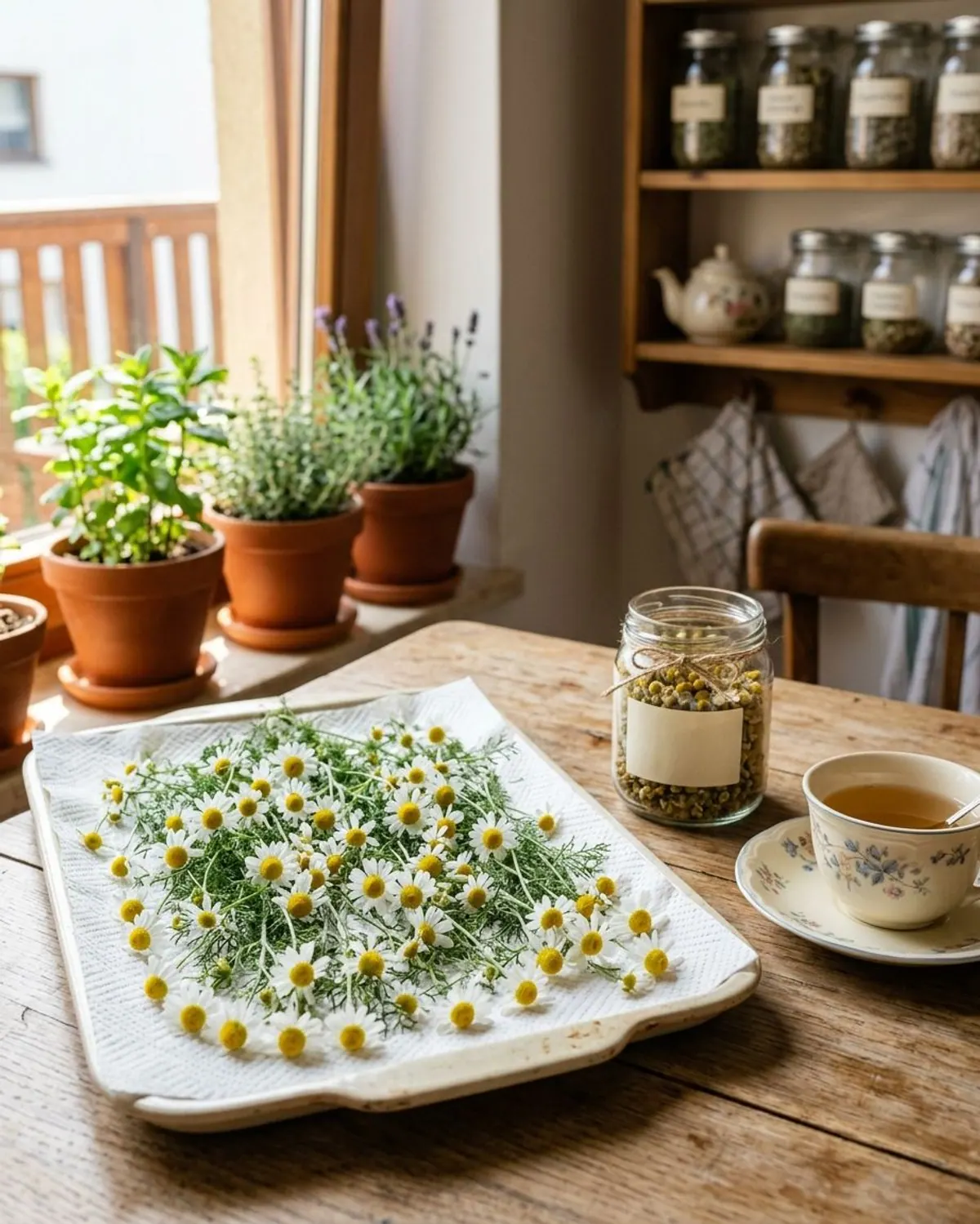
Grow it: a sunny balcony pot from spring into summer; German chamomile is an annual and reseeds.
Dry it: pick the flower heads when fully open and dry them on a screen for about one to two weeks.
Jar it: whole flower heads, in a jar kept dark.
Pets (ASPCA): toxic to cats and dogs.
Chamomile has a soft, apple-like, honeyed flavor and is most often brewed as tea. It is in the daisy family, so people allergic to ragweed may react to it. If you are pregnant, nursing or take medication, ask your doctor before drinking herbal teas.
- Pick every few days. More flowers open the more you harvest.
14Lemon balm
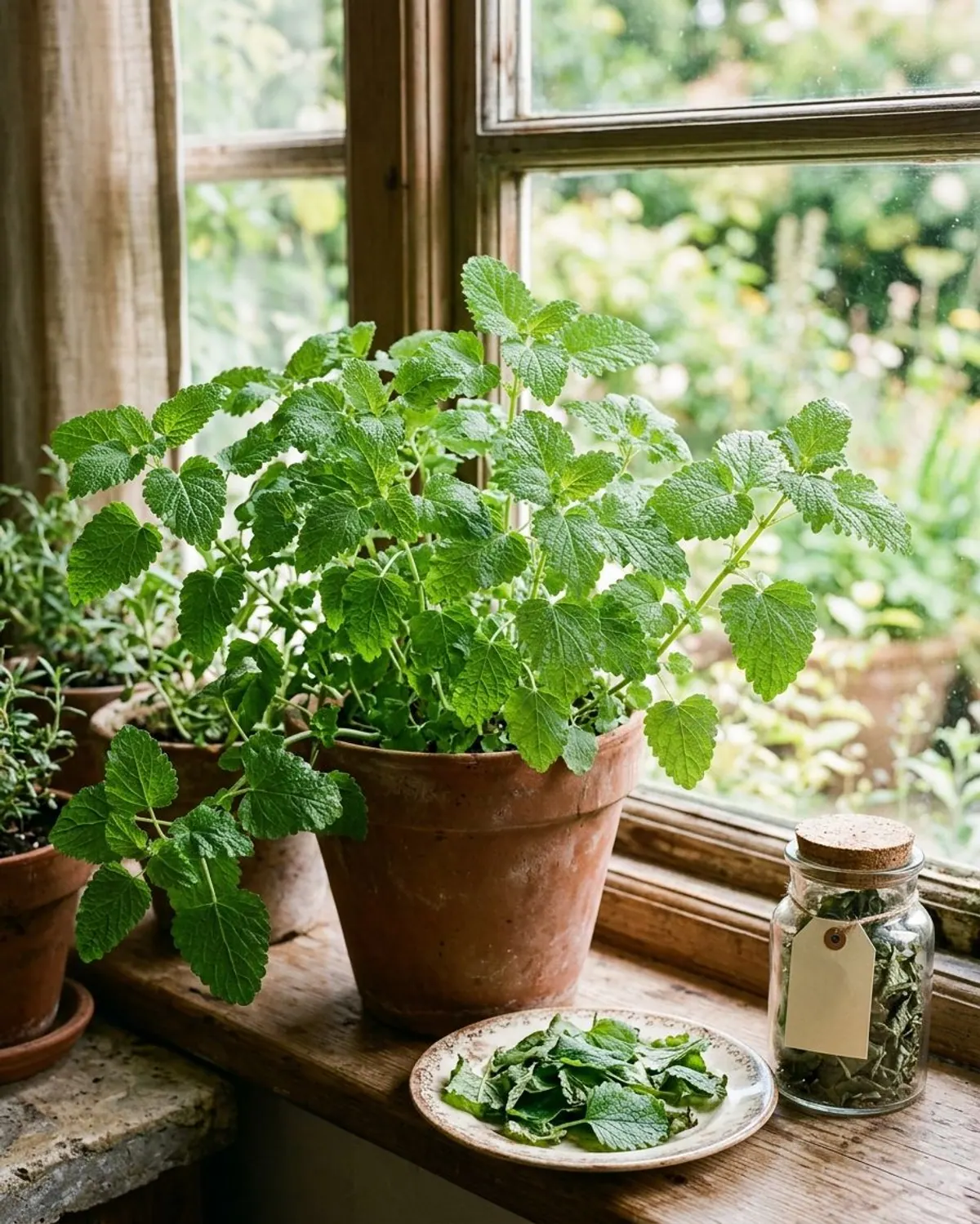
Grow it: a pot by an east window or on a balcony; it is in the mint family and almost as easy.
Dry it: dry quickly on a screen or in a dehydrator on low; slow drying fades the lemon scent.
Jar it: whole leaves in a small, dark jar, used within months.
Pets (ASPCA): toxic to cats and dogs.
Lemon balm has a gentle lemon flavor and is usually brewed as tea. Its scent fades faster than most dried herbs, so dry small batches often. The same pregnancy and medication caution as chamomile applies.
- Harvest before it flowers, when the lemon scent is strongest.
15Marjoram
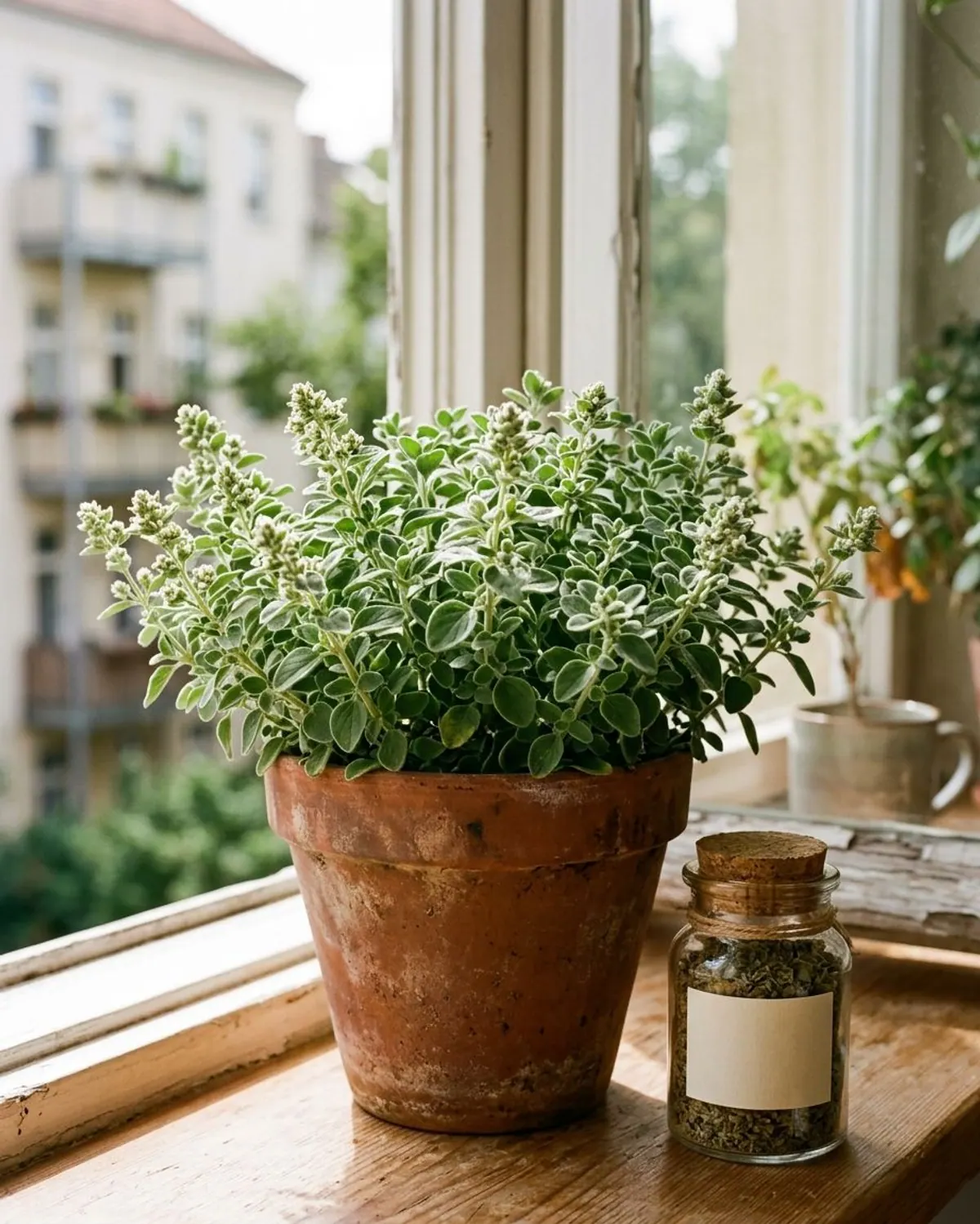
Grow it: a sunny window; it is a tender cousin of oregano and dislikes cold.
Dry it: hang small bundles, like oregano, for about one to two weeks.
Jar it: strip the leaves into a small jar.
Pets (ASPCA): toxic to cats and dogs.
Sweet marjoram tastes like a softer, sweeter oregano and dries well. If you only have room for one of the two, oregano is the stronger jar; marjoram is the gentler one.
- Grow it in its own pot. It is an annual in most climates, so take cuttings before frost.
Which of the 15 a windowsill can really supply
A small kitchen will not grow all 15 at once, and that is fine. Grow the fast, compact ones, keep one or two slow ones going, and buy dried for the rest until you have a balcony. Our herbs for low light list helps if your window faces north or east.
| Windowsill, all year | Windowsill with sun or a lamp | Balcony or outdoor pot | Buy as a plant |
|---|---|---|---|
| Mint | Basil | Dill | Bay laurel |
| Chives | Oregano | Culinary lavender | Rosemary (a young plant is faster) |
| Lemon balm | Thyme | Chamomile | |
| Parsley | Sage | Coriander (cilantro to seed) | |
| Marjoram |
Jars, lids and light: keeping dried herbs fresh for a year
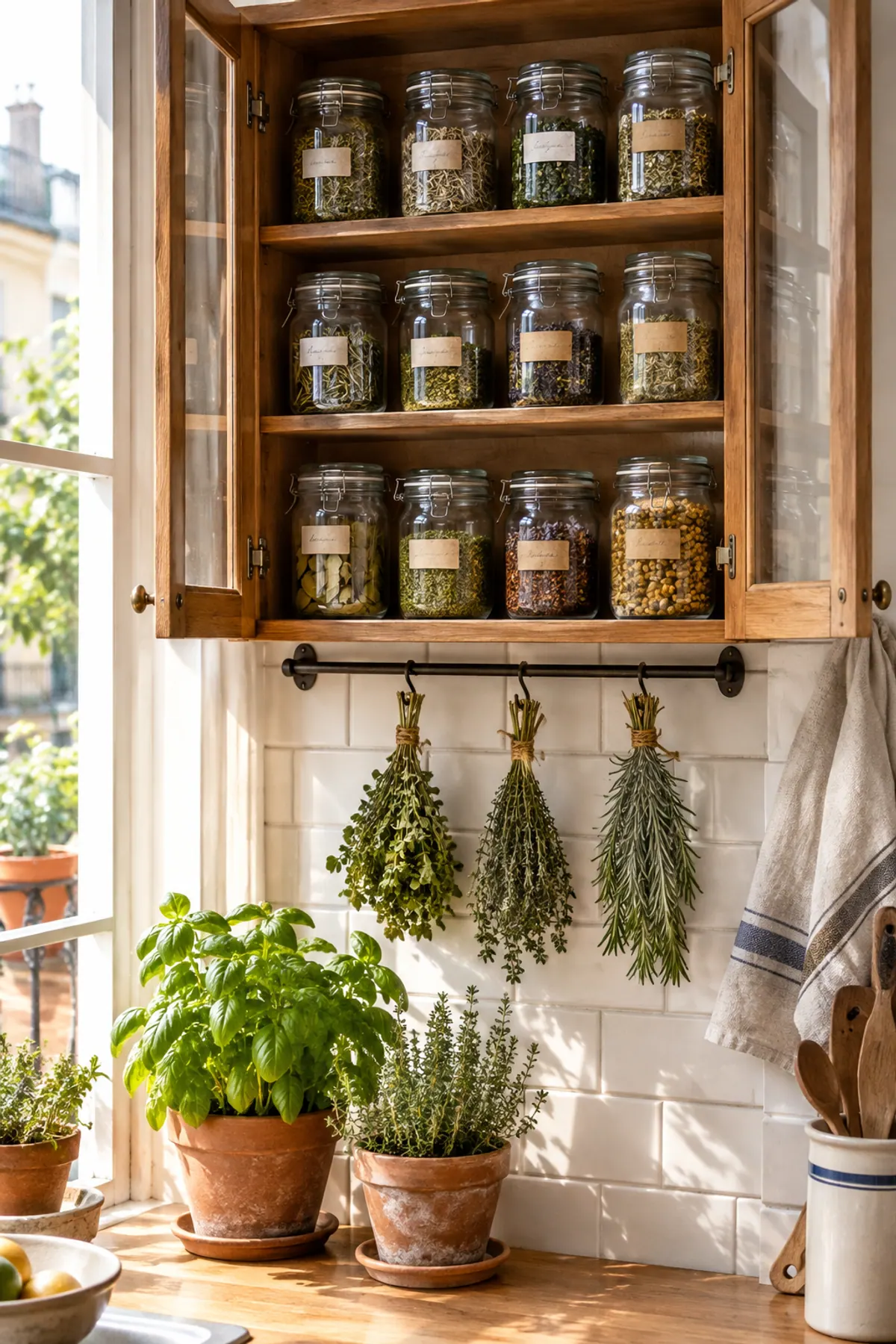
Dried herbs fade with light, heat, air and moisture. Store them whole in airtight glass, away from the stove and out of direct sun, and use them within about six months to a year for the best flavor. Amber glass or a closed cabinet door blocks light; clear jars look better on open shelves but belong on a wall that never gets sun. Our dried herb storage ideas compare jar types and racks, and the herb drying guide walks through air, oven and dehydrator methods.
Do
- Dry herbs until they crumble before jarring them
- Store leaves whole and crush them as you cook
- Date every jar when you fill it
- Keep the cabinet away from the stove and the sunny window
Avoid
- Jarring herbs that still bend, which can mold
- A shelf right above the stove or kettle
- Big jars you open daily for herbs you rarely use
- Mixing old and new batches in one jar
Labels and a simple inventory card
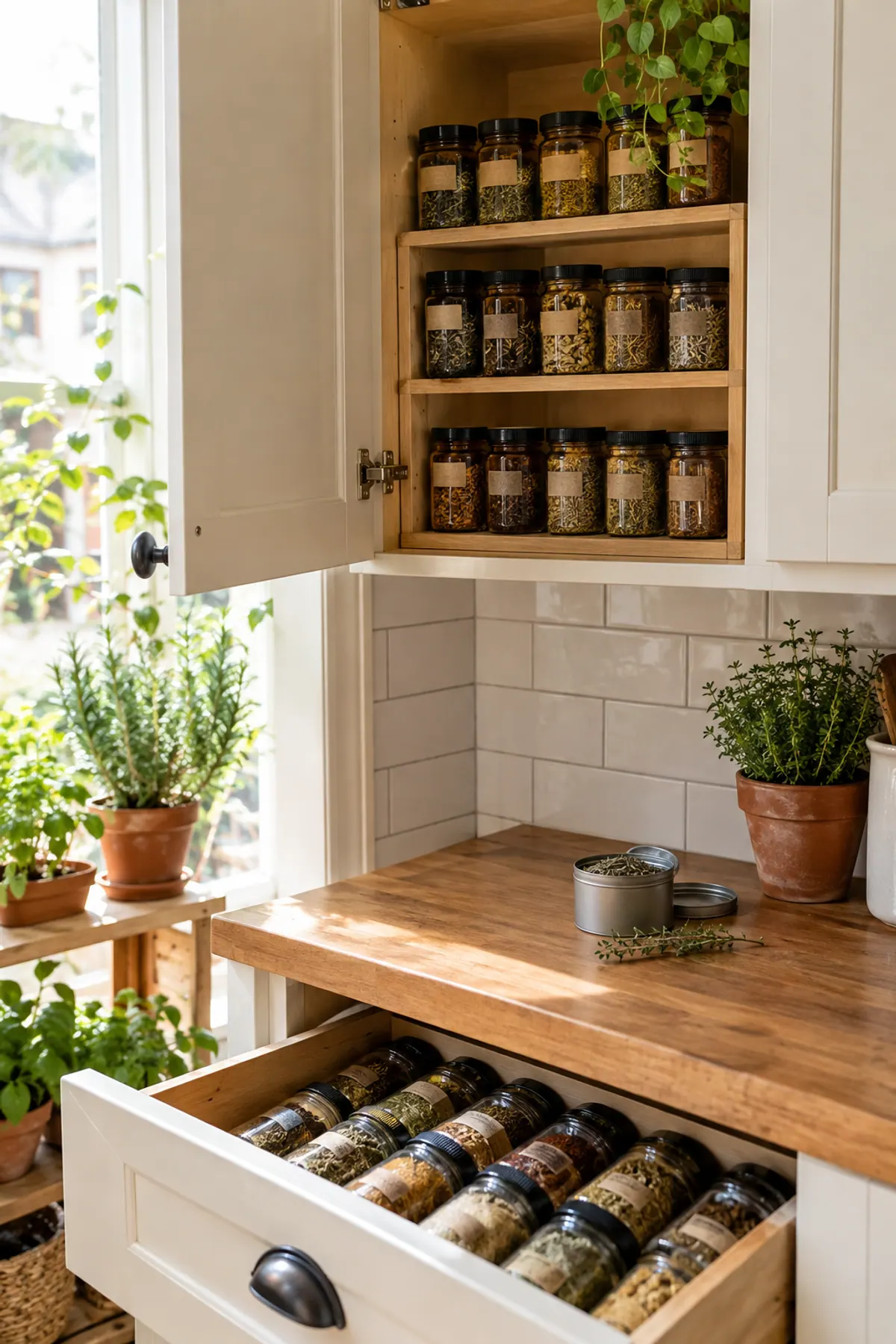
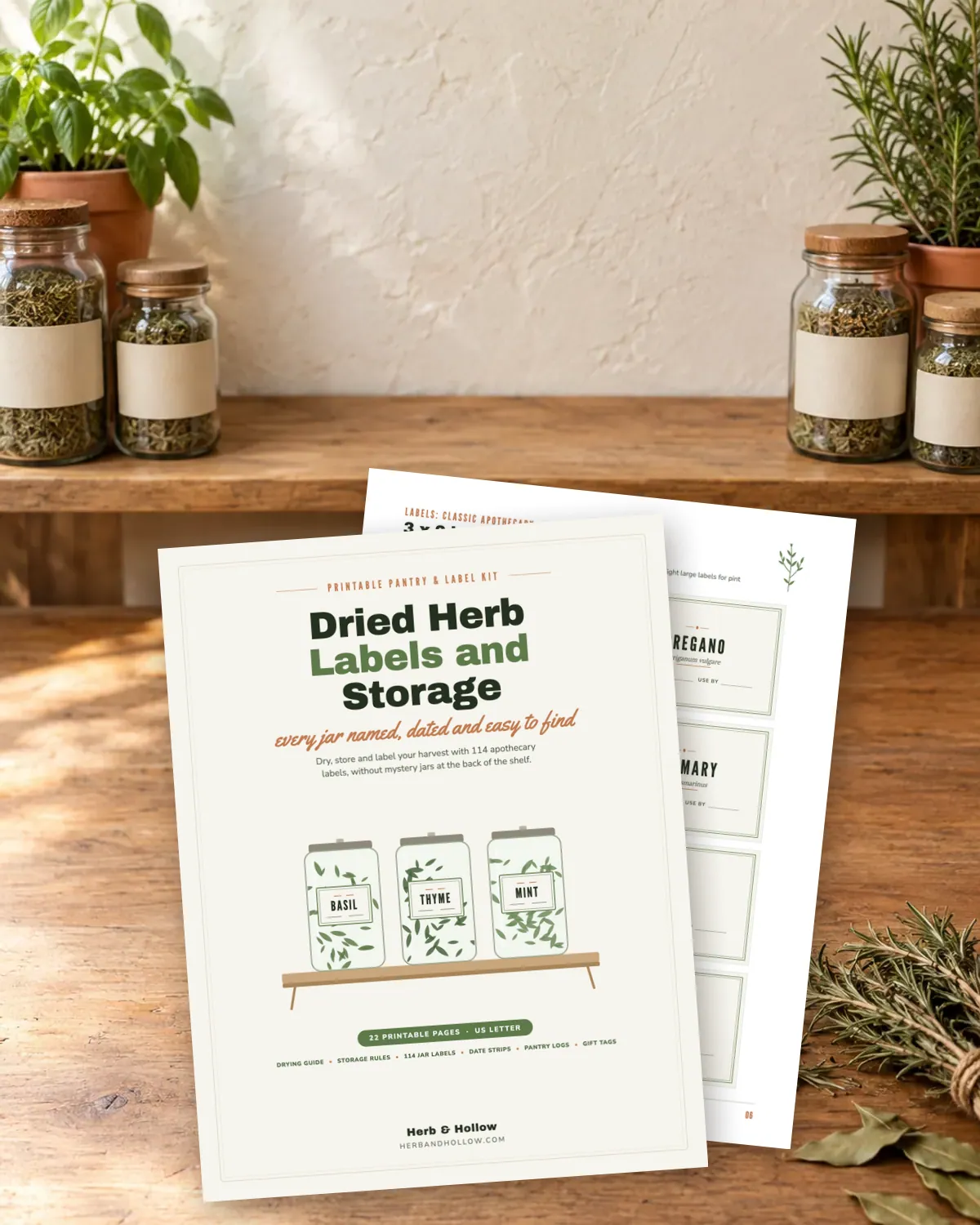
A label needs three things: the herb's name, the date it was dried and whether it is whole or crushed. That is enough to know what to use first and what to replace at your seasonal check. Keep a single inventory card inside the cabinet door listing each jar and its date, and the shelf looks after itself.
Styling the herbal apothecary cabinet: vintage, modern or cottage
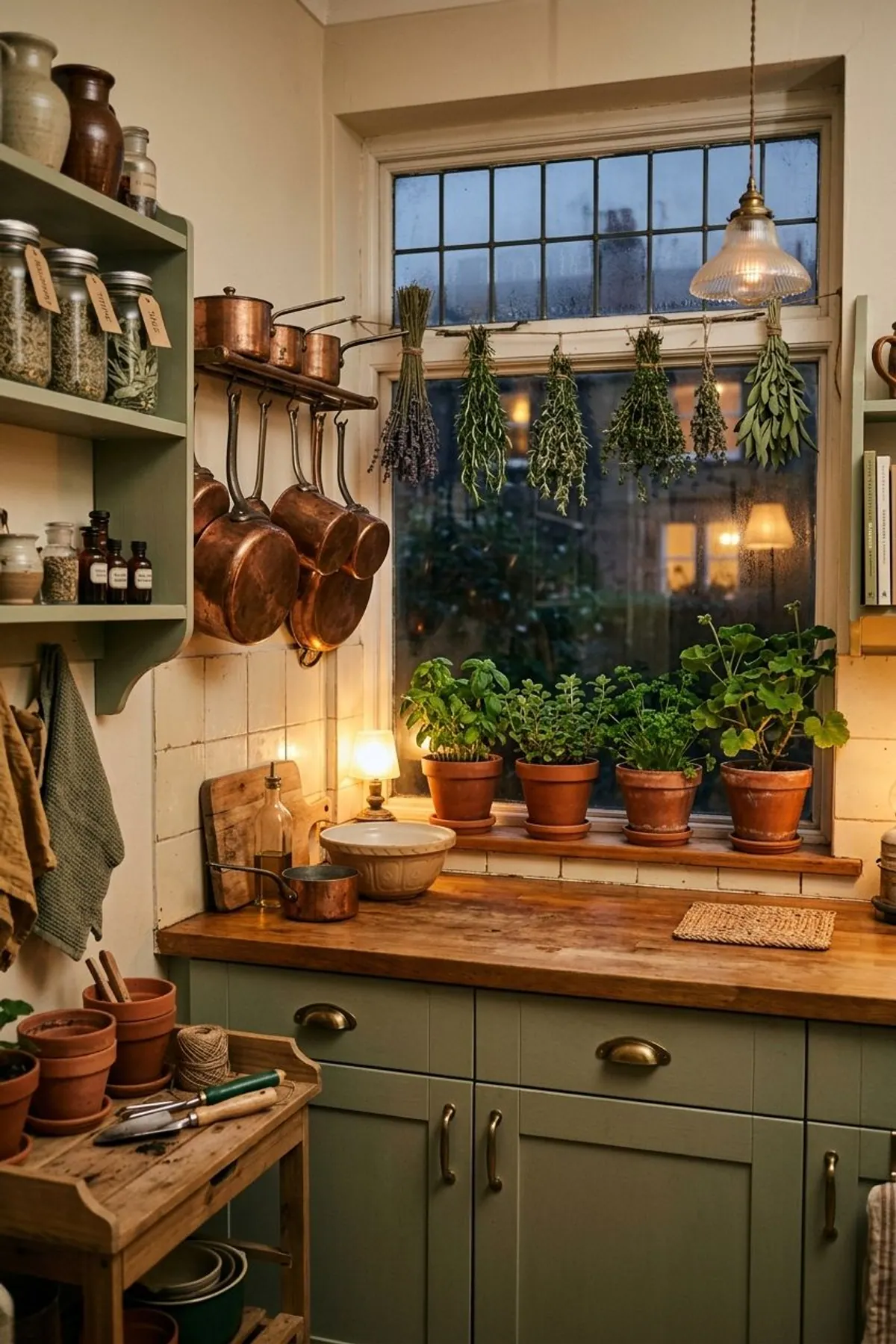
Vintage: amber or clear glass with cork stoppers, labels with a double border and the Latin name, and a few bundles hanging below the shelf.
Modern: matching straight-sided jars, white or black labels in a simple font, and nothing hanging; the herbs' colors do the work.
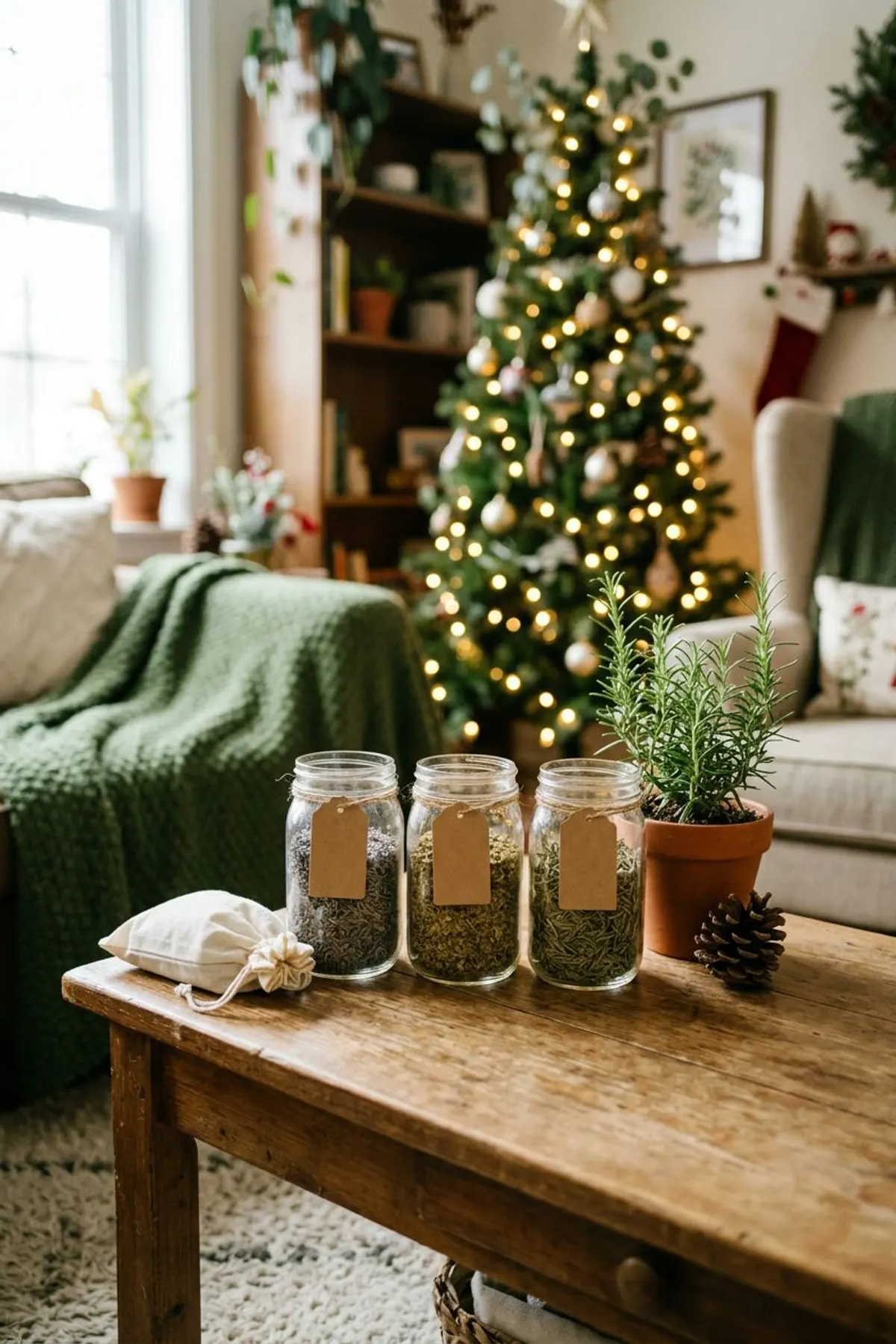
Cottage: mismatched thrifted jars, handwritten tags on twine, a small pot of thyme at one end and dried lavender in a cup.
Whichever you choose, order the jars by how often you use them: everyday herbs at the front and at eye level, seeds and flowers higher up.
Fitting it into a 12 inch kitchen shelf or cart
Small jars of about 4 ounces are around 2 inches wide, so roughly five or six fit across a 12 inch shelf in one row, depending on the jar. Two short shelves or one shelf plus a rolling cart tier holds all 15.
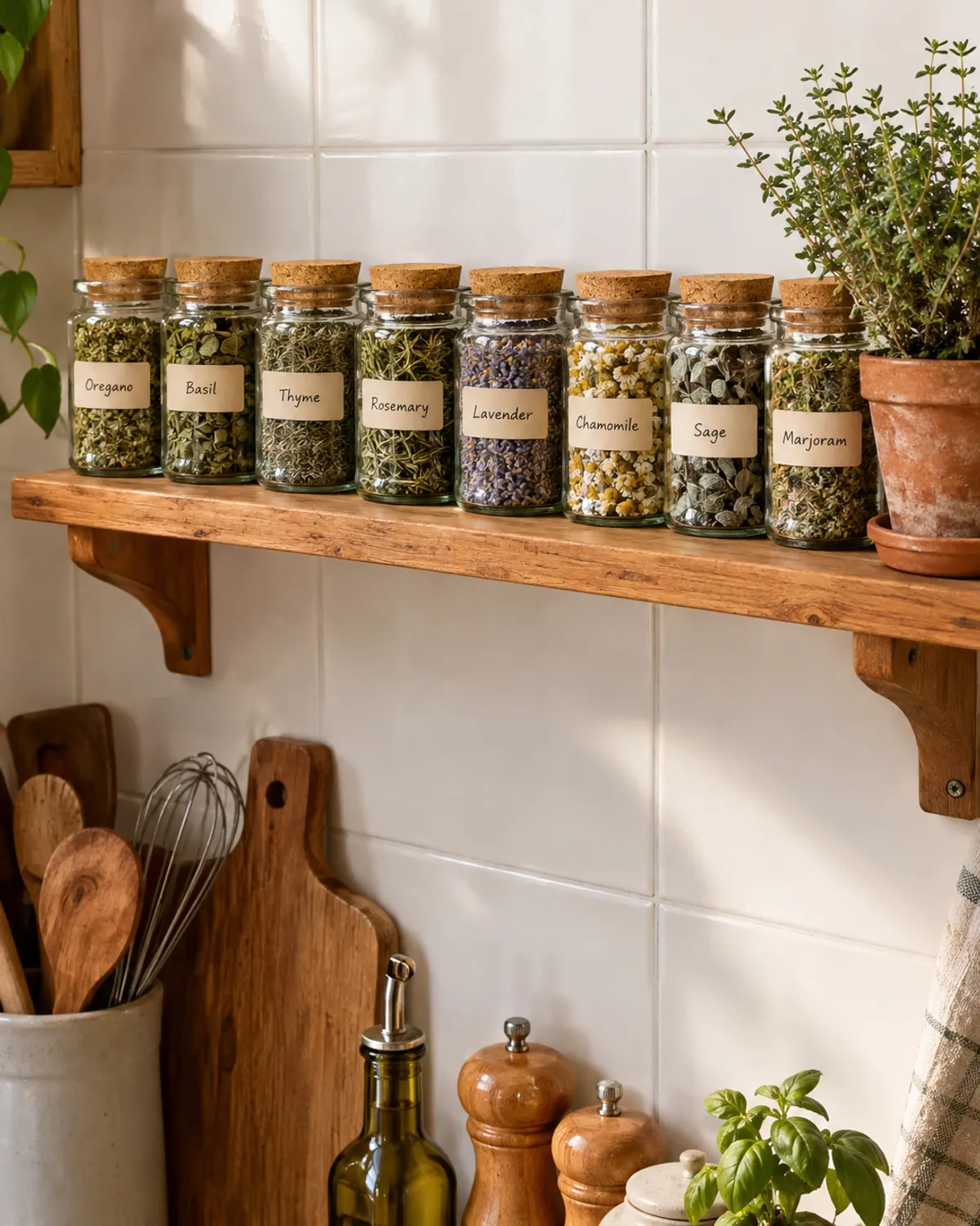
Small-shelf apothecary checklist
Restocking by season from a small garden
| Season | Harvest and dry | Check |
|---|---|---|
| Spring | Chives, mint, lemon balm, cilantro leaves | Replace jars older than a year |
| Early summer | Oregano, thyme, sage, marjoram, chamomile flowers, lavender buds | Top up the everyday six |
| Late summer | Basil before frost, dill seed, coriander seed | Label seeds as they dry |
| Autumn and winter | Rosemary, bay leaves, windowsill mint and parsley | Count jars, plan spring sowing |
Herbal apothecary shopping list
Jars, labels and drying gear
- Start here
Amber glass spice jars with lids, set
Typically $18 to $35
Blocks light on an open shelf.
Check price on Amazon for Amber glass spice jars with lids, set -
Clear glass jars with cork lids, small
Typically $15 to $30
The vintage look for a closed cabinet.
Check price on Amazon for Clear glass jars with cork lids, small -
Small wooden wall cabinet with glass doors
Typically $45 to $120
Keeps jars dark and dust-free.
Check price on Amazon for Small wooden wall cabinet with glass doors -
Hanging mesh herb drying rack
Typically $15 to $30
Dries basil, sage and chamomile flat.
Check price on Amazon for Hanging mesh herb drying rack -
Waterproof blank jar labels
Typically $8 to $15
Survives a damp kitchen.
Check price on Amazon for Waterproof blank jar labels -
Wooden peg rail for herb bundles
Typically $15 to $30
Hangs bundles under the shelf.
Check price on Amazon for Wooden peg rail for herb bundles -
Herb stripper and scissors set
Typically $8 to $15
Pulls leaves from thyme and oregano stems.
Check price on Amazon for Herb stripper and scissors set -
Rolling kitchen cart, 3 tier
Typically $25 to $50
Extra room when one shelf is full.
Check price on Amazon for Rolling kitchen cart, 3 tier
Start with the everyday six and one good jar set. By next autumn the cabinet fills itself, one harvest at a time.
Frequently asked questions
What herbs should a beginner herbal apothecary have?
For a culinary cabinet, start with basil, oregano, thyme, rosemary, sage and mint. They cover most cooking, grow in pots and dry easily. Add bay, marjoram and coriander seed as you go.
How do you organize a home herbal apothecary?
Use one jar size, label every jar with the herb, the date dried and whole or crushed, and keep the most-used jars at the front at eye level. A single inventory card inside the cabinet door shows what to use first.
What jars are best for storing dried herbs?
Airtight glass jars. Amber glass blocks light on open shelves, while clear jars work inside a closed cabinet or on a wall that never gets direct sun. Small jars of about 4 ounces suit most home harvests.
How long do dried herbs keep?
Stored whole in airtight glass away from heat and light, home-dried herbs keep their best flavor for about six months to a year. Whole seeds such as coriander keep longer than leaves.
How do I start a herbal apothecary at home with little space?
Grow two or three easy herbs on a sunny sill, dry small bundles, and fill one short shelf with labeled jars. Five or six small jars fit across a 12 inch shelf, and you can add a cart tier later.
What is an apothecary cabinet used for in a kitchen?
It holds labeled jars of dried herbs and seeds in one dark, dry place so they keep their flavor and you can see what you have. Here it is for cooking and display, not for remedies.
Save it for later
Pin this to your Kitchen Apothecary board so it's there when you need it.
Save to Pinterest