This post contains affiliate links. As an Amazon Associate we earn from qualifying purchases, at no extra cost to you. Read our disclosure.
Safety first: Herbs can be powerful. If you are pregnant, nursing, take medication or have a health condition, check with your doctor or pharmacist first. Please read our herbal & garden safety notes before you start.
Key takeaways
- English lavender (Munstead, Hidcote, Thumbelina Leigh) is the culinary kind and the hardiest, to about zone 5.
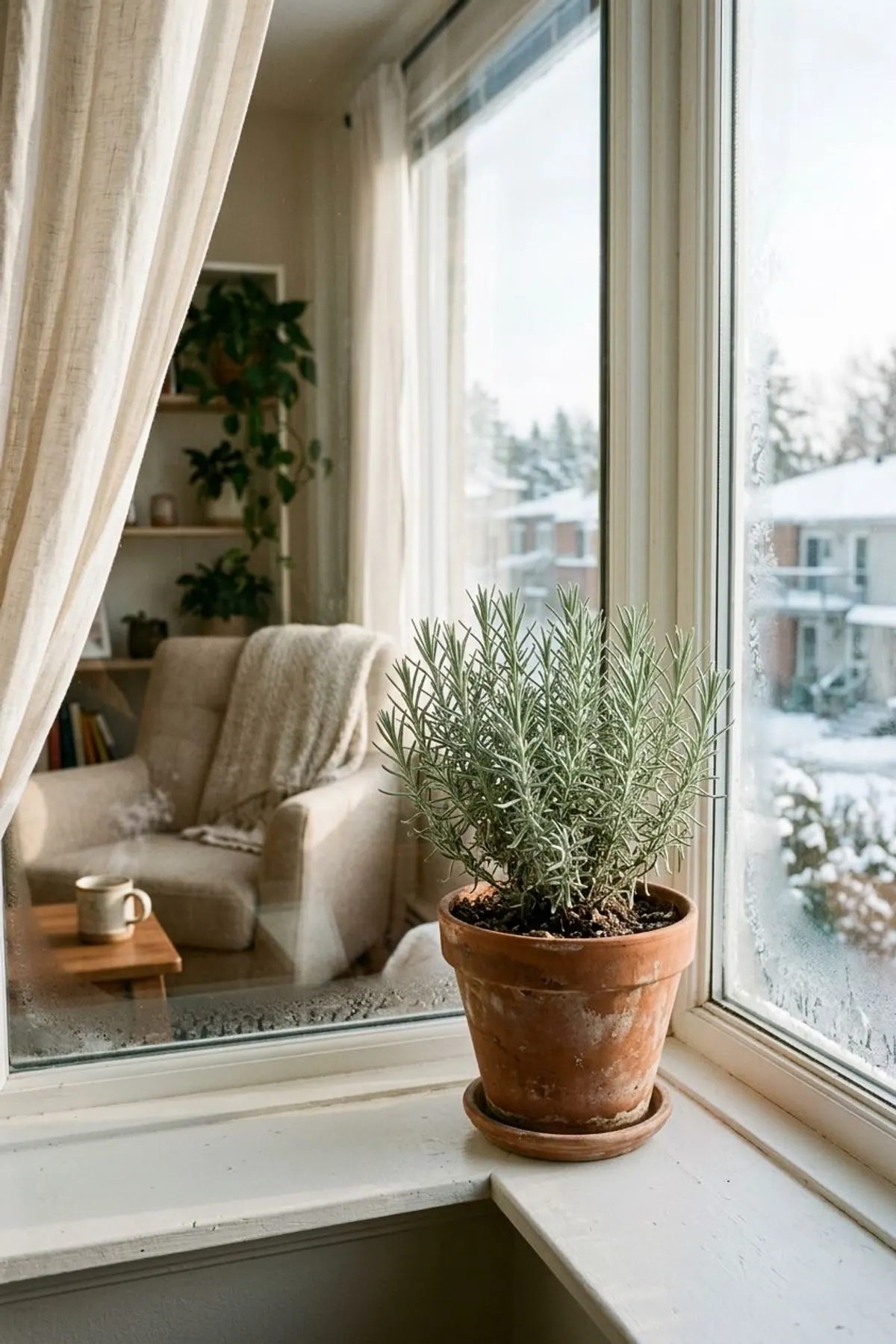
- Thumbelina Leigh is the smallest here at 6 to 12 inches tall, so it fits a narrow sill under a clip-on light.
- Spanish, French fringed and Goodwin Creek Grey are tender and are grown in pots brought indoors for winter.
- Spanish lavender is not recommended for cooking because of its strong camphor flavor (NC State Extension).
- Big lavandins like Phenomenal handle heat and humidity but outgrow a room; keep them in a patio pot.
- Lavender is toxic to dogs, cats and horses (ASPCA), so place pots out of reach.
In this post12 sections
- The 4 main types of lavender
- 1. Munstead English lavender
- 2. Hidcote English lavender
- 3. Thumbelina Leigh dwarf lavender
- 4. Spanish lavender
- 5. French fringed lavender
- 6. Goodwin Creek Grey
- 7. Phenomenal lavandin
- Which lavender to buy for your light and room
- Lavender plants and pot supplies
- Safety: pets, pregnancy and the kitchen
- FAQ
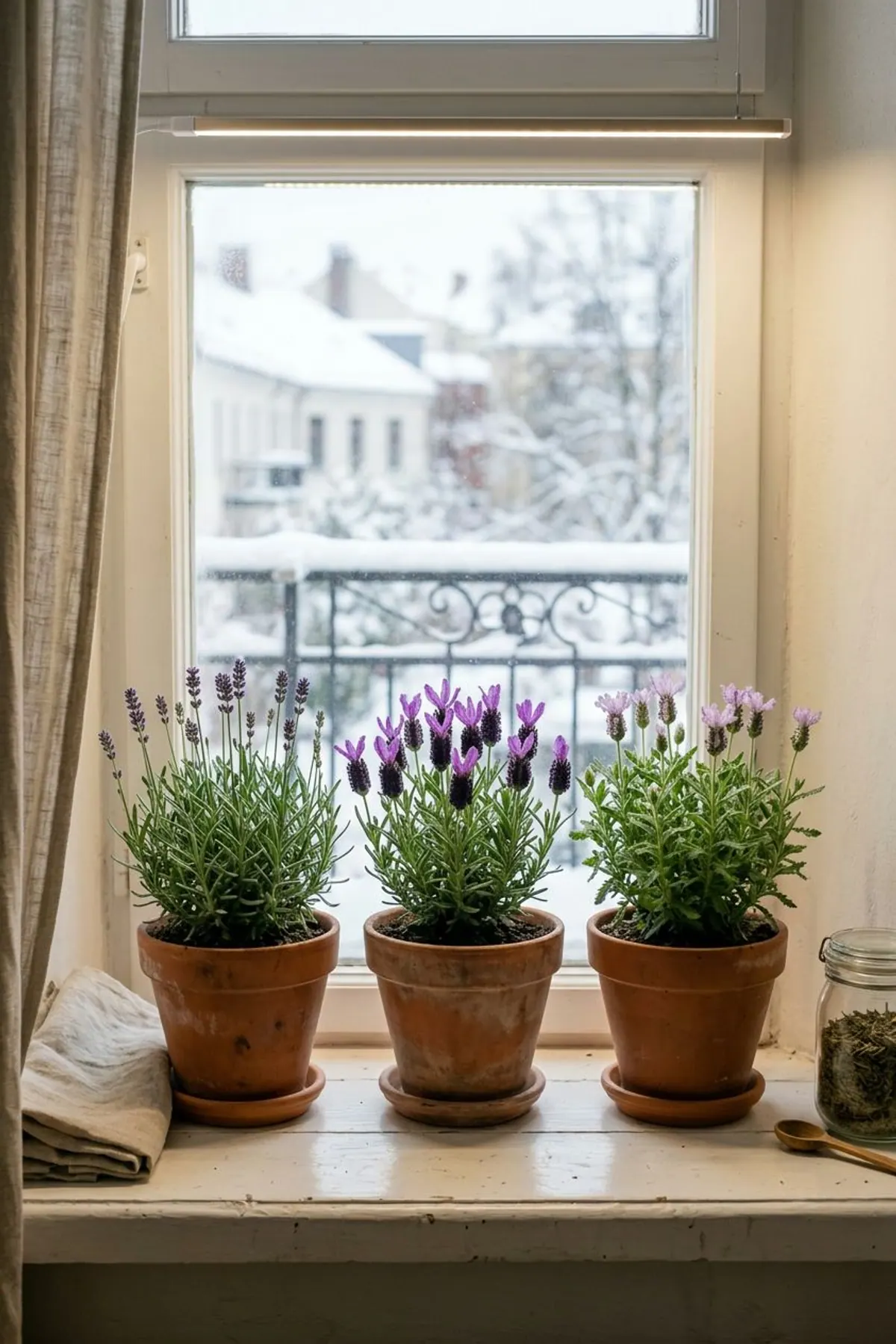
Short answer: for a sunny windowsill with a grow light, pick a dwarf English lavender: Munstead or Thumbelina Leigh. They stay small, and they are the culinary kind. For a warm room and the most flowers, pick a tender type: Spanish lavender or Goodwin Creek Grey, which growers sell as a pot plant to winter indoors. Save big lavandins like Phenomenal for a patio pot outside.
| Variety | Type | Height | Hardy outdoors to | Kitchen use | Indoor rating (ours) |
|---|---|---|---|---|---|
| Munstead | English (L. angustifolia) | 12 to 15 in | About zone 5 | Yes | Good with a grow light |
| Hidcote | English (L. angustifolia) | About 18 in | About zone 5 | Yes | Good with a grow light |
| Thumbelina Leigh | English, dwarf | 6 to 12 in | Zone 5 | Yes | Best size for a sill |
| Spanish | L. stoechas | 2 to 3 ft | Zones 8 to 9 | No (camphor taste) | Good, tolerates warm rooms |
| French fringed | L. dentata | 1 to 3 ft | About zones 8 to 11 | No | Fair, needs a big pot |
| Goodwin Creek Grey | Hybrid (L. × ginginsii) | 18 to 23 in | Zones 7 to 9 | No | Good, sold for winter indoors |
| Phenomenal | Lavandin (L. × intermedia) | Large, vigorous | Zone 5, some say 4 | Not the usual pick | Outdoor pot only |
We earn from qualifying purchases on Amazon links in this article, at no extra cost to you. Read our disclosure and editorial guidelines.
Sizes and zones come from university extension pages and grower plant pages, each linked below and read on 2026-10-23. The indoor rating is our own call, based on how big each plant gets and whether it needs a cold winter rest. Every one of them still needs about 6 to 8 hours of direct sun or a grow light, per Iowa State University Extension.
The 4 main types of lavender
Most guides sort lavender into four groups, and the group tells you more than the variety name does:
| Type | Latin name | Winter outdoors | Good indoors? |
|---|---|---|---|
| English | Lavandula angustifolia | The hardiest, about zone 5 | Yes, the dwarf ones |
| Lavandin | Lavandula × intermedia | Zone 5 in a protected spot | Too big for most rooms |
| Spanish | Lavandula stoechas | Tender, zones 8 to 9 | Yes, takes warmth |
| French (fringed) | Lavandula dentata | Tender, about zones 8 to 11 | Yes, in a large pot |
Iowa State University Extension notes that Spanish, French and spike lavender are not winter hardy there, so gardeners grow them as annuals or in containers brought indoors. That is the short version of this whole article: the tender types are the ones that most need a pot and a bright room. Hybrids such as Goodwin Creek Grey sit outside the four groups but behave like the tender types.
Name trap: in the US, "French lavender" can mean either fringed lavender (L. dentata) or Spanish lavender (L. stoechas). NC State Extension lists French lavender as one of the common names for L. stoechas. Check the Latin name on the tag before you buy.
1. Munstead English lavender
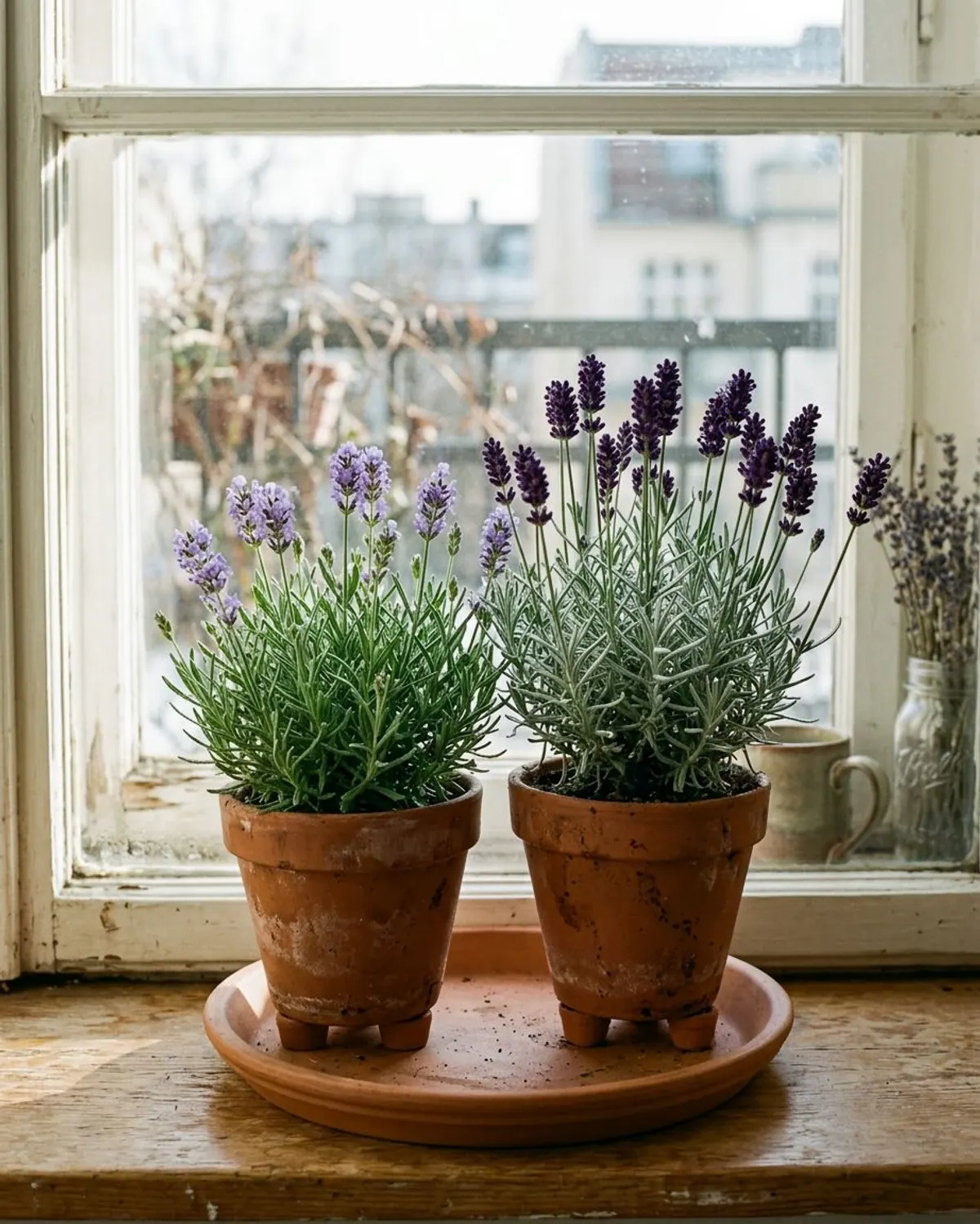
Munstead is the lavender most people find at a garden center, and it is a sound first pot. University of Minnesota Extension via Ask Extension puts it at 12 to 15 inches and usually rated hardy to zone 5. University of Illinois Extension describes it as compact, with green foliage and lavender-blue flowers. It is English lavender, so it is the one sold for cooking.
Why it suits a pot
- Compact enough for an 8-inch pot
- Culinary species, so you can snip a few buds
- Easy to find as a plant, not just seed
Watch for
- Needs strong light; a north window will not do
- Likes a cool, bright room in winter more than a warm one
- Rots fast in wet mix
2. Hidcote English lavender
Hidcote is the pick for color. University of Illinois Extension lists it as compact, with silver-gray foliage and deep purple flowers. It grows a bit taller than Munstead, about 18 inches by the same University of Minnesota Extension via Ask Extension answer, which names Munstead and Hidcote as the two hardiest cultivars for northern gardens.
Why it suits a pot
- Darkest purple flowers of the English types
- Silver leaves look good even out of bloom
- Same culinary use as Munstead
Watch for
- A few inches taller, so give it a deeper sill or a shelf
- Same need for 6 or more hours of sun or a light
3. Thumbelina Leigh dwarf lavender
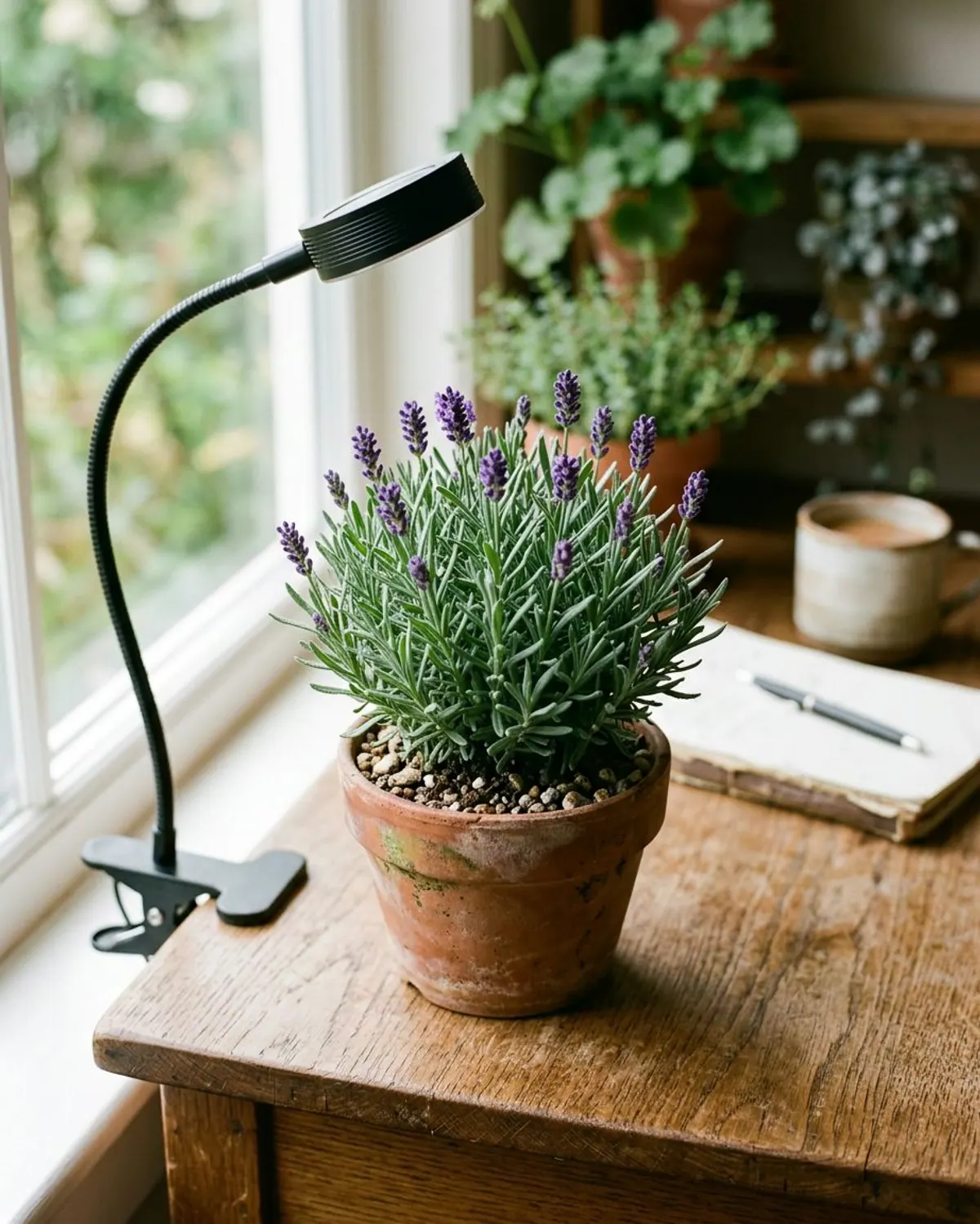
If you only have a narrow sill, this is the one. The grower page at Perennials.com lists it at 6 to 12 inches tall and 10 to 12 inches wide, hardy in zones 5 to 9, and suggests it for containers. It is still English lavender, so the kitchen use carries over.
Why it suits a pot
- The smallest plant on this list
- Fits a 6 to 8 inch pot under a clip-on light
- Culinary English lavender
Watch for
- Harder to find than Munstead
- Small plants dry out faster, so check the mix more often in a warm room
Want the sun hours, water rhythm and pot size for lavender and 19 other herbs on one card each? The growing cards set keeps them by the window.
4. Spanish lavender
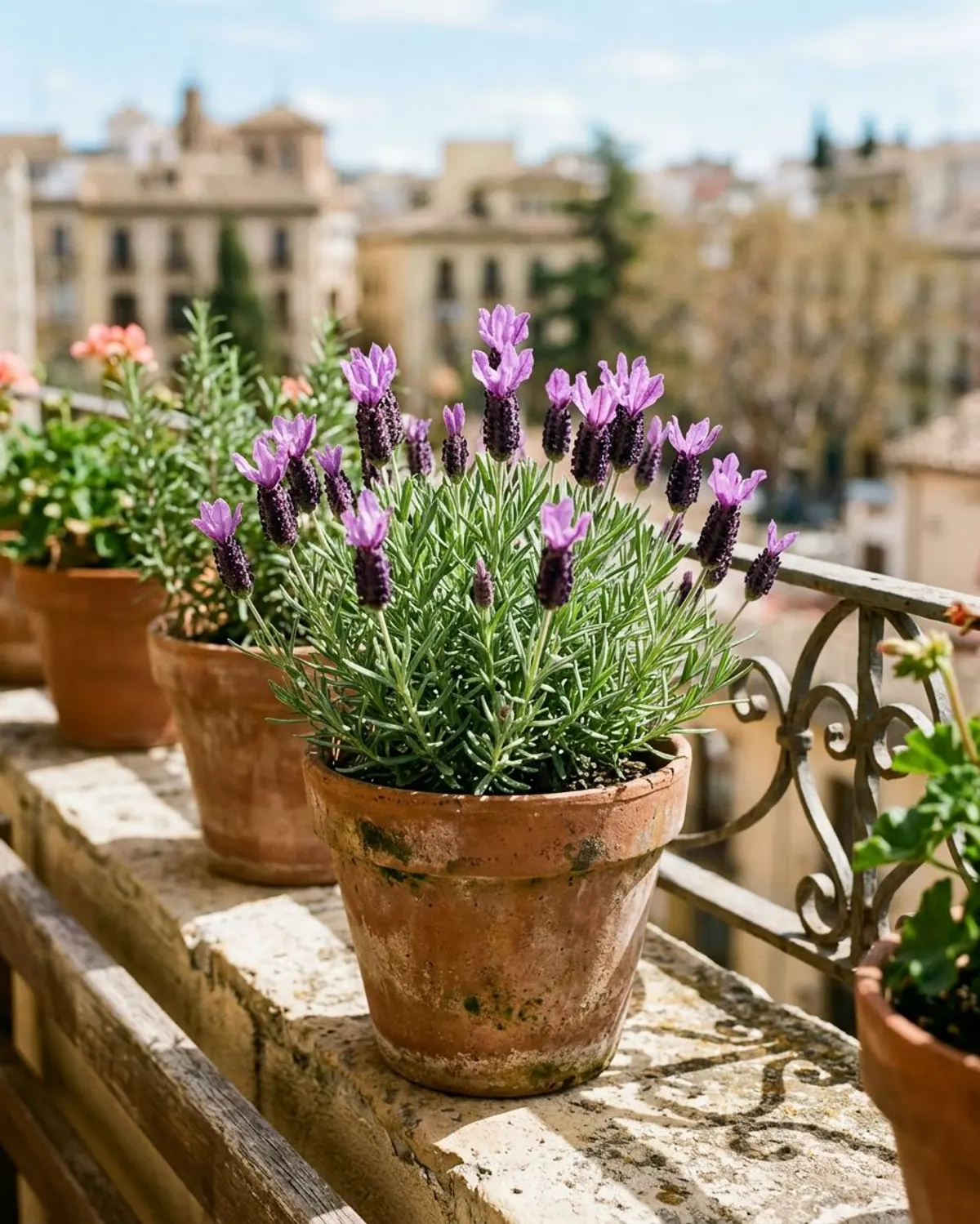
Spanish lavender (L. stoechas) is the one with the tufts on top of each flower head. NC State Extension rates it for zones 8 to 9, gives 2 to 3 feet in the ground, and notes it is not recommended for cooking because of its strong camphor flavor. It blooms in spring and summer and suits patio containers. Indoors, it handles normal room warmth better than English lavender because it does not need a cold winter rest.
Why it suits a pot
- Copes with a warm living room
- Showy flowers, often sold already blooming in pots
- Stays smaller when its roots are held in a pot
Watch for
- Not for cooking or tea
- Too tender to leave outside in a cold winter
- Can get leggy without strong light
5. French fringed lavender
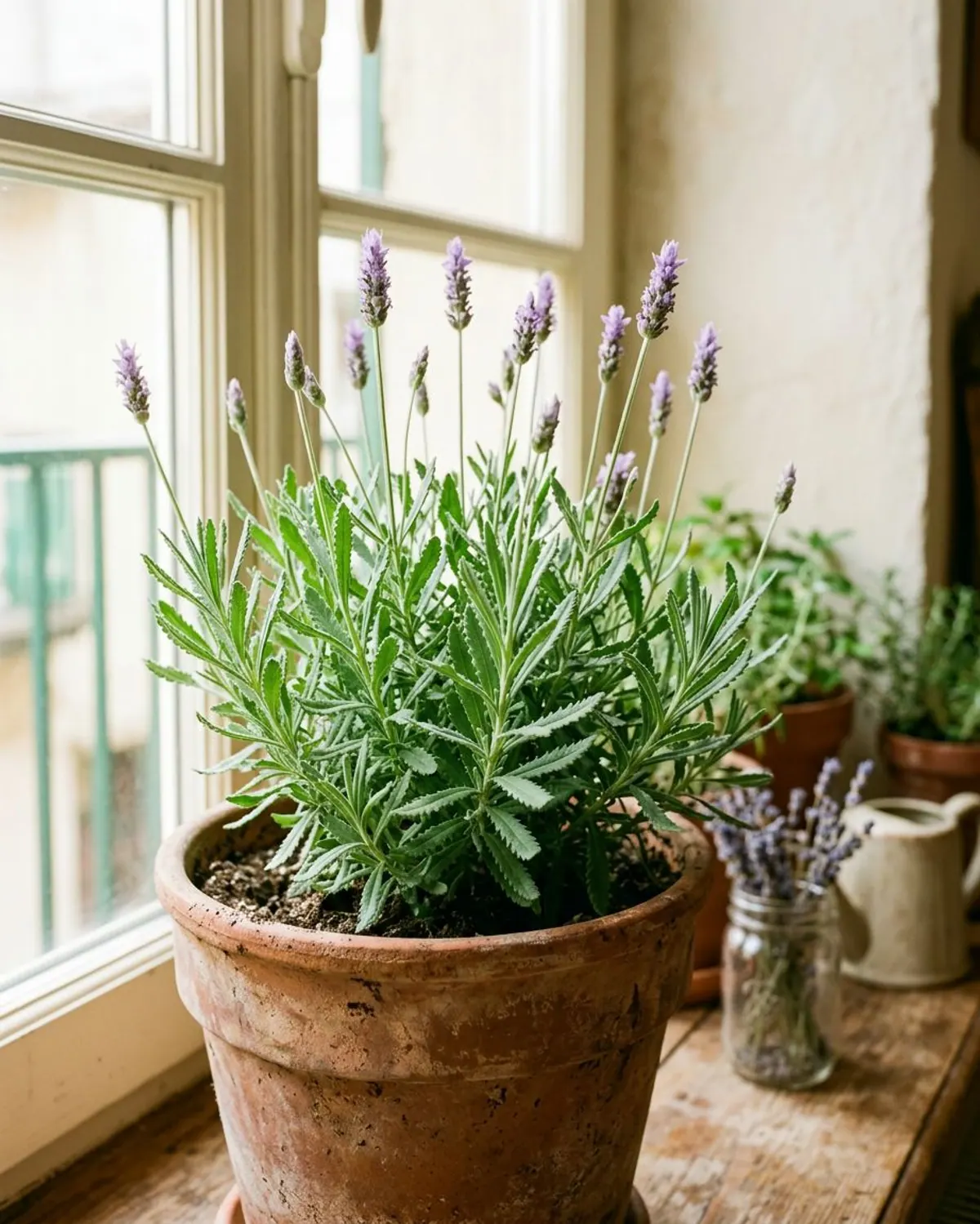
French fringed lavender (L. dentata) is named for its toothed leaf edges. Garden Design puts it at roughly zones 8 to 11 and 1 to 3 feet tall, and the Perennials.com grower page suggests it for pots brought indoors for winter. It can flower for a long stretch, but indoors it grows larger and looser than the dwarf English types, so it needs your brightest spot.
Why it suits a pot
- Long bloom season
- Leaves smell strongly even without flowers
- Takes room warmth
Watch for
- Needs a 10 to 12 inch pot
- Gets leggy in low light
- Not a culinary lavender
6. Goodwin Creek Grey
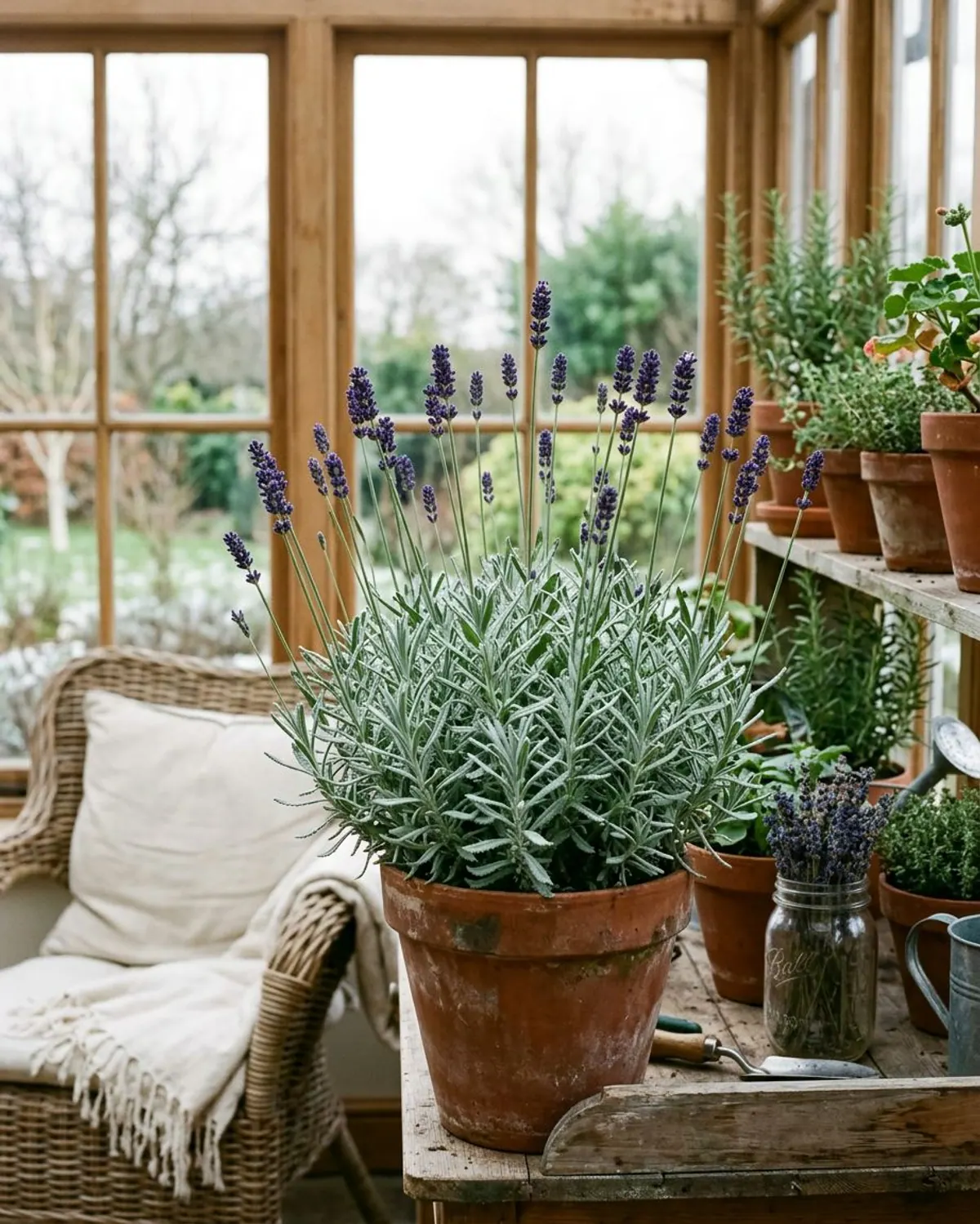
Goodwin Creek Grey (Lavandula × ginginsii) is a hybrid with soft silver leaves and dark violet-blue spikes. Perennials.com lists it at 18 to 23 inches, hardy in zones 7 to 9, best grown in pots that come indoors for winter, with a long bloom season. The RHS also suggests it for a conservatory. If you want a lavender that actually tries to flower in a bright room, this is the one to look for.
Why it suits a pot
- Grown on purpose as an indoor-winter pot plant
- Silver foliage looks good all year
- Long flowering season
Watch for
- Taller than the dwarf English types
- Less common at big-box stores
- Not a culinary lavender
7. Phenomenal lavandin
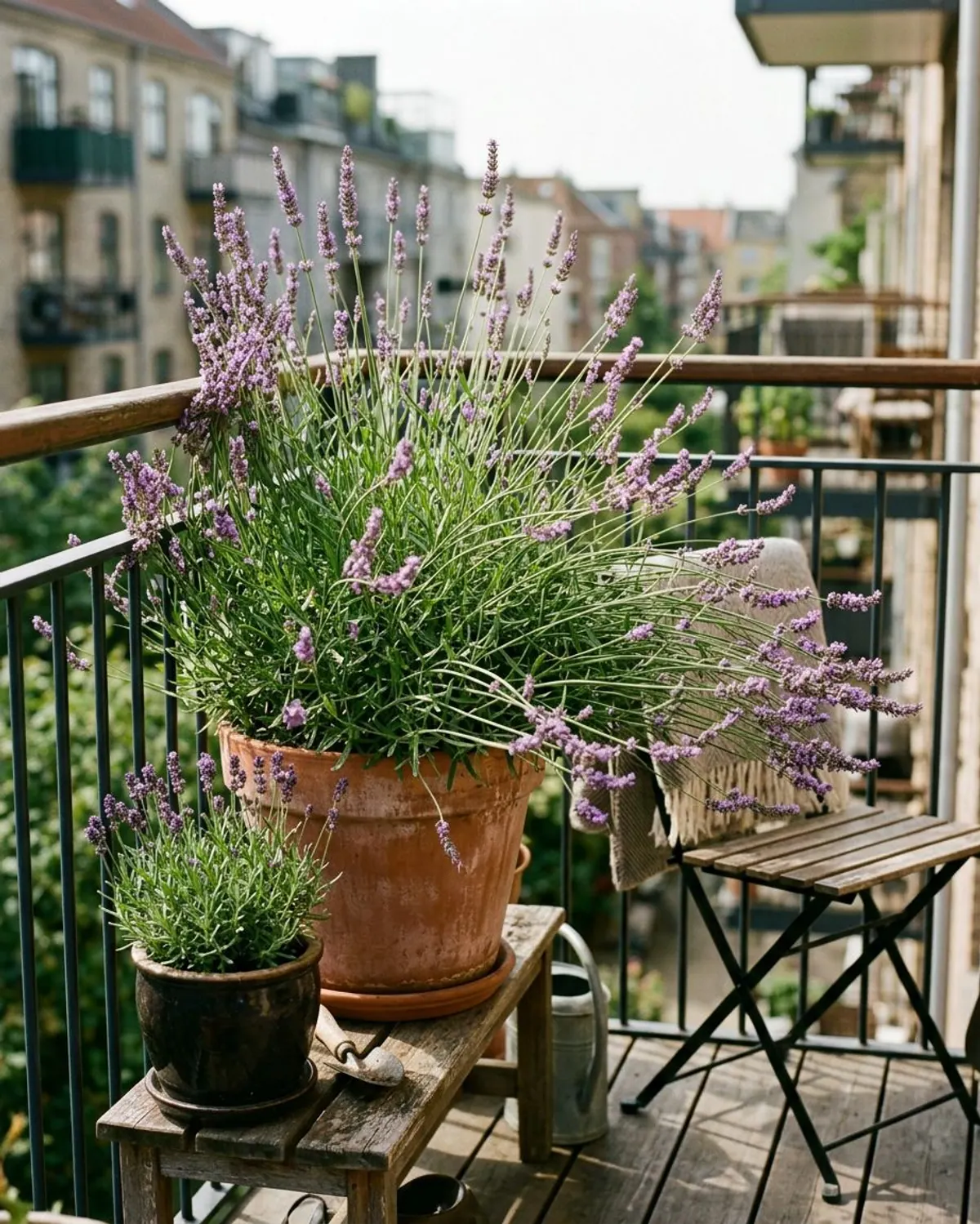
Phenomenal is a lavandin, a hybrid of English lavender. University of Illinois Extension calls it extremely vigorous, highly tolerant of heat and humidity and resistant to common root and foliar diseases, with long flower spikes. University of Minnesota Extension via Ask Extension adds that some growers rate it hardy to zone 4. That vigor is the problem indoors: it is the biggest plant on this list. Grow it in a large pot on a balcony or patio, where its humidity tolerance helps.
Why it suits a pot
- Handles hot, humid summers well
- Hardier outdoors than most
- Long spikes for cutting and drying
Watch for
- Too large for a room
- Wants full outdoor sun
- Not the usual culinary pick
Which lavender to buy for your light and room
| Your spot | Pick | Why |
|---|---|---|
| South sill plus a clip-on grow light, cool room | Munstead or Thumbelina Leigh | Small, culinary, likes a cool winter |
| Narrow sill or desk under a light | Thumbelina Leigh | 6 to 12 inches tall |
| Warm, bright living room | Spanish or Goodwin Creek Grey | No cold rest needed |
| Sunroom or large bright window | French fringed or Goodwin Creek Grey | Room for a 10 to 12 inch pot |
| Balcony or patio, cold winters | Hidcote or Munstead, kept outside | Hardy to about zone 5 |
| Balcony or patio, hot humid summers | Phenomenal | Heat and humidity tolerant |
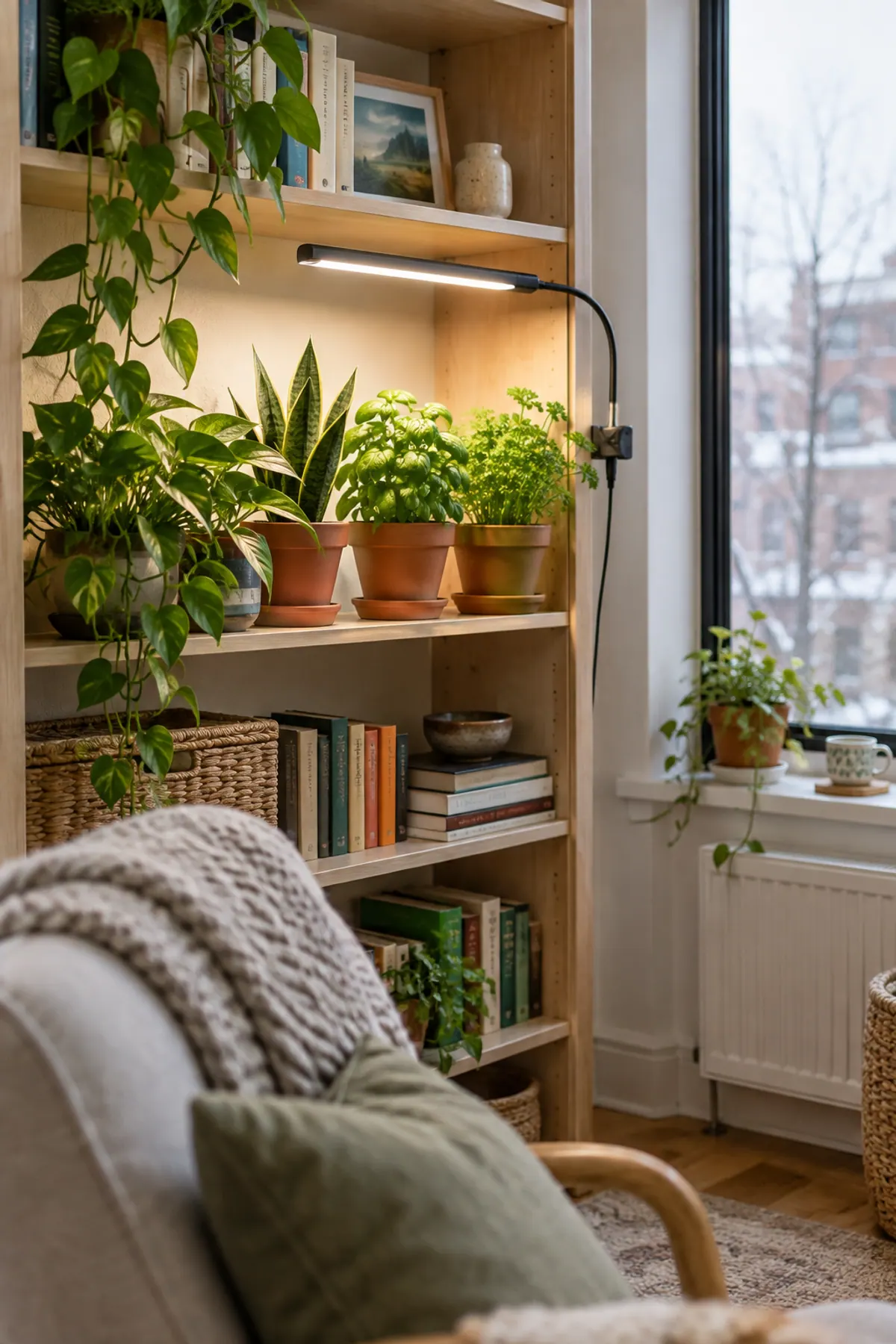
Whichever you pick, the care is the same: an unglazed terracotta pot with a drainage hole, a gritty or cactus mix, water only when the top inch is dry, and either 6 or more hours of direct sun or a grow light. University of Illinois Extension warns that wet soil, more than cold, is what usually kills lavender. Our lavender indoors guide covers watering, winter rest and problems step by step, and our grow light guide helps you pick a light for a sill or shelf.
Lavender plants and pot supplies
What to buy for one indoor lavender pot
- Best for small sills
Thumbelina Leigh dwarf lavender plant
Typically $12 to $30
The smallest culinary lavender for a narrow sill.
Check price on Amazon for Thumbelina Leigh dwarf lavender plant -
Munstead English lavender plant
Typically $10 to $25
The classic compact English lavender, easy to find.
Check price on Amazon for Munstead English lavender plant -
Spanish lavender plant
Typically $10 to $25
Copes best with a warm room; for looks, not cooking.
Check price on Amazon for Spanish lavender plant -
8 inch unglazed terracotta pot with drainage hole
Typically $8 to $20
Clay breathes so the mix dries between waterings.
Check price on Amazon for 8 inch unglazed terracotta pot with drainage hole -
Cactus and succulent potting mix
Typically $8 to $17
Fast-draining mix that keeps roots out of standing water.
Check price on Amazon for Cactus and succulent potting mix - Most important
LED grow light bar for indoor plants
Typically $20 to $45
Makes up the sun a winter window cannot give.
Check price on Amazon for LED grow light bar for indoor plants -
Terracotta pot feet
Typically $8 to $15
Lift the pot so the drainage hole never sits in water.
Check price on Amazon for Terracotta pot feet
Safety: pets, pregnancy and the kitchen
This article is general gardening information, not medical advice. The ASPCA (accessed 2026-10-23) lists lavender as toxic to dogs, cats and horses, so keep pots where pets cannot chew them.
Only English lavender is the usual culinary kind, and only from plants you have not sprayed. Use it by the pinch, as in our herbal tea blends guide. If you are pregnant, breastfeeding, taking medication or treating a child, ask your doctor or pharmacist before using lavender in teas, oils or remedies.
Planning where each pot goes? The free Small-Space Garden Planner has a sun map you fill in hour by hour, so you can match a lavender to the right window.
Frequently asked questions
Which lavender is best for growing indoors?
A dwarf English lavender such as Thumbelina Leigh or Munstead if you have a sunny sill or a grow light and a cool room, since they stay small and are the culinary kind. For a warm room, Spanish lavender or Goodwin Creek Grey cope better because they do not need a cold winter rest.
What are the 4 main types of lavender?
English lavender (Lavandula angustifolia), lavandin (Lavandula × intermedia), Spanish lavender (Lavandula stoechas) and French fringed lavender (Lavandula dentata). English and lavandin are the hardy ones; Spanish and French are tender and are often grown in pots that come indoors for winter.
What is the most compact lavender?
Thumbelina Leigh is one of the smallest, listed by its grower at 6 to 12 inches tall and 10 to 12 inches wide. Munstead, at about 12 to 15 inches, is the most widely sold compact choice.
Is French or English lavender better for pots?
For a small pot and kitchen use, English lavender, especially a dwarf variety. French fringed lavender grows larger and needs a 10 to 12 inch pot and your brightest window, but it handles room warmth and flowers for a long time.
Is lavender toxic to cats and dogs?
Yes. The ASPCA lists lavender as toxic to dogs, cats and horses. Keep pots out of reach of pets and call your vet or a pet poison line if one chews it.
Save it for later
Pin this to your Herb Garden board so it's there when you need it.
Save to Pinterest