This post contains affiliate links. As an Amazon Associate we earn from qualifying purchases, at no extra cost to you. Read our disclosure.
Safety first: Herbs can be powerful. If you are pregnant, nursing, take medication or have a health condition, check with your doctor or pharmacist first. Please read our herbal & garden safety notes before you start.
Key takeaways
- The free template has 3 pages: My Herbs inventory, a monthly watering tracker and a harvest and drying log
- It is a grower's journal, not a materia medica; nothing here is medical advice
- A half-letter binder with tab dividers turns loose pages into a journal you will keep using
- Log by season: sowing dates in winter, pot moves in spring, harvests in summer, drying in fall
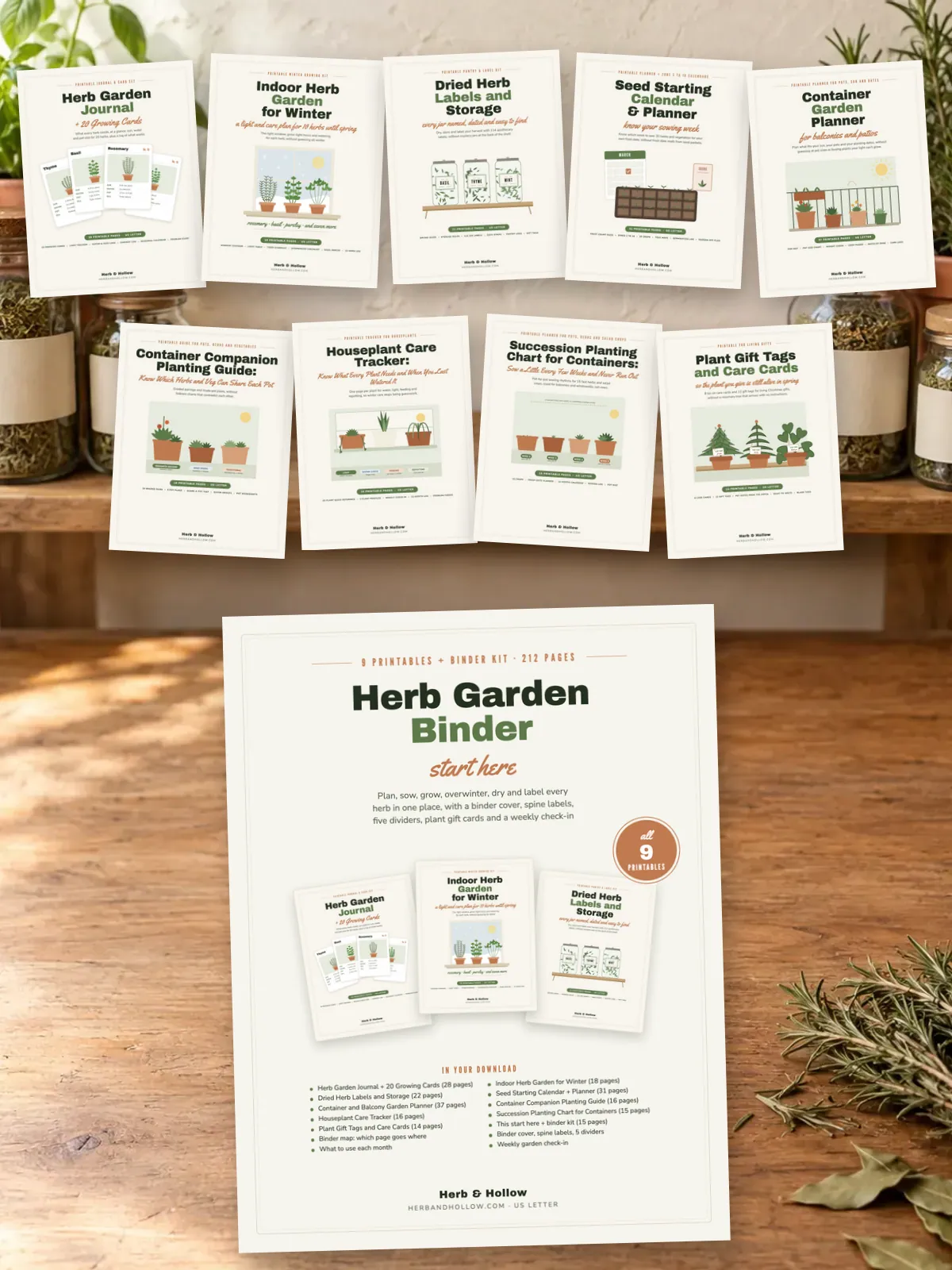
- The full Herb Garden Journal adds 20 growing cards and 25 more pages when you want the whole system
In this post11 sections
- What is in the free herb journal template (3 printable pages)
- Page 1: the My Herbs inventory
- Page 2: the monthly watering tracker
- Page 3: the harvest and drying log
- How to set up a half-letter herb journal binder
- Herb journal ideas by season
- Herb journal template vs materia medica: which do you need?
- Want more than the free pages? What is in the full herb journal
- Printing tips for the herb journal pages
- Binder supplies for a herb journal
- FAQ
What is in the free herb journal template (3 printable pages)
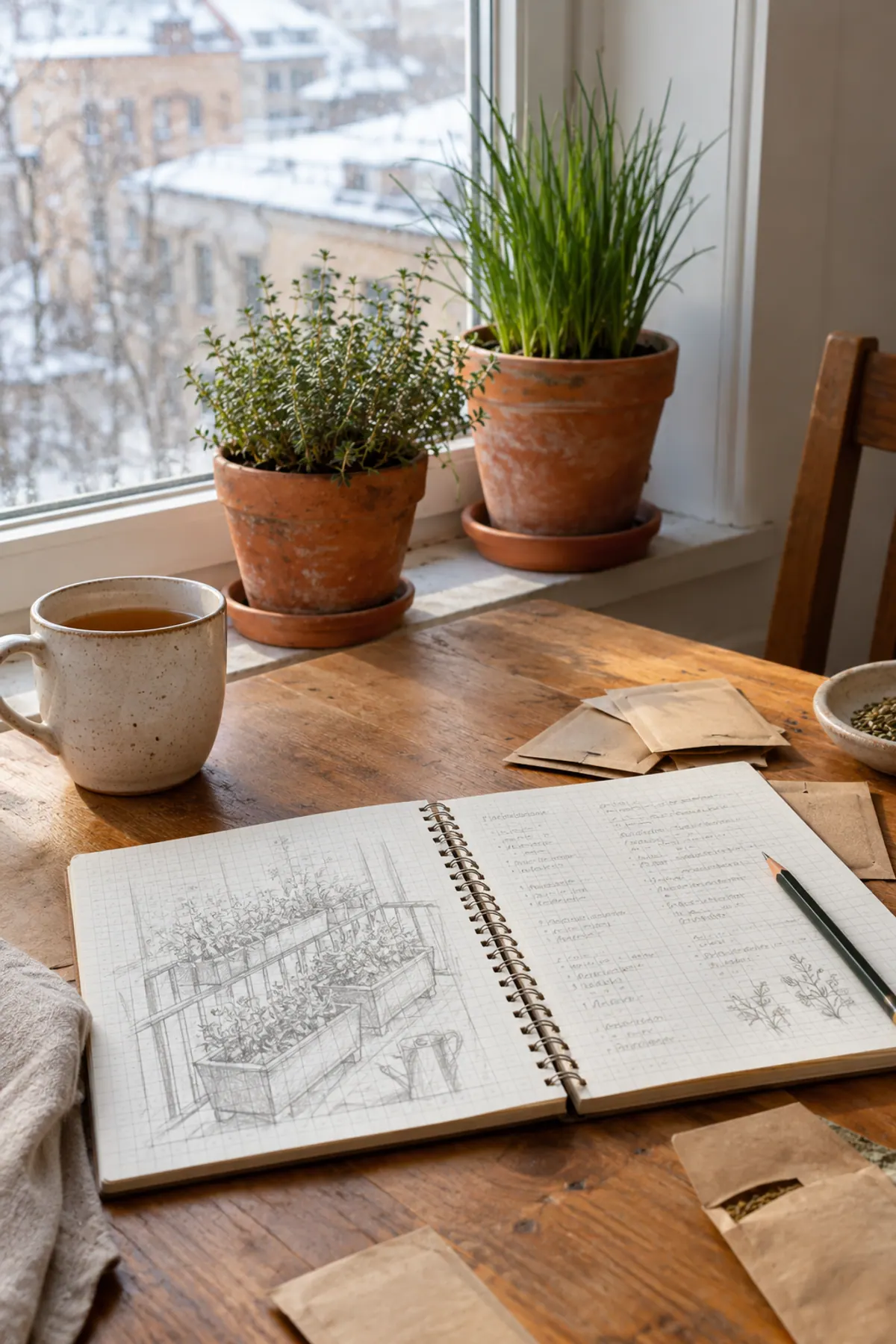
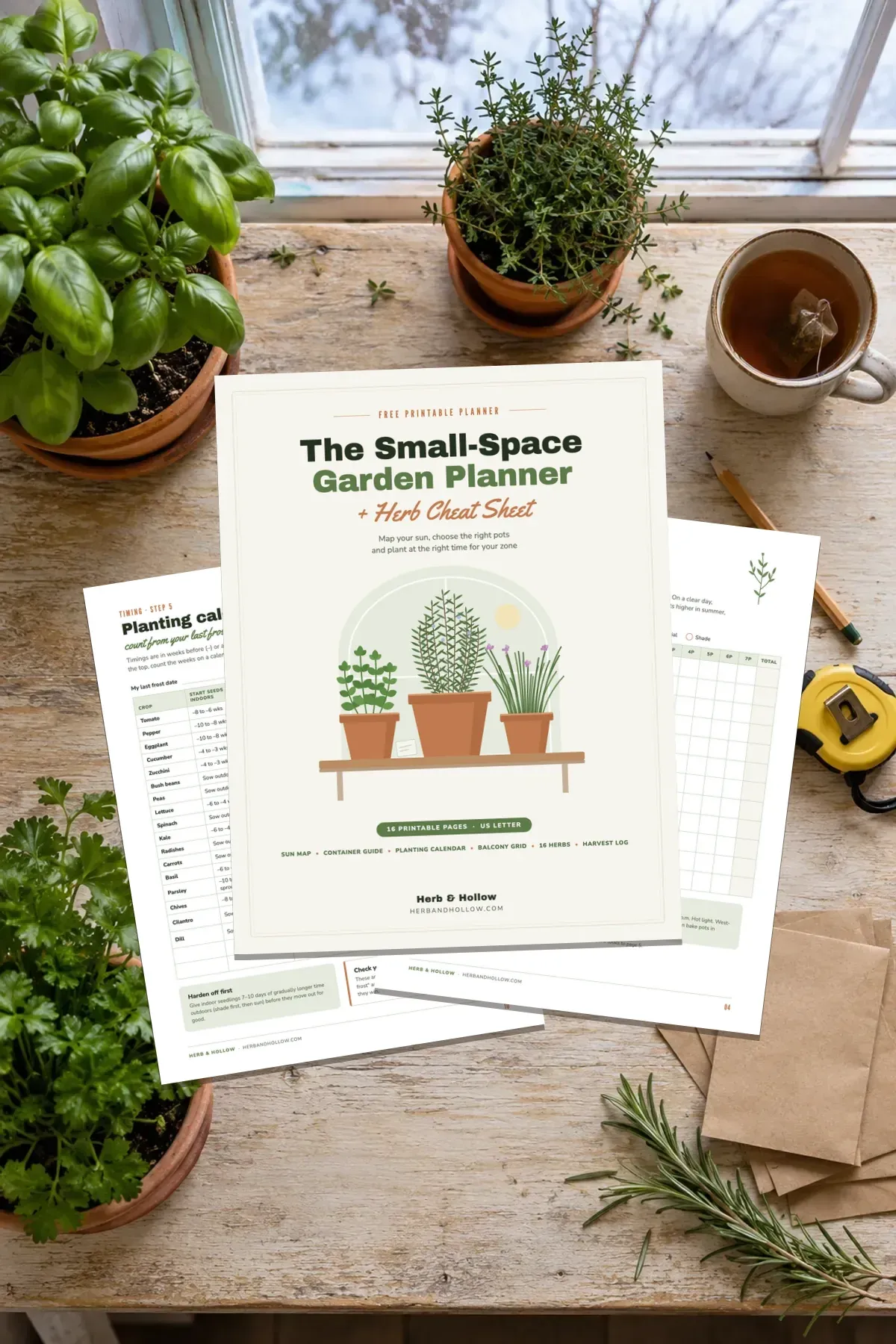
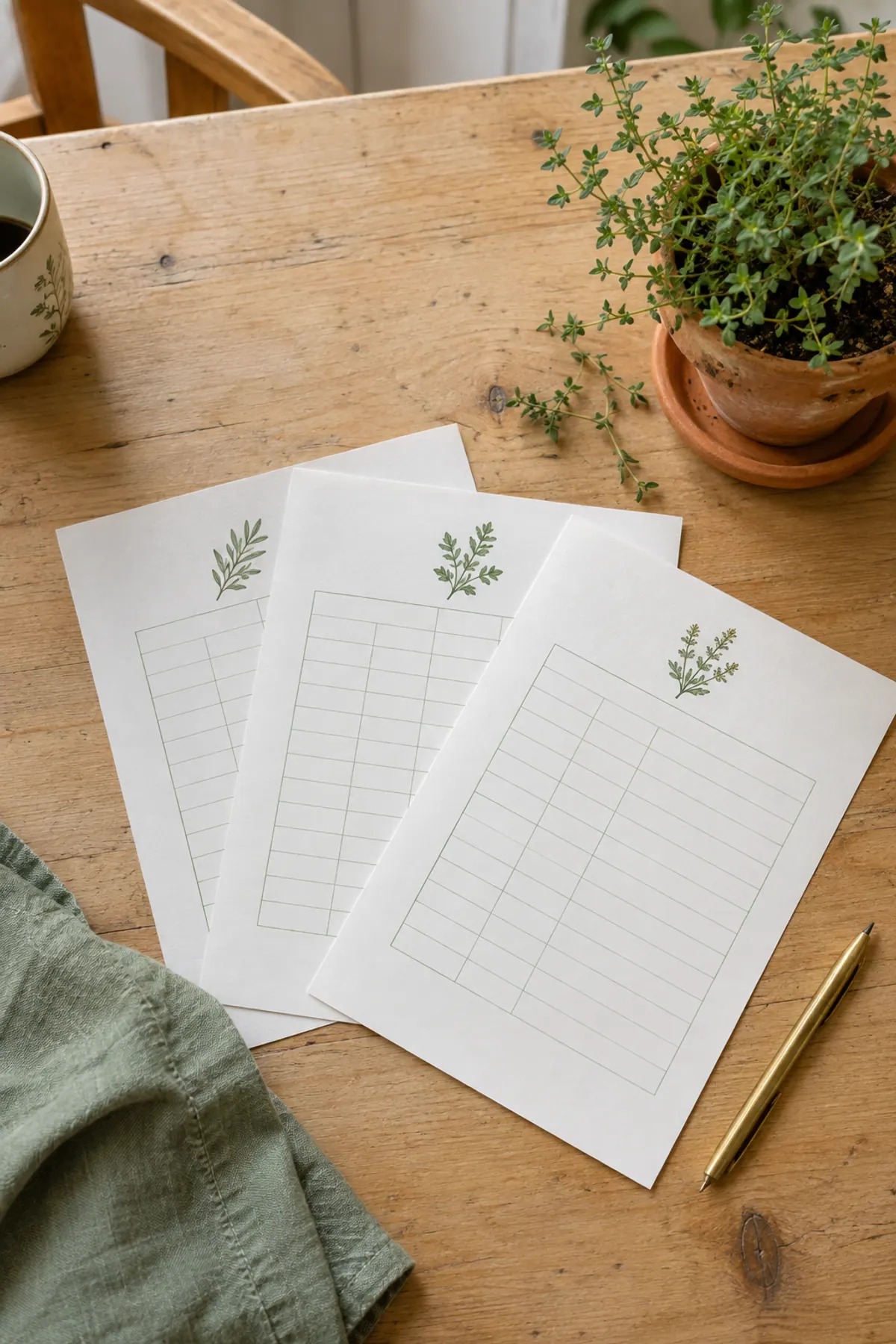
Most herb journal printables are either a pretty cover page with nothing behind it or a 40-page herbalist's binder you will never fill. This one is three working pages pulled straight from our paid Herb Garden Journal, the ones people use every week. Each page stands on its own, so print one or all three.
| Page | What it tracks | Use it for |
|---|---|---|
| My Herbs inventory | 20 numbered lines: herb and variety, where it came from, date, pot size, window spot, indoors or out, status | A single list of every pot you own, updated as plants move or die |
| Monthly watering tracker | 18 pots across 31 days, mark W for water, F for feed, a dot when you checked | Spotting which pots dry fast and which you overwater |
| Harvest and drying log | 20 lines: date, herb, amount, fresh or dried, drying method, where it dried, notes | Knowing how much a plant gives and which drying method kept the flavor |
Enter your email below and the PDF comes straight to your inbox. It prints on plain US Letter paper in black and white or color, and the cover page and the last page are optional extras.
Page 1: the My Herbs inventory
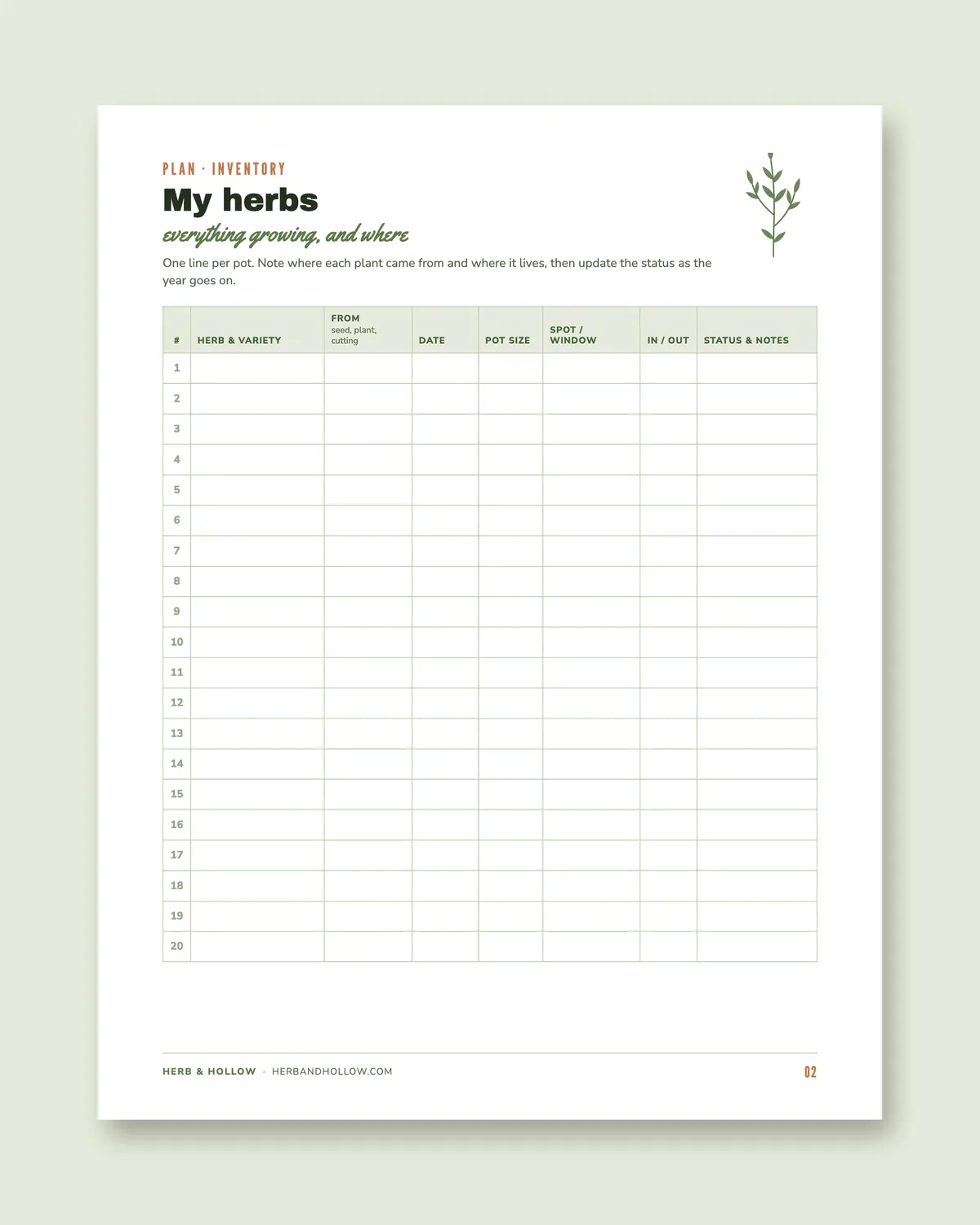
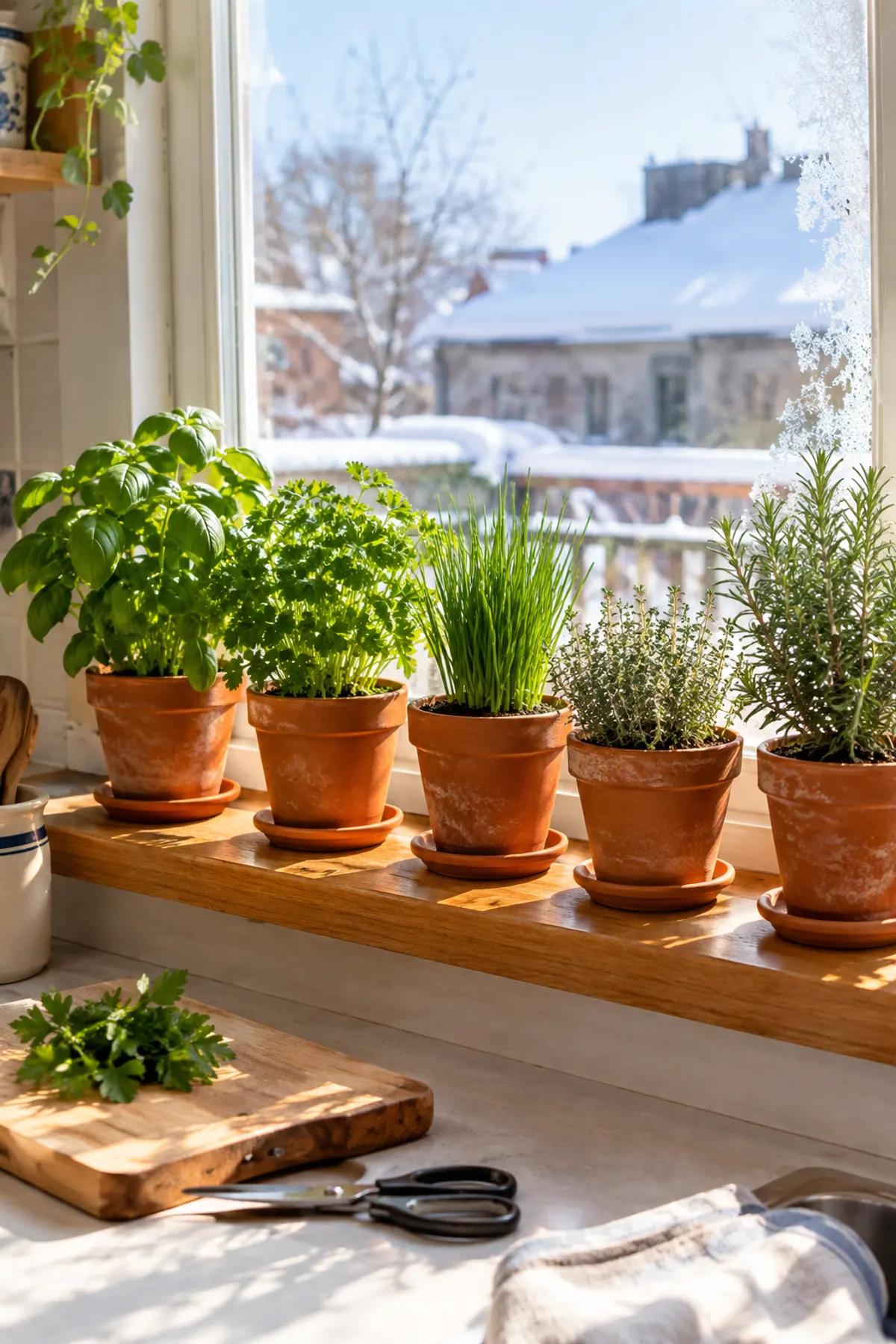
Start here. Walk round the apartment with a pen and give every pot a line: what it is (and the variety, if you know it), whether it came as seed, a nursery plant or a cutting, the date, the pot size, and which window or balcony spot it sits in. The 'in / out' column is for plants that move with the seasons.
The status column earns its keep in month three. 'Leggy, moved to south window.' 'Bolted, cut back.' 'Died, root rot, too big a pot.' Those notes are what stop you buying the same basil plant for the same dark corner next spring. Our indoor herb garden guide covers which window suits which herb if you are placing pots for the first time.
Page 2: the monthly watering tracker
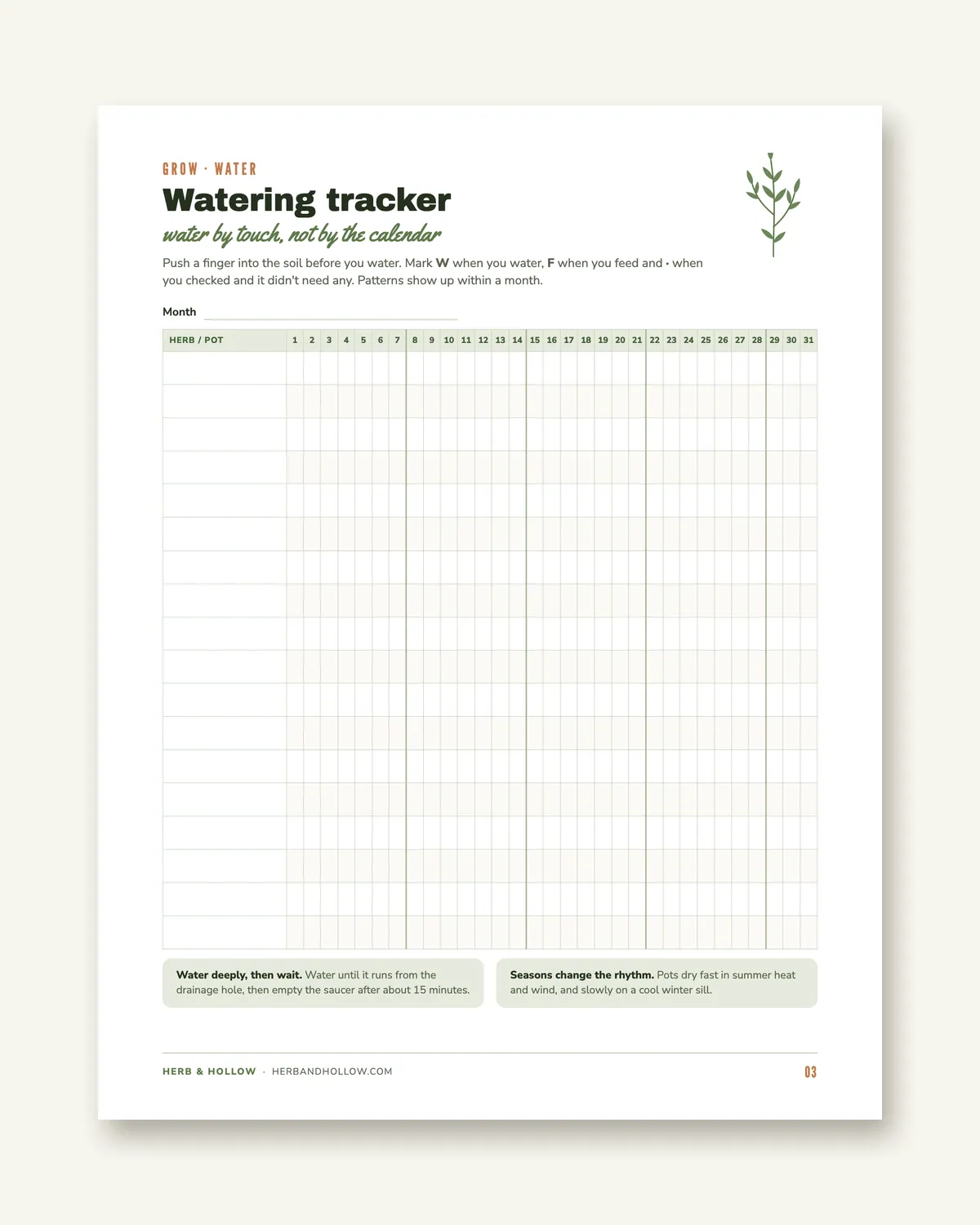
Write the month at the top and one herb per row. Each day you touch the soil, put a mark: W when you water, F when you feed, a dot when you checked and it did not need anything. The dots matter as much as the Ws, because they prove you looked.
After four weeks the page tells you things you would not notice otherwise. Rosemary in terracotta wants water every 3 days in a heated room; mint in plastic goes 6. A row full of Ws next to a yellowing plant is overwatering in plain sight. Print a fresh sheet each month and keep the old ones behind a tab.
Page 3: the harvest and drying log
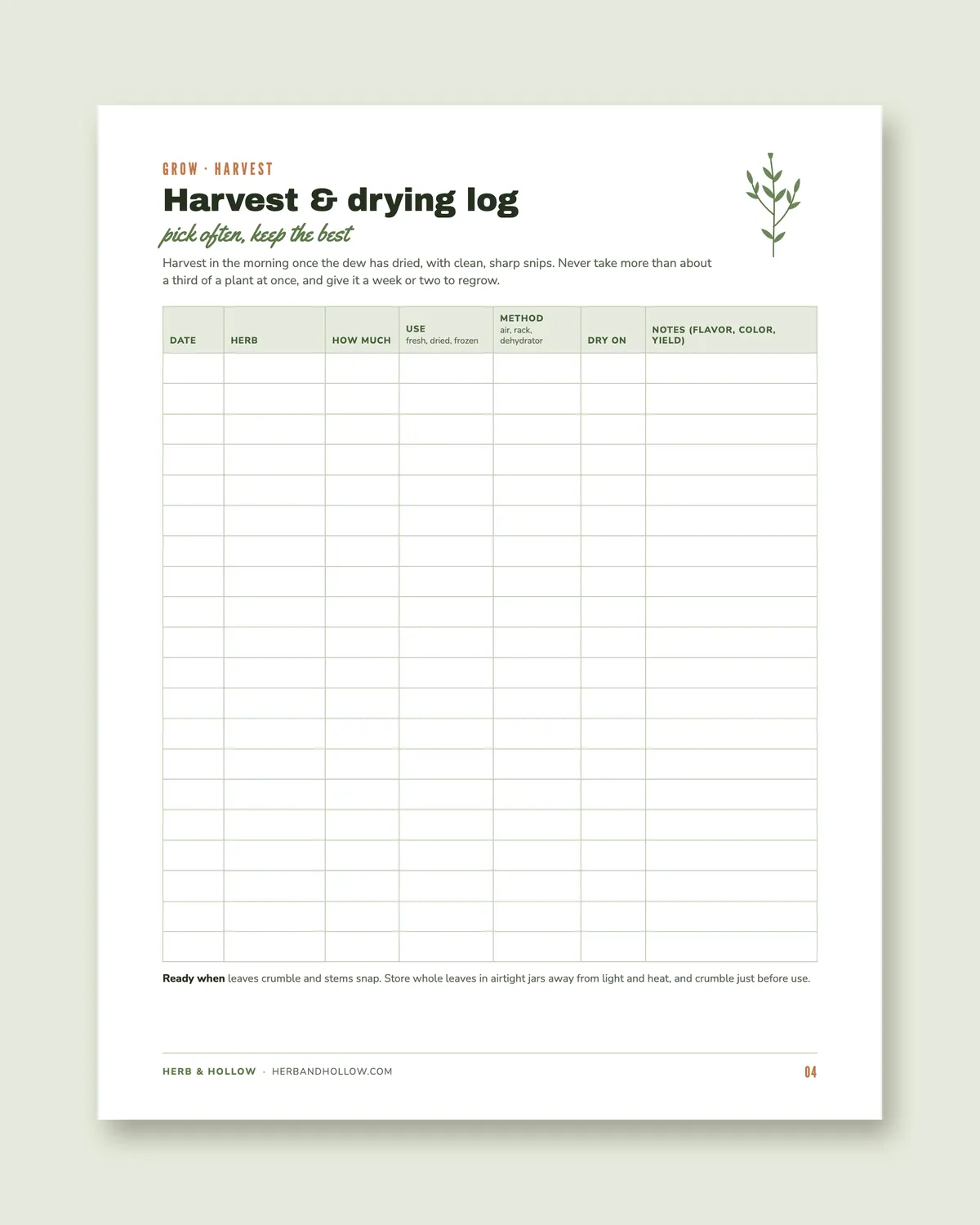
Every cut goes on a line: the date, the herb, roughly how much (a handful, a bunch, a jar), whether you used it fresh, dried or froze it, and the drying method. The notes column is for flavor and color. 'Oven-dried basil went brown' is a lesson you only need to learn once.
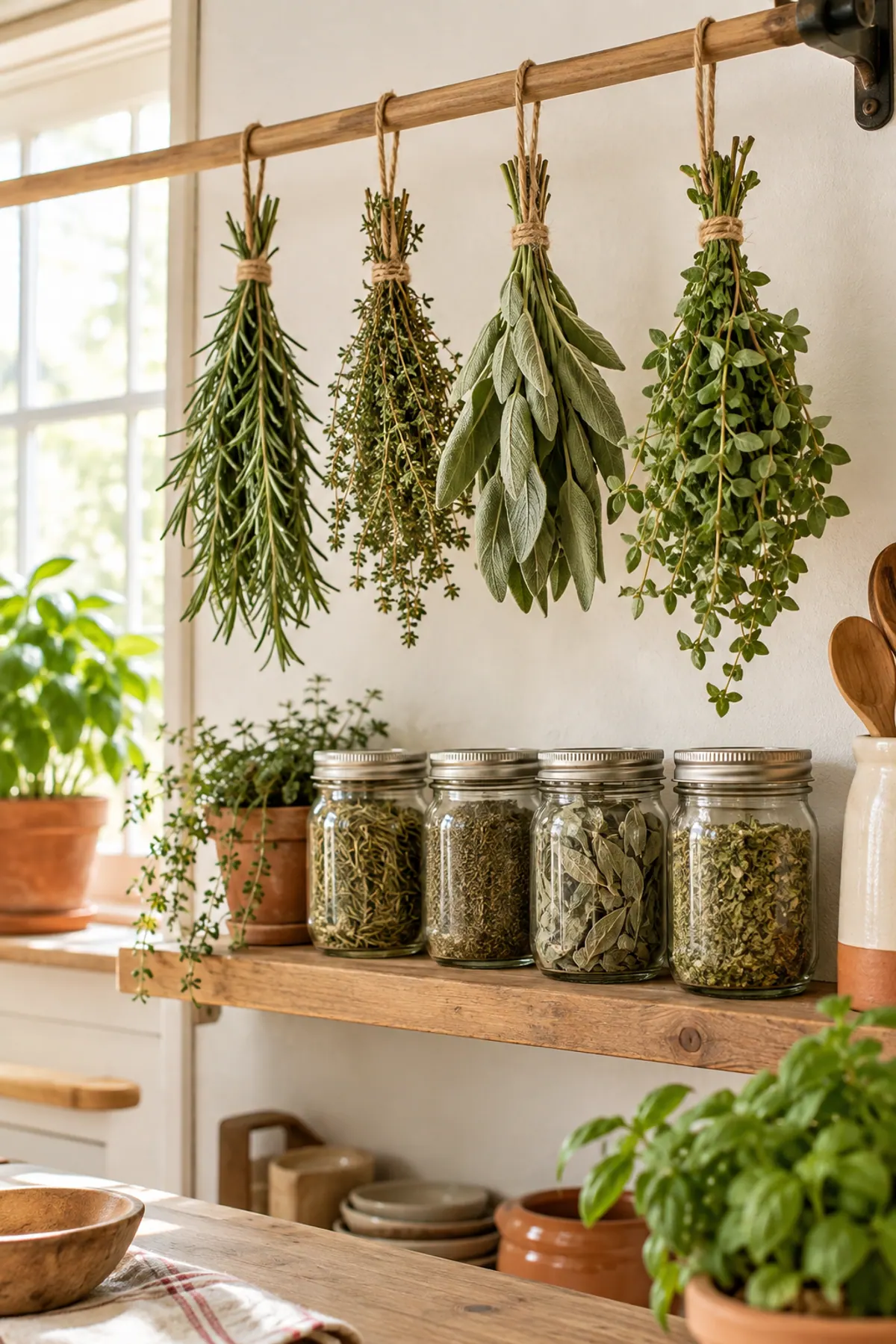
Over a season the log shows which plants pay their rent. A thyme that gives six harvests from one 6-inch pot keeps its spot; a dill that bolted after one cut gets replaced with a second sowing. If you are new to drying, our guide to drying herbs at home compares air, oven and dehydrator so the log fills with good results.

How to set up a half-letter herb journal binder
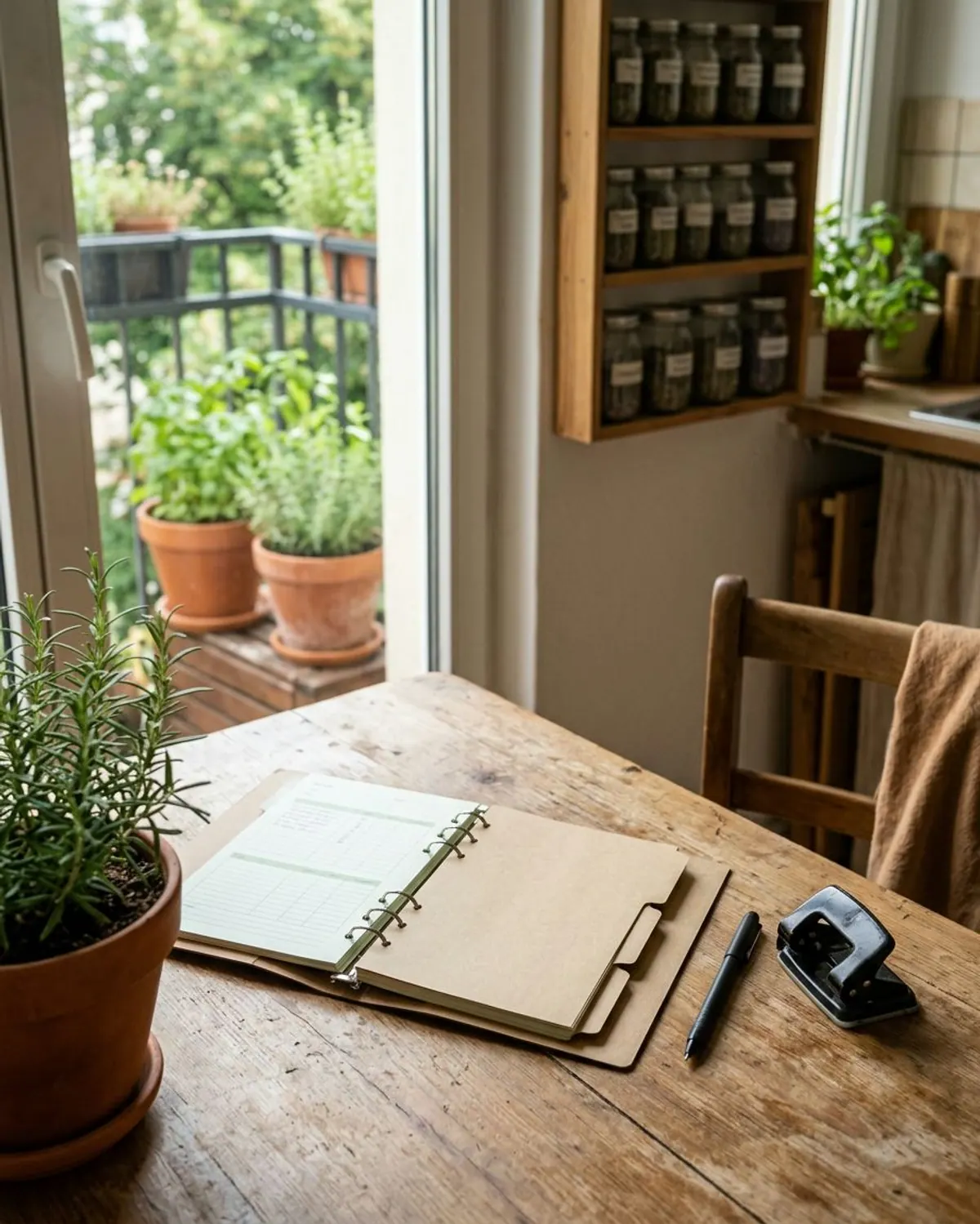
Loose pages get lost; a binder gets used. A half-letter (5.5 x 8.5 inch) binder fits on a windowsill or in a kitchen drawer, and the pages print two-up or scaled down without losing legibility. A full-size letter binder works just as well if you have the shelf space.
-
Step 1: Print at the right size
For a letter binder, print at 100 percent. For half-letter, choose 'two pages per sheet' or scale to 50 percent, then cut down the middle with a guillotine trimmer or a ruler and craft knife.
-
Step 2: Punch and divide
A 3-hole punch for letter, or a 6-hole planner punch for half-letter. Add three kraft tab dividers: Inventory, Watering, Harvest. A fourth tab for 'Seeds and sowing' fills itself by spring.
-
Step 3: Protect the pages you keep
Slip the inventory and the finished watering sheets into page protectors. They live next to the sink and the watering can and get splashed.
-
Step 4: Keep a pen with it
A fine-tip pen on a string or in a clip-on pouch is the difference between a journal that gets filled in and one that does not.
Herb journal ideas by season
A herb journal is only dull if it is only a watering chart. These are the things worth writing down each season, all of which fit the three pages plus a notes sheet.
| Season | Journal ideas |
|---|---|
| Winter | Which herbs survive the heated room, grow light hours and height, sowing dates for seeds started indoors, the first signs of leggy growth |
| Spring | Pot moves from windowsill to balcony, hardening-off dates, which cuttings rooted, repotting notes and pot sizes |
| Summer | Harvest amounts per plant, bolting dates for cilantro and dill, watering rhythm in heat, pest sightings and what you tried |
| Fall | Drying results by method, which plants come back inside, final harvests, seeds saved and from which plant |
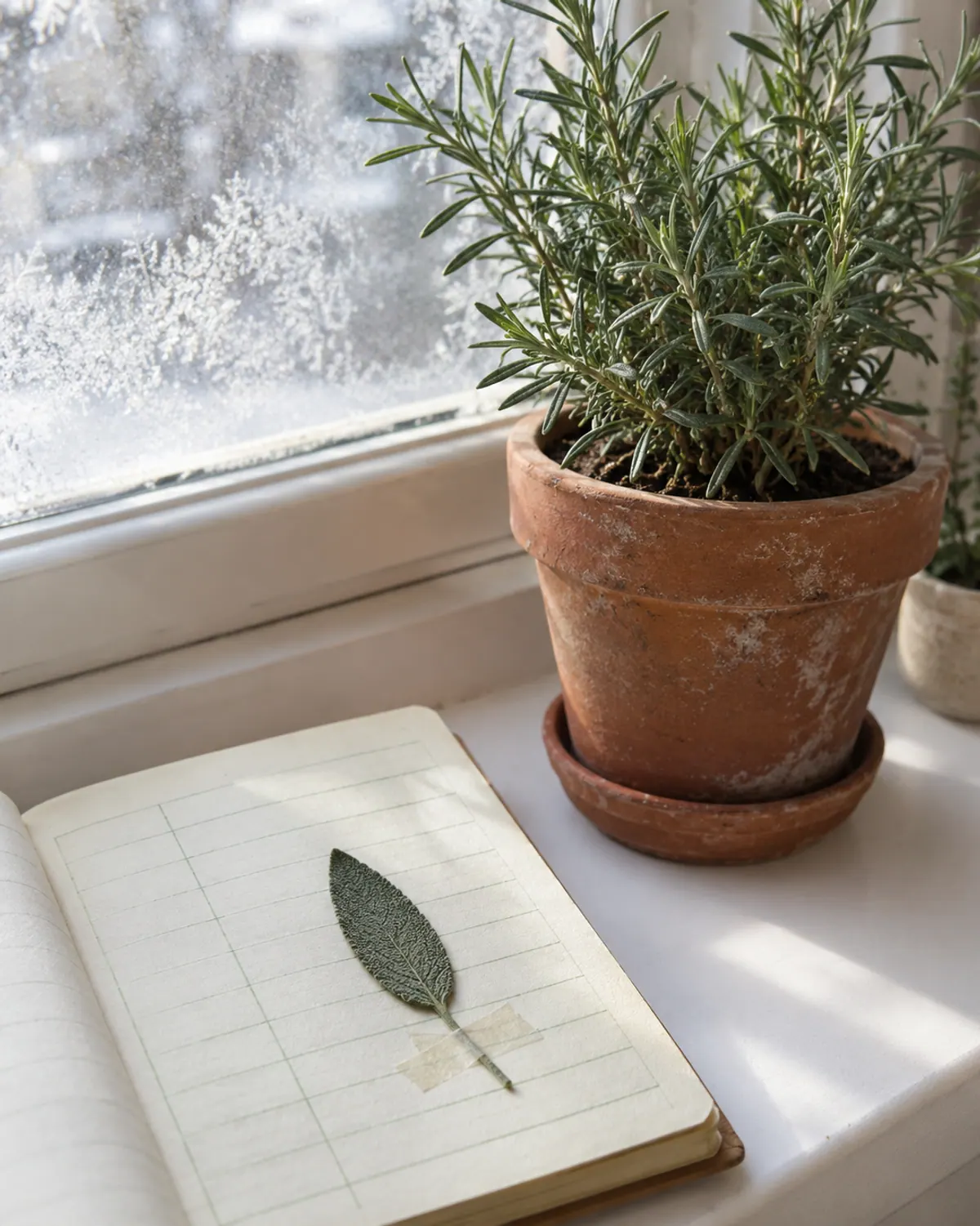
Two more ideas that cost nothing: tape a pressed leaf of each herb next to its inventory line, and write the date you bought each pot so you know when the 'annual' parsley is simply at the end of its life. More prompts, for the whole garden rather than just herbs, are in our garden journal ideas post.
Herb journal template vs materia medica: which do you need?
Search for a herb journal and half the results are materia medica templates: pages for a plant's Latin name, actions, energetics, dosage and preparations. Those are study tools for people learning herbalism, and they say nothing about whether your thyme needs water.
This template is the grower's version. It tracks the plant in the pot, not the plant in a textbook. If you also want a page per herb with its uses and cautions, keep that separate and get the facts from a reliable source; nothing on this page or in the journal is medical advice, and some herbs are not safe in pregnancy or for pets.
Want more than the free pages? What is in the full herb journal
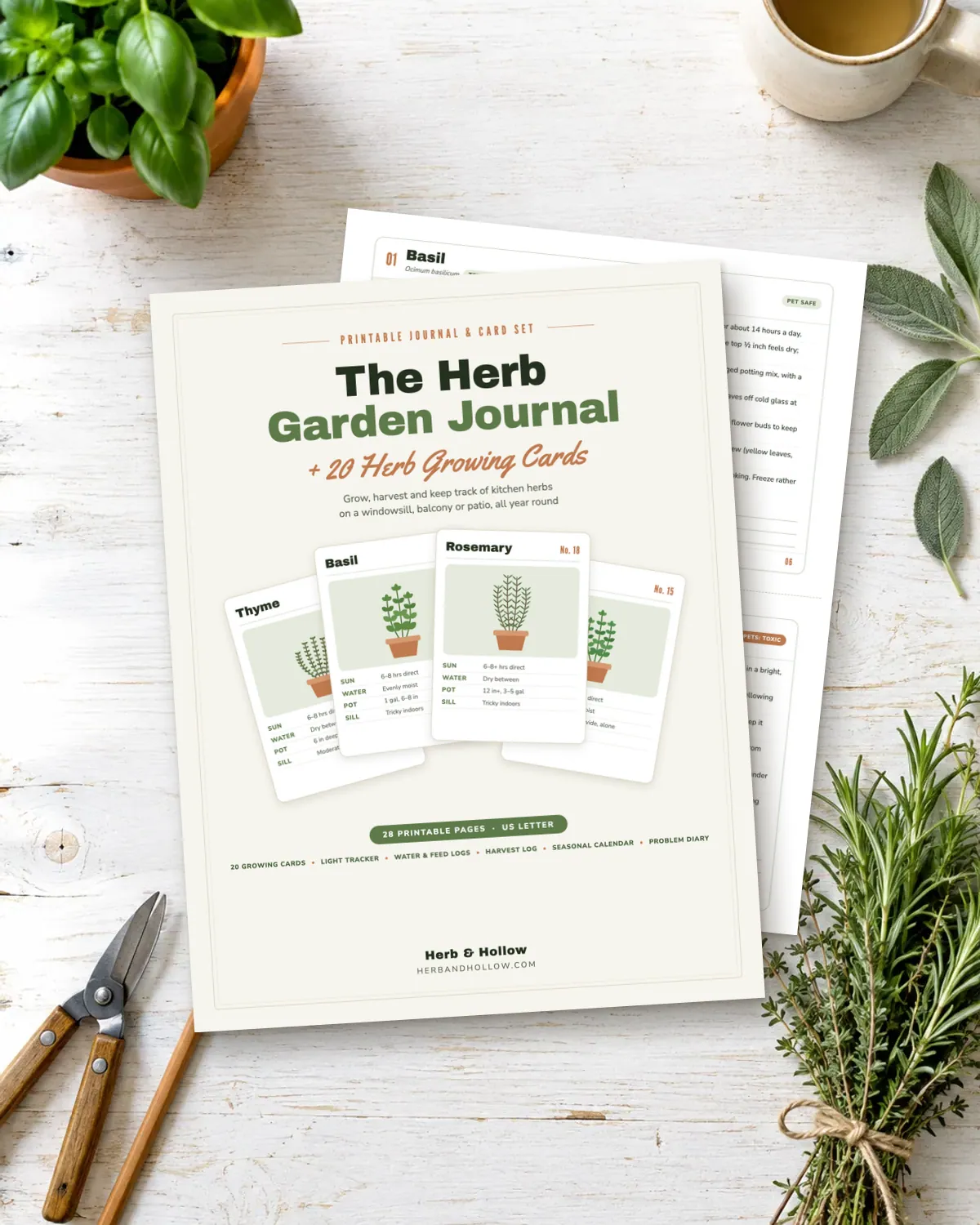
The three free pages are the logs. The Herb Garden Journal + Growing Cards is the whole system: 28 printable pages, with the same three logs plus the facts for each herb and the rest of the record-keeping.
Inside the full Herb Garden Journal
If what you want is a planner for the whole small garden rather than a herb record, the free garden planner is the better download; the two sit side by side in one binder.
Printing tips for the herb journal pages
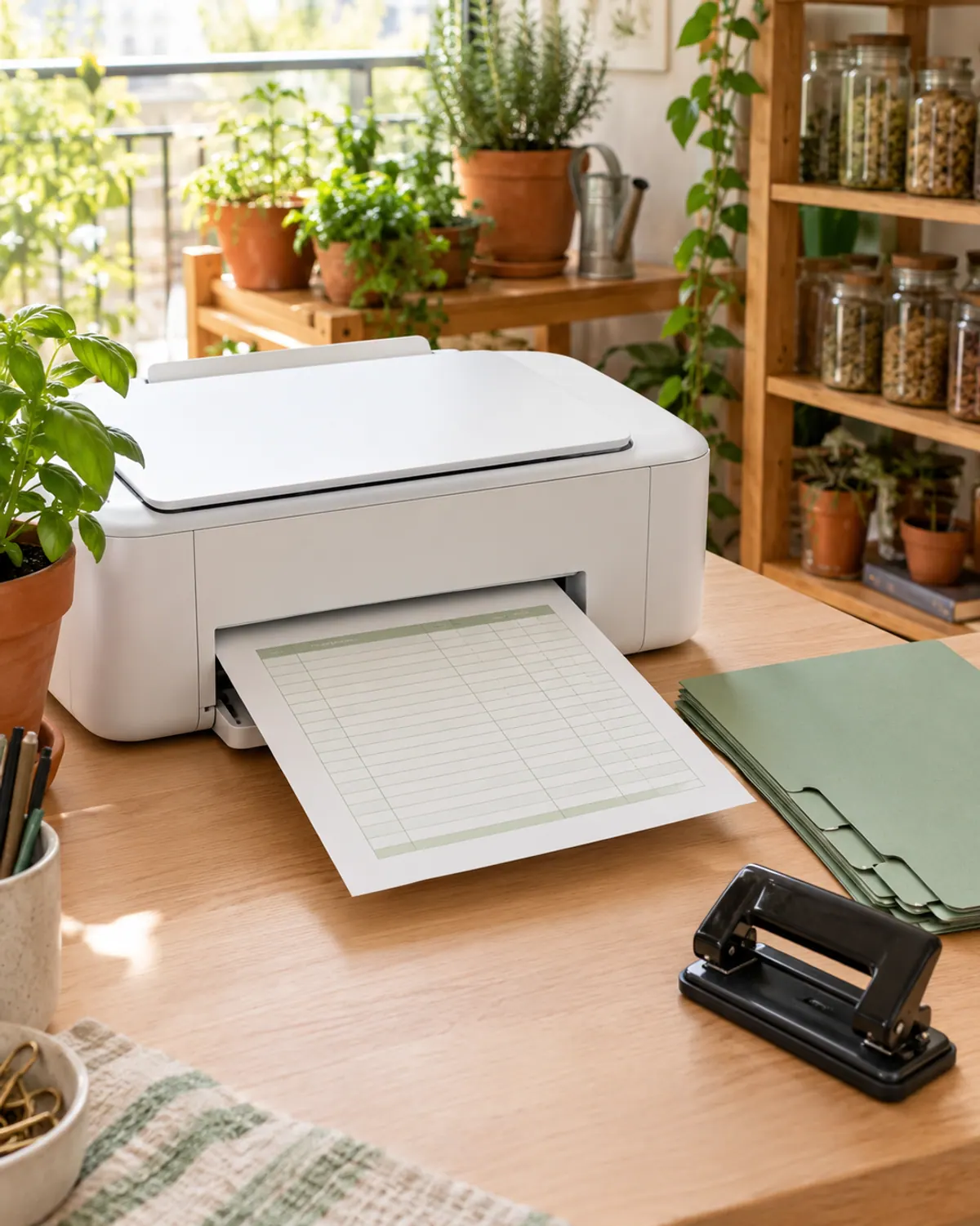
Print on plain 20 lb paper for pages you replace monthly and on 28 lb or light cardstock for the inventory, which lives all year. The pages are designed in sage green and terracotta but read fine in greyscale, so a black-and-white printer loses nothing.
In the print dialog choose 'actual size' rather than 'fit to page' so the hole-punch margin stays where it should. If your printer struggles with full-bleed color, the pages have none; every edge is plain white.
Binder supplies for a herb journal
Shop the setup
-
Half-letter 3-ring binder
Typically $8 to $15
Fits a windowsill or a kitchen drawer; holds a year of pages
Check price on Amazon for Half-letter 3-ring binder -
Half-letter page protectors
Typically $6 to $12
Keeps the inventory page dry next to the watering can
Check price on Amazon for Half-letter page protectors -
Kraft tab dividers
Typically $5 to $10
Inventory, Watering, Harvest; add a Seeds tab in spring
Check price on Amazon for Kraft tab dividers -
Fine-tip pens
Typically $6 to $12
Small enough to write in a day column without smudging
Check price on Amazon for Fine-tip pens -
Adjustable hole punch
Typically $10 to $20
One punch for letter and half-letter pages
Check price on Amazon for Adjustable hole punch -
White cardstock, 65 lb
Typically $8 to $14
For the inventory and dividers you keep all year
Check price on Amazon for White cardstock, 65 lb
We earn from qualifying purchases, which never changes what we recommend. Read our disclosure and editorial guidelines.
Frequently asked questions
What should be in a herb journal?
For a grower: an inventory of every pot with its source, size and spot; a watering and feeding record; and a harvest log with drying results. Add sowing dates, pot moves and pest notes as the year goes on. Herbalists keep a separate materia medica for uses and cautions.
Is there a free printable herb journal template?
Yes. The three pages on this page (My Herbs inventory, monthly watering tracker, harvest and drying log) are free. Enter your email in the box above and the PDF is sent to you.
What is a materia medica template?
A study page for one medicinal plant: name, parts used, actions, preparations, dosage and cautions. It is a learning tool for herbalism, not a growing record, and anything you write in one is not a substitute for medical advice.
What size should a herb journal be?
Half-letter (5.5 x 8.5 inches) if it will live on a windowsill or in a drawer; full letter if you want more writing room. The free pages print at either size.
How often should I write in a herb journal?
Mark the watering tracker each time you touch the soil, which takes seconds. Update the inventory when a plant moves, arrives or dies, and add harvests as they happen. A five-minute look once a week keeps it honest.
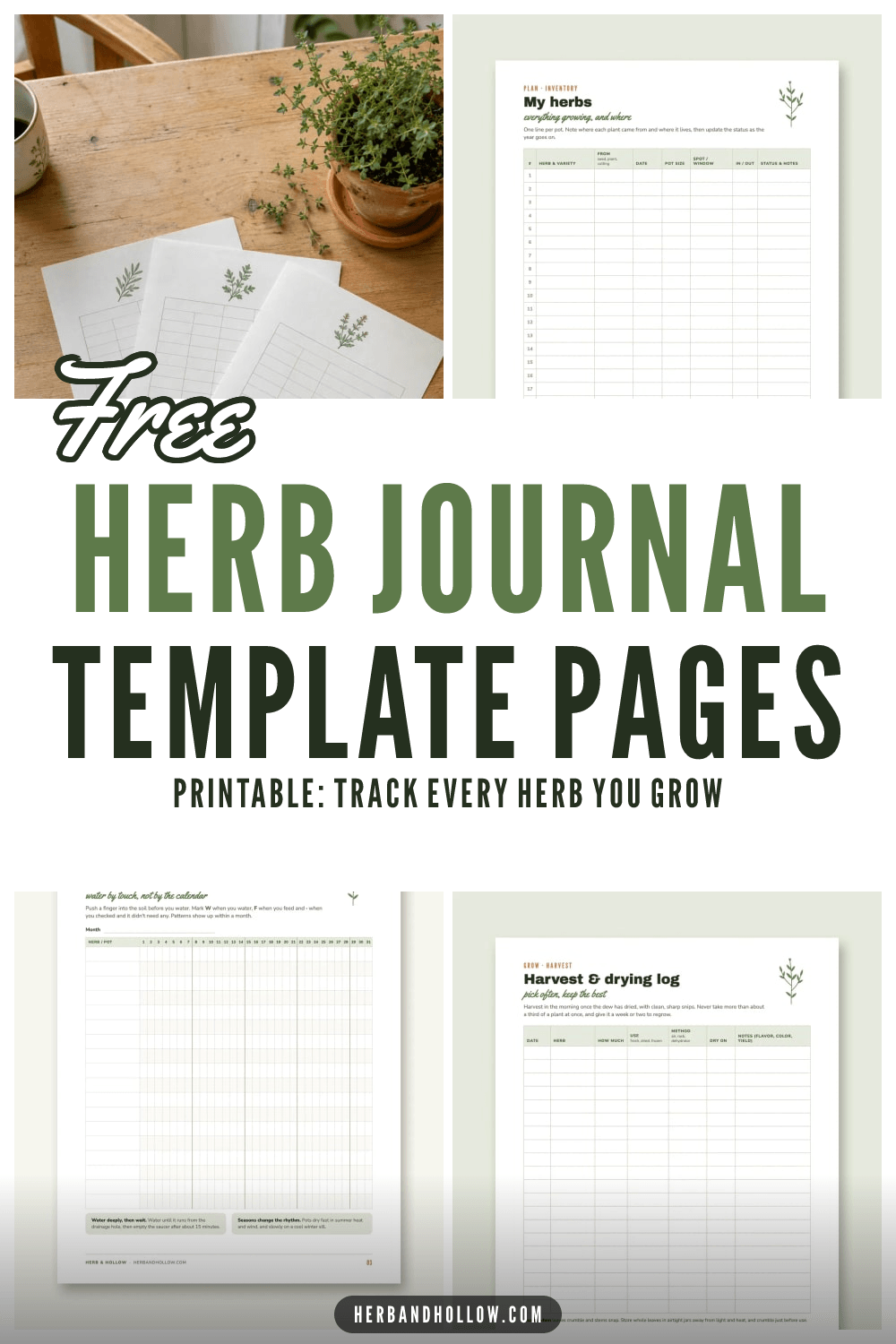
Save it for later
Pin this to your Herb Garden board so it's there when you need it.
Save to Pinterest