This post contains affiliate links. As an Amazon Associate we earn from qualifying purchases, at no extra cost to you. Read our disclosure.
Safety first: Herbs can be powerful. If you are pregnant, nursing, take medication or have a health condition, check with your doctor or pharmacist first. Please read our herbal & garden safety notes before you start.
Key takeaways
- Start with three pages: a sun map, a seed inventory and a frost date calendar.
- Log as you go: sowing, watering, pests and harvests take a line or two each.
- Review in fall: a variety scorecard and a lessons list turn notes into next year's plan.
- Format matters less than habit. A notebook, a binder or a phone all work if you open it weekly.
- Test old seed in winter. Illinois Extension suggests buying new seed if fewer than 7 of 10 sprout.
In this post27 sections
- Winter planning pages: garden journal ideas for before you buy seeds
- 1. Year-at-a-glance goals page
- 2. Sun map of your space
- 3. Container inventory
- 4. Seed inventory and wish list
- 5. Seed germination test results
- 6. Frost dates and sowing calendar
- 7. Layout sketch on graph paper
- 8. Garden budget page
- Growing season logs: spring to fall pages
- 9. Seed starting log
- 10. Planting and transplant log
- 11. Weather notes
- 12. Watering and feeding log
- 13. Pest and problem log
- 14. Bloom and pollinator notes
- 15. Harvest log
- 16. Monthly photo page
- Herb pages for windowsill and balcony growers
- 17. Herb profile pages
- 18. Drying and pantry log
- 19. Indoor winter herb log
- End-of-season review pages
- 20. Variety scorecard
- 21. Lessons learned page
- Bonus: how to keep a garden journal you'll actually use
- FAQ
Winter planning pages: garden journal ideas for before you buy seeds
These pages do the most work before spring. Fill them in on a quiet winter evening and your shopping list writes itself.
1Year-at-a-glance goals page
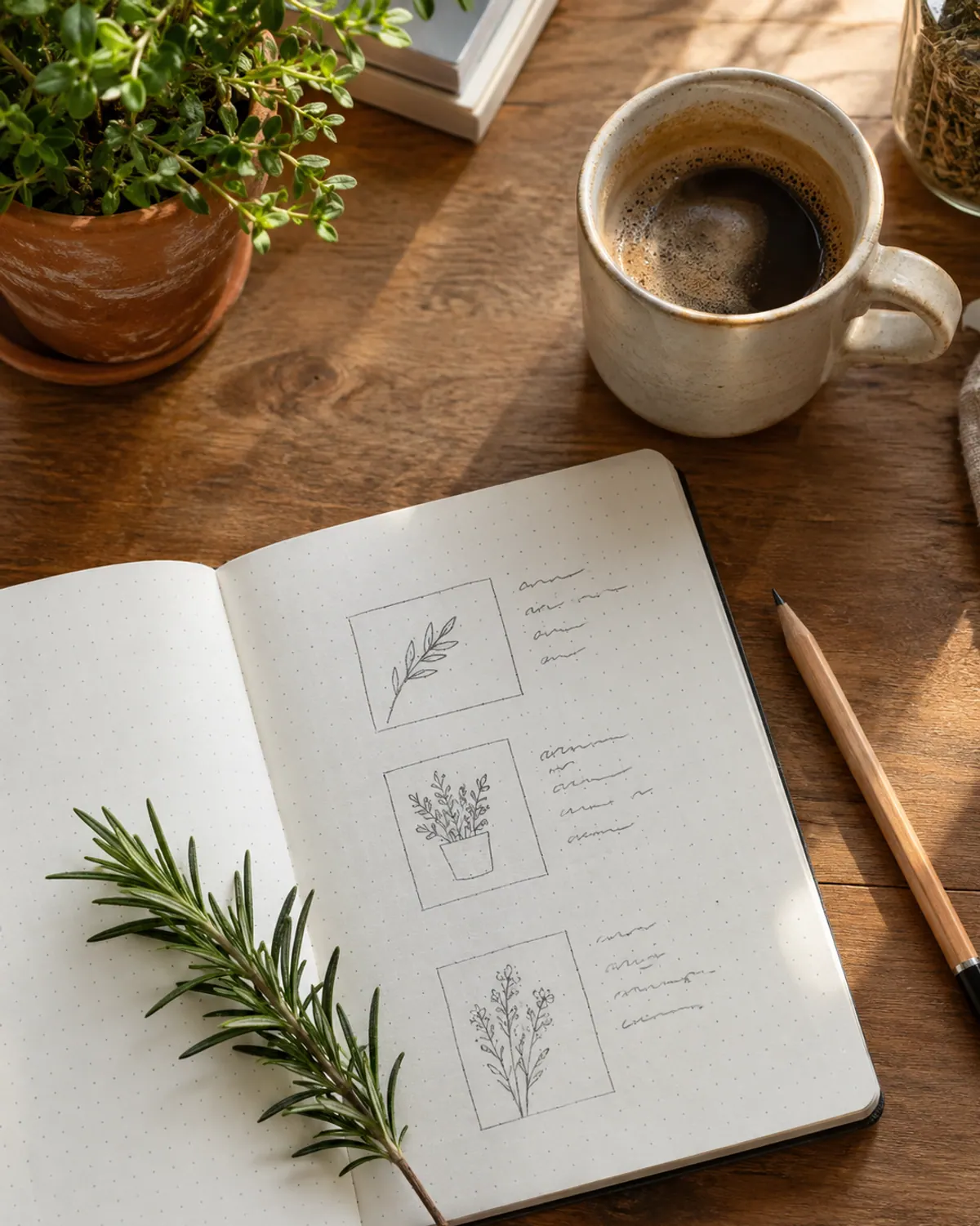
Open the journal with one page of goals for the year. Keep it to three or four lines, such as "grow enough basil for summer" or "try one tomato on the balcony." A short list is easier to check later than a long wish list.
Record: your goals, the space you have, and how much time a week you can give the garden.
Next season: you can see which goals you met and which were too big for your space.
- Write goals you can check off. "Harvest herbs weekly" beats "grow more."
Dots guide tables and sketches without the busy look of lined paper.
2Sun map of your space
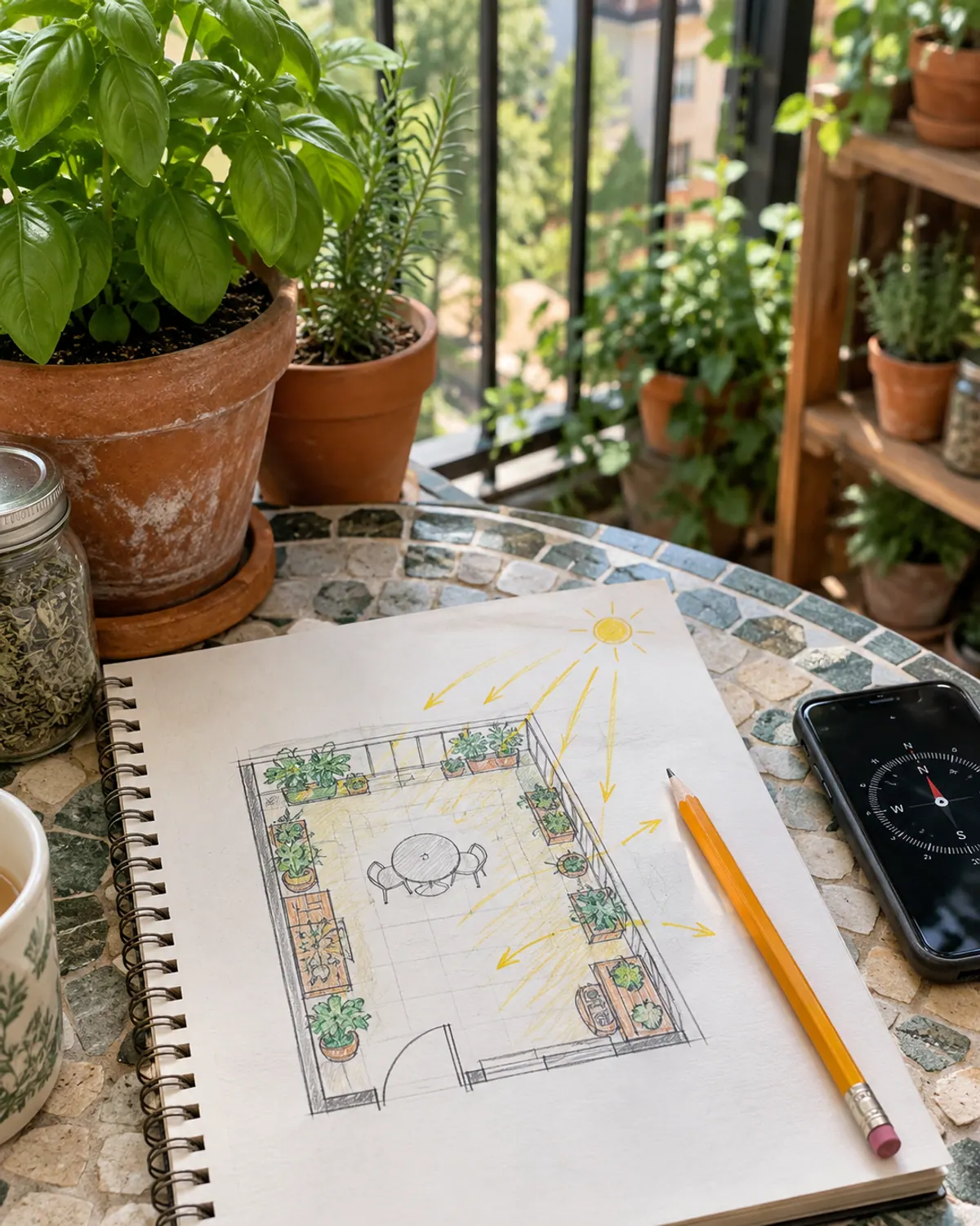
A sun map shows how many hours of direct sun each spot gets. Sketch your balcony, patio or windowsill and note the sun in the morning, at midday and in the afternoon. UW-Madison Extension suggests putting container vegetables in full sun, at least six hours a day, so this page tells you what's realistic. Our free garden planner has a sun map page ready to print.
Record: hours of direct sun per spot, checked again as the seasons change.
Next season: sun lovers go where the sun is, instead of where they fit.
- Snap a phone photo of the space at 9, 12 and 3 o'clock on one clear day. It fills the map fast.
3Container inventory
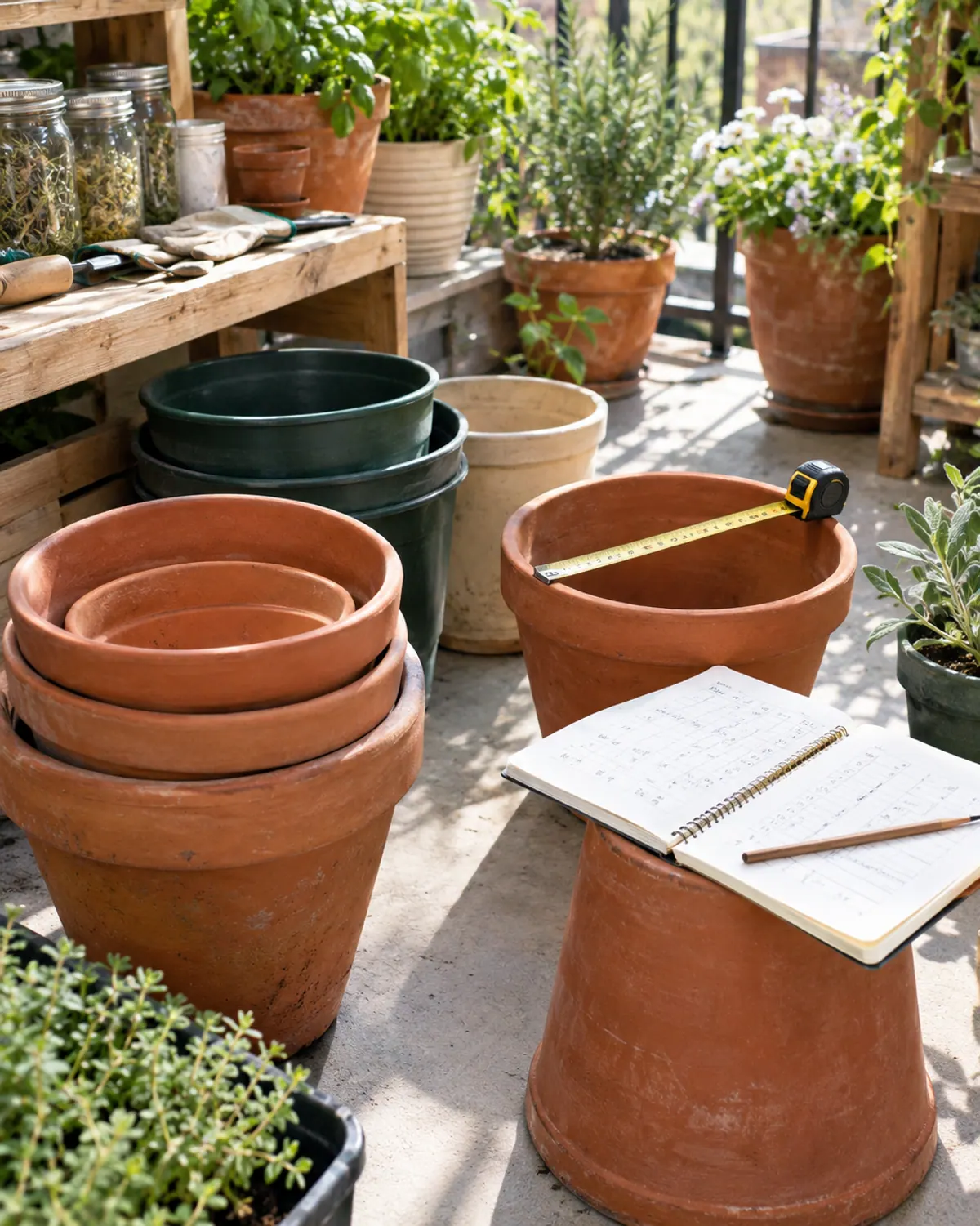
List every pot, planter and grow bag you own, with its size. Note cracks, missing saucers and which pots need fresh mix. It sounds dull, but it stops you buying seeds for more plants than you have room to grow.
Record: pot size, material, where it sits and what grew in it.
Next season: you match plants to pots you already own and buy only what's missing.
- Measure both the width across the top and the depth. Guides list both.
4Seed inventory and wish list
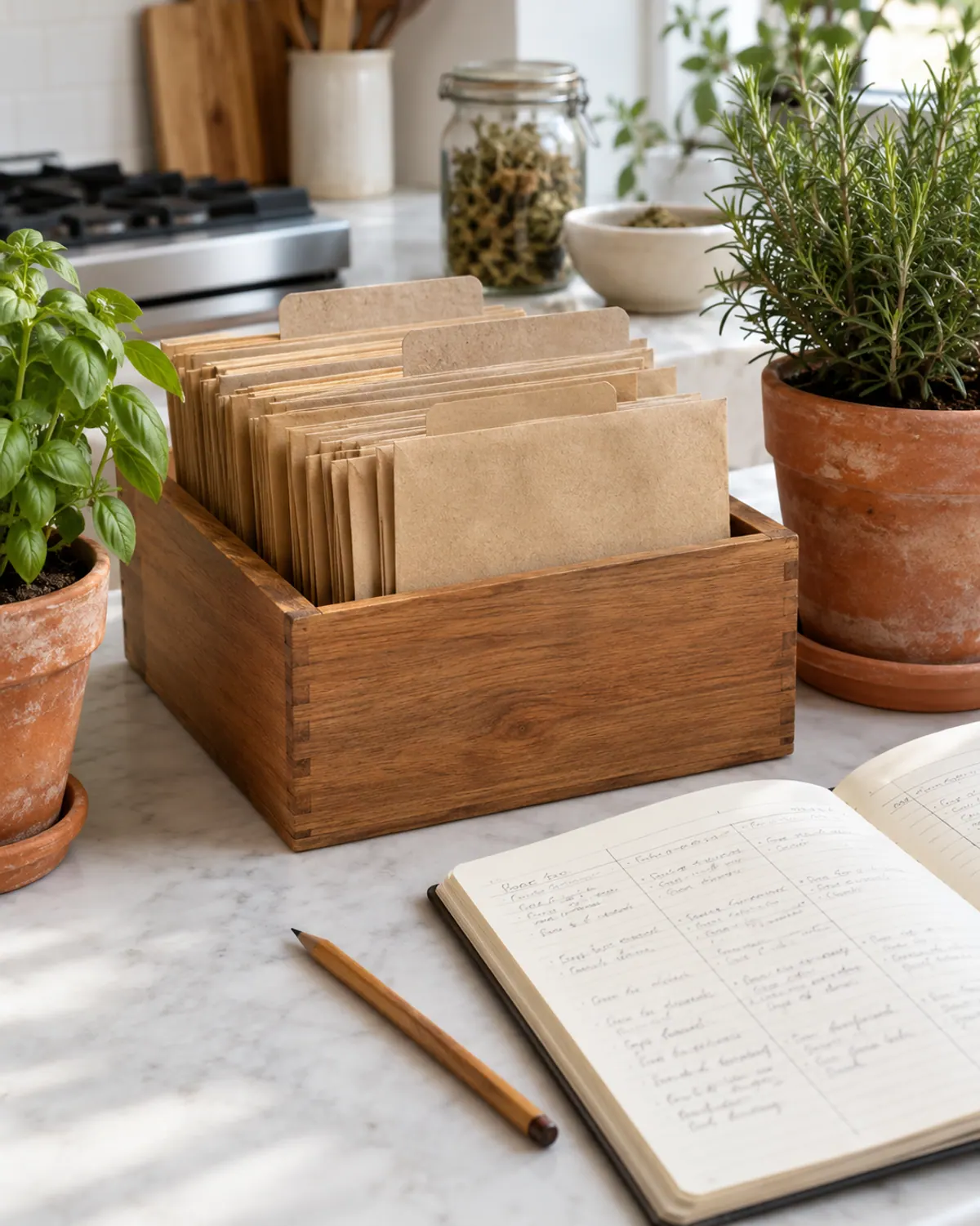
Go through your seed packets and list each one: plant, variety, where you bought it, the year it was packed and roughly how much is left. Then add a short wish list of new things to try. Sorting packets into a box by sowing month makes the list easy to keep current.
Record: variety, source, packed-for year, cost and amount left.
Next season: you reorder what you used up and stop buying the same packet twice.
- Note the cost of each packet. It feeds the budget page later.
Keeps packets upright and sorted by sowing month.
5Seed germination test results
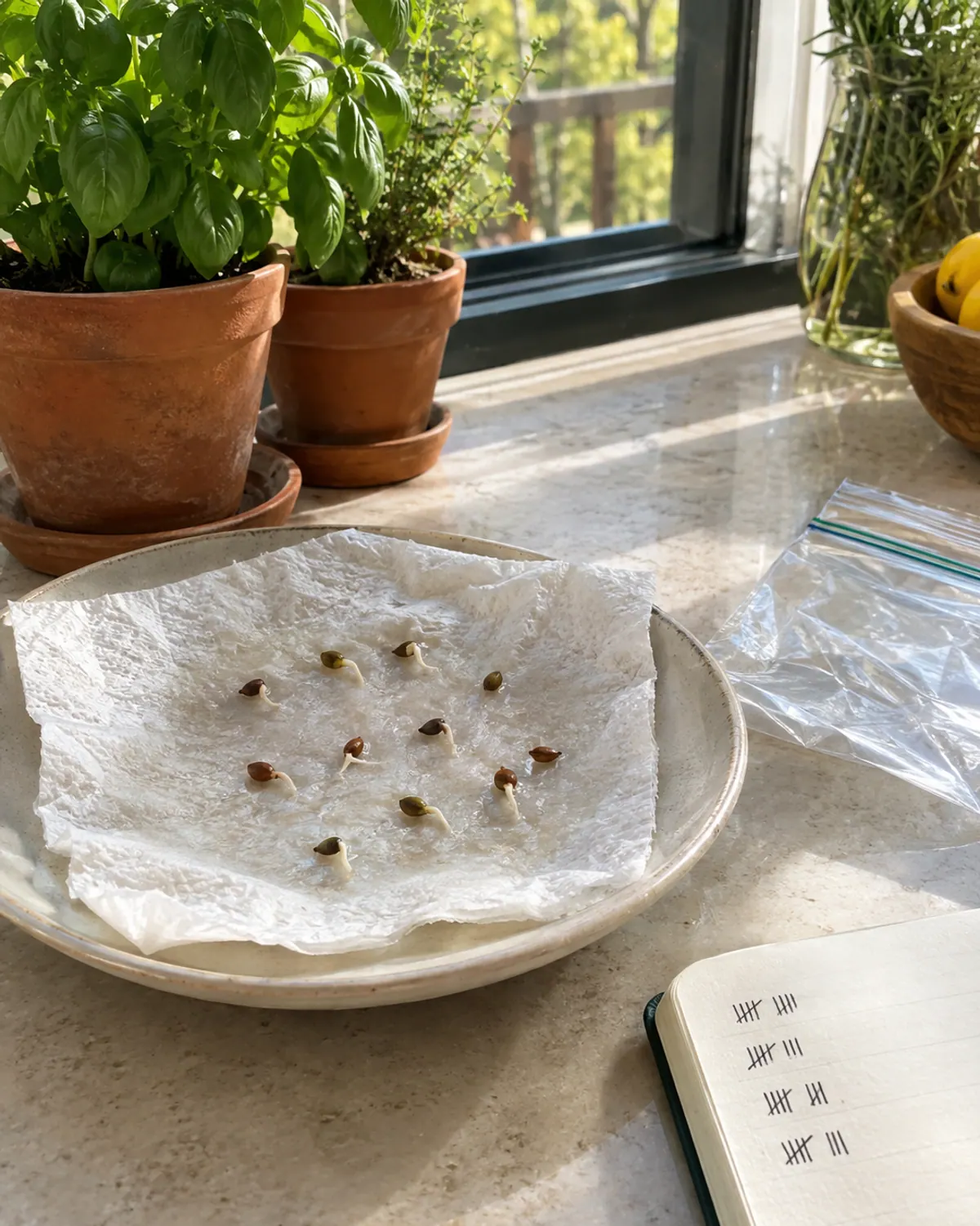
Old seed doesn't always sprout. Illinois Extension describes a simple test: put 10 seeds on a slightly damp paper towel, fold it into a closed bag and keep it somewhere above 70°F. Check in a few days, or in 7 to 10 if you don't know the sprouting time. If 70 to 90 percent sprout, Illinois suggests sowing a little thicker; below 70 percent, buy new seed.
Record: date, seed, and how many of 10 sprouted.
Next season: you replace weak seed before sowing day, not after.
- Illinois notes parsley and onion seed only last a year or two. Test those first.
6Frost dates and sowing calendar
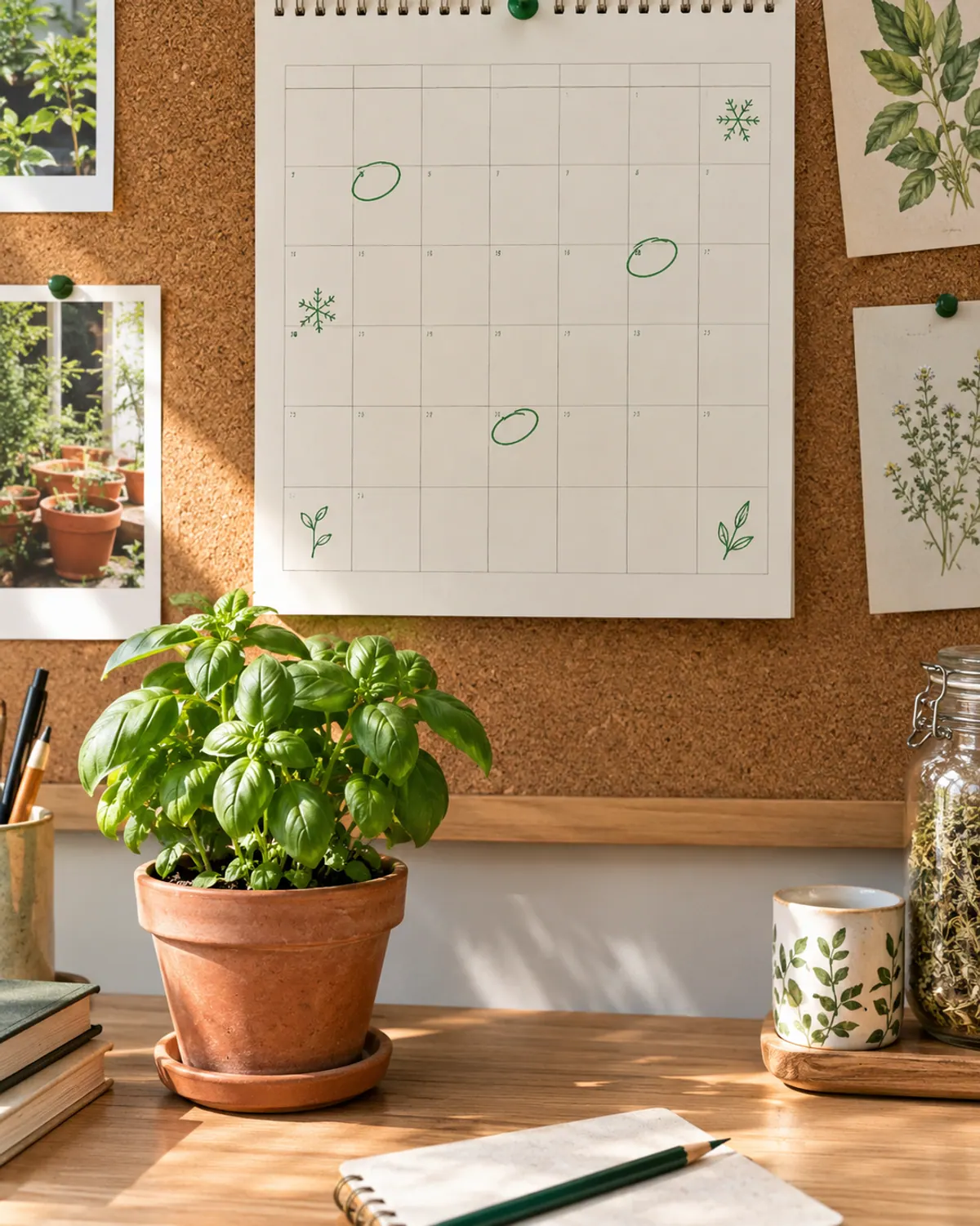
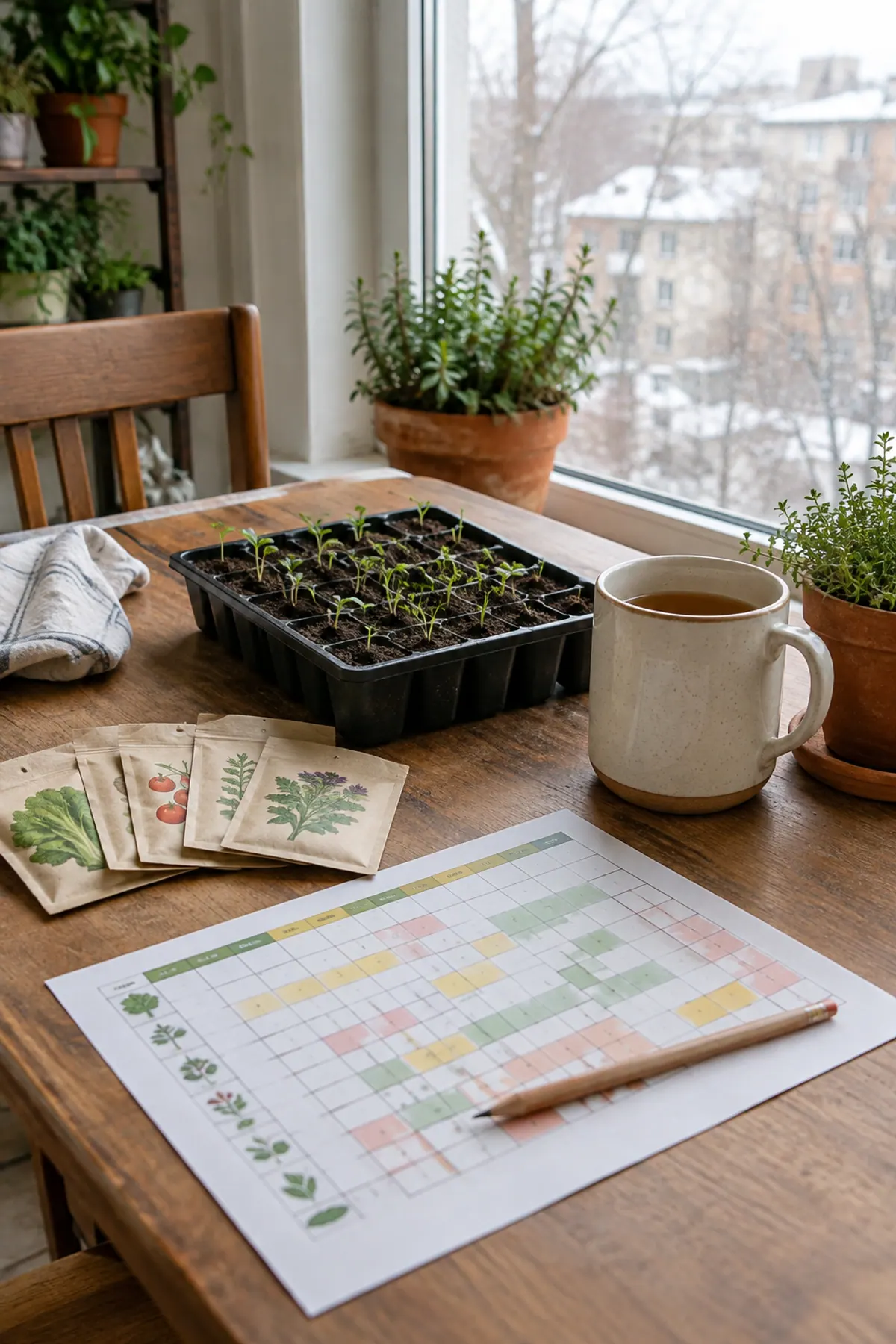
Look up your average last and first frost dates with a tool such as the Old Farmer's Almanac frost date lookup and write them at the top of a page. Then count back from the last frost using the weeks on each seed packet. Our seed starting calendar by zone does that math for common crops.
Record: average frost dates, then the actual last and first frosts you saw.
Next season: you learn whether your spot runs earlier or later than the average.
- Frost dates are averages. A sheltered balcony against a warm wall can run ahead of them, so trust your notes.
7Layout sketch on graph paper
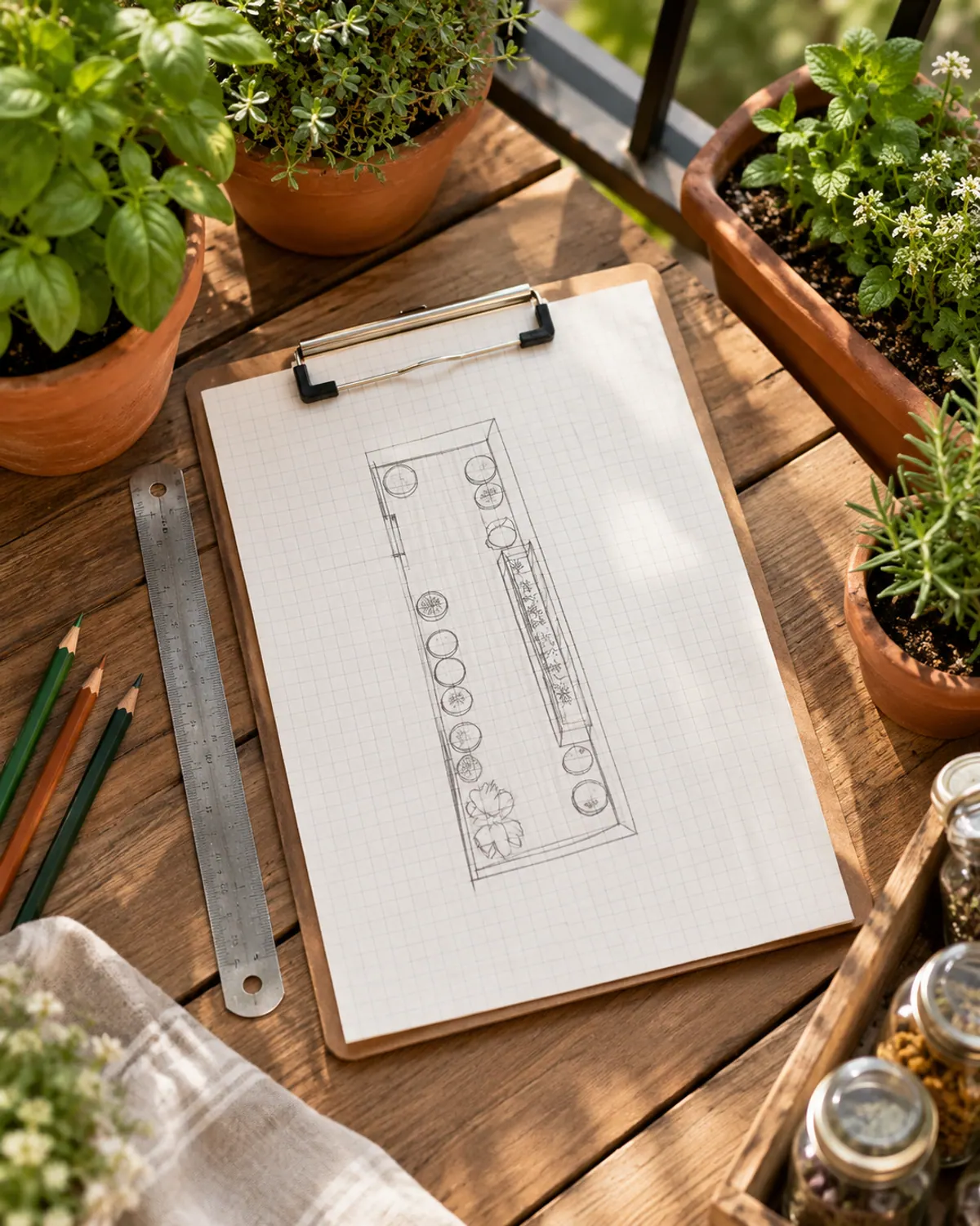
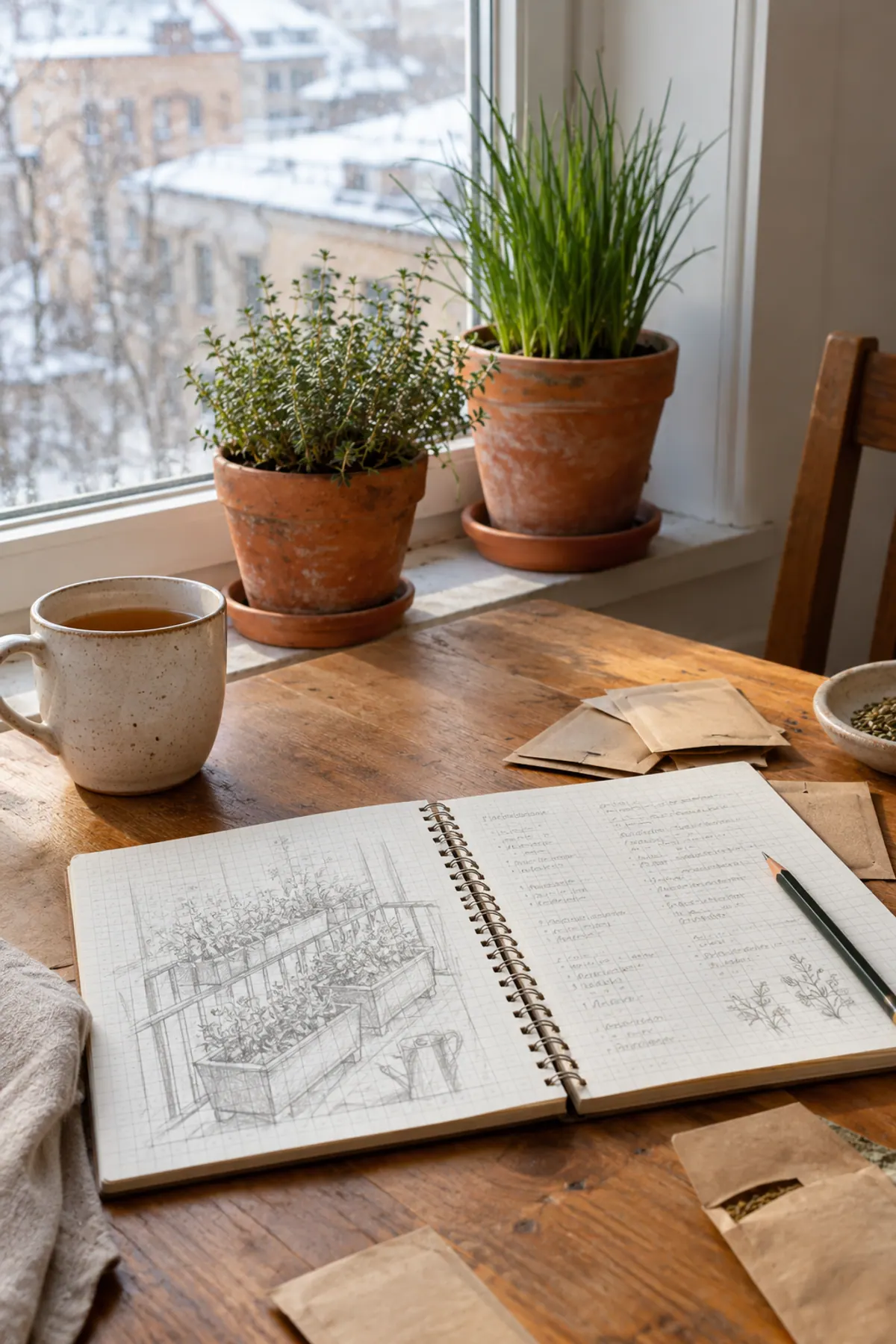
Draw your space to scale on graph paper, with one square equal to a few inches. Add circles for pots and rectangles for planters, then pencil in what goes where. In a small space, the layout shows you when tall plants will shade short ones.
Record: what grew where, and the date you planted it.
Next season: you swap crops between pots and avoid last year's shady spots.
- Use pencil. Plans change, and erasing beats starting a fresh page.
Squares make it easy to draw your space to scale.
8Garden budget page
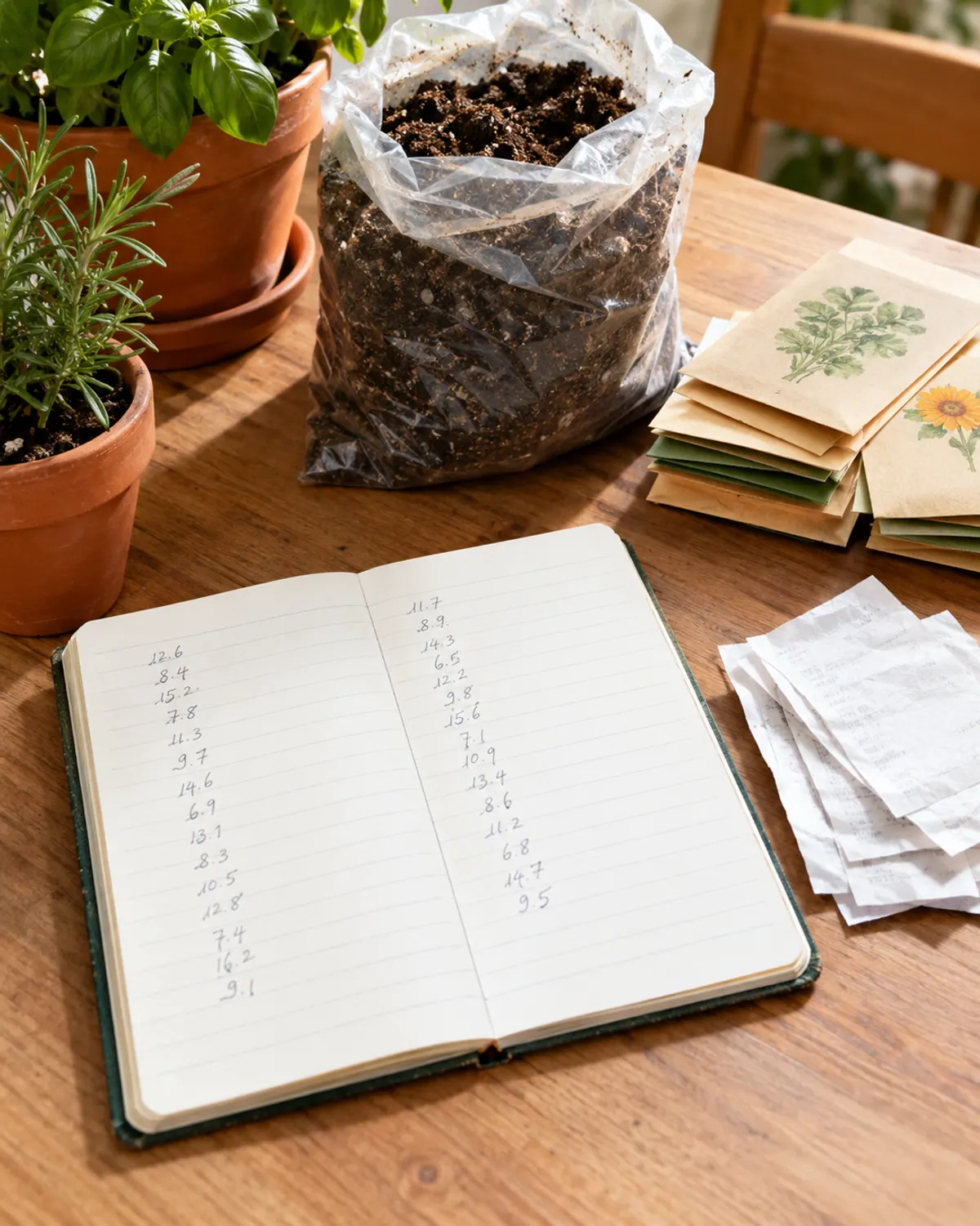
Keep a simple two-column page: what you bought and what it cost. Seeds, potting mix, pots, plant food and nursery plants all go here. By fall you'll see which purchases earned their keep and which sat in a cupboard.
Record: date, item, cost, and what it was for.
Next season: you skip the gadgets you didn't use and spend where it counted.
- Tuck receipts in a pocket at the back of the journal and log them once a month.
Growing season logs: spring to fall pages
These pages fill up while the garden grows. A line or two each time is plenty.
9Seed starting log
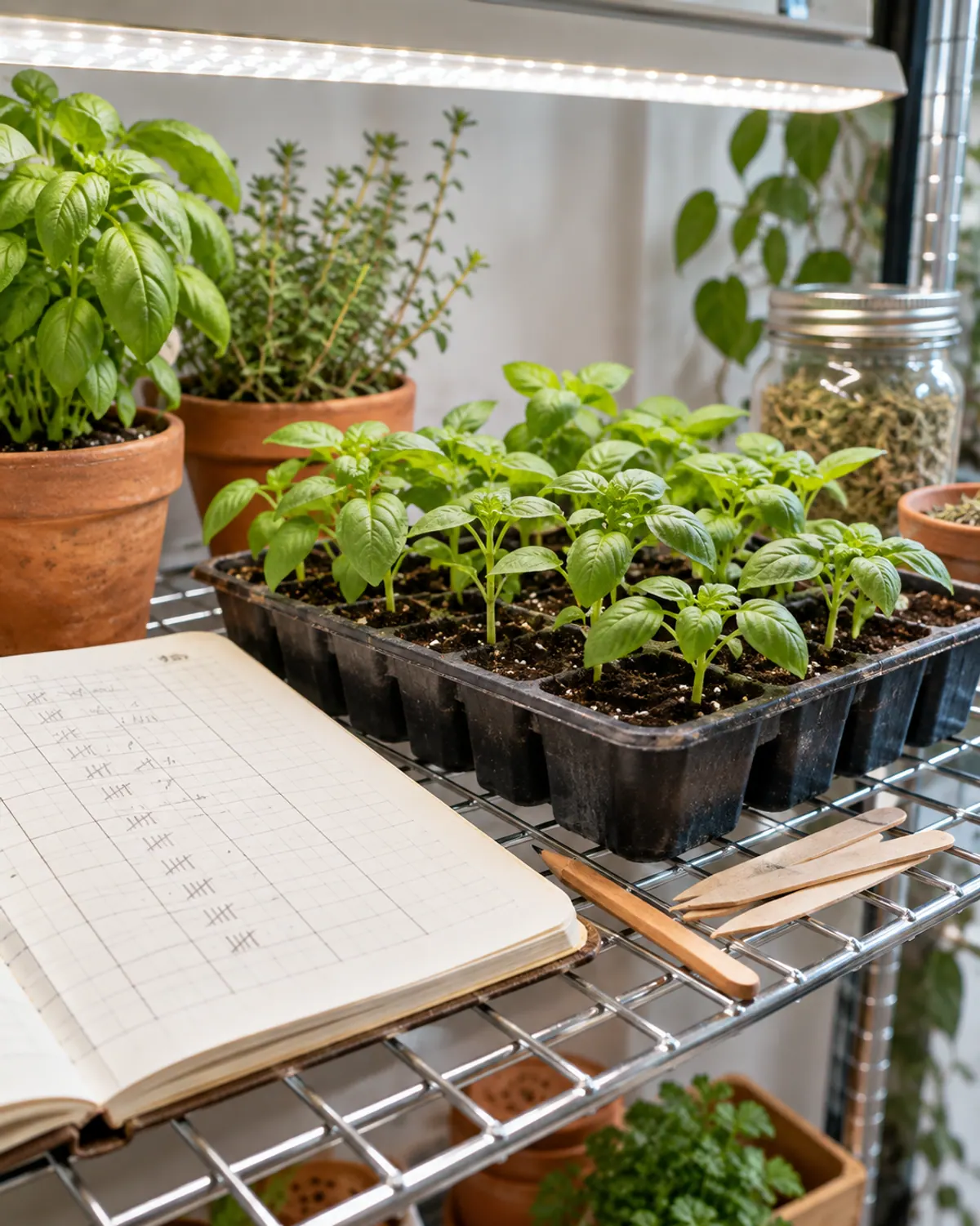
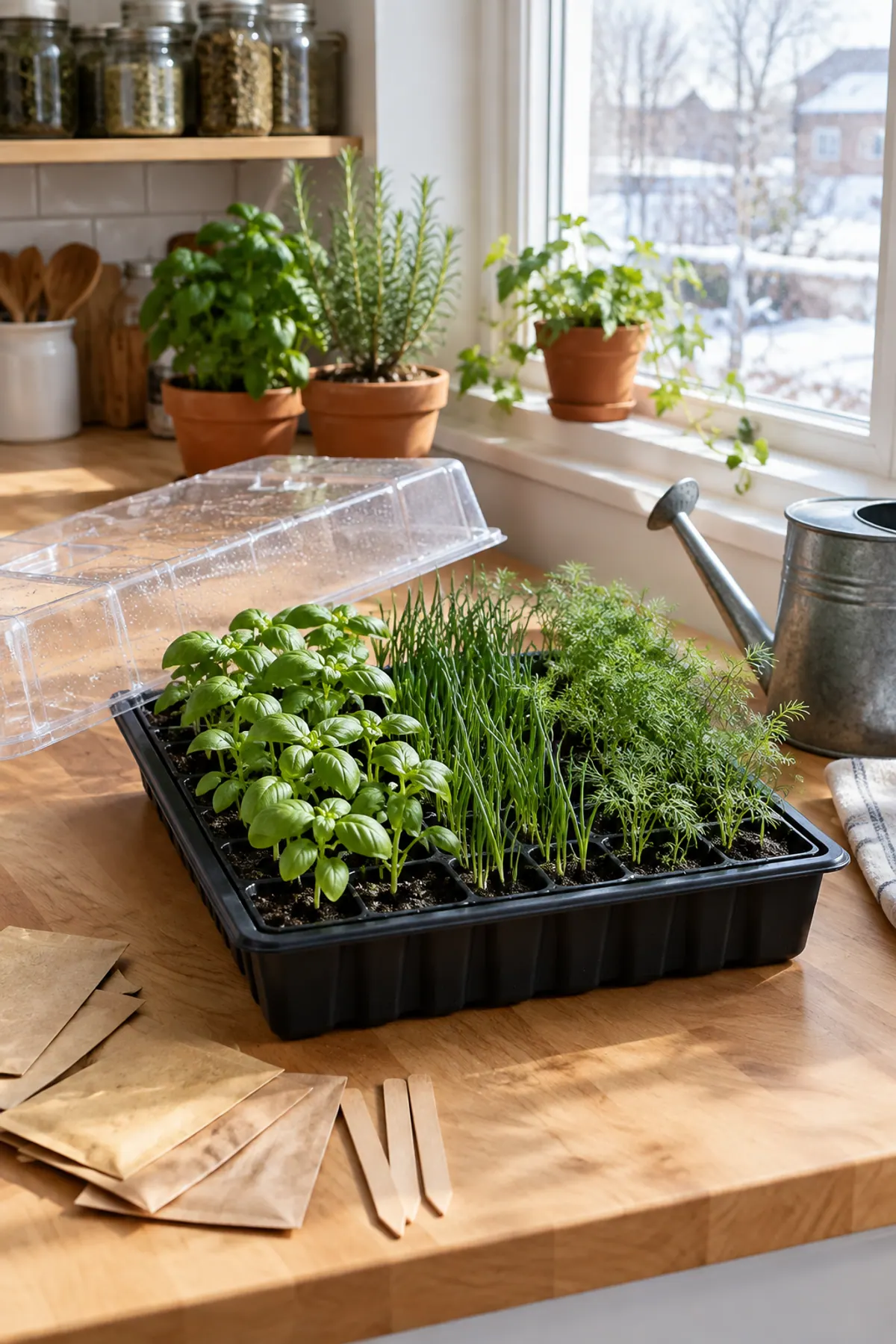
Each time you sow, write down the date, the variety, how many seeds and when they sprouted. Seed packets give a range of days, and your own log shows where your setup lands in that range. Our list of herbs to grow from seeds indoors gives published sprouting times to compare with.
Record: sow date, sprout date and how many came up.
Next season: you sow at the right time and in the right numbers for your setup.
- Count sprouts on the same day each week so the numbers stay honest.
10Planting and transplant log
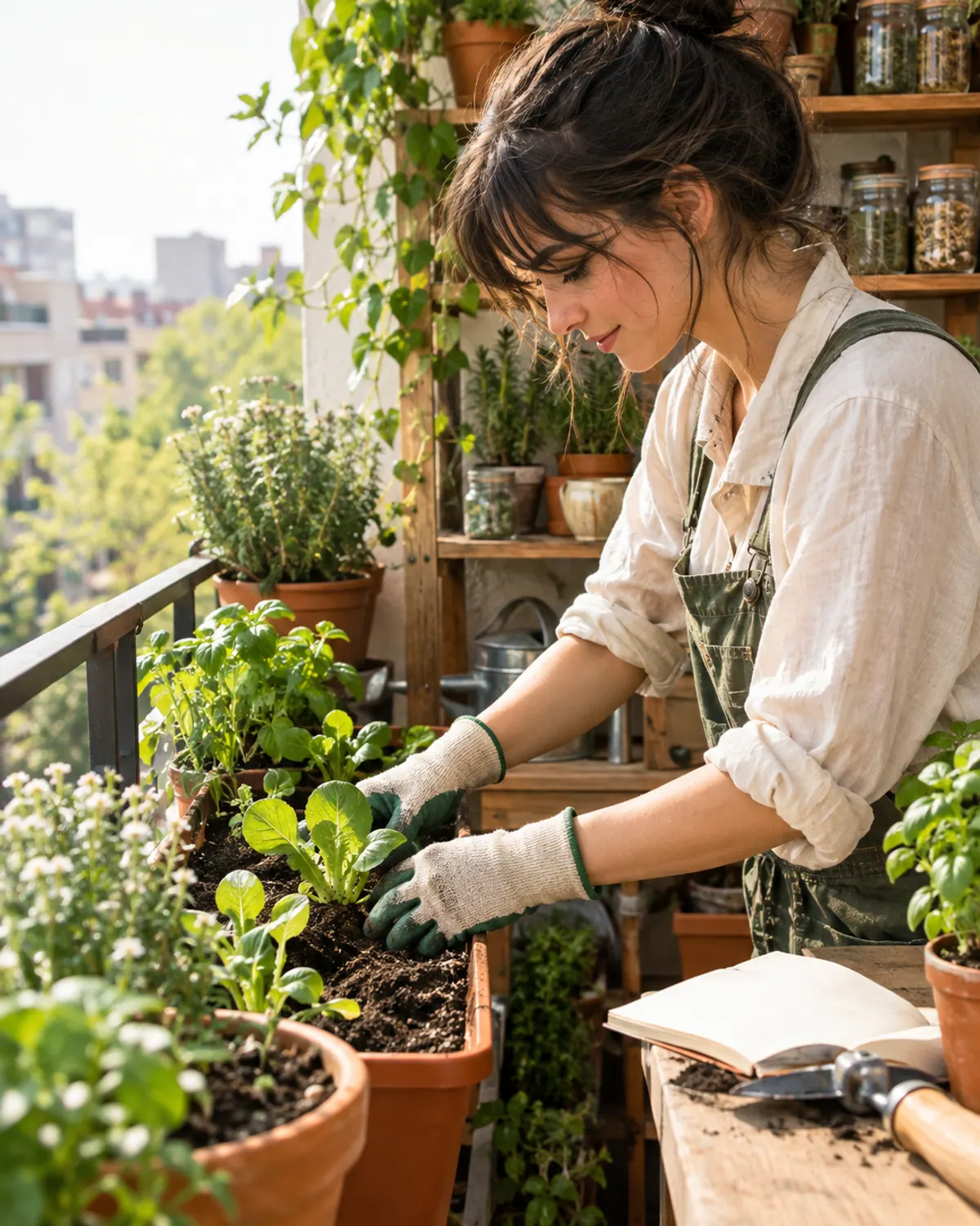
Note when seedlings or nursery plants moved into their final pots, and how they handled it. Did you harden them off first? Did any wilt or stall for a week? These notes often explain why one plant did far better than another.
Record: date moved, pot used, the weather that week, and any setback.
Next season: you know which plants need a gentler move and when it's safe to plant out.
- Write the transplant date on the plant label too, so you see it every time you water.
11Weather notes
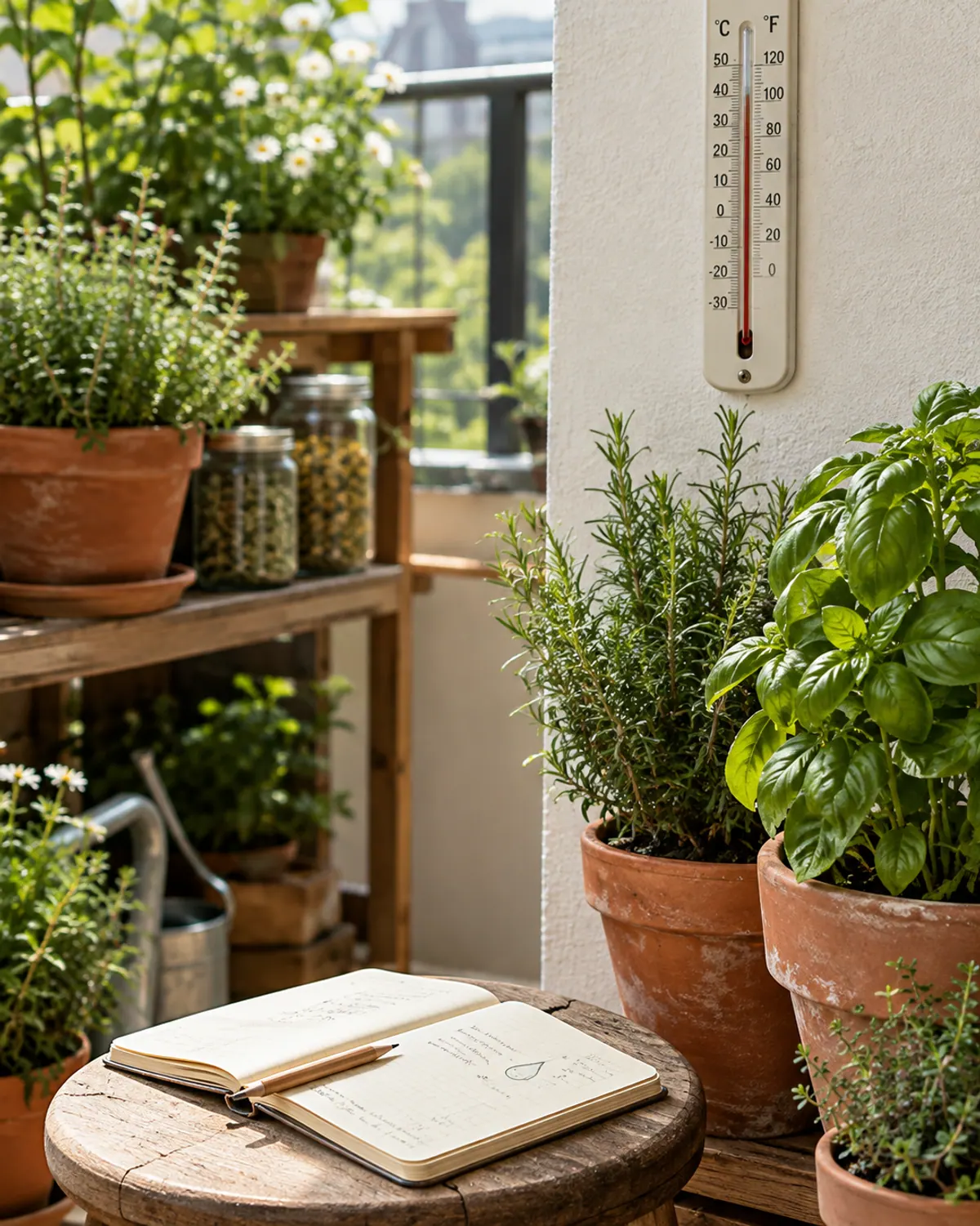
A few words a day is enough: hot, windy, rain, frost. Balconies can run hotter or windier than the forecast, so a min-max thermometer shows what your plants actually felt. Mark heat waves and late frosts in a different color so they jump out later.
Record: high and low temperatures, rain, wind and any frost.
Next season: you plan shade, extra watering or a frost cover before you need them.
- Reset the thermometer at the same time each day so the readings line up.
Shows the highs and lows your balcony really hit, not just the forecast.
12Watering and feeding log
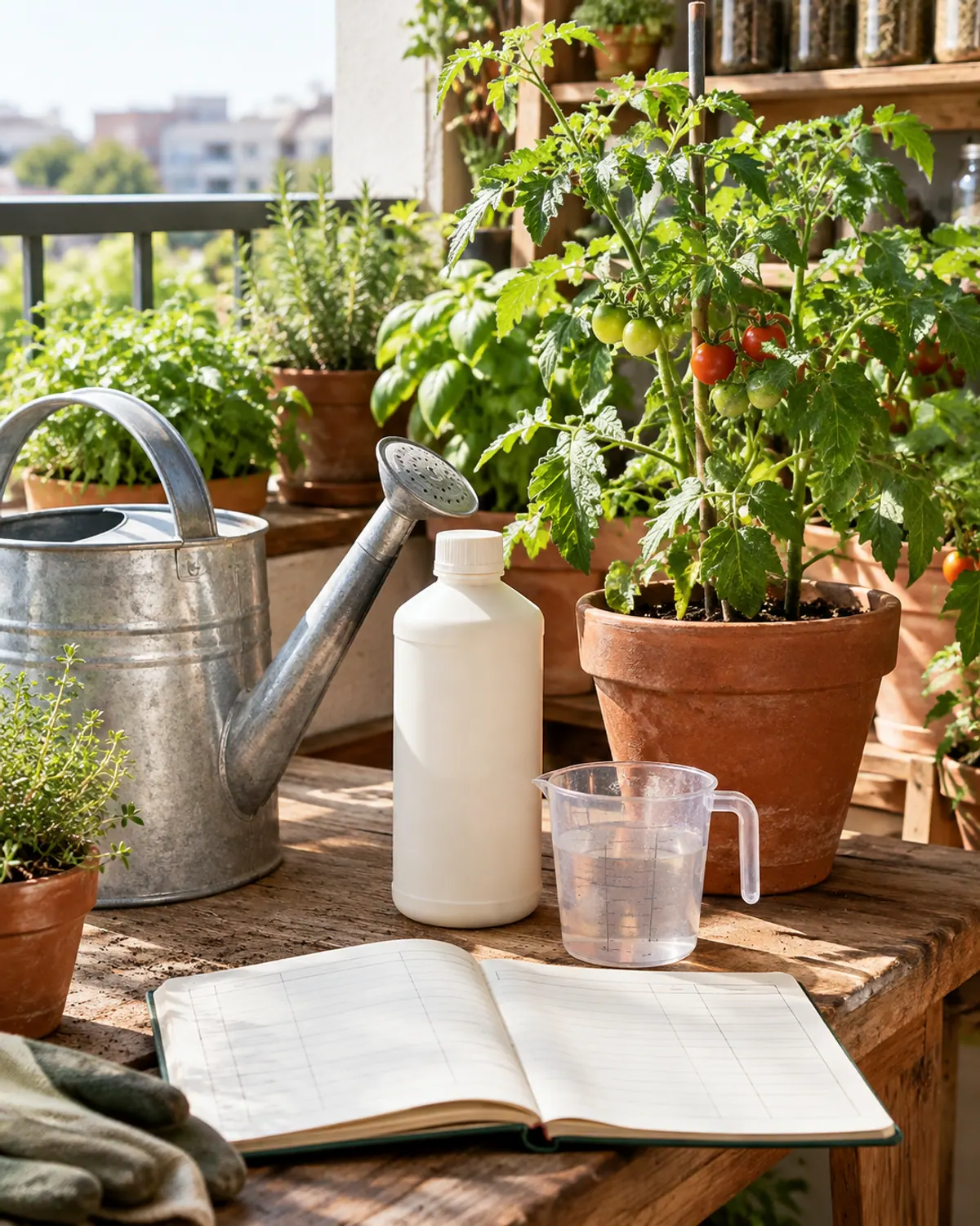
Log when you watered and fed, and what you used. Pots dry out much faster than garden beds, so patterns show up quickly. If leaves yellowed after a feeding, or a pot stayed soggy for days, write it down.
Record: date, product, strength, and how the plant looked a week later.
Next season: you know which plants are thirsty and which ones you drowned.
- Note the dilution, not just the product. Half strength and full strength give different results.
13Pest and problem log
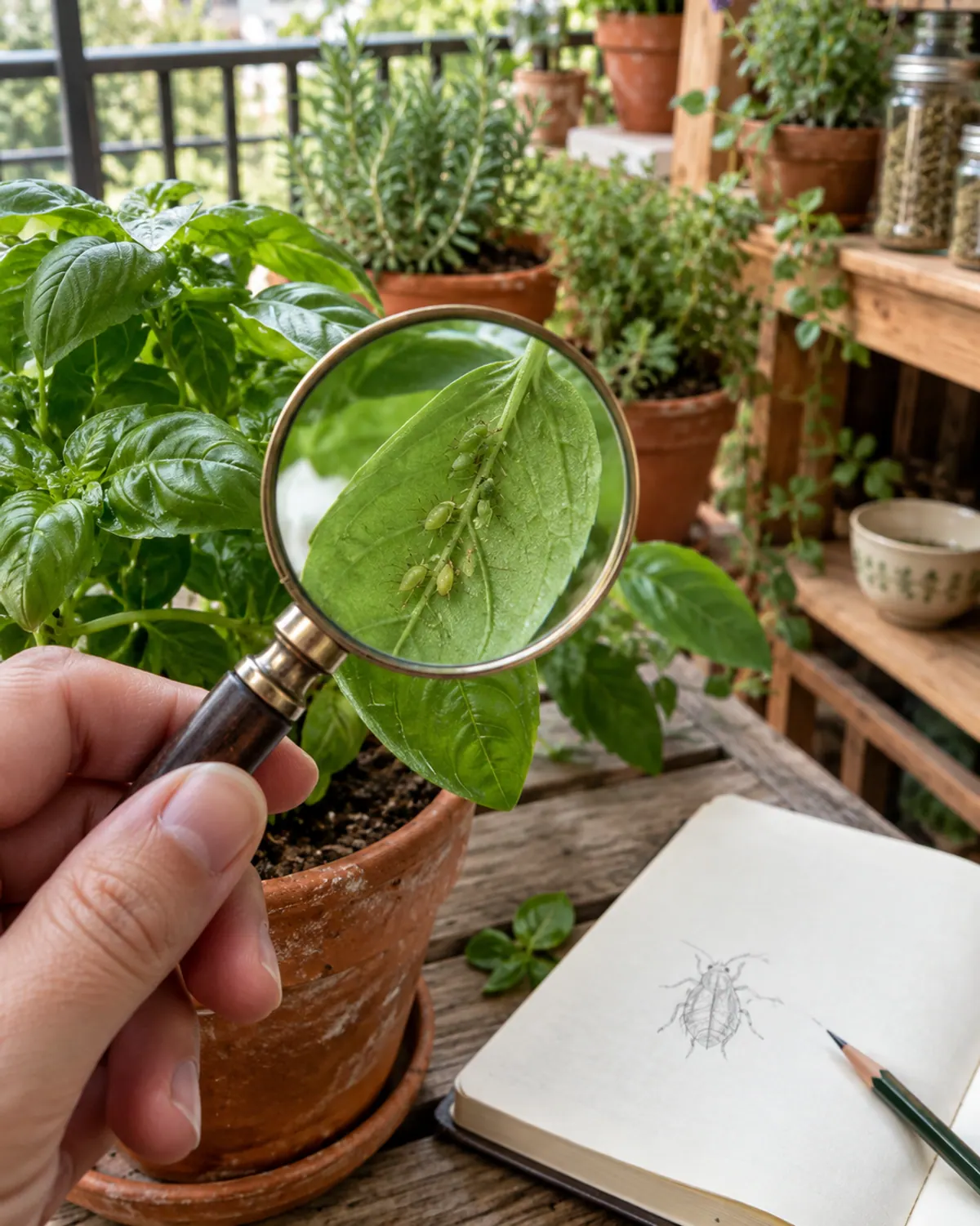
When you spot aphids, spider mites, mildew or yellow leaves, note the date, the plant and what you tried. Come back a week later and write whether it worked. A hand lens makes small pests much easier to identify.
Record: problem, date, plant, fix and result.
Next season: you watch for the same pest at the same time of year and act early.
- Check leaf undersides when you write the entry. Most small pests hide there.
Makes tiny pests like aphids and mites easy to spot and name.
14Bloom and pollinator notes
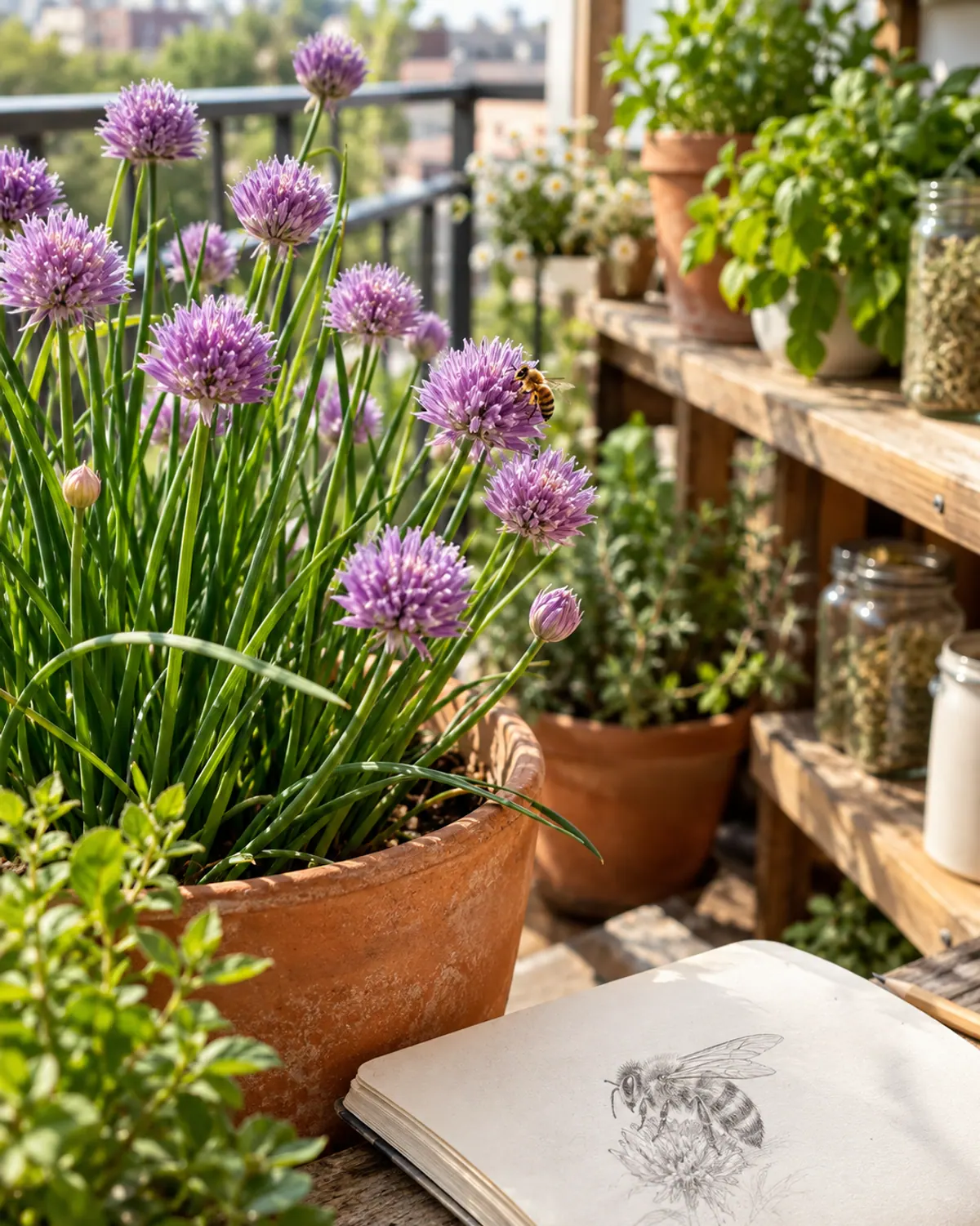
Note when herbs and flowers bloom and which visitors show up: bees, hoverflies, butterflies. Herbs such as chives, thyme and oregano flower readily if you let a few stems go. Even a short list shows you which months had something in bloom and which didn't.
Record: first bloom date, plant, and the visitors you saw.
Next season: you add plants that flower in the gaps.
- A quick sketch counts as a note. It doesn't need to be good.
15Harvest log
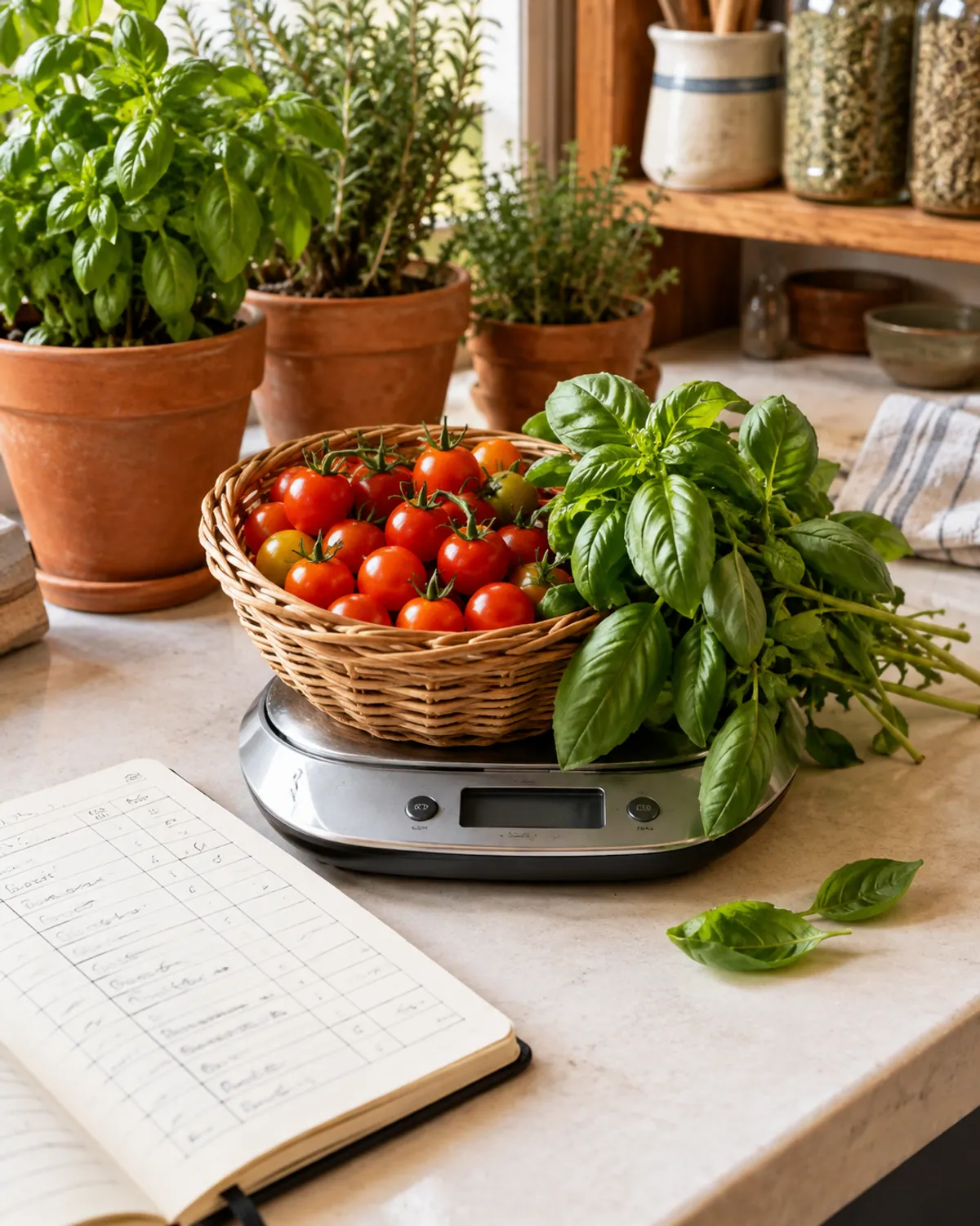
Write down every harvest: the date, the plant and how much. Count it, like 12 tomatoes, or weigh it on a kitchen scale. For herbs, a rough note such as "one handful of basil" is fine.
Record: date, plant, amount and how it tasted.
Next season: you know which plants paid back their pot space and which to drop.
- Keep the scale and the journal in the same drawer. Logging takes ten seconds that way.
Weighs harvests in ounces or grams for an honest harvest log.
16Monthly photo page
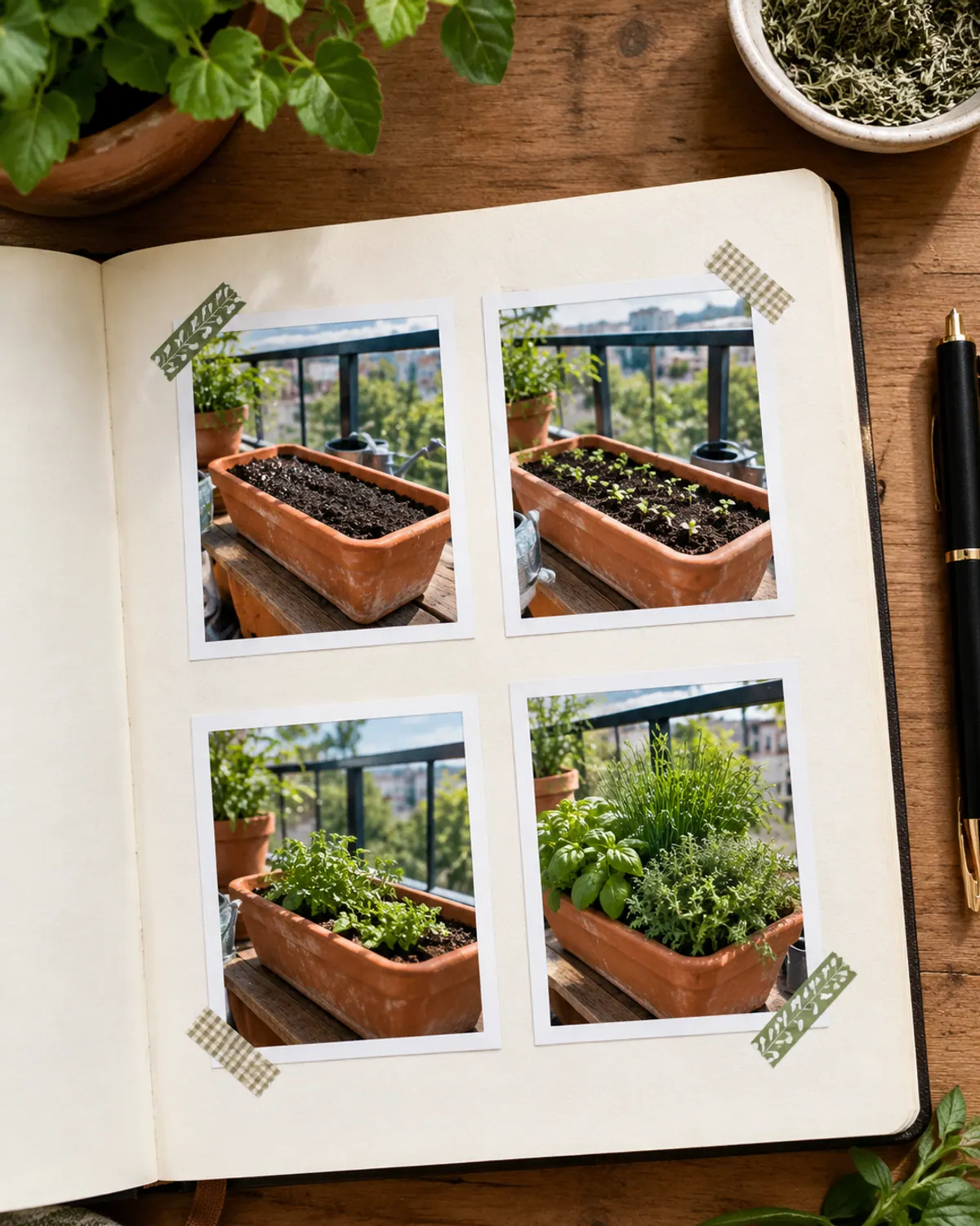
Take a photo of the same spot from the same angle once a month. Print small copies and tape them in a grid. Side by side, they show growth, gaps and crowding better than written notes. You don't need to be artsy for this one.
Record: one photo per month, with the date.
Next season: you can see when the space looked thin and plan to fill it.
- Stand in the same place each time. A strip of tape on the floor marks the spot.
Holds photos and pressed leaves on the page and peels off cleanly.
Herb pages for windowsill and balcony growers
Herbs get picked often, so they reward their own pages. These three cover growing, drying and winter care.
17Herb profile pages
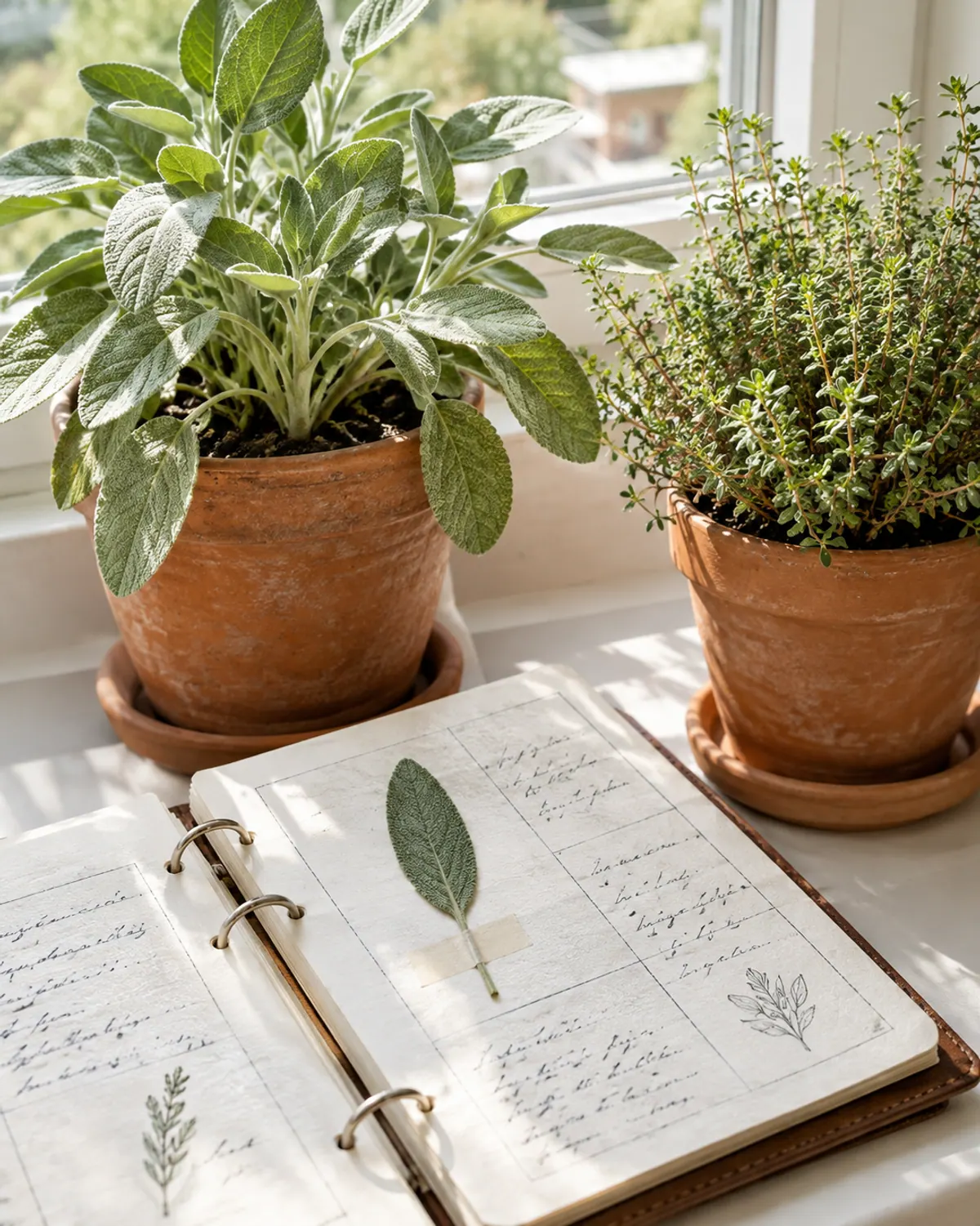
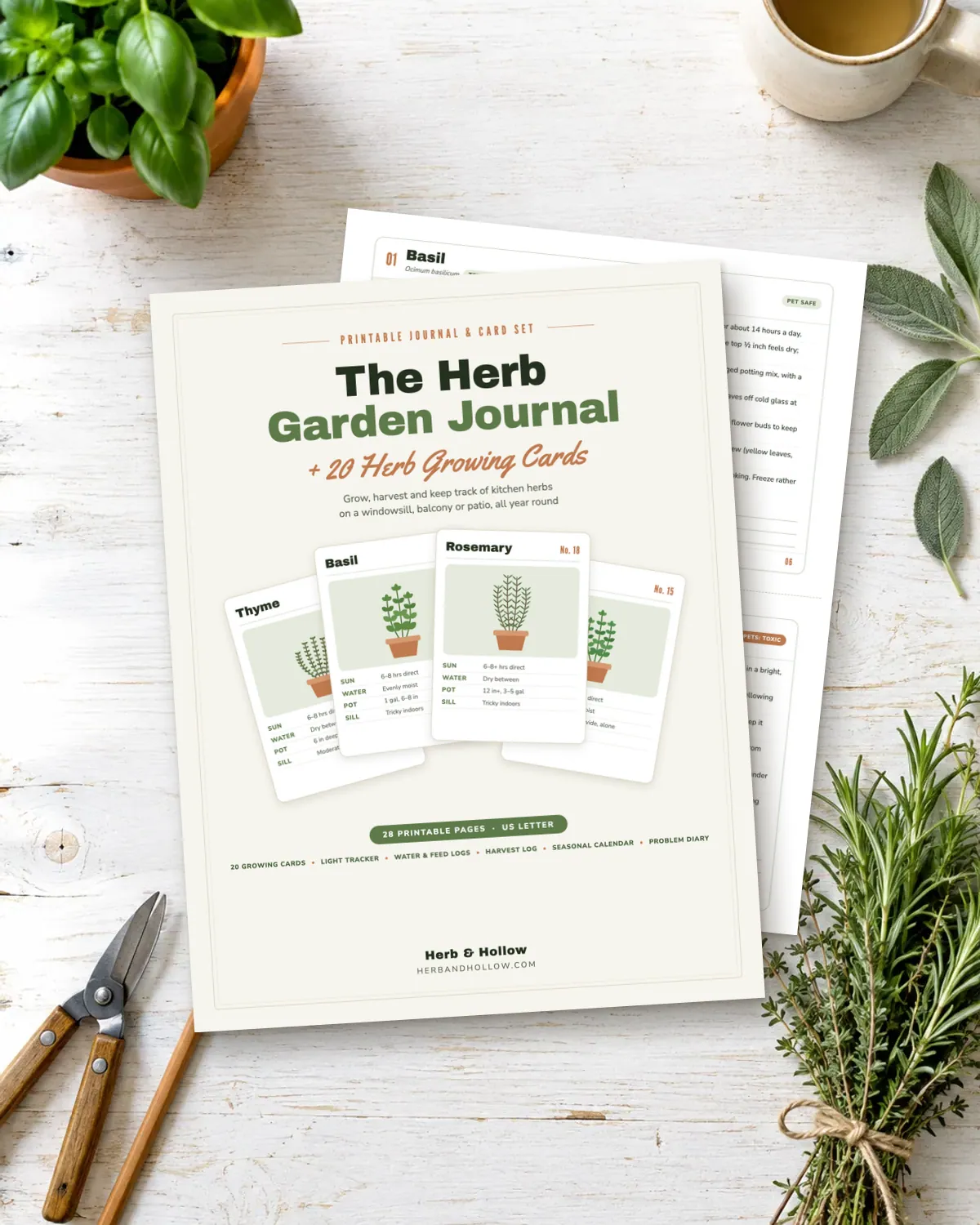
Give each herb its own page or card: light, water, pot size, when to harvest and how it did for you. Add a pet flag for herbs the ASPCA lists as toxic to cats and dogs, such as mint, oregano, parsley and chives. If you'd rather not write them from scratch, our Herb Garden Journal below has 20 printed herb cards.
Record: care needs, where it grew and your own notes.
Next season: each herb gets the spot and care that worked.
- Tape a pressed leaf to each card. It helps you tell look-alikes such as oregano and marjoram apart.
18Drying and pantry log
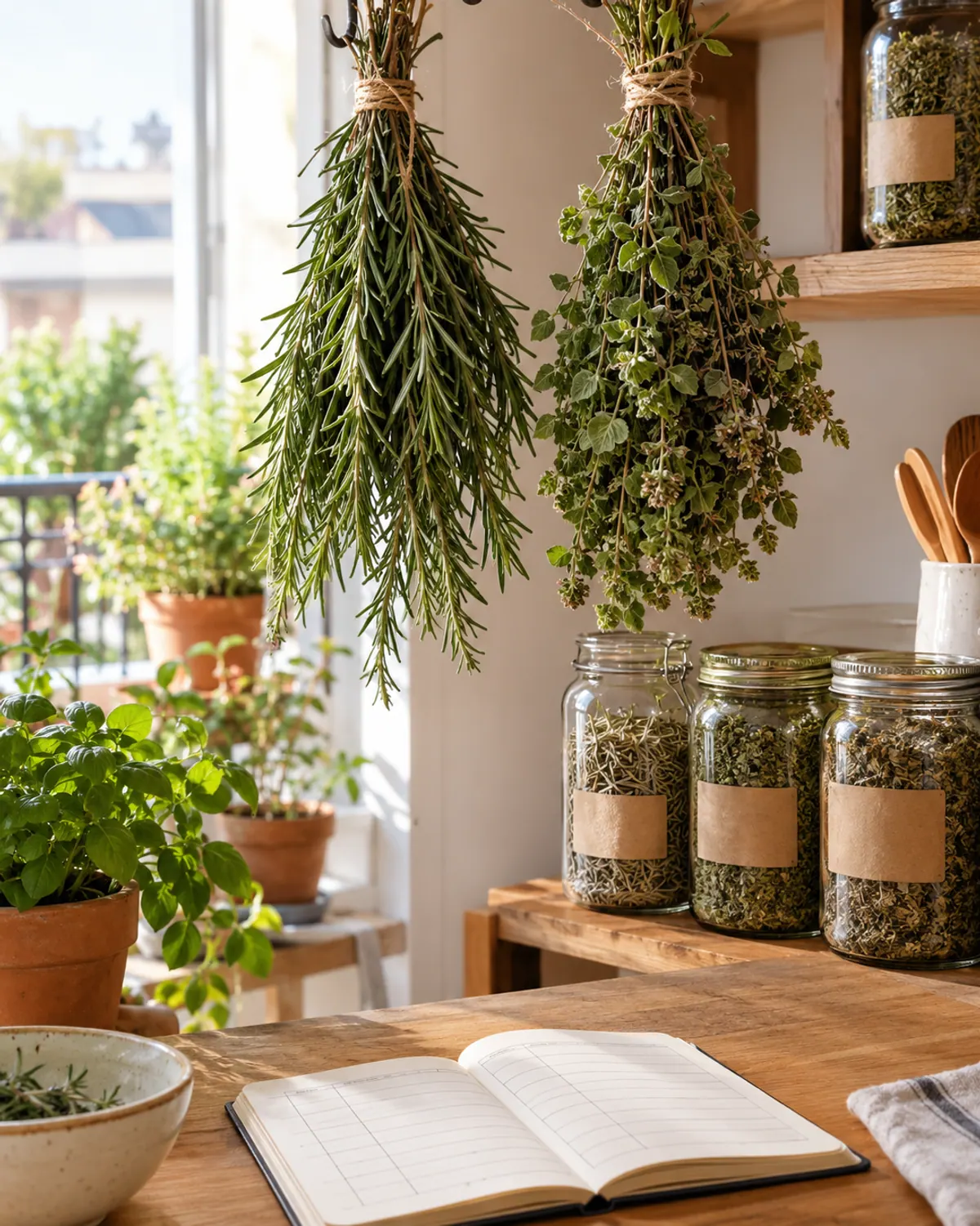
If you dry herbs, note the date, the method and how long each batch took. Add the date you jarred it, so you know which jars to use first. Our guide to drying herbs at home covers air, oven and dehydrator methods.
Record: herb, date picked, method, drying time and jar date.
Next season: you dry at the right time and grow more of what ran out.
- Write the jar date on the label too, not just in the journal.
19Indoor winter herb log
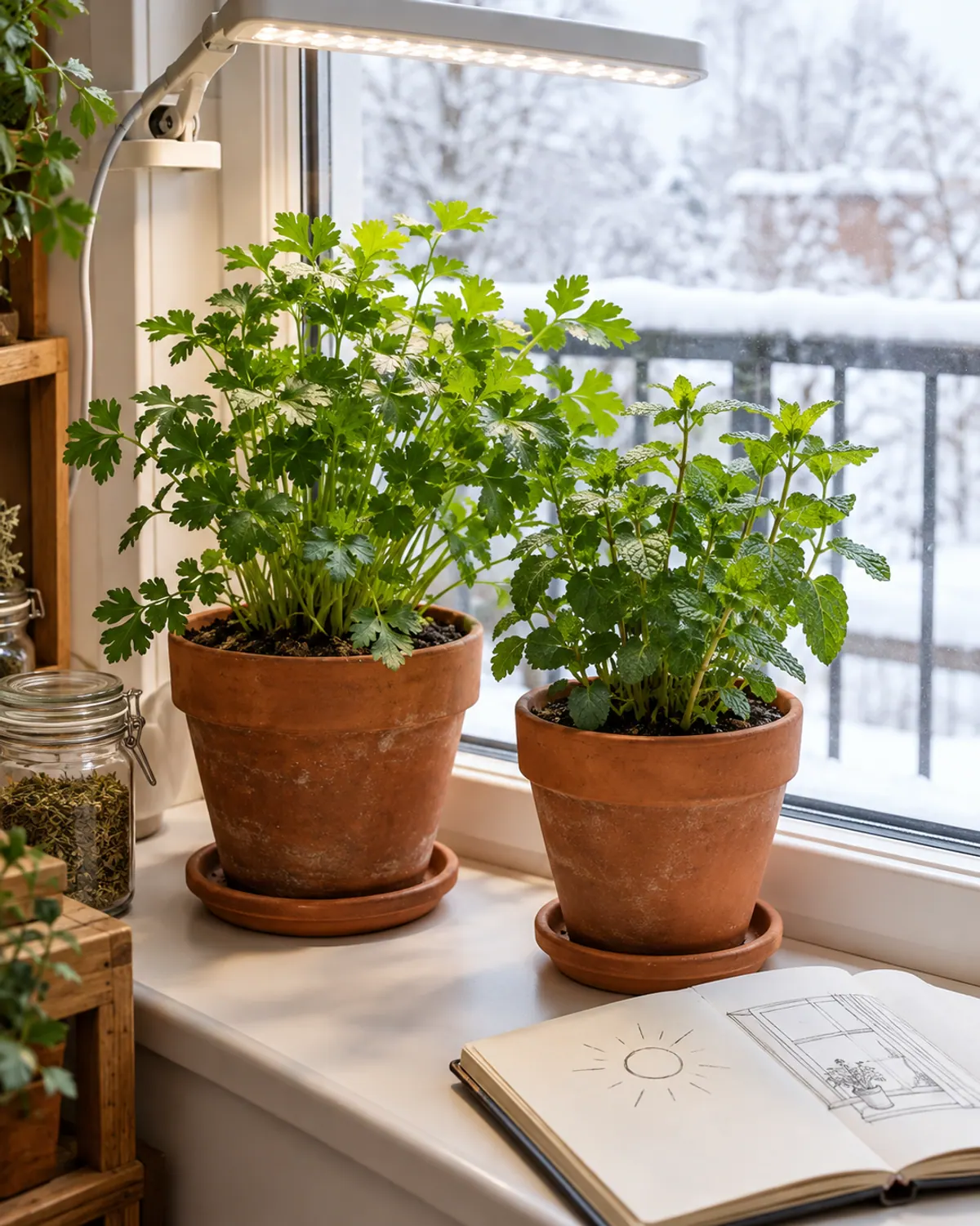
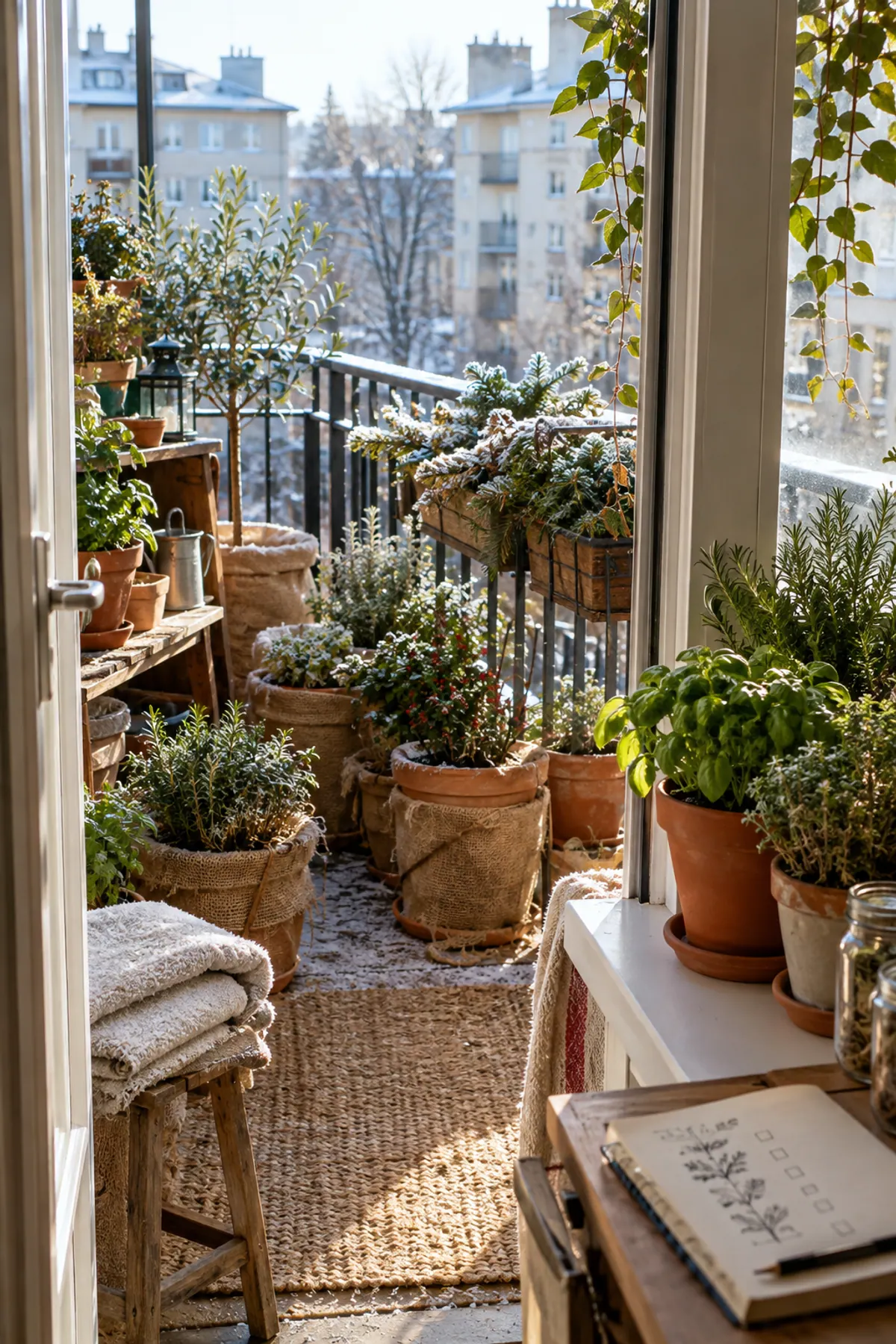
Indoor herbs in winter get their own page: which window, how many hours of light and how often you watered. If you use a grow light, note its height and timer hours. Our list of herbs to grow indoors in low light helps you match herbs to windows.
Record: window, light hours, watering and growth.
Next season: each herb goes in the window, or under the light, where it grew best.
- Note the date you first saw leggy stems. It tells you when the light got too short.
End-of-season review pages
These two pages turn a year of notes into next year's plan. Fill them in on a fall evening while the season is fresh.
20Variety scorecard
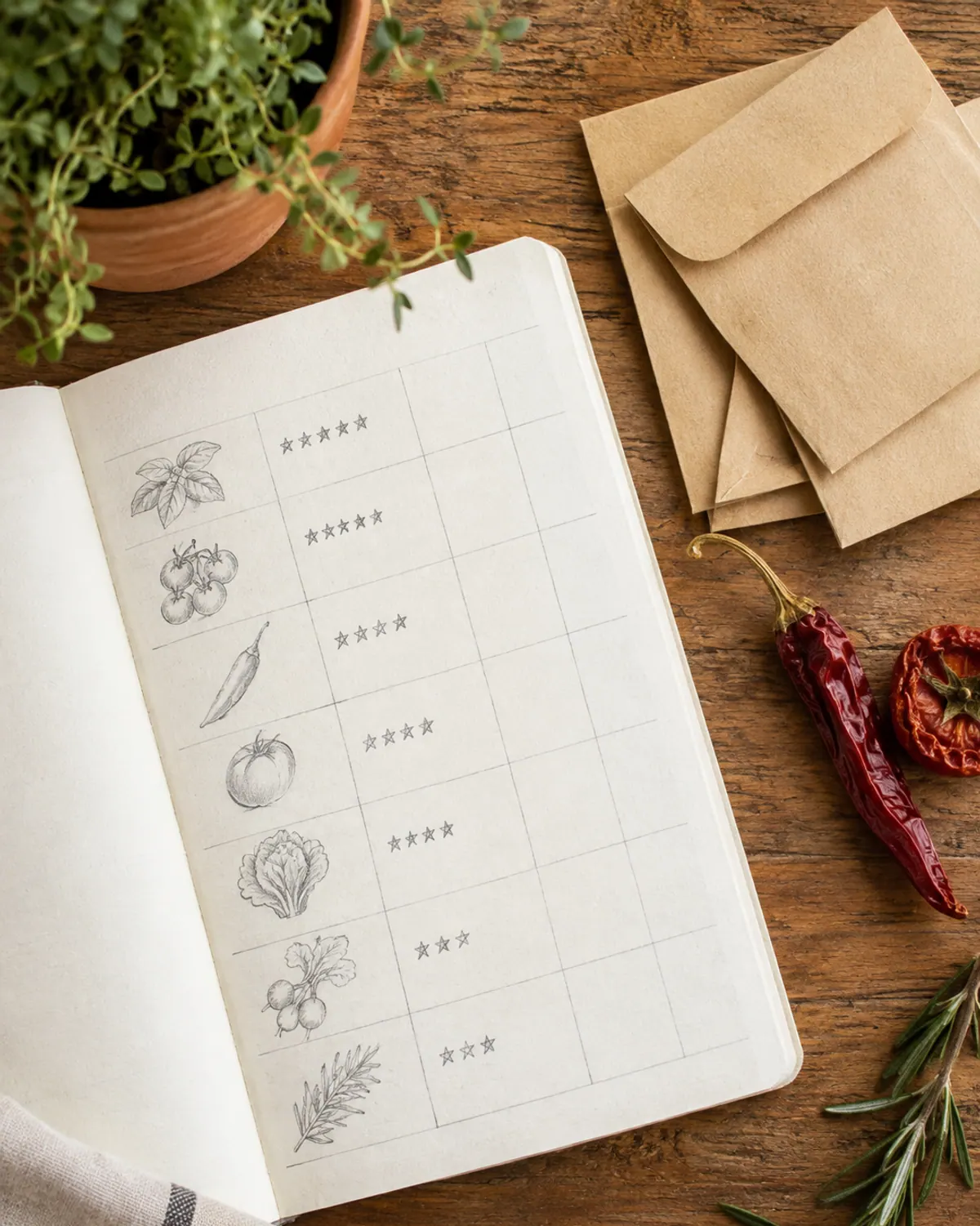
Give each variety a score from 1 to 5 for flavor, harvest and how well it handled your space. Add one line on whether you'd grow it again. This is the page to read first when seed catalogs arrive next winter.
Record: variety, score, and keep or skip.
Next season: you reorder the winners and skip the rest.
- Score right after the last harvest, while you still remember how it tasted.
21Lessons learned page

End the year with a short list: three things that worked, three that didn't and three to try next time. Keep each line specific, such as "basil bolted in the hot corner" rather than "basil was bad." This page is the bridge from one season to the next.
Record: what worked, what didn't and what to change.
Next season: you start with a plan built on your own space, not a generic list.
- Copy the three "try next time" lines onto next year's goals page.
Bonus: how to keep a garden journal you'll actually use
The best format is the one you'll open. Pick one, keep it near the door or the window where you garden, and give it five minutes a week.
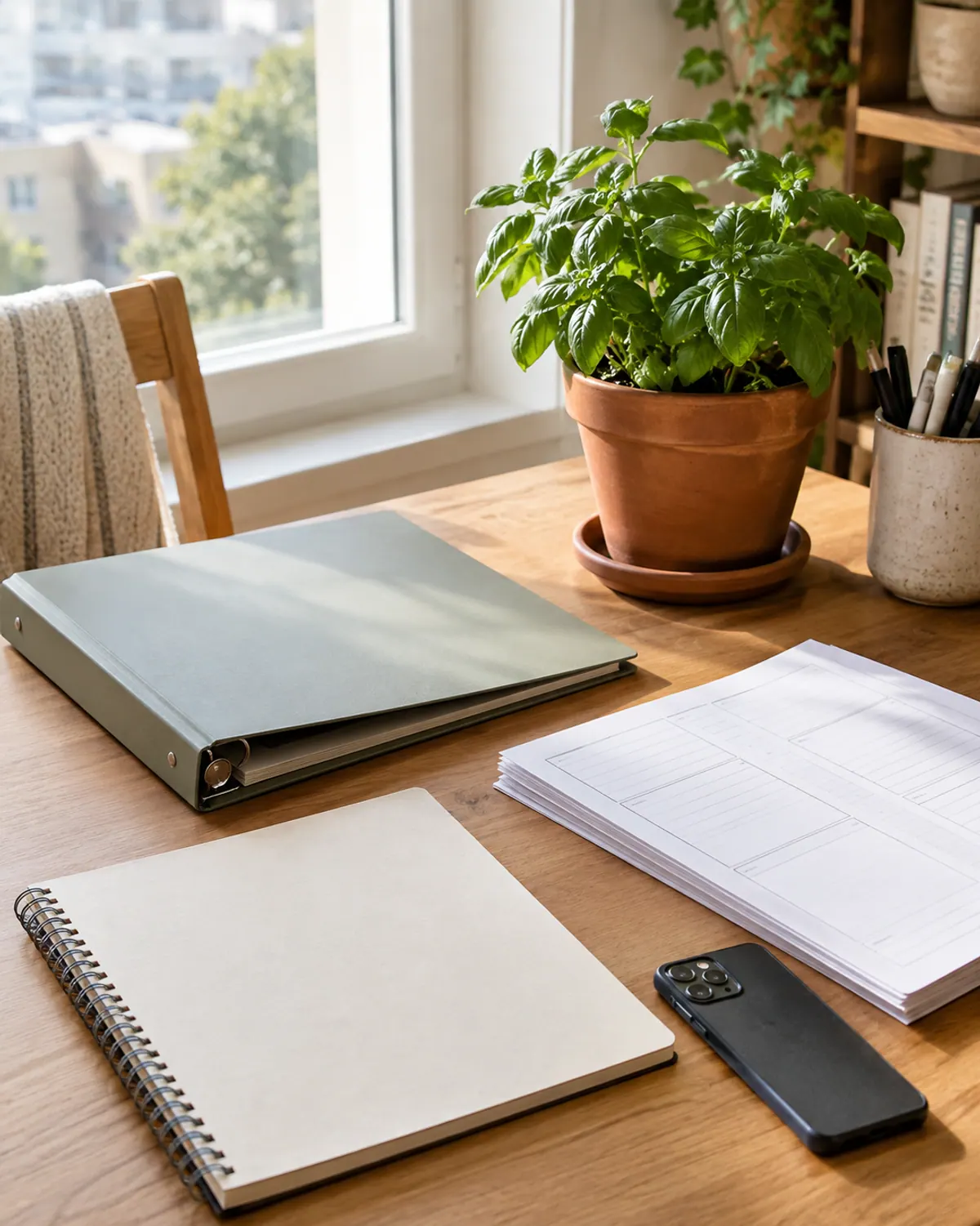
| Format | Good for | Watch out for |
|---|---|---|
| Plain or dot grid notebook | Quick notes and sketches; cheap and portable | Hard to reorder pages |
| Binder with printed pages | Adding, moving and reusing pages each year | Bulky to carry outside |
| Printed planner | Ready-made layouts if you don't want to draw tables | Pages may not fit a small space |
| Phone notes or app | Photos and quick entries in the moment | Easy to forget to look back |
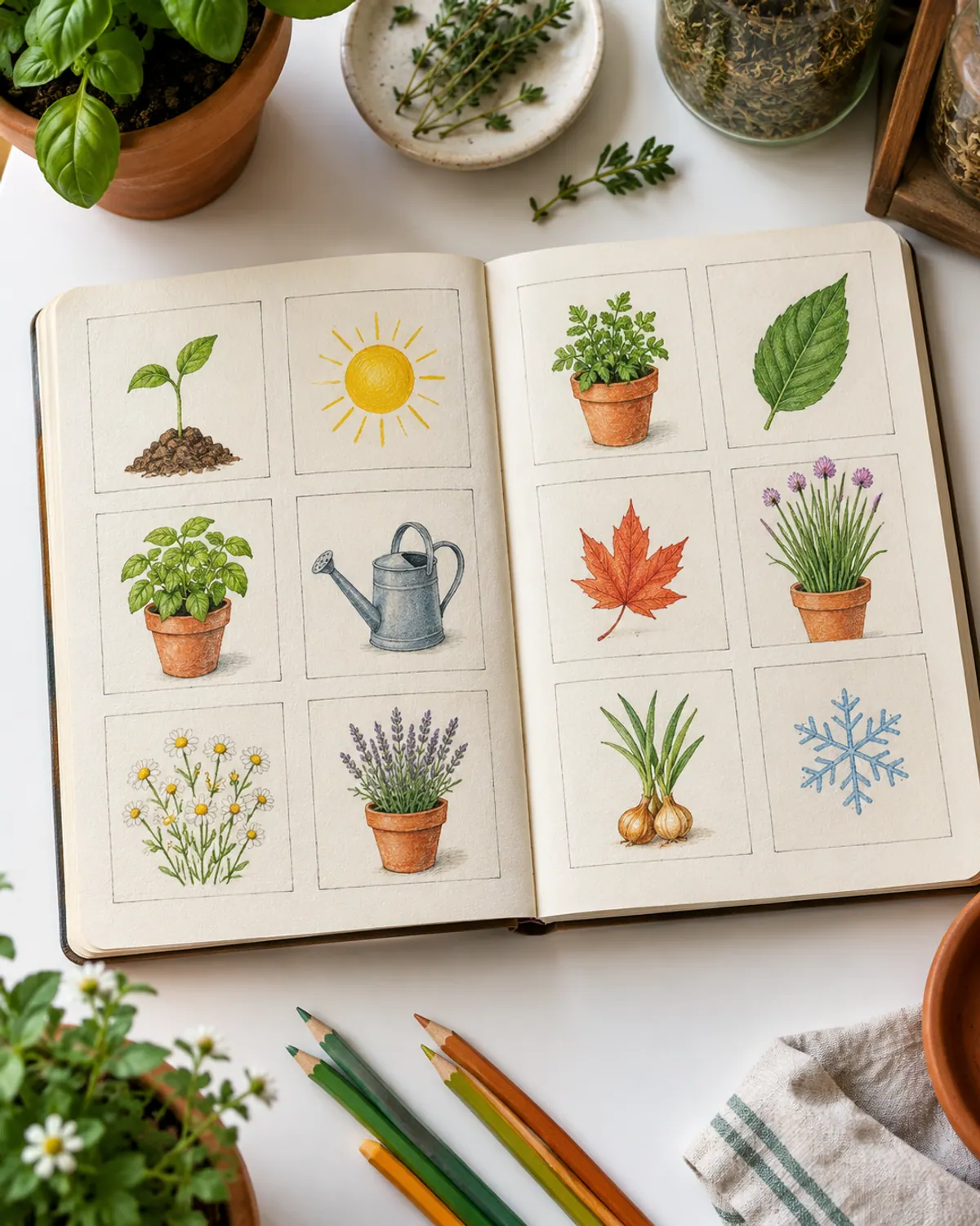
A monthly task spread, with one small box per month, pulls the other pages together. Add jobs as you learn them, such as "test old seed" in January or "order seed" in February, and next year's calendar fills itself.
5-minute weekly journal routine
Garden journal supplies
-
Dot grid notebook
Typically $10 to $20
Dots guide tables and sketches without the busy look of lined paper.
Check price on Amazon for Dot grid notebook -
Graph paper notebook
Typically $6 to $12
Squares make it easy to draw your space to scale.
Check price on Amazon for Graph paper notebook -
1-inch three-ring binder
Typically $5 to $12
Lets you add, remove and reorder printed pages through the year.
Check price on Amazon for 1-inch three-ring binder -
Sheet protectors
Typically $8 to $15
Keeps the pages you take outside safe from soil and water.
Check price on Amazon for Sheet protectors -
Seed storage box with dividers
Typically $15 to $30
Keeps packets upright and sorted by sowing month.
Check price on Amazon for Seed storage box with dividers -
Min-max thermometer
Typically $10 to $20
Shows the highs and lows your balcony really hit, not just the forecast.
Check price on Amazon for Min-max thermometer -
10x hand lens
Typically $8 to $15
Makes tiny pests like aphids and mites easy to spot and name.
Check price on Amazon for 10x hand lens -
Digital kitchen scale
Typically $10 to $25
Weighs harvests in ounces or grams for an honest harvest log.
Check price on Amazon for Digital kitchen scale -
Washi tape set
Typically $6 to $12
Holds photos and pressed leaves on the page and peels off cleanly.
Check price on Amazon for Washi tape set
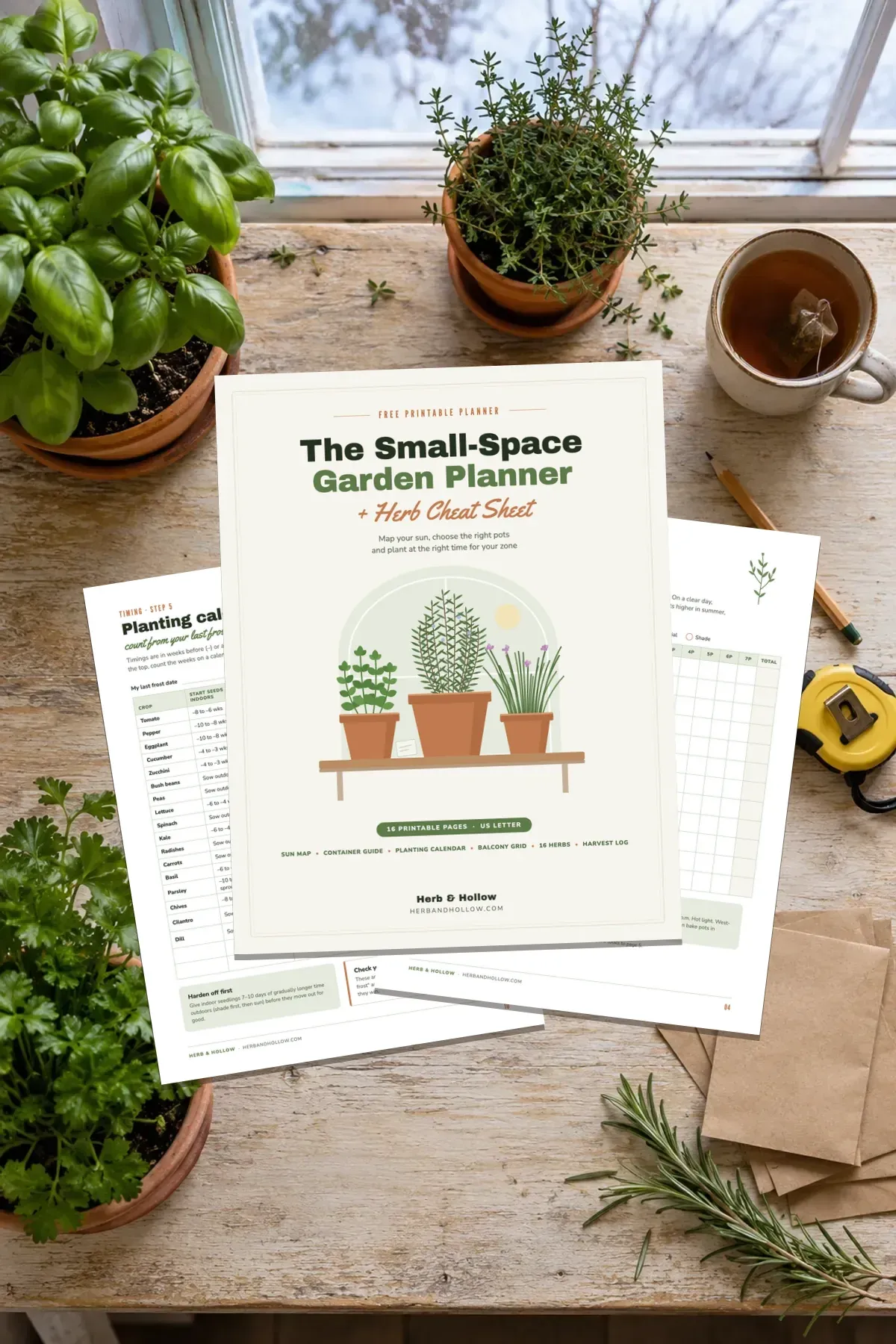
Want the planning pages ready to print? The free planner has a sun map, a container guide, a planting calendar and a harvest log.
Frequently asked questions
What should I put in a garden journal?
Start with what you'll use next season: a sun map, a seed inventory, frost dates, a sowing log, pest notes and a harvest log. End the year with a variety scorecard and a short lessons list.
How do I start a garden journal?
Pick a notebook or binder, write your goals on the first page, then add a sun map and a seed inventory. After that, write a line or two whenever you sow, plant, feed or harvest.
Is a notebook or a binder better for a garden journal?
A notebook is cheap, portable and good for quick notes. A binder lets you add, move and reuse printed pages each year. Pick the one you're more likely to open every week.
When should I start a garden journal?
Winter is a good time, because the planning pages help before you buy seeds. You can start any time, though; the logs simply begin with whatever you're growing now.
Can I keep a garden journal on my phone?
Yes. Phone notes and photos are quick to capture outside. The catch is looking back, so set a monthly reminder to review them or copy the key points to a page.
How often should I write in a garden journal?
About five minutes a week is enough for most small gardens. Add a quick line on the days you sow, plant or harvest, and do a longer review at the end of the season.

Save it for later
Pin this to your Seasonal Garden Tasks board so it's there when you need it.
Save to Pinterest