This post contains affiliate links. As an Amazon Associate we earn from qualifying purchases, at no extra cost to you. Read our disclosure.
Safety first: Herbs can be powerful. If you are pregnant, nursing, take medication or have a health condition, check with your doctor or pharmacist first. Please read our herbal & garden safety notes before you start.
Key takeaways
- Start with five: trays with domes, seed starting mix, a light, a timer and labels.
- Light matters most. Utah State suggests 12 to 14 hours or more a day, with shop lights 2 to 3 inches above seedlings.
- Add fixes as needed: a heat mat for peppers, a fan for still air, solid trays for bottom watering.
- Fit the footprint: a windowsill, one shelf or a 24 by 14 inch closet corner all work.
- Protect a rental: a boot tray under the setup catches spills.
In this post8 sections
- How we picked: what a small-space seed starting setup needs
- The 5 essentials for any seed starting setup
- Nice to have: supplies that fix common problems
- Space savers: seed starting setup supplies sorted by footprint
- Seed starting setups compared by space and budget
- Seed starting kit or DIY setup?
- Skip if: seed starting supplies you can leave out
- FAQ
How we picked: what a small-space seed starting setup needs
Most seed starting supply lists are written for a garage or a basement. In an apartment, the rules are different. Every item here had to pass four checks.
Our four checks
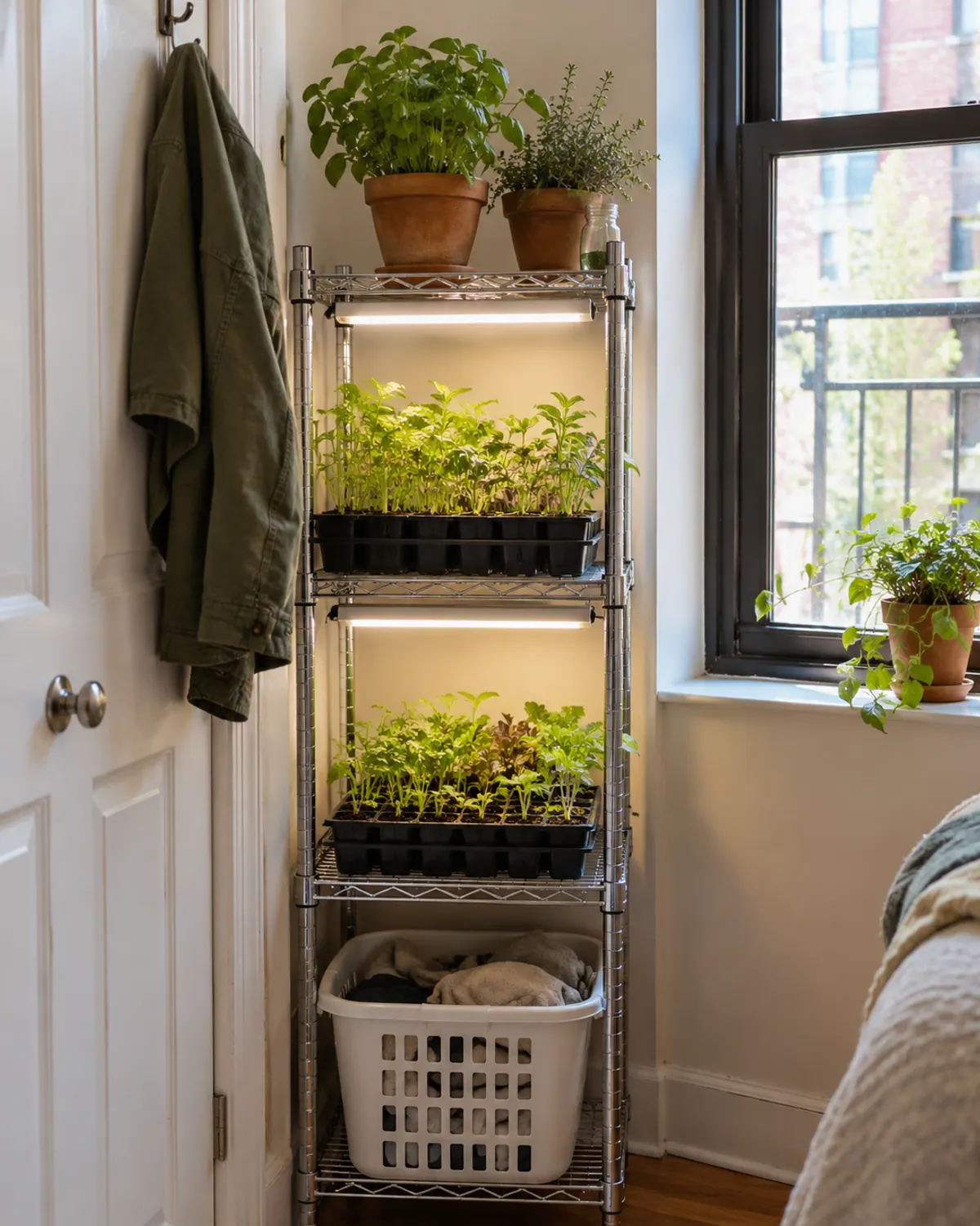
Light comes first. A window alone rarely gives seedlings enough, so most of this list is built around a light on a timer. Utah State suggests 12 to 14 hours or more of light a day for vegetable seedlings, with shop lights kept 2 to 3 inches above the leaves.
The 5 essentials for any seed starting setup
Buy these five and you can start seeds this winter. Everything after them is optional and fixes a specific problem.
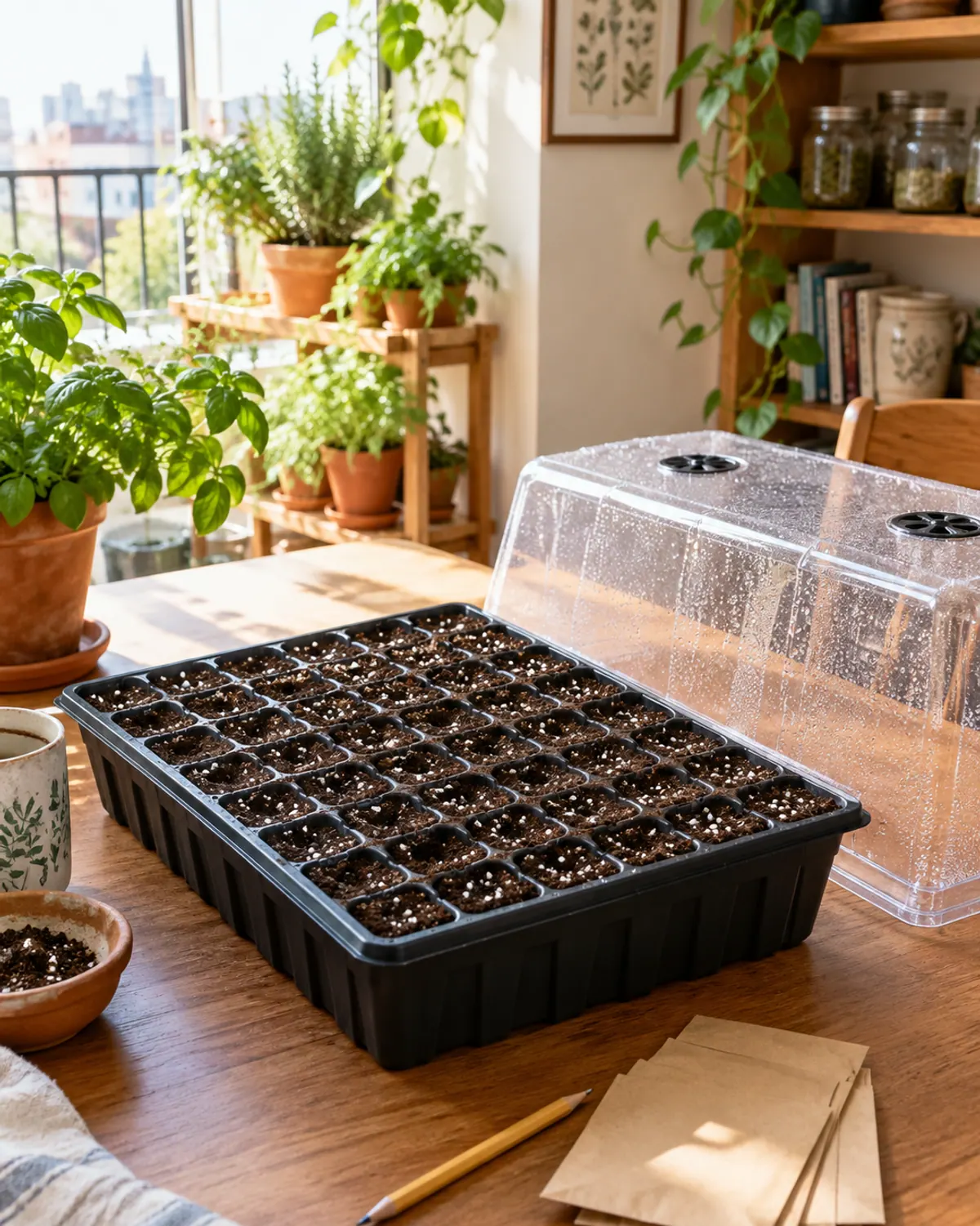
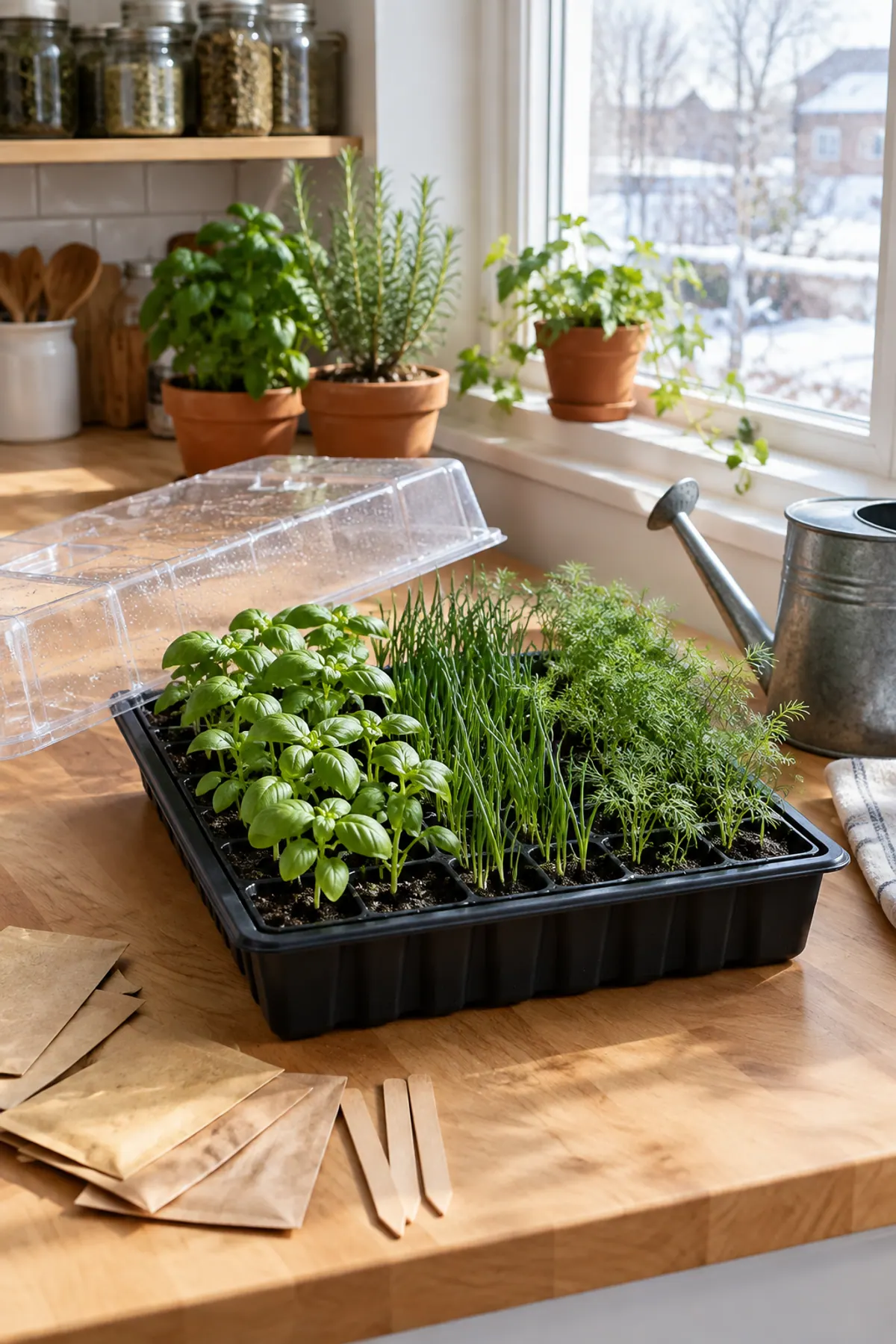
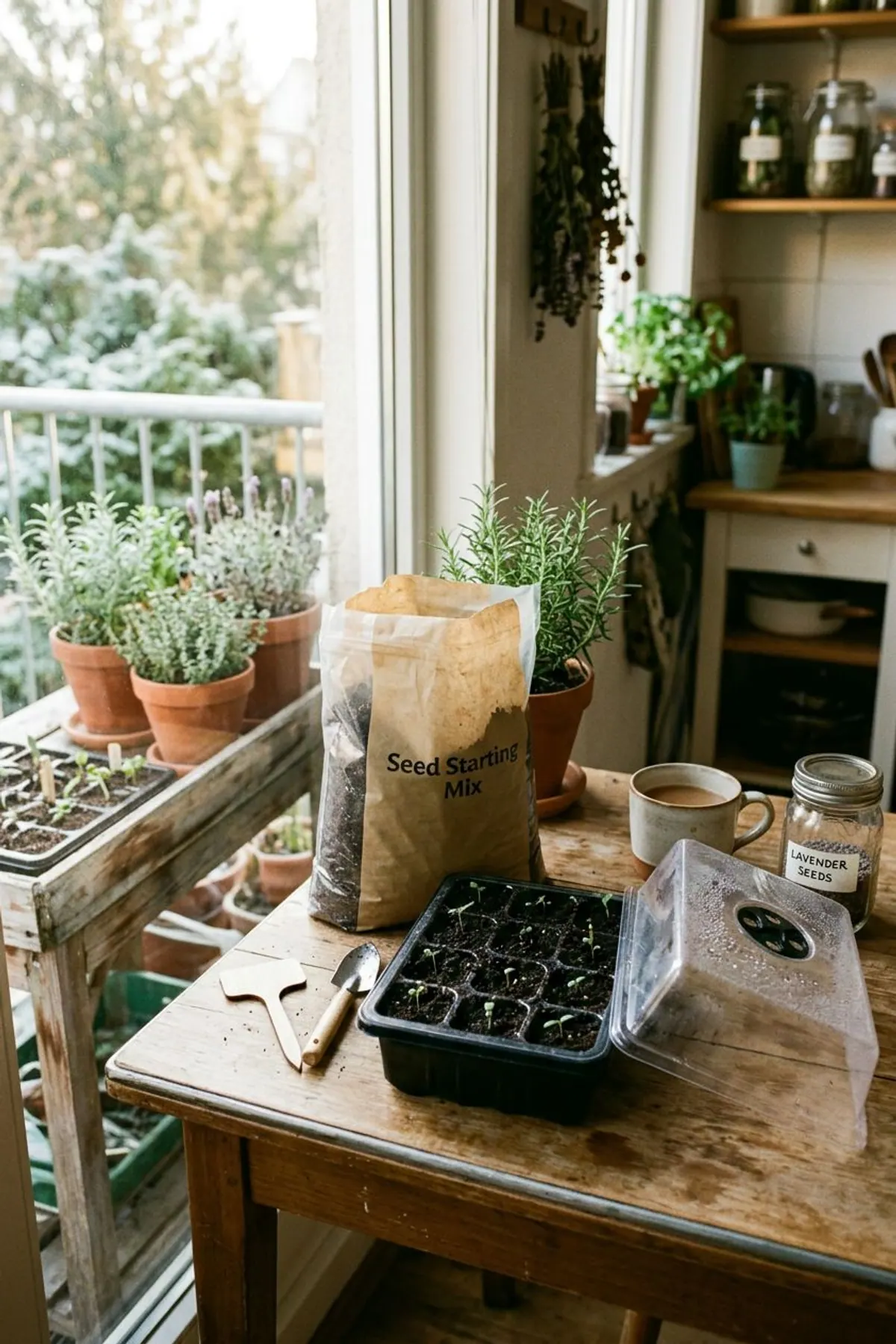
Trays with domes. A cell insert keeps each seedling's roots apart, so they move to bigger pots without tearing. The clear dome holds in moisture until the seeds sprout. Utah State advises taking it off once about half the seeds are up, since a closed, wet dome after that invites mold.
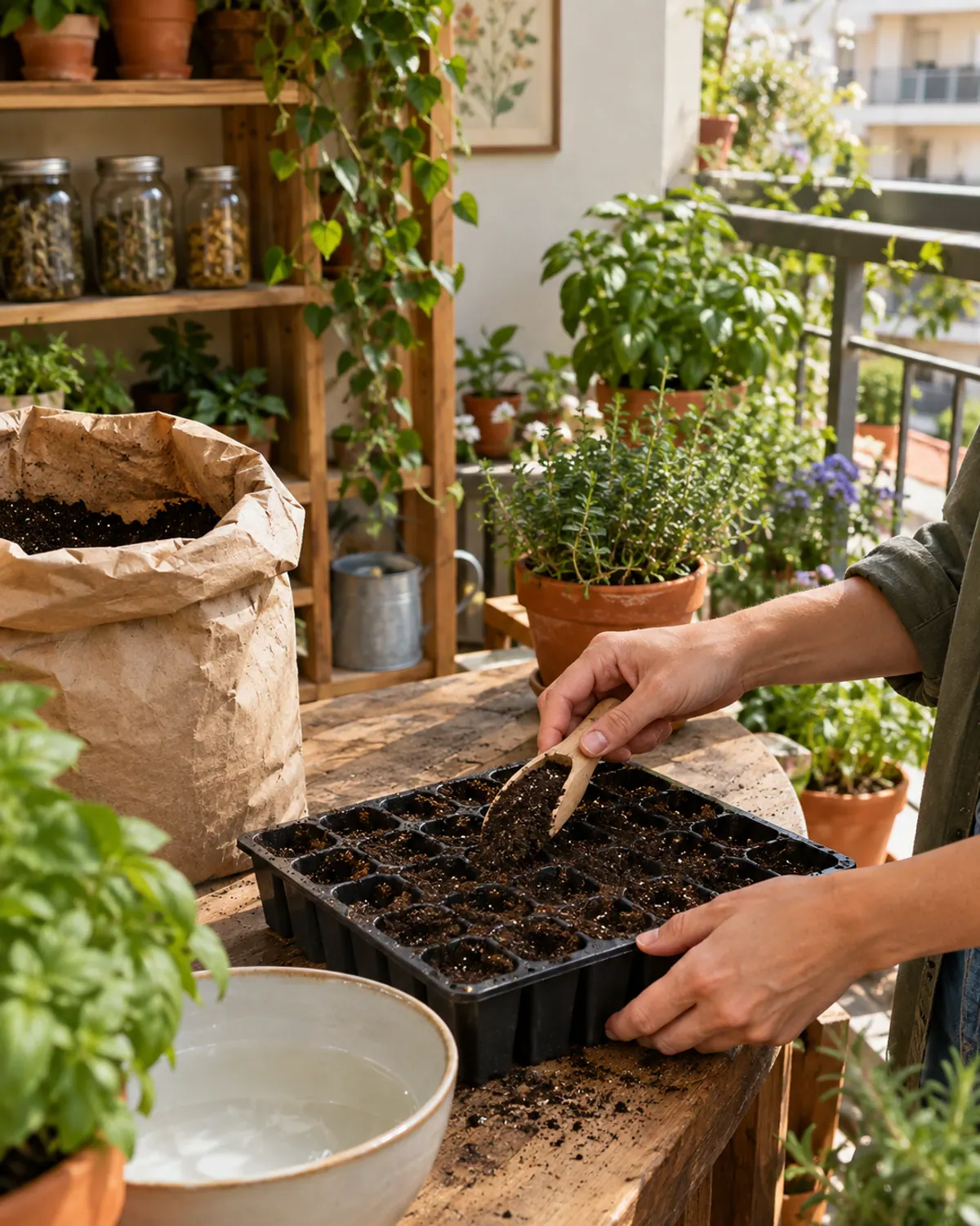
Seed starting mix, not soil. Seed mix is finer and lighter than potting soil. Wet it before you fill the cells, so it soaks up water evenly instead of shedding it.
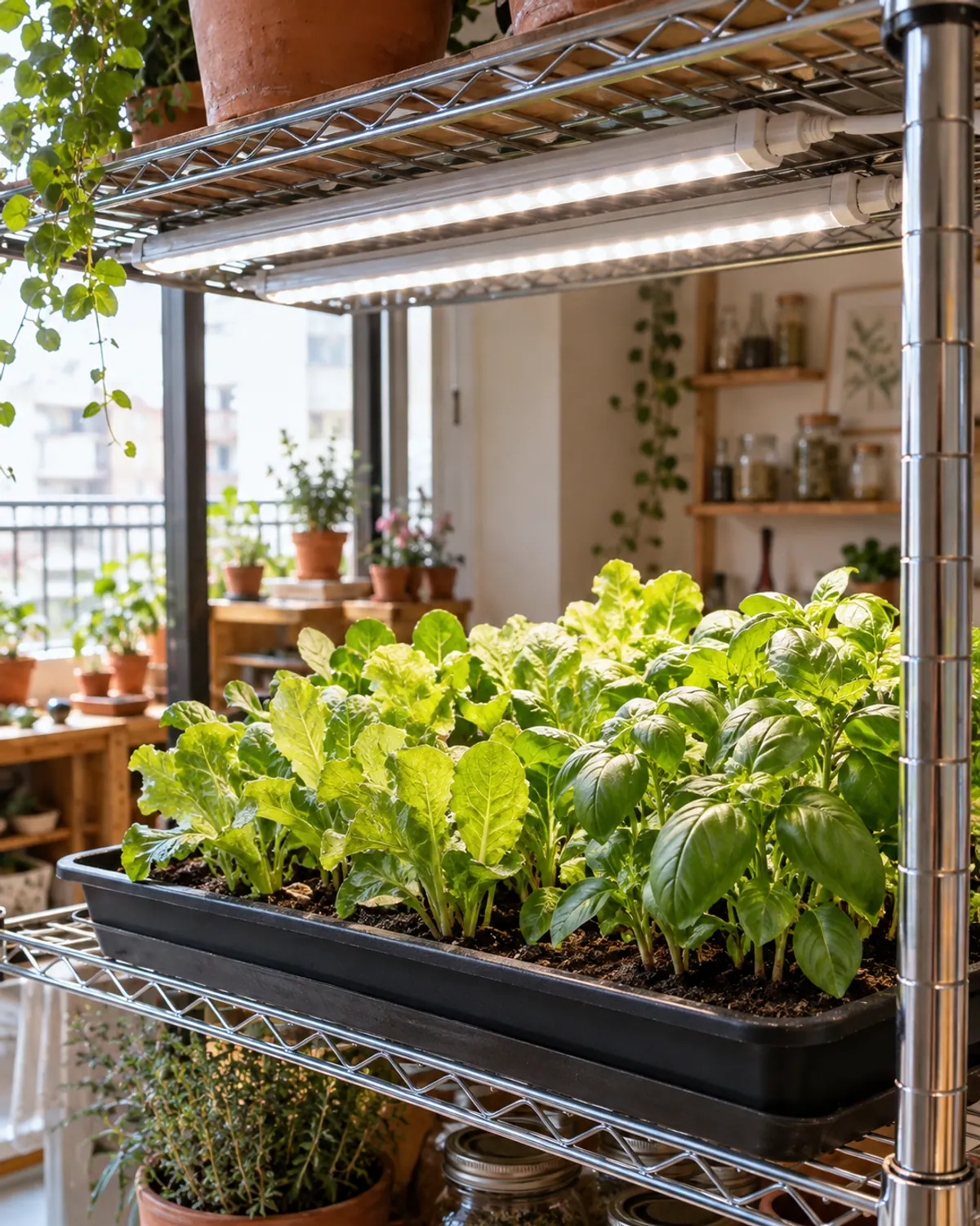
A light and a timer. A plain white LED shop light works for seedlings; you don't need a purple light. Keep it close, raise it as the plants grow, and let a timer handle the hours. Our grow light roundup compares clip-on lights, strips and stands if you want more choice.
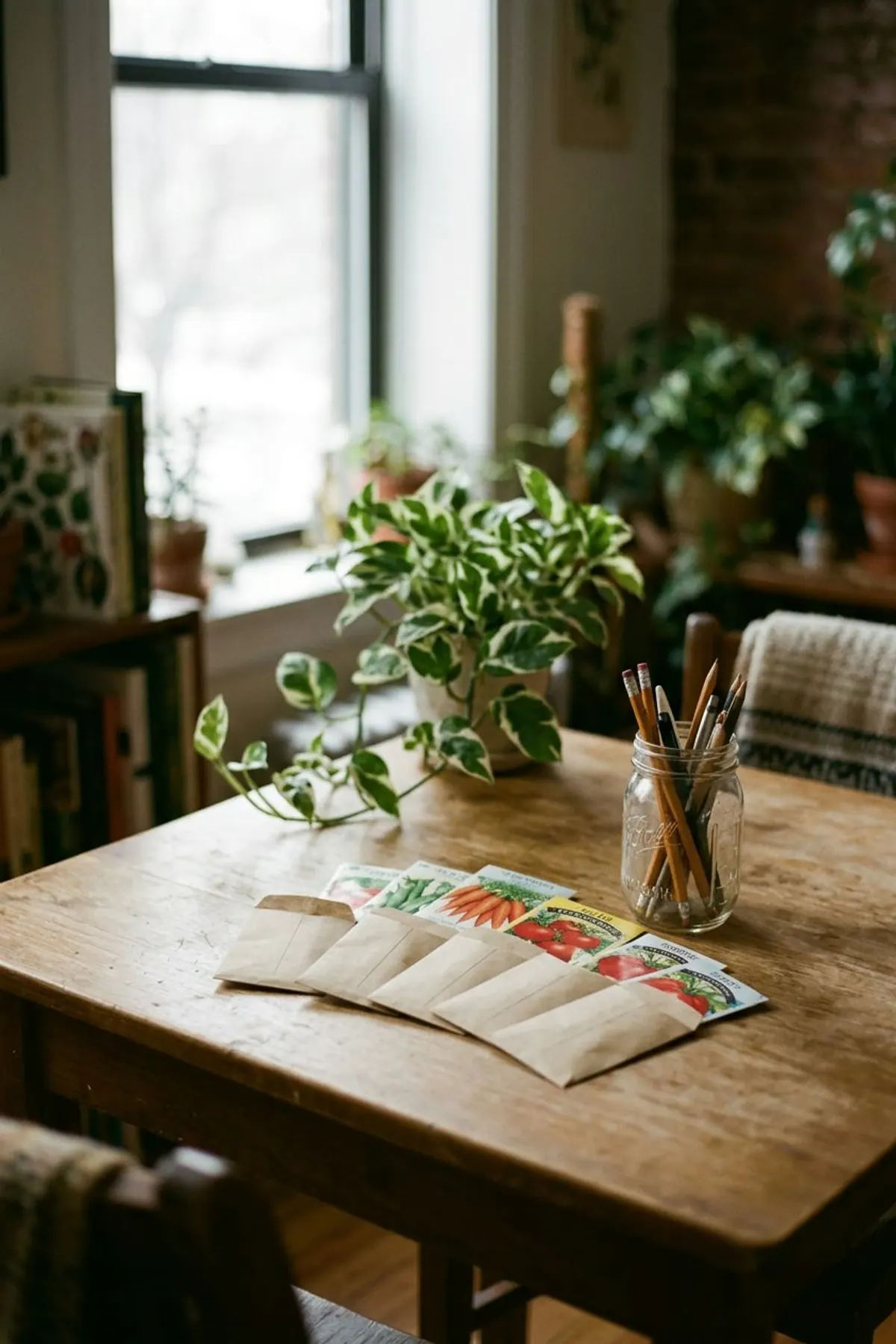
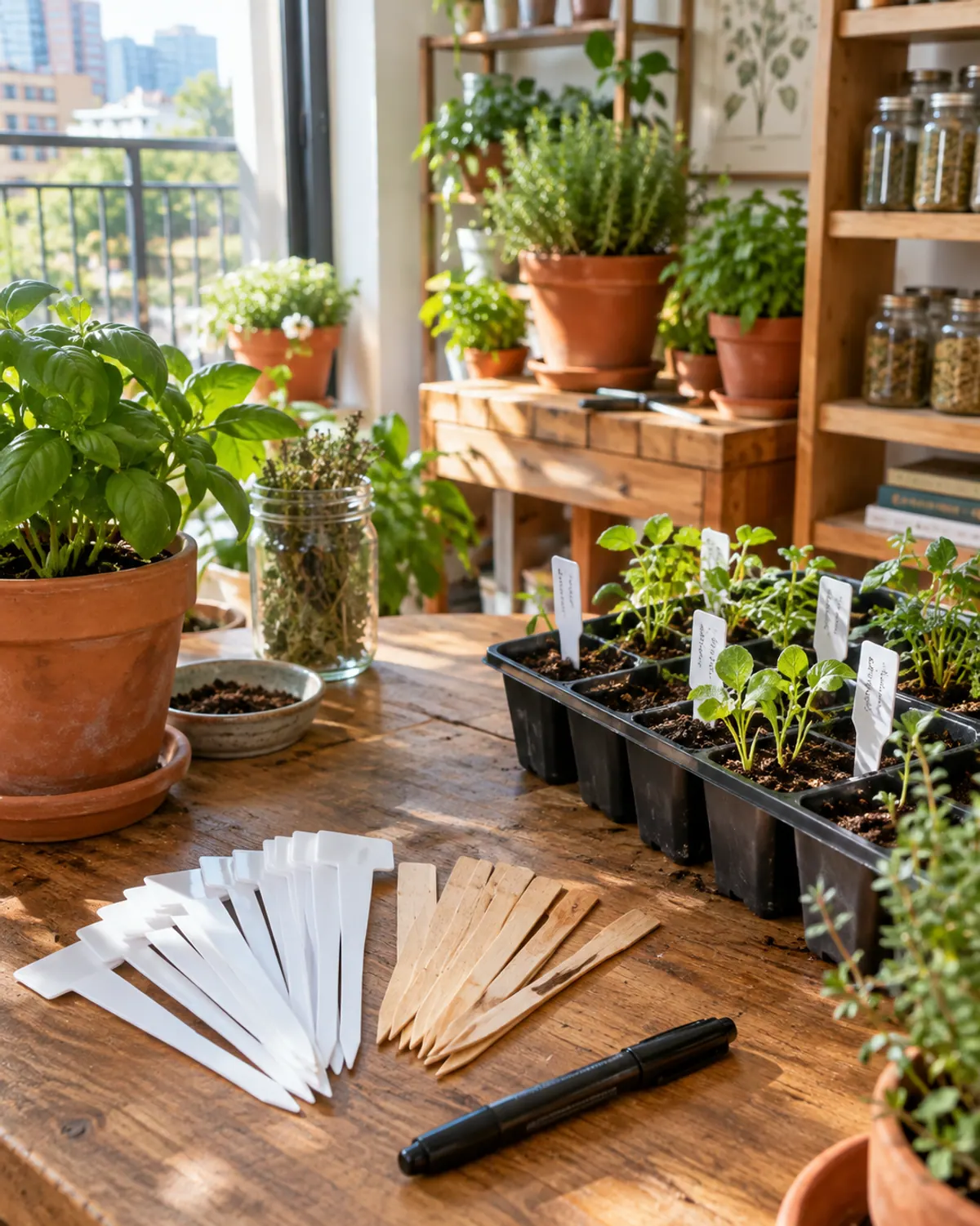
Labels. Write the plant, variety and sowing date on each label. A paint marker stays readable after weeks of damp mix.
Essential seed starting supplies
- Essential
1. 1020 seed trays with cell inserts and humidity domes
Typically $15 to $35 for a multi-pack
The standard 10 by 20 inch tray fits most shop lights, heat mats and shelves. Look for thick plastic you can wash and reuse.
Check price on Amazon for 1. 1020 seed trays with cell inserts and humidity domes - Essential
2. Seed starting mix
Typically $8 to $20 a bag
Fine, light and sterile, so tiny roots push through and damping off is less likely than with garden soil or old potting mix.
Check price on Amazon for 2. Seed starting mix - Essential
3. LED shop light or linkable grow light strips
Typically $20 to $50
Hangs a few inches over the tray. Linkable strips let one plug run two or three lights on a narrow shelf.
Check price on Amazon for 3. LED shop light or linkable grow light strips - Essential
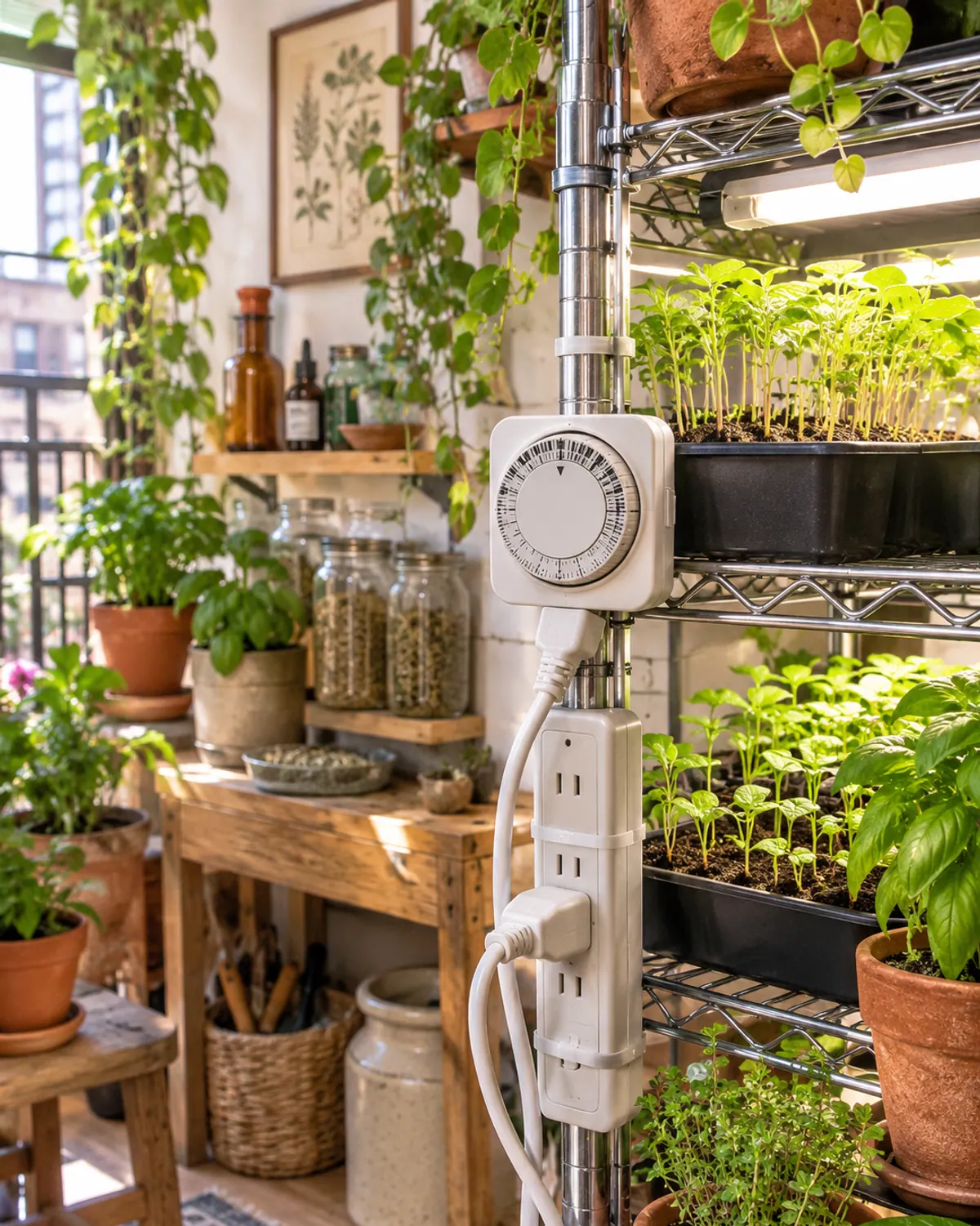
4. Plug-in outlet timer
Typically $8 to $15
Turns lights on and off at the same time every day, so seedlings get steady hours even when you forget.
Check price on Amazon for 4. Plug-in outlet timer - Essential
5. Plant labels and a paint marker
Typically $6 to $12
Seedlings look alike for weeks. A paint marker survives bottom watering better than pencil or ballpoint.
Check price on Amazon for 5. Plant labels and a paint marker
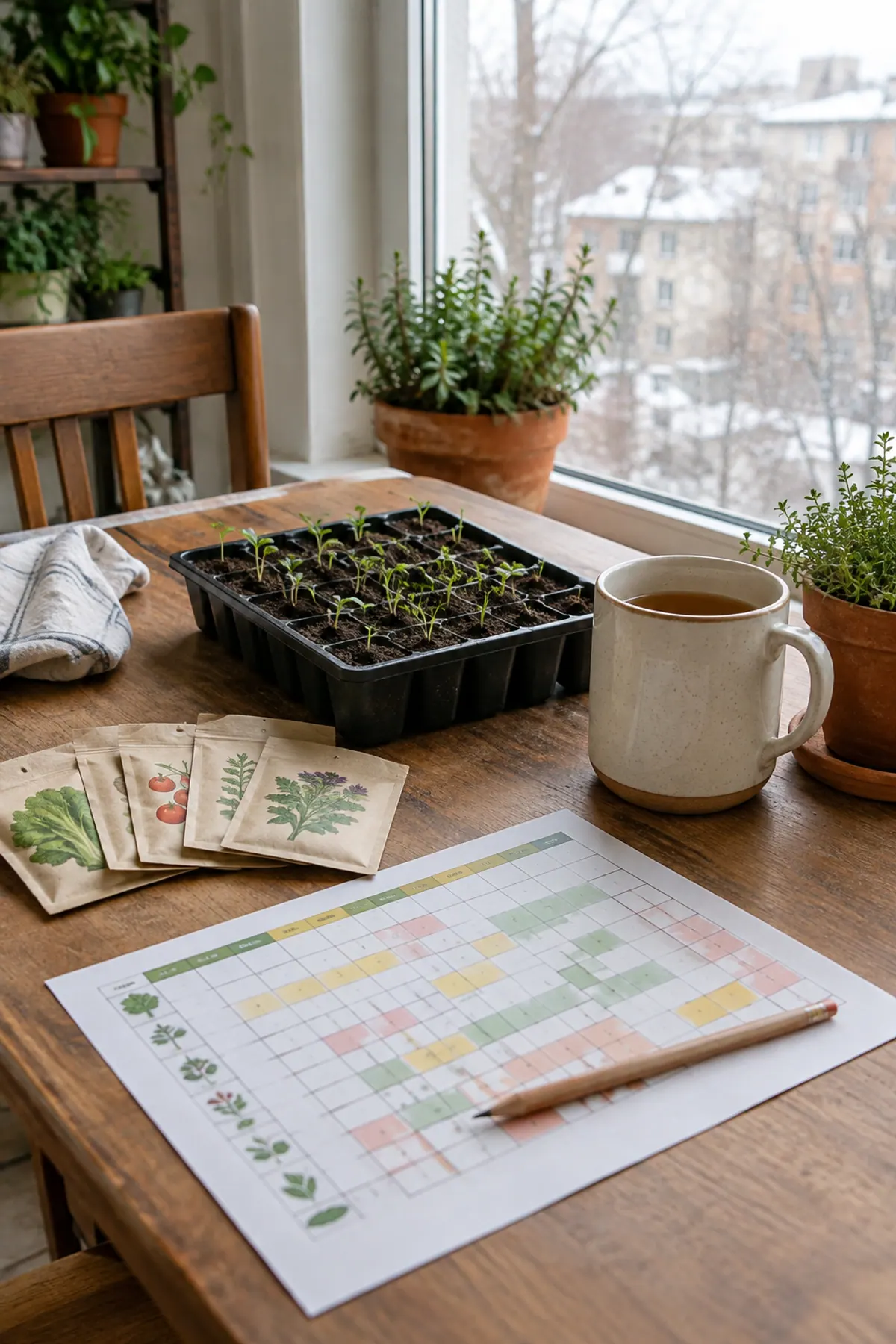
Not sure when to sow? The free planner has a planting calendar you fill in from your last frost date, plus a sun map for the spot where seedlings will move later.
Nice to have: supplies that fix common problems
Add these when you know you need them. Each one answers a problem seedlings tend to hit indoors.
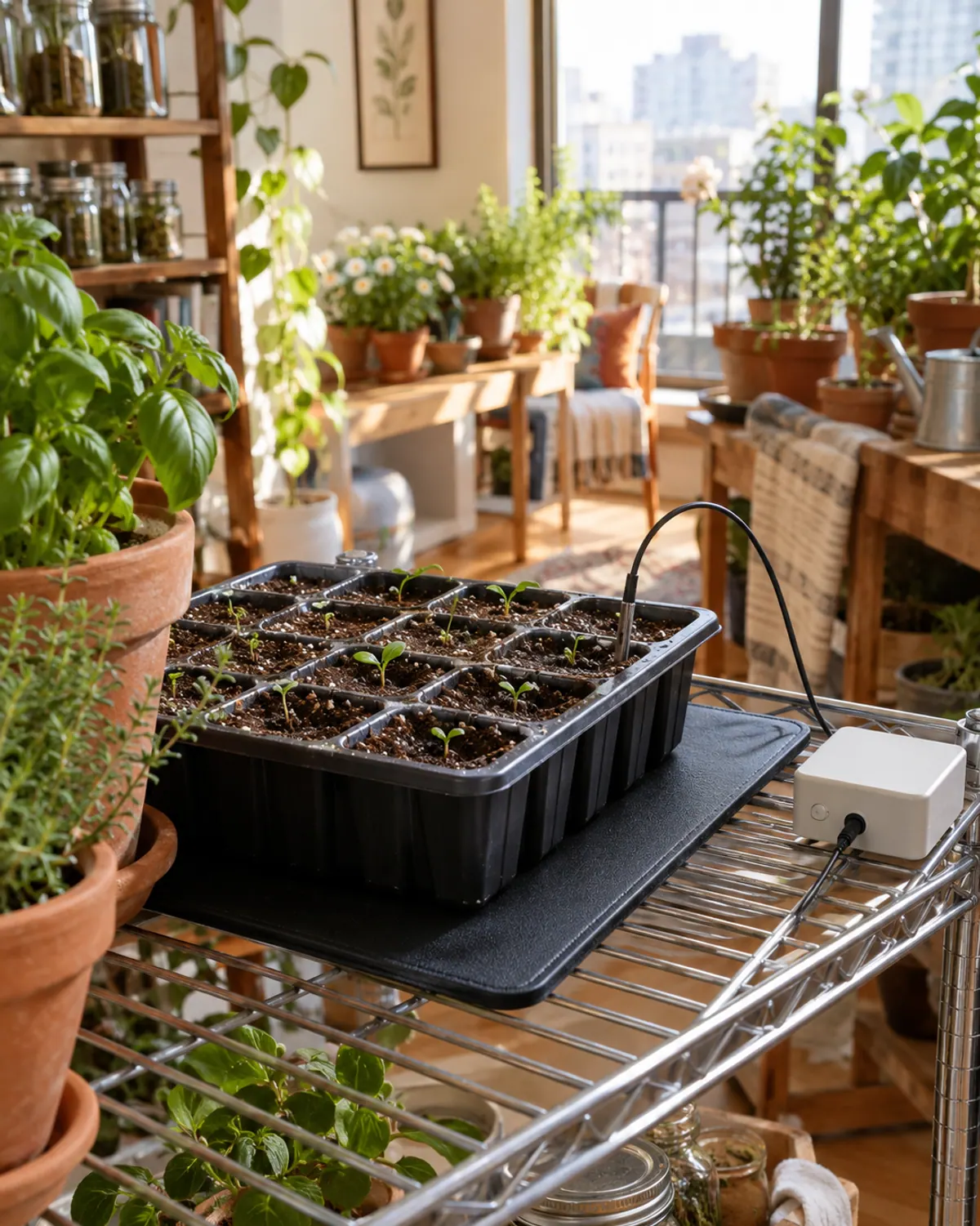
Heat mat with a thermostat. Peppers, tomatoes and basil sprout slowly in a cold room. A mat warms the mix from below, and the thermostat keeps it from cooking the seeds. Once seedlings are up, Utah State suggests cooler nights of about 60 to 65°F, with days about 10 degrees warmer, so many growers move trays off the mat after sprouting.
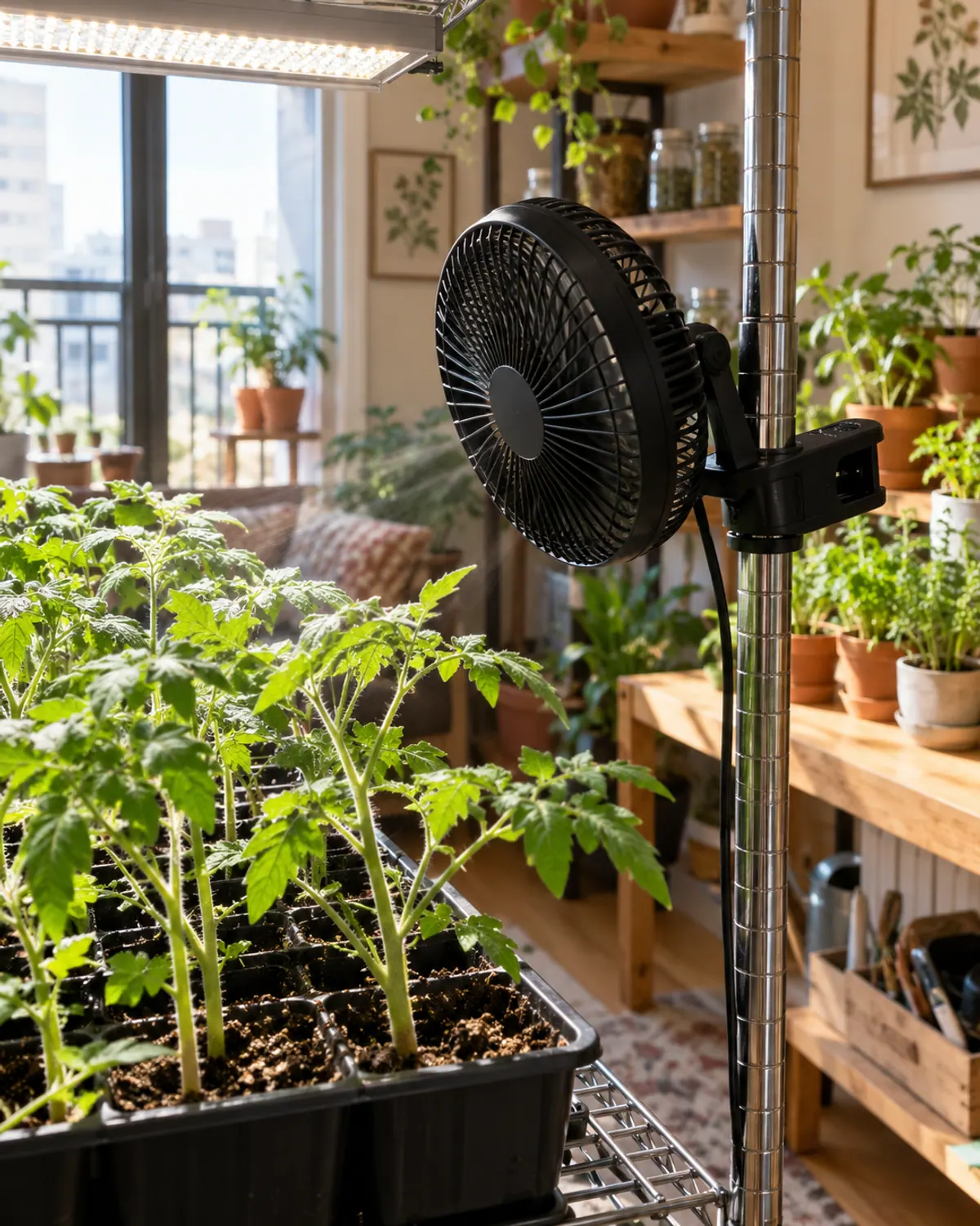
A small fan. Indoor air is still. Utah State suggests running a fan over seedlings for at least 5 to 10 minutes a day; moving air helps stems firm up and dries the surface between waterings.
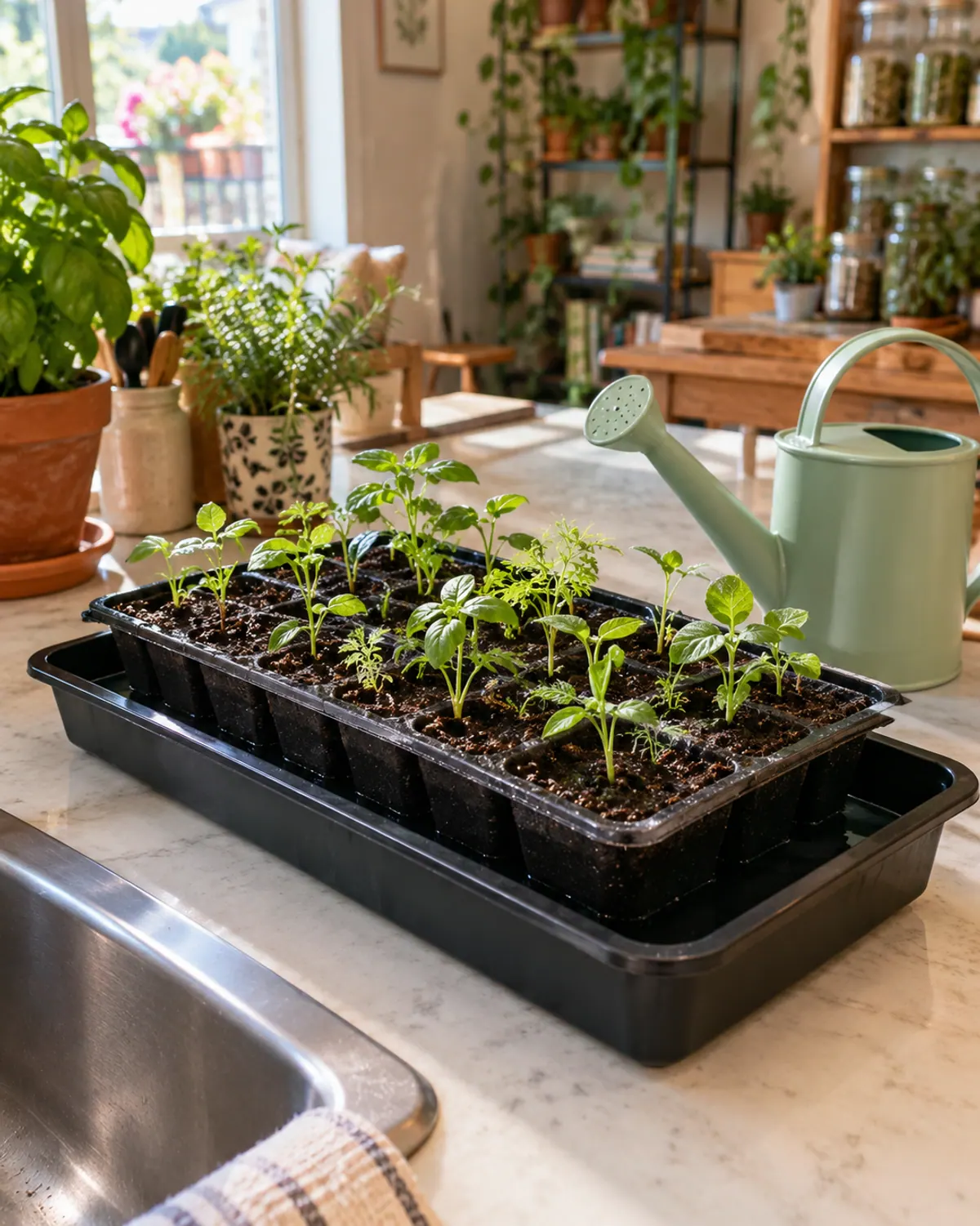
Solid trays and a mister. Bottom watering keeps leaves dry and tiny seeds in place. Pour 1 to 2 inches of water into a solid tray, let the cells soak it up, then pour off what's left. A fine mister handles the surface before seeds sprout.
Pots for potting up. When leaves of neighboring seedlings start to overlap, Utah State says it's time to move them into bigger pots. Herbs and lettuce can often stay in their cells; tomatoes and peppers usually need the space.
Nice-to-have seed starting supplies
-
6. Seedling heat mat with a thermostat
Typically $25 to $45
Warms the mix from below for slow, heat-loving seeds like peppers. The thermostat probe stops it running too hot.
Check price on Amazon for 6. Seedling heat mat with a thermostat -
7. Small clip-on fan
Typically $15 to $25
Clamps to a shelf post and moves air over the trays, which helps stems firm up and the surface dry between waterings.
Check price on Amazon for 7. Small clip-on fan -
8. Solid trays with no holes for bottom watering
Typically $10 to $25 for a multi-pack
Sits under a cell tray so you can water from below and catch drips before they reach the floor or shelf.
Check price on Amazon for 8. Solid trays with no holes for bottom watering -
9. Fine-mist spray bottle
Typically $6 to $12
Wets the surface without washing tiny seeds out of place, which matters for seeds that sit on top of the mix.
Check price on Amazon for 9. Fine-mist spray bottle -
10. Small pots for potting up
Typically $10 to $20 for a pack
Gives tomatoes, peppers and other fast growers room once their leaves start to overlap in the cells.
Check price on Amazon for 10. Small pots for potting up
Space savers: seed starting setup supplies sorted by footprint
These five help a seed starting setup fit where you live, from a single windowsill to a closet corner. Pick the ones that match your space.
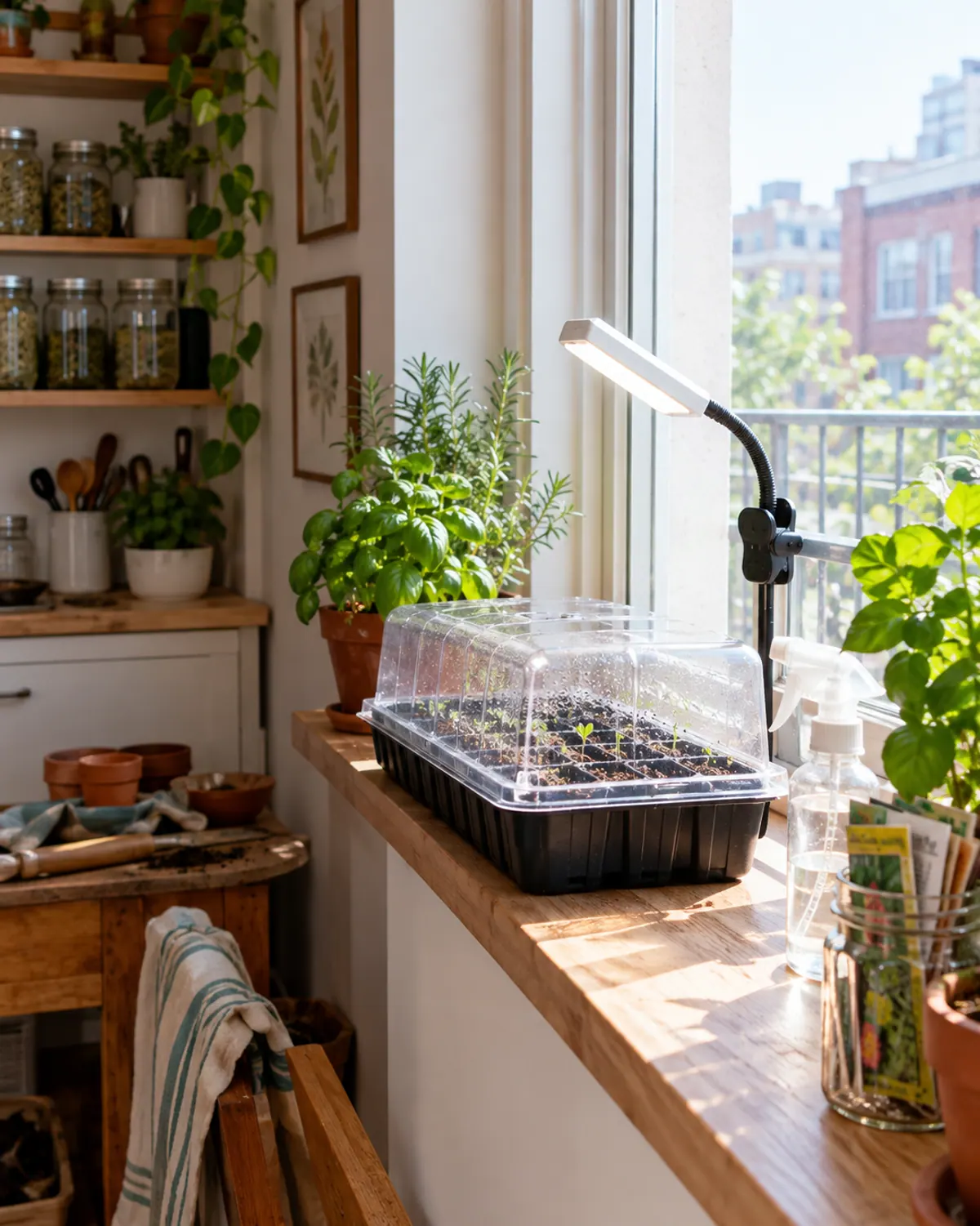
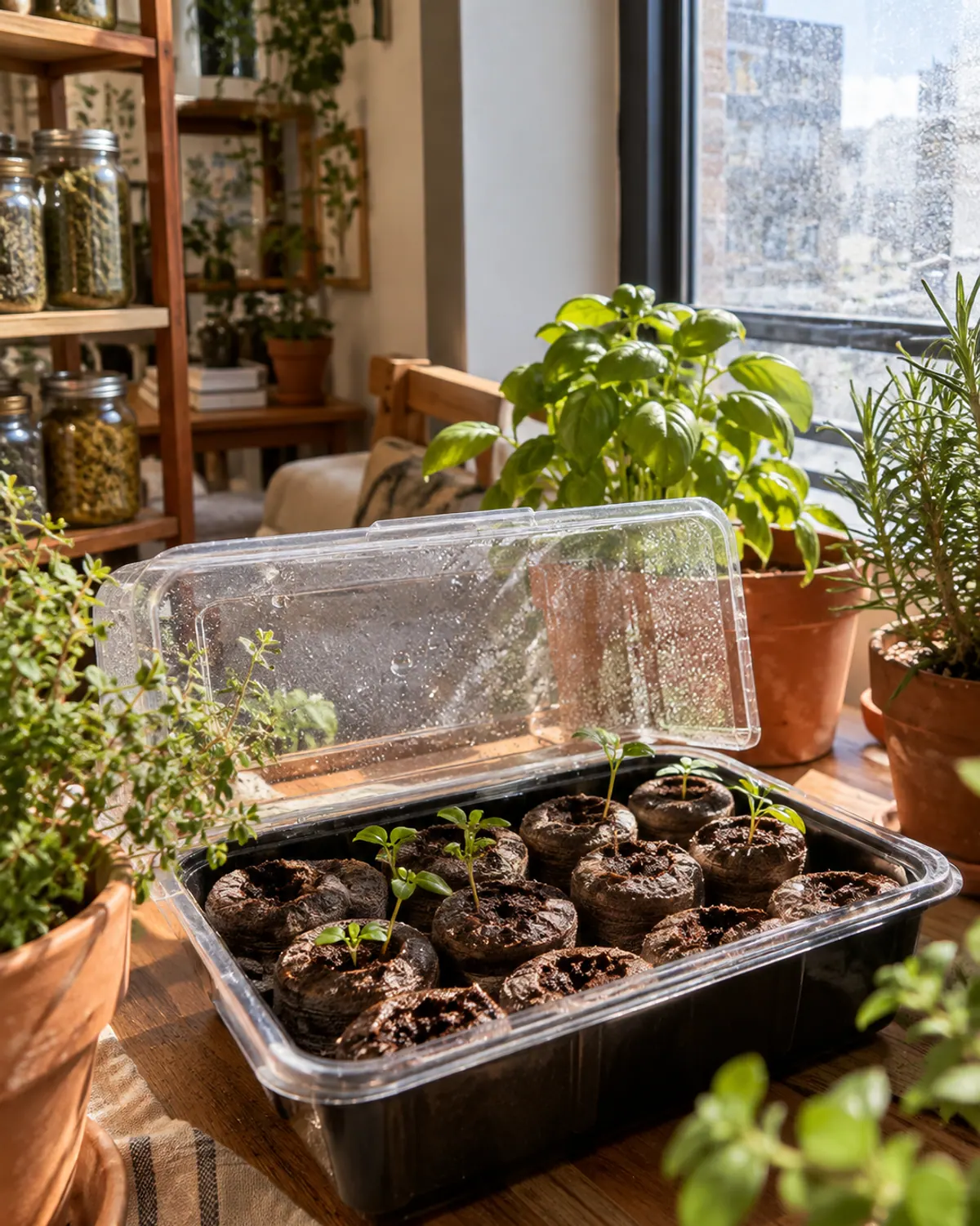
Windowsill. A mini greenhouse with pellets, plus a clip-on light, turns a deep sill into a small seed station. It suits herbs and a few tomato or pepper plants. Our list of herbs to grow from seeds indoors ranks which ones start easily this way.
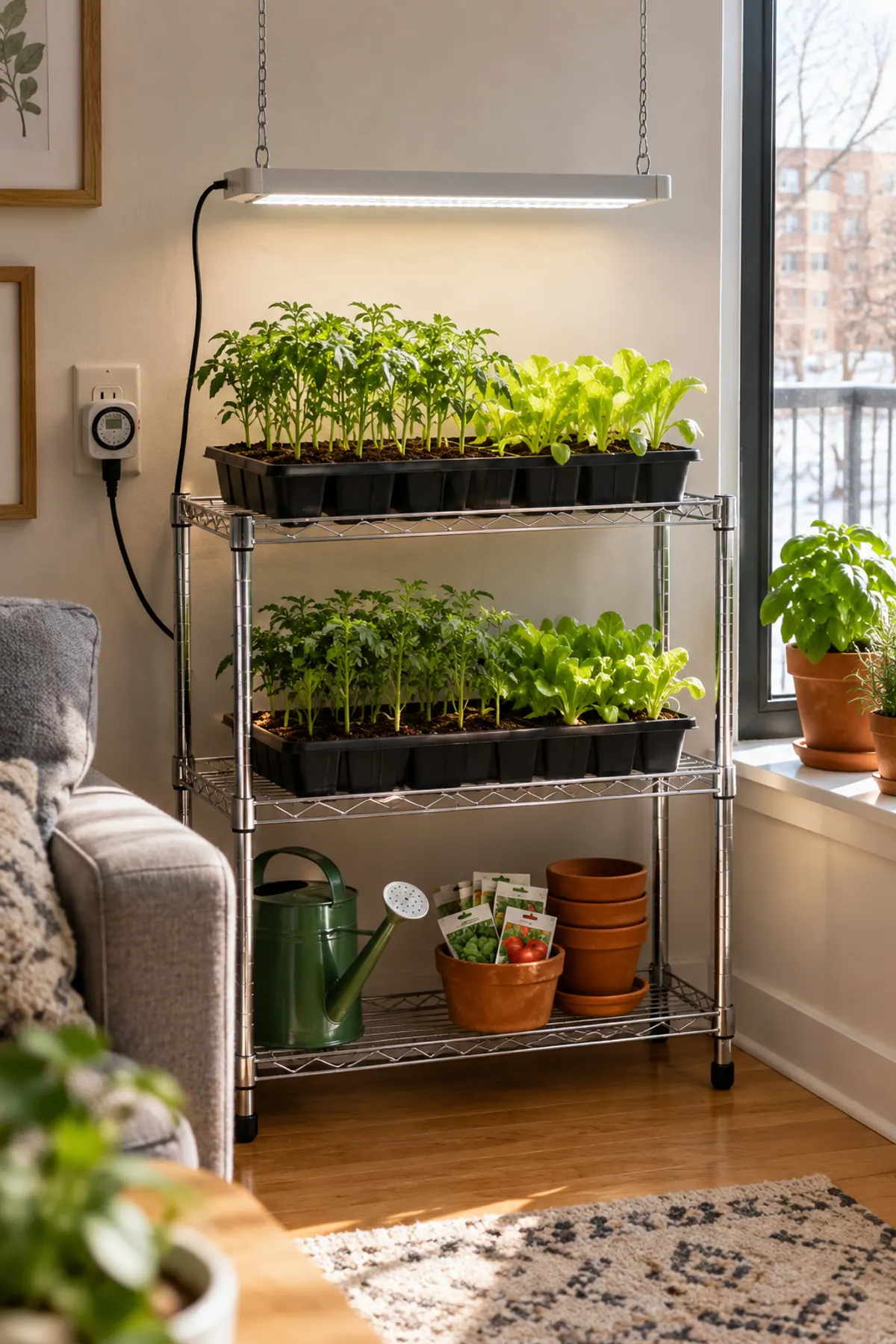
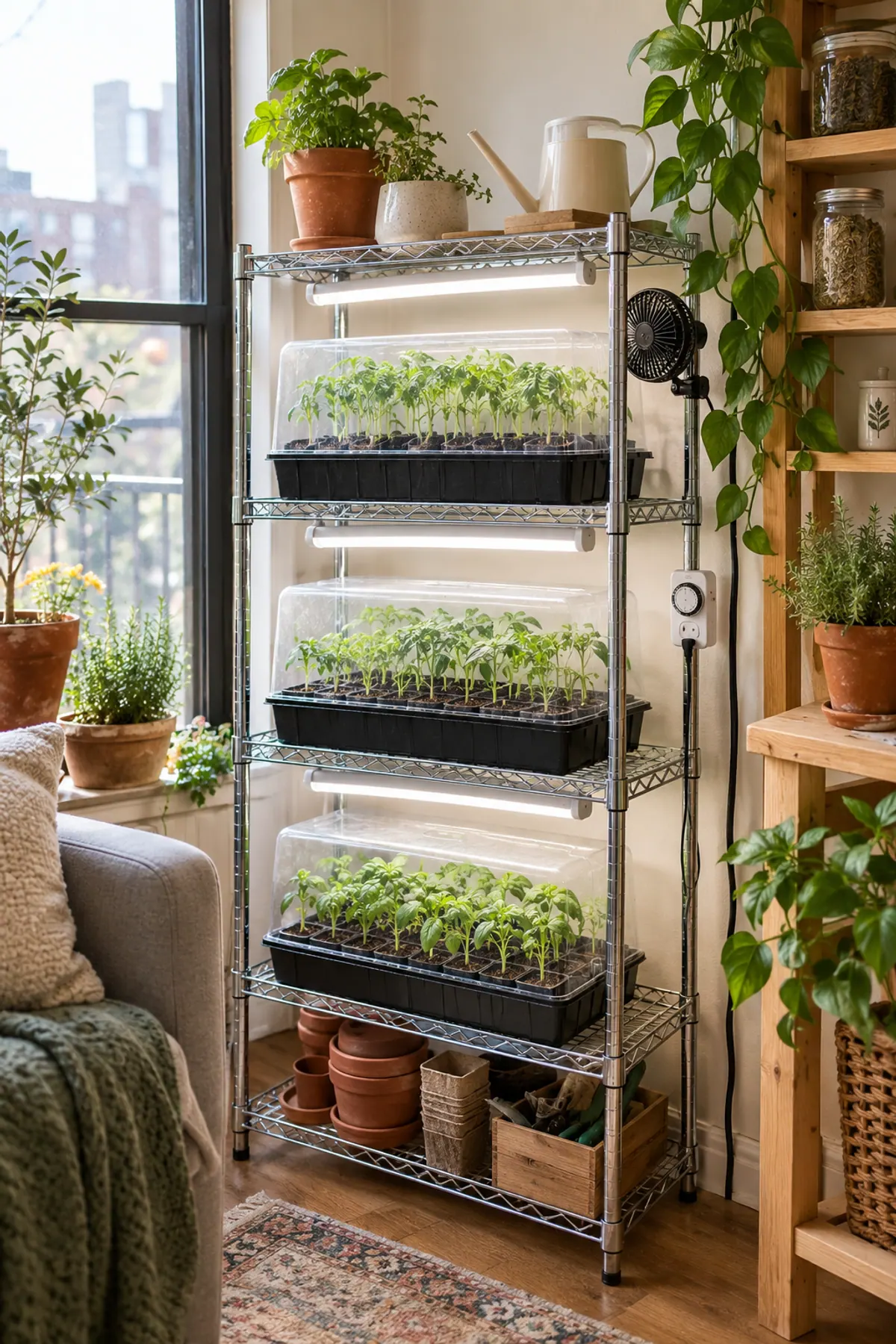
One shelf or a closet corner. A narrow wire shelf about 24 by 14 inches holds one standard tray per level. Zip-tie a light under each shelf and run them all from one timer on a power strip.
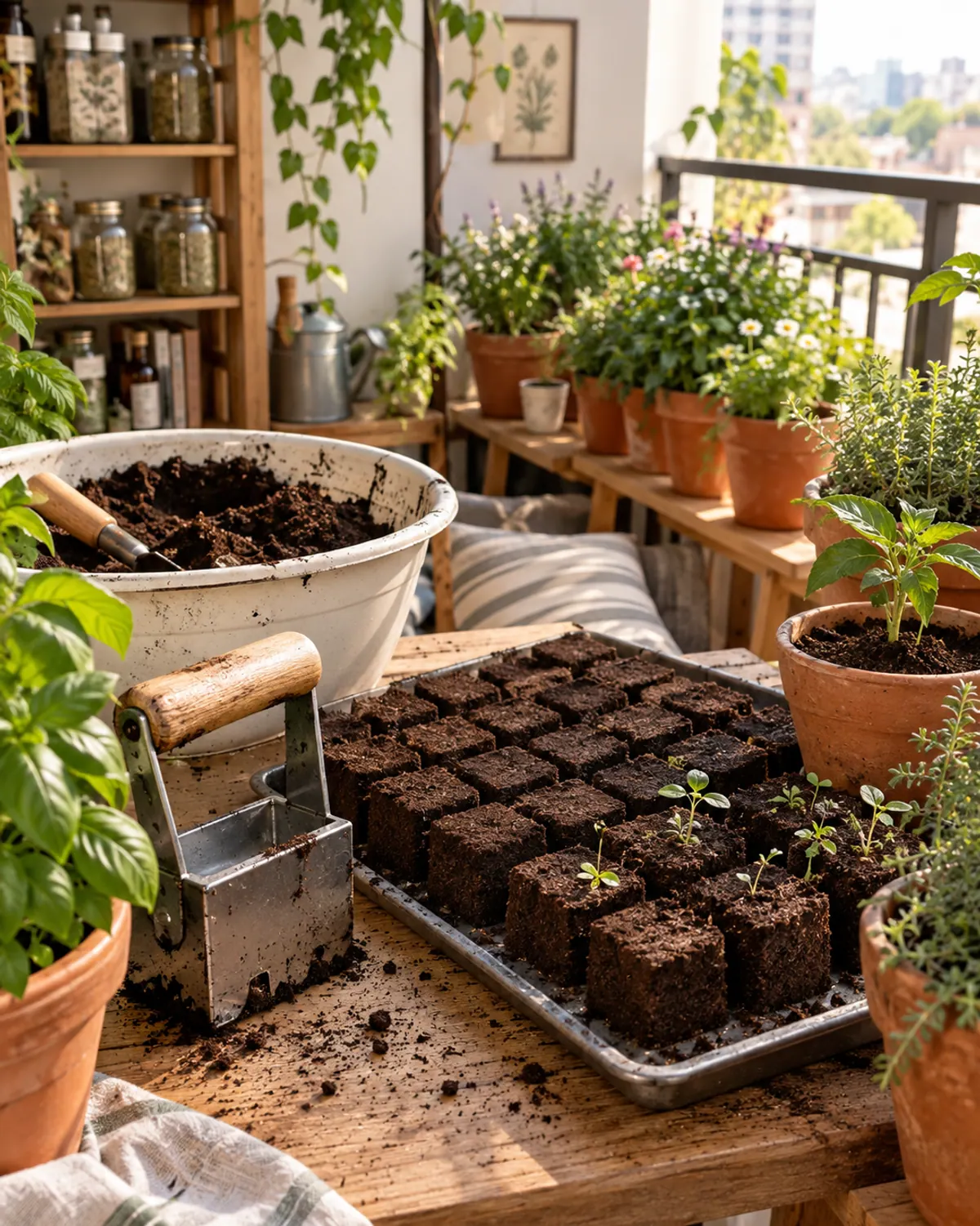
Less plastic. A soil blocker presses wet mix into cubes, so you don't need cell inserts at all. It takes practice and a wetter mix than you'd expect.
Space-saving seed starting supplies
- Space saver
11. Narrow 4-tier wire shelf
Typically $40 to $80
About 24 by 14 inches holds one 1020 tray per shelf. Lights zip-tie or clip under each shelf.
Check price on Amazon for 11. Narrow 4-tier wire shelf - Space saver
12. Windowsill mini greenhouse with peat or coir pellets
Typically $12 to $25
A small all-in-one starter for a deep windowsill. Pellets swell with water, so there is no mix to scoop indoors.
Check price on Amazon for 12. Windowsill mini greenhouse with peat or coir pellets - Space saver
13. Clip-on or arm grow light for a windowsill
Typically $20 to $40
Adds top light to a window that only gives a few hours of sun, so windowsill seedlings stop leaning and stretching.
Check price on Amazon for 13. Clip-on or arm grow light for a windowsill - Space saver
14. Hand soil blocker
Typically $25 to $45
Presses wet mix into cubes that hold their shape, so you need no cells or pots and have less plastic to store.
Check price on Amazon for 14. Hand soil blocker - Space saver
15. Waterproof boot tray or shelf liner
Typically $12 to $25
Goes under the whole setup to protect rental floors and furniture from spills and drips.
Check price on Amazon for 15. Waterproof boot tray or shelf liner
Seed starting setups compared by space and budget
Here is how the 15 supplies combine into three common small-space setups. The totals are simple sums of the typical price ranges above, so treat them as rough examples, not quotes.
| Setup | Space it takes | What to buy | Rough total |
|---|---|---|---|
| Windowsill | A sill about 6 to 12 inches deep | Mini greenhouse or 1 tray, mix, clip-on light, timer, labels | About $55 to $110 |
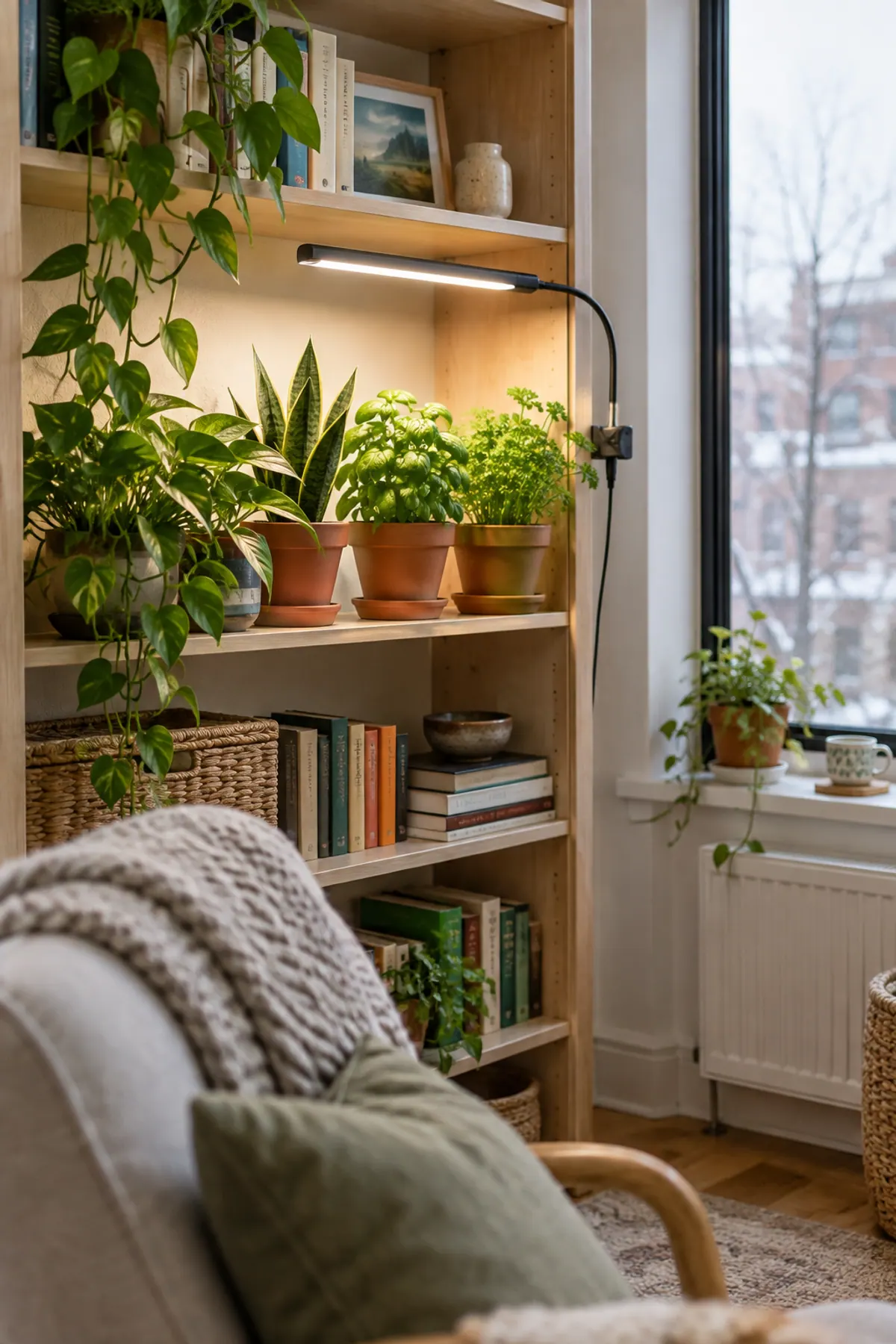
| One shelf | One shelf of a bookcase or dresser top | 1 to 2 trays, mix, 1 light, timer, labels, solid tray, fan | About $80 to $180 |
| Closet corner tower | About 24 by 14 inches of floor | 4-tier shelf, 3 lights, trays, mix, timer, labels, heat mat, fan, solid trays, boot tray | About $220 to $490 |
Start small if this is your first year. A windowsill or one-shelf setup is cheaper, and you'll learn what your space can handle before you buy a tower.
Seed starting kit or DIY setup?
All-in-one kits bundle a tray, a dome and sometimes a light. Building your own takes longer but often lasts more seasons.
What we like
- Kit: one purchase, parts fit together, good for a windowsill or a first try.
- DIY: pick sturdier trays and a brighter light, and replace one part at a time.
- DIY: standard 1020 trays fit most shelves, mats and lights you add later.
Keep in mind
- Kit: thin trays may crack after one season, and built-in lights are often weak.
- Kit: odd sizes can mean replacement parts are hard to find.
- DIY: more decisions up front, and more parts to store between seasons.
Skip if: seed starting supplies you can leave out
Not every popular product earns space in a small home. Skip these if they don't fit your plans.
Skip it if...
Ready to set it up? Our small-space seed starting guide walks through sowing, light height and hardening off step by step, and the seed starting calendar tells you when to sow by zone.
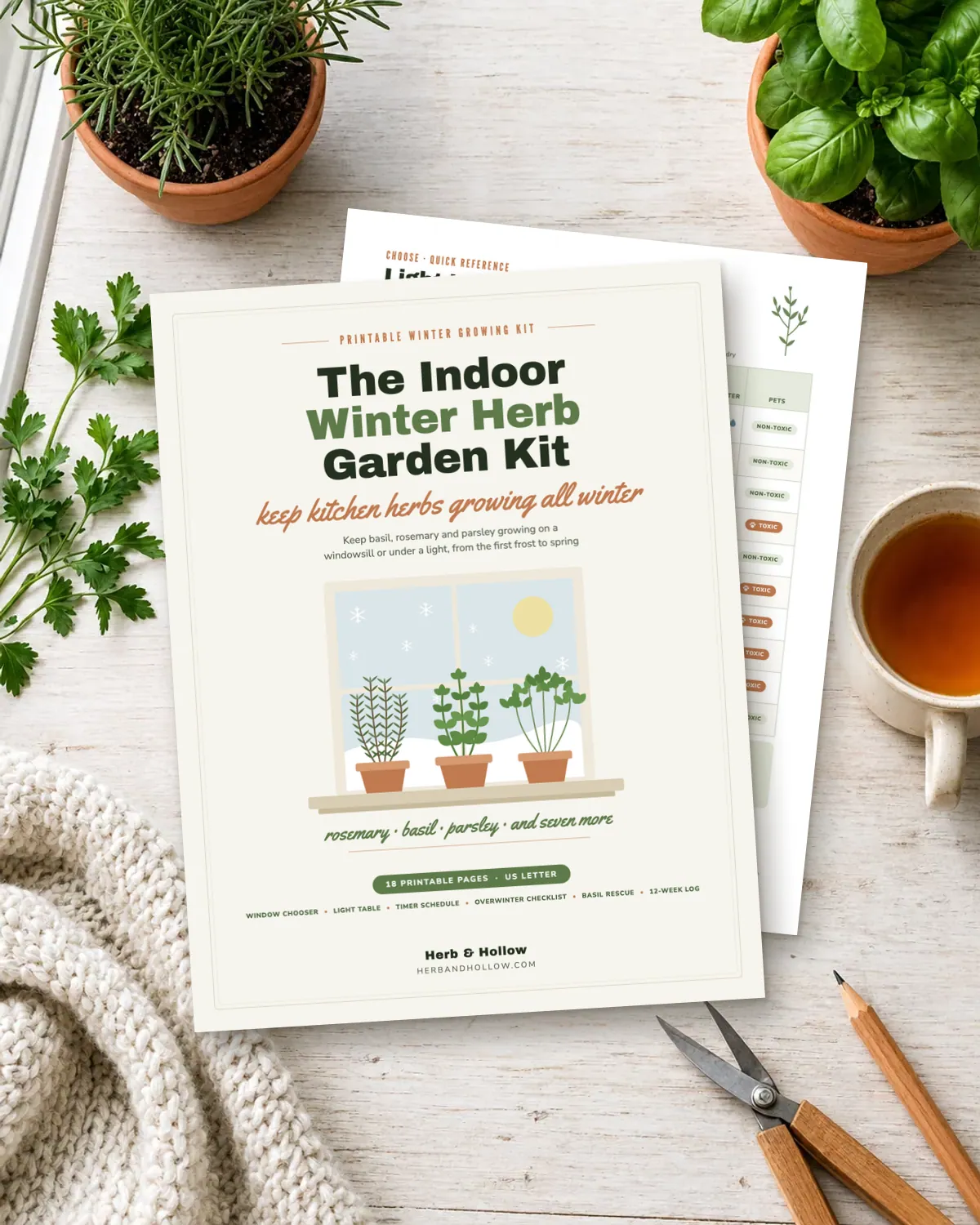
Growing herbs indoors through winter as well? The Indoor Winter Herb Garden Kit has a grow light setup page and a timer schedule for 10 common herbs.
Want the planting calendar and sun map first? Grab the free planner below.
Frequently asked questions
What do I need for a seed starting setup?
The basics are trays with cell inserts and domes, seed starting mix, a light, a plug-in timer and plant labels. A heat mat, a small fan and solid trays for bottom watering help with specific problems.
Can I start seeds on a windowsill without a grow light?
You can, but seedlings often stretch and lean toward the glass, especially in winter. Utah State suggests 12 to 14 hours or more of light a day, which most windows can't give in late winter, so a small clip-on light helps.
Do I need a heat mat to start seeds?
Not always. Warm-season seeds such as peppers and tomatoes sprout faster on one, while lettuce, greens and many herbs sprout fine at room temperature. Use a mat with a thermostat if you buy one.
How far should grow lights be from seedlings?
Utah State Extension suggests keeping shop lights 2 to 3 inches above seedlings and raising them as the plants grow. Check your light's instructions too, since stronger lights may need more distance.
How much does an indoor seed starting setup cost?
Adding up typical prices, a windowsill setup comes to roughly $55 to $110, a one-shelf setup to roughly $80 to $180, and a four-tier closet tower to roughly $220 to $490. Prices change, so check before you buy.
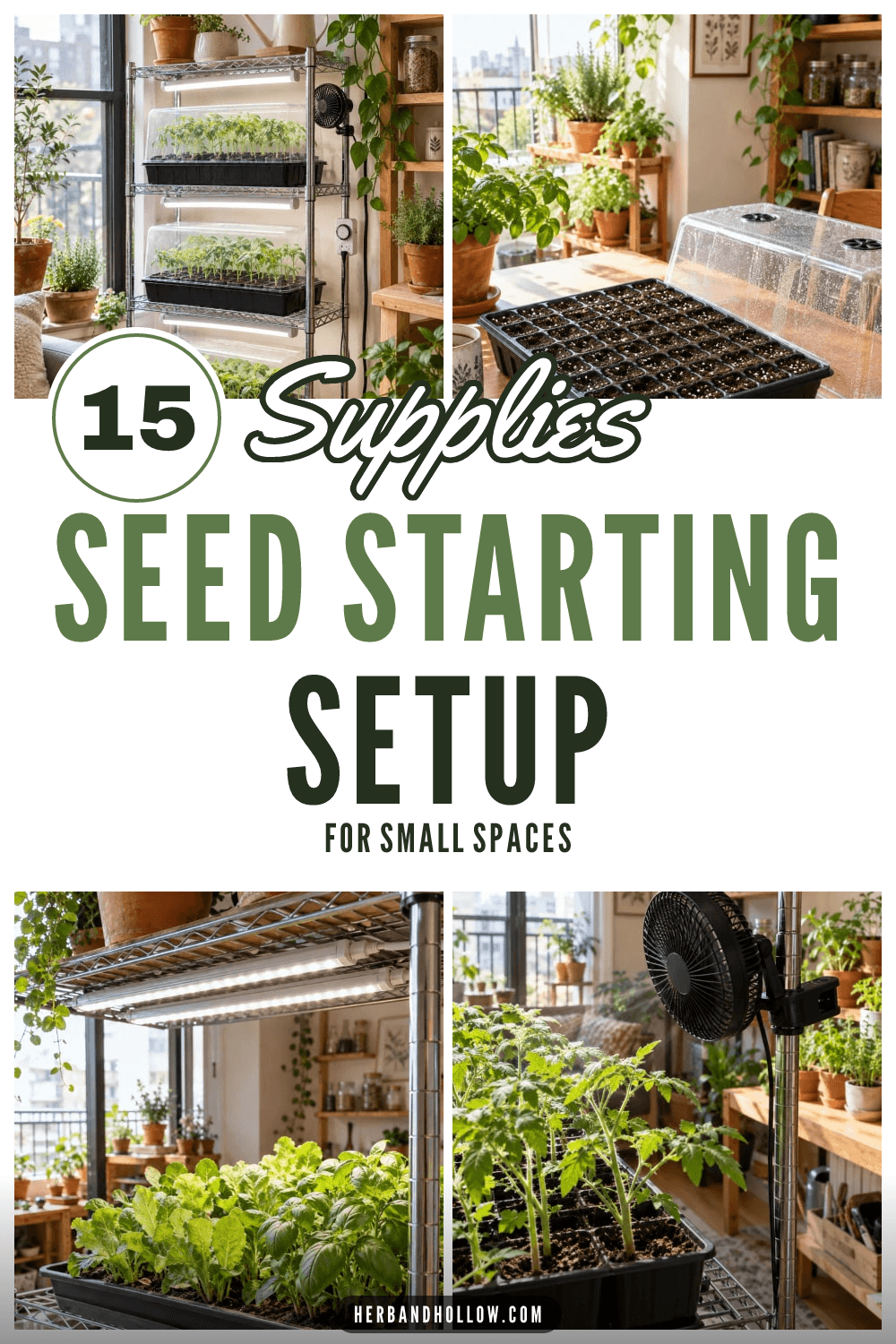
Save it for later
Pin this to your Seasonal Garden Tasks board so it's there when you need it.
Save to Pinterest