This post contains affiliate links. As an Amazon Associate we earn from qualifying purchases, at no extra cost to you. Read our disclosure.
Safety first: Herbs can be powerful. If you are pregnant, nursing, take medication or have a health condition, check with your doctor or pharmacist first. Please read our herbal & garden safety notes before you start.
Key takeaways
- One date runs the plan: your average last spring frost.
- 12 weeks out: look back at last year and measure sun, space and limits.
- 8 to 10 weeks out: test old seed, order, and write sowing dates.
- 2 to 4 weeks out: cool crops go in pots; seedlings start hardening off.
- After frost: plant warm crops and plan what replaces spring greens.
In this post10 sections
- Spring garden planning starts with one date
- 12 weeks out: look back, then measure your space
- 10 weeks out: choose crops that earn their space
- 8 to 10 weeks out: check seeds and write a sowing schedule
- 6 to 8 weeks out: start seeds indoors
- 4 weeks out: get pots and potting mix ready
- 2 to 4 weeks out: plant cool crops and harden off seedlings
- Last frost and after: plant warm crops, then plan the second wave
- Spring garden planning mistakes that waste space
- FAQ
Spring garden planning starts with one date
Look up your average last spring frost date with a tool such as the Old Farmer's Almanac frost date lookup. Write it at the top of a page, then count back 12 weeks and write that date too. Those two dates frame the whole plan.
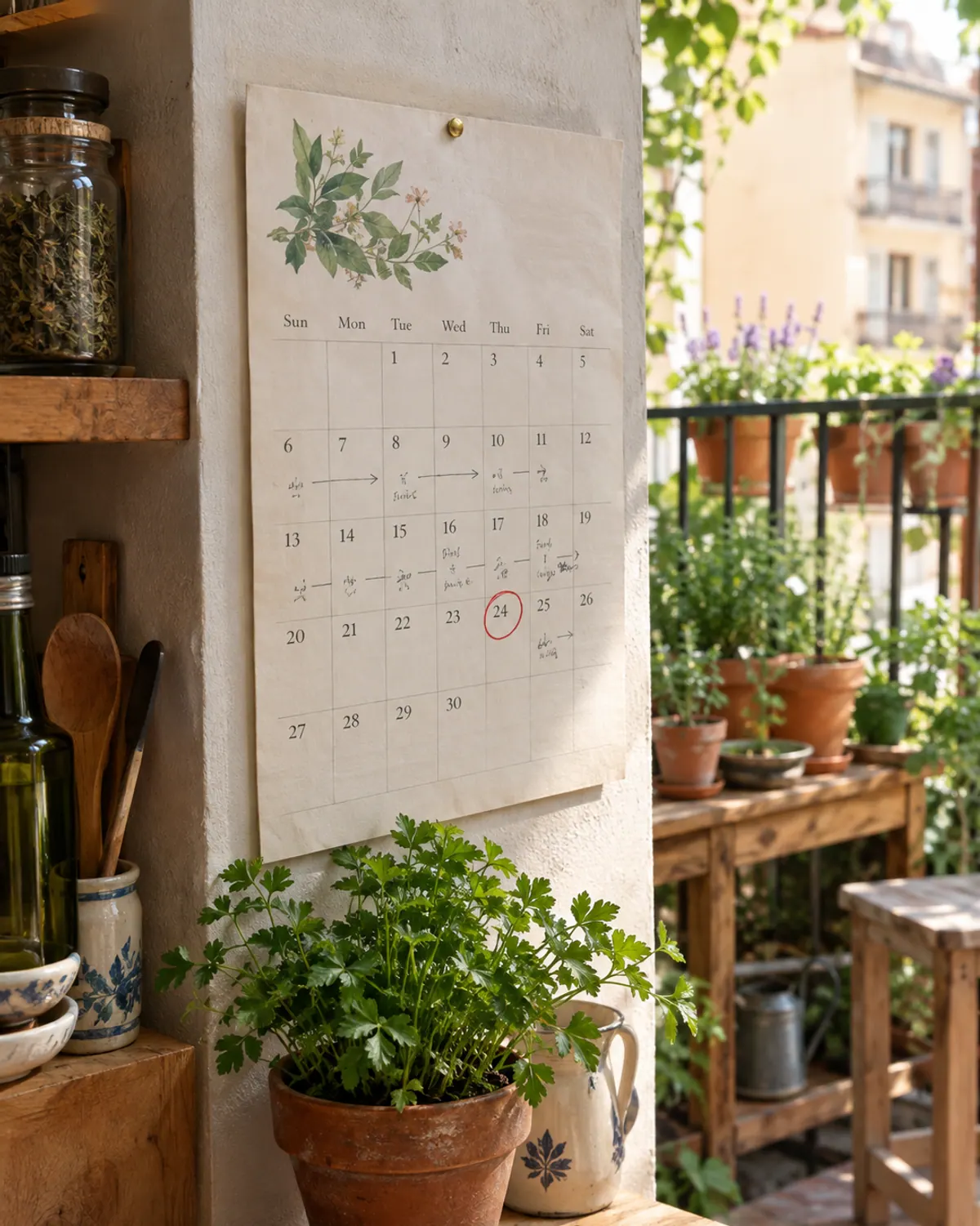
Frost dates are averages, not promises. A frost can still come after the date, so watch the 10-day forecast before warm crops such as tomatoes and basil go outside.
| When | Main job | Takes about |
|---|---|---|
| 12 weeks before last frost | Look back at last year; measure sun, space and limits | An evening |
| 10 weeks before | Choose crops; decide seeds or starts | An evening |
| 8 to 10 weeks before | Check old seed; order what's missing; write a sowing schedule | An hour or two |
| 6 to 8 weeks before | Start tomatoes, peppers and basil indoors | A weekend morning |
| 4 weeks before | Clean pots and refresh potting mix | An afternoon |
| 2 to 4 weeks before | Sow or plant cool-season crops outside; start hardening off | A few minutes a day |
| Last frost and after | Plant warm crops once nights stay mild; plan the second wave | An afternoon |
12 weeks out: look back, then measure your space
Start with last year. What grew well, what struggled, and what did you never get around to eating? If you kept notes, read them now; if not, three lines from memory still help.
Our garden journal ideas show simple pages that make next year's look back faster.
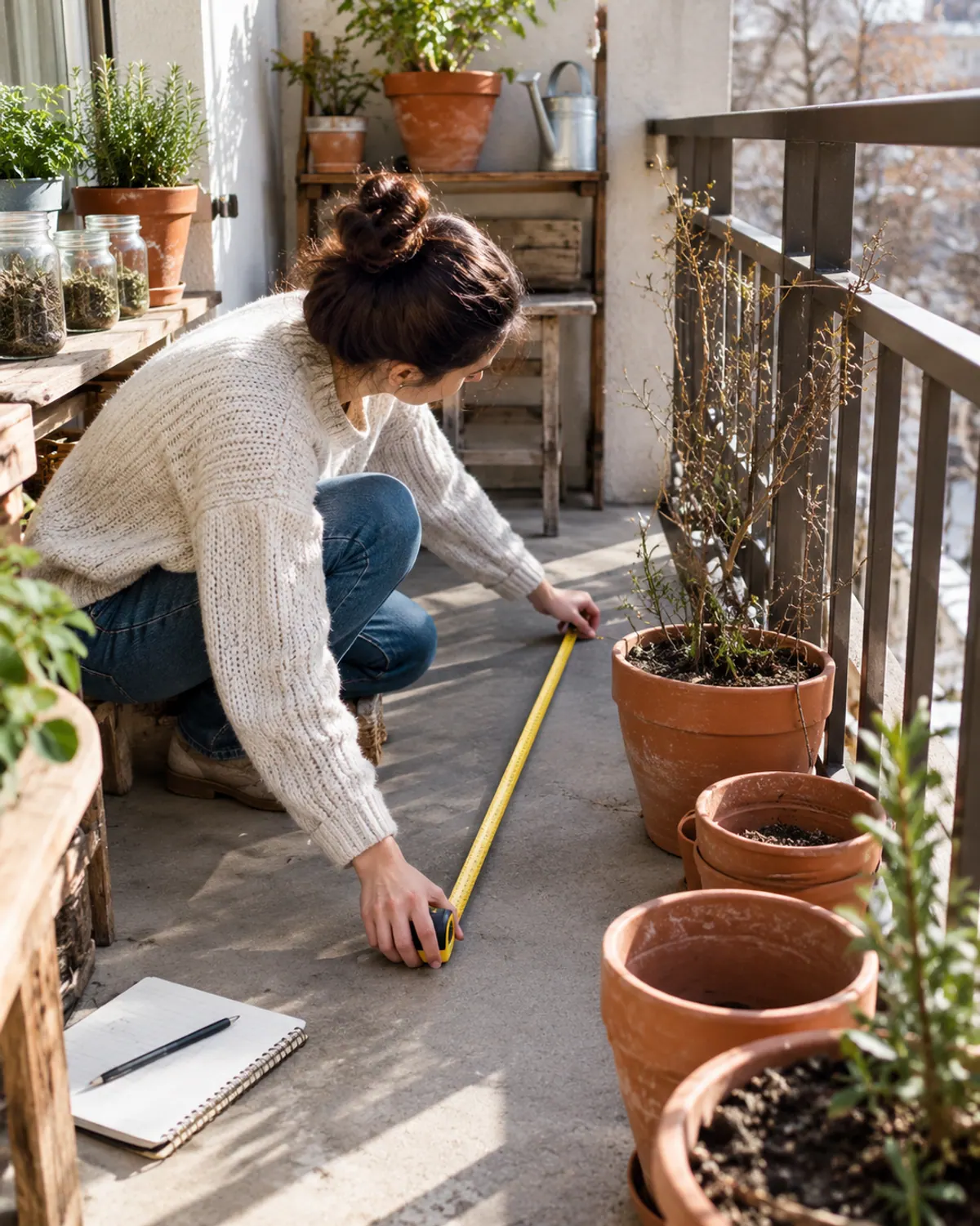
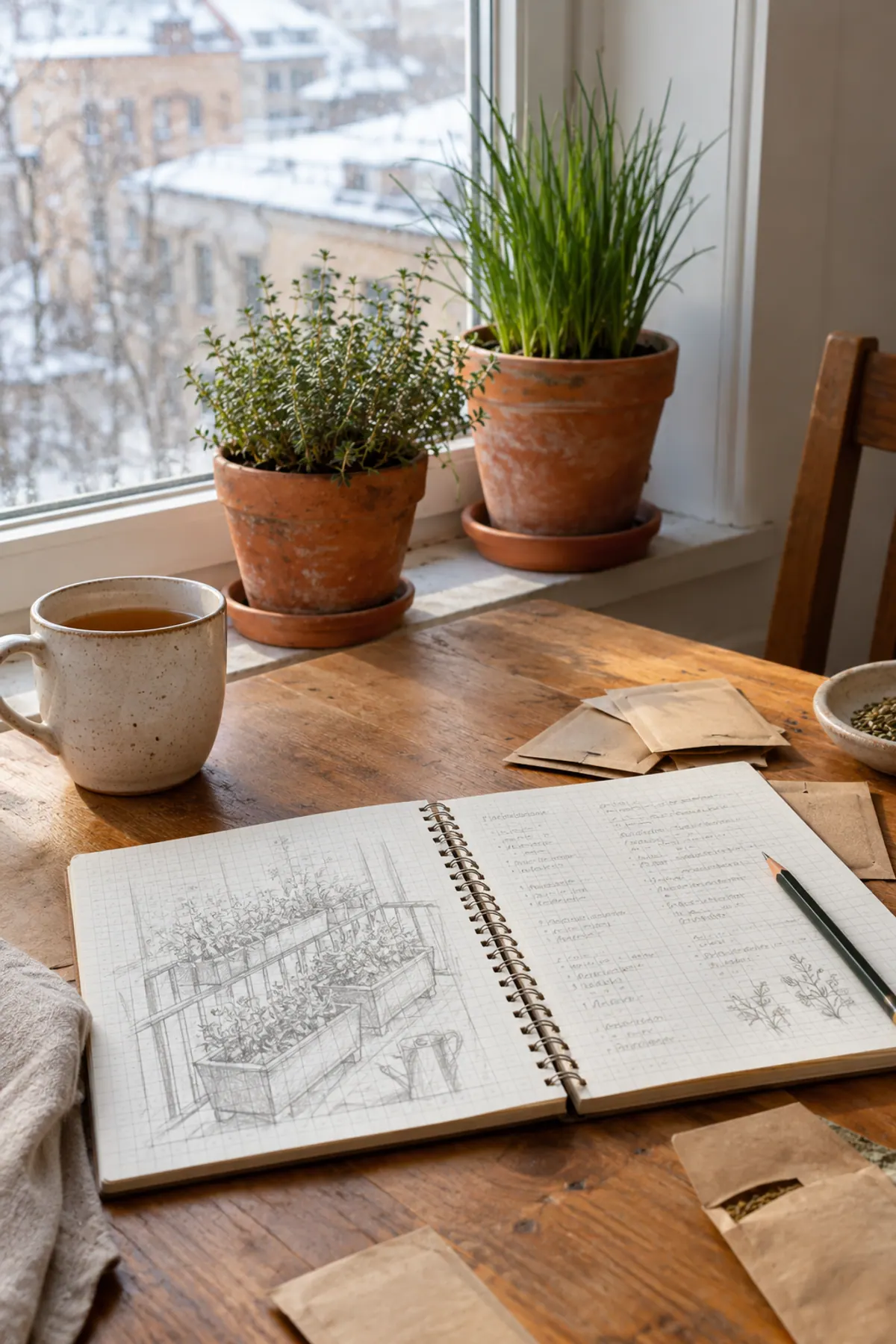
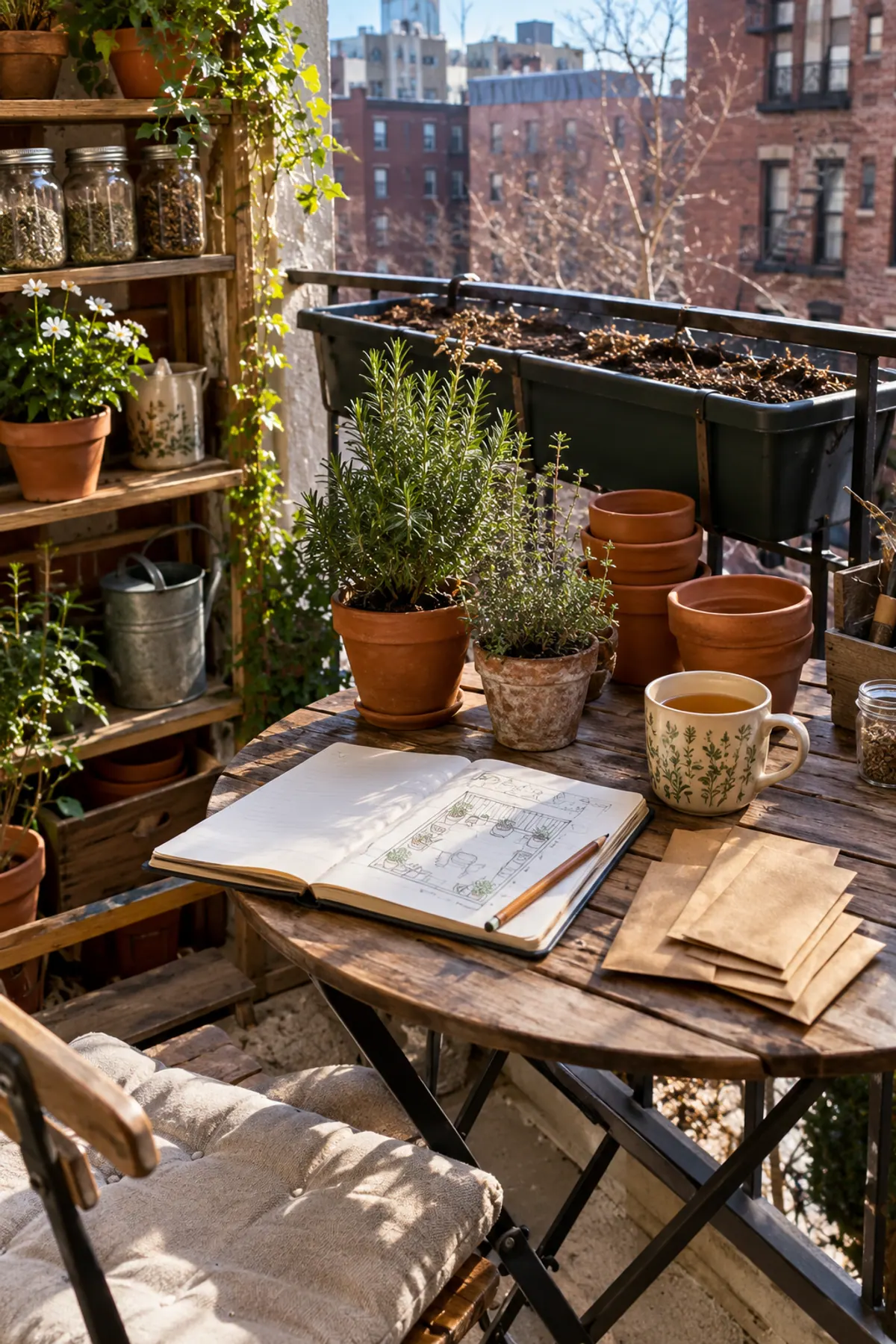
Then measure. Write down the floor space, the railing length and the depth of any windowsill. Count the hours of direct sun each spot gets; UW-Madison Extension suggests at least six hours a day for container vegetables, so that number decides where fruiting crops can go.
Small-space limits to check before you plan
10 weeks out: choose crops that earn their space
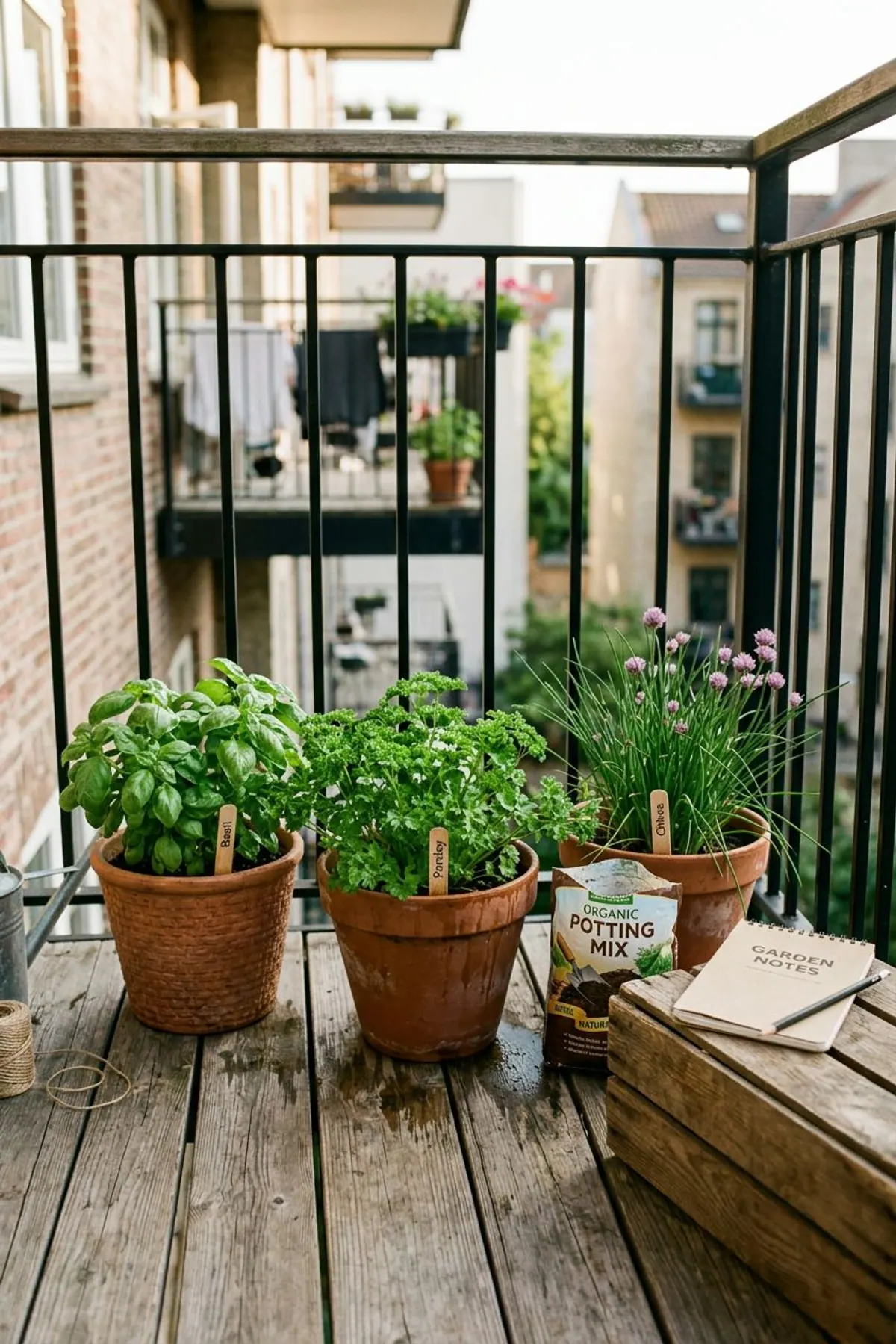
In a small space, every pot has to pay its way. Grow what you eat often, what tastes far better fresh, and what costs a lot at the store. A pot of basil you pick every week beats a pumpkin vine that fills the balcony for one fruit.
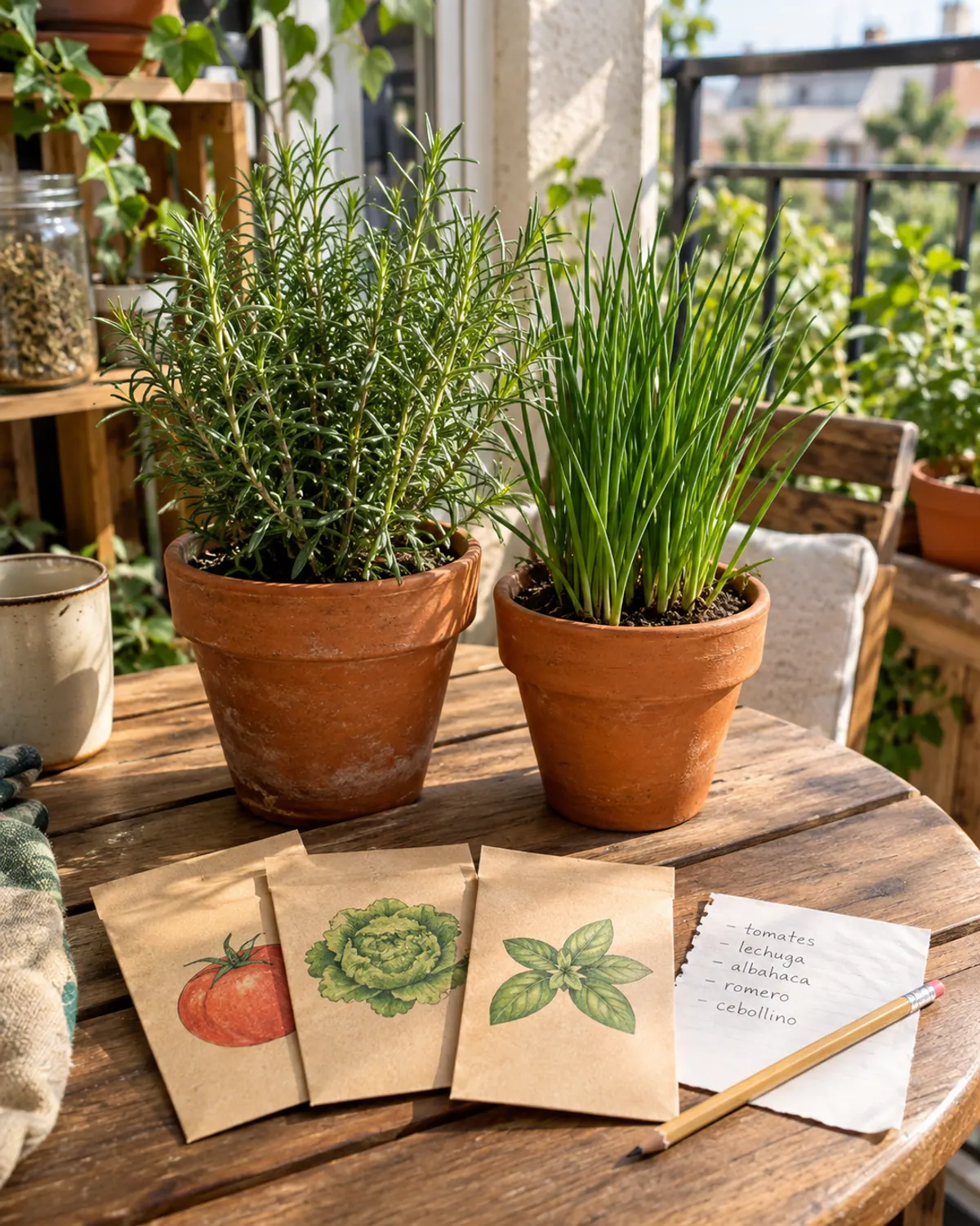
Next, decide seeds or starts for each crop. Some herbs are easier to buy as plants, and fast crops are cheaper from seed. Our list of herbs to grow from seeds indoors ranks the easy ones.
| Crop | Best as | When (relative to last frost) | Why |
|---|---|---|---|
| Tomato | Seeds indoors or nursery starts | Start seeds 6 to 8 weeks before; plant out after frost | Starts save a light setup; seeds give more variety choice |
| Pepper | Seeds indoors or starts | Start seeds about 8 weeks before | Slow from seed; a starter plant skips weeks of waiting |
| Basil | Seeds indoors | Start 6 to 8 weeks before; out after frost | Sprouts easily and is cheap from seed |
| Lettuce and greens | Seeds | Sow outside 2 to 4 weeks before, or start 4 to 5 weeks before | Fast, cheap and easy to resow |
| Radishes | Seeds sown in the pot | 2 to 4 weeks before | Grow quickly and dislike being moved |
| Peas | Seeds sown in the pot | 2 to 4 weeks before | Cool-season; give them a small trellis |
| Rosemary, mint, tarragon | Nursery plants | After frost for tender types | Slow or unreliable from seed |
| Chives | Either | Plant any time from early spring | Easy both ways; a plant gives a harvest sooner |
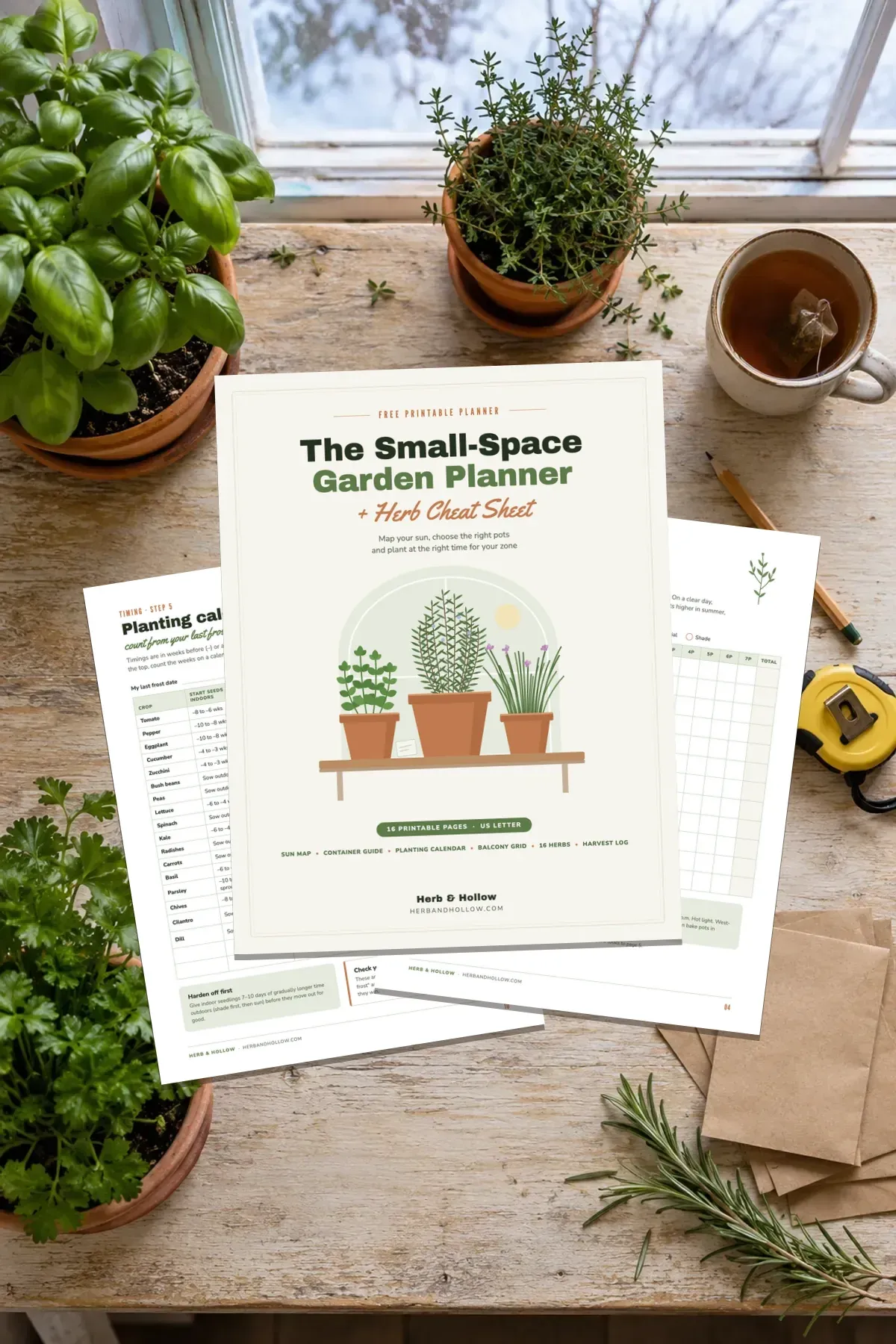
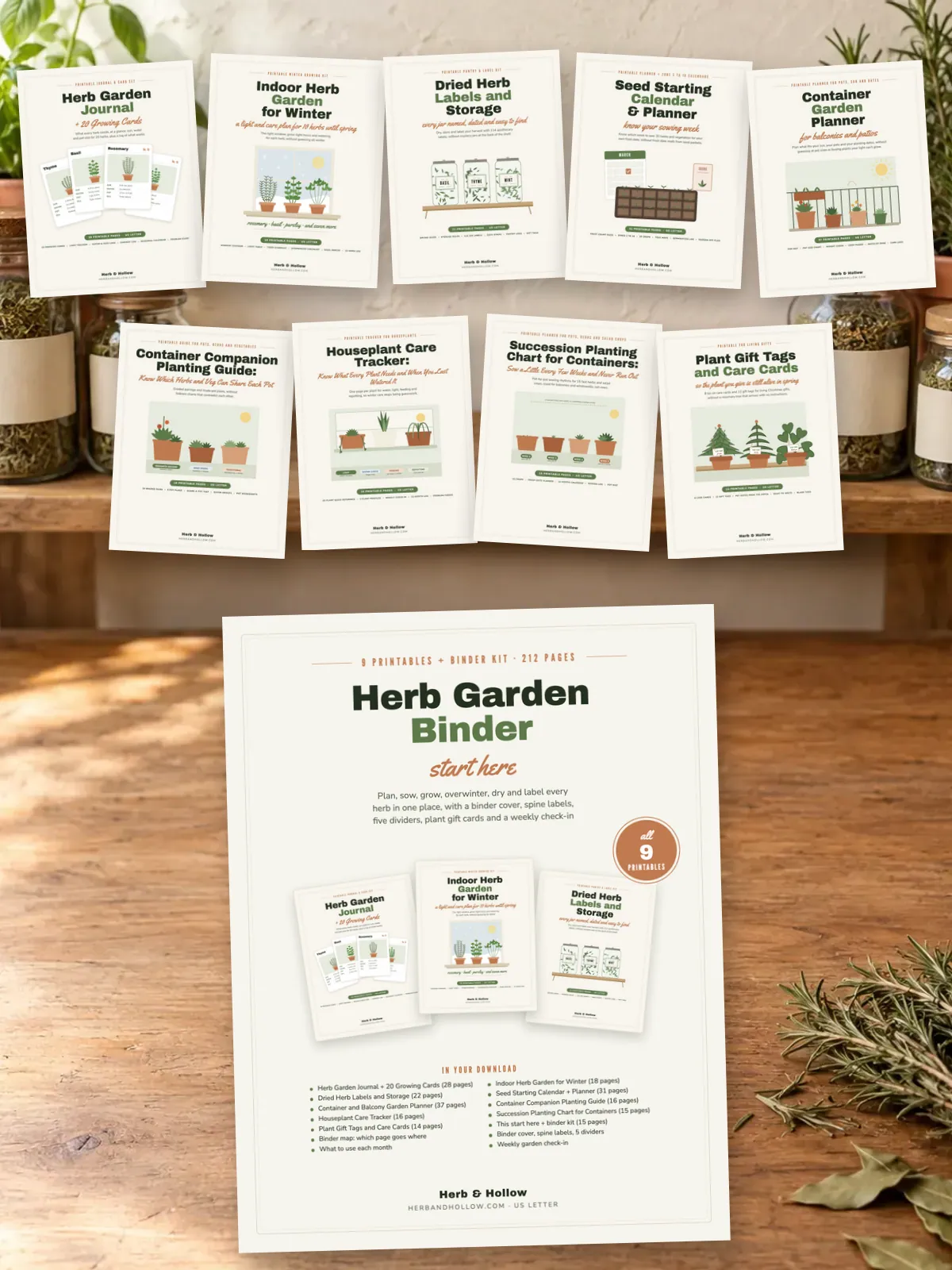
Want the sun map, container guide and planting calendar on paper? The free planner walks through all three.
8 to 10 weeks out: check seeds and write a sowing schedule
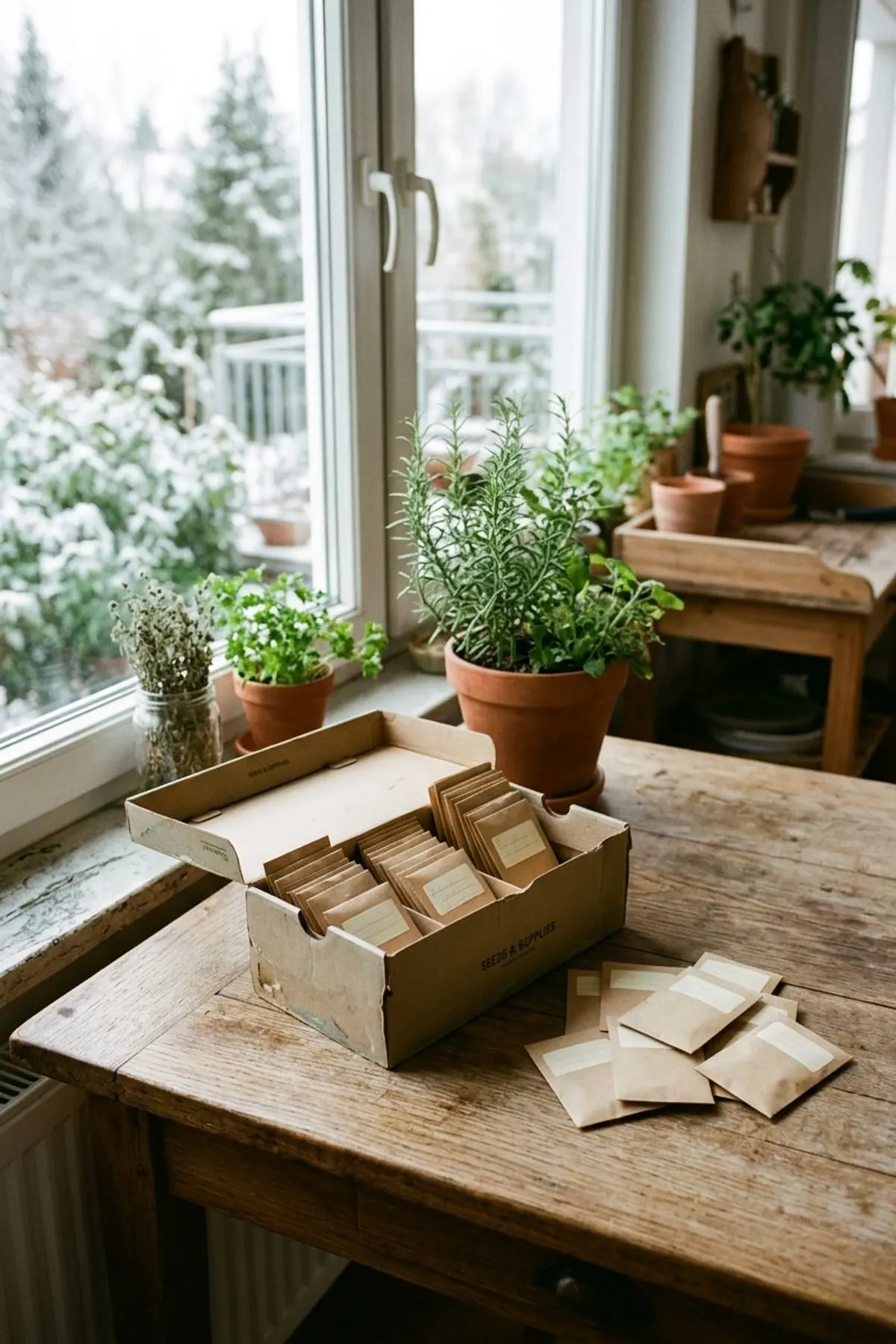
Sort your seed packets and note the year each was packed for. Test anything older with the paper towel check from Illinois Extension: 10 seeds on a slightly damp paper towel in a closed bag, kept somewhere above 70°F. If fewer than 7 sprout, Illinois suggests buying fresh seed.
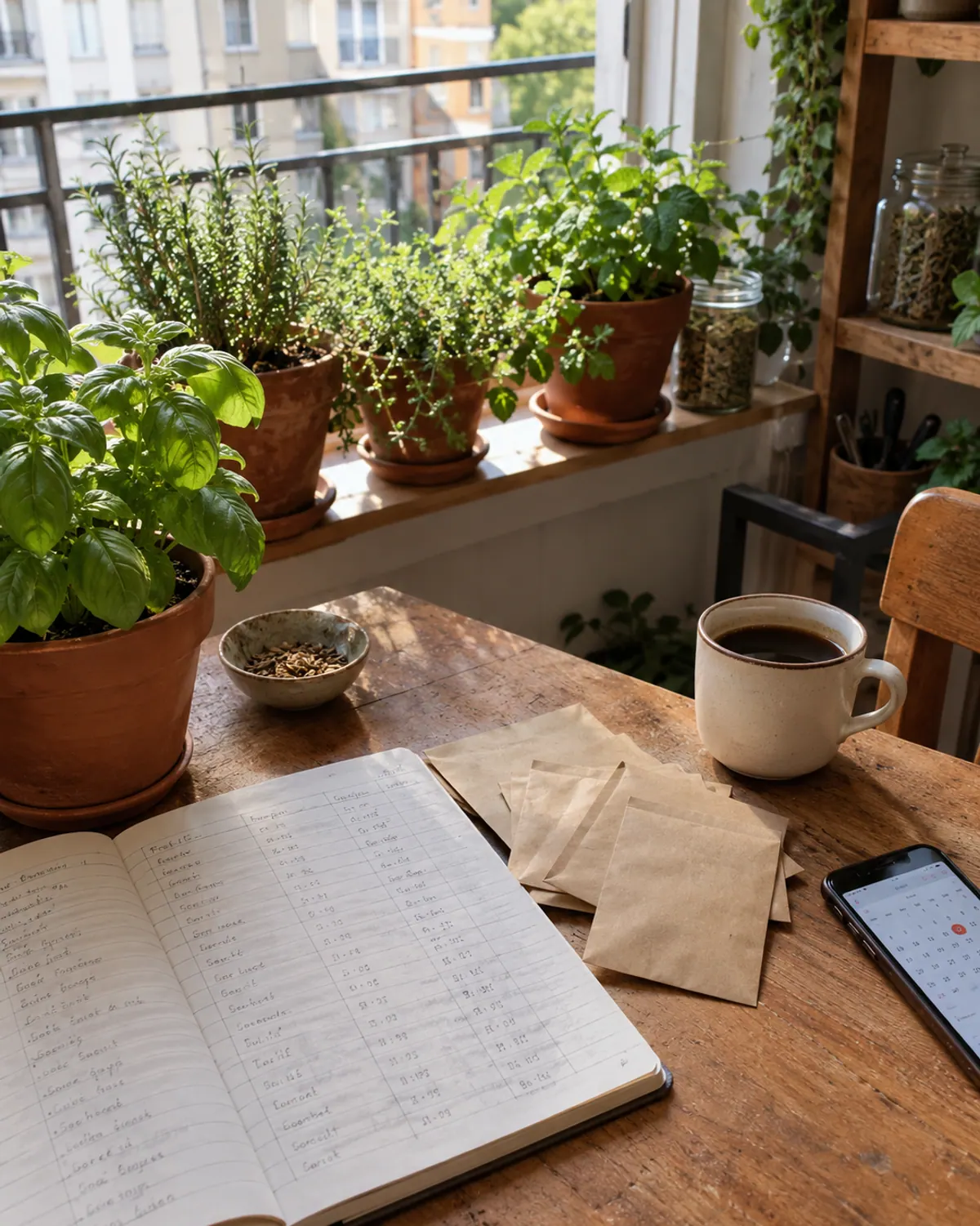
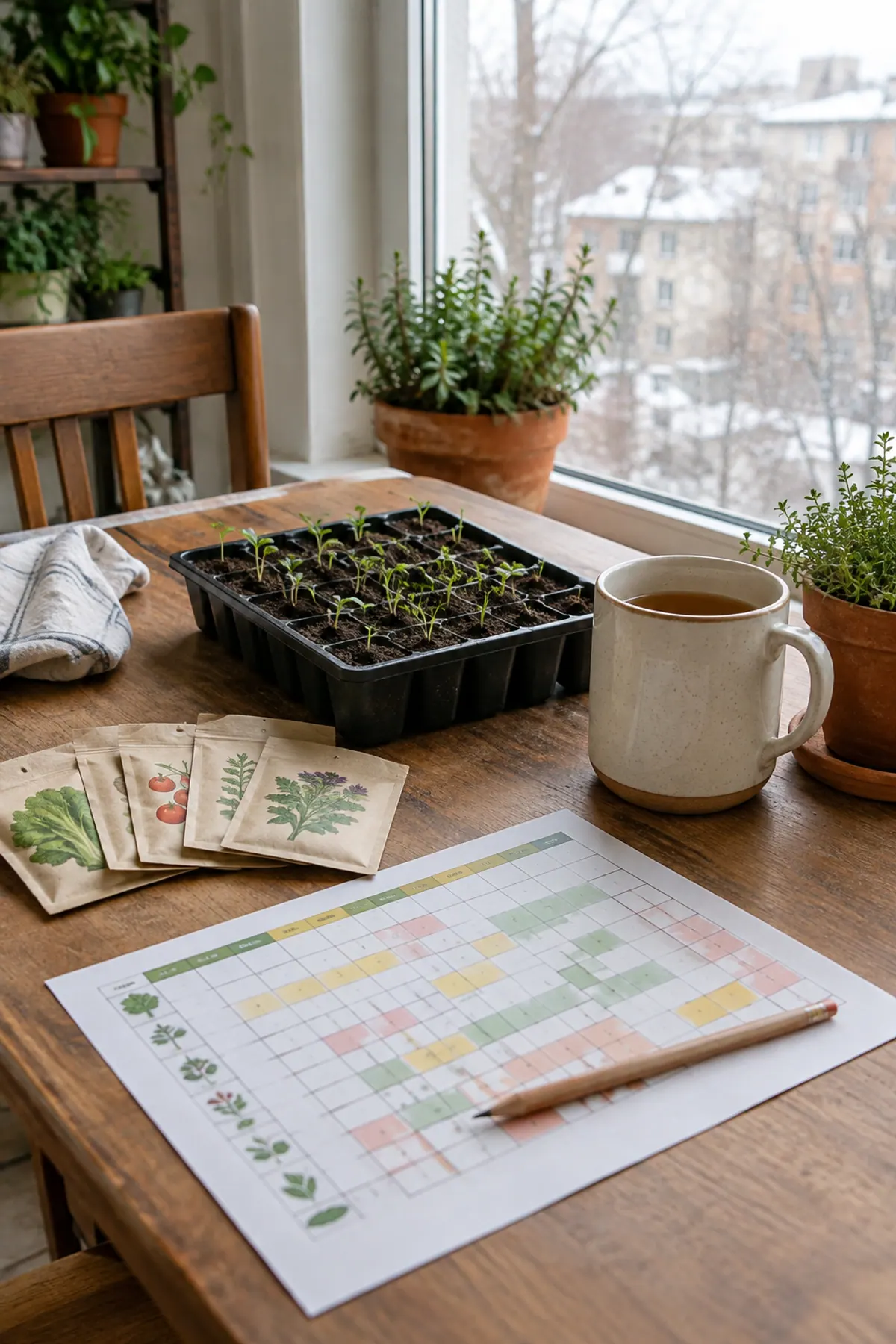
Now write the schedule. For each crop, count back from your frost date using the weeks on the packet, and write the actual calendar date next to it. Our seed starting calendar by zone does this math for common crops.
6 to 8 weeks out: start seeds indoors
Tomatoes, peppers and basil need a head start indoors in most zones. A tray, seed starting mix and a light on a timer are enough for a small home. Our seed starting setup supplies list shows what to buy for a windowsill, one shelf or a closet corner.
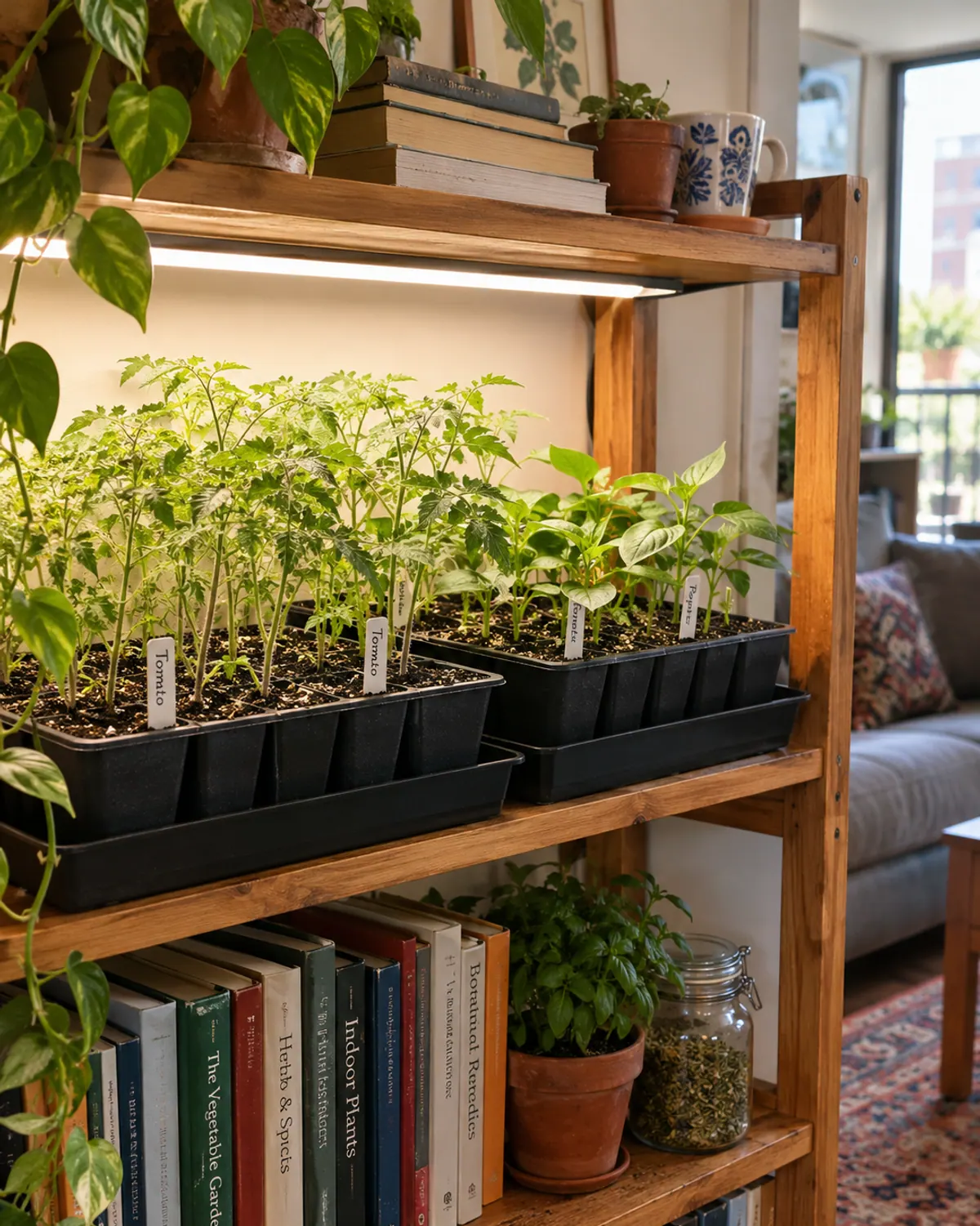
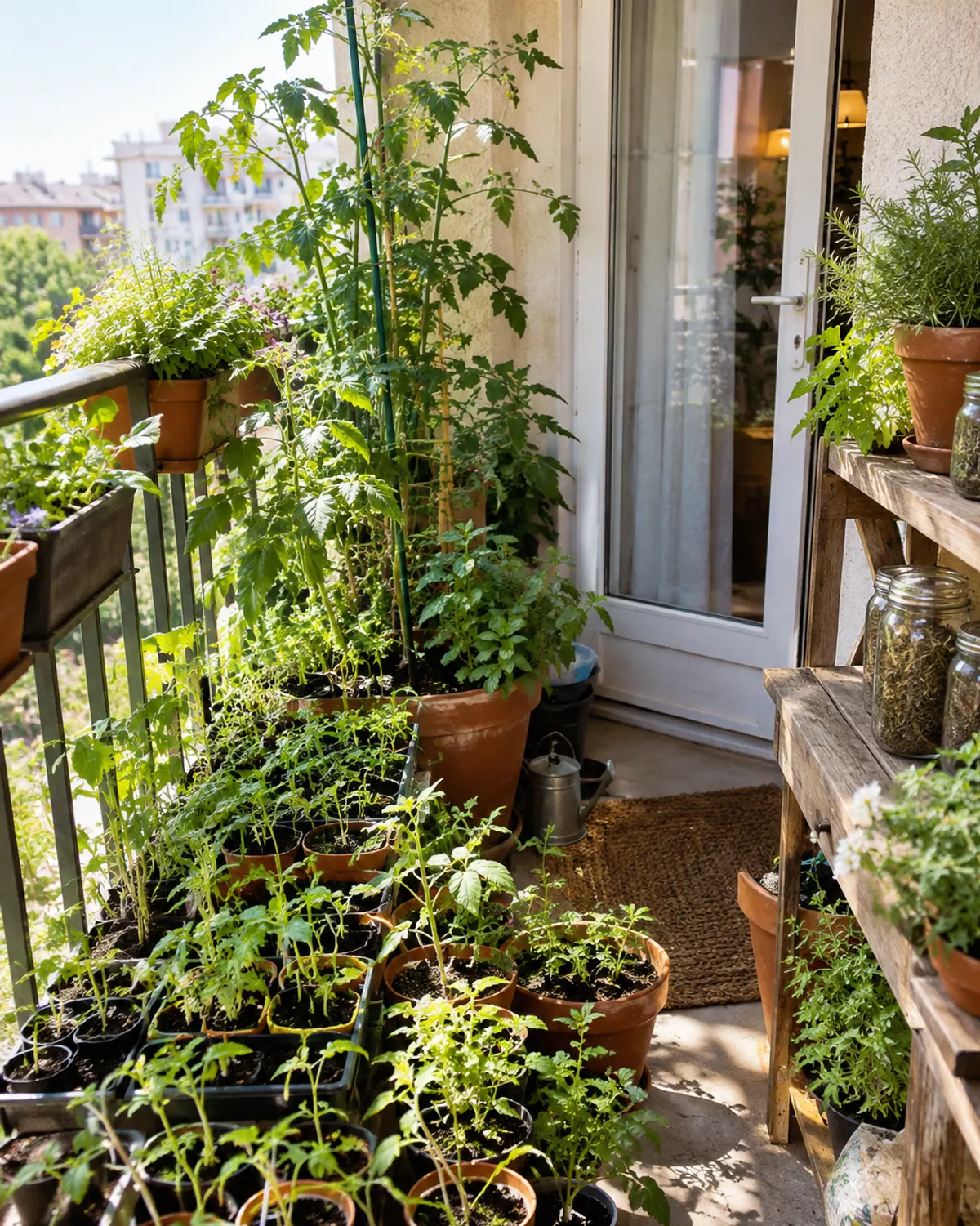
Utah State University Extension suggests 12 to 14 hours or more of light a day for seedlings, with shop lights 2 to 3 inches above the leaves (USU, 2025). Start only as many plants as you have pots for; a few spares cover losses.
4 weeks out: get pots and potting mix ready
Empty last year's pots, scrub off old soil and check every pot has a drainage hole. Old potting mix settles and runs low on nutrients, so top it up with fresh mix and compost, or replace it for hungry crops like tomatoes.
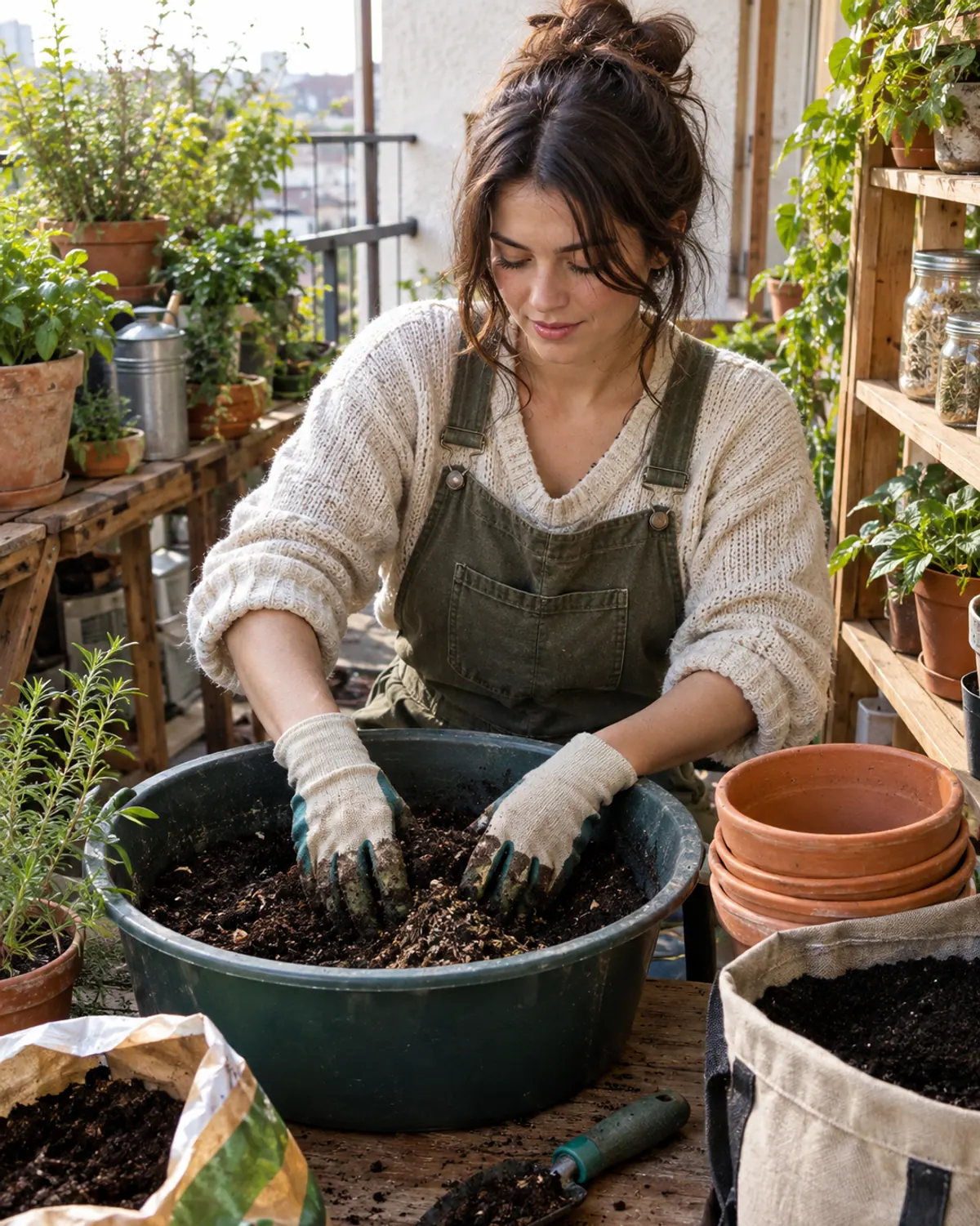
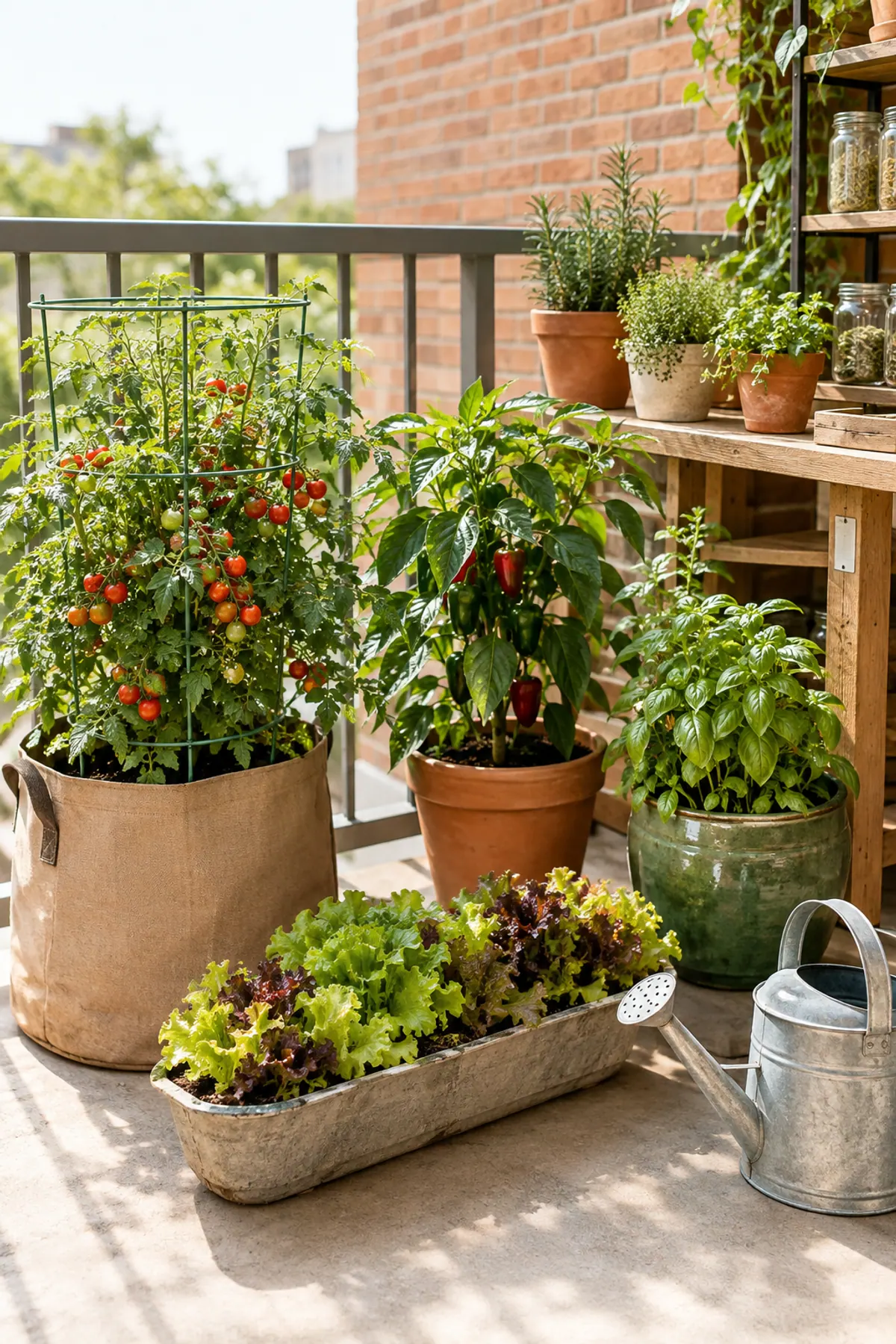
Match pots to crops while you work. Tomatoes and peppers want the biggest pots you own; lettuce, radishes and herbs are happy in shallower ones. Our container gardening guide has a pot size chart by crop.
Spring garden planning supplies
-
Graph paper notebook
Typically $6 to $12
Makes it easy to sketch your balcony or patio to scale before you buy pots.
Check price on Amazon for Graph paper notebook -
Fabric grow bags
Typically $15 to $30 for a pack
Light, cheap pots that fold flat for storage in a small home.
Check price on Amazon for Fabric grow bags -
Potting mix
Typically $10 to $25 a bag
Fresh mix drains well and feeds new plants better than tired soil.
Check price on Amazon for Potting mix -
Railing planter
Typically $20 to $45
Adds growing space for lettuce, radishes and herbs without using floor space.
Check price on Amazon for Railing planter -
Plant saucers
Typically $8 to $20 for a set
Catch water under pots so drips don't reach neighbors below.
Check price on Amazon for Plant saucers
2 to 4 weeks out: plant cool crops and harden off seedlings
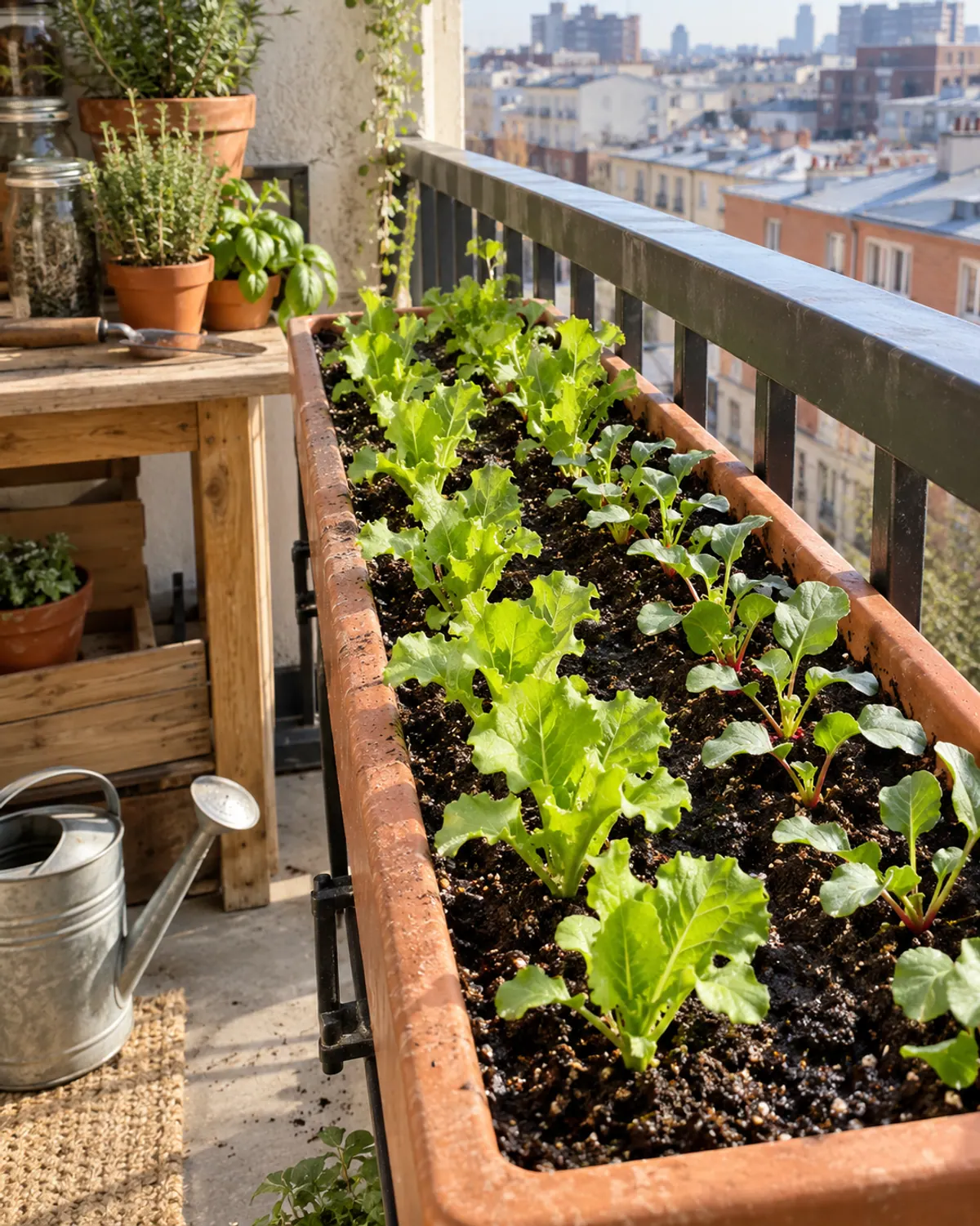
Cool-season crops such as lettuce, spinach, radishes and peas can go into pots about 2 to 4 weeks before your last frost. Sow them now in a railing planter or a wide, shallow pot.
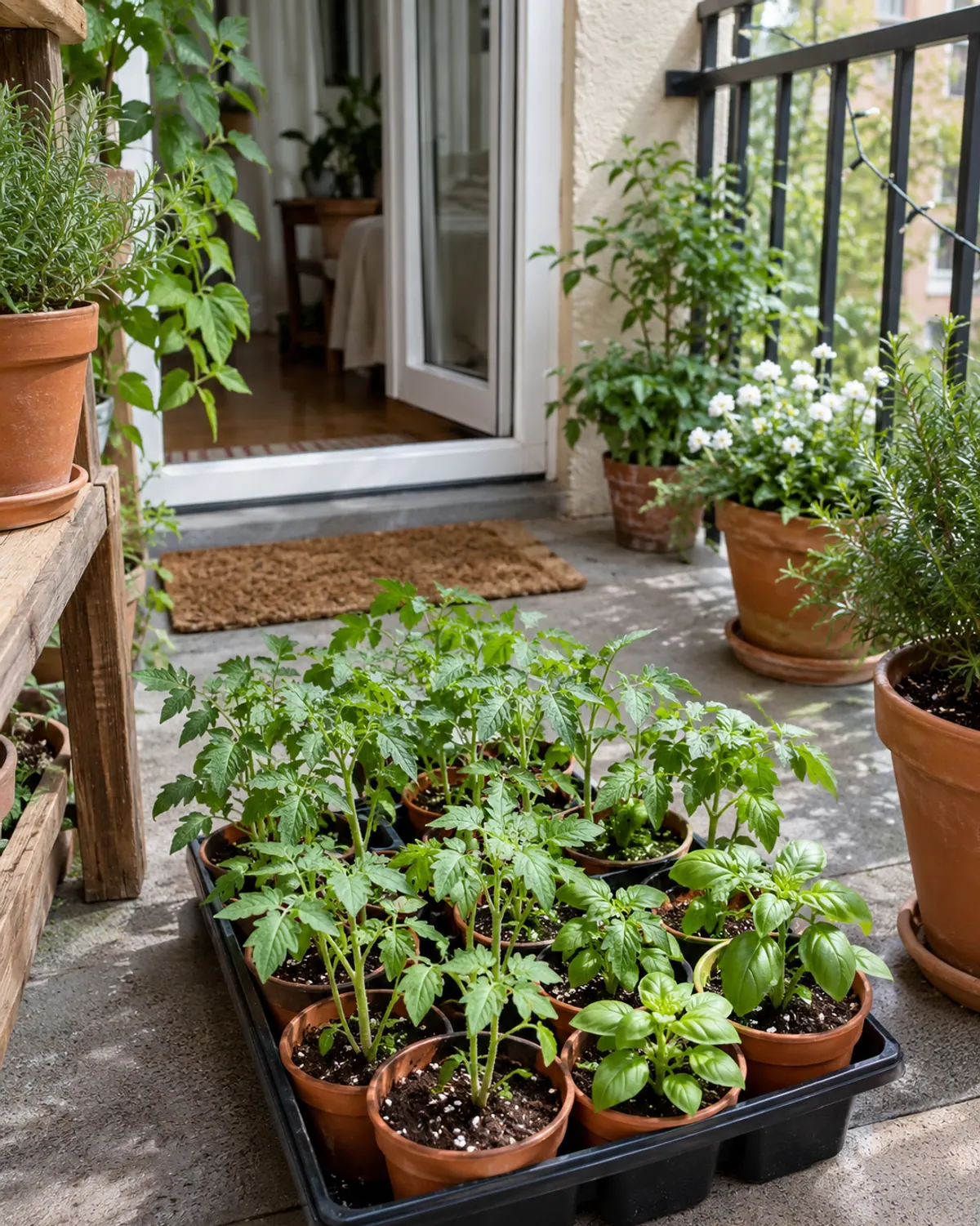
Indoor seedlings need to toughen up before they move outside. Utah State suggests hardening off over about two weeks: set them out in shade for a short time, then add more time and more sun each day.
Last frost and after: plant warm crops, then plan the second wave
Tomatoes, peppers and basil go out once the frost date has passed and nights stay mild. Check the forecast first; a late cold night can set them back for weeks.
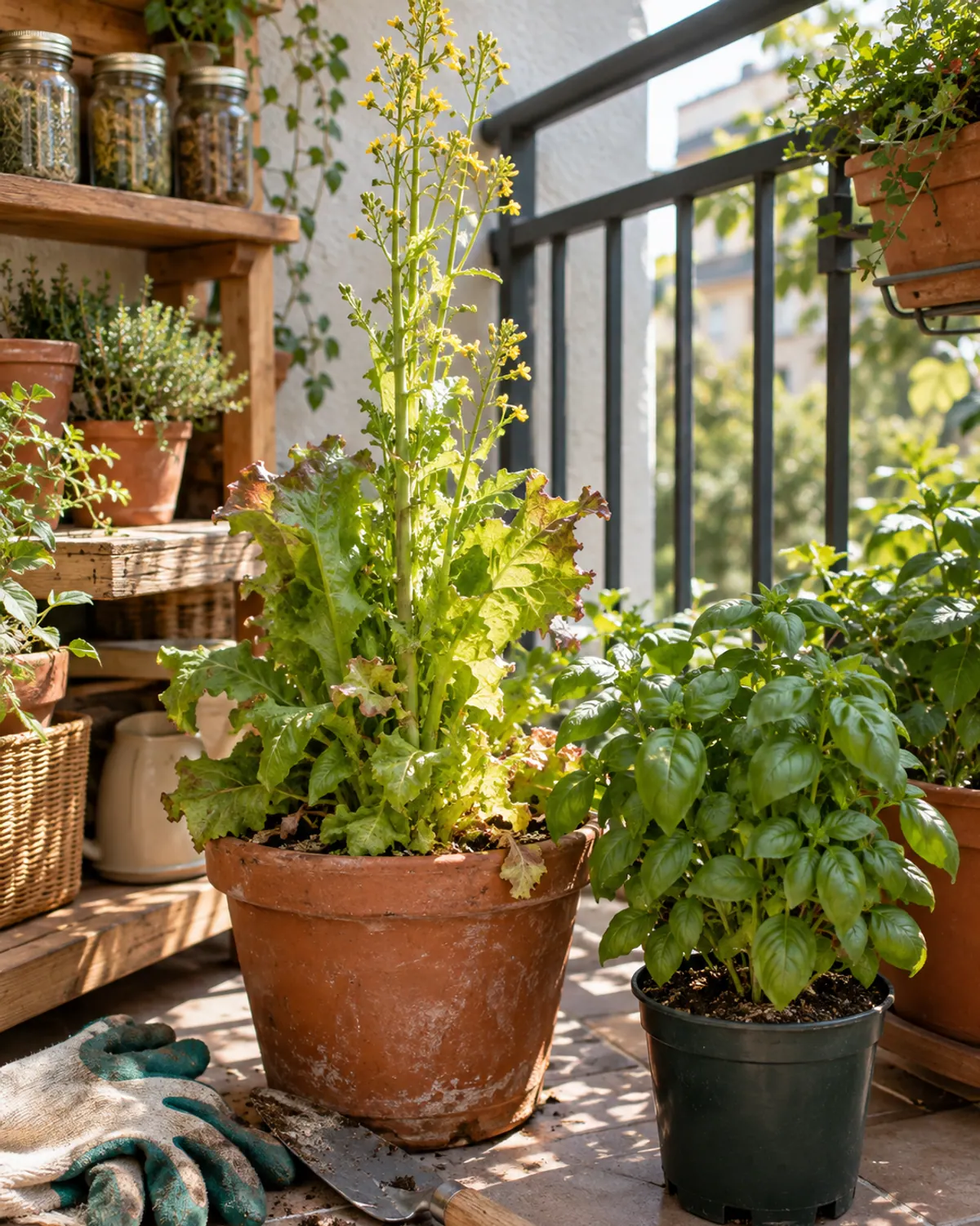
Then plan what comes next. Spring lettuce and radishes finish as summer heats up, which frees a pot for basil or another warm crop. Sowing a short row of lettuce every two or three weeks in spring keeps the harvest steady instead of all at once.
Spring garden planning mistakes that waste space
Most small-space problems start at the planning stage. Watch for these.
What we like
- Plan by sun: fruiting crops in the sunniest spots, greens and herbs in the rest.
- Fewer, bigger pots: one large tomato pot beats five small ones.
- Plan the second wave: know what replaces spring greens in summer.
- Tall plants on the shady side: so they don't block shorter ones.
Keep in mind
- Buying first, planning later: seeds and plants with nowhere to go.
- Starting too many seedlings: more plants than pots or light.
- Planting warm crops too early: one cold night can stall tomatoes and basil.
- Ignoring weight and drainage: heavy wet pots and drips onto neighbors.
Your spring garden planning checklist
Prefer to plan on paper? The free planner has the sun map, container guide, planting calendar and layout grid this guide uses.
Frequently asked questions
When should I start planning a spring garden?
About 12 weeks before your average last spring frost. That leaves time to measure, choose crops, order seeds and start tomatoes, peppers and basil indoors 6 to 8 weeks before the frost date.
How do I plan a small vegetable garden for spring?
Measure your space and sun hours, pick crops you eat often, decide seeds or starts for each, then write sowing and planting dates by counting back from your last frost date.
What can I plant in early spring before the last frost?
Cool-season crops such as lettuce, spinach, radishes and peas can go into pots about 2 to 4 weeks before your last frost. Wait until after frost for tomatoes, peppers and basil.
How many hours of sun does a spring vegetable garden need?
UW-Madison Extension suggests at least six hours of direct sun a day for container vegetables. Leafy greens and many herbs cope with somewhat less.
Should I use last year's potting mix?
You can reuse it for many crops if you top it up with fresh mix and compost. For hungry plants such as tomatoes, fresh mix is the safer choice.
Save it for later
Pin this to your Seasonal Garden Tasks board so it's there when you need it.
Save to Pinterest