This post contains affiliate links. As an Amazon Associate we earn from qualifying purchases, at no extra cost to you. Read our disclosure.
Safety first: Herbs can be powerful. If you are pregnant, nursing, take medication or have a health condition, check with your doctor or pharmacist first. Please read our herbal & garden safety notes before you start.
Key takeaways
- Pots fail for three reasons: too little sun, too little soil, and planting too early or too late.
- Size up. Extension services put tomatoes and peppers at 5 gallons minimum; lettuce and most herbs need 1 to 2 gallons.
- Use potting mix, never garden soil, and keep feeding, because every watering carries nutrients out the drainage holes.
- Start with the forgiving crops: salad mix, radishes, bush beans, cherry tomatoes, chives, basil and mint.
- Reading this in fall? Map your sun, buy pots on clearance and start herbs indoors now; plant outside after your last frost.
In this post13 sections
- Why container gardening is the easiest way to start (and the three reasons pots fail)
- How to start a container garden for beginners: the 7-step plan
- Step 1: Count your sun hours before you buy anything
- Step 2: Choose pots that are big enough (pot size by crop chart, in gallons)
- Step 3: Potting mix, not garden soil, and what to add
- Step 4: The easiest vegetables for beginners in containers
- Step 5: Herbs and flowers that forgive beginners
- Step 6: Watering and feeding pots (why they dry out and run out of food)
- Step 7: When to plant, by zone and last frost
- Container gardening mistakes beginners make
- Starting in fall or winter: what to do now vs in spring
- A beginner container garden shopping list under one budget
- FAQ
Why container gardening is the easiest way to start (and the three reasons pots fail)
Container gardening for beginners is simpler than a garden bed in almost every way. You control the soil, you can move a pot into the sun, and there's no digging or weeding. When pots fail, it is nearly always one of three things, and all three are easy to fix before you plant.
| Problem | What you see | The fix |
|---|---|---|
| Too little sun | Leggy, pale stems; tomatoes and peppers flower but set no fruit | Count hours of direct sun first and give fruiting crops the sunniest spot (6 to 8 hours) |
| Pot too small | Wilting by noon, roots circling the pot, tiny harvests | Follow the gallon chart below; when in doubt, go one size up |
| Wrong timing | Seedlings stall in cold soil, or greens bolt and turn bitter in heat | Plant by your last frost date, not by the calendar on the seed rack |
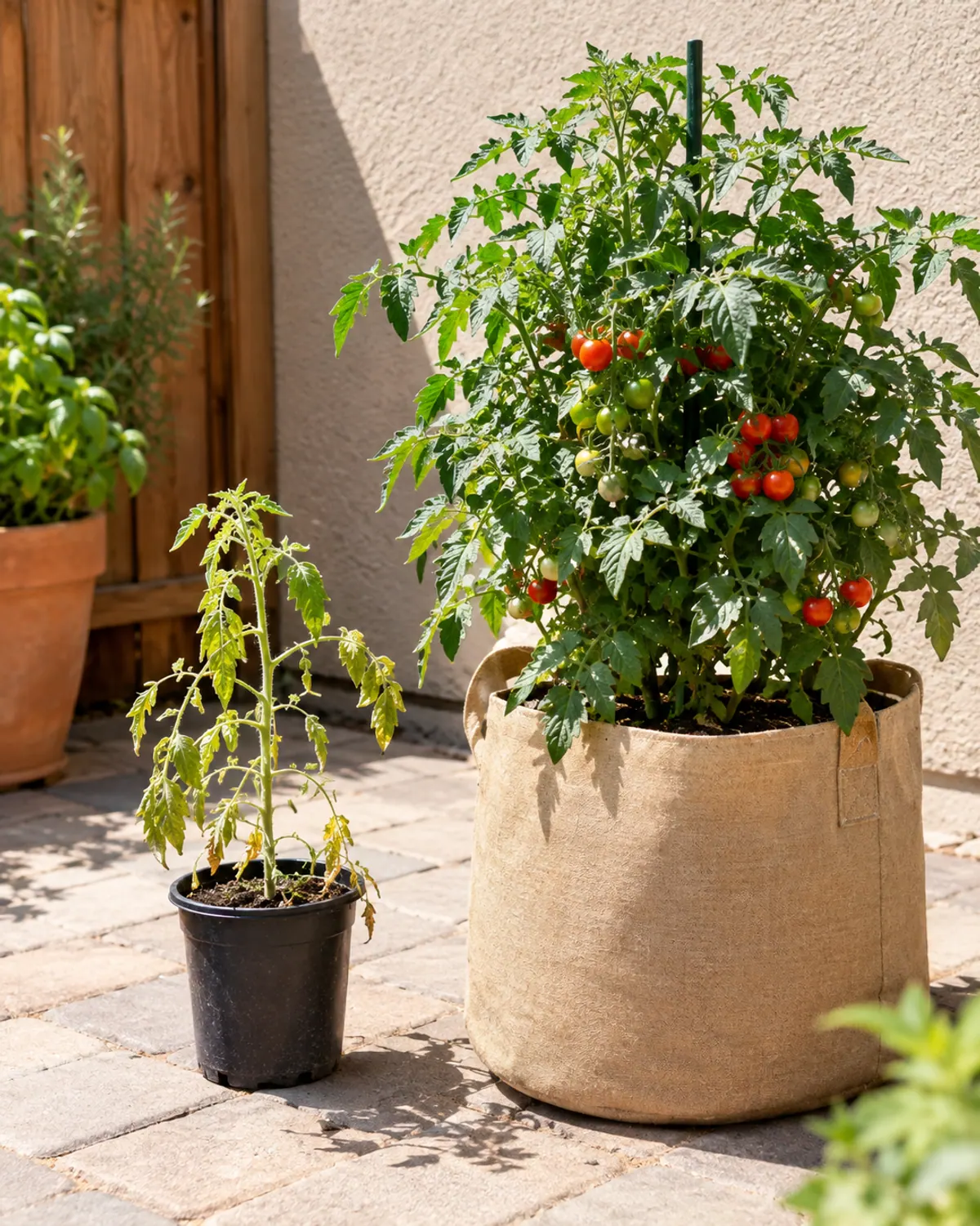
A pot holds a plant's whole world. In a garden bed, roots can wander off to find water; in a 6-inch pot there's nowhere to go. That's why the pot-size step matters more than any fertilizer you can buy.
How to start a container garden for beginners: the 7-step plan
Here is the whole method in order. Each step gets its own section below, so skim this list first and then read the parts you need.
The 7-step container garden plan
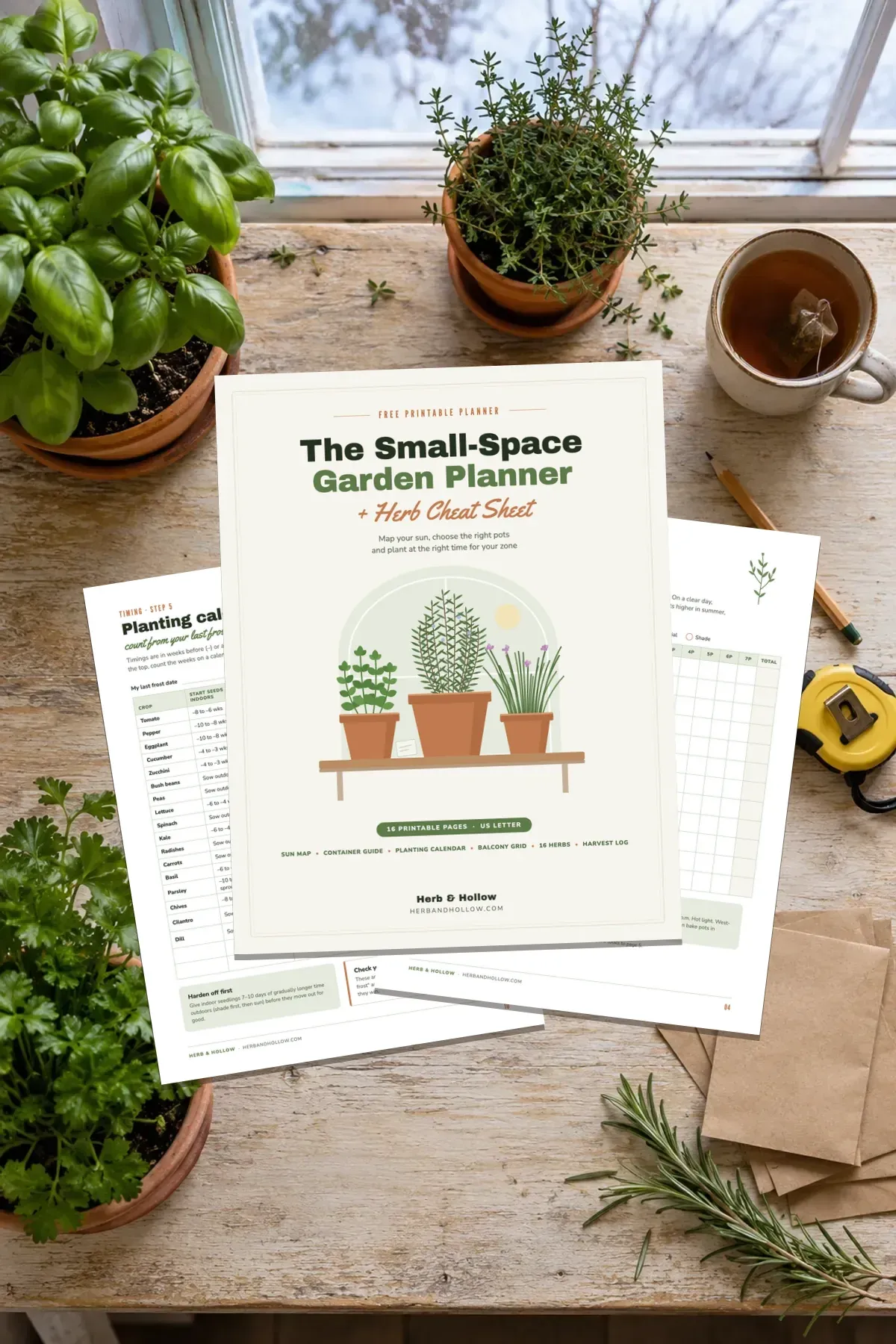
Most of this plan fits on two sheets of paper. The free planner below has the sun map, the pot-size guide and a planting calendar you fill in from your own zone, so you can work through the steps once and reuse them every spring.
Step 1: Count your sun hours before you buy anything
Direct sun is the one thing you can't buy in a bag. Most vegetables and Mediterranean herbs want 6 to 8 hours of direct sun; salad greens, parsley, mint and chives manage on 4 to 6. "Full sun" on a plant tag means 6 or more.
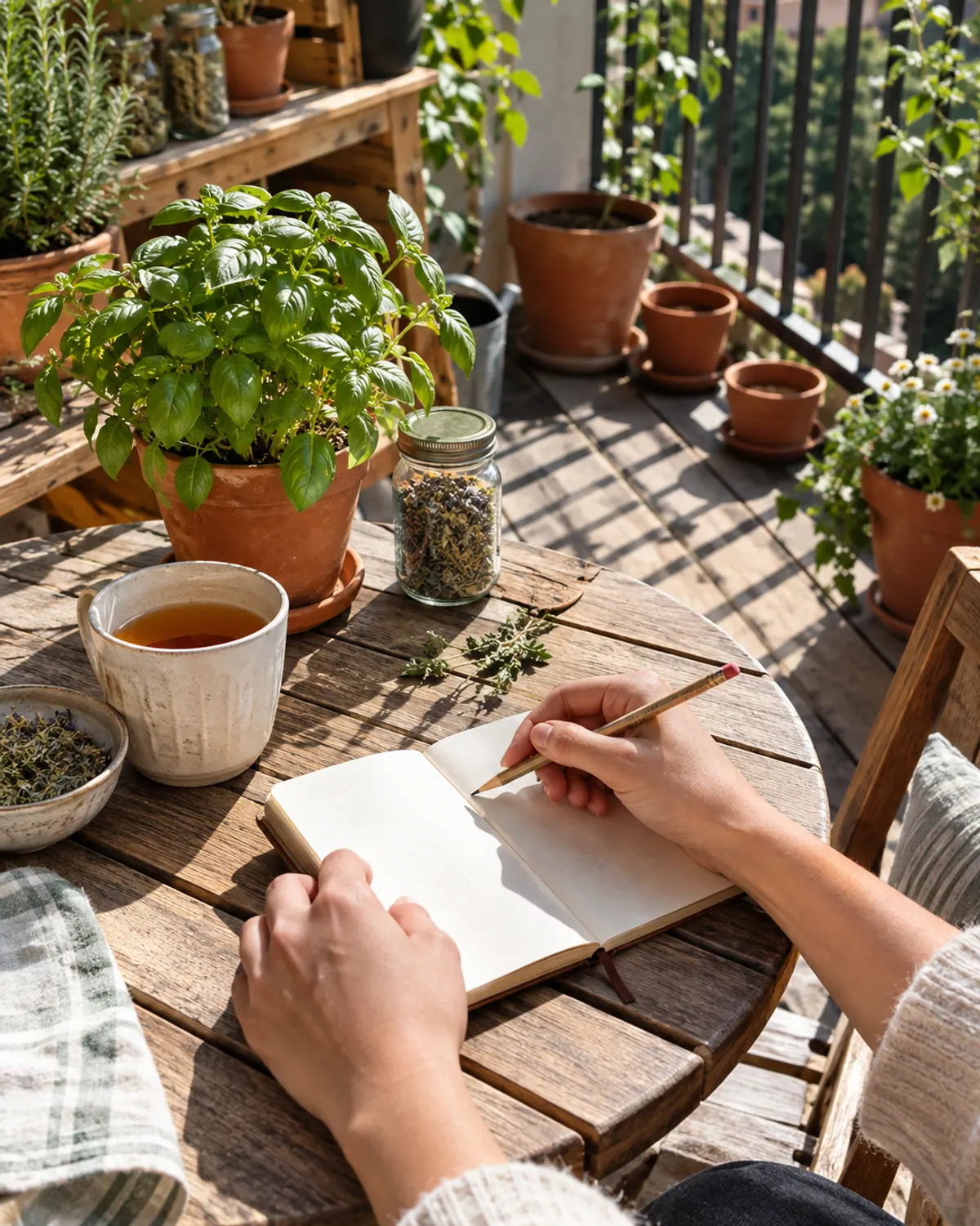
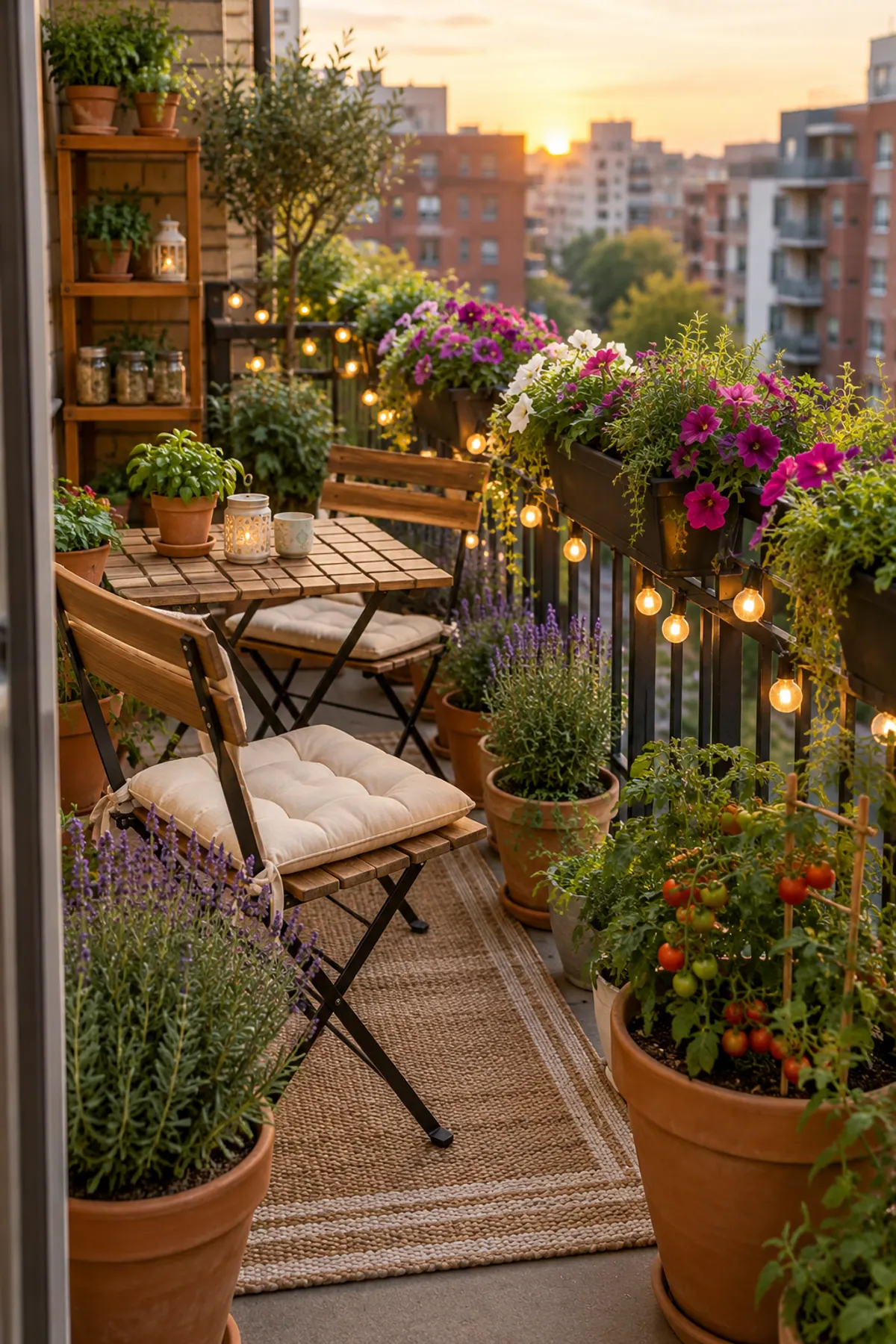
Check your spot three times on one clear day (morning, midday and late afternoon) and write down where the light actually lands. On a balcony, the railing and the floor above shade more than you'd guess. For sun, wind and weight checks specific to balconies, see our balcony ideas for apartments.
Step 2: Choose pots that are big enough (pot size by crop chart, in gallons)
Pot size is where most beginners go wrong, because nursery pots are sold by looks, not by what the plant needs. The ranges below come from university extension container guides (University of Wisconsin and Illinois Extension) and seed-company pot charts. Where sources disagree, we list the bigger number, because a bigger pot holds more water and forgives a missed day.
| Crop | Pot size | Depth | Plants per pot |
|---|---|---|---|
| Cherry or patio tomato (bush type) | 5 to 10 gallons | 12 to 18 in | 1 |
| Full-size vining tomato | 10 to 20 gallons | 18 in or more | 1 |
| Pepper (bell, jalapeño) | 3 to 5 gallons | 12 in | 1 |
| Bush cucumber or zucchini | 5 to 10 gallons | 12 to 18 in | 1 |
| Bush beans | 2 to 5 gallons | 8 to 12 in | 3 to 6 |
| Lettuce, spinach, salad mix | 1 to 2 gallons | 6 in | 3 to 4, or sow thickly for baby leaves |
| Radish, green onion | 1 to 2 gallons | 6 in | A short row |
| Strawberry | 1 to 2 gallons each | 6 to 8 in | 1 |
| Basil | 2 to 3 gallons | 8 to 10 in | 1 to 2 |
| Parsley, cilantro, dill (taproots) | 2 to 3 gallons | 10 to 12 in | 1 to 3 |
| Thyme, oregano, chives | 1 to 2 gallons | 6 to 8 in | 1 |
| Rosemary, sage | 3 to 5 gallons | 10 to 12 in | 1 |
| Mint | 2 to 3 gallons, its own pot | 8 in | 1 |
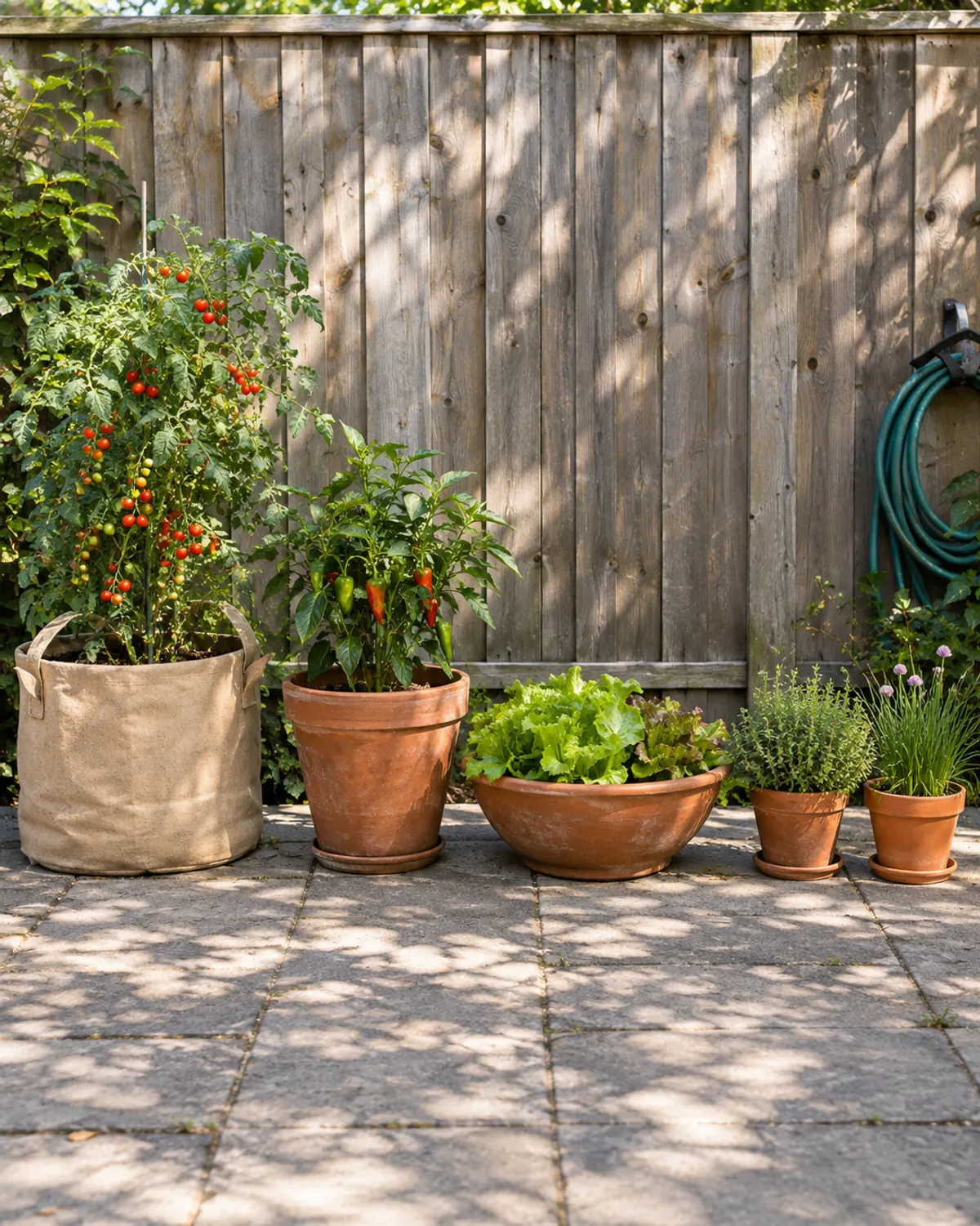
Gallons are easier than inches. A standard 5-gallon bucket with holes drilled in the bottom is 5 gallons; a 12-inch pot holds about 3 to 4 gallons; a 14-inch pot about 5 to 6; a 16-inch pot roughly 8 to 10. Fabric grow bags are sold by the gallon, which takes out the guesswork.
Every pot needs drainage holes, at least a quarter inch wide. A pretty pot with no holes is a cover pot: keep the plant in a plastic nursery pot inside it, and tip out any water that collects.
Step 3: Potting mix, not garden soil, and what to add
Garden soil packs down hard in a pot, drains badly and can carry weed seeds and pests. Bagged potting mix (peat or coir, perlite and bark) stays fluffy, drains well and holds air around the roots. Look for the words "potting mix" or "container mix" on the bag, not "garden soil" or "topsoil".
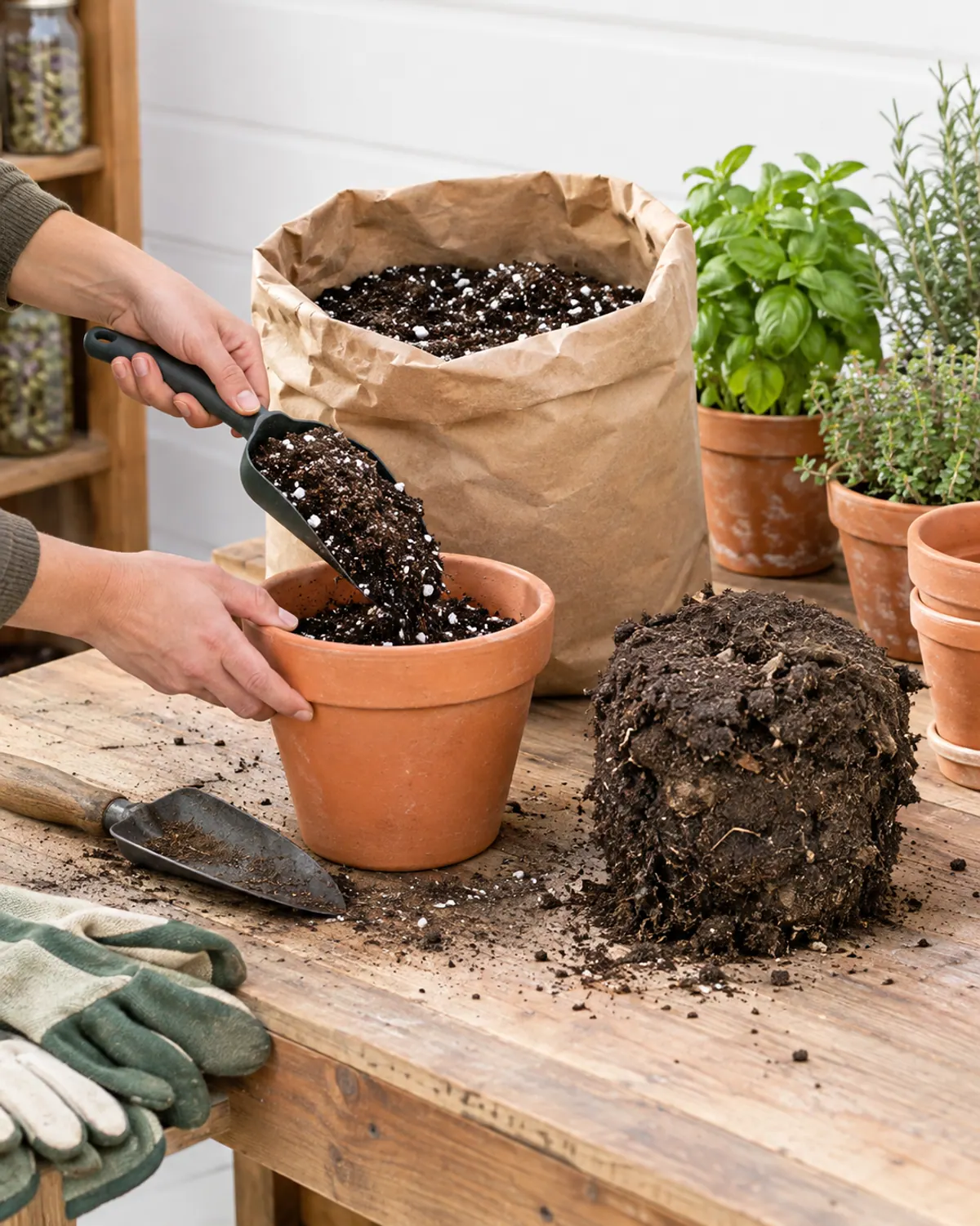
Two things are worth adding. Mix in a slow-release granular fertilizer at the rate on the label, since most mixes feed for only a few weeks. For big pots, an extra handful or two of perlite keeps the mix from staying soggy after rain.
A 2-cubic-foot bag fills roughly one 10-gallon grow bag or three 12-inch pots. Count your pots before the store trip so you don't make two.
Step 4: The easiest vegetables for beginners in containers
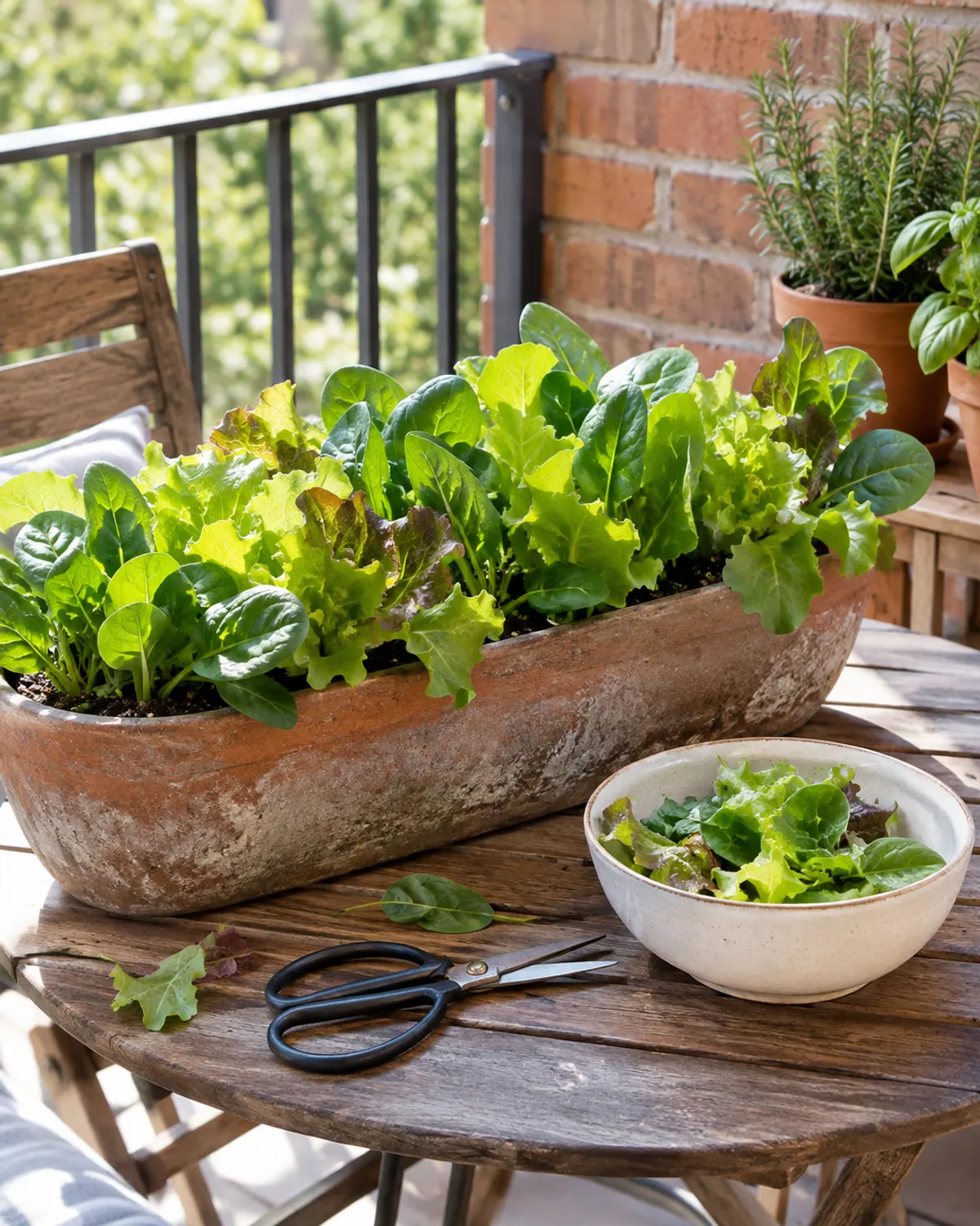
The easiest thing to grow in a container is a salad mix: sow, water, cut, repeat. After that, pick varieties bred for pots. Seed packets say "bush", "patio", "compact" or "dwarf" on the front, and that word matters more than the brand.
| Crop | Varieties to look for | First harvest (about) | Note |
|---|---|---|---|
| Salad mix, leaf lettuce | 'Black Seeded Simpson', 'Salad Bowl', any mesclun mix | 30 to 45 days | Cool weather; give it afternoon shade in summer |
| Radish | 'Cherry Belle', 'French Breakfast' | 25 to 30 days | The fastest win in any garden |
| Bush beans | 'Provider', 'Contender' | 50 to 60 days | Sow seeds straight into the pot after frost |
| Cherry tomato | 'Tiny Tim', 'Tumbling Tom', 'Patio Choice Yellow' | 60 to 75 days from transplant | Buy a plant, not seed, your first year |
| Pepper | 'Lunchbox', jalapeño, compact bell types | 65 to 80 days from transplant | Loves heat; wait until nights stay above 55°F |
| Swiss chard | 'Bright Lights' | 50 to 60 days | Cut outer leaves all summer |
| Bush cucumber | 'Spacemaster', 'Bush Champion' | 55 to 65 days | One plant per 5-gallon pot |
| Green onion | Any bunching type | About 60 days, or snip earlier | Regrows after cutting |
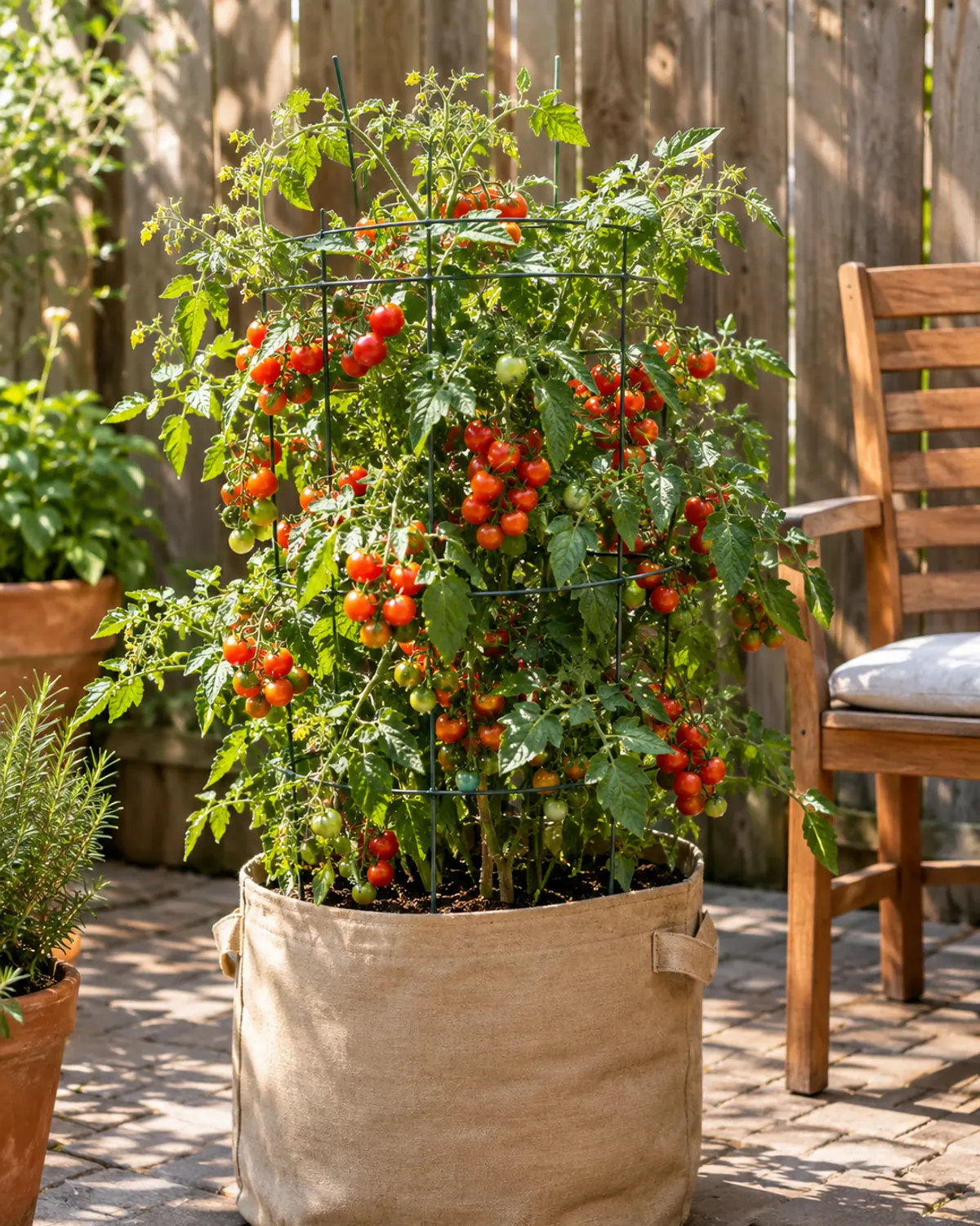
Buy tomato and pepper plants as transplants your first year. They need 6 to 8 weeks indoors from seed, and nurseries sell patio types for a few dollars each. Beans, radishes, greens and chard can be sown straight into the pot.
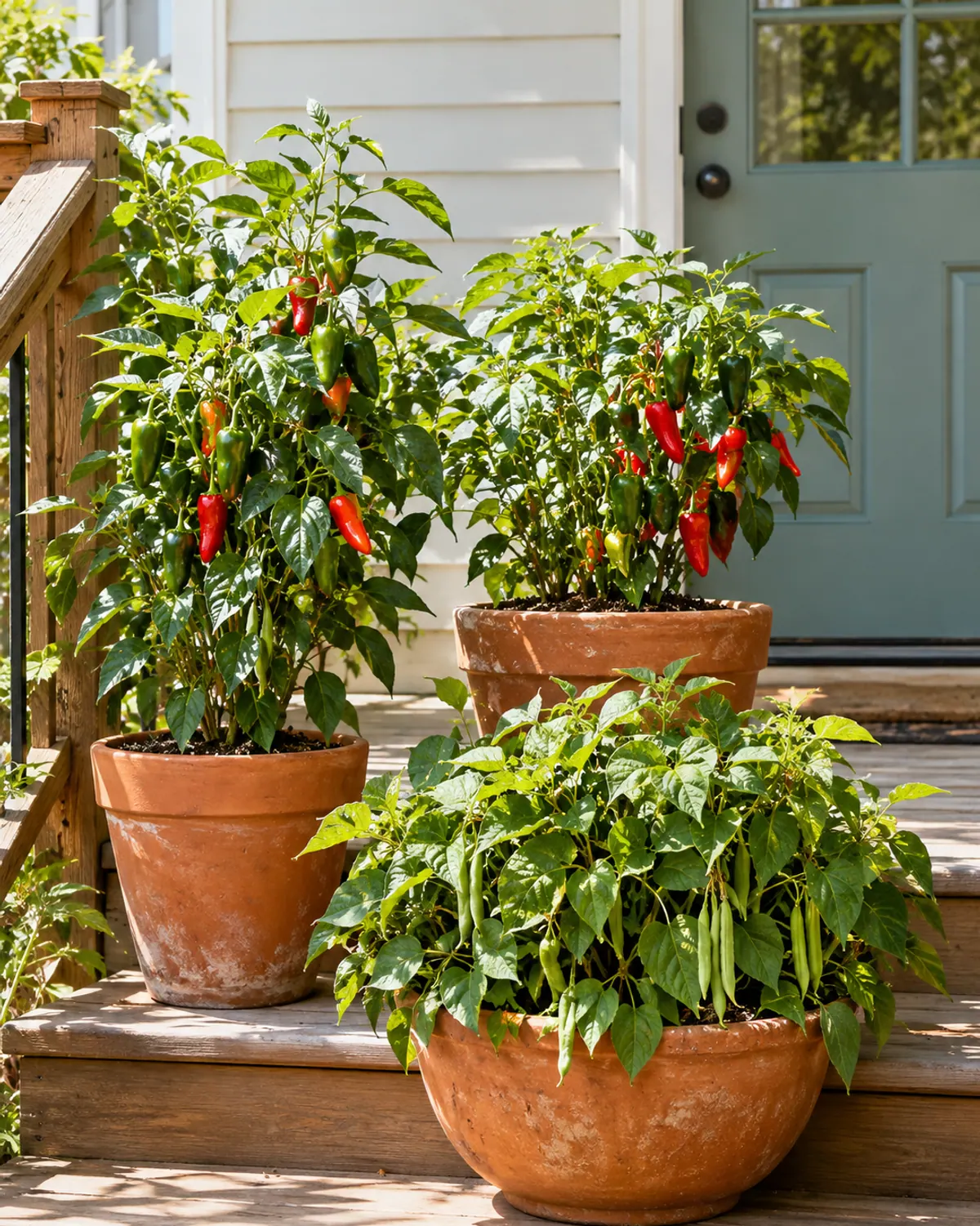
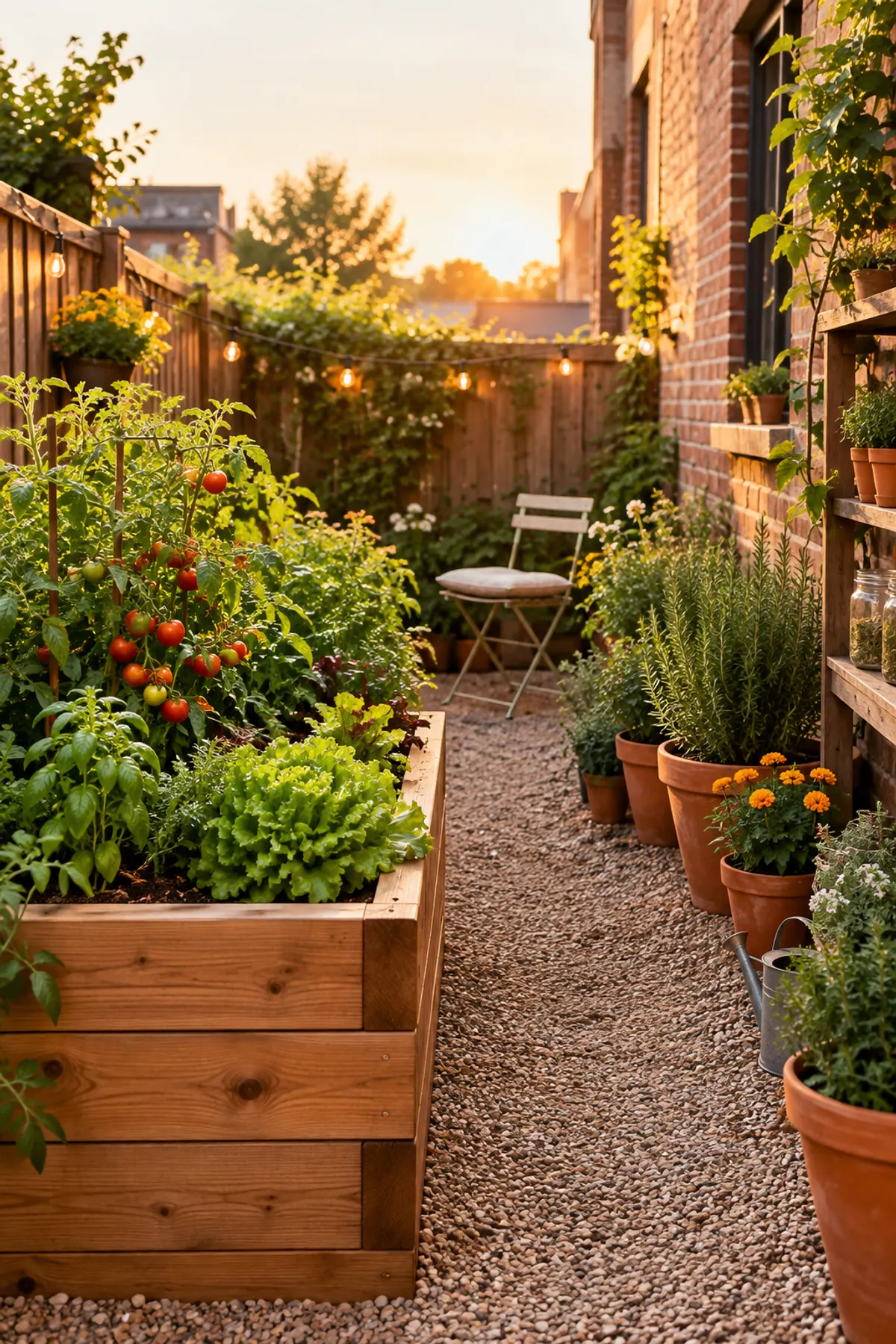
Days to harvest come from seed catalogs and shift with your weather, so treat them as a rough guide. For layouts that fit these pots onto a patio, a tiny yard or a front step, see our small space garden ideas.
Step 5: Herbs and flowers that forgive beginners
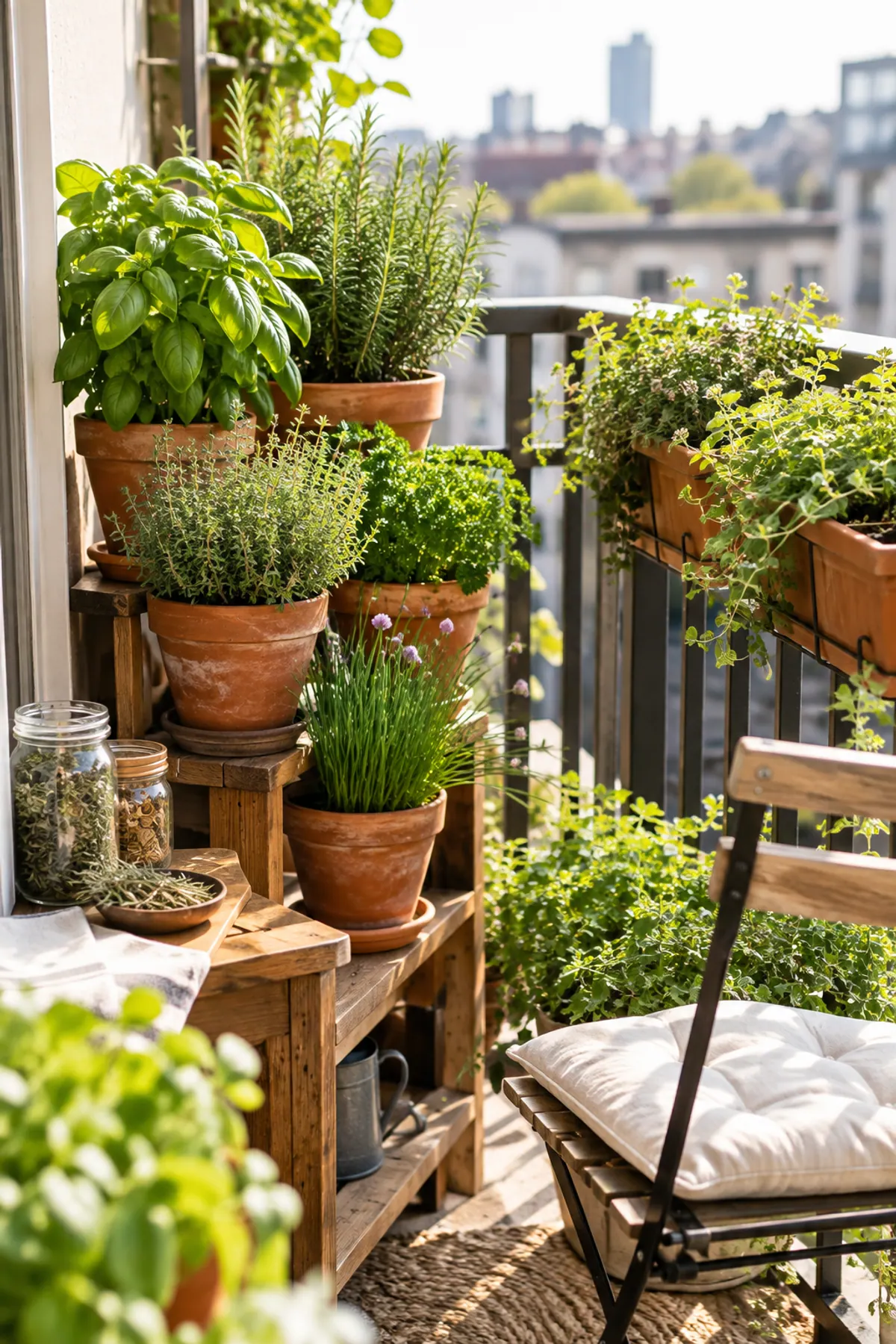
Herbs are the most useful thing a beginner can grow in pots, and a plant costs less than one supermarket clamshell. Group them by water needs: rosemary, thyme, oregano and sage like to dry out between waterings; basil, parsley, mint, chives and cilantro want steady moisture.
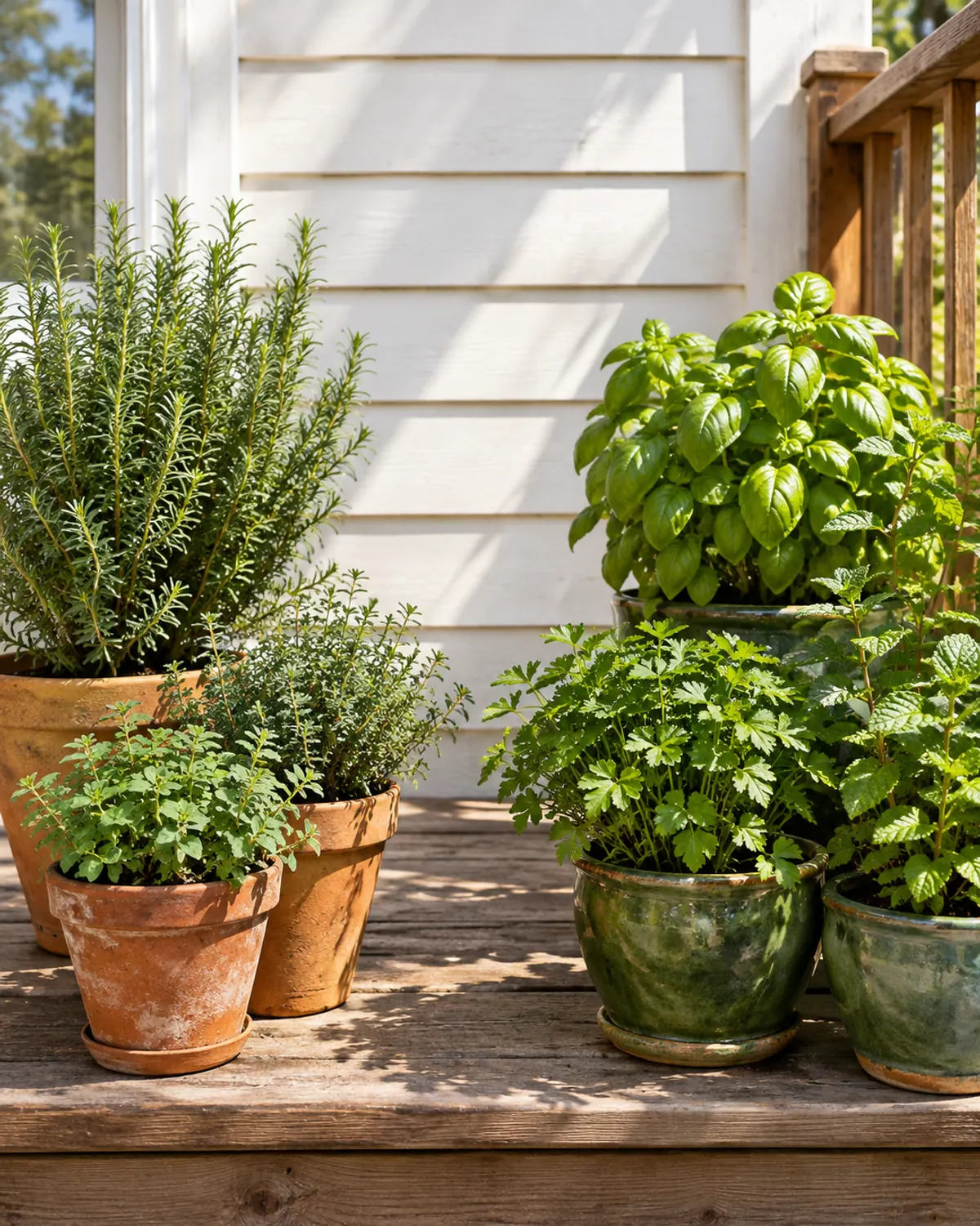
Start with chives, basil, mint (in its own pot, or it takes over) and flat-leaf parsley. Add thyme and rosemary once you've kept the first four alive for a month. Our herb garden ideas for small spaces shows 21 layouts for sills, rails and steps.
Tuck a few marigolds, nasturtiums or calendula into the vegetable pots. They cope with missed waterings, bring pollinators to your tomatoes and peppers, and fill a half-empty pot while seedlings grow in.
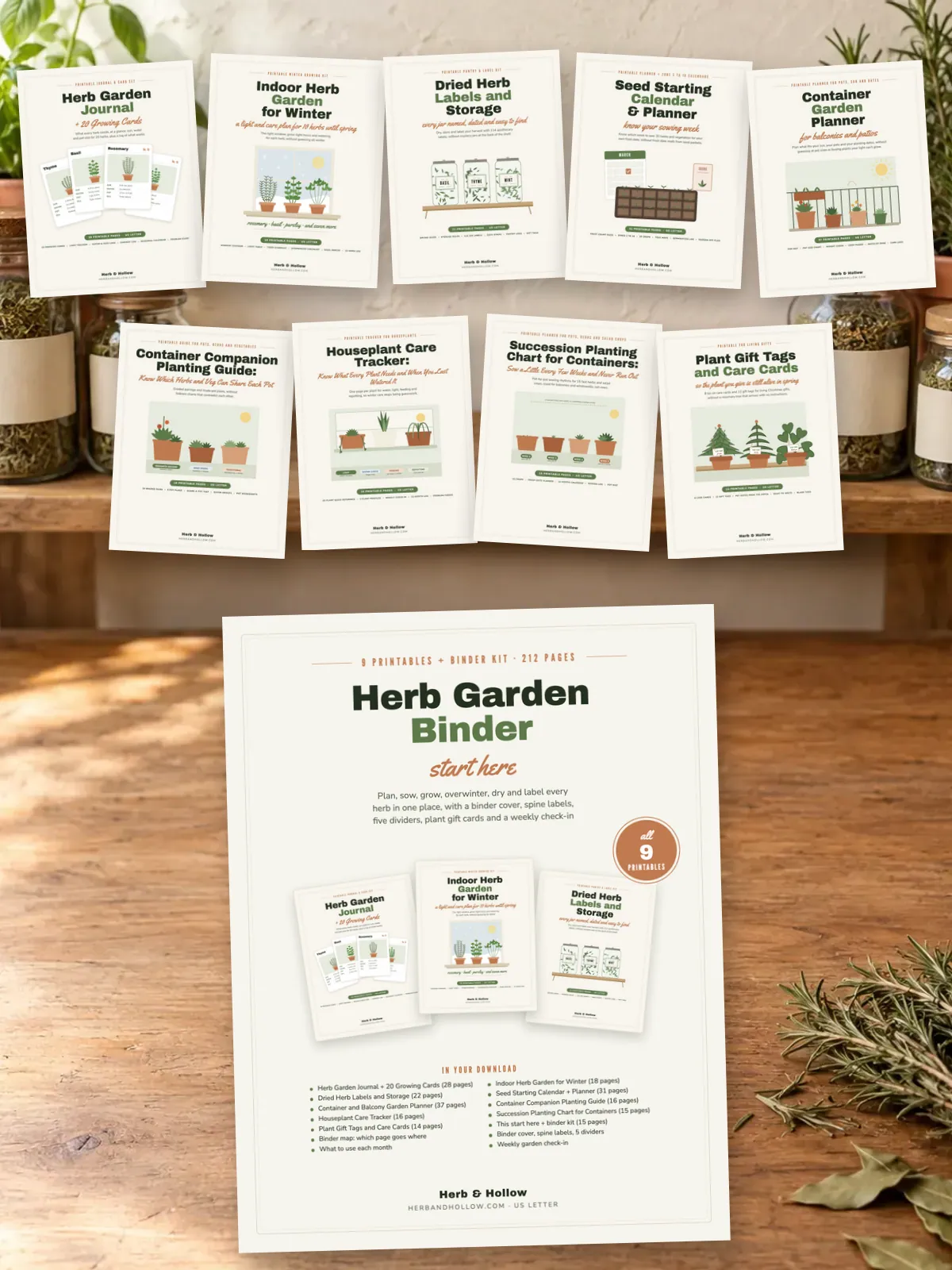
If you want the sun hours, pot size, water rhythm and harvest timing for each herb on a card you can keep by the pots, the Herb Garden Journal and Growing Cards ($7) covers 20 kitchen herbs plus a watering tracker for your first season.
Step 6: Watering and feeding pots (why they dry out and run out of food)
A pot has no groundwater. In July a 5-gallon tomato can drink its whole pot dry by evening, so container plants need checking every day in hot weather, and sometimes watering twice.
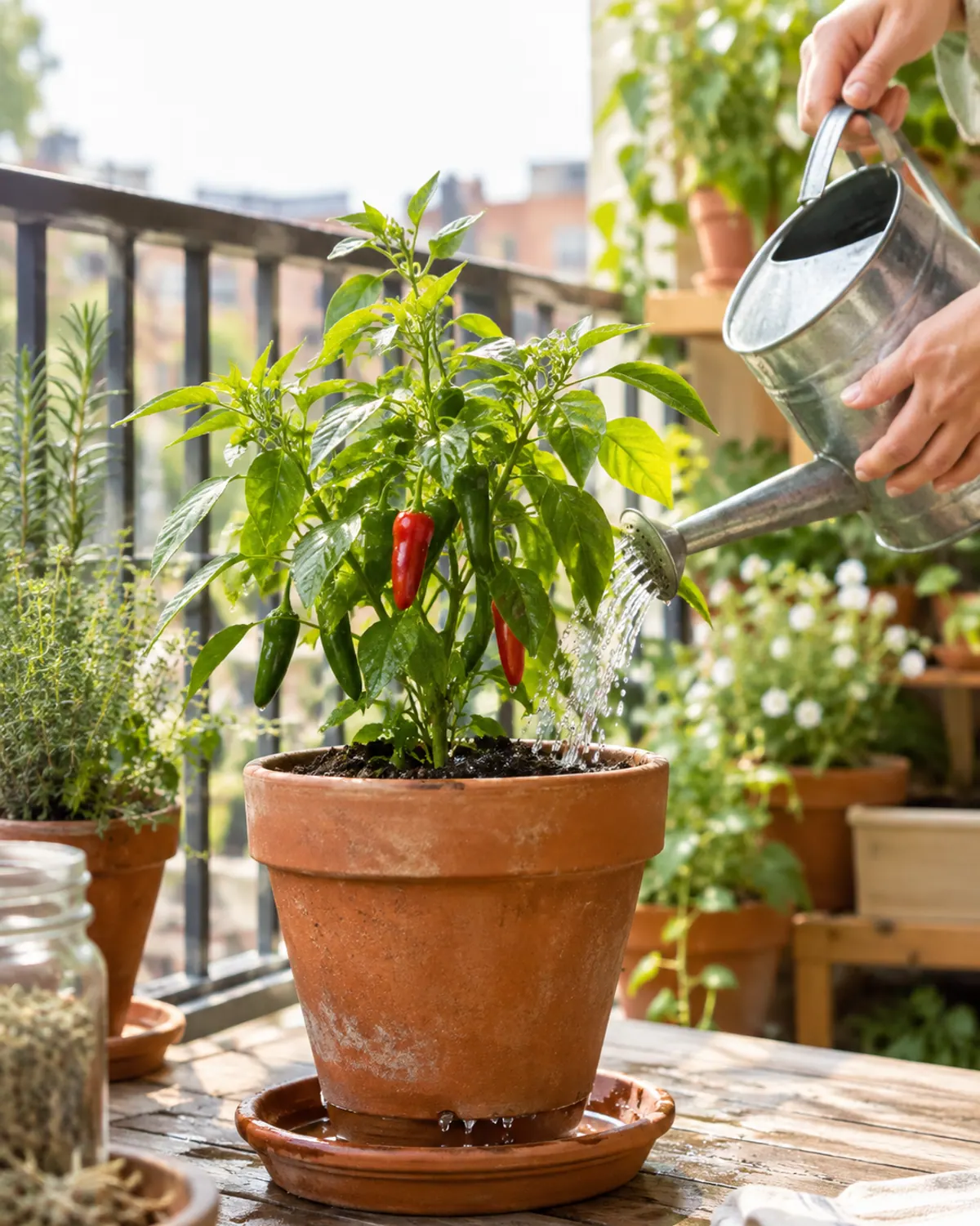
Push a finger an inch or two into the mix. Dry? Water slowly until it runs from the drainage holes, then stop. Water in the morning when you can, and empty saucers after an hour so roots don't sit in water.
Every watering carries a little fertilizer out the bottom, which is why pots run out of food faster than beds. Mix slow-release granules into the potting mix at planting, then give fruiting crops a liquid feed every 1 to 2 weeks from the first flowers, at the label rate. Leafy greens and herbs need about half as much.
What we like
- A reservoir holds 1 to 3 days of water for hot balconies
- Suits basil, parsley, lettuce and peppers, which hate drying out
- Fewer midday wilts while you're at work
Keep in mind
- Costs more per pot than a plain planter
- Rosemary, thyme and sage prefer to dry out, so skip it for them
- The reservoir needs flushing now and then so salts don't build up
Step 7: When to plant, by zone and last frost
Timing in a container garden hangs on one date: your average last spring frost. Find your USDA zone and local frost date (your state extension service lists both), then count backward and forward from it. The dates below are approximate ranges; your town can sit a week or two either side.
| Zone | Average last frost | Start tomato and pepper seeds indoors | Sow greens, radishes and chives in pots outside | Move tomatoes, peppers and basil outside |
|---|---|---|---|---|
| 4 to 5 | Late April to mid May | Early to mid March | Early to mid April | Late May to early June |
| 6 | Early to late April | Mid February to early March | Mid March to early April | Mid to late May |
| 7 | Late March to early April | Early to mid February | Early to mid March | Late April to early May |
| 8 | Mid to late March | Mid January to early February | Late February | Mid April |
| 9 | February | December to early January | January to February | Early to mid March |
| 10 and warmer | Rare or no frost | Grow through the cool season | October to February | After the hottest months pass |
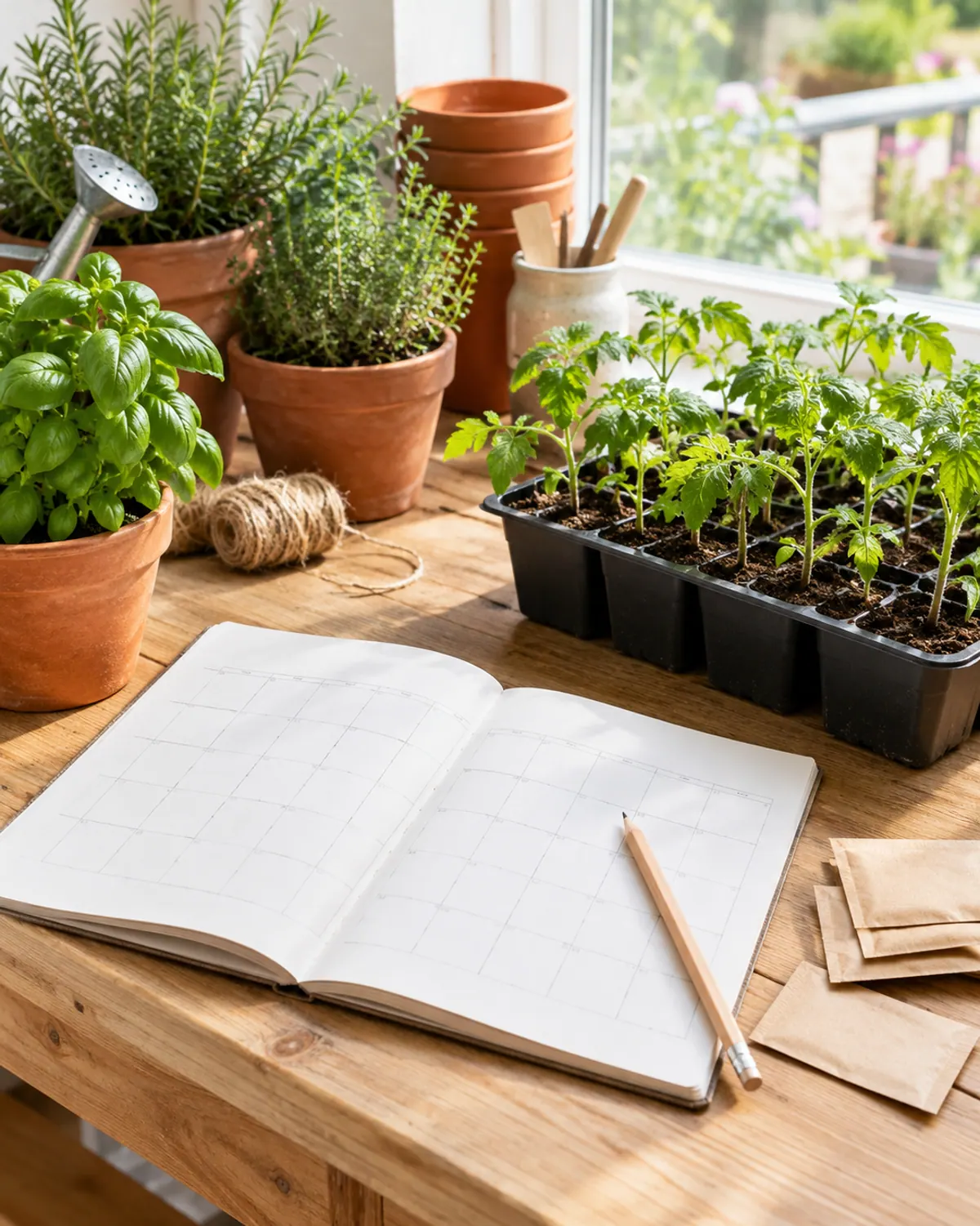
Cool-season crops (lettuce, spinach, radishes, peas, chives, parsley, cilantro) can go into pots 2 to 4 weeks before the last frost, and again in late summer for a fall crop. Warm-season crops (tomatoes, peppers, beans, cucumbers, basil) wait until after it, when nights stay above about 50 to 55°F. A cold night without frost can still stall a tomato for weeks.
Container gardening mistakes beginners make
Most first-year losses trace back to the same short list. Read it once now and once again in May.
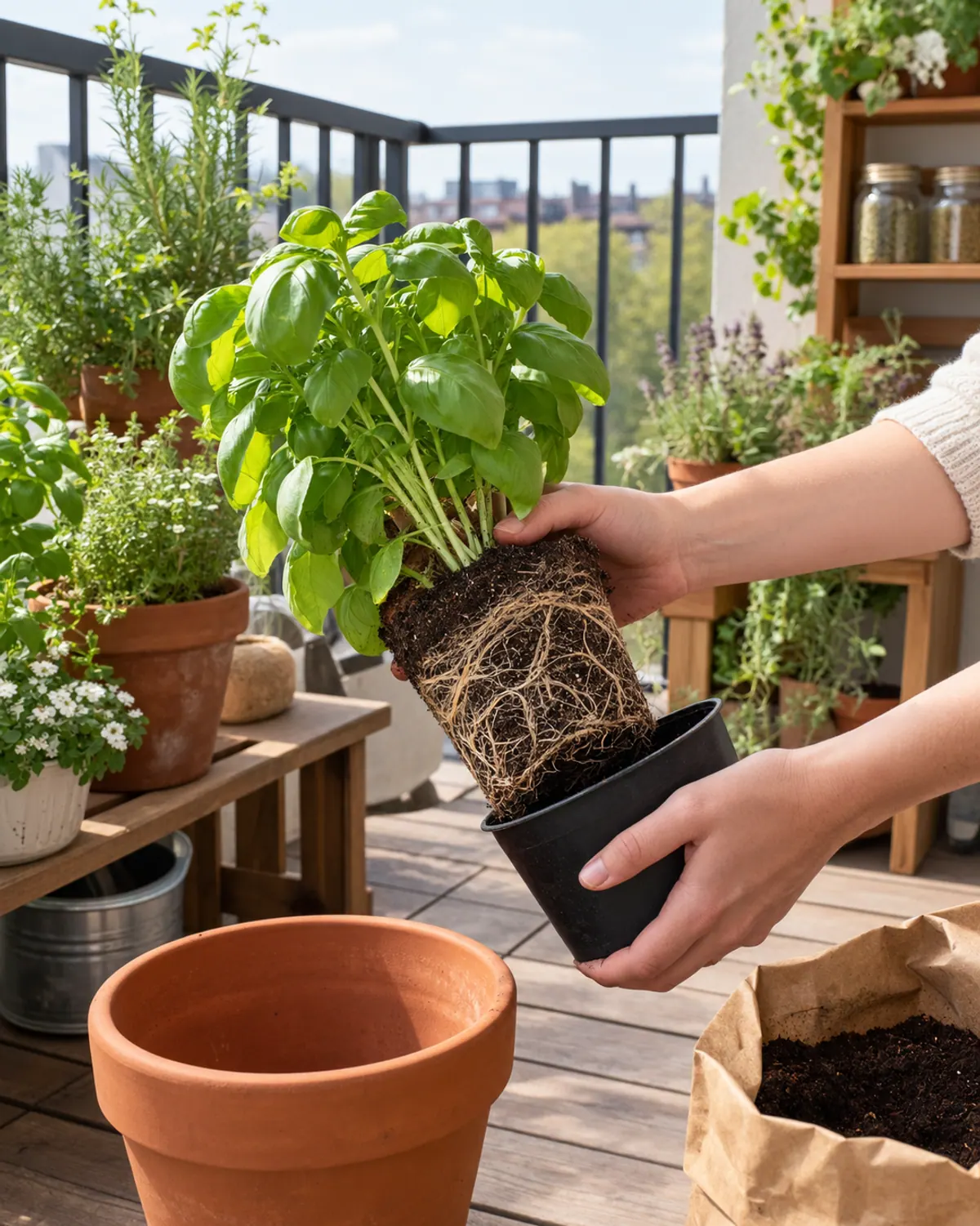
Mistakes to cross off before you plant
If a plant does fail, keep the pot. Unless the plant had a disease, the mix can be refreshed with about a third new potting mix and a dose of fertilizer, and planted again.
Starting in fall or winter: what to do now vs in spring
Reading this in October or later? That's good timing. Fall is when pots go on clearance and when you have months to plan instead of one rushed weekend in May. Here is what belongs to each season.
| Now (fall and winter) | In spring (6 to 8 weeks before last frost) |
|---|---|
| Map your sun on a clear day and note it in the planner | Re-check the sun; it's stronger and lasts longer now |
| Buy pots, grow bags and a watering can on end-of-season clearance (often 30 to 50% off) | Buy potting mix fresh; last year's open bag may be soggy or weedy |
| Start chives, parsley, mint and basil indoors on a south window or under a light | Start tomatoes and peppers indoors, or order transplants |
| Order seeds in January, when catalogs are full and nothing has sold out | Sow greens and radishes outside 2 to 4 weeks before frost |
| Bring in and overwinter any potted herbs you already have | Harden off seedlings for 7 to 10 days, then plant |
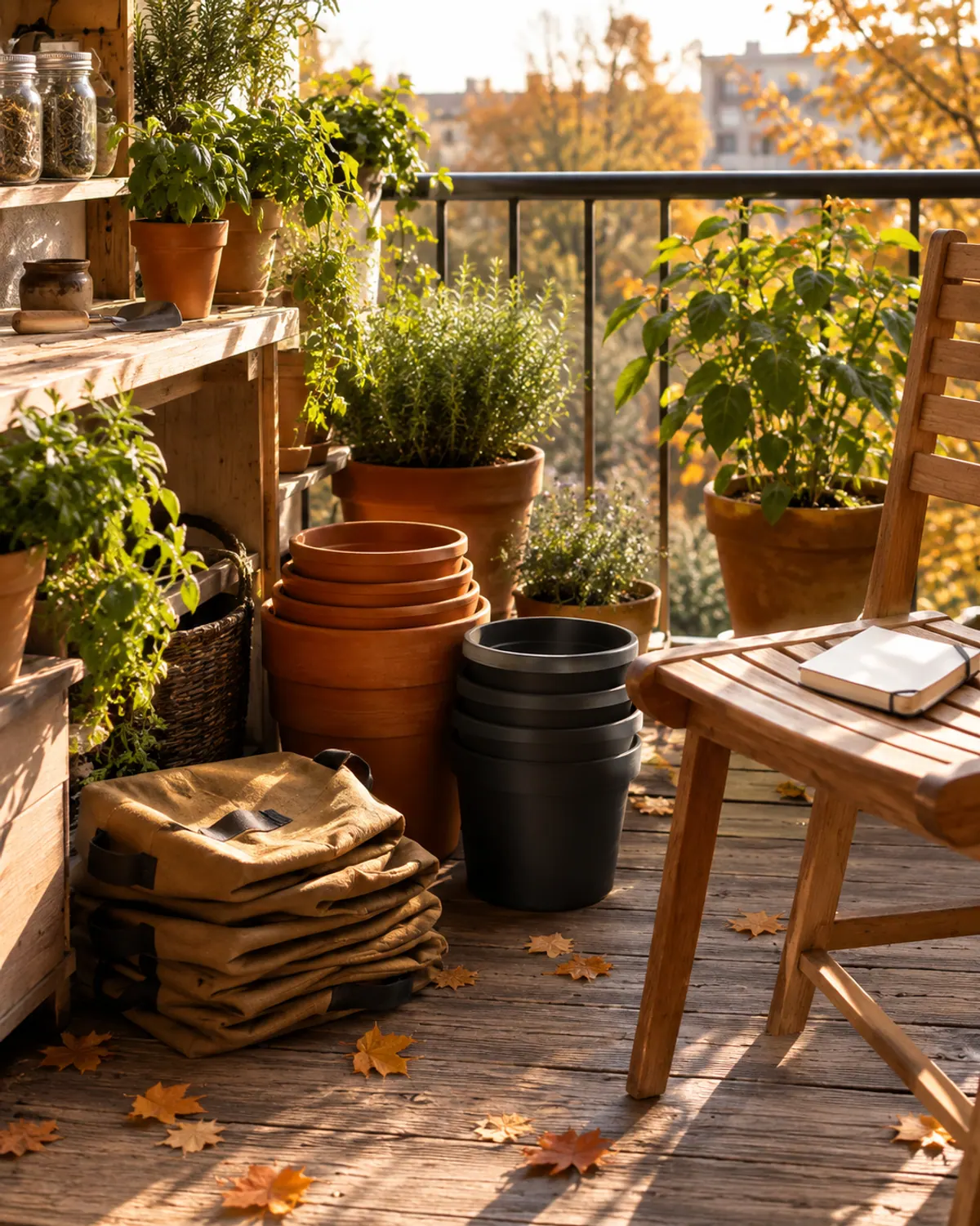
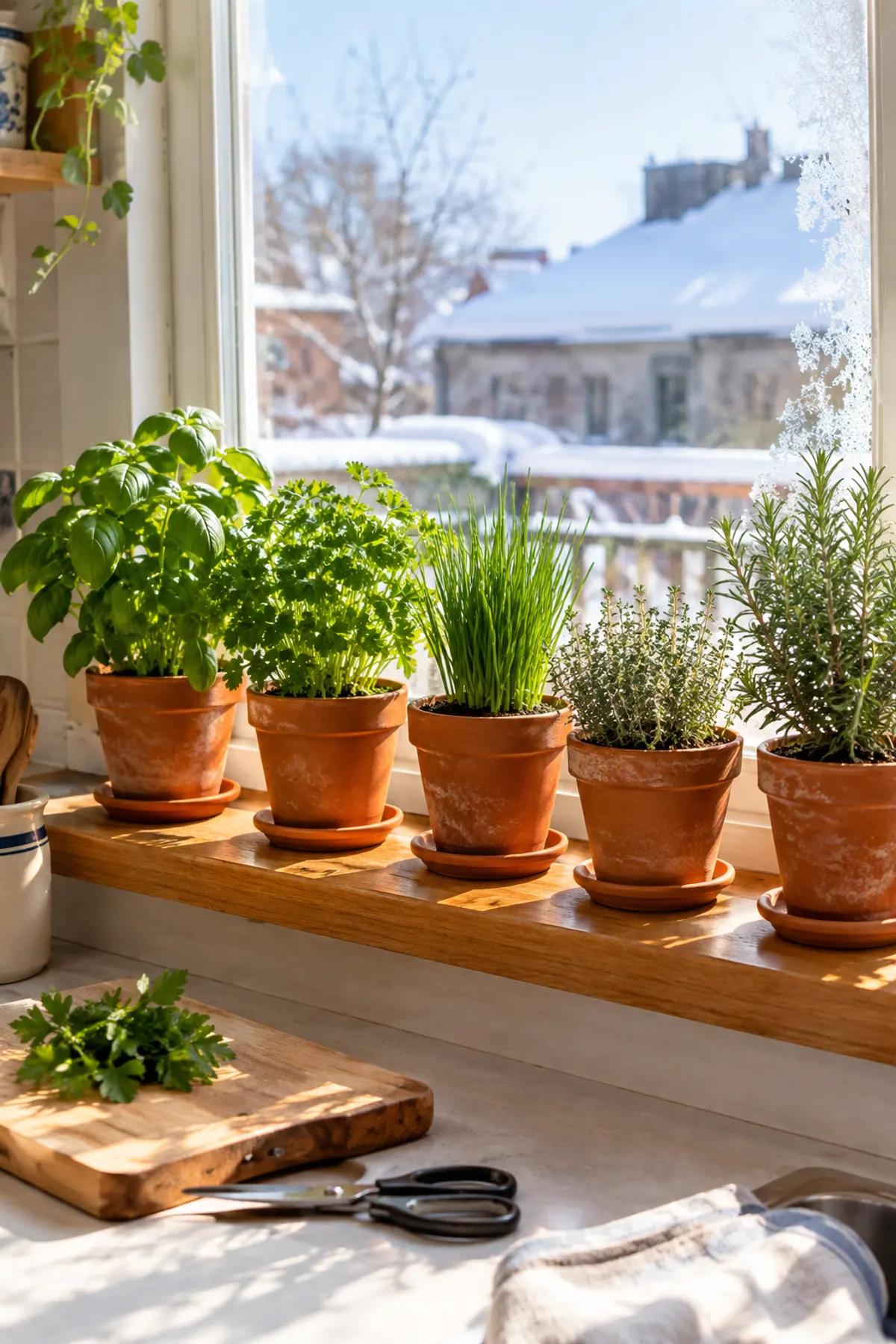
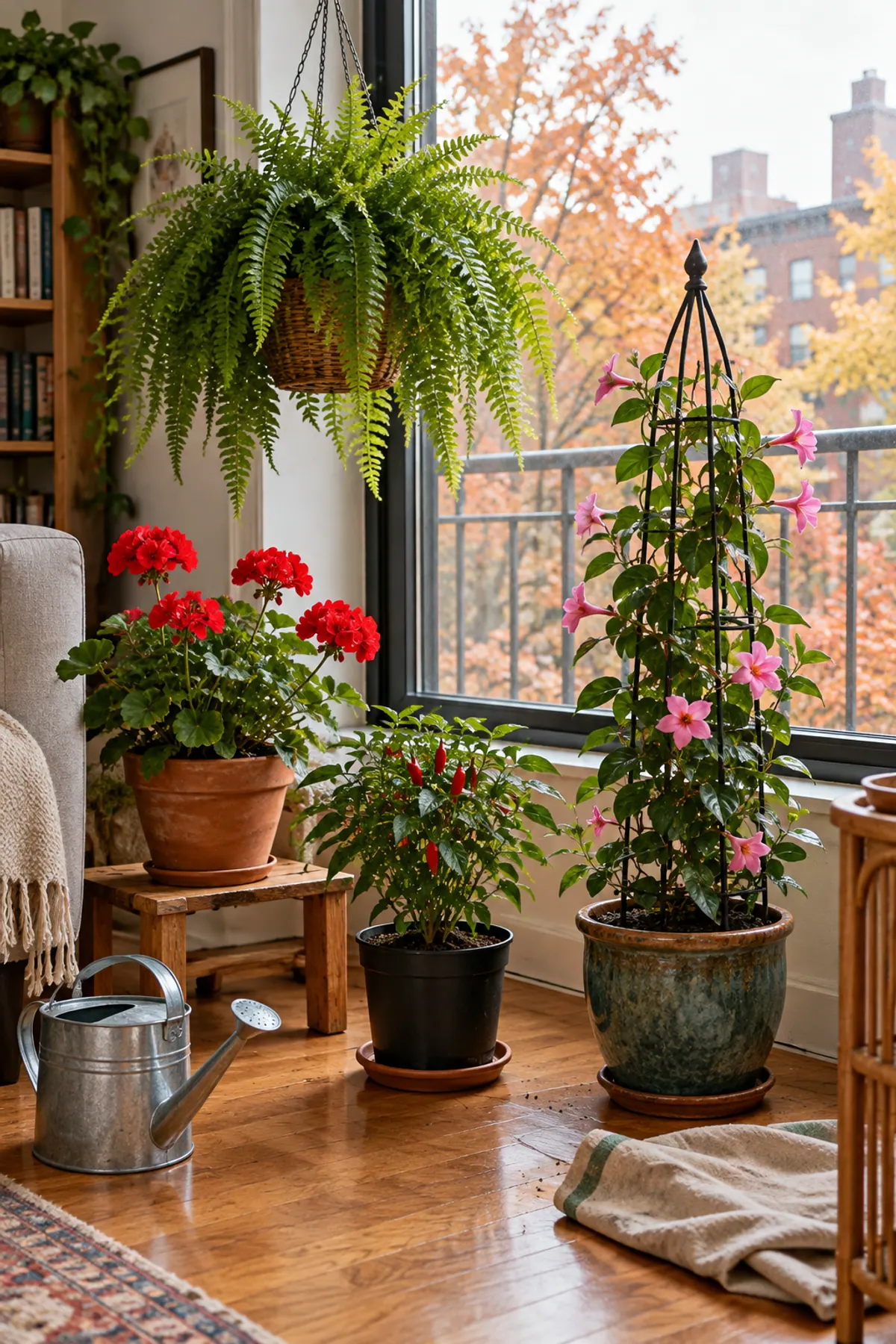
Indoors, herbs need a south or west window or a small grow light; a north window won't do it in December. Our indoor herb garden guide covers the eight herbs that handle winter best, and the grow light roundup covers lights that fit on a shelf.
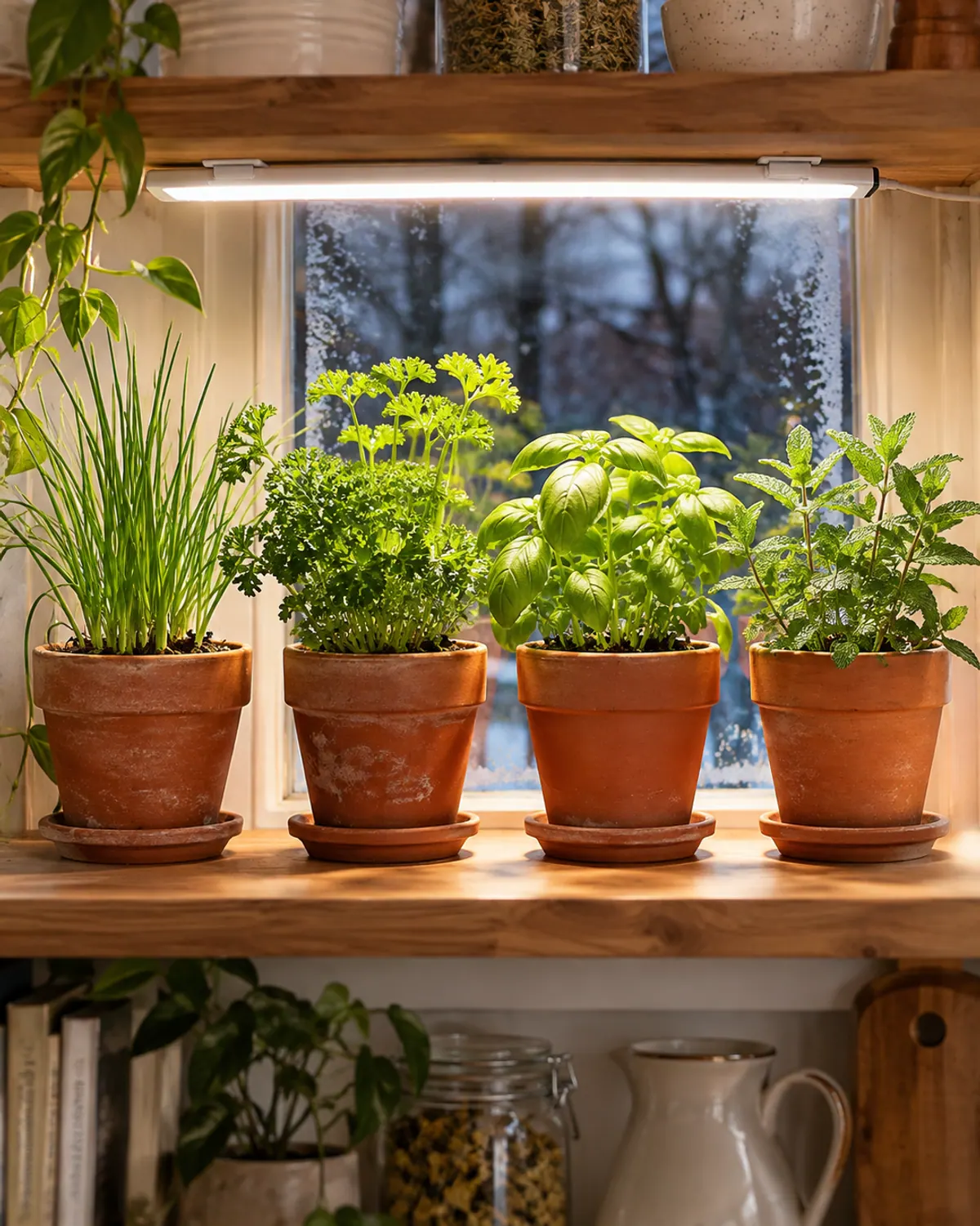
If you want the window choices, light hours and winter watering for each herb on one printable, the Indoor Winter Herb Garden Kit ($6) walks through a windowsill or grow-light setup from first frost to spring. Already have potted herbs outside? Overwintering container plants explains what to bring in and what to let go.
A beginner container garden shopping list under one budget
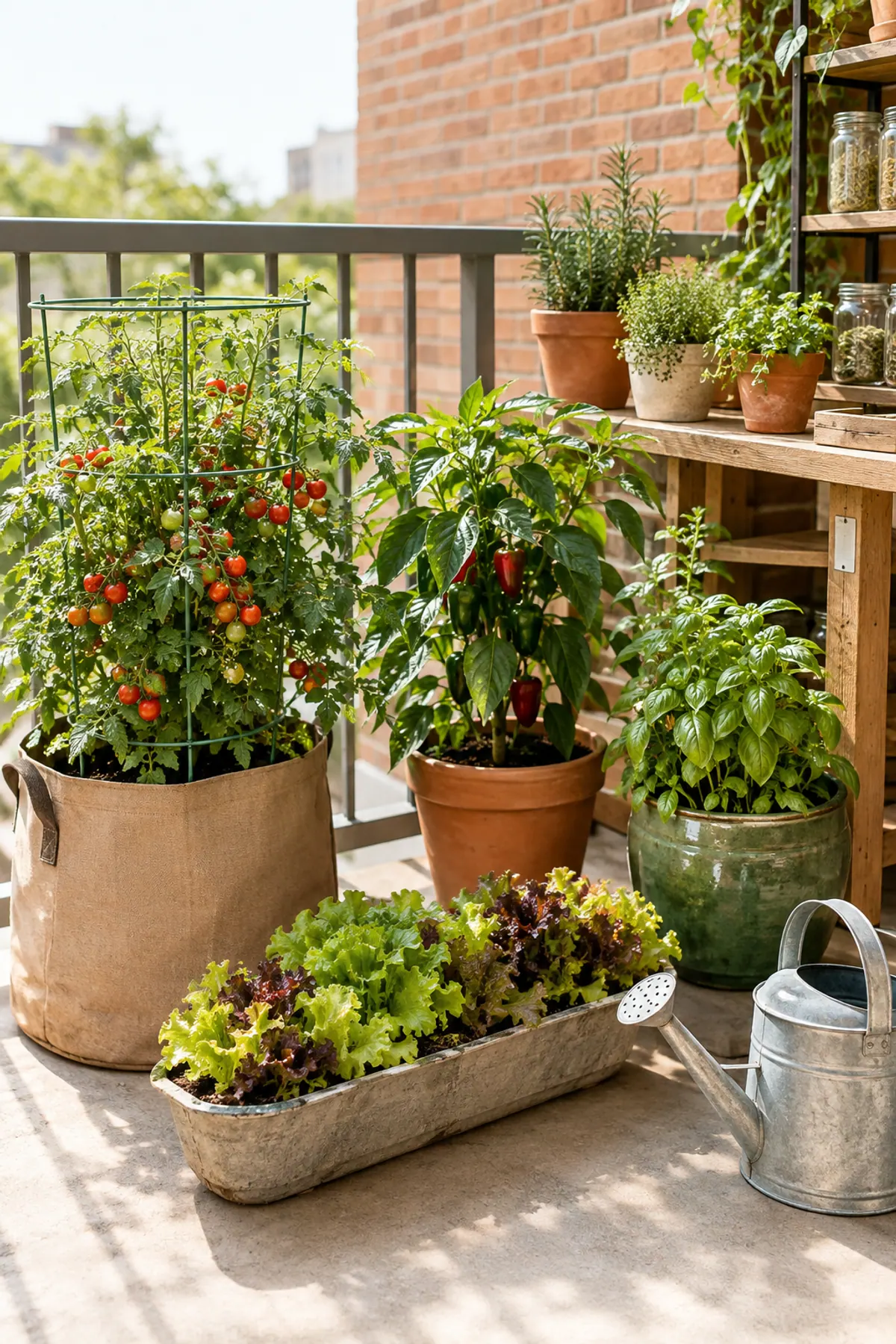
Here is a first-season setup for about $100 to $150. It grows two tomatoes or peppers, a salad box, a pot of beans and four herbs on a small balcony or patio. Prices are typical ranges and change often, and we have not tested these products by hand.
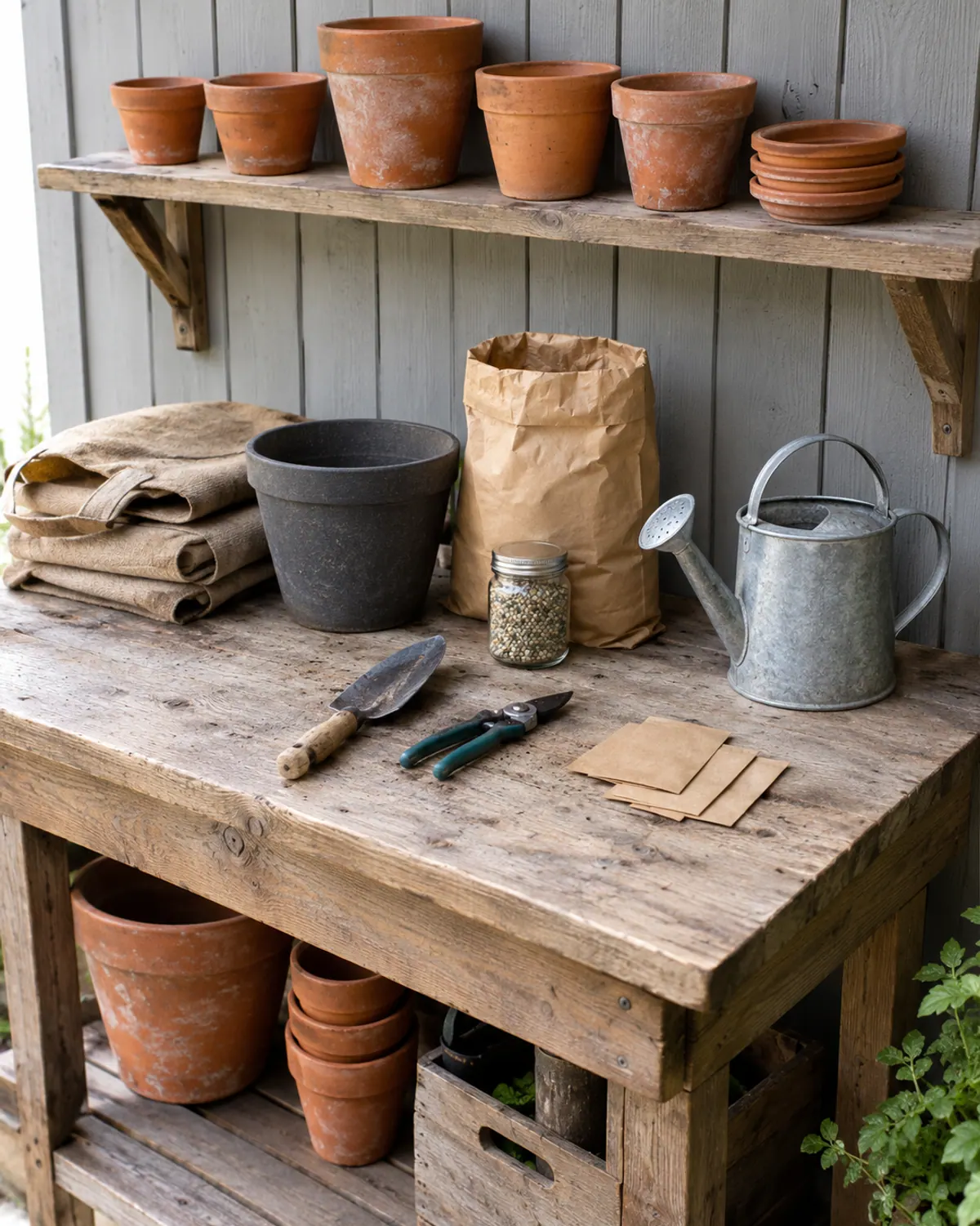
First container garden shopping list
- Start here
1. Fabric grow bags, 5 and 10 gallon (multi-pack)
Typically $15 to $30
Sold by the gallon, light to carry up stairs, and they fold flat in winter.
Check price on Amazon for 1. Fabric grow bags, 5 and 10 gallon (multi-pack) -
2. 12 to 14 inch resin pots with drainage holes
Typically $12 to $30 each
Lighter than clay for a balcony. Check for holes before you buy.
Check price on Amazon for 2. 12 to 14 inch resin pots with drainage holes -
3. Window box or salad trough, 24 to 30 inches
Typically $15 to $30
Shallow and wide is just what lettuce, radishes and chives want.
Check price on Amazon for 3. Window box or salad trough, 24 to 30 inches -
4. Potting mix, 2 cubic feet (buy two)
Typically $12 to $25 a bag
One bag fills a 10-gallon grow bag or three 12-inch pots. Often cheaper at a local garden center.
Check price on Amazon for 4. Potting mix, 2 cubic feet (buy two) -
5. Slow-release granular fertilizer
Typically $10 to $20
Mix in at planting; most labels feed for about 3 months.
Check price on Amazon for 5. Slow-release granular fertilizer -
6. Liquid vegetable fertilizer
Typically $8 to $18
Every 1 to 2 weeks once flowers show, at the label rate.
Check price on Amazon for 6. Liquid vegetable fertilizer -
7. Watering can, 1 to 2 gallons, with a rose
Typically $12 to $25
Big enough to matter on a hot day; the rose keeps seeds in place.
Check price on Amazon for 7. Watering can, 1 to 2 gallons, with a rose -
8. Hand trowel and snips
Typically $10 to $25
The only two tools a pot garden really needs.
Check price on Amazon for 8. Hand trowel and snips -
9. Patio tomato and pepper seeds or transplants
Typically $3 to $6 a packet
Look for 'bush', 'patio' or 'dwarf' on the label. Transplants from a nursery cost a few dollars more and save six weeks.
Check price on Amazon for 9. Patio tomato and pepper seeds or transplants -
10. Herb and salad seed collection
Typically $10 to $20
Chives, basil, parsley, lettuce and radish in one set.
Check price on Amazon for 10. Herb and salad seed collection -
11. Plant saucers or drip trays
Typically $8 to $18
A must on any balcony above a neighbor.
Check price on Amazon for 11. Plant saucers or drip trays -
12. Soil moisture meter (optional)
Typically $8 to $15
Backs up the finger test while you learn how fast each pot dries.
Check price on Amazon for 12. Soil moisture meter (optional)
Skip, for now: raised beds, drip kits, grow towers and any "complete kit" with tiny pots. Grow one season in plain pots first. By August you'll know exactly what you want next year, and the pots will still be useful.
Frequently asked questions
What is the easiest thing to grow in a container for a beginner?
Salad greens and radishes. Both grow from seed sown straight into a shallow pot, are ready in about a month and don't mind a cool spring. After those, bush beans, cherry tomatoes (bought as transplants) and herbs like chives, basil and mint are the most forgiving.
What size pot do I need for tomatoes, peppers, lettuce and herbs?
University extension guides put tomatoes and peppers at 5 gallons minimum (10 or more for a full-size vining tomato), lettuce and salad greens at 1 to 2 gallons, and most herbs at 1 to 3 gallons. Rosemary and sage like 3 to 5 gallons. Bigger is safer, because a bigger pot dries out more slowly.
Can I use garden soil in containers instead of potting mix?
No. Garden soil packs down in a pot, drains poorly and can bring weed seeds and pests with it. Use a bagged potting or container mix, which stays light and airy, and add slow-release fertilizer because most mixes feed for only a few weeks.
How often should I water container plants?
By touch, not by the calendar. Push a finger an inch or two into the mix and water when it feels dry, until water runs out the drainage holes. In hot summer weather that often means every day, and small pots or fabric bags may need it twice. In spring and fall it can be every few days.
Do container plants need fertilizer, and how often?
Yes. Nutrients wash out of a pot with every watering. Mix slow-release granules into the potting mix at planting, then feed fruiting crops like tomatoes and peppers with a liquid fertilizer every 1 to 2 weeks once they flower, at the rate on the label. Greens and herbs need about half as much.
How many hours of sun does a container vegetable garden need?
Tomatoes, peppers, cucumbers, beans and Mediterranean herbs want 6 to 8 hours of direct sun. Lettuce, spinach, chard, parsley, mint and chives manage on 4 to 6 and may prefer some afternoon shade in summer. Count the hours on a clear day before you buy pots.
Save it for later
Pin this to your Container Gardening board so it's there when you need it.
Save to Pinterest