This post contains affiliate links. As an Amazon Associate we earn from qualifying purchases, at no extra cost to you. Read our disclosure.
Safety first: Herbs can be powerful. If you are pregnant, nursing, take medication or have a health condition, check with your doctor or pharmacist first. Please read our herbal & garden safety notes before you start.
Key takeaways
- Any zone: chives, parsley, microgreens and lettuce grow indoors in January.
- Zones 5 to 8: start onions, leeks and celery 10 to 12 weeks before your last frost.
- Zones 4 to 7: winter sow hardy flowers and herbs in milk jugs outside.
- Zones 8 to 10: plant onions, lettuce, broccoli, chard, radishes and peas in pots now.
- Count back from your last frost date, not the calendar.
In this post28 sections
- What to plant in January: a quick zone guide
- Indoors in any zone
- 1. Chives on a sunny sill
- 2. Parsley from seed
- 3. Microgreens on the counter
- 4. Basil under a grow light
- 5. Garlic greens from a sprouting clove
- 6. Cut-and-come-again lettuce in a window box
- Start indoors now for spring (zones 5 to 8)
- 7. Onions from seed
- 8. Leeks
- 9. Celery
- 10. Peppers
- 11. Eggplant
- Winter sow outside in milk jugs (zones 4 to 7)
- 12. Poppies and larkspur in jugs
- 13. Chives and other hardy herbs in jugs
- Plant outside in pots (zones 8 to 10)
- 14. Short-day onion transplants
- 15. Lettuce and spinach
- 16. Broccoli and cabbage transplants
- 17. Swiss chard and collards
- 18. Radishes and carrots from seed
- 19. Snap and snow peas on a trellis
- 20. Sweet peas in a deep pot
- 21. Bare-root roses and fruit trees in containers
- January planting do and avoid
- FAQ
What to plant in January: a quick zone guide
January planting depends on two things: your USDA zone and your average last spring frost date. In cold zones, January is for windowsill herbs, microgreens and the slowest seeds under a light. In mild zones, it is a real planting month outside.
| Zone band | Where to plant | What goes in now |
|---|---|---|
| Any zone | Windowsill or grow light | Chives, parsley, basil under a light, microgreens, garlic greens, cut-and-come-again lettuce |
| Zones 5 to 8 | Seed tray indoors | Onions, leeks and celery (10 to 12 weeks before last frost); peppers and eggplant late in the month in zone 8 |
| Zones 4 to 7 | Milk jugs outside | Hardy flowers and herbs that like a cold spell, such as poppies, larkspur and chives |
| Zones 8 to 10 | Outdoor pots and planters | Onion transplants, lettuce, spinach, broccoli, cabbage, chard, radishes, carrots, peas, sweet peas, bare-root roses |
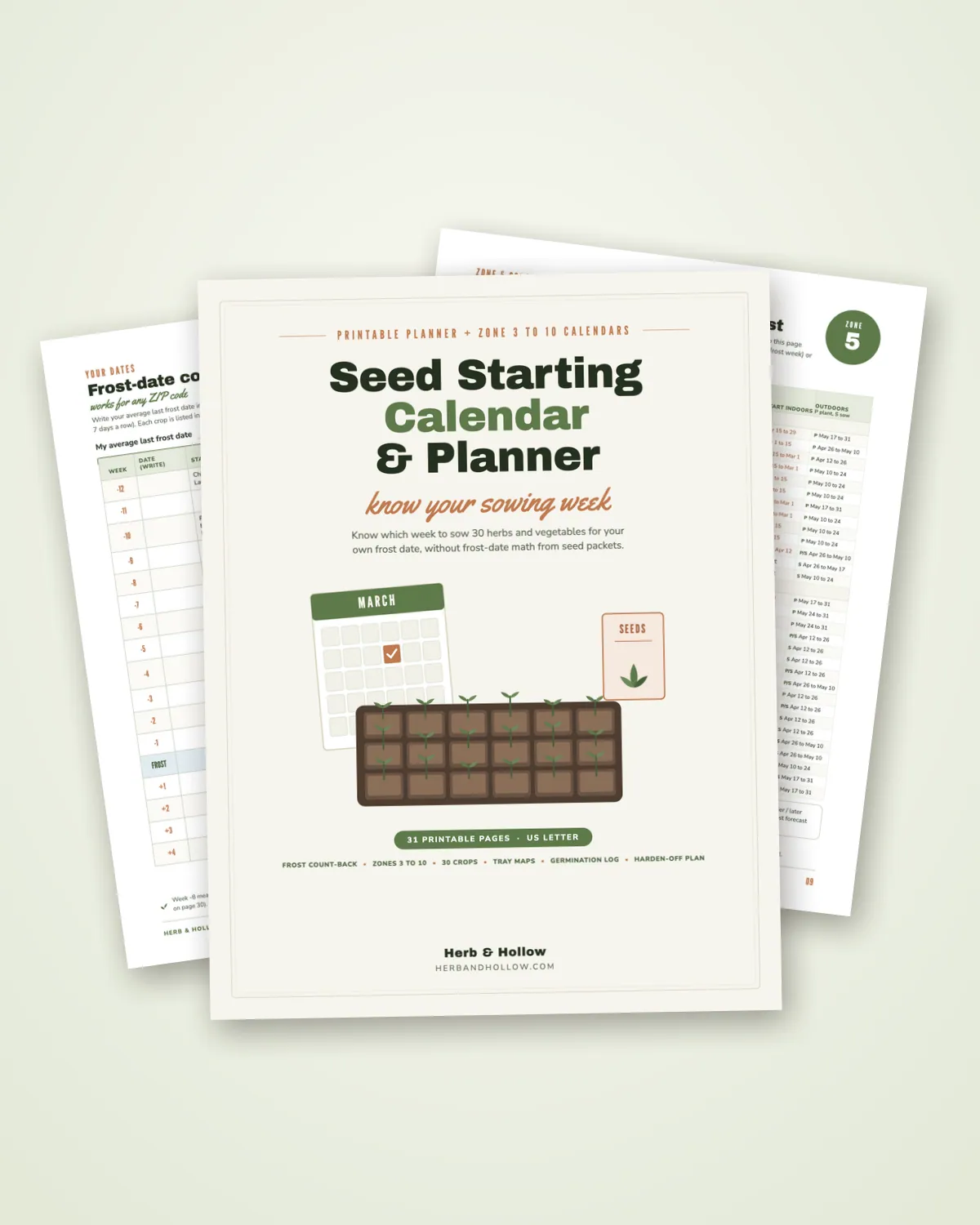
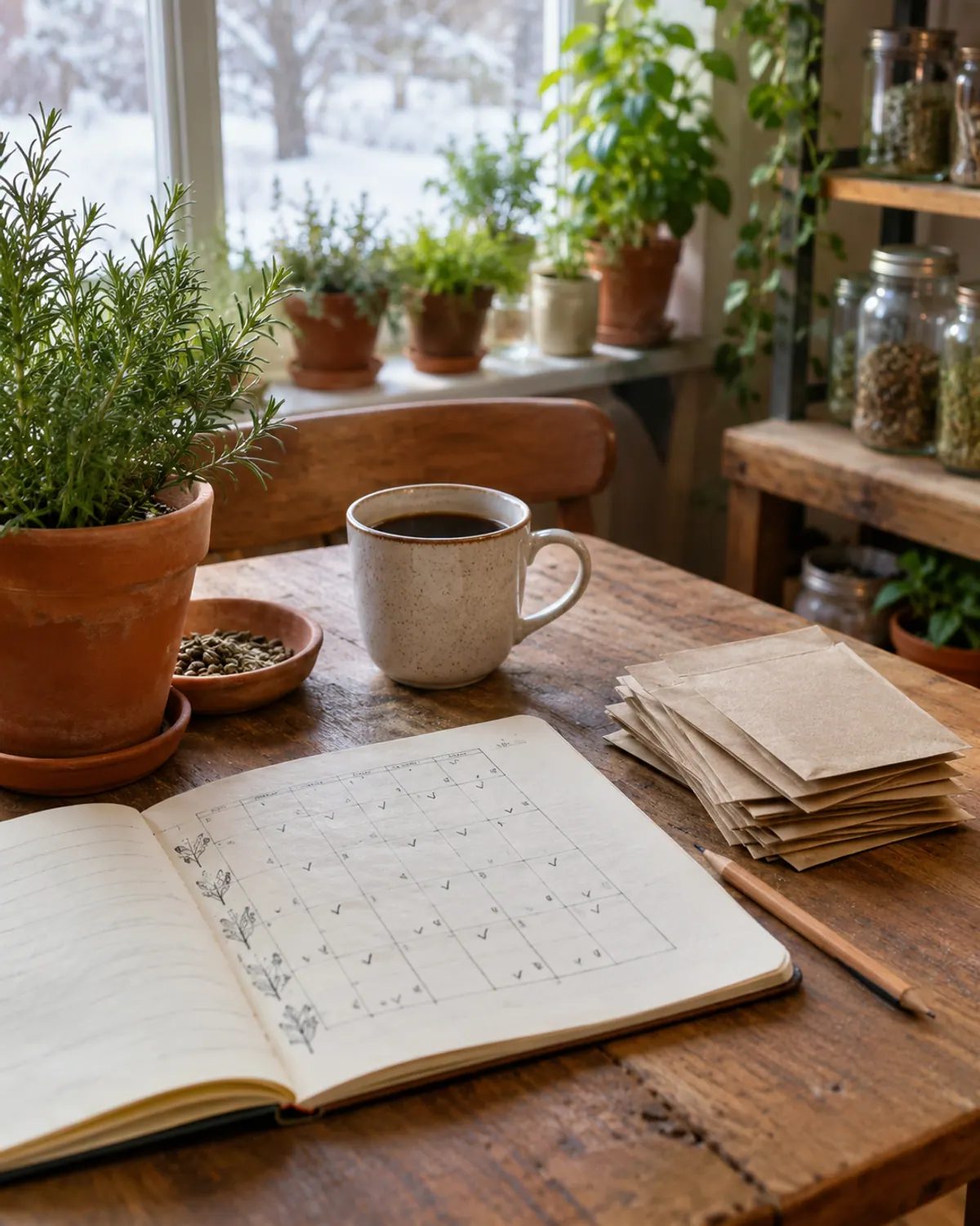
To time seeds, count back from your last frost date. Most vegetable seeds start about 6 weeks before it, peppers about 8 and onions, leeks and celery 10 to 12. If your last frost is around mid-April, 12 weeks back lands in mid-January. Our seed starting calendar by zone does the counting for the common crops.
| Crop and lead time | If your last frost falls between | Then you sow in |
|---|---|---|
| Onions, leeks and celery (12 weeks before last frost) | March 26, 2027 to April 25, 2027 | January 1 to January 31, 2027 |
| Peppers and eggplant (8 weeks before) | February 26, 2027 to March 28, 2027 | January 1 to January 31, 2027 |
| Most other vegetable seeds (6 weeks before) | February 12, 2027 to March 14, 2027 | January 1 to January 31, 2027 |
Here is the count-back worked for one example last frost, Thursday, April 15, 2027. Twelve weeks back is Thursday, January 21, 2027, so onions, leeks and celery go in the tray that week. Eight weeks back is Thursday, February 18, for peppers and eggplant, and six weeks back is Thursday, March 4, for tomatoes, broccoli and most other vegetables. That is an example, not your date: look up the average last frost for your ZIP code, then move every date by the same number of days. If your frost lands outside the ranges above, that crop starts in another month, so check the January garden checklist for tasks that fit your zone.
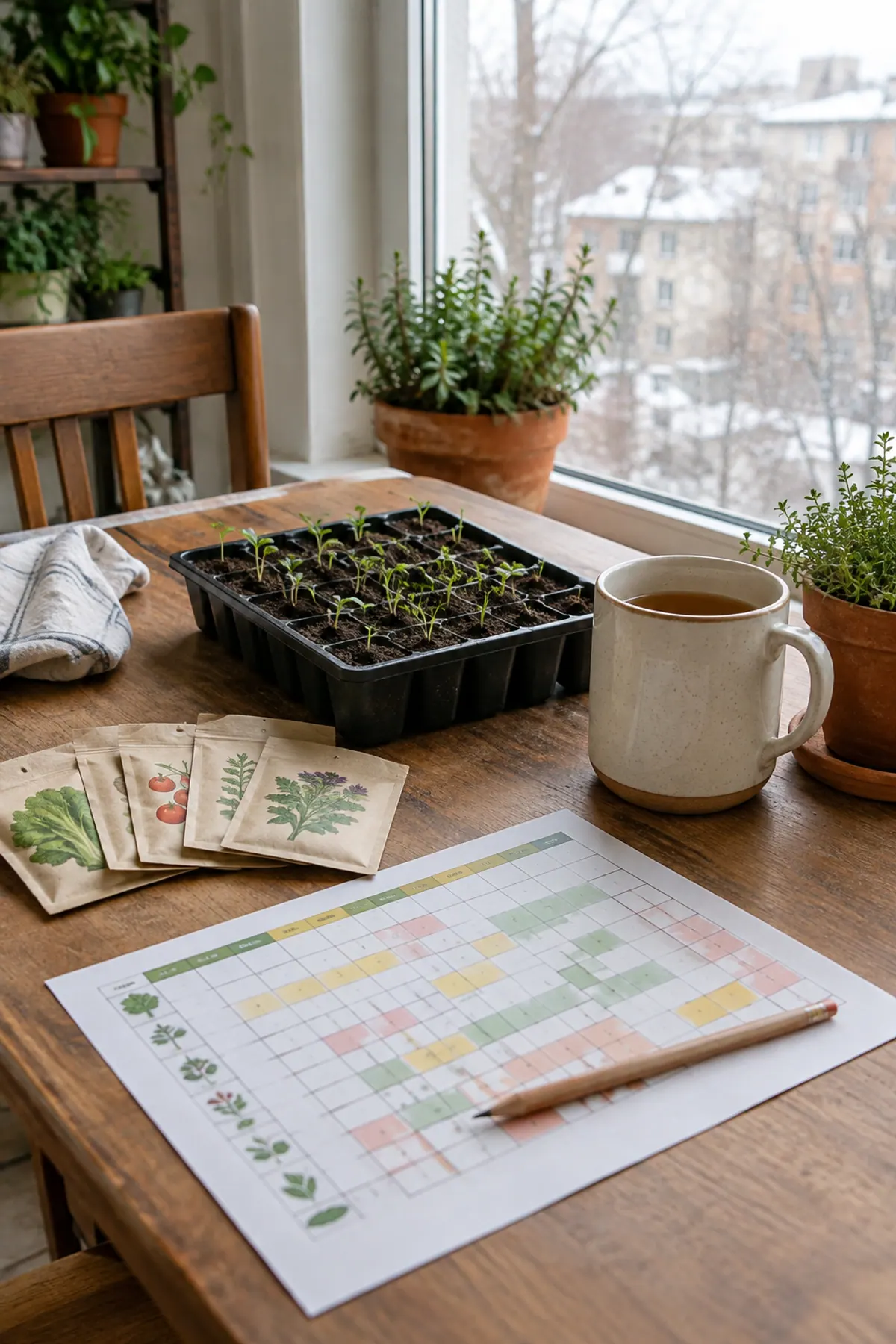
The count-back is the step people get wrong, because seed packets list weeks before frost and leave the date math to you. The Seed Starting Planner and Zone Calendars ($7) does it for you: write your last frost date on the count-back sheet and 30 herbs and vegetables are already placed in the week they start, with a calendar page for each zone from 3 to 10.
Before you order anything for January, count what you already own. The Seed Inventory and Swap Sheet ($4) logs each packet once and sorts them by the year to use them by, so you stop buying a second packet of onions you cannot use. If no seed arrives in time, microgreens are the January crop that grows indoors in any zone.
Indoors in any zone
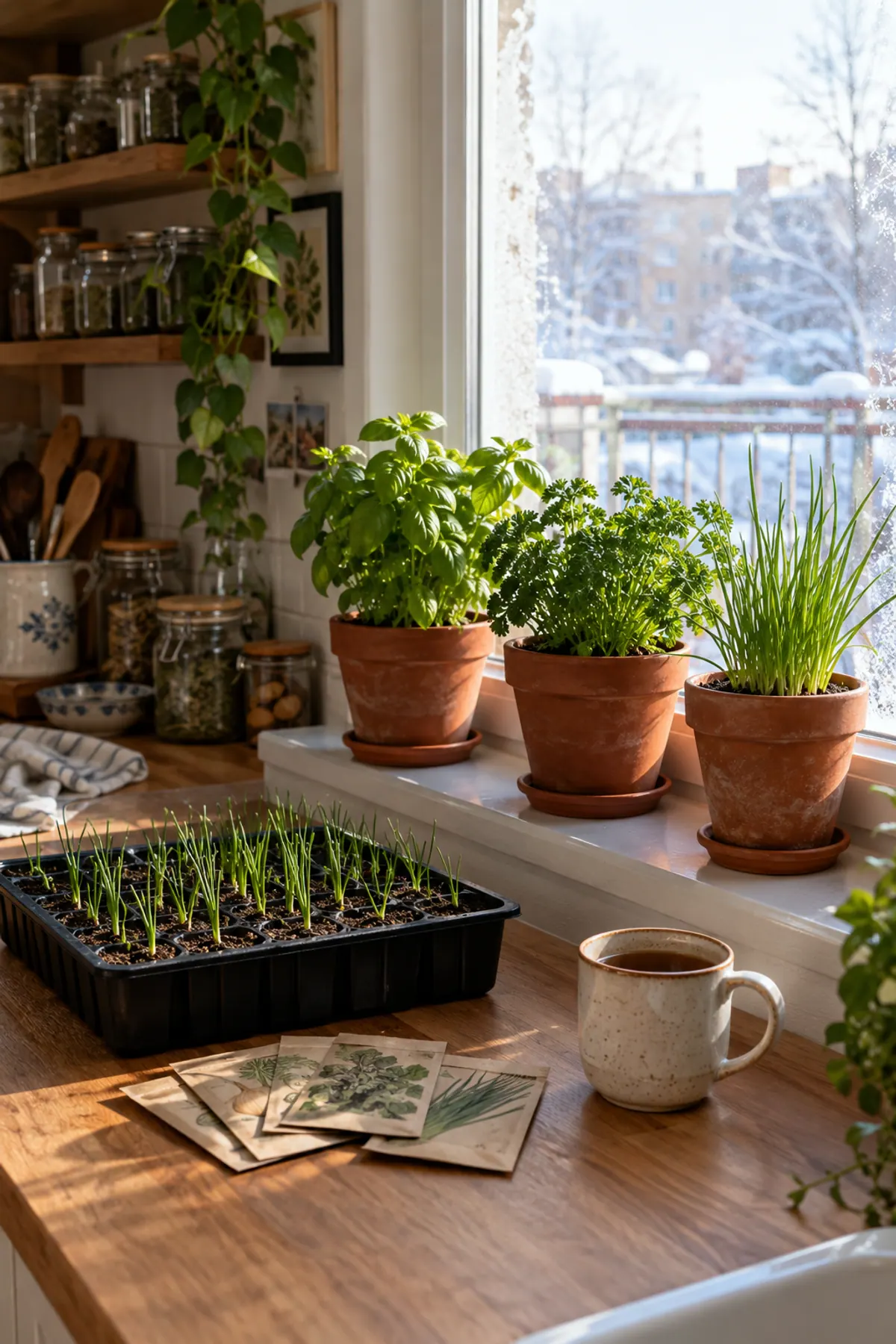
These work in Minnesota or Mississippi, because they never leave the house. A bright south or west window helps; in a dim apartment, one LED light on a timer does the job.
1Chives on a sunny sill
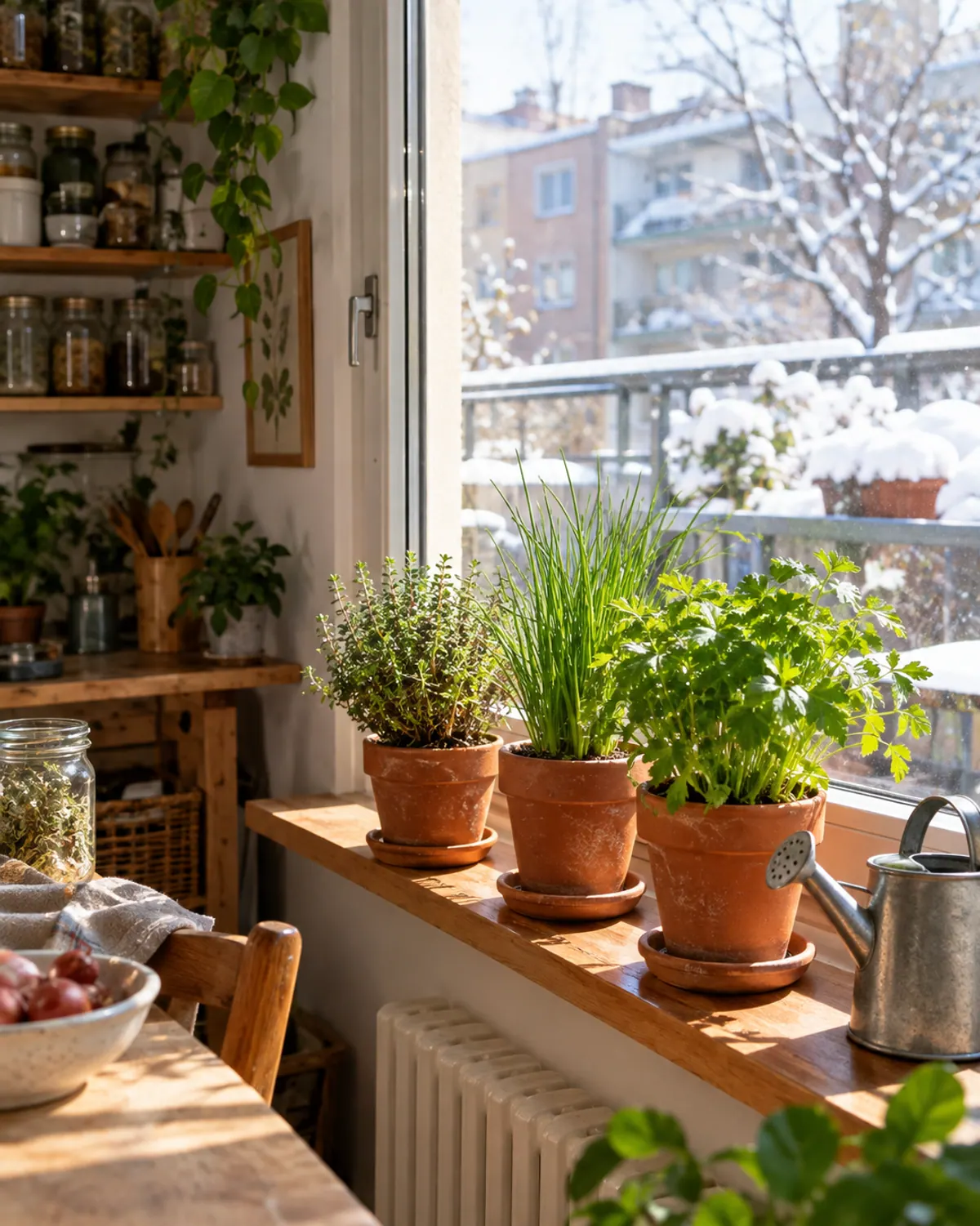
When: any time in January.
How: pot up a clump from the garden or a nursery pot into a 6 inch pot with drainage. Snip the outer blades 2 inches above the soil and they regrow from the base.
- Pets: chives are on the ASPCA toxic list for cats and dogs, so keep the pot out of reach.
Drainage holes and room for a full clump.
2Parsley from seed
When: early January for a spring windowsill crop.
How: parsley is slow to sprout, often two to three weeks, so many gardeners soak the seeds overnight first. Sow in a deep pot, since it grows a long taproot and dislikes moving.
- Flat-leaf parsley tends to be easier indoors than curly.
- Pets: parsley is on the ASPCA toxic list for cats and dogs.
3Microgreens on the counter
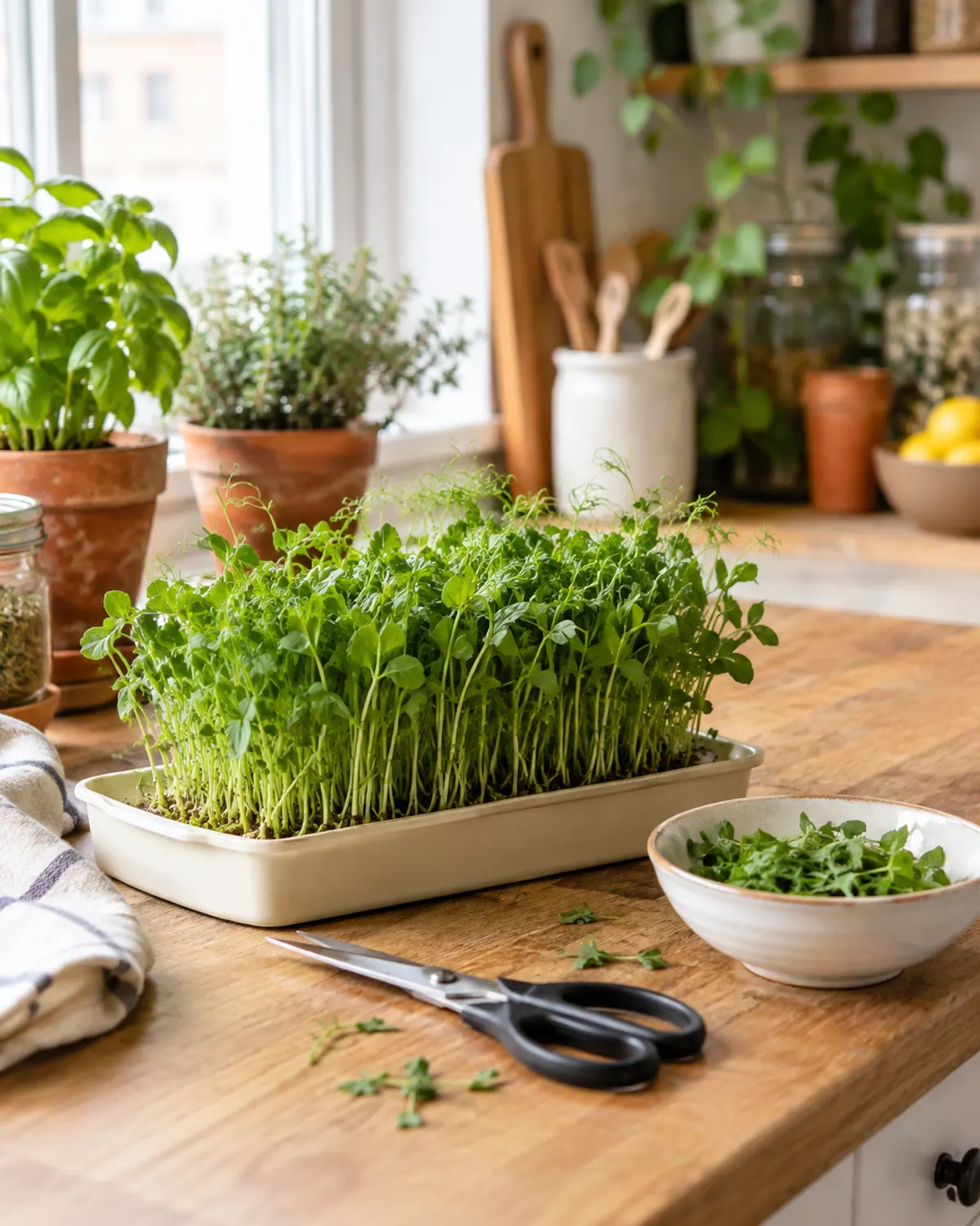
When: any week, start a new tray every 7 to 10 days.
How: sow pea, radish or sunflower seed thickly on 1 inch of moist mix in a shallow tray. Most are ready to cut in about 1 to 3 weeks, so this is the fastest harvest on the list. Our microgreens guide covers trays and seed amounts.
Pea, radish and broccoli seed in amounts sized for trays.
4Basil under a grow light
When: mid to late January if you have a light; wait for March if you only have a window.
How: basil wants warmth and long days. Keep it above about 60°F, away from cold glass, with a light 12 to 16 hours a day. More on winter basil in our basil care guide.
- Pets: basil is non-toxic to cats and dogs per the ASPCA.
5Garlic greens from a sprouting clove
When: any time.
How: push a few sprouting cloves from the kitchen into a pot of mix, pointed end up. Snip the green shoots like chives in two to three weeks. You will not get bulbs indoors, only the greens.
- Pets: garlic is toxic to cats and dogs, so keep it on a high shelf.
6Cut-and-come-again lettuce in a window box
When: January under a light, or in the sunniest window you have.
How: scatter loose-leaf lettuce seed in a window box or long planter and cut the leaves at 4 inches, leaving the base to regrow. Lettuce likes it cool, so a chilly sunroom suits it better than a warm kitchen.
Start indoors now for spring (zones 5 to 8)
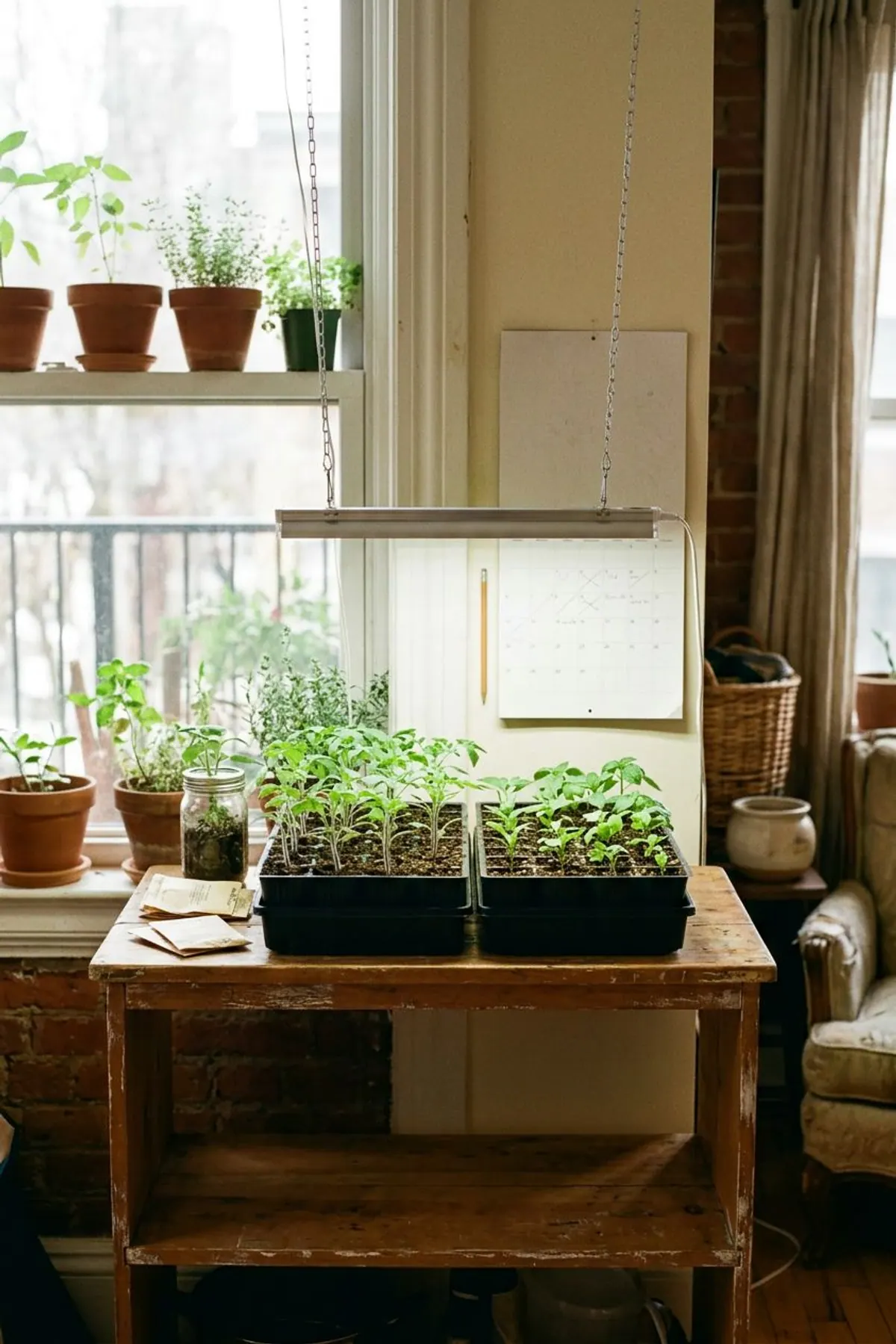
These are the slow crops that need a head start. A tray and one shelf light are enough; our seed starting setup for small spaces shows a one-shelf setup.
7Onions from seed
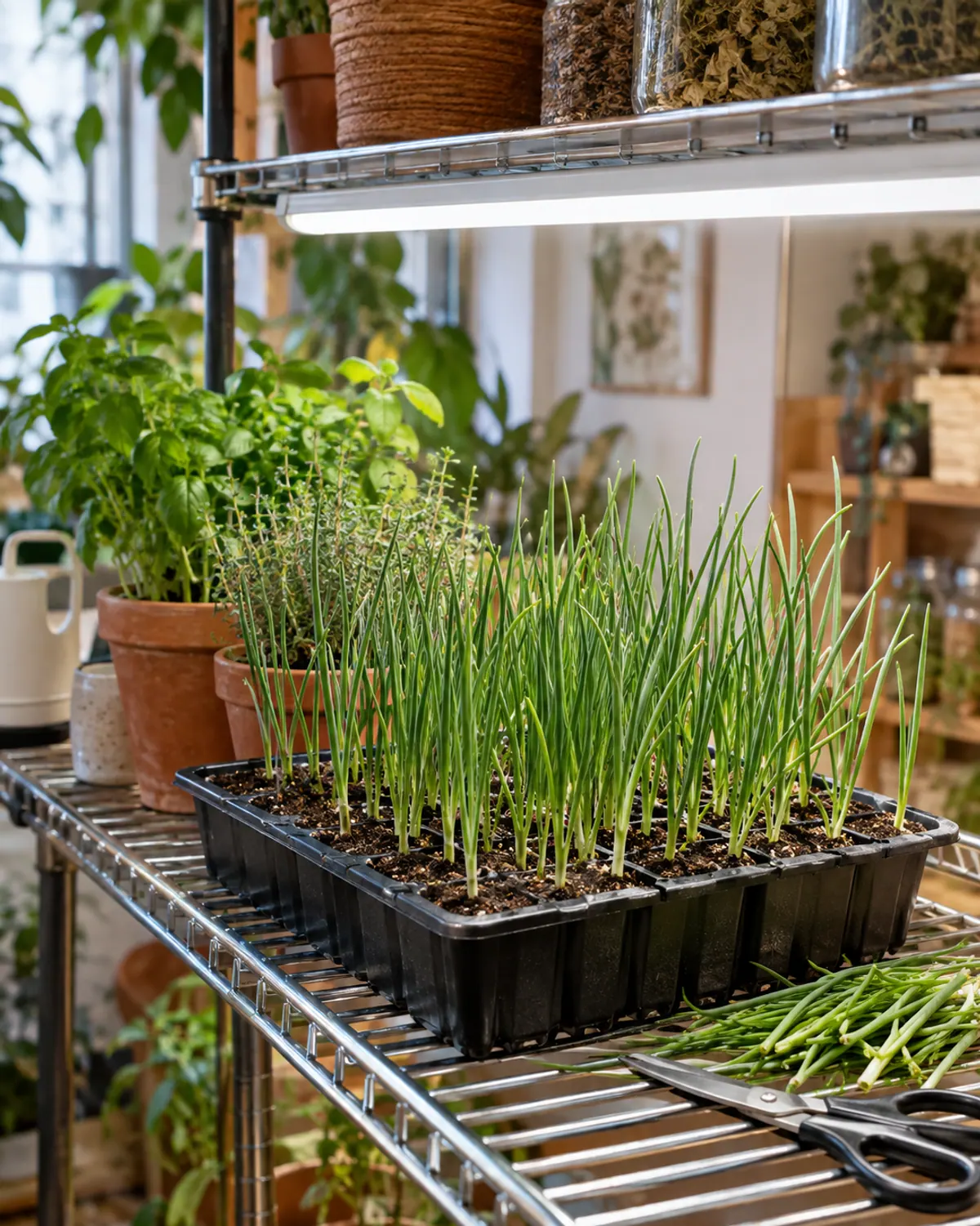
When: 10 to 12 weeks before your last frost. With an Atlanta-type frost around March 23 (zone 8), that is late December to mid-January.
How: sow thickly in a tray and keep the grass-like seedlings trimmed to about 4 inches so they thicken. Pick a day-length type for your latitude: short-day onions for the South, long-day for the North.
Reusable cells and a clear dome for slow starters.
8Leeks
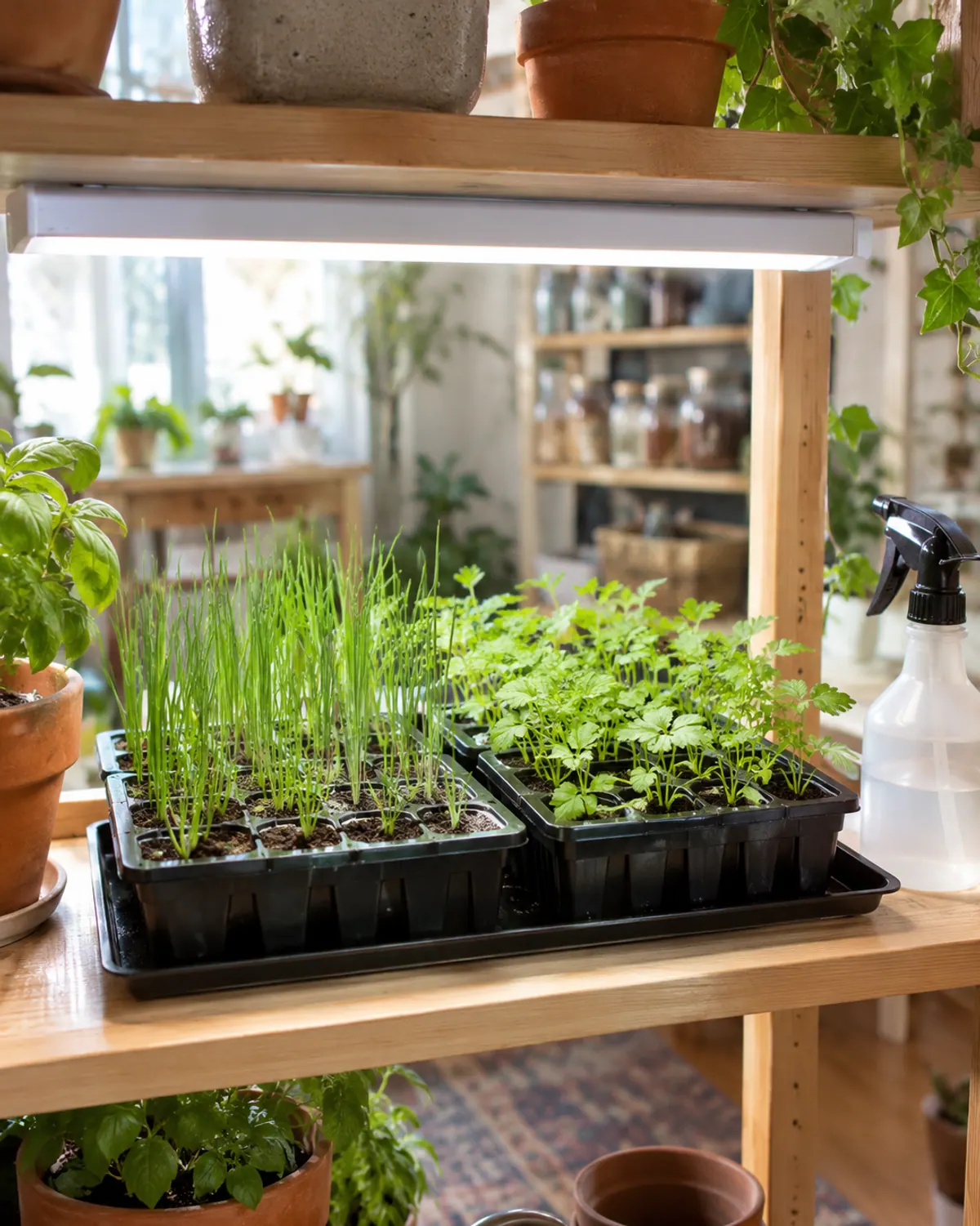
When: the same window as onions, 10 to 12 weeks before last frost.
How: sow in a deep tray or a tall pot. Trim the tops like onions. One small tray gives enough leeks for a deep balcony planter.
- Pets: leeks belong to the onion family, which the ASPCA lists as toxic to cats and dogs.
9Celery
When: 10 to 12 weeks before last frost.
How: the seed is tiny, so press it onto the surface and do not cover it. Keep it evenly moist. Celery is fussy, so think of it as a project for the patient gardener.
10Peppers
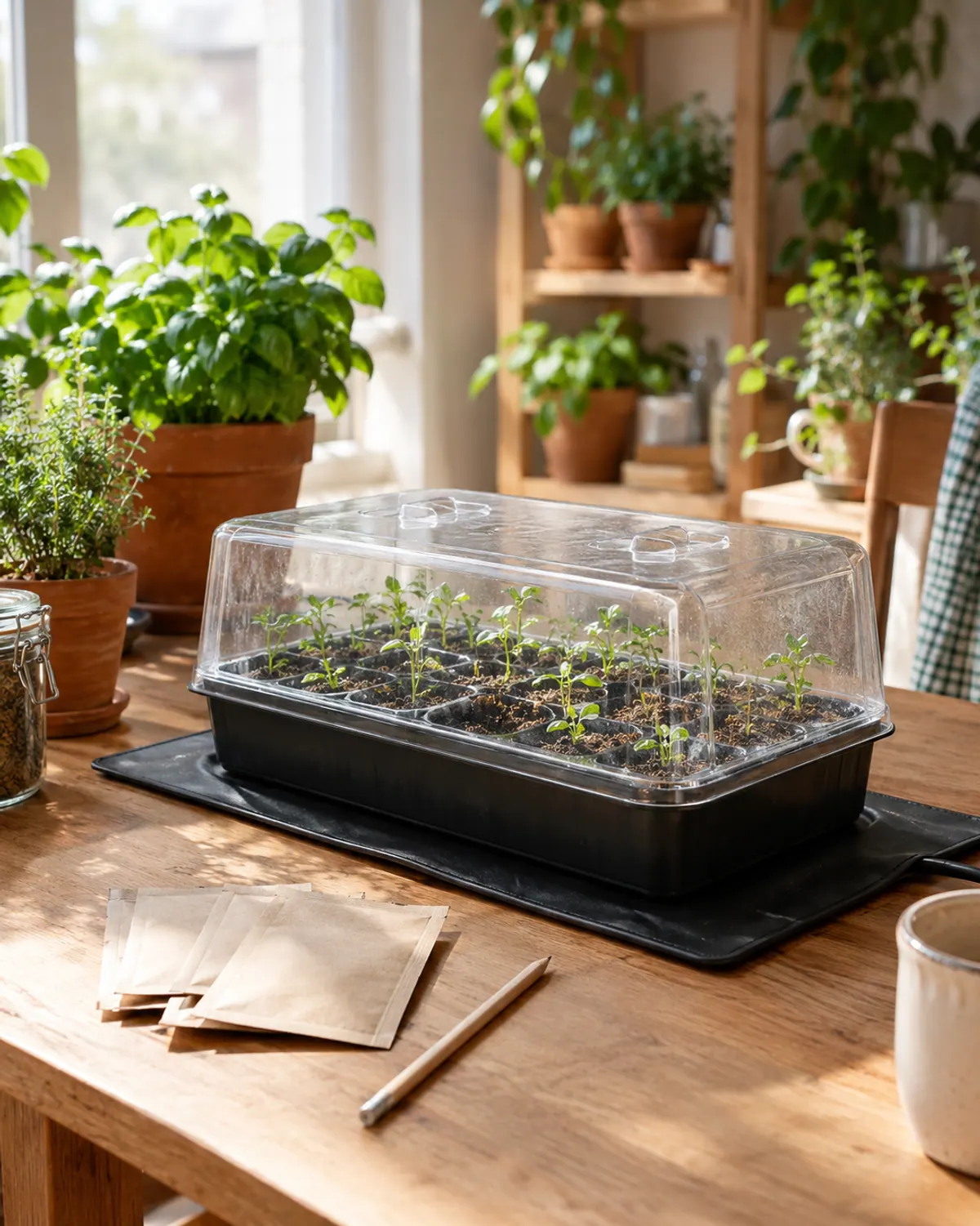
When: about 8 weeks before last frost. In zone 8 with a late-March frost, that means the last week of January. In colder zones, wait for February or March.
How: peppers sprout slowly in a cold room. A seedling heat mat under the tray speeds them up, and the light goes on as soon as the first loop of stem appears.
Warms the mix so slow seeds like peppers sprout sooner.
11Eggplant
When: 8 to 10 weeks before last frost, so mid to late January in zone 8.
How: treat it like peppers: warmth for sprouting, then strong light. A compact variety fits a 5 gallon pot on a patio later in spring.
- Pets: the leaves and stems of eggplant, peppers and tomatoes are not pet food; keep trays where pets cannot chew them.
Winter sow outside in milk jugs (zones 4 to 7)
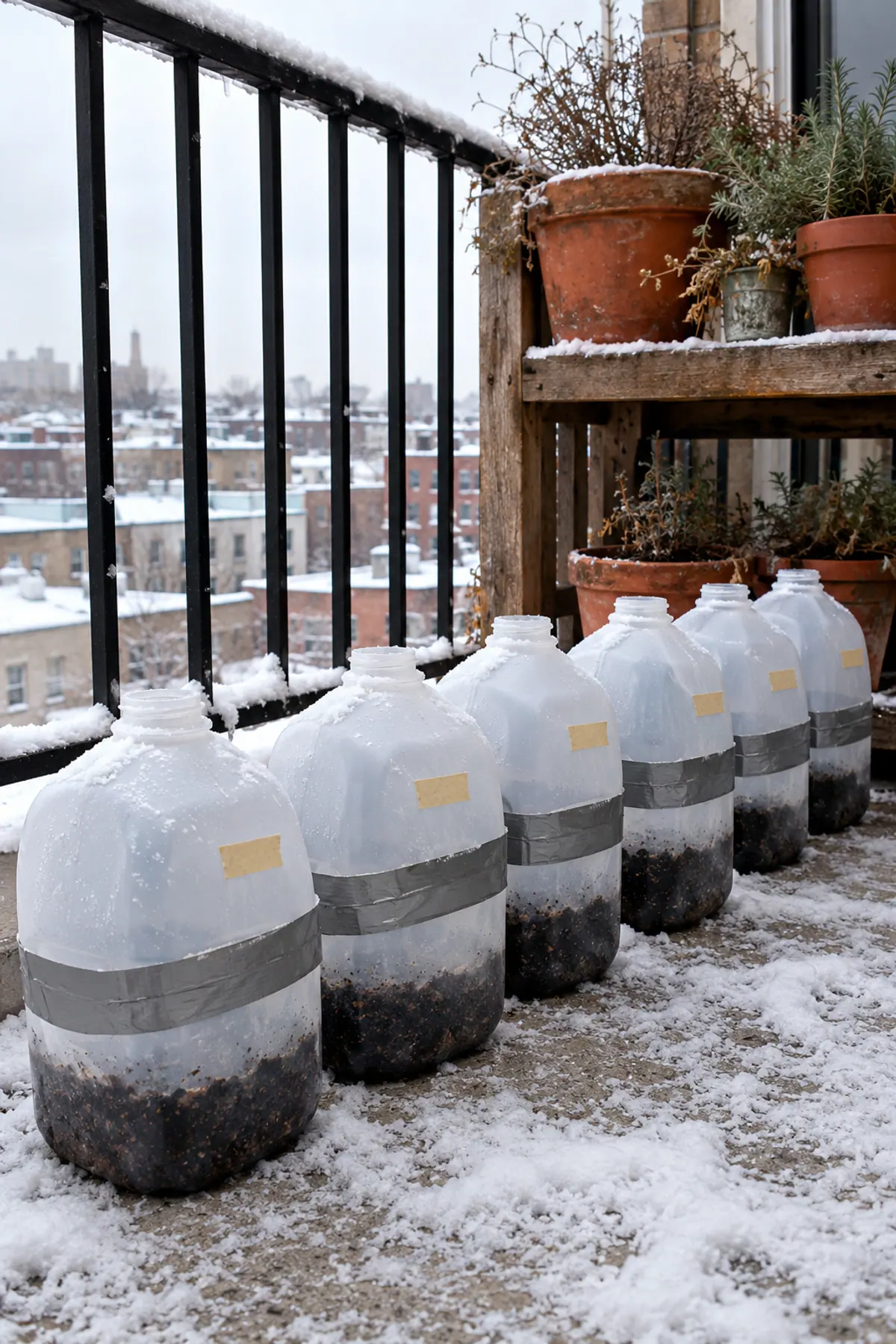
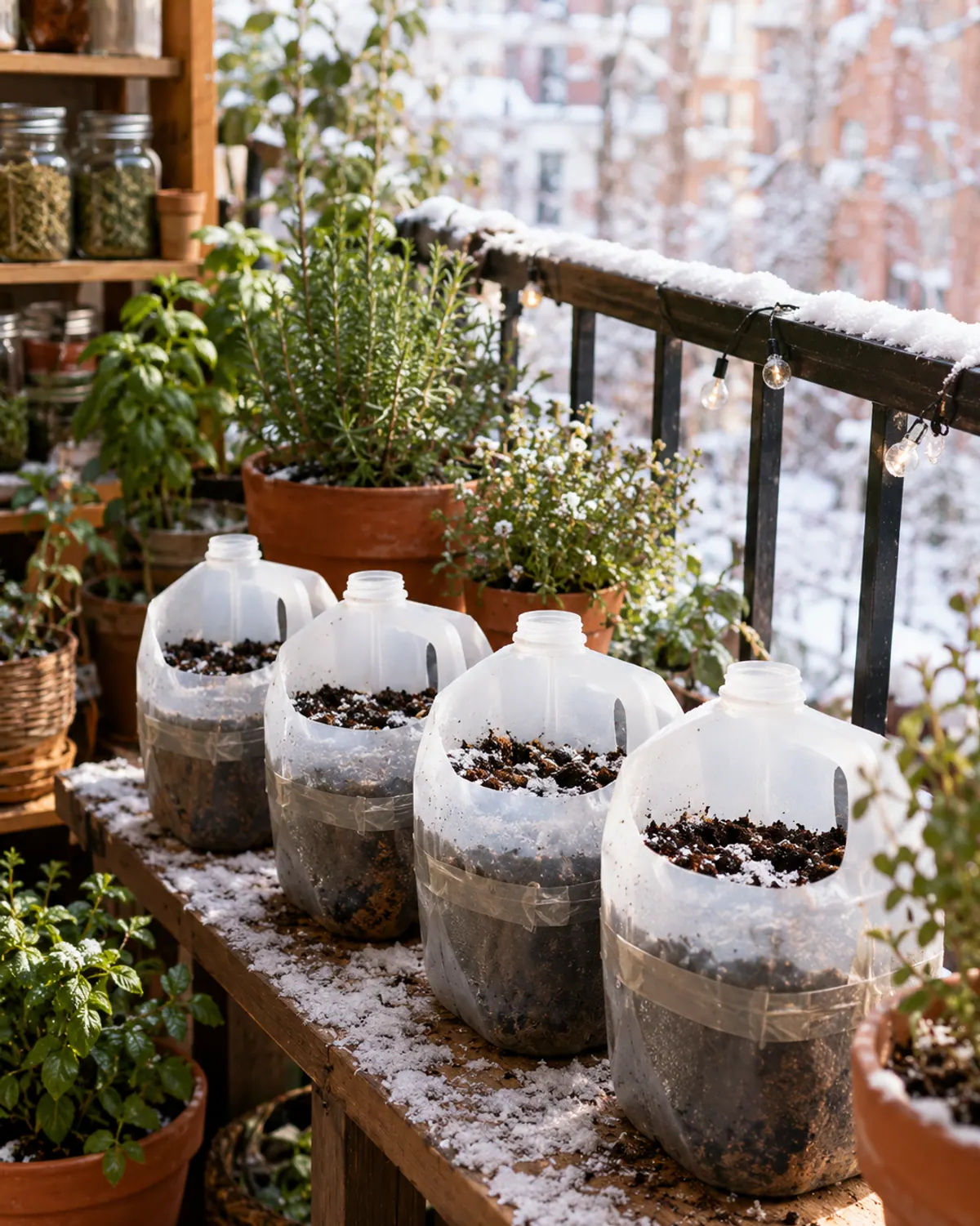
Winter sowing uses clear jugs as tiny greenhouses on a balcony or step. Rain gets in through the open top, the jug holds warmth, and seeds sprout when the weather tells them to. It suits seeds that like a cold spell.
12Poppies and larkspur in jugs
When: January to February.
How: cut a milk jug most of the way around, add 3 to 4 inches of moist mix, sow on the surface, tape it shut and leave the cap off. Set it somewhere it gets sun and rain. Both flowers dislike being moved, so sow several jugs and plant the clumps out whole.
- Pets: larkspur is on the ASPCA toxic list for cats and dogs.
Fine mix that drains in a jug and holds moisture.
13Chives and other hardy herbs in jugs
When: January to February.
How: chives, along with many hardy perennials, sprout well from winter sowing. When the seedlings are a few inches tall in spring, move the whole clump to a pot. Our winter garden ideas cover more ways to keep a cold balcony going.
Plant outside in pots (zones 8 to 10)
In the Gulf South, Texas, Florida, Arizona and coastal California, January is cool-season planting time. Texas A&M AgriLife's Travis County calendar for Austin lists transplants of onions, broccoli, cabbage, chard, collards, lettuce and spinach for January, plus seeds of radishes, carrots, beets, turnips and peas. Check your own state guide; Florida gardeners can use UF/IFAS's planting guide by region.
14Short-day onion transplants
When: January in zones 8 and 9.
How: buy bundles of onion plants, often sold as varieties such as Texas Legend or 1015Y, and set them about 4 inches apart in a wide container at least 8 inches deep. Fertilize a few weeks after planting.
- Pets: onions are on the ASPCA toxic list for cats and dogs.
15Lettuce and spinach
When: January through February in zones 8 to 10.
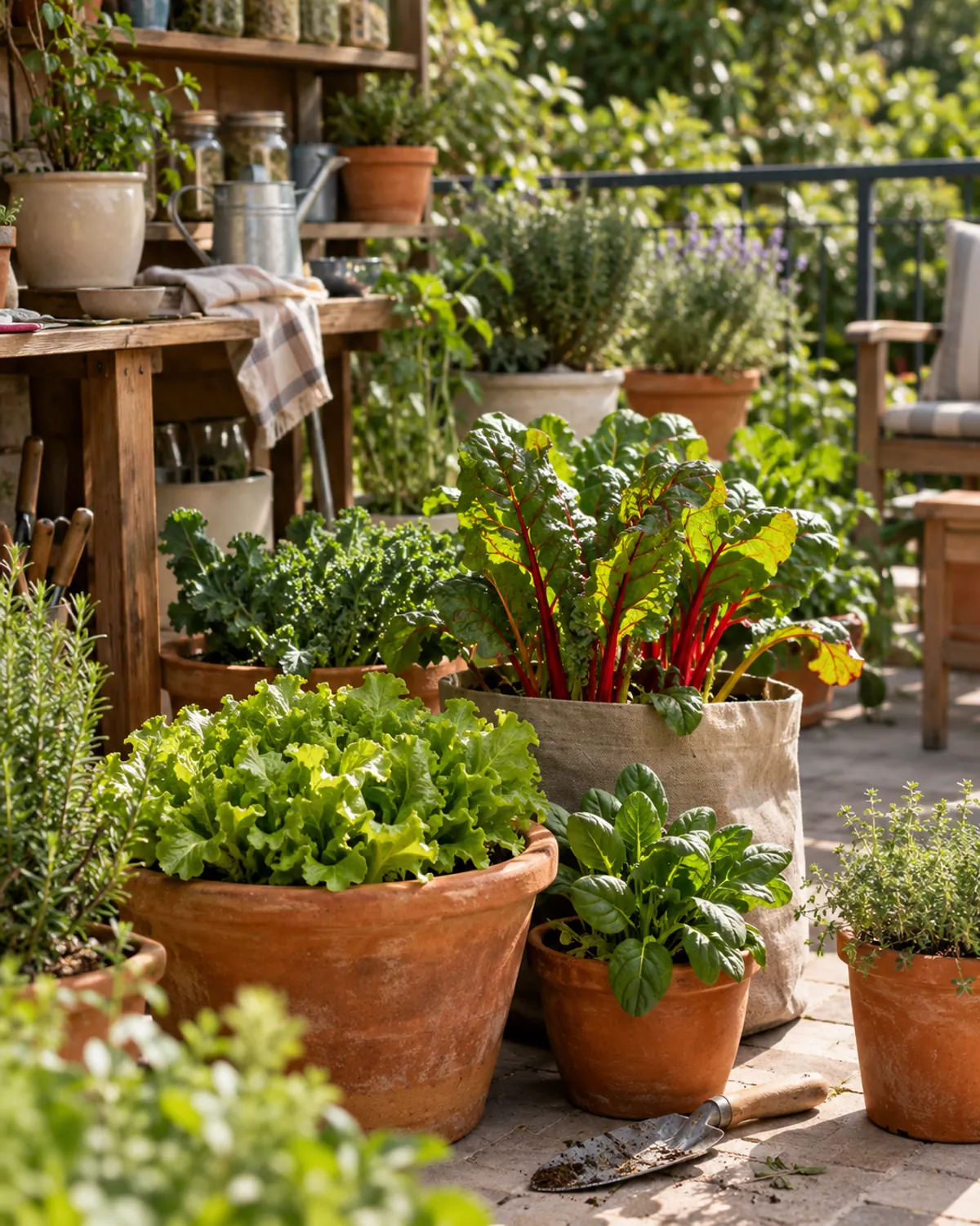
How: set transplants or sow seed in a wide, shallow pot or window box. Both like the cool, short days, and lettuce bolts when the heat arrives, so plant now rather than later.
Light, cheap containers that drain well on a patio.
16Broccoli and cabbage transplants
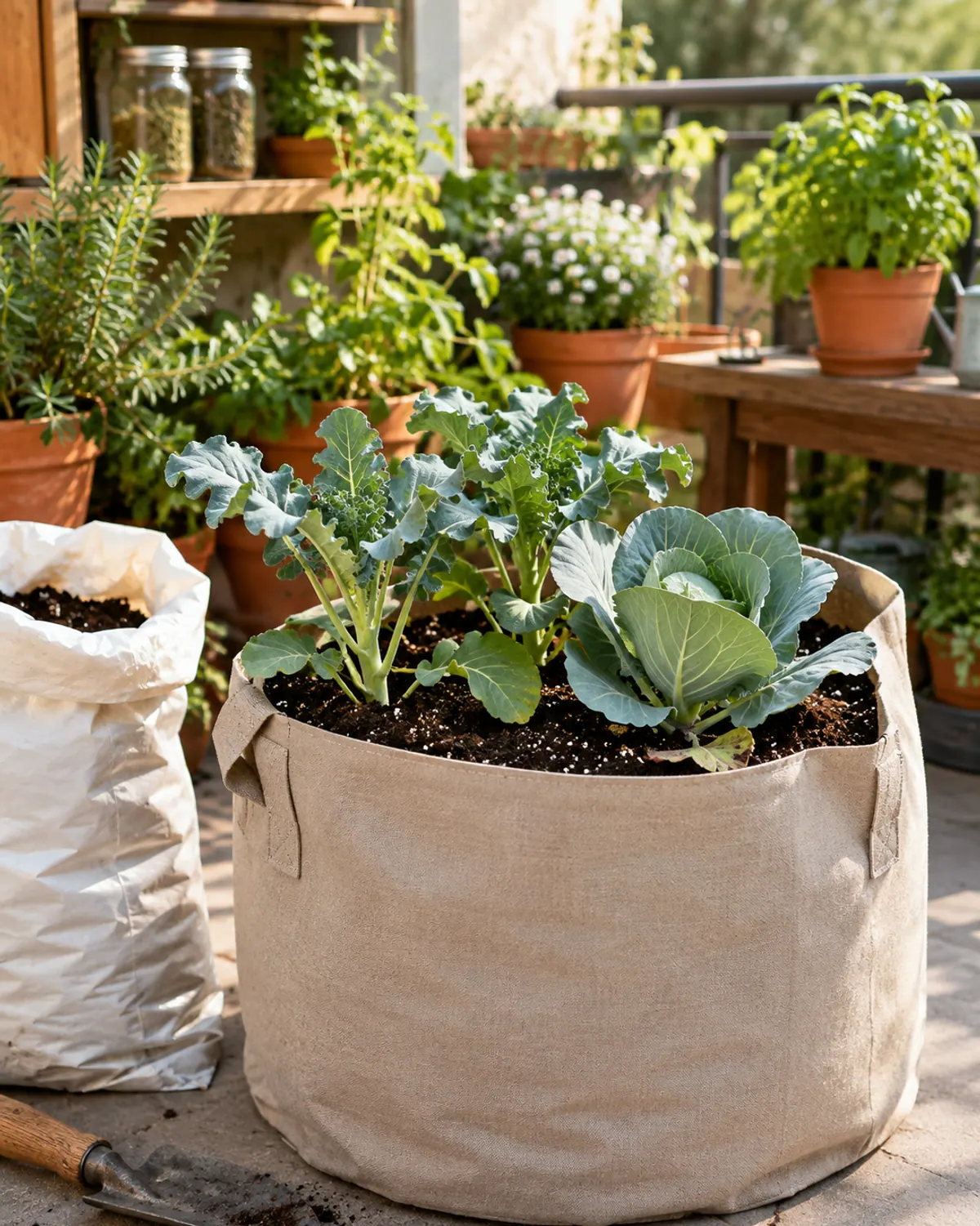
When: January in zones 8 to 10, as early as you can so they mature before the heat.
How: one broccoli or cabbage plant per 5 gallon pot or grow bag, in full sun. Cover with frost cloth if a hard freeze is forecast.
Cut to size for pots on a cold night.
17Swiss chard and collards
When: January in zones 8 to 10.
How: both handle cool weather and keep producing if you pick the outer leaves. Rainbow chard in a glazed pot doubles as patio color.
18Radishes and carrots from seed
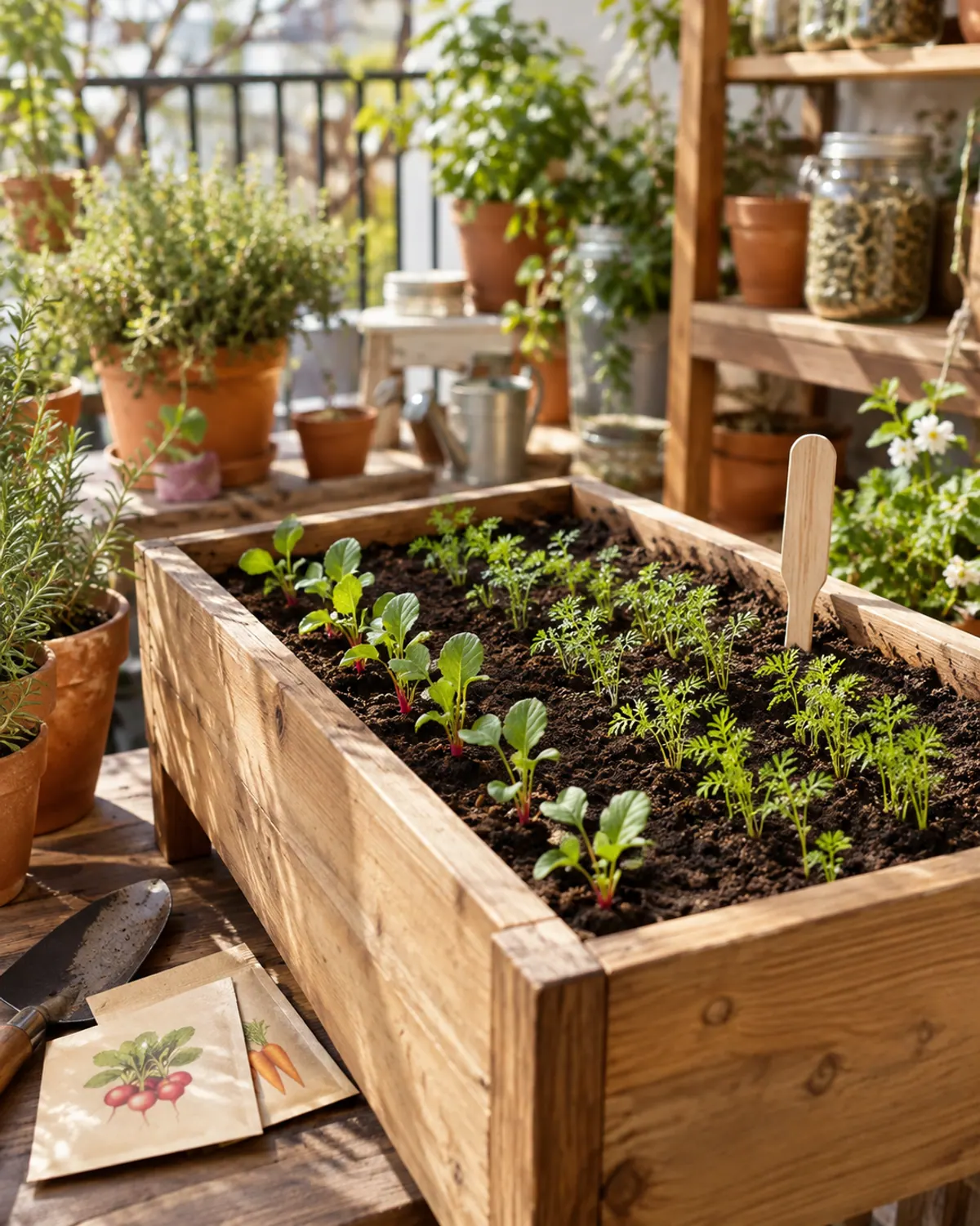
When: January in zones 8 to 10; radishes again every two weeks.
How: sow straight into a planter box at least 8 to 12 inches deep for carrots. Radishes are often ready in about a month. Thin seedlings so roots have room.
Deep enough for short carrots on a patio.
19Snap and snow peas on a trellis
When: January in zones 8 to 10; the Austin calendar lists peas as January seeds.
How: sow seed 1 inch deep along the back of a deep planter and give them a trellis or netting to climb. Dwarf varieties stay around 2 to 3 feet, which suits a balcony railing.
- Pick pods often so the plants keep flowering.
20Sweet peas in a deep pot
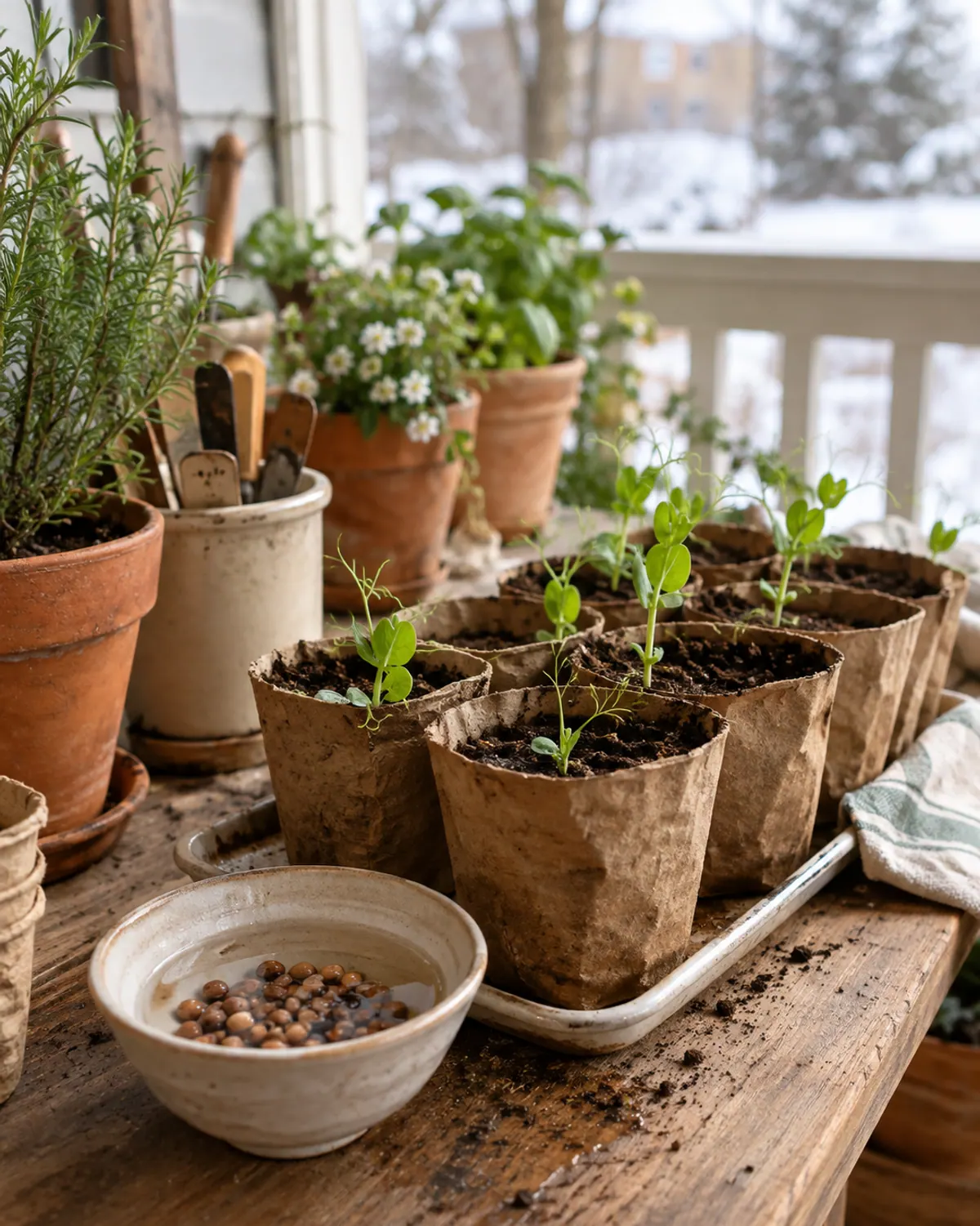
When: January in mild zones; Mississippi State Extension lists sweet peas, poppies and larkspur for January planting in Mississippi.
How: soak seeds overnight, sow 1 inch deep in a deep pot and give them a trellis. They want to bloom before summer heat.
- Pets: sweet peas are on the ASPCA toxic list; grow them where pets do not graze.
21Bare-root roses and fruit trees in containers
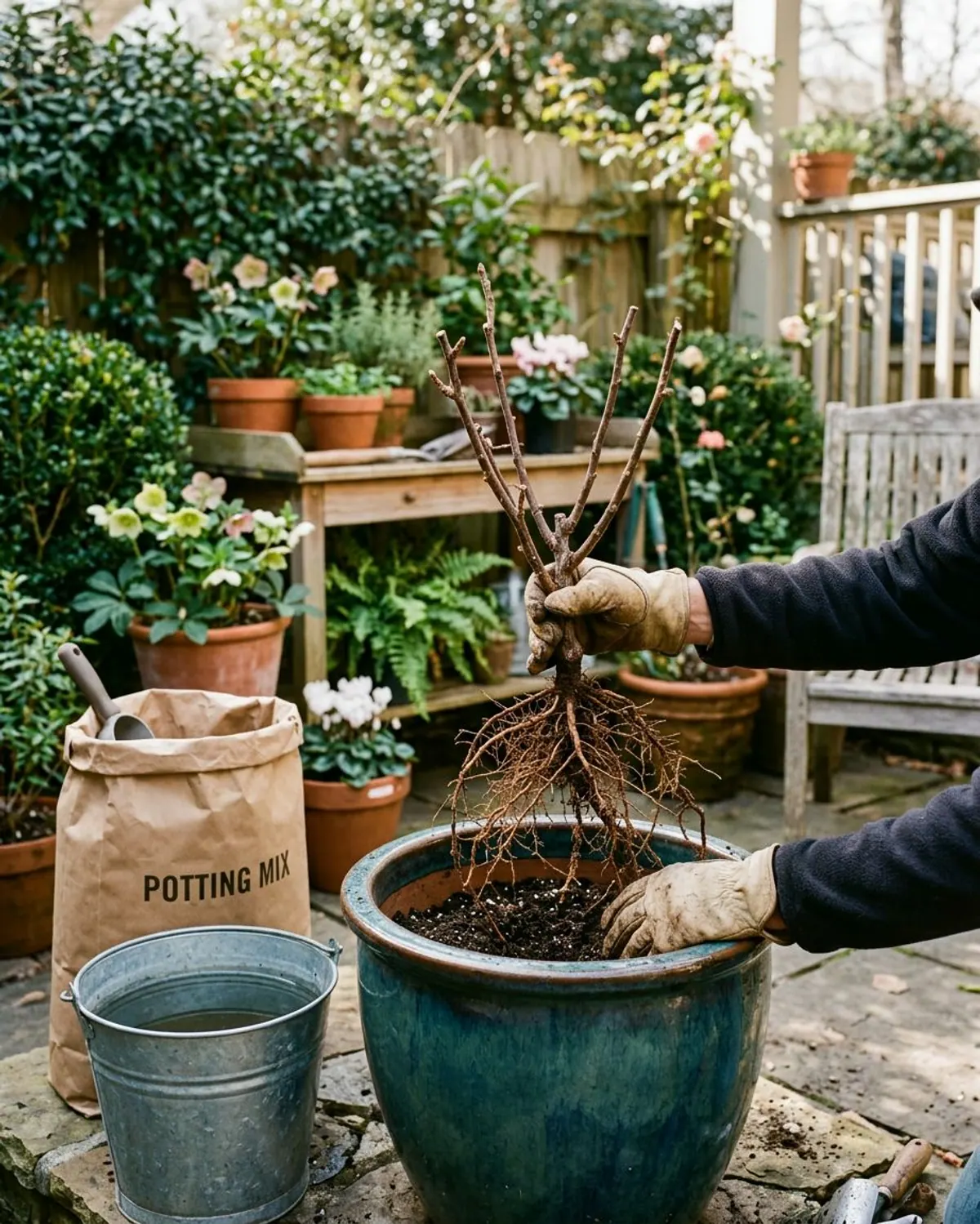
When: January to early February in zones 8 to 10, while plants are dormant.
How: soak the roots for a few hours, spread them over a cone of mix in a large pot at least 15 gallons for a fruit tree, and water in well. Pick dwarf or patio varieties for a small space.
January planting do and avoid
Do
- Count back from your own last frost date
- Start slow crops (onions, leeks, celery) first
- Use a light on a timer for indoor seedlings
- Plant cool-season crops outside early in zones 8 to 10
- Label every tray with the sowing date
Avoid
- Starting tomatoes now in a cold zone, which gives leggy plants
- Garden soil in seed trays
- Leaving seedlings on a cold windowsill at night
- Assuming a southern January list fits a northern balcony
- Skipping frost cloth when a freeze is forecast
Your January planting checklist
A planting log is what makes next January easier. The Herb Garden Journal + 20 Herb Growing Cards has a sowing and propagation log and a seed and purchase record, and the Indoor Winter Herb Garden Kit covers windowsill herbs and grow light hours for the indoor half of this list.
Shop January planting supplies
- Start here
LED shop light, 2 to 4 ft, linkable
Typically $20 to $45
Hangs a few inches above seedlings; the biggest upgrade over a window.
Check price on Amazon for LED shop light, 2 to 4 ft, linkable -
Plug-in outlet timer
Typically $8 to $15
Runs the light on a steady schedule.
Check price on Amazon for Plug-in outlet timer -
Seed starting trays with humidity domes
Typically $12 to $25
For onions, leeks, peppers and celery.
Check price on Amazon for Seed starting trays with humidity domes -
Seedling heat mat
Typically $12 to $25
Speeds up peppers and eggplant in a cool room.
Check price on Amazon for Seedling heat mat -
Frost cloth roll
Typically $6 to $14
Protects mild-zone pots on cold nights.
Check price on Amazon for Frost cloth roll
Herb notes on this site are for growing and cooking, not medical advice. If you are pregnant, nursing or take medication, ask your doctor before using any herb beyond normal cooking amounts. If a pet chews a plant, call your vet or the ASPCA Animal Poison Control Center at (888) 426-4435. For more small-space ideas, see our small space garden ideas.
If you plan to grow all year, the Small Space Garden Binder ($25) keeps your calendars, logs and planners in one binder, with a month-by-month page that says which pages to use now. The code HERB20 takes 20% off the binder at checkout.
Frequently asked questions
What vegetables can I plant in January?
In zones 8 to 10, plant onion transplants, lettuce, spinach, broccoli, cabbage, chard, collards, radishes, carrots and peas outside. In colder zones, start onions, leeks and celery indoors and grow microgreens and lettuce under a light.
What can I plant in January in zone 9?
Zone 9 is cool-season planting time: onion transplants, lettuce, spinach, broccoli, cabbage, chard, beets, turnips, radishes, carrots, peas, sweet peas and bare-root roses or fruit trees. Check your state extension guide for local dates.
What can I plant in January in zone 6?
Outdoors, winter sow hardy flowers and herbs in milk jugs. Indoors, grow windowsill herbs and microgreens. Onions and leeks usually start in February in zone 6, counted 10 to 12 weeks back from your last frost.
Is January too early to start seeds indoors?
Not for slow crops in zones 7 and 8, such as onions, leeks and celery. Tomatoes and peppers started in January in a cold zone will usually be too big before it is warm enough to plant them out.
Can I grow herbs indoors in January?
Yes. Chives, parsley, thyme and microgreens do well in a bright window. Basil needs warmth and long days, so give it a grow light for 12 to 16 hours a day or wait until March.

Save it for later
Pin this to your Seasonal Garden Tasks board so it's there when you need it.
Save to Pinterest