This post contains affiliate links. As an Amazon Associate we earn from qualifying purchases, at no extra cost to you. Read our disclosure.
Safety first: Herbs can be powerful. If you are pregnant, nursing, take medication or have a health condition, check with your doctor or pharmacist first. Please read our herbal & garden safety notes before you start.
Key takeaways
- Most winter losses in pots are frozen or soggy roots. Group, wrap and raise pots in November.
- For winter color, plant dwarf evergreens, heuchera, pansies and hellebores in frost-proof pots in October.
- A cold frame or zip mini greenhouse keeps hardy greens going on a patio or balcony.
- Timing here is for zones 5 to 8. Check your frost date and shift it for your area.
- Tender plants come inside; see our overwintering guide.
In this post26 sections
- How to use these winter garden ideas
- Keep it alive: protect pots on a balcony or patio
- 1. Group pots against a sheltered wall
- 2. Wrap pots in burlap or bubble wrap
- 3. Swap to frost-proof planters and pot feet
- 4. Keep frost cloth and cover bags ready
- 5. Bring tender pots in
- 6. Mulch the small bed
- Keep it pretty: winter pots for a front step or balcony
- 7. Plant a dwarf evergreen, pansy and heuchera pot
- 8. Grow hellebores by the front step
- 9. Fill a window box with winter pansies and violas
- 10. Add berried and colored stems
- 11. Make a sheltered patio corner with a wind screen and lights
- 12. Plant ornamental cabbage and kale
- Keep it growing: winter gardening for greens and herbs
- 13. Grow salad greens in a cold frame
- 14. Use a zip mini greenhouse on a balcony
- 15. Keep hardy herbs outside
- 16. Try milk-jug winter sowing
- 17. Grow herbs and greens on an apartment sill
- Watering, feeding and pruning in a winter garden
- Winter garden mistakes that kill plants
- Small winter garden checklist: October to February
- Winter garden starter list
- FAQ
How to use these winter garden ideas
Each idea below is tagged with the month to do it, written for USDA zones 5 to 8 and for small spaces: a balcony, a patio, a front step or one small bed. Dates shift with your climate, so check your frost date and move the timing earlier in colder zones and later in milder ones.
| Goal | Ideas | Main months |
|---|---|---|
| Keep it alive | 1 to 6: group, wrap, raise and cover pots | October to November |
| Keep it pretty | 7 to 12: winter pots, hellebores, stems, a sheltered corner | October to February |
| Keep it growing | 13 to 17: cold frame, mini greenhouse, hardy herbs, winter sowing, sill greens | October to February |
Keep it alive: protect pots on a balcony or patio
Roots in a pot are far more exposed than roots in the ground, because cold reaches them from every side. Most winter losses in small gardens are frozen or waterlogged roots, not frosted leaves.
1Group pots against a sheltered wall
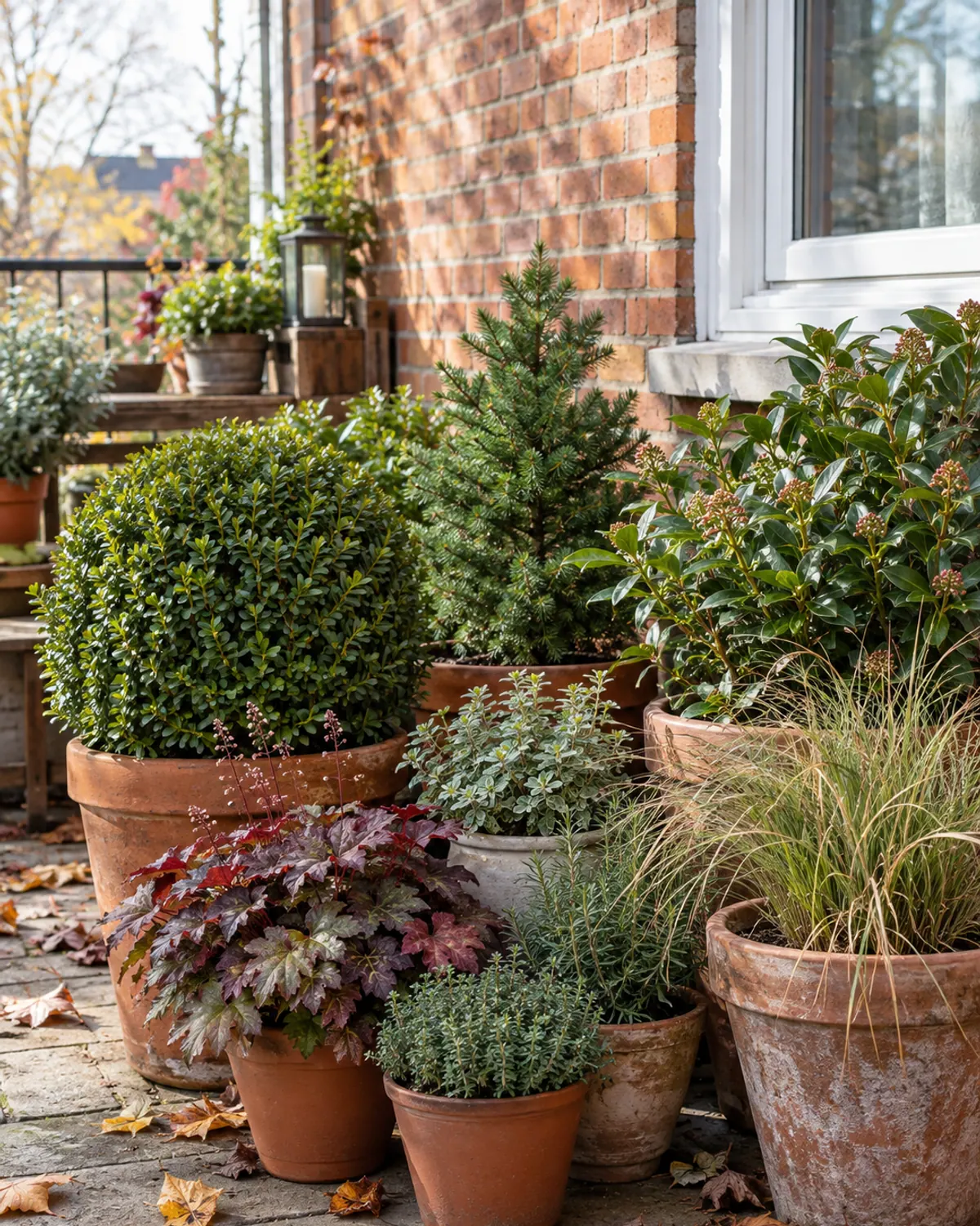
When: November, before the first hard freeze. Cluster your hardy pots tight together against the house wall or balcony railing side that gets the least wind. The pots shelter each other and the wall gives back a little warmth.
- Put the smallest, most tender pots in the middle of the group.
2Wrap pots in burlap or bubble wrap
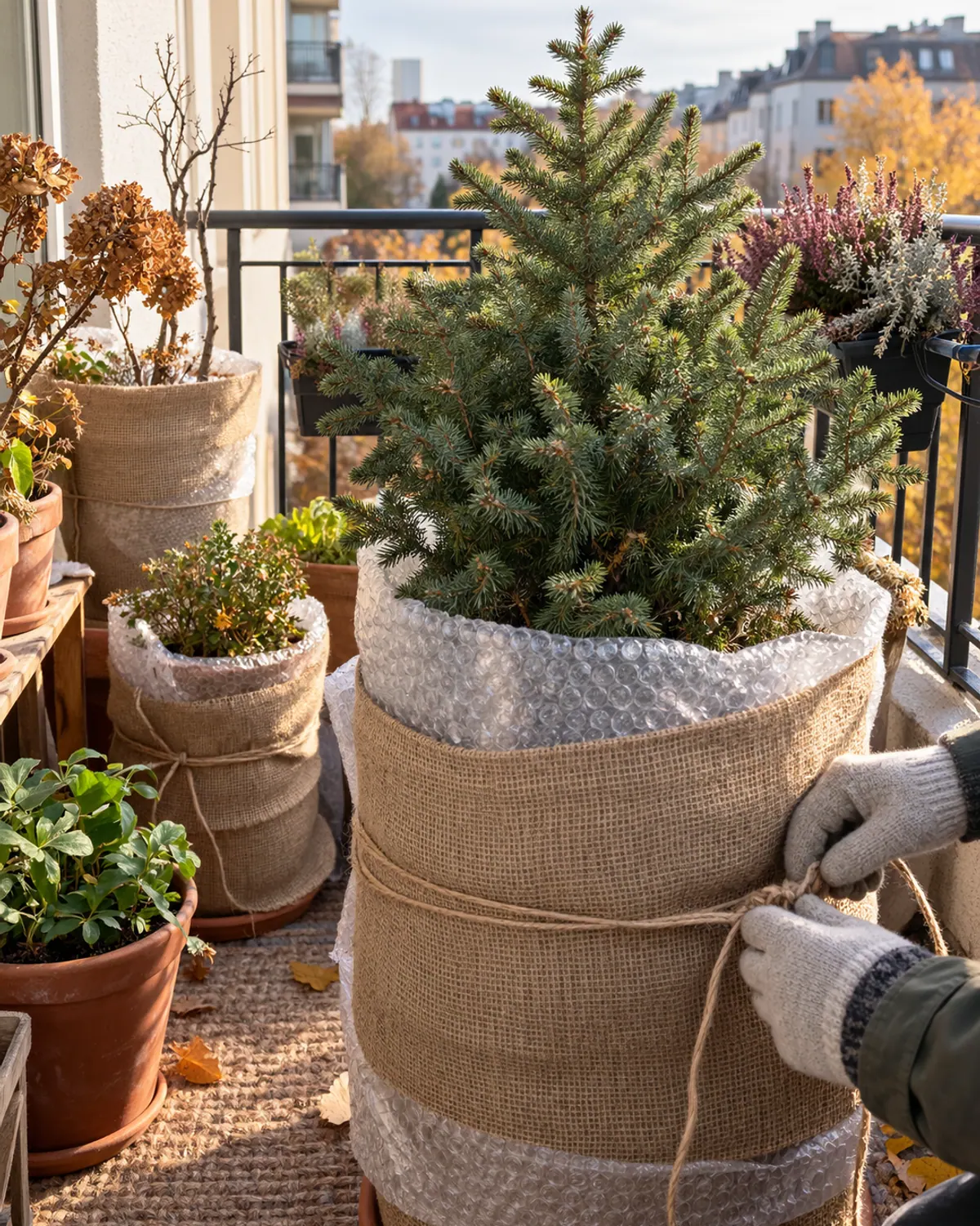
When: November. Wrap the sides of each pot, not the plant, in bubble wrap, then a layer of burlap for looks. It slows how fast the root ball freezes and thaws.
- Leave the drainage hole uncovered so water can still escape.
Wraps pots so roots freeze more slowly.
3Swap to frost-proof planters and pot feet
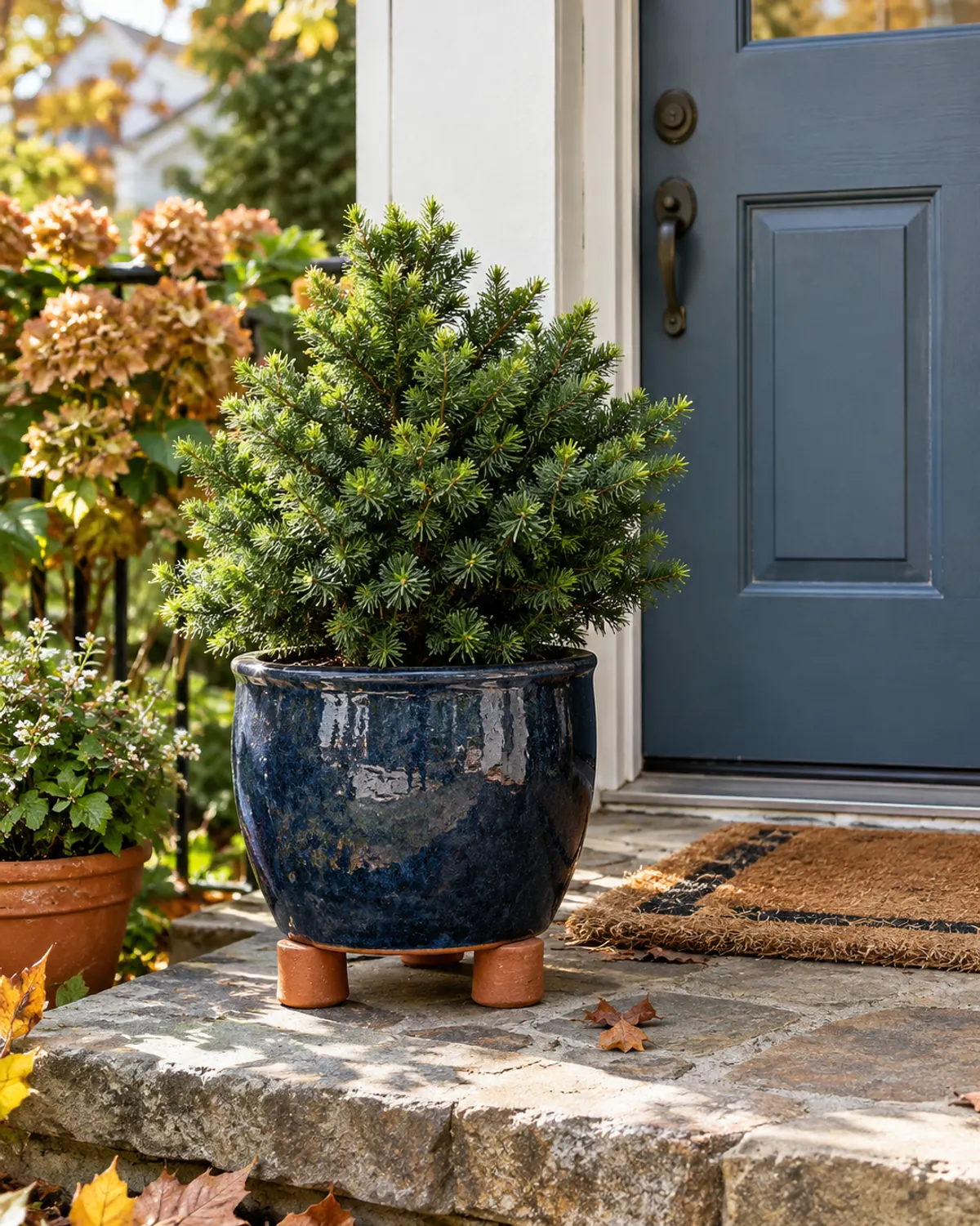
When: October, while the weather is mild. Thin terracotta can crack when wet soil freezes and expands. Fiberglass, resin and thick glazed pots labeled frost-proof hold up better, and pot feet lift them so water drains instead of freezing underneath.
- Empty and store any terracotta you are not using for winter.
Lifts pots so they drain and don't freeze to the ground.
4Keep frost cloth and cover bags ready
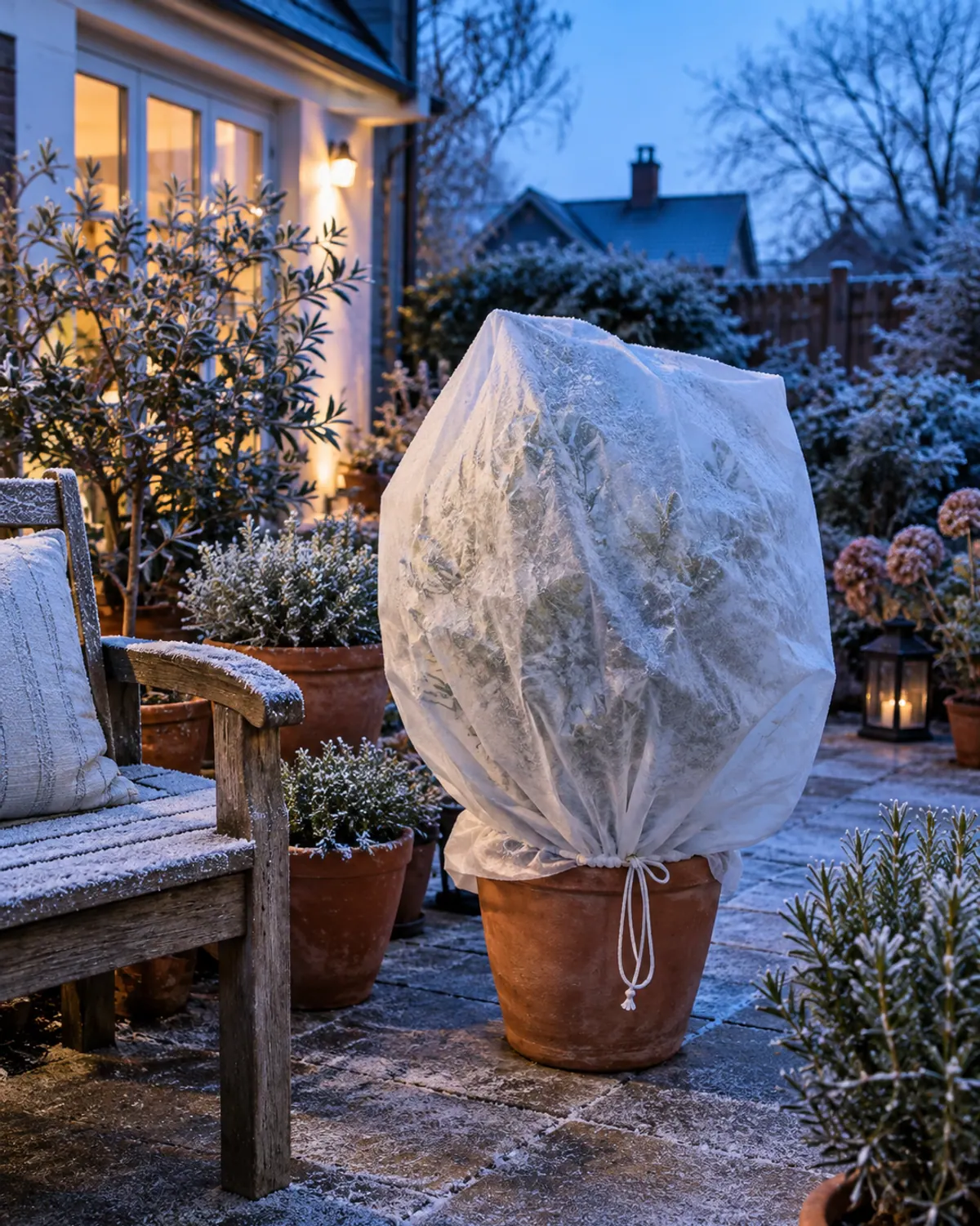
When: October to March, on cold nights. A lightweight frost cloth or a drawstring cover bag over a pot keeps off a few degrees of frost on a clear night. Put it on in the evening and take it off in the morning so plants get light.
- Don't use plastic sheeting directly on leaves; it can make frost damage worse.
Quick protection for single pots on frosty nights.
5Bring tender pots in
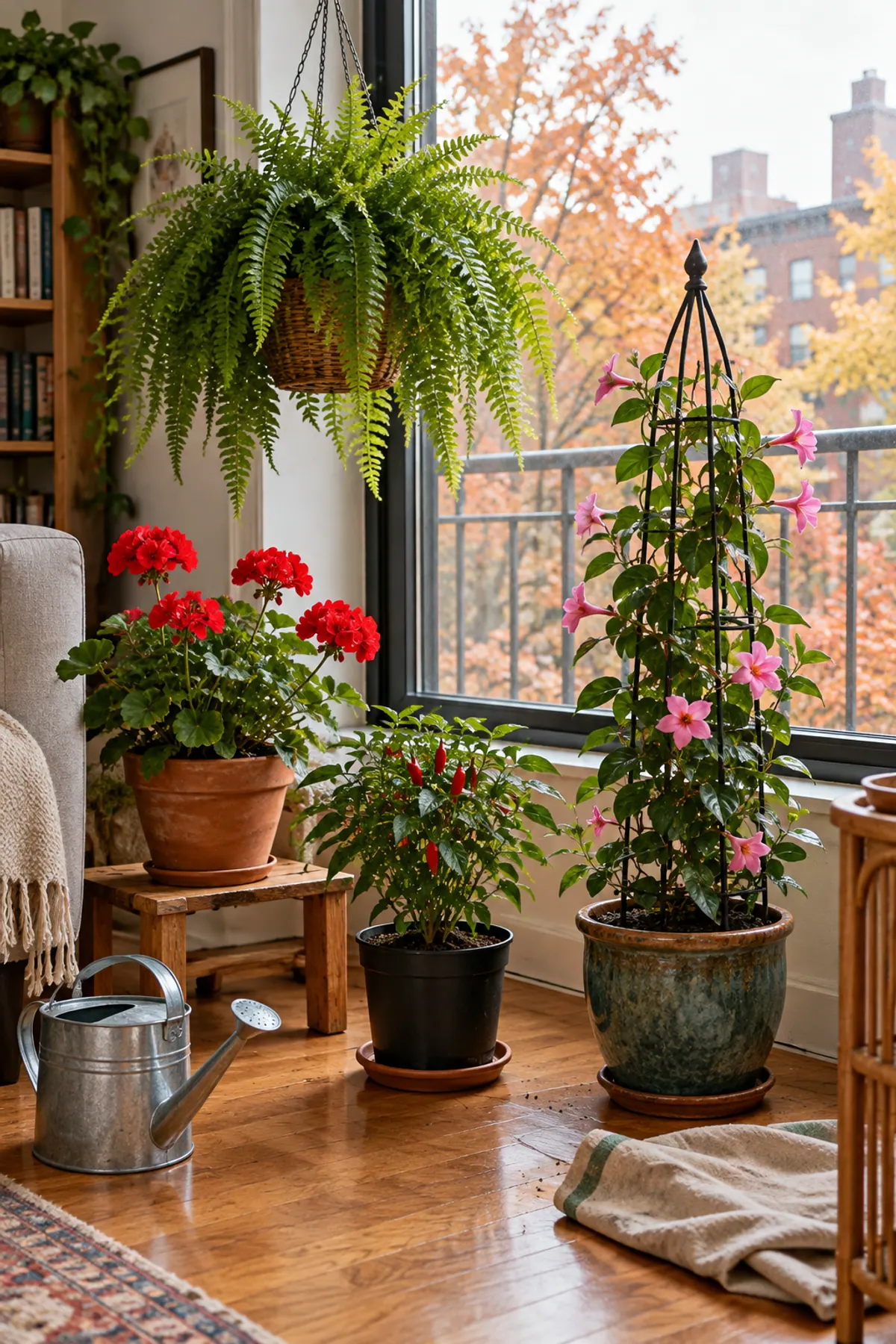
When: October, before nights reach freezing. Geraniums, peppers, tender herbs and tropical patio plants won't survive a zone 5 to 8 winter outside. Our full overwintering guide covers which to bring in and how to debug them first. For herbs coming inside, the Indoor Winter Herb Garden Kit helps you pick the right window. Herb notes here are about growing only, not medical advice.
- Bring plants in before the heating season dries the air, so they adjust gradually.
6Mulch the small bed
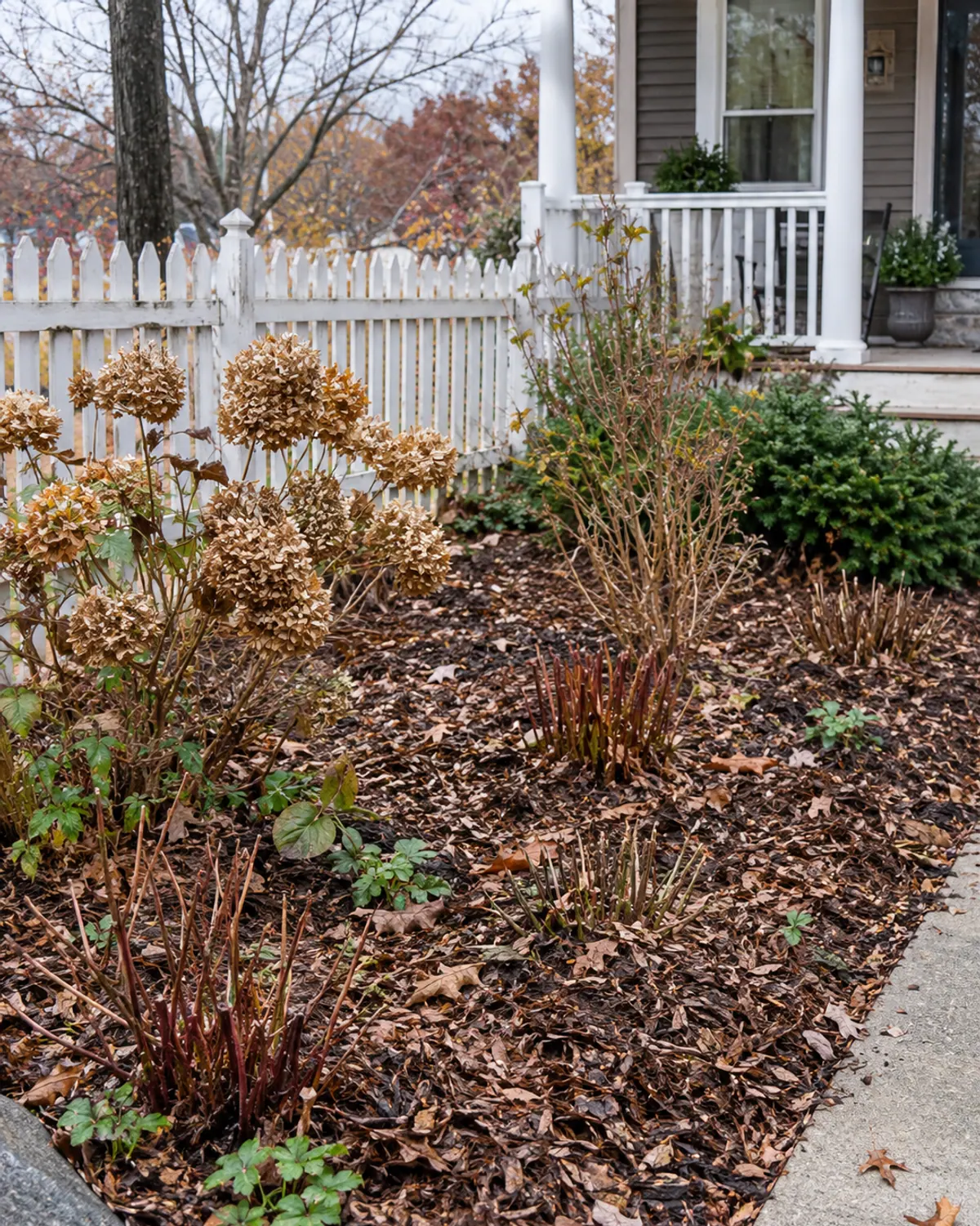
When: November, after the ground starts to cool. A few inches of shredded leaves, straw or bark over a small bed keeps the soil from freezing and thawing over and over, which can heave plants out of the ground.
- Keep mulch an inch away from stems and crowns.
Keep it pretty: winter pots for a front step or balcony
7Plant a dwarf evergreen, pansy and heuchera pot
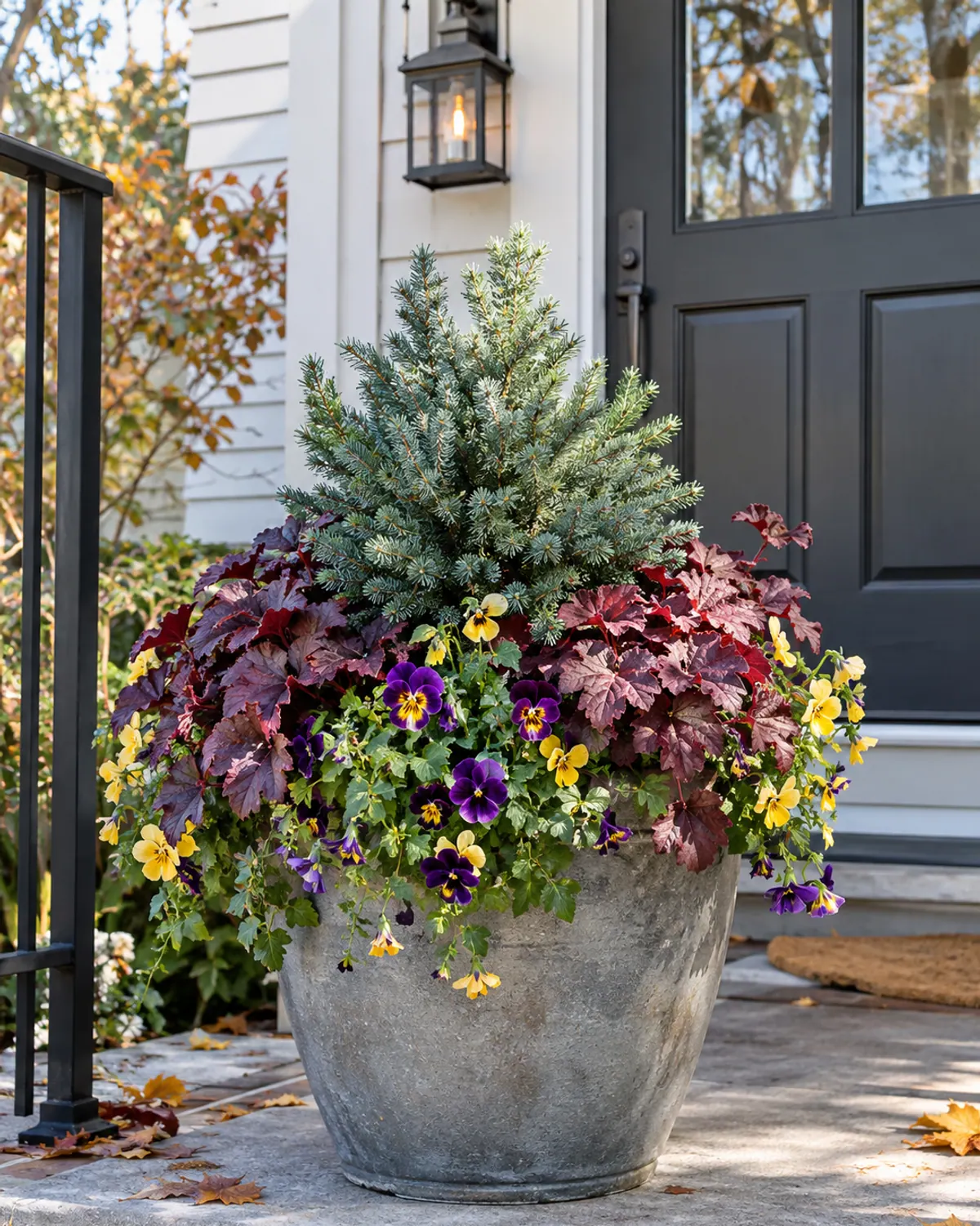
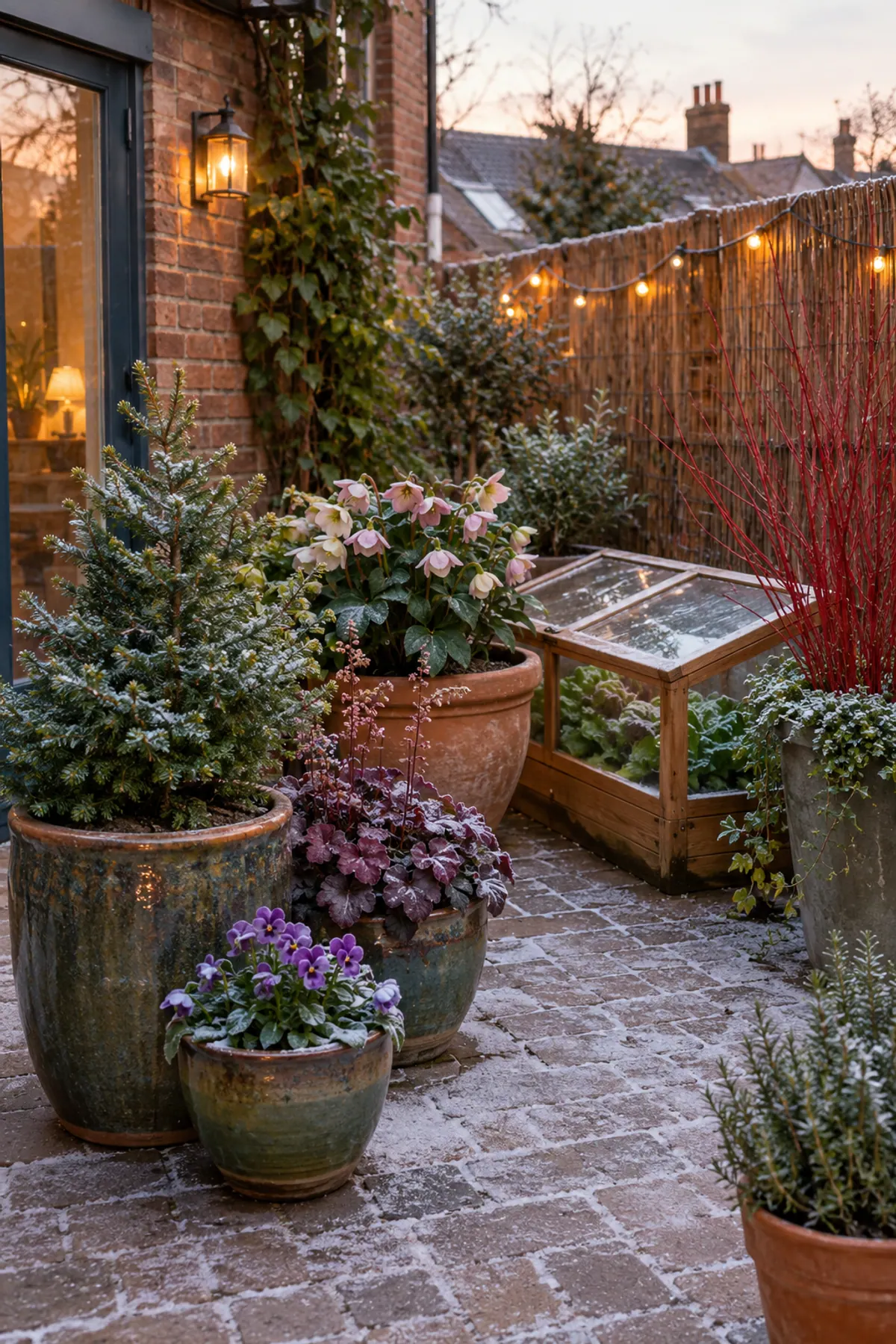
When: October. A small dwarf conifer for height, heuchera for color and pansies or violas spilling over the edge gives you a pot that looks good from October to spring. Pick a conifer rated a zone or two colder than yours, since pots get colder than the ground.
- Use a frost-proof pot at least 14 inches wide so the soil doesn't freeze solid as quickly.
Holds a winter pot without cracking.
8Grow hellebores by the front step
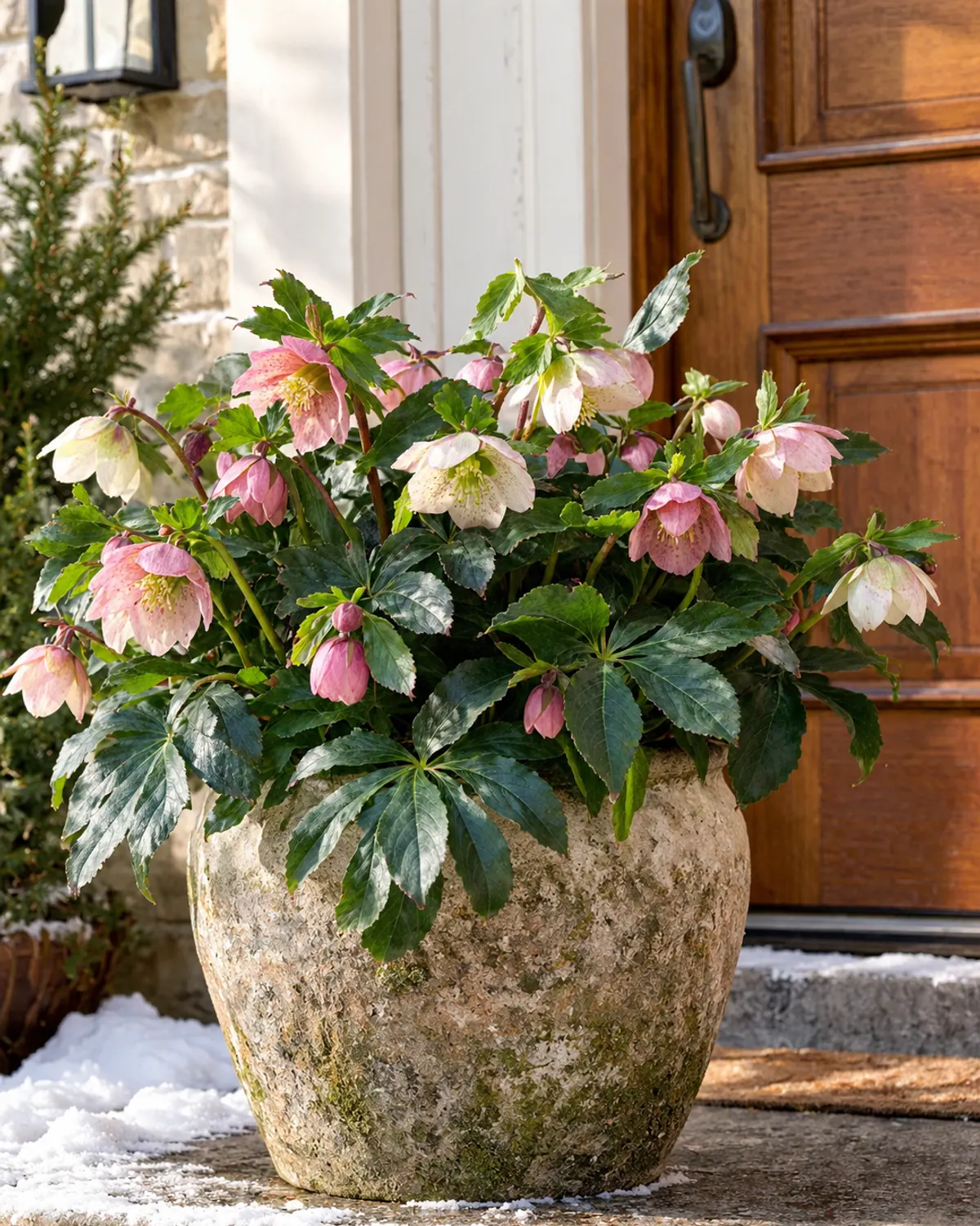
When: Plant in October; flowers late winter to early spring. Hellebores are evergreen perennials that flower when little else does, often from late winter in zones 5 to 8. They grow well in a large pot or a shady corner of a small bed.
- Cut off old, tattered leaves in late winter so the new flowers show.
Winter flowers for a shady step.
9Fill a window box with winter pansies and violas
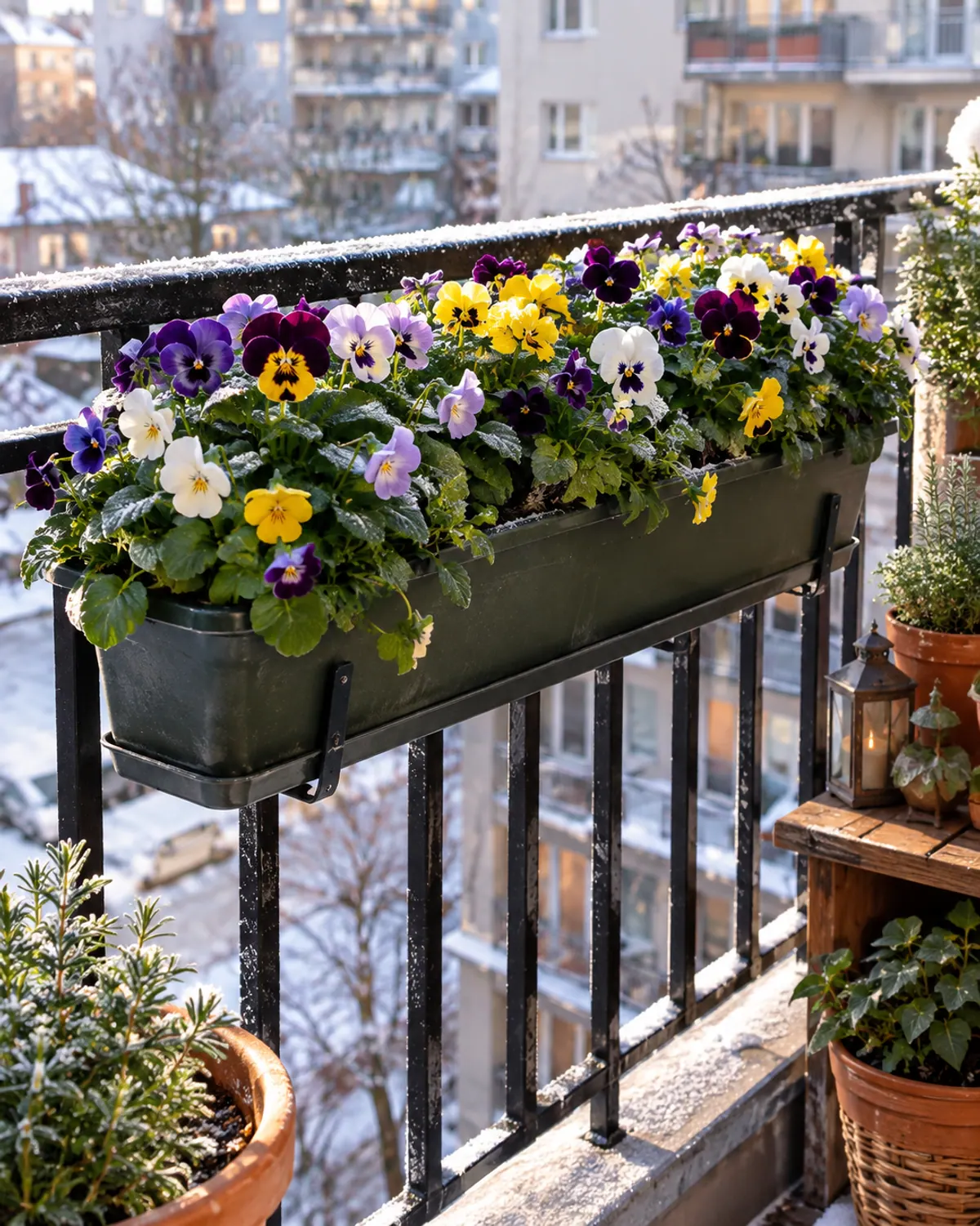
When: October. Pansies and violas shrug off light frost and keep flowering in mild spells. They suit a balcony railing box or a window box in zones 6 to 8; in zone 5 they often pause in deep cold and rebound in spring.
- Deadhead faded flowers to keep new buds coming.
Fits pansies on a balcony rail.
10Add berried and colored stems
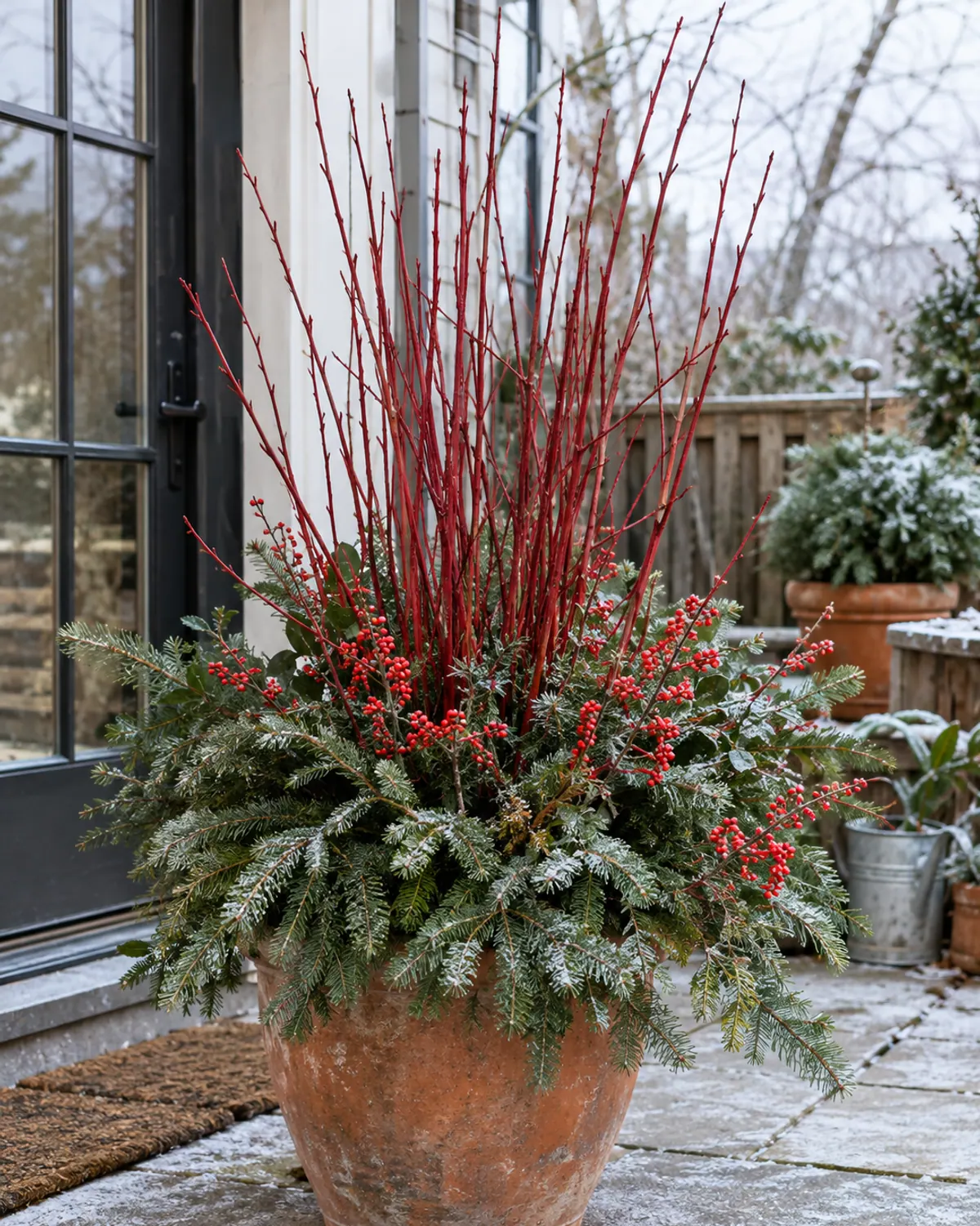
When: Late November to December. Push cut red twig dogwood, birch branches or winterberry stems into your winter pots. They add height and color through the gray months and need no care.
- Push stems in before the soil freezes, or they won't go in.
11Make a sheltered patio corner with a wind screen and lights
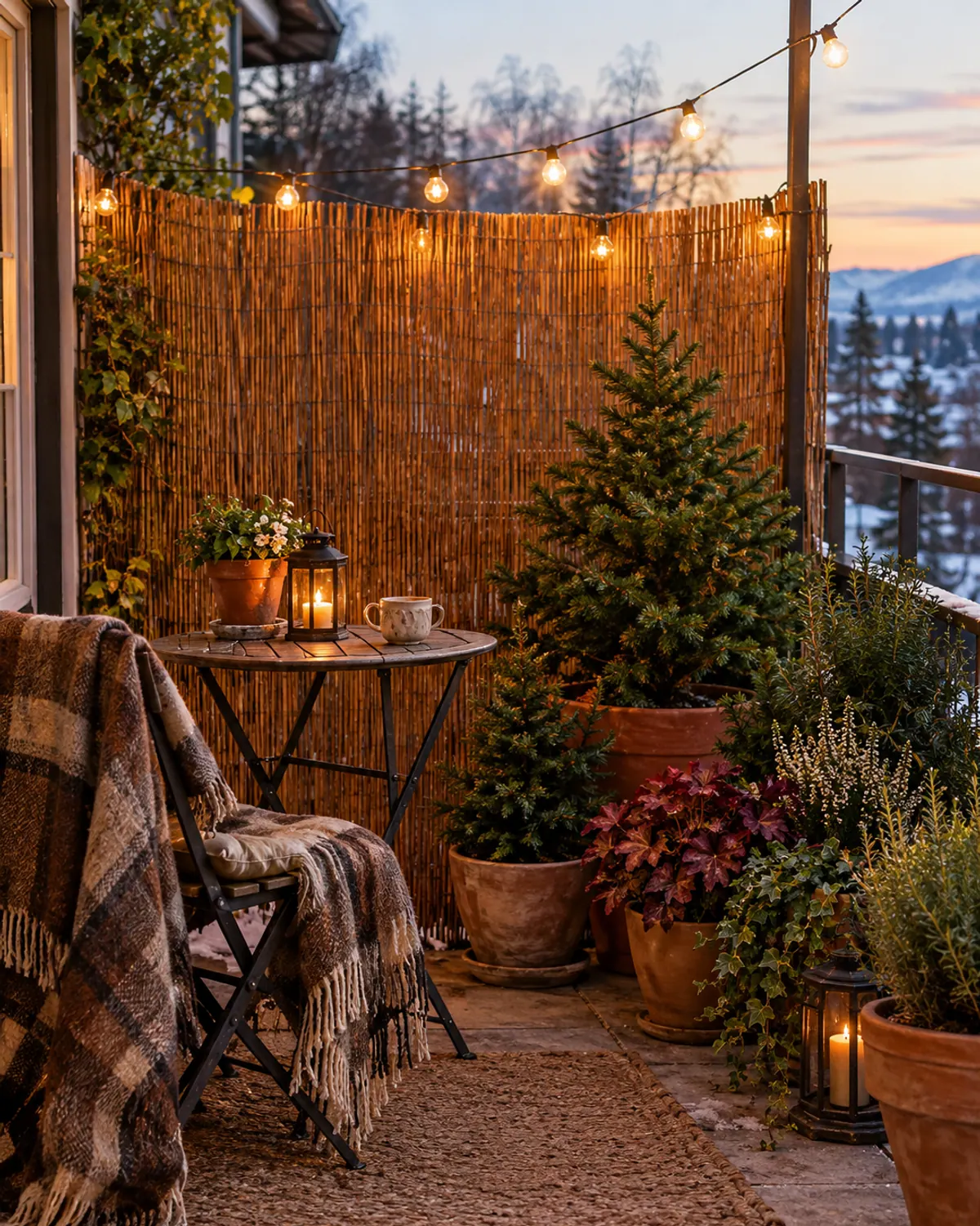
When: November. A slatted wood screen or a reed screen breaks the wind, which matters more on a balcony than the cold itself. Add solar or plug-in string lights and the corner stays inviting in the dark months.
- Check your building's rules before fixing anything to a balcony railing.
Cuts wind on an exposed balcony.
12Plant ornamental cabbage and kale
When: October. Ornamental cabbage and kale color up as nights get cold, with pink, purple and cream centers. They are one of the easiest instant fills for an empty pot by the door.
- Plant them close; they won't grow much more once it is cold.
Keep it growing: winter gardening for greens and herbs
13Grow salad greens in a cold frame
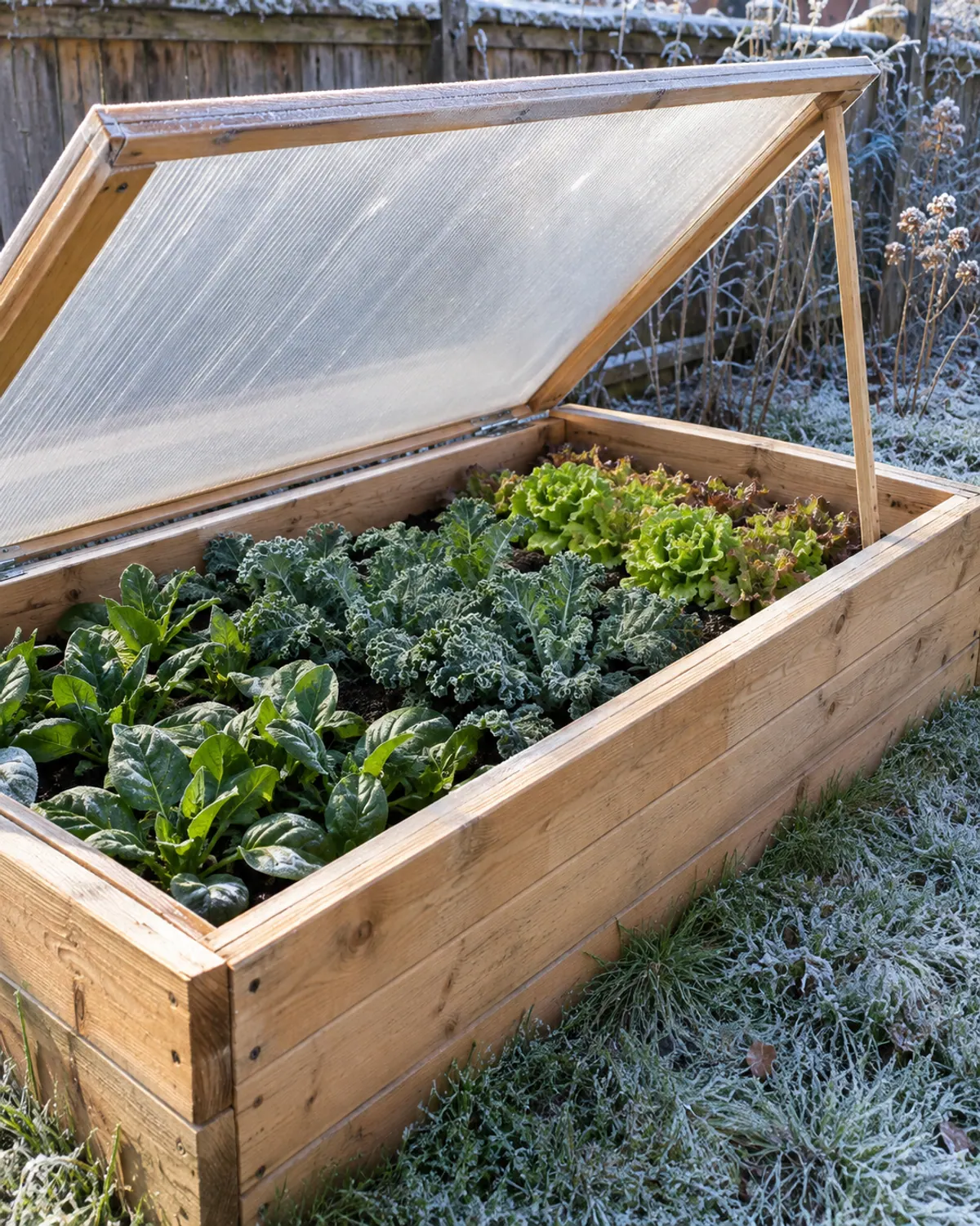
When: Sow in September to October; pick through winter. A cold frame is a bottomless box with a clear lid that traps daytime warmth. Spinach, mache, kale and hardy lettuce keep going in it through much of a zone 6 to 8 winter, and longer than they would in the open in zone 5.
- Prop the lid open on sunny days, or plants can overheat even in winter.
Extends greens into winter in a small bed.
14Use a zip mini greenhouse on a balcony
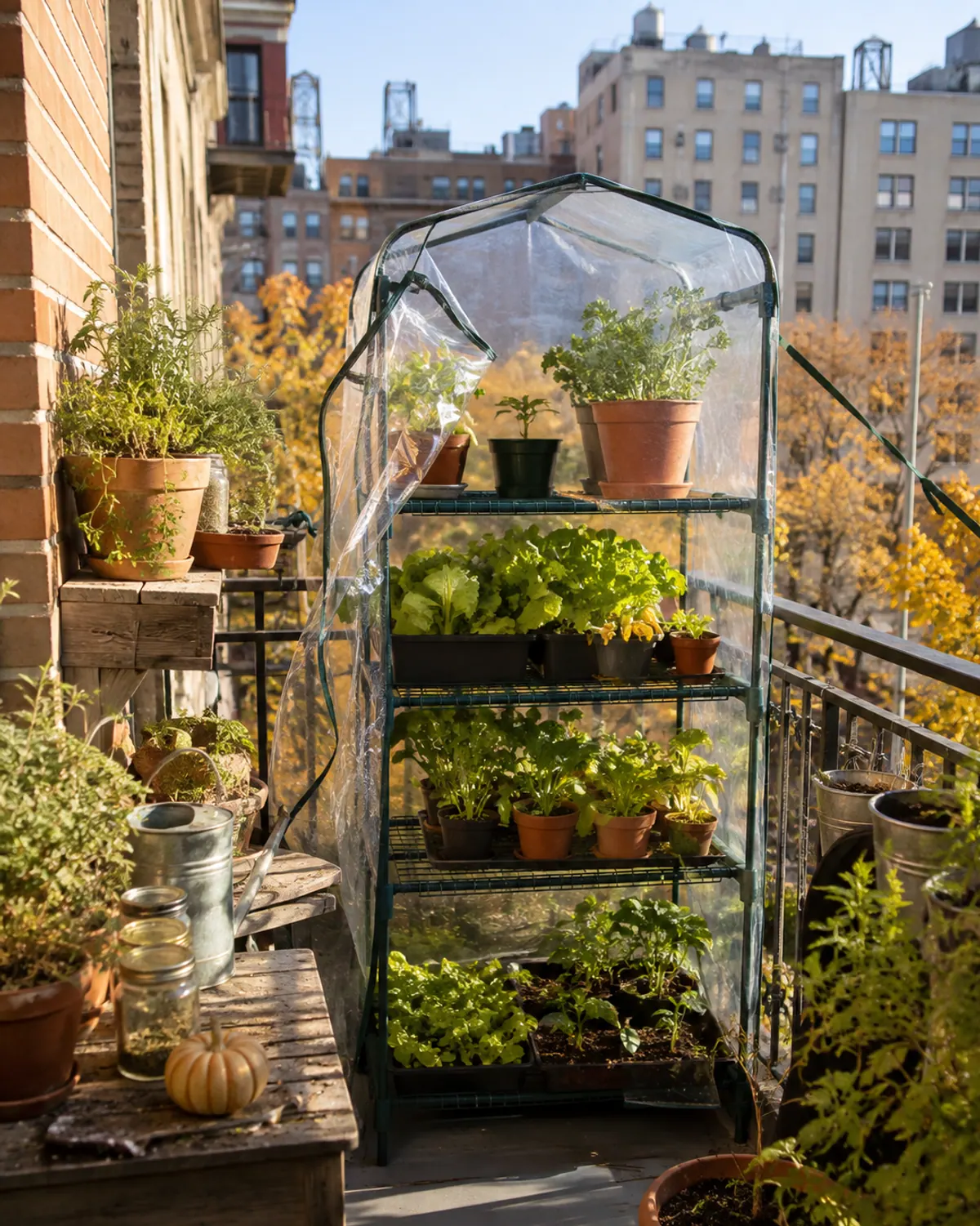
When: October. A small shelved greenhouse with a zip cover fits a balcony or patio and shelters hardy greens and young plants from wind. It is not heated, so it protects from wind and light frost, not deep cold.
- Weigh it down or tie it to something solid; empty mini greenhouses blow over.
Wind shelter for greens on a balcony.
15Keep hardy herbs outside
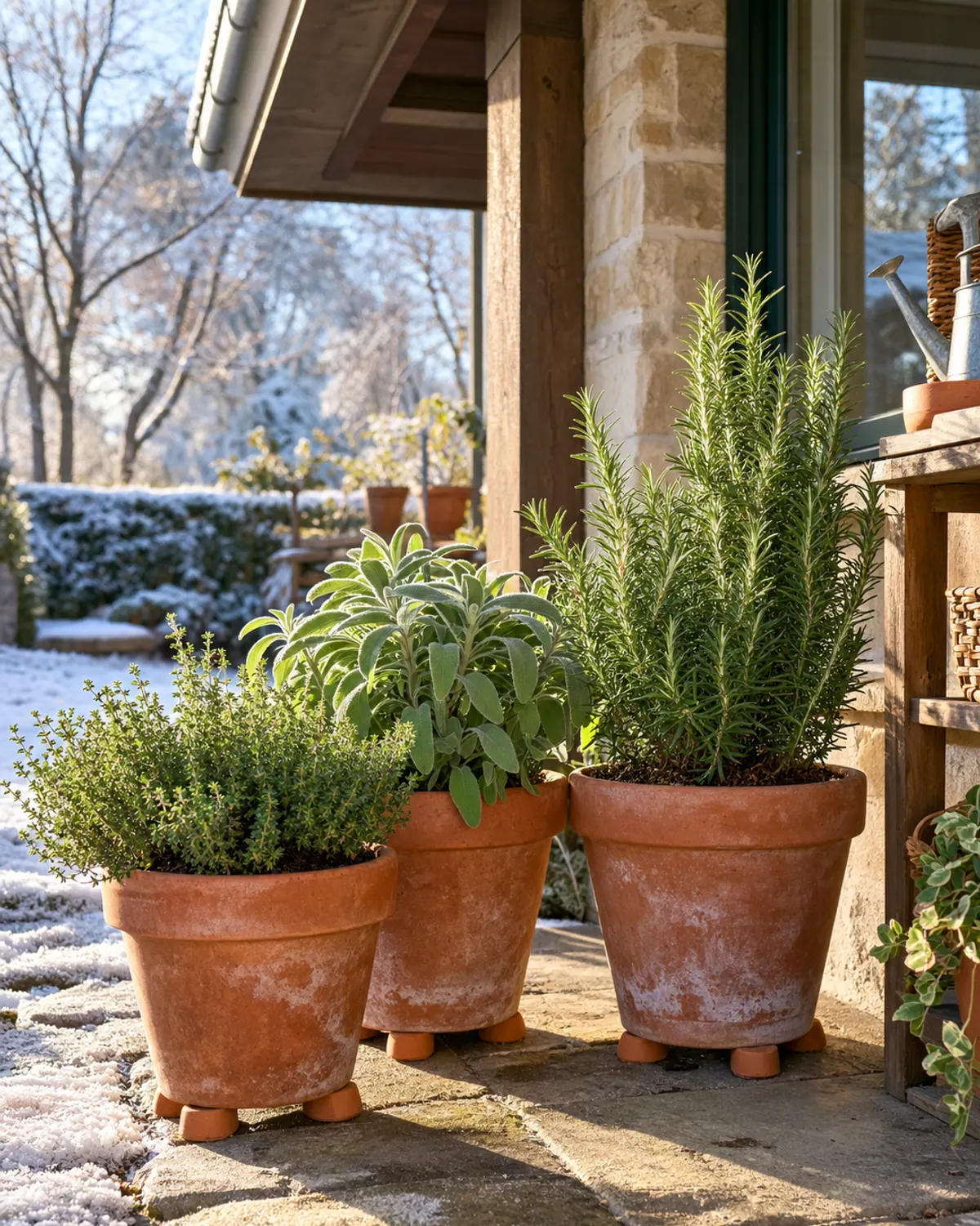
When: November to February. Thyme, sage and rosemary are woody herbs that can winter outside in many zone 7 and 8 gardens, in a sheltered spot with good drainage. In zones 5 and 6, rosemary usually needs to come in. The Herb Garden Journal + 20 Herb Growing Cards lists hardiness for each herb. Growing information only, not medical advice.
- Wet soil kills more winter herbs than cold; keep pots out of puddles and under an overhang.
16Try milk-jug winter sowing
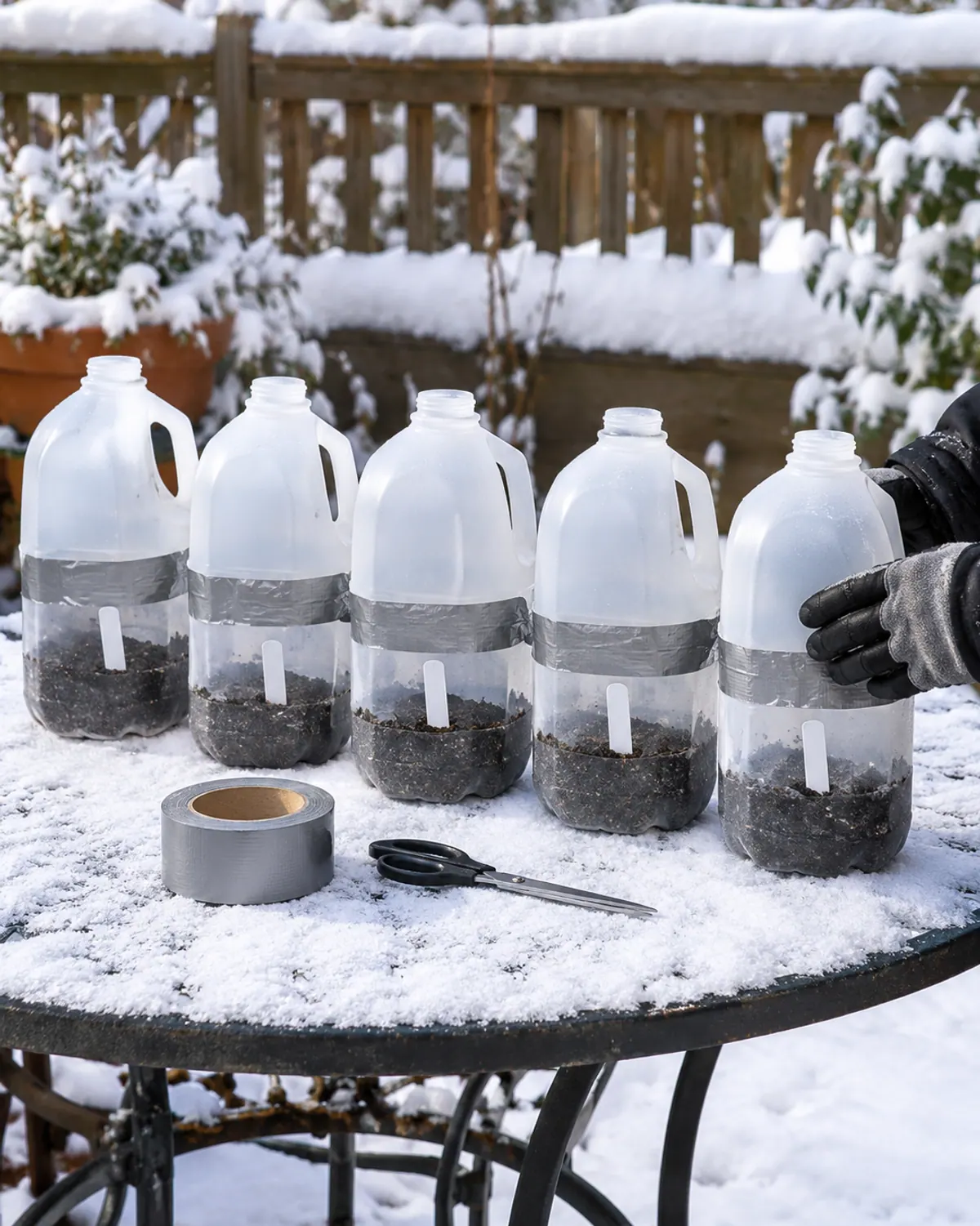
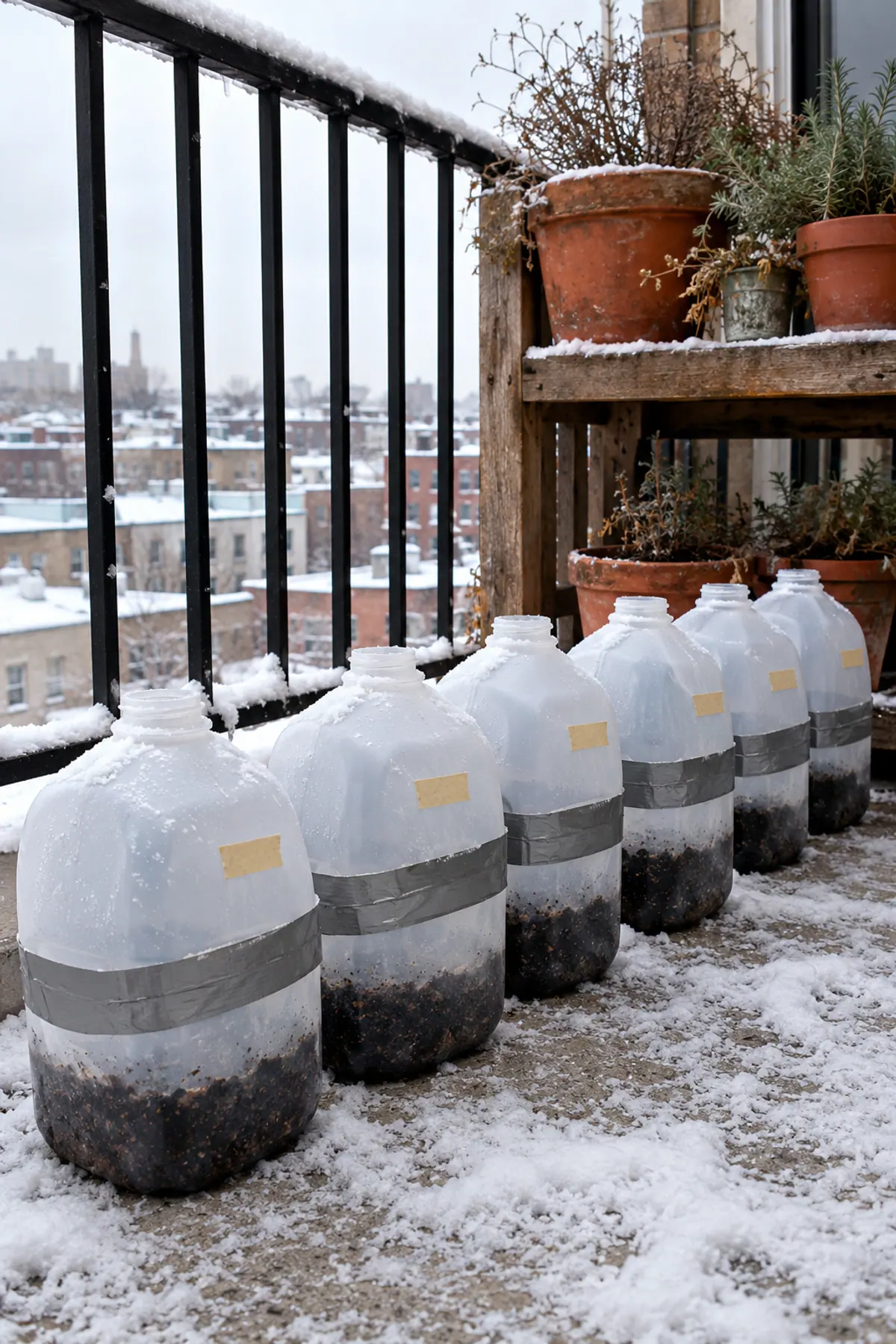
When: January to February. Cut a clean milk jug around its middle, leaving a hinge, add drainage holes and a few inches of potting mix, sow hardy seeds and tape it shut with the cap off. Set it outside; the seeds sprout as spring warms. It suits cold-hardy flowers and greens.
- Label the jug with a paint pen; you will forget what is inside.
Seals and labels winter sowing jugs.
17Grow herbs and greens on an apartment sill
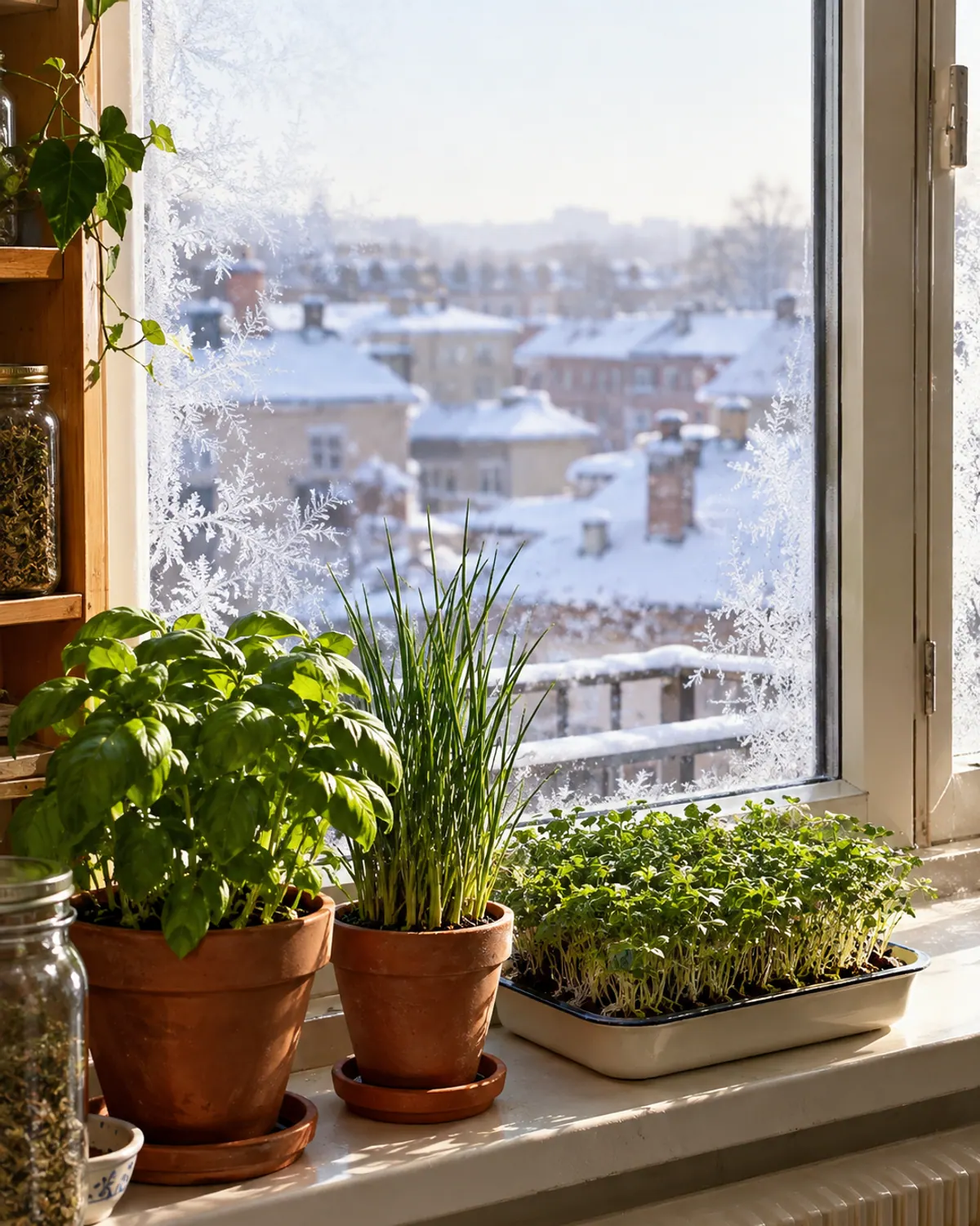
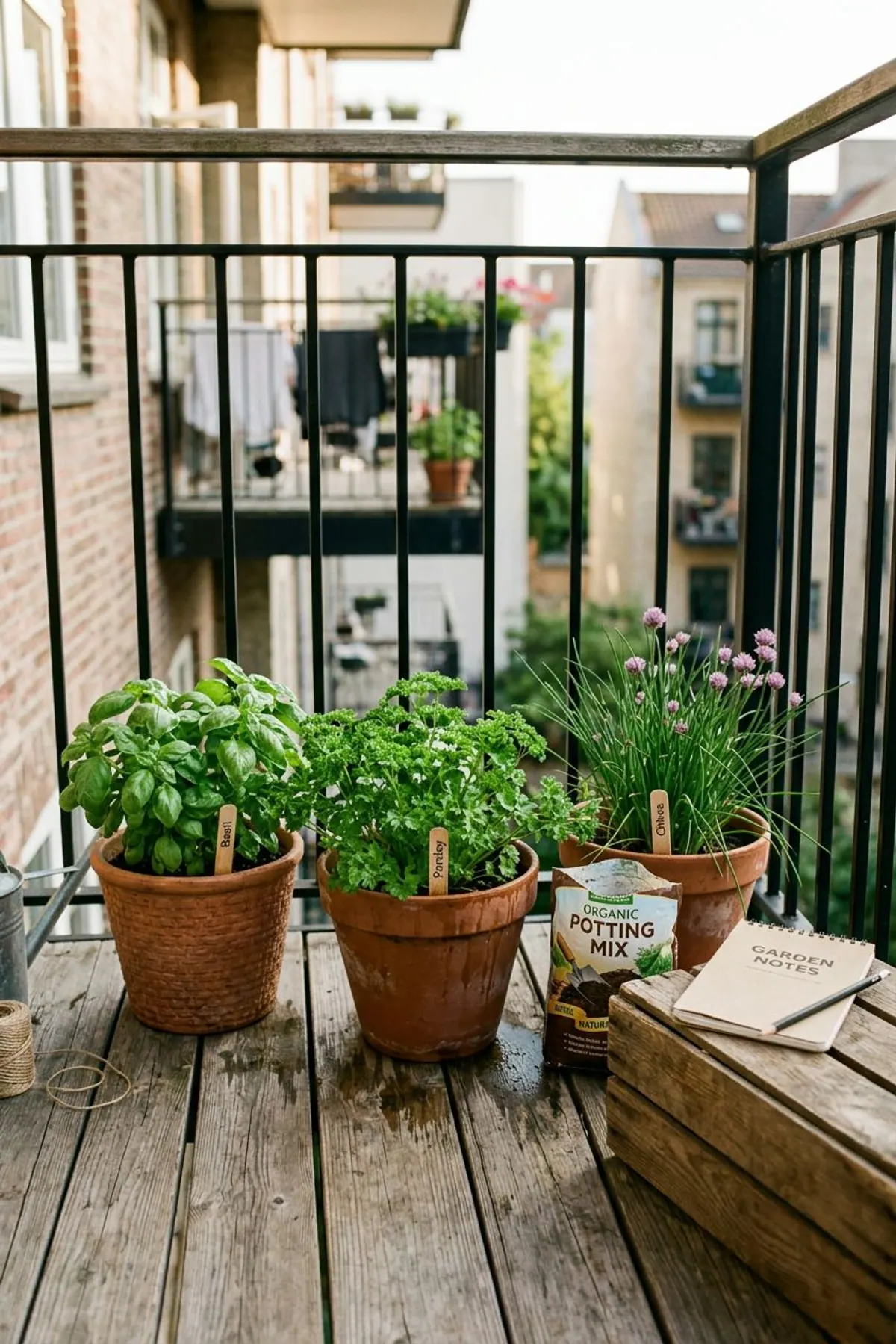
When: November to February. No outdoor space at all? A bright south or west window can carry basil, chives and microgreens through winter, with a grow light for darker windows. Our winter houseplant care tips cover the dry air, and the Indoor Winter Herb Garden Kit has a window chooser and a light table. Herb notes here are about growing only, not medical advice.
- Keep pots off cold glass at night; pull them back a few inches.
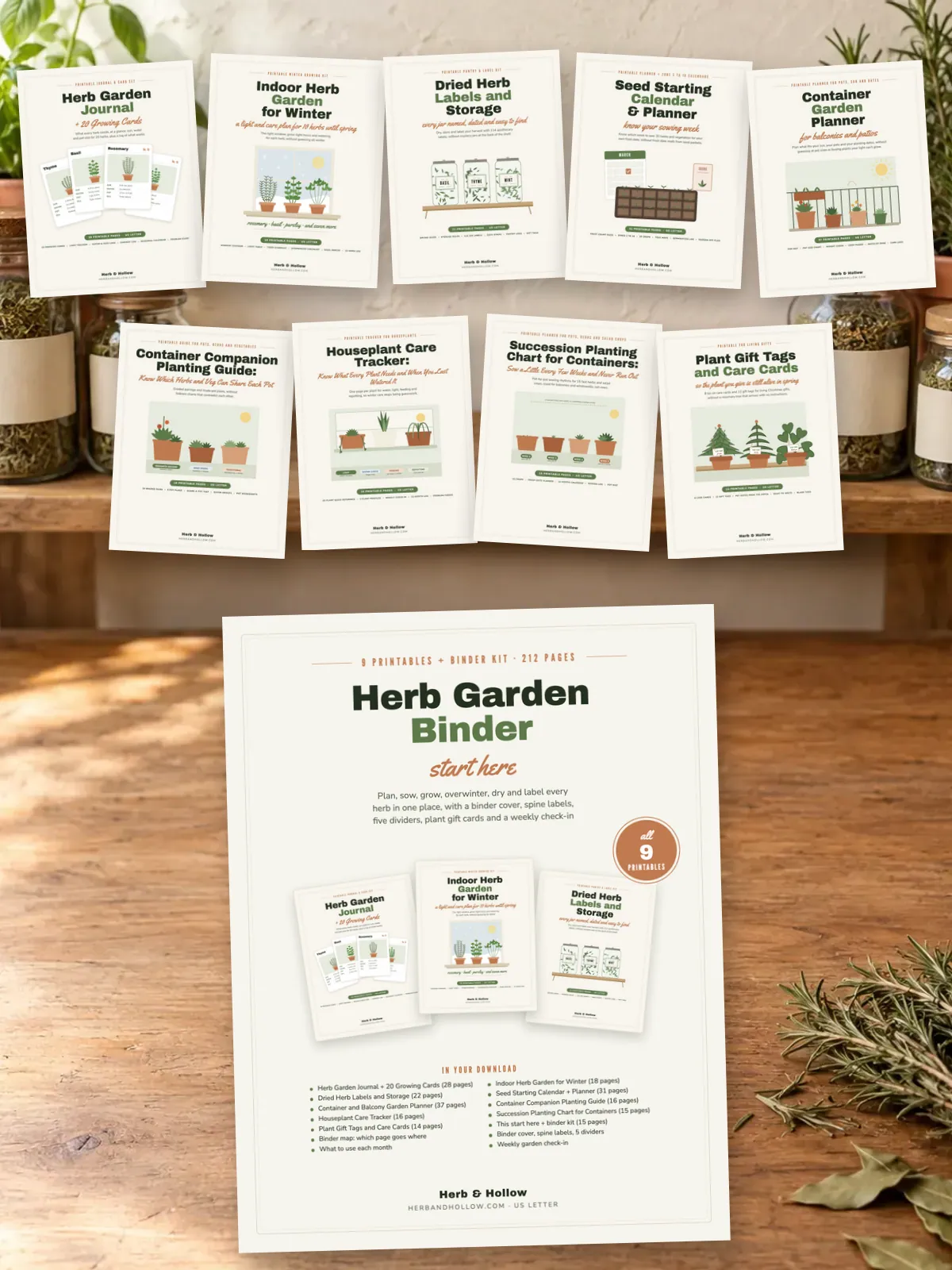
Want the windowsill plan in one place? The Indoor Winter Herb Garden Kit has a window-direction chooser, a light table for 10 herbs with grow-light hours and hanging heights, and a timer schedule, so basil and parsley keep going until spring.
Watering, feeding and pruning in a winter garden
Pots still need water in winter when the soil is not frozen, especially evergreens, which lose moisture through their leaves on windy days. Water on a mild day so it soaks in before the next freeze.
Stop feeding outdoor plants in autumn; new soft growth is easily damaged by frost. Save most pruning for late winter, apart from removing broken or diseased stems.
Winter garden mistakes that kill plants
Do
- Group and wrap pots before the first hard freeze
- Raise pots on feet so they drain
- Water pots on mild, dry days
- Pick plants rated a zone colder than yours for containers
Avoid
- Leaving pots sitting in saucers of water
- Using thin terracotta outside in freezing zones
- Covering plants with plastic touching the leaves
- Pruning hard in autumn, which invites tender growth
- Forgetting evergreens need water too
Small winter garden checklist: October to February
Month by month
For more ways to plan a tiny outdoor space, see our small space garden ideas. Indoors, pair this with forcing bulbs for winter blooms and a cozy winter plant corner.
Winter garden starter list
Shop small winter garden supplies
- Start here
Plant frost cover bags
Typically $5 to $15
Quick cover for single pots on frosty nights.
Check price on Amazon for Plant frost cover bags -
Frost cloth roll
Typically $6 to $14
Cut to size for a bed or a group of pots.
Check price on Amazon for Frost cloth roll -
Mini greenhouse with zip cover
Typically $30 to $45
Wind shelter for greens on a balcony.
Check price on Amazon for Mini greenhouse with zip cover -
Wooden cold frame
Typically $75 to $140
Keeps salad greens going in a small bed.
Check price on Amazon for Wooden cold frame -
Plant stand, 2 to 3 tier
Typically $17 to $30
Lifts and groups pots against a wall.
Check price on Amazon for Plant stand, 2 to 3 tier -
Pot feet, set of 3 or more
Typically $10 to $20
Keeps pots draining in freeze and thaw.
Check price on Amazon for Pot feet, set of 3 or more
We earn from qualifying purchases, which never changes what we recommend. Read our disclosure and editorial guidelines.
Shopping for someone with a balcony garden? Our Christmas gifts for small-space gardeners list has ideas.
Frequently asked questions
What can I grow in a small winter garden?
In zones 5 to 8, hardy greens like spinach, kale and mache in a cold frame, woody herbs like thyme and sage in milder zones, and winter color from pansies, violas, hellebores, heuchera and dwarf evergreens.
How do I protect potted plants in winter on a balcony?
Group pots against a sheltered wall, wrap the pot sides in bubble wrap and burlap, lift pots on feet so they drain, and cover them with frost cloth on the coldest nights. Bring tender plants indoors.
Do outdoor pots need watering in winter?
Yes, when the soil isn't frozen. Evergreens especially lose moisture on windy days. Water on a mild day so it soaks in before the next freeze, and never leave pots sitting in water.
Which pots survive freezing weather?
Fiberglass, resin and thick glazed pots labeled frost-proof hold up best. Thin terracotta can crack when wet soil freezes, so empty and store it for winter in freezing zones.
When should I start a winter garden?
Plan in September and plant winter pots and cold frame greens in October, a few weeks before your first frost. Check your frost date for your zip code.
What is winter sowing?
Sowing hardy seeds in covered containers such as milk jugs outside in January or February. The seeds sit through the cold and sprout as spring warms.
Save it for later
Pin this to your Seasonal Garden Tasks board so it's there when you need it.
Save to Pinterest