This post contains affiliate links. As an Amazon Associate we earn from qualifying purchases, at no extra cost to you. Read our disclosure.
Safety first: Herbs can be powerful. If you are pregnant, nursing, take medication or have a health condition, check with your doctor or pharmacist first. Please read our herbal & garden safety notes before you start.
Key takeaways
- Penn State Extension says to choose plants rated two zones colder for containers
- Chives and mint are the safest pot herbs to leave out; rosemary is the tender exception
- Avoid clay and glazed pots outdoors in winter because they can crack
- Water before the freeze and mulch once the ground is frozen
- Chives, mint and oregano are toxic to pets per the ASPCA; thyme, rosemary and lemon balm are not
In this post7 sections
The short answer: which herbs survive winter outside in pots
Chives, mint, lemon balm, thyme and Greek oregano are the herbs most likely to survive winter outside in pots, and rosemary is the one to bring in. The rule that decides it comes from Penn State Extension: with containerized plants, go two zones colder than the plant's in-ground rating, because roots in a pot have no soil around them to hold off the freeze.
So a herb rated for zone 5 in the ground needs a zone 7 winter or milder to sit unprotected in a pot. Colder than that, you protect the pot, move it to an unheated spot, or accept that it may not come back. The table and steps below work that out for the herbs most small gardens grow.
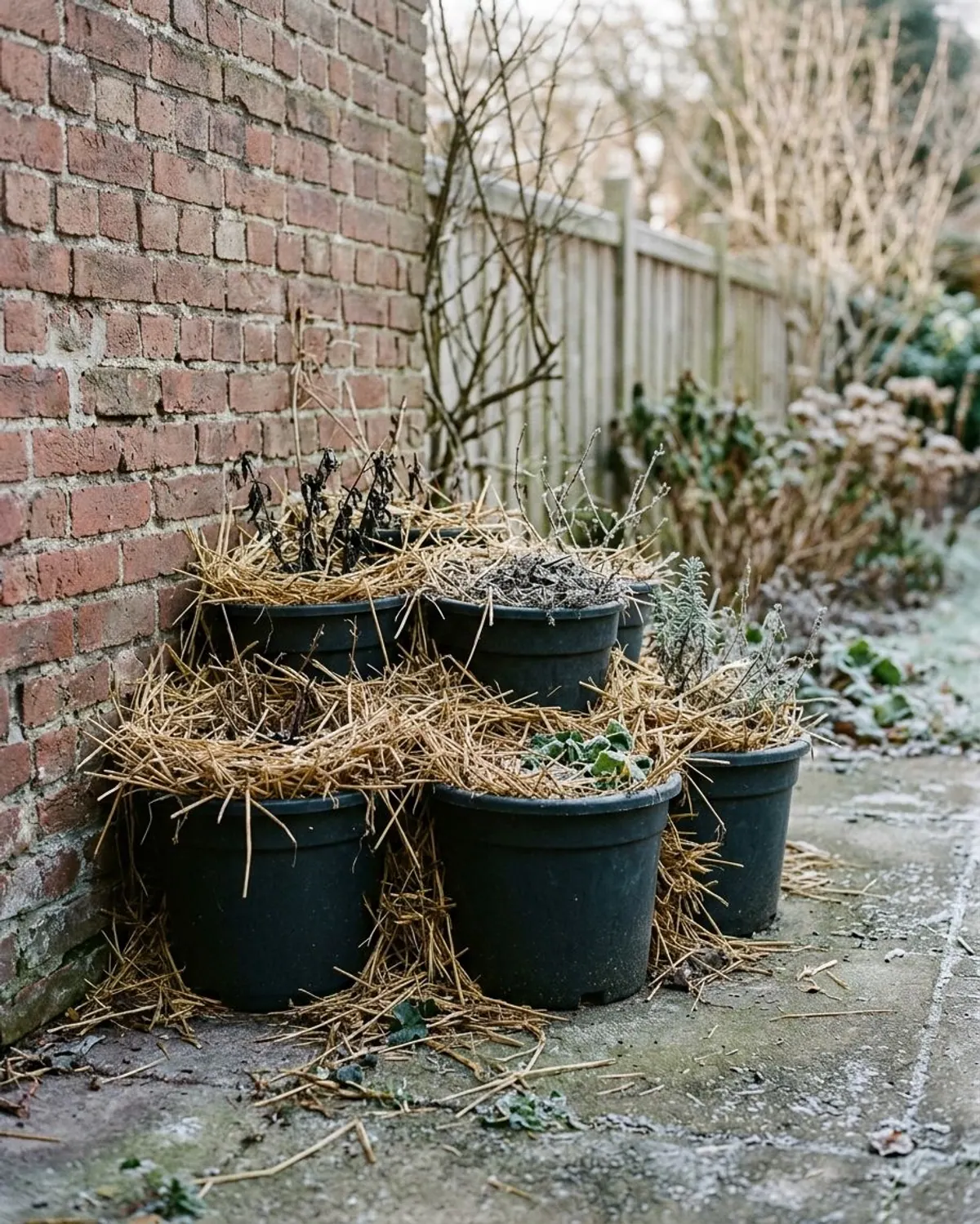
Herb by herb: how cold each one takes in a pot
Zones in the second column are the in-ground ranges listed by Savvy Gardening. The third column is our own calculation using the Penn State two-zone rule, so treat it as a starting point and not a guarantee.
| Herb | In-ground zones | Leave a pot out unprotected in zone | Pet note (ASPCA) |
|---|---|---|---|
| Chives | 3 to 10 | 5 and warmer | Toxic to dogs and cats |
| Mint | 3 to 8 | 5 and warmer | Toxic to dogs and cats |
| Lemon balm | 4 to 9 | 6 and warmer | Non-toxic to dogs and cats |
| Thyme | 5 to 9 | 7 and warmer | Non-toxic to dogs and cats |
| Greek oregano | 5 to 9 | 7 and warmer | Toxic to dogs and cats |
| Rosemary | 6 or 7 to 10 | 8 or 9 and warmer, or bring it in | Non-toxic to dogs and cats |
| Parsley | Needs a cold frame or tunnel | Use a cloche or cold frame | Check your pet's list |
Savvy Gardening notes that parsley and chervil want a cold frame or tunnel to keep going through winter, so we list parsley as a protected pot only.
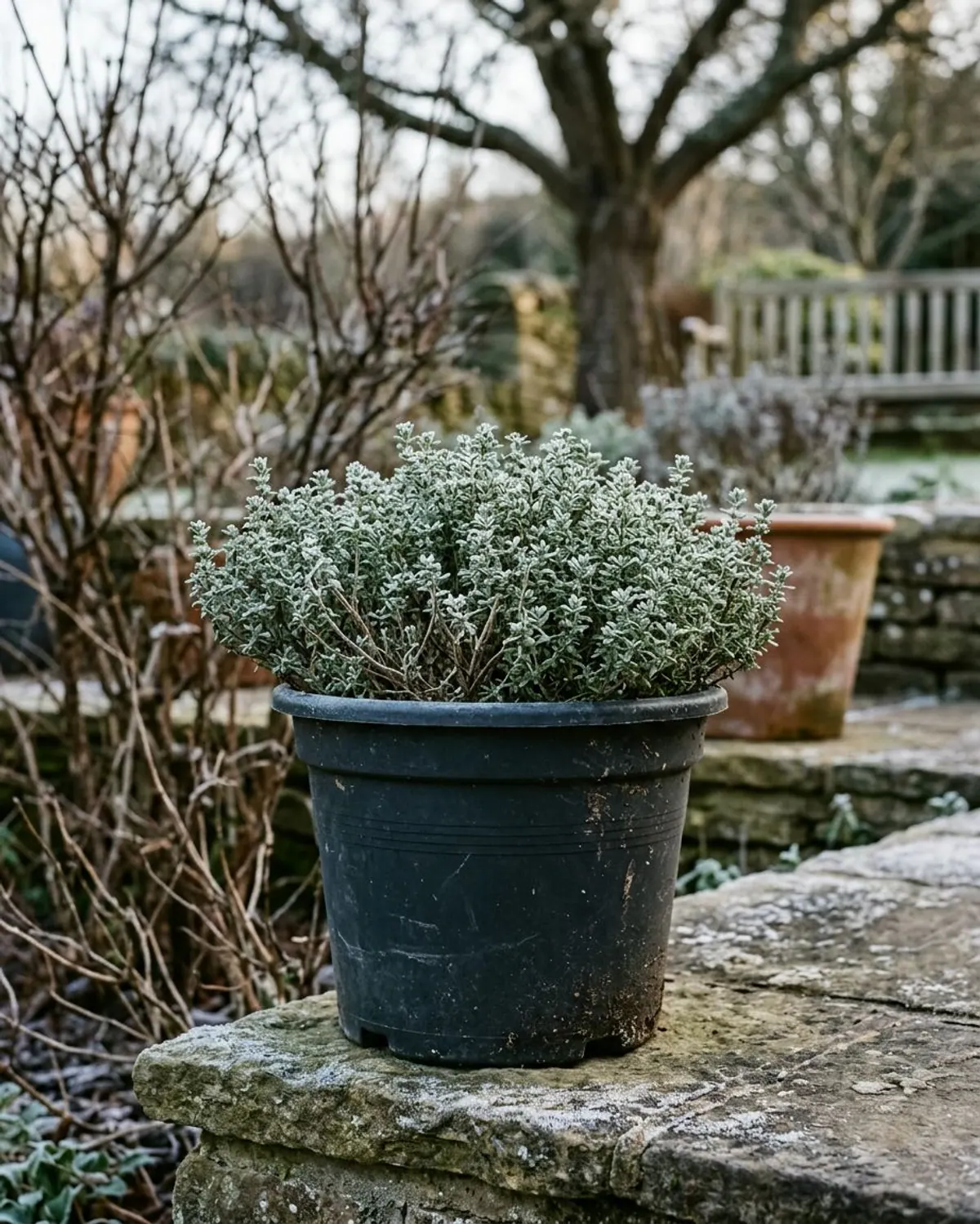
What to leave out by zone
| Your zone | Herbs that should be fine outside | Bring in or protect |
|---|---|---|
| 3 or 4 | None reliably; use an unheated garage or a sunk pot | All of them |
| 5 | Chives, mint | Lemon balm, thyme, oregano, rosemary, parsley |
| 6 | Chives, mint, lemon balm | Thyme, oregano, rosemary, parsley |
| 7 | Chives, mint, lemon balm, thyme, Greek oregano | Rosemary, parsley |
| 8 to 10 | All of the above; rosemary in zones 8 and 9 | Parsley in a cloche |
Not sure of your zone? Look up your ZIP code on the USDA map, then use our seed starting by zone guide as a reminder that the same zone number drives your planting dates too. Dry soil and wind can kill a herb that is technically hardy, so the protection steps matter as much as the zone.
Six steps to protect herb pots outside
-
Step 1: Use the right pot
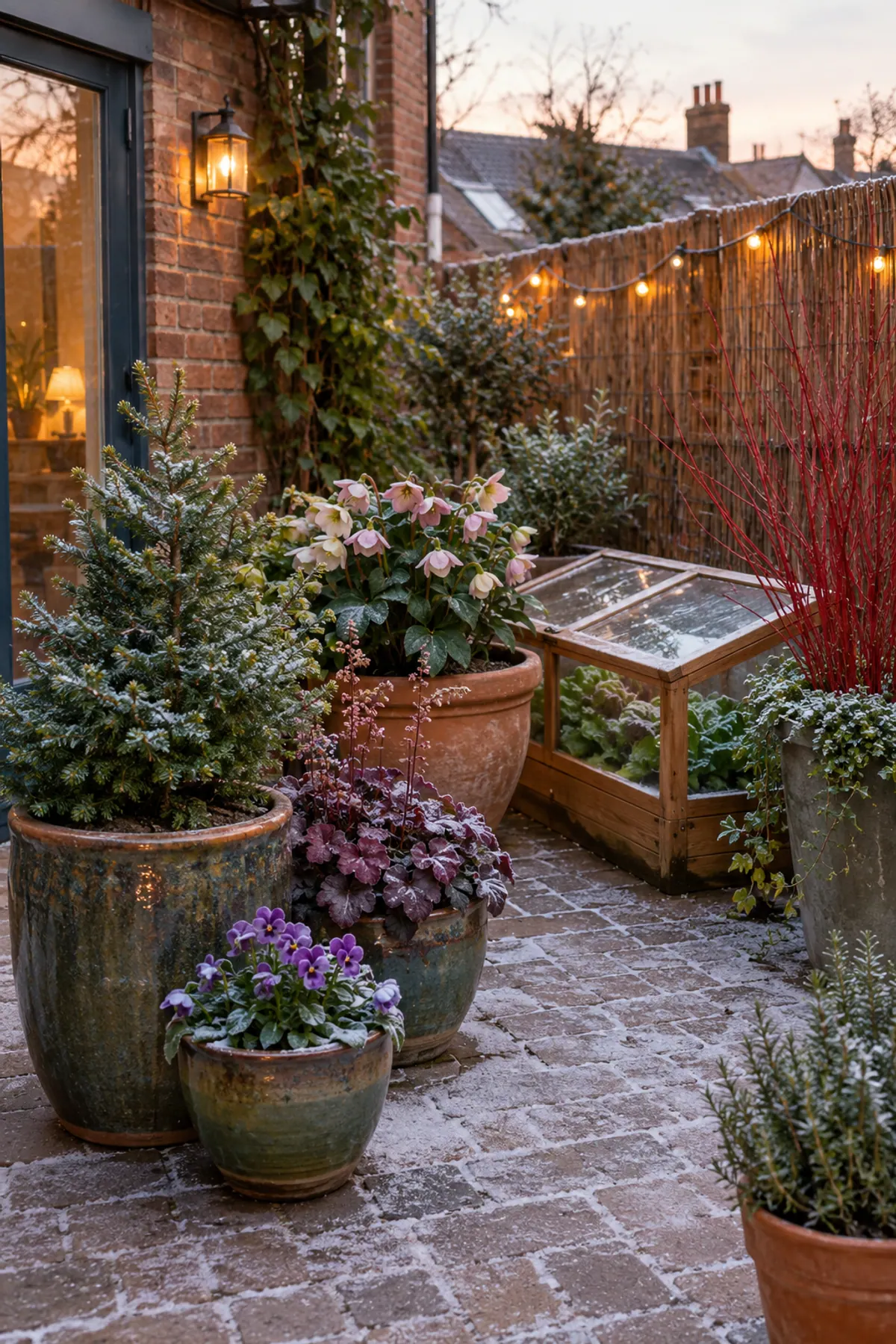
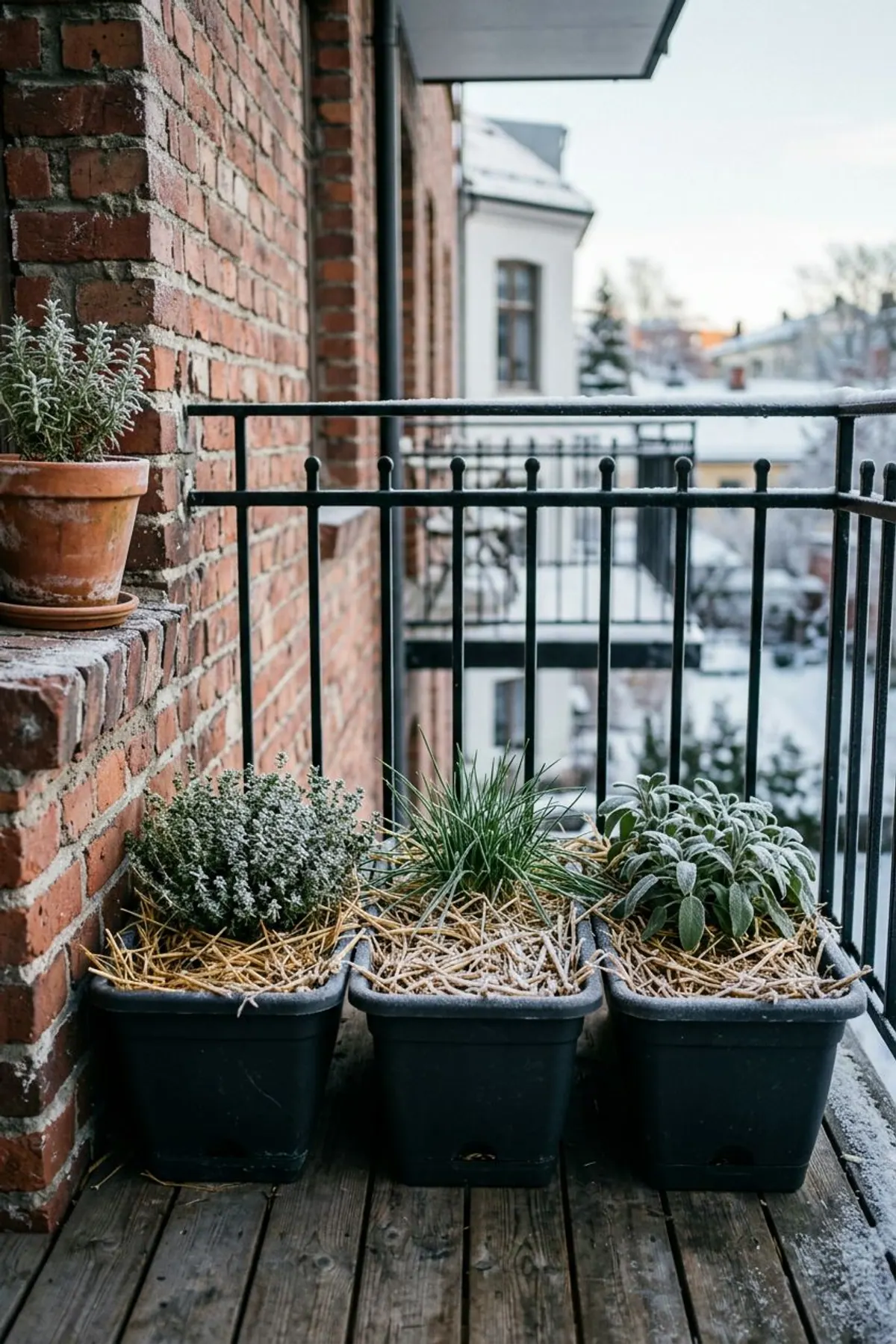
Penn State says to avoid clay, ceramic and glazed pots outdoors in winter because they can crack. Use thick plastic, wood or fiberglass, and the largest pot you can manage, since more soil insulates better.
-
Step 2: Group the pots in a sheltered spot
Push the pots together against a wall that blocks wind, as Penn State suggests. Illinois Extension also advises setting pots on the ground away from wind.
-
Step 3: Water well before the freeze
Dry soil freezes faster than moist soil, so water thoroughly before the first hard freeze.
-
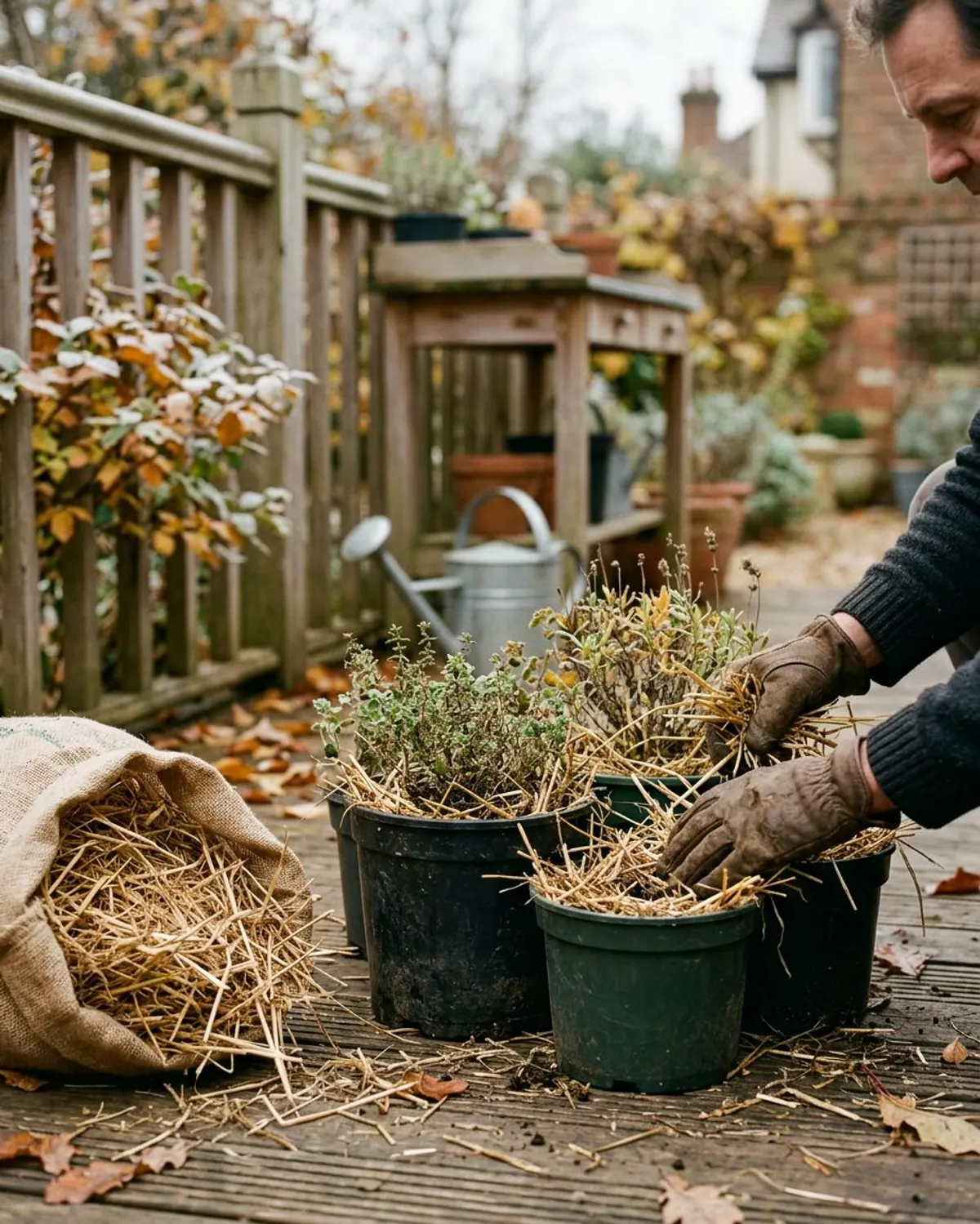
Step 4: Mulch after the ground freezes
Cover the soil and the crown with straw, shredded leaves or bark. Missouri Extension advises waiting until the ground is frozen so you do not shelter mice or hold in warmth too early. A 2 to 3 inch layer is a common recommendation.
-
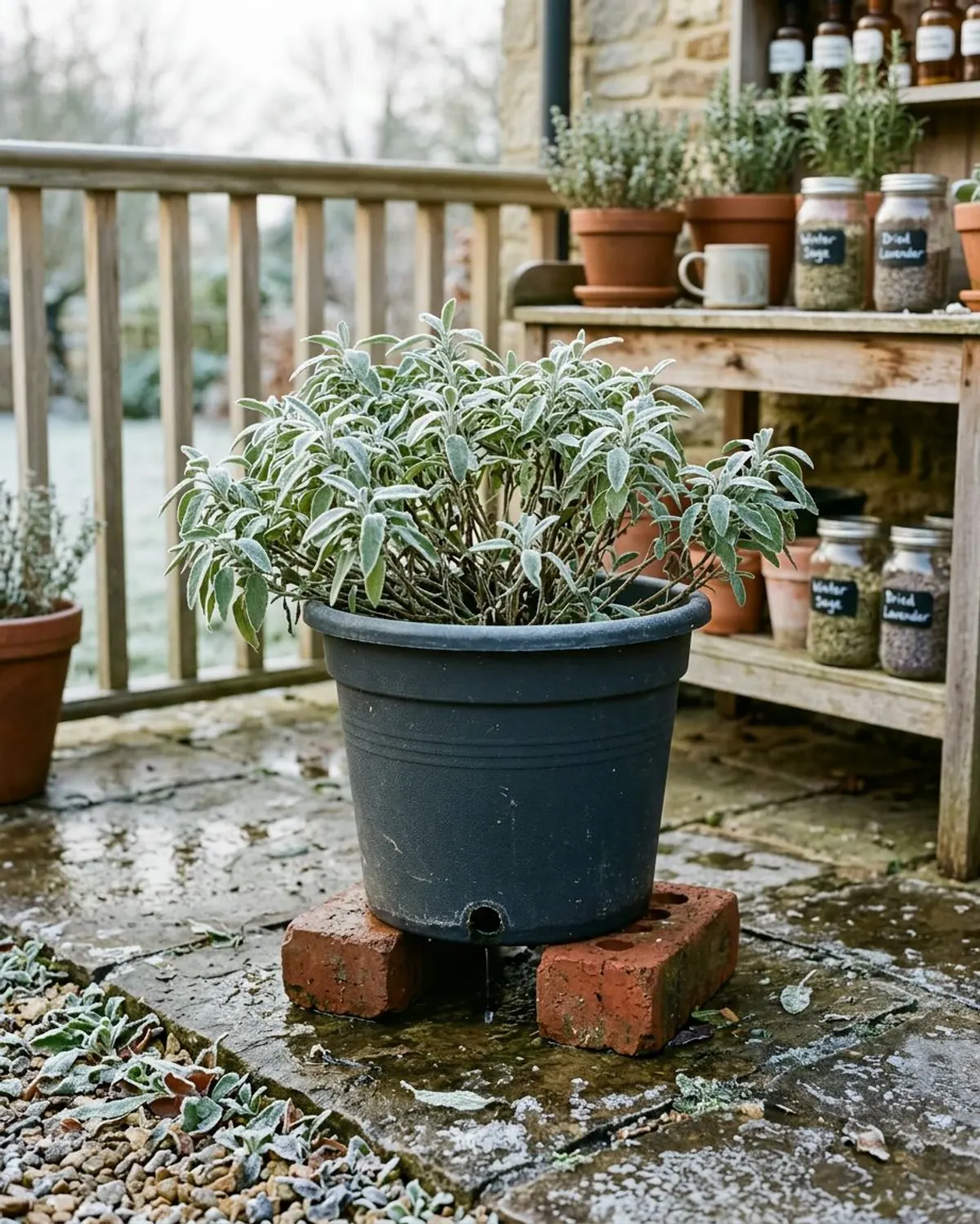
Step 5: Lift the pots off the ground
Set the pots on pot feet or a few bricks so water can drain and the base does not sit in ice.
-
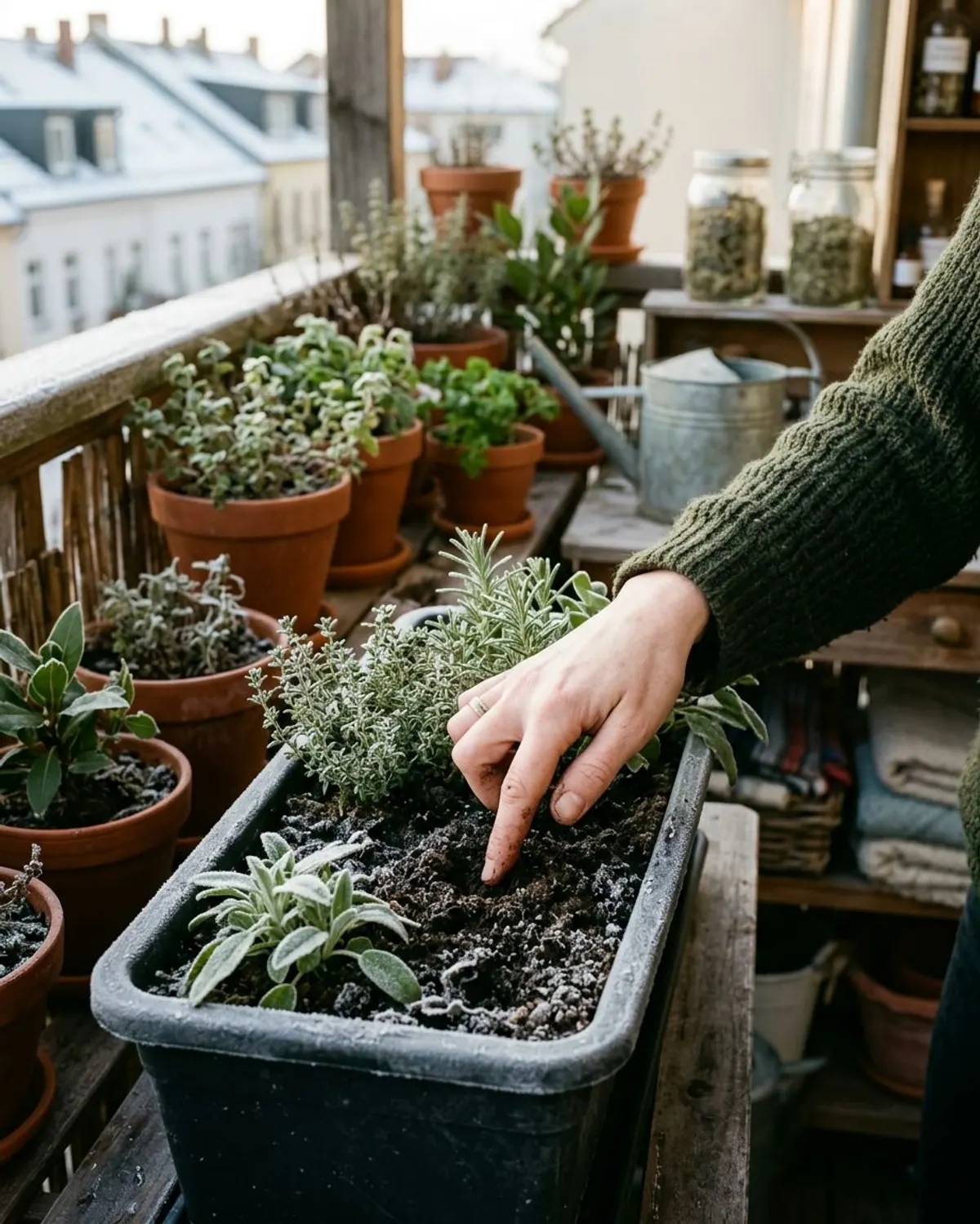
Step 6: Check moisture on mild days
Poke a finger in the soil every few weeks. If it is bone dry and not frozen, water lightly in the morning.
Mint, chives, thyme and rosemary: special cases
Mint is the hardiest and the easiest to lose in the wrong way. Savvy Gardening suggests sinking mint pots into the ground so the soil insulates the roots. Chives die back to the ground and return in spring, so do not throw them out when the tops go brown.
Thyme is tough in the cold but hates wet roots, so drainage matters more than extra covers. Rosemary is the tender exception. Maryland Extension says to bring rosemary inside when nights drop into the low 40s, and Penn State says rosemary rated for zones 6 or 7 needs a milder winter in a pot.
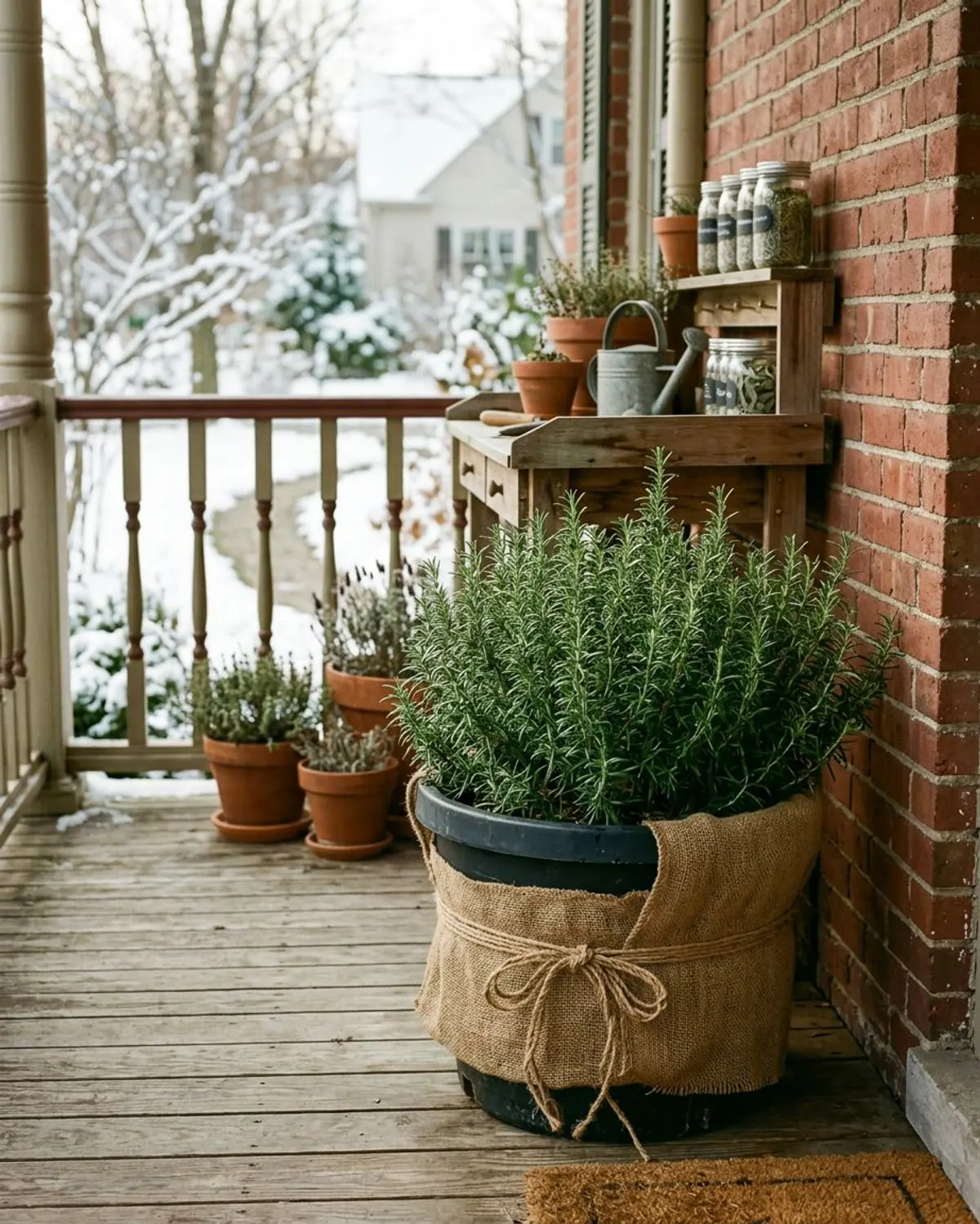
Before the first hard freeze
When to use a cloche, a cold frame or the garage
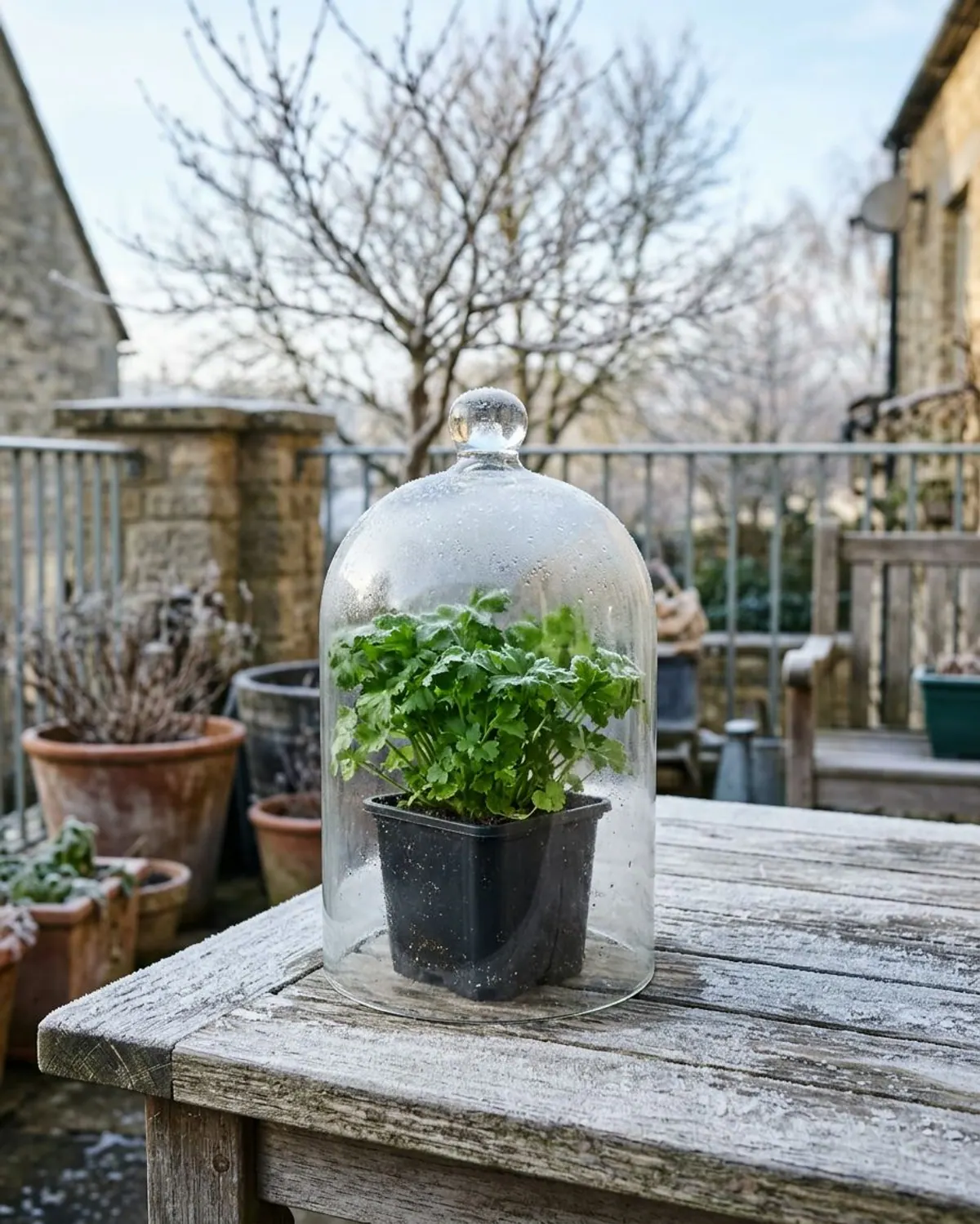
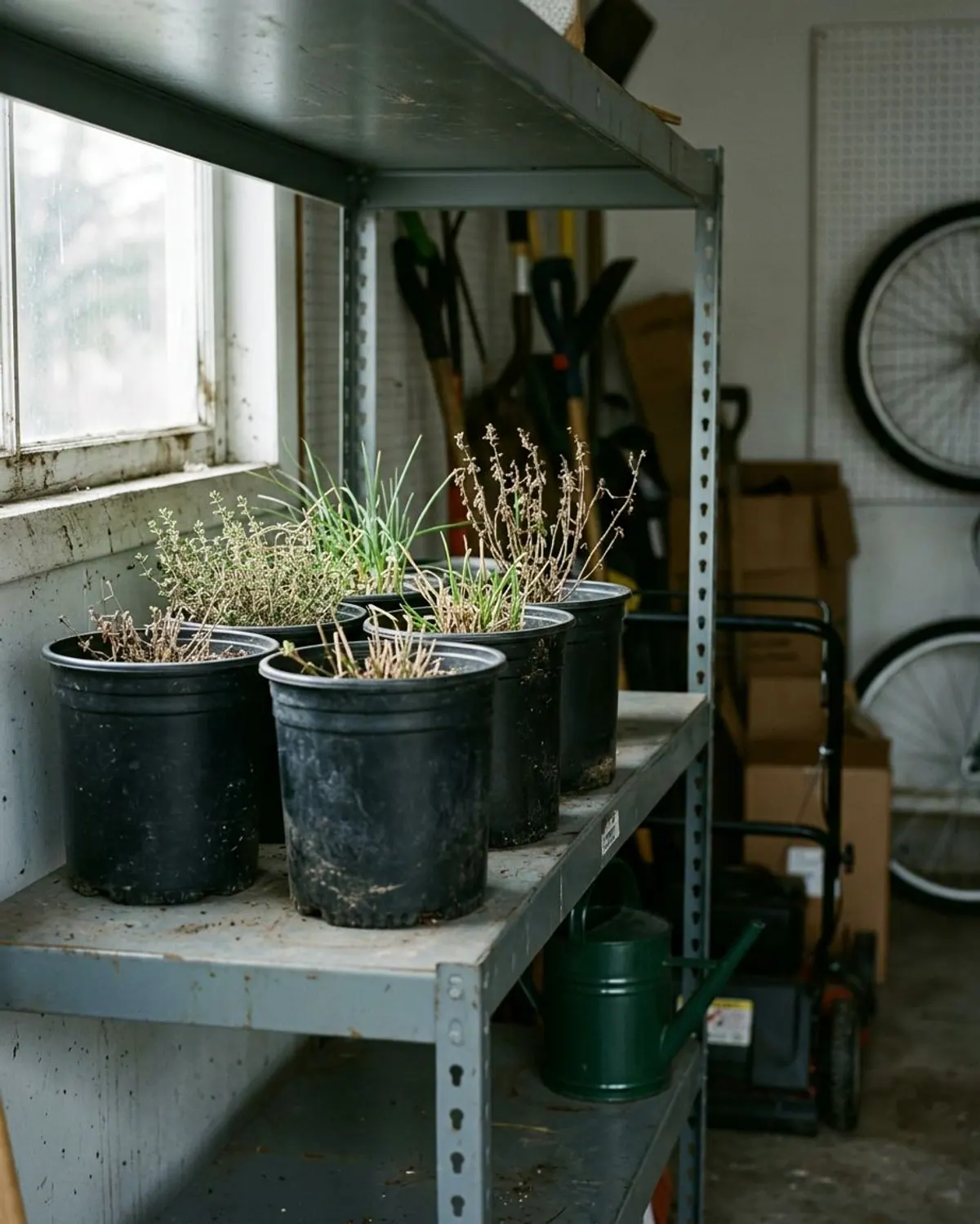
For parsley and any herb at the edge of its range, a cloche, cold frame or unheated garage buys several degrees. Put small pots on a garage shelf where it stays above freezing but gets a little light, and check them as you would on a windowsill.
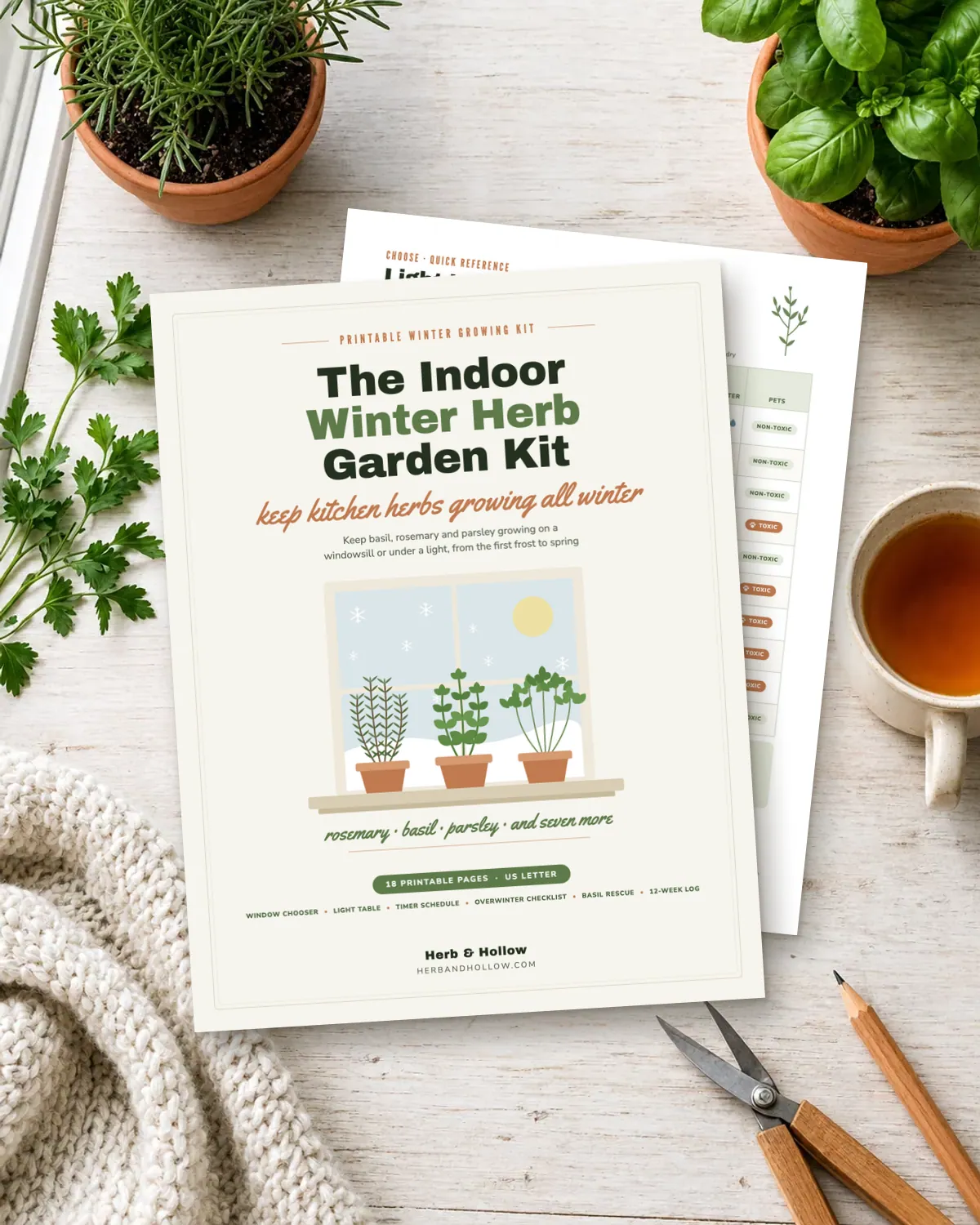
If you would rather grow herbs indoors on a windowsill, start with our winter garden ideas guide or the Indoor Winter Herb Garden Kit ($6).
Keep notes on which pots survive. The Small-Space Garden Binder ($25) has a page for overwintering results, so next autumn you know what to move.
Supplies for overwintering herb pots
-
Plastic or fiberglass planters, 12 inch
Typically $15 to $40
Do not crack in a freeze
Check price on Amazon for Plastic or fiberglass planters, 12 inch -
Pot feet
Typically $8 to $15
Lift pots off cold ground
Check price on Amazon for Pot feet -
Straw or shredded leaf mulch bag
Typically $8 to $20
Insulates the soil
Check price on Amazon for Straw or shredded leaf mulch bag -
Garden cloche or mini cold frame
Typically $15 to $40
Extra shelter for parsley
Check price on Amazon for Garden cloche or mini cold frame
Frequently asked questions
Which herbs survive winter in pots outside?
Chives, mint, lemon balm, thyme and Greek oregano are the best bets in zones 5 to 7. Use the two-zone rule from Penn State: choose herbs rated two zones colder than where you live.
Can rosemary stay outside in winter in a pot?
Only in mild areas, roughly zone 8 or 9 and warmer by our derived rule. Elsewhere bring rosemary indoors or into a shelter when nights hit the low 40s, as Maryland Extension advises.
Do I need to water herb pots in winter?
Yes, lightly. Water well before the freeze, then check every few weeks and water on mild mornings if the soil is dry and not frozen.
Should I use clay pots outside in winter?
No. Penn State says clay, ceramic and glazed pots can crack outdoors. Use plastic, wood or fiberglass.
Are winter herbs safe around pets?
Some are and some are not. The ASPCA lists thyme, rosemary and lemon balm as non-toxic to dogs and cats and lists mint, chives and oregano as toxic. This is not medical advice; check with your vet.
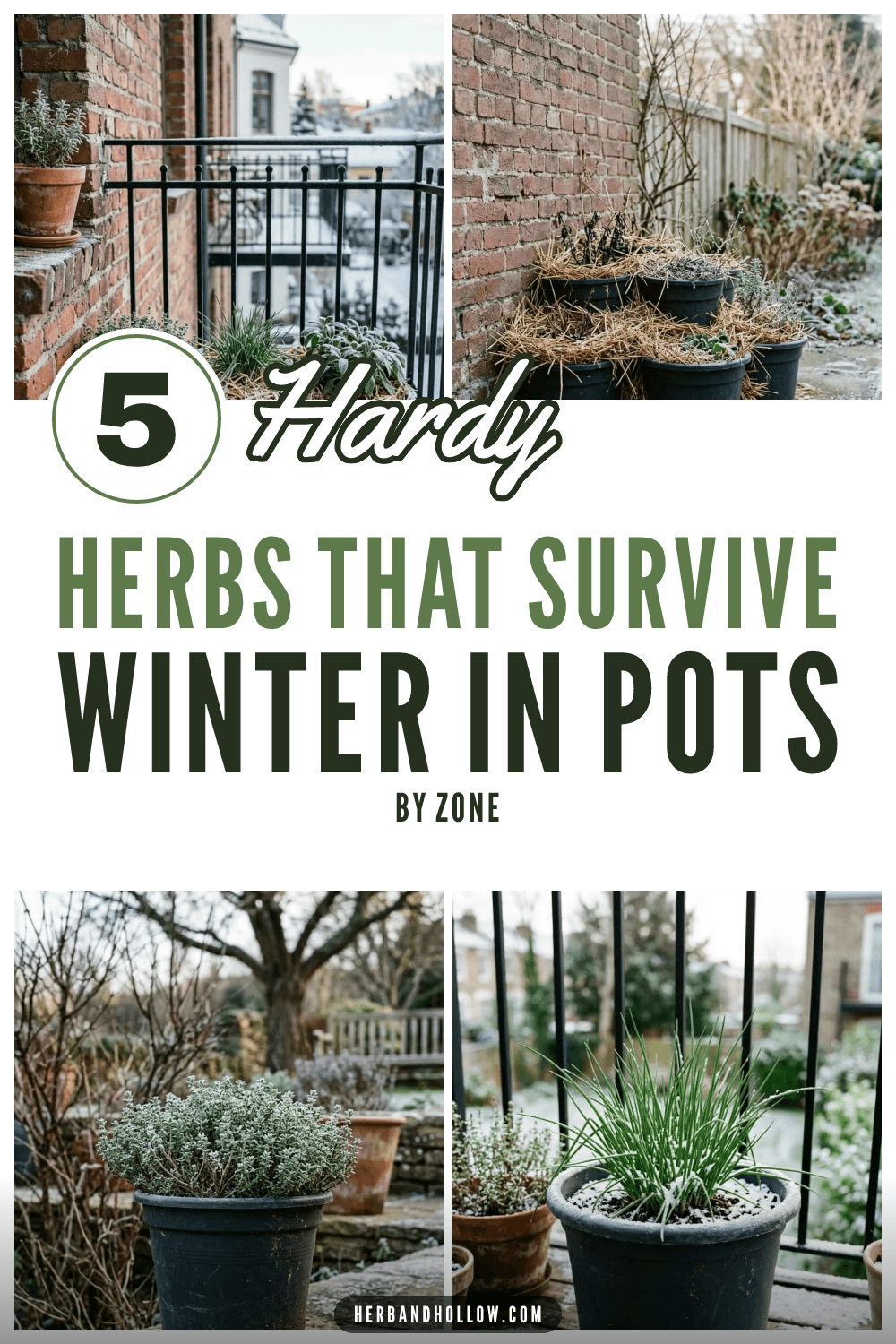
Save it for later
Pin this to your Herb Garden board so it's there when you need it.
Save to Pinterest