This post contains affiliate links. As an Amazon Associate we earn from qualifying purchases, at no extra cost to you. Read our disclosure.
Safety first: Herbs can be powerful. If you are pregnant, nursing, take medication or have a health condition, check with your doctor or pharmacist first. Please read our herbal & garden safety notes before you start.
Key takeaways
- Light decides everything. Most kitchen herbs want 6 or more hours of direct sun, so start at your sunniest window.
- Chives, parsley and mint cope with less light than basil, rosemary and thyme.
- Shelves and wall pots work best within a foot or two of the glass. Farther in, add a grow light.
- Keep herbs away from the stove, the dish soap splash zone and icy winter glass.
- If you have pets, place mint, chives, oregano and parsley out of reach. The ASPCA lists them as toxic to cats and dogs.
In this post28 sections
- Counter kitchen herb garden ideas
- 1. A herb tray beside the cutting board
- 2. A countertop grow light planter
- 3. A self-watering pot for basil
- 4. Supermarket basil, divided
- 5. A lazy Susan you can turn
- 6. A cake stand of small herbs
- 7. Green onions regrowing in a jar
- Kitchen herb garden indoor wall ideas
- 8. Floating shelves beside the window
- 9. A pegboard herb wall
- 10. Glass jars as cover pots
- 11. An under-cabinet grow light
- 12. Macrame hangers in the window
- 13. A picture ledge of tiny pots
- Window herb garden ideas for the kitchen
- 14. A tension-rod shelf across the window
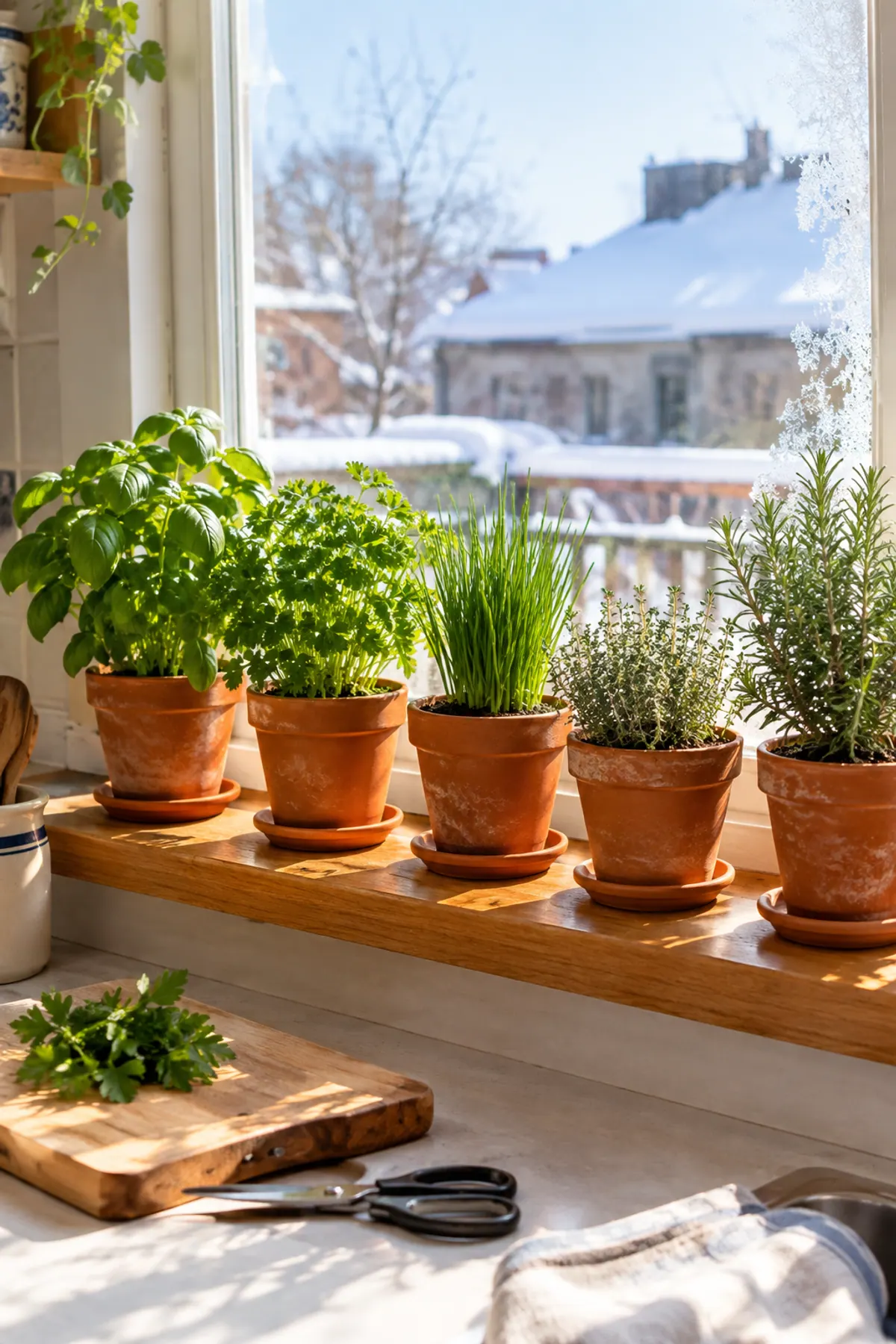
- 15. A long tray on the sink sill
- 16. A garden window
- 17. Pots on S-hooks from a curtain rod
- 18. An indoor window box
- Small and rental kitchen herb garden ideas
- 19. A three-herb starter set for one window
- 20. A tea herb pot near the kettle
- 21. Jar hydroponics on the sill
- Bonus: where not to put kitchen herbs
- Shop the kitchen herb garden
- FAQ
Counter kitchen herb garden ideas
Counter herbs are the ones you actually use, because they sit next to the cutting board. The catch is light, since most counters are a few feet from the window. These ideas either stay close to the glass or bring their own light.
1A herb tray beside the cutting board
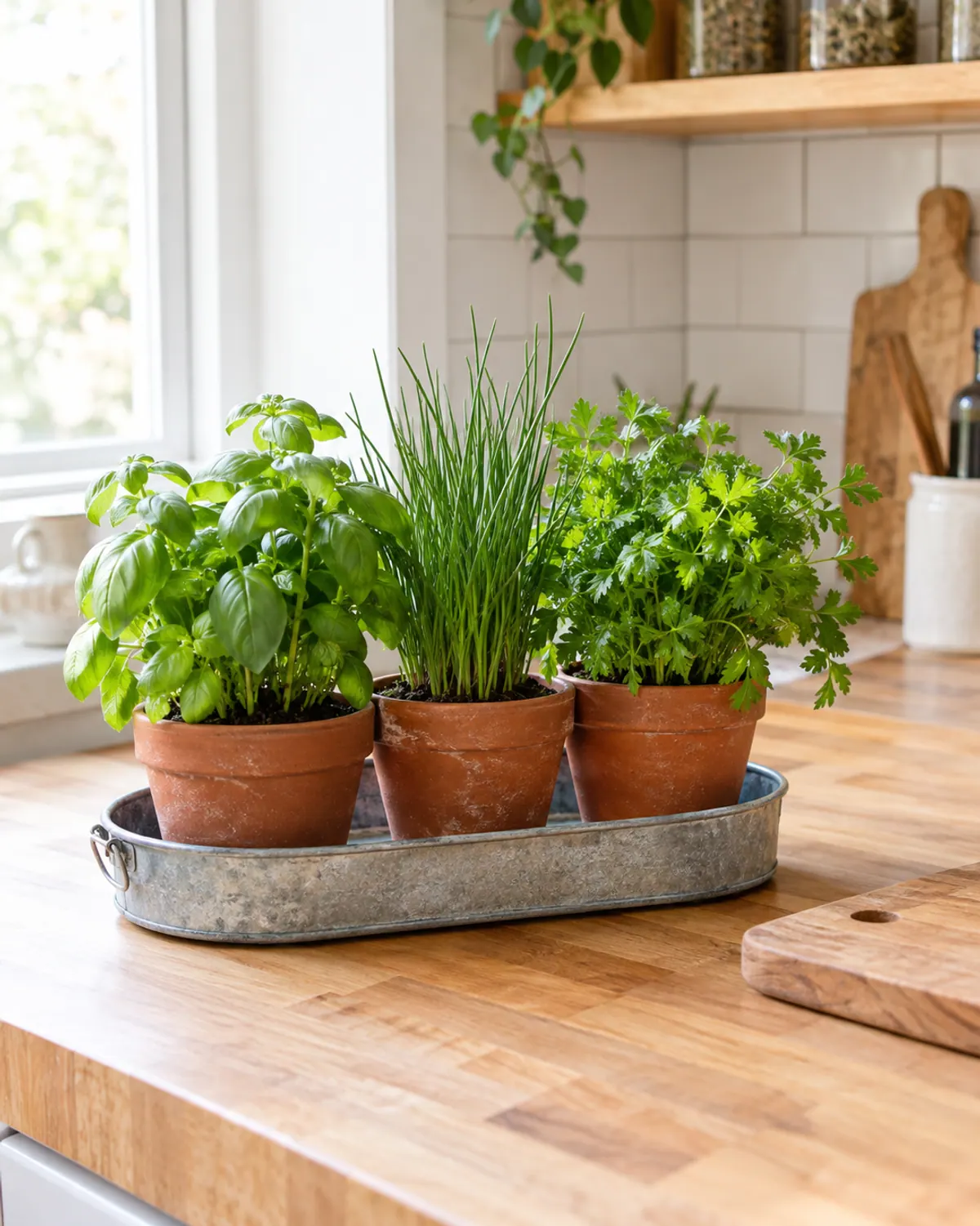
A shallow metal or wooden tray holding three small pots turns a corner of the counter into a mini garden. Put it at the end of the counter closest to the window, and slide the whole tray onto the sill on cloudy weeks. The tray catches drips, so you can water right where it sits. Basil, chives and parsley are a good first trio because you'll reach for them most.
- Pick pots with drainage holes and set them on a thin layer of pebbles in the tray.
3A self-watering pot for basil
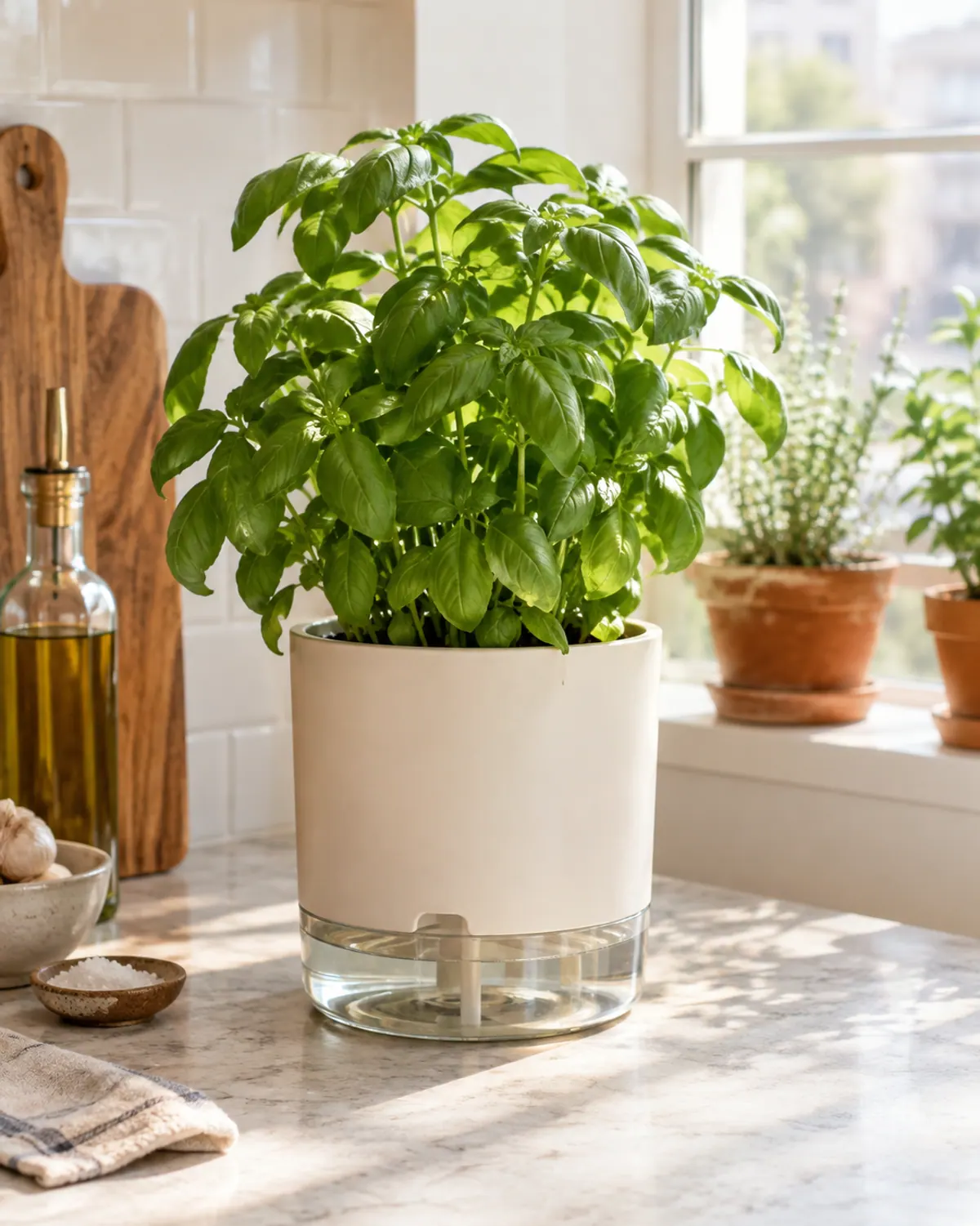
Basil sulks when its soil swings from wet to bone dry. A self-watering planter with a reservoir in the base keeps the mix evenly moist, which helps on busy weeks. Fill the reservoir, let the mix wick it up, and let the reservoir run dry for a day or two now and then so roots get air.
- Save self-watering pots for thirsty herbs. Rosemary and thyme prefer to dry out.
Keeps basil and parsley evenly moist.
4Supermarket basil, divided
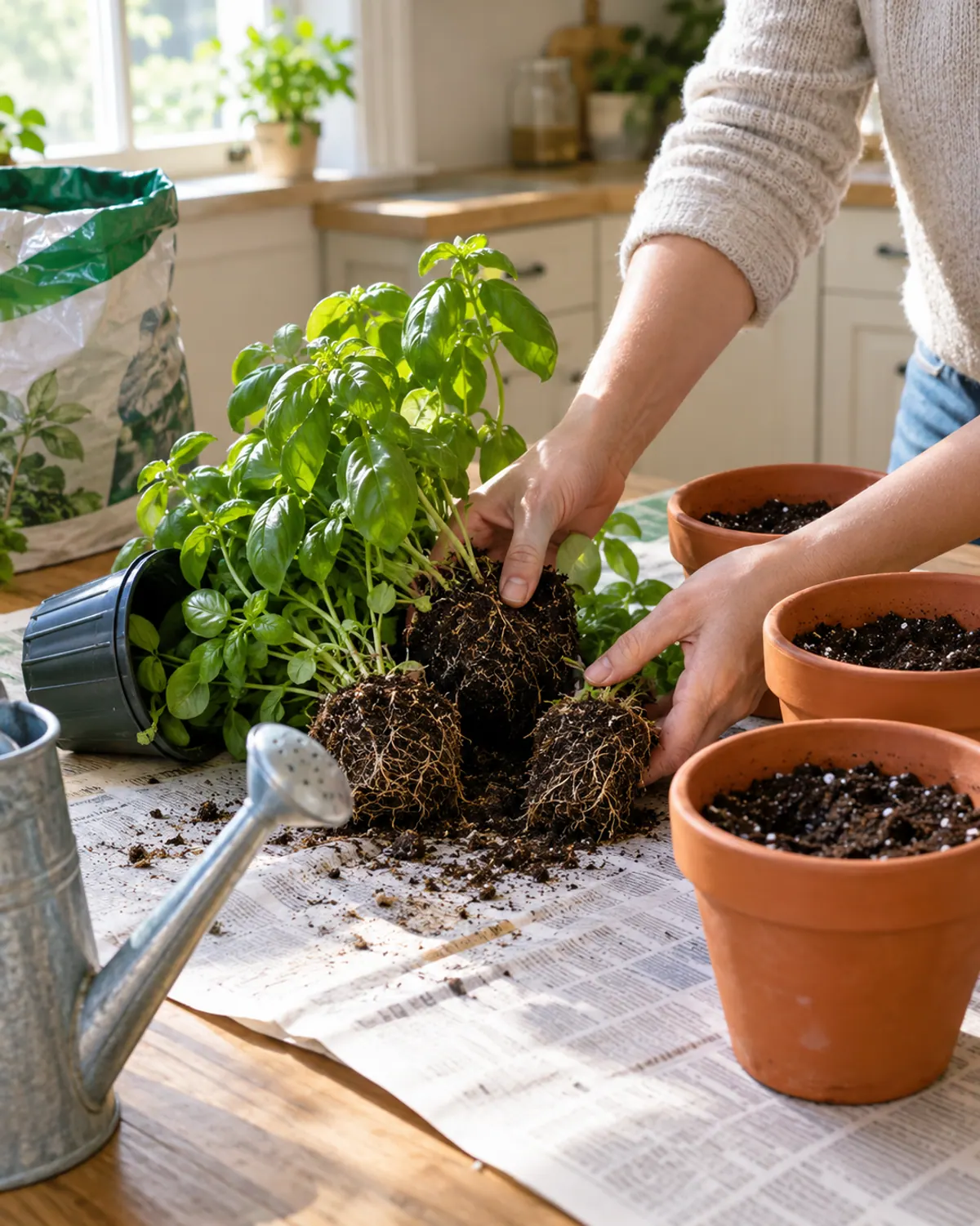
That grocery store basil pot is really dozens of seedlings crammed together, which is why it collapses within weeks. Tip it out, gently pull the root ball into 3 or 4 clumps and pot each one on its own. Water well and keep them out of hot sun for a few days while they settle.
- Pinch the top pair of leaves off each stem once they settle in, so they branch.
5A lazy Susan you can turn
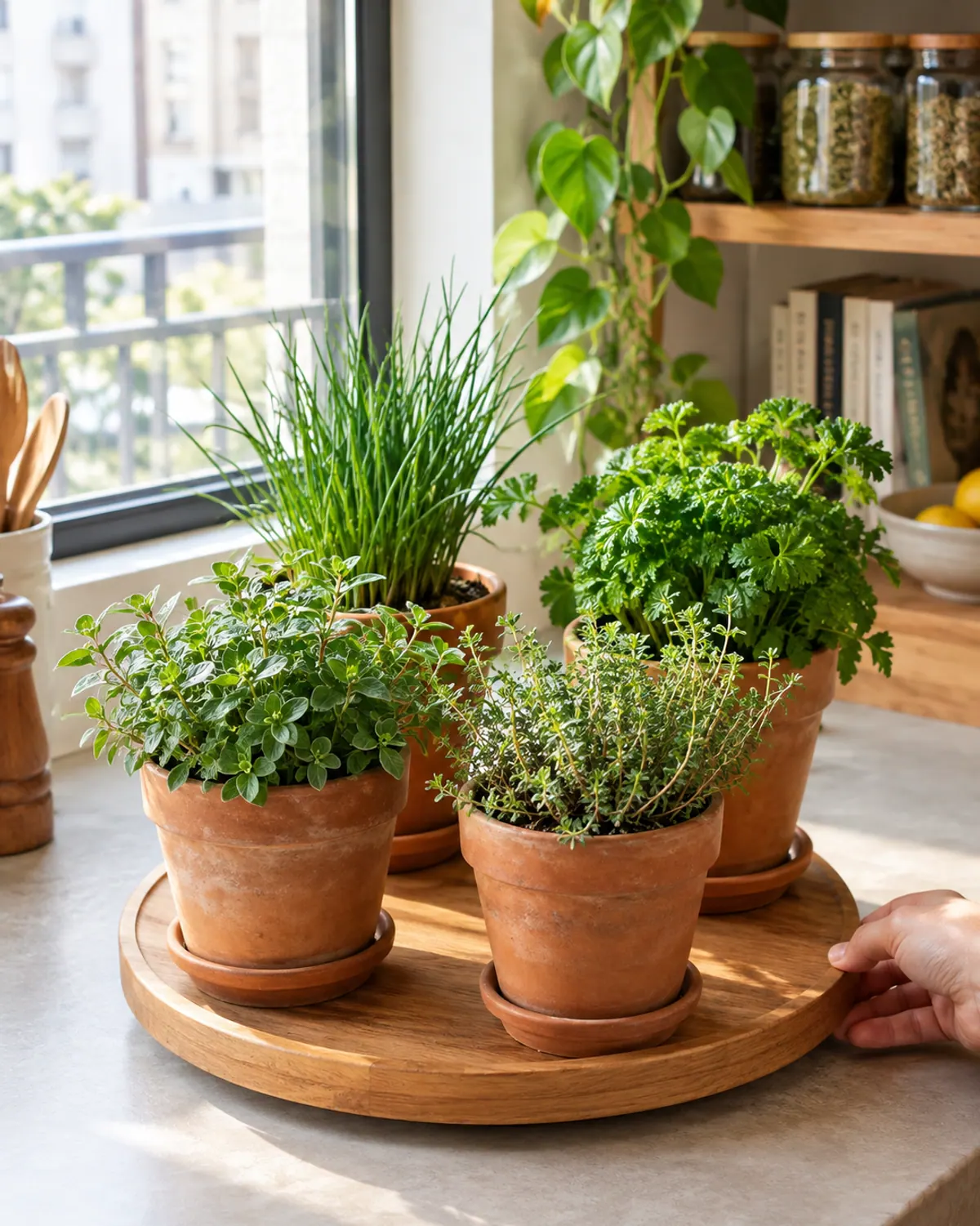
Herbs lean toward the window and grow lopsided. Set four small pots on a wooden turntable near the glass and give it a quarter spin every couple of days. Every side gets its turn in the light, and you can spin the herb you need to the front while you cook.
- Choose a turntable with a raised edge so pots don't slide off.
6A cake stand of small herbs
A footed cake stand lifts small pots above the clutter and catches more light from the window. It suits two or three 3 to 4 inch pots of compact herbs such as thyme, chives or a small oregano. Set each pot on its own tiny saucer so water doesn't run off the edge, and check them often, since small pots dry out fast.
- A tiered serving tray does the same job on a narrow counter.
7Green onions regrowing in a jar
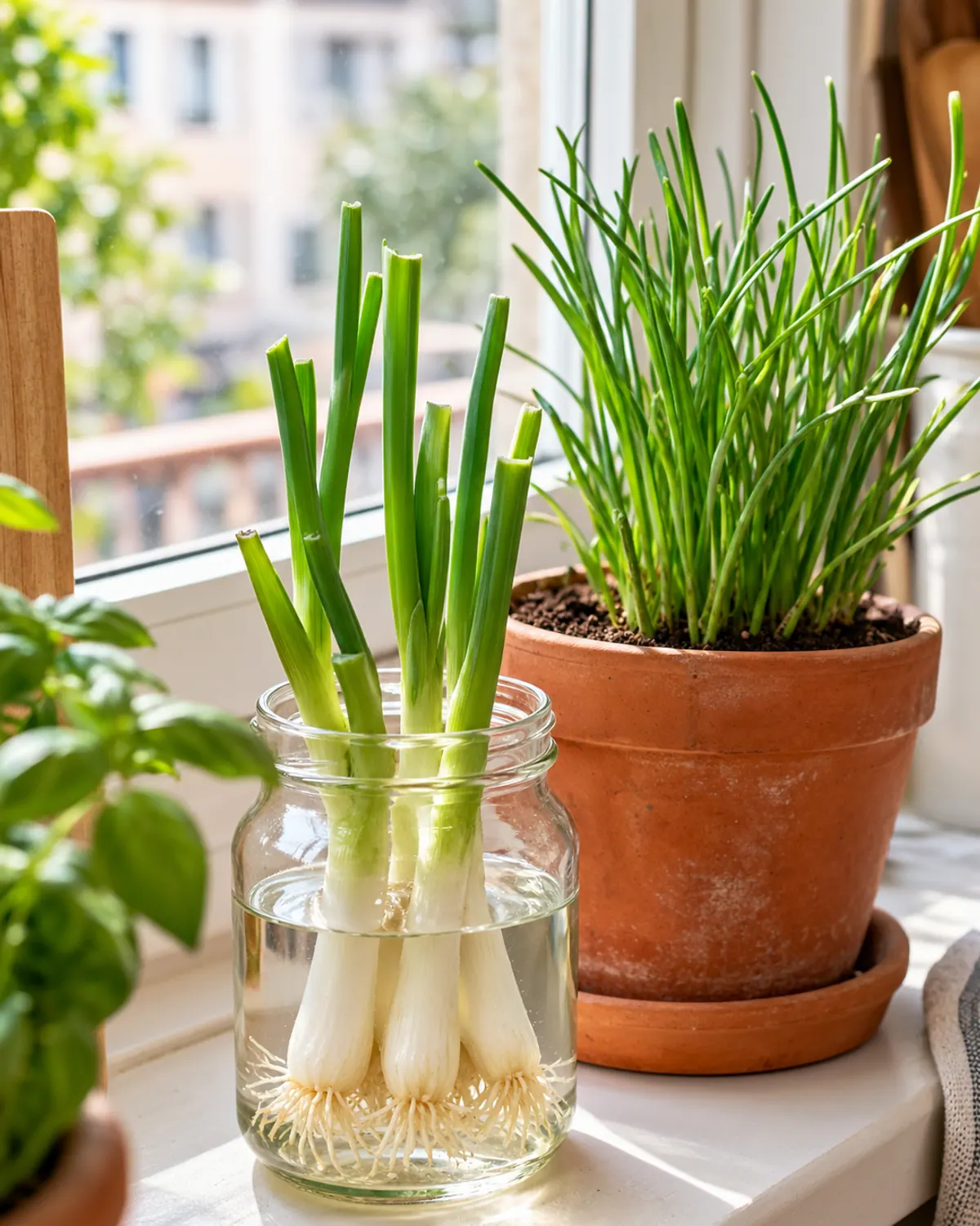
Keep the white root ends from a bunch of green onions and stand them in an inch of water on a bright sill. New green tops push up within days. Change the water every couple of days so it stays fresh. After a few rounds of snipping, plant them in a pot of mix for sturdier regrowth.
- Keep the water below the top of the white part so the stems don't get slimy.
Kitchen herb garden indoor wall ideas
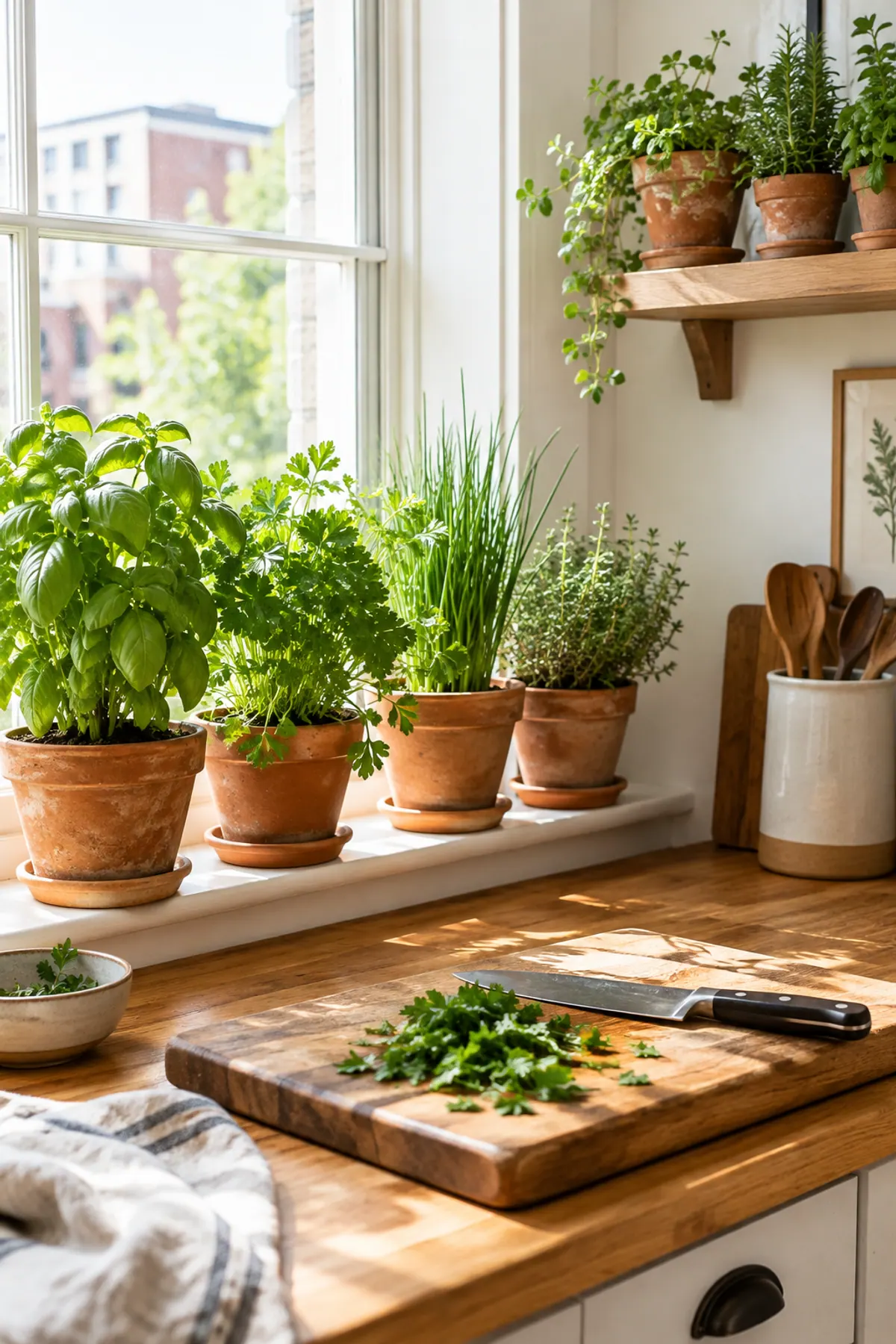
When the counter is full, use the wall beside the window. Light drops off fast as you move away from the glass, so keep wall herbs within about a foot or two of the window frame, or add a light above them.
8Floating shelves beside the window
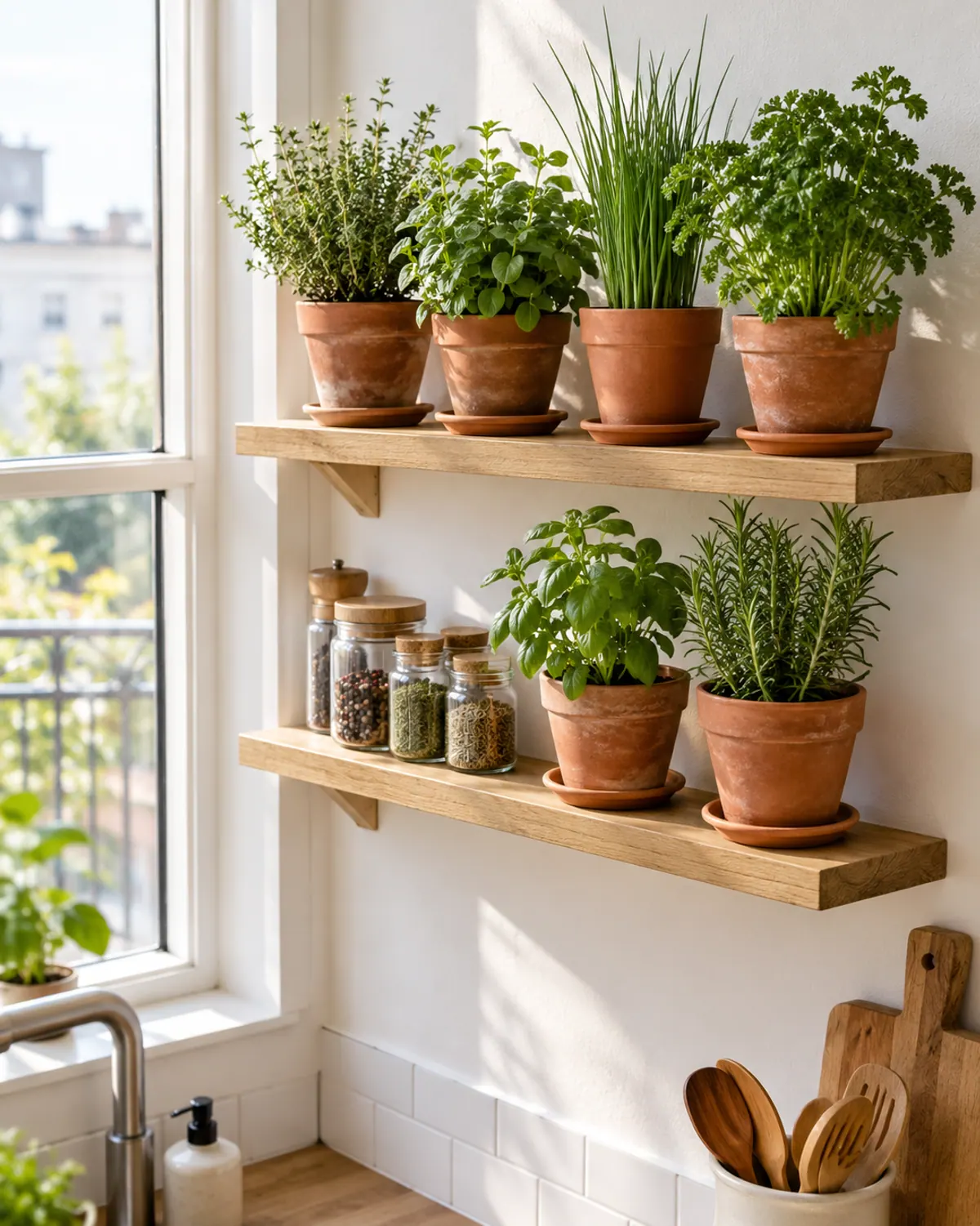
Two narrow floating shelves mounted right next to the window frame hold a row of small pots each. The shelf nearest the glass gets the most light, so give it to basil or thyme. Chives and parsley can take the shelf a little farther out. Keep the shelves shallow, about 5 to 6 inches deep, so they don't crowd a small kitchen.
- Renters can use adhesive or lean-to shelves instead of drilling, within their weight limits.
9A pegboard herb wall
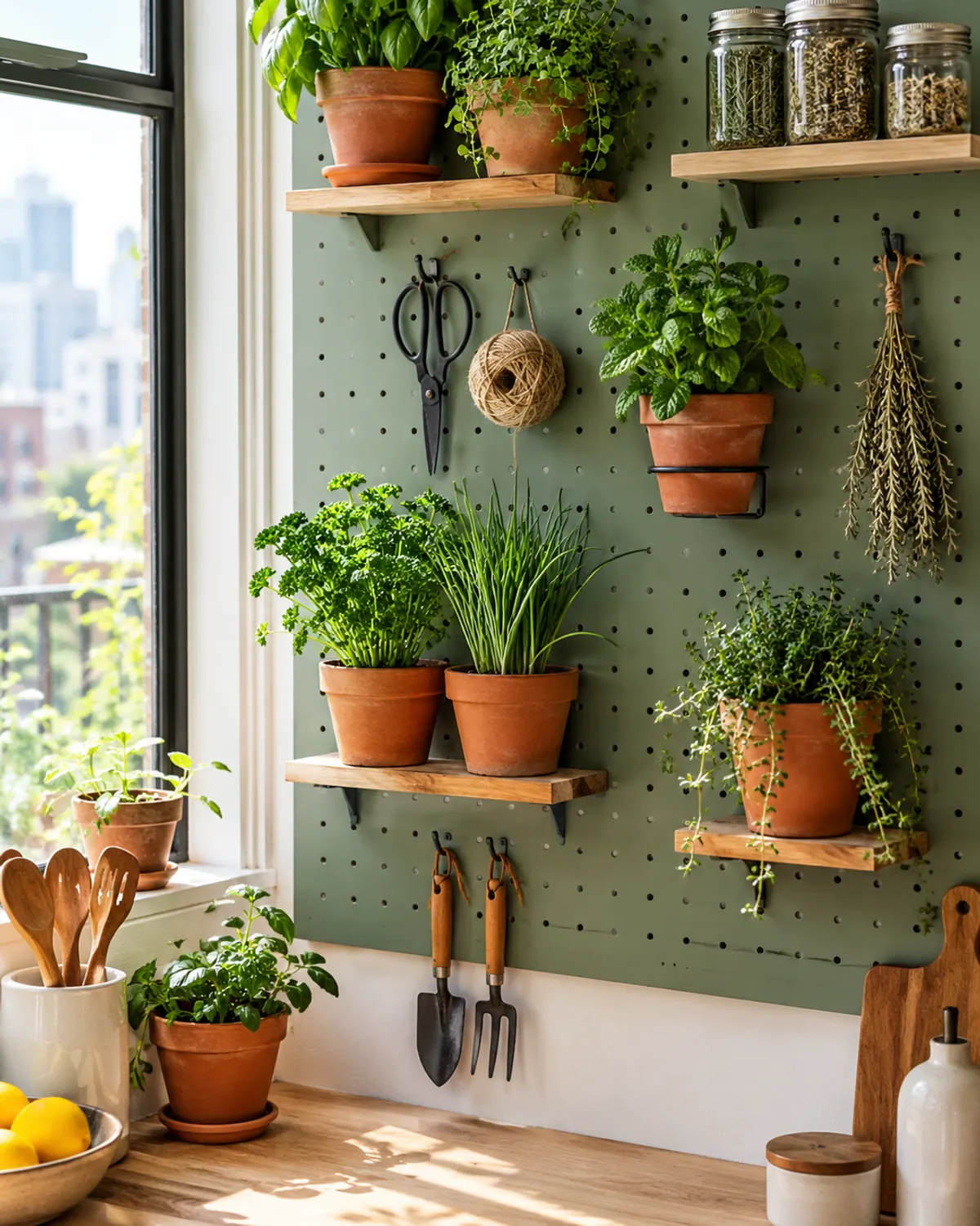
A painted pegboard next to a window holds small shelves, hooks and baskets you can move around. Pots of mint, parsley and chives sit on the shelves, and scissors and twine hang on hooks. As the seasons change and the light shifts, you can move shelves closer to the window without new holes in the wall.
- Put a tray on each shelf to catch drips before they reach the board.
10Glass jars as cover pots
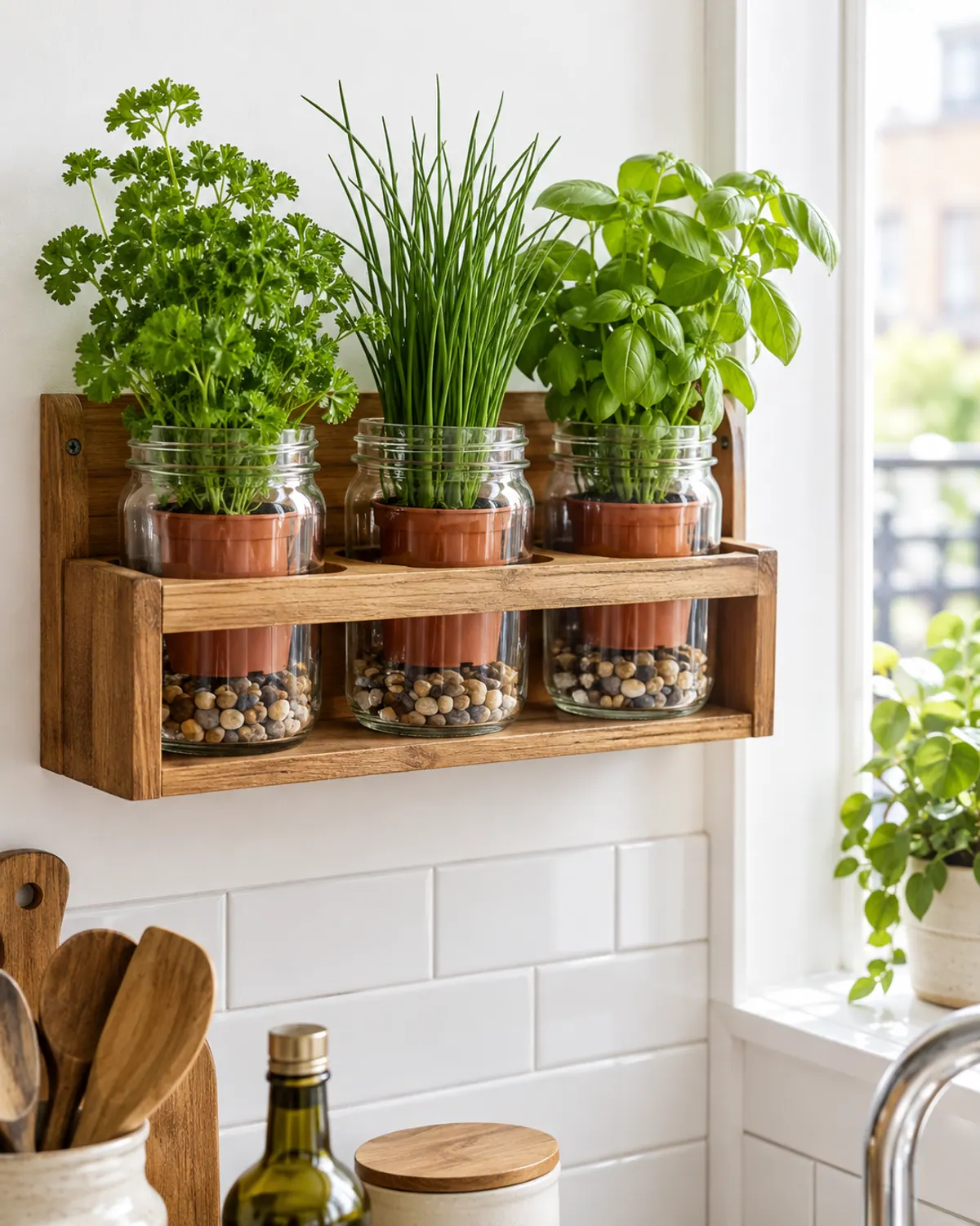
Herbs planted straight into jars with no drainage often rot. Use the jars as covers instead: drop a few pebbles in the bottom, then set a small plastic nursery pot with holes inside. You get the look of a jar wall with roots that can drain. Lift the pot out to water it in the sink, then pop it back.
- Check the jar bottoms after watering and tip out any water that has collected.
11An under-cabinet grow light
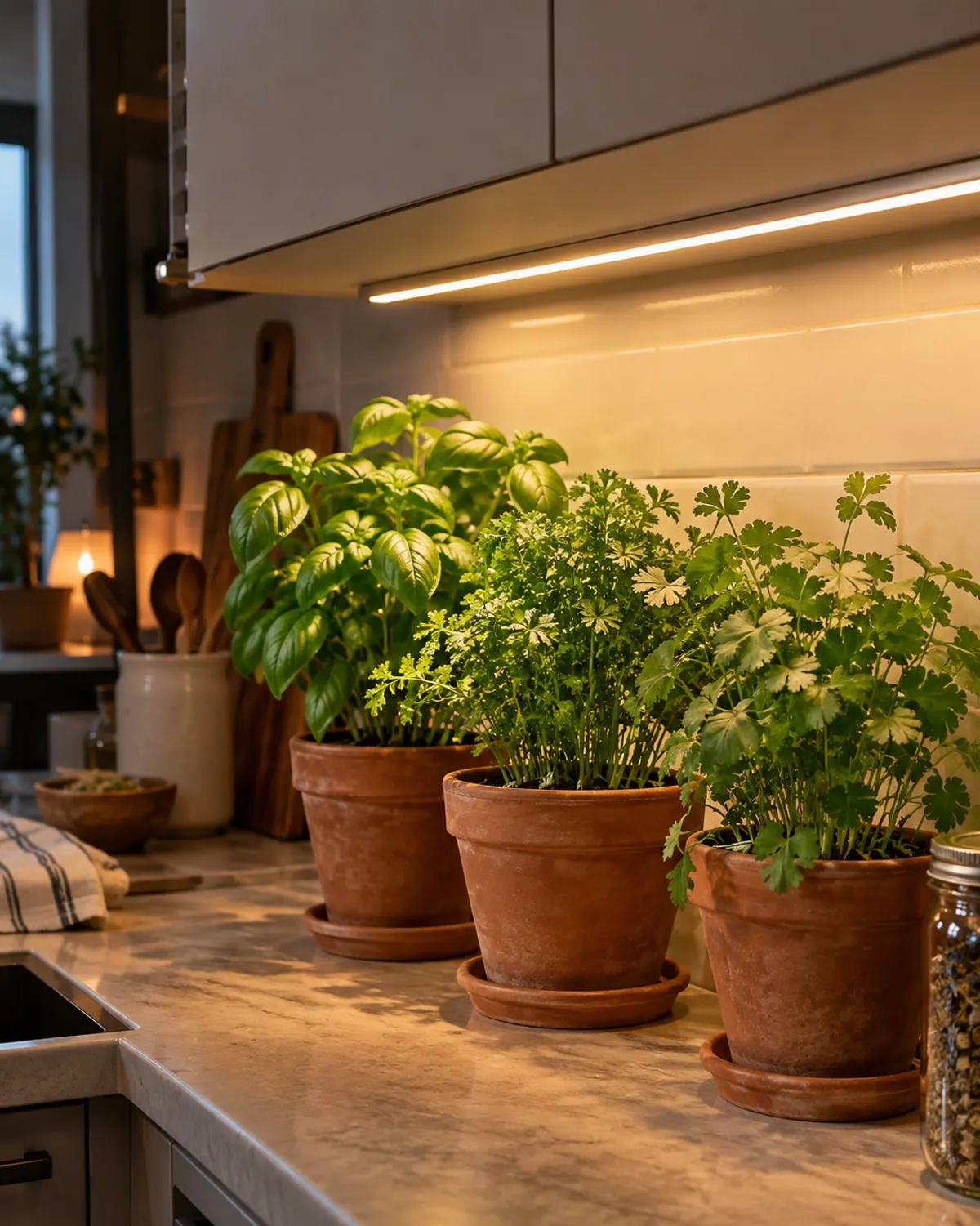
The space under your upper cabinets is a ready-made grow shelf. A slim LED grow strip stuck underneath turns the counter below into a lit herb row. Warm white strips look like normal kitchen lighting. Run them on a timer for about 14 hours a day, and keep leaves roughly 6 to 12 inches from the light.
- Basil and cilantro respond most to extra light. Chives and parsley need it least.
Lights a counter herb row with a built-in timer.
12Macrame hangers in the window
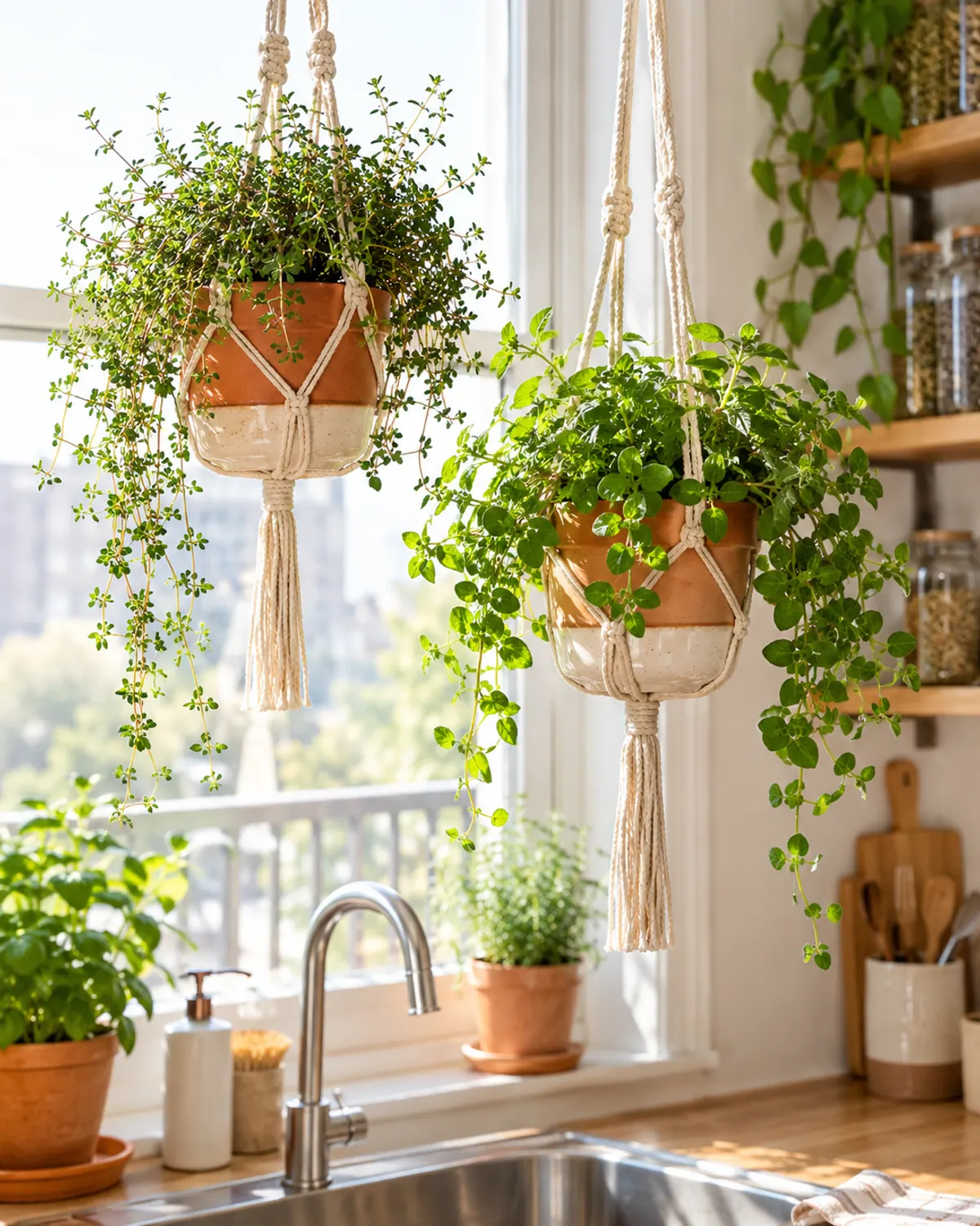
Hang one or two small planters from a ceiling hook in front of the window and you add growing space without touching the counter. Trailing herbs like creeping thyme and oregano spill over the sides nicely. Use pots with a drainage hole and an inner saucer, and take them down to the sink to water.
- Keep the hangers light. A wet clay pot weighs more than you think.
13A picture ledge of tiny pots
A narrow picture ledge mounted just below the window line holds a long row of 3 inch pots. It suits compact herbs like chives, small parsley plants and thyme cuttings. Because the pots are so small, they dry out quickly, so treat this as a snipping garden and repot anything that outgrows it.
- Line the ledge with a strip of cork or a thin tray to protect it from water.
Window herb garden ideas for the kitchen
The window is the brightest spot in most kitchens. In winter, a south or west window gives the most direct sun, and an east window is a decent second. North windows usually need help from a grow light.
14A tension-rod shelf across the window
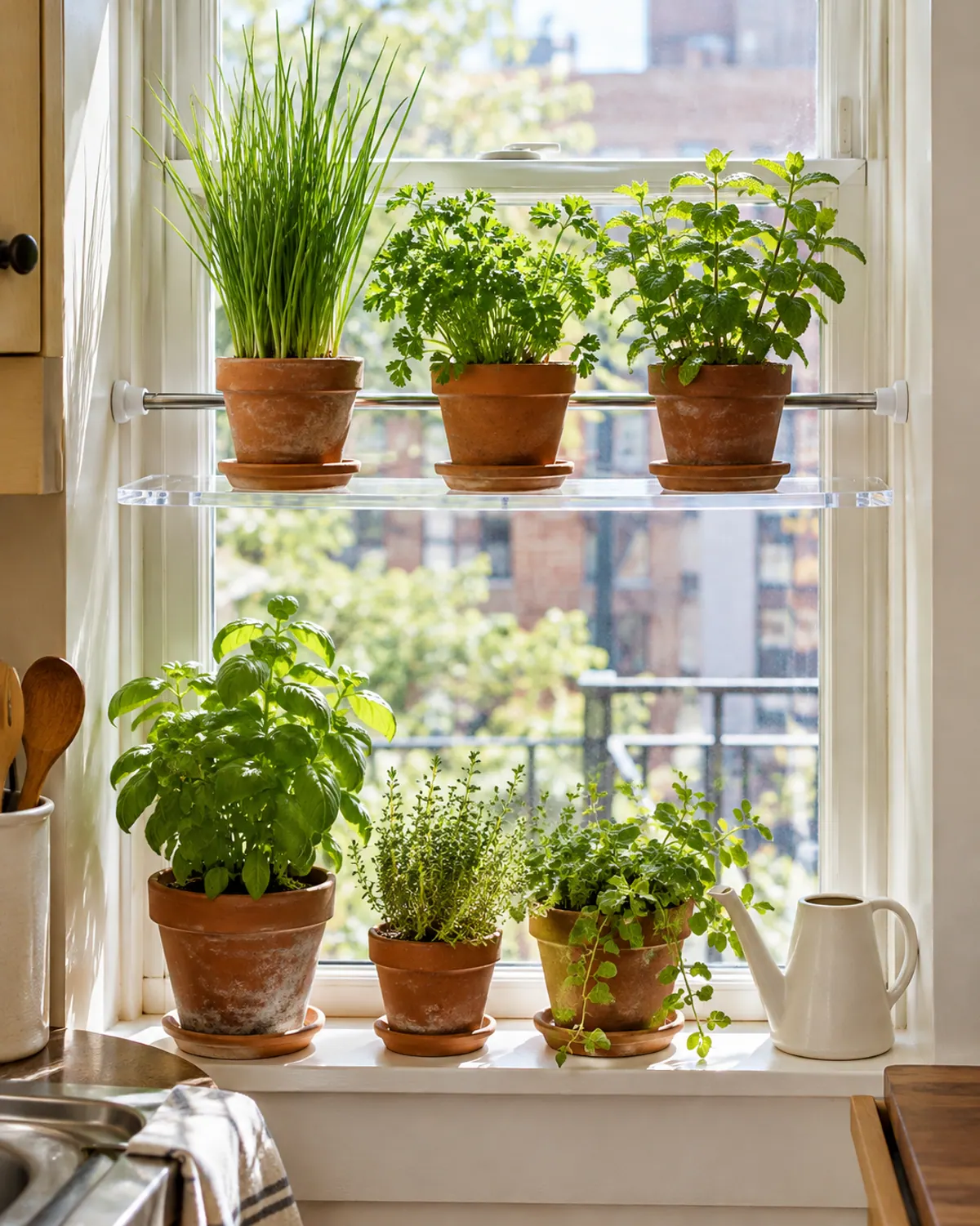
A shelf that rests on a spring tension rod across the window frame doubles your sill space without drilling. Clear acrylic lets light pass through to the pots below. Put light, small pots of chives, parsley or mint up top, and keep heavier pots on the sill itself.
- Check the rod's weight rating, and test it with a gentle push before loading it.
Adds a second tier of herbs with no tools.
15A long tray on the sink sill
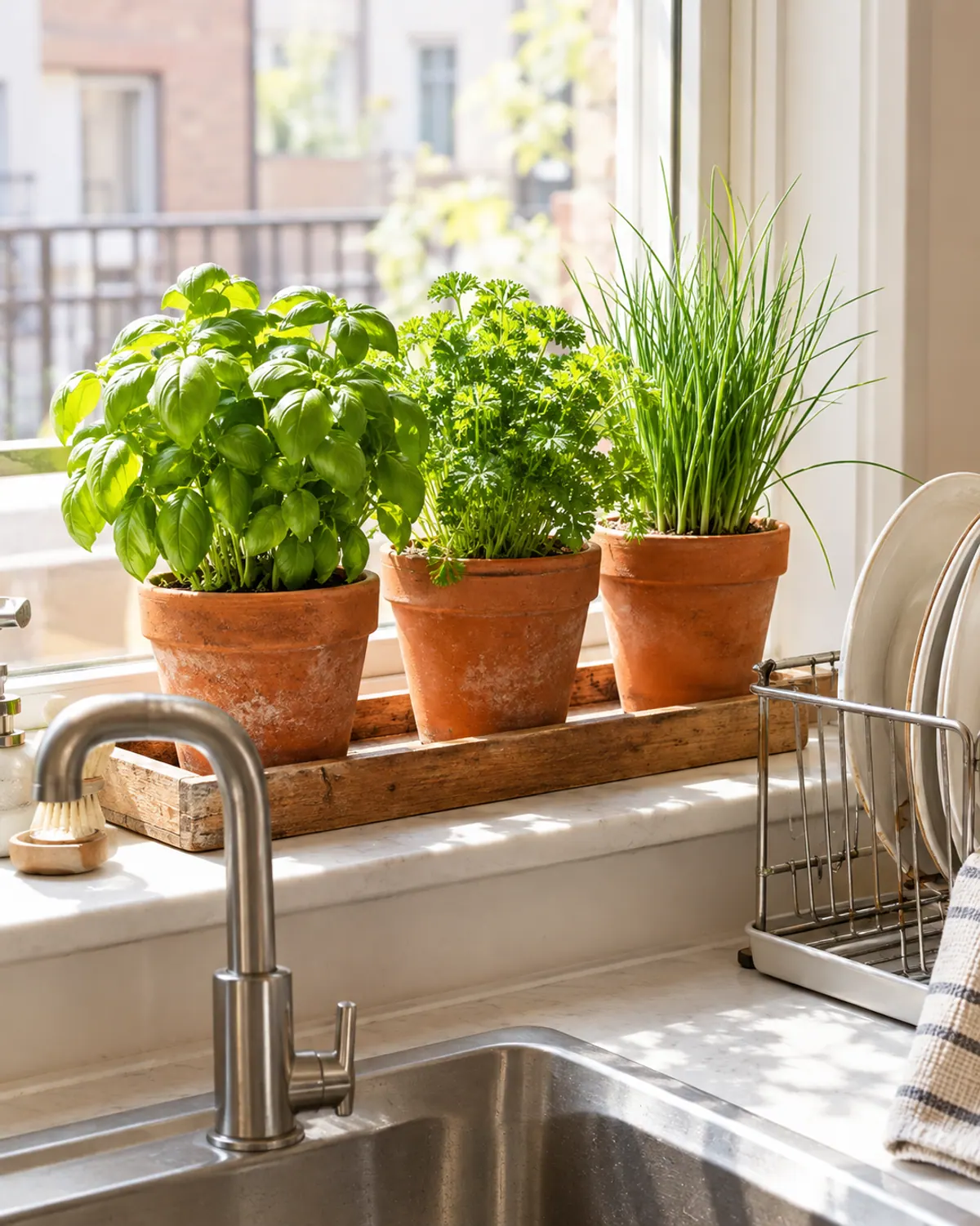
The window over the sink is a classic spot, and watering is easy there. Set the pots on a long, narrow tray so you can lift them all at once to wipe the sill. Keep the tray at the far side from the faucet, because splashes of dish soap and hot water can damage leaves.
- Rinse leaves with plain water if soapy spray reaches them.
16A garden window
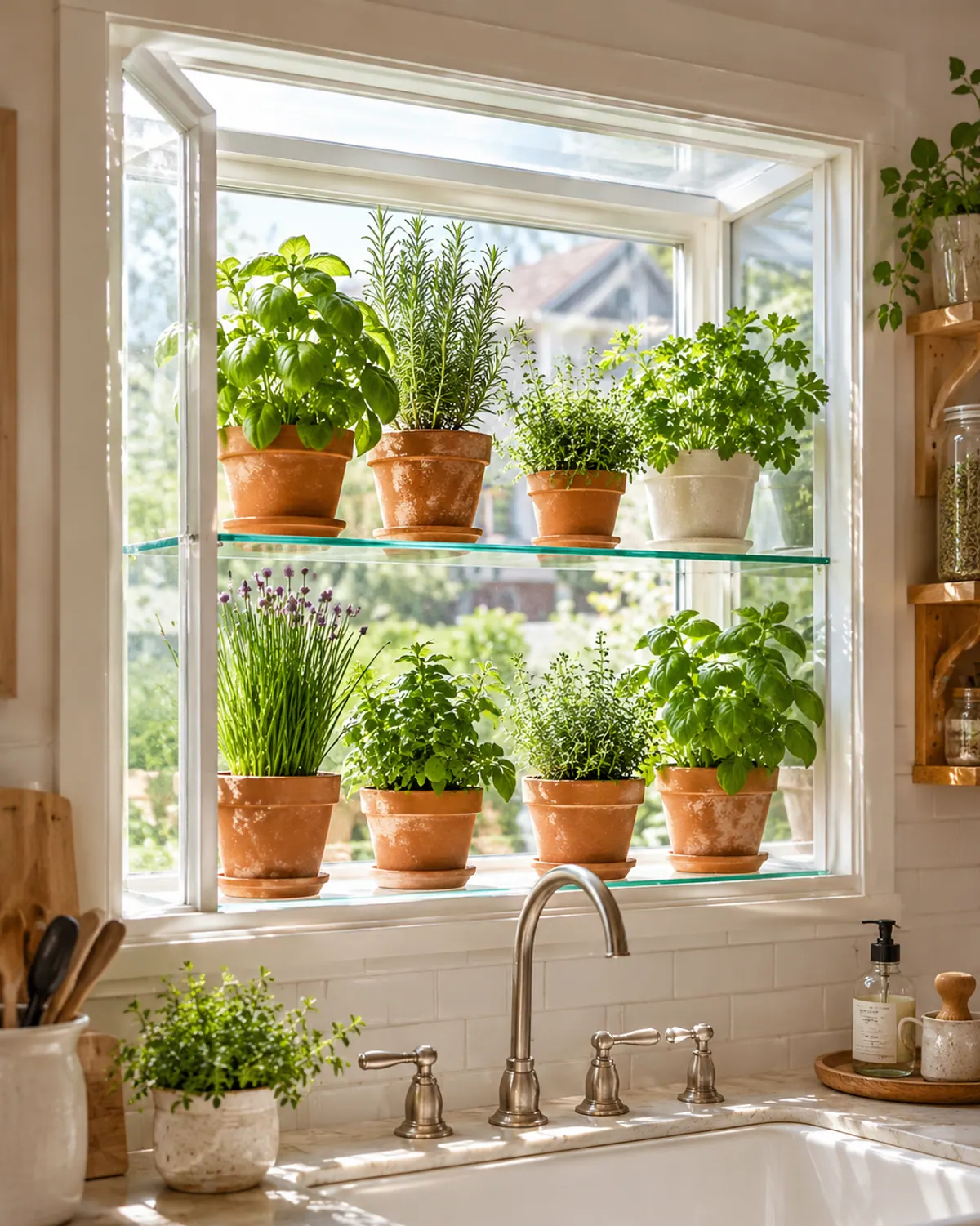
If your kitchen has a box-shaped garden window, you already own the best herb spot in the house. Light comes in from three sides, so even rosemary and thyme can do well. Glass boxes also get hot in summer sun and cold on winter nights, so feel the air there and move tender basil back on cold evenings.
- Crack the window open on hot afternoons if your model allows it.
17Pots on S-hooks from a curtain rod
A sturdy café curtain rod across the lower half of a window can hold small pots on S-hooks or in hanging baskets. It uses light right at the glass and clears the sill for other pots. Choose a rod rated for the weight, and stick to two or three small pots of light herbs like chives, parsley and thyme.
- Hang lightweight plastic pots inside fabric or rope cover baskets for a softer look.
18An indoor window box
A long, narrow trough on a deep sill holds several herbs in one container, like a window box turned inward. Group herbs that like the same watering. Rosemary, thyme and oregano can share a gritty mix, while parsley and chives can share a moister one. Keep mint out of shared boxes, since its runners take over.
- Choose a trough with drainage holes and a matching drip tray.
Small and rental kitchen herb garden ideas
19A three-herb starter set for one window
If you only have one small window, start with three herbs you use every week. Chives and parsley handle modest light, and one basil plant gives you fresh leaves while the sun lasts. Three 6 inch pots fit most sills. Add more only once these are thriving, since crowded sills shade each other.
- Write the date you potted each herb on the bottom of the pot.
20A tea herb pot near the kettle
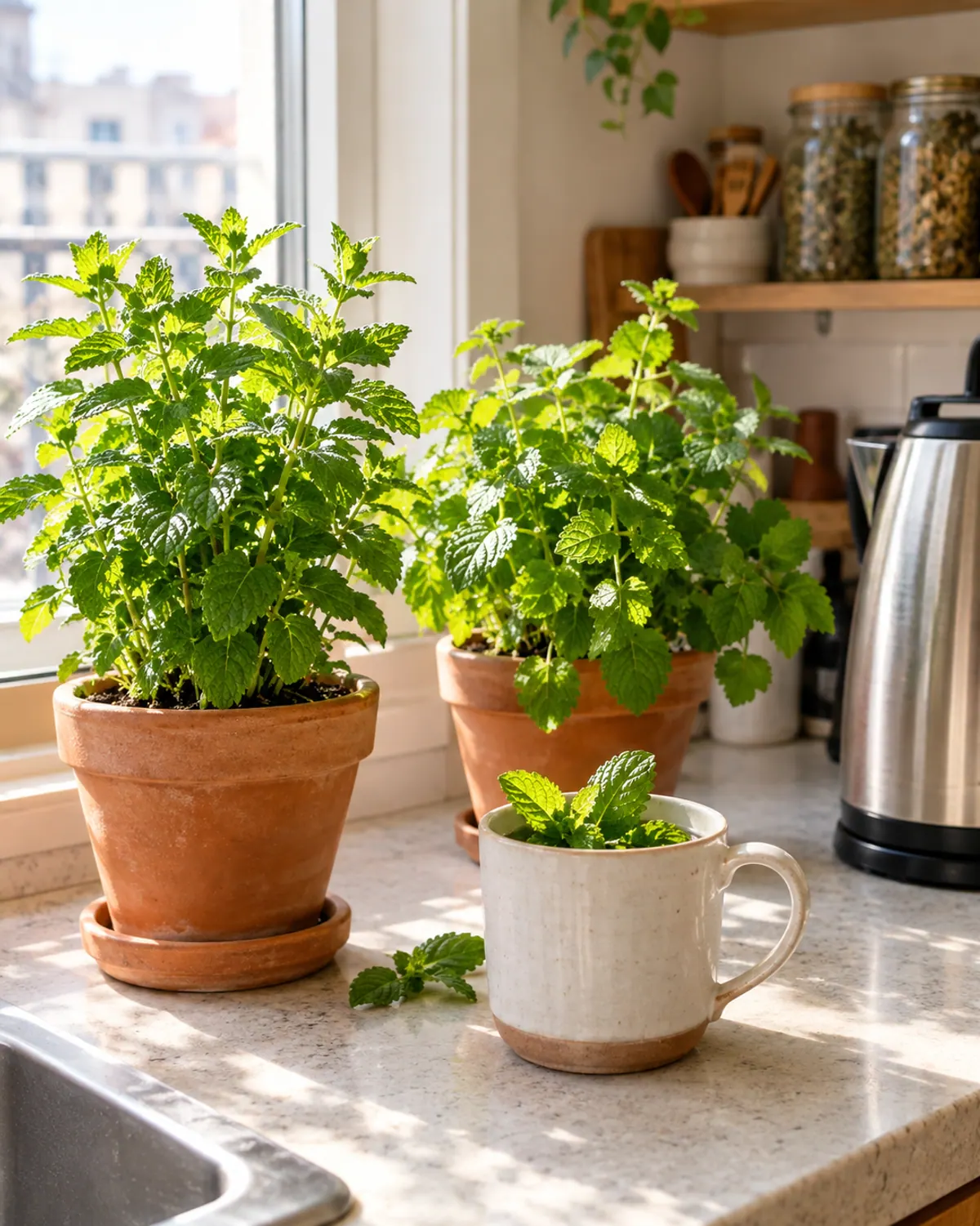
Spearmint and lemon balm grow well in pots and smell lovely when you brush them. Keep them on a bright counter near the kettle, a few feet from its steam. Both like steady moisture and grow fast, so pinch them often. Give each its own pot, since both spread.
- Herb notes here are not medical advice. If you are pregnant, nursing or take medication, check with your doctor before drinking herbal teas regularly.
21Jar hydroponics on the sill
The Kratky method grows herbs in a jar of hydroponic nutrient solution with no pump. A net cup holds the plant at the top, the roots reach down into the liquid, and an air gap forms as the level drops. Basil does well this way. Wrap or paint the jar so light can't reach the water, which stops algae.
- Use a nutrient made for hydroponics, not regular plant food, and follow the label.
Bonus: where not to put kitchen herbs
Most kitchen herb garden ideas focus on looks. The spots that fail are just as useful to know, because a kitchen has hazards a living room doesn't. Here is how the common spots compare.
| Spot | Light | Watch out for | Good herbs |
|---|---|---|---|
| South or west window | Strong | Cold glass on winter nights | Basil, rosemary, thyme, oregano |
| East window | Medium | Short winter days | Parsley, chives, mint, cilantro |
| Sill above the sink | Varies | Soap splash and hot water | Chives, parsley, mint |
| Counter next to the stove | Usually low | Heat, steam and grease | None long term |
| Top of the fridge | Low | Warm air rising from the back | None without a grow light |
| Counter under cabinets | Low | Shade from uppers | Any herb with an under-cabinet light |
Cold glass is the sneaky one. On winter nights, leaves touching a single-pane window can get chilled, and basil is the first to blacken. Pull pots a few inches back from the glass at night, or slip a sheet of cardboard between pots and pane.
Want more layouts? Our herb garden ideas for small spaces cover balconies and patios, and the indoor herb garden guide explains which 8 herbs handle winter light. When you have more than you can use, dry the extra herbs at home, and if rosemary is on your list, read growing rosemary indoors first.
Shop the kitchen herb garden
Shop the look
- Start here
Small terracotta pots with saucers
$15-30 for a set
The simple start for any sill or shelf.
Check price on Amazon for Small terracotta pots with saucers -
Countertop herb garden with grow light
$40-150
For kitchens without a sunny window.
Check price on Amazon for Countertop herb garden with grow light -
Under-cabinet LED grow light strip
$20-45
Turns a dim counter into a lit herb row.
Check price on Amazon for Under-cabinet LED grow light strip -
Tension rod window plant shelf
$20-40
Adds sill space with no drilling.
Check price on Amazon for Tension rod window plant shelf -
Herb snips
$8-20
Clean cuts just above a leaf pair keep herbs bushy.
Check price on Amazon for Herb snips
We earn from qualifying purchases, which never changes what we recommend. Read our disclosure and editorial guidelines.
Frequently asked questions
What herbs grow best in a kitchen herb garden?
Chives, parsley and mint are the most forgiving because they cope with less light. Basil, rosemary, thyme and oregano grow well too, but they need your sunniest window or a grow light, especially in winter.
Where should I put herbs in my kitchen?
As close to your brightest window as you can, preferably one facing south or west. Avoid the counter beside the stove, the top of the fridge and the spot right behind the faucet. If no window gets much sun, use an under-cabinet or countertop grow light.
Can you grow herbs on a kitchen wall?
Yes, if the wall is right beside a window or has a light above it. Floating shelves, a pegboard or a wall rack within a foot or two of the glass work well for chives, parsley and thyme. Farther from the window, add a grow light.
How many hours of light do kitchen herbs need?
Most culinary herbs want at least 6 hours of direct sun. Chives, parsley and mint can manage with about 4. Under grow lights, about 14 hours a day on a timer works for most herbs.
Are kitchen herbs safe for cats?
Not all of them. The ASPCA lists mint, chives, oregano and parsley as toxic to cats and dogs, while basil and rosemary are listed as non-toxic. Keep the toxic herbs where pets can't reach them.
Save it for later
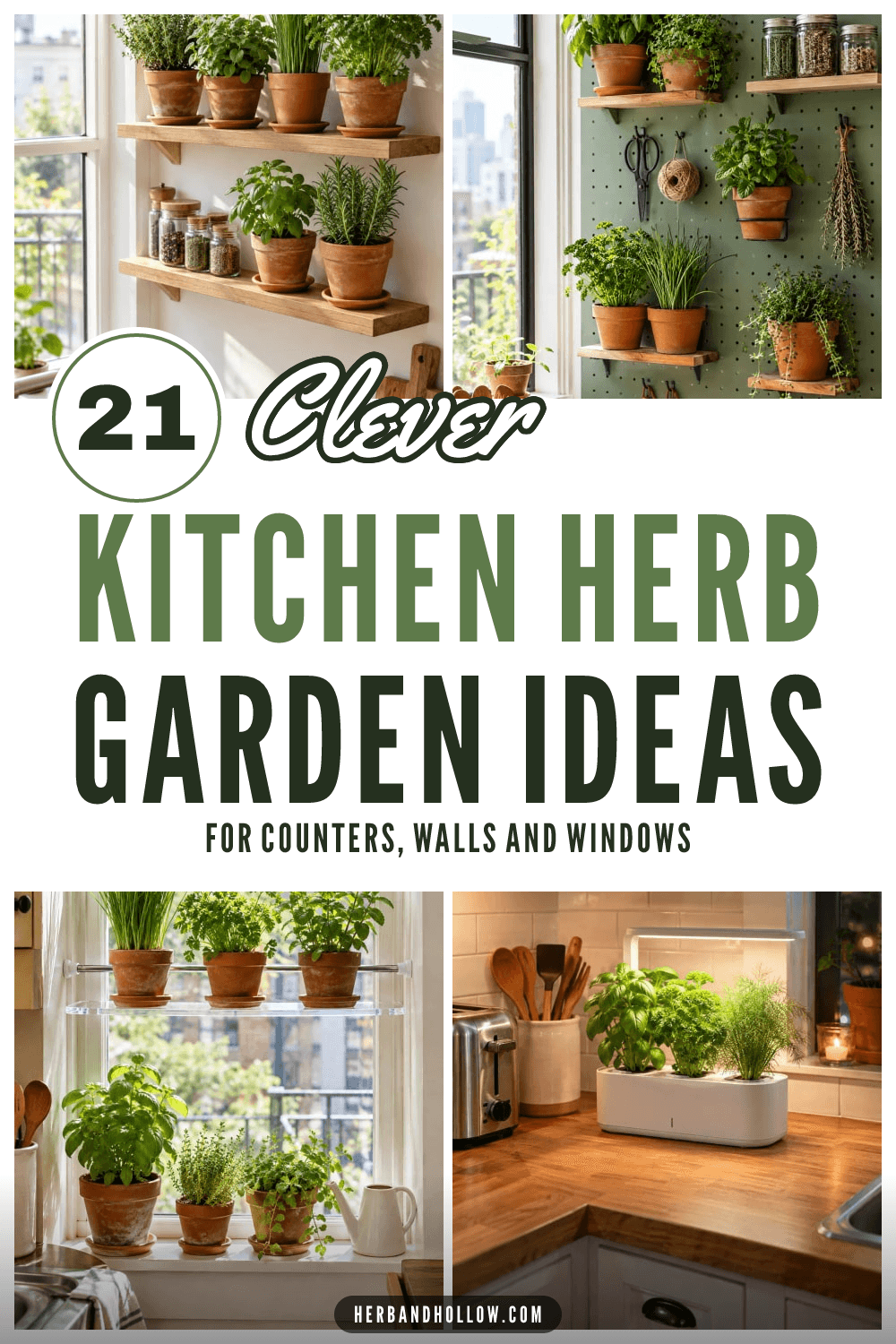
Pin this to your Herb Garden board so it's there when you need it.
Save to Pinterest